
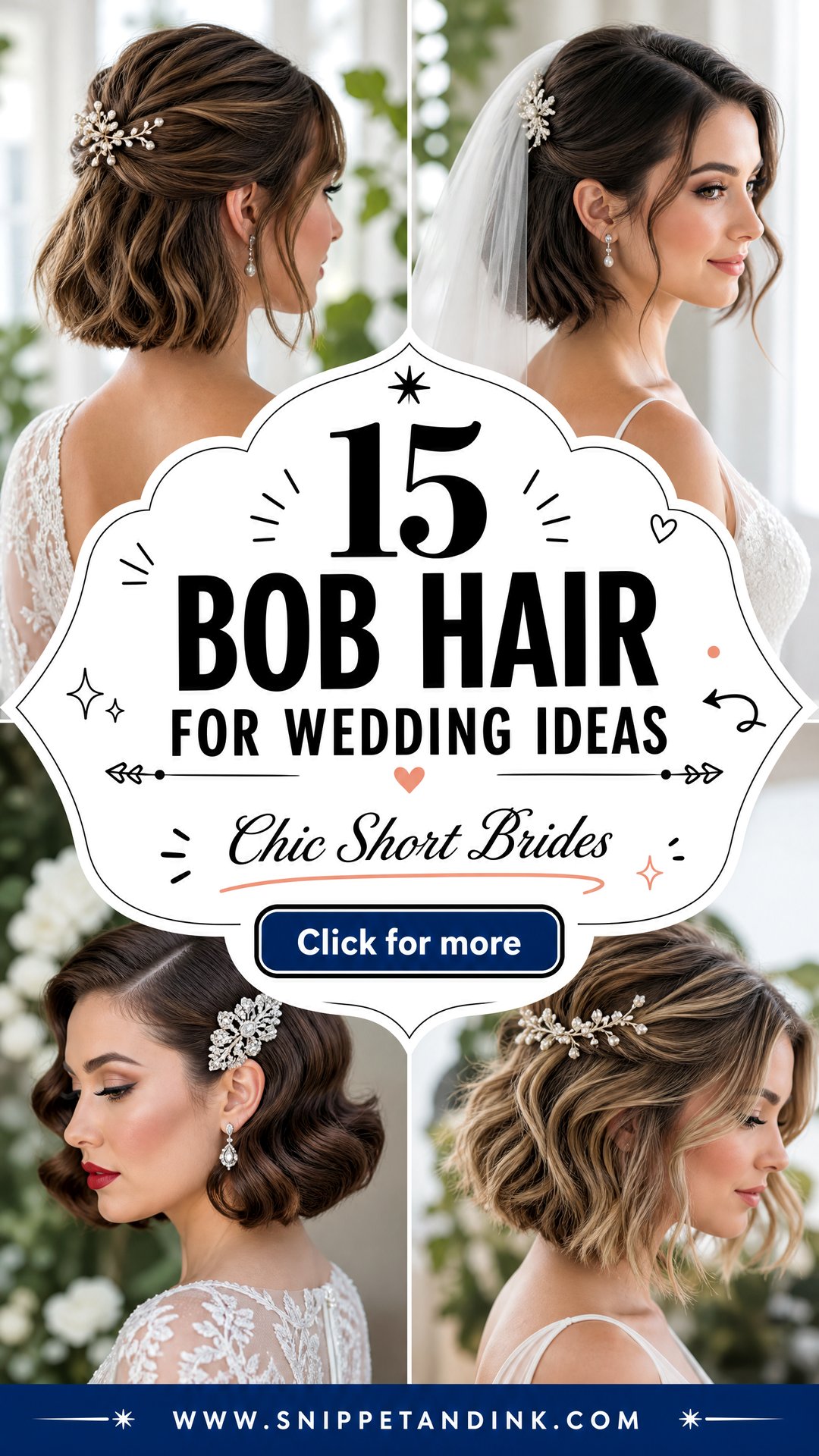
A bob at a wedding has one big advantage over long hair: the shape is already there. You aren’t building a style from nothing, you’re dressing up a cut that already frames your face. The looks I do most on short hair lean into that outline, with soft waves, sculpted bends, a sleek shine, a tucked side or a tiny pinned updo, instead of making the hair pretend it’s longer. That holds for brides, bridesmaids, mothers of the bride and guests. Look through the fifteen below, then match one to your texture, your outfit and how much fuss you want on the morning.
A Flat Iron Wave You Can Do in Twenty Minutes
Plenty of bridesmaids, mothers and guests with bobs do their own hair, and so do brides at small or courthouse weddings. The bent wave in the first look is the most useful one to learn. On short hair I reach for a flat iron rather than a wand, which tends to leave a bob round and poodle-like.
- Start with fully dry hair, heat protectant and a light mousse at the roots. Blow-dry the part into place first so it doesn’t collapse later.
- Take inch-wide sections. Clamp near the root, turn the iron half a turn away from your face, glide down, then turn the other way for the next section. Alternating directions is what makes it a wave instead of a ringlet.
- Stop an inch before the ends and pull them through straight. Straight tips keep a short wave looking current.
- Let everything cool completely, ten minutes if you can wait, then rake through with your fingers.
- Finish with a flexible spray held well back, plus a touch of texture spray if you’re adding pins.
Practice once the week before. The first attempt always takes longer than twenty minutes, and that learning curve doesn’t belong on the wedding morning.
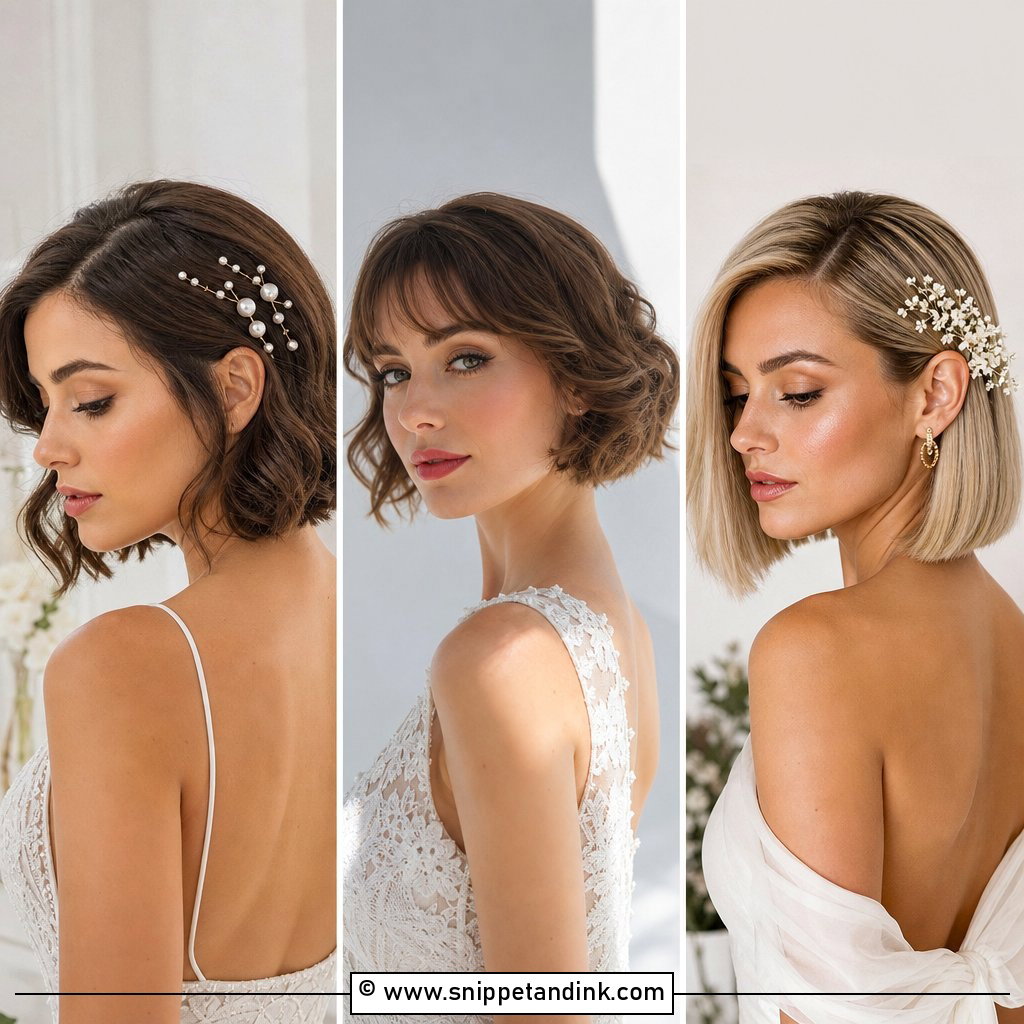
1. Wavy Bob Wedding Hair
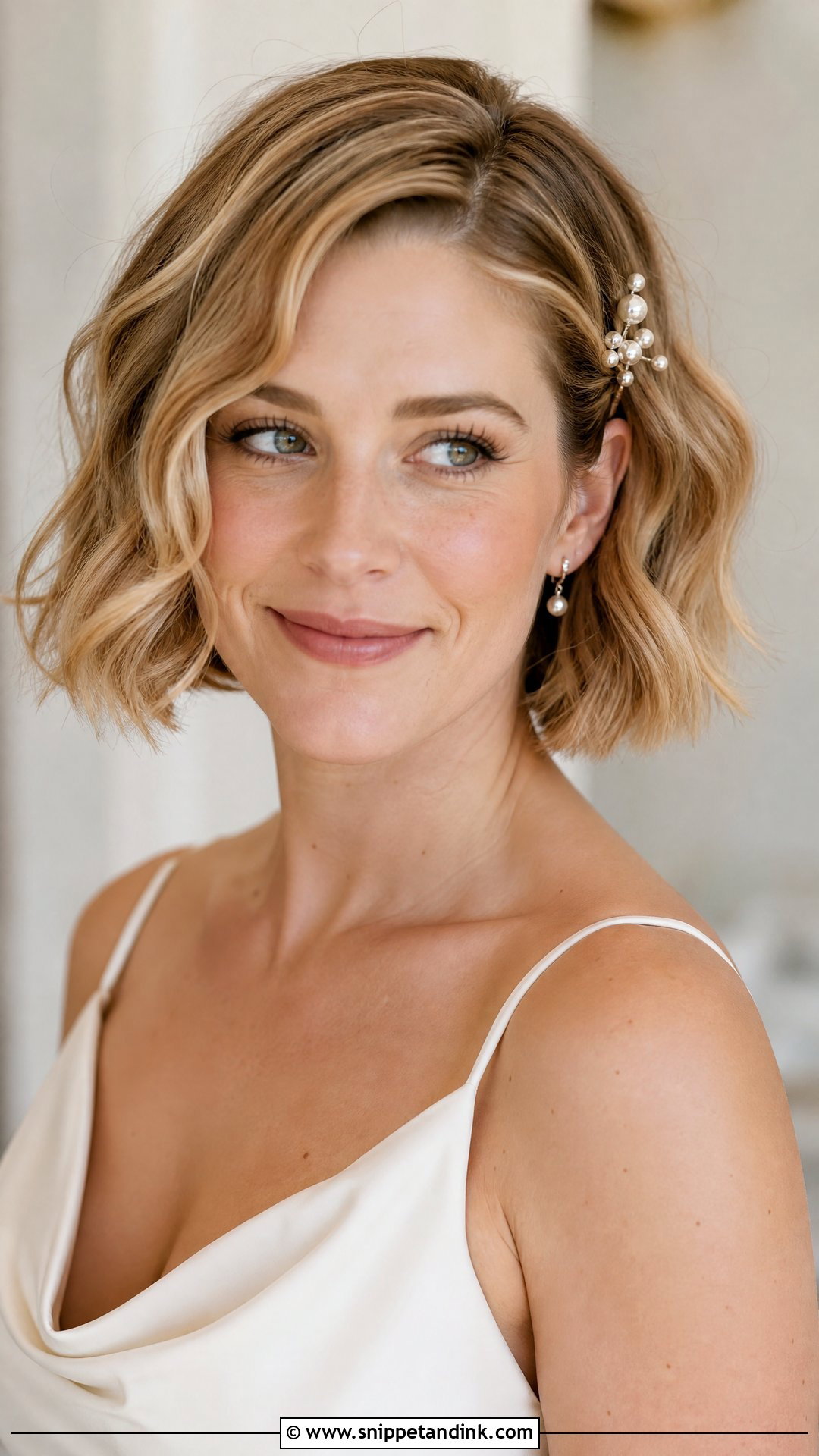
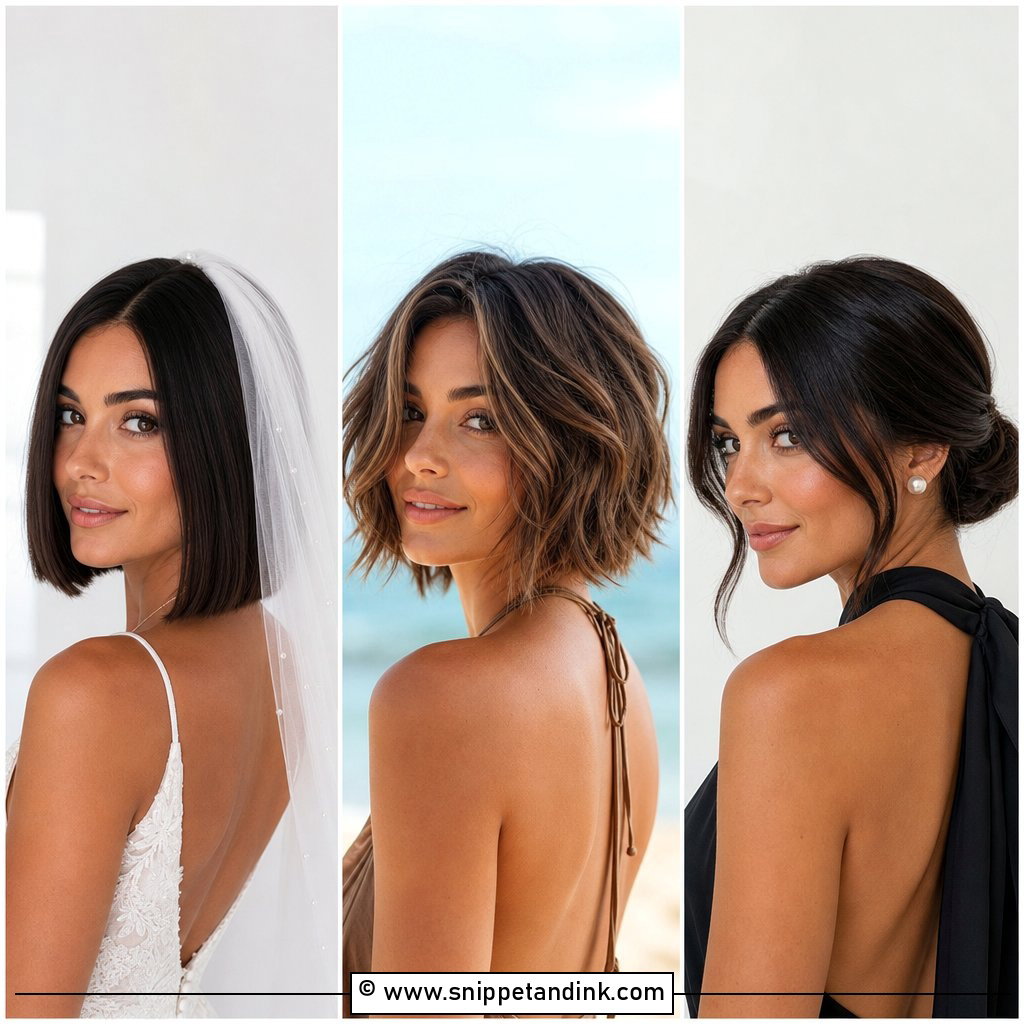
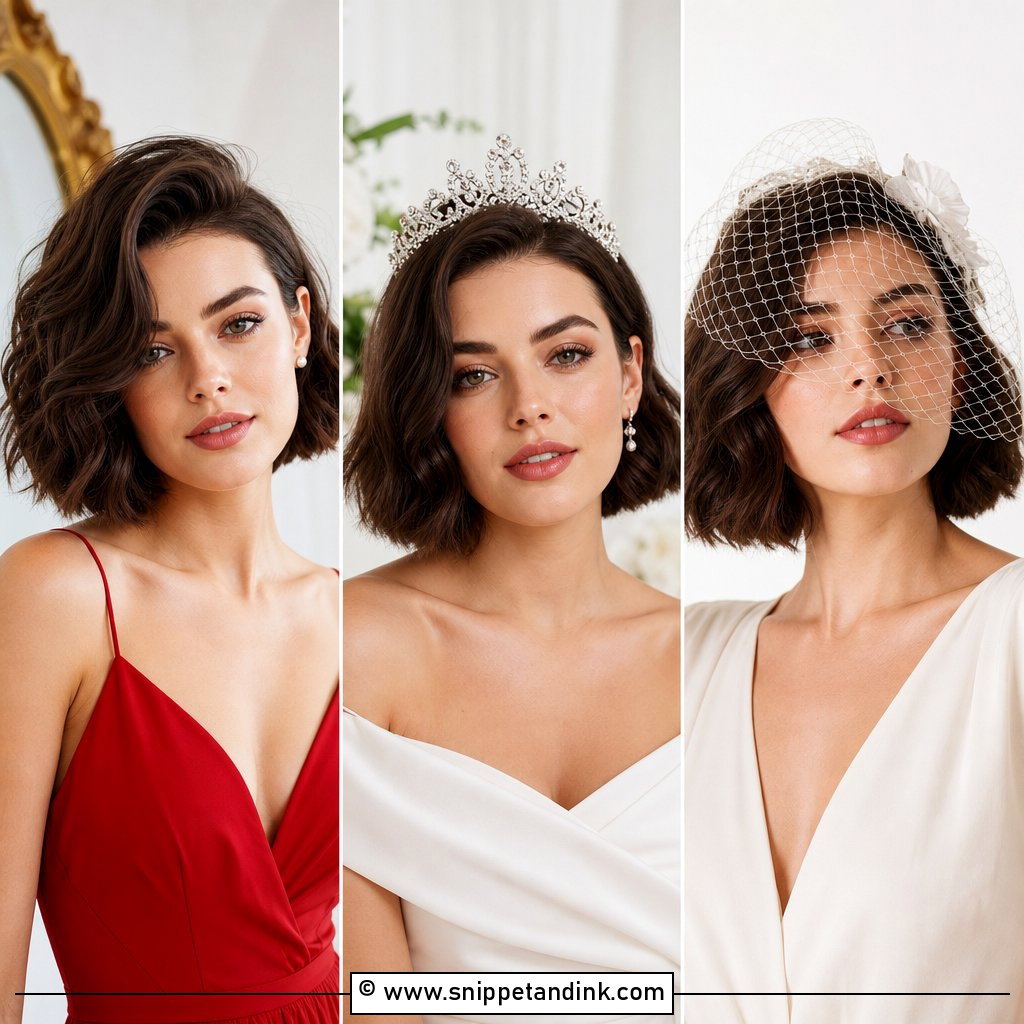
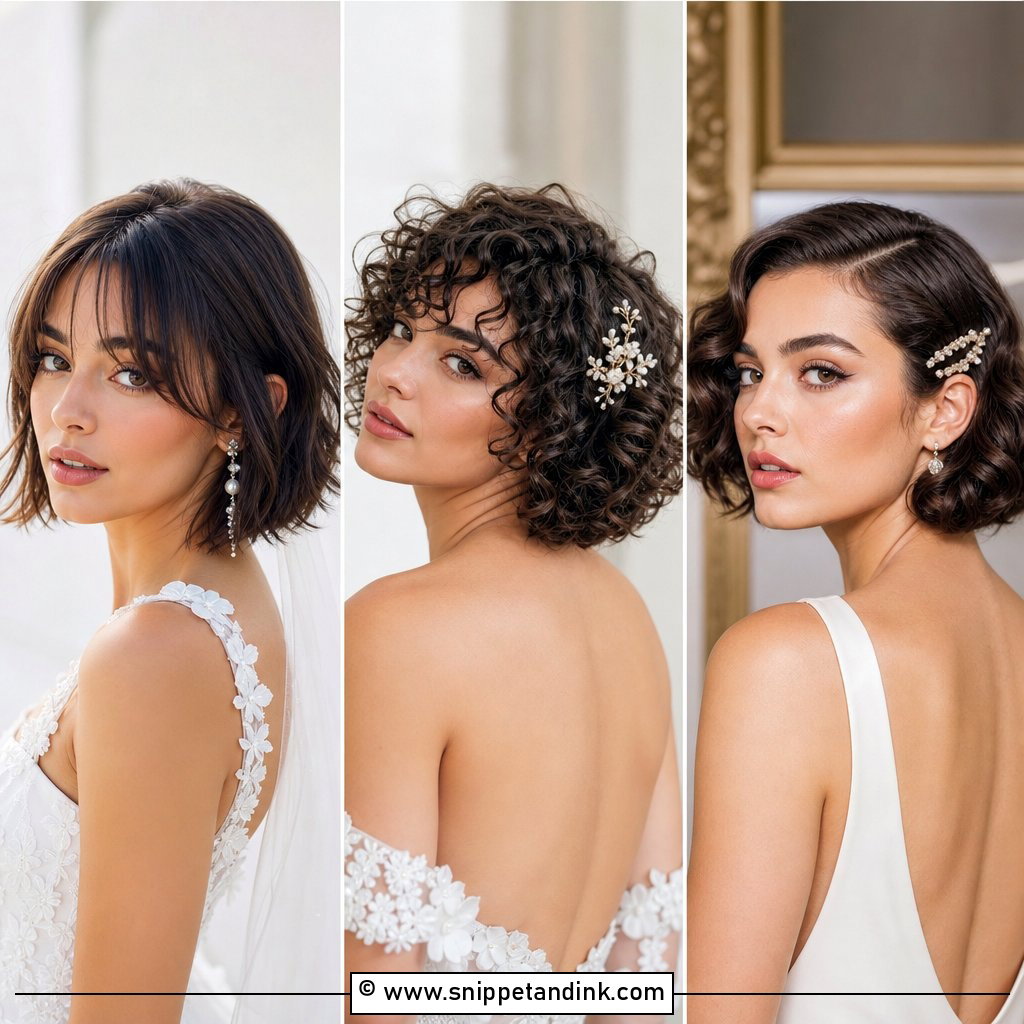
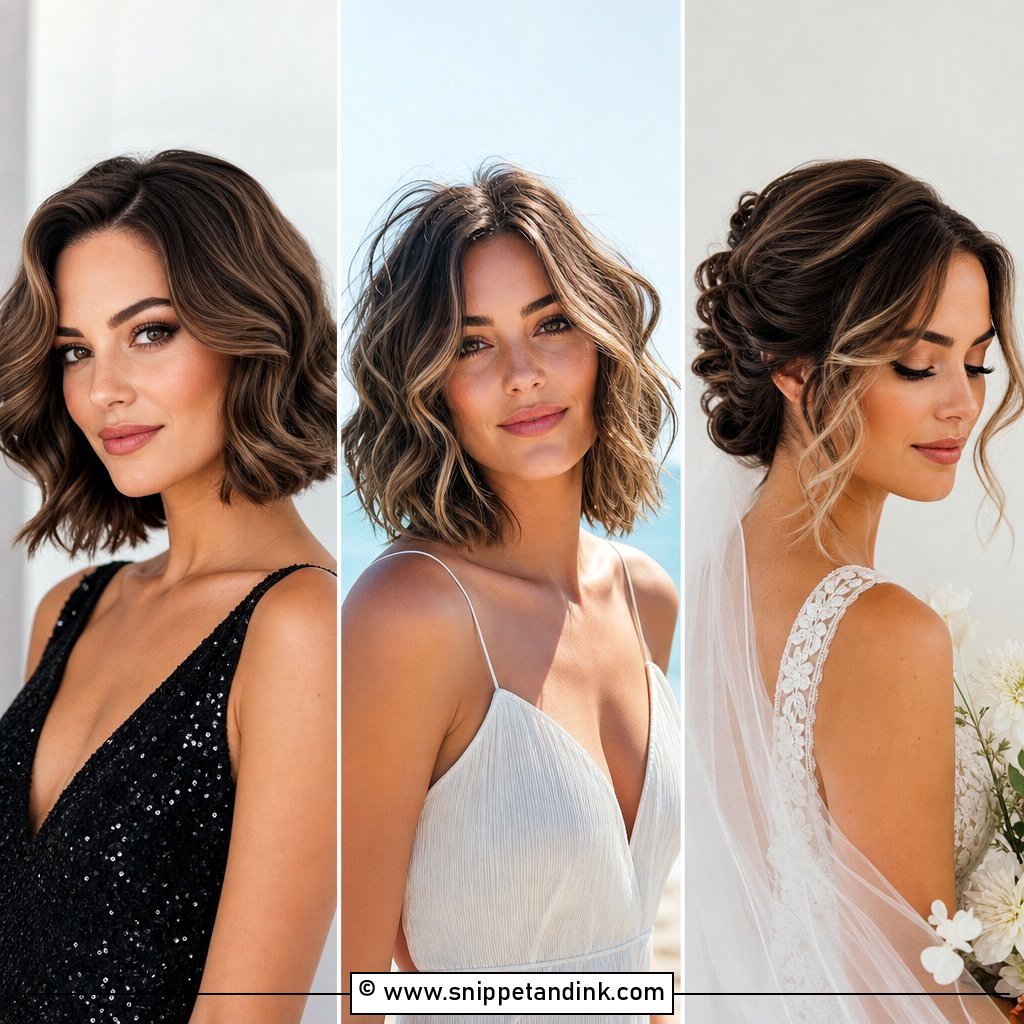
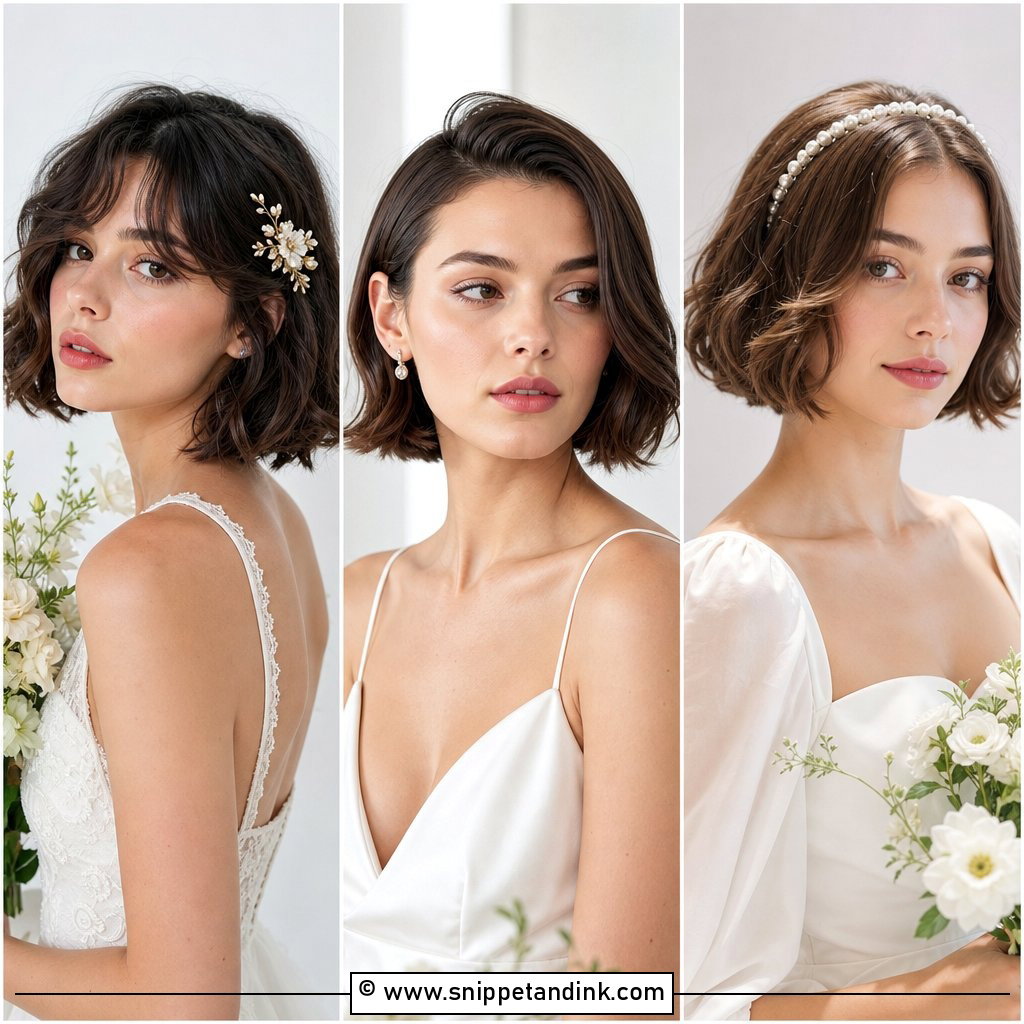
Brushed-out waves are the safest first choice, and the one I’d teach a guest to do herself. On a chin, jaw or collarbone bob the bend adds movement while the haircut stays visible. The detail most people miss is brushing: once the waves are fully cool, I run a soft bristle brush through them so they melt into one another instead of sitting as separate tubes. A side part softens the face; a center part looks more editorial. Use a flexible spray so the waves still move when someone hugs you.
2. Sleek Bob Wedding Hair
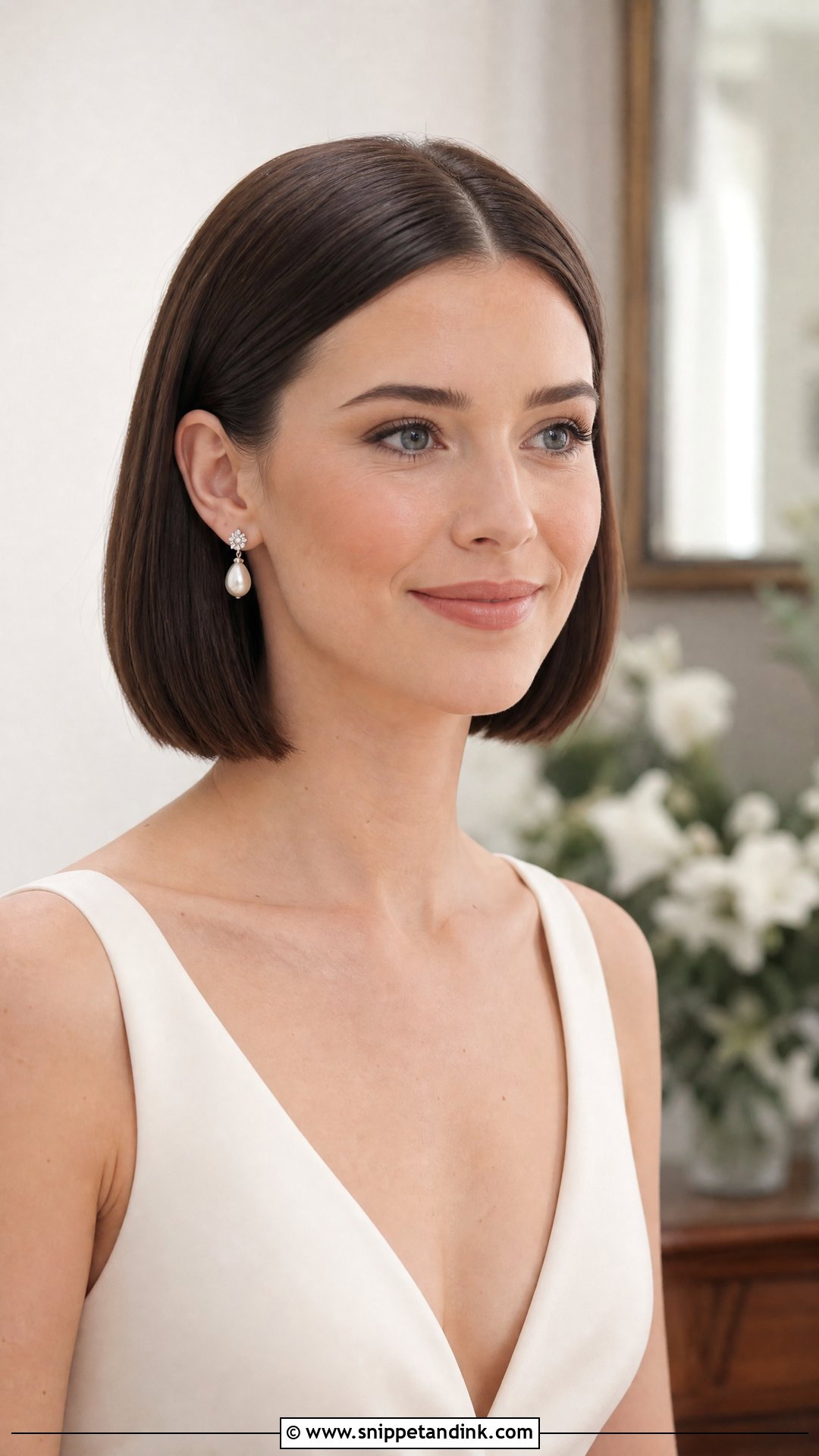
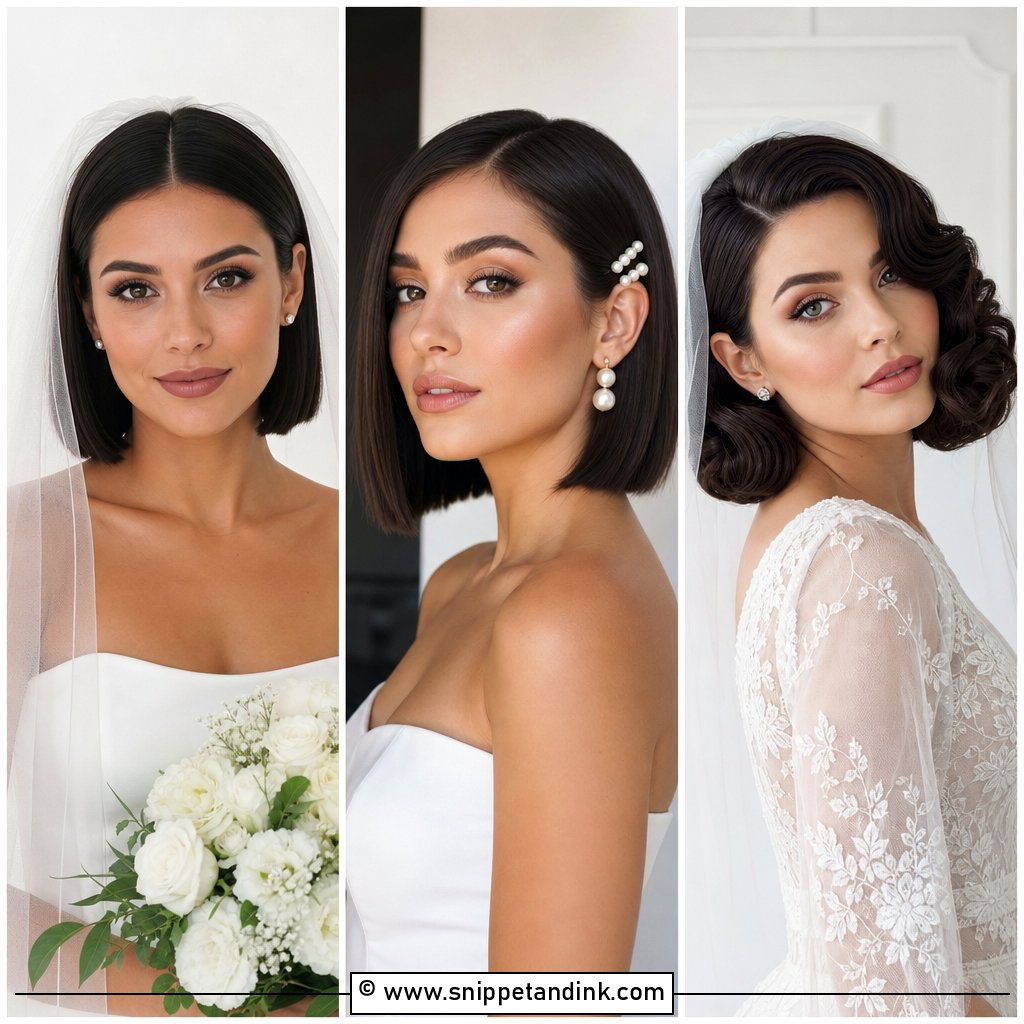
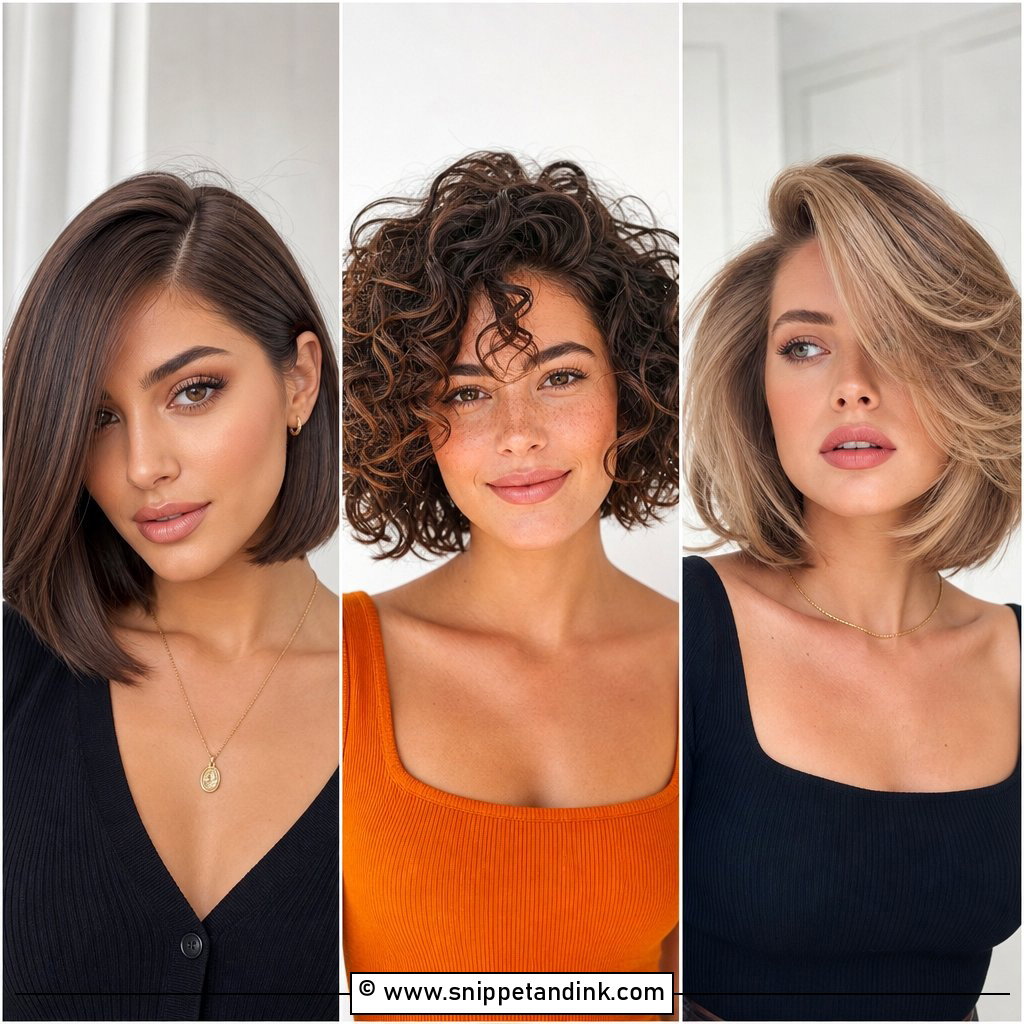
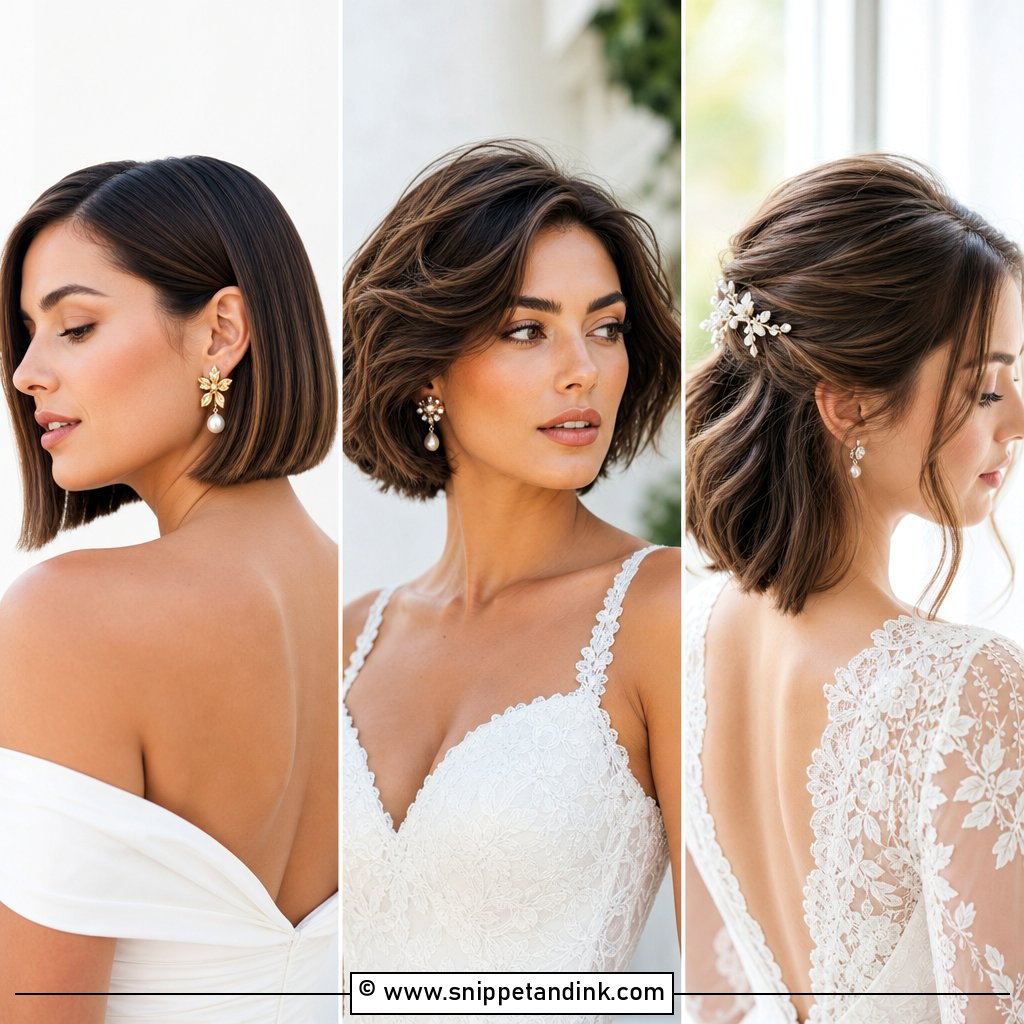
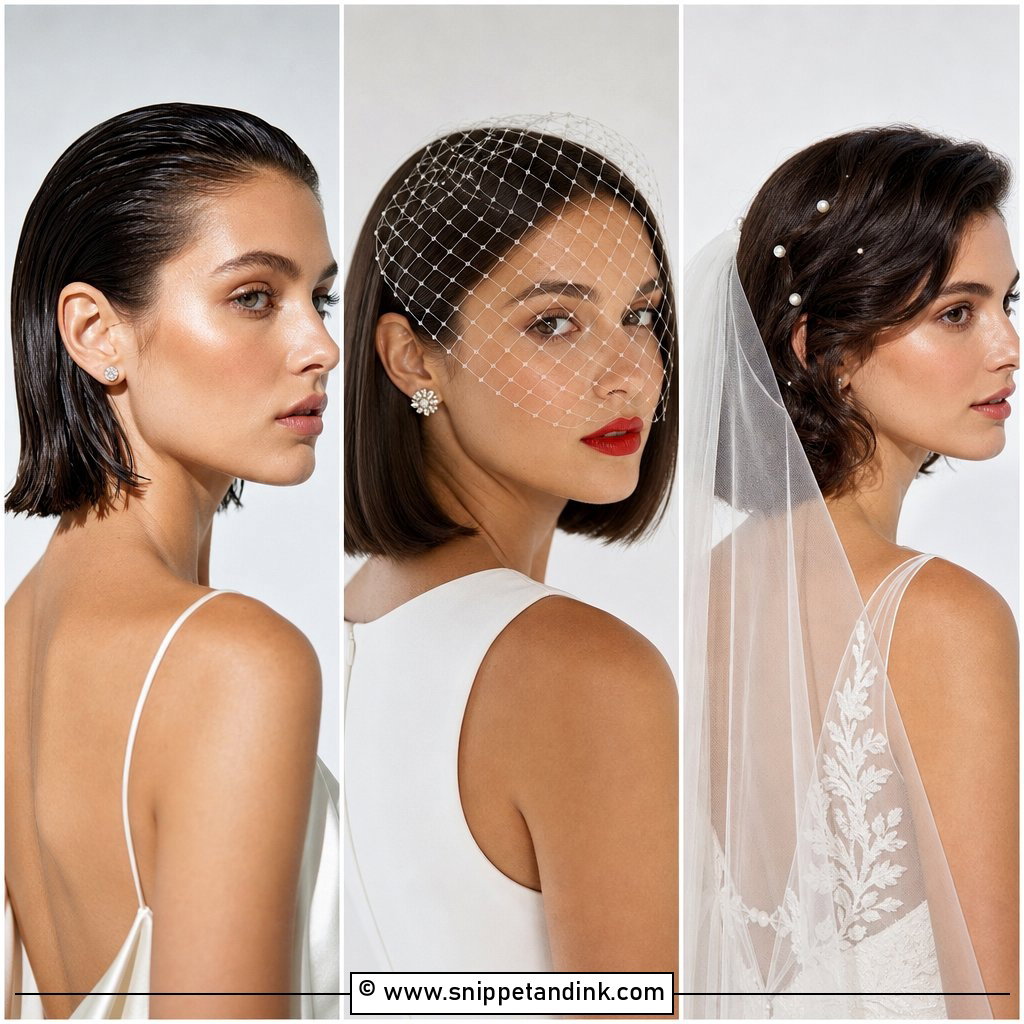
Sleek only works on healthy ends. On blunt bobs, Italian bobs and long bobs with a fresh trim, the shine and the line do all the work. On dry or split ends, smoothing just highlights the damage, and I’d choose a wave instead. My order is smoothing cream on damp hair, a round-brush blow-dry, then one slow pass of the flat iron. Skip heavy serums; under the photographer’s flash they turn a sleek bob greasy at the roots.
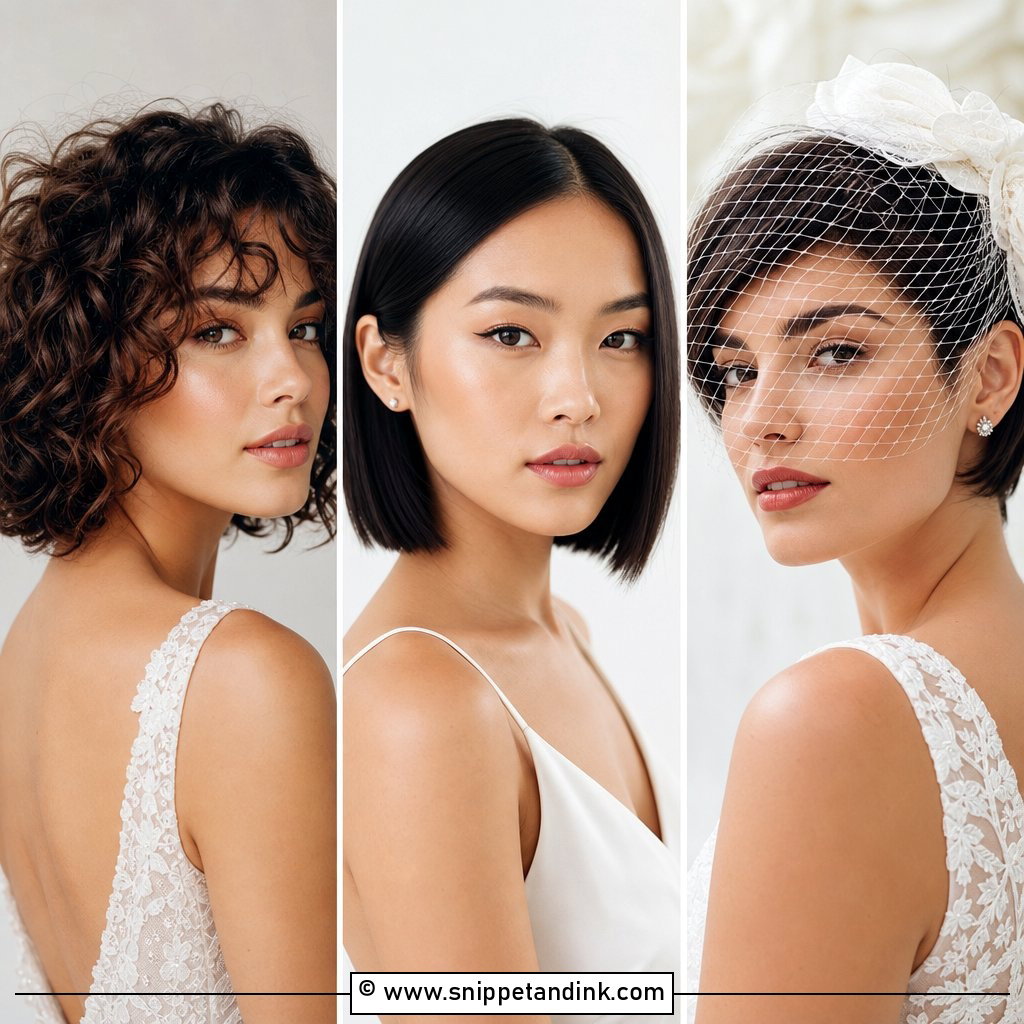
3. Curly Bob Wedding Hair
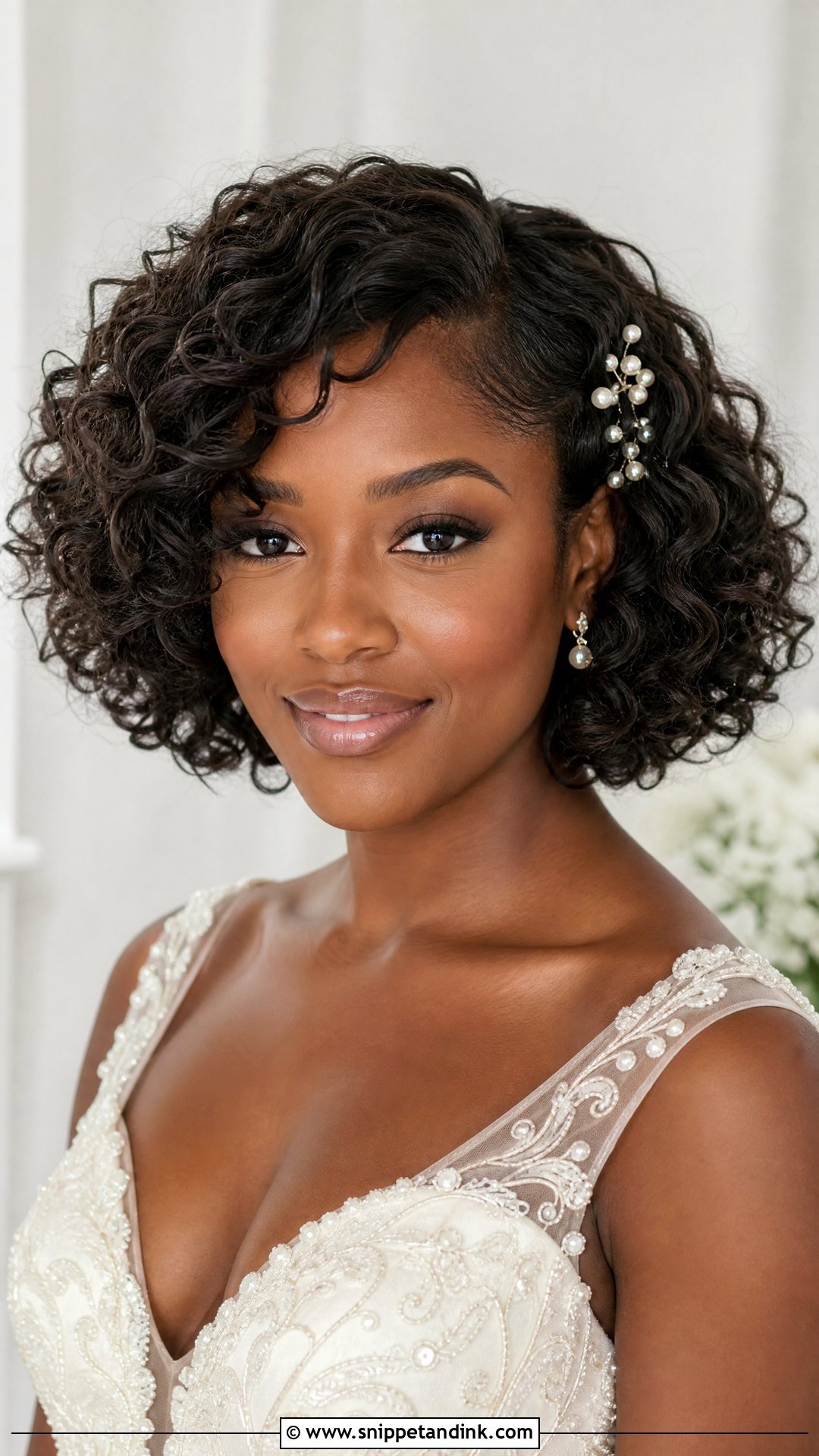
Let the curl pattern lead. A rounded curly bob frames the face, while a side part pushes volume up at the crown. Hydration is what I care about most, because a dry curl frizzes the moment the room gets warm. Curl cream on wet hair, diffuse on low, and don’t touch the curls until they’re completely cool. Pins should slide into the curls from underneath; a veil sits best anchored just behind the crown, where it won’t flatten the top.
4. Half Up Bob Wedding Hair
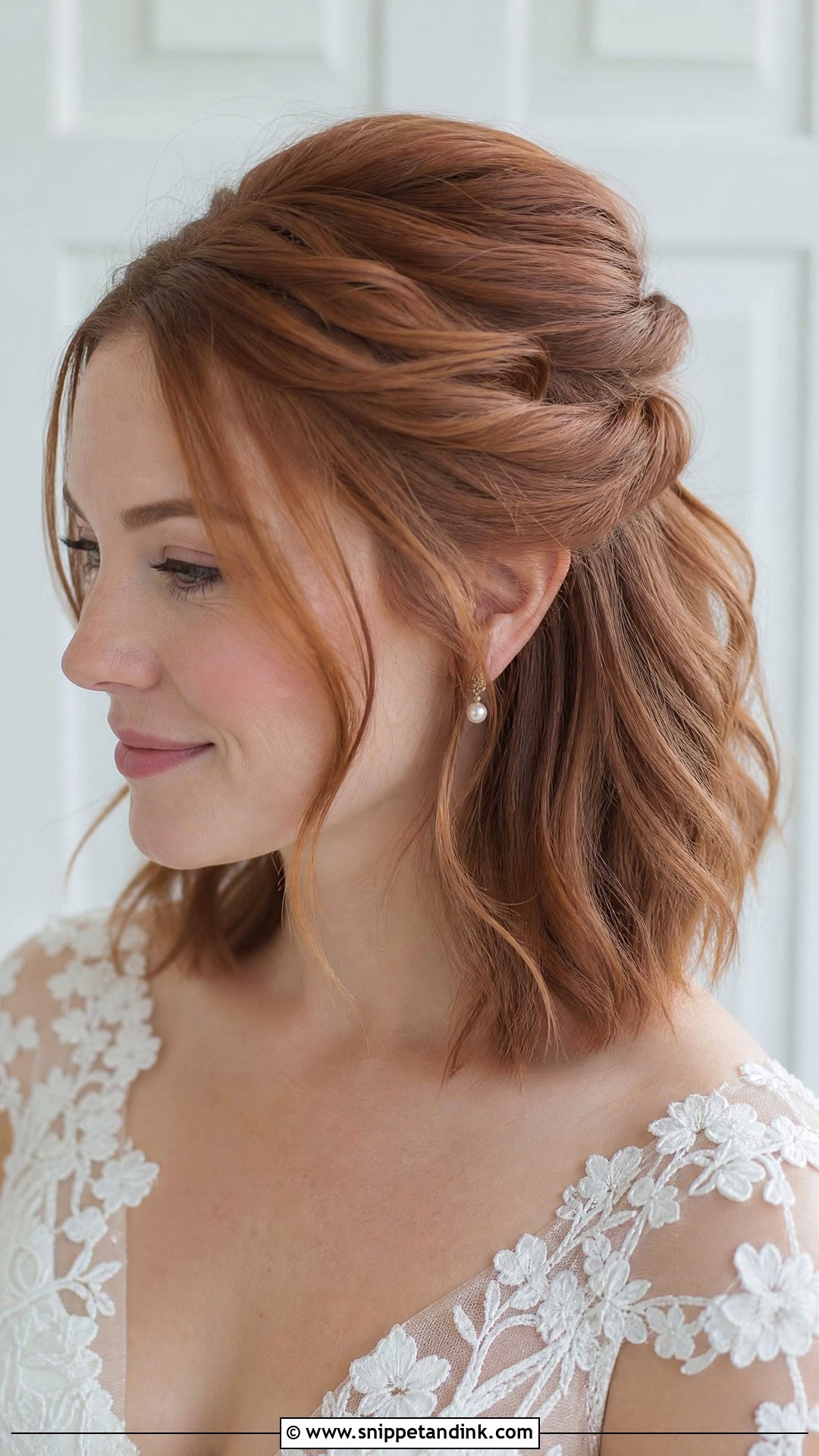
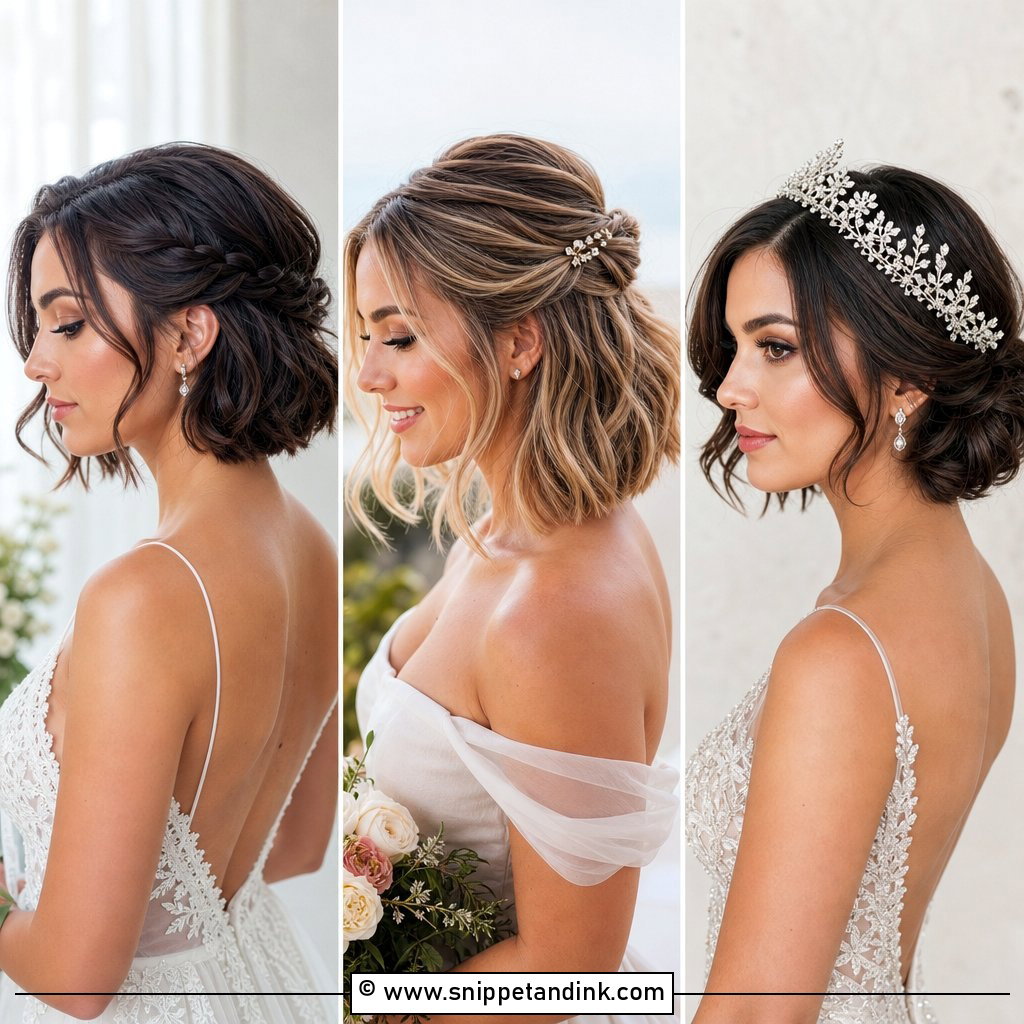
Half up is the answer when your front layers keep falling in your face. It needs a bob that reaches at least the chin, and I usually take only a thin top section so the lower part stays full. Twist it, braid it lightly or pin it back with pearl clips. That pinned section is also the most reliable base a veil comb can have on short hair. I leave a couple of soft pieces at the temples, otherwise it looks tight and a little too neat for a wedding.
5. Side Part Bob Wedding Hair
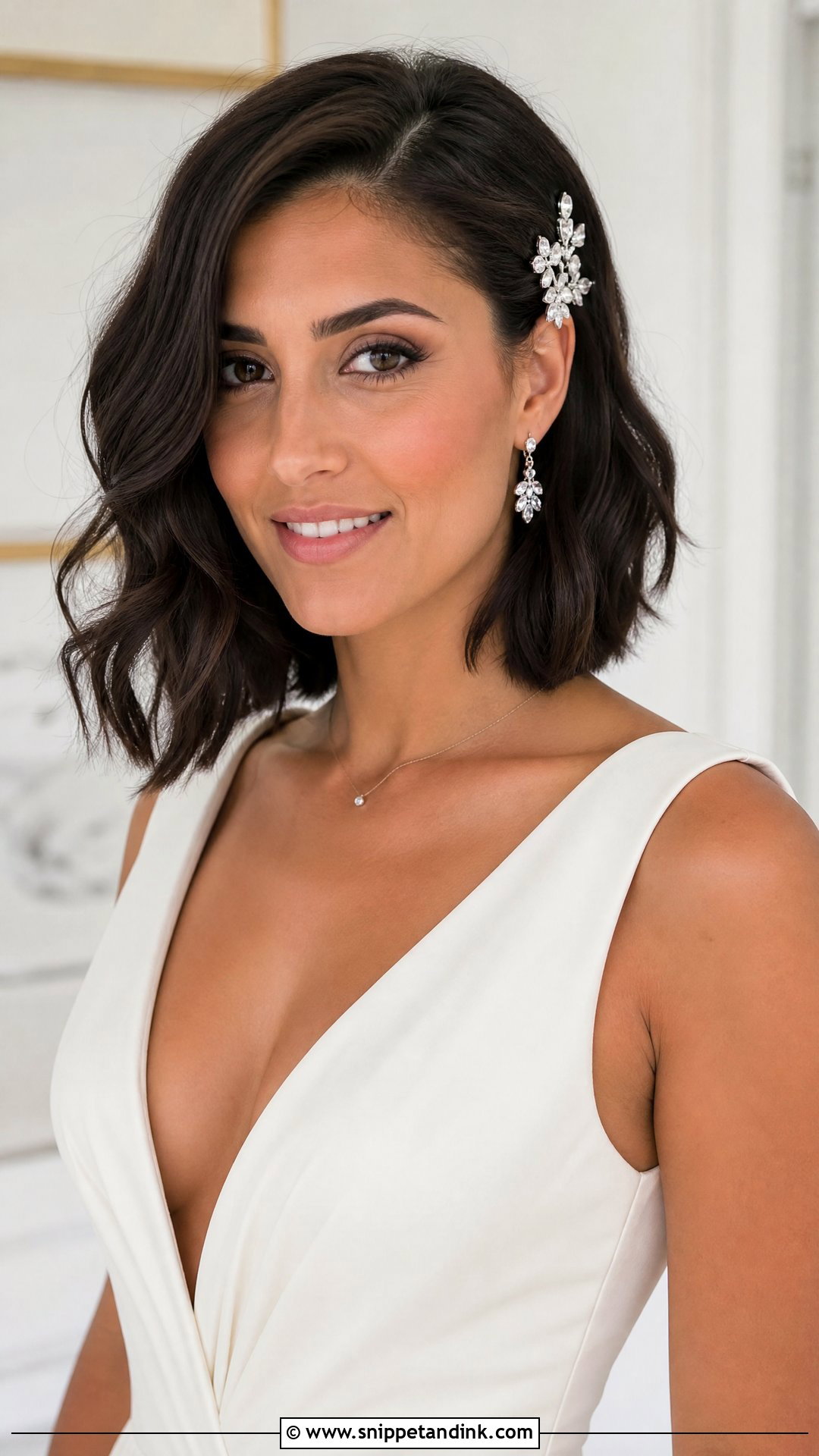
Changing the part is the cheapest styling trick there is. A deep side part throws volume to the front, softens a strong jaw and makes a bob look styled for an occasion rather than for an ordinary Tuesday. It suits an open neckline and statement earrings, especially with the short side tucked. The secret to it lasting is to blow-dry the part into place while the roots are damp, directing them across the head, then style the ends. A part that’s only combed over dry falls flat by lunchtime.
6. Bob Wedding Hair With Veil
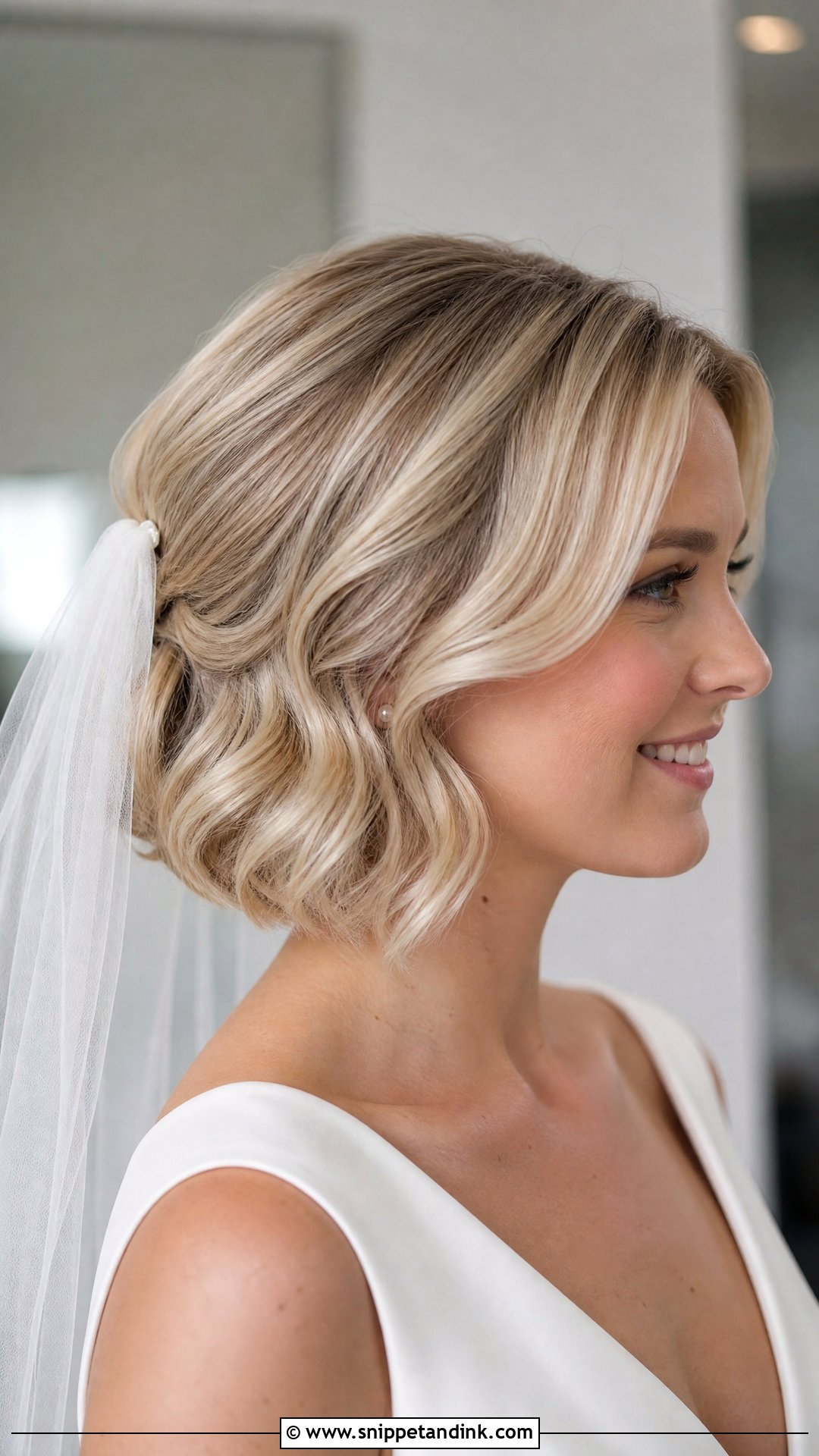
You don’t need a big updo to hold a veil. On a bob I build a small anchor: a hidden braid, a teased crown section or crossed pins, and the comb pushes into that. Sleek bobs look cleanest with the veil set low at the back. On a wavy bob I place it slightly higher so the texture still shows underneath. Short, birdcage and fingertip veils all suit a short cut. Bring the actual veil to your trial; weight is the thing photos can’t tell you.
7. Bob Wedding Hair With Pearl Pins
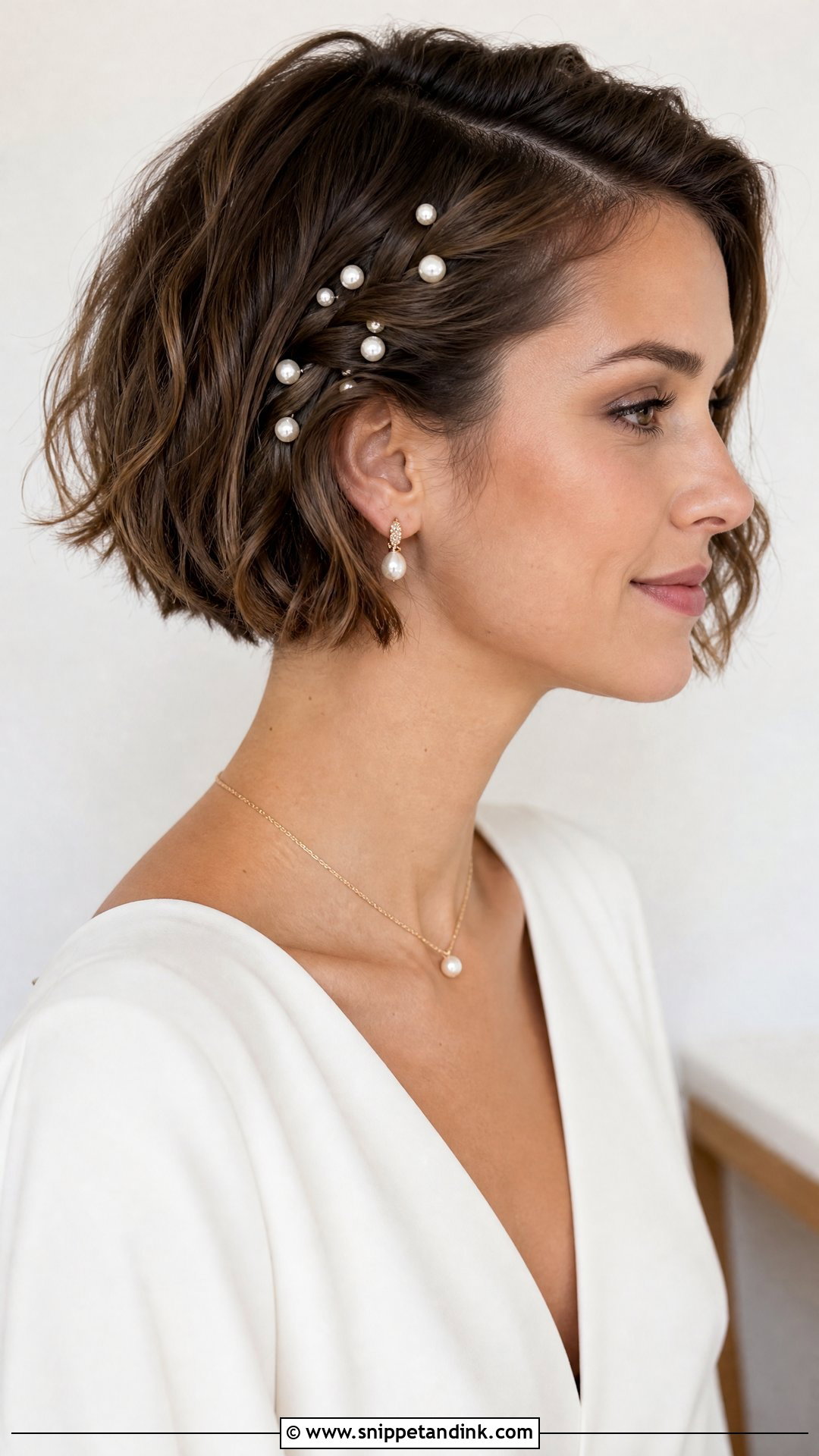
Pearl pins are the accessory I’d choose for a bob nine times out of ten, because they add detail without covering the cut. You can scatter a few through waves, line them along a tucked side or cluster them near a mini twist at the back. Fine hair needs prep or they slide straight out, so I mist texture spray into the section first. Keep the count low. A balanced handful looks chosen; a crowded head of pins looks nervous.
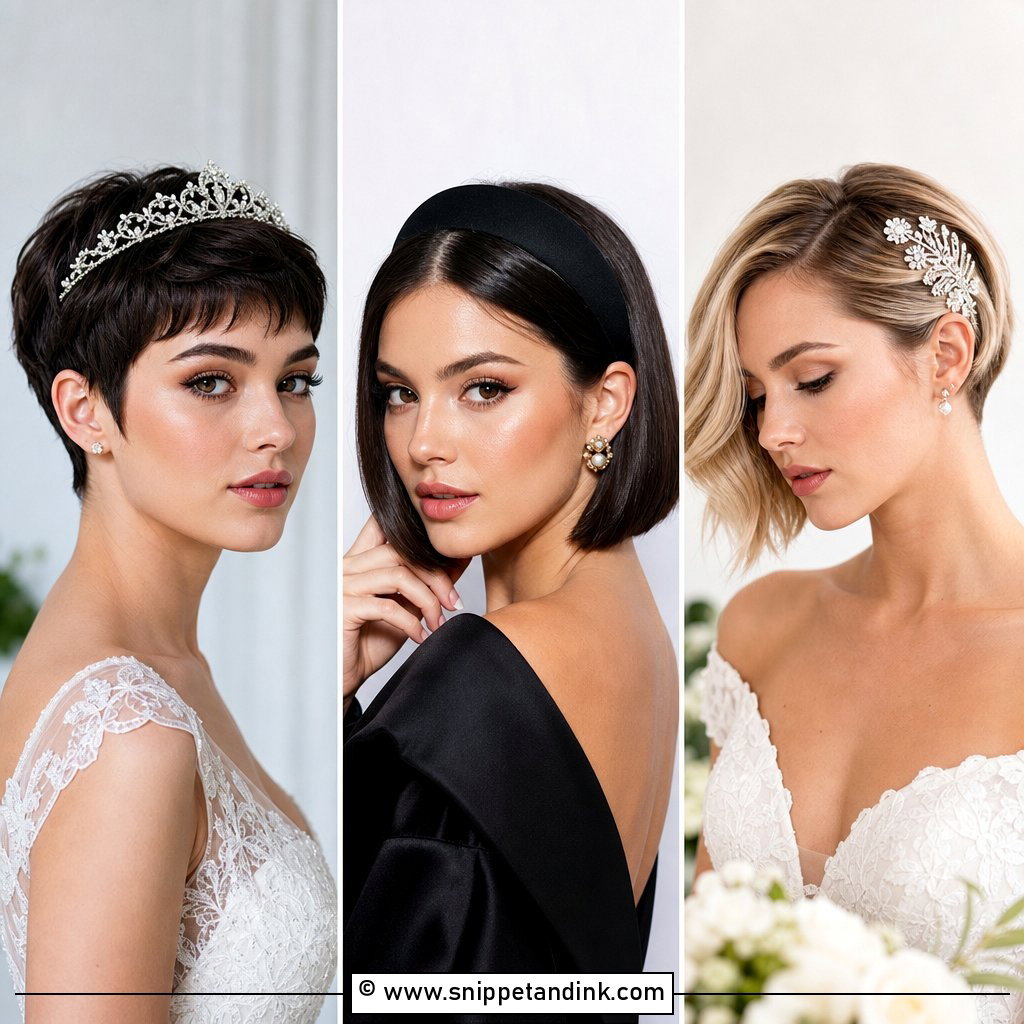
8. Vintage Bob Wedding Hair
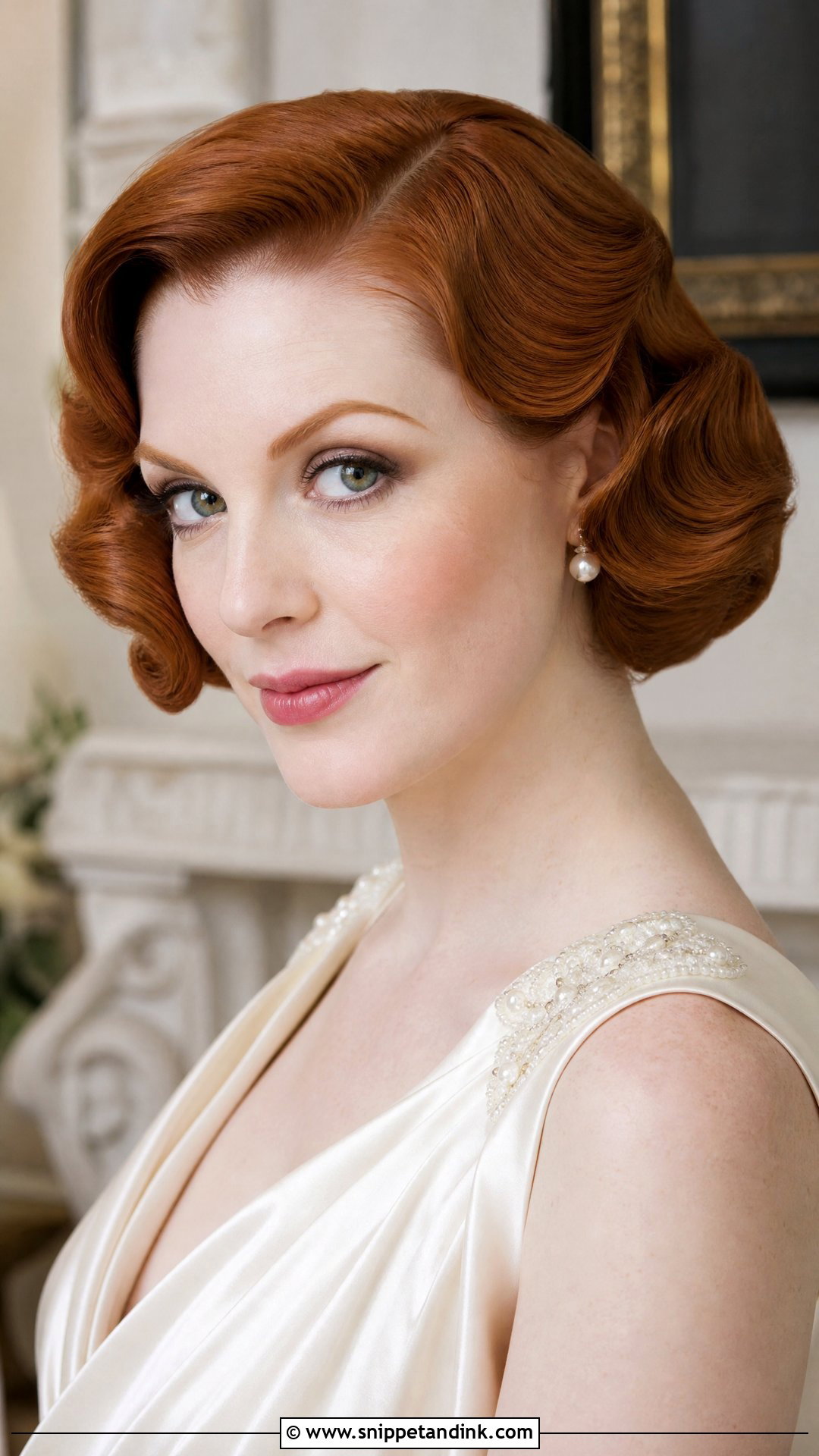
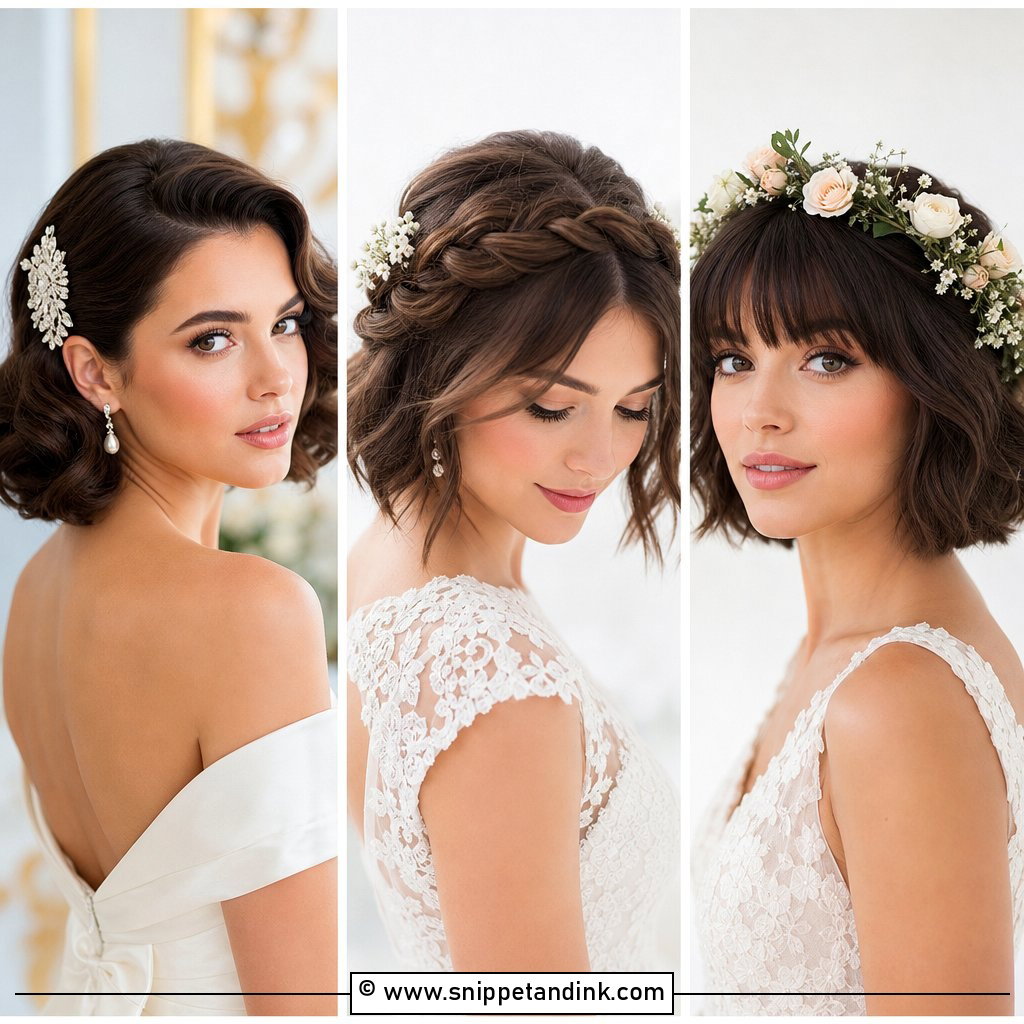
Finger waves and sculpted bends give a bob the most formal finish here. Chin-length cuts, French bobs and blunt bobs all hold the shape well, because the hair isn’t long enough to drag the curves out. I set the waves with a curling iron, clip each ridge while it cools, then brush once and re-press with clips. A deep side part gives the old-Hollywood line. It suits satin, lace, gloves or a structured neckline, and it’s worth a trial because the first attempt often comes out stiffer than you want.
9. Textured Bob Wedding Hair
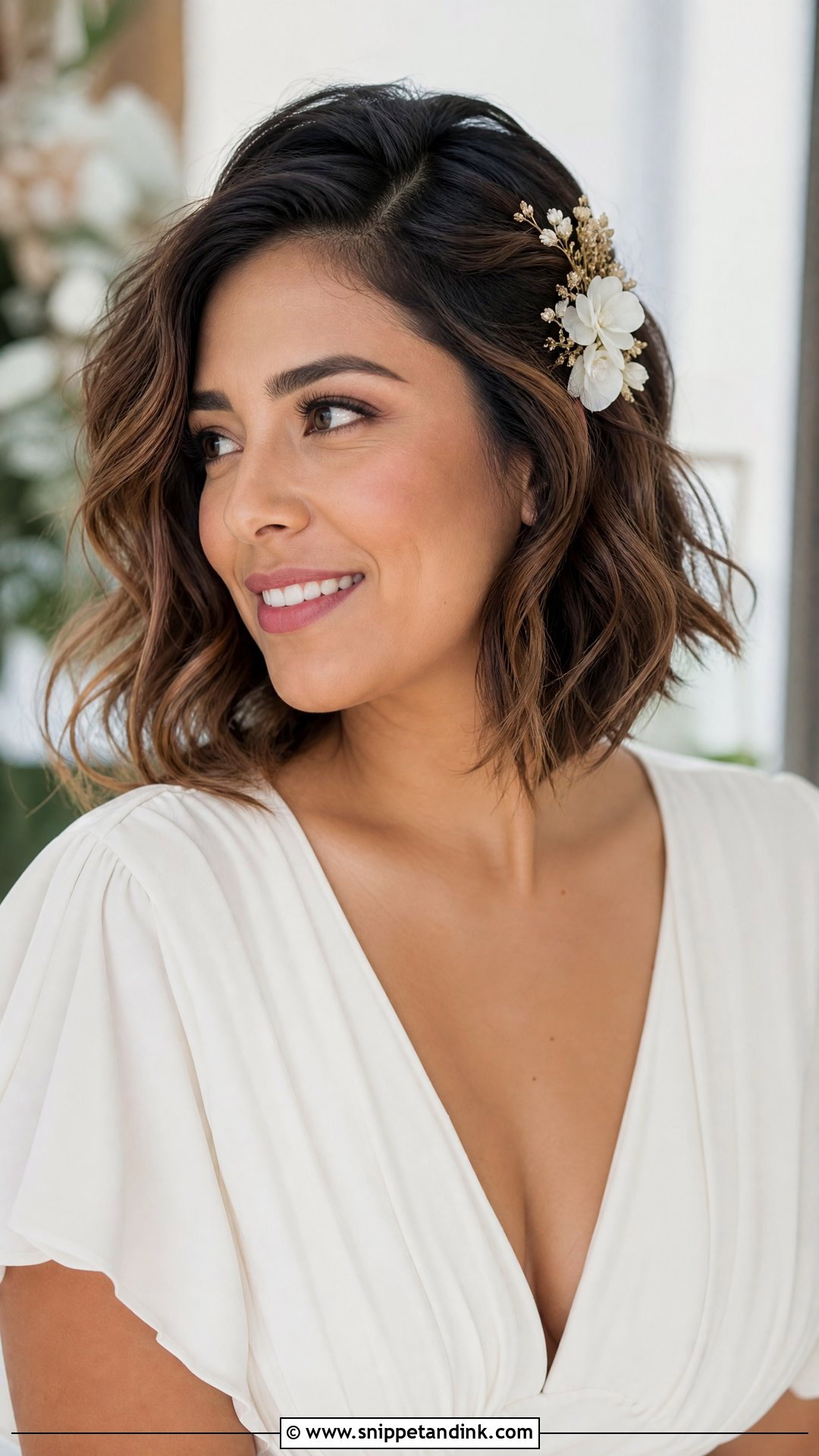
Controlled texture is a balancing act on short hair. Too much product and the bob looks heavy and separated into strings; too little and it lies flat against the head. On layered or choppy bobs, and on naturally wavy hair, I add soft bends through the mid-lengths only, then pinch a pea-sized amount of paste through the ends. A small clip or comb dresses it up. Outdoor weddings suit it, since a little wind only improves the look.
10. Blunt Bob Wedding Hair
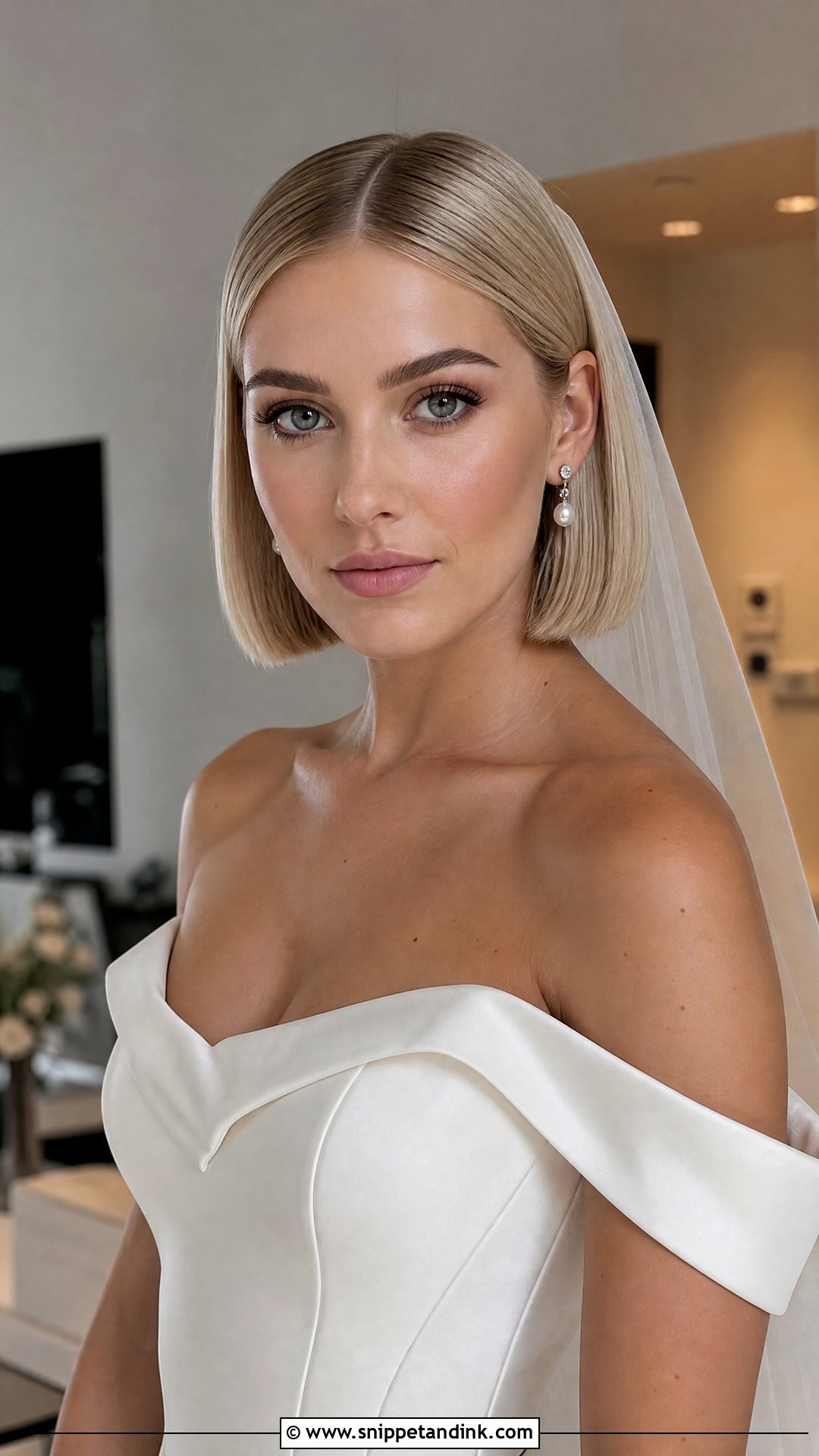
The clean line is the style. That’s why a blunt bob needs its trim timed well: about a week before is my preference, close enough for a crisp edge but far enough that it doesn’t feel unfamiliar on the day. Wear it straight for a modern look or add the slightest bend at the ends. Anti-frizz cream before blow-drying keeps the line sharp. It pairs best with minimalist gowns and square necklines, where nothing competes with that edge.
11. French Bob Wedding Hair
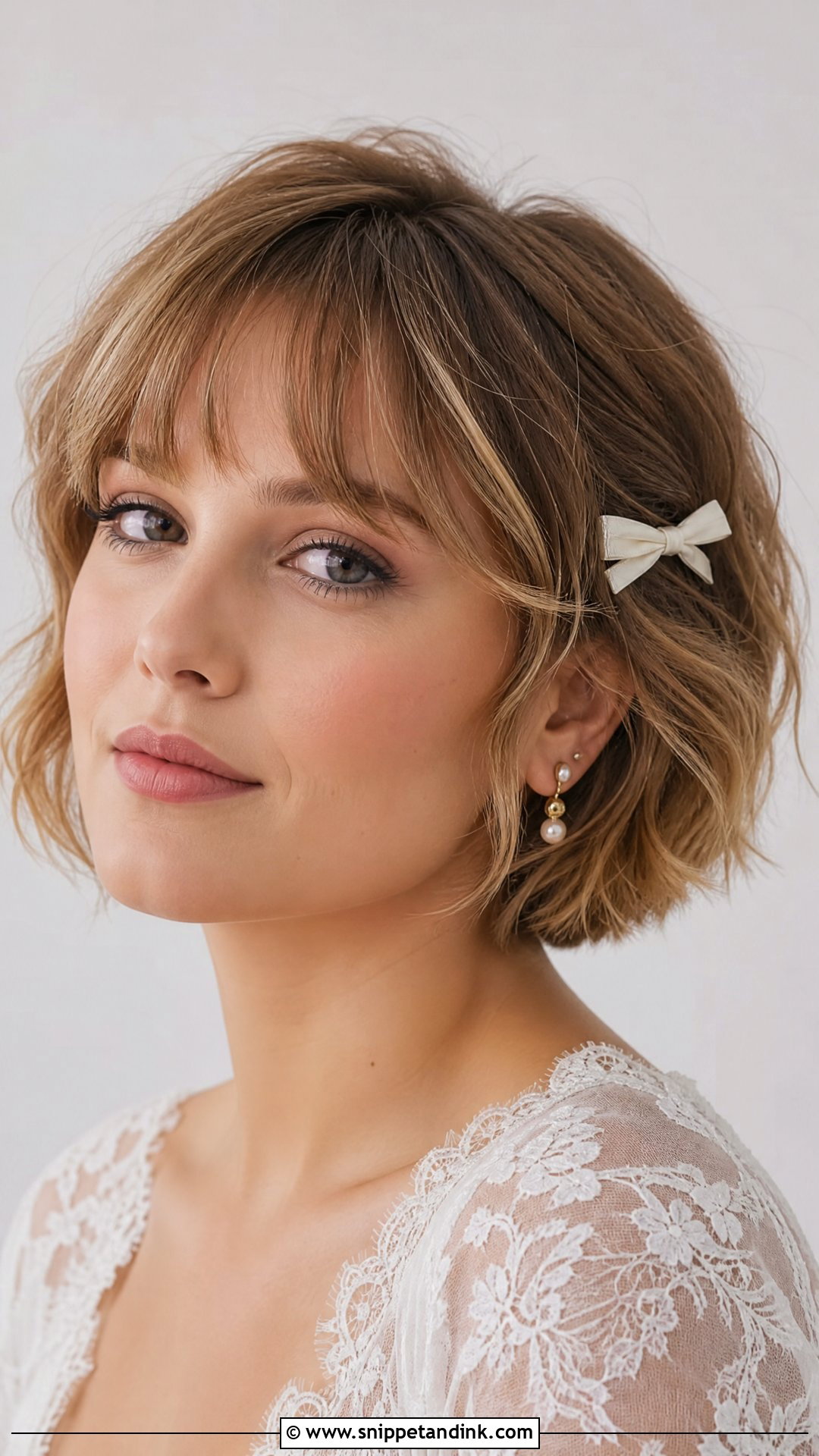
French bobs live at the jaw or chin, often with soft bangs and a slightly undone texture. Stiffness ruins them, so I use almost no hold: a light cream, a little wave around the face, and that’s it. Accessories should be small, like a tiny bow, a pearl clip or a short veil. If you’re the sort of person who touches her hair constantly, this is a good cut for you, because a French bob only gets better as it loosens through the evening.
12. Long Bob Wedding Hair
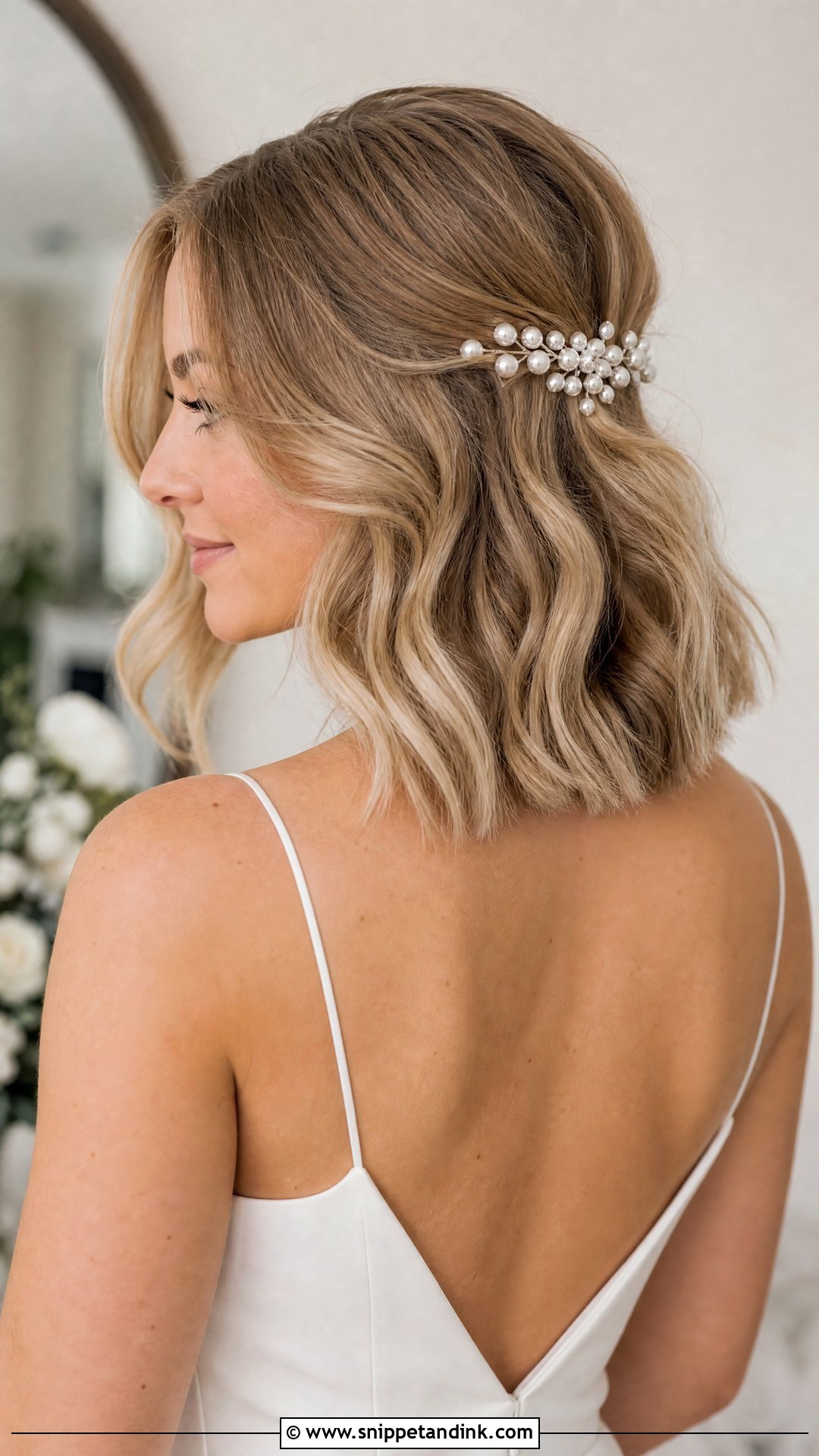
A long bob holds styles that a shorter cut can’t: proper waves, a half-up section with real grip, even a low mini updo. That extra hold makes it the friendliest bob length for a veil or comb. Waves are what most people choose, since they make the ends look fuller. I bevel or curl the ends slightly under so the hair looks finished from the back, which is the angle most guests see during the ceremony. It’s also a forgiving length for bridesmaids who need to match a group.
13. Bob Wedding Hair With Bangs
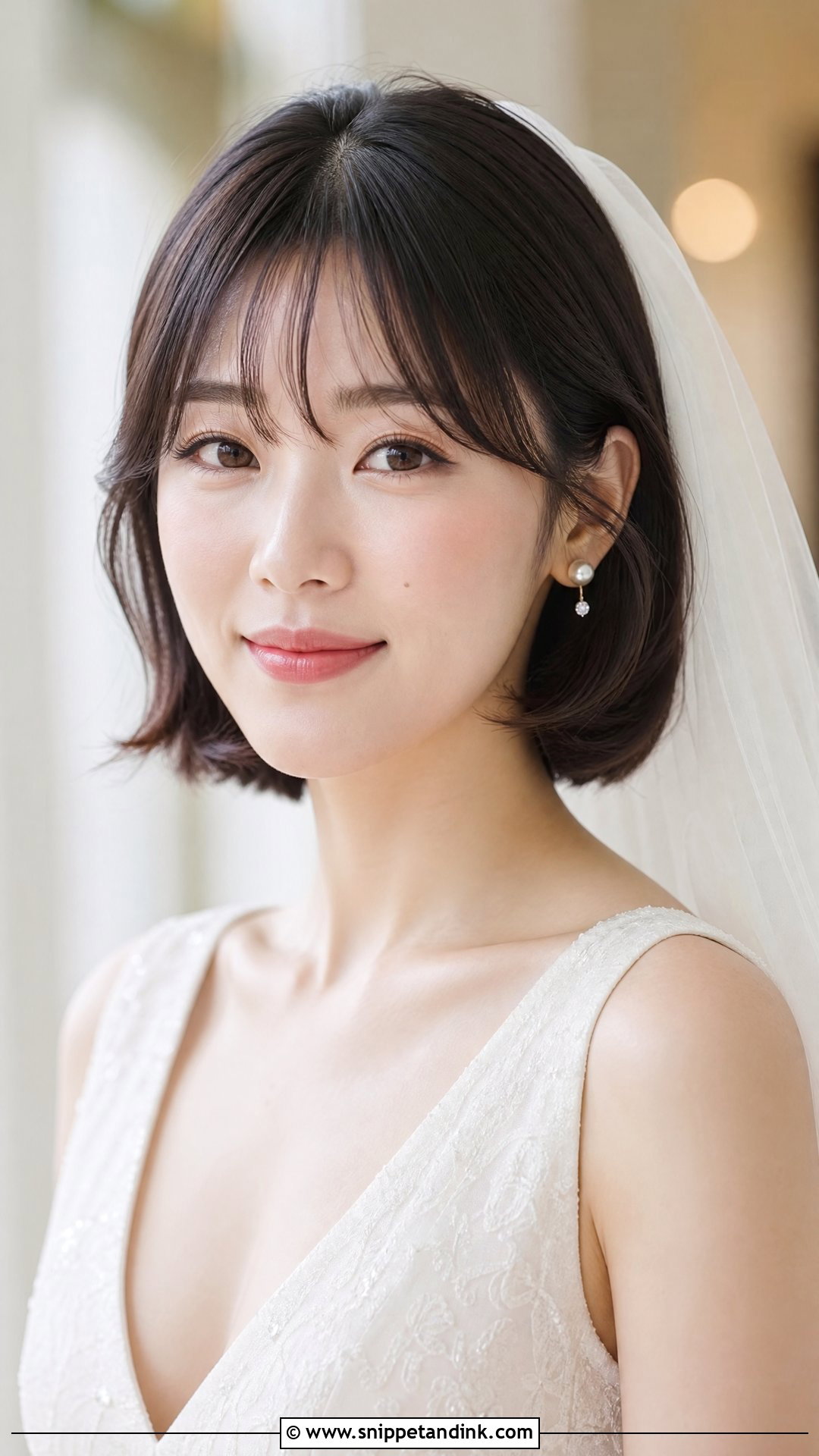
Bob wedding hair with bangs starts with the fringe, always. I blow-dry the bangs while damp, brushing them side to side to remove any cowlick, before anything else. Curtain bangs blend into waves, blunt bangs look bold, wispy ones soften the face. Keep products light at the forehead because skin oil and heavy cream separate bangs into strands by midday. If you’re trimming them, do it at least a week before so the edge softens.
14. Braided Bob Wedding Hair
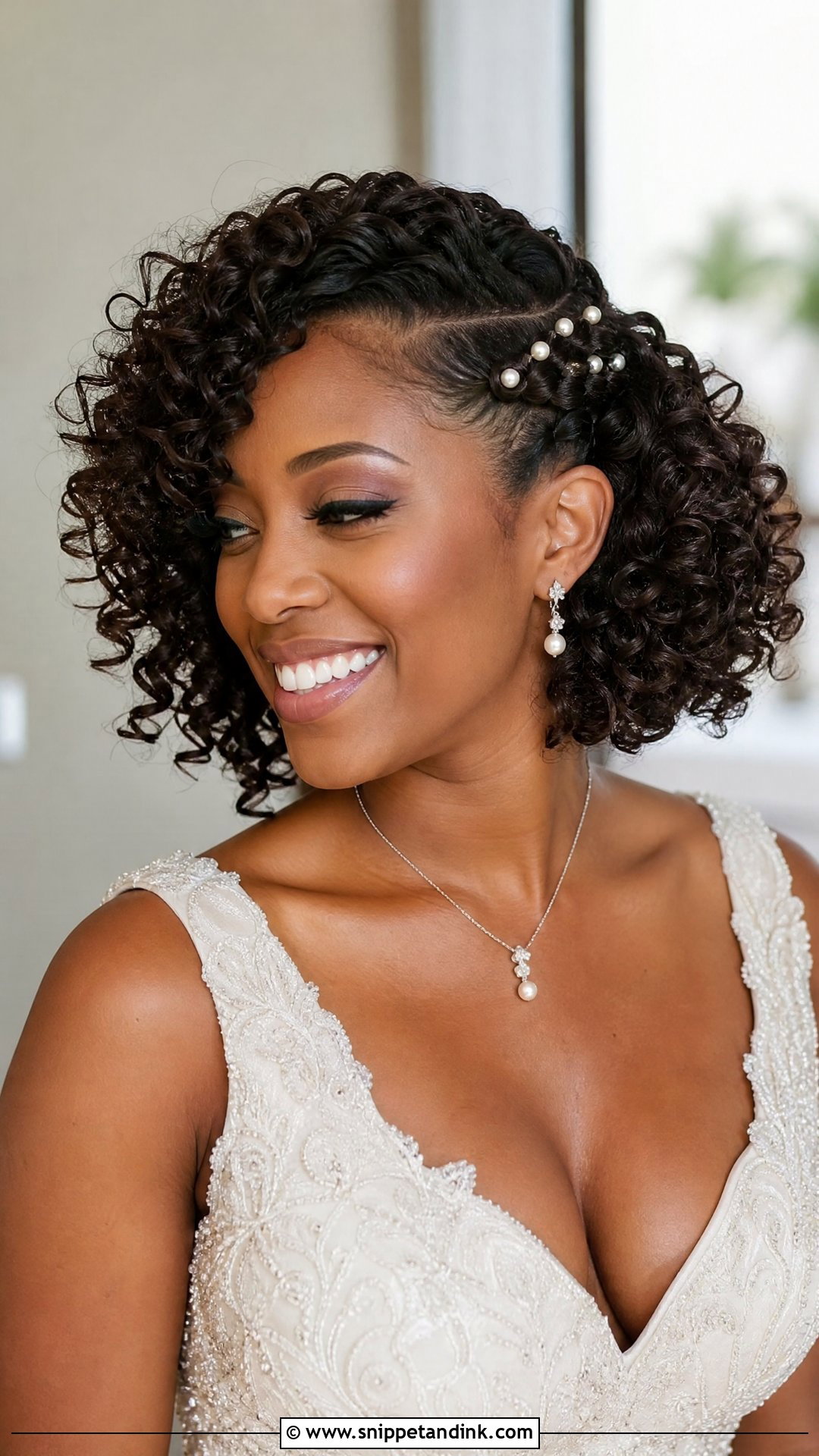
Two tiny twists or a small side braid can hold the front of a bob off your face through the ceremony and every photo. I use clear elastics and pins hidden inside the plait so the braid blends into the style rather than sitting on top of it. The rest of the bob can be curled, waved or left with its natural texture. A few pearl pins or tiny flowers along the braid are plenty; on short hair, details look better light.
15. Bob Wedding Updo
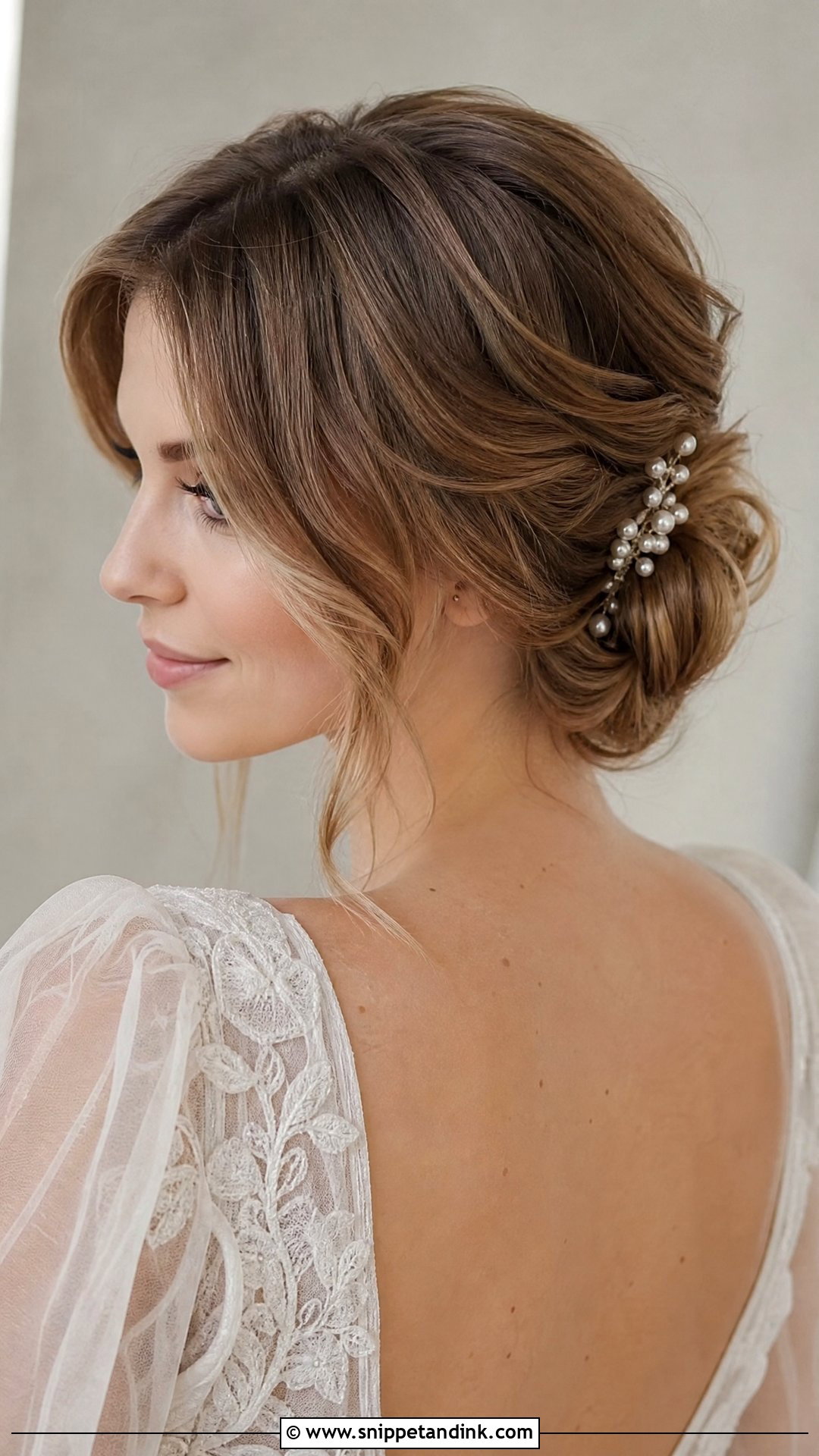
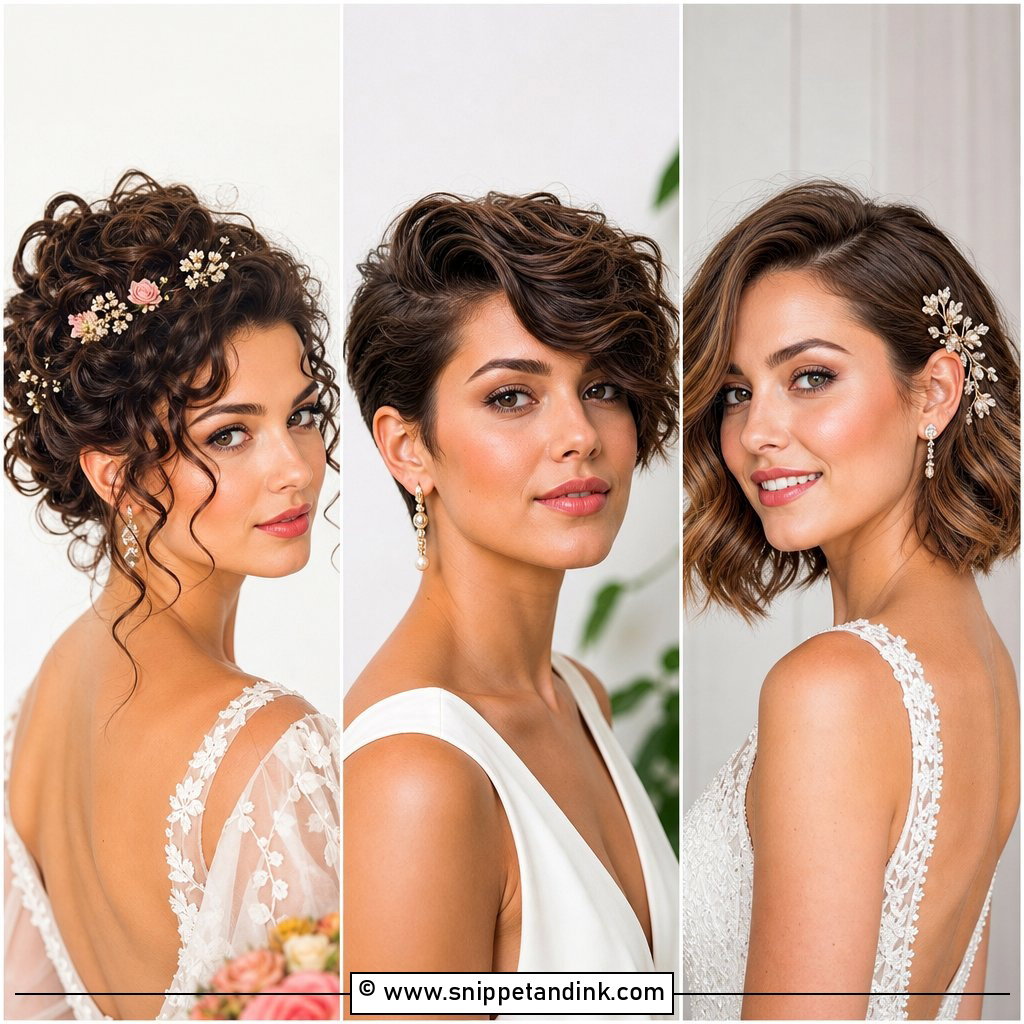
An updo on a bob is possible, but it needs honest expectations. You won’t get a full bun. What I make instead is a soft pinned shape at the nape, built from short twists that are tucked and crossed with pins. Texture spray beforehand is essential, because silky short sections slip out of pins within an hour. It works best on long bobs or layered chin-length cuts. Leave face-framing pieces out on purpose, and use a comb, veil or pearl cluster to cover any tucked ends.
Accessories Look Twice as Big on Short Hair
This catches people out at almost every bob trial I do. A comb or clip that looked dainty in the shop can swamp a chin-length cut, because there’s no volume of hair around it for balance. Wide flower crowns and heavy jeweled headpieces are the usual culprits.
My rough guide: keep a single piece no wider than the space between your temple and the top of your ear. Two or three small pins usually beat one large piece. Place them where the hair is thickest, often just above the ear on the fuller side of a side part, with a crossed pair of bobby pins underneath. Veils follow the same logic. A birdcage, an elbow-length tulle or a light fingertip veil sits better on a bob than a heavy cathedral, which drags the back of the cut flat.
The Only Bob in the Bridal Party
If you’re a bridesmaid with short hair and everyone else wears a low bun, don’t fake one. Match the group through the finish instead: the same smooth or textured feel, the same part, and the same accessory in a similar spot. In a line-up photo that reads as coordinated, while a forced mini-bun that keeps falling out reads as the opposite.
Sleek, Wavy, or Pinned Back at the Sides?
There’s far more range in a short cut than people expect. Sleek bobs are all shine and structure, waves and curls bring movement, and a pearl pin or a small veil turns any of them clearly bridal. I’d shortlist two, try both a few weeks out, and photograph them in the light you’ll actually be in. Bring your accessories so you see them at real scale on your own head. The one you forget about after ten minutes is usually the winner.
You'll Like These Ideas:


Leave a Reply