
Try the Silhouette You Think You’ll Hate
Most brides walk into their first appointment sure of one shape and walk out in another. I build every appointment the same way: one A-line, one ball gown, one sheath or slip and one fitted mermaid or trumpet, even if the bride insists she only wants one of them. Seeing the extremes tells you more about your proportions in twenty minutes than an afternoon of near-identical gowns.
- Wear or bring nude, smooth underwear and a strapless bra, plus shoes close to your wedding heel height.
- Bring two or three people at most. More voices pull you toward what they like.
- Ask how the sample size compares with your size, since samples are clipped and may not fit.
- Sit, raise your arms and walk across the room in every dress you’re seriously considering.
- Take a photo from behind and the side, not just the mirror view.
1. A Line Wedding Dress
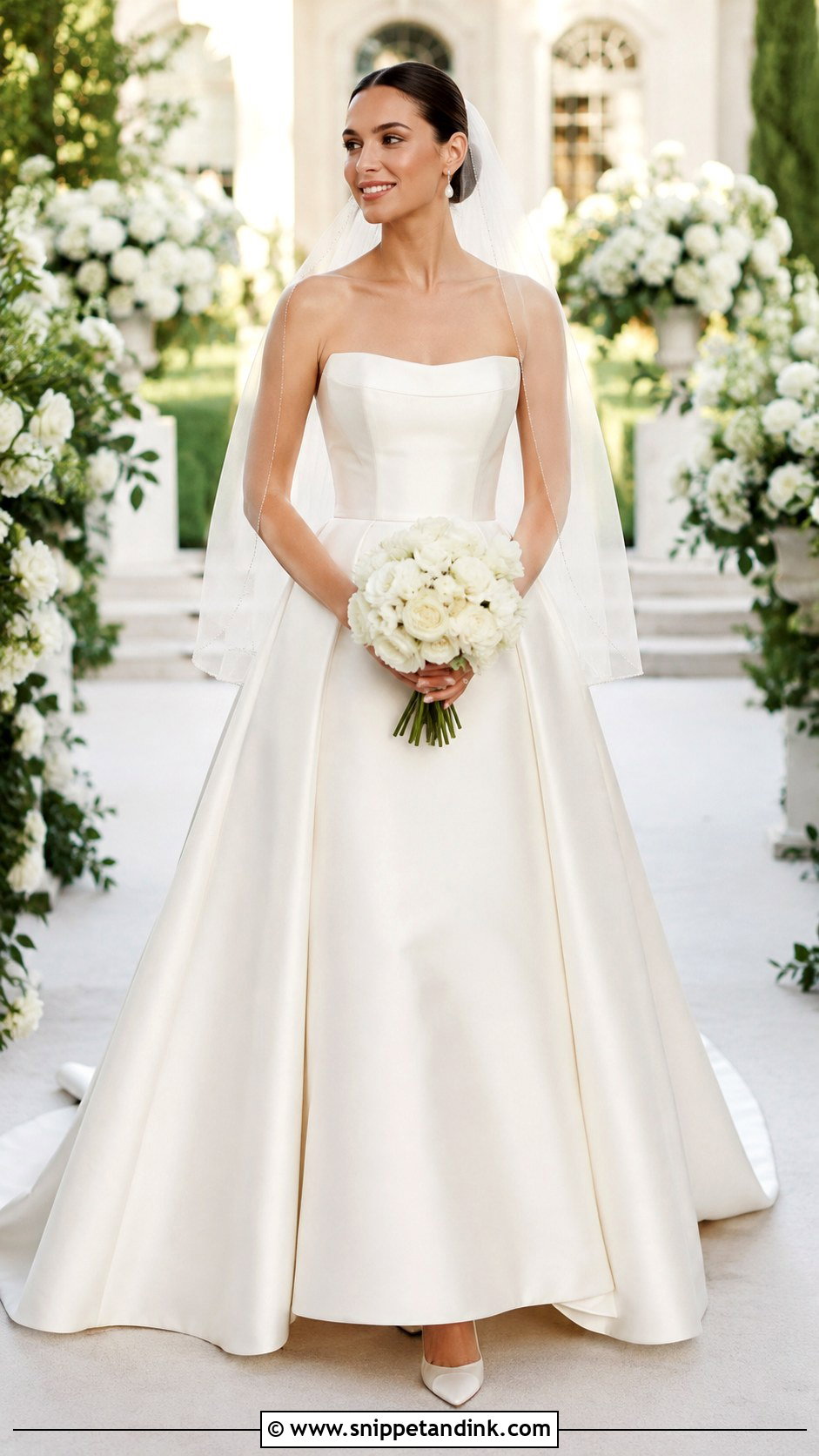
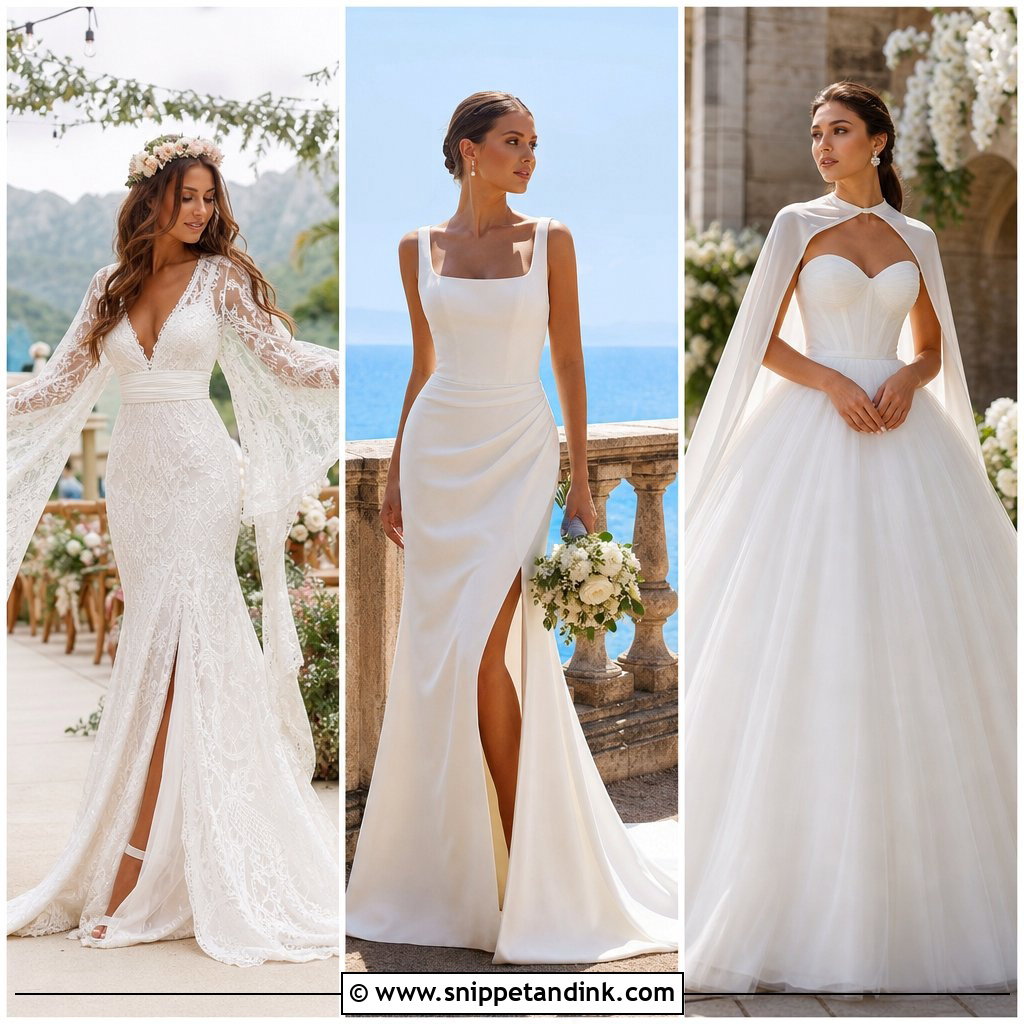
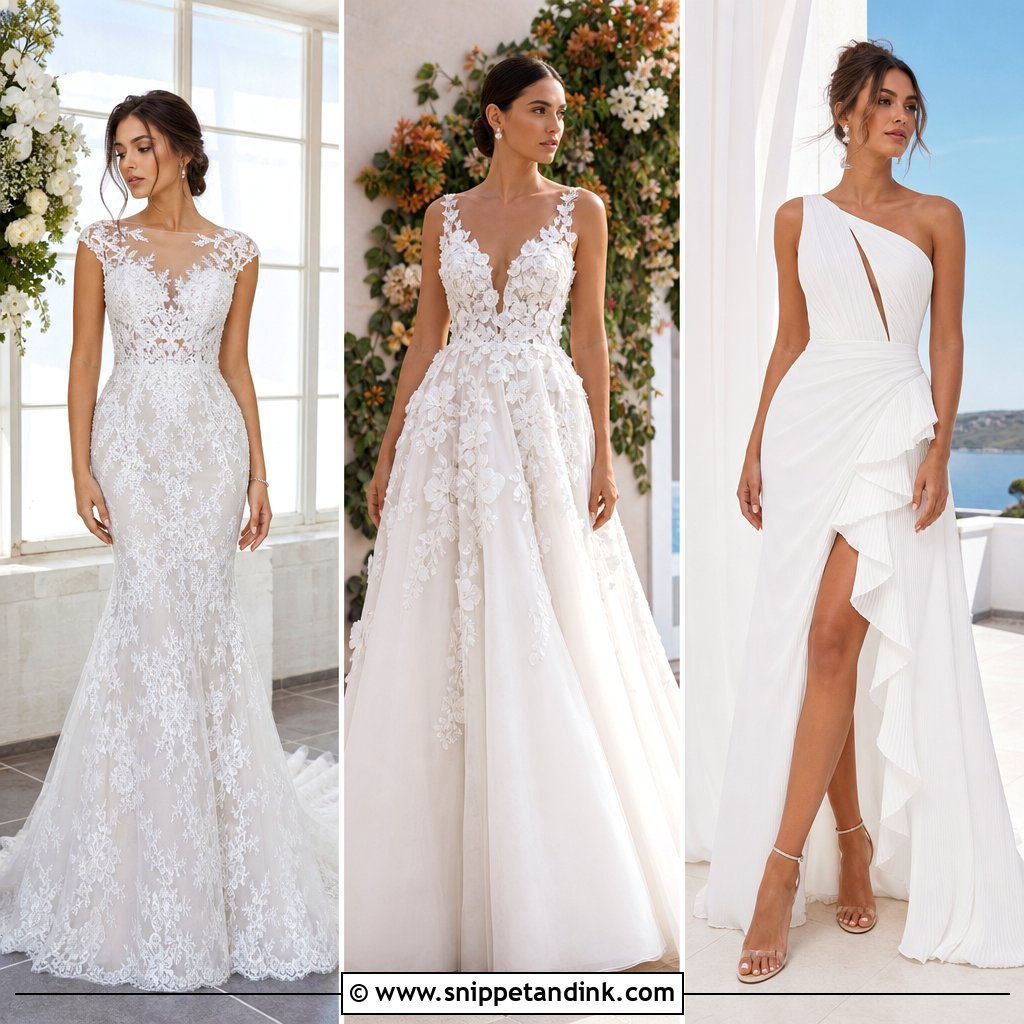
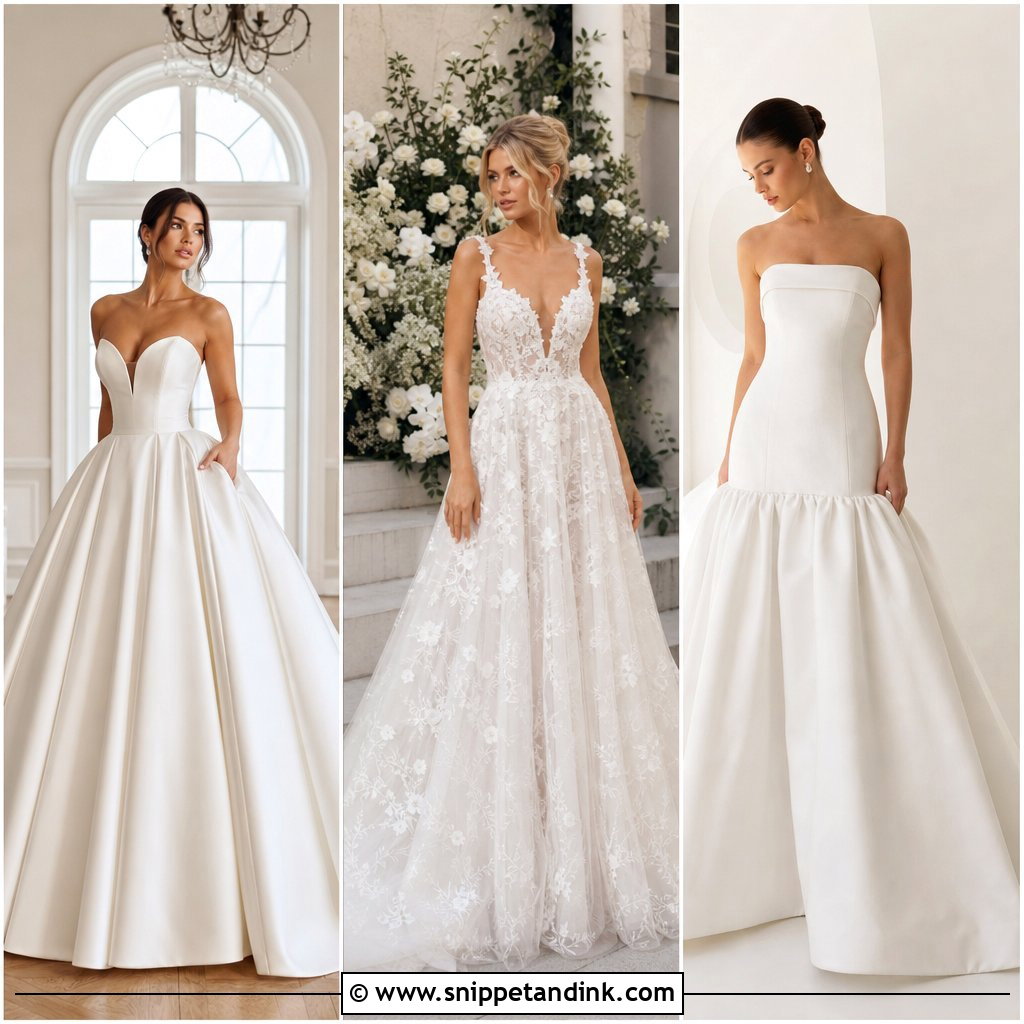
Fitted through the bodice and easing out from the waist, the A-line suits more figures than any other shape I put brides in, which is why it’s usually the first dress off the rail at an appointment. The bodice can be structured, draped, strapless, square-necked or sleeved. Its weakness is that it can look safe, so the fabric and neckline have to give it character. Pointed ivory heels, pearl drops, a fingertip veil and a small bouquet keep it classic. It moves easily from a garden to a hotel ballroom to a beach, and nobody ever has to help you sit down in it.
2. Ball Gown Wedding Dress
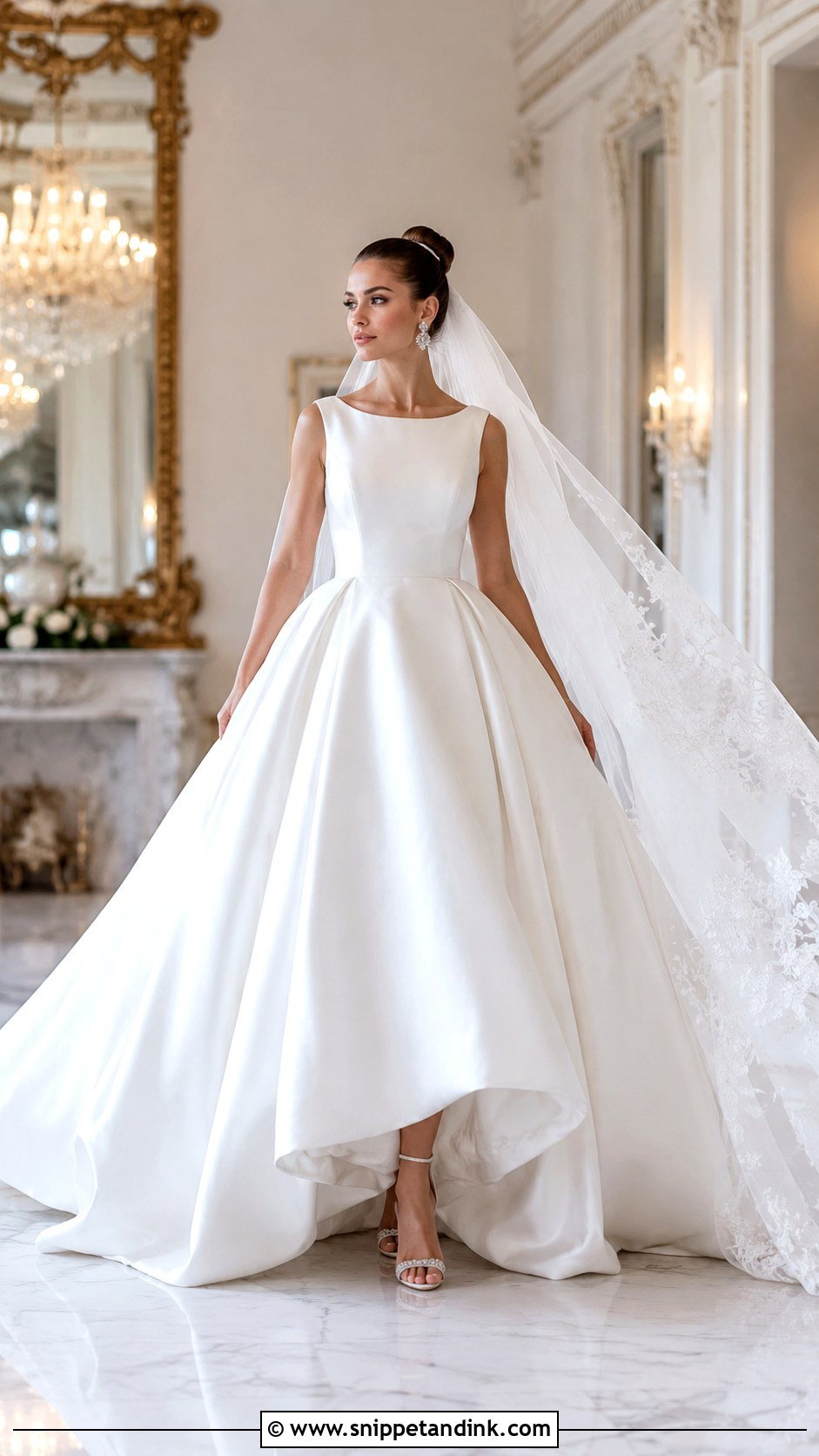
Fitted bodice, full skirt, and an entrance you feel in your stomach. Today’s ball gowns can be surprisingly clean, in smooth satin, quiet lace or a little floral appliqué rather than heavy decoration. Volume needs space, though. In a small room or a narrow aisle a big skirt fills everything, so I ask about the venue before a bride falls for one. A cathedral veil, crystal earrings, a sleek bun and heels that suit the skirt length finish it, and large ballrooms or cathedrals give it the scale it needs.
3. Lace Wedding Dress
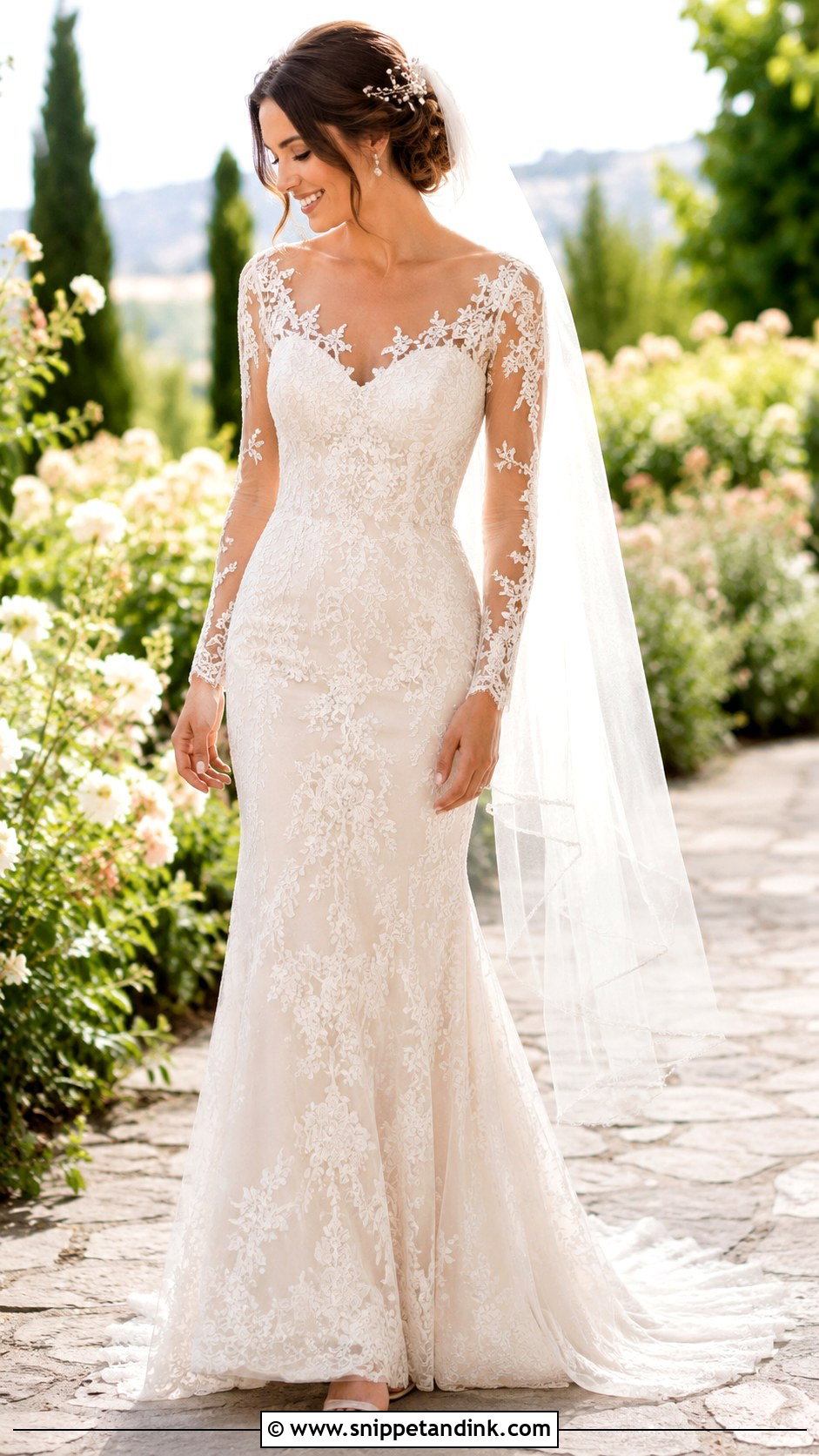
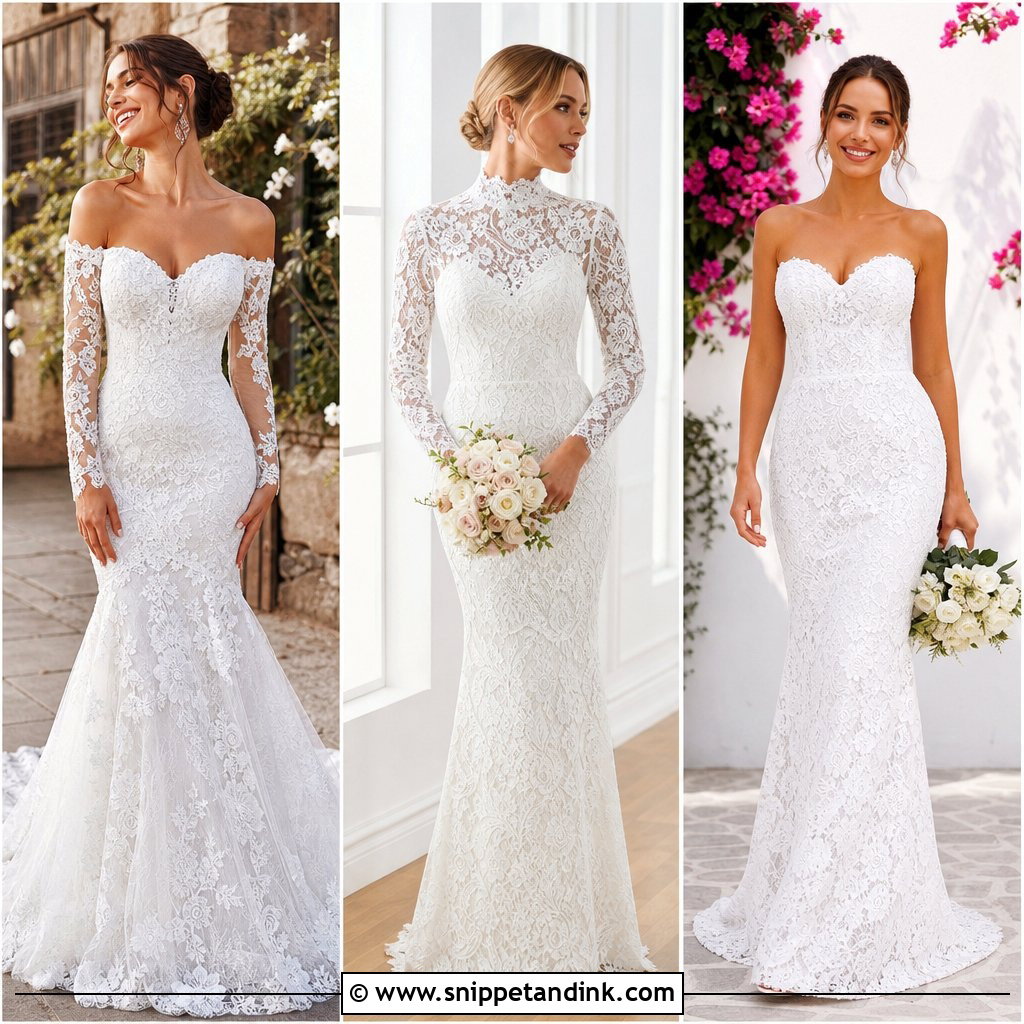
Lace changes personality with its pattern: Chantilly reads fine and old-world, heavier guipure looks graphic and modern, and corded lace sits somewhere between. A fitted lace gown with long sleeves feels formal; a lace A-line is softer. Sheer heels, pearl hair pins, a light veil and simple earrings keep the texture as the focus. One thing worth knowing is that lace motifs get cut and rejoined during alterations, and a skilled seamstress will hand-overlap them so the seam disappears. Ask whether yours does. In natural light, lace shows depth that plain fabric can’t.
4. Satin Wedding Dress
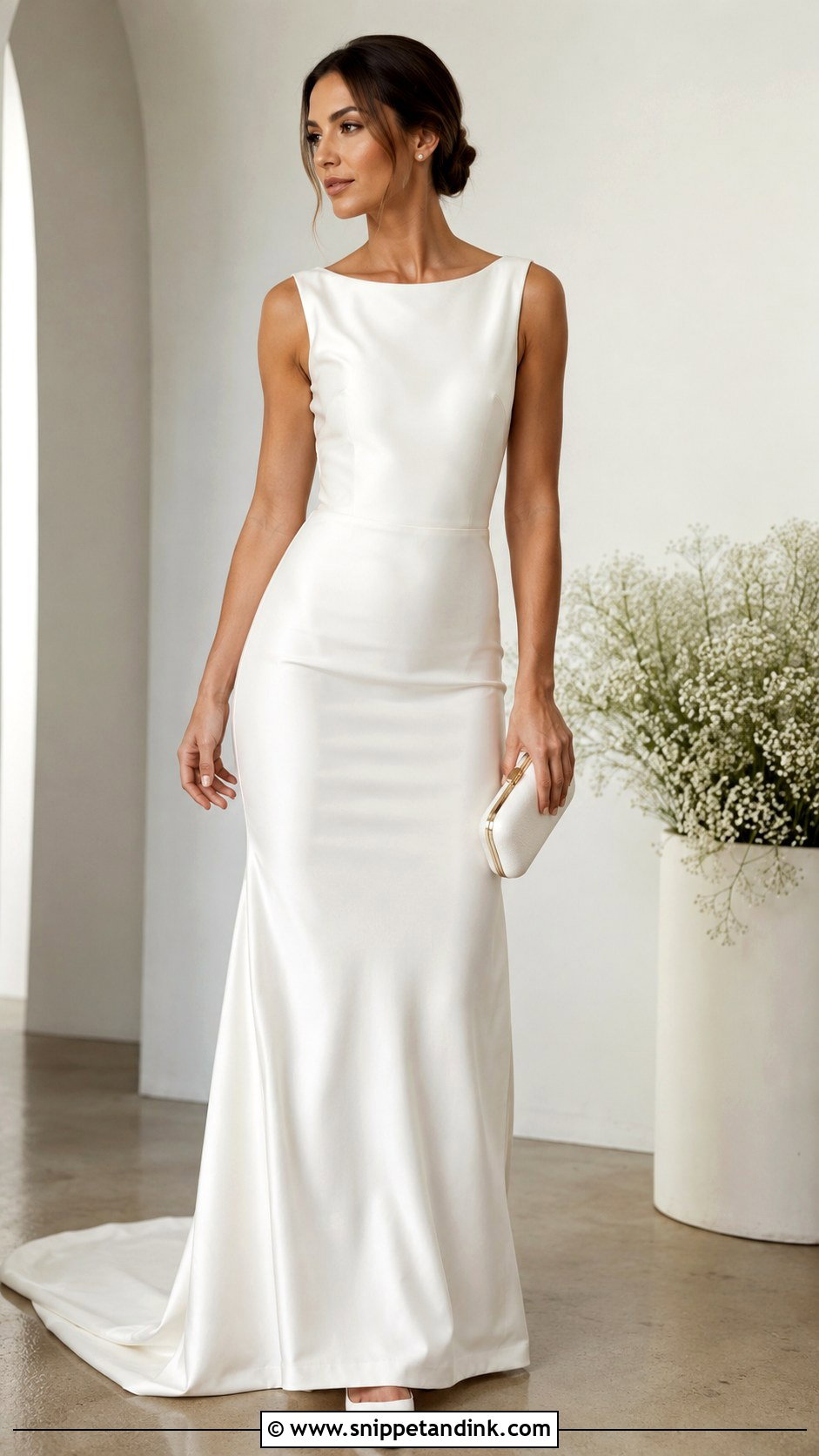
Smooth and quietly powerful, satin catches light so cleanly that even a plain cut looks expensive. A satin A-line feels classic, and a satin slip feels sleek. Tailoring decides everything, because satin shows every pull and ripple; I’d rather see a bride in a perfectly fitted mid-range satin than a loose expensive one. It also creases where you sit, so plan for a quick steam after the ceremony. Minimal jewelry, a low bun, pointed heels and a structured clutch for later keep it polished and uncluttered.
5. Mermaid Wedding Dress
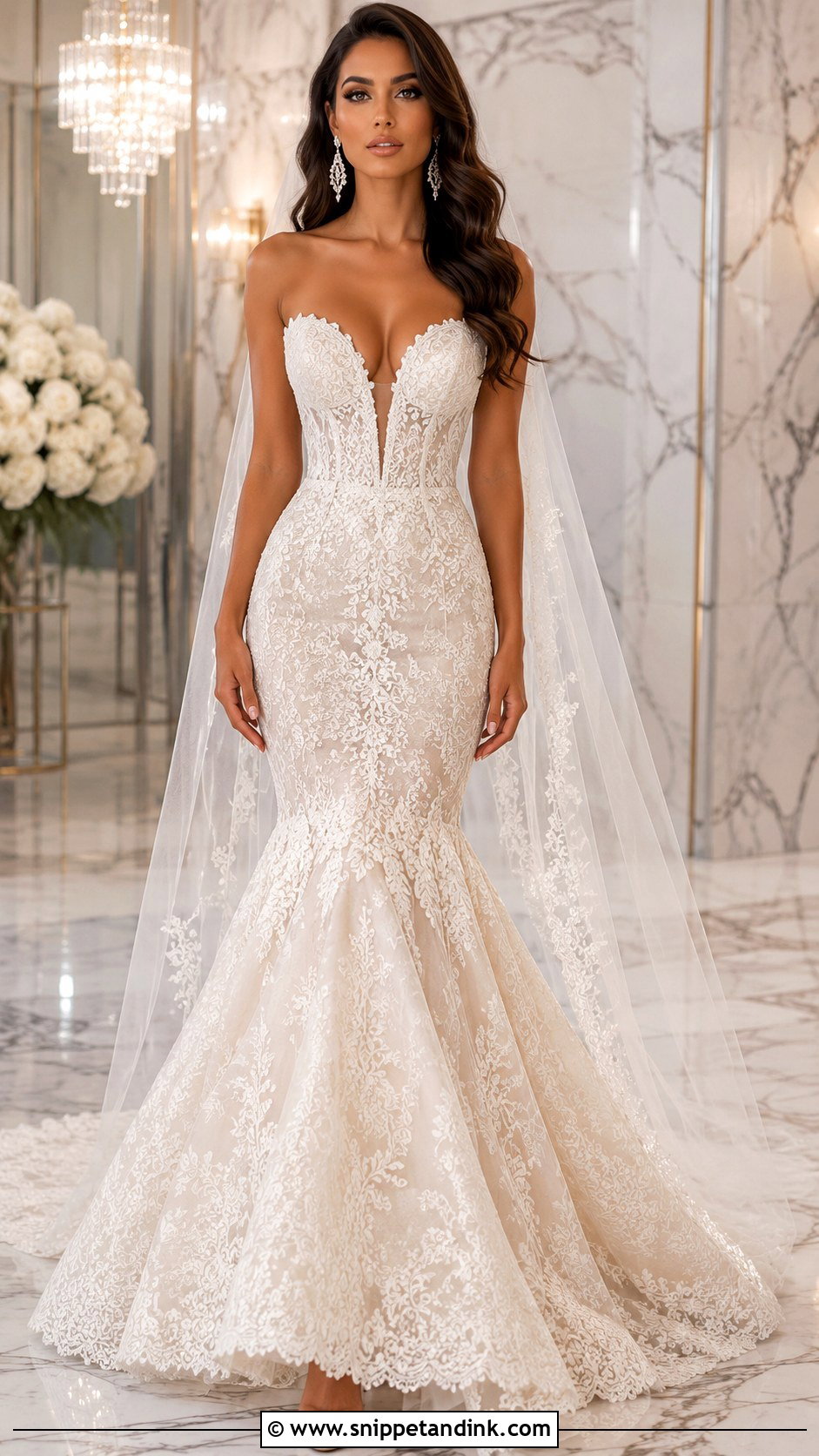
Fitted through the bodice, waist and hips, then flaring near the knee, a mermaid wedding dress is pure confidence. Stretch crepe gives the most forgiving version; lace, satin and mikado get progressively more structured. Where the flare starts changes everything. A true mermaid kicks out at the knee and limits your stride, so stairs and dancing get harder, while a trumpet flares mid-thigh and moves more freely. Walk, sit and climb a step at every fitting. A long veil, statement earrings, smooth waves and slim heels finish it.
6. Sheath Wedding Dress
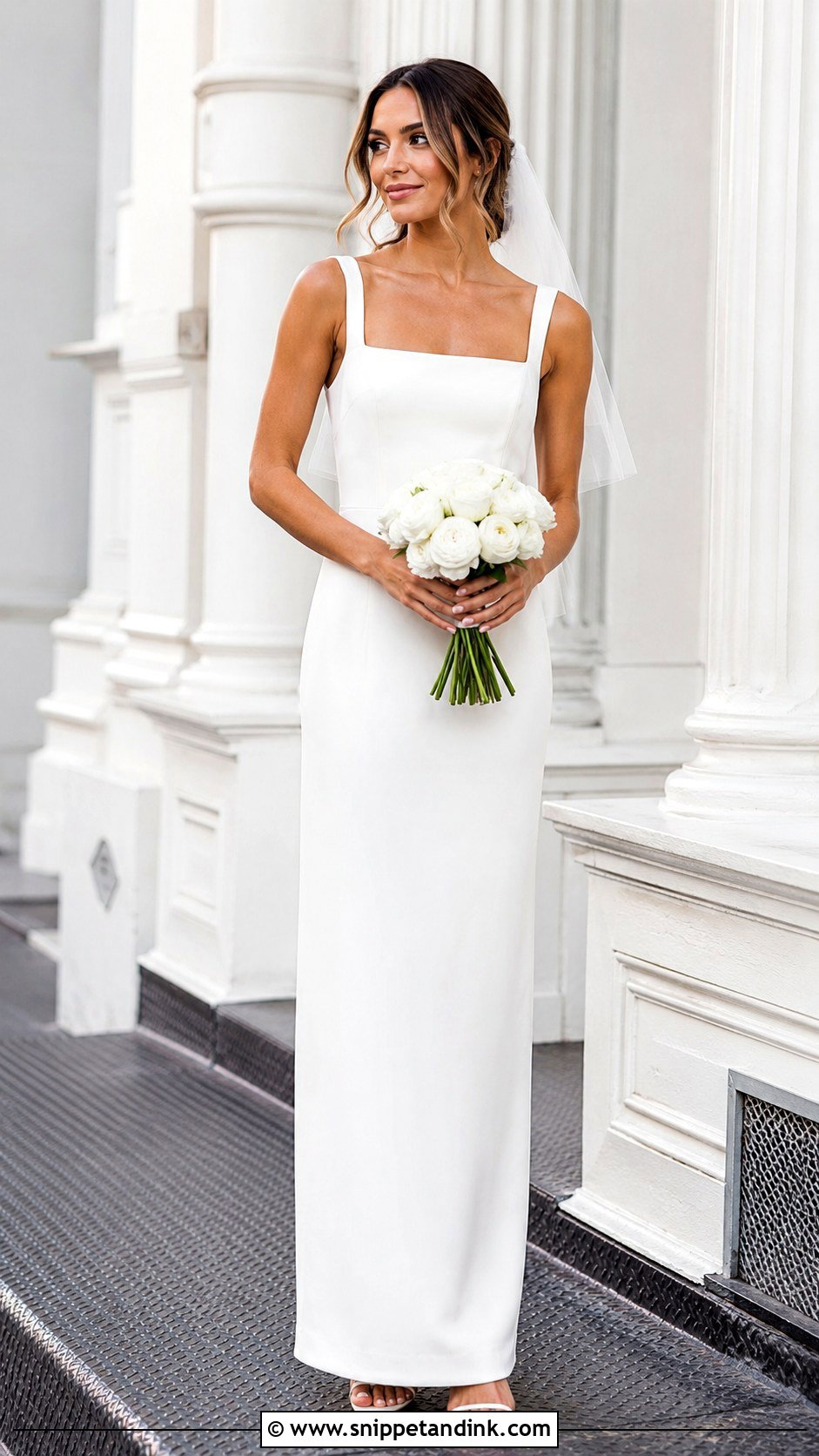
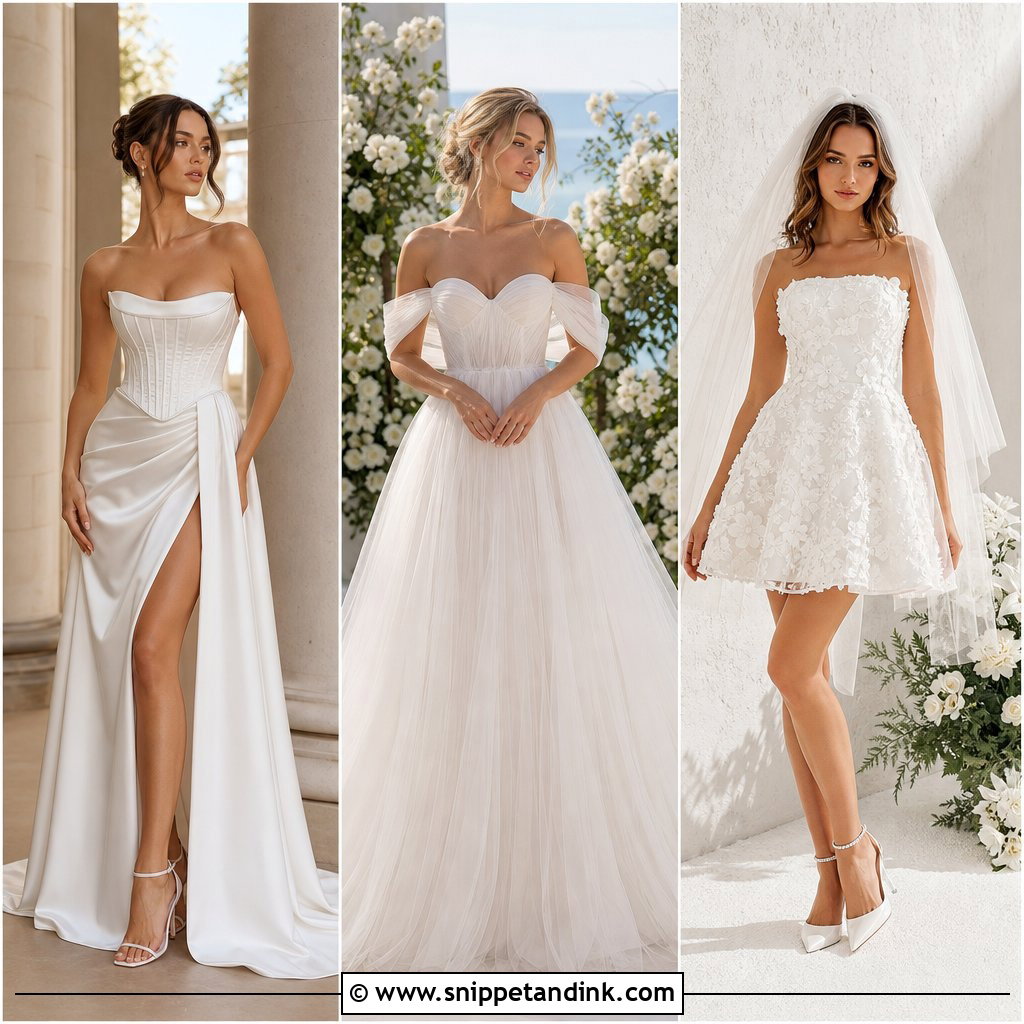
Without a big skirt, a sheath wedding dress follows the body in one straight, soft line, and it’s the lightest gown to wear all day. Crepe with a square neckline looks architectural; lace feels delicate. The catch is that a sheath hides nothing underneath, so shapewear and line-free underwear get chosen first and brought to fittings. City halls, rooftops, beaches and small dinners suit it best. Strappy heels, a short veil or hair bow, simple studs and a sleek bouquet complete it.
7. Minimalist Wedding Dress
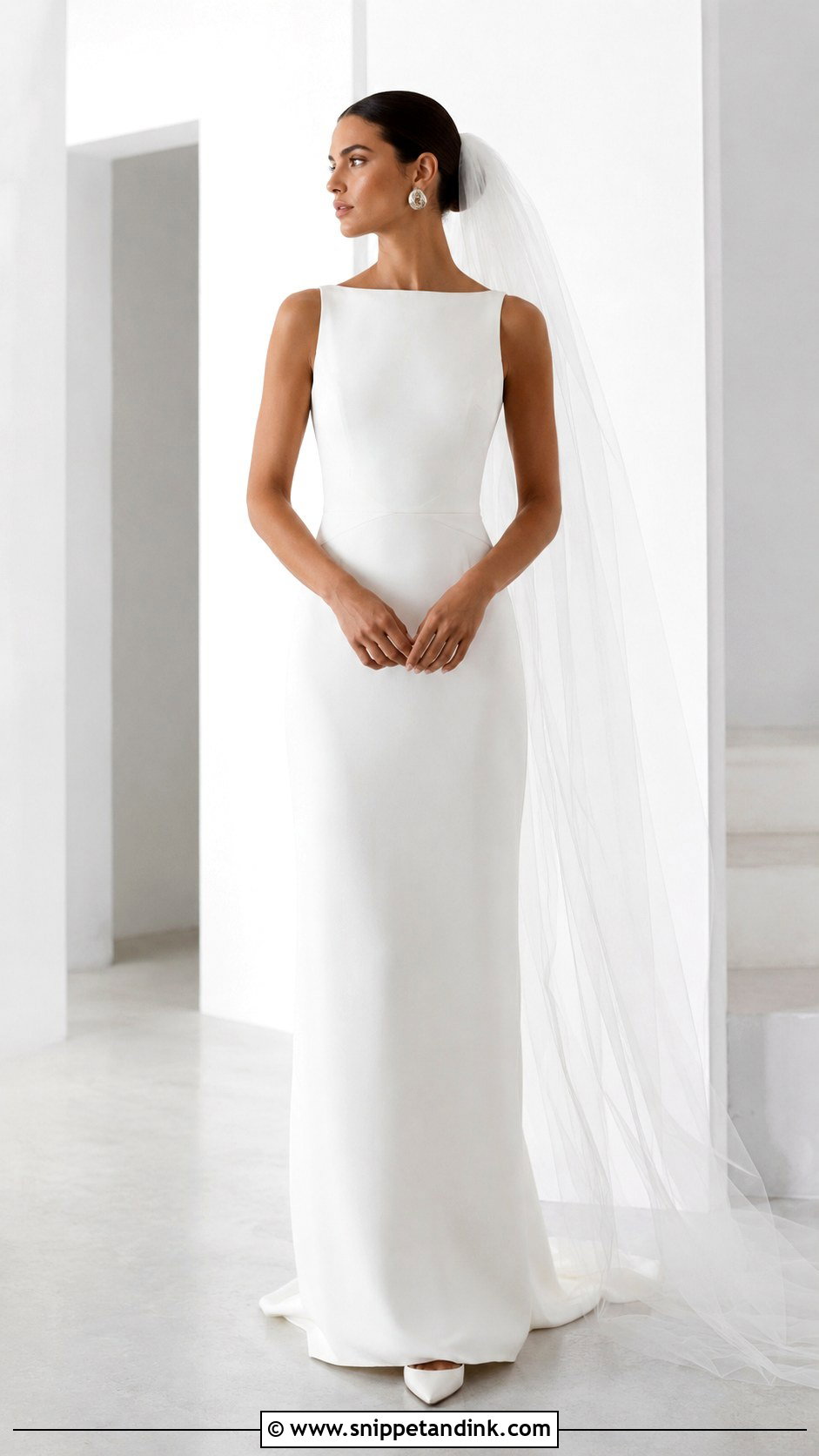
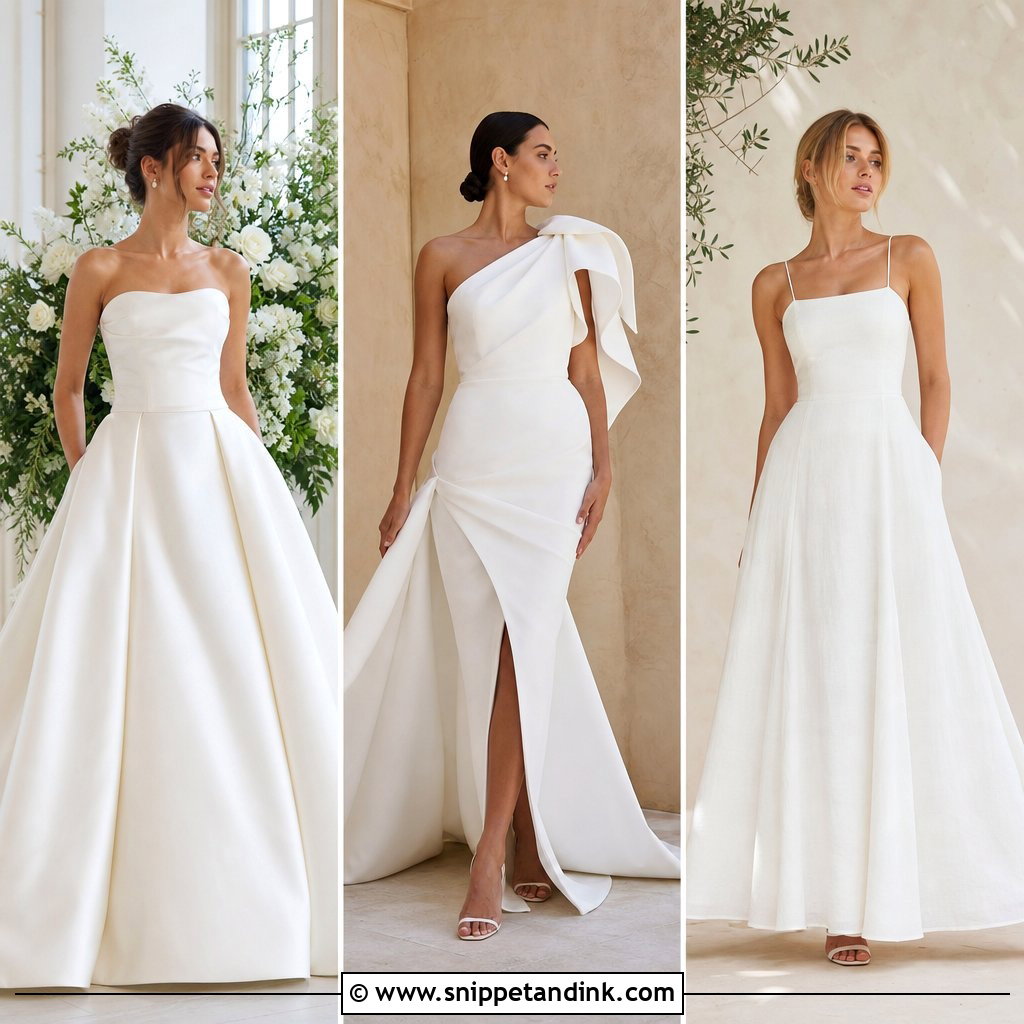
Clean lines, good fabric and exact tailoring do all the talking here; there’s no beading or lace to carry it. A square or bateau neckline, a column skirt or a low back adds interest without clutter. Minimal gowns expose cheap fabric fast, so I’d spend the budget on a heavier crepe or a quality mikado rather than any decoration. Sculptural earrings, smooth heels, a sleek bun and a plain veil keep it modern, and it tends to age well in photos because nothing about it dates.
8. Off Shoulder Wedding Dress
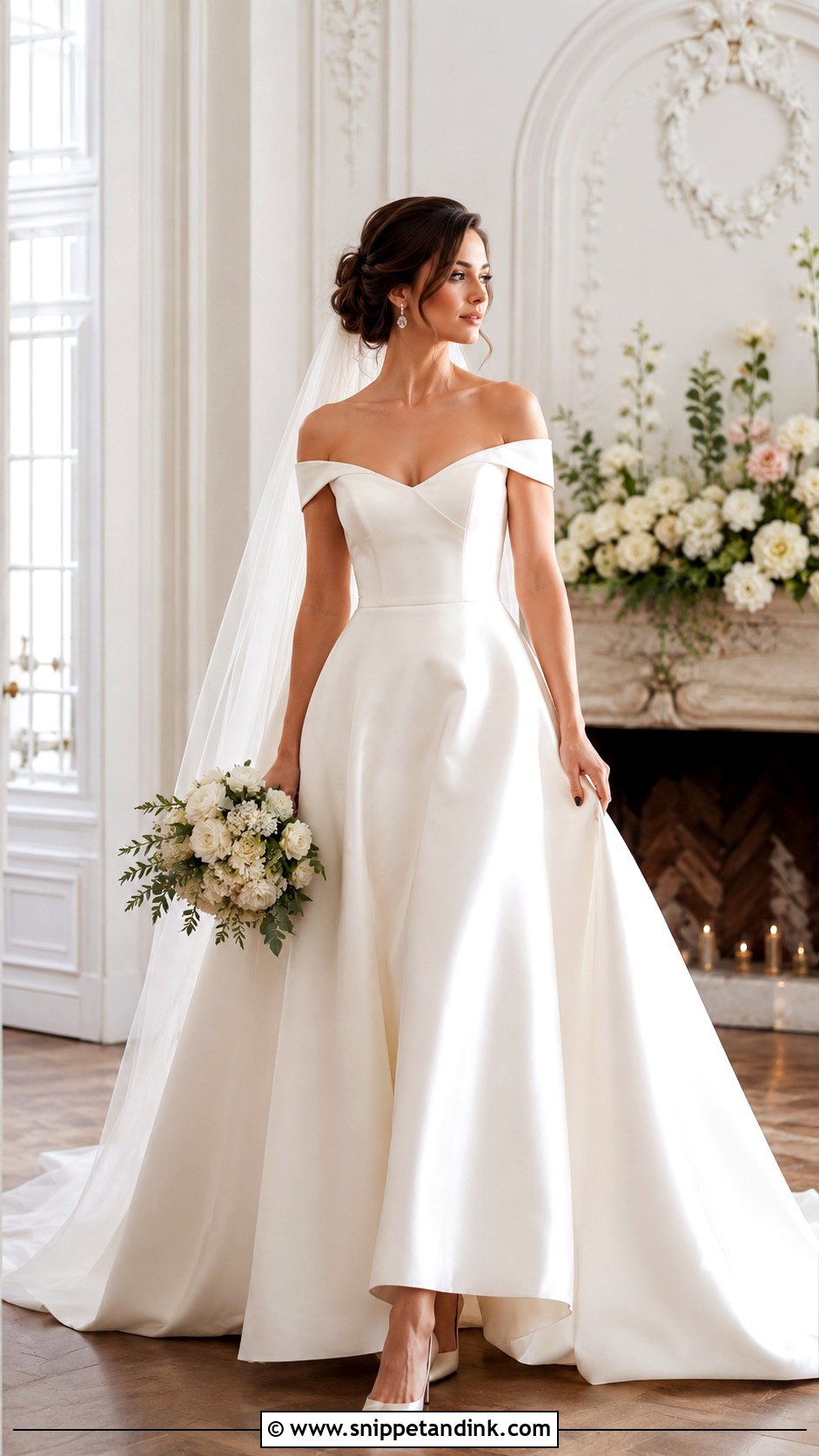
Dropping below the shoulder frames the collarbone and gives the neckline a softness that suits a lace ball gown, a satin A-line or a fitted mermaid. The practical issue is staying power. Off-shoulder bands are anchored by the bodice, not the arms, and if the bodice isn’t snug they slip every time you hug someone. Skip the necklace unless the neckline leaves room, and wear drop earrings instead. A soft updo, ivory heels and a veil set behind the crown keep the shoulders visible.
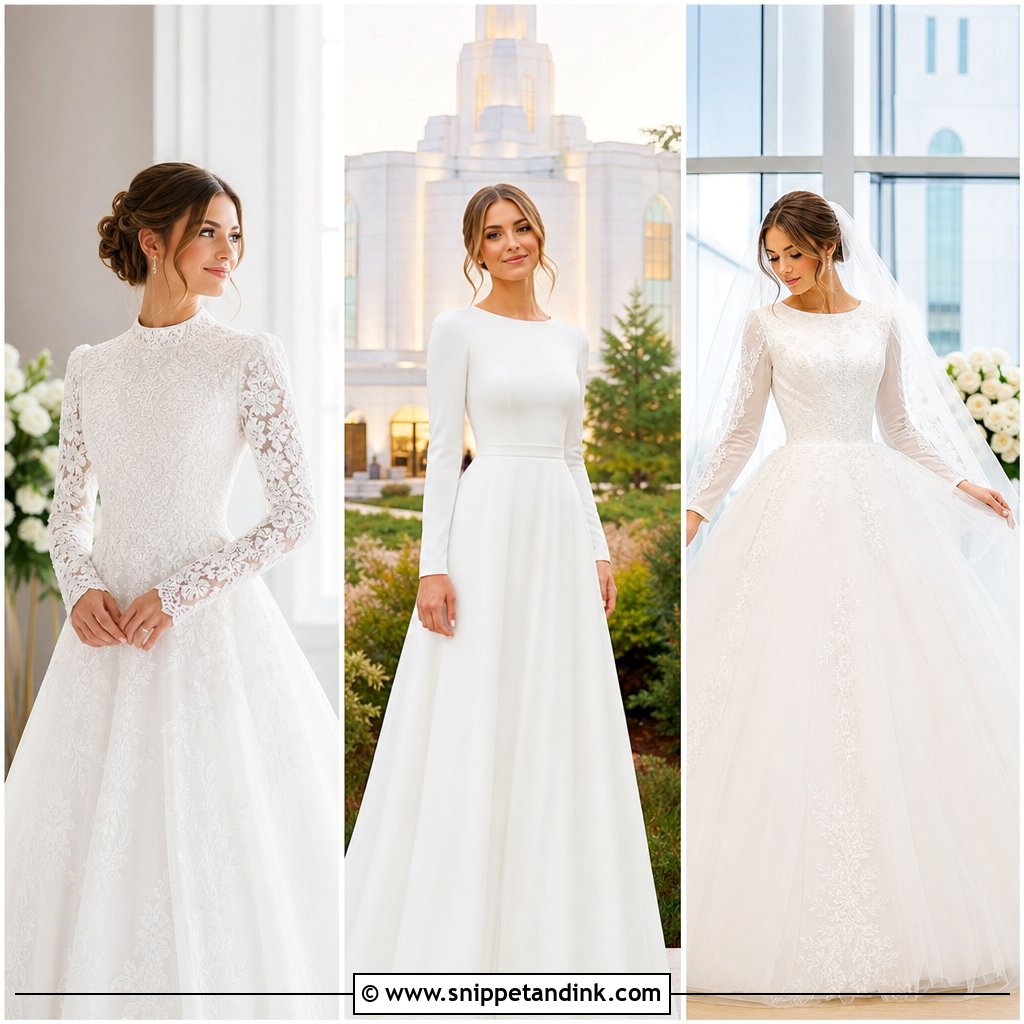
9. Long Sleeve Wedding Dress
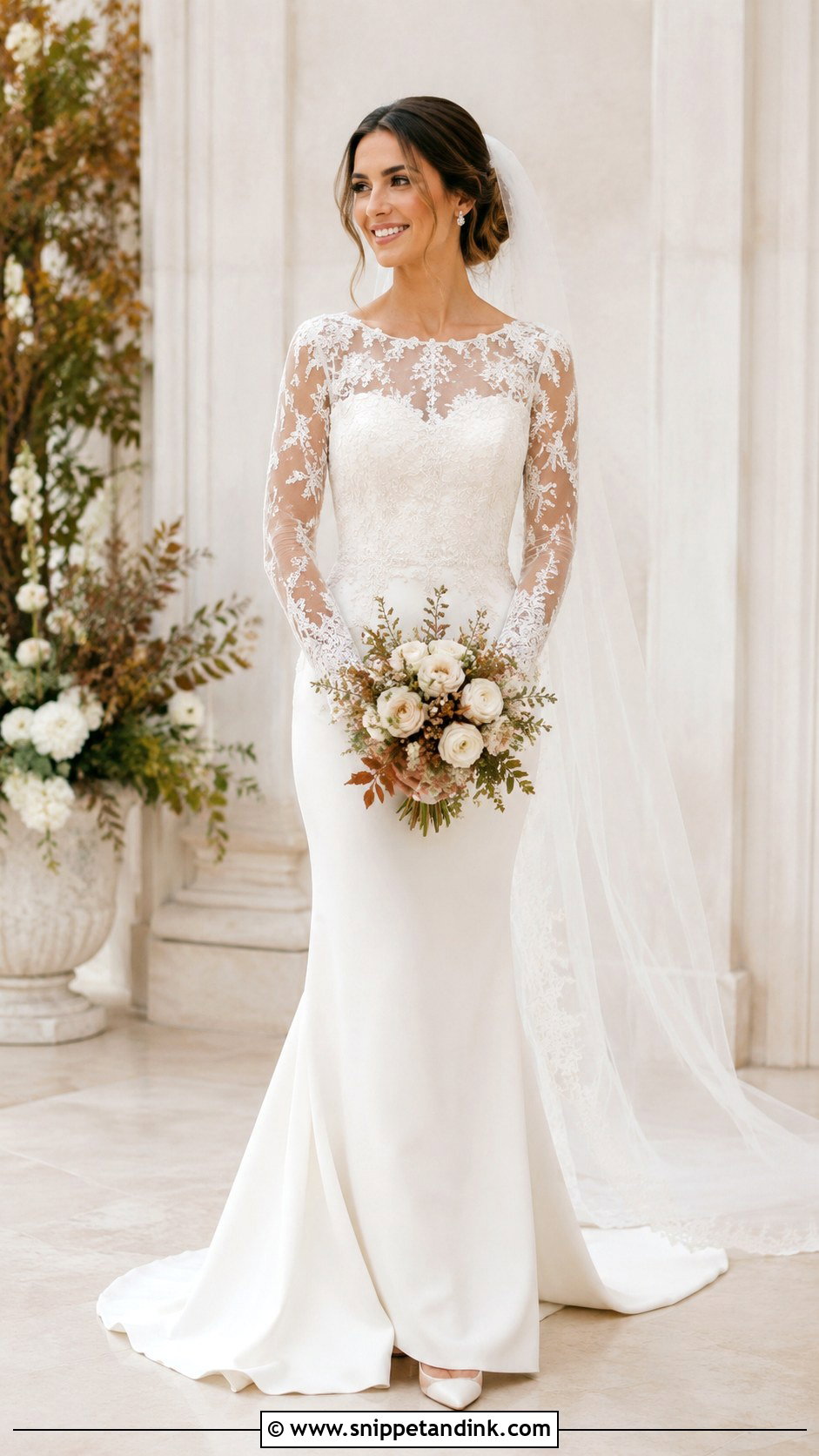
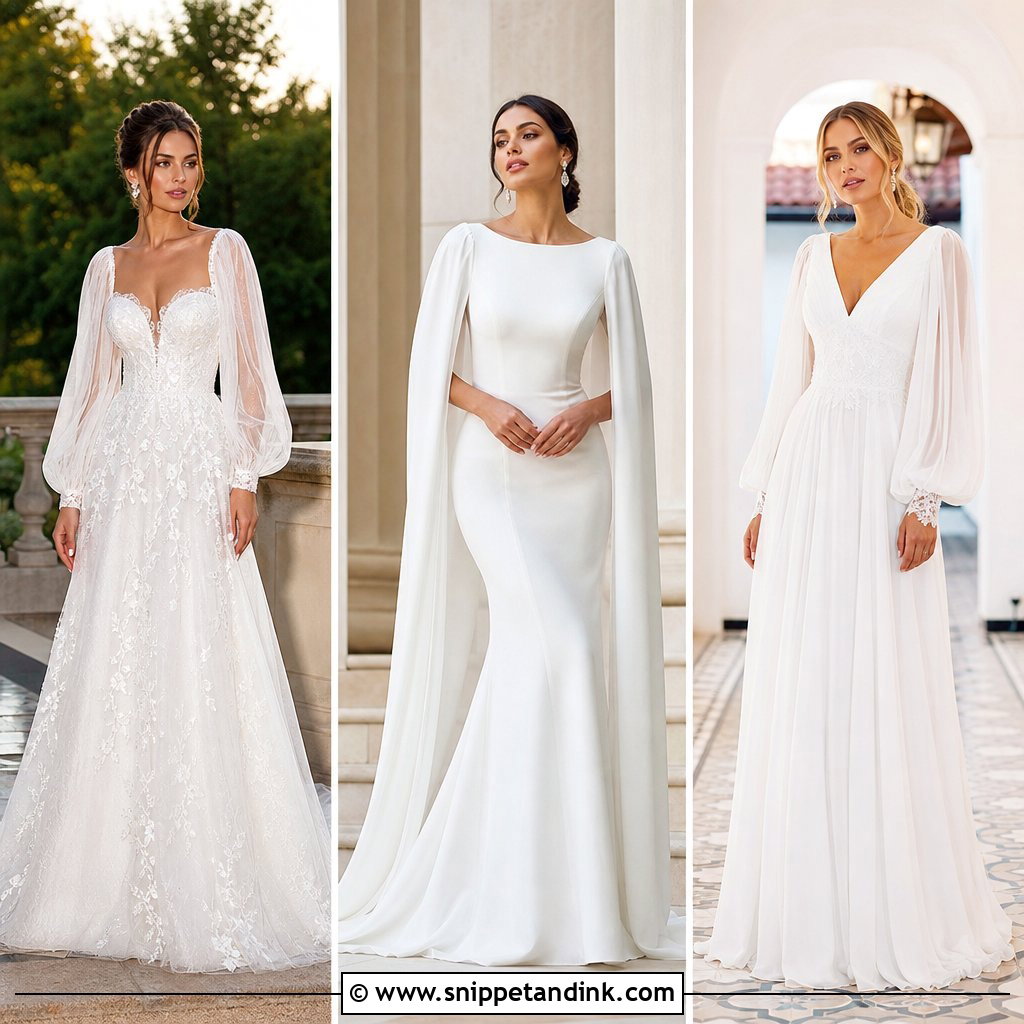
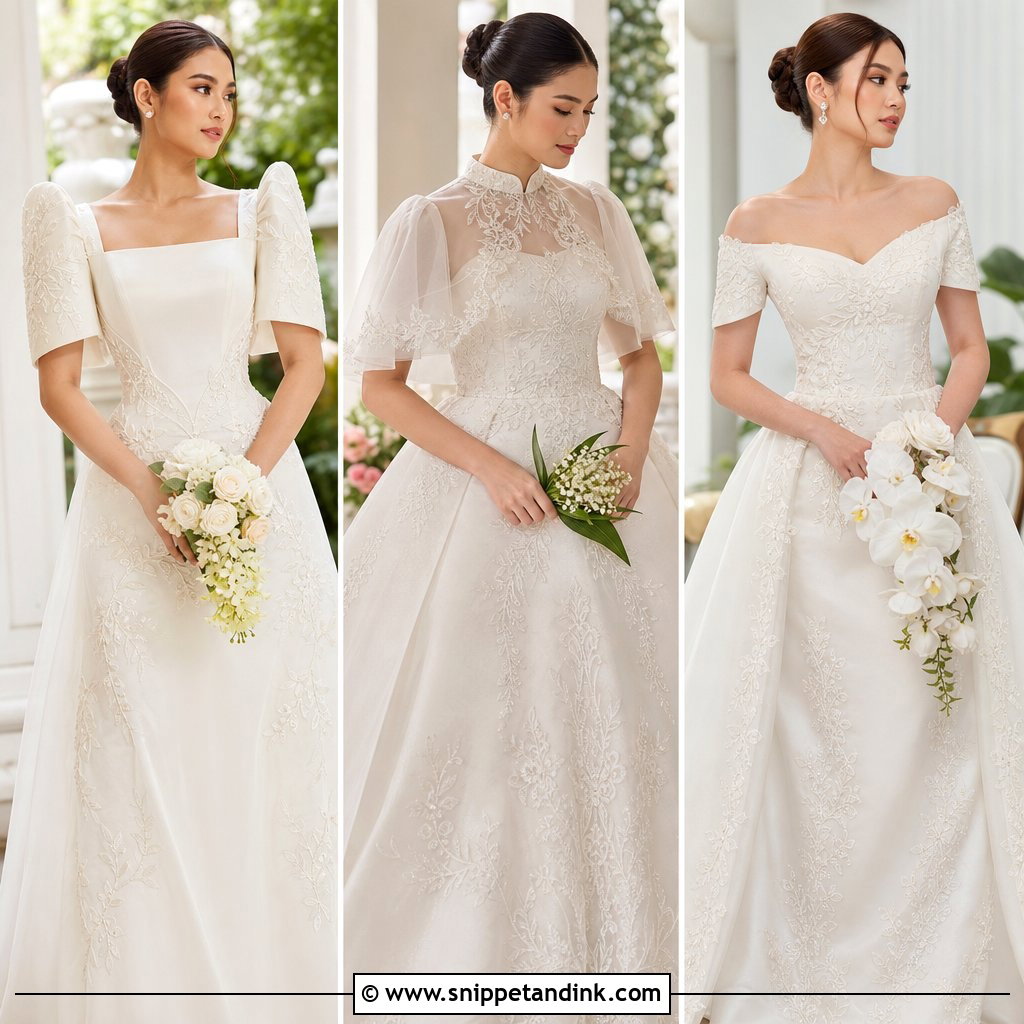
Sleeves change the mood depending on the fabric: sheer lace feels romantic, fitted crepe looks tailored, puffed organza adds drama and smooth satin reads formal. A plain skirt keeps a sleeved gown refined, and a lace-sleeved ball gown feels traditional. Season matters. Lined sleeves are warm, so they fit autumn and winter, while sheer unlined sleeves work into spring. Make sure the armhole is cut high enough to lift your arms; a low armhole pulls the whole bodice up when you reach. Small earrings, a clean veil and heels that match the formality finish it.
10. Square Neck Wedding Dress
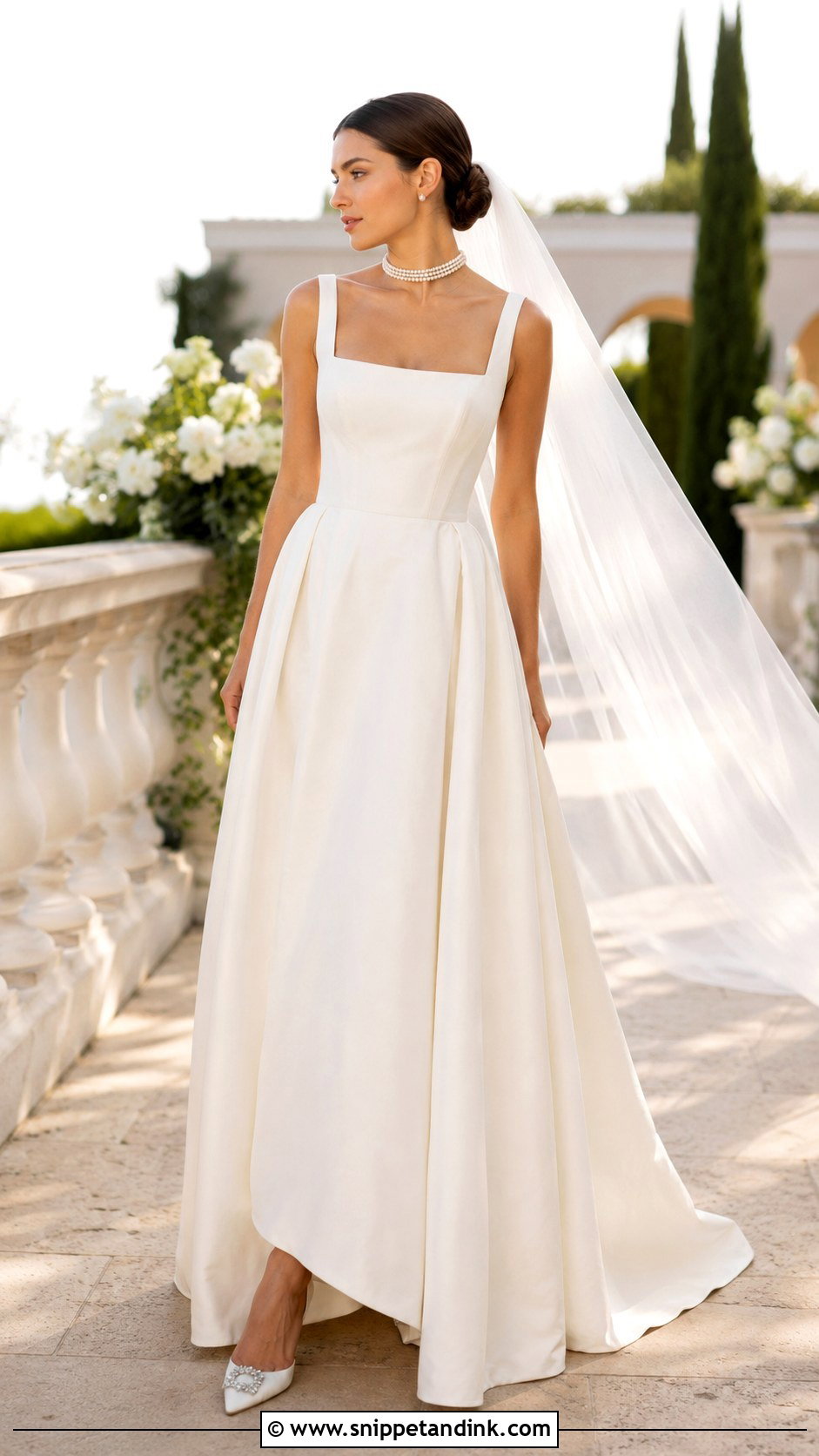
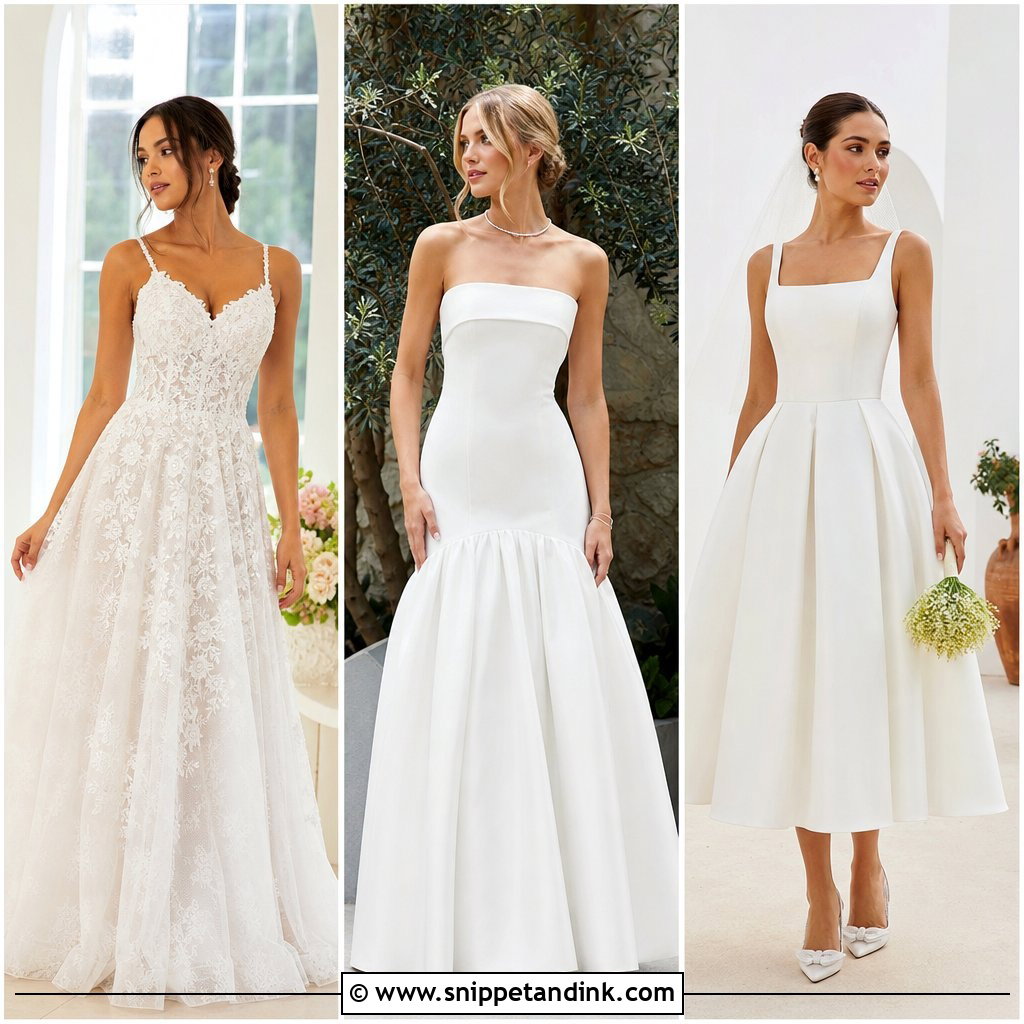
A square neck gives the upper body structure and frames the face well in portraits. It works with straps, long sleeves or a fitted bodice, and over A-line, sheath and ball gown skirts. The width of the square matters more than people think: a narrow square elongates, while a wide one broadens the shoulders, which suits slim frames and can overwhelm broad ones. A pearl choker, a low bun, a soft veil and block or pointed heels finish it. It gives shape without needing embellishment.
11. Strapless Wedding Dress
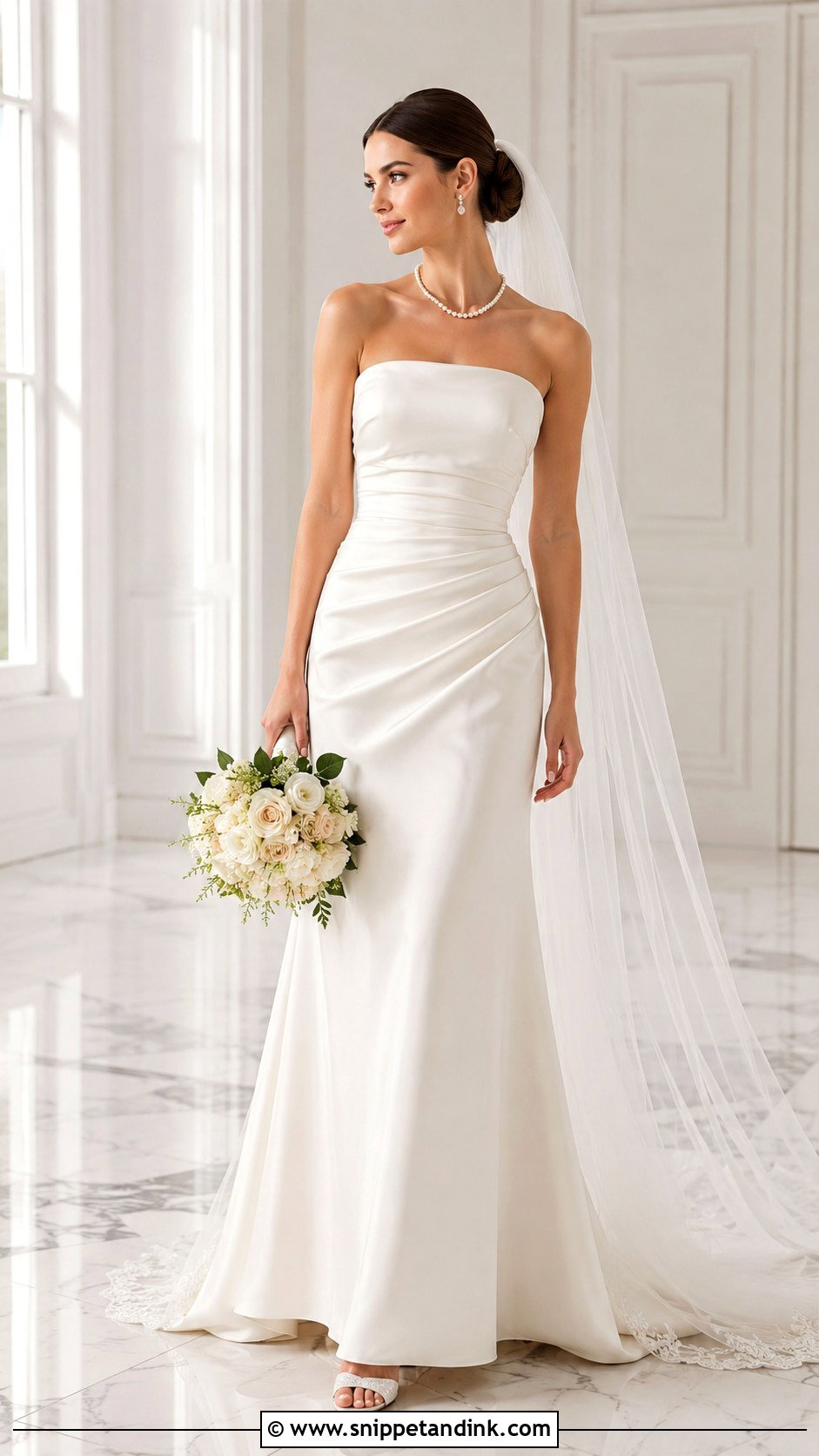
A strapless bodice is the most flexible neckline to accessorize: a pearl necklace softens it, crystal earrings add sparkle and opera gloves make it fashion-led. A sweetheart line reads romantic, a straight line modern, a sculpted bodice dramatic. Fit is everything. A strapless dress should stay up on its own when you raise your arms, without you tugging it, and that comes from boning and a snug waist, not a tight top edge. Comfortable heels, a veil matched to the train and a polished hairstyle round it out.
12. Floral Wedding Dress
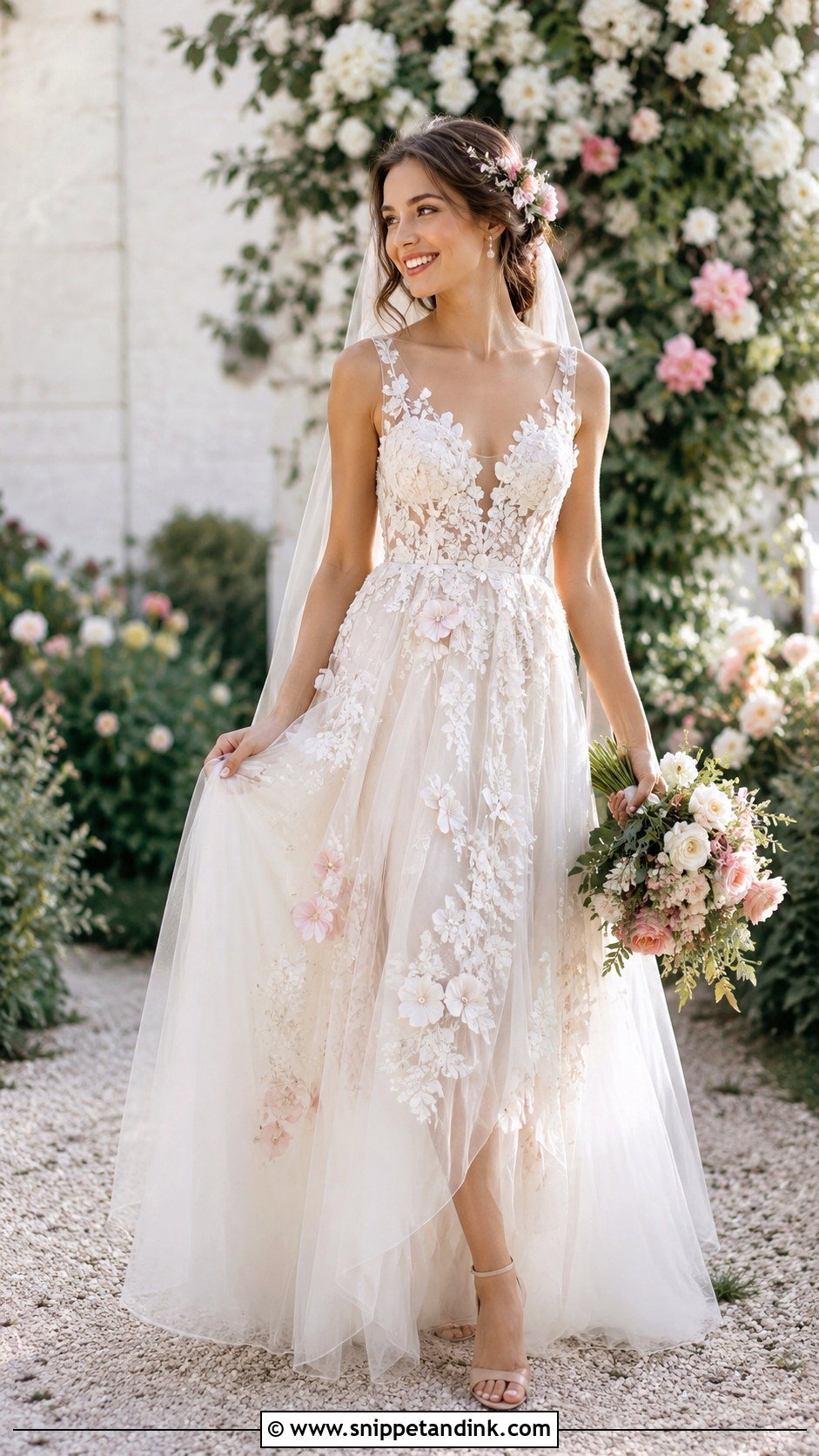
Florals range from embroidered vines on tulle to 3D blooms across the bodice and skirt. Appliqué adds dimension without heavy sparkle. 3D flowers crush when you sit or hug, so I’d keep the biggest ones away from the waist and back, where they take the most pressure. Delicate heels, a few floral hair pins, soft makeup and a plain veil let the dress lead. Gardens and spring or summer ceremonies are its natural setting, and it rewards brides who enjoy detail up close.
13. Beaded Wedding Dress
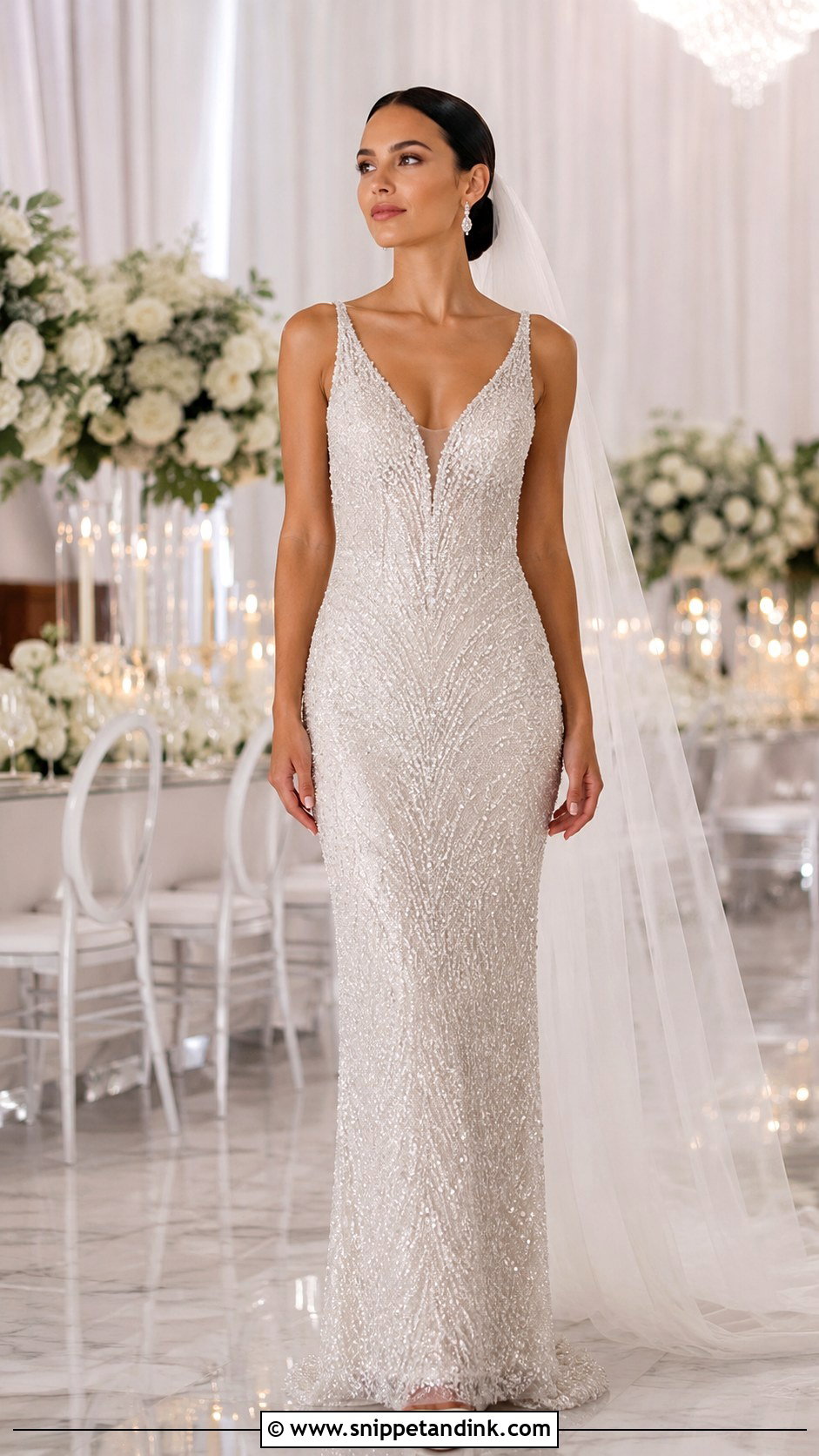
Sparkle should follow the silhouette, not bury it. Beading can be scattered or full coverage. A beaded sheath feels sleek and vintage, and a beaded ball gown feels grand. Beads are heavy. A fully beaded gown can weigh far more than its plain equivalent, and the weight pulls on the shoulders over a long evening, so I ask brides to wear a sample for a good half hour before deciding. Simple heels, clean earrings and a smooth hairstyle let it shine, especially in evening light indoors.
14. Tulle Wedding Dress
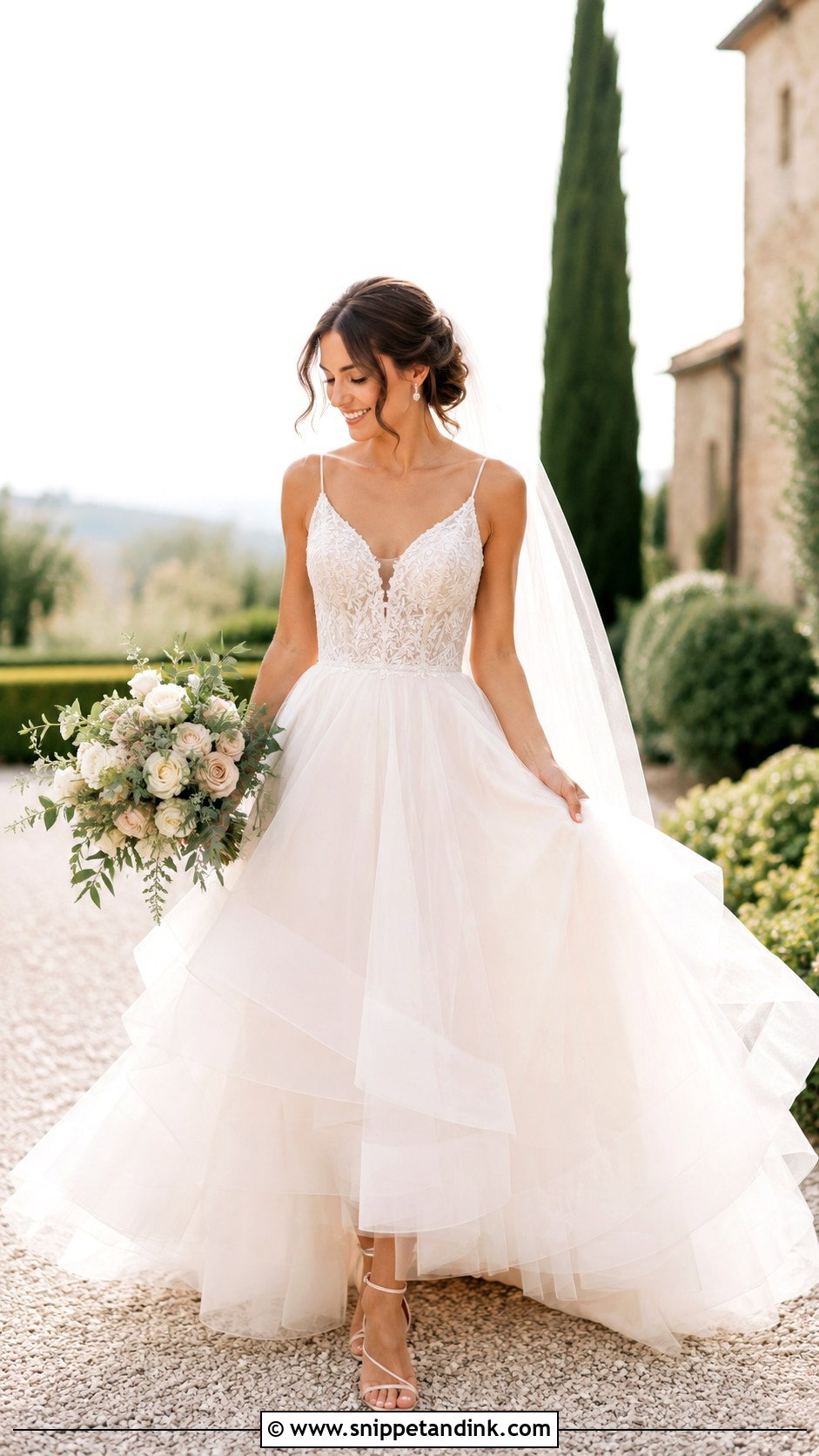
Layers of tulle give volume and movement without the weight of structured fabrics, across A-line, ball gown or tea-length skirts. It’s dreamy when you walk. A clean bodice, subtle floral appliqué or a faint shimmer keeps it modern. Tulle’s weak point is snagging on ring prongs, bouquet wire and rough flooring, and soft tulle crushes if it’s packed tight in transport. Delicate heels, a sheer veil, dainty earrings and a soft hairstyle suit it, and it adds lightness to every photo.

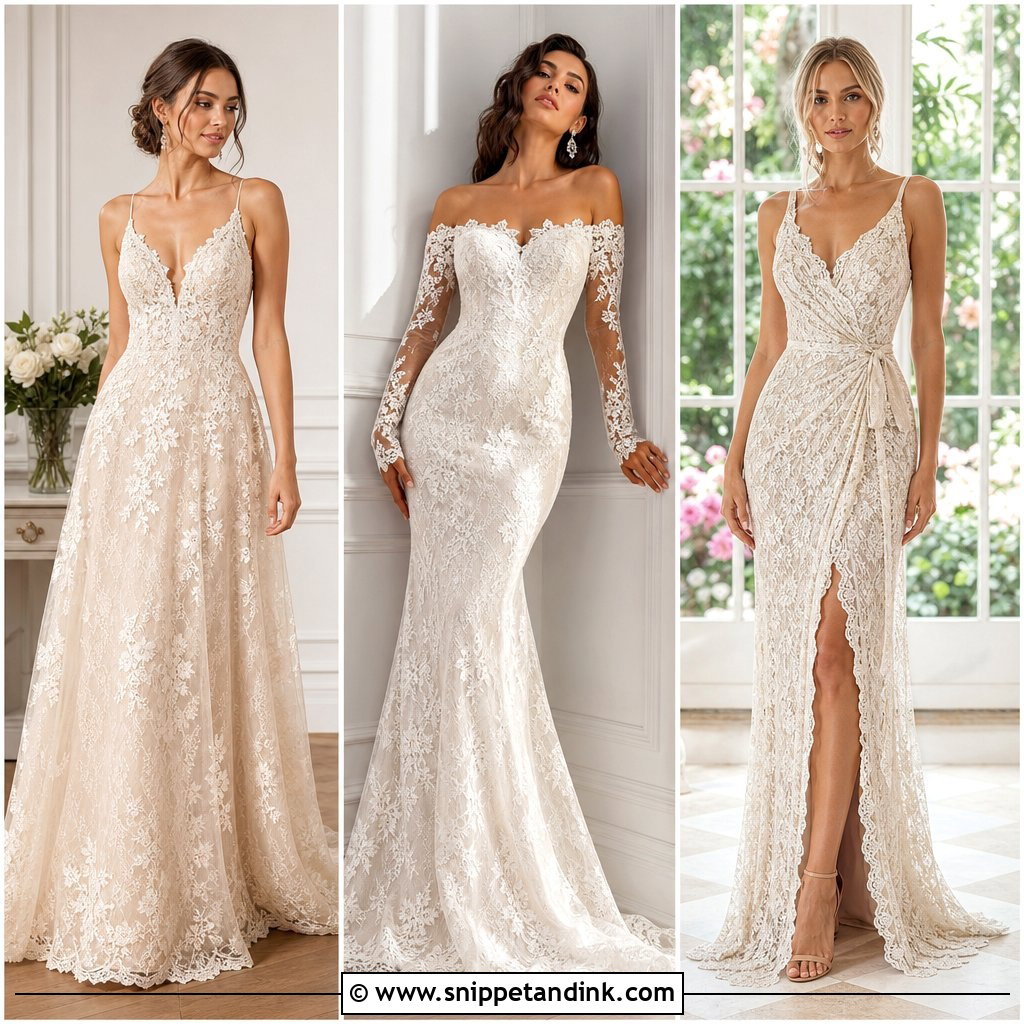
15. Crepe Wedding Dress
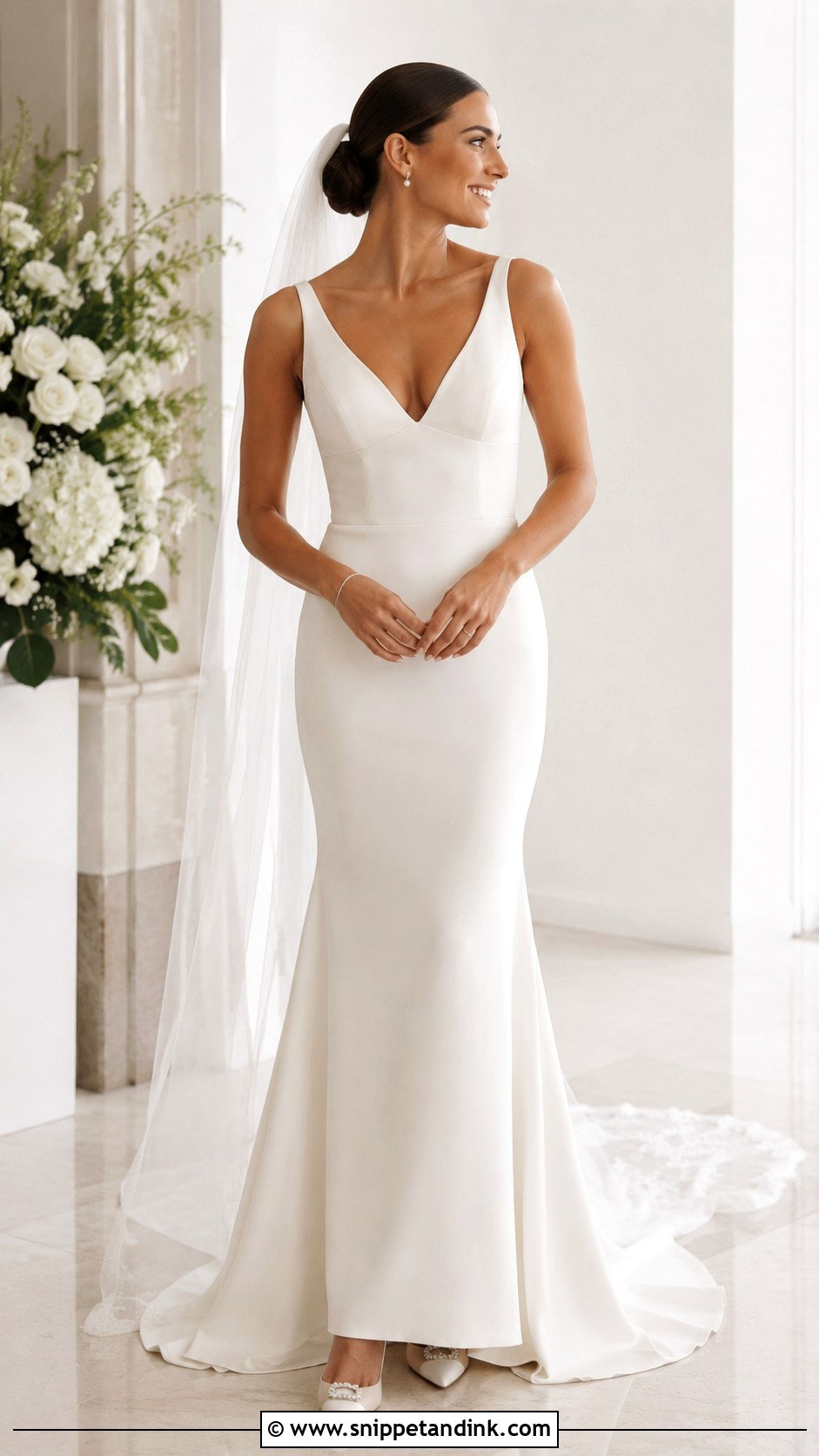
Crepe has enough weight to hang in a clean line, which is why it’s the fabric for sheaths, fit-and-flares and minimal gowns. It’s less shiny than satin and feels modern without looking cold. Quality varies more than with most fabrics: a thin crepe clings and shows every seam underneath, while a heavy double crepe skims. Feel it between your fingers before you fall for the shape. Polished heels, a low veil, simple jewelry and a neat bun suit it, and a dramatic back or long train lifts it further.
16. High Neck Wedding Dress
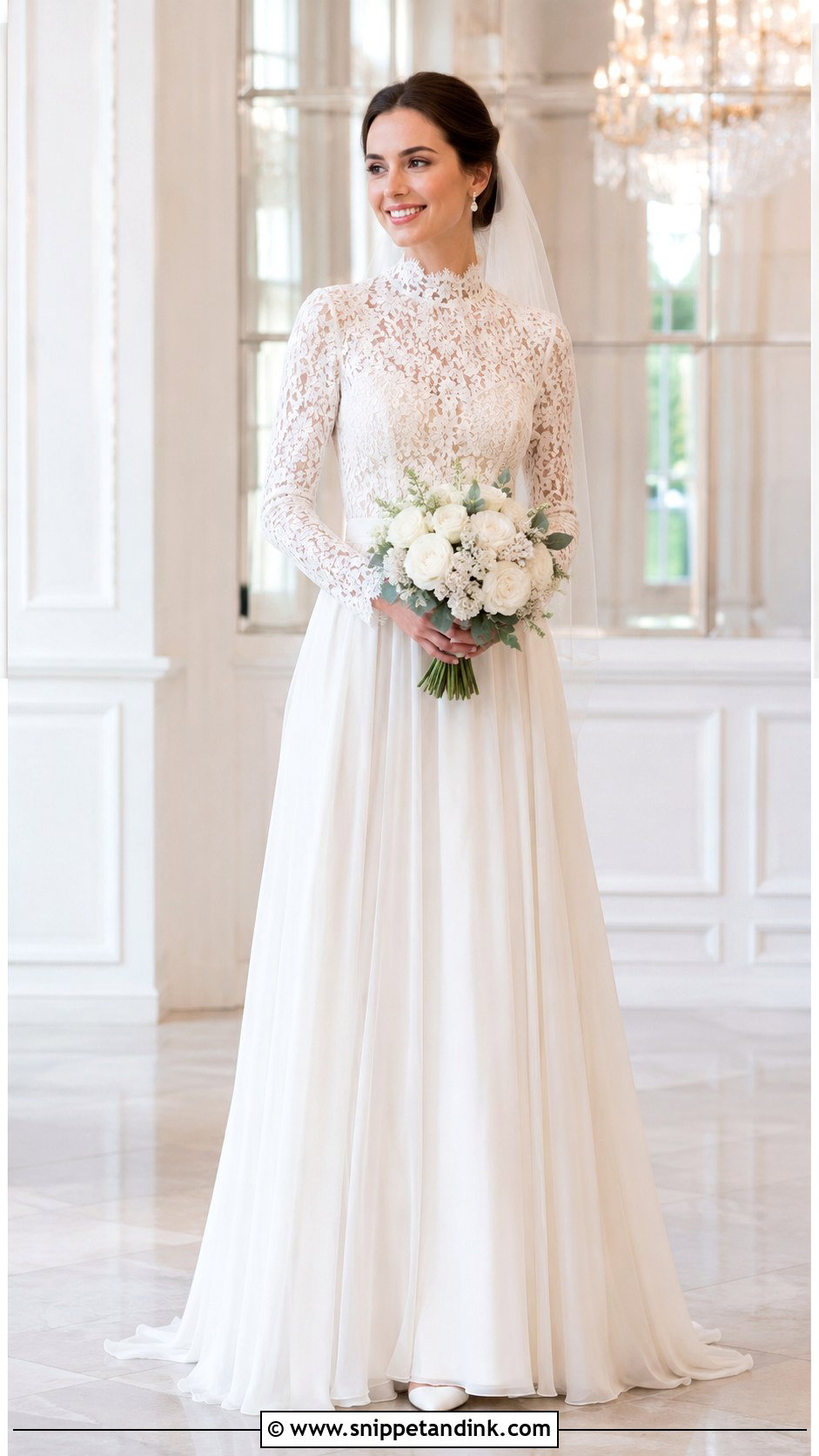
Drawing the eye up toward the face, a high neckline suits pulled-back hair and small earrings. Sheer lace feels romantic; crepe, satin or soft tulle look modern. It gives coverage without losing polish. The fit point I watch is the collar: on a high neck, a quarter inch too tight feels like a hand at your throat by evening. Closed-toe heels, a slim bracelet and a veil set low at the back of the head complete it in fitted or flowing shapes.
17. Tea Length Wedding Dress
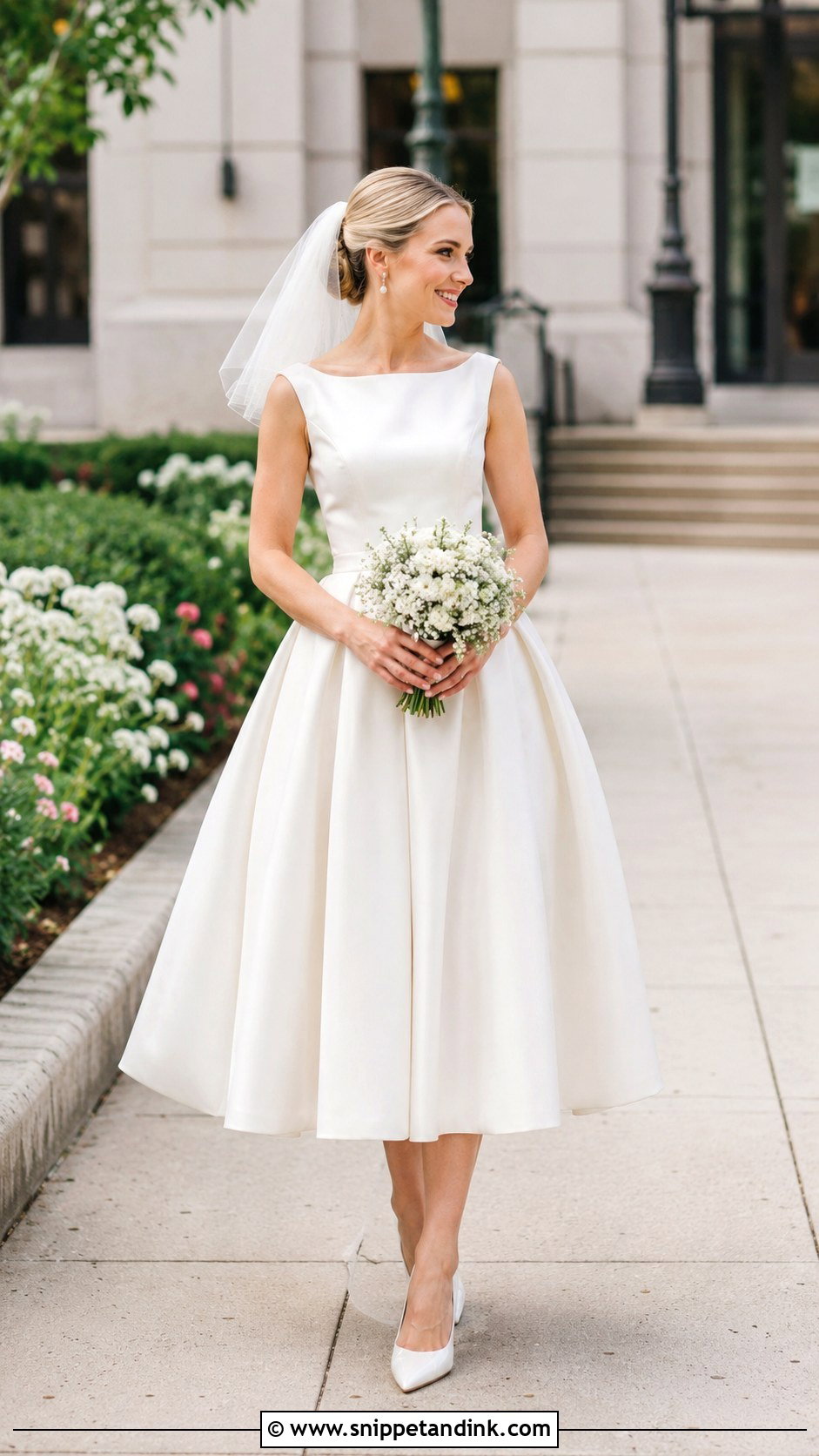
Falling between knee and ankle, a tea-length hem shows off your shoes and makes movement easy. A full skirt leans vintage, and a sleek cut looks modern. It’s more relaxed than floor length and still clearly bridal. Hem placement is the whole game. Too high and it looks like a cocktail dress, too low and it cuts the leg, so I set it at a point that suits the shoe you’ll wear. Pointed pumps or ankle-strap heels, pearl earrings and a short veil or bow suit courthouse weddings, garden parties and relaxed receptions.
18. Short Wedding Dress
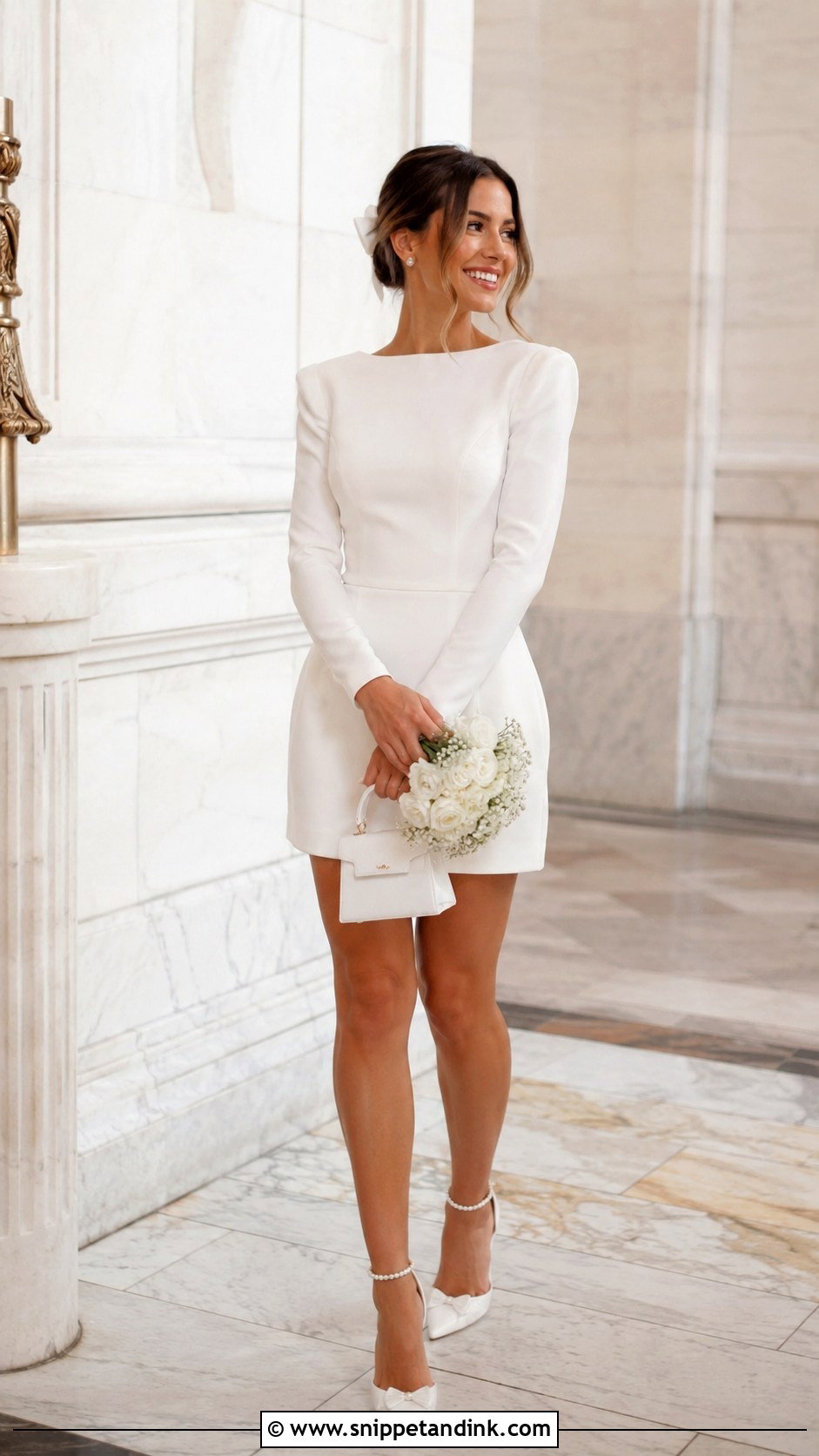
Short dresses give you total freedom to move. They suit a courthouse ceremony, a shower, an after-party, an elopement, or the main wedding if that’s your style. A tailored mini with long sleeves feels chic, and a tulle mini feels playful. Fit and fabric keep it bridal; a short dress in thin fabric looks like a party dress, while structured satin or crepe doesn’t. Statement heels, a structured mini bag, pearl earrings and a bow or short veil complete an outfit you can dance in.
19. Slip Wedding Dress
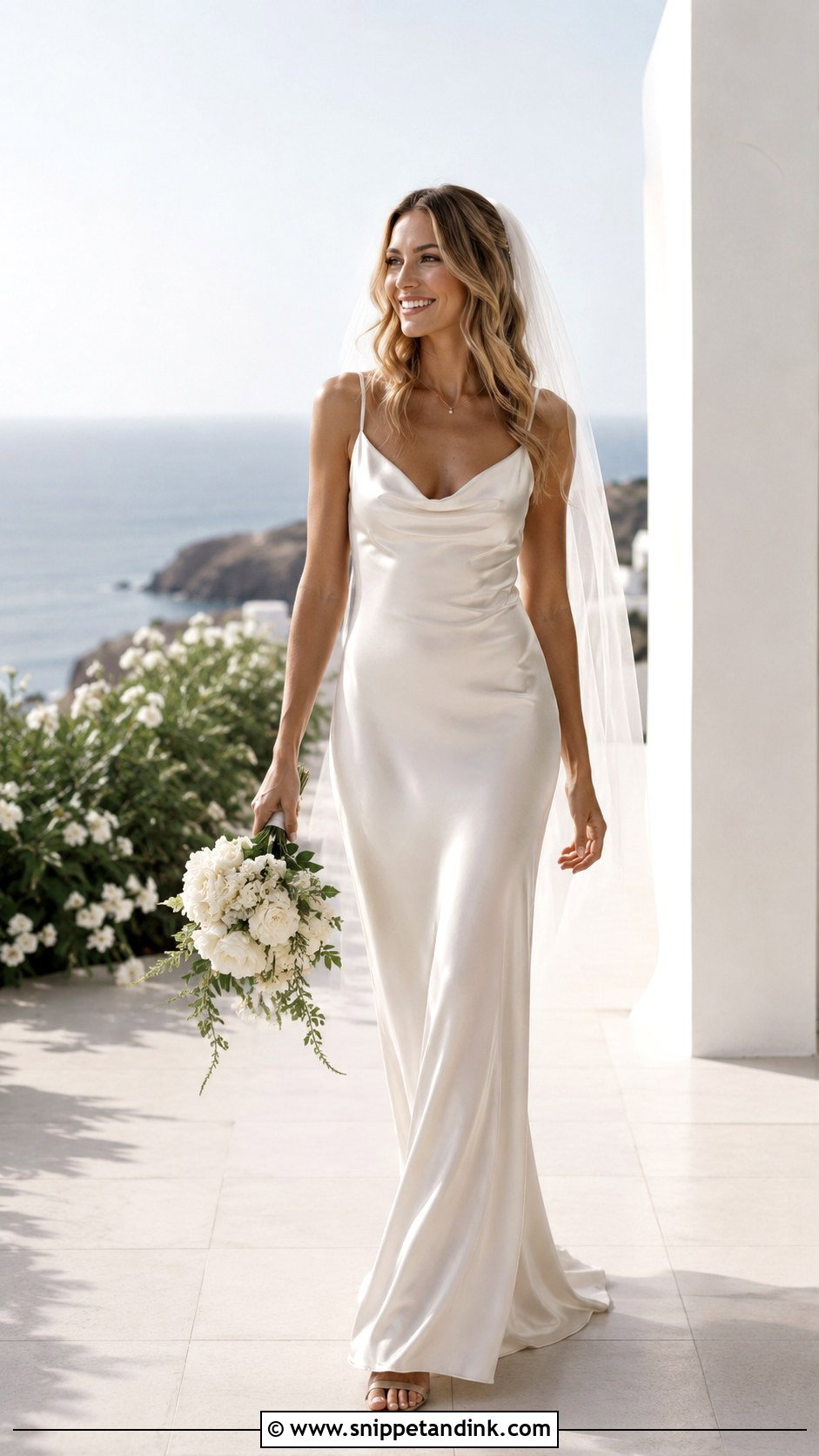
Thin straps, a bias cut and a fluid line that skims the body define a slip wedding dress. Fabric quality decides it, so silk, satin or charmeuse makes a big difference. Bias-cut fabric stretches and relaxes as you wear it, which means a slip can feel slightly longer by evening; I hem them with that in mind. Barely-there heels, fine jewelry, soft waves and a light veil finish it, and a sheer cape, blazer or lace topper adds coverage when you want it.
20. Corset Wedding Dress
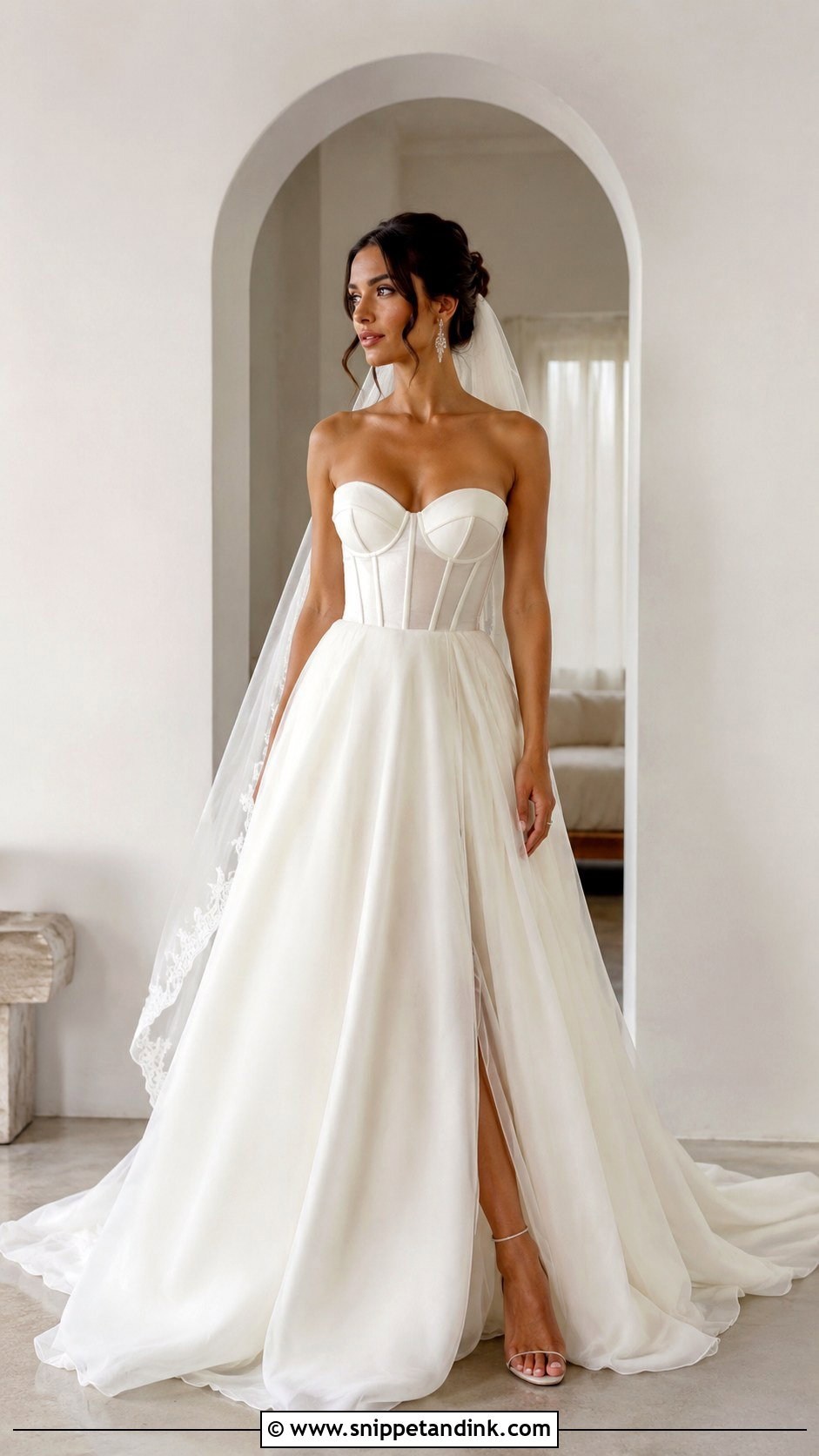
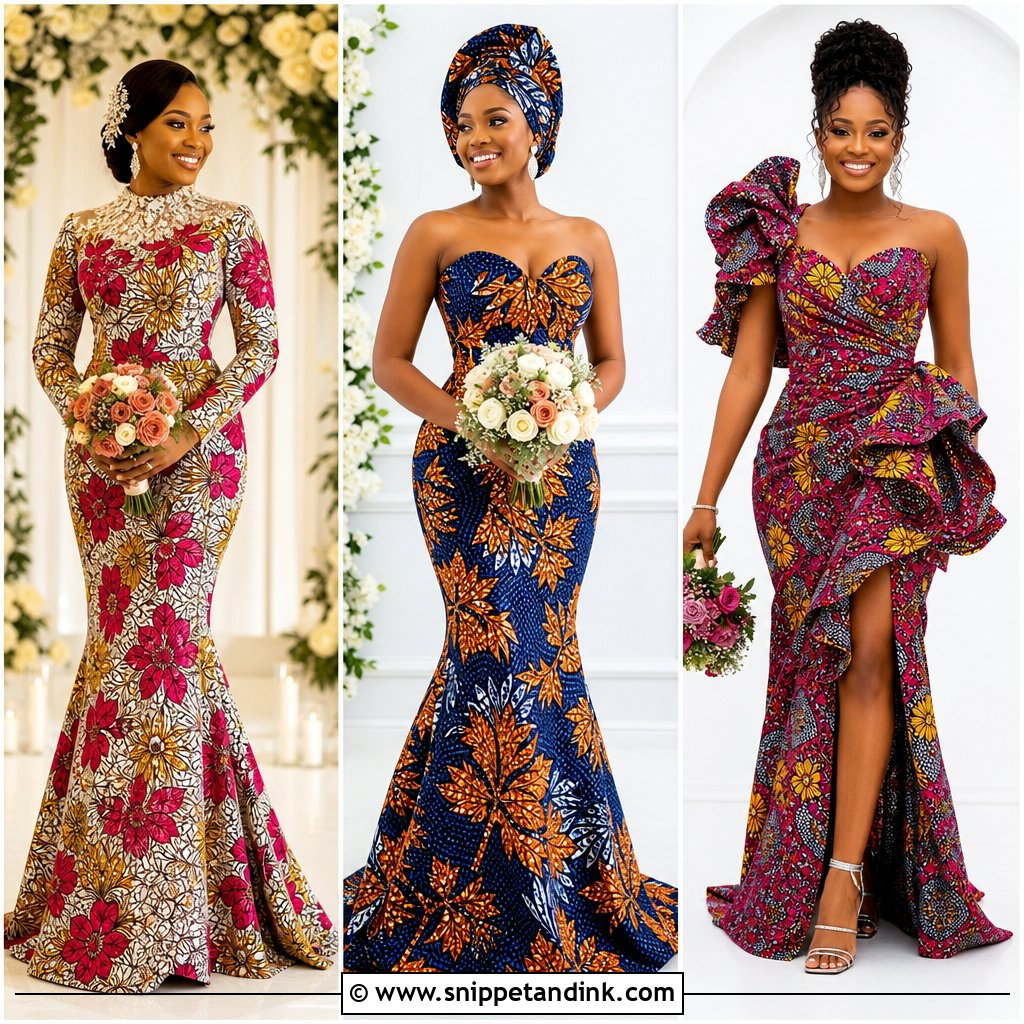
Structure, shape and a romantic outline come from the corset. The boning can be exposed as visible boning for a modern look or covered in satin, lace or tulle. It supports the waist and pairs with full skirts, fit-and-flares and A-lines. A good corset is secure without restricting your breathing, and you should be able to eat dinner in it. Lace-up backs are the most adjustable on the day if your body changes slightly with nerves or water retention. A fine veil, crystal earrings and balanced heels keep it elegant.
21. Cape Wedding Dress
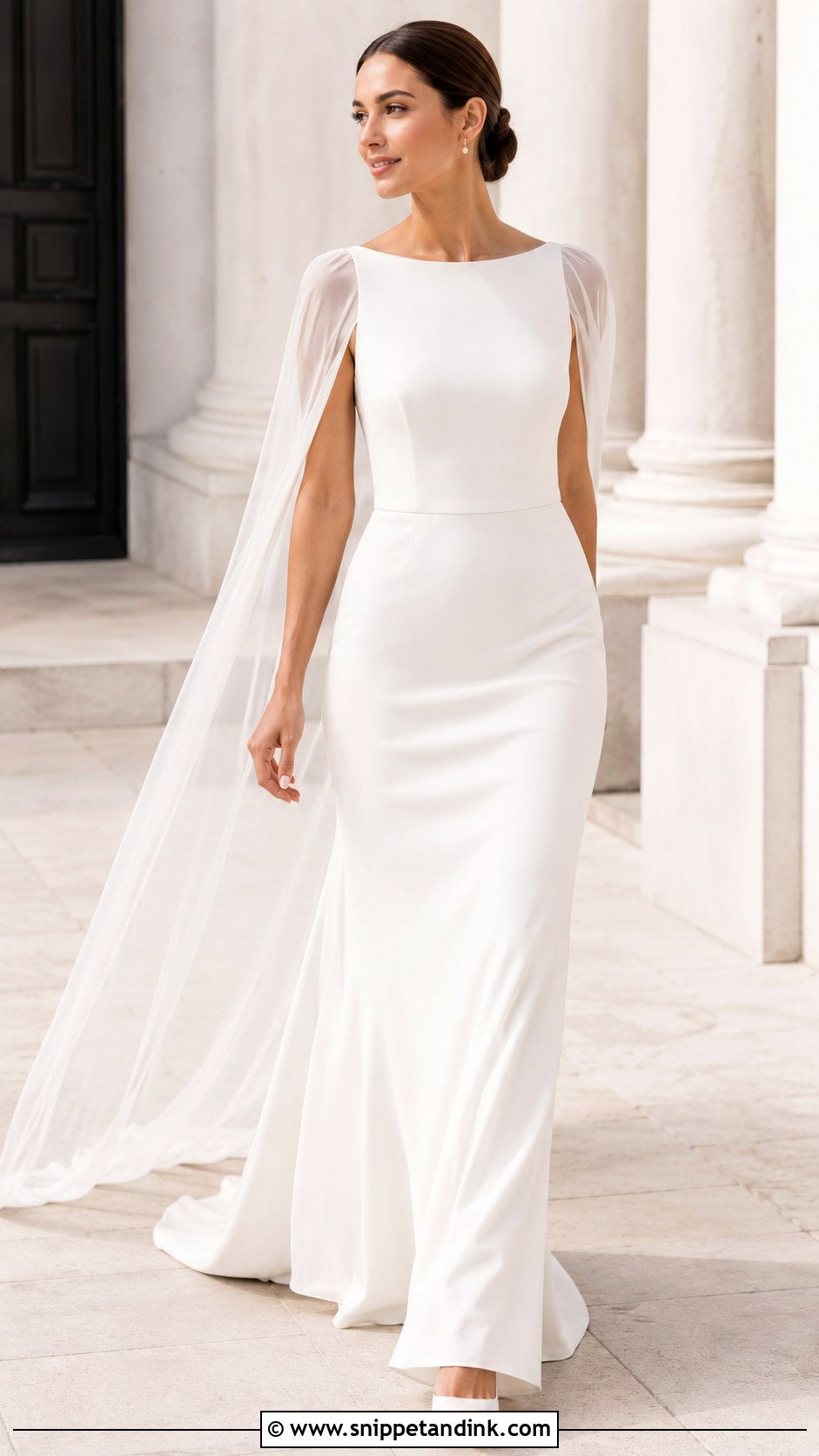
A cape replaces the veil and gives drama from behind, especially in walking and back-view photos. It can be sheer, lace, beaded or satin, attached at the shoulders. A plain crepe or satin gown looks transformed by a long cape, and a lace cape softens a minimal dress. Outdoors, wind is the issue; a long, light cape will fly, so I add small weights or hand-stitched beads along the hem for breezy venues. Understated earrings, sleek heels and a clean hairstyle let it move freely.
22. Bow Wedding Dress
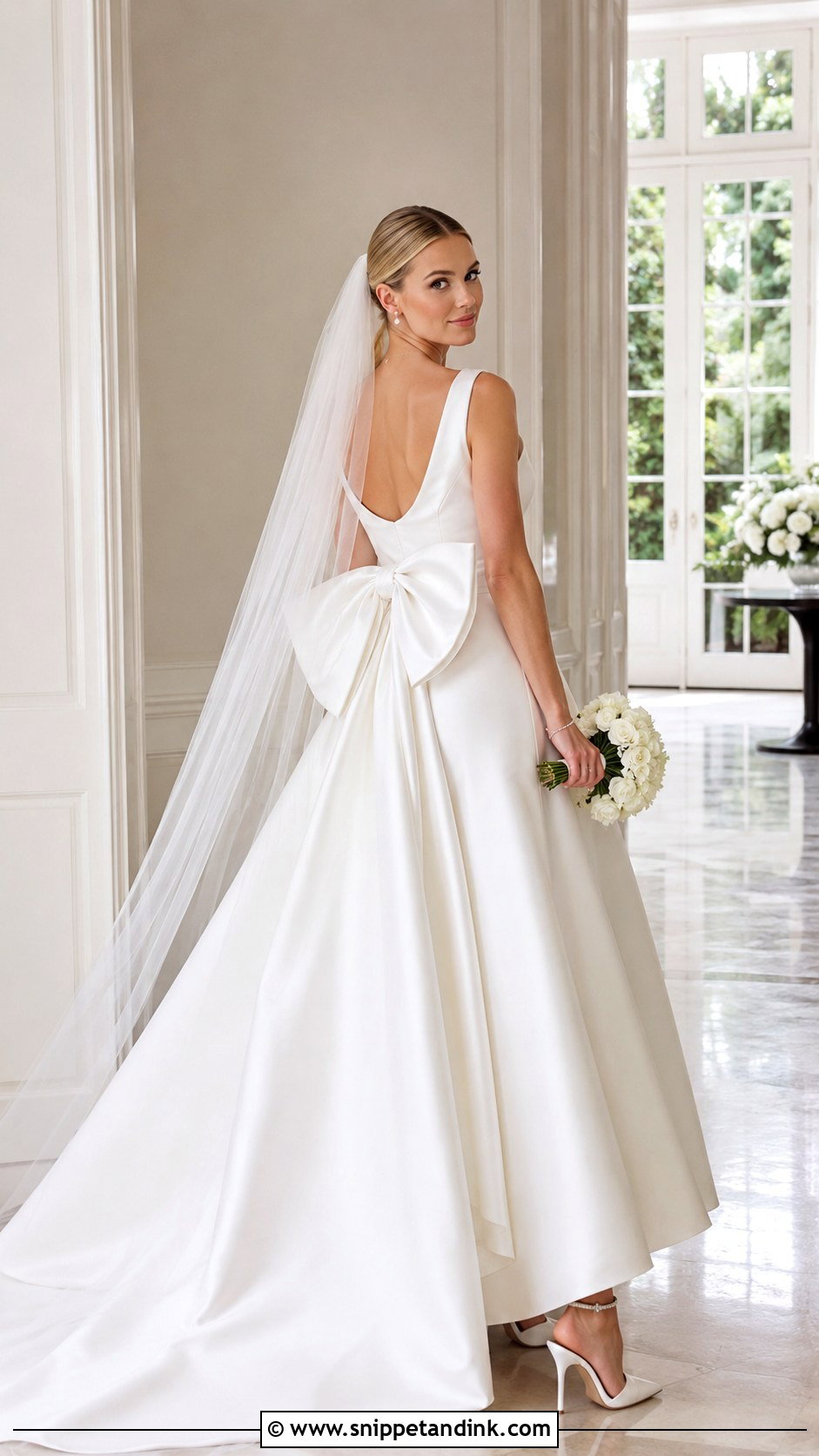
Bows sit at the back waist, shoulder, neckline or train, and their scale sets the tone. A large back bow turns a simple satin gown into something memorable, and small shoulder bows feel sweet. Big bows flatten when you sit, so a removable one, attached with hooks or snaps, gives you a crisp ceremony look and comfort at dinner. Keep other details few: elegant heels, pearl studs, a smooth veil and soft makeup.
23. Ruffle Wedding Dress
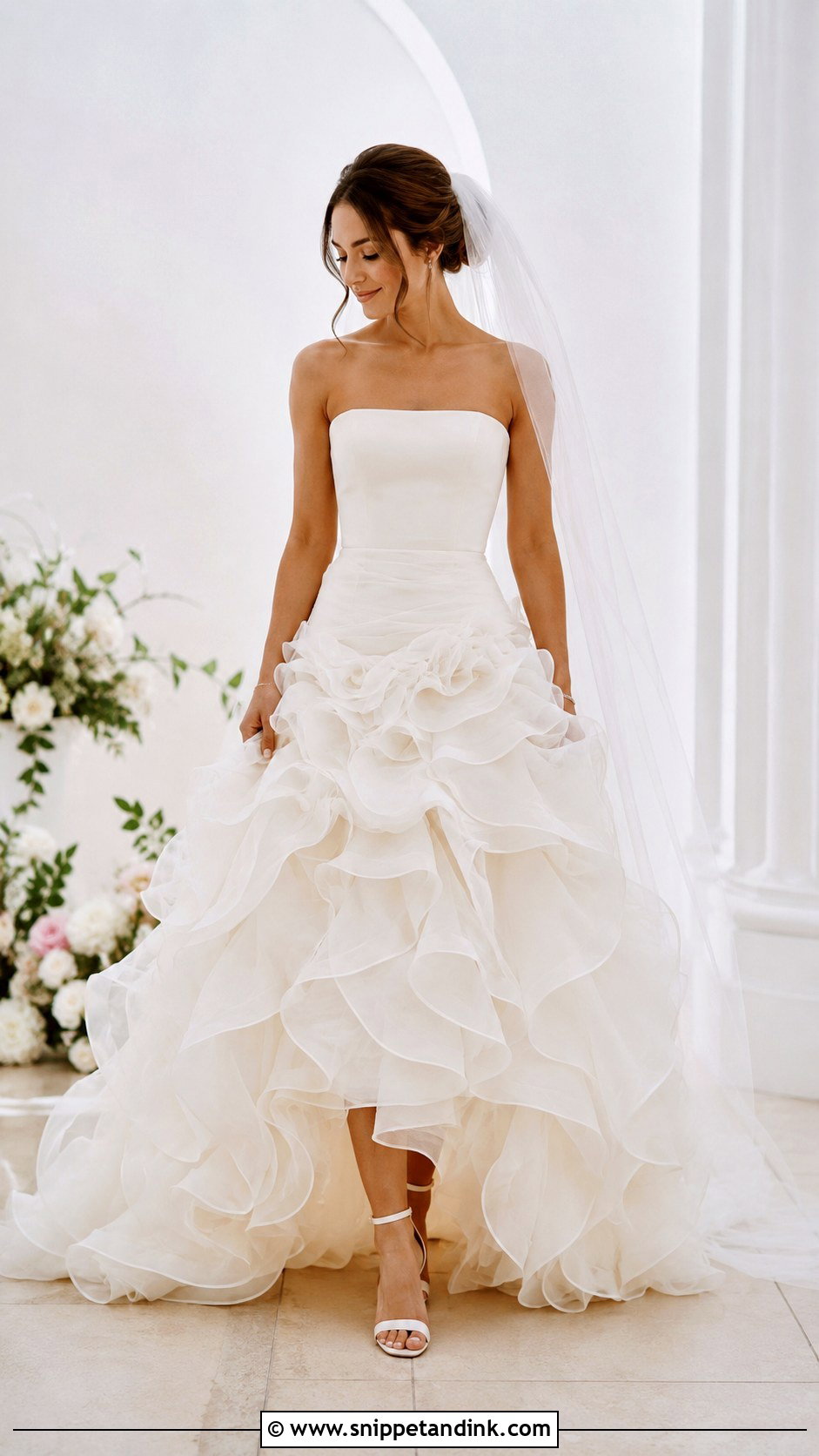
Ruffles bring movement and texture, soft and layered on tulle or sculptural on organza and satin. Balance is the rule: a dramatic skirt wants a simple bodice, and a ruffled neckline wants a clean skirt. Organza ruffles keep their shape longer than tulle ones, which droop slightly in humid weather. Slim heels, minimal jewelry and a veil that doesn’t add more volume keep it controlled. Every step gives the gown life on the dance floor.
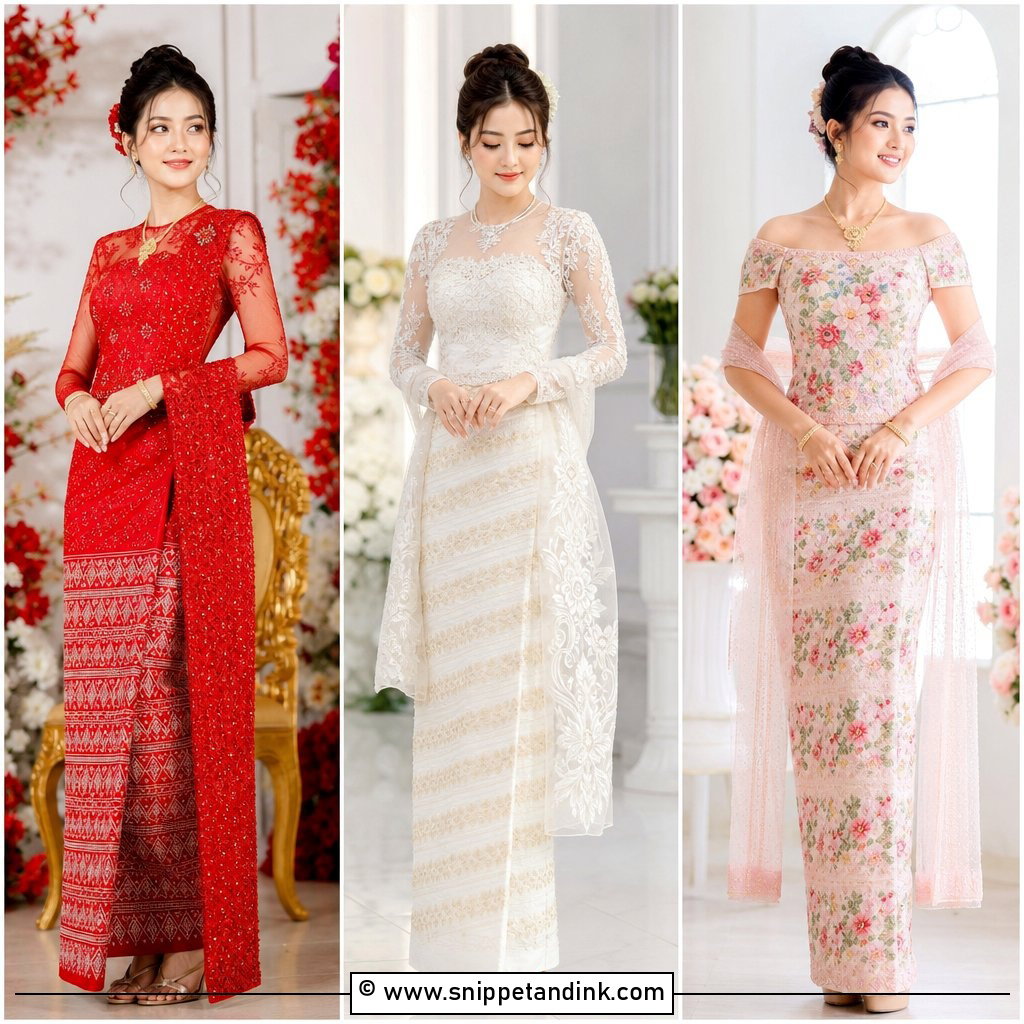
24. Color Wedding Dress
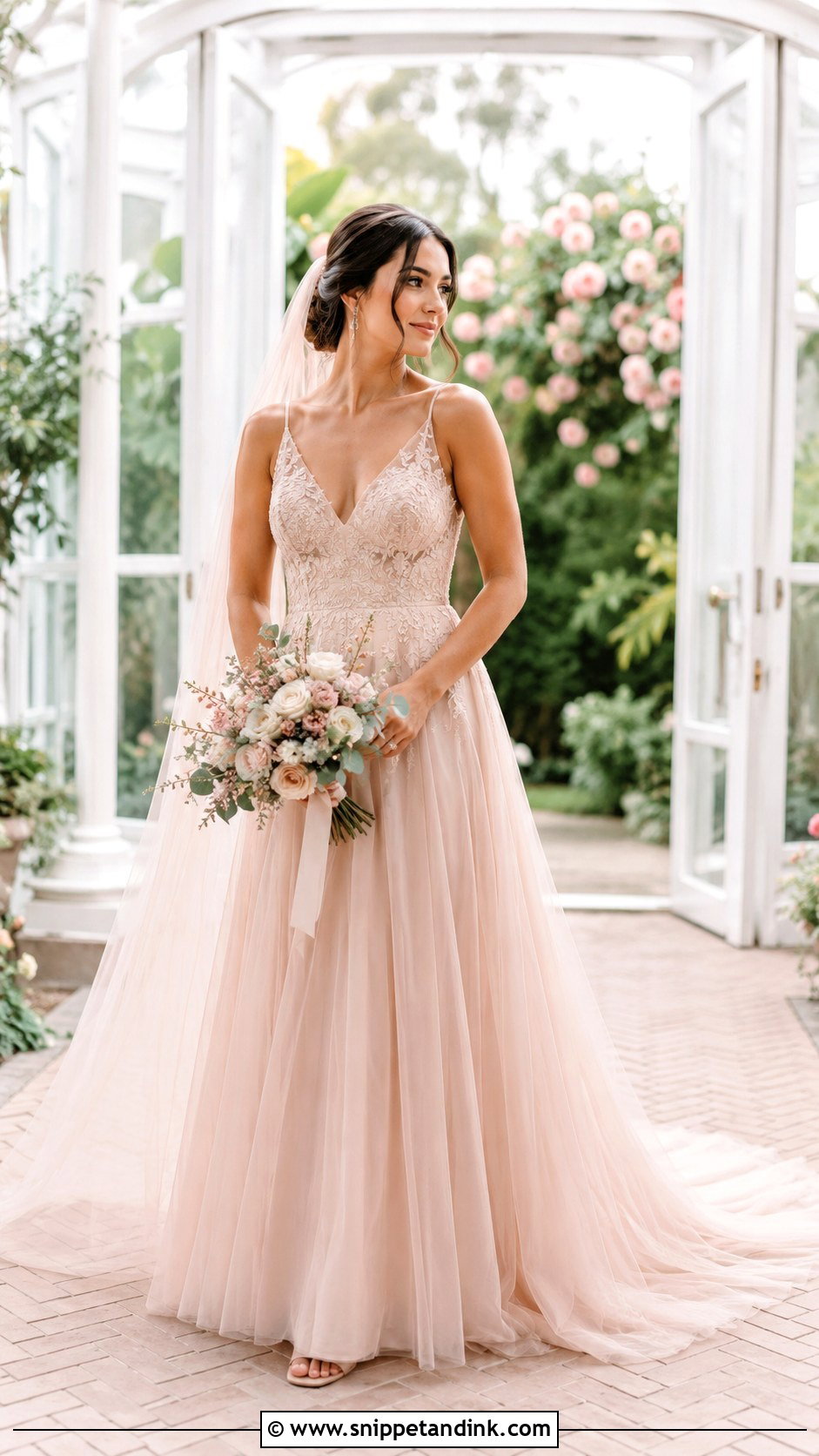
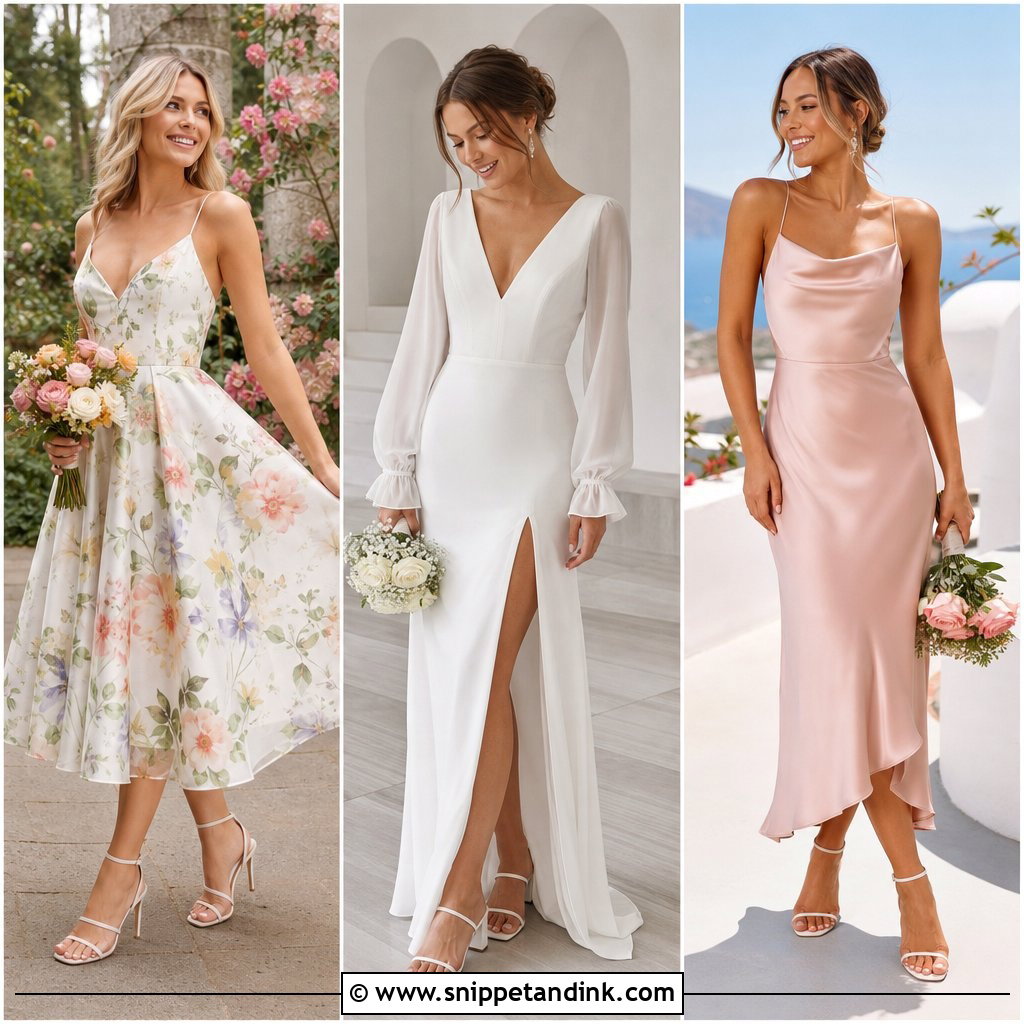
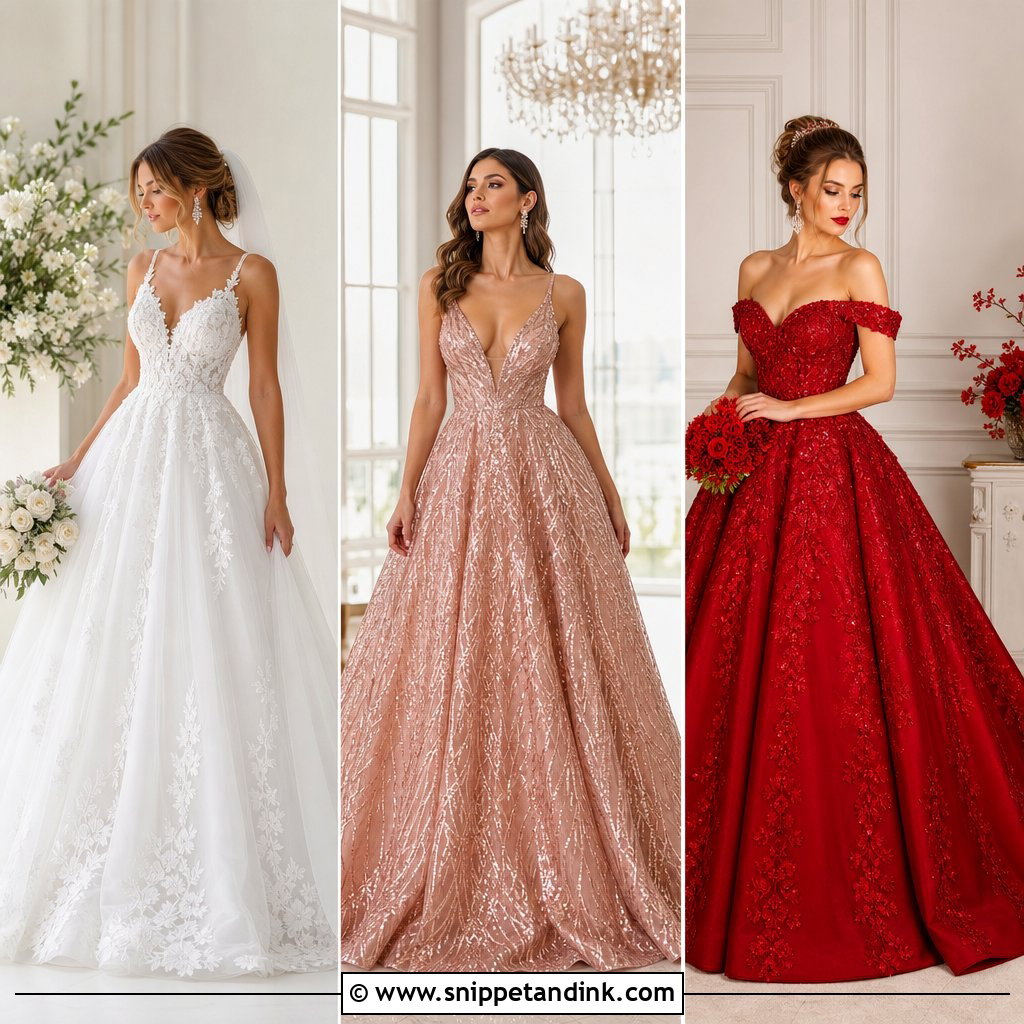
Blush, champagne, light blue, silver, pale lavender and warm ivory give a personal twist while still reading bridal. Color highlights lace, embroidery and tulle layers. These tones change with light far more than white does; blush can look almost white in daylight and pink indoors, so I always check a swatch both ways. Neutral heels, fine jewelry and a veil matched to the undertone keep it cohesive, along with a soft-toned bouquet. It suits anyone ready to move past bright white.


25. Two Piece Wedding Dress
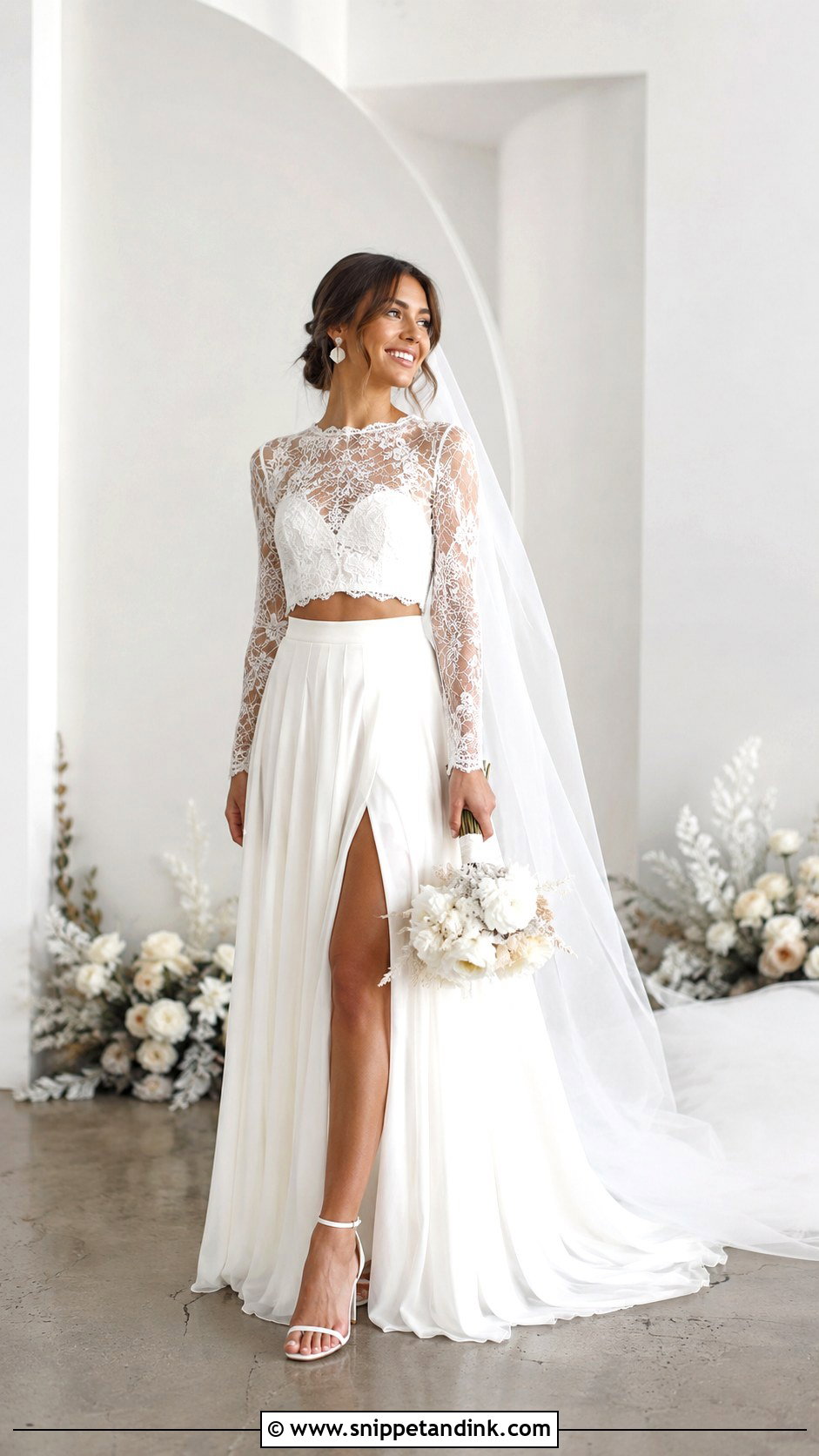
A bridal top and matching skirt can range from sleek satin sets to a lace crop top over tulle. It’s less traditional and still polished. A high-waist skirt keeps it elegant and a structured top gives support. The gap between the pieces is where two-pieces go wrong; I fit the top and skirt together, with the bride sitting, so no unplanned skin shows. Clean heels, modern earrings and a simple veil or hair accessory complete it. You can also swap the top or skirt for a fresh reception look without buying a second dress.
A Realistic Calendar From Order to Final Fitting
Timing causes more stress than style. Made-to-order gowns usually take several months to arrive, and alterations need their own window afterward. As a rough guide, and it varies by designer and season:
- Start shopping around nine to twelve months out if you want a made-to-order gown without rush fees.
- Plan on two to three fittings, beginning about two to three months before the wedding.
- Have your shoes, undergarments and any jewelry that sits at the neckline by the first fitting.
- Book the final fitting a week or two before the day, and bring whoever will bustle the dress.
If you’re shopping later than that, off-the-rack and sample gowns are the honest answer. Ready-to-wear sheaths, slips and simple A-lines are easiest to find quickly and alter fast; heavily beaded or lace-edged gowns take the longest in alterations.
How Each Fabric Holds Up by the Last Dance
Fabric decides how the dress looks at ten at night, not just at the ceremony. Satin and mikado hold shape but mark where you sit. Crepe stays smooth and resists creasing, though thin crepe clings. Tulle stays light but snags, and lace hides small marks better than any plain fabric. If your day is long, warm or outdoors, I’d weigh that list as seriously as the silhouette.
Trust the Gown You Stop Adjusting
The dress that feels like you, fits your setting and lets you move freely is the one to choose. Ball gowns, slips and everything between offer something different. Think about the full outfit rather than the dress alone, because shoes, veil, jewelry, hair and fabric all change the result. Try styles you assume you won’t like, notice how each one feels when you sit and walk, and trust the gown that supports both your body and your personality. Classic, modern, romantic and fashion-led options are all here to compare.
You'll Like These Ideas:



Leave a Reply