
Most brides who sit in my chair want two things that pull in opposite directions: hair that stays put through vows, hugs and dancing, and hair that still moves and looks like theirs. A good updo manages both, but only if the shape suits the dress neckline, the veil, the hair length and the weather on the day. Below are fifteen updos I’m asked for constantly, with what each one needs underneath to hold, and who I’d quietly steer toward something else.

Should You Wash Your Hair the Morning Of?
Brides ask me this more than anything else, and the answer depends on your hair rather than a rule. Freshly washed hair is slippery, so pins and curls have less to grip. For most people I suggest washing the day before, drying it fully with a round brush, and sleeping on a silk pillowcase.
- Fine, quick-to-get-oily hair: wash the night before, or the morning of if it’s limp by day two, and let your stylist add texture spray or dry shampoo at the roots.
- Thick or coarse hair: wash a day or two out; the natural oil helps it hold a shape.
- Curly and coily hair: wash and condition on your usual schedule so the curl pattern is at its best, not freshly disturbed.
- Everyone: skip heavy conditioner on the roots and silicone shine serums the night before. They make pins slide.
Whatever you do, arrive with hair completely dry. Even slightly damp hair at the nape will drop curl within an hour and adds a lot of time to the appointment.
1. Bridal Low Bun Updo

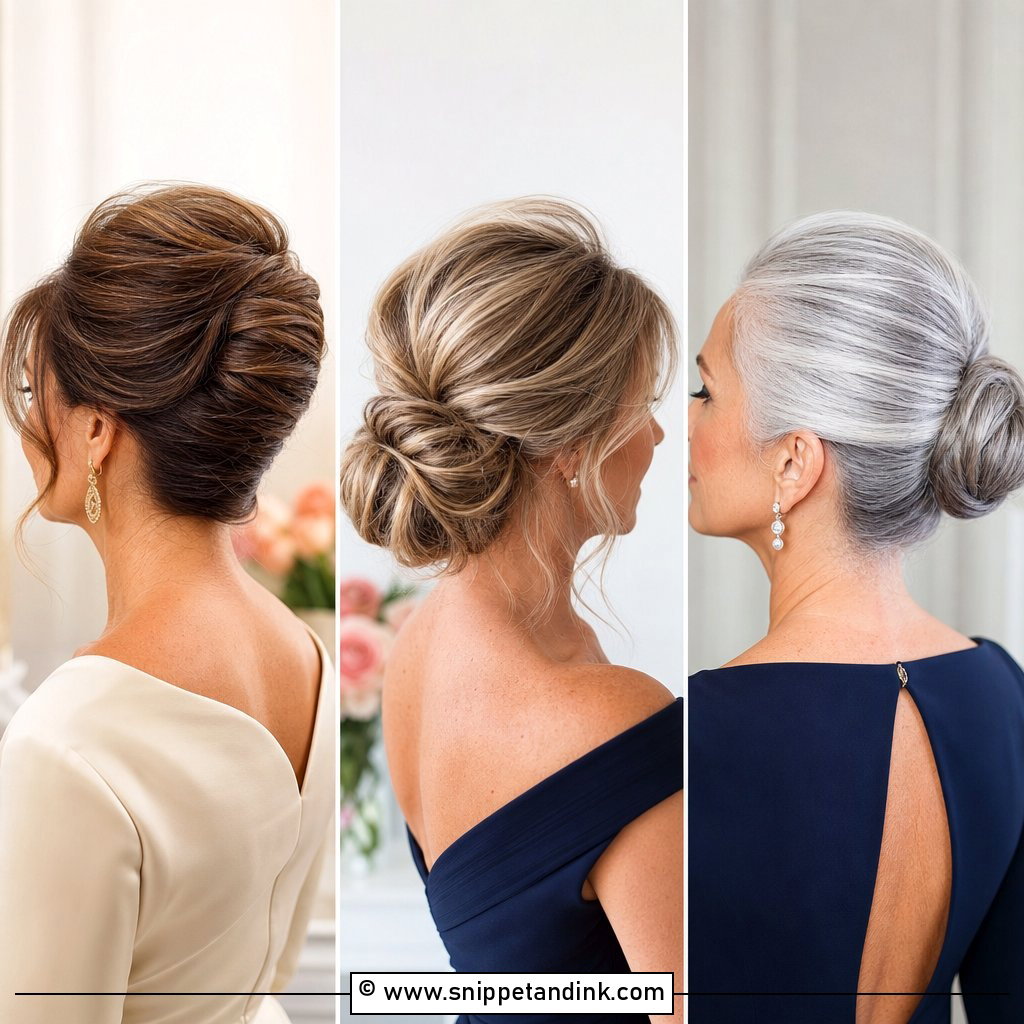
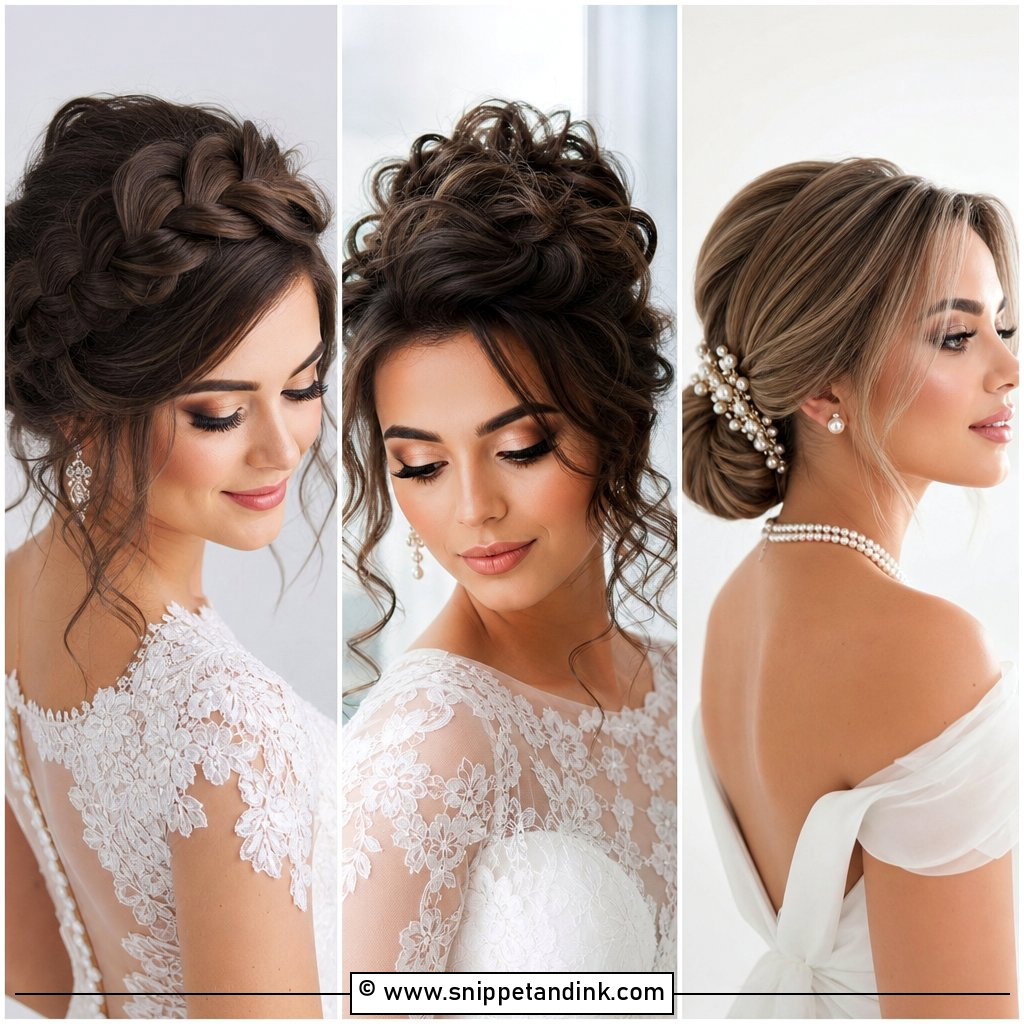
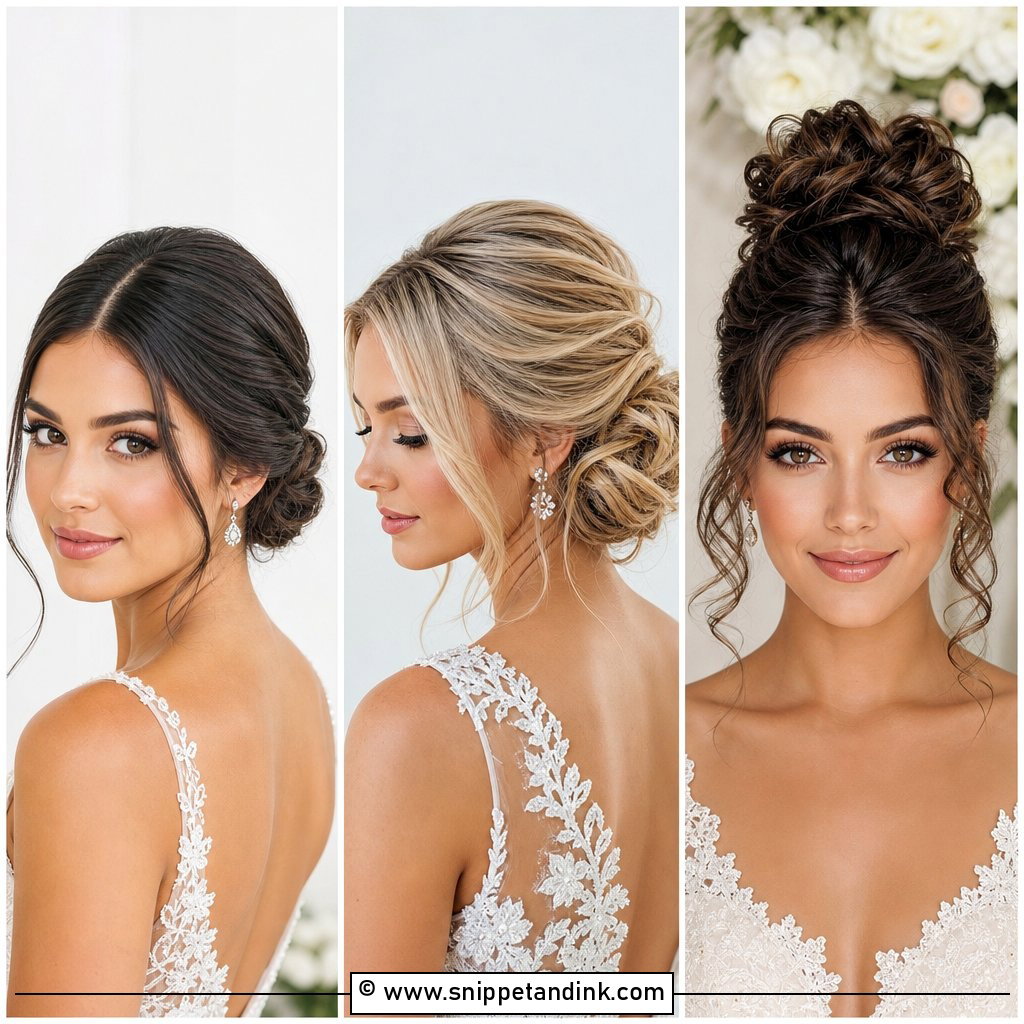
The low bun is my default suggestion when a bride isn’t sure, and there’s a practical reason. Sitting at the nape, it leaves the crown free for a veil comb, keeps an open back on show and doesn’t press on the head when you lean back in a chair. Smooth, textured or loosely twisted, it adapts to most medium and long hair. The thing I check first is whether your hair is long enough to wrap around itself at least once; if not, I’ll add a small padded insert so it doesn’t look thin from behind.
2. Bridal Chignon Updo

Chignon and low bun get used interchangeably, but when I say chignon I mean a folded or rolled knot, often tucked slightly off-centre, rather than a wrapped bun. That soft roll or knot gives it a more tailored look against satin, lace and high necklines. It’s surprisingly kind to fine hair: I backcomb at the base of each section and can tuck a hair-matched padding inside the roll so nobody sees it. Ask for smooth sides and a lifted crown if you want it crisp; textured sides if the venue is a garden.
3. Bridal Messy Bun Updo

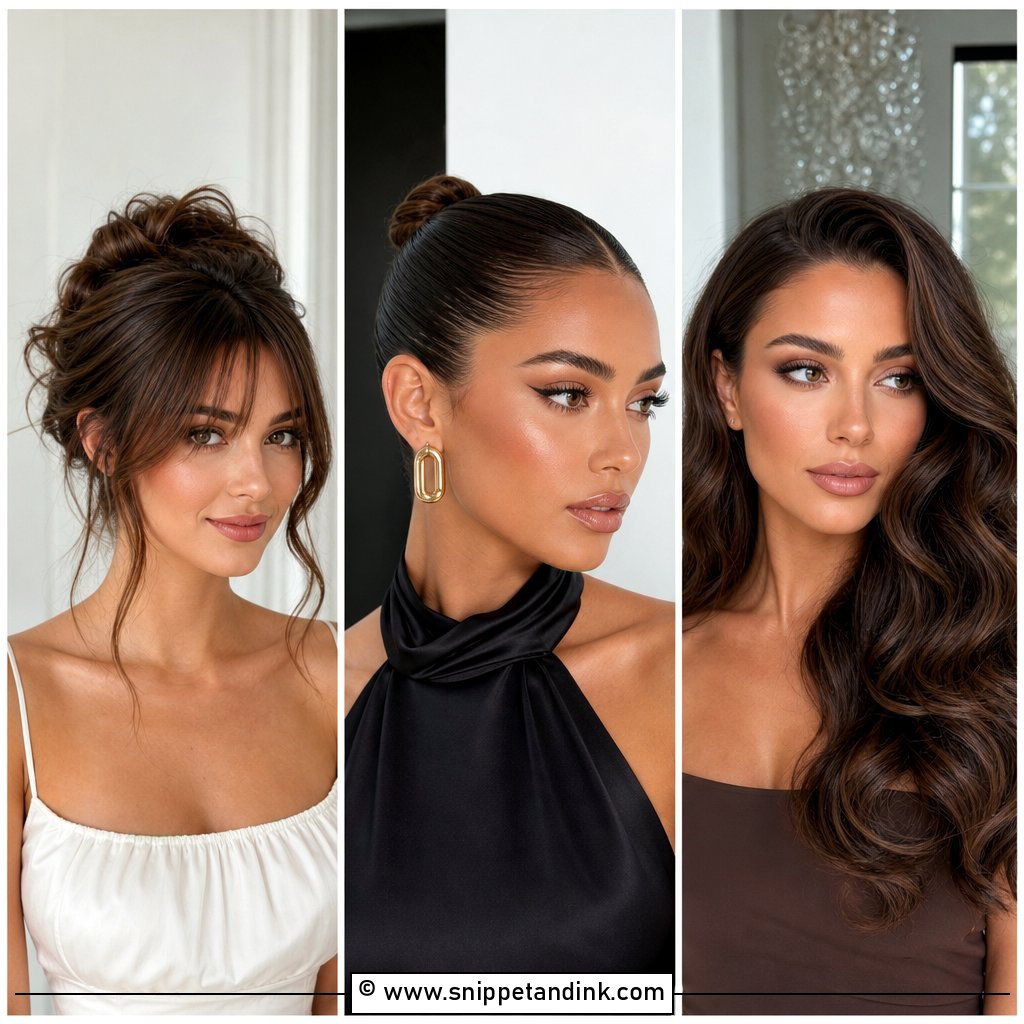
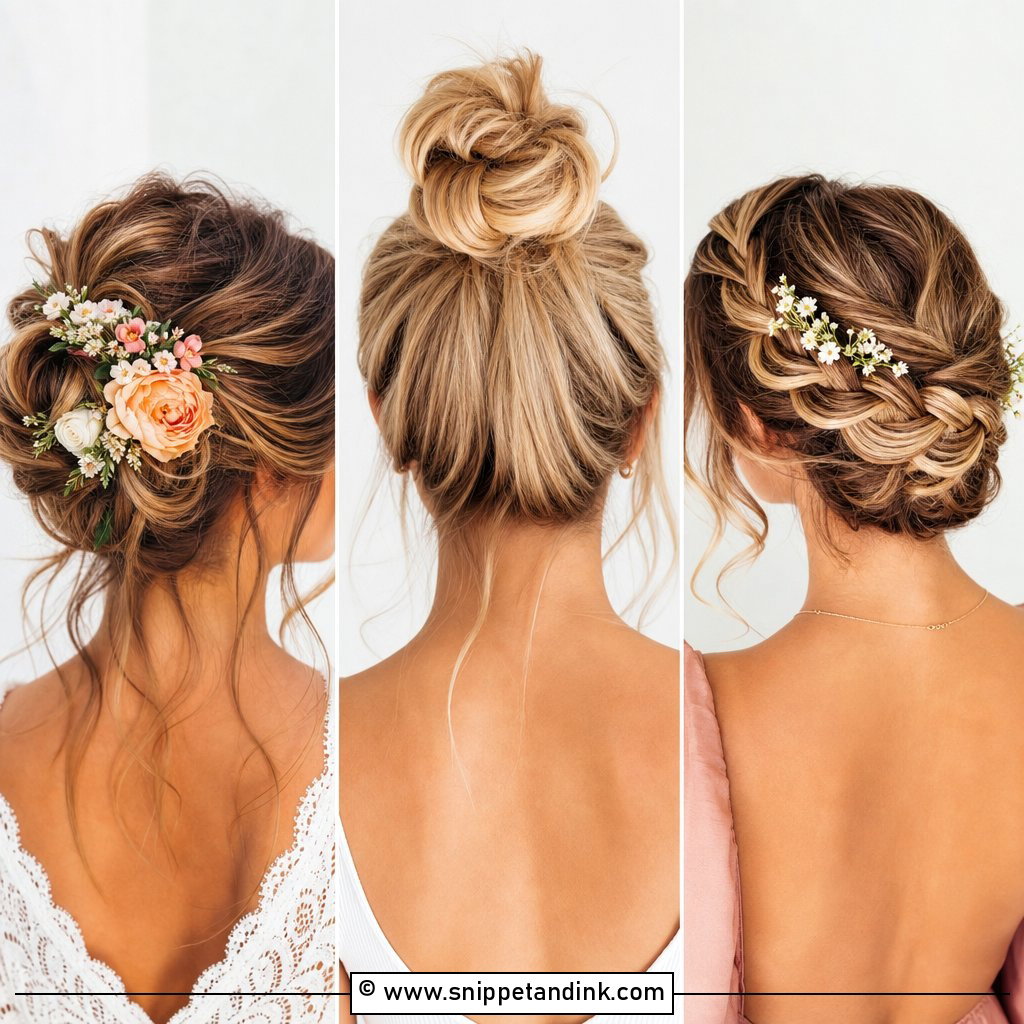
Here’s the honest truth about messy buns: they take me longer than sleek ones. Every loose piece has to be placed so it falls the same way in the fifth hour as in the first. I curl the hair, let it cool fully, and pin the bun in loops with texture spray between layers. It can sit low, mid-height or slightly high depending on the gown. Boho dresses, beach and outdoor ceremonies suit it best. I’d avoid it if your hair is very silky and straight with no hold, unless you’re happy for me to use more product than you’d normally wear.
4. Bridal Braided Updo

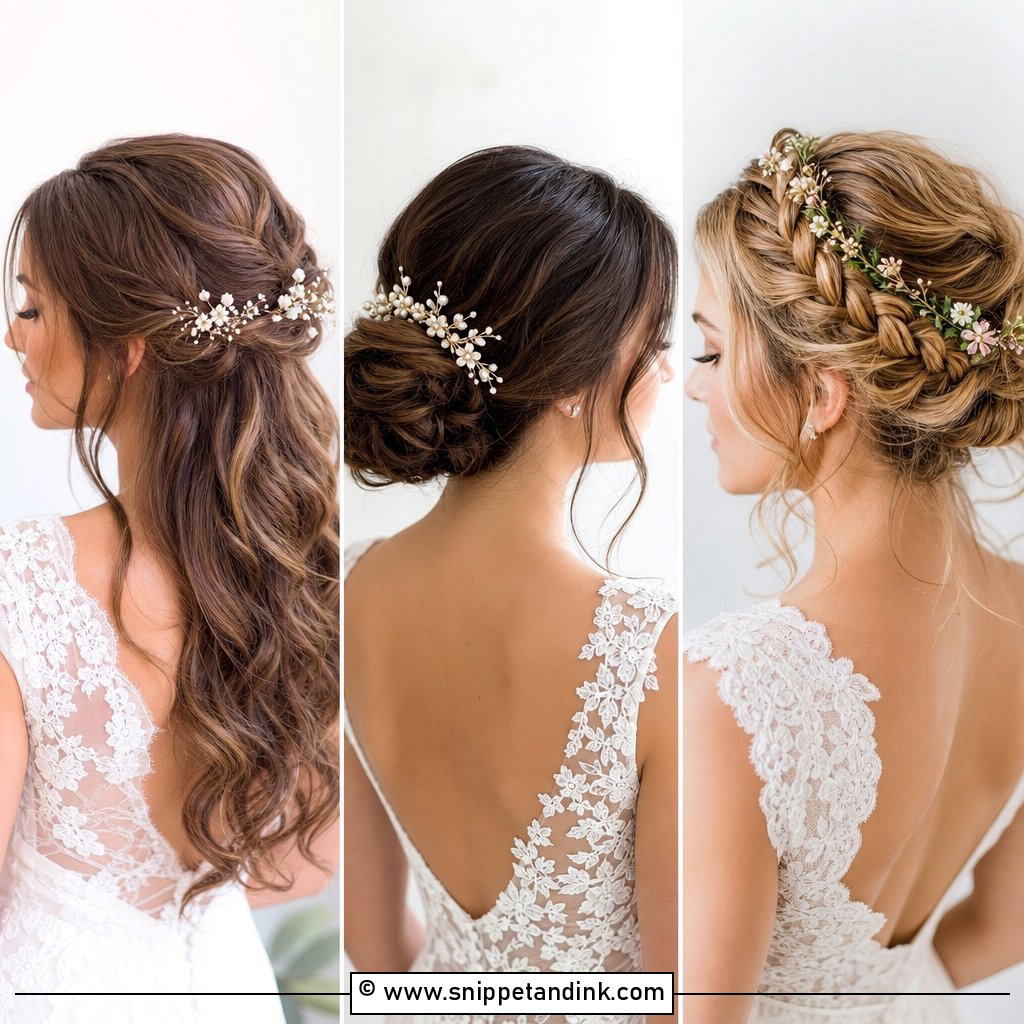
Braids are the most practical updo I do, and brides rarely realise it. A braid gives me a rigid structure to anchor veil combs, flowers and pins into, so accessories stay put for hours. It can circle the crown, feed into a low bun or sweep along one side. Straight, wavy, curly and textured hair all braid well, though very short layers poke out, so I braid them in first and pin the ends inside. I gently widen each loop after braiding; tight braids look flat in photos from a few metres away.
5. Bridal High Bun Updo

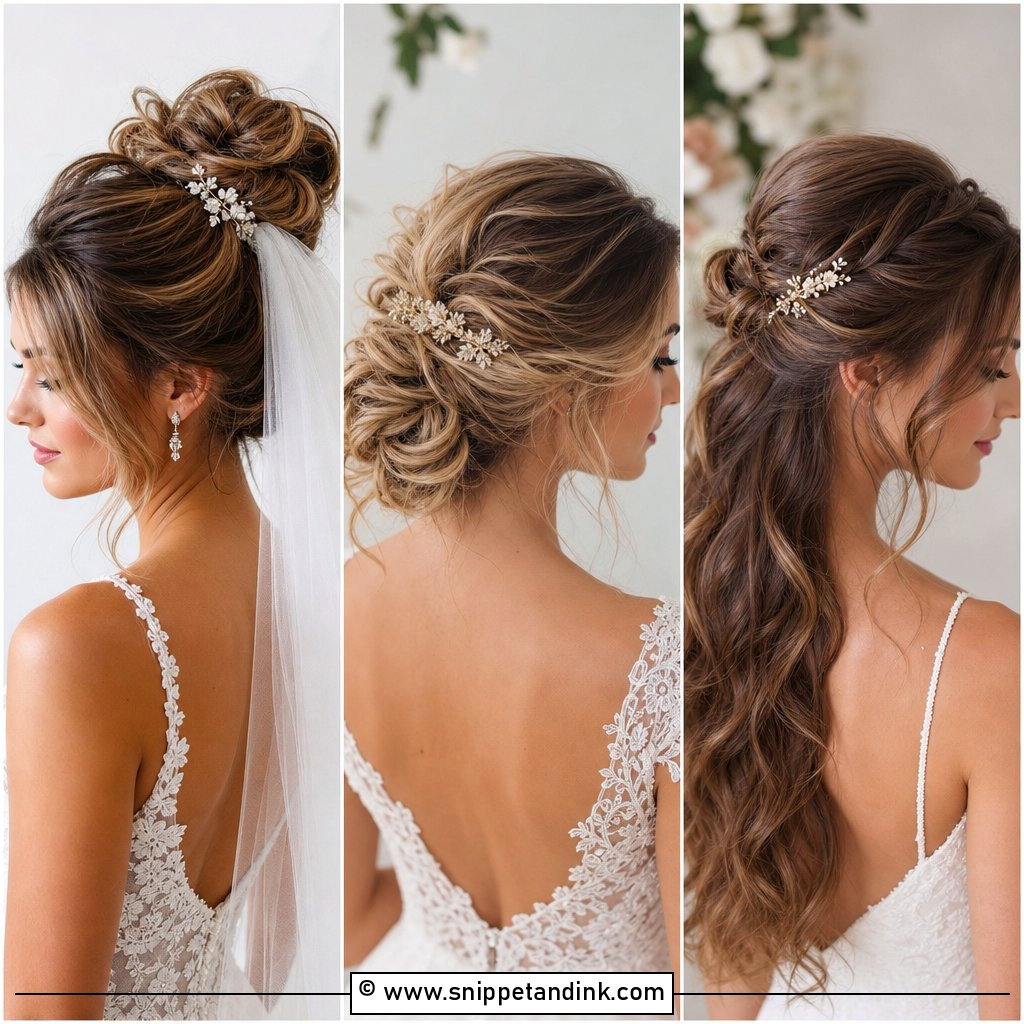
A high bun lifts the whole face, lengthens the neck and keeps every strand off your shoulders in hot weather. Strapless, halter and statement-sleeve gowns all suit it. The thing I warn brides about is weight. Thick, long hair pulled to the crown can start to pull and ache after a few hours, so I split it into two ponytails stacked one above the other to spread the load. It can be a sleek ballerina bun or a fuller, textured knot. If you’re adding a veil, I place the comb under the bun rather than above it, otherwise it sits oddly high.
6. Bridal French Twist Updo

The French twist works for more lengths than people expect. Shoulder-length hair can often manage it, because the twist only needs enough length to fold back on itself. I prep the back with texture spray and a hidden vertical row of crossed bobby pins, then roll the hair over the pins so it has something to lock onto. Boat necks and structured gowns echo its long line. If you want it softer, I leave a couple of face-framing pieces loose; if you want it sharp, I smooth the sides with a little cream and no extra pieces at all.
7. Bridal Side Bun Updo

When I plan a side bun, the first question I ask isn’t about hair. It’s which side your partner will stand on at the ceremony, because that’s the side guests and the photographer will see most during the vows. The bun usually sits low near the nape on that side. One-shoulder gowns and deep side parts balance well against it, and vintage looks suit a smooth version with a sculpted wave at the front. It can be loose with curls or polished; either way, the off-centre weight means I pin it more firmly on the lower side.
8. Bridal Curly Updo

With curly hair, I work with the pattern rather than against it. Curls are defined while damp with a cream or gel, dried completely, then gathered and pinned without brushing so they keep their shape. Loose curls, spirals and tighter coils can all go up this way; tighter patterns actually hold pins better because there’s so much natural grip. I leave a few defined curls at the temples to soften the face. The one thing I won’t do is brush curls out at the last minute, which turns them to frizz in humid air.
9. Bridal Twisted Updo

Twisted updos are where highlighted and balayage hair shows off. Each twist rolls the lighter and darker strands around each other, so the colour reads as depth. I twist sections back loosely, pin them where they meet, and the result has dimension from front, side and back. Fine hair gets a boost here too, because twisting adds bulk without backcombing the whole head. Polished or loose, it’s easy to adjust. Keep the front soft with a centre or side part or a few loose tendrils so the face isn’t left bare.
10. Bridal Boho Updo

A boho updo should look as if it’s barely pinned, and that’s exactly why it needs the most hidden structure. I start with waves or texture, add a small base ponytail or a few crossed pins, then build the loose bun around it so the softness has something to rest on. Braids, small flowers or delicate pins can go in at the end. It sits naturally with garden and rustic venues and with lace or chiffon dresses. If your hair is freshly washed and silky, ask your stylist to prep it with grit first or the whole thing slides.
11. Bridal Sleek Bun Updo

Sleek buns hold up in humidity better than almost any other style, because there are no loose pieces for the damp air to puff up. That makes them my quiet recommendation for summer and coastal weddings. The hair is smoothed back or parted neatly and gathered low, mid or high. Every lump shows, so I brush it under tension, check it from the side, and only then secure. With the face fully on view, makeup and earrings take centre stage. A pearl comb or a wrapped section around the base keeps it from looking too severe.
12. Bridal Low Bun With Veil

With a low bun and a veil, the big decision is whether the comb goes above or below the bun. Above reads traditional and frames the head; below shows off the bun detail and lets the tulle fall more softly. I decide at the trial with the real veil, because longer cathedral veils, fingertip veils and layered tulle pull on a bun far more than a light mantilla does. Smooth, twisted, braided or textured buns all work. If you plan to take the veil off after the ceremony, I make sure the comb leaves no visible gap or flattened patch when it comes out.
13. Bridal Updo With Pearls

Pearls work in almost any of these updos, but placement matters more than quantity. I put them where the hair naturally creates a shadow: between twists, along the edge of a braid, at the base of a bun. That contrast is what makes them glow in photos. Chignons, textured buns, braided updos and sleek knots all take them well, and they suit satin, lace sleeves and soft glam makeup. Too many pearls scattered evenly look like a pattern rather than jewelry; I usually stop well before brides expect me to.
14. Bridal Updo With Flowers

Fresh flowers in hair need a plan with your florist, not a last-minute tuck. Real blooms wilt out of water, so I ask for hardy stems such as baby’s breath, waxflower or spray roses, wired and taped, delivered close to styling time. Silk flowers and floral combs are the fallback for hot outdoor ceremonies. Scale matters: tiny blooms read delicate; one large bloom reads bold. Flowers go in last, after the spray, because hairspray can mark and dry out petals.
15. Bridal Updo For Short Hair

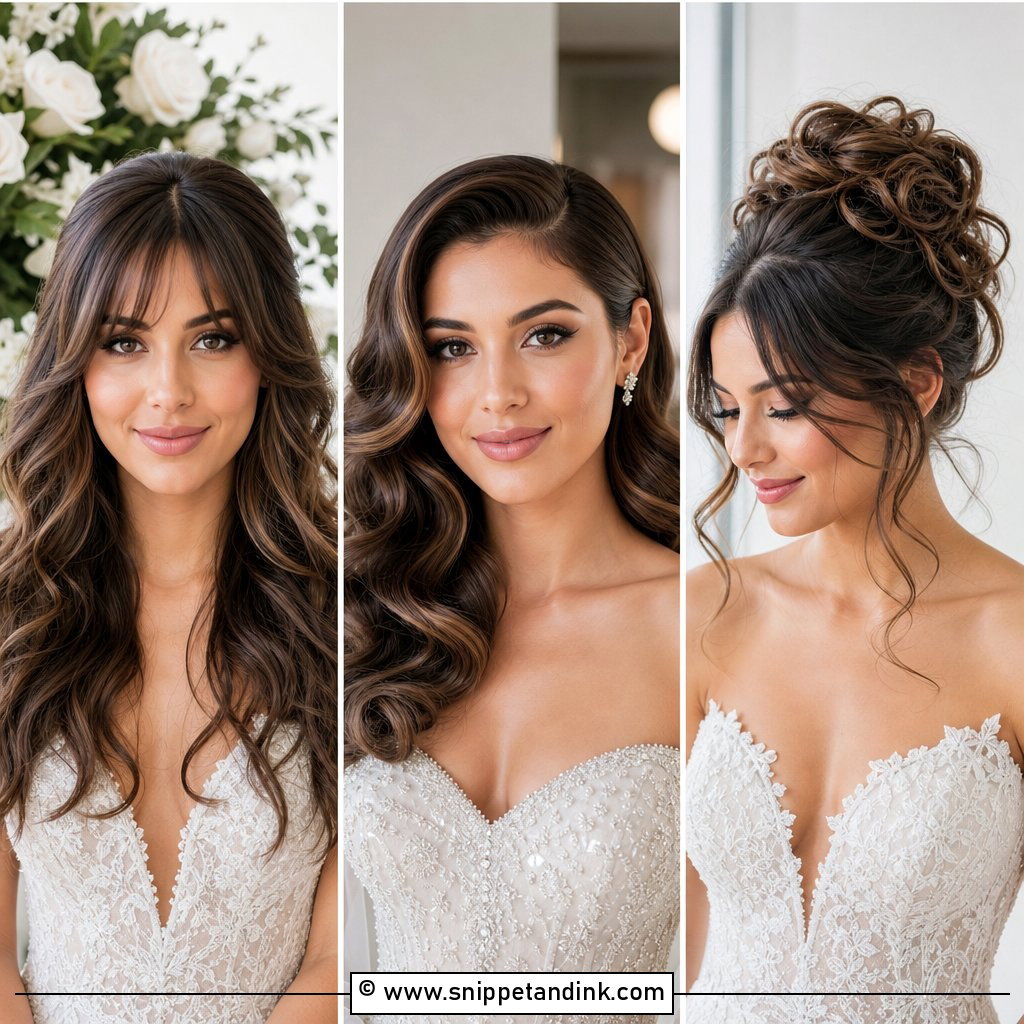
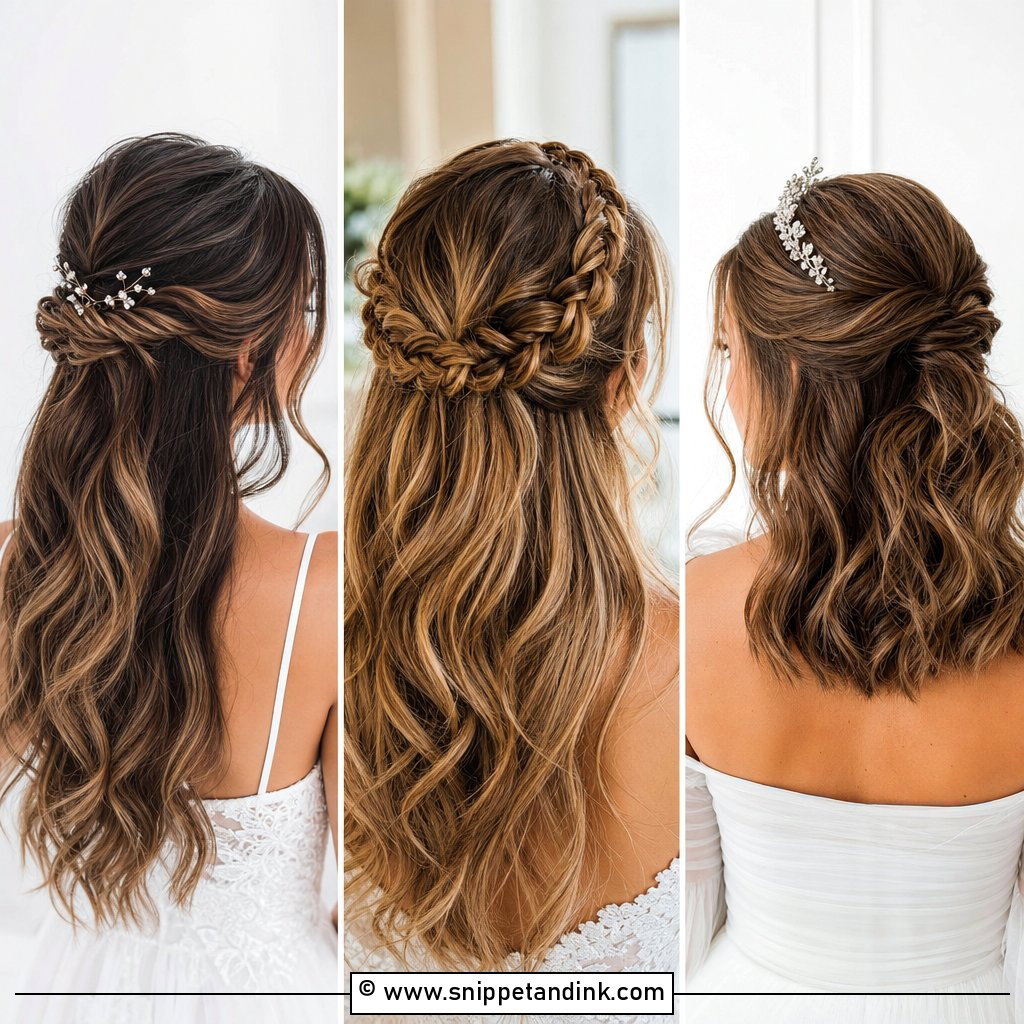
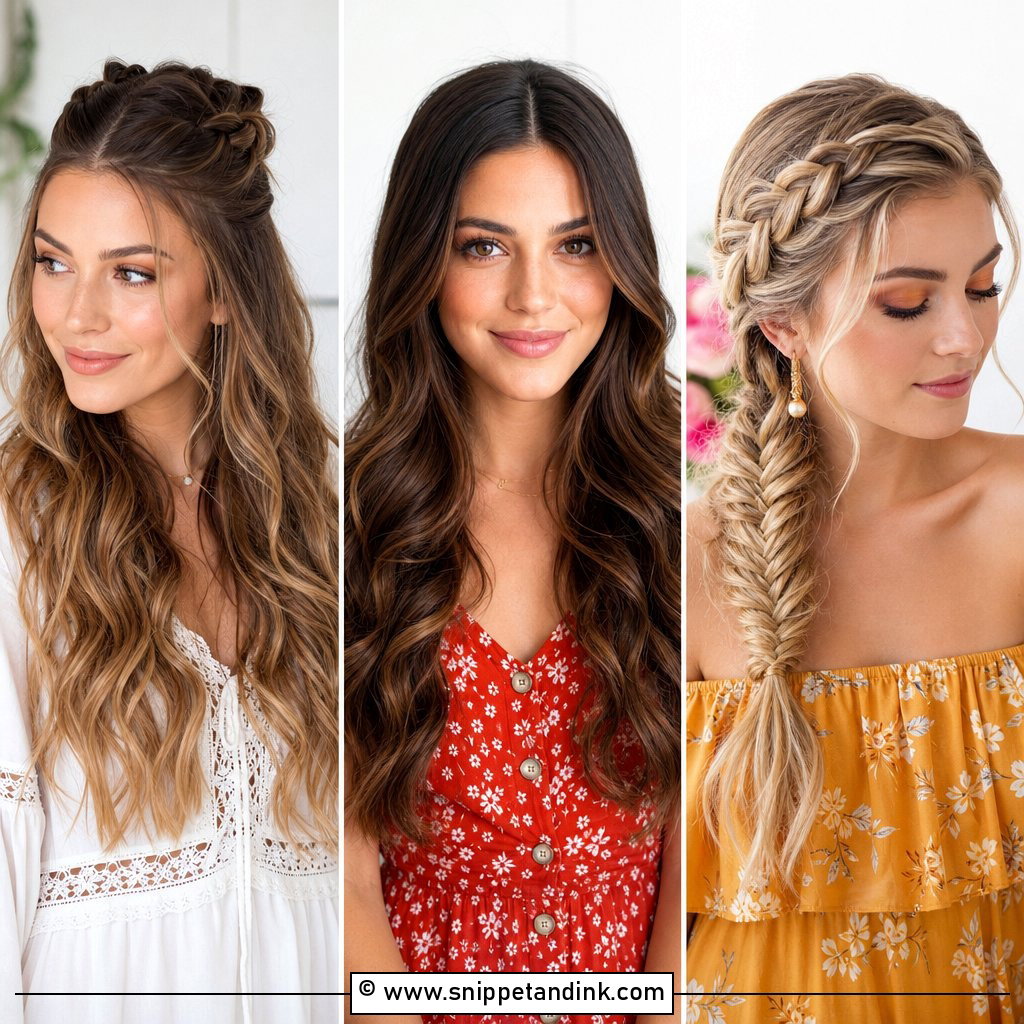
Short hair can go up; it just needs smaller sections and more pins than long hair. For bobs, lobs and shoulder-length cuts I build texture first with a curling iron and dry texturiser, then pin small pieces into a tucked bun, mini chignon or twisted crown. A pearl pin, crystal comb, floral clip or veil finishes it and hides the pin work. I tell short-haired brides to schedule their last cut several weeks out rather than the week before, because a little extra length makes everything easier to secure.
Sleek Buns Take Longer in the Chair Than You’d Think
Brides plan their morning around makeup and forget that hair times vary widely by style. Exact times depend on your stylist and your hair, but the pattern I see is consistent.
- Simple low bun or chignon on cooperative hair: usually the quickest of these styles.
- Sleek buns: longer than they look, because every section has to be smoothed and checked from several angles.
- Messy, boho and textured updos: often the longest, since the hair is curled, cooled and pinned piece by piece.
- Braided updos and anything with fresh flowers: allow extra for braiding and wiring blooms in.
I build in a buffer of at least fifteen minutes after the bride’s hair is done, so if a section needs redoing after the veil goes in, nobody panics. Ask your stylist to give you their honest time per style at the trial.
When an Updo Starts to Hurt
A tight updo should never give you a headache, but by the reception it sometimes does. The usual cause is one or two pins pressing on the scalp, or a high, heavy bun pulling at the crown. Don’t wait it out. Ask a bridesmaid to find the pin that hurts and slide it out a few millimetres; often that’s enough.
If you know you’re sensitive, tell me at the trial. I can use fewer, longer pins, spread the weight across two anchor points, or place the bun lower. Wear the trial style all afternoon so you know how it feels after five or six hours, not five minutes.
What I Ask You to Bring to the Trial
An updo succeeds or fails at the trial, not on the morning. Bring a top with a similar neckline to your dress, the veil or a comb of the same weight, your earrings, and a few photos of styles you like and one you don’t. Tell your stylist honestly how your hair usually behaves: if it drops curl by lunch, that changes how they build it. Then wear the trial hair for the rest of the day and notice what moves. A sleek bun, a chignon, a curly gather or a braided crown can all last until the last song when they’re built for your hair rather than the photo.
You'll Like These Ideas:


Leave a Reply