
Leather gives a wedding warmth and texture, and it doesn’t have to push the whole day into rustic barn territory. In my designs it works as an accent, set against softer things like linen, flowers, wood, glass and polished metal, so it reads as considered rather than themed. You can use genuine leather, recycled offcuts or a good vegan alternative, depending on your values and budget. It’s the traditional gift for a third anniversary, which makes it a nice fit for vow renewals as well as ceremonies, receptions and elopements. The twenty ideas below run from stationery and outfits to table details and lounge furniture, with notes on what each one costs you in time, weight and care.
Full-Grain, Vegan or Paper Leather? How Each One Behaves
The word leather covers very different materials, and they don’t all take a stamp, survive rain or age the same way. I pick the material for each piece by what it has to do, not by one rule for the whole wedding.
Vegetable-tanned leather
This is the firm leather makers use for stamping and embossing, because it holds a crisp impression. It darkens and softens with handling and light, which is lovely on vow books and keepsakes, and less welcome if you need forty table numbers to match exactly. Water leaves dark spots on it.
Soft, chrome-tanned leather
Supple and more water-resistant, it’s what most jackets and bouquet wraps are made from. It doesn’t hold a deep emboss well, so personalisation is usually foil, print or embroidery instead.
Vegan and paper leather
Polyurethane faux leather comes in almost any colour and wipes clean, which makes it practical for outdoor signs and napkin rings. Cheaper versions can peel or crack within a few years, so I don’t use them for keepsakes. Washable paper leather is light, takes printing well and is an affordable choice for tags, menus and invitation bands. Avoid bonded leather for anything people handle; it flakes at the edges.
1. Leather Wedding Invitation Suite
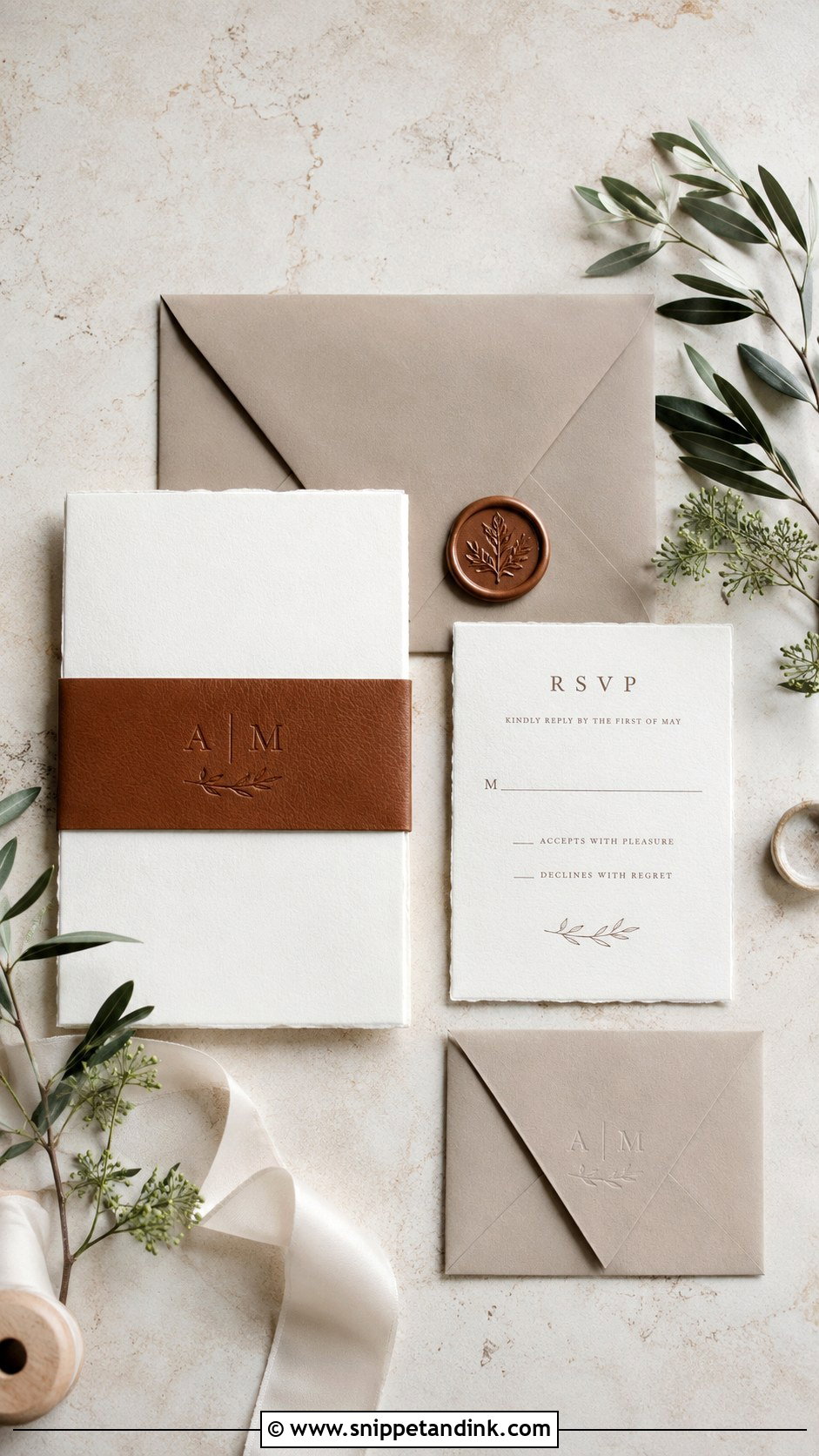
Invitations are the first place guests touch your wedding, and leather makes them feel it. Thick cotton paper and clean type do most of the work; a slim leather belly band holds the invitation, details card, and RSVP card together without much bulk. Camel or tan suits an outdoor day, black a modern industrial room, cream a softer look. One small embossed monogram is plenty. Neutral envelopes, a textured liner and a plain wax seal finish it. Leather adds weight and thickness, which can push a suite into a higher postage band, so weigh a finished sample at the post office before ordering. If the cost climbs, keep real leather for family and the wedding party, and use paper-leather bands for everyone else.
2. Leather Vow Book Ceremony Setup
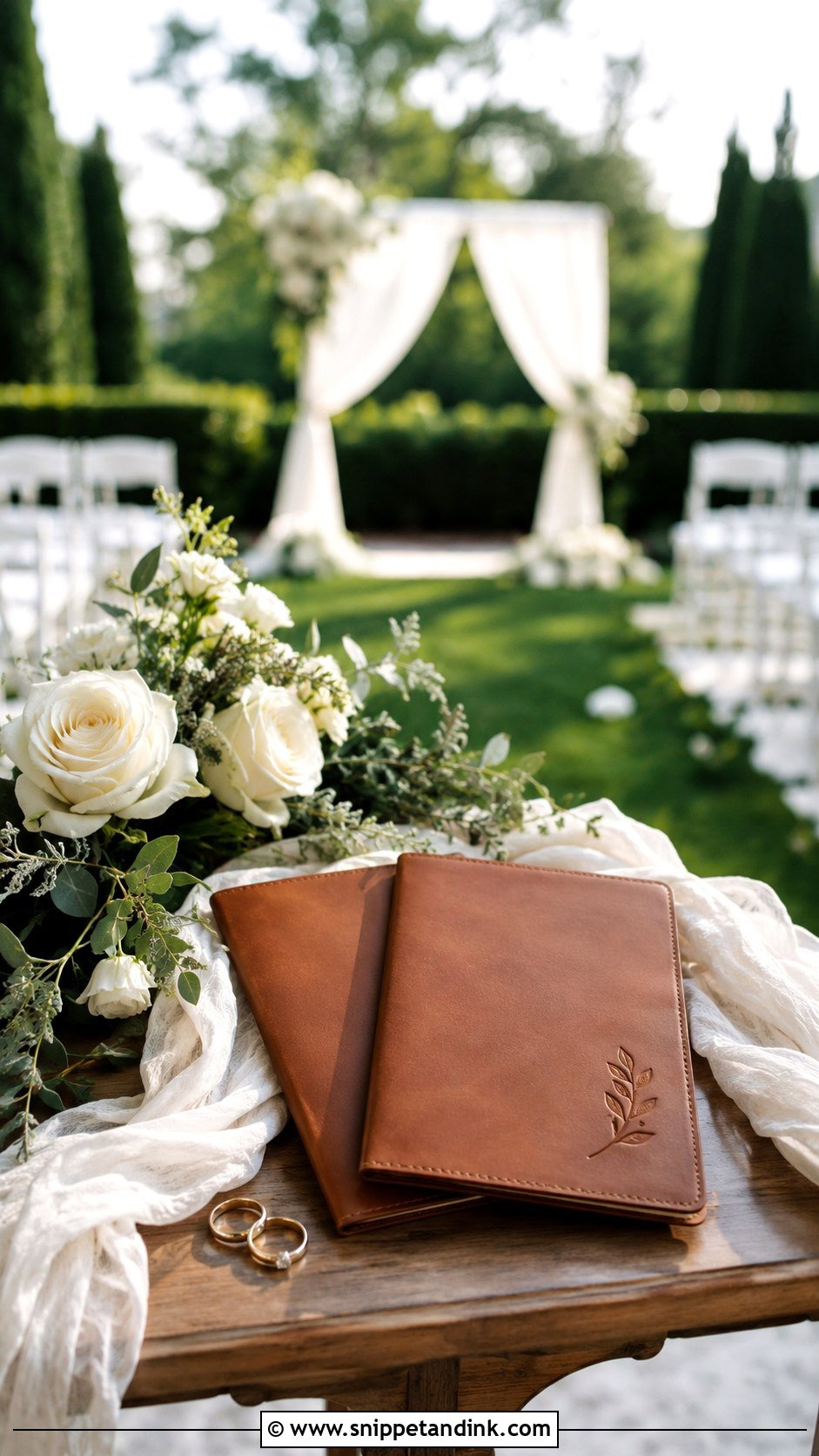
Vow books are small, but they’re in almost every ceremony photo, so they’re worth choosing well. Pick two slim books in coordinating colours, embossed with names, initials or the date, and set them on a small wooden table beside the rings and a low arrangement. Cognac leather sits naturally with greenery and ivory flowers; black suits white roses and modern metal. Check the paper before you order. Some decorative books use coated pages that smudge ballpoint and won’t take fountain pen at all. Refillable covers are worth the small extra cost if you’d like to keep writing anniversary letters inside them.
3. Leather Ring Box Wedding Display
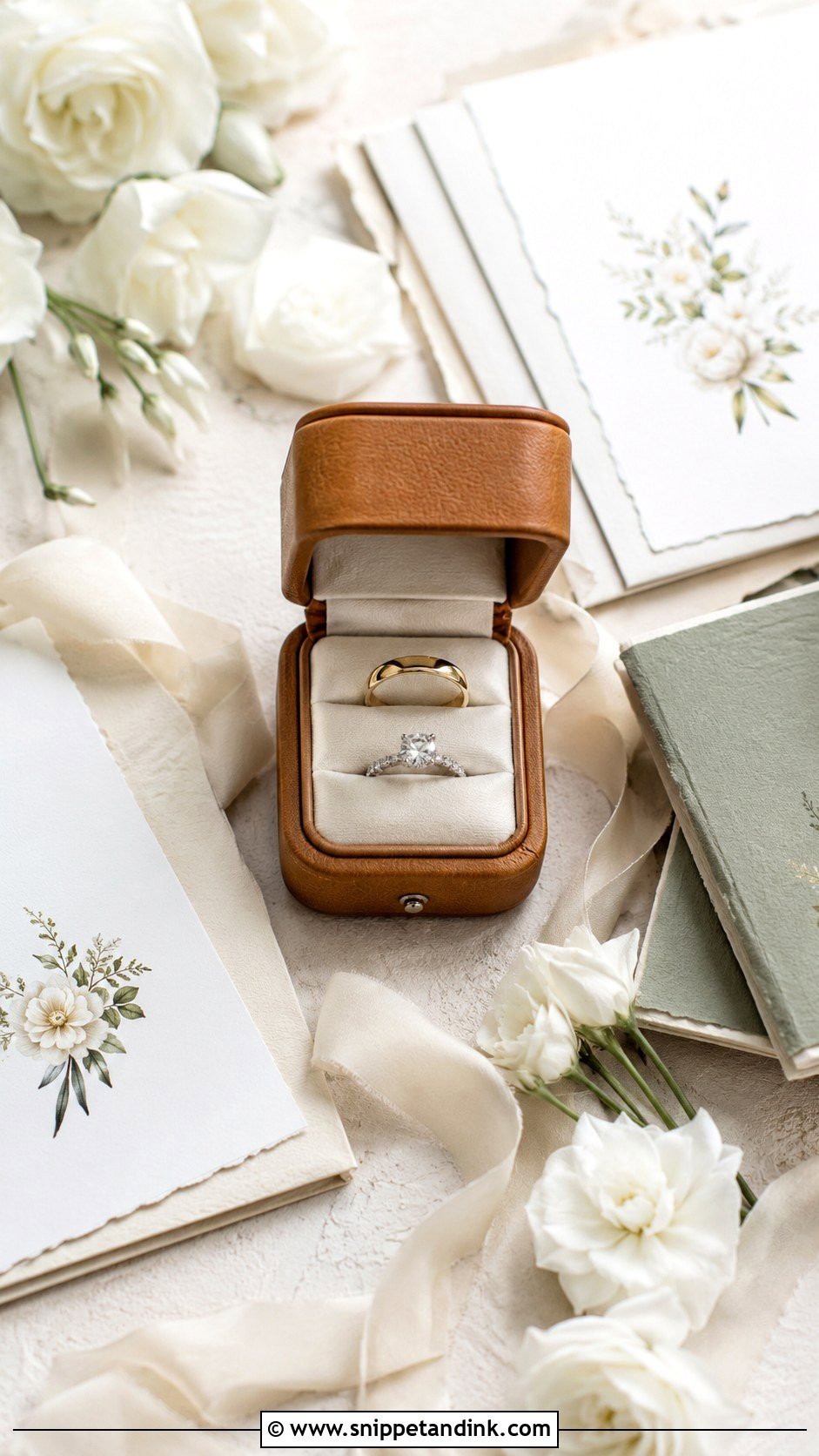
The ring box is a tiny piece of styling that gets a close-up whether you plan for it or not. A square or round box in tan, taupe, cream or deep brown gives texture without upstaging the rings. Keep initials on the lid small. The interior matters more than people think: a secure slot holds the rings upright for detail shots and keeps them from rattling loose in a pocket on the way to the venue. I style it with the invitation, vow books, loose flowers and a ribbon in the wedding colours for the flat-lay, then move it to the welcome or keepsake table after the ceremony. Later it simply becomes a jewellery box.
4. Leather Jacket Bridal Outfit
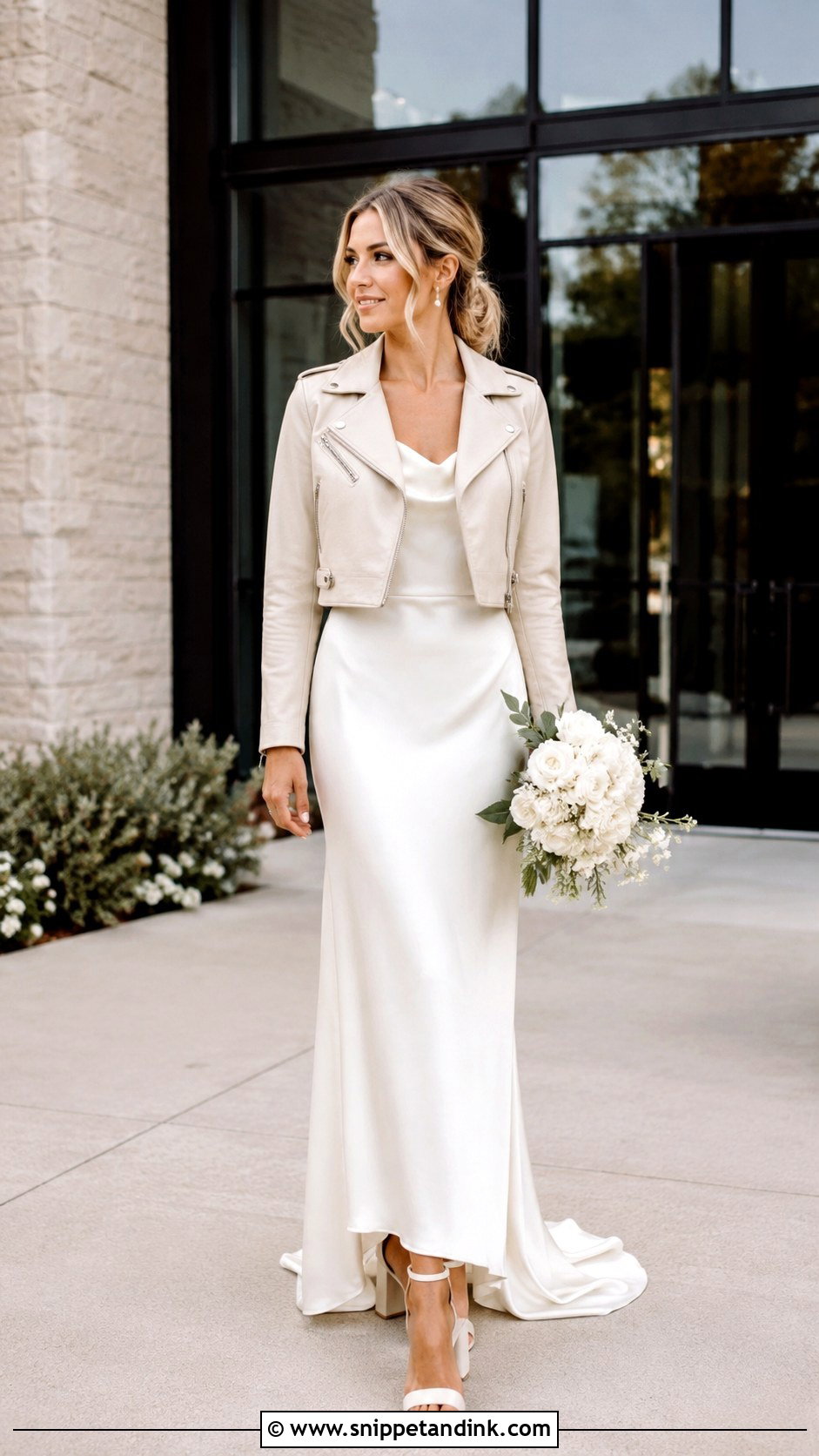
On a cold evening, a personalised leather jacket is the most practical style move a bride can make. White, ivory or a pale neutral over a minimalist slip, a lace gown or a structured jumpsuit looks modern and keeps you warm for outdoor portraits. Ankle boots or block heels, delicate earrings and a compact bouquet complete it. Keep the back simple: a surname, initials, the date or one small floral motif. Cropped jackets sit well over full skirts; a longer cut suits a narrow dress. Pale leather marks easily with makeup and bouquet stems, so I’d save it for portraits, the reception entrance or the exit rather than wearing it through the ceremony.
5. Matching Leather Jacket Wedding Outfits
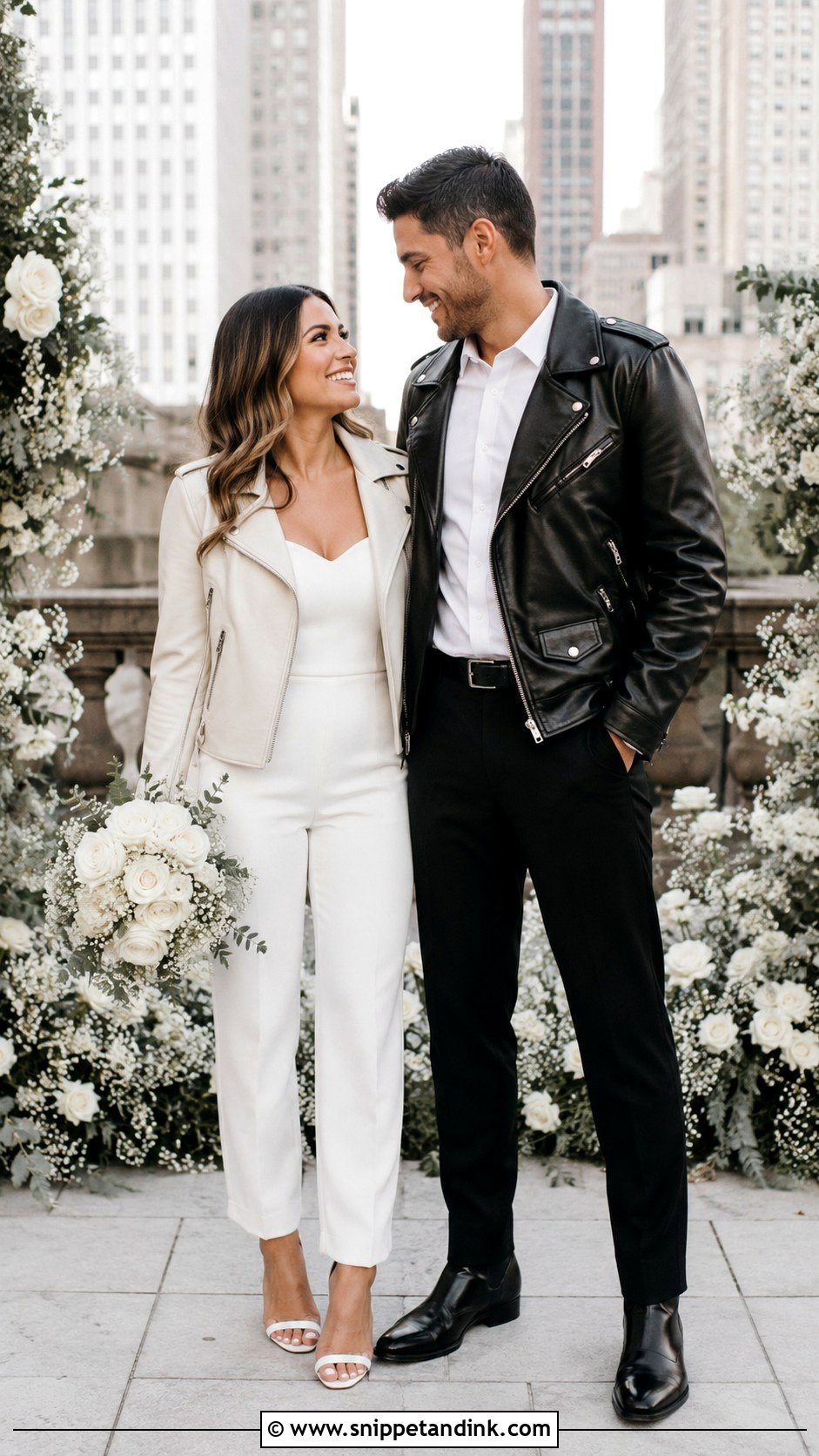
Coordinating jackets give a couple a shared look without dressing like twins. One partner wears a white or cream leather jacket over a dress or tailored jumpsuit; the other picks brown or black with dress trousers and a crisp shirt. Tie them together through one detail: matching monograms, a bit of embroidery or the same metal hardware. Shoes and accessories should stay quiet. It works at a city wedding, a mountain elopement or a loft reception. Leather creases at the elbows and where bouquets press against it, so schedule full-length portraits early. Vegan leather offers far more colours if you want to match a palette exactly.
6. Leather Suspenders Wedding Outfit
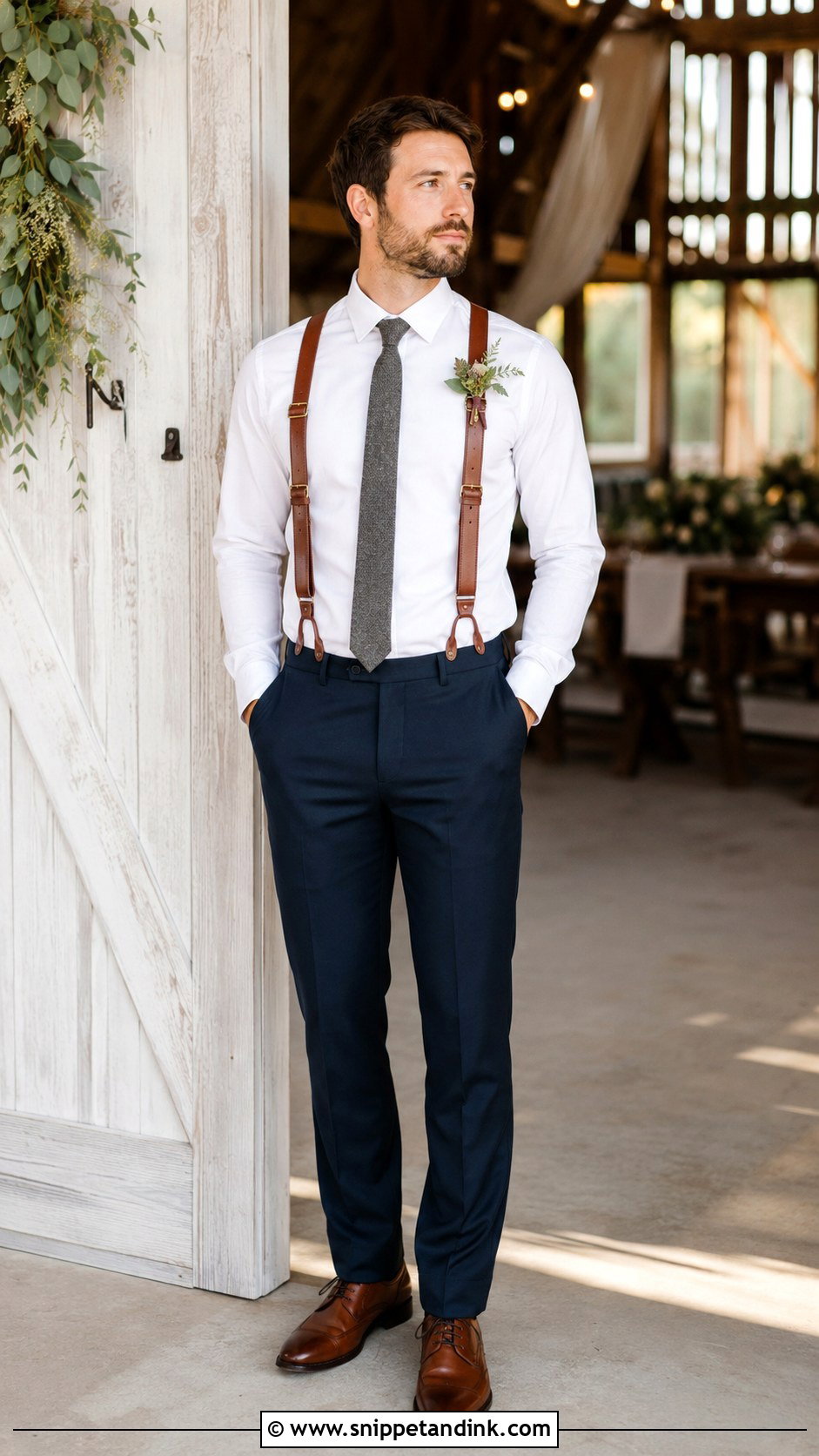
Suspenders bring structure to an outfit, as long as they’re done with tailoring rather than as fancy dress. Rich brown straps with a white shirt, navy or charcoal trousers and polished leather shoes are the starting point, plus a textured tie or simple bow tie and a small greenery boutonniere. For a formal ceremony, add a vest or jacket and reveal the suspenders at the reception. Narrow straps look contemporary; wide ones lean Western. Leather should coordinate with the belt, watch strap and shoes without matching each one exactly. Button-on suspenders hold better than clips, which can slip off fine wool trousers once the dancing starts.
7. Leather Bouquet Wrap Wedding Look
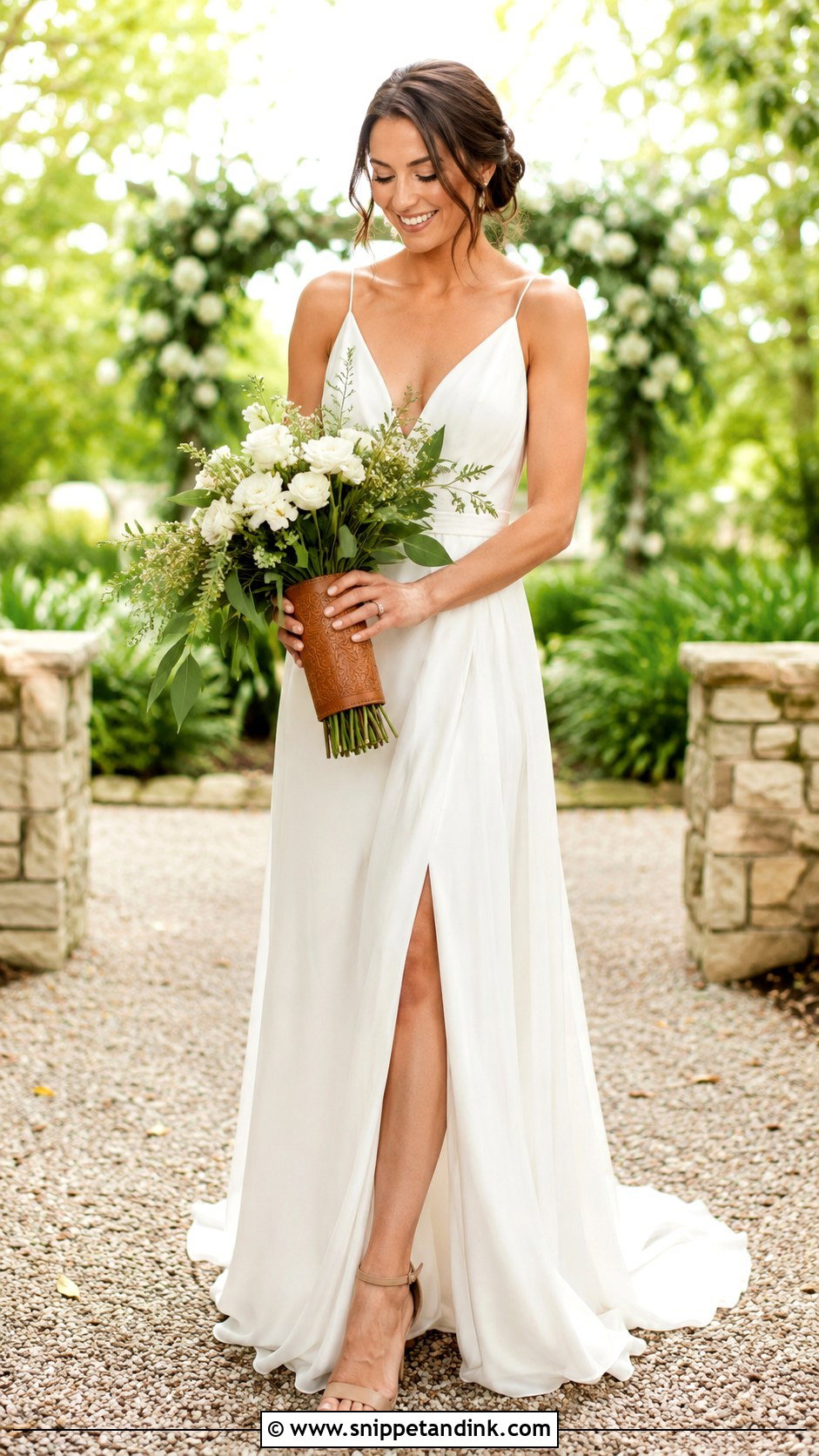
Stems are wet, slippery and sometimes sharp, and a leather wrap solves all three. A narrow strip of soft leather around a loose arrangement of white roses, dried grasses and greenery gives you a comfortable grip and real texture. Tan reads natural at a ranch or garden; black contrasts with an all-white modern bouquet. Stamping initials or the date on the inside makes a private detail. I check two things: the edges should be finished smooth so they don’t scratch your hands or snag a lace sleeve, and the florist should wrap it close to photo time. Leather sitting against freshly cut, dripping stems darkens and stains.
8. Leather Boutonniere Wedding Detail
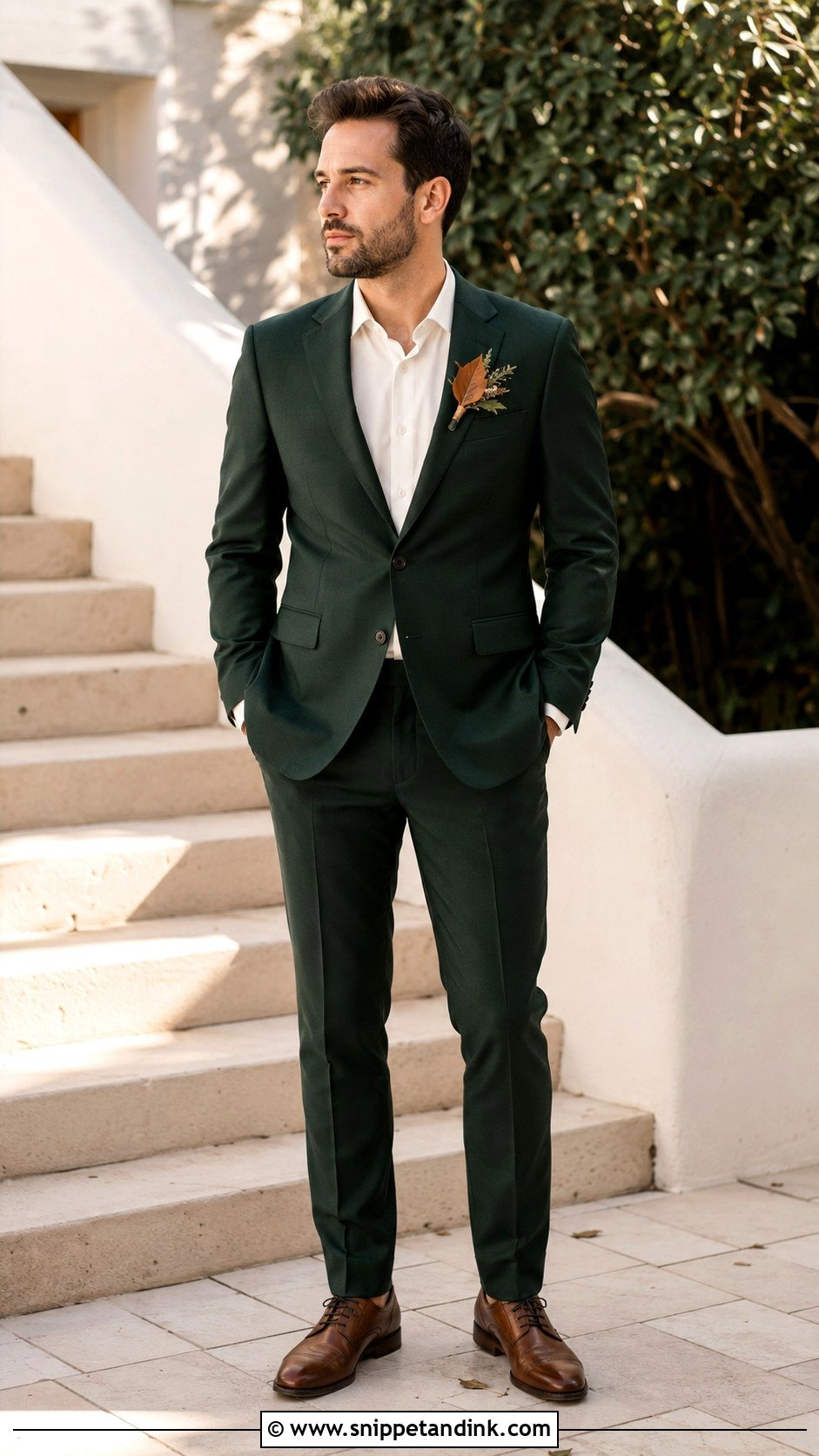
A leather boutonniere ties the bouquet wrap, suspenders and shoes together with one small piece. A narrow leather leaf with a dried bloom and a short sprig of greenery makes a compact lapel arrangement for a navy, tan, charcoal or dark green suit. Keep it small; heavy boutonnieres drag the lapel down and look lopsided in photos. A single embossed leather shape with no flowers suits a minimal wedding, while cognac with ivory blooms feels softer. Magnetic backs protect fine suit cloth from pin holes, but test them first, as some are too weak for thick lapels. Use the same design across the wedding party.
9. Leather Wedding Welcome Sign
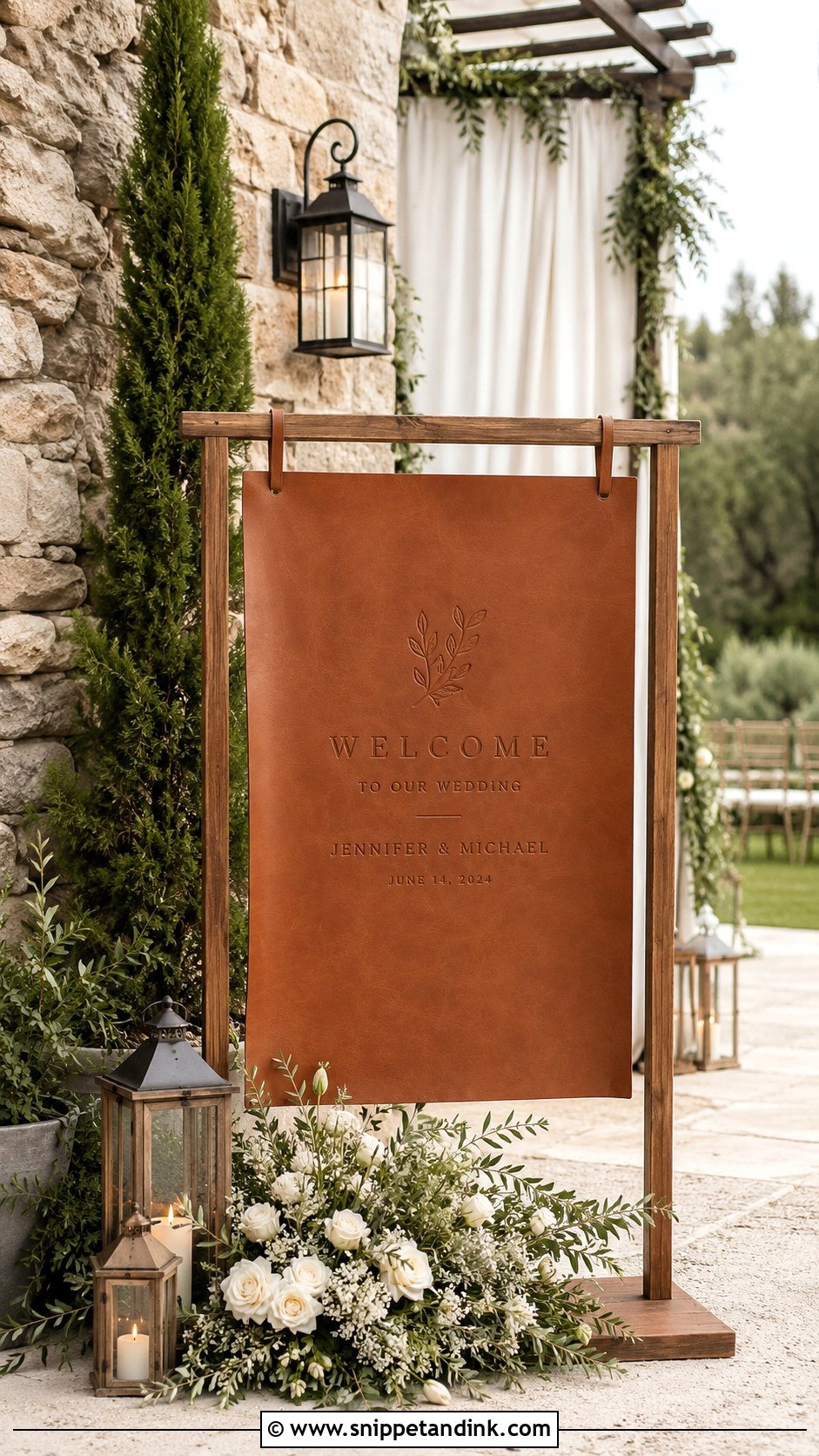
Welcome signs set the mood before anyone sits down. A large leather panel, or several layered pieces fixed to a simple wood or metal frame, carries names, the date and a short greeting in embossed, painted or pressed lettering. Low flowers, lanterns or potted greenery around the base make it feel finished. Black with white lettering looks contemporary; brown with cream suits rustic venues. Readability is the test: guests should take it in from several feet away, which usually means larger letters than you’d guess. Leather swells and spots in rain, so outdoors I’d use sealed faux leather or put the sign under cover. It makes good wall art afterward.
10. Leather Wedding Seating Chart
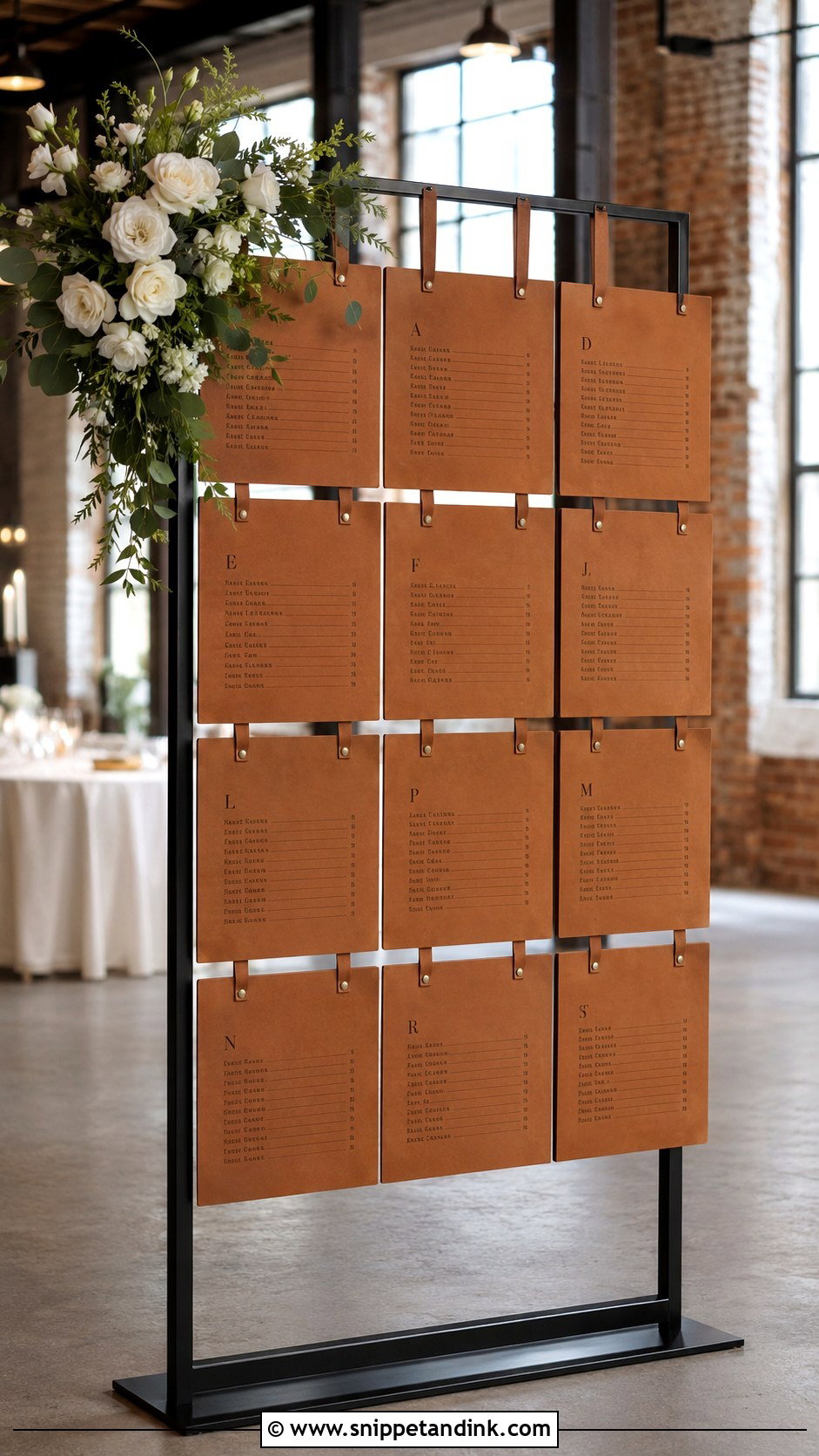
Seating charts are functional first. Guest names on leather panels, luggage tags or hanging strips, arranged on a frame, a timber wall or a metal grid, turn the plan into a feature. Put it near the reception entrance with room for a crowd to gather, and add one floral cluster at a corner. Alphabetical order and high-contrast lettering get people to their seats faster than any pretty layout. Neutral leather suits greenery; black looks sharper in a loft or gallery. For a large guest list, use leather only for table headings and print names on coordinating paper. Proof every name twice. Embossing can’t be corrected, and last-minute table swaps are common.
11. Leather Escort Card Display
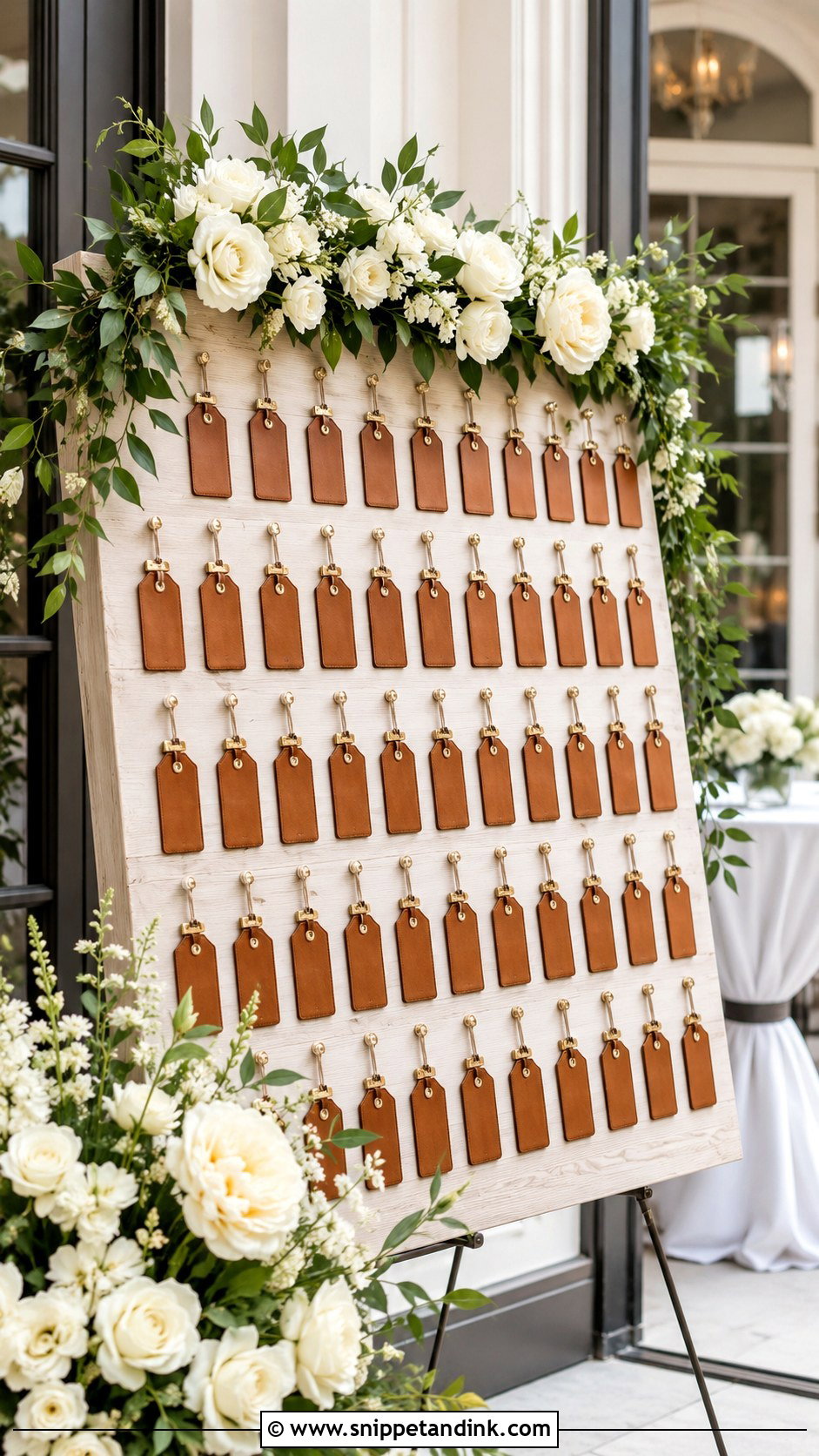
Escort tags are the rare decor piece guests actually take home. Slim leather tags stamped with a name and table number, hung on hooks or laid out on a board or table, double as a keepsake. Add a clear heading, simple flowers and good lighting so people can find their names quickly. Luggage-tag shapes suit a travel theme; clean rectangles feel modern. Different cord colours or metal studs can quietly mark meal choices for the caterer. Cost adds up fast with a big guest count, so paper leather, recycled scraps or vegan options keep it realistic. Afterward, guests reuse them on bags, keys or as bookmarks.
12. Leather Wedding Table Numbers
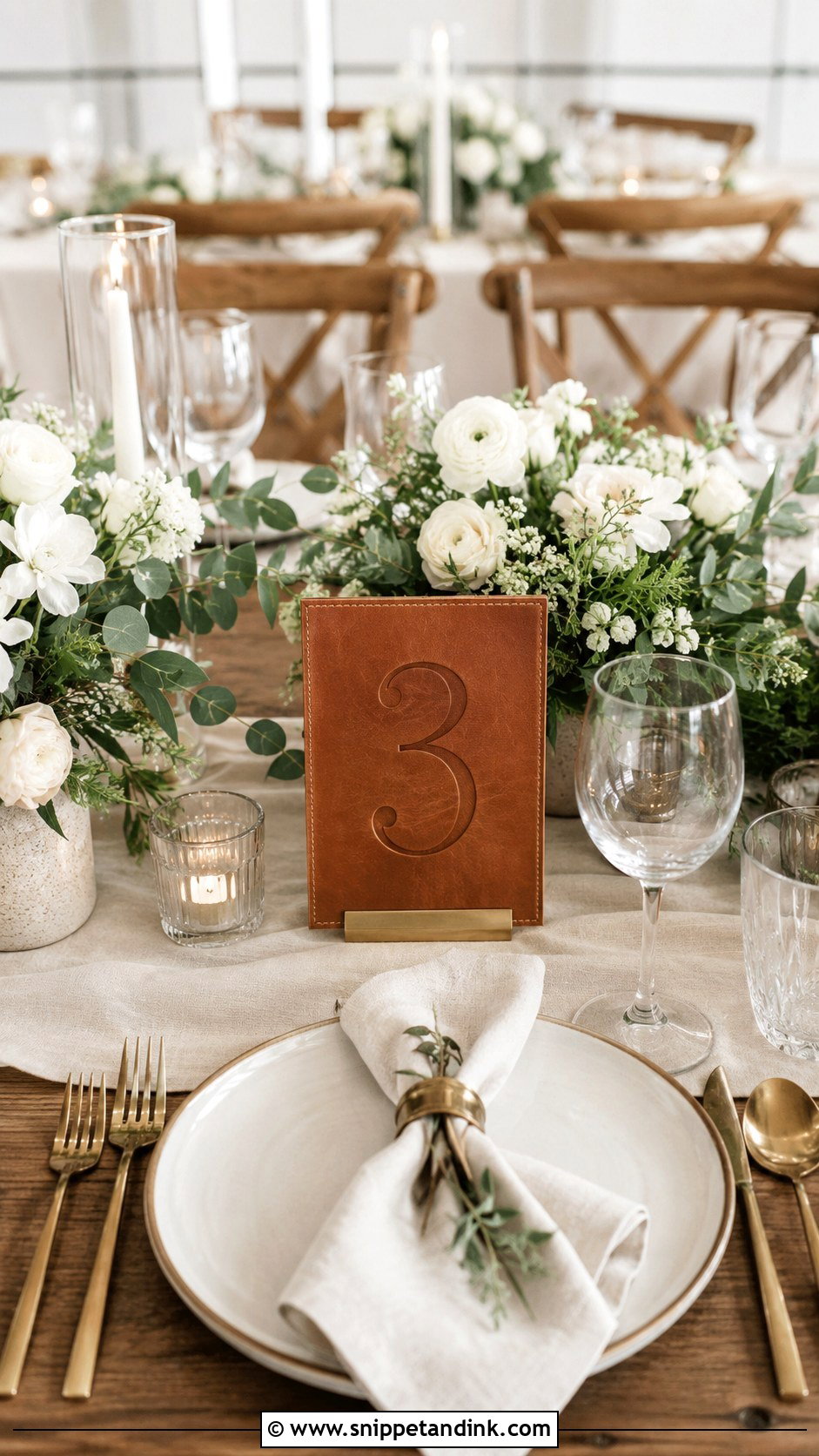
Table numbers should be found at a glance, not admired up close. Embossed leather panels in small wooden bases or brass holders add texture without crowding flowers, candles and plates. Match the shape to the wider design: arches for modern, shield-like shapes for Western. Neutral linens, low arrangements and coordinated glassware complete the table, with space left to eat. In a large or dim room, contrast is everything; black with gold numbers looks formal, tan with dark lettering more relaxed. Use the same leather and font on menus or escort tags so everything reads as one set. Later, the panels can label shelves or mark events at home.
13. Leather Wedding Menu Covers
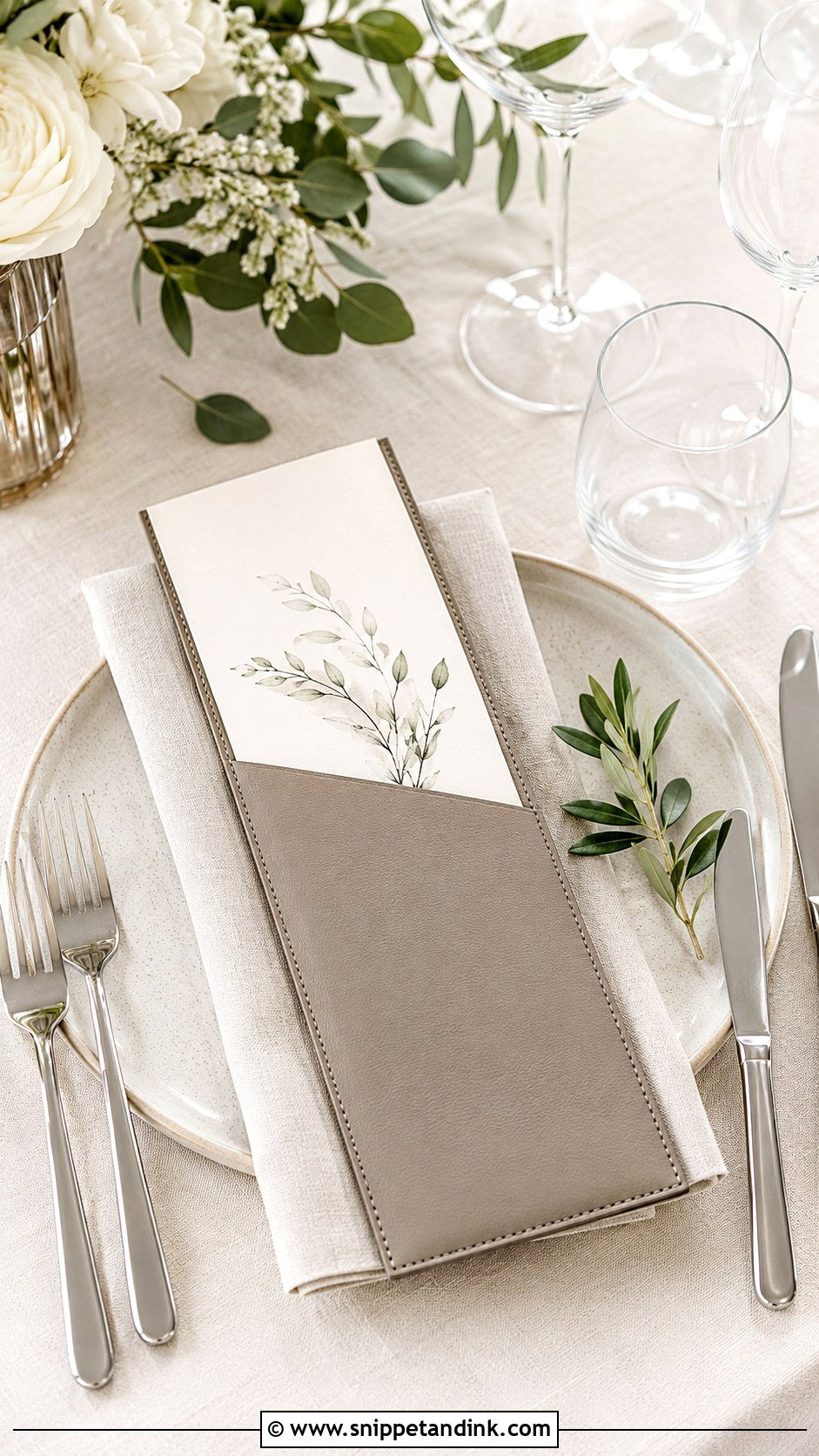
A slim leather sleeve on the menu dresses up a place setting more than its size suggests. Rather than a full cover, I prefer a narrow sleeve that shows the printed paper and keeps it light. Set it with a folded linen napkin, a ceramic plate, simple flatware and a small sprig of flowers or herbs. A monogram embossed near the bottom is enough personalisation. Cream or taupe suit pastel flowers; dark brown and black suit richer seasonal palettes. On a tight budget, make one reusable menu per table, or use leather only on the heading. Make sure cards slide in and out easily, because catering menus often change a week before the wedding.
14. Leather Napkin Ring Place Setting
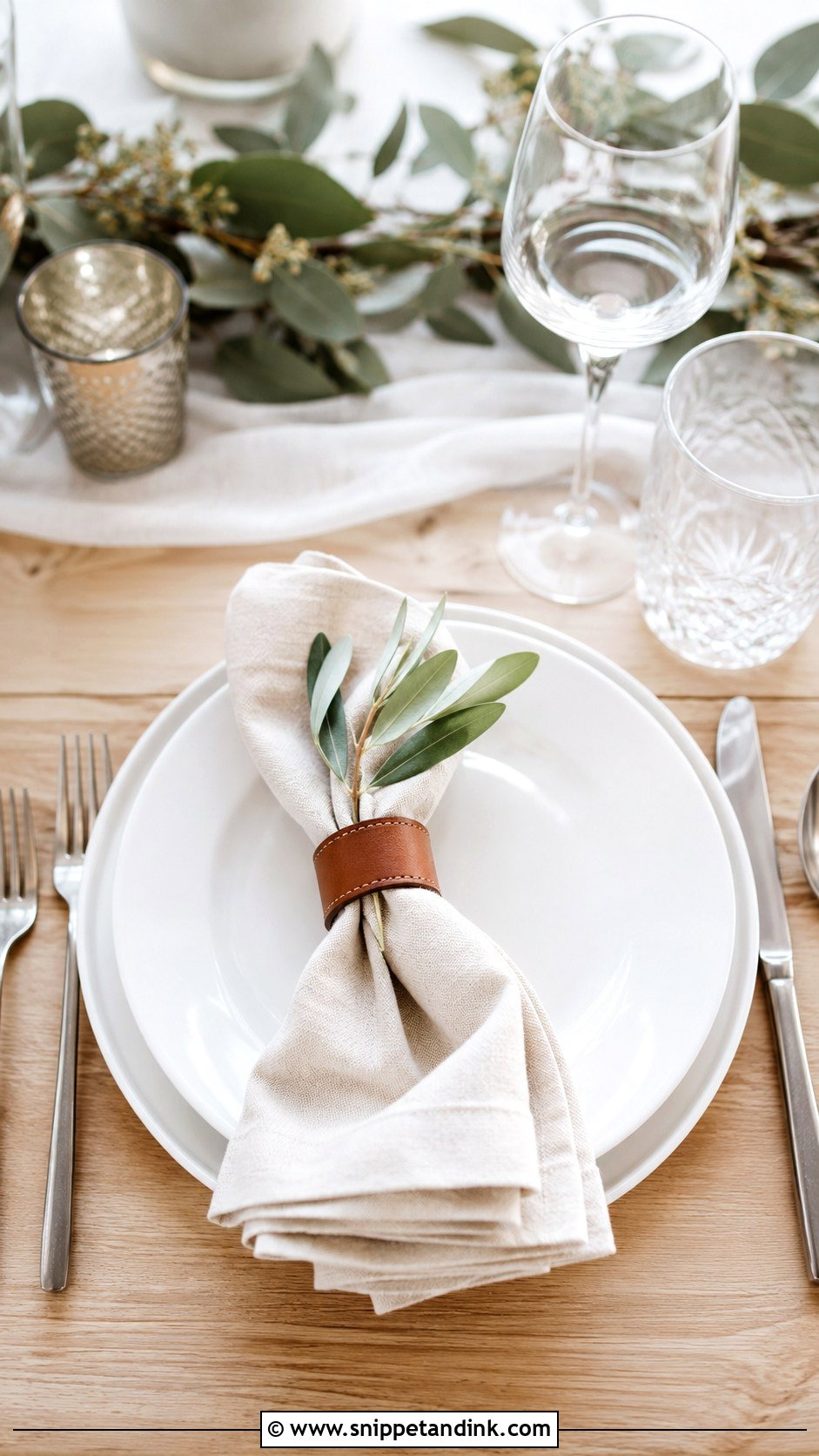
Leather napkin rings are a small detail that does a lot of tidying on a simple table. Narrow bands around soft linen napkins, closed with a brass stud, a stitched edge or a discreet snap, look finished. Add each guest’s name and the ring doubles as a place card. Neutral plates, clear glass, polished cutlery and a small botanical touch complete it. Warm brown suits cream linen and timber tables; black contrasts sharply with white. Thick, stiff bands are the common mistake, since guests struggle to slide them off one-handed. Ask for neatly finished edges on genuine leather, and consider washable leather-look bands for big weddings where they’ll be reused.
15. Leather Wedding Guest Book Table
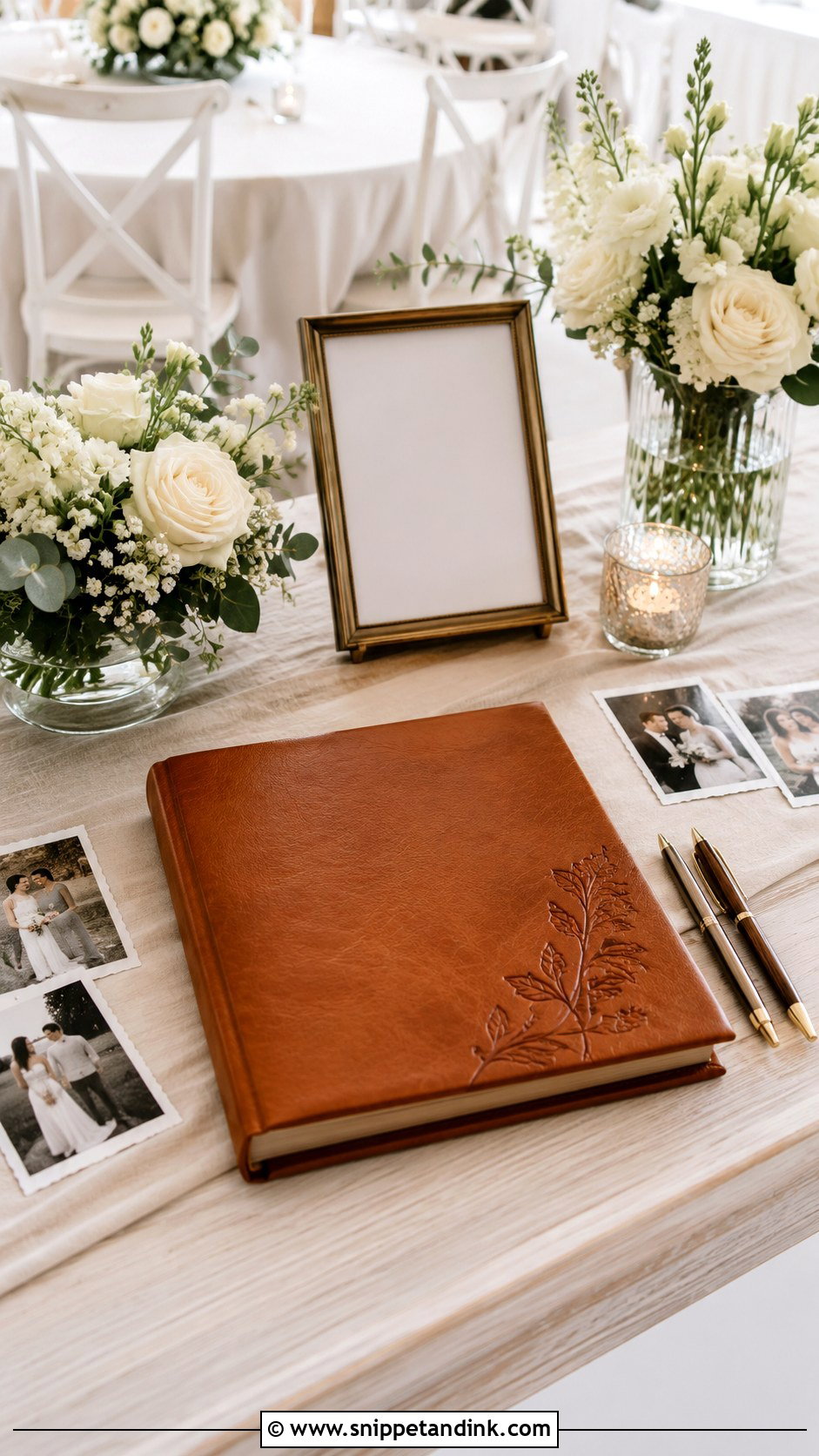
Guest books get ignored when they’re squeezed onto the end of the gift table. Give a leather-bound one its own small table with framed instructions, good pens, a little floral arrangement and a few printed photos, somewhere guests naturally pass. Thick pages that won’t let ink bleed through are non-negotiable; test with the pens you’ll provide. A refillable or ring-bound book leaves room for photos and anniversary notes later. Keep the embossing simple, names, initials or the date. Decent light and somewhere to rest the book make people more likely to write a real message. Afterward, store it flat and out of direct sun, which fades leather and dries the binding.
16. Leather Wedding Cake Table
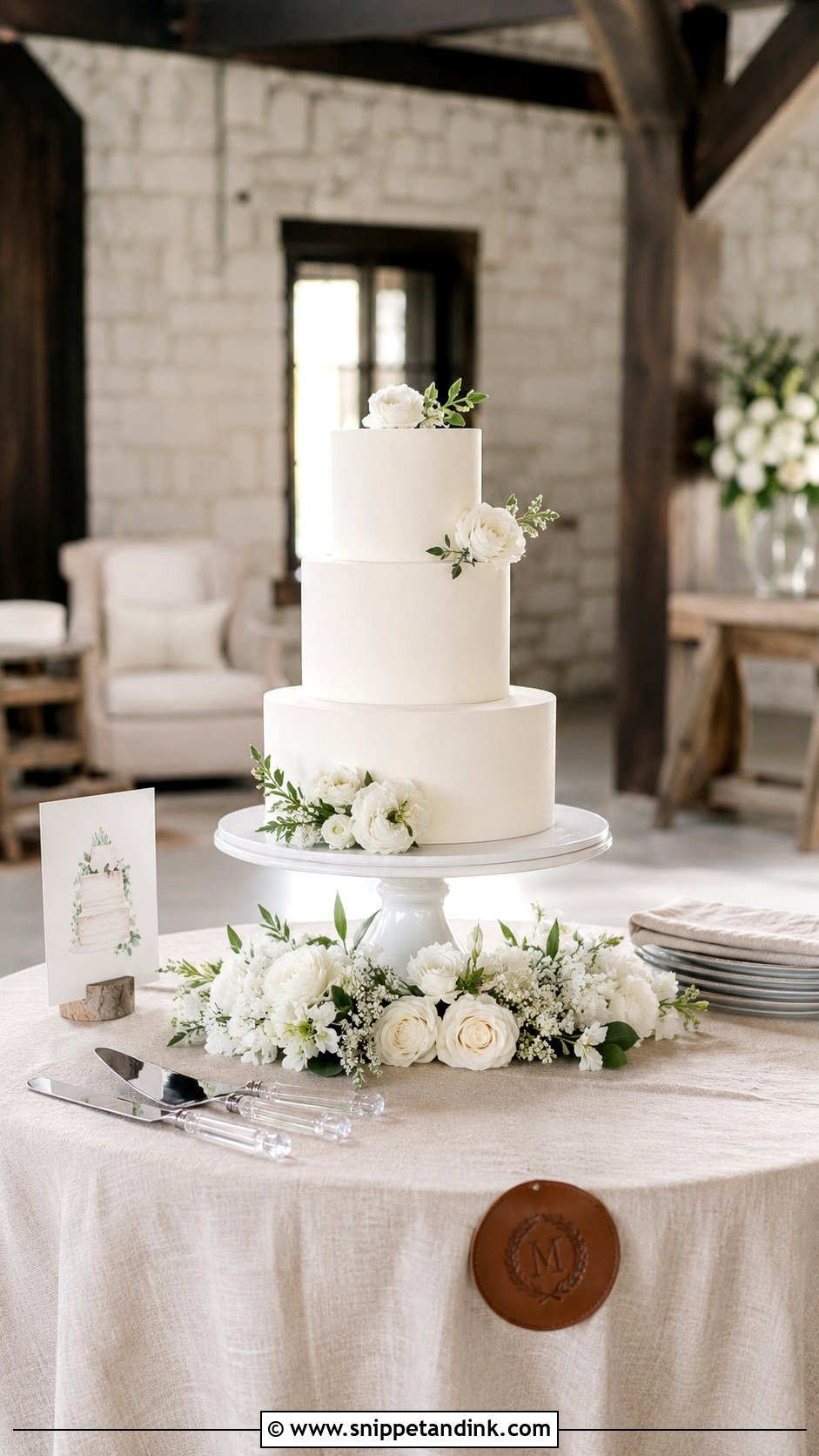
Food and leather don’t mix, so on a cake table I keep the leather in front of the cake, never touching it. Set the cake on a raised wood, stone or white ceramic stand, then hang a leather monogram sign from the front of the table. A neutral linen, low flowers, serving tools and a small flavour card finish the display. A thin leather band around the base of the stand works if it sits clear of the icing. Match the leather tone to nearby stationery or furniture. Heavy brown materials across the whole table make it look dark and heavy in photos; cream, caramel or black accents keep it fresh.
17. Leather Wedding Favor Display
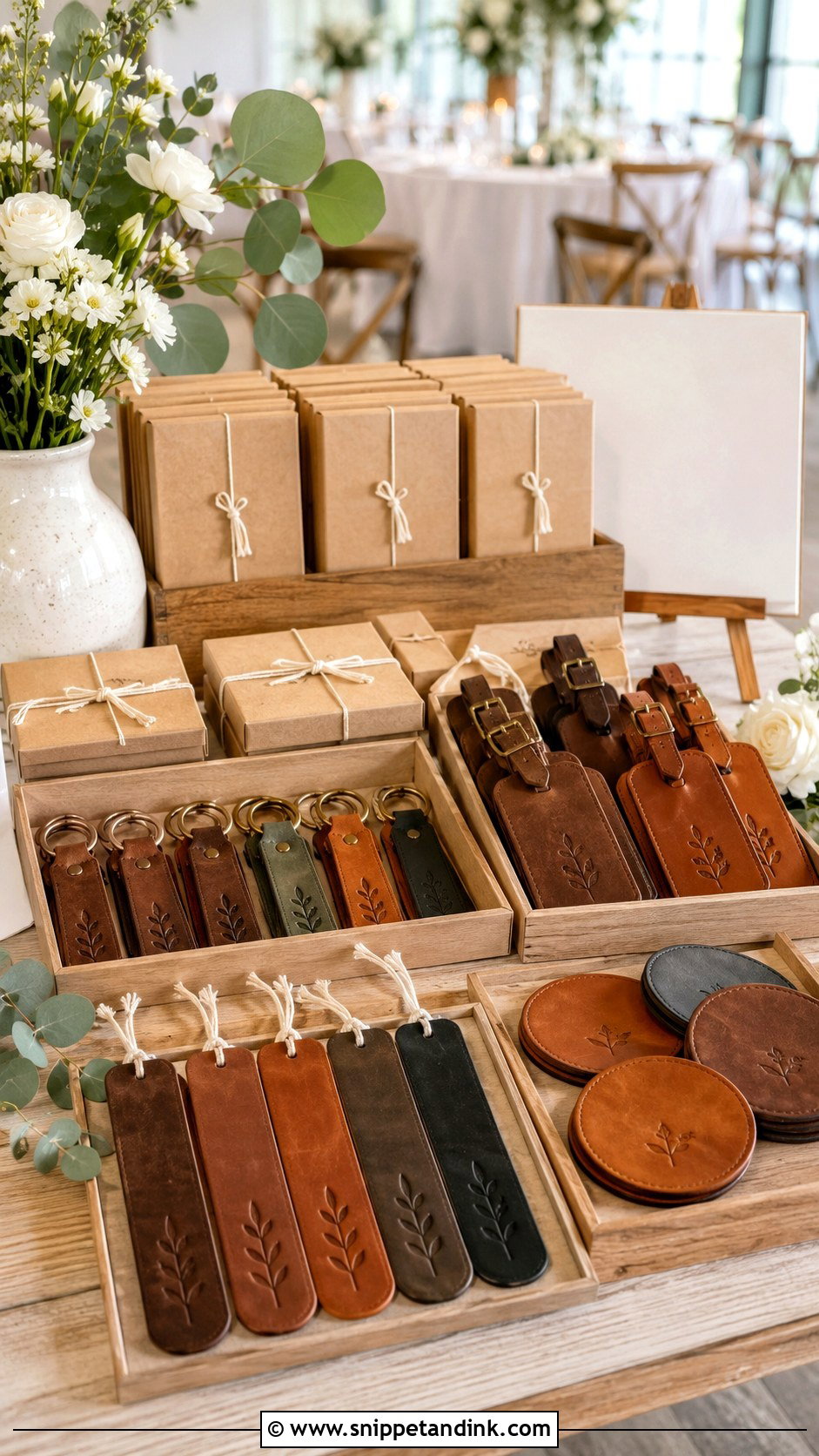
Leather favours are worth showing off instead of hiding in bags or boxes. Bookmarks, key fobs, cord organisers, luggage tags and coasters all get used long after the wedding. Lay them out on a clean table with a sign inviting guests to take one, or set one at every seat. Keep personalisation short: initials, the date or a small symbol. Recycled paper packaging and plain cotton cord balance the look. When ordering in bulk, ask for a sample first and check the edges are smooth, the hardware is secure and the stamping is crisp; bulk batches vary. Vegan and reclaimed leather cut the cost without losing the texture.
18. Leather Wedding Photo Backdrop
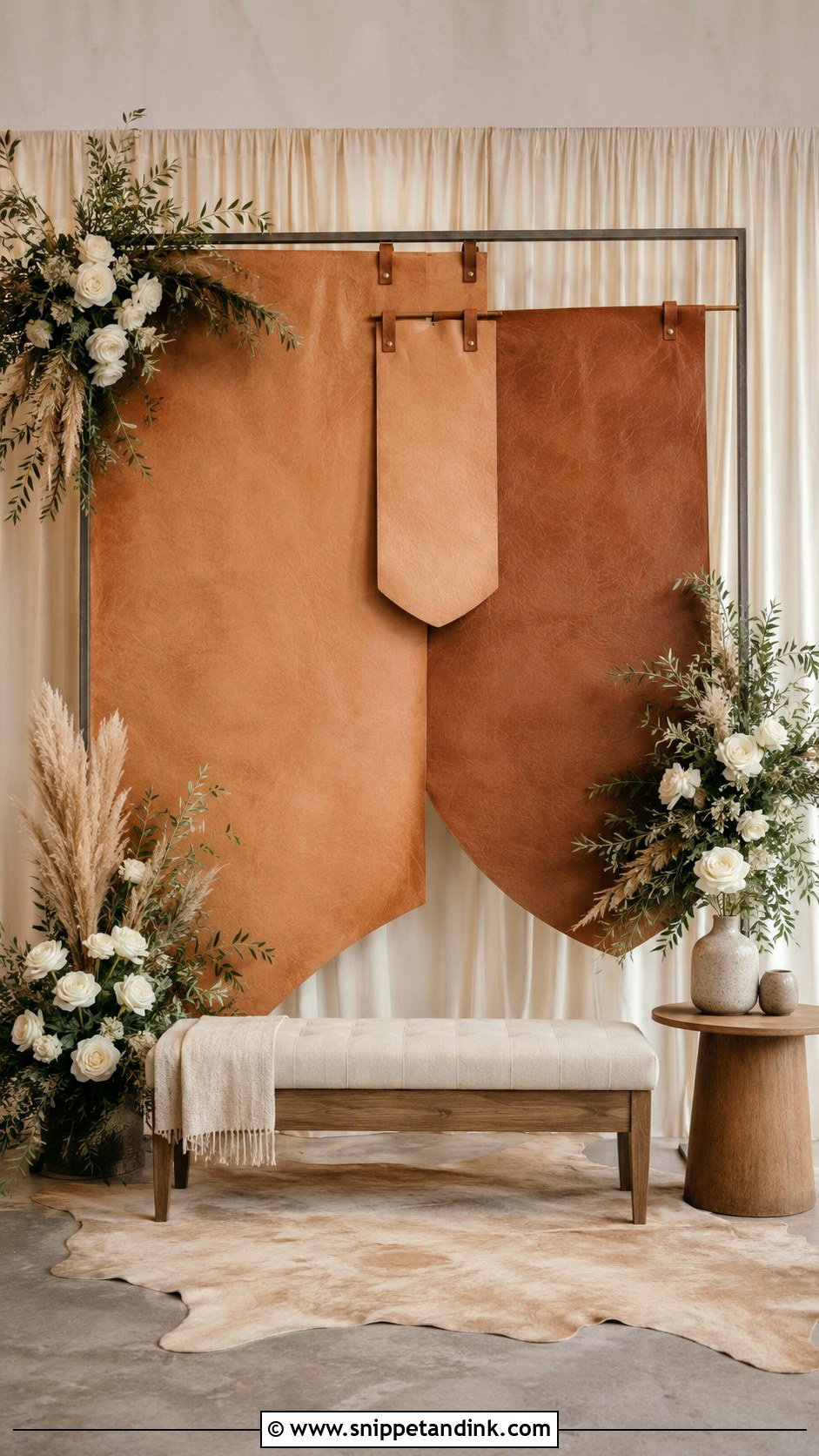
A good photo backdrop is mostly empty space. Layered leather panels, a few banners or geometric shapes against neutral fabric, timber or plaster give texture without covering the wall. Add a discreet monogram or date, with room around it for clean framing. A small bench or two chairs in front, plus flowers at different heights, soften the setup. Lighting is the thing I fuss over: brown and black leather swallow light, so bright, even lighting keeps it from looking heavy in photos. Fix every hanging piece securely, and tape down anything near feet. It works for couple portraits, the wedding party and casual guest shots all night.
19. Leather Wedding Lounge Area
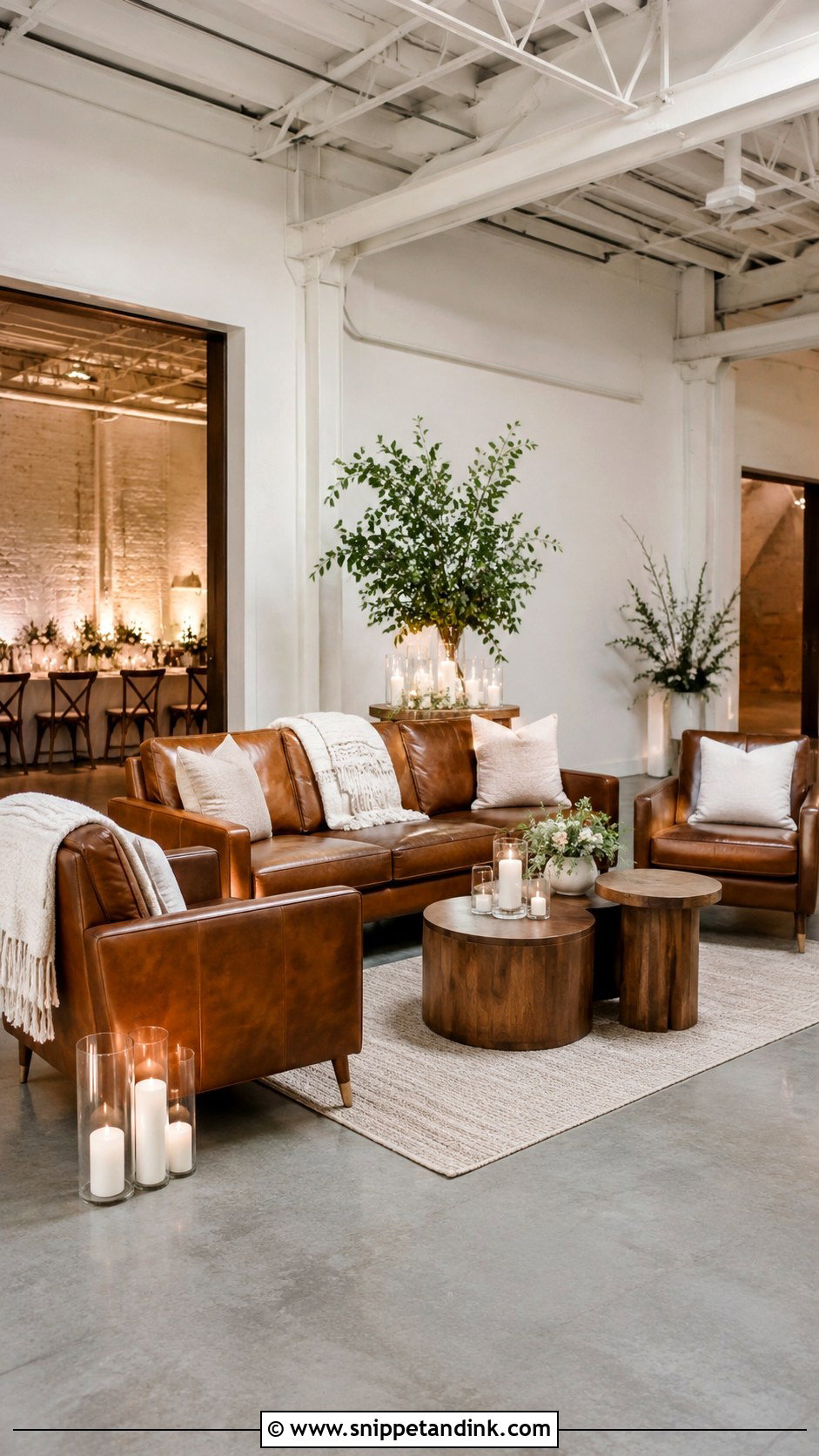
Guests need somewhere to sit and talk between the big moments, and a leather lounge gives them that. Build it around one or two leather sofas or armchairs softened with cream cushions, textured throws and a neutral rug. Low tables, greenery and battery candles in secure holders finish it. Cognac warms a barn or industrial venue; black seating suits a modern gallery. Resist the urge to collect mismatched vintage pieces; a limited palette looks more deliberate. Place it away from speakers and walkways but still in sight of the party. In summer, dark leather in direct sun gets hot enough to be uncomfortable on bare legs, so position it in shade. Inspect rental furniture for scratches and wobbly legs before signing off.
20. Leather Wedding Keepsake Display
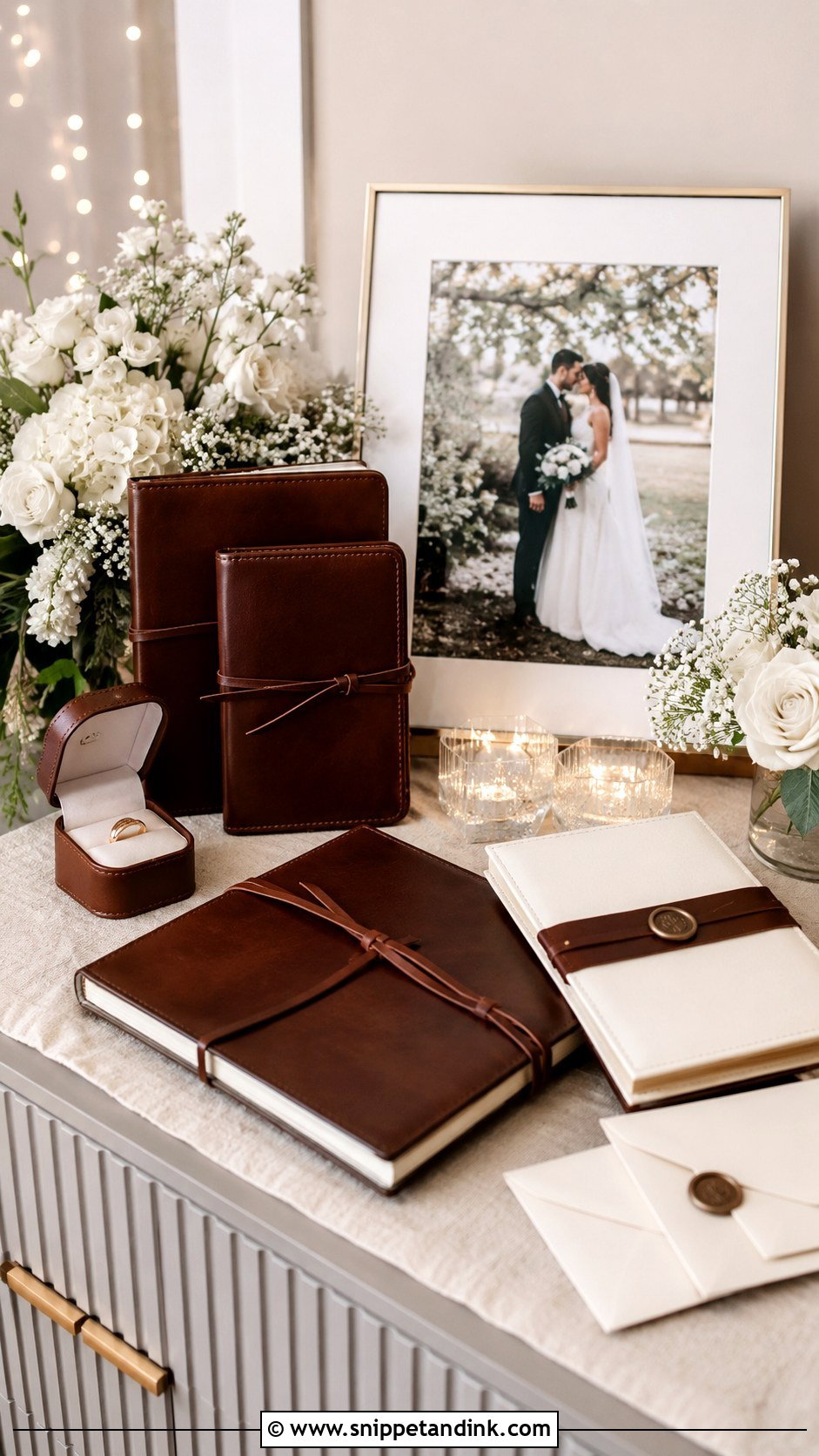
A keepsake table brings the leather details together at the end. Arrange the vow books, ring box, guest book, invitation and a framed photo on a console, with a linen runner, low flowers and soft white light. A short card asking guests to look rather than handle keeps fragile pieces safe. It works especially well at a vow renewal or third-anniversary party, where pieces from the original wedding can sit beside the new ones. Choose only meaningful objects. Afterward, pack everything in an archival box, with acid-free tissue between leather and paper, since leather tanning agents can discolour paper they rest against.
Ordering Personalised Leather: Proofs, Extras and Lead Times
Custom leather pieces take longer than paper. Makers often need several weeks for a run of stamped tags or embossed panels, longer in the busy spring and summer months, and that’s before shipping. I place leather orders at least two to three months before the wedding, then send final names as soon as the RSVP deadline passes.
- Order a sample of the exact leather and finish first. Screen colours rarely match real hides.
- Ask for a digital proof of every personalised item and check each name letter by letter.
- Order extras, roughly five to ten percent, for late guests, misspellings and pieces that get damaged in setup.
- If colours must match across items, order them together; natural hides vary from batch to batch.
- Plan for weather: keep genuine leather signs under cover, and pack a soft dry cloth for spots.
On setup day, unpack leather pieces early. Items that travelled rolled or stacked can carry curls and pressure marks, and most relax after a few hours lying flat at room temperature.
A Few Leather Details Go a Long Way
Leather works best as an accent rather than on every surface. Pick a few details that suit your venue, palette and mood. A jacket and bouquet wrap shape the fashion; vow books, menus or table numbers carry the texture through the ceremony and reception. Balance dark leather with pale linen, fresh flowers, greenery, glass and clean metal. If you’d rather avoid animal materials, recycled, cork, paper and vegan alternatives give a very similar look. Above all, choose personalised pieces you’ll reuse or keep. Those are the details that still mean something when the decorations have long gone back to the rental company.
You'll Like These Ideas:


Leave a Reply