
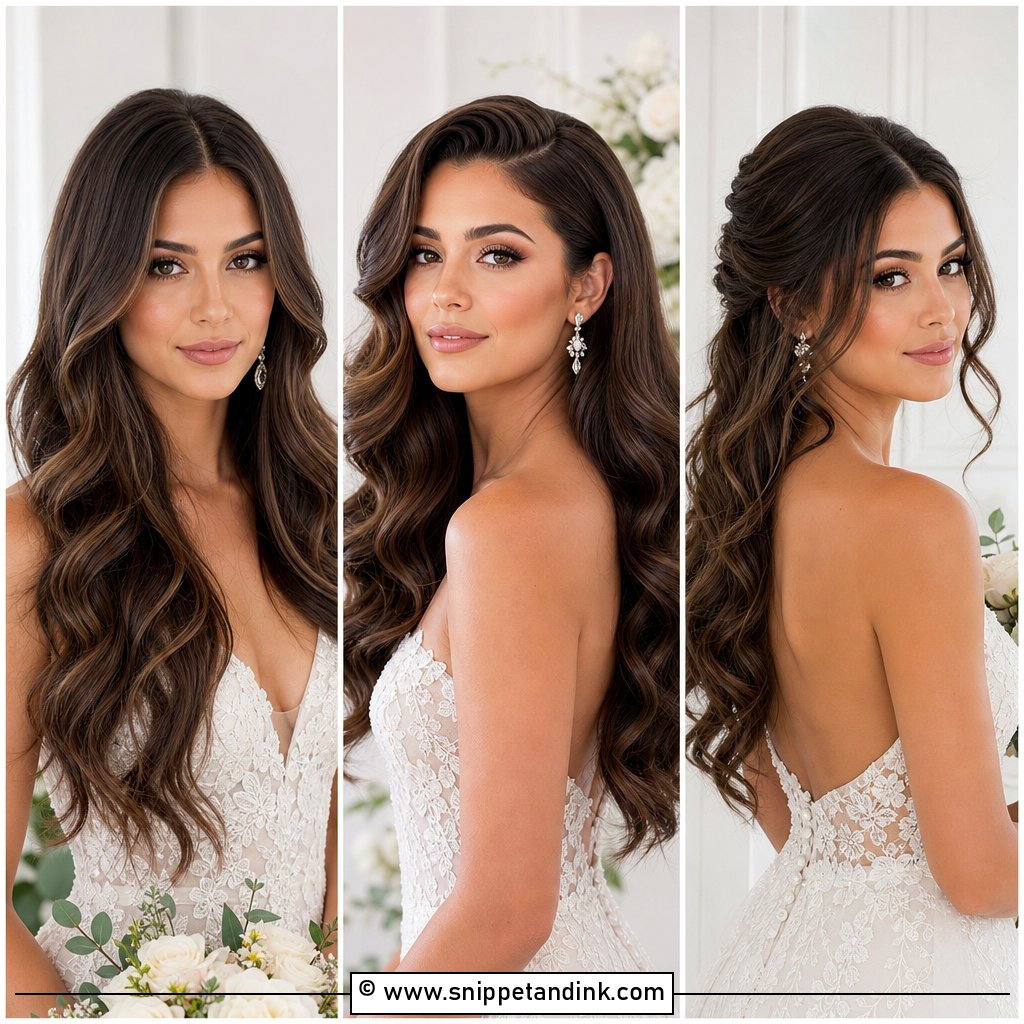
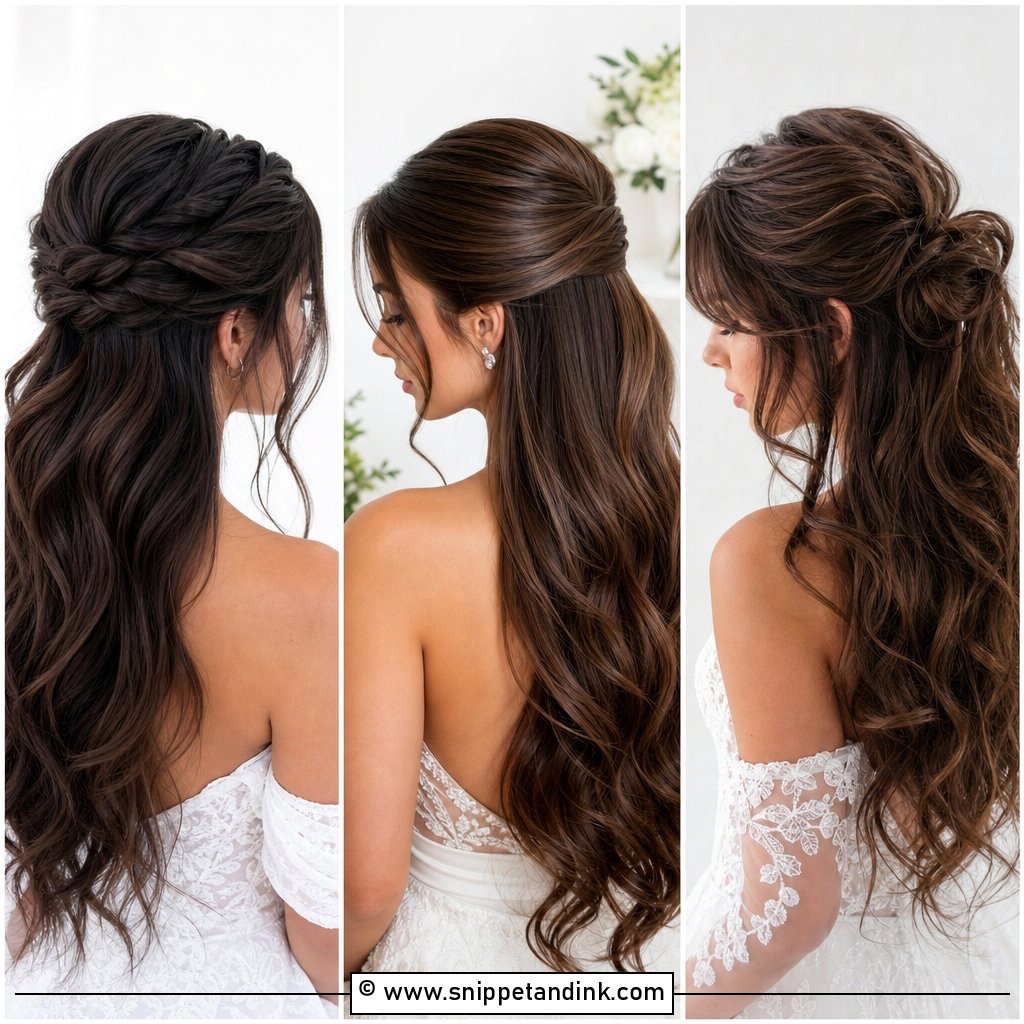
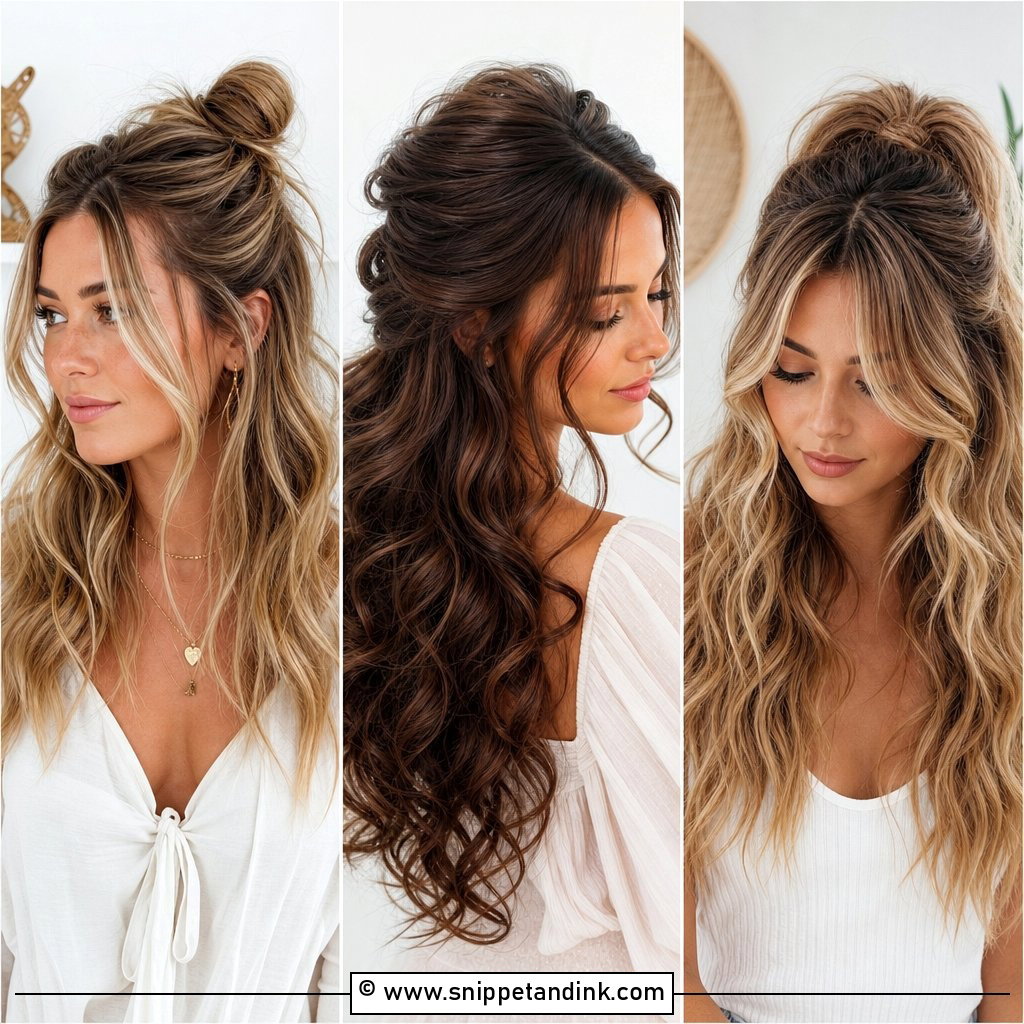
Dark hair is honest in an updo. Every fold, every pin seam and every rough patch of backcombing shows, because brown hair reflects light in bands instead of scattering it the way blonde does. Dark brown, chocolate, espresso, chestnut and caramel shades all reward a shape that has been built carefully, and they punish one that hasn’t. Lifting the hair also clears the neckline, the earrings and the back of the dress, which is why so many of my brunette brides end up wearing it up. Below are the fifteen shapes I get asked for most, with what I actually watch for when I pin each one on darker hair.
What Dark Brown Hair Shows That Lighter Shades Hide
The first thing I check on a brunette bride at a trial is how much product she’s used that morning. Dry shampoo and texture powders leave a grey or chalky film on dark roots, and the camera flash makes it look like dust along the part. On blonde hair you’d never notice. On espresso hair it’s the first thing a close-up picks up, so I use tinted or clear versions, or work them in at the base of sections where they can’t be seen.
Pins are the second giveaway. Gold or silver bobby pins glint against brown, and black pins can look harsh on a warm chestnut. I carry two or three shades of brown pins and match them in daylight, not under the bathroom bulb.
Shine versus texture
Dark hair holds shine well, which is why sleek shapes suit it. The flip side is that shine and texture fight each other. A heavy gloss spray will flatten a textured bun, and a strong texture spray dulls a sleek one. I pick one finish per style and stick to it.
- Grey cast at the roots from powder products
- Metal pins catching the light
- Regrowth or a band of lighter old color at the hairline
- Dull, dry ends on a ponytail or loose piece
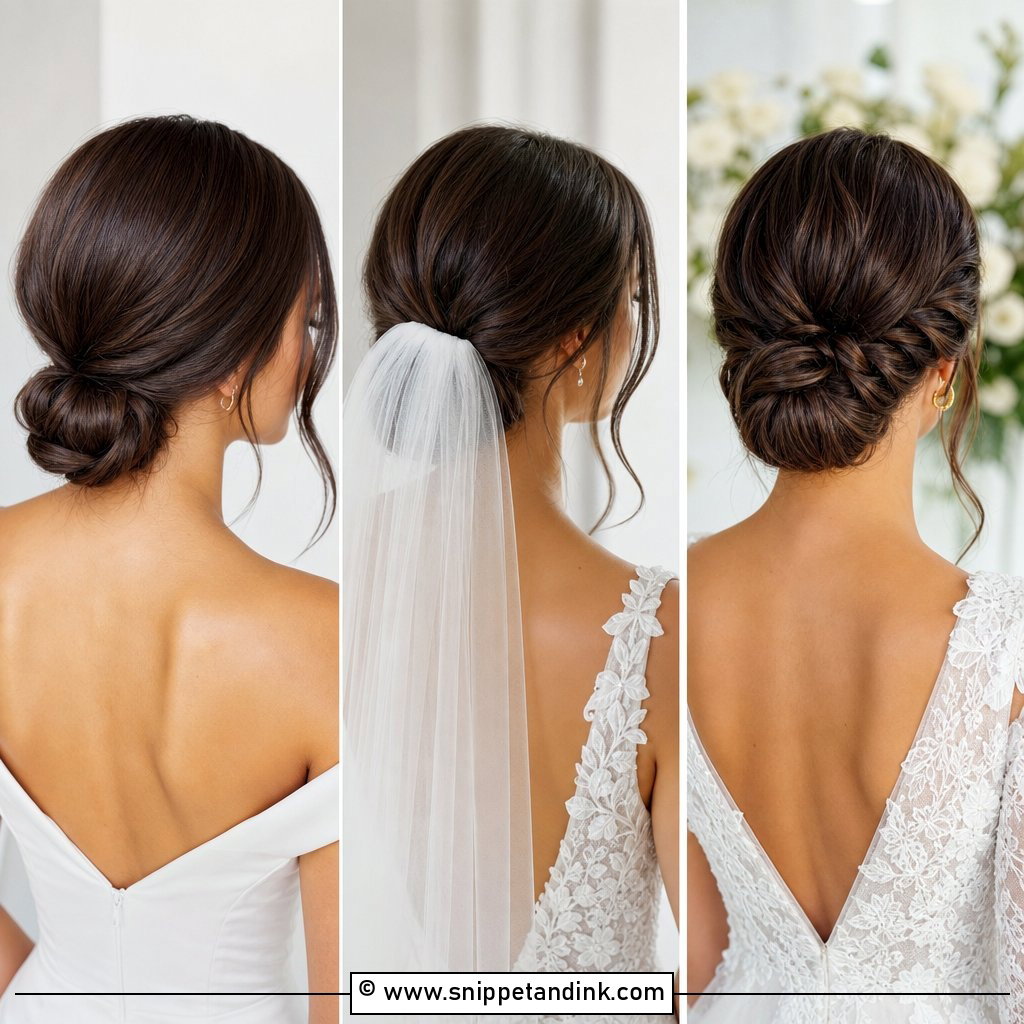
1. Brunette Wedding Low Chignon
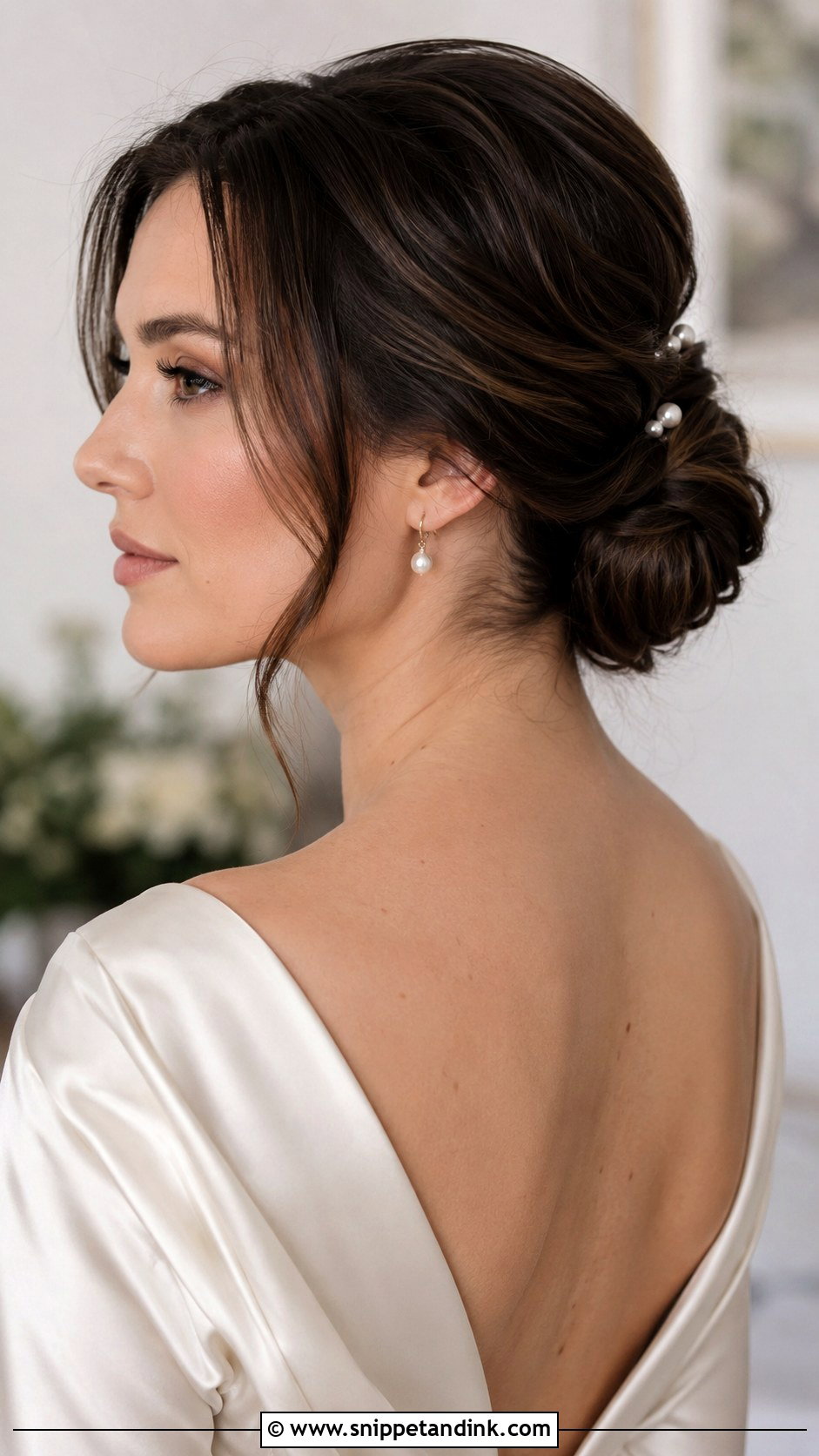
A brunette wedding low chignon is the shape I reach for when a bride wants a veil comb anchored properly, because the comb slides in just above the knot and has a solid base to grip. I set the chignon slightly below the occipital bone so it clears a high collar and doesn’t press against a chair back during the ceremony. On dark hair the folds read clearly, so I keep them fewer and larger rather than lots of small ones. A little lift at the crown softens it; a smooth top makes it formal. Medium to long hair holds this best.
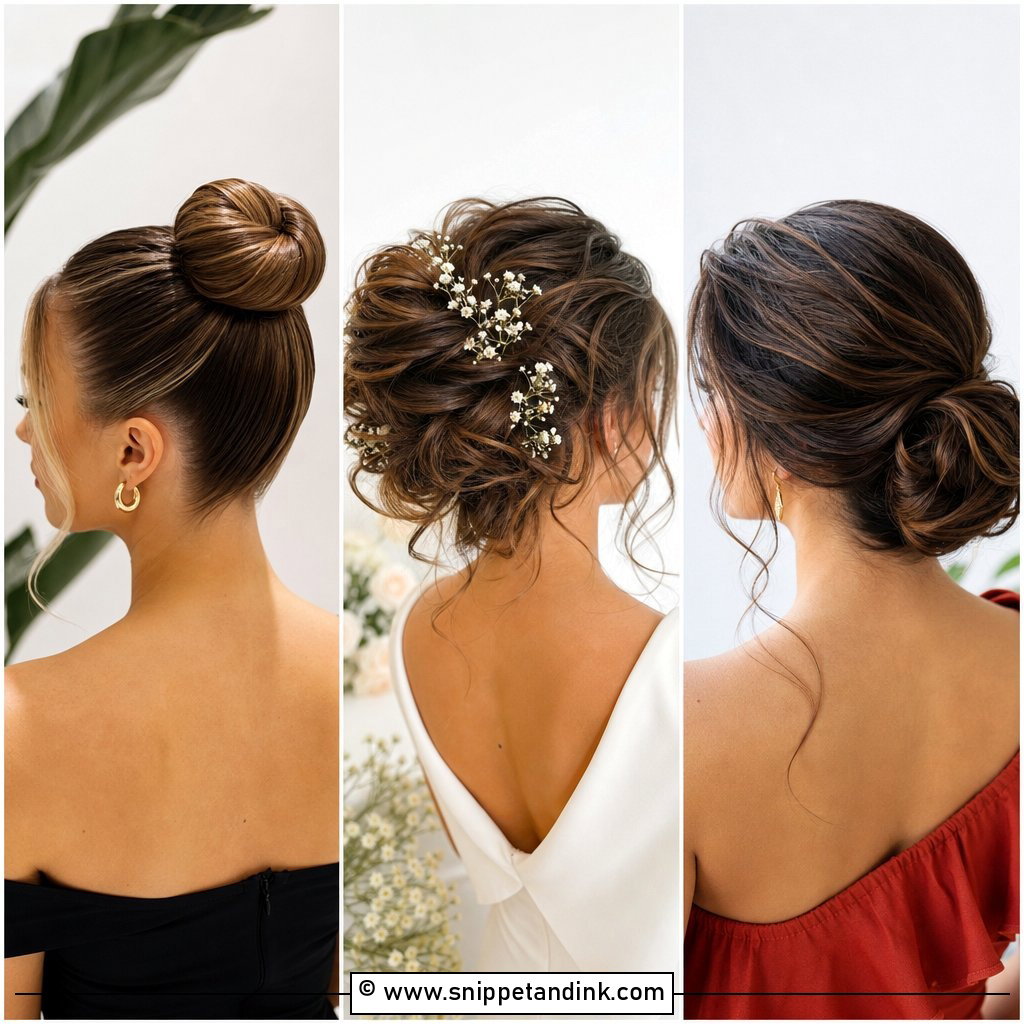
2. Brunette Wedding Sleek Bun
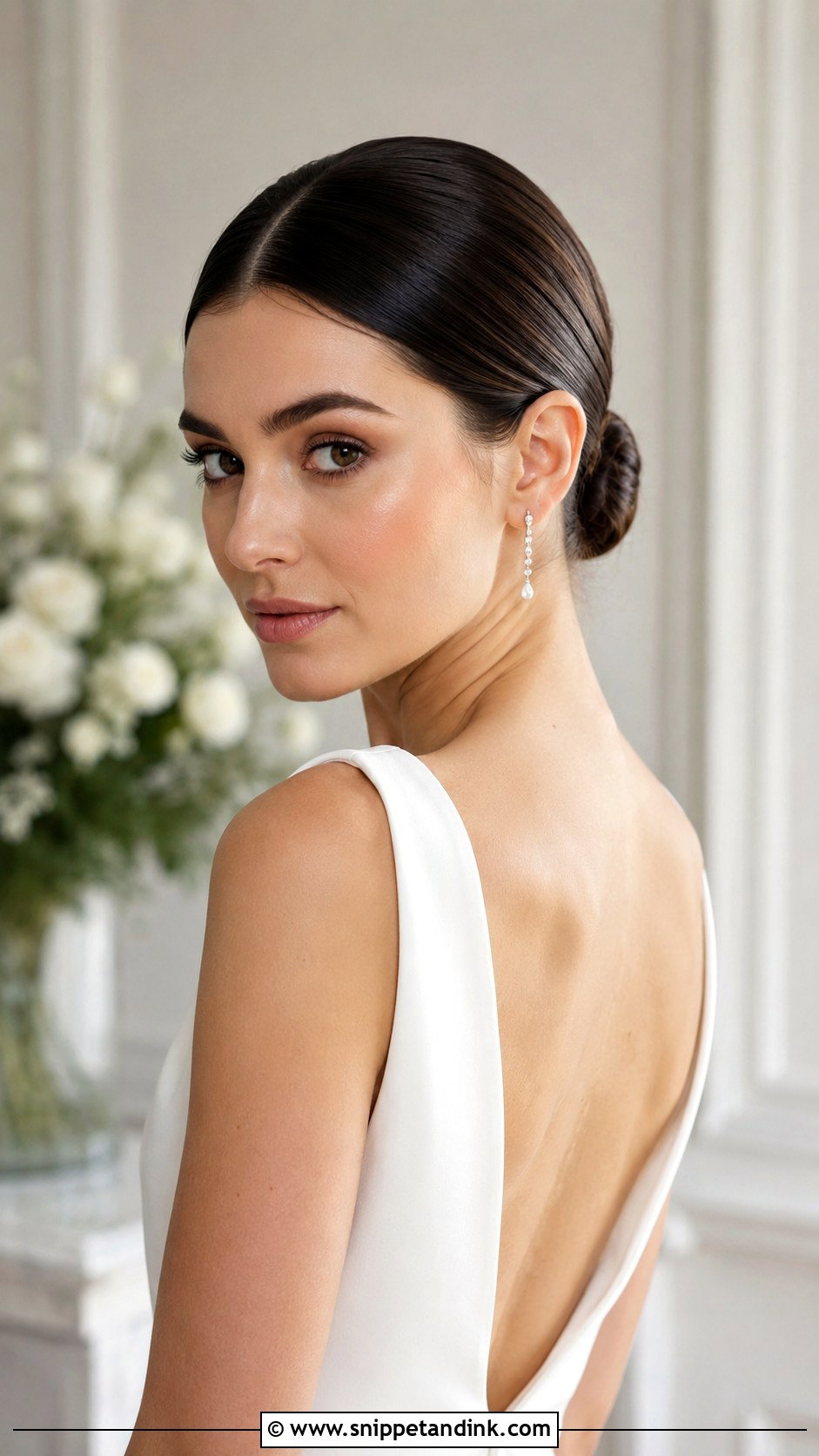
Sleek is the hardest finish to fake on brunette hair, because shine shows every bump in the brushwork. I blow-dry the hair dead straight first, then brush it back while the product is still slightly tacky, so the surface sets in one direction. It suits clean necklines and bold earrings, and it holds up well in humidity because there is no curl to drop. The trade-off is that it forgives nothing: a cowlick or a patch of regrowth at the hairline will be on show. A center part makes it look current.
3. Brunette Wedding Textured Bun
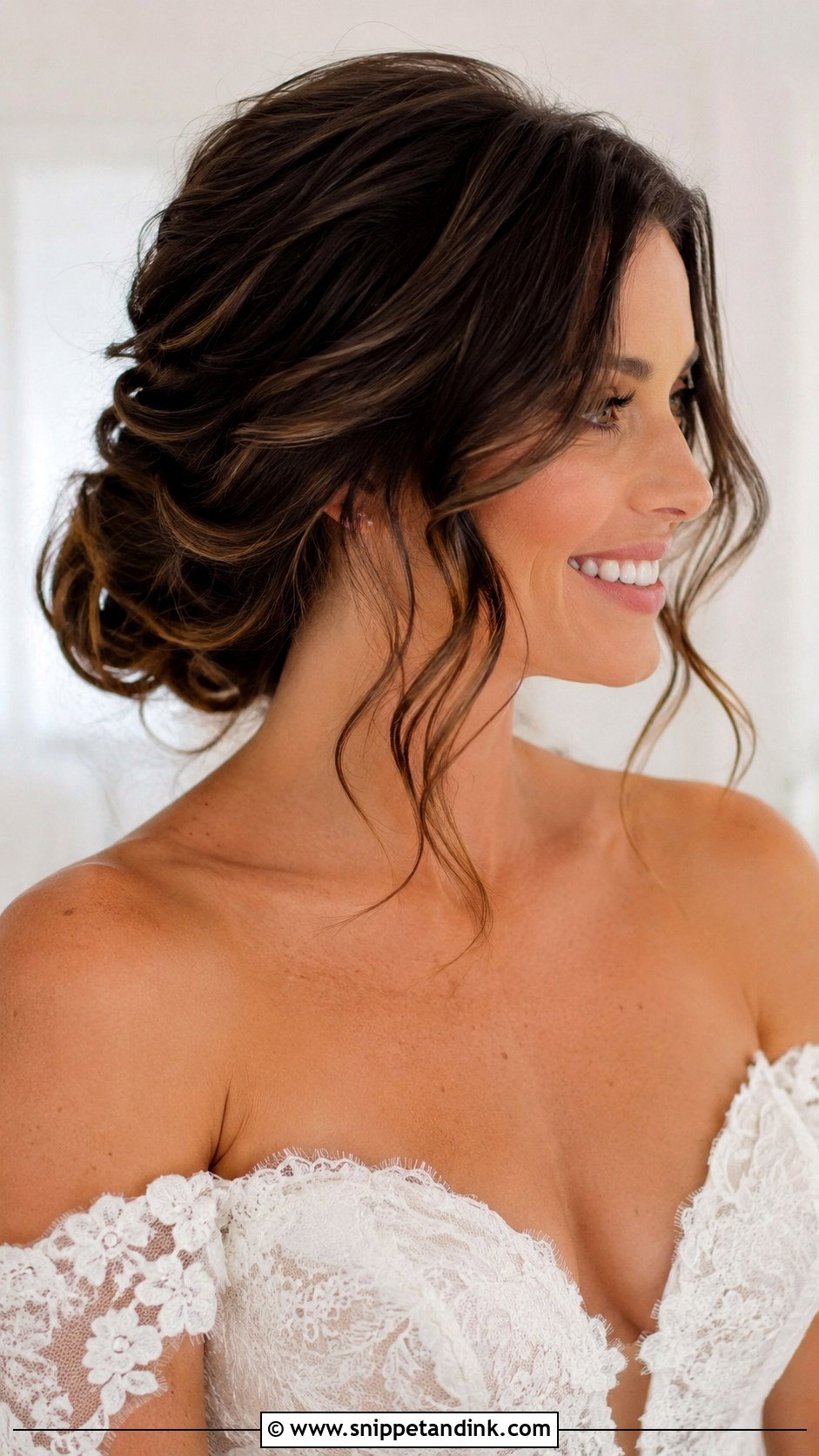
A textured bun is built from waves first. I curl the hair the night before or in the morning, let it cool fully, then twist and pull the sections apart so the bun looks fuller than the hair really is. Highlights or balayage help here, because the lighter ends catch light on the raised parts and the darker roots sink into the shadows. Where this goes wrong is balance: a bun that looks full from behind can look flat from the front. I always check it in a hand mirror at three-quarter angle before finishing.
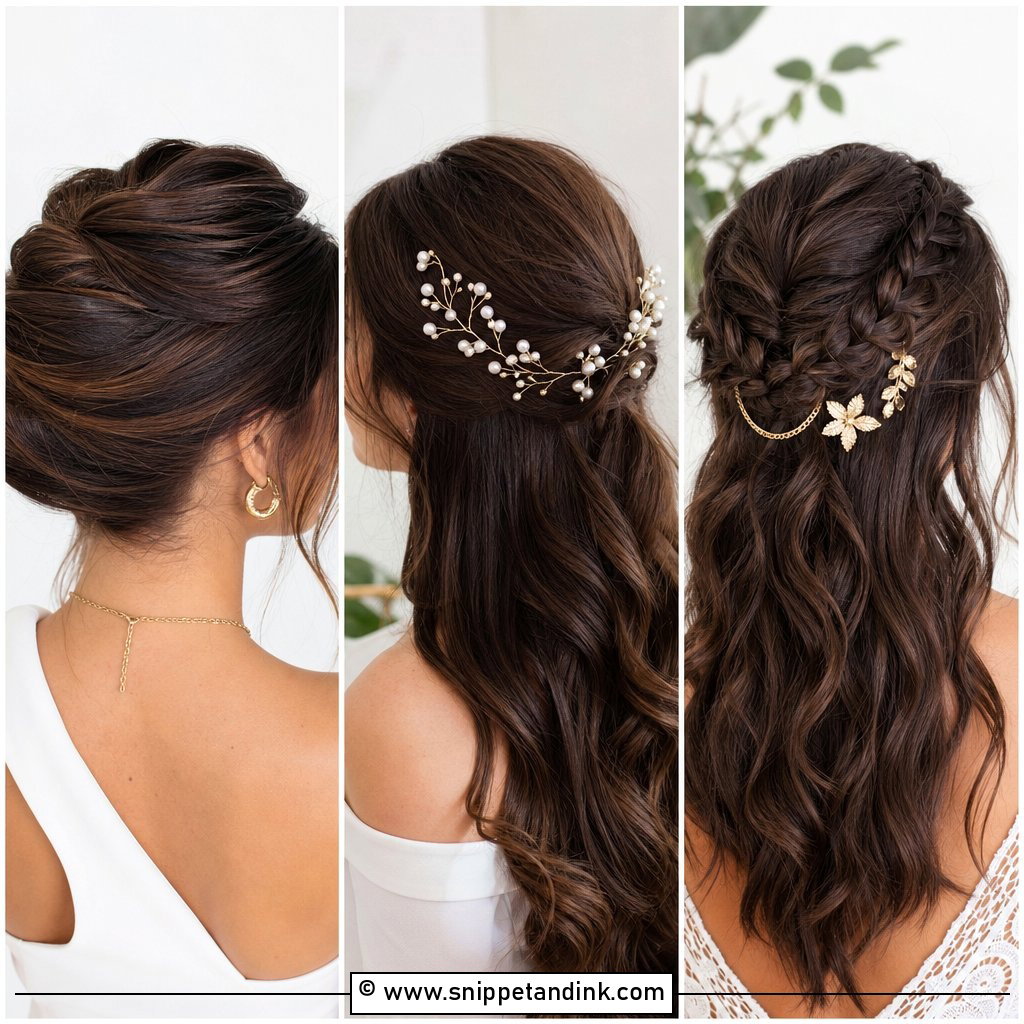
4. Brunette Wedding French Twist
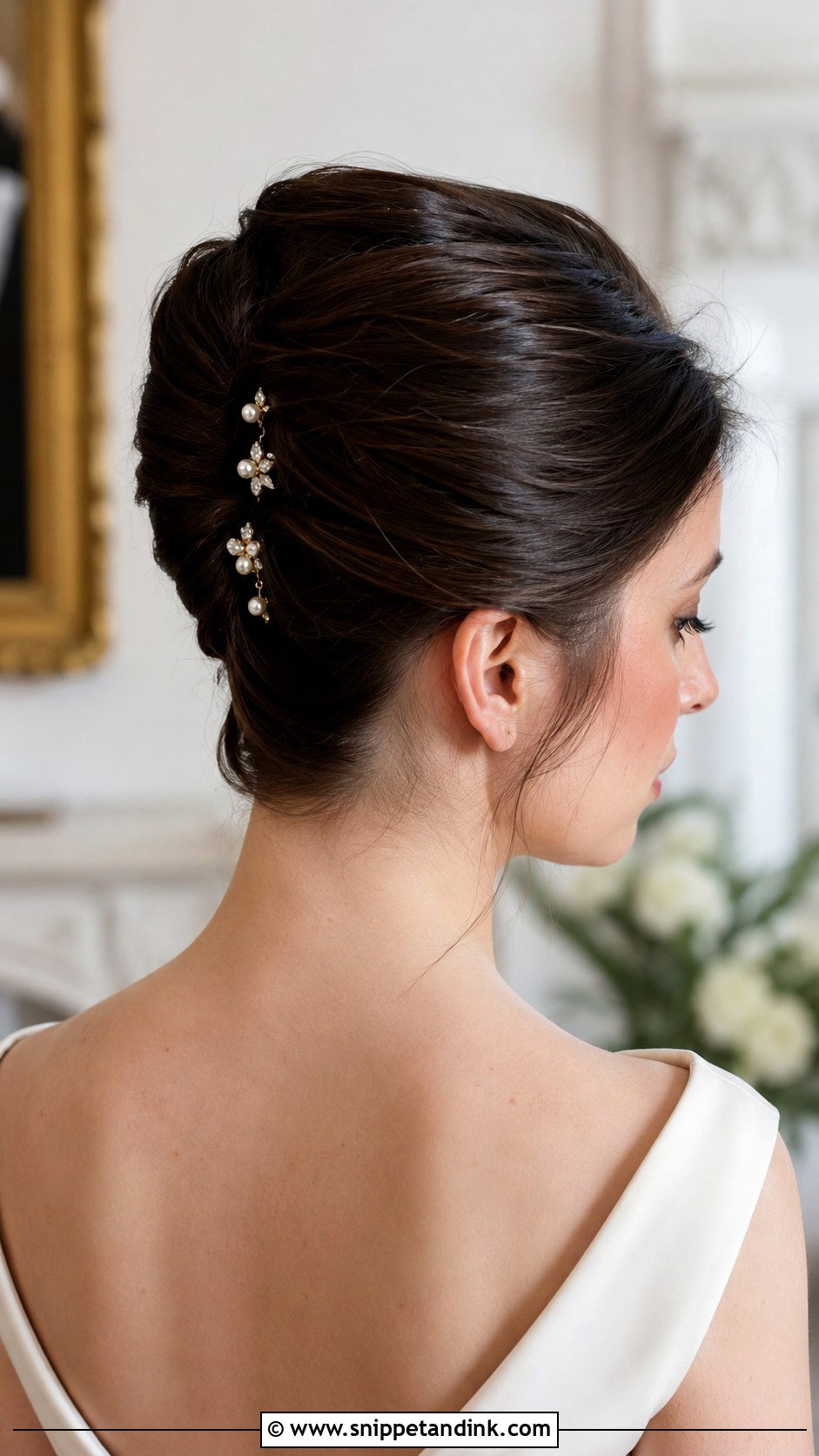
The French twist is a vertical roll, and on brunette hair the seam down the back becomes a feature, so I hide the pins inside the fold and use dark brown pins rather than black ones on chestnut shades. It needs hair at least past the shoulders, and fine hair usually needs a bit of backcombing at the base so the roll has something to wrap around. I like it with boat necks and fitted gowns. If it feels too strict, I loosen the crown and leave two pieces at the temples.
5. Brunette Wedding Braided Bun
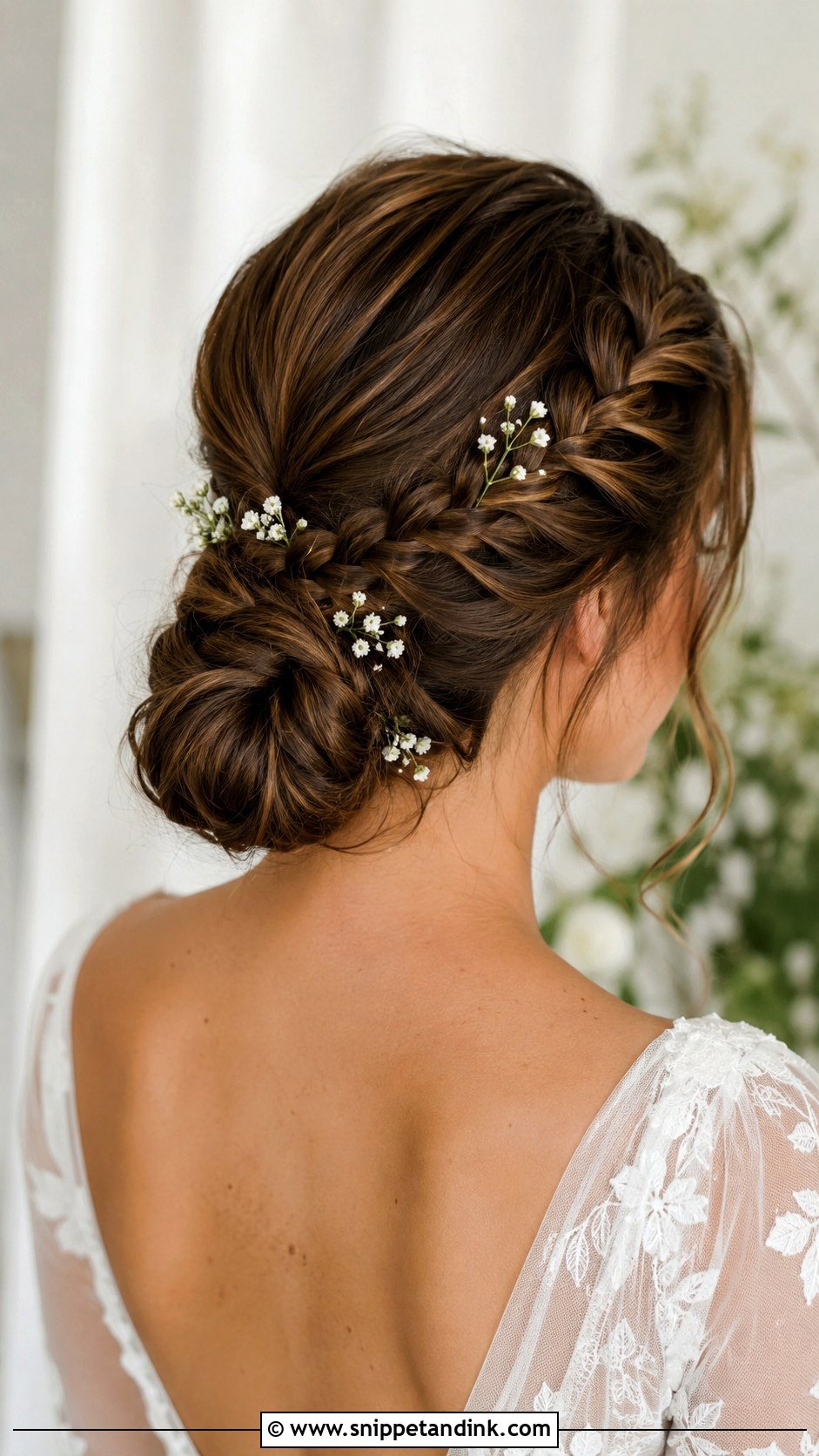
Braids do two jobs in a braided bun: they add detail and they act as anchors, because a pin locked into a braid holds far better than a pin pushed into loose hair. The braid can wrap the bun, run into a low chignon or start at the crown. On solid dark hair a tight braid can look like one flat stripe, so I pancake it gently, pulling the edges of each loop outward until the pattern reads from a distance. Keep it neat for a fitted gown or looser for an outdoor ceremony.
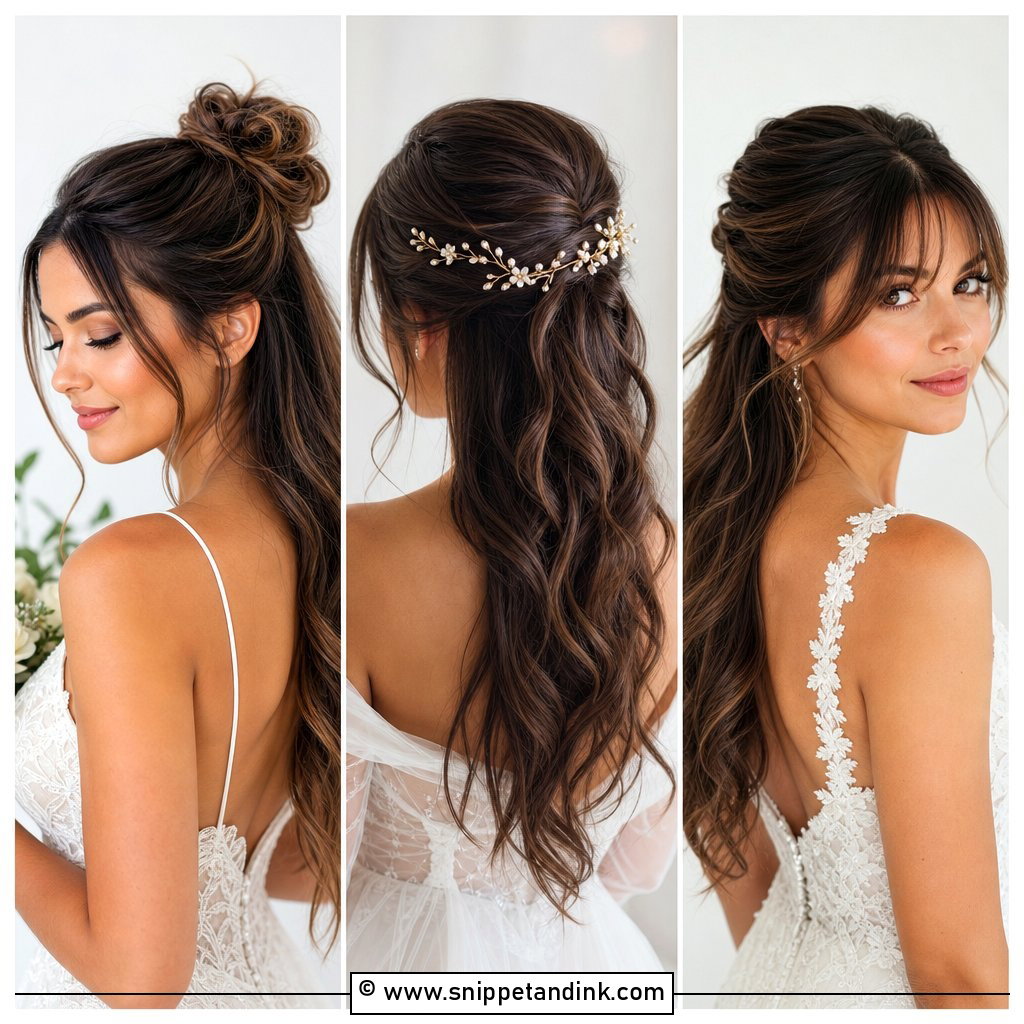
6. Brunette Wedding High Bun
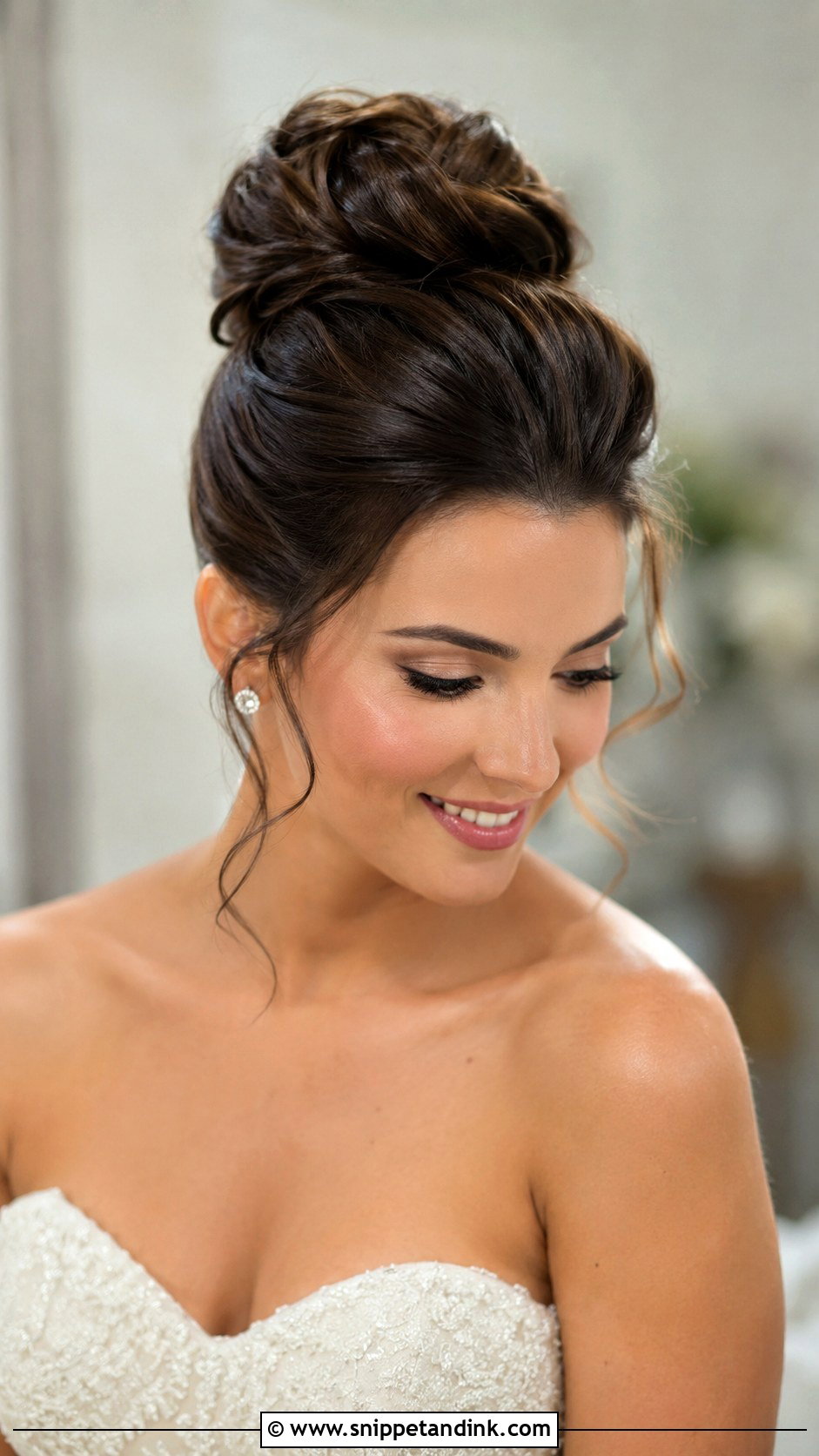
A brunette wedding high bun lifts the whole face and lengthens the neck, which suits strapless gowns and high necklines equally well. I place the veil underneath it, never on top, so the bun stays the silhouette. Fine hair often needs a donut or a clip-in piece matched to the exact brown, because a high bun shows its size from every seat in the room. I’d steer you away from it if you plan to wear a long cathedral veil all evening; the weight drags on a high anchor point.
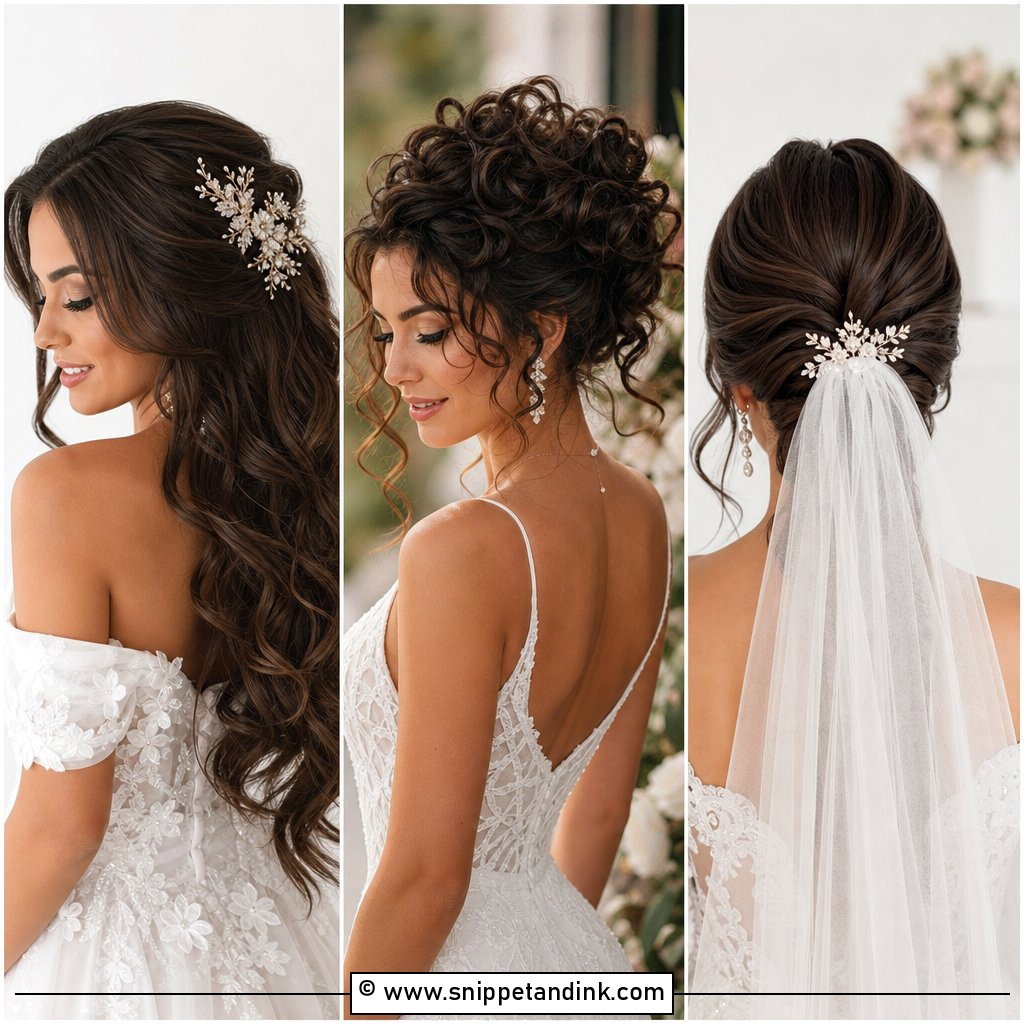
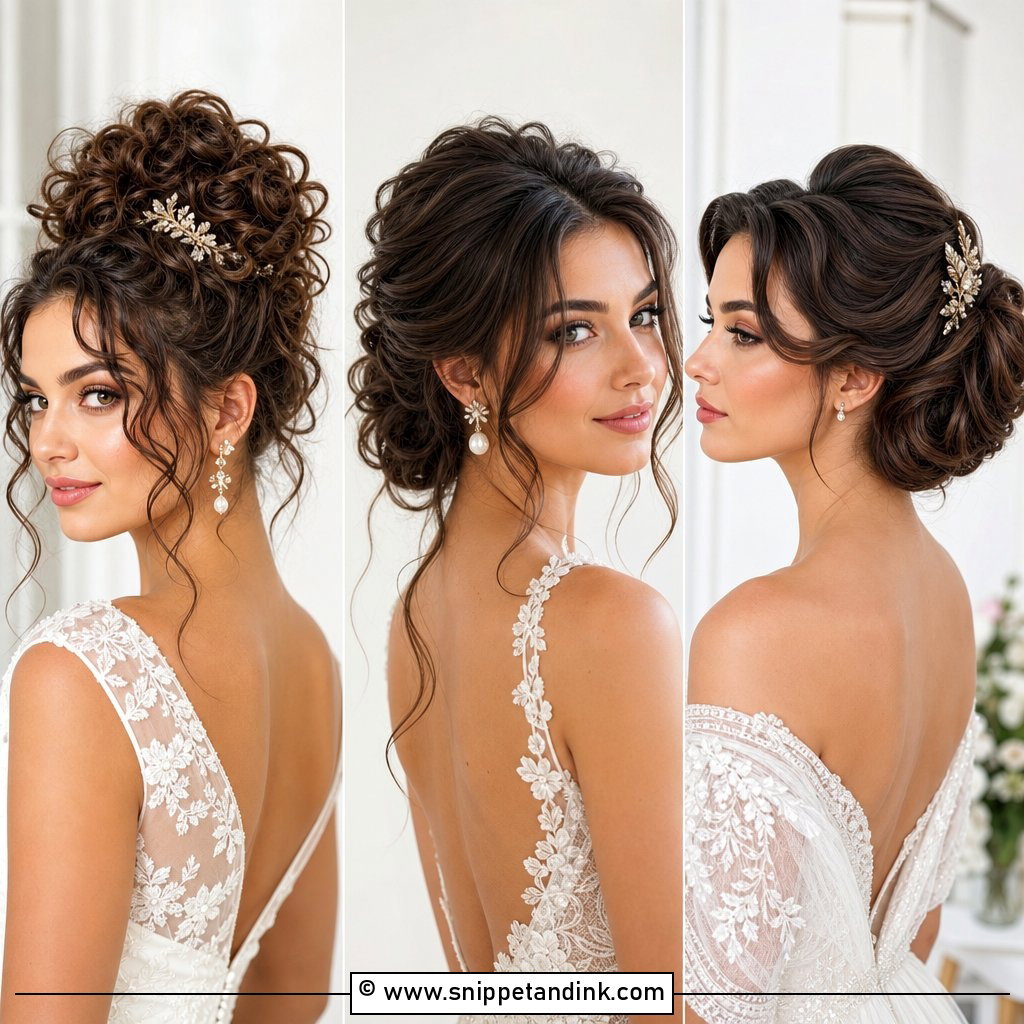
7. Brunette Wedding Curly Updo
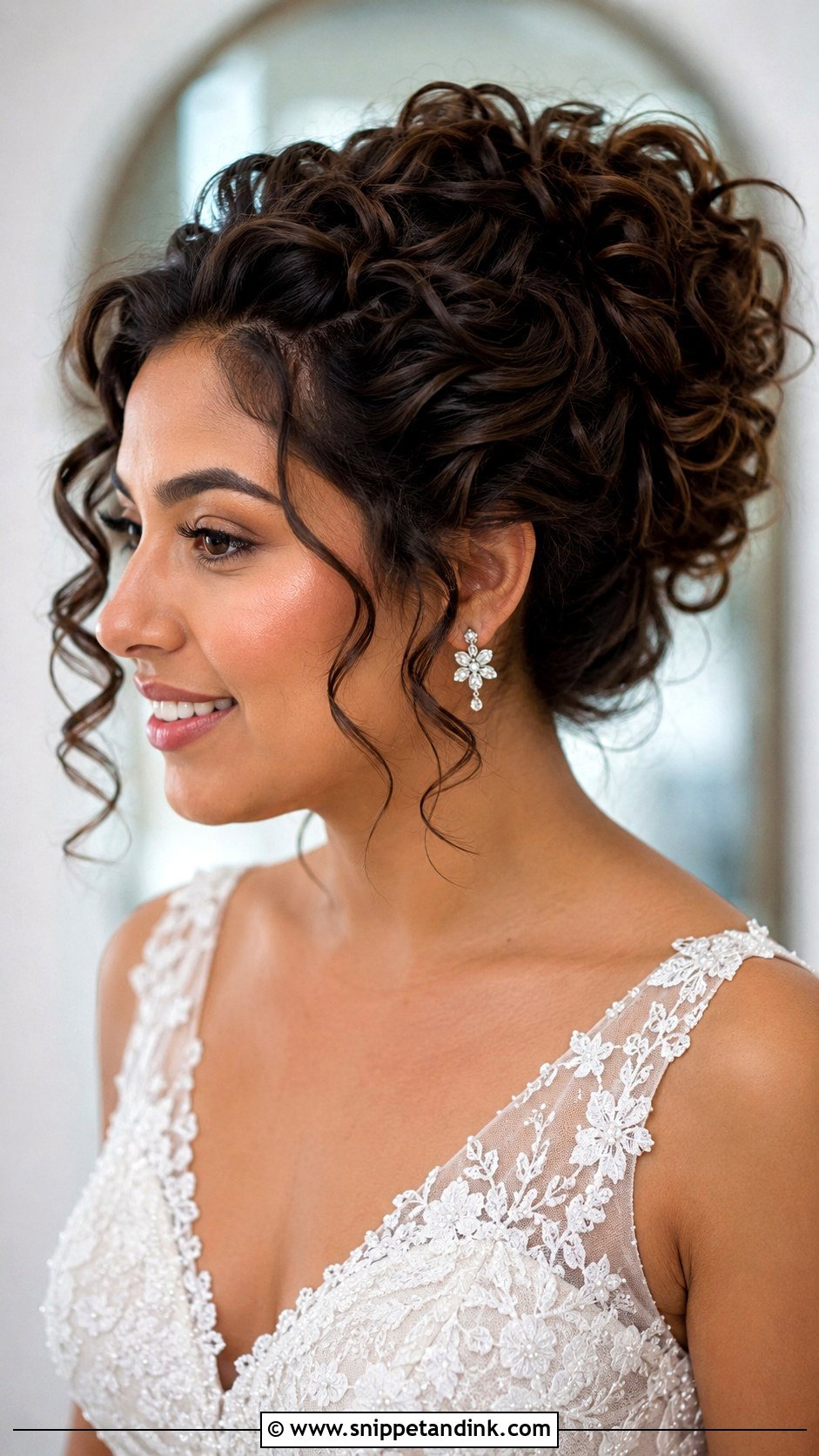
With a curly updo, the prep matters more than the pinning. Curls need to be hydrated and defined the day before, and I pin them by their base, never through the middle of a ringlet, so the pattern isn’t flattened. Brushing is off the table; I separate with fingers only. Dark curls throw strong shadows, which gives depth in photos, but they can also look heavy if every curl is packed tight. I leave a few around the face and set the height wherever the bride feels most herself.
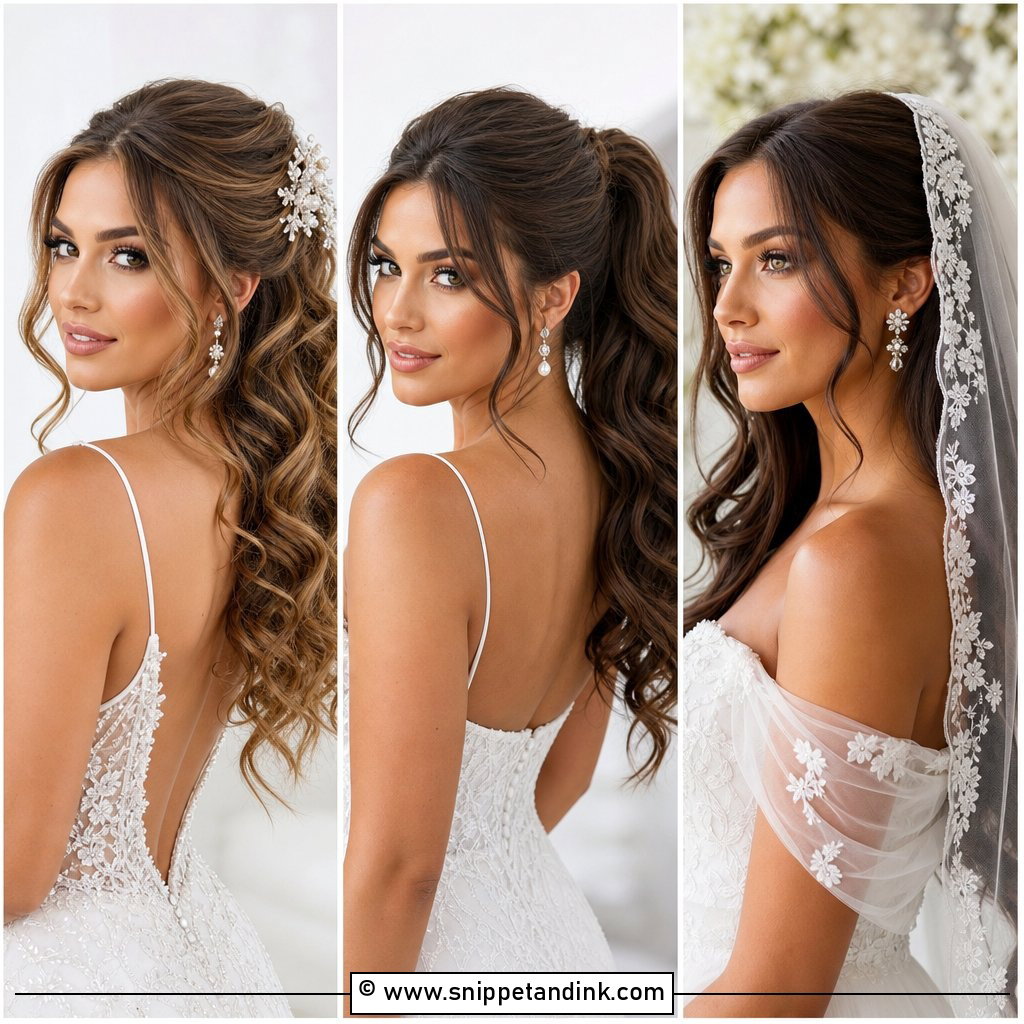
8. Brunette Wedding Low Ponytail
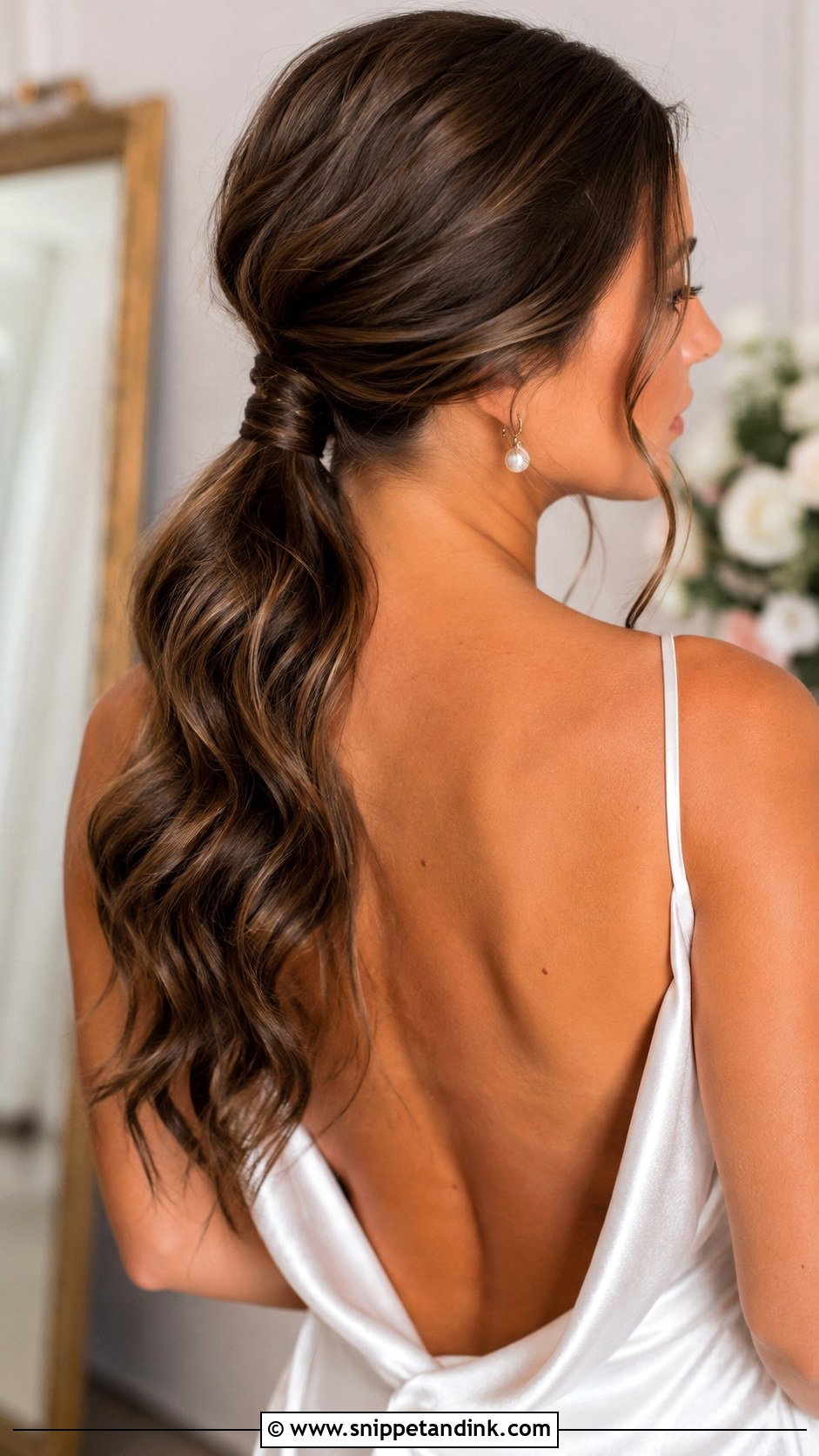
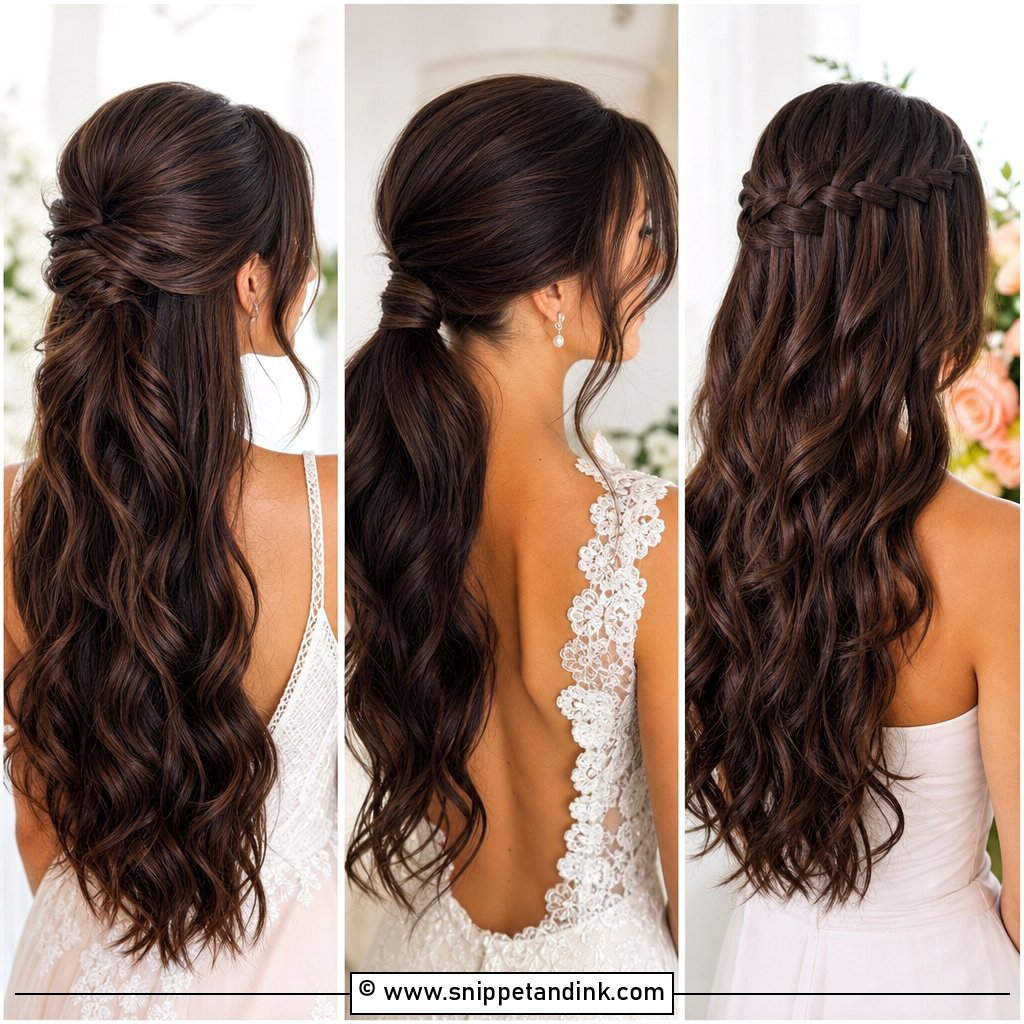
A low ponytail is the most comfortable option on this list, and I suggest it for brides who hate the feel of pins against the scalp. I secure it with a clear elastic, then wrap a section of the bride’s own hair around the base and pin it underneath so no band shows. Length is on show, so the ends need to be in good condition; split ends look obvious against a dark, glossy tail. Waves through the length soften it, while a straight finish suits a modern gown or a backless dress.
9. Brunette Wedding Twisted Updo
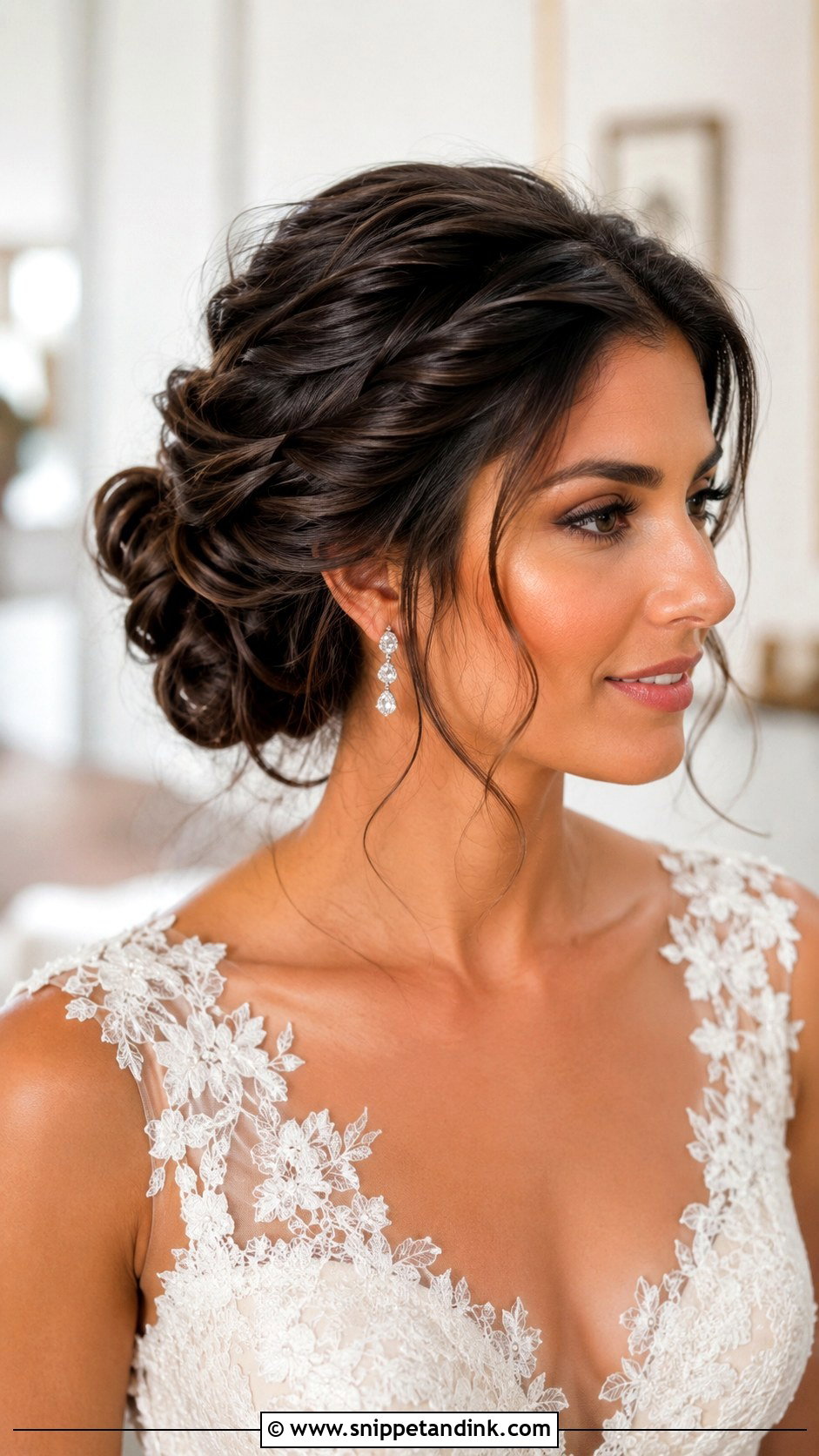
A twisted updo is quicker to build than a braided one and almost as secure. I take sections about two fingers wide, twist each away from the face, and pin them into a gathered shape at the back. Darker hair creates natural shadow between the twists, so the detail reads without any accessories at all. Hair vines and small pearl pins slide neatly into the gaps if you want them. The one thing I watch is tension: twists loose enough to show shape still need a crossed pair of pins at each one to survive hugging and wind.
10. Brunette Wedding Messy Bun
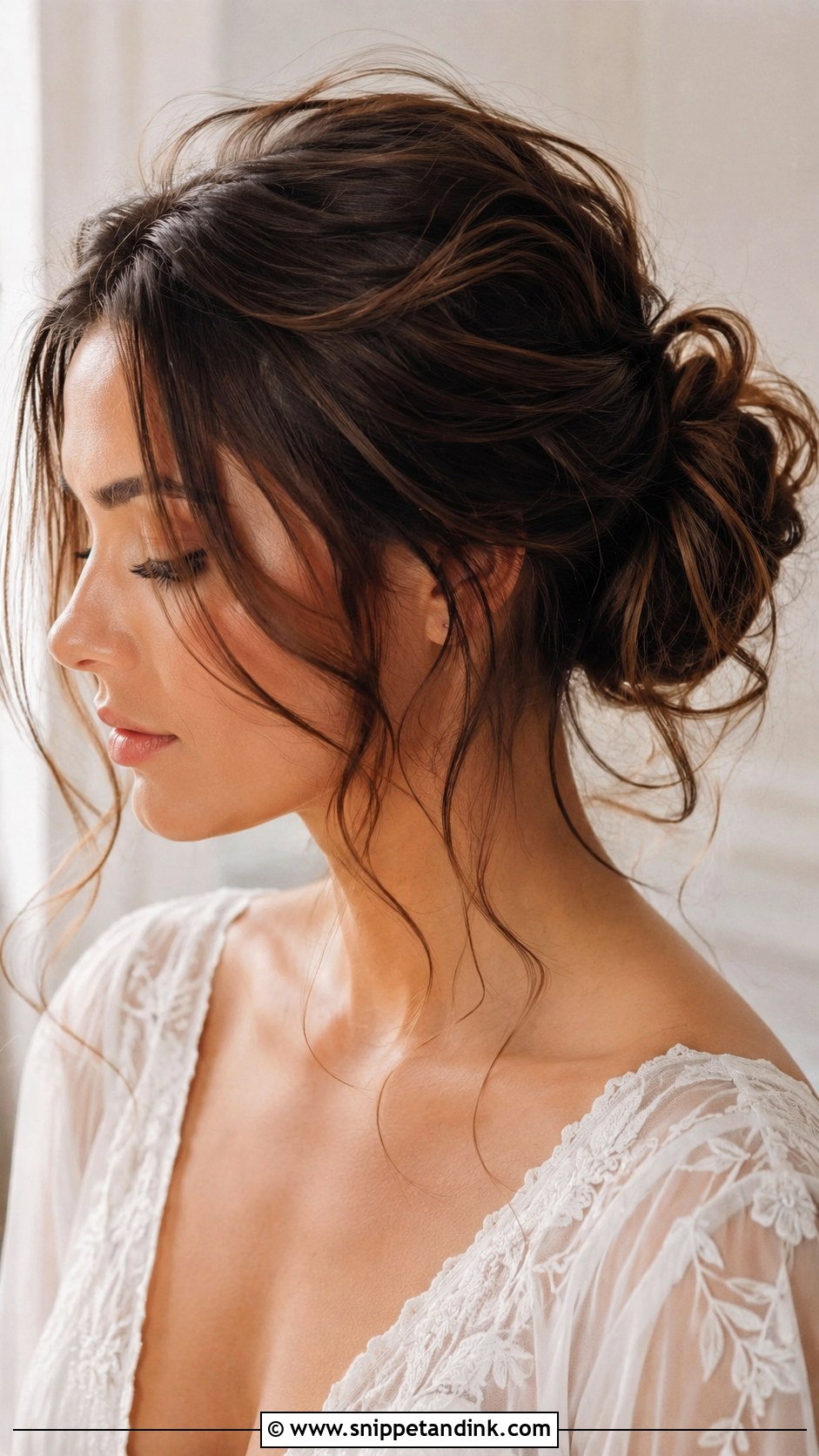
Messy has to be planned, or it just looks unfinished by the first dance. I build a tight hidden base, usually a small ponytail or a pinned knot, and only then pull out the outer pieces. On brunette hair the bends and pinned sections cast shadows, so a deliberate undone shape looks rich rather than frizzy. It sits naturally with relaxed dresses, garden venues and beach ceremonies. A few strands at the front keep close-ups soft, but I keep them out of the lip line so they don’t stick to gloss.
11. Brunette Wedding Ballerina Bun
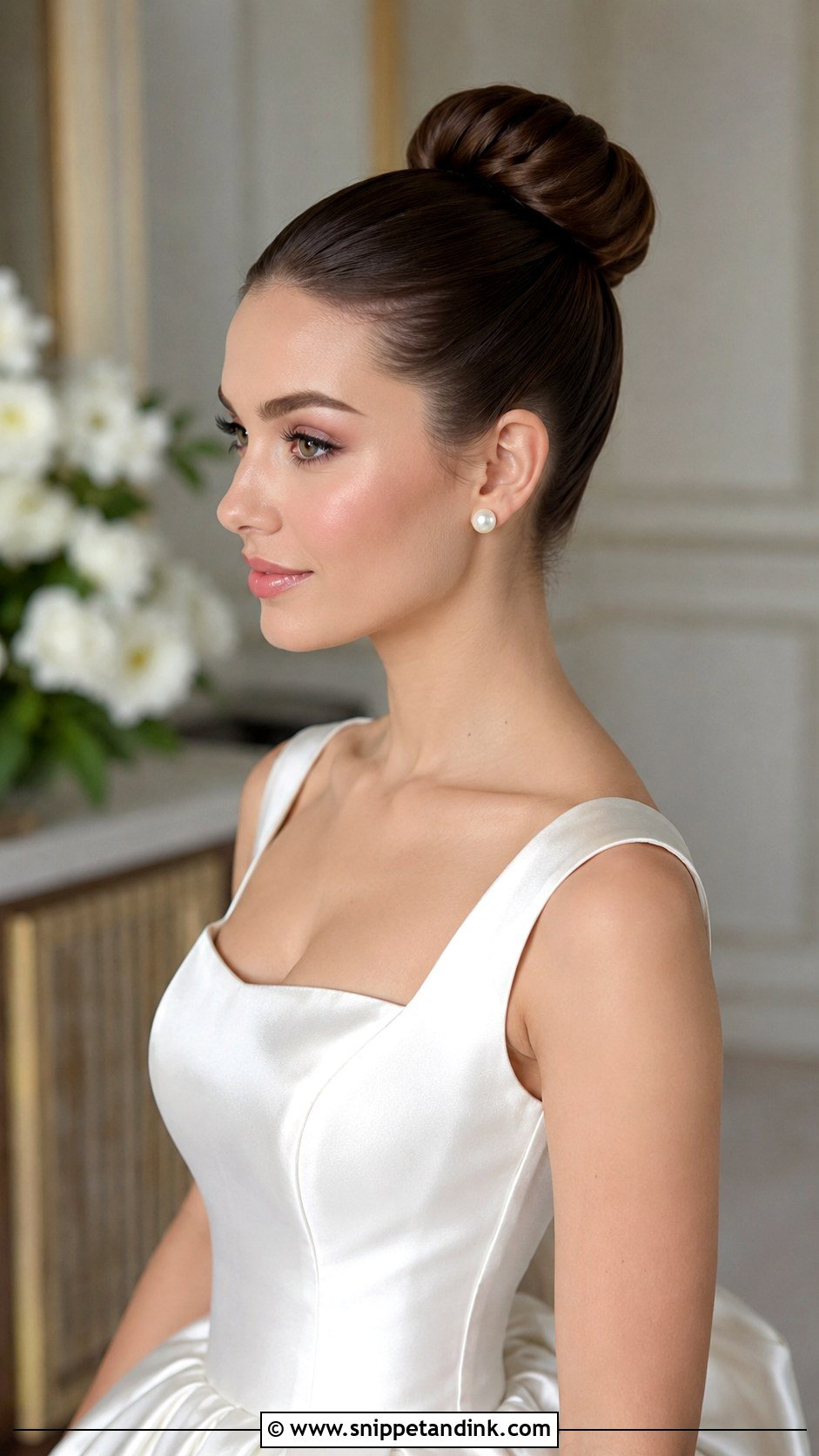
The ballerina bun is round, smooth and tight, so it rarely moves all day. I wrap the hair around a donut or a coiled base, then smooth the outer layer with a fine bristle brush and a little shine spray, which dark hair shows off well. It pairs with ball gowns, satin and cathedral veils. It is unforgiving on a round face if placed too high, so I usually set it at the crown for oval faces and lower for softer jaws. A side part takes the strictness out of it.
12. Brunette Wedding Side Bun
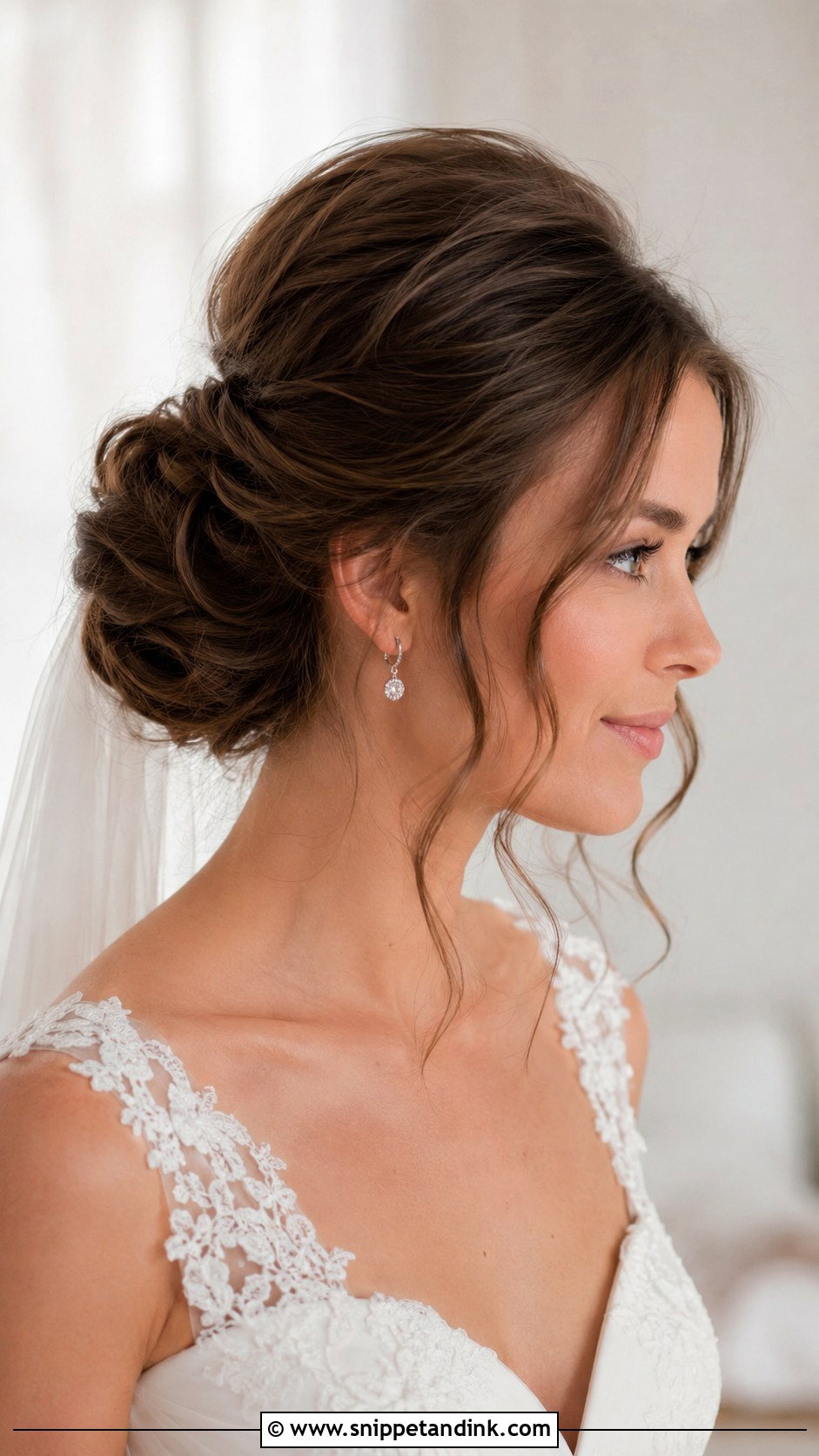
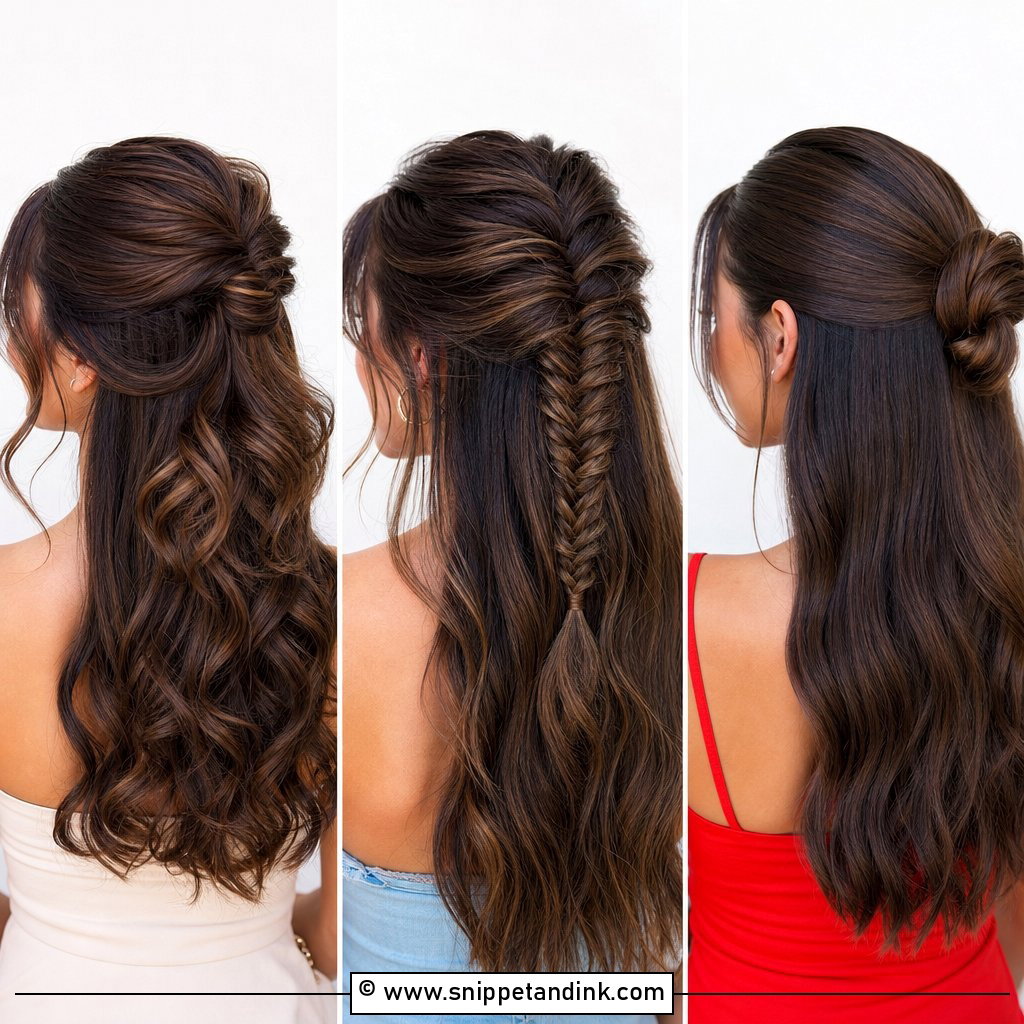
A side bun puts the detail where most portraits are taken from: one side and the front. I sit it low behind one ear, which is exactly why it suits one-shoulder dresses and asymmetric necklines. Brunette hair curled or twisted before pinning gives the knot depth. The practical issue is weight on one side, so I anchor it with pins crossed in an X into a small base braid underneath. The opposite side stays smooth for balance, and a few small pins add sparkle without crowding it.
13. Brunette Wedding Bun With Face Framing Pieces
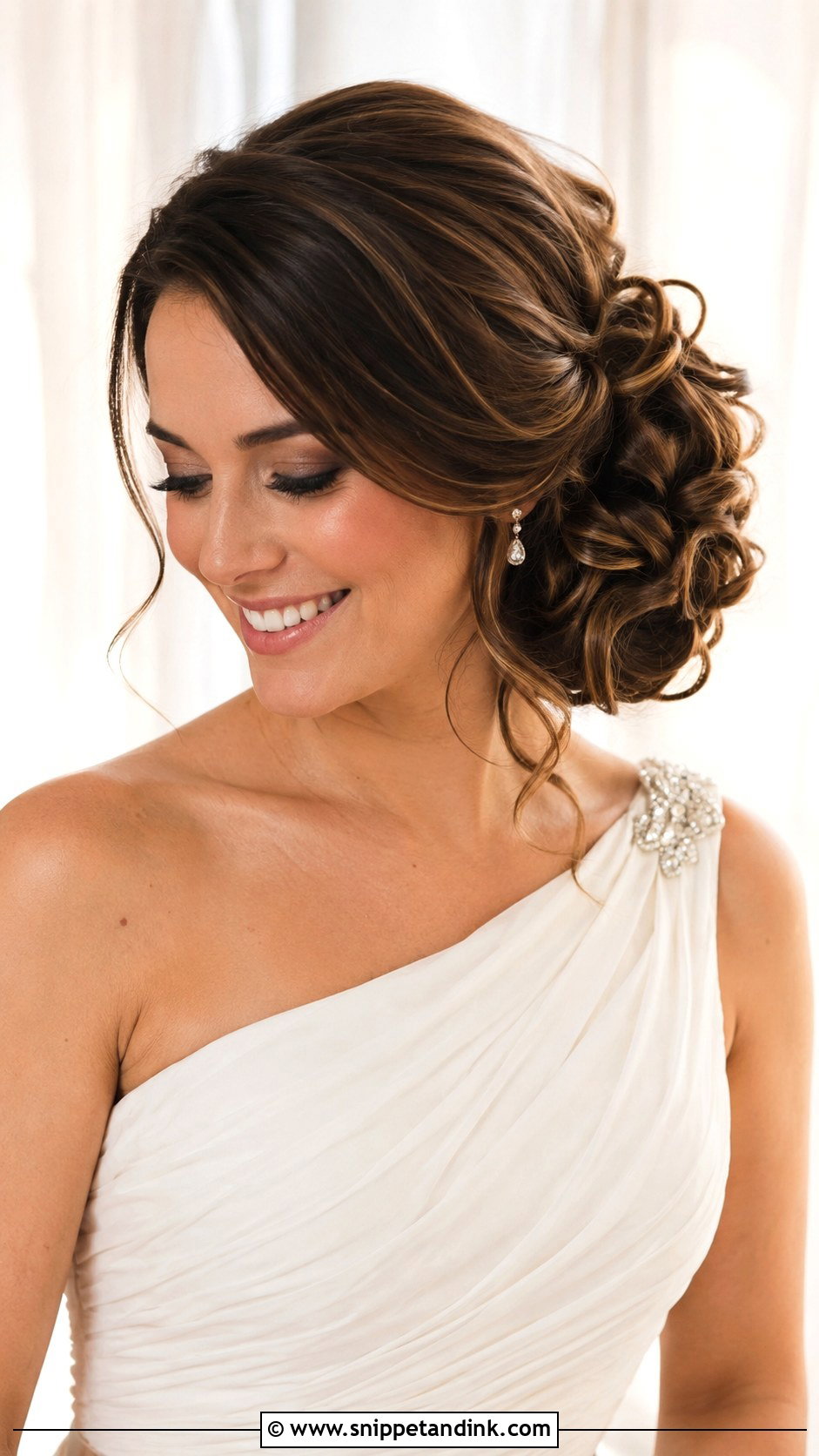
Face framing pieces are what I suggest to brides who feel exposed with everything pulled back, and they draw attention to the eyes, cheekbones and smile. The bun behind can be low, mid-height or textured. The pieces themselves need to come from the hairline at the right depth: too thin and they look stringy by the reception, too thick and they hide the cheekbones. I curl them away from the face with a small barrel and pin them back while they cool so the bend sets. They work with nearly any gown.
14. Brunette Wedding Voluminous Updo
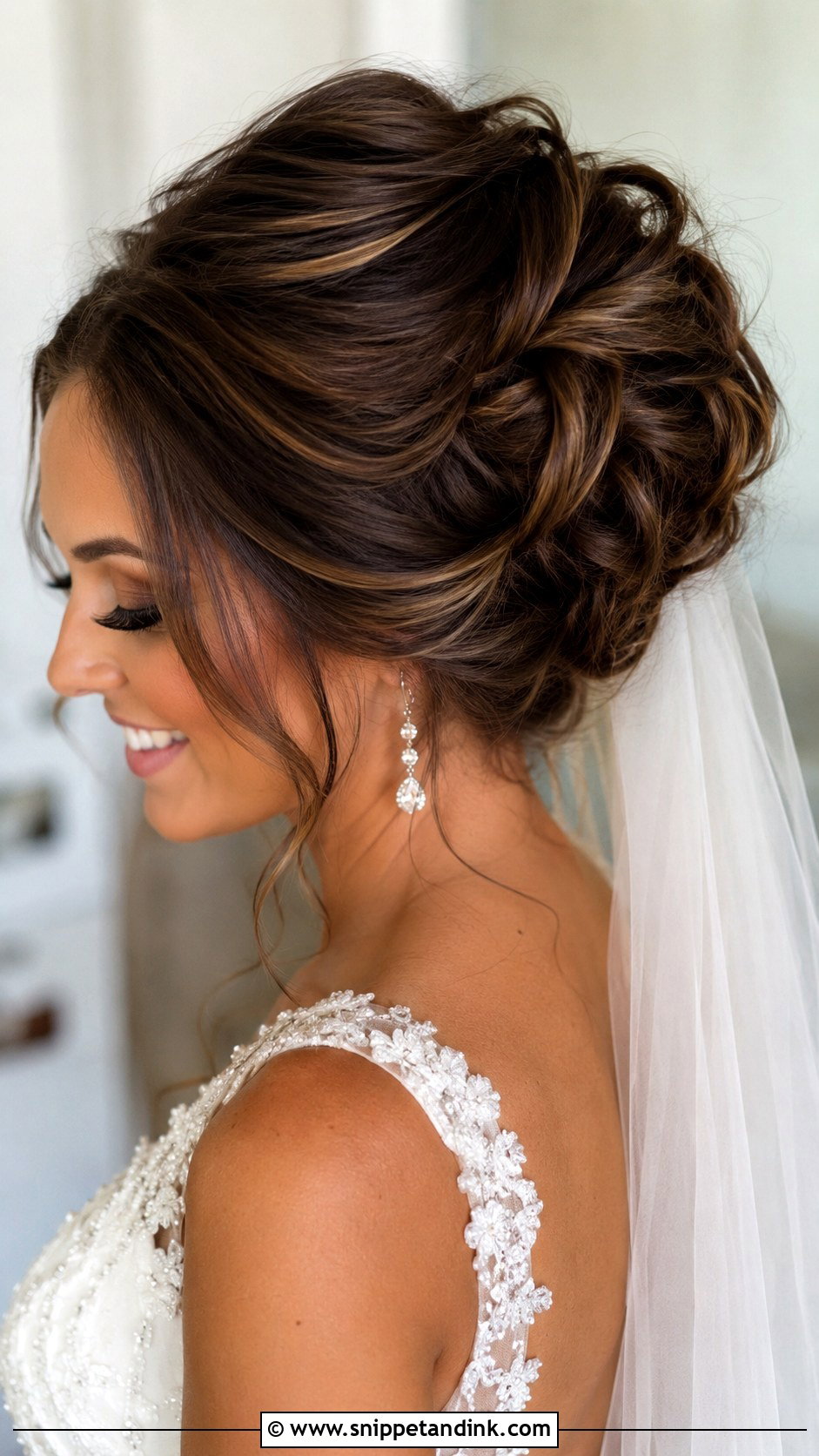
A voluminous updo is for drama: lifted roots, curls set at the crown and pinned sections that build fullness at the back. Thick or long hair carries it easily; finer hair usually needs extensions in a matched brown, and warm chestnut or caramel pieces help the volume show dimension. I build the structure underneath with backcombing and pins, then smooth only the top layer, so the shape looks full instead of puffy. It balances big skirts, long veils and formal rooms. It is heavy, though, so I’d skip it if you get headaches from tight styles.
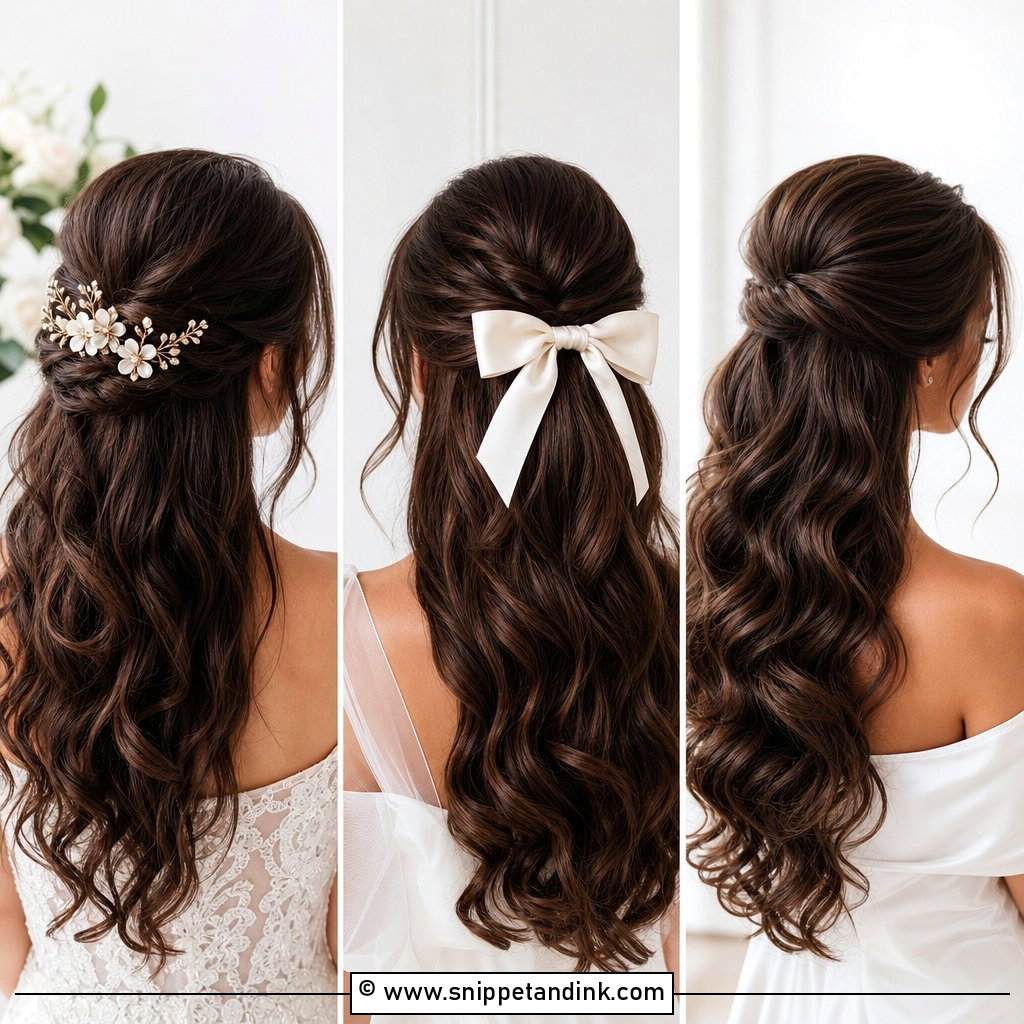
15. Brunette Wedding Updo With Pearl Pins
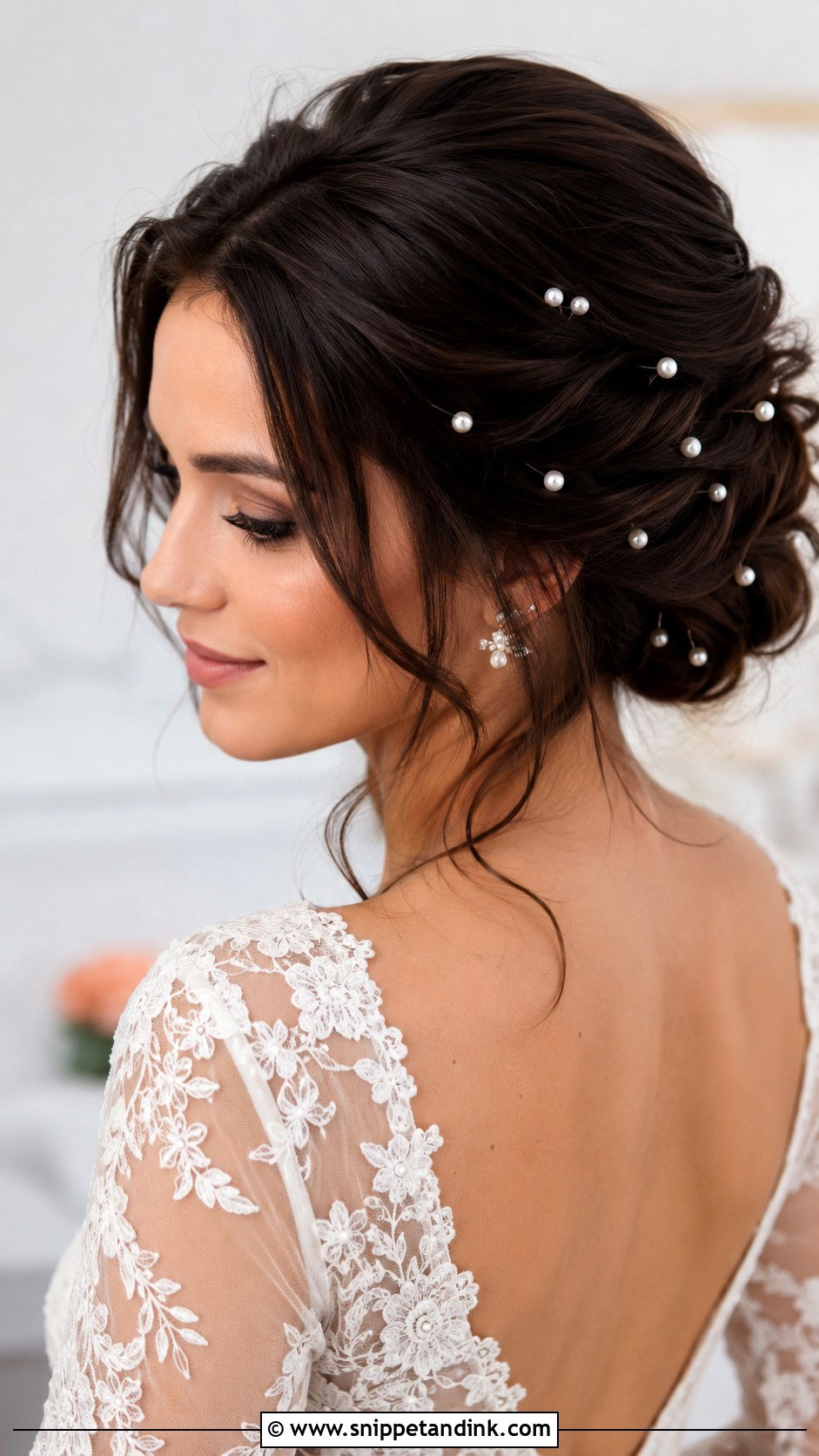
Pearl pins are where brunette hair has a clear advantage, because a cream pearl against dark brown reads from across a room, where on pale blonde it can disappear. The base can be a low bun, a chignon, a twisted updo or a textured bun. The mistake I correct most is crowding: I place the pins in an uneven curve following the shape of the bun, and step back after every few. A handful of larger pearls looks clean; smaller ones scattered through the twists look softer. Lace, pearl earrings and a simple veil all sit naturally beside it.
Timing Your Gloss, Color and Trim Around a Brunette Updo
Brown hair tends to turn brassy as it fades, especially if it has been lightened at any point. That warmth isn’t a problem in person, but it can come out orange under indoor lighting. A gloss or toner a week or two before the wedding refreshes the tone and adds the shine that makes sleek shapes look finished. Leave root color a similar gap, so the shade has softened slightly and any scalp sensitivity has settled before a day of pins.
Trims are different. A fresh blunt cut can make an updo harder to tuck, because the ends are all the same length and push out together. I’d rather a light dusting two or three weeks before, so the ends are healthy but have softened.
The day before
Wash the night before or the morning of, depending on what your stylist asks for. Squeaky clean, silky brunette hair slides out of pins, and fine hair often holds better on day-old hair. Skip heavy conditioner at the roots and arrive with it fully dry. If you are getting the updo at home, have a mirror you can stand behind so you can see the back yourself.
Which Updo Belongs With Your Dress, Veil and Day
From sleek buns to braids, ponytails and pearl-detailed shapes, darker hair gives you a lot of range up. The deciding factors are practical: your neckline, where the veil anchors, your hair texture, the weather and how much softness you want around your face. Book a trial and wear it for several hours afterward, because that is when weak pins show themselves. In deep espresso, warm chestnut or a soft chocolate brown, the right shape will hold all day and look like you in the photos.
You'll Like These Ideas:


Leave a Reply