
Most brides I sit in my chair now ask for skin that still looks like skin, eyes with quiet definition and a lip that survives hugging, crying and an hour of portraits. The twenty looks below run from barely there to full evening glam, and each one comes with what I actually watch for when I do it on a real face. Some of you will lean toward soft glam with glowing cheeks and a nude mouth. Others want a red lip or a smoked-out eye. Either way, use these as a vocabulary for your trial, so you can point at the part you like and still walk down the aisle looking like yourself.
Sorting Your Inspiration Photos Before the Makeup Trial
When a bride sends me twelve screenshots, they almost always disagree with each other. One has a glossy lip, another a matte one, half of them are filtered. Before your trial, go through your saved photos and sort them by what you want to copy, not by whose face it is.
- Skin finish: dewy, satin or matte. This decides your base products more than anything else.
- Eye intensity: a quick wash of colour, a soft smoke or a defined wing.
- Lip: nude, pink, berry or red, and whether you’ll be happy reapplying it.
- Lashes: whether you want them noticed or just longer than your own.
Then check the lighting in each photo. Ring-lit selfies and heavily edited images hide texture that real skin has, so I treat them as colour references only. Try to save at least one photo of a bride with your skin tone and eye shape, taken outdoors or at an actual wedding. That one will tell us far more than any studio shot.
Matching the look to your dress and venue
A heavily beaded gown or a black-tie ballroom can carry more definition than a linen slip dress on a beach. Daylight shows everything, so outdoor brides usually want lighter coverage than they expect. Candlelight swallows colour, so evening brides can go one step deeper. If you tell me where you’ll be standing for the vows and what time it is, I can adjust nearly any look on this list to suit.
1. Natural Bridal Makeup
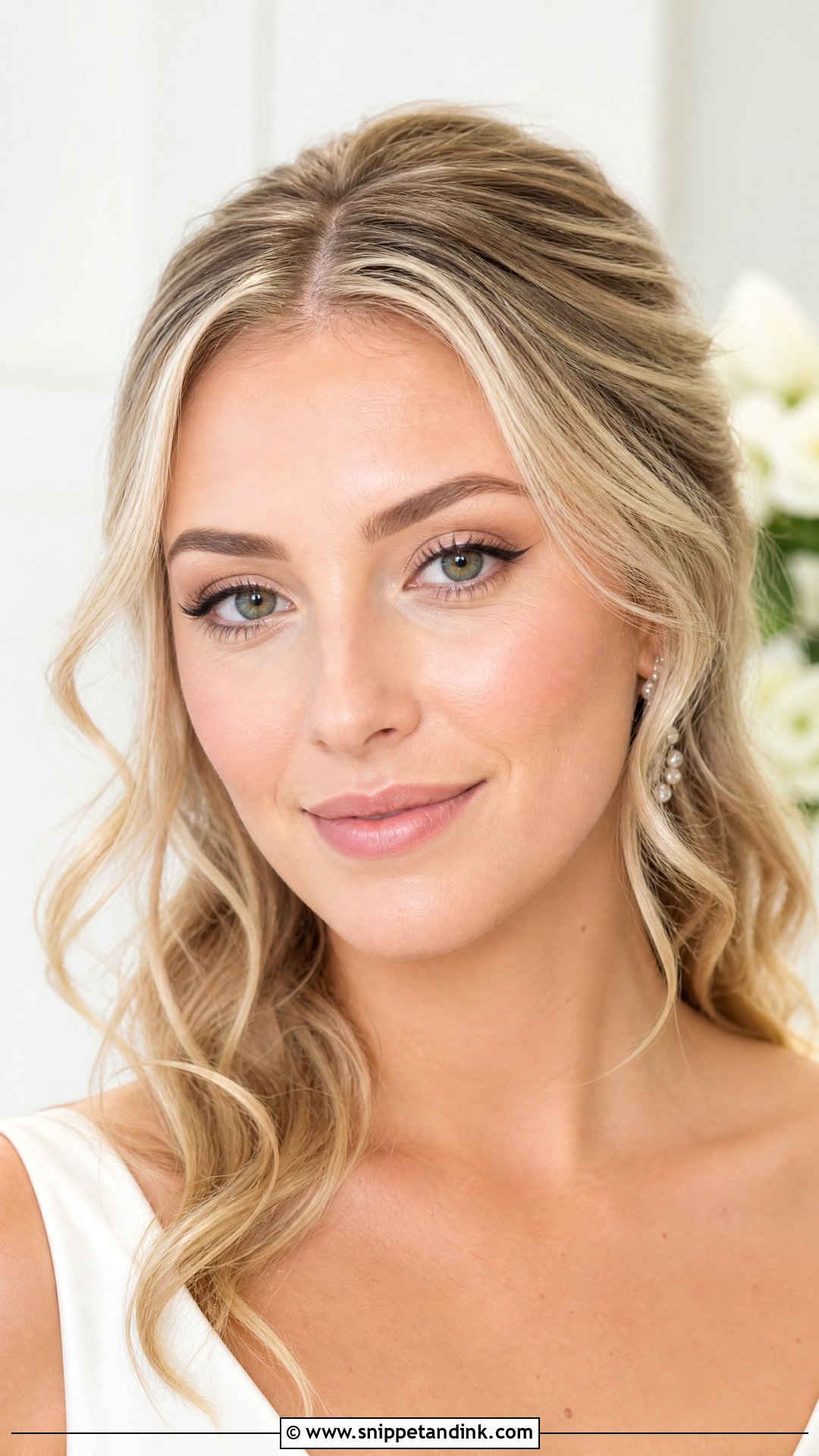
This is the look that takes me the longest, oddly enough, because there is nothing to hide behind. Prep does most of the work: a hydrating layer, a few minutes to sink in, then a skin tint pressed in only where tone is uneven so freckles stay visible. I use brown liner smudged into the upper lash roots instead of a drawn line, a taupe shadow just deep enough to show in photos, and cream blush in a shade close to your natural flush. The lip should match your own lip, only smoother. One warning: a camera flattens very light makeup, so I always go one step more than looks right in the mirror.
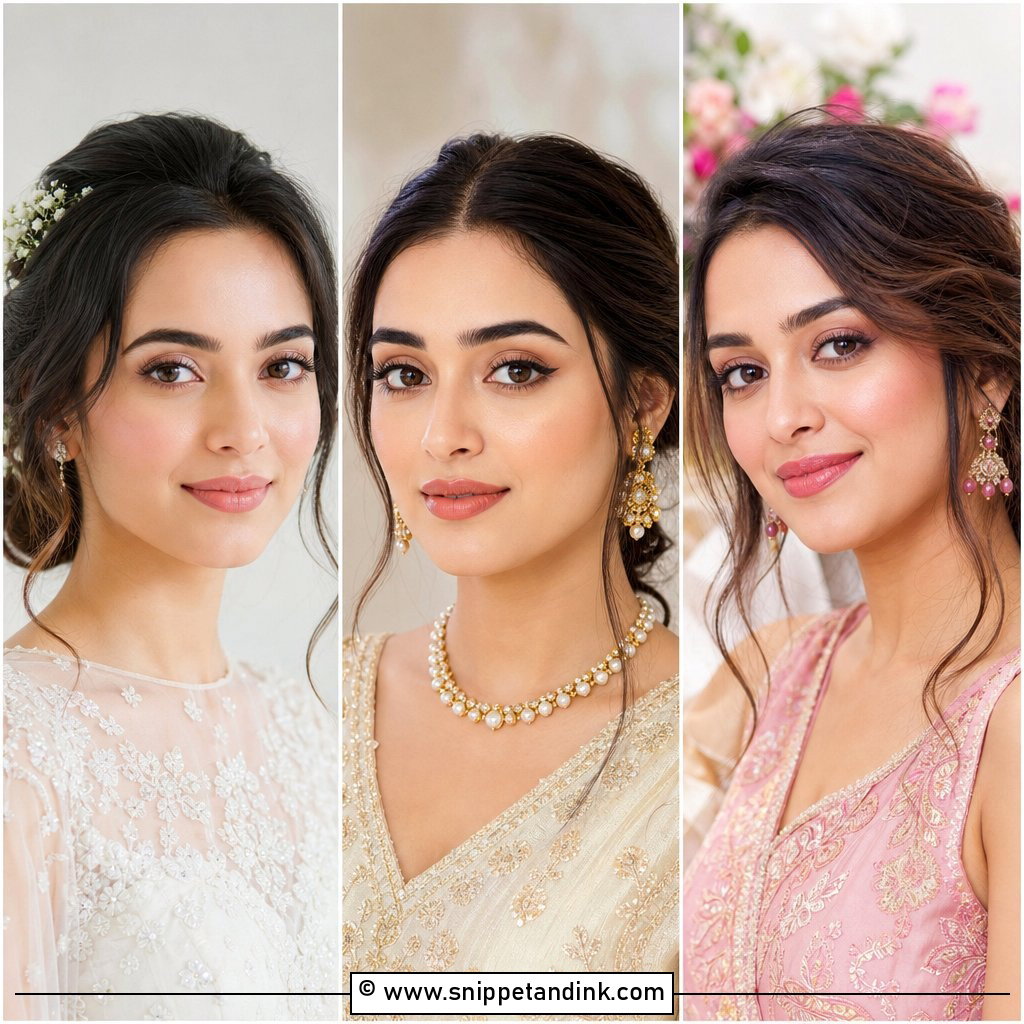
2. Soft Glam Bridal Makeup
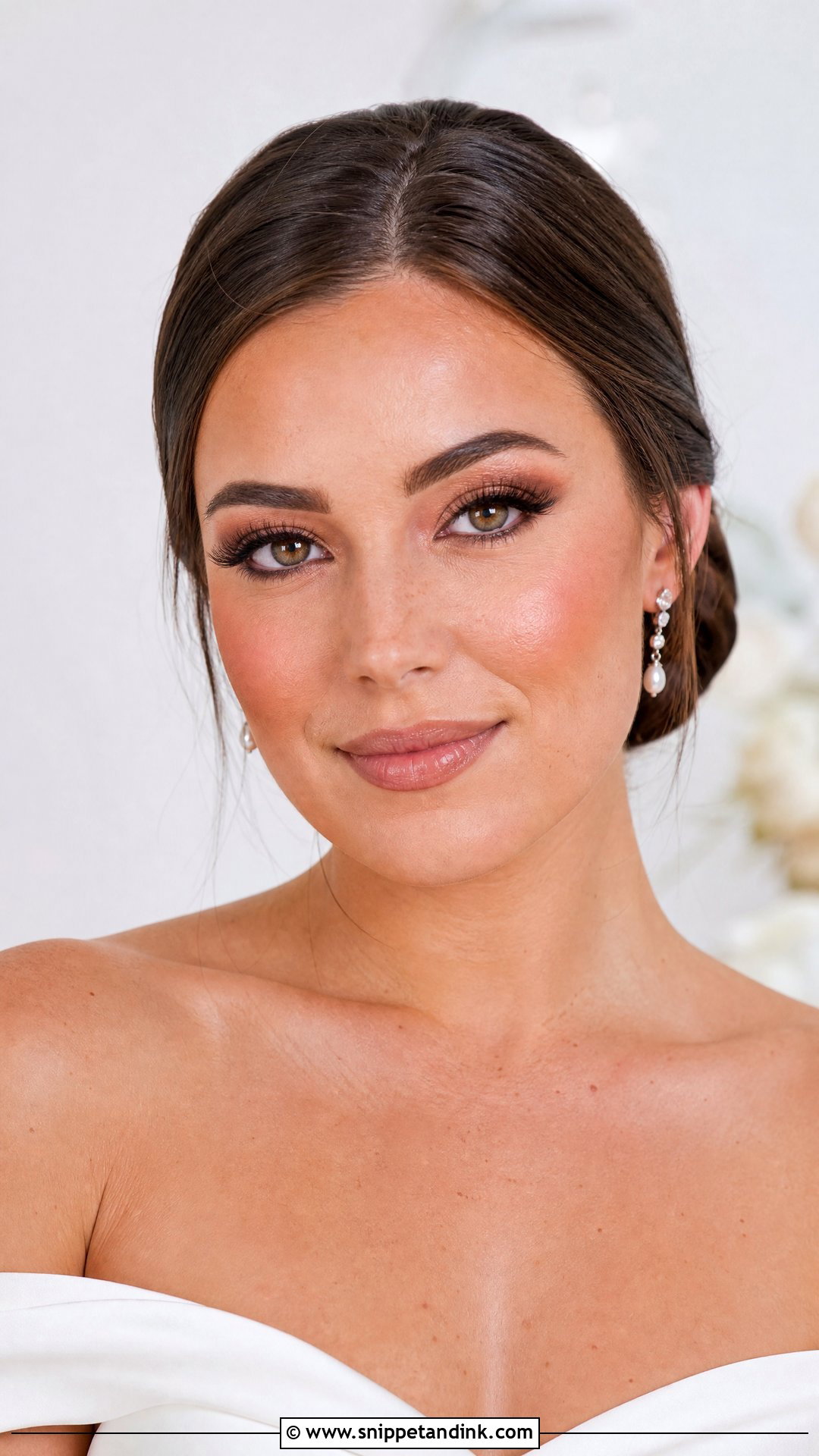
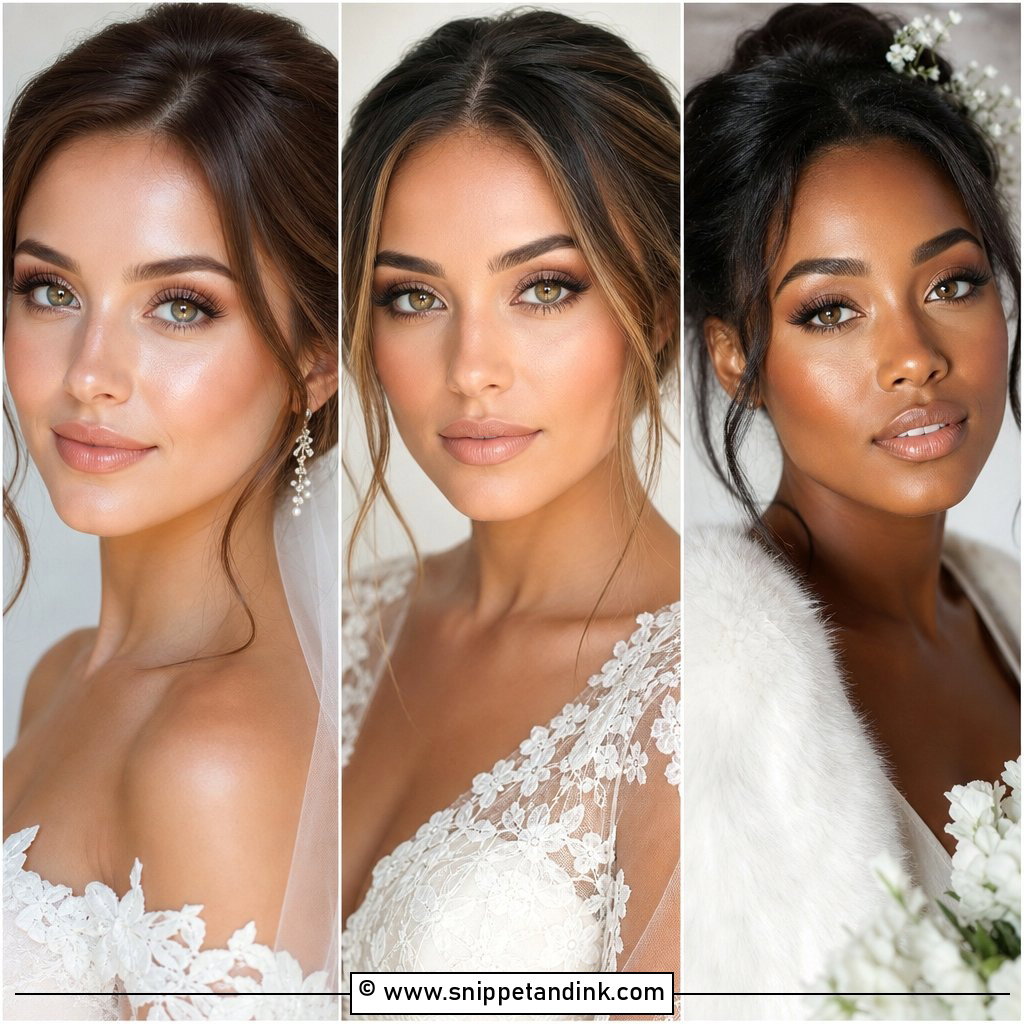
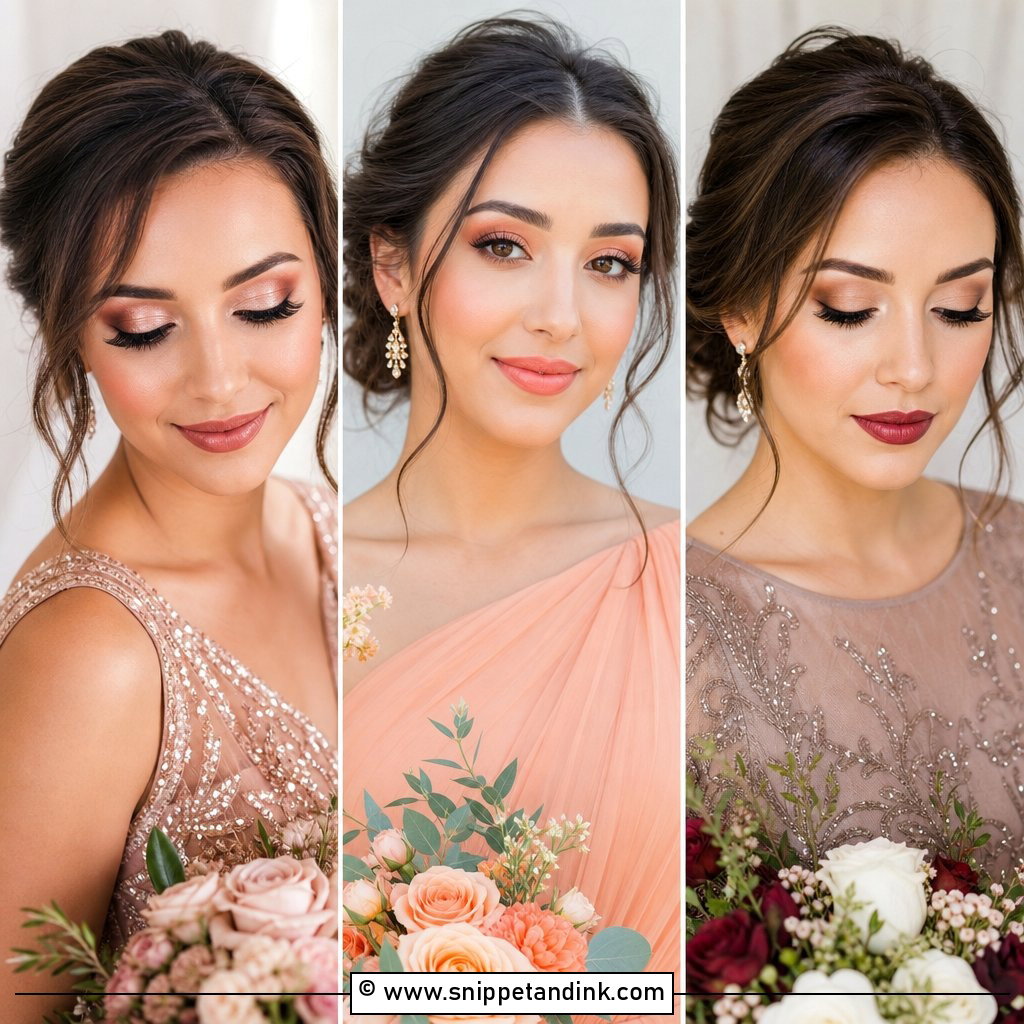
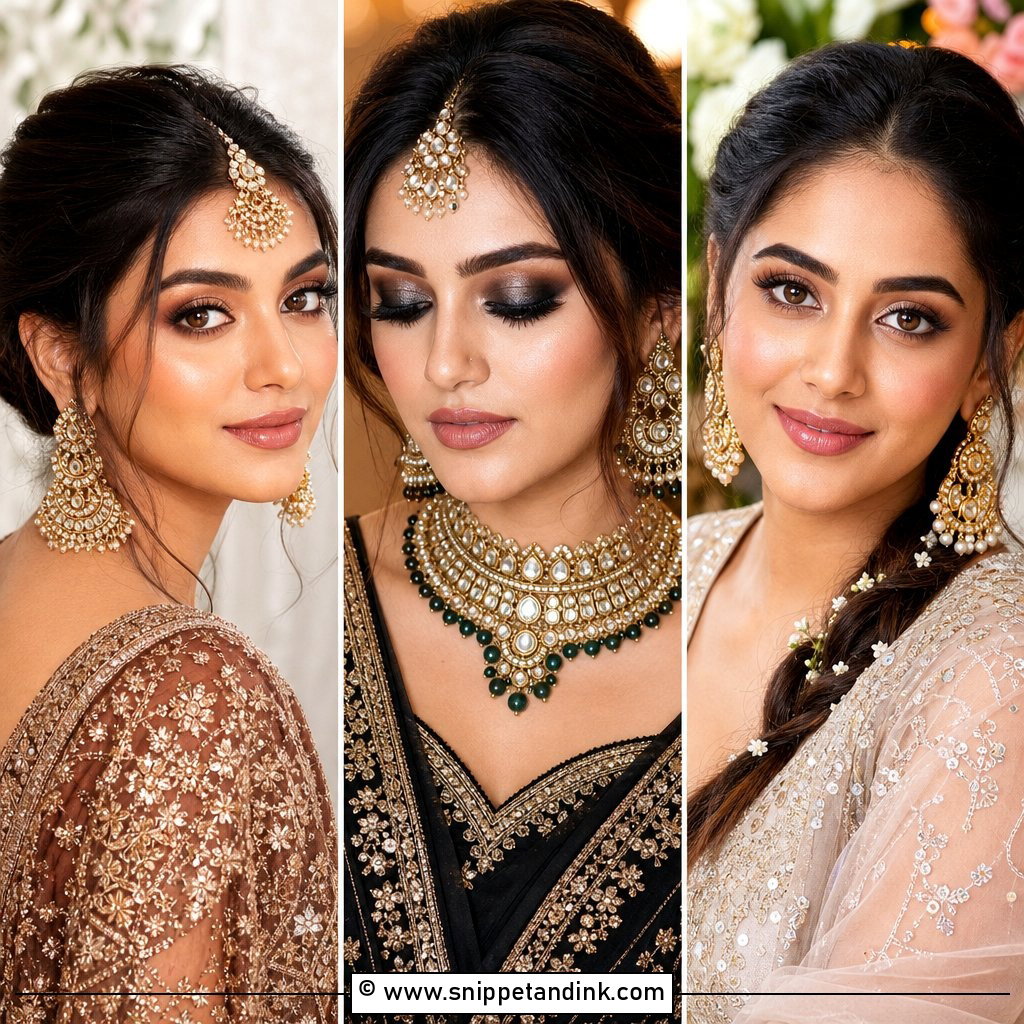
Soft glam is what most of my brides end up choosing, and for good reason. It gives definition without any hard edge, so it holds up both at arm’s length and in a tight portrait. I build it with matte transition shades in the crease, one shimmer on the centre of the lid, blended brown liner and fluffy lashes rather than dramatic strips. Medium coverage with a satin finish keeps the skin from looking flat. Where it usually goes wrong is contour: too much and it reads muddy in daylight, so I keep it to a soft shadow under the cheekbone and finish with a pinky nude lip.
3. Dewy Bridal Makeup
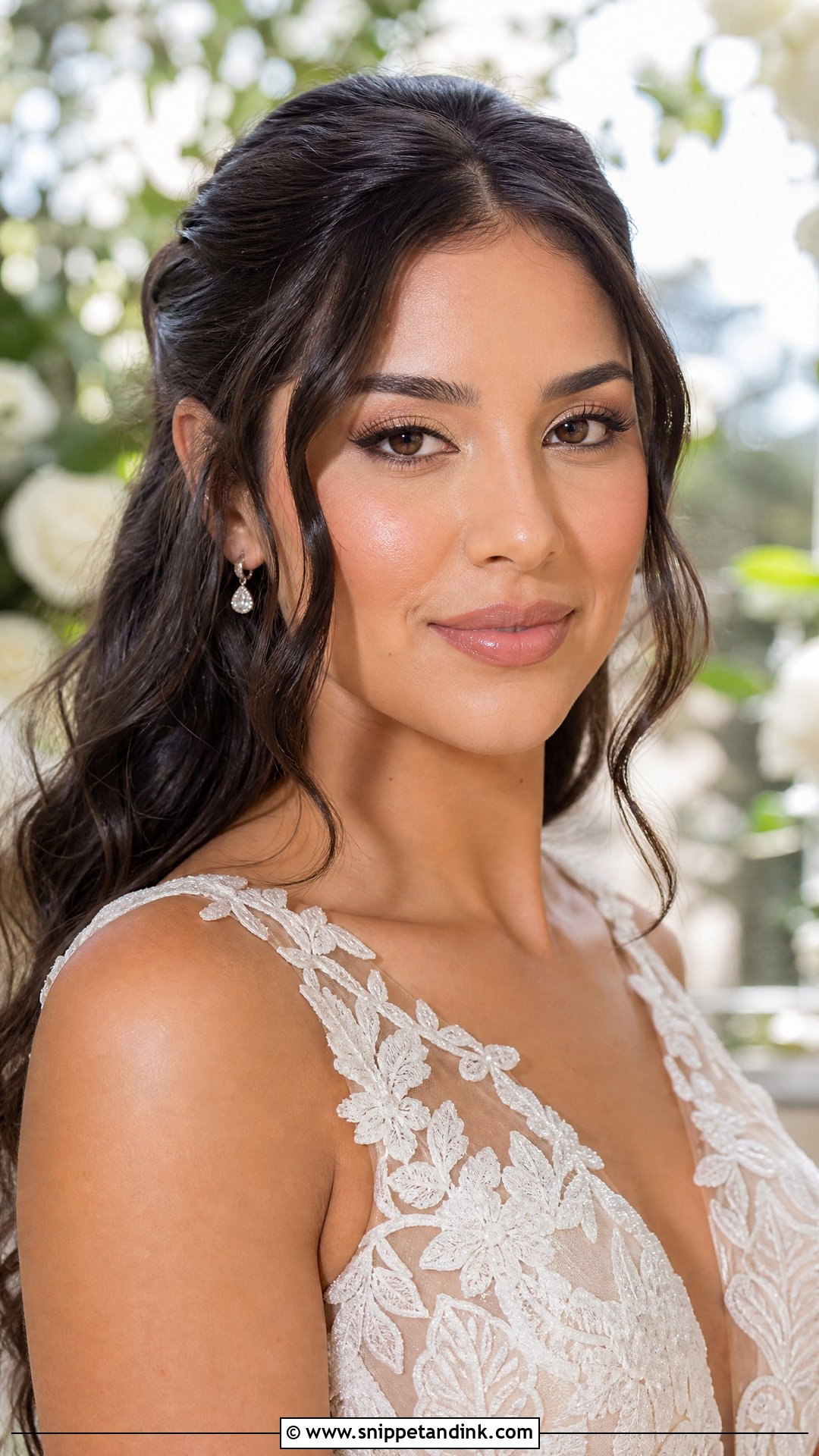
Glow only works when it is placed, not spread. I set the T-zone, under the eyes and the smile lines with a fine powder and leave the tops of the cheeks reflective, because those are the areas that catch light without reading as oil. A radiant primer under a natural-finish foundation, cream blush and a sheer bronzer keep it fresh. On the eyes, a satin taupe or pale rose and wispy lashes; on the lips, a glossy nude pink. I’d steer you away from dewy if you run oily by midday or if the reception is indoors under hot lights. It shines in spring garden and daytime beach ceremonies, where the light is soft.
4. Matte Bridal Makeup
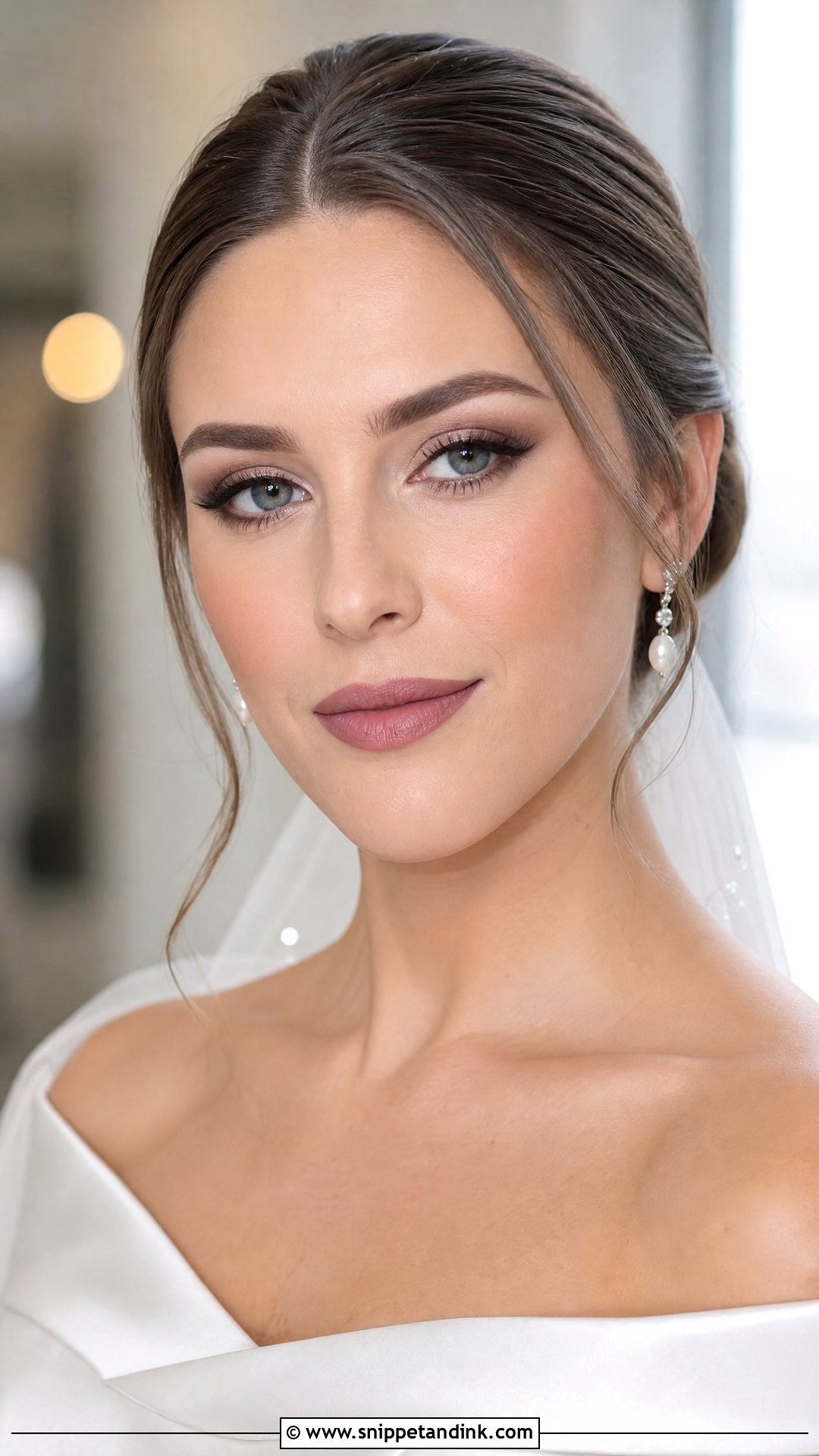
Matte is my answer for heat, long days and heavy dancing. The risk is that it turns dry and cakey by hour six, so the technique matters more than the product. I use a blurring primer, then two thin layers of foundation rather than one thick one, and press a finely milled powder in with a puff instead of sweeping it. Matte browns and soft plums keep the eye defined, and a tightline gives shape without a wing that might smudge. Powder blush stays put longer than cream on oily skin. A satin-matte lipstick, never a fully flat one, keeps the lips from cracking at the centre by the speeches.
5. Romantic Pink Bridal Makeup
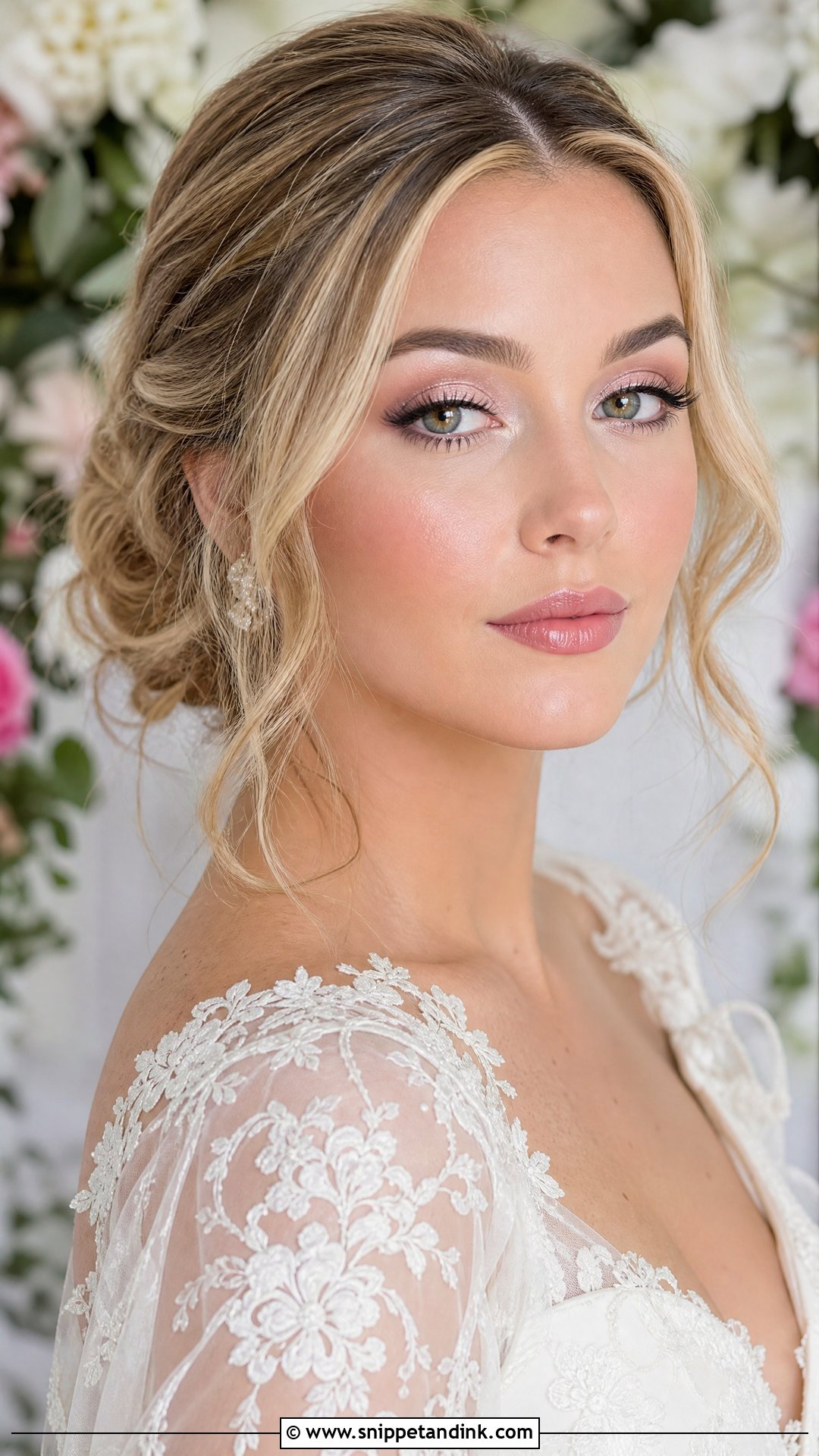
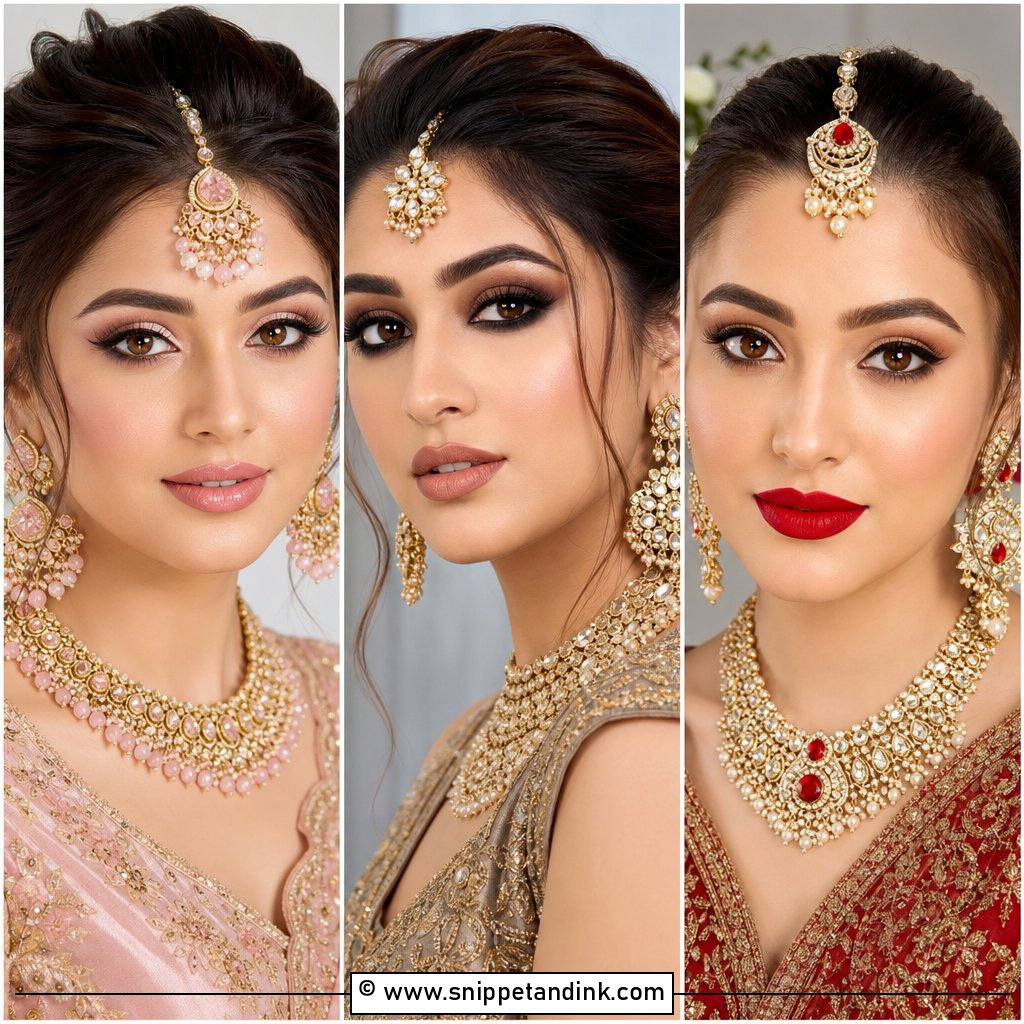
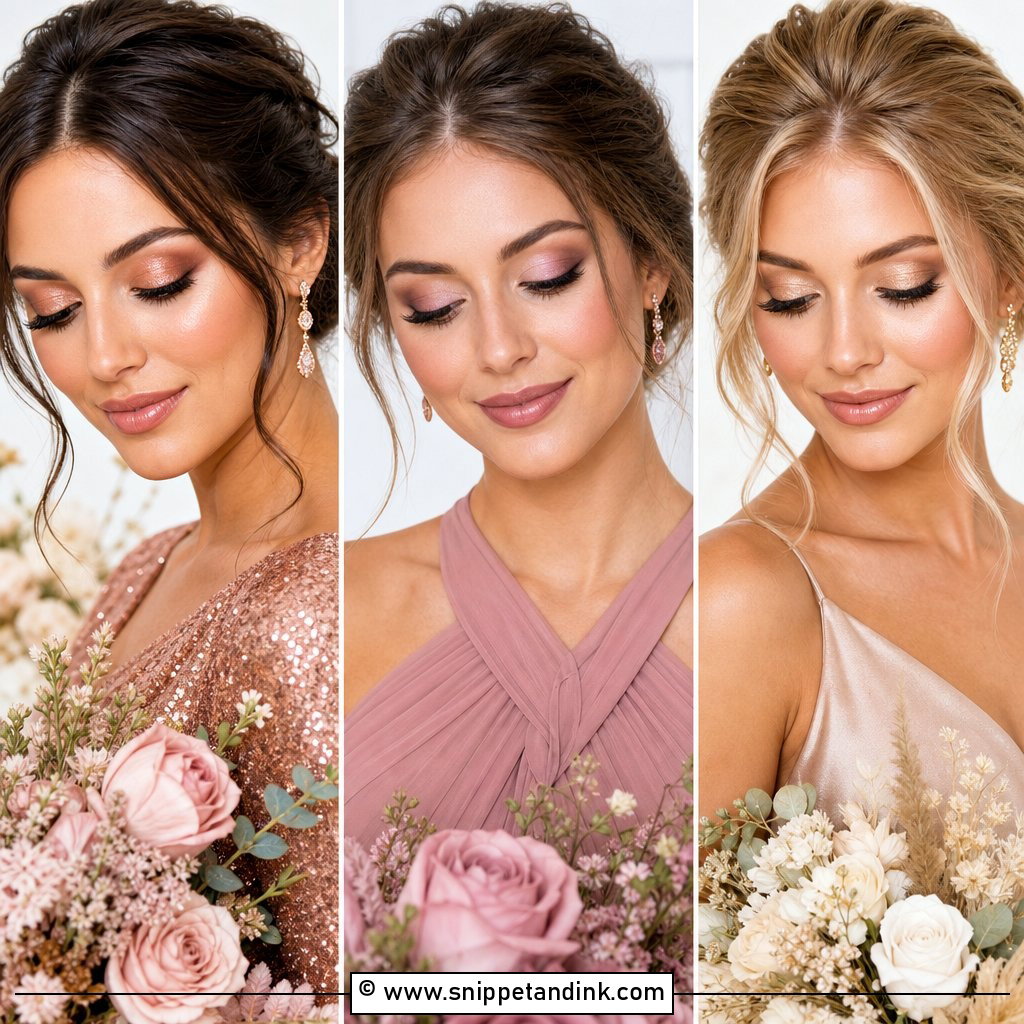
Pink is the colour that most easily goes wrong on camera. A bright pink can look neon in flash, so I stay with dusty rose and champagne on the lid and put a soft brown in the crease to keep the eye from looking puffy. Rosy cream blush sits high on the cheek, and a pearl highlight goes only on the tops of the cheekbones. It sits naturally next to lace and floral details. Brides with a lot of redness around the nose need careful colour correction first, otherwise the pink blush simply adds to it.
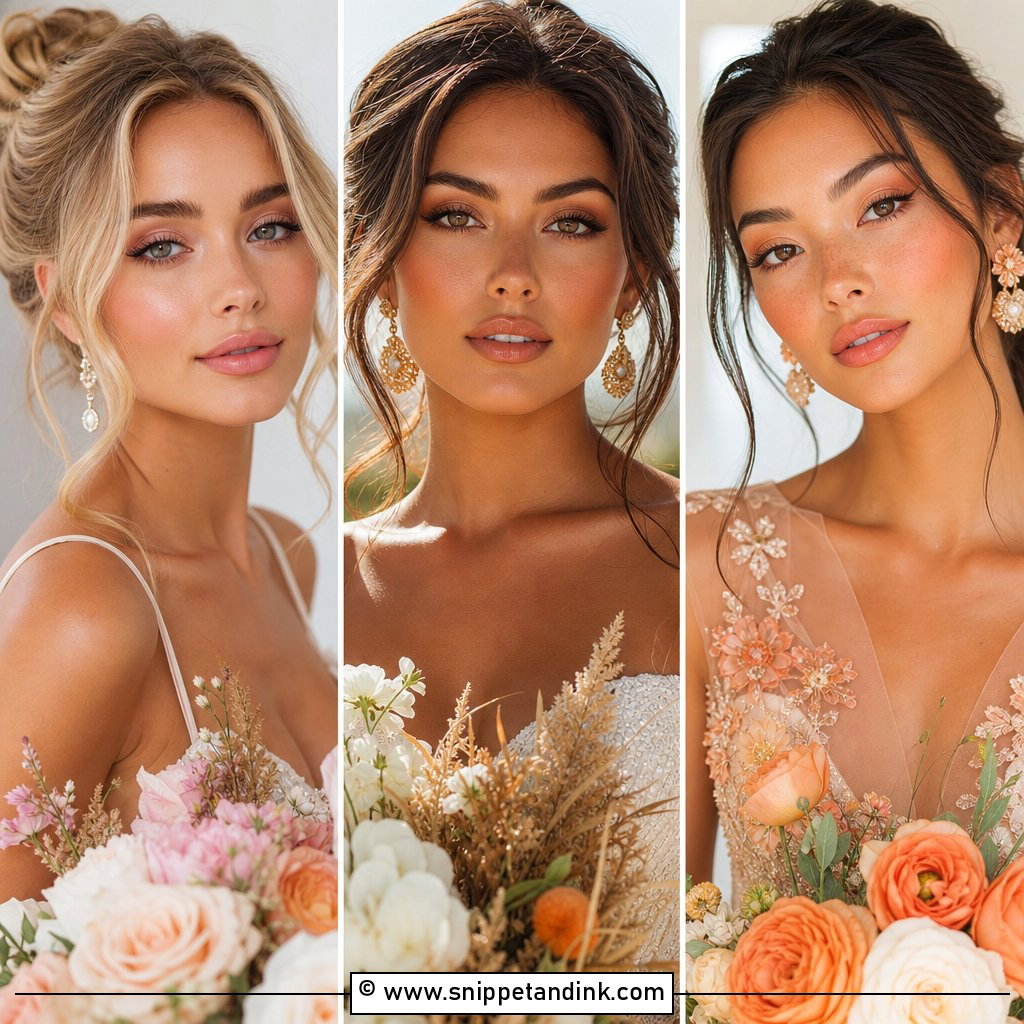
6. Peach Bridal Makeup
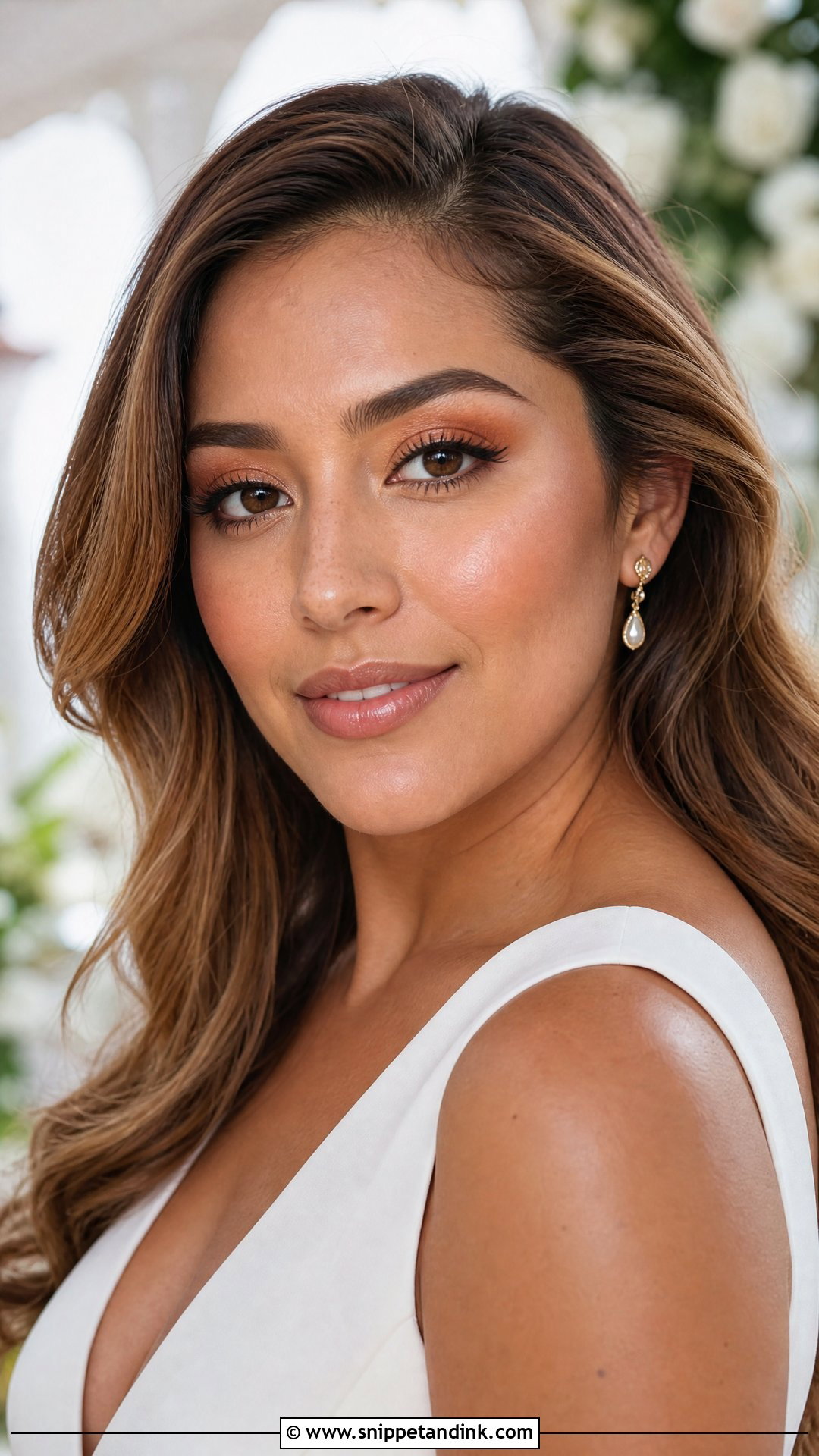
Peach warms a face without the weight of bronze. I blend apricot across the lid with a warm brown in the crease for depth, keep the liner brown, and add a few individual lashes at the outer corners rather than a full strip. A light sweep of bronzer goes on first, then peach blush on top so the two melt together. Coral beige lips finish it. In my experience it flatters warm and olive undertones best; on very cool, pink skin, peach can look slightly orange in photos, so test it under the light you’ll actually have.
7. Bronzed Bridal Makeup
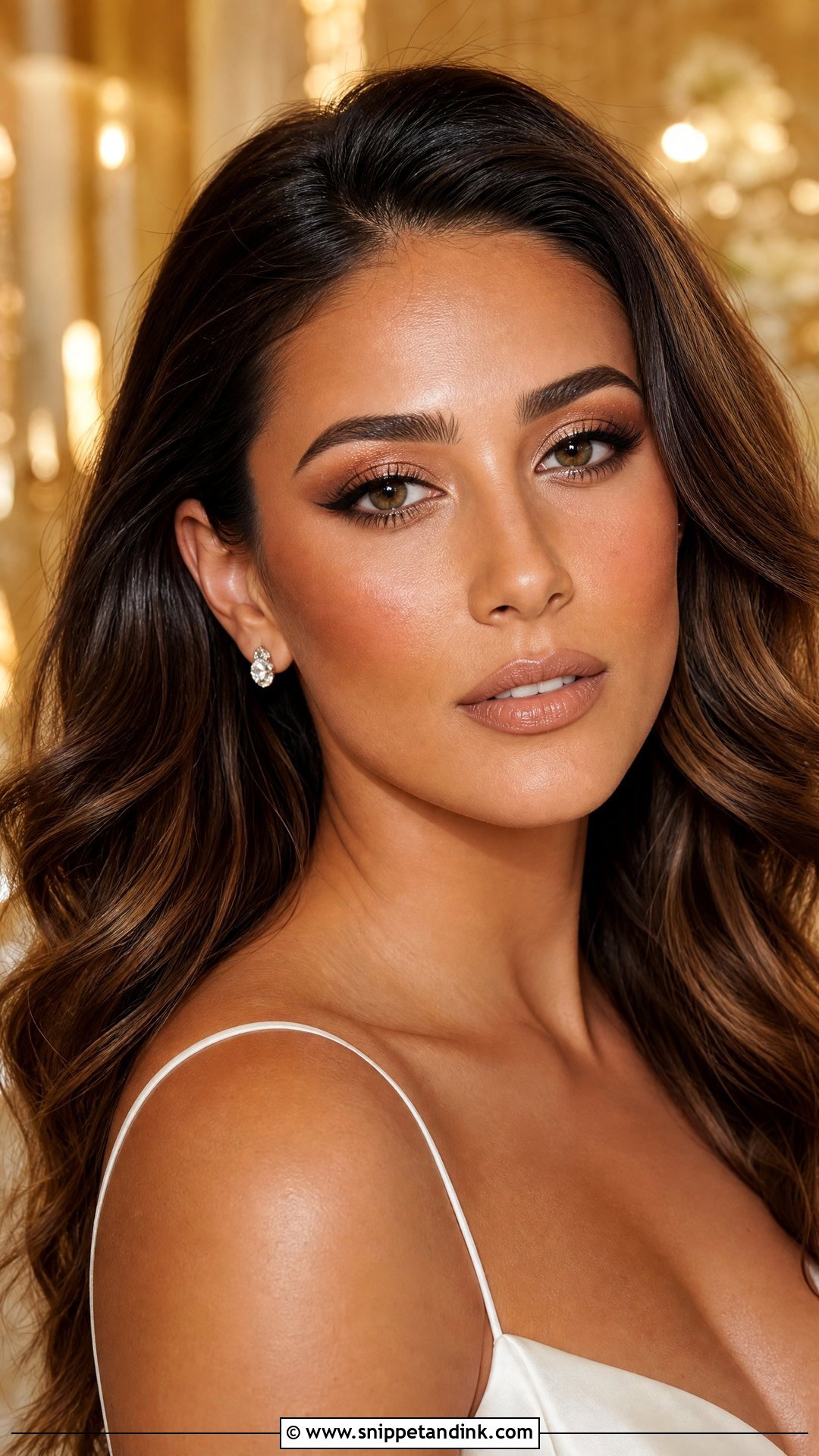
Bronzed bridal makeup is about warmth and shape, and it comes alive in golden-hour portraits. I sculpt with bronzer where the sun would naturally hit, around the forehead, the cheekbones and along the jaw, and blend it down the neck so there is no line at the collar of the dress. Caramel and bronze shadows with a touch of shimmer on the lid, espresso liner and a golden highlight complete it. The common mistake is choosing a bronzer that is too orange for your skin. If you’re fair, I’d use a neutral, slightly grey-toned bronzer instead of a red-orange one.
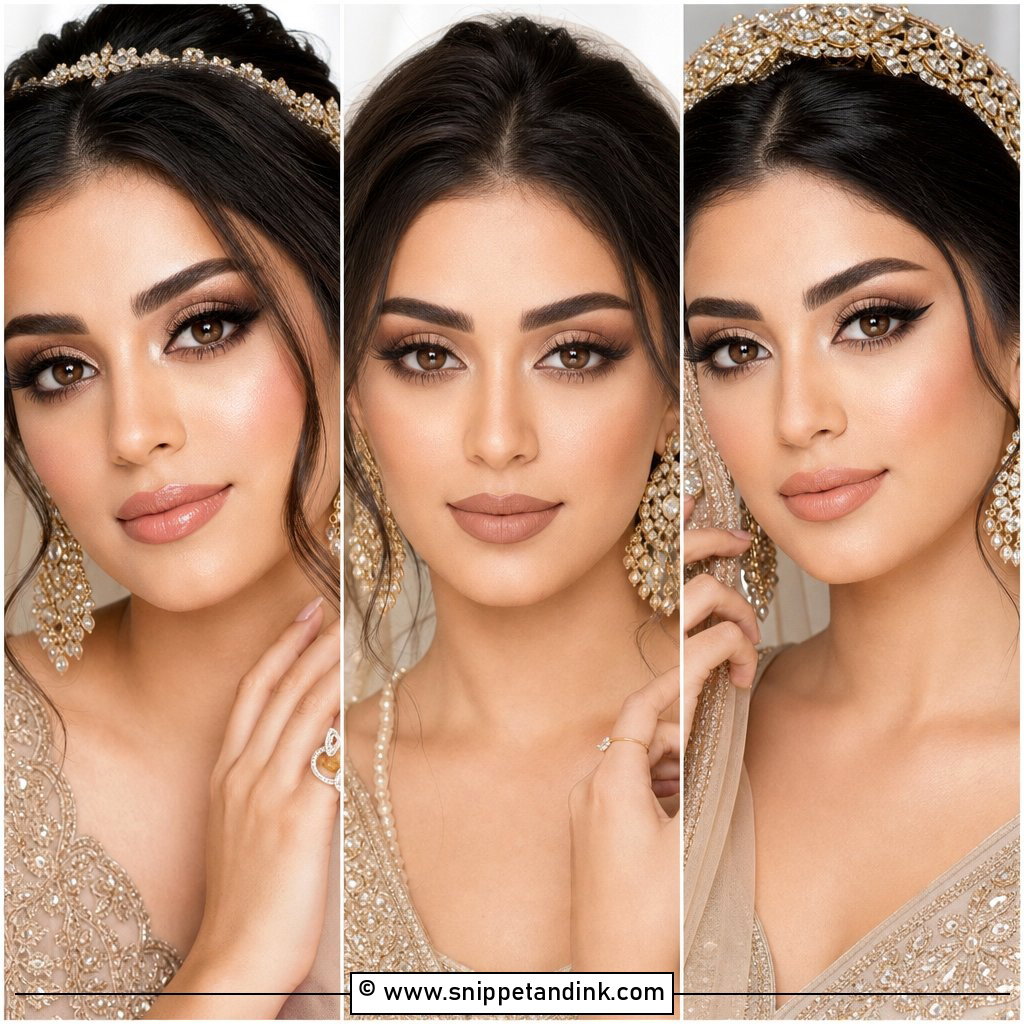
8. Smokey Eye Bridal Makeup
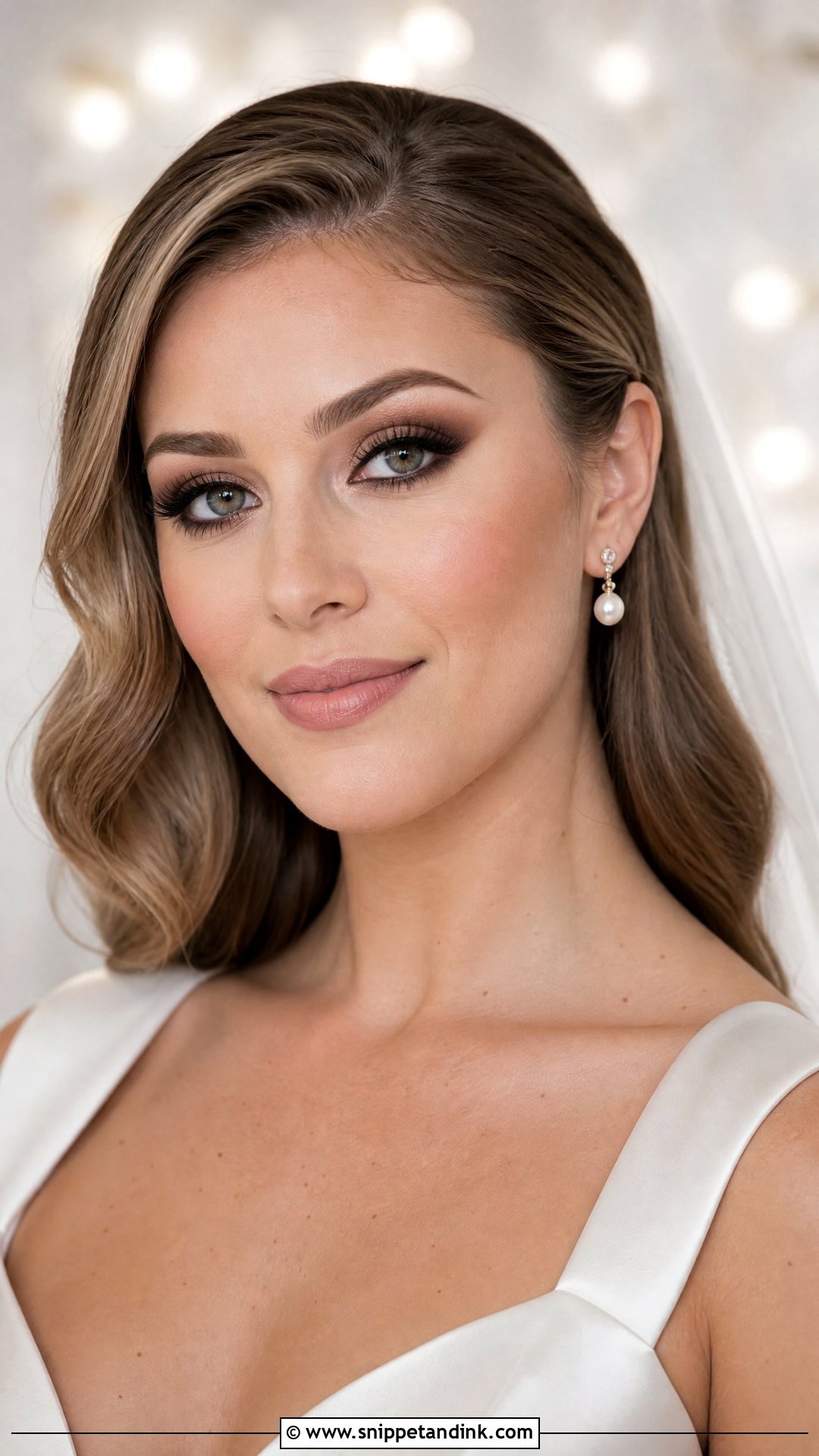
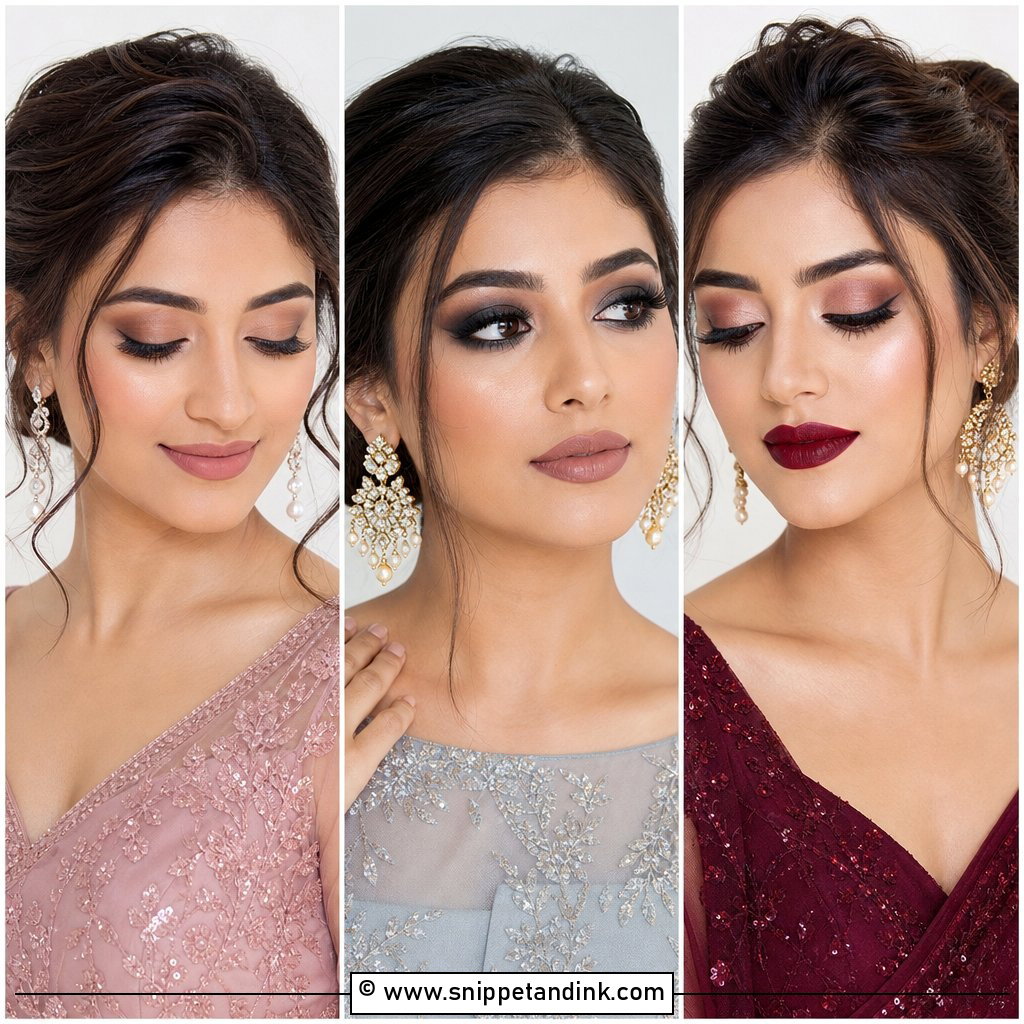
A bridal smoky eye is soft smoke, not black shadow. I choose the colour by eye colour and evening mood: chocolate and bronze for brown eyes, plum for green, charcoal only if you’re used to wearing it. The edges get blended until there is no visible line, and I keep the darkest shade low and toward the outer corner so the eye looks lifted rather than closed. Fallout is the practical problem, so I do the eyes before the foundation on these brides. Keep the cheeks neutral and the lip a muted nude or mauve. I save this for evening ceremonies, where it reads properly in low light.
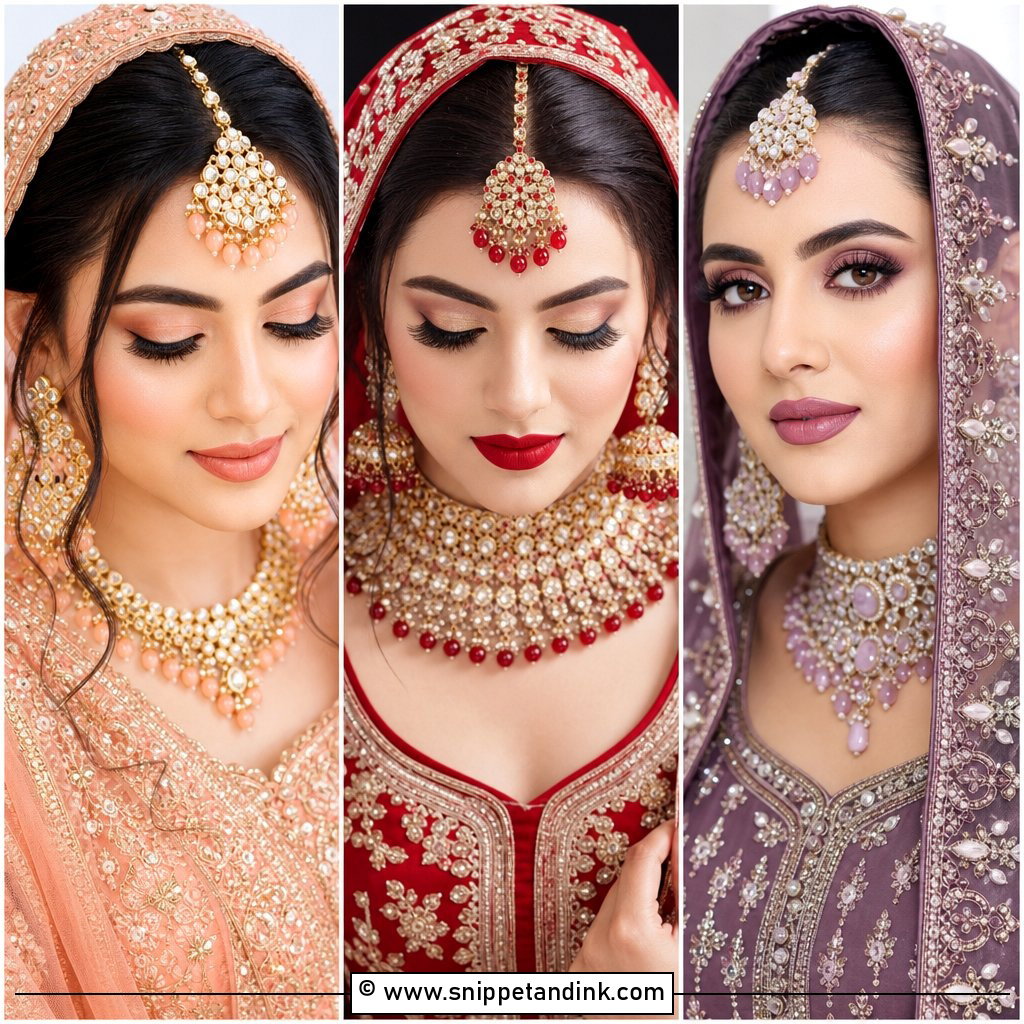
9. Classic Red Lip Bridal Makeup
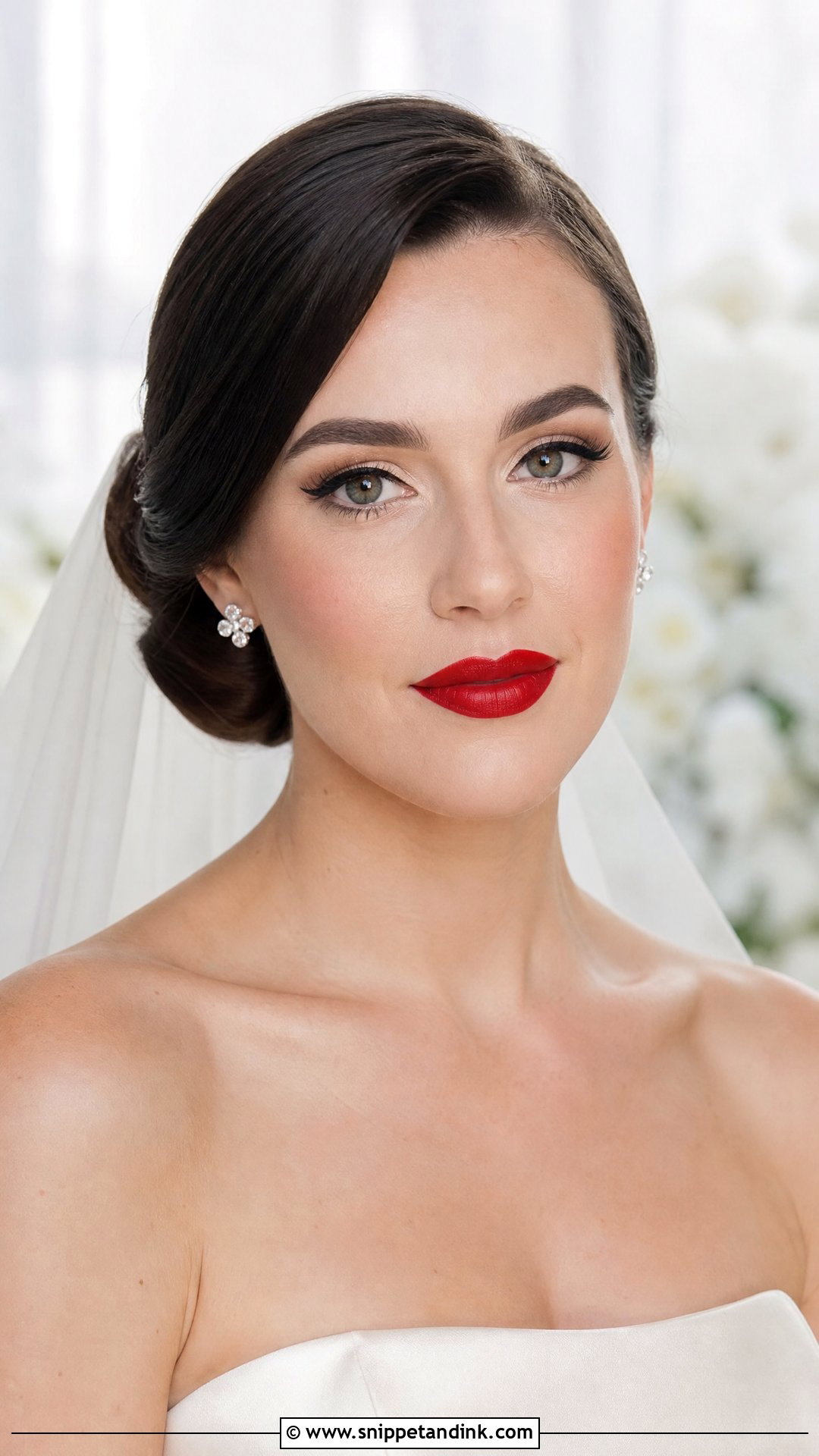
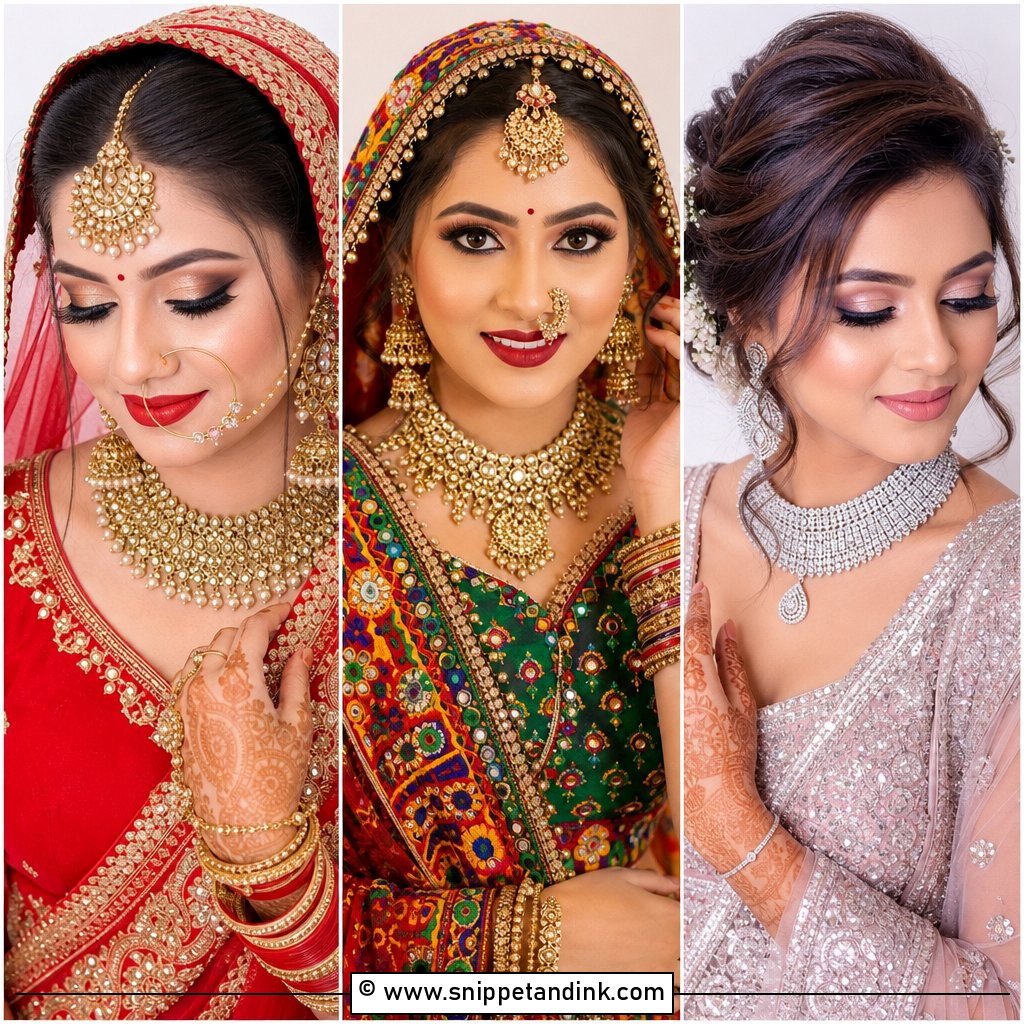
A red lip asks everything else to step back. I keep the eye to ivory and champagne with a soft crease, a fine black or brown wing and good lashes, then make the skin smooth and refined with very little contour. The shade has to suit your undertone: blue reds brighten teeth on cool skin, while brick and true red tend to sit better on warm skin. I always line the whole mouth and blur the liner into the lip, then use a long-wear formula. Expect to reapply after the meal; even the best red fades at the inner lip where you eat and drink.
10. Nude Lip Bridal Makeup
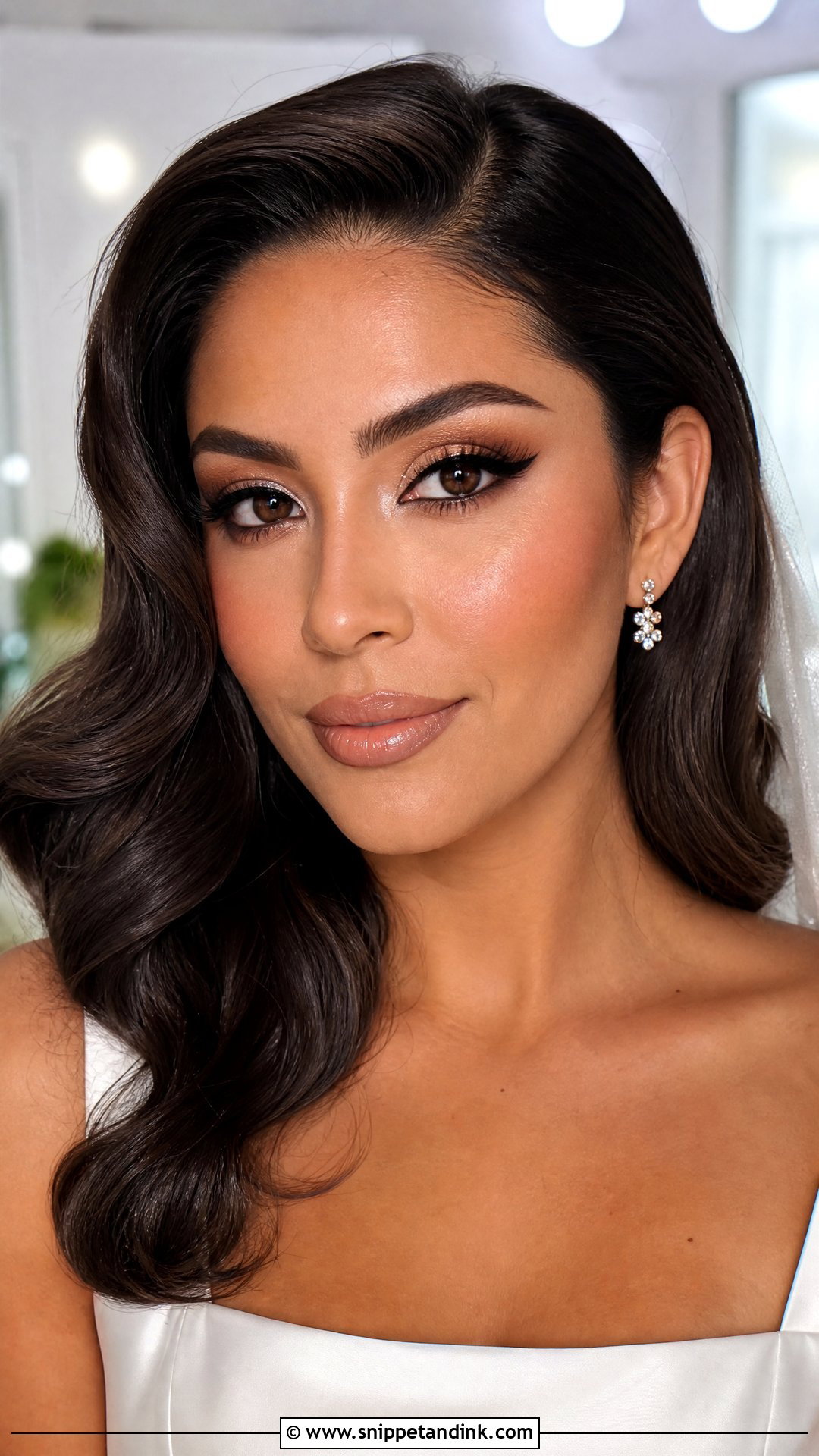
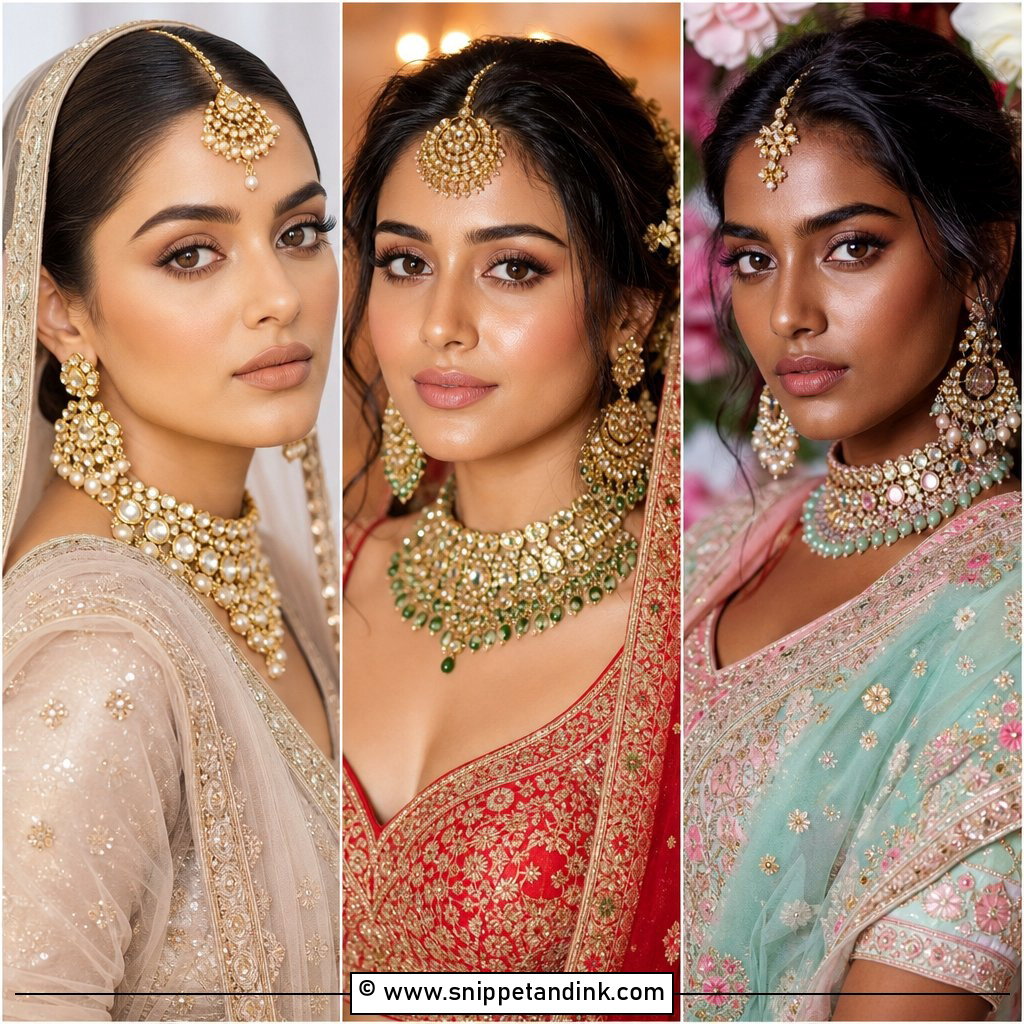
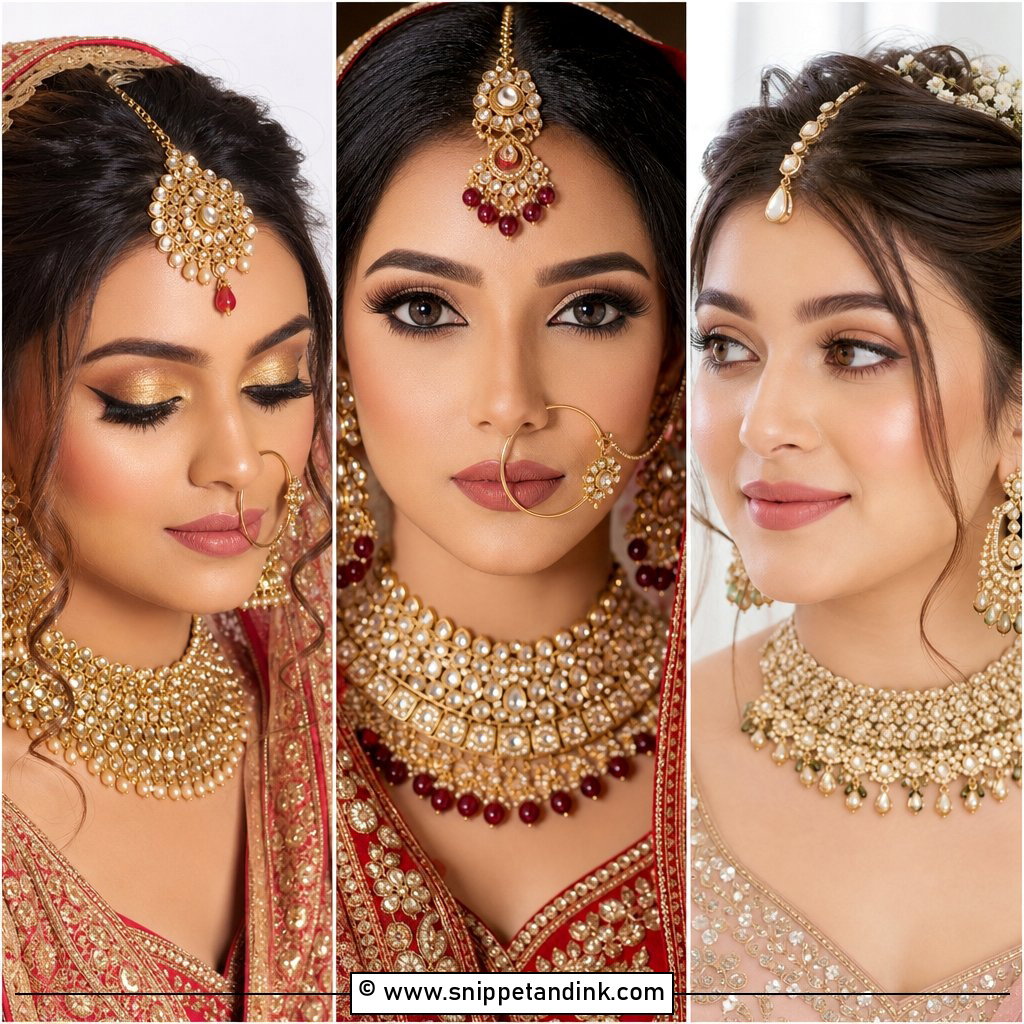
The best nude doesn’t erase your mouth. If the shade is lighter than your natural lip, it can make you look tired in photos, so I usually choose something slightly deeper and warmer. Fair skin generally suits a soft pink nude; medium and olive skin often looks right in rose beige or caramel; deep skin tends to glow in cocoa, warm brown or deep rose. I line slightly deeper than the lipstick to give shape. It pairs with almost any eye in this list, which makes it the safest lip if you’re torn.
11. Brown Eye Bridal Makeup
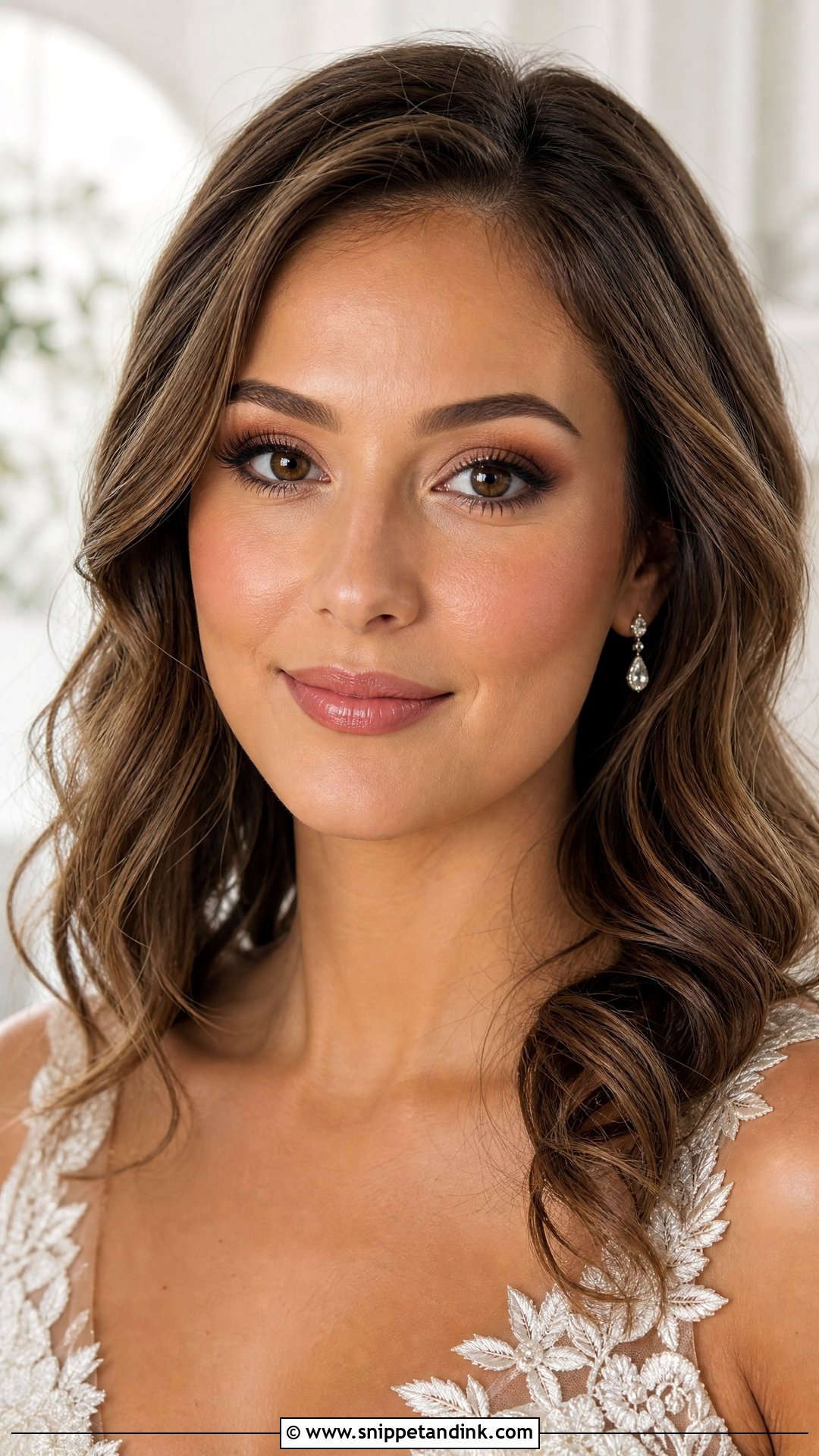
Brown eye bridal makeup gives me the most freedom, because brown eyes take nearly every family of colour well. For a classic version I blend warm brown through the crease, put champagne shimmer on the lid and define the lash line with espresso liner. A plum or olive tone in the outer corner brings out flecks of gold in lighter brown eyes. Individual lashes keep it lifted. Satin skin, a peach or rose blush matched to your undertone and a caramel lip finish it, and it carries from a morning ceremony right into the evening.
12. Blue Eye Bridal Makeup
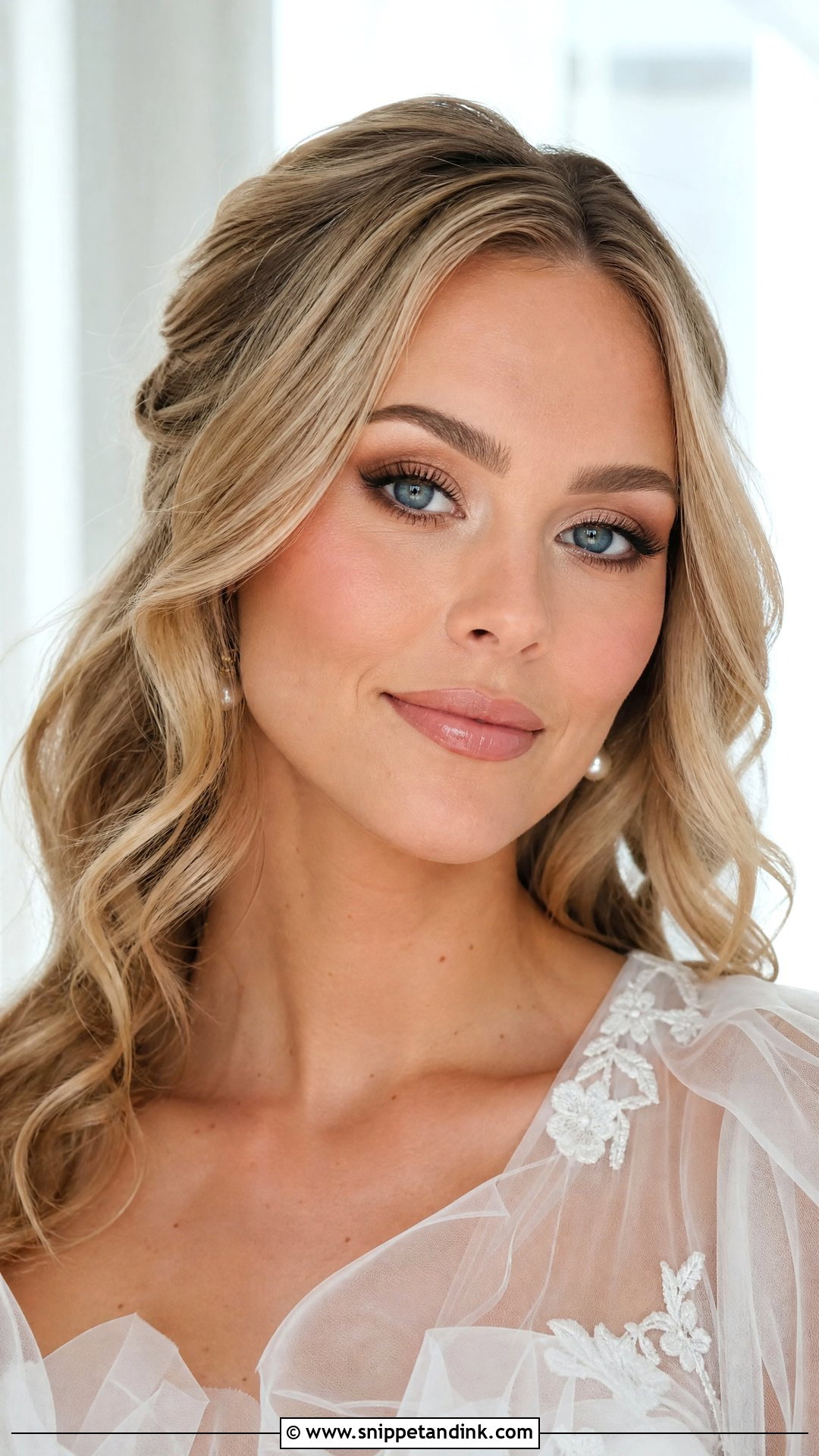
Blue eyes look brightest next to warm, orange-based neutrals: copper, bronze, peach and taupe. That’s colour theory doing the work, so you don’t need much product. I usually prefer brown liner to black for a softer finish, though a thin black wing suits a classic look. Lashes should lift the outer corners. The thing I avoid is blue shadow; it competes with the iris rather than flattering it. Keep the base natural, add a peachy pink blush and a rose lip so nothing fights the eye colour.
13. Green Eye Bridal Makeup
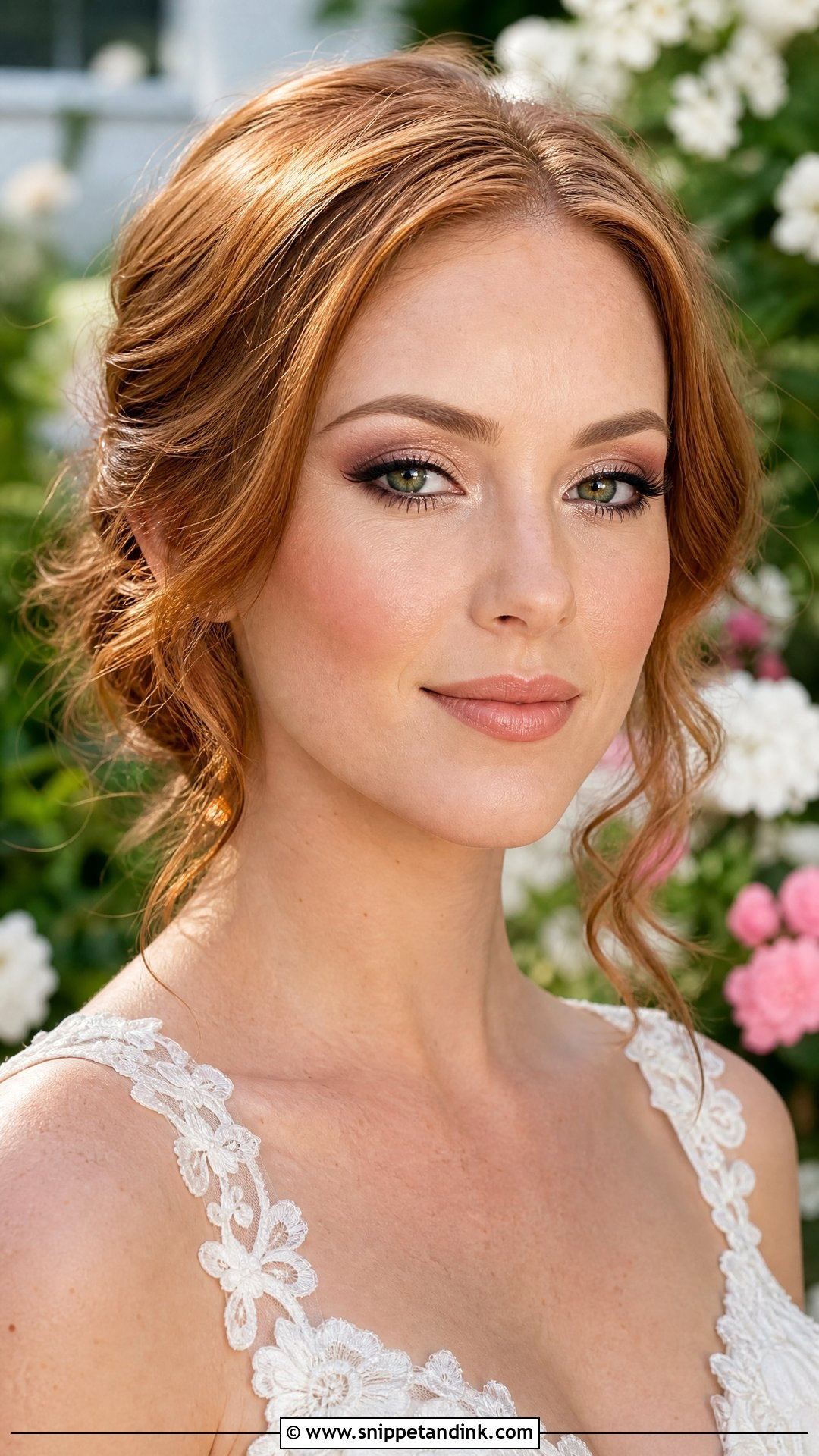
Green eyes come forward against reds and purples, so I reach for mauve in the crease, champagne on the lid and a plum-brown liner. Rose, bronze and warm brown all work as well. I keep the lashes separated rather than thick, because a dense strip throws a shadow over the iris and hides the colour you’re trying to show. Base stays satin with rose or peach blush and a light contour. A rosy nude or soft berry lip balances the plum on the eye, and it feels right at home at a garden or autumn wedding.
14. Hooded Eye Bridal Makeup
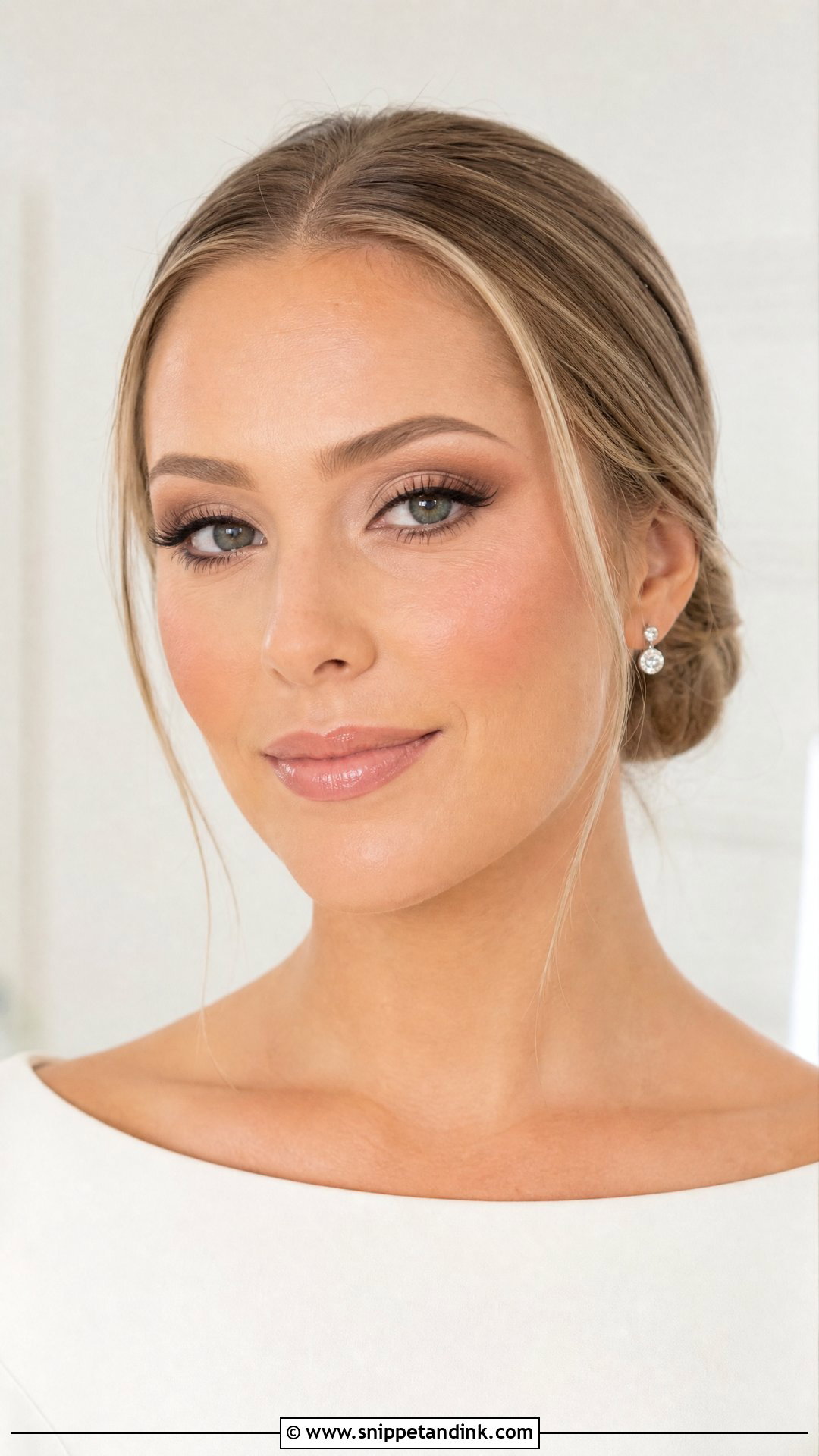
With hooded eyes the placement matters more than the colour. I ask the bride to look straight ahead with her eyes open and map the crease shade slightly above her natural crease, so it’s visible once the lid folds. Shimmer only goes on the small part of the lid that shows. Tightlining usually works better than a thick wing, which tends to disappear or stamp onto the upper lid. Individual lashes at the outer corner open the eye without weight. I also use a waterproof base, because hooded lids transfer shadow more than other shapes.
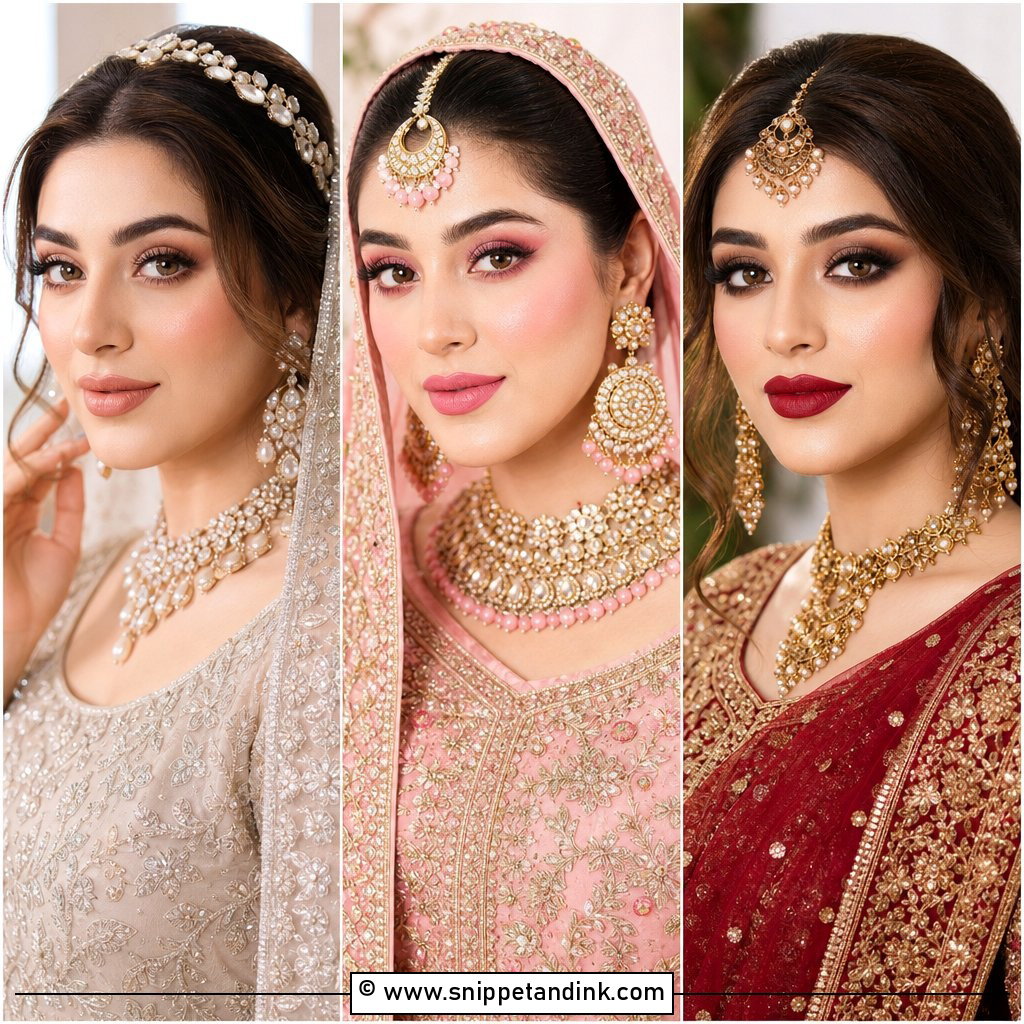
15. Monolid Bridal Makeup
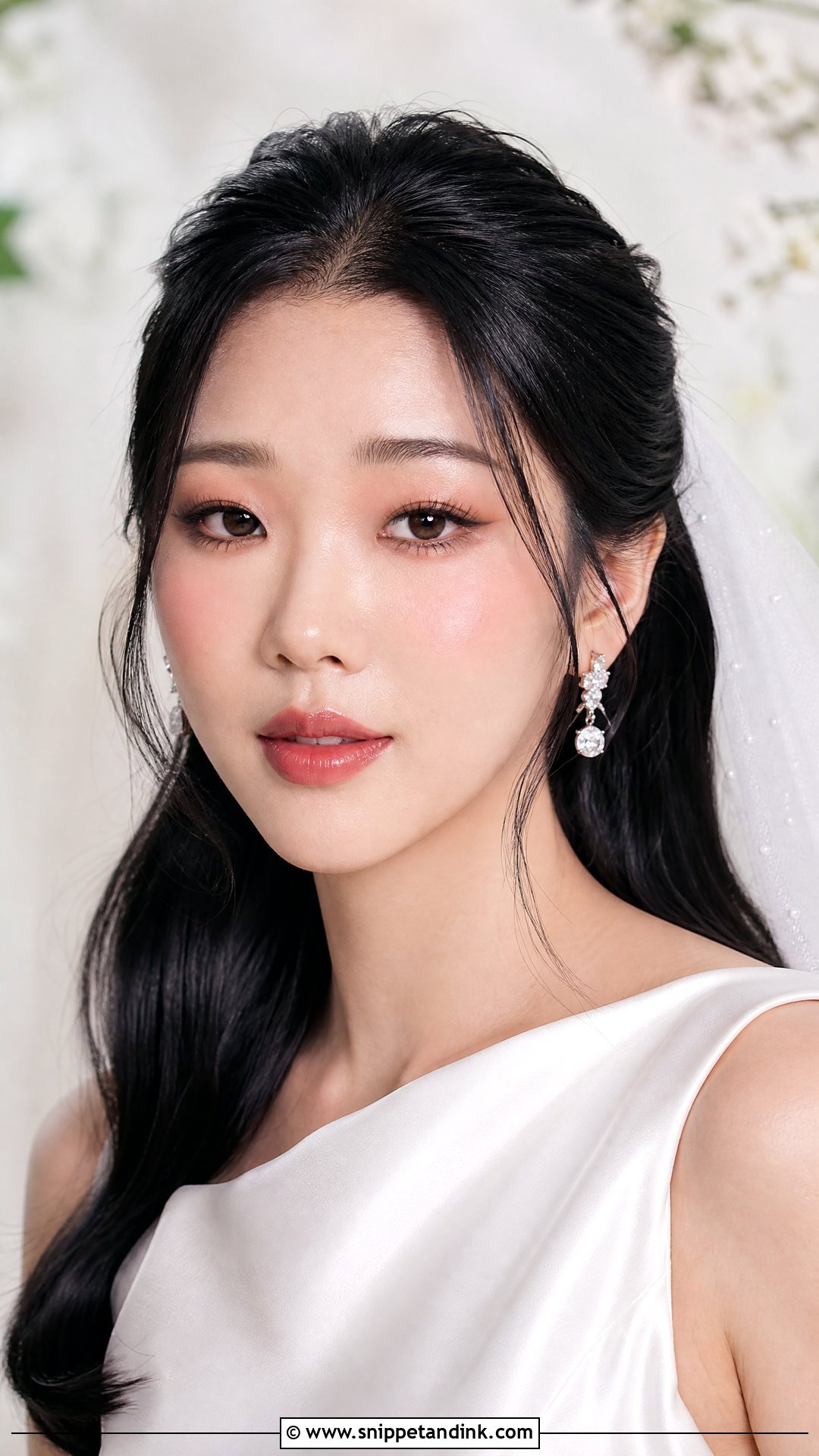
On a monolid I work in a gradient rather than a crease: lighter near the brow, deepening toward the lash line in taupe, rose brown or soft plum. I always check the eye open and looking straight ahead, because a shade that looks right closed may vanish once the lid relaxes. A thin liner that thickens toward the outer corner gives shape, and waterproof formulas earn their place here because there is more contact between lid and brow bone. Curled lashes or light clusters add definition without hiding the lid space. Luminous skin, blush set high and a glossy pink lip keep it fresh.
16. Black Bride Makeup
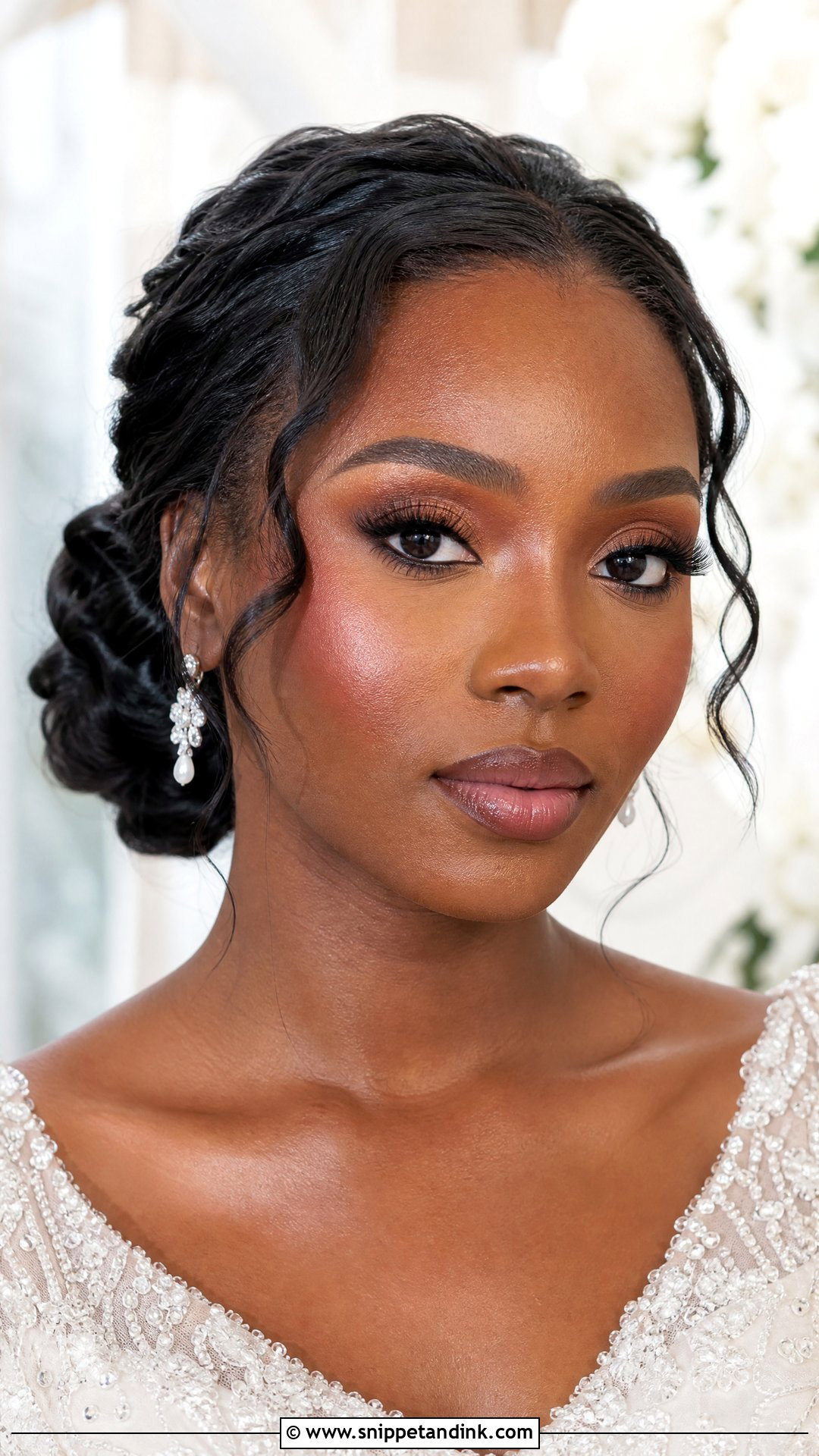
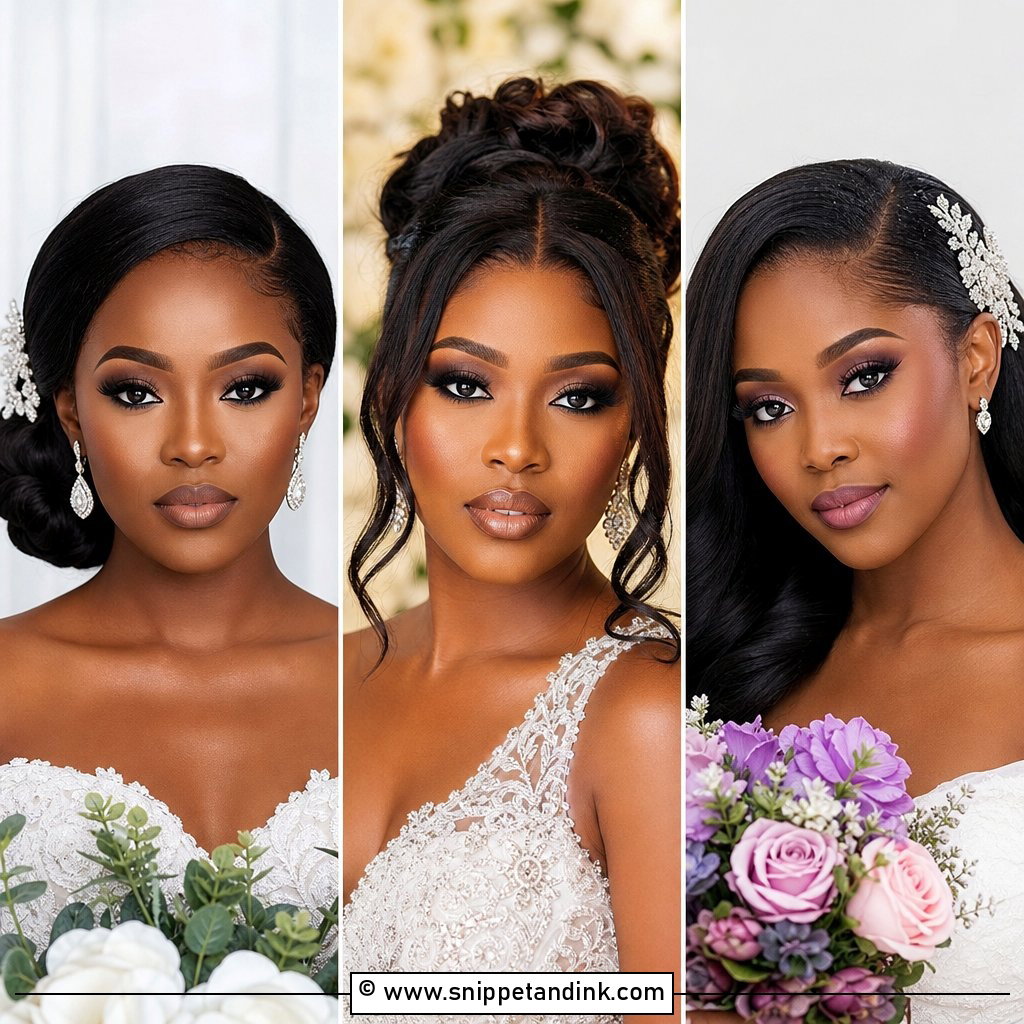
On deep skin the first job is matching the base to face and neck, because a foundation that pulls grey or ashy flattens everything above it. I usually blend two shades to get the undertone right and choose a warm contour rather than a cool one. Copper, golden bronze, plum and chocolate look rich on the lids, with espresso liner and full but soft lashes. For cheeks, berry, terracotta, coral, or deep rose blush work depending on undertone. Gold or bronze highlight avoids the ashy cast that silver-based ones leave. Lips can go brown nude, berry or a classic red.
17. Latina Bridal Makeup
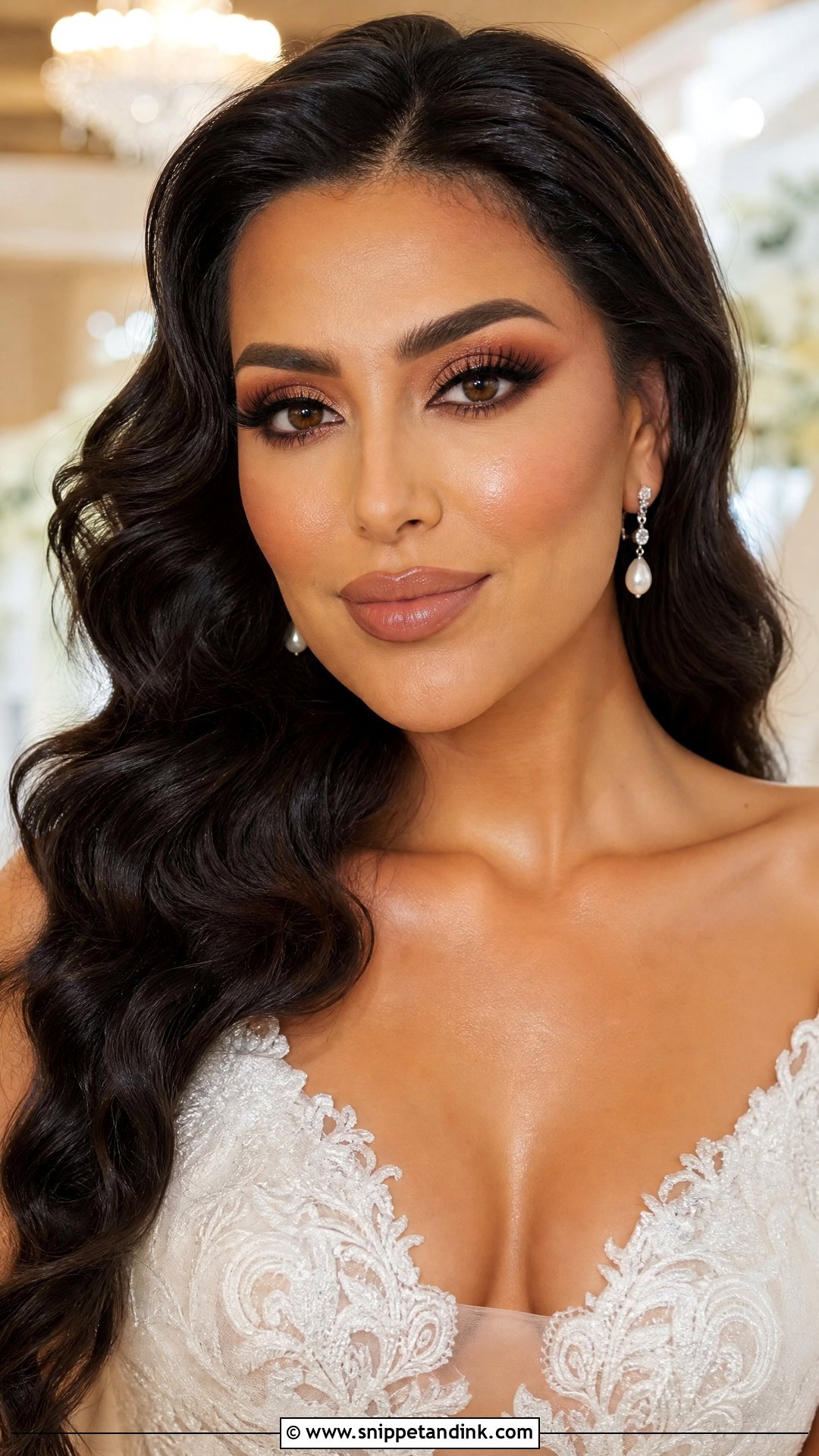
Many of the Latina brides I’ve worked with love warmth: satin skin, bronzed cheeks and a golden highlight that catches every light. I build the eye with warm browns, champagne or copper, and a softly blended wing, which suits brown, hazel and green eyes. Brows get structure but not a hard outline. The lip is where I advise restraint if the eye is full, so nude rose or caramel rather than a dark shade. It holds its own in a formal ballroom and outdoors at a hacienda-style venue.
18. Asian Bridal Makeup
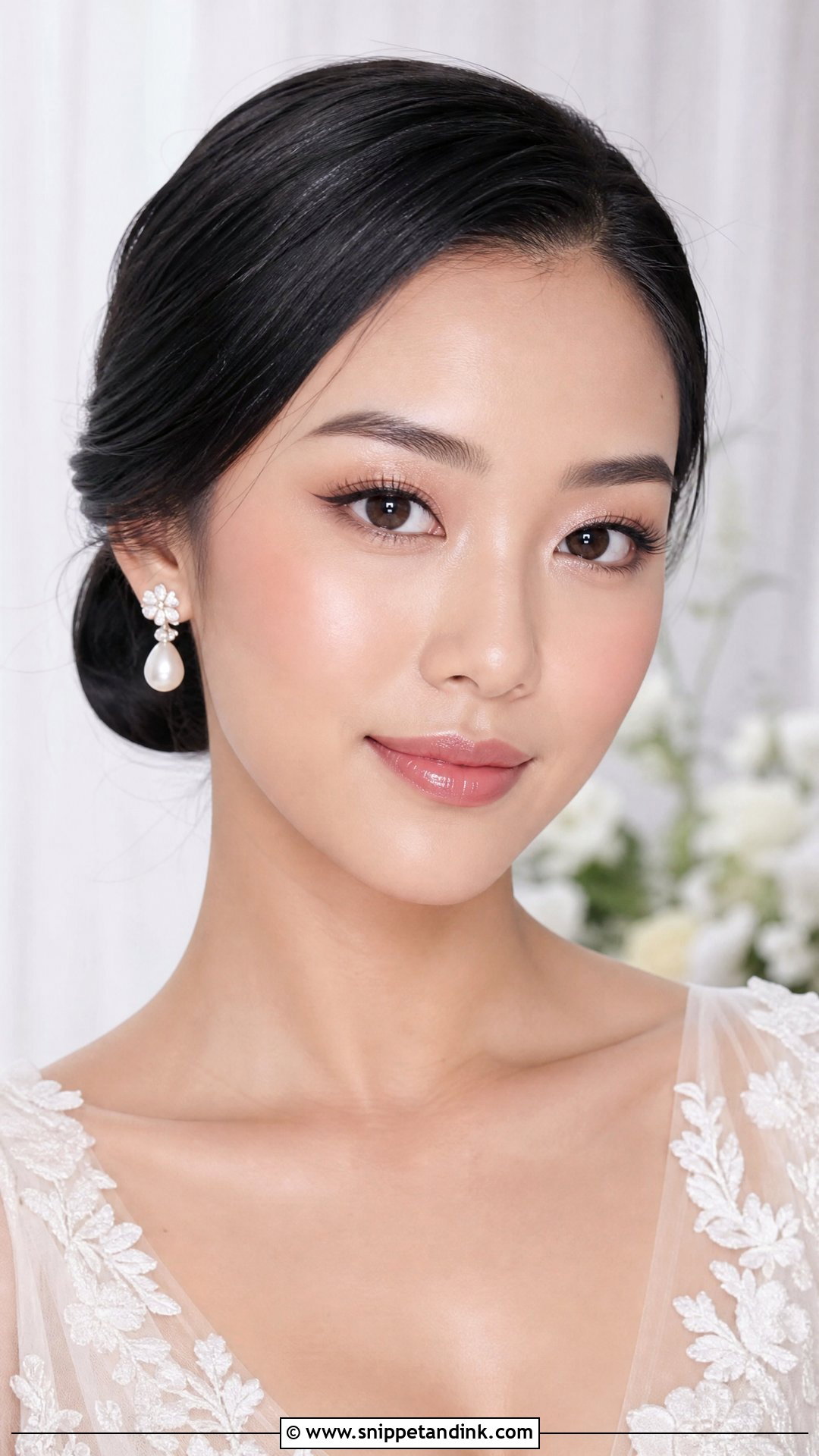
There is no single Asian bridal look, but the brides I see most often want clear, real-looking skin and eyes that look lifted. I keep the base light and spot-conceal only where needed, so skin texture still reads as skin. Rose brown, champagne or peach on the lid adds dimension, and the liner follows the natural eye shape with a small lift at the outer corner. On a lid with little visible space, I trim lash clusters so they don’t sit heavily. Blush goes high on the cheeks in coral or soft pink, and a glossy rose or blurred berry lip finishes it.
19. Mature Bride Makeup
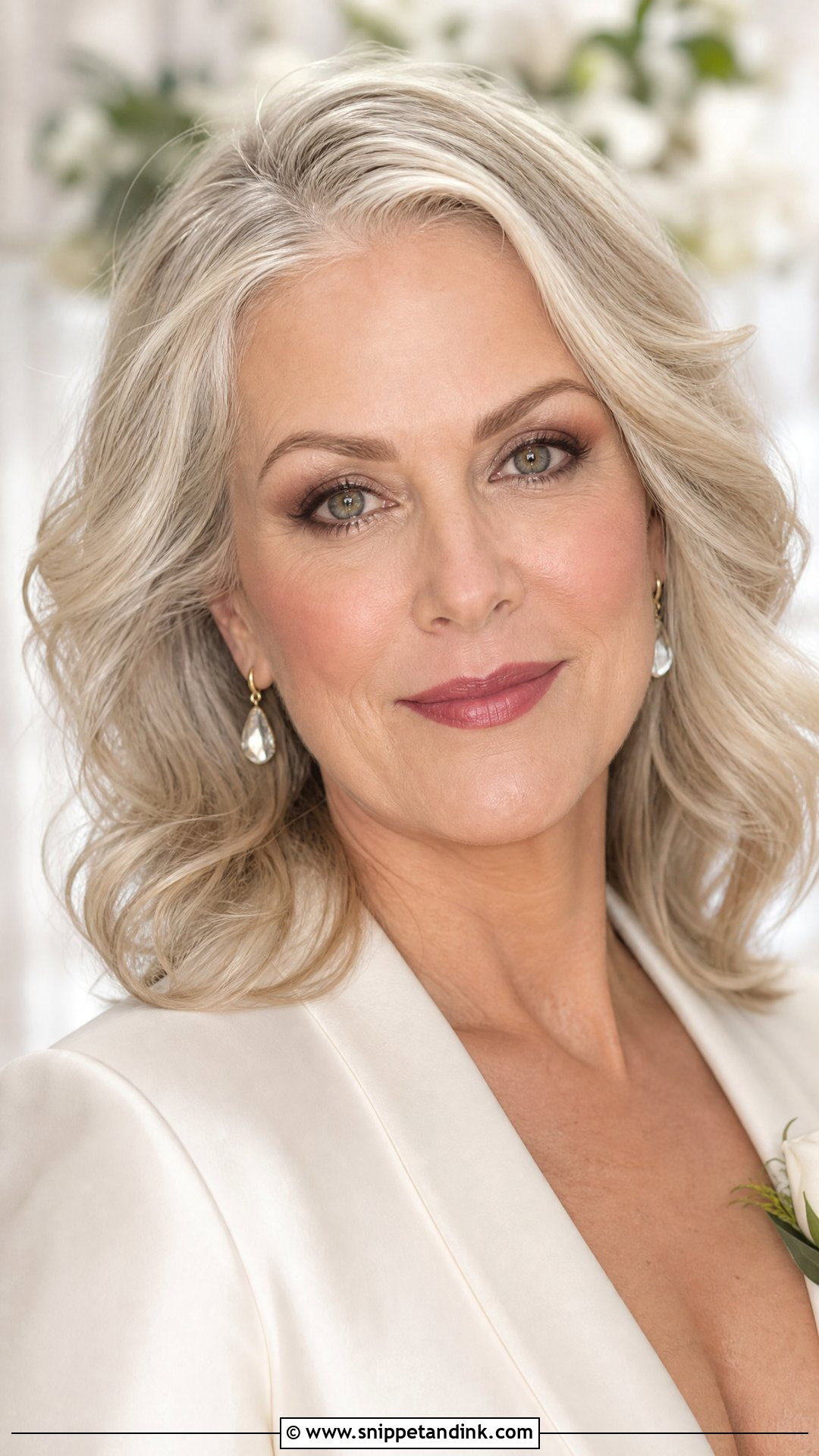
Mature bride makeup depends more on prep than on any product. I hydrate generously, wait, and then use thin layers so nothing settles into fine lines. Cream blush brings life back to the cheeks far better than powder, and soft contour adds structure without dragging the face down. On the eyes, I avoid heavy shimmer on textured lids and work in satin or matte taupe, rose and brown. Liner stays soft and close to the lashes. Brows are the quiet lift: filled with fine strokes, they open the whole face. Finish with a creamy rose or berry lip.
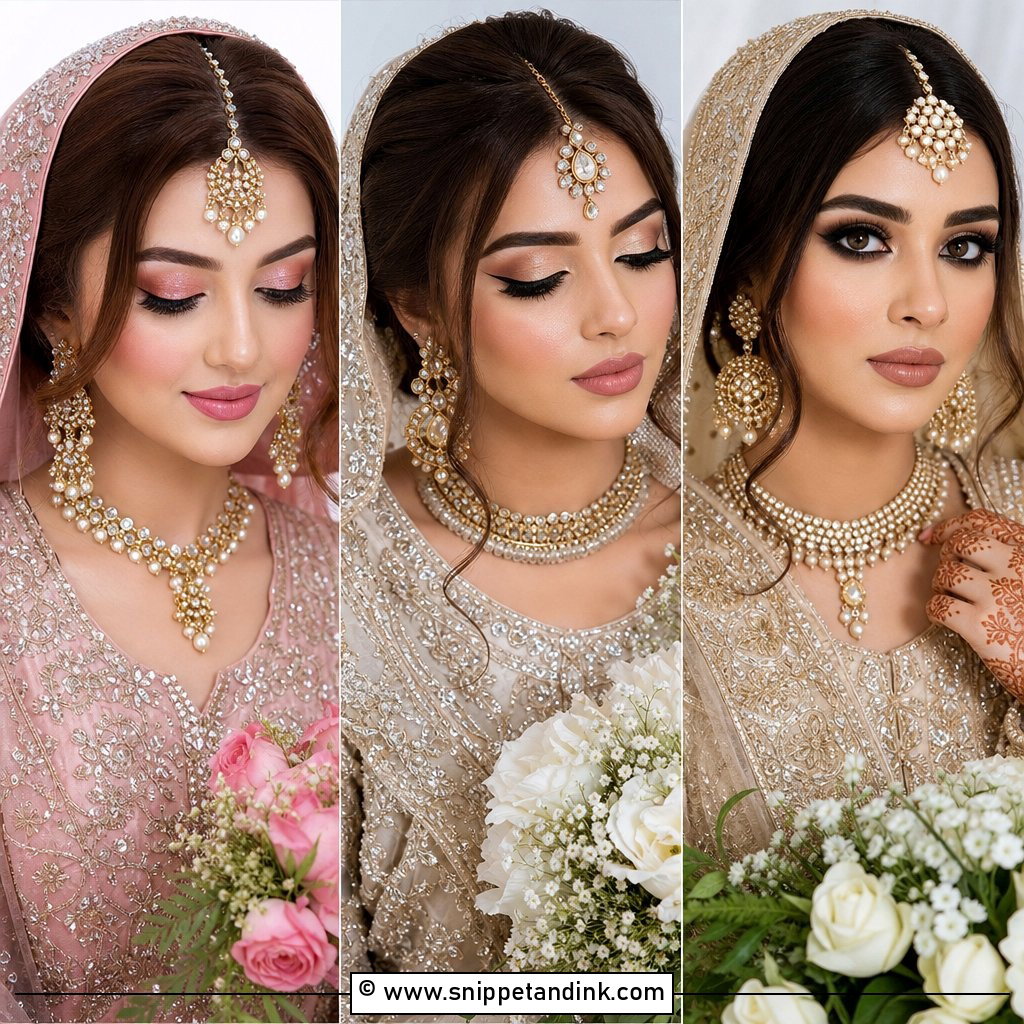
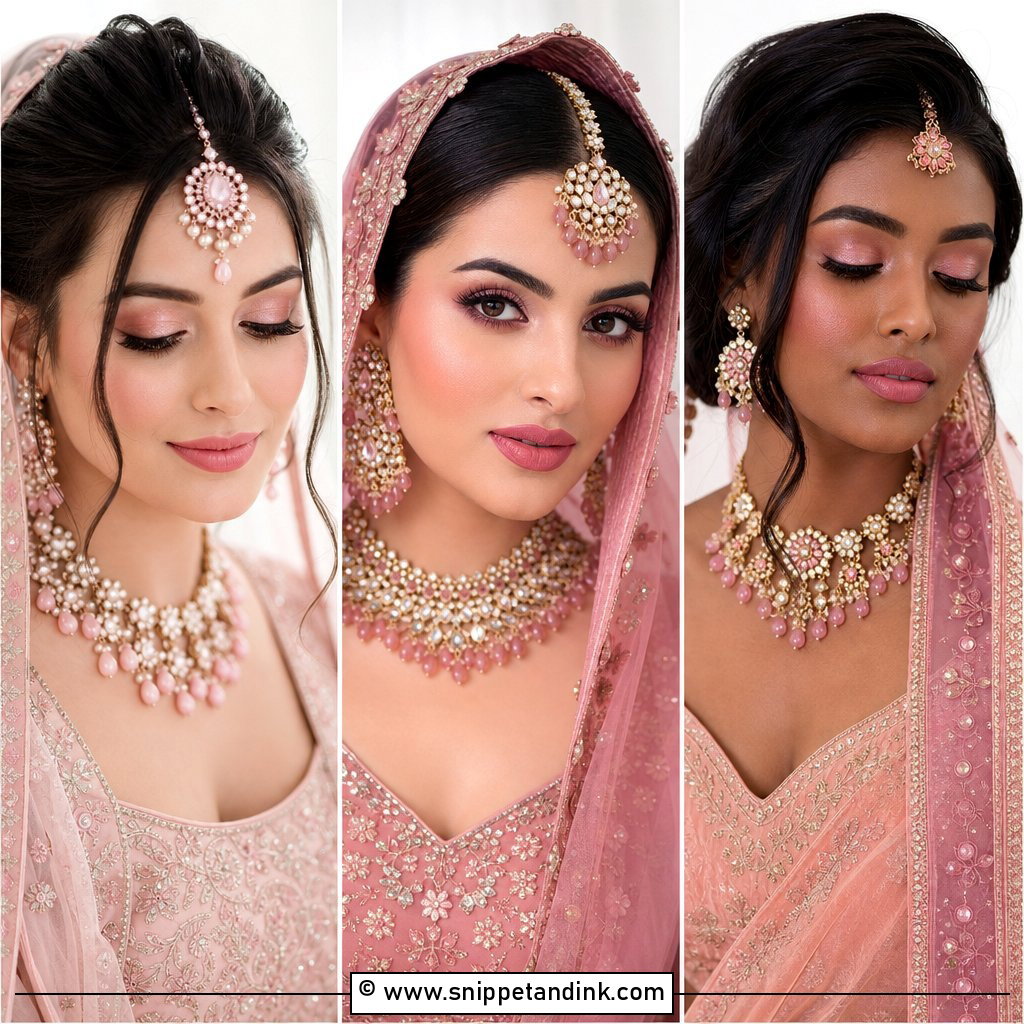
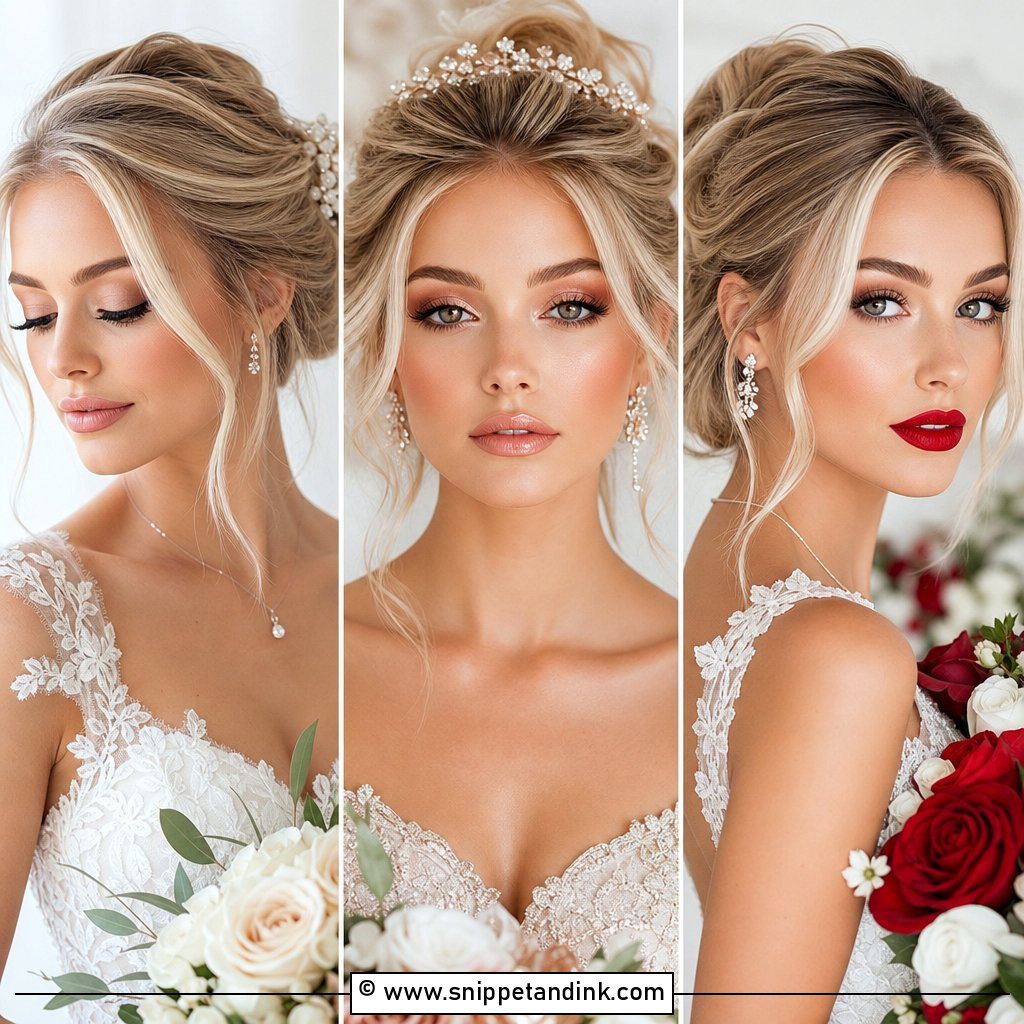
20. Full Glam Bridal Makeup
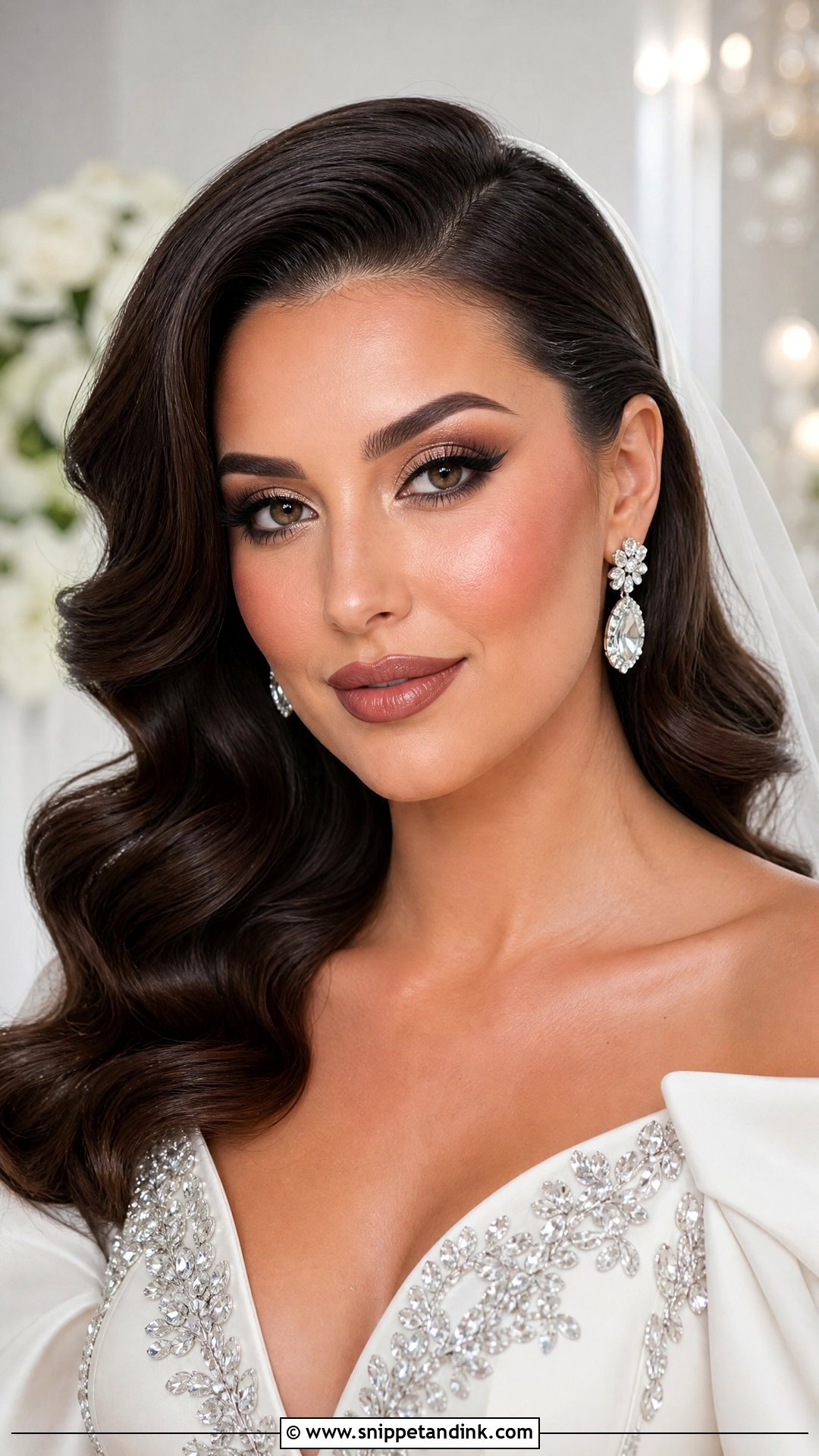
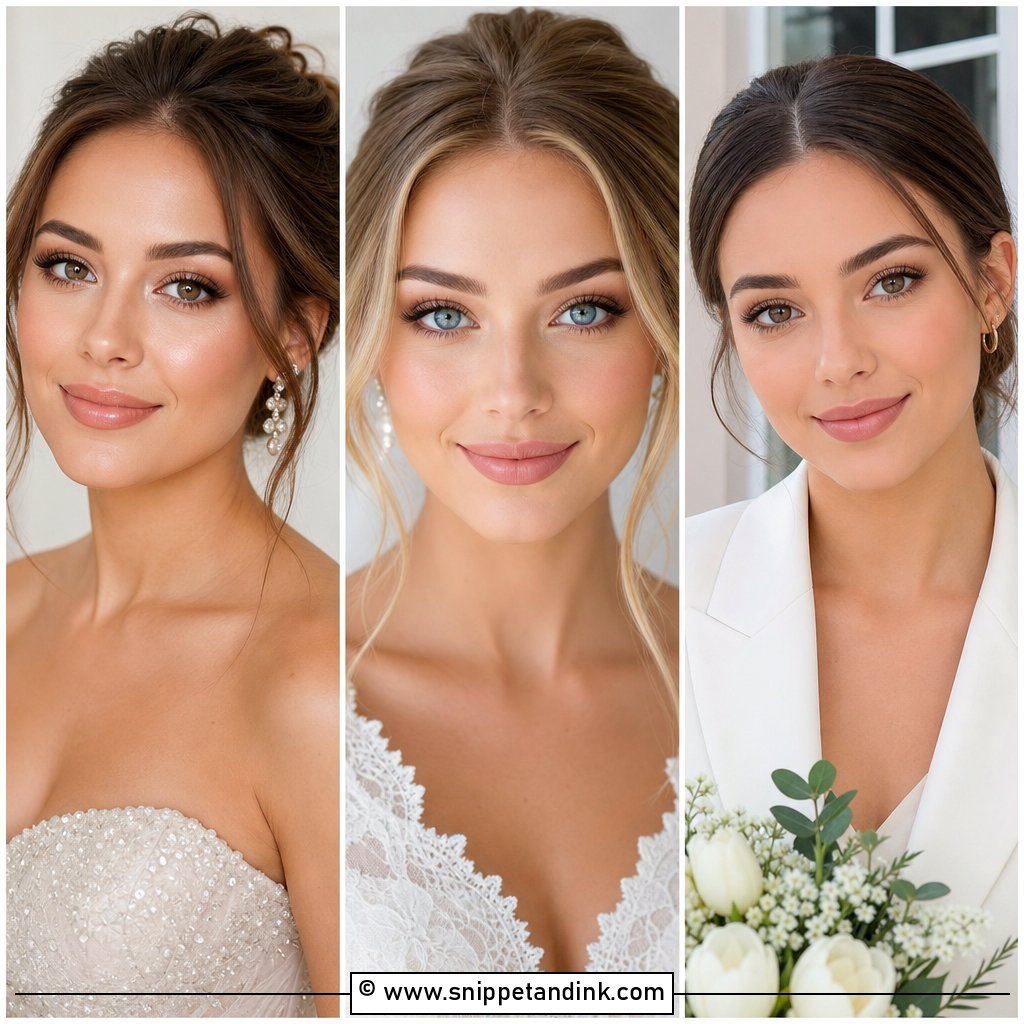
Full glam is high impact: fuller coverage, sculpted cheeks, strong brows, bold lashes and a defined eye, from a cut crease to a sharp wing. Done well, it holds through flash and a long night of dancing. Done badly, it looks like a mask in daylight portraits, so I blend every edge and set the skin in layers rather than with one heavy dusting. Pick one feature to lead; usually the eye, with a lip that sits back in nude beige or mauve. I’d steer you away from it for a midday outdoor ceremony unless the photographer is also shooting an evening session.
What Wears Off First Over a Ten-Hour Wedding Day
Bridal makeup goes on early, sometimes six or seven hours before the first dance. It doesn’t fade evenly, and knowing the order helps you plan what to fix.
- Lip colour, usually during the ceremony kiss, the first drink and dinner. Lined, long-wear formulas hold longest, but plan to reapply after eating.
- Shine through the T-zone, especially in summer or under reception lights. Blot first; powder over oil just builds a paste.
- Under-eye concealer creasing, mostly from smiling. A small pat with a clean fingertip usually fixes it.
- Mascara and liner on the lower lash line, if there are tears. This is why I keep the lower line light and waterproof on brides who expect to cry.
Blush, brows and well-set eyeshadow tend to last all day without help. If your trial makeup has faded noticeably by the evening, tell your artist; it usually means the prep or primer needs changing, not more product.
Blotting Papers, Lipstick and Not Much Else for Touch-Ups
The touch-up bag should be tiny. Give it to a bridesmaid who will actually be near you after the ceremony and before photos. I pack the same few things every time: blotting papers, your exact lip liner and lipstick, a small pressed powder for the nose and chin, a few cotton buds and a couple of spare lashes with glue. Leave foundation at home; layering it at the reception almost always looks heavier than the original application.
Do the touch-up just before portraits and again before the first dance. If the photographer wants you for a golden-hour session, ask for five minutes beforehand. A quick blot and fresh lipstick make more difference in those photos than anything else you can do on the day.
Bring Three Photos and One Sentence to Your Trial
The look that works is the one that still feels like you at hour ten. Bring a few photos to your trial, but tell me in one sentence what you like about each: the skin, the softness of the eye, the shade of the lip, the shape of the liner. That gives me far more to work with than a picture alone. During the trial, test how it wears, take a flash photo and see if the lip feels comfortable. Natural, soft glam, red lips, smoky eyes or full glam can all work. Aim for makeup that looks right in the room, holds in the photos and lasts until the last dance.
You'll Like These Ideas:


Leave a Reply