
The brides I work with now still ask for kohl and a red lip, but they ask far more about comfort. Will this base last through six hours of rituals? Can I cry at the vidaai? Will it feel heavy by the reception? Those questions shape every face I build. Regional tradition gives a starting point, the outfit and jewelry set the color, and your own skin decides the finish. Below are 20 looks across ceremonies and regions, from a Bengali red-and-white face to a haldi-morning glow, with what I’d do for each and where each one can go wrong.
Airbrush, HD or Brush? What the Base Label Really Means
Brides are often quoted different prices for HD and airbrush makeup, and it helps to know what the difference actually is before you choose.
- HD makeup is mostly a description of the products: finely milled foundations and powders designed to look smooth on high-resolution cameras. It’s applied with brushes and sponges like any other makeup.
- Airbrush sprays a thin foundation through a small compressor. It feels light and wears well in heat, but it can sit on top of dry or flaky patches and show them up.
- Traditional brush and sponge application lets the artist press product into texture and build coverage only where needed. On mature or textured skin, I usually prefer it.
What matters more than the label is the artist’s skill and the skin prep underneath. Ask to try your chosen method at the trial, and wear it for several hours afterwards to see how it holds up.
1. Red Lehenga Bridal Makeup
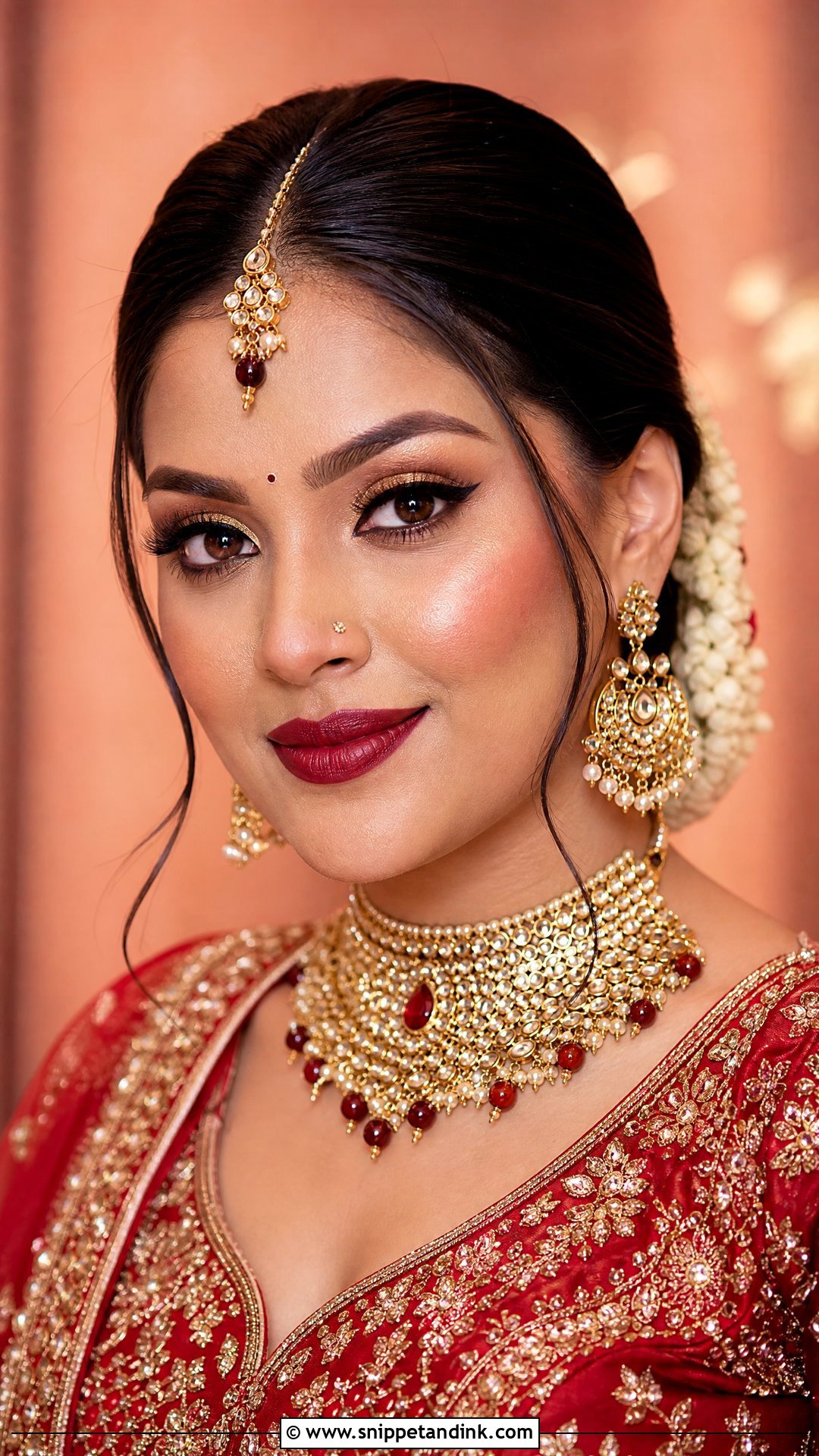
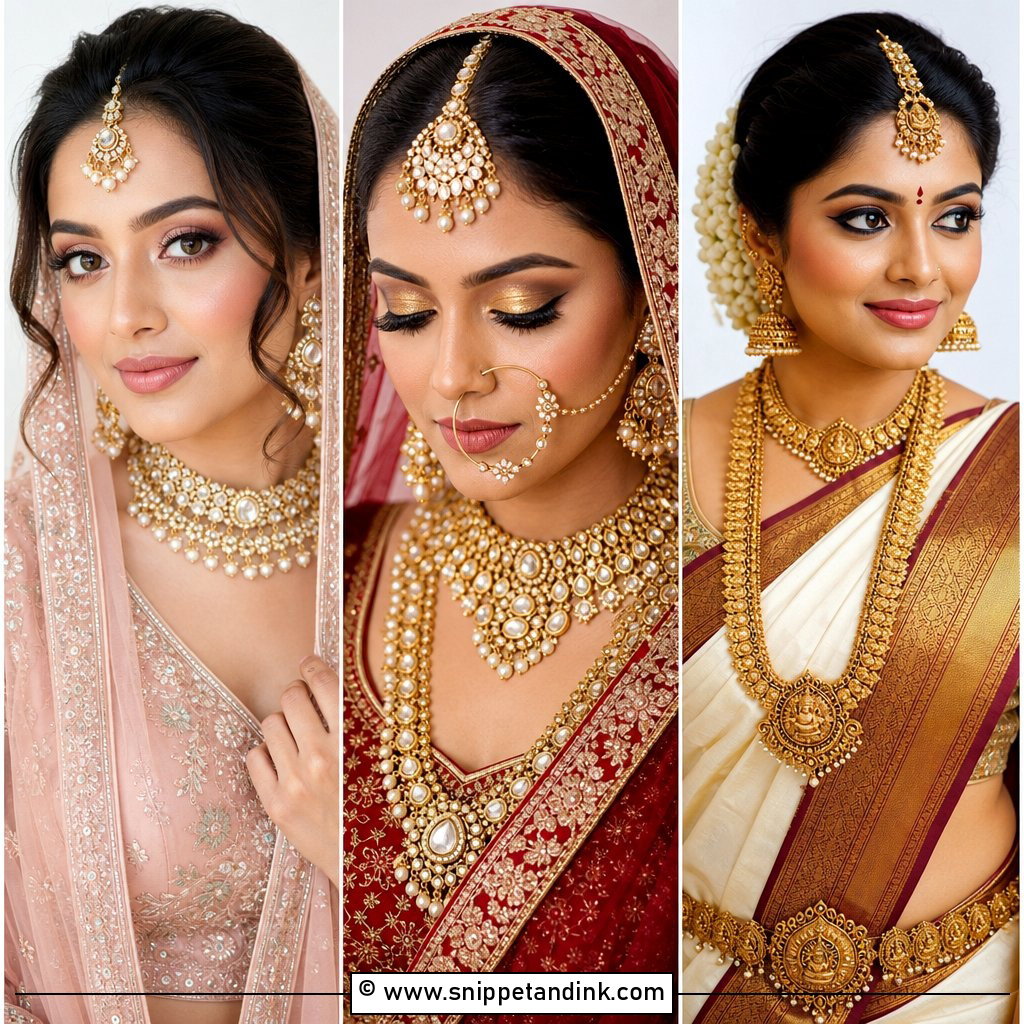
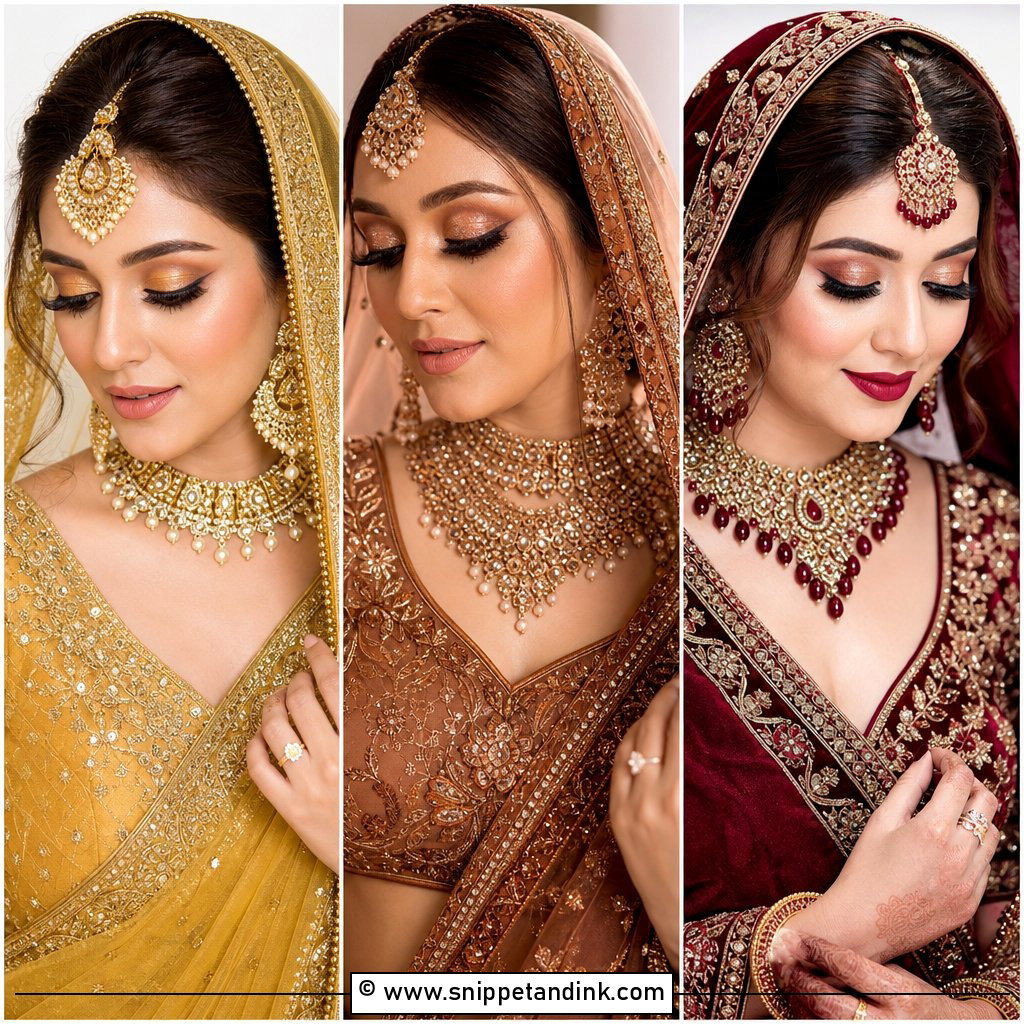
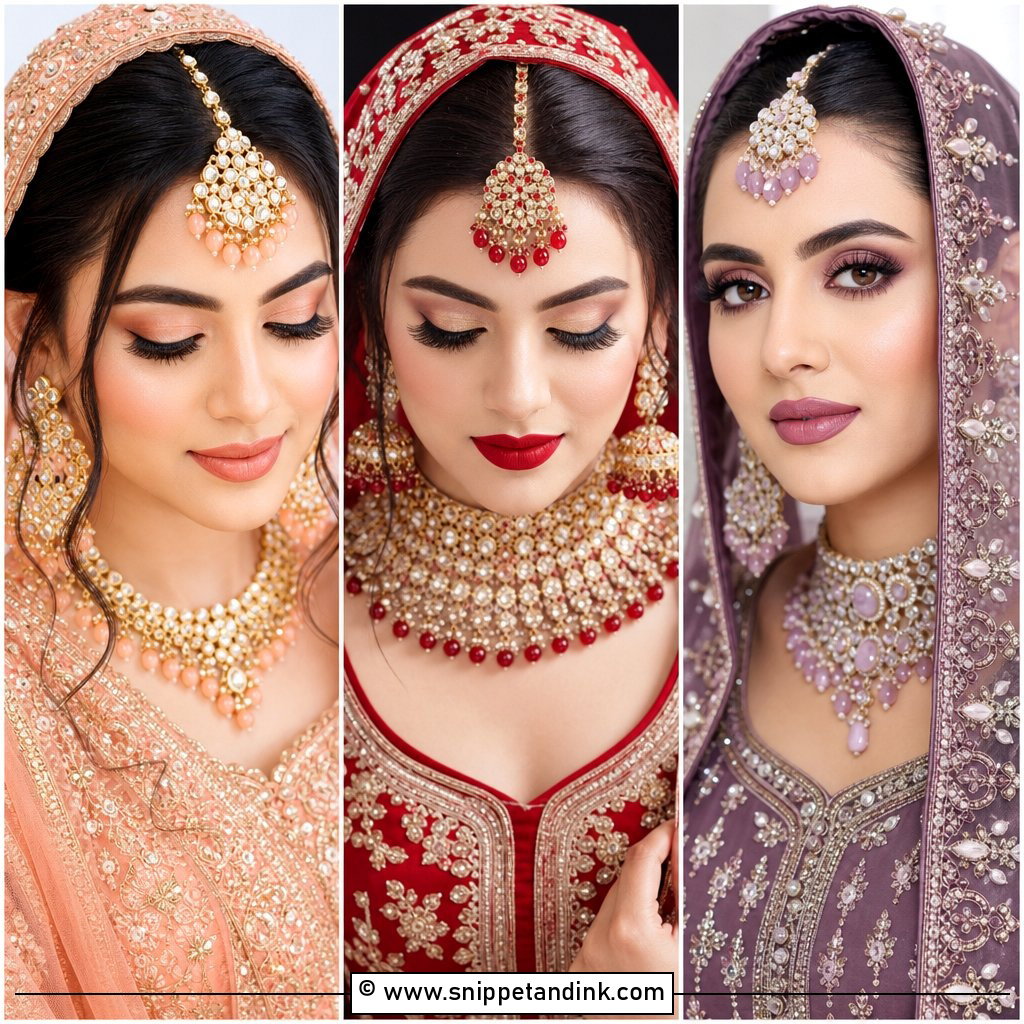
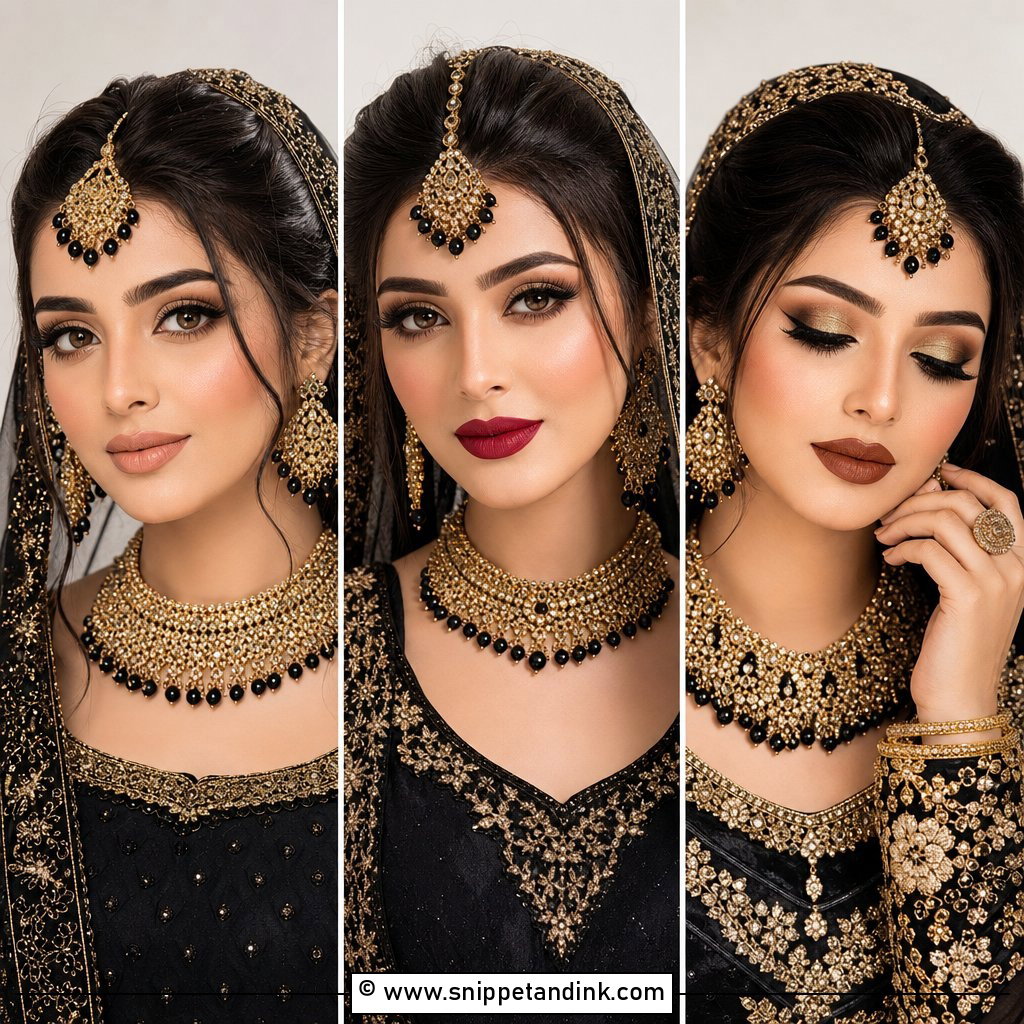
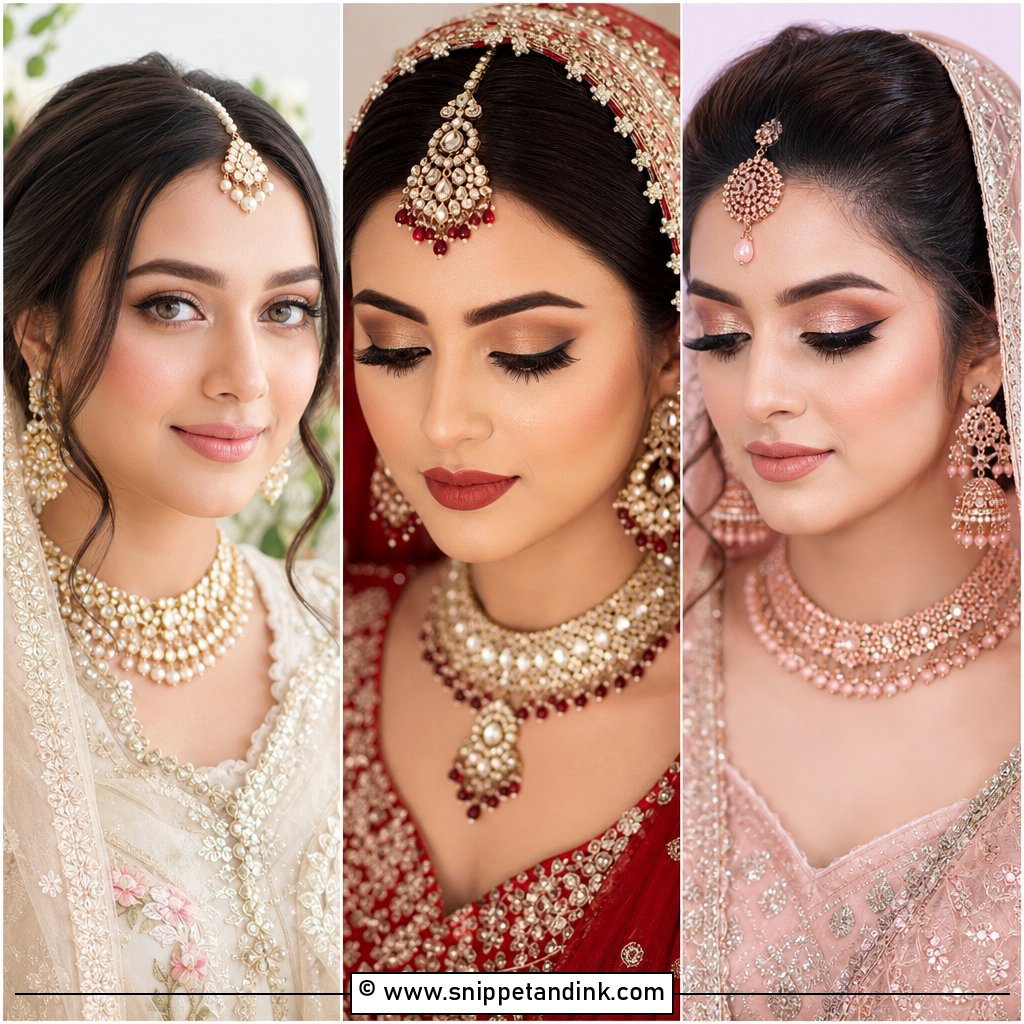
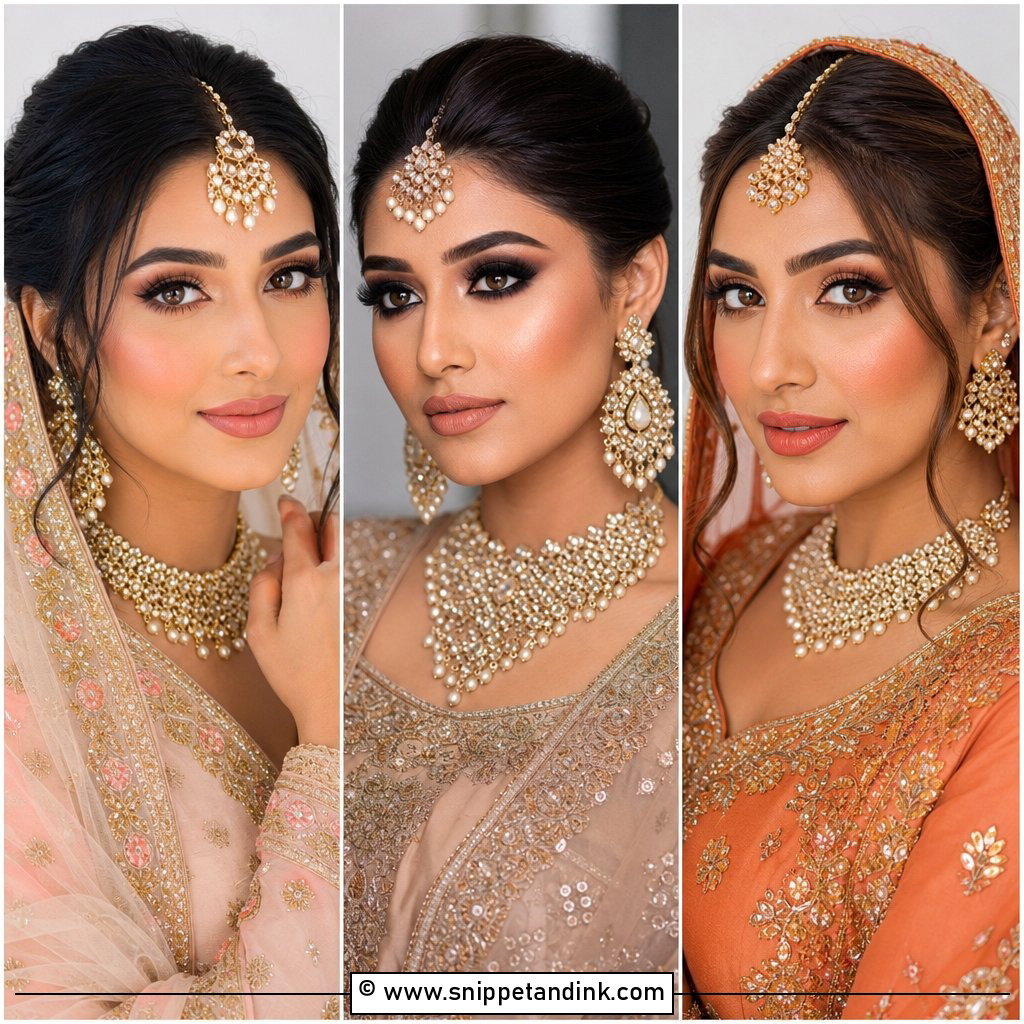
For a red lehenga, I build satin skin, soft contour, gold or bronze on the lids, black liner and full lashes. The lipstick should match the red of the outfit’s undertone: a blue-red against a cool crimson lehenga, a warmer red against orange-red fabric. Mismatched reds are what make photos look off. Brows stay defined without going blocky, and a warm blush gives the face life against so much color. Two things I avoid with this look are foundation that’s too pale and white shimmer, which both look chalky next to gold jewelry.
2. South Indian Bridal Makeup
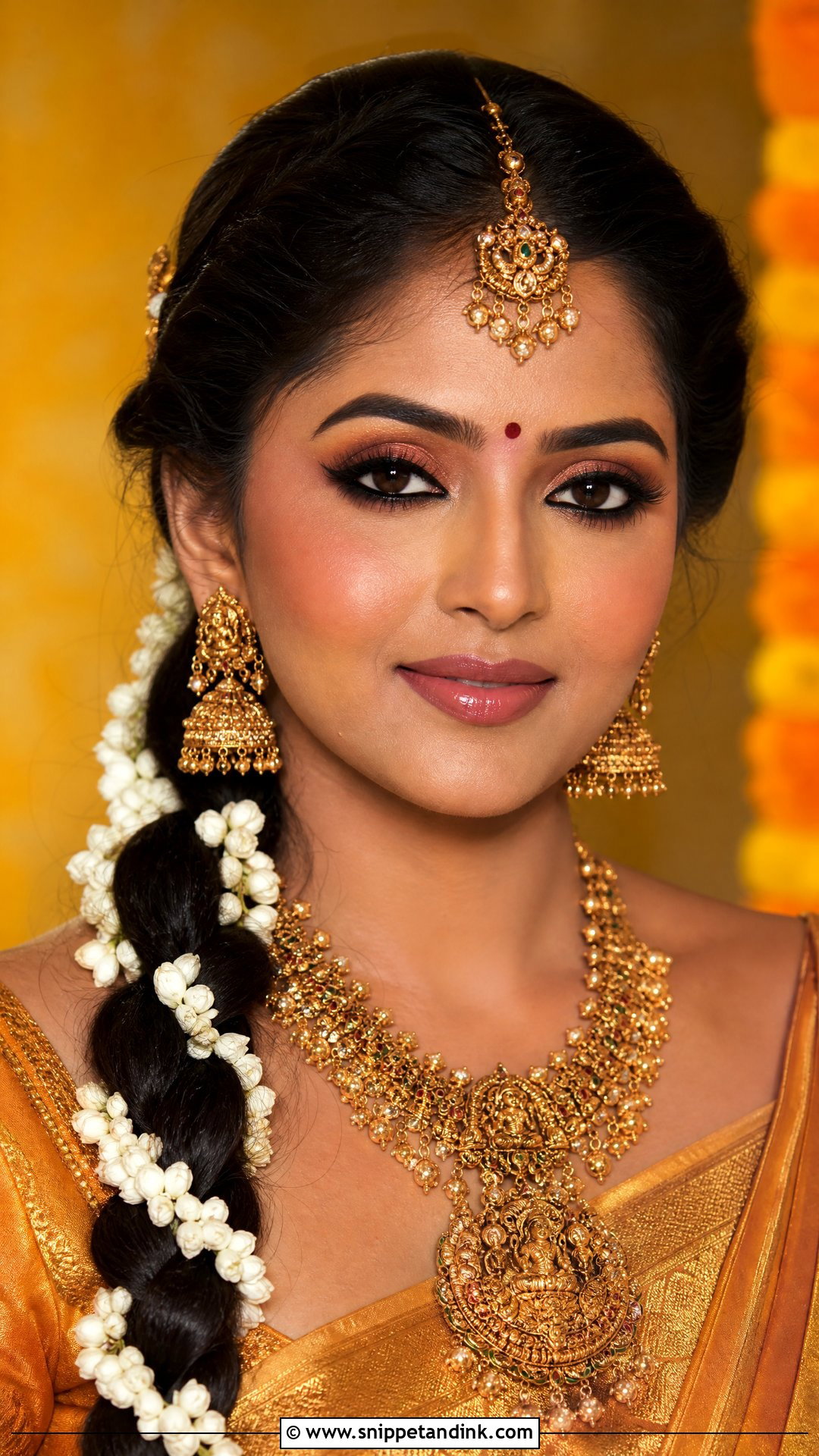
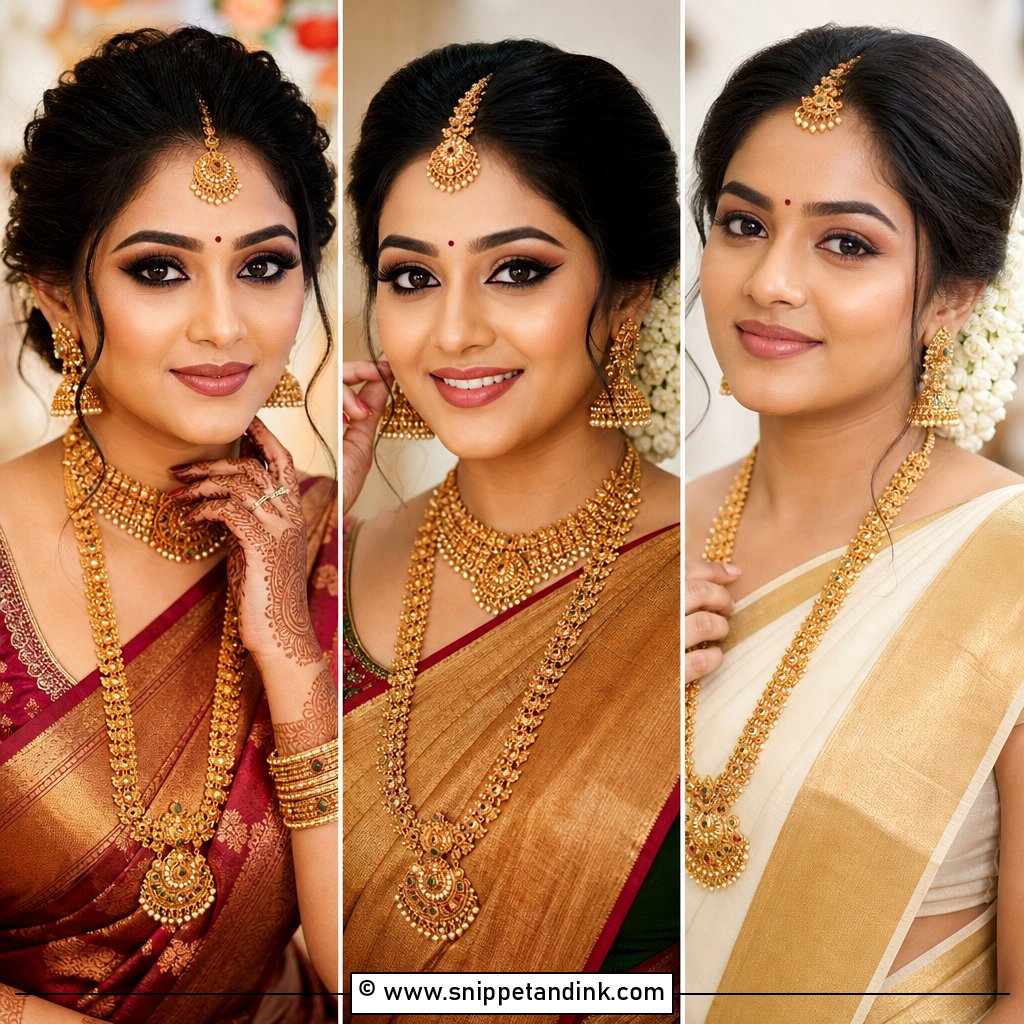
Silk sarees and gold jewelry reflect a lot of light, so South Indian brides need luminous skin that stays controlled through long rituals. I define the eyes with copper shadow, deep kajal, a wing and lifted lashes. Blush matters more than people think here, because heavy necklaces and a vaddanam draw the eye downward and a flat face loses out. A coral or red lip, chosen against the saree color, finishes it. Jasmine in a classic braid and temple jewelry complete the picture.
3. North Indian Bridal Makeup
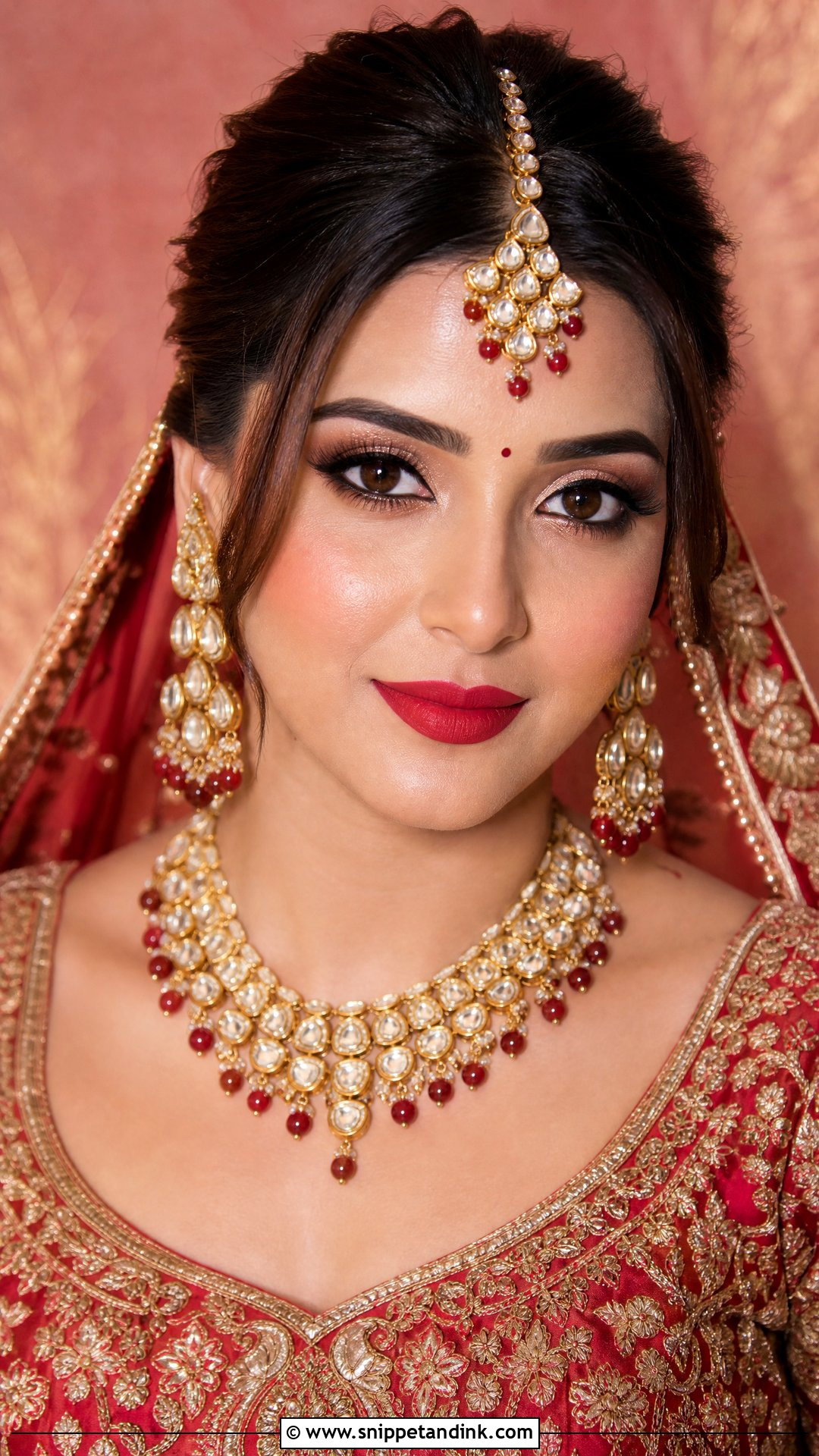
Embroidered lehengas, mirror work and heavy dupattas are the backdrop for North Indian bridal makeup, and the face has to hold its own against them. I use full coverage that still feels breathable, warm contour, a peachy blush and a soft gold eye with black liner. A maroon or rosy nude lip depends on the outfit. My rule is harmony: when the jewelry and fabric are very ornate, the makeup should be structured, not more decorated. Clean edges on the lip and blended shadow look expensive under the strong lights of indoor halls.
4. Bengali Bridal Makeup
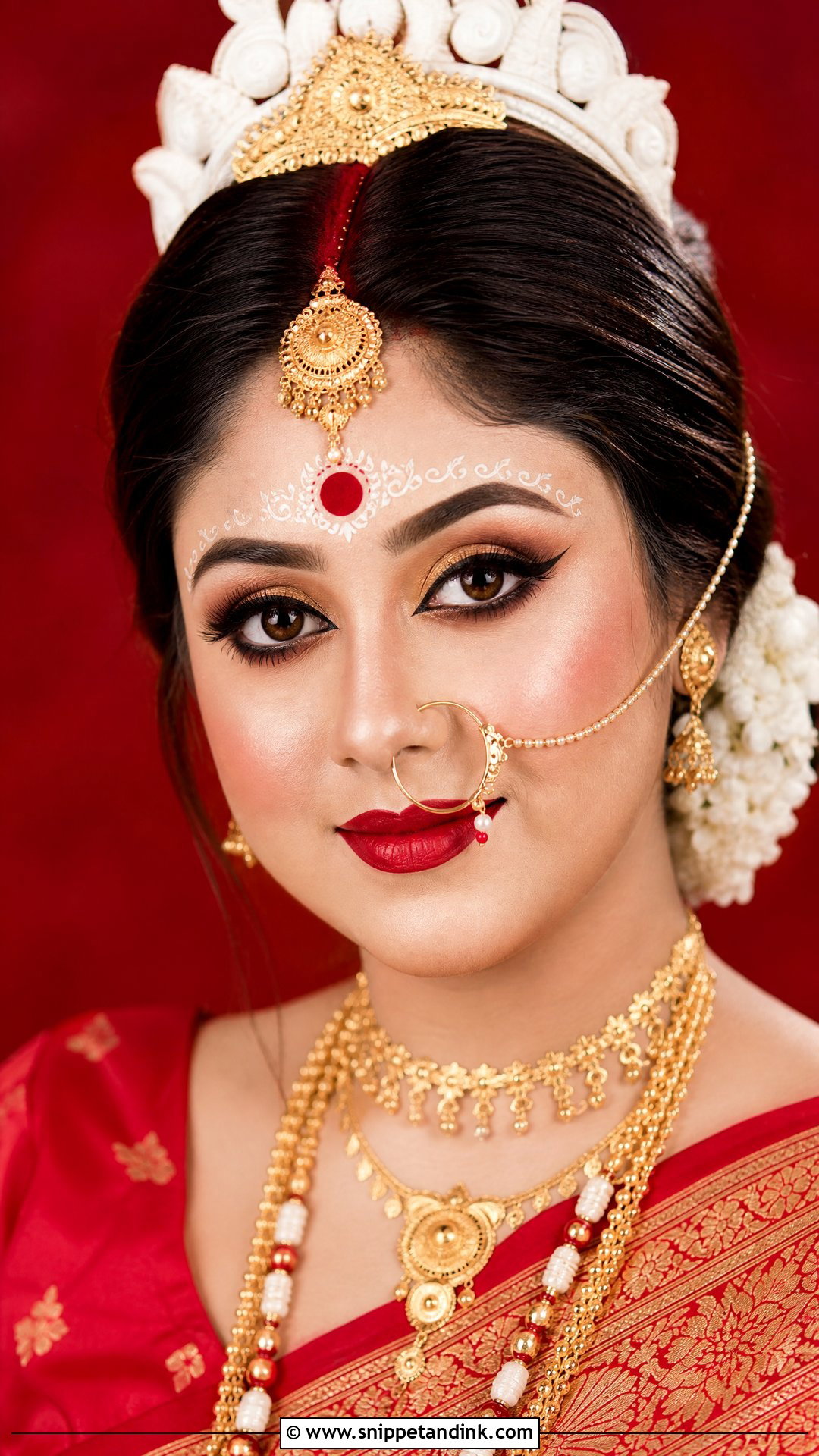
In Bengali bridal makeup, the eyes lead. Black kajal, a wing, warm brown shadow and fluttery lashes frame them, and a true red lip pairs with the red Banarasi. I keep the base radiant rather than matte, since the look depends on freshness, but I set the forehead well because the chandan design is painted there and cracks on oily skin. A touch of highlight on the high points softens all that definition.
5. Maharashtrian Bridal Makeup
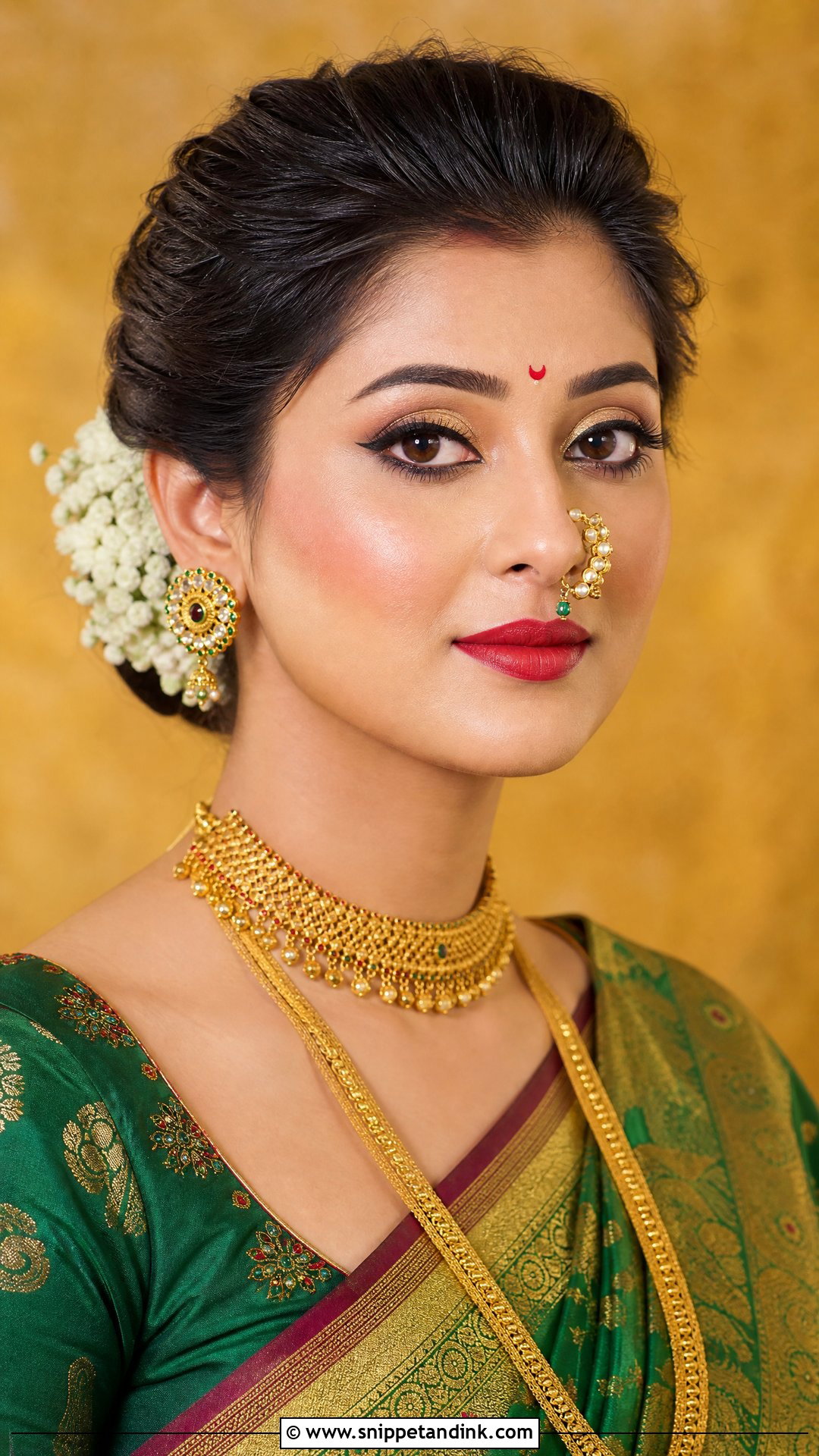
Paithani sarees, green glass bangles and a nath already carry the Maharashtrian look, so makeup should support rather than compete. I use warm gold or champagne on the lids, a slim black liner, kajal and soft lashes. Skin is satin-finished with peach blush and subtle gold highlight. Coral-red and brick shades suit the festive colors. The nath rests on the upper lip, so a long-wear matte lip keeps the ring clean. A neat bun keeps the face open.
6. Punjabi Bridal Makeup
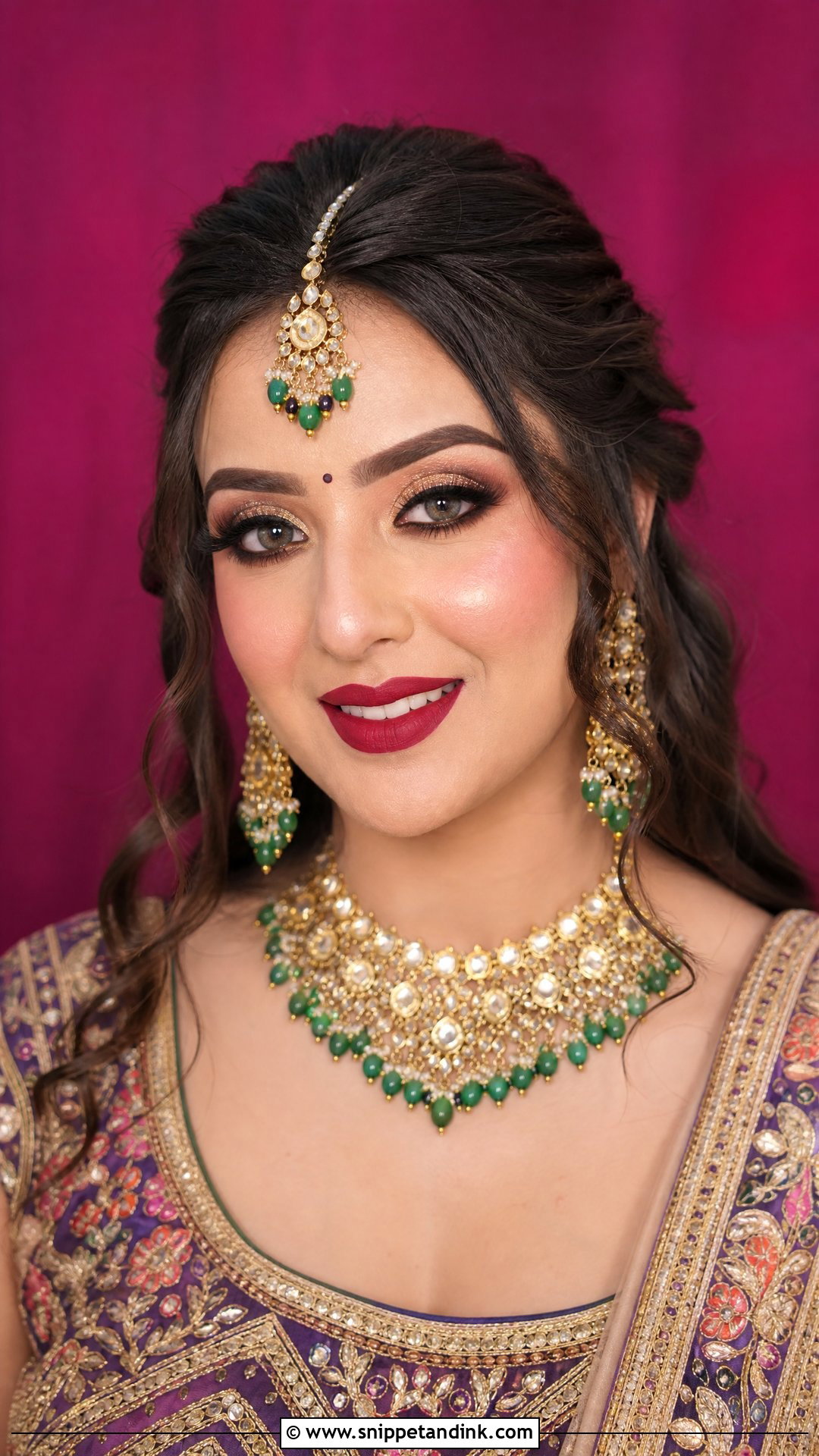
Punjabi weddings are loud, bright and long, with heavy dupattas and very saturated lehengas. Blush has to be visible here, or the face disappears under the color. I use luminous skin, sculpted cheeks, gold shimmer on the lids, strong liner and voluminous lashes. A berry or classic red lip depending on the outfit. The glow on the cheekbones needs to be balanced with powder on the T-zone, because the bhangra will start long before the photos stop.
7. Muslim Indian Bridal Makeup
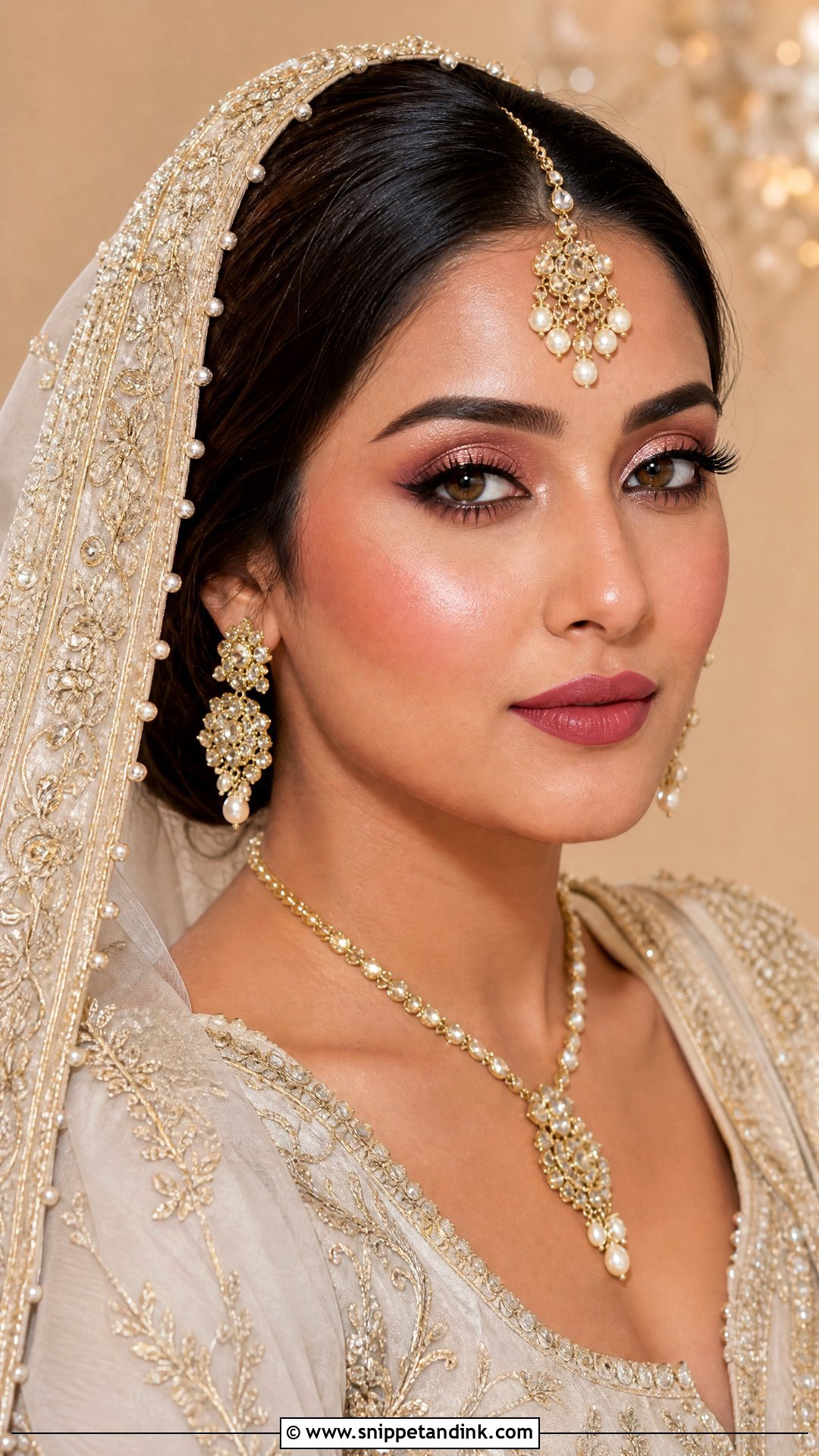
Shararas, ghararas and embroidered anarkalis often frame Muslim Indian bridal makeup, and the dupatta usually sits close around the face. That closeness is why blending matters so much: harsh contour lines or heavy brows show immediately when fabric frames them. I build a smooth, radiant base, gentle contour and a soft blush. Rose gold or bronze on the eyes, defined liner and wispy lashes. The lip sets the mood, from a nude rose for softness to a deep red for drama.
8. Kerala Bridal Makeup
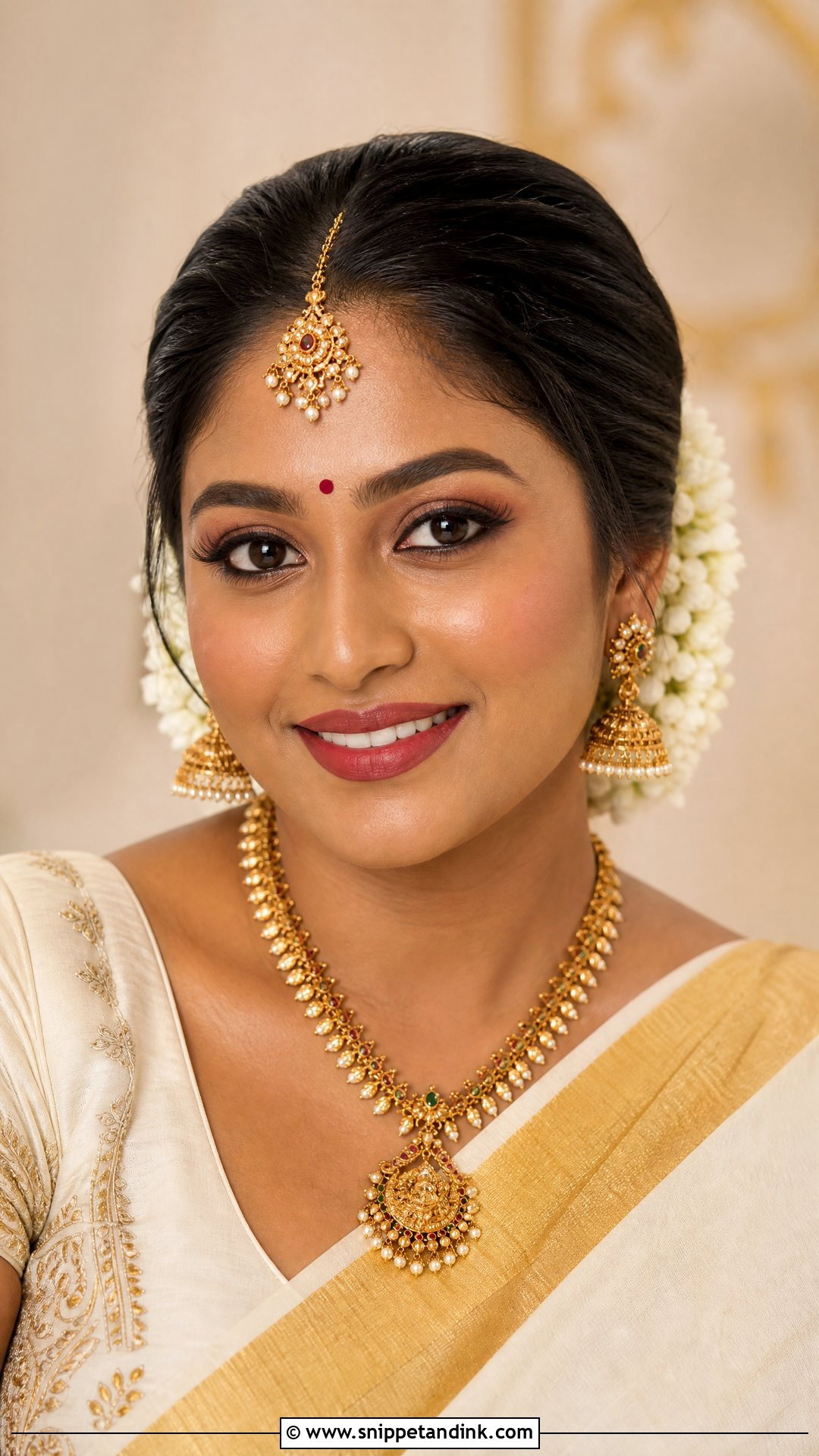
Cream and gold kasavu sarees are light-reflecting and quite pale, so Kerala bridal makeup is usually soft and classic rather than heavy. The base should be fresh, with a natural glow that doesn’t turn shiny under warm lights. Eyes are defined with black kajal, soft brown shadow, fine liner and separated lashes. A red or warm coral lip adds color without clashing with the saree. Blush should be gentle but visible, especially in photos against the cream. A sleek bun and jasmine complete it.
9. Tamil Bridal Makeup
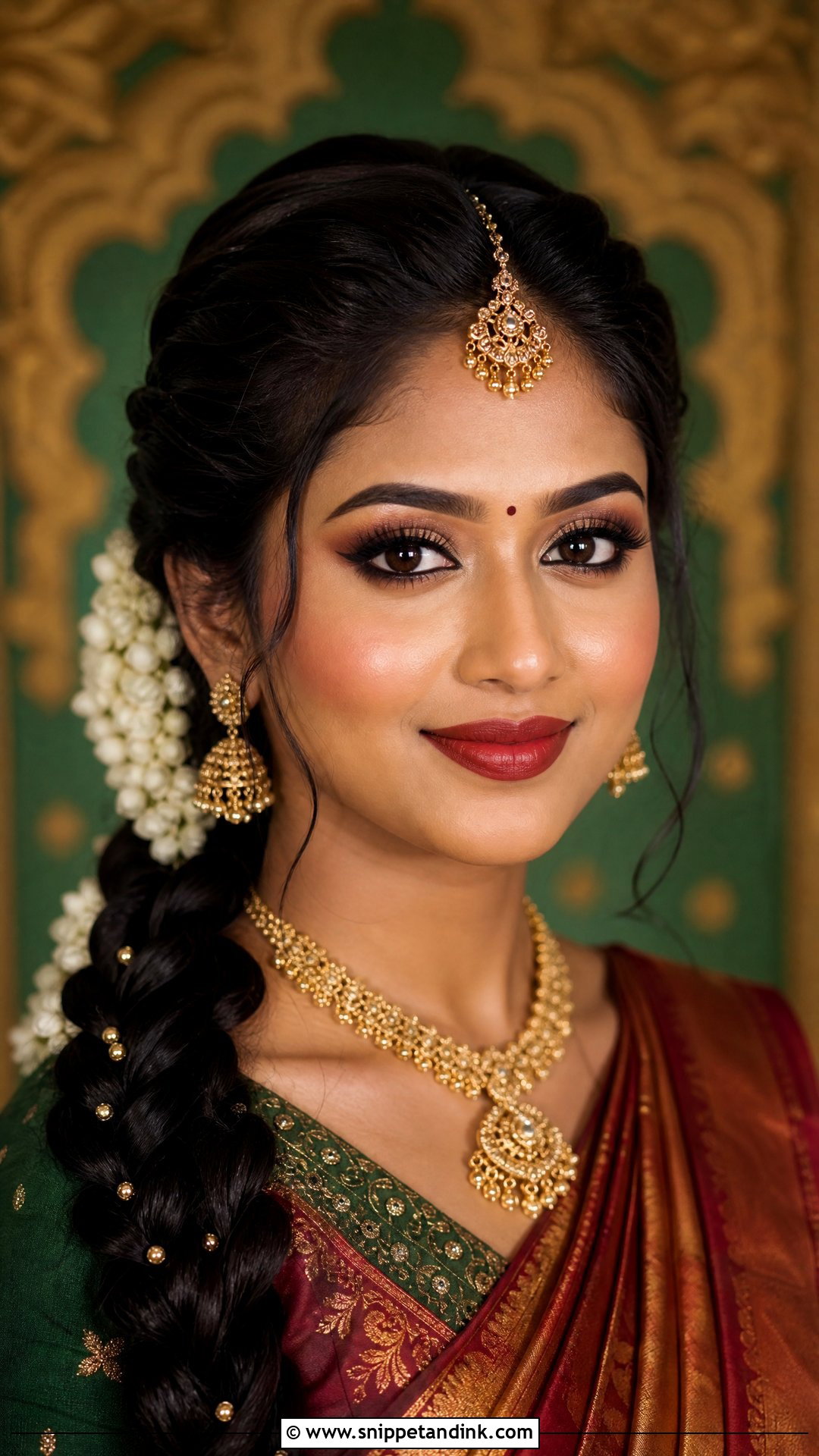
Rich silk sarees and dramatic gold jewelry suit expressive Tamil bridal makeup, with the eyes as the focus. I use copper or deep brown shadow, kajal, liner and full lashes. Blush sits slightly higher to lift the face. Deep rose or brick suits jewel-toned sarees. Because the jewelry can be heavy and dramatic, the makeup should have structure while still feeling blended, so it lasts through ceremonies, portraits and family rituals.
10. Gujarati Bridal Makeup
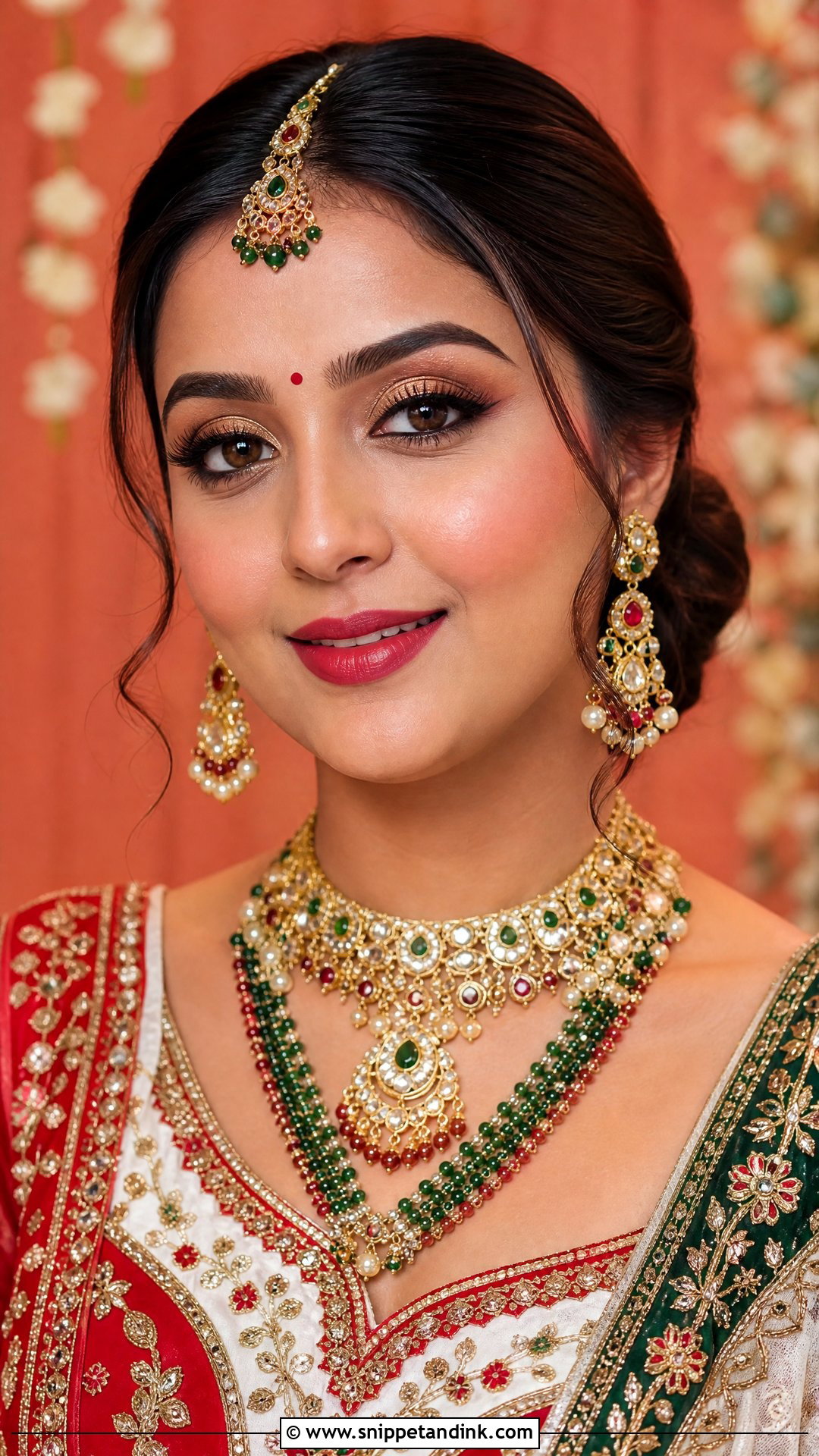
Panetar and gharchola outfits combine red, white, green and gold, which is already a lot of color near the face. I avoid adding more and keep to warm gold eyeshadow, brown in the crease, black liner and curled lashes. Skin can be satin or softly dewy with peach blush. The lip should follow the outfit’s main color rather than introduce a new one. A clean base, defined eyes and the right lip are all it needs.
11. Rajasthani Bridal Makeup
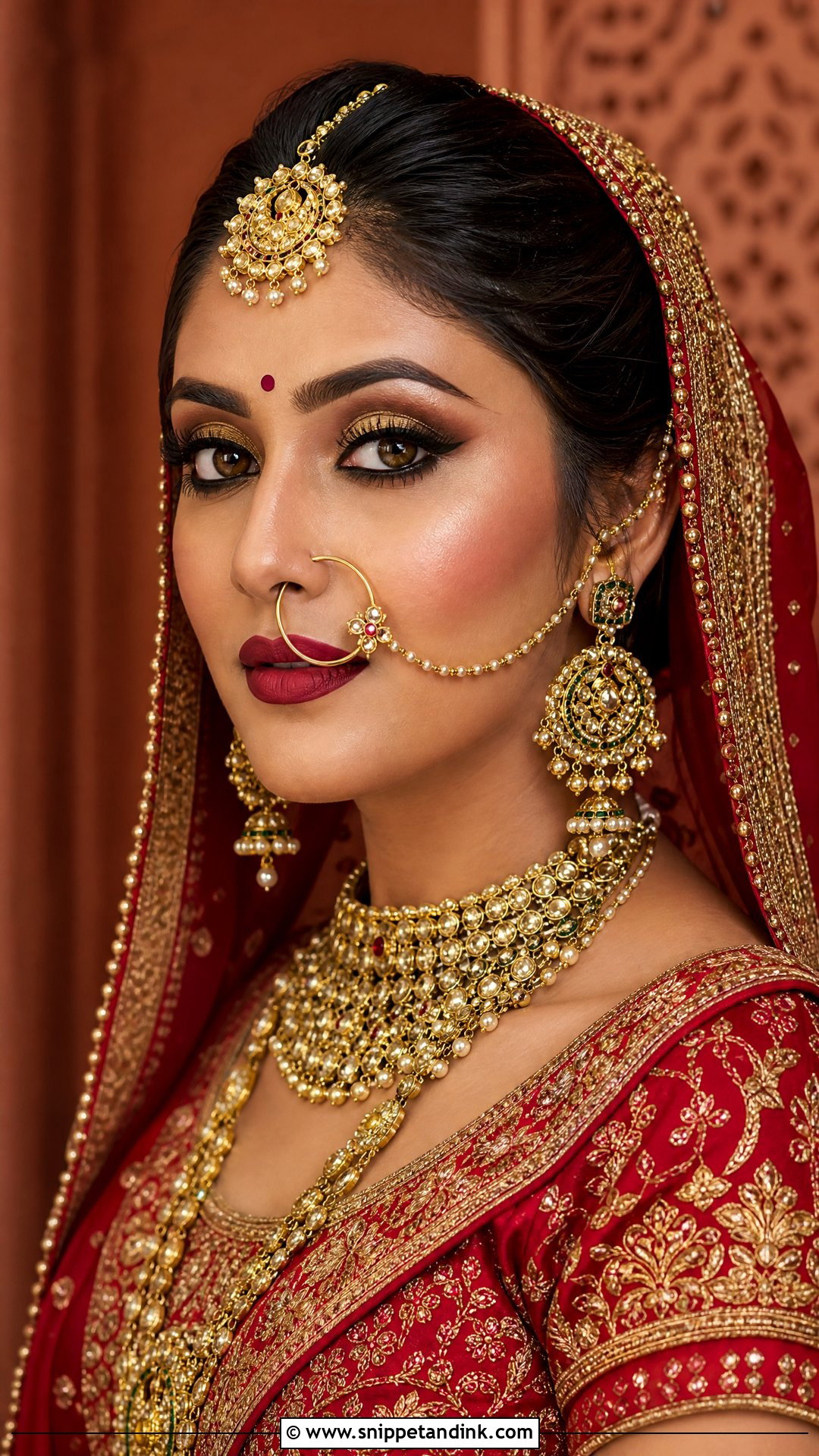
Poshaks, borlas and layered kundan are ornate enough that Rajasthani bridal makeup needs strong definition to avoid looking washed out. I use matte or satin skin, sculpted cheeks, bold kajal, gold eyeshadow and a deep red or maroon lip. Warm bronzer and blush stop the face looking flat under heavy fabric. The brows should be shaped but natural. I keep highlight to the inner corners only, because kundan already throws plenty of light.
12. Marathi Bridal Makeup
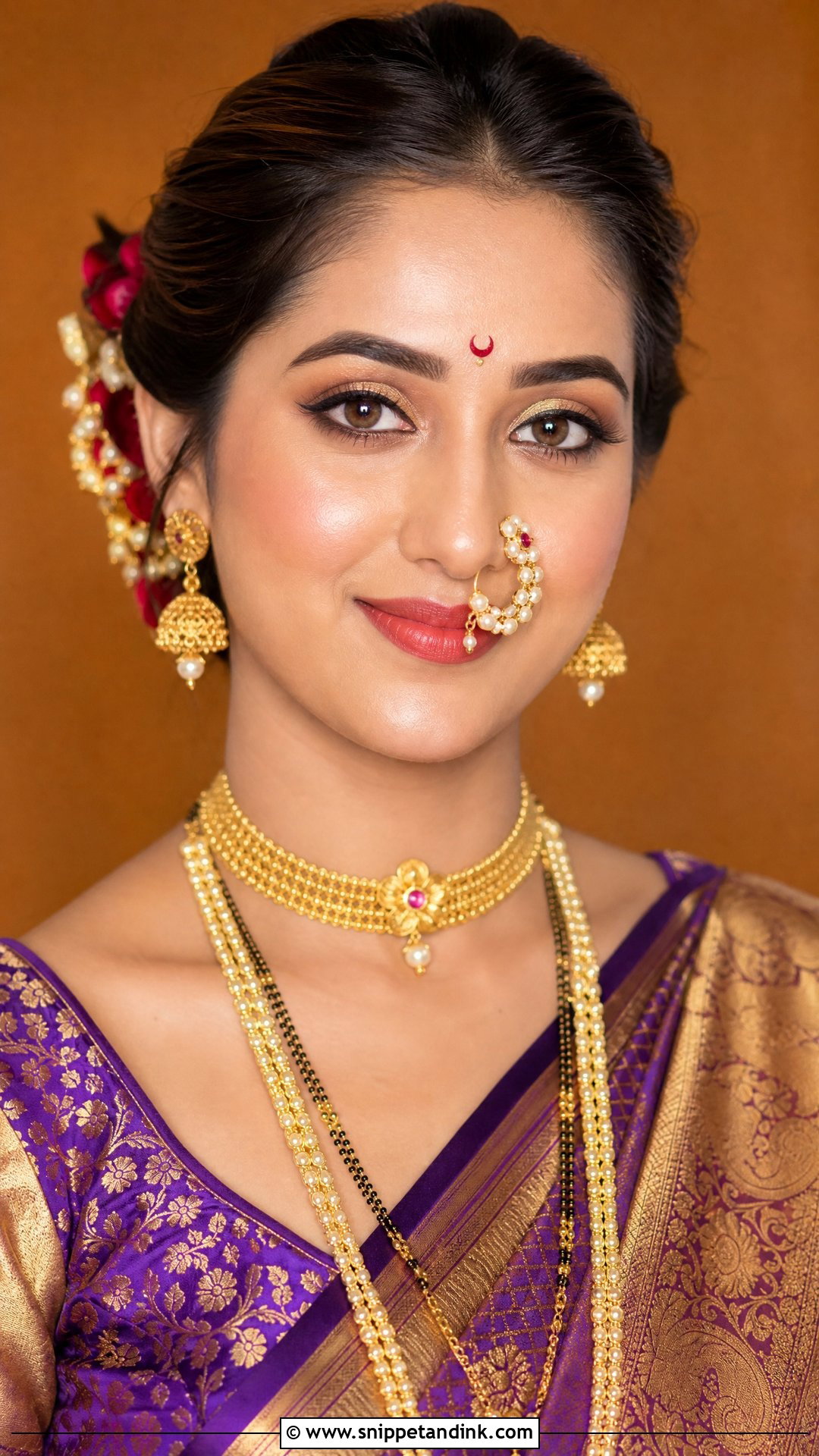
Yellow, green, purple and gold sarees are common in Marathi weddings, so the makeup has to enhance color without making the face busy. A warm neutral eye with gold shimmer, slim liner, kajal and soft lashes works well. Satin skin with peach blush, gentle contour and subtle highlight. Brick red and coral lips are flattering. With a nath and a mundavalya, I keep the forehead and upper lip particularly neat, since both draw the eye.
13. Reception Indian Bridal Makeup
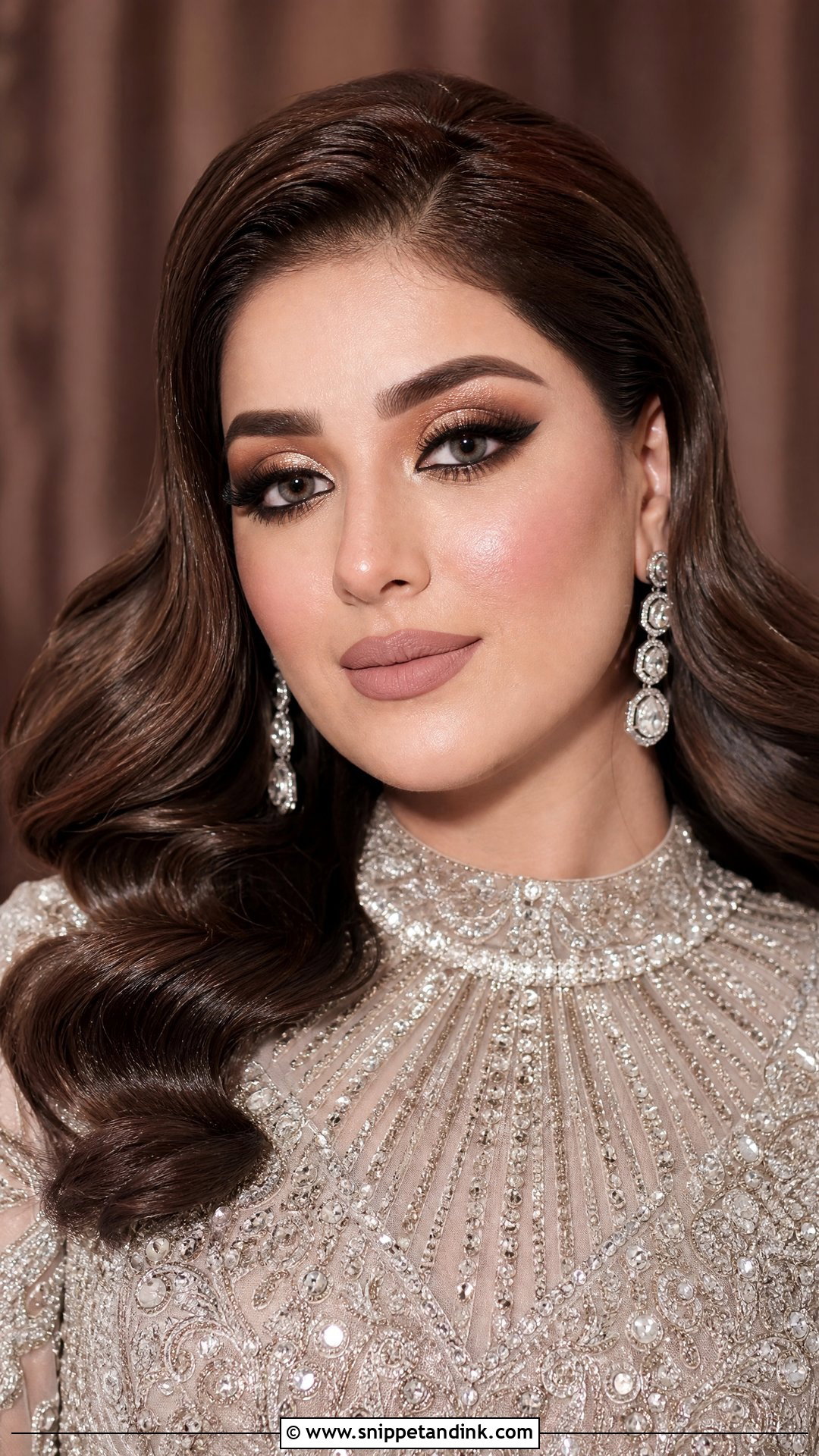
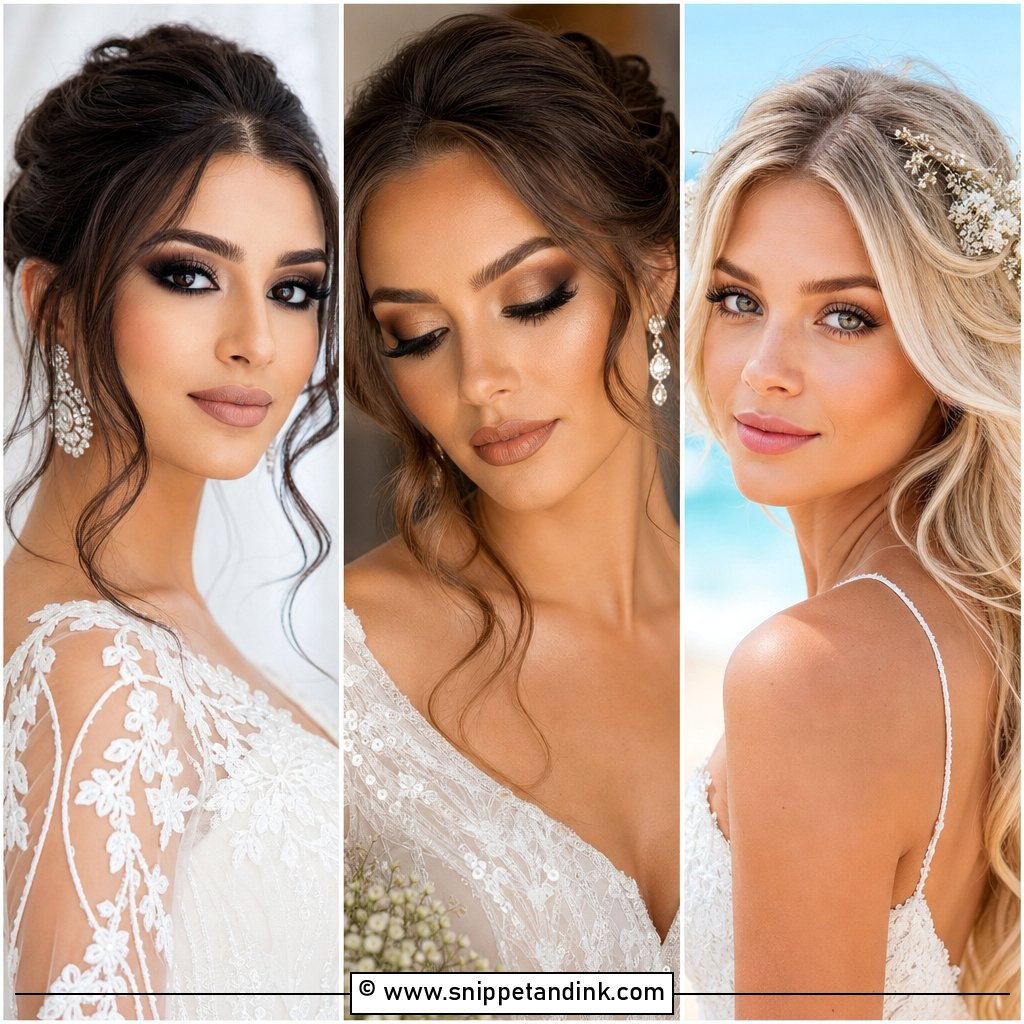
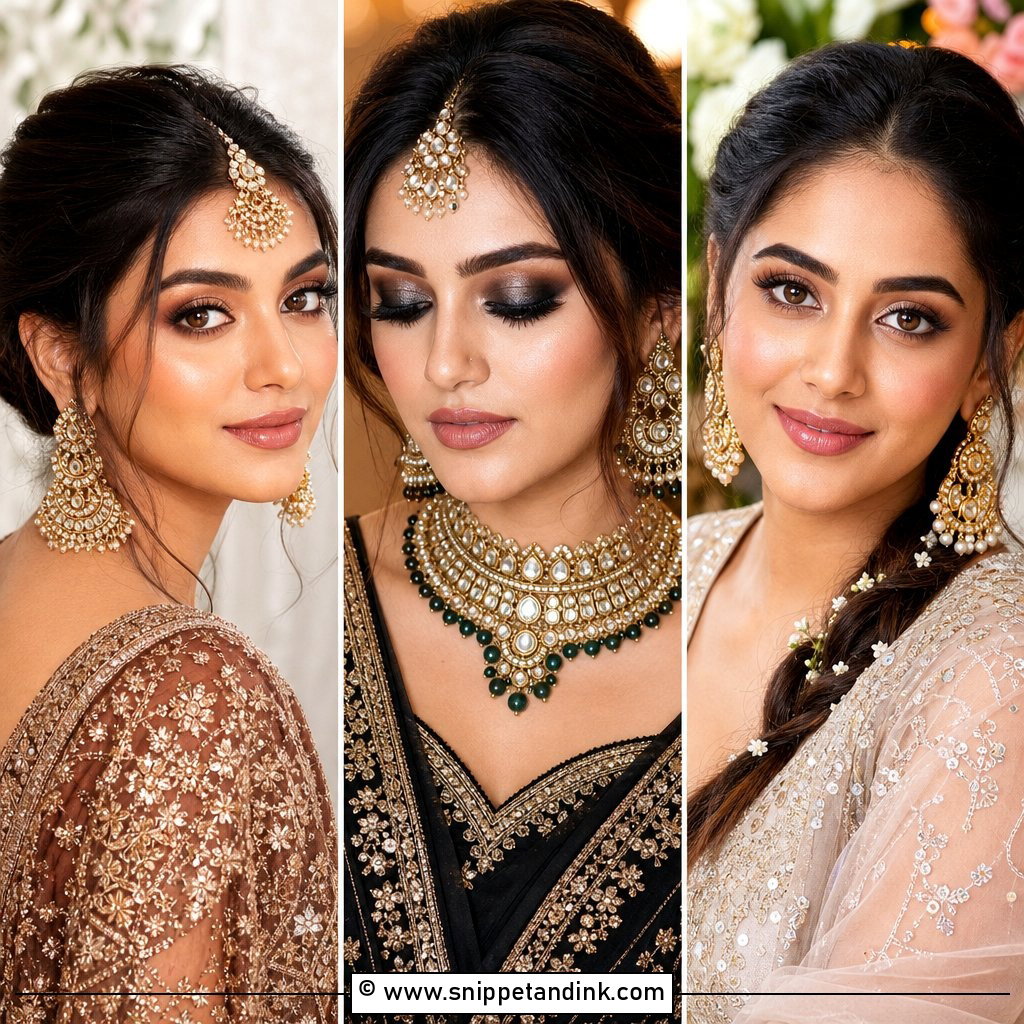
Receptions are where I’m allowed to push. Gowns, contemporary lehengas and metallic fabrics invite a sleeker face: smoky eyes, glossy lids, sculpted cheeks or a soft nude lip. I build a flawless base, lifted contour, champagne or bronze shimmer and fluttery lashes. The lip follows the outfit, often a nude brown or mauve. Set the skin well; receptions involve hours of photos and dancing under warm, dim lights, and shine shows up badly in flash.
14. Haldi Bridal Makeup
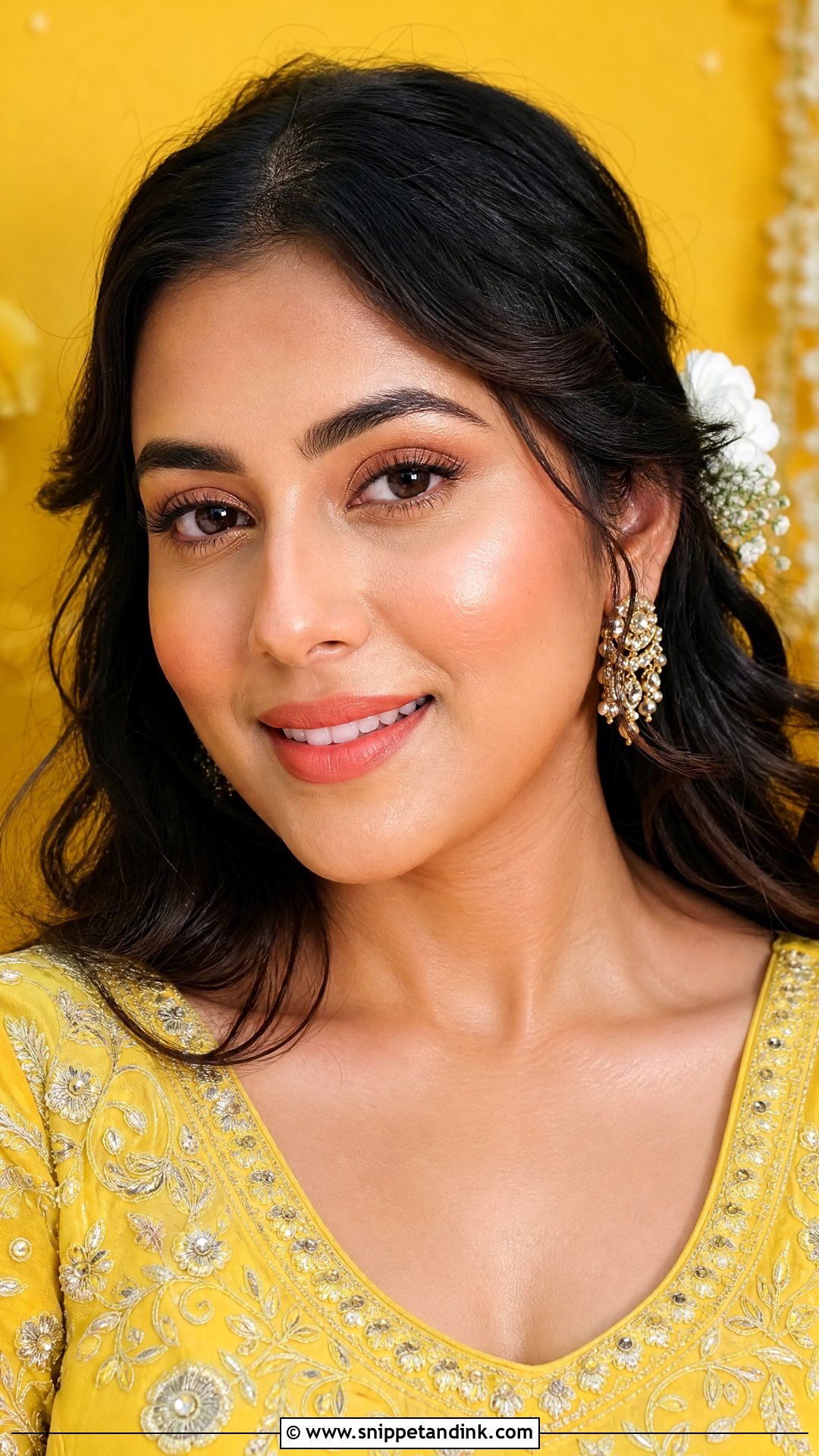
Haldi is a daytime, hands-on ceremony with turmeric paste going on the face, so heavy makeup is wasted. I use a lightweight glowing base, peach blush, soft brown liner, waterproof mascara and a coral lip. Cream products give a natural finish, set lightly. I avoid black smoky eyes and sticky gloss, both of which are miserable once the paste goes on. Loose waves, braids or floral accents in the hair suit it.
15. Mehndi Bridal Makeup
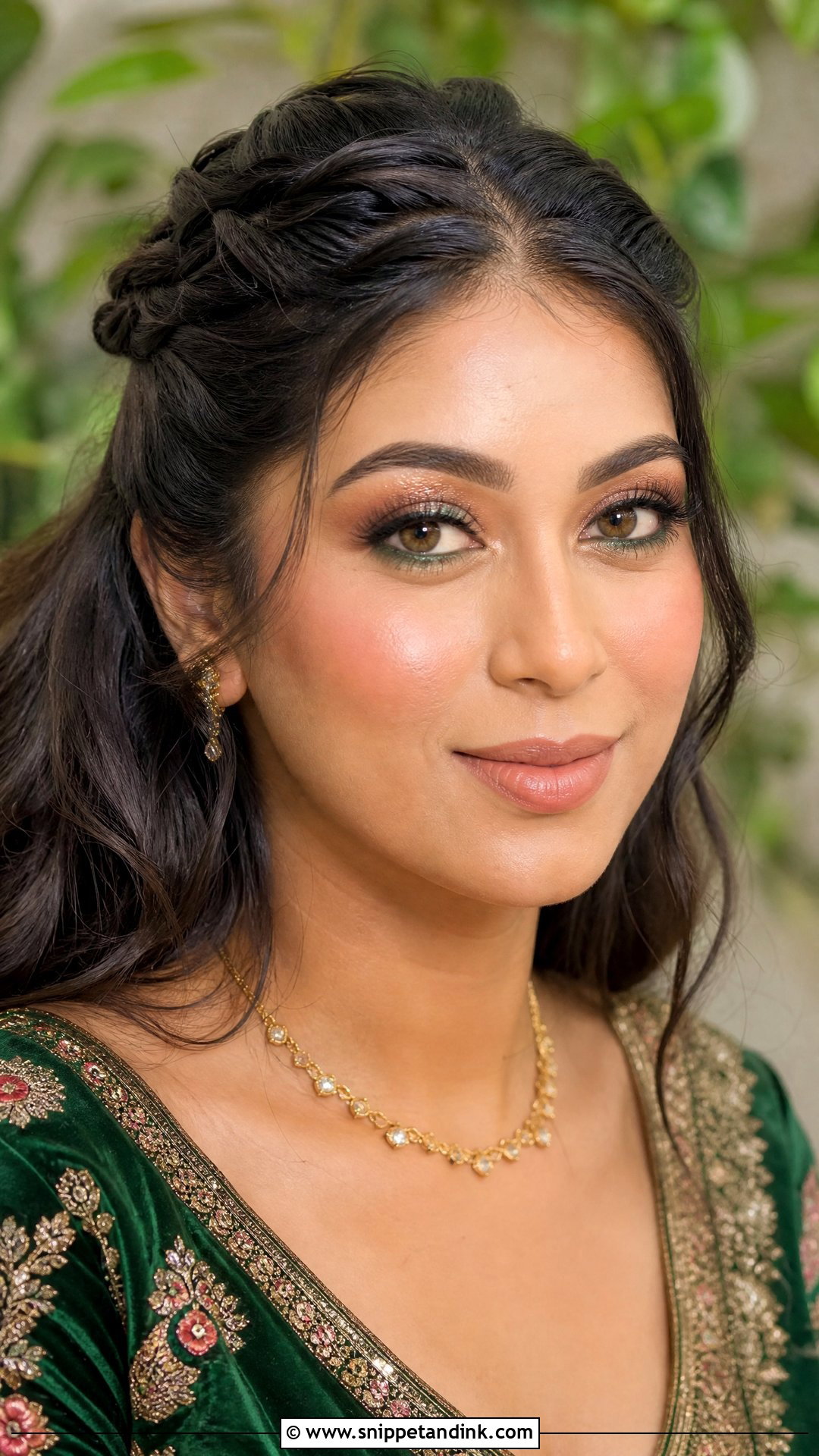
Mehndi is the event where I play with color. Green, teal or bronze on the eyes can echo the outfit, balanced with a soft base and a wearable lip. I’ll often do bronze lids with a line of green along the lower lashes. The complexion should be fresh and long-lasting, because you’ll be sitting still for hours while the henna is applied, often in warm rooms. A nude peach or muted coral lip keeps it from feeling heavy.
16. Sangeet Bridal Makeup
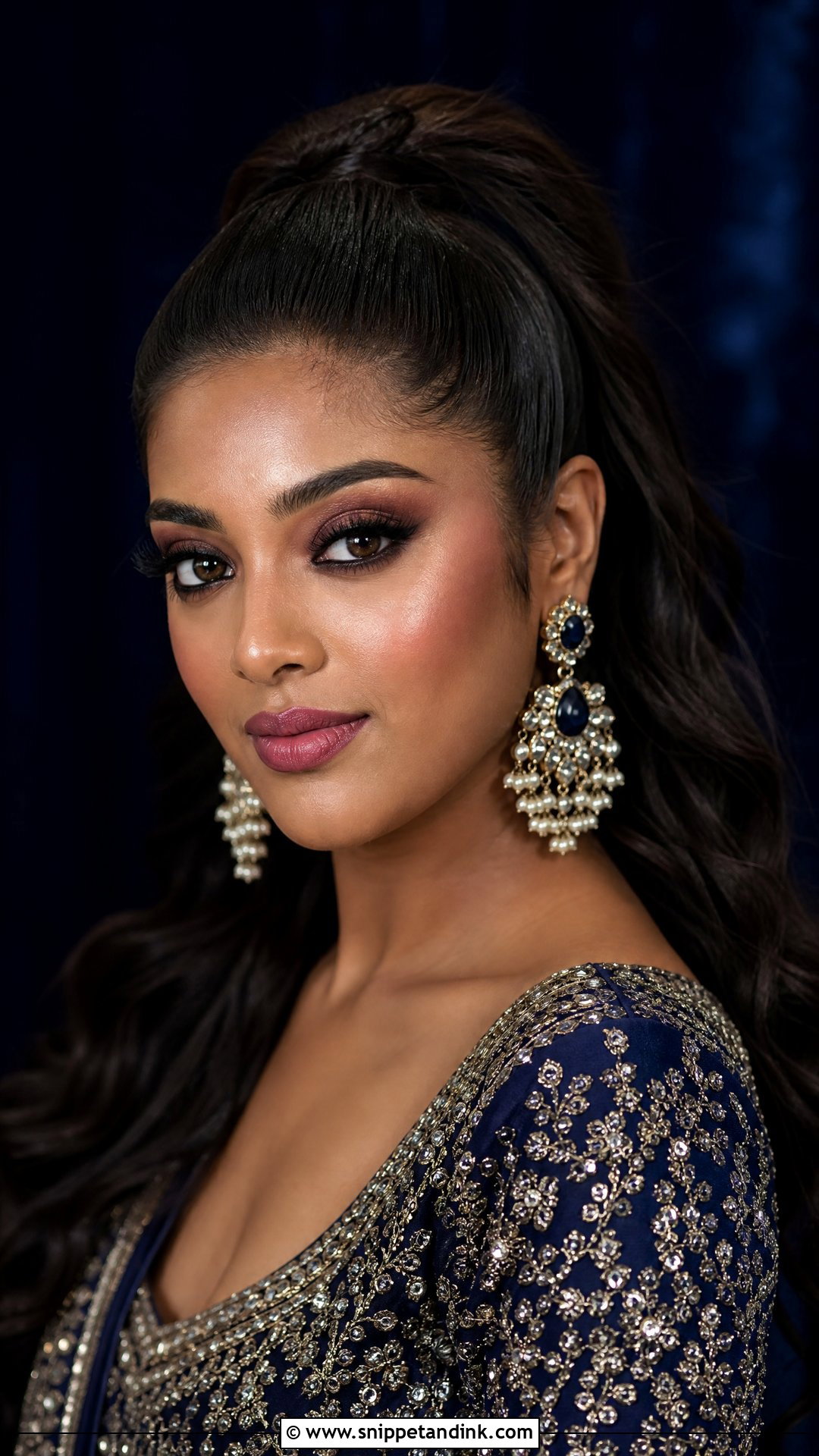
Sangeet makeup has to survive dancing. I set the T-zone strategically, keep glow on the cheeks, and use waterproof mascara and transfer-resistant lipstick. A soft smoky eye in bronze or plum with full lashes and defined brows gives impact. A nude rose or soft berry lip balances the eyes. Bright stage lights and lots of photos mean the base must be perfected but never cakey, which usually means thin layers built slowly.
17. Minimal Indian Bridal Makeup
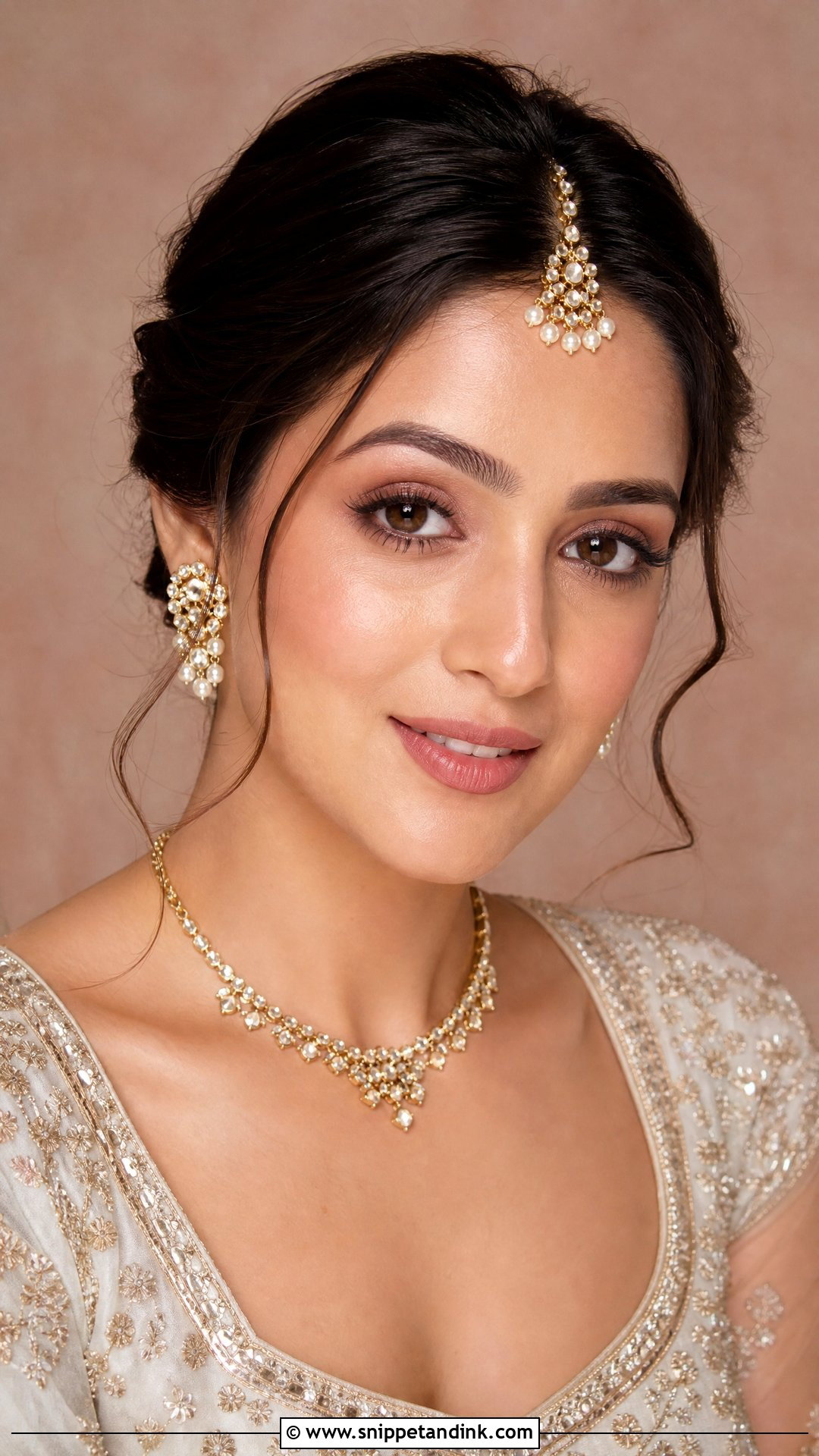
Minimal doesn’t mean unfinished. I use a skin-like base with light to medium coverage, natural blush, soft highlight and gentle bronzing. Eyes get brown shadow, a thin liner, curled lashes and groomed brows. The lip should match your undertone: rose, peach or a brownish nude. It suits intimate ceremonies, daytime weddings and brides who dislike heavy makeup, but under a heavily embroidered dupatta it can look underdone, so I’d test it with the real outfit.
18. Soft Glam Indian Bridal Makeup
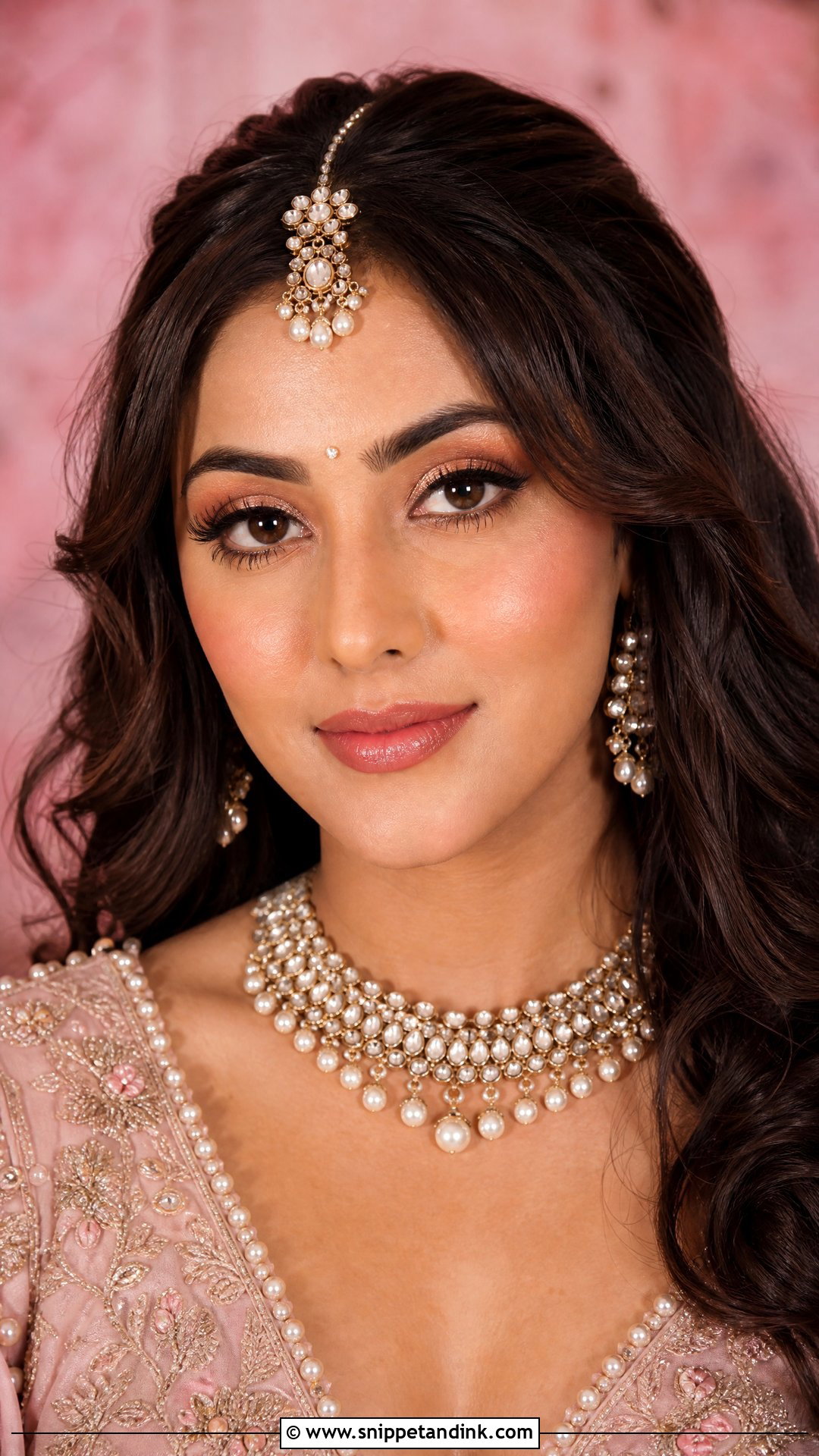
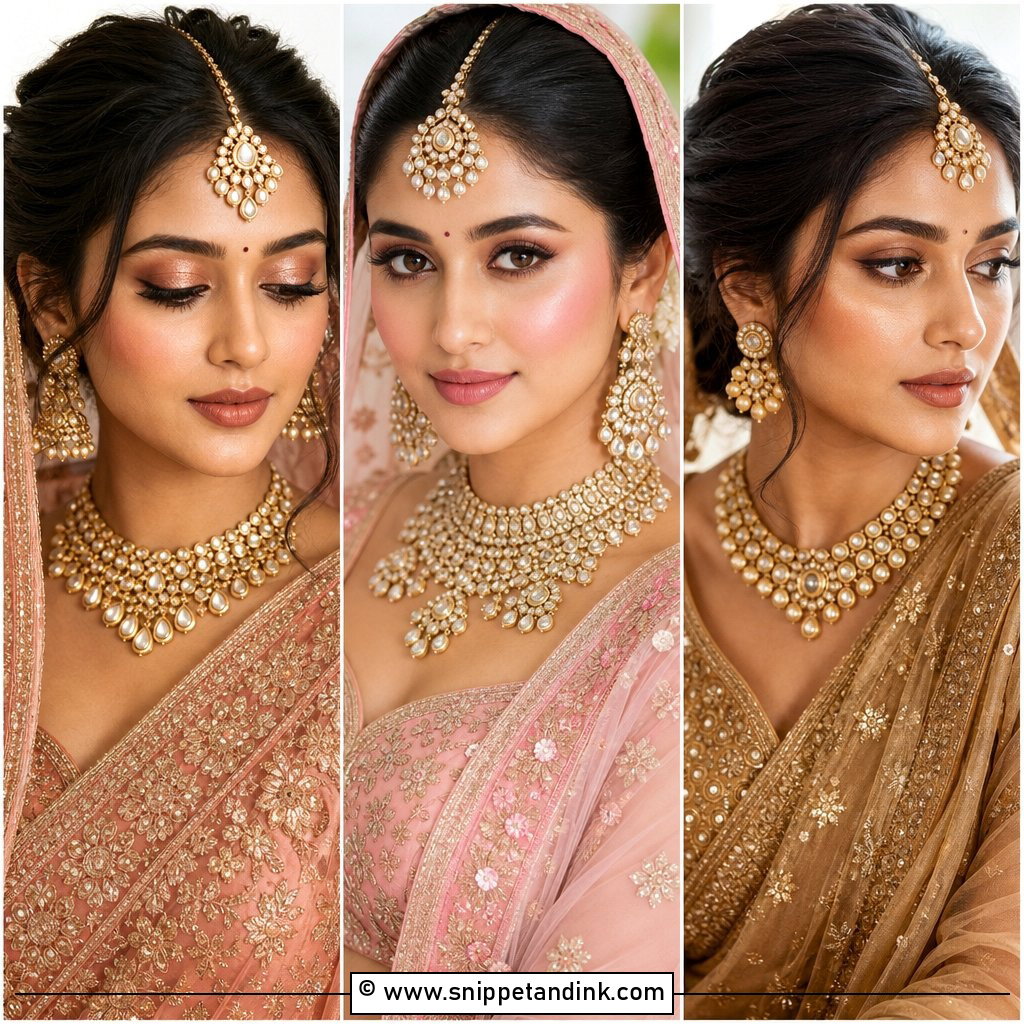
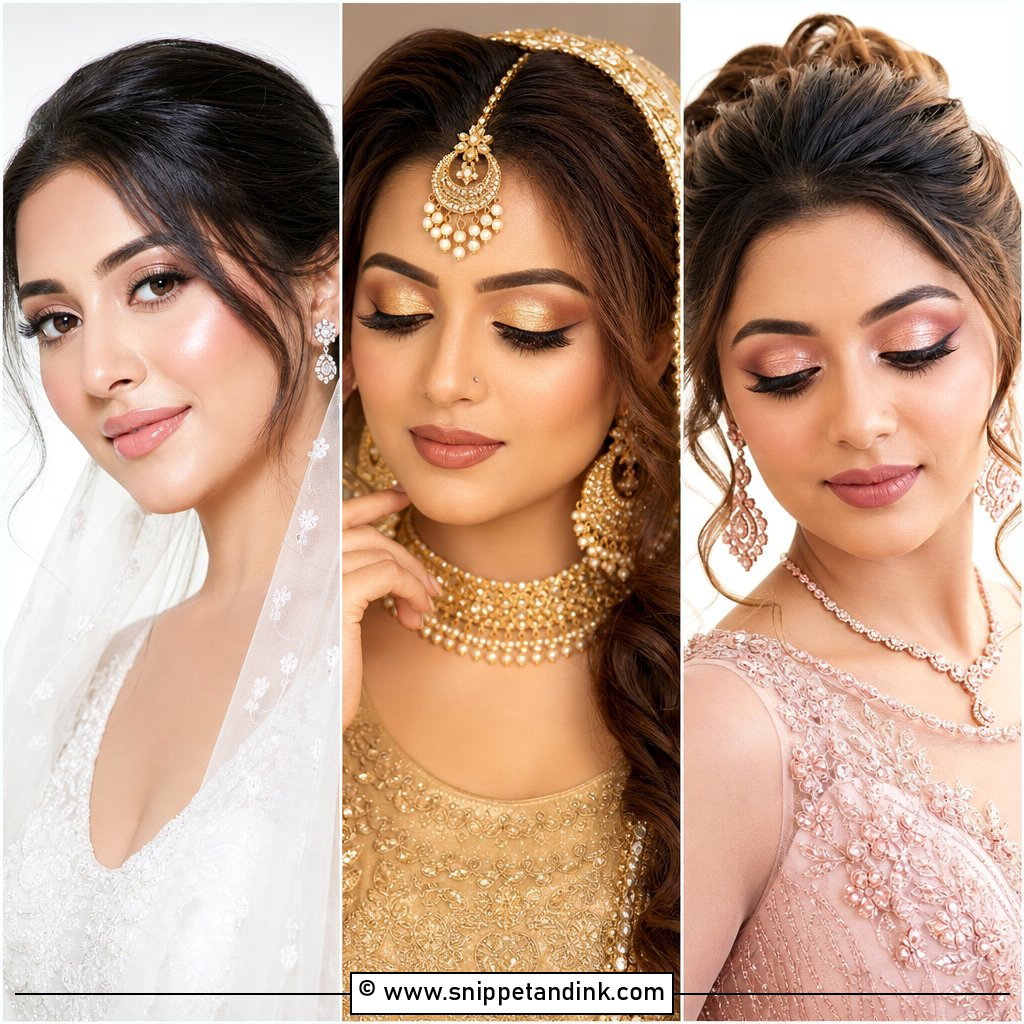
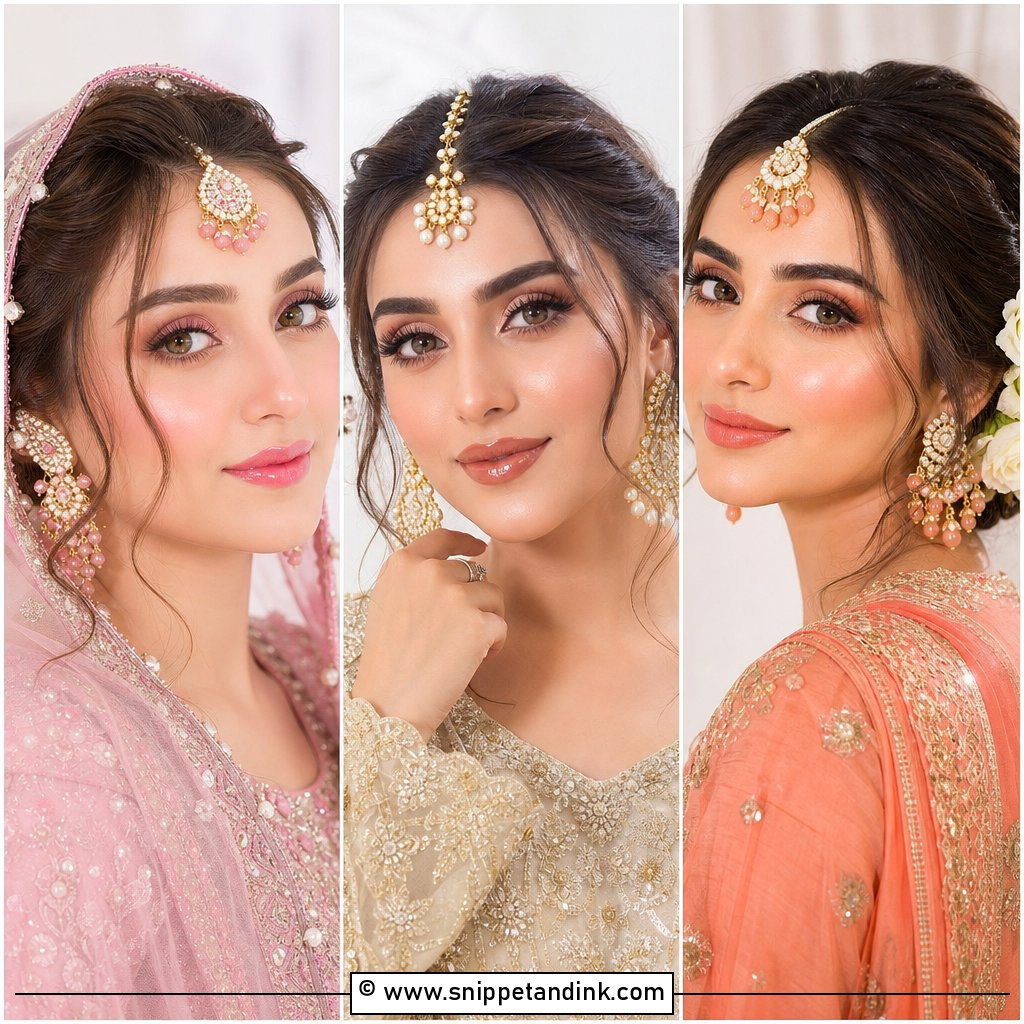
Soft glam is my most requested look because it suits almost any outfit and face. A smooth radiant base, softly sculpted cheeks, blended neutral shadow, defined liner, wispy lashes and a nude or rose lip. Champagne, bronze and taupe work with red, pastel and jewel tones alike. The whole look depends on blending: no harsh contour, no patchy shimmer, no lip so pale it reads grey in photos.
19. Smokey Eye Indian Bridal Makeup
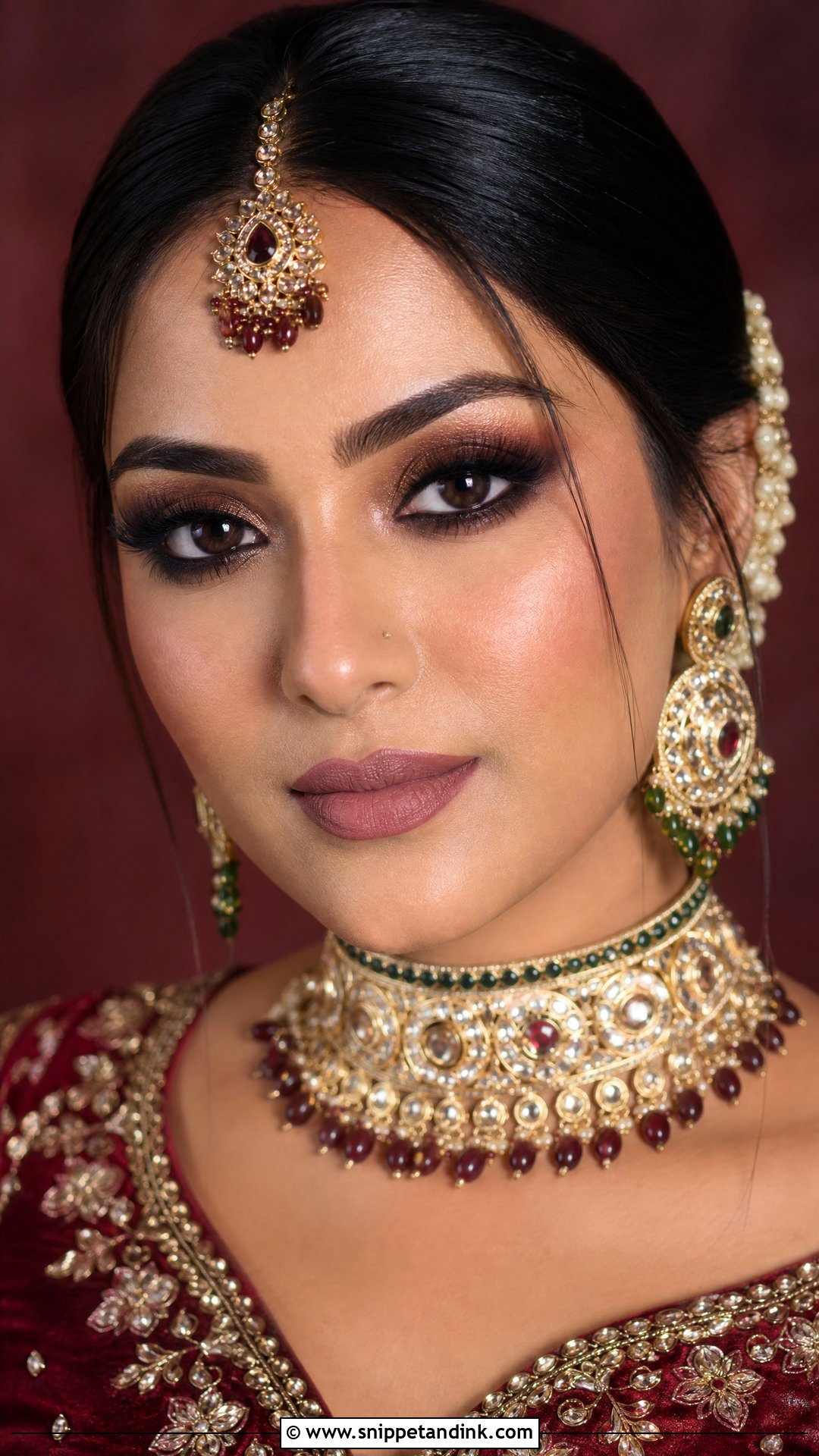
For an evening smoky eye, I rarely use pure black. Brown, bronze, charcoal or plum give depth without harshness, especially under warm lighting. The rest of the face stays clean and bright so the eyes lead. I’m careful with the lower lash line; heavy black underneath drags the eye down and can look tired by the end of a long night. A muted mauve lip, sculpted cheeks and subtle highlight complete it. Darker lehengas and metallic outfits suit it.
20. Pastel Lehenga Bridal Makeup
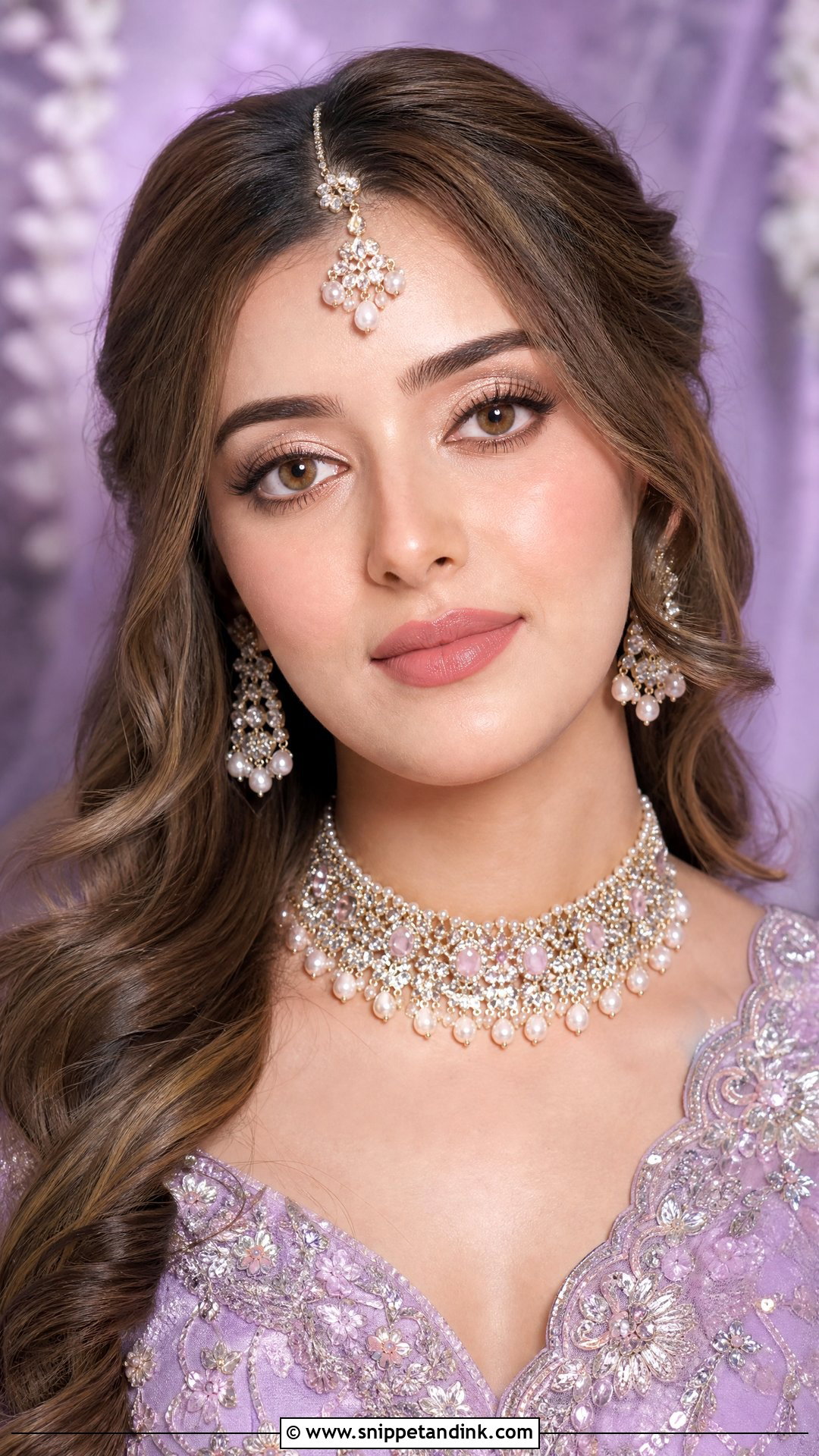
Pastel outfits need warmth in the face, or the skin can look grey in photos. I use luminous skin, pink or peach blush placed a little higher, champagne shimmer on the eyes and a delicate brown liner. Heavy contour and black eye makeup overpower blush pink, mint or lavender, so I keep both soft. A rose nude or peach nude lip and wispy lashes complete it. Daytime and destination weddings suit it well.
Giving Each Function Its Own Face
When a bride books me for haldi, mehndi, sangeet, the wedding and the reception, the risk is five versions of the same face. Wedding albums look much richer when each event has its own character.
I plan the wedding look first, since it’s the most traditional and usually the heaviest. Everything else moves away from it: fresh and dewy for haldi, color on the eyes for mehndi, glam and long-wear for the sangeet, sleek and modern for the reception. Changing the lip alone isn’t enough. Change where the focus sits, eyes on one day, skin on another, lips on the third.
Makeup That Survives the Vidaai
Most brides cry at some point, and the vidaai is the moment it usually happens. Waterproof mascara and a waterproof liner on the lower line stop the worst damage. I keep lower lashes light, set the under-eye area with a fine powder, and give a family member cotton buds to lift any smudges by pressing, not rubbing. A tear that runs through foundation can be patted back with a damp sponge in a minute or two.
Test the Base by a Window, Not Under the Salon Lights
There isn’t one formula for Indian bridal makeup. A red lehenga may call for classic glam, a pastel outfit for soft shimmer and fresh skin, and pre-wedding events can be lighter and more playful. Test your base in natural light, choose lip colors that flatter your undertone, and make sure everything is built to last through long celebrations. If the look feels balanced and like you, you’ll be comfortable all day, and that shows in every photo.
You'll Like These Ideas:


Leave a Reply