
Most brides who ask me for pink and glowy are describing the same thing: skin that looks healthy, a flush that seems to come from inside, and nothing that reads as makeup from three feet away. The hard part is that glow and long wear pull in opposite directions. The more luminous the base, the sooner it can tip into shine on the nose and forehead, and a wedding day is long. So every look below is built the way I’d build it in the chair: thin layers, pink placed with intent, and powder only where the face actually needs it. Pink itself is flexible. Cool, warm, muted or bright, there’s a version that suits every undertone, and I’ve included shade notes by skin tone and eye color further down.
Where Glow Belongs on a Bride’s Face, and Where It Turns to Shine
Glow and shine look alike in the mirror and completely different in photos. Glow is light catching the high planes of the face on purpose. Shine is oil rising through the base in the T-zone, and camera flash turns it into flat white patches. Most pink glowy looks that go wrong do so because highlight and dewy products went everywhere.
My rule in the chair is simple. Reflective products go on the top of the cheekbones, the brow bone, the inner corners of the eyes and a touch on the cupid’s bow. The nose, the center of the forehead and the chin get a fine layer of powder, because that’s where skin produces oil through the day. Blush can be dewy; it sits where skin is usually drier.
Reading your skin before you pick a finish
- Dry or mature skin: cream blush and liquid highlight, minimal powder, because powder settles into fine lines.
- Combination skin: dewy cheeks, matte T-zone. Most brides fall here.
- Oily skin: a satin base, powder blush layered over cream, highlight in powder form only.
- Textured skin or visible pores: keep shimmer off the cheek where the texture is, since reflective particles make it more visible.
1. Soft Pink Glowy Wedding Makeup
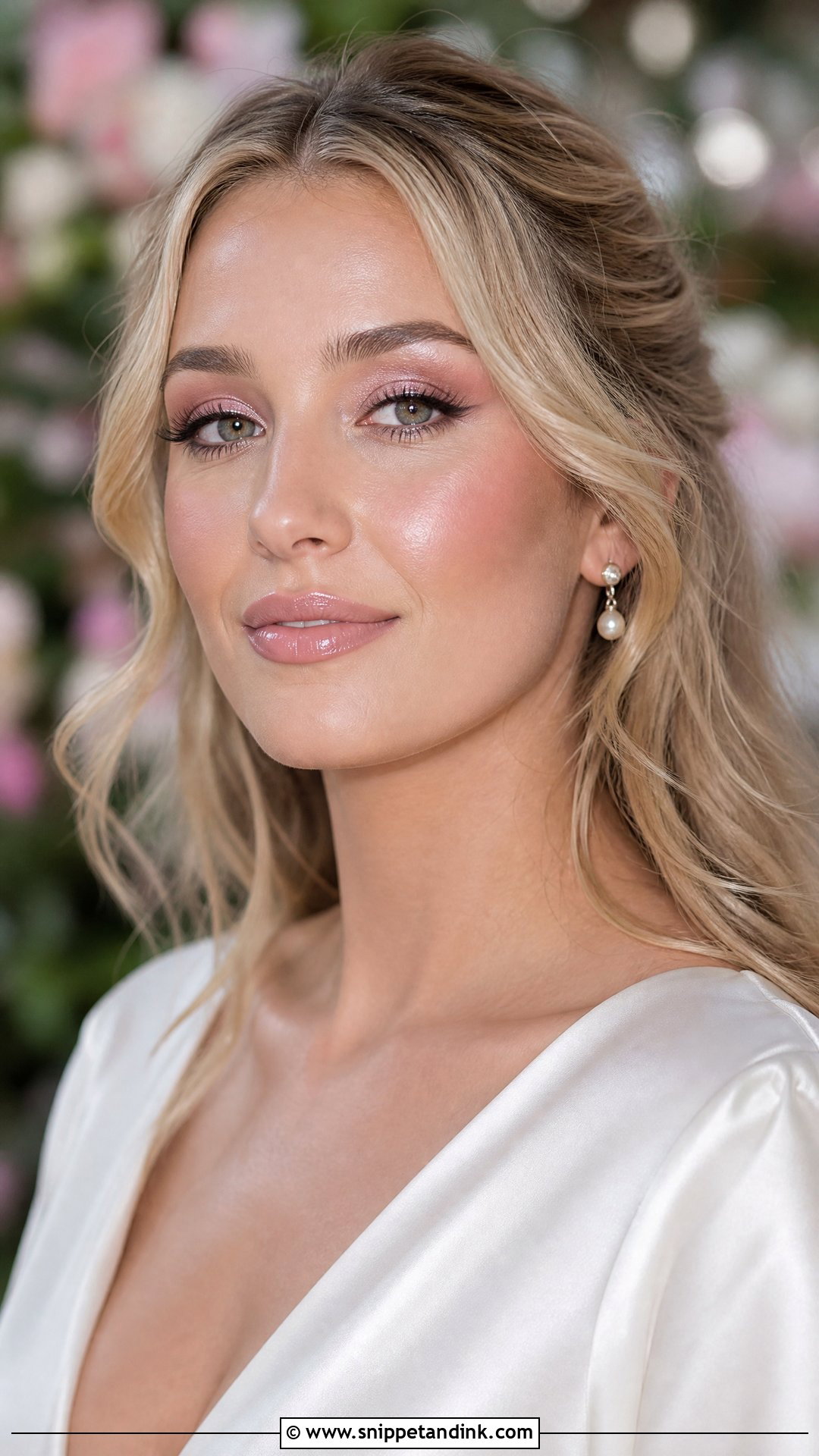
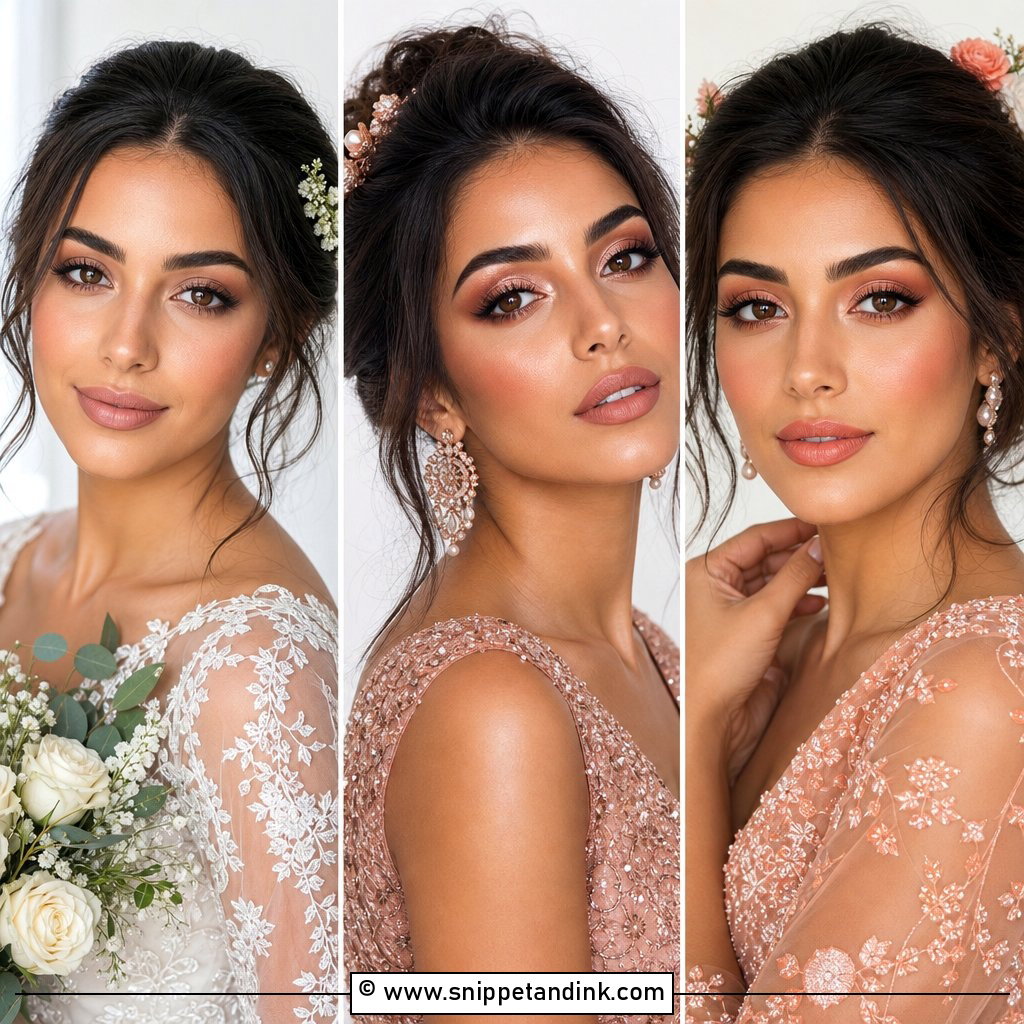
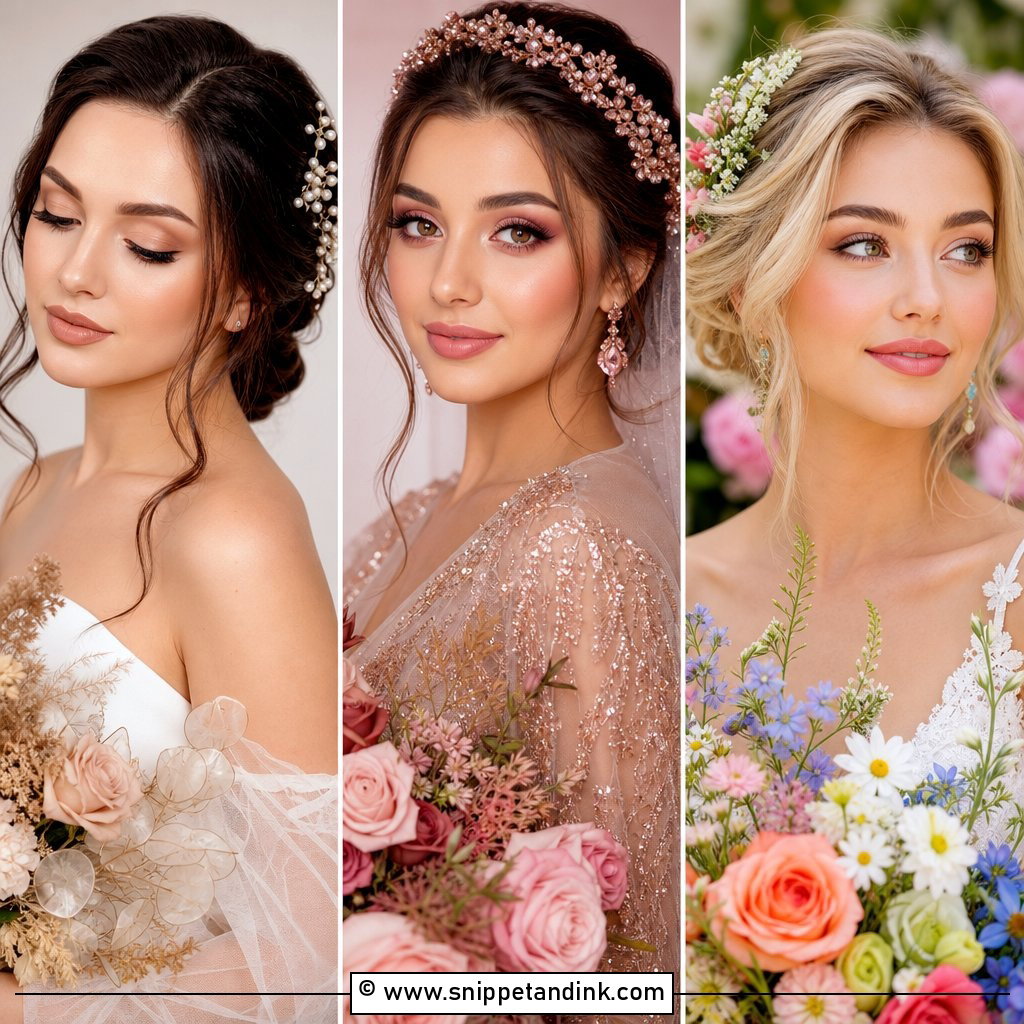
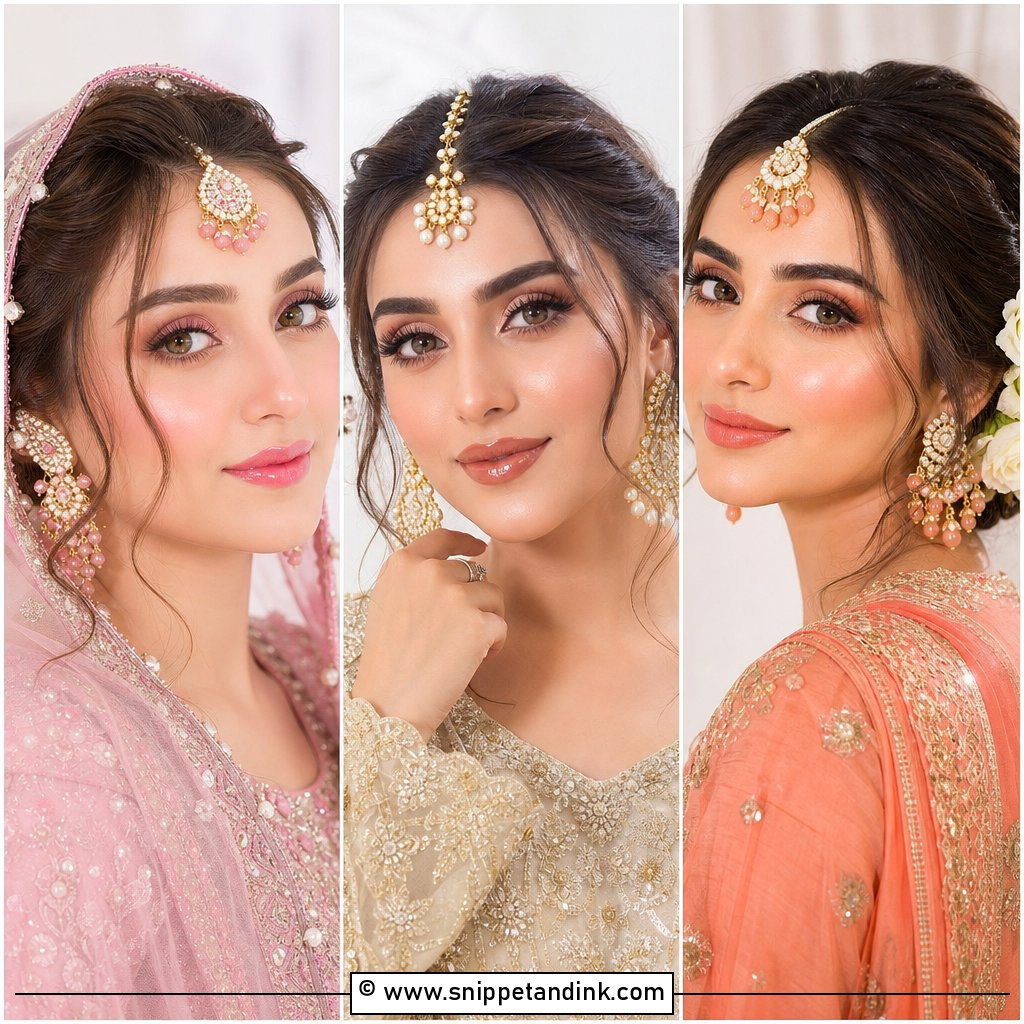
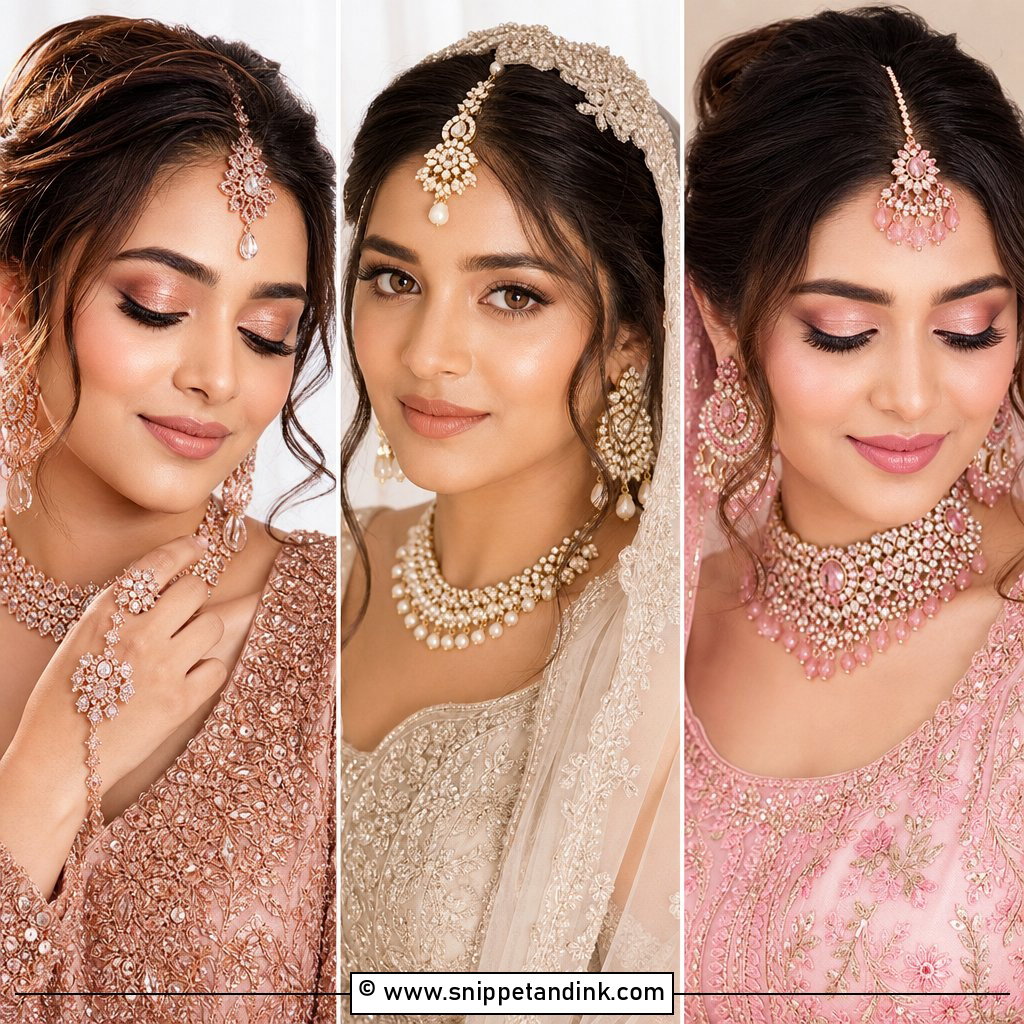
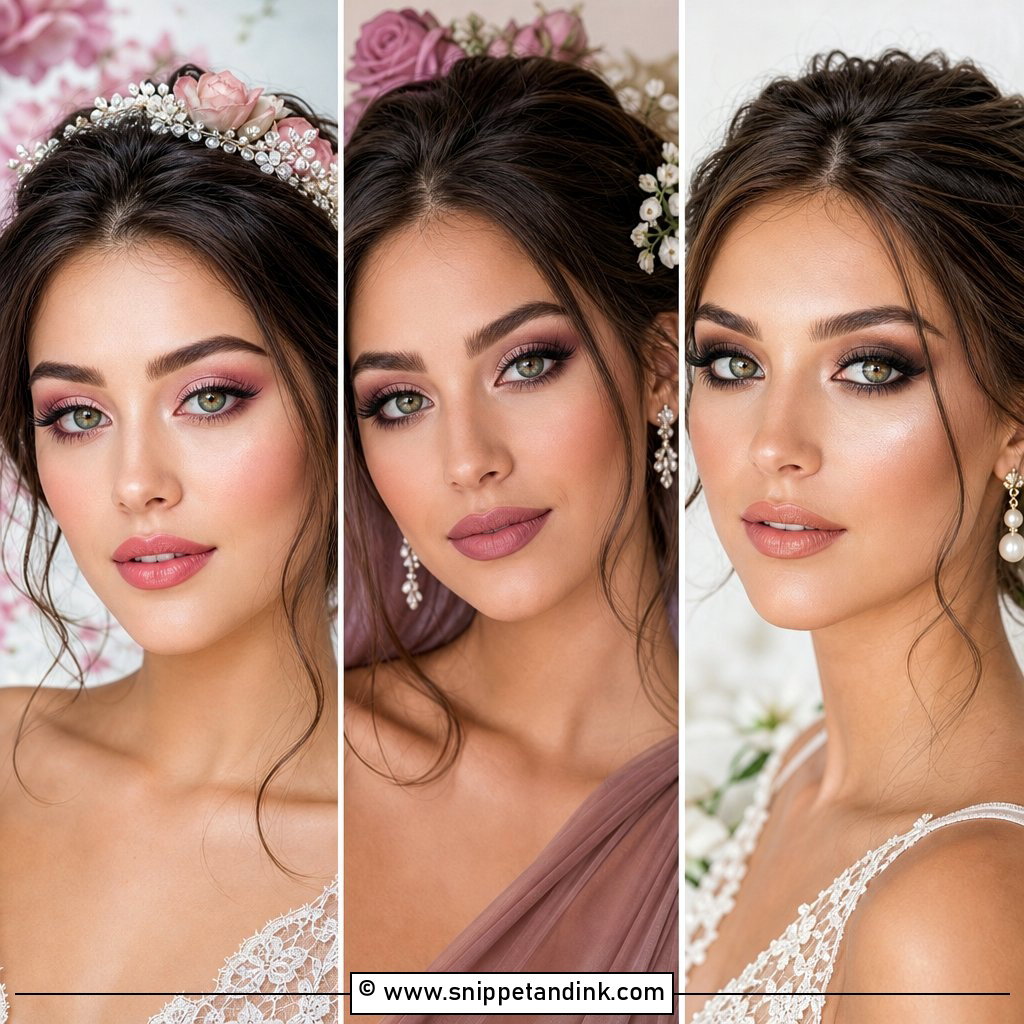
This is what I think of as the house style. Soft pink glowy wedding makeup starts with satin-dewy foundation, sheer concealer and a whisper of powder through the T-zone only. I place a light pink cream blush high, almost at the top of the cheekbone, because blush sitting low on the apples drags the face down in photos taken from slightly above. Pale pink shimmer on the lid, a taupe crease, brown liner and wispy lashes keep the eyes fresh. A pink-nude gloss finishes it. In daylight ceremonies it catches the sun gently instead of flashing back metallic.
2. Rose Gold Pink Wedding Makeup
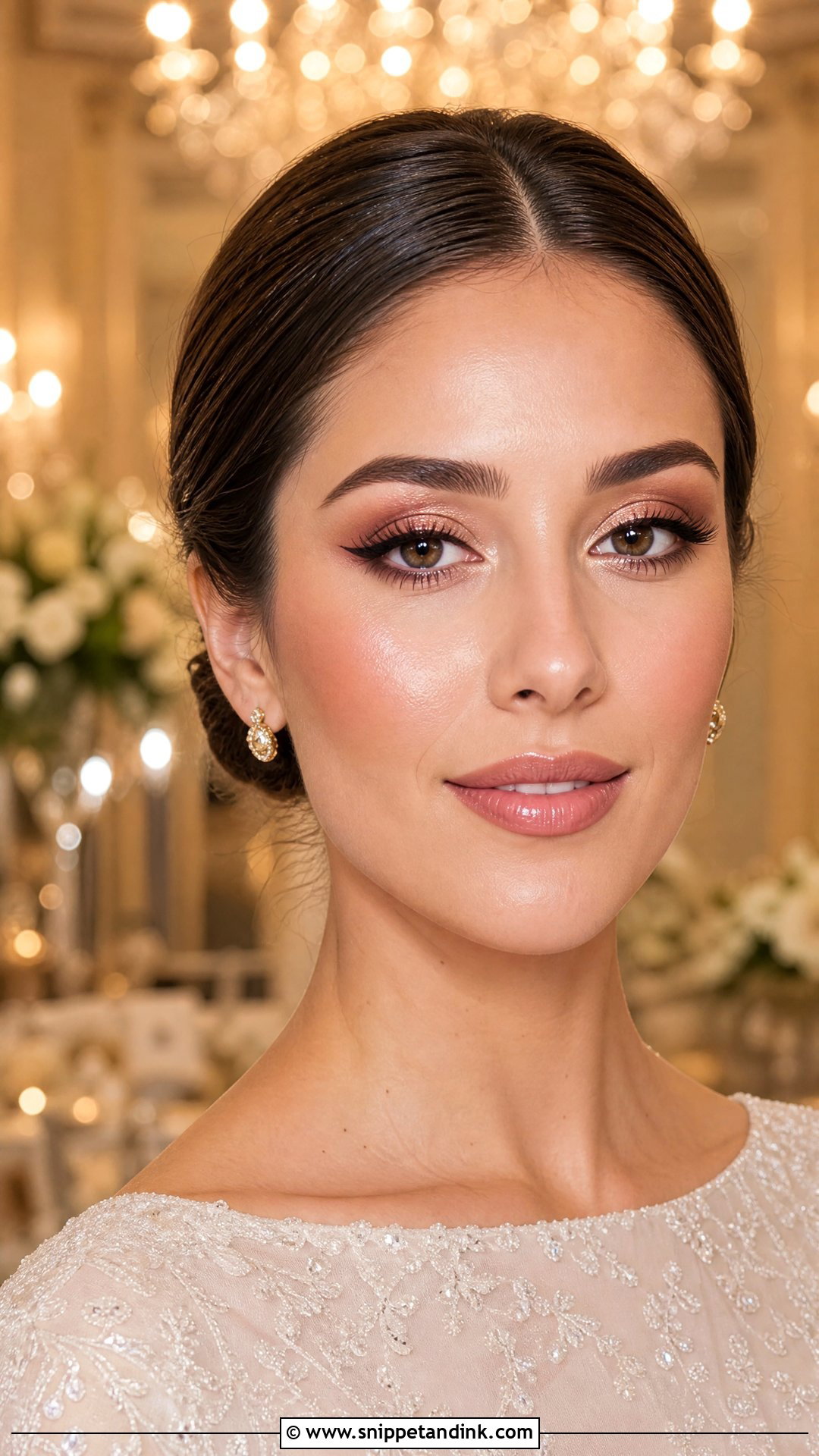
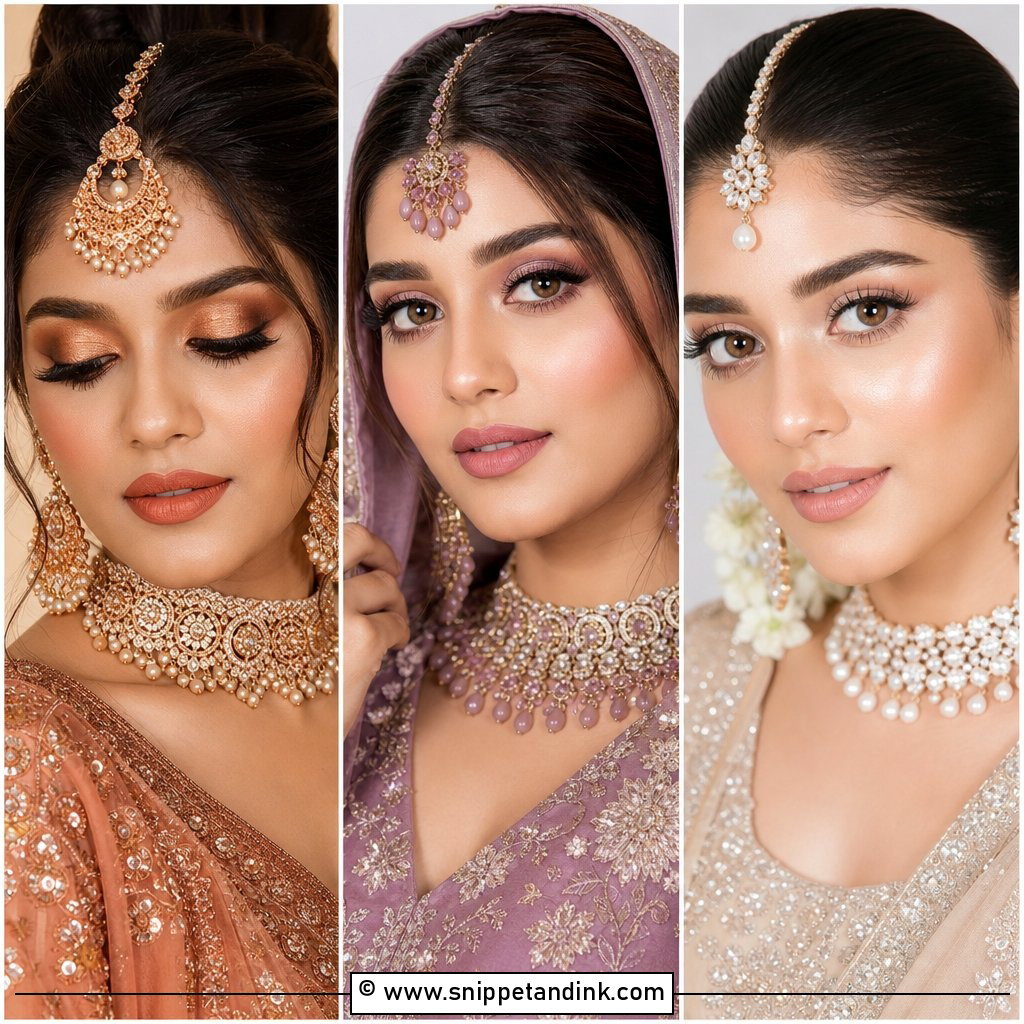
Rose gold sits between pink and bronze, so it warms the face without the sparkle reading as party makeup. I use peach-pink blush and champagne highlight on the cheekbones, then press rose gold shimmer onto the lid with a finger rather than a brush, which gives more shine with less fallout. Warm brown in the crease and a thin brown wing add shape. Keep lashes separated; dense strips with metallic lids look heavy by the evening. A rosy nude in satin or gloss works, and gold jewelry and ivory fabric make the whole palette look intentional.
3. Pink Dewy Skin Wedding Makeup
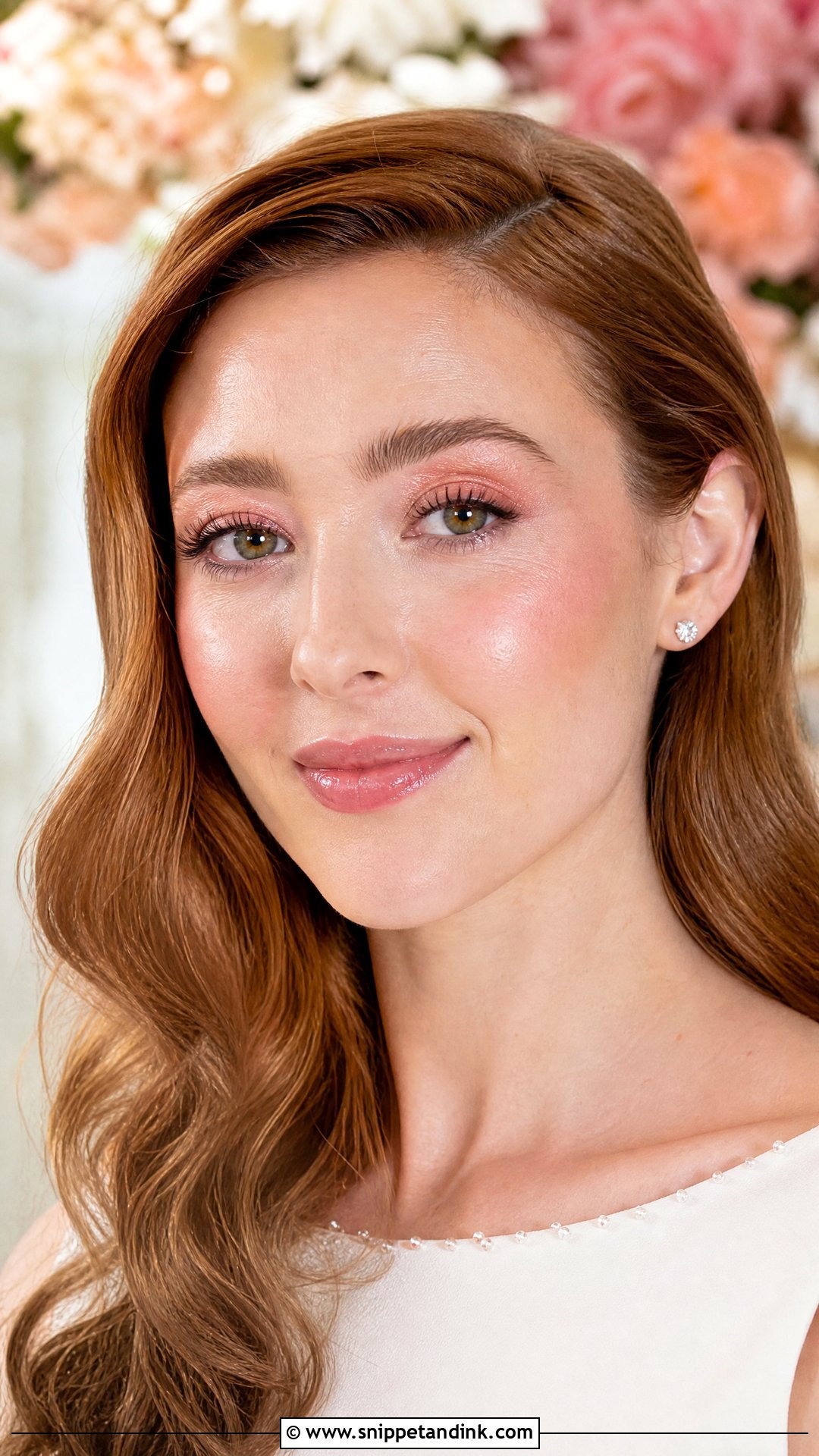
Here the skin is the look, so prep does more than foundation. I start with a hydrating layer, give it a few minutes to sink in, then a luminous primer and a flexible skin tint. Liquid pink blush goes on the cheeks and sweeps up toward the temples while the base is still slightly tacky, so it melts in instead of sitting on top. Eyes stay simple: champagne-pink shimmer, brown mascara, brows brushed up. A sheer pink balm on the lips. I set only the nose, forehead and chin, which is where shine shows first.
4. Pink Soft Glam Wedding Makeup
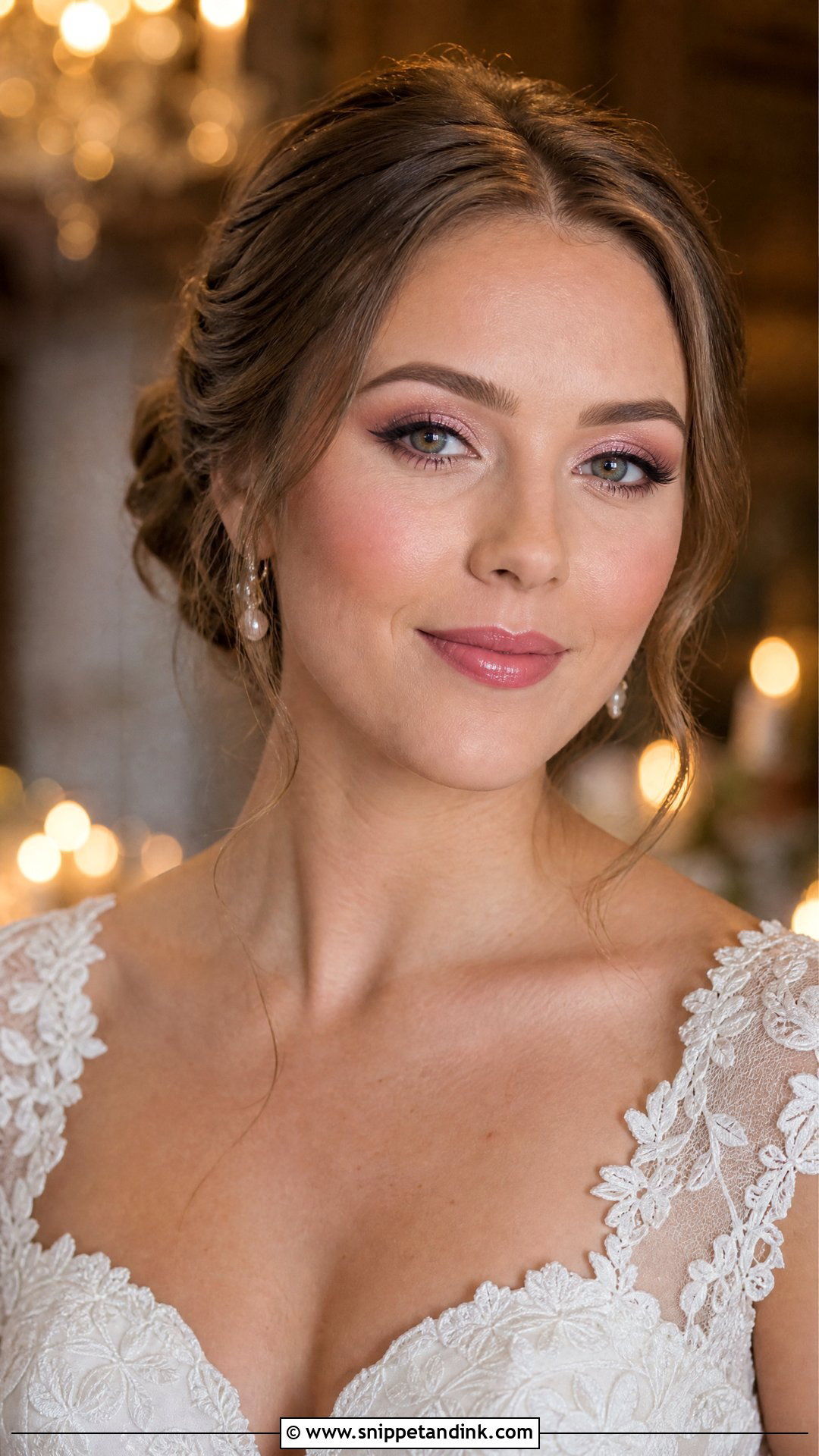
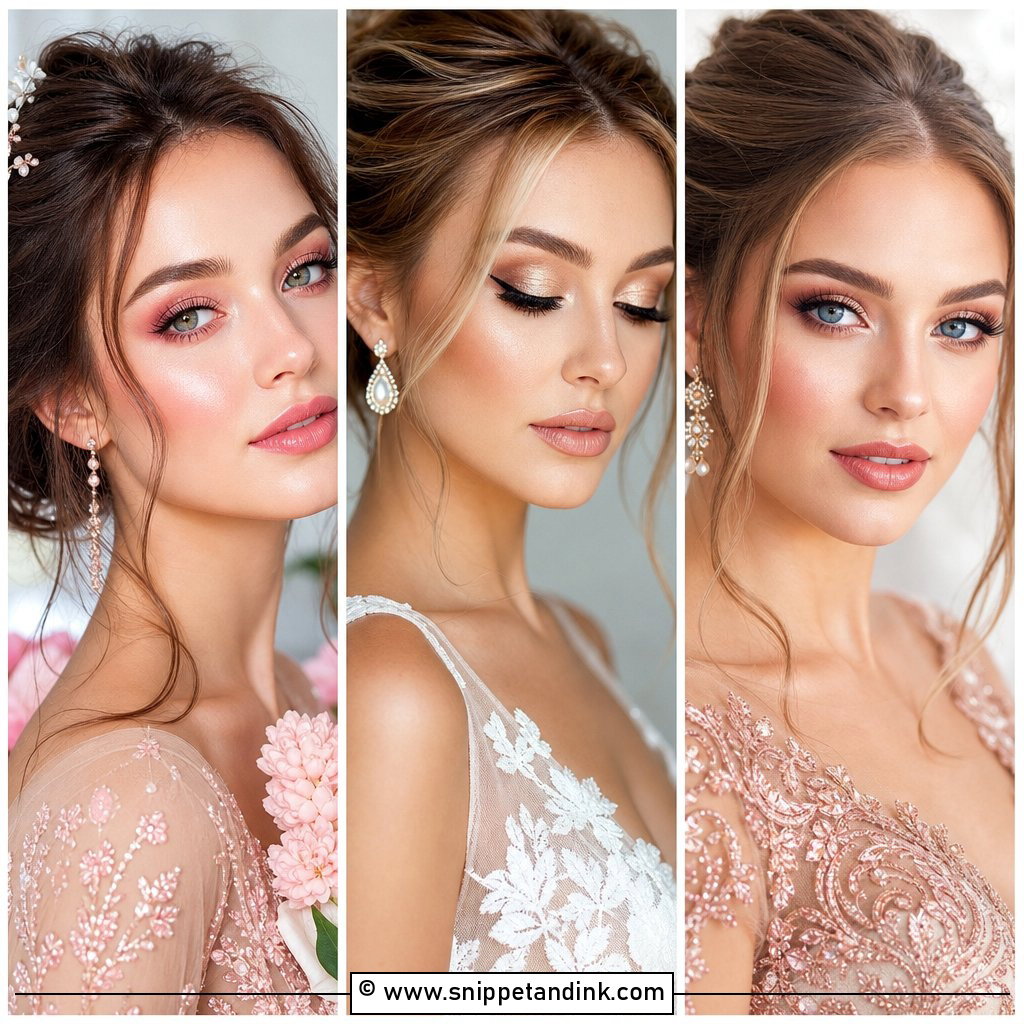
Soft glam adds visible definition while you still look like yourself. The base goes to medium coverage while the skin texture stays visible. Rosy blush, a little bronzer under the cheekbone and a soft highlight give shape. Matte blush-pink on the lid, mauve-brown in the crease and a dot of shimmer in the center make the eye look rounder in photos. A small wing and fluffy lashes add structure without a hard edge. A satin pink lip with matching liner holds up from the vows to the last dance.
5. Pink Monochrome Wedding Makeup
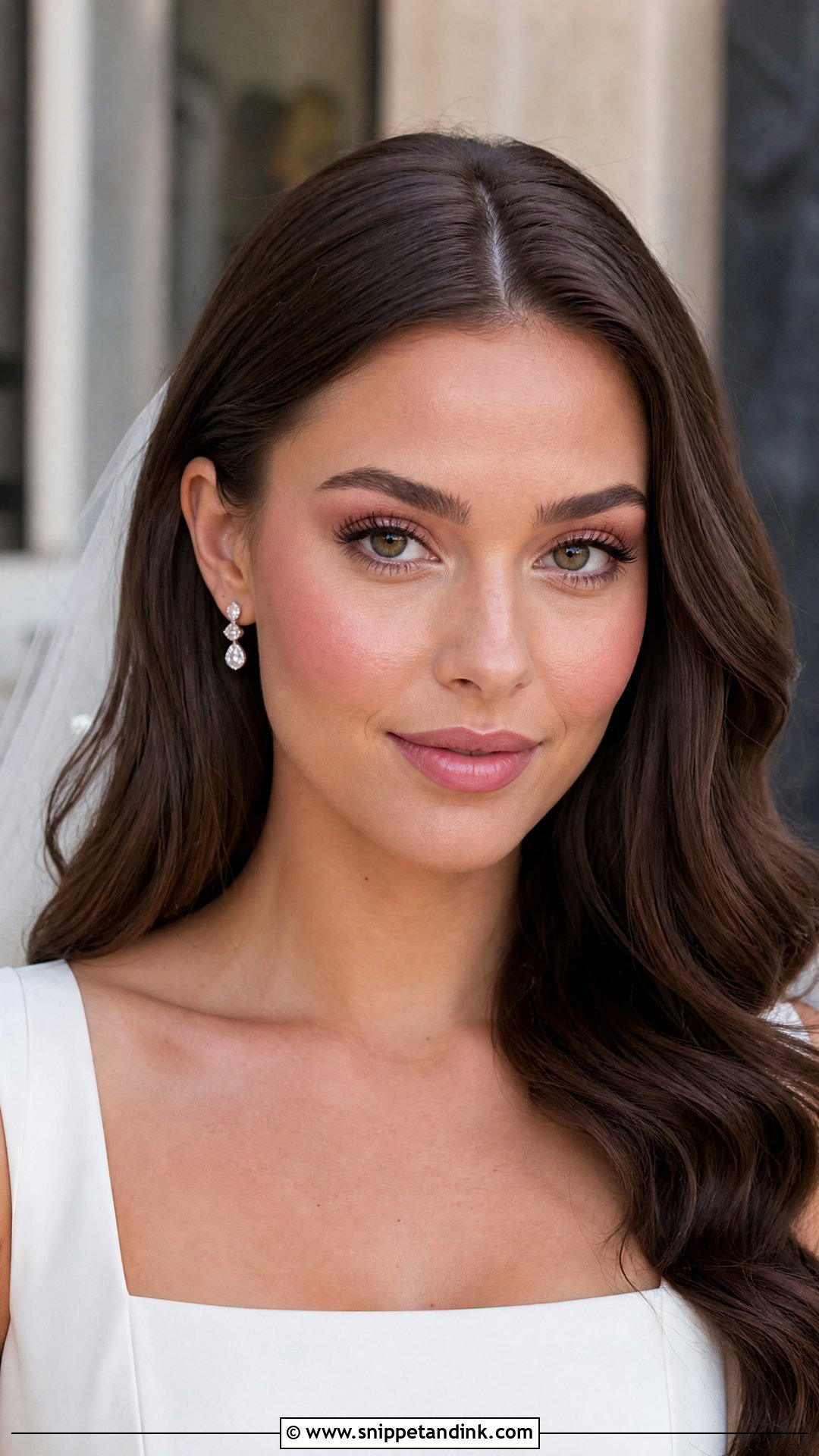
Choosing the pink family is the whole job here. Pink monochrome wedding makeup carries that one family across eyes, cheeks and lips. Cool undertones suit rose, ballet pink and mauve; warm undertones suit peach-pink, coral-pink and warm rose. I usually pick the lip color first and match a cream blush to it, then wash the same tone over the lids with brown liner for definition. It is the easiest look to touch up, because one product can refresh lips and cheeks in a minute.
6. Blush Pink Wedding Makeup
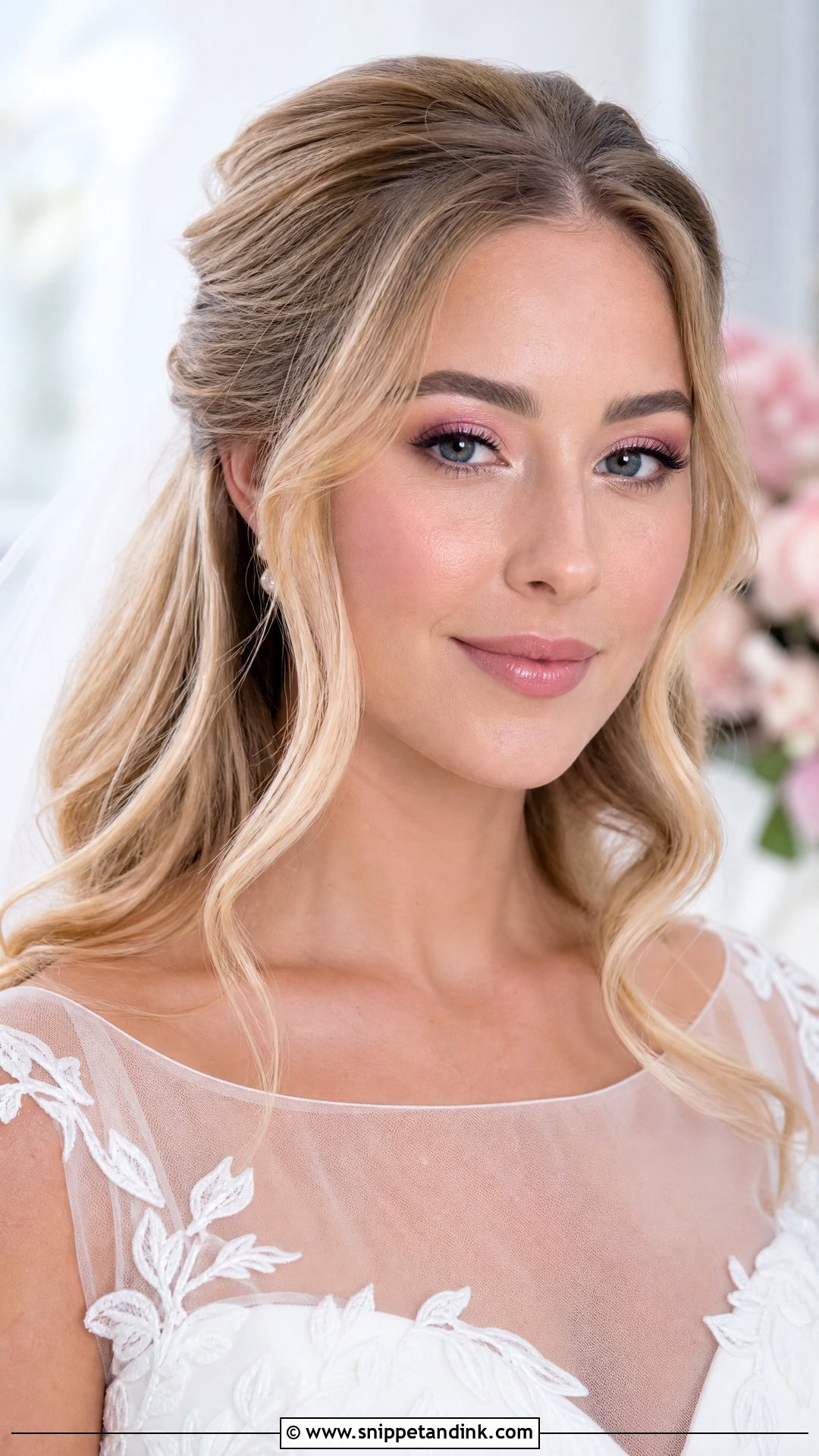
Blush pink is my pick for the bride who says she rarely wears makeup. It avoids strong shimmer and heavy contour completely. A natural-finish foundation, a cool or neutral pink blush, a matte ivory base on the lids with a soft pink shade and a light brown crease. I swap black liner for a brown pencil pressed into the lash line, which defines without the hard line that can look surprisingly severe on someone used to bare skin. A pink-beige lip balances it.
7. Pink Champagne Wedding Makeup
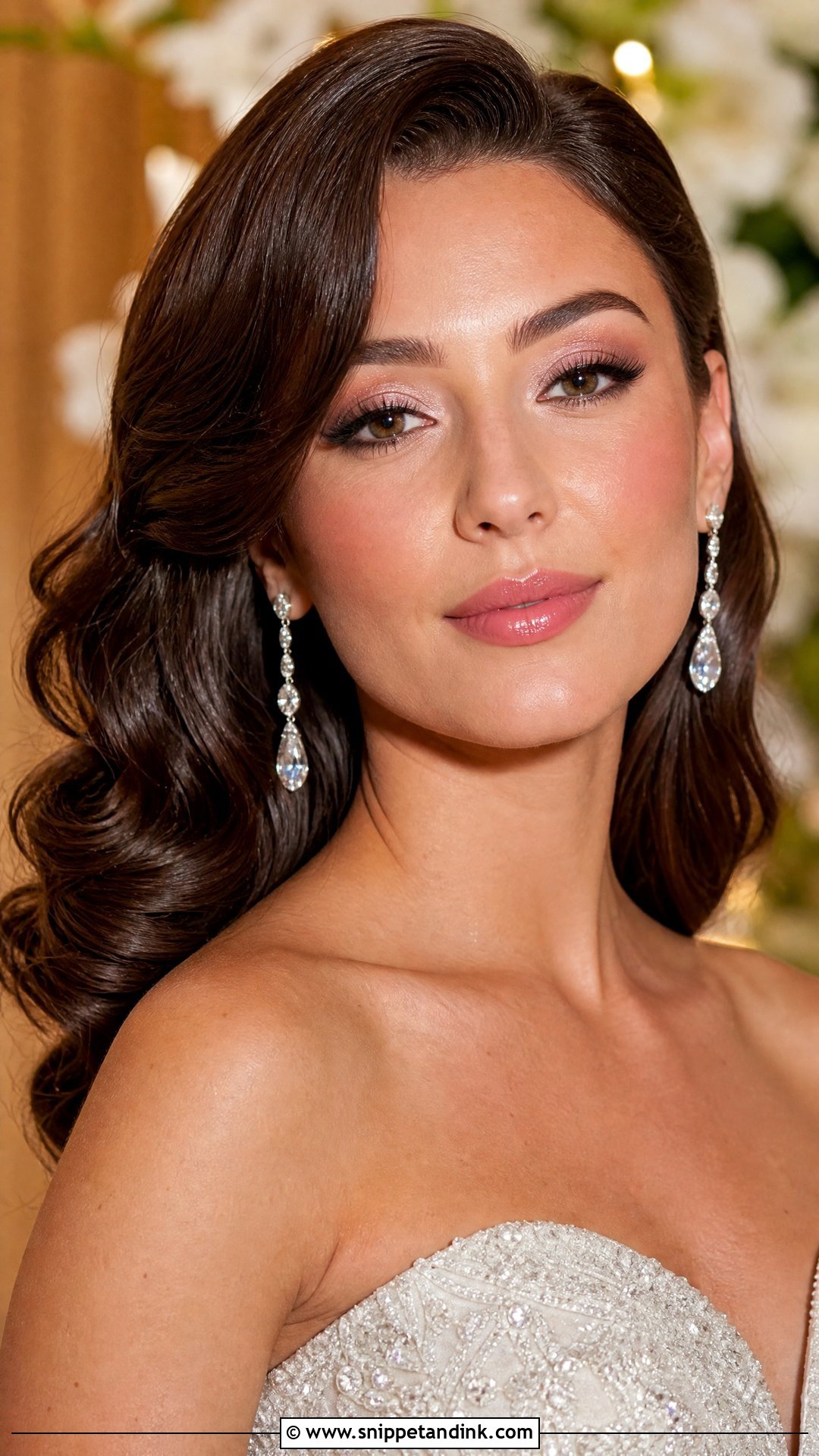
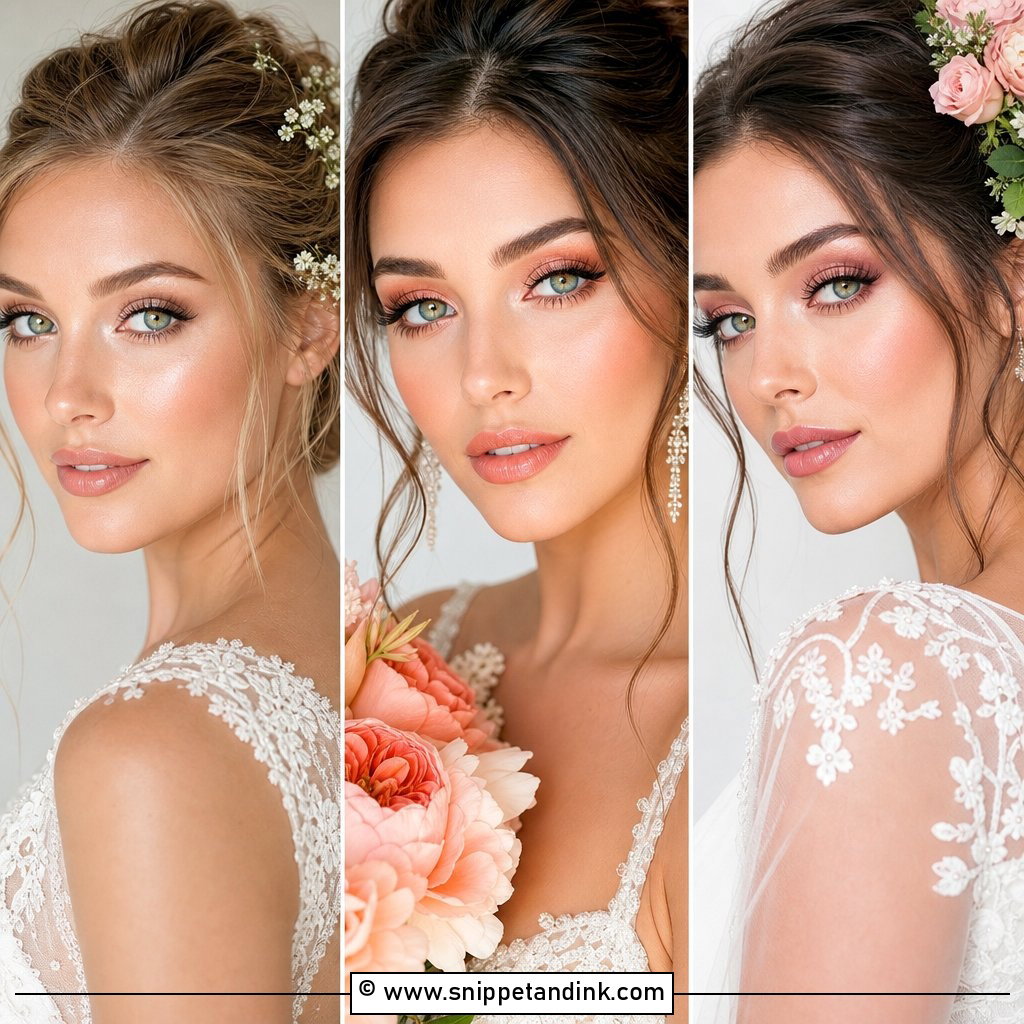
Pink champagne is the most reflective look here, so placement decides whether it looks expensive or glittery. I put highlighter only on the top of the cheekbone, the brow bone and the inner corners, and keep it off the nose tip and center forehead, which already catch light and flash flat in photos. Champagne-pink shimmer on the lids gets depth from taupe or soft bronze, the liner stays thin, and rose blush with a glossy lip completes it. It suits evening and formal ceremonies best, where candlelight flatters shimmer.
8. Pink Nude Wedding Makeup
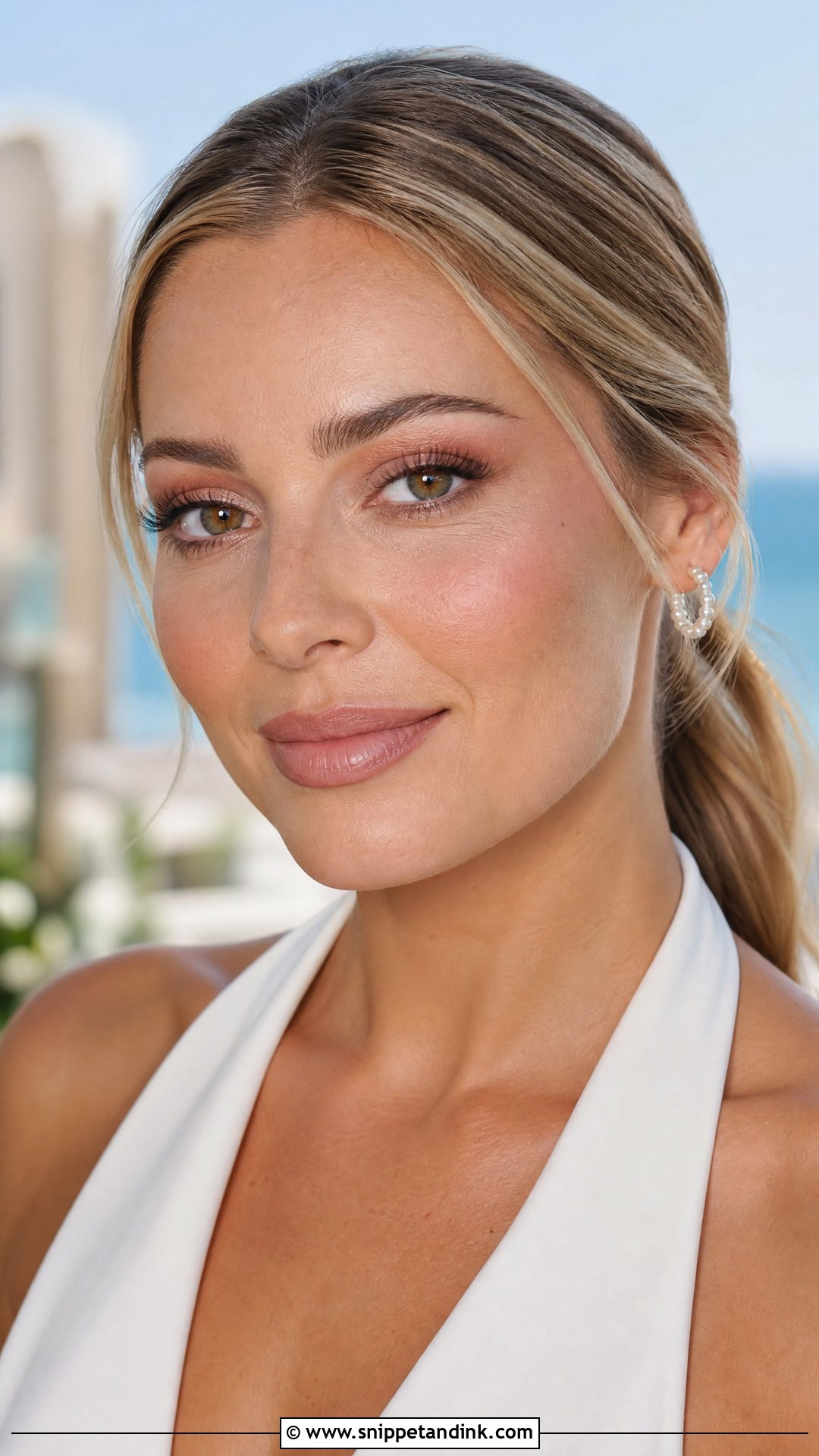
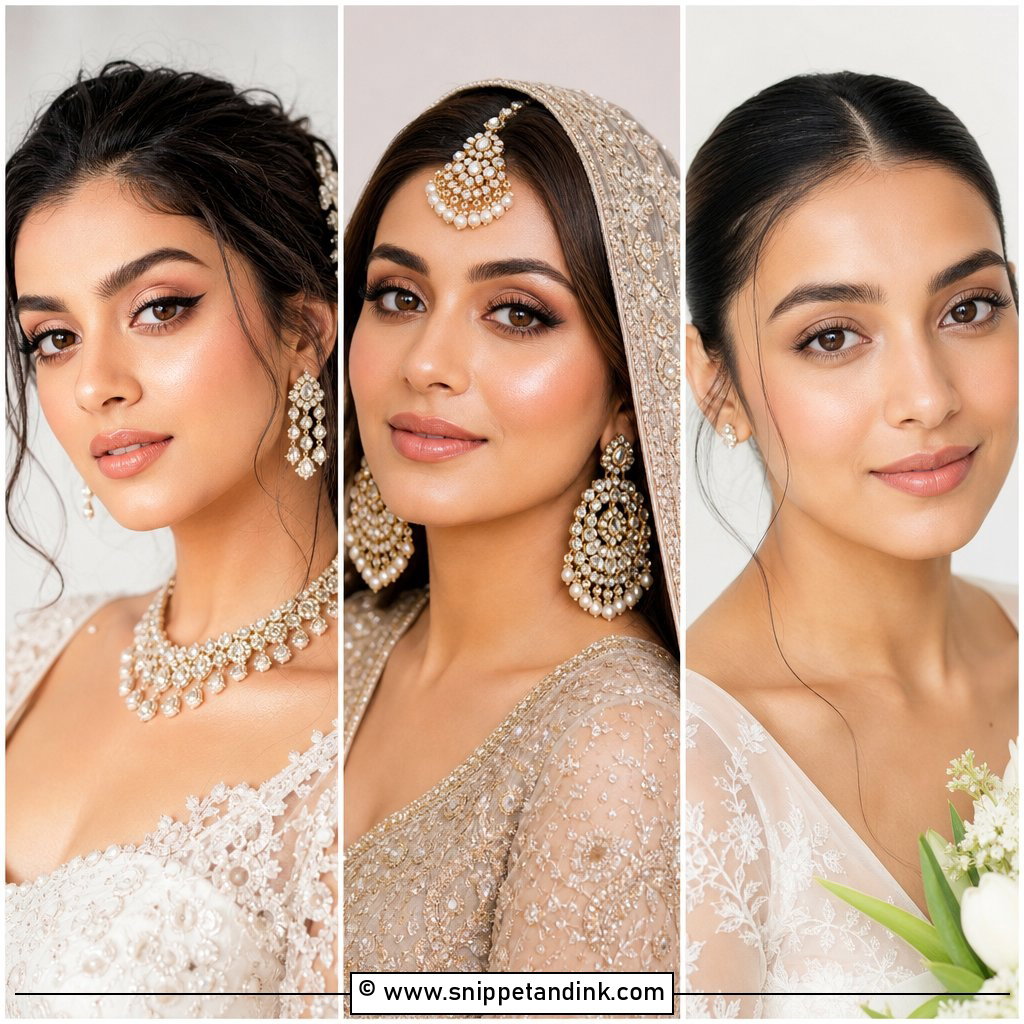
Pink nude sits halfway between bare and full glam. The lip carries it, so I match liner and lipstick to a shade a touch deeper than the natural lip and blend the liner inward so there’s no visible edge when the lipstick wears off. Skin-like foundation, light bronzer and muted pink blush give life to the face. Beige, soft rose and light brown on the eyes, plus individual lashes or a fine strip, keep it neutral. It’s comfortable to wear for twelve hours, which is half the point.
9. Pink Smokey Wedding Makeup
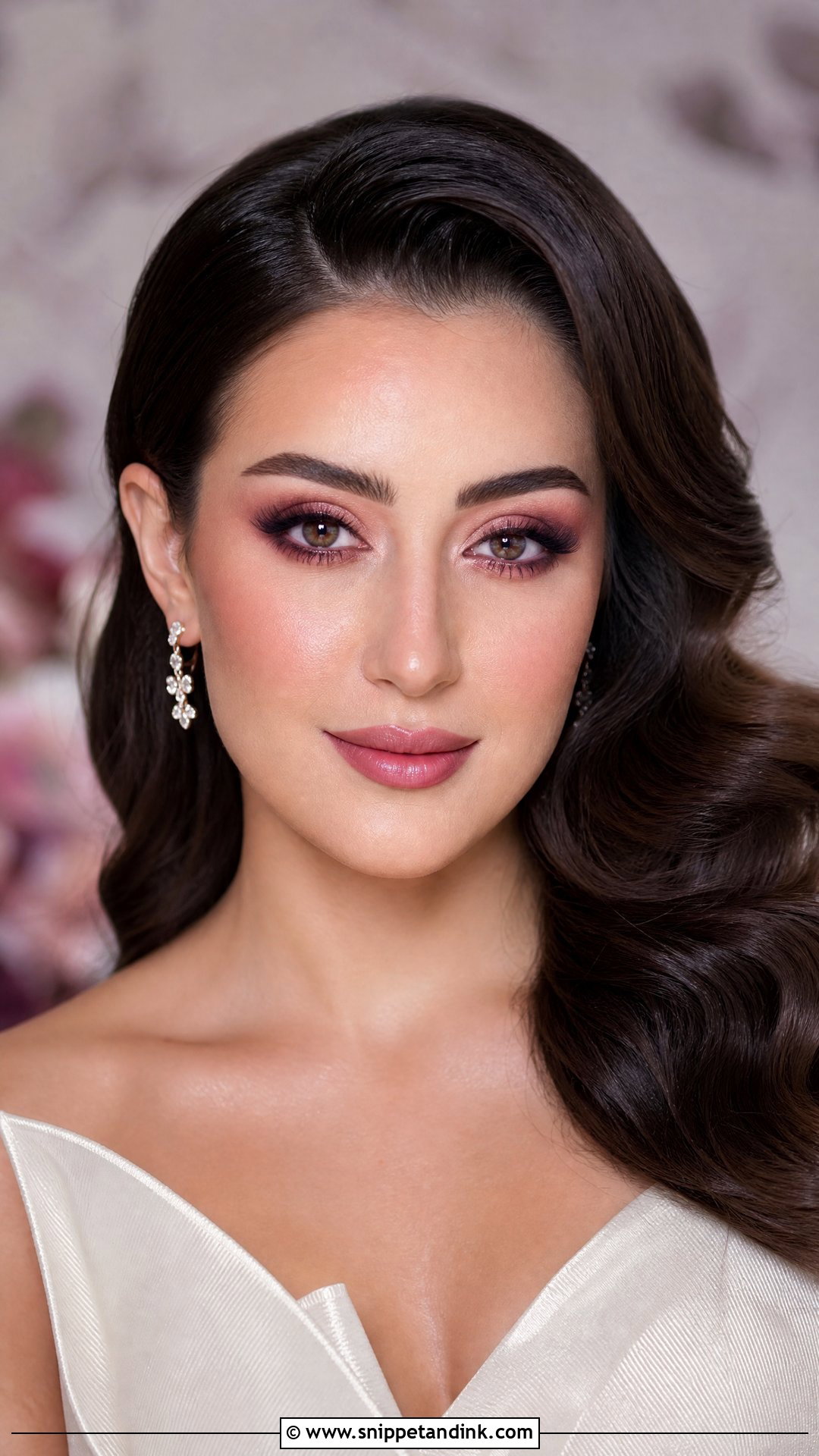
A pink smokey eye has depth without the heaviness of black. Mauve-pink and dusty rose go across the lid, the outer corner is deepened with plum-brown or chocolate, and brown liner is smudged into the upper lash line. One caution from experience at trials: pinks and reds around the eye can make some people look tired or teary, so I always keep a clean, brightened lower waterline and some concealer at the inner corner. Rosy blush, controlled glow and a muted pink lip balance it. It suits evening and winter weddings and sleek hair.
10. Pink Glass Skin Wedding Makeup
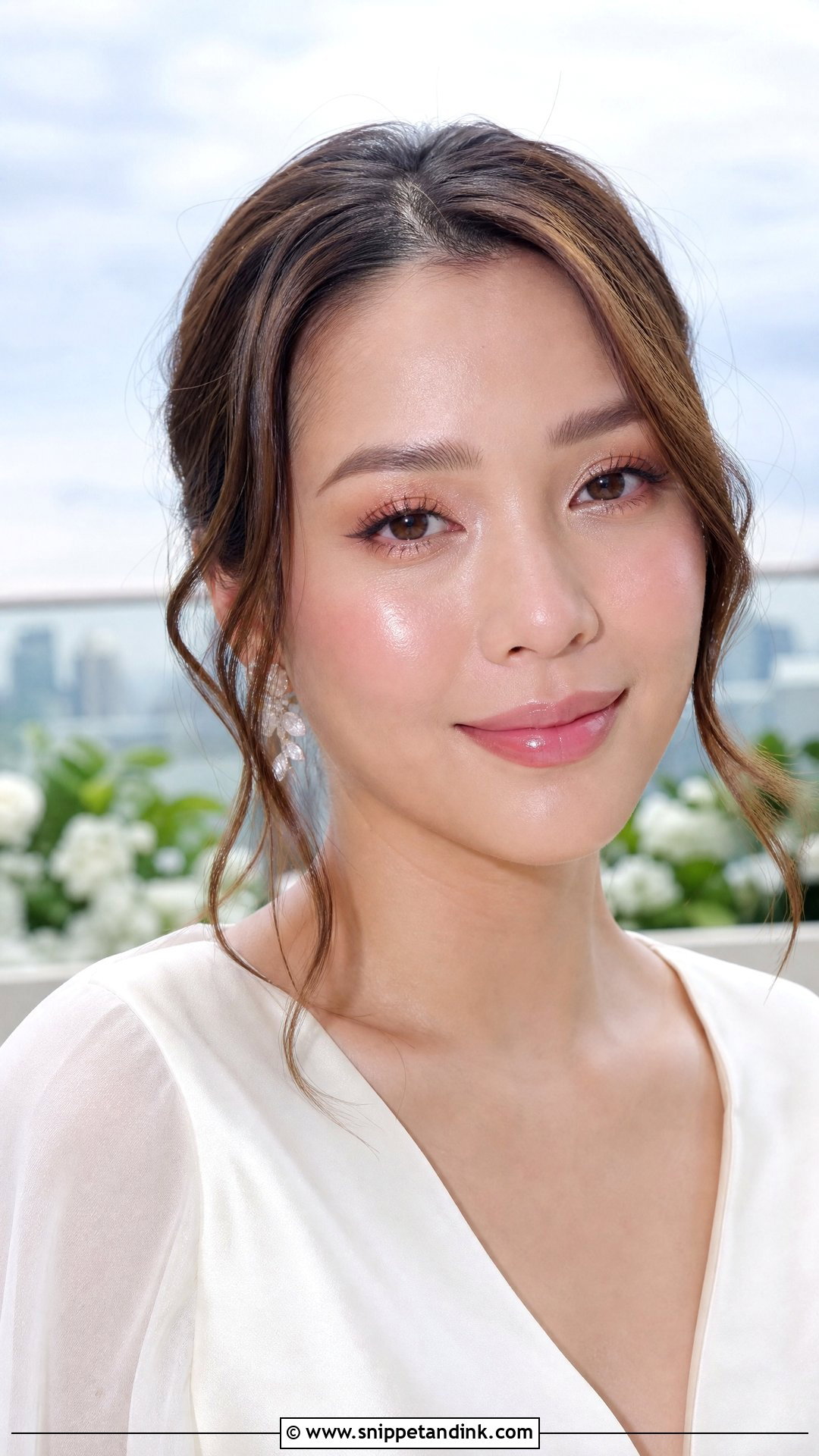
Glass skin looks wonderful in person and is the hardest finish to keep through a long day. I use a glow primer, a thin foundation and concealer only where it’s needed, then sheer pink cream blush pressed into the cheeks and a liquid highlighter on the cheekbones for that reflective effect. Pale pink shimmer, curled lashes and natural brows keep the eyes bright, and a pink lip oil gives the juicy finish. I’d steer oily skin toward a satin version instead, and I always powder the center of the face so the glass effect stays on the cheeks, not the nose.
11. Pink Bridal Makeup With Brown Liner
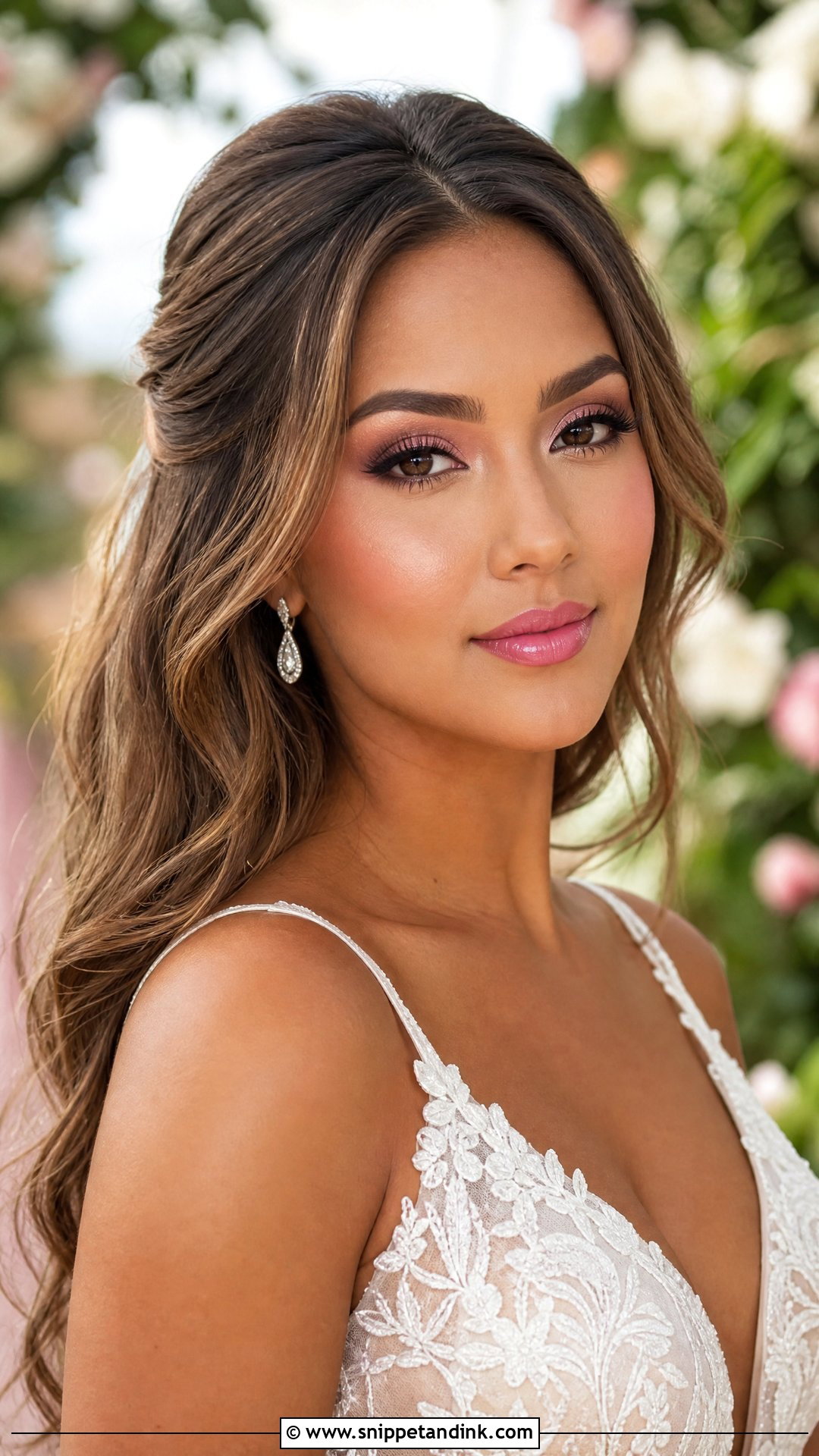
Brown liner is gentler than a sharp black wing and forgives a shaky hand when you’re touching up. I start with glowing skin, pink cream blush and a little bronze around the edges of the face, then pale rose on the lid and soft brown in the crease. Brown pencil or gel goes tight to the lashes and gets smudged outward with a small brush while it’s still workable. Wispy lashes lift the eye. A rosy satin lip completes it, defined and never heavy.
12. Pink Wedding Makeup With Glossy Lips
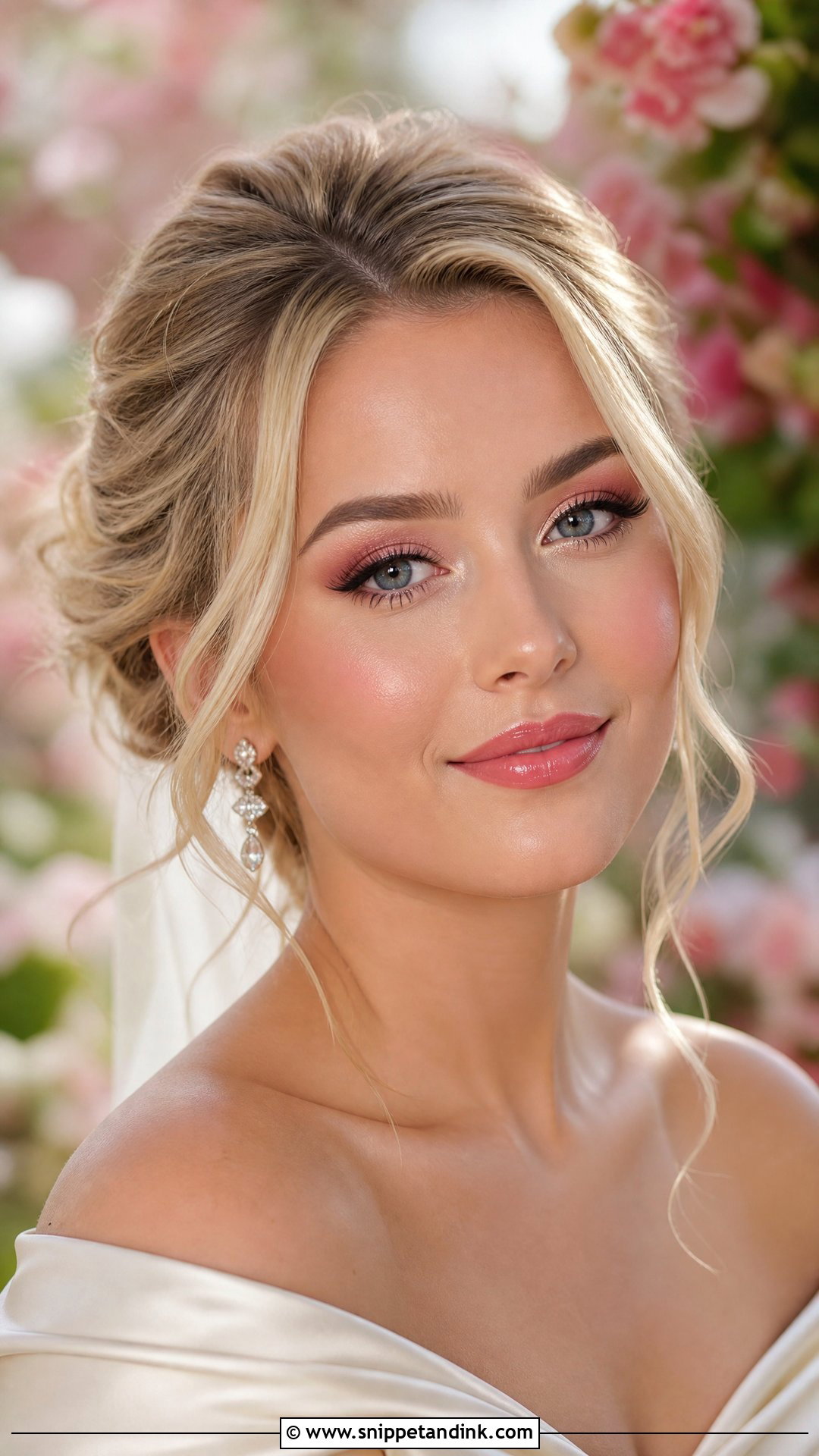
Gloss can tip a look from bridal to casual if the rest of the face is too relaxed, so I keep the skin polished: luminous foundation, pink blush and a precise highlight. Pink-beige shadow, a little inner-corner shimmer and soft lashes keep the eyes in the same register. The trick is liner. I line and fill the lips with a pink pencil first, then add a non-sticky gloss on top, so when the shine wears off there’s still color and a clean edge. Spring, summer, garden and coastal weddings suit it best.
13. Pink Wedding Makeup With Matte Skin
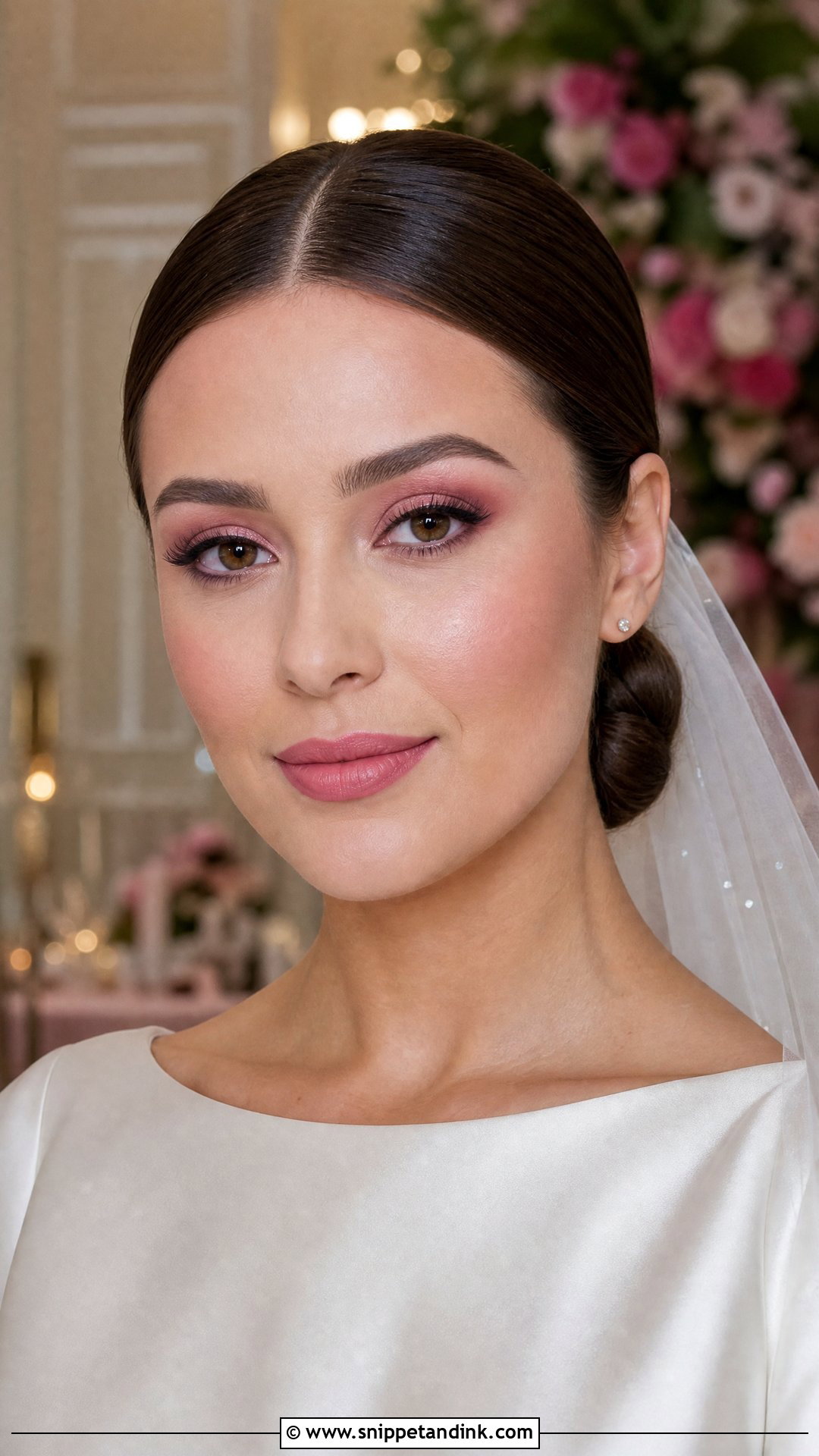
Matte skin with pink color is what I suggest for oily skin, humid venues and long days. Thin layers of soft matte foundation are key; a thick matte base cracks around the mouth by the evening. I bring glow back only on the cheekbones with a subtle powder highlight, and use pink powder blush blended high and outward. Soft rose eyes with matte mauve depth and a fine liner, plus a satin or soft matte pink lip. It still reads as romantic, and it won’t need blotting every hour.
14. Pink Wedding Makeup For Fair Skin
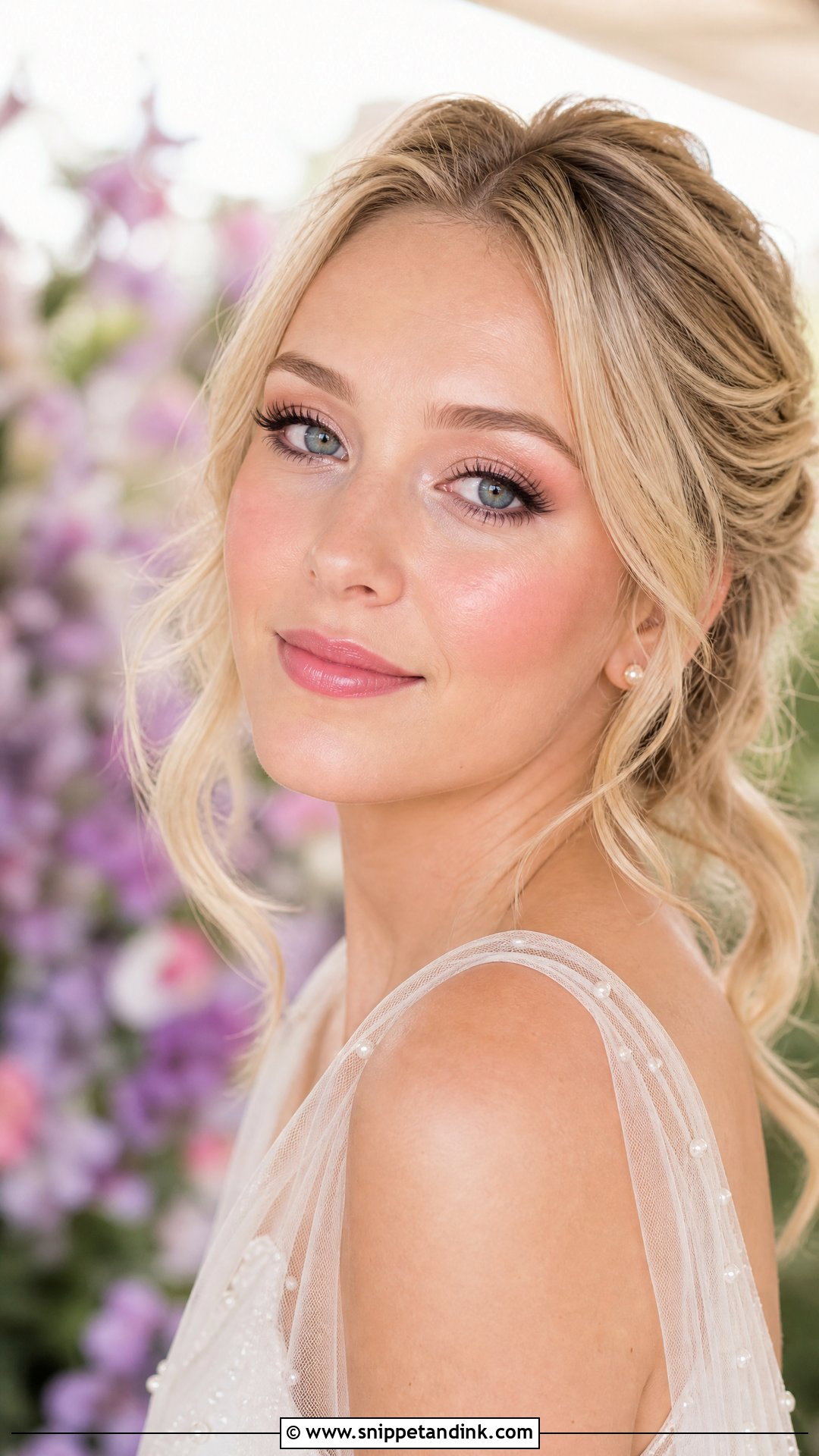
Fair skin shows every bit of pigment, so sheer and well blended matters more than shade choice. Bright pink can overpower, so I reach for ballet pink, baby rose, soft mauve and cool petal tones, and I build blush in two thin layers instead of one strong one. A lightweight foundation lets freckles show through. Champagne-pink shimmer, taupe in the crease and brown mascara keep the eyes gentle. Steer away from orange-pinks if your undertone is cool; they can make redness around the nose look worse. A rose balm, satin lipstick or soft gloss finishes it.
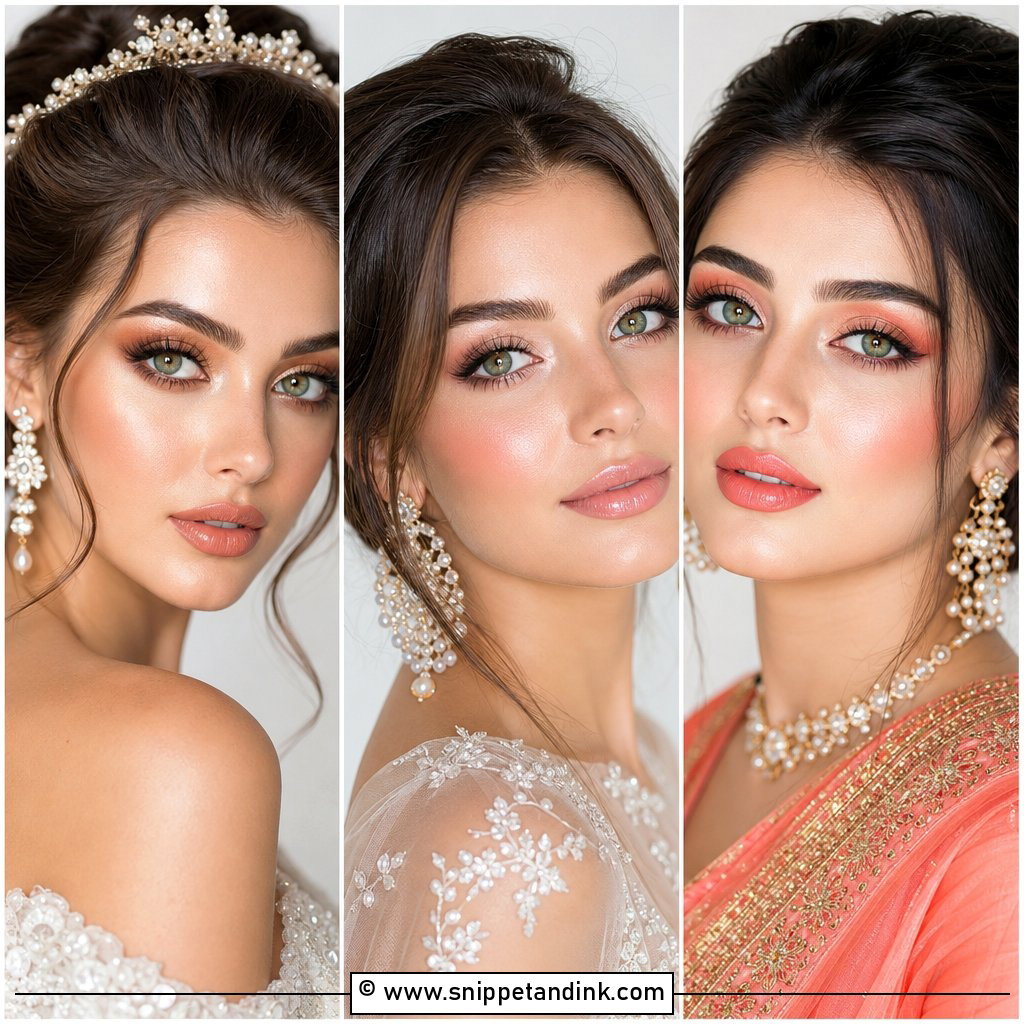
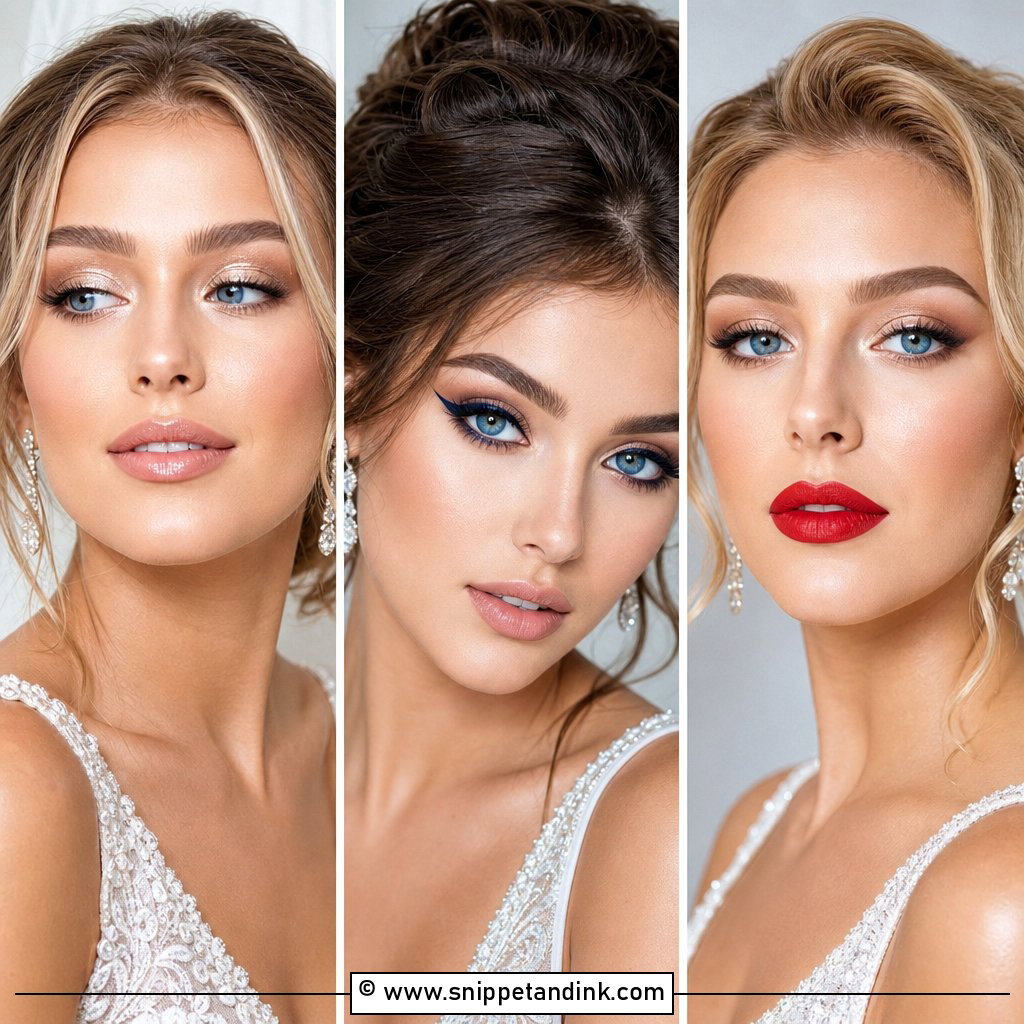
15. Pink Wedding Makeup For Olive Skin
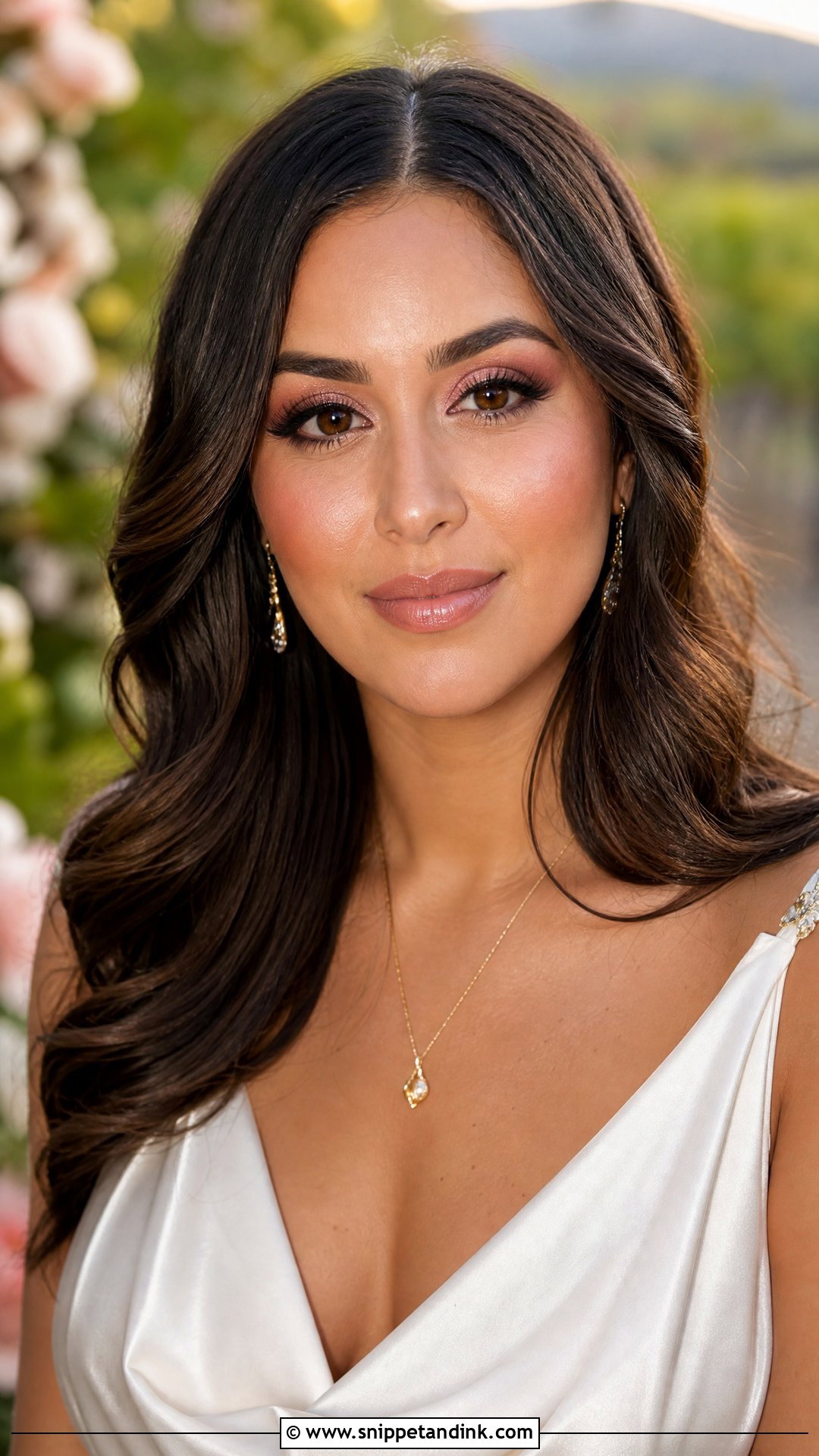
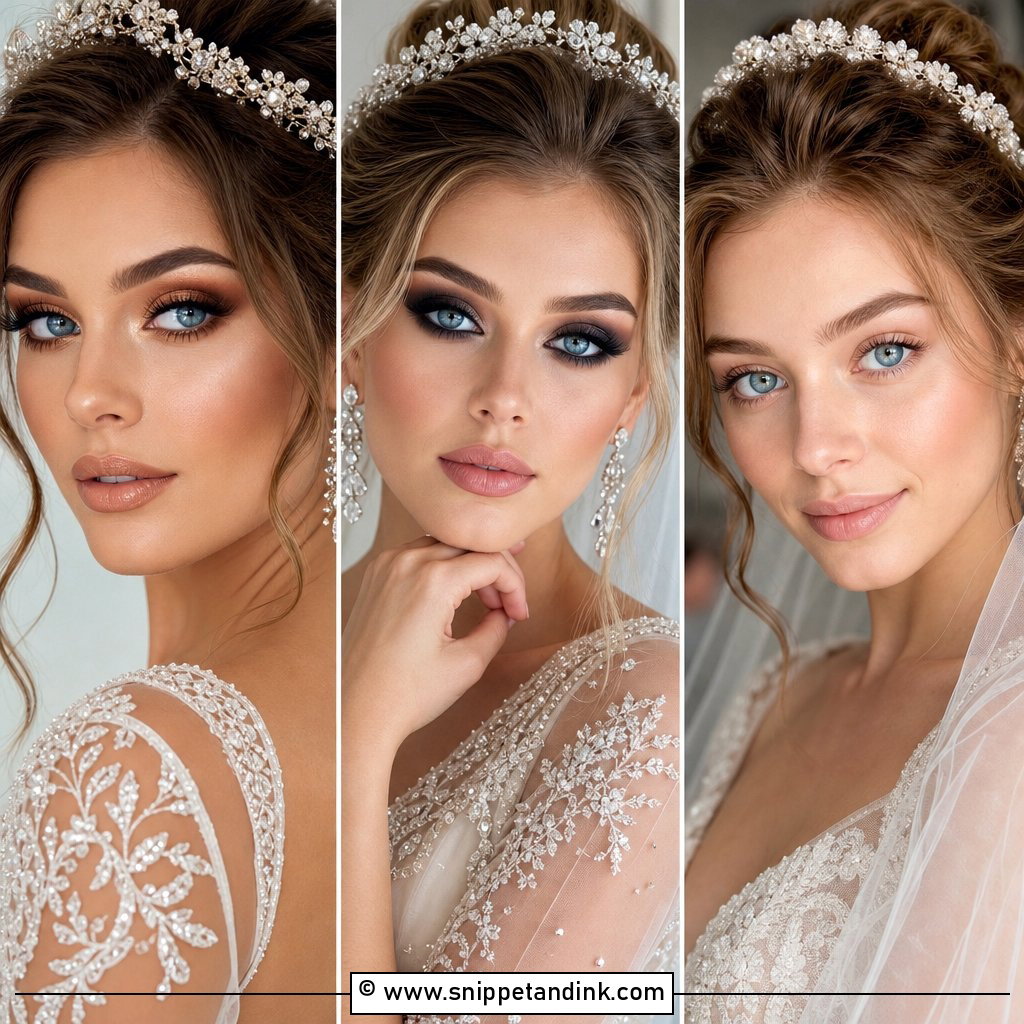
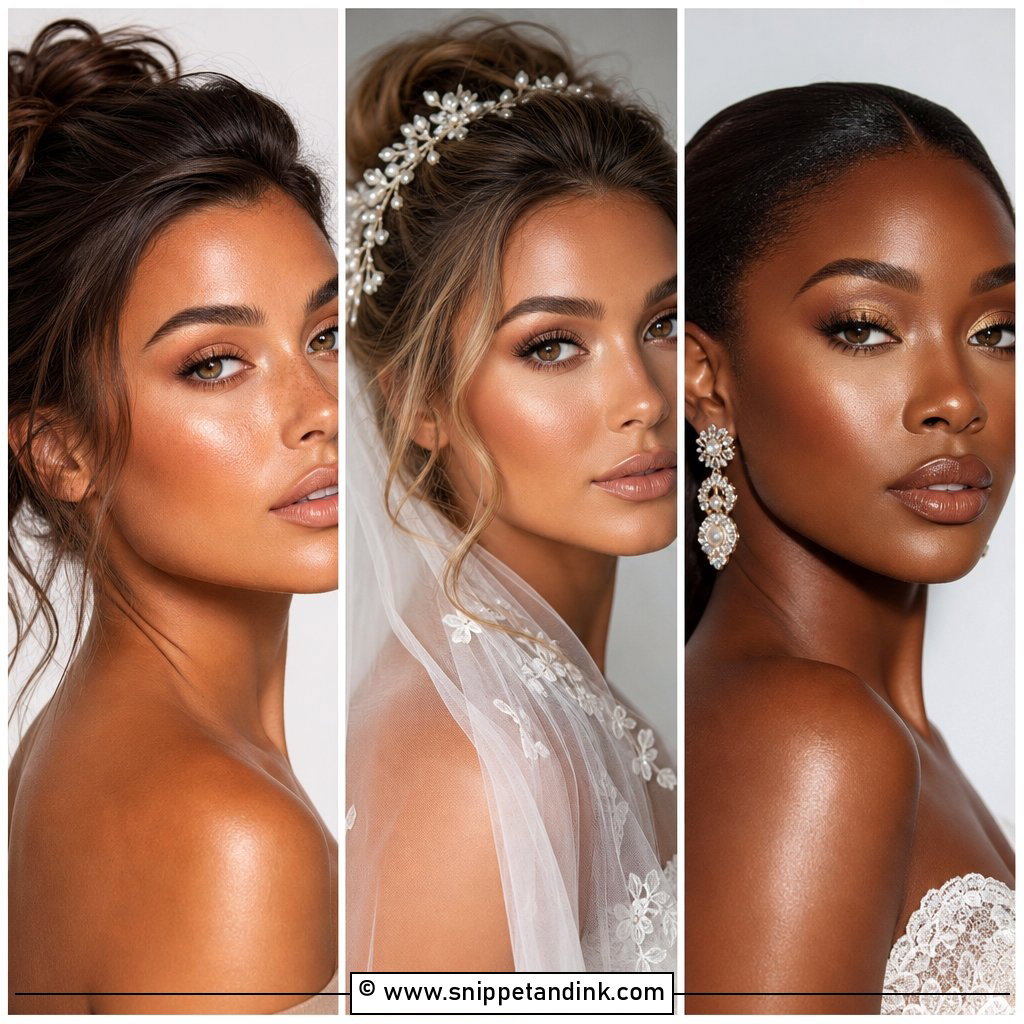
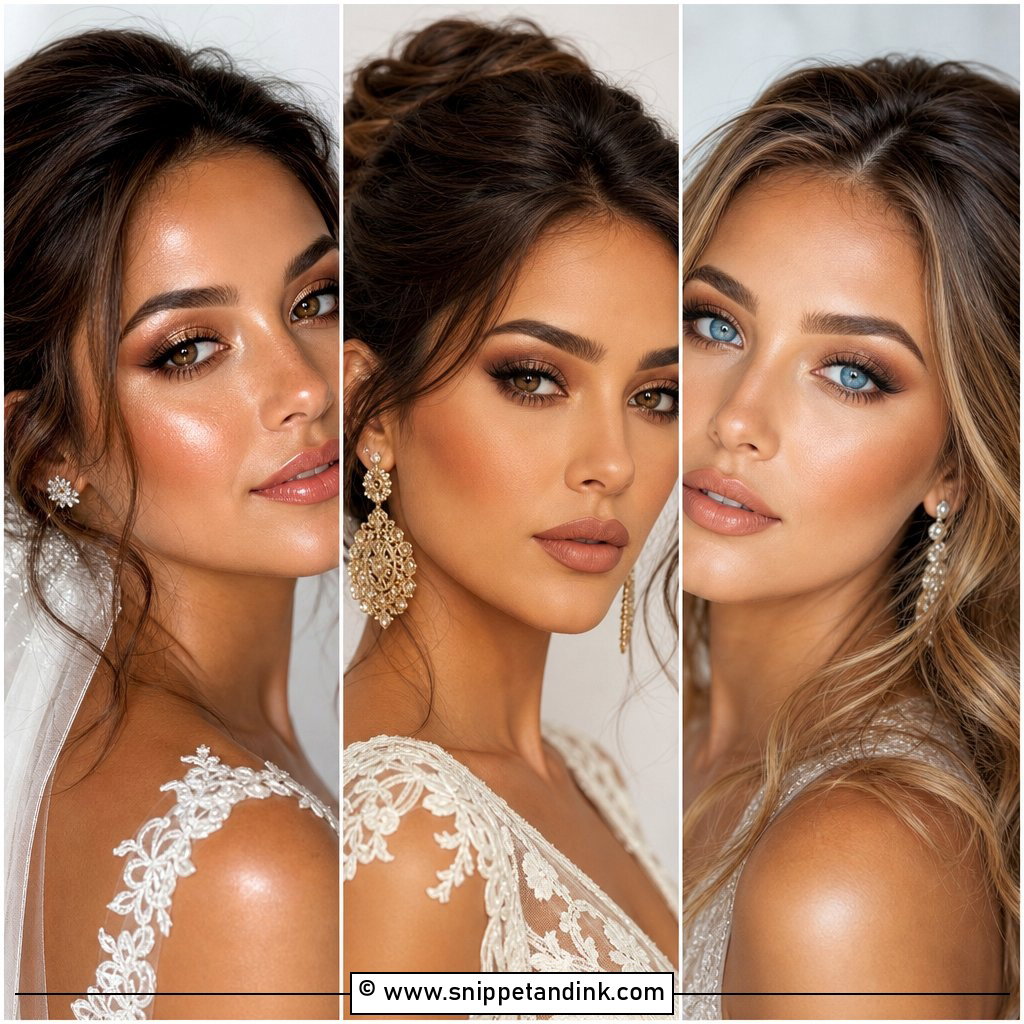
Olive skin needs pink with warmth or depth. Very cool, pale pinks can sit grey on a green-yellow undertone. Soft rose, peach-pink, warm mauve and pink-bronze tones work best. I match the base to the neck and chest, not the face, since olive skin often has a warmer chest that shows in strapless gowns. Warm pink cream blush brightens the face, and rose gold, dusty rose and bronze-pink on the eyes add dimension without turning ashy. A warm champagne highlight blends in better than an icy one. Rose nude or warm pink on the lips.
16. Pink Wedding Makeup For Dark Skin
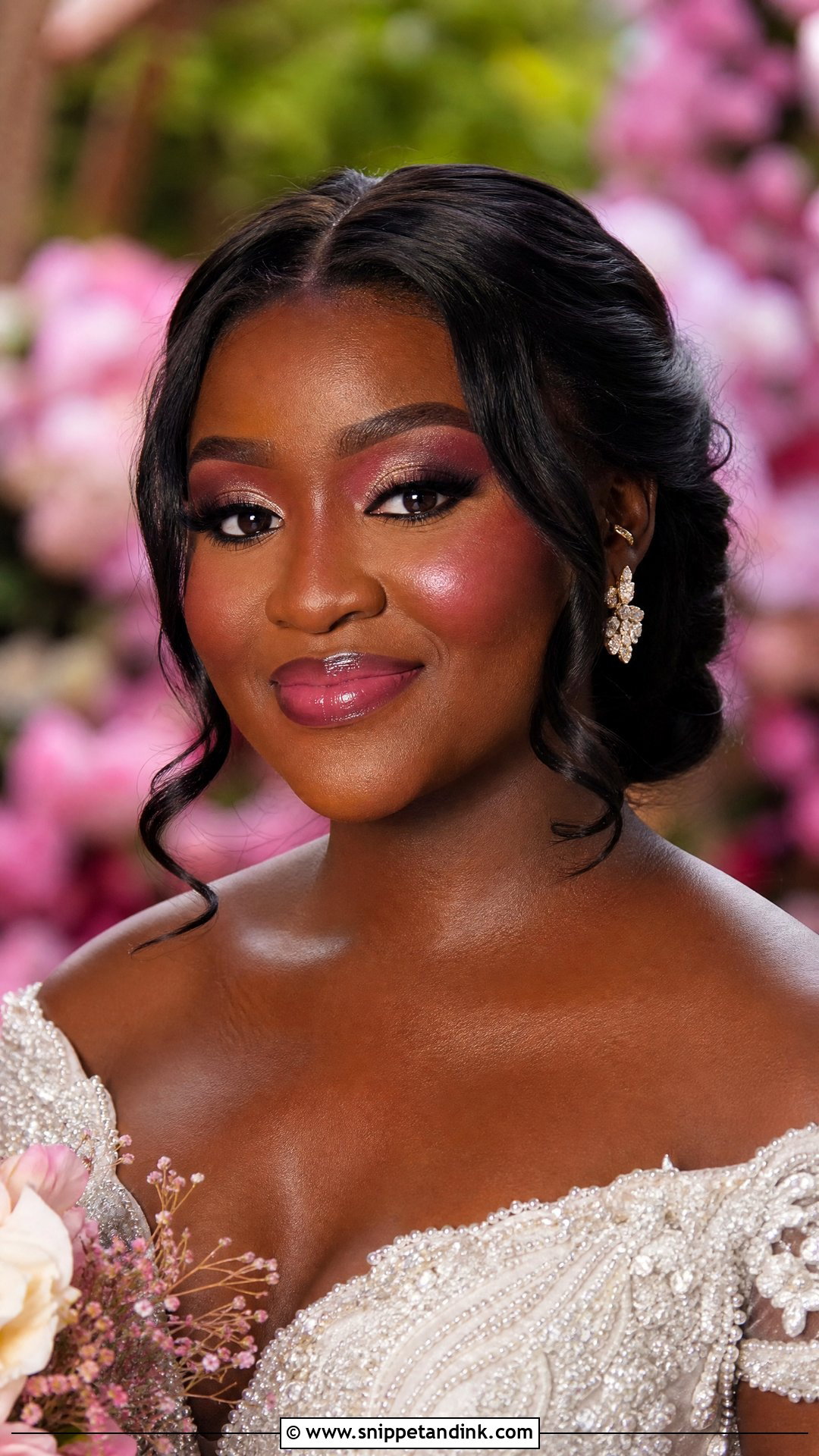
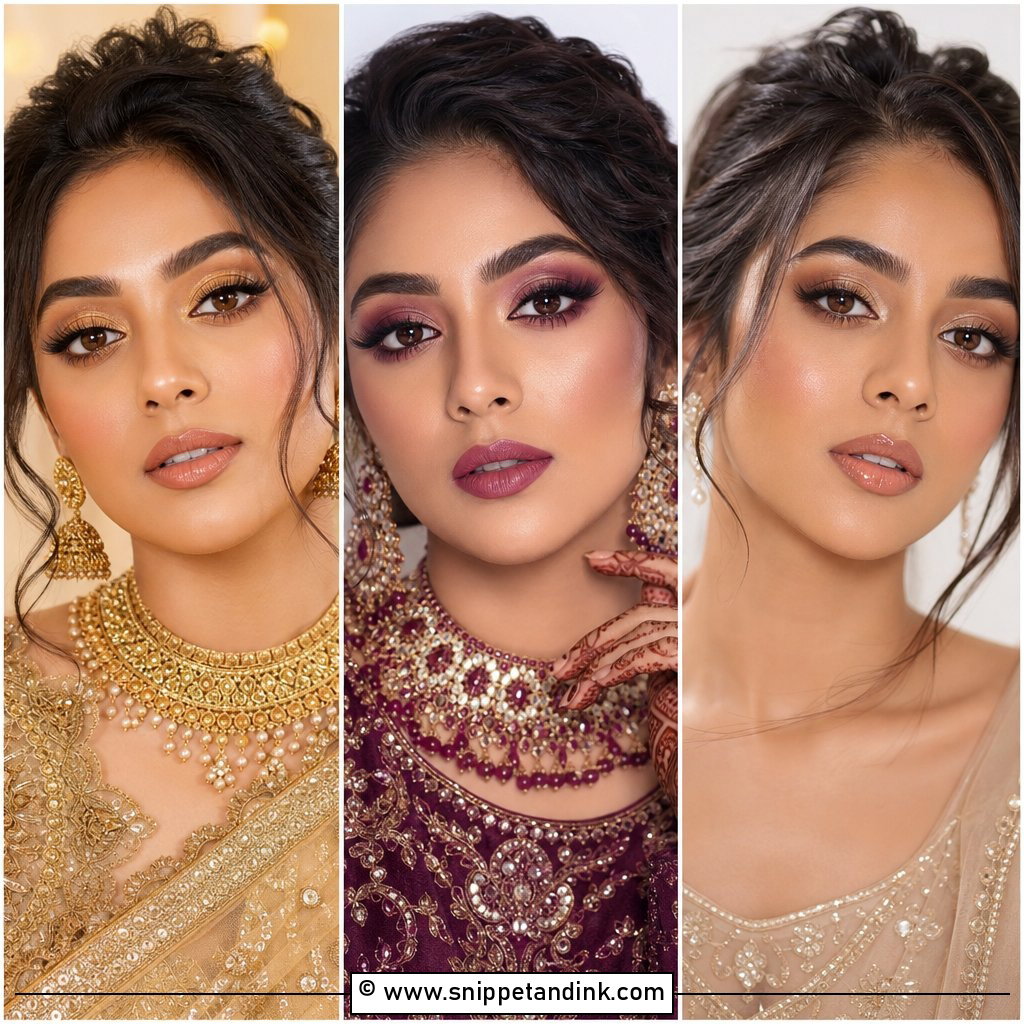
Deep skin carries pink brilliantly, but it needs pigment. Rose, berry-pink, magenta-pink and deep mauve show up in person and in photos, whereas pale pastels tend to turn chalky. I start with a radiant foundation matched carefully, because a base even slightly too light looks grey under flash, then add a vivid pink cream blush. Gold-pink or rose shimmer on the lids gives light, and deep brown liner adds definition. Bronze, rose gold or warm champagne highlighter gives a smooth glow, and a berry gloss, rose-brown lipstick or mauve satin lip balances it.
17. Pink Wedding Makeup For Blue Eyes
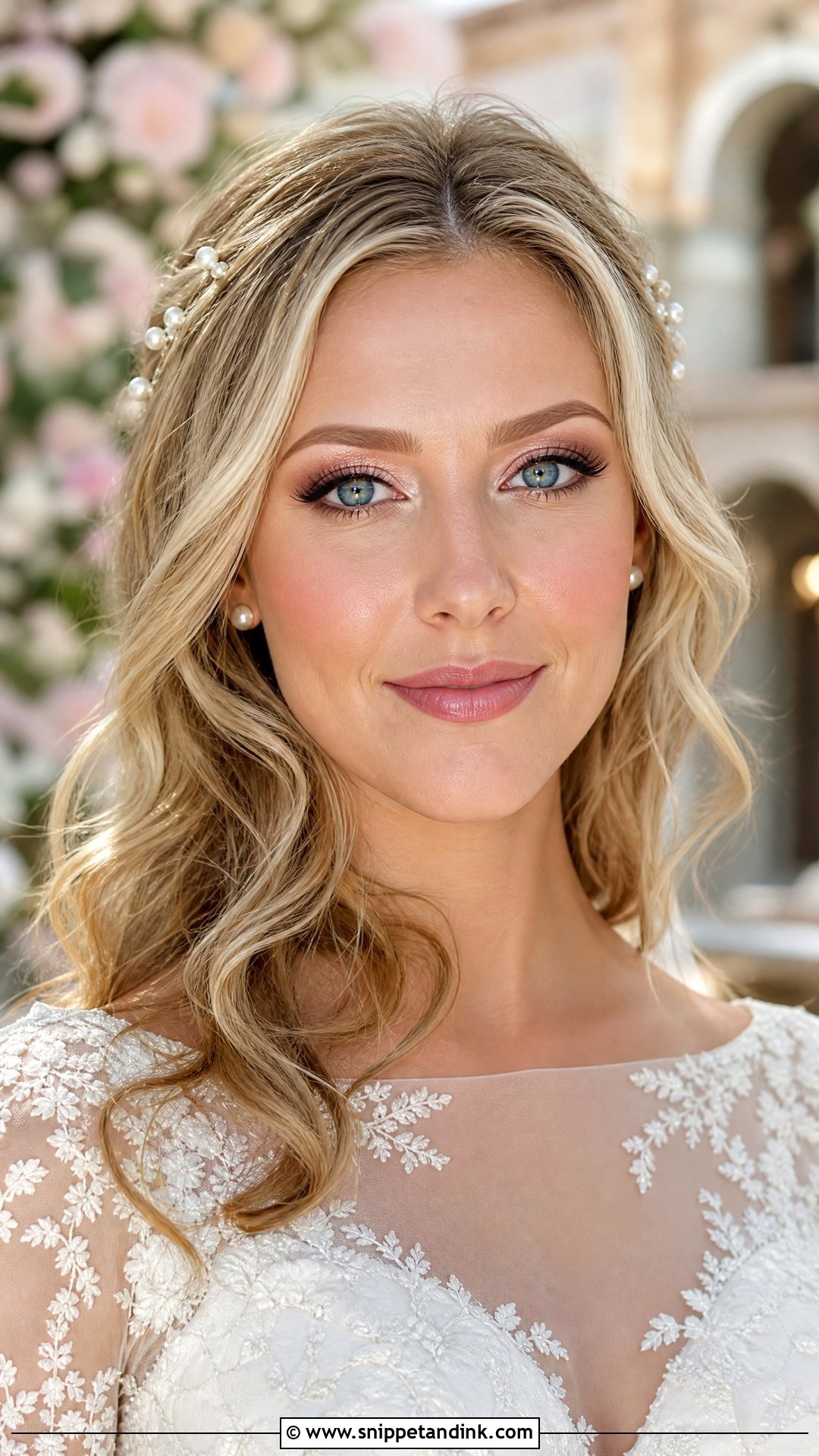
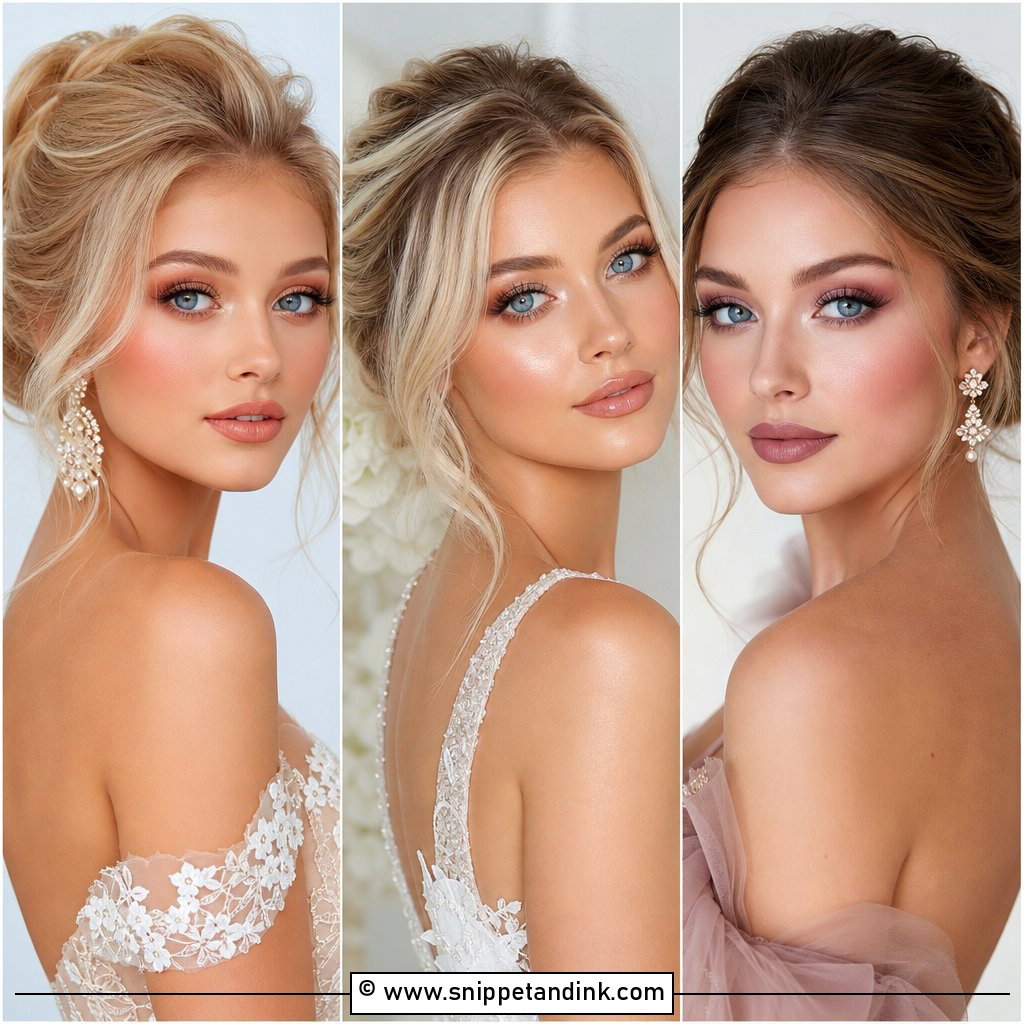
Pink makes blue eyes look brighter because warm pinks sit opposite blue’s cool tone. Rose, peach-pink and mauve all work. I keep the skin fresh with a luminous base, light pink blush and a controlled highlight, then blend pink champagne shimmer on the lid with warm taupe or soft brown in the crease. Brown liner is my default here, because it defines blue eyes without looking harsh. Curled lashes and a pink nude lip finish it, and it sits nicely beside soft waves and pearls.
18. Pink Wedding Makeup For Brown Eyes
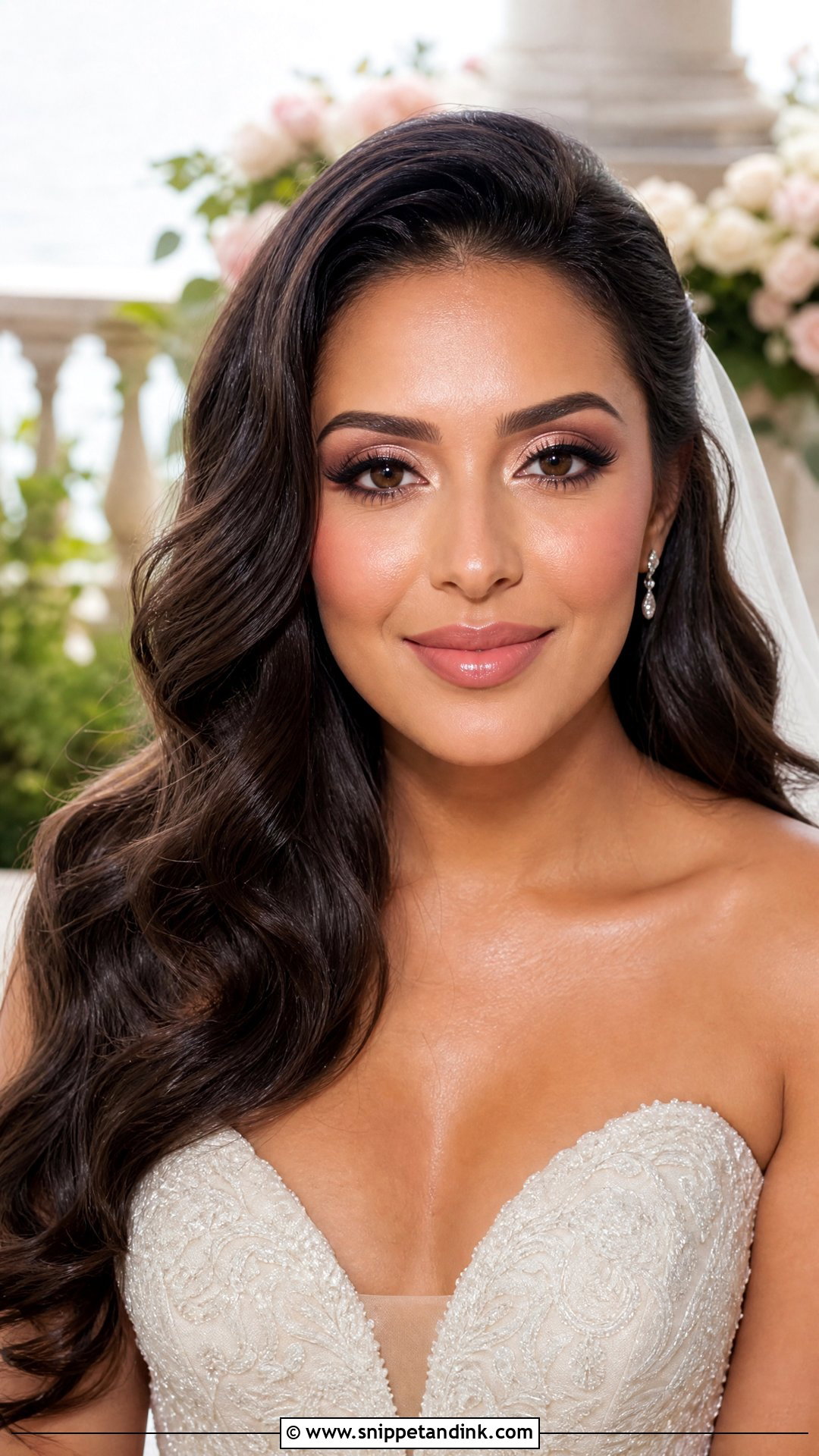
Brown eyes pair beautifully with rose gold, mauve, pink bronze, berry-pink and champagne, since almost every warm pink makes the iris look richer. I add a touch of warmth to the blush, place rose shimmer on the lid, deepen the outer corner with chocolate brown and brighten the inner corner with pale champagne. Espresso liner pushed into the lash roots makes lashes look thicker without a visible line. A rosy nude or warm pink lip works for day and evening.
19. Pink Wedding Makeup For Green Eyes
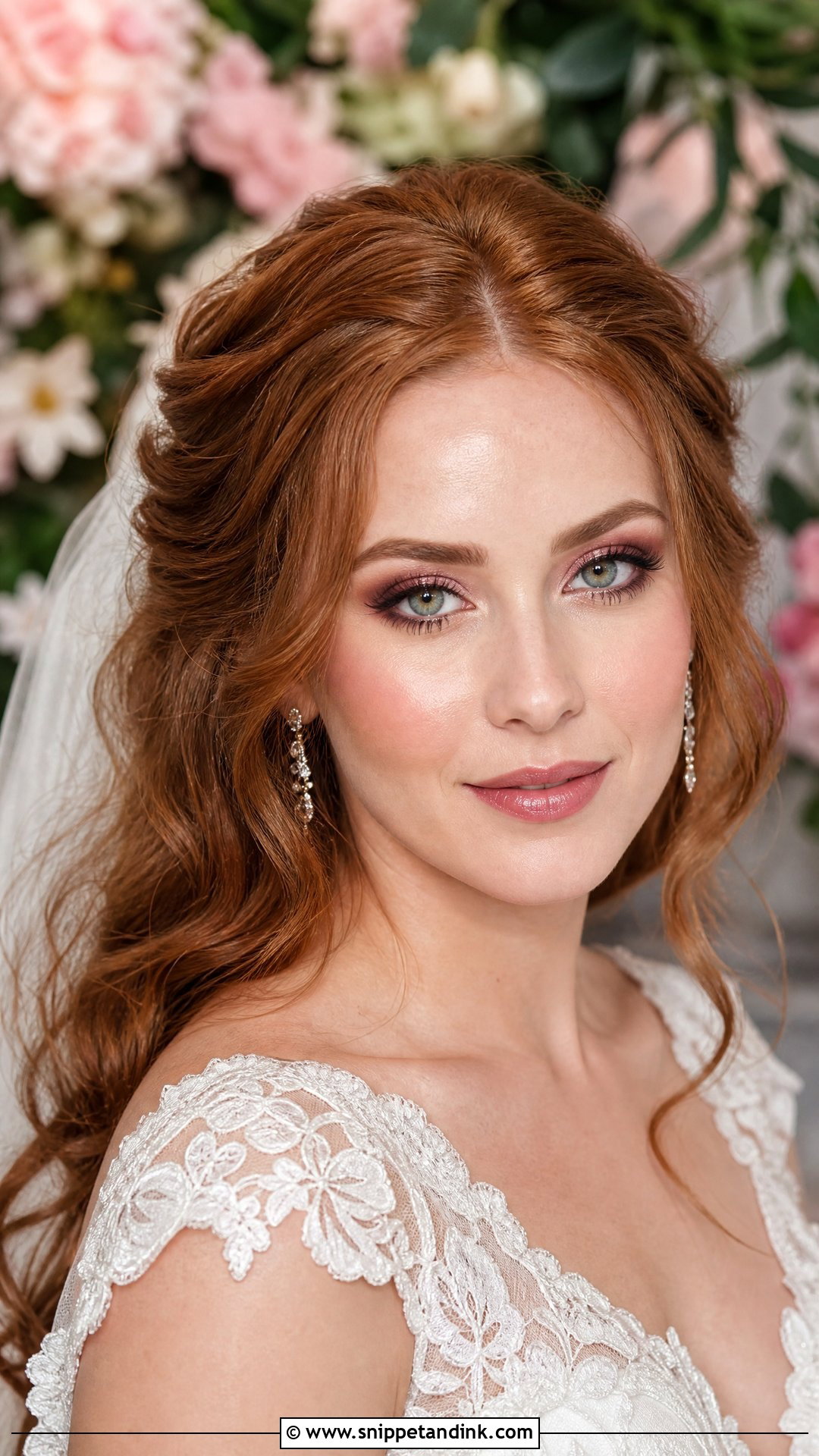
Rose, mauve and plum sit opposite green on the color wheel. Pink wedding makeup for green eyes uses that contrast to make the iris look brighter. I keep the complexion satin-dewy, with soft pink blush and a gentle champagne highlight. Rose-mauve across the lid, plum-brown in the outer corner and brown liner along the lashes. Strong red-pinks can make eyes look tired, so I soften them toward rose. A muted pink or rosy beige lip keeps it restrained.
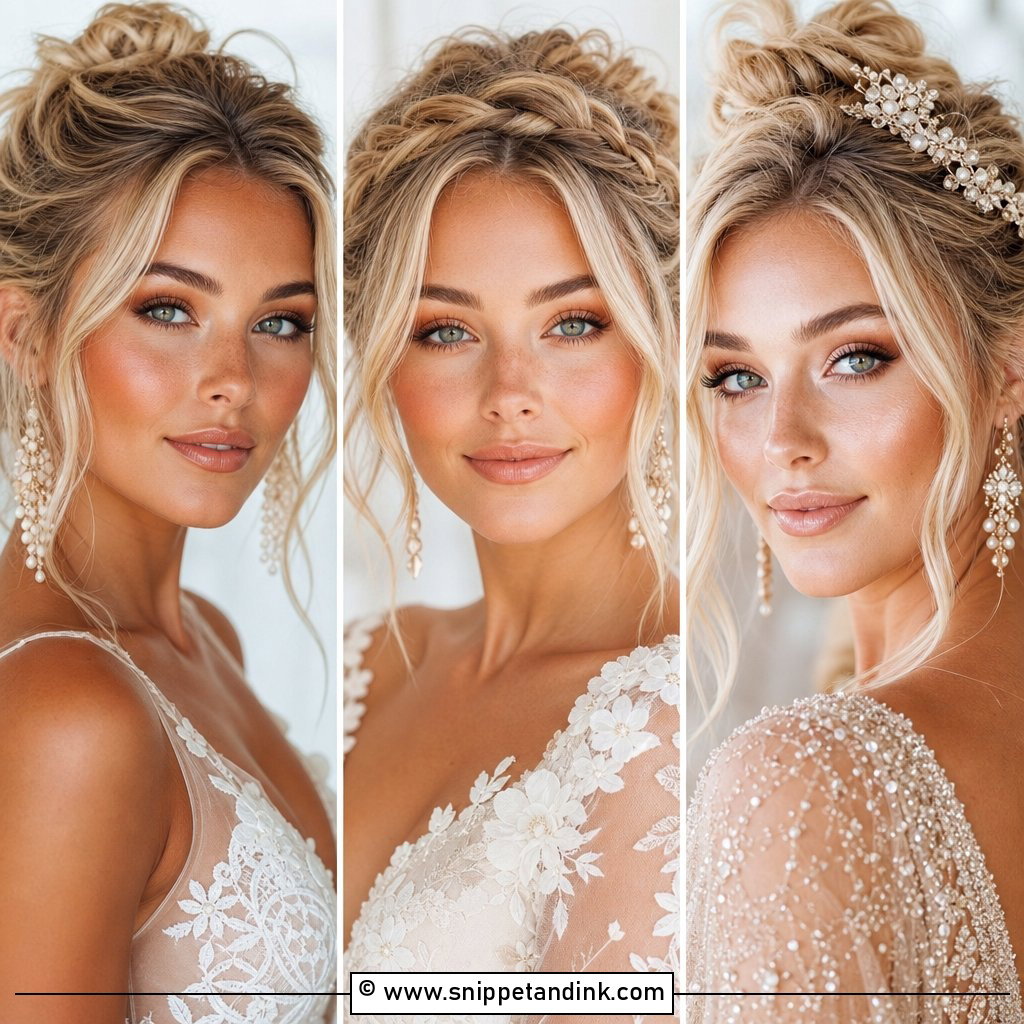
20. Pink Wedding Makeup For Summer
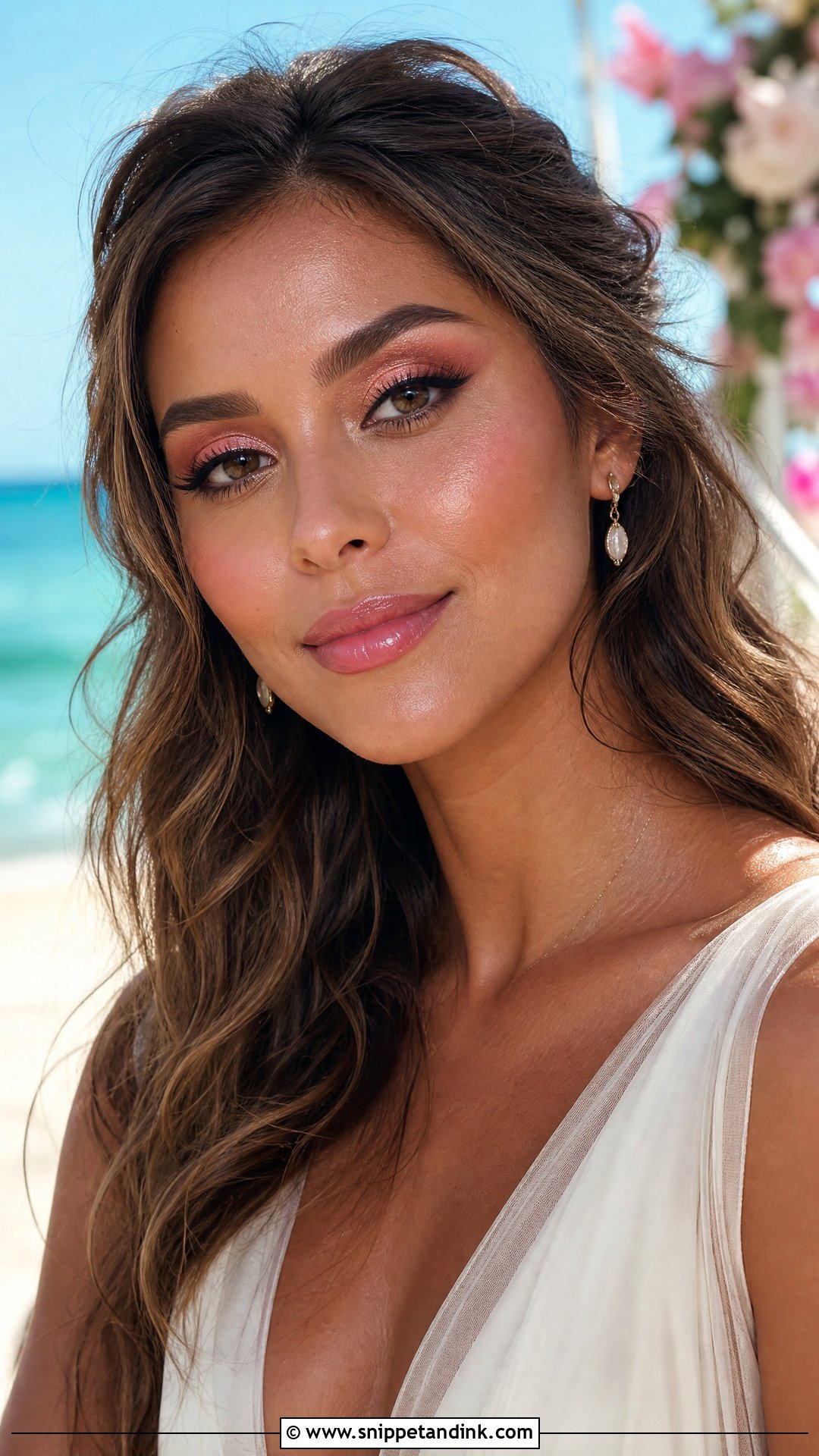
Heat changes everything about how makeup wears. For summer I use long-wearing complexion products in thin layers and set the center of the face with translucent powder. My favorite trick for blush that lasts is layering: cream or liquid pink first, a light dusting of powder blush on top. Peach-pink shimmer, soft brown liner and waterproof mascara keep the eyes light. A pink lip stain is the smart choice, because it leaves color behind after the gloss is gone. Setting spray last, and blotting papers in the bag.
Blotting Papers, Not More Powder: Fixing a Dewy Face at Hour Six
By the time speeches start, a glowy base has usually picked up some oil. The instinct is to pat on more powder, and that’s how a fresh face turns cakey in the evening photos. Press a blotting paper on the shiny spots first and hold it for a second; it lifts oil without moving the foundation. Only then add a tiny amount of translucent powder if you need it.
Pink is also the first color to fade. Lip color goes with eating and kissing, and cream blush wears down where your face touches a veil, a shoulder or a hug. Ask your makeup artist to hand you the exact lip shade and liner used, plus a small pot of the cream blush, which you can tap on with a fingertip in the bathroom.
- Blotting papers
- Your lipstick or gloss and the matching liner
- Cream blush in a small pot or a stick
- A cotton bud and a mini micellar wipe for mascara smudges after happy tears
- A small compact of translucent powder, used last, not first
The Fortnight Before: Skin Prep That Helps Pink Sit Right
Pink blush and dewy finishes show every patch of dryness or irritation, so the last two weeks matter. This isn’t the time to start a new acid, retinoid or peel, and I’d book any facial at least a week out so redness has settled. Keep up simple hydration, wear sunscreen daily, and drink water; dehydrated skin grabs foundation in patches.
If you tan, do it before your trial so we can match the base to the skin you’ll have on the day. A fake tan applied after the trial can shift the undertone enough that the pink we chose suddenly looks wrong.
Testing Your Pink in Daylight Before the Wedding
The pink that suits you depends on your undertone, your dress and how long the day runs, more than on any trend. Radiant skin, blush placed high, eyes defined softly and a lip close to your own color is the combination I return to most. At your trial, step outside or stand by a window, take photos with and without flash, and check the makeup again after a few hours of wear. If the pink competes with your skin instead of warming it, that’s the shade to change, not the whole look.
You'll Like These Ideas:


Leave a Reply