
Bridesmaid makeup has a narrower job than bridal makeup. It has to last through a long day of hugging and crying, sit well next to the bride in every group shot and still look like the person wearing it. When I plan a bridal party, I work from four constants: skin that looks like skin, eyes with some definition, blush that survives the camera, and a lip that can be reapplied from a clutch. The twenty looks below are variations on that, from barely-there to soft glam, with notes on the dress colors and skin types each one actually suits.
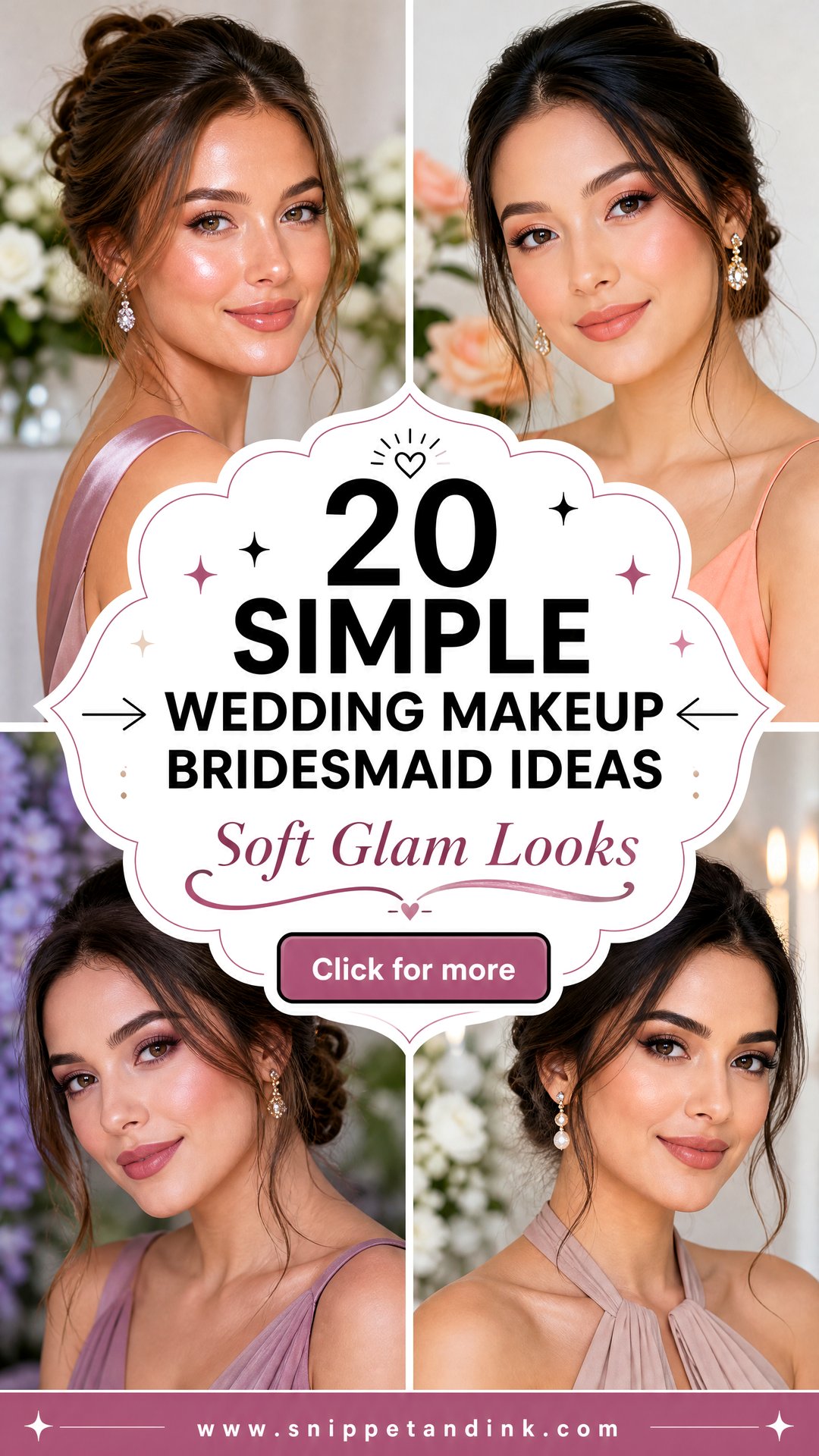
The Week Before: Skin, Brows and Lashes on a Timeline
Most of the problems I fix on a wedding morning were created in the seven days before it. Foundation can’t sit flat over a fresh breakout or peeling from a new acid, and brow redness doesn’t hide well under concealer. This is the order I give bridesmaids:
- About a week out, stop trying new skincare. No new retinoid, peel or exfoliating acid, and no facial with extractions.
- Three to five days out, get brows waxed or threaded, so any redness or small bumps have time to settle.
- Two or three days out, do a lash tint or lift if you want one, but not the day before, in case of irritation.
- The night before, a gentle cleanse, a rich moisturizer and plenty of water. Skip heavy, salty food if you puff up easily.
- On the morning, arrive with a clean, moisturized face, and skip any sunscreen that leaves a white cast. Wear a button-up top so nothing goes over your head after.
If you’re doing your own makeup, do one full practice run at home in daylight and take a flash photo of it. It shows things a mirror hides, especially foundation that is a shade off at the jaw.
1. Natural Bridesmaid Makeup
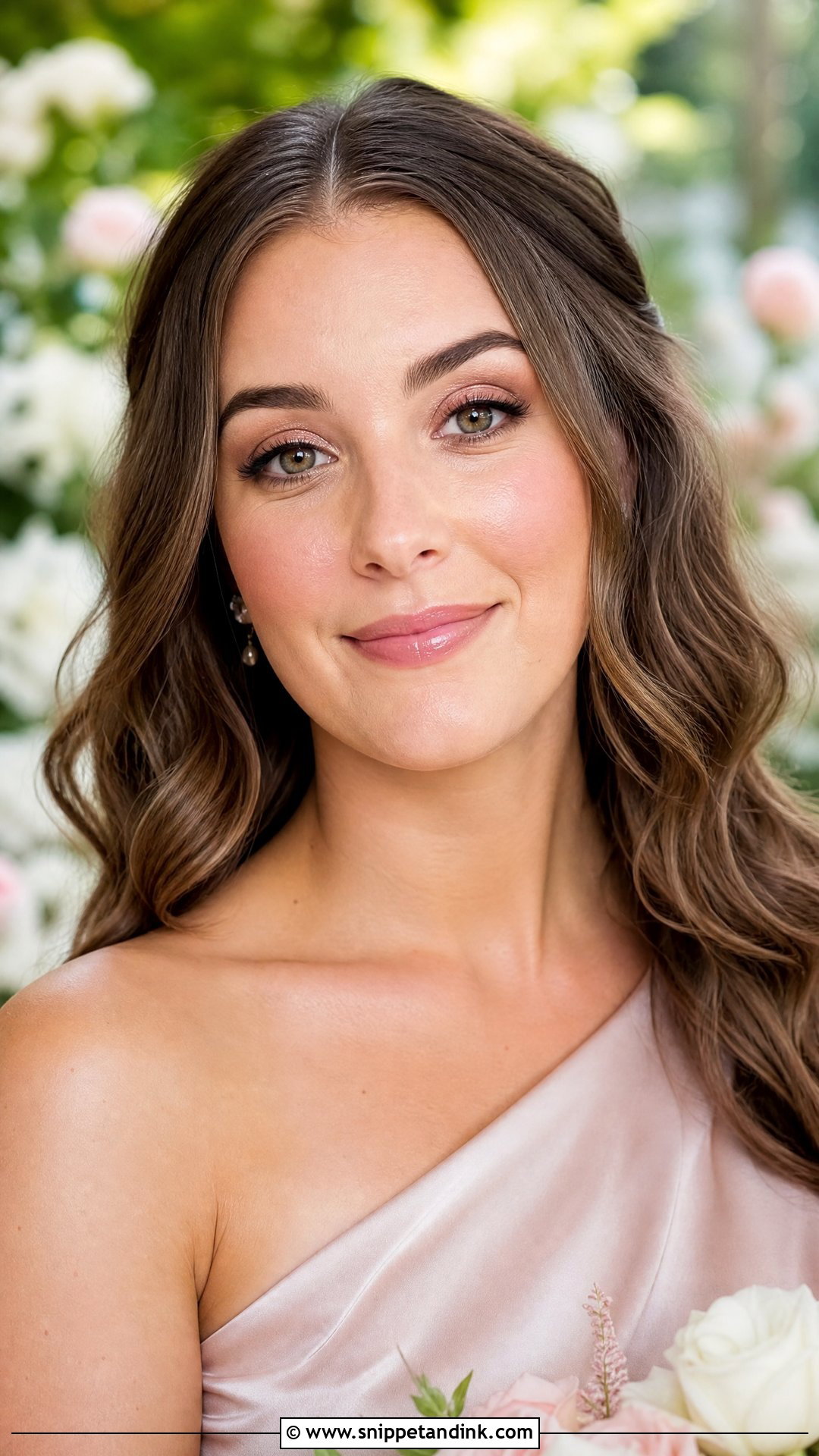
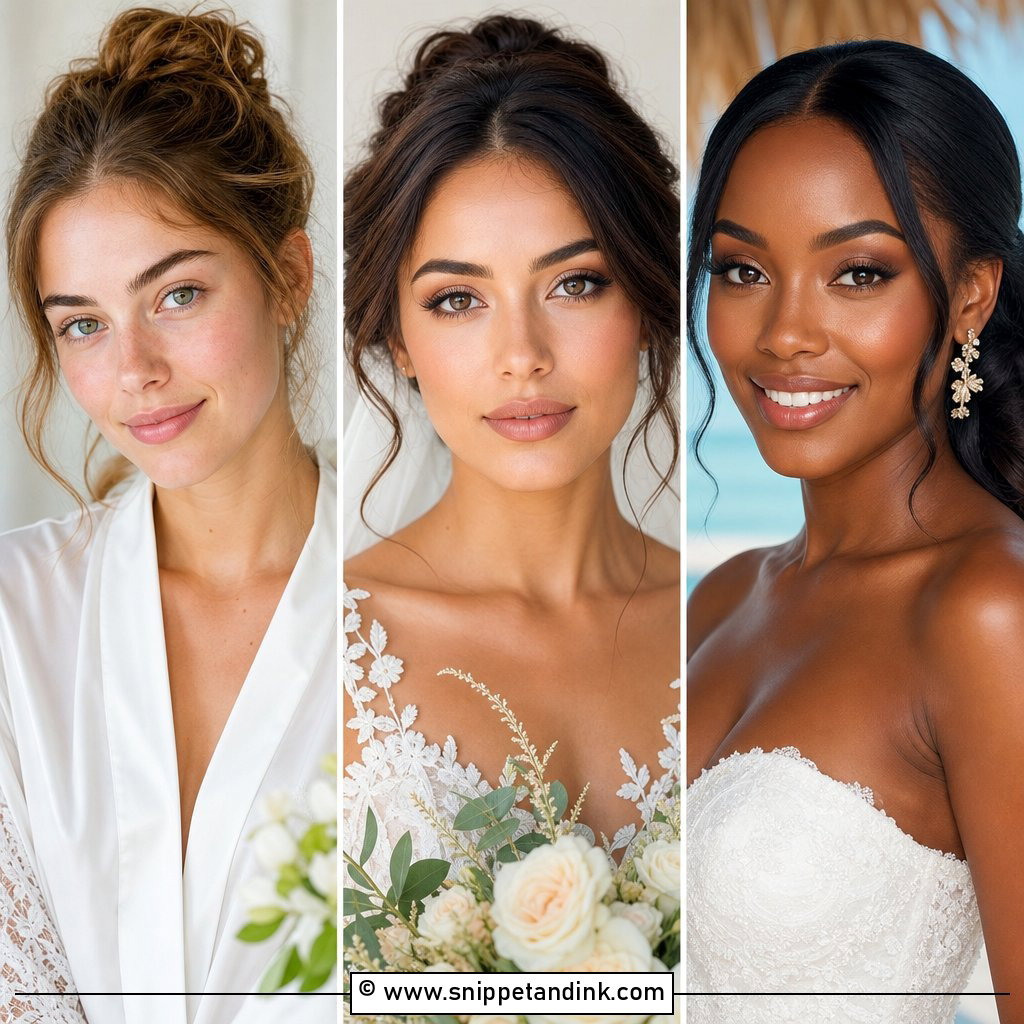
Natural makeup is the hardest to do well, because there is nothing to hide behind. I start with properly hydrated skin, a sheer base and concealer only where it is needed, then cream blush in pink or peach so the cheeks look alive rather than powdered. Eyes get beige or taupe shadow, a brown liner pushed into the lash roots and waterproof mascara. If the bride wants the whole wedding party to look fresh and consistent, this is the face I’d suggest, but I’d still add slightly more blush than feels natural in the mirror, because cameras wash out color.
2. Soft Glam Bridesmaid Makeup
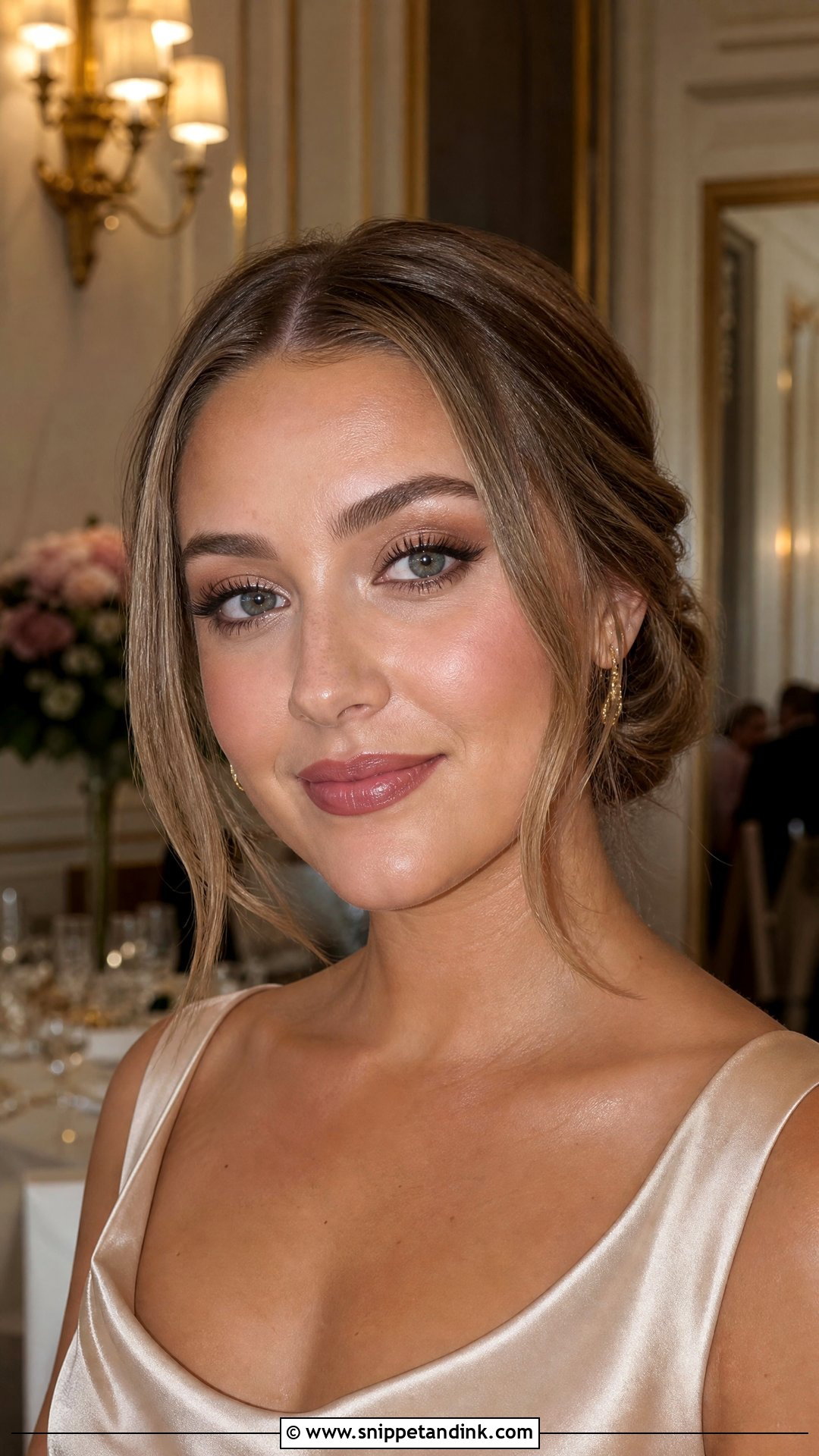
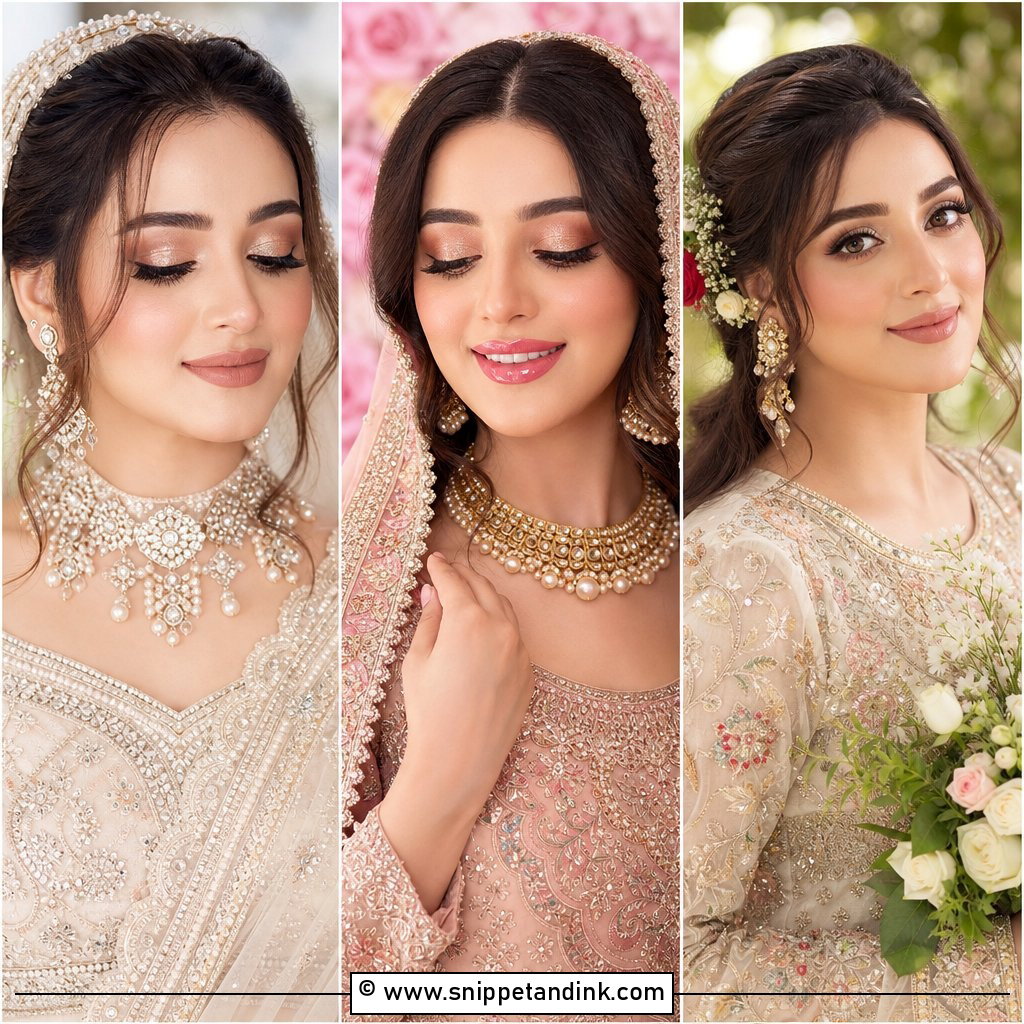
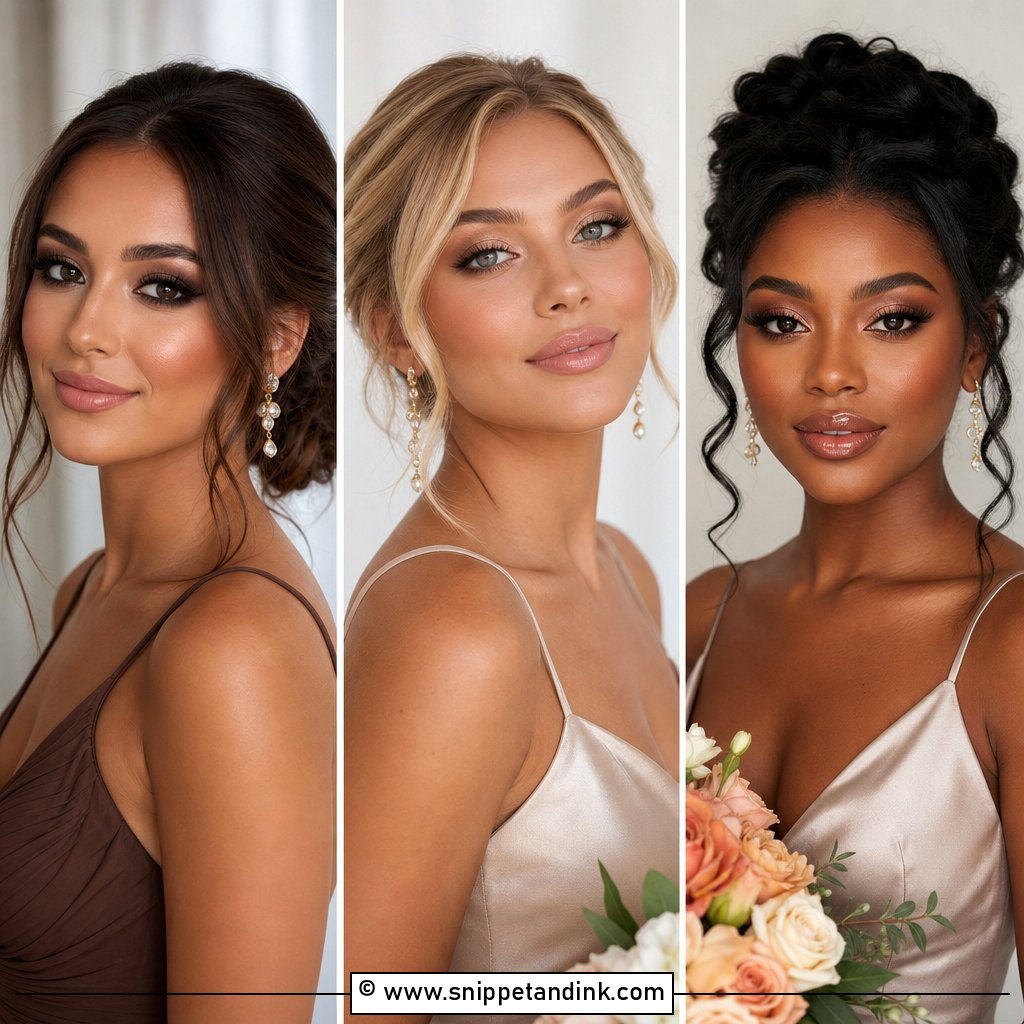
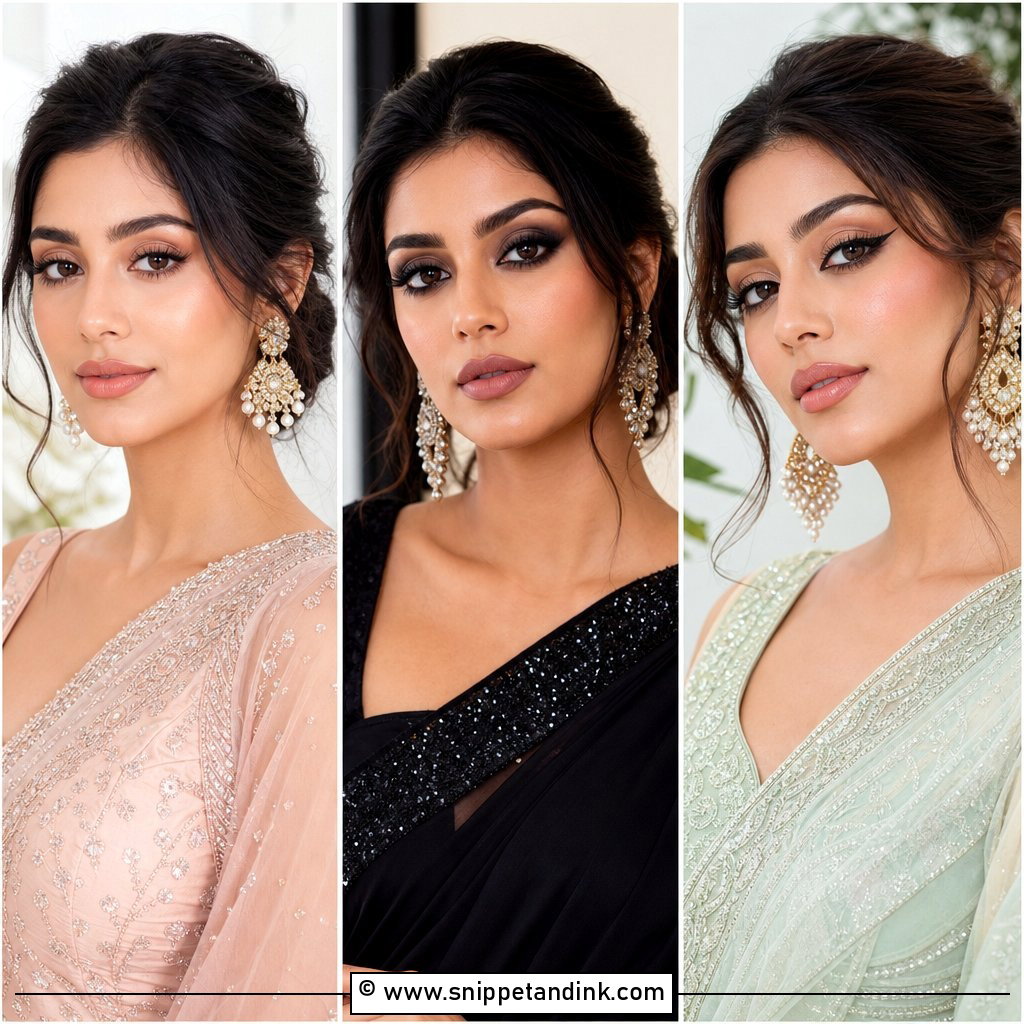
Soft glam is where most bridesmaids end up once they see trial photos. The base is a long-wear foundation with a satin finish, warmed with bronzer and given a little champagne highlight on the cheekbones only. On the eyes I blend matte beige through the crease, press shimmer onto the center of the lid and draw a thin brown wing rather than black. Lashes should be fluffy, not spiky. A rose-nude liner under a creamy lipstick keeps the lip edge sharp through dinner. In evening light against satin or navy, this level of definition reads right instead of heavy.
3. Dewy Bridesmaid Makeup
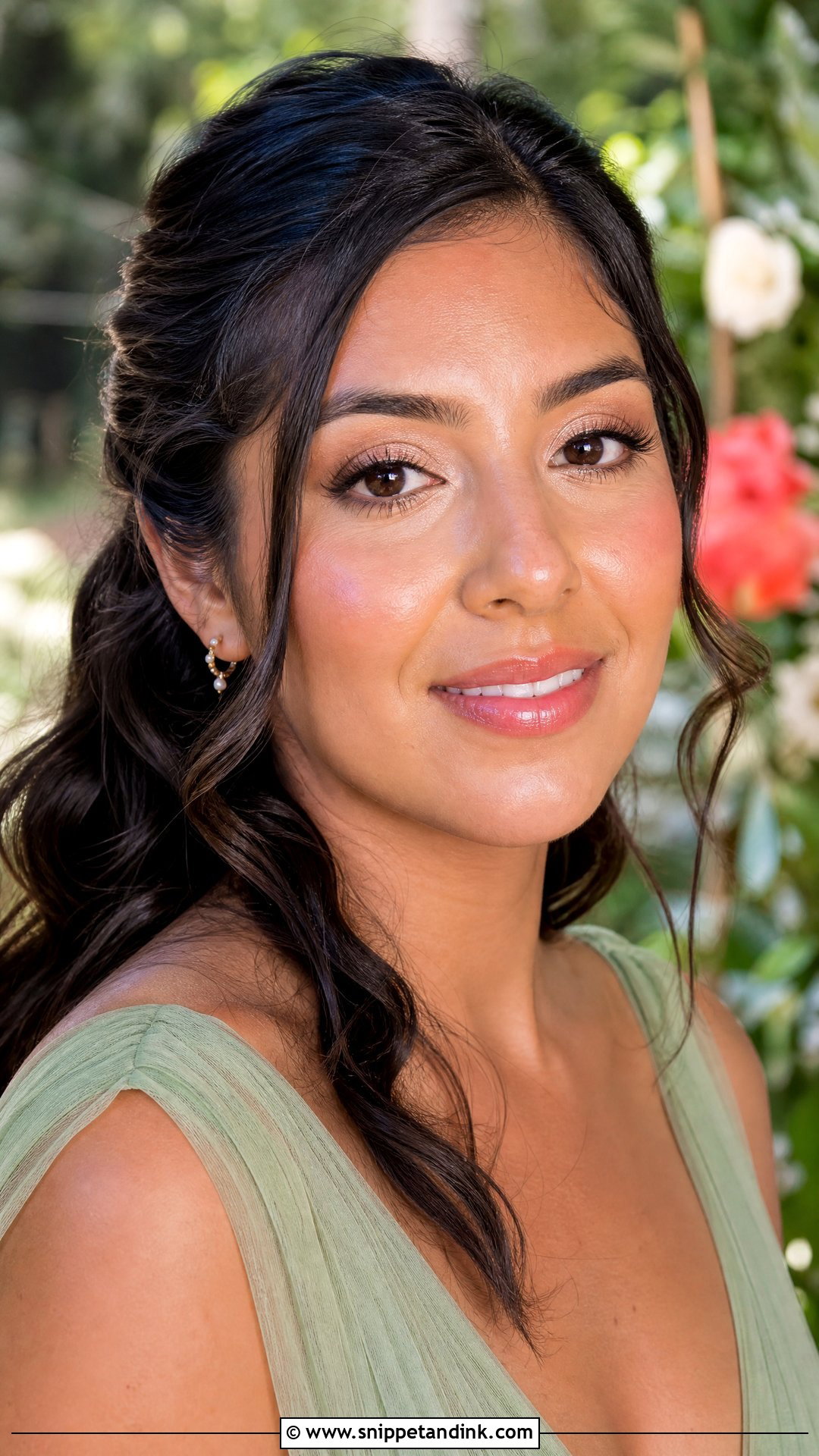
Dewy skin photographs as glow only if you control where it sits. I keep the moisture and luminous base on the cheekbones and temples, then press a little powder through the center of the face, forehead and chin, because that is where it turns into shine by the second hour. Cream bronzer and a pink or coral cream blush go on before any powder. A champagne lid, brown mascara and a glossy lip finish it. Very oily skin will struggle with this one outdoors in summer, and I’d steer those bridesmaids toward a satin finish instead.
4. Matte Bridesmaid Makeup
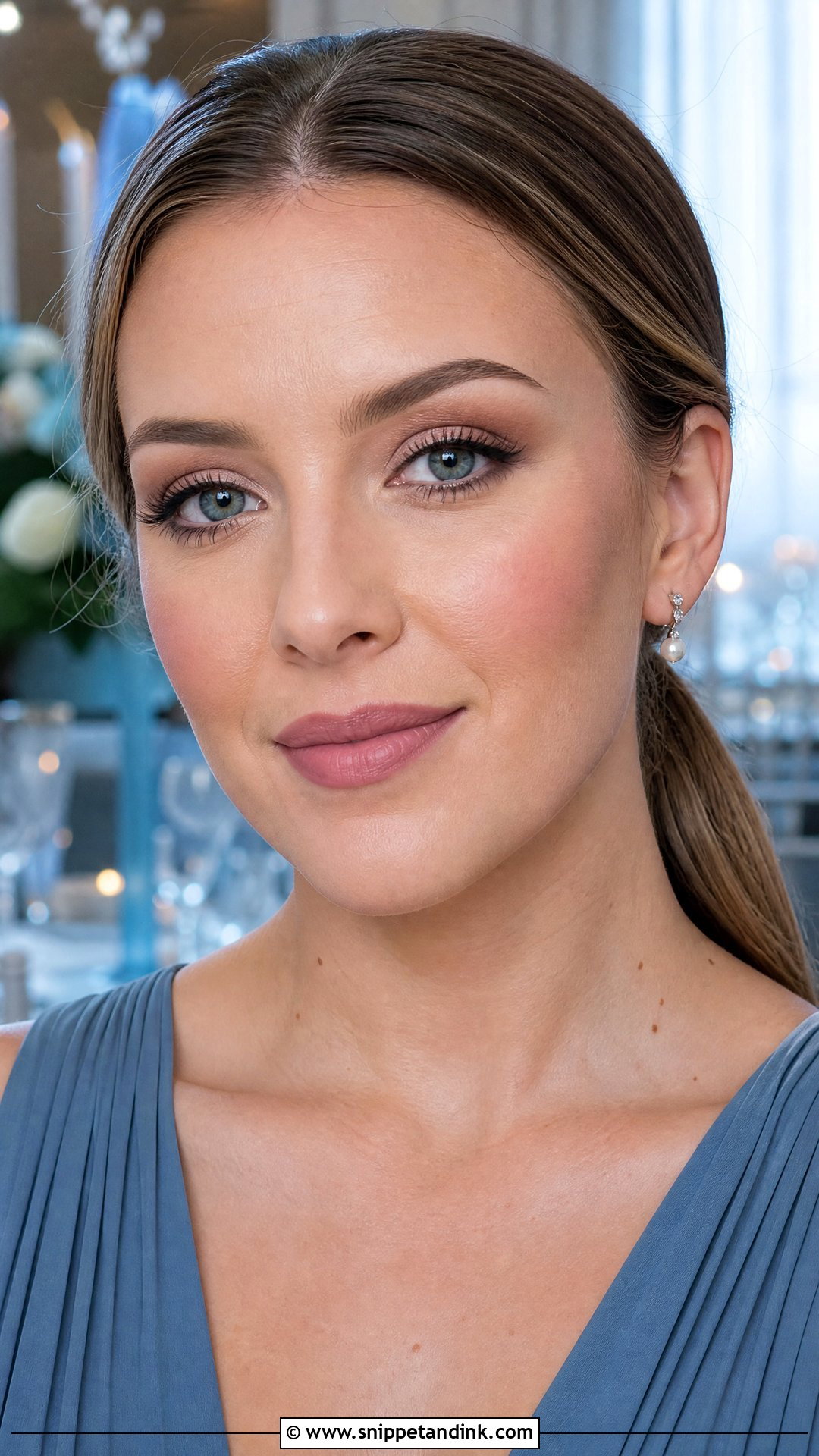
Matte makeup lasts longest in heat, but done badly it looks flat and older in photos. The fix is thin layers. I use a pore-smoothing primer, a natural matte foundation and concealer pressed in with a fingertip, then bronzer for shape and a soft rose blush. Taupe or mocha shadow, a thin liner and waterproof mascara handle the eyes. Dry or mature skin is the main exception: a fully matte face settles into texture by the afternoon, so for those clients I keep a touch of sheen on the high points.
5. Pink Bridesmaid Makeup
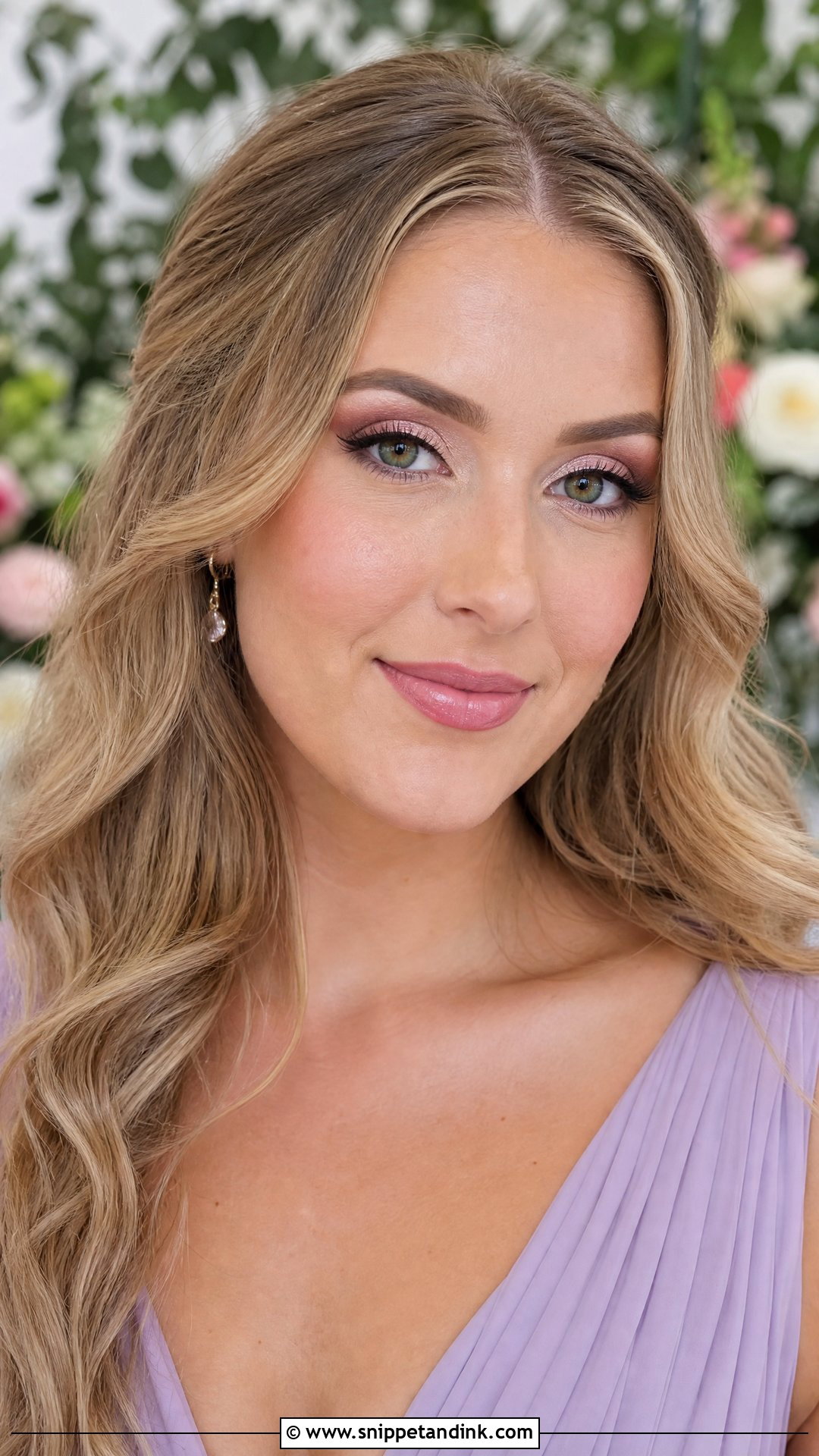
Pink is the easiest color story to coordinate with a bridal party, since almost every undertone can wear some version of it. I make the blush the focus and keep the skin simple around it. A pale pink shimmer on the lid with a rose-brown crease, brown liner and separated lashes keeps the eyes gentle. Brows should be groomed, not carved. The risk with pink is looking younger than intended, so on cooler skin I pick a dustier rose and finish with a satin lipstick rather than a sheer balm.
6. Peach Bridesmaid Makeup
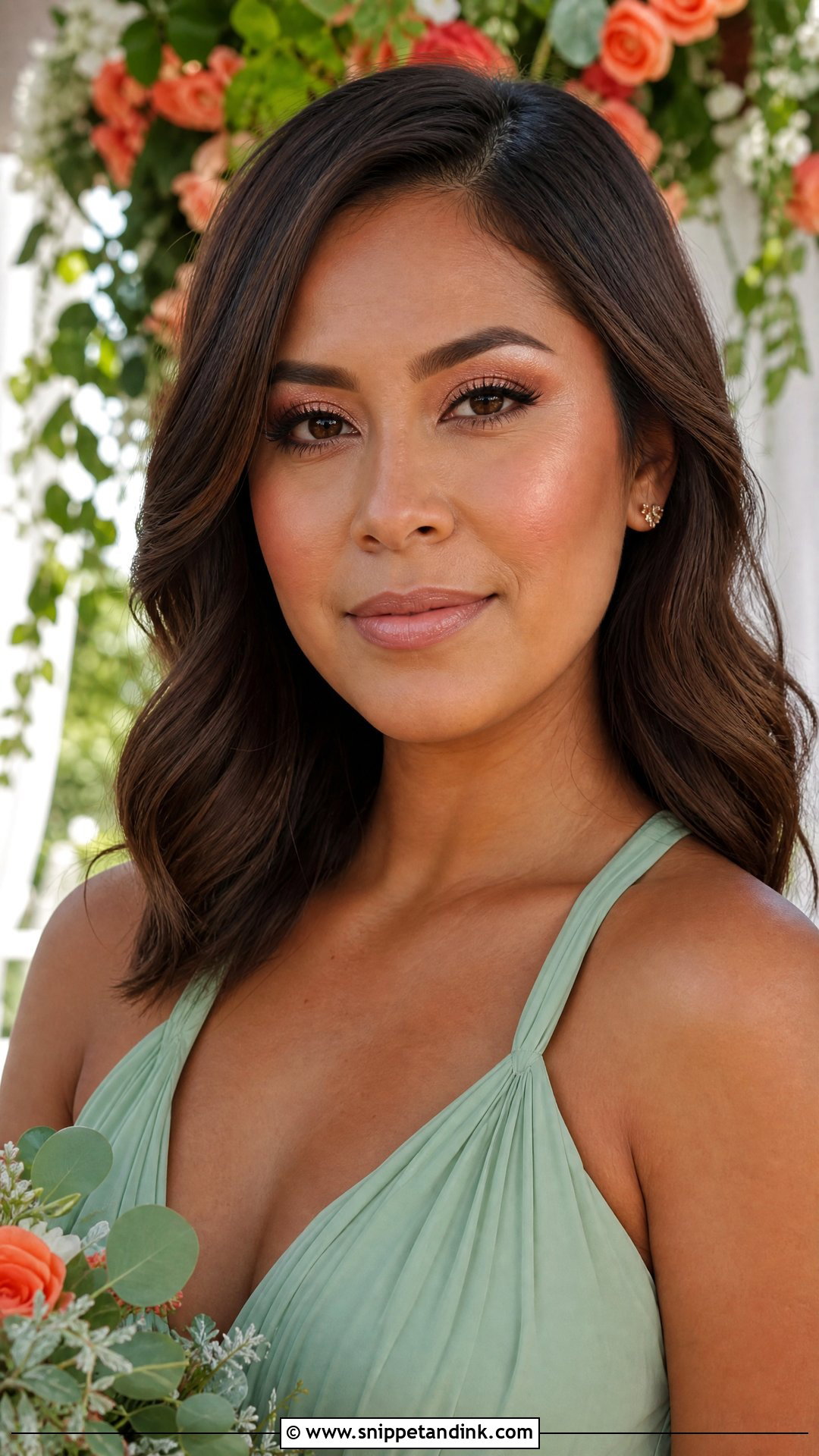
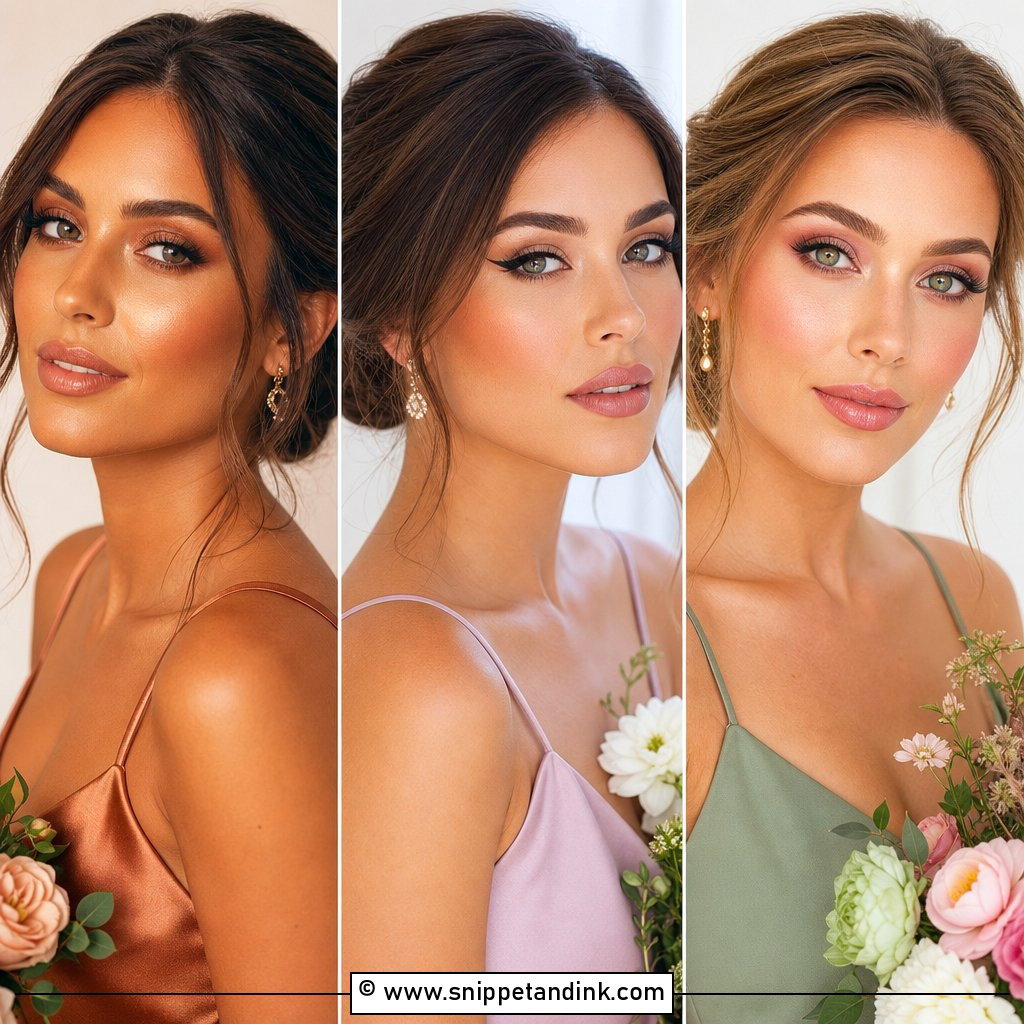
Peach warms the face the way late-afternoon sun does, which is why I like it for outdoor ceremonies. A satin base, light bronzer and peach cream blush swept toward the temples set it up. Warm beige or soft copper on the eyes, brown liner and wispy lashes keep it light. The lip should stay in the same family. On very fair skin with pink undertones, peach can look orange in flash photos, so I’d test it with the camera on, not just in the mirror. Against terracotta, sage and coral dresses it sits naturally.
7. Rose Gold Bridesmaid Makeup
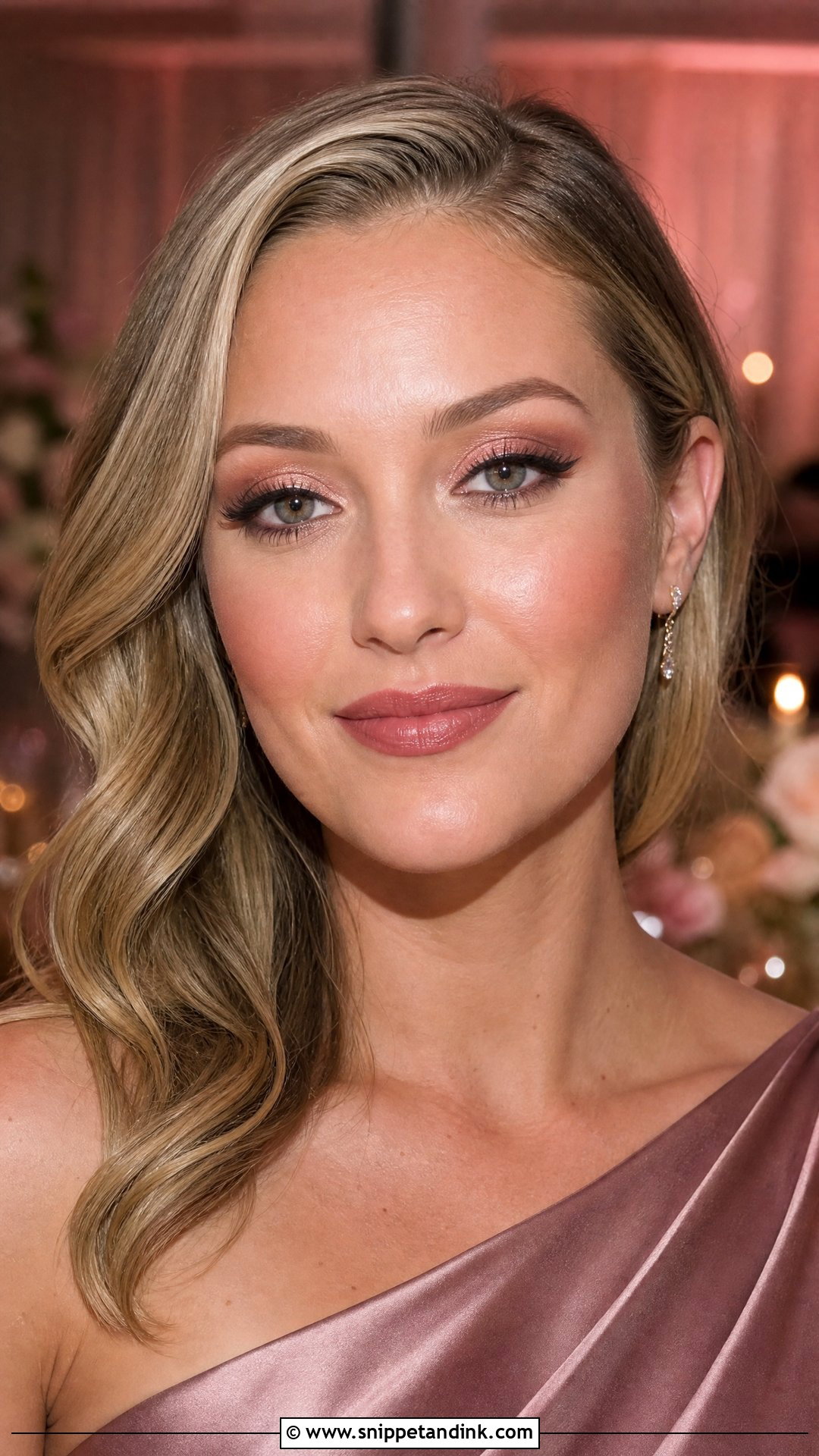
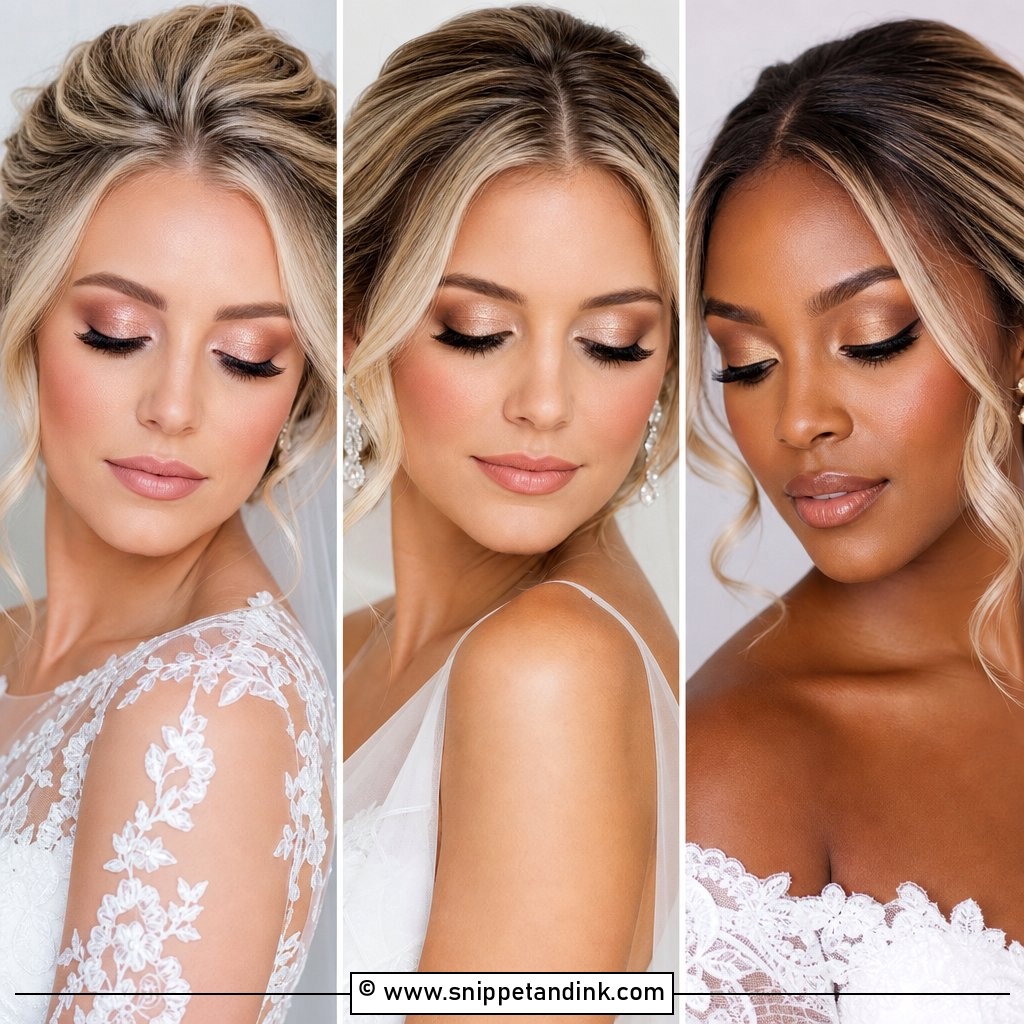
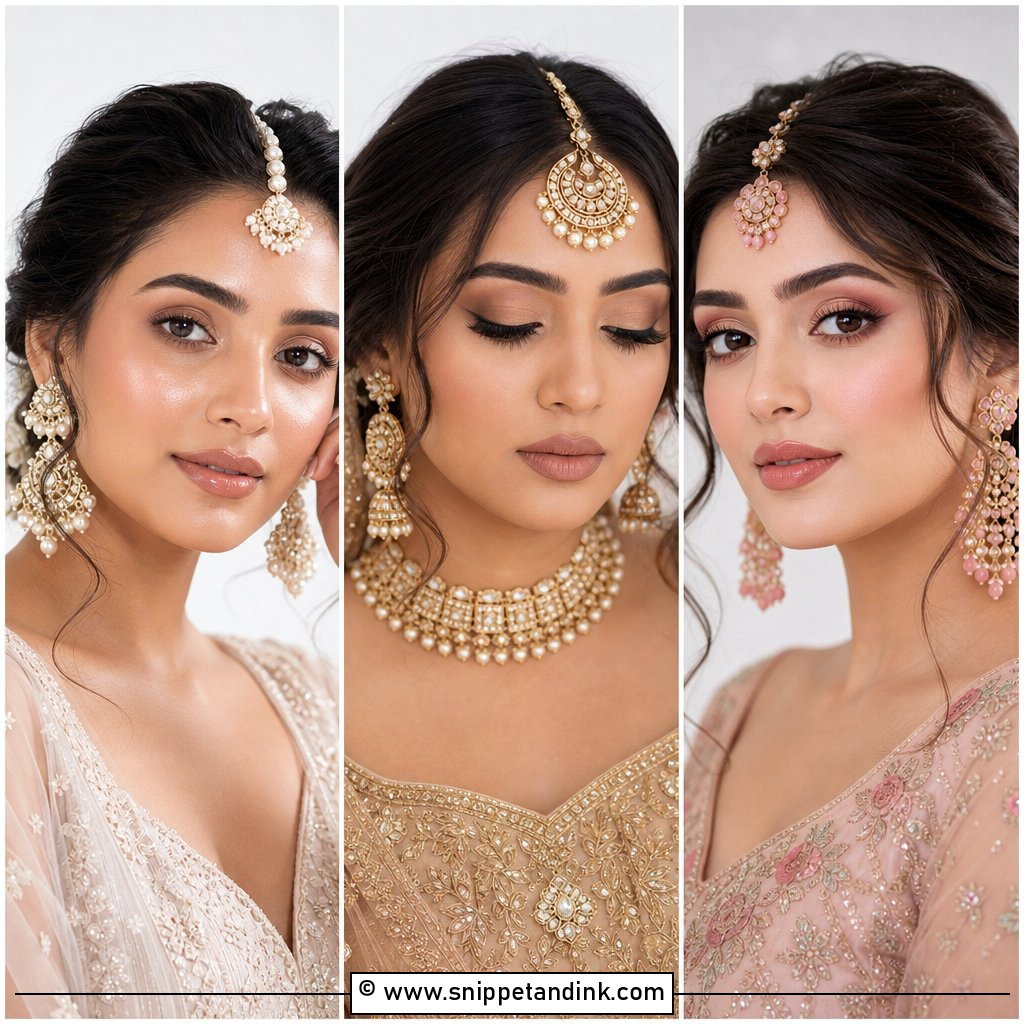
Rose gold bridesmaid makeup sits halfway between natural and glam. I build a satin complexion, add soft bronzer and rosy blush, then blend warm taupe through the crease and press the rose gold shimmer onto the lid with a fingertip, which places more pigment and less fallout than a brush. The liner stays thin and tight to the lash line so the shimmer does the work. A rose-nude liner under satin lipstick ties it together. Candlelit receptions show off this shimmer best; under harsh midday sun it can look more like glitter than glow.
8. Brown Smokey Bridesmaid Makeup
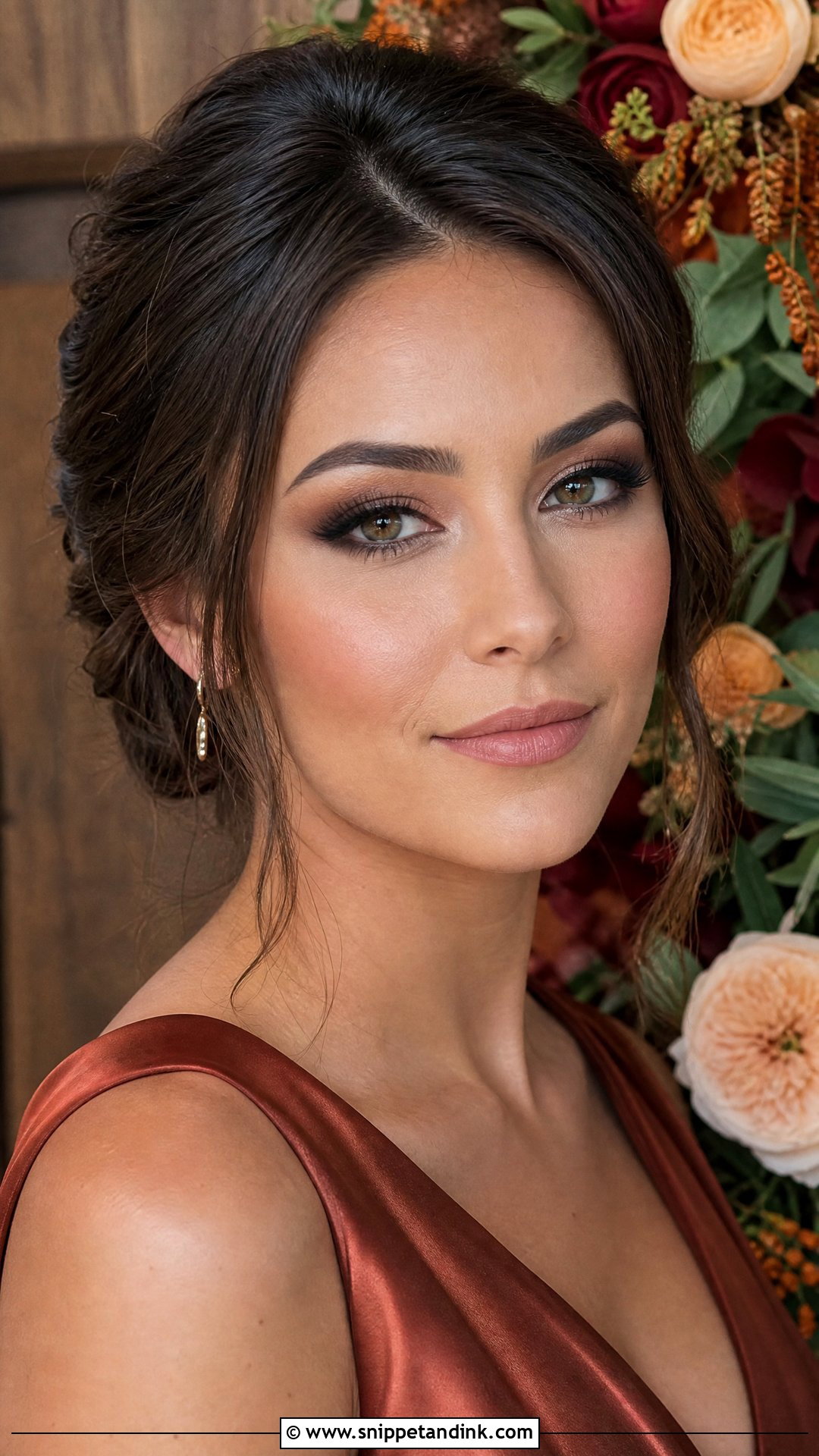
Brown smokey bridesmaid makeup gives proper definition without the harshness black shadow has in photos. I blend light brown through the crease, deepen only the outer third with chocolate brown and smudge brown liner along the upper lashes. The lower lash line gets almost nothing. That is deliberate, because shadow under the eye collects tears and mascara during the vows and reads as tiredness in close-ups. A nude, caramel or rose-brown lip keeps the balance.
9. Champagne Bridesmaid Makeup
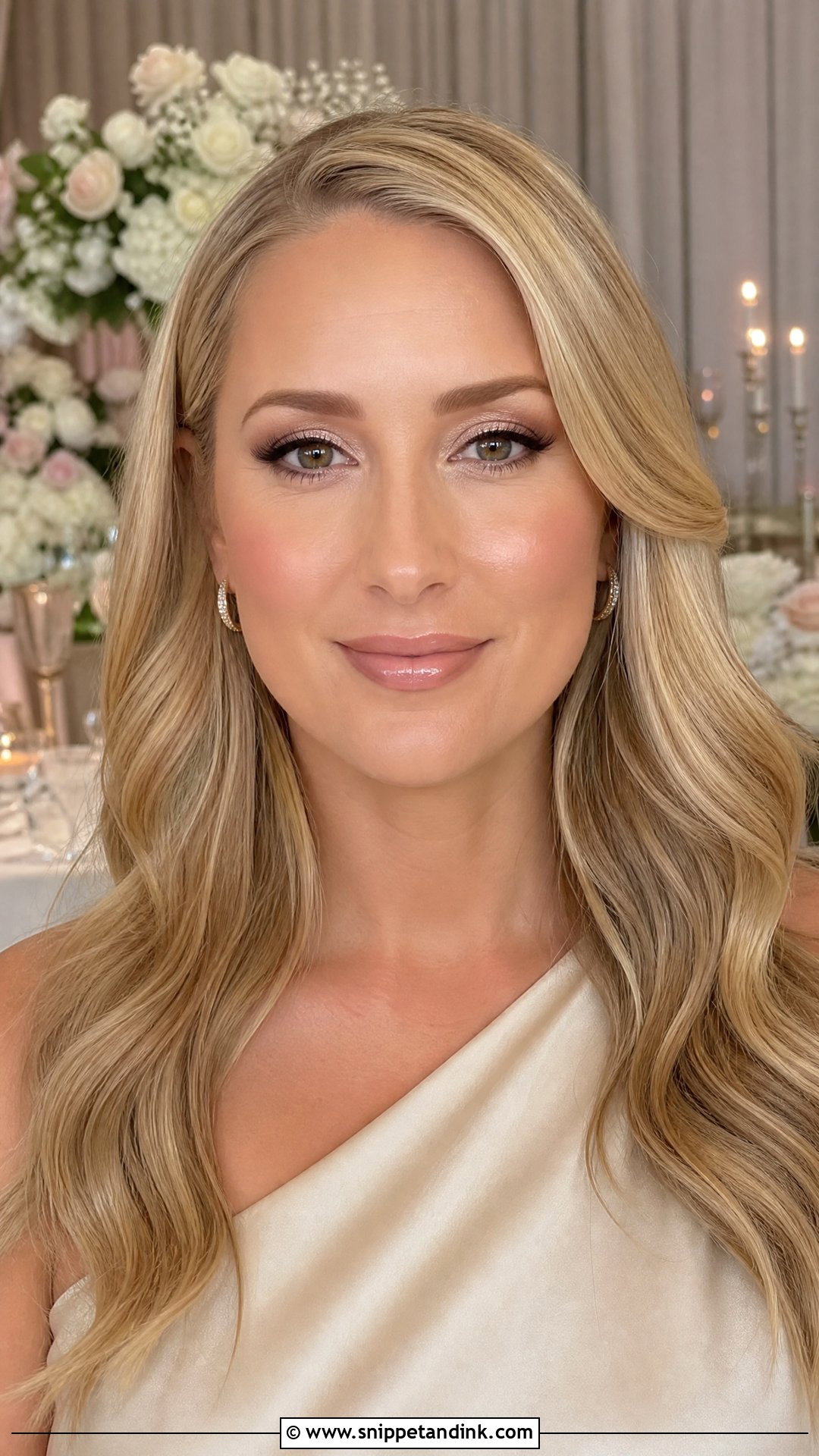
Champagne shimmer flatters almost every skin tone because it reflects light without adding much color. I keep the base satin, add peach or pink blush, then a little champagne highlight on the cheekbones and the same tone across the lids, with light brown in the crease for shape. Thin brown liner and feathery lashes are enough. On very deep skin, a pale champagne can turn ashy, so I swap in a gold-leaning version. A pink-nude gloss or satin lip finishes it without competing with the shimmer.
10. Bronze Bridesmaid Makeup
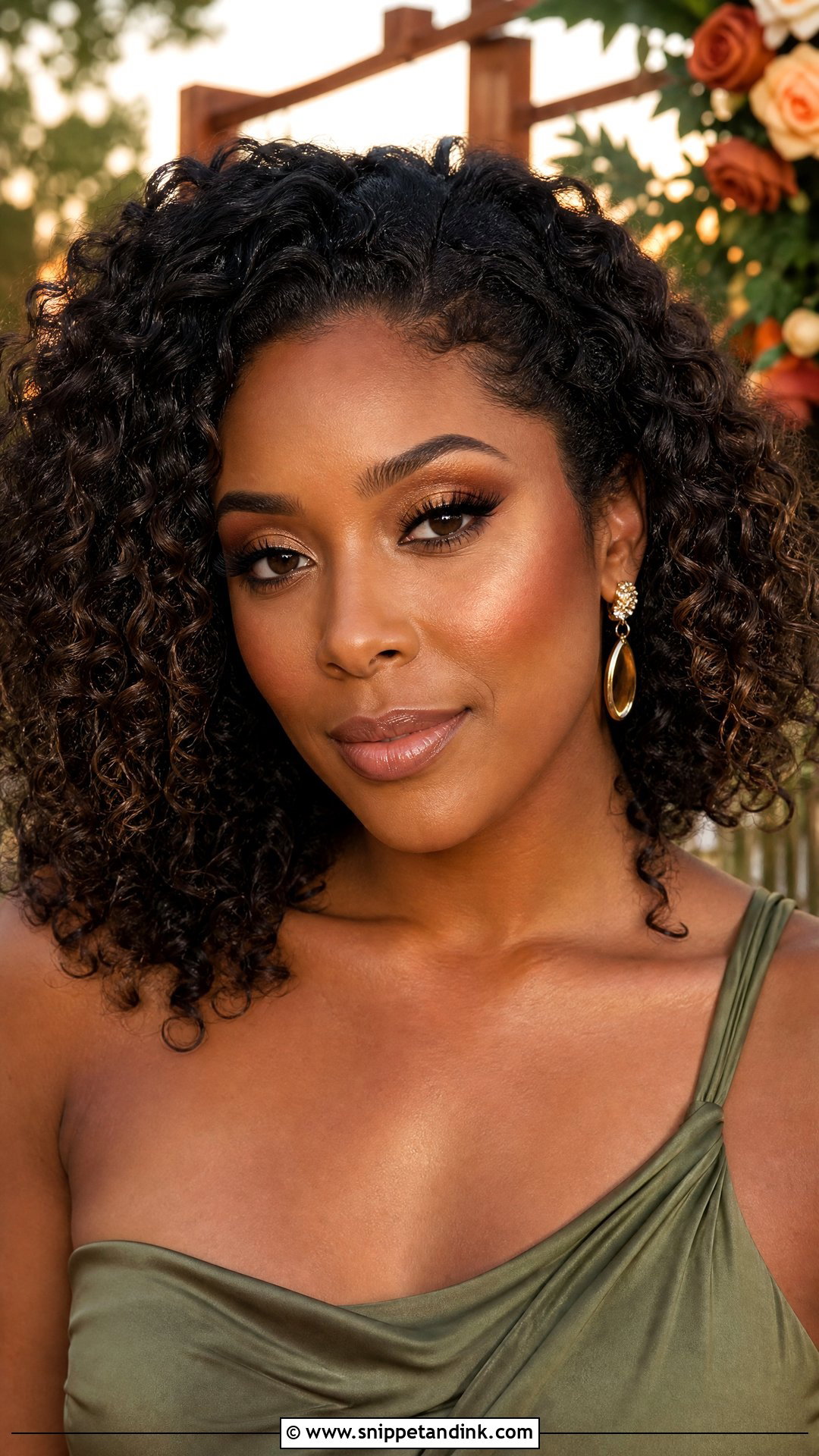
Bronze is warmth plus structure. I use a skin-like foundation, then bronzer around the forehead, cheeks and jaw, where the sun would naturally hit. Peach or terracotta blush connects the face to the eyes, which get bronze shimmer on the lid and warm brown through the crease. I smudge a brown liner into the lashes instead of drawing a wing, so the eyes look fuller without a hard edge. Olive, rust and espresso dresses sit well against it, and so do sunset ceremonies.
11. Mauve Bridesmaid Makeup
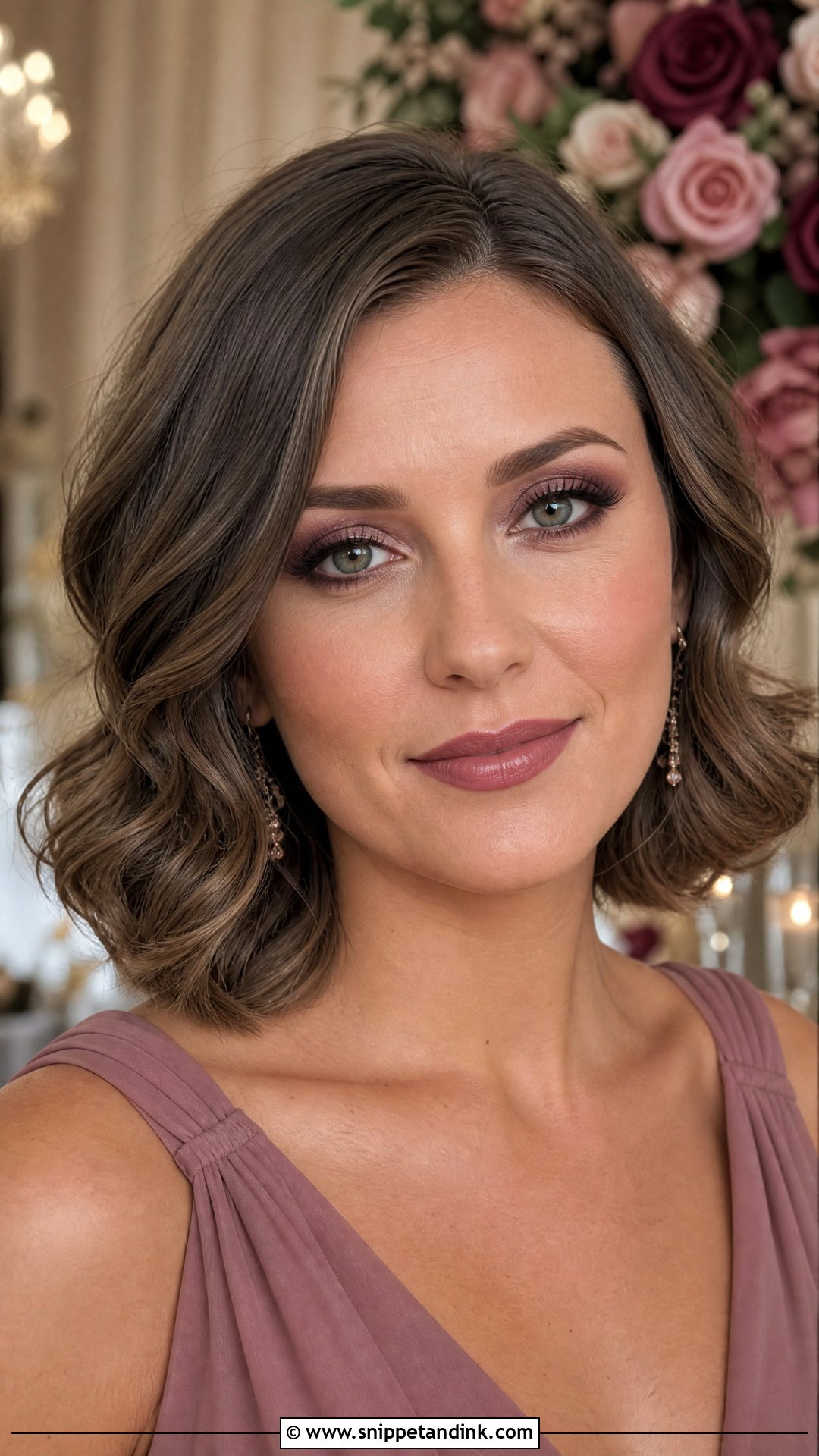
Mauve is cooler than peach or bronze, and it suits dusty rose, plum, lavender or gray-blue dresses. I keep the skin natural and add a muted mauve blush, then layer mauve, taupe and brown on the eyes for gentle depth. A thin plum liner instead of brown is a good trick on green or hazel eyes. The lip should be satin or velvet, not glossy. The one warning: on sallow or olive skin some mauves look grey, so I always swatch two on the jaw before choosing.
12. Nude Bridesmaid Makeup
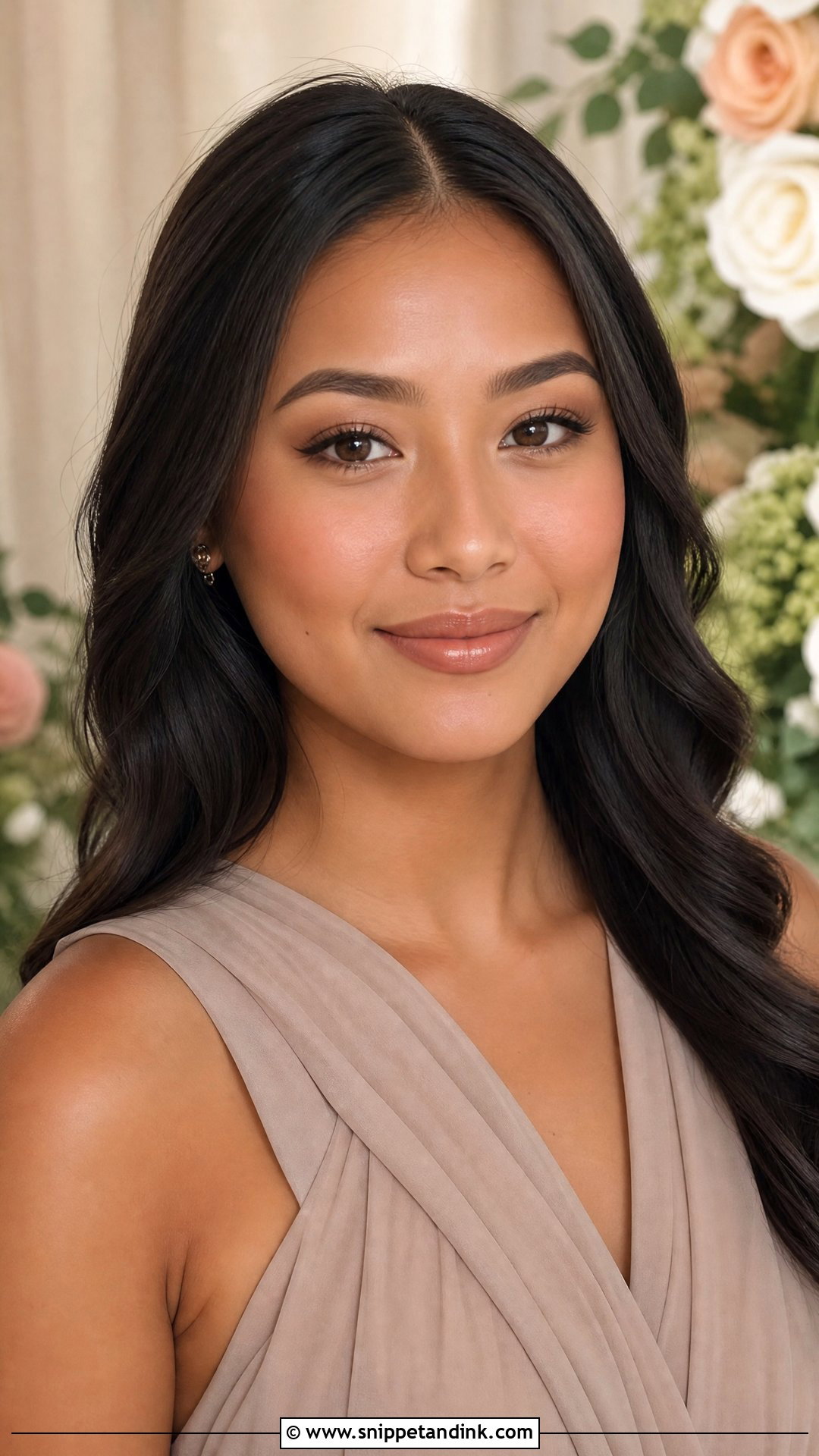
Nude is never one shade. The point of a nude look is matching each bridesmaid’s own depth and undertone, so the face never looks washed out. I keep the base natural, contour lightly and use a blush close to the person’s flushed cheek color. Beige, tan, caramel or soft brown goes on the eyes with brown liner and mascara. The lip is where I’m strict: a nude that is lighter than the skin makes the mouth disappear in photos, so I go one shade deeper than looks right in person.
13. Classic Bridesmaid Makeup
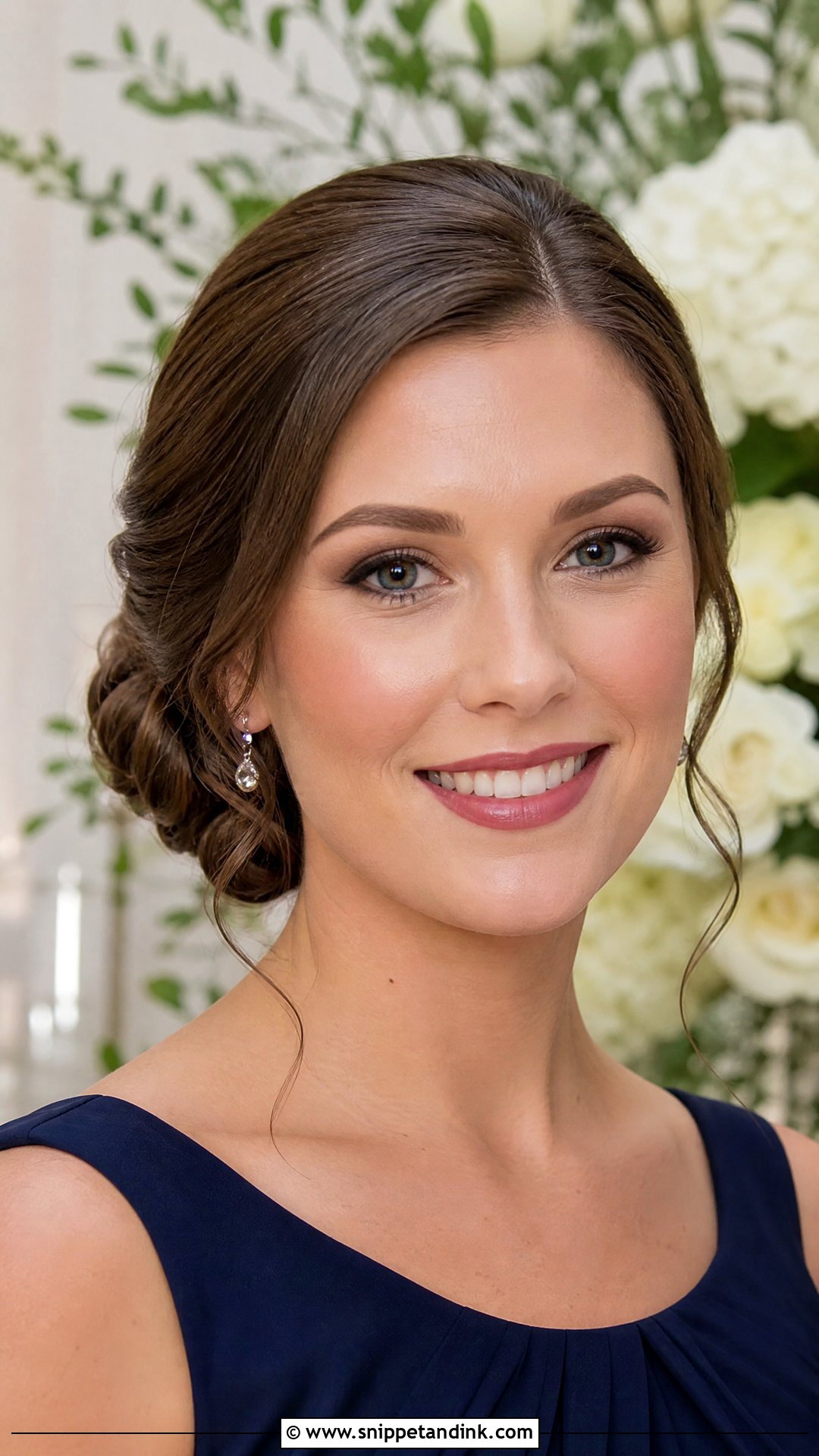
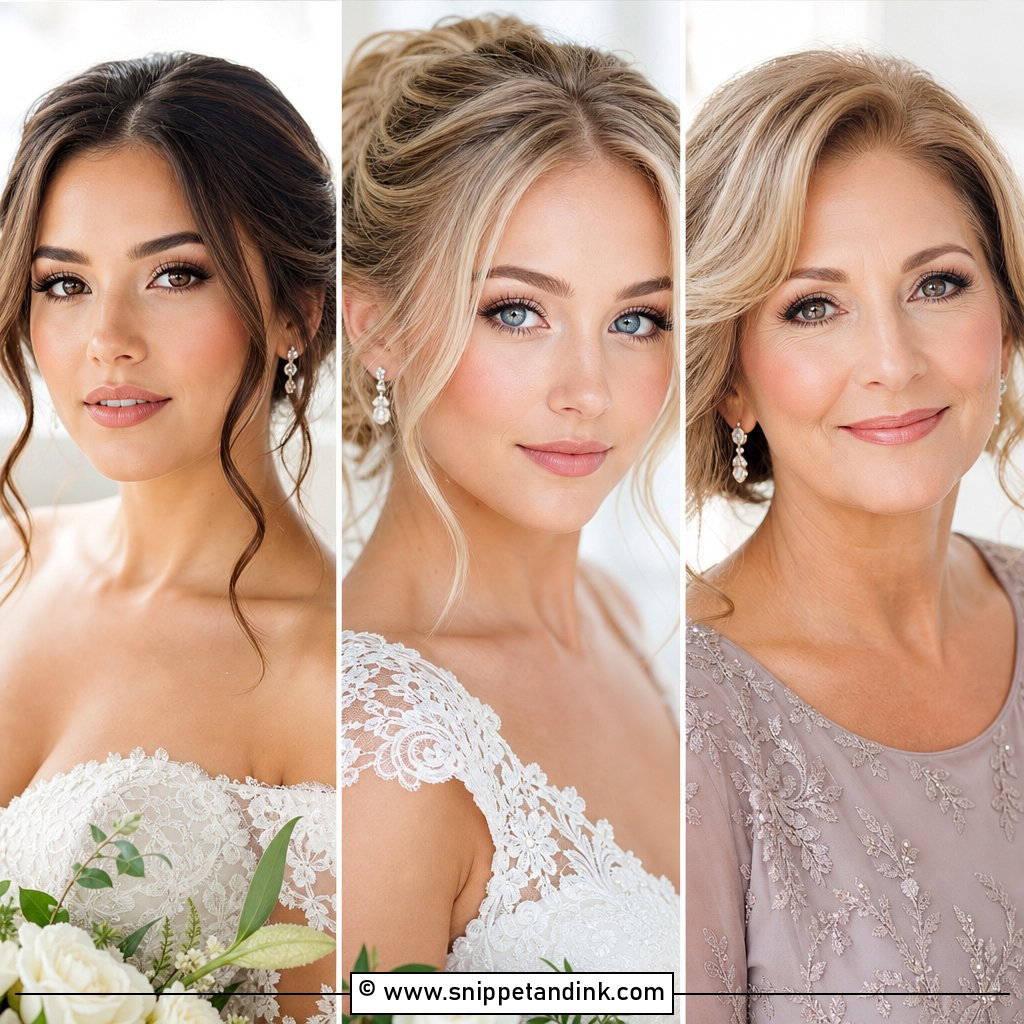
Classic makeup is the one I suggest when a bride can’t decide, because it doesn’t date. Medium-coverage foundation that still lets skin texture show, neutral blush, subtle bronzer and a soft highlight. Taupe or warm brown on the eyes, a thin liner and natural lashes. Clean brows. A rose, pink or nude satin lipstick. It looks coordinated across a bridal party without everyone wearing the identical face, and it adapts to traditional and modern venues alike.
14. Winged Liner Bridesmaid Makeup
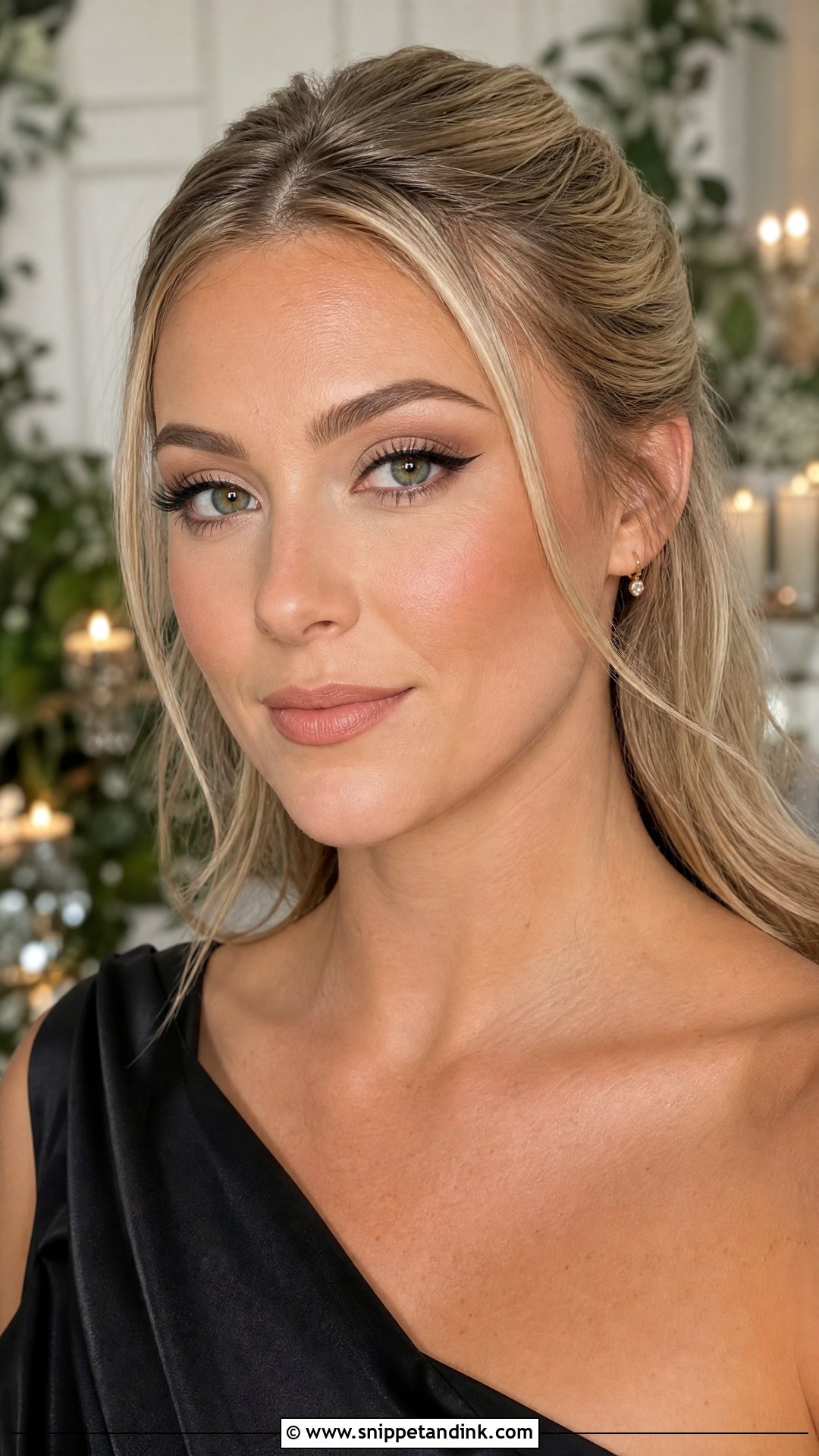
A winged liner should be thin and lifted, never thick. I draw it with the eye open and the head straight, since a wing drawn with the eye closed often lands too high once the lid relaxes. With hooded eyes, I keep the wing very short or switch to a tightline, because a long wing folds into the lid crease. Everything else stays simple: a matte beige lid, curled lashes and waterproof mascara, natural foundation and soft pink blush. A satin nude or rose lip balances the line.
15. Glossy Lip Bridesmaid Makeup
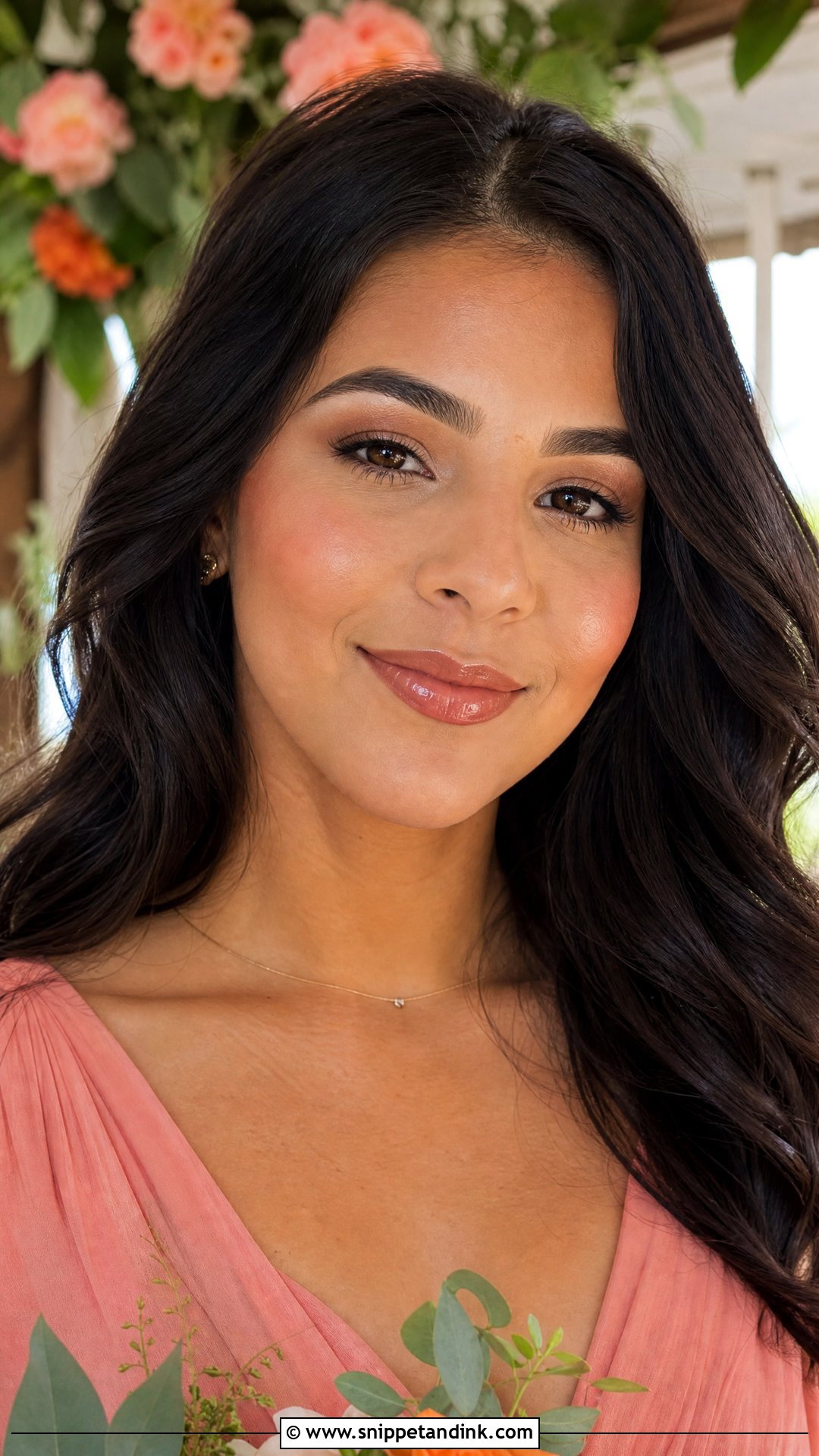
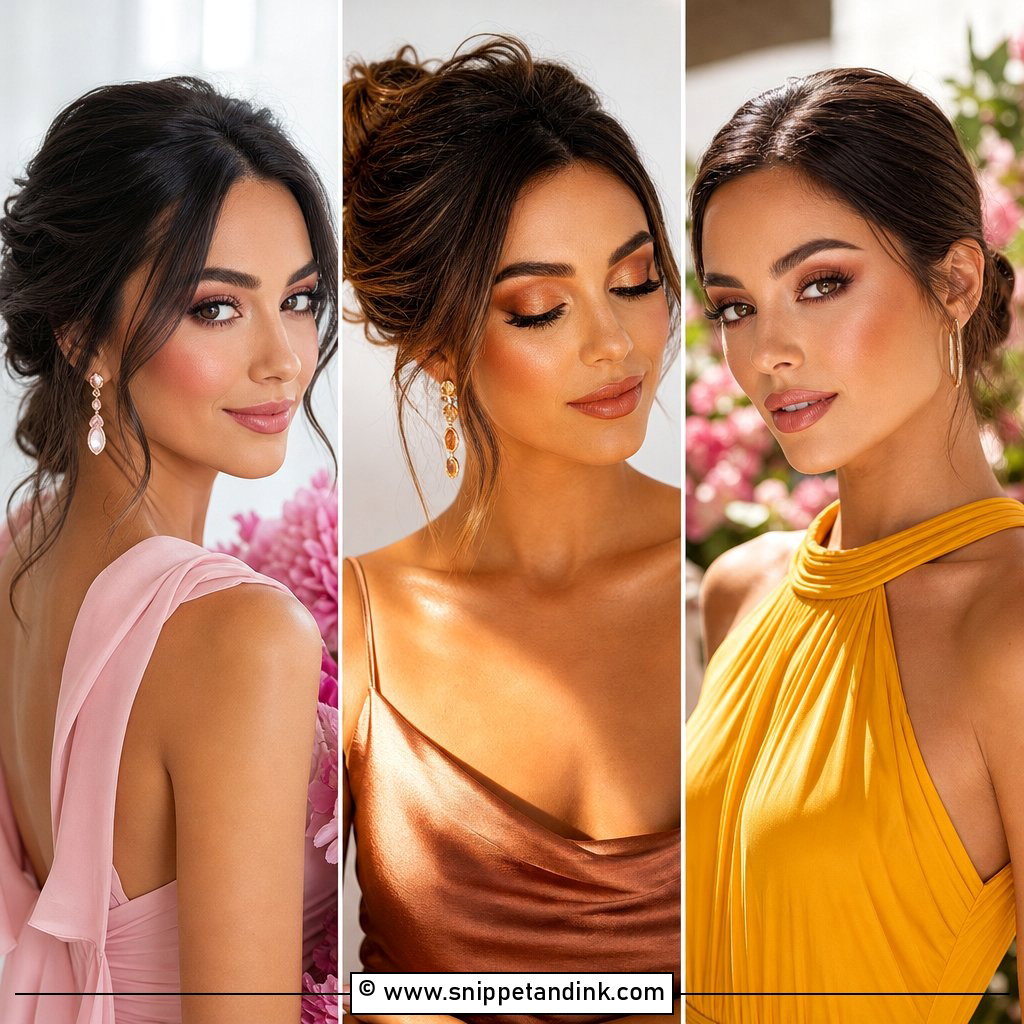
Gloss looks fresh, but it is the first thing to vanish once the drinks start. I put a lip liner across the whole lip underneath, so when the gloss wears off there’s still color. Pink, peach, rose or caramel glosses hold better than a sticky clear one. The rest of the face should be lasting: a natural base, the T-zone set, cream blush, beige shadow with a light brown crease and mascara. Long hair worn down and windy outdoor ceremonies don’t mix well with gloss, so for those I’d lean toward a balm-satin finish.
16. Berry Lip Bridesmaid Makeup
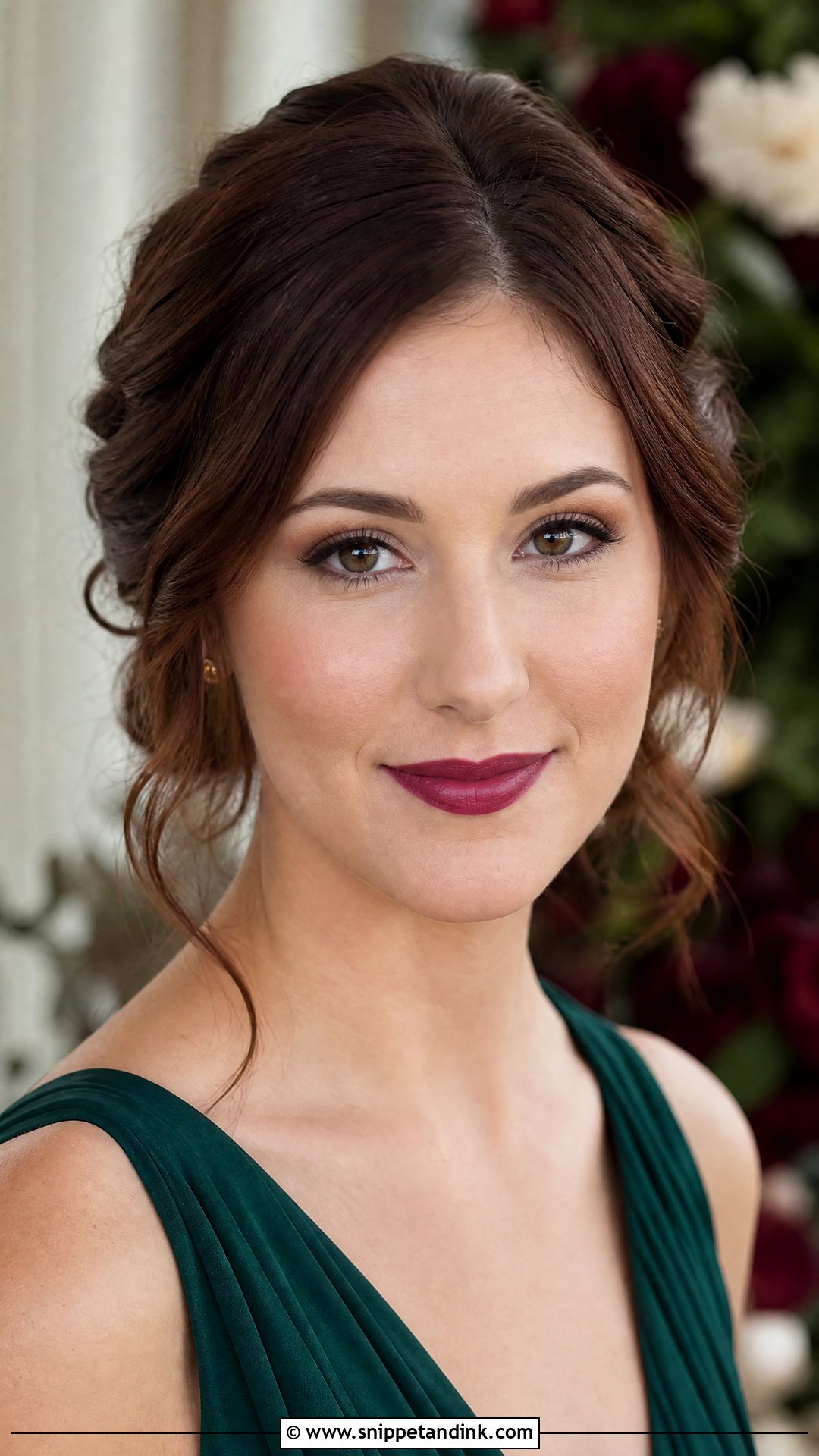
Berry lip bridesmaid makeup brings more color than the rest of this list, so I keep the eyes quiet: taupe or soft brown shadow, mascara and a very thin liner. A satin base, muted rose blush and a little bronzer stop the face from looking pale beside a deep lip. For the lip itself I prefer a stain or a blurred matte, because a creamy berry migrates into fine lines and onto glasses. Very dark shades can overpower a soft bridal party, so check with the bride first. Emerald, navy, plum and burgundy dresses all carry it.
17. Coral Bridesmaid Makeup
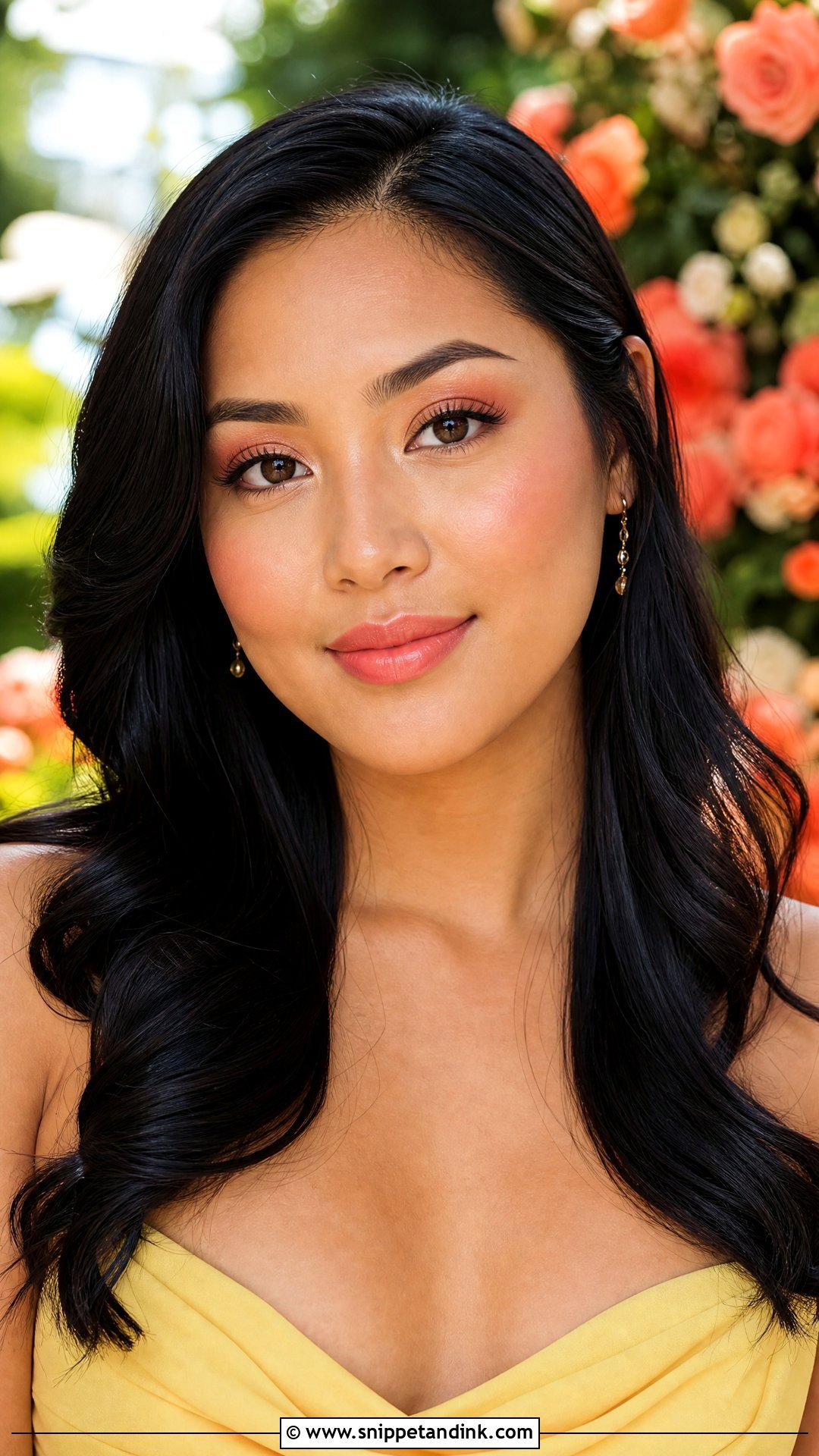
Coral is cheerful but easy to overdo. I blend a peach-coral blush high on the cheeks and keep it sheer, with light bronzer for warmth and golden highlight only if the skin can take it. Warm beige, apricot or soft bronze on the eyes, brown mascara and natural brows. The lip should be a sheer coral or a warm pink rather than a full opaque coral, which tends to look like a dated orange in flash photos. Beach and destination weddings suit it best, especially with mint, yellow or white dresses.
18. Olive Green Dress Bridesmaid Makeup
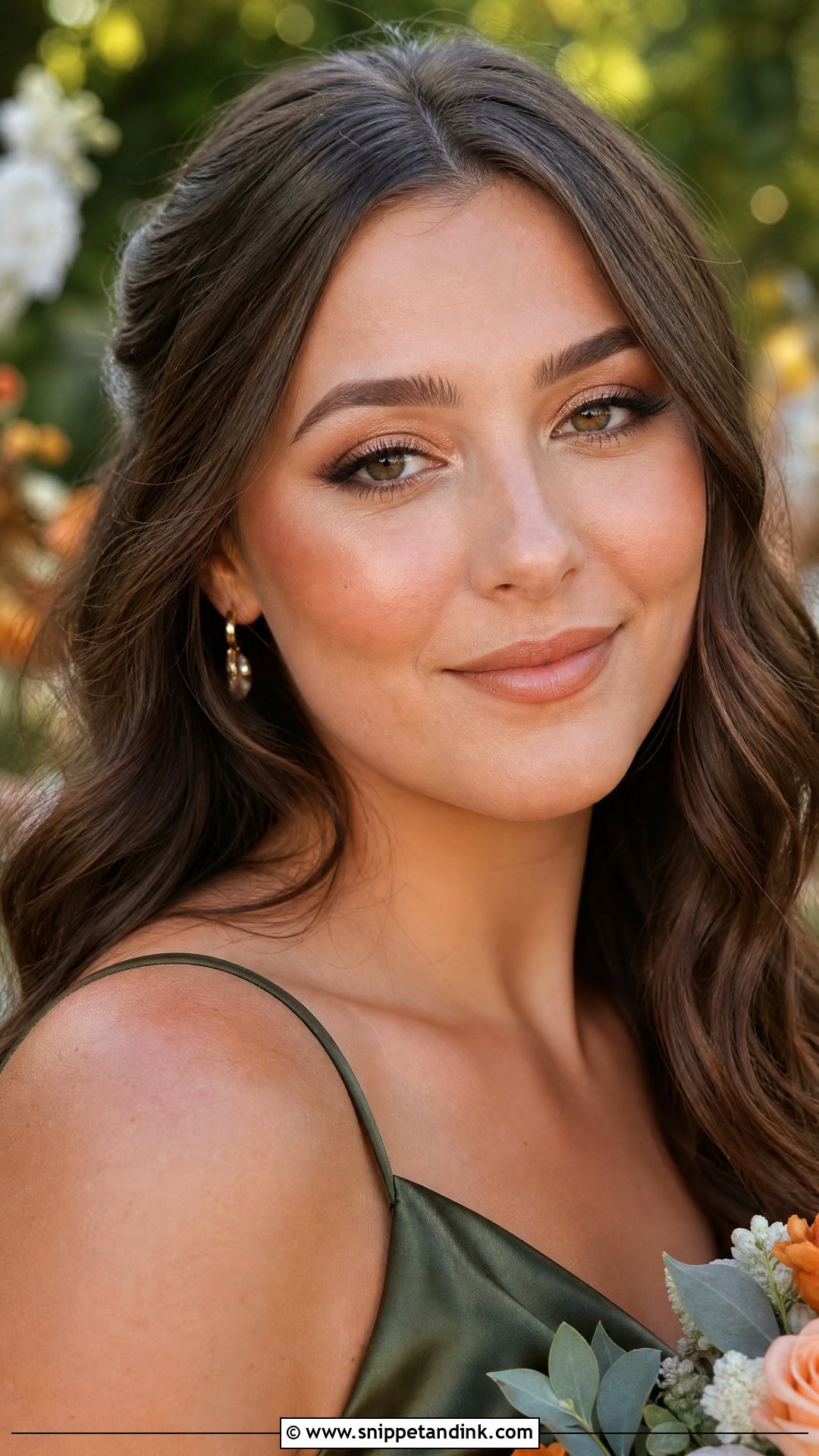
An olive dress already has a lot of depth, and it can make sallow skin look greener if the makeup is too cool. I counter that with warmth: satin foundation, warm bronzer and peach or terracotta blush. Champagne, bronze or warm brown on the eyes with a softly smudged brown liner, lifted lashes and natural brows. I avoid grey-toned mauves and cool pinks next to olive, and pick lips in peach nude, caramel or warm pink.
19. Navy Dress Bridesmaid Makeup
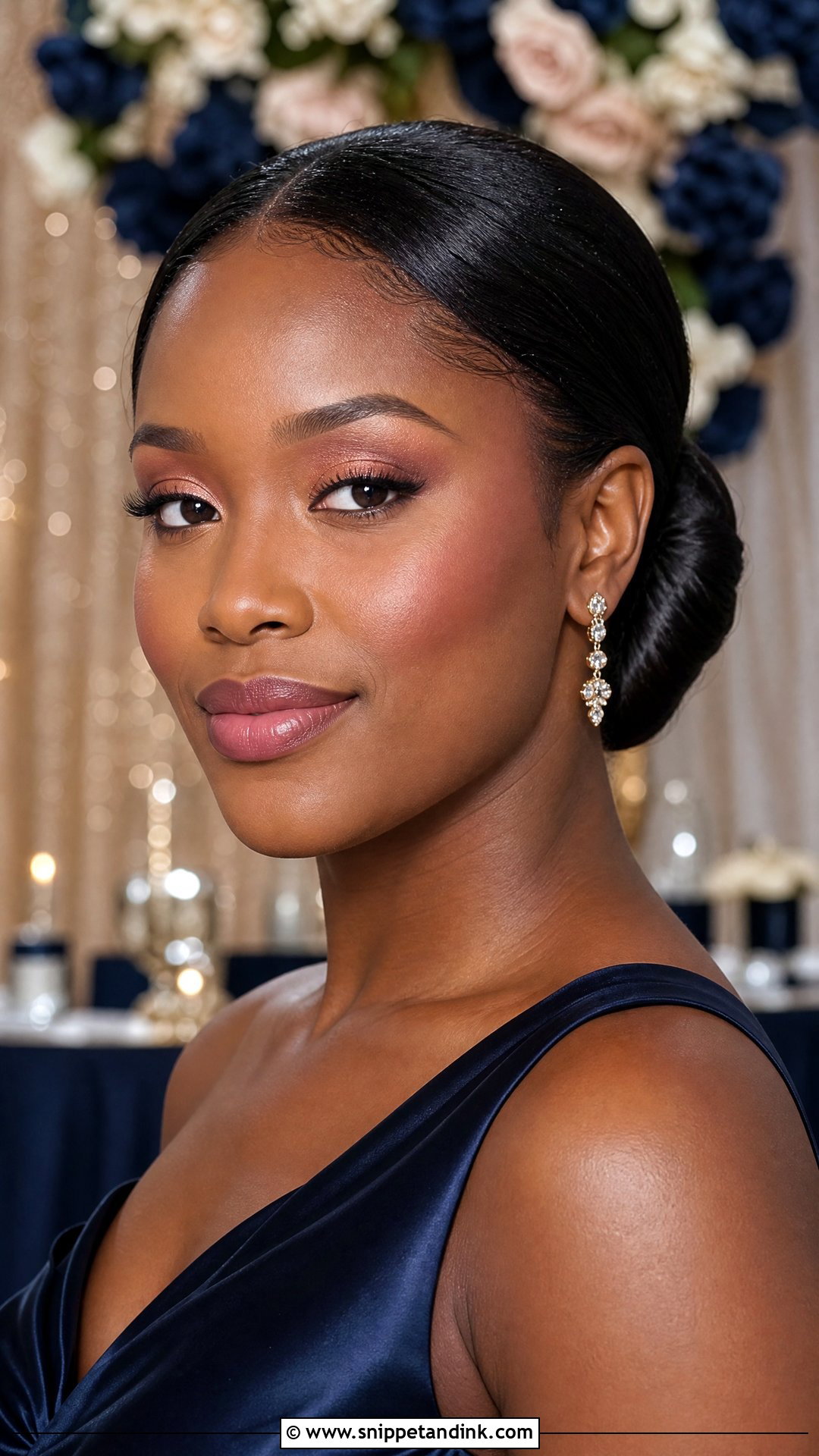
Navy is dark enough to drain color from the face in group photos, so the makeup needs to put some back. I start with a satin base and soft bronzer around the edges of the face, then rose, mauve or peach blush depending on undertone. Light-catching shadow helps here: champagne, taupe, soft bronze or rose gold brightens the eyes against the fabric. Brown or charcoal liner and waterproof mascara define them. A rose-nude or mauve lip keeps the face soft against a formal gown.
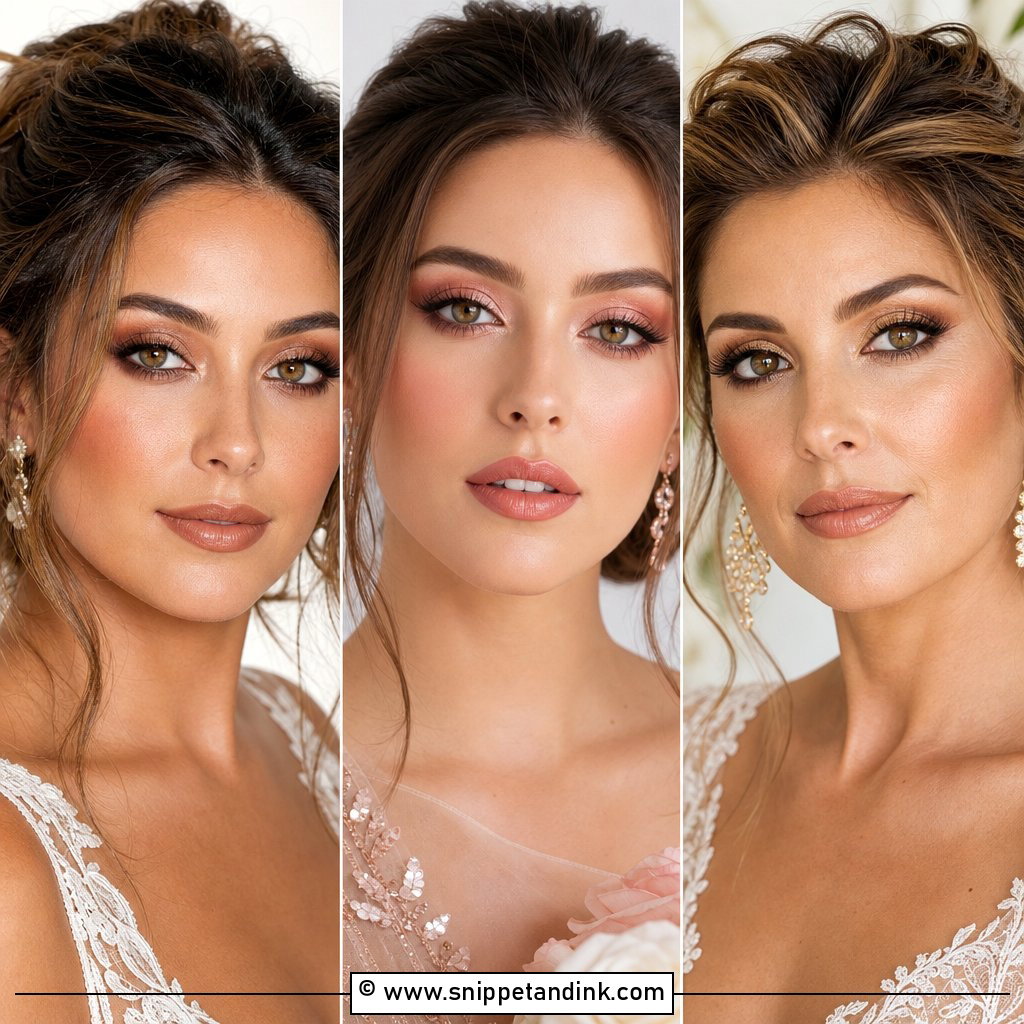
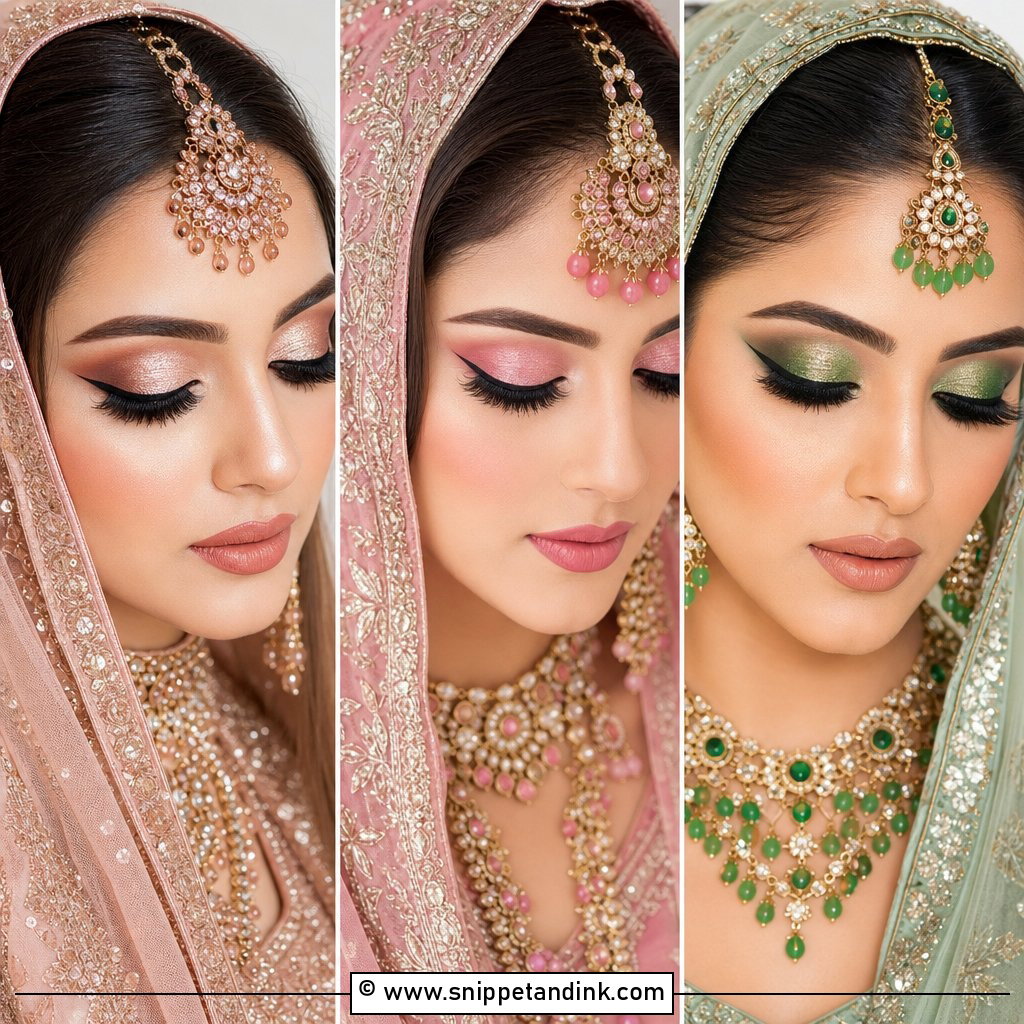
20. Black Dress Bridesmaid Makeup
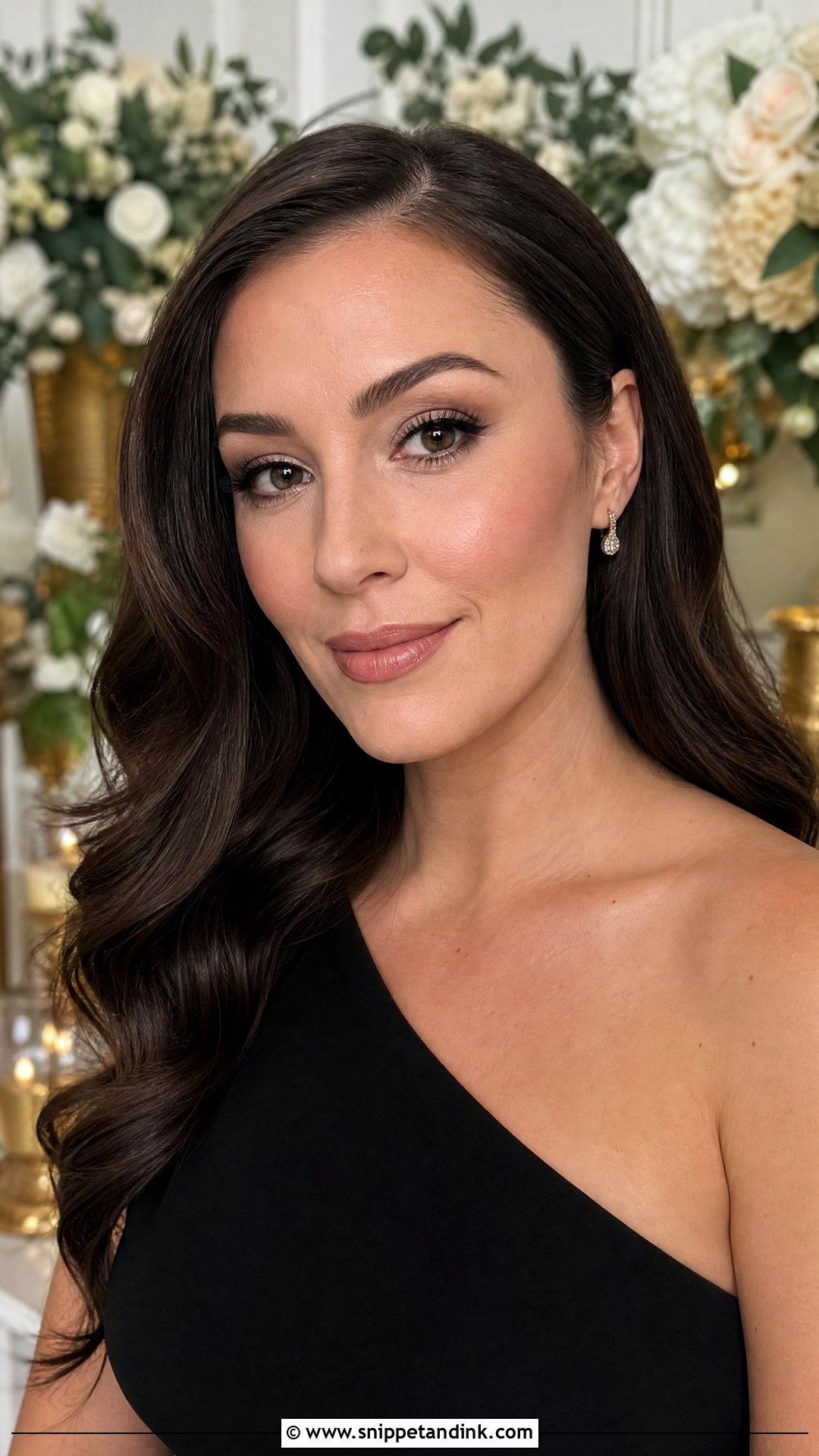
Black creates the strongest contrast of any dress, and that contrast exaggerates every uneven patch of skin or harsh contour line. I keep the base smooth and well blended, use light contour and pick a flattering blush in rose, peach or soft berry. Taupe, champagne or brown shadow with a thin liner and lifted lashes is plenty. Brows groomed but not sharp. A nude rose, classic pink or muted berry lip works, and I’d choose the richer shade for an evening reception where the lighting is dim.
Flash, Daylight and Phone Cameras Change What Bridesmaid Makeup Looks Like
Makeup that looks right across a table can look very different in wedding photos. Three things catch people out more than any shade choice.
White cast from sunscreen and powder
Mineral sunscreens and some loose setting powders bounce flash back, leaving a pale cast across the forehead and under the eyes. I keep heavy mineral SPF off the face for evening photos and press powder in thinly, then check with a flash photo before anyone leaves the chair.
Shimmer that turns into shine
Shimmer on the lid and cheekbones reads as glow. Shimmer near the nose, chin or forehead reads as oil. I keep highlighter to the top of the cheekbone and the center of the lid only.
Color that disappears
Cameras flatten color, so blush and lip need to be a little stronger than everyday makeup. If it looks just slightly too much in the mirror at arm’s length, it usually looks right in the gallery.
Can Every Bridesmaid Wear the Same Lipstick?
Usually not, and I’d gently talk a bride out of it. A single pink nude that looks right on fair skin turns chalky on deep skin, and a shade that suits olive skin can look muddy on someone pink-toned. What works is a shared family. I pick a direction, say rosy nude, then choose a version for each bridesmaid matched to her depth and undertone. In photos the group looks coordinated, and nobody looks unwell.
Give each bridesmaid her own lipstick or liner to carry. Sharing one tube across a bridal party spreads cold sores and germs, and it never suits more than one or two of them anyway.
A Shared Mood, Not the Same Face Six Times
A good bridal party doesn’t share one face. It shares a mood: skin that looks fresh, eyes with soft definition, blush that reads on camera and a lip chosen for the dress and the person. Pick the level, natural or soft glam, then adjust the shades for each bridesmaid’s undertone. Use long-wearing formulas and waterproof mascara, put a lip product in every clutch, and the makeup will hold from the ceremony to the final group picture.
You'll Like These Ideas:


Leave a Reply