
Traditional bridal makeup means you look like the most rested, polished version of yourself, not someone hidden under product. In practice that comes down to four things I plan every bridal face around: a base that lasts twelve hours, eyes defined enough to read from the back row, a lip you can keep up with, and a finish that holds in daylight portraits and under the reception lights. Classic doesn’t mean dated. Within it there’s room for dewy or matte skin, a red lip or a soft nude, a gentle rose palette or a deep bronze eye. Below are the looks I’m asked for most, with what each one needs to wear well and who I’d point toward something else.

Daylight Vows or a Candlelit Reception Change the Recipe
The same face can look perfect at noon and flat by candlelight, or fine indoors and heavy outside. Before I pick shades, I ask what time the ceremony starts and whether it’s indoors, under a tent or in open sun.
Outdoor and daytime
Daylight shows every edge, so blending matters more than color. I use less contour, a lighter base and cream textures that move with the skin. Shimmer stays fine. If you’re in direct sun, waterproof mascara and a setting spray carry you through the heat.
Evening and indoor
Low light flattens features, so the eyes and cheeks need more definition than feels natural in a bathroom mirror. A deeper crease shade, a slightly stronger blush and a lip with more color all hold up. Avoid heavy SPF and loose powders with a lot of white mineral content on the face for evening; some of them reflect flash and leave a pale cast in photos.
Most weddings are both: a daytime ceremony and an evening reception. In that case I apply for daylight and leave room to add, packing a deeper lip and a little extra blush for the bride to put on before the doors open for dinner. Adding color later is easy; taking it off without wrecking the base is not.
1. Classic Bridal Makeup With Red Lip

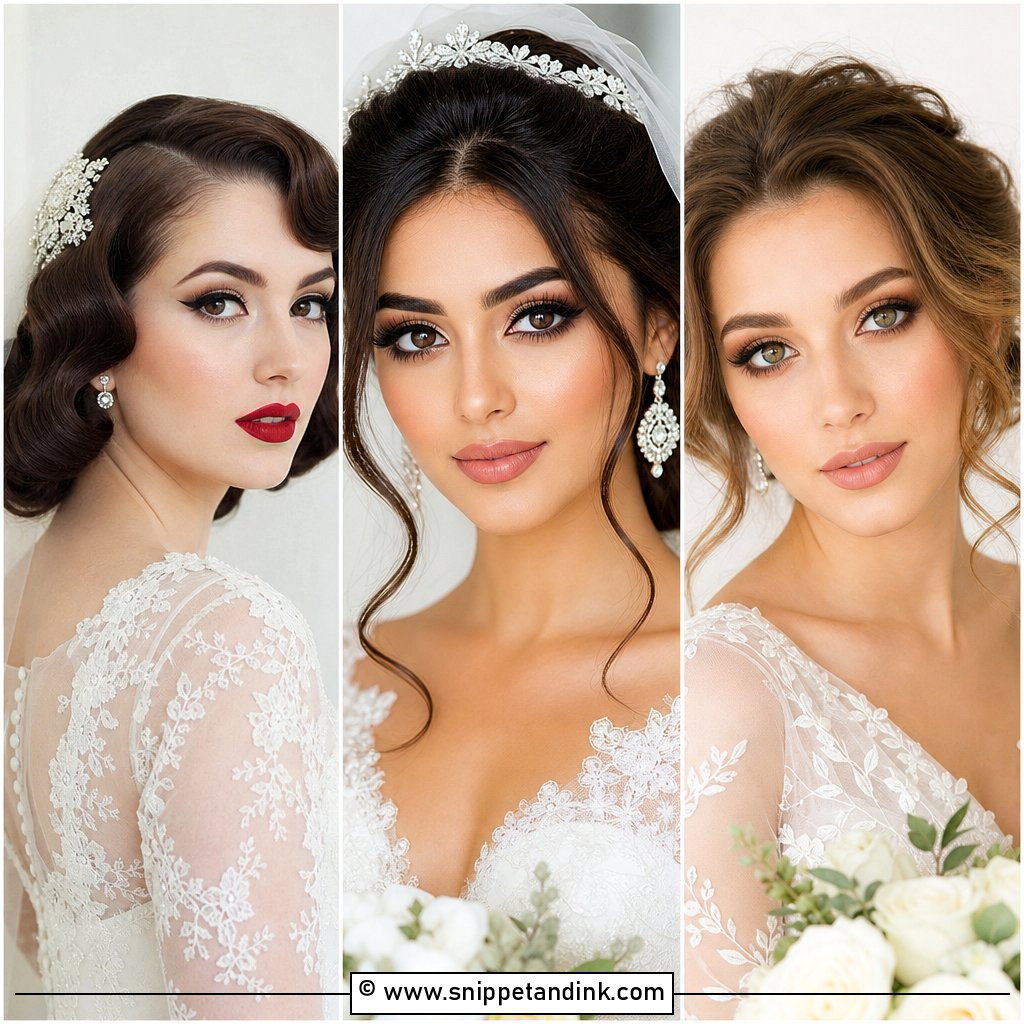
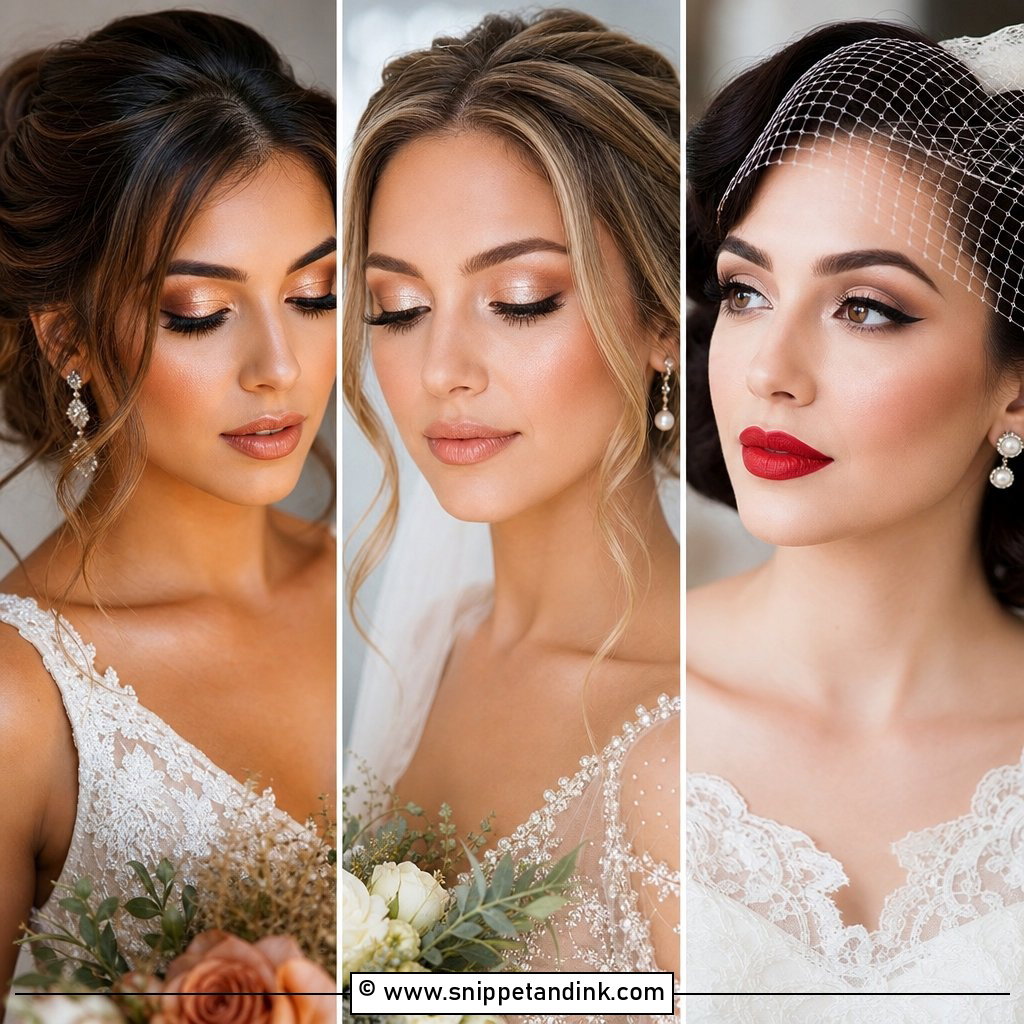
A red lip does most of the work in this look, so everything else steps back. I keep the eyes in beige or taupe with a thin black wing and lifted lashes, fill the brows softly and give the skin a satin finish that won’t shine in photos. The red itself depends on undertone: blue-reds brighten teeth on cool and neutral skin, while warmer brick or rose-reds suit golden undertones. Keep blush soft so the mouth stays the focus. It belongs with formal weddings, vintage gowns and sleek updos. If you rarely wear red, wear it for a full afternoon before the wedding; some brides find it feels like a costume, and that shows on camera.
2. Soft Glam Bridal Makeup

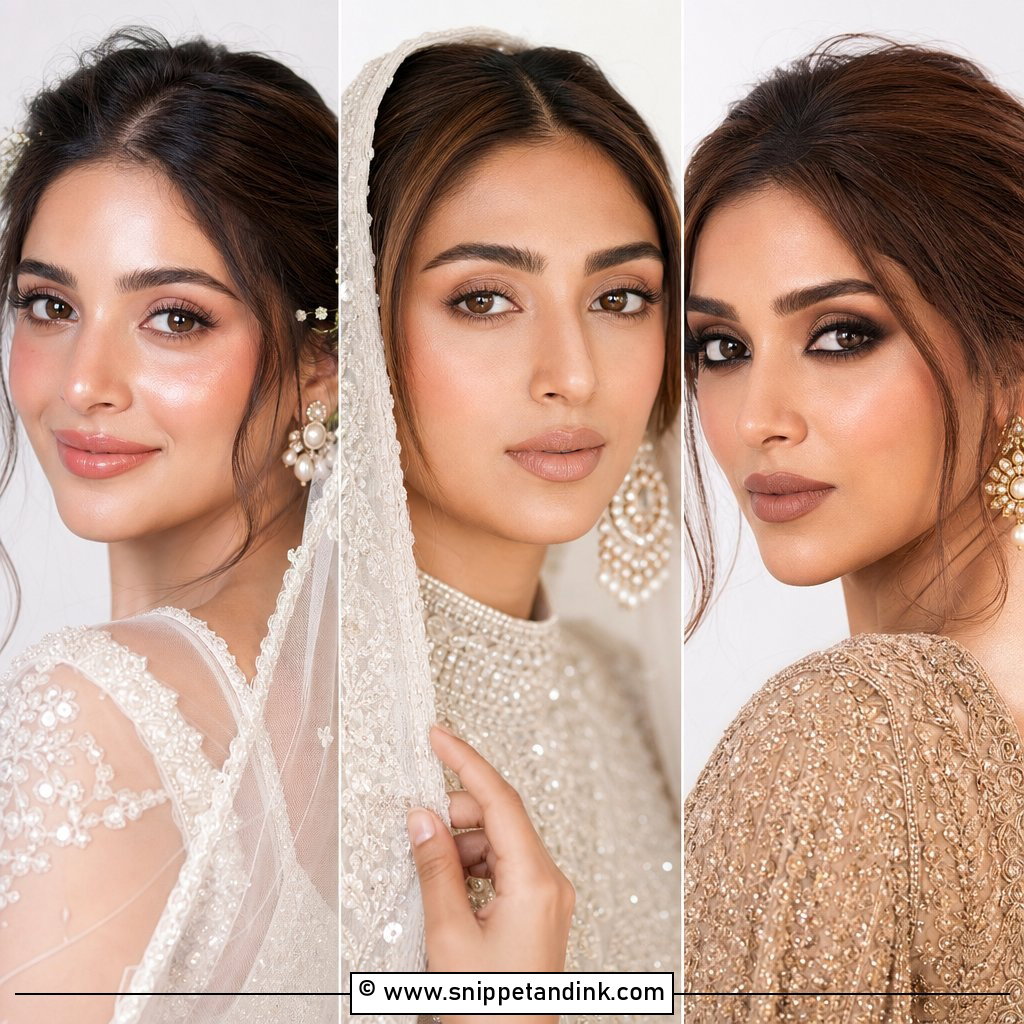
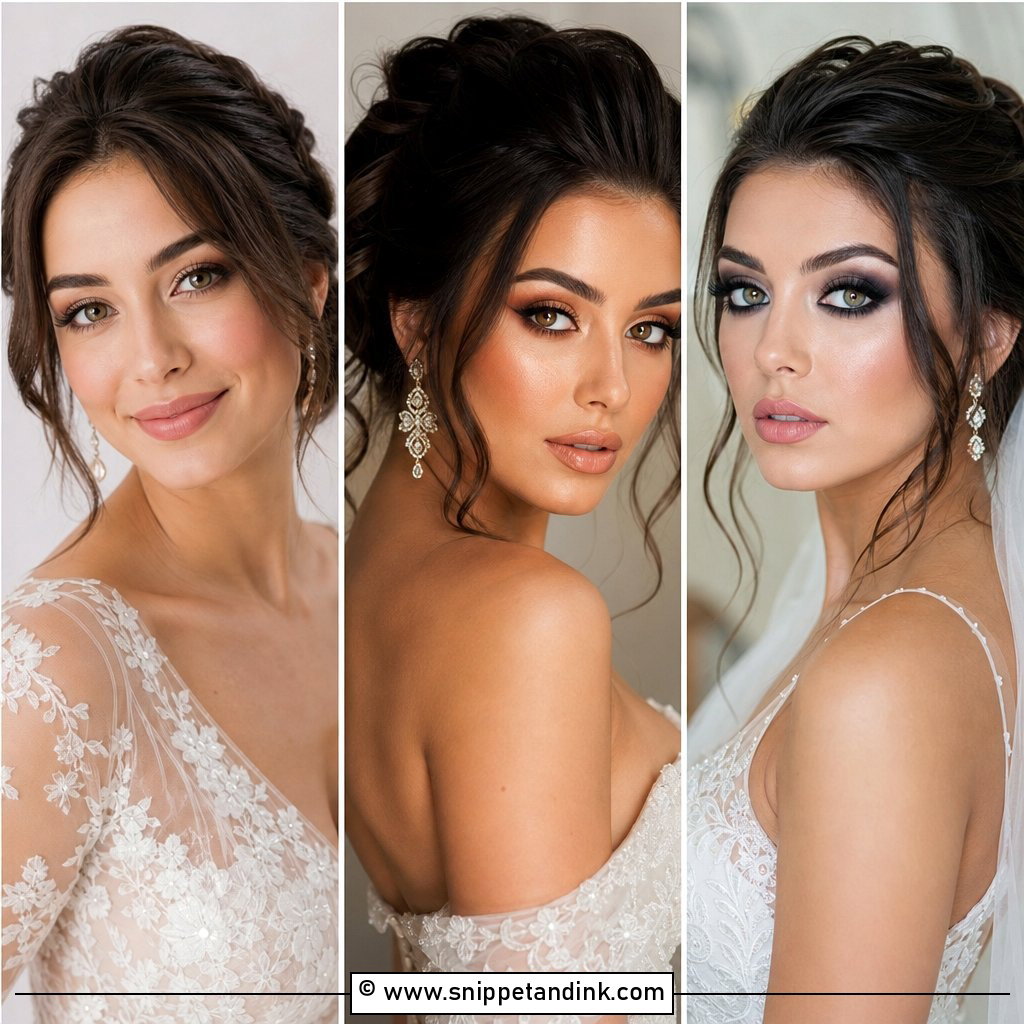
Soft glam is the look I do most, because it adds structure without anything looking harsh. Champagne, taupe or soft brown shadow is blended through the crease, liner sits tight to the lash line, and wispy lashes lift without hiding the eye. On the skin I contour gently, warm the cheeks and keep the glow on the high points only. A nude-pink or soft mauve lip ties it together. It goes with almost any dress and hairstyle, which is why it’s such a safe pick if you’re undecided.
3. Natural Bridal Makeup

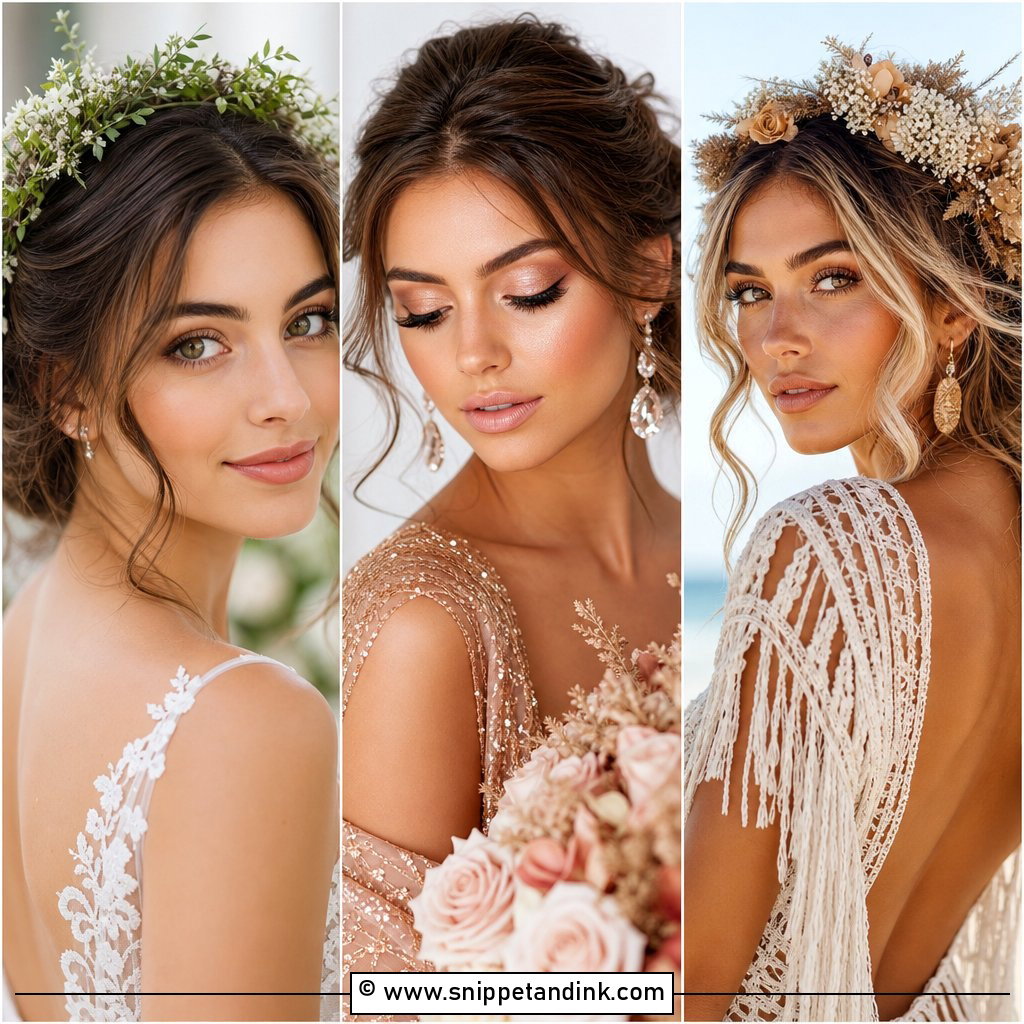
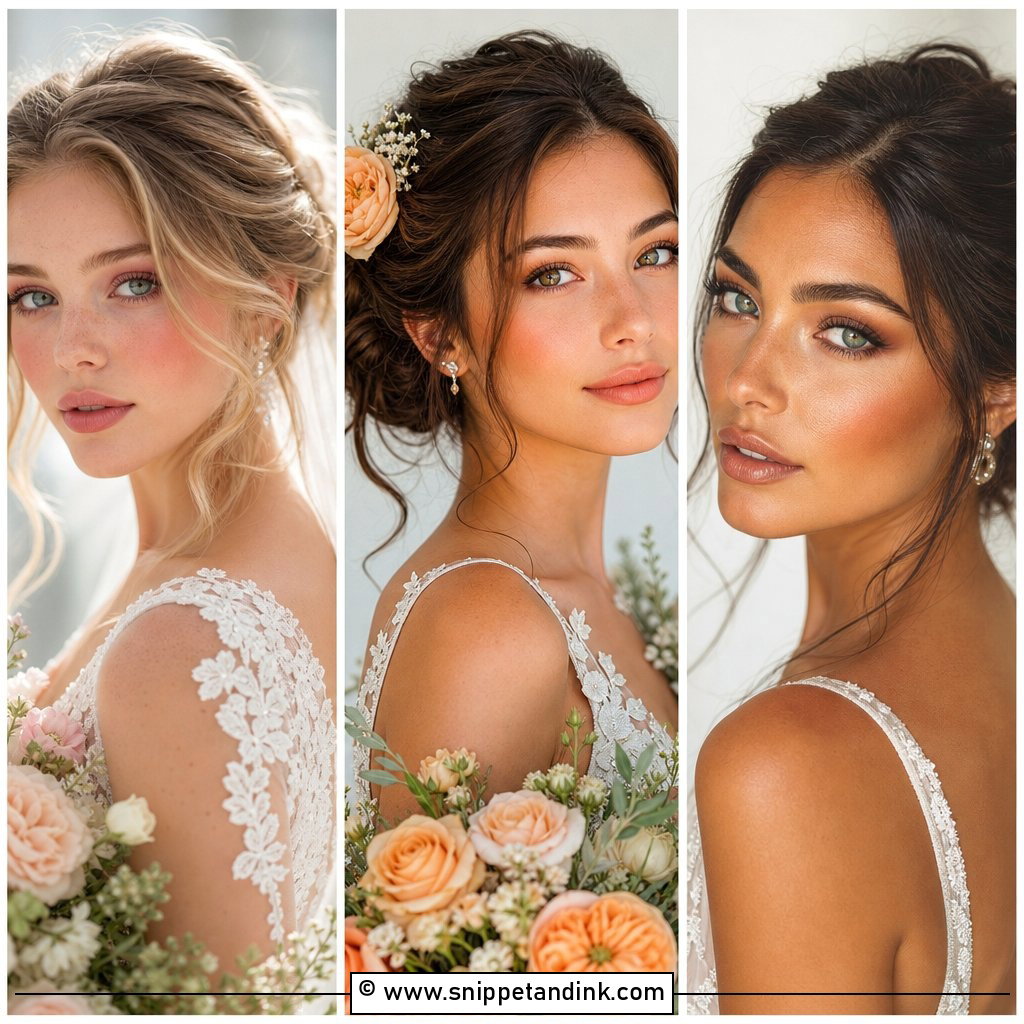
Brides asking for natural bridal makeup often expect me to use less of everything, but the trick is using the right texture in each spot. A skin tint or light foundation evens things out, concealer brightens under the eyes and around the nose, and the rest is soft brown liner, matte neutral shadow, curled lashes and groomed brows. Cream blush in peach or rose gives life to the cheeks; a satin nude or tinted balm keeps the lips fresh. Natural makeup still needs setting and a primer underneath, or it fades by the speeches. Daytime and outdoor ceremonies suit it best.
4. Matte Bridal Makeup

Matte should look smooth, never flat. I prep with hydration first, then a long-wear base that controls shine, and set only through the center of the face so the cheeks keep a little life. Soft contour and a natural blush stop it from looking powdered. Matte beige, brown, cocoa or plum shades give the eyes depth without sparkle, with thin liner and defined lashes. The lip can be satin-matte nude, rose, mauve or red. It’s my choice for hot days and long timelines. Very dry skin can look crepey under full matte, so I’d steer those brides toward satin instead.
5. Dewy Bridal Makeup

Dewy works when the glow is placed, not spread. I keep the center of the face softly set, then add radiance only on the cheekbones, brow bones and inner corners. Cream blush in rose or peach gives a flush that looks like it comes from the skin. Champagne shimmer on the lids, brown liner and fluttery lashes keep the eyes soft, and a glossy nude or pink lip finishes it. Spring weddings, gardens and flowing fabrics are its home. Oily skin turns dewy into shiny by the afternoon, so on those brides I use a mattifying primer and carry blotting papers.
6. Indian Bridal Makeup

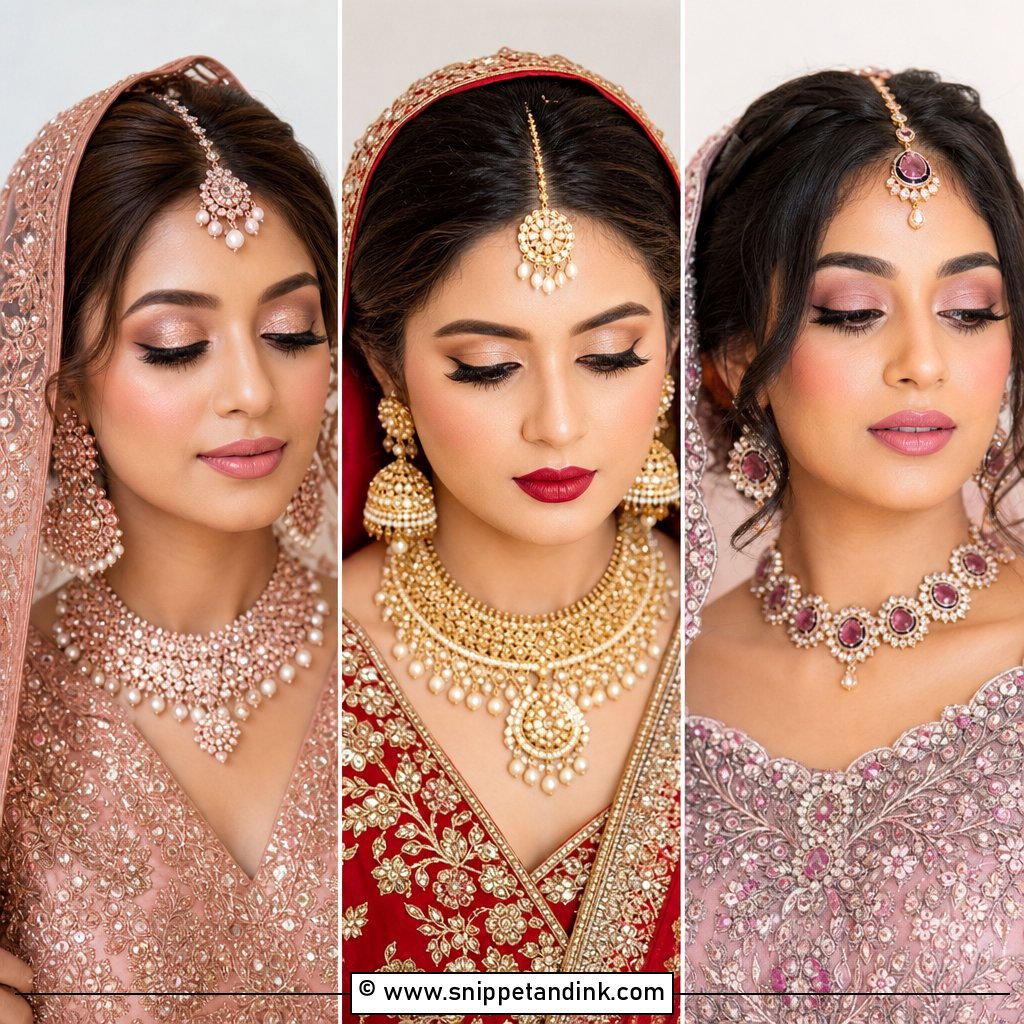
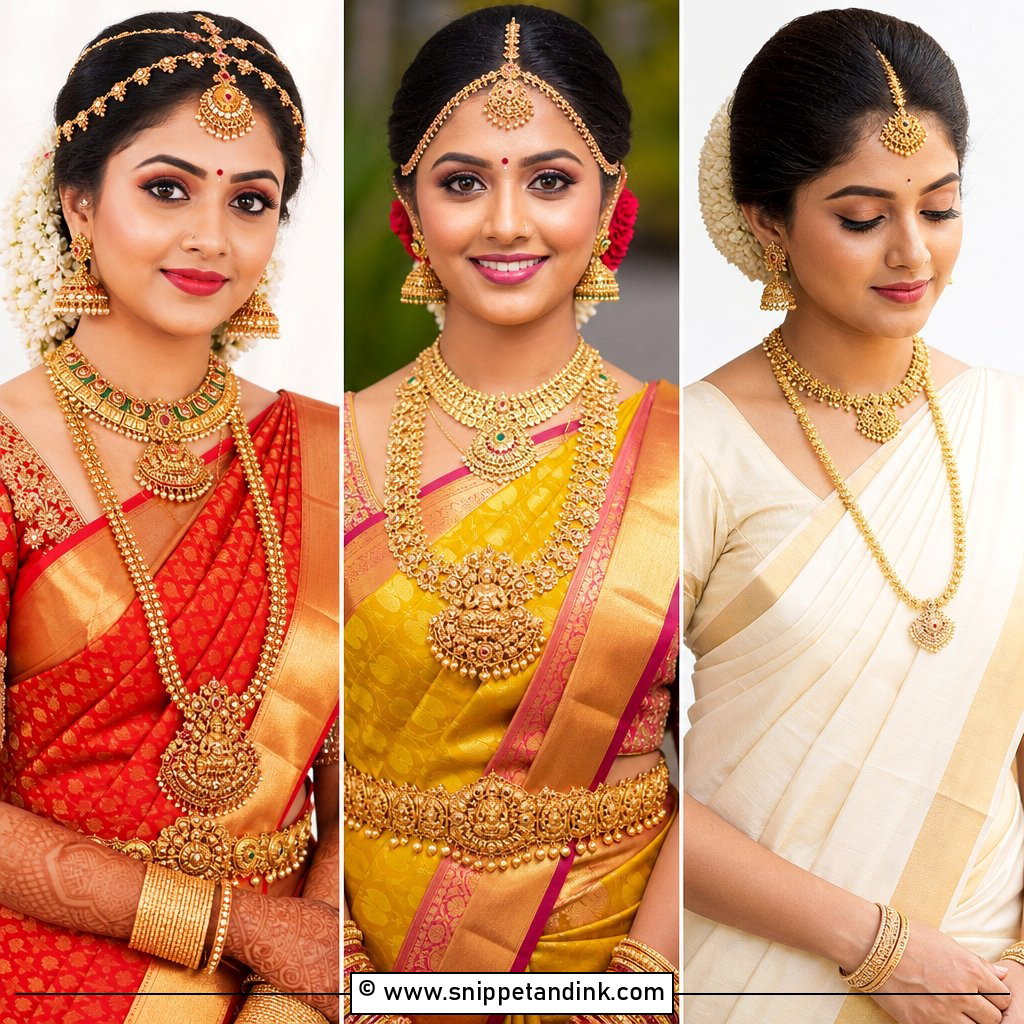
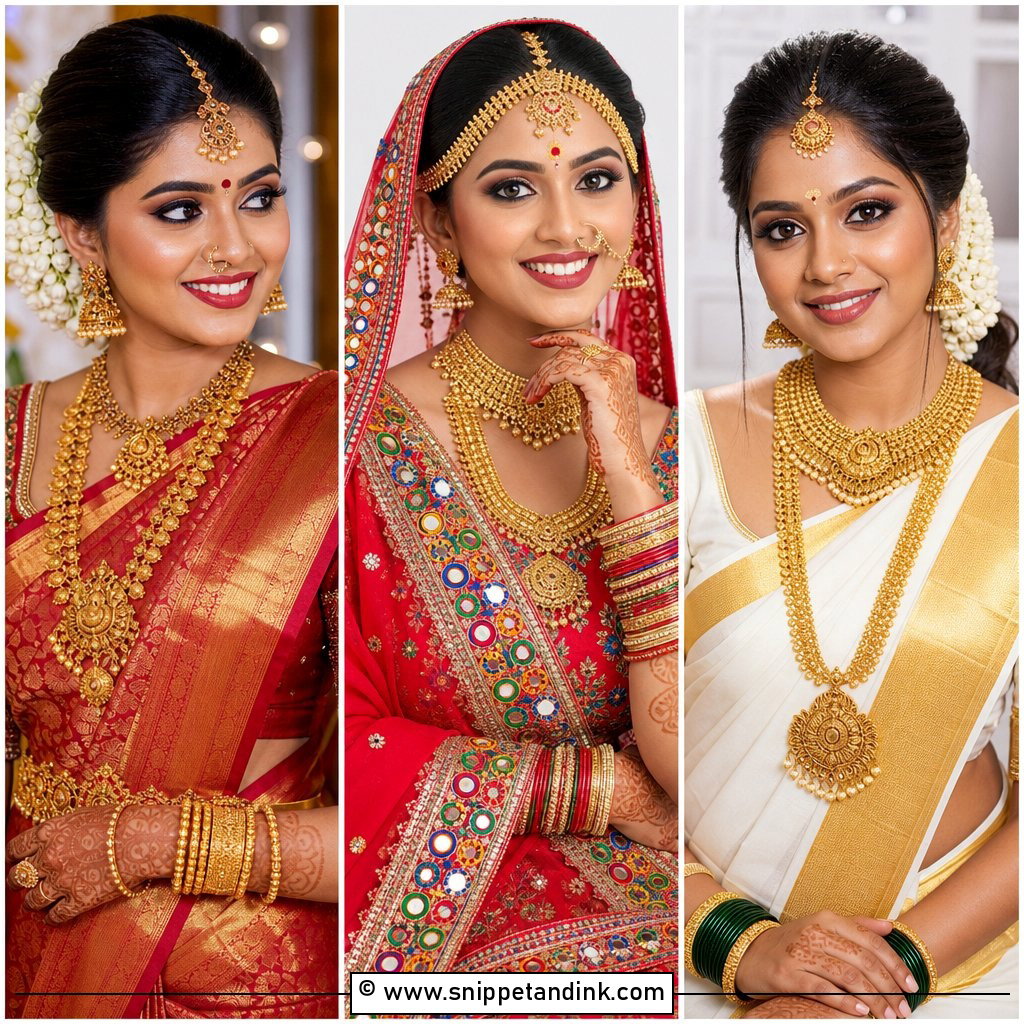
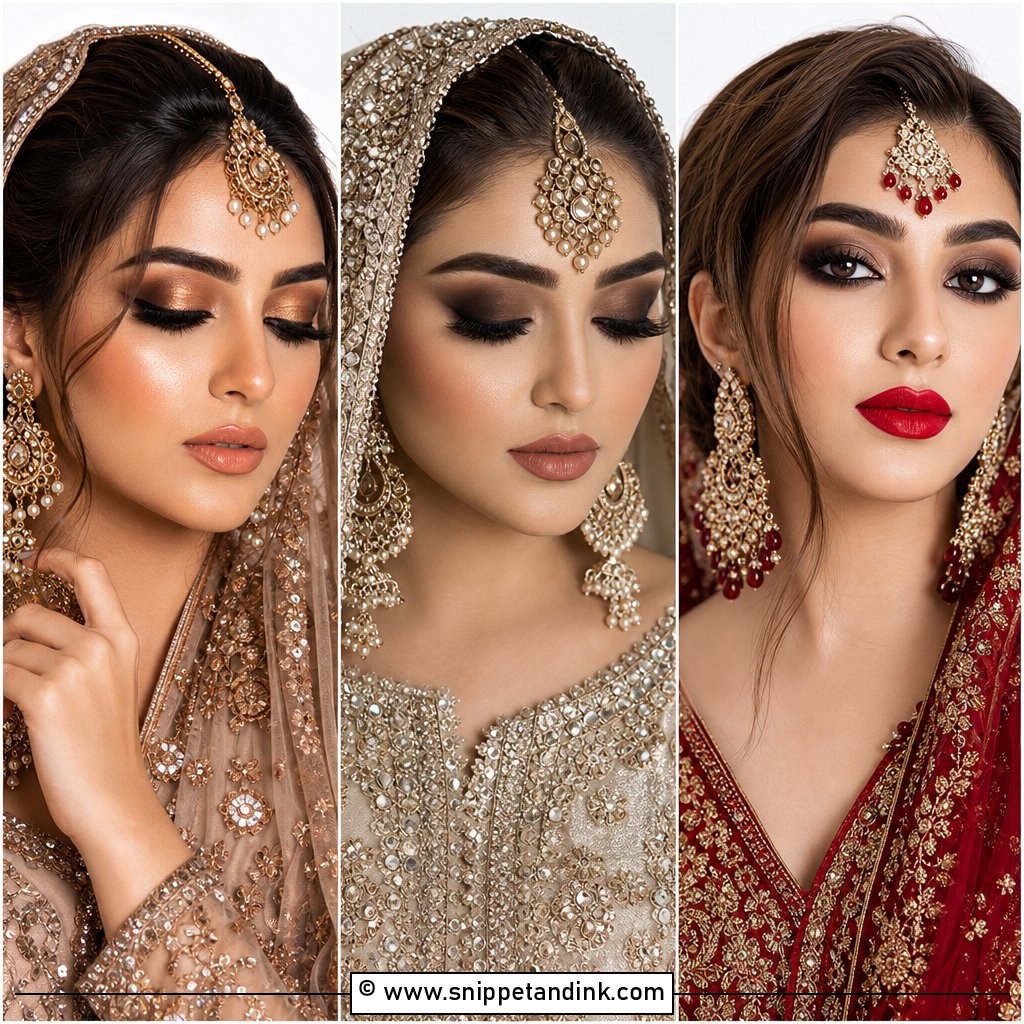
Indian bridal makeup has to hold its own beside heavy jewelry, rich fabric and long ceremonies, so the base is full coverage with a satin or matte finish. Gold, bronze, copper, burgundy or deep brown shadow is blended with black liner and full lashes, brows are defined and highlighter is placed with care. The lip follows the outfit: red, berry, rose or warm nude. The most common problem I correct is a base that’s too light or grey under flash; I match foundation to the neck and chest, not the inner arm, because those show next to the blouse. Sarees, lehengas and dupattas all suit it.
7. Arabic Bridal Makeup

Arabic bridal makeup puts everything into the eyes. Smoky brown, bronze, black or deep plum shadow, a winged liner, kohl on the waterline and dramatic lashes create that lifted almond shape. The skin is polished and sculpted with defined contour, and brows are shaped precisely to frame it all. Lips stay nude, caramel or soft rose. Waterline kohl smudges as the evening goes on, so I set it with a matching dark shadow and keep a cotton bud in the kit. It’s an evening look for ornate gowns.
8. Korean Bridal Makeup

Korean bridal makeup is built on the skin. I spend most of the time on hydration and a thin, luminous base, then keep the eyes light with beige, peach or soft brown placed close to the lashes. Brown liner, separated lashes and gently shaped brows keep the expression soft, and blush sits high on the cheeks. Lips are rose, coral or a blurred berry tint pressed into the center. Because there’s so little to hide behind, the base has to look like skin up close. Simple gowns, soft waves and low buns go well with it.
9. Pakistani Bridal Makeup

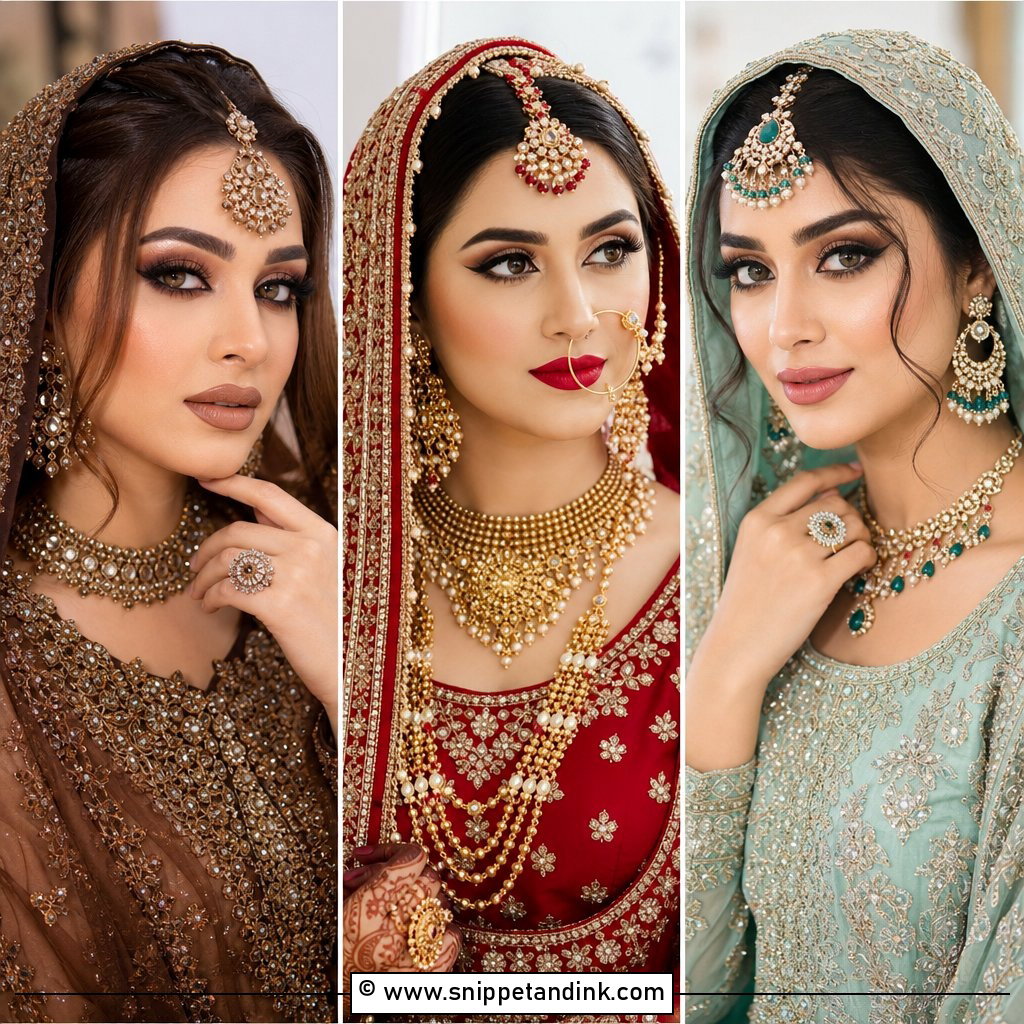
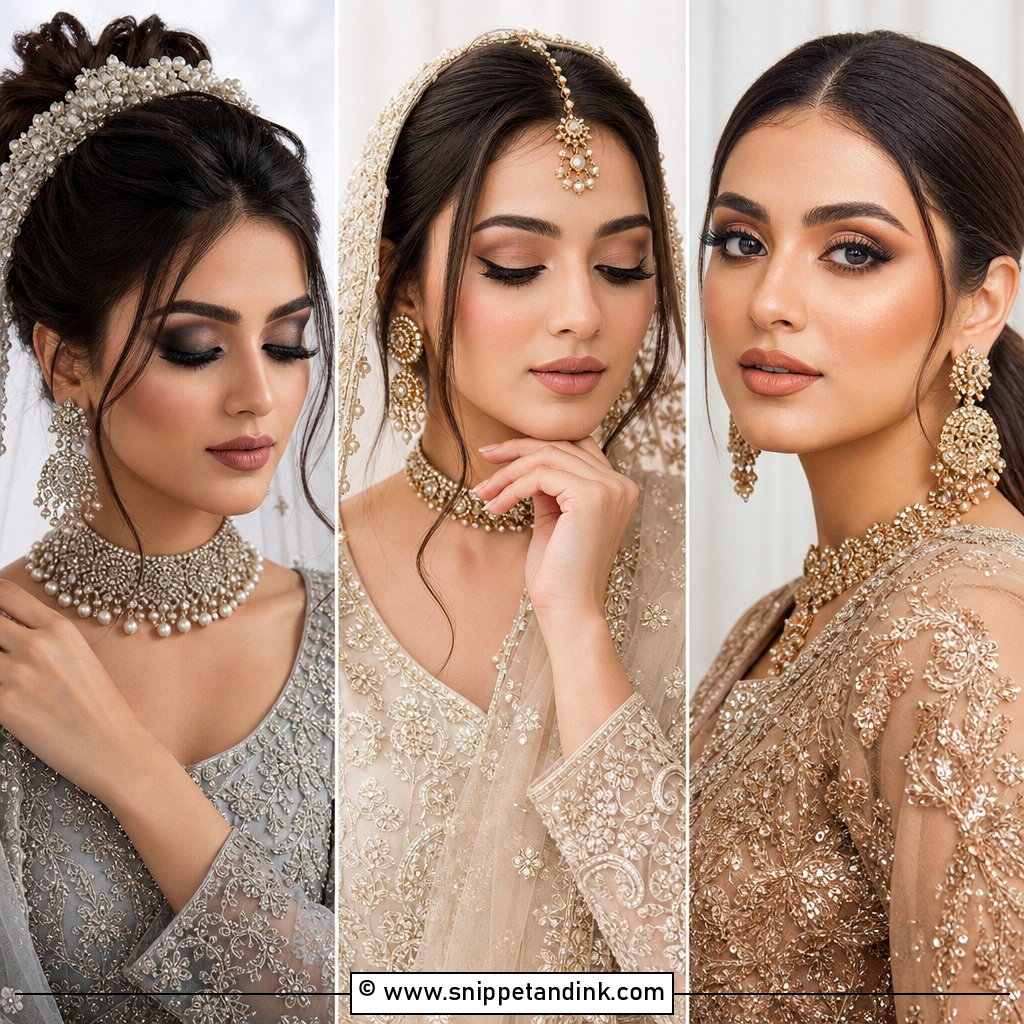
Pakistani bridal makeup is detailed and expressive, with most of the time spent on the eyes and complexion. Color correction comes first, then a long-wear base, brightened under-eyes and a softly sculpted face. Gold, copper, maroon, plum or deep brown shadow pairs with kohl liner and full lashes. Brows are shaped, not harsh. Cheeks get warm rose or terracotta blush with a refined highlight, and the lip matches the outfit, often red, deep rose or berry. Wedding events often run over several days, so I plan the looks as a set, each with a different focus, so the photos don’t all look the same.
10. Smokey Eye Bridal Makeup

Smokey eye bridal makeup stays bridal when the blending is soft. I rarely use pure black; brown, taupe, bronze, plum or charcoal look richer and less heavy in photos. The deepest shade sits at the lash line and fades upward. I do the eyes before the foundation, so any fallout can be cleaned off without ruining the base. Keep the skin clean with soft contour and neutral blush, and pick a nude or mauve lip. It’s suited to evening weddings and ballrooms.
11. Gold Bridal Makeup

Gold makeup warms the face and works across almost every skin tone. I put a fine gold shimmer on the lid, matte brown in the crease and black or brown liner for definition. The shimmer has to be fine-milled; chunky glitter scatters light and looks like texture on camera. Keep the skin smooth and warm with peach or bronze blush and a little golden highlight. The lip can go nude-brown, peach, rose or classic red. It pairs well with ivory, champagne, red and emerald outfits.
12. Rose Gold Bridal Makeup

Rose gold sits between pink and copper, which brightens without making the eyes look tired or pale. Soft pink, copper, champagne and warm brown blend together on the lids; a brown wing or smudged liner and wispy lashes keep it gentle. The skin stays fresh with rose blush across the cheeks. Pink-nude, mauve or soft berry lips work. On very fair skin, pink shadow near the lower lash line can look like irritation, so I keep it on the lid only. It’s a good partner for blush gowns, pearls and spring or summer dates.
13. Brown Bridal Makeup

Brown gives depth without the weight of black, which is why it reads so well in wedding photos. On the eyes I pick from beige, caramel, chocolate, taupe or espresso depending on skin depth, with soft brown liner and individual lashes for lift. The skin stays warm with a little bronzer, peachy blush and a soft glow. Lips can be nude-brown, mocha or muted pink. It suits the bride who wants polish without sparkle or bold color.
14. Pink Bridal Makeup

Pink has to be chosen by skin depth. Fair and light skin takes soft rose, ballet pink and muted mauve; on medium, tan and deep skin those pales turn chalky, so I go to richer rose, berry-pink and warm pink. Pink-beige shadow, brown liner and fluttery lashes keep the eyes soft. Blend a healthy pink blush into the skin, then finish with a satin pink or mauve lip. It’s for the bride who wants a little color but not a full natural face, and it sits nicely with lace, tulle and pearls.
15. Nude Bridal Makeup

Nude is the hardest look to get right, because the wrong shade makes a bride look washed out. The nude has to match undertone and depth: beige-pink or soft peach on fair skin, caramel or warm rose on medium and olive skin, cocoa, cinnamon or mocha on deep skin. Matte browns, a champagne highlight and delicate liner define the eyes. Then contour, blush and a satin lip put back the shape that a nude palette takes away. Minimal gowns and quiet ceremonies suit it.
16. Vintage Bridal Makeup

Vintage bridal makeup borrows old-Hollywood structure: satin skin, softly arched brows, a black winged liner, defined lashes and a red or deep rose lip. The lid stays clean in ivory or beige, with a little taupe in the crease. I shape the wing to the eye rather than copying a reference photo; hooded lids need it drawn with the eye open, or it disappears into the fold. Keep contour soft and blush in rose or peach, and choose a satin or velvet lipstick. Structured gowns, birdcage veils and Hollywood waves complete the period.
17. Bronze Bridal Makeup

Bronze warms the face without much risk, which makes it a reliable choice for summer and destination weddings. I use bronze shimmer on the lid, warm brown in the crease and a softly smudged liner, with curled or wispy lashes. Bronzer goes around the forehead, cheekbones and jawline, kept away from the center of the face so it doesn’t look muddy. Peach or terracotta blush keeps it lively, and the lip can be nude peach, caramel or a soft gloss. Outdoor venues suit it.
18. Peach Bridal Makeup

Peach brightens the face without leaning pink. Wash the lids with peach, champagne or soft copper, add brown liner and natural lashes, and put peach blush on the cheeks for warmth. A touch of golden highlight on the high points adds dimension. Lips work in peach-nude, coral-pink or warm rose. It’s a natural fit for spring and summer garden ceremonies, and for ivory, champagne or pastel dresses. On very cool, fair skin, peach can look slightly orange, so I’d test it first.
19. Burgundy Bridal Makeup

Burgundy gives depth without a black smoky eye. I blend burgundy, cranberry or plum softly into warm brown or bronze, keeping the darkest shade at the lash line and outer corner so the eye stays lifted. Red-toned shadow can make eyes look tired if it creeps into the inner corner or under the lashes, so I keep a neutral there. Dark liner and full lashes add definition, the skin is sculpted, and the lip goes muted berry, rosewood or nude depending on how strong the eyes are. It suits fall and winter weddings best.
20. Classic Bridal Makeup For Mature Skin

Mature skin needs hydration and thin layers, not more coverage. I prep well, use a light smoothing foundation, conceal only where it’s needed and set just the areas that crease. Heavy powder under the eyes settles into lines within an hour. Satin shadows in taupe, champagne or soft rose brighten without catching fine lines, and a smudged liner looks softer than a sharp one. Cream blush placed high lifts the face; a satin rose or berry lip finishes it. The aim is to look rested and polished, not younger.
A Lip That Holds Up Through Toasts, Kisses and Dinner
The lip is the first thing to go, so I build it in layers. Line the whole mouth, not just the edge, with a pencil close to the lipstick shade, apply the color, blot with a tissue and apply again. That pencil base is what’s left when the top layer fades, so the color fades evenly instead of leaving a ring.
Matte liquid lipsticks last the longest but dry out on thin or textured lips; a satin bullet over a full liner is a better compromise for most brides. Reds and berries need the most care, because they travel onto teeth and glasses.
- Your exact lipstick and liner
- Blotting papers, not powder, for shine
- Cotton buds and a little micellar water for smudges
- A small concealer for the nose and the corners of the mouth
Hand that kit to a bridesmaid. A two-minute touch-up after dinner and again before the evening photos is all most looks need.
Test Your Bridal Face at the Same Hour You’ll Wear It
A classic bridal face should look like you on your best day, whether that means soft and natural, matte and polished, or bold and glamorous. Get the long-wear base right, keep the colors balanced, define the eyes enough to read in photos and pick a lip you’ll actually reapply. Book the trial for the time of day your ceremony takes place, check it in daylight and under flash, then wear it through the afternoon. How it looks four hours later tells you more than the mirror does at the end of the appointment.
You'll Like These Ideas:





Leave a Reply