
A Hindu wedding face has a hard job. It sits beside a fire for the pheras, takes sindoor at the parting, carries a maang tikka, nath and heavy necklaces, and is usually expected to look fresh again for an evening reception. Region shapes it as much as the outfit does: a Bengali bride’s forehead work, a Maharashtrian mundavalya and a Kerala bride’s restraint all ask for different decisions. Below are twenty looks, regional and modern, each with the detail I’d actually adjust for that bride in the chair.
Makeup That Has to Sit Beside the Havan
The pheras put the bride close to an open fire, often under a canopy, sometimes in a warm month, for a long stretch. Heat and smoke do more damage to bridal makeup than tears do. Here is how I build a face for it.
- Prep with a light, oil-free moisturiser and a gripping primer. Rich creams feel good in the morning and slide off by the second round of the fire.
- Thin layers of foundation, each set before the next. One thick layer melts at once; thin layers hold.
- Waterproof kohl in the waterline and waterproof mascara. Smoke makes the eyes water, and ordinary kajal runs straight into the under-eye.
- Set the face with a long-wear spray, then press, don’t swipe, during the ceremony. Hand a cousin a pack of blotting papers rather than a powder compact; powder layered on a sweaty face turns cakey.
- Keep a small fan or handheld cooling device nearby for the gaps between rituals. Cooling the skin for a minute does more than another layer of product.
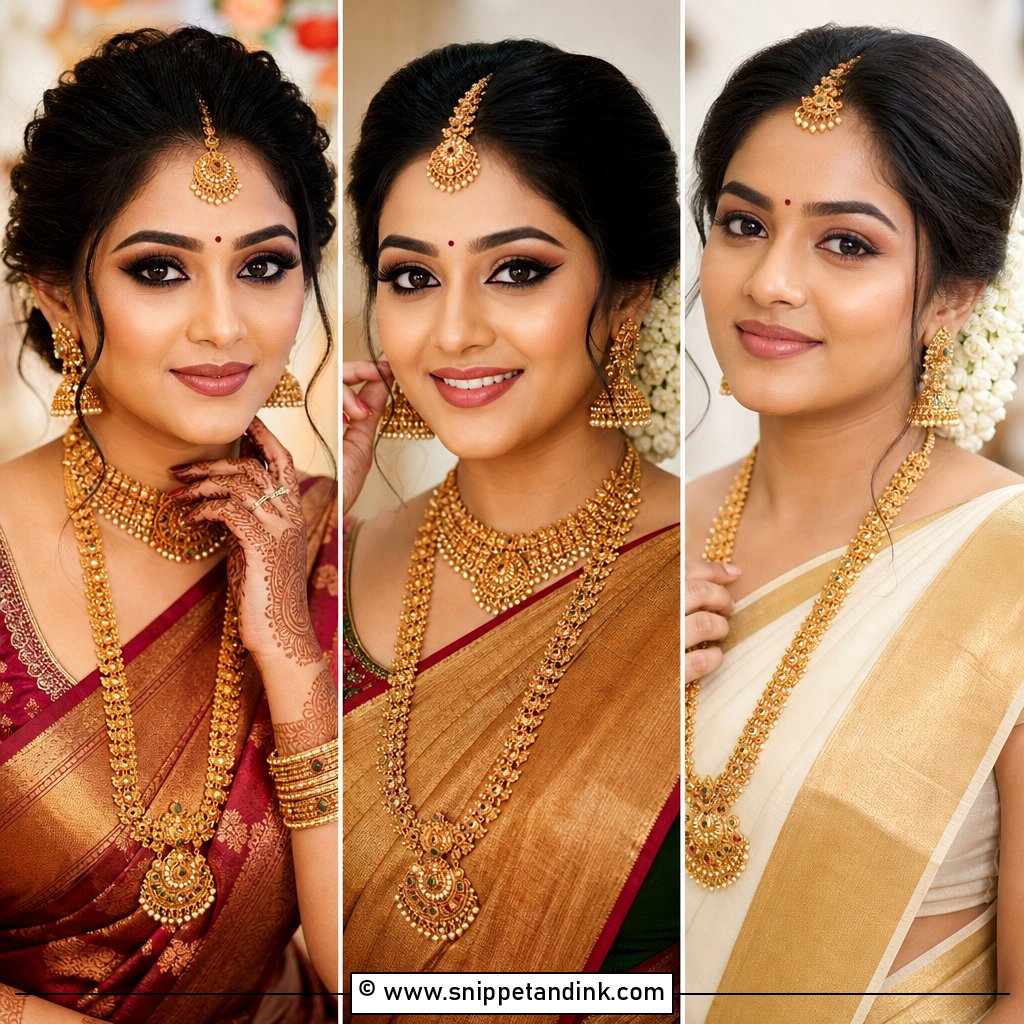
1. Traditional Red Hindu Bridal Makeup
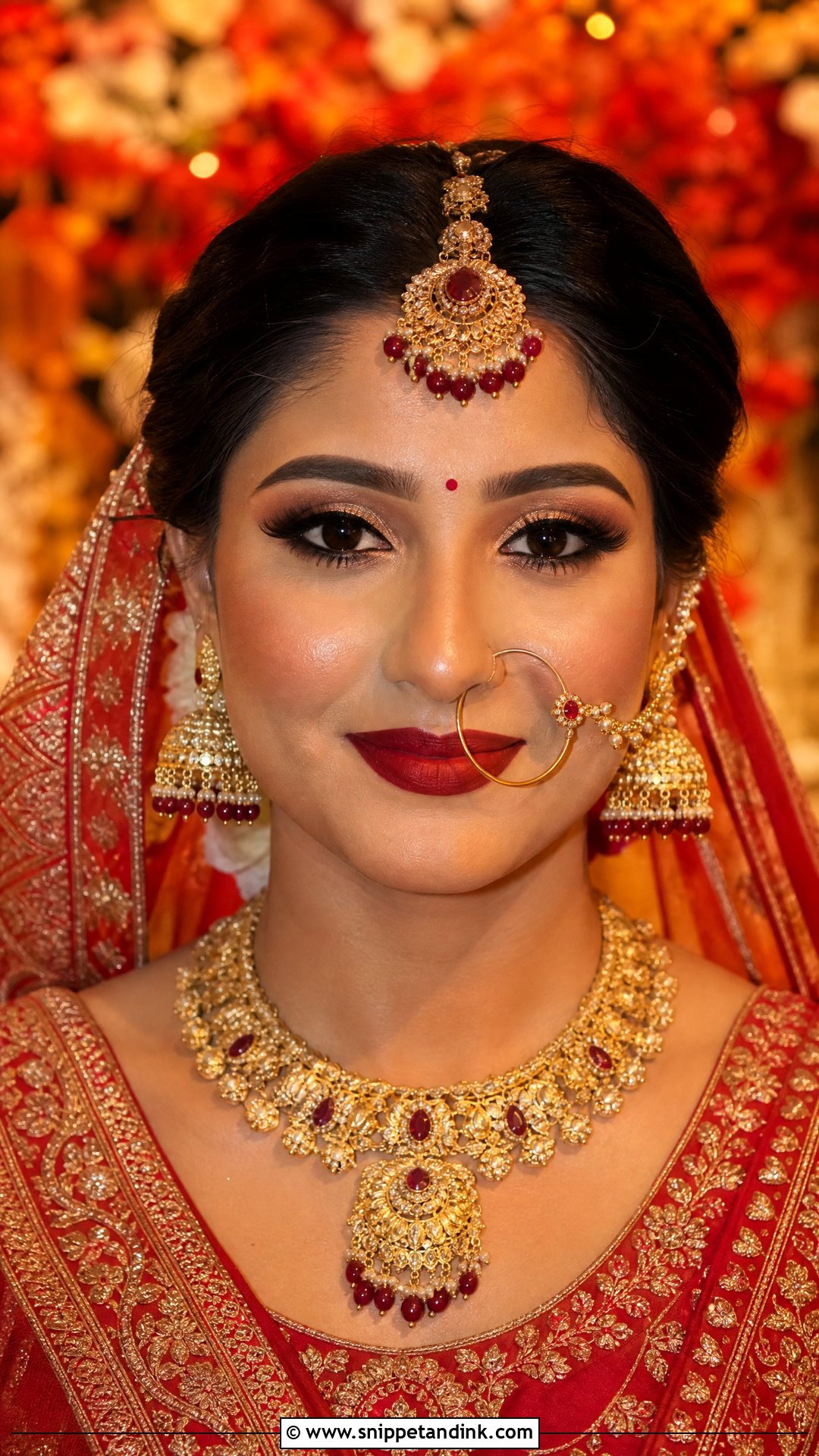
Red is still the look most families picture, and it suits a red lehenga or saree with gold jewelry and a classic dupatta. The base needs a soft matte finish because you’ll be seated near the fire for a long stretch. I use warm gold on the lid, deep brown through the crease, black kohl in the waterline and a clean wing, then full lashes that frame without hiding the eye. A crimson lip, warm blush and gold highlight on the cheekbones complete it. Match the red of the lipstick to the red of the outfit under daylight, not under the salon bulbs; that’s where most clashes start.
2. South Indian Hindu Bridal Makeup
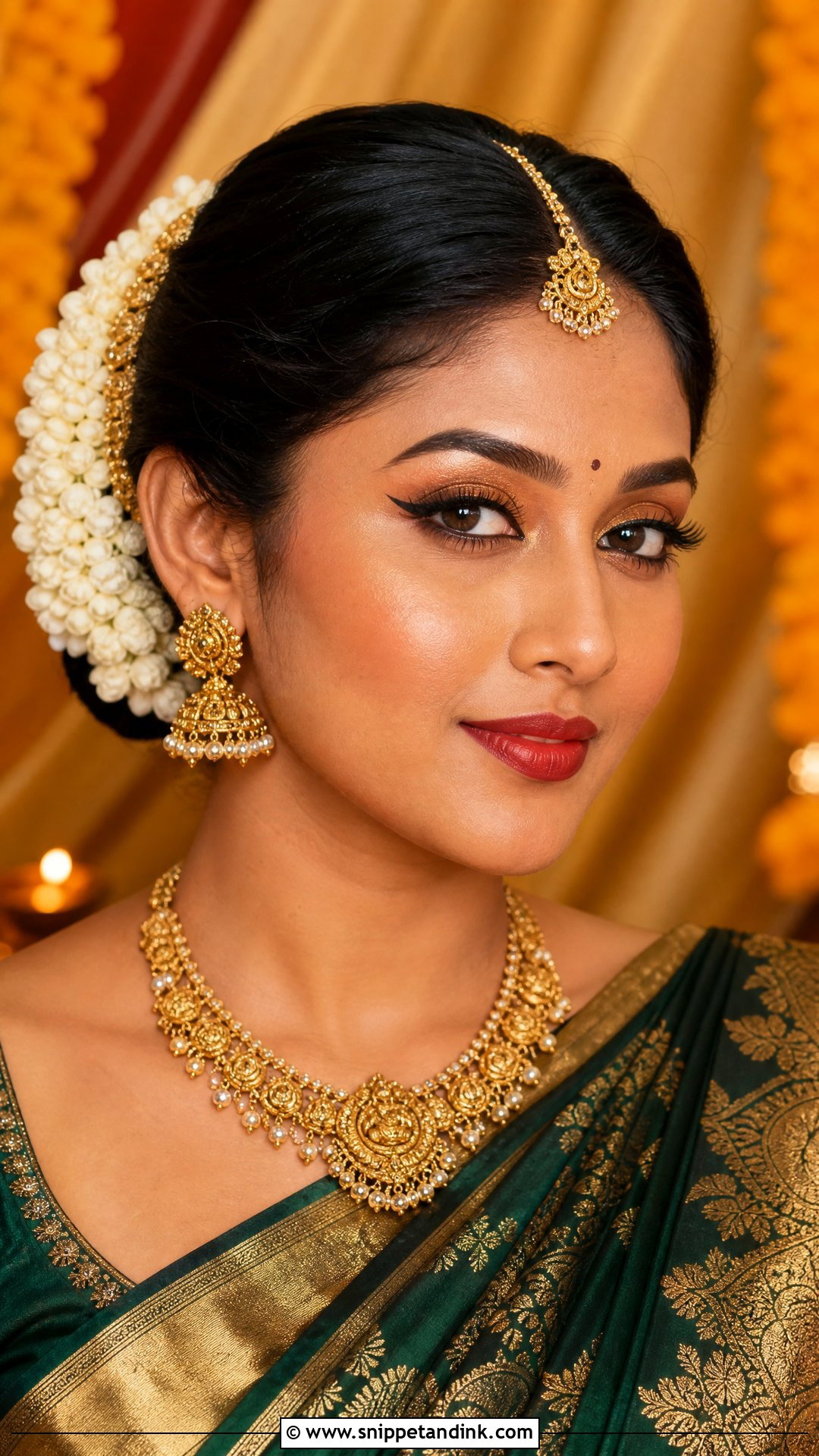
Silk sarees and temple jewelry already frame the face so strongly that South Indian Hindu bridal makeup works best rich but restrained. I keep the skin radiant with powder only where it creases, use gold and bronze shadows that sit with Kanjeevaram silk, and define the brows and kohl so the eyes don’t get lost among the jewelry. A red, berry or warm rose lip holds up in photos, and terracotta blush adds warmth. Expect the jasmine and the hair ornaments to sit close to the temples, so I keep highlight off that area.
3. North Indian Hindu Bridal Makeup
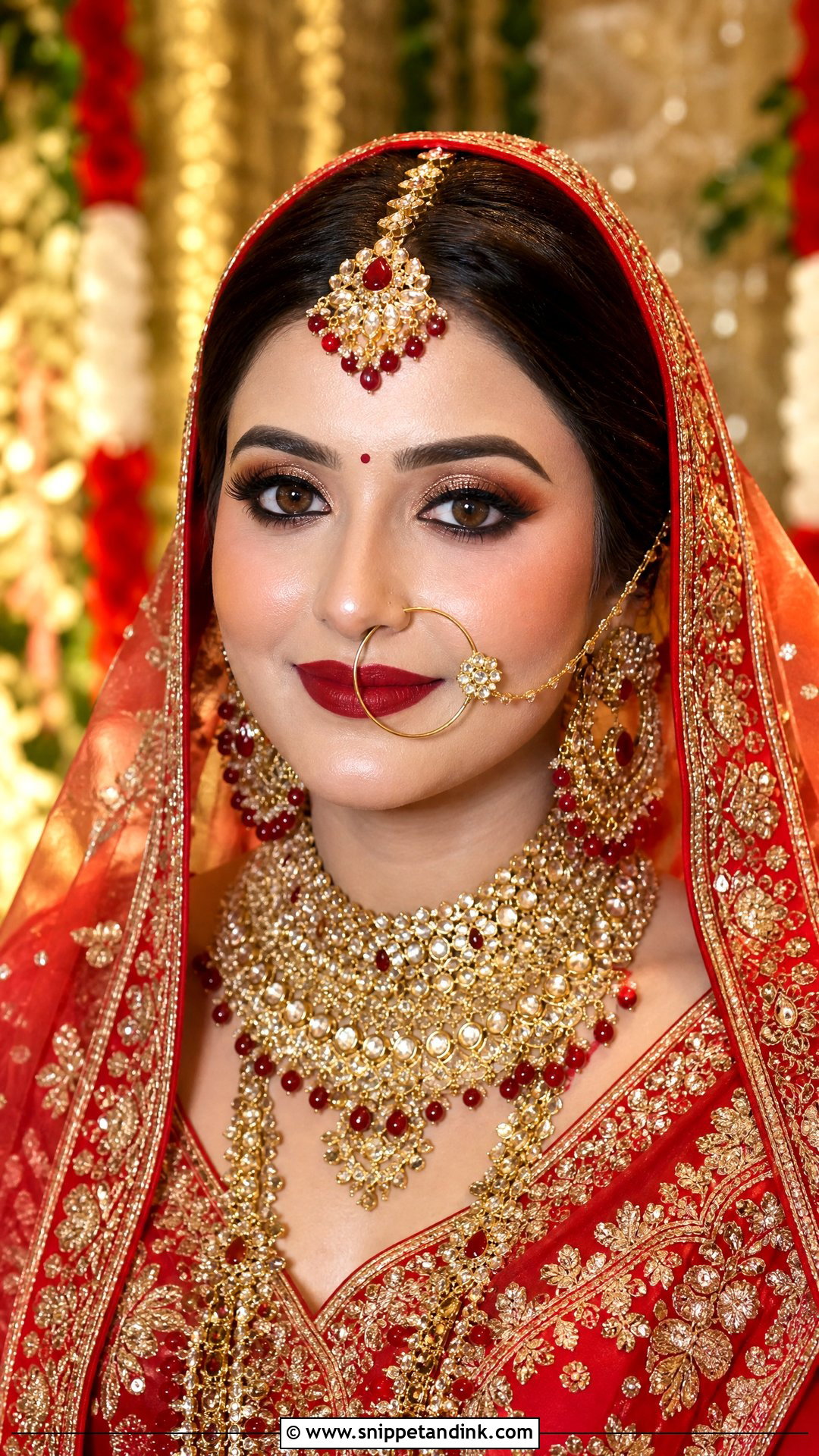
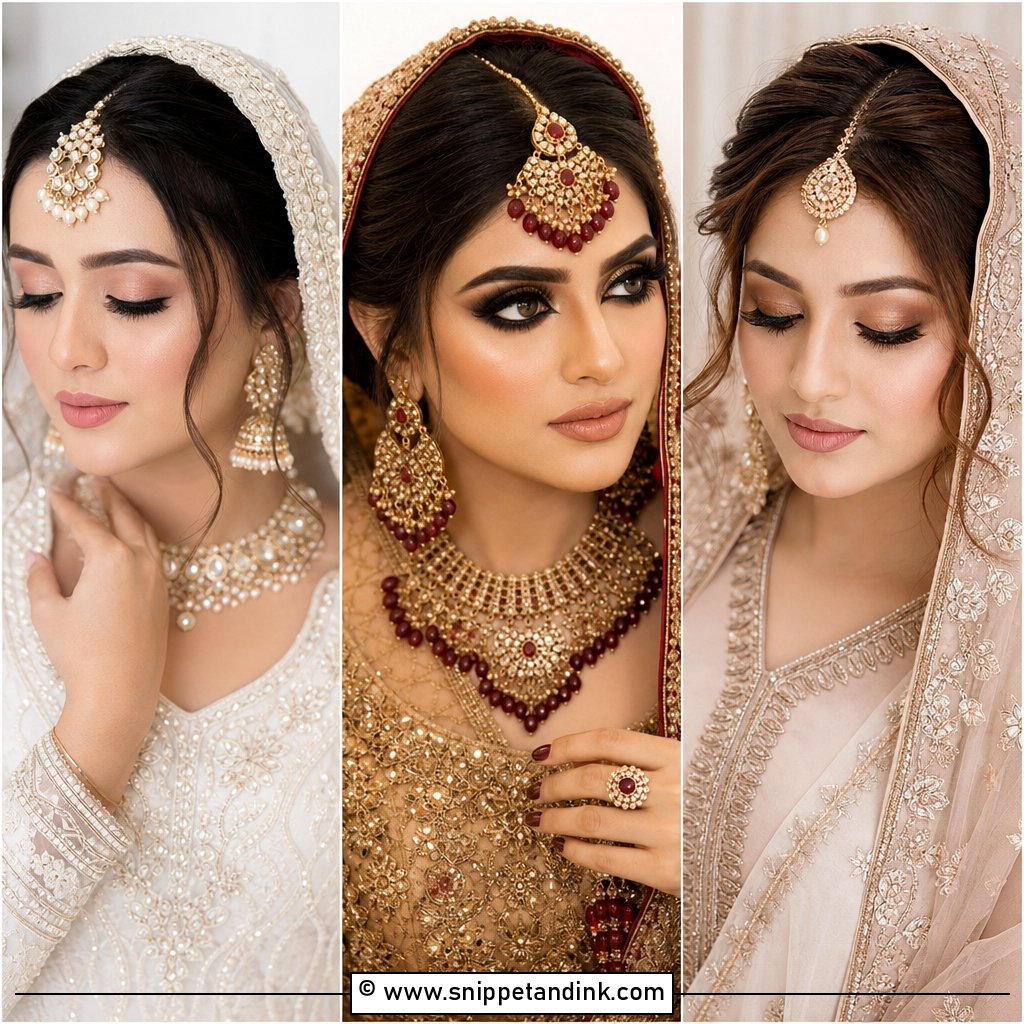
North Indian brides often wear a heavy dupatta, a statement necklace, a maang tikka and a nath together, and that much metal changes how the face reads. A flawless base is the starting point, but it should still look like skin. I contour softly under the cheekbone so the face keeps its shape inside all that jewelry, then use champagne, copper or antique gold shimmer with black liner and kohl. Pick the lip by outfit colour: red, maroon or rose-brown. The nath sits over the nostril and upper lip, so I check its placement before doing the lip line, not after.
4. Bengali Hindu Bridal Makeup
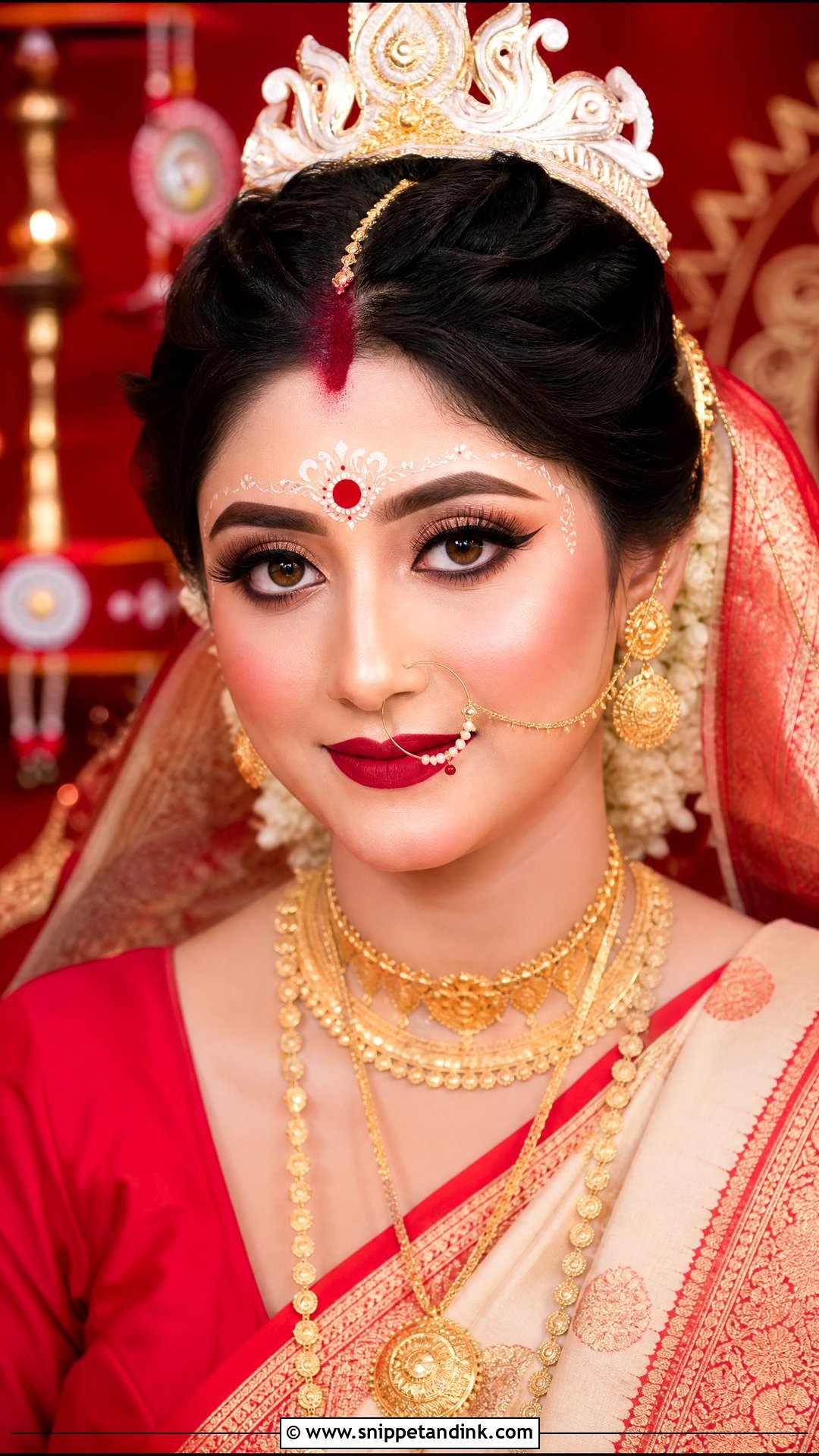
The eyes lead in Bengali Hindu bridal makeup, framed by the chandan designs drawn above the brows and across the forehead. I do the eyes first with black kohl, a wing, soft brown depth and fluttery lashes, then the chandan dots, because a steady hand on the forehead needs set skin underneath. The base stays smooth and luminous, blush sits high, and I avoid harsh contour so the look stays ceremonial. A classic red lip carries the red-and-white saree. Plan the shola mukut or head ornament fitting before the forehead art, so nothing smudges it.
5. Maharashtrian Hindu Bridal Makeup
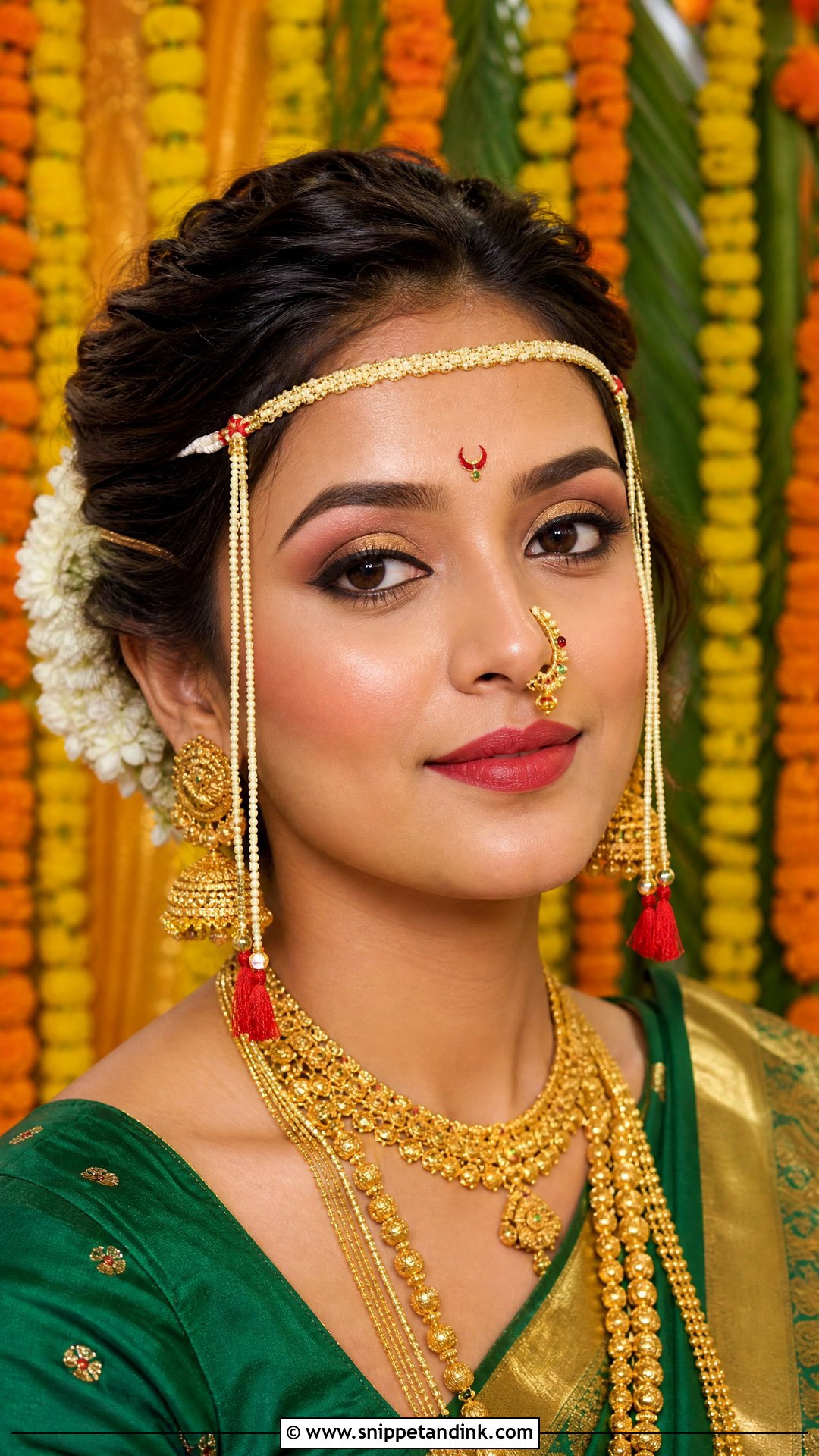
A Maharashtrian bride wears the mundavalya across her forehead, a nath, green bangles and a silk saree, and those details are full of meaning. The makeup’s role is to sit back a little. I use soft gold on the lid, brown liner, kajal and natural lashes, with a satin-matte complexion, peach blush and fine gold highlight. A warm red or coral-red lip suits the traditional saree colours. Keep the forehead powdered and calm: the pearl strings of the mundavalya rest there all day and pick up any shine or foundation.
6. Gujarati Hindu Bridal Makeup
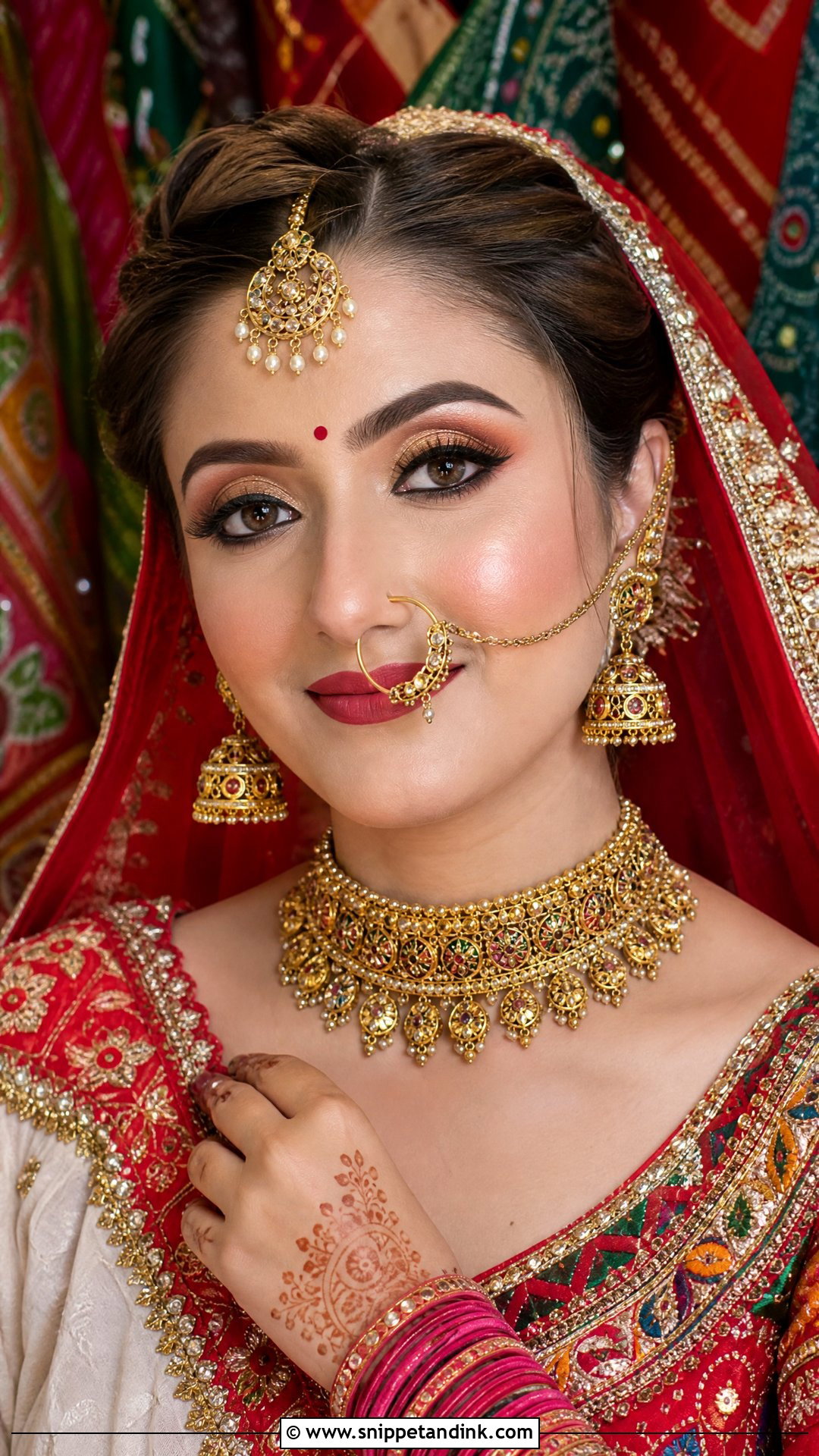
Gujarati bridal outfits are bright and busy, whether it’s a panetar saree, a gharchola or a heavily embroidered lehenga, so the face has to keep pace without fighting them. I use champagne or gold shimmer on the lids, soft brown depth in the crease and black liner, with a red, pink-red or berry lip. The dupatta is often draped over the head and pinned near the face, so the base has to be transfer-resistant. I set it with a long-wear spray and keep the edges of the face especially well powdered.
7. Tamil Hindu Bridal Makeup
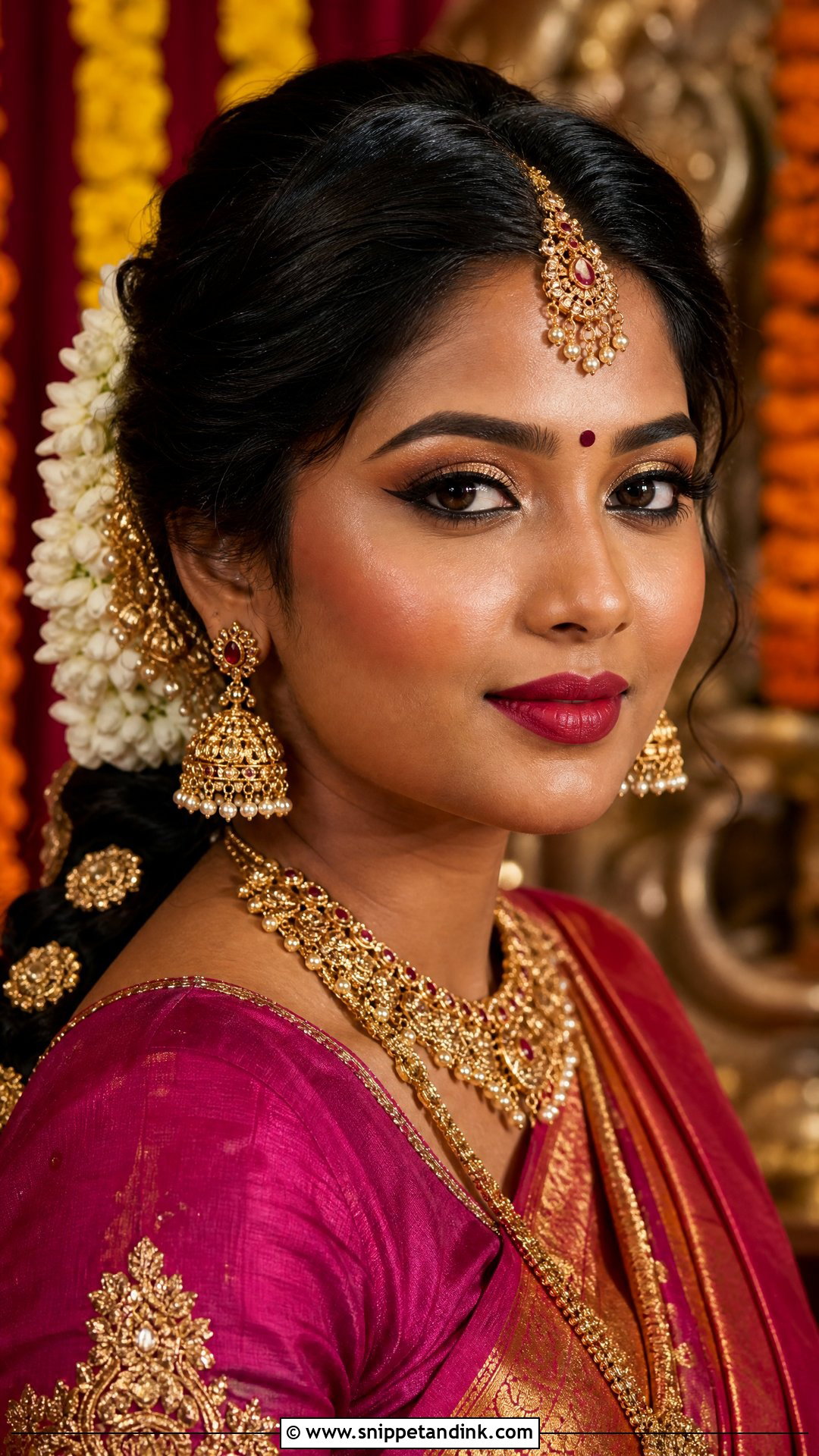
Glowing skin and expressive eyes define Tamil Hindu bridal makeup, worn with silk sarees, temple jewelry, jasmine and a classic braid or bun. Gold shadow suits the warmth of the silk and jewelry, and black kohl, a wing and lifted lashes define the eye. A red or deep rose lip completes it. I keep the complexion radiant rather than matte, but control the T-zone with a light powder, since a long morning muhurtham in a warm hall brings shine to the nose first.
8. Telugu Hindu Bridal Makeup
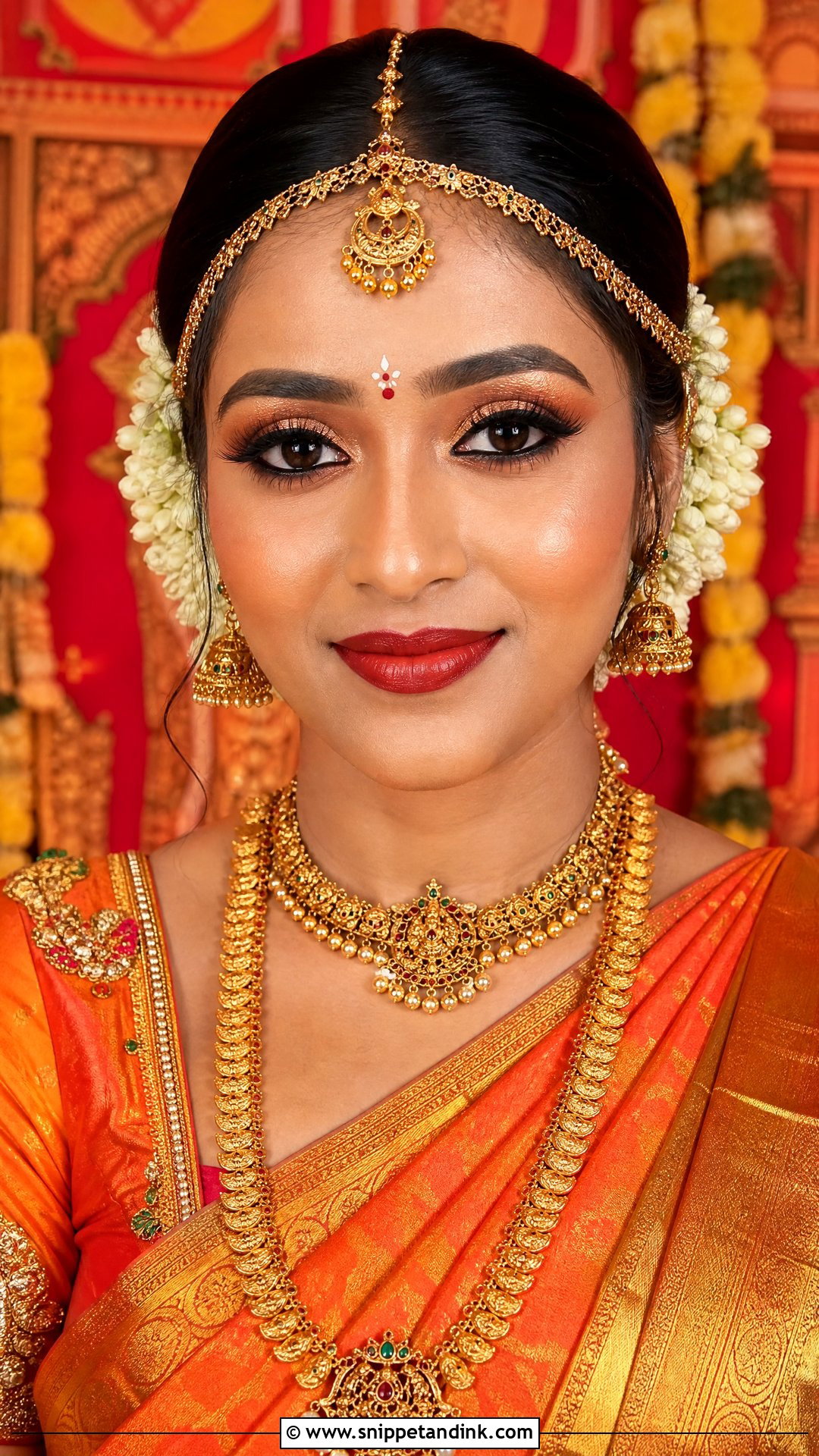
Telugu brides often wear silk sarees with gold jewelry, a waist belt and floral hair, and the eyes can go softly smoky in bronze, copper or gold. I keep black liner and kajal close to the lashes so the eye stands out without looking harsh. Choose a warm red, brick or muted berry lip depending on the saree. The base should be smooth and long-lasting, with warm blush and subtle contour to give the face shape under the jewelry. Blend smoky eyes on a warm skin tone with brown, not grey, or the eyelids turn ashy.
9. Kerala Hindu Bridal Makeup
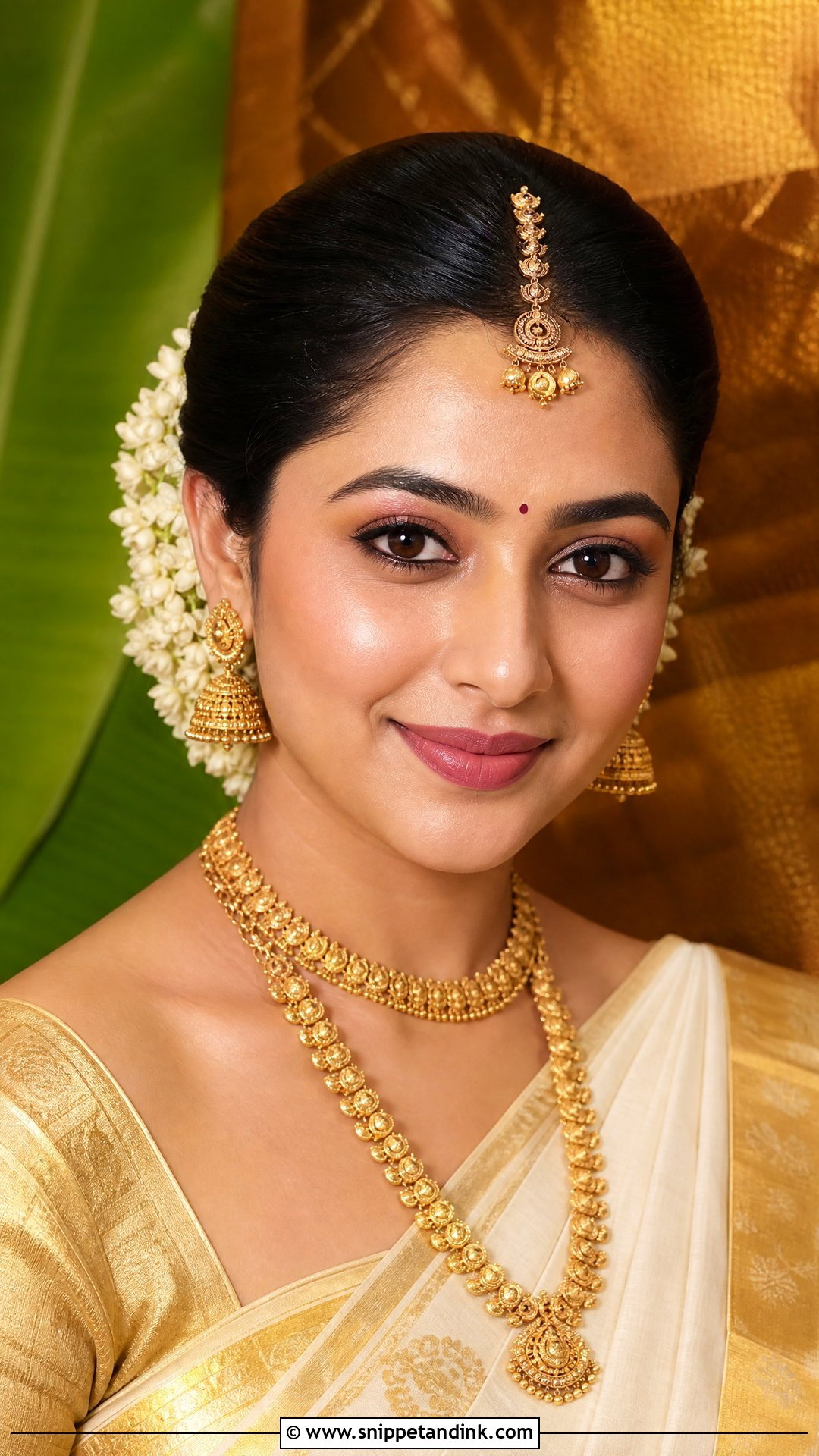
Ivory-and-gold sarees set the tone for Kerala Hindu bridal makeup, which usually stays soft and luminous. Soft gold or champagne on the lids, thin black liner, kajal and natural lashes are enough. A rose, muted red or warm pink lip keeps the face bright. The skin can be dewy, but I control the T-zone carefully. Against an ivory saree, a foundation one shade too light shows up clearly in photos, so I match against the neck and chest, which are usually on show.
10. Punjabi Hindu Bridal Makeup
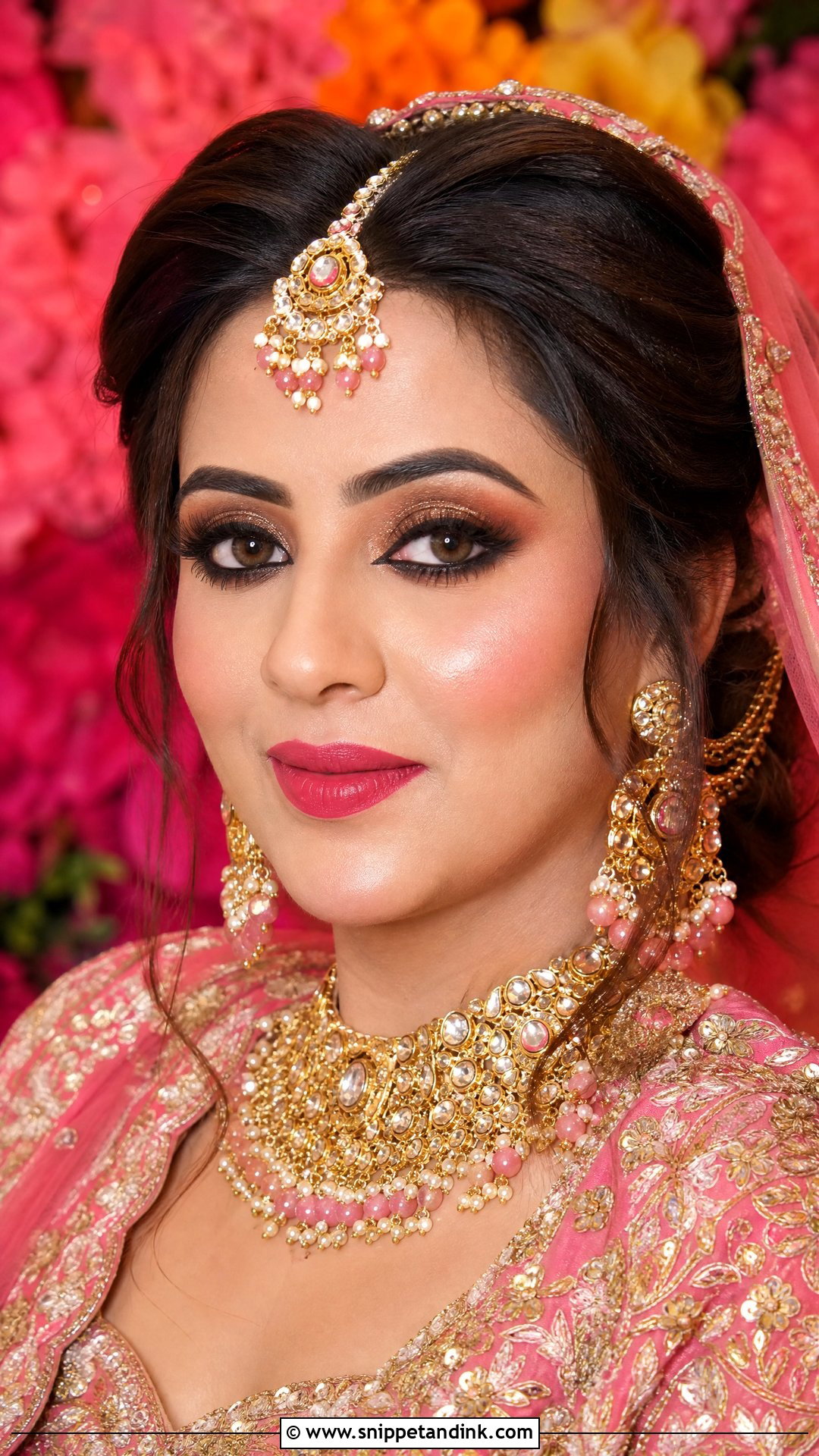
Punjabi bridal makeup tends to be bolder, worn with red, pink, gold or jewel-toned lehengas, chooda and kaleere. The eyes take bronze shimmer, smoky brown edges, black liner and full lashes, with a red, berry or rose-pink lip. The base is flawless with soft contouring, warm blush and a bright but blended highlight. With dramatic dupatta draping and so much jewelry, the makeup must look right from every angle, so I check the profile in a mirror before finishing. That’s where uneven contour shows.
11. Rajasthani Hindu Bridal Makeup
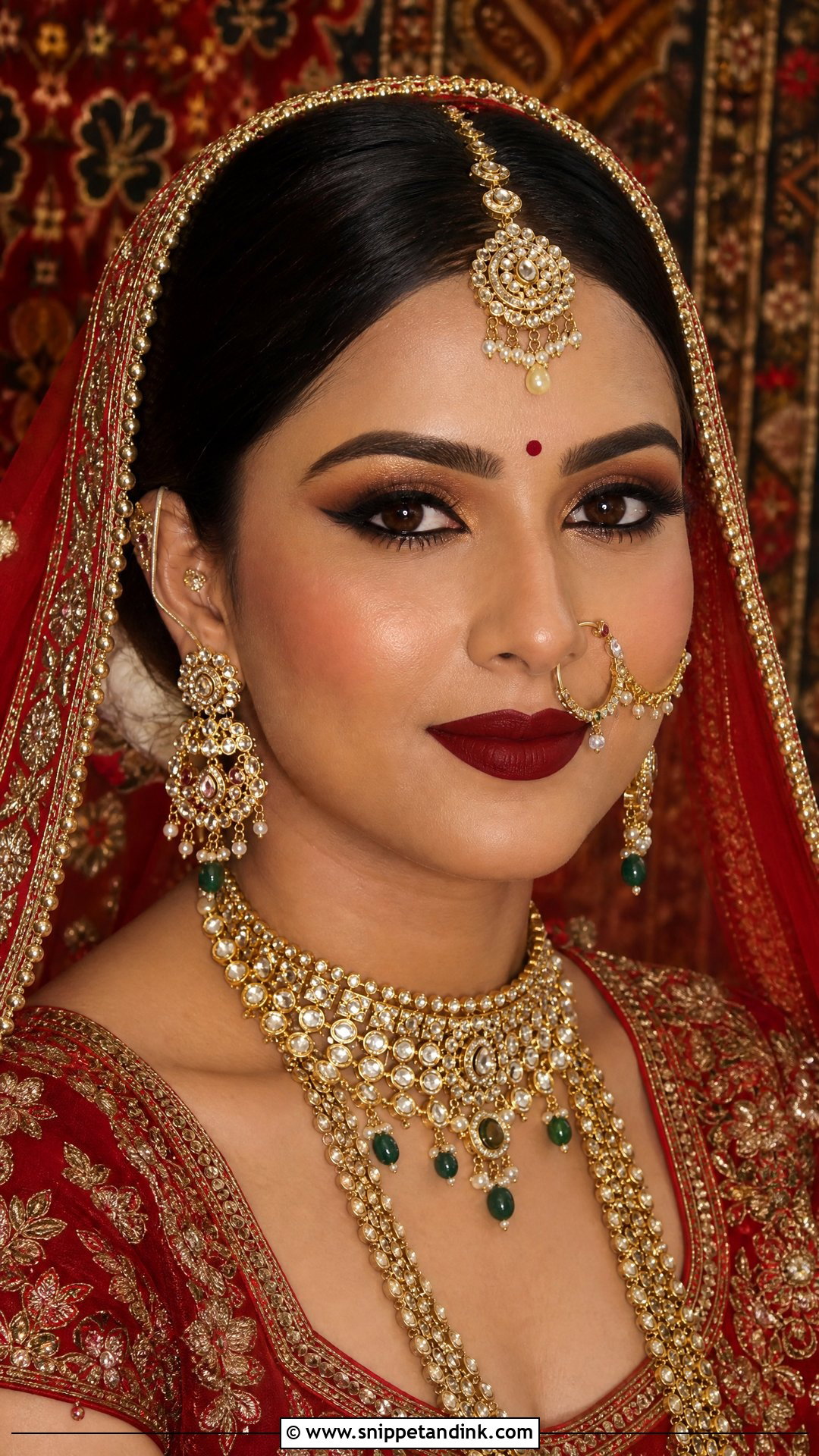
Deep colours and ornate jewelry run through Rajasthani Hindu bridal makeup, but the face should be defined, not sharp. Warm bronze, antique gold or copper on the eyes, with kohl-rimmed eyes and a soft wing, sit well with poshaks and lehengas. A deep red, maroon or brick lip complements them. The borla sits at the centre of the forehead, so I keep the parting area clean and powdered and shape the cheeks gently with contour, especially under heavy necklaces. A satin-matte complexion holds the look together.
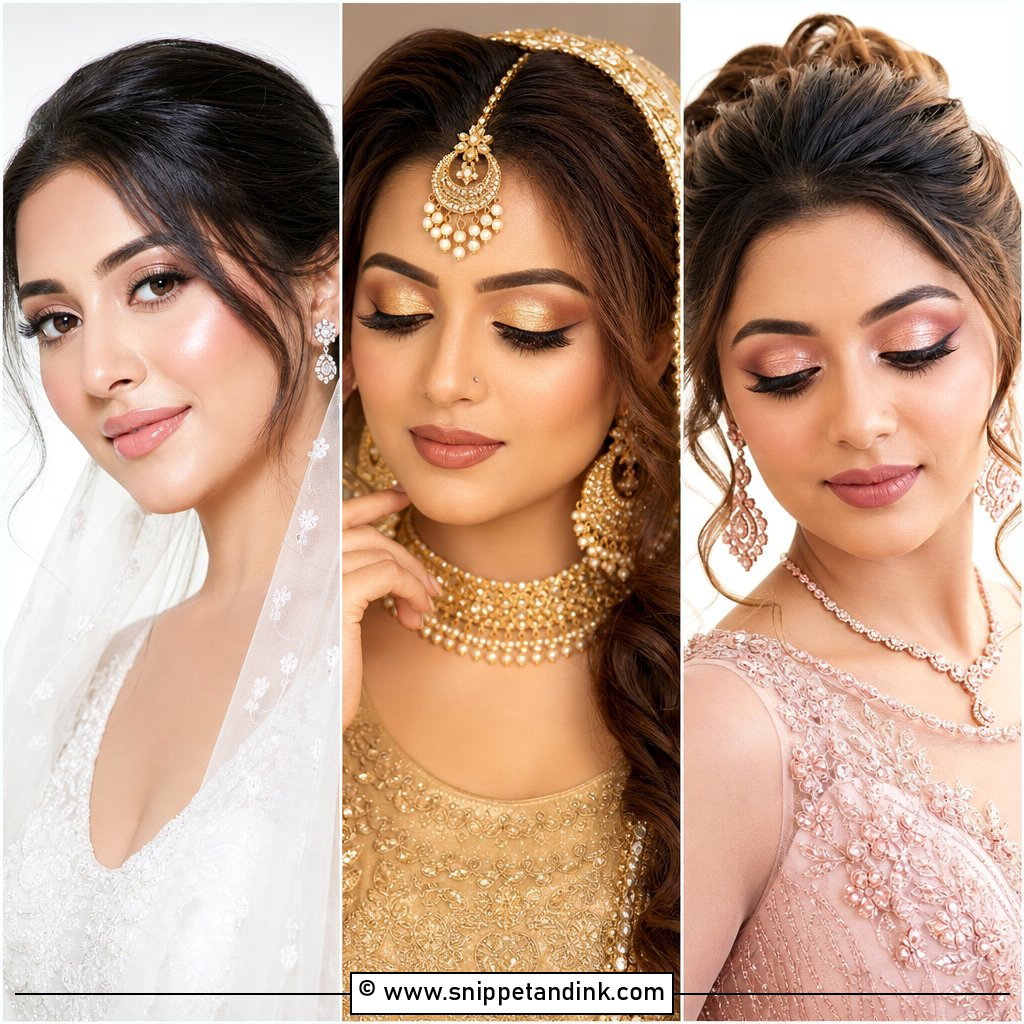
12. Soft Glam Hindu Bridal Makeup
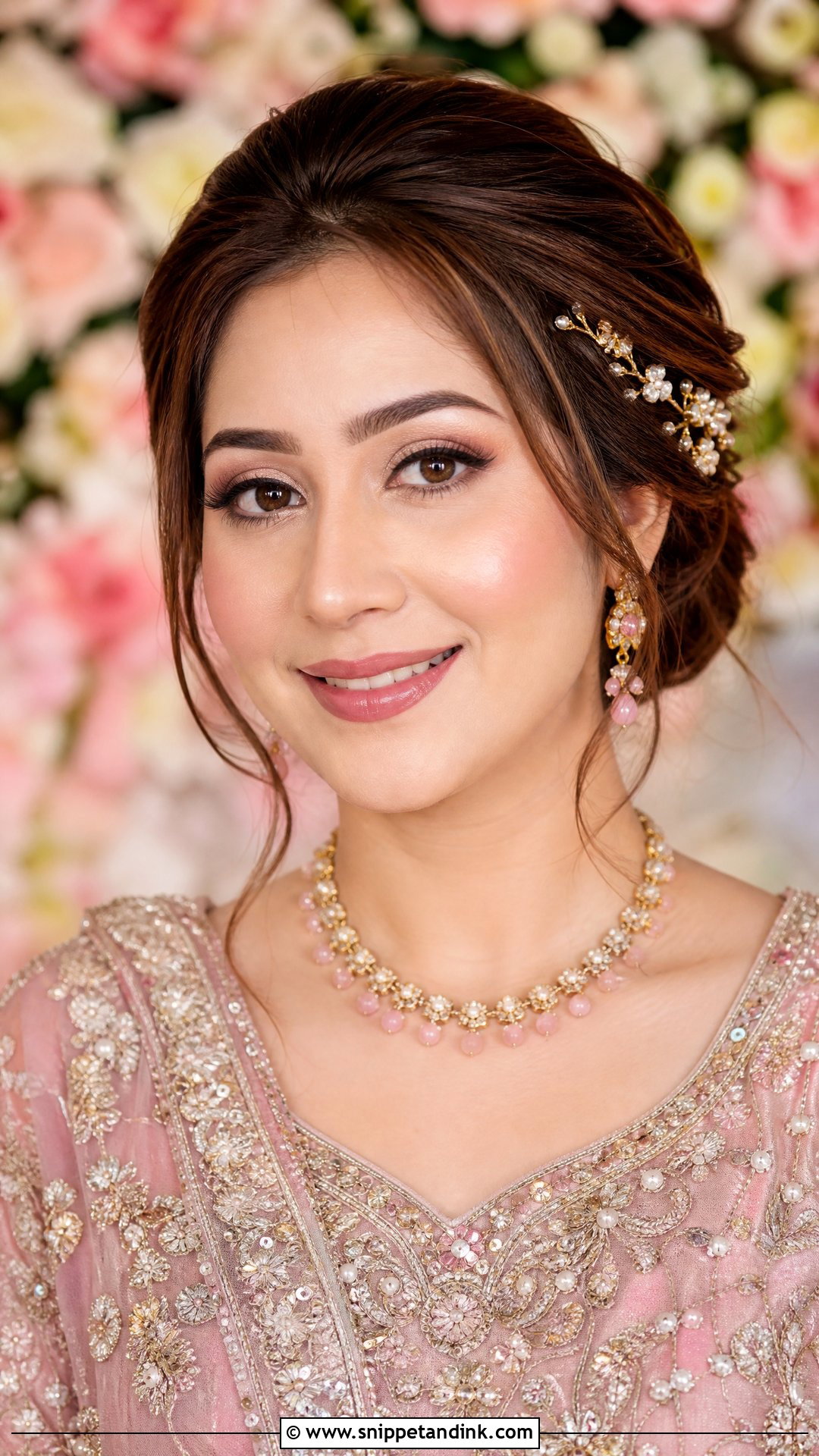
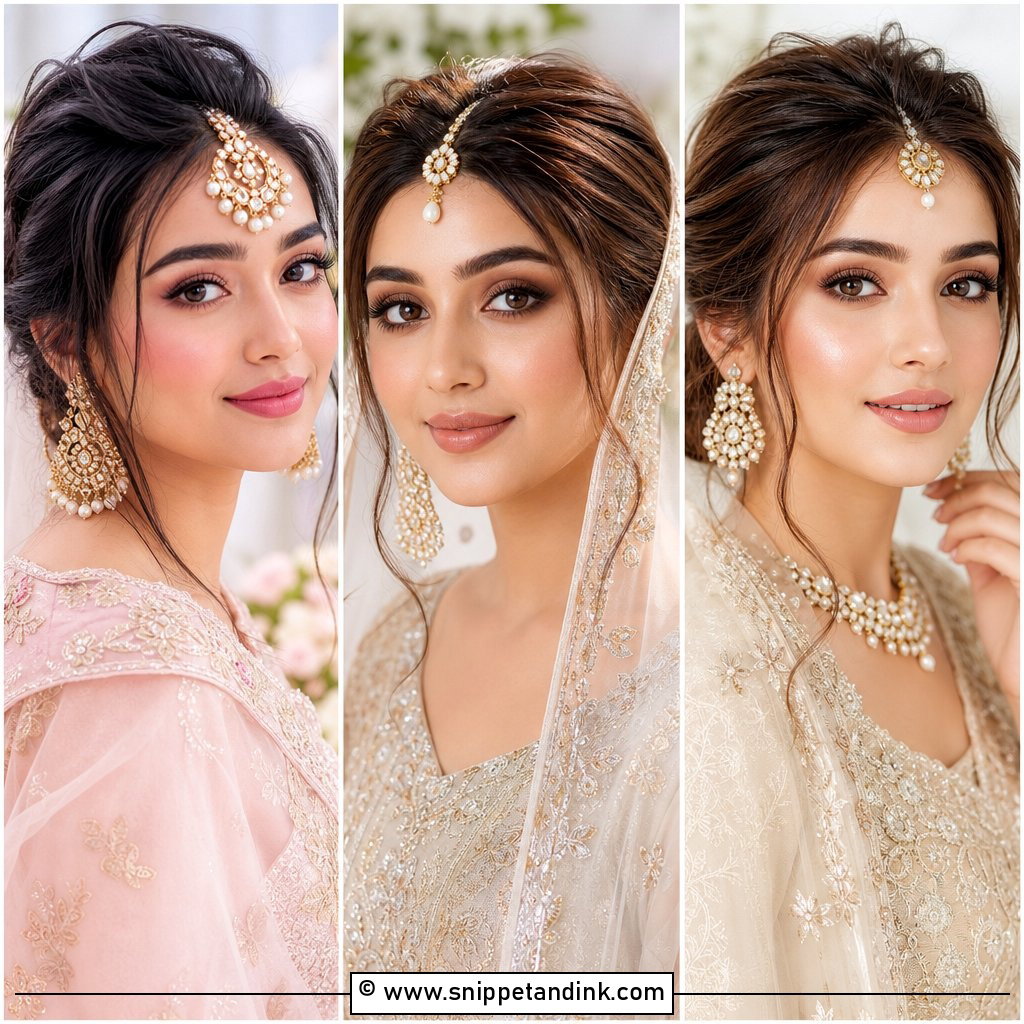
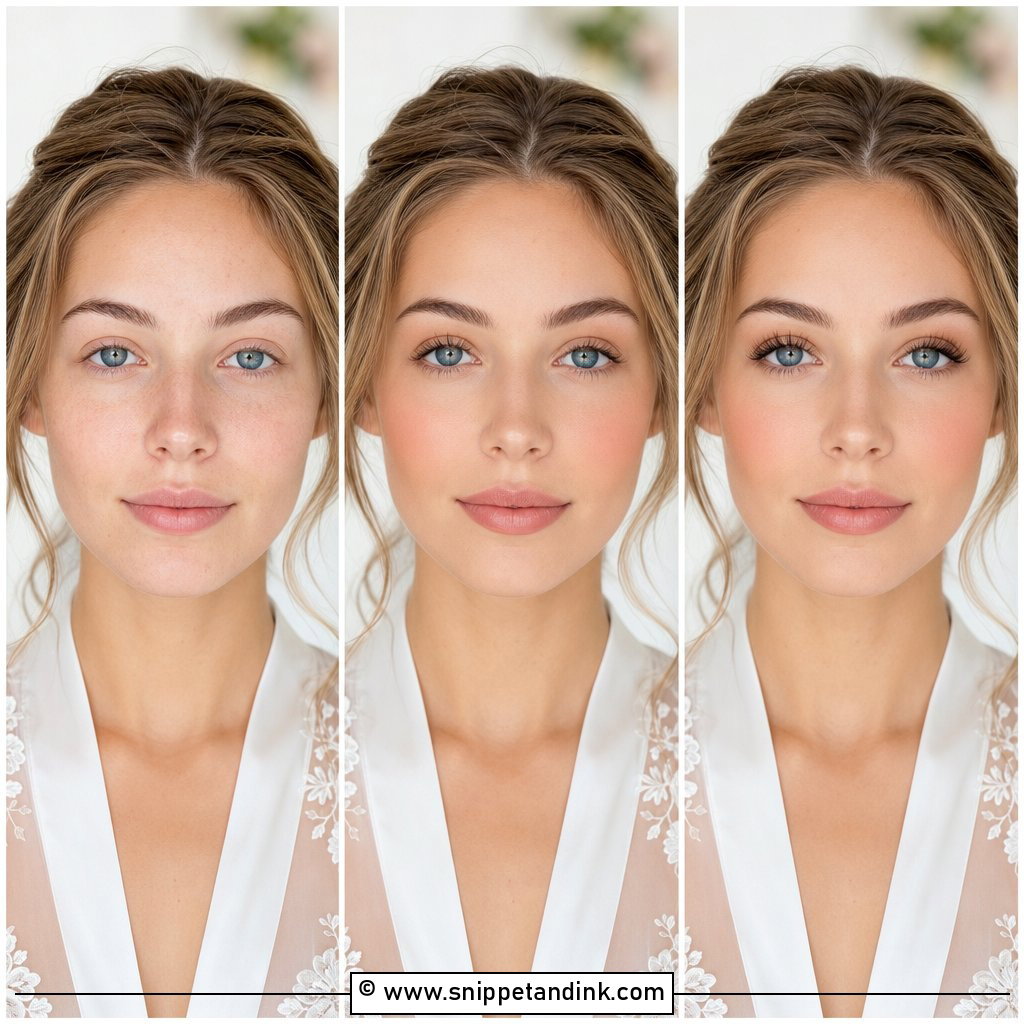
Soft glam gives bridal impact without a heavy finish, and it works with nearly any lehenga or saree because the colours stay neutral. I use brown shadows, champagne shimmer, thin liner, soft kajal and wispy lashes on a fresh satin base, with peachy-pink blush, gentle contour and a fine highlight. The lip can be rose nude, pink-brown or muted coral. It suits a bride who rarely wears makeup. The catch: heavy traditional jewelry can overpower it, so I strengthen the brows and liner a touch if the jewelry is large.
13. Dewy Hindu Bridal Makeup
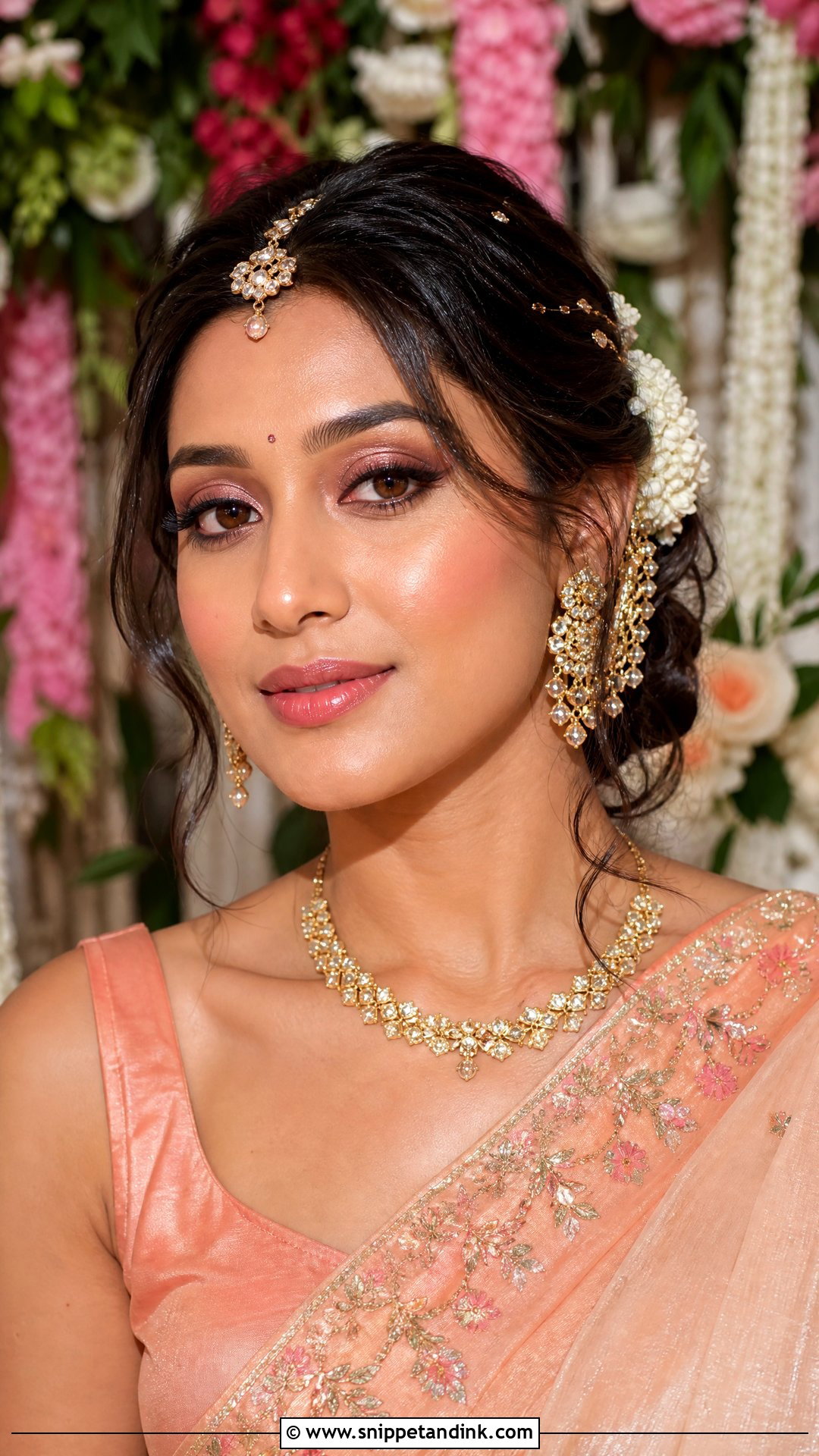
Dewy skin suits daytime ceremonies and outdoor photos. The base is hydrated and luminous, but I still set it lightly in the T-zone so it doesn’t turn into shine by the second hour. Soft bronze or rose-gold shadow, brown liner and natural lashes keep the eyes fresh, and a cream blush melts into the skin better than powder here. A glossy rose or peach lip finishes it. Skip glittery highlighter; under flash it reads as sweat. I wouldn’t recommend this for oily skin or a fire ceremony in a hot month.
14. Matte Hindu Bridal Makeup
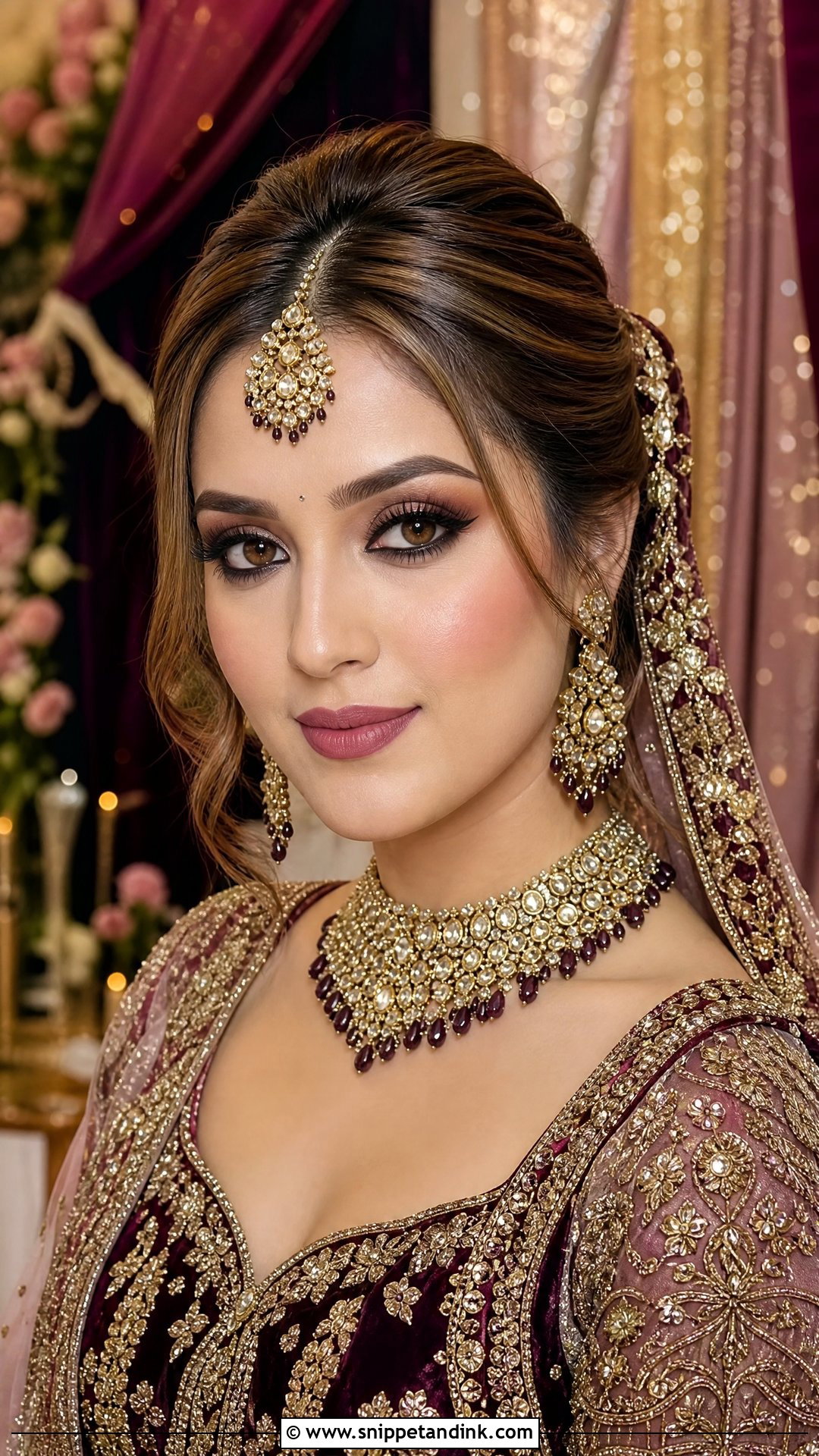
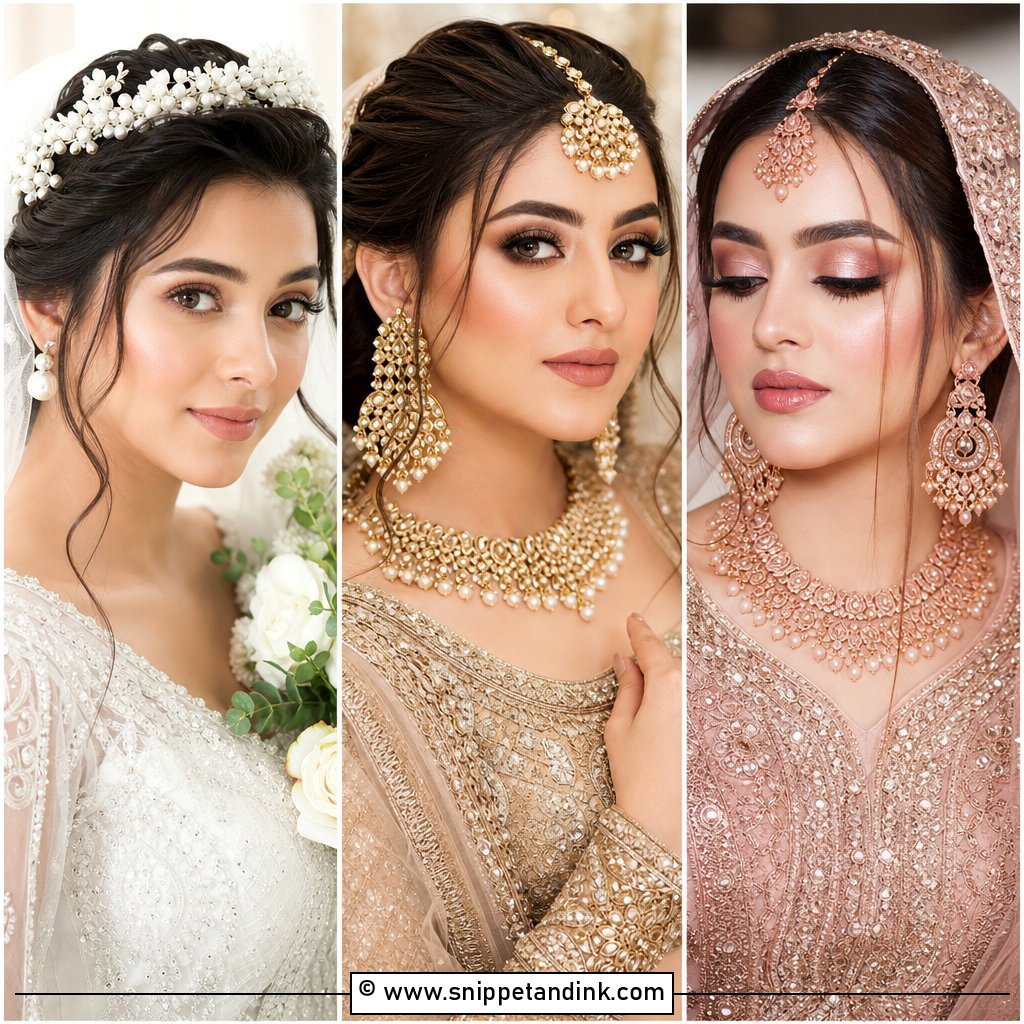
Matte is my choice for long ceremonies, warm weather, bright lights and oily or combination skin. It should look velvety, not flat or dry. I start with a long-wear base, press powder through the centre of the face and leave the outer cheeks a little softer. Matte browns, deep bronze and black liner define the eyes, and a matte red, mauve or brown-pink lip keeps it elegant. Powder blush and a small touch of highlight keep life in the face. On dry or mature skin, I hydrate well first, or matte foundation settles into lines.
15. Gold Eye Hindu Bridal Makeup
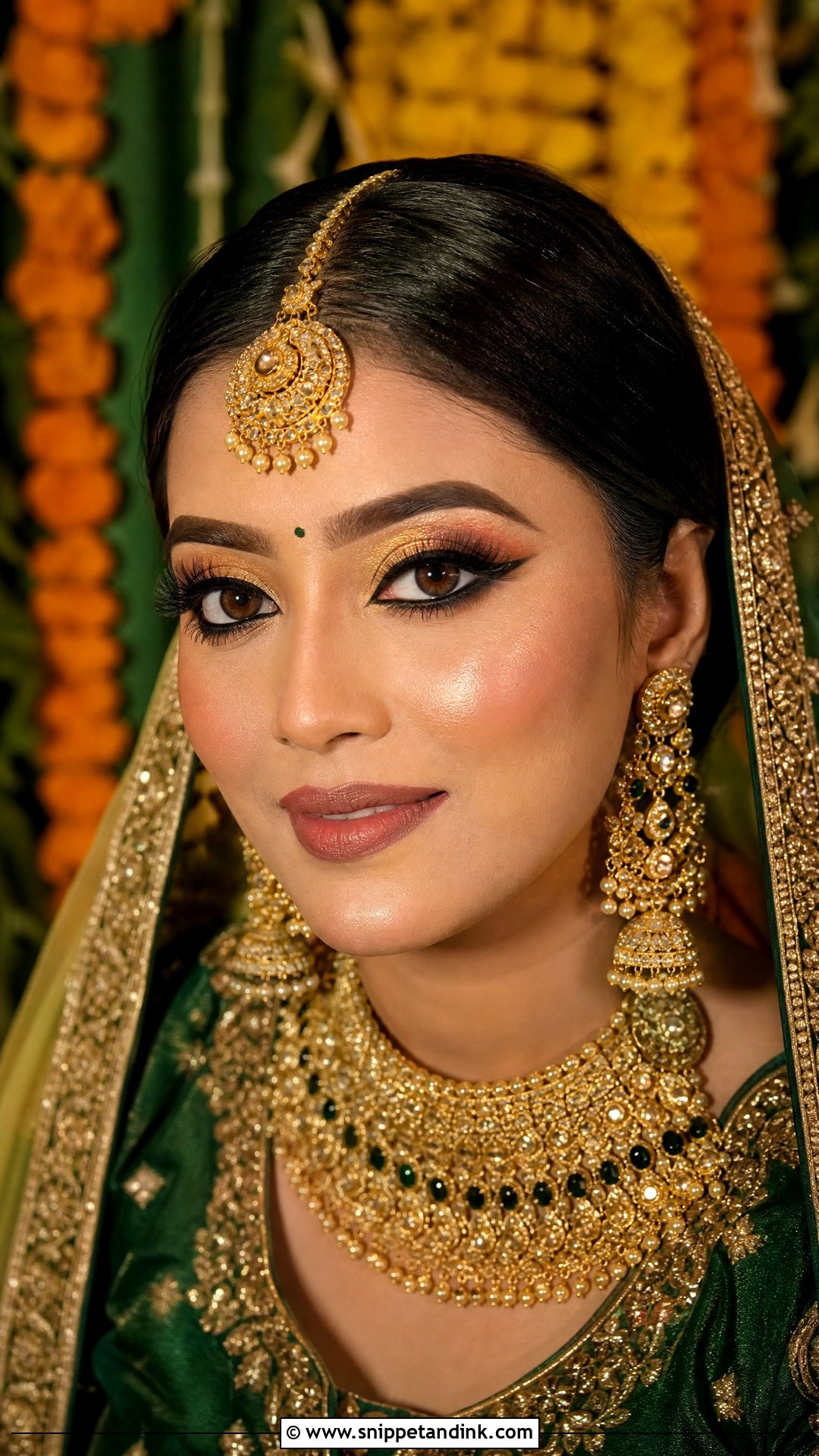
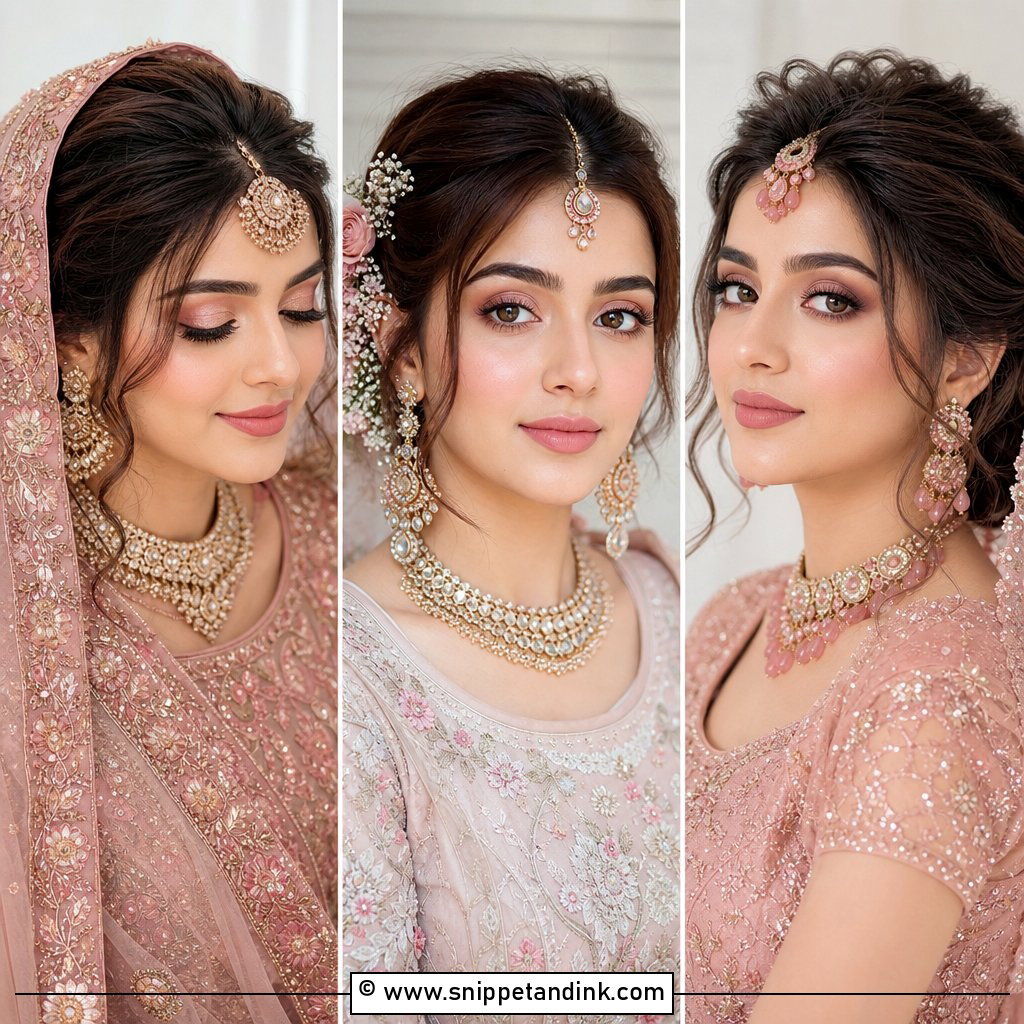
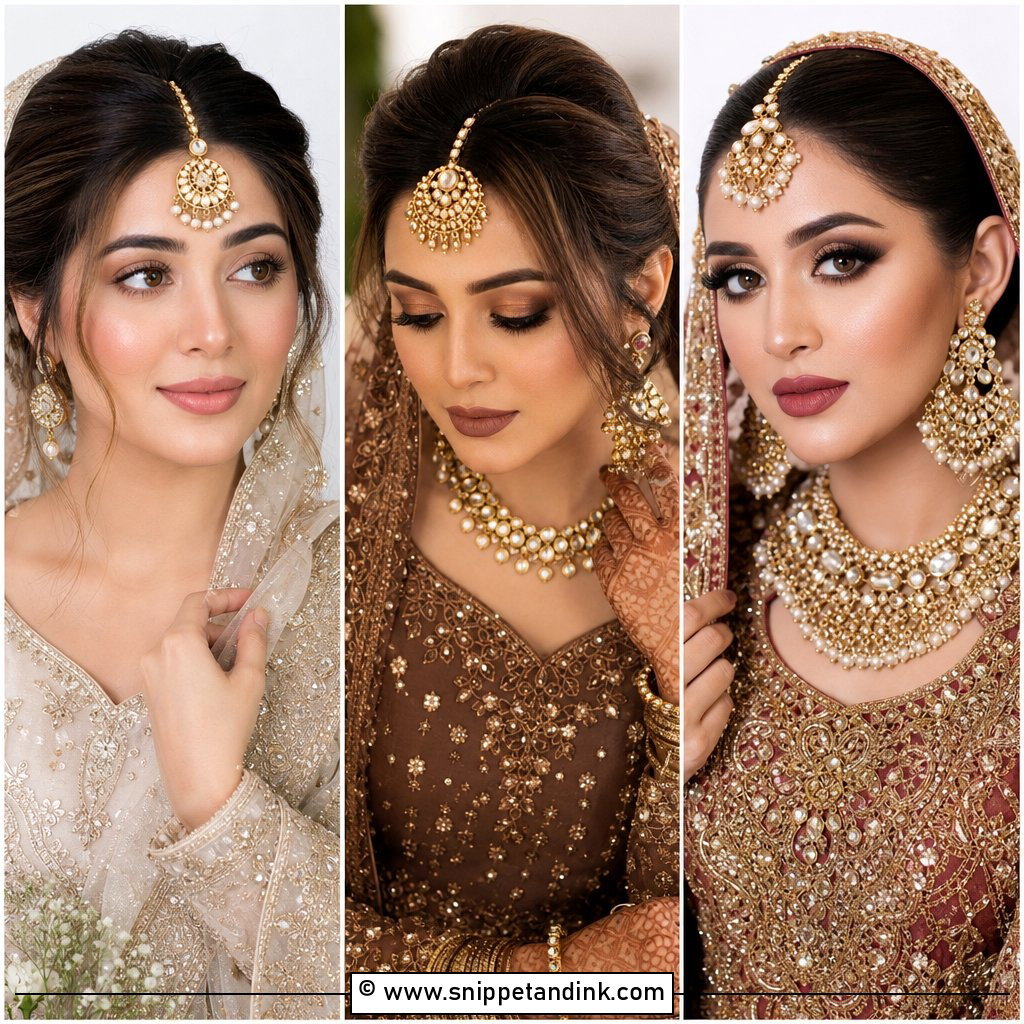
Gold eyes flatter most traditional outfits in red, green, ivory, pink or maroon. Blending is the whole skill: gold shimmer packed on unevenly looks patchy in close-ups. I lay a cream base on the lid, press the gold on with a damp brush, then deepen the crease with warm brown and add black liner, kajal and defined lashes. A radiant complexion with warm blush and soft contour sits under it. The lip changes the mood entirely: red for ceremony, rose for daytime, nude-brown for a modern take.
16. Smokey Eye Hindu Bridal Makeup
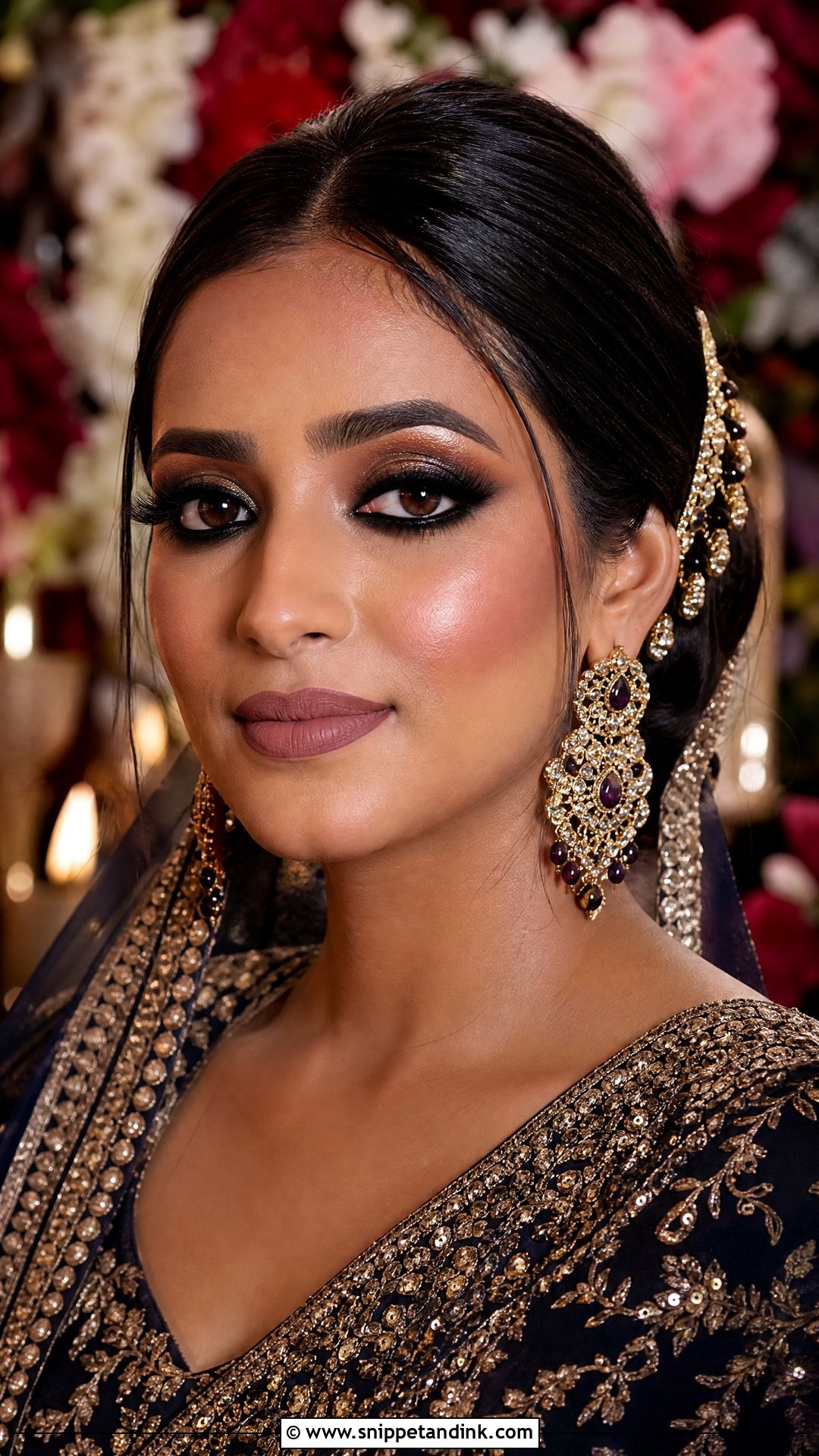
A smoky eye belongs to evening weddings and receptions. I build it with deep brown, bronze and black rather than one flat black, so the eye stays intense but soft at the edges. A nude rose, mauve or muted brown lip keeps the face balanced. The base needs sculpted cheeks, warm blush and a controlled glow, and strong brows finish it. Smoky shadow drops fallout onto the cheeks, so I do the eyes before the base and clean up underneath. It’s the look most likely to smudge when tears come at vidaai.
17. Nude Lip Hindu Bridal Makeup
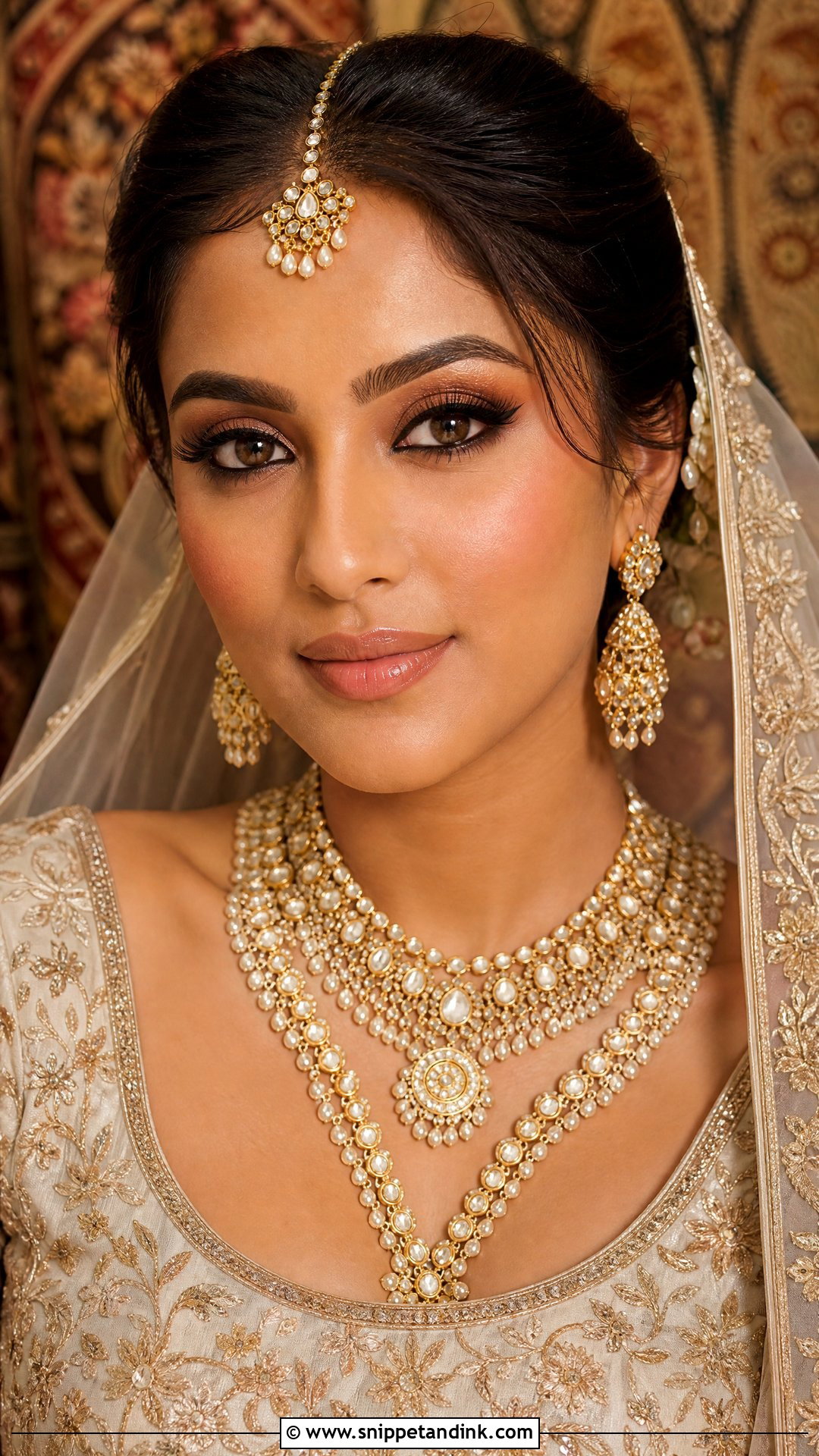
A nude lip is modern and flattering, provided the shade doesn’t wash the face out. Fair skin can wear pink nude, medium skin peach-brown, tan skin caramel rose, and deep skin cocoa rose or warm brown. With the lips quieter, the eyes can carry more detail: bronze shimmer, smoky brown edges, kajal and lifted lashes. Blush should match your undertone. It works for brides in heavy jewelry or colourful outfits. One tip from the chair: a nude lip with a nath can look unfinished in photos, so line it a shade deeper.
18. Red Lip Hindu Bridal Makeup
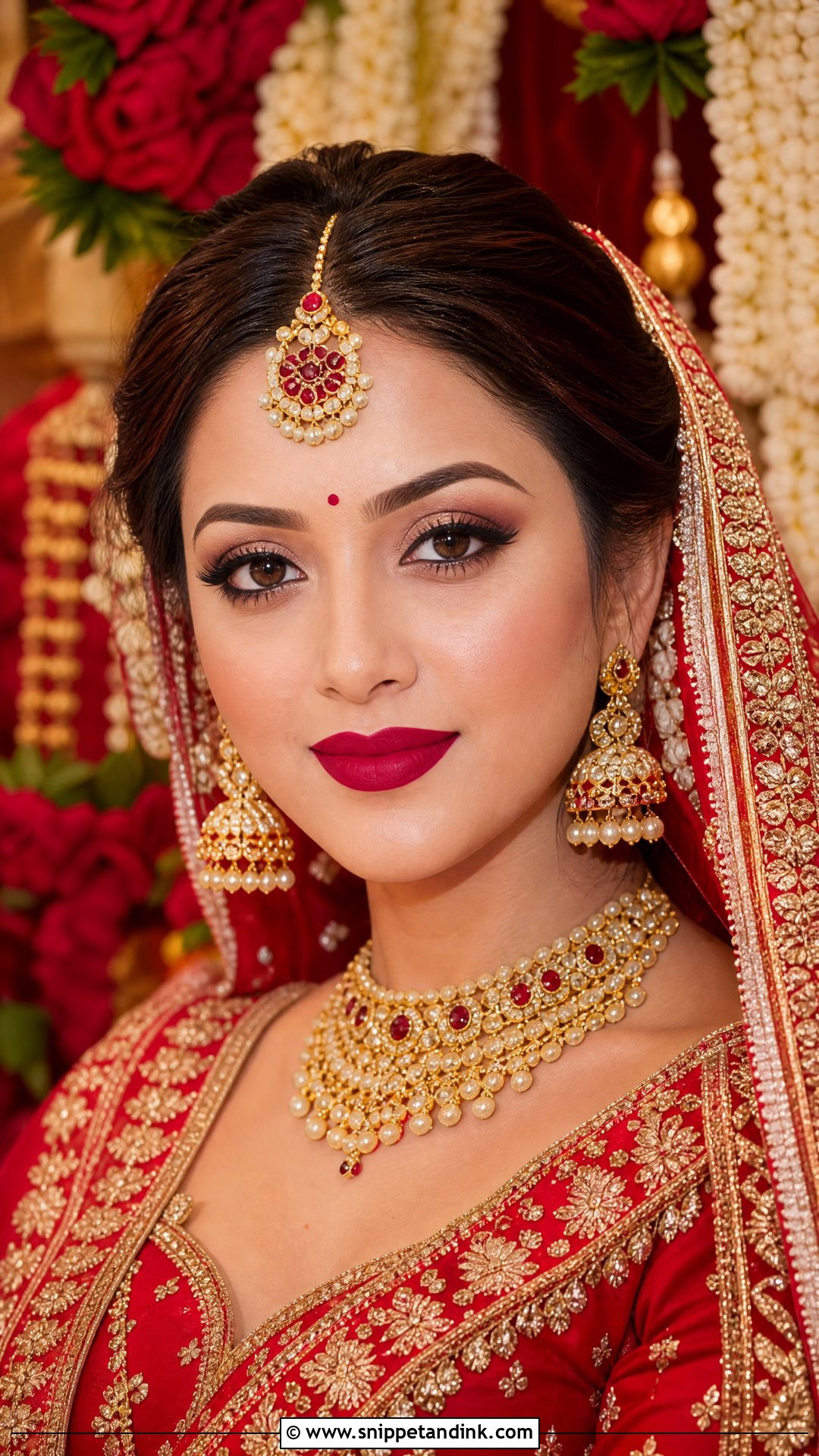
The red lip is the classic, and the right red depends on undertone. Blue-reds look crisp, orange-reds feel warm and festive, and deep reds look regal. I keep the eyes defined but uncluttered with gold or champagne shadow, black liner, kajal and clean lashes, and blend the blush carefully so it doesn’t compete with the lip. Use a transfer-resistant formula; you’ll be eating sweets, sipping water and greeting relatives through long ceremonies. I line and fill the whole lip in liner first, which keeps the colour even when the top layer wears off.
19. Pink Hindu Bridal Makeup
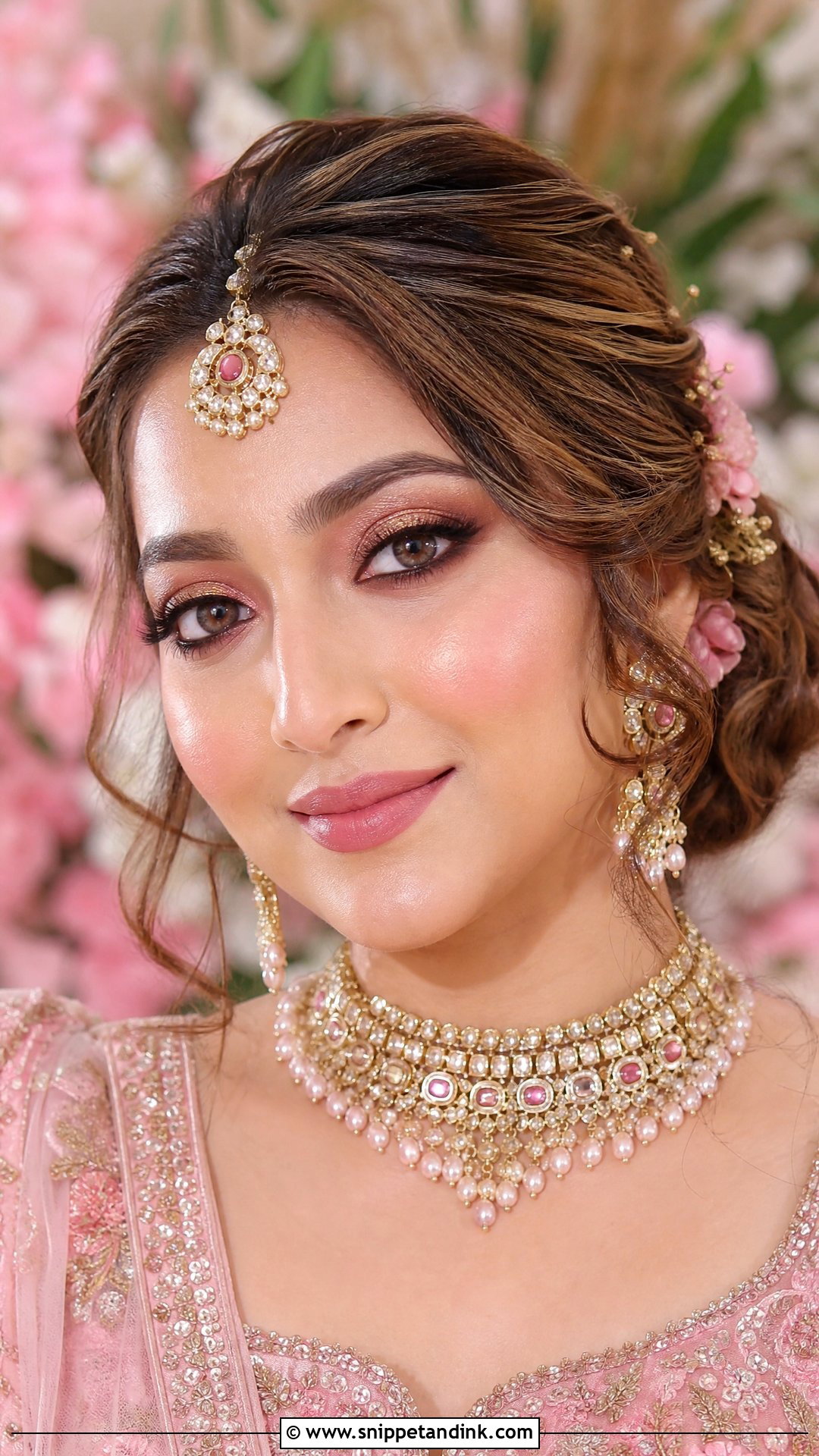
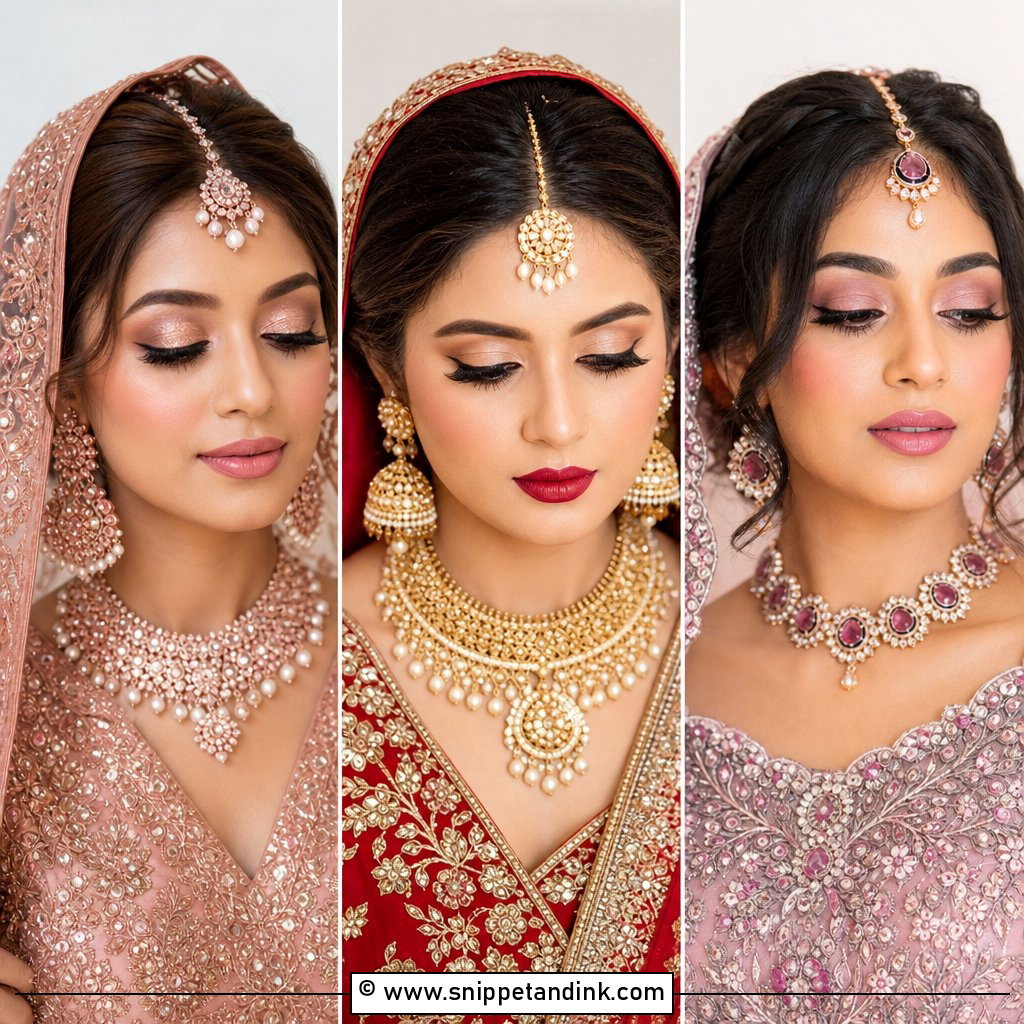
Pink suits blush, rose, peach and pastel outfits, but on its own it can look sugary or flat. I balance it with warm browns or champagne shimmer on the eyes, rose-gold shadow, soft liner, kajal and fluttery lashes. A pink, mauve-pink or rose lip keeps the face consistent, and pink blush placed high, blended into the highlight, lifts the face. It’s a natural fit for daytime weddings, engagements and brides who’d rather not wear red or maroon. On olive skin, I warm the pink slightly so it doesn’t turn grey.
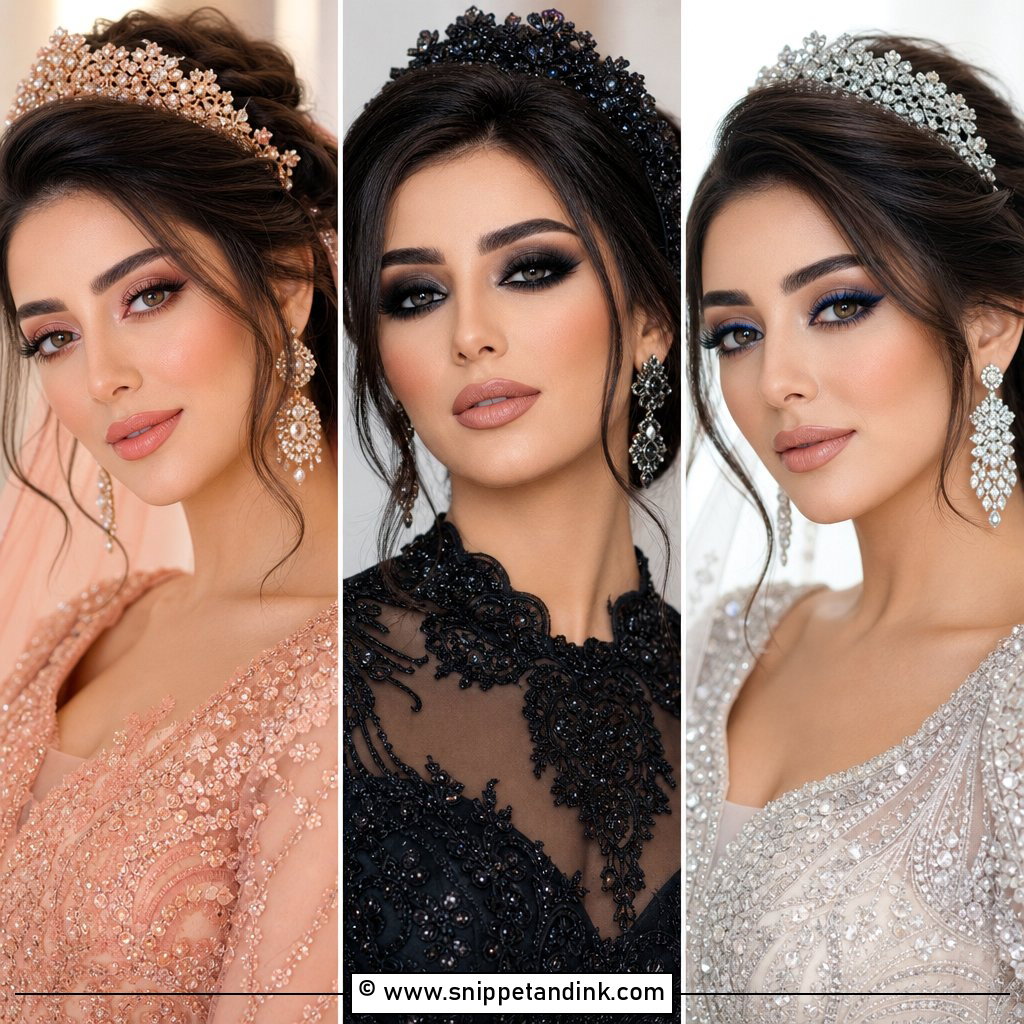
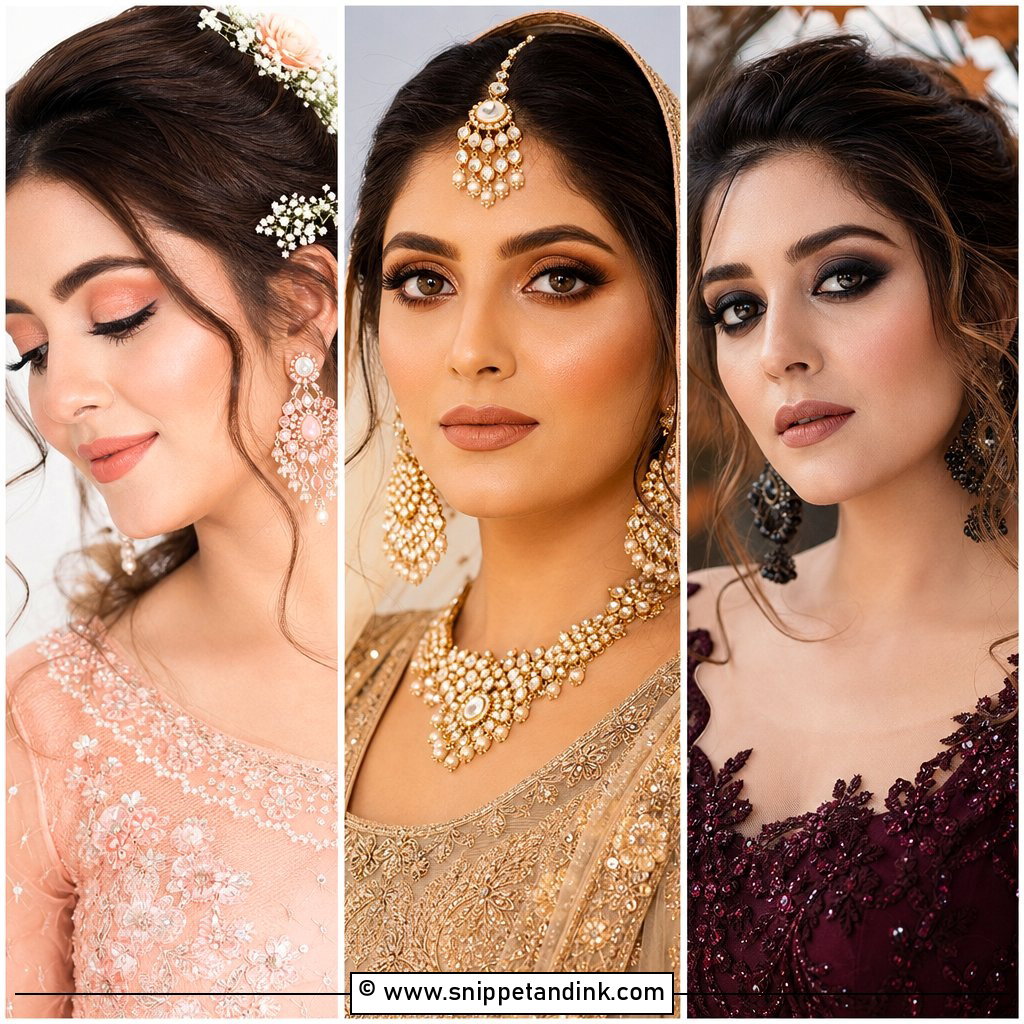
20. Reception Hindu Bridal Makeup
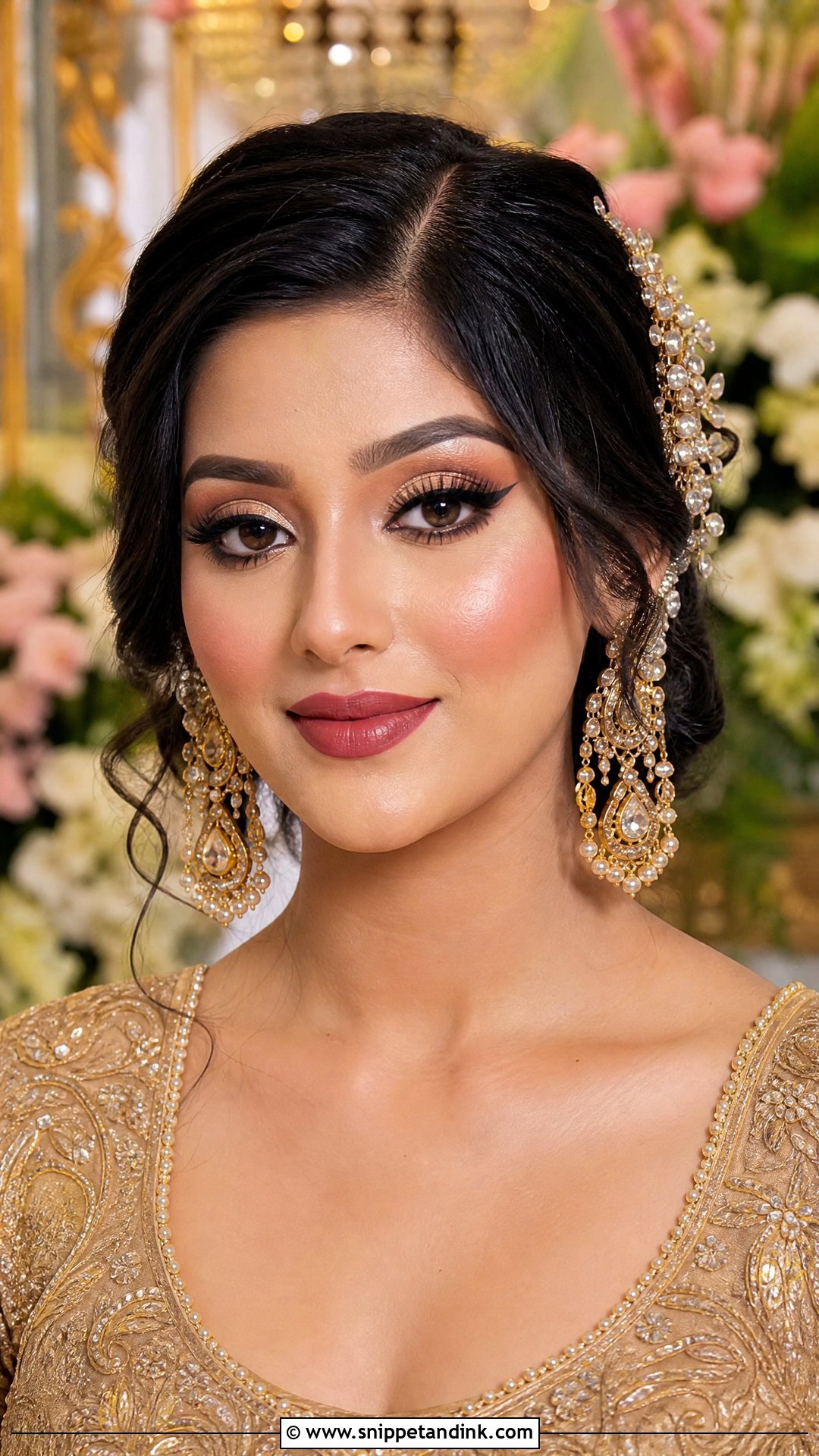
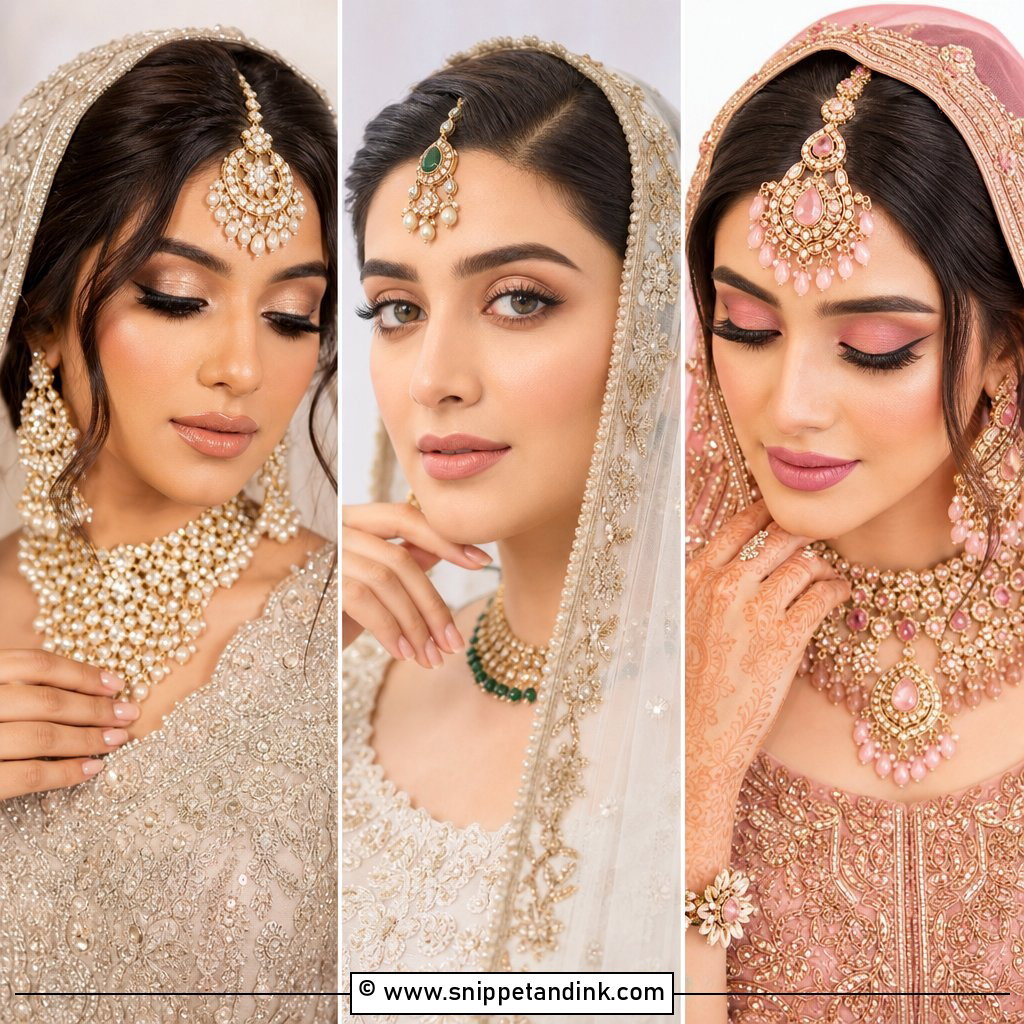
Once the rituals are over, the reception face can be more fashion-forward. Many brides switch to shimmer, sculpted skin and a different lip. I’d try metallic bronze, champagne or soft smoky eyes with a wing and full lashes, a little more contour, glowing cheeks and a smooth satin finish. Lips can go nude brown, berry, mauve or deep rose depending on the outfit, whether that’s a gown, a lehenga or a modern saree. If there’s less than two hours between ceremony and reception, I adjust the morning makeup rather than removing it all; starting from bare skin takes too long.
Sindoor, Tears and the Vidaai Touch-Up
Two moments late in the wedding change the makeup more than anything earlier in the day, and both are easy to plan for.
When sindoor is applied
Sindoor powder is applied to the parting, and some of it often falls onto the forehead and the nose. Families have their own feelings about that, so I never rush to wipe it. If you’d like it tidied for photos afterwards, a clean, dry fluffy brush sweeps it away; a damp wipe smears the red pigment into the foundation and leaves a pink stain.
When the vidaai comes
Almost every bride cries at the farewell, and most don’t expect to. Waterproof liner on the lower lash line, lashes applied with a strong adhesive, and a quick touch-up kit with concealer, a cotton bud and setting powder will get you back to the photographs in a few minutes. If your artist is leaving before the vidaai, ask her to show whoever is with you how to fix the under-eye with a cotton bud first, before adding any concealer.
Start With the Saree, Then the Shadow
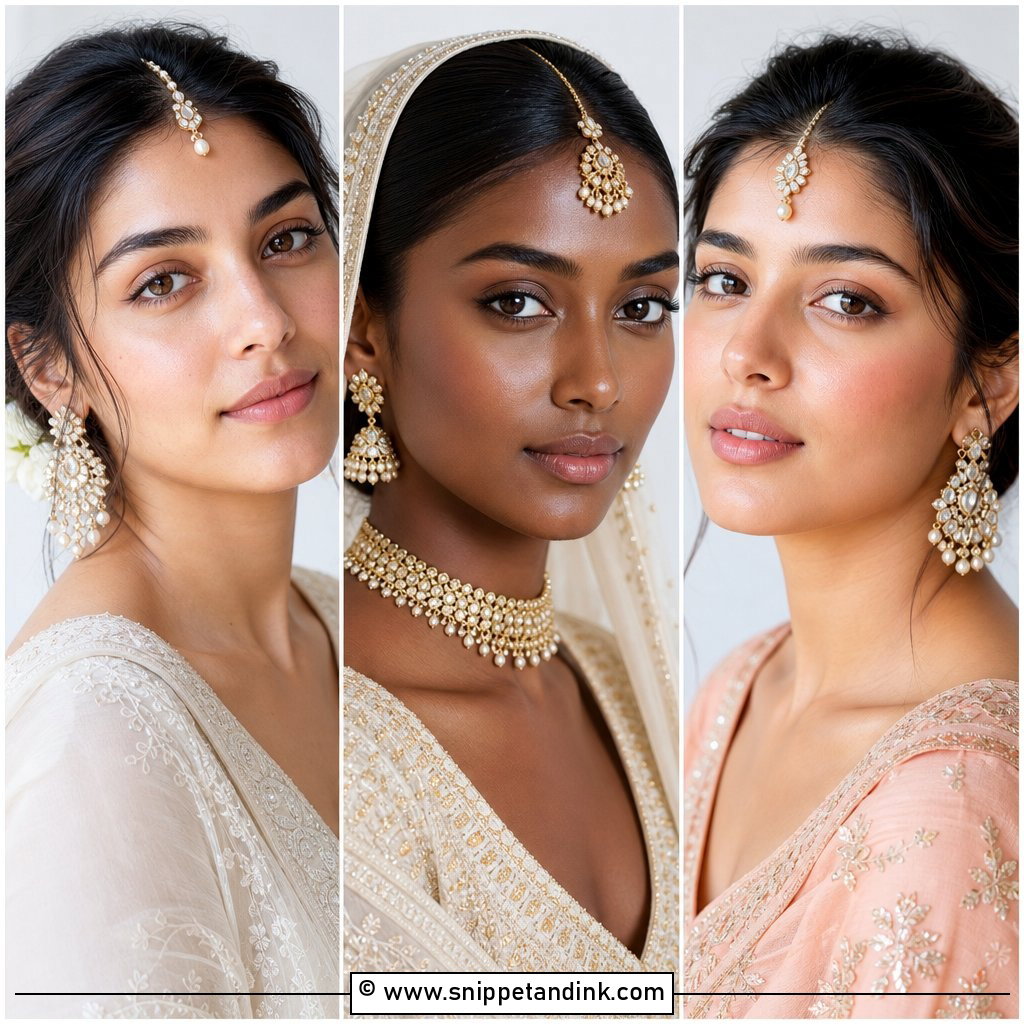
The right Hindu bridal makeup still makes you feel like yourself. Begin with your outfit colour, your jewelry, the time of the muhurtham and how much makeup you’re comfortable wearing, and the finish usually picks itself, from dewy to matte, soft glam to a red lip or a smoky eye. Regional details like temple jewelry, saree colours and forehead art make it feel like your family’s wedding. Book a trial if you can, test it in light close to your venue’s, and photograph it from several angles. A look that is balanced and lasts the day will carry you through.
You'll Like These Ideas:


Leave a Reply