
The question I answer most often from guests isn’t about the venue or the timeline. It’s “What do I wear?” A dress code is the couple’s way of answering that before anyone asks, and when it’s clear, people arrive comfortable and the photos look like one event rather than five. Classic terms like black tie and cocktail now sit next to newer ones like garden party and coastal chic, and the newer ones are where guests get lost. Below are twenty-five codes with a complete guest outfit for each, plus what I tell people when they call me unsure.
Reading an Invitation That Names No Dress Code
Plenty of invitations don’t say anything about attire. When guests ask me how to read one, I point them to four clues that usually agree with each other.
- The start time. A ceremony at 6 p.m. or later leans formal; a morning or early afternoon start leans lighter.
- The venue. A hotel ballroom and a backyard ask for very different outfits, even on the same date.
- The invitation itself. Heavy card, formal wording and engraved or letterpress printing usually signal a dressier event.
- The wedding website. Couples often add attire notes there that didn’t fit on the card, along with details like grass or stairs.
If the clues still disagree, ask someone in the wedding party. It’s a normal question, and far easier than guessing wrong. Couples would much rather answer it than have a guest feel out of place.
1. Black Tie Wedding Dress Code
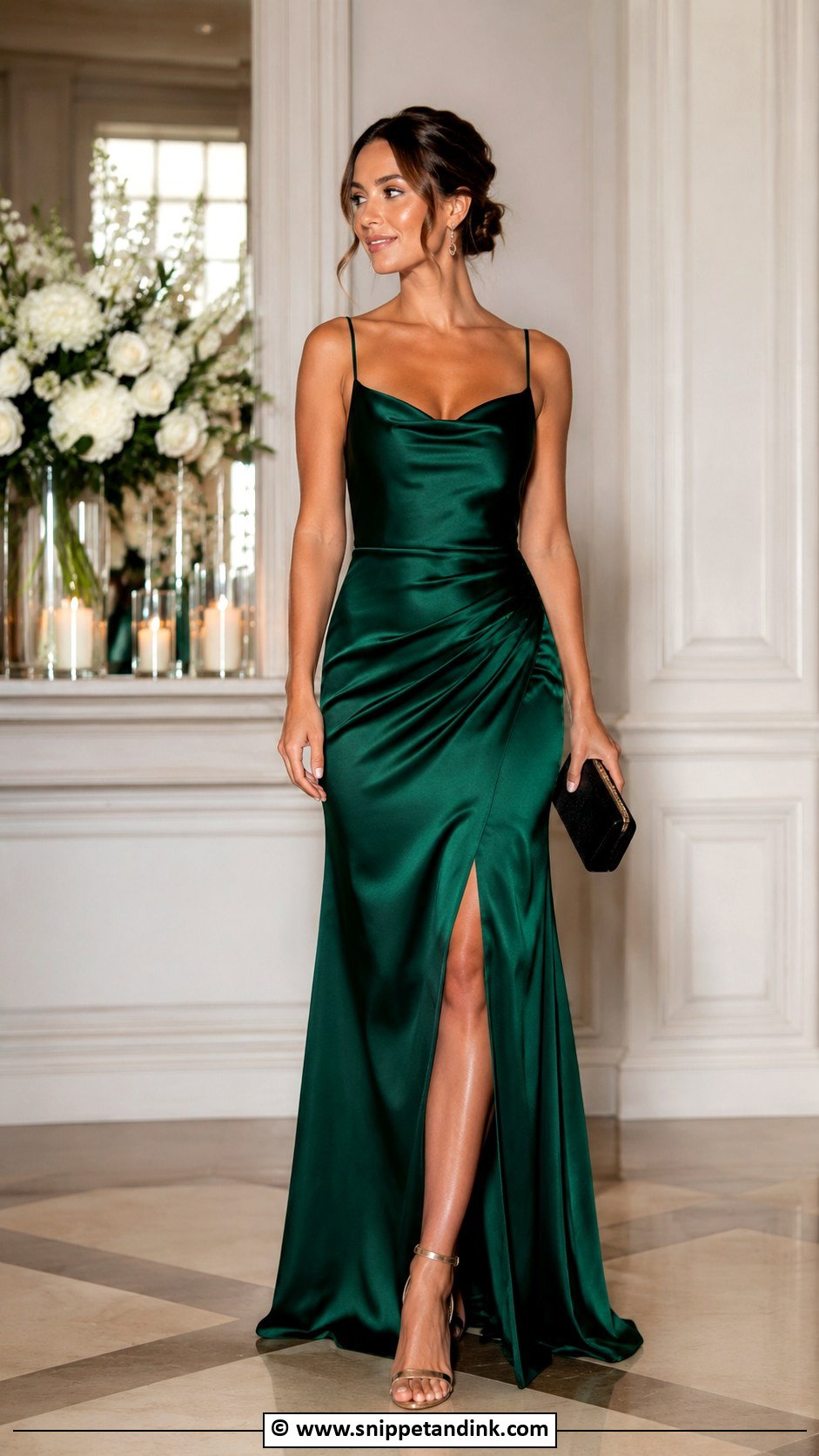
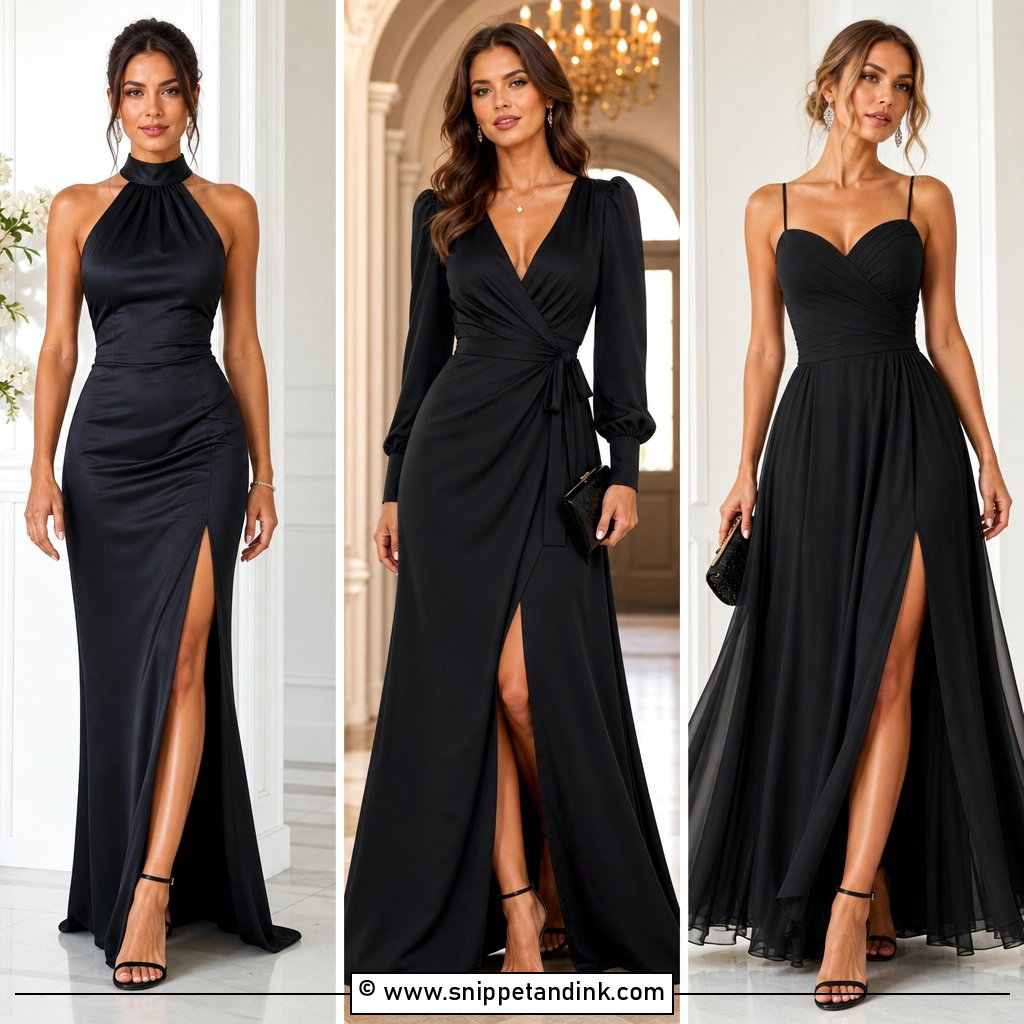
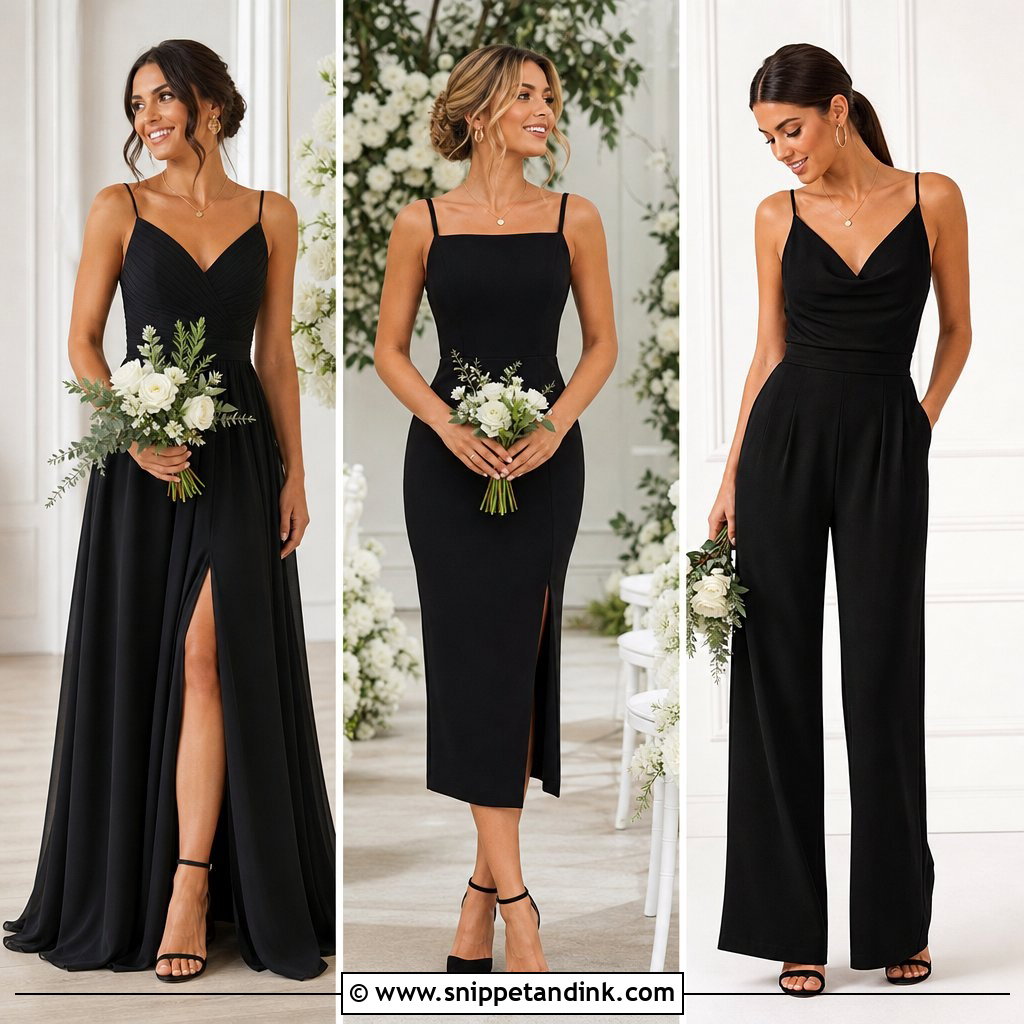
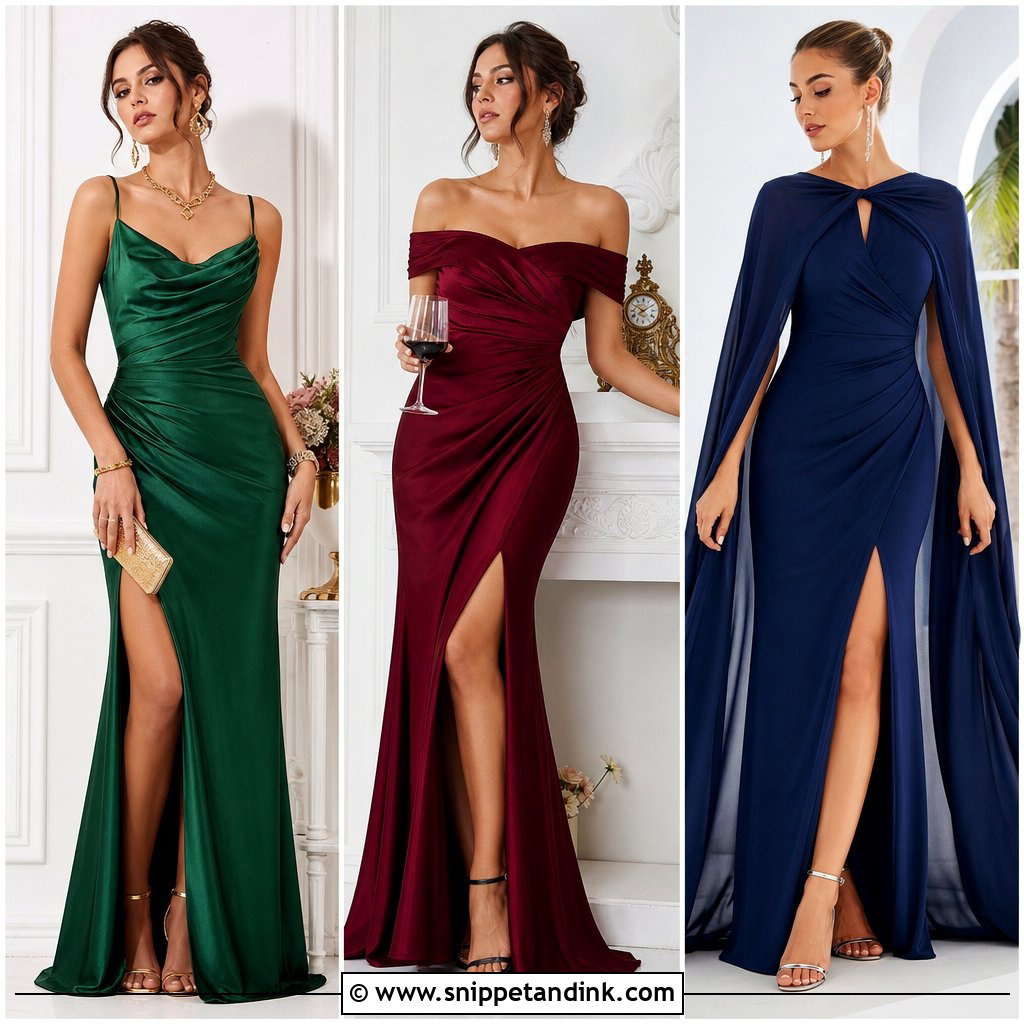
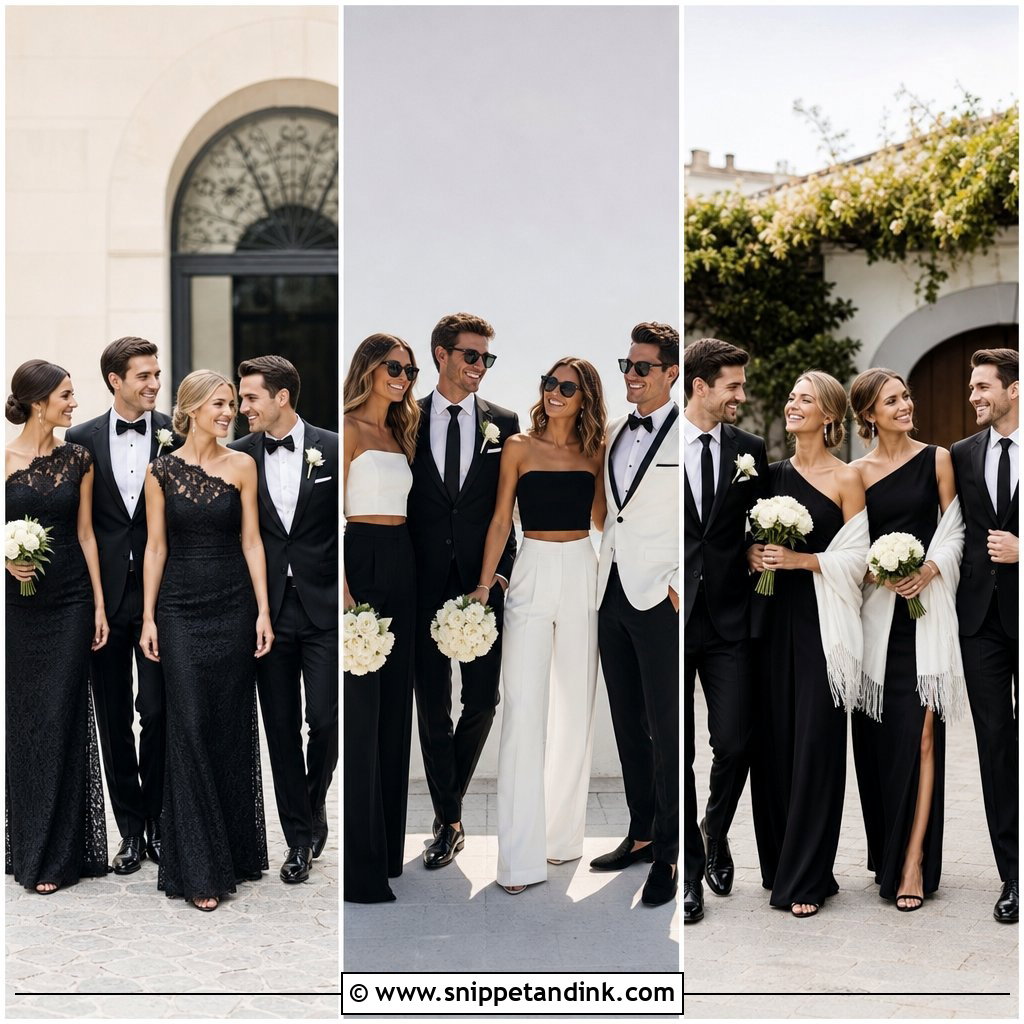
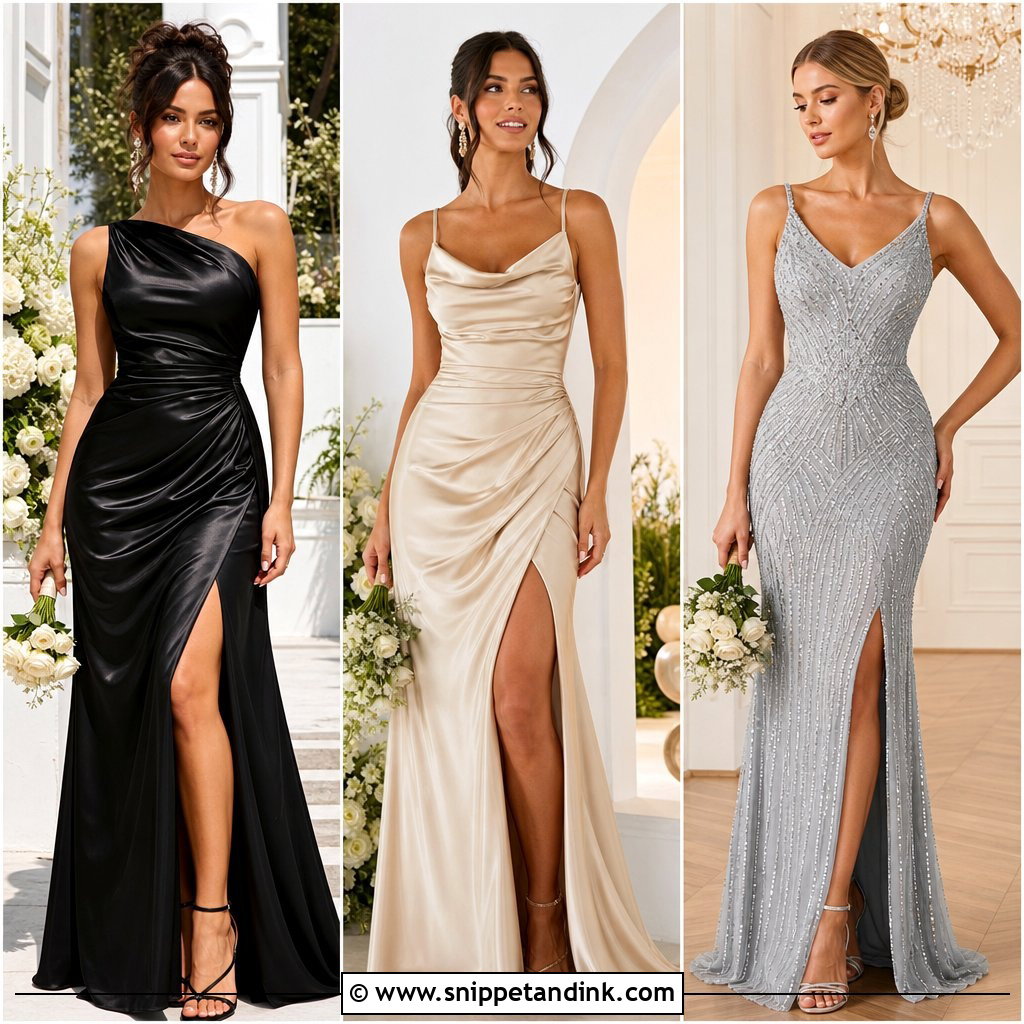
Black tie means a floor-length gown, full stop. Satin, chiffon, crepe or velvet depending on the season, in navy, black, emerald, burgundy or a soft metallic. Sleek heels, a small clutch and drop earrings or a fine bracelet. A low bun or soft waves suits the formality. What I see go wrong is the shoes: guests choose formal heels they’ve never danced in and are barefoot by nine. Break them in, or bring a dressy flat in your clutch. Expect a ballroom, a grand hotel or a formal evening reception.
2. White Tie Wedding Dress Code
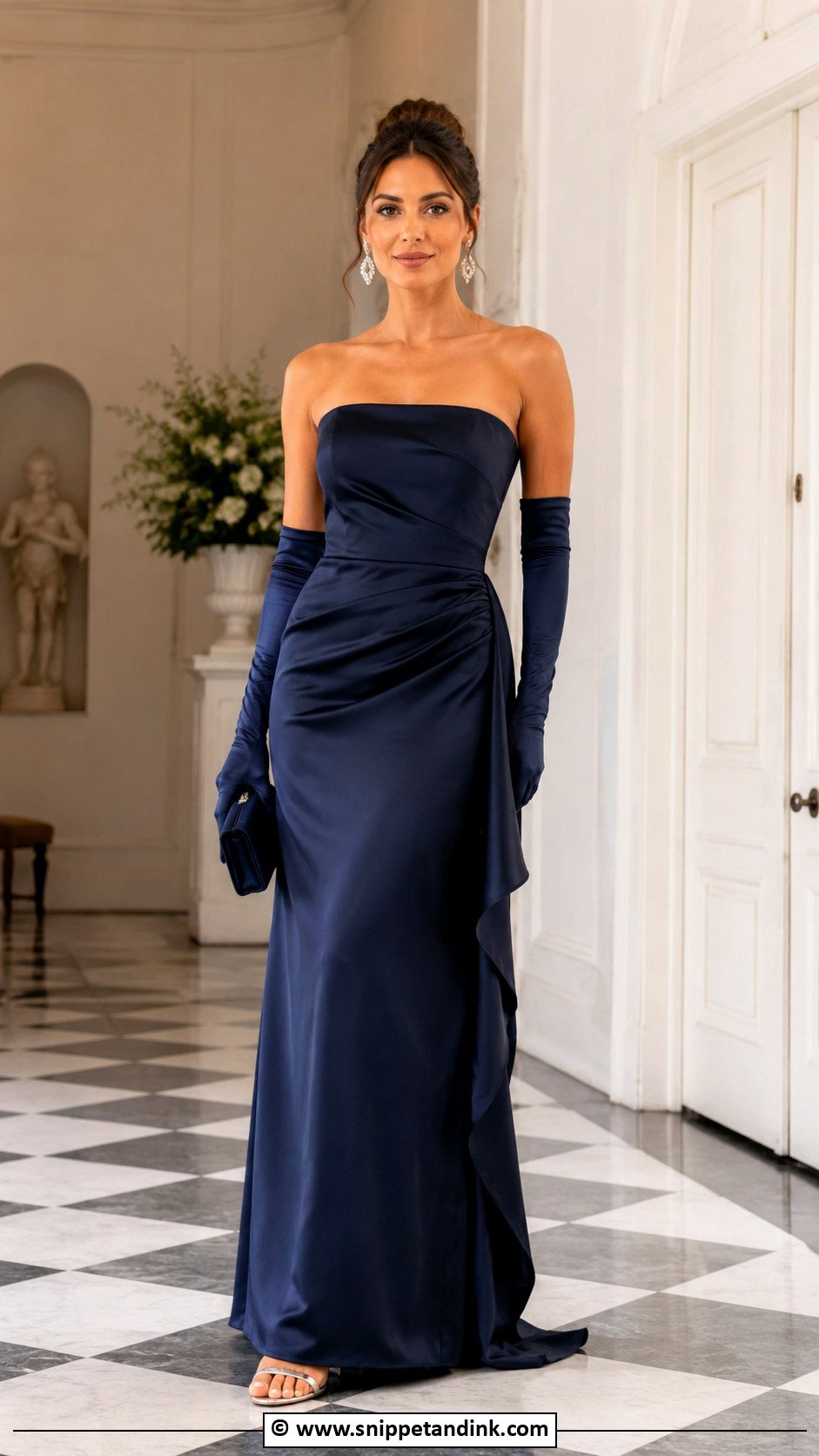
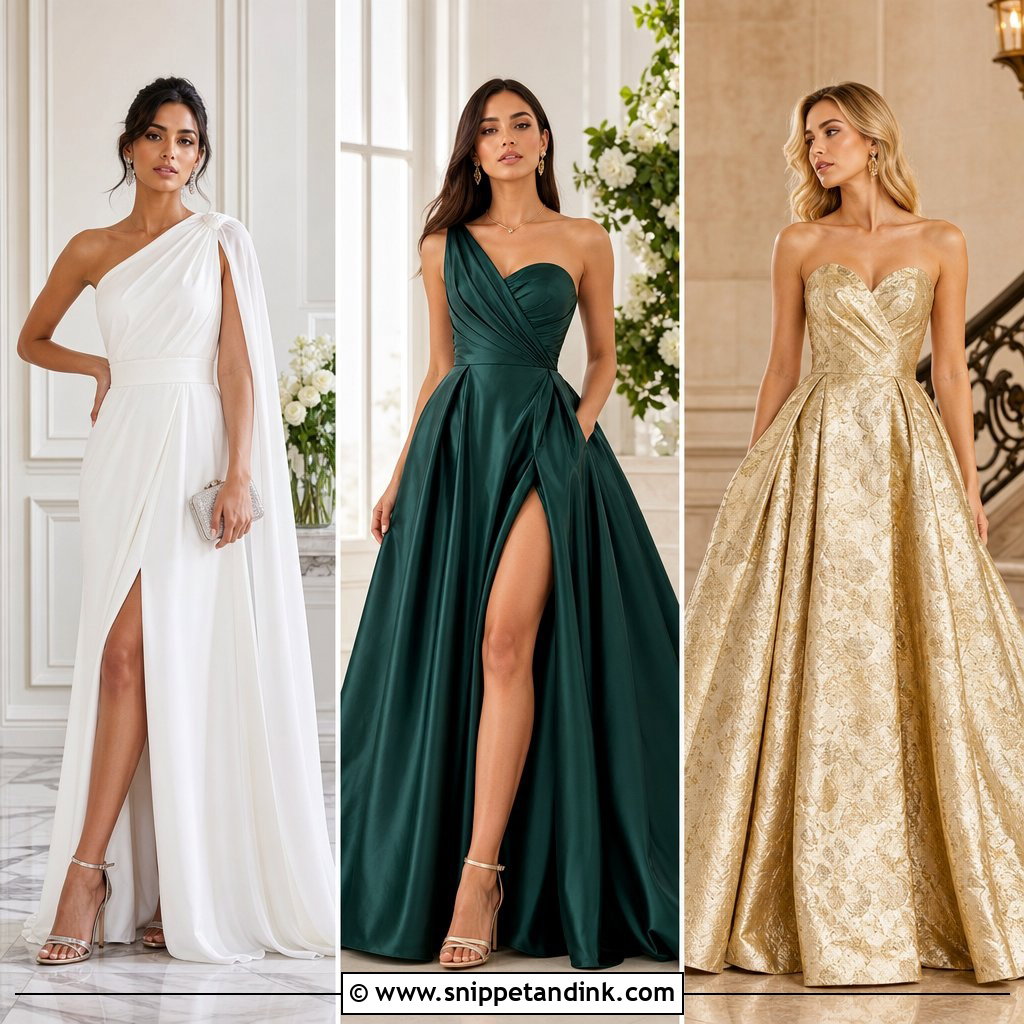
White tie is rare, and when couples choose it they mean it. It’s the most formal code there is. A full-length evening gown in silk, satin, tulle or structured crepe, in an A-line, column or draped shape. Long gloves are traditional; they aren’t strictly required, but at a white tie event they rarely look out of place. Formal heels, a small evening bag, fine jewelry. Nothing short, casual or trendy. If you’re unsure whether a cocktail-length dress could pass, it can’t.
3. Black Tie Optional Wedding Dress Code
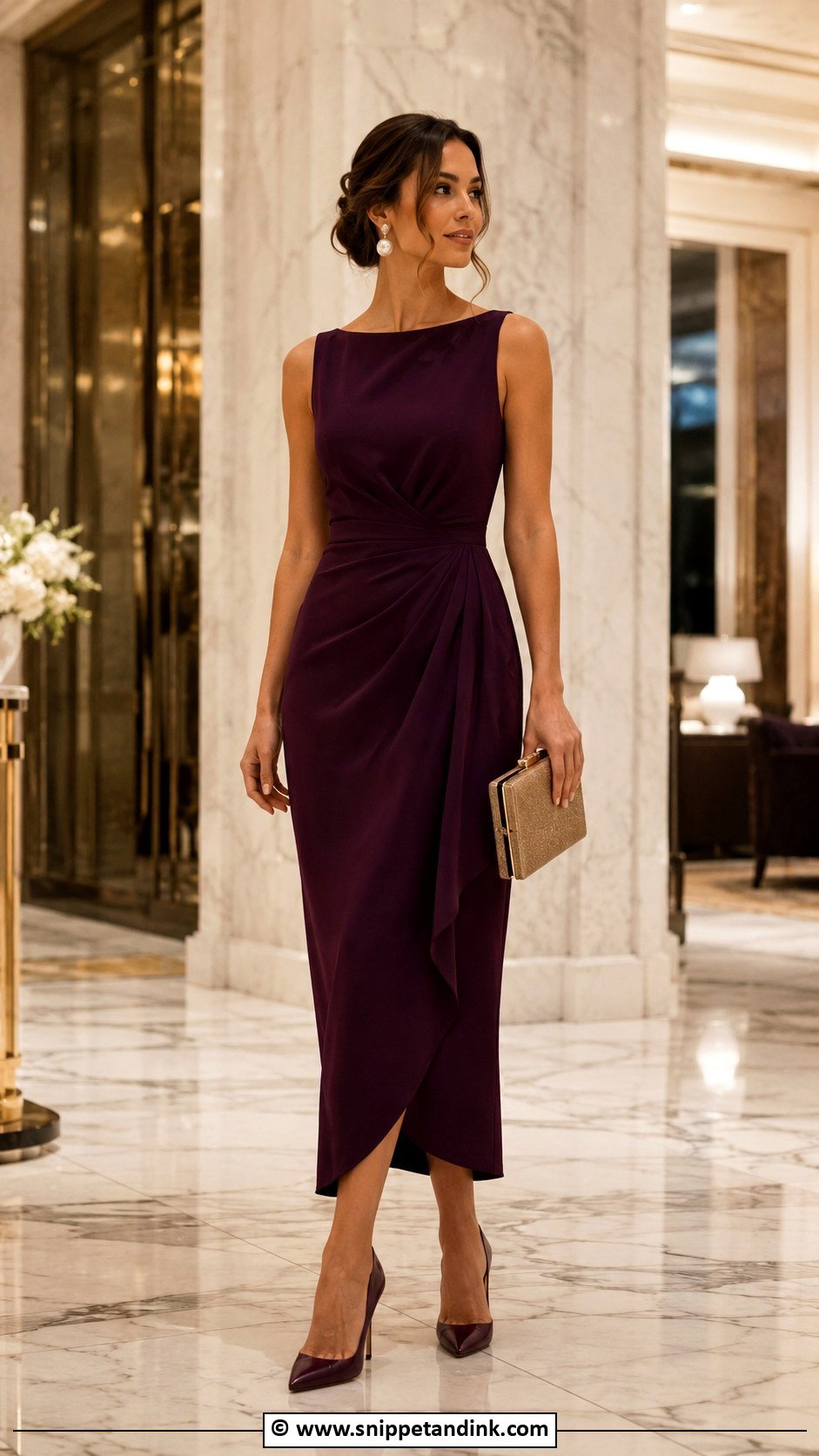
Black tie optional gives you a little room but still means formal. A floor-length gown is the strongest choice; a dressy midi, a formal jumpsuit or a smart suit also works. A navy satin wrap gown with metallic heels, a structured clutch and pearl earrings is a reliable outfit. For trousers, a wide-leg jumpsuit in crepe or satin with a defined waist looks right. From the planning side, couples pick this code so nobody has to buy a gown. Dress toward the formal end anyway; under candlelight, a gown never looks wrong.
4. Formal Wedding Dress Code
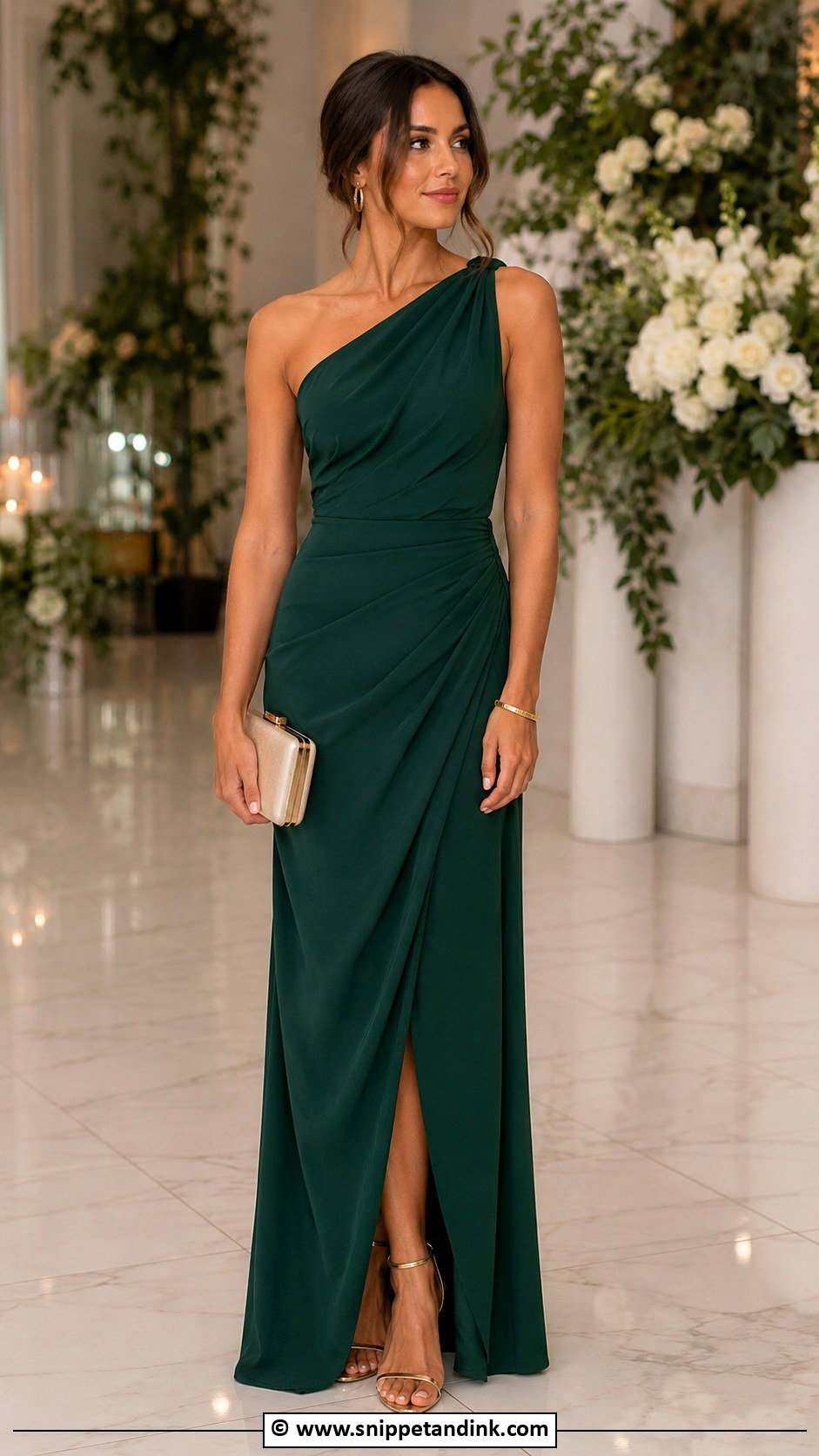
Formal sits just below black tie. A floor-length dress is always safe, and a dressy midi or tea-length dress works when the fabric is rich and the accessories are polished. Satin slips, structured fit-and-flare dresses, one-shoulder gowns and tailored jumpsuits all fit. Navy, plum, forest green, blush, charcoal or a champagne that doesn’t read bridal. I’d add a wrap for the ceremony, because country clubs and museums keep the air conditioning cold.
5. Cocktail Wedding Dress Code
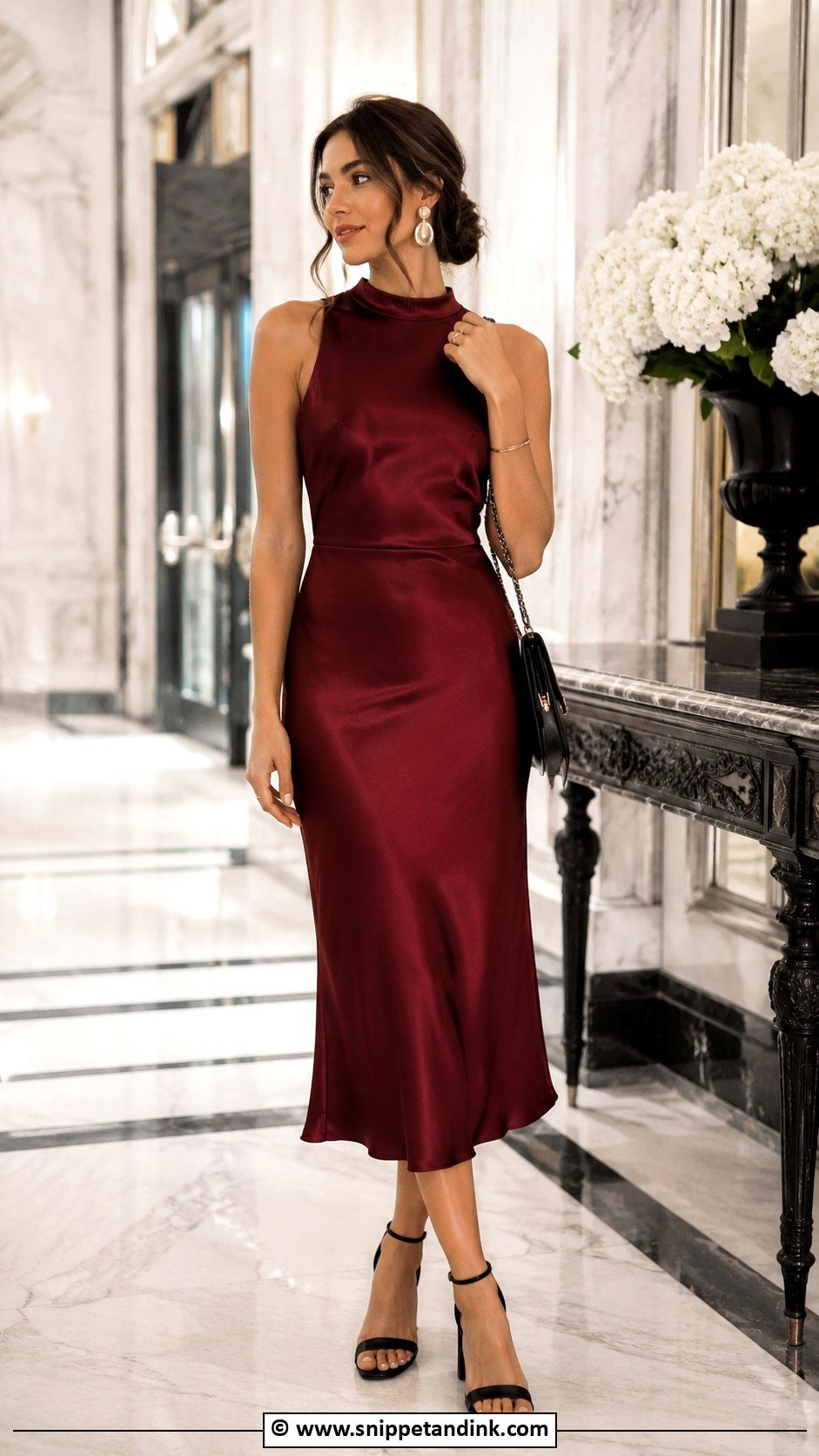
Cocktail is the code I see most on invitations, and it’s the easiest to get right. Knee-length to midi, in silk, crepe, chiffon, jacquard or a smart knit. Color, print and texture are all welcome. A floral midi with block heels and a small shoulder bag suits spring; a jewel-tone wrap dress with closed-toe heels and a tailored coat suits winter. Skip sundresses, denim, sneakers and the plain work dress. If the reception has a dance floor, test whether your hem rides up when you lift your arms.
6. Semi Formal Wedding Dress Code
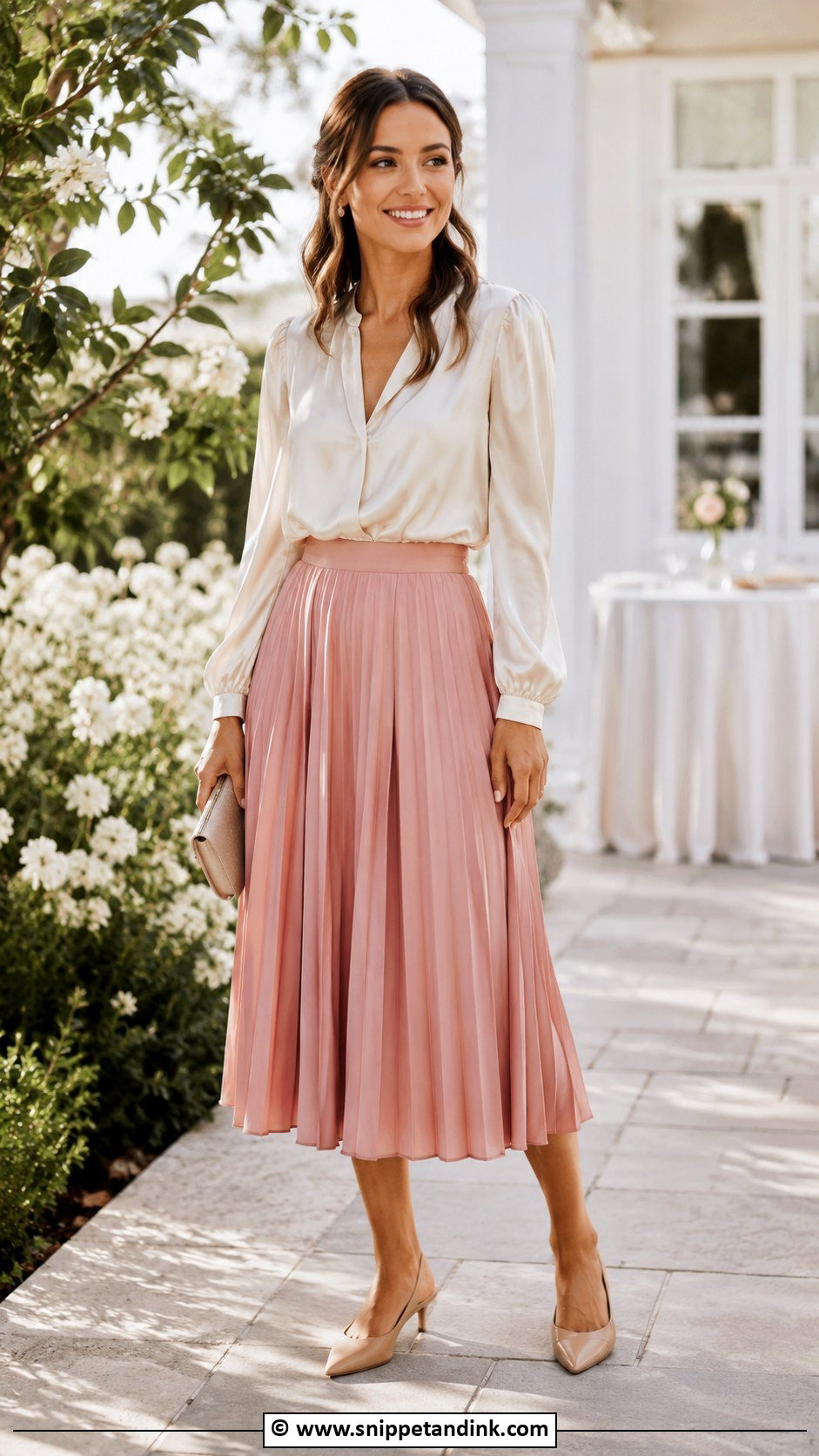
Semi formal wedding attire is dressed up but a step down from cocktail. A midi dress, polished jumpsuit, matching set or dressy skirt outfit fits. Time of day decides most of it: lighter colors and softer fabrics for an afternoon, deeper shades or a little shine for evening. A pleated midi skirt with a silk blouse, low heels and a clutch is a dependable outfit. It suits gardens, restaurants, small hotels and relaxed reception spaces.
7. Dressy Casual Wedding Dress Code
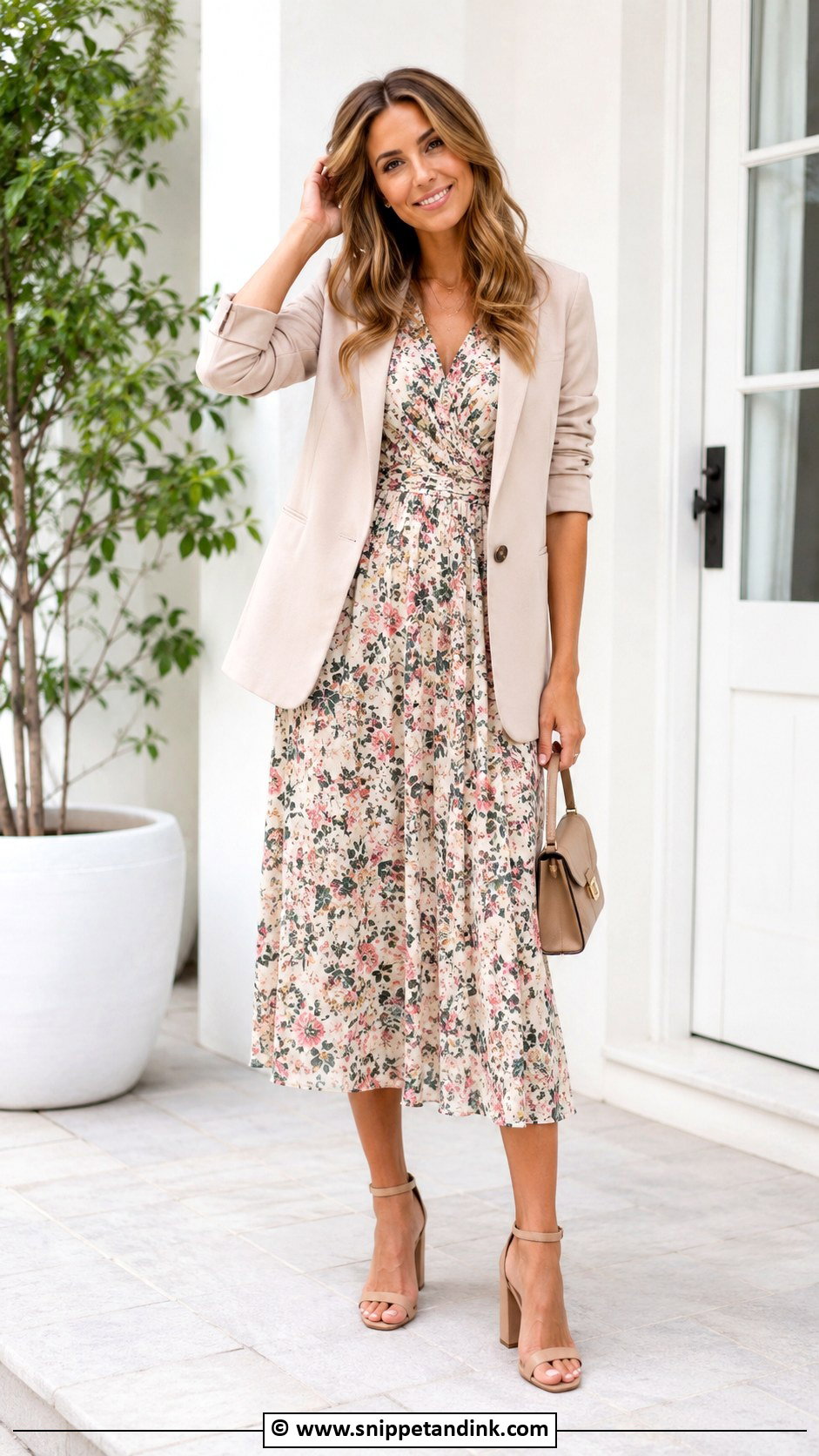
Dressy casual confuses more guests than any other code. My shorthand: nicer than brunch, less serious than cocktail. A printed midi with block heels, a soft blazer and a small bag works. So do wide-leg trousers with a silky blouse and smart flats. The fabric does the dressing up here, so pick linen blends, satin, crepe, chiffon or crisp cotton poplin rather than jersey. No jeans, flip-flops or plain T-shirts.
8. Casual Wedding Dress Code
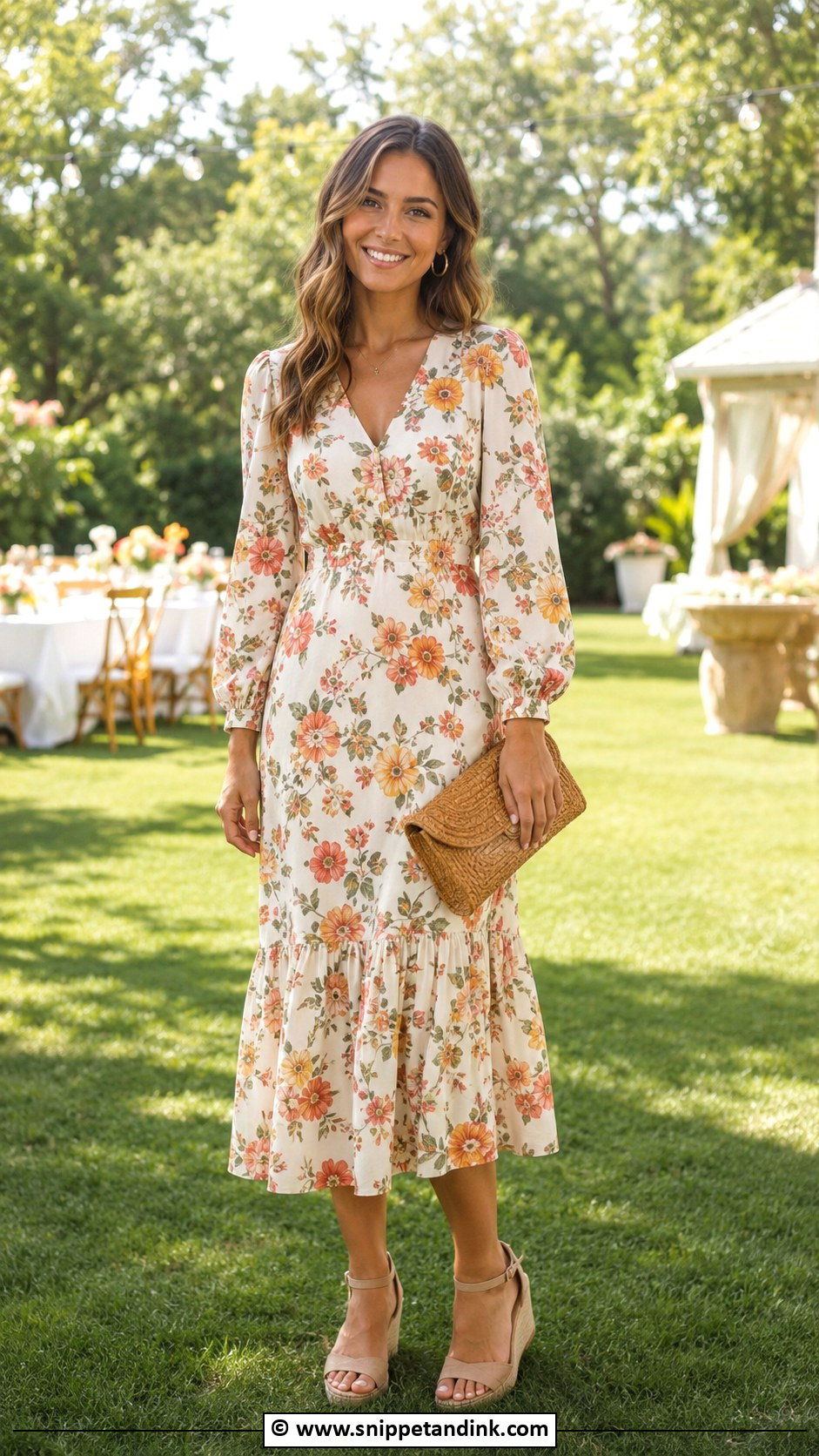
Casual still isn’t errand clothes. A breezy midi, a neat jumpsuit or tailored pants with a pretty blouse all suit. Flat sandals, low wedges, ballet flats or clean block heels, depending on the ground. Backyard and park weddings mean grass, so breathable fabric and shoes that won’t sink matter more than anything. A floral cotton midi with espadrille wedges and a woven bag is relaxed and still feels like an occasion. Keep accessories simple.
9. Beach Formal Wedding Dress Code
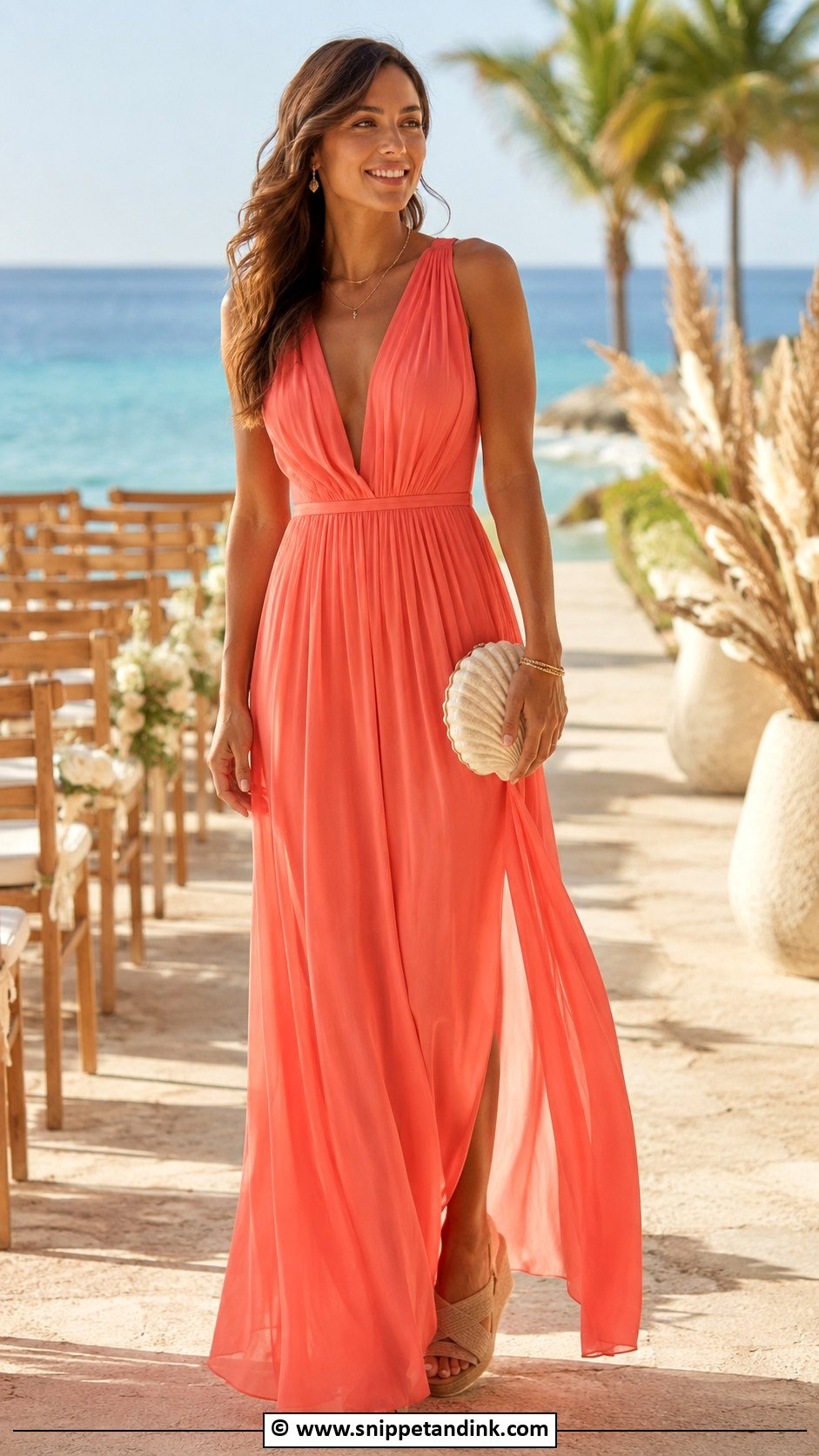
Sand, wind and sun are the three things to dress for at a beach formal wedding. A flowing maxi in chiffon, a silk blend or light crepe is the strongest choice, in soft colors, ocean blues, coral, sage or a tropical print. Dressy flat sandals, wedges or block heels; stilettos sink. A halter maxi with espadrille wedges and a small clutch works well. The ceremony usually runs into the sunset and the temperature drops quickly by the water, so bring a light wrap. Nothing that looks like swimwear or a cover-up.
10. Beach Casual Wedding Dress Code
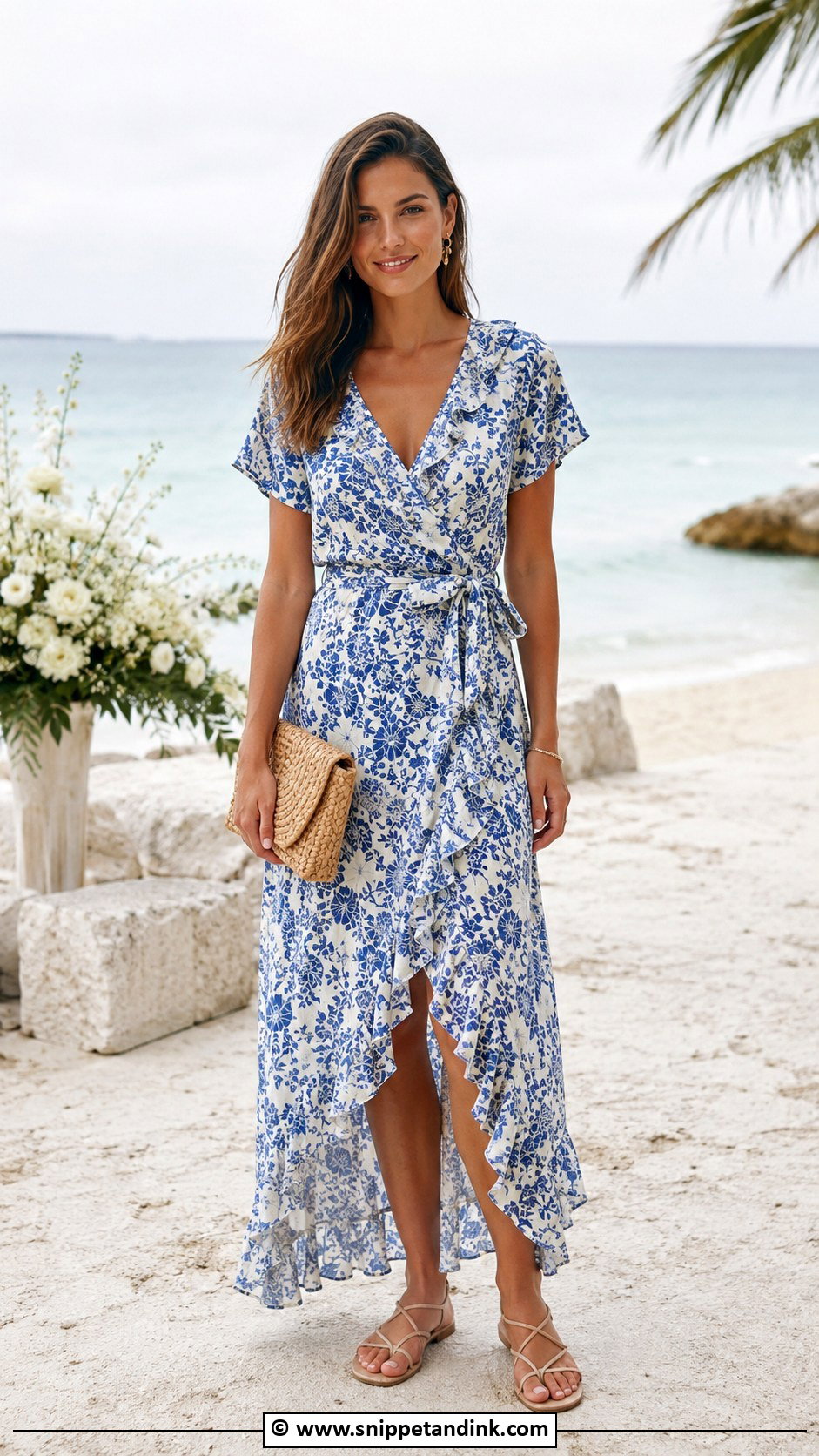
Beach casual wedding attire should breathe and move. A light sundress, linen midi or relaxed jumpsuit in cotton, linen blends, gauze or rayon. Flat sandals or low wedges for the sand. A printed wrap dress with strappy flats, simple hoops and a woven clutch looks relaxed but intentional. Flip-flops only if the couple says so. Linen wrinkles the moment you sit in a car, so either embrace it or pick a linen blend.
11. Garden Party Wedding Dress Code
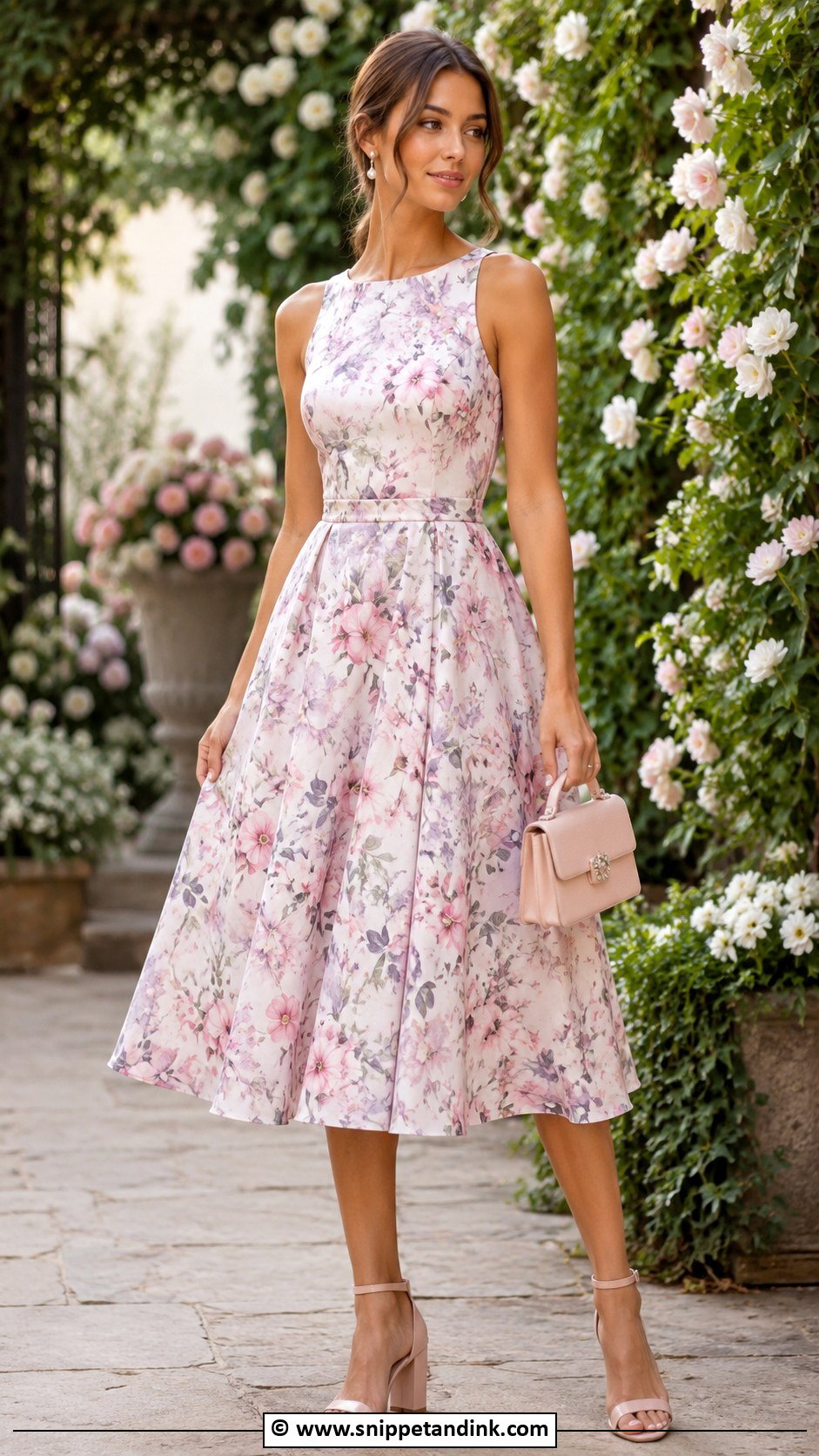
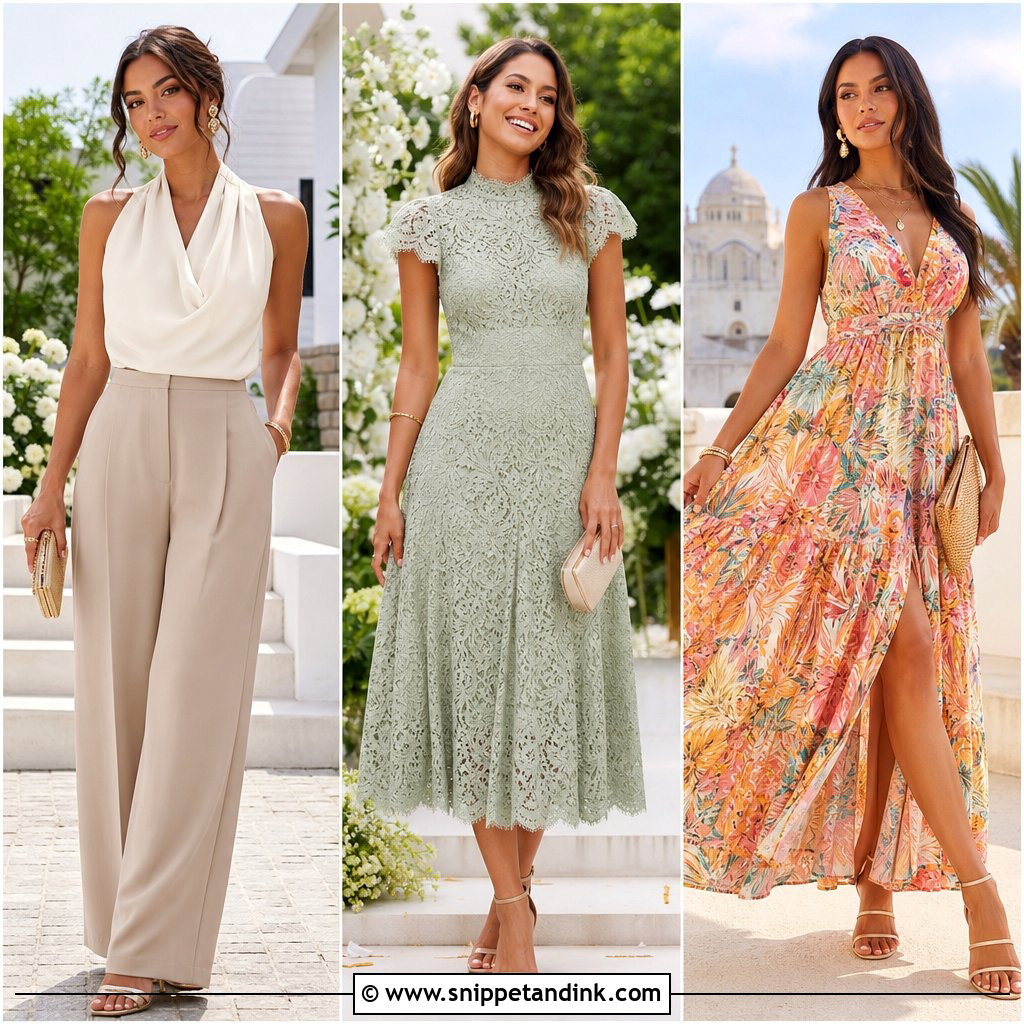
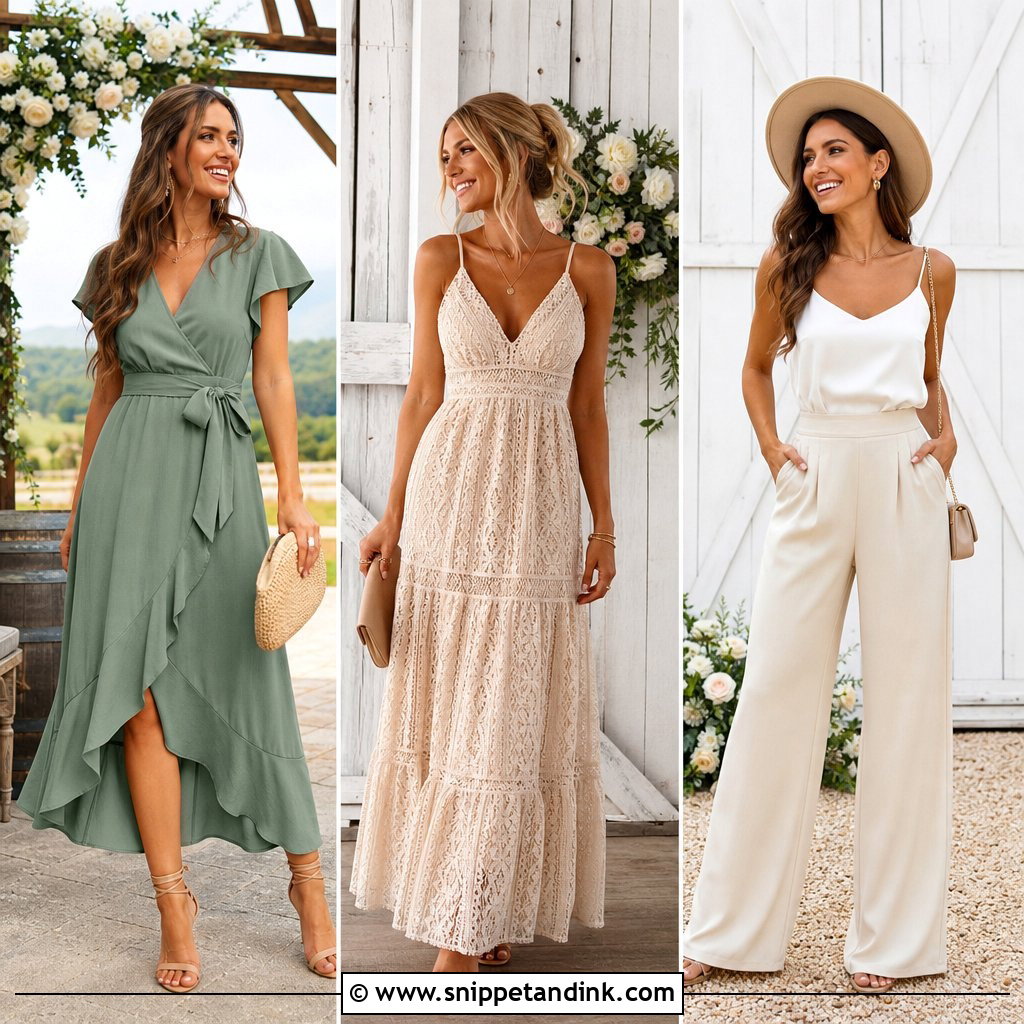
Garden party reads romantic and colorful with an outdoor practicality. Floral midis, pastel jumpsuits and flowing skirts all suit. Garden venues mean grass, gravel paths and outdoor seating, so silhouettes that move and fabrics that breathe matter. A floral A-line midi with block heels, pearl earrings and a small pastel bag is classic. Stilettos are the one thing I’d steer you away from; I’ve watched many guests spend a cocktail hour sinking into a lawn. Wedges, block heels or dressy flats instead.
12. Rustic Wedding Dress Code
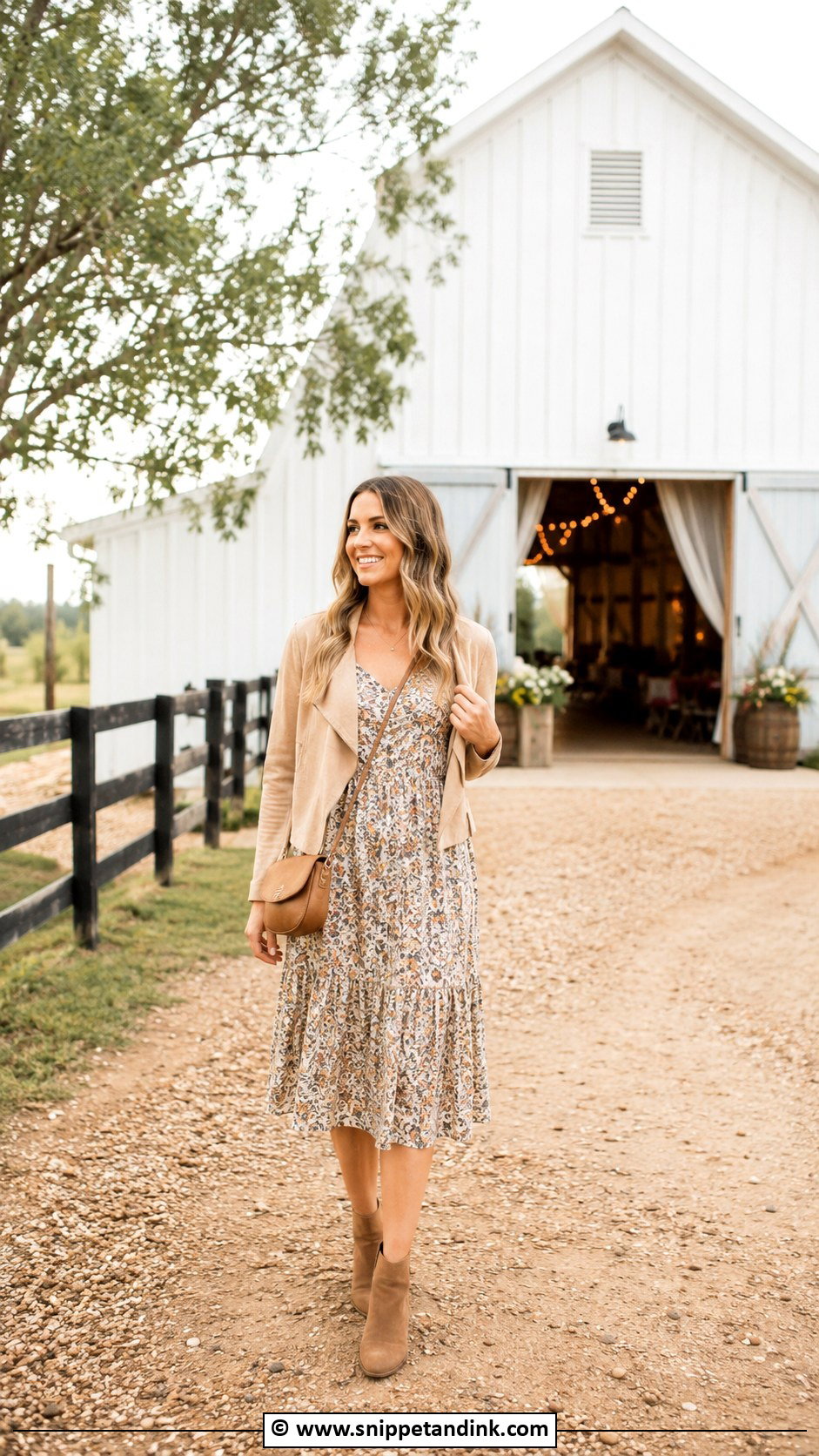
Rustic means barns, ranches, farms and countryside venues, and that means gravel, grass and sometimes uneven floorboards. A floral midi dress with ankle boots or block-heel sandals is the easy answer. A linen jumpsuit, smocked dress or skirt and blouse with a light jacket also fits. Earth tones, muted florals, rust, olive, dusty blue and warm neutrals suit the setting. Barns can be warm in the day and cool at night, so layers help. A crossbody bag keeps your hands free.
13. Boho Wedding Dress Code
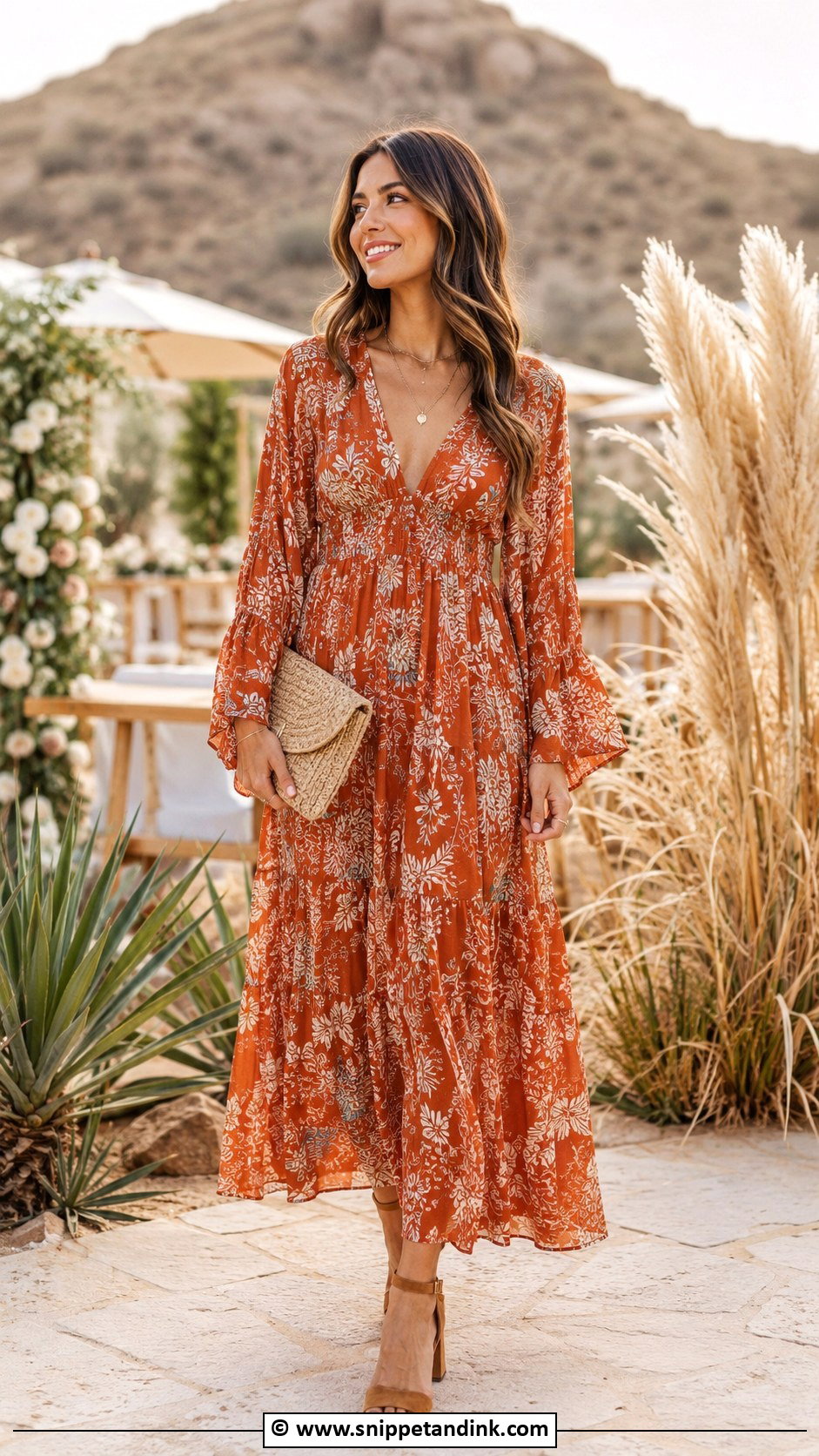
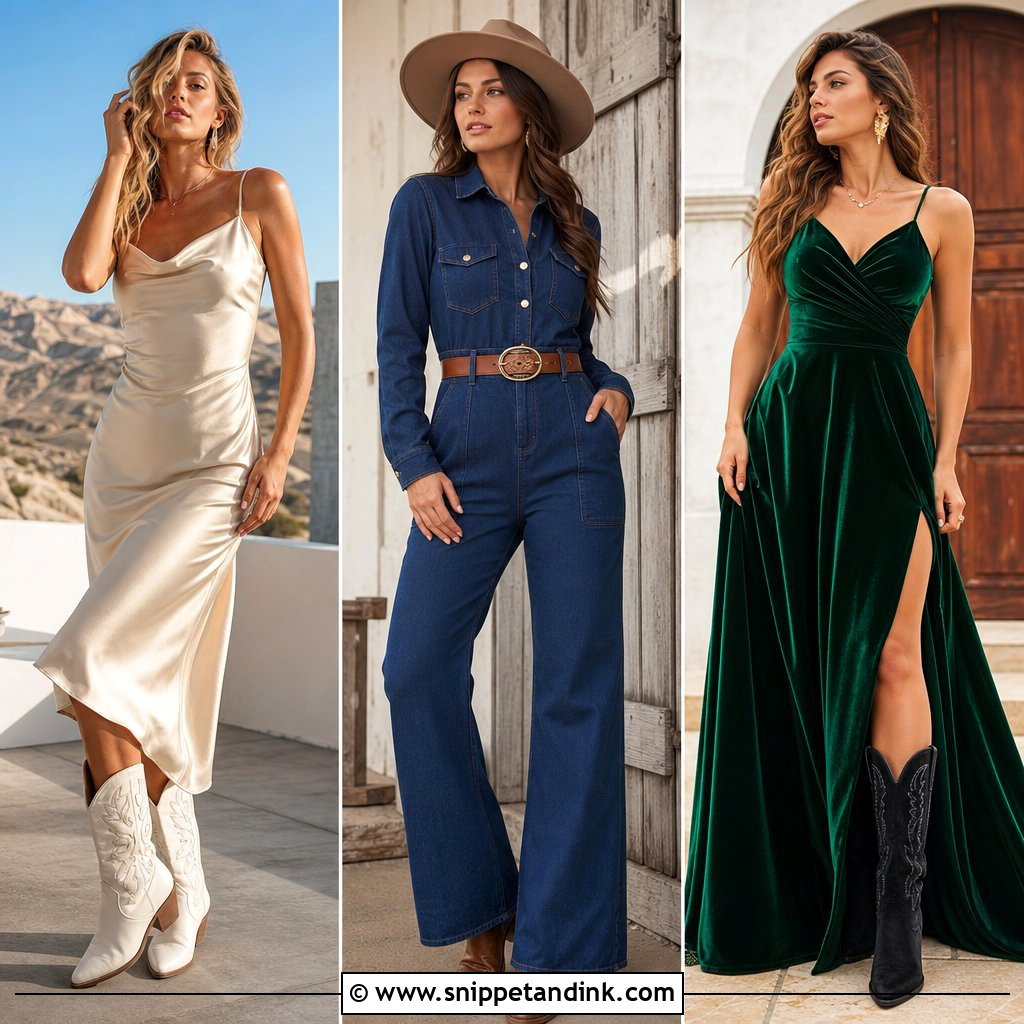
Boho is relaxed romance and natural texture. A maxi with flowing sleeves, embroidery, a soft print or tiered layers suits it. Terracotta, sage, dusty rose and warm taupe are good shades. White and ivory boho dresses look bridal, so choose color or print. Block heels, dressy sandals or ankle boots depending on the ground. Woven accessories and layered jewelry finish it, but stop before it turns into a festival costume. Outdoor venues, desert settings and relaxed destinations suit it.
14. Coastal Chic Wedding Dress Code
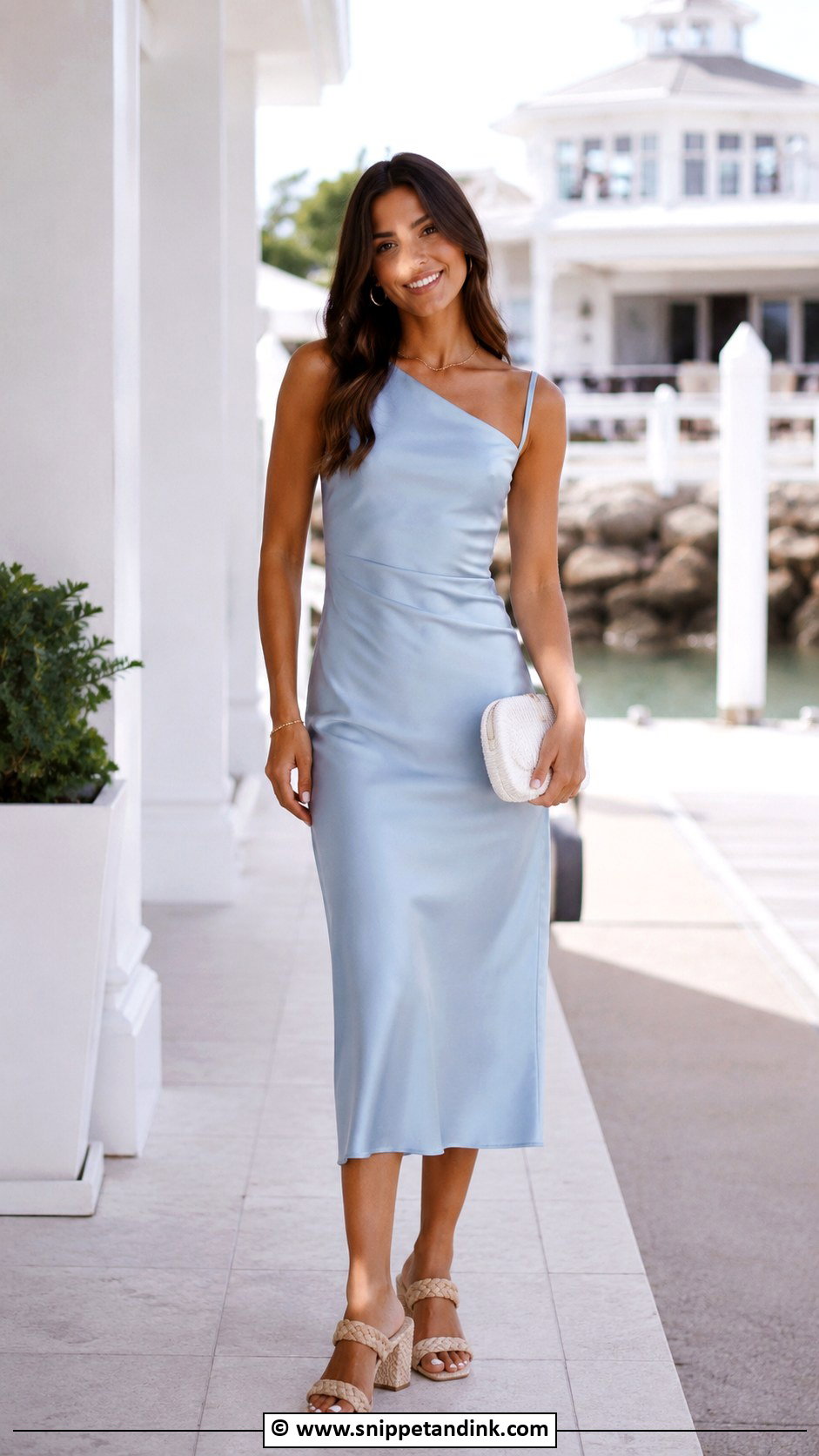
Coastal chic sits between beach casual and formal evening. Linen-blend midis, silky slips, tailored wide-leg pants and breezy matching sets. Soft blues, seafoam, sand, coral, navy and crisp stripes. A pale blue satin midi with woven block heels, a white clutch and gold jewelry is clean and modern. Keep accessories polished rather than beachy: no oversized straw bags or rubber sandals. Yacht clubs and waterfront restaurants often have their own dress rules, so check the venue too.
15. Tropical Wedding Dress Code
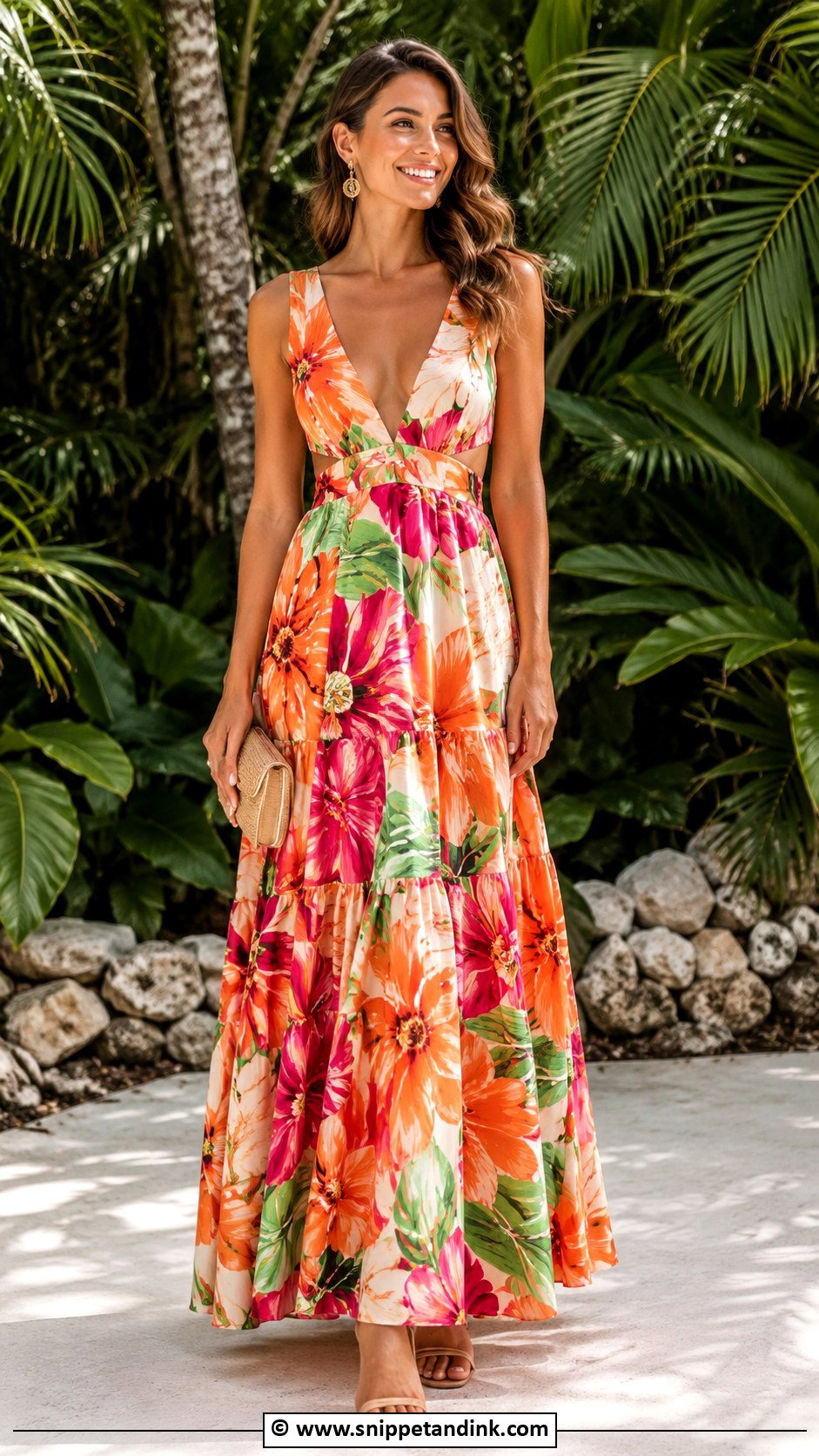
Tropical invites color, print and movement, but the cut still needs to be refined. A bold floral maxi, a bright midi or a sleek jumpsuit in a vivid shade. Choose fabrics that handle heat, such as chiffon, silk blends, linen blends and breathable crepe. Palm prints, turquoise, coral, fuchsia and leafy greens fit. Dressy sandals, a compact clutch and simple jewelry. Humidity is the real challenge: synthetic fabrics trap heat and show sweat, so check the label before you pack.
16. Spring Wedding Dress Code
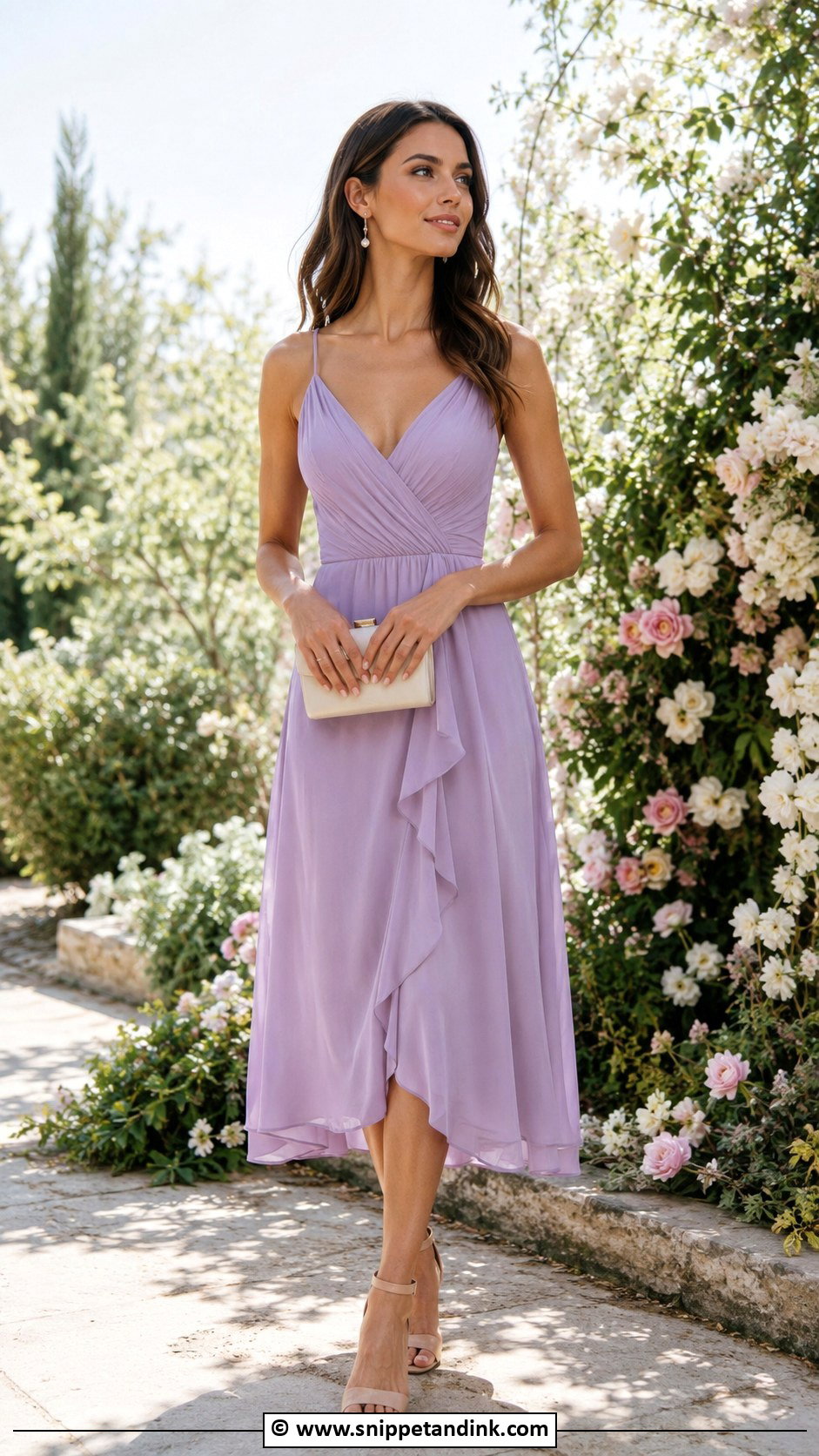
Spring calls for florals, pastels and light jewel tones in airy fabrics. A pastel midi with block heels and a small clutch suits most spring venues. Spring weather is unpredictable, and I’ve seen more than one garden ceremony move indoors at short notice, so bring a cropped blazer, wrap or light trench in a coordinating color. Soft pink, lavender, butter yellow, sage, powder blue and peach are common shades. Leave heavy winter fabrics at home unless it’s formal or genuinely cold.
17. Summer Wedding Dress Code
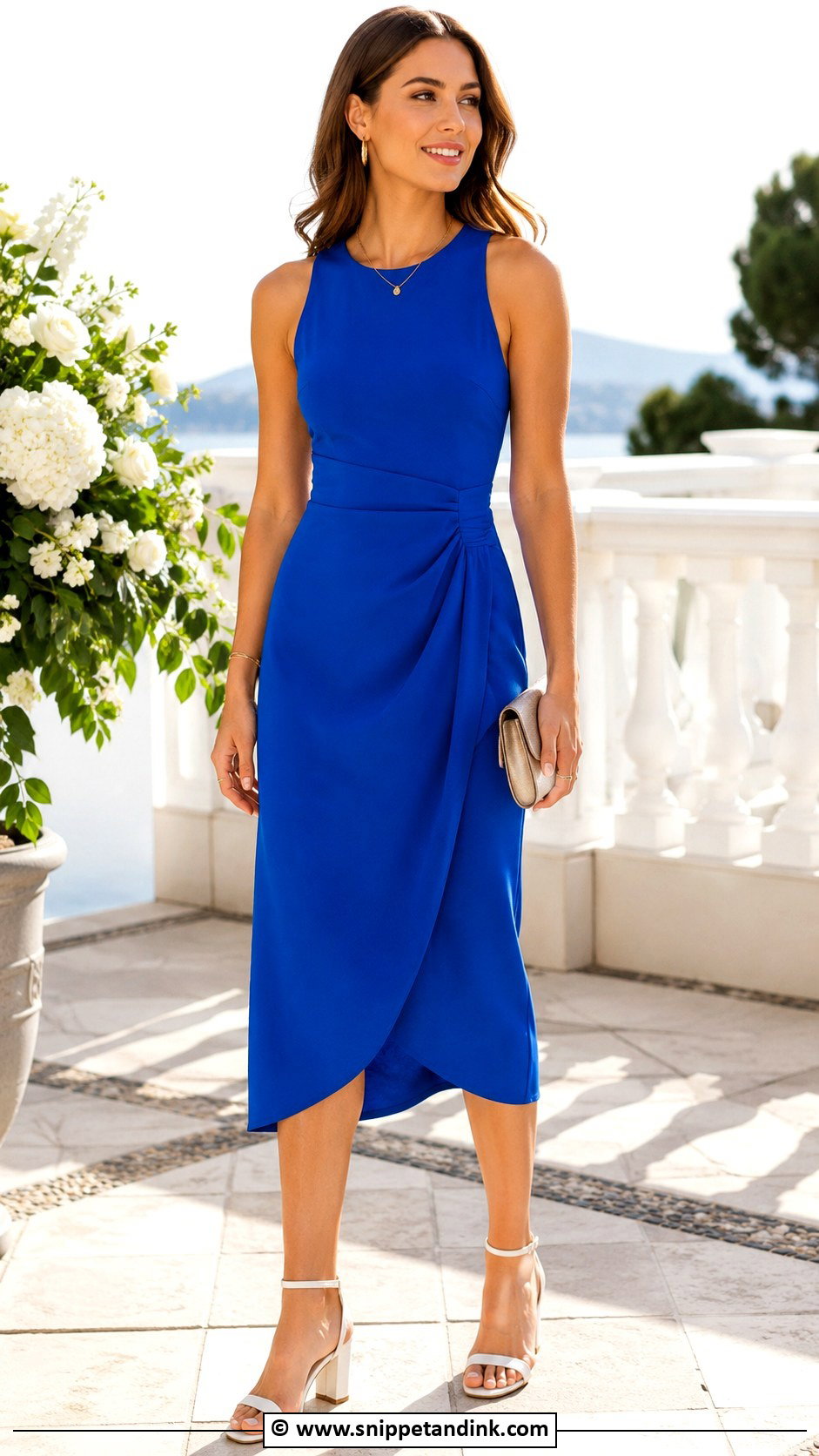
Summer is about staying cool while looking polished. A sleeveless midi, flowing maxi or tailored jumpsuit in chiffon, linen blends, silk blends or light crepe. Coral, cobalt, lavender, green, pink and floral prints all suit. Block-heel sandals, a mini clutch, simple jewelry. Outdoor ceremonies in summer often have little shade, so a light wrap protects your shoulders. Skip velvet and thick polyester. You’ll be sitting, walking and dancing for hours, so test the outfit in heat first.
18. Fall Wedding Dress Code
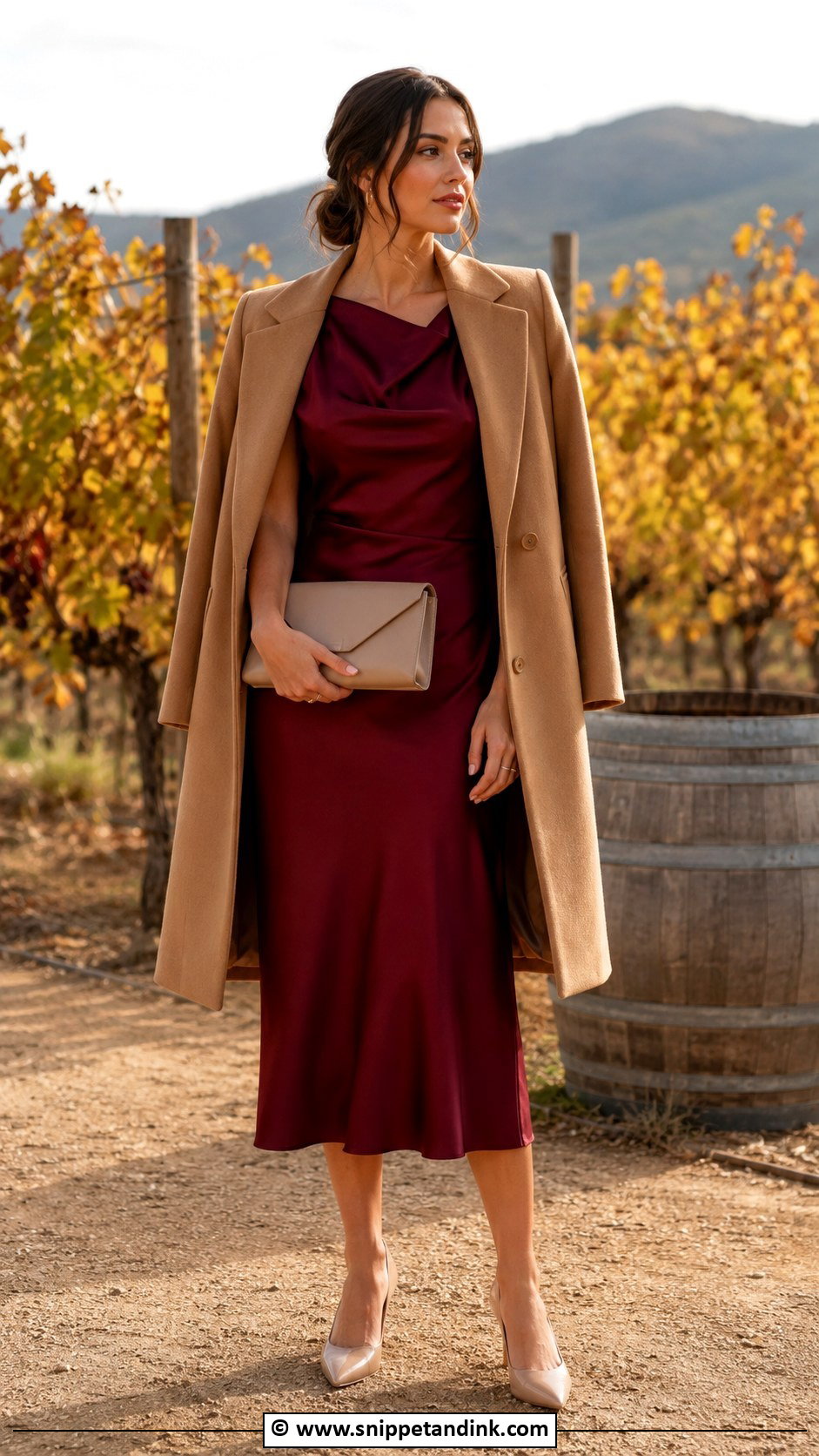
Fall leans toward rich colors and polished layers. A satin midi in burgundy, olive, chocolate, navy or copper looks seasonal. Closed-toe heels, a structured clutch and a tailored coat or blazer for the evening chill. Velvet, crepe, satin, jacquard and heavier chiffon all suit; so does a long-sleeve floral dress in autumn tones. For outdoor ceremonies, practical heels or dressy boots. Vineyards, barns, hotels, mountain venues and candlelit receptions are the usual fall settings.
19. Winter Wedding Dress Code
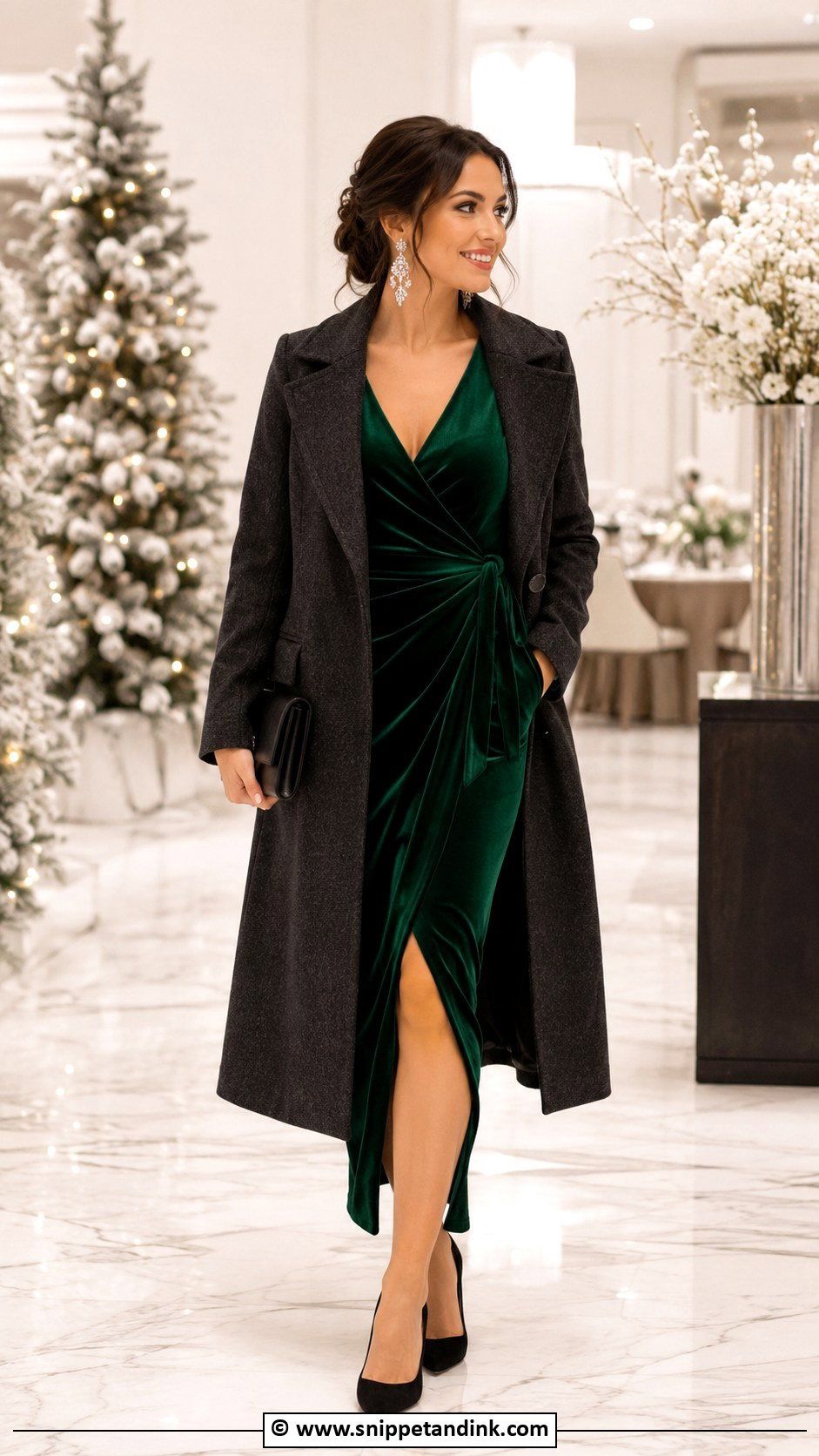
Winter is where texture and shine work best. Velvet gowns, satin midis, long-sleeve jumpsuits and tailored dress suits all suit. Emerald, navy, plum, burgundy, charcoal and black. Closed-toe heels, a dressy coat and a clutch formal enough for the venue. A velvet wrap dress with pointed heels and crystal earrings is simple and polished. If the ceremony and reception are at different places, your coat will be in photos between them, so choose one that suits the outfit rather than your everyday puffer.
20. Daytime Wedding Dress Code
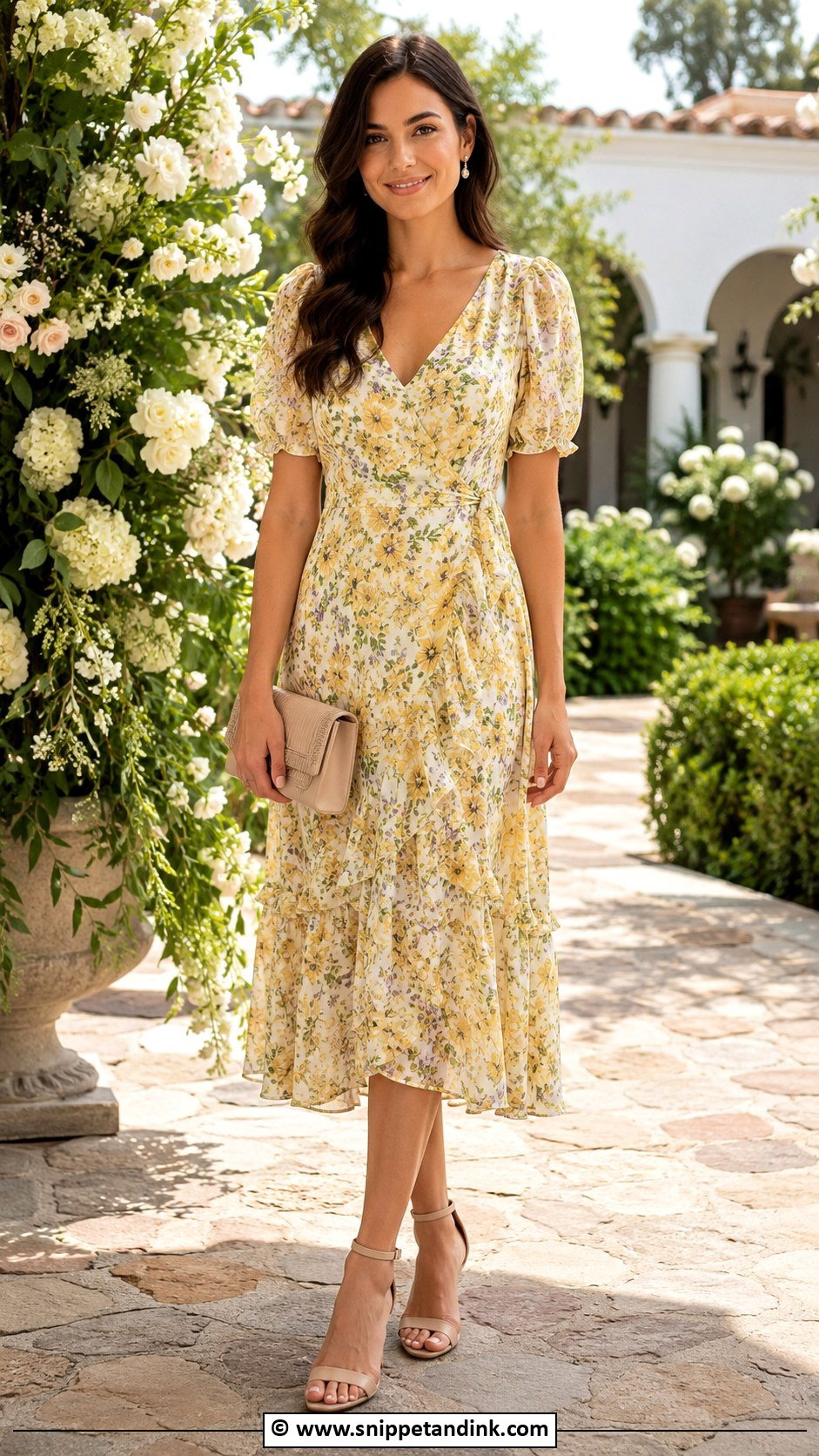
Daytime dressing is lighter than evening but still polished. A floral midi, pastel wrap dress, tailored jumpsuit or skirt and blouse. Cheerful colors, soft prints, breathable fabrics. Daylight makes heavy sparkle look intense, so keep embellishment subtle. A lavender midi with nude block heels, a small bag and delicate earrings suits a morning or afternoon ceremony. Skip a full evening gown unless the invitation says formal. Brunch receptions, gardens and courthouse ceremonies are typical.
21. Evening Wedding Dress Code
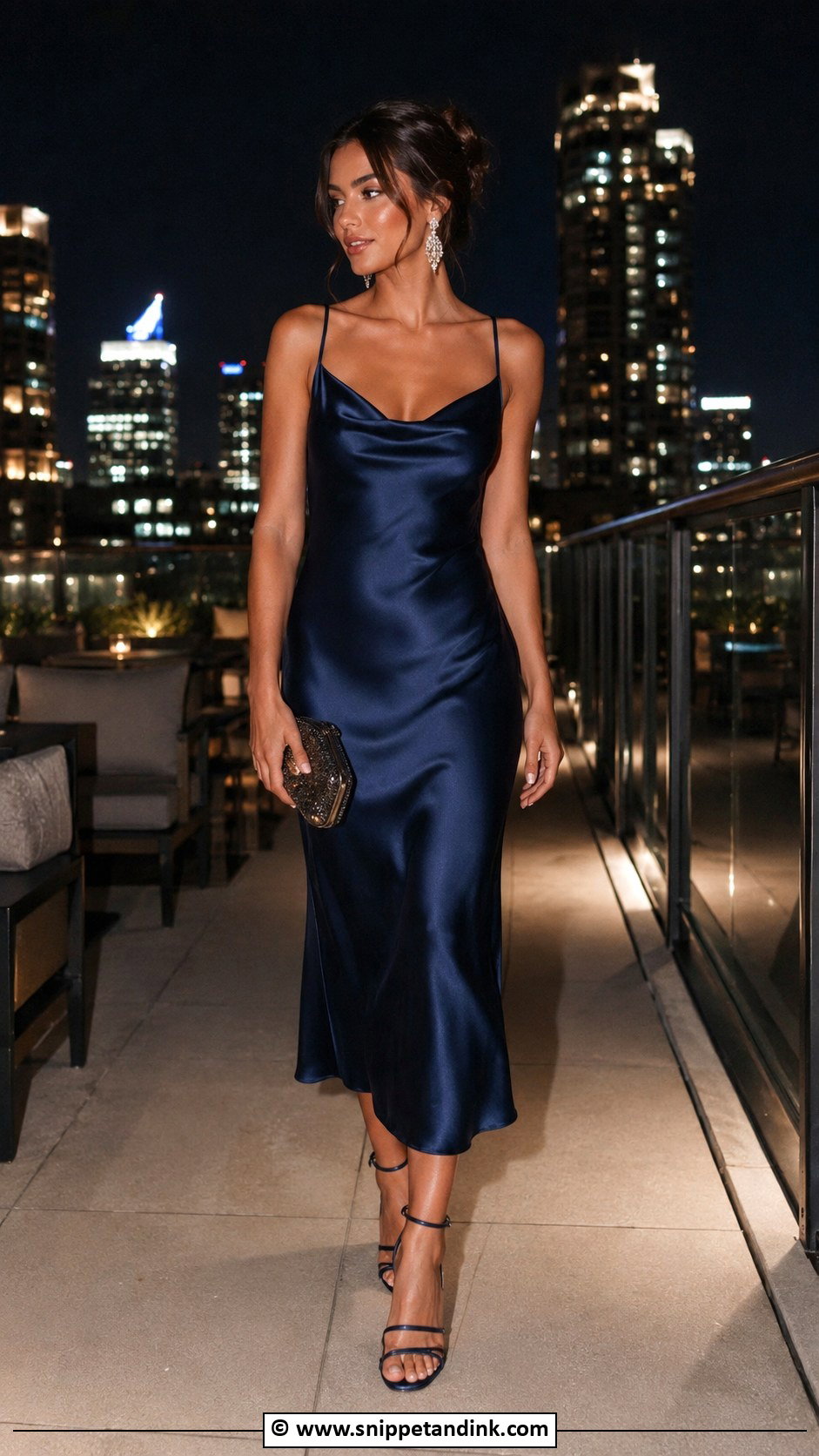
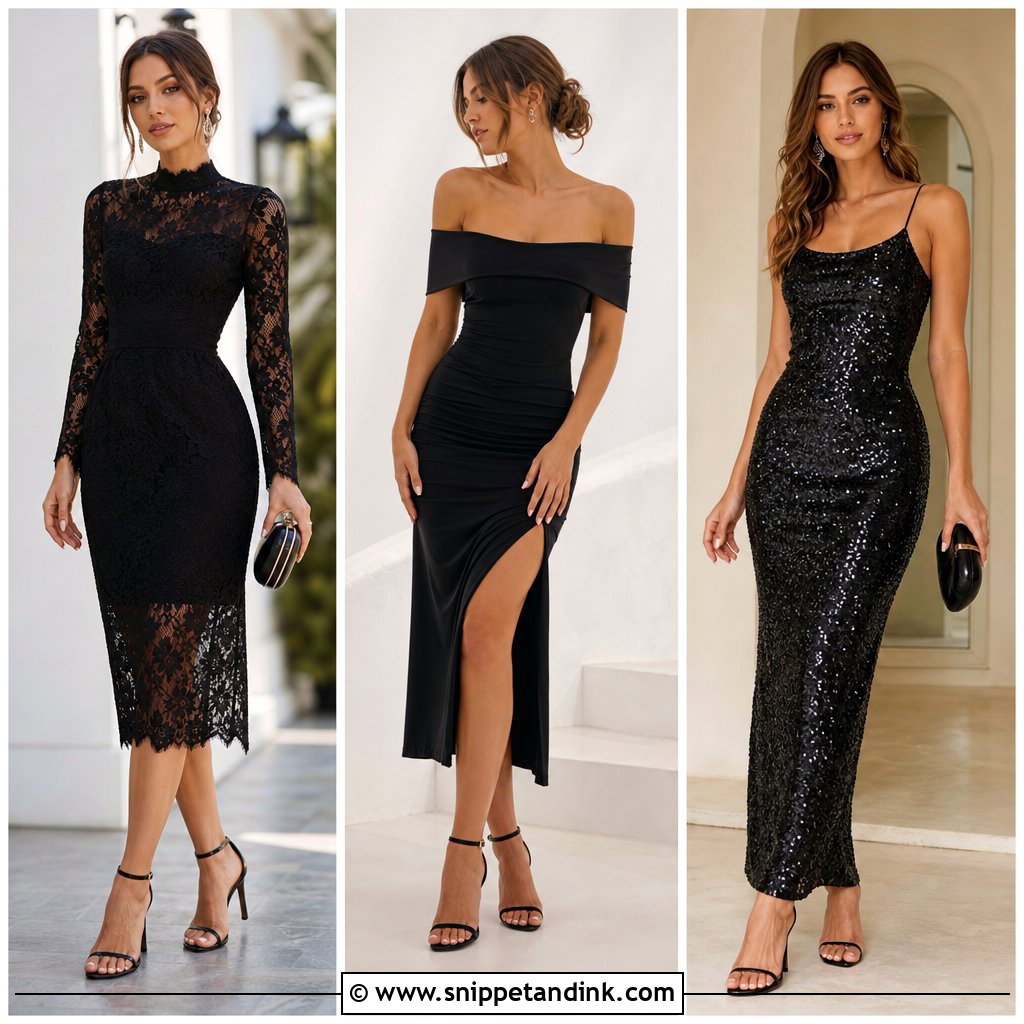
Evening can be richer and sleeker. A satin midi, formal jumpsuit, column gown or lace dress, depending on the stated formality. Darker tones, jewel colors, metallic accessories and black are all strong. A navy satin slip with strappy heels, a compact clutch and statement earrings is polished without going overboard. Evening receptions often run late, and venues get cooler after sunset, so carry a light layer. Leave casual daytime prints for another occasion.
22. City Hall Wedding Dress Code
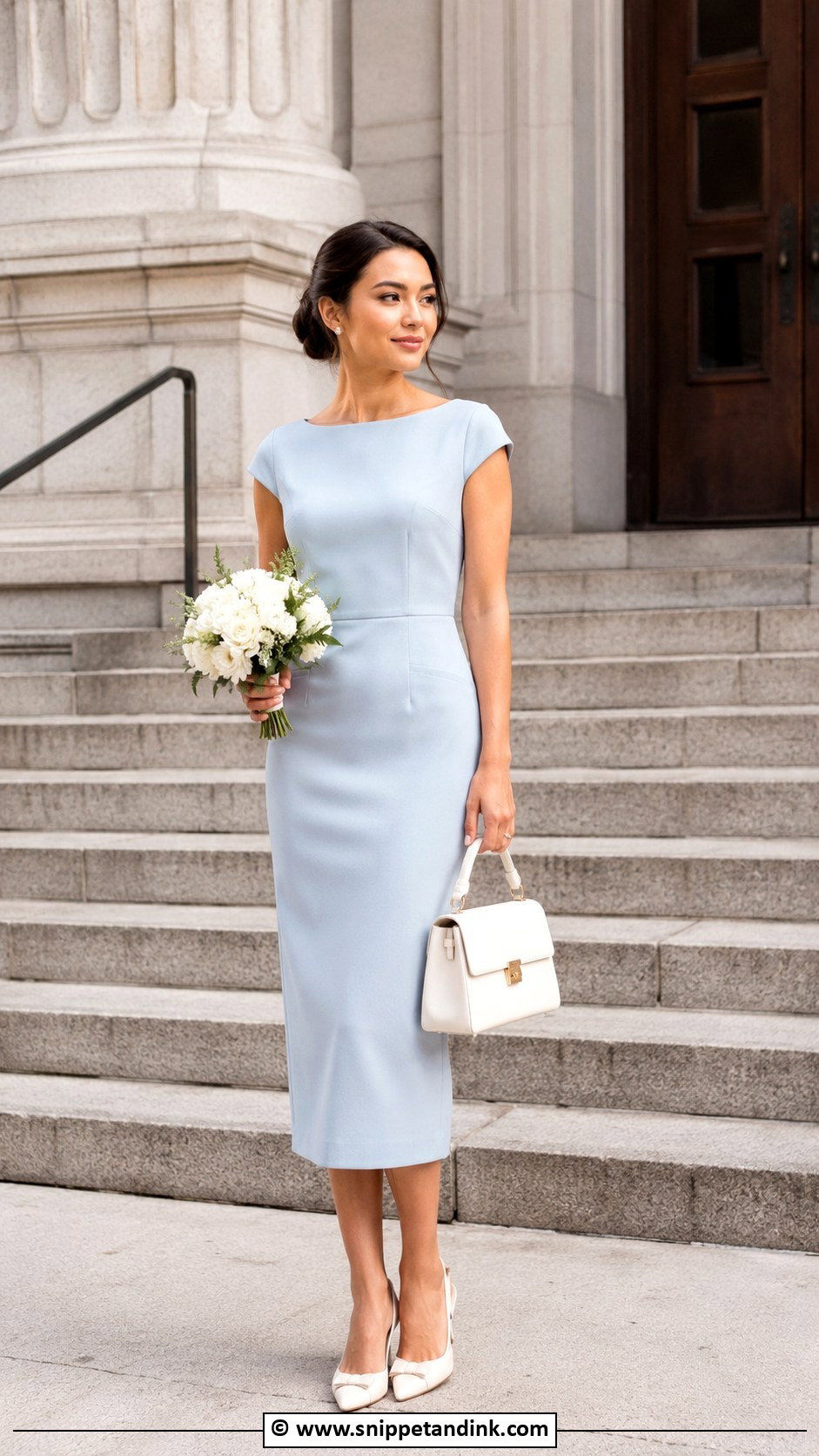
City hall weddings usually involve walking, outdoor photos on the steps and a small lunch afterward, so comfort matters. A tailored midi, sleek jumpsuit or blazer-and-trouser set looks right. A soft blue sheath with low heels, a structured bag and pearl earrings is practical. A pastel pantsuit with a silky camisole and pointed flats also works. Choose fabric that doesn’t wrinkle easily; you may be sitting on a hard bench waiting for your slot.
23. Vineyard Wedding Dress Code
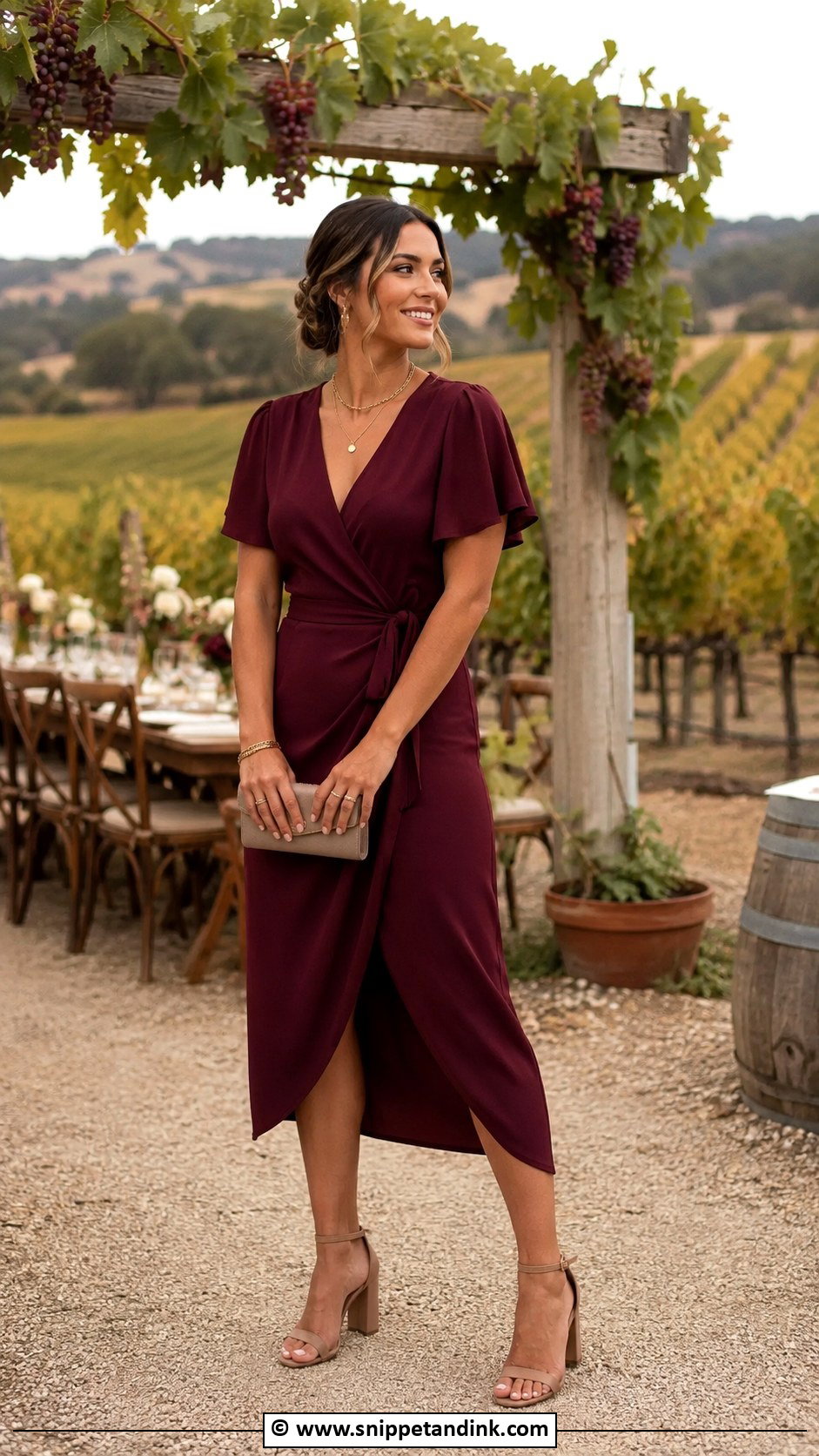
Vineyards mean lawns, gravel paths and slopes between the ceremony spot and the barrel room. A midi is the easiest length because it doesn’t drag. Floral prints, wine tones, olive, blush, dusty blue and warm neutrals suit. Block heels, wedges or dressy flats. A wrap dress with soft sleeves, gold jewelry and a small clutch is relaxed and right for the venue. Add a shawl or cropped jacket in cooler months. No stilettos, and no gown unless the invitation says black tie.
24. Mountain Wedding Dress Code
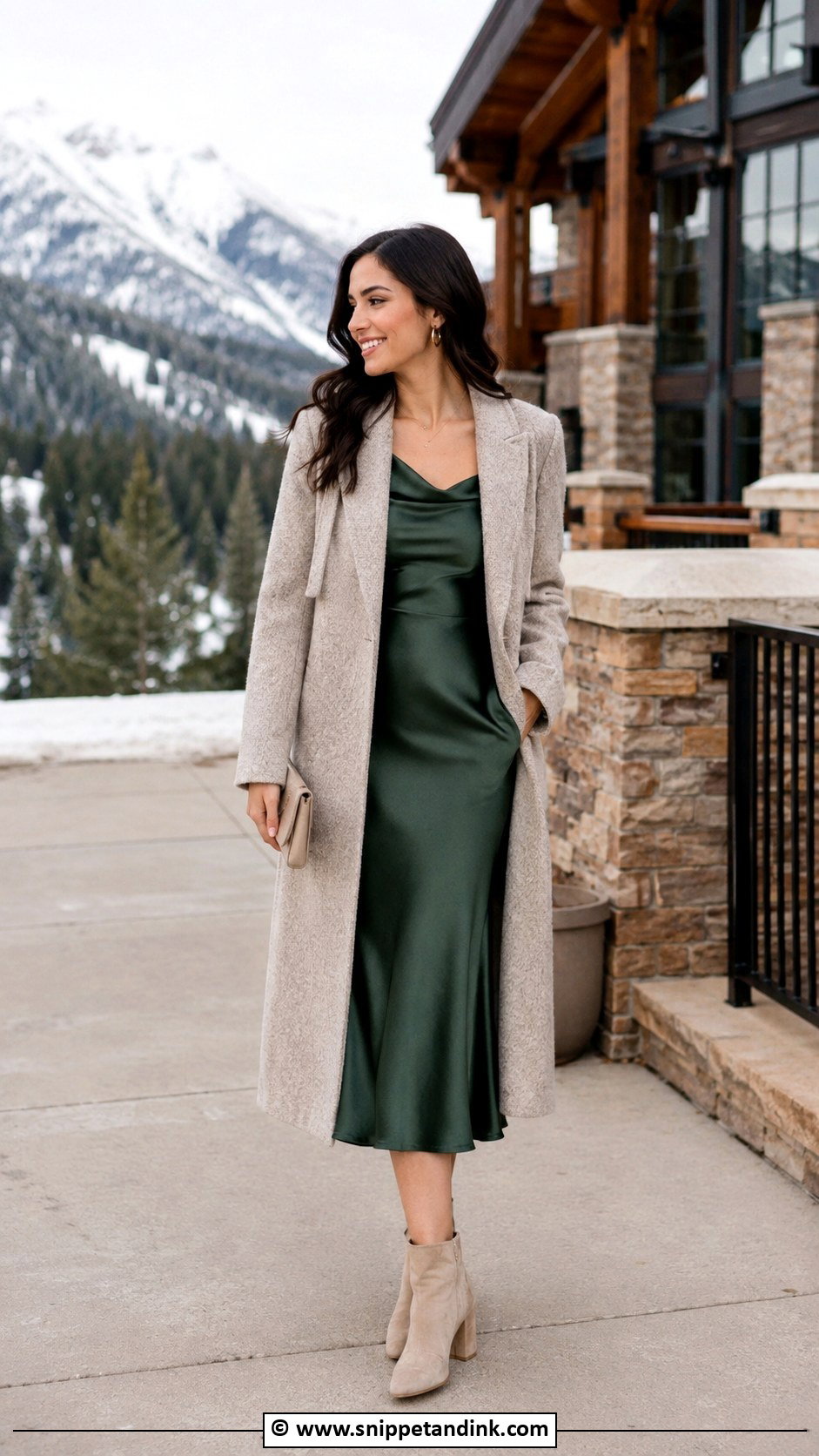
Mountain weather changes fast, which is the first thing I mention to guests. A long-sleeve midi, velvet wrap dress, tailored jumpsuit or dressy skirt outfit suits it, in forest green, slate blue, burgundy, rust, charcoal or plum. Block heels, dressy boots or sturdy low heels for uneven ground. A long-sleeve satin midi with heeled ankle boots, a wool-blend coat and simple jewelry is ideal. Bring a wrap even in summer; evenings at altitude get cold quickly.
25. Colorful Wedding Dress Code
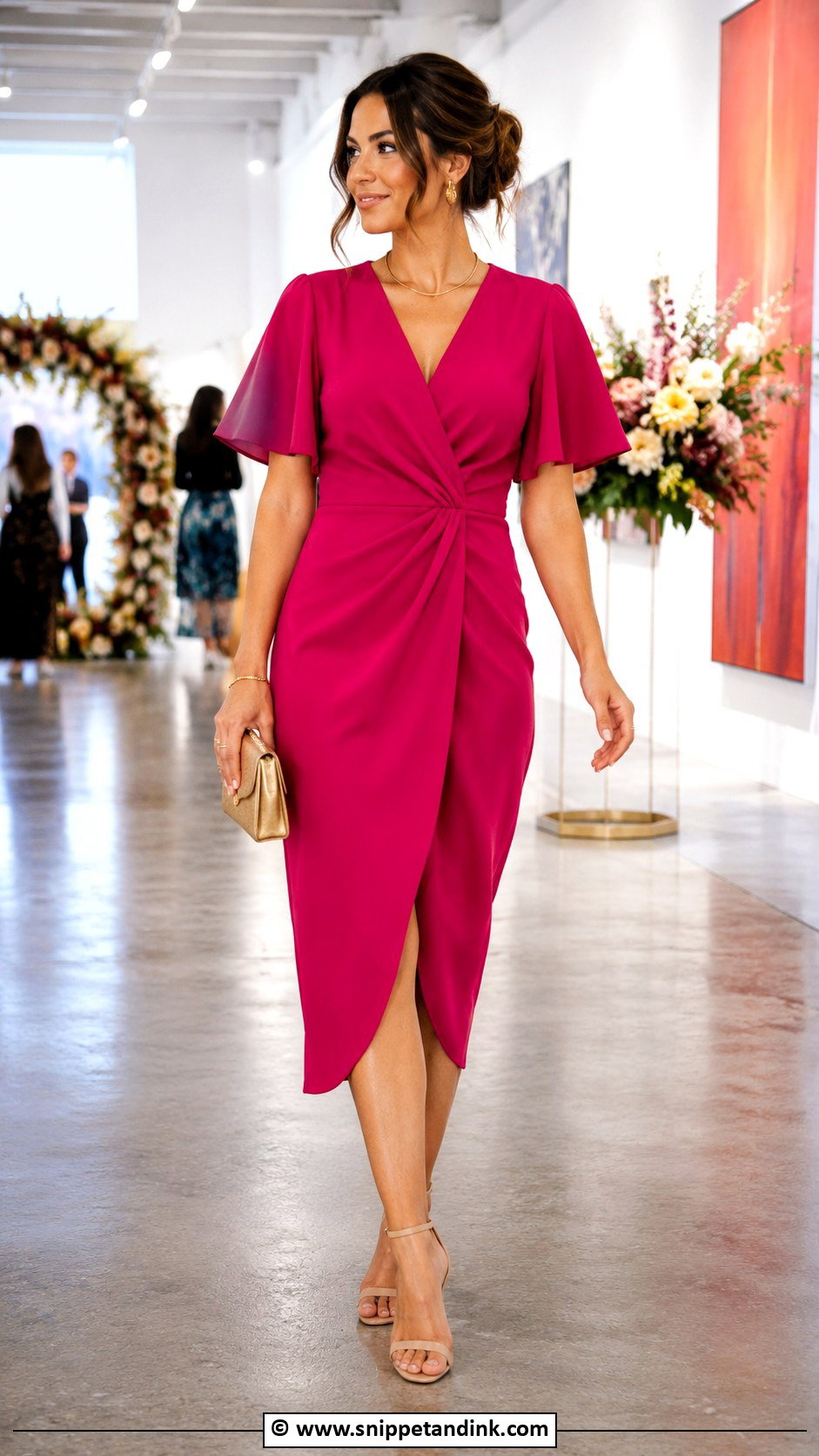
A colorful dress code asks guests to bring the joy through their clothes. Put the color in a polished shape: a fuchsia midi, cobalt jumpsuit, emerald wrap dress or orange satin skirt set. Neutral heels, a simple clutch and clean jewelry help bold colors look intentional. If the couple shares a palette, stay close to it. Avoid white and pale ivory, and check the wedding party’s colors so you don’t match the bridesmaids by accident.
The Same Codes for Suits
Guests in suits ask me for the translation just as often, so here it is in short form.
- White tie: tailcoat, white bow tie, white waistcoat and formal shoes.
- Black tie: tuxedo with a black bow tie.
- Black tie optional: a tuxedo, or a dark suit with a tie.
- Formal and cocktail: a dark or mid-tone suit with a tie.
- Semi formal and dressy casual: a suit or blazer and trousers; a tie is often optional in daytime.
- Beach and garden codes: a light linen or cotton suit, loafers rather than heavy dress shoes.
Wording the Code If You’re the Couple
Use a standard term on the invitation and add one plain sentence on your website explaining what it means at your venue. “Garden party: the ceremony is on grass, so skip stilettos” helps far more than the label alone. If you want a palette, give two or three colors rather than a long list, and say clearly if anything is off-limits.
Put the code on the invitation itself, not only online, since older relatives may never open the website. And mention practical conditions early: an outdoor ceremony in October, a long walk from parking, or a church that asks for covered shoulders. Guests can plan an outfit around almost anything if they know about it a few weeks ahead.
When in Doubt, Go One Step Dressier
A good dress code lets guests open their closets with confidence. It matches the venue, the season and the mood the couple wants. From black tie gowns to beach casual sundresses, the outfit should balance comfort, respect for the occasion and your own style. Shoes, fabric and ground matter as much as the dress, especially outdoors. And when you truly can’t tell, aim slightly more polished than you think. Nobody at a wedding remembers the guest who was a little overdressed.
You'll Like These Ideas:


Leave a Reply