
Short hair is the easiest bridal hair to get wrong in one particular way: it gets treated like a smaller version of an updo and ends up set and stiff. A bob or pixie wants to move. The upside is that everything I’d normally have to work around, the neckline, the back of the dress, your earrings, stays in plain view. Which of these looks suits you comes down to your cut, your texture and how much hold the day asks for. A pixie needs sculpted texture, a bob takes soft bends well, and a lob usually has just enough length to be pinned into a faux updo. Under each one I’ve noted what I check first in the chair.
Haircut Timing for a Bob or Pixie Bride
Long hair can go three months without a cut and nobody notices. Short hair can’t. Hair grows roughly half an inch a month, and on a pixie that’s enough to blur the outline at the nape and over the ears within a few weeks. So for short-haired brides, the date of the last haircut matters almost as much as the style itself. This is the schedule I give clients:
- Pixies and crops: last cut 7 to 10 days before, so the edges are crisp but no longer look freshly clipped.
- Bobs and lobs: 2 to 3 weeks before, which lets a blunt line settle and soften slightly.
- Fringes: a separate quick trim about a week out, cut dry and a touch longer than you think you want.
- Colour: done before the final cut, so any dryness at the ends gets trimmed away.
The one rule I hold firm on is no new shape in the last two months. If you’ve never worn a bixie, the wedding isn’t the time to find out how your cowlick behaves at that length. Book the trial after the cut that sets the shape you’ll actually wear, and show your stylist how it falls air-dried as well as styled.
1. Short Wavy Bob Bride
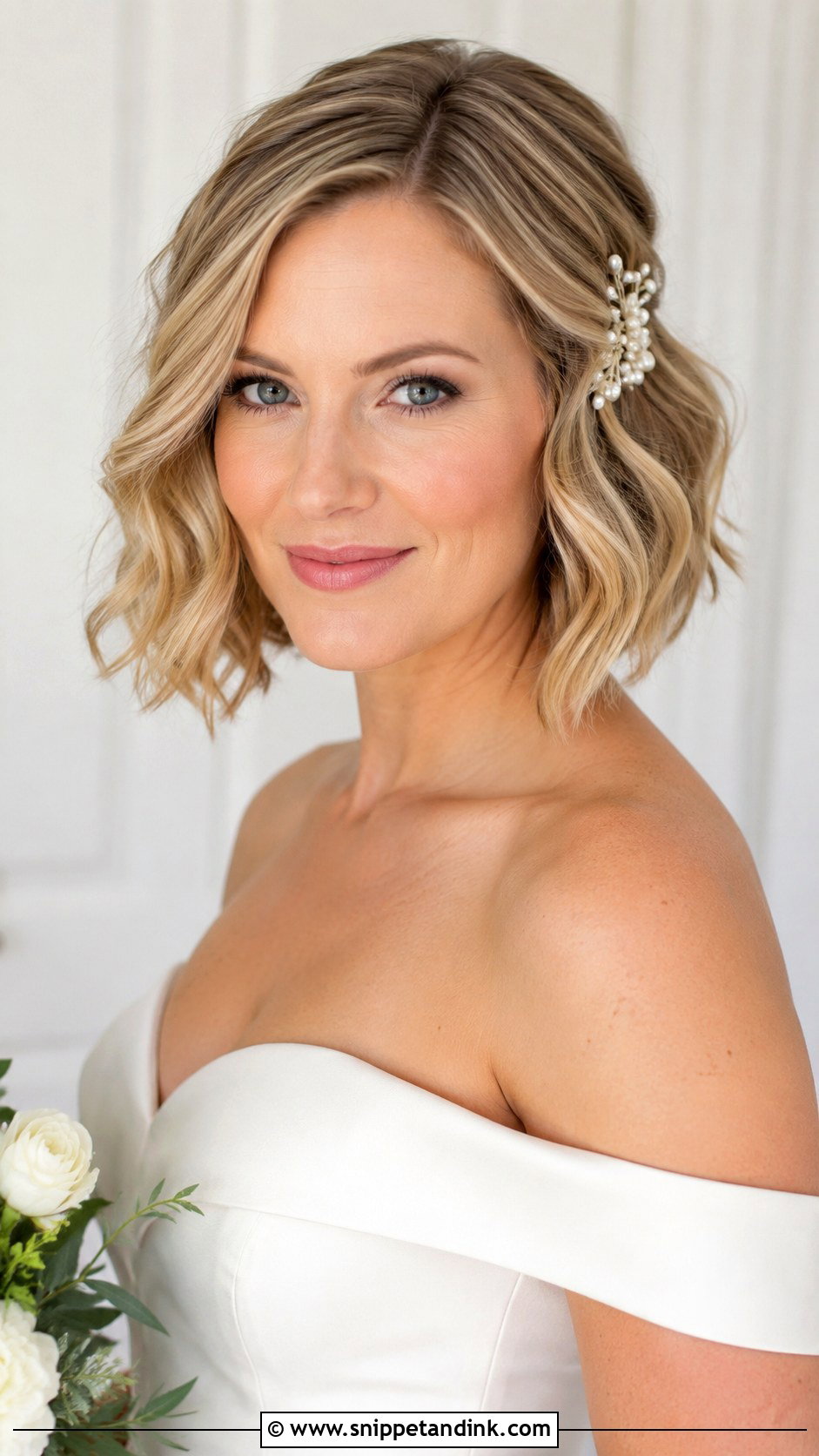
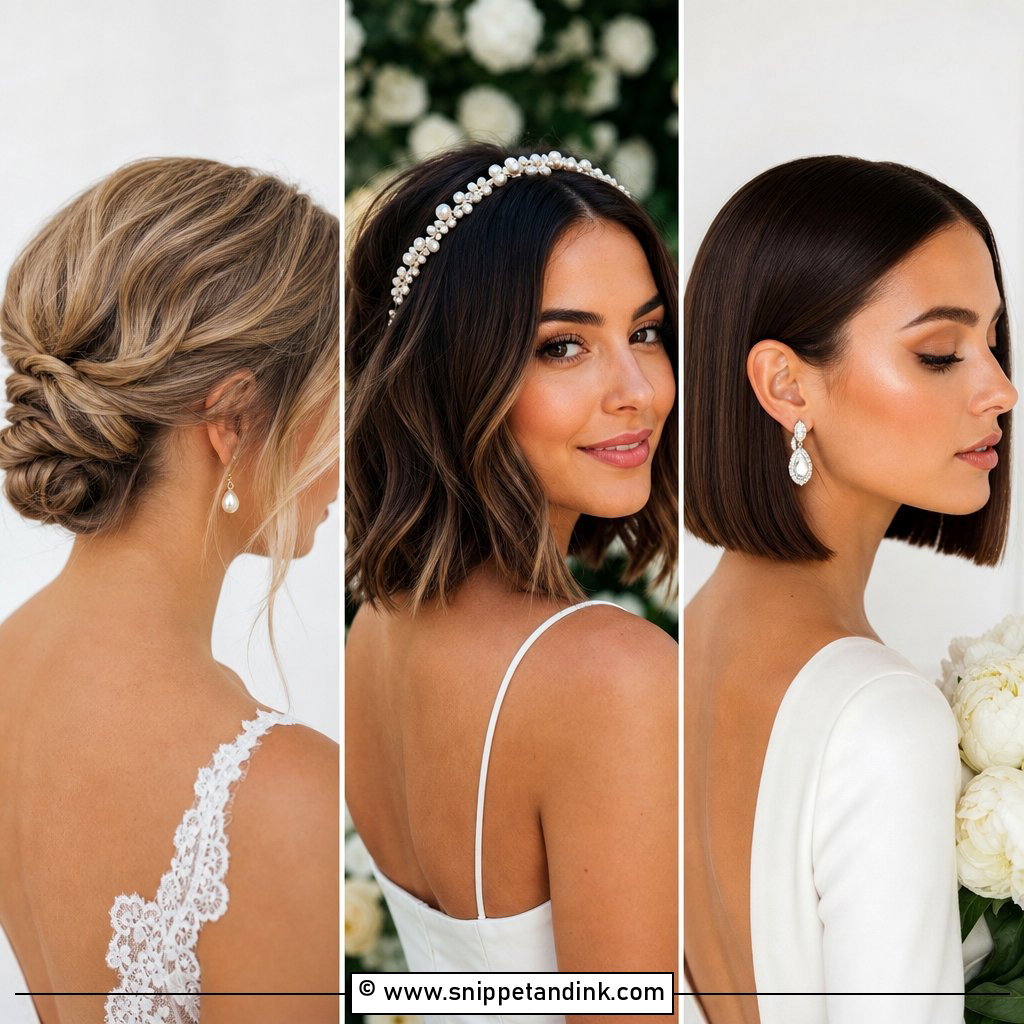
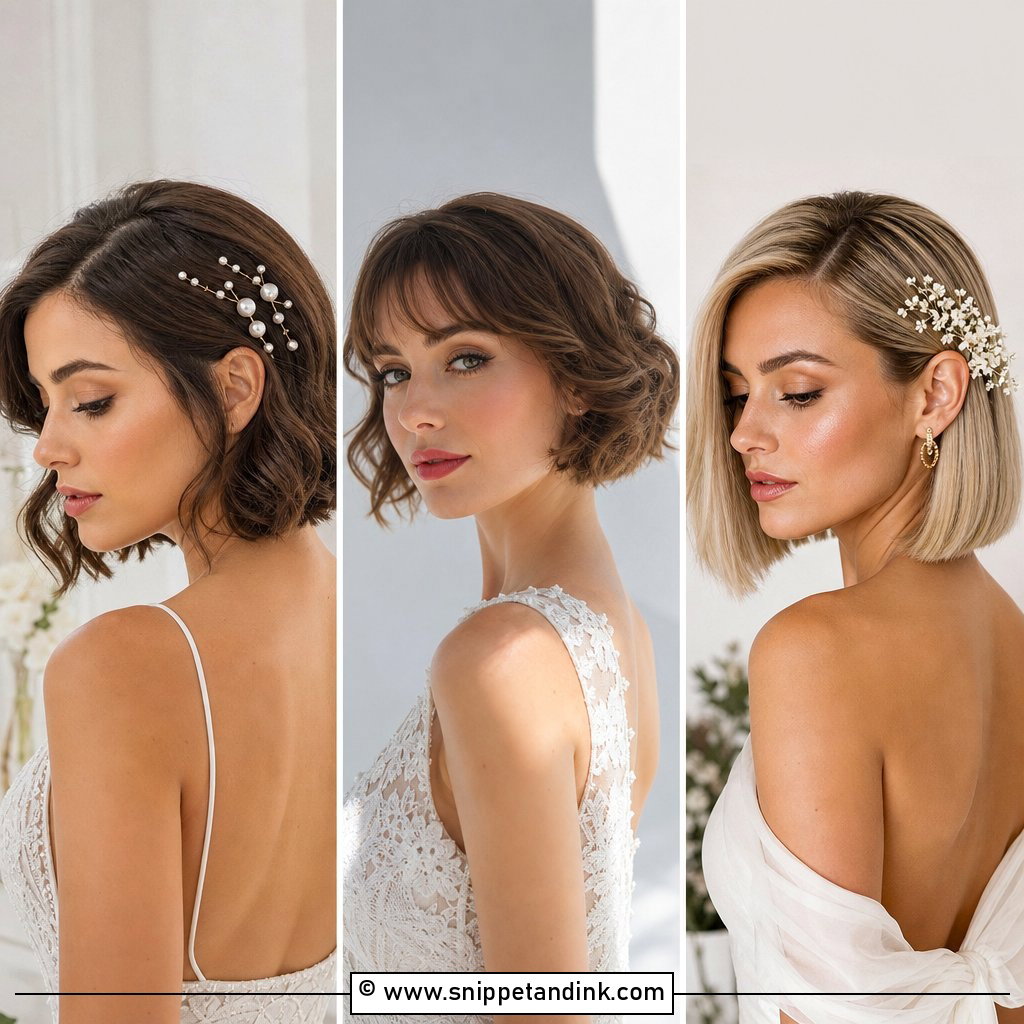
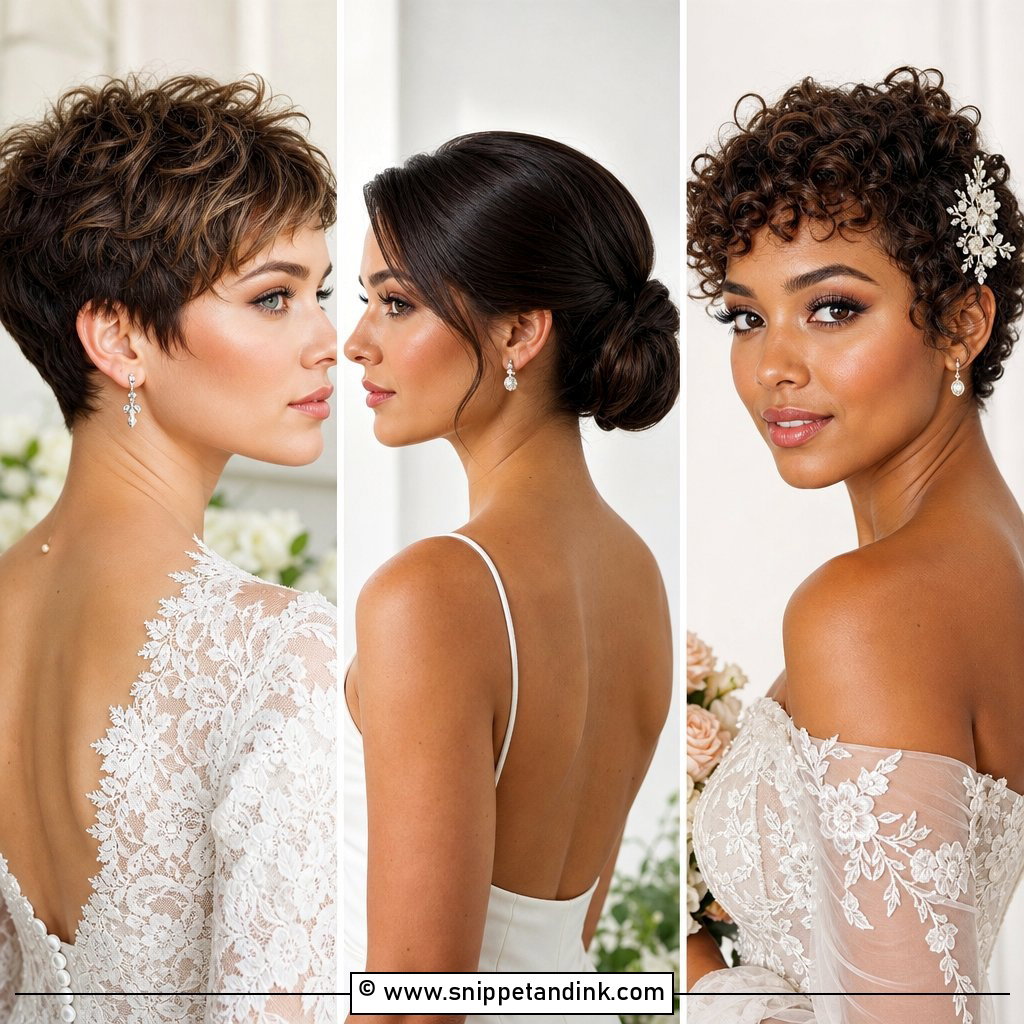
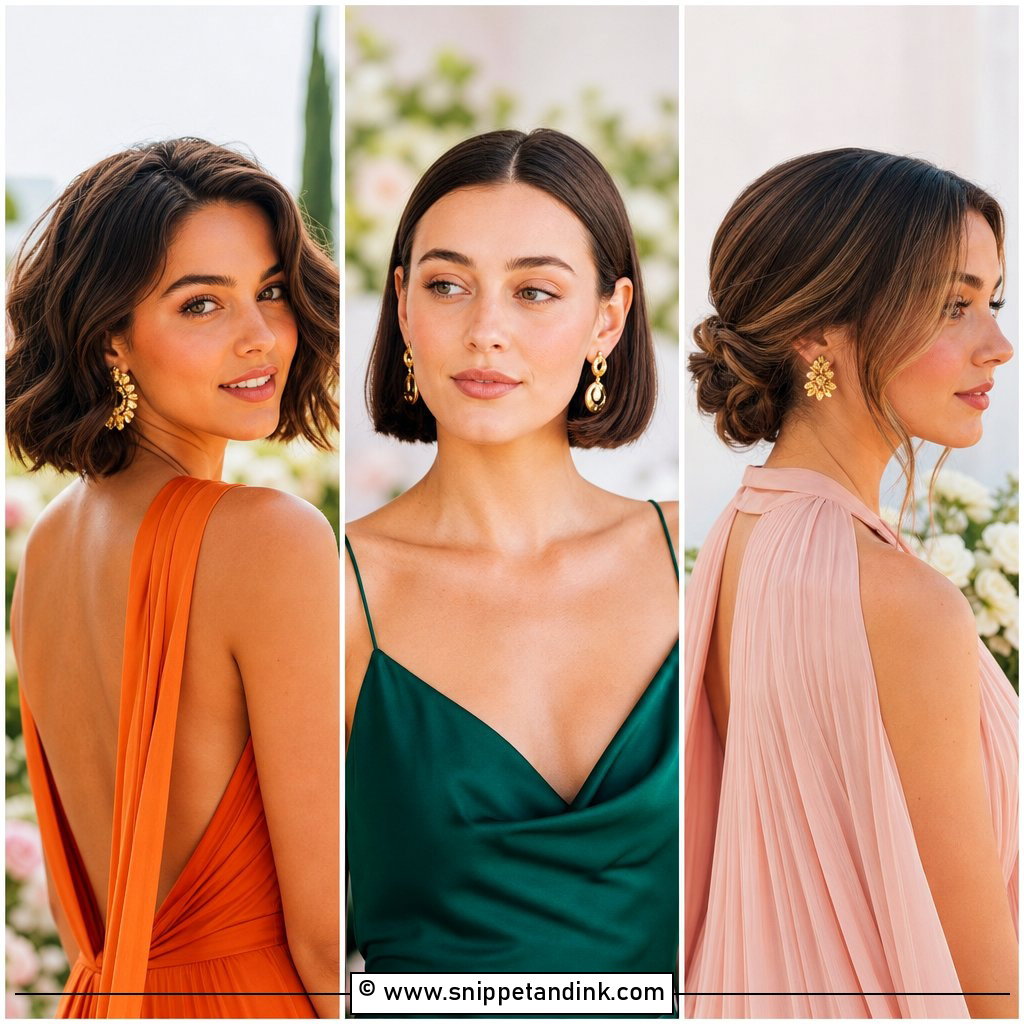
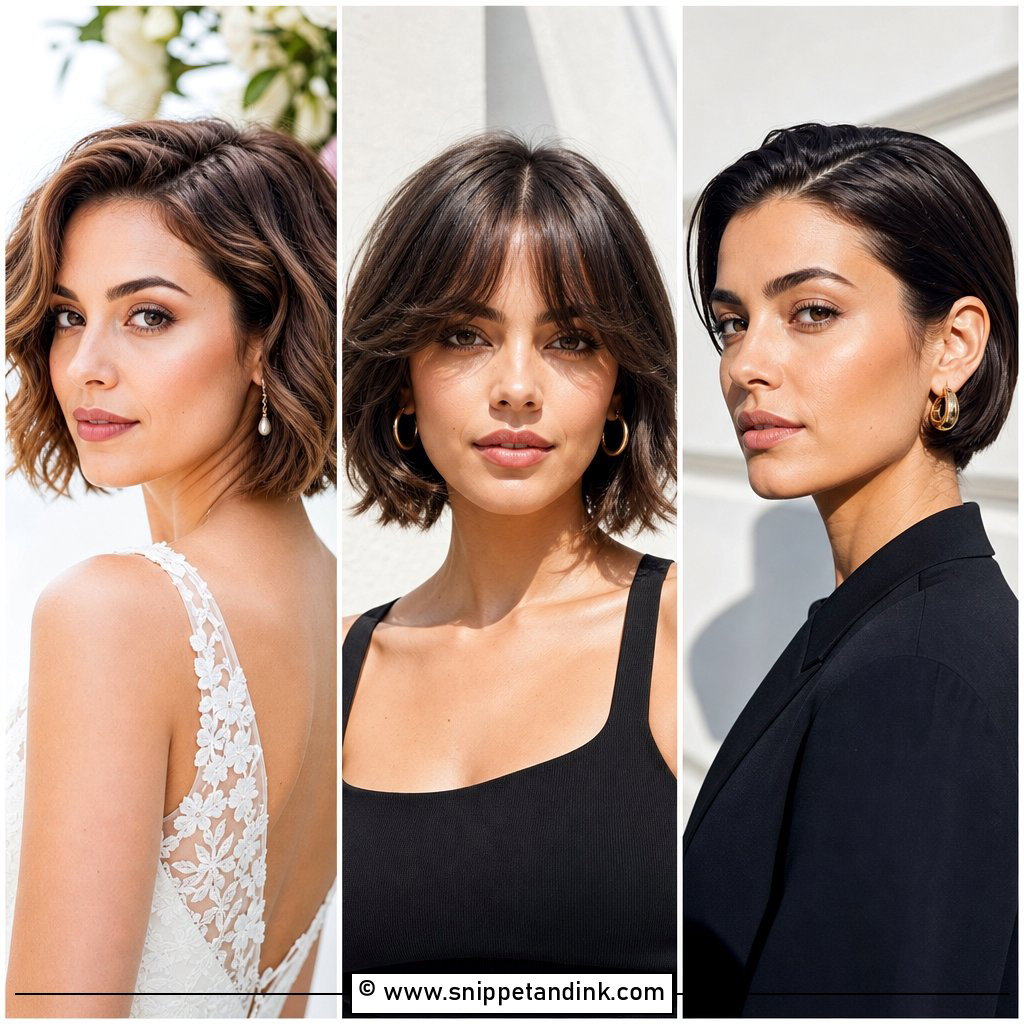
A short wavy bob keeps its outline while the waves give it movement, which is why I reach for it so often. The detail that makes or breaks it is the iron. On a chin-length bob I use a one-inch barrel and leave the last inch of each section out of the clamp, so the ends stay straight and the shape reads modern rather than poodle-like. It sits clear of off-the-shoulder and square necklines. A side part softens it; a center part keeps it graphic. If you plan on pearl pins or a sheer veil, tell me at the trial, because I set the waves around wherever they’ll go.
2. Short Pixie Cut Bride
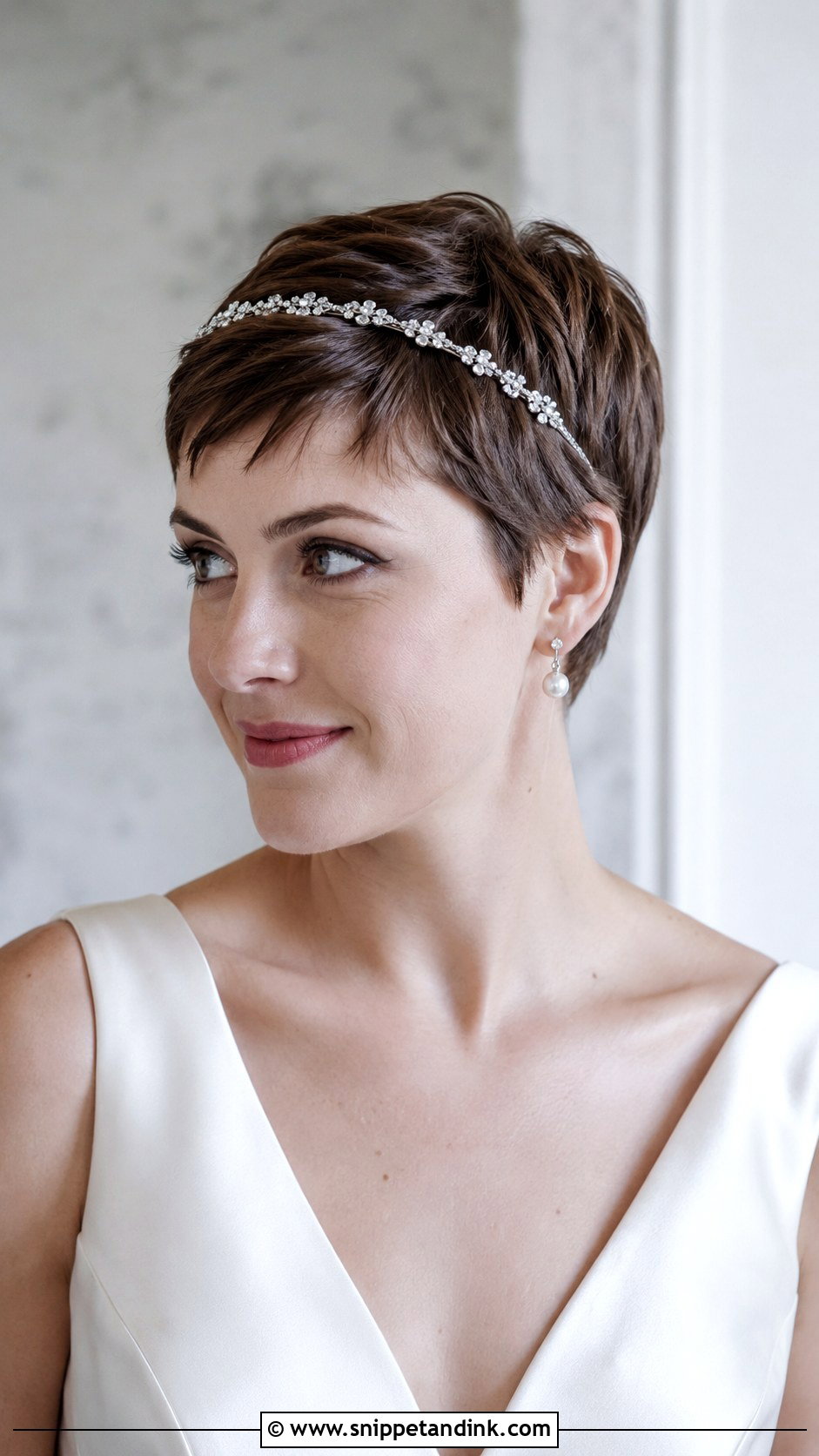
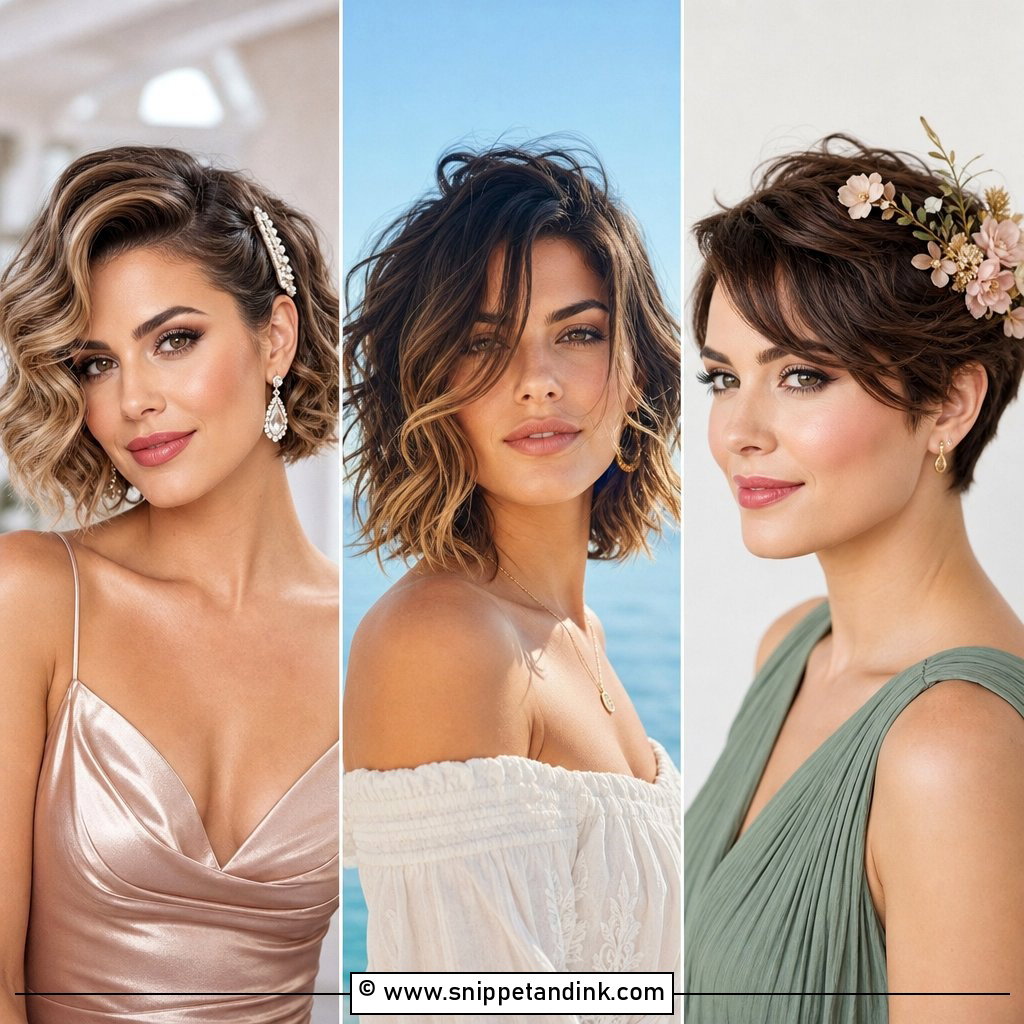
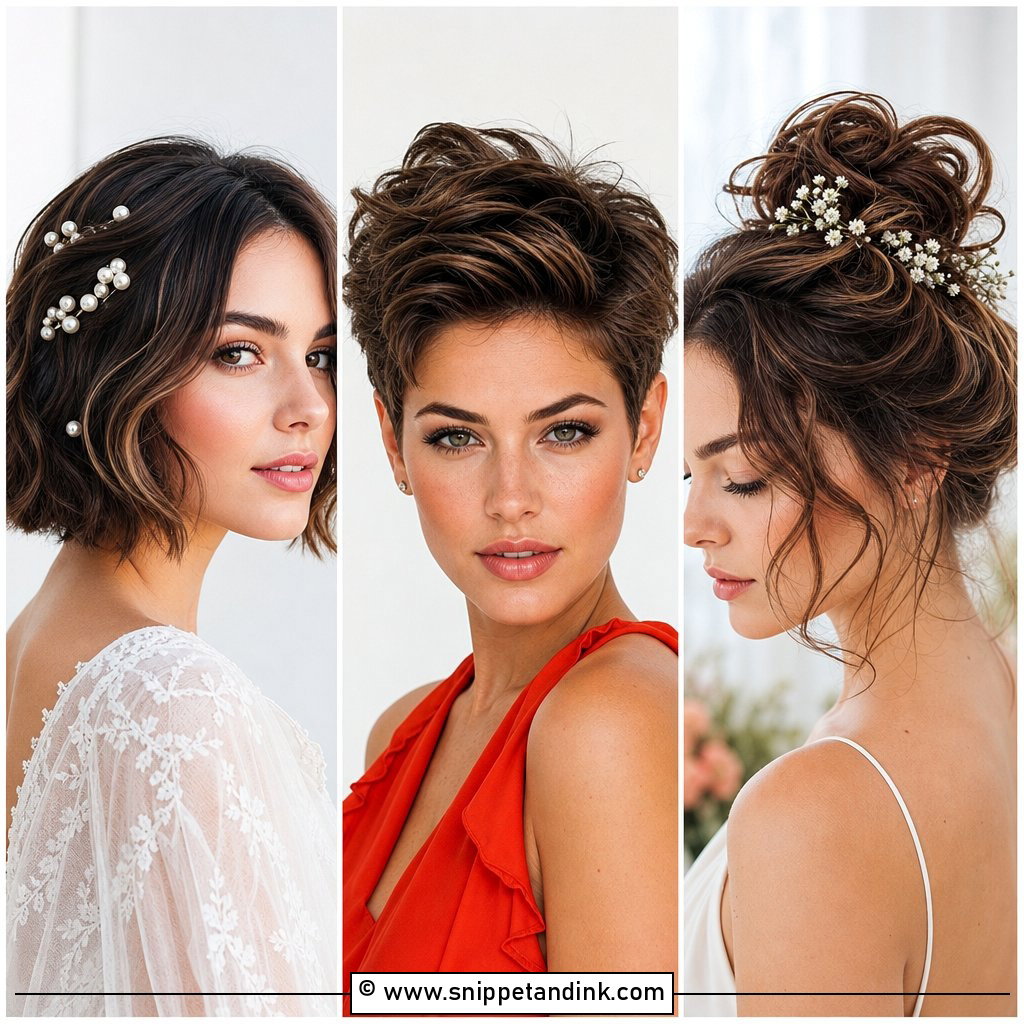
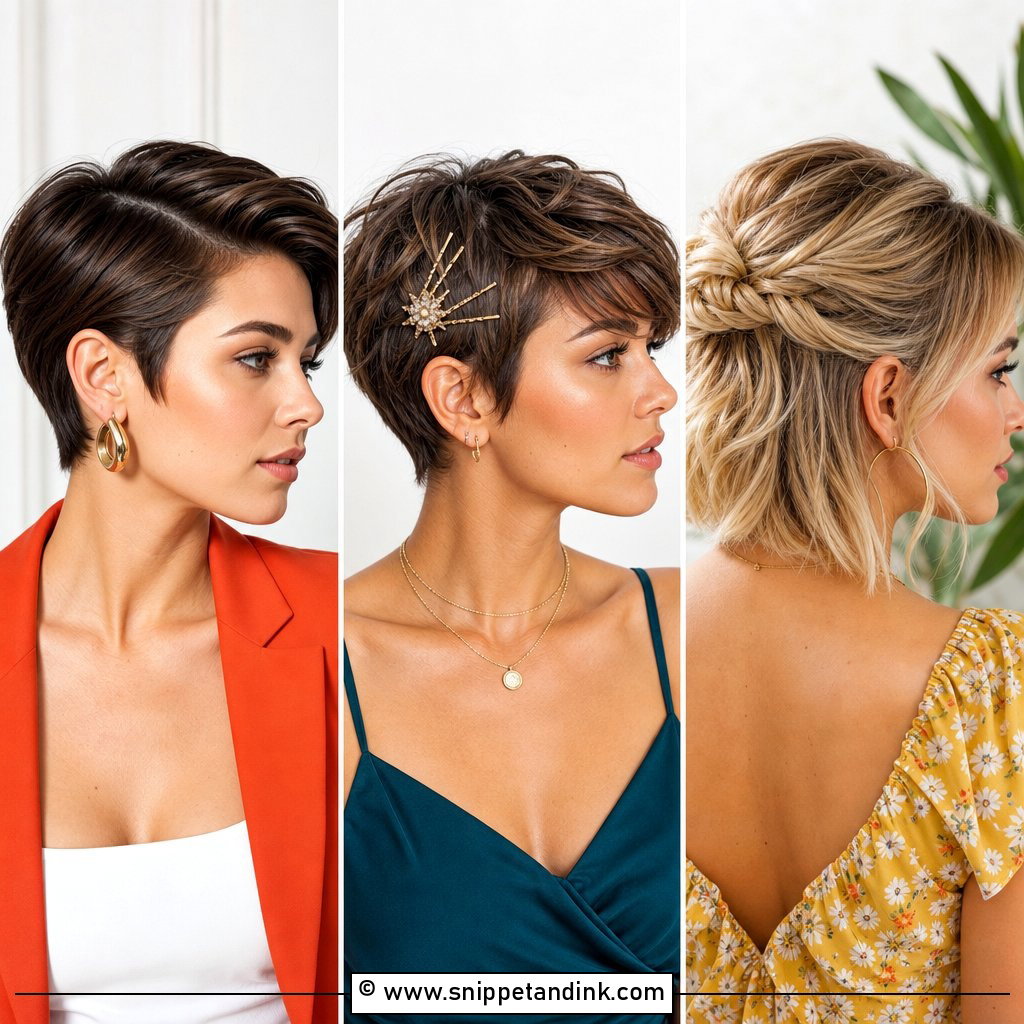
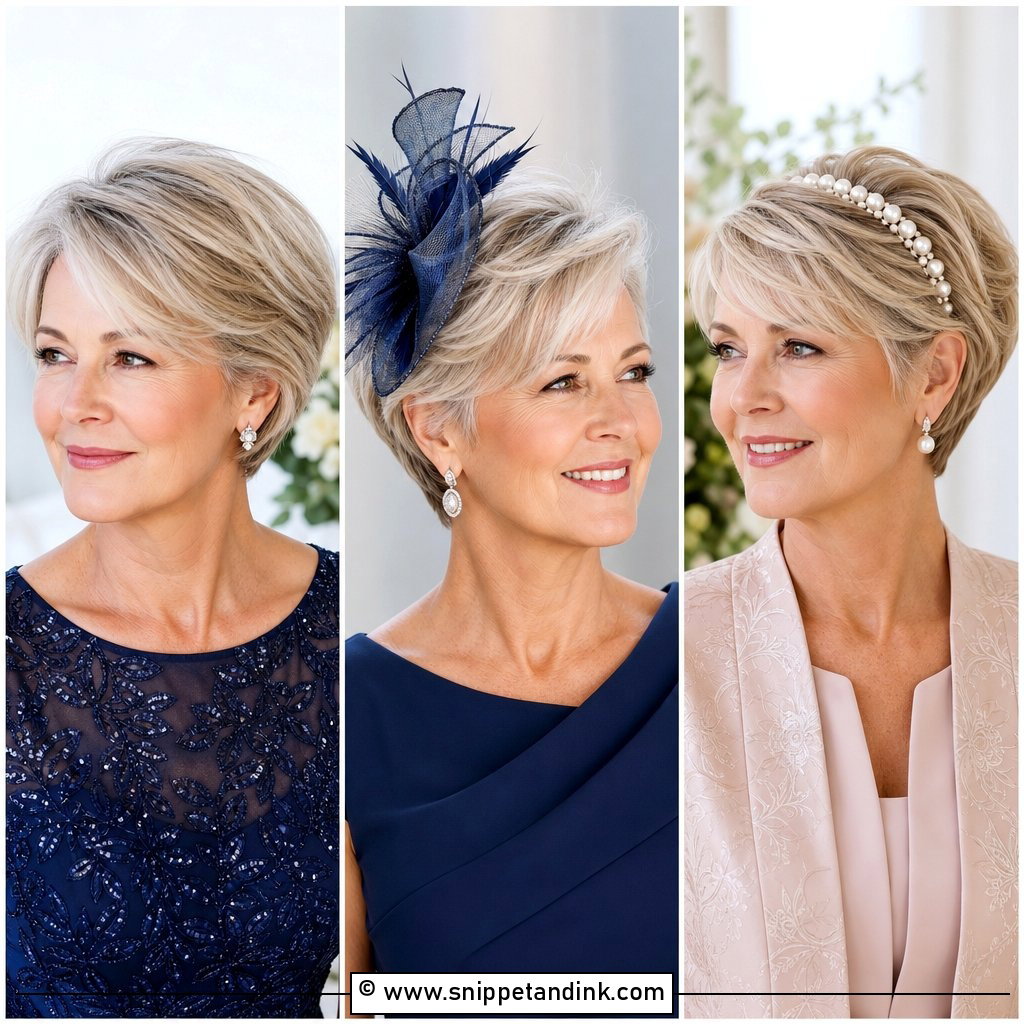
A pixie only looks bridal when the texture is deliberate. What I avoid is the gel-hard finish that photographs as wet. I blow-dry the crown upward with a small round brush for lift, then press the sides flat with a little cream so the profile stays tidy, and the profile is the angle photographers often catch during the vows. With so little hair, the dress, makeup and earrings carry the look, so a pixie suits high necks and plain satin especially. A crystal headband or slim vine can go on easily, but a veil needs a pinned anchor at the crown. It has nothing else to hold.
3. Short Curly Bob Bride
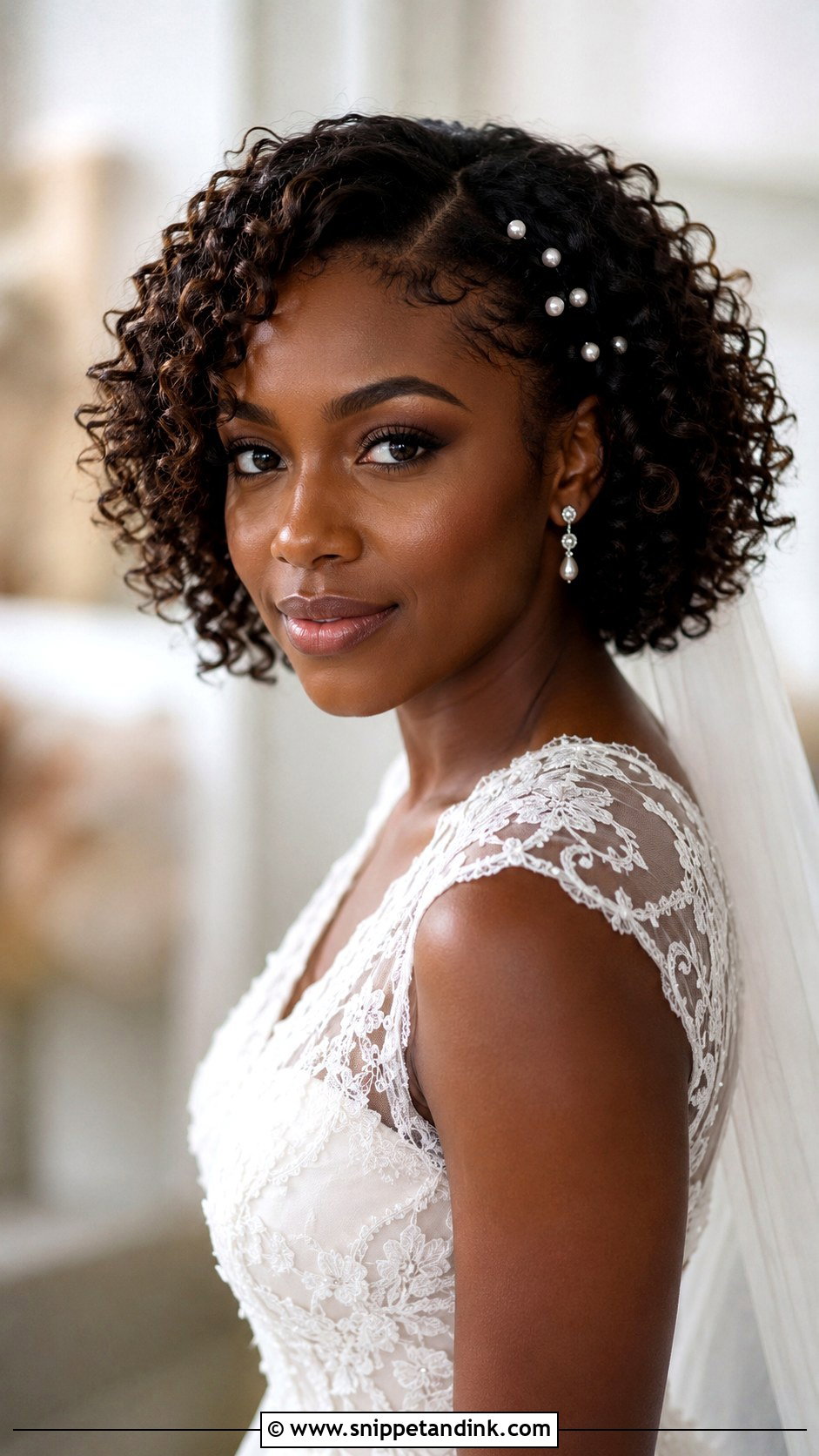
With a curly bob, my first job is to stop fighting the pattern. Curls diffused in their own shape last; curls brushed out and reset are frizzing by the first dance. I ask brides to wash the day before rather than the morning of, and to arrive with curls defined using their usual cream and a light gel, so I’m refining instead of starting over. Pinning back one side opens the face for earrings. A beach ceremony is fine for this cut, since curls expect humidity, but skip heavy oil-based shine sprays that weigh the spring down. Small pearls or floral pins tuck straight into the curl clusters and stay put.
4. Short Sleek Bob Bride
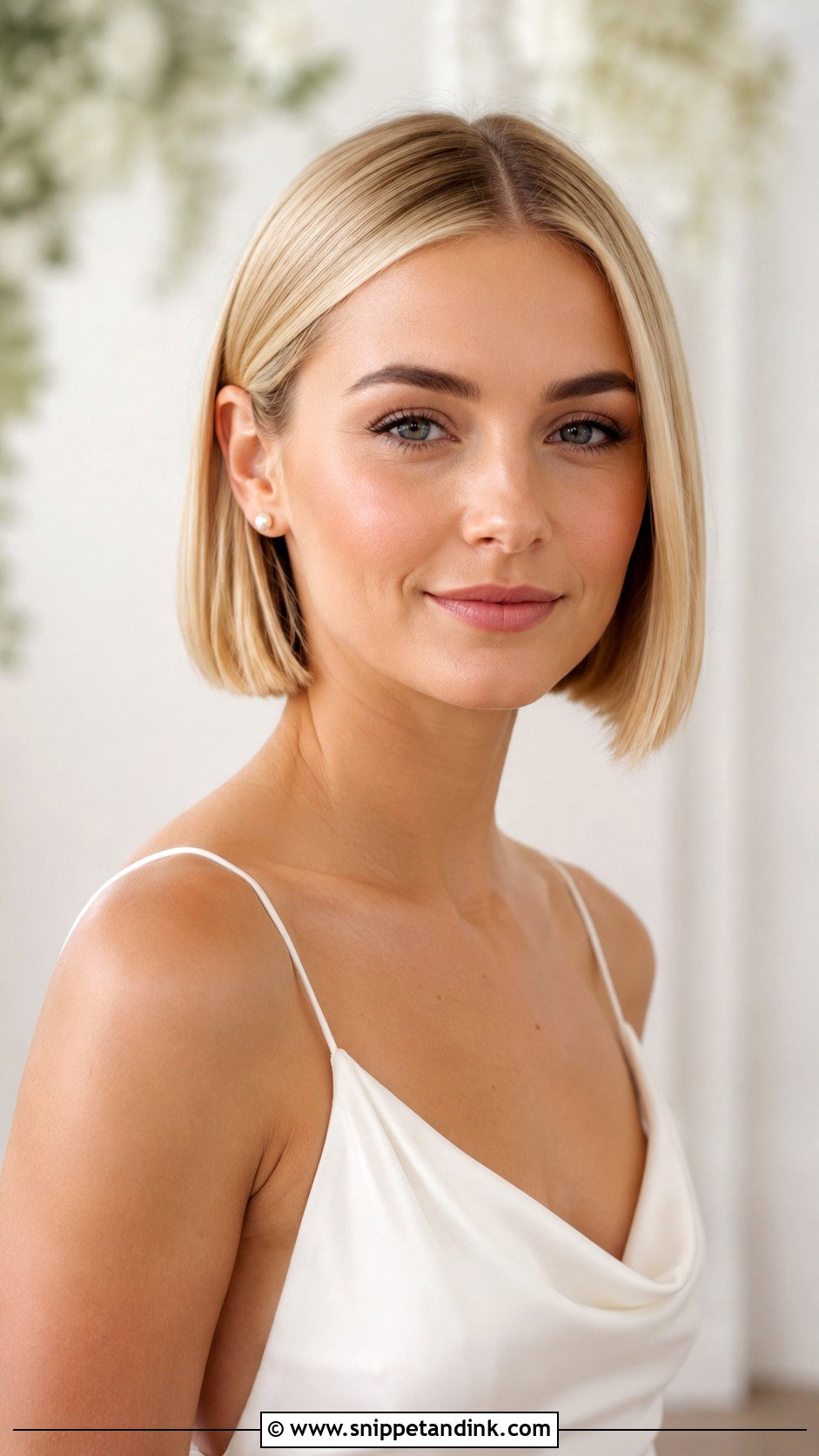
A sleek bob shows every flaw, so I check two things before agreeing to it: the ends and the part. Split or uneven ends are obvious in a smooth finish, which makes trim timing matter more here than with anything else on this list. I flat-iron in small sections at moderate heat and finish with a few drops of serum on the lengths only, never the roots, because a sleek bob that looks greasy by evening is a common complaint. Center part for a satin column dress or a courthouse ceremony, deep side part if you want more drama. Tucking one side behind the ear gives pearl earrings a clear stage.
5. Short Side Swept Bob Bride
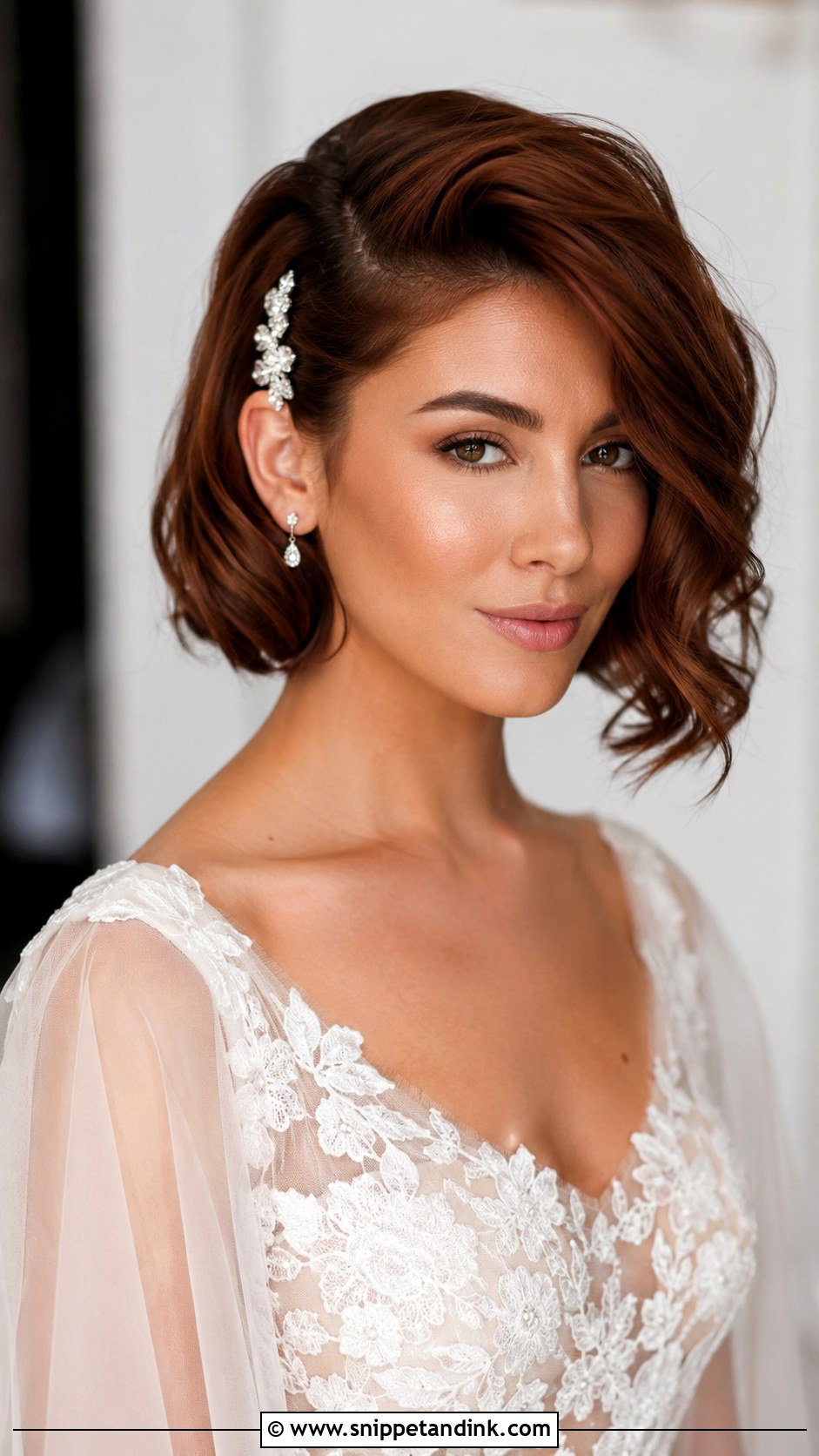
A deep side part is one of the oldest fixes for short hair that won’t sit evenly. If one side of your bob is thicker, or a cowlick lifts the front, sweeping the heavy side over turns that into a feature. I set the sweep with a wave or two across the forehead, then secure the lighter side with a small comb or barrette angled back toward the ear so it grips the under layer. Waves push it vintage; a smooth sweep reads current. It sits naturally with lace or chiffon. The sweep will want to drop into your eye after a few hours, so I hide a pin at the temple to hold it back.
6. Short Finger Wave Bride
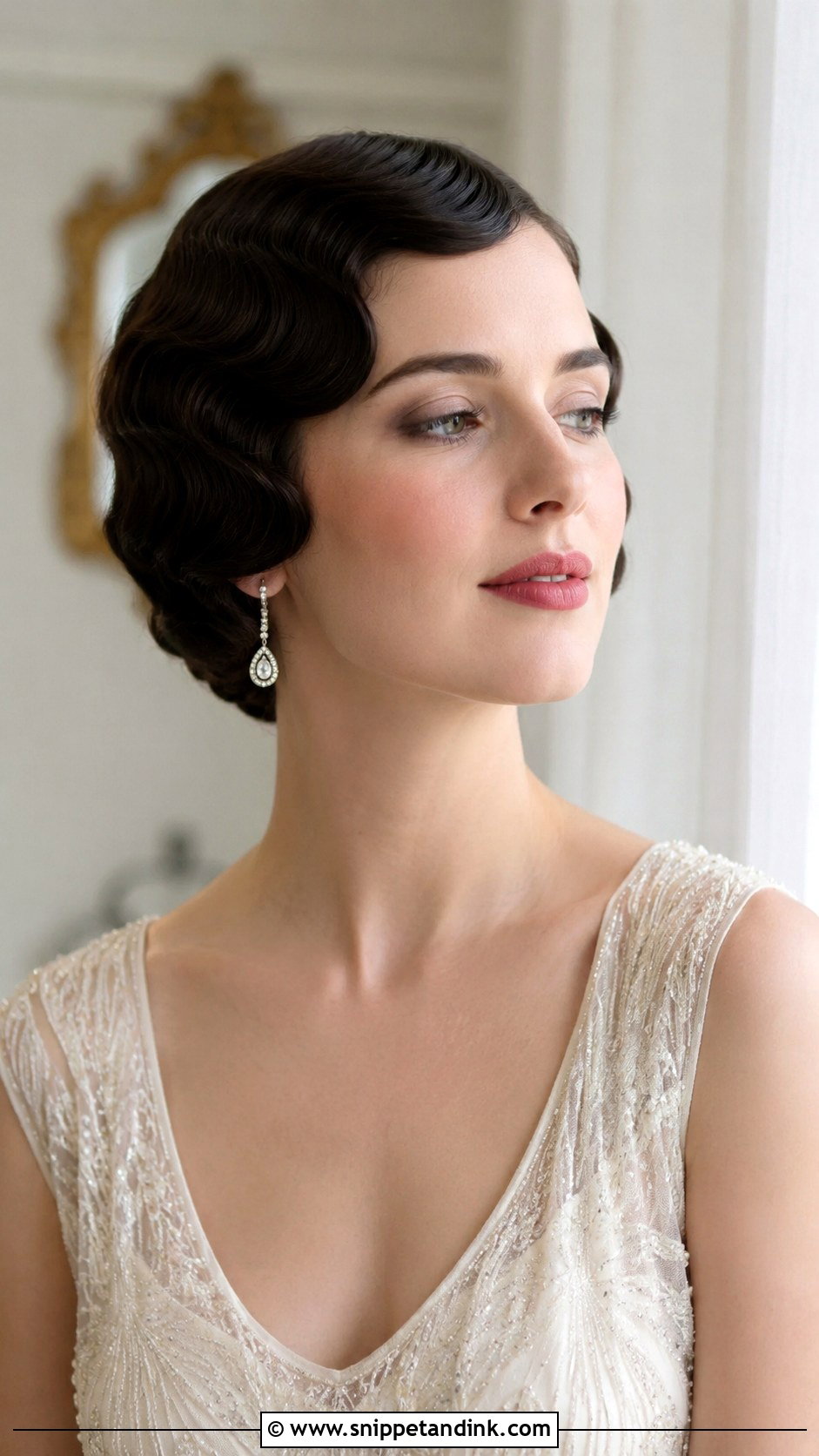
A short finger wave bride look is the most technical style here, and the one I’d least want someone attempting for the first time on the wedding morning. Finger waves are set damp, pressed into ridges with fingers and a fine comb, then left to dry under clips, so the hair has to be a length that can hold the S-shape, usually a bob, crop or long pixie. Done properly, the ridges catch light in a way no curling iron copies. It belongs with black-tie dress codes, city venues and a bold lip. Ask any stylist you’re considering to show you waves they’ve set themselves. Keep accessories off the pattern: one crystal clip at the side is plenty.
7. Short Bixie Cut Bride
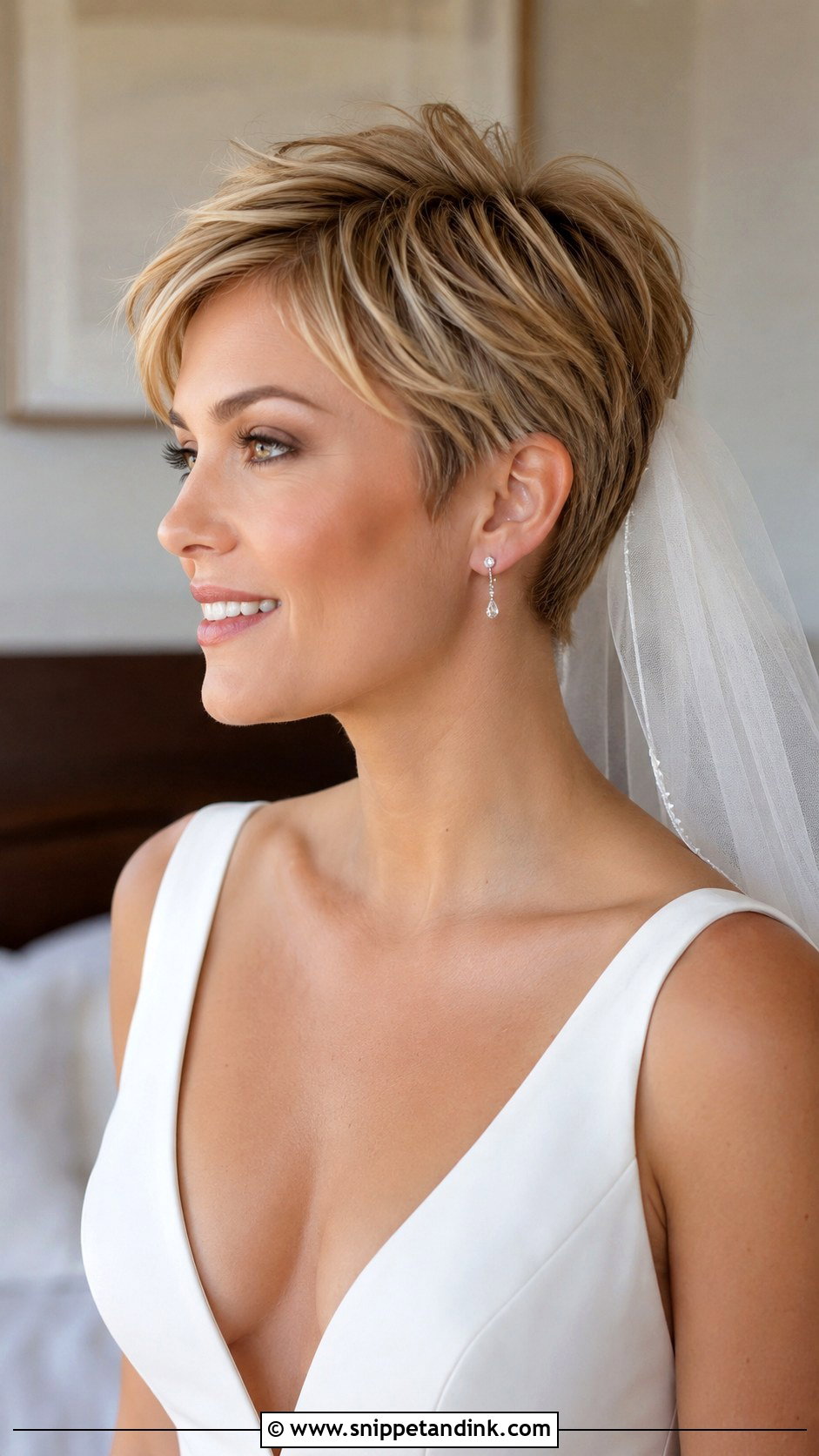
A short bixie cut sits between a bob and a pixie, longer on top and at the front, tighter at the nape. Brides growing out a pixie often land here by default, and it styles better than they expect. I build volume through the crown layers with a root-lift spray and let the longer front pieces fall onto the cheekbones. Smooth for a formal ceremony, tousled for a garden one. The only real problem I run into is an in-between length over the ears, so if you’re mid grow-out, ask your cutter to tidy that line a couple of weeks before. A slim headband sits neatly right where the crown layers begin.
8. Short Textured Bob Bride
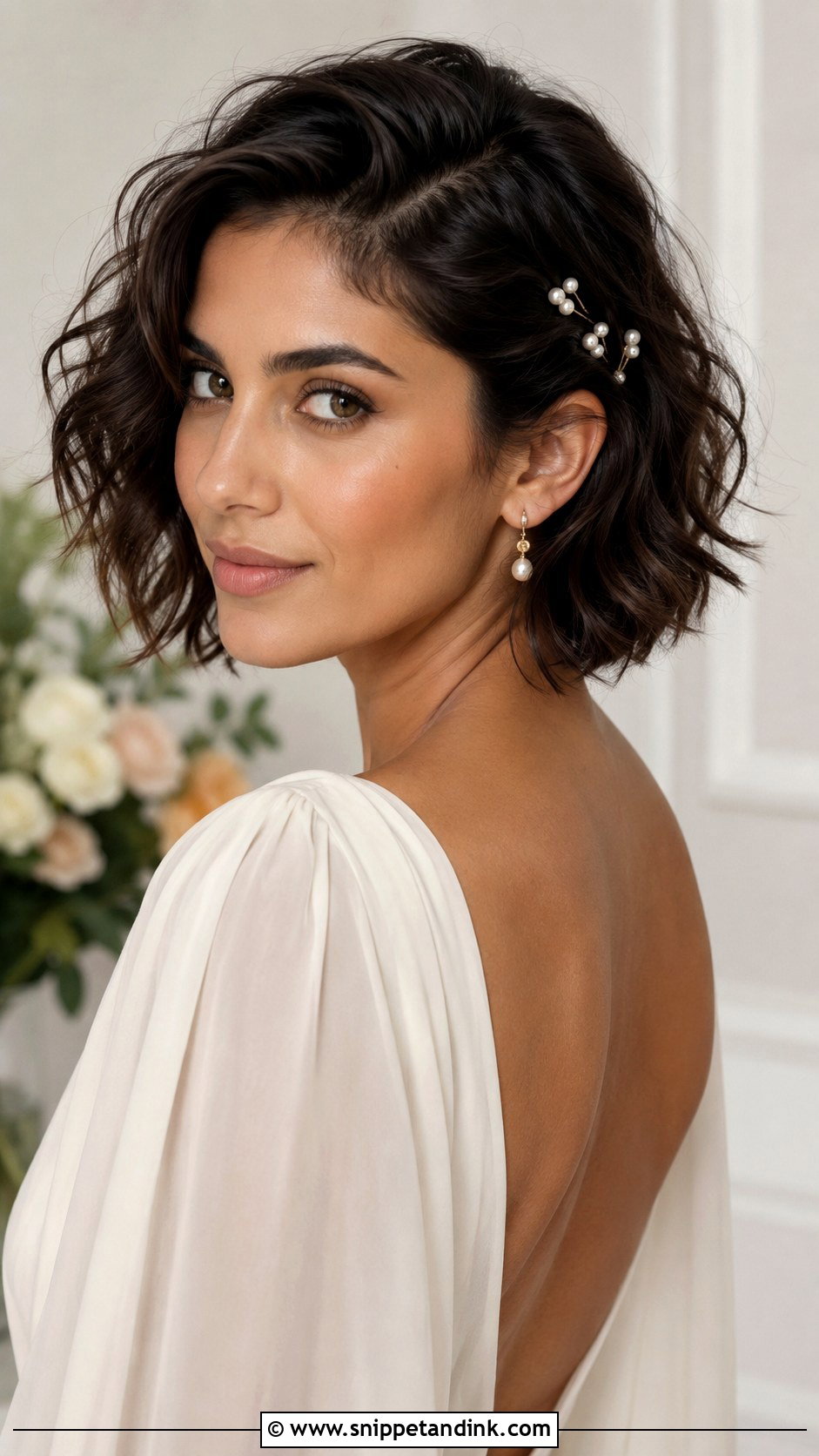
Fine hair is where a textured bob earns its place. Choppy layers break up the solid line, and the gaps between pieces suggest more hair than there is. I bend the mid-lengths with a flat iron, twisting as I pull through, then leave the ends straight and a little piecey with a dry texture spray. What I watch for is over-layering: cut the layers too short and the bob loses weight at the bottom, which looks thin in photos. Soft makeup and a simple gown match its relaxed finish, and a few small pearl pins add detail without tipping it into formal.
9. Short Half Up Bob Bride
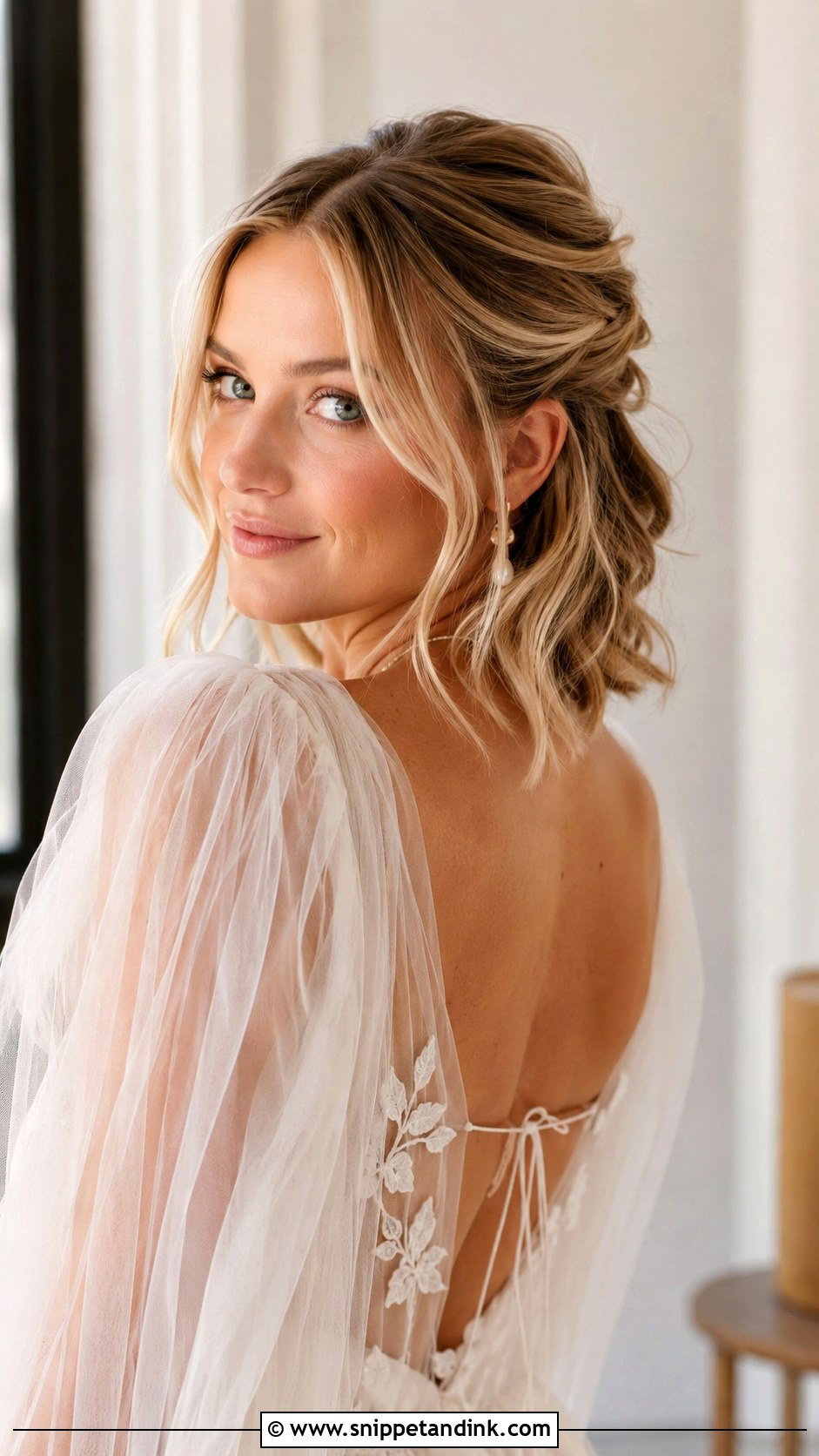
Half-up on a bob takes less hair than people think. I need roughly the top section from temple to temple, a couple of inches back from the hairline, and it can be twisted, braided or simply smoothed and pinned. That pinned section is also the best veil anchor a bob has, which is why I suggest this to short-haired brides who still want a long veil. Leave a couple of front pieces loose if you like softness at the face. The pins go in crossed under the gathered section first, then the comb or bow sits on top of them.
10. Short Bob With Veil Bride
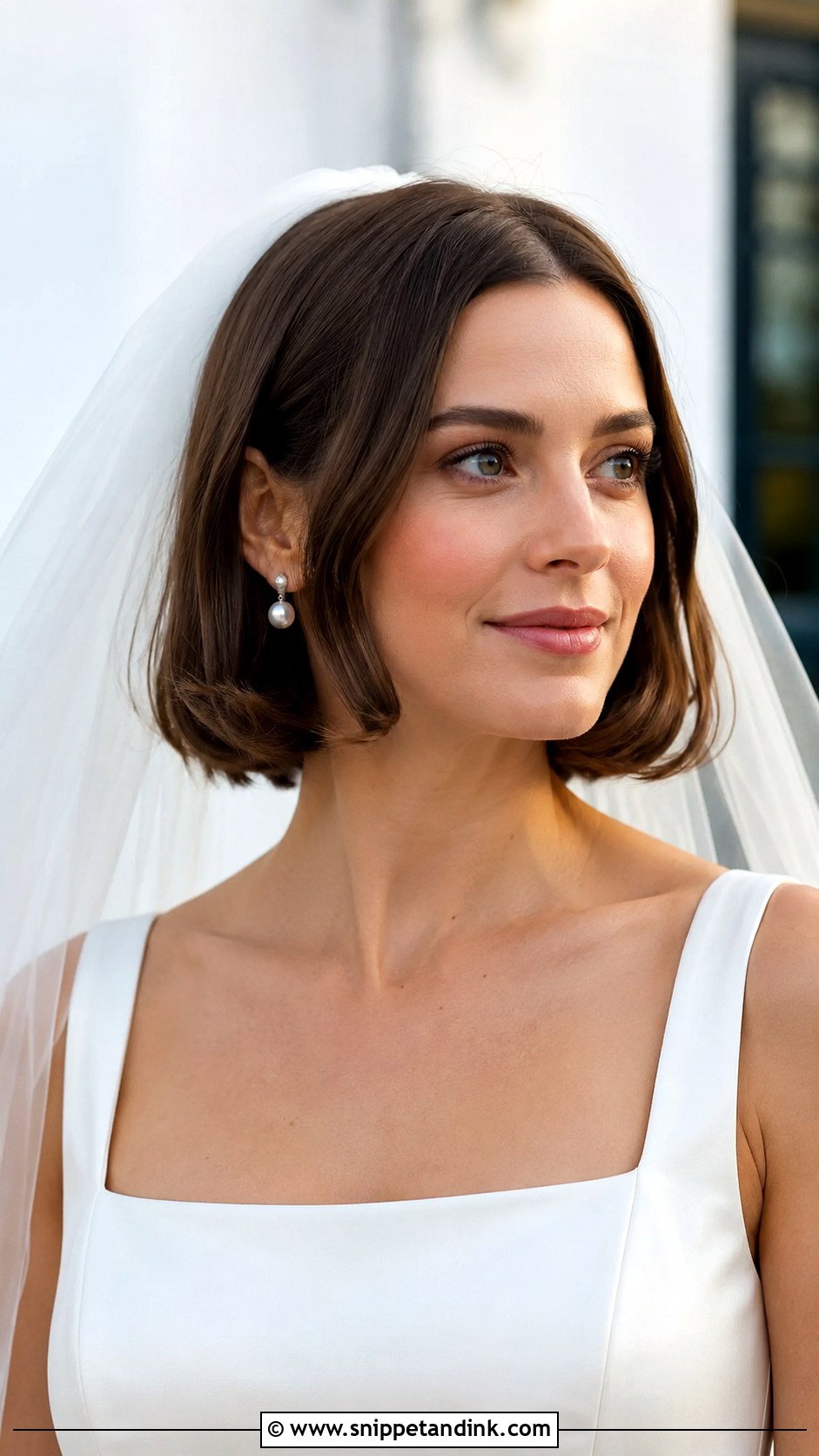
Short hair has less length to grip a comb, so the veil has to go where there’s something to hold it. A crown placement gives height and secures on most bob lengths because I can build a small hidden base there. A low placement, just above the nape, looks softer but only holds if the hair reaches past the bump at the back of the skull; otherwise the comb slides. Sleek, wavy and textured bobs all take a veil; the base is what counts. Bring your actual veil to the trial, since the weight of the tulle and the length of the comb teeth change how I pin.
11. Short Bob With Pearl Pins Bride
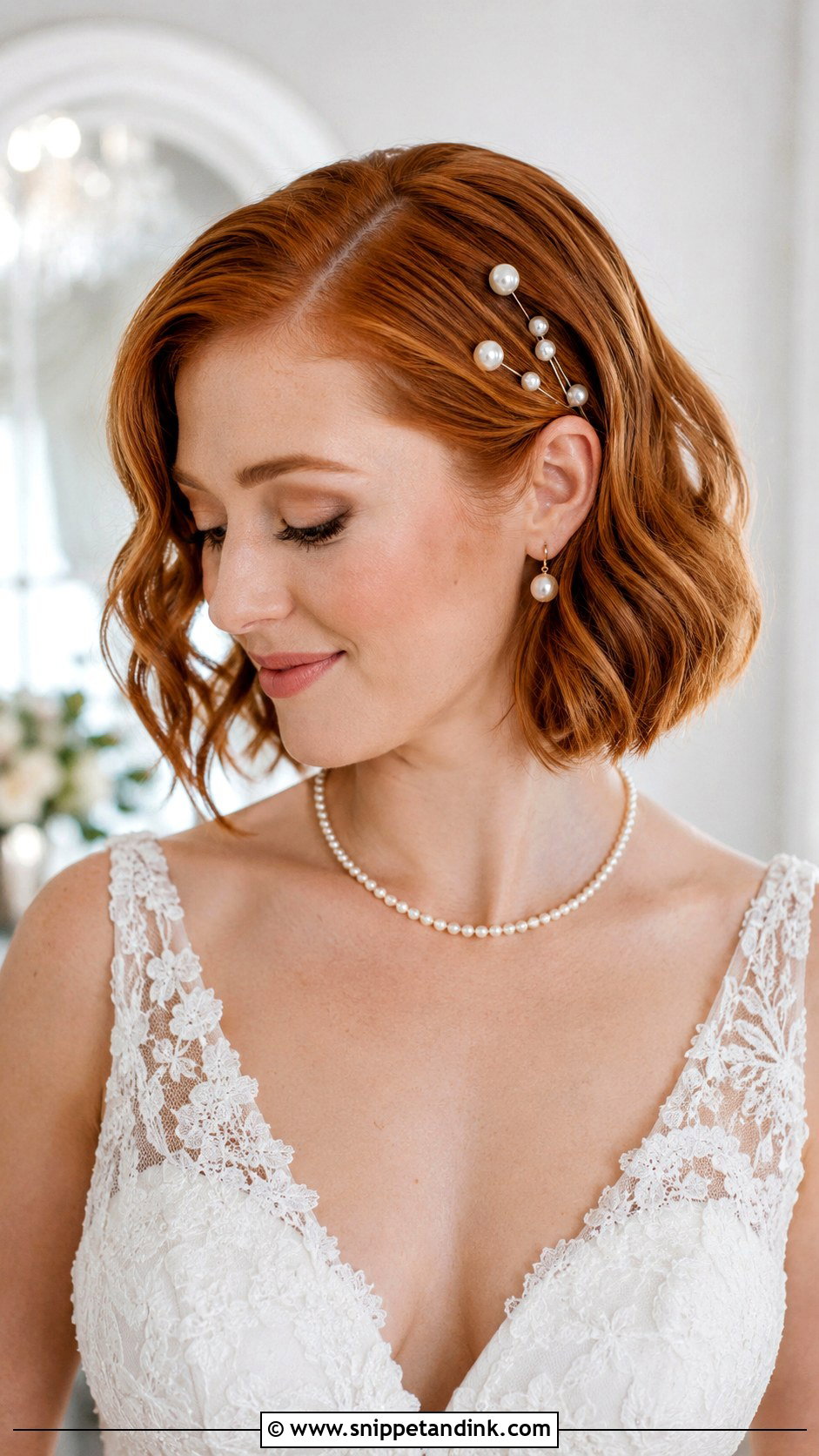
Pearl pins are my usual answer when someone wants a bridal detail in their hair but hates the feel of a headpiece. On a bob they lie best along one side, above the ear or following the part, where a sleek or wavy surface lets them sit flat. Three tiny pearls read as a detail; a cluster of seven or eight starts to look like a headpiece, so decide which you’re after. I slide each one in against the direction it’ll be pulled and lock it over a crossed bobby pin underneath. Think about which side faces your guests during the ceremony, because pins on the far side barely show in those photos.
12. Short Curly Pixie Bride
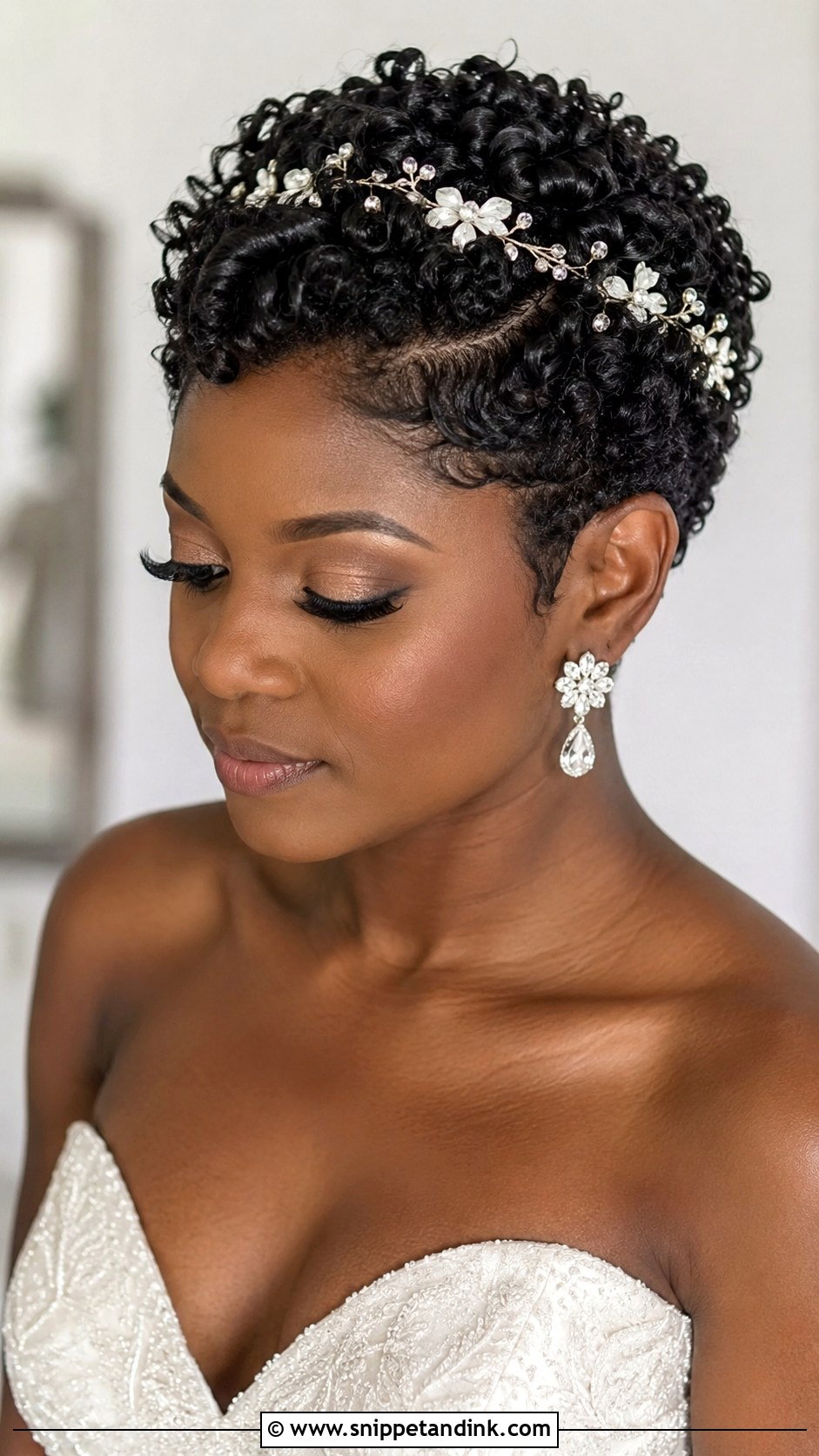
A curly pixie is the cut I most want left alone. The texture is the style, so my work is mostly shaping: defining curls at the crown with a light gel, smoothing the temples so the outline looks intentional, and lifting the top slightly to balance the face. Stiff hold ruins it, and the curls should still move when touched. Statement earrings and strong necklines suit it because nothing else competes at the neck. If you want flowers, use tiny pins rather than a full crown, which flattens the top and leaves a dent when it comes off.
13. Short French Bob Bride
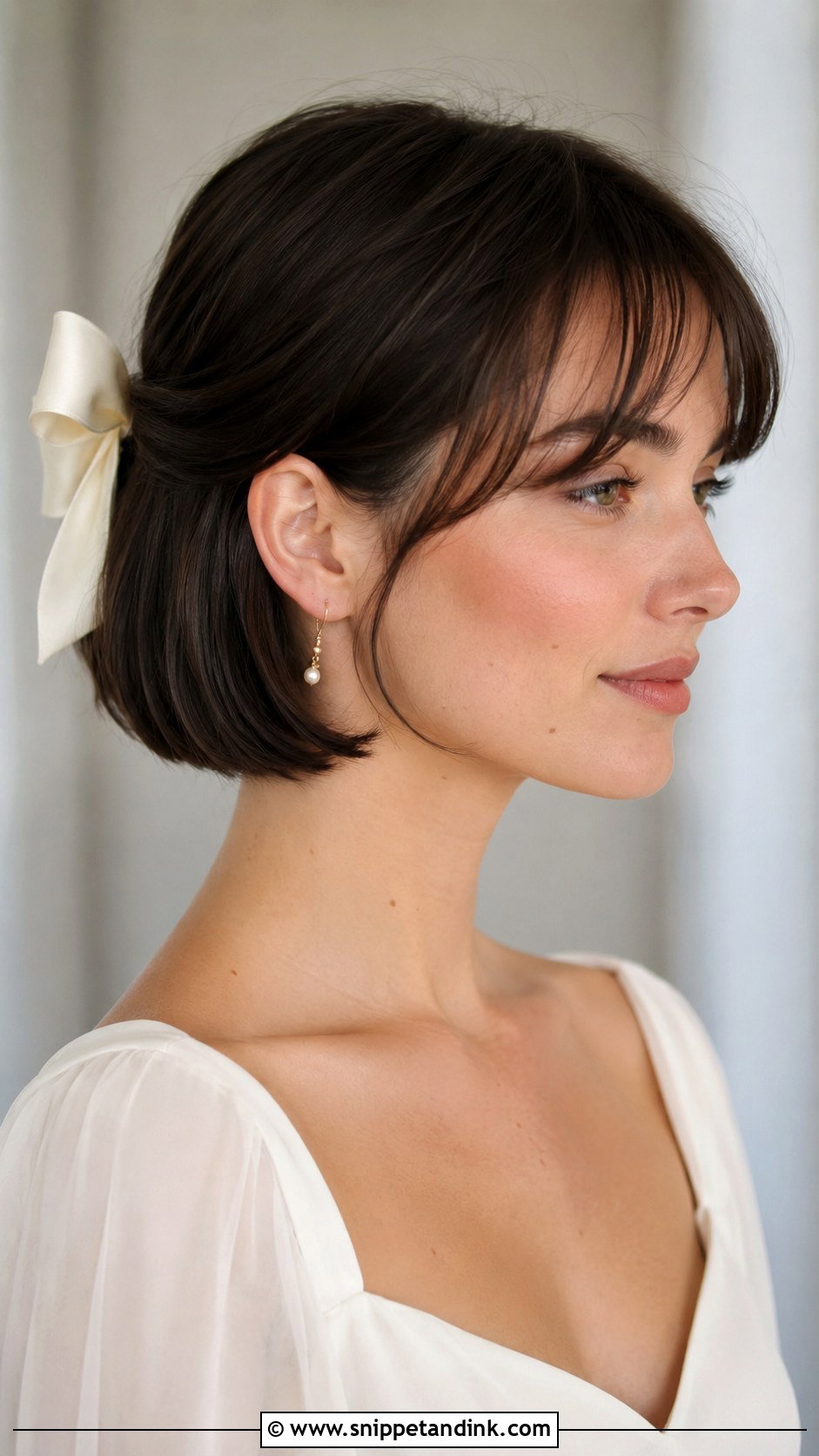
A short French bob sits at the jaw or chin, often with a fringe, and leaves the neck and collarbone open. I style it with a light bend or tuck it smooth behind the ears, because full curls make a jaw-length shape look puffed. The fringe is what I watch. Cut too close to the date it often sits shorter than planned, and grown out it hides the eyes in photos, so it needs its own trim about a week before. Simple gowns, ballet-length dresses and red lips all suit it. A small bow or short veil at the back keeps it soft.
14. Short Messy Bob Bride
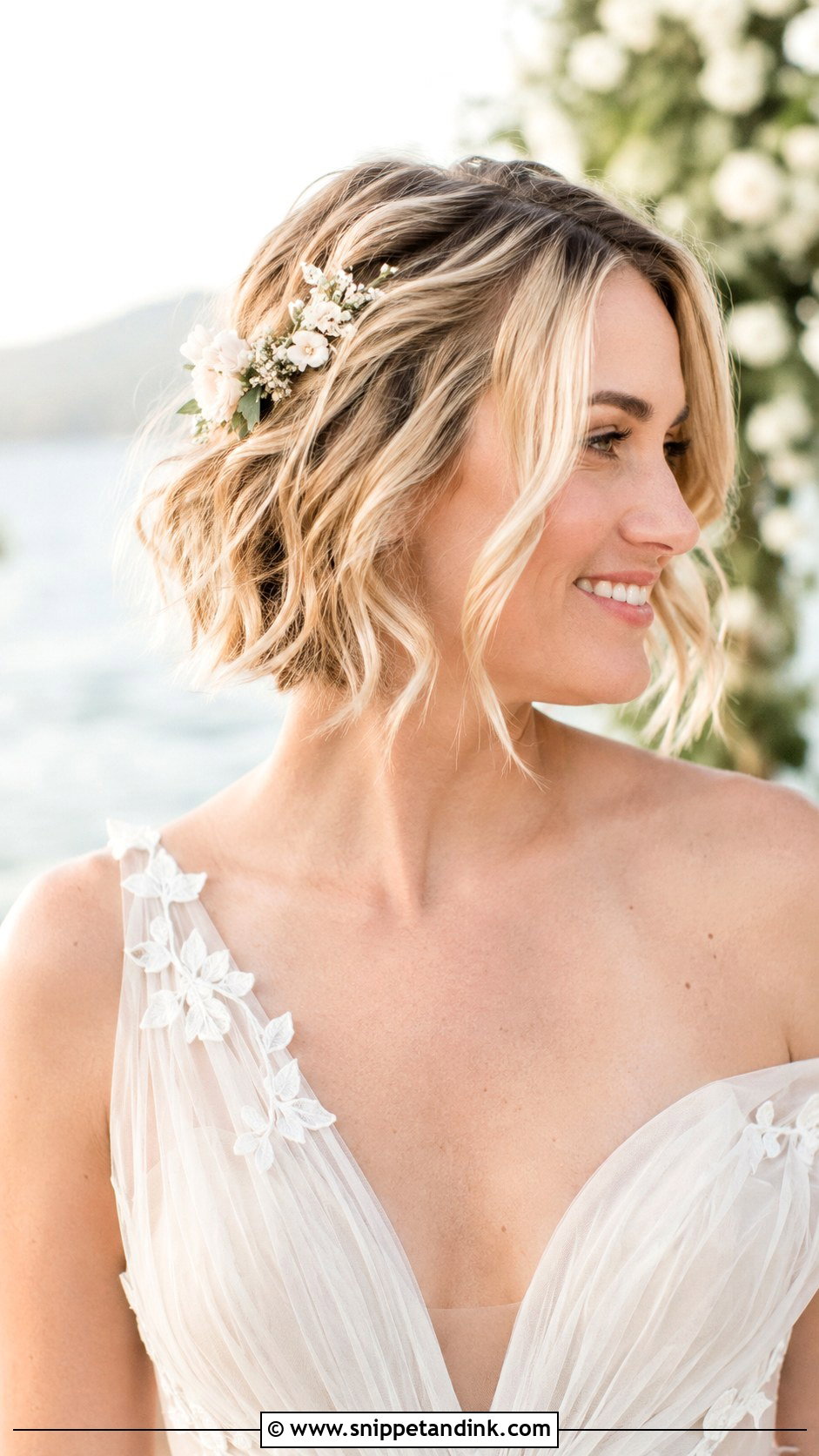
Messy, on a bride, means controlled. A short messy bob should look airy and slightly undone at the ceremony and still hold that shape after hugs and dancing. I get there by curling sections in alternating directions, letting them cool completely, then breaking them up with my fingers and a dry texture spray instead of a brush. That cooling step is what stops it collapsing by evening. It suits beach, backyard and mountain weddings, and it fills out fine hair without extensions. Leave a couple of face-framing pieces out. A floral comb or small pearl barrette is enough to make it read as wedding hair.
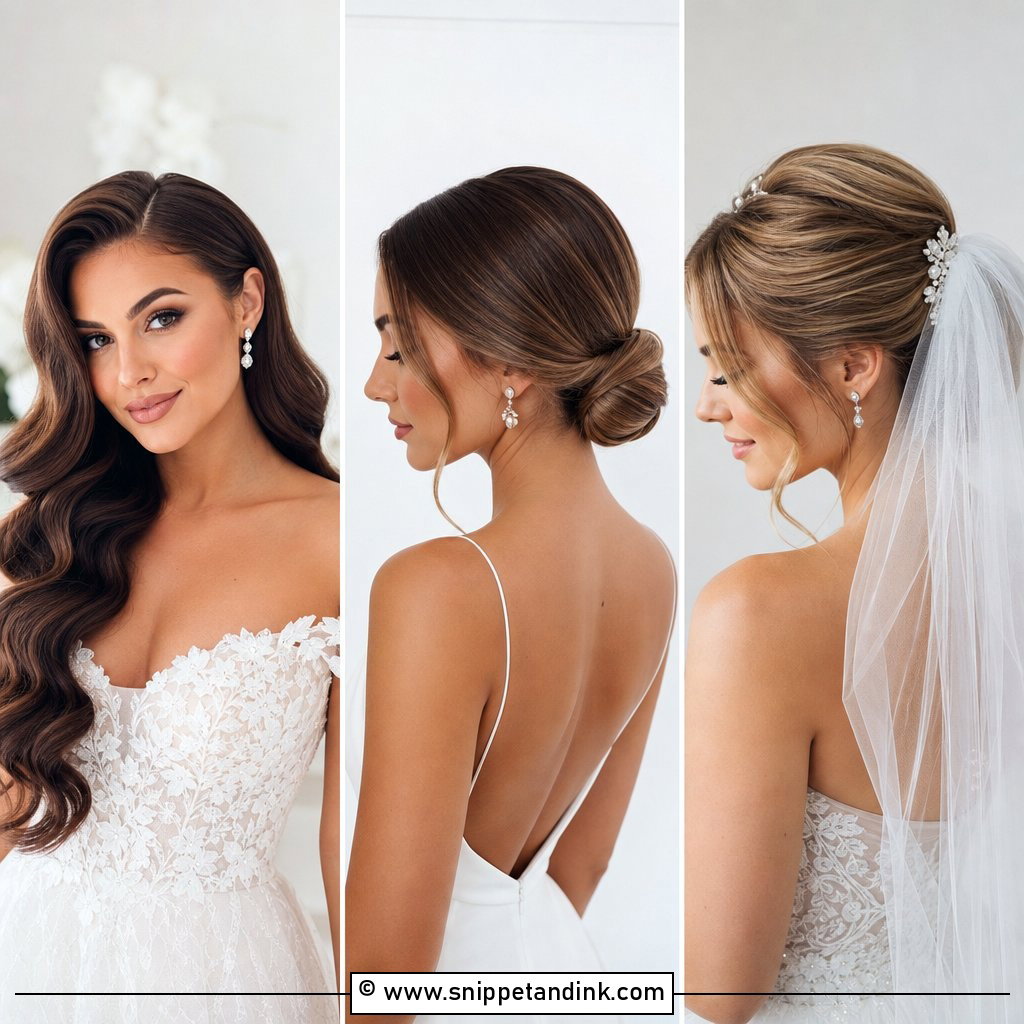
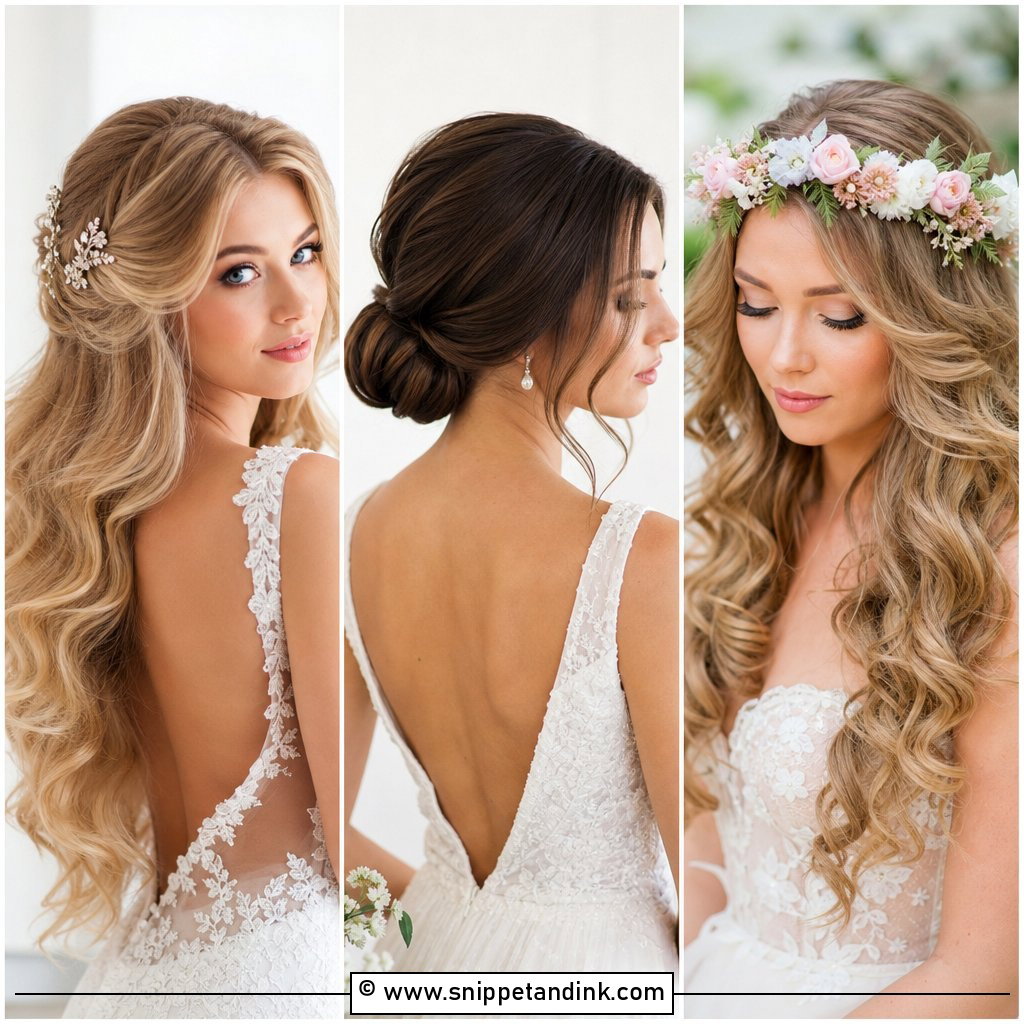
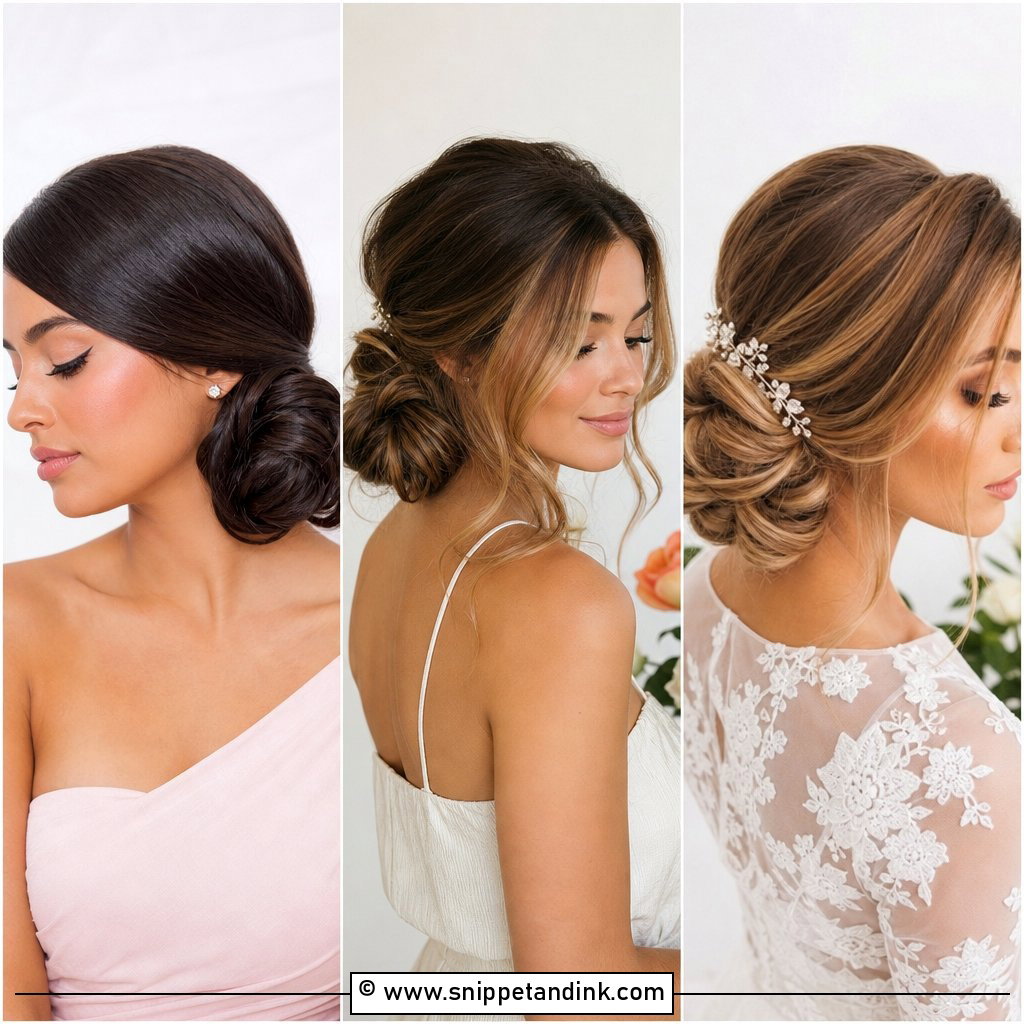
15. Short Bridal Updo
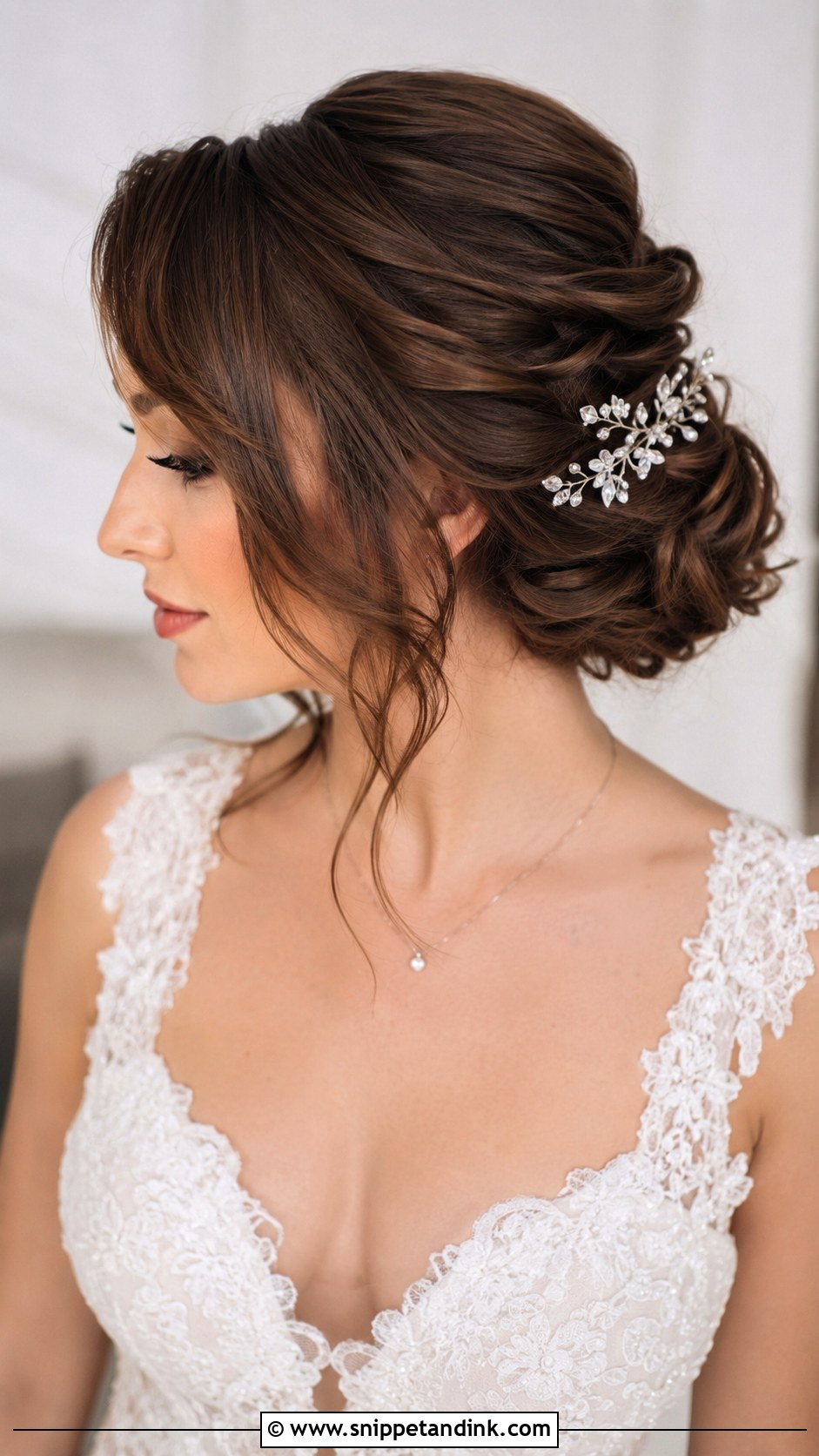
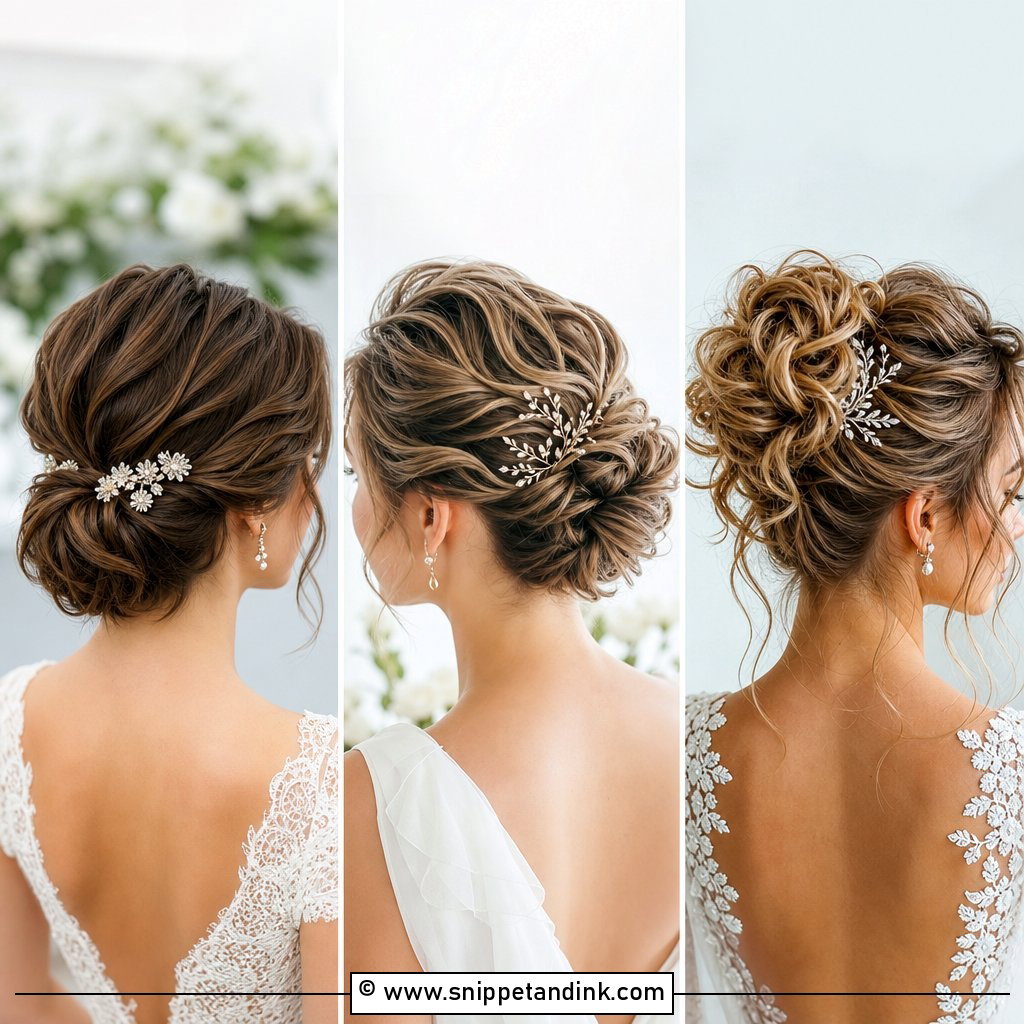
Yes, you can wear an updo with hair above the shoulders. I build it from small sections twisted toward the nape and pinned flat, with hidden grips crossing each other so every twist holds the next. On a bob or lob that reaches the jaw it’s very achievable; on a longer pixie it becomes a tucked, rolled finish at the back rather than a true bun. The front stays waved and loose so nothing looks scraped. I suggest it when the dress has an open or detailed back, and the pinned base takes a veil or comb well. Short nape layers tend to spring loose by evening, so a touch of pomade on those ends helps.
Giving a Veil Comb Something to Bite on Cropped Hair
Every accessory on this list relies on grip, and short hair supplies very little of it. A veil comb slid straight into a sleek bob will hold for the walk down the aisle and then start creeping the moment you turn your head. The fix is building a base before anything decorative goes in.
How I build that base
- Root texture spray or dry shampoo exactly where the comb will sit, so the strands have some grit.
- Two bobby pins crossed in an X and pushed flat against the scalp.
- On a pixie, a tiny pin curl or a short braid at the crown that the comb teeth can hook behind.
- The comb goes in with the teeth facing forward, then flips back over the pins so it locks in place.
With short hair, weight matters more than length. A single layer of soft tulle stays put, while a double-layer veil with beaded edges pulls backward on a small base all day. If you love a heavy veil, plan to take it off after the ceremony and practise removing it without dragging out the pins underneath. Headbands are the other trouble spot: the ends dig in behind the ears within a couple of hours unless they’re bent slightly wider at the trial.
Flat Crowns, Split Fringes and Other Late-Evening Repairs
Short styles fail in small, specific ways rather than collapsing, which makes them easy to rescue once you know what to look for. These are the changes I see most often after six or seven hours:
- The crown goes flat. It’s the first thing to drop on a pixie or bixie. A pinch of texture powder at the roots, worked in with fingertips, brings the lift back in seconds.
- The fringe splits. Forehead oil separates it into strands. Blot the skin first, then press a little dry shampoo into the fringe roots, never the ends.
- Waves soften. Fine bobs lose their bend in warm rooms. Twist each section around a finger and hold it briefly; it won’t match the iron, but it reads fine from a few feet away.
- The nape frizzes. A pea-sized dab of balm smoothed downward with the palm settles it.
Hand that little kit to your maid of honour rather than keeping it in your own bag. You won’t have free hands for most of the evening, and she can see the back of your head.
Let the Haircut Do Most of the Work
Short hair gives a bride more options than most people expect, from sculpted and sleek to curly and pinned. Start from your real texture and length rather than the photo, then match the look to your dress and venue. At the trial, ask your stylist which version will still look right at the end of the night, and test every pin, headband and comb you plan to wear. Any of these cuts, a pixie, bob, bixie, or crop, can carry a wedding look; it just needs a plan for where things anchor.
You'll Like These Ideas:


Leave a Reply