
Short-haired brides often arrive at a trial apologising for their length, and I never understand why. A pixie or a bob gives me less weight to fight, so the finished shape holds through hugs, a veil and hours of dancing far better than a heavy blowout does. The real work is different, not harder: pins need something to grip, waves need the right barrel size, and accessories have to sit where the cut actually has hair. Below are 25 short styles I’d happily put on a bride, with notes on what each one asks of your cut and your texture.
Prep Changes When There’s Less Hair to Pin
With short hair, almost everything I do on the morning comes down to grip. Long hair has weight to hold a pin in place; a bob or pixie doesn’t, so the hair itself needs a bit of texture to grab onto. That’s why I ask short-haired brides to wash the night before rather than that morning. Freshly washed, silky hair lets pins slide straight out.
- Bring your own small pins in your hair colour. Standard bobby pins are often too long for a pixie and show at the ends.
- Tell your stylist if your hair is fine or very thick; the same style needs different curling irons and different amounts of teasing.
- If you have natural curls, say so at the first contact. Some stylists default to heat styling, which isn’t always right for your texture.
- Try your accessories on during the trial, not just the hairstyle. Headbands, vines and combs all need anchoring that changes how the style is built.
I also check where your hair is longest. On many pixies it’s at the top and the crown, while the nape is very short, so accessories that need to sit low simply won’t hold. Knowing that early stops you falling for a style your cut can’t support.
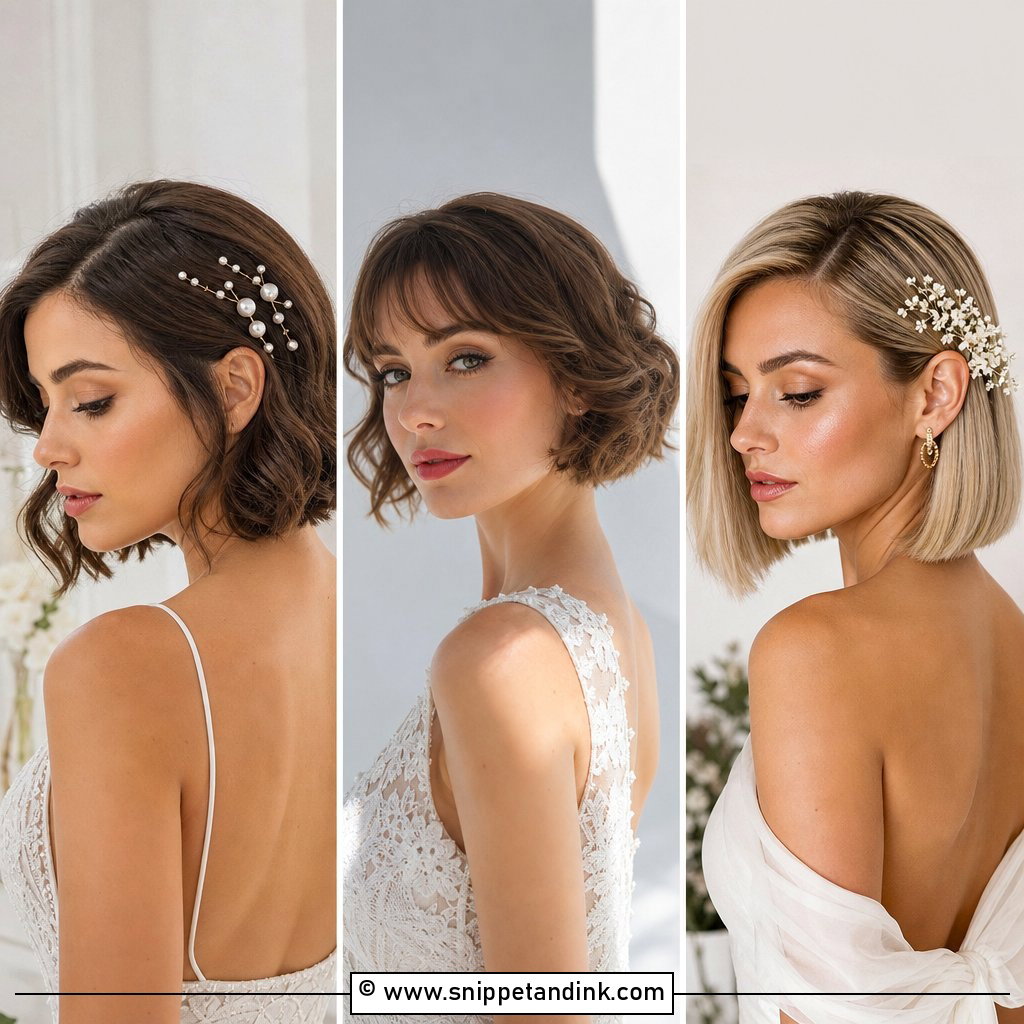
1. Soft Waves Bob With Curtain Bangs
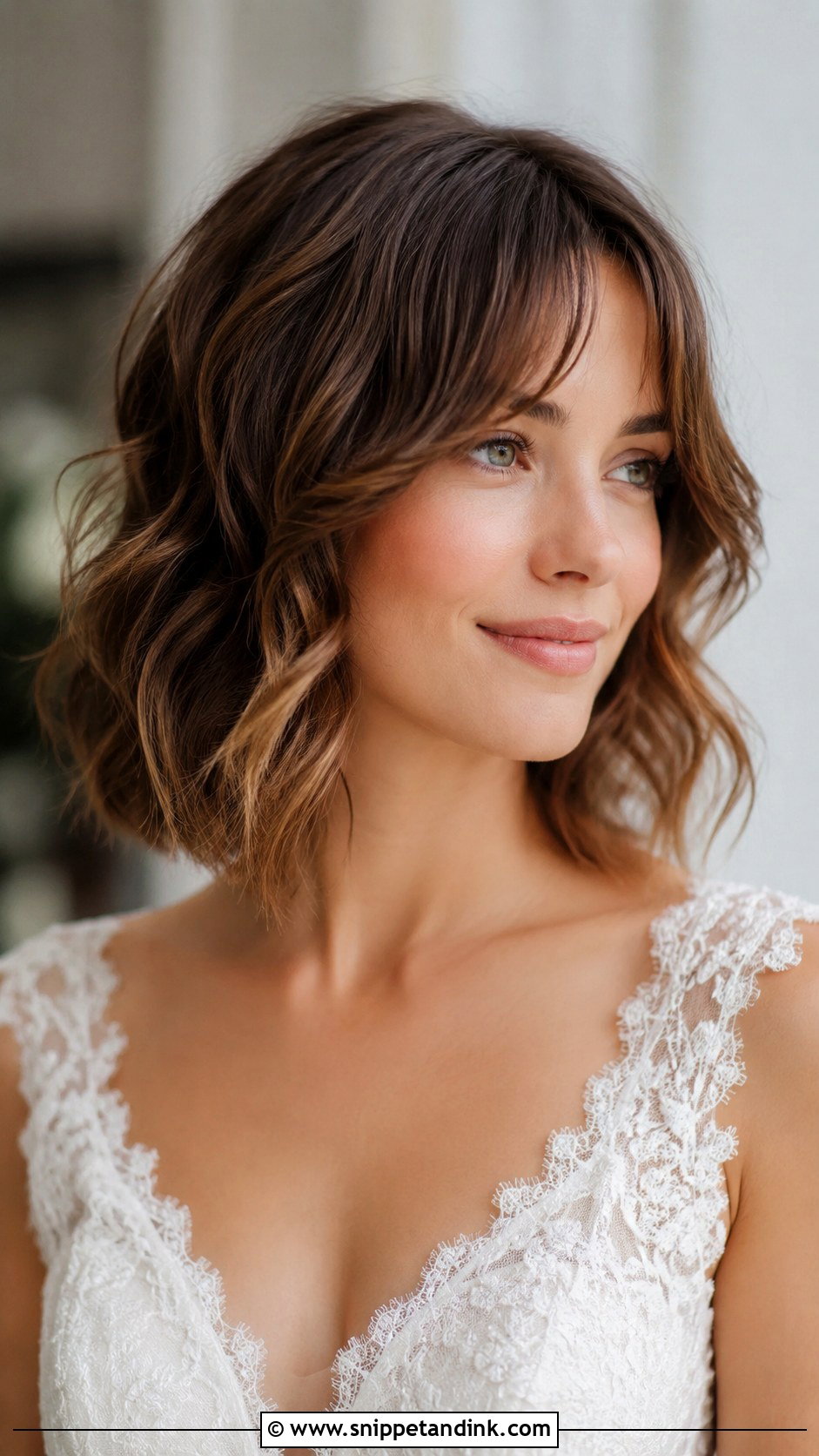
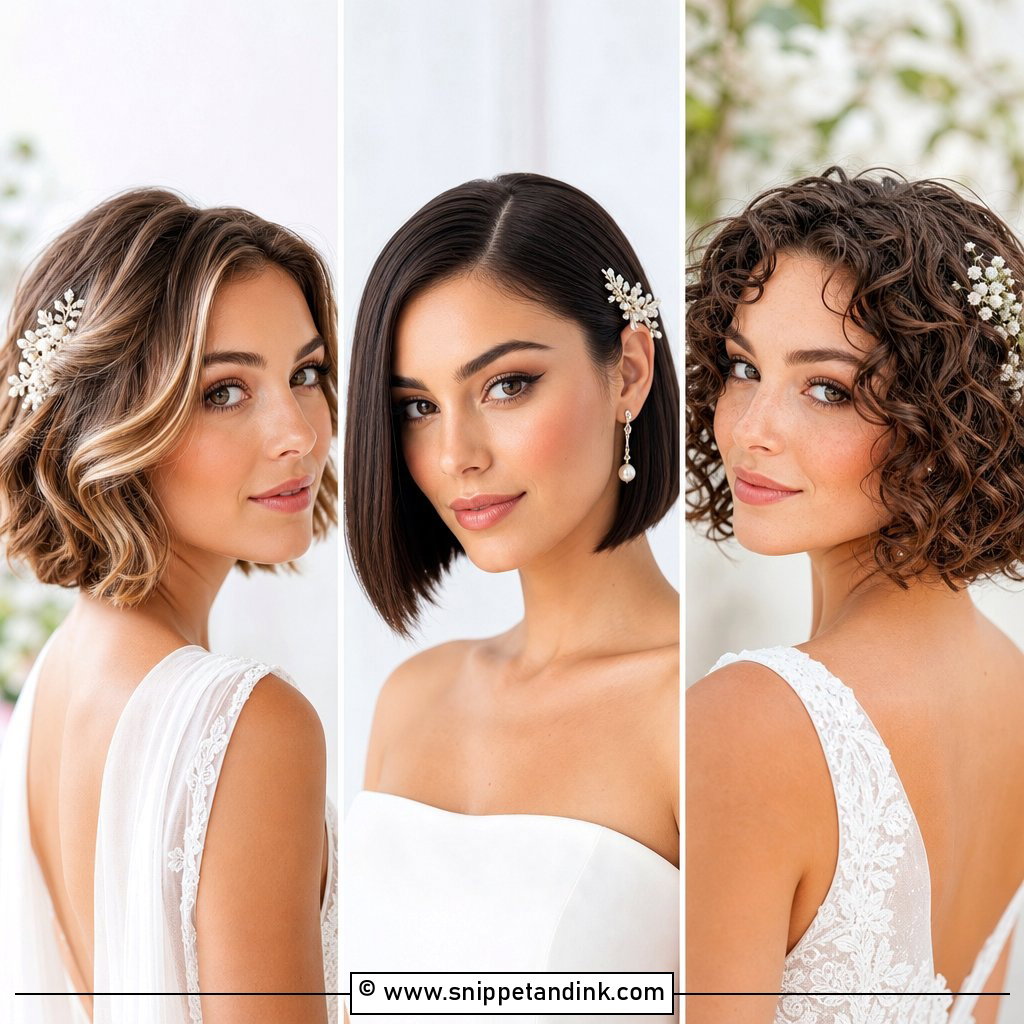
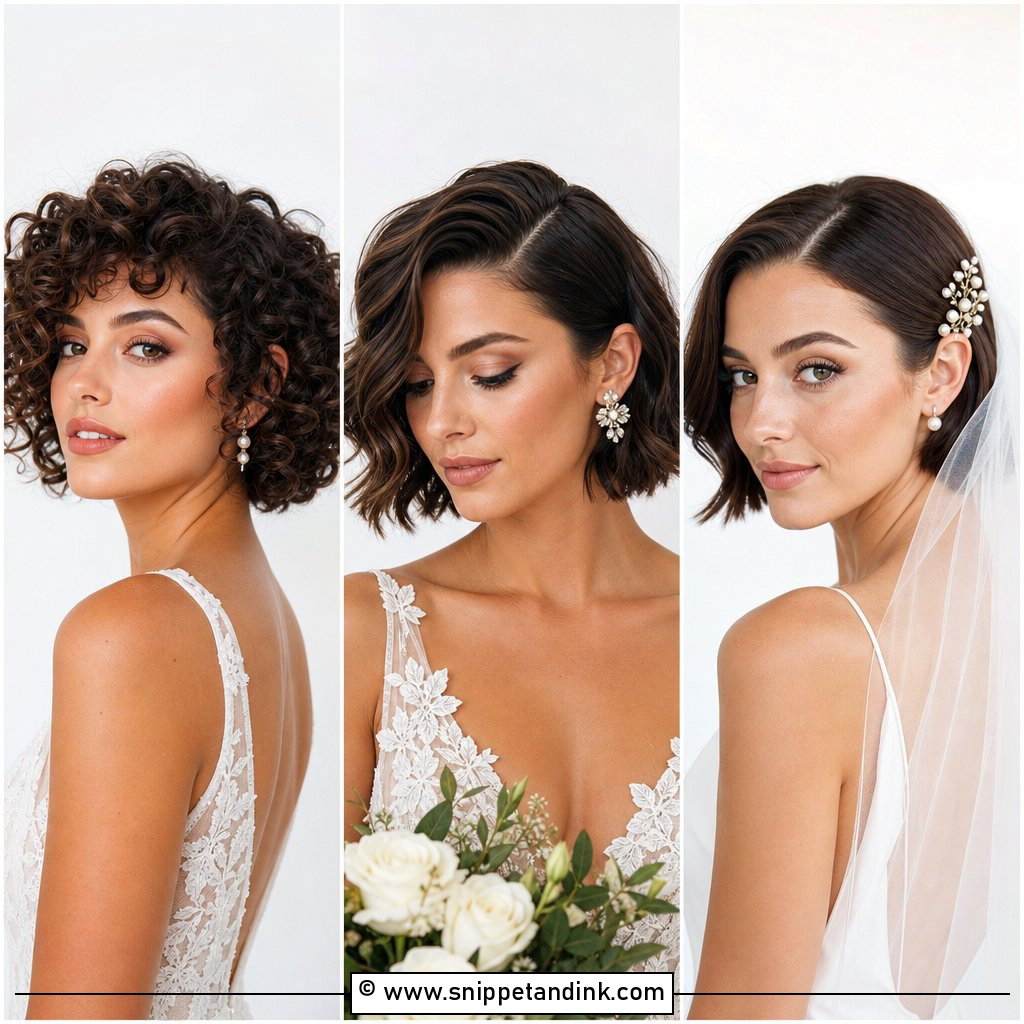
A chin-length bob paired with soft, swept curtain bangs is one of the kindest shapes for oval and round faces, because the fringe breaks up the width at the cheekbone. I set the waves with a 1 inch wand and leave the last inch of each section straight, otherwise the bob bounces up and reads shorter than it is. The fringe is the fussy part: curtain bangs separate in humidity, so I blow them over a round brush first and only touch them with the wand at the very end. Fine to medium hair holds this best; very thick bobs tend to puff out at the sides.
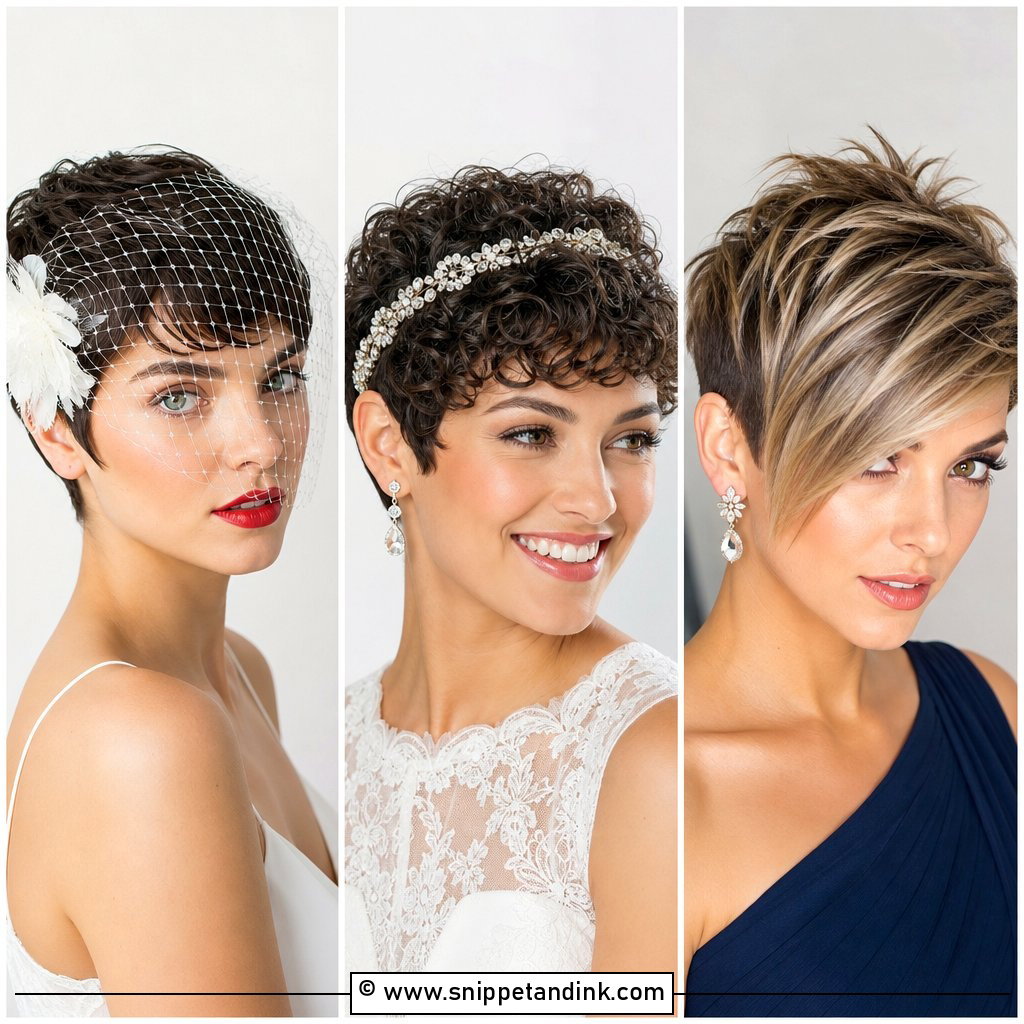
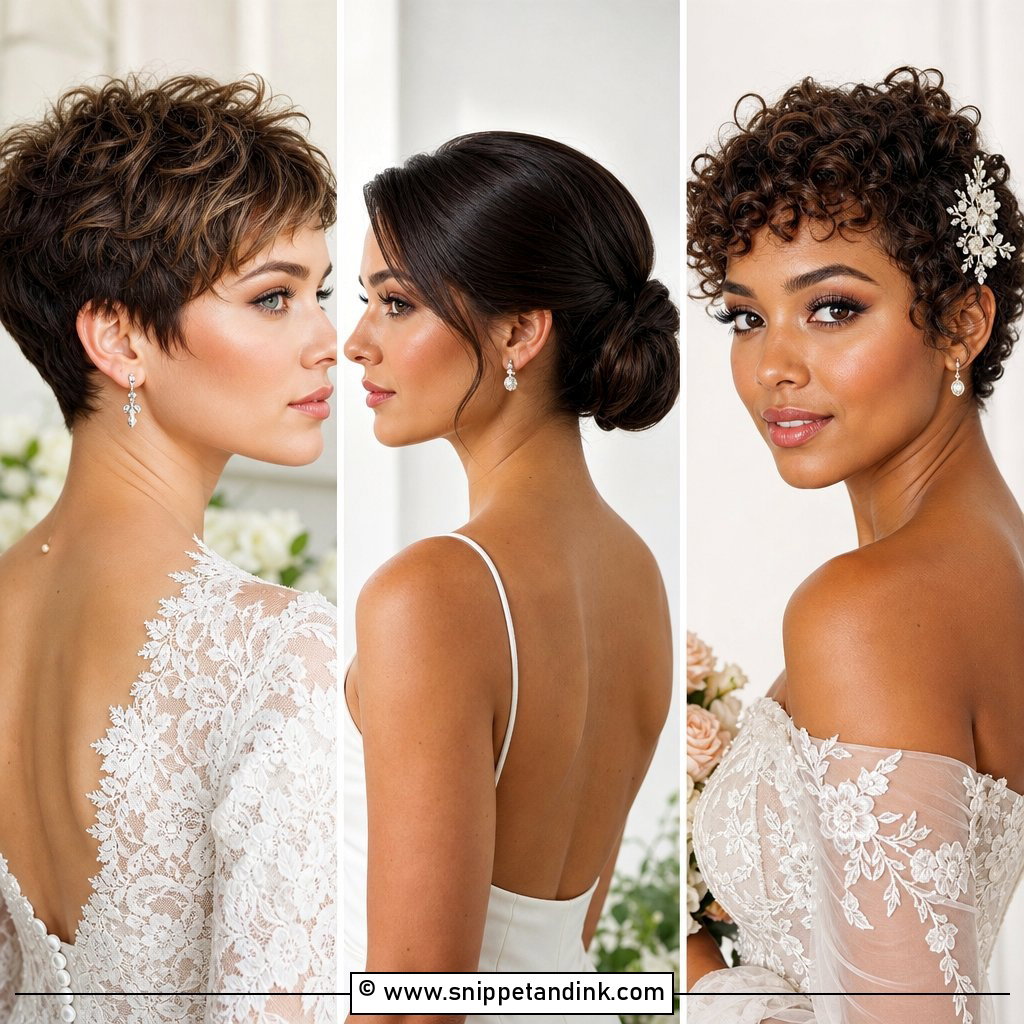
2. Sleek Pixie Cut With Side Part
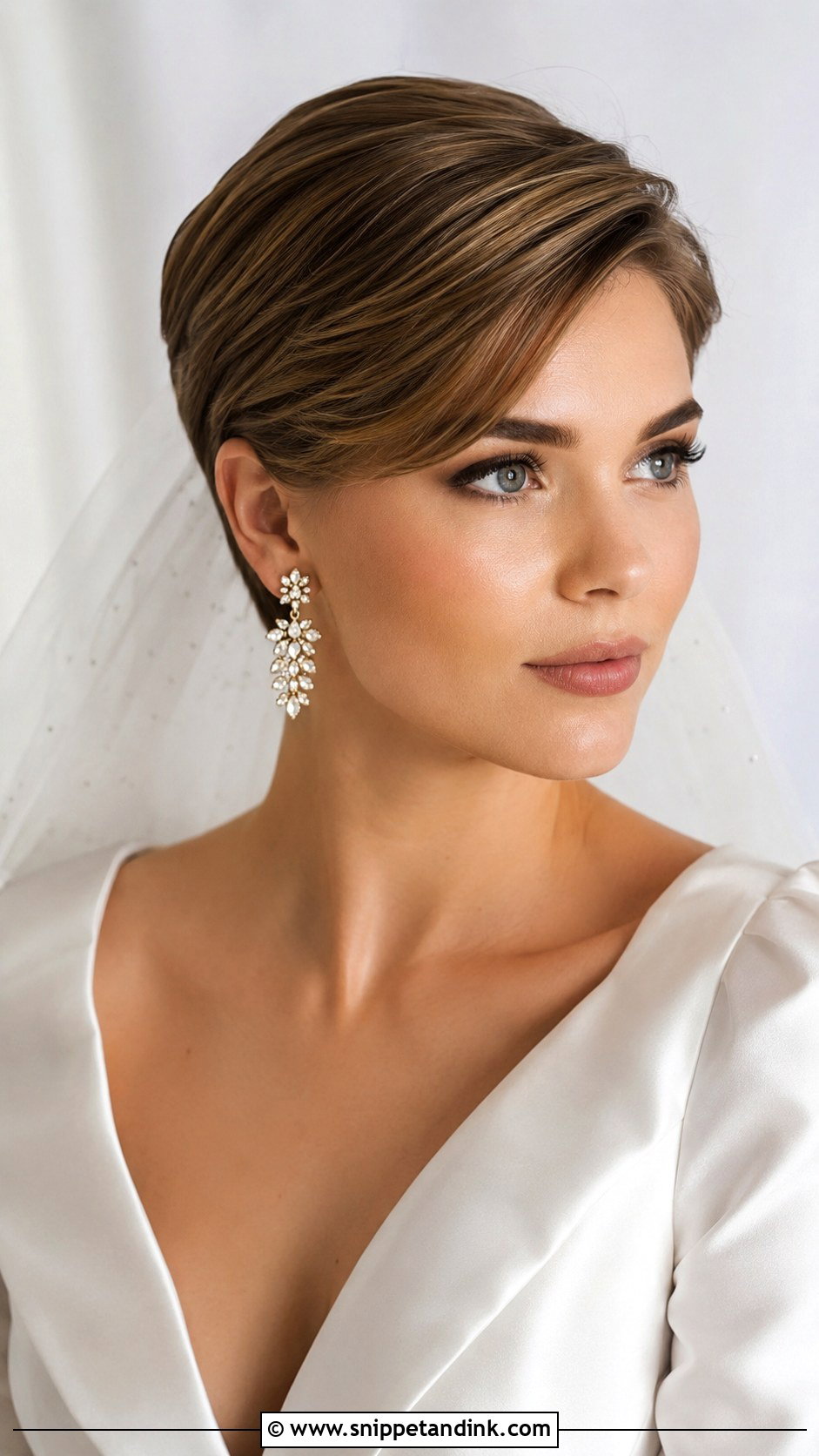
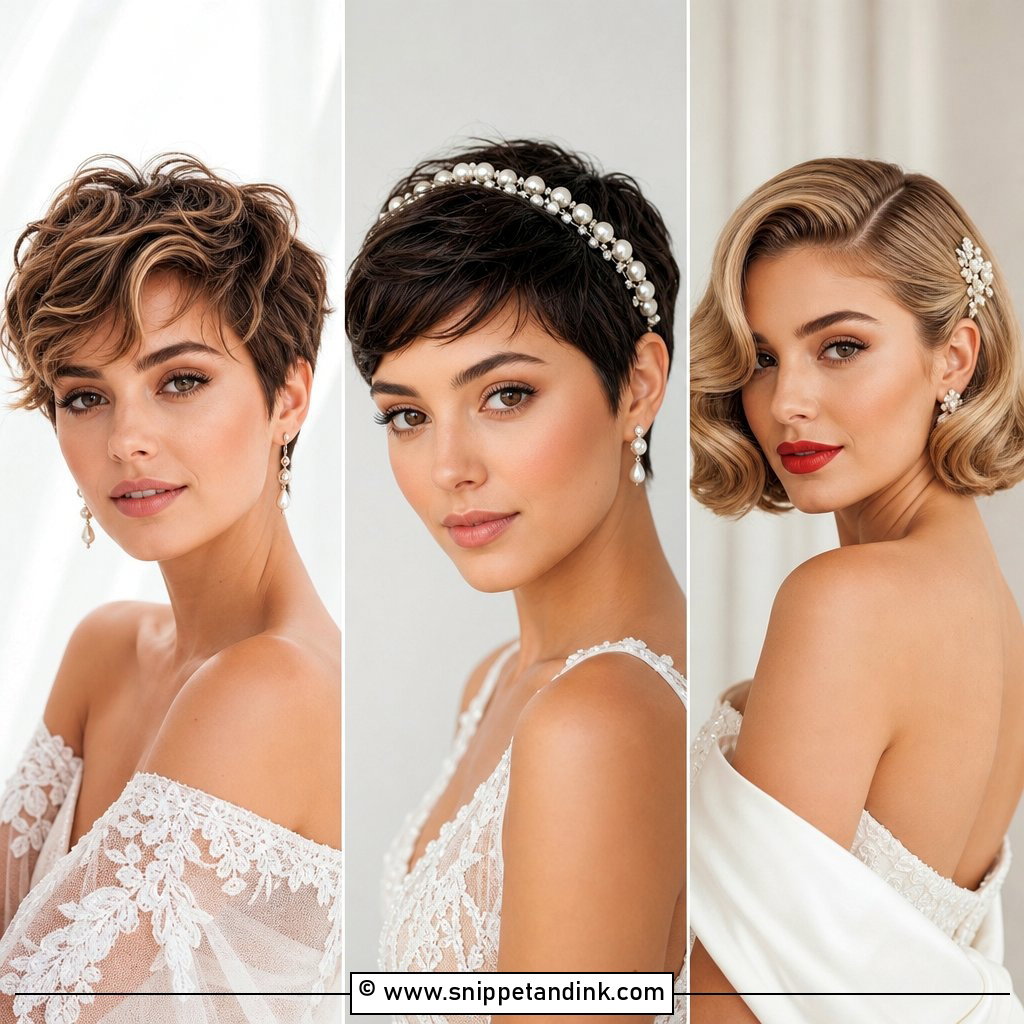
A sleek pixie with a deep side part is about precision, and it shows every mistake. I want the cut done about two weeks before the wedding so the edges have softened but nothing has grown out over the ears. A pea-sized drop of shine serum is plenty; more than that looks greasy under flash. Statement earrings earn their place here, since there’s no hair competing with them. If your crown has a strong cowlick, tell your stylist early, because a deep part fighting a cowlick will spring up by the first dance.
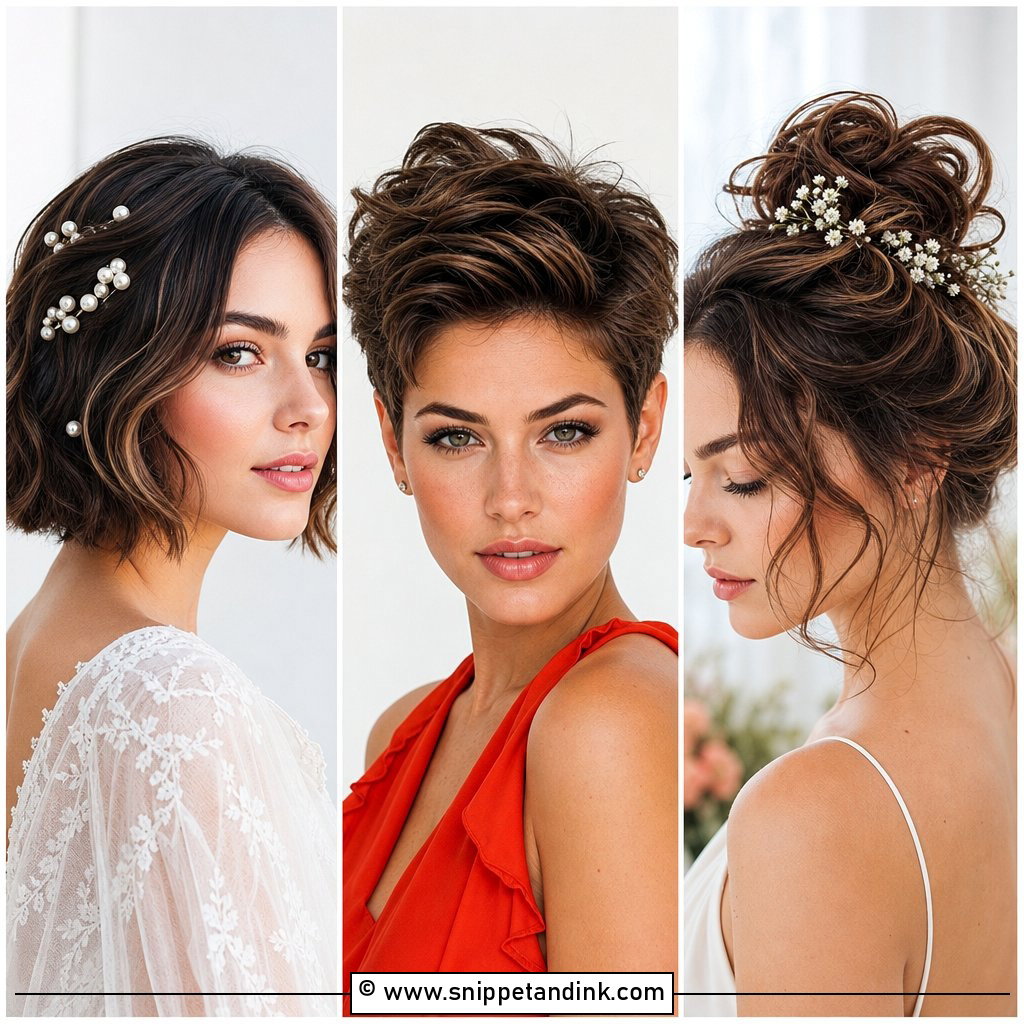
3. Textured Pixie With Decorative Hairpins
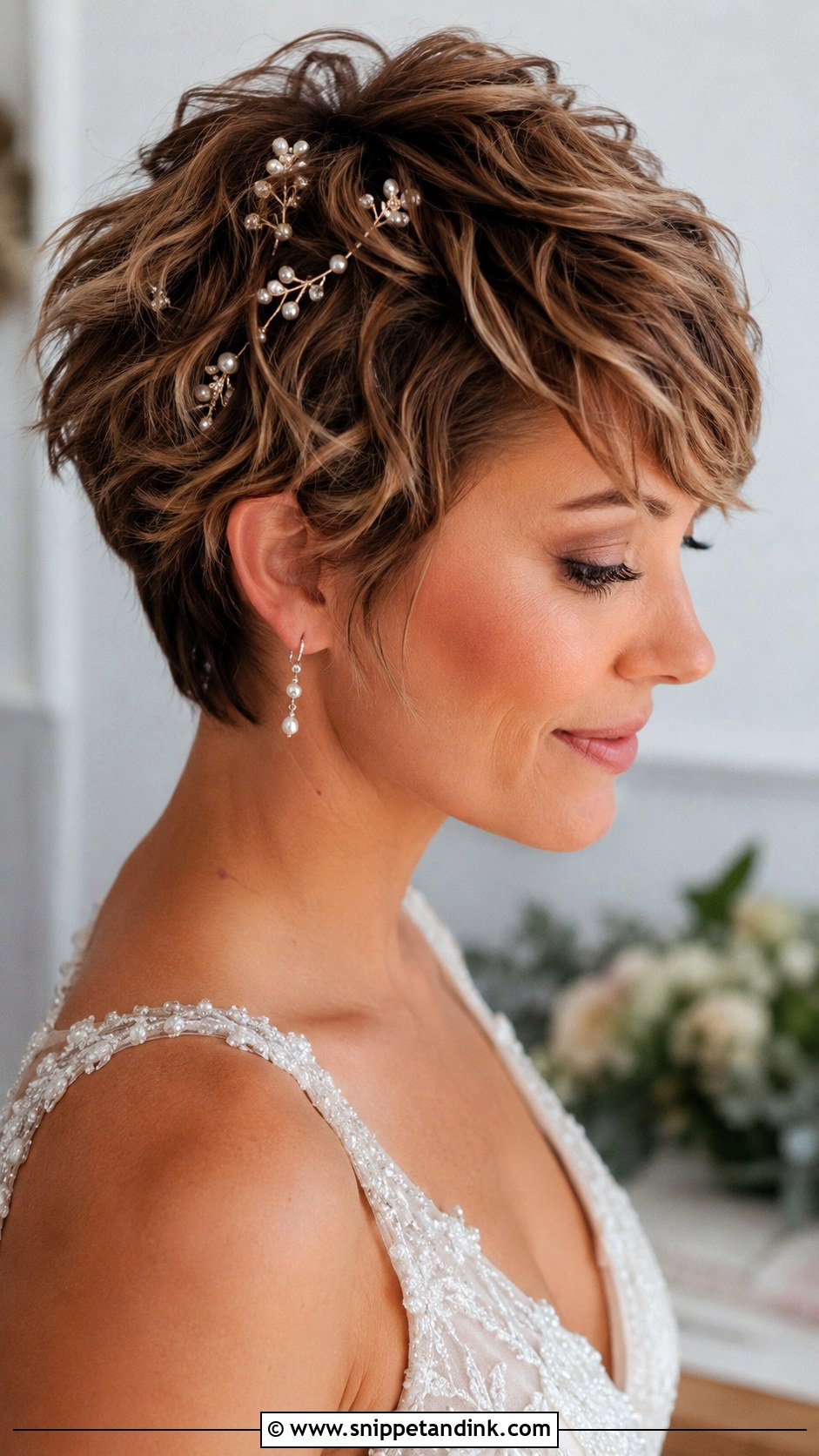
Want a little sparkle with your short crop? A textured pixie dressed with decorative pins is one of my favourite ways to make a cut feel bridal without fighting its length. I work a matte paste through dry hair to build grip, then slide each pin in against the direction of the growth so it locks under the hair rather than sliding out. Three to five pins along one side looks deliberate; a full row tends to look like a headband that went wrong. Pearl pins read softer in photos than crystal, which can flare under a flash.
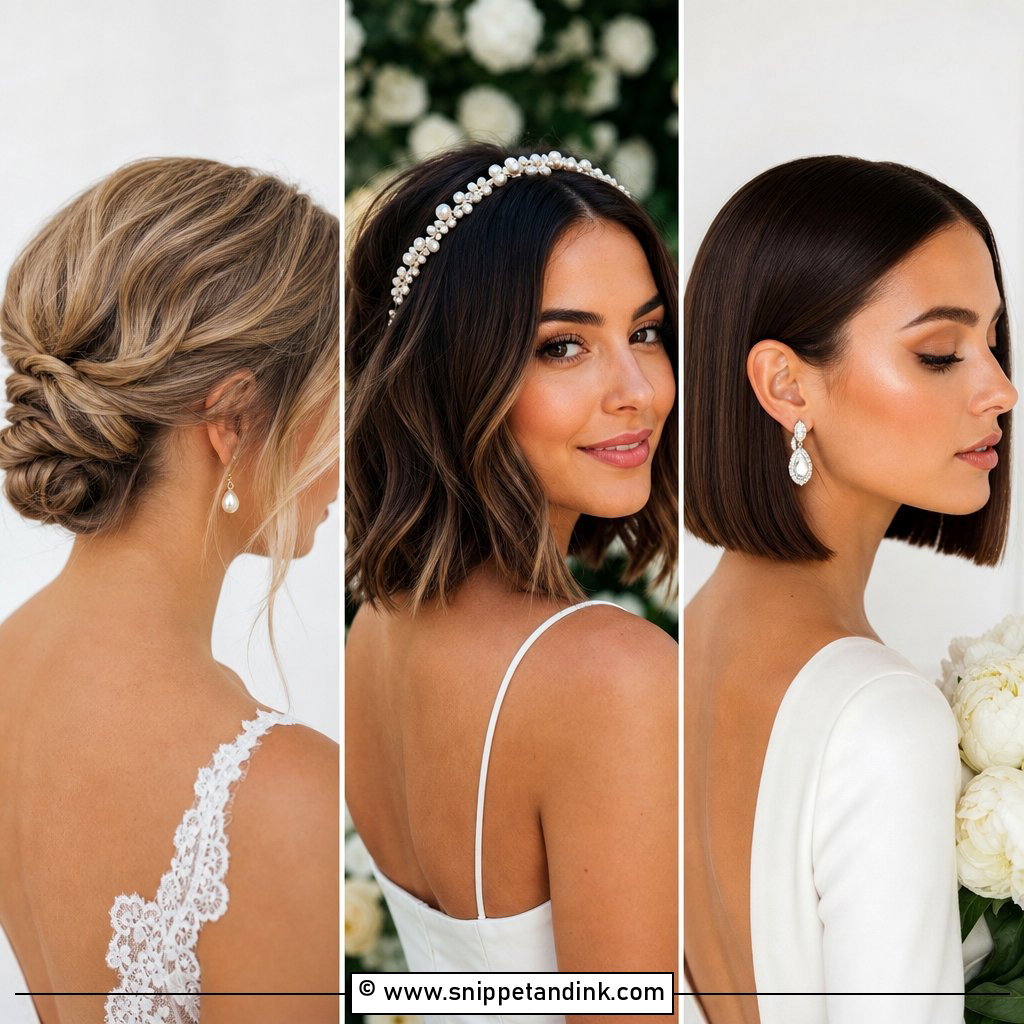
4. Classic Chignon For Short Hair
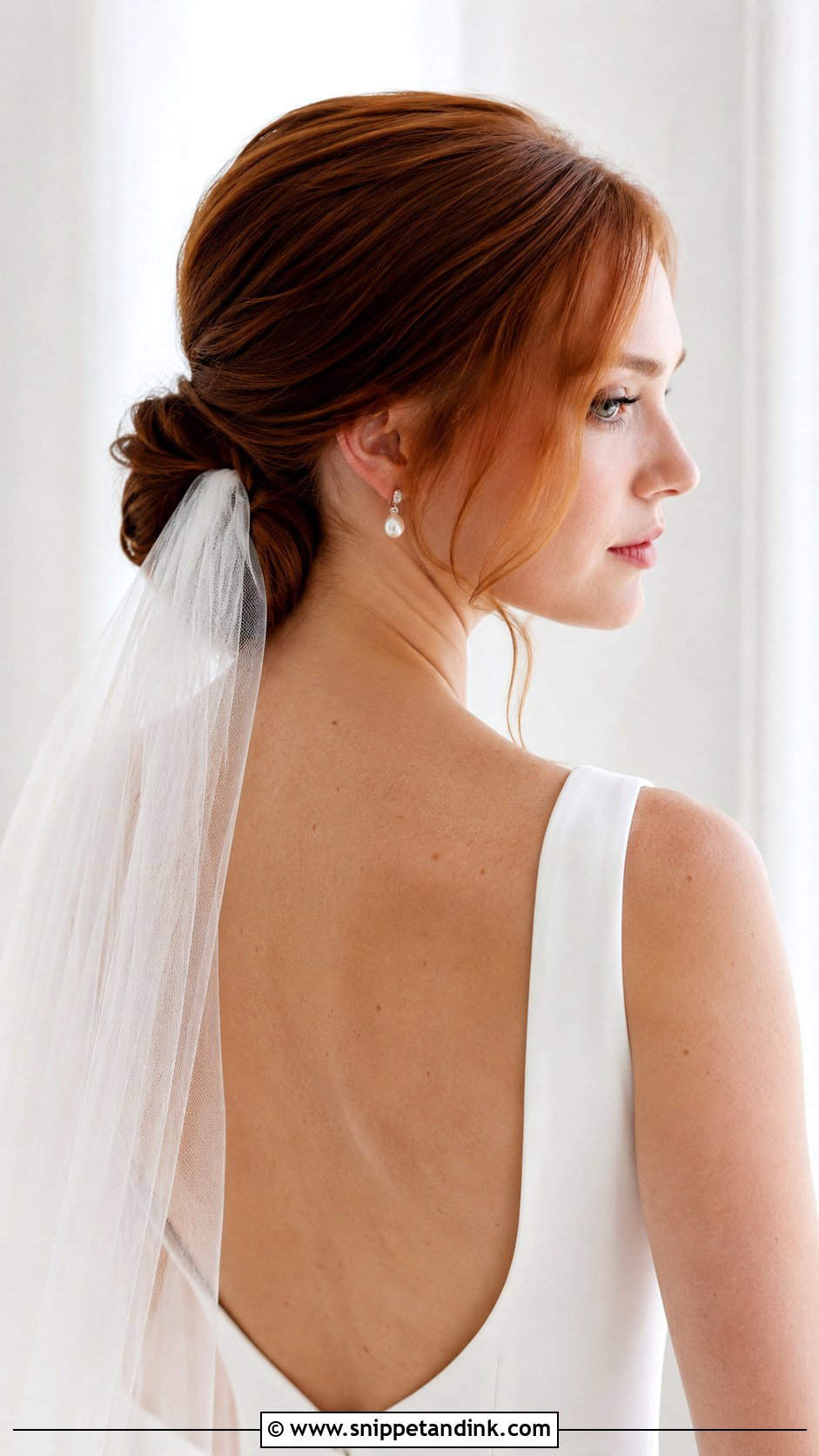
Yes, short hair can make a chignon, as long as it reaches the nape when pulled back, roughly a chin-length bob or longer. I tease the underside lightly, then twist and pin each section into a small shape, and often tuck a mesh bun form or a few clip-in pieces underneath so the knot has some body. The tendrils I leave out need curling at the trial, not on the day, so we know how they fall against your face. This is the short-hair updo that takes a veil most securely, because the comb has a solid knot to slide into.
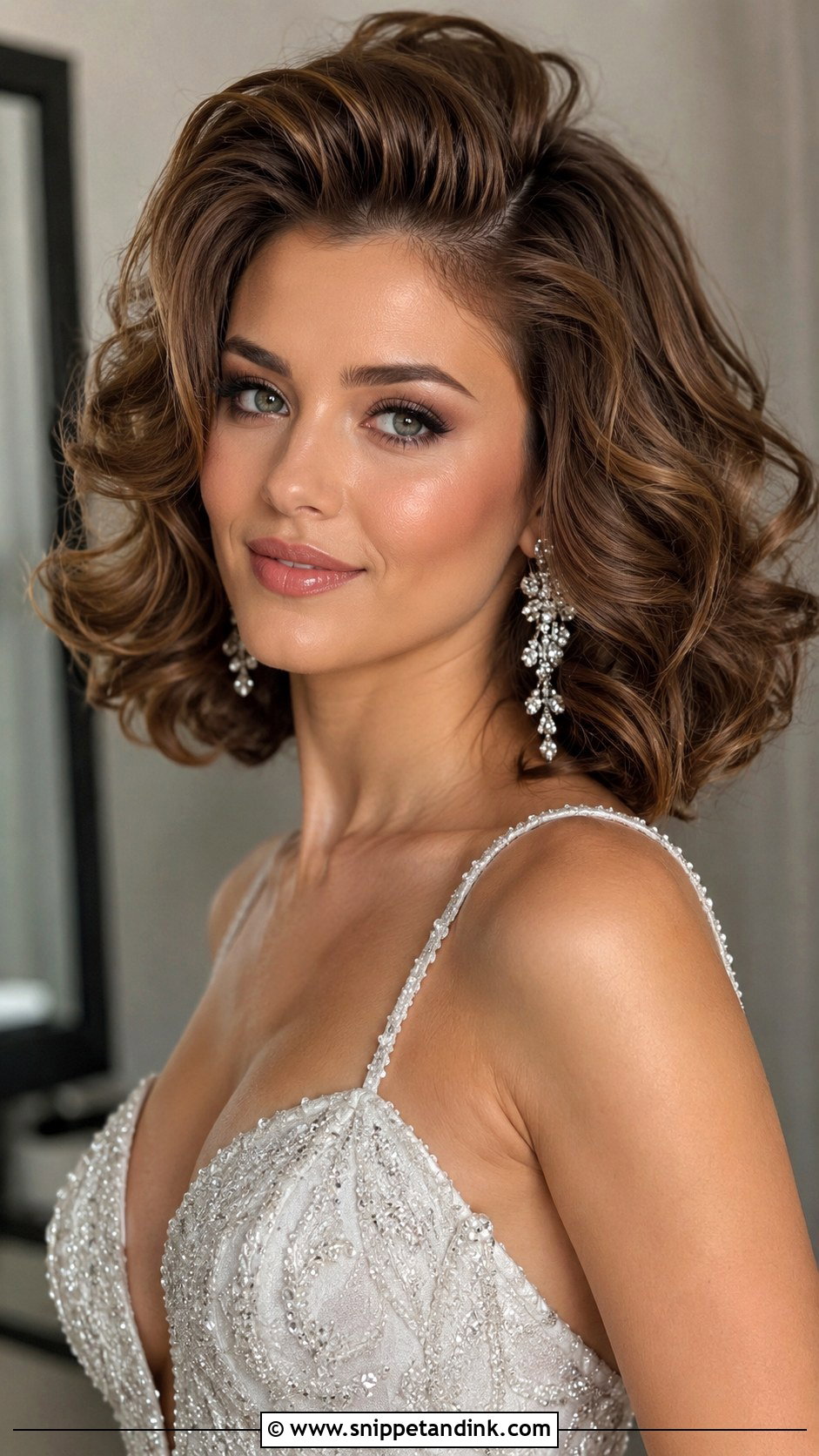
5. Wavy Lob With Deep Side Part
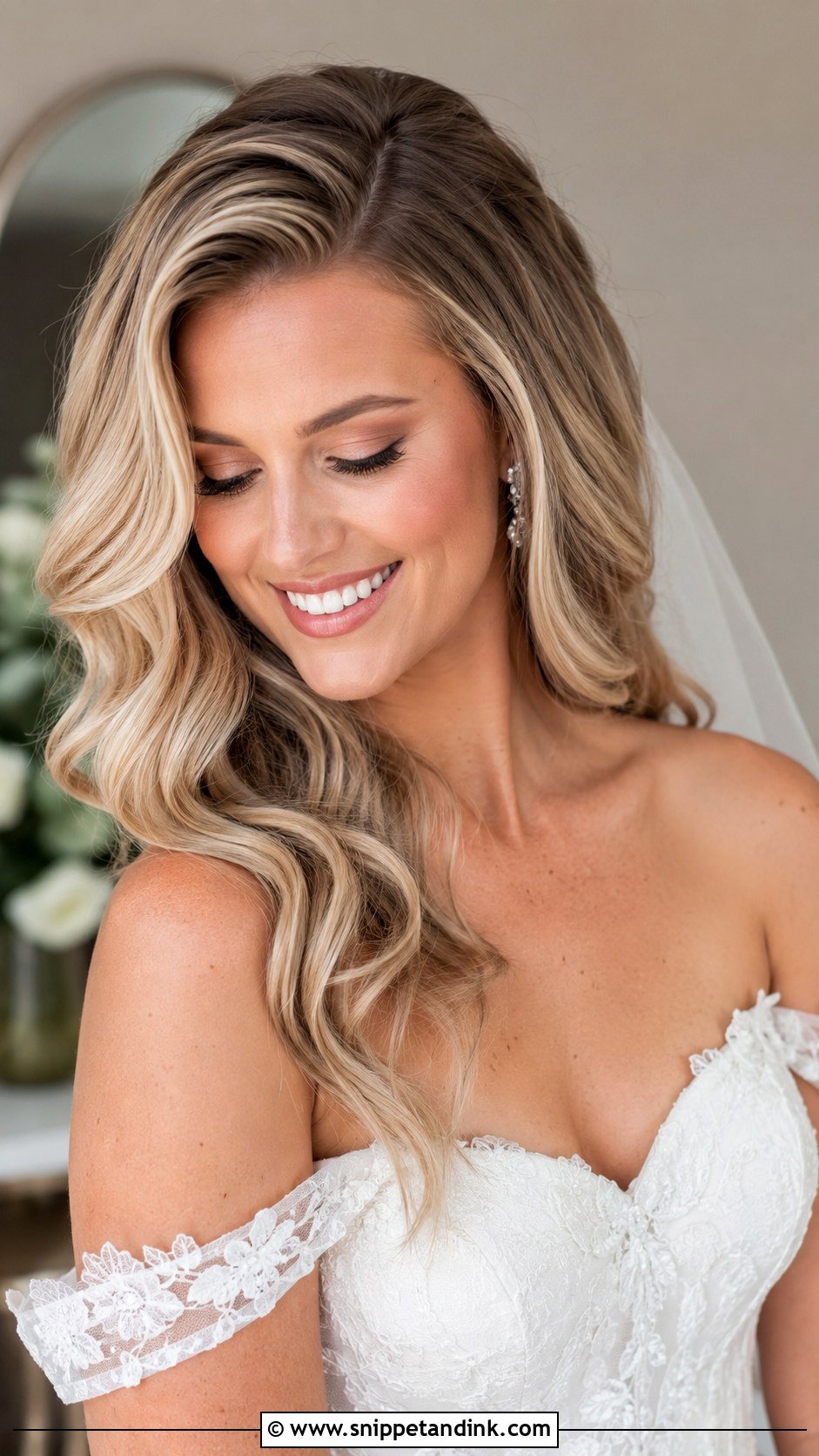
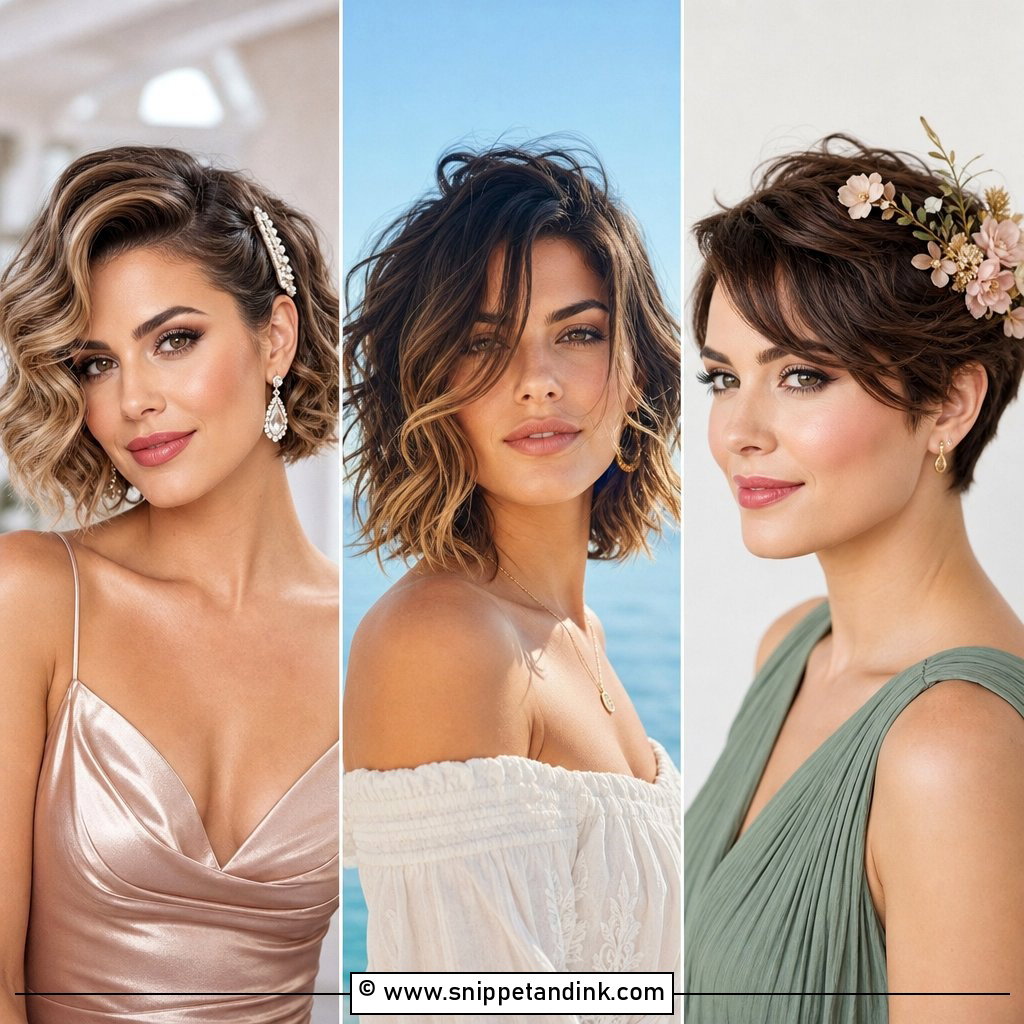
A wavy lob sits right at the length where you can do almost anything, which is why I see so many of them at trials. The deep side part lifts the crown on its own, so I need less teasing than usual. I use a 1.25 inch iron here and curl the front sections away from the face, so the part side opens up rather than collapsing over the eye. In wet heat, lob waves loosen into soft bends within a few hours; if that bothers you, hold them with a strong spray from the start rather than adding more later.
6. Braided Updo For Short Bob
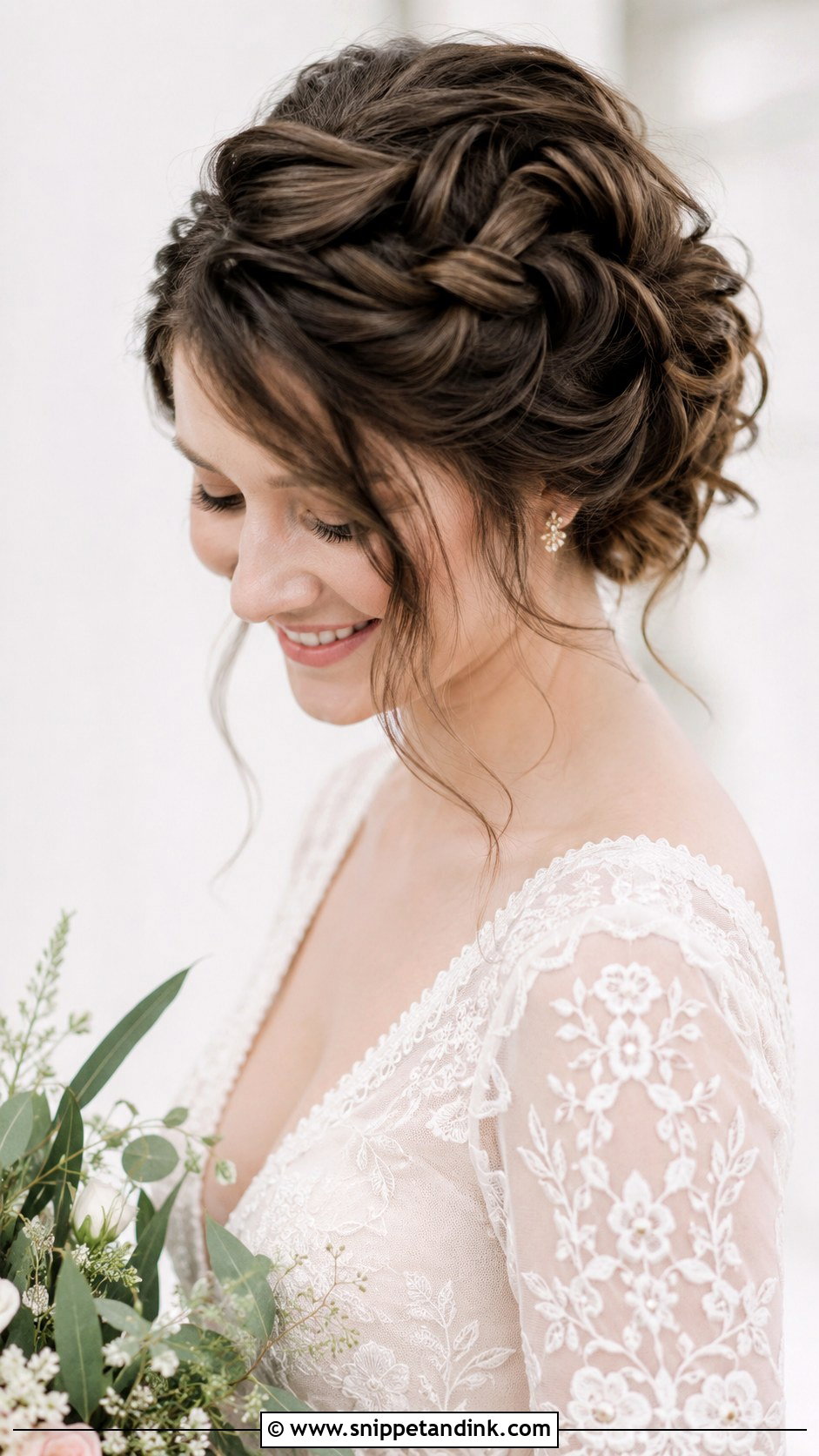
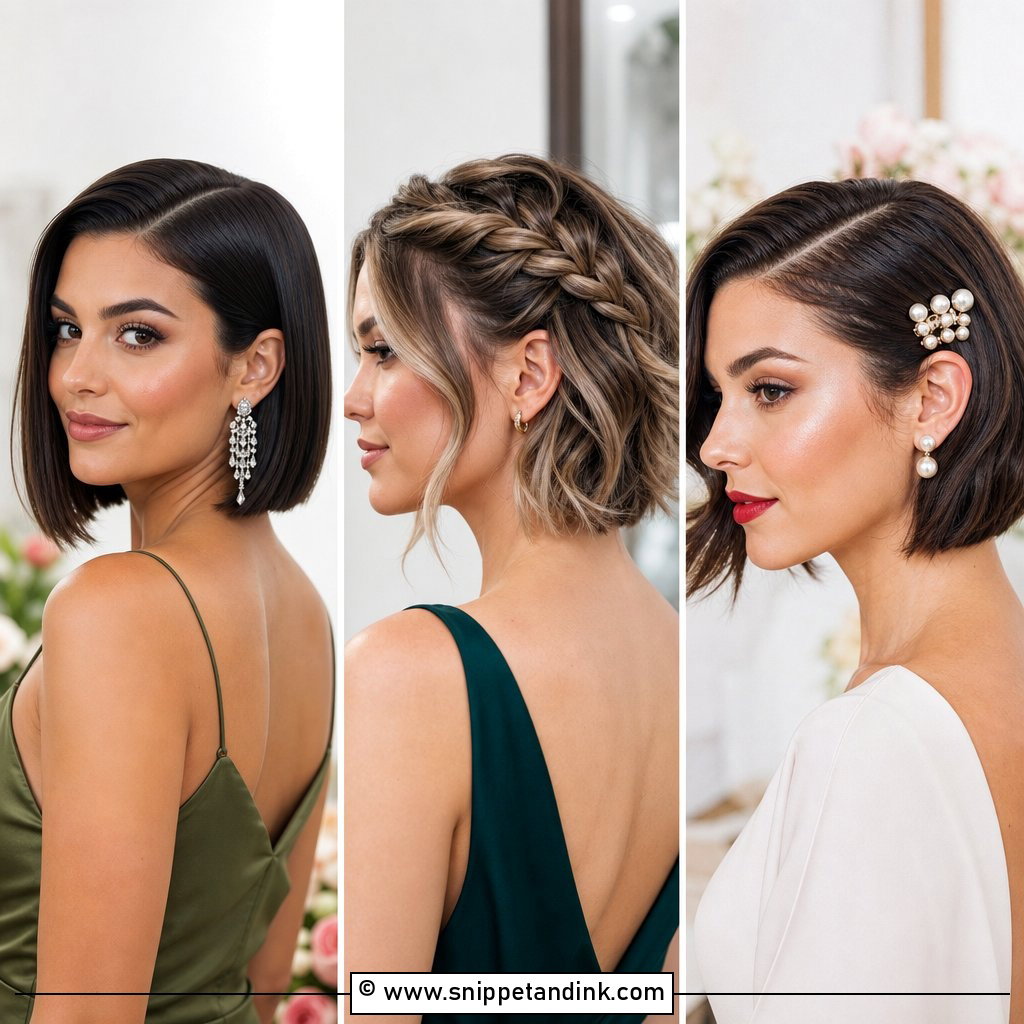
Braids rescue short hair from looking unfinished in an updo, because they create anchor points where pins can hold. On a bob I plait small sections at the sides and the back, then pin those braids up and tuck the loose ends into one another. Fine hair benefits from a dry texture spray before any braiding, or the plaits look thin and flat in photos. I’d skip this one if your bob is cut very blunt above the jaw; the back layers simply won’t reach.
7. Vintage Finger Waves Bob
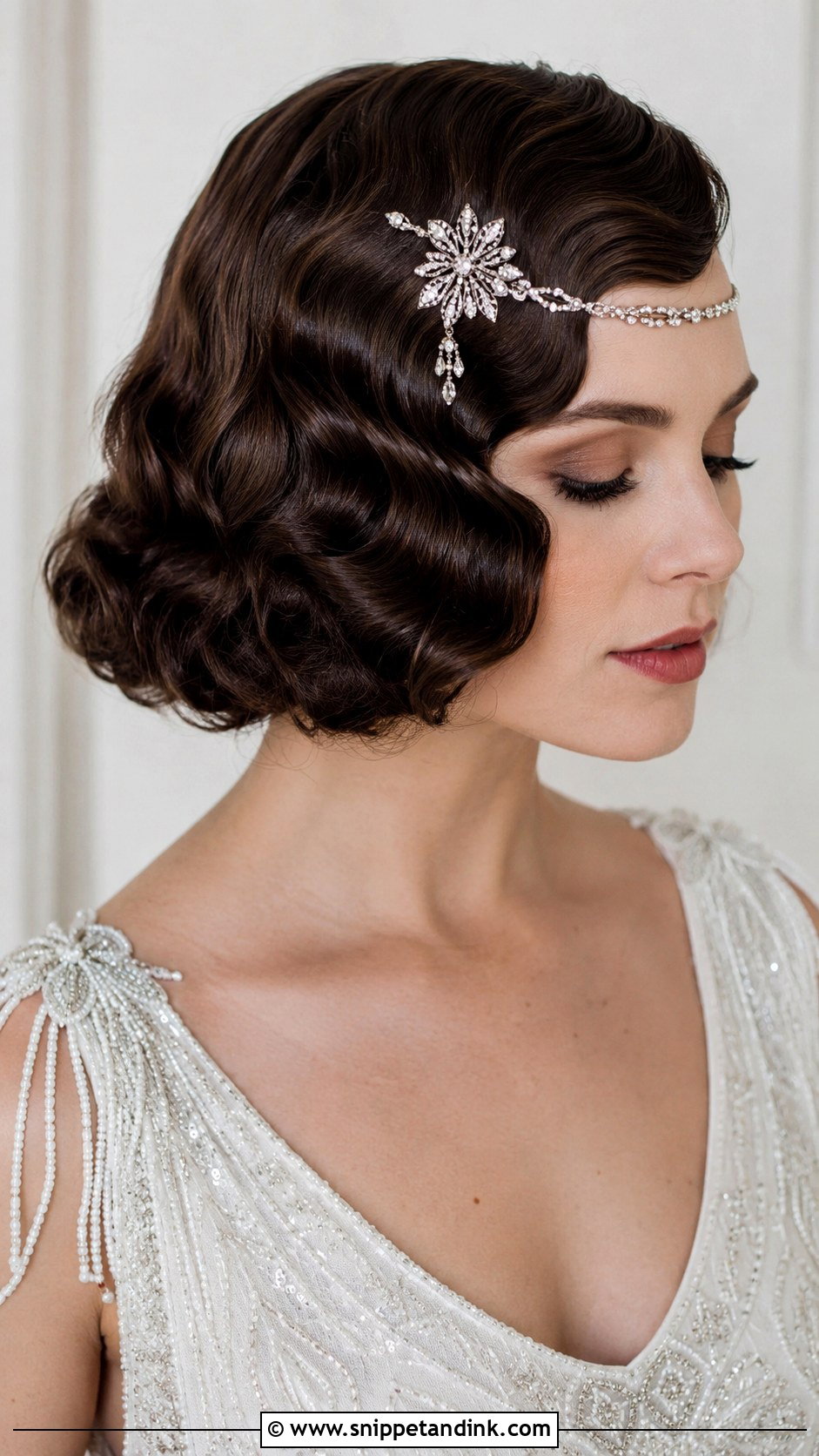
Channel old Hollywood with sculpted finger waves, the most technical style on this list. Each S-shape is pressed into wet hair with setting lotion and a fine comb, held with clips, then left to dry completely before anything comes out. Rushing the drying is what ruins it, so I build in extra time on the morning. Strong-hold gel gives the gloss, but it also means the waves can’t be rearranged if the veil knocks them, so we place the headpiece at the trial and leave it.
8. Pixie With Flower Crown
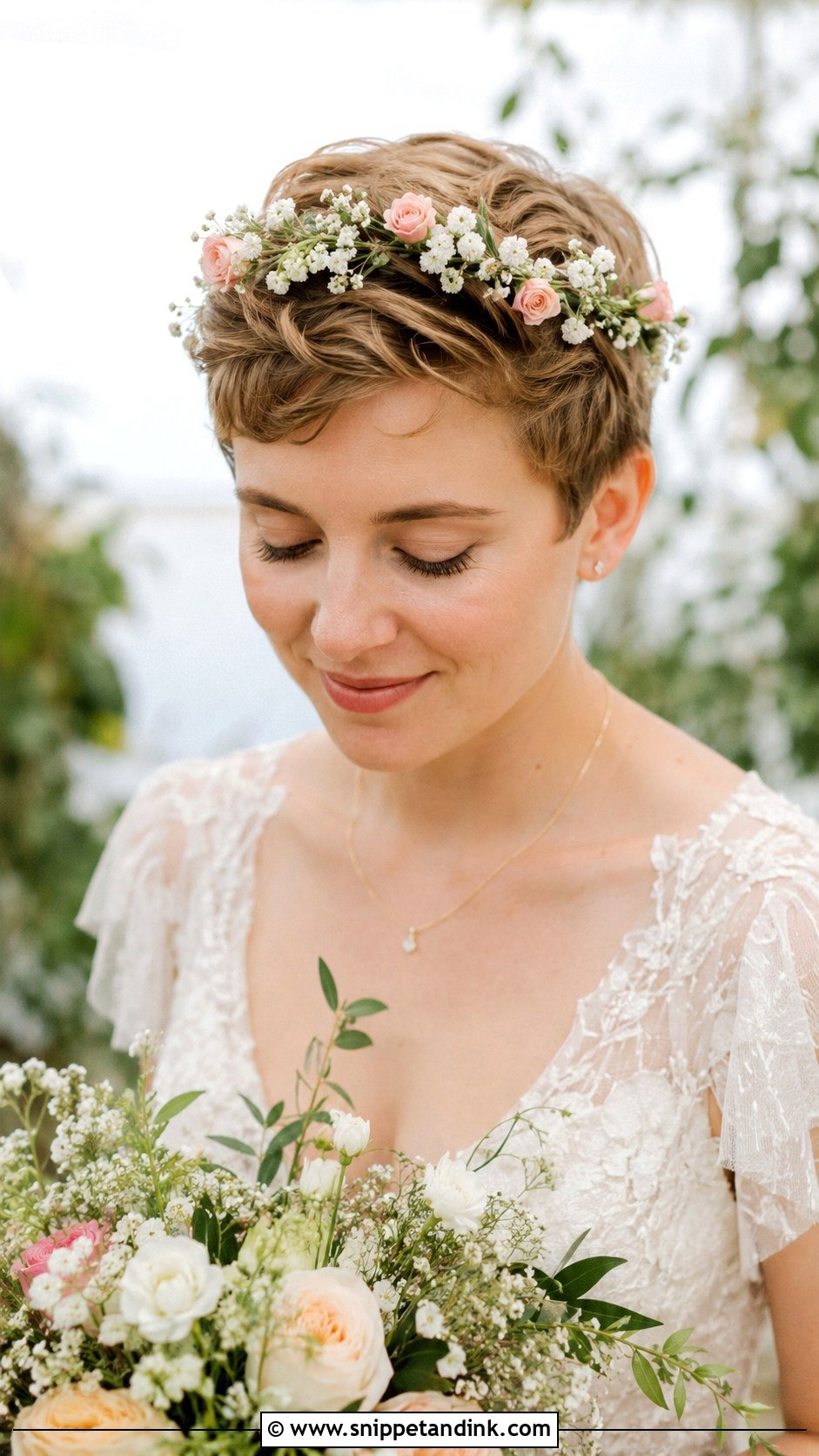
A flower crown on a pixie has to be lighter than the crowns made for long hair, because there’s no mass for it to rest on. I ask florists to wire small blooms such as baby’s breath or spray roses onto a thin, flexible band and to keep the back narrower than the front. Two tiny pins at each temple, crossed into an X, keep it from sliding toward the forehead. Fresh flowers wilt in direct sun, so for a summer ceremony outside, silk blooms are the safer choice.
9. Tousled Bob With Loose Curls
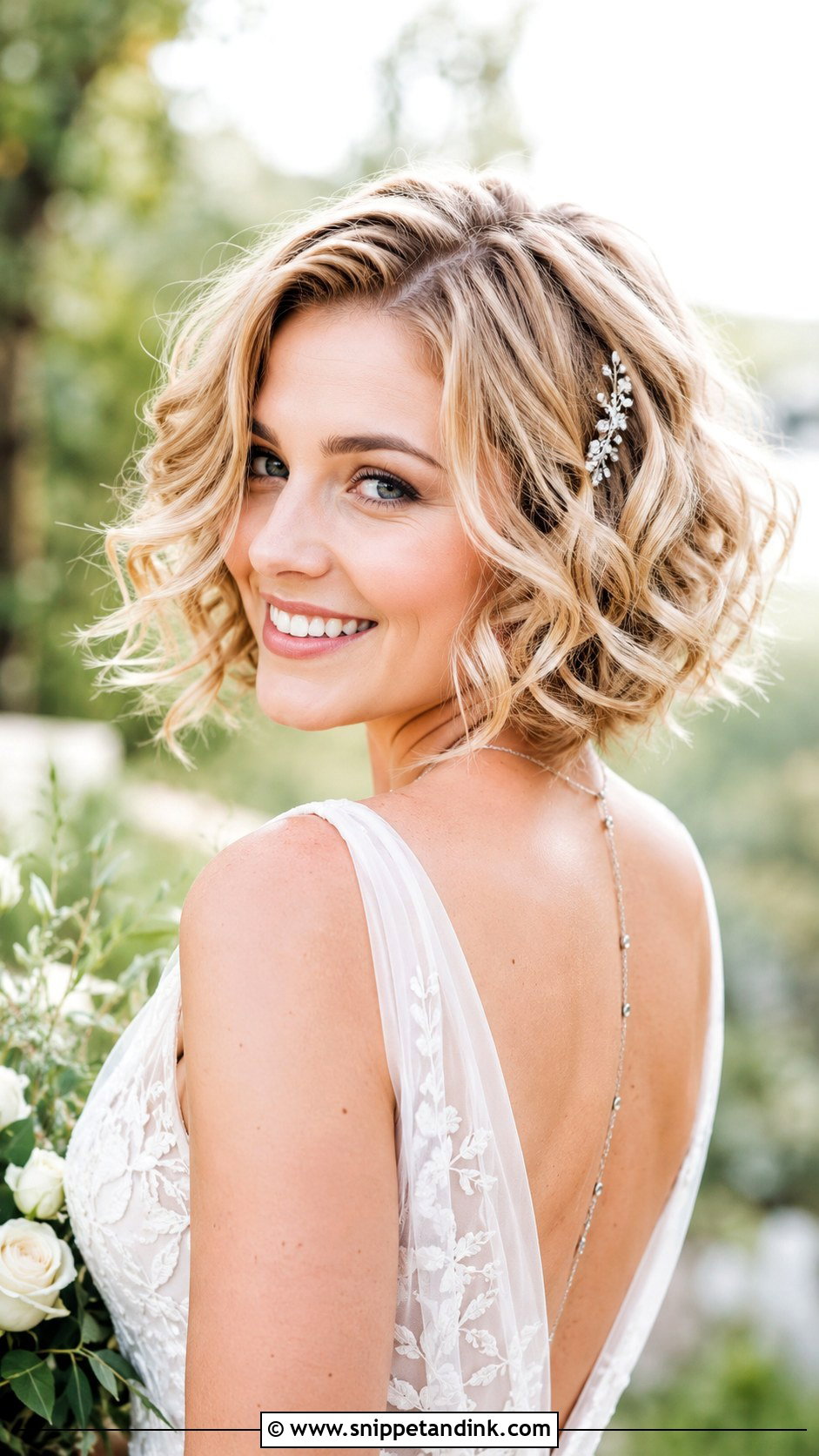
Most chin-length bobs need loose, bouncy curls set in smaller sections than you’d expect, because short curls loosen fast. I curl with a 1 inch wand, pin each curl in a coil while it cools, and only brush through once everything is cold. That cooling step is the difference between curls that last the evening and curls that have dropped by the speeches. Break them up with your fingers rather than a brush if you want them to stay piecey.
10. Sleek Straight Bob
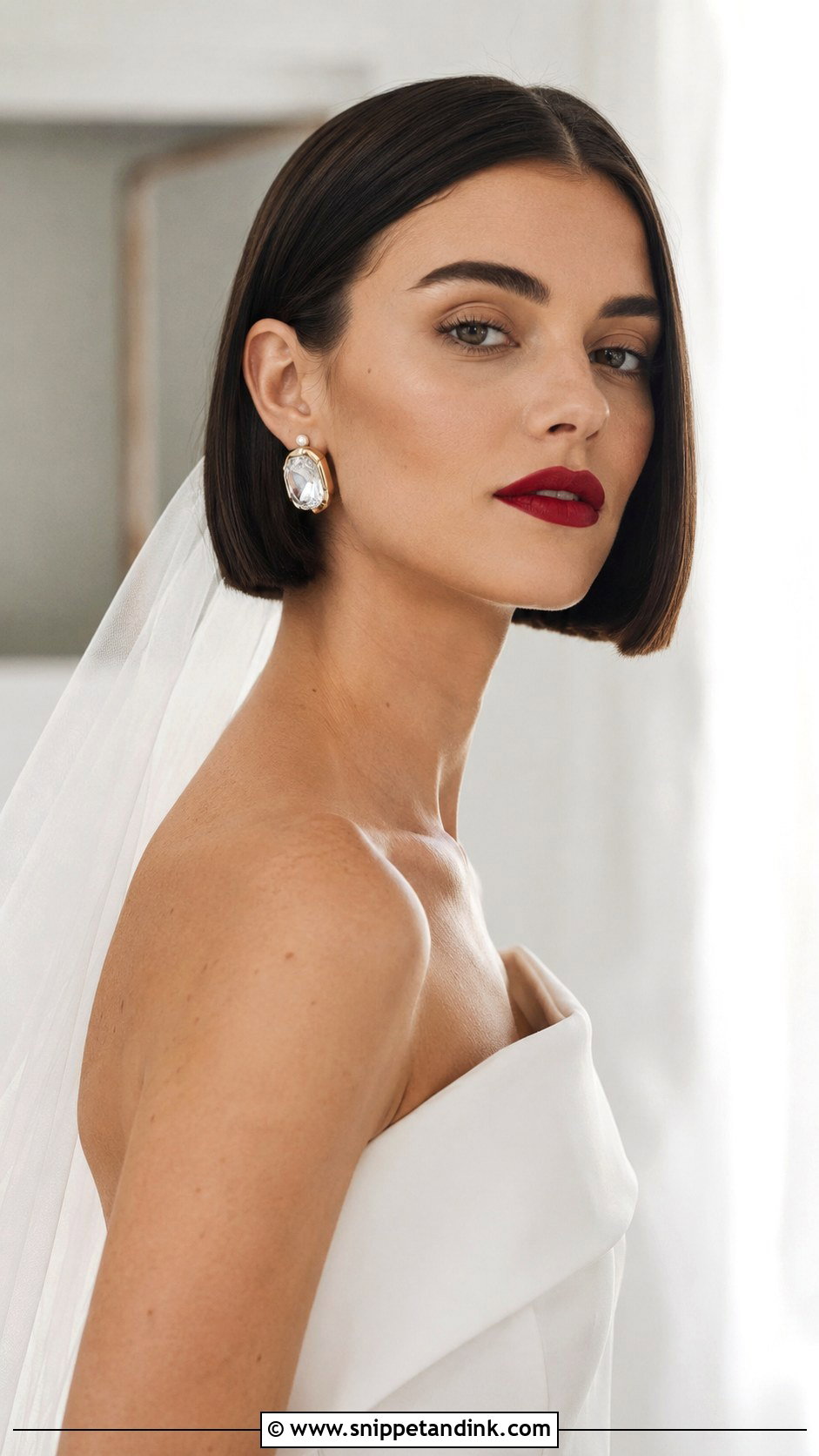
A sleek straight bob looks simple and is unforgiving. Blunt ends show every uneven section, so I flat-iron in thin slices and finish by bevelling the ends under very slightly so they don’t kick out at the collar. Strong features and a bold lip suit it well. My caution is humidity: straight hair is the first to frizz in a damp venue, so an anti-humidity spray and a tiny smoothing balm in your clutch are worth carrying.
11. Half-Up Twisted Style For Lob
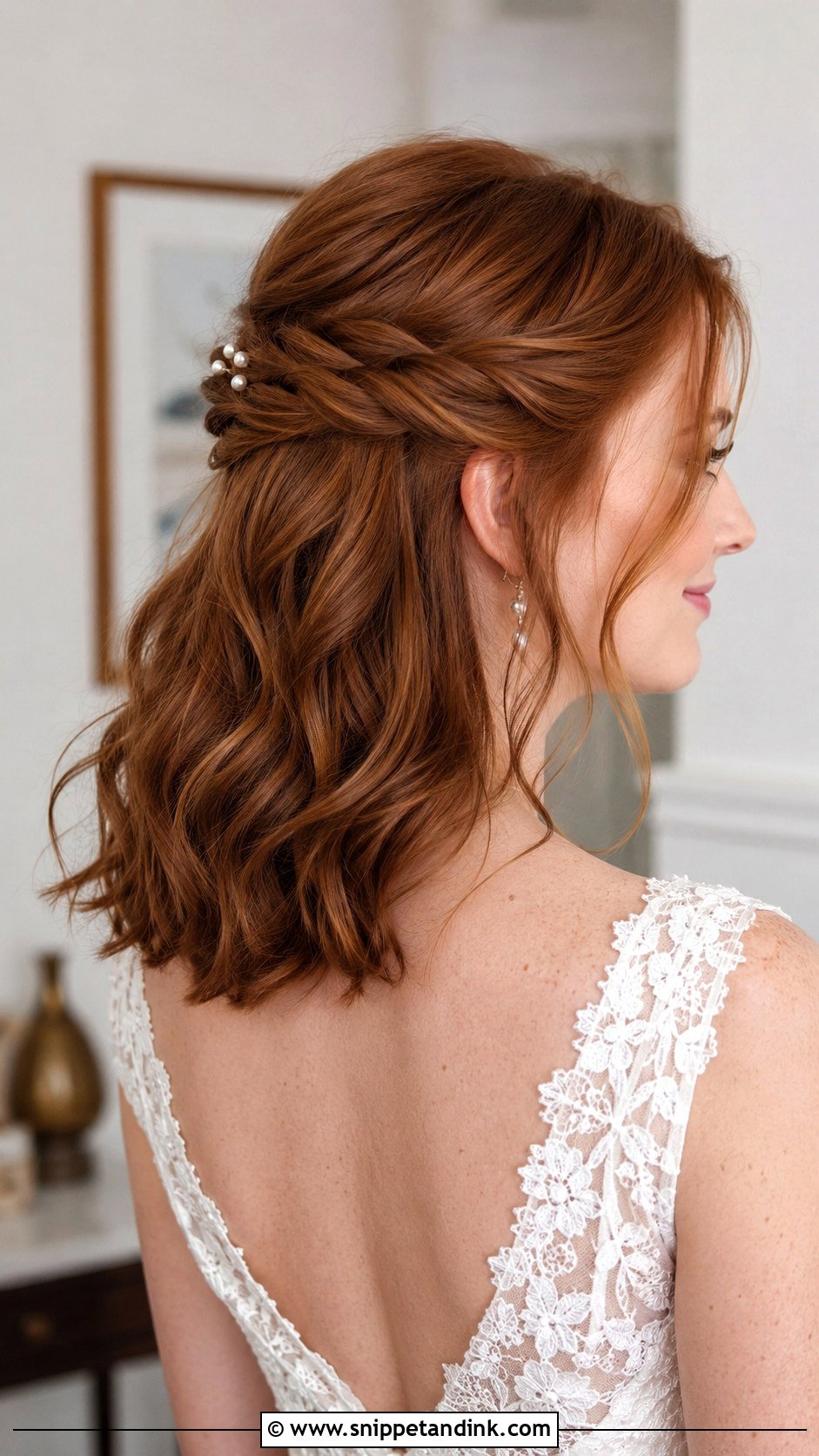
I suggest a half-up twist to lob brides who want their hair down but hate it in their face during vows. I take the top section back in two twists that meet at the crown and pin them where they cross, which hides the pins under the twist itself. Waves below should be set before the twist goes in, otherwise lifting the top section flattens them. It also makes an easy base for small flowers or pearl pins, since the twist gives them something to grip.
12. Pixie With Side-Swept Bangs
Side-swept bangs on a pixie need a good round-brush blowout and very little product, or the fringe goes stiff. I dry the fringe in the opposite direction first, then sweep it into place; that’s what gives it lift at the root instead of lying flat. If your fringe grows straight forward, a sweep against that habit will drift back over the day, so we test it at the trial. A small comb placed near the part balances the length of the bang with something on the other side.
13. Boho Braid And Bun For Short Hair
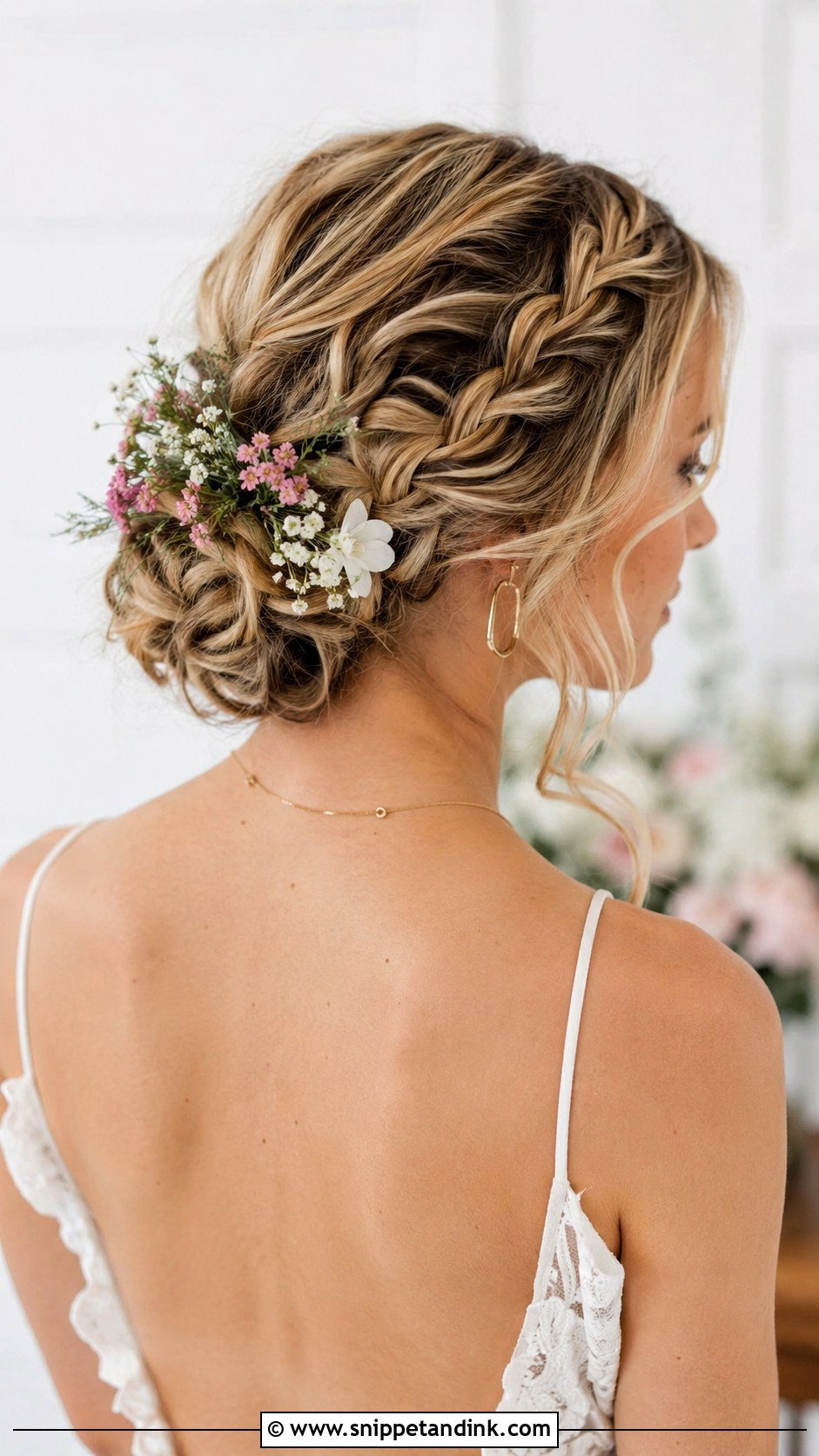
A boho braid-and-bun on short hair is mostly an illusion, and a good one. I braid loose sections, pancake them by pulling the outer loops wider, then gather everything into a low knot padded with a little teasing. The tendrils I leave out are deliberately different lengths so they don’t look cut. Wildflowers or greenery tucked into the knot should be wired, since loose stems drop out the moment you hug someone. Hair that’s slightly dirty, washed the day before, holds this far better than freshly washed hair.
14. Glamorous Voluminous Bob
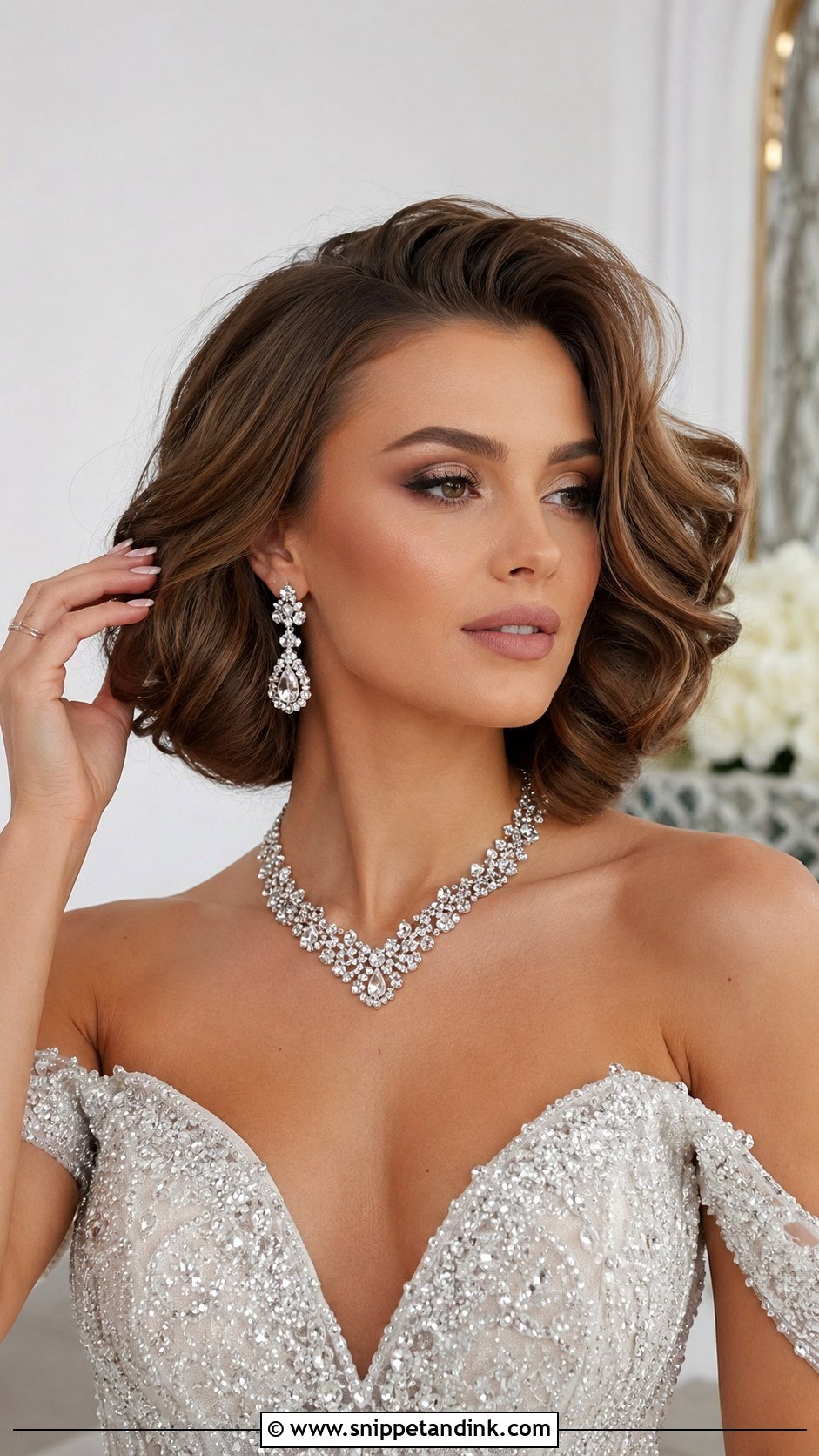
Big, round-brush volume turns a simple bob into something with a strong silhouette. I tease only the underside at the crown and smooth the top layer over it, so the shape is full but the surface stays shiny. A flexible-hold spray keeps the bounce without turning it into a helmet; brittle spray cracks once you’ve hugged a few people. This one suits structured gowns and big jewellery, and it can overwhelm a very petite frame or a delicate neckline.
15. Wavy Pixie With Pearl Accessories
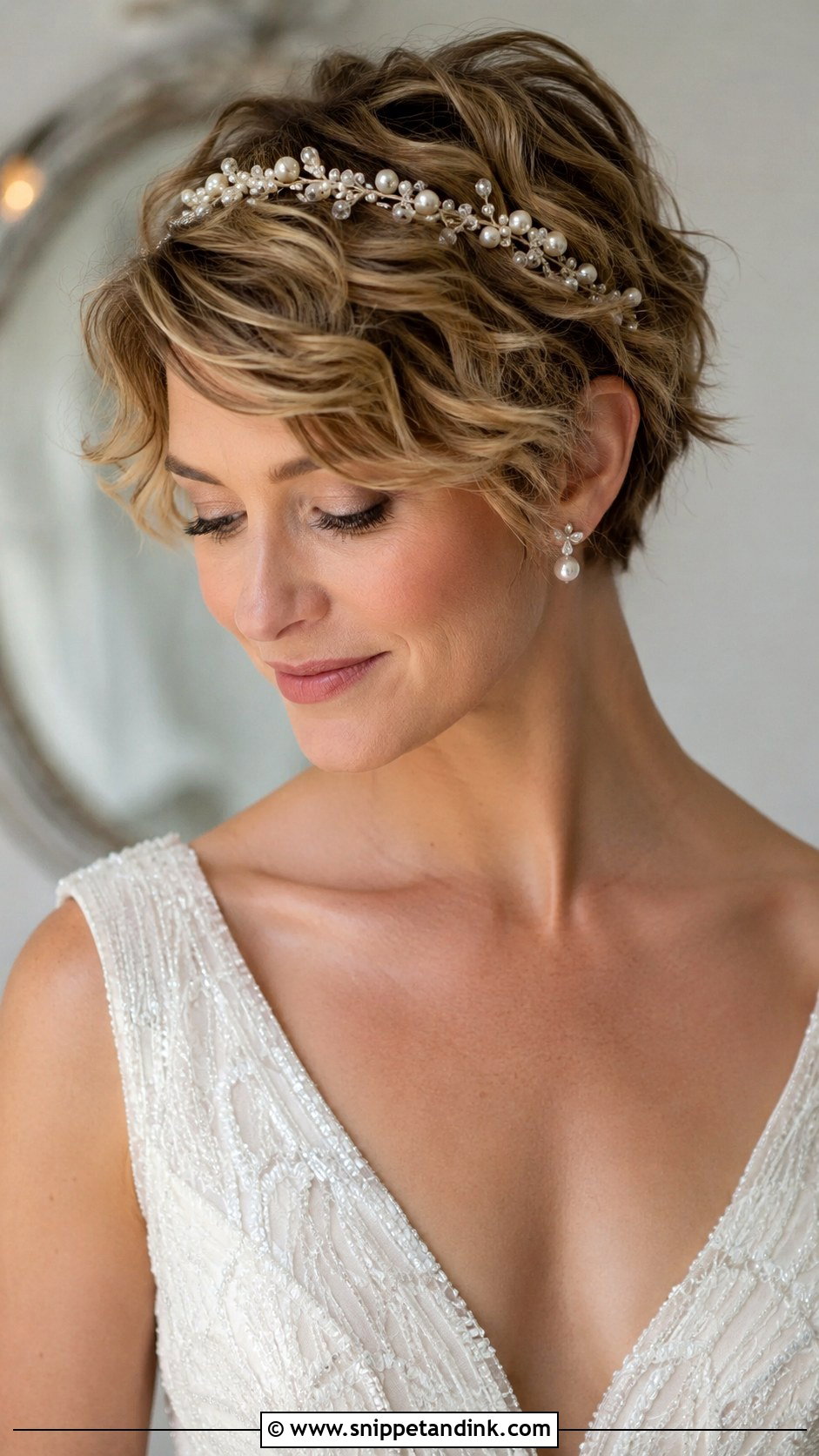
Pearls suit a short crop because they’re small enough to sit on short sections without sliding. On a wavy pixie I’ll use a few pearl pins or a pearl-embellished headband, and I set the waves first so the accessory sits on texture rather than on smooth hair it can slip down. A headband needs grip underneath, so I place a small hidden pin at each side behind the ear. Match the pearl tone to your earrings; cream pearls next to stark white ones look like a mistake in photos.
16. Slicked-Back Wet Look Bob
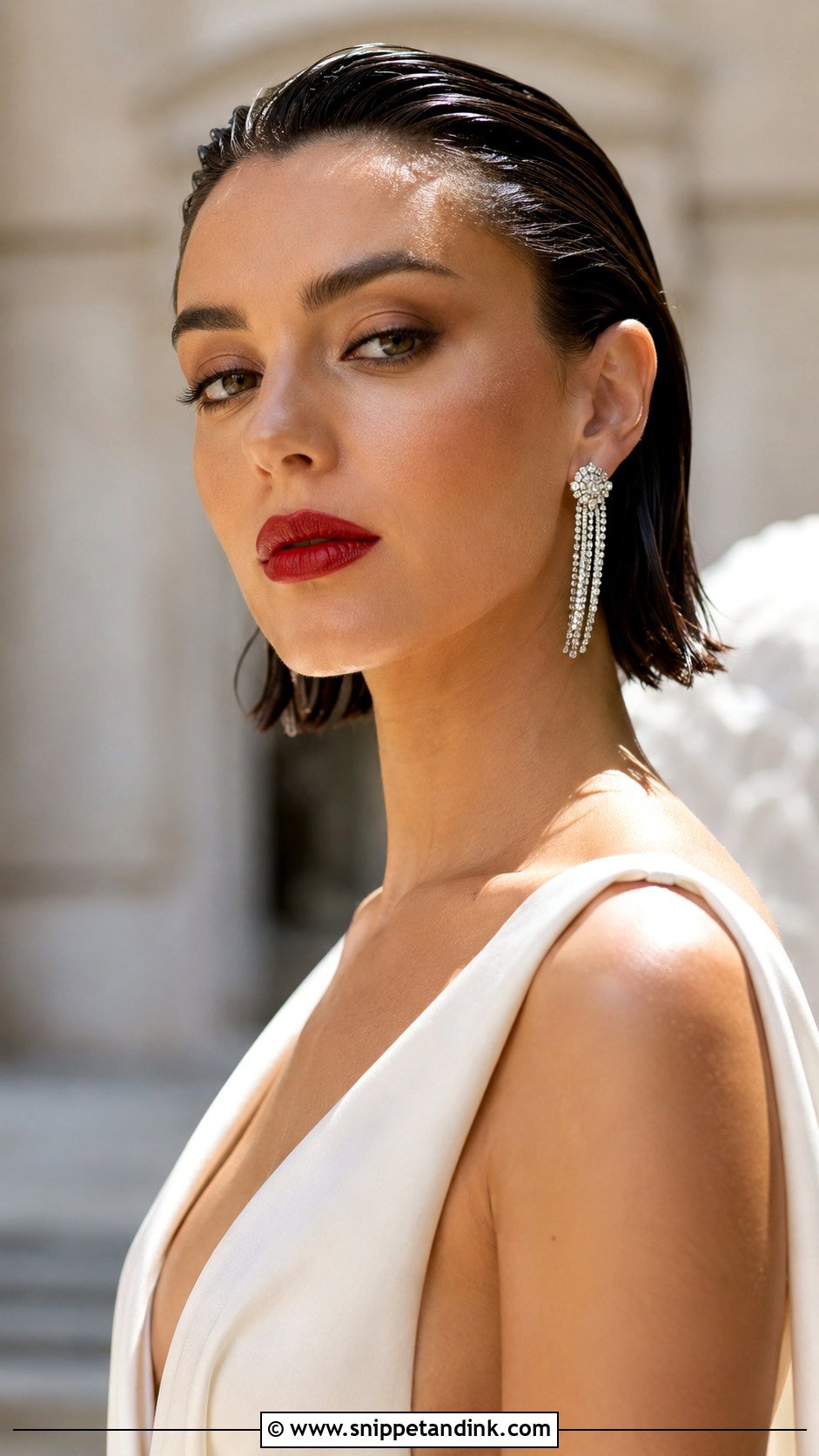
The wet look is the boldest style here and needs the most honest conversation. I comb gel or a strong styling cream through damp hair and set it straight back, but it only flatters if you’re comfortable with your face fully on show from every angle. It also shows scalp on fine hair at the hairline, so I check that under bright light at the trial. Once it’s set it barely moves, which makes it very reliable at a city wedding with a long evening.
17. Soft Curls Lob With Hair Vine
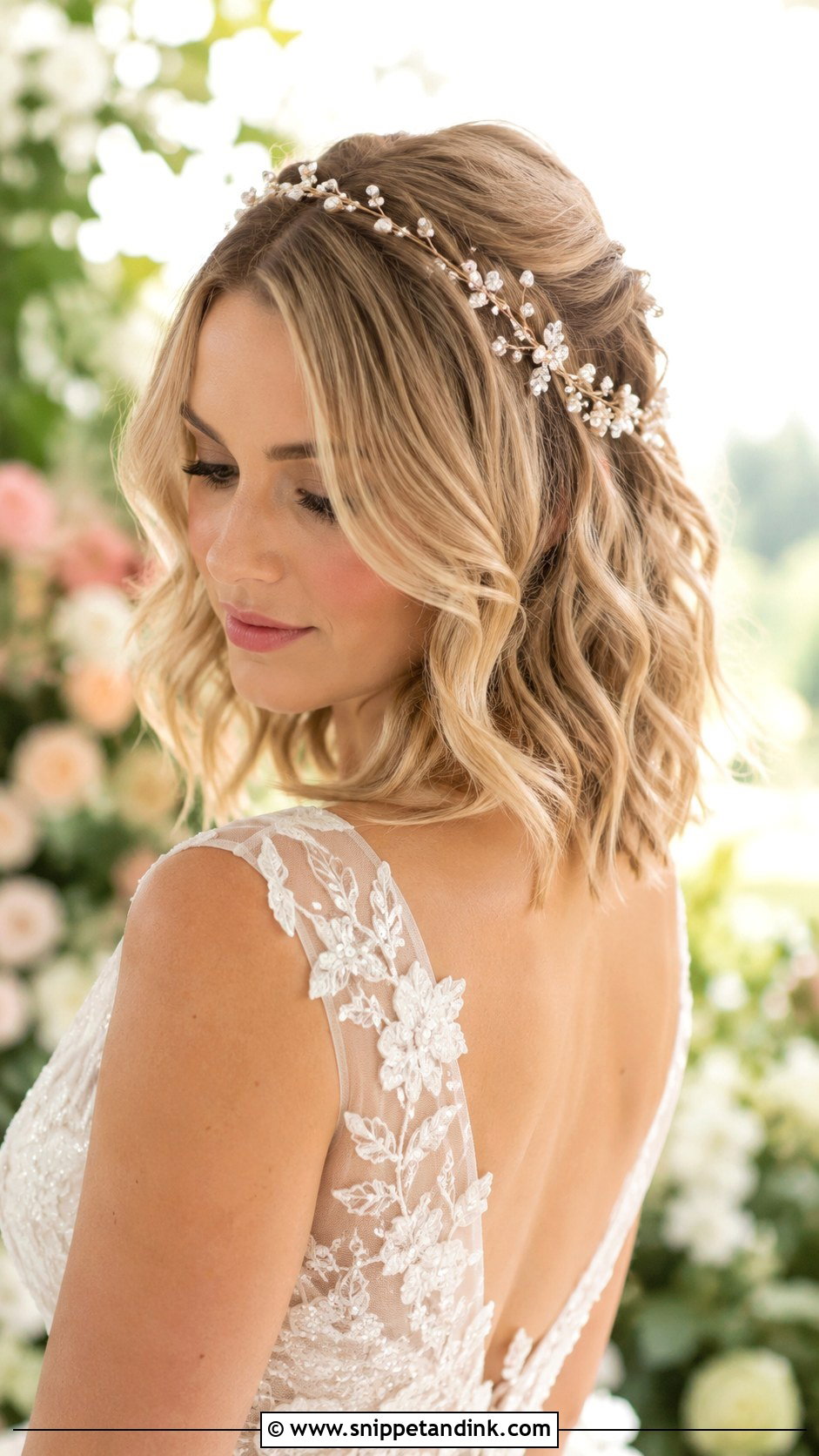
A hair vine works on a wavy lob when it’s woven through the hair, not laid on top. I pin the vine at a few points behind each ear, then thread its tail through the curls so pieces of hair sit over the wire and hide it. Lob curls need a 1.25 inch iron and should be set before the vine goes in. Choose a vine with a flexible wire; stiff ones stick out at the ends and catch on a veil.
18. Twisted Pixie Updo
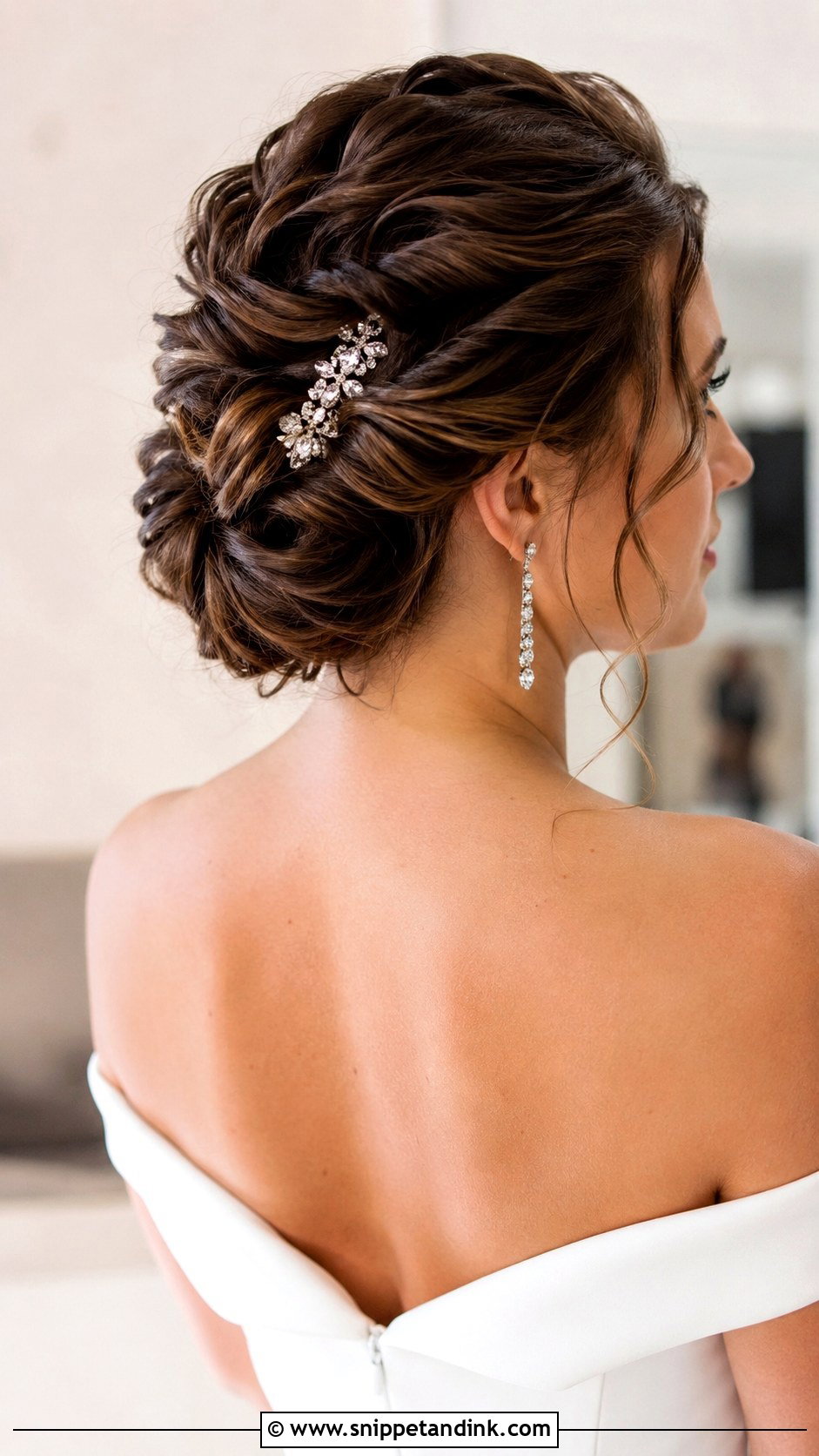
A twisted pixie updo is an unusual choice, and I love it on brides with thick, slightly longer pixies. Small two-strand twists run back from the hairline and each is fixed with a mini pin hidden beneath the next twist. Very fine or very short crops can’t hold the twists, so this needs at least a couple of inches on top. A small sparkly clip at the end of the twist line finishes it cleanly.
19. Retro Bob With Side Curls
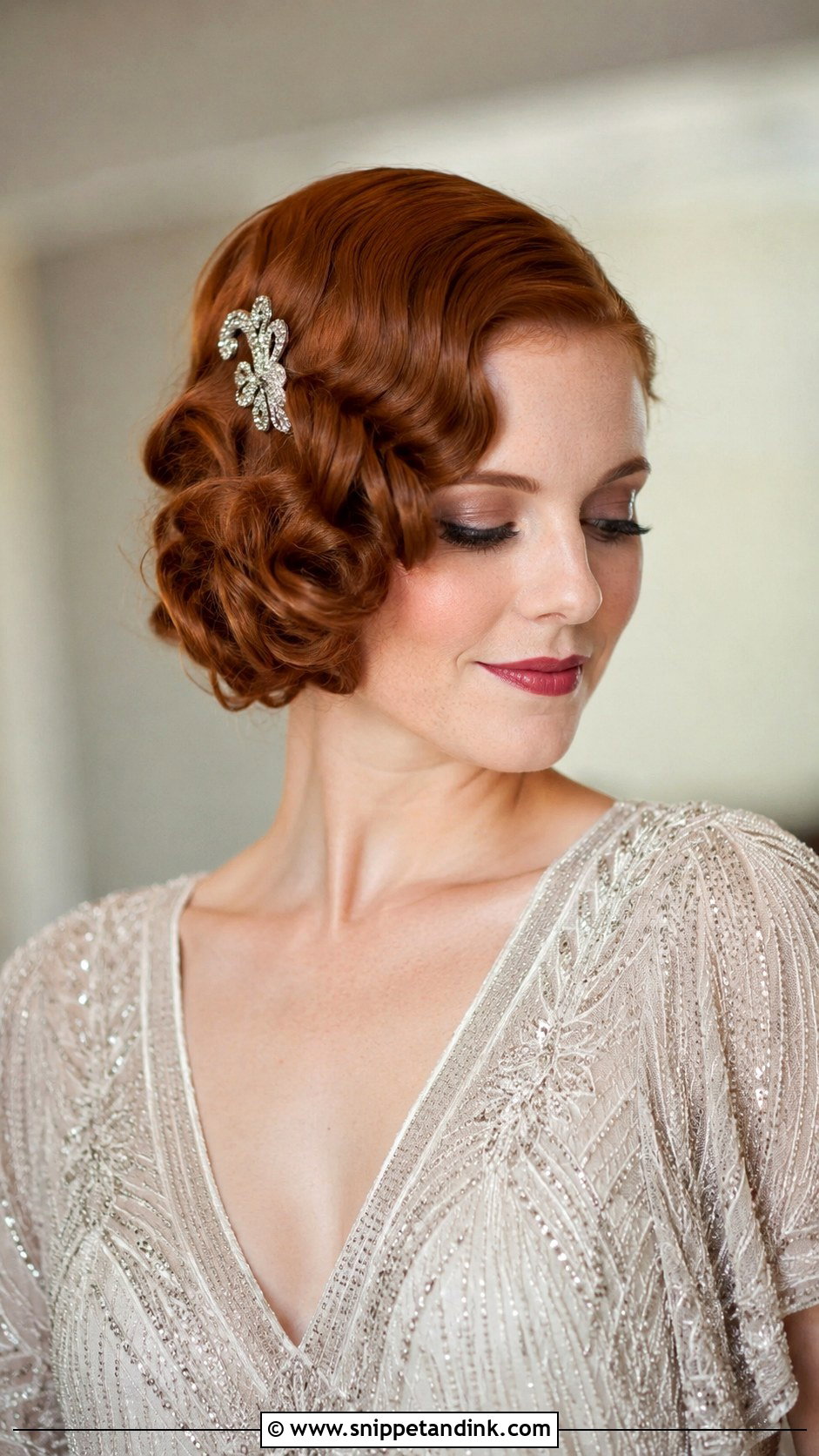
A retro bob with side curls takes structure, not looseness. I set the curls with a hot iron, pin each one in a flat coil until cool, then brush them out and pin them to one side for that sculpted 1940s shape. A jeweled comb or vintage headpiece placed just behind the swept side covers the pin work. If you have a lot of natural wave, ask for a smoothing blowout first, or the curls won’t stay as defined.
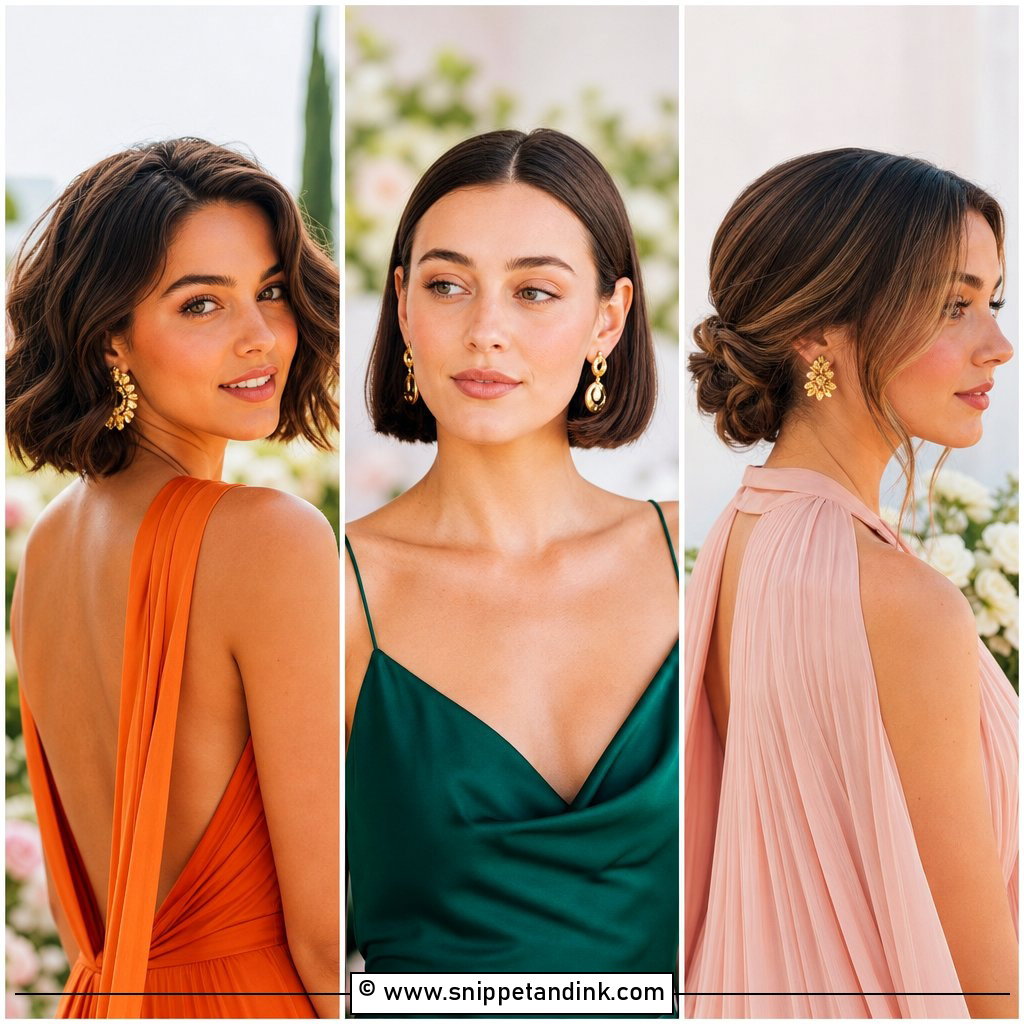
20. Natural Curly Bob
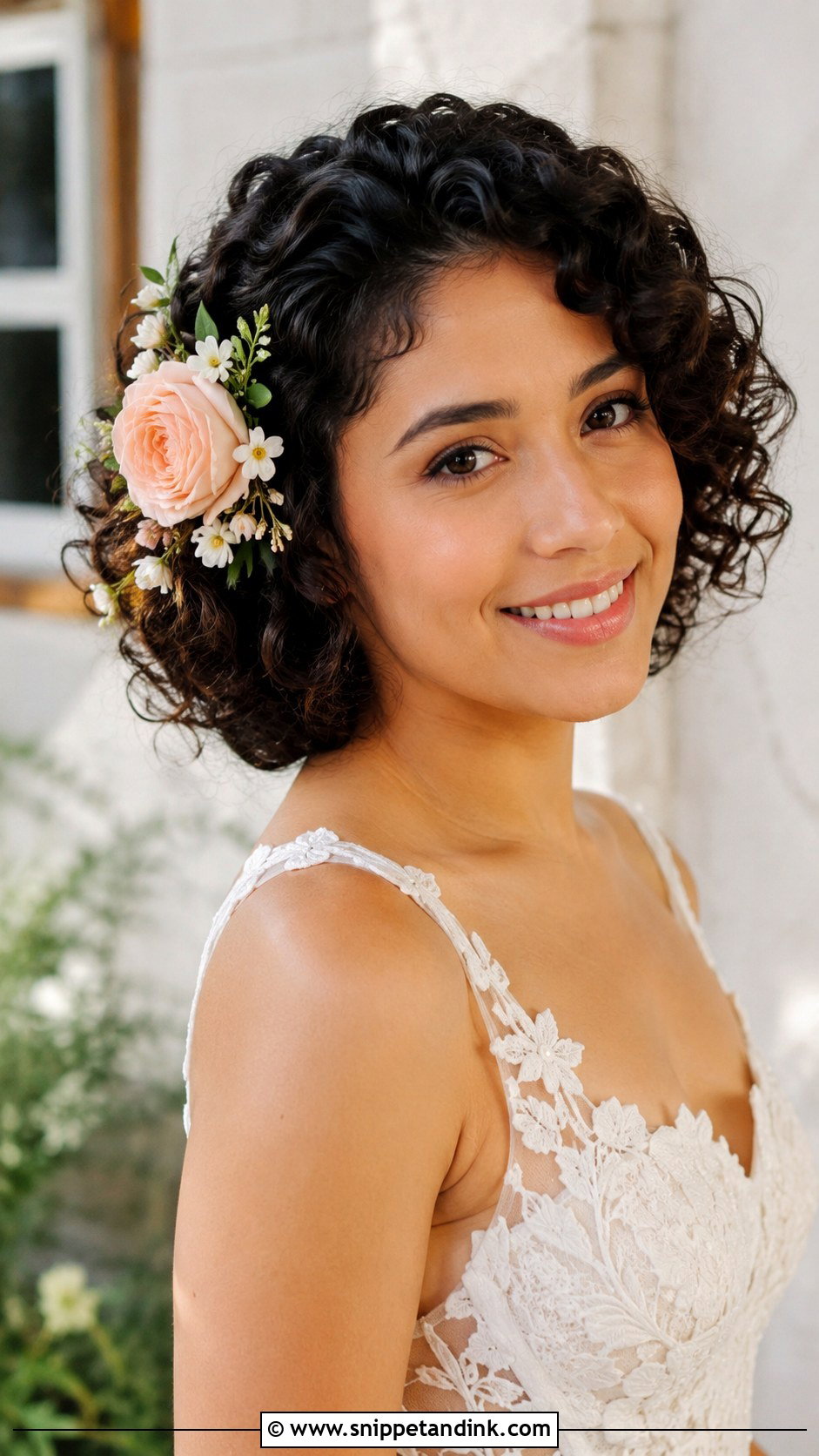
If you have natural curls, I’d rather enhance your pattern than fight it with heat. I apply a curl cream to soaking-wet hair, define clumps with my fingers and diffuse on low heat; brushing or towel-drying afterwards will undo the definition. The style holds well in humidity, since the curls are already in their natural state. A single clip or a fresh flower just above the ear marks it as bridal without flattening the curl.
21. Polished Bob With Headband
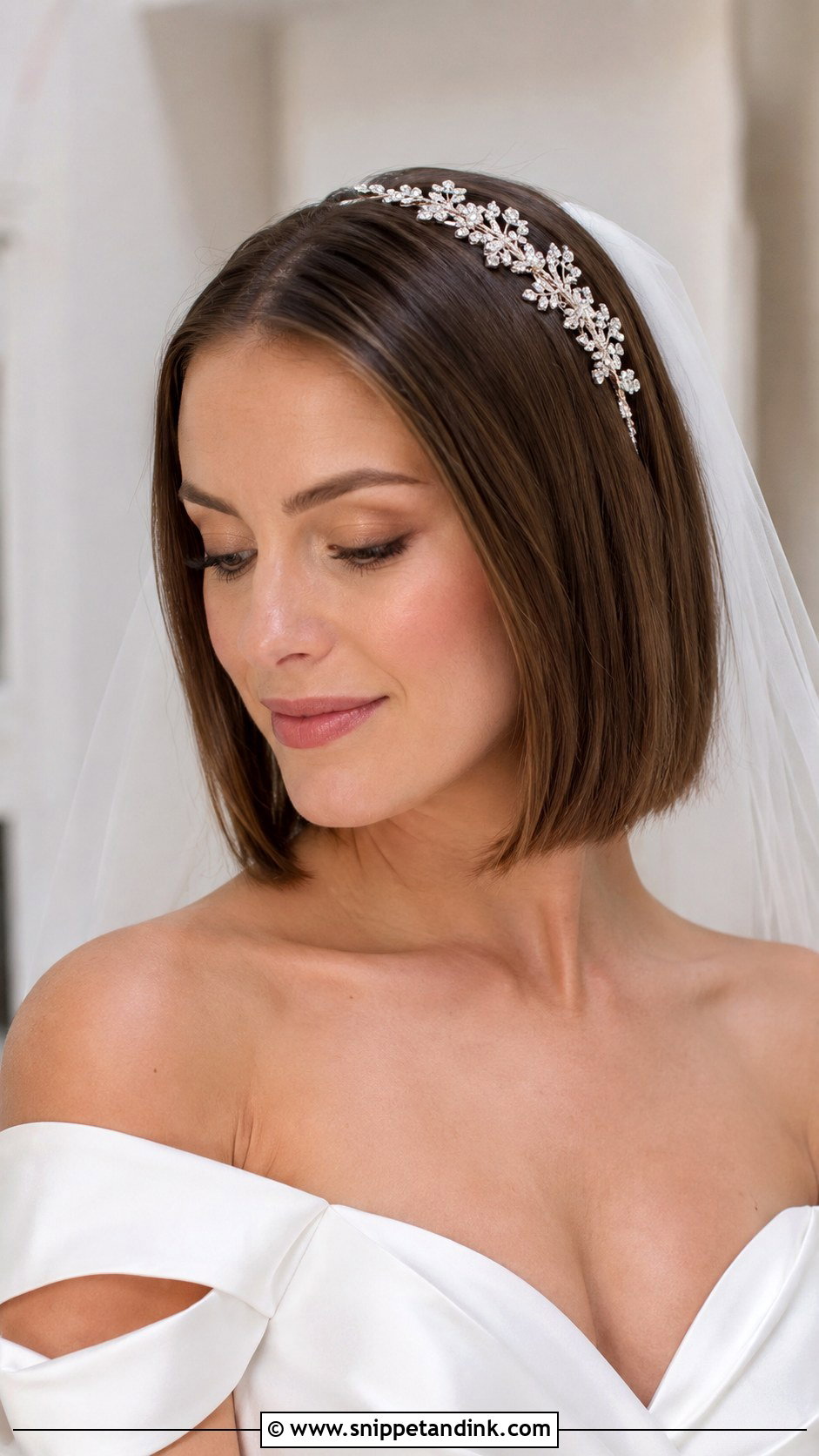
A jeweled headband is the quickest way to make a polished bob look bridal, and also the easiest to get wrong. Slide it on before the final smoothing so you can comb the hair over its teeth; that hides the grip and keeps it from sliding back. A headband sitting too far forward looks like a hair accessory for school, so I place it just behind the hairline. Straight or with soft waves both work, but decide at the trial so you know how the headband sits on each.
22. Messy Textured Lob
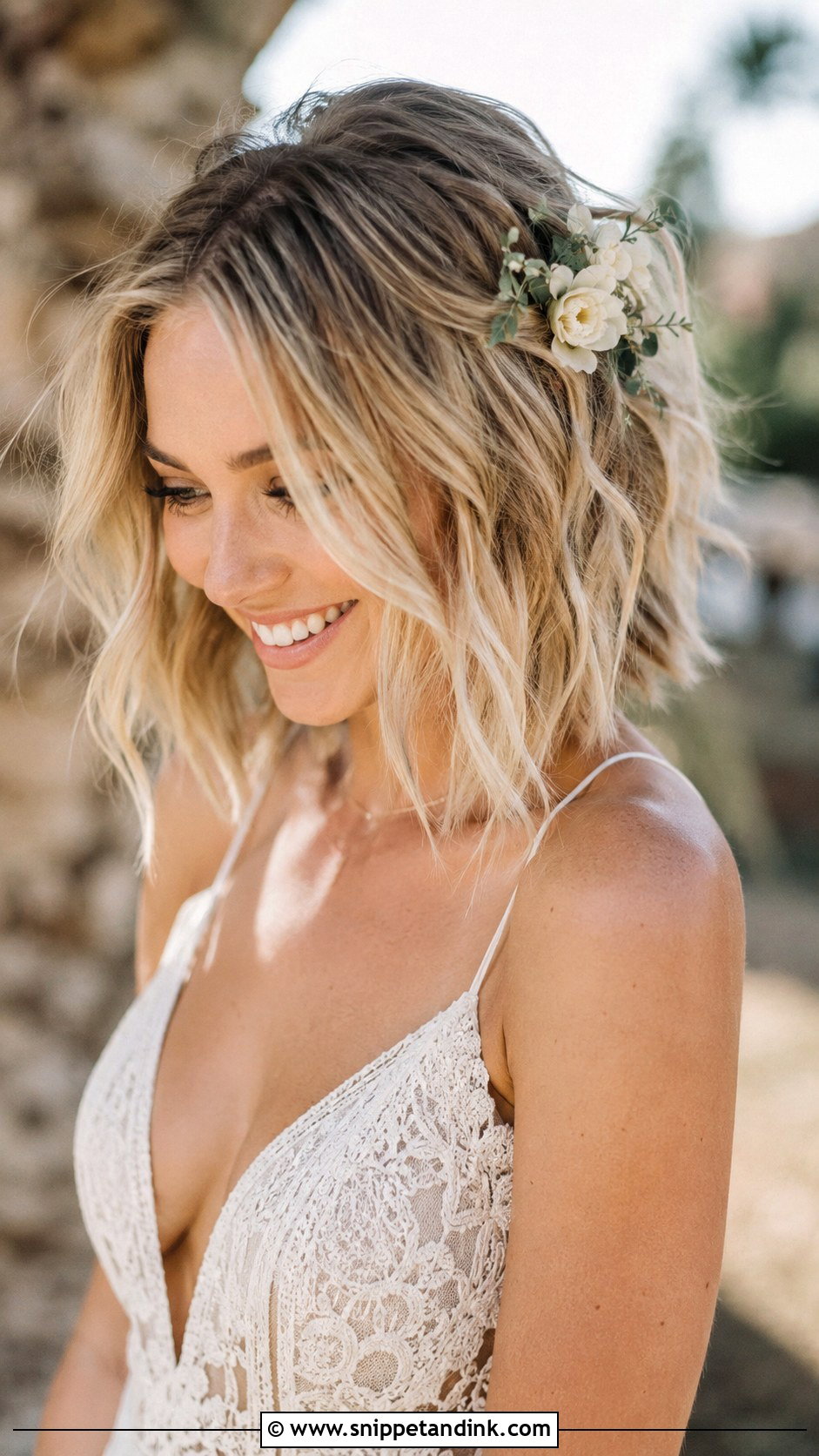
A messy textured lob only looks unplanned when it’s carefully built. I curl alternating directions with a 1.25 inch iron, then brush them out with my fingers and spray a texturizer through the mid-lengths, not the roots, so it doesn’t flatten. It’s the most relaxed look on this list, so it pairs best with a beach or garden wedding and simpler fabrics. Too much texturizing spray can look dull, so I build it in light layers.
23. Pixie With Floral Hairpin
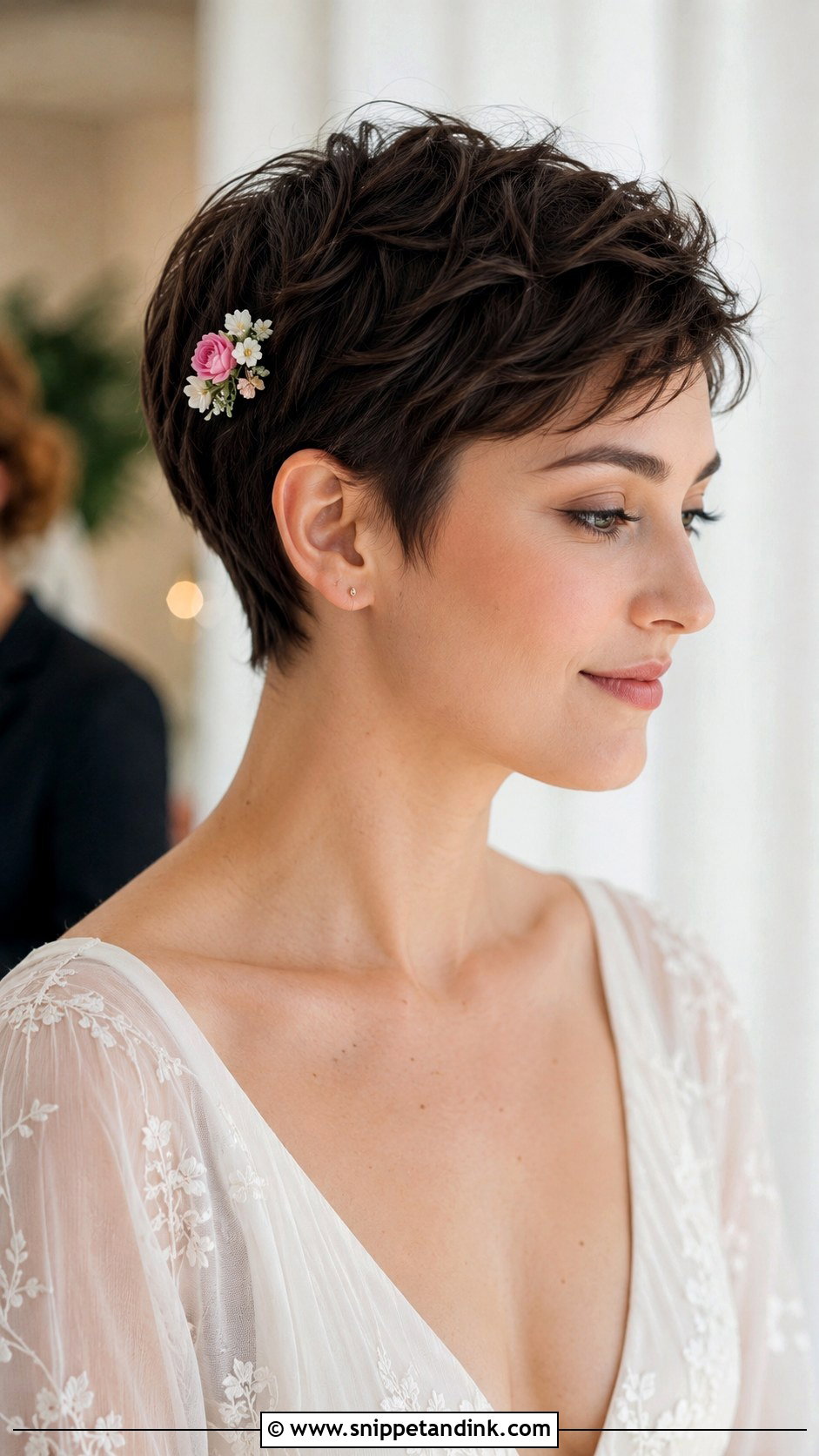
One floral hairpin on a pixie can do more than a whole crown. I place it above and slightly behind one ear, where the hair is longest and gives the pin something to hold. Silk flowers stay fresh all day, while real blooms need to be wired and placed last, right before you leave for the ceremony. It’s also one of the easiest styles on a tight budget, since you just need one good pin.
24. Side-Swept Wavy Bob
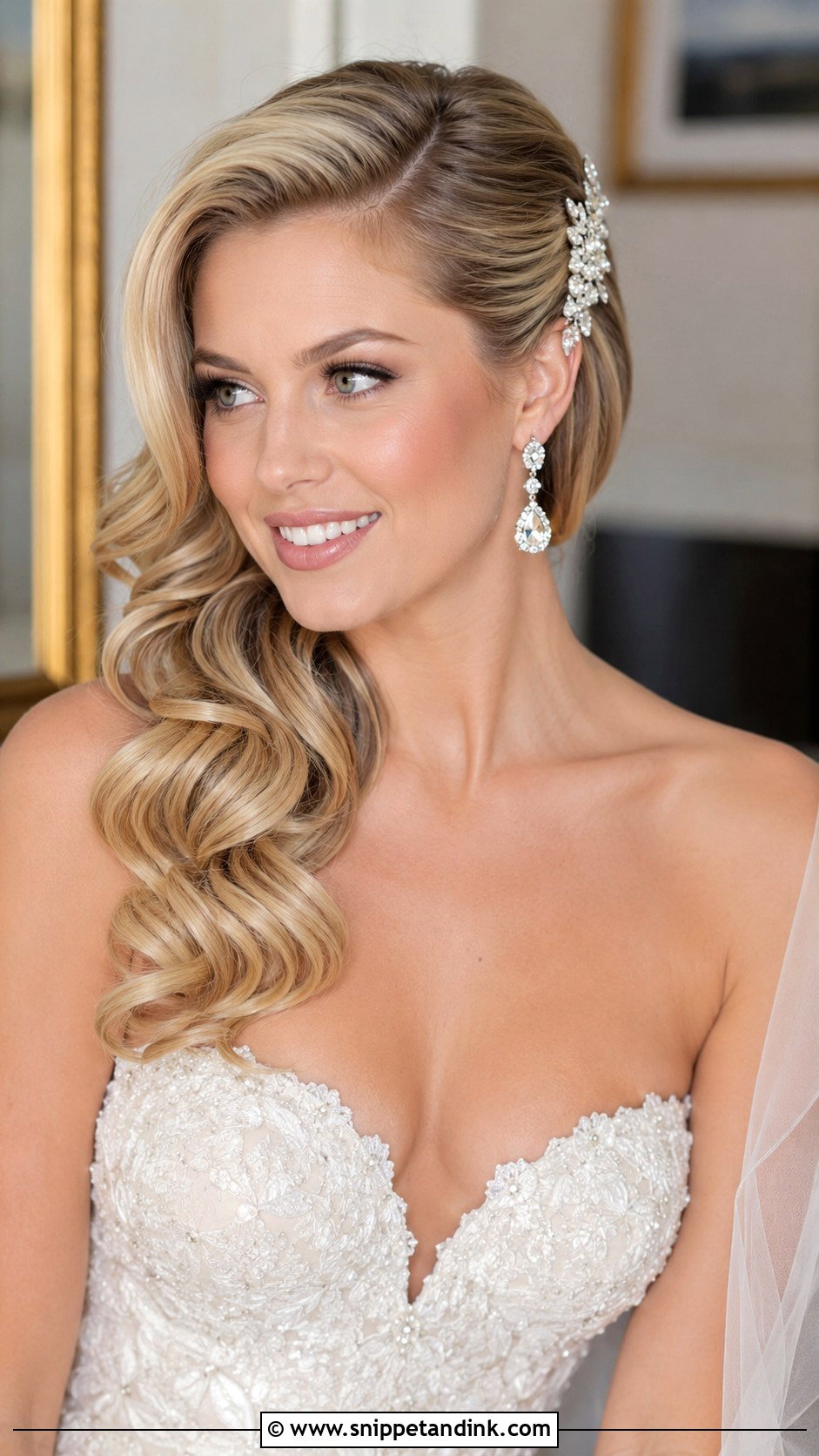
A side-swept wavy bob works because the asymmetry changes your silhouette without needing extra length. I curl everything away from the face, then sweep it to one side and lock the heavier side back with a few pins hidden under a sparkly clip. The pins matter: without them the waves drift back to centre within a couple of hours. This shape works for most face shapes, though very round faces look better with a slightly deeper part to give height.
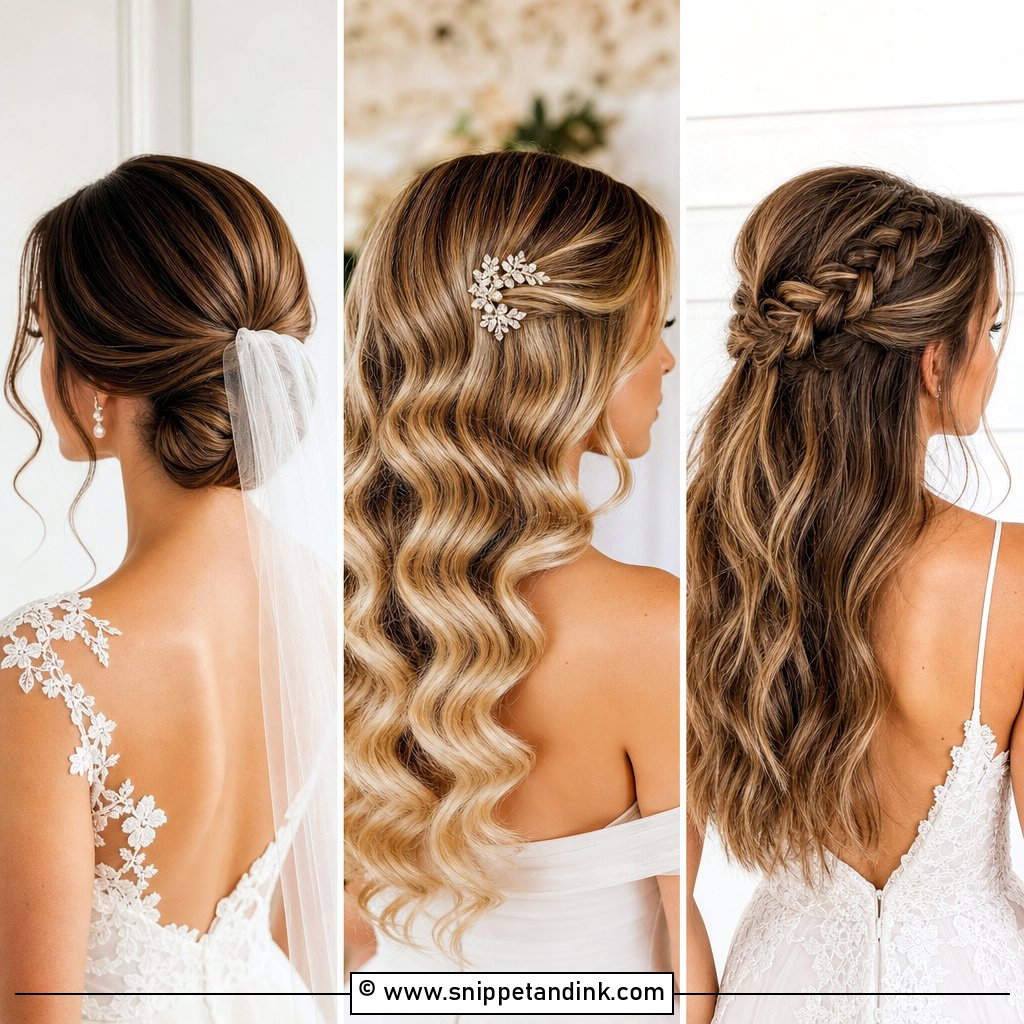
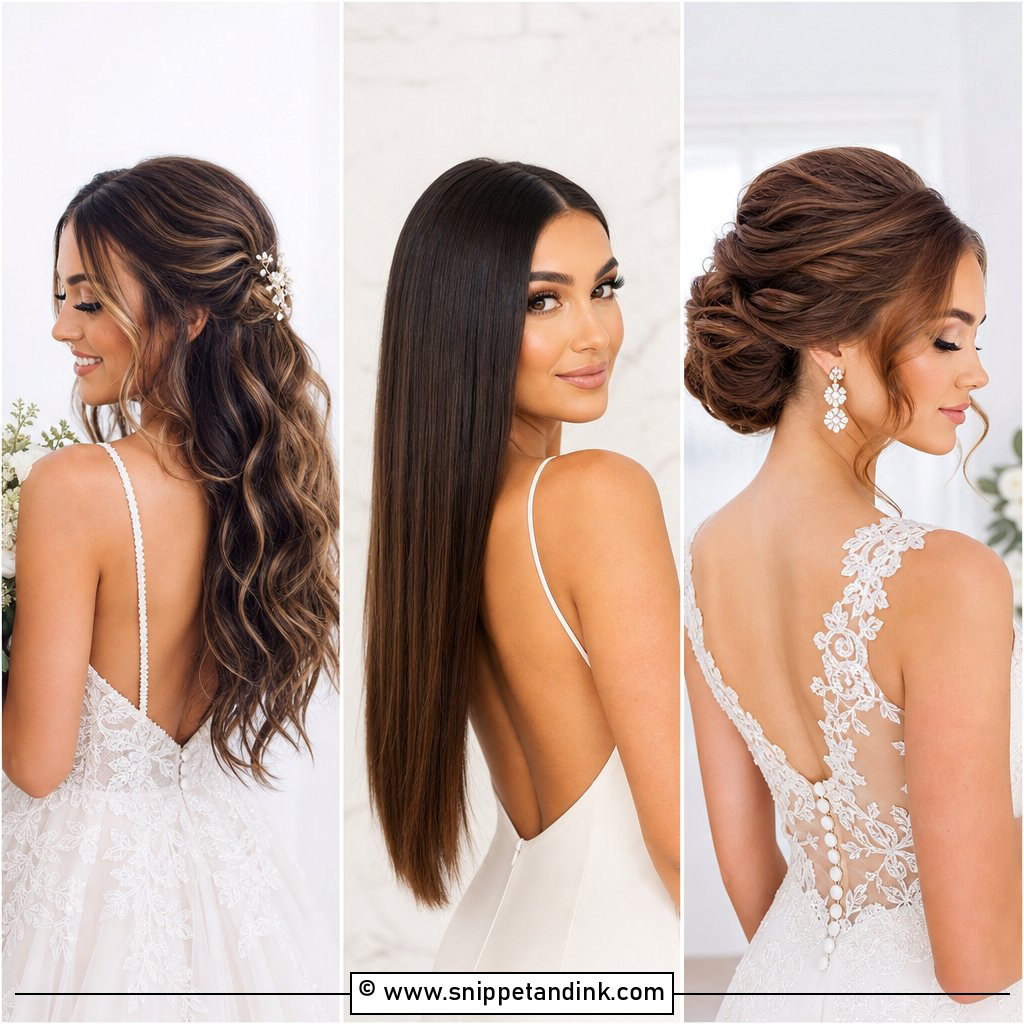
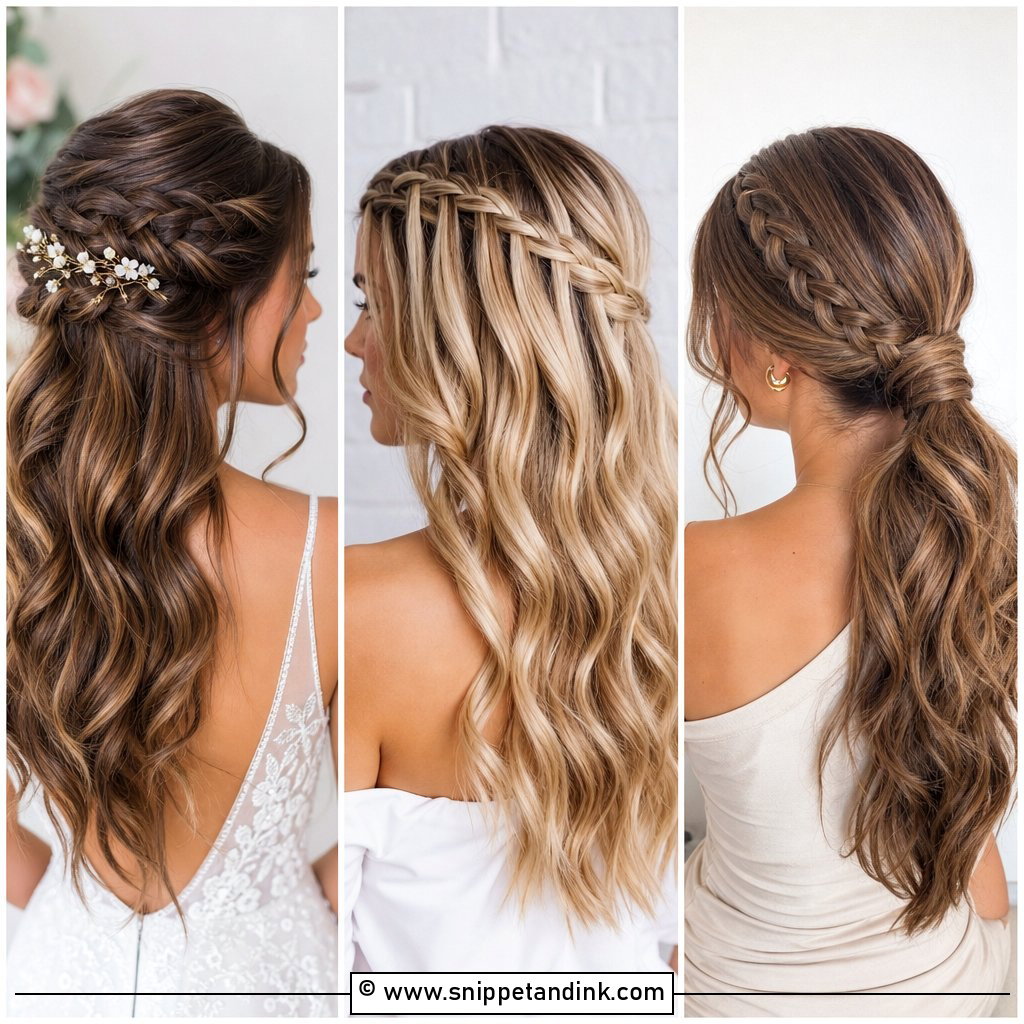
25. Low Twisted Bun For Short Hair
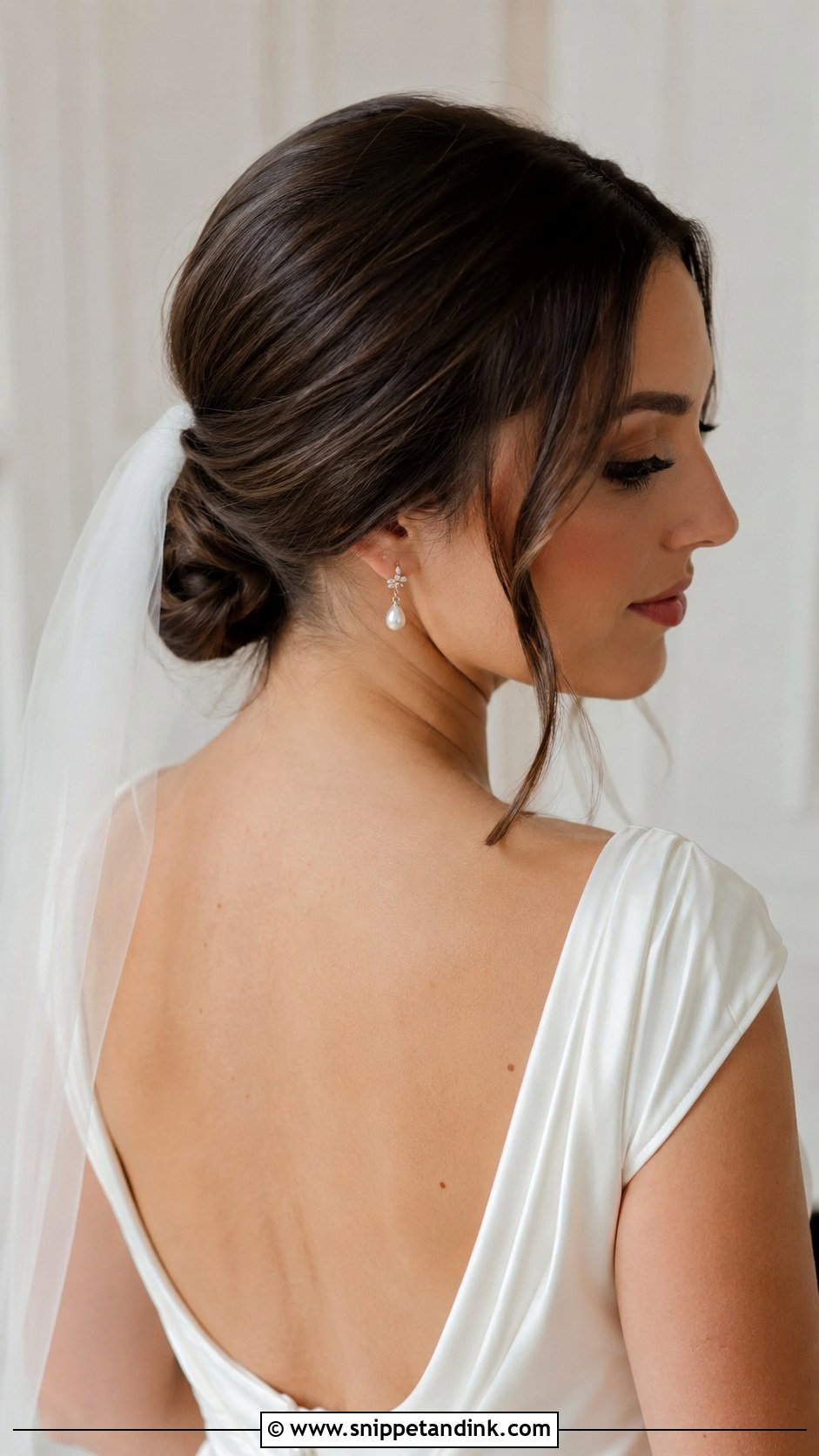
A low twisted bun is the short-hair updo I’d pick for a cathedral veil. I twist the hair into a loose knot at the nape, padding it with a little teasing, and use plenty of hidden pins because short sections pull loose easily. Face-framing tendrils need to be curled separately and left soft. The low knot gives a veil comb or a statement earring room to show, which is why it suits formal ceremonies.
Cutting Two Weeks Out, or Growing It for Months?
The timing of your last cut matters more on short hair than on long. A pixie cut the day before looks sharp and slightly blunt at the edges; two weeks later the lines have softened and the hair moves naturally. I suggest booking the final trim about two weeks before the wedding and keeping the same stylist who cut it at the trial.
If you’re thinking of growing a pixie into a bob for the wedding, be realistic. Hair grows about half an inch a month on average, so going from a pixie to a chin-length bob can take most of a year, and the awkward middle stage needs regular shaping. Cutting shorter is fast. Growing longer is slow, and clip-in pieces can make up a lot of the difference for an updo.
A Veil on a Pixie Needs Something Hidden to Hold It
Veil combs are made for hair with some weight, and on a pixie they often have nothing to bite into. My fix is to build a small anchor first: two bobby pins crossed into an X at the crown, or a tiny section of hair twisted and pinned flat, then slide the comb in over that. Lightweight single-tier veils behave far better on short hair than heavy cathedral lengths.
Another option is to skip the comb and choose a veil attached to a headband or a pair of small clips. If you’re planning to take the veil off for the reception, ask your stylist to show someone in your bridal party how to remove it without pulling the pins out of your style.
Short Hair Is Easier to Wear All Night
A short cut gives you a wedding look that won’t wilt by the speeches, and that’s a real advantage, not a compromise. Take two or three of these styles to your trial, bring the accessories you plan to wear, and ask your stylist to show you how each one sits on your length and texture. Book your last trim about two weeks out, and keep a few small pins and a travel spray in your clutch. Then let the hair do its job while you enjoy the day.
You'll Like These Ideas:


Leave a Reply