
Curly hair arrives at an updo already holding shape, which is a head start most straight-haired brides don’t get. My job is to place the curls, not flatten them. Loose waves, springy ringlets and tight coils all behave differently under pins, and the updo has to be chosen for the curl pattern you actually have on the morning. Below are fifteen updos I’d build on curly hair, from low buns to pinned ringlets, with notes on what each one needs and where it can go wrong for brides, bridesmaids and guests.
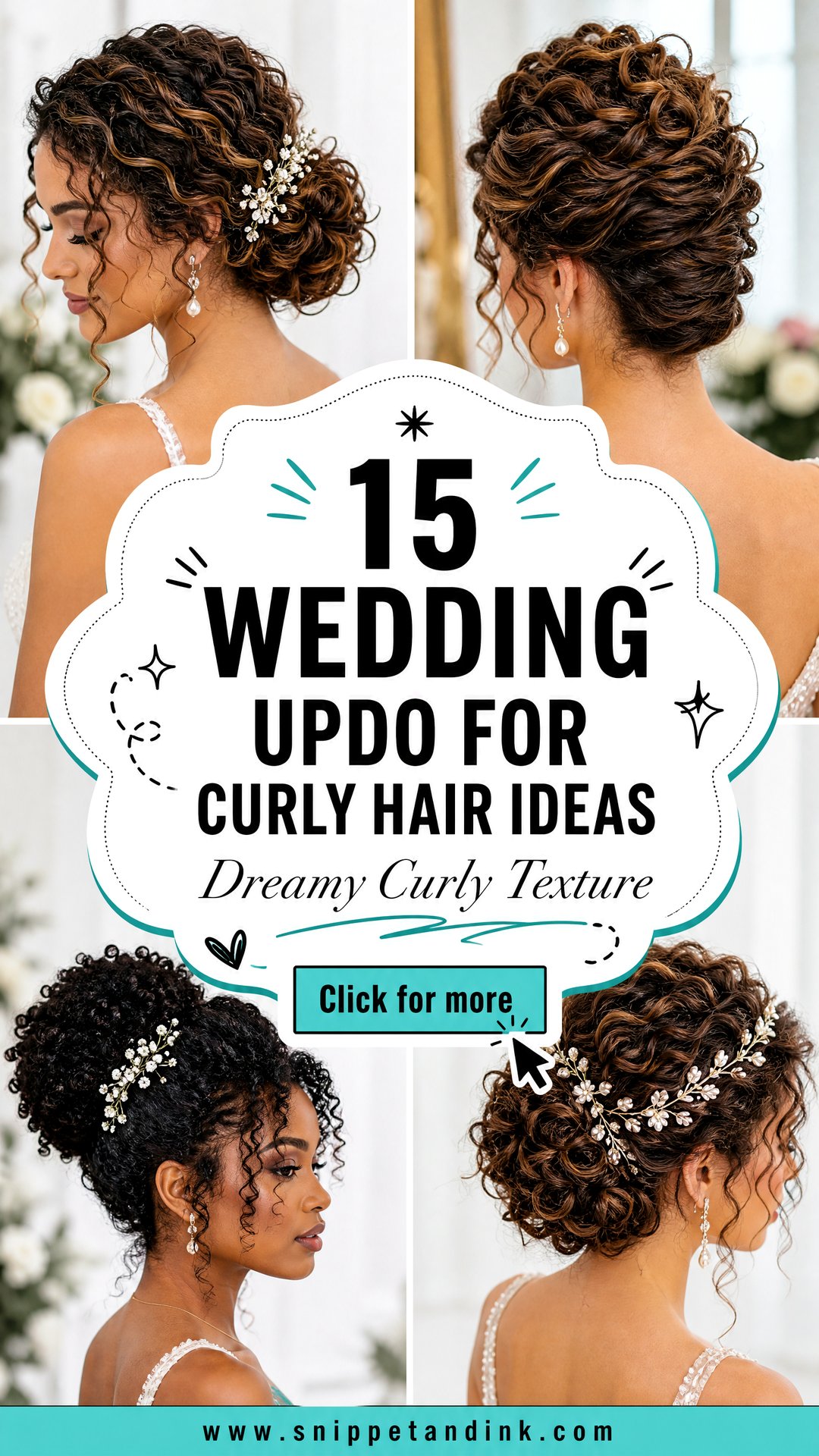
Should Curls Be Fresh or Day-Old Before They Go Up?
This is the question I ask every curly bride before the trial, because the answer depends on the curl.
- Loose waves and soft curls pin better on day-two hair. A little natural oil gives grip, and freshly washed waves are too slippery to hold a bun.
- Tight curls and coils do better freshly washed and defined, then left to dry fully. Day-old coils can be dry and harder to shape without frizz.
- Diffused curls need to be completely dry before pinning. Damp hair pinned into a bun dries in that shape and flattens.
Whatever routine works, do it the same way for the trial and the wedding. Changing your wash day by twenty-four hours can change how the updo holds.
1. Curly Wedding Low Bun
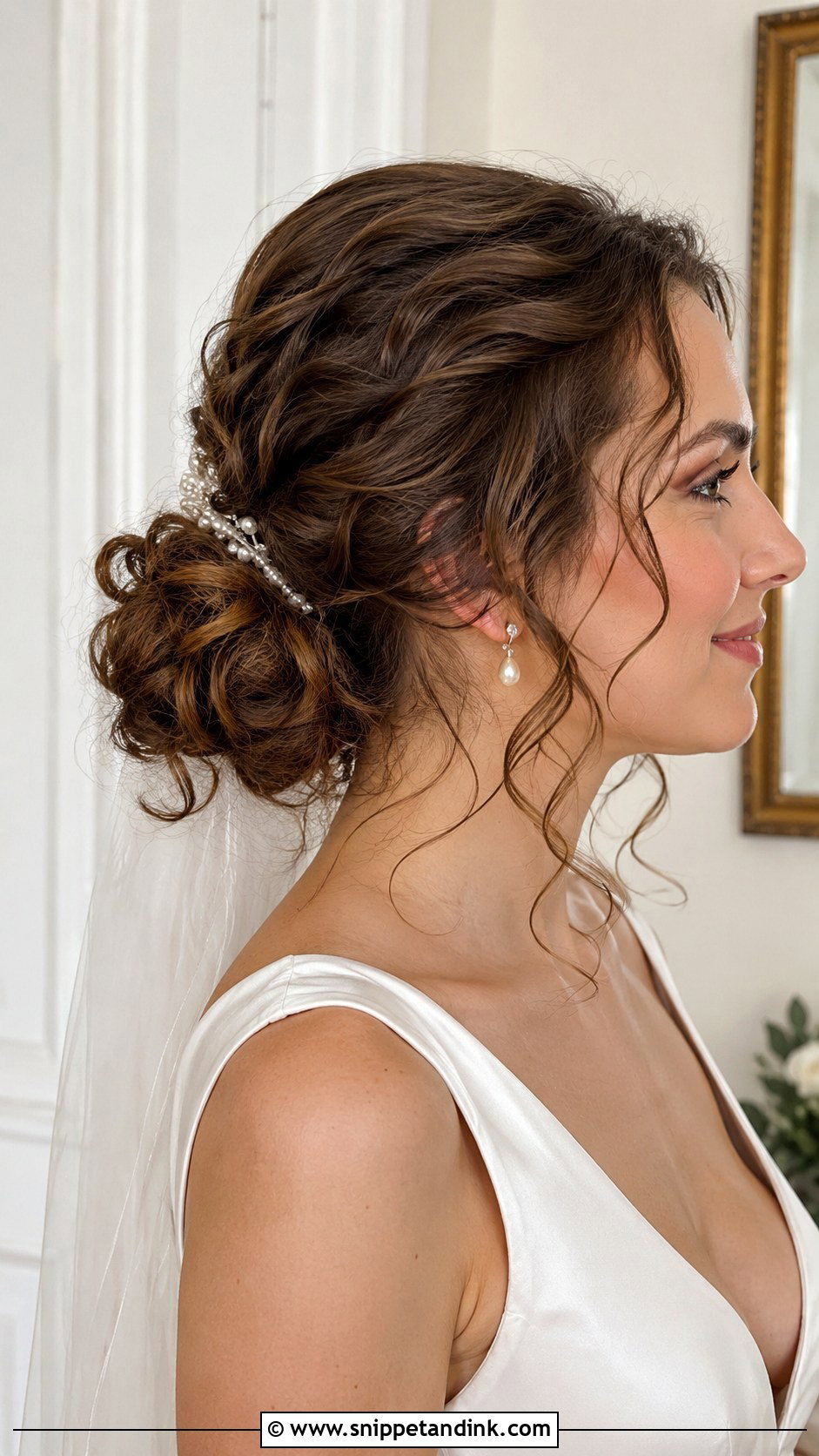
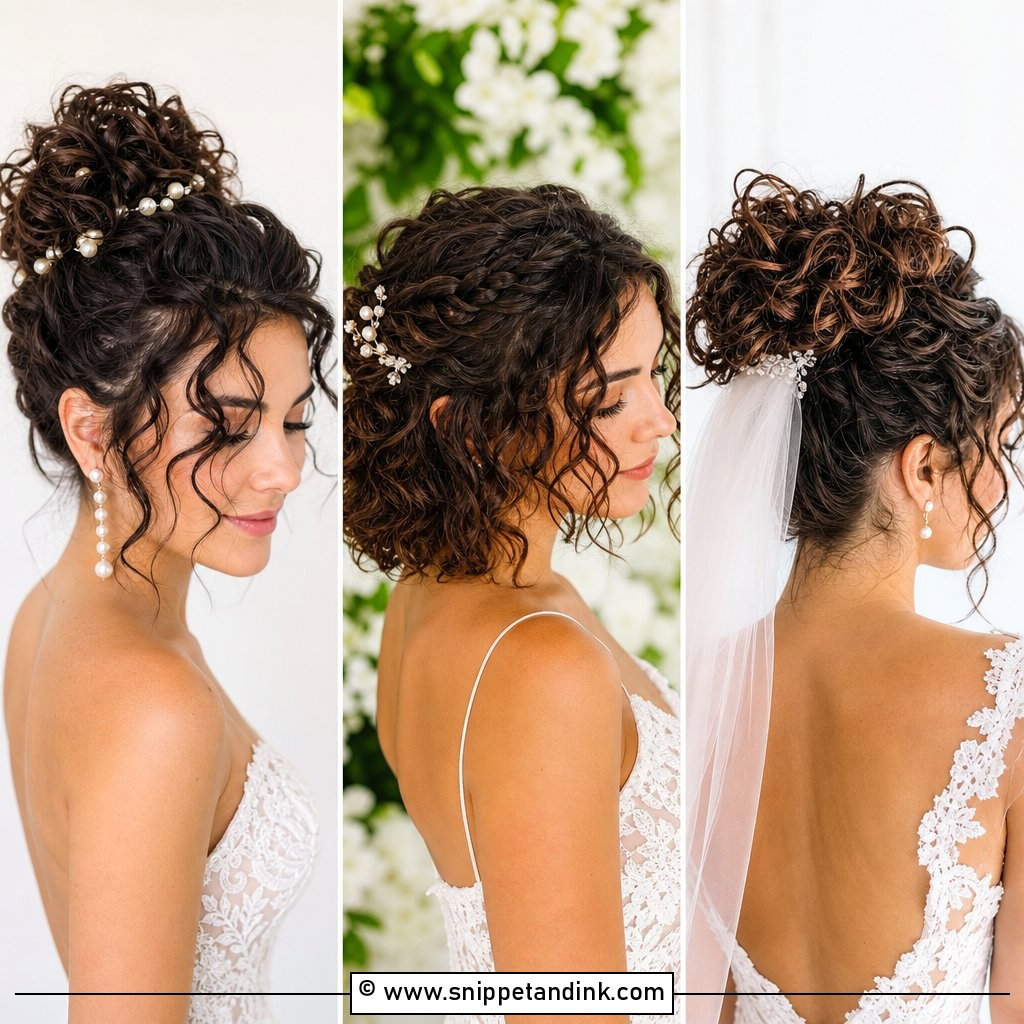
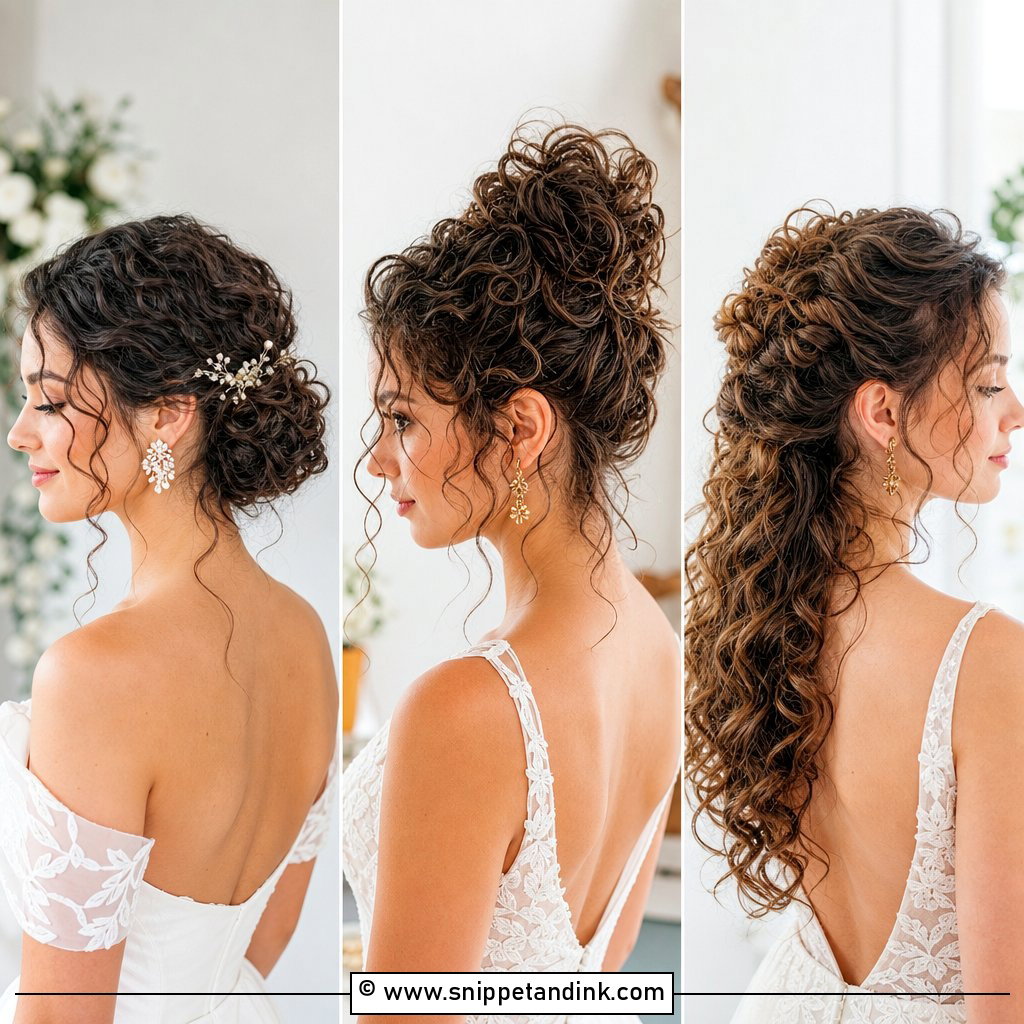
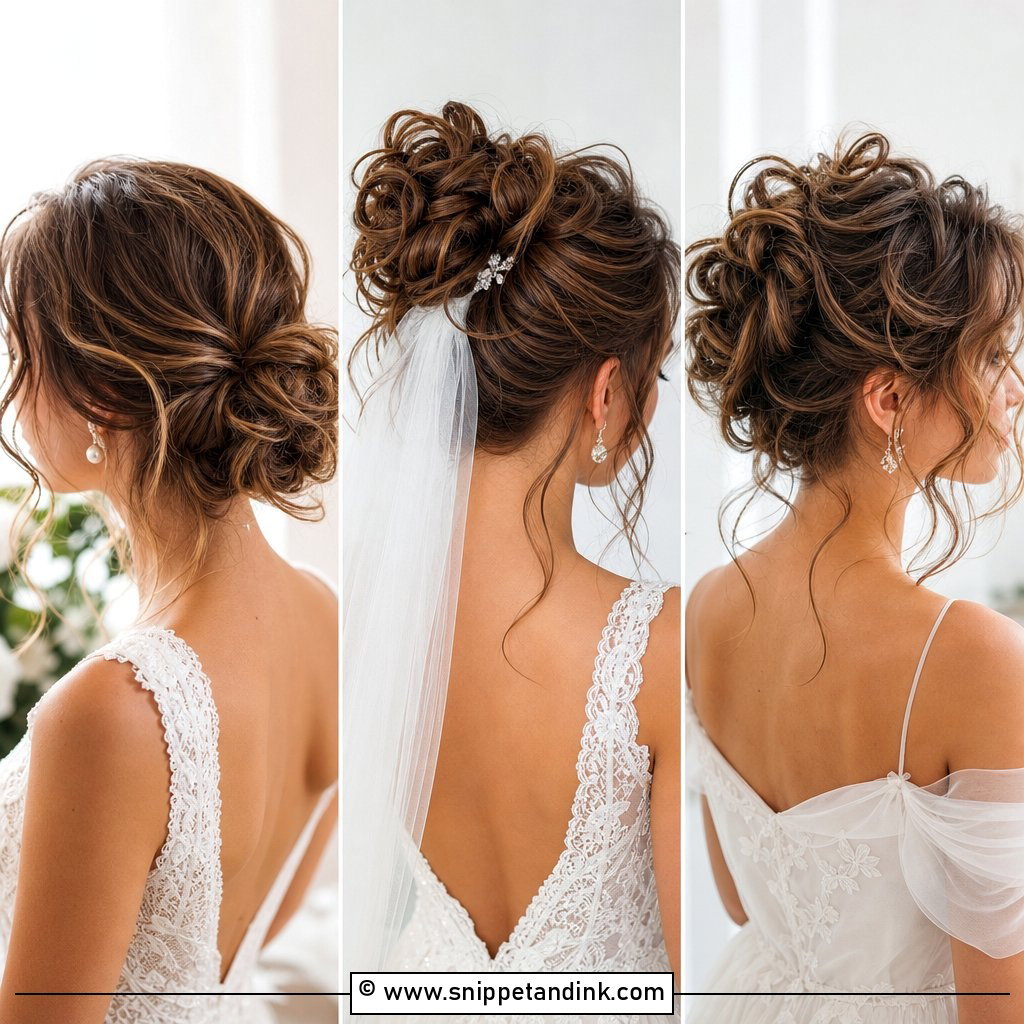
If a bride with curls can’t decide, I start here. The bun sits at the nape, under the veil comb and clear of an open back. Thick curls carry a lot of volume, and placing it low keeps the head from looking top-heavy. I gather the hair with my fingers rather than a brush, pin it with U-pins instead of bobby pins, and leave a few curls loose at the crown and temples so it doesn’t look severe. Finish with a flexible spray, never a stiff lacquer that leaves curls crunchy.
2. Curly Wedding High Bun
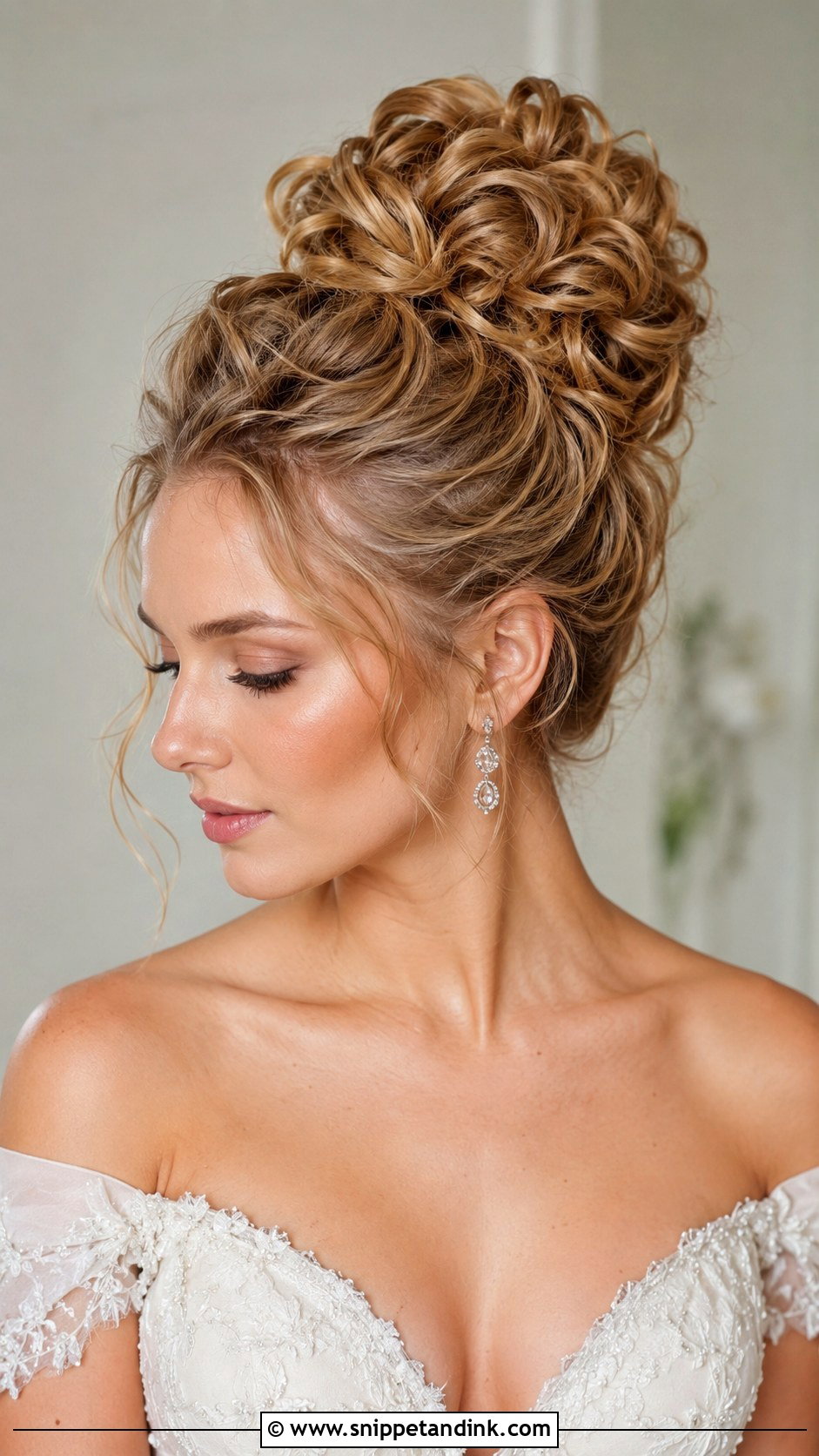
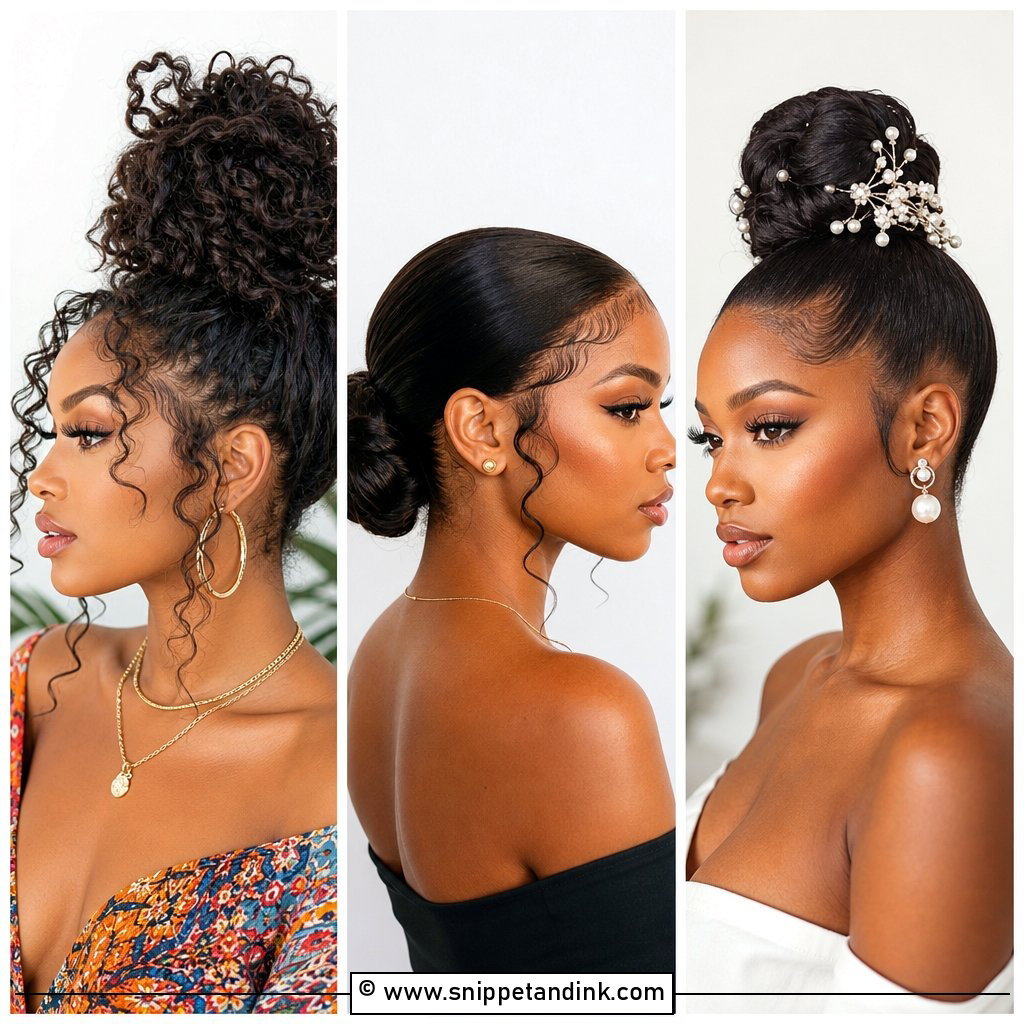
A high bun puts the curls on display and gets every strand off the neck, which matters in July heat. It suits high necks and statement earrings. The danger is pulling too tight: curly hair gathered high under tension gives many brides a headache by the reception. I secure the base loosely, then build the height with pinned curls on top rather than by yanking the ponytail up. Soft tendrils at the temples stop it from looking like a gym bun.
3. Curly Wedding Chignon
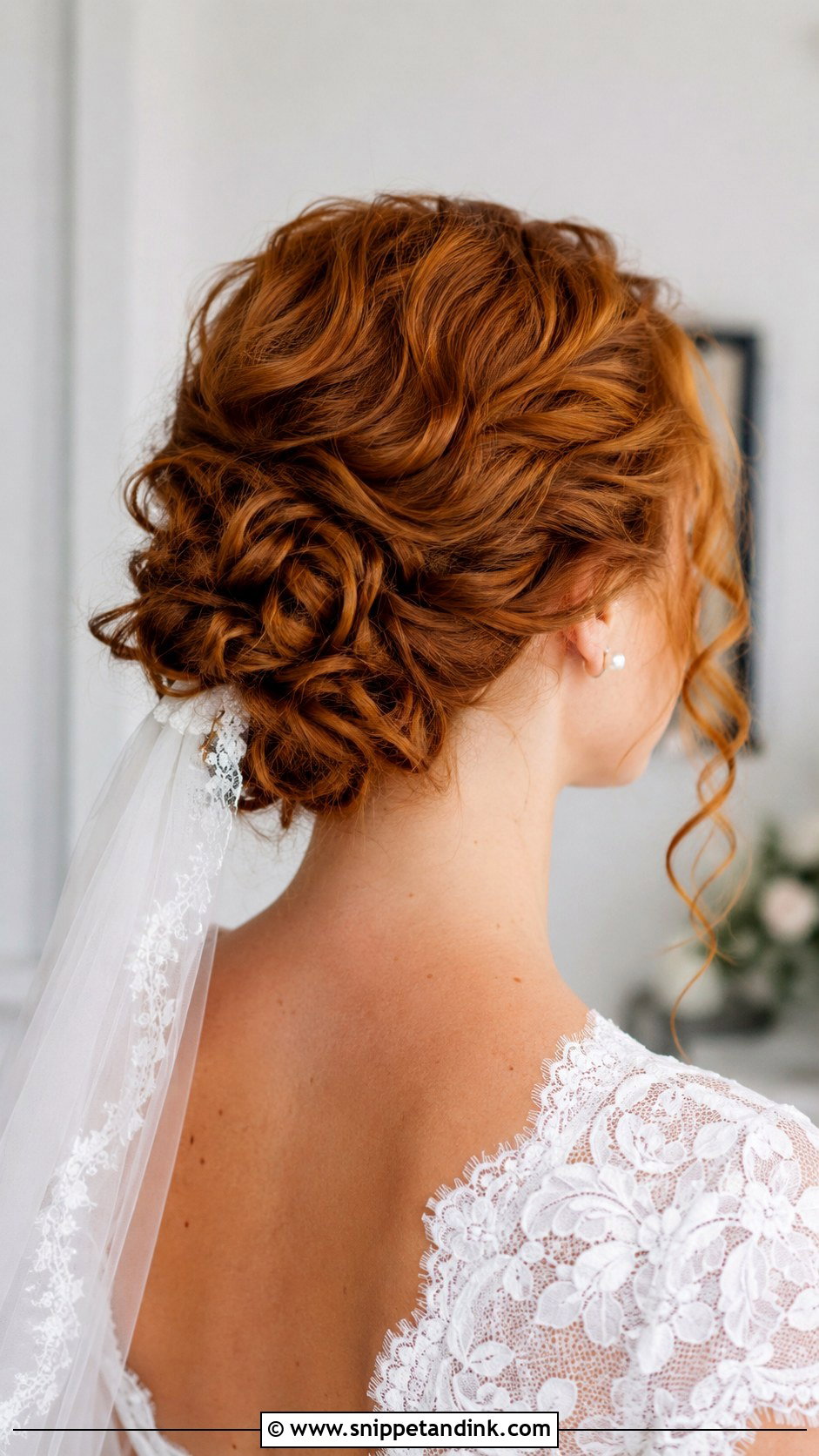
In a curly chignon the curls themselves become the roll. I section the back into three or four parts, twist each loosely and pin it into a low shape so the curl ends show on the surface. Medium to long hair is the minimum; anything shorter won’t tuck. Pearl pins, a lace veil or a single floral comb sit well against it. Keep the front lifted just slightly and leave a curl or two by the ears.
4. Curly Wedding Updo With Braids
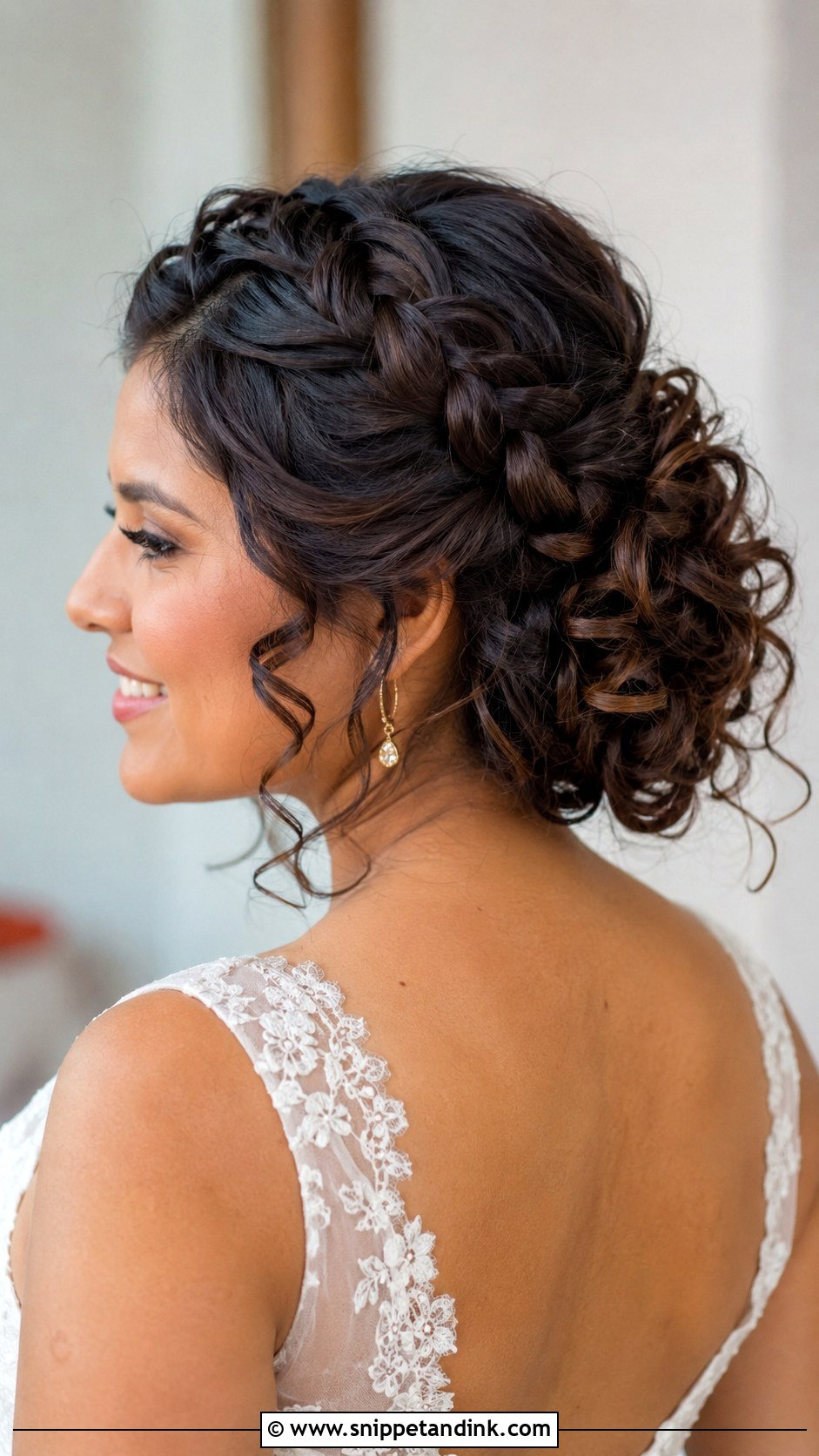
Braids are how I keep curls near the face under control at an outdoor wedding. A Dutch braid along the hairline or across the top like a crown holds the short pieces that wind tends to lift, and it gives the pins underneath something firm to grip. The braid should be loose enough to blend with the curls. A tight braid next to soft texture looks like two different hairstyles. This one shows well from the side and back, which is where most ceremony photos are taken from.
5. Curly Wedding Updo With Veil
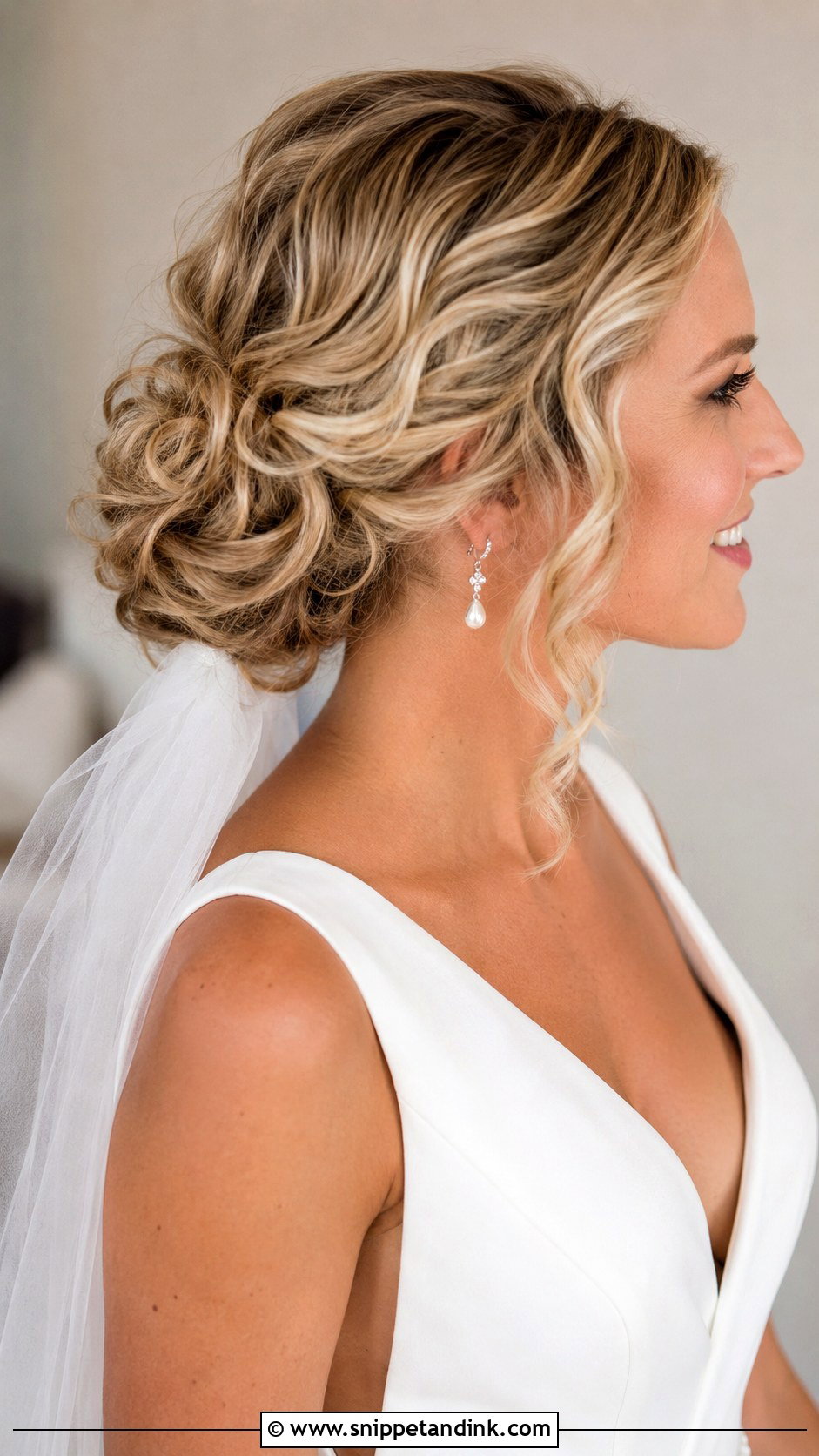
Curls make a veil sit fuller, but they also hide where the comb is gripping. I plan the veil position at the trial and build a small pinned base for it, usually a crisscross of bobby pins just above or below the bun, so the comb’s teeth have something to lock into. A low bun or chignon is easiest. If you want height at the crown, tell your stylist early, because a long veil will press it flat unless it’s anchored behind the volume. When the veil comes off for the reception, the face-framing curls carry the look.
6. Curly Wedding Updo With Flowers
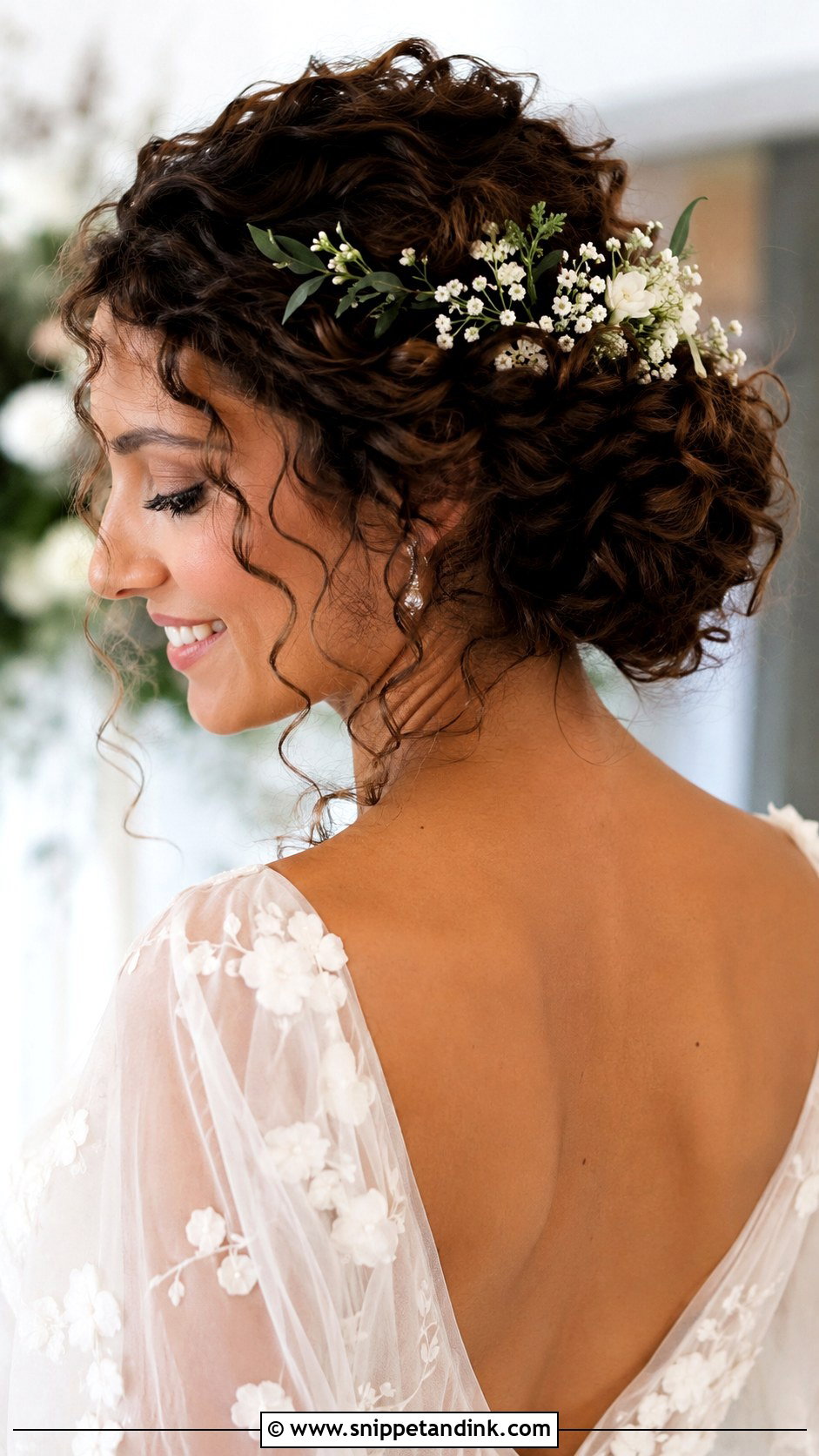
Curls hold flowers better than smooth hair does, since stems tuck into the texture and stay put. I’d keep this for garden, beach or boho weddings. Choose blooms that survive hours out of water against warm skin; Baby’s breath, small roses, orchids and short sprigs of greenery all work, while peonies and hydrangea droop. Wire and tape each stem so the cut ends don’t leave moisture spots in the hair.
7. Curly Wedding Updo With Pearl Pins
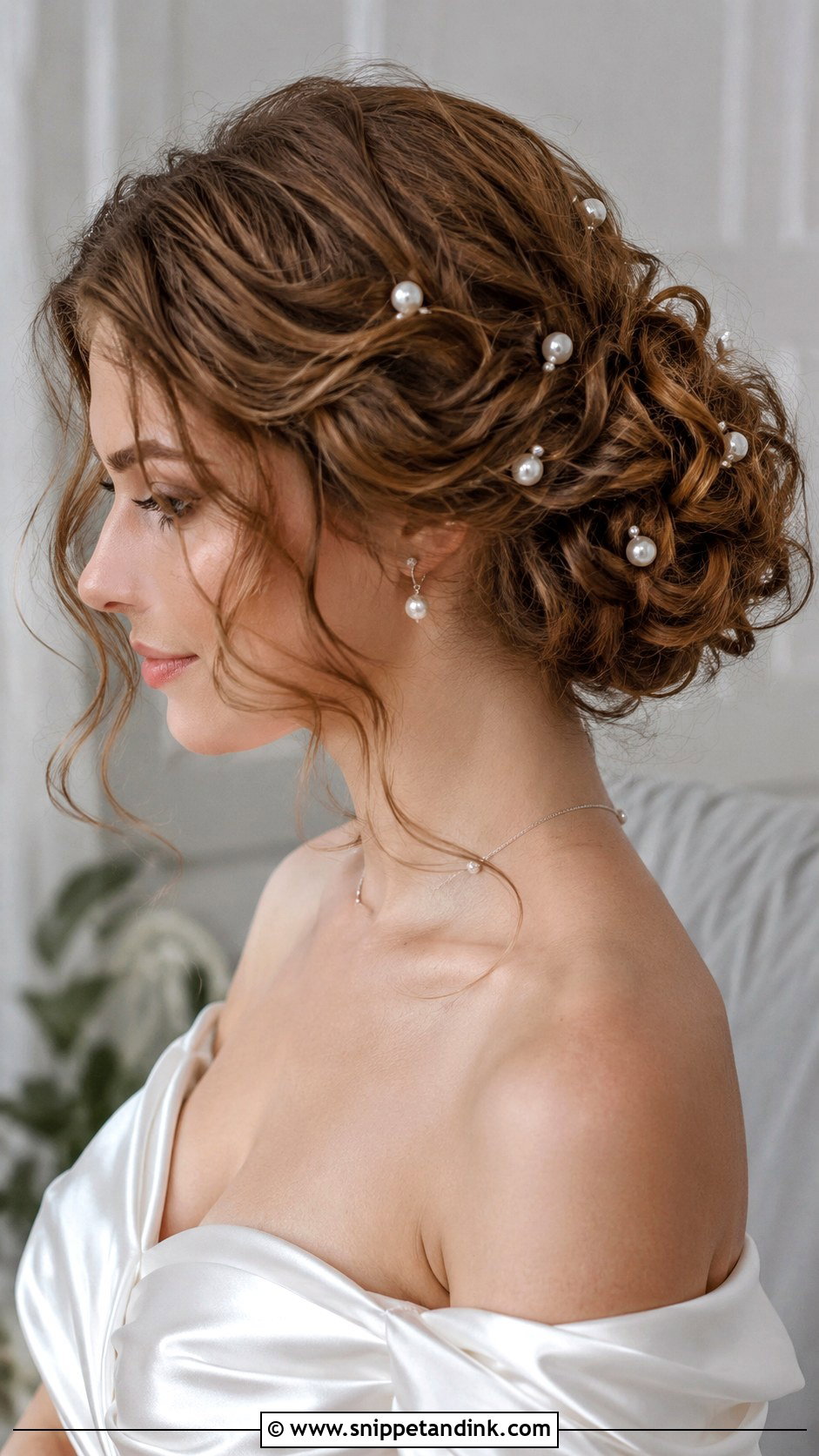
Pearl pins catch the light without hiding the curl pattern. I scatter them through a low bun or chignon, and I place them after the shape is finished, at points where the curls naturally turn toward the camera. On very defined curls, pins with a spiral shank hold best because a straight pin slides out of springy hair within an hour. They suit satin, lace and simple makeup.
8. Curly Wedding French Twist
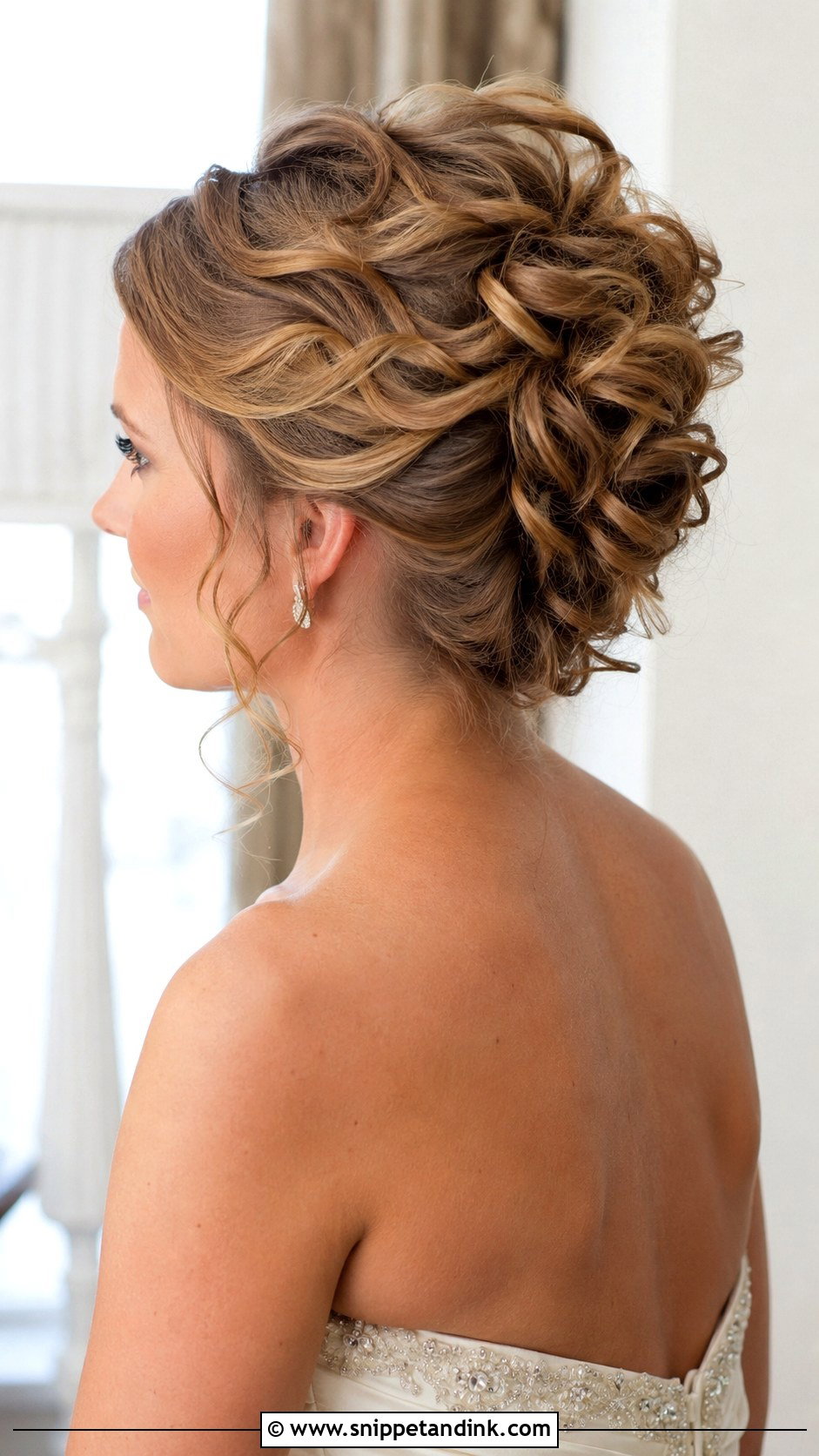
A classic French twist relies on smooth hair folding over itself, and curls resist that. So I don’t fight it. I gather the hair upward, form a soft vertical roll and pin it with the curl ends spilling over the top rather than tucked away. Strapless, one-shoulder and classic jewellery look right with it. Ask for a loose twist; a tight shell on curly hair usually means it was blown straight first, which defeats the purpose.
9. Curly Wedding Updo With Side Part
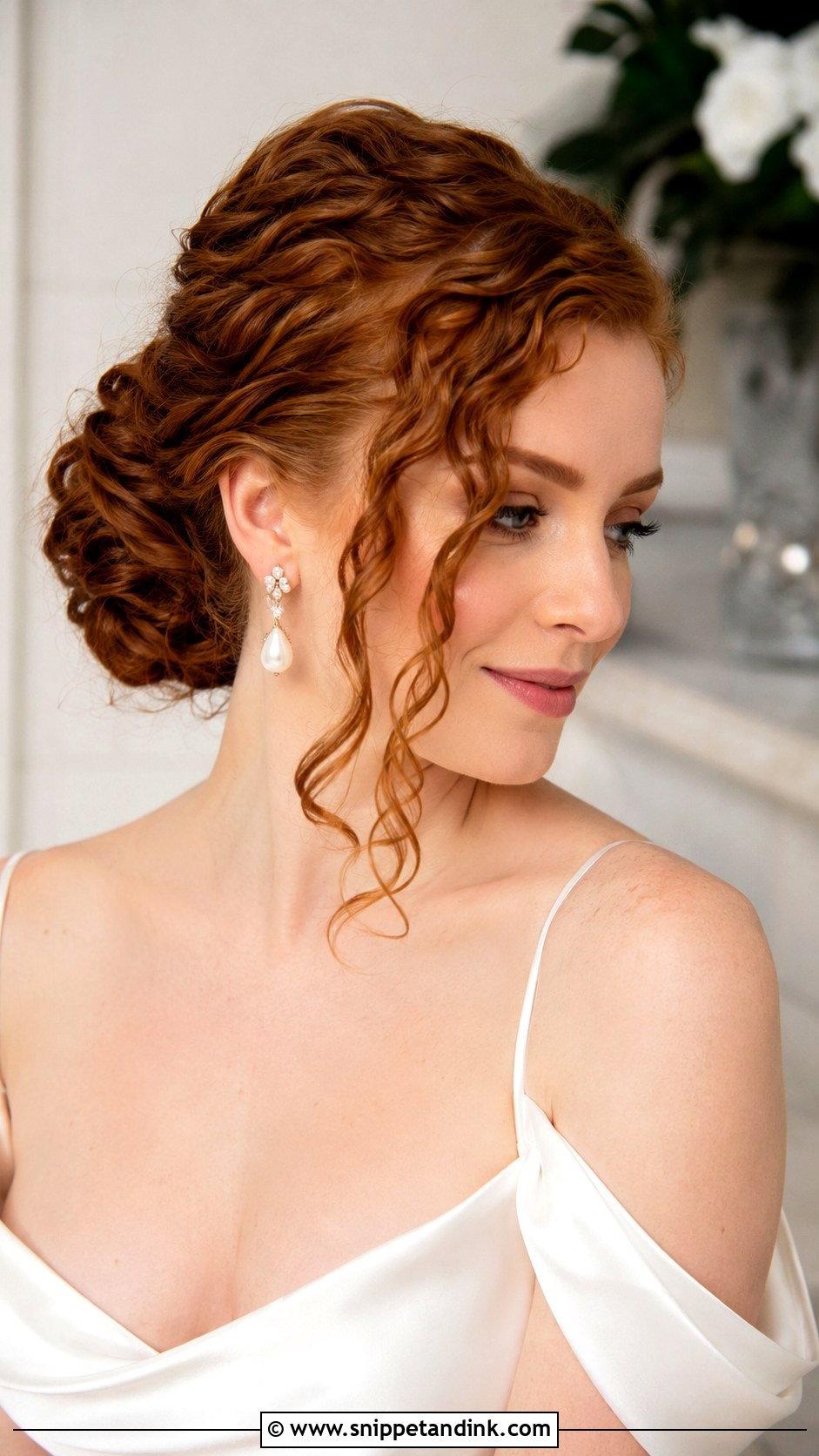
Curly hair often has a natural part already, and I usually keep it. Forcing a deep side part against the way the curls grow leaves a gap at the root by midday. If your part does fall to one side, it gives the updo shape around the face, lets you tuck one side behind the ear for an earring, and adds volume at the crown. Deep reads glamorous; a softer part feels relaxed for a daytime wedding.
10. Curly Wedding Updo With Bangs
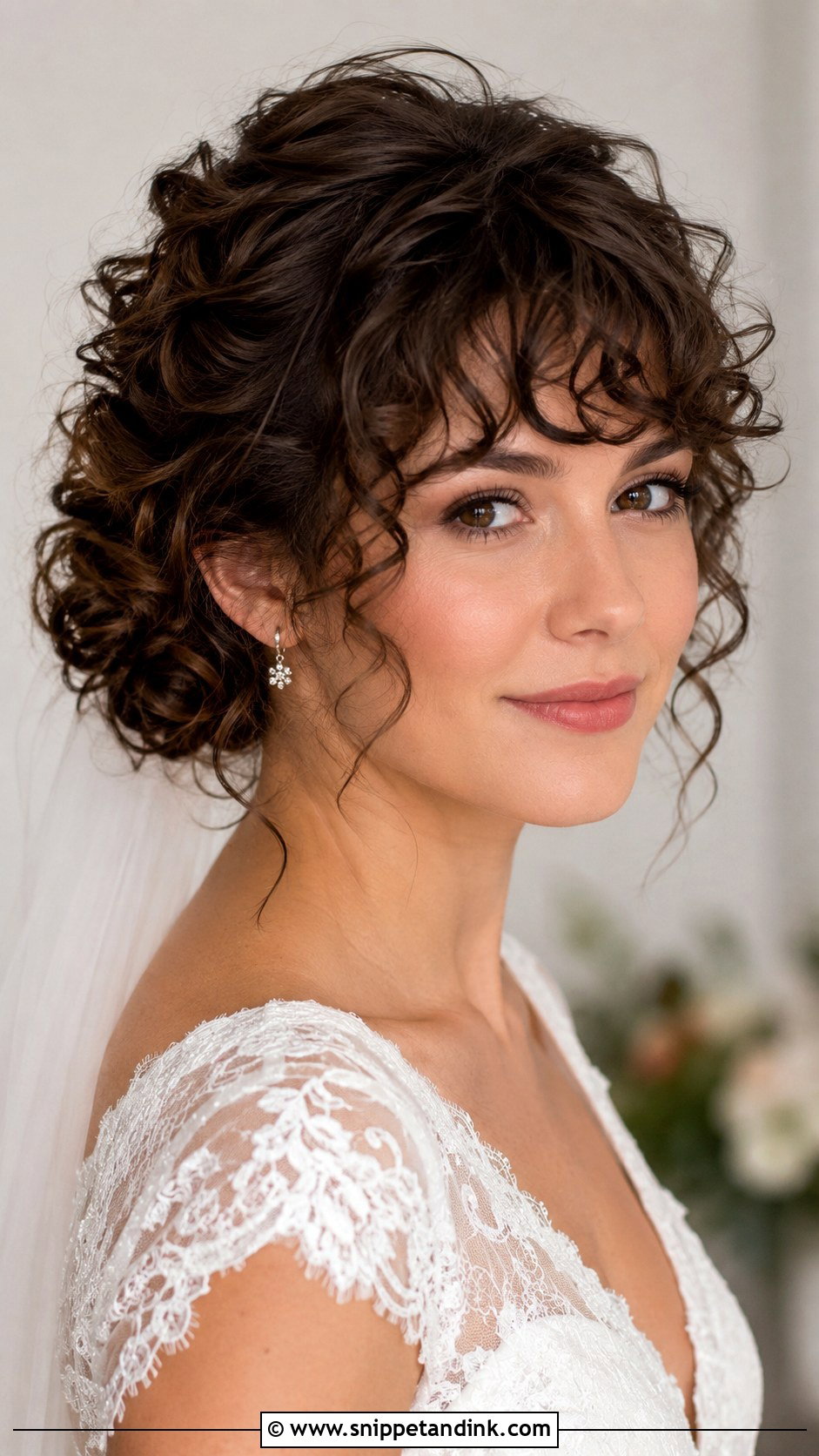
Curly bangs are easy to ruin on the morning by over-styling them. I’d rather leave a fringe in its natural pattern, refresh it with a little water and curl cream, and let it separate on its own. Brushing it out or pulling it to one side makes it frizz. Brides who wear bangs every day usually feel most like themselves keeping them. The updo behind can be any shape; it just needs to start far enough back that it doesn’t crowd the fringe.
11. Curly Wedding Updo For Short Hair
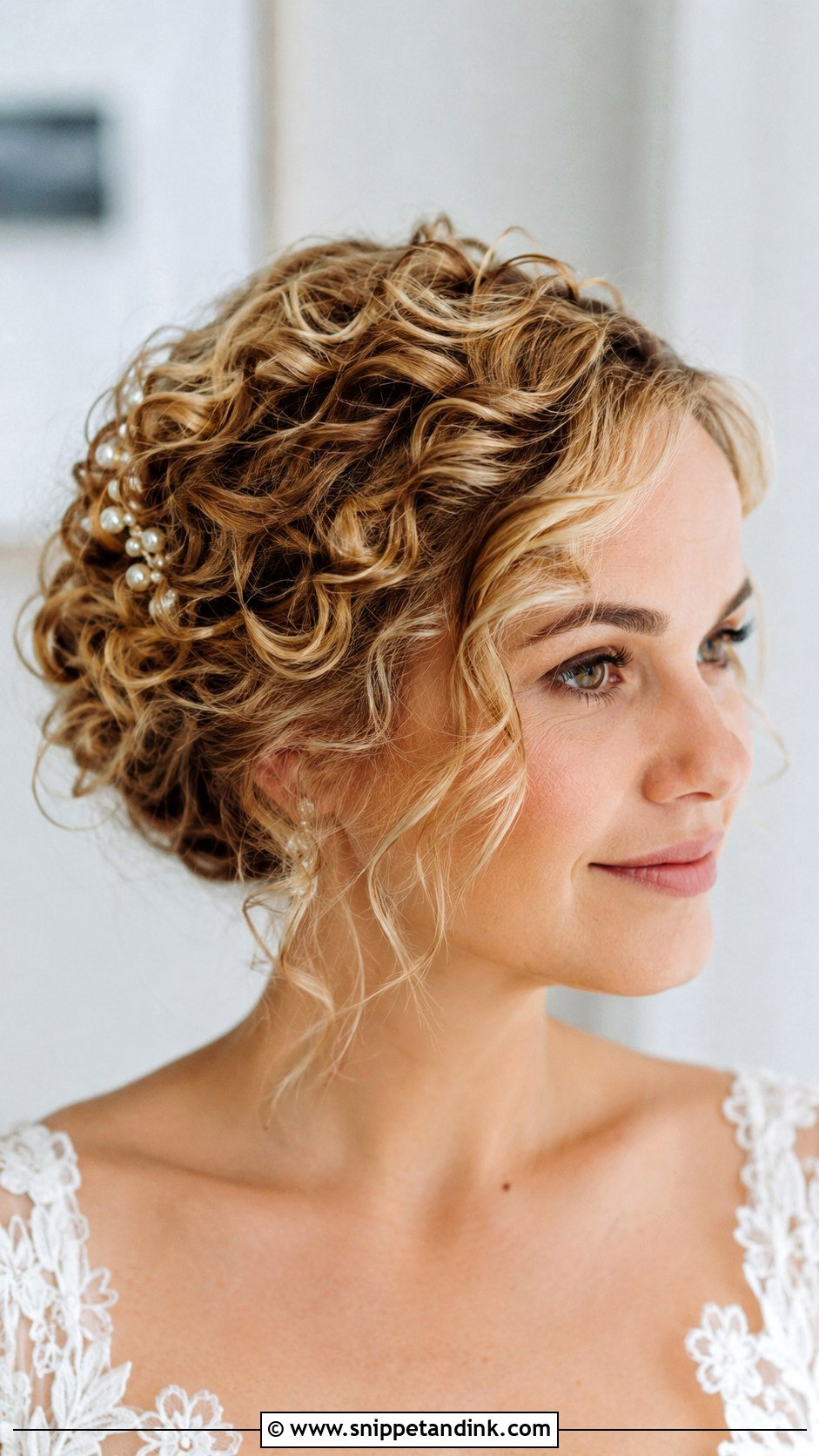
Chin-length curls and curly bobs can’t make a bun, but they can look like an updo. I lift the crown, twist the sides back, and pin the curls in small clusters at the nape so the shape is closed and there are no ends sticking out. A decorative pin or tiny flowers over the joins finish it. Expect more pins than a long-haired bride needs, and keep the sides polished so the crown reads as the deliberate part.
12. Curly Wedding Updo For Long Hair
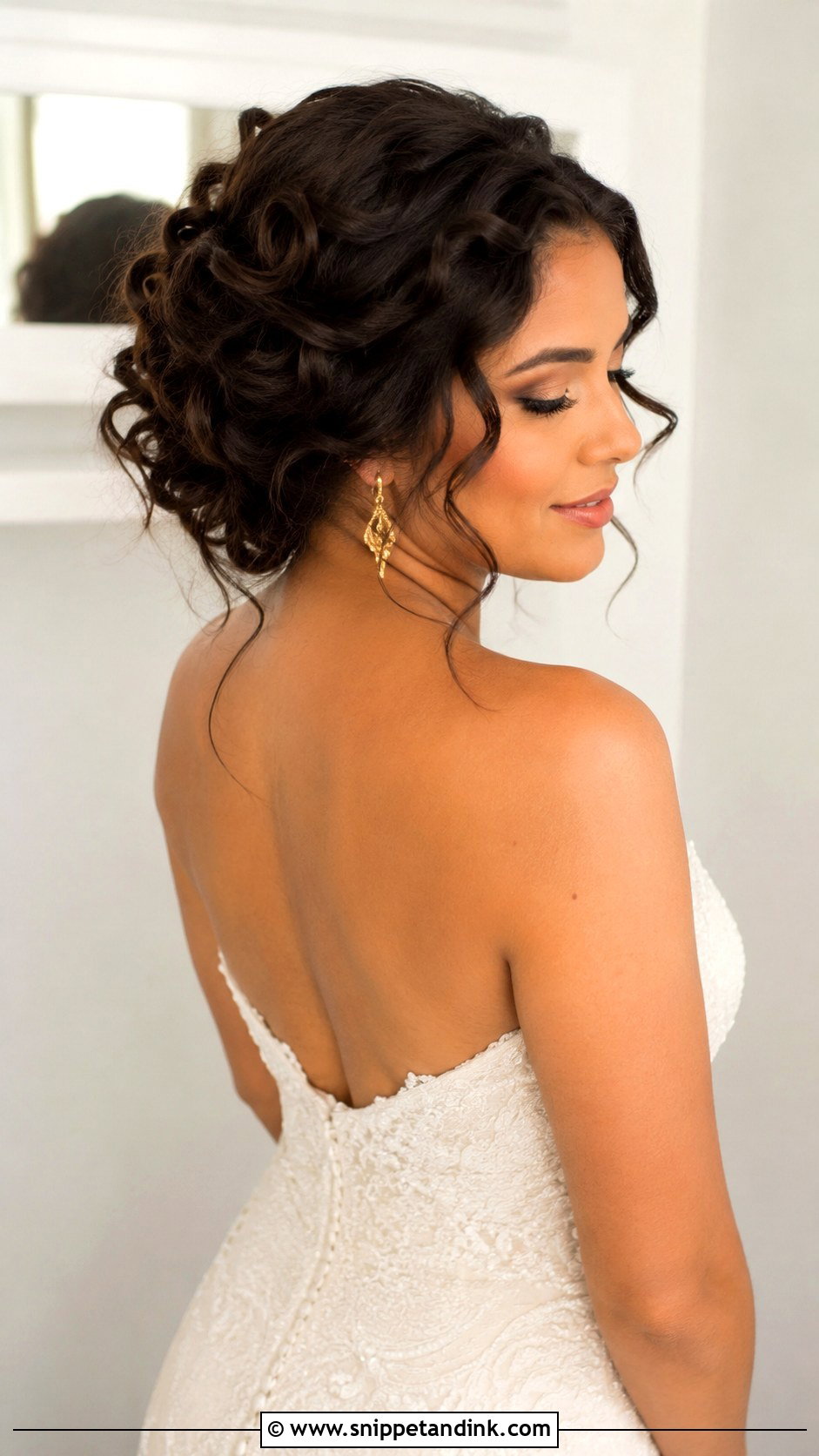
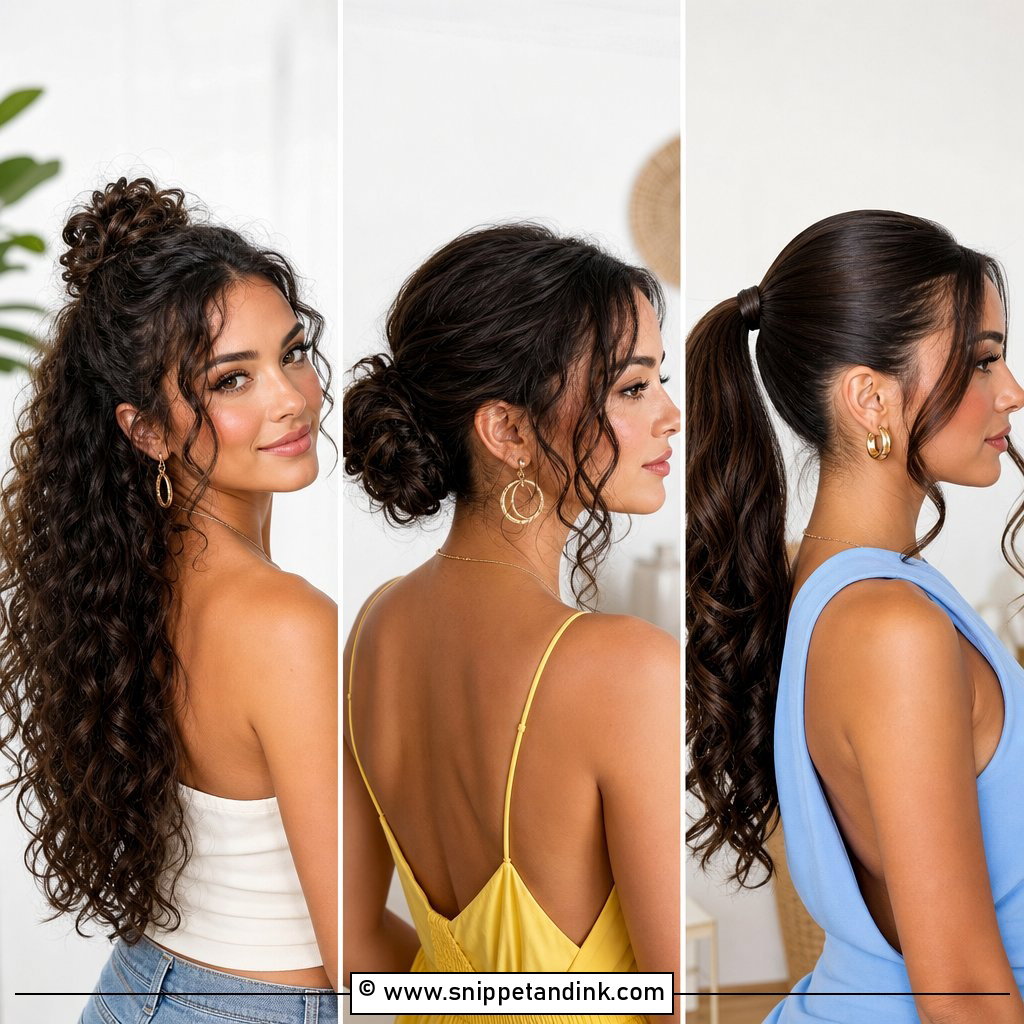
Long curls have weight, and weight is what pulls an updo loose. I section carefully and pin each section to the one beneath it, building a scaffold rather than one big pile, so no single pin carries the load. Defining the curls before styling matters more here than on shorter hair, since stretched long curls go fuzzy fast. You can gather it into a full low bun, a high bun or a cascading pinned shape; the scalp should not ache in any of them.
13. Curly Wedding Updo For Natural Hair
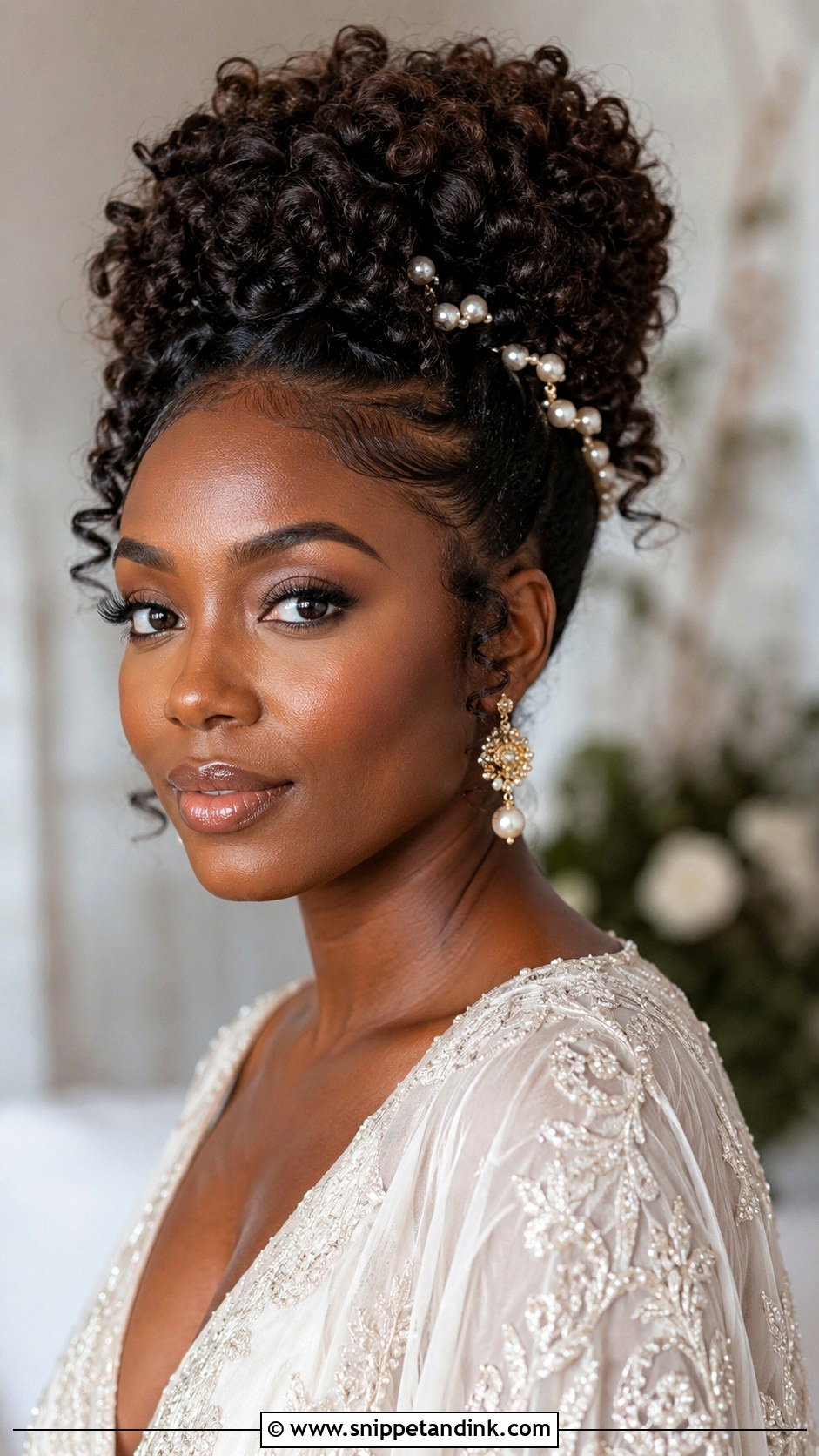
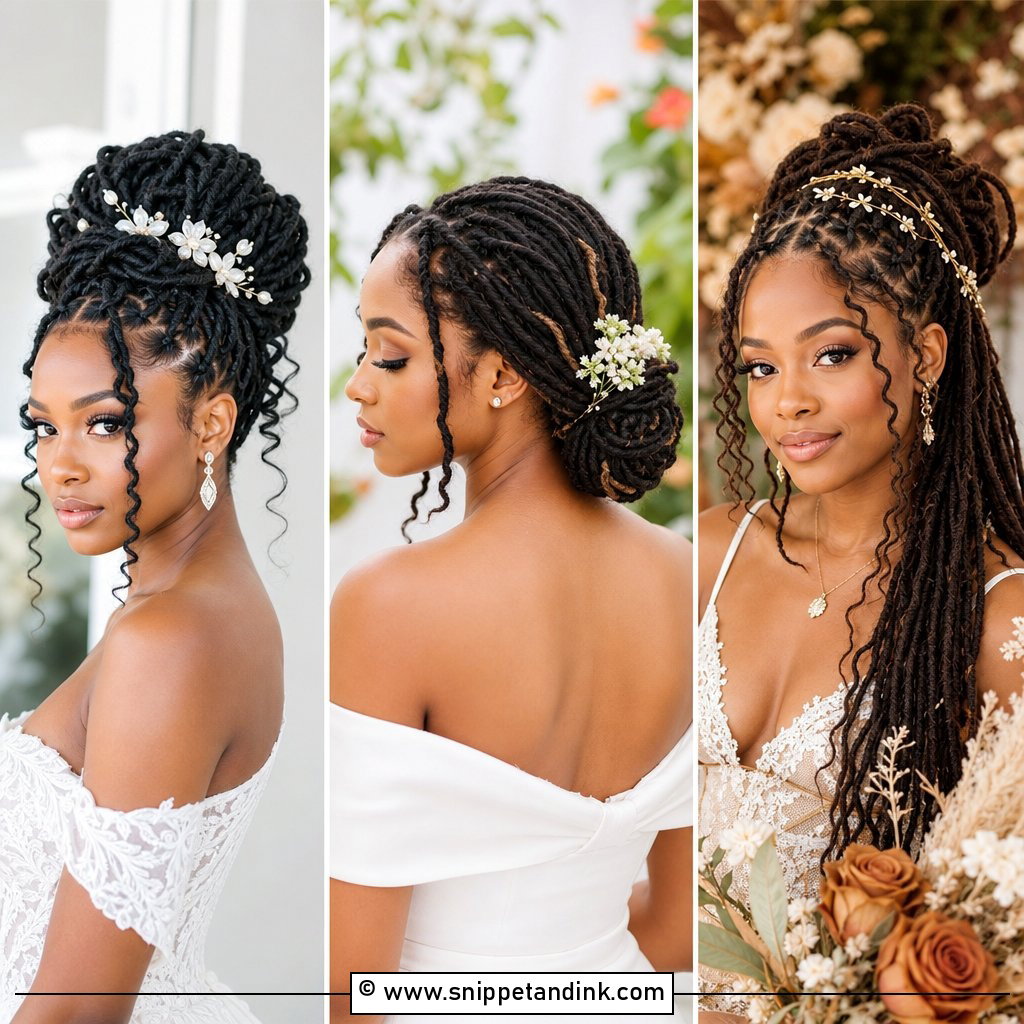
Coily hair holds shape so well that the updo itself rarely needs to be complicated. A high puff-style bun, a sculpted crown or a low gathered coil bun will hold all day with very few pins. Moisture is the priority: I work in a leave-in and a cream before shaping, because dry coils shrink and lose definition under a long day of heat. Gold cuffs and pearl pins sit well on the texture. Use a satin-lined edge brush and soft gel for the hairline instead of a heavy pomade, which can flake by evening.
14. Curly Wedding Updo With Loose Tendrils
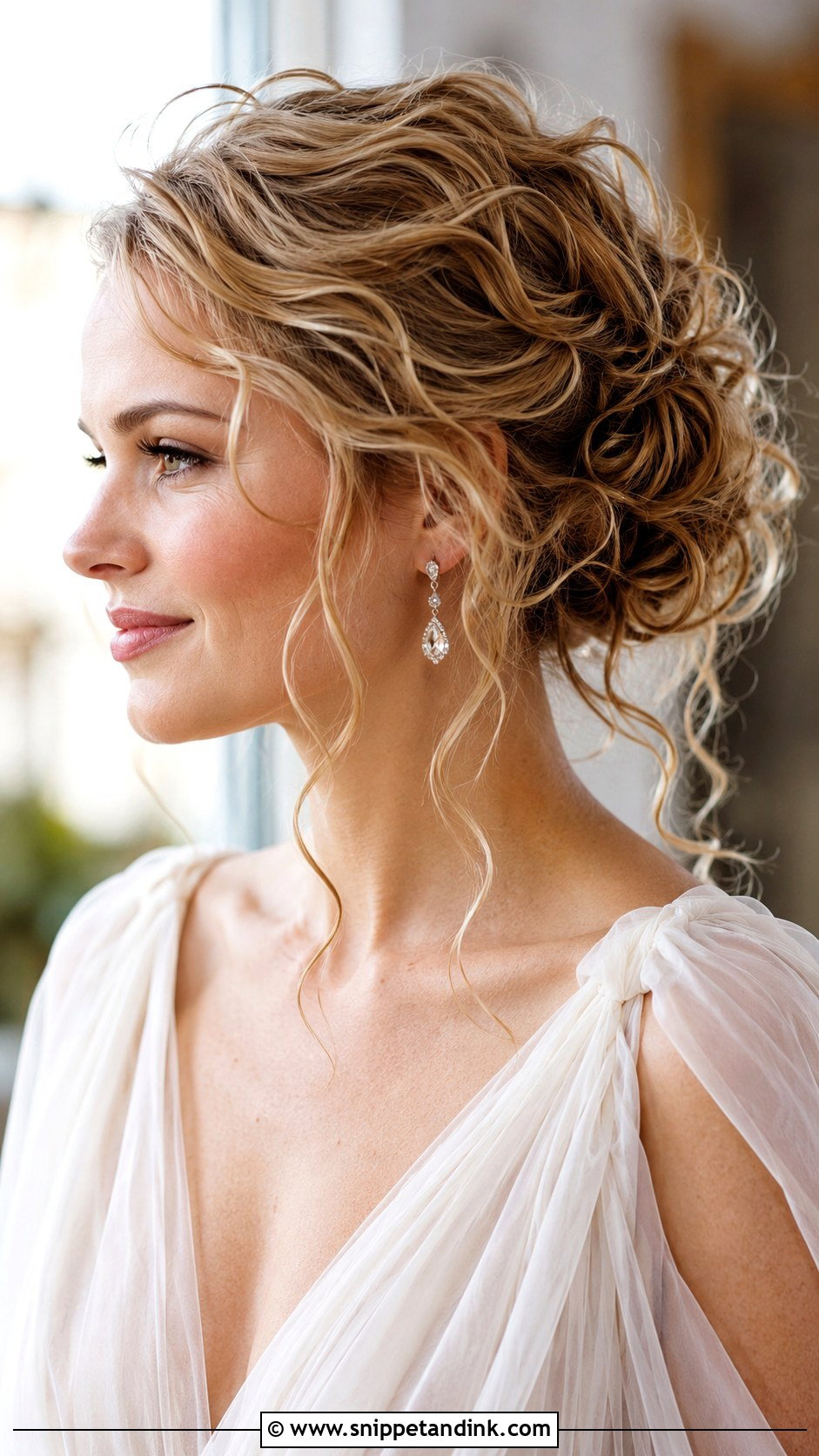
Tendrils are where curly updos look most natural, and also where they go limp first. I pick out curls at the temples, cheeks and nape after the updo is pinned, then twist each around a finger and set it with a light gel so it holds its spiral. Too many tendrils and the updo looks half-done. I’d stop at four to six. They frame the face from the side angles photographers favour.
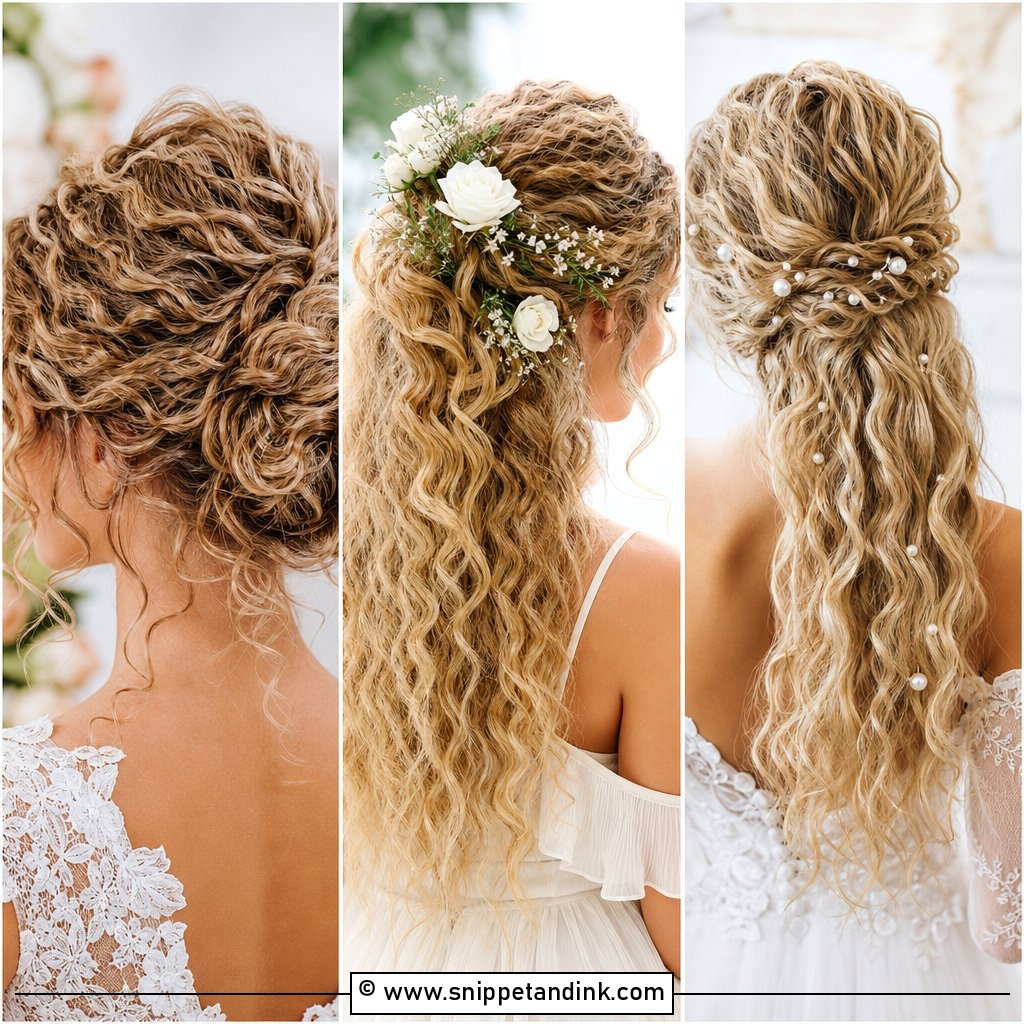
15. Curly Wedding Updo With Hair Vine
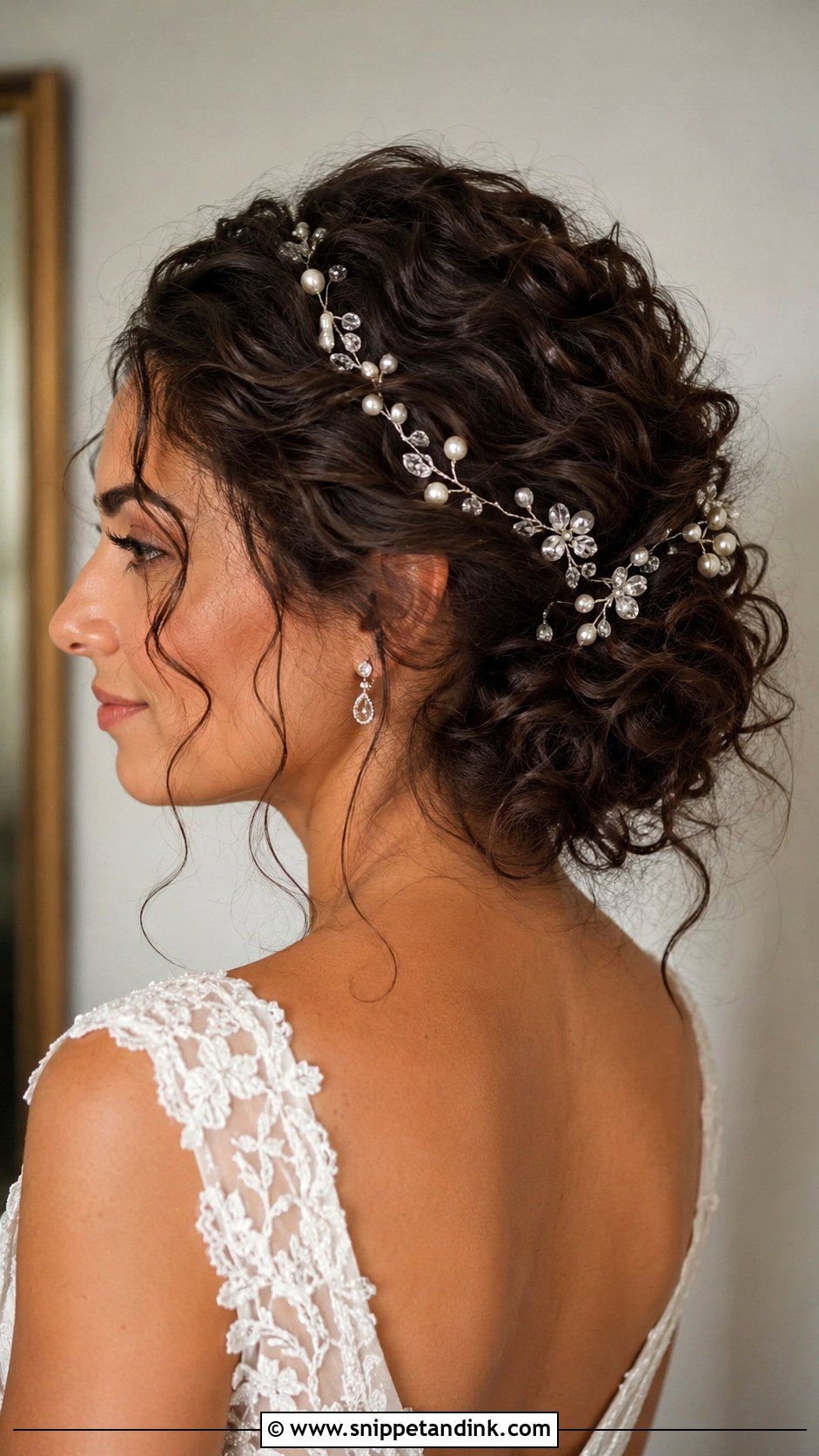
Hair vines bend, so they follow curls instead of sitting on top of them. I wrap one around a bun or trace it along a braid, anchoring it with small pins every few centimetres hidden in the curls. Match the pearls or crystals to your earrings and dress. A vine is light enough for a long outdoor day and suits airy gowns.
Bring Your Own Curl Products to the Chair
Many stylists carry products made for straight hair: strong-hold sprays, shine sprays and dry texturisers that can leave curls dull or brittle. I always ask curly brides to bring their own leave-in, cream and gel to the trial. Your curls already know how those react, and I can build on them instead of guessing.
Ask your stylist how often they work with curly hair and to show photos of curly brides they have styled. A stylist who reaches for a flat iron or a fine-tooth comb as their first tool may not be the best match.
Humidity matters too. If the forecast is damp, I swap a light cream for a firmer gel on the outer layer of curls only, so the surface holds its clumps while the inside stays soft enough to pin. A finishing spray with an anti-humidity film helps, but it can’t rescue curls that were left undefined underneath.
Unpinning at Midnight Without Snapping Curls
A curly updo can hold dozens of pins, and pulling them out tired at the end of the night is when most breakage happens. Take them out one at a time, following the direction they went in, and don’t tug at a pin that’s caught; wiggle it free.
Once the pins are out, don’t brush. Mist the hair with water or a leave-in conditioner and finger-detangle, then sleep on a silk or satin pillowcase. The pattern usually comes back with a little water the next morning.
Your Curls Are Part of the Design
Each shape here suits a different neckline and curl type, from the classic low bun to the sculpted chignon and braided or accessorized updos. Short curls, coils, bangs and long ringlets can all go up with the right plan. Bring photos of brides whose curl pattern looks like yours, not just ones you admire, book a trial with a stylist who works with curly hair regularly, and choose the updo that still feels comfortable after the trial ends.
You'll Like These Ideas:


Leave a Reply