
Curls, coils, kinks, locs and loose waves all behave differently on a wedding day, and the bridal styles that last are the ones built around that behaviour rather than against it. My job at a trial is to work out what your hair does naturally, then give it a shape that holds a veil, survives hugs and still looks like you in the photos. Below are fifteen looks for natural brides, from sculpted updos and half-up shapes to protective options that more or less look after themselves, each with the detail I’d want you to know before choosing it.
Matching Each Style to Your Curl Pattern and Density
Two brides who both describe their hair as curly can need completely different styles. Before I suggest anything, I check two things: the curl pattern, and how much hair there actually is. Density matters as much as type, because a fine head of coils and a thick head of coils hold pins, braids and volume very differently.
Loose waves and soft curls
These drop the fastest. Updos, half-up shapes and side sweeps hold best, as long as they’re set with a product that has some grip. A loose wash and go on wavy hair can be noticeably flatter by evening.
Tight coils and kinky textures
These shrink a lot but keep their shape superbly, so afros, puffs, Bantu knots and flat twists play to their strength. If you want your length to show, plan a stretched set rather than a wet style.
Fine or thinning hair
Work in fewer, bigger sections. Small twists and tight braids can show scalp, and heavy buns pull on a delicate hairline. A braided crown or a low bun with a little padding often looks fuller than the same hair worn down.
Locs and braid extensions
Weight is the main factor. Plan the style around how it feels after ten hours, not how it looks in the first portrait.
1. Natural Curly Bridal Updo
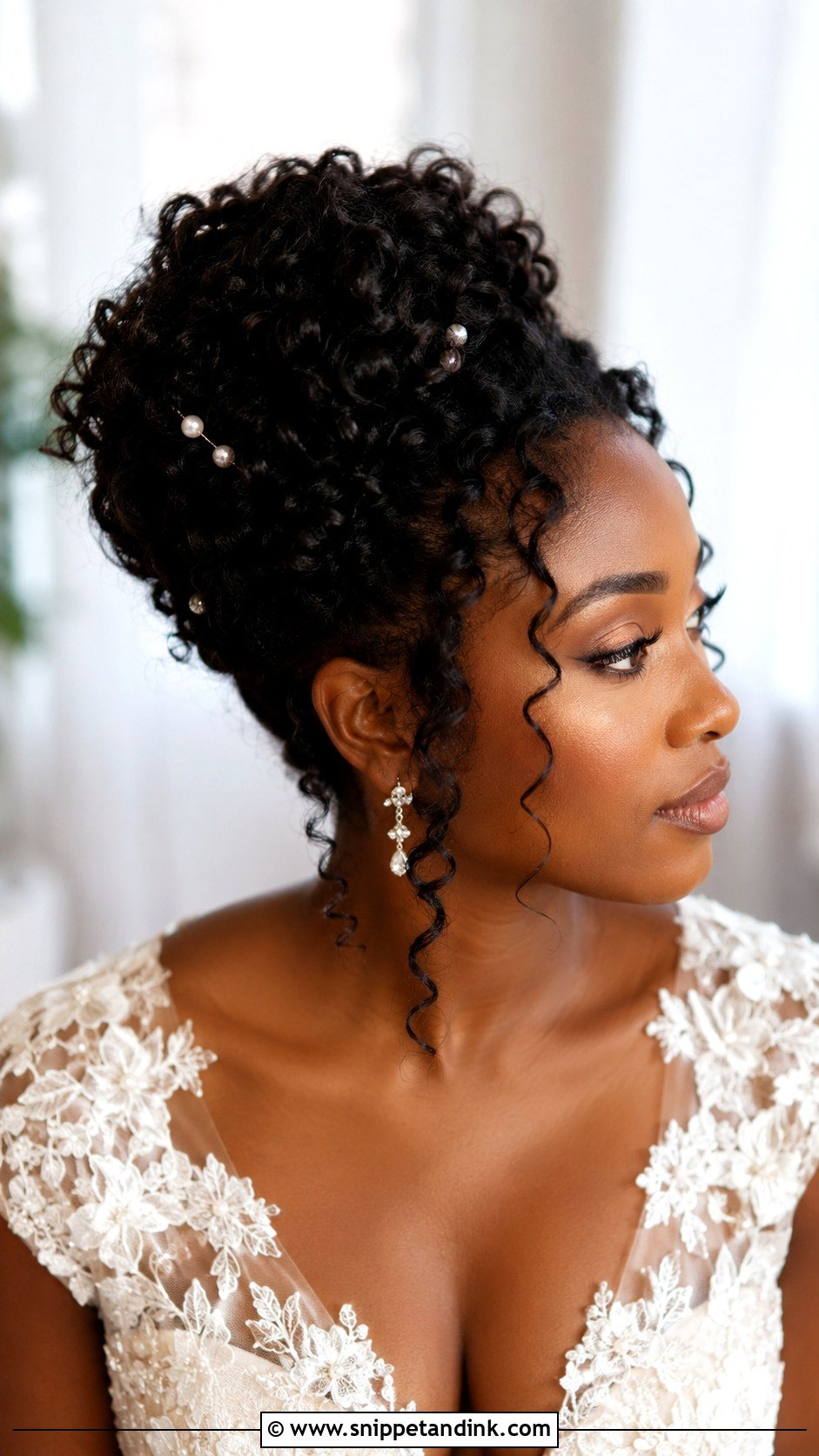
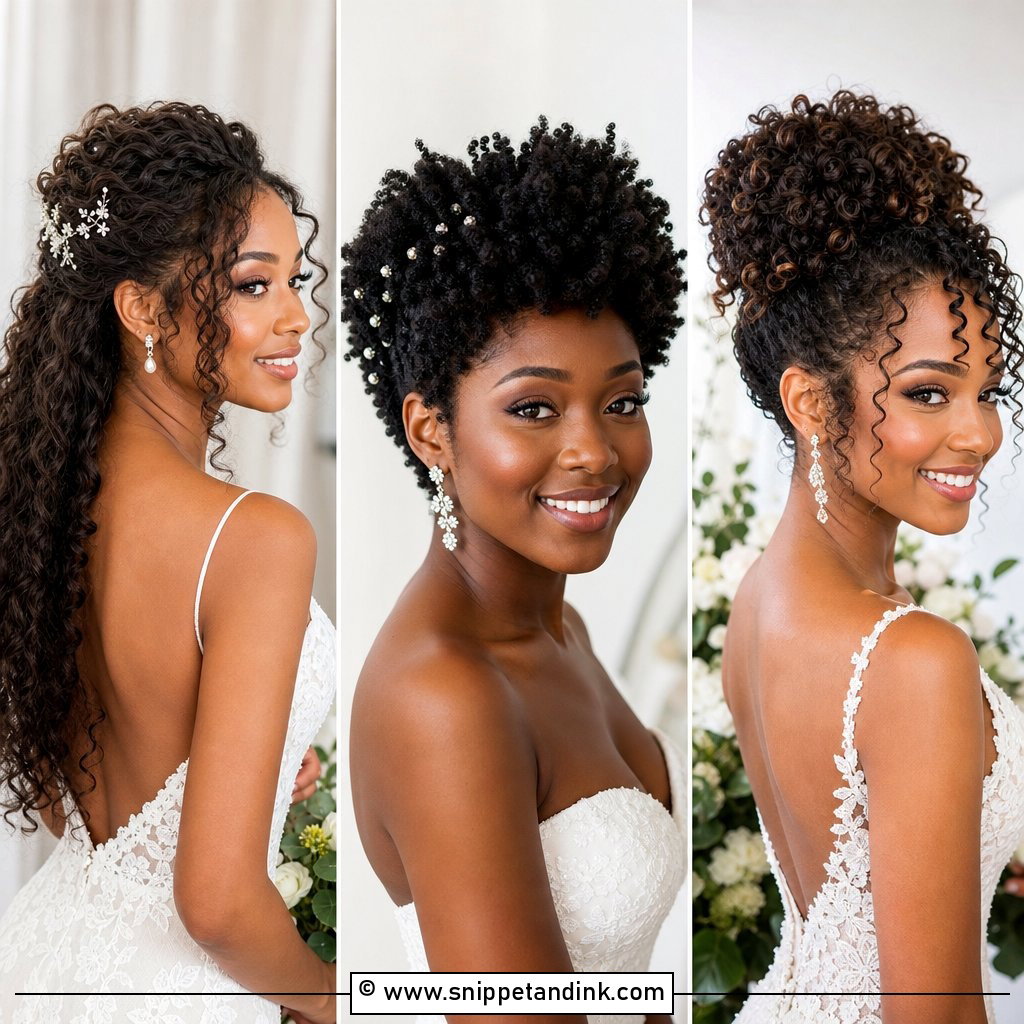
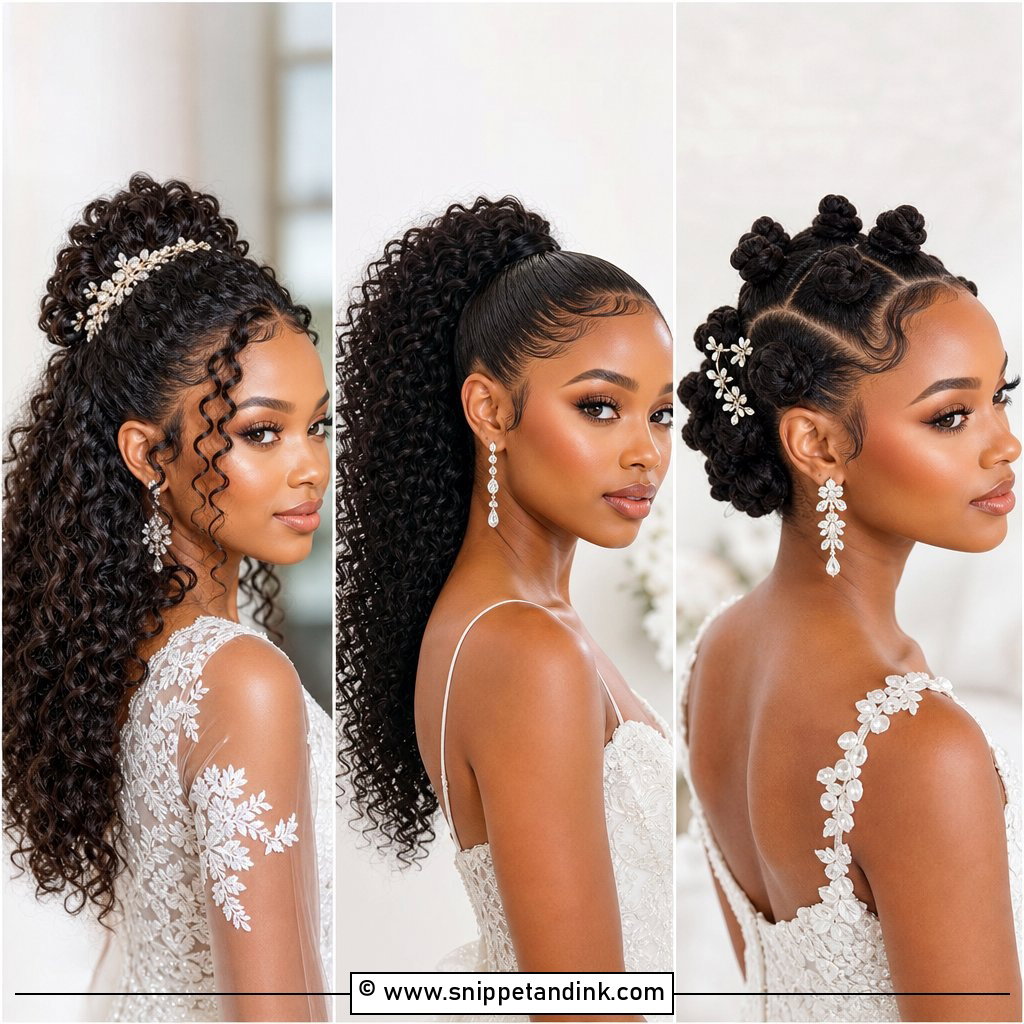
Curls make an updo easier, not harder. They grip each other, so I need fewer pins than on straight hair, and the shape looks full without padding. I smooth the crown with a soft brush and a little gel, then pin curls in clusters rather than one at a time, which stops them looking like a row of springs. Medium to long hair works best; anything that doesn’t reach past the shoulders struggles to meet at the back. For outdoor summer weddings this is the style I recommend most, simply because a bare neck stays cooler.
2. Natural Hair Low Bun Wedding Hairstyle
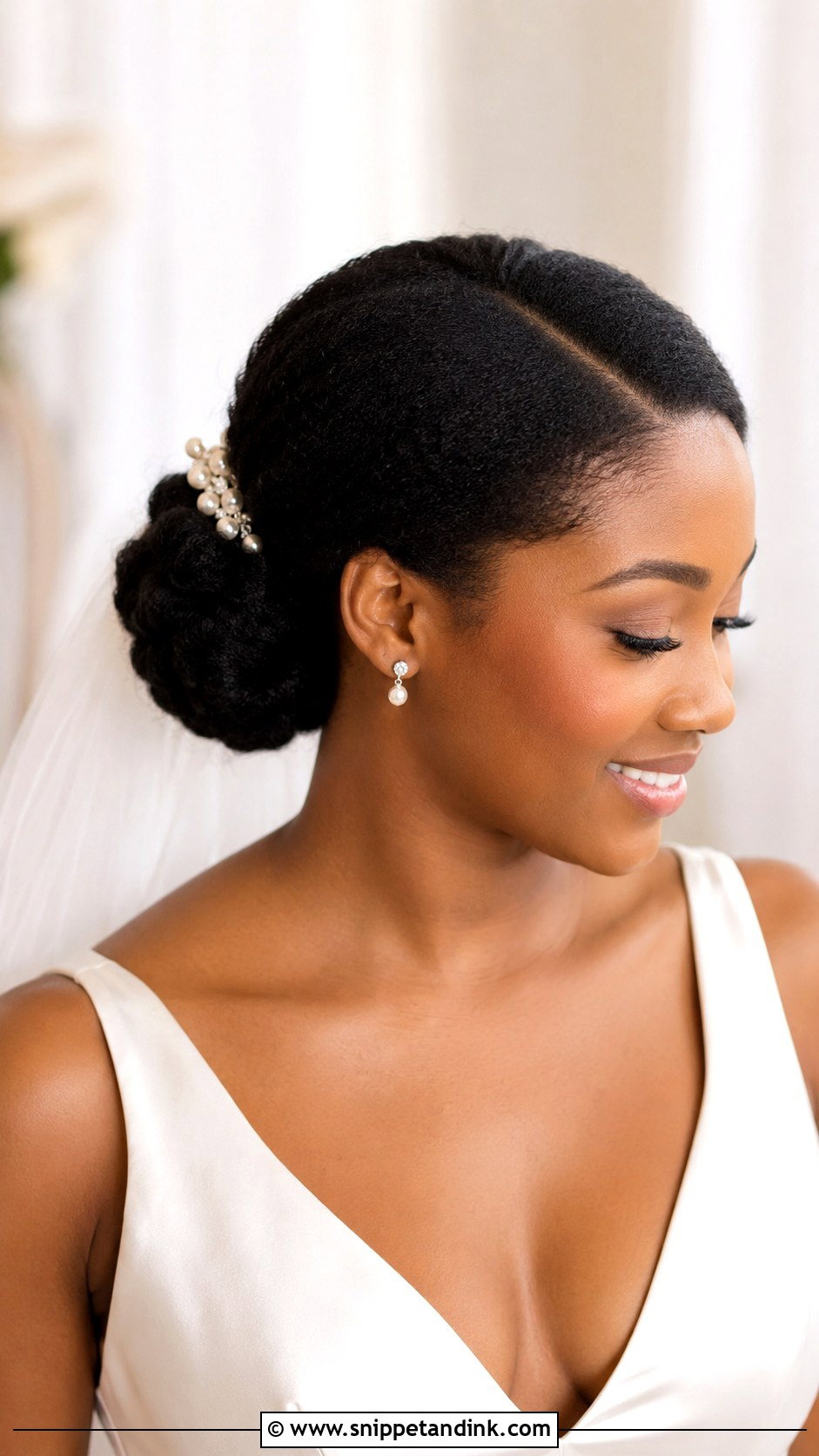
On natural hair, a low bun is the safest bridal shape there is. It sits at the nape, where a veil comb, a backless gown and a high neck all leave it alone. I form it from twists or stretched curls so it has body, and I only wrap it around a small donut if the hair is fine. The part is worth testing in the mirror at your trial, since a centre part reads formal and a deep side part softer. Fresh flowers wilt against warm hair after a few hours, so I tuck them in after the ceremony photos or use silk ones.
3. Natural Twist Out Wedding Hairstyle
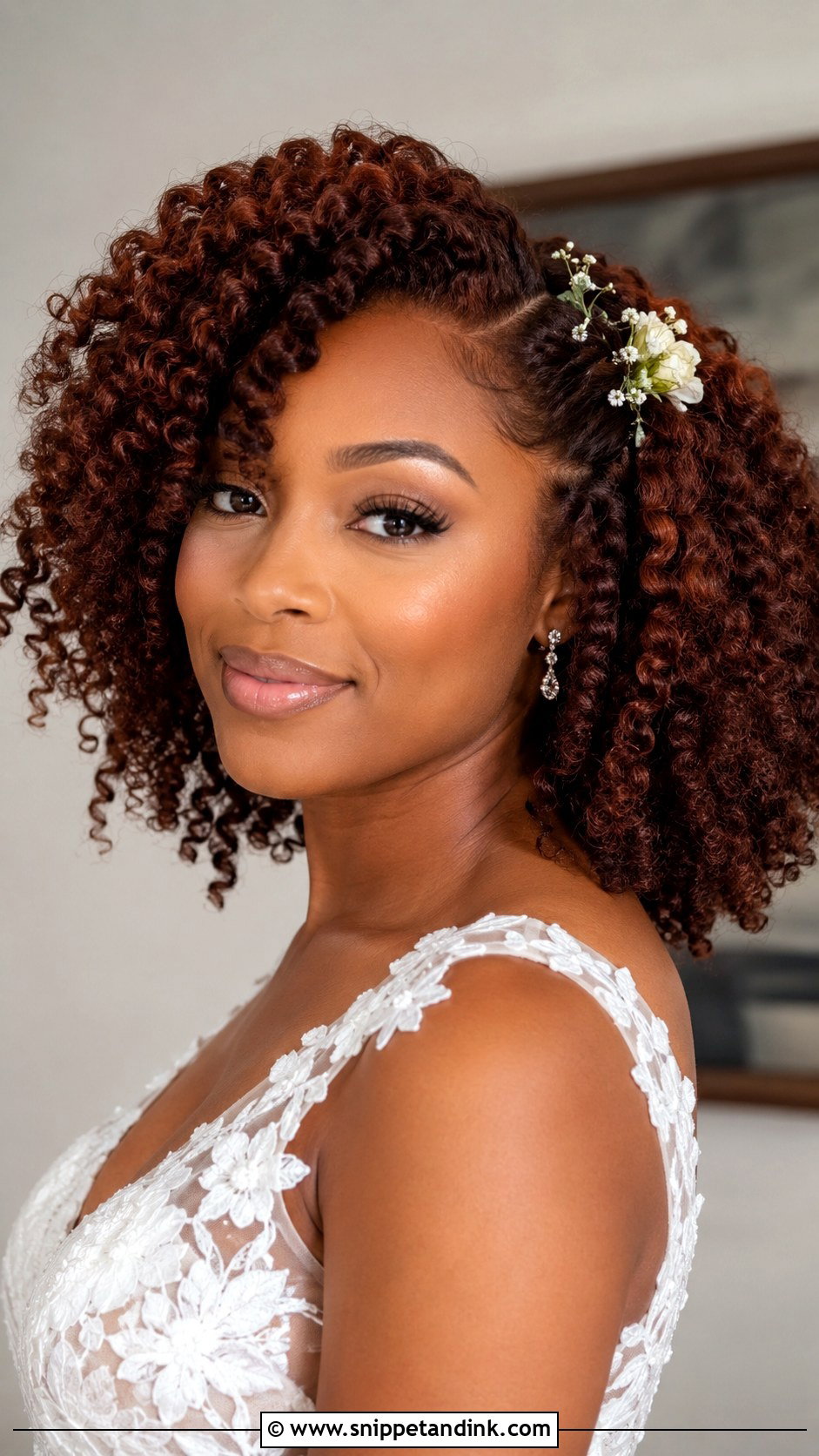
Twist outs need a dry set and, ideally, a dry day. I put the twists in the evening before so they have the whole night to dry, then unravel them once the bride’s makeup is done, separating gently and lifting only a little at the root. Humidity is the weak point. A twist out at a beach ceremony will gain size by the reception, so I’d only choose it near the sea if you’re happy with that. Whether you wear it loose or lifted at the crown, the set is identical; only the placement changes.
4. Natural Afro Wedding Hairstyle
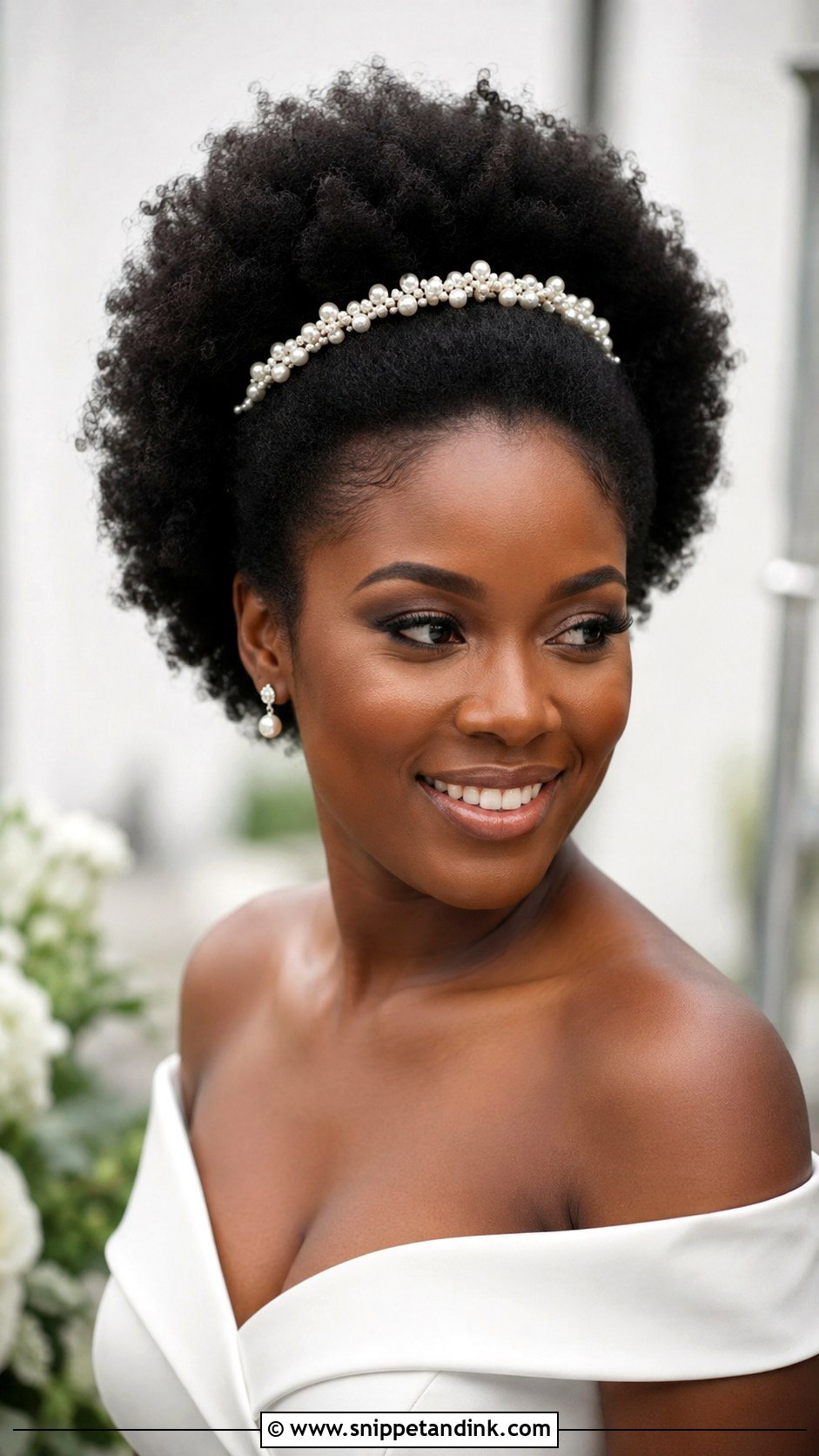
A natural afro wedding hairstyle celebrates volume instead of fighting it, and in portraits that rounded frame around the face is hard to match with any other shape. The outline depends on your cut. A heart-shaped or tapered afro needs someone who cuts curly hair dry, curl by curl, so book that cut a couple of weeks before. On the day I pick from the roots, check the silhouette from both sides, and refine the edges lightly rather than slicking them down. One accessory is enough. Crowding an afro with pins breaks up the very outline that makes it work.
5. Natural Braided Crown Wedding Hairstyle
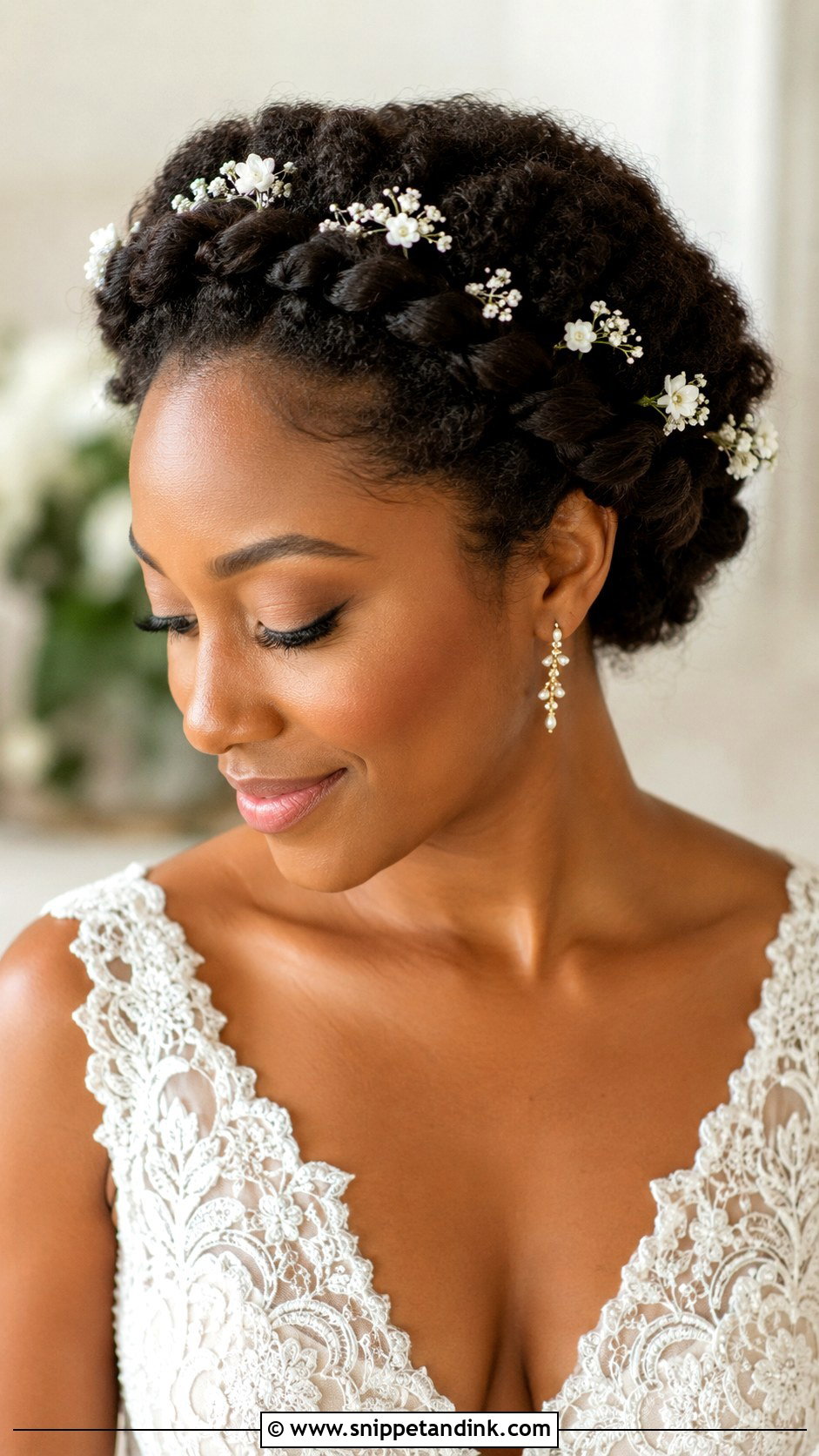
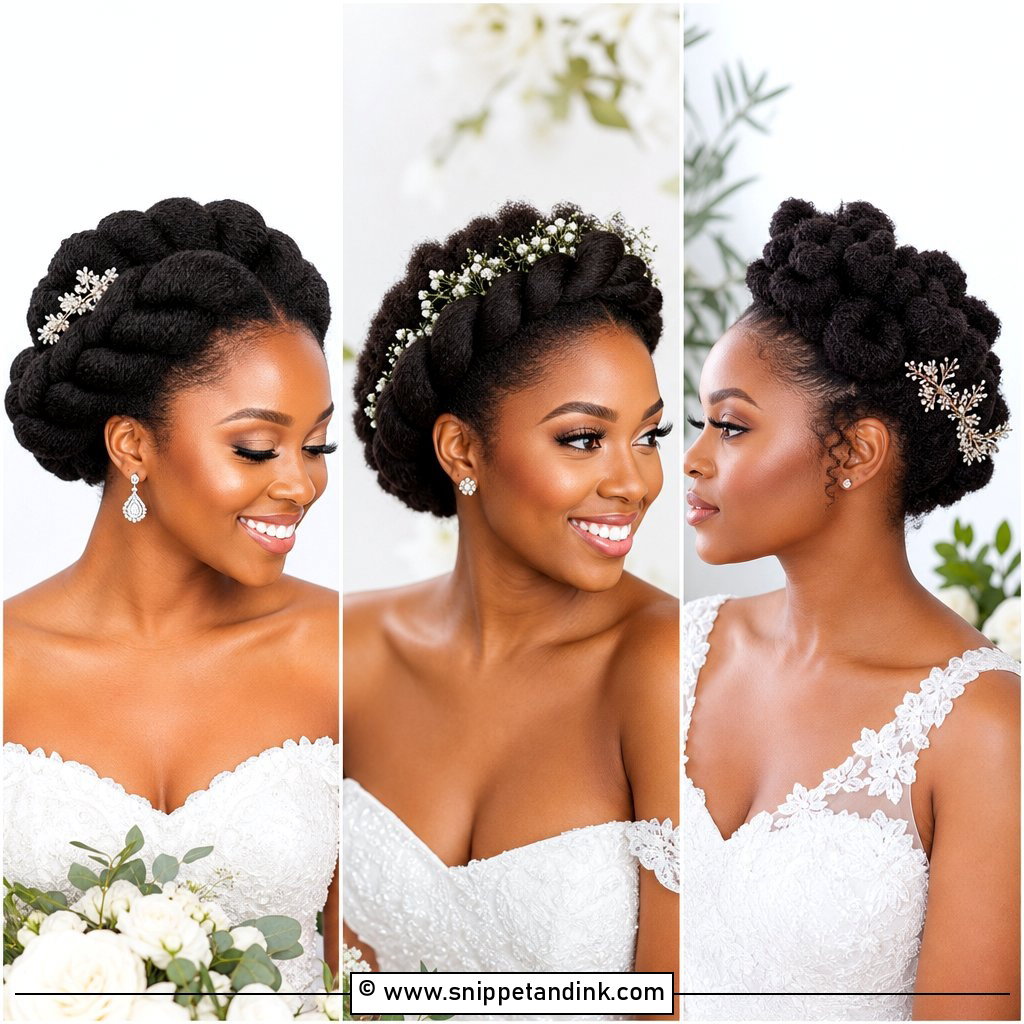
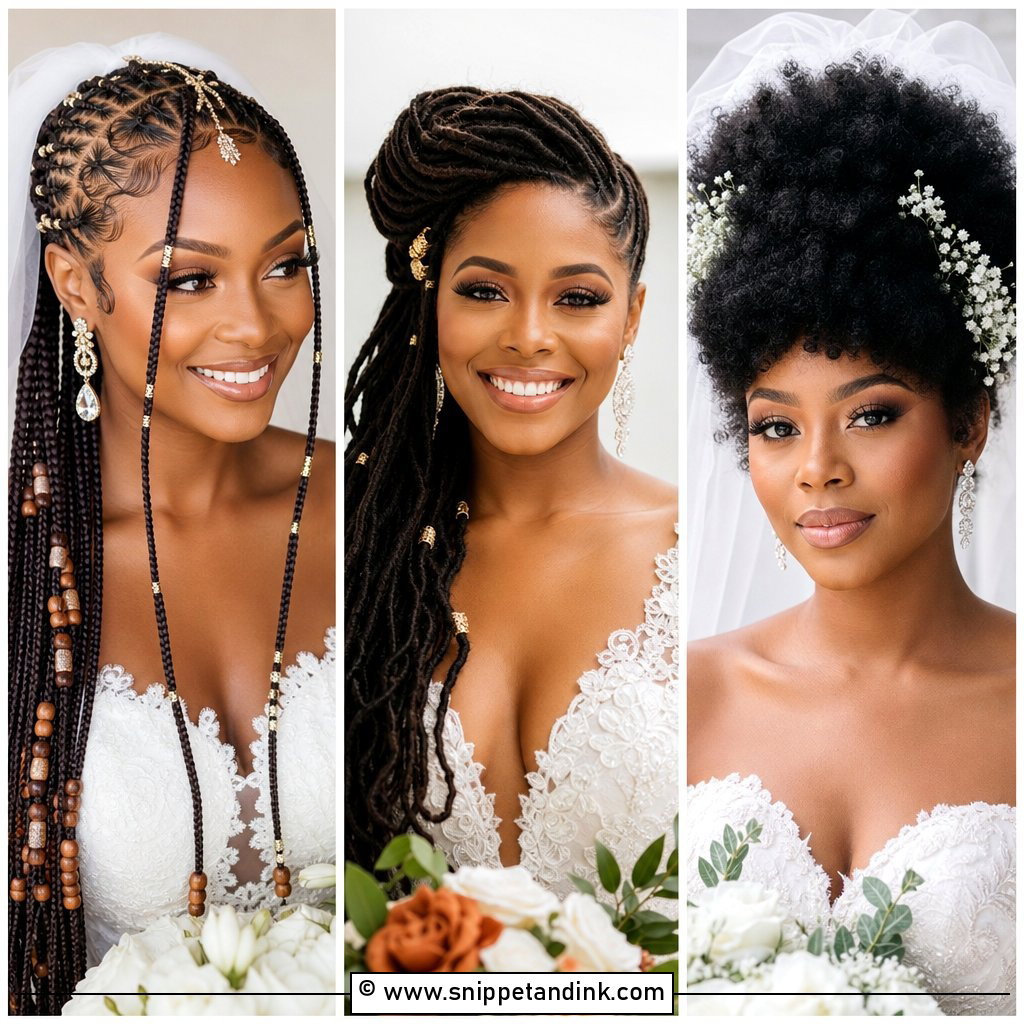
A braided crown keeps hair up without any bun, which matters if a bun would press against a high-backed chair or sit where a cathedral veil needs to attach. Length decides the method. Long hair can wrap in a single thick braid, while shorter hair gets the same halo from flat twists or cornrows circling the head. Textured hair gives the braid natural width, so it never looks thin the way a braid on fine straight hair can. A sheer veil pinned under the back of the braid hides its comb. Nothing hangs loose, which is why it lasts through a long celebration.
6. Natural Locs Wedding Updo
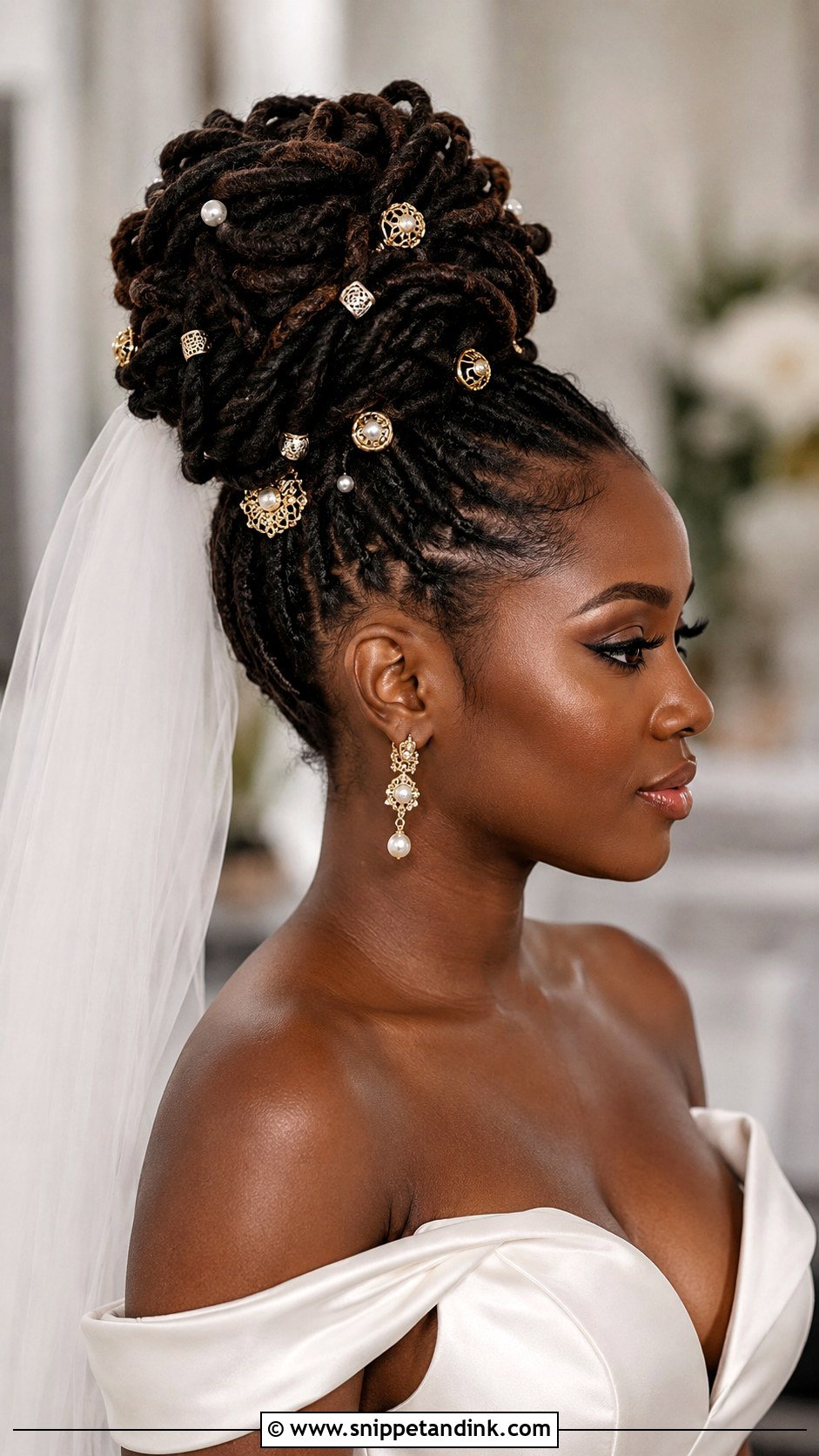
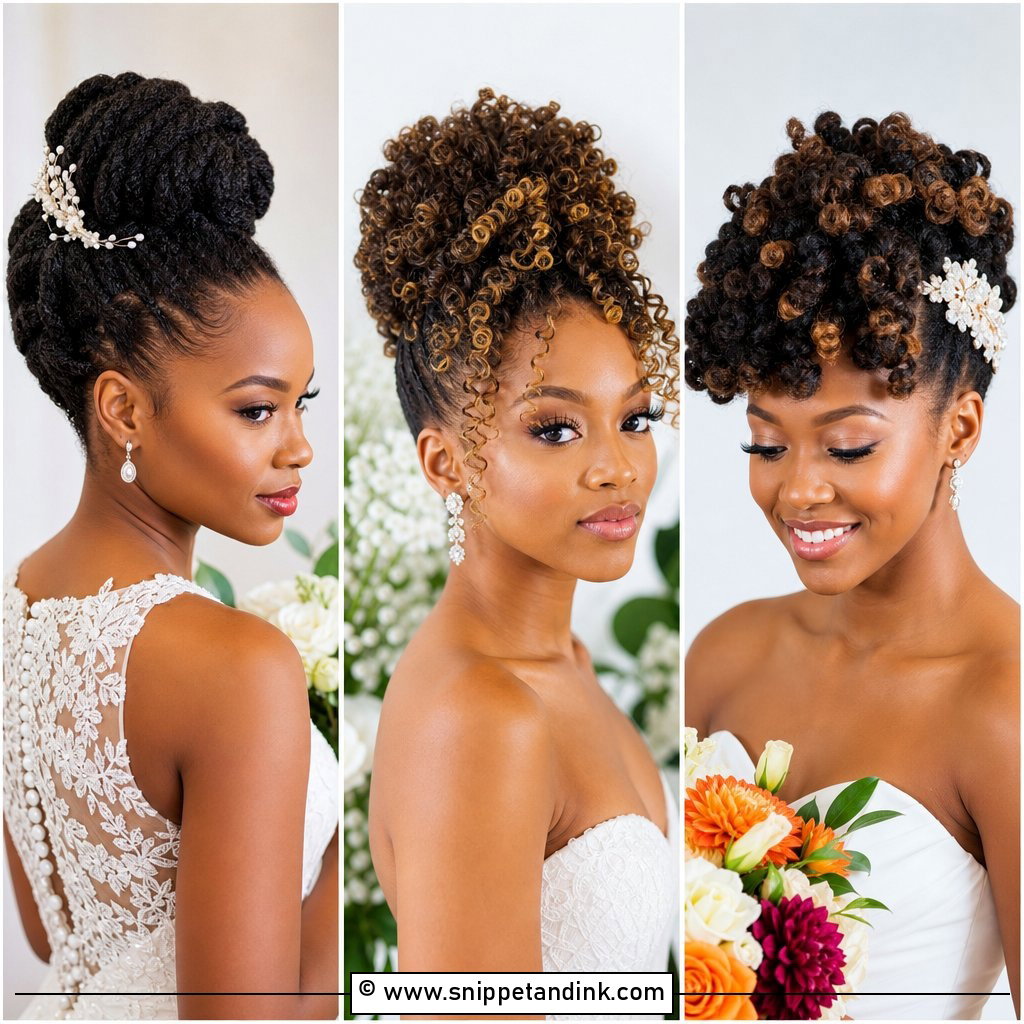
Locs already have structure, so a natural locs wedding updo needs very little product and a fair amount of planning about weight. A high loc bun gives drama but can feel heavy on the crown by evening, especially with long locs, while a low chignon spreads the load across the nape. I test that at the trial by asking the bride to wear it for an hour. A veil comb pushed between locs holds far better than in loose curls. If your loctician is doing a retwist, have it a week or two before, so the roots don’t look freshly tight.
7. Natural Half Up Half Down Wedding Hairstyle
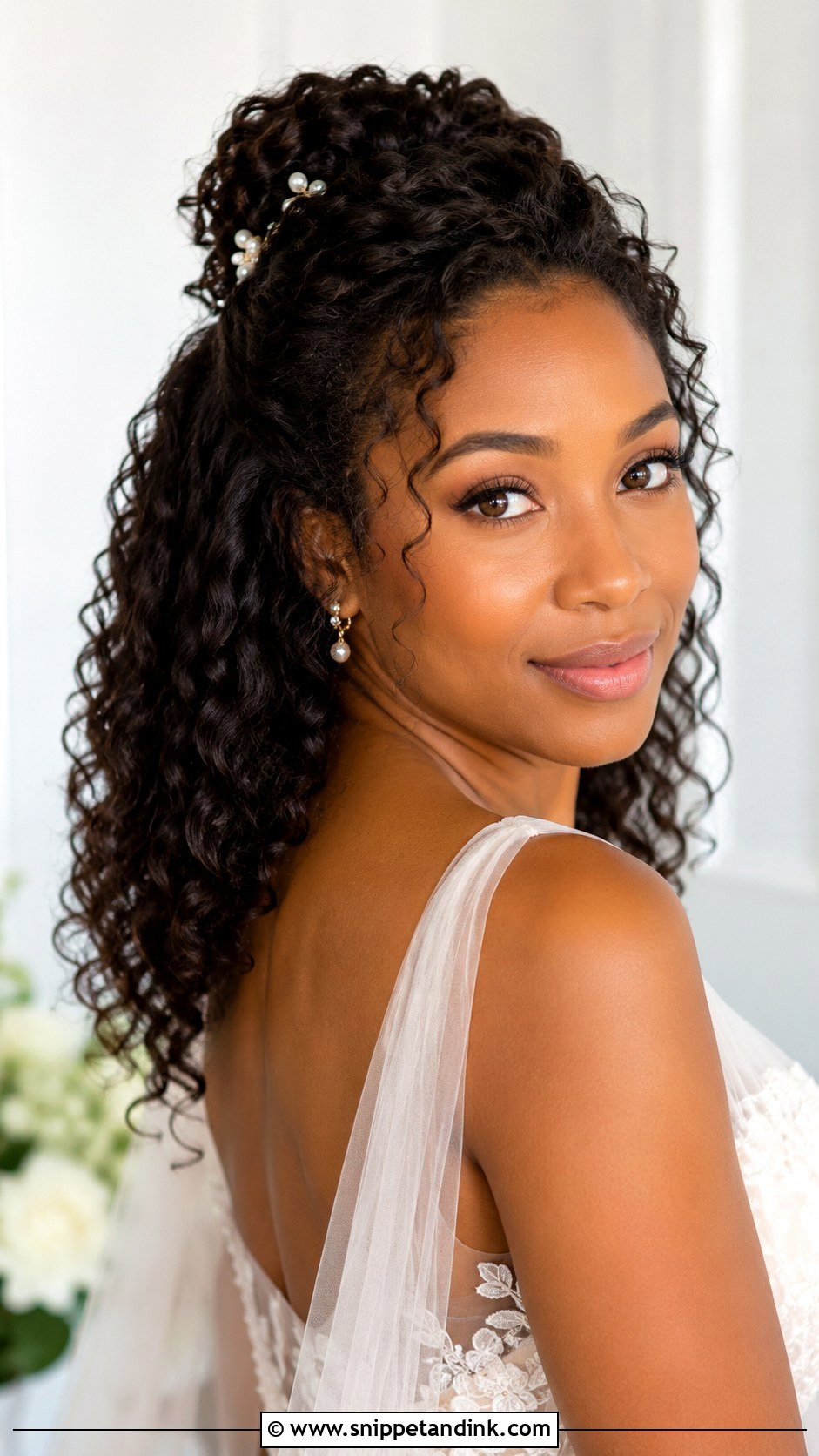
Half up gives accessories something firm to hold, and that’s my main reason for suggesting it to brides who want their hair mostly down. The pinned top section takes the veil comb and any floral pins, while the length stays free. The loose part can be whatever you do best on a normal day, a wash and go or a braid out, and that’s what I’d use. One warning: the lower hair rubs against the back of the dress all day. On lace or beaded backs, curls can catch, so check it against the actual gown.
8. Natural Flat Twist Wedding Updo
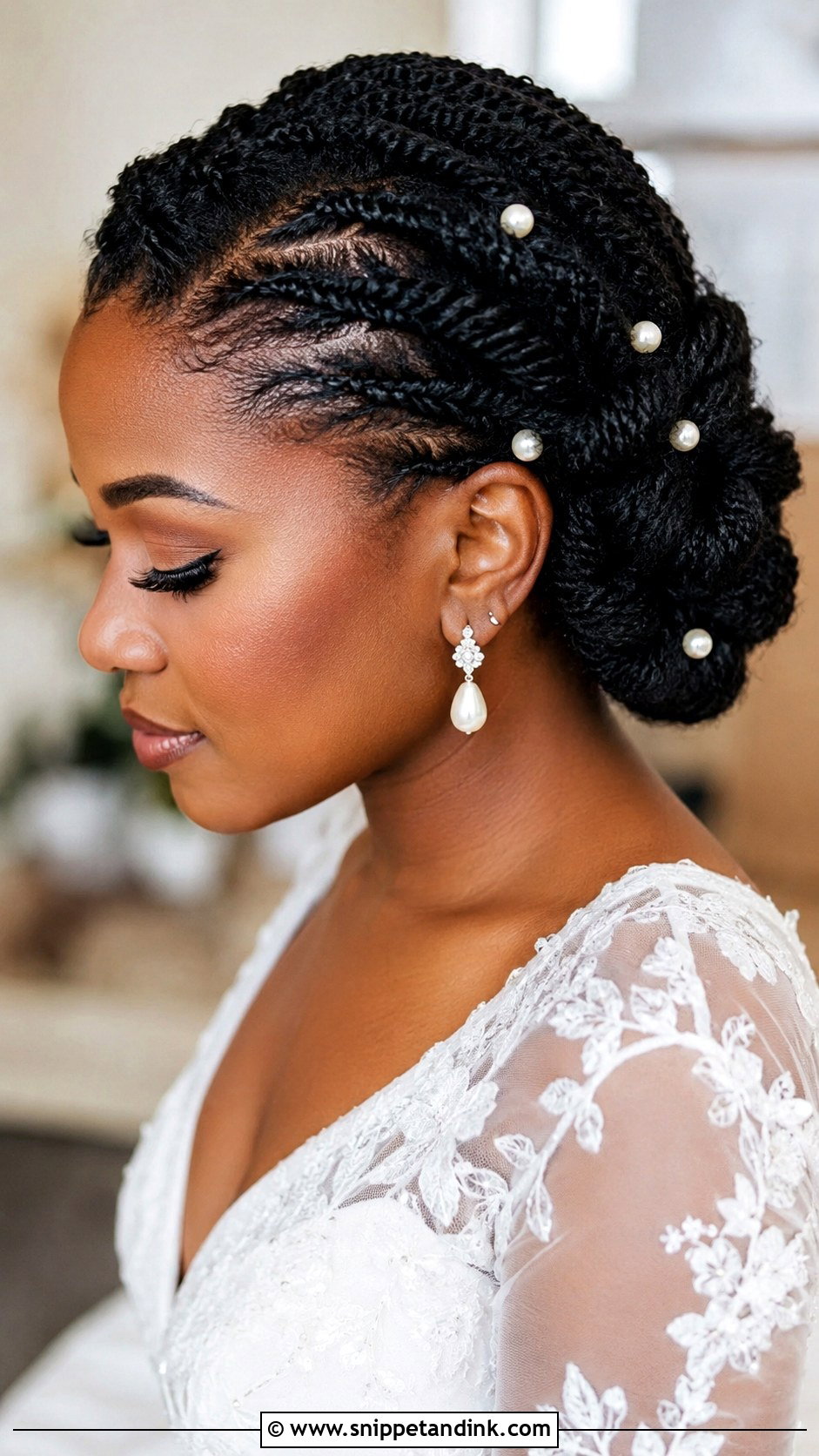
Flat twists sit close to the scalp, which makes this the most frizz-resistant updo on the list. The twists can lead into a bun or curve into a crown. I’d pick the sleek version for heat or rain and the fuller version for an indoor evening wedding, where a little puff looks right. Pearl pins placed along the twist line follow the pattern rather than fighting it. Ask for twists that feel snug, not sore; an install that aches at bedtime will still ache at the reception.
9. Natural Curly Ponytail Wedding Hairstyle
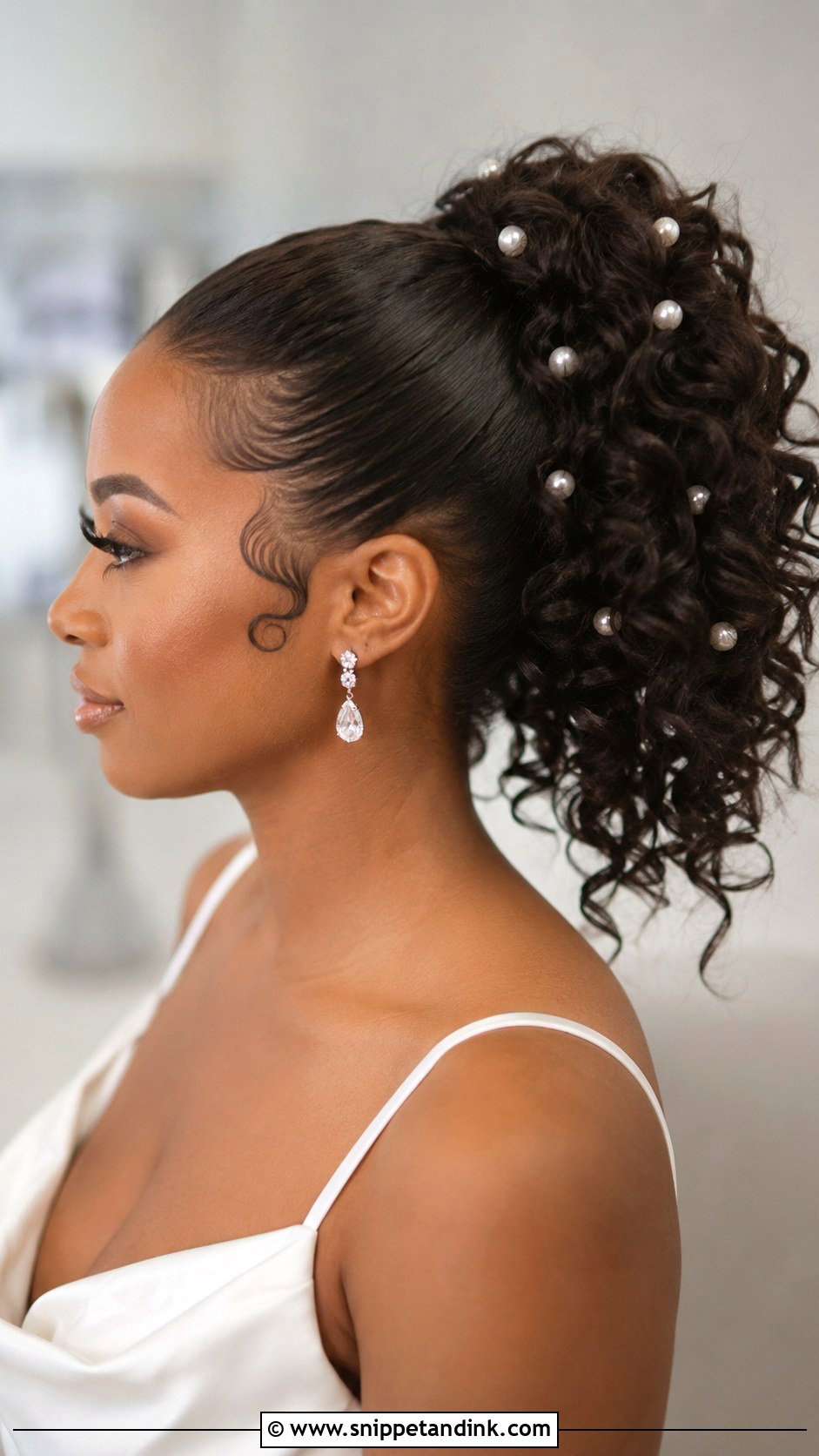
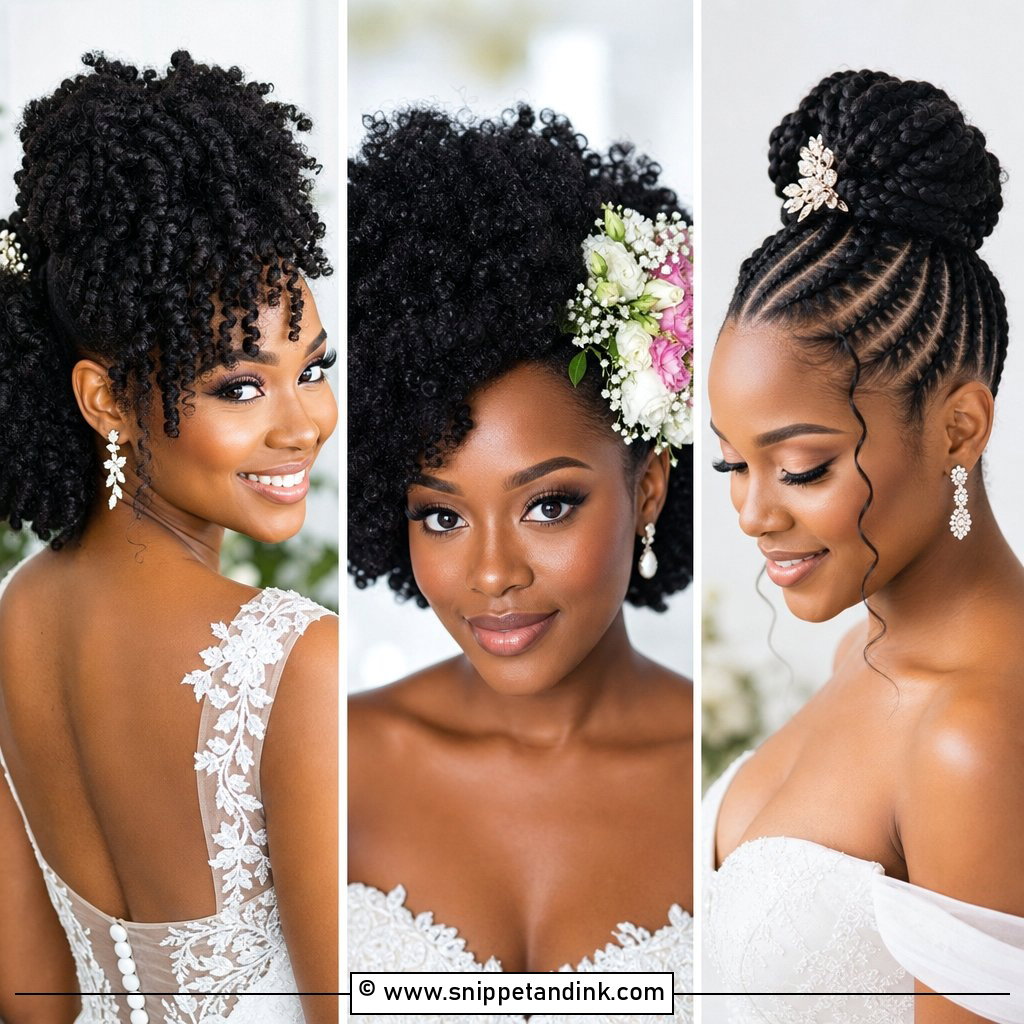
A curly ponytail is what I suggest to brides who plan to dance hard. Height changes the mood: high reads glamorous, low reads quiet. The base should be smooth without being stretched tight, so I brush the edges with a soft brush and a little gel, then wrap a section of hair around the band and pin it underneath. A plain elastic won’t hold dense curls all night. I use two crossed ponytail hooks or a spiral band instead. A bow at the base suits a relaxed reception better than a formal church ceremony.
10. Natural Wash And Go Wedding Hairstyle
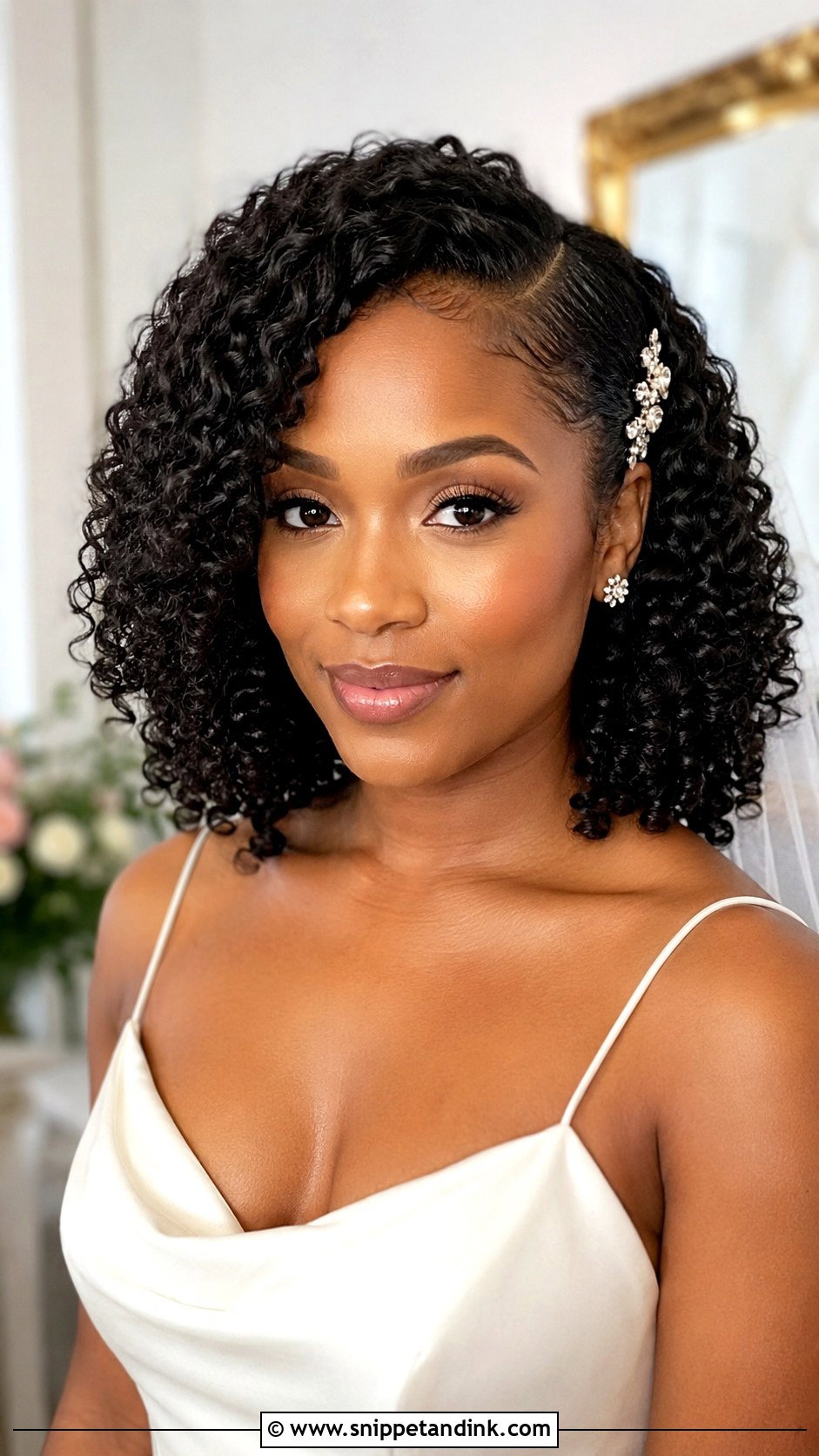
A natural wash and go is the bride looking like herself, only more finished. Layering products in the right order, leave-in, then cream, then gel, and drying without touching is what gives clumped definition. It leans heavily on the haircut, so rounded layers or a tapered shape make the biggest difference here. Keep accessories light, because a heavy headband flattens curls and leaves a dent. And once it’s dry, hands off. Every extra scrunch adds frizz.
11. Natural Side Swept Curls Wedding Hairstyle
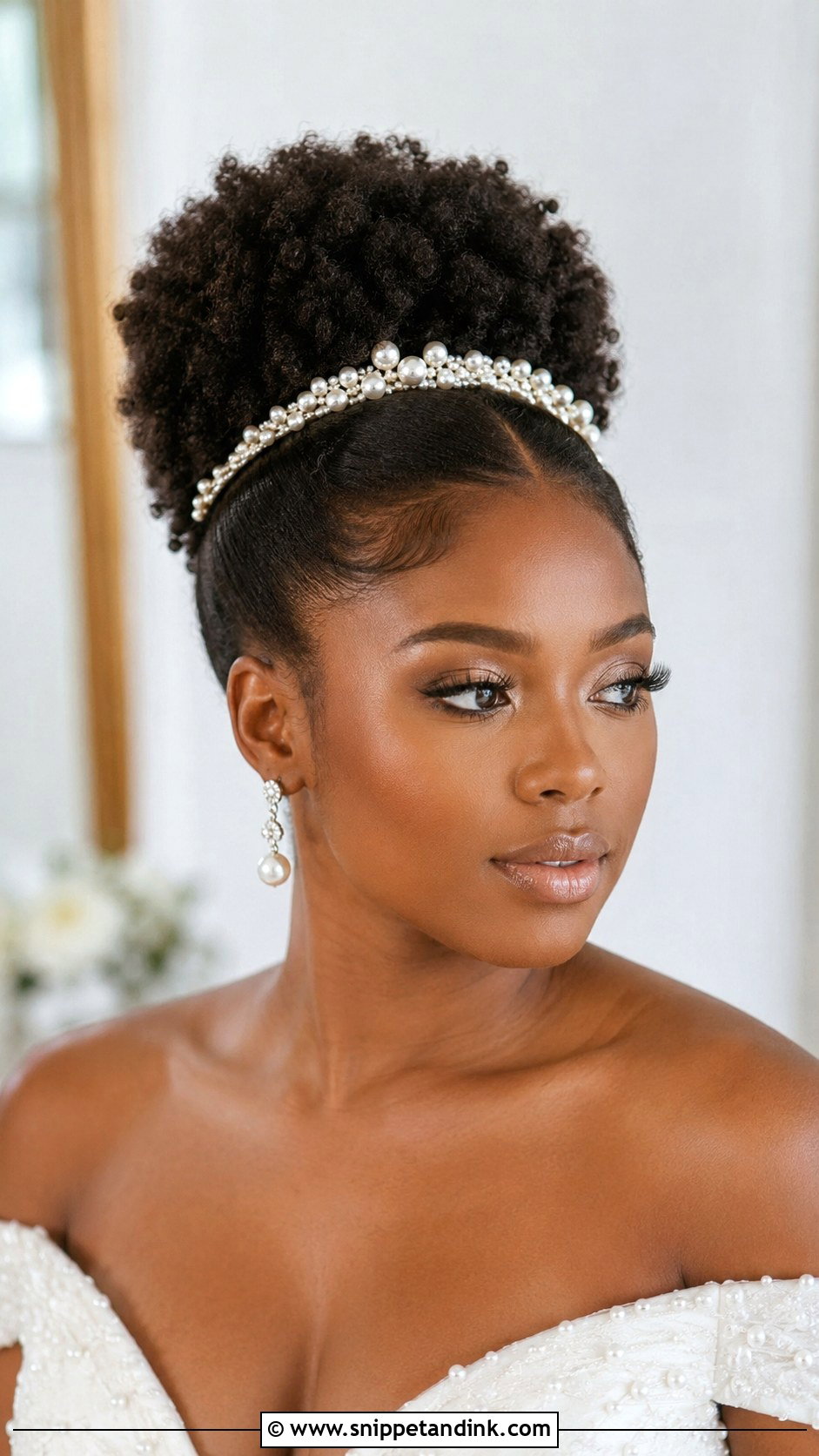
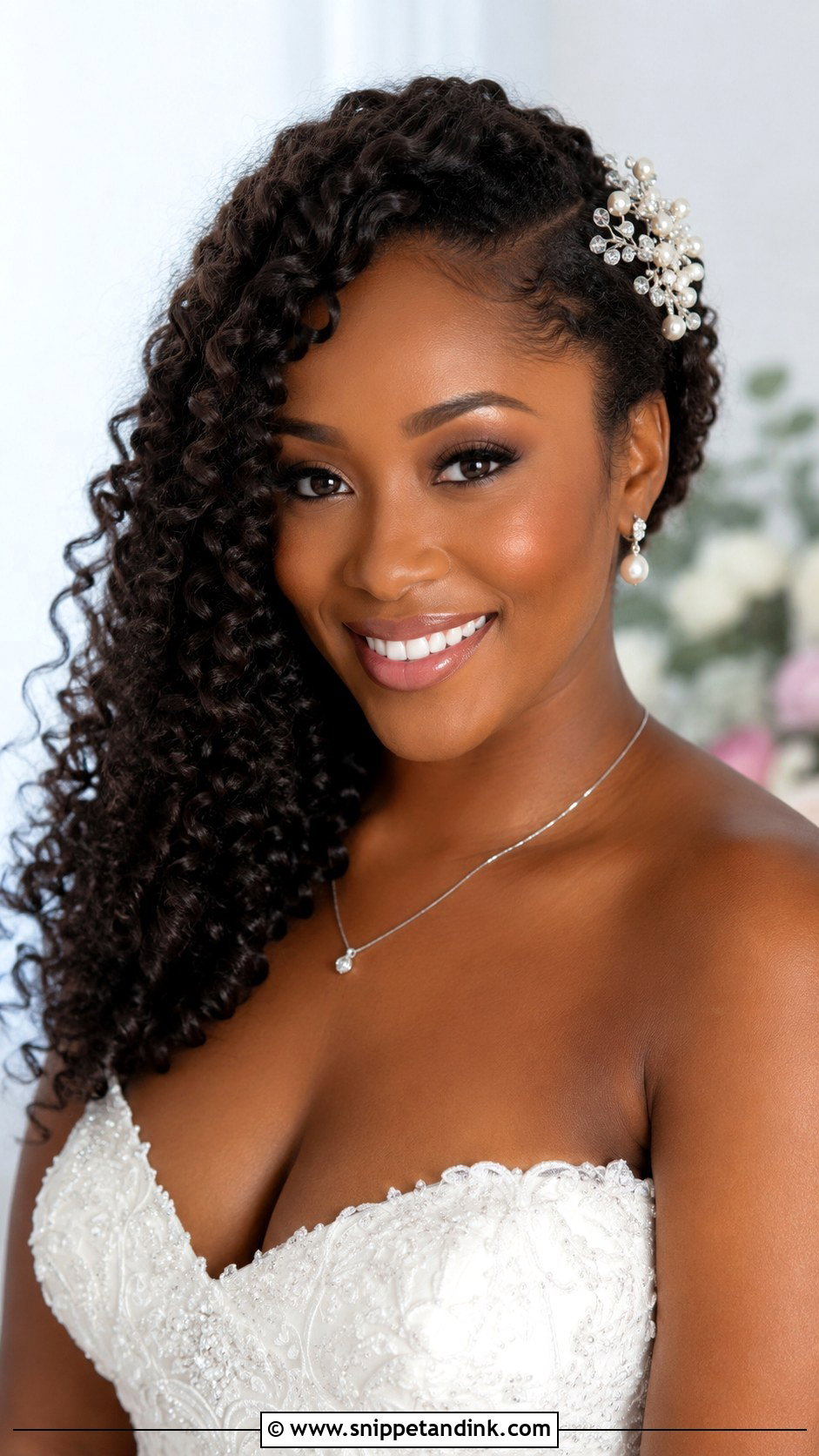
Gathering curls to one side lets the length fall over a shoulder while still keeping it anchored. It suits strapless and one-shoulder dresses, and the swept side keeps the face clear for makeup photos. I pin underneath the curls along the back of the head, so nothing shows from the front. A comb or a few small crystal clips on the pinned side gives the eye somewhere to land. Moisturise the curls the night before, because dry curls resting on one shoulder frizz against the fabric.
12. Natural Bantu Knot Wedding Hairstyle
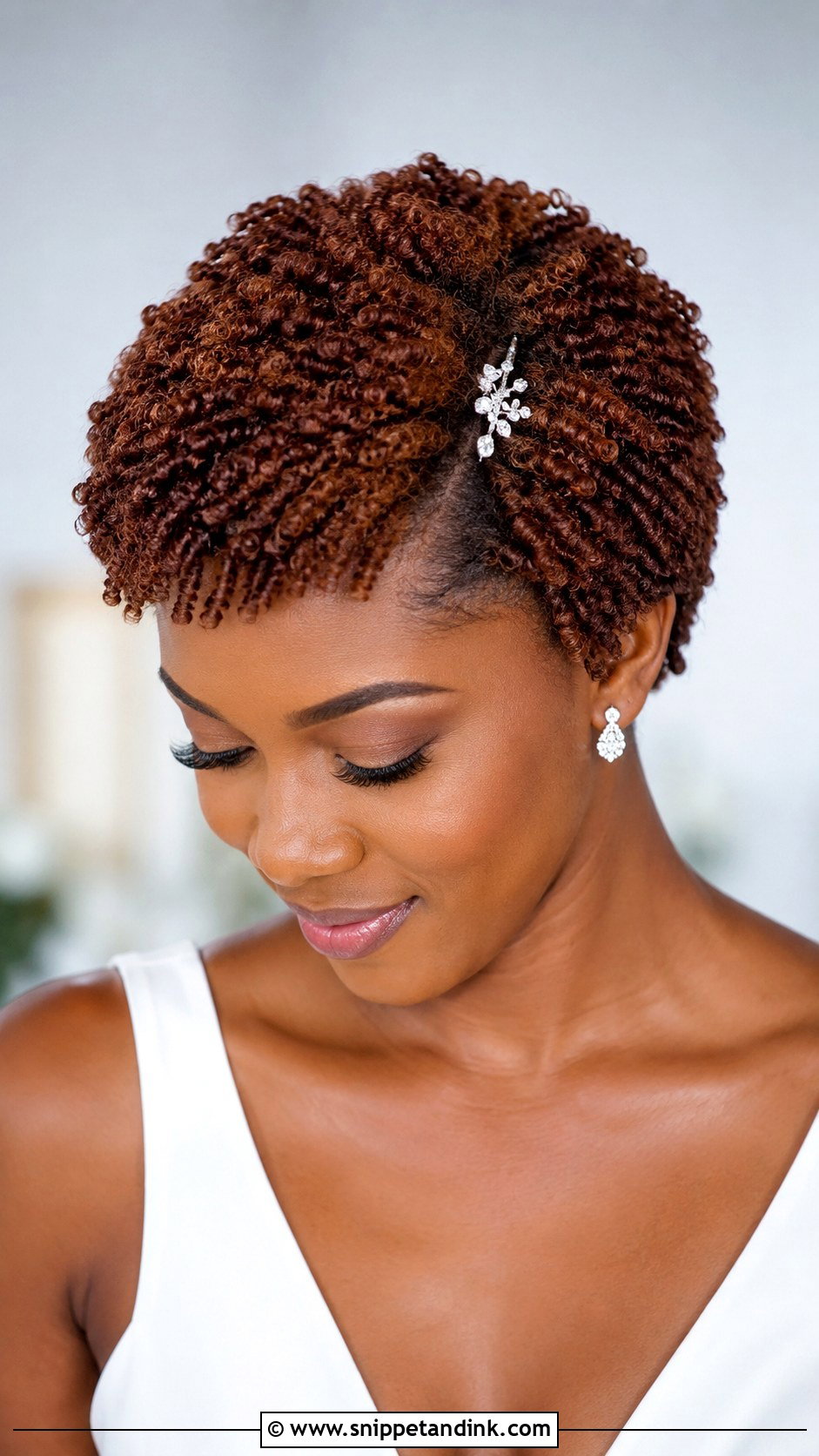
A natural Bantu knot wedding hairstyle is the most sculptural shape here, and the parting is where it succeeds or fails. I part each section with a rat-tail comb before knotting, since uneven sections become obvious the moment the knots are in. Knots wound too tightly pull at the scalp, so each one should feel firm but never throbbing. Gold cuffs around a few knots, not every one, keep it from looking crowded. With the hair lifted off the neck, it’s comfortable in warm weather.
13. Natural High Puff Wedding Hairstyle
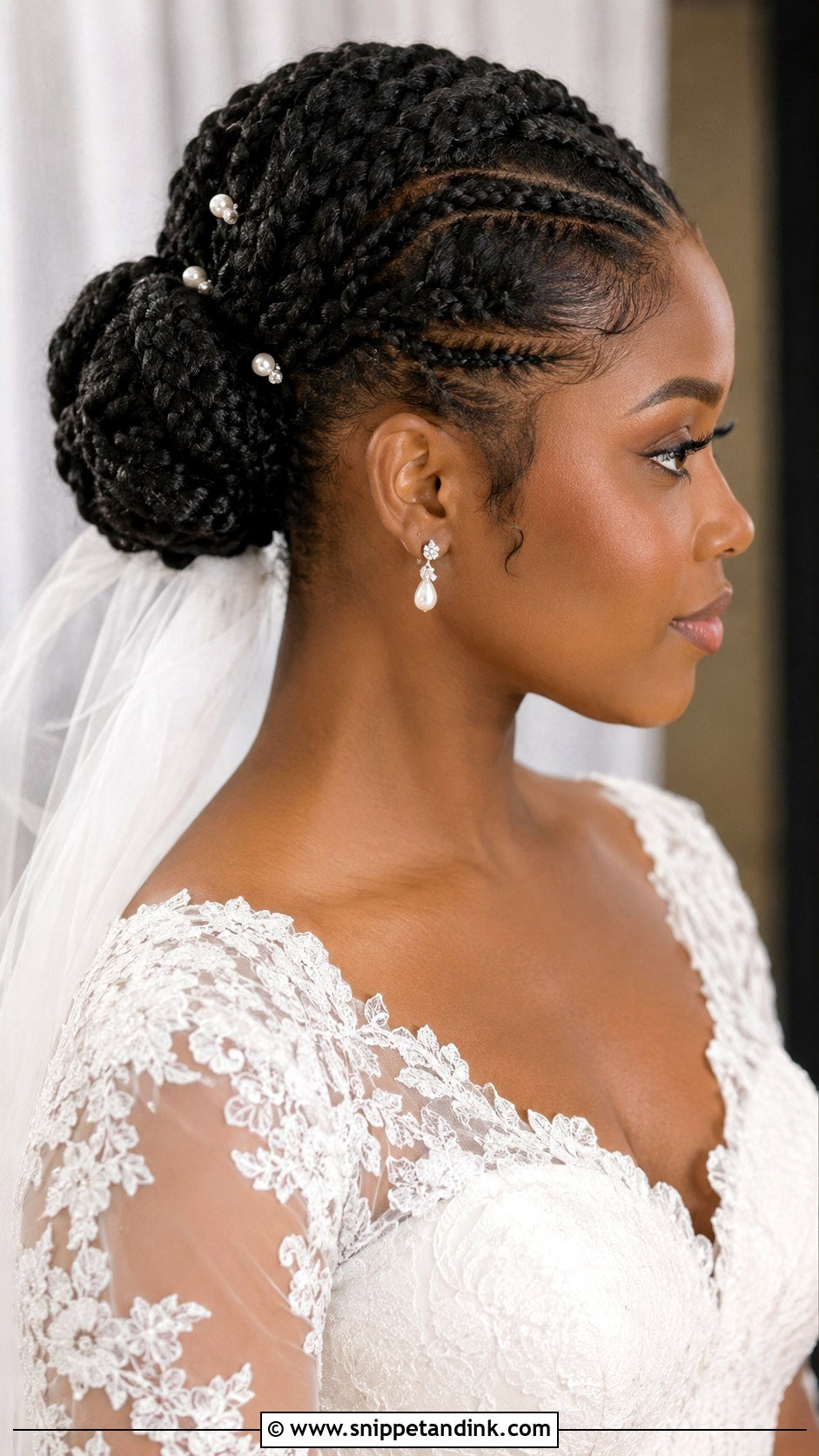
A high puff shows off the face and cheekbones, and it’s the easiest style on this list to refresh: a few seconds with a pick and it’s full again. Coily and kinky textures give the best result, because the volume holds without help. The base can be brushed smooth or braided, and a braided base takes stress off the edges. Avoid hair ties with metal clasps, which snag. A veil tucked behind the puff stays put only if its comb goes into the base rather than the puff itself.
14. Natural Finger Coil Wedding Hairstyle
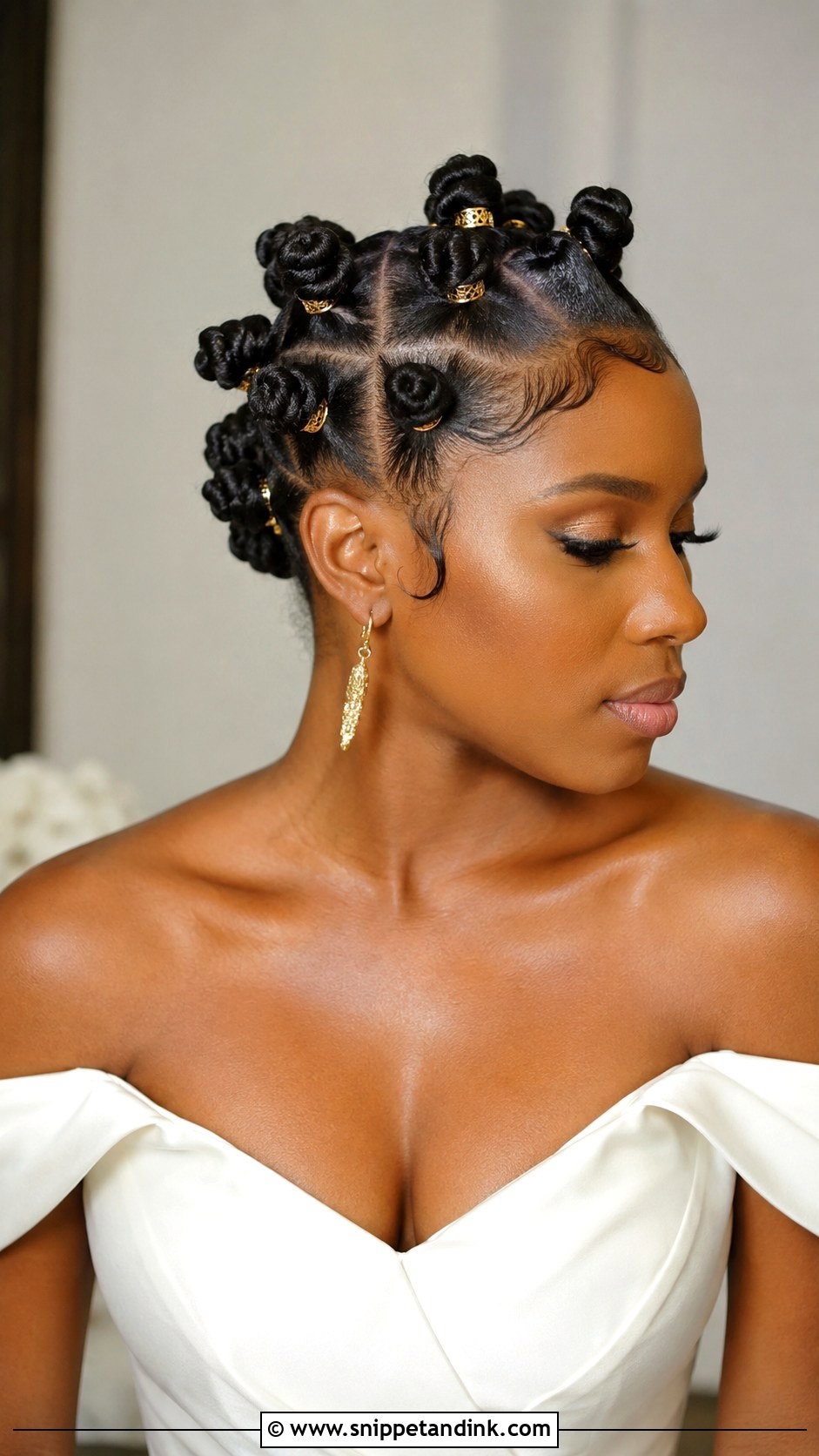
Finger coils suit short to medium hair, especially tapered cuts and chin-length shapes. Each coil is wound around a finger with a gel or curling custard and then left alone to dry. That drying time is the catch: often an hour or more under a hooded dryer, longer to air-dry, so they need to start early. Done well, they stay defined into the evening and look sharp in close-up shots. Keep decoration small, a single crystal clip or a veil comb at the crown.
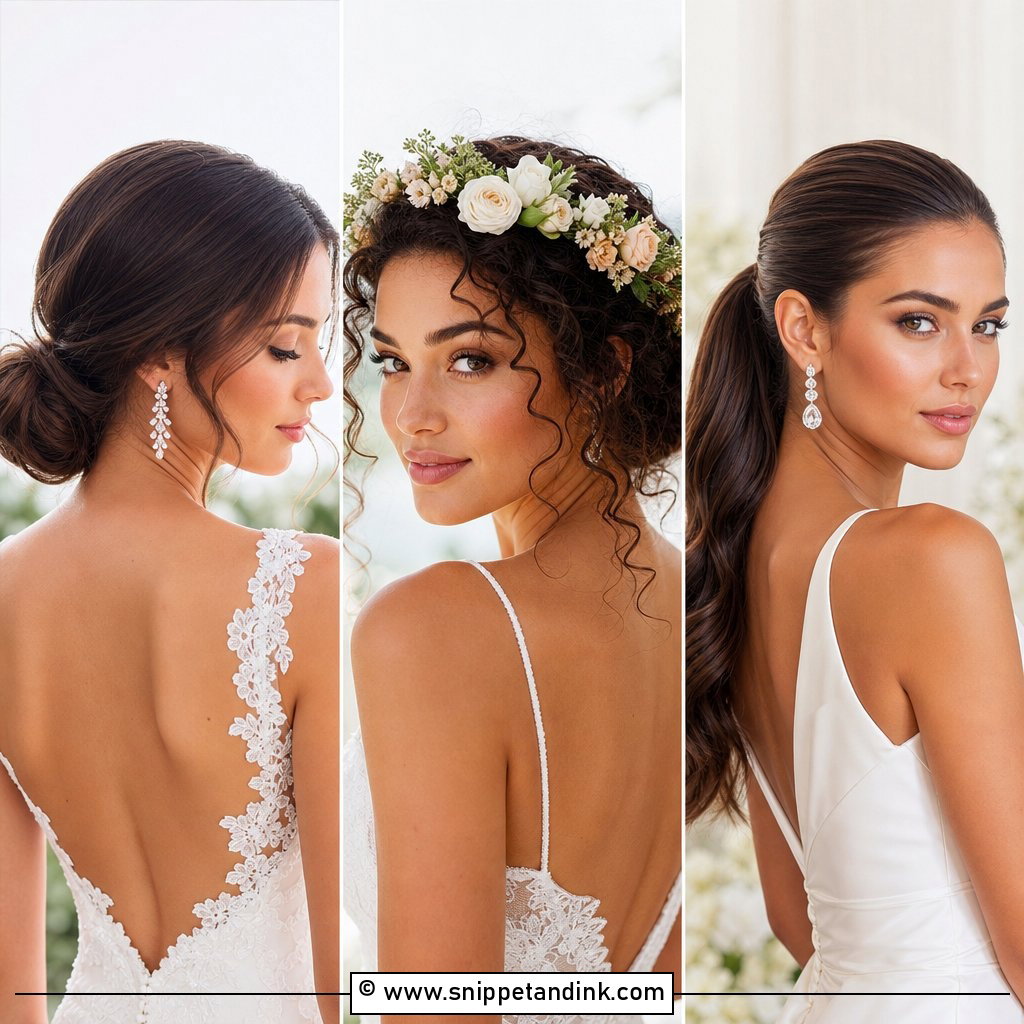
15. Natural Braided Bun Wedding Hairstyle
A braided bun is the protective bridal look I’d pick for a bride with a ceremony, a long reception and an after-party in one day. The braids carry the detail, so accessories are optional. A low braided bun lets a veil drape well; a high one adds height above a column dress. If they’re box braids with extensions, factor in weight, since a bun made from a full head of long braids can be heavy, and a side bun shifts all of it to one side of the neck. Soft tendrils at the front keep it from looking strict.
Why Tulle Slides Off Curls, and the Hidden Anchor That Stops It
Veils slip on natural hair more often than on straight hair, and it’s rarely the veil’s fault. Plastic combs slide out of loose curls, and a comb pushed straight into an afro just floats on the surface. So I build an anchor first: a small flat twist, a mini bun or a braid hidden under the hair exactly where the comb will sit. The comb goes into that with its teeth facing down, then I turn it upward to lock it in place.
Bring the actual veil to your trial. A short tulle veil and a cathedral length with lace edging weigh very different amounts, and the heavier ones may need two combs or bobby pins crossed through the comb’s teeth. If you plan to take the veil off after the ceremony, practise that once, so the style underneath isn’t pulled apart in the rush.
Not Every Stylist Has Worked on Coils
Plenty of salons offer bridal hair without regular experience on textured hair. Ask to see recent work on hair like yours, not just blowouts or loose curls. A good stylist will ask about your wash day, your usual products and how your hair reacts to heat before she suggests a single style. These questions tell you a lot in one conversation:
- Does she shape curly hair dry or wet, and why does she prefer it?
- Which products would she use on your texture, and will she work with yours if you’d rather?
- How does she secure pins and combs in dense or coily hair?
- Will she stay for veil removal or a second look later in the day?
Trust the Texture You Already Wear
The styles that work best on natural hair are usually the ones you already understand. If you wear twist outs every week, you know how they behave in heat, and that knowledge is worth more than any inspiration photo. Weigh up your neckline, your veil and the forecast, then book a trial where you test hold over a few hours and look at photos from behind as well as in front. Go with the look you feel most like yourself in, and plan the practical parts around it.
You'll Like These Ideas:


Leave a Reply