
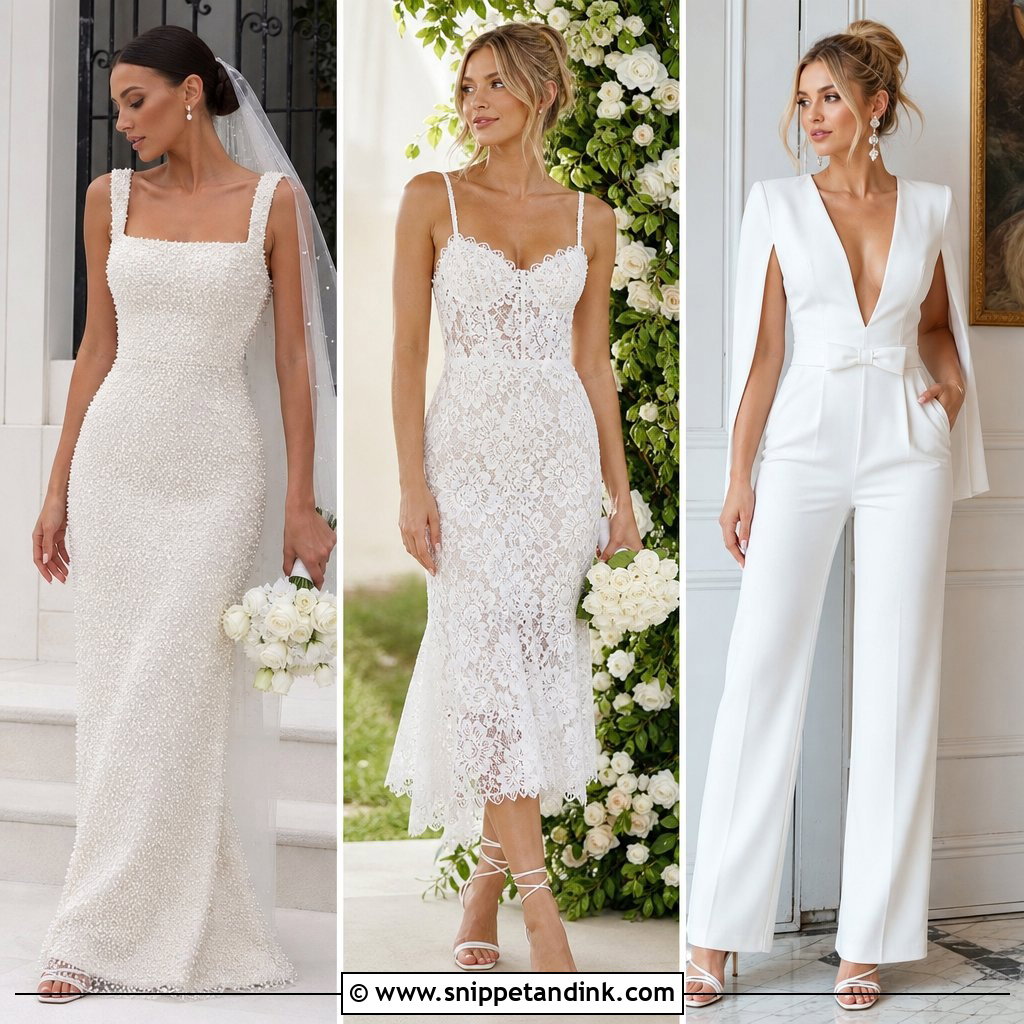
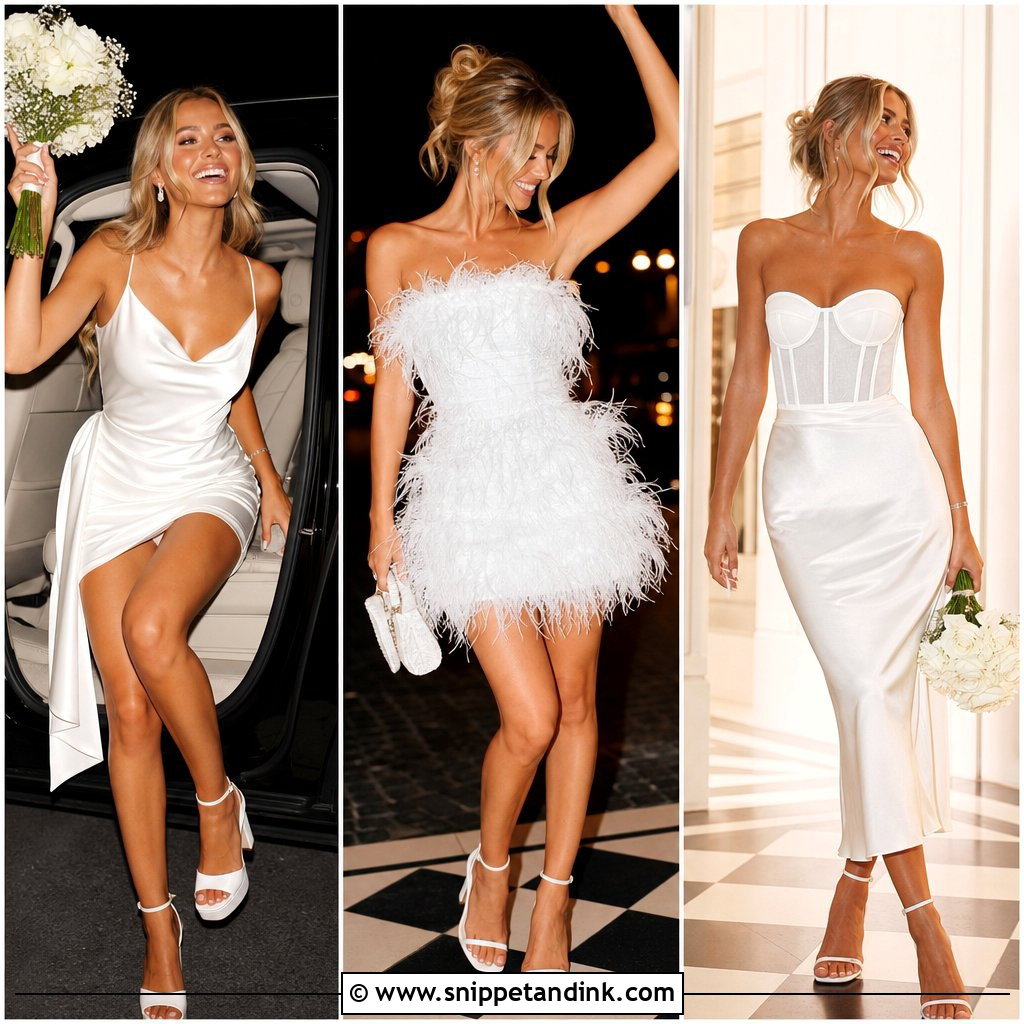
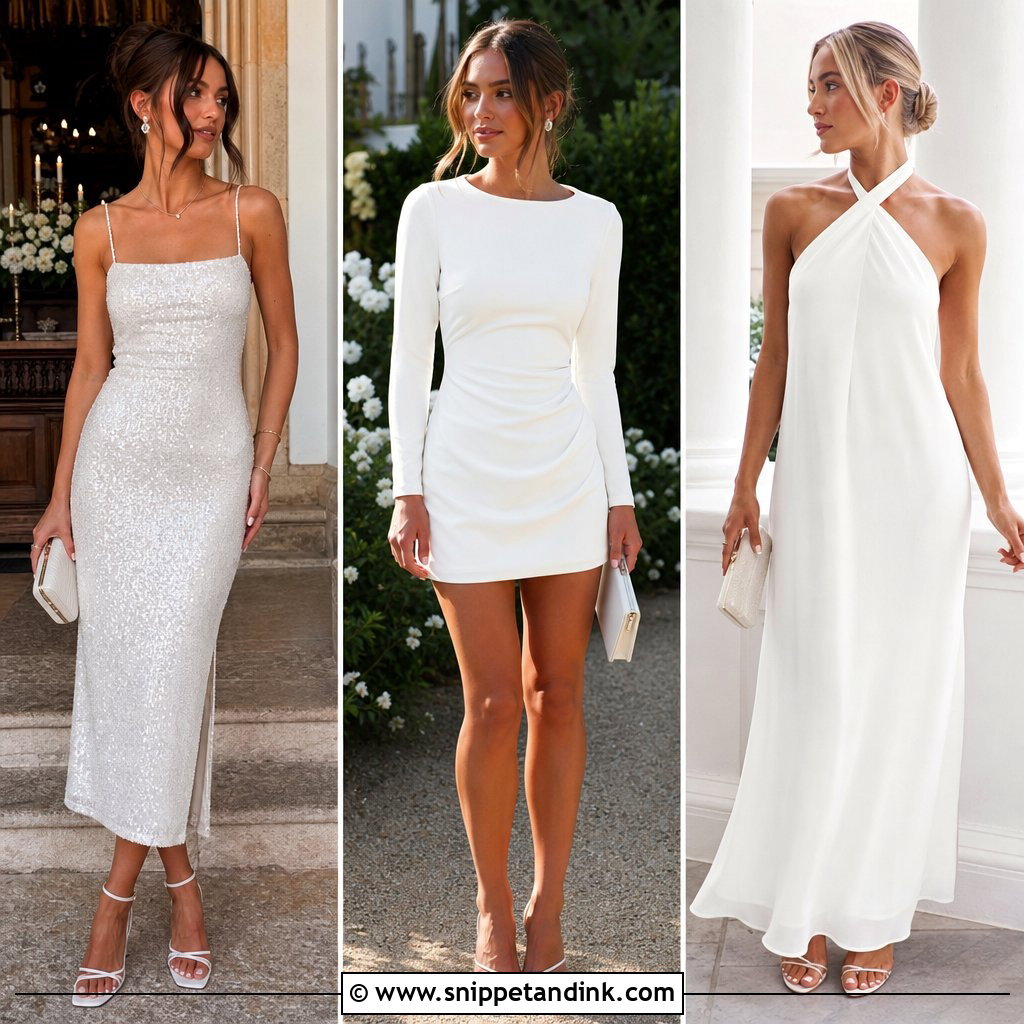
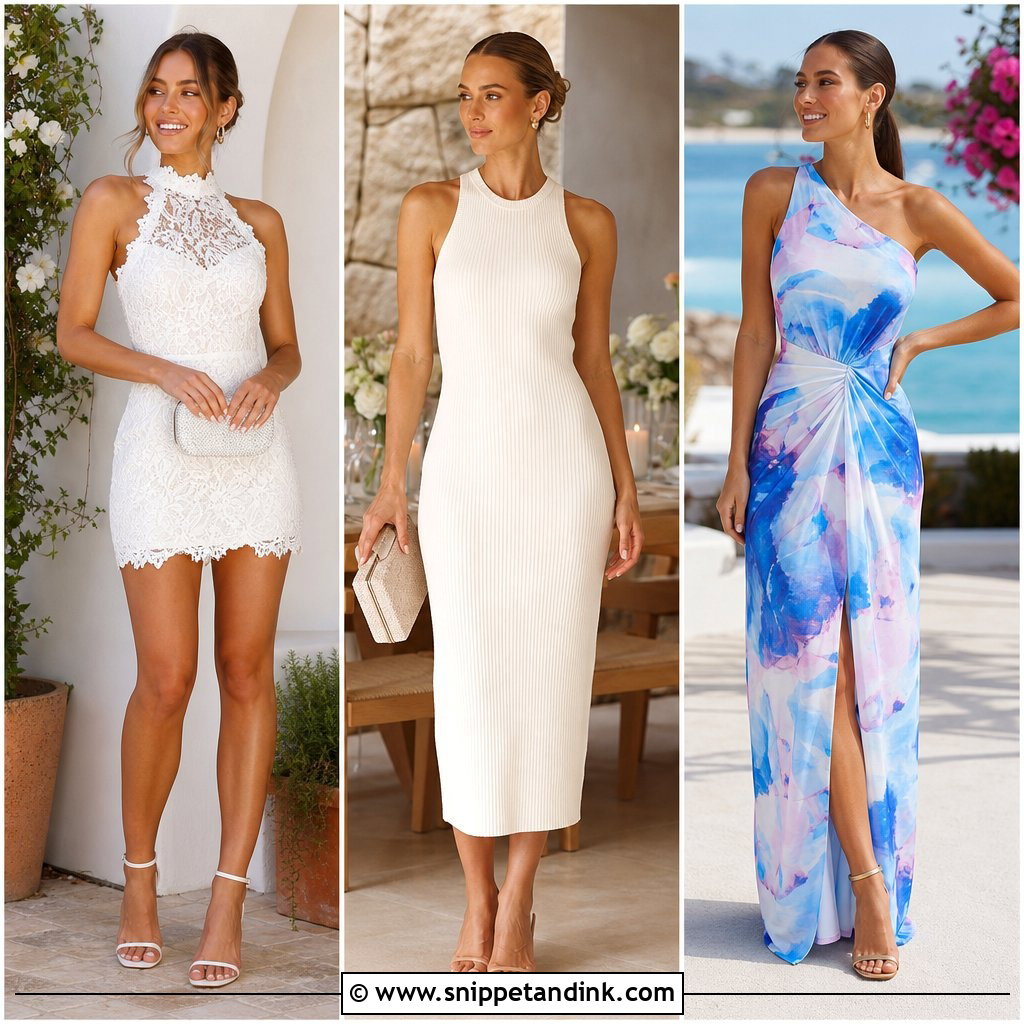
More of the brides I dress now wear several outfits across one wedding: something for a courthouse signing, the ceremony gown, a reception change, an after-party piece, and often a look for the rehearsal dinner too. That is a real wardrobe, and it deserves to be planned like one. The twenty looks below run from boned ball gowns to pantsuits, crochet lace and sequin minis. For each I’ve written how I’d finish it with shoes, jewelry, veil and bag, and what I check at the fitting before I’d let a bride commit. Read them with your venue, your season and your own body in mind, because some of these will suit your day and some simply won’t.
Planning a Wardrobe Rather Than a Single Dress
When a bride tells me she wants two or three outfits, the first thing I map is the alteration calendar, not the clothes. Each piece needs its own fittings, and the ceremony gown usually needs the most. I start the gown first, then the reception change, then anything for the rehearsal dinner, so the seamstress is never trying to finish four hems in the same fortnight.
Budget follows the same order. Most of it belongs where you’ll be photographed longest, which is normally the ceremony look. A second outfit can be ready-to-wear with a good tailor, and it often should be.
- Decide which look carries the formal portraits; that one gets the most fitting time.
- Keep every white in the same family, or choose a clear contrast on purpose. Near-misses between ivory and bright white show in photos.
- Buy shoes for each outfit before its first fitting, since every hem is measured to a heel height.
- Ask whether one veil or headpiece can move between looks. It saves money and ties the day together.
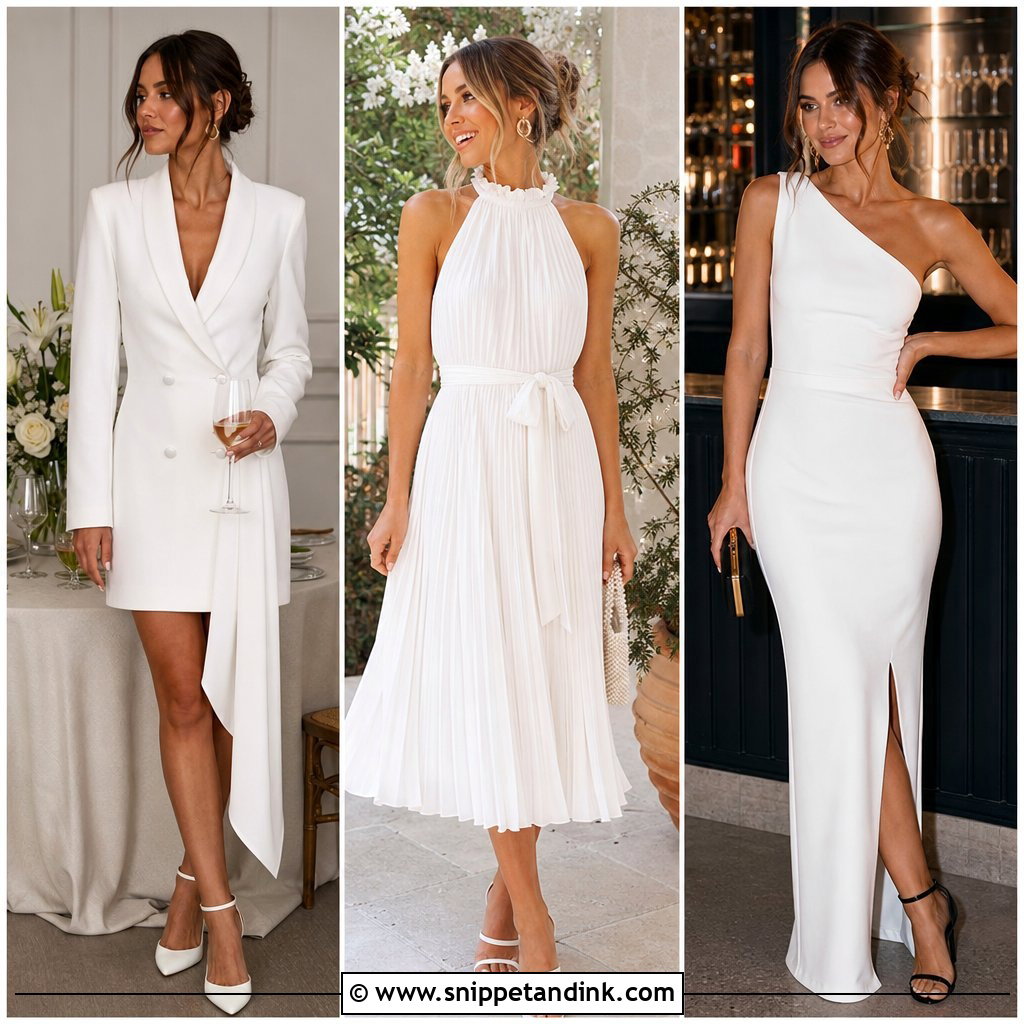
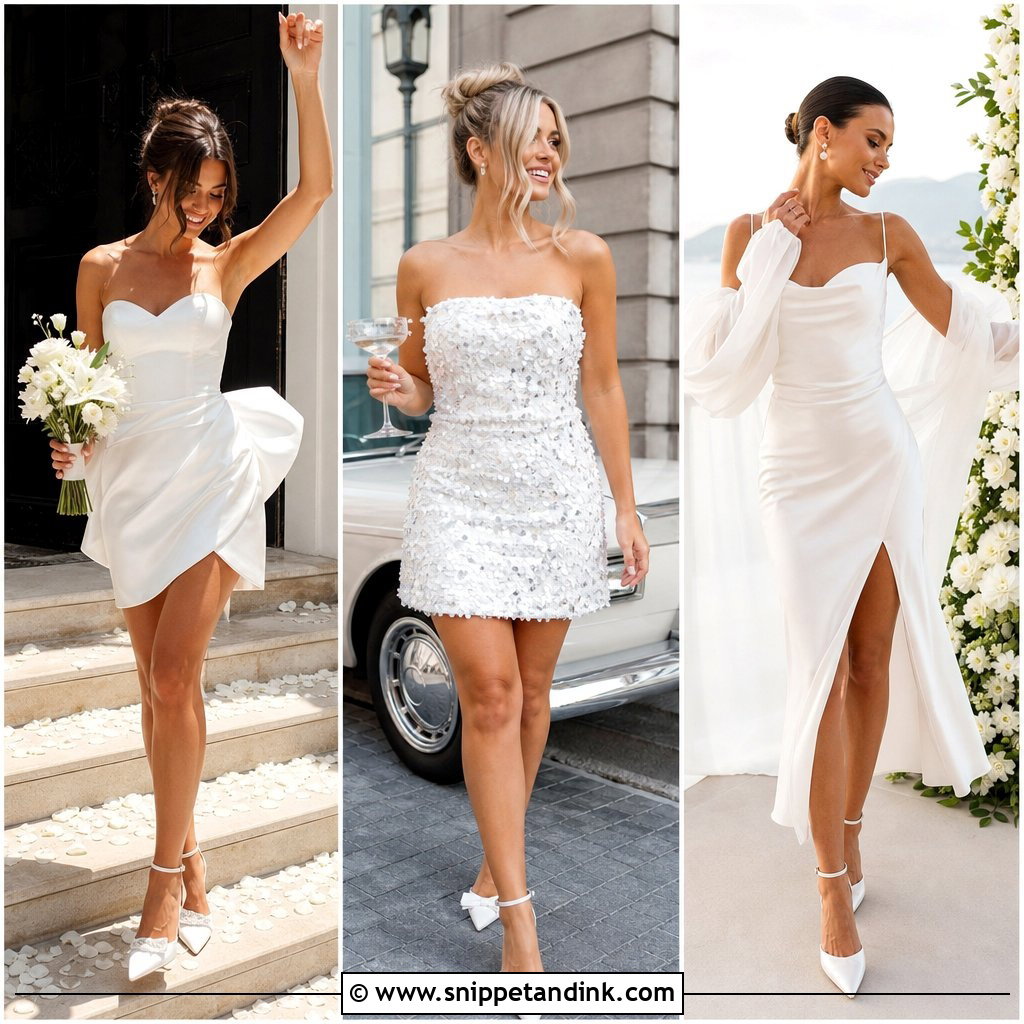
1. Satin Slip Bridal Dress Outfit
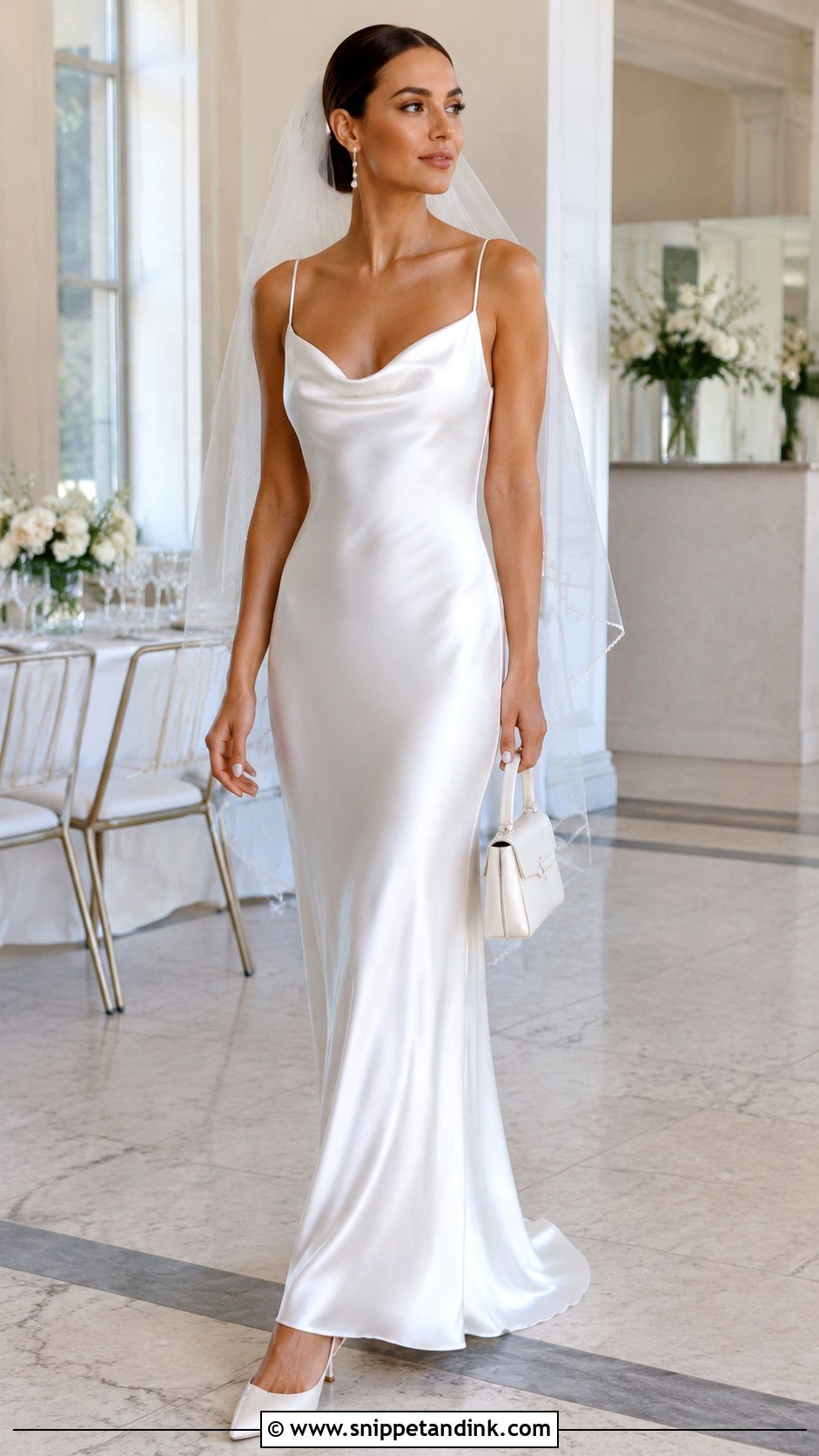
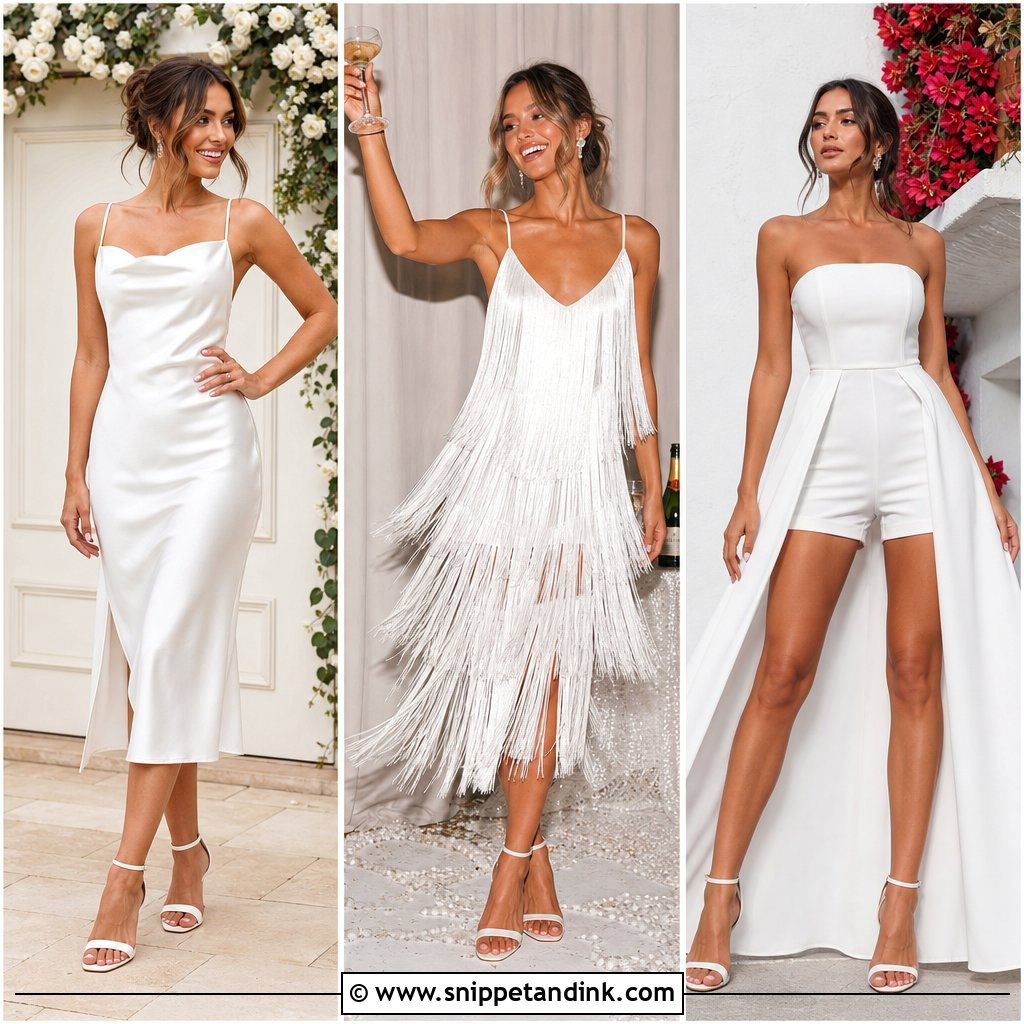
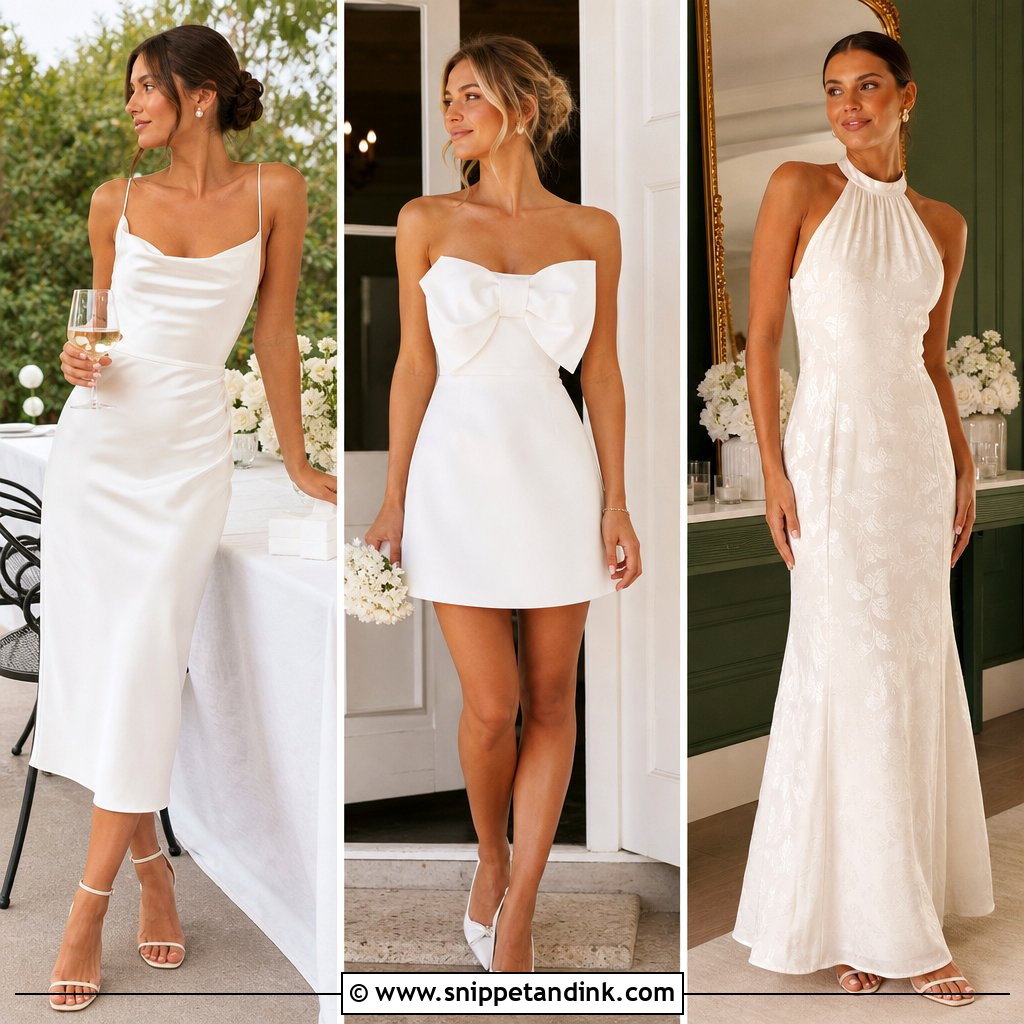
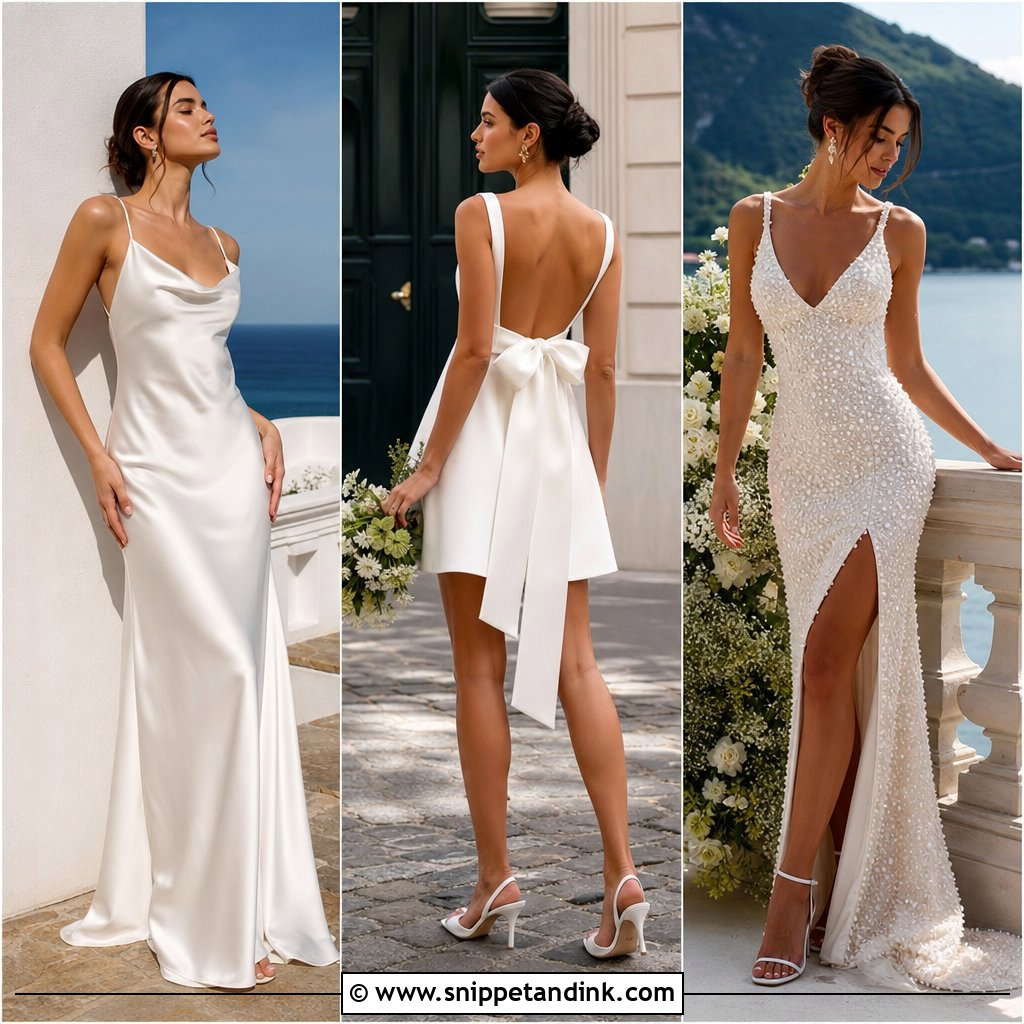
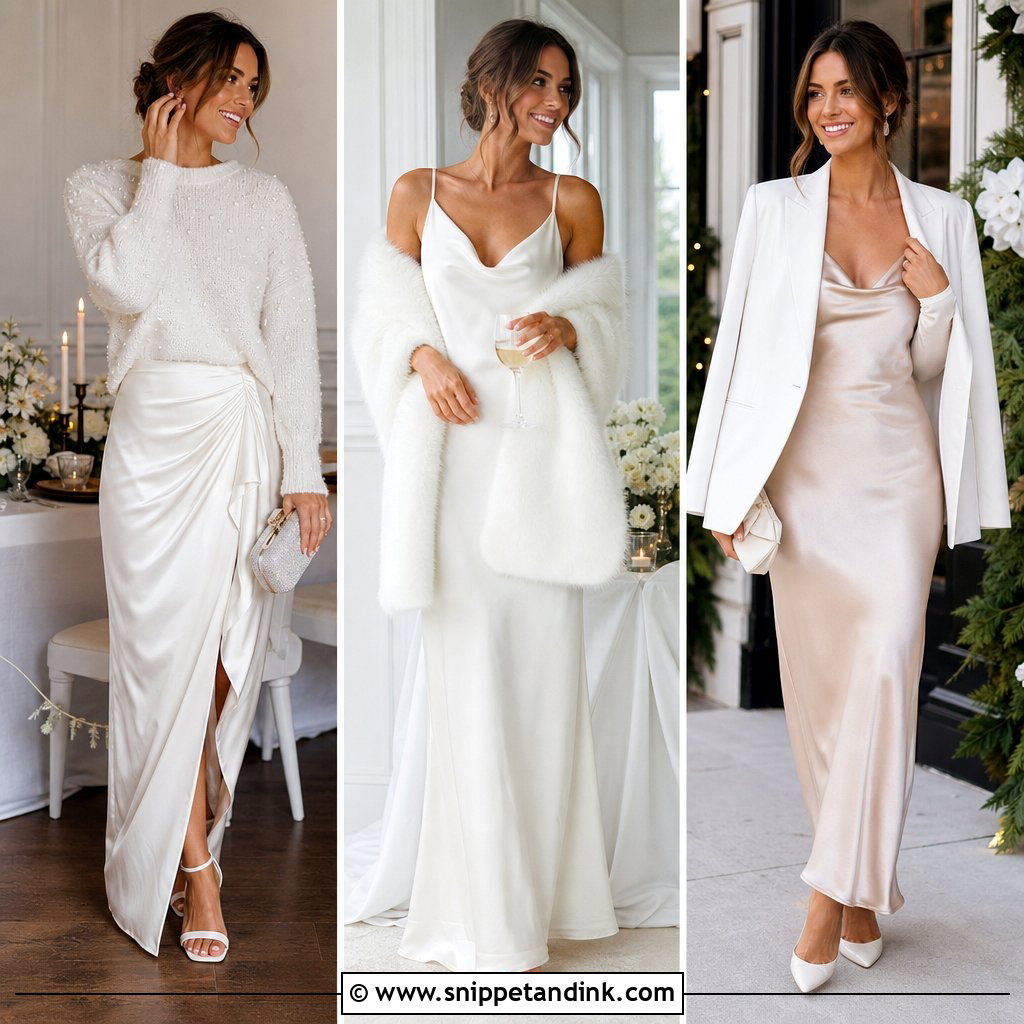
Satin slip is the most honest fabric in bridal, because it shows every line underneath it. I fit these on the bias so the dress skims rather than grips, and I always watch the lap when the bride sits down: satin creases across the hips and holds those creases in every seated photo. Ivory or pearl reads warmer on camera than bright white. Pointed slingbacks, small drop earrings, a structured mini bag and a fingertip veil finish it, with a light wrap for the evening. If you need support, ask for a built-in corset or wider straps rather than relying on adhesive bras for twelve hours. Smooth waves or a low bun keep the line clean, and it sits most naturally at modern venues, intimate dinners and relaxed receptions.
2. Strapless Ball Gown Bridal Outfit
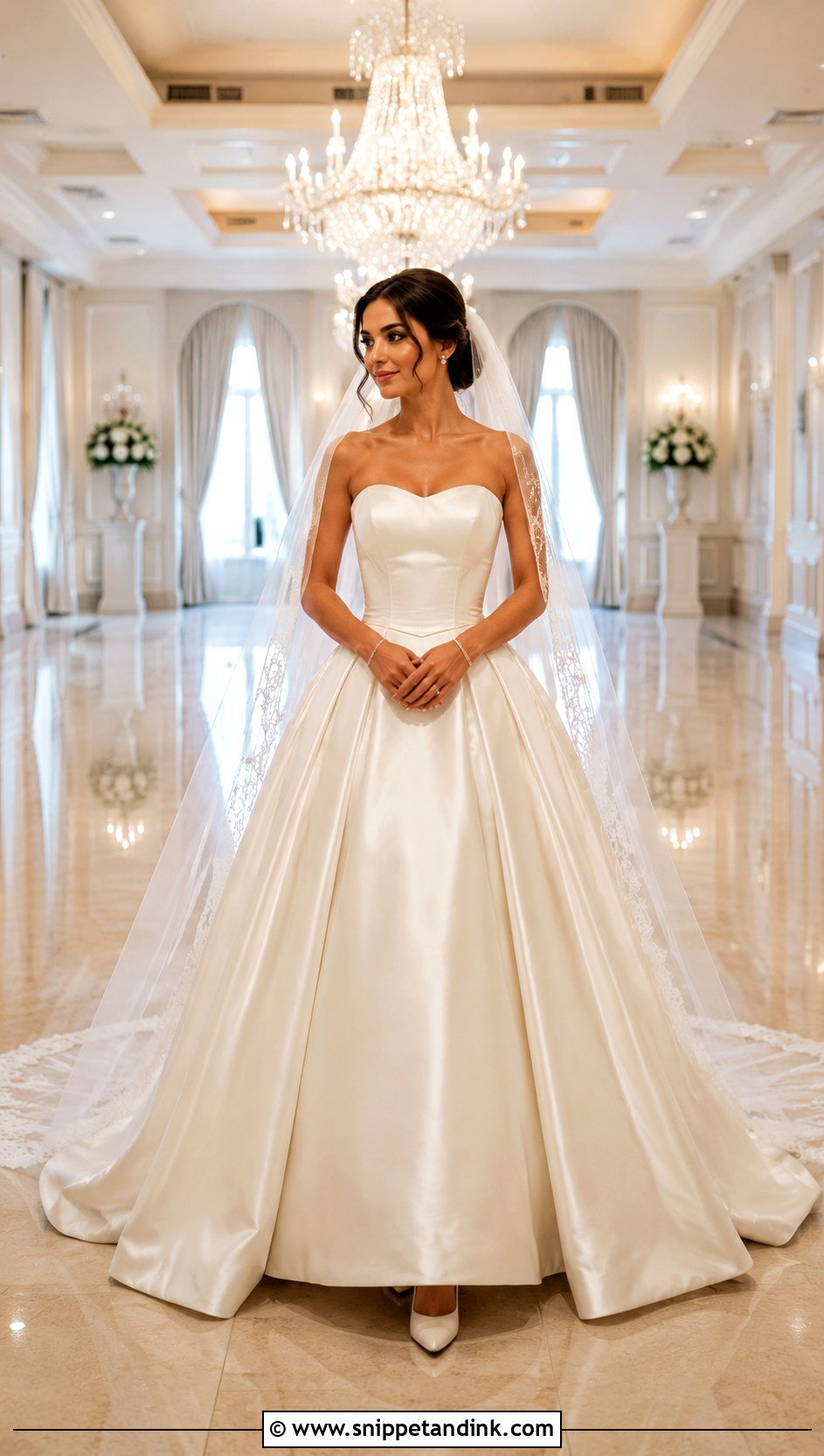
A strapless ball gown only works when the bodice does the holding up, not your hands. At fittings I watch whether the bride hitches the neckline as she walks; if she does, the boning or the inner waist stay needs adjusting before anything else is touched. Against all that skirt, keep the accessories quiet: pearl studs, a slim tennis bracelet, closed-toe pumps. A cathedral veil matches the scale of the gown in formal portraits, and a low chignon or pinned curls stays tidy beneath it. Raise the bustle question early. A heavy skirt can need several bustle points, and your seamstress should plan them before the hem is finished, not after. Grand indoor rooms and evening ceremonies are where this gown makes sense.
3. Long Sleeve Lace Bridal Gown
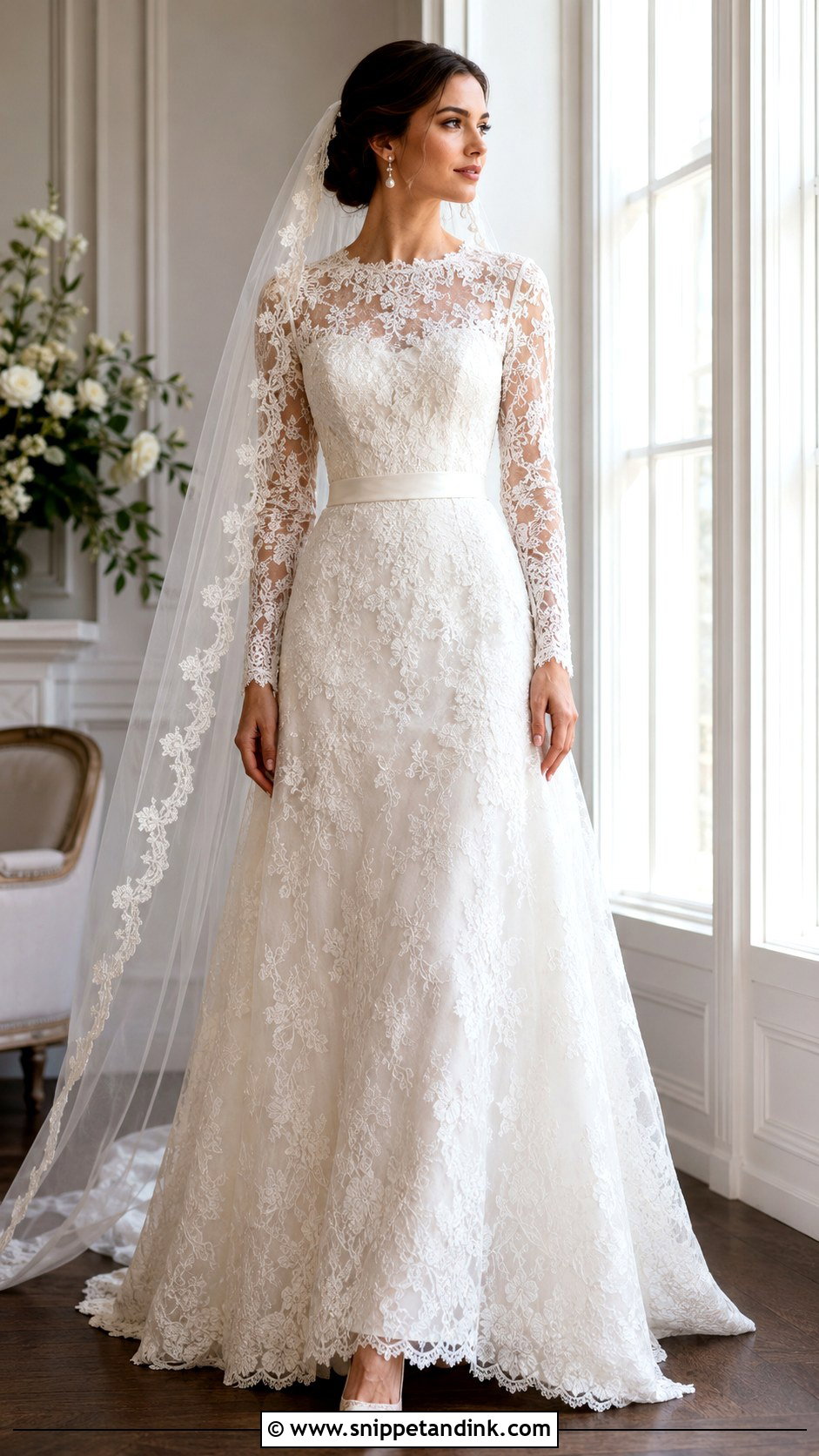
Long lace sleeves have one weak spot I check every time: the elbow. Cut too narrow, the lace strains when you bend to hold the bouquet, and the seam can start to pull. I prefer placed lace over a smooth lining so the motif reads clearly in photos, with a defined waist and gentle flare to balance all that detail on top. Ivory pumps, small pearl earrings and a veil with a fine lace edge are enough. Skip the necklace; the neckline already carries the pattern. For autumn or winter, add a tailored wool coat or a matching removable cape, and wear a low twisted bun so the lace collar stays visible.
4. Minimal Column Bridal Dress
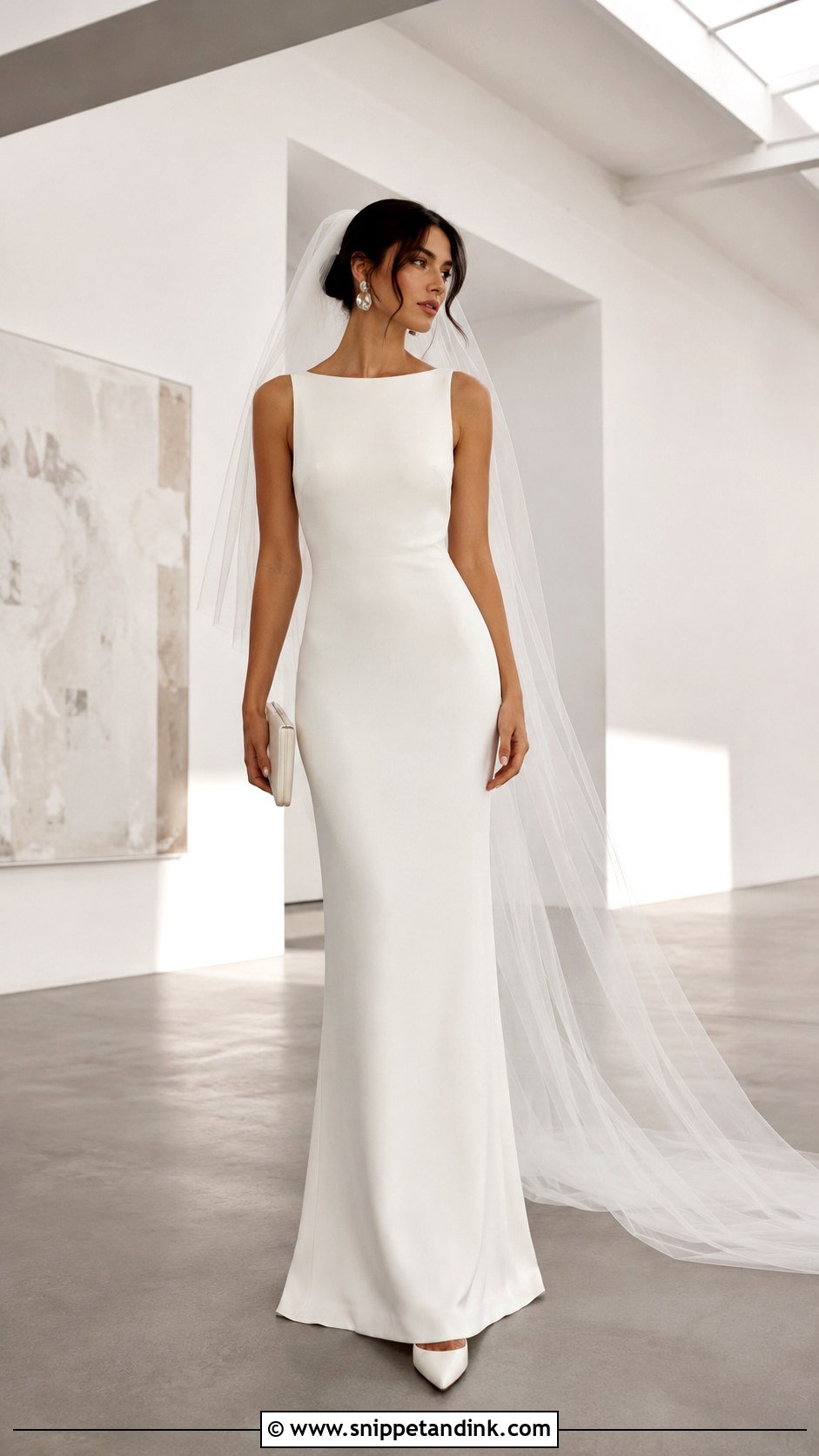
Column dresses are where fabric weight matters most. Thin satin shows every seam and every undergarment edge, so I steer brides toward substantial crepe, mikado or a lined satin that holds its own shape. Then the stride test: walk across the fitting room in your wedding shoes and sit down. If the hem pulls tight across the knees, you need a back slit or a kick pleat. Pointed heels, one pair of sculptural earrings and a slim metallic or pearl clutch suit it, and a long veil gives the movement the dress doesn’t have. A narrow belt or subtle waist seaming helps if you want more definition. Sleek hair, fresh makeup, and a gallery, rooftop or city venue where the architecture does the decorating.
5. Off Shoulder A Line Bridal Gown
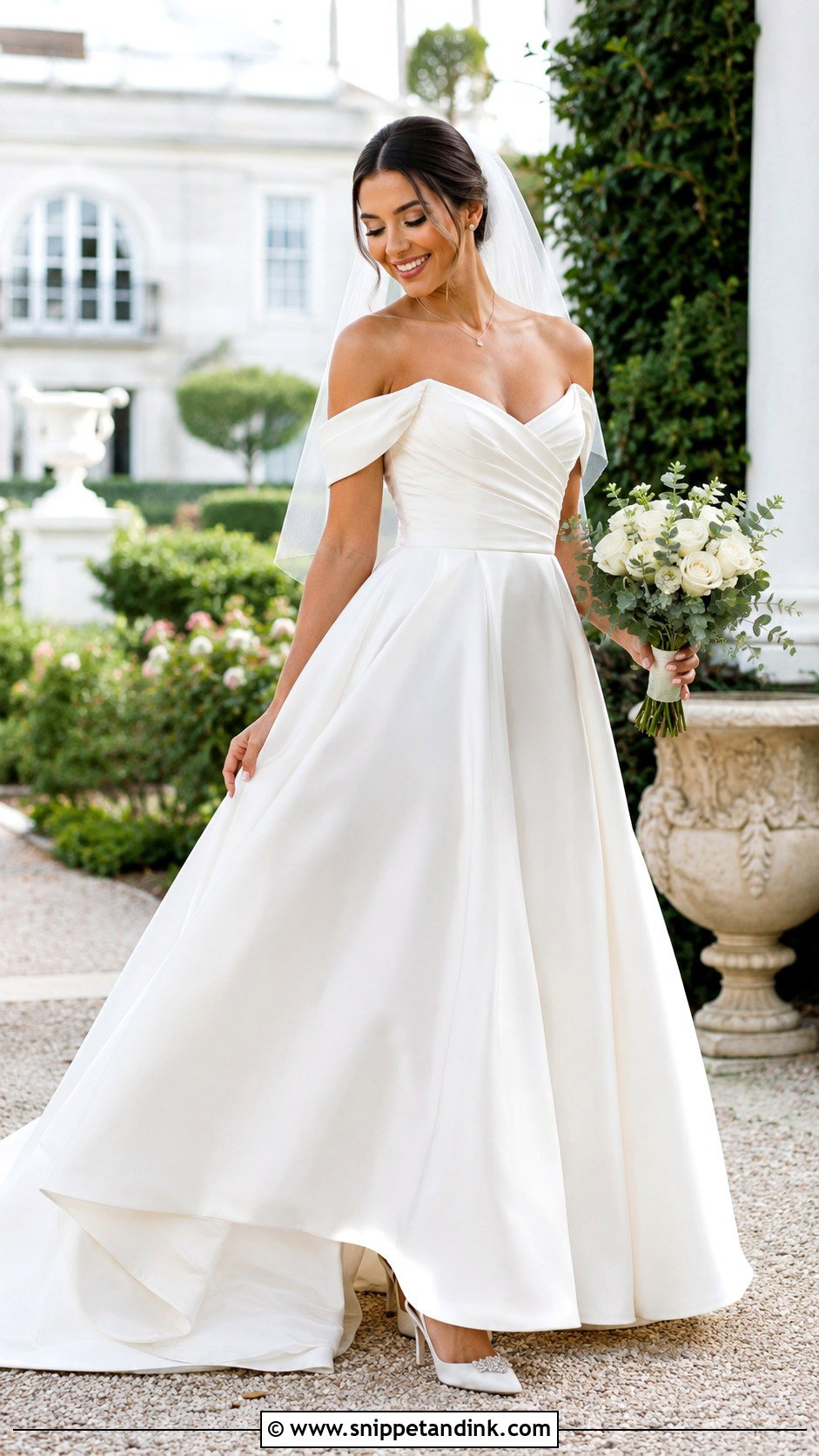
Off-the-shoulder necklines live or die on the hug test. Raise both arms as if greeting someone; if the sleeves ride up or the bodice lifts, it needs internal elastic or a clear strap anchored inside before the day. Once that’s secure, the A-line skirt is very forgiving, which is why I reach for this shape when a bride isn’t sure yet what suits her. A short pendant, crystal studs, block-heel pumps and a medium veil finish it. If the neckline is lace, beaded or gathered, hold back on everything else. Soft curls or a relaxed bun echo the line, and the gown moves easily between gardens, ballrooms and estate lawns.
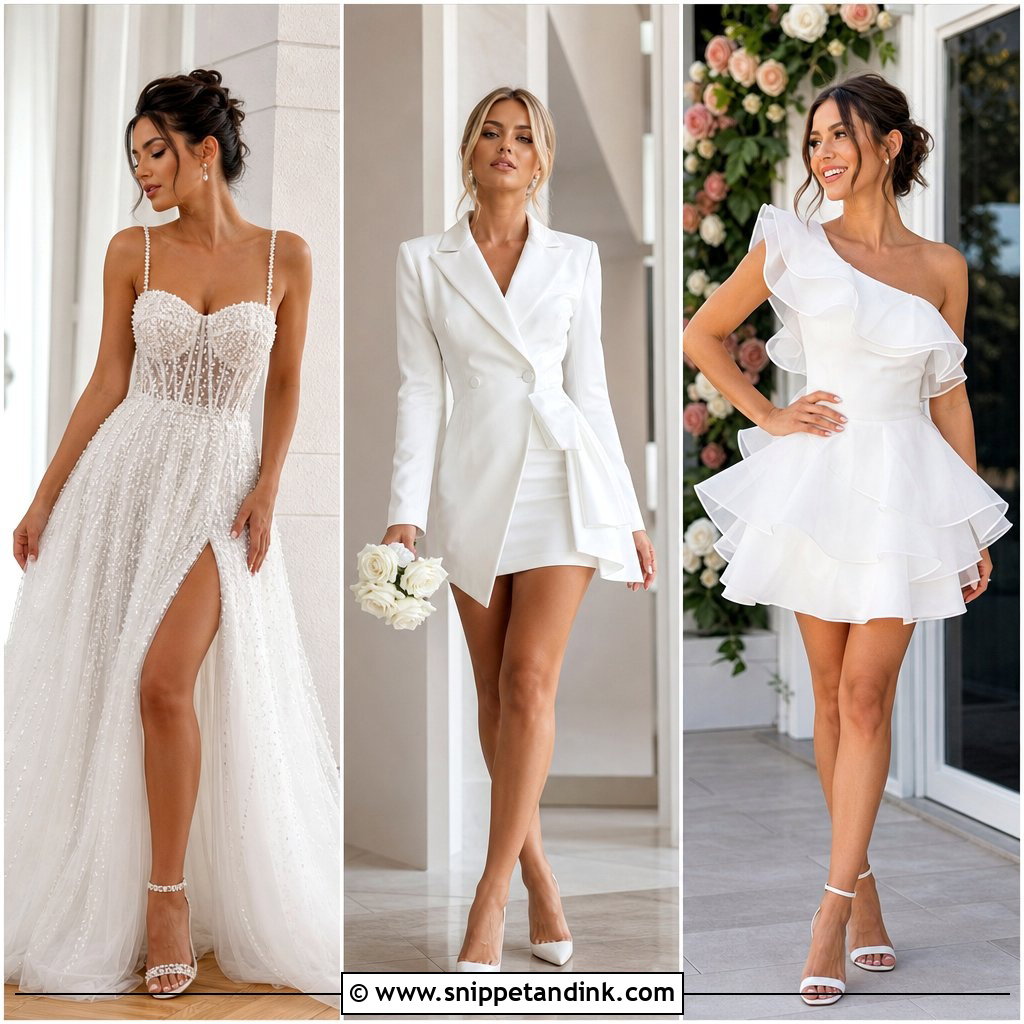
6. Drop Waist Corset Bridal Gown
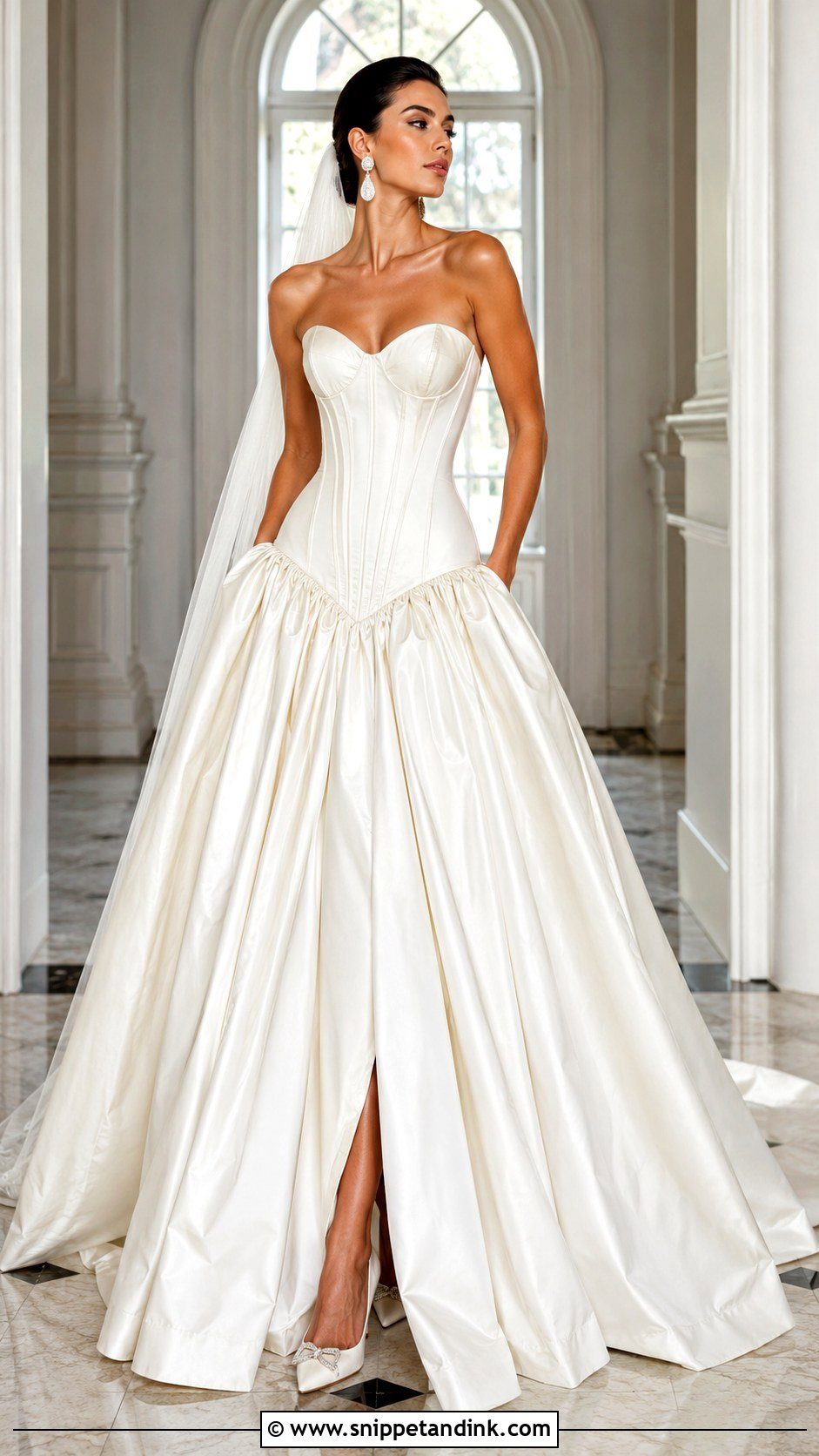
I’d be honest with a short-waisted bride about this one. A drop-waist corset sits past the natural waist and opens into the skirt at the hip, so on a short torso the seam can land too low and visually shorten the legs. On the right frame it is a striking shape. Have it fitted by someone who works with boning regularly; I want a bride to take a full breath and sit through dinner without the top edge digging in. Sleek pointed pumps, statement earrings and a simple veil tucked under a polished bun are plenty, and no necklace if the bodice shows its seaming. A small structured bag holds the essentials. Indoor ceremonies and editorial portraits suit it best.
7. Square Neck Bridal Midi Dress
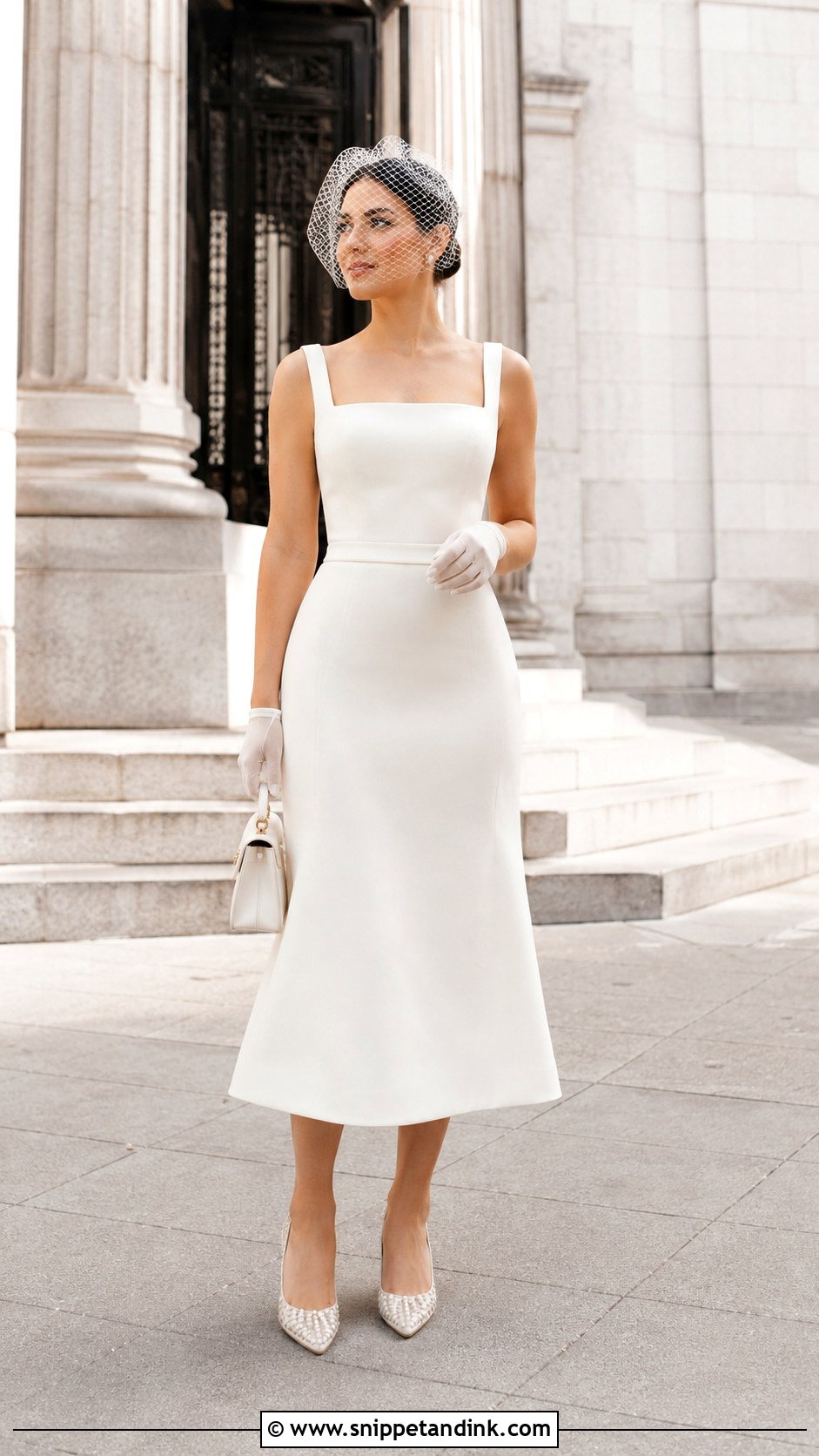
A midi puts your shoes on show, so this is the one outfit where I plan the shoes before the dress. A midi hem can cut the leg at its widest point; a pointed toe or a low-vamp shoe in ivory or close to your skin tone keeps the line long. The square neckline frames the face well, and the skirt shape below a fitted waist is your call. Pearl-trimmed pumps, a compact top-handle bag and short gloves give it a polished, slightly retro finish. A birdcage veil or bow headband keeps the scale right where a long veil would swamp it. Courthouse ceremonies, rehearsal dinners and daytime receptions are its natural setting.
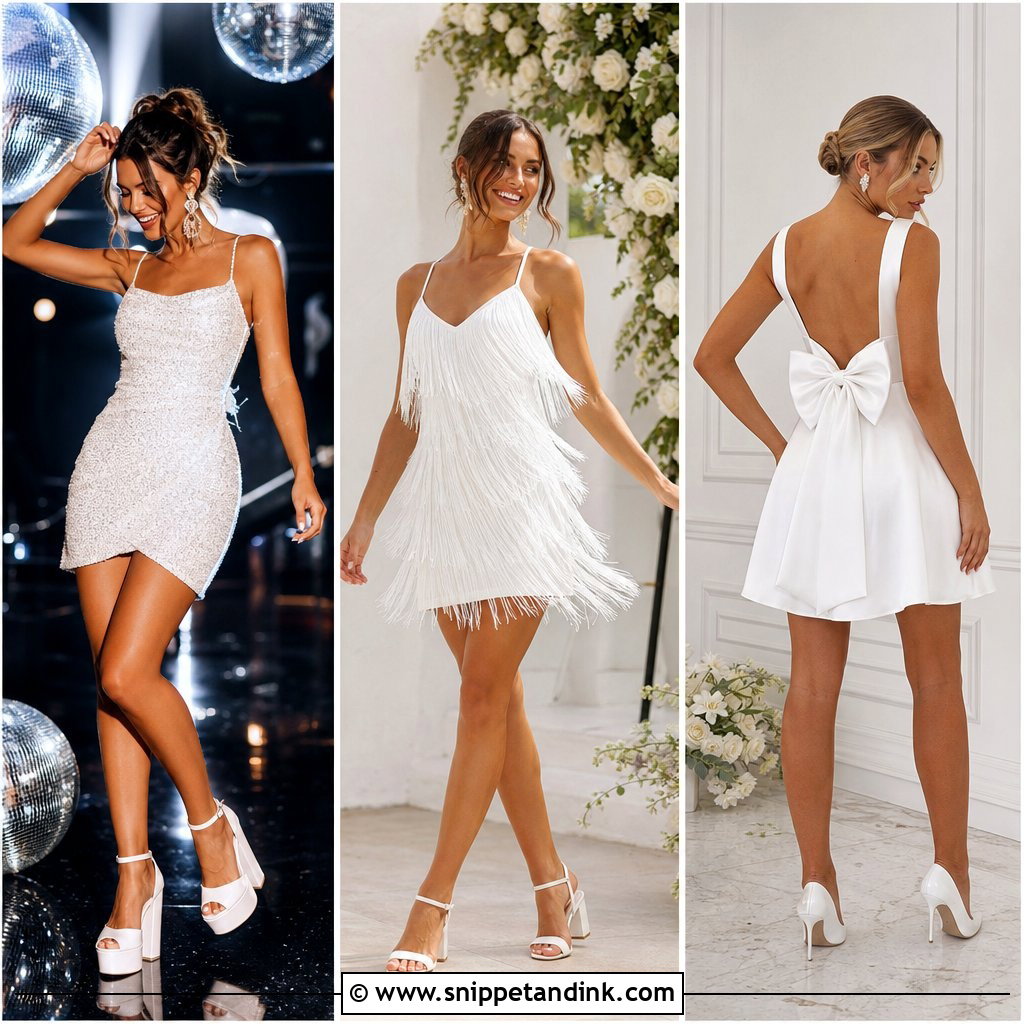
8. Bridal Mini Dress With Bow
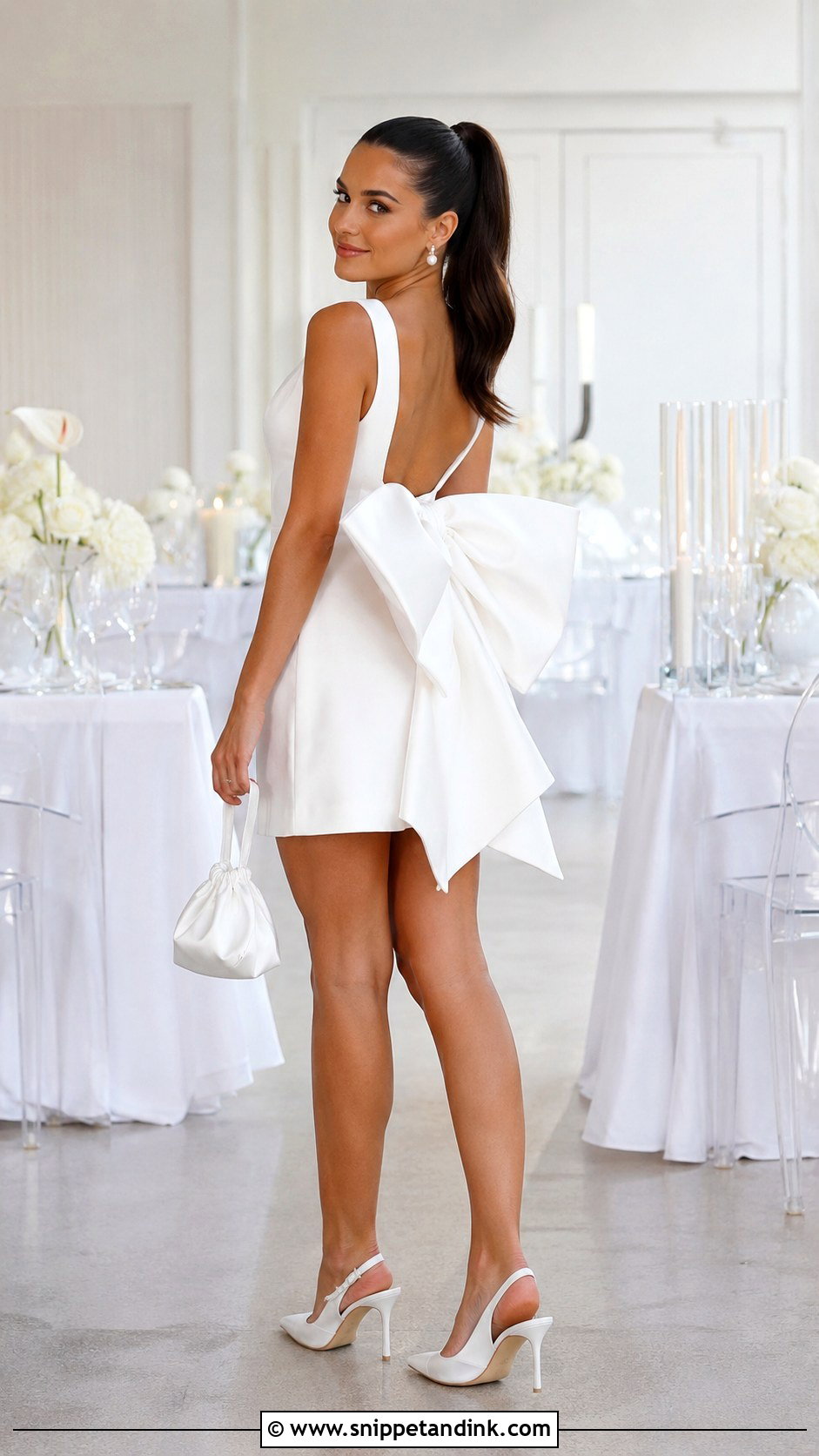
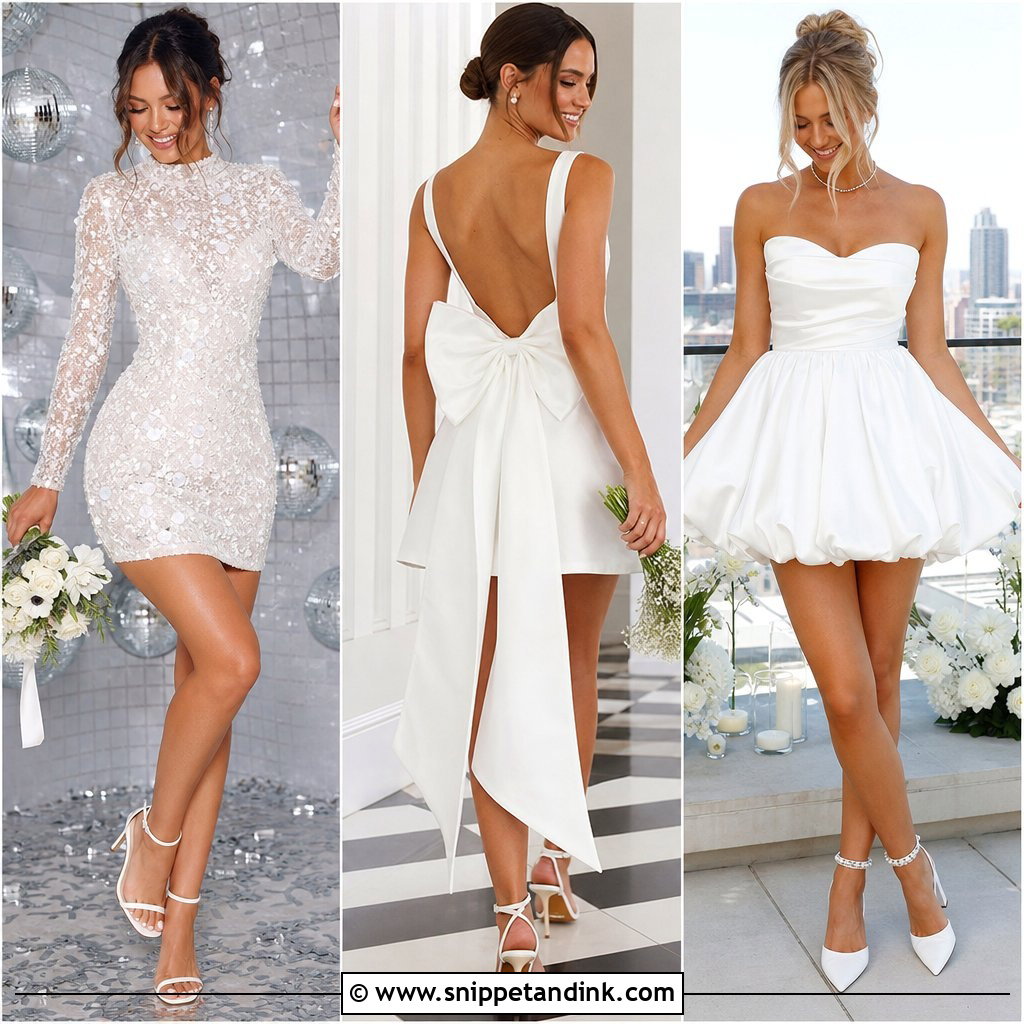
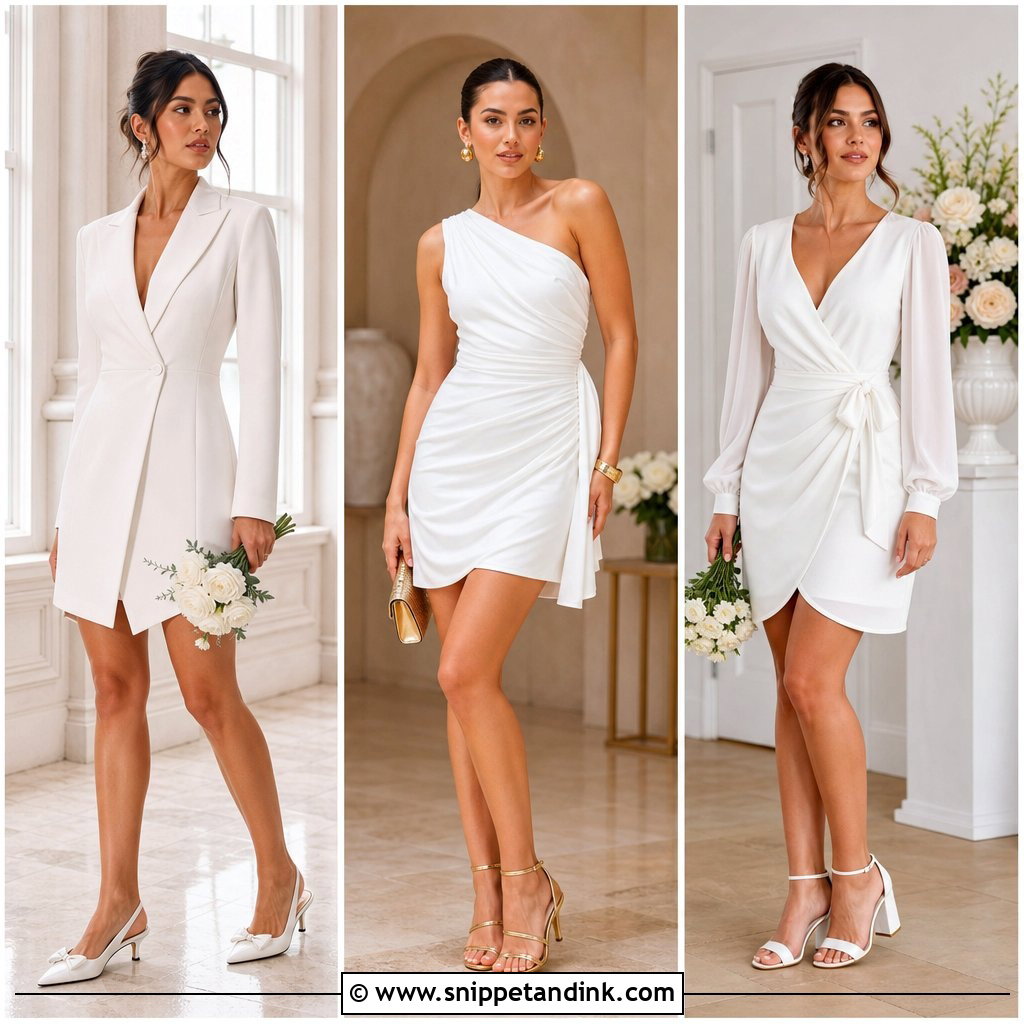
The bow is the whole story here, so let it be. A structured bow needs interfacing inside or it collapses by the second hour, and that’s the first thing I squeeze when I pick one up. Keep the rest plain: pearl earrings, pointed slingbacks, a small satin bag. Do the sit test as well, because a hem that looks fine standing can ride up in a car or at the head table. Sheer tights in cold months, bare legs and low block heels in warm ones. A high ponytail or neat bun keeps a back bow in view. I’d use it as a reception change, an after-party dress, a courthouse outfit or a shower look.
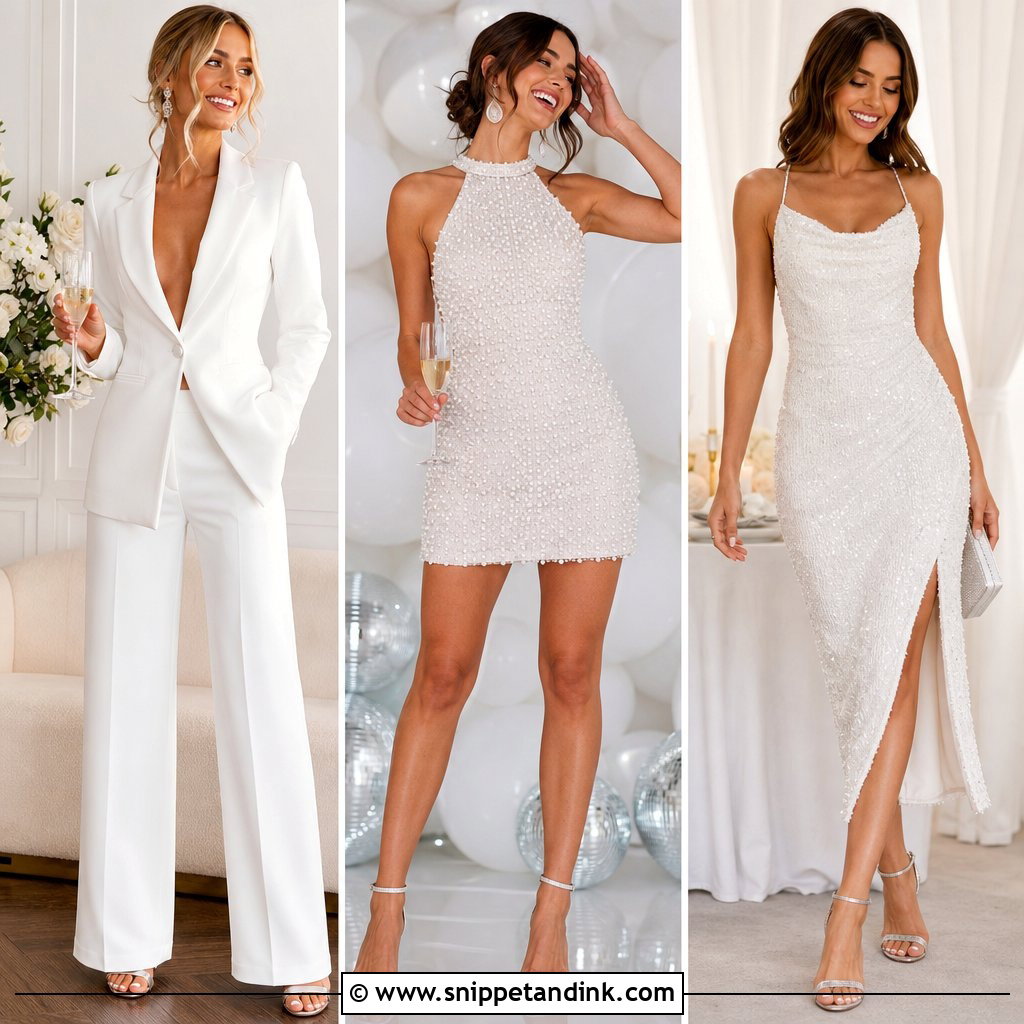
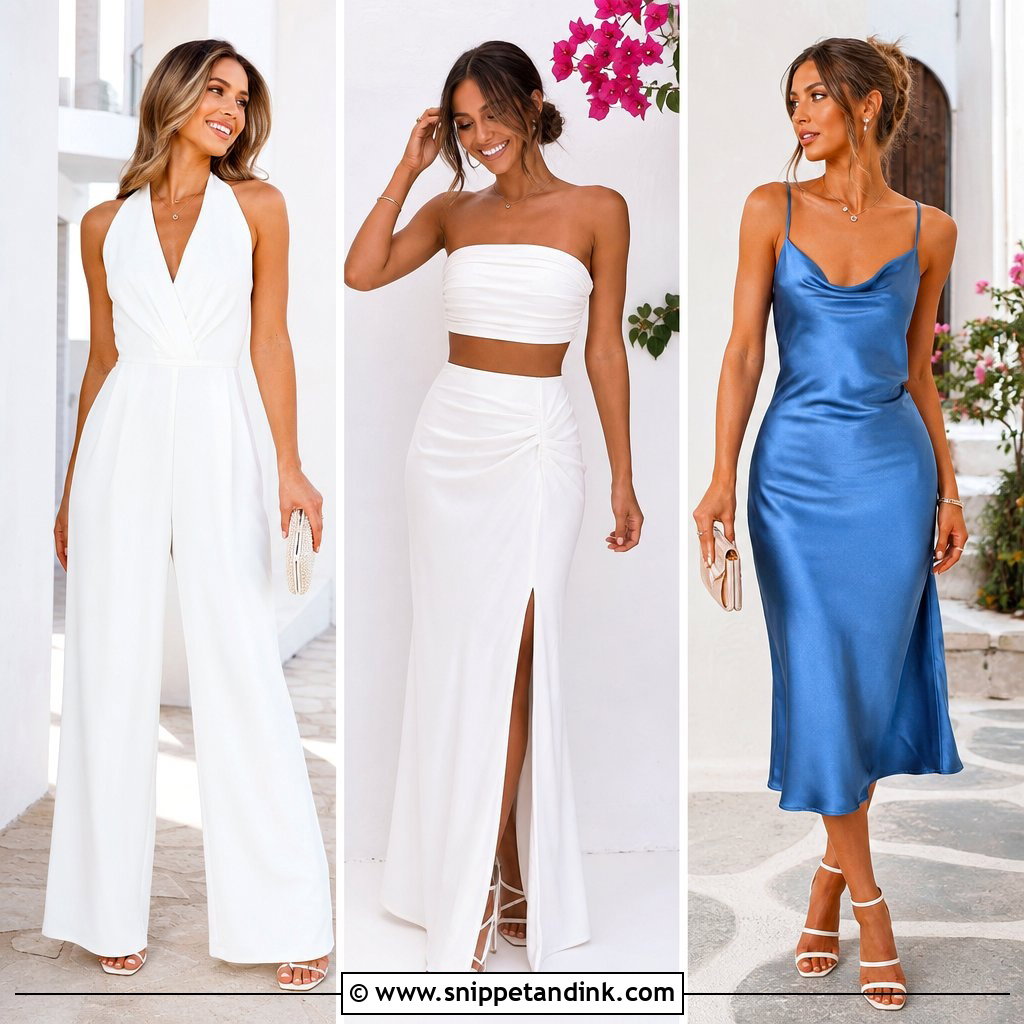
9. Bridal Jumpsuit With Heels
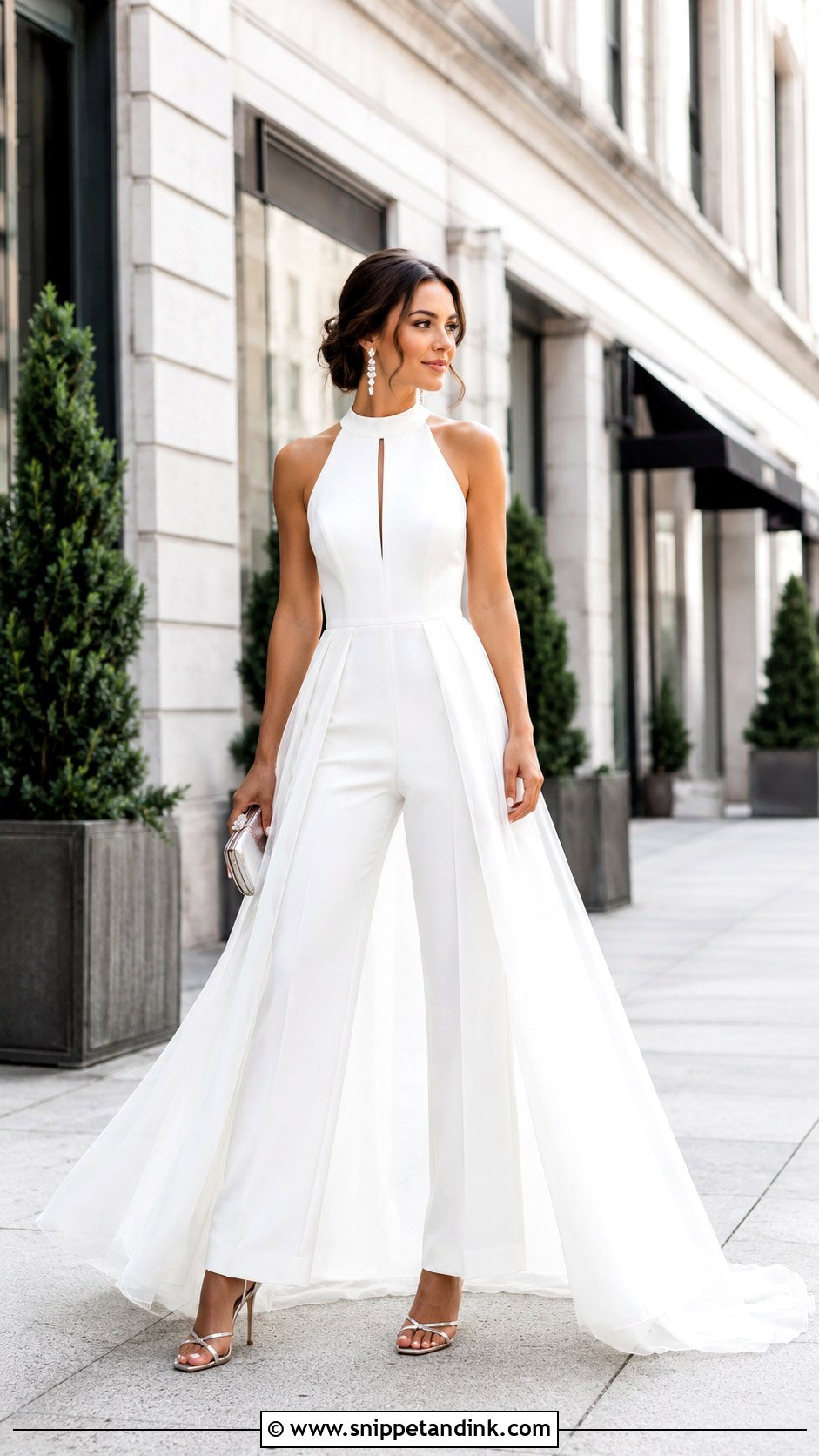
Would you rather wear tailored pants than manage a long skirt? A white bridal jumpsuit gives structure and an easy stride, but the hem is unforgiving. The trousers must be hemmed with the exact shoes you’ll wear, since a wide leg that ends half an inch short looks like a mistake in full-length photos. Think about the bathroom too: a one-piece with a back zip means you’ll need a helper every time. Wide legs read dramatic, tapered legs sharper. Metallic heels, drop earrings and a compact clutch finish it, and a detachable tulle overskirt adds ceremony impact if you want it. A cropped blazer covers the arms without breaking the line. Wear your hair back so the neckline shows. Of everything here, it’s the piece you’re most likely to wear again.
10. White Bridal Pantsuit Outfit
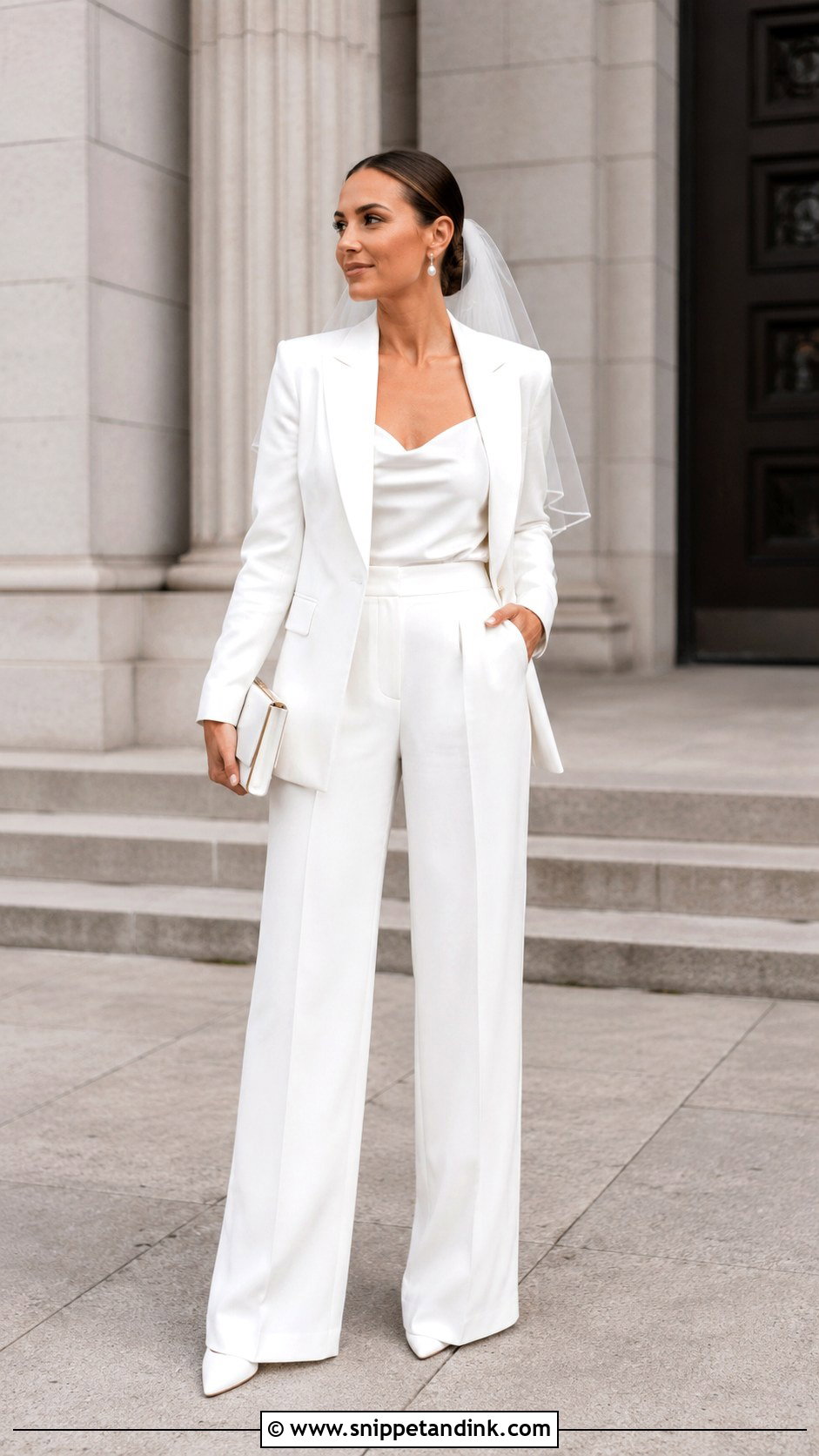
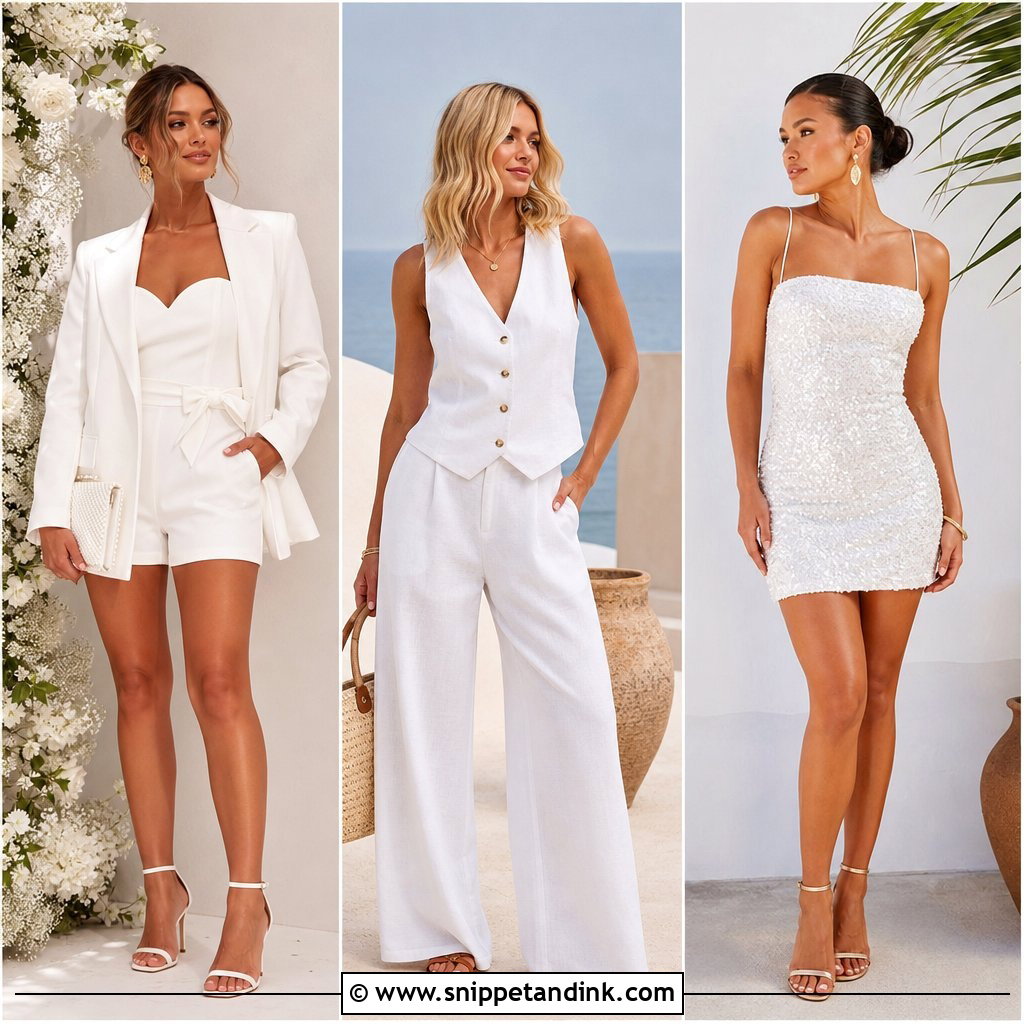
With a tailored white pantsuit, everything starts at the shoulder. If the blazer’s shoulder seam sits wrong, no later alteration fully fixes it, so that’s what I check first, then whether the jacket closes without pulling into an X at the button. Underneath, high-waisted trousers with an ivory satin shell, a corset top or a simple camisole. Pointed pumps lengthen the leg; loafers or low slingbacks are kinder after six hours standing. Pearl earrings, a sleek clutch and a small veil or sculptural headband stop it reading as office wear. Petite brides usually look sharper in cropped trousers and a shorter jacket, while taller brides can carry wide legs and longline tailoring. White crepe and wool pick up lint and foundation, so a lint roller belongs in someone’s bag.
11. Two Piece Bridal Skirt Set
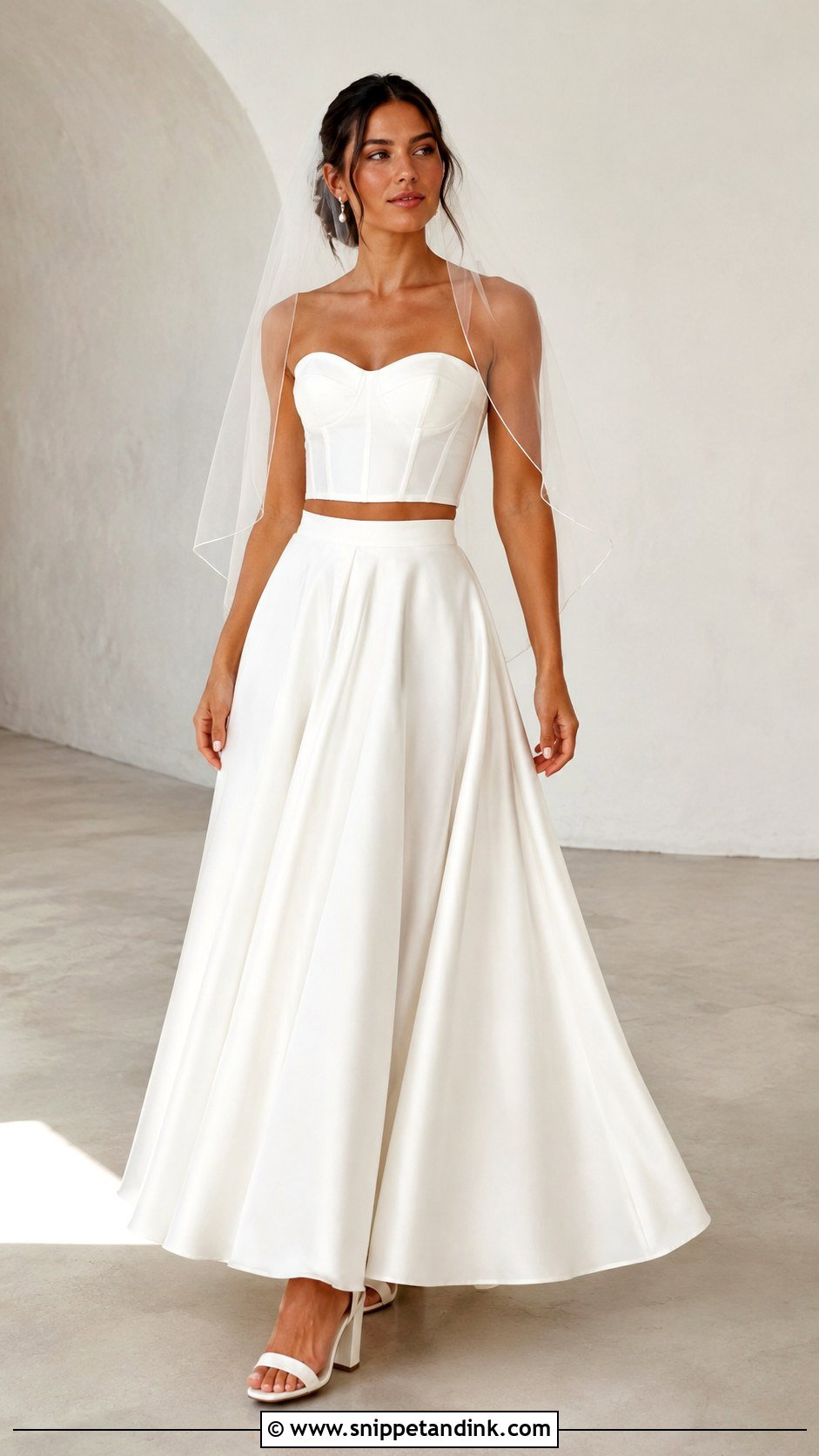
Bridal separates solve a fitting problem I see often: a bride who is one size on top and another at the hip. Two pieces can each be fitted on their own instead of altering one gown to bridge both. Pair a structured corset, a fitted satin top or a modest long-sleeve blouse with a high-waisted floor-length skirt; a column skirt looks minimal, pleated satin or layered tulle adds movement. Watch the whites. Two ivories from different makers rarely match, so I hold both pieces together in daylight before anyone buys. Block heels, pearl drops and a simple veil finish it. Lift your arms in the mirror to check the gap at the waist. After the ceremony, the long skirt can come off for trousers or a mini.
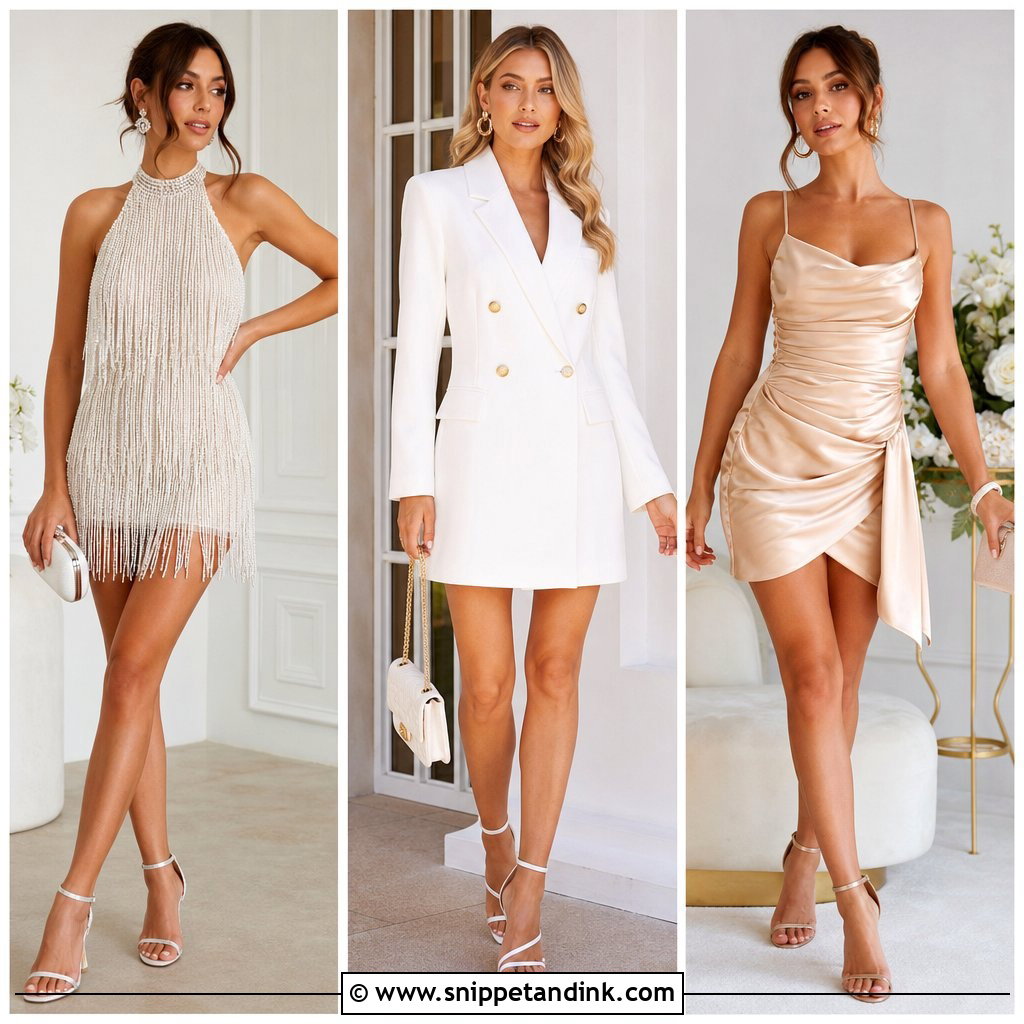
12. Courthouse Bridal Blazer Dress
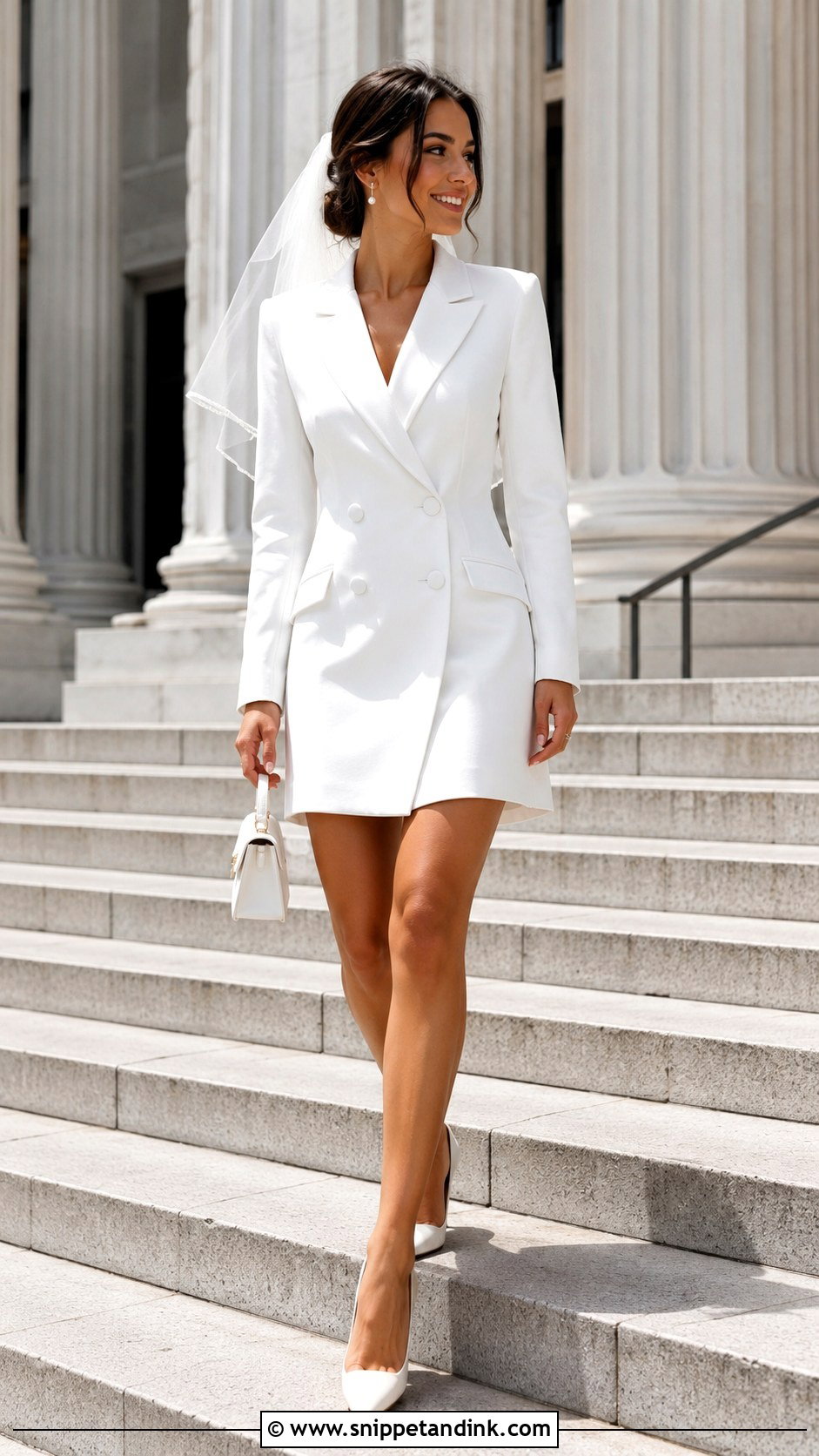
Courthouse days involve more walking, waiting and paperwork than couples expect, and a white blazer dress copes with all of it. Choose a double-breasted or wrap-front cut with a secure inner button; a wrap held by a single tie will open on the steps. The length should let you climb stairs comfortably. Pointed pumps, a top-handle bag, delicate earrings and a short veil keep it bridal, and a lace camisole underneath helps if the lapels sit low. In cold weather, sheer tights and a long neutral coat. A bun, ponytail or tucked waves keep your face clear for the quick portraits outside, and you’ll still be comfortable at lunch afterward.
13. Beach Bridal Dress With Sandals
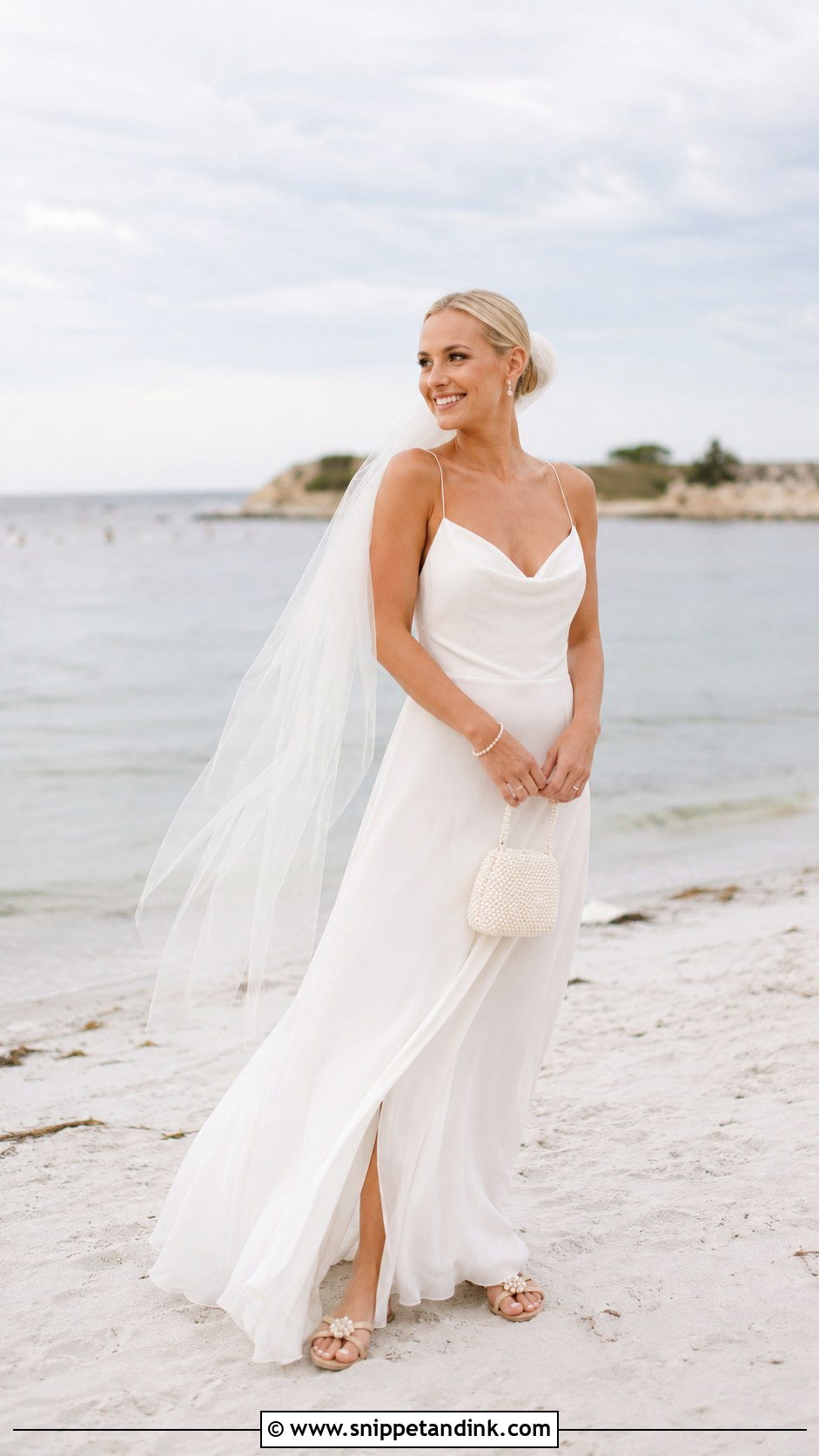
On a beach, sand is the problem rather than the dress. A train drags wet sand and picks up marks nobody can remove on the day, so I keep beach hems just clear of the ground and skip a train unless someone is assigned to carry it. Breathable chiffon, soft crepe or lined lace in a relaxed A-line or column moves best. Flat embellished sandals, pearl studs and a small woven or satin bag. A fingertip veil looks lovely in the breeze but needs pinning into a braid or bun base, not just a comb sitting on smooth hair. Loose waves, a braided bun or a low ponytail cope with salt air. Tight set curls rarely do.
14. Floral Appliqué Garden Bridal Gown
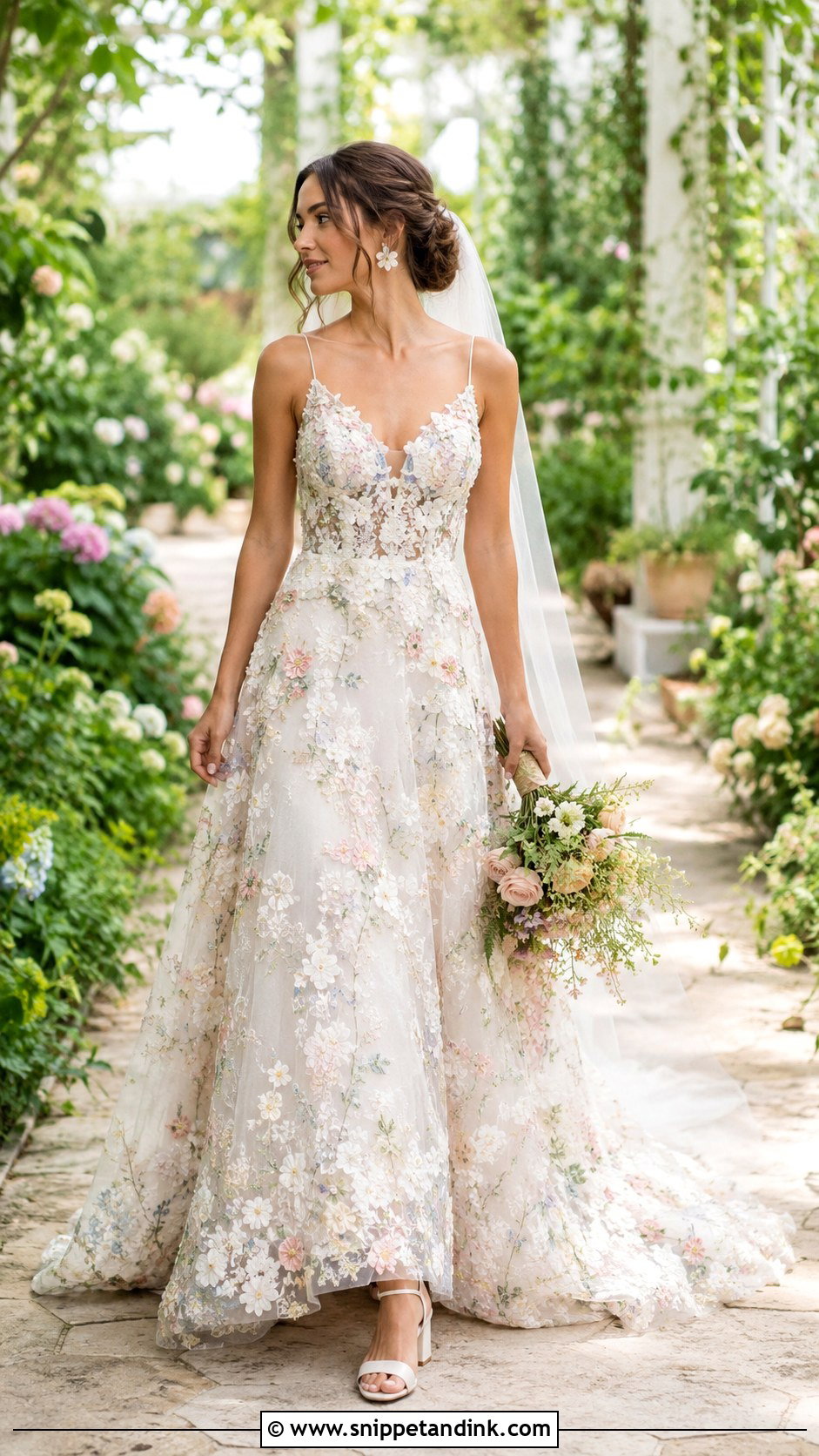
Appliqué catches. In a garden that means rose canes, bench edges and bouquet wire, so I check that each flower is tacked down at its petals and not only at the center. Scattered appliqué over a fitted bodice and a soft A-line skirt wears better than layer upon layer of it. Block heels or heel protectors stop you sinking into the lawn. Add floral earrings, a simple veil and a small ivory bag, and if the embroidery has color, repeat one muted shade in the bouquet or a hair pin. A low textured bun keeps the back detail visible. Spring and summer, greenhouses and botanical estates are its home.
15. Boho Crochet Lace Bridal Dress
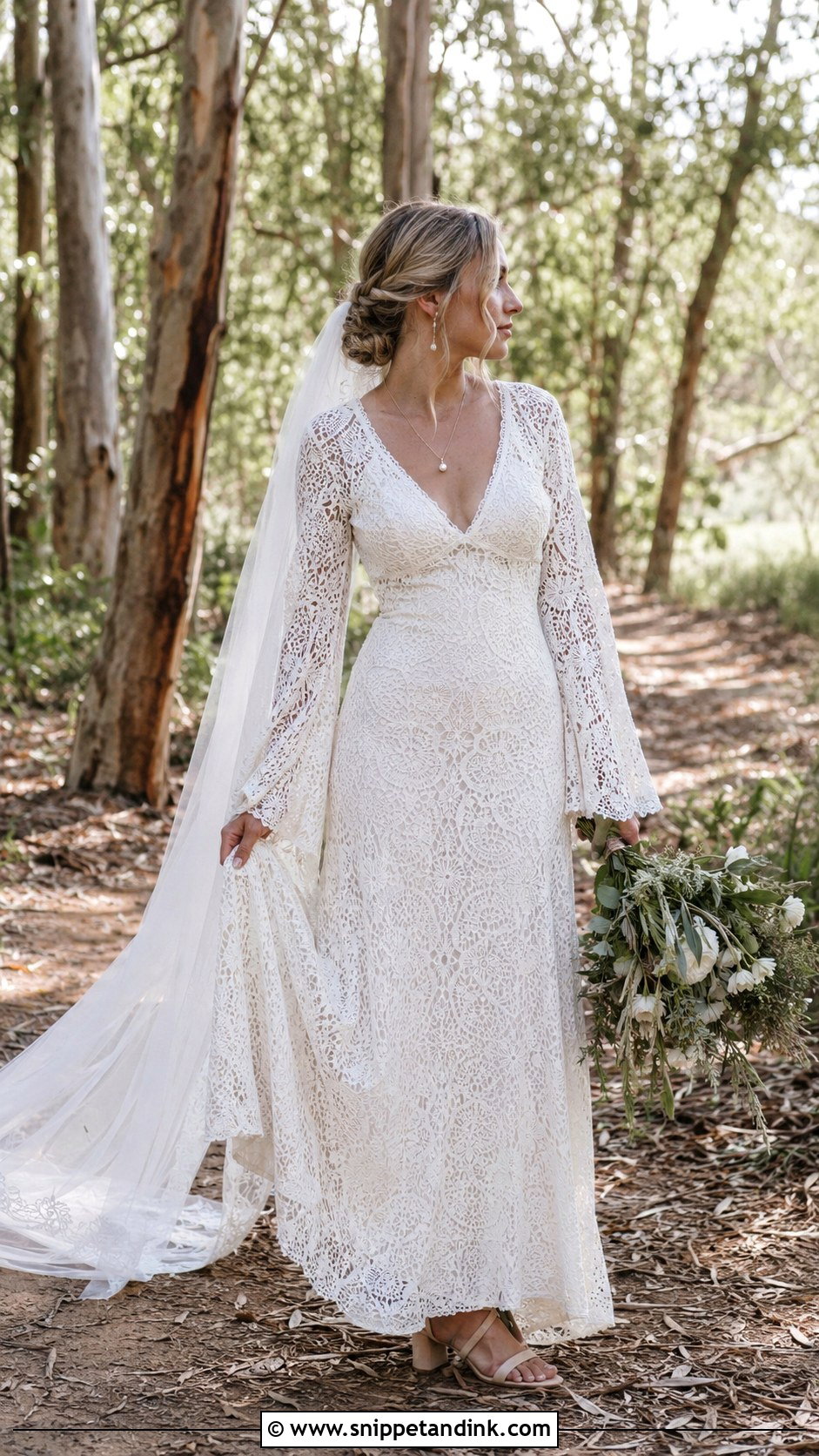
Crochet lace is heavier and more open than most brides expect, so I pay more attention to the lining than to the lace. The lining should sit flat and be close to your skin tone, or the open stitches throw odd shadows in daylight. A sheath, A-line or soft flare all work; bell sleeves move, fitted sleeves look cleaner. Low block-heel sandals, natural pearls and a light veil or hair comb finish it, and a woven bag or neutral wrap adds texture without tipping into costume. Soft waves or a braided low bun suit the mood. Choose undergarments with no lace of their own, since two lace textures fight through the holes. Woodland, desert, rustic and relaxed destination ceremonies suit it.
16. Vintage Tea Length Bridal Dress
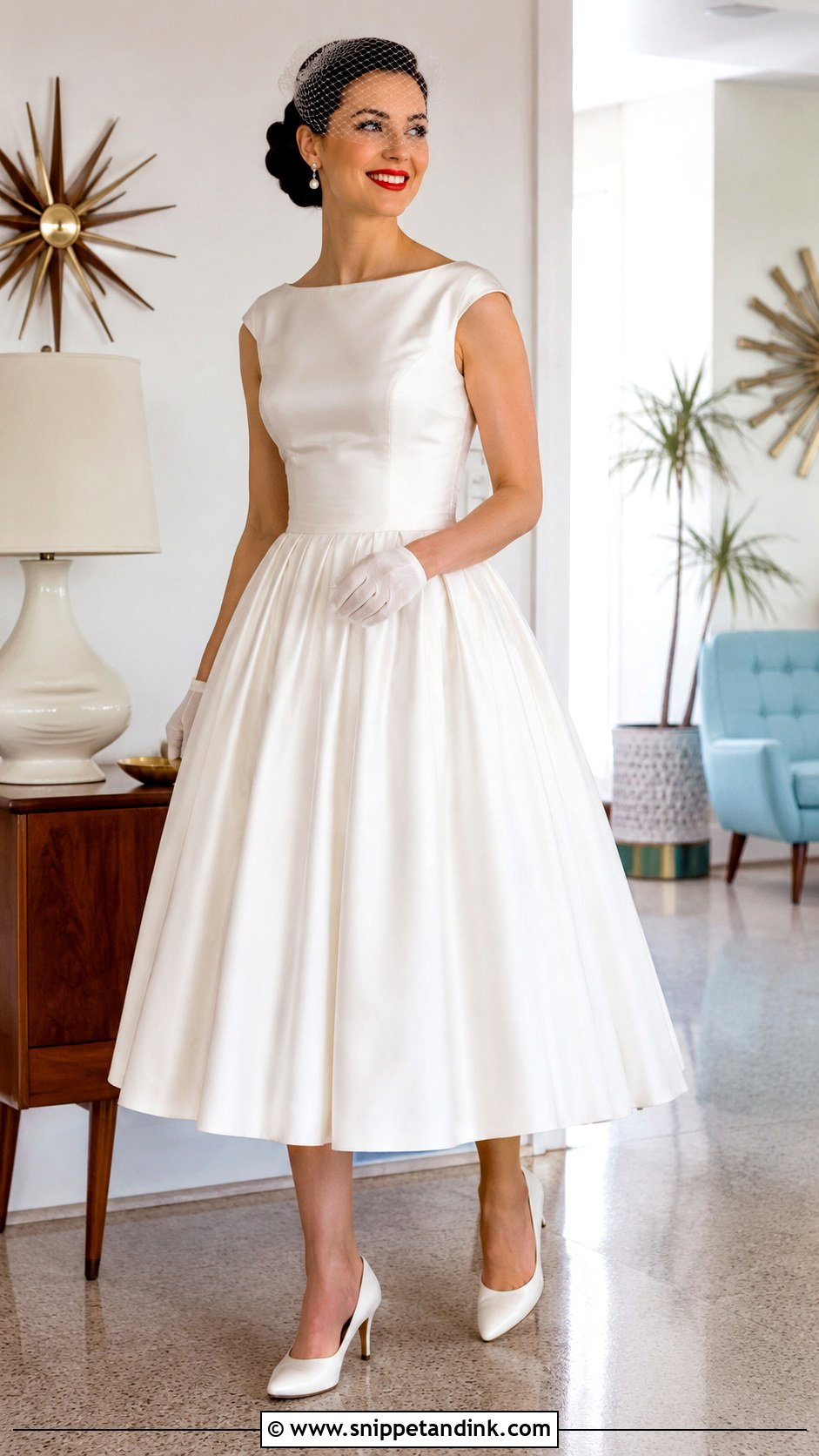
Tea length makes the shoes part of the dress. The hem should land between lower calf and ankle, and I always mark it with the wedding shoes on, because a quarter inch decides whether it looks intentional or simply short. Satin, mikado, lace and dotted tulle all hold the shape. Closed-toe pumps, short gloves, pearl earrings and a birdcage veil or small bow headpiece complete it, and a cardigan or cropped jacket adds coverage without hiding the waist. Comfort isn’t optional when your heels appear in every full-length frame. It suits courthouse and daytime weddings, and brides of any age.
17. Bridal Gown With Detachable Overskirt
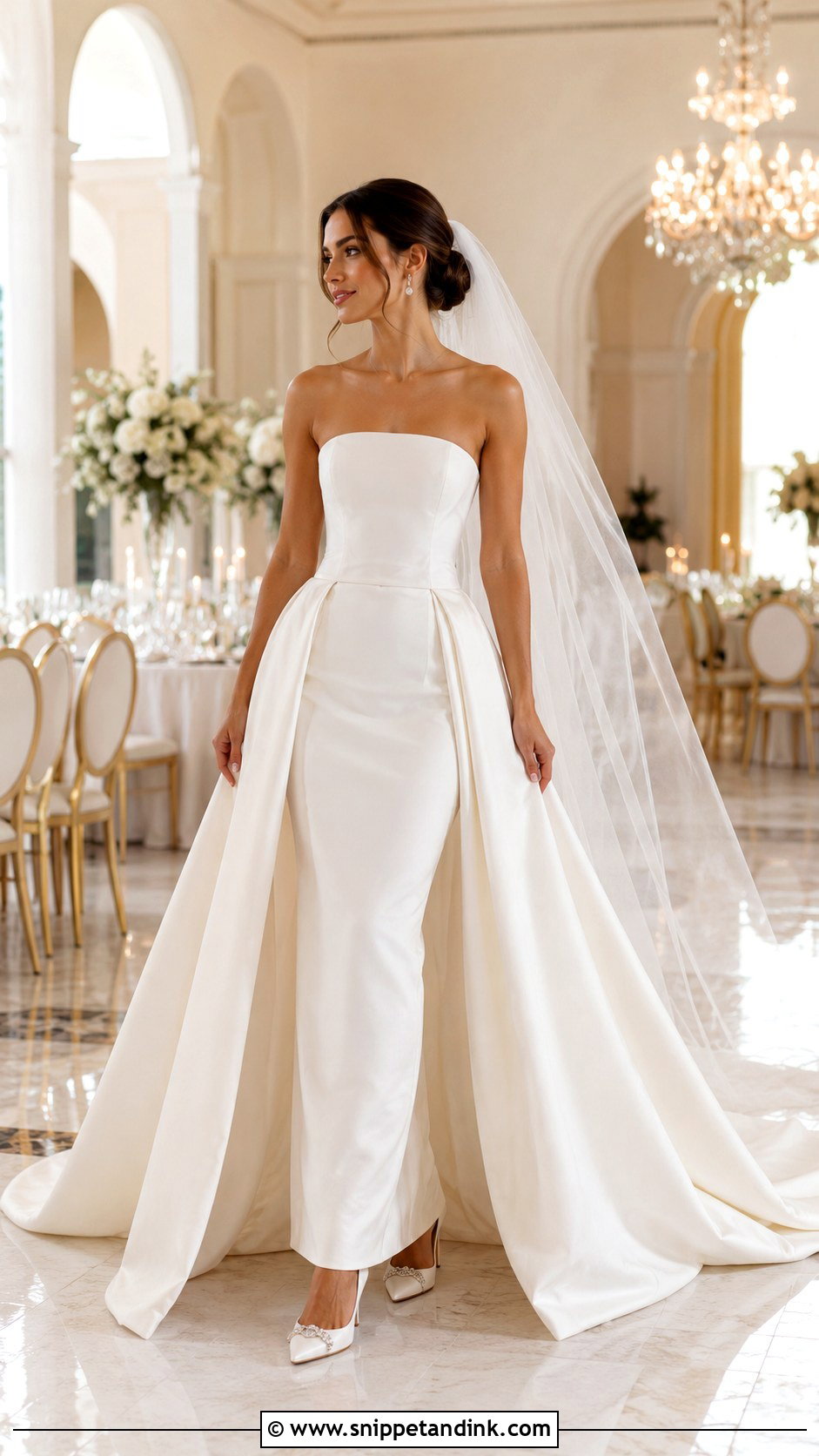
A detachable overskirt turns one base dress into two wedding looks. Start with a fitted column, sheath or mini, then add the full skirt for the ceremony. The fastening is what I look at hardest. Hooks on a hidden waistband come off far faster than a row of buttons, and you want it removed in a few minutes by a bridesmaid, with nobody reaching for scissors. For the ceremony, a long veil, elegant pumps and understated jewelry. After portraits, take off the skirt, change into lower heels and add bolder earrings or a hair bow. It saves buying a second dress, and you’ll dance far more freely.
18. Sequin Bridal After Party Mini Dress
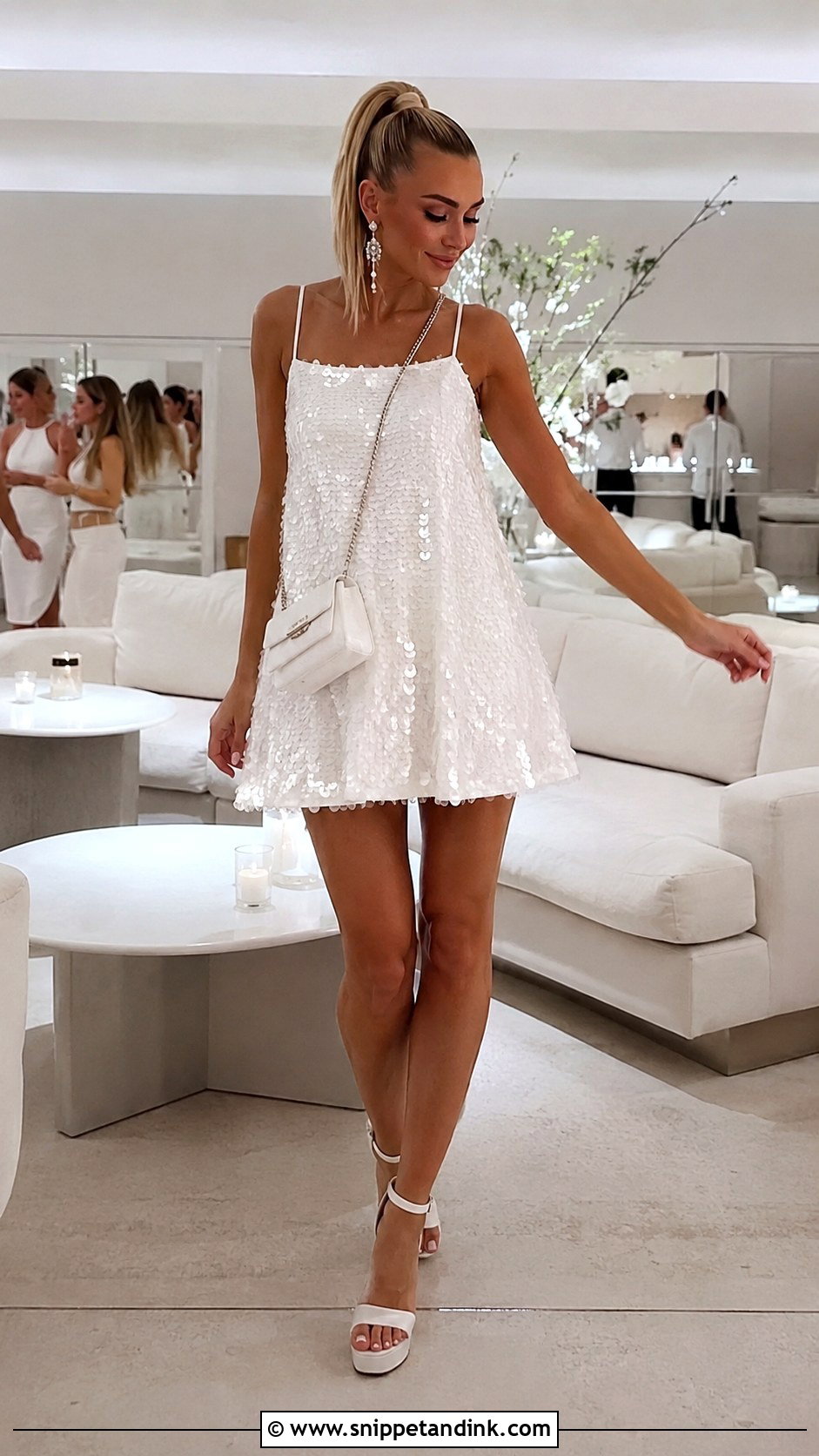
Sequins scratch. The inner arm takes the worst of it on a dance floor, so I insist on a full soft lining and check where the sequin edges meet the armhole. Ivory, silver-white or pearl sequins in a shift or gentle A-line dance better than a skin-tight cut. Low block heels, platforms or clean white sneakers, depending on the room, with statement earrings and a small crossbody so your hands are free. No necklace with a high or heavily worked neckline. A high ponytail or sleek bun. Ask your photographer for a test frame with flash, because reflective sequins can flare or turn grey under it.
19. Plus Size Bridal Wrap Gown
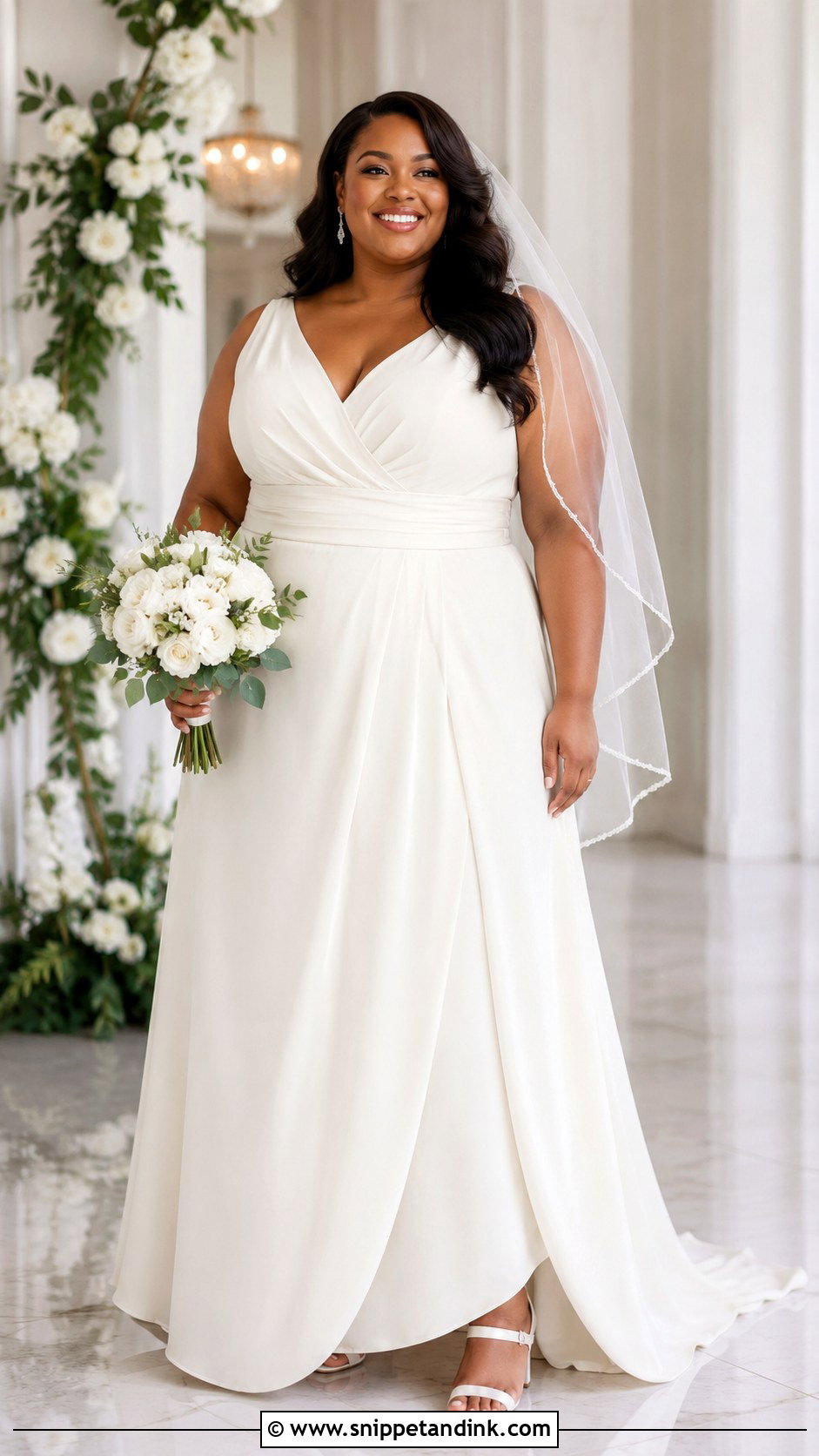
A wrap-style gown gives definition you can adjust, which matters when your body isn’t one size from bust to hip. Look for a faux-wrap that is stitched securely rather than a loose tie, which will slip by the reception. A V-neck, wide waistband and flowing A-line skirt balance most proportions. Supportive block heels, drop earrings and a fingertip veil finish it. Shapewear is optional if the gown has its own structure; if you wear it, make sure you can sit through dinner in it. Shop where samples come in realistic sizes. Judging fit from a sample clipped up the back is guesswork.
20. Modest Bridal Cape Gown
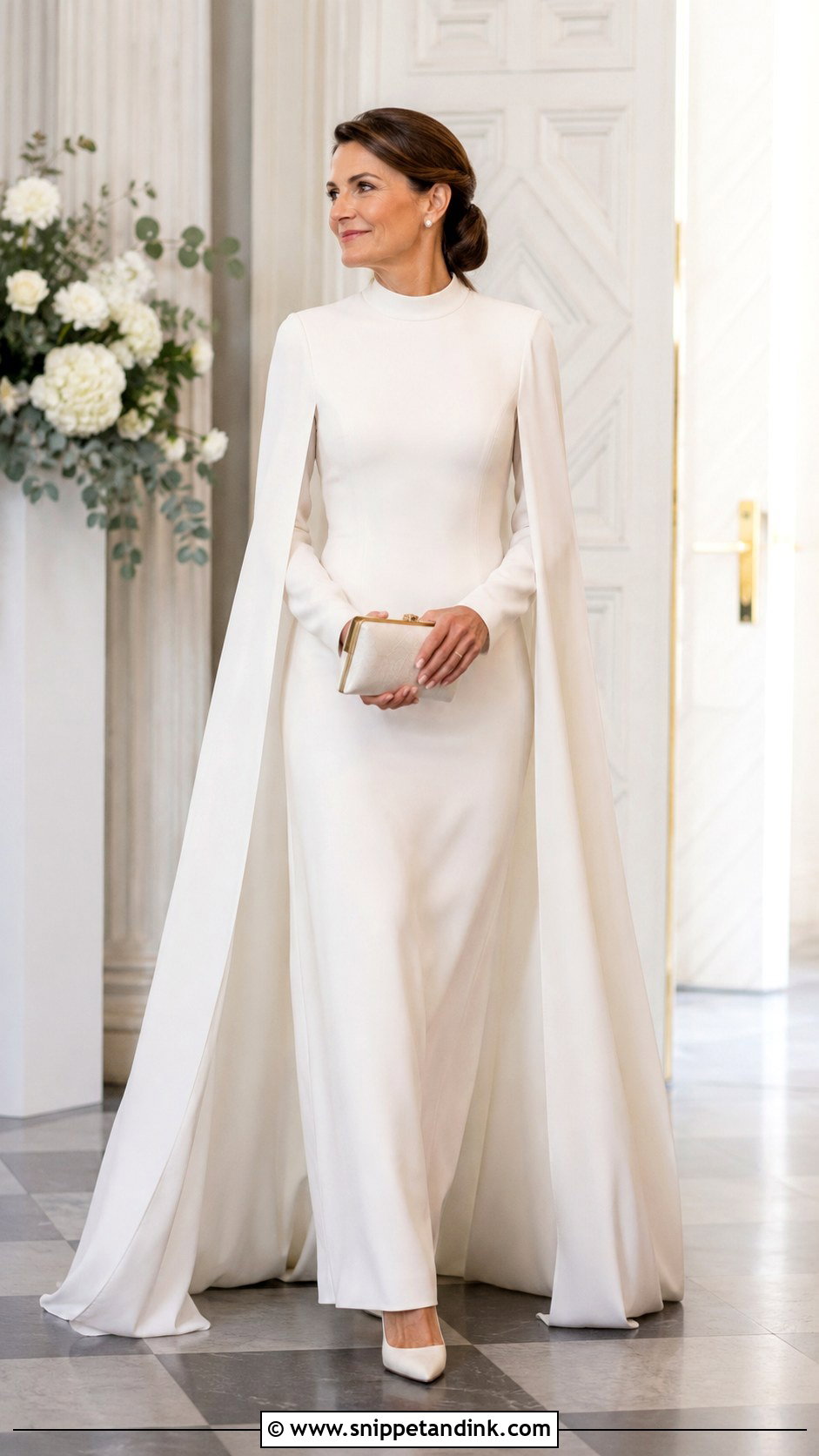
This is one of the few looks where I’d usually drop the veil, because the cape already supplies length and movement. Start with a long-sleeve or high-neck column gown and attach a light cape at the shoulders or neckline. Chiffon floats; crepe and satin hold their shape. Closed-toe heels, pearl studs and a small clutch, perhaps a simple headpiece. Walk in it before you buy. A cape that’s too long catches under the heel, and one attached too tightly across the back stops you hugging anyone. Cool seasons, formal venues and modest dressing all suit it, and so does any bride who wants coverage that looks chosen rather than added.
How a Reception Change Actually Happens
Outfits rarely fail on the day; the change between them does. A gown with forty loops down the back can take a long while to get out of, and the room is usually a cramped side office with bad light. I plan it like a short appointment.
- Agree on a time with your planner and photographer, usually after dinner is served, so you aren’t missing toasts.
- Pick one helper who has practiced the fastenings at the final fitting. Two people in a small room just get in each other’s way.
- Hang the second outfit in the change room before the ceremony, with its shoes, jewelry and a hanger ready for the gown.
- Swap the hair accessory at the same time. Taking out a long veil and adding earrings or a bow is what makes the change read as new.
- Have someone carry the first gown straight to a car or locked room. Gowns left on chairs get stepped on and spilled on.
Foundations Under Each Silhouette
Half of what makes these looks work is invisible. Bring your actual undergarments to the second fitting at the latest, because a bra with a different band changes where a bodice sits.
Satin, slips and columns
Smooth, skin-toned and flat at every edge. Lace knickers and textured shapewear show straight through satin under flash. If a dress has a low back, ask the seamstress to sew cups into the lining instead of wearing anything separate.
Corsets, ball gowns and capes
A boned bodice usually needs nothing above the waist. Below it, a simple slip stops a heavy skirt clinging to your legs when you walk. With a cape or high neck, check that nothing shows at the armhole when you raise your arms.
Pants, jumpsuits and minis
Look at yourself from behind under bright light. White trousers and short hems reveal lines that a long skirt hides, and a light, high-rise brief in your skin tone solves most of it.
Fitting Rooms Settle What Photos Can’t
Twenty looks is a lot to hold in your head, so narrow them by the day itself: the venue, the weather, the ground you’ll walk on and how many hours each piece will be worn. Then try every option with the real shoes and undergarments, and sit, walk and lift your arms before deciding. Good alterations make an inexpensive dress look expensive far more often than the reverse. From lace to tailoring to sequins, whatever you land on should feel like yours from head to toe.
You'll Like These Ideas:


Leave a Reply