

Planning the Outfit Change So It Takes Minutes
An after-party dress is the part of the day where I see the most rushing. The dress is easy to choose; the change itself is what goes wrong. A ball gown with a long row of buttons, a corset lacing and a bustle can take far longer to get out of than anyone expects, so I plan the change as carefully as the dress.
- Pick the moment. Most brides change after dinner and speeches, just before the first dance or the party starts. Add the change to the timeline so the planner and photographer know.
- Book a room. A private space near the reception with a mirror, good light and a hook for the gown saves a walk back to a hotel room.
- Choose one helper. A bridesmaid who has practised undoing the buttons or lacing is quicker than three people trying at once.
- Pack a small bag in advance: party shoes, the right underwear for the new neckline, earrings, a hair tie or pins, and a garment bag for the gown.
- Adjust the hair. A veil comes out and an updo might drop to a ponytail, so ask your stylist to show your helper how to do it.
Around fifteen to twenty minutes is realistic for a well-practised change. Anything less tends to leave a bride with a crooked strap and a forgotten earring in every photo of her second entrance.
1. White Satin Mini Wedding Dress
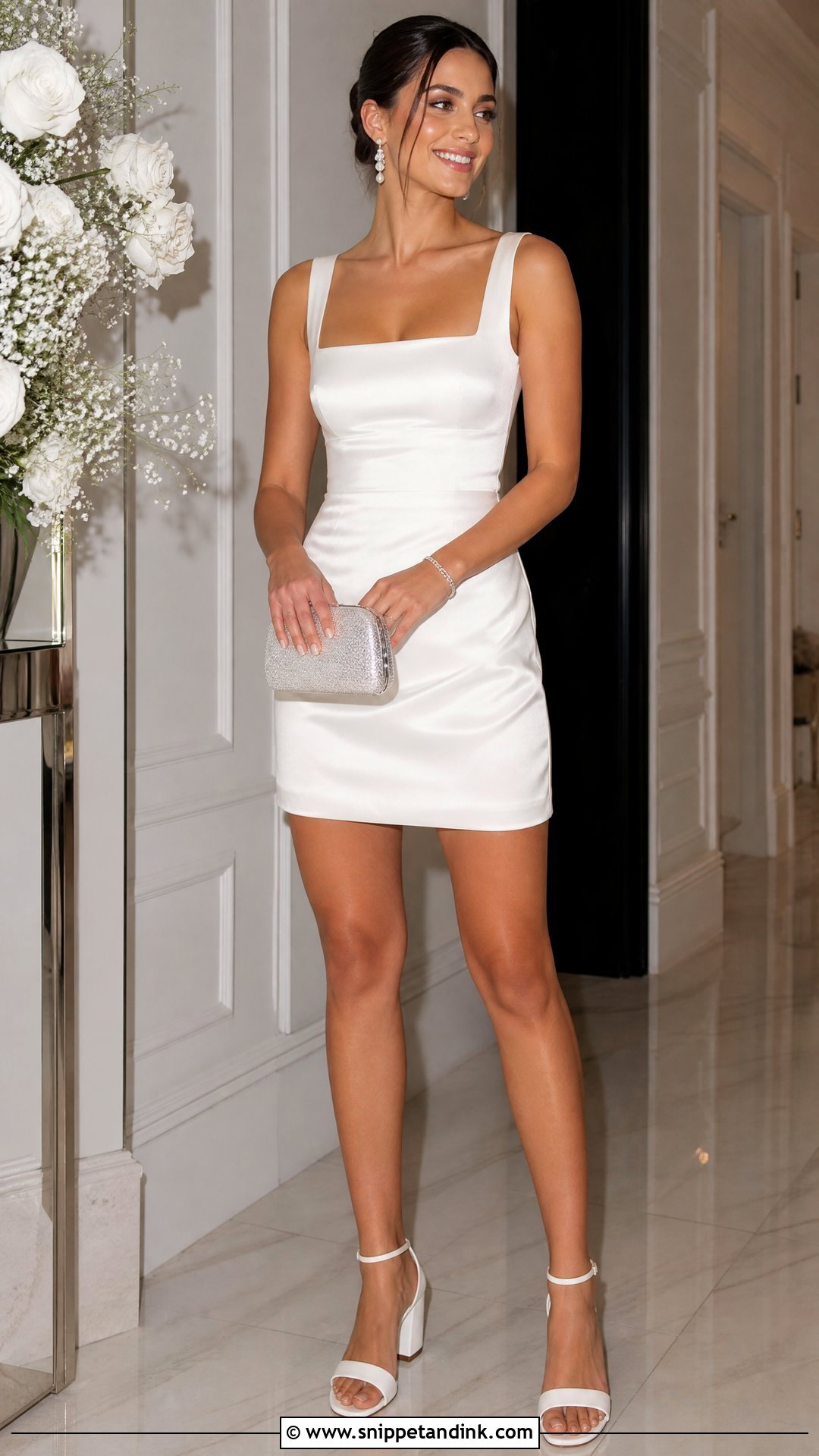
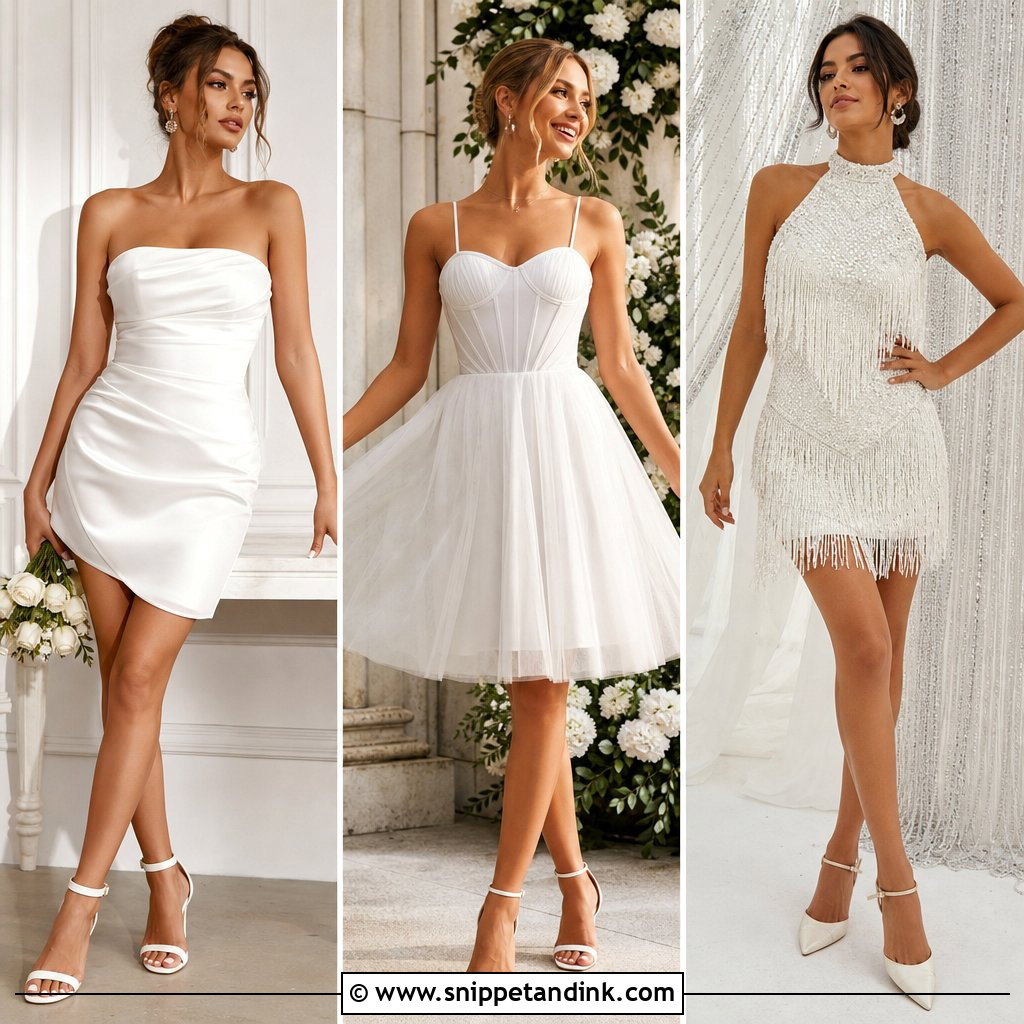
Satin minis are the change I see most often after a ball gown, and the contrast is the reason: the hem jumps from floor to thigh and everyone notices. A square neck, fitted waist and slight A-line give satin a shape that moves without clinging. Satin-covered block heels keep you steadier than stilettos once the floor gets slippery, and pearl drops keep it bridal. Smooth satin shows every edge of underwear, so bring the exact shapewear to your fitting rather than guessing. For a cold exit, a cropped faux-fur jacket or a tailored white coat covers your arms without hiding the dress.
2. White Sequin Fringe Wedding Dress
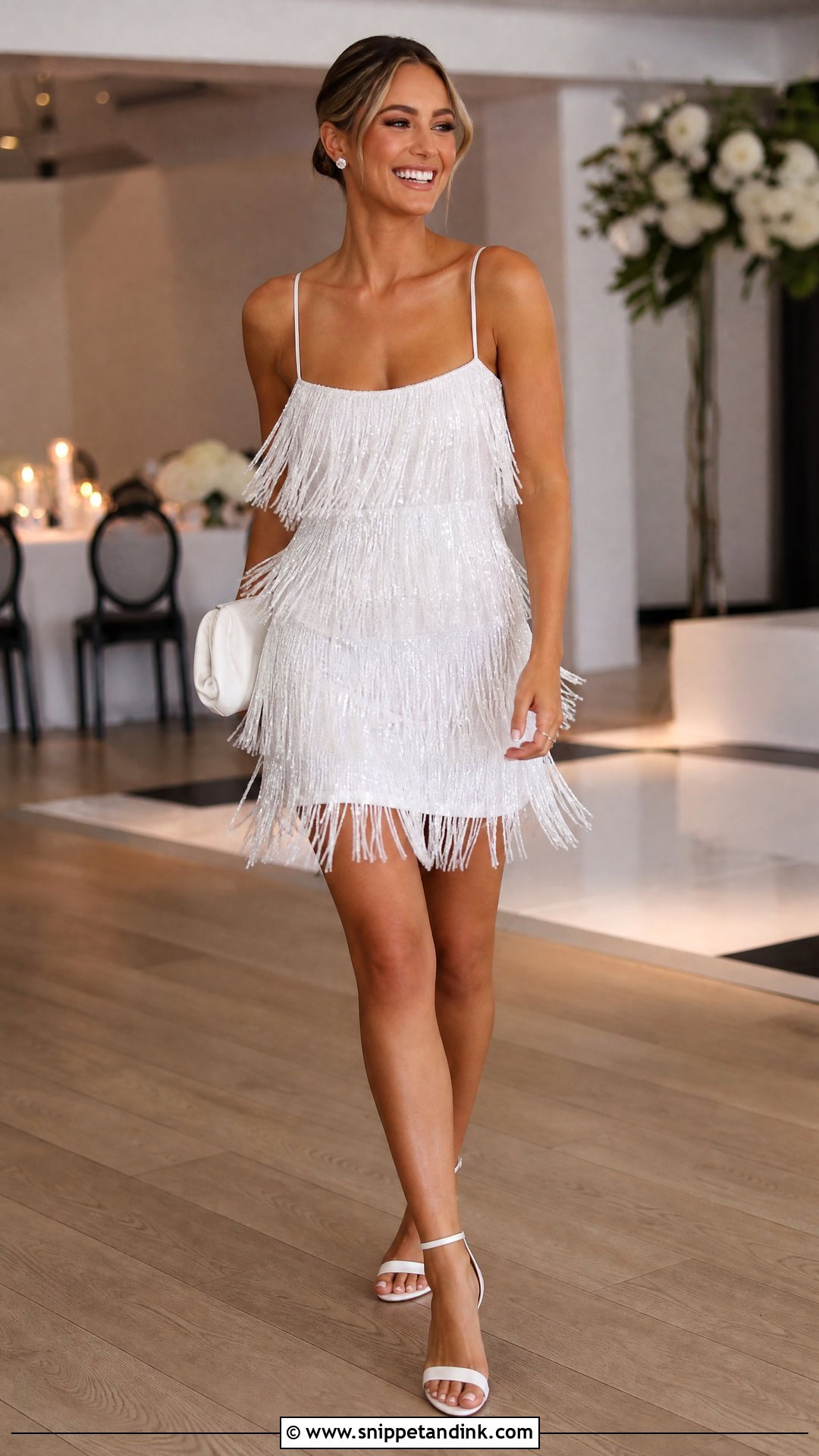
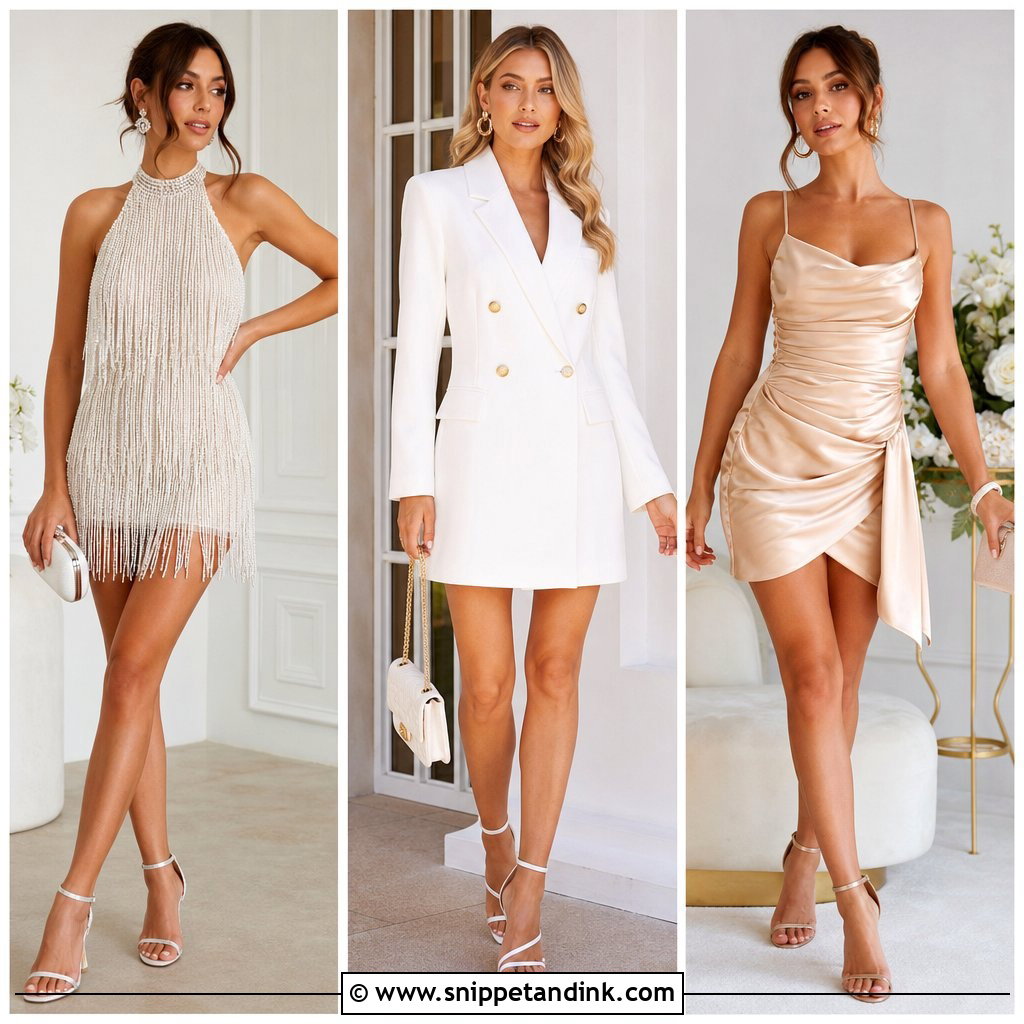
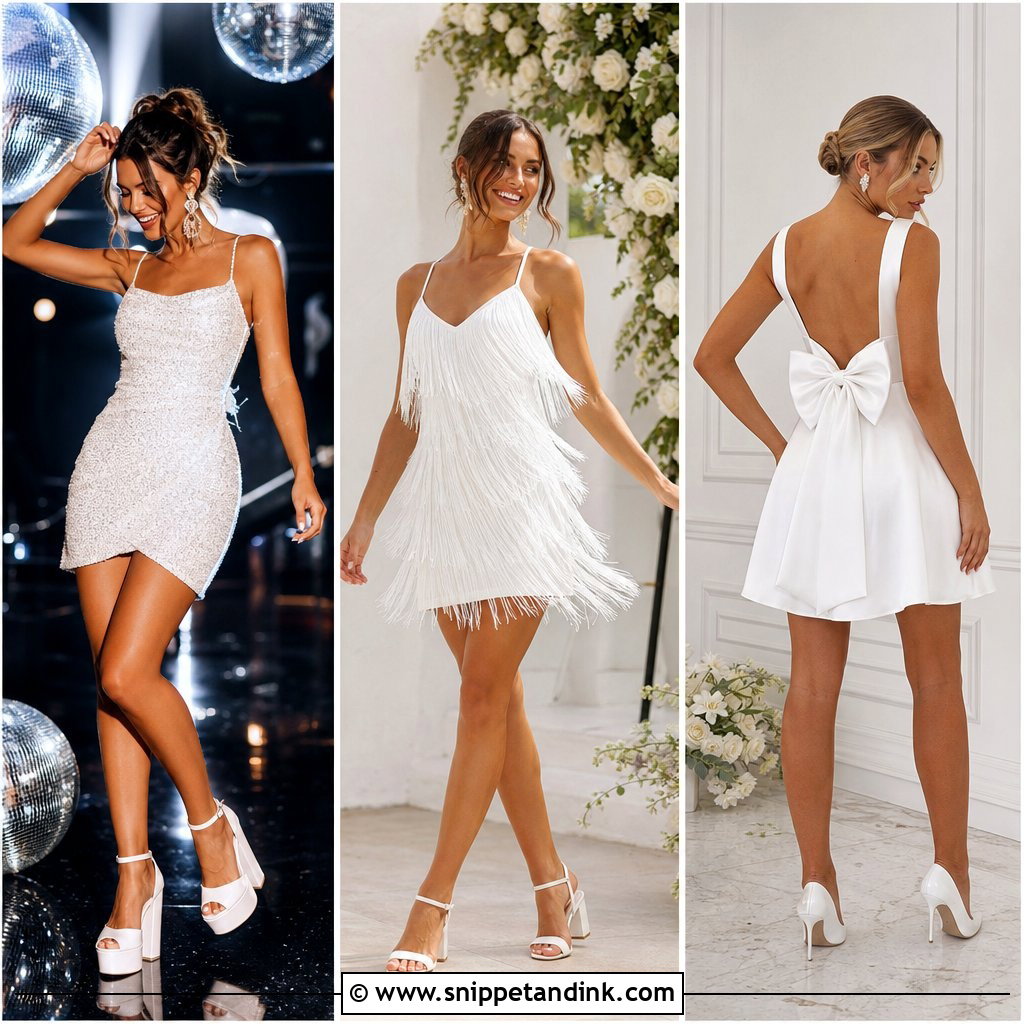
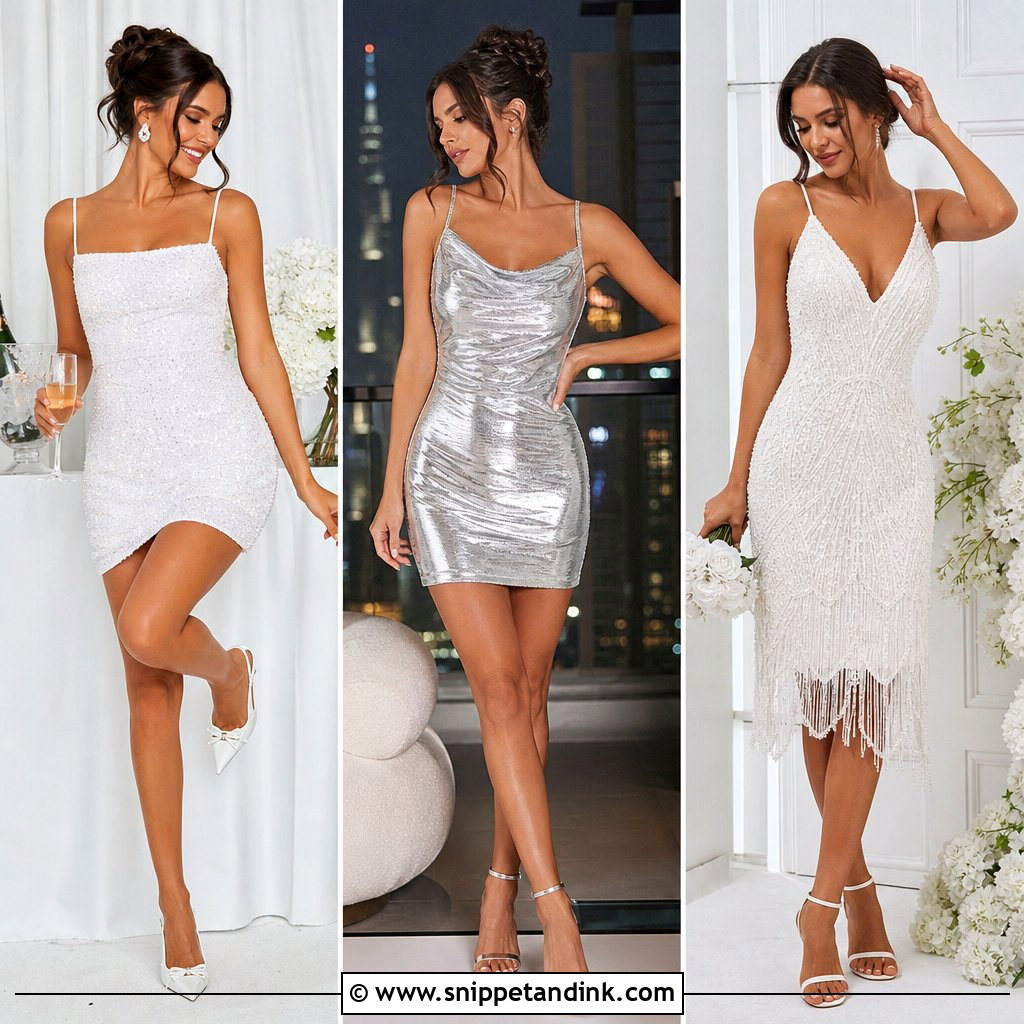
Fringe is made for the dance floor; standing still, it does very little. A white sequin fringe wedding dress works best when the strands sit across the skirt or sleeves, so they swing with your hips and arms rather than covering you from neck to knee. Keep everything else sleek: ankle-strap heels, crystal studs, a smooth satin clutch, a low ponytail. I’d skip textured tights and chain-strap bags, because sequin fringe tangles with both. Sit and dance in it at home before the day, as some fringe rides up when seated. It’s at its best in hotel ballrooms and lofts with proper party lighting.
3. White Feather Trim Mini Wedding Dress
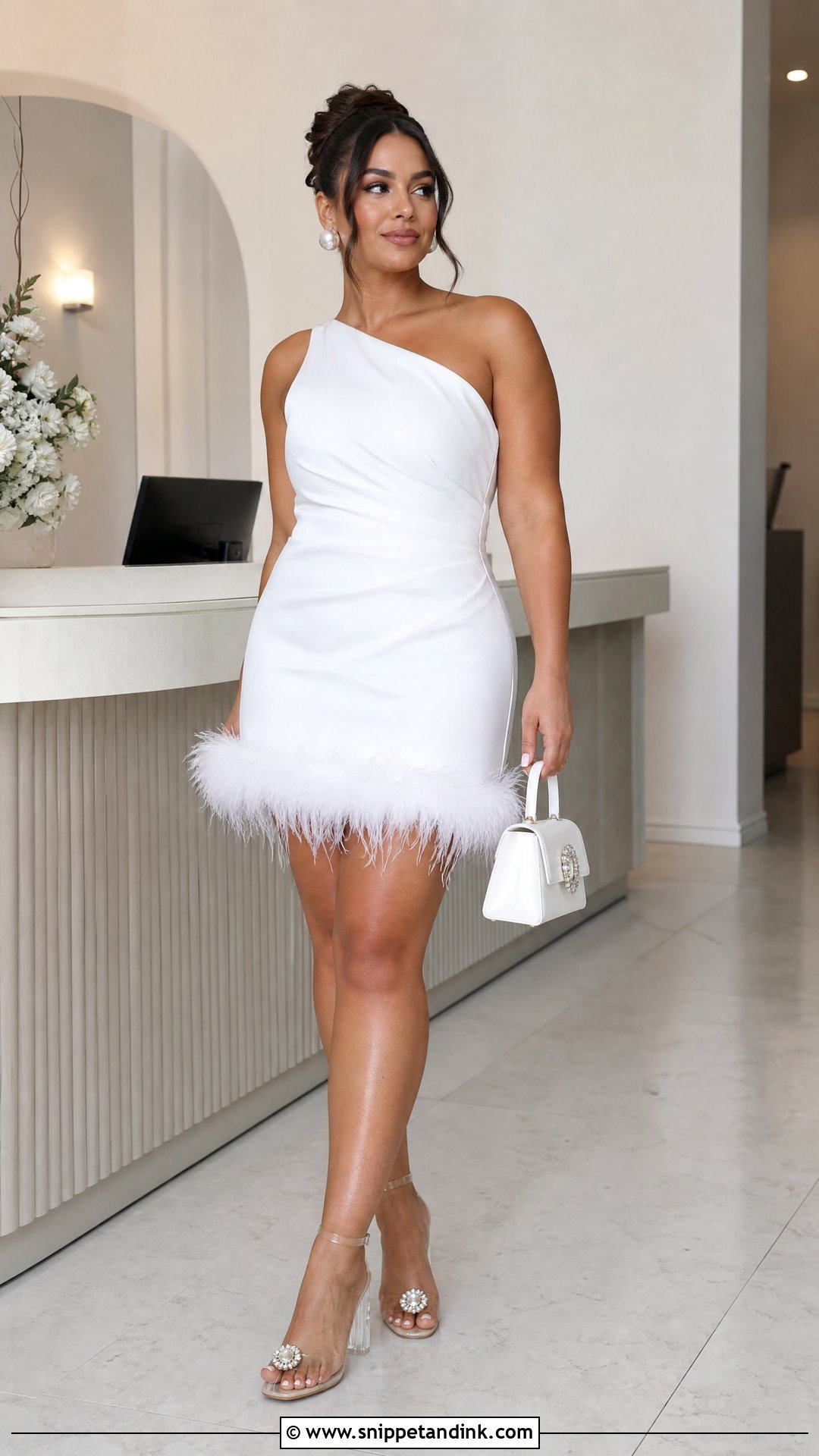
Feathers belong at the edges. Trim around the hem, the cuffs or the neckline keeps a white mini light; a dress covered in feathers is warm, shedding and awkward to sit in. Choose pointed pumps for a short evening or crystal block heels if you’ll be standing for hours. A fitted bodice or defined waist stops the feathers from adding bulk in photos. Pearl studs and a structured mini bag are plenty. One practical habit I’d recommend: change into it over a clean sheet or garment bag, and keep a lint roller in the kit, since loose fluff shows up instantly on a dark suit during the first dance.
4. White Long Sleeve Lace Wedding Dress
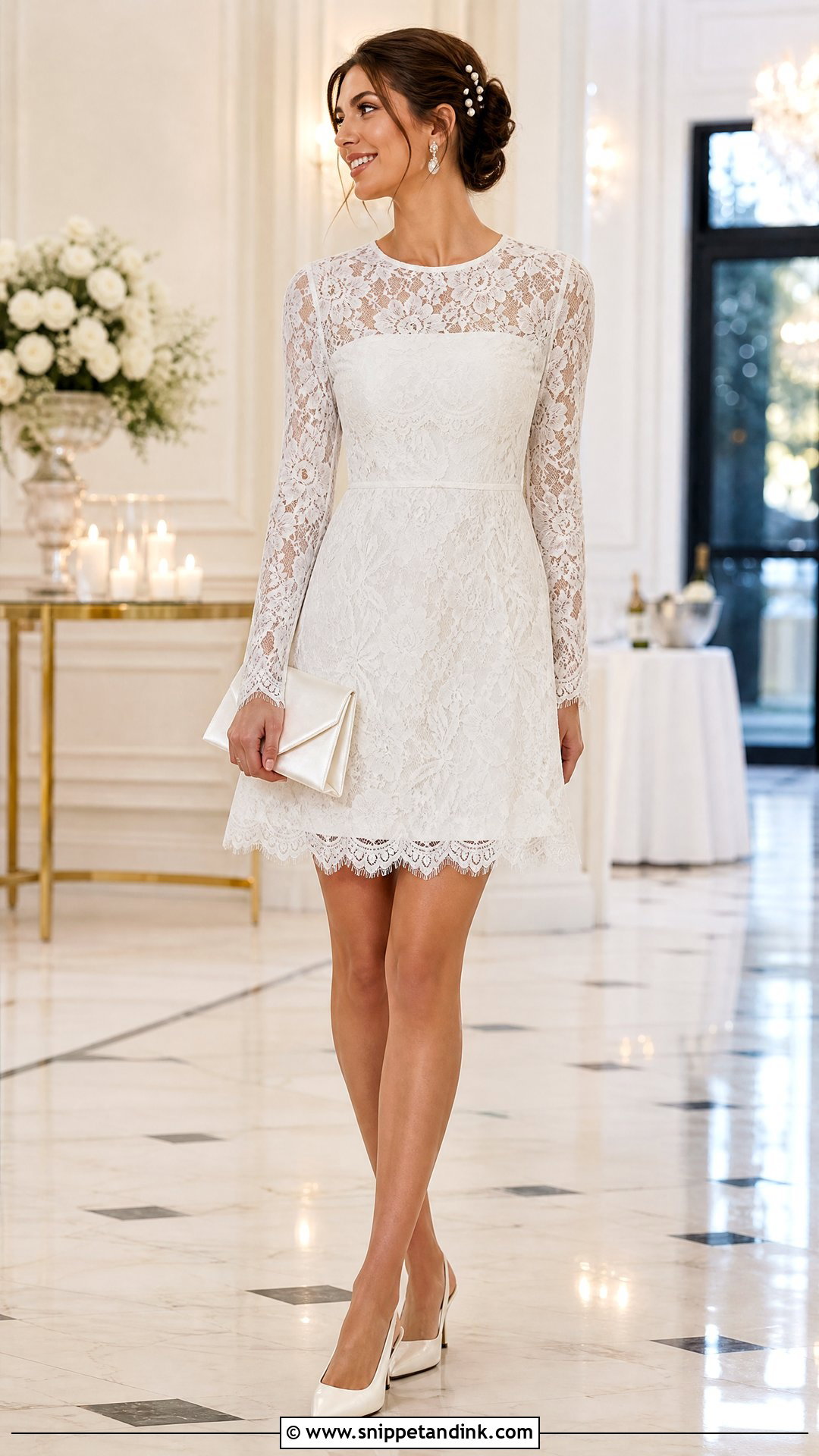
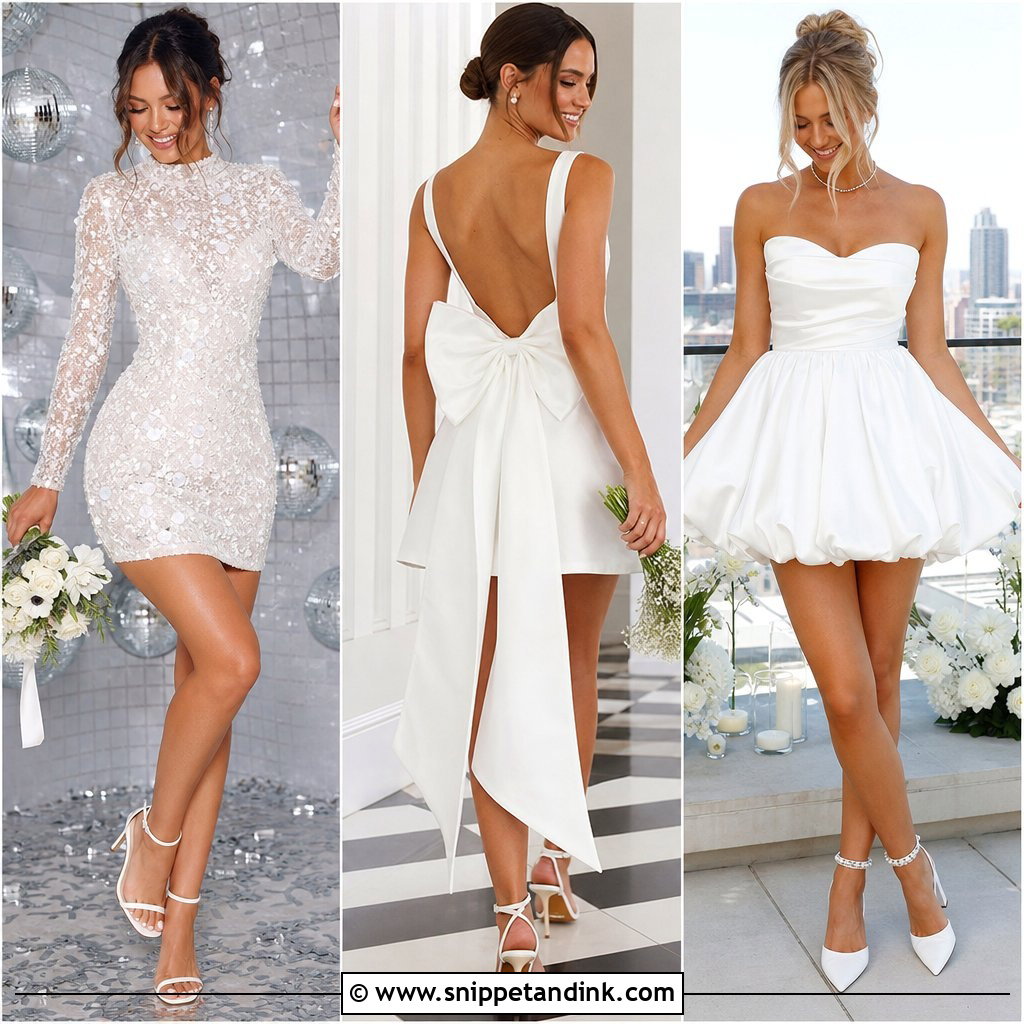
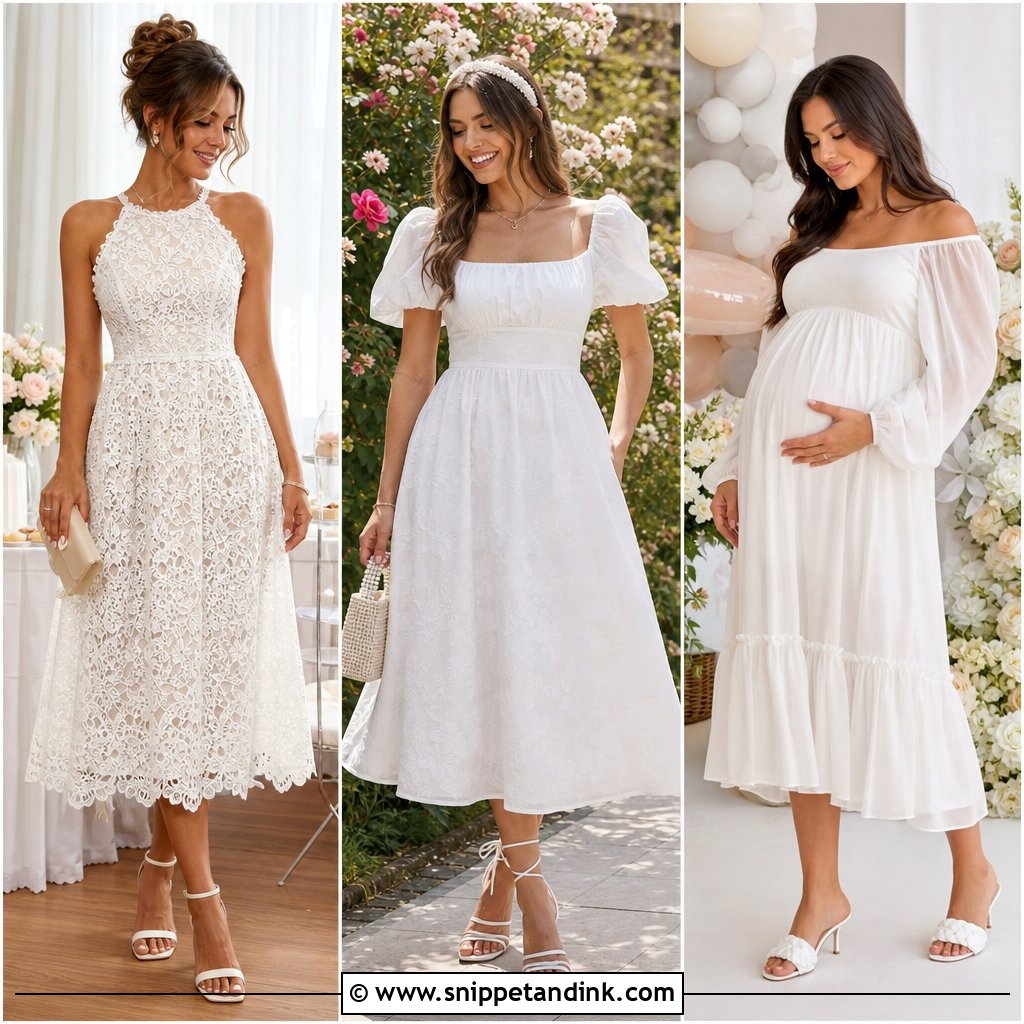
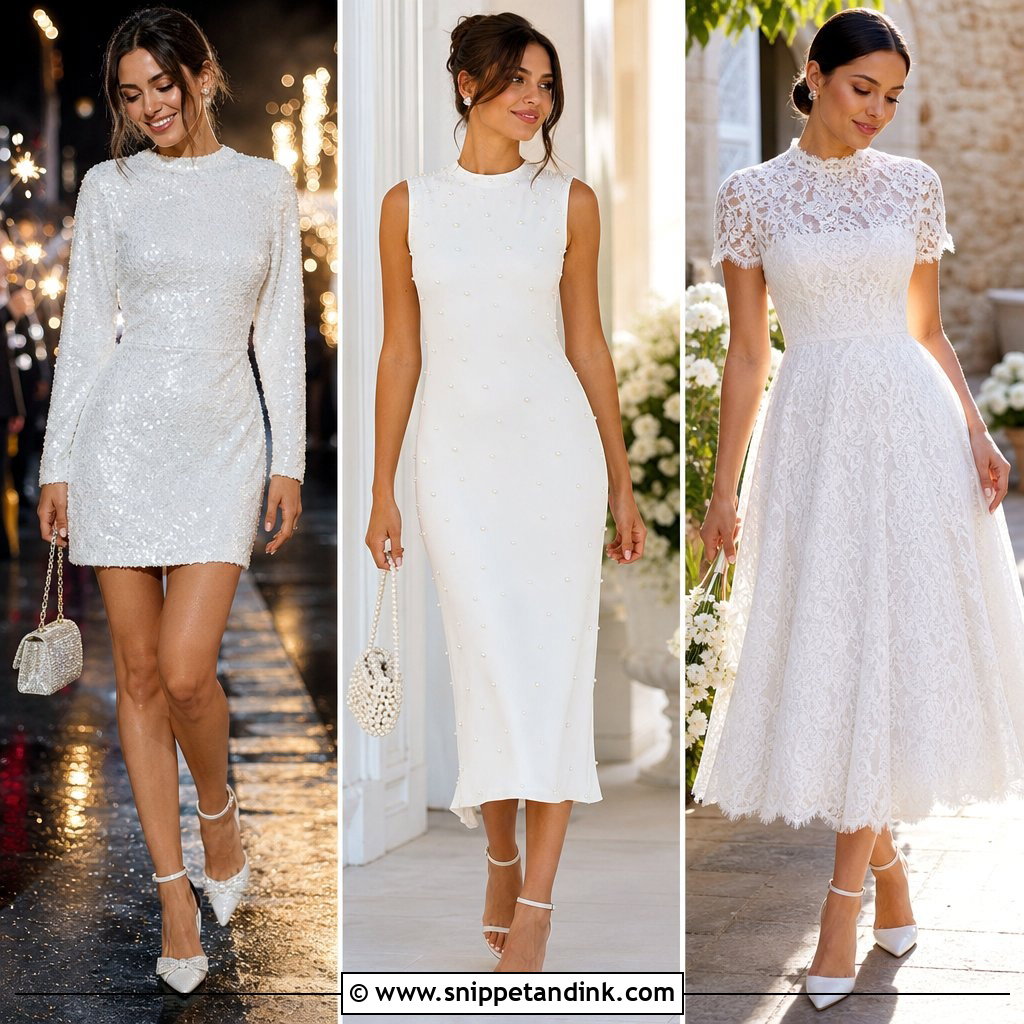
Long lace sleeves give coverage for a late, cool evening without the weight of a full gown. Choose a shorter fitted shape or a light A-line so it feels like a change rather than a second ceremony dress. The lining decides how the lace reads: a nude lining makes the pattern look as if it sits on skin, while a white lining makes it look denser and more traditional. I always ask brides to see lace under both bright light and dim reception light before choosing. Ivory slingbacks, a few pearl hairpins and a satin envelope clutch keep it classic. It’s well suited to autumn, winter or heavily air-conditioned venues.
5. White Pearl Embellished Wedding Dress
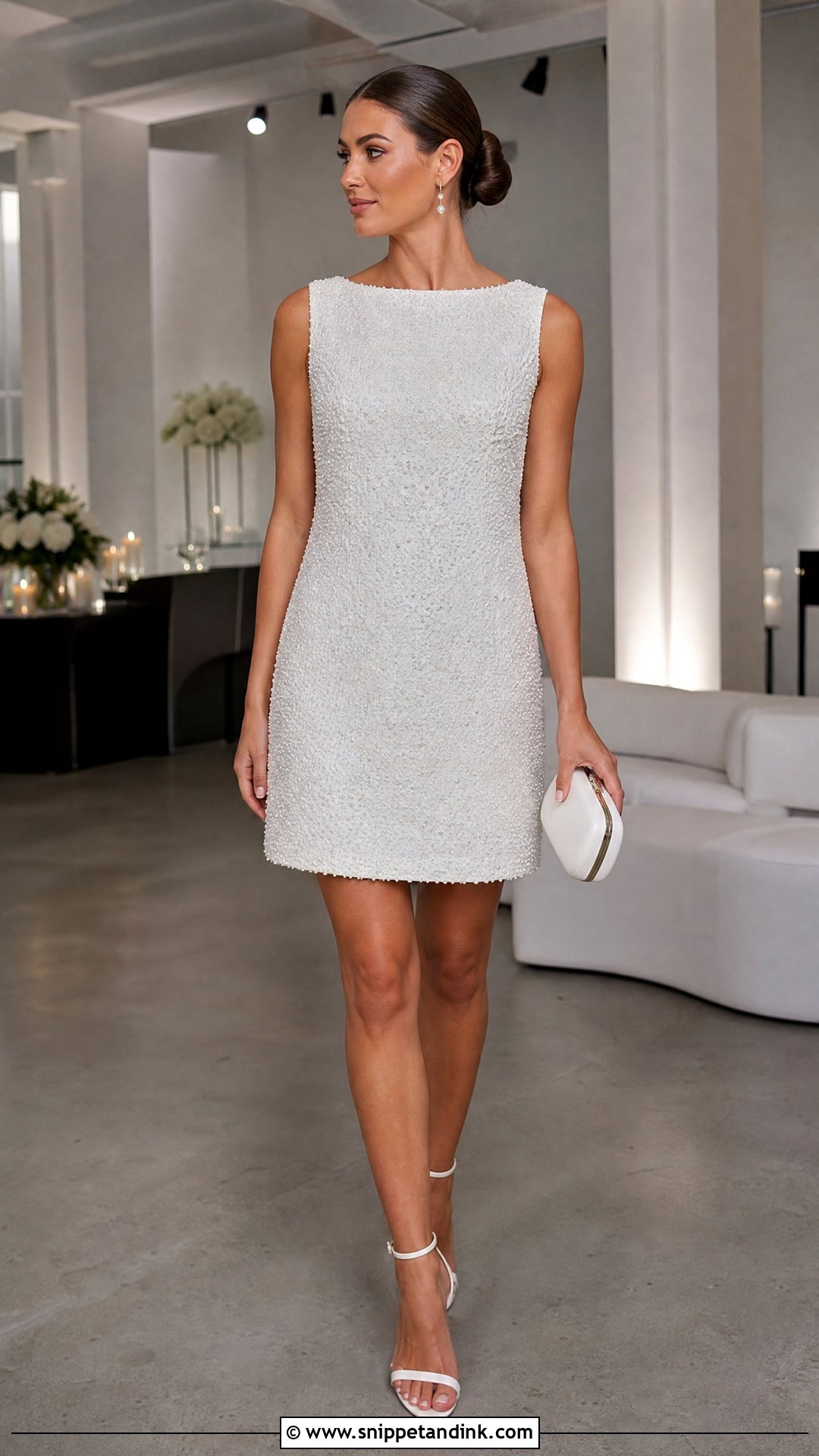
Pearls add texture without the glare of crystals, which makes them a calmer choice for a bride who wants her second look to shine softly. A shift mini, fitted sheath or soft A-line can all carry them, as long as the beads are stitched securely and spread evenly. Weight is the issue nobody mentions. A densely pearled dress feels fine for twenty minutes and heavy after three hours of dancing, so wear it for a while at your fitting. Styles beaded only at the neckline or hem are lighter. Pair it with plain satin sandals and a sleek chignon, and skip a necklace when the neckline is already busy.
6. White Corset Bubble Hem Wedding Dress
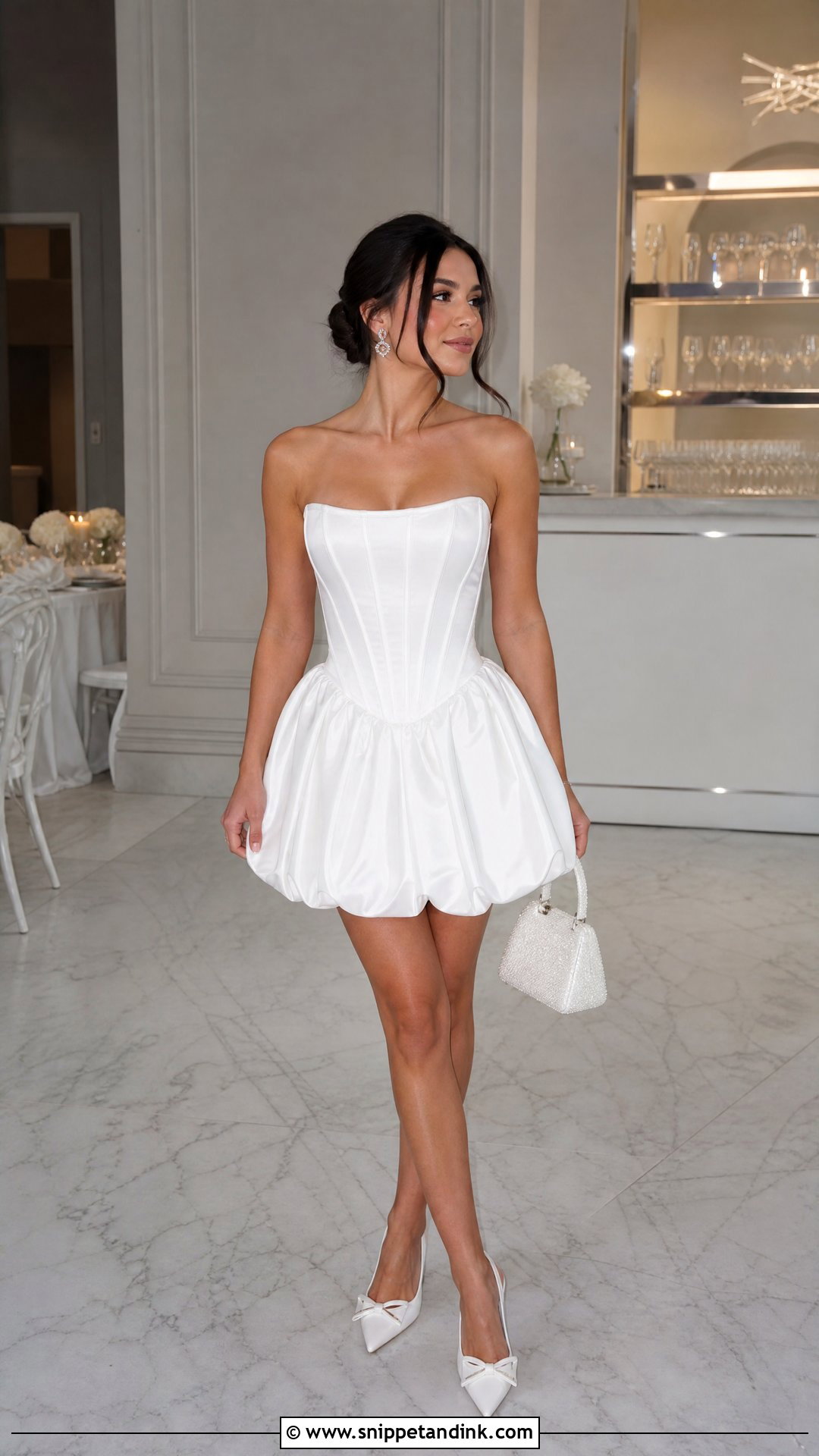
A corset top over a bubble hem reads as fashion rather than bridal, which is exactly the point of a second look for some brides. The boned bodice holds the shape while the rounded skirt bounces as you move. Fit the corset so you can breathe and eat dinner, because it will be on long after the cake. Bubble skirts are short and lift when you twirl, so I’d add fitted shorts underneath. Proportion matters too: petite brides suit a compact bubble, while taller brides look better with a slightly longer hem. Pointed slingbacks, crystal earrings and a polished bun keep hair off the boning.
7. White Halter Slip Wedding Dress
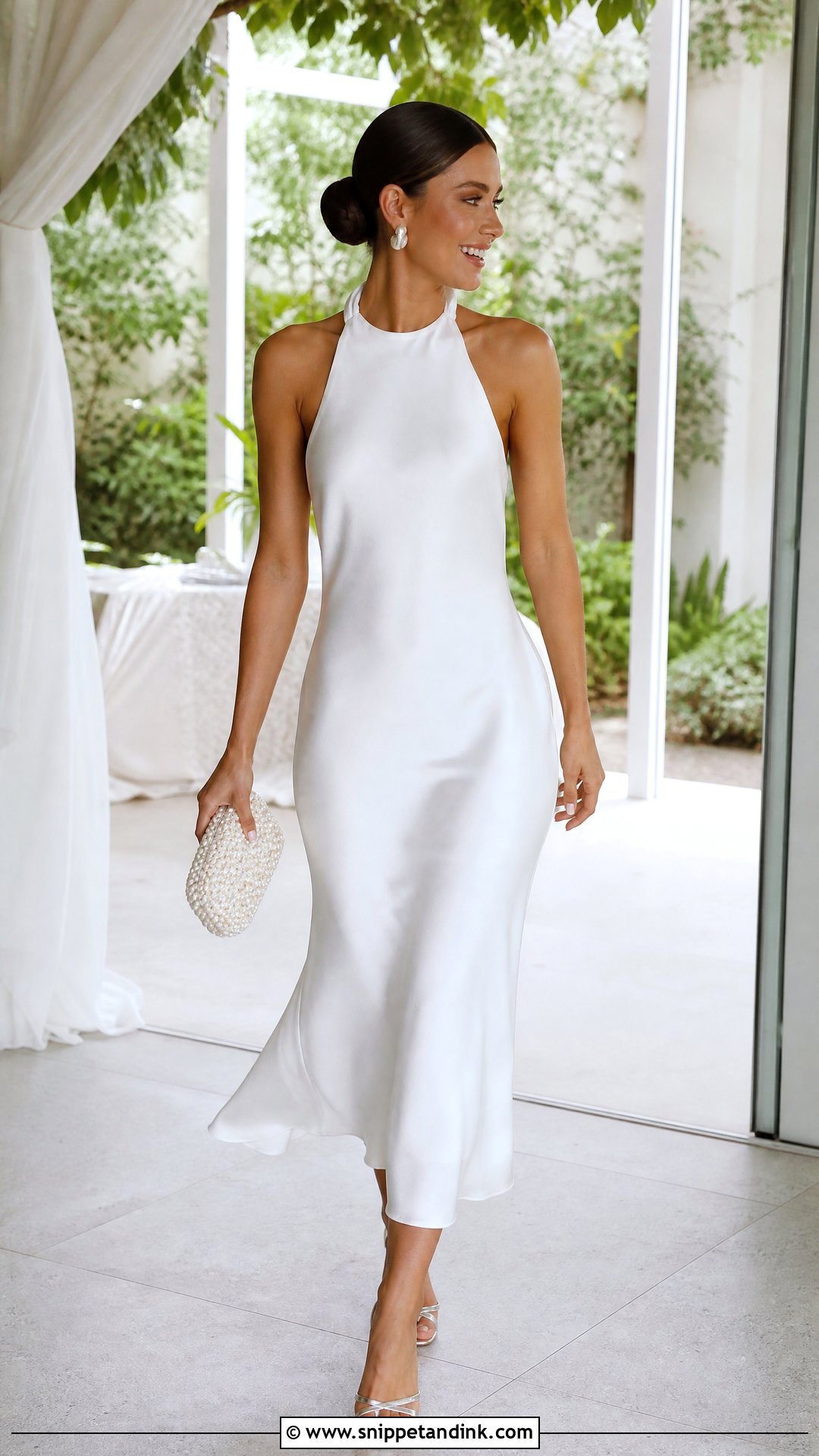
A white halter slip wedding dress is one of the most comfortable things you can change into on a warm night. Fluid fabric moves with you, and the open shoulders keep you cool. Midi feels dressier, mini more casual. Halter ties put weight on the back of the neck, and after a few hours that can turn into a headache, so I prefer adjustable ties or a button fastening. Open backs rule out most bras; adhesive support or a built-in shelf is usually the answer. A low bun suits the neckline. Metallic low heels and sculptural earrings finish it, and it contrasts well with an embellished ceremony gown.
8. White Off Shoulder Midi Wedding Dress
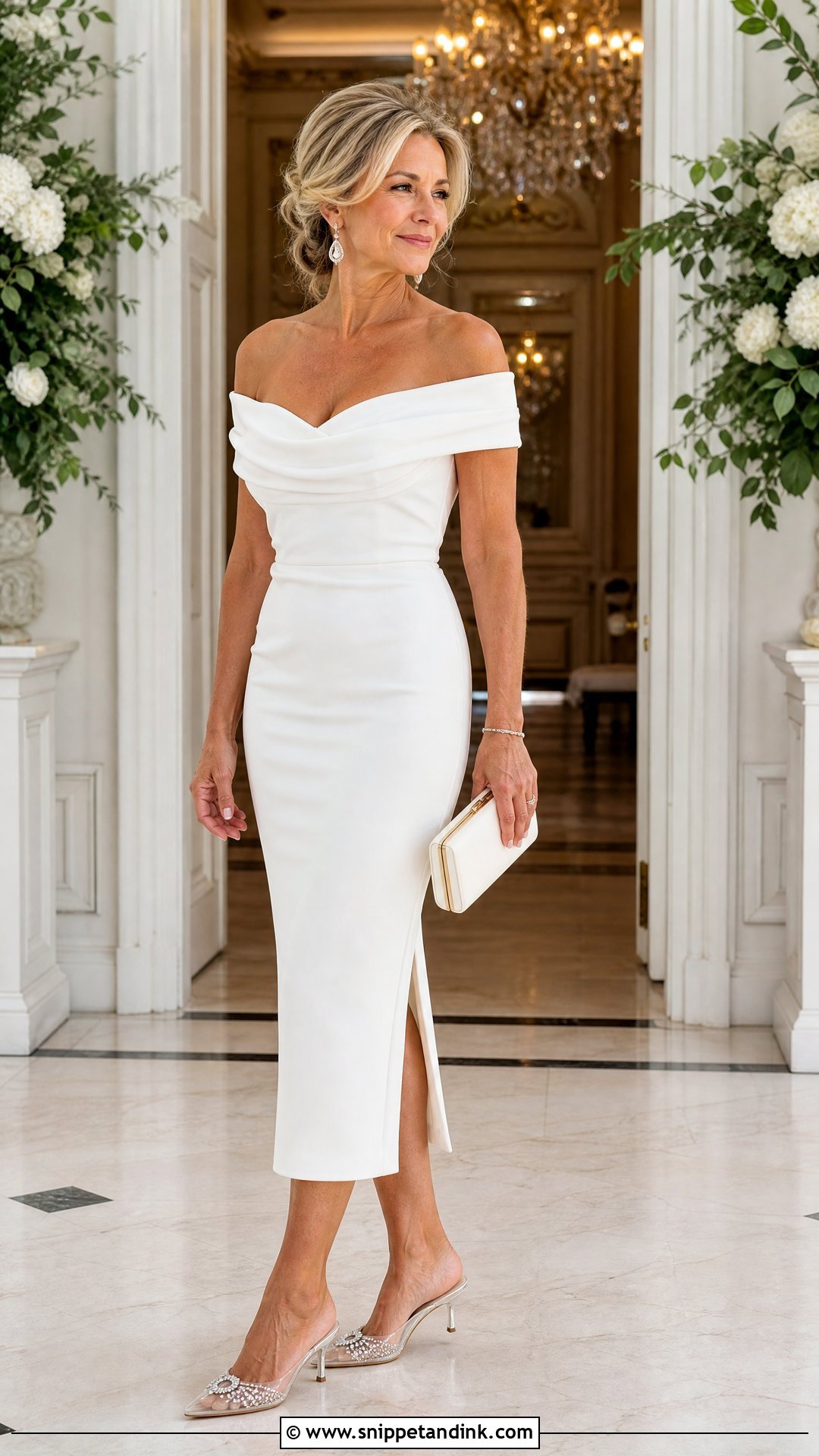
Not every bride wants a mini, and an off-shoulder midi is the middle ground I suggest for ballroom or restaurant receptions where a very short dress might feel out of place. A softly draped neckline, fitted waist and a back slit give you room to walk and dance. Off-shoulder sleeves pin your arms down when you lift them, so raise your arms over your head during the fitting; stretch fabric or an internal band helps it stay put. An updo keeps hair from catching in the neckline. Crystal kitten heels and drop earrings complete it.
9. White Blazer Mini Wedding Dress
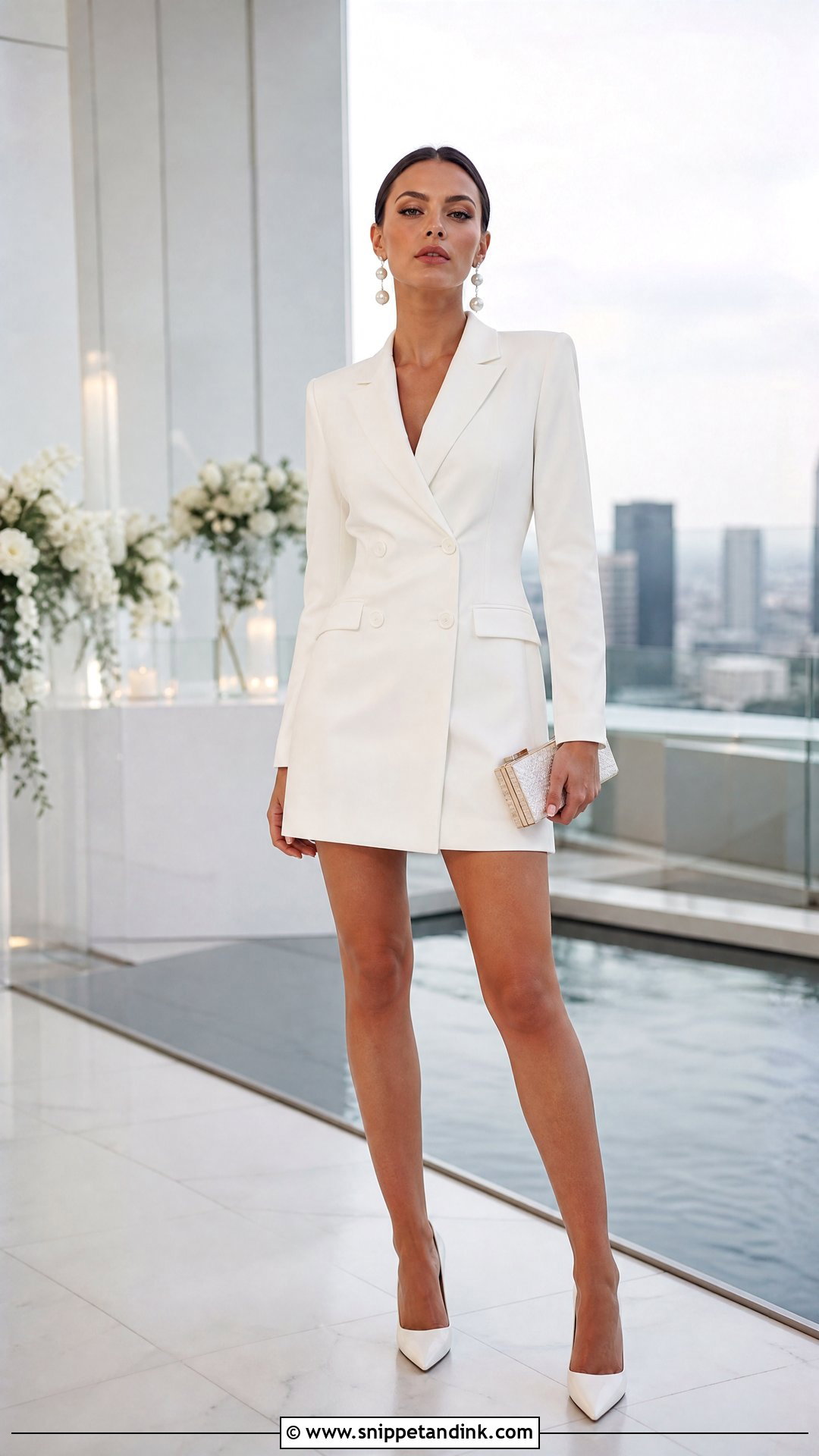
Tailoring suits a city wedding, and a white blazer mini wedding dress looks right on a rooftop or in a minimalist space where lace would feel out of context. Choose double-breasted or wrap-front styles with a defined waist and enough length to sit without worry. Shoulders are the one alteration I insist on. A blazer that’s too wide at the shoulder looks borrowed in every photo. A satin camisole or fashion tape helps if the neckline is low. Pointed pumps or embellished loafers both suit it. Keep hair sleek and makeup clean, and check the buttons lie flat when you raise your arms.
10. White One Shoulder Mini Wedding Dress
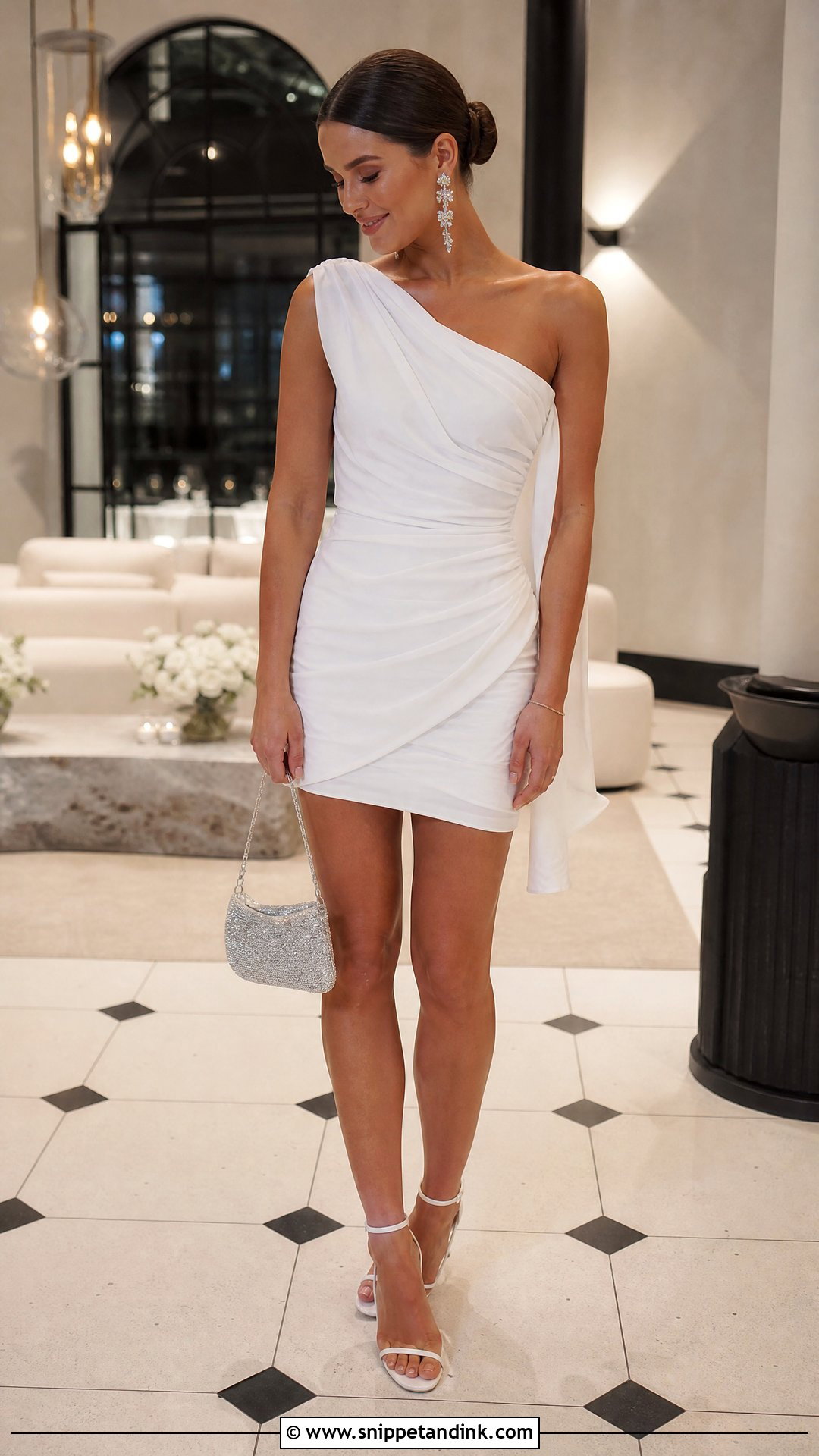
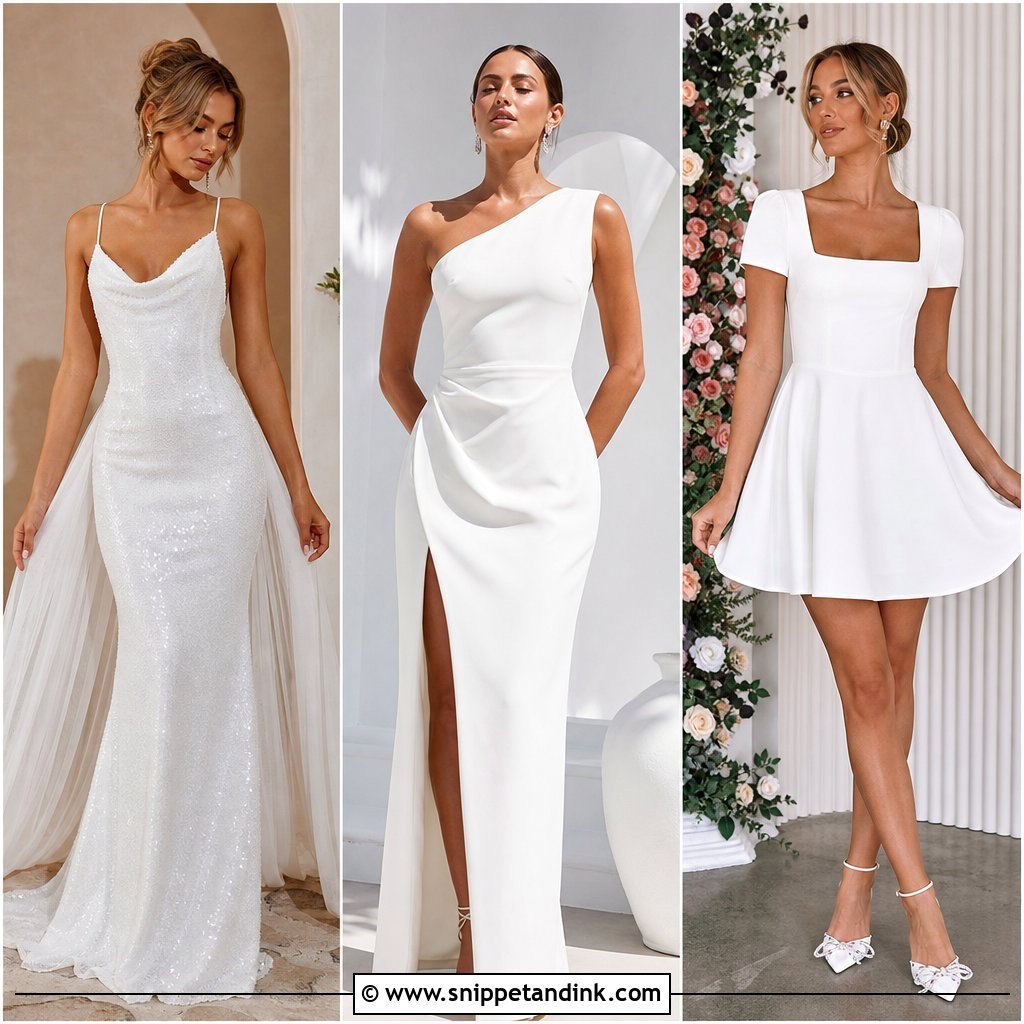
One bare shoulder gives a plain white mini enough interest that it needs very little else. A fitted sheath, a soft drape or a light A-line all work, depending on how much movement you want. I’d skip the necklace and wear statement earrings, with hair in a side bun or ponytail away from the open shoulder. Soft fabrics need internal support on one-shoulder styles, otherwise the strap side slides as you dance, so look for boning or a silicone grip inside. Strappy heels and a silver mini bag finish it. It suits a bride who wants one clear detail instead of lace or beading.
11. White Ruffle Mini Wedding Dress
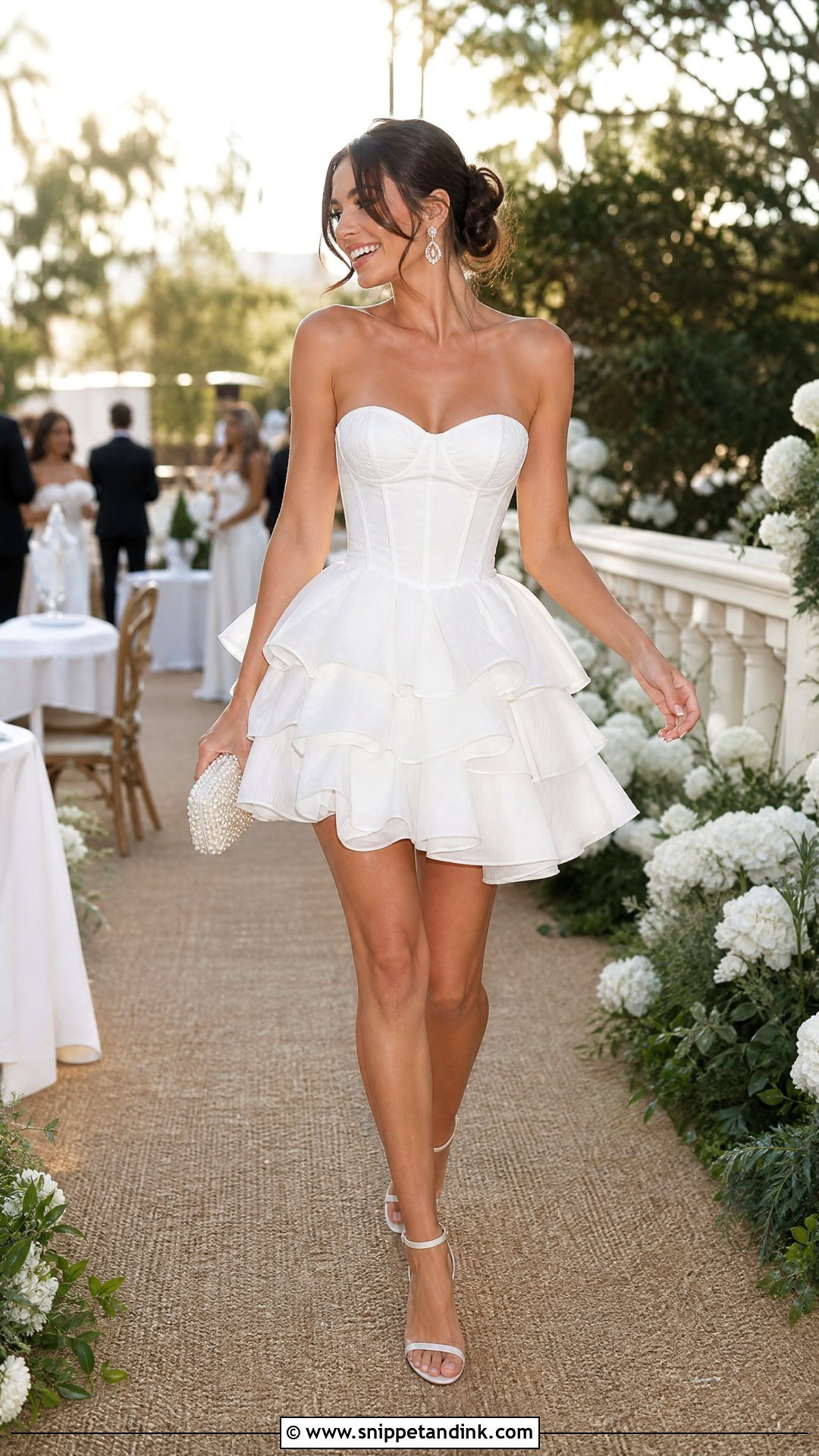
Ruffles need placing. Around the skirt, the neckline or the sleeves, they add movement; across every part of the dress, they add volume and hide your shape. A fitted or corseted bodice keeps tiered skirts in proportion. Curvier brides often prefer a clear waist with controlled ruffles at the hem, while straighter figures can use layers to add shape. Test the fabric by sitting on it for a few minutes. Good ruffles spring back, cheap ones flatten and stay flat for the rest of the night. Slim ankle-strap sandals, a pearl clutch and small crystal earrings complete it.
12. White Crystal Mesh Wedding Dress
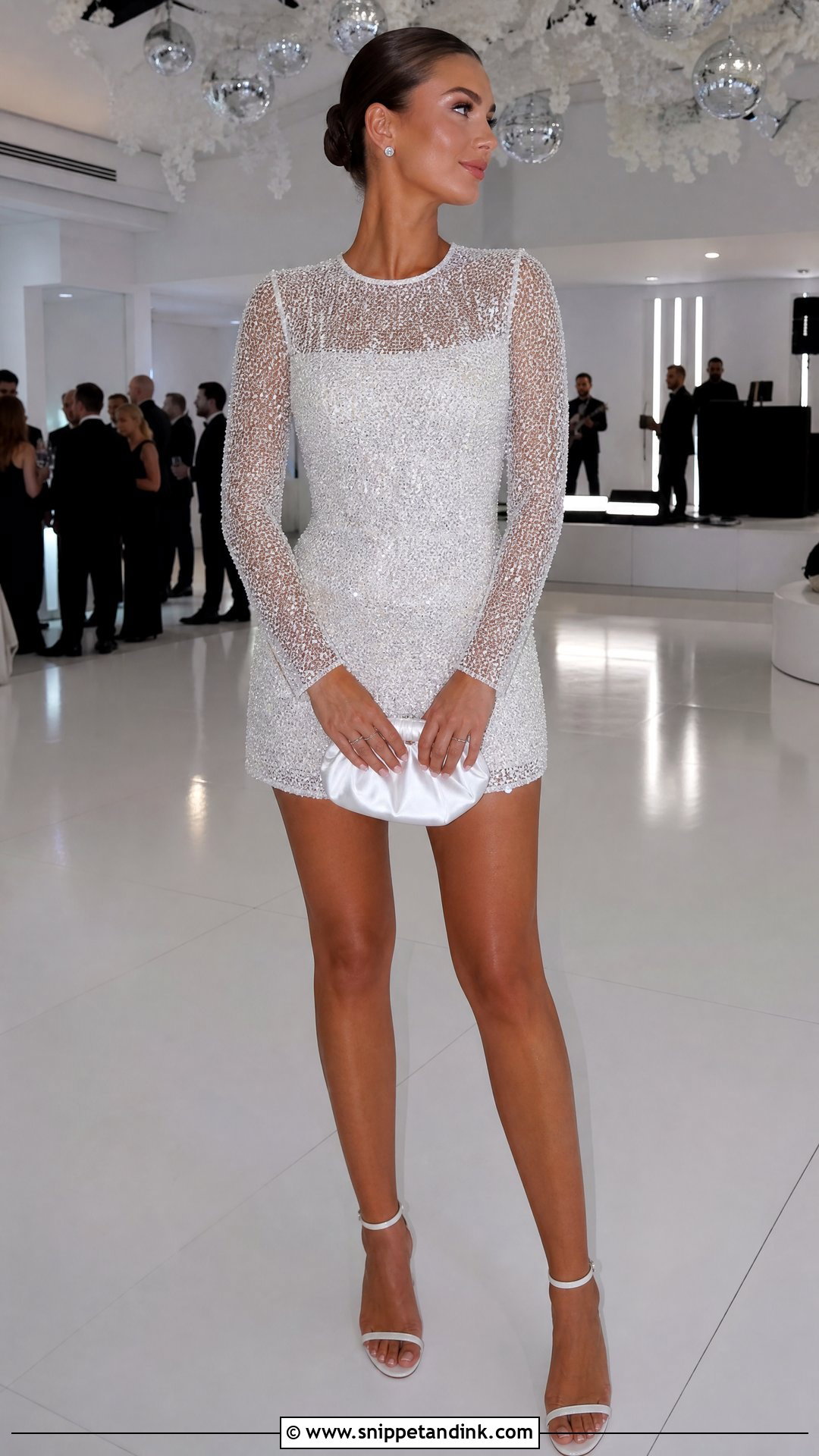
Crystal mesh sparkles more than any other fabric in this list, and it’s light to wear. The lining is what matters most. Mesh that looks opaque in person can turn see-through under a camera flash, so check photos taken with flash during your fitting, and make sure the lining covers what you want covered. Keep accessories quiet: minimal heels, a satin clutch, stud earrings, sleek hair. Run your fingers over the inside of the sleeves and the bodice edges. Rough crystal settings snag hair, jewelry and your partner’s jacket. It’s a dress for evening receptions with strong party lighting, where the crystals throw light as you move.
13. White Square Neck Fit And Flare Wedding Dress
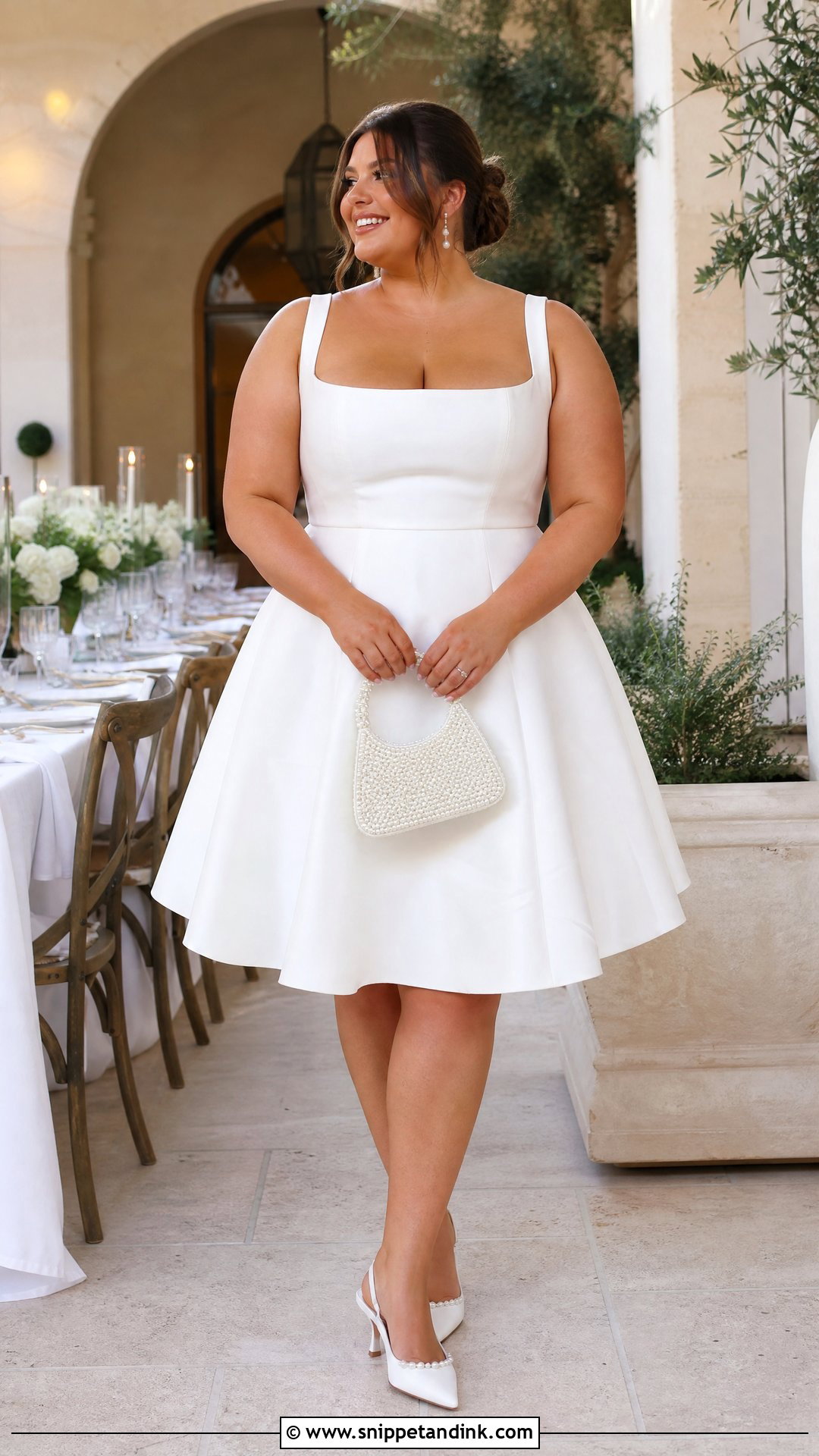
If you want a second dress that still looks bridal but doesn’t look like a shortened ceremony gown, a square-neck fit and flare is the safe choice. The neckline frames the collarbone, the fitted waist gives shape, and the flared skirt lets you walk and dance. Mini or knee length depends on the venue. Fuller busts need wider straps and proper internal structure, as the square neck can gape otherwise. A slim satin belt in the same white can add definition. Pearl slingbacks, a small top-handle bag, drop earrings and soft waves or a low bun suit it at almost any reception.
14. White Backless Column Wedding Dress
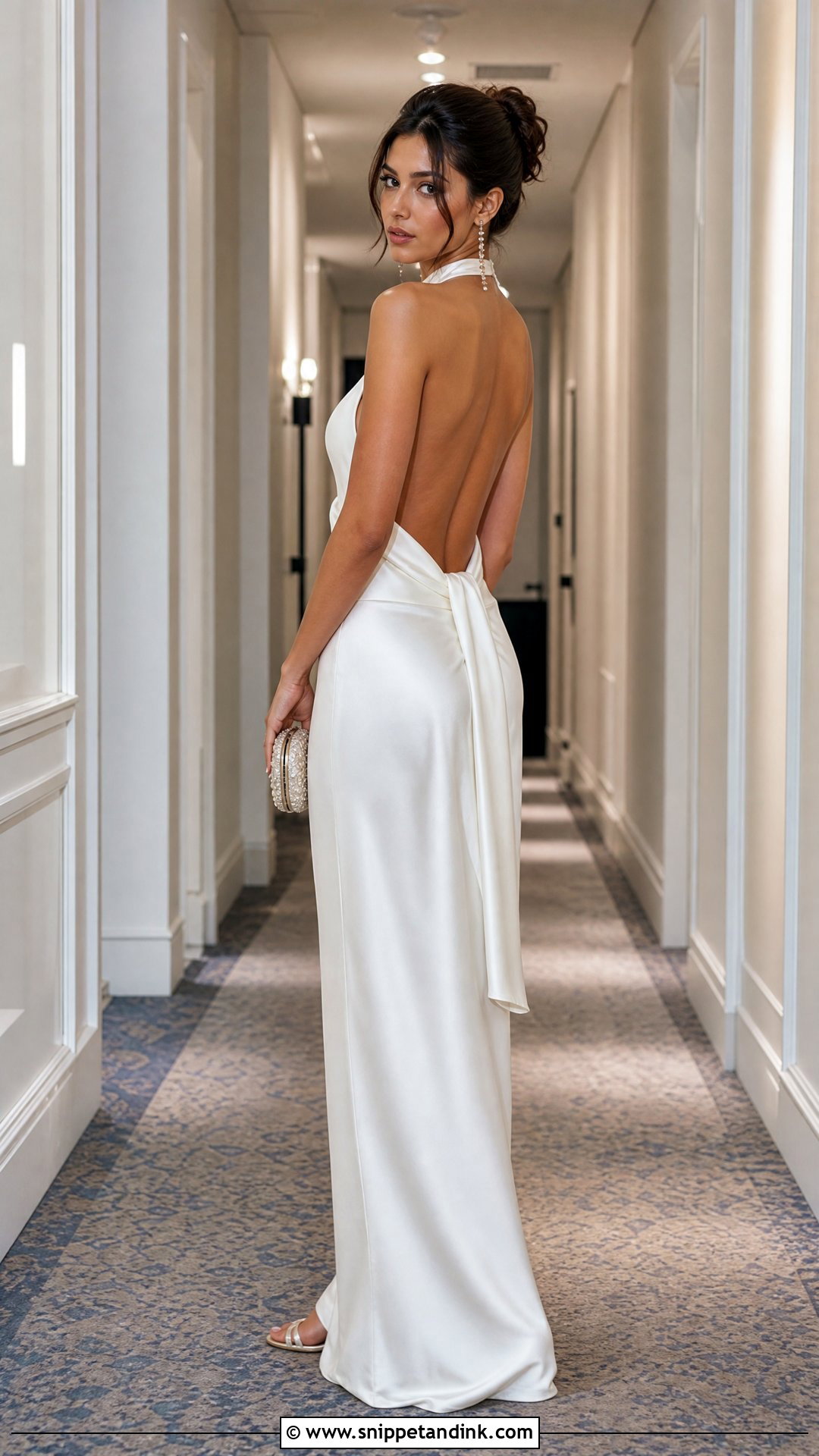
Changing out of a big gown doesn’t have to mean going short. A backless column in crepe, satin or jersey keeps a long hem with a slim, floor-skimming line, and it walks far more easily than a ball gown. Bra support is the first thing to sort with a backless style; talk to your seamstress about built-in cups or adhesive options before the final fitting. A short train looks good in photos, but a floor-length hem is safer for dancing. Low metallic sandals, long earrings and a neat updo that shows off the back complete it. It feels grown-up and distinctly different from a traditional gown.
15. White Tulle Tea Length Wedding Dress
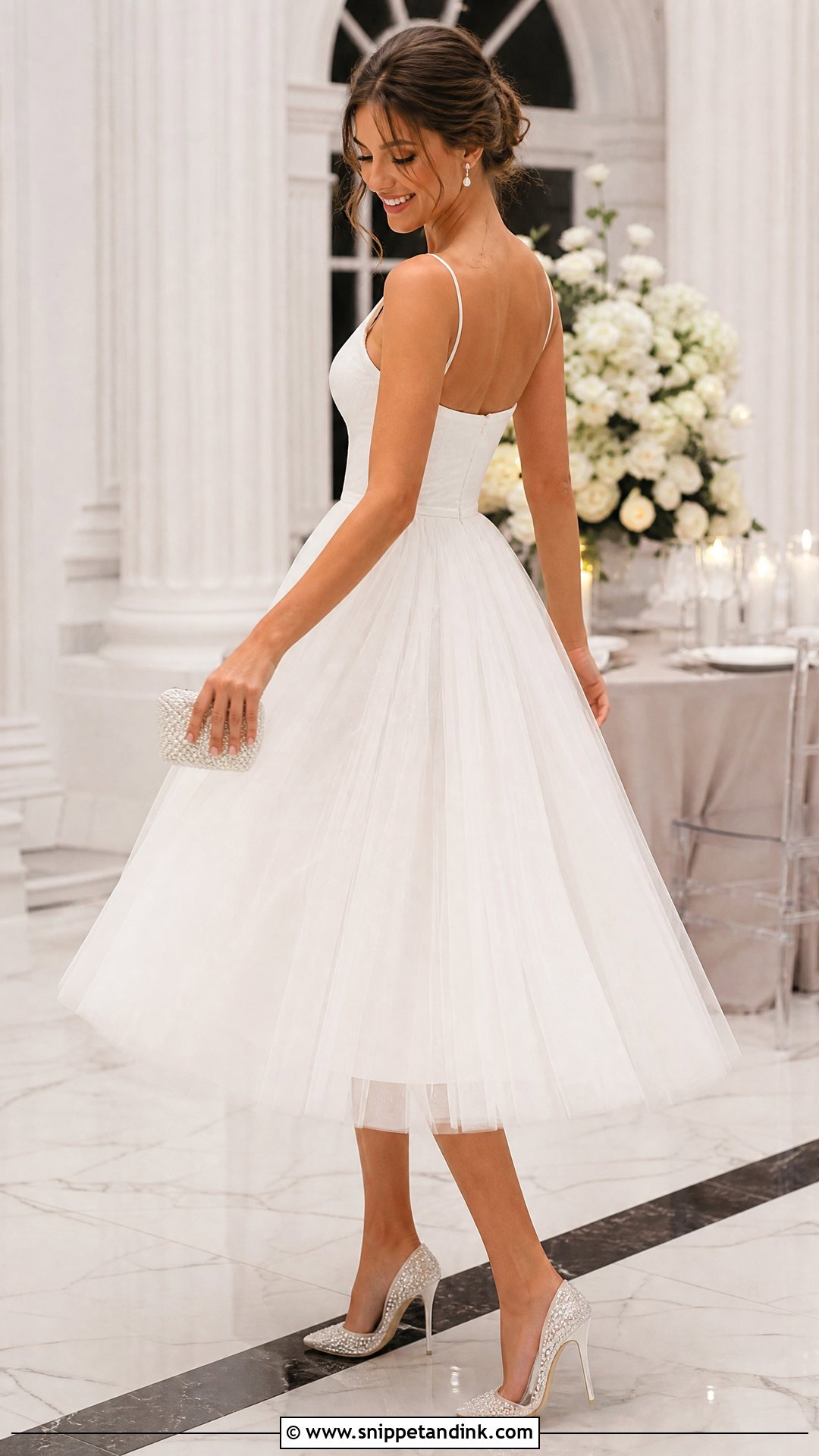
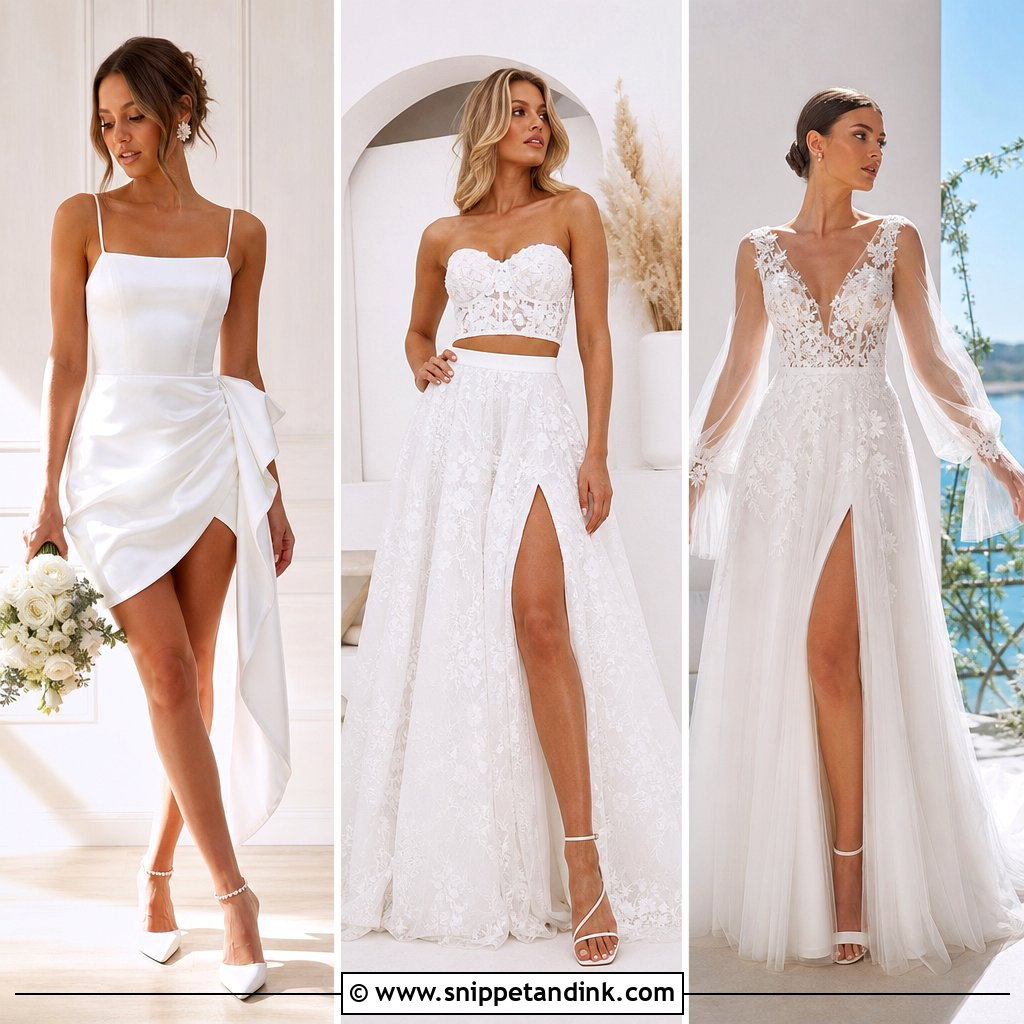
Tea-length tulle gives you bridal volume in a skirt you can actually move in. The fitted bodice and layered skirt stop around mid-calf, so your shoes become part of the look: crystal pumps, pearl sandals or sleek satin heels. Tulle quality varies more than people expect. Stiff, cheap tulle scratches bare legs and grabs at chairs, while soft bridal tulle drapes and twirls well in photos. Rub it against your shin in the shop. A defined waist helps the skirt look intentional on any figure. A small clutch and short drop earrings keep it balanced.
16. White Drop Waist Mini Wedding Dress
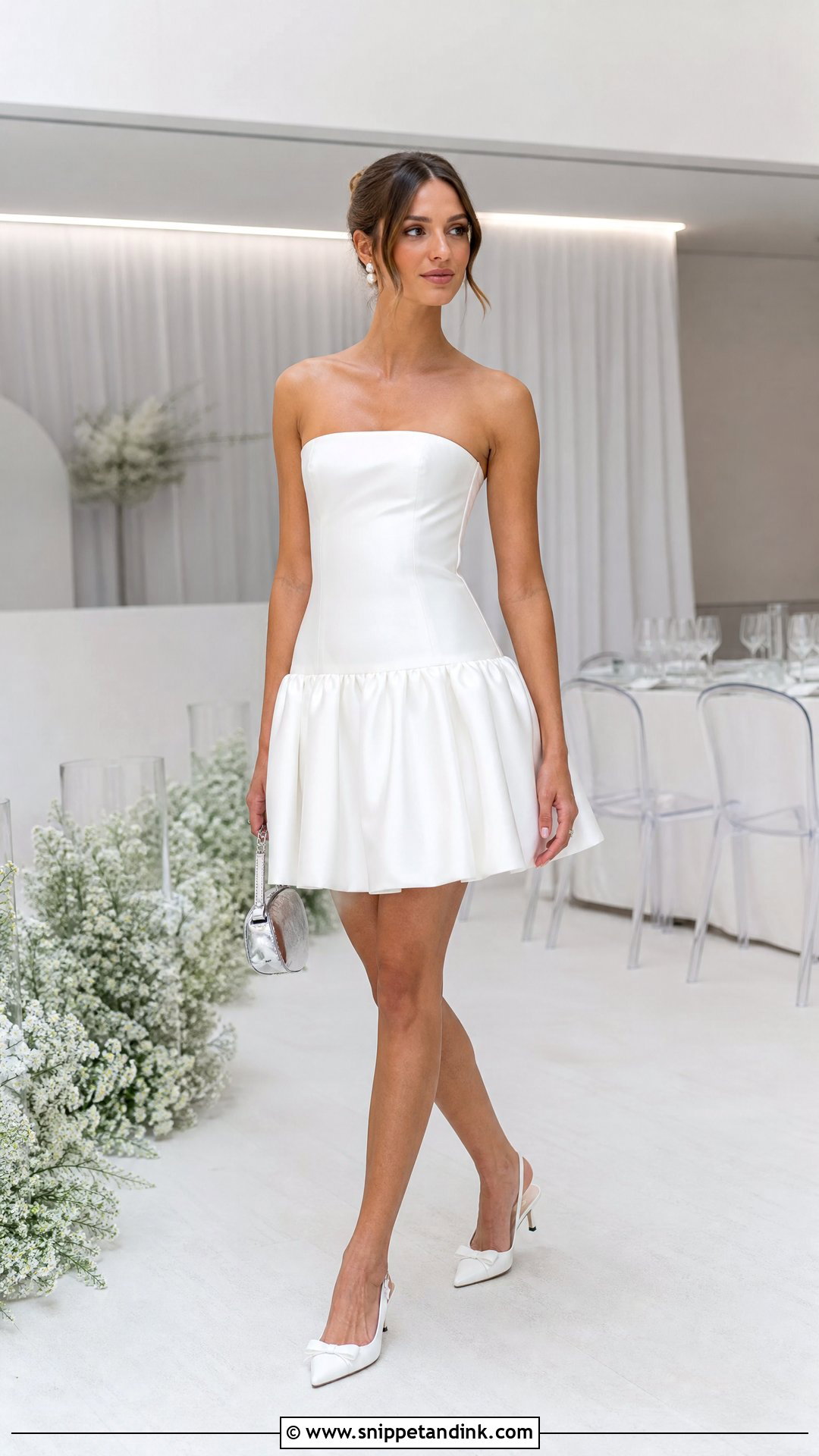
A drop waist lengthens the torso before the skirt flares out short, and in satin or taffeta it nods to classic bridal shapes while still feeling current. Seam placement is everything with this cut, so try several versions. A slightly raised drop waist tends to suit petite brides, and a longer bodice suits taller ones. Check the skirt has enough room to dance in. Pointed kitten heels, a compact silver bag and medium pearl earrings fit the structured lines, as does smooth hair. It makes a strong contrast after a soft, romantic ceremony gown.
17. White Strapless Embellished Wedding Dress
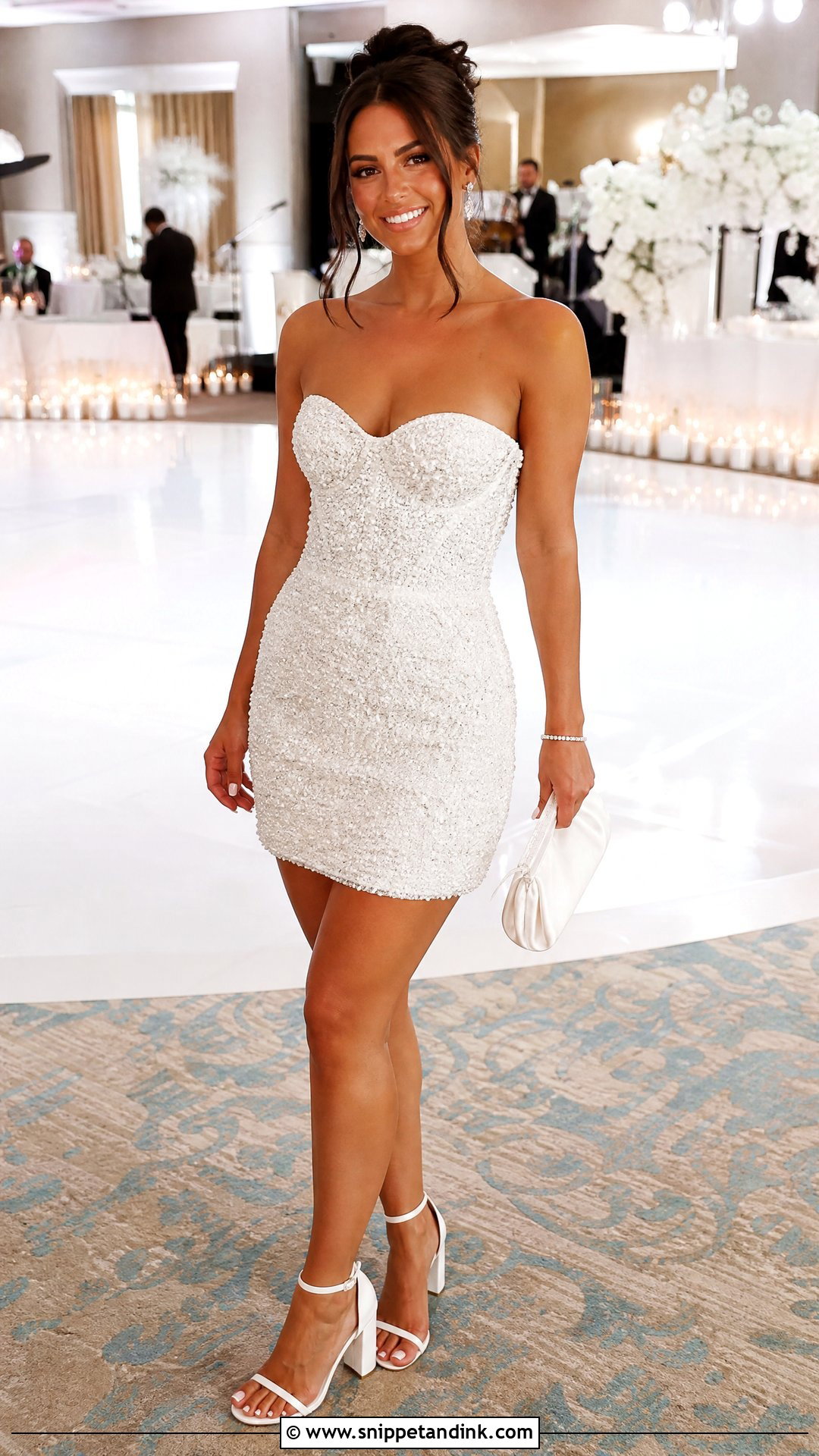
Strapless and embellished is the most classically bridal of the party looks. Sequins, crystals, pearls or floral appliques on a fitted mini or midi bring shine. A strapless bodice only works with proper internal boning and an exact fit, otherwise you’ll spend the night pulling it up. At alterations, sit, raise your arms and dance; any slipping will show then. A lightly flared skirt gives more freedom than a tight sheath. Block-heel sandals, a small satin clutch and a fine tennis bracelet suit it. Wear hair up or behind the shoulders to show the bodice.
18. White Bow Back Mini Wedding Dress
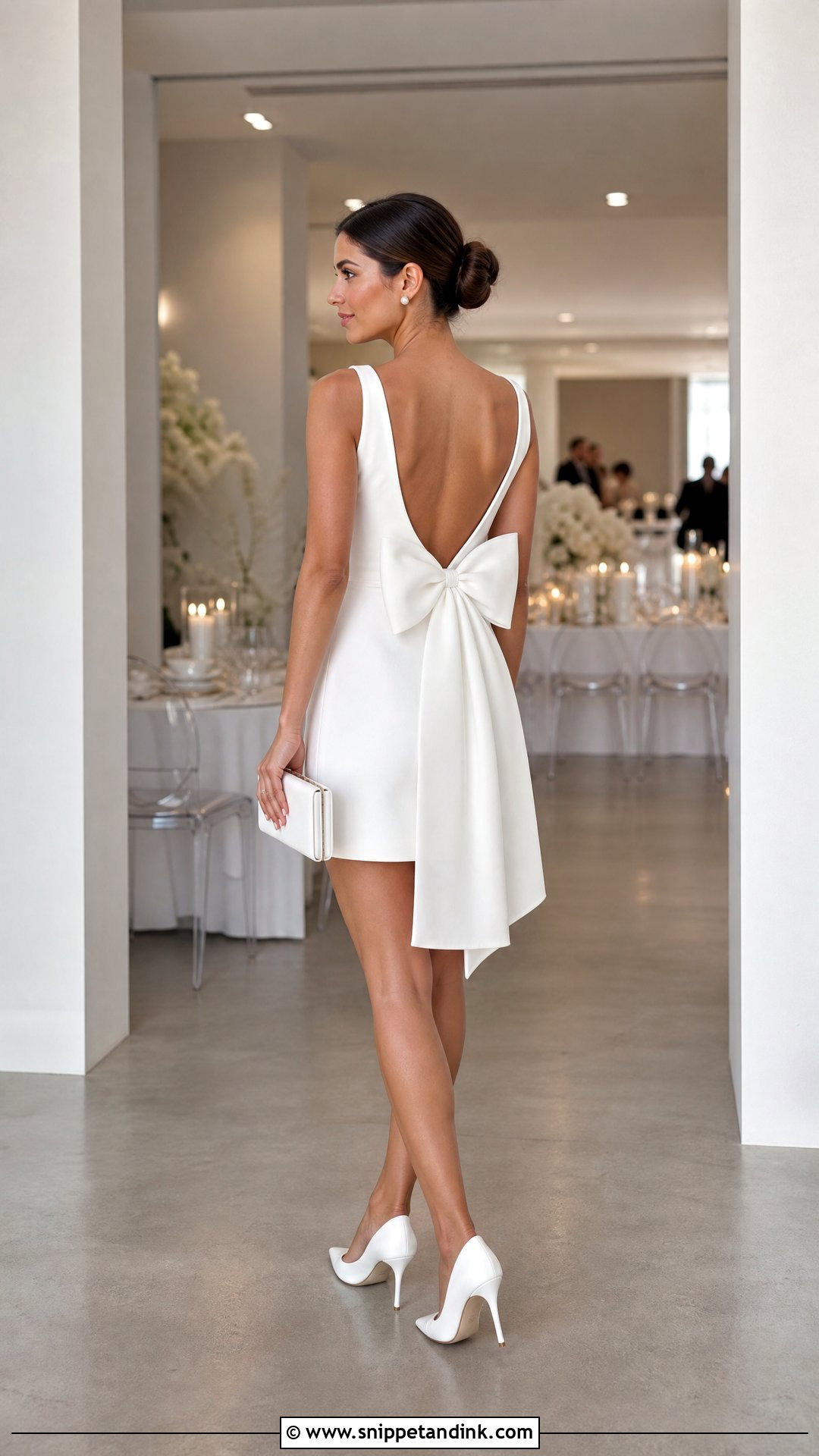
Your back is on show during entrances, first dances and every candid from across the room, so a bow back makes sense. A structured mini with one bow at the waist, shoulders or lower back is enough; keep the front plain. Heavy bows can drag the back of a dress down, and a bow at the lower back is uncomfortable to sit on, so check placement in a chair. Detachable bows give you an option for later in the night. White pumps, pearl studs, a clean clutch and a high ponytail or bun keep the bow visible. It’s a memorable second outfit without needing beading, fringe or colour.
19. White High Low Wedding Dress
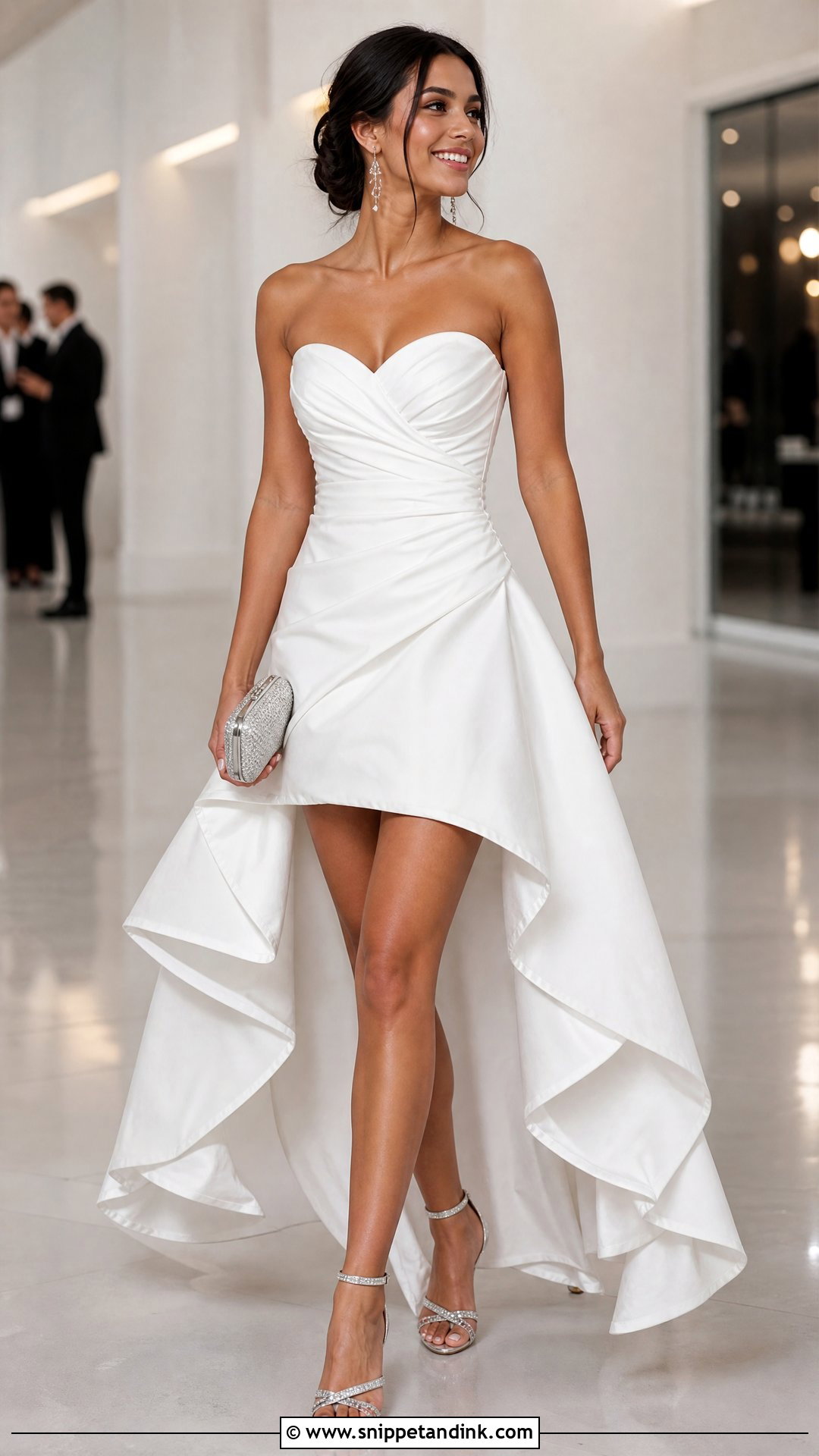
High-low gives you the freedom of a short front with the drama of a longer back. The front should fall above the knee and the back to the ankle or floor, with a gentle curve between them; a sharp step looks unfinished. Structured satin holds a bold shape, while chiffon floats. Keep the train light and short, as a guest stepping on it mid-dance can rip a seam. Crystal heels show at the front, so choose them with care, and pair them with long earrings and a small metallic clutch. It suits brides who want a real change but don’t want to lose a long hem entirely.
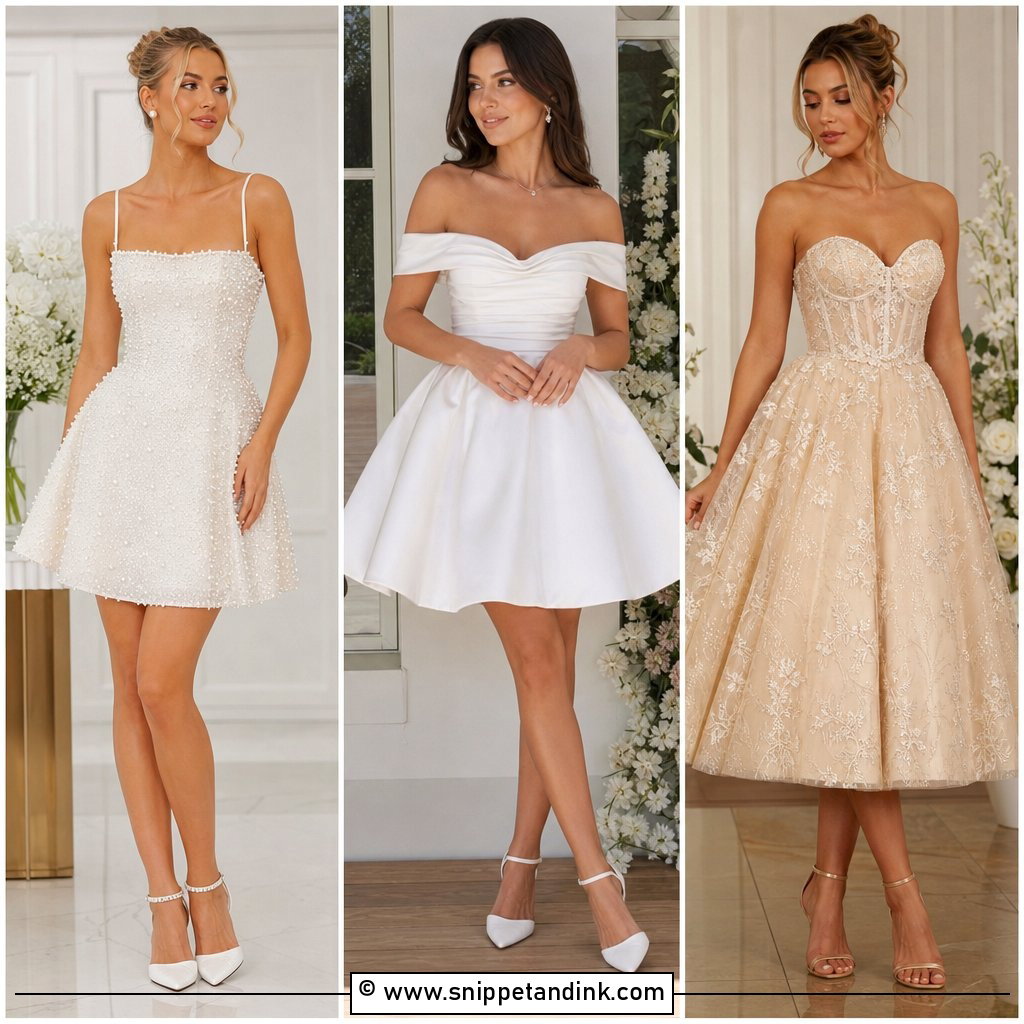
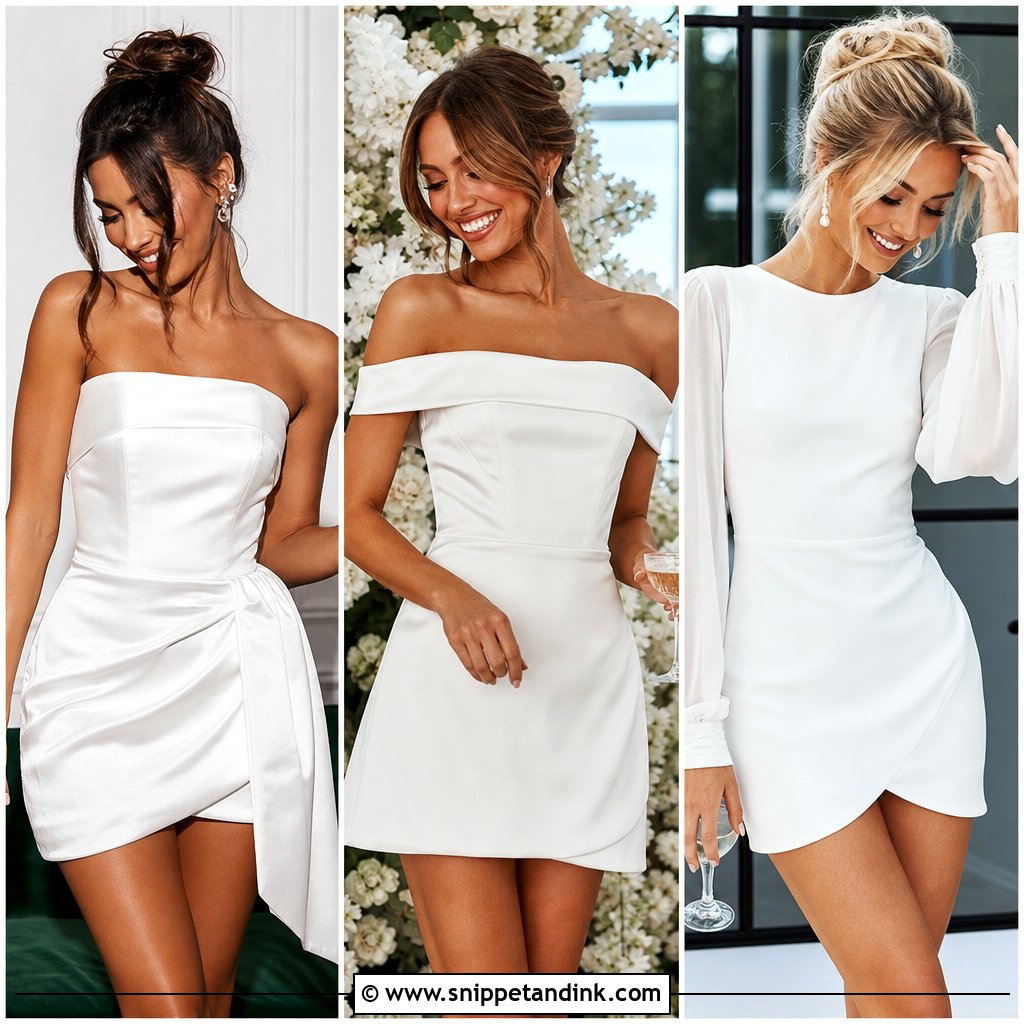
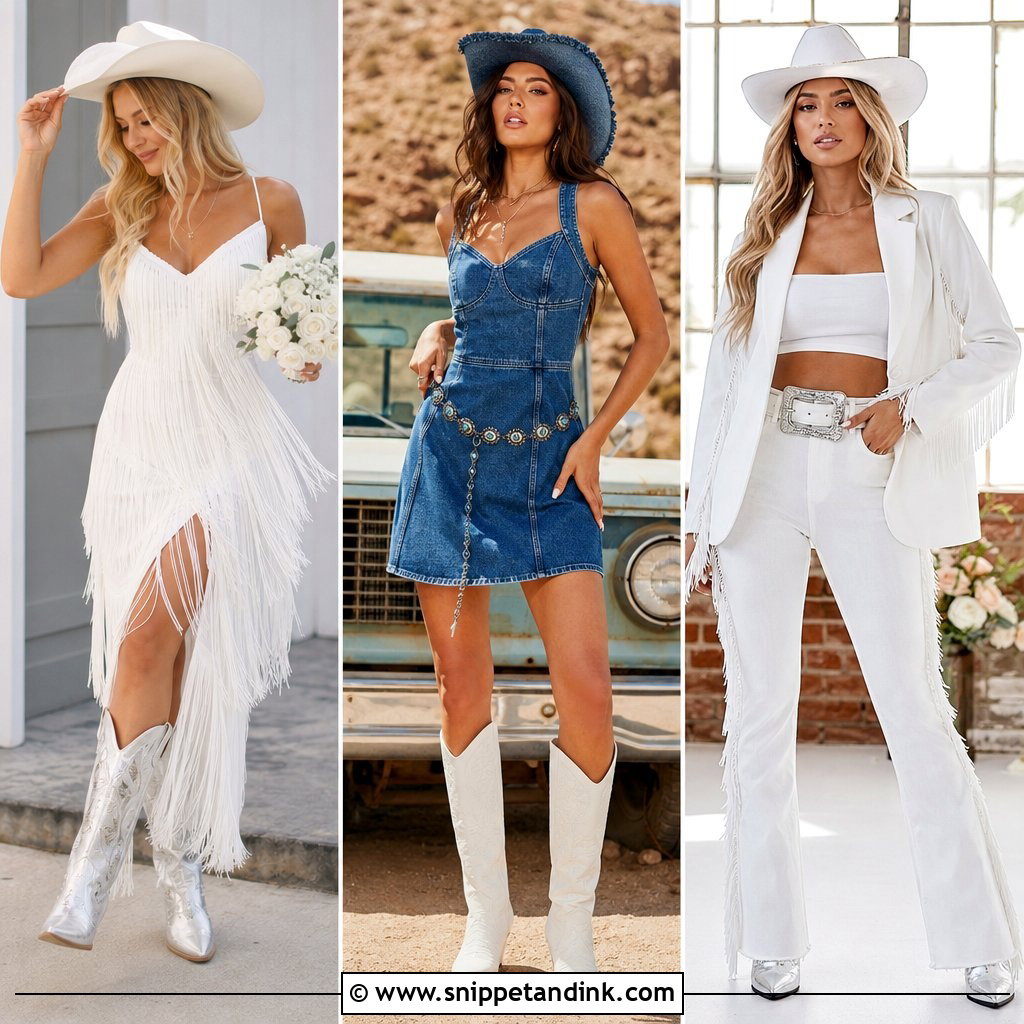
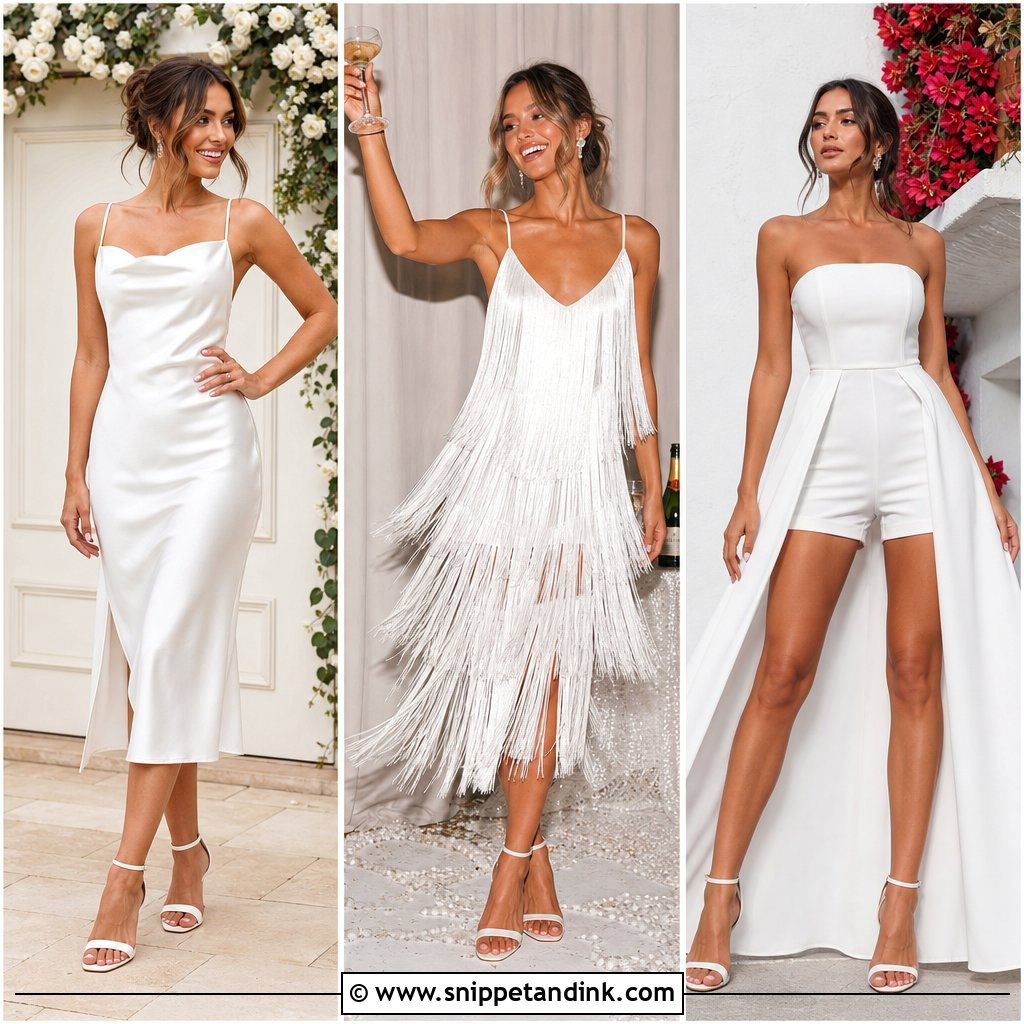
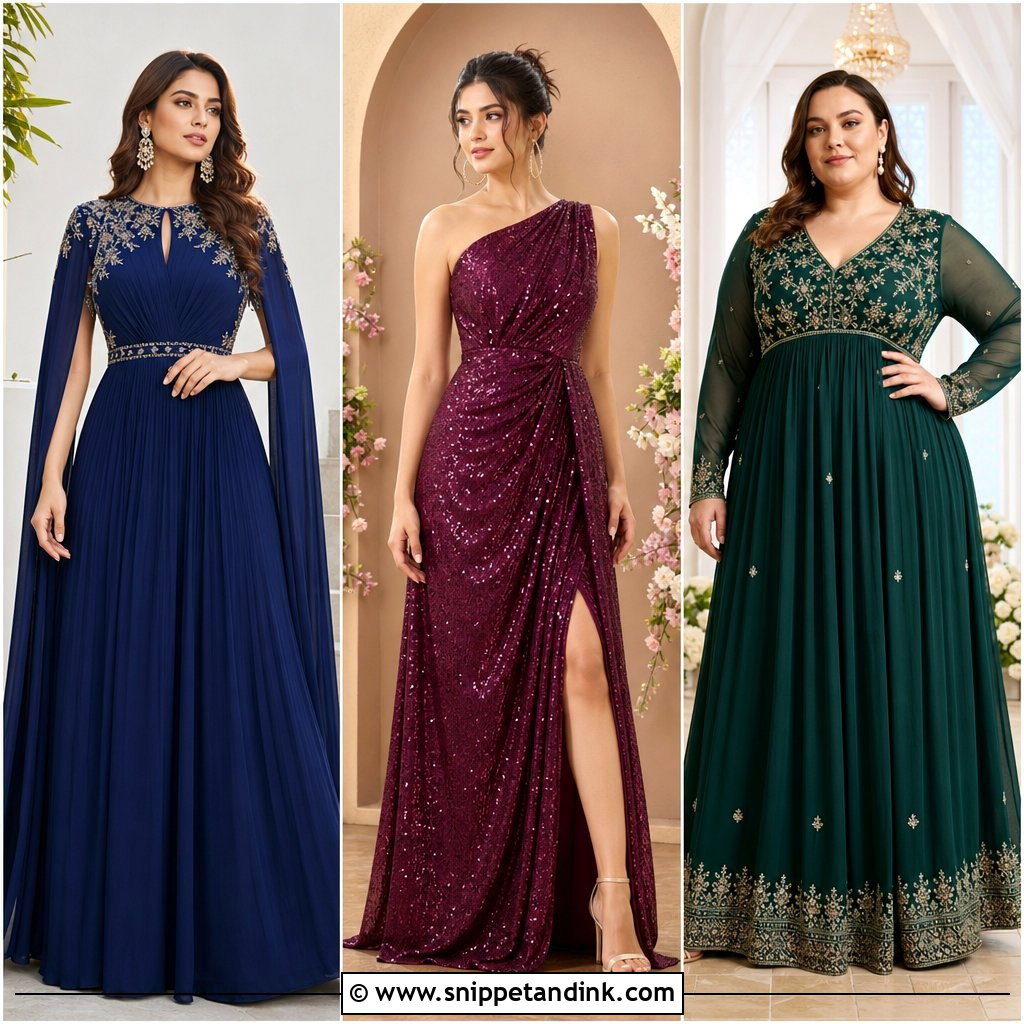
20. White Convertible Wedding Dress
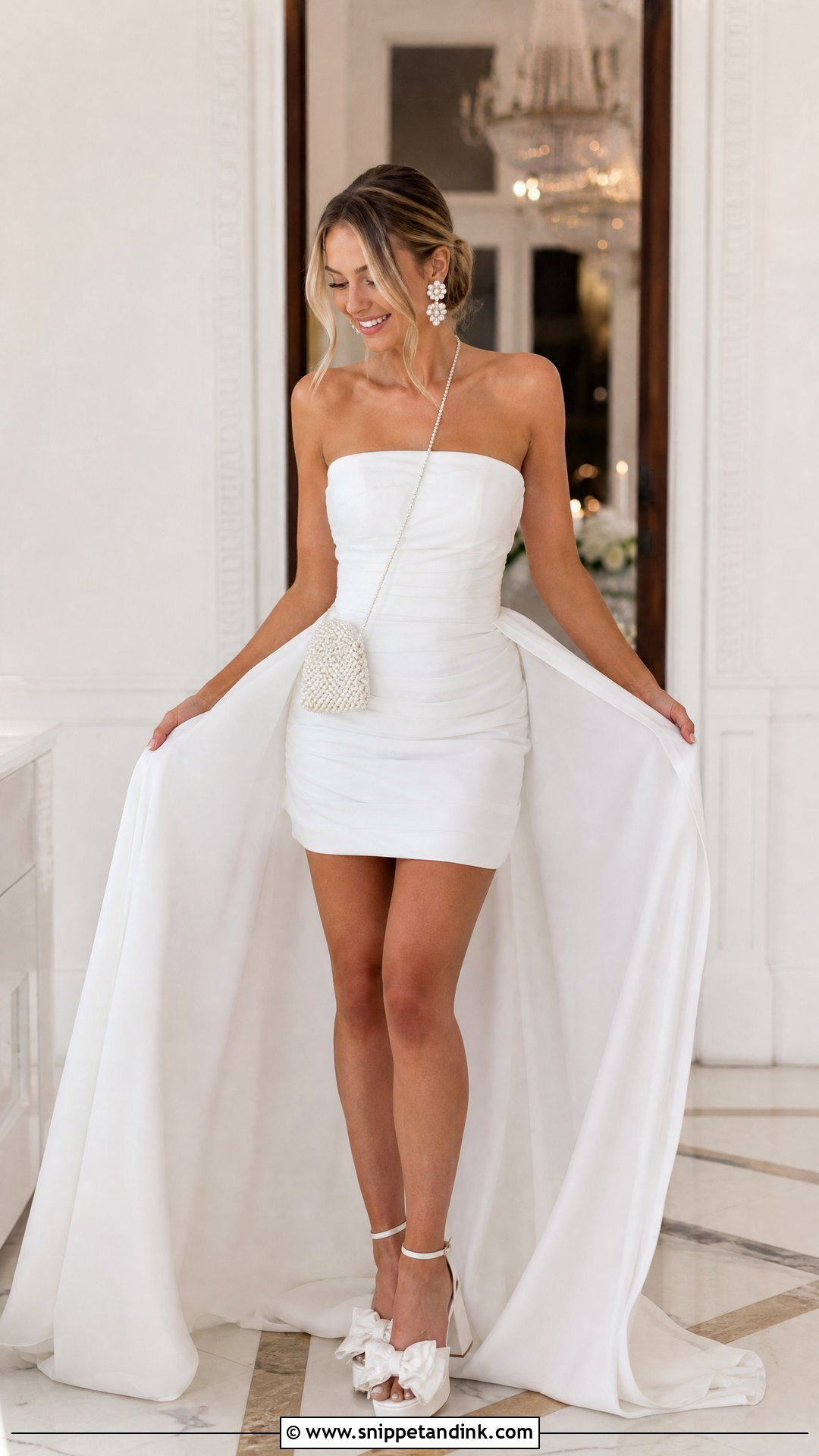
Convertible dresses make the change quick: a fitted mini or midi base with a removable overskirt, sleeves, cape or bow. Take off the top layer after the formal moments and you’re ready to dance. I’d practise removing each piece at home, twice, with whoever will help you on the night, and give one person the job of storing the pieces safely. Hidden fastenings should be secure but reachable. The base dress needs to look finished by itself, not like a slip. Comfortable block heels and a hands-free bag suit the second half of the night. It saves time, money and a full outfit change.
Ivory, Optic White and the Fake-Tan Problem
White is not one colour. Ceremony gowns are often ivory, soft white or champagne, while many ready-to-wear party dresses are a bright, cool optic white. Worn on the same day, the second dress can make the gown look yellow in photos, or the gown can make the party dress look stark. I’d bring a fabric swatch or a photo of your gown when you shop, and check the two side by side in daylight.
White also shows everything you put on your skin. Self-tan and some body shimmers rub onto necklines, underarms and the inside of straps, especially once you start dancing. If you’re tanning, do it a few days ahead and rinse well, set foundation along the jaw and neck with powder, and keep a stain pen and a pack of plain makeup wipes in the change bag.
Buying in good time
Many after-party dresses come from ready-to-wear ranges, not bridal shops, so they’re usually quicker to get. Even so, I’d buy a couple of months ahead to leave time for a small alteration and for returns if the white or the fit isn’t right. Wear it at home for an hour with your party shoes before you remove the tags.
A Second Entrance That Feels Like You
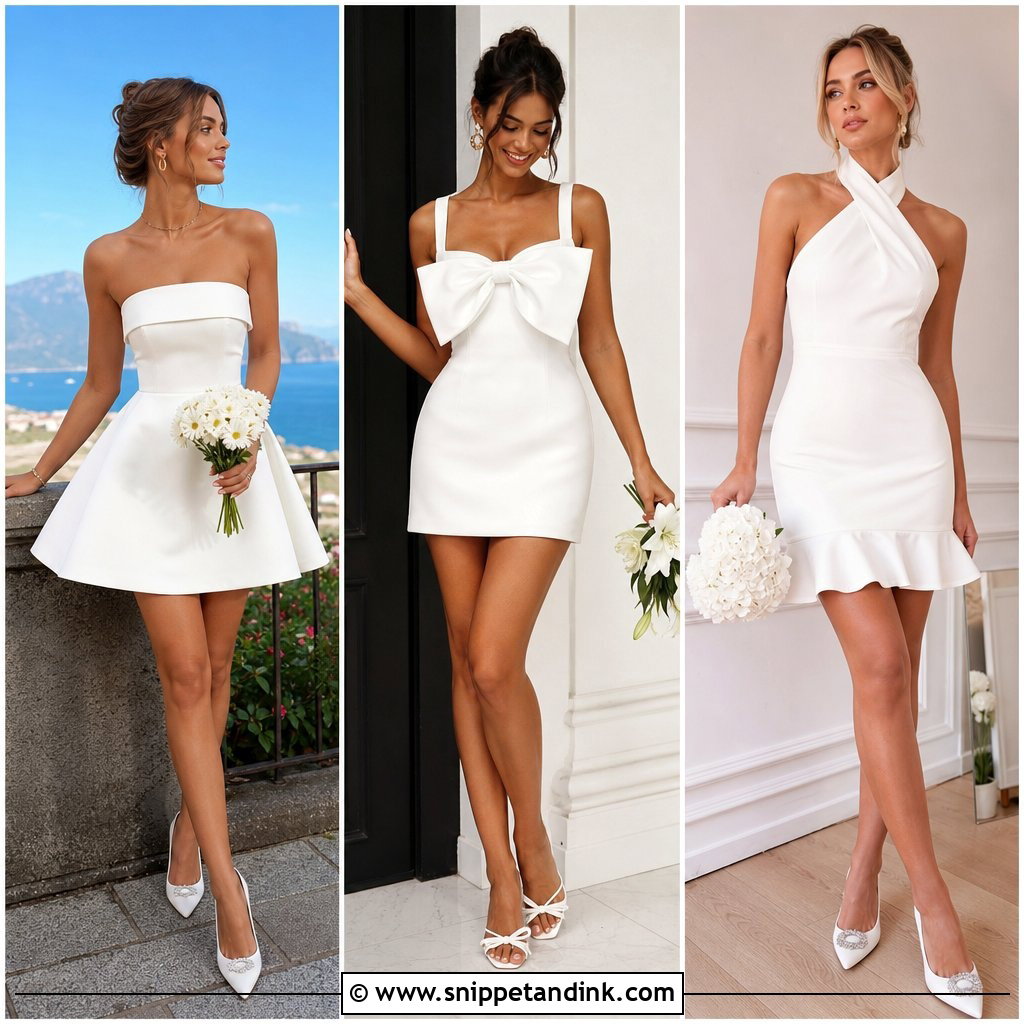
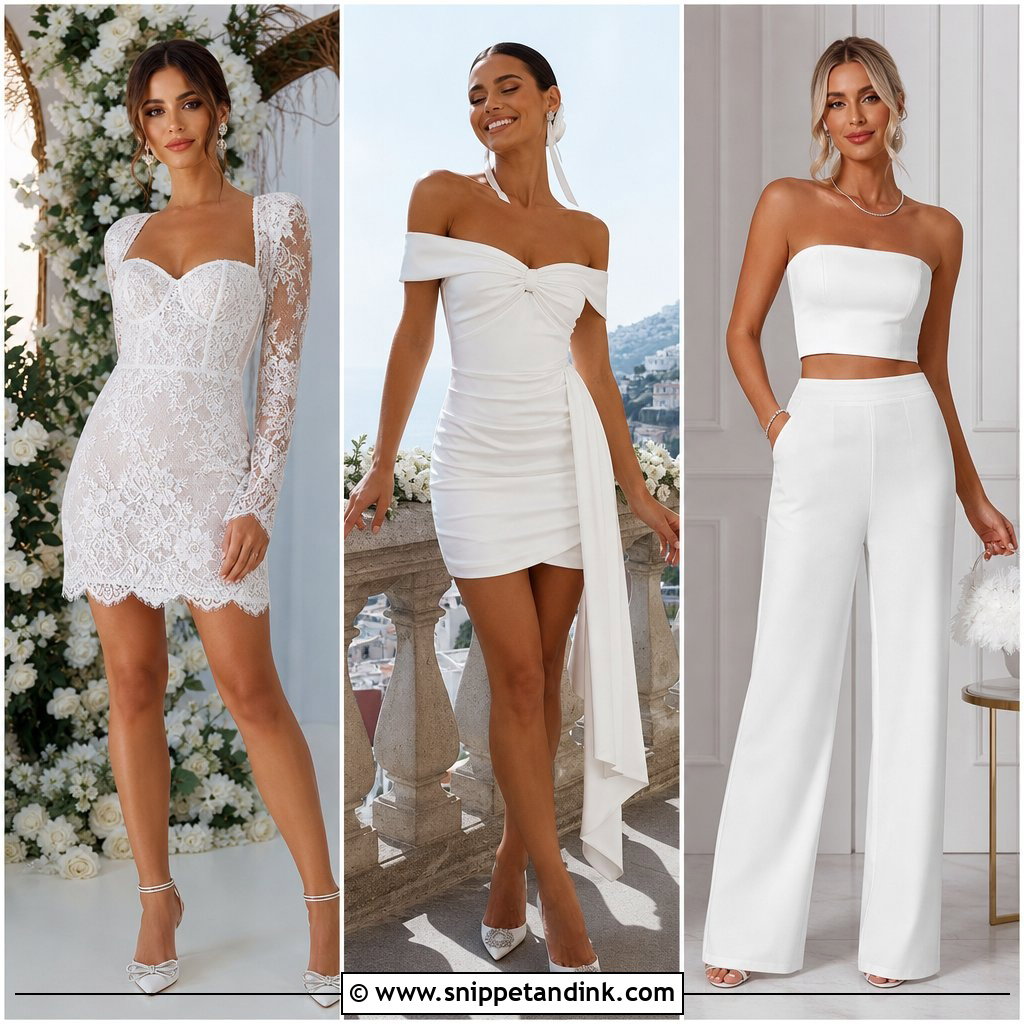
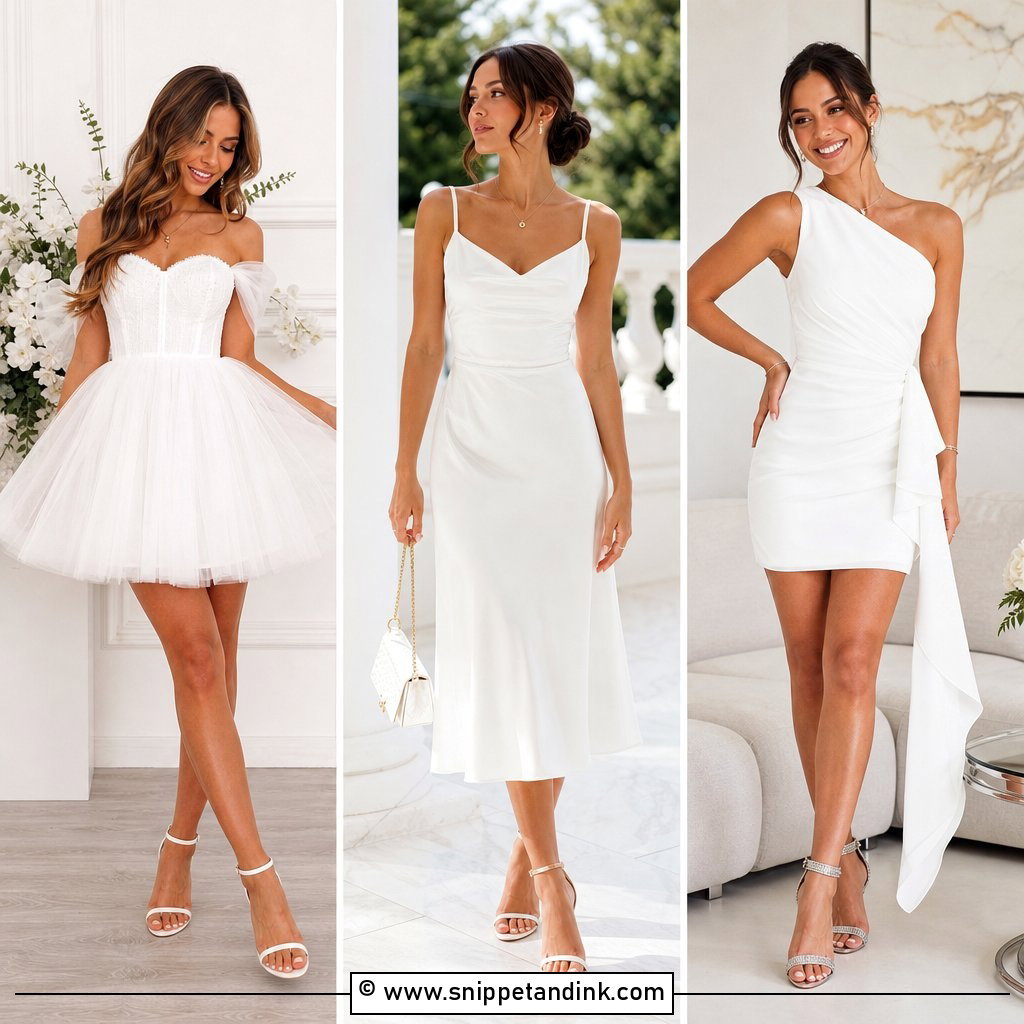
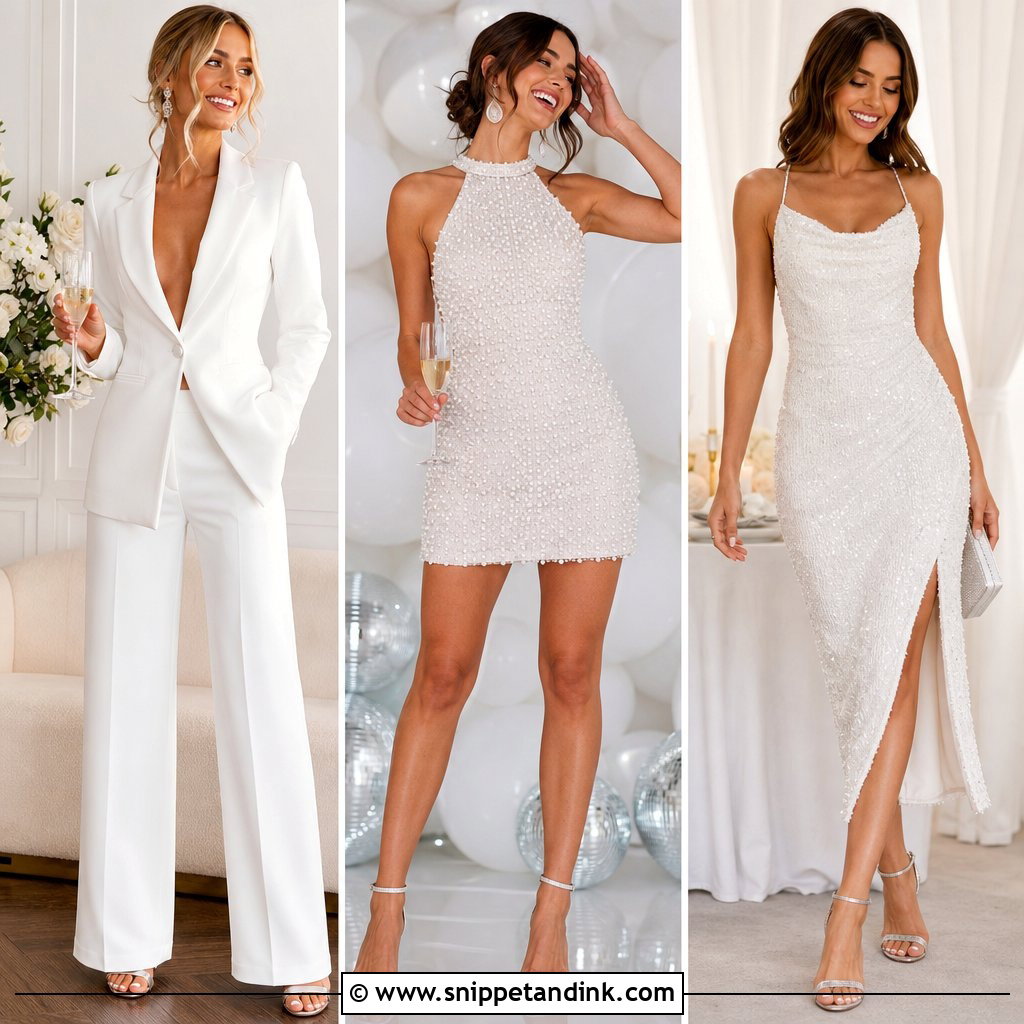
A good second look lets you celebrate in comfort and still look like the bride. The dresses above range from sleek minis and lace to sparkle, tailoring and longer hems with more coverage. Think about your venue, the weather, where you’ll change and how much dancing you’ll do. Try the full outfit with your actual shoes, underwear, jewelry and hair, not just the dress on a hanger. Then pick something that shows a different side of you. Feathers, satin, pearls or a clean blazer: the right white dress makes the second entrance as memorable as the first.
You'll Like These Ideas:


Leave a Reply