
Most of the makeup I do for weddings is quieter than people expect. The faces that still look right at the end of the night usually have thin layers of base, blush with some real color in it, and eyes defined just enough to read from the back row. Heavy formulas tend to crack around the mouth by dinner. Below are twenty soft looks I’d happily put on a bride, a bridesmaid or a guest, with notes on what each one needs from your skin and where it tends to go wrong.

Your Skin Type Picks the Base Before You Pick a Color
Every look below starts with a base, and the base should be chosen for your skin rather than your mood board. I sort that out before we talk about eyeshadow at all.
- Oily skin: a mattifying primer on the T-zone only, a long-wear foundation, and powder pressed in with a puff instead of swept on. You can still go dewy, but keep the glow to the cheekbones.
- Dry skin: a rich moisturizer given ten minutes to absorb, a hydrating primer, and cream blush instead of powder. Powder goes only under the eyes and beside the nose.
- Combination skin: two primers. It sounds fussy, but a gripping one on the cheeks and a mattifying one through the center solves most mid-afternoon shine.
- Mature skin: less powder overall and no chunky shimmer on the lids. Satin finishes reflect light softly without settling into lines.
Whatever your skin type, check one thing. Some sunscreens and setting powders heavy in silica or titanium dioxide bounce camera flash back as a white cast. Take a flash photo on your phone at your trial, and if your face looks paler than your neck, swap the powder.
1. Natural Wedding Makeup

Natural makeup lives or dies on prep. I spend more time on moisturizer, and on letting it sink in, than on the foundation itself, because a skin tint has nothing to hide behind if the skin underneath is flaky. Spot conceal around the nose and any blemishes, and leave freckles and natural texture showing everywhere else. Taupe on the lid, a thin brown liner and mascara are plenty. A cream blush in peach or rose, a touch of glow on the cheekbones and a satin nude-pink lip finish it. Under strong indoor flash it can read a little flat, so I add slightly more blush than feels natural in the mirror.
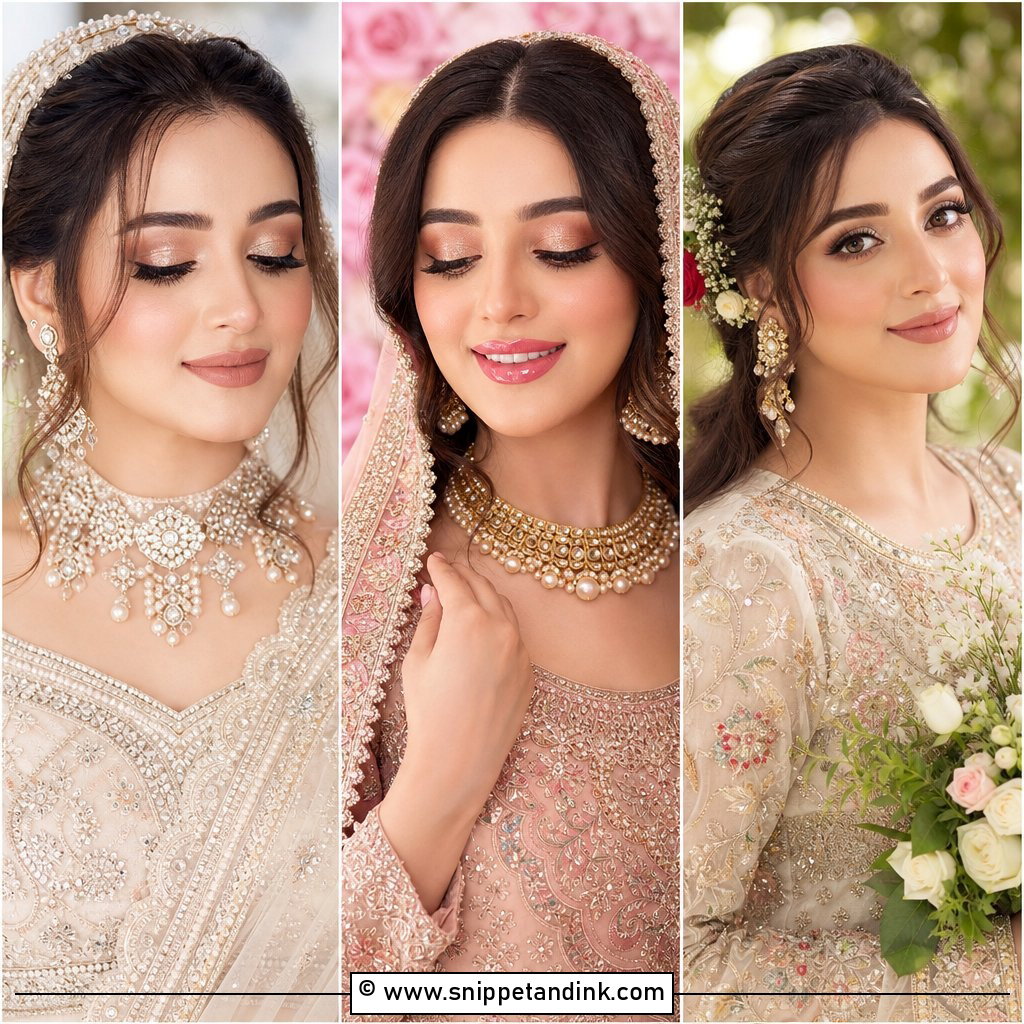
2. Soft Glam Wedding Makeup

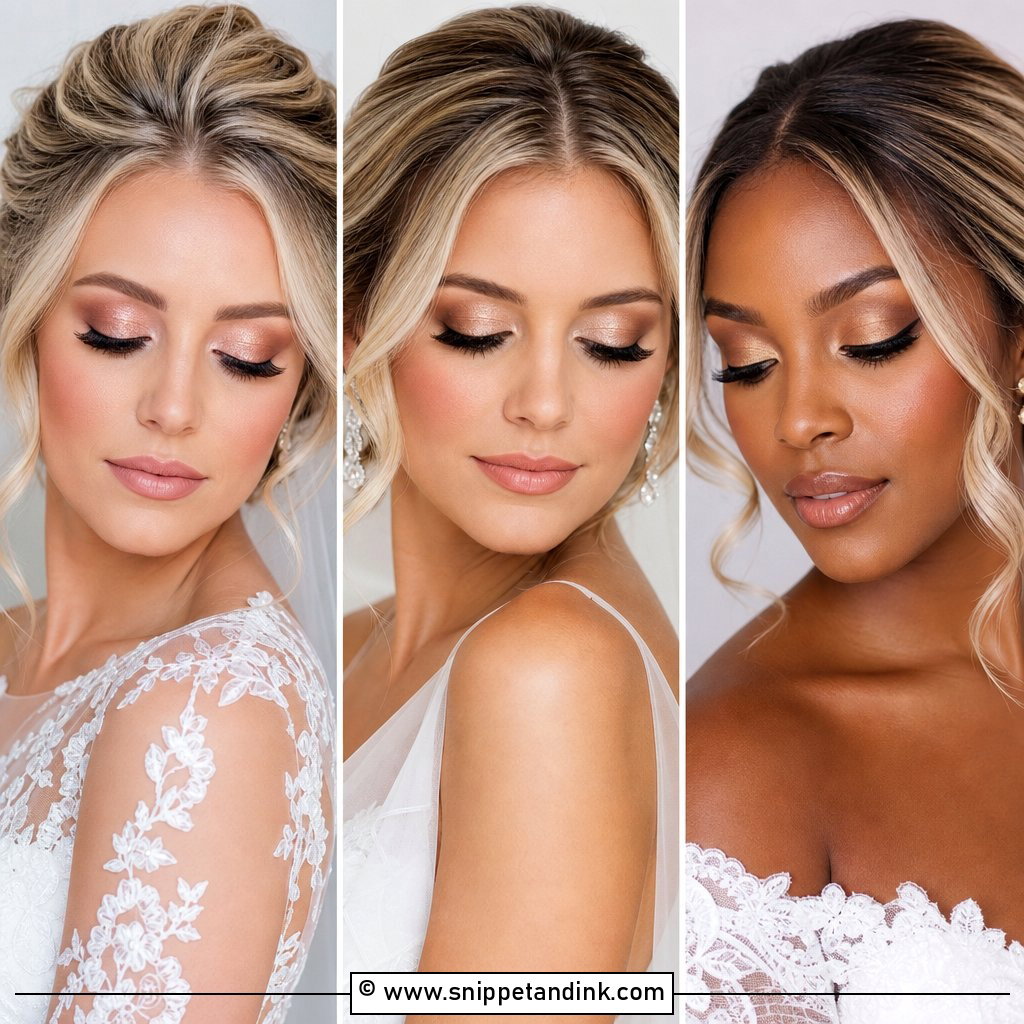
Soft glam is the look I’m asked for most, and the detail that makes it work is where the powder goes. I set the center of the face (forehead, sides of the nose, chin) and leave the outer cheeks unpowdered so the skin still moves when you smile. Champagne shimmer on the lid, warm brown in the crease and a softly smudged liner give shape without a hard edge. A few individual lash clusters at the outer corners lift the eye better than a full strip, and they’re less likely to peel at the inner corner when you cry. Rose blush, a little bronzer and a nude beige or pink lip keep the face balanced.
3. Dewy Wedding Makeup

Dewy skin needs control more than shine. A gripping primer and luminous foundation go on first, then cream products pressed in with fingertips so they melt rather than sit on top. Glow belongs on the high points only: cheekbones, brow bones and the bridge of the nose. I’m cautious with this on oily skin, because by hour four your own oil and the highlighter merge and the forehead starts to look wet under flash. Light bronze shadow, brown mascara, brushed-up brows, a peach cream blush and a glossy nude lip are all it needs.
4. Matte Wedding Makeup

Matte holds up best in heat, on oily skin and through long ceremonies, but it ages the face quickly when it’s layered thickly. I use a smoothing primer, a natural-matte foundation and concealer only where it’s needed, then set the T-zone with translucent powder and keep the outer cheeks lighter. Matte taupe or muted mauve on the eyes with a small wing gives definition. A warning for dry skin: matte foundation clings to flaky patches around the nose and chin, so exfoliate gently a few days before, never the morning of. The upside is upkeep, since blotting papers and a little powder disappear into it.
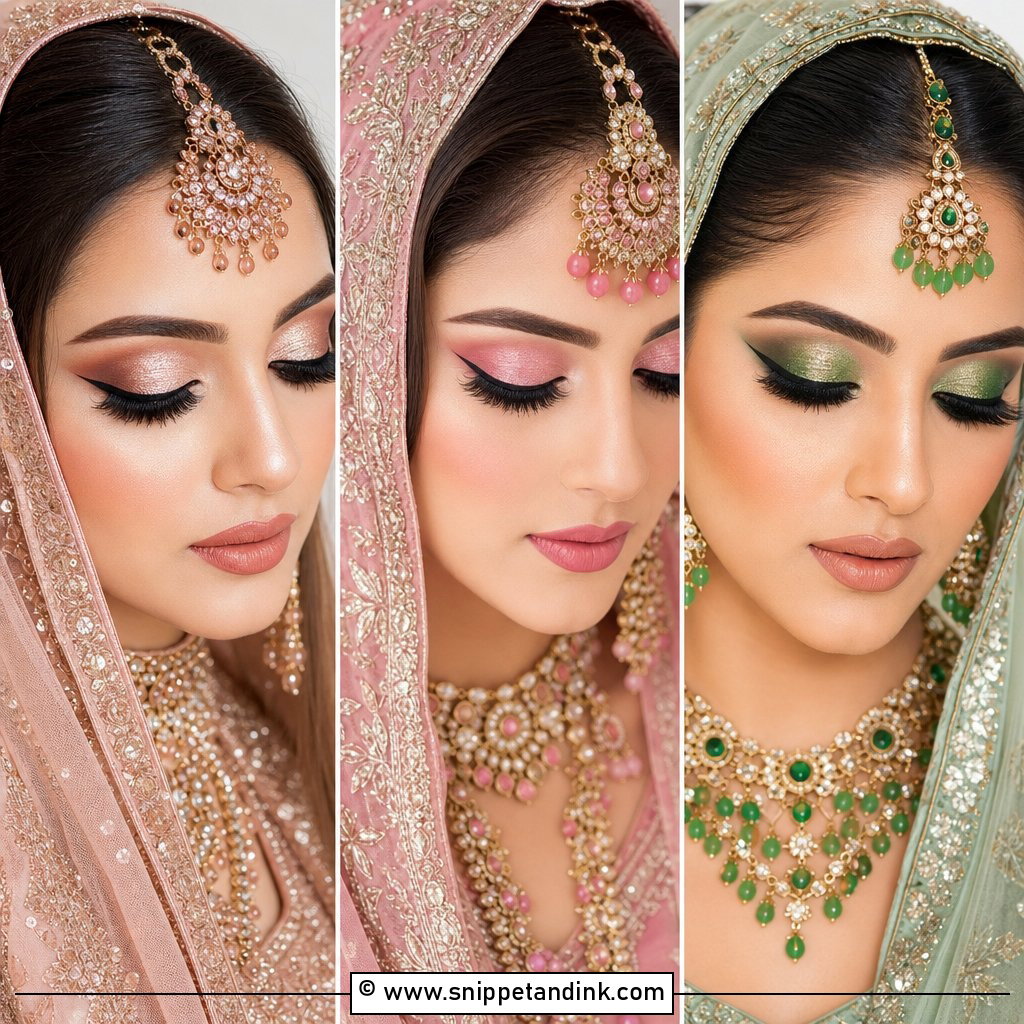
5. Pink Wedding Makeup

Pink on the eyes, cheeks and lips can look childish if every shade matches, so I vary the depth. A pale pink or rose on the lid, taupe or brown in the crease for shape, soft liner and fluffy lashes. On the cheeks, cool pink suits fair skin, dusty rose suits medium skin and berry-rose shows up properly on deeper skin, where pale pink tends to look chalky. A pink satin lipstick or tinted gloss ties it together. Pink shadow makes some eyes look tired or irritated, so check it in daylight at your trial before committing.
6. Peach Wedding Makeup

Peach is warm and forgiving, and it brings life to the face without reading as a bold color. Placement matters more than shade here. I put peach cream blush high on the cheekbone and blend it toward the temple, which lifts the face rather than widening it. Peach beige or soft copper on the eyes, brown liner and well-curled lashes keep things gentle, and a peachy nude lip finishes it. Next to ivory and champagne it glows; next to a stark white gown it can push sallow undertones more yellow, so hold the fabric up to your face when you test it.
7. Bronze Wedding Makeup

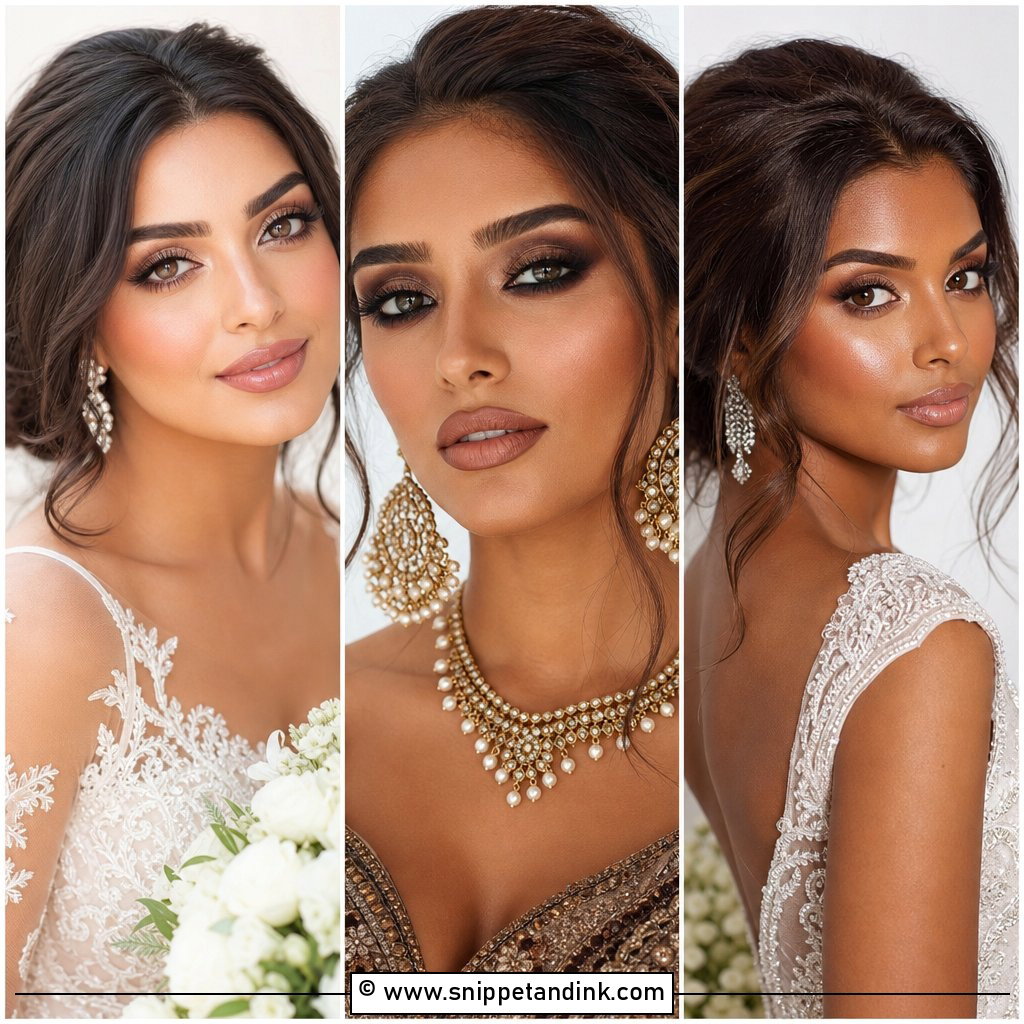
Bronze wedding makeup is about putting warmth where the sun would actually hit: the hairline, under the cheekbones and lightly across the nose. Choose a bronzer without an orange cast, no more than one or two shades deeper than your skin, or it turns muddy in photos. Bronze shimmer on the lid, warm brown in the crease and brown liner smudged at the lashes instead of a sharp wing. Peachy-brown blush and a caramel nude lip complete it. Tan skin and olive undertones carry this naturally. On very fair, cool skin I usually swap the bronzer for a soft taupe contour.
8. Champagne Wedding Makeup

Champagne shimmer catches light without the chunky glitter that turns into white specks under flash. I press it onto the center of the lid and the inner corners with a fingertip, which deposits more pigment than a brush and stays put longer, then blend a neutral brown through the crease. Brown or black-brown liner and lengthening mascara are enough definition. Keep the skin satin, the blush soft pink or peach and the lip a nude-pink, so the eyes stay the focus. Pearls and classic gowns sit easily beside it.
9. Brown Smokey Wedding Makeup

A brown smokey eye gives drama without the harshness black shadow brings to daylight photos. Chocolate, bronze, taupe and espresso make up the palette. I lay the deepest shade tight to the lash line first, then blend upward in small circles until there’s no edge left anywhere. Keep the lower lash line soft, because heavy shadow under the eye collects in fine lines and looks like smudged mascara by the end of dinner. Hooded eyes need the color taken a little above the crease, or it vanishes when your eyes are open. Warm blush and a rosy beige lip balance it.
10. Winged Liner Wedding Makeup

Winged liner looks fussy but goes quickly once the angle is right. Lay down neutral eyeshadow in beige or light brown first; liner grips shadow better than bare skin and is less likely to print onto the brow bone. Then follow the angle of your lower lash line outward for the wing, short for daytime and a little longer for evening. If your lids are hooded, draw it looking straight ahead into the mirror. A wing drawn with the eye closed folds into a broken shape the moment you open it. Half lashes at the outer corners, soft contour and a nude, rose or red lip complete it.
11. Classic Red Lip Wedding Makeup

A red lip does most of the work, so the eyes stay minimal: a soft beige lid, defined lashes and a thin liner. Groomed brows matter more here than anywhere else, since a strong lip against sparse brows throws the face off balance. Blue-reds flatter cooler skin, orange-reds warmer skin, and rich cherry or ruby shades suit deeper skin. I line the entire lip, fill it in, blot on tissue and apply a second coat, which is what stops red from feathering by the speeches. Give your liner and lipstick to a bridesmaid. Red is the one color you’ll need to fix after eating.
12. Nude Lip Wedding Makeup

The usual problem with a nude lip is that it erases the mouth, especially in photos. I look for a shade close to your natural lip color, then nudge it slightly pinker, peachier or browner depending on your skin. Pair it with eyes that still have shape: taupe shadow, brown liner, mascara and brushed brows. Use a little more blush than you think you need, or the face can look washed out beside a white dress. A satin or creamy matte finish outlasts high-shine gloss through a meal, and you can reapply it without a mirror.
13. Rose Gold Wedding Makeup

Rose gold sits between pink, bronze and champagne, which is why it flatters such a range of skin tones. I apply it to the lid with a slightly damp flat brush to intensify the shimmer, then blend warm brown or mauve into the crease so the metallic has something to sit against. Brown liner and curled lashes keep it soft. Rose blush and a light golden highlight go on the face, and a pink nude, rosy beige or soft mauve lip completes it. On textured or crepey lids, metallics show every crease, so keep the shimmer to the center of the lid.
14. Mauve Wedding Makeup

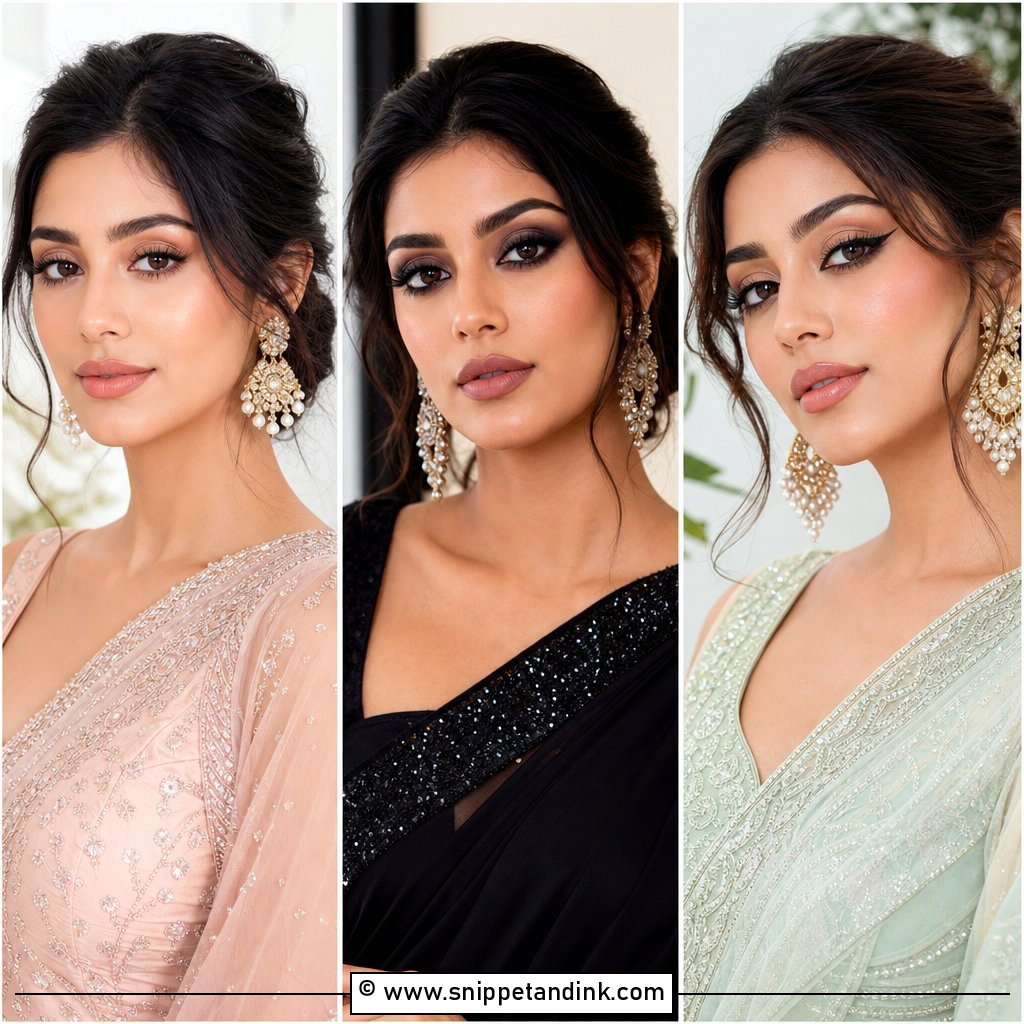
Mauve gives color with more depth than plain pink. A light mauve on the lid, dusty plum or brown-mauve in the crease, and liner kept soft and close to the lashes. Muted rose blush, a satin base and a mauve nude lipstick or stain keep the face coordinated. Gray and green eyes look brighter beside it because the purple undertone sharpens the iris color, and it suits fall weddings and cool undertones. On warm, golden skin some mauves turn gray, so look for one with a hint of brown.
15. Coral Wedding Makeup

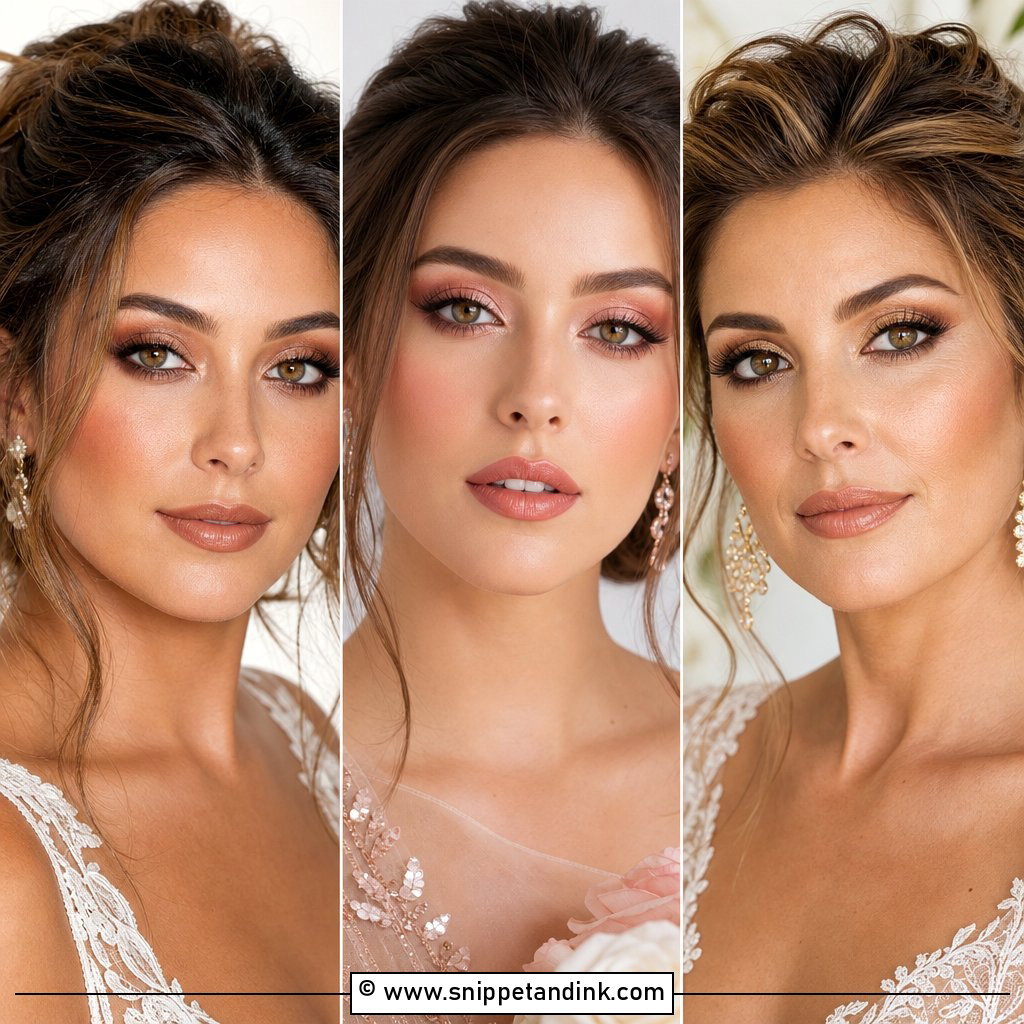
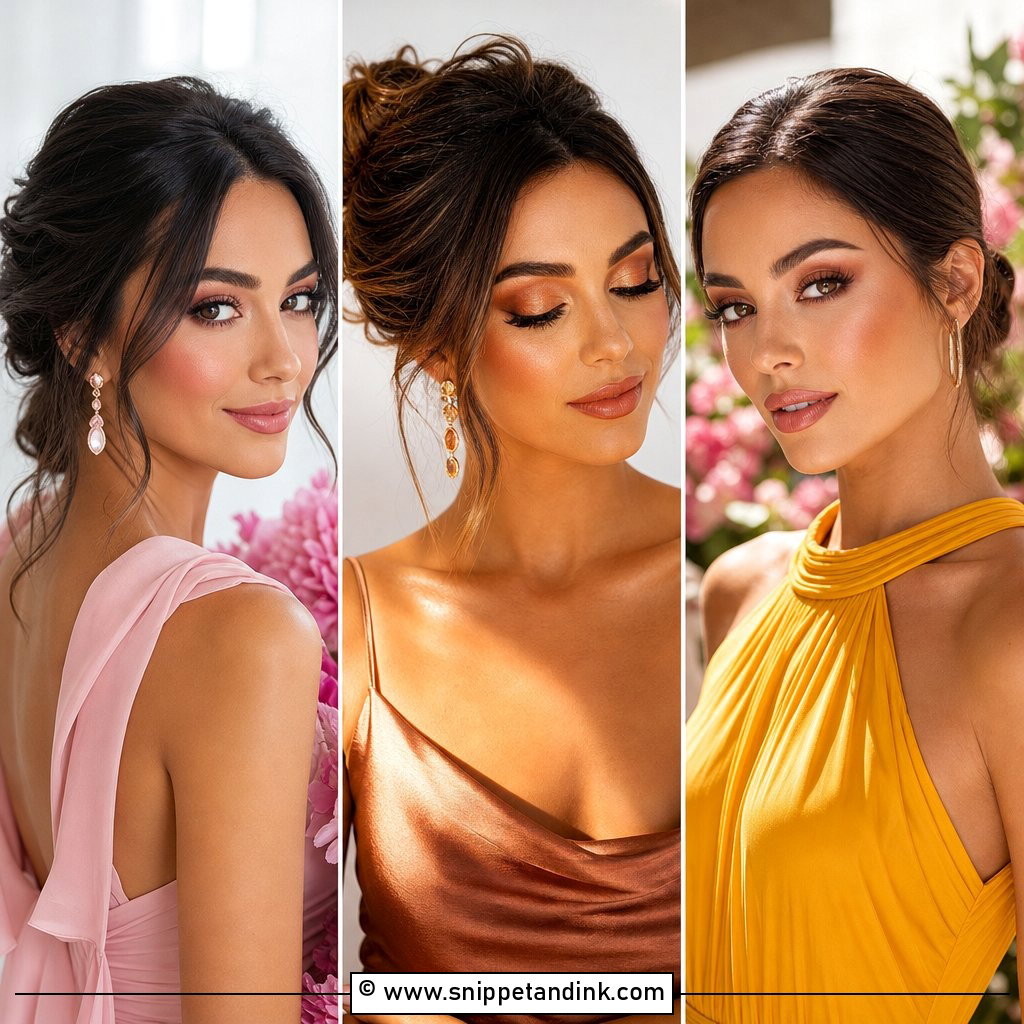
Coral wakes up tired skin faster than almost any other blush shade, which is why I reach for it in spring and summer. Start with a lightweight base, then press coral or peach-coral blush onto the apples of the cheeks and blend it up and out. Keep the eyes in champagne, peach or light bronze with brown liner and fluttery lashes, so the color stays on the cheeks and lips. A coral-pink lipstick, tinted balm or glossy stain finishes it. Coral fights with some berry and fuchsia bridesmaid dresses, so I check the color palette before suggesting it.
16. Glowy Skin Wedding Makeup

Glowy skin is complexion-first makeup, so the work happens before any foundation goes on. Moisturizer has to absorb fully, then primer, then foundation in thin layers instead of one heavy coat. Cream bronzer, cream blush and liquid highlight follow. I set only the places that crease or shine, usually under the eyes and around the nose. Beige shimmer, soft brown liner and mascara cover the eyes, with a hydrating lip in nude pink or rose. There’s no complicated eye work involved, which makes it a sensible pick if eyeshadow makes you nervous.
17. Simple Bridal Makeup

One rule carries simple bridal makeup: define one feature and keep everything else clean. A breathable foundation, a bright under-eye concealer, cream blush and a light dusting of powder make the base. One neutral shade across the lid, mascara and softly filled brows. For a bit more definition, smudge a brown pencil along the upper lashes and soften it with a small brush. A pink nude or beige rose lipstick finishes it. It’s the easiest look here to do yourself, and it fits courthouse ceremonies and small weddings where full glam would feel out of place.
18. Wedding Guest Makeup

Wedding guest makeup has one job beyond looking good: not competing with the bride. Soft glam is usually the right level. Medium coverage foundation, lightly set, with blush that relates to the color of your outfit. Bronze, champagne, taupe or rose shadow with brown liner and mascara, and skip heavy glitter unless the dress code asks for it. Guests rarely get touch-ups the way a bridal party does, so I’d pick a lip stain or long-wear formula over gloss. It has to survive dinner and a few hours of dancing without a mirror.
19. Bridesmaid Makeup

Bridesmaid makeup works best when the group shares a palette rather than a face chart. I keep everyone’s eyes in the same neutral family, light brown in the crease, champagne on the lid, then mascara or natural lashes, and adjust the blush to each skin tone. Rose suits one person, peach or mauve another. Lips can range from nude pink to soft berry. Each bridesmaid should still look like herself, and a satin base on everyone keeps the group looking connected in photos even when skin tones differ widely.
20. Easy DIY Wedding Makeup

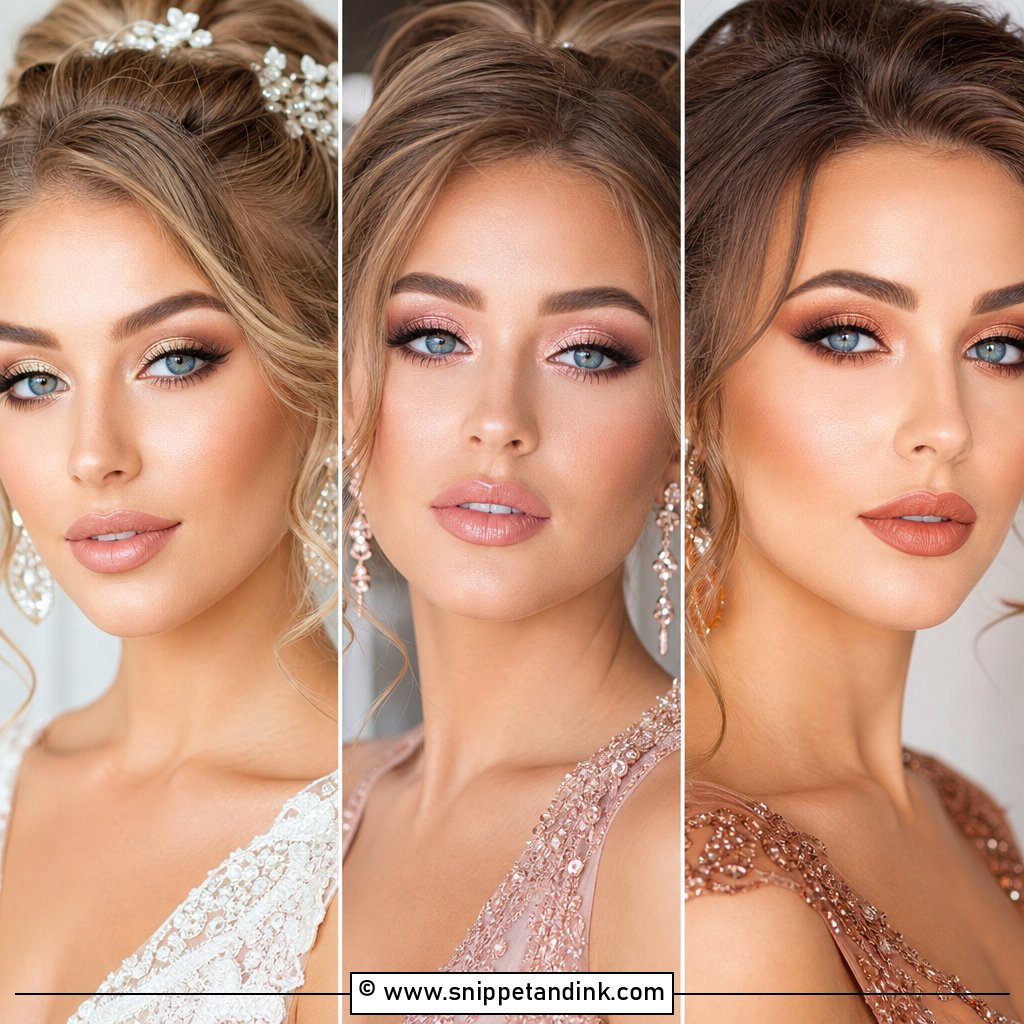
If you’re doing your own makeup, use products you already trust and run the full routine at least twice before the wedding. The order stays the same: skin prep, primer, foundation, concealer, blush, light bronzer, neutral shadow, liner, mascara, brows, lipstick, powder and setting spray. Never try a new product on the morning itself. A new foundation can oxidize darker than it looked in the shop, and new skincare can break you out. Thin layers last longer than thick ones and are far easier to fix. Pack lipstick, blotting papers, powder and cotton swabs in a small kit.
A Practice Run That Actually Tells You Something
A morning trial you wipe off at lunch won’t show you how makeup behaves at ten at night. I ask brides to wear the trial look for the rest of the day, ideally out to dinner, and to watch for three things.
Where it moves
Look at the sides of the nose, under the eyes and the corners of the mouth after six or seven hours. Creasing under the eye means too much concealer or not enough setting. Patchiness on the nose usually means oil breaking through, and a different primer fixes it.
How it photographs
Take one photo by a window in daylight and one with your phone flash in a dim room. Daylight tells you whether the foundation matches your neck. Flash shows you any white cast and whether the blush has vanished. Most faces need more blush and lip color on camera than feels right in the mirror.
Whether the shade shifted
Some foundations oxidize, turning darker or more orange within an hour of going on. If your jawline looks different by afternoon, go a shade lighter or change formula before the wedding.
What Fades First, and the Pouch That Fixes It
Lips go first, always. Then shine comes through the center of the face, and after the vows the lower lashes can smudge. Give a small pouch to whoever is staying closest to you:
- your lipstick and its matching liner
- blotting papers, which lift oil without adding another layer
- a compact of the same powder used in the morning
- cotton swabs and a little micellar water for smudges under the eyes
- a small tube of lash glue if you’re wearing strips or clusters
Blot first, and powder only if it still needs it. Piling powder on top of oil is what makes makeup look heavy by the reception.
Thin Layers, Real Blush and a Practice Run
You don’t need heavy contour or glitter to look like yourself in wedding photos. A smooth base in thin layers, eyes defined just enough, blush with real color and a lip you can reapply without thinking will carry you from the ceremony to the last song. Pick the direction that suits your skin and your venue, natural for a bright daytime ceremony, bronze for warmth, red if it’s already your signature. Then practice it until it feels like routine rather than a costume.
You'll Like These Ideas:






Leave a Reply