
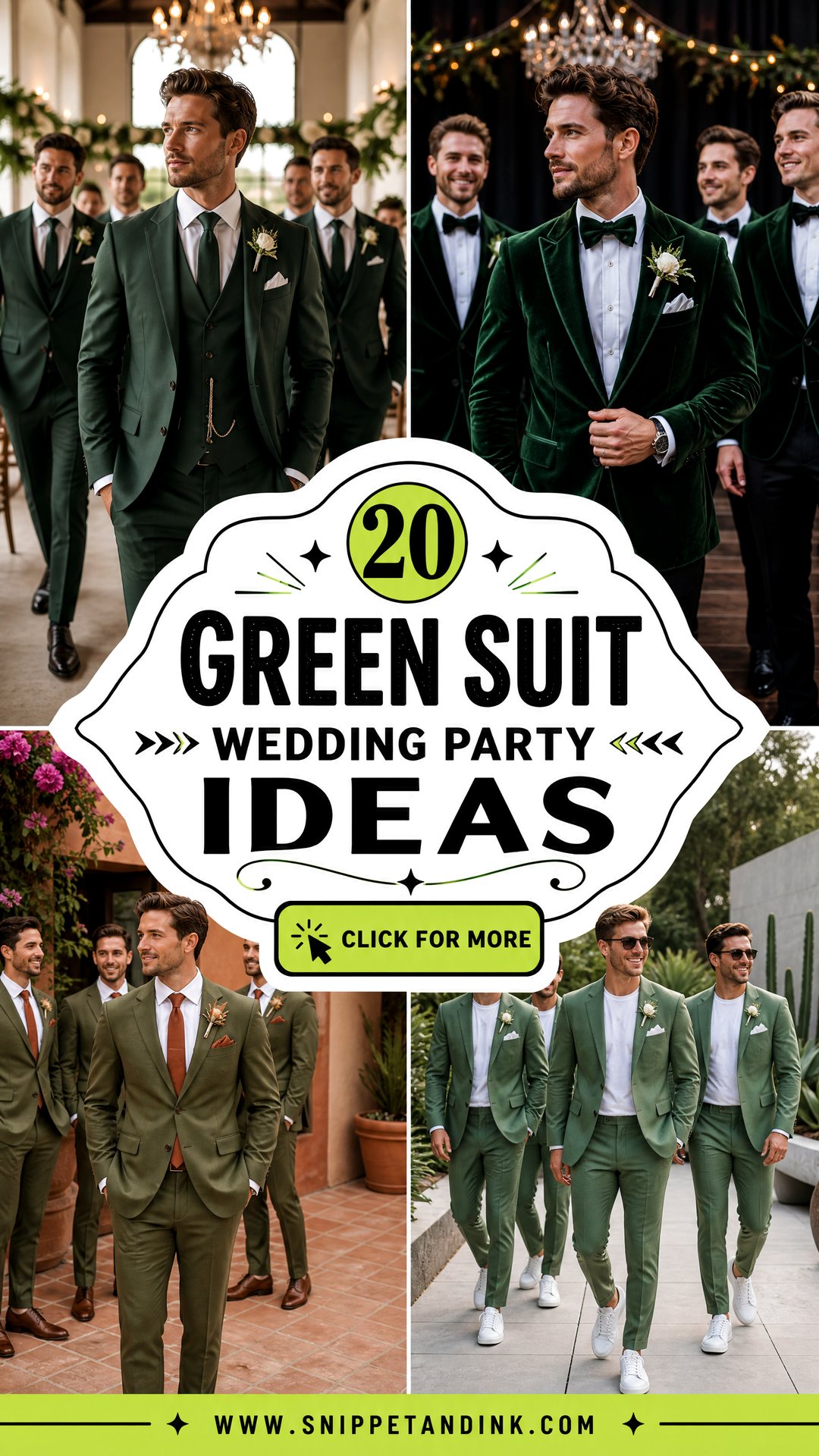
Green suits give a wedding party color and personality without the novelty of a bright tux. Picking the shade is the easy bit. When I dress a groom and his group, most of my time goes into the shirt, tie, shoes, belt and boutonniere, and how all of it sits against the wedding palette. Sage and light olive feel fresh in daylight; forest, hunter and emerald bring depth to formal or cold-weather events. Fabric follows the season: linen blends for heat, wool, flannel and velvet once the weather turns. Brown footwear warms a green suit, black sharpens it. Below are twenty combinations, with the fitting and photo details I check on each.
Ordering Six Green Suits That Truly Match
Green is one of the hardest suit colors to match across a group. Navy and charcoal are fairly consistent between batches; green isn’t. Two suits sold under the same color name can come from different dye lots and sit noticeably apart in a line-up. Here’s how I run the order.
- Order every suit from the same retailer or rental company, ideally on the same day, so they’re cut from the same fabric batch.
- Collect measurements early, including from out-of-town groomsmen. I ask them to get measured professionally rather than with a tape at home; chest and inseam are where home measurements usually go wrong.
- Allow generous time. Made-to-measure and custom suits can take several weeks to a couple of months depending on the maker, and rentals often need sizes submitted well before the date. Ask your shop for its actual timeline.
- Leave two to four weeks for alterations after the suits arrive, plus a final try-on with the real shirts and shoes.
- Lay all the suits side by side in daylight when they arrive. If one looks off, you still have time to swap it.
1. Sage Green Suit With White Shirt
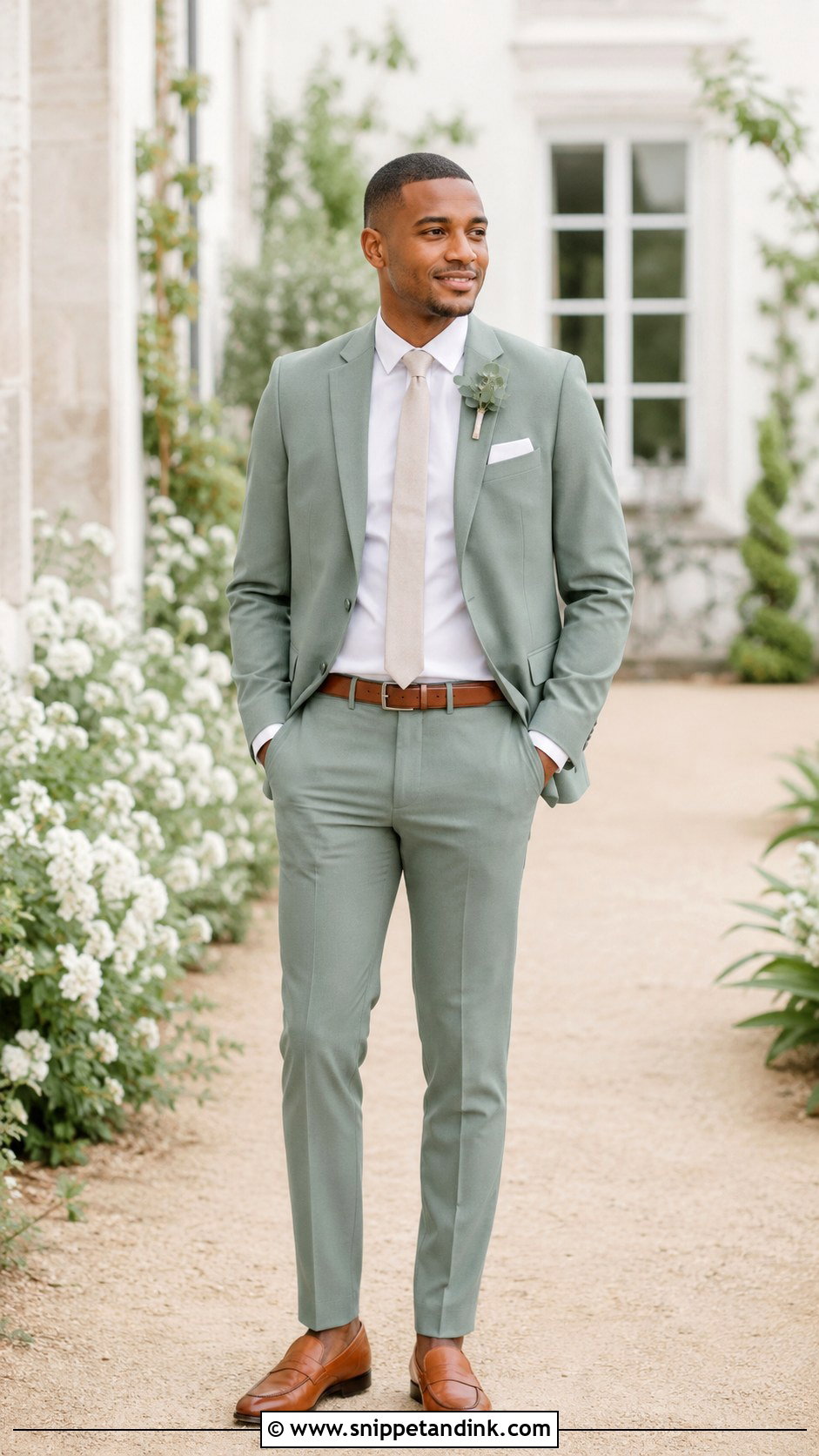
Sage, a crisp white shirt and cognac leather is the lightest, friendliest combination here. I’d go for a two-piece with clean shoulders and a gently tapered trouser, a soft beige tie and a white pocket square. Cognac loafers or lace-ups with a matching belt keep it warm. A white flower and eucalyptus boutonniere ties back to the suit color. For group shots, the rule I hold firm on is identical shirts and identical shoes. Let the variation come from ties or pocket squares, never from footwear, because mismatched shoes are the first thing people notice in a line-up.
2. Forest Green Suit With Black Tie
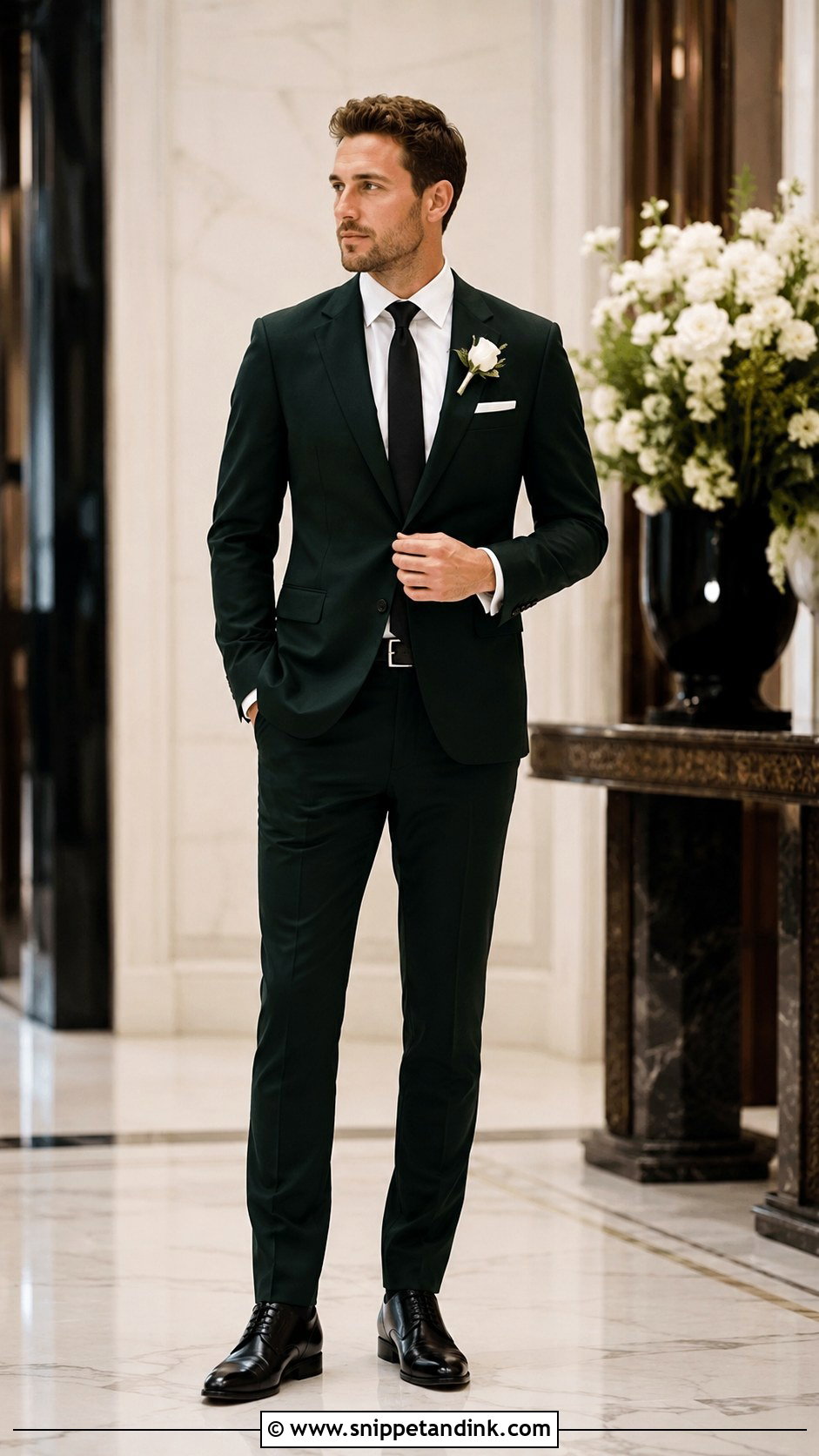
Forest green goes formal the moment you put black next to it. Start with a structured wool or wool-blend suit, a bright white shirt, a slim black tie and polished black Oxfords. The white pocket square matters more than it looks; without it, the dark jacket and black tie merge into one heavy block in evening photos. A single ivory flower with a touch of greenery is enough on the lapel. To set the groom apart in a matching party, I’d give him a black waistcoat or a satin tie and keep everyone else in plain two-piece suits.
3. Olive Green Suit With Floral Tie
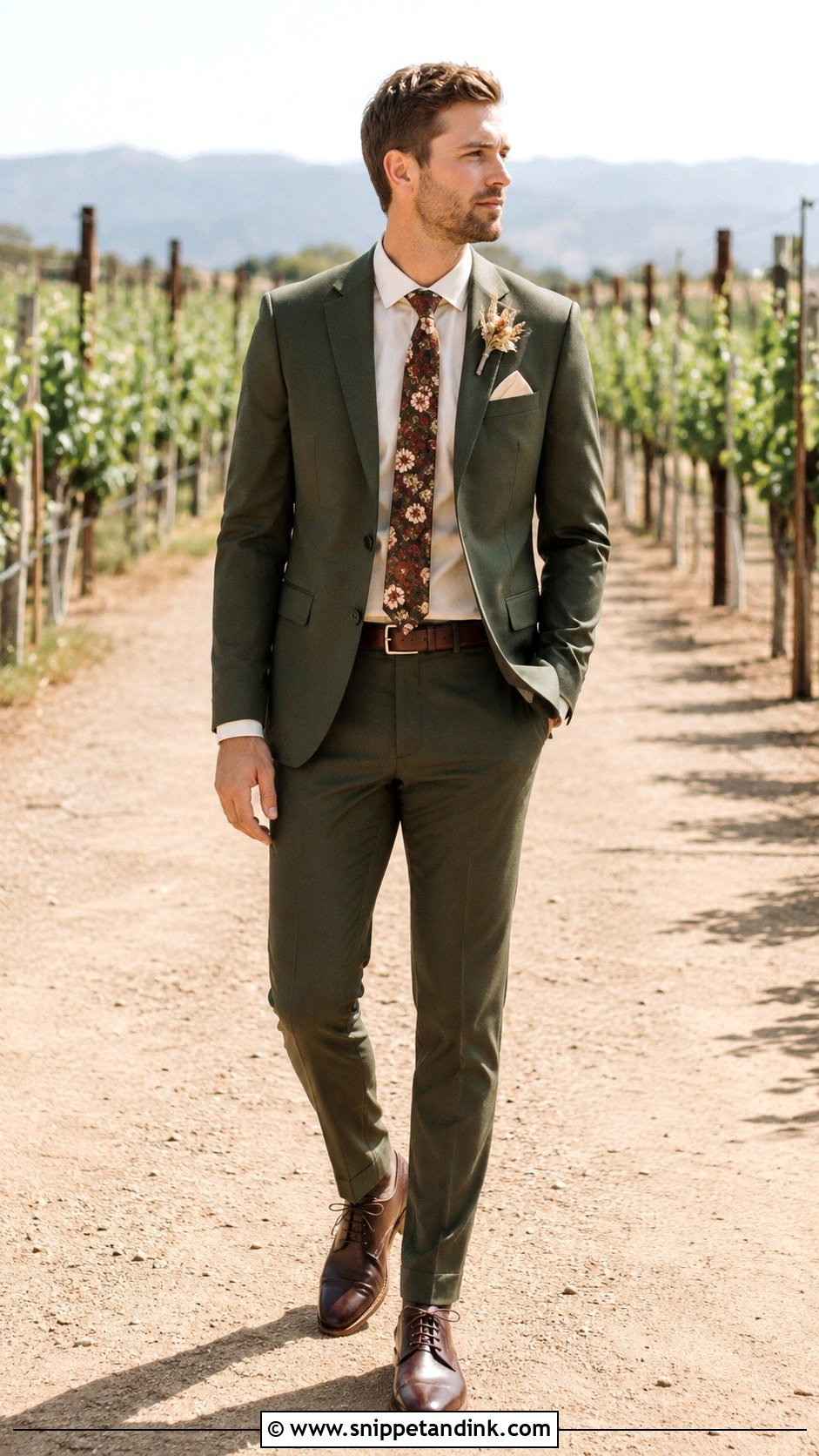
Olive has a warmth that a muted floral tie picks up easily. A matte olive suit with an ivory or cream shirt softens the earthiness, and a tie with rust, beige, burgundy and small green notes brings the whole palette onto the jacket. That tie is the only pattern I’d allow in the outfit. Solid socks, dark brown Derbies, a matching belt and a folded cream pocket square keep everything calm around it. Dried grasses and tiny cream flowers suit the boutonniere at a vineyard or autumn barn.
4. Emerald Green Suit With Black Shirt
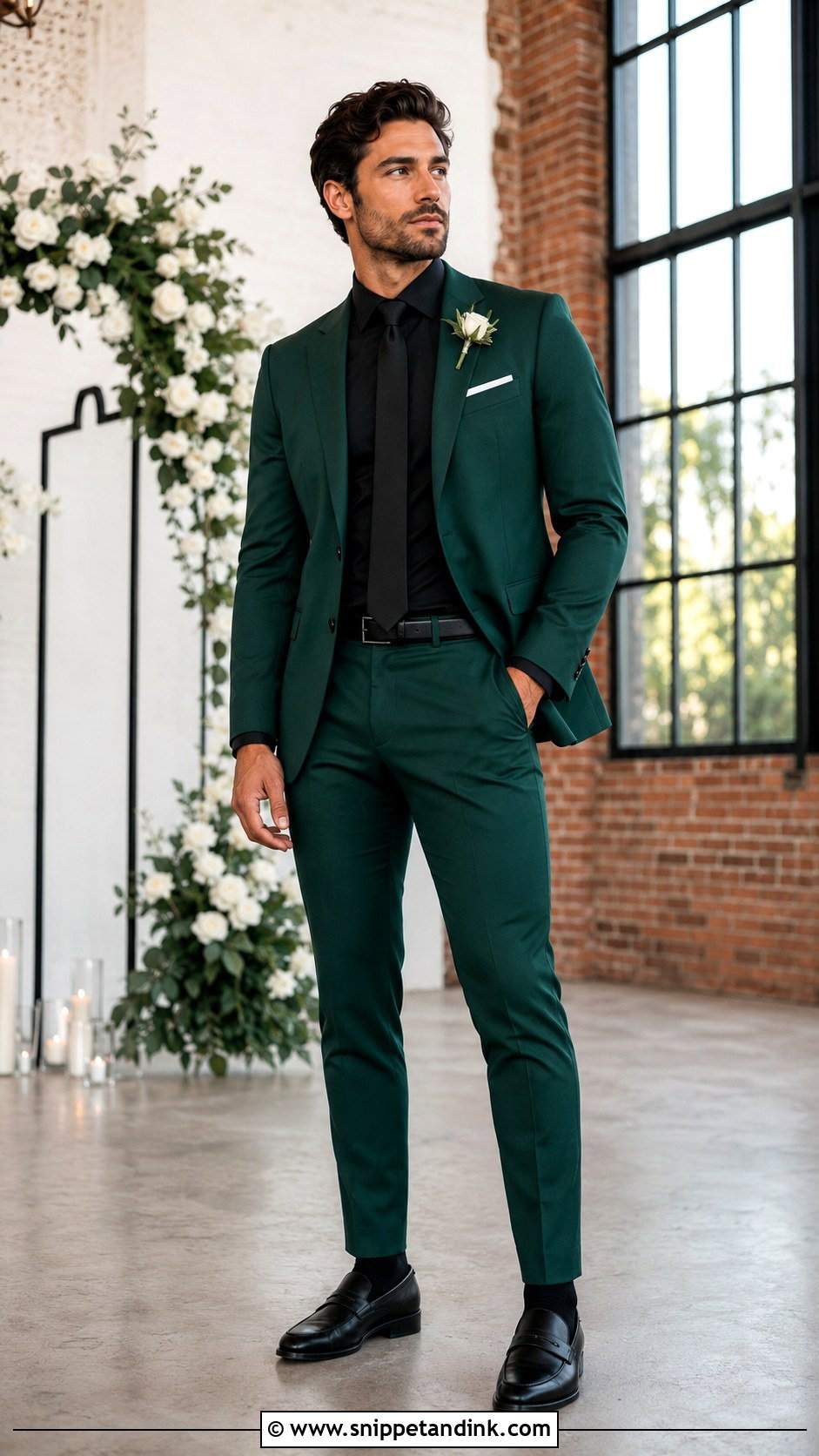
Emerald with a black shirt is a confident evening look and one of the few here that I’d wear without a tie. The contrast only works if the suit is sharply cut: clean lapels, a close shoulder, no slack in the chest. Add a narrow black tie if the dress code leans formal. Black loafers, belt and socks create one unbroken line underneath. Emerald is loud on camera, so the one practical step I insist on is getting every suit altered to the same sleeve and trouser lengths. Uneven hems show up immediately against a bright jacket.
5. Dark Green Three-Piece Suit
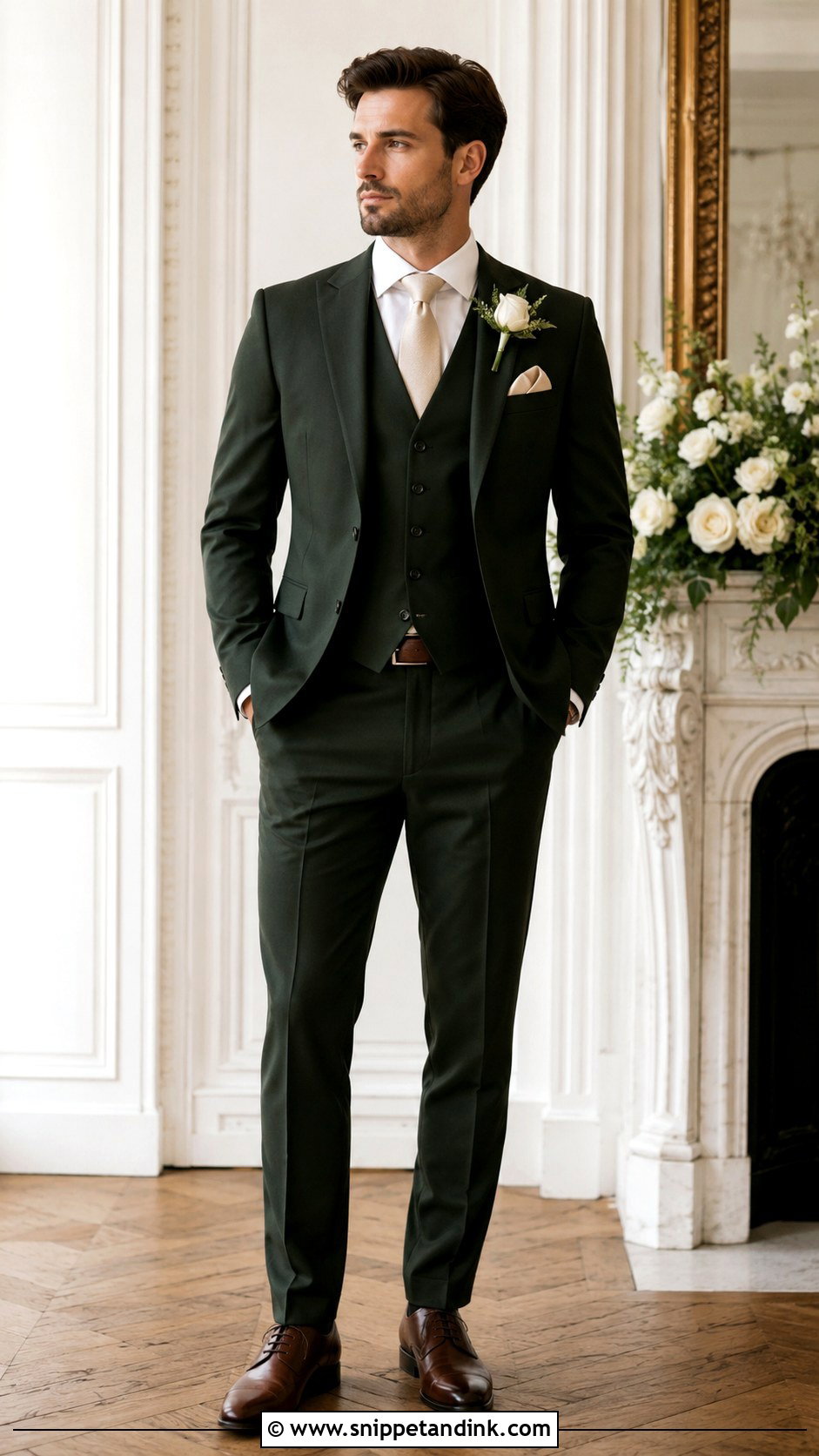
A dark green three-piece has a classic, almost Edwardian weight to it. Wear the vest under a single-breasted jacket with the bottom vest button left undone; it isn’t just tradition, a vest cut to be fully buttoned pulls when you sit. A white shirt and champagne tie lift the deep green. Dark brown cap-toes and an ivory rose finish it. My favourite way to use it is to put only the groom in the full three-piece and let attendants wear the same jacket and trousers without the vest. Instant hierarchy, no extra color needed.
6. Light Green Linen Suit With Loafers
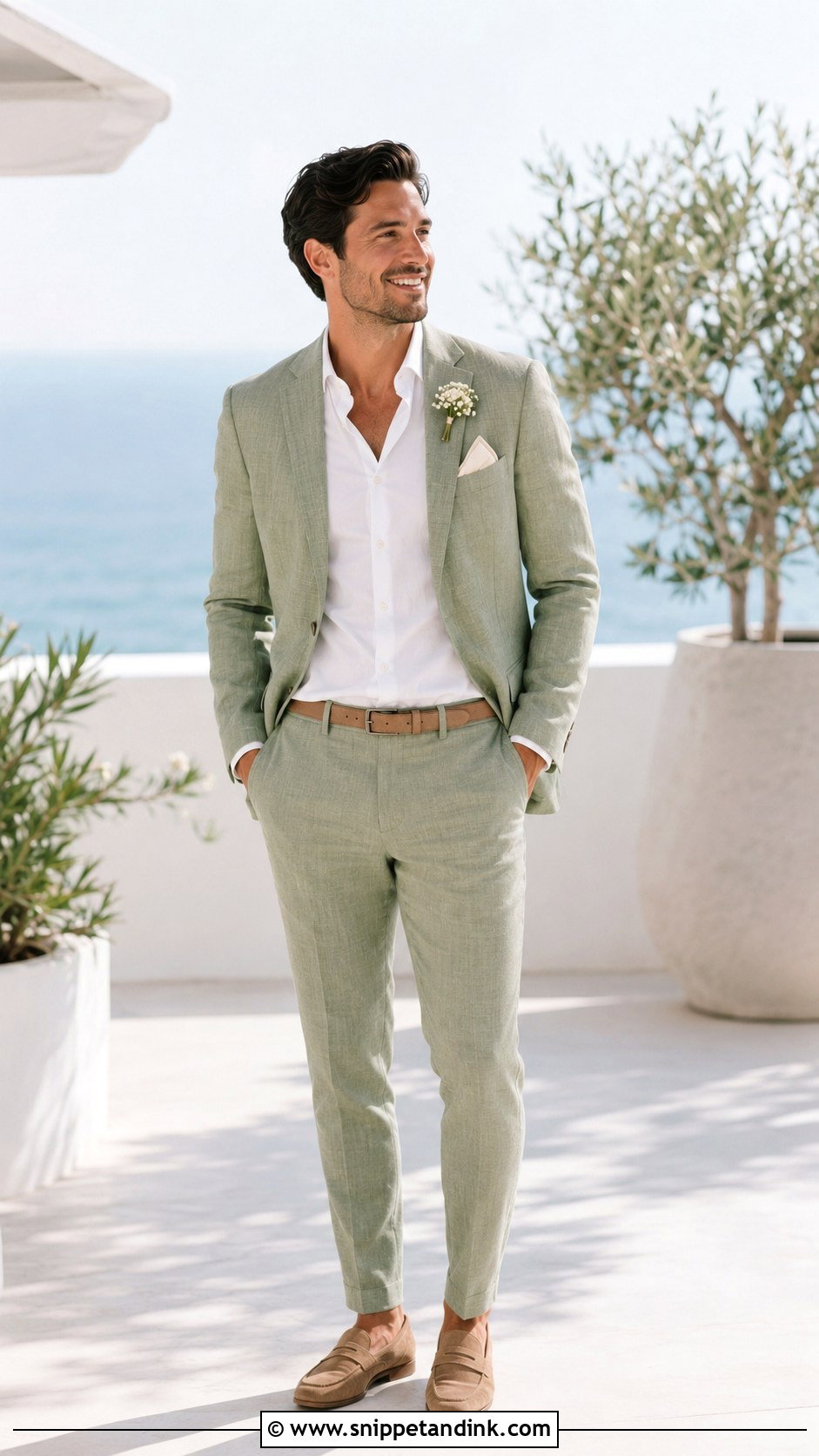
For a hot outdoor ceremony, I’d put the party in a light green linen or linen-blend suit with an open-collar white shirt. An unstructured jacket and slightly tapered trousers stop linen from looking boxy. Tan suede loafers, a slim tan belt and invisible socks keep it breezy. Linen creases within an hour of wear, and you have to accept that going in. A linen-wool or linen-cotton blend creases less than pure linen if the groom hates the rumpled look. Same shirt style and same shoes for everyone, or the texture starts to read as sloppy rather than relaxed.
7. Hunter Green Suit With Burgundy Tie
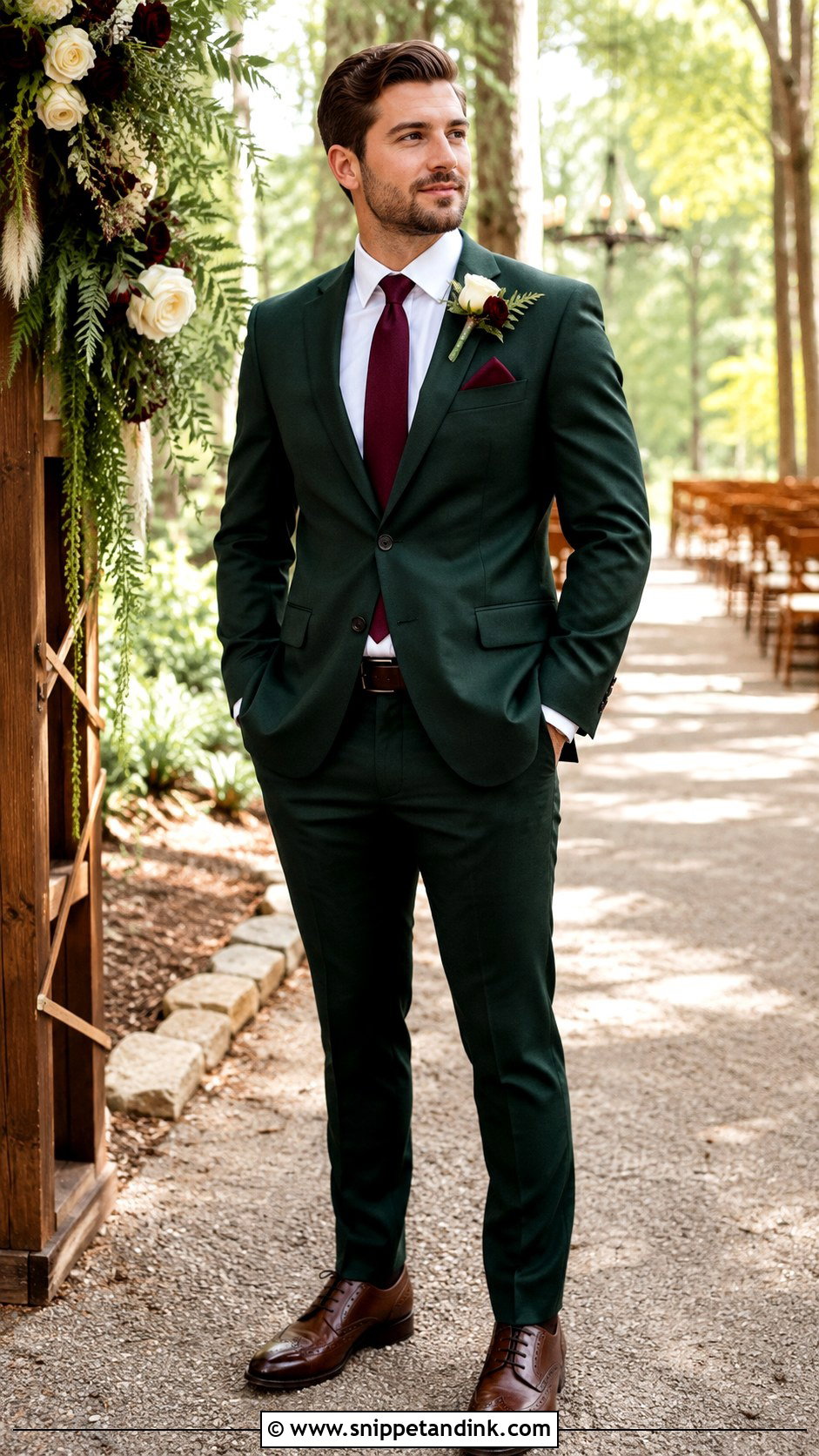
Hunter green and burgundy is a natural cold-season pair. A solid burgundy tie on a white shirt keeps things sharp; if you want pattern, put it in the pocket square and keep it small. Dark brown brogues and charcoal or brown socks sit well under hunter green. Tie the outfit to the flowers with an ivory bloom and a small burgundy accent on the lapel. With a big party, I make ties and shoes identical and allow small boutonniere differences to mark roles, such as best man or fathers.
8. Moss Green Suit With Beige Shirt
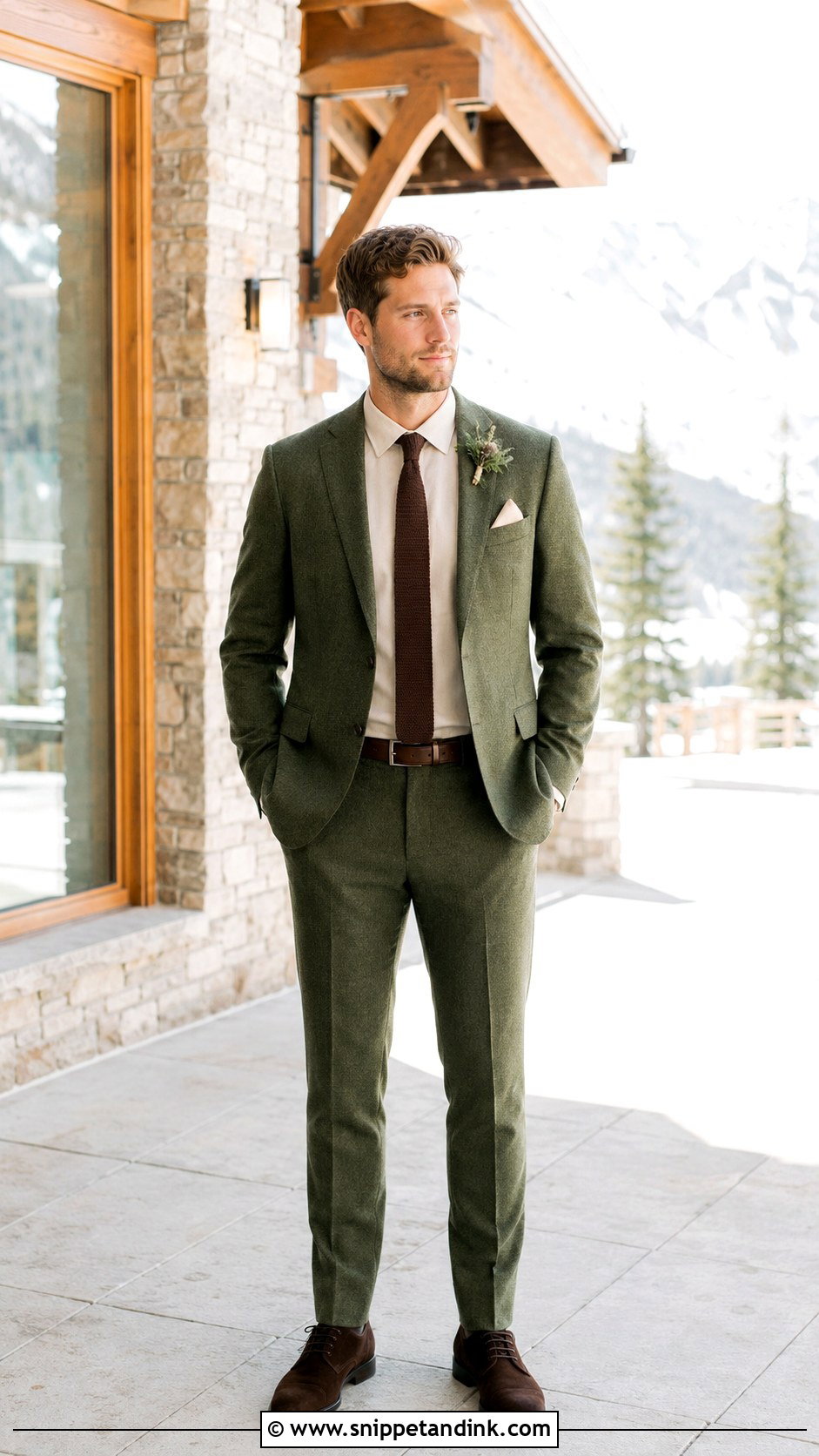
Moss green is muted and textured, and a beige shirt suits it better than stark white. Choose wool, cotton or a blend with some surface texture, then add a chocolate knit tie and brown suede Derbies. Here’s the catch with beige: shirts range from yellow-cream to grey-taupe, and the wrong one makes moss look muddy. I always lay actual shirt swatches against the suit fabric in daylight before ordering. A greenery-heavy boutonniere with one small white flower suits a mountain lodge or barn setting.
9. Green Double-Breasted Suit With Black Shoes
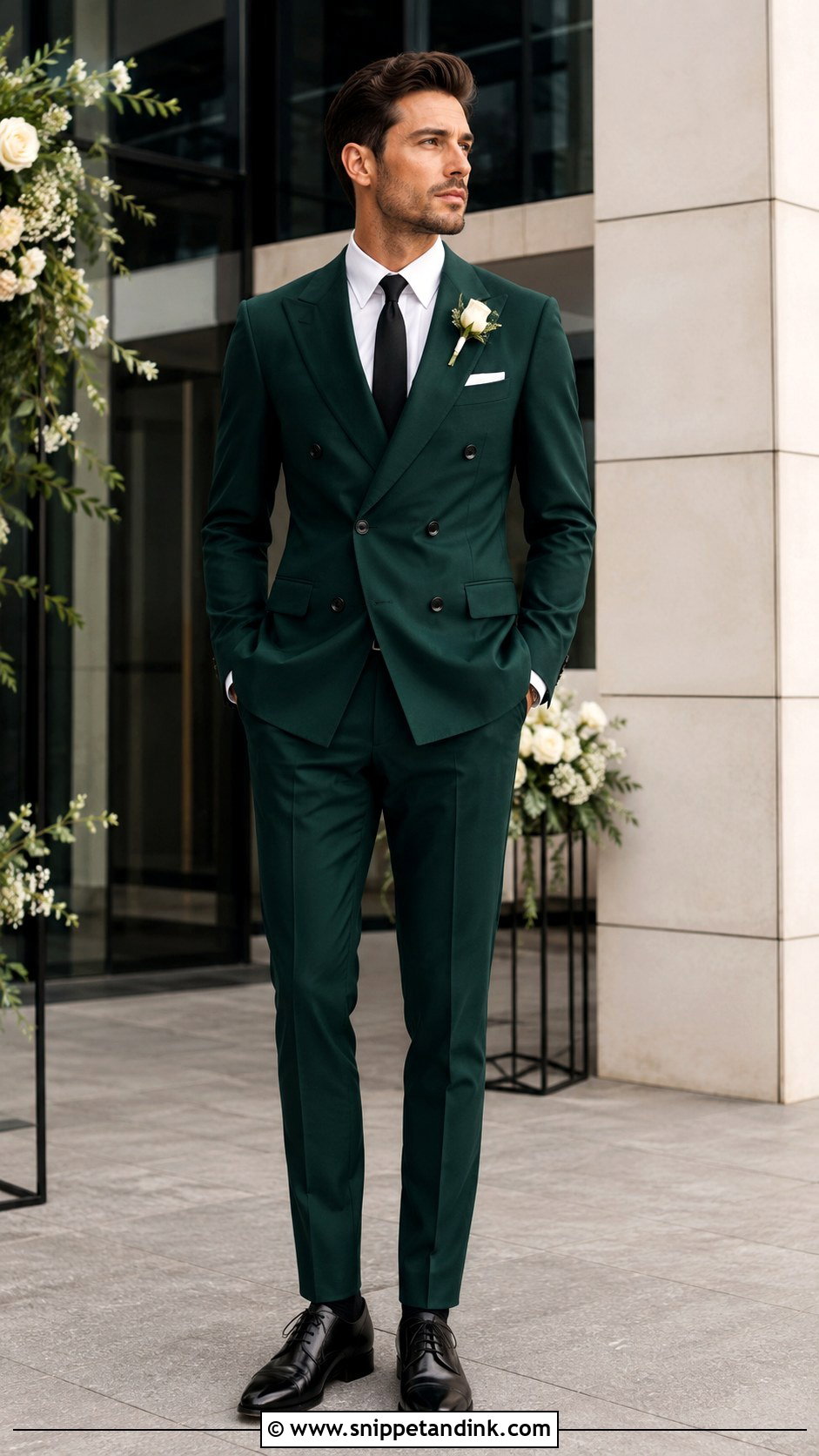
Double-breasted green is the most fashion-forward cut on this list, and the least forgiving. Bottle or forest green with wide peak lapels looks strong, but an oversized double-breasted jacket instantly looks borrowed, so shoulders and chest have to be tailored closely. A white shirt and narrow black tie balance the jacket’s weight; black whole-cuts or Oxfords keep the line clean. Remind the party that this jacket stays buttoned for every standing photo. Unbuttoned, the overlapping fronts flap and add bulk.
10. Green Velvet Suit With Bow Tie
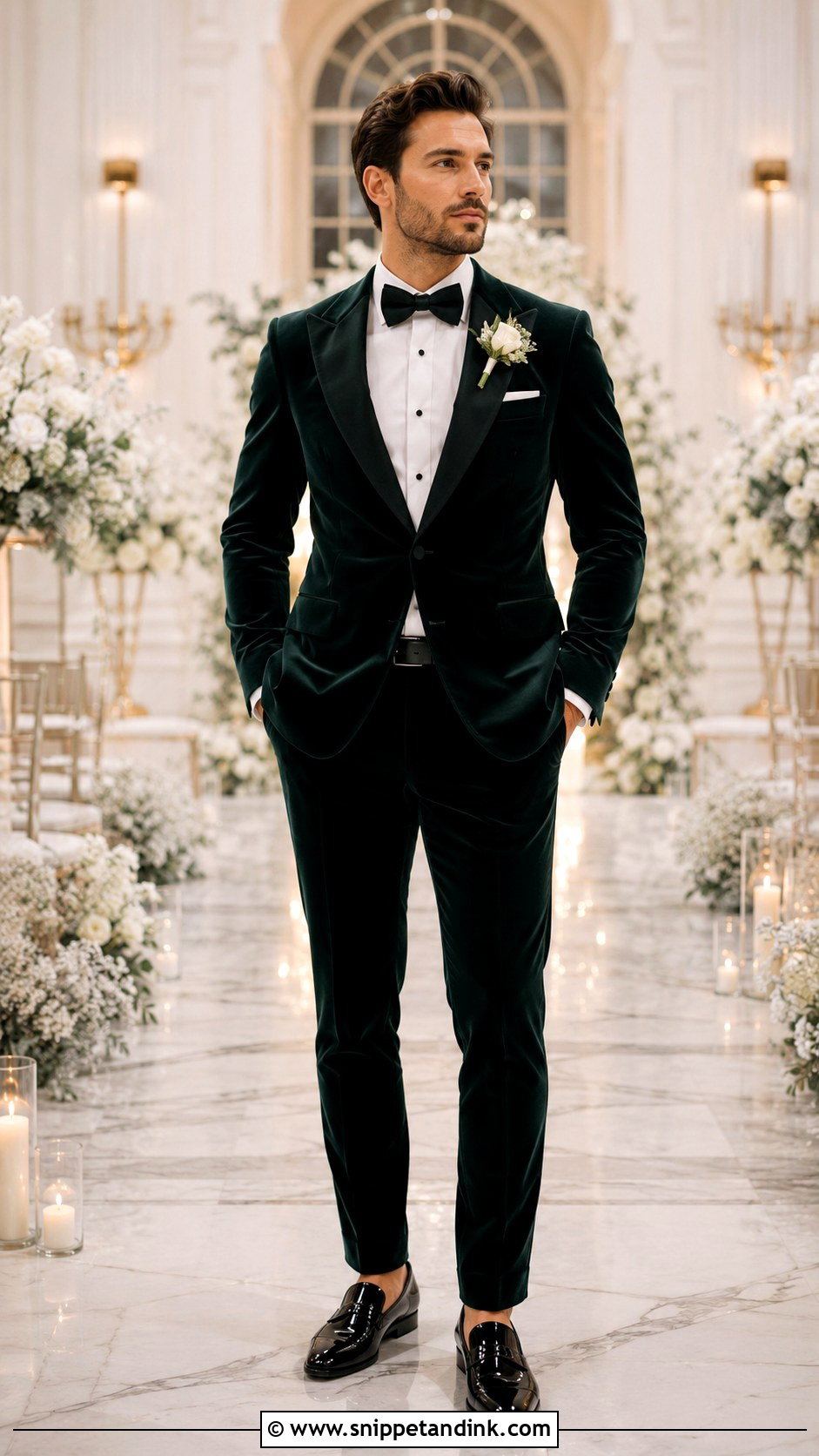
Velvet makes a dark green suit feel like an occasion, which is why I keep it for winter evenings. A green velvet jacket with matching or closely coordinated trousers, a crisp white shirt, black bow tie and patent loafers is the formal version. Velvet is warm to wear, so I’d only suggest it for heated indoor venues in cold months. Keep accessories matte; the pile already reflects plenty of light. A neat approach is the groom in full velvet and attendants in dark green wool with the same shirt, bow tie and shoes.
11. Sage Green Suit With Dusty Rose Tie
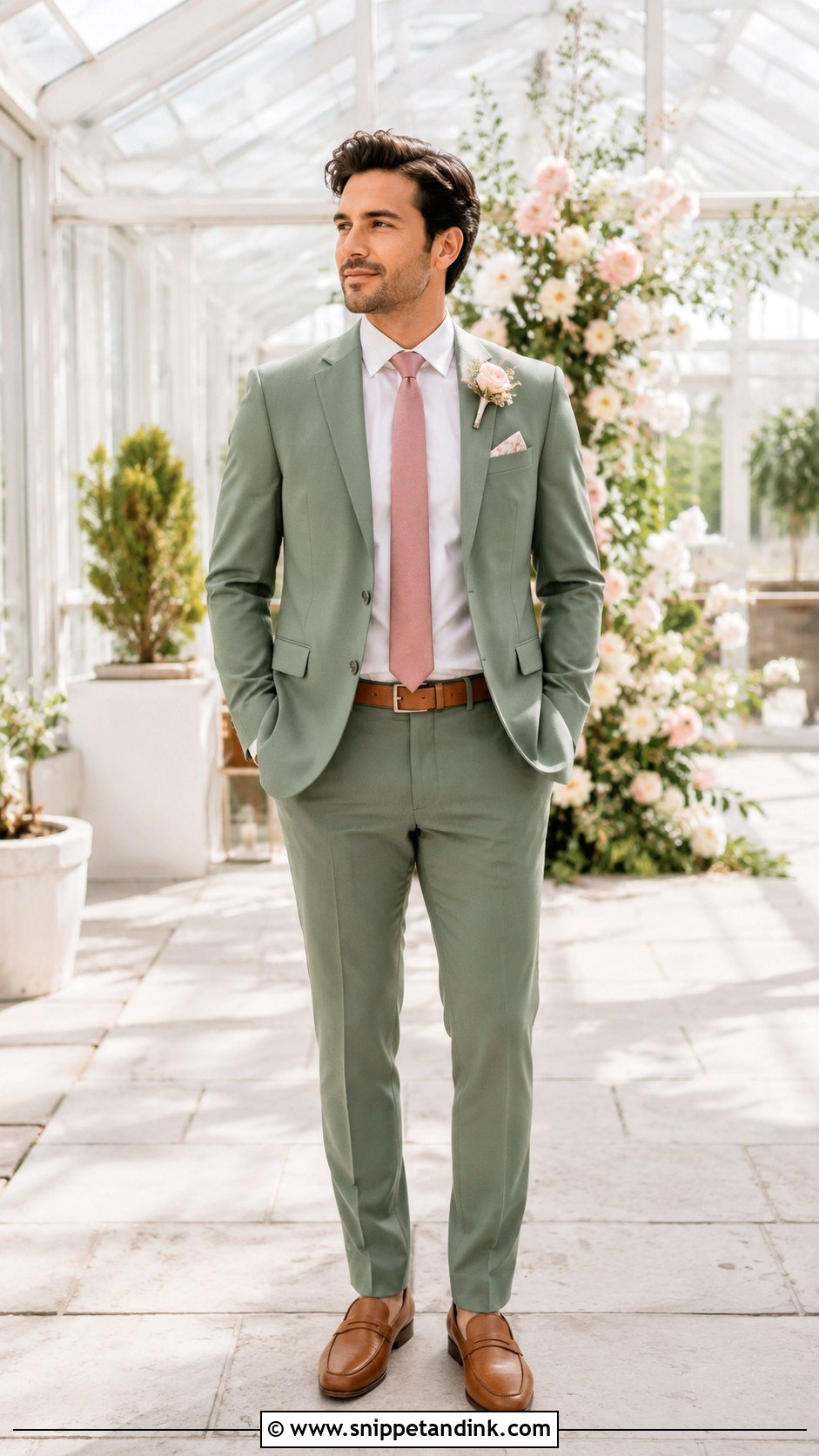
Sage and dusty rose read romantic without looking sugary, but only if the pink stays muted. A smooth sage two-piece, a white or soft ivory shirt and a matte dusty rose tie are the base. Saturated or candy pink turns the whole party into a costume, and silky ties flare under flash, so I’d ask for matte woven fabric. Tan loafers, a matching belt and a blush-and-eucalyptus boutonniere keep it light. Bridesmaids in the same rose tie the two sides together in group photos.
12. Olive Green Suit With Terracotta Tie
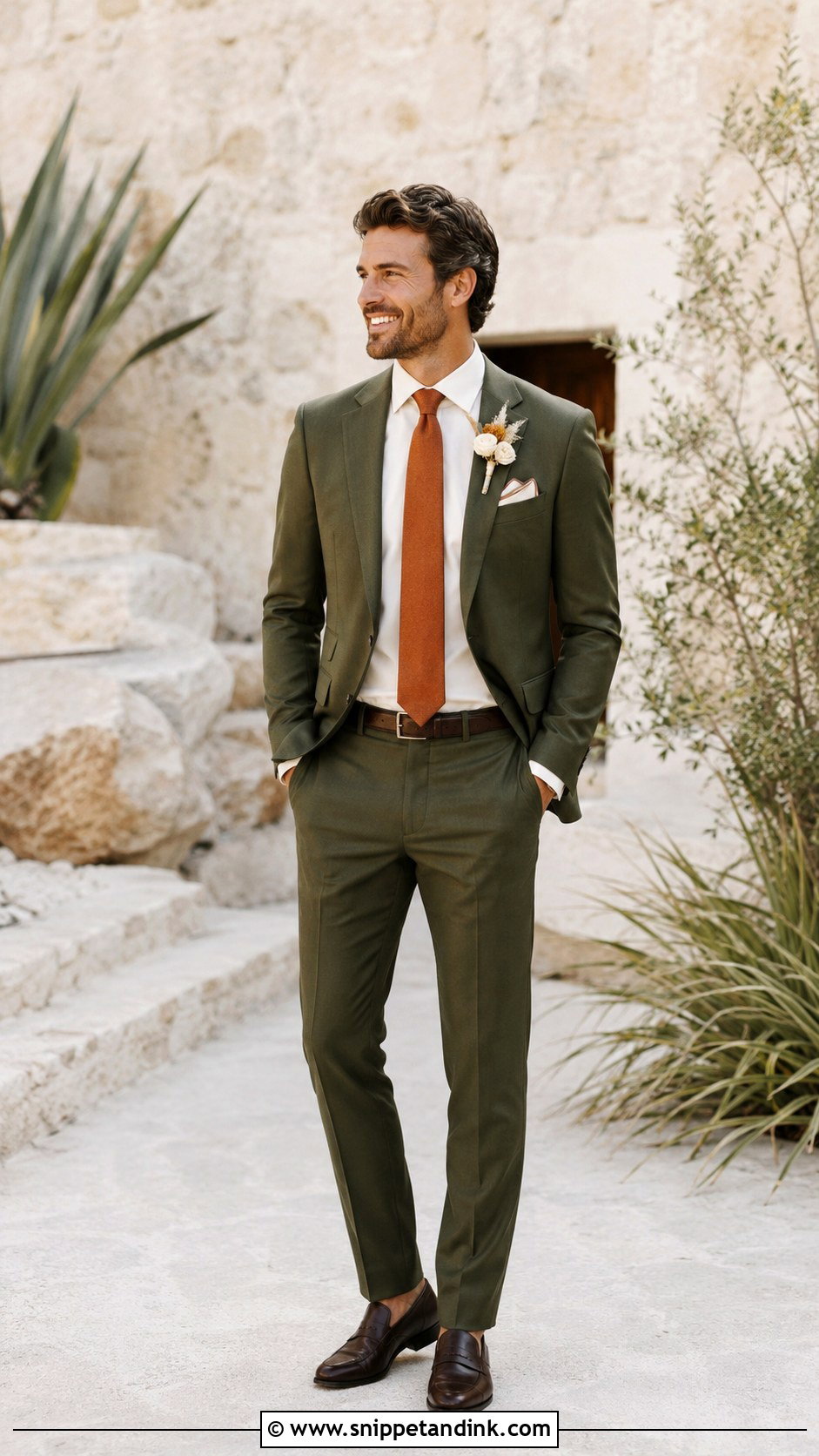
Terracotta draws out the brown undertone hidden in an olive green suit. A cream shirt keeps the contrast softer than bright white would, and a solid terracotta tie or a small-scale pattern gives warmth. Terracotta covers everything from pale clay to burnt orange, and different shops interpret it differently. I order all the ties from one source in one go, so the six or eight attendants actually match. Dark brown loafers and a rust-edged pocket square anchor it for desert or farm venues.
13. Forest Green Suit With Champagne Tie
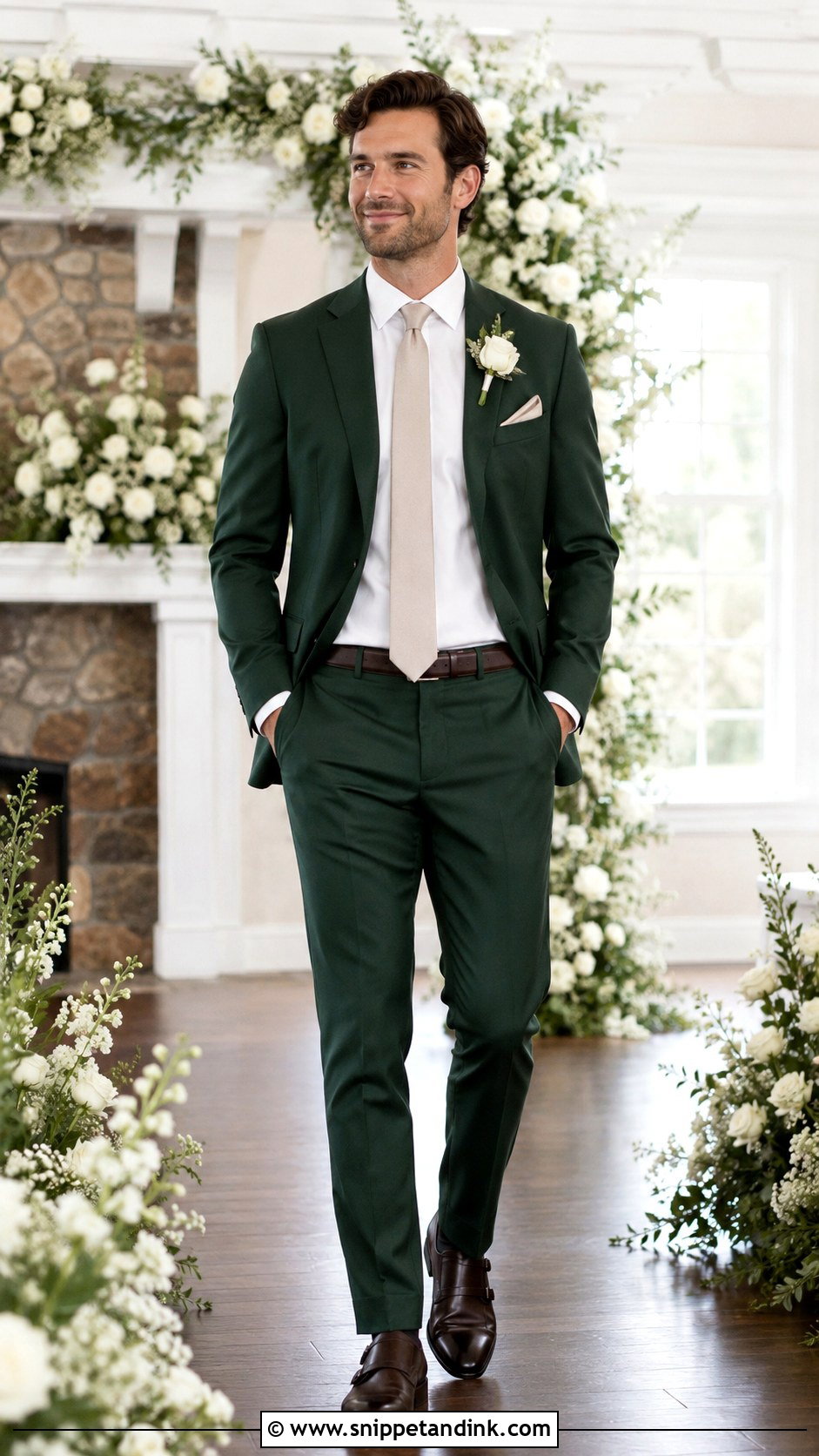
Champagne softens forest green and makes it feel celebratory. A white shirt, a matte champagne tie and a crisply folded cream pocket square do the job; dark brown monk straps add warmth. Champagne is a tricky color on camera, since shiny satin versions go almost white under flash and lose detail. I always choose a woven, matte tie. If the groom needs a little more, give him a champagne waistcoat or a patterned tie while the attendants stay in solids.
14. Green Plaid Suit With Solid Tie
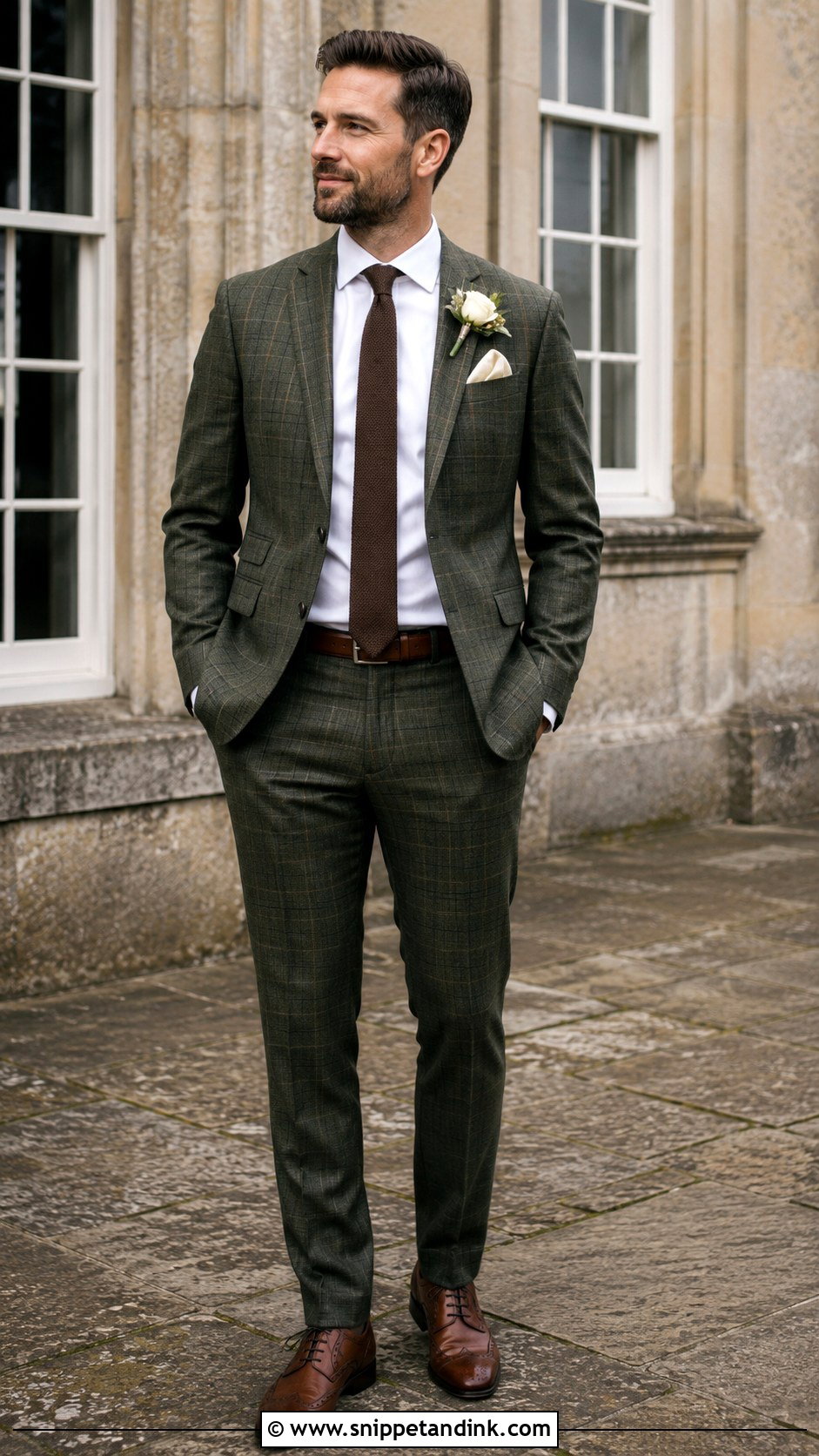
Plaid gives a wedding party interest, but scale is everything. A fine windowpane in forest, olive or moss reads as texture from across the room; a large, high-contrast check reads as loud. Once the suit has a pattern, the shirt is solid white and the tie is solid too, in dark brown, burgundy or navy. My favourite way to use it is the groom in plaid and the attendants in plain suits pulled from the base color of the check. It suits estates and cool-weather countryside weddings.
15. Green Suit With No Tie
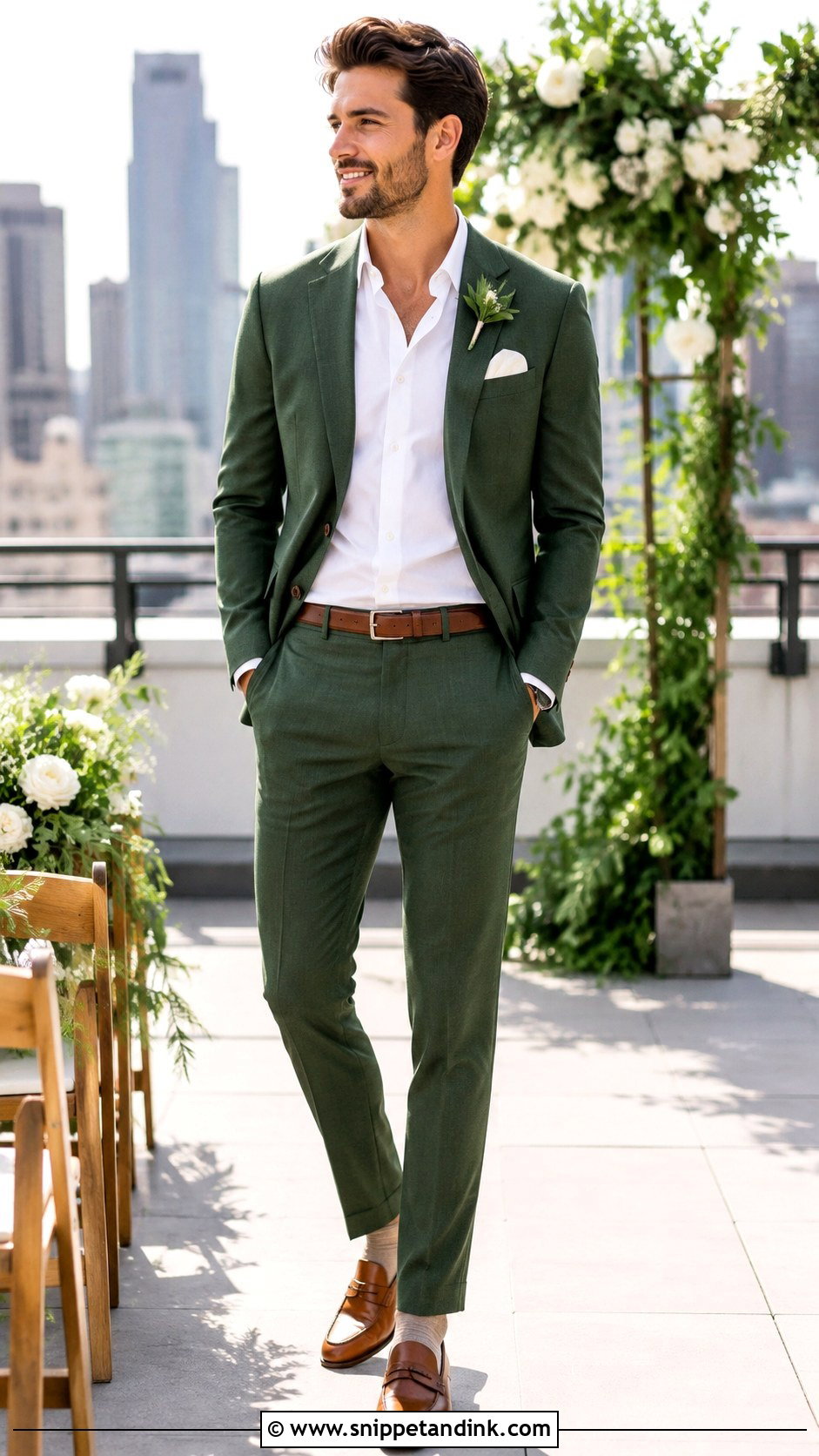
Going tieless sounds easy and is actually harder to get right. Without a tie, the collar is doing all the structural work, so I’d pick shirts with a firmer collar or hidden collar stays that won’t collapse under the lapel. Only the top button open. Sage, olive or a medium green suits best, with cognac loafers and neutral socks. Sleeves need to be adjusted properly on every jacket, because there’s nothing else drawing the eye away from the cuff line. It’s a good fit for daytime gardens and rooftops.
16. Green Suit With Suspenders
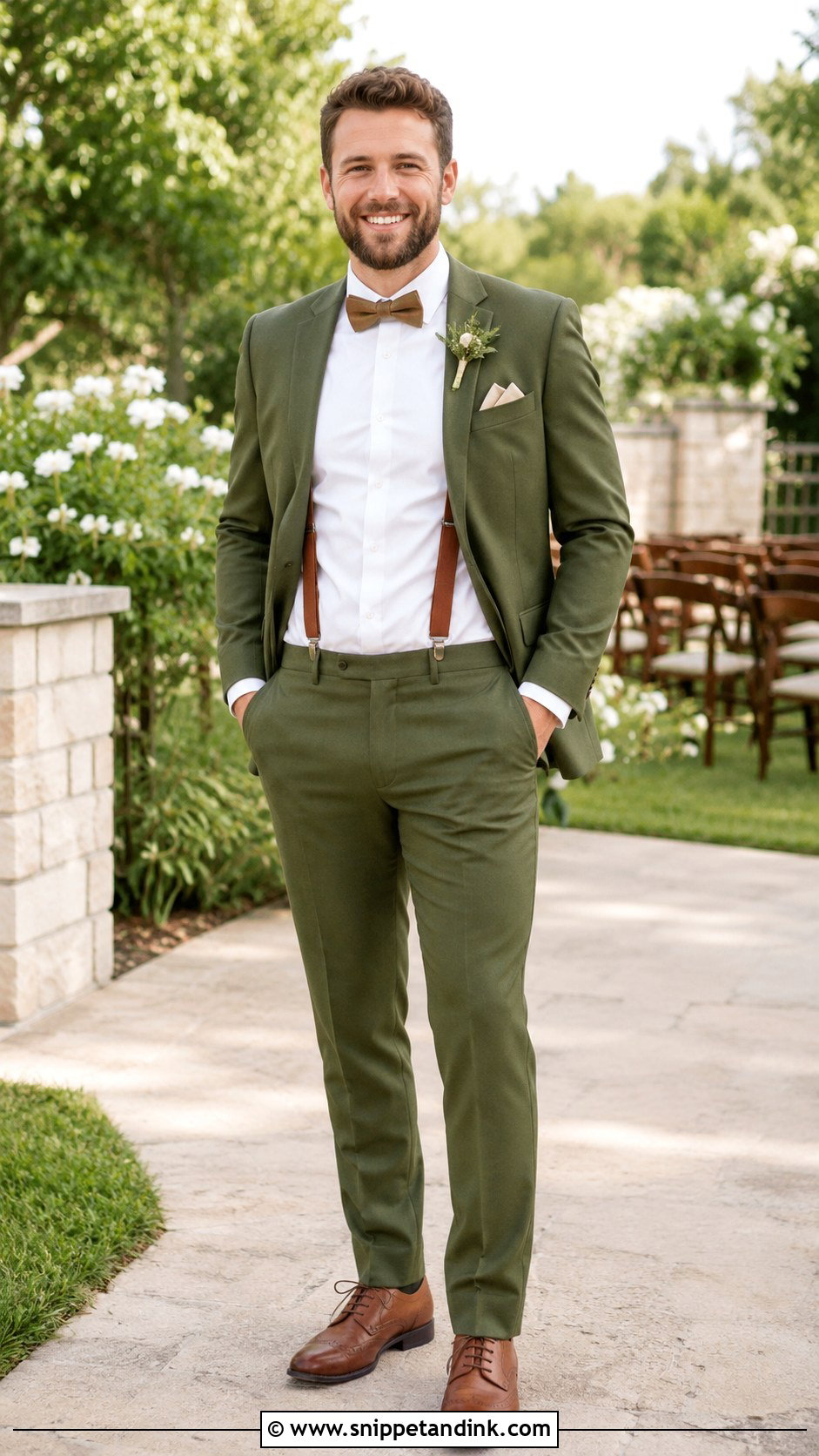
Suspenders make sense once the jacket comes off at the reception and turn a green suit into a relaxed, photo-friendly wedding-party outfit. An olive or sage two-piece with cognac or dark brown leather braces is the classic combination. I always ask for button-on braces, which means having suspender buttons sewn inside the trouser waistband. Clip-ons pop off when you dance and look cheaper in close-ups. A bow tie or slim tie, brown lace-ups and a cream pocket square complete it for barn and garden venues.
17. Green Suit With Turtleneck
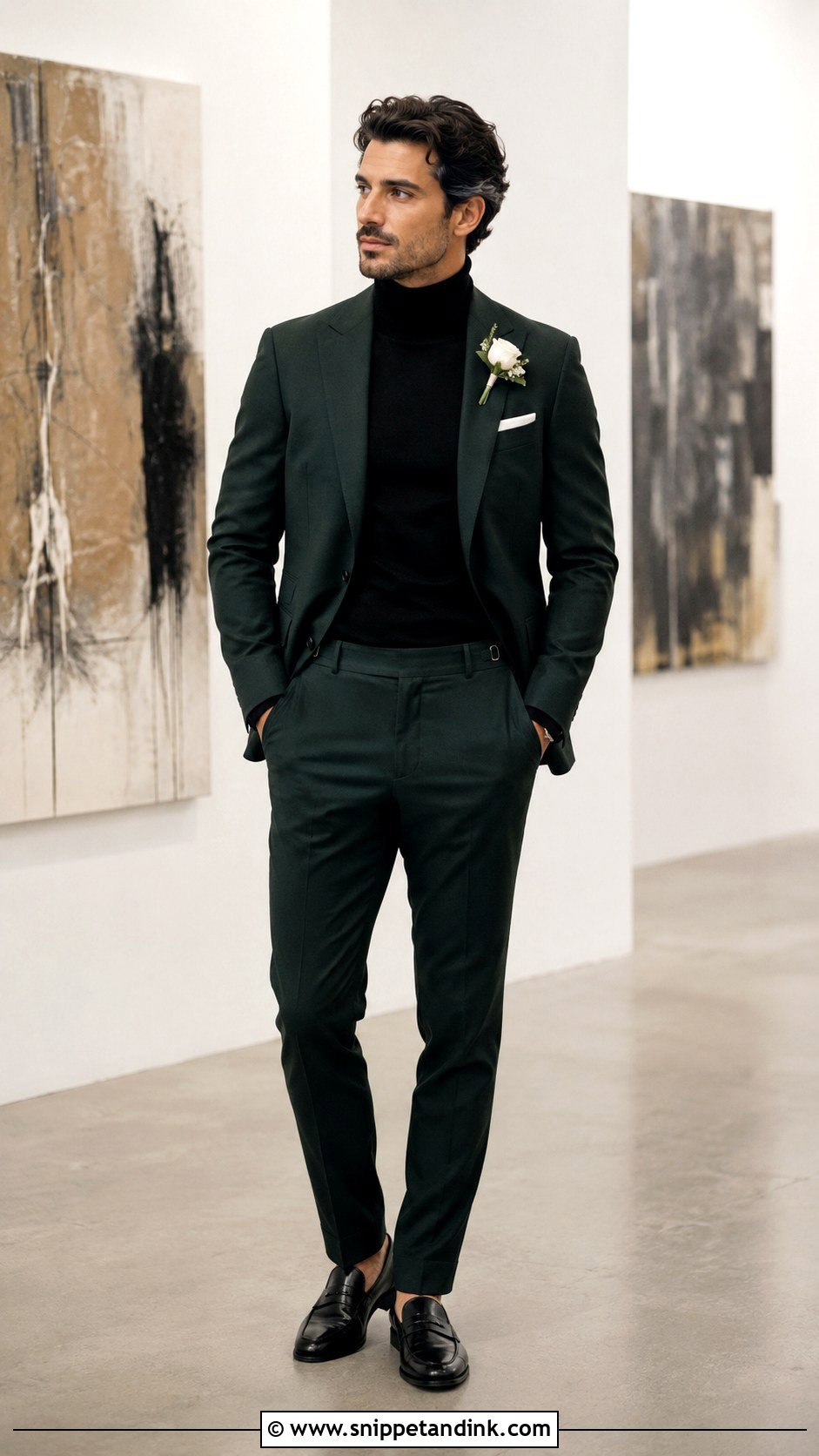
A fine-knit turtleneck replaces the shirt and tie entirely. Under a dark green suit, black or charcoal gives sharp contrast; cream softens it. The knit has to be fine gauge and close fitting. A chunky jumper bunches at the waist and pushes the jacket out. Black loafers sharpen it, brown suede softens it. If the trousers have side adjusters, skip the belt. I’d keep the boutonniere small and the whole party in the exact same turtleneck color for city weddings in cold weather.
18. Mixed Green Suits With Matching Accessories
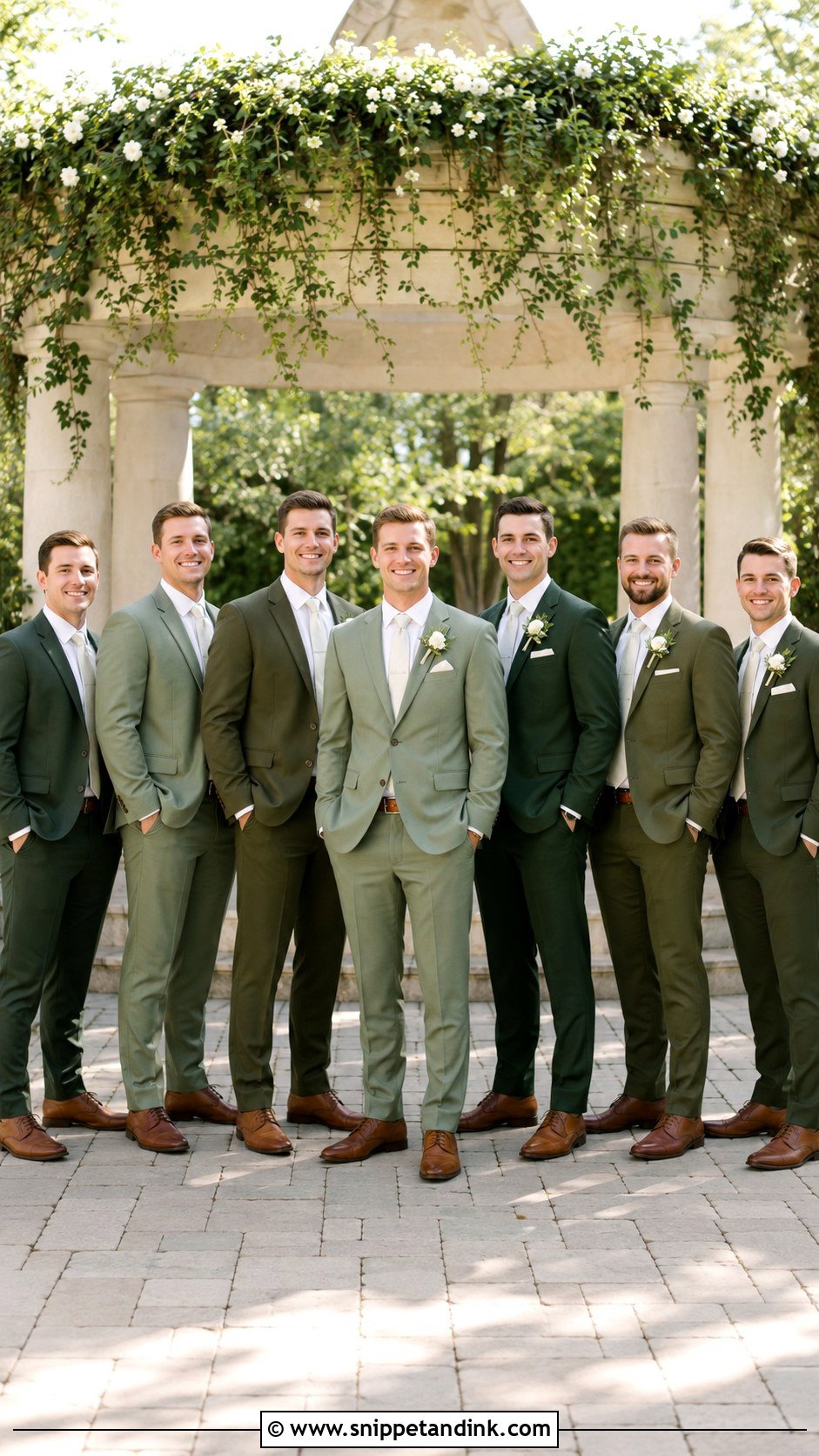
Mixing greens can look layered or look random, and the difference is the supporting pieces. Plan a set range of sage, olive, moss and forest green suits rather than letting everyone choose freely. Then hold everything else identical: white shirts, cream ties, brown shoes, matching belts, one pocket square style. Put the deepest shade on the groom and spread the lighter and darker suits evenly through the line-up. Get physical swatches first. Greens shift a lot between daylight and indoor bulbs, and two shades that look distinct online can merge in person.
19. Green Suit With White Sneakers
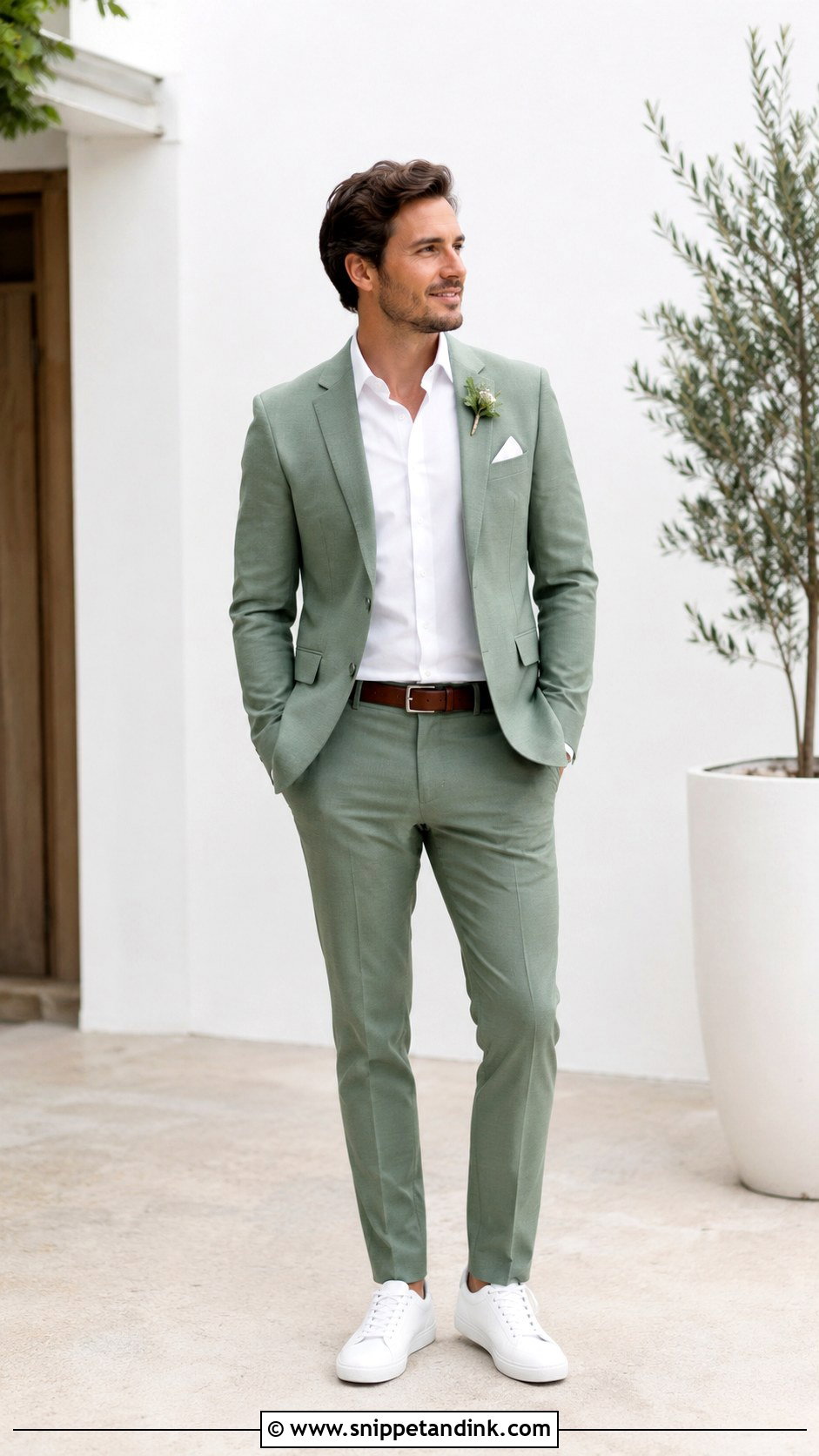
White sneakers work with a green suit when they look deliberate. That means minimal low-top leather, no colorful logos, no chunky soles and nothing that looks worn. I’d have everyone buy the same model, not just any white sneaker. Pair them with a slim sage, olive or medium green two-piece and a white shirt, tieless or with a narrow knit tie. Clean the sneakers the night before; scuffs on white leather show up clearly in full-length shots. Best suited to informal daytime ceremonies.
20. Green Suit With Matching Green Tie
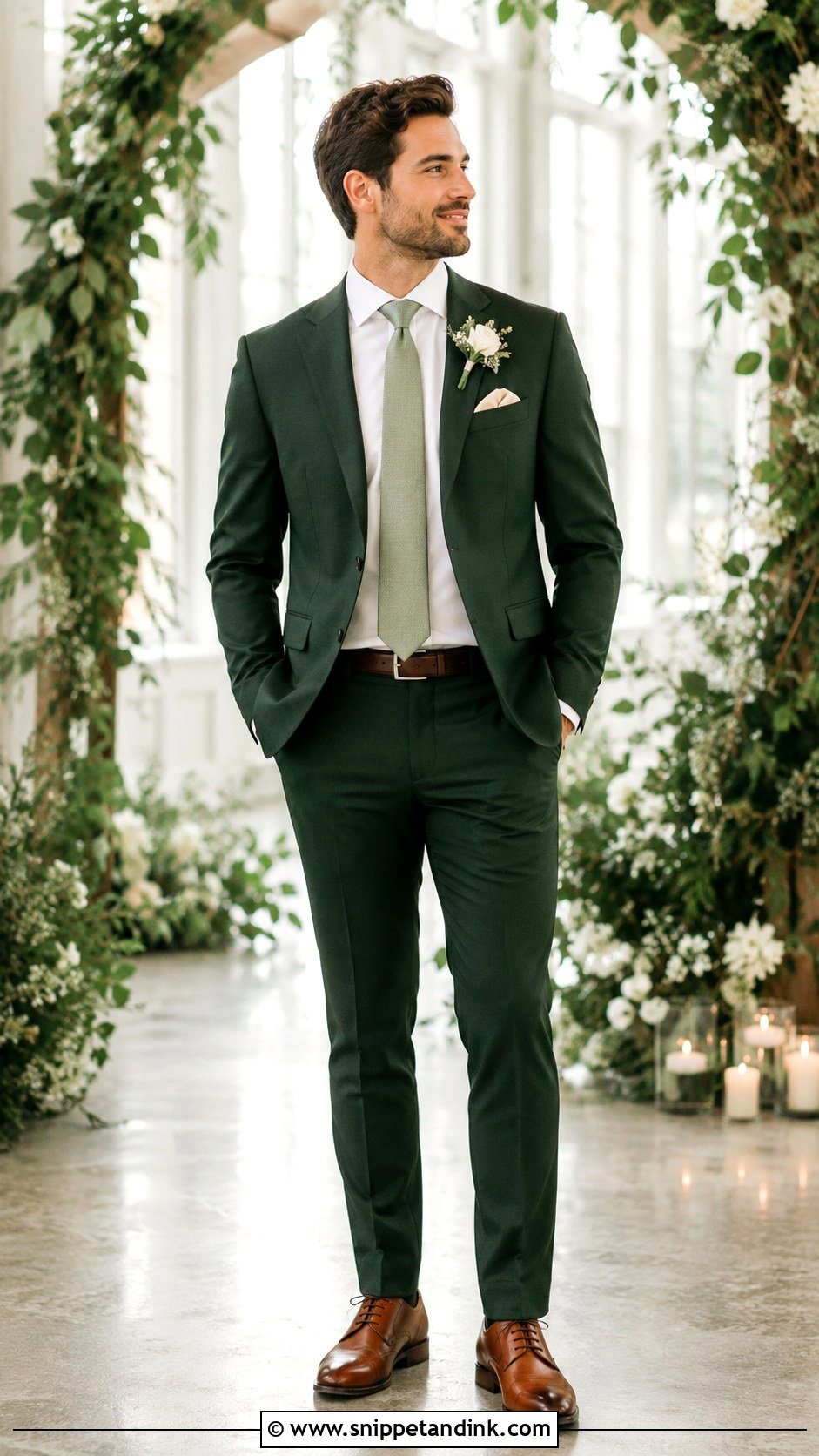
A tonal green outfit only reads well when there’s enough contrast between the layers. Forest suit with a sage tie, olive with moss, sage with a deeper eucalyptus tie. The common mistake is a tie that matches the suit fabric exactly. Up close it looks fine; in a photo the tie disappears. Keep the shirt white or ivory to separate the greens and bring light to the face, and a white flower on the lapel stops the monochrome from feeling heavy.
Half an Inch of Shirt Cuff and Other Fit Points the Camera Catches
In a group photo, small fit differences multiply. One person’s sleeve or trouser break looks fine alone and odd beside five others. These are the points I check on every attendant at the final fitting.
- Sleeves: roughly a quarter to half an inch of shirt cuff should show with arms relaxed. Same amount on everyone.
- Trouser break: decide on one break as a group, either a slight break or none. A mix of puddled and cropped hems looks messy in full-length shots.
- Jacket length: it should cover the seat. Shorter cuts are fashionable, but on taller groomsmen they can look borrowed.
- Collar gap: the jacket collar should sit against the shirt collar with no gap at the back of the neck when standing straight.
- Buttoning: agree on when jackets are buttoned (standing photos, ceremony) and when they can come off.
Sweat, Sun and Creases: How Each Fabric Holds Up by the Reception
A suit that looks sharp at 2pm can look tired by the first dance, and how much depends on the cloth. Tropical-weight wool is the most forgiving all-rounder; it breathes in warm weather and drops its creases overnight on a hanger. Linen wrinkles at the elbows and lap within an hour, so plan your formal portraits before the ceremony if you choose it. Cotton suits crease at the knees and back of the jacket once you sit.
Velvet and flannel are warm, and I’d only use them in heated indoor venues in cooler months. For outdoor summer weddings, I’d tell the party upfront when jackets can come off and have someone steam the suits on the morning. A handheld steamer on hanging suits fixes travel creases in a few minutes; an iron directly on green wool can leave shiny marks.
Green Suits That Look Right in the Group Photo
The parties I’m happiest with have three things in common: a green that suits the venue and season, tailoring that’s been checked on every single person, and accessories that stay consistent. Sage and linen belong to bright, warm days; forest, hunter, wool and velvet suit cooler or formal settings. White and cream shirts are a safe foundation, brown shoes warm earthy greens, and black sharpens emerald and darker shades. Compare swatches in daylight and indoor light, book fittings early, and give the groom one detail nobody else has, so the group looks coordinated without being identical.
You'll Like These Ideas:


Leave a Reply