
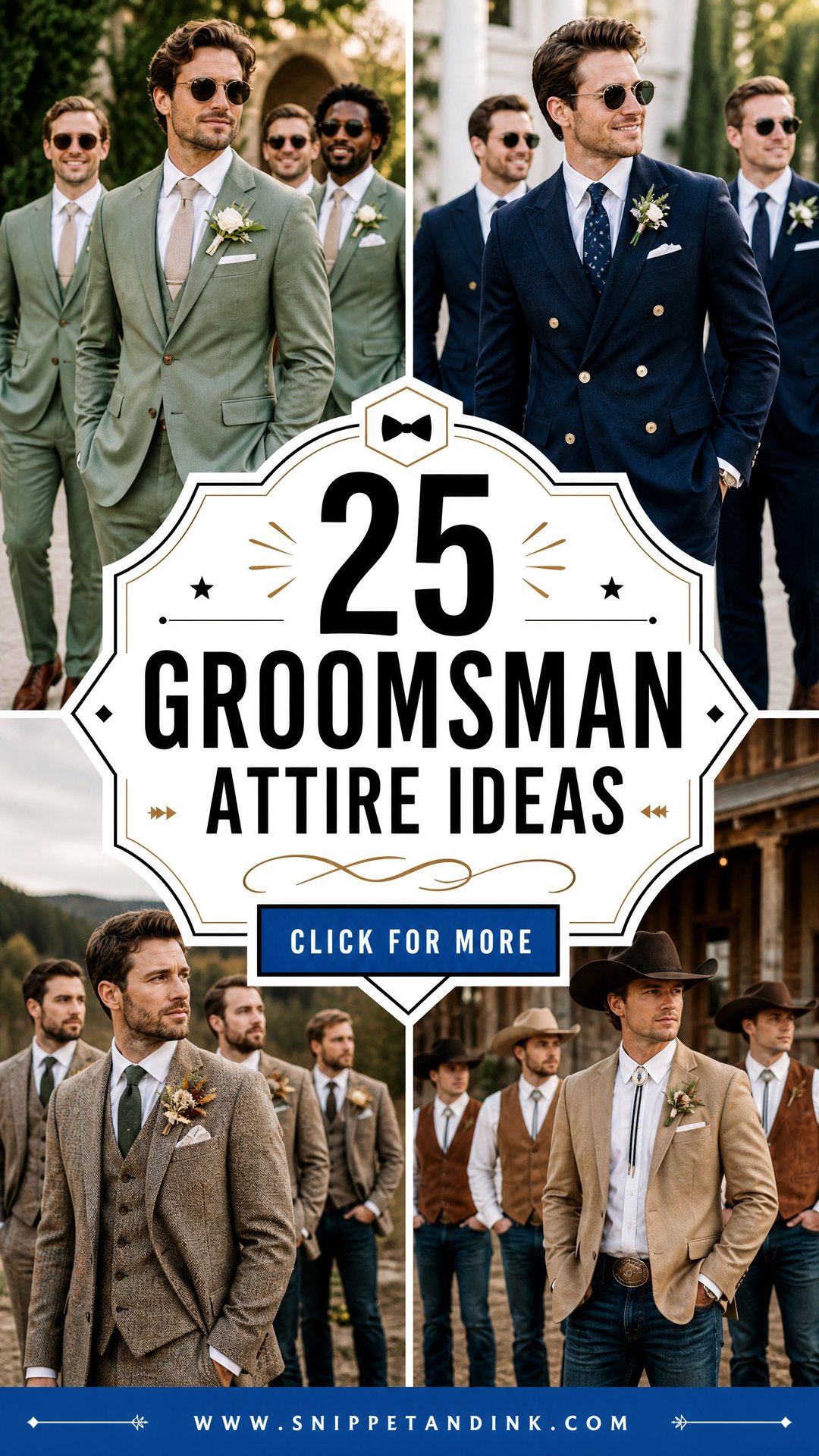
Dressing a group of groomsmen is mostly a fit problem dressed up as a color problem. Five or six men with different shoulders, chests and waists have to look like they belong together, stand for an hour without fidgeting, and still look sharp in the reception photos once the jackets come off. Start with the dress code, the venue and the hour of the ceremony, then pick the color. Lately I’m seeing more relaxed cuts, more earth tones and more room for each man to show a bit of himself, and that’s a healthy shift as long as the group still reads as one party. The outfits below run from black tie down to linen on sand, with notes on where each one tends to go wrong.
Getting Six Different Builds Into One Coordinated Order
The hardest part of a groomsman order is rarely the color. It’s the measurements. Men measure themselves badly, usually guessing their jacket size from something they bought years ago, so I ask for numbers taken by a tailor or a shop, not at home with a tape and a friend. Chest, waist, sleeve, inseam and shoe size, plus height and weight, which help a rental house or tailor sanity-check the rest.
Work backward from the date. For a purchased suit that needs alterations, I like the order placed three to four months out, so there’s time for a second fitting if the first one misses. Rentals usually need measurements a couple of months ahead and arrive in the days before the wedding, which leaves little room to fix a bad fit, so ask how exchanges work before you commit.
Rent, buy, or let them bring their own
- Renting suits tuxedos and unusual colors that nobody will wear again, but rental fit is approximate and sleeves are rarely shortened.
- Buying works for navy, charcoal or gray that each man will wear afterward, and a tailor can fit it properly.
- Own-suit plans only hold together with a written color code and swatches, and they suit relaxed weddings far better than formal ones.
Whatever route you take, have every man try on the full outfit, shoes included, at least two weeks before the wedding. That’s when you find the shirt collar that won’t close and the trousers that were hemmed for sneakers.
1. Black Tuxedo Groomsman Attire
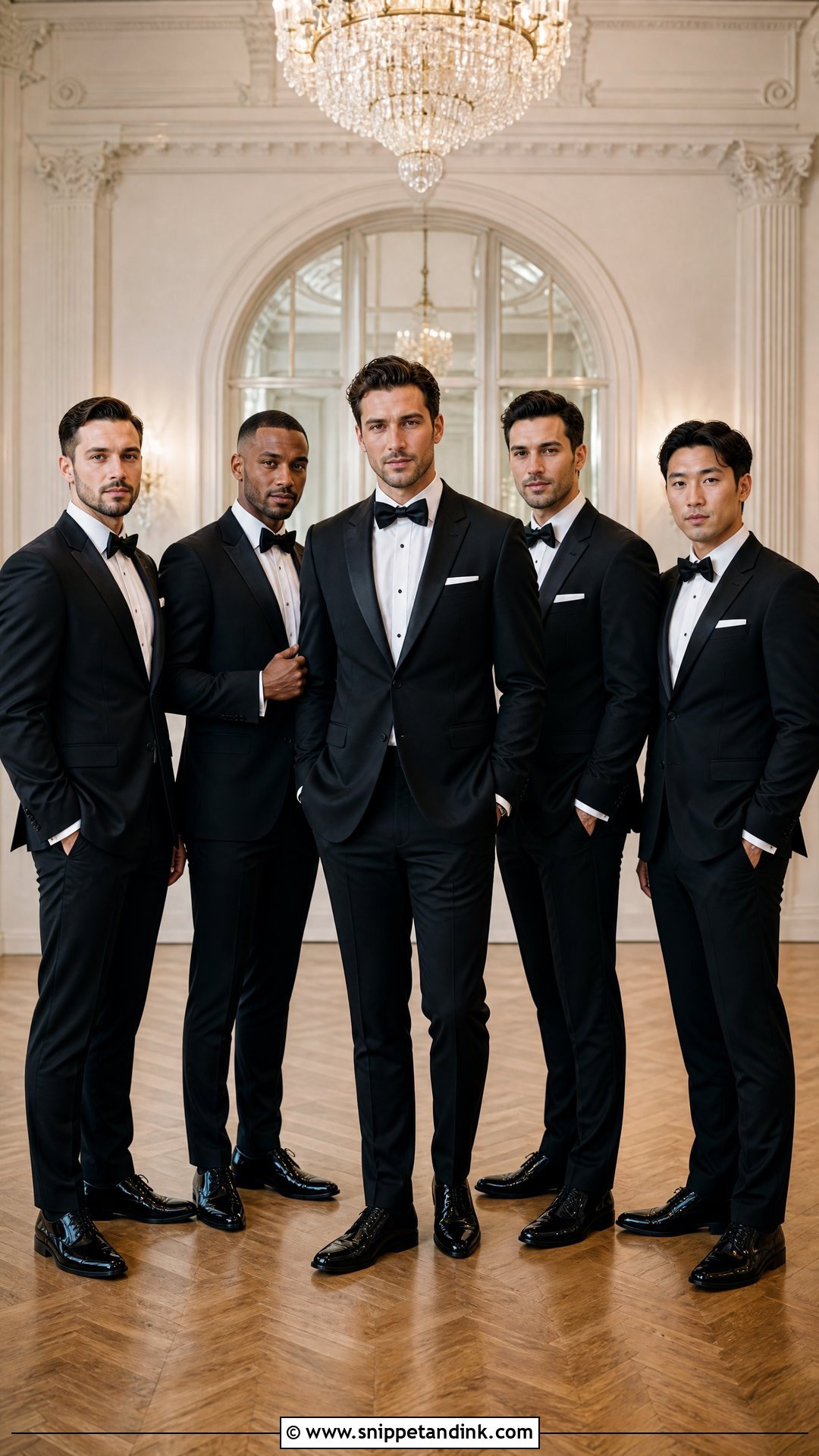
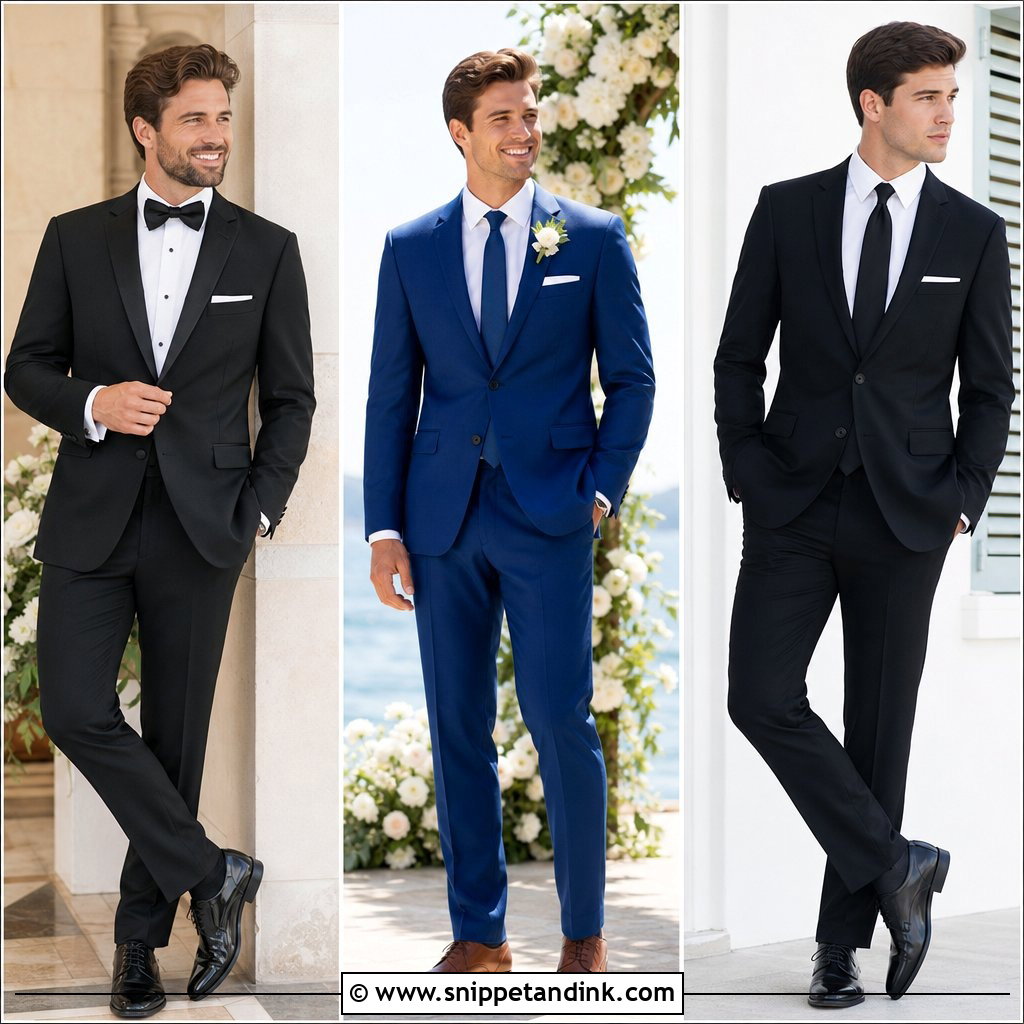
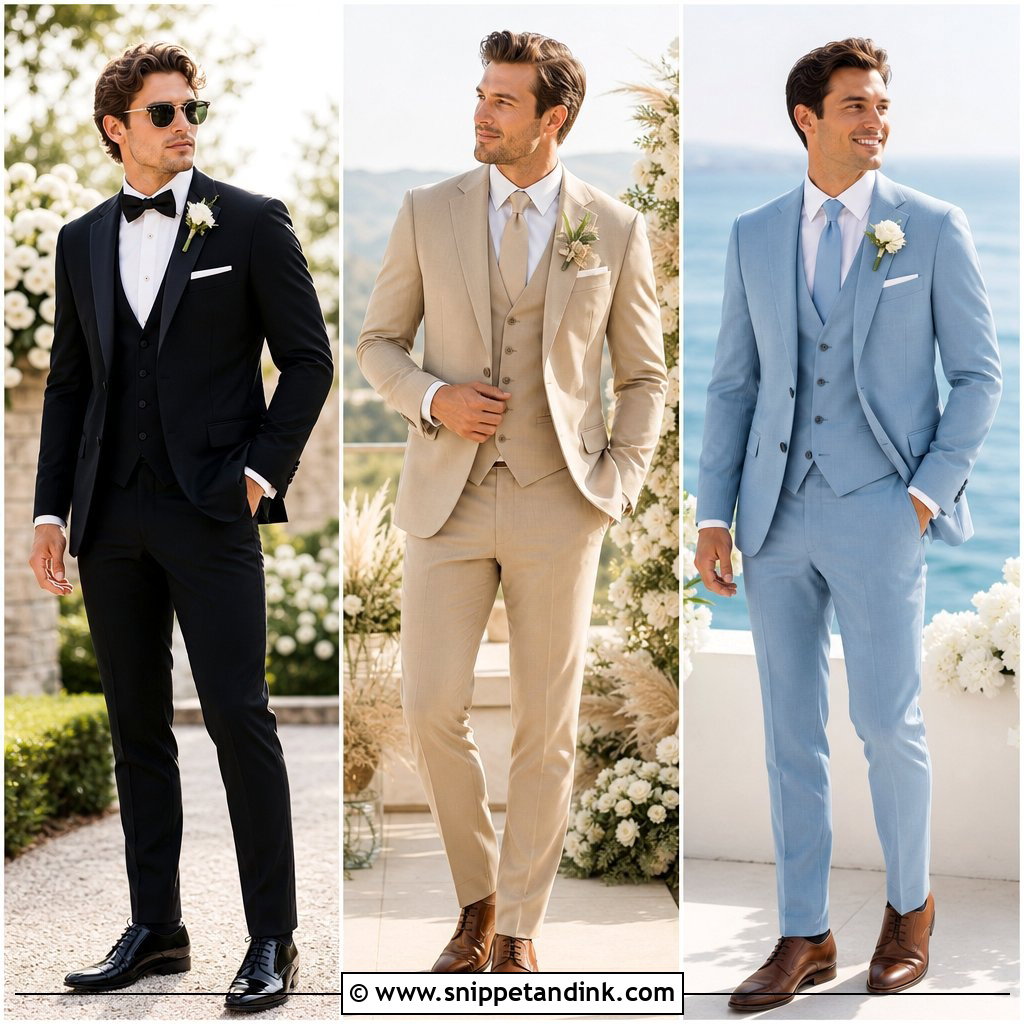
For a true black-tie evening, a black tuxedo is still the right call. Satin peak or shawl lapels, matching trousers with the satin side stripe, a white formal shirt, black bow tie, white pocket square and patent shoes. Plain black socks and quiet cuff links finish it. The thing I check hardest on tuxedos is the collar gap: if the shirt collar stands away from the jacket at the back of the neck, the whole group looks borrowed. Book fittings early, since sleeve and trouser hems take time when a tailor is busy in wedding season. The groom can be set apart with a different boutonniere or a shawl lapel against the groomsmen’s peaks.
2. Navy Blue Groomsman Suit
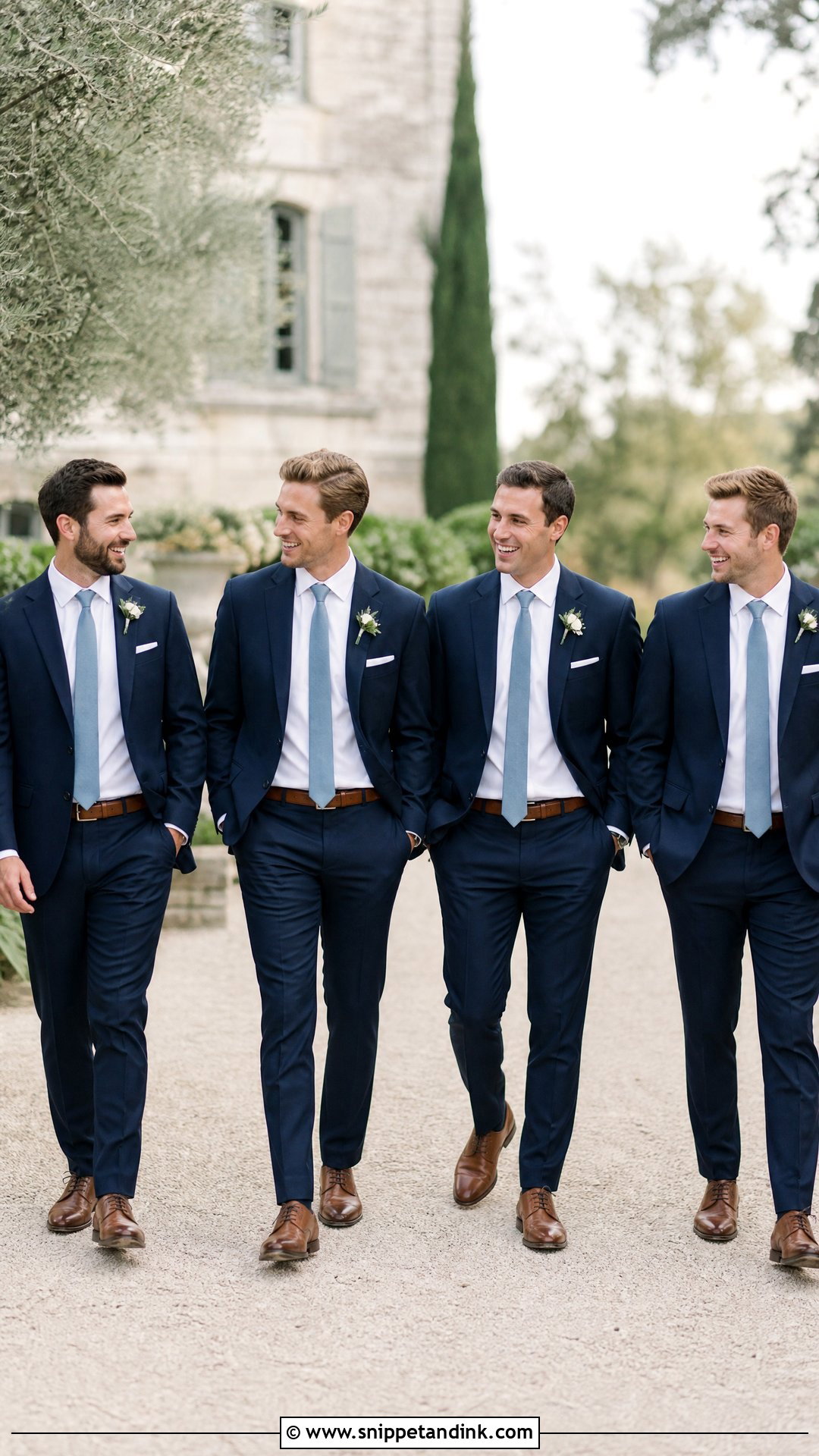
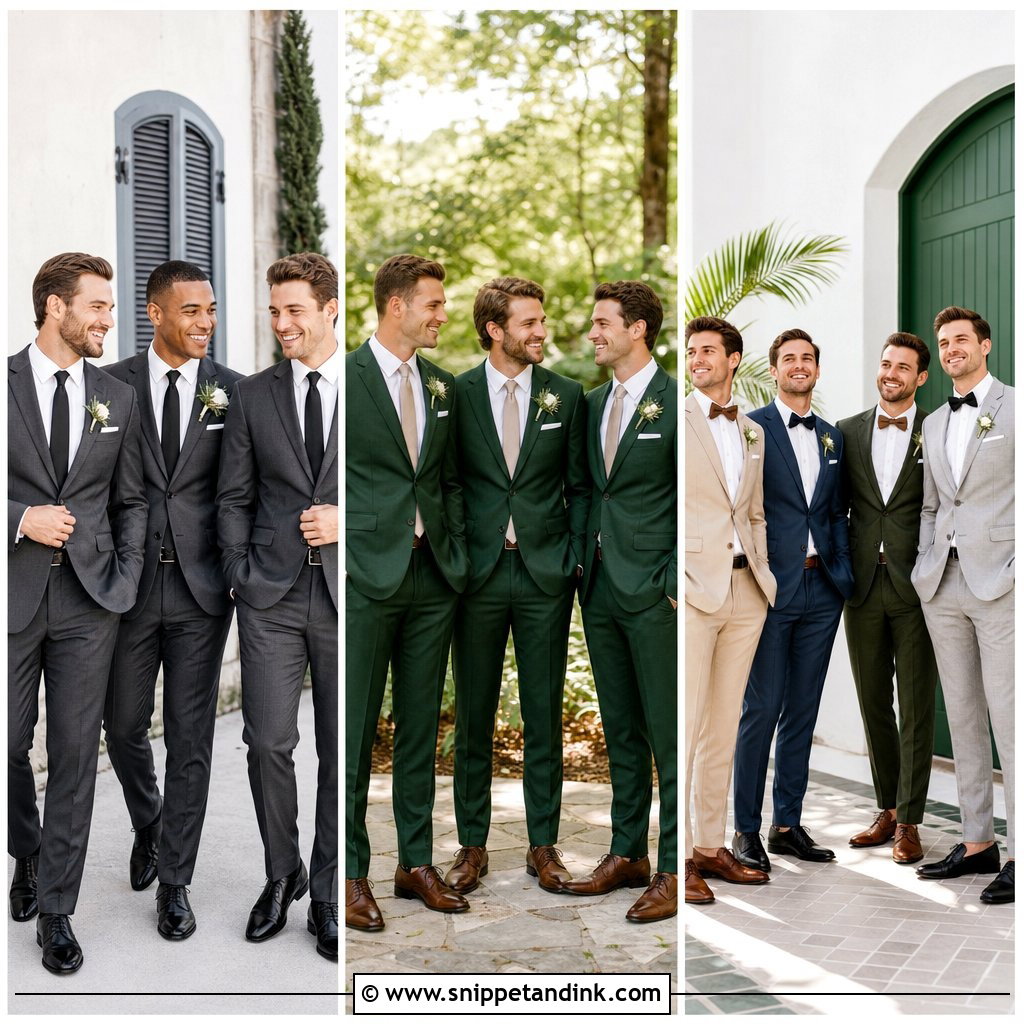
Navy suits are the safest group color I know, because navy flatters nearly every skin tone in the line. Two-piece suit, bright white shirt, muted blue or silver tie, white pocket square folded flat, and mid-brown Oxfords with a matching belt. Lightweight wool covers most of the year; a breathable blend helps in summer. The catch is that navy varies more than people expect between mills, so one man’s suit from another shop can look almost purple beside the rest under flash. Buy them from one source if uniformity matters. Navy sits easily with blush, sage, burgundy, dusty blue and gold palettes, and the groom can step up to three pieces or a patterned tie.
3. Charcoal Gray Groomsman Suit
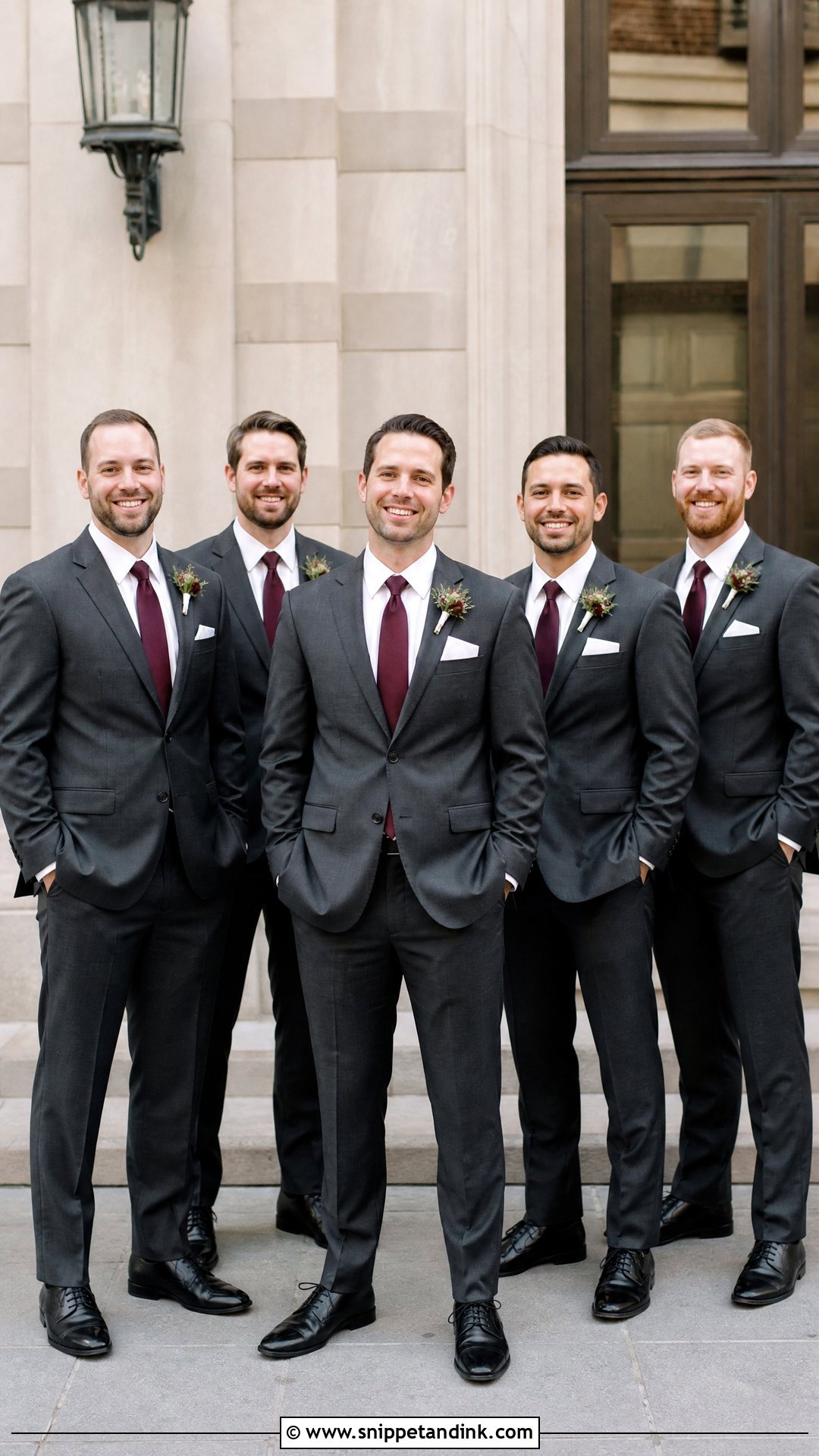
Charcoal is what I suggest when black feels too stiff and navy feels expected. A tailored two-piece in charcoal with a white or pale blue shirt, then a black, burgundy or deep green tie keyed to the palette. Black Derbies, a matching belt and dark socks keep the base clean. Add a white pocket square: without some white near the chest, charcoal goes flat and heavy in photos. It’s at its best in fall, winter and evening light, though a lighter cloth can carry it into spring. Keep the boutonnieres small, because the suit is already doing a lot.
4. Light Gray Groomsman Suit
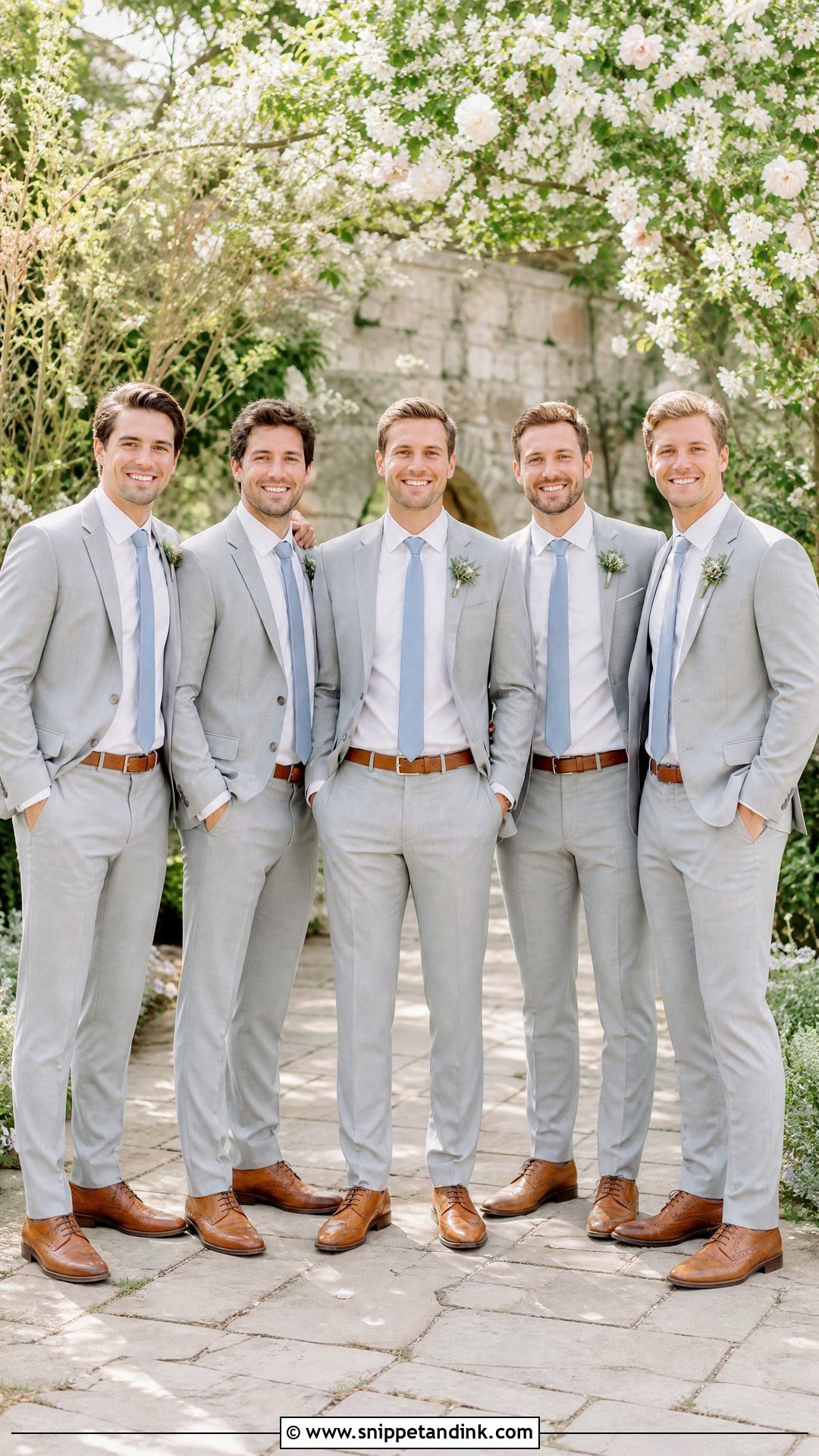
Light gray only makes sense in daylight; under warm evening bulbs it can turn slightly yellow. For a spring or summer daytime wedding, though, a single-breasted light gray suit with a white shirt and a tie in the wedding color is easy to coordinate. Dusty blue, lavender, blush, sage and navy ties all sit well on it. Cognac brogues and a matching belt are my default here. Match socks to the trousers rather than letting anyone sneak in novelty prints, which show the moment a groomsman sits. The groom stands apart nicely in a darker gray or with a vest added. Gardens, airy lofts and coastal venues suit this one.
5. Tan Linen Groomsman Suit
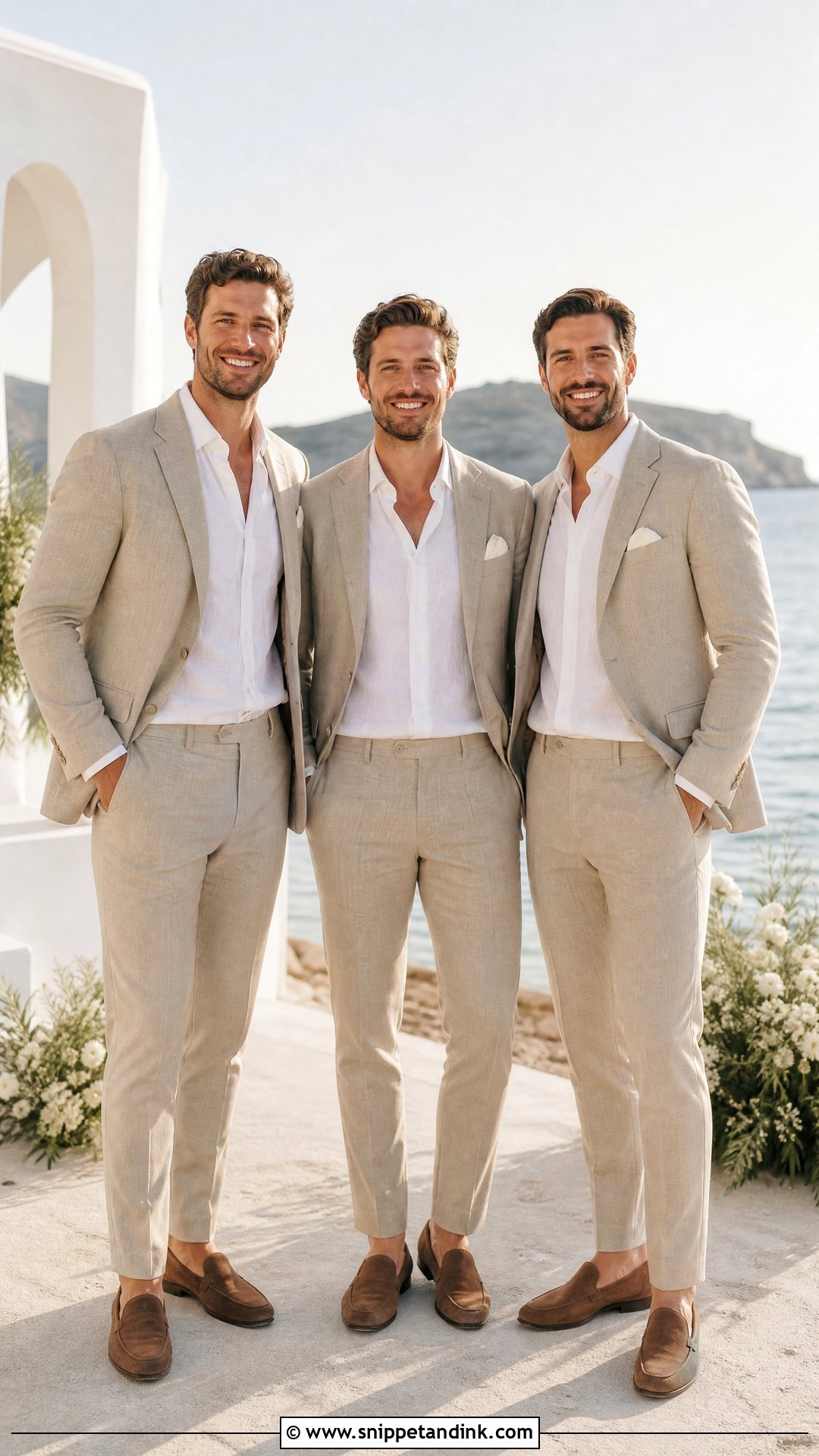
Tan linen gives a beach or destination party some structure without trapping heat. An unlined jacket, matching trousers and a breathable white linen-blend shirt; leave the collar open for a casual ceremony or add a textured knit tie to dress it up. Brown suede loafers, a woven belt and a light pocket square finish it. Pure linen creases within minutes of sitting down, and I tell grooms to accept that as part of the look or switch to a linen blend, which wrinkles far less. Lighter, softer construction really does help in coastal heat. The trousers still need tailoring, because loose linen trousers at the hem make men look shorter in group shots. Sand, desert and resort settings all suit it.
6. Sage Green Groomsman Suit
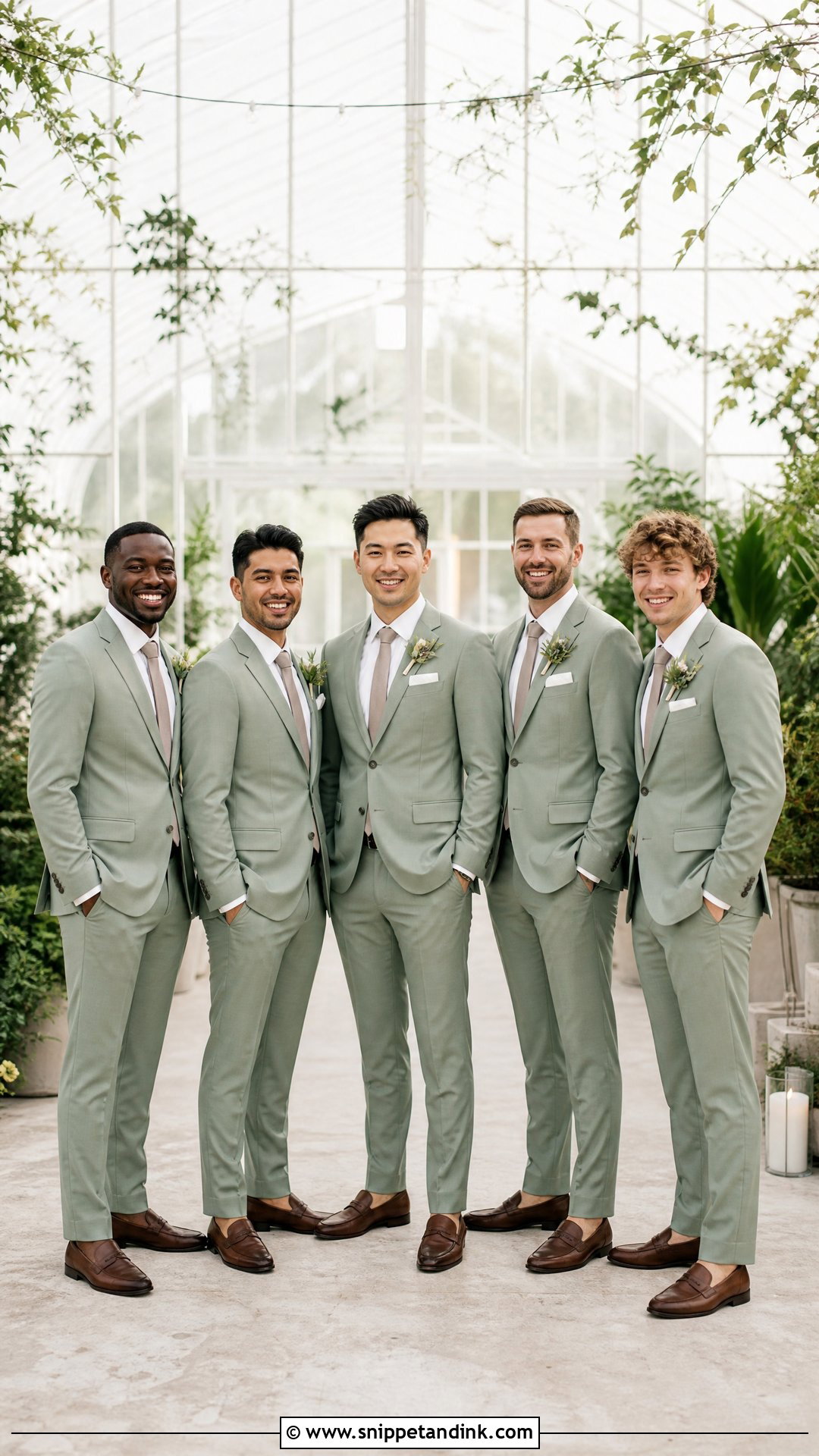
Sage gives a wedding party real color while staying easy to wear. Matching sage suits, white shirts, neutral ties, and brown loafers or Derbies. Ivory, taupe, champagne or a muted floral tie all sit comfortably against it, and a white pocket square with a small botanical boutonniere is enough. I steer clients toward a matte cloth: shiny sage reads as costume, while a dry wool or cotton surface makes the color look considered. It pairs naturally with cream, terracotta and dusty rose bridesmaid dresses. A deeper forest green or a neutral suit marks out the groom. Greenhouses and spring gardens are where it really comes alive.
7. Olive Green Groomsman Suit
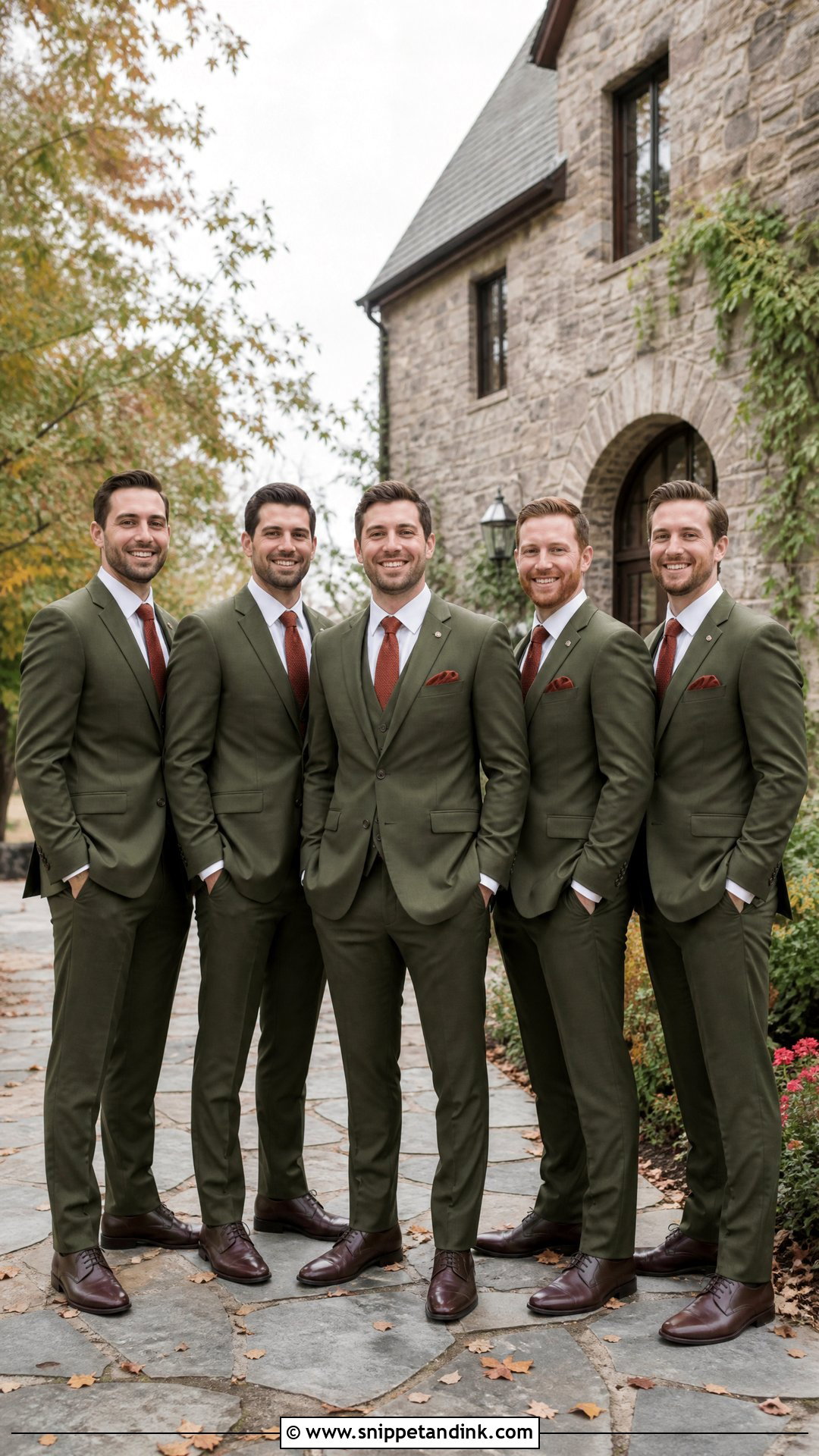
Olive is a grounded choice for fall, woodland and rustic weddings. Two-piece olive suits, cream shirts and textured brown or rust ties, with dark brown shoes, matching belts and neutral socks. Swap to white shirts and deep burgundy ties when the event is more formal. Here is the warning I give every time: olive is one of the least consistent colors across brands, ranging from khaki-gray to almost brown, so order every suit from the same collection. Keep the accessories restrained or it starts to look like a uniform from the wrong kind of event. The groom can wear three pieces, a darker green, or a tan waistcoat. Stone walls, timber and autumn leaves suit it well.
8. Burgundy Groomsman Suit
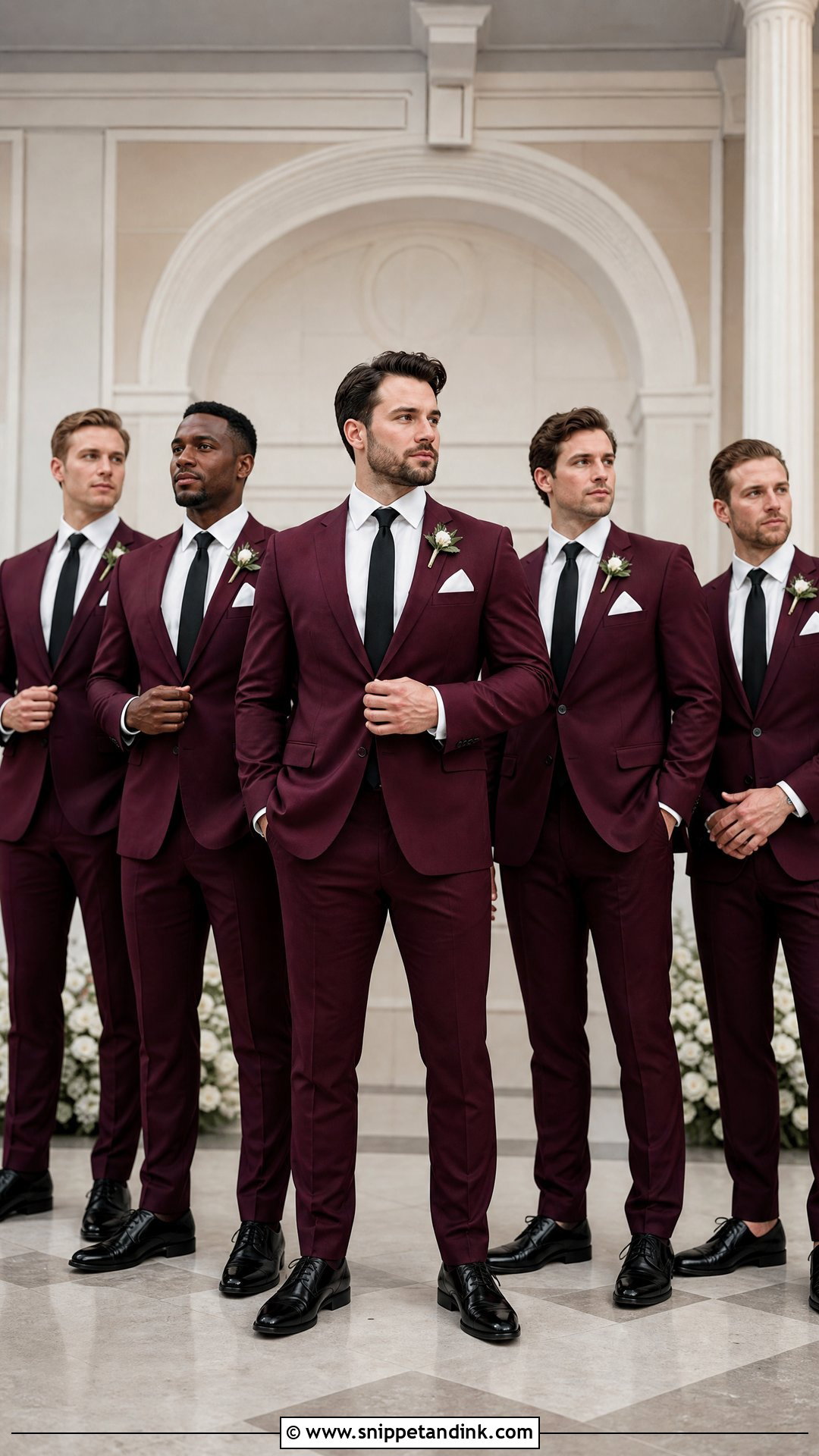
Burgundy is strong color with proper tailoring behind it, which is what stops it looking like a prom suit. White shirts with black, navy or tonal burgundy ties. Black shoes push it formal; dark brown softens it toward autumn. Keep pocket squares white or cream to calm the saturated cloth, and keep boutonnieres simple. I usually put the groom in black or charcoal with a burgundy tie rather than in the same burgundy, since a whole line of the same strong color can swallow him in photos. It suits black, blush, navy, gold or deep green palettes, and it does best indoors in the evening against neutral architecture.
9. Brown Groomsman Suit
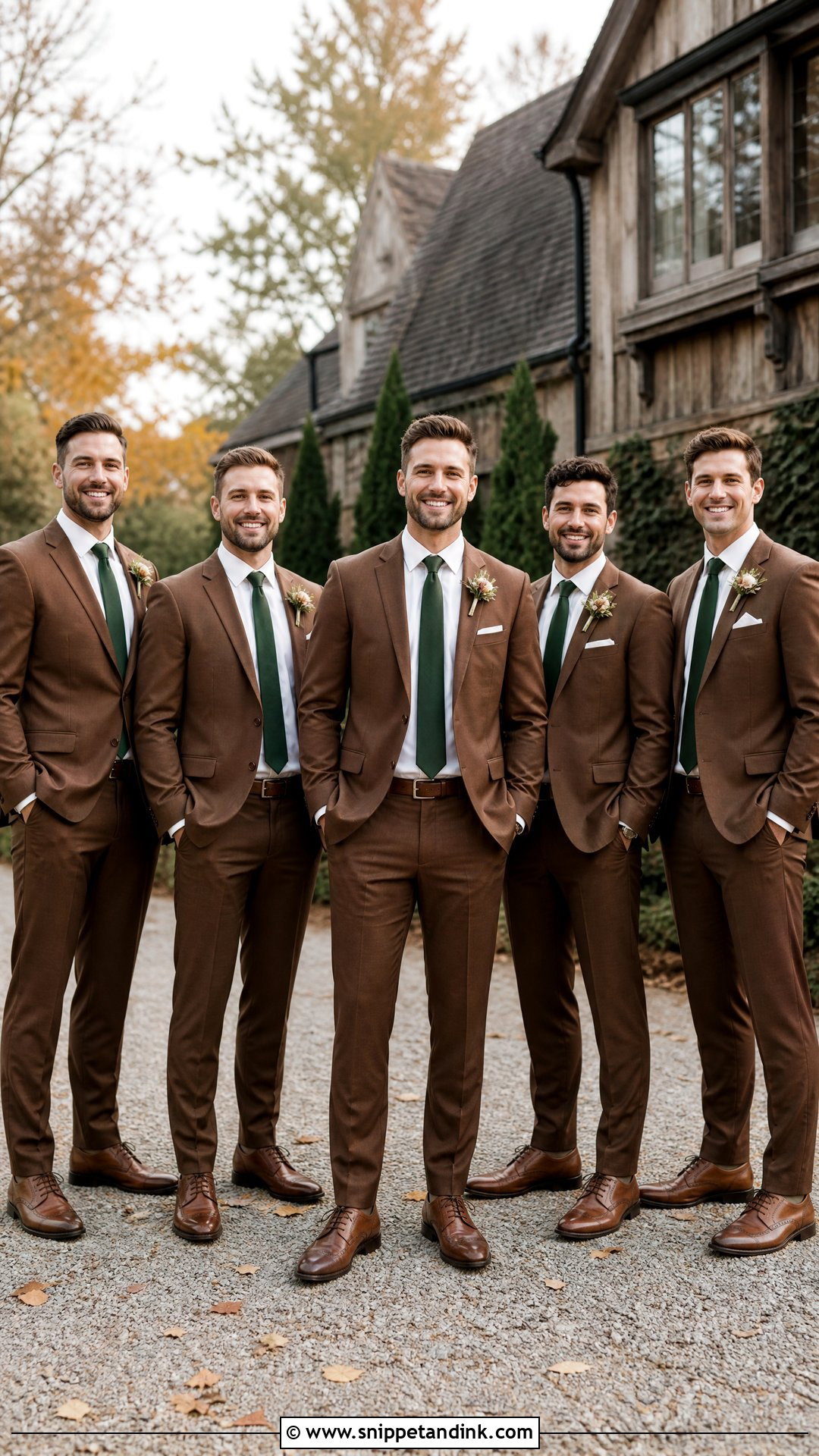
Brown is a warm break from the navy and gray most parties default to. A medium brown takes an ivory shirt, dark green tie and polished brown shoes; a darker chocolate suit wants a white shirt and a beige or rust tie for contrast. Cream pocket squares look better than bright white against brown, which can make white look almost blue. Texture is where brown earns its place: herringbone, brushed cotton or a flannel finish gives it depth that a flat worsted doesn’t. If you go textured, everyone needs the same cloth, because two different weaves of brown side by side look like a mistake. Barns, lodges and autumn estates suit it best.
10. Light Blue Groomsman Suit
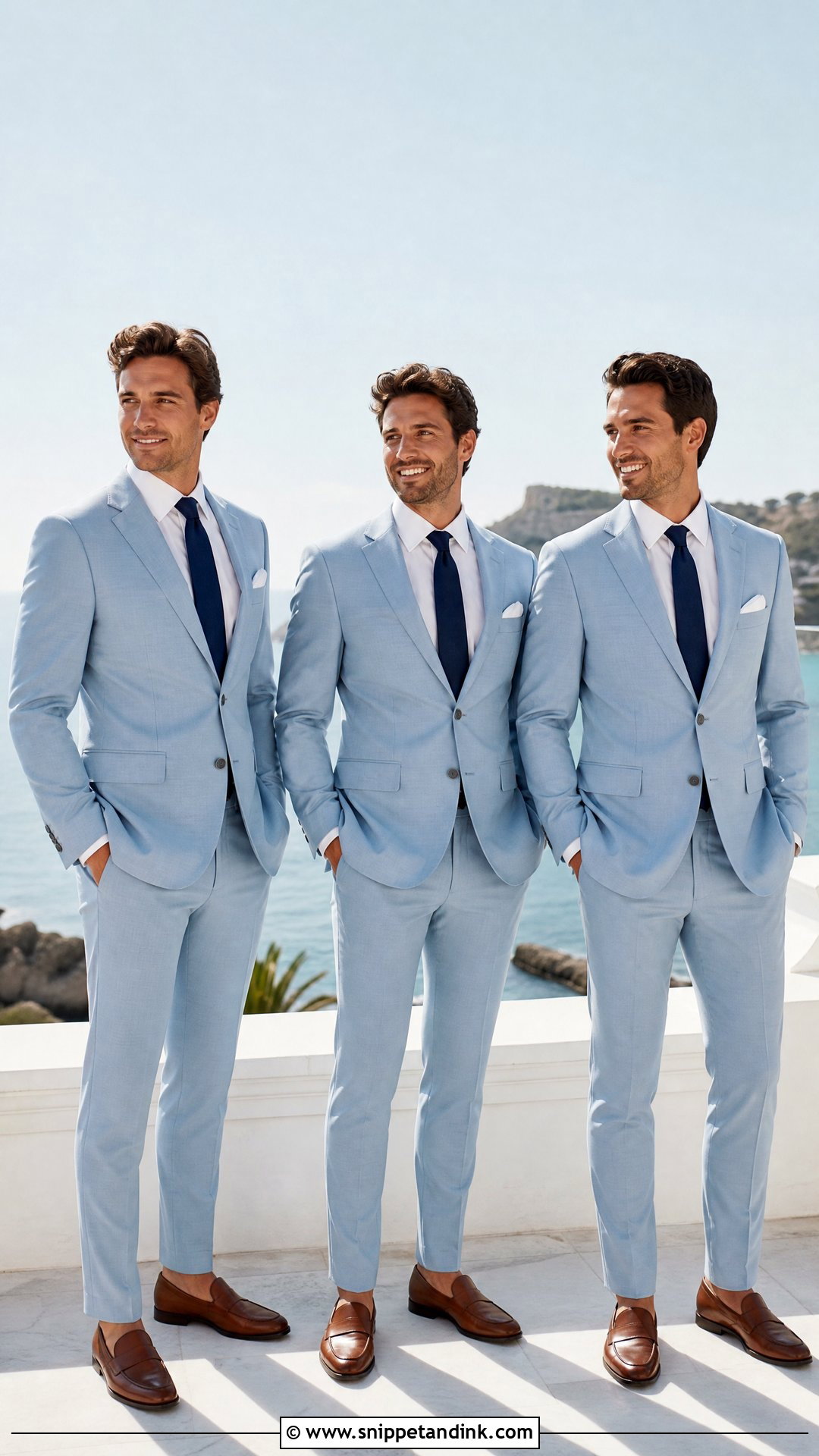
Pale blue is a summer daytime color, full stop. A light blue two-piece, white shirt, navy tie and white pocket square, with mid-brown loafers and a matching belt to keep it grown-up. For a softer palette, trade the navy tie for beige, dusty pink or a small floral. Lightweight wool or a linen blend keeps the men comfortable outside. The groom looks right in navy, staying in the same family while clearly standing apart. I’d avoid anything close to electric blue, which goes cheap-looking in hard midday sun. Coastal resorts, rooftops and garden ceremonies are its home.
11. Black Suit And Black Tie Groomsman Attire
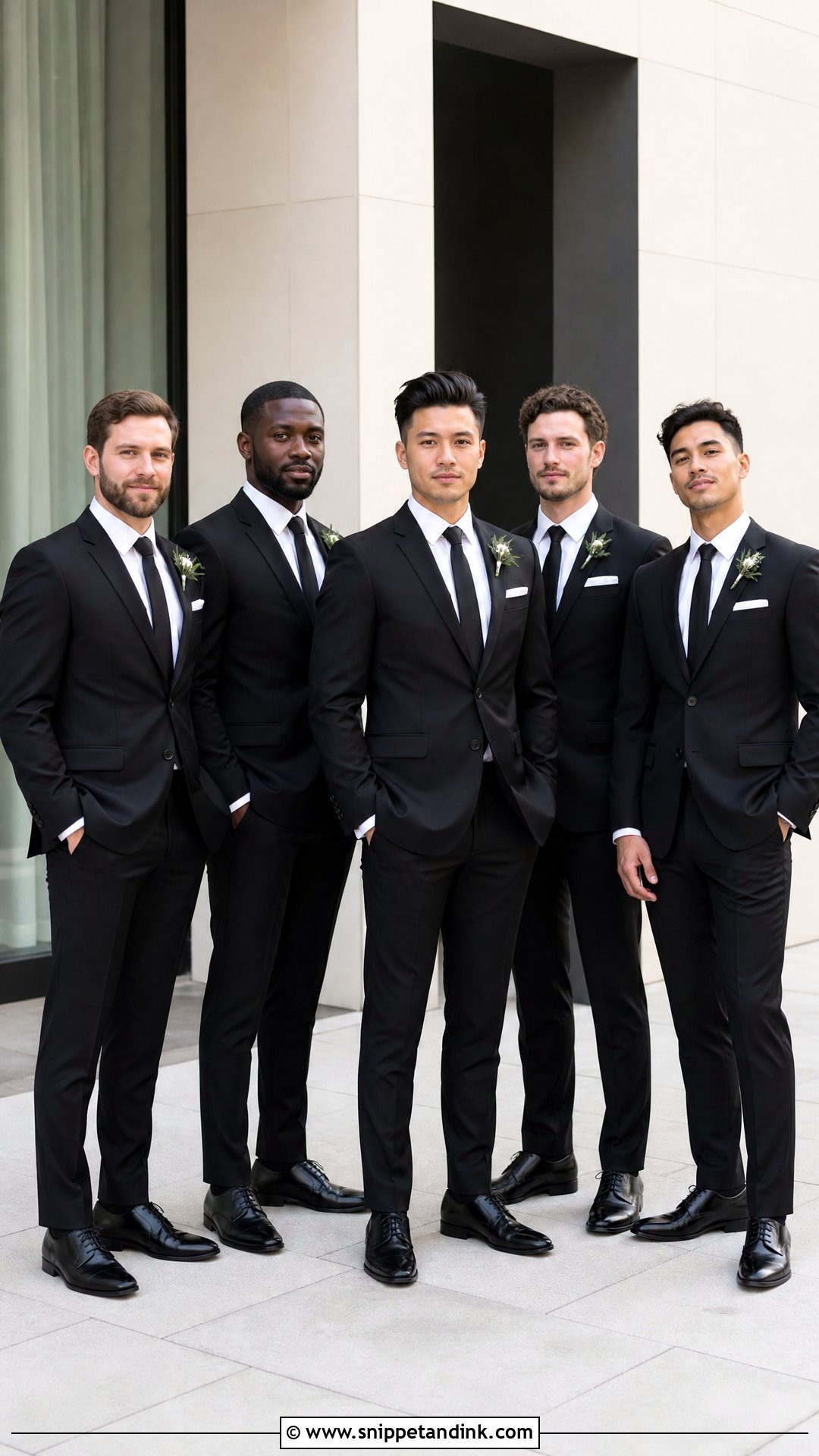
A black suit with a long black tie gives a formal line without asking anyone to rent a tuxedo. Clean single-breasted suits with notch lapels, white shirts and narrow-to-medium black silk ties, then black Oxfords, black belts, dark socks and white pocket squares. The white shirts keep it from looking severe. It’s easier to wear again afterward than a tuxedo, and it holds up from afternoon into evening. The groom can switch to a bow tie or a full tuxedo. My caution is fit: plain black shows every fault, from a collar that rolls to a sleeve that covers the shirt cuff, so take this one to a tailor rather than wearing it off the rack.
12. Double-Breasted Navy Groomsman Suit
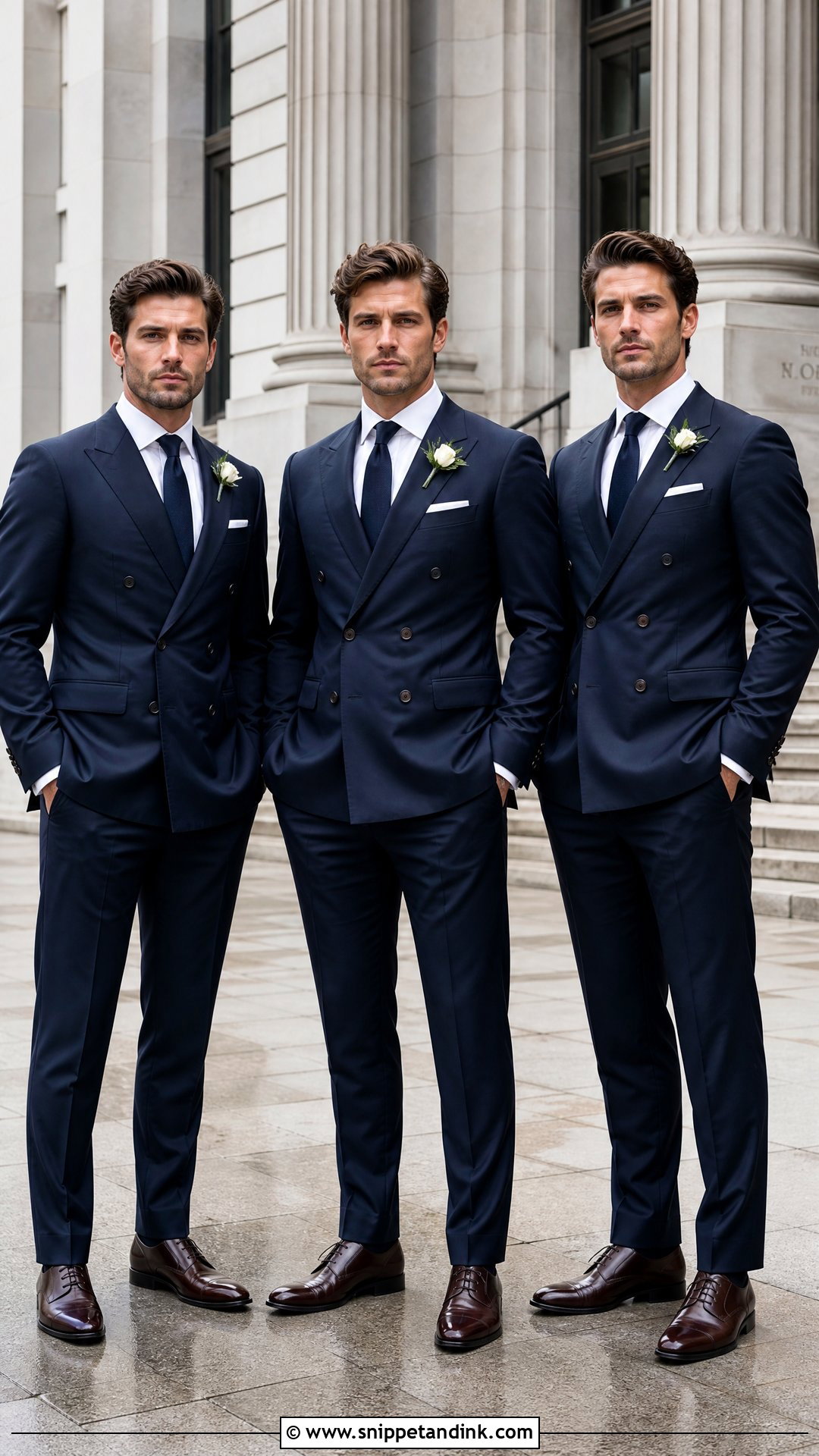
A double-breasted navy suit gives the party more presence without needing an unusual color. Pair it with a white spread-collar shirt, a dark navy tie and polished brown or black shoes, and keep the pocket square simple because the overlapping front already adds detail. Double-breasted jackets are meant to be worn buttoned, so the fit has to work standing and sitting: if the buttons pull into an X when he sits, it’s too tight. Straight or gently tapered trousers, never skinny. Honestly, this cut flatters slim and average builds more than very broad ones, and every man needs a proper alteration. Give the groom peak lapels or a contrasting waistcoat. City venues and evening receptions suit it.
13. Gray Three-Piece Groomsman Suit
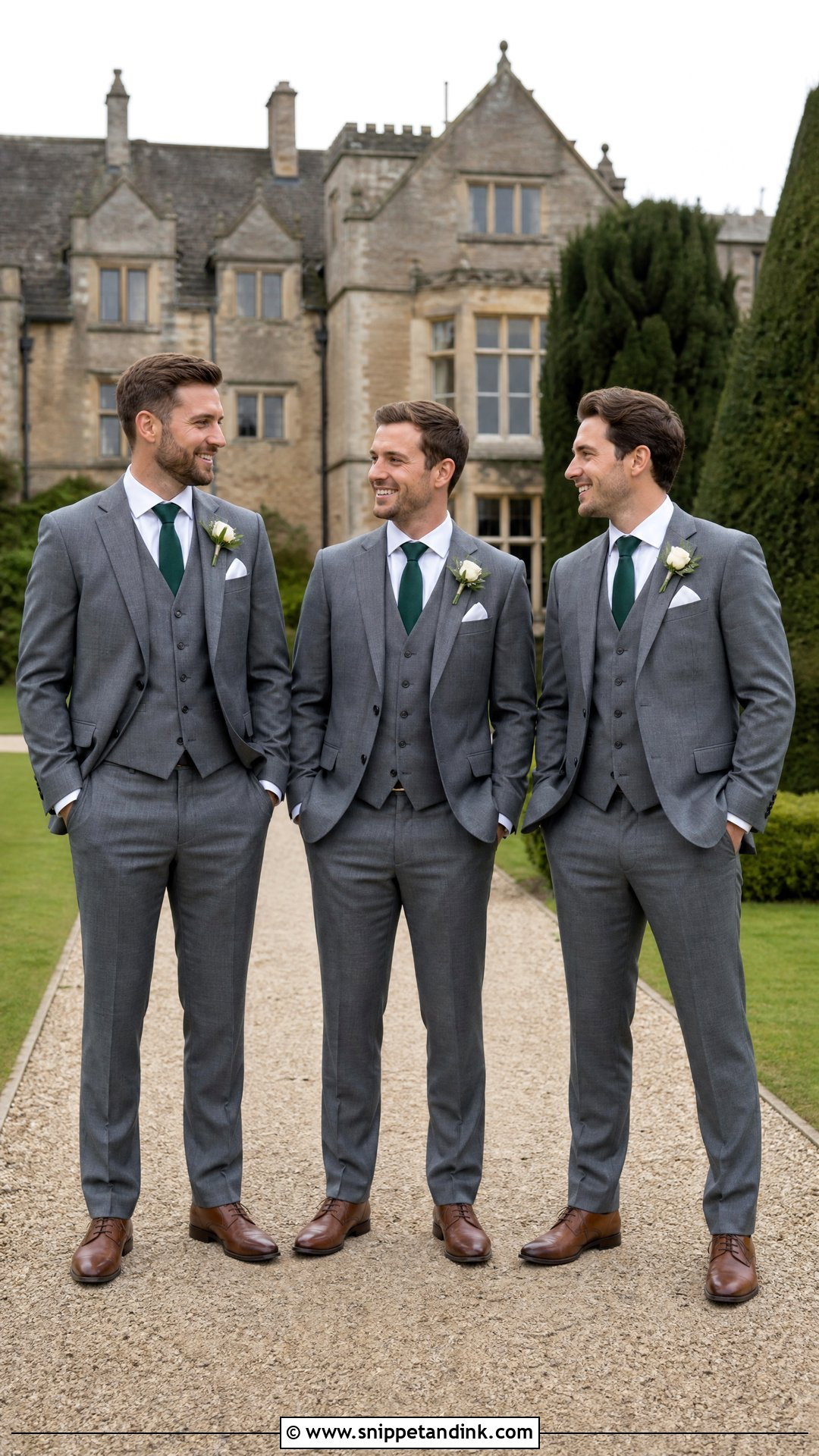
The waistcoat is what makes a gray three-piece practical, not just traditional. Jackets come off during the reception, and the groomsmen still look finished in every photo after that. Matching jacket, waistcoat and trousers, a white shirt and a burgundy, navy, forest or pale blue tie against medium gray, with black or dark brown shoes depending on the palette. The waistcoat must cover the trouser waistband with no shirt showing, and the bottom button stays undone. Let the groom wear a patterned waistcoat or a darker gray. Manor houses, ballrooms and cool-season weddings suit it.
14. Velvet Dinner Jacket Groomsman Attire
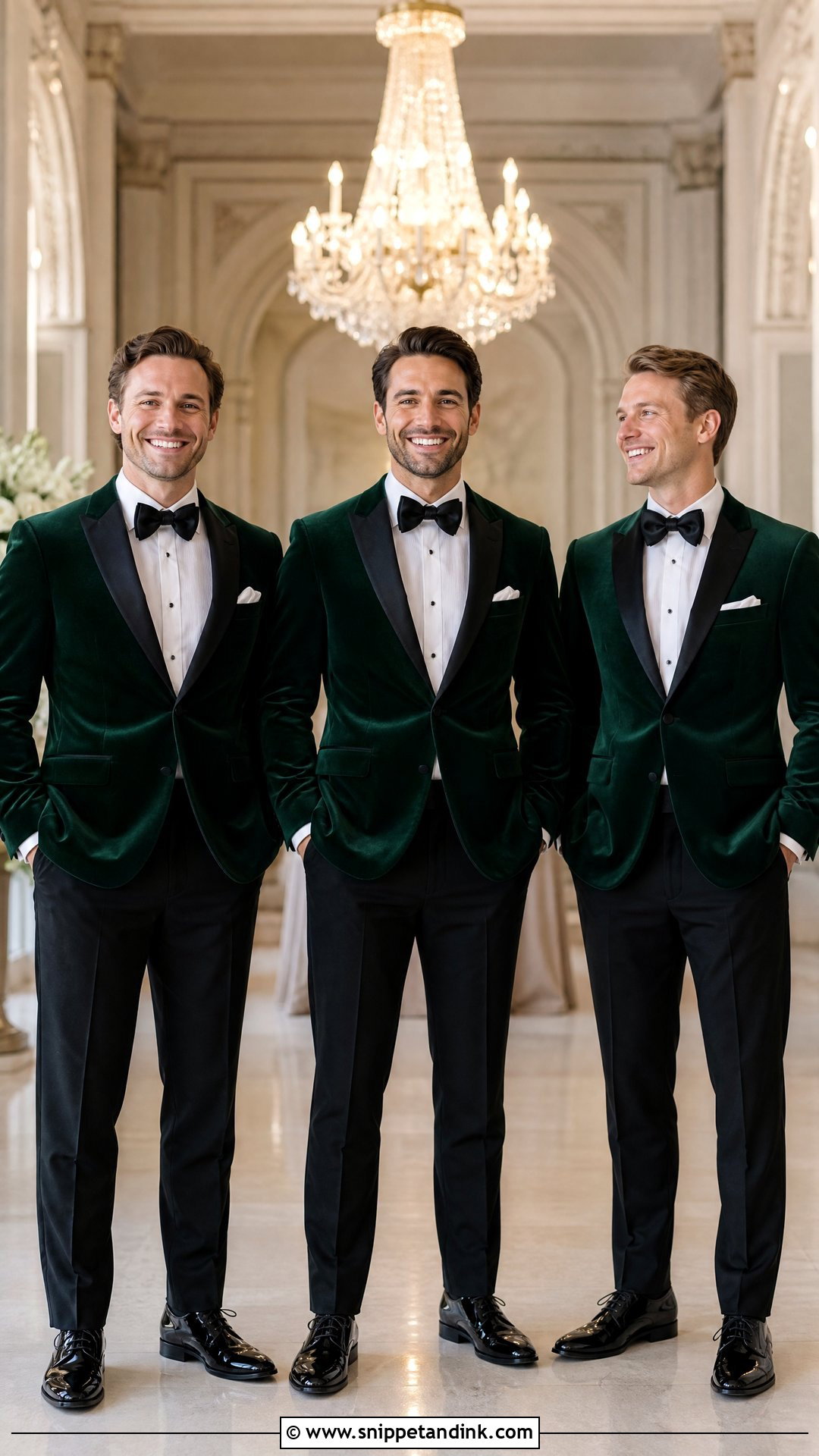
Velvet belongs indoors in winter. Deep navy, black or forest green velvet dinner jackets over black tuxedo trousers and white formal shirts, with black bow ties, patent shoes and plain white pocket squares. Keep everything below the jacket black so the texture doesn’t take over the group. Velvet pile catches light differently depending on the direction it was cut, so even jackets in the same named shade can look mismatched under event lighting; buy them together and check them side by side before anyone leaves the shop. It’s warm and heavy, so I’d never put it in an outdoor summer ceremony. The groom can wear an ivory dinner jacket. Grand hotels and theaters suit it.
15. White Dinner Jacket Groomsman Attire
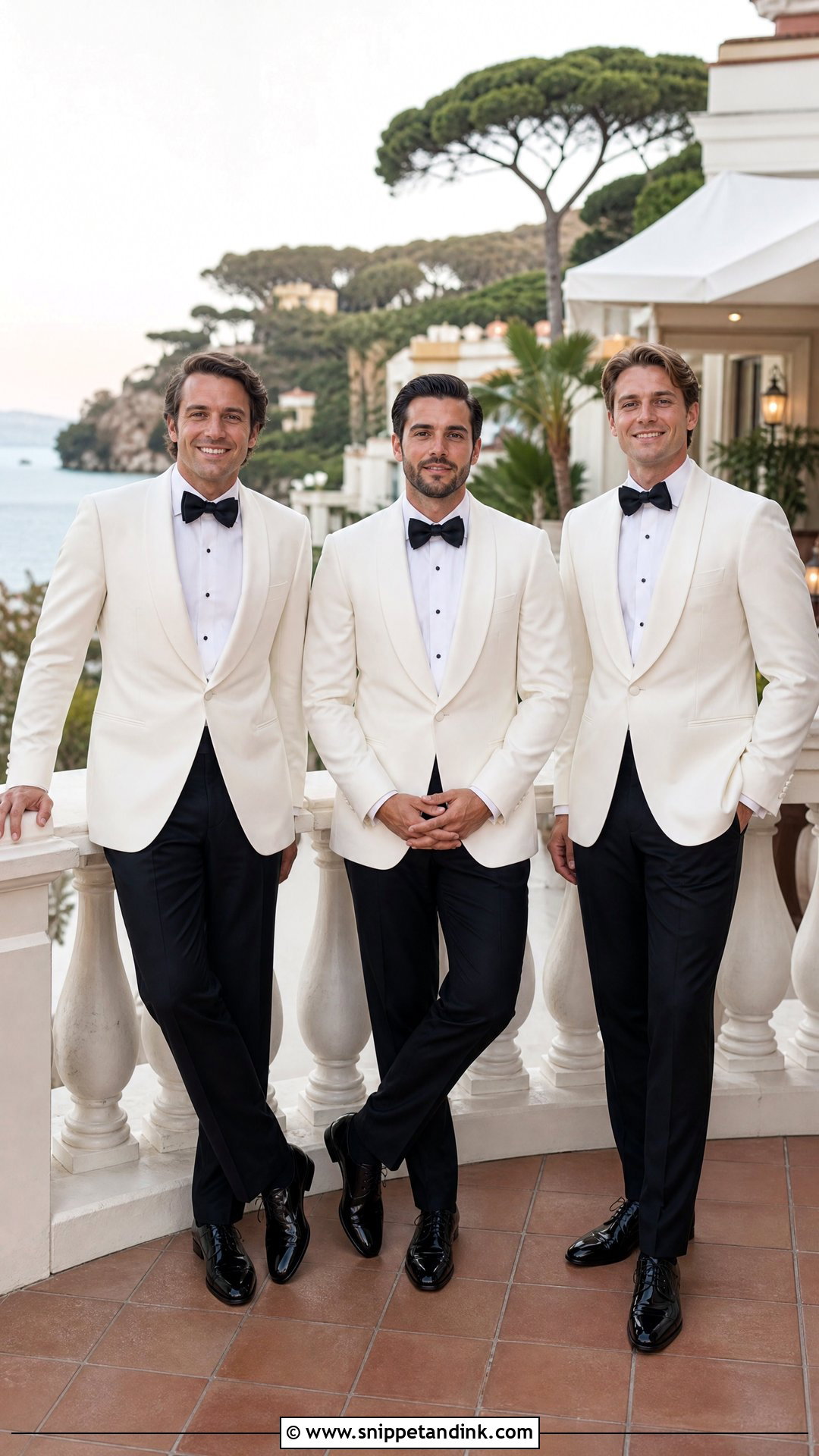
A white dinner jacket with black trousers is a sharp, deliberate contrast. Ivory or off-white jackets with black shawl lapels, white tuxedo shirts and black bow ties, then black trousers, patent shoes and black socks. Keep accessories out of it; the two tones are the whole point. One practical note: ivory and bright white side by side look dirty, so make sure every jacket comes from the same batch. Put the whole party in white jackets only if the venue and palette can hold it, because it reads loud in a small room. Warm summer evenings and resort receptions are where it makes the most sense.
16. Black Suit Without Tie Groomsman Attire
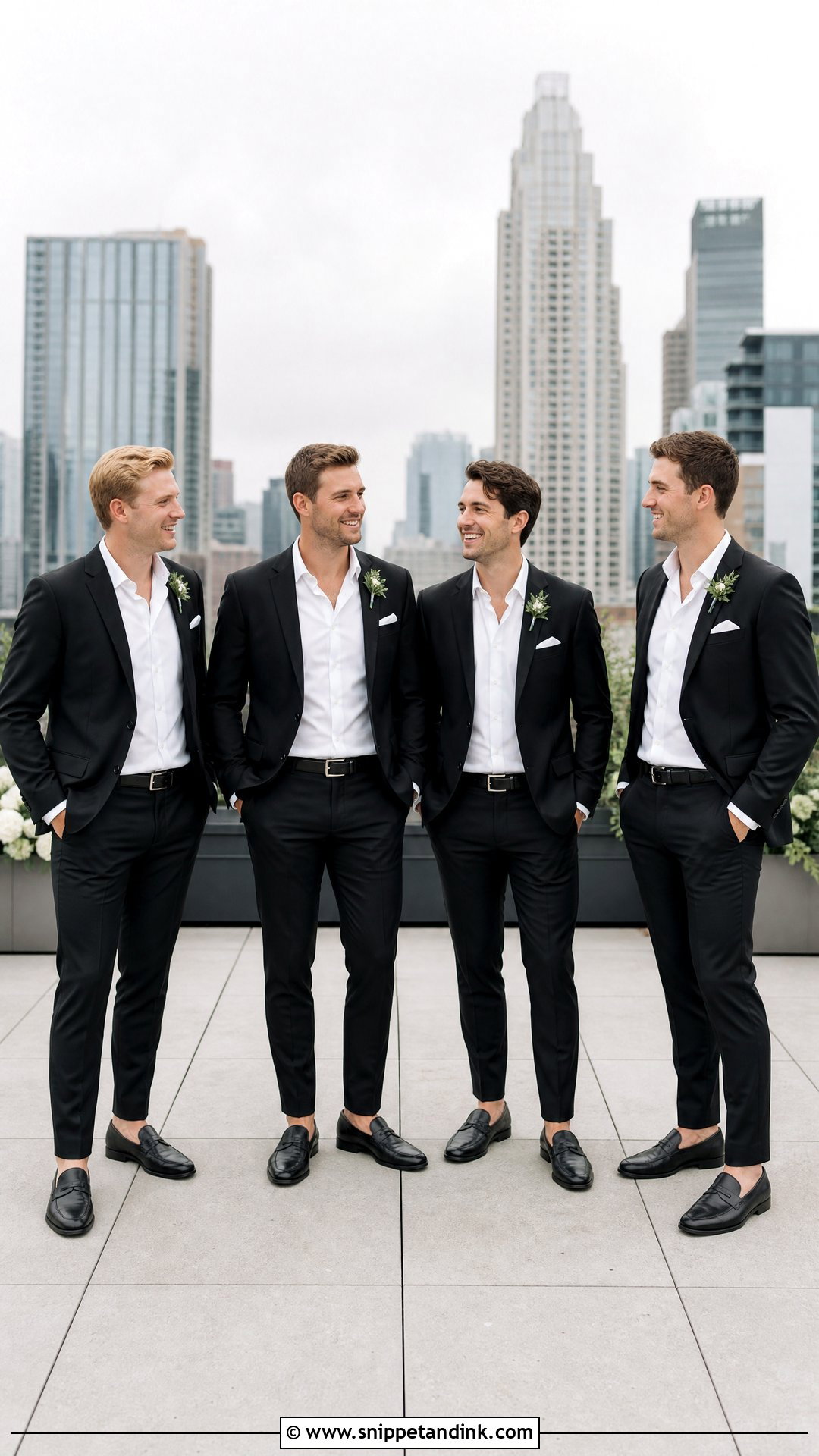
Dropping the tie makes black suits feel modern while the group stays coordinated. Streamlined black suits, white shirts open at the collar, black loafers, matching belts and dark socks. Without a tie, the collar has to hold its shape on its own, so I look for shirts with a firmer interlining or collar stays, otherwise the points collapse under the lapels by mid-afternoon. No undershirt showing at the open neck; a V-neck undershirt or none at all. A white pocket square or small green boutonniere is enough contrast. Give the groom a tie or a tuxedo jacket. Cocktail dress codes, rooftops and evening city weddings suit it.
17. Navy Blazer And Chinos Groomsman Attire
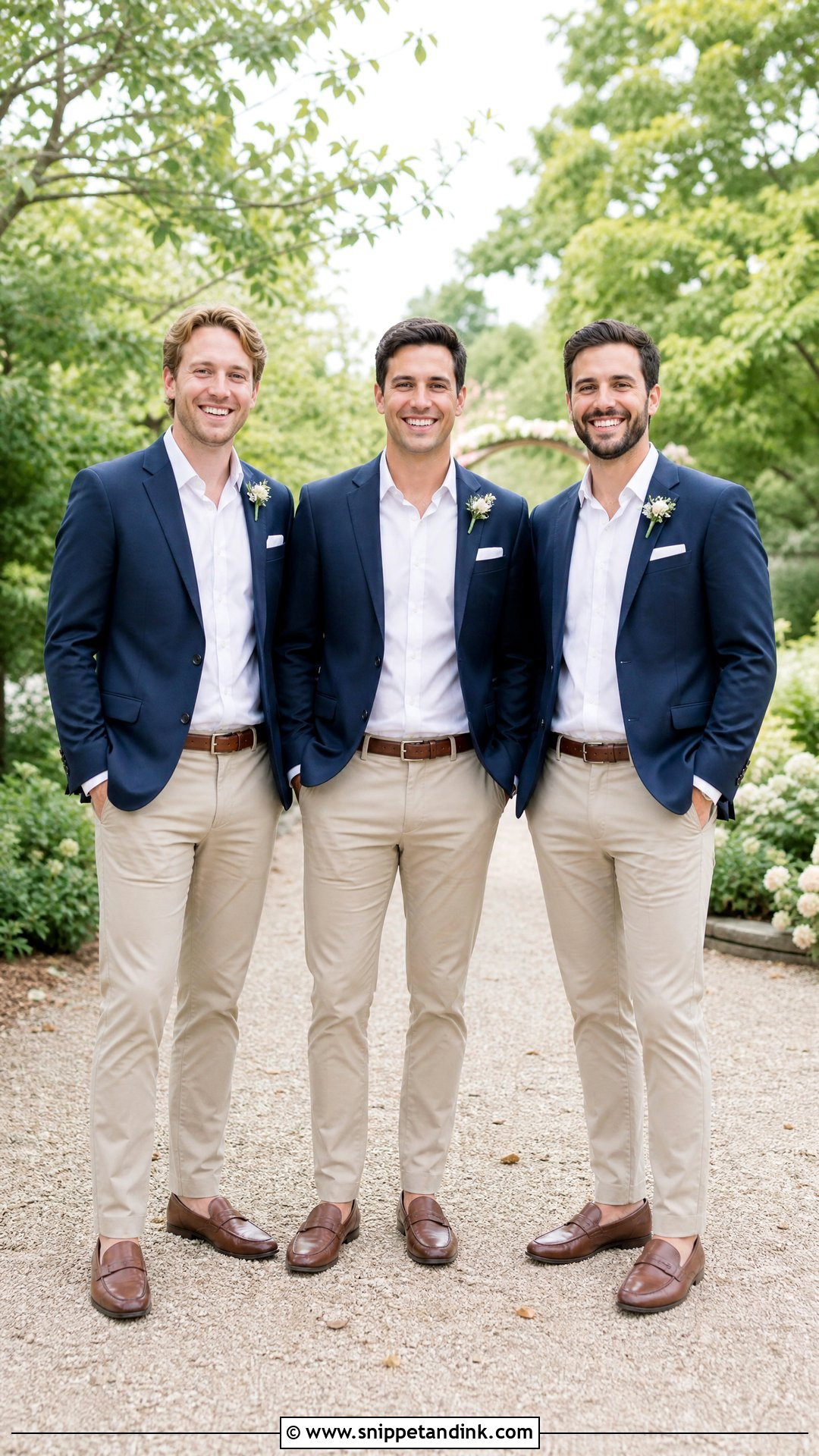
Navy blazers with tailored chinos hold a casual party together without matching suits. Structured navy jackets, stone or khaki chinos, white button-down shirts, brown loafers and brown belts, with simple pocket squares to tie it all together. Add a knit tie to dress it up or leave the collar open. The weak point is the chinos: if each man buys his own, you’ll get five shades of khaki in five fabric weights, so give everyone the exact shade and cloth, even if the brands differ. The groom can wear a full navy suit. Every piece gets worn again, which guys appreciate. Backyard ceremonies and daytime restaurant weddings suit it.
18. Suspenders And Dress Pants Groomsman Attire
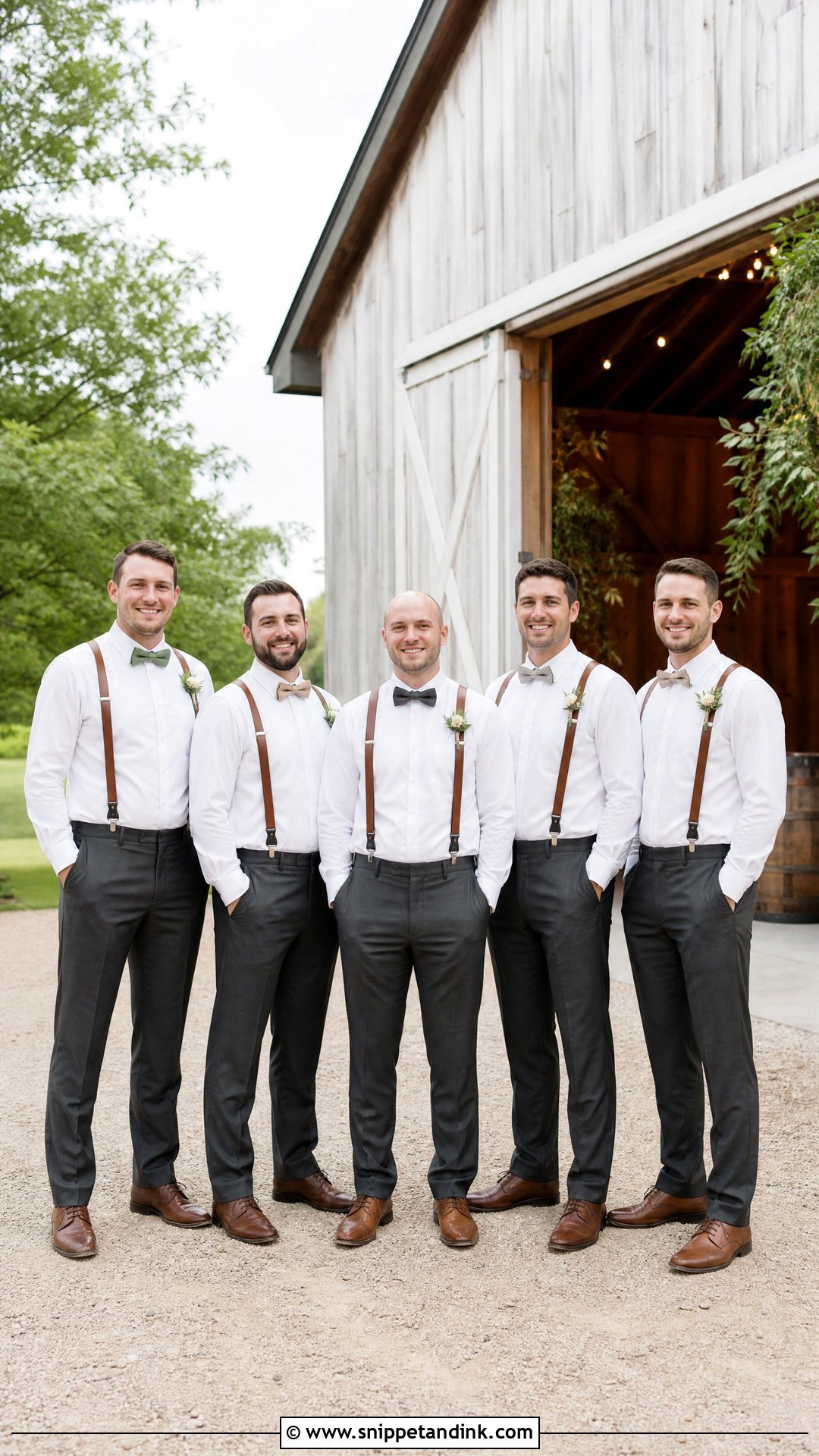
Suspenders give an informal outfit some structure and a bit of character. Tailored charcoal, navy or tan trousers, a crisp white long-sleeve shirt, leather suspenders, a bow tie or textured necktie, and polished brown shoes. Match the suspender leather to the shoes. No belt with suspenders, ever, and the trousers need buttons sewn inside the waistband; clip-on suspenders slip and leave marks on the cloth. Sleeves stay buttoned for the ceremony and get rolled neatly later. Because the shirt is now the main garment, it must be opaque and well pressed. The groom can add a vest or jacket. This groomsman attire suits barns, casual outdoor venues and vintage-leaning celebrations.
19. Vest And Trousers Groomsman Attire
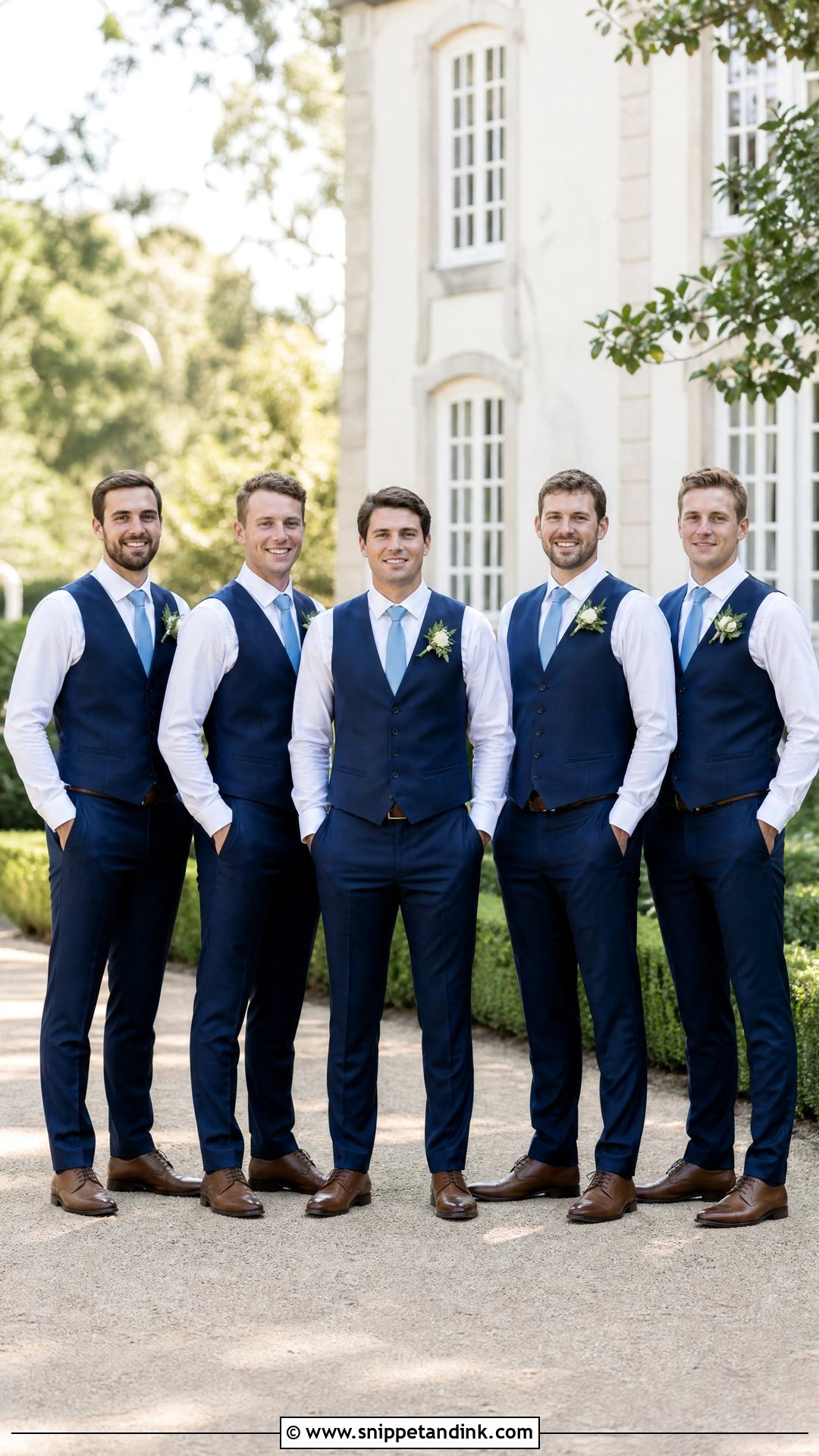
When jackets are too hot, a vest and trousers keep the group polished. Matching navy, gray, olive or tan trousers with a coordinated waistcoat, a white shirt, a necktie, leather shoes and a small boutonniere. The waistcoat should sit close without pulling at the buttons and should cover the waistband completely. Go for full-back vests if there won’t be jackets at all; a satin-backed vest looks unfinished from behind, and the photographer will shoot the party from every angle. The groom can wear a patterned vest or a full three-piece. Summer gardens and covered outdoor venues with a semi-formal dress code suit it.
20. Seersucker Groomsman Suit
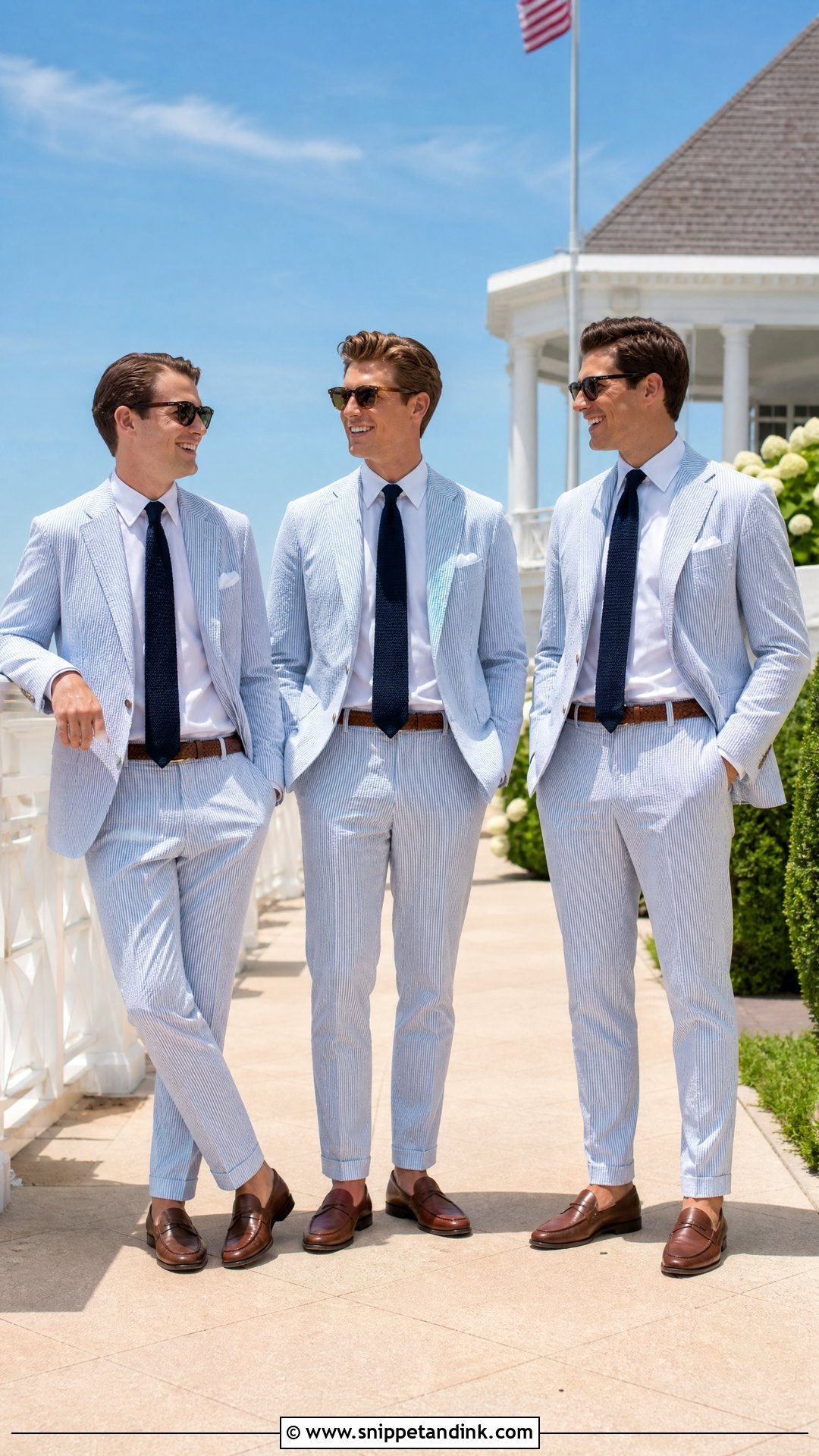
Seersucker is built for heat: the puckered weave holds the cloth slightly away from the skin, so air moves and the creases barely show. Classic blue-and-white or a quiet gray stripe, with white shirts, navy knit ties, brown loafers and woven belts. Keep accessories solid, since the fabric already carries a pattern. Tailoring still matters, because the relaxed cloth looks oversized fast when a jacket is a size too big. Put the groom in solid navy or a darker blue so he separates clearly in group photos. It fits Southern venues, coastal clubs and bright daytime summer weddings.
21. Tweed Groomsman Suit
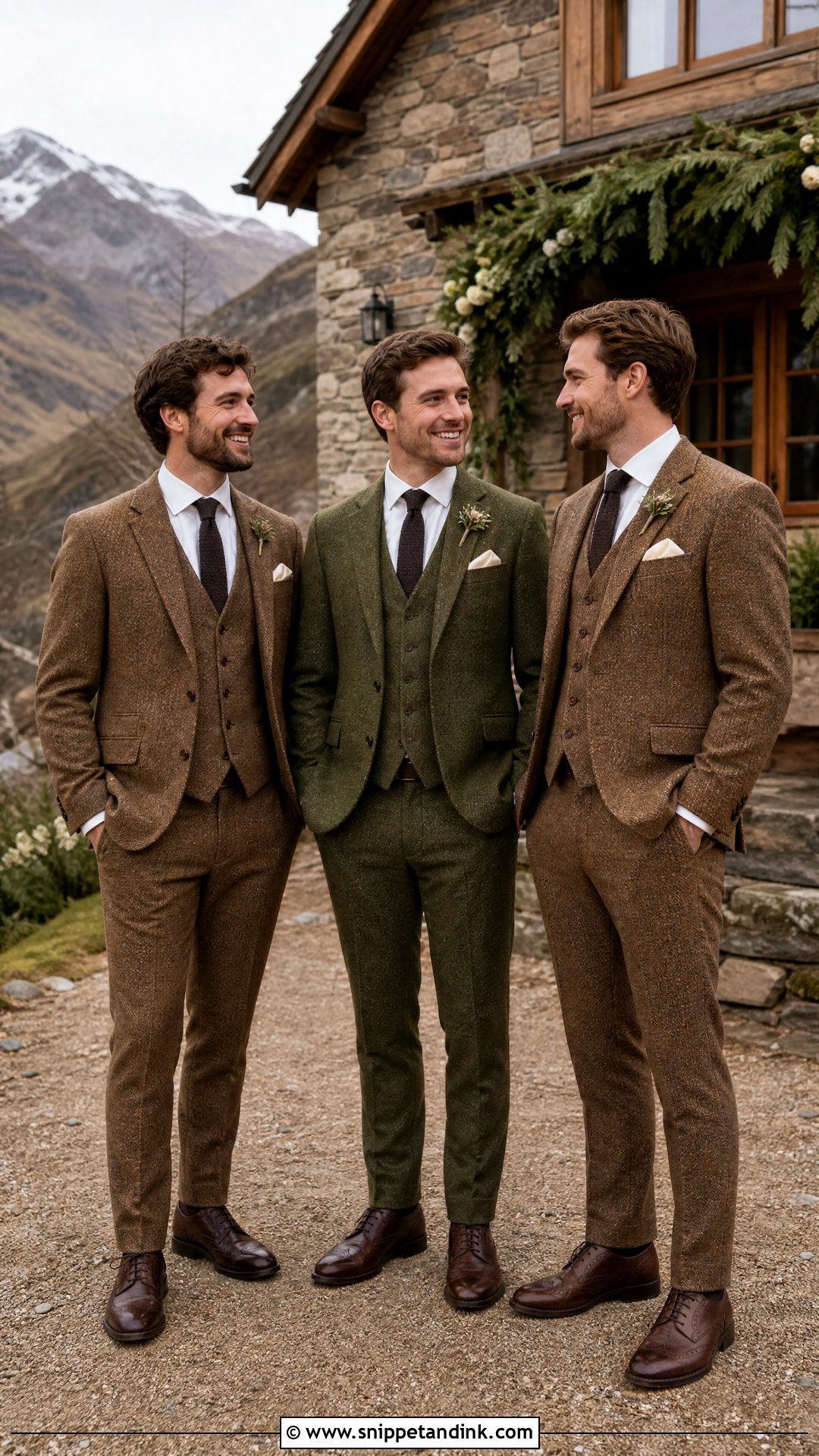
Tweed is the autumn and winter fabric I reach for when the setting is natural and the air is cool. Matching brown, gray or green tweed suits with ivory shirts and wool or knit ties, dark brown brogues, coordinated belts and quiet pocket squares. Three pieces feel traditional; two pieces feel lighter and more current. Keep the shirts and accessories plain so the cloth gets the attention. Full tweed is warm and stiff, and men who run hot will suffer in a heated reception room, so tweed jackets over solid wool trousers are a sensible compromise. The groom can wear a contrasting waistcoat. Mountain venues and country houses suit it.
22. Mismatched Neutral Groomsman Suits
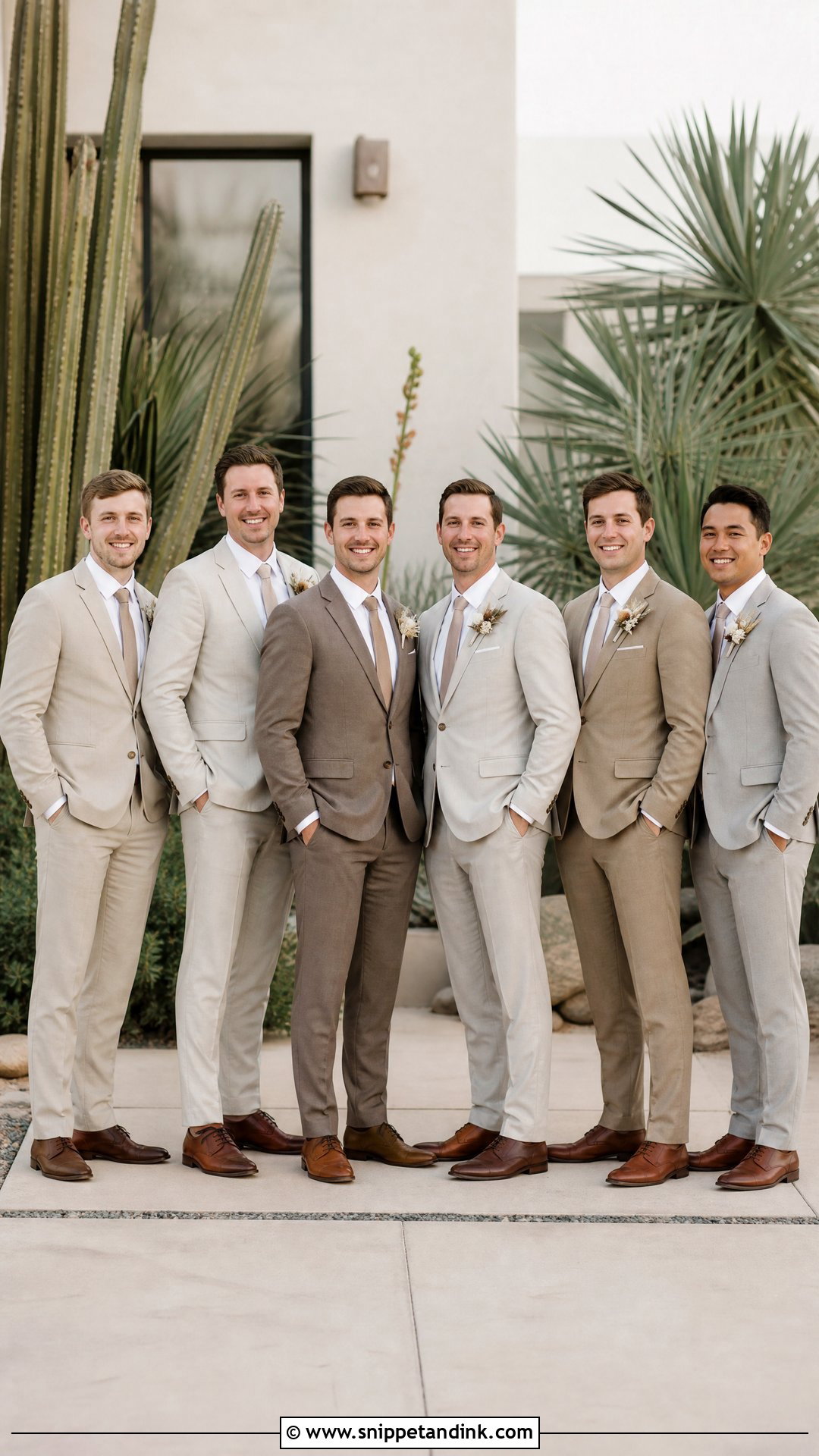
Mismatched suits only look intentional when the colors, fabrics and accessories clearly agree with each other. Ask the groomsmen for suits in coordinated neutrals like taupe, stone, light gray and soft brown, then tie them together with identical white shirts, matching ties, brown shoes and the same boutonnieres. Send fabric swatches and a written outfit list; telling six men to wear “something neutral” gets you six very different ideas of neutral. Keep the formality even, so no tuxedo beside a linen jacket. The groom can go deeper in the same family, chocolate or charcoal. The big advantage is that each man can buy a cut that fits his body and budget. It suits estates, desert settings and relaxed modern weddings.
23. All-Black Groomsman Attire
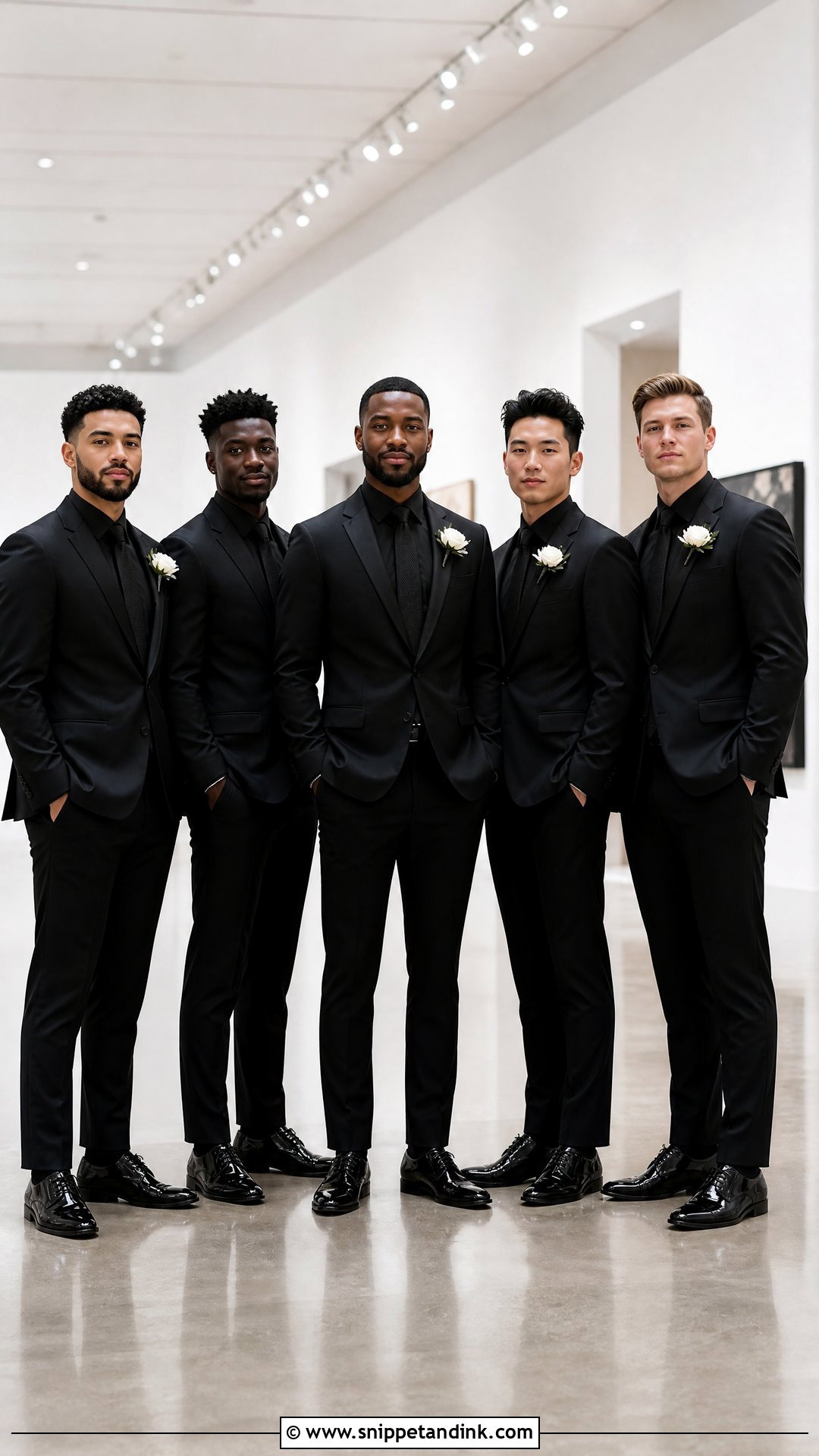
All black is sleek, but it photographs as a dark block unless you build texture into it. Black suits, black shirts, black ties and polished black shoes; then mix surfaces, such as a wool suit, a cotton shirt and a lightly textured silk tie, so the eye can separate the pieces. No colored socks or belts breaking the line. A white or green boutonniere brings a controlled bit of contrast up near the face. Check the venue lighting first, because in a dim room the details simply disappear. The groom can wear a velvet jacket or a white shirt. Galleries, industrial spaces and dramatic evening weddings suit it.
24. Western Groomsman Attire
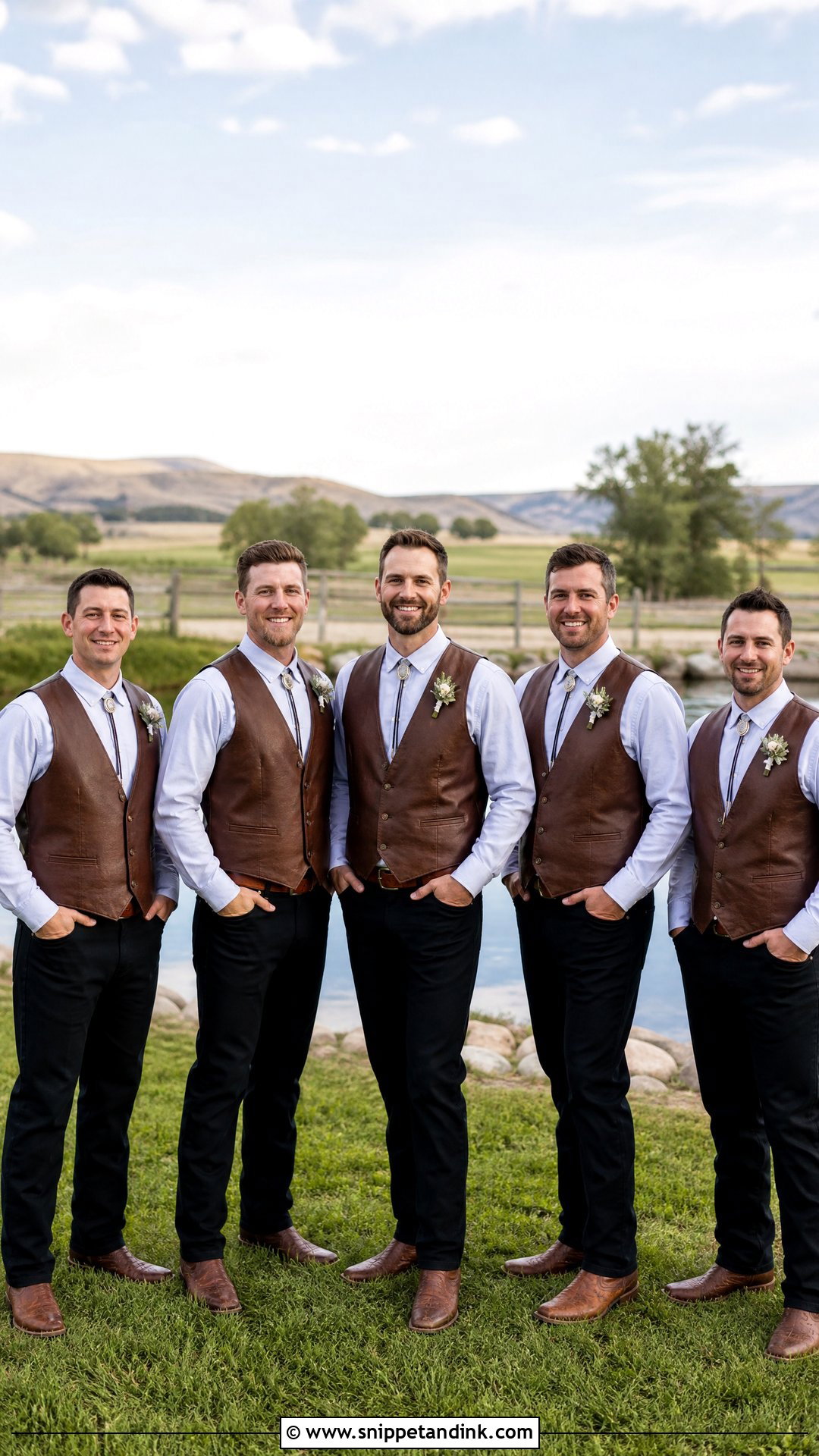
Western attire should look tailored, not theatrical. Dark straight-leg dress trousers, a crisp white or light blue shirt and a fitted brown, tan or charcoal vest, with polished leather cowboy boots, a matching belt and an optional bolo tie. Straight-leg trousers matter here, since a tapered leg bunches over a boot shaft. A good felt hat is great for outdoor portraits but comes off for the ceremony. Rein in the decorative stitching, big buckles and clashing patterns. The groom can wear a jacket or a darker vest. On a working ranch or in an open barn, where Western clothing actually belongs to the place, it looks completely natural.
25. Guayabera Groomsman Attire
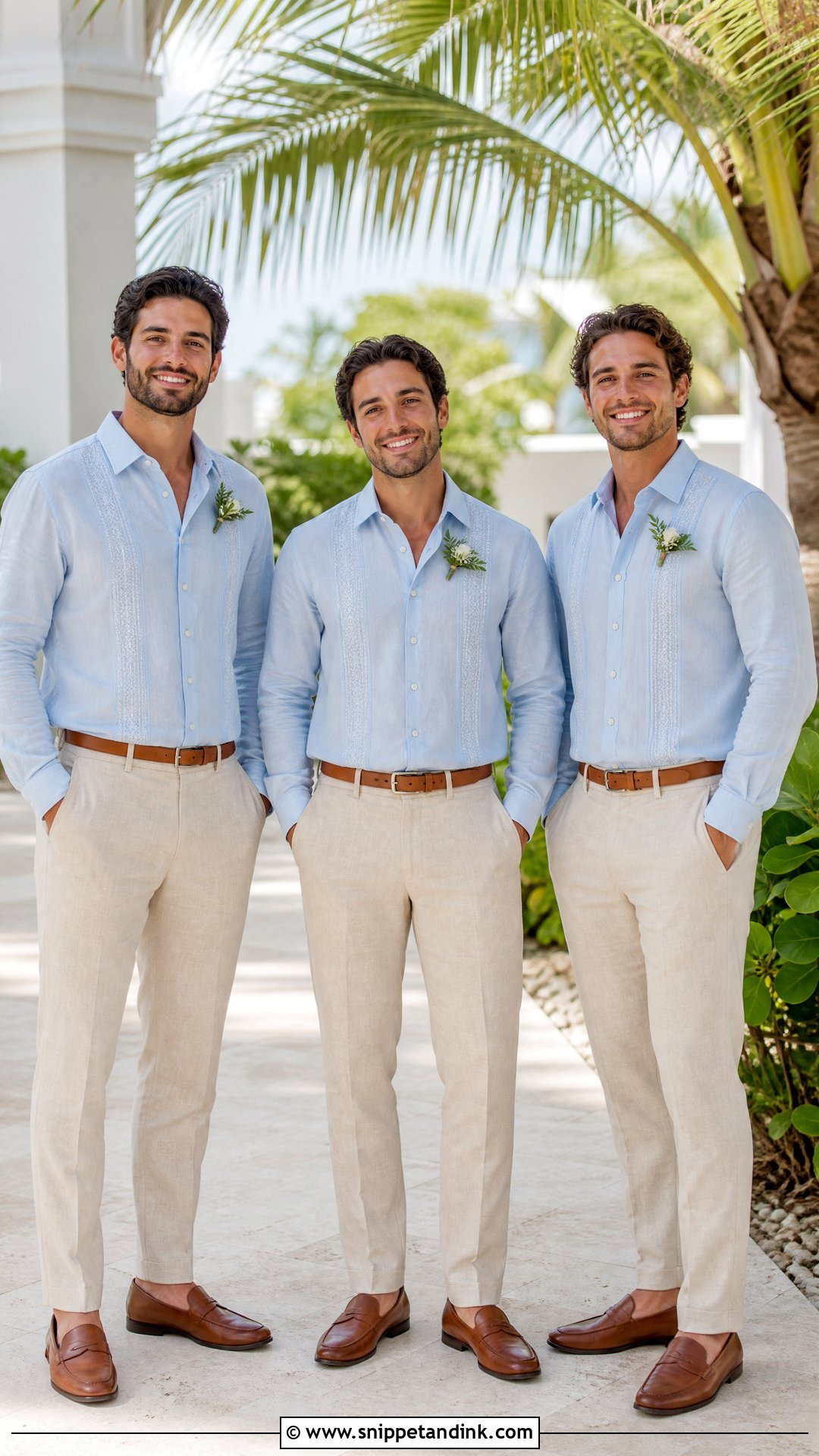
A guayabera is a breathable, culturally rooted choice for tropical and destination weddings, and it deserves to be worn properly. Matching long-sleeve guayaberas in white, ivory, pale blue or another soft shade, with tailored linen trousers in tan, stone or light gray, brown leather loafers, a matching belt and very little else. It’s designed to be worn untucked, so the length matters: the hem should land around the middle of the seat, and the shoulders and chest still need to fit. Skip busy ties, as the pleats and embroidery already carry the detail. The groom can wear a contrasting guayabera or a lightweight linen suit. Coastal resorts and tropical gardens suit it.
What Goes Wrong in the Groomsmen’s Room on the Morning
Most wedding-morning menswear problems are small and entirely predictable. Suits come out of garment bags creased, someone has brought black socks with brown shoes, and a shirt is missing collar stays. I keep a handheld steamer, spare stays, a lint roller, safety pins, black and navy thread, and a couple of pairs of plain dark socks in the room for exactly this.
Pinning boutonnieres so they stay upright
A boutonniere goes on the left lapel, over the heart, with the stems pointing down and roughly in line with the lapel edge. Push the pin in from behind the lapel, through the stem, and back out, so the pin is hidden and the flower can’t swing. A single pin straight through the front lets it droop by the first hug. Pin them last, after jackets are on and everyone has stopped adjusting.
A five-minute check before photos
- Jackets buttoned when standing, with the bottom button of a two-button jacket left open.
- About a quarter to half an inch of shirt cuff showing past each sleeve.
- Ties sitting at the belt line, not above it and not below.
- Pockets empty: phones, keys and wallets ruin the line of a jacket in every photo.
Hand the phones to one person for the ceremony. It sounds fussy, but the bulge of a phone in a breast pocket shows up in every group photograph.
Start With the Room, Then Dress the Men in It
Good groomsman dressing balances looks, comfort, formality and cost. Let the venue and the dress code set the formality, then choose colors and cloths that suit the season: tuxedos and dark suits for formal evenings, linen, seersucker and separates for warm or relaxed days. Shared shirts, shoes, ties and boutonnieres can hold a mismatched group together. Give clear written instructions, order early and leave real time for the tailor. A man who’s comfortable in his suit stands straighter, and that shows in every photograph more than any color choice.
You'll Like These Ideas:


Leave a Reply