
Most brides who sit in my chair now ask for the same thing in different words: they want to look like themselves, only rested, and they want it to hold until the last dance. That changes how I work. Skin gets thinner layers, blush does more of the lifting, and eye definition sits close to the lash line where a camera picks it up without the lid looking heavy. Full glam hasn’t gone anywhere, but it’s blended further than it used to be. Below are twenty directions I actually build for weddings, from bare-looking skin to a berry lip, each with the detail I’d check before committing to it.
Your Skin Type Narrows This List Faster Than Any Mood Board
Brides usually arrive with screenshots. I look at their skin first, because the finish your skin will tolerate for ten or twelve hours rules out some of these looks before color even comes into it.
- Oily or combination skin: matte, soft glam and full glam hold up best. A dewy finish can work, but only on the cheekbones, with the center of the face set.
- Dry skin: dewy, glowy and natural finishes look healthiest. Heavy matte foundation sinks into flaky patches by mid-afternoon.
- Mature skin: cream blush and fine-milled powder used sparingly. Chunky shimmer on the lid settles into creases, so satin shades are kinder.
- Textured or acne-prone skin: spot conceal first, then a thinner foundation. Piling coverage on top of texture makes it more visible in close-ups, not less.
- Very watery or sensitive eyes: skip heavy lower lash liner and choose a smudged look that still reads as intentional after tears.
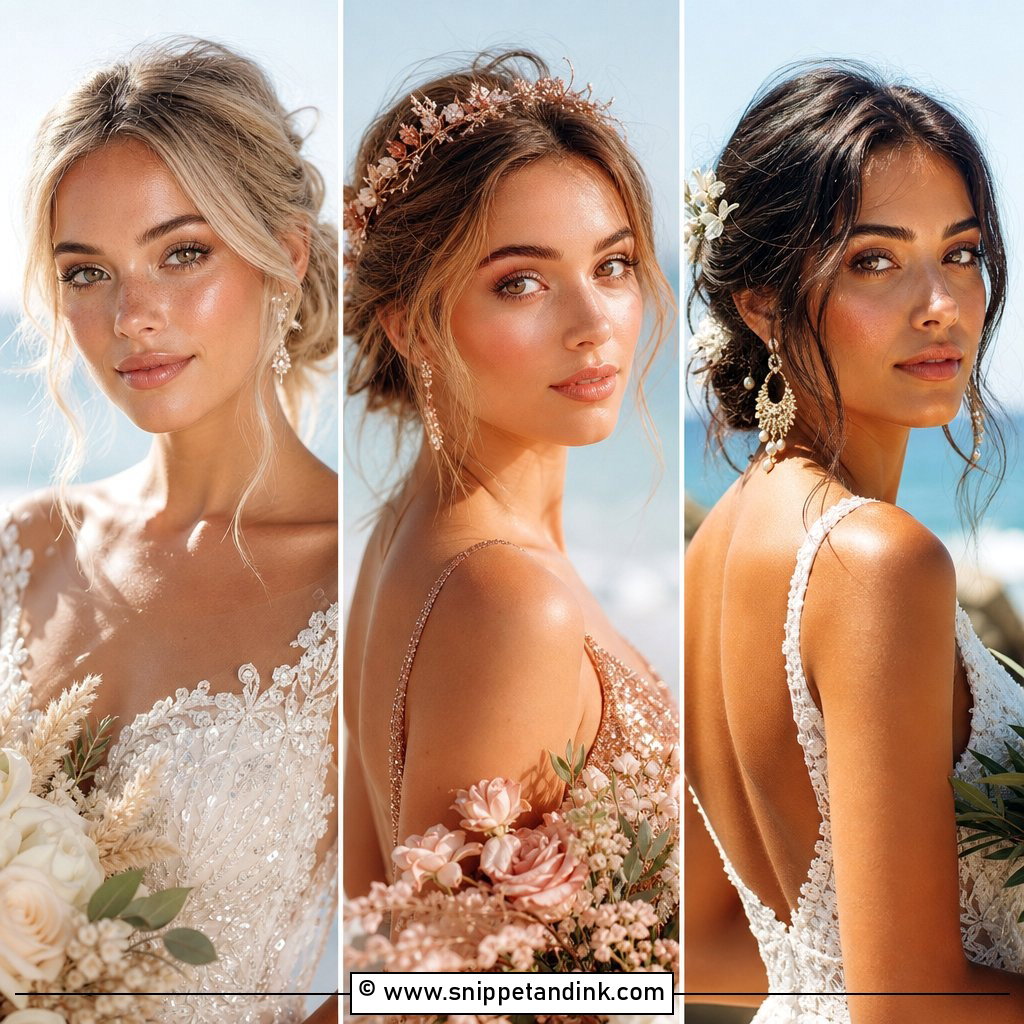
After skin type, think about the light you’ll be photographed in. A candlelit evening reception can carry more depth than a noon ceremony on a beach, where every layer of product shows.
1. Natural Bridal Makeup
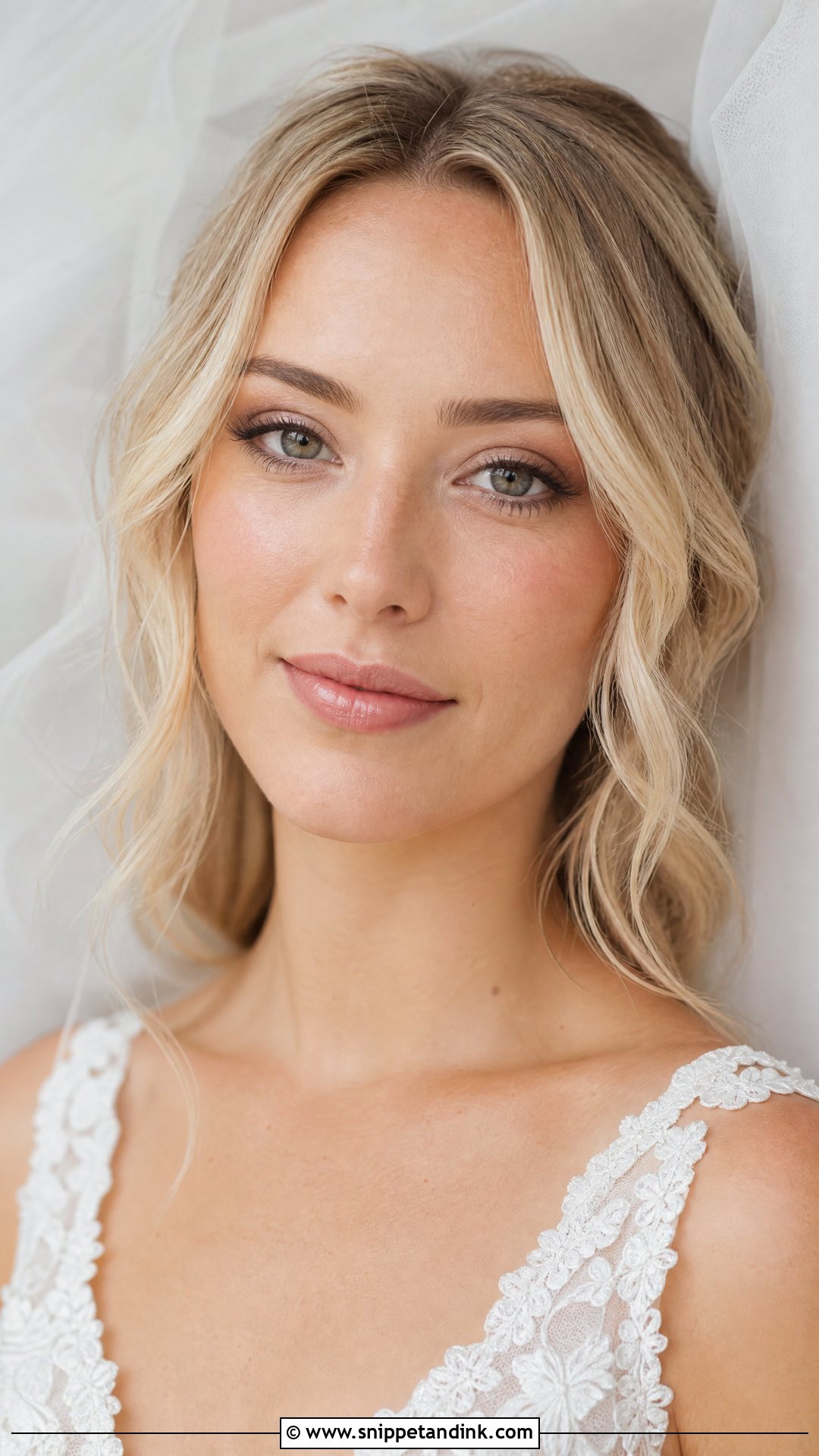
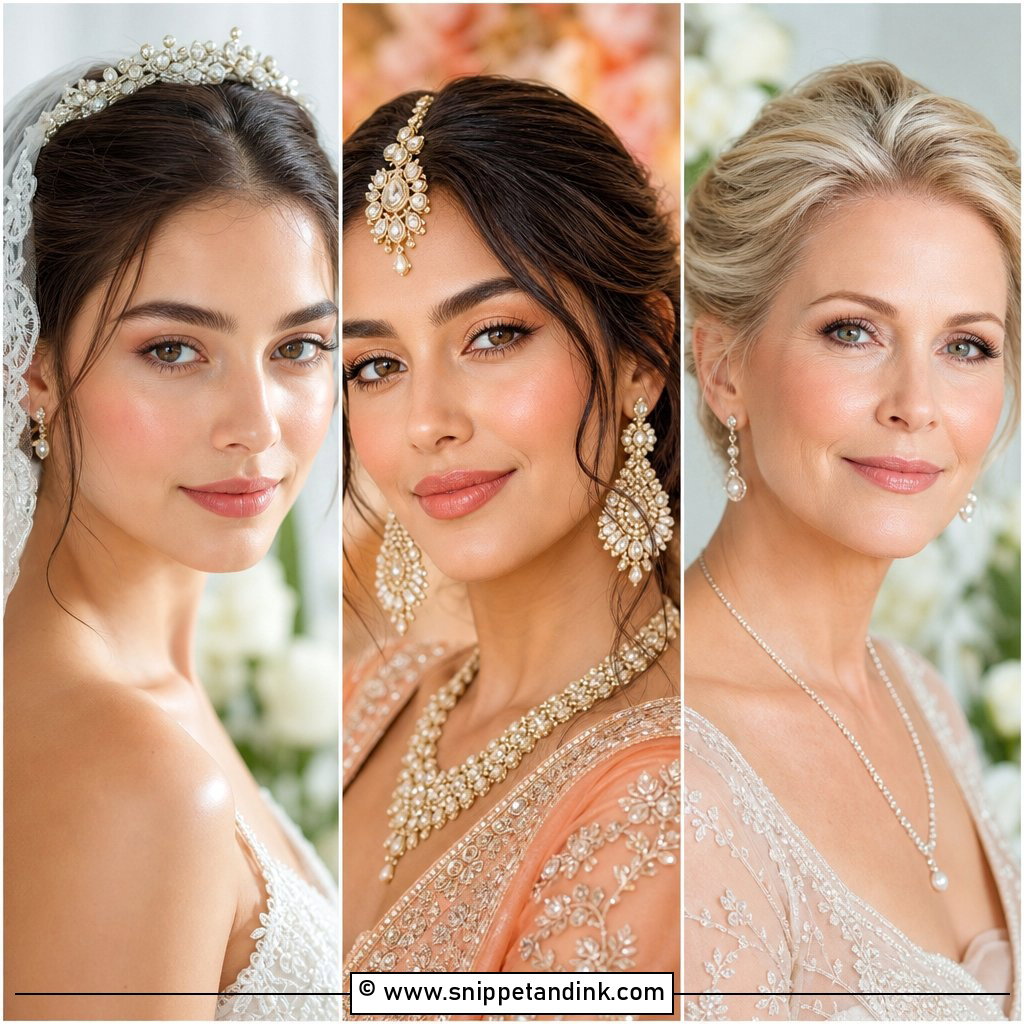
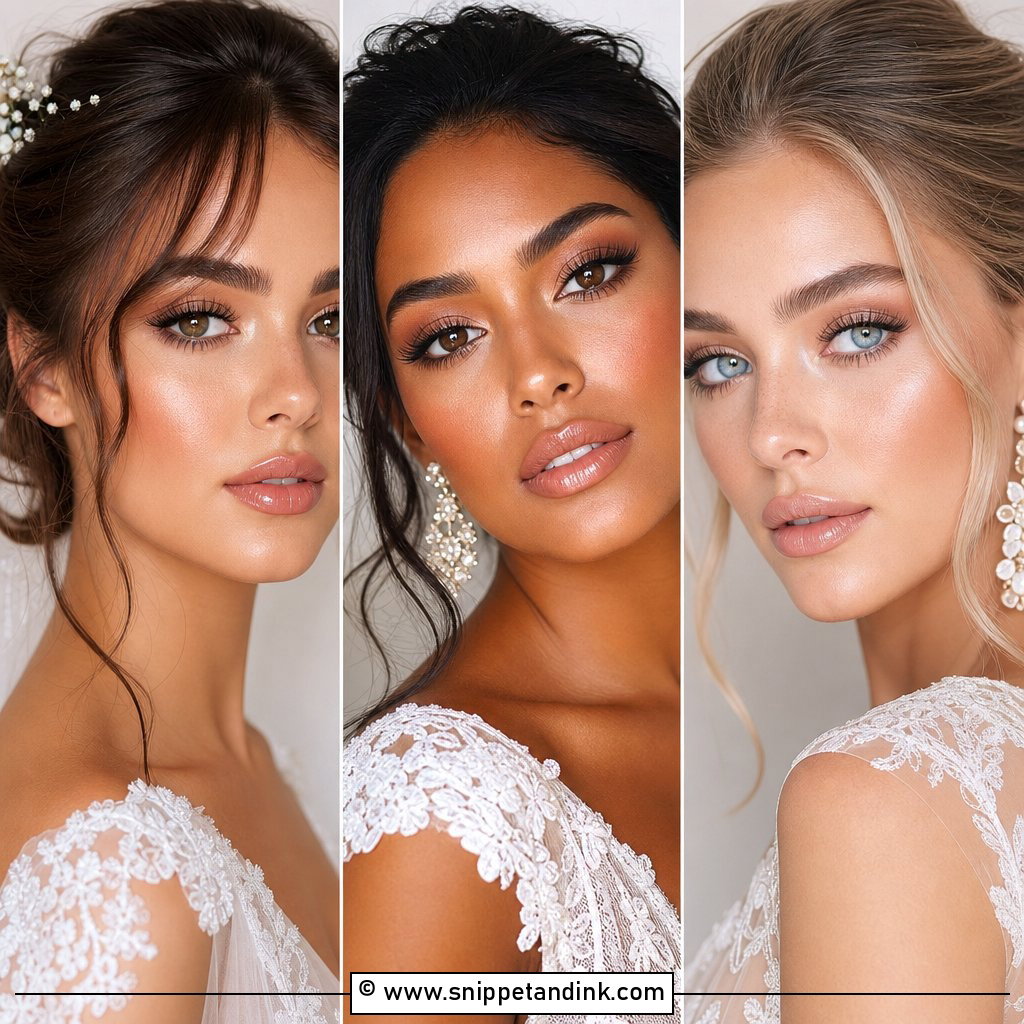
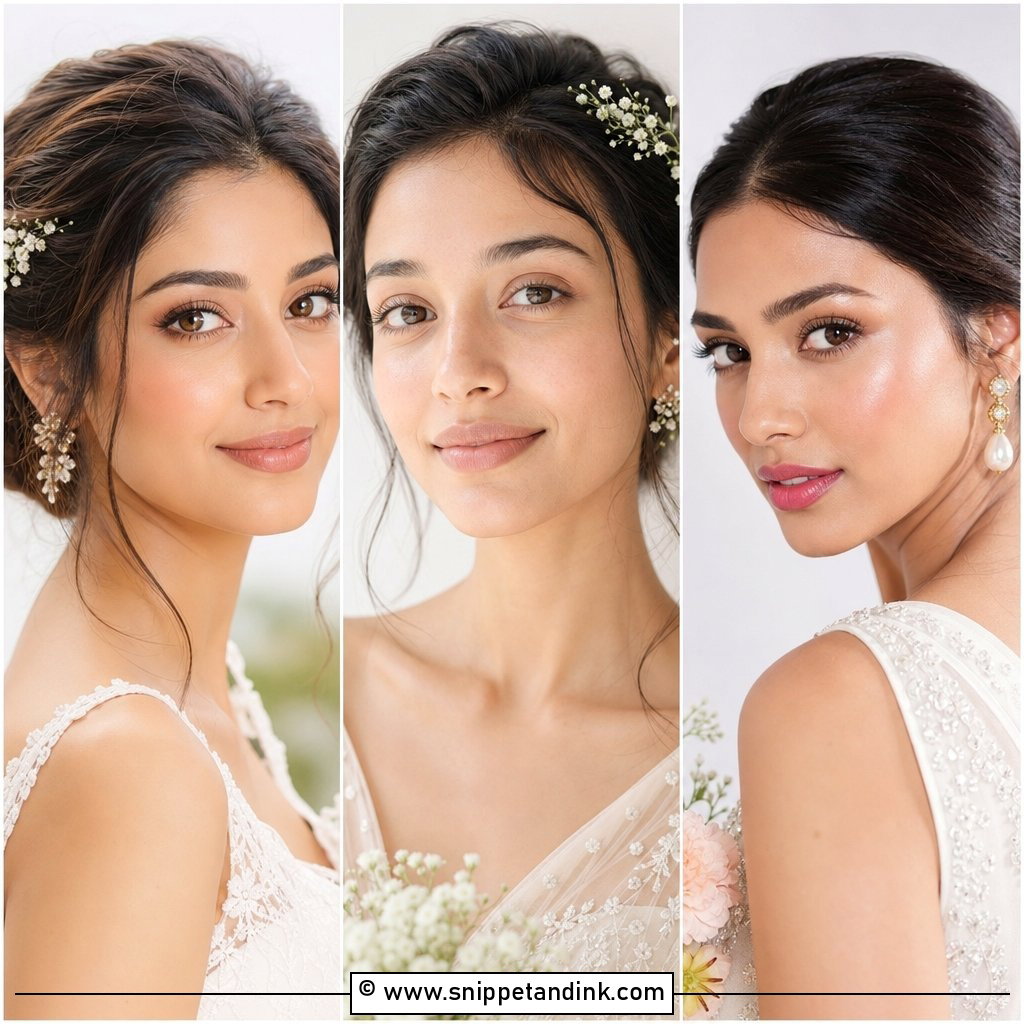
I start a natural face by deciding what not to cover. Freckles and the faint texture on the cheeks can stay; redness around the nose and shadow under the eyes usually can’t, because the camera exaggerates both. A skin tint plus spot concealer, pressed in with fingers so it melts, then powder only through the center. Taupe shadow, a thin brown line and a few individual lashes at the outer corners give shape without looking done. Cream blush in a rosy peach and a satin nude-pink lip finish it. If you rarely wear makeup, this is the version you won’t keep touching all day, which matters more than people expect.
2. Soft Glam Bridal Makeup
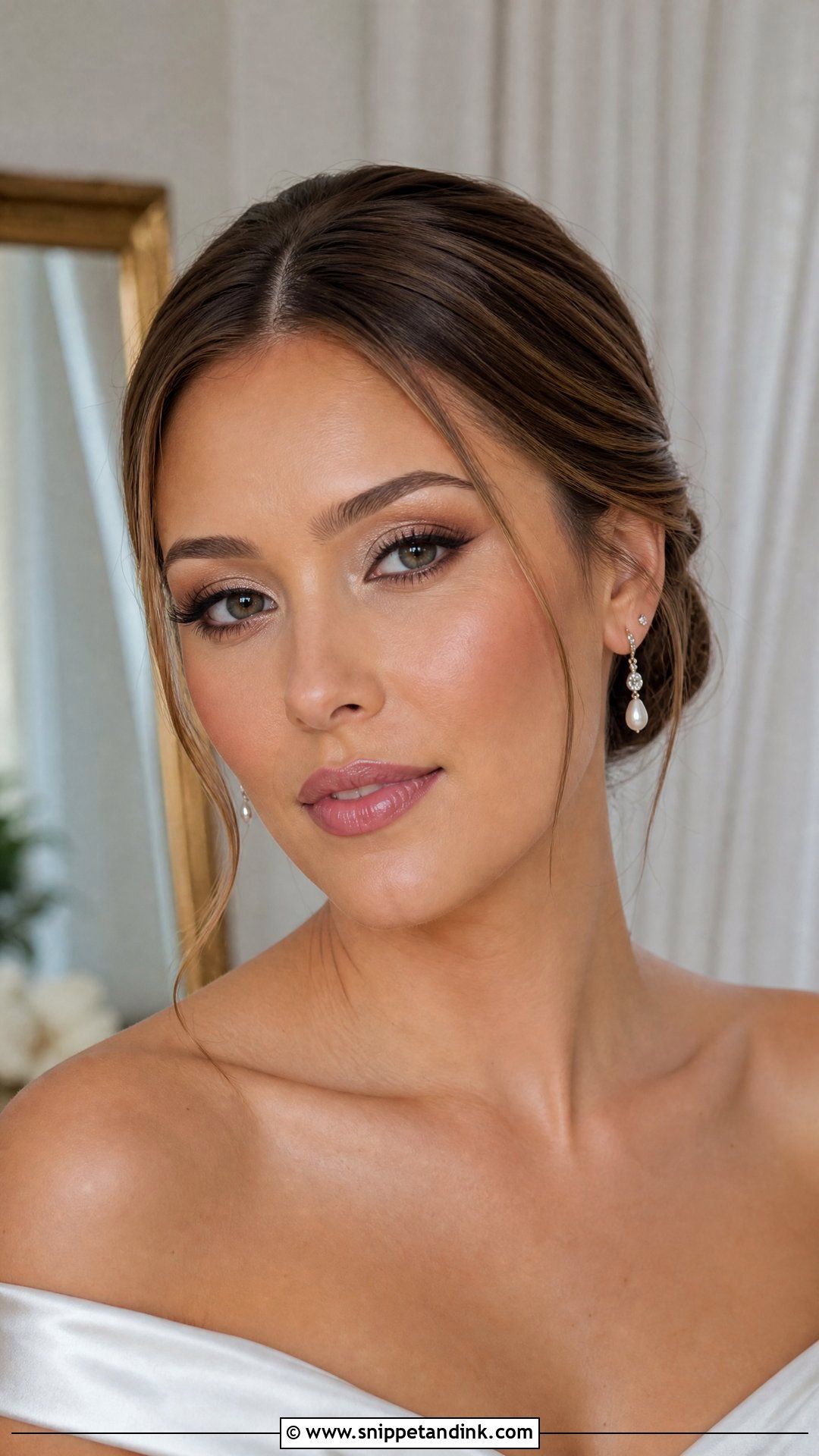
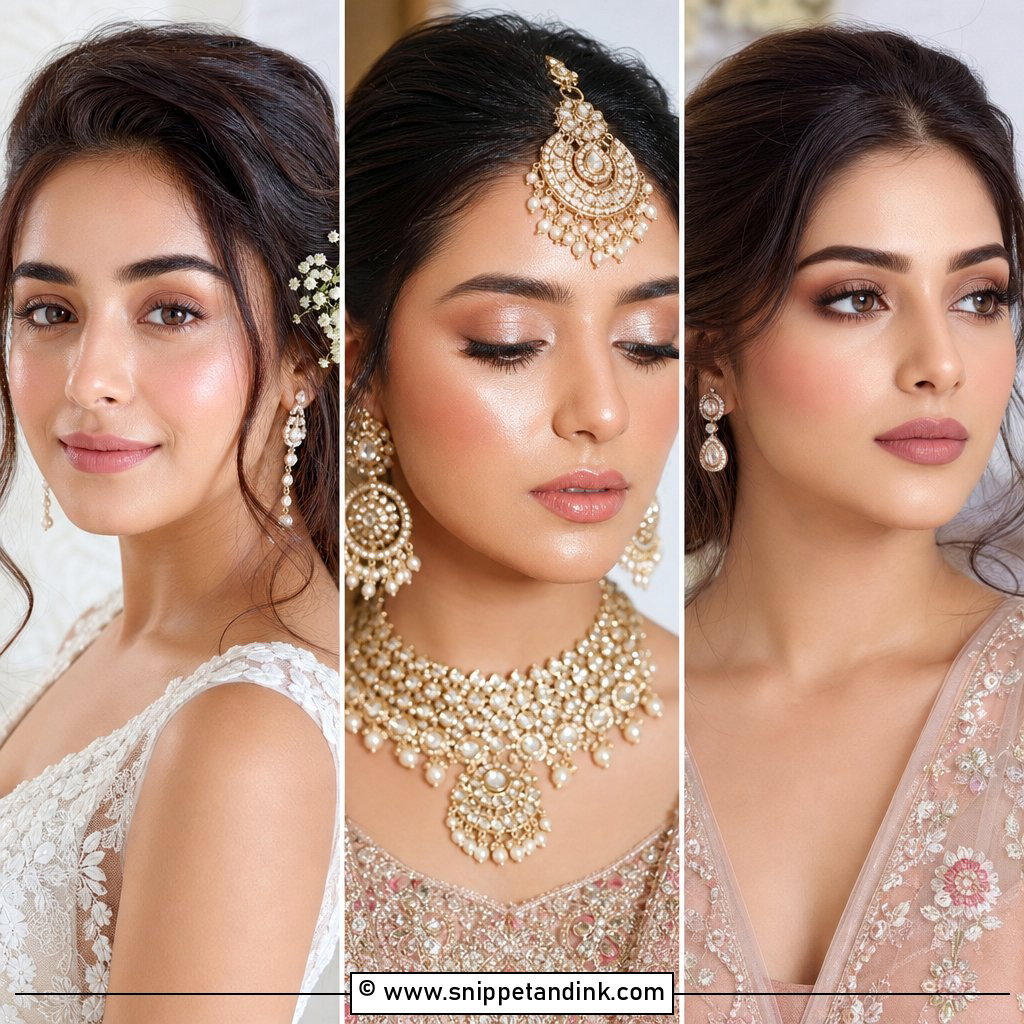
This sits one step past natural: medium coverage, a little sculpt under the cheekbone, and a softly smoked lash line in warm brown or rose-gold. Every edge is diffused, so nothing reads as a stripe from three feet away. I use cream blush under a whisper of powder blush, because the cream holds and the powder sets it. Lip color follows undertone, and on most brides I land on a muted mauve. It’s the look I’m asked for most, mainly because it suits nearly any dress and still reads as makeup in a wide group shot.
3. Glowy Bridal Makeup
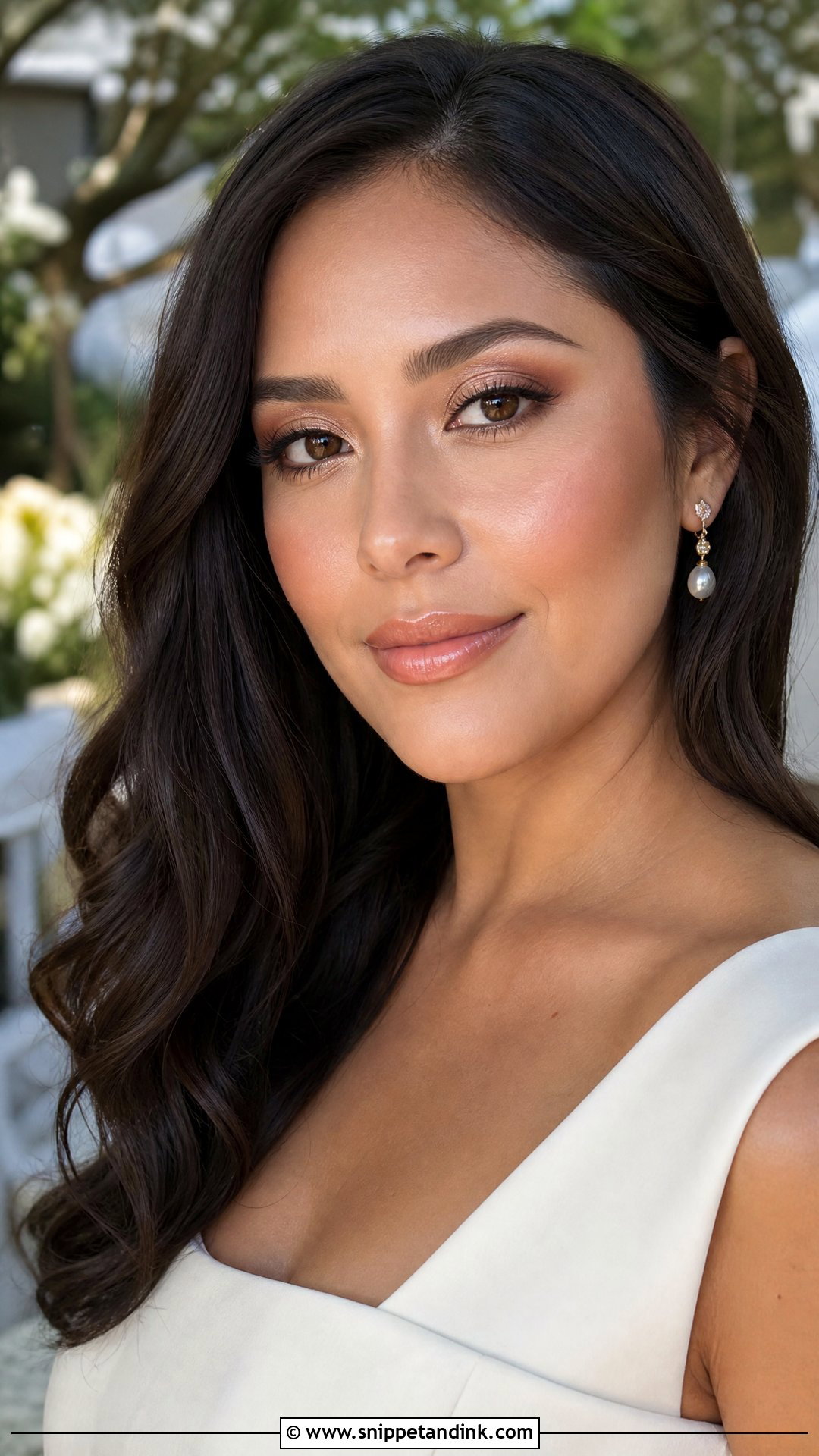
Glow is the finish people love in person and the one that goes wrong fastest under flash. For a glowy bridal makeup look I keep the radiance on the cheekbones and the brow bone, and I powder the T-zone, under the eyes and around the nostrils every time, because that’s where shine turns into grease in photos. Hydrating prep, a radiant foundation, liquid blush, then a fine pearl highlighter rather than anything with visible glitter. Champagne on the lid and a glossy nude lip. Spring and summer daylight flatters it most; in a hot room I swap the liquid blush for a cream that sets.
4. Matte Bridal Makeup
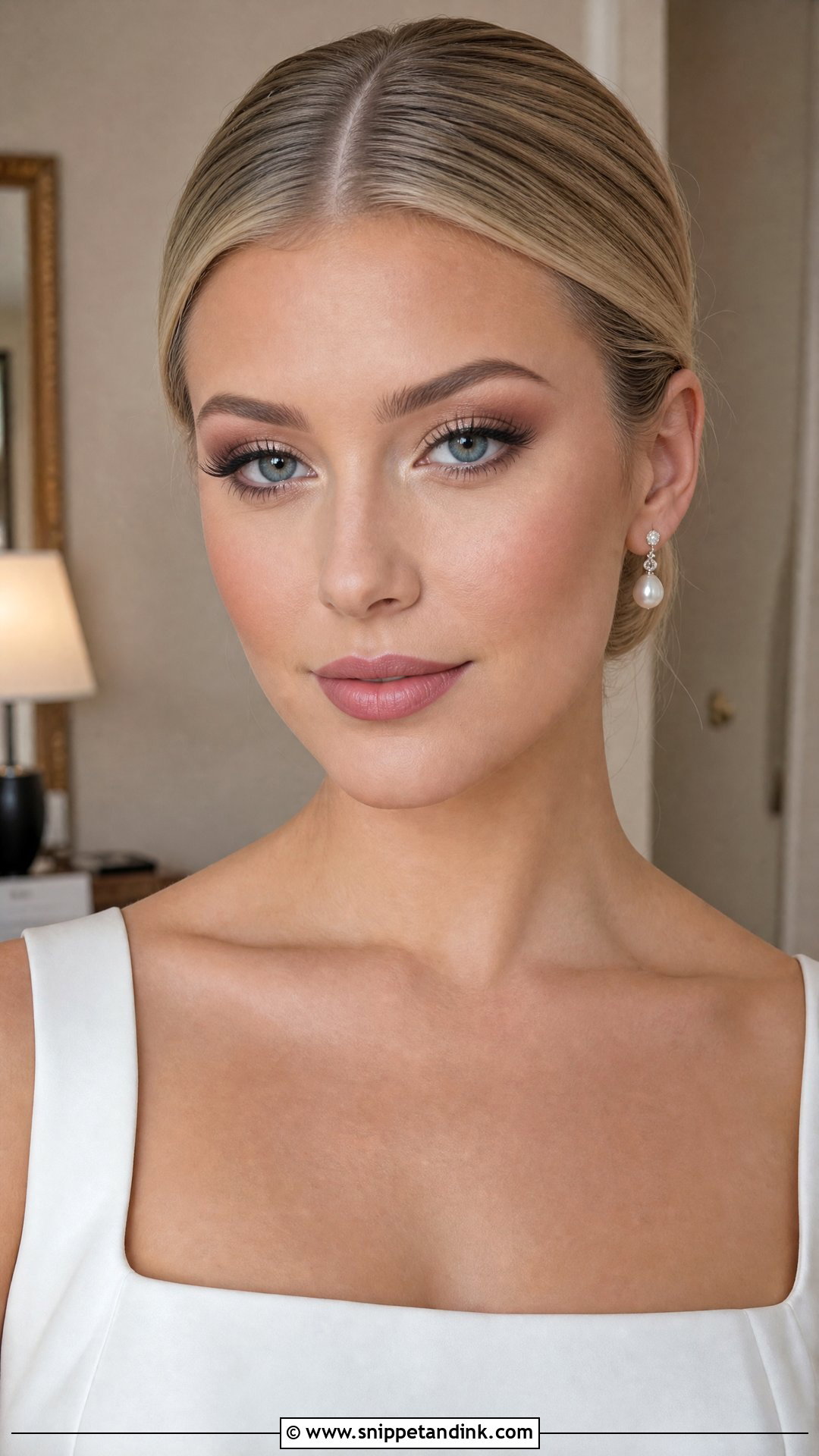
Matte is my answer for oily skin and humid days, but the old flat, chalky matte ages a face in photos. I prep with a hydrating layer first so the foundation has something to grip, then apply a natural-matte formula in two thin coats rather than one thick one. Contour stays soft, blush is muted, and a satin highlighter goes only on the very top of the cheekbone so the face keeps one plane of light. A soft-matte lip lasts through dinner far better than gloss. If your skin is dry or flaky, I’d talk you out of this one, since matte grips every dry patch.
5. Classic Bridal Makeup
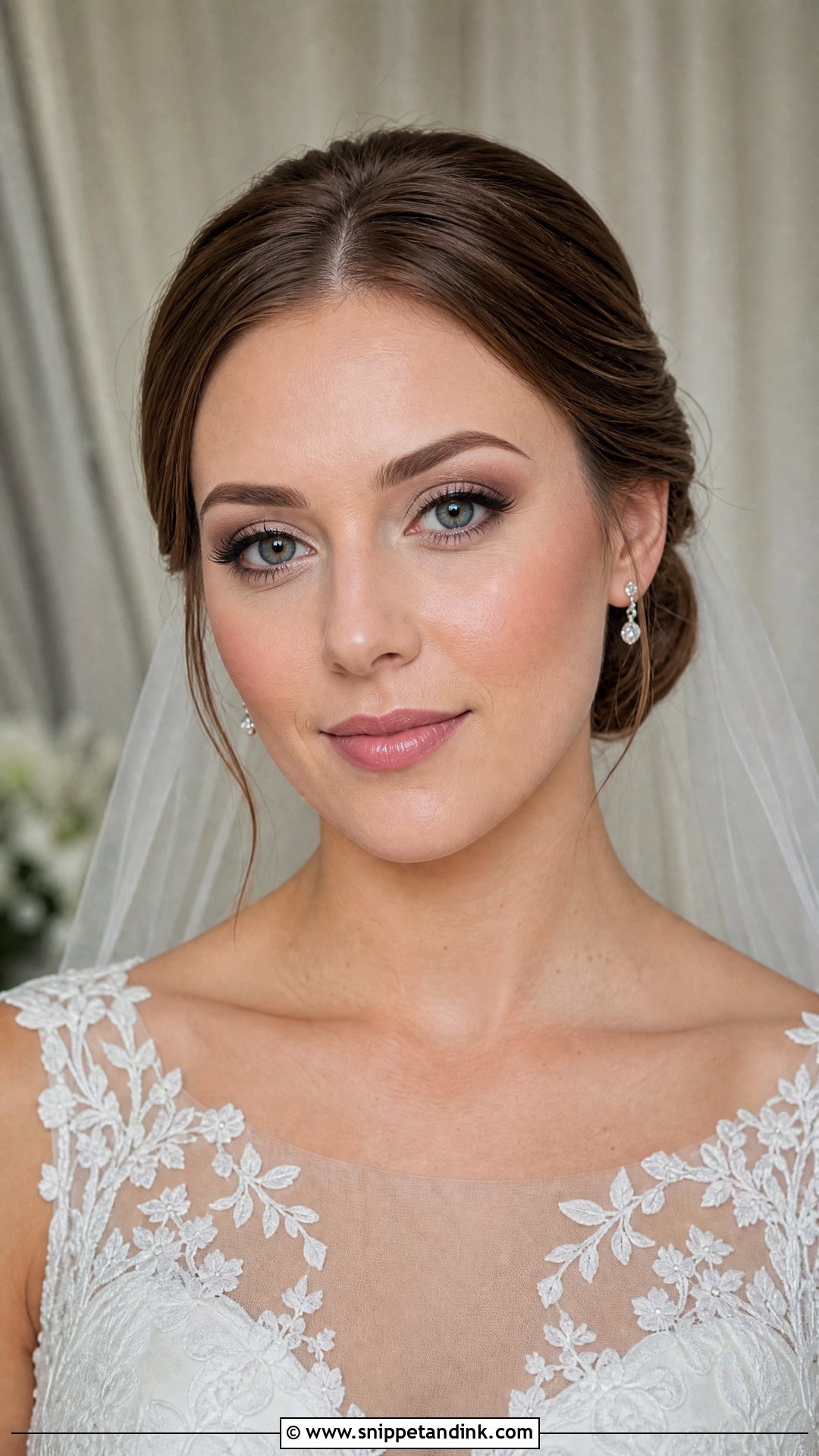
Classic is the face you won’t wince at in an album twenty years from now. Even skin, brows filled with hair strokes rather than a solid block, ivory and taupe on the lid, a black or brown liner, and a small wing only if your eye shape carries it. I keep blush natural and let the lip give structure, usually a rose or a soft berry. It sits comfortably under a long veil and in straight-on formal portraits, where every asymmetry shows, so I spend extra time matching the two brows.
6. Romantic Bridal Makeup
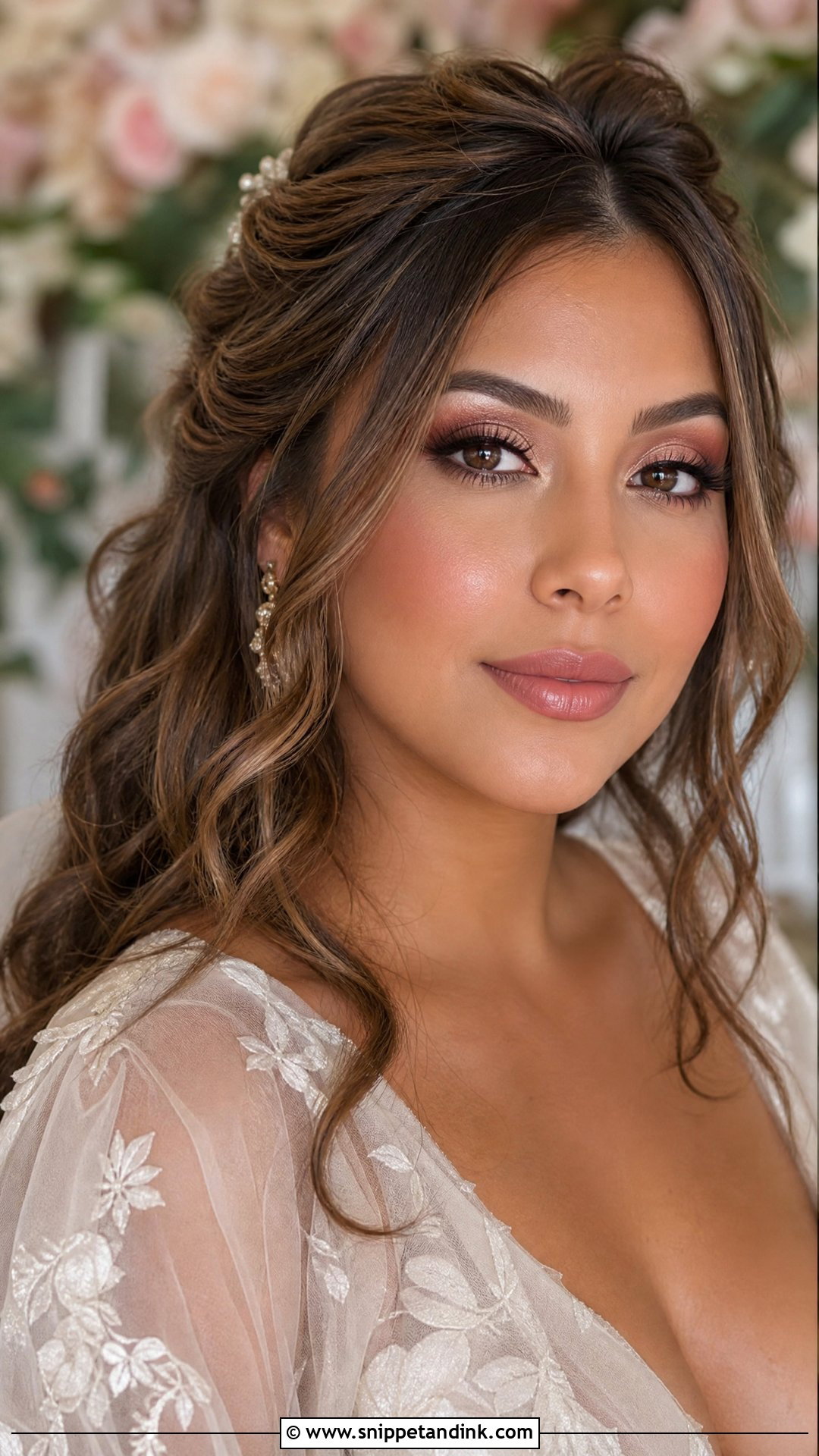
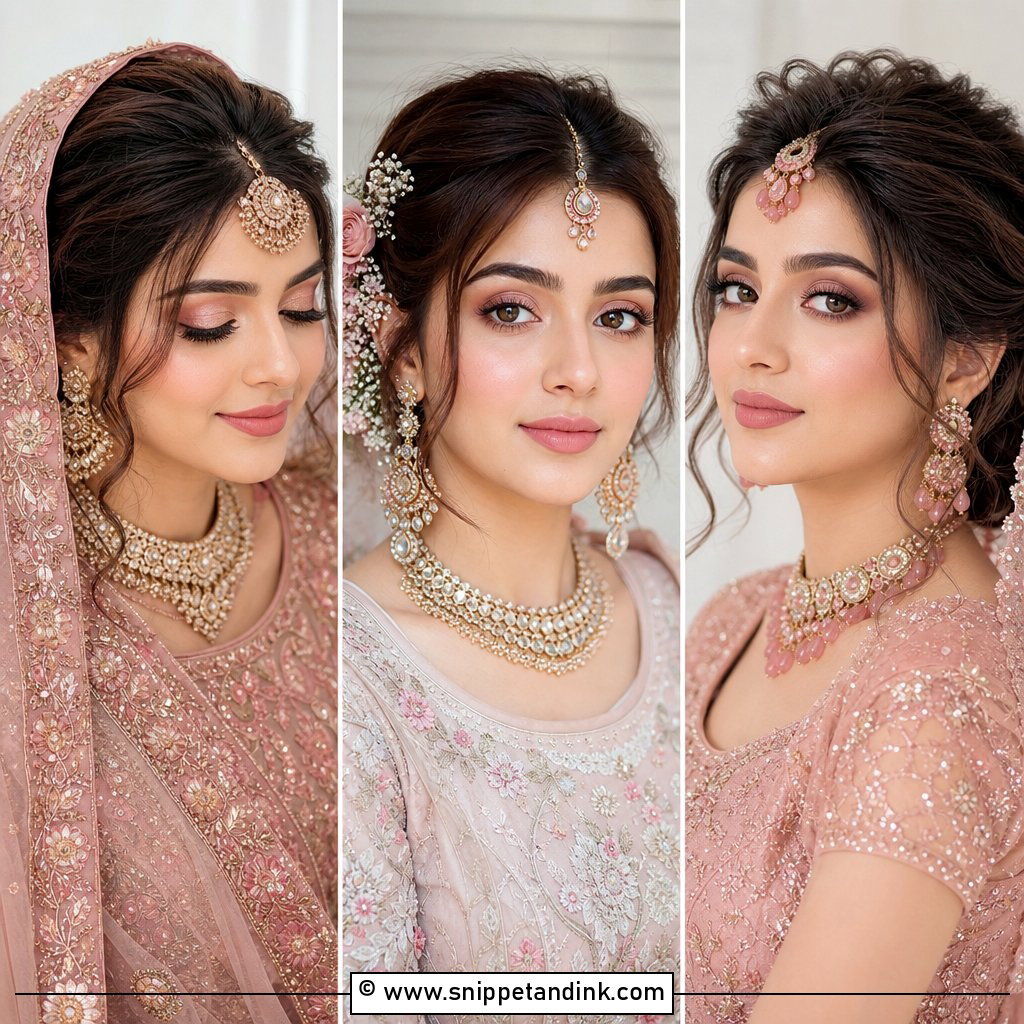
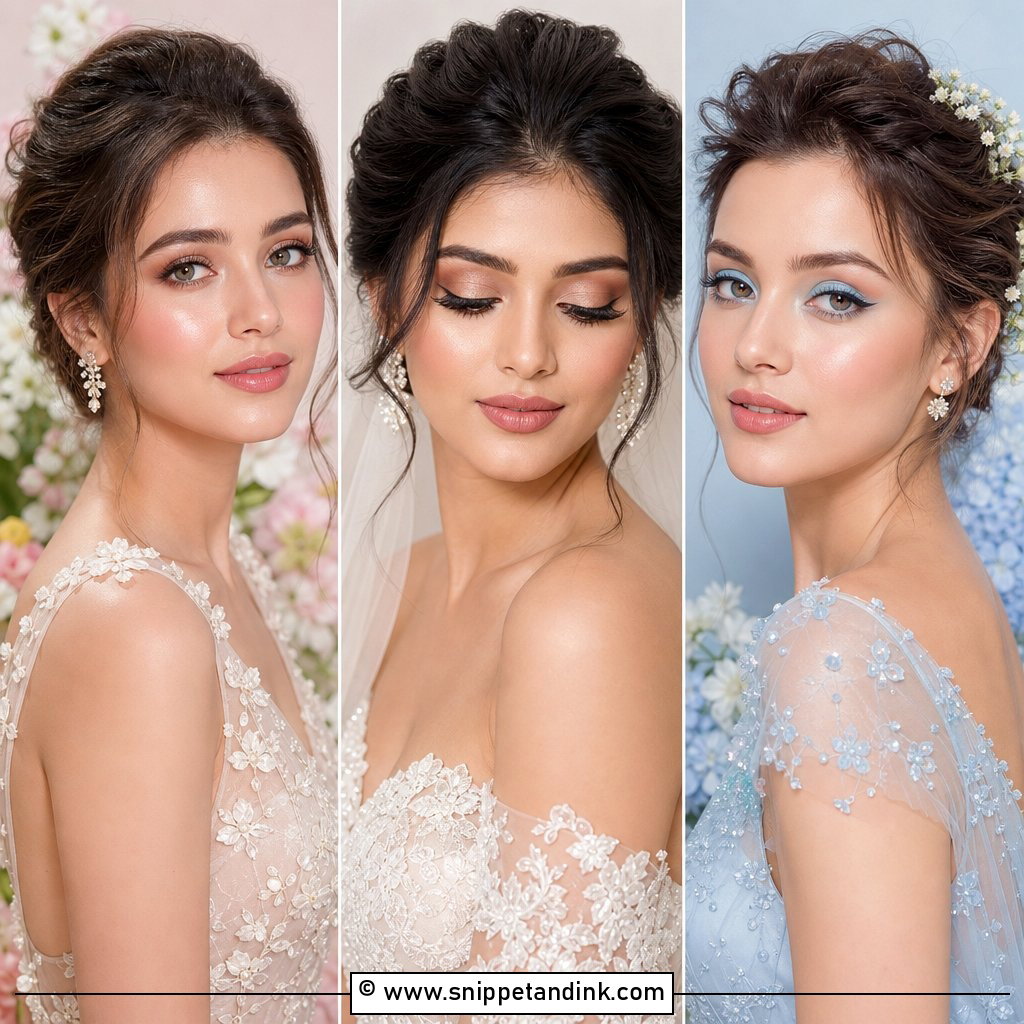
Here blush leads. I place it high and blend it toward the temple so it reads as a flush rather than a stripe of color, usually in petal pink or a mauve-rose. The eyes get a pink-champagne wash and a brown pencil smudged into the lashes, with wispy lashes instead of a dense strip. A creamy pink lip ties it together. The risk is that soft pinks disappear on camera, so I build the blush a shade further than feels natural in the mirror and check it on a phone photo before moving on.
7. Bronzed Bridal Makeup
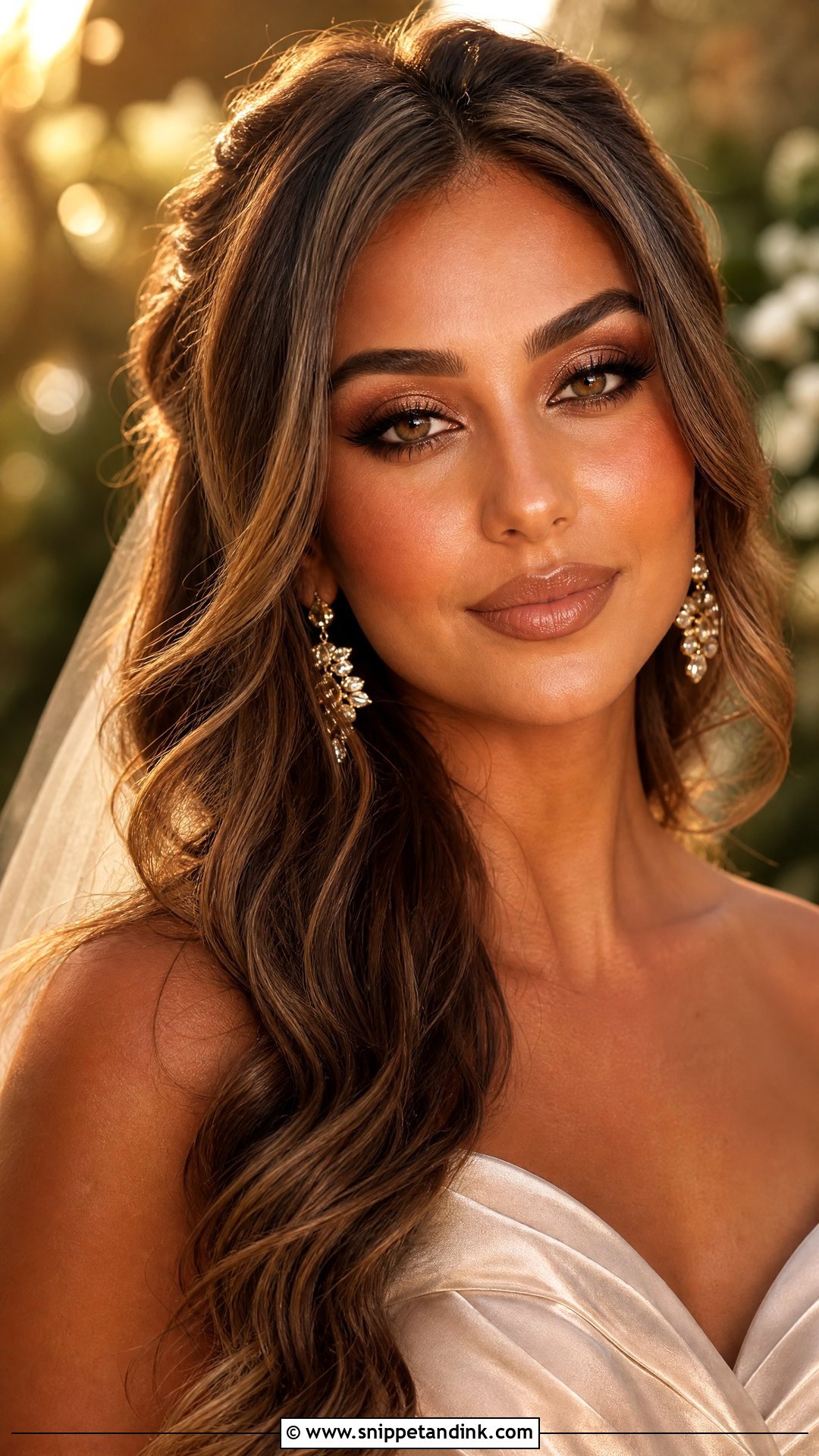
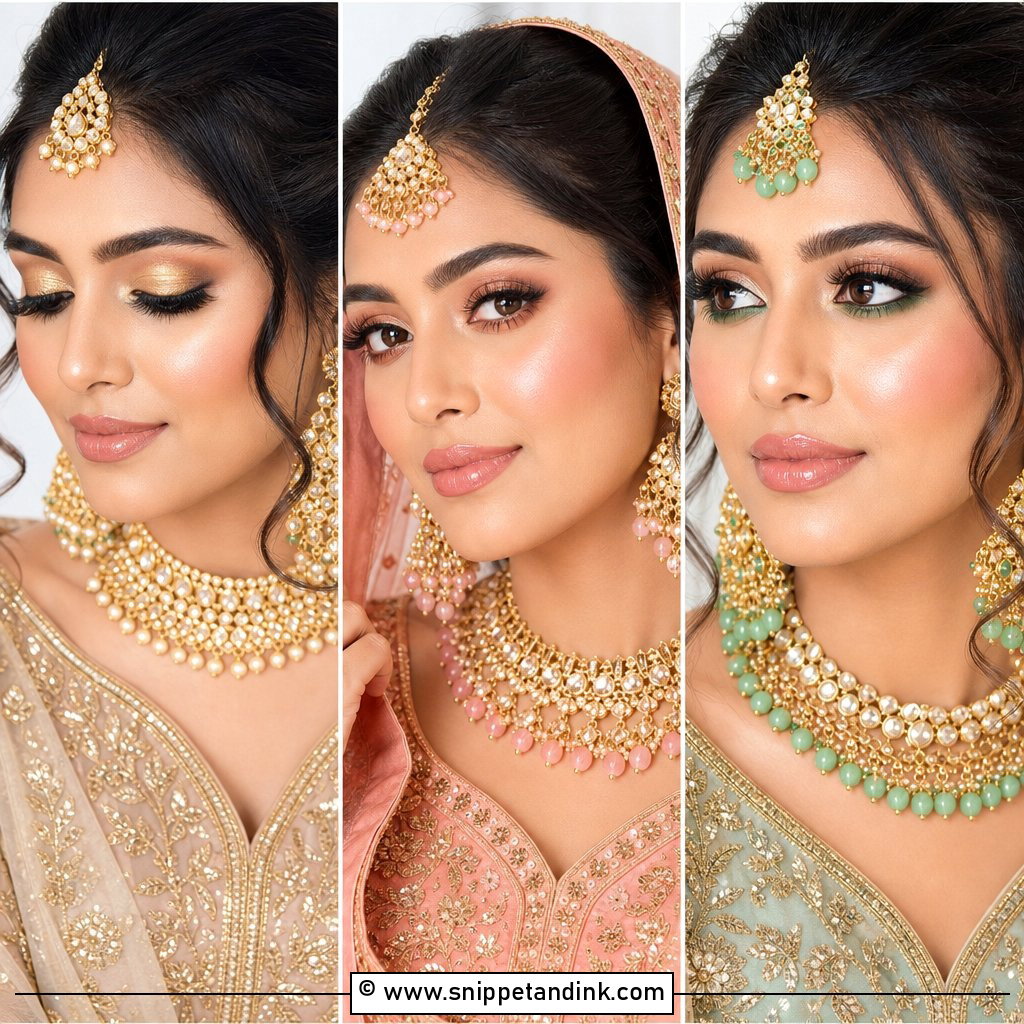
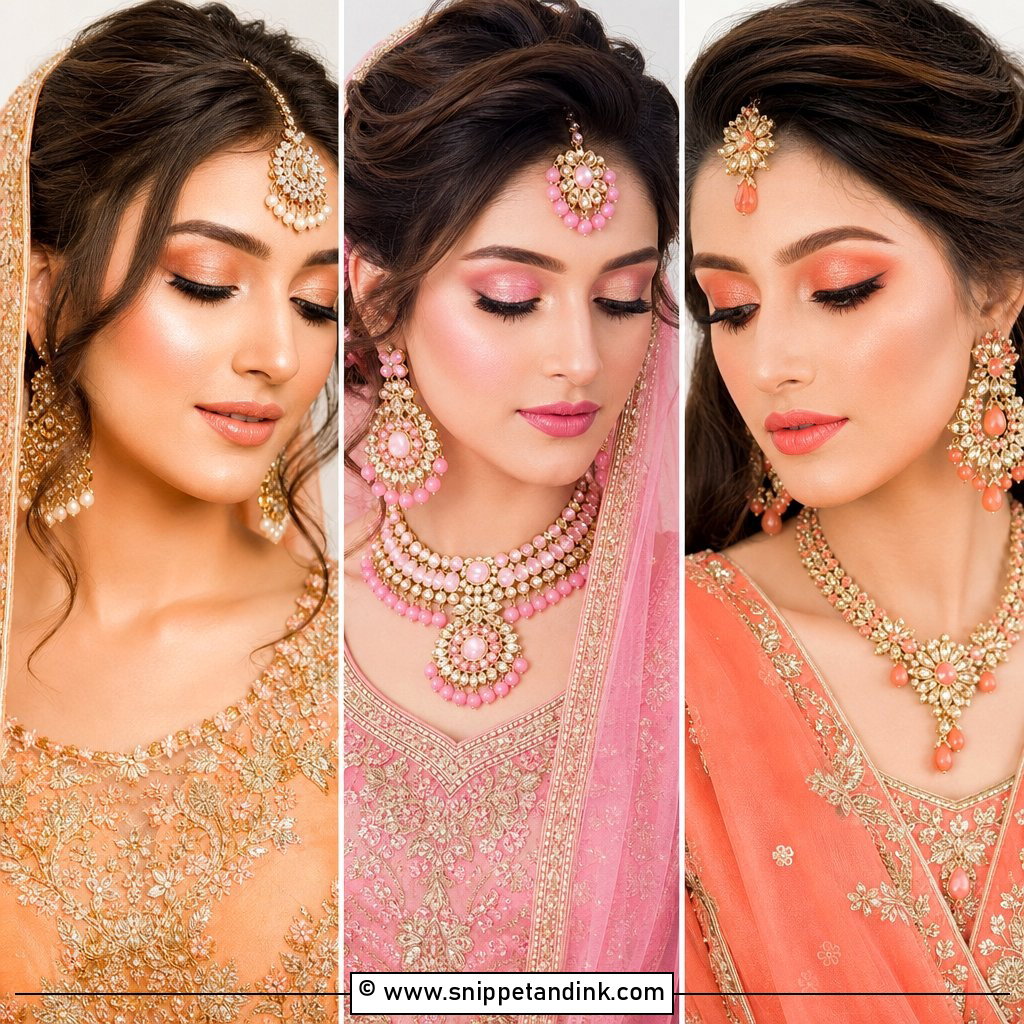
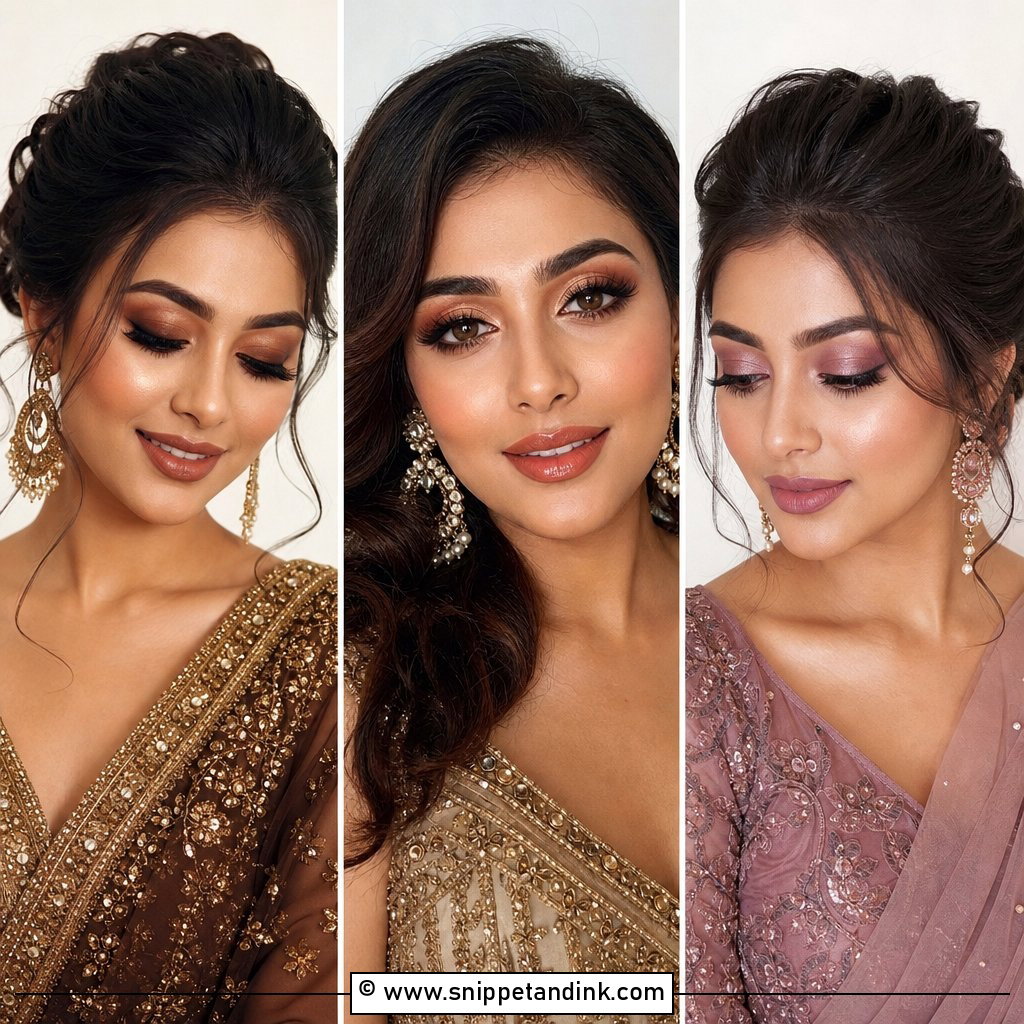
Warmth around the edges of the face is what makes golden-hour portraits glow. I place cream bronzer at the hairline, under the cheekbones and along the jaw, then blend it down the neck so there’s no line at the neckline of the dress. Bronzed bridal makeup works on most skin, but on very fair skin I mix the bronzer with a little foundation so it doesn’t turn orange. Copper and caramel go on the eyes, with shimmer pressed onto the center of the lid by fingertip, then terracotta blush and a peachy nude lip. It’s most at home at summer and destination weddings, especially beside an ivory or champagne gown.
8. Smokey Eye Bridal Makeup
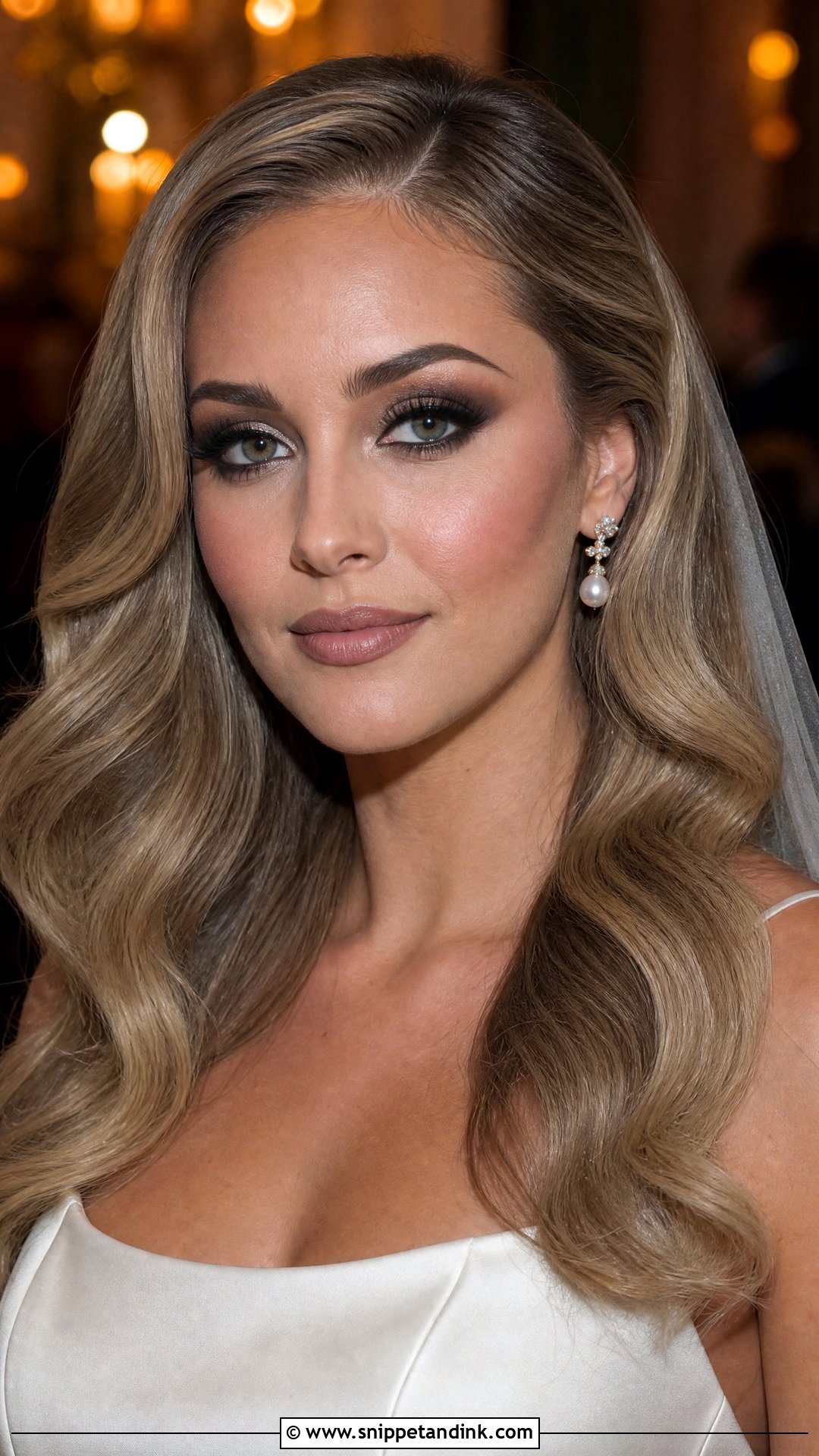
Taupe, espresso or plum, chosen by eye color, gives depth without the hard black edge that can photograph like a bruise. I set the darkest shade tight against the lash line, smudge it into the lower lashes, and blend upward until the top edge vanishes. Smokey eye bridal makeup done this way needs a quieter face around it: muted blush and a nude or rose lip. I always do the eyes before foundation on this one, so any shadow fallout can be wiped off instead of ruining the base. Evening receptions and black-tie rooms suit it best.
9. Nude Bridal Makeup
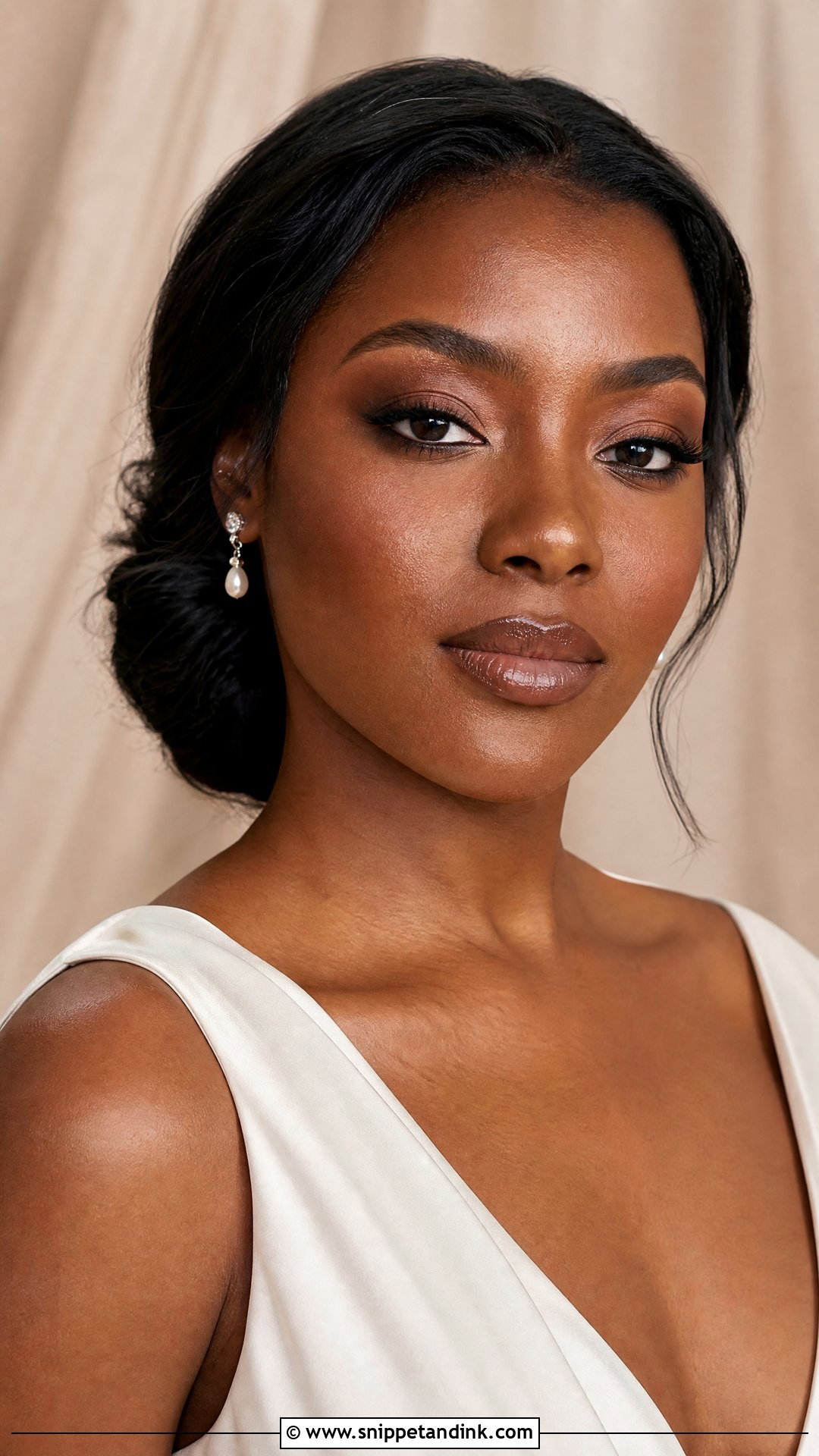
The hard part is finding a nude that doesn’t erase you. Too pale and the lips vanish or look concealed, so I pick a lip shade slightly deeper than the natural lip. Fair skin usually suits pink-nude, medium and tan skin come alive with caramel or beige-rose, and deep skin looks right in cocoa or deep rose. The eyes need matte browns for shape and one touch of shimmer, otherwise the face goes flat in photos. Lip liner matters more here than with any color, since there’s no pigment to hide an uneven edge.
10. Pink Bridal Makeup
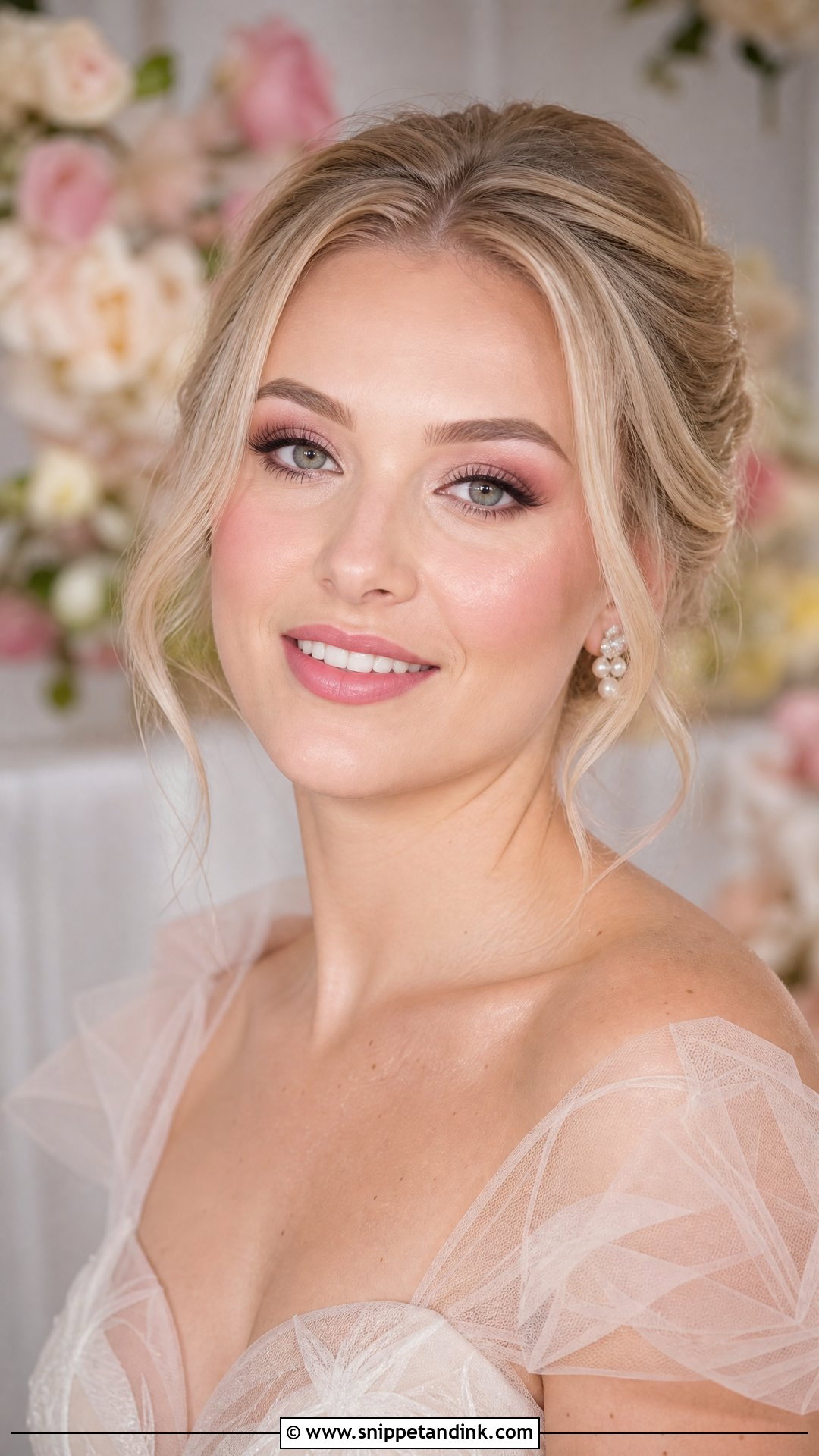
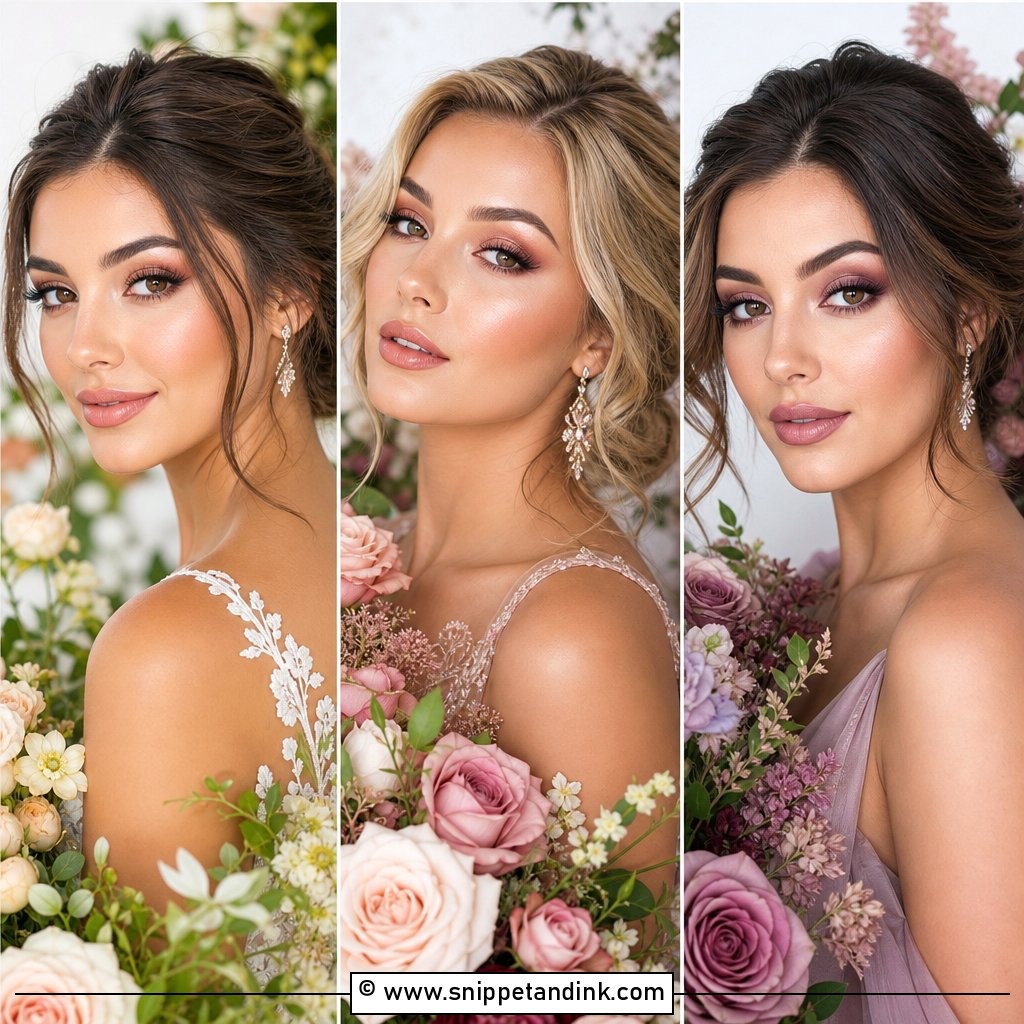
Pink works when it agrees with the undertone of the skin. On fair skin, ballet and cool pinks look soft; on medium to deep skin those same shades can go chalky, so I reach for warm rose or berry pink instead. I place blush slightly higher than usual for lift, then echo the color in a mauve shadow with brown liner and a matching lip. Before the wedding, hold your lipstick next to the bouquet flowers. Two pinks with different undertones fight, and the camera notices even when you don’t.
11. Rose Gold Bridal Makeup
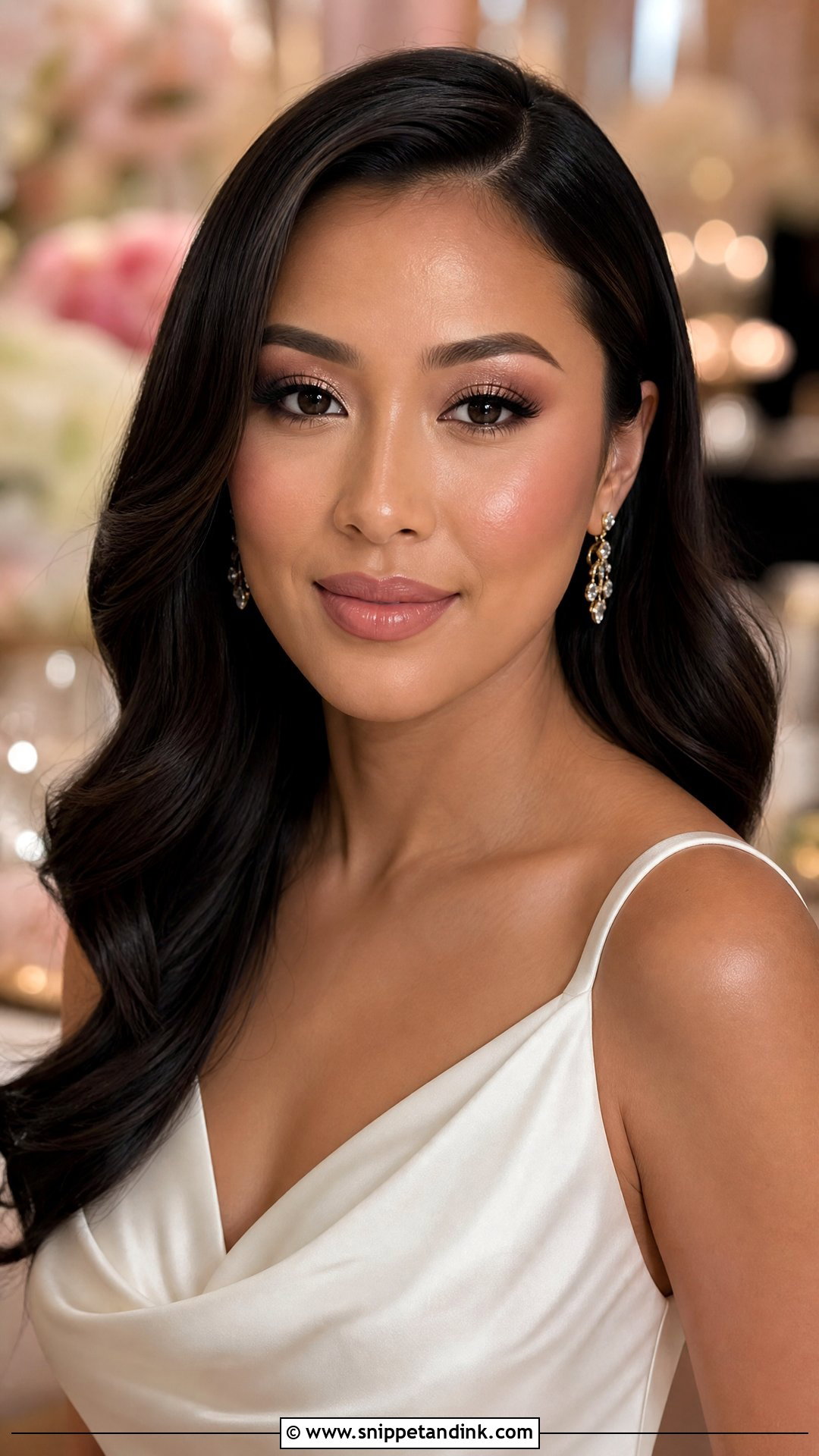
Rose gold sits between pink, gold and bronze, which is why it suits so many skin tones. I press the shimmer onto the center of the lid with a fingertip, since a brush scatters it down the cheek, then blend soft brown or mauve into the crease so the shine has a frame. Brown liner, peachy-pink blush and a champagne highlight keep the face in one color family. Check the shimmer under flash at your trial. Large particles look like glitter specks in close-ups; finer ones just look like light.
12. Champagne Bridal Makeup
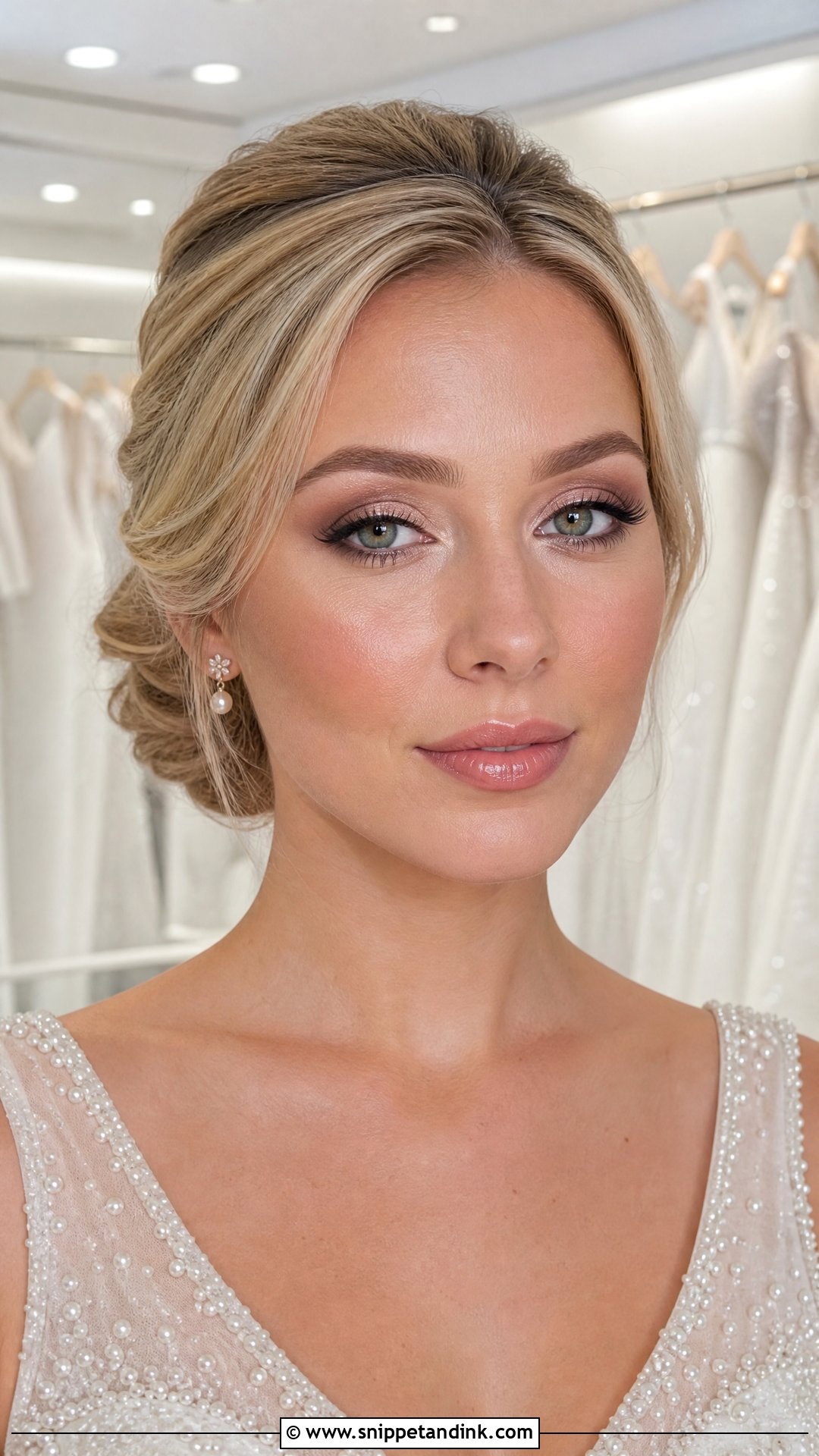
Nothing wakes up tired eyes faster. A dot of champagne on the inner corners and the center of the lid, a light brown in the crease, thin liner and airy lashes. I keep highlighter on the cheeks restrained, because shimmer on both the eyes and the cheekbones reads as oily by evening. Soft peach blush and a glossy nude lip finish it. It’s lovely with satin and pearls in clean daytime light.
13. Brown Bridal Makeup
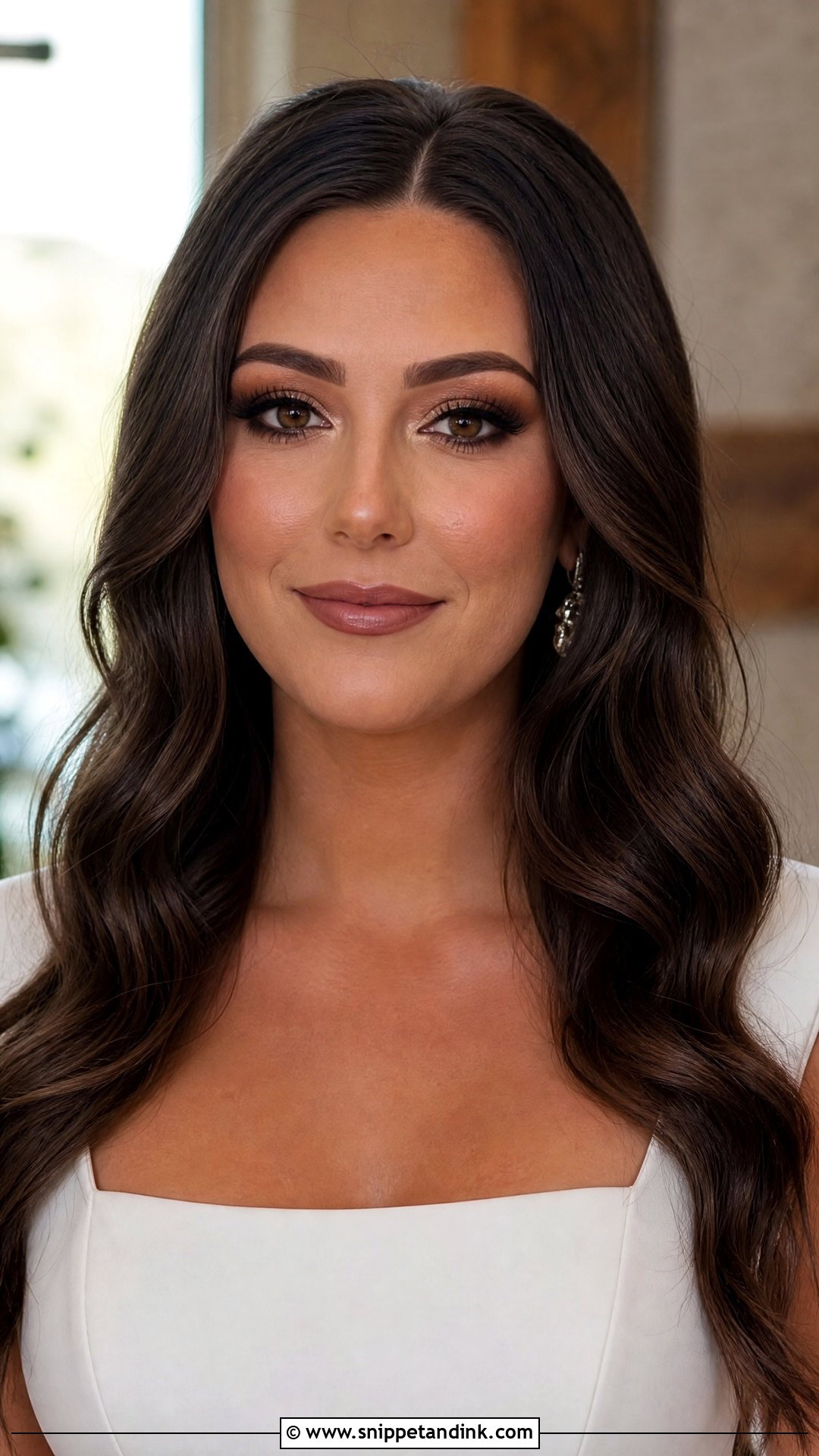
Brown flatters almost everyone once the undertone is right: a cool taupe-brown on pink-toned skin, a golden or reddish brown on warm skin. For a light version I stay in tan and beige; for depth I build espresso at the lash line and bronze on the lid. Brown liner is my default for brides who find black too sharp against fair lashes. On deeper skin, rich cocoa and bronze give the most dimension. Warm bronzer and a rose-brown lip keep it from looking muddy.
14. Red Lip Bridal Makeup
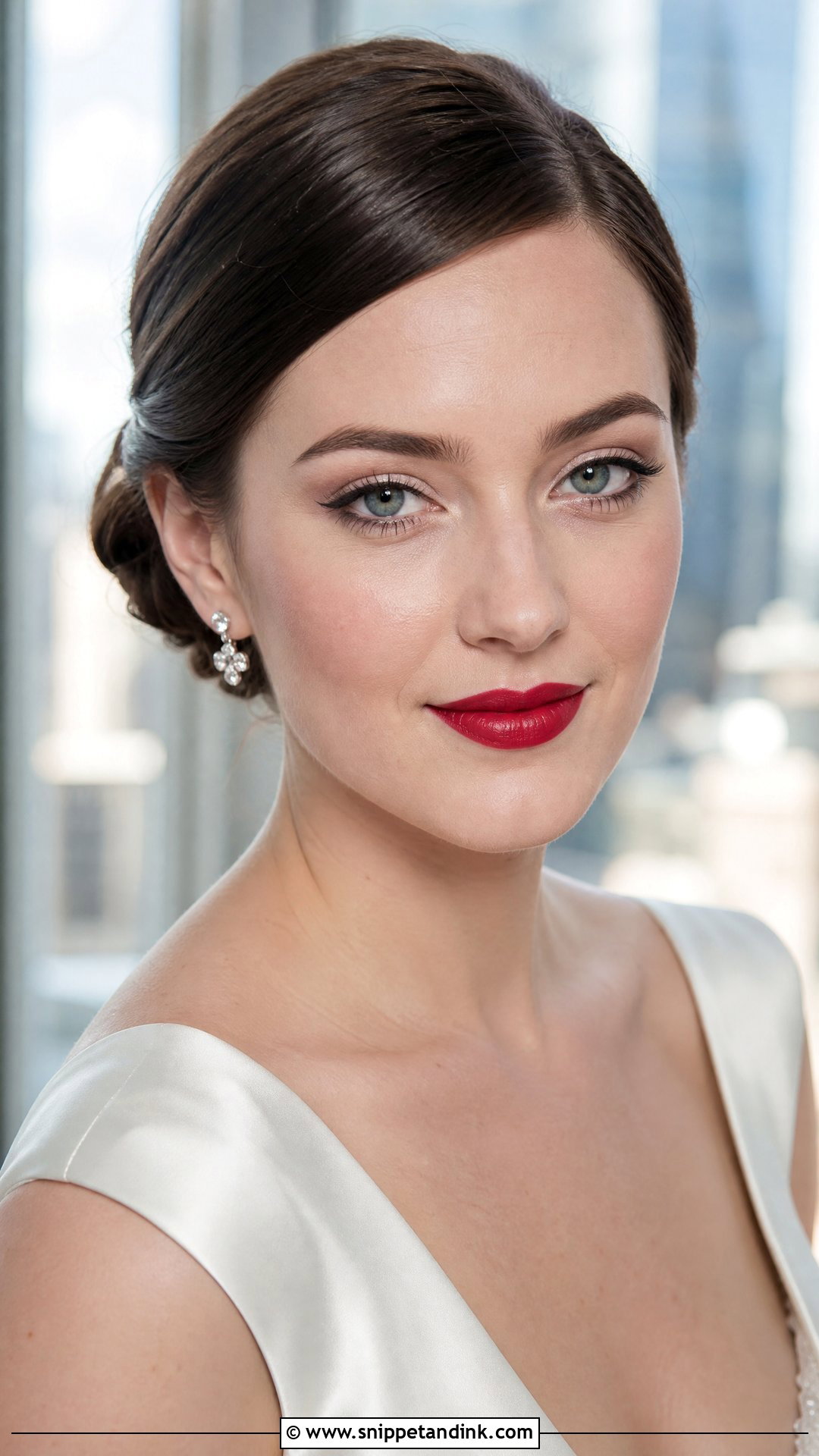
A red lip asks everything else to step back: clean skin, brushed brows, thin liner and neutral lids. The shade follows undertone, so blue-red on cool skin, orange-red on warm skin, and cherry or brick on richer complexions. Red lip bridal makeup lives or dies on the liner. I line and fill the whole lip with pencil first, then lipstick, blot, and apply again, which stops the edge feathering and cuts down how much color ends up on a glass or a cheek. Hand the lipstick and pencil to someone you trust, because red needs a check after the meal.
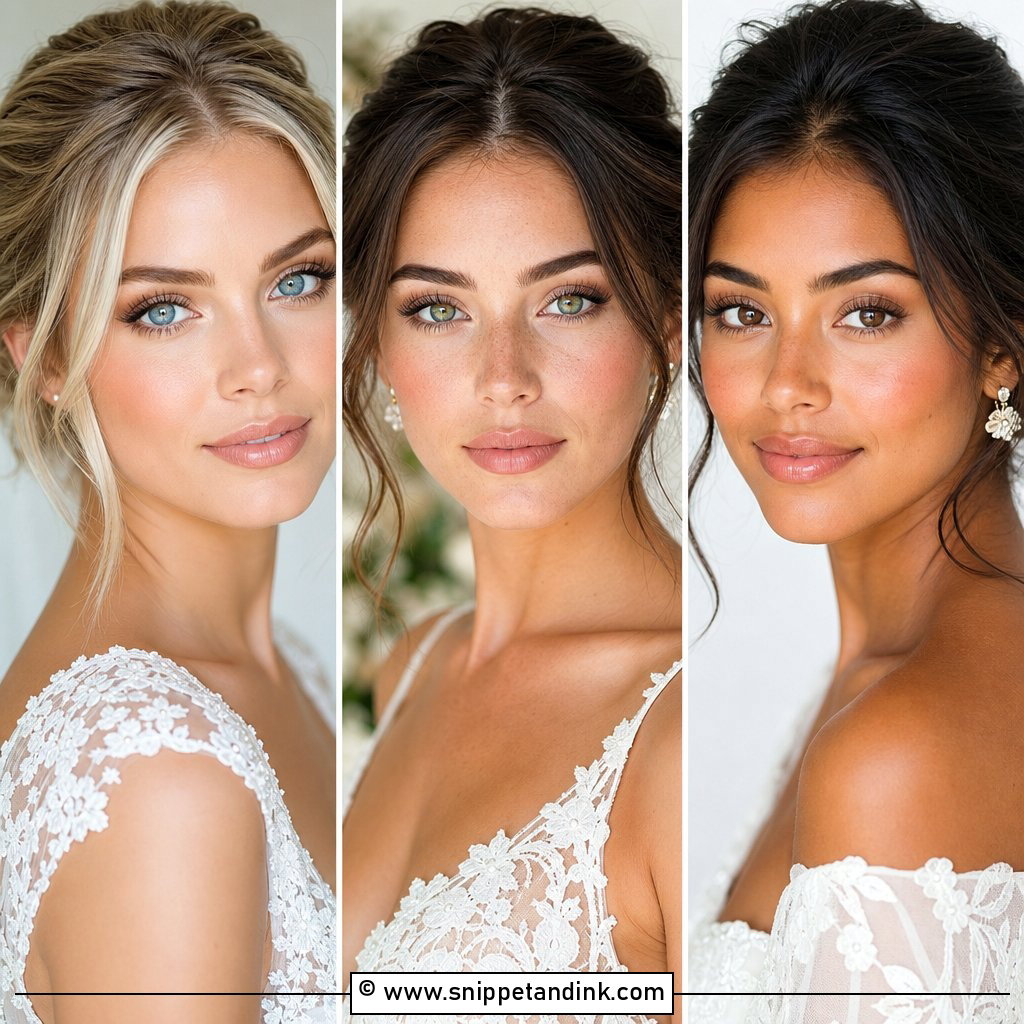
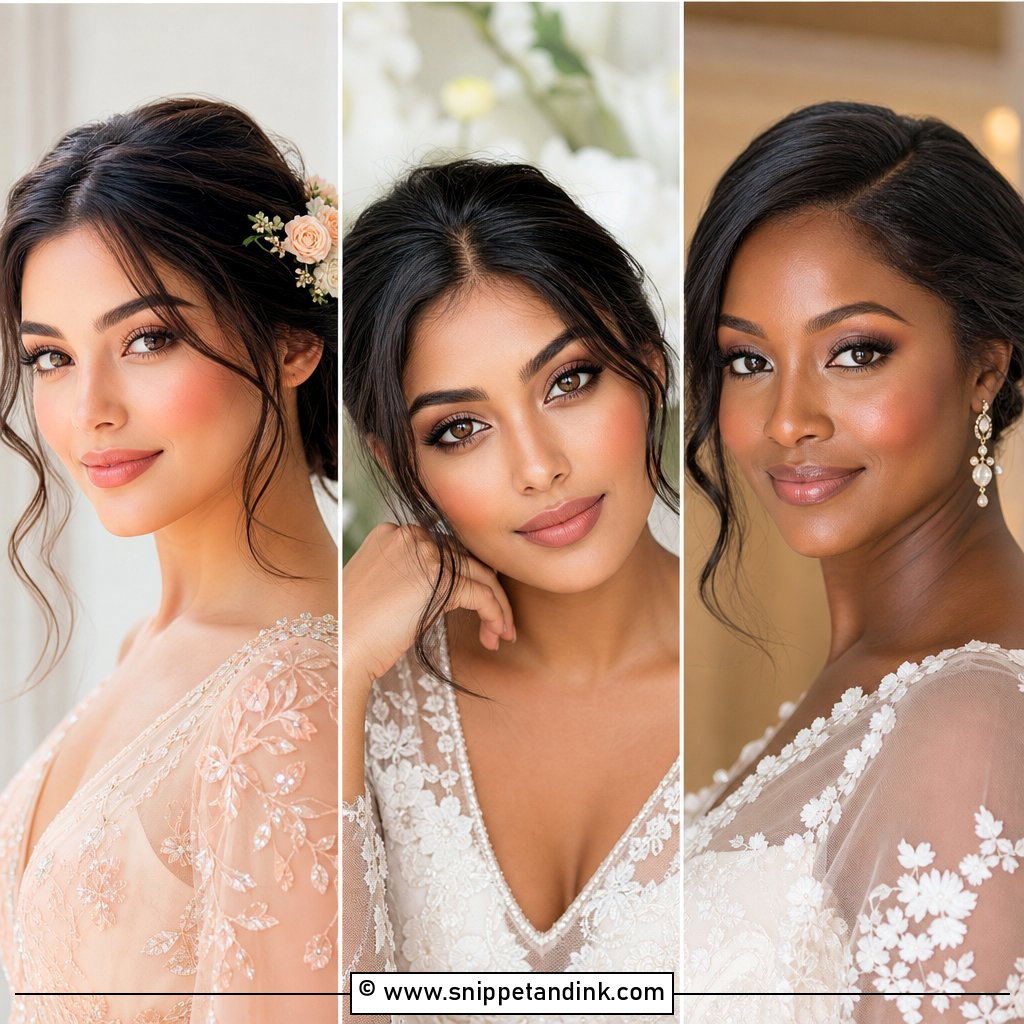
15. Winged Liner Bridal Makeup
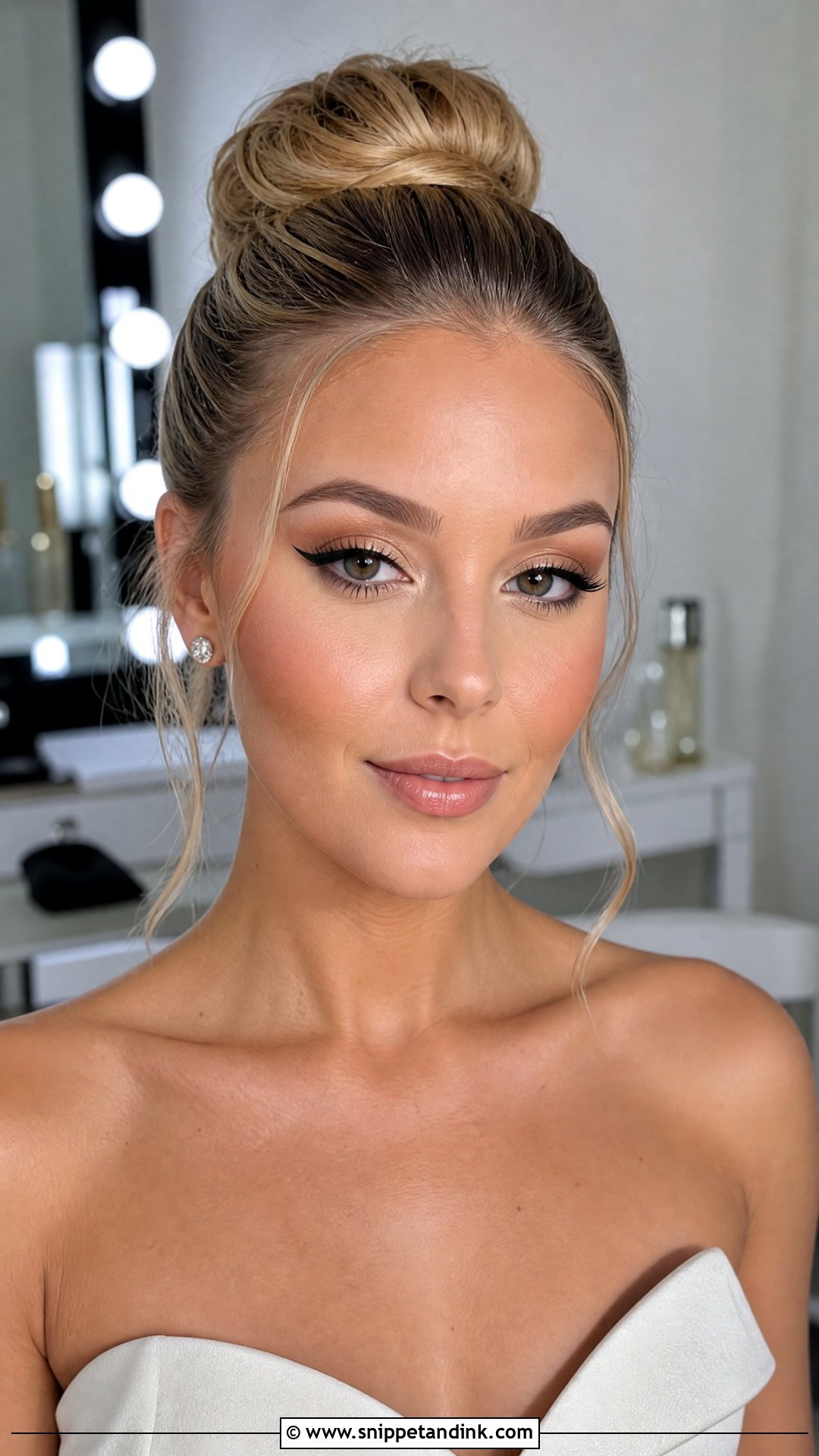
The wing should continue the angle of your lower lash line, not point up at the brow. Winged liner bridal makeup is thinner now, and on hooded eyes I draw it with the eyes open and looking straight ahead, because a wing drawn on a closed lid folds into a broken line once the eye opens. Sometimes the answer is just a tiny flick in soft brown. Neutral satin shadow underneath, individual lashes on the outer third, soft blush and a rose lip give it a vintage feel without looking like costume.
16. Minimal Bridal Makeup
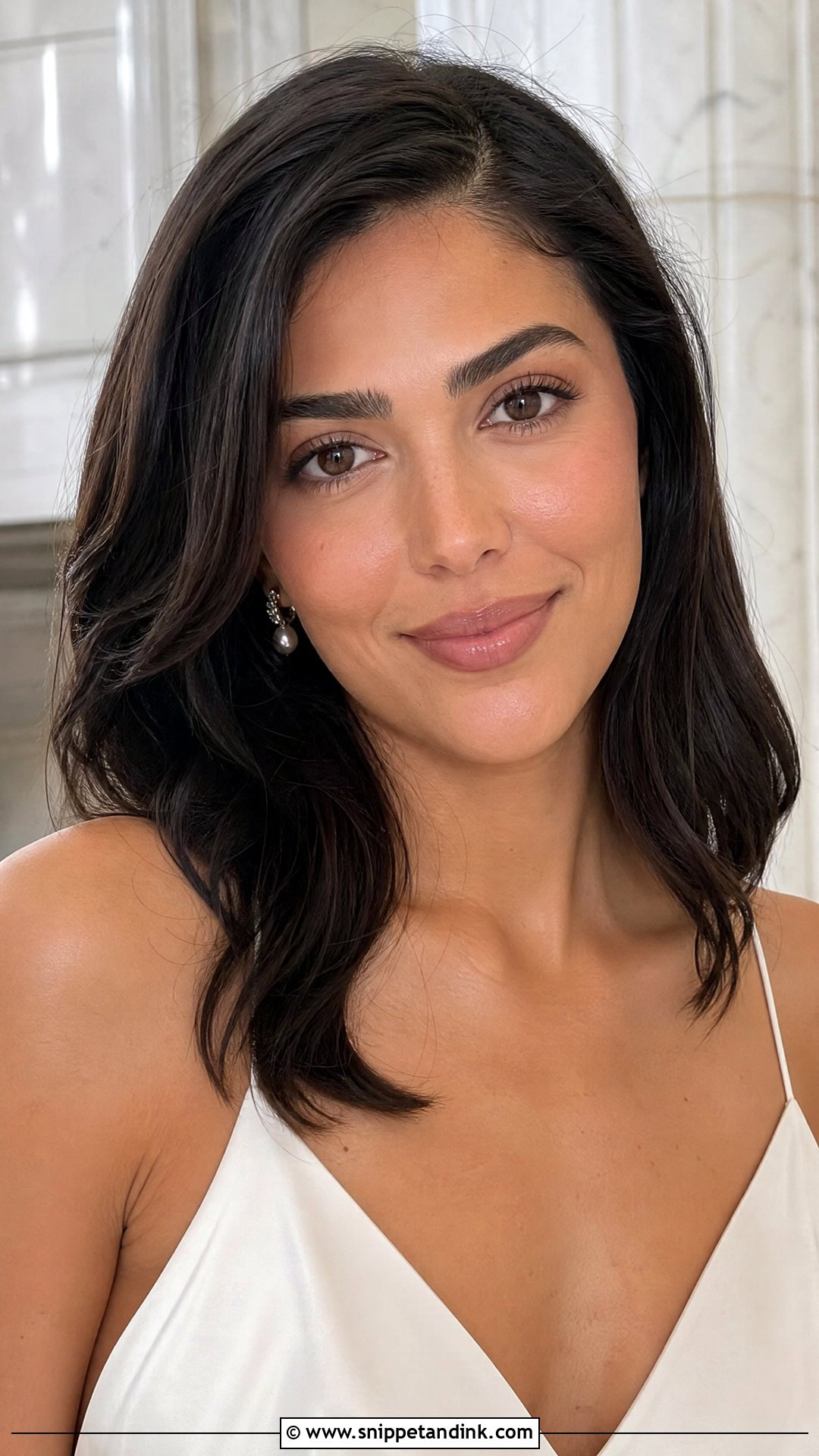
Sheer doesn’t mean bare. Minimal bridal makeup is actually the most edited thing I do: concealer only where needed, a sheer foundation, a brushed and lightly filled brow, curled lashes with tightlining, cream blush and a tinted balm. Every product has to earn its place. What surprises brides is that it still takes time, because there’s nothing to hide behind. It suits a courthouse ceremony or a slip dress, and anyone who’d feel masked in more.
17. Full Glam Bridal Makeup
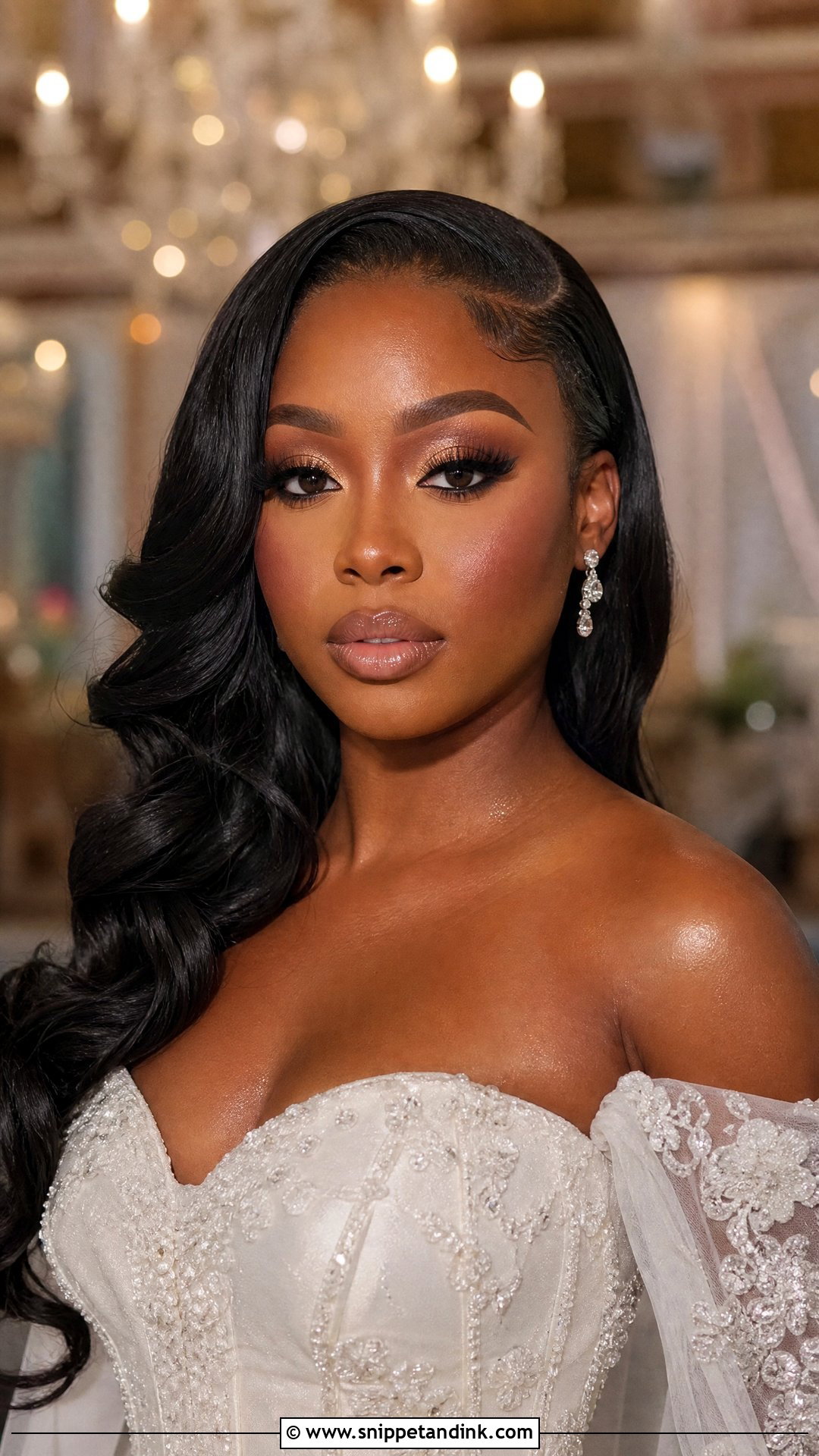
Full glam still has its brides, and the modern version is about blending rather than thickness. I use a full-coverage foundation in thin, buffed layers so it never looks like a mask in close-ups, then build contour, blush and highlight in light passes. A soft cut crease or a shimmer lid, a wing, fuller lashes and defined but feathered brows. The lip follows the eye: the heavier the eye, the quieter the lip. Ballrooms and evening receptions carry it, and so do brides who wear glam often and would feel underdressed in anything less.
18. Dewy Bridal Makeup
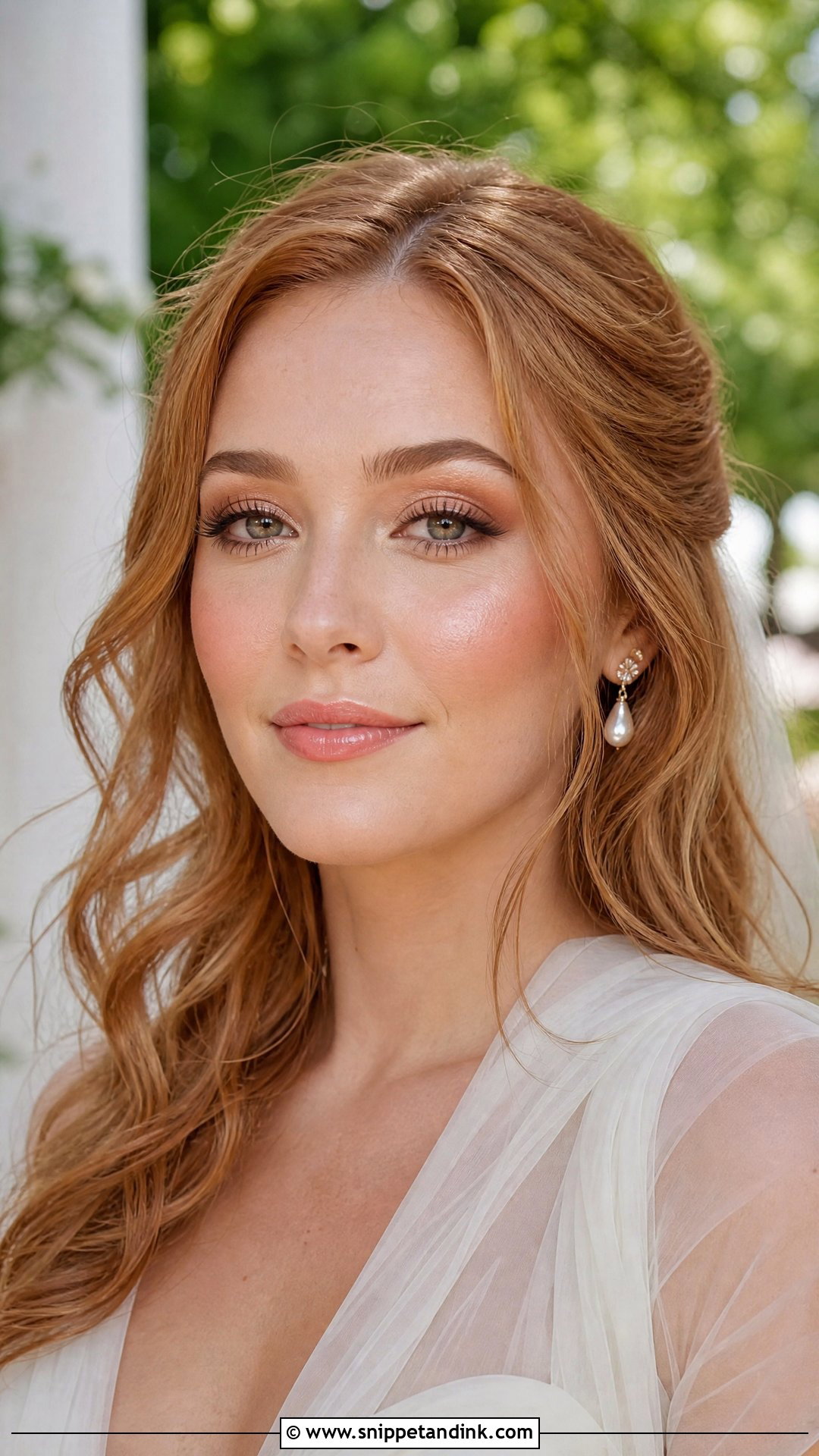
Dewy is glow with moisture behind it, so it really starts the night before with a rich moisturizer. On the day I use a radiant primer and a skin-like foundation, with cream blush and cream bronzer pressed in so they melt into the base. I still powder the nose and forehead lightly. Pearl and warm brown on the eyes, then a glossy peach lip. Dry skin loves this finish. Oily skin usually turns dew into shine within a couple of hours, so in that case I keep the dewy layer to the cheekbones only.
19. Peach Bridal Makeup
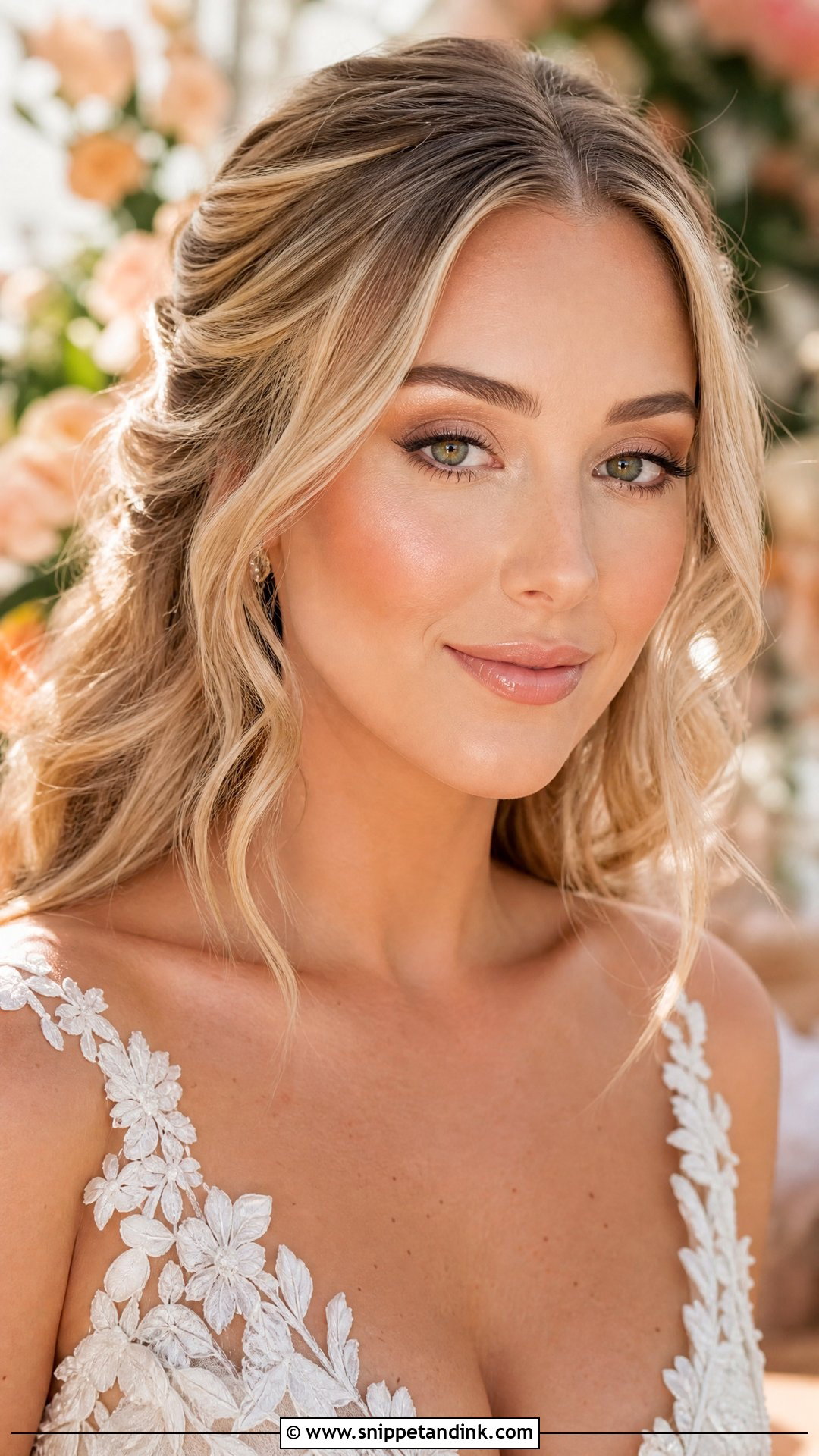
Peach brings warmth without the depth of bronzer. Apricot blush on the cheeks, a golden highlight, and peach-beige blended into warm tan on the eyes, with a little shimmer on the lid. Coral-pink or peachy nude on the lips. On very pale skin with pink undertones, peach can tip into orange, so I test it against the face in daylight before the trial ends. It sits well with ivory and cream fabrics and with spring and summer flowers.
20. Berry Bridal Makeup
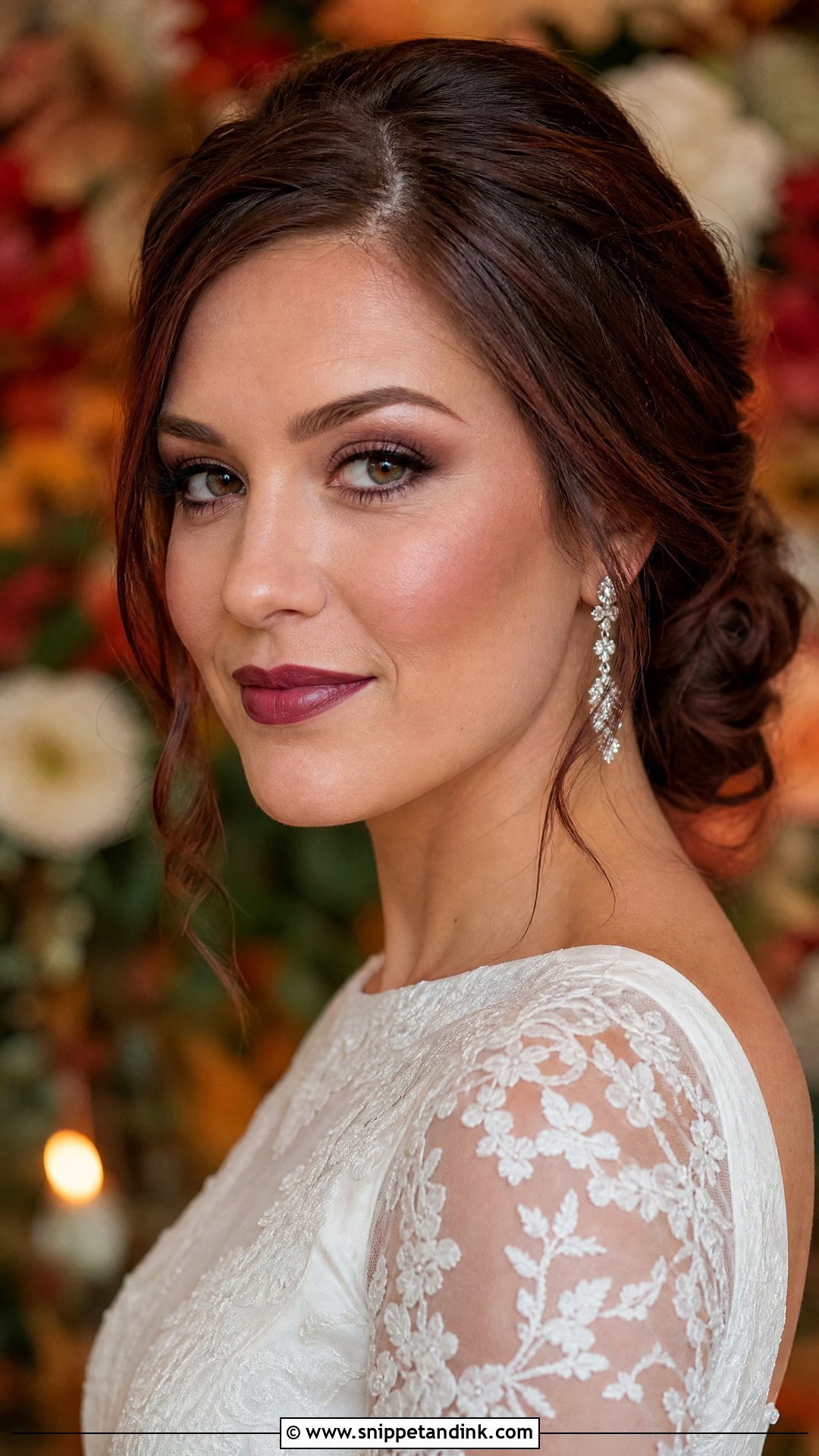
Berry gives you color without a red lip, but only one feature should carry it. A berry-stained lip with neutral eyes, or a plum-brown eye with a muted rose lip; doing both at full strength drags the face down. I keep the skin slightly luminous so the deeper tones don’t look heavy, and I blot berry lipstick into a stain, because it wears off more evenly than a full glossy layer. Fall weddings and evening ceremonies suit it, and it’s especially flattering on medium, tan and deep complexions.
A Makeup Trial That Answers Real Questions
Most artists suggest booking the trial two to three months out, which leaves time for a second attempt if the first one misses. A trial is only useful if you bring the information I’d otherwise have to guess at.
- Wear a top close to your dress color and neckline. A strapless white bodice bounces light onto the face very differently than a grey T-shirt.
- Bring two or three reference photos of brides whose skin tone is near yours. A look built on someone much fairer or deeper won’t translate shade for shade.
- Arrive with clean, moisturized skin and no new skincare products that week.
- Ask for photos in window light and with a phone flash. Flash shows white cast from some SPF formulas and heavy setting powders that look invisible in the mirror.
- Keep the makeup on for at least five or six hours afterward and note where it moved first.
The Touch-Up Pouch and the Hours It Covers
Even well-set makeup changes over a long day, and it changes in a predictable order. Lip color goes first, usually after drinks and the meal. Then shine appears on the forehead and nose, and finally the under-eye area can crease once you’ve been smiling for hours.
I pack a small pouch for whoever is closest to the bride: the exact lipstick and liner, blotting papers, a small powder with a puff, a cotton bud, and a few spare lashes with glue. Blotting papers come before powder, every time, because powder layered on top of oil turns cakey by the third touch-up. If you expect to cry during the vows, waterproof mascara on the lower lashes saves the most work.
Does It Still Look Like You After the Last Dance?
Whichever direction you lean, the test is the same: does it still look like you in a flash photo, and does it hold after hours of hugging and crying? Most brides land somewhere between soft glam and natural skin, then borrow one feature from a bolder look, like a red lip or a wing. Wear your trial makeup for the rest of that day, take photos in daylight and with flash, and notice what moved. That tells you more than any mirror will.
You'll Like These Ideas:


Leave a Reply