
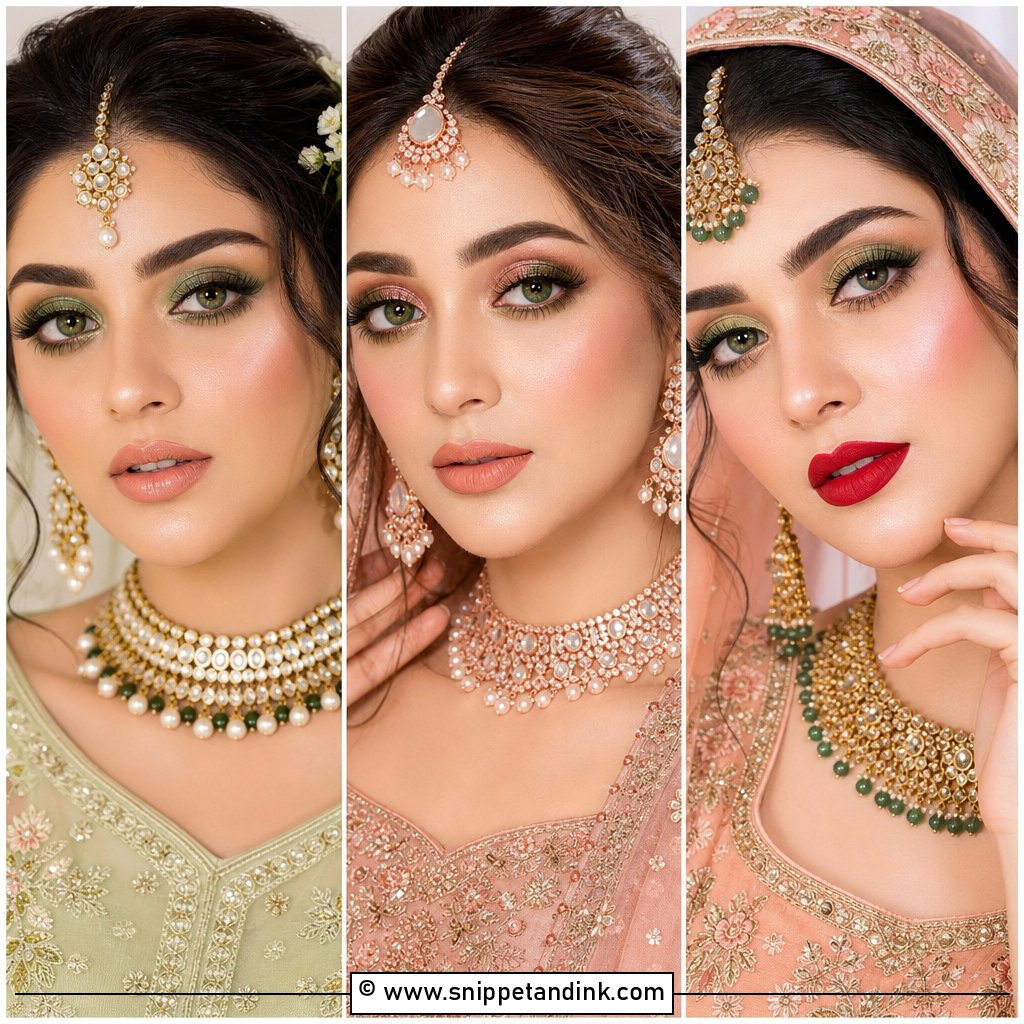
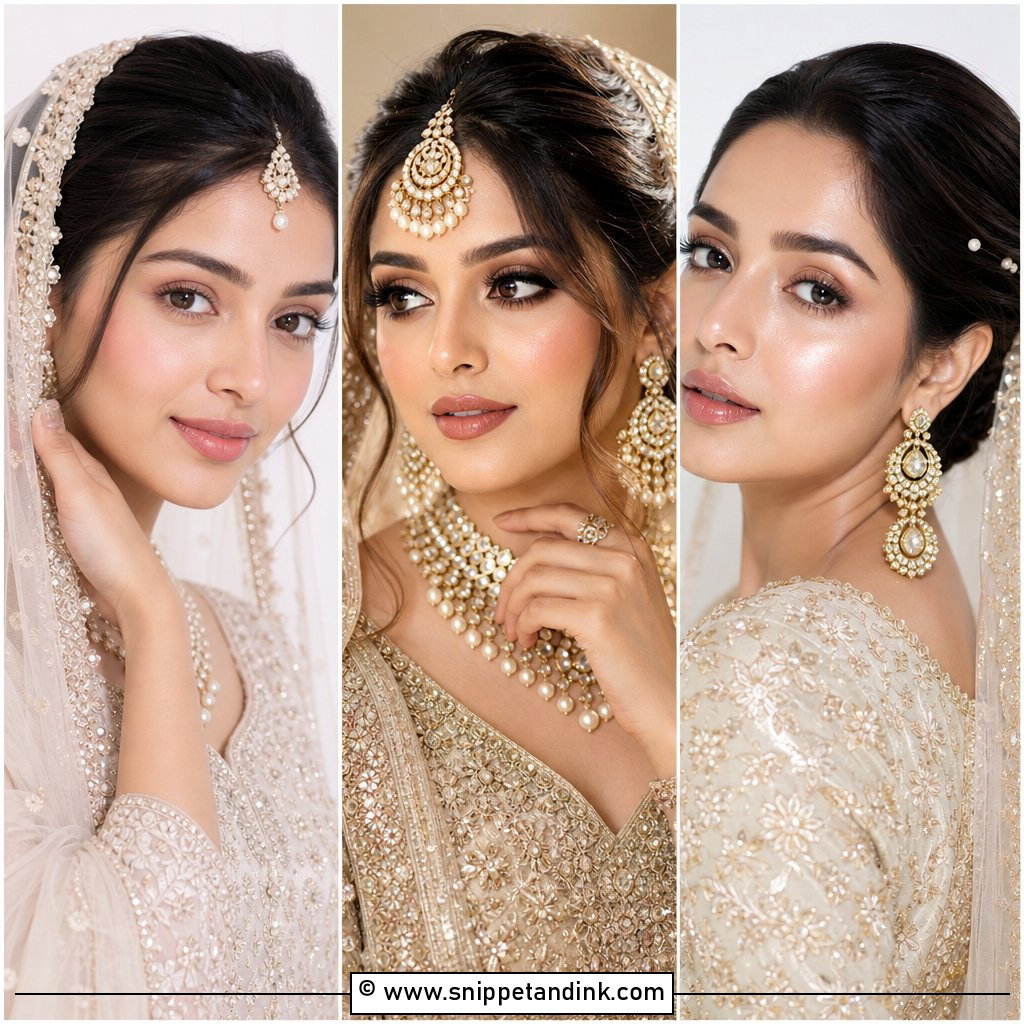
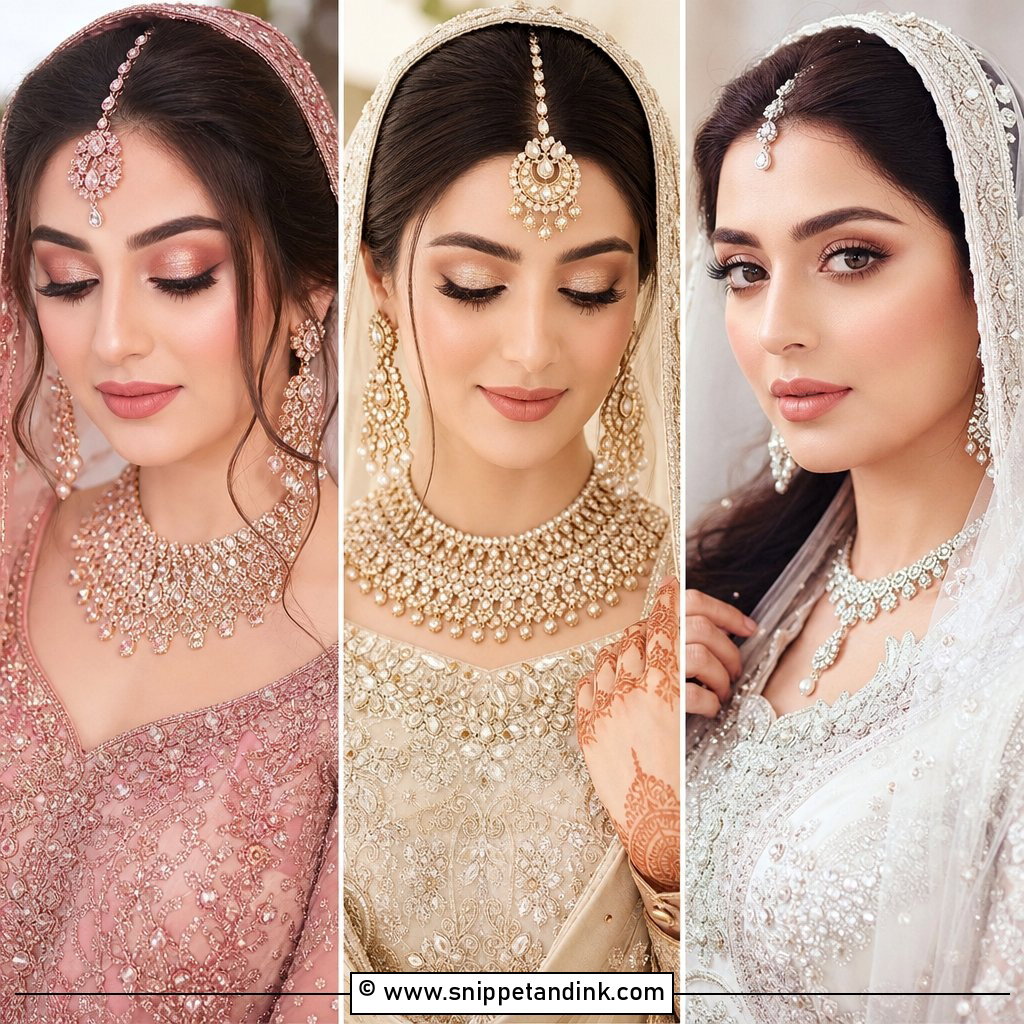
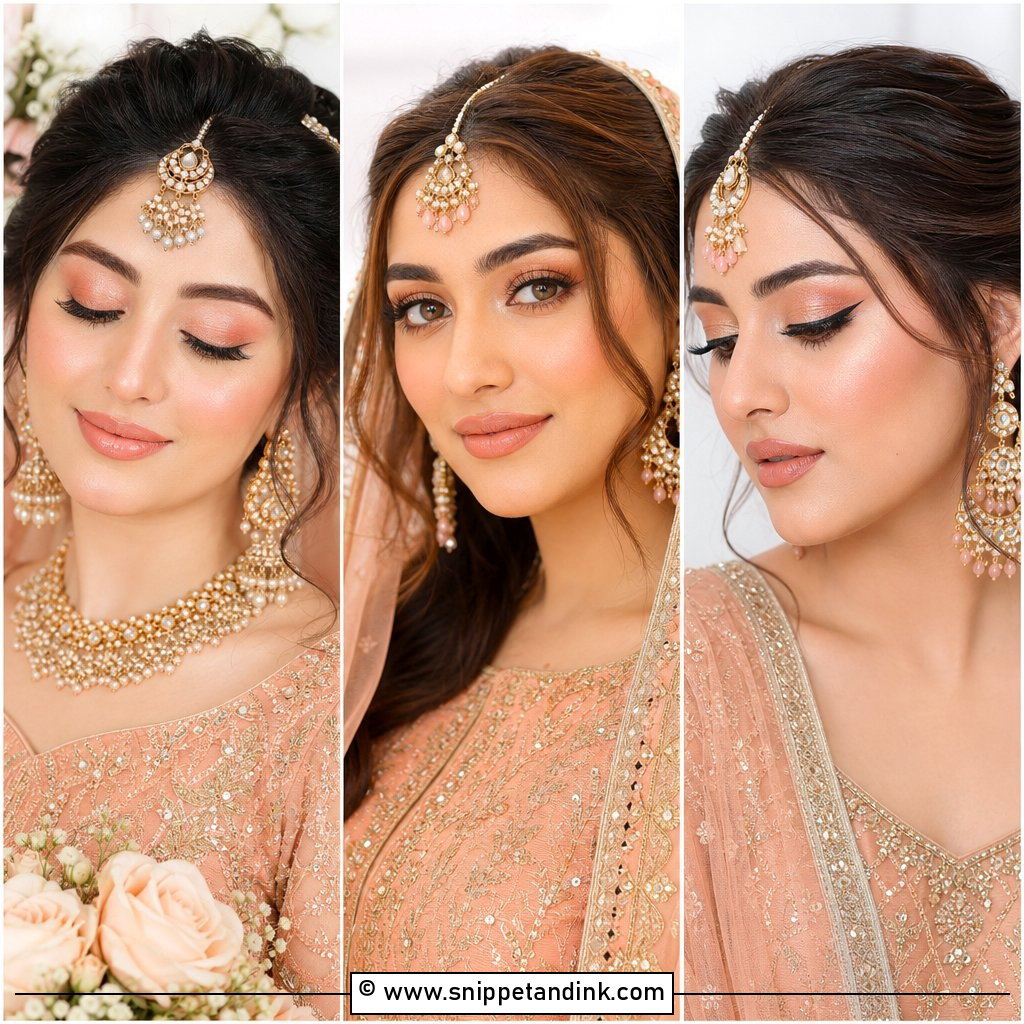
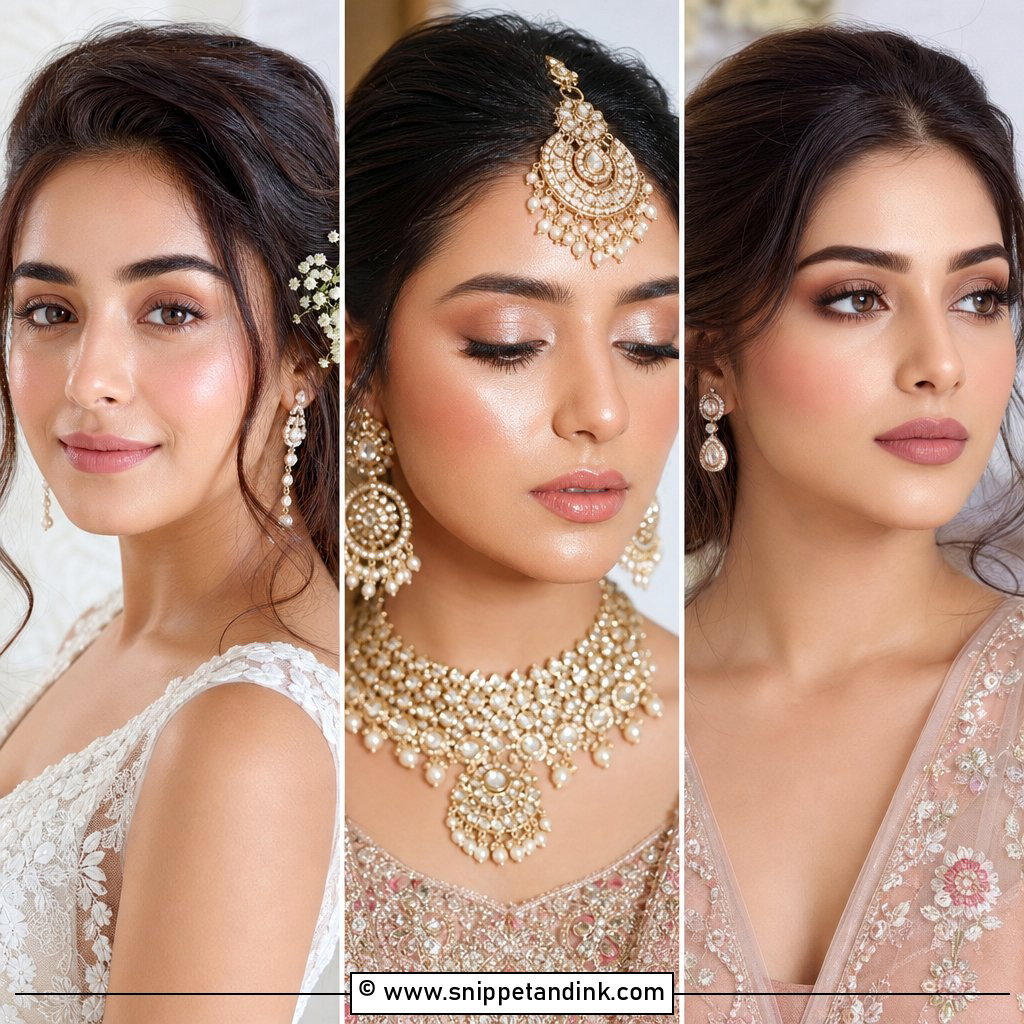
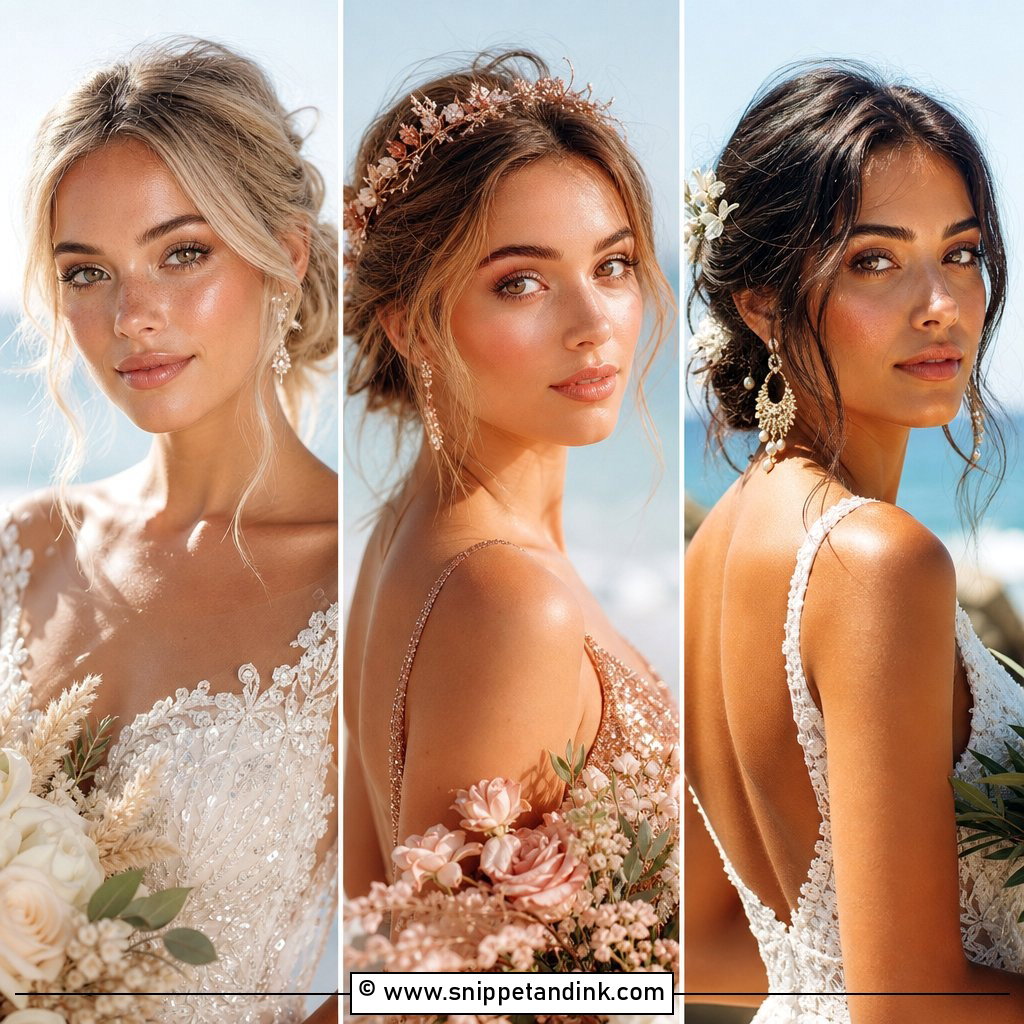
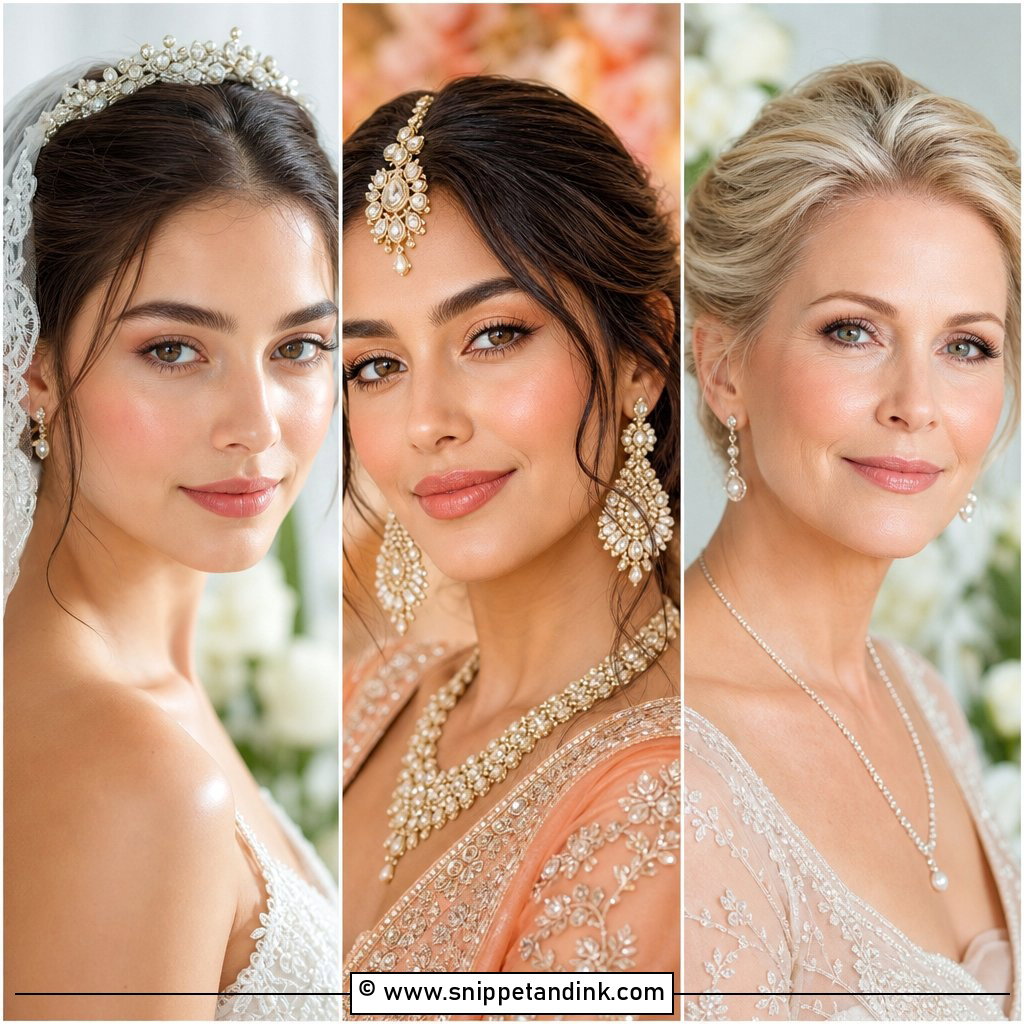
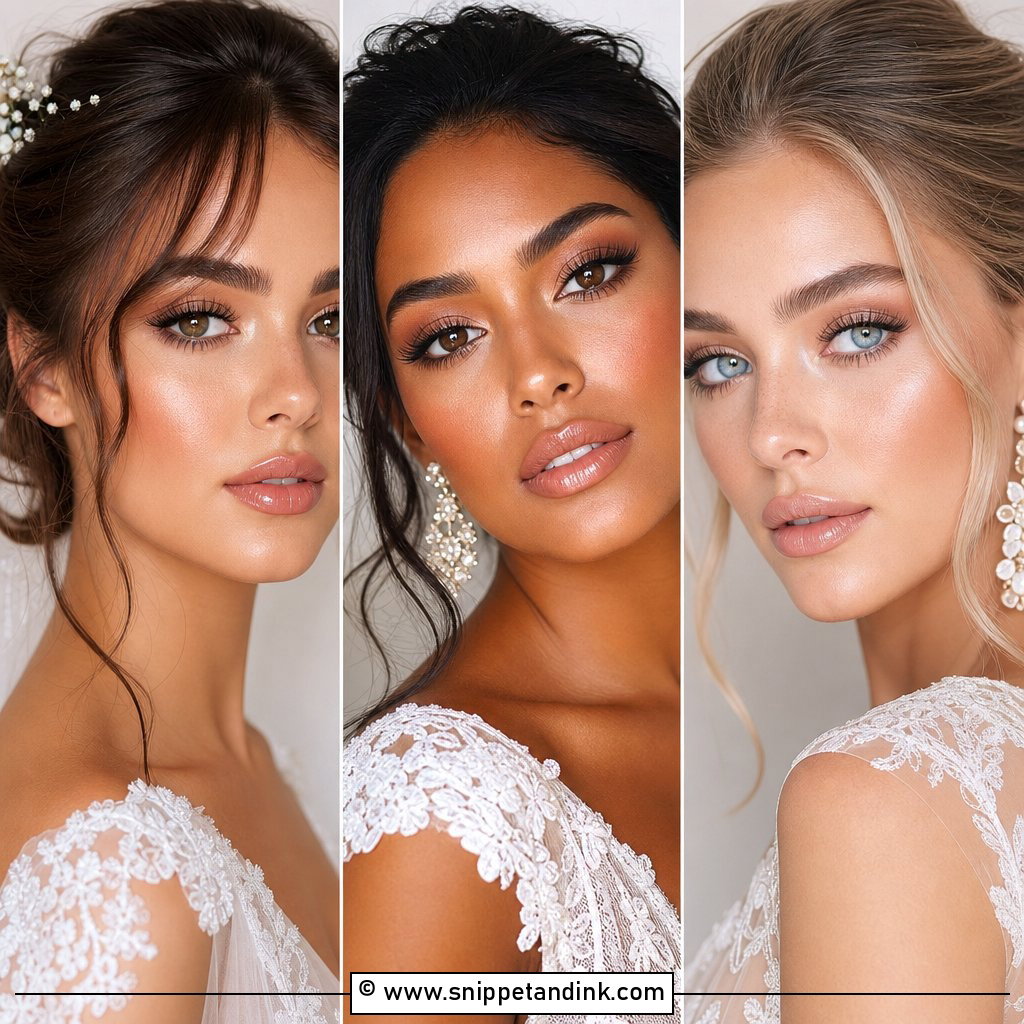
Rose is less a single shade than a whole family, running from pale petal pink through dusty mauve and rosy nude to deep berry. That range is exactly why I use it so often for brides: there’s a rose for cool skin and one for warm, one for a spring garden and one for a candlelit December ballroom. The faces below each start from fresh skin and softly defined eyes, then shift where the rose sits and how strong it gets. Read them as full-face plans, and notice how the lip and cheek are always chosen together.
Cool Rose or Warm Rose? Swatch It Along Your Jaw
Every rose shade leans one way. Cool roses have a blue or violet base and look crisp on pink-toned skin; warm roses lean toward peach or brown and sit naturally on golden or olive skin. Neutral roses fall between and suit the widest range.
I don’t rely on vein color or jewelry tests. Instead I swatch two or three blushes and lipsticks along the jaw and cheek, then look in daylight from about a meter away. The wrong rose makes the skin around it look grey, sallow or flushed in a blotchy way. The right one makes the skin look clearer, almost as if it were brighter, even though nothing has been added to it.
Let your dress have a say
Bright white fabric bounces light onto your face and makes cool roses look sharper, while ivory and champagne warm everything near them. Hold the dress fabric, or a photo of it, under your chin when you test shades. A rose that looked balanced against a white towel can look different next to warm ivory.
1. Soft Rose Bridal Makeup
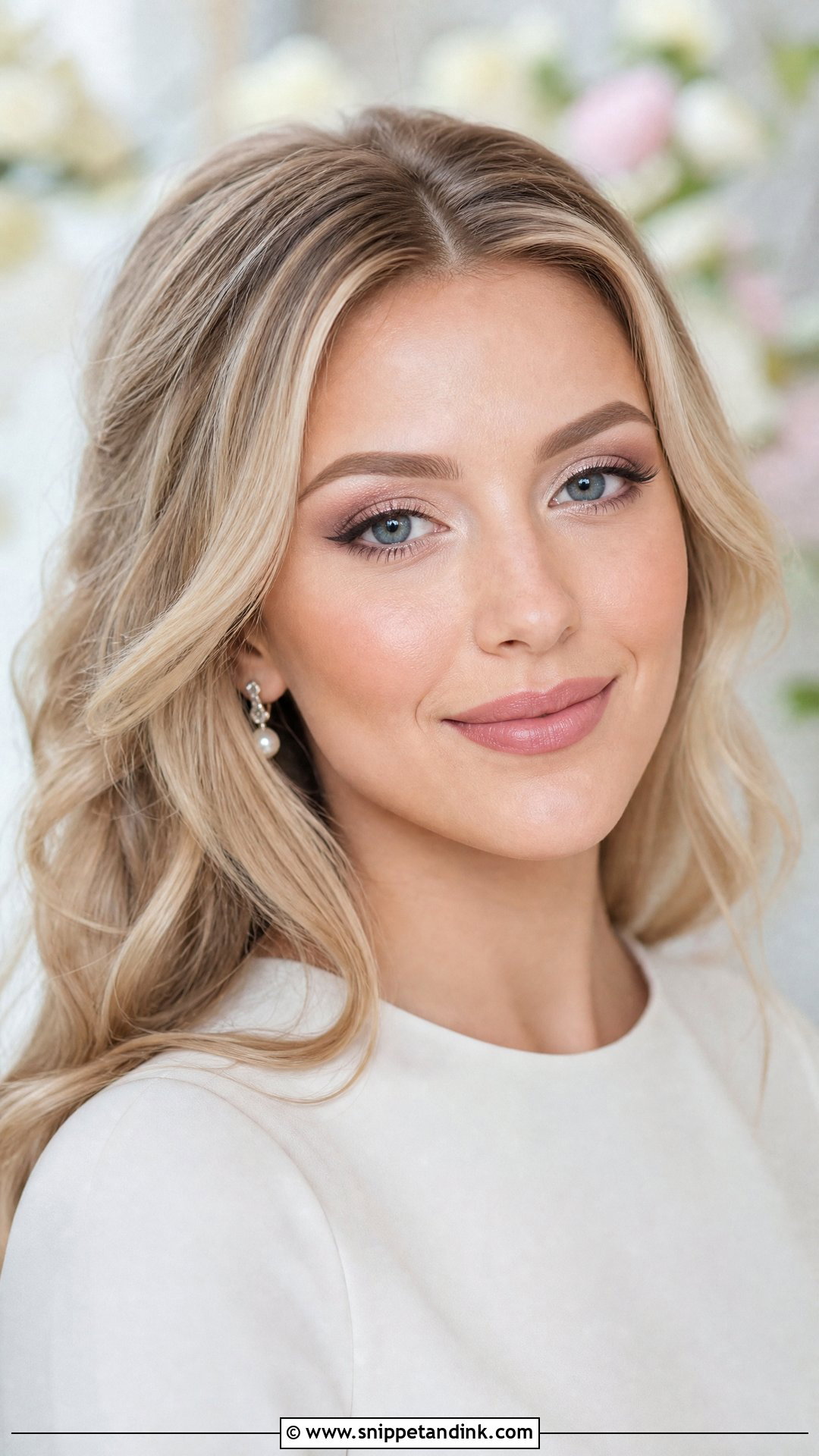
Start here if you’re unsure. I keep the base satin with light concealer, then blend a cream rose blush high on the cheekbone so it reads as a natural flush. Pale rose goes on the lid, taupe defines the crease, and brown liner is pressed close to the lashes rather than drawn as a line. Wispy lashes open the eye without weight. The lip should match the blush almost exactly; when cheek and mouth share a tone, the face looks calm and pulled together. Spring light and garden settings suit it, and it stays recognizably you.
2. Rose Gold Bridal Makeup
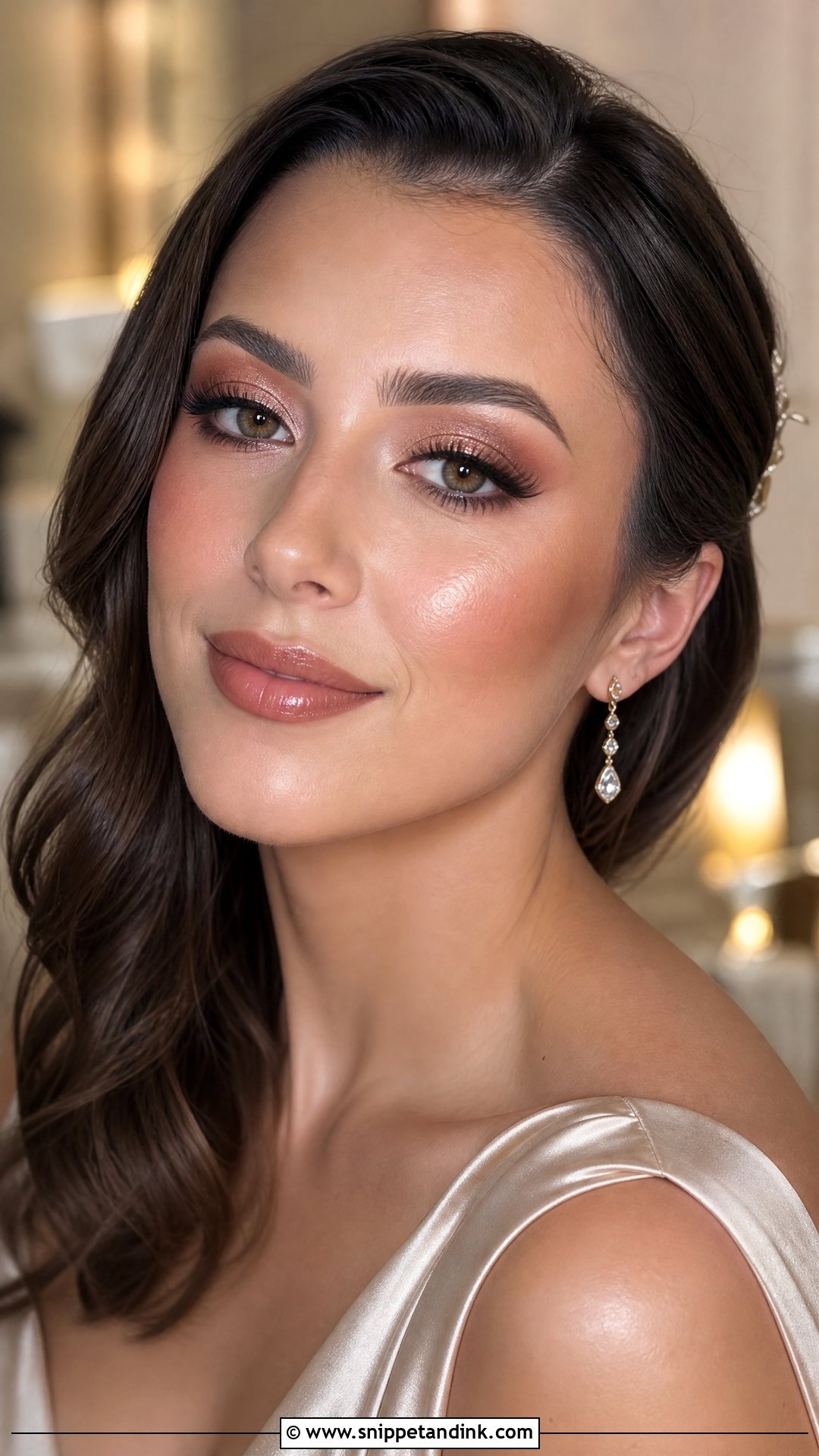
The eyes lead in this version, with rose gold shimmer on the lids, a warm matte rose through the crease and a thin brown or bronze liner. I always lay the matte crease shade first, because shimmer placed on bare skin looks patchy and creases faster. Lashes stay lifted and fluttery, never dense, so the metallic stays refined. Peachy rose blush, a touch of bronzer and a champagne highlight warm the skin, and a rose nude lip finishes it. Gold jewelry and a champagne-toned dress complement the warmth of the pigment, particularly in the evening.
3. Dusty Rose Bridal Makeup
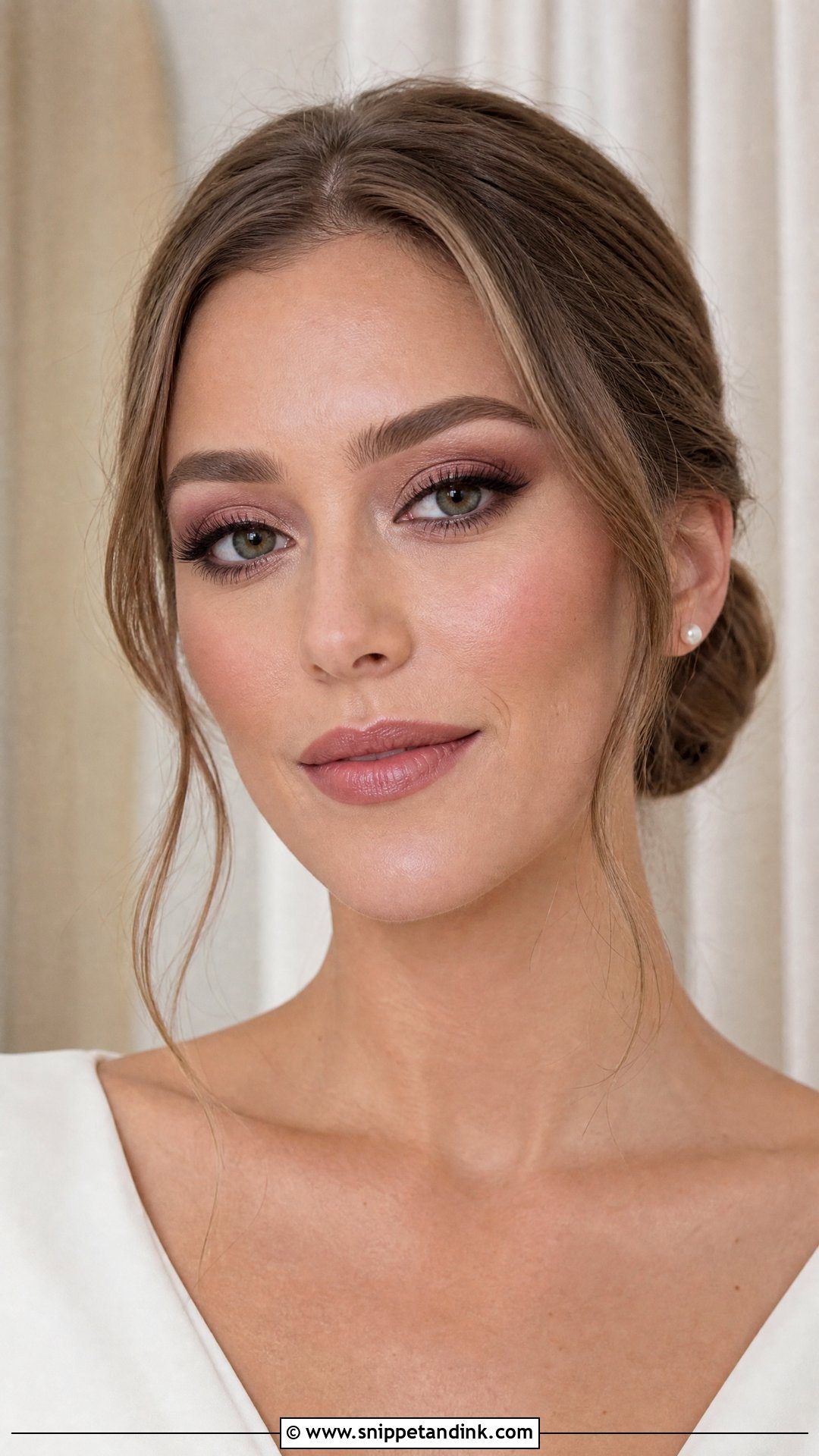
Muted and grown-up, dusty rose has a grey note in it that takes the sweetness out of pink. Dusty rose shadow goes across the lid with a mauve-brown in the crease, and a soft brown wing lifts the outer corner. I give the skin a velvet finish, add muted rose blush and a gentle sculpt under the cheekbones. A dusty rose satin lipstick completes it. The caution I give at trials: on sallow or olive skin, too much grey in the shade can make the face look tired, so I warm the blush slightly. Pearl earrings and a minimalist gown sit naturally with it.
4. Natural Rose Bridal Makeup
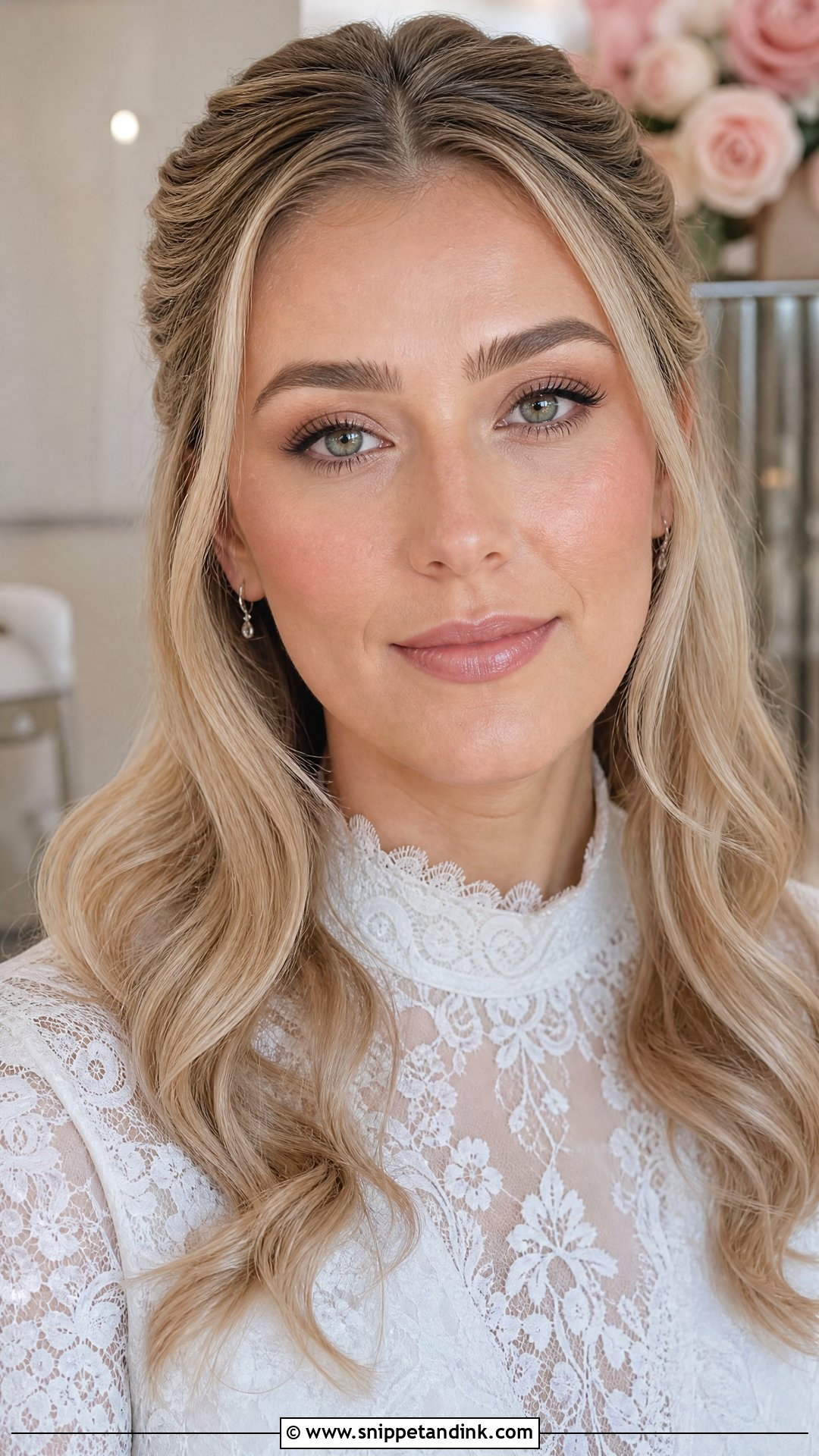
Natural rose depends on skin that needs very little covering, so prep is most of the work. I use a skin tint or a sheer foundation and conceal only the spots that need it. Cream rose blush gives a realistic flush, and a tiny touch of highlight on the high points adds life. Matte beige-rose shadow, brown liner tightlined into the upper waterline and groomed brows give quiet definition. A sheer rose balm or satin lipstick keeps the mouth soft. Daytime and outdoor ceremonies suit it, and it’s my usual suggestion for a bride who dislikes the feel of makeup.
5. Soft Glam Rose Bridal Makeup
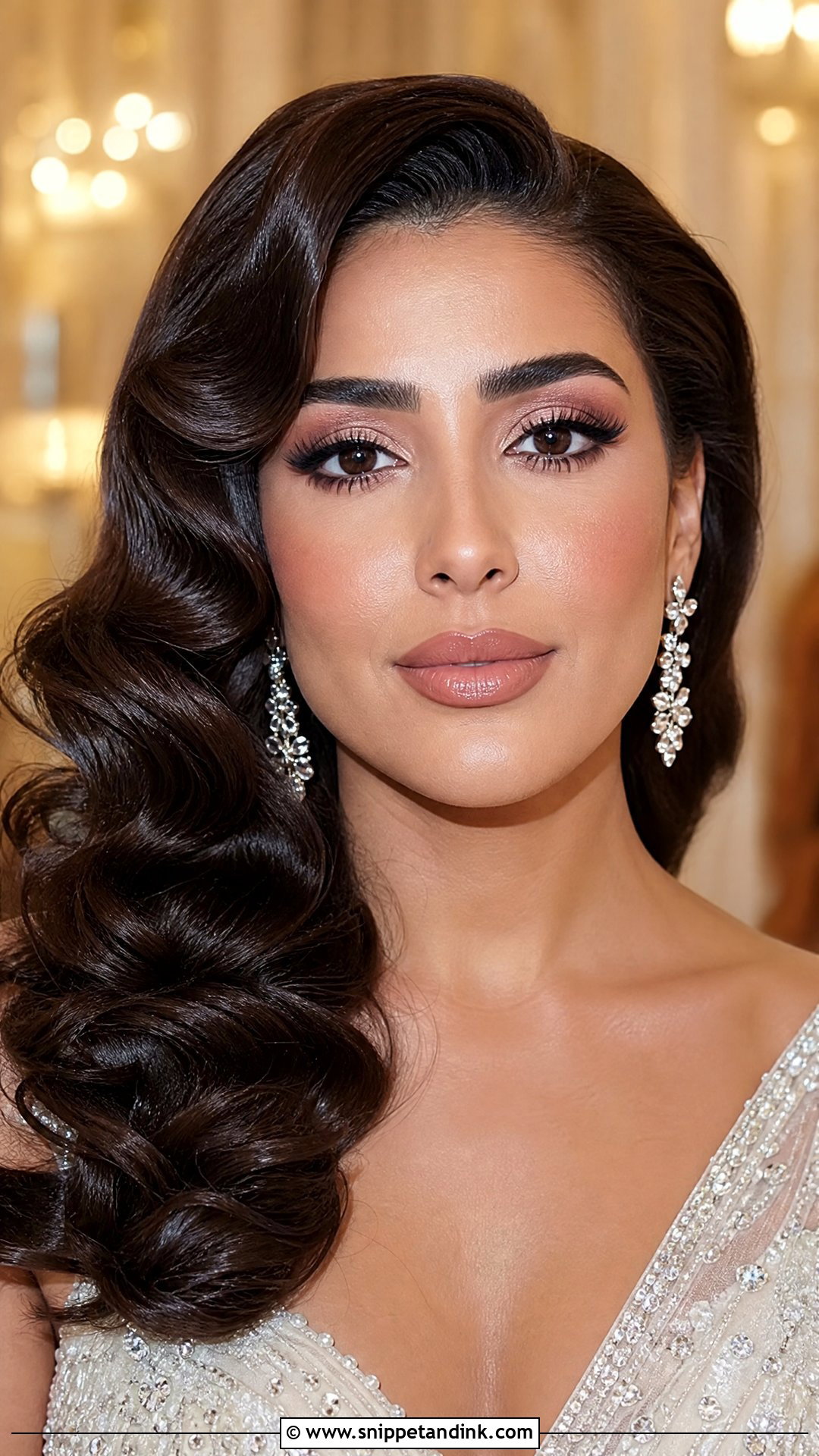
Here the face gets more structure. Medium-coverage foundation, a soft contour, rose blush and a highlight kept to the cheekbones give a sculpted but romantic finish. I blend rose taupe through the crease, put shimmer on the lid and smoke a brown liner along the upper lashes. Individual lashes or a soft strip help the eyes register in photos. For the lips, I overline by a hair with a rose beige pencil before a creamy rose lipstick, which gives fullness without looking bold. A ball gown and an evening reception can carry this much definition comfortably.
6. Matte Rose Bridal Makeup
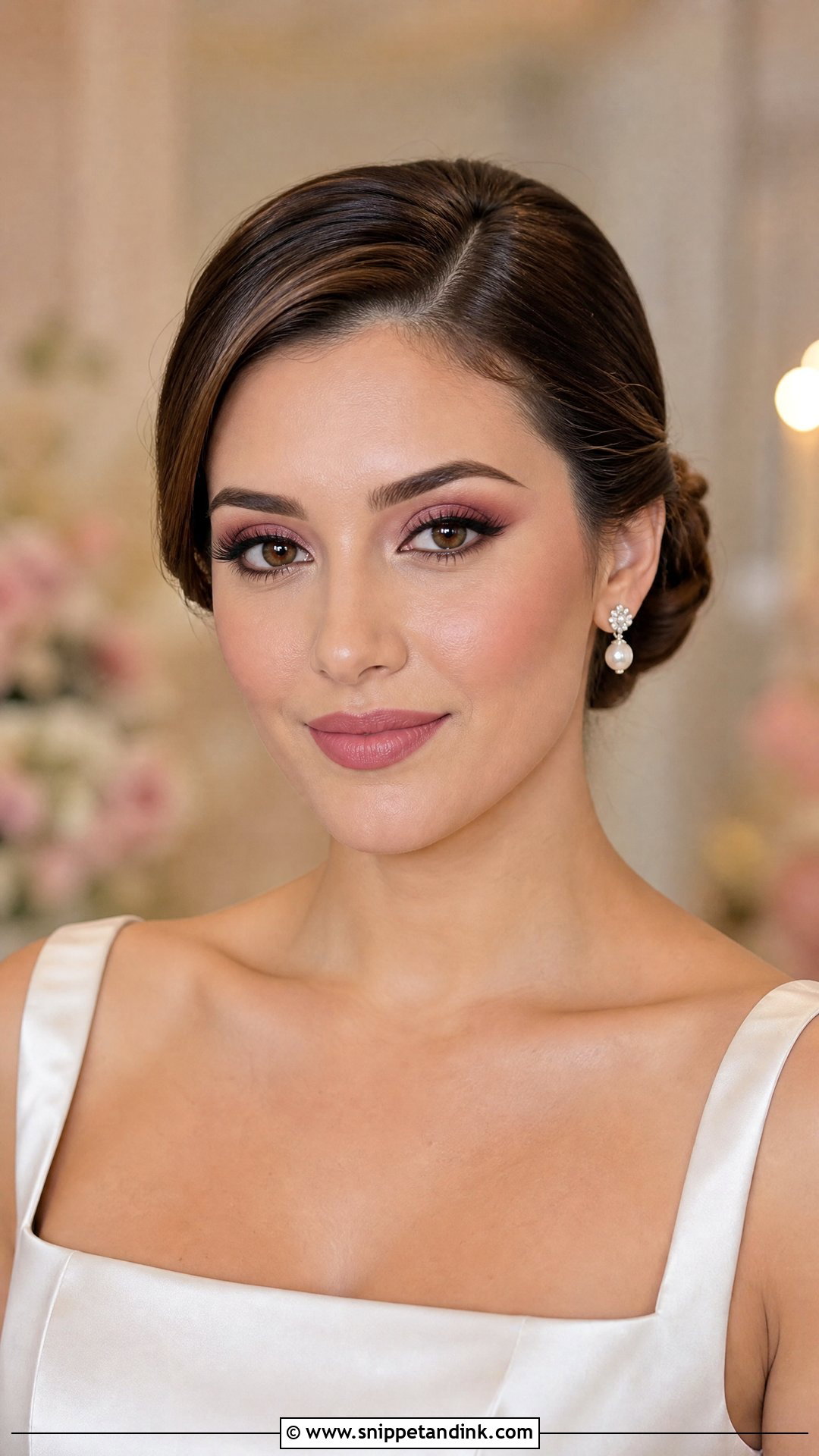
Matte rose is the most practical version for heat. A soft-matte foundation, a well-set T-zone and shine kept only where you want it give a finish that lasts. Matte rose on the lid and deeper mauve in the crease create soft depth, with black-brown liner and defined lashes for structure. A powder rose blush blurs beautifully over matte skin. The lipstick is where I’m careful: fully matte rose formulas can feel dry and crack by evening, so I prep the lips with balm, blot it off, and choose a transfer-resistant formula that still feels comfortable. Oily skin and long summer ceremonies are where this look earns its place.
7. Dewy Rose Bridal Makeup
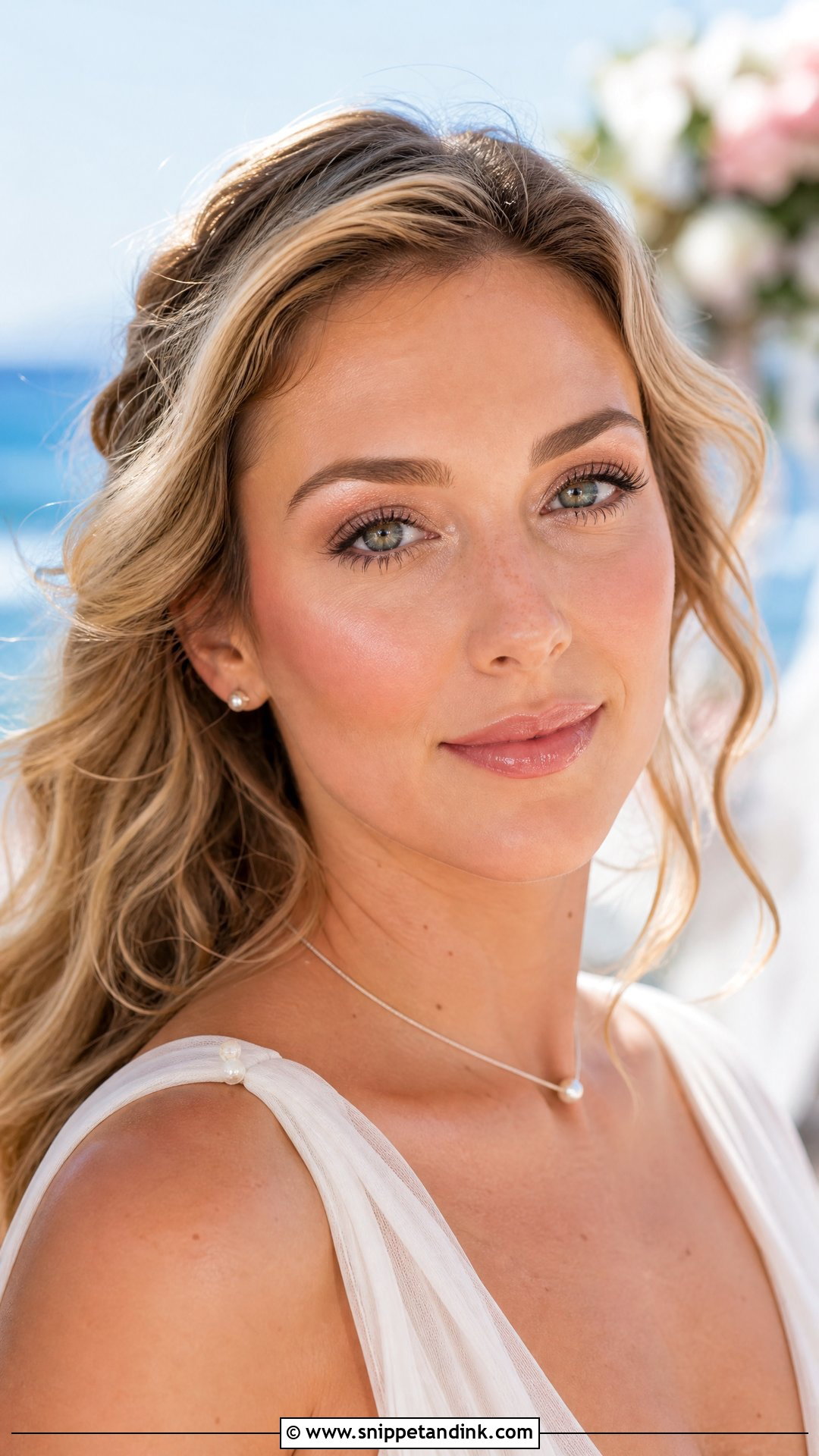
The aim is glow that looks like healthy skin, never shine. Dewy rose bridal makeup gets its lit-from-within finish from hydrating prep, a radiant foundation and cream products layered thinly, with a light press of powder only down the center of the face. Rose cream blush melts into the cheeks, and a liquid highlight sits on the cheekbones and inner corners. Soft rose shimmer, brown mascara and fluffy brows keep the eyes fresh, and a glossy rose lip adds softness. On a beach, salty humid air adds its own shine, so I hold back on highlighter there.
8. Blushing Rose Bridal Makeup
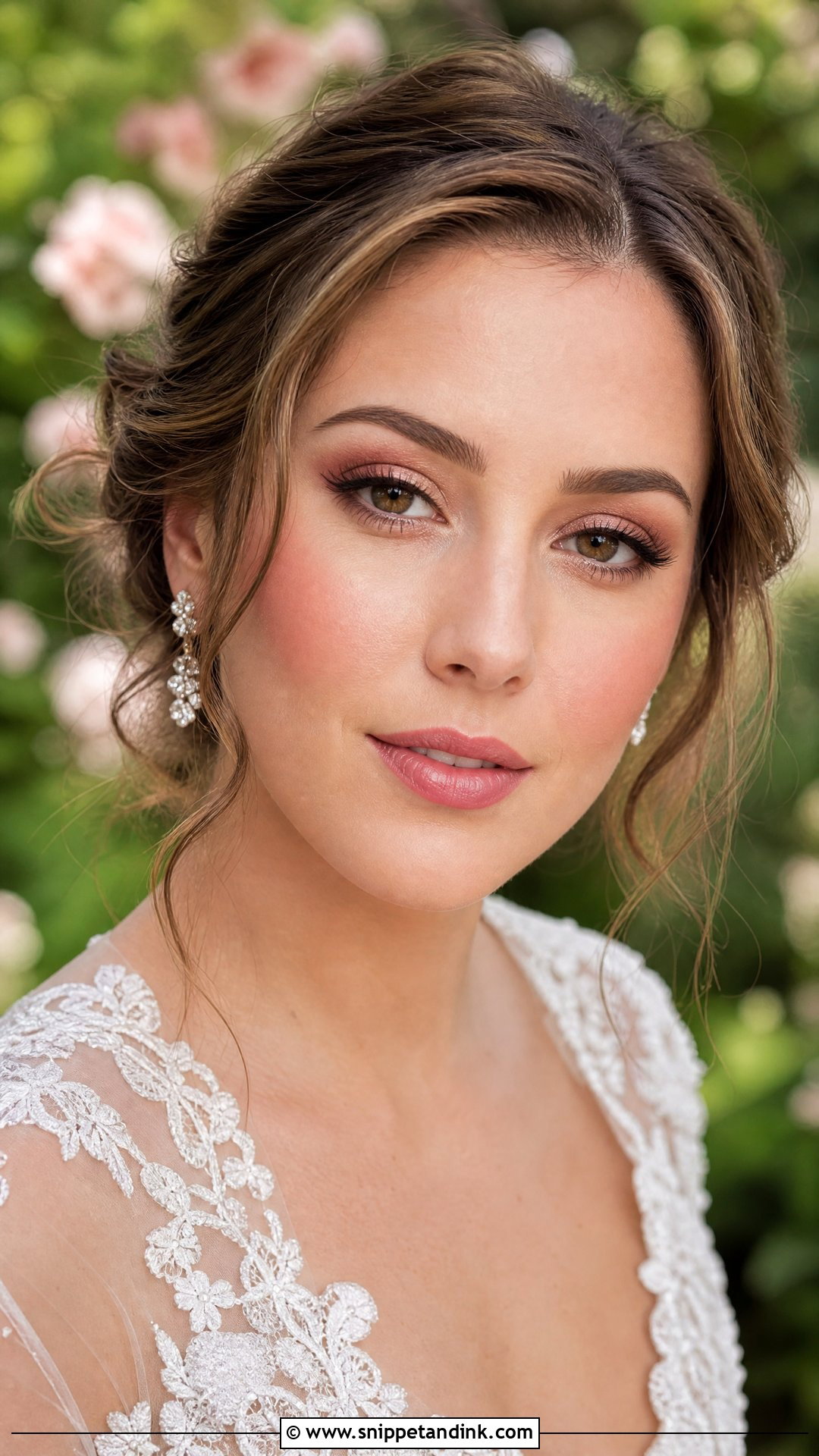
The cheeks run this look. I use a natural base, then layer a cream rose blush with a powder of the same tone over it, which is how cheek color survives a whole day. Blending high and slightly toward the temples lifts the face. The eyes stay quiet: rose beige shadow, brown liner, airy lashes. Keep shimmer away from textured cheeks or open pores, since sparkle sits on top of texture and magnifies it. A rosy pink lip balances the cheeks without competing for attention.
9. Mauve Rose Bridal Makeup
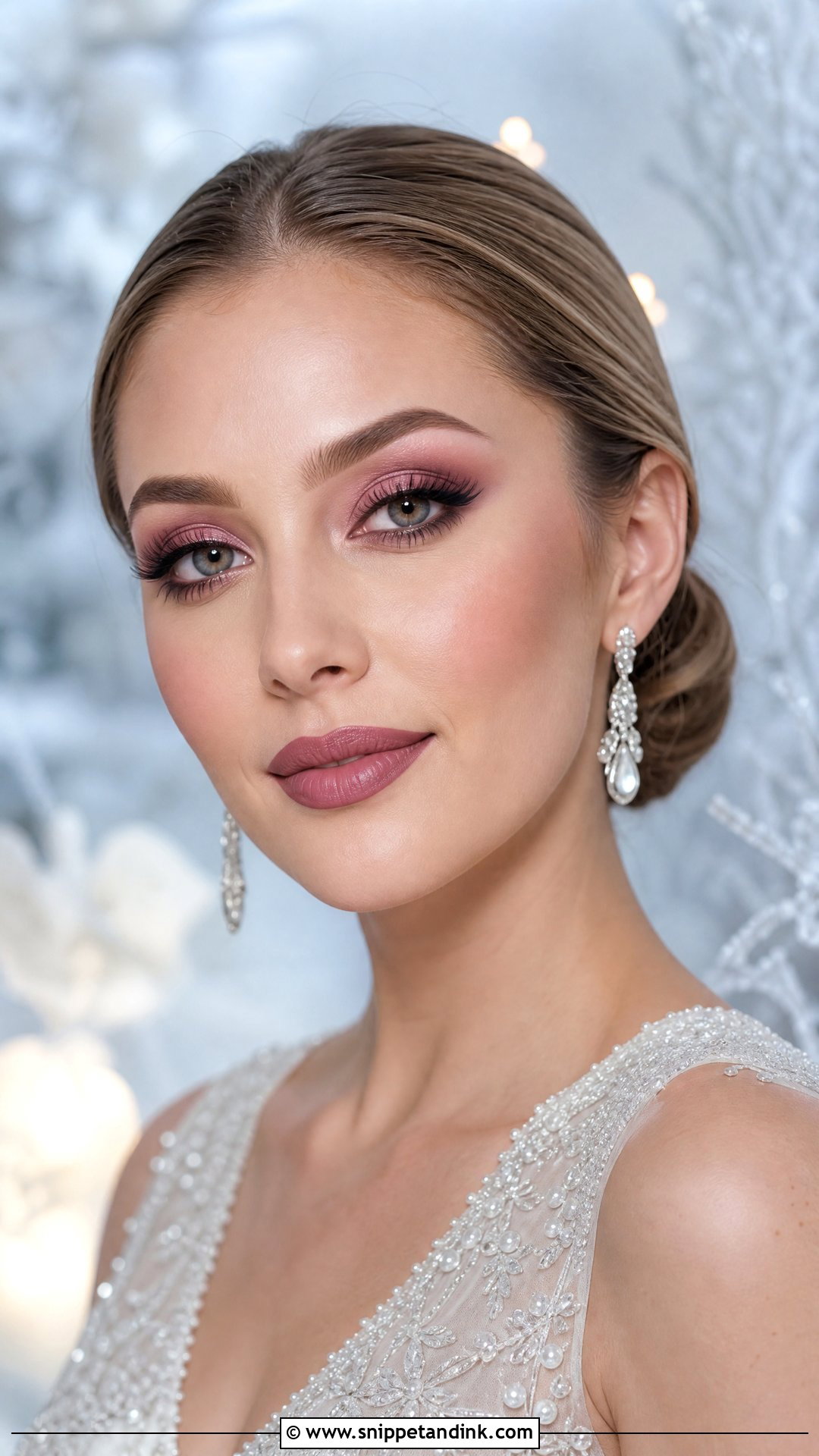
Mauve rose is a cooler, more sophisticated take, and I reach for it with cool undertones, silver jewelry and winter dates. Mauve rose goes over the lids, plum-brown deepens the outer corner, and liner stays soft but defined. The skin is satin, with cool rose blush and a contour shade that leans grey rather than warm, because a warm contour beside cool mauve looks orange in photos. Liner and lipstick from the same mauve family keep the mouth crisp. The result has depth without harshness.
10. Peach Rose Bridal Makeup
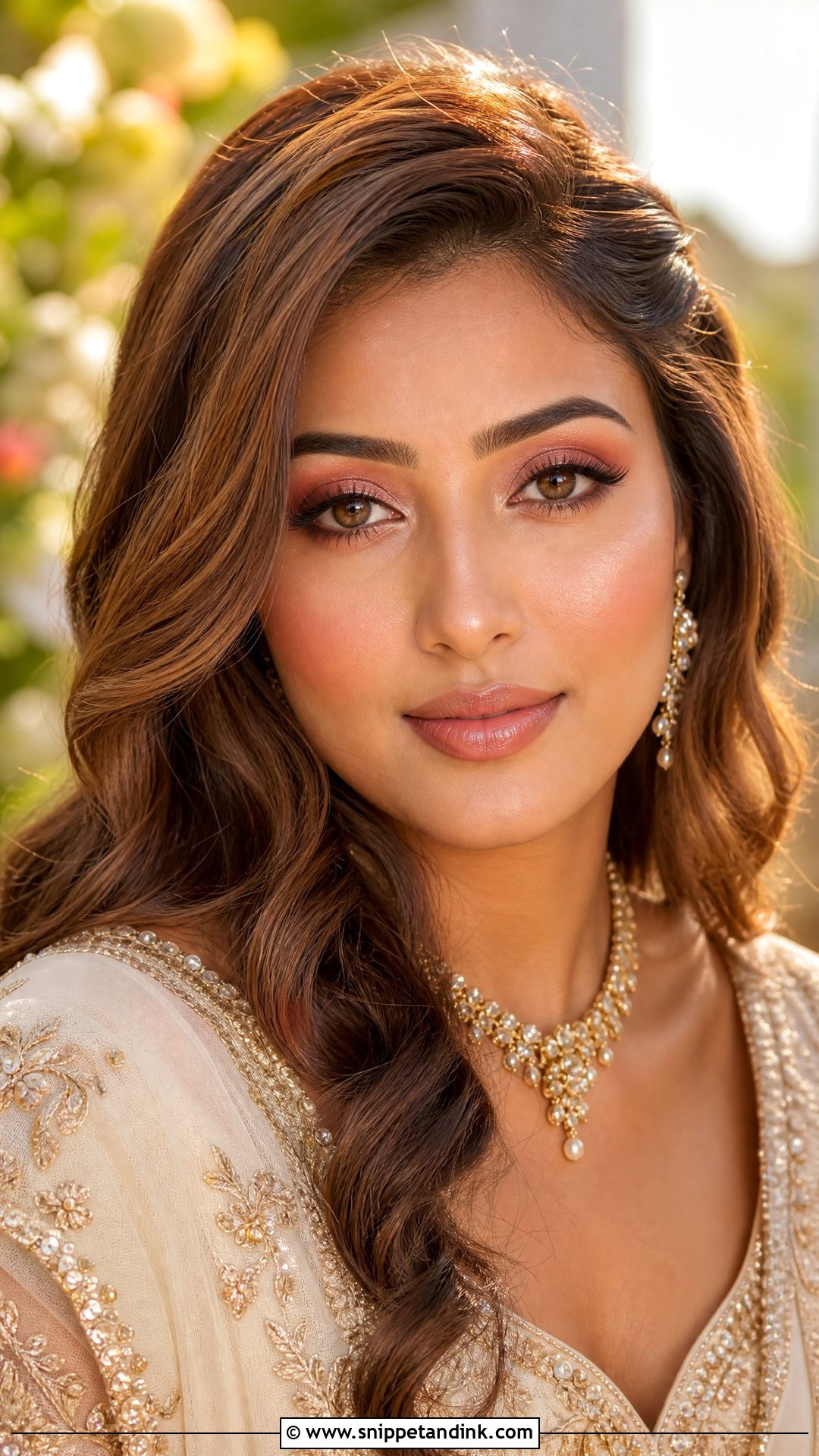
Mixing rosy pink with soft peach keeps the face lively without looking overly pink. Peach rose bridal makeup is the version I use most on warm undertones that turn sallow under cool pinks. Blush goes on the apples and is blended upward, with a little bronzer around the forehead and cheekbones to keep the warmth even. Peachy rose matte shadow, a champagne shimmer and warm brown liner shape the eyes, and a peach rose lipstick or gloss softens the mouth. Golden-hour portraits and a warm ivory gown suit it well.
11. Classic Rose Bridal Makeup
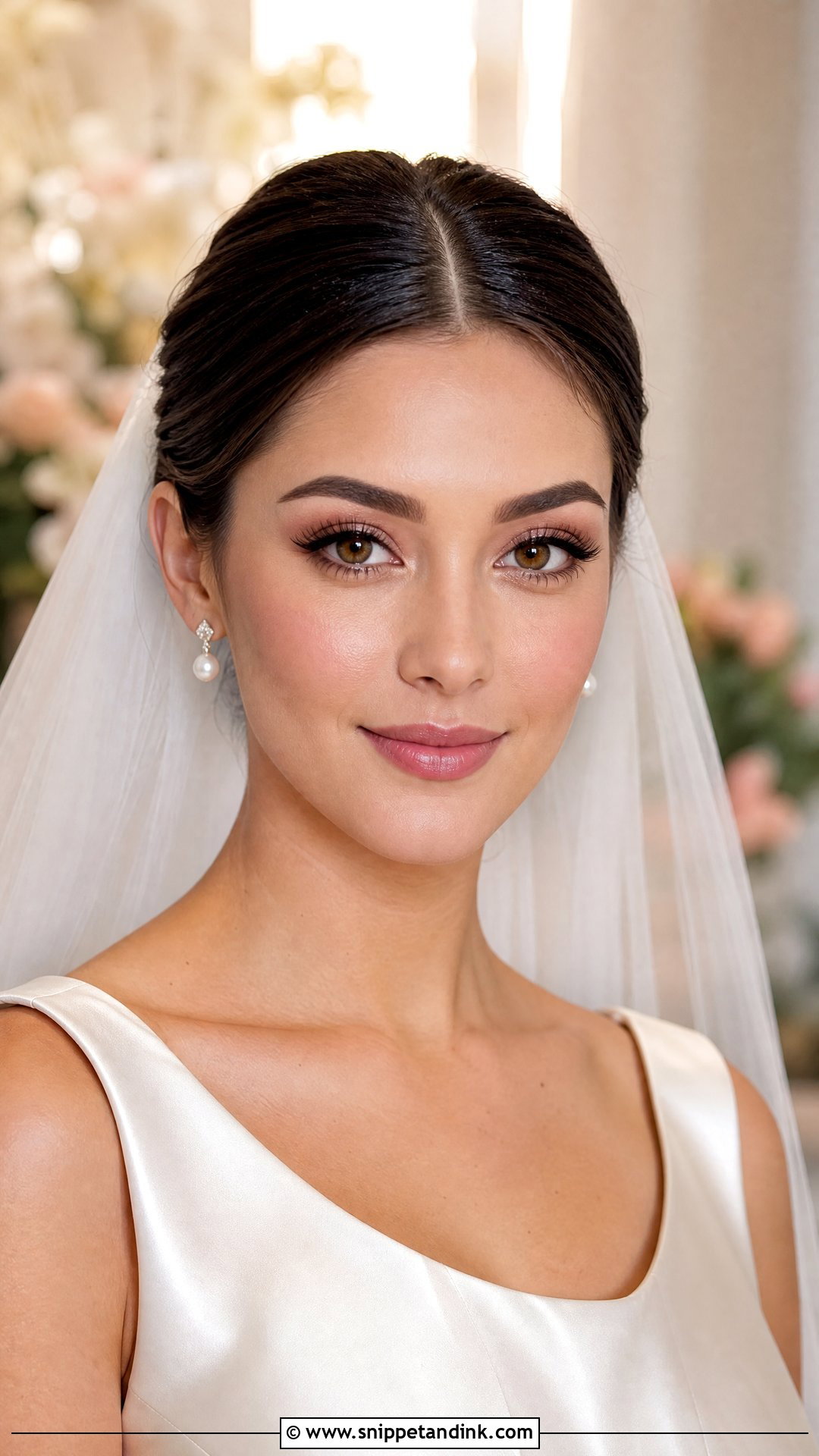
Balance is the whole idea: smooth skin that isn’t heavy, eyes with soft definition and lips in a polished rose. Neutral rose shadow on the lid, a deeper shade in the crease and a clean brown wing give lift. I choose medium lashes that register in photos without hiding the eye shape, which matters on hooded lids where long lashes can hit the brow bone. A natural rose blush, subtle contour and soft highlight finish the cheeks, and a creamy rose lipstick brings it together. It’s the most adaptable look here, comfortable across age, venue and season.
12. Romantic Rose Bridal Makeup
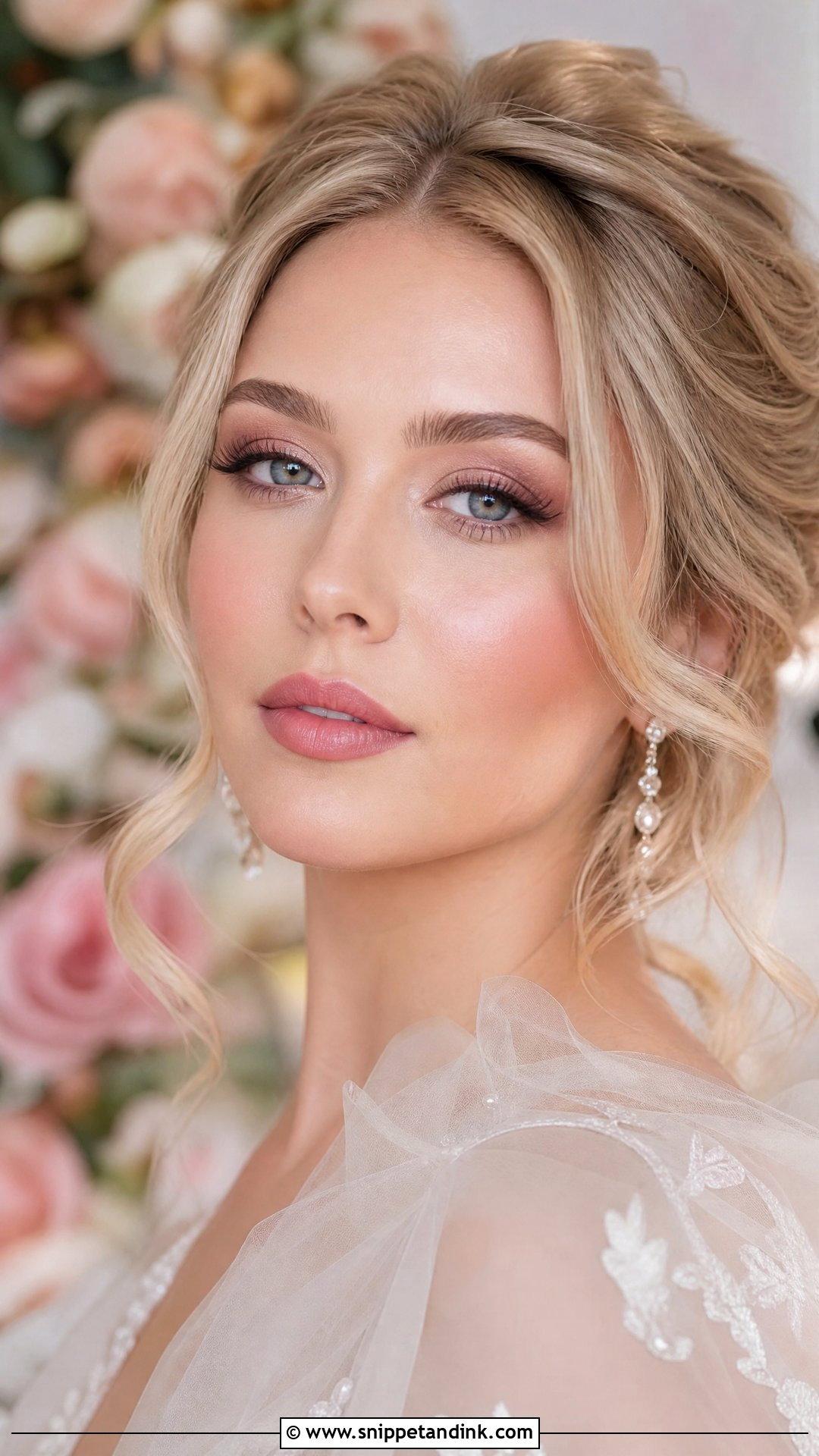
Nothing should look sharp. Rose and mauve shadows are blended until the eyes look hazy, with a little shimmer in the center of the lids. I swap a crisp wing for a diffused liner and pick fluttery lashes that open the eyes. The skin stays fresh with rosy cheeks and a gentle glow. For the lip, I press stain into the center and soften the edges with a fingertip for a blurred, just-kissed shape. Loose waves, tulle and a garden or estate setting suit its softness.
13. Rose Smokey Eye Bridal Makeup
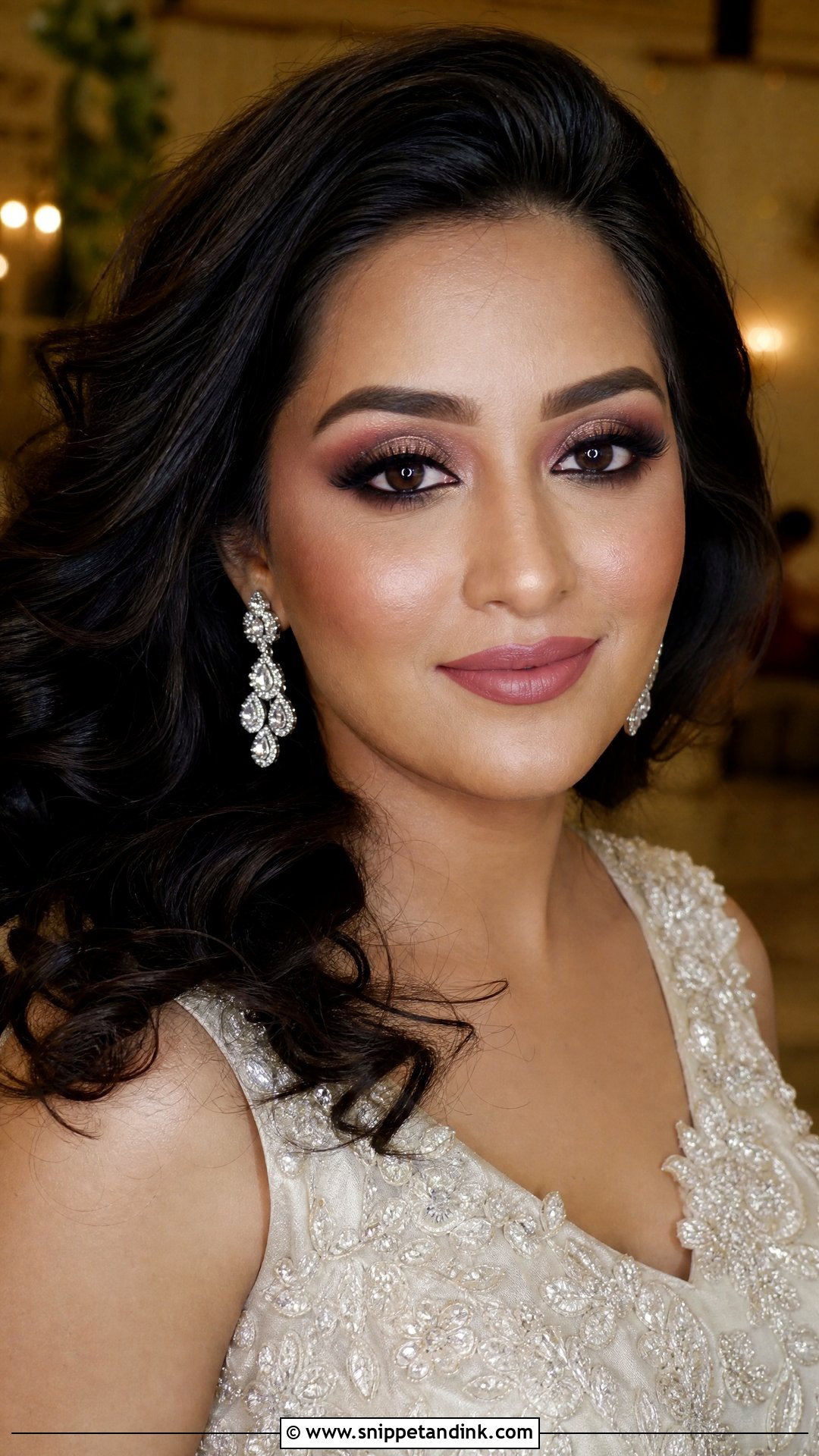
Drama, but kept inside a bridal palette. A rose taupe base covers the lid, mauve-brown deepens the outer corner and the lower lash line is smoked softly. A touch of rose gold shimmer in the center keeps it bright. Black-brown liner and fuller lashes add definition, and I go over every edge with a clean brush at the end, because a rose smoke that isn’t blended looks bruised rather than romantic. The complexion stays polished with neutral rose blush and a satin finish, and a muted rose nude lip keeps the eyes in charge. Evening weddings and formal receptions are its setting.
14. Rose Winged Liner Bridal Makeup
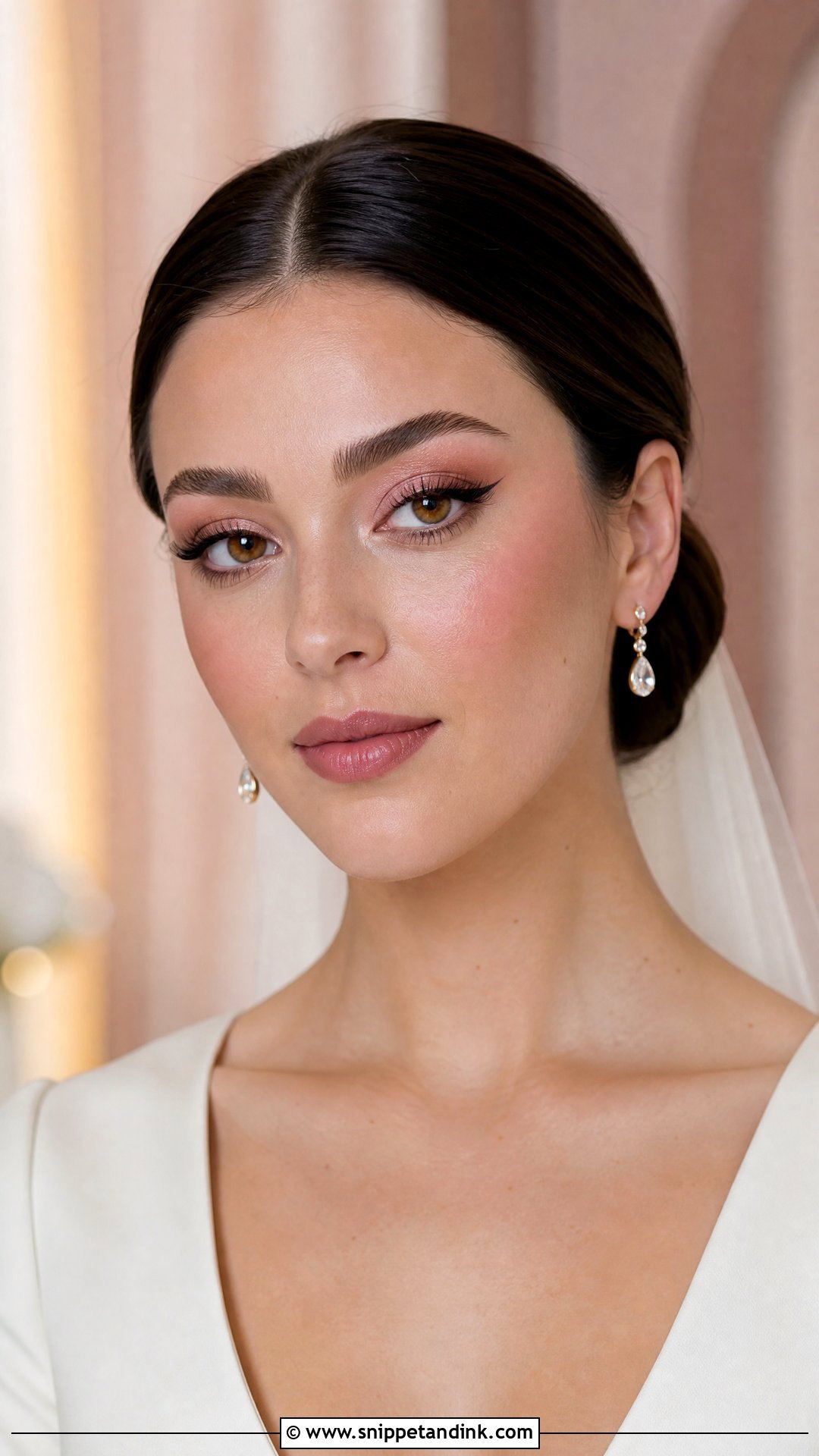
A thin wing gives a classic shape, and rose shadow softens it. Matte rose beige goes on the lid, soft brown in the crease, and the wing is drawn in brown or black-brown to lift the eye. I map the wing with the bride looking straight ahead, eyes open, so it doesn’t fold or kink on a hooded lid. Defined lashes and polished brows complete the eye, while rose blush and a light champagne highlight keep the cheeks fresh. A rose nude satin lip or gloss finishes it. A sleek bun and a structured gown make the most of its clean lines.
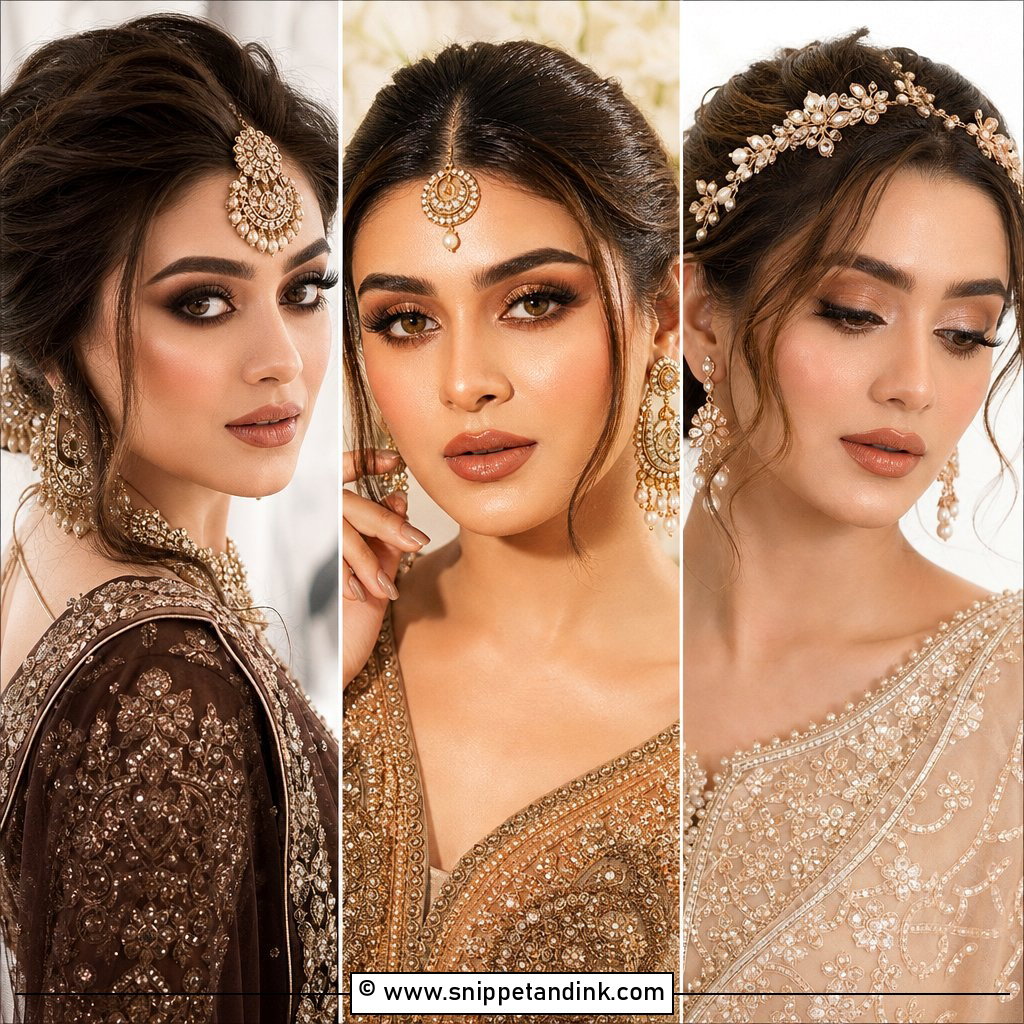
15. Rose Nude Bridal Makeup
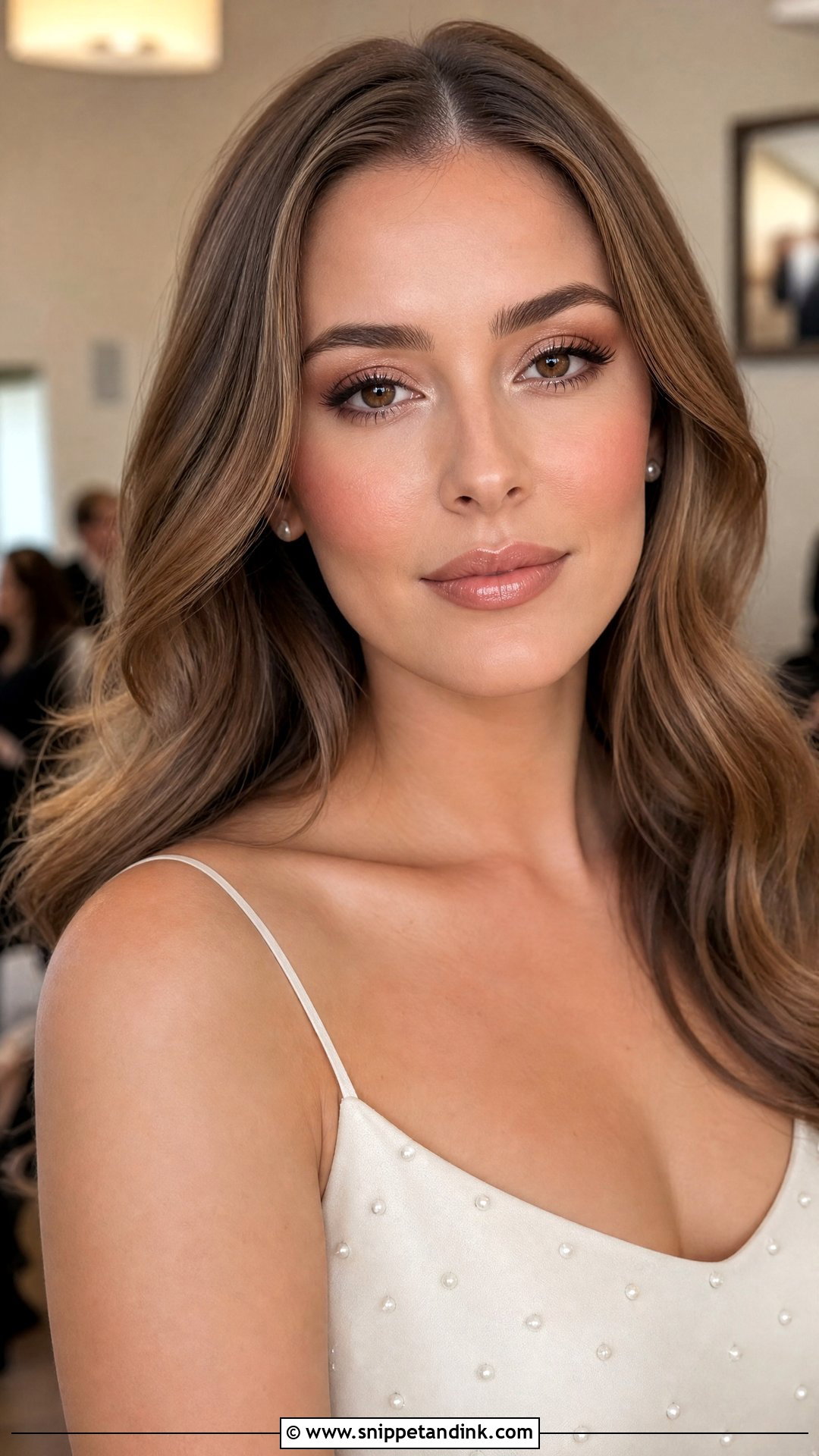
Understated and very wearable, rose nude looks soft in person but still defined in photos. A neutral base, light contour and natural rose blush keep a skin-like finish. Nude rose shadow, a hint of shimmer in the inner corner and brown mascara are all the eyes need, with brows neatly filled. The lip is the feature: I pick a liner and lipstick close to your natural lip color, usually a shade deeper, then add a tiny touch of gloss in the center. Go too pale and the mouth disappears on camera, which is the most common mistake with nude lips.
16. Deep Rose Bridal Makeup
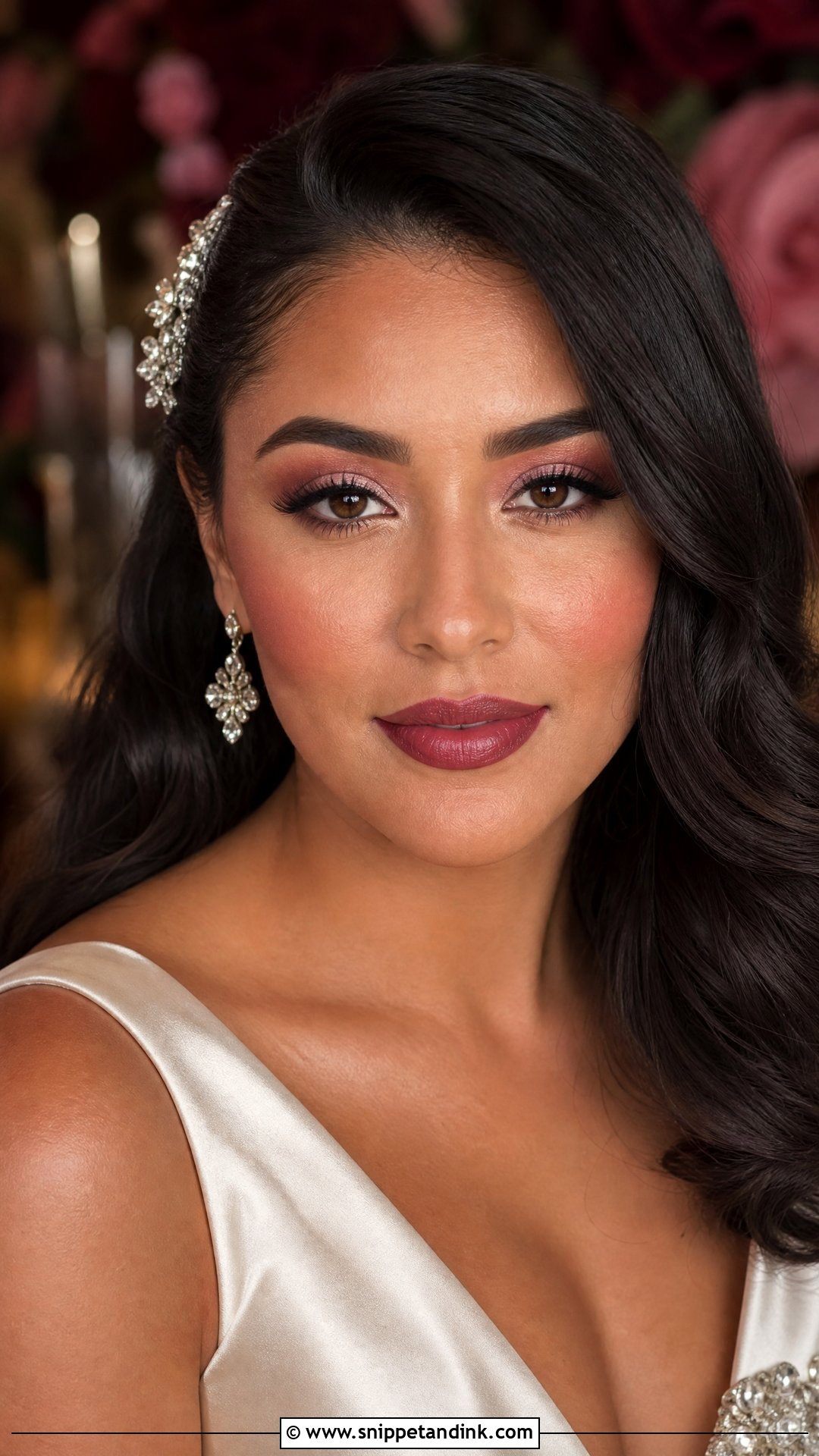
Deep rose adds richness and depth, so it belongs with fall and winter weddings and formal rooms. The lips carry deep rose or berry rose, while the eyes stay softly defined with mauve brown shadow and a satin rose shimmer. Warm rose blush and a subtle contour keep the skin balanced. With a lip this strong I keep the liner clean and the lashes lifted but light. Deep shades show any unevenness at the lip line, so I line carefully and check the edges again after the first glass at the reception. Burgundy and plum florals echo it nicely.
17. Fair Skin Rose Bridal Makeup
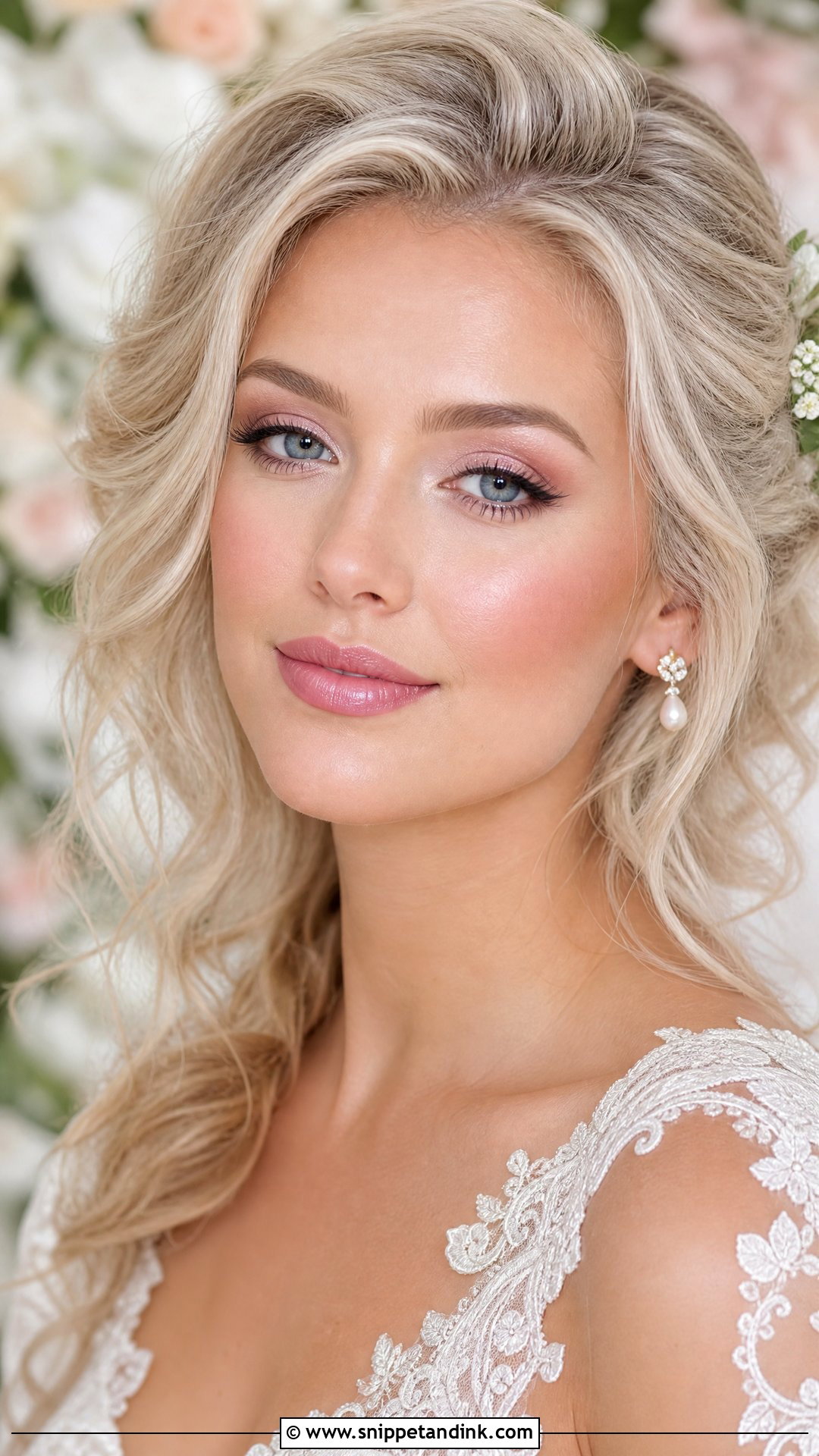
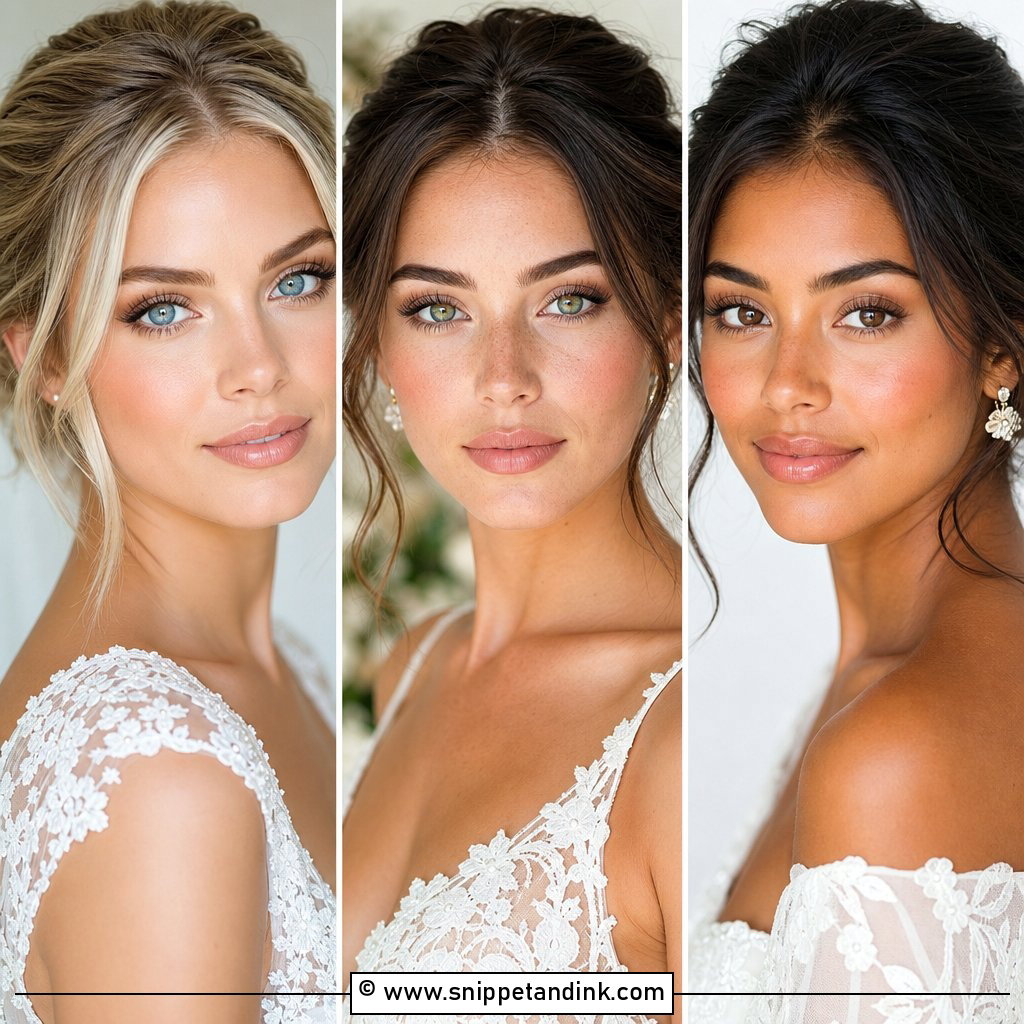
On pale skin, rose needs to stay cool and fresh rather than brown. Fair skin rose bridal makeup uses cool pink rose or soft petal shades on the cheeks and lips, with pale rose shadow, taupe in the crease and brown liner for definition. I skip warm bronzer, which turns orange on fair skin, and use a light neutral contour with a pearly highlight. A satin rose pink lip keeps the face bright. Cool undertones and soft daytime light flatter it most. Keep the color slightly stronger than feels natural in the mirror; fair skin tends to swallow pale pinks on camera.
18. Olive Skin Rose Bridal Makeup
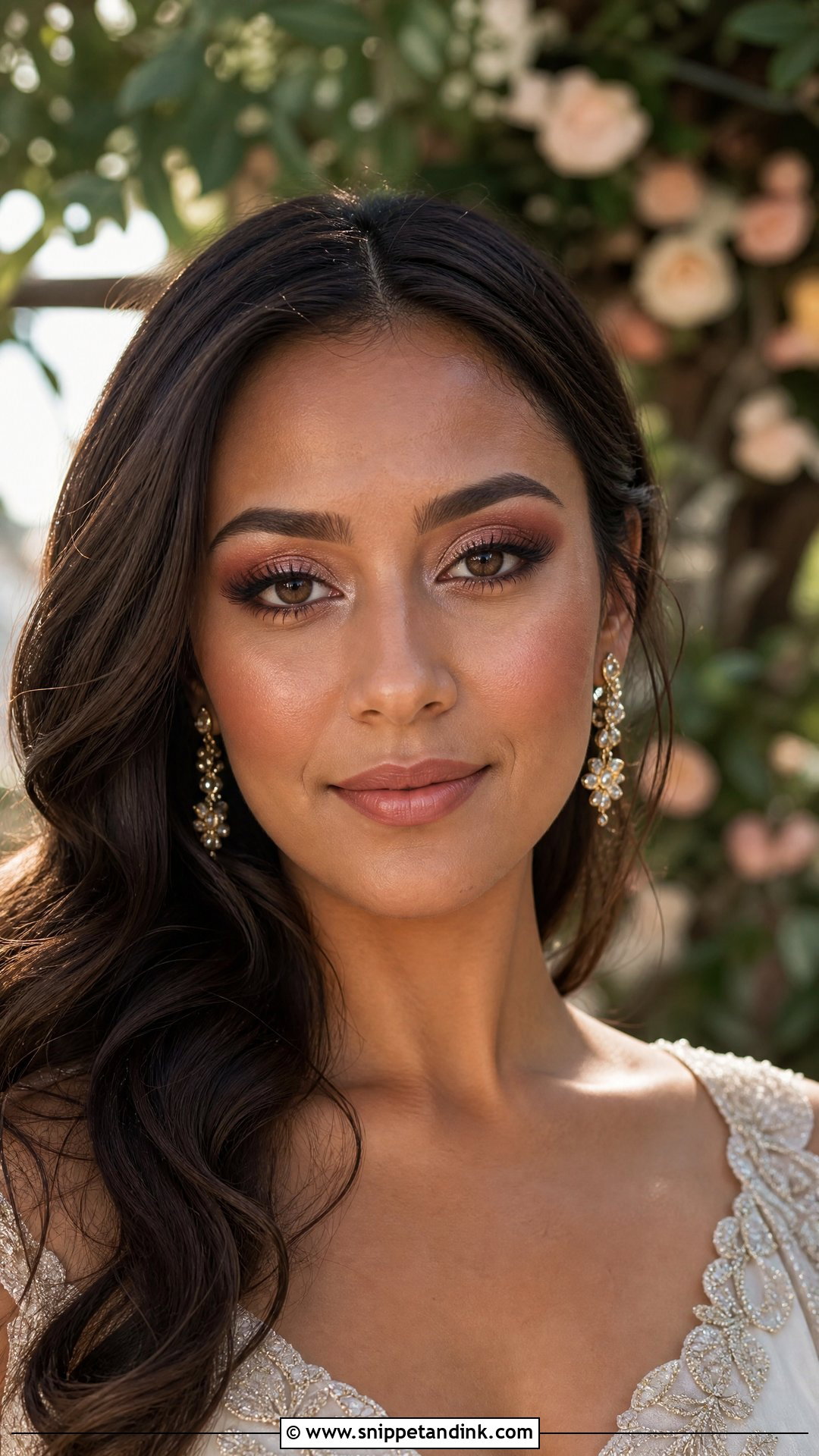
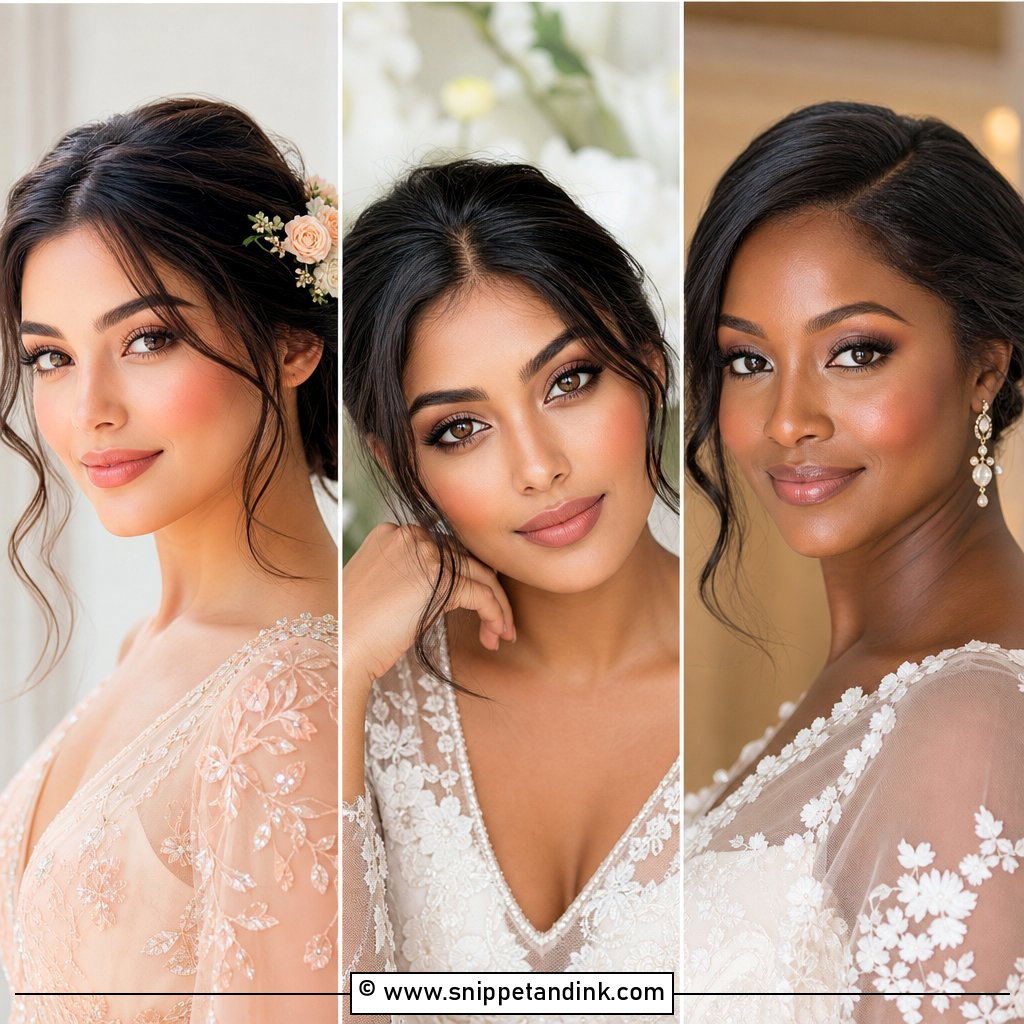
Olive skin wants rose with warmth or depth in it. Rose gold, warm mauve, peach rose and brown rose shades all sit better than pale pink, which can look grey against an olive undertone. I start with a balanced base that won’t turn ashy, then add bronzer and warm rose blush for healthy color. Rose bronze shimmer and soft brown liner bring out the natural warmth, and a warm rose nude lipstick shapes the lips without washing out the face. Gold jewelry and an ivory gown pair well with it, for brides of Mediterranean, Latina, Middle Eastern or mixed heritage alike.
19. Deep Skin Rose Bridal Makeup
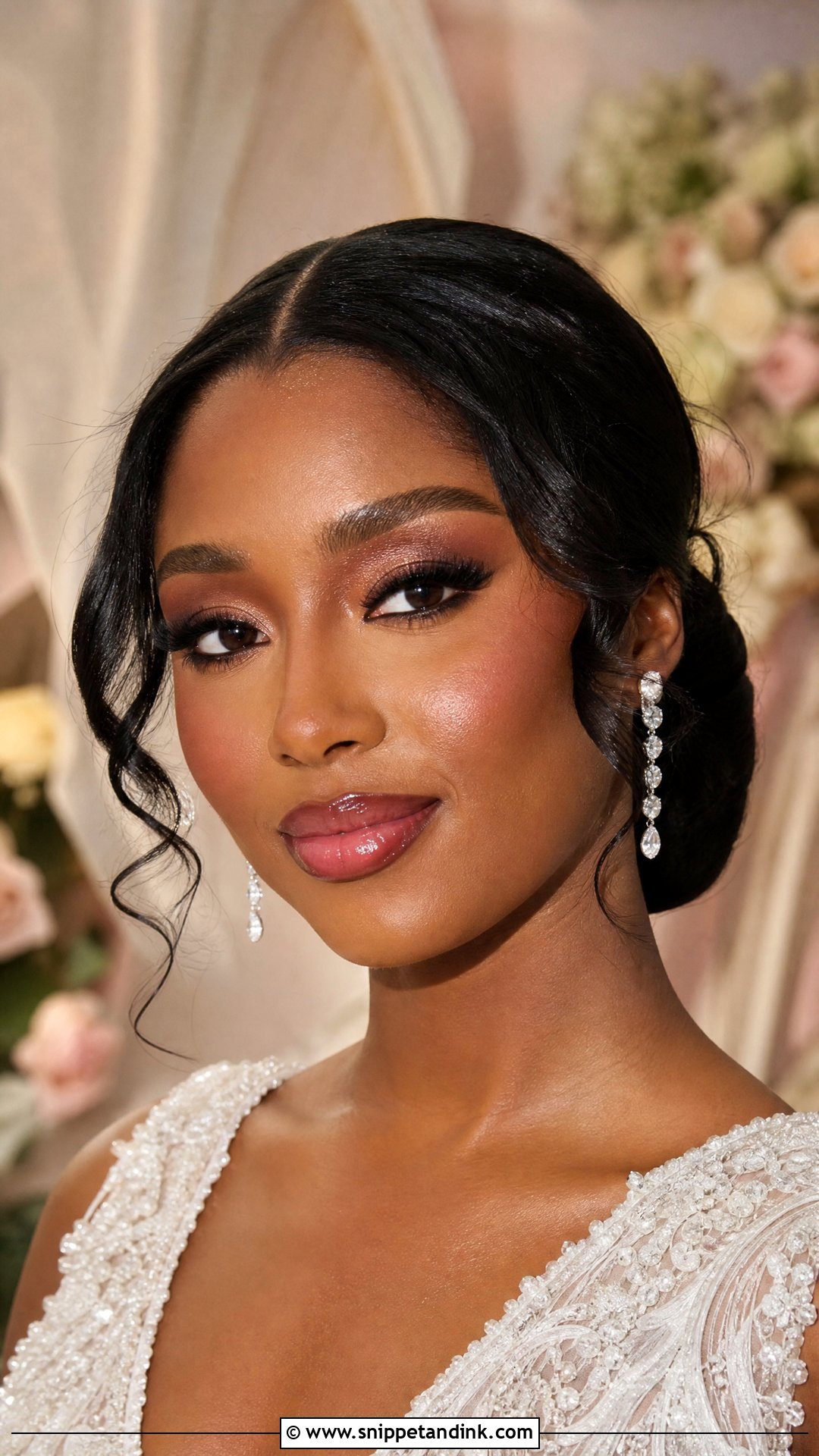
Rich berry rose, warm rose brown and shimmering rose bronze all come alive on deep skin. Deep skin rose bridal makeup starts with a smooth, radiant base that keeps the skin dimensional, matched carefully so it never sits grey or flat. A deep rose blush gives the cheeks visible warmth, and I choose one with strong pigment, since pale rose blush simply disappears on deep skin. Rose bronze shimmer, chocolate depth and black or deep brown liner define the eyes, with full but soft lashes. Rose brown liner under a berry rose lipstick or gloss finishes the face. It holds its richness in evening light and flash alike.
20. Minimal Rose Bridal Makeup
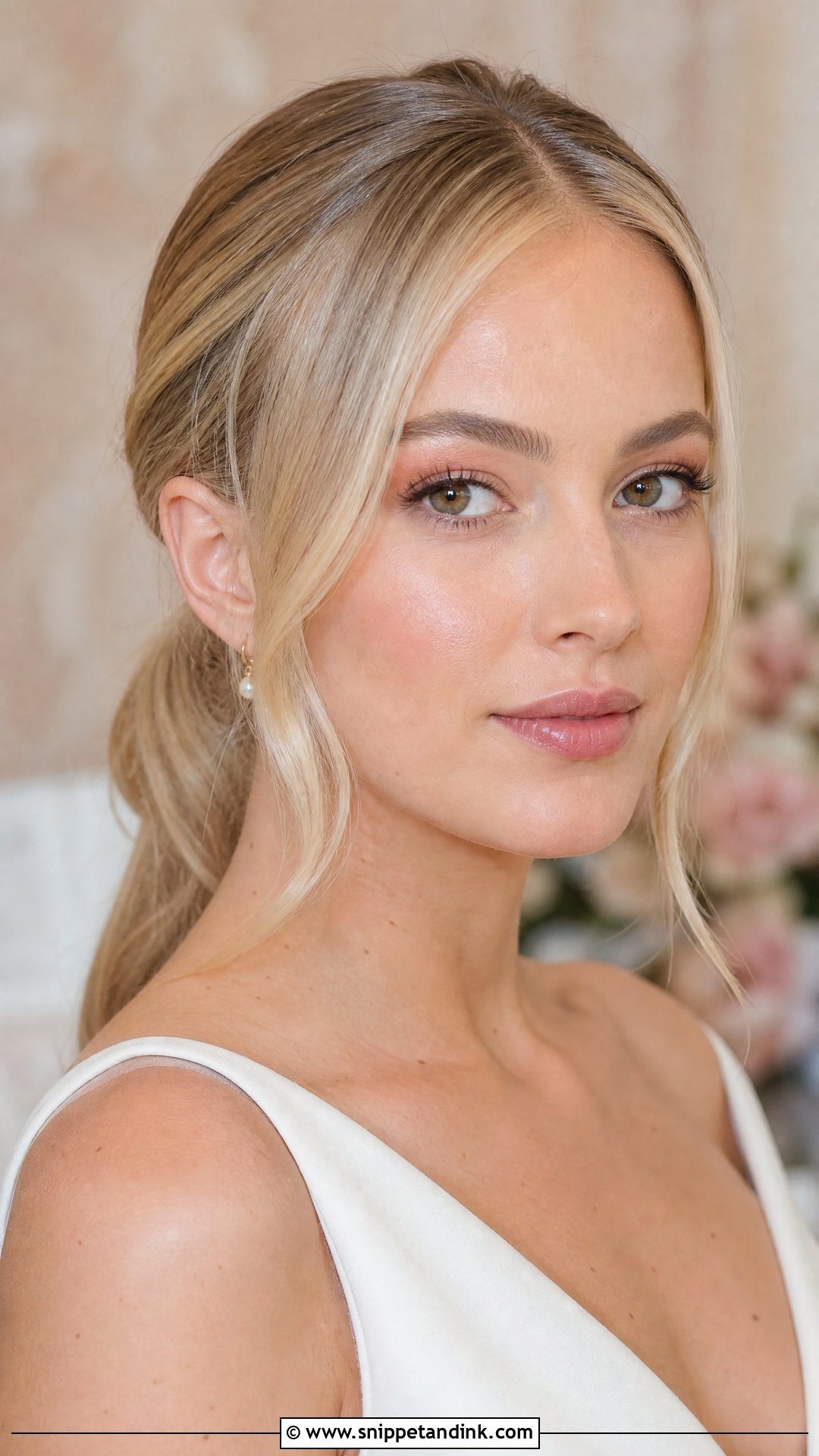
Here the skin should look like skin. Light foundation, targeted concealer and setting powder only where needed, plus cream rose blush for a natural flush and no heavy contour. For the eyes, one rose beige shadow, curled lashes, brown mascara and lightly brushed brows. A sheer rose balm, stain or satin lipstick finishes it. With so few products, every edge has to be blended, because there’s nothing else on the face to hide a harsh line. Courthouse ceremonies and modern, simple dresses suit it best.
Rose Lips Through the Kiss, the Toasts and Dinner
The lip is usually the first part of a rose look to fade, and it fades from the center outward, leaving a ring of liner. I build lips so that when the top layer wears away, there is still color underneath.
- Exfoliate gently and balm the lips at the start of the session, then blot the balm off before color goes on.
- Fill in the whole lip with liner, not only the edge, so it acts as a base.
- Press a rose stain over the liner, then add lipstick or gloss on top.
- Blot once through a tissue and apply a second thin layer.
Matte liquid lipsticks last longest but can feel tight after a few hours and may flake when you eat. If you prefer comfort, a satin finish over a stain is a good compromise; reapply after dinner and you’re set for the dancing.
When Your Flowers Are Coral and Your Makeup Is Rose
Rose doesn’t have to match the wedding palette, but it shouldn’t fight it. A cool rose lip beside a bouquet of coral and orange blooms can look like two different decisions. If your flowers lean warm, I move your rose toward peach; if they’re blush, lilac or burgundy, almost any rose works. It’s worth asking your florist for a single stem before the trial so we can hold it up to your face.
Which Rose Will Still Feel Right at Midnight?
Rose works because it can be soft or glamorous, cool or warm, depending on where you place it and how much you use. The decision that matters most is the undertone of the rose against your skin, followed by how much definition you want around the eyes. Soft rose and rose nude suit a minimal bride, while rose gold, smoky rose and deep rose give more presence for evening photos. Test your foundation, blush and lip together in daylight before the wedding, and wear them for several hours. The rose that still looks fresh at the end of that day is your rose.
You'll Like These Ideas:


Leave a Reply