
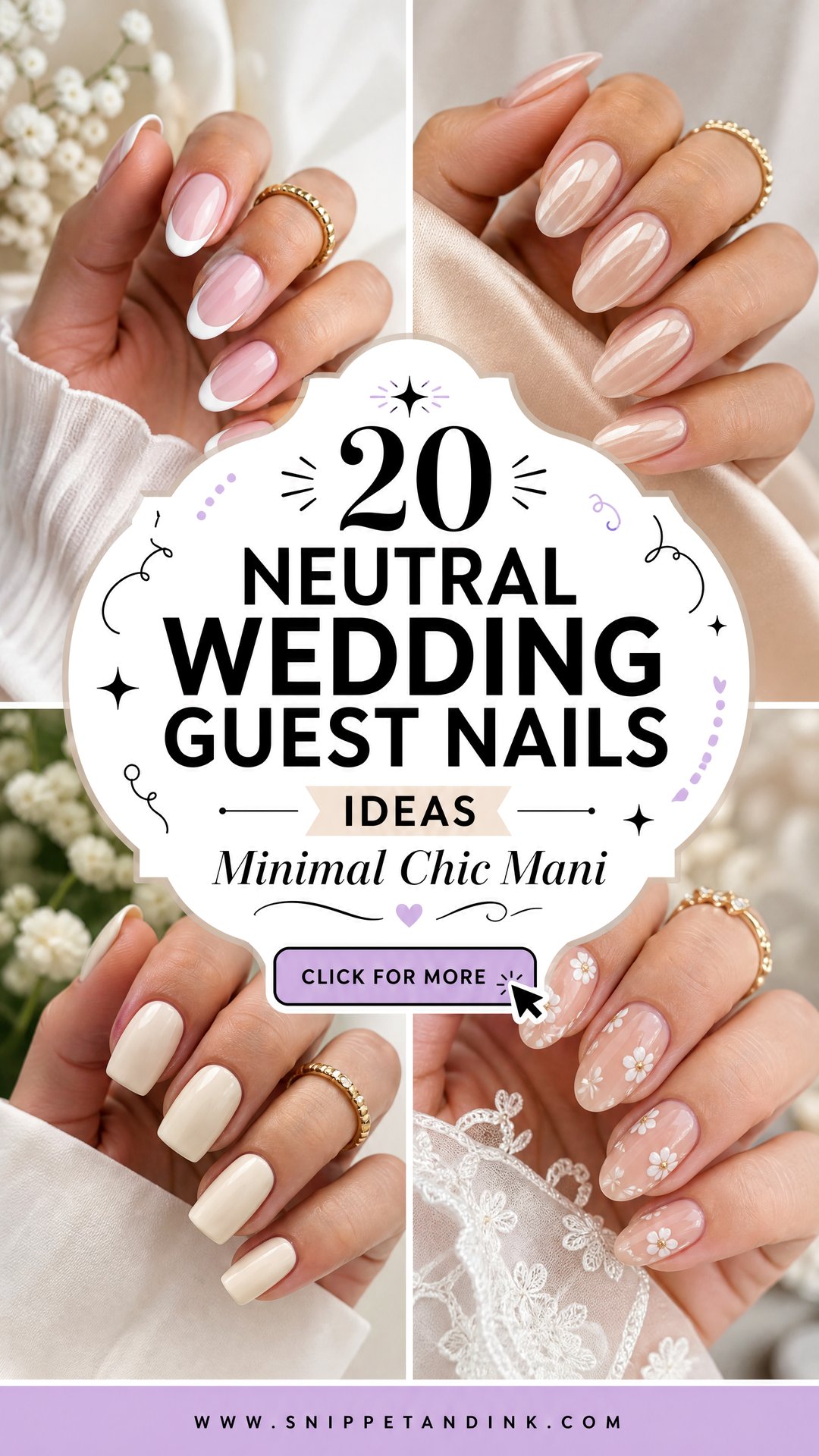
Most guests who book me the week of a wedding want the same thing: a manicure that will go with an outfit they are still finishing. Neutral wedding guest nails solve that, because a sheer pink or soft beige sits next to almost any fabric without fighting it. Neutral is not the same as plain, though. The twenty sets below run from milky whites and taupes to fine chrome, micro French tips and a few tiny pearls, and for each one I have noted the shapes it suits and where it tends to go wrong. My one rule for guests is that the hands should never pull focus from the couple, so details stay small and the base stays close to skin.
Swatching a Nude Against Your Own Hand
Neutrals are the hardest shades to pick from a bottle, because in the bottle they sit next to nothing. When a guest cannot decide, this is how I narrow it down in the chair:
- Paint one coat on a single nail or press a swatch stick flat against the nail bed. The bottle color and one coat on you are often two different shades.
- Look at it by a window, not only under the salon lamps. Warm bulbs push pinks toward peach and beiges toward orange.
- Bring the real thing: a scrap of the dress fabric, the clutch or the earrings. Phone screens shift color too much to judge against.
- If the shade blends straight into your skin, go one step lighter or deeper so the nail has an edge.
- Choose gloss, satin or matte only after the color is settled.
Reading your undertone
Notice whether gold or silver jewelry looks better on you. Warm skin usually suits peach, caramel and champagne neutrals, while cool skin suits rosy pinks, gray taupes and milky whites. I find olive skin the trickiest, because some pale pinks turn a little gray beside it, so I lean toward a beige with a touch of warmth.
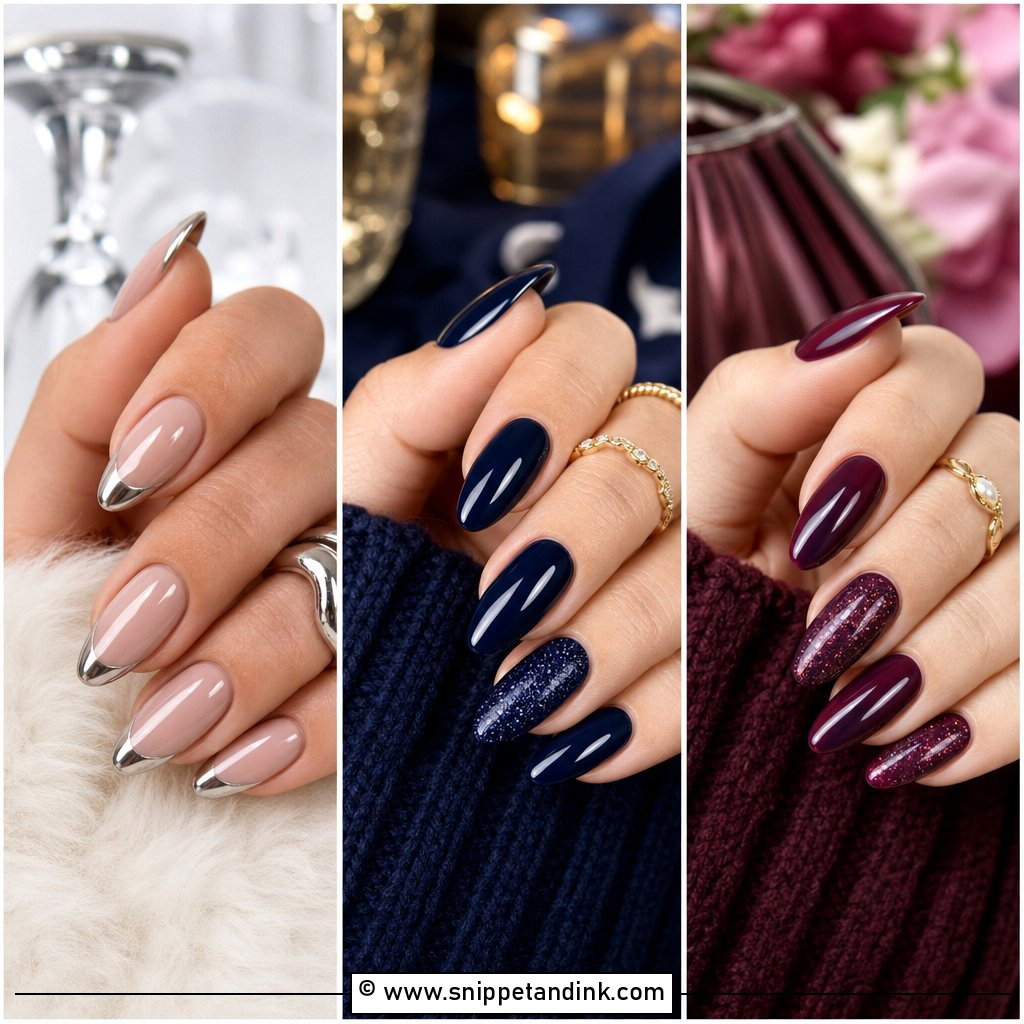
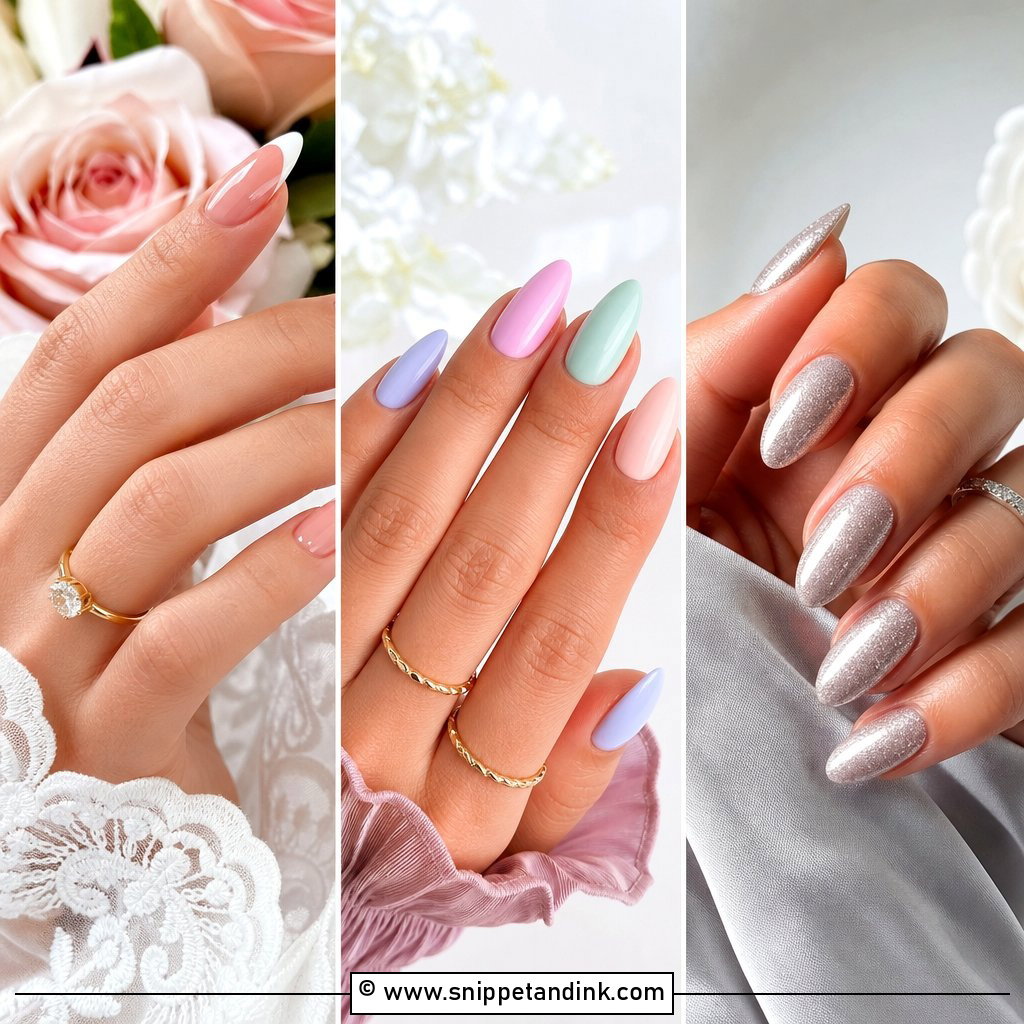
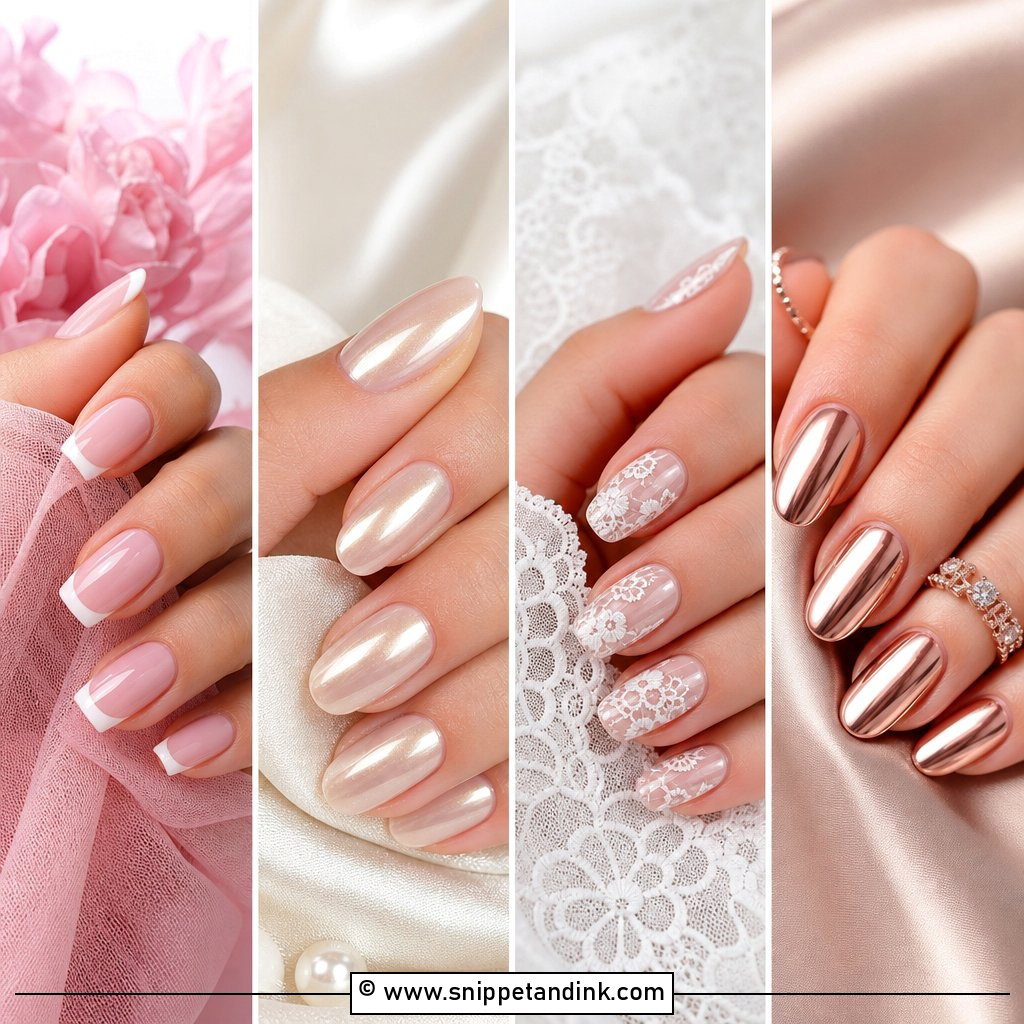
1. Nude French Tip Nails
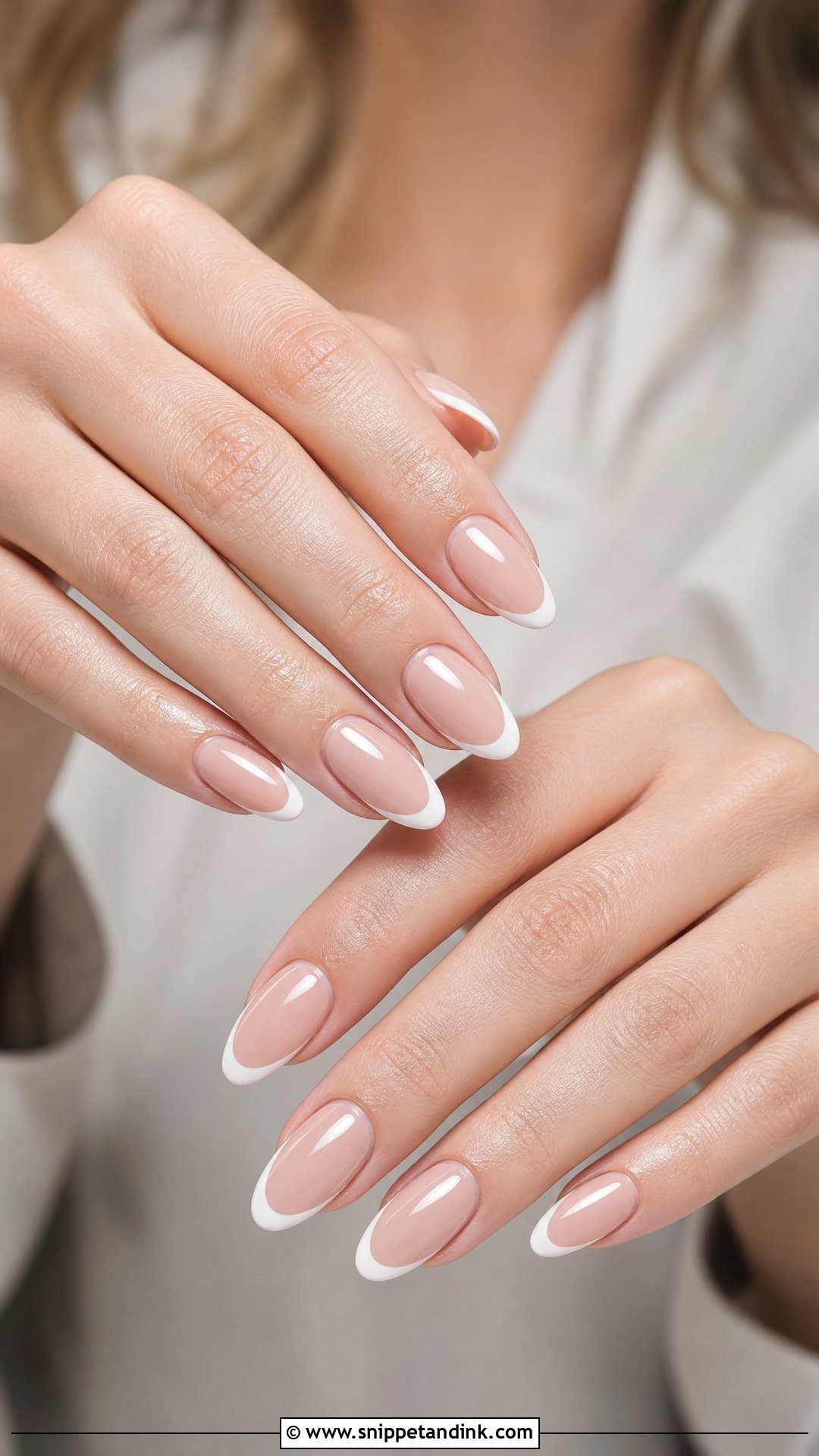
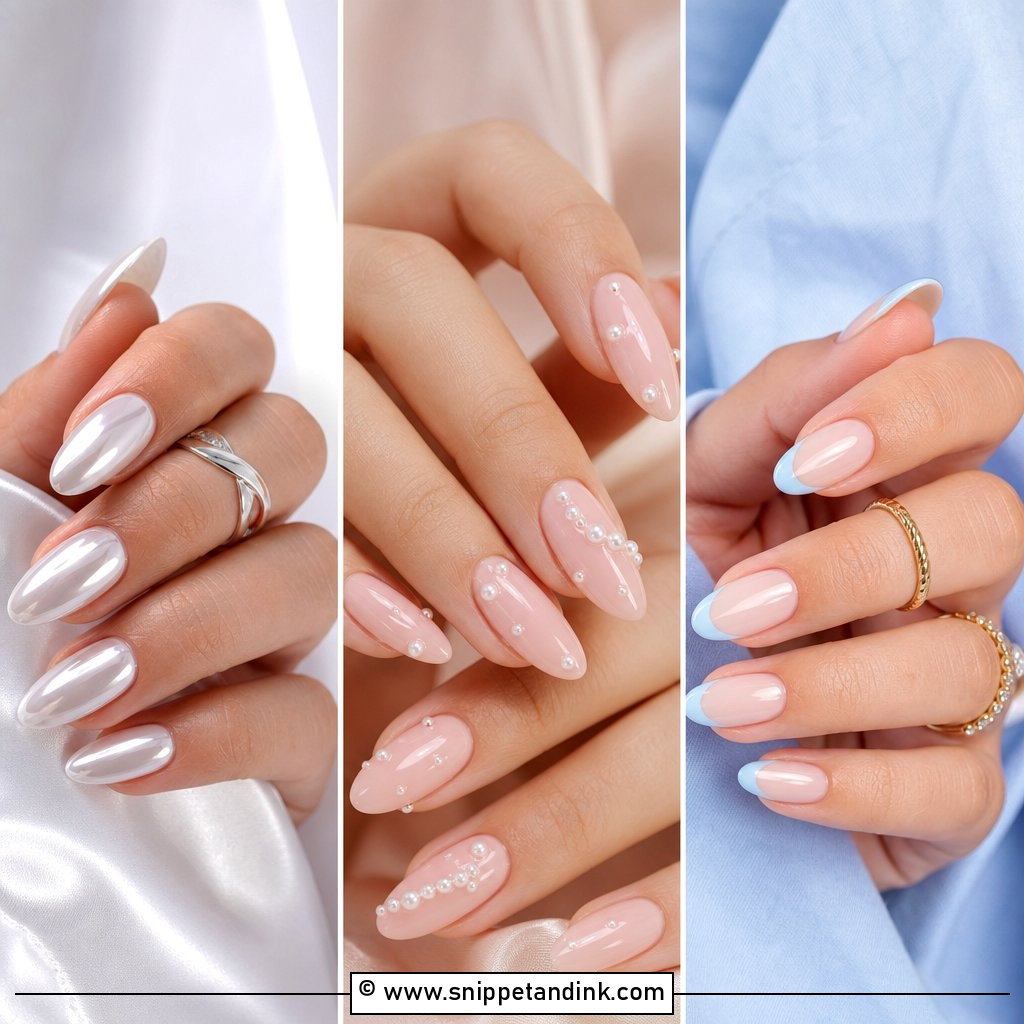
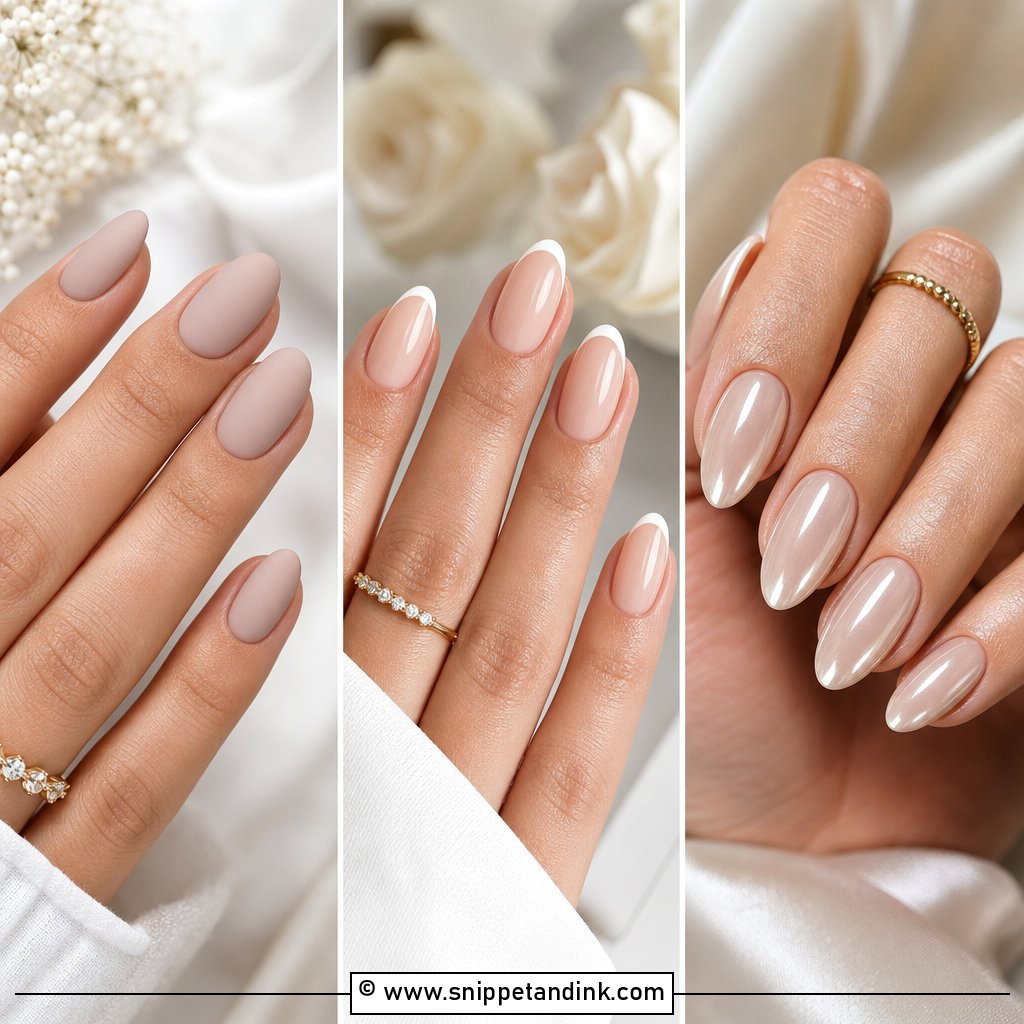
A thin white tip over a sheer nude base is the classic wedding guest choice for a reason: it brightens the whole hand without adding color. The part I spend time on is the smile line. On short nails I keep the tip to a millimeter or two, because a thick band makes the nail bed look stubby, and I follow the curve of the natural free edge so the line still looks right as the nail grows. Almond and squoval take it best. Gloss on top, and it goes with nearly any dress code.
2. Milky White Nails
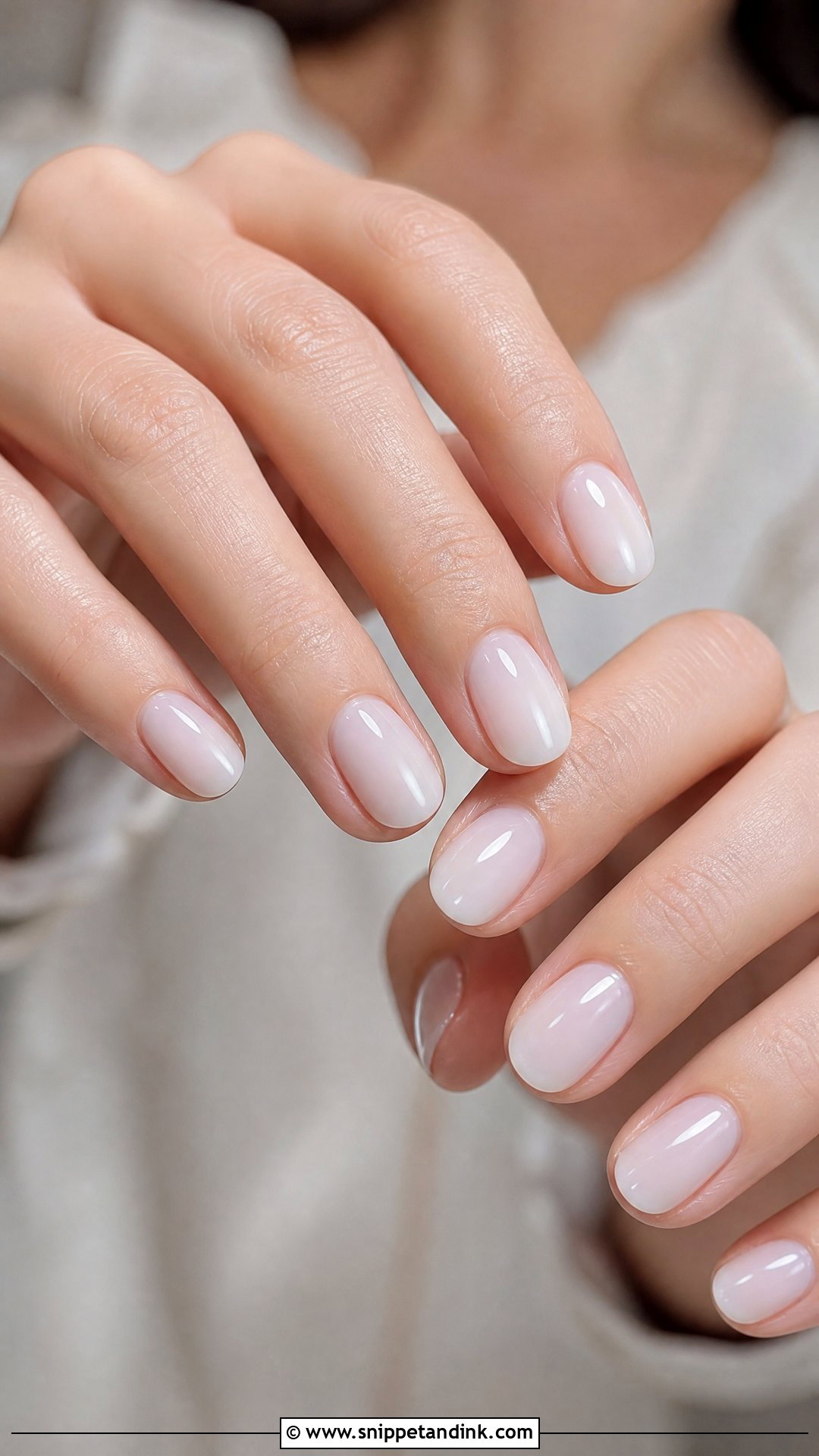
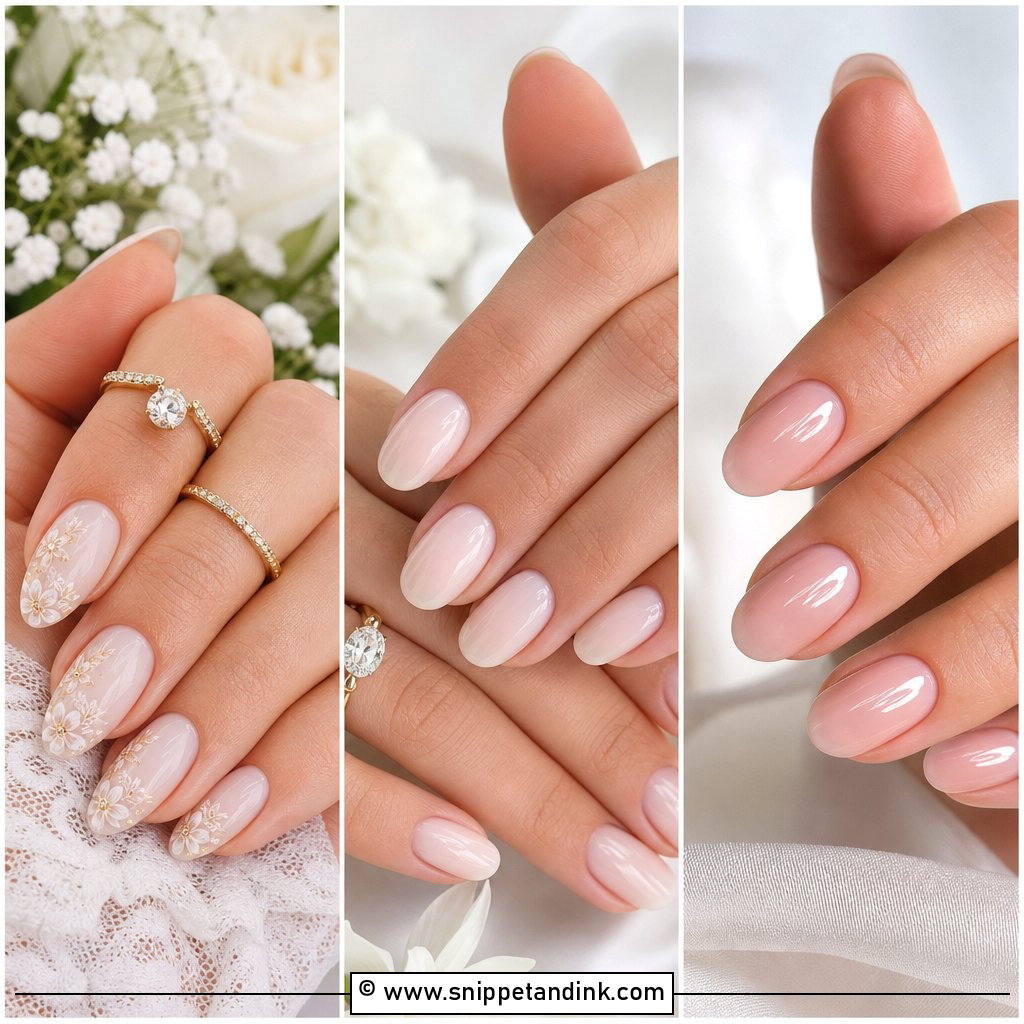
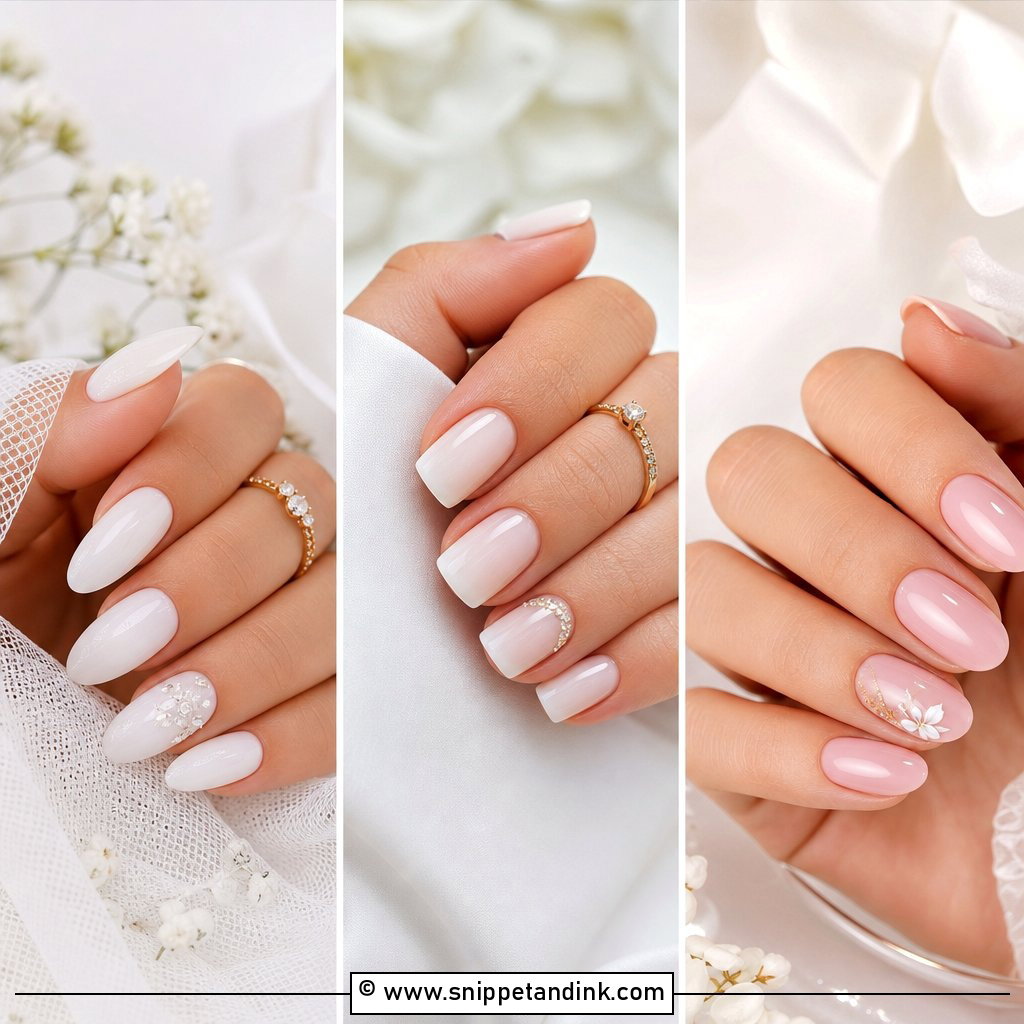
Milky white is easy to overdo. Pile on too many coats and it turns chalky, closer to correction fluid than glass, so I build it in thin sheer layers and stop while the nail bed still shows faintly through. That translucency is also what keeps it a guest look rather than a bridal one. It sits well on short ovals and medium almonds and makes a quiet partner for sequins, texture or a strong color. One caution: pale gels can pick up a yellow cast from self-tanner and sun, so book it close to the date.
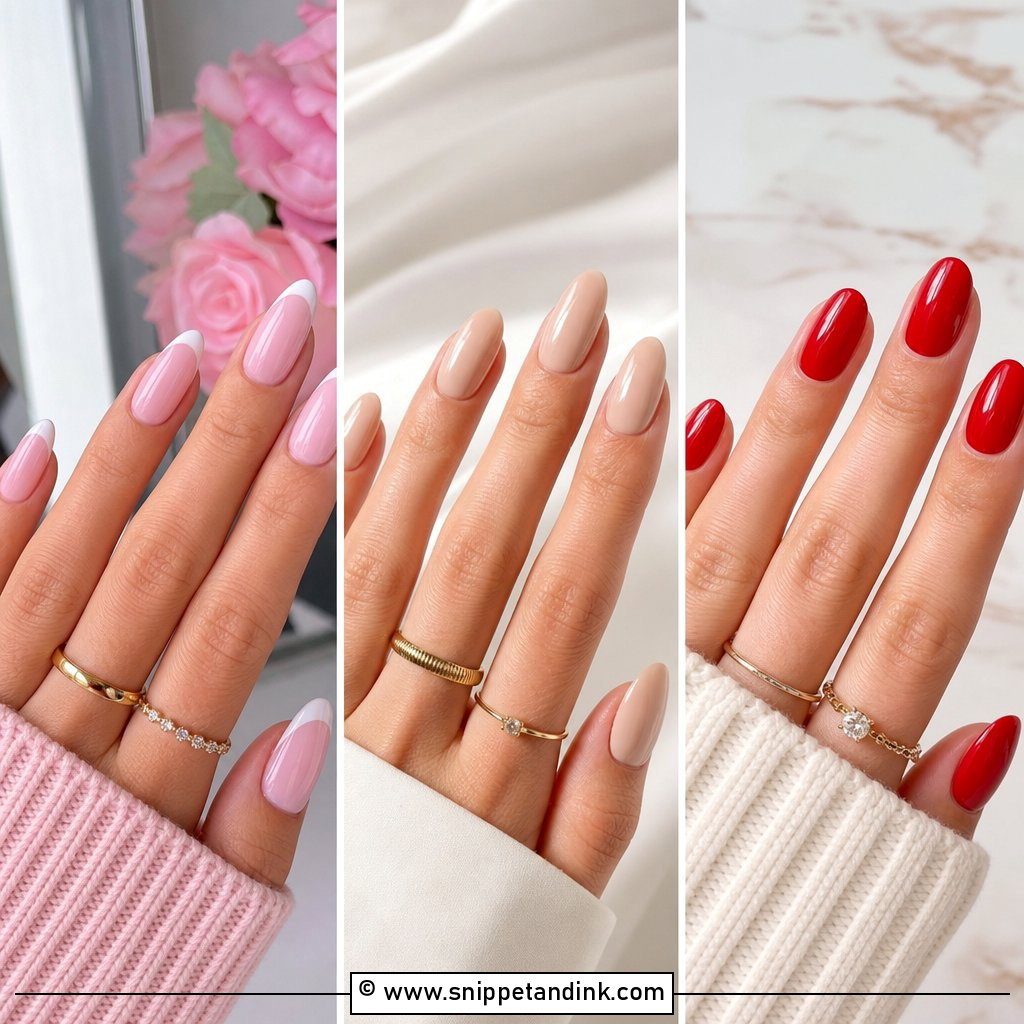
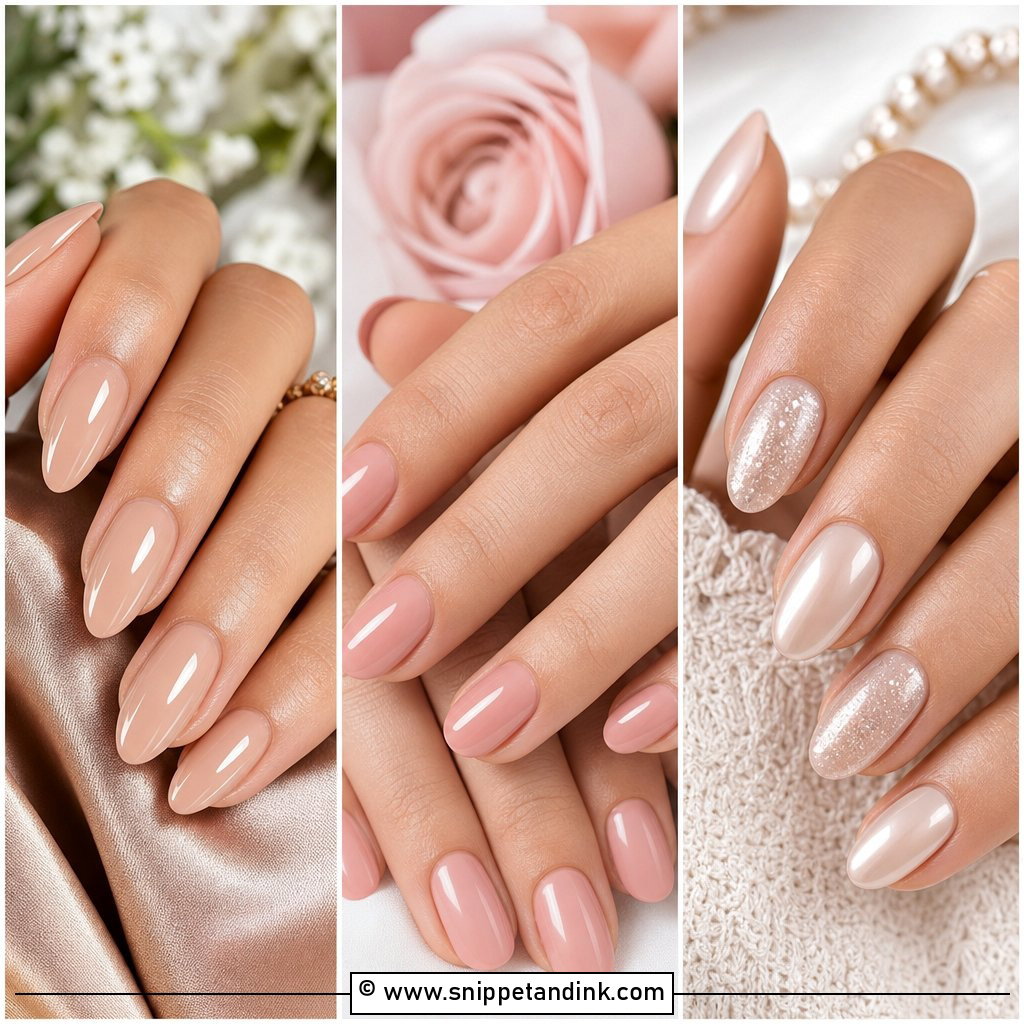
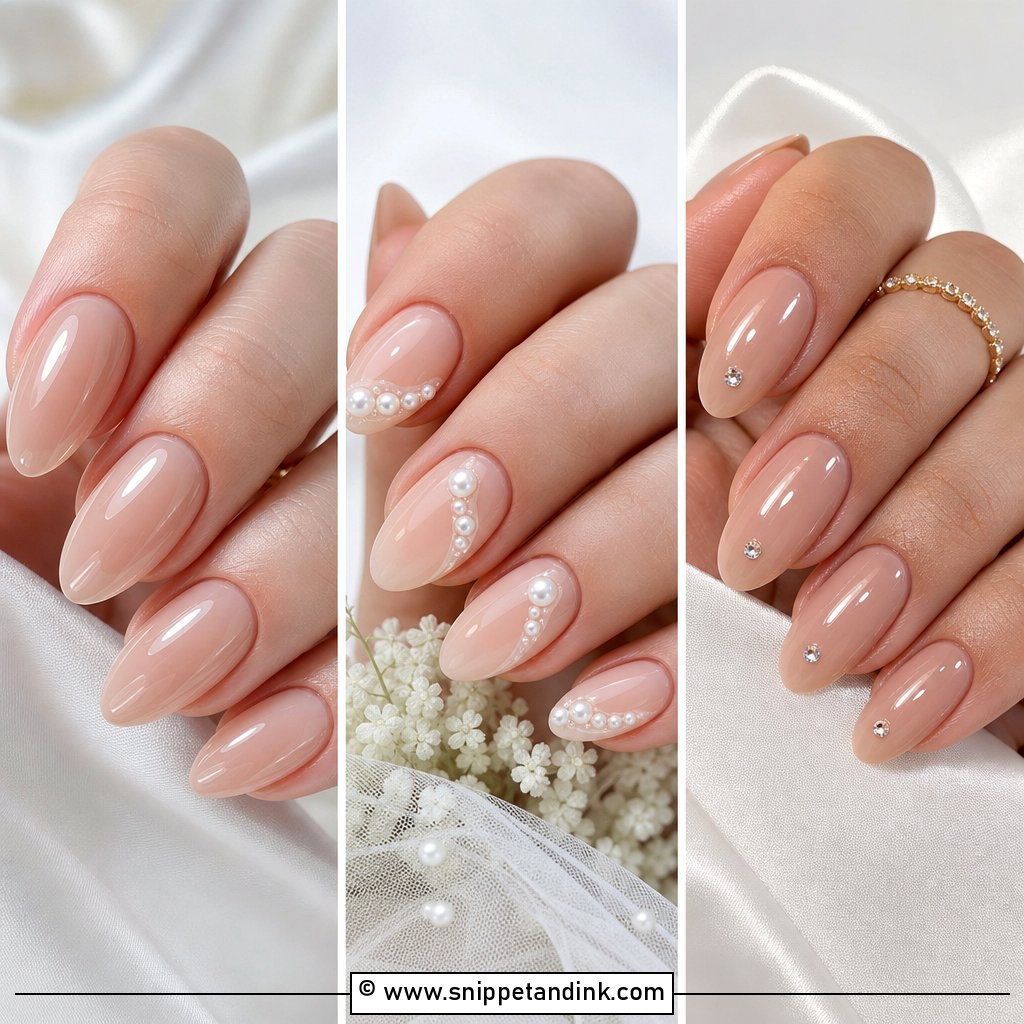
3. Sheer Pink Nails
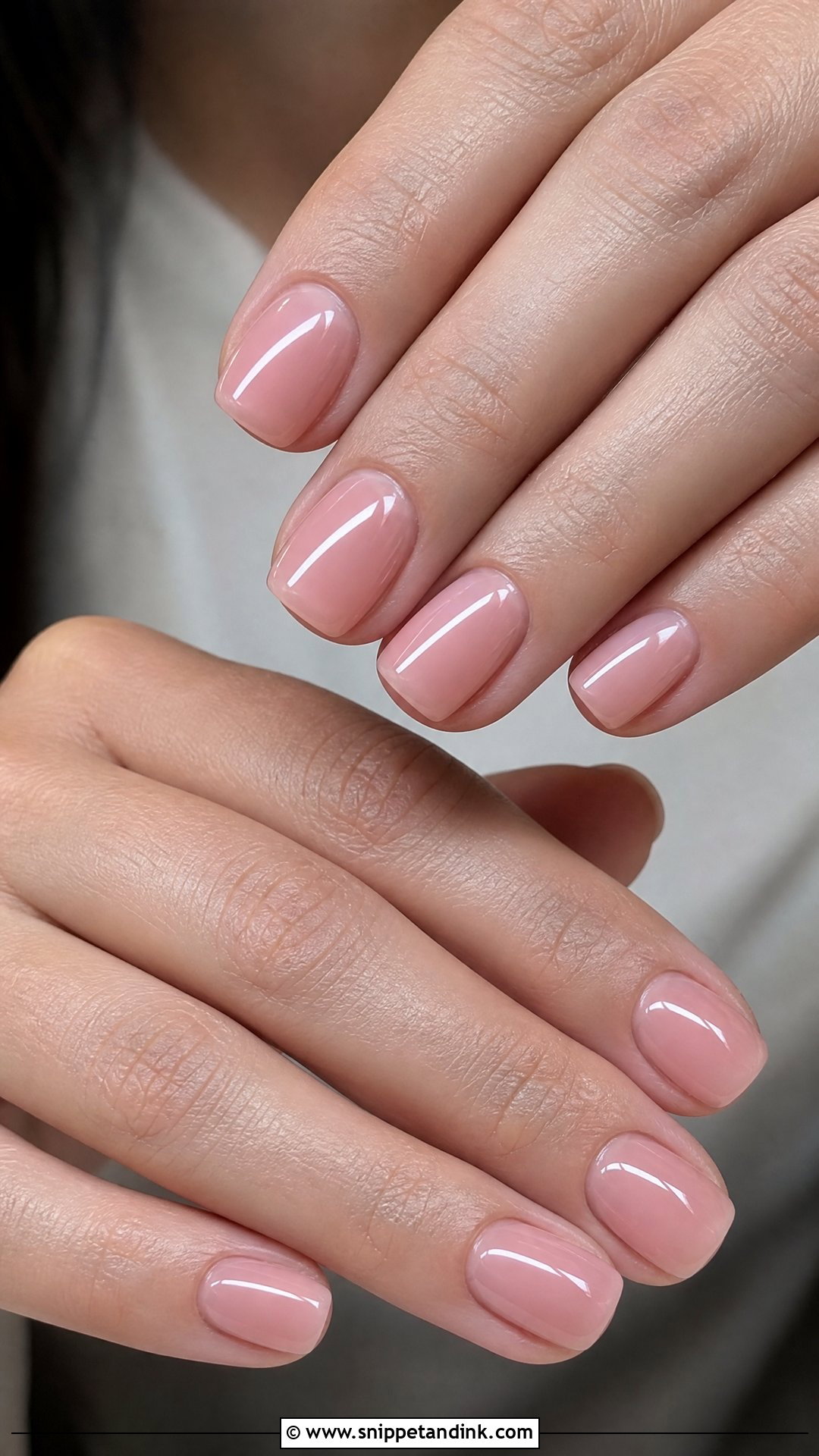
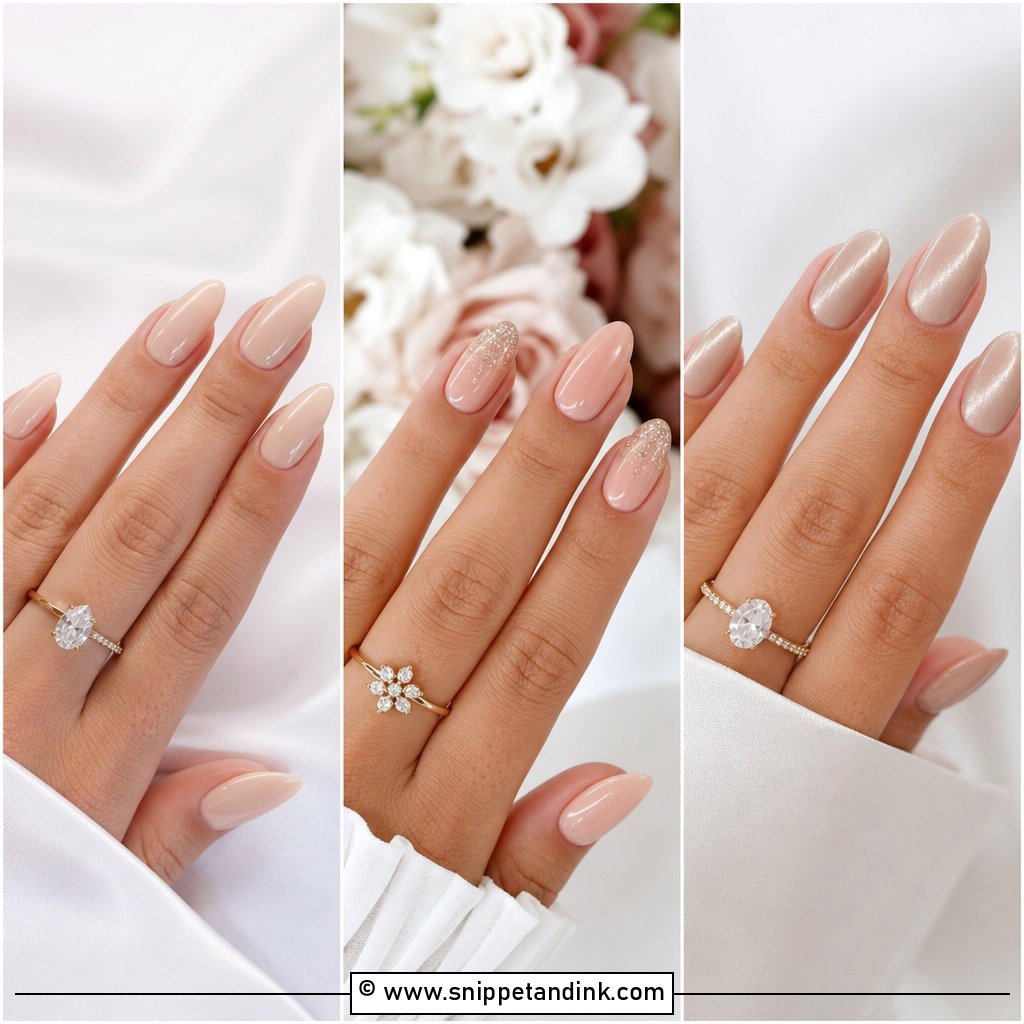
If you rarely wear color on your nails, start here. A sheer pink tint evens out the nail bed, softening small white spots and patchy tone, while still looking like your own hands. I choose the shade against the skin on the back of the hand rather than the nail itself. Cool pinks sit best on fair, rosy skin; peach-pinks warm up medium and deeper skin instead of turning ashy. Daytime and garden ceremonies suit it well. Gloss matters more here than with an opaque shade, because the shine is most of what makes a sheer polish read as finished.
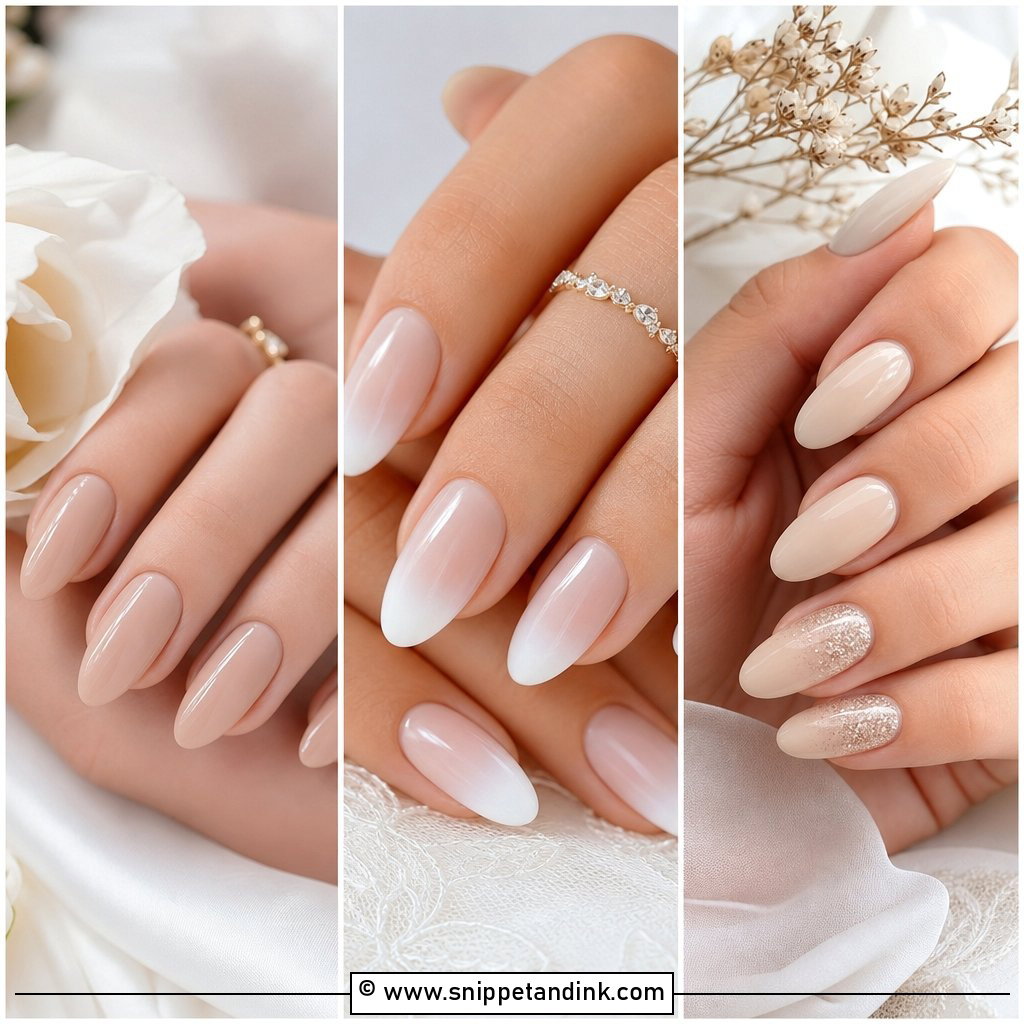
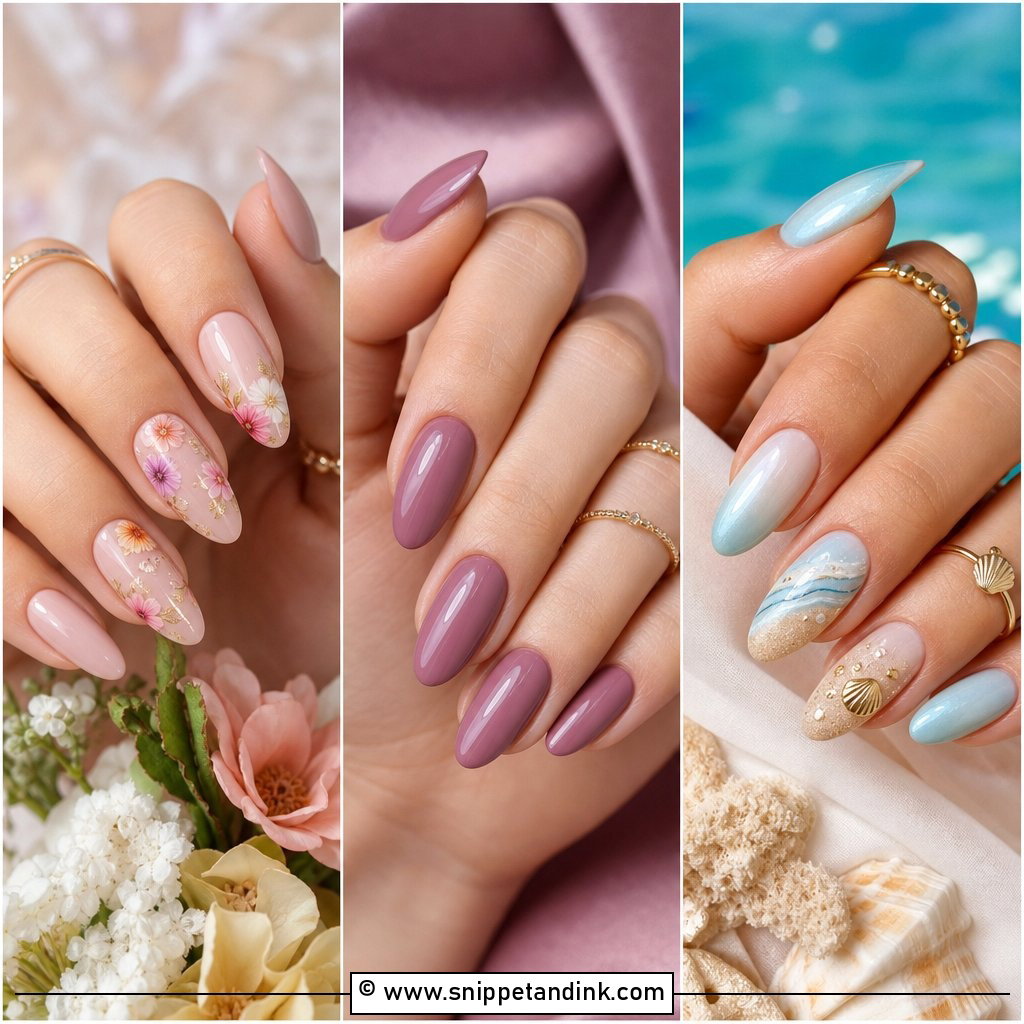
4. Beige Almond Nails
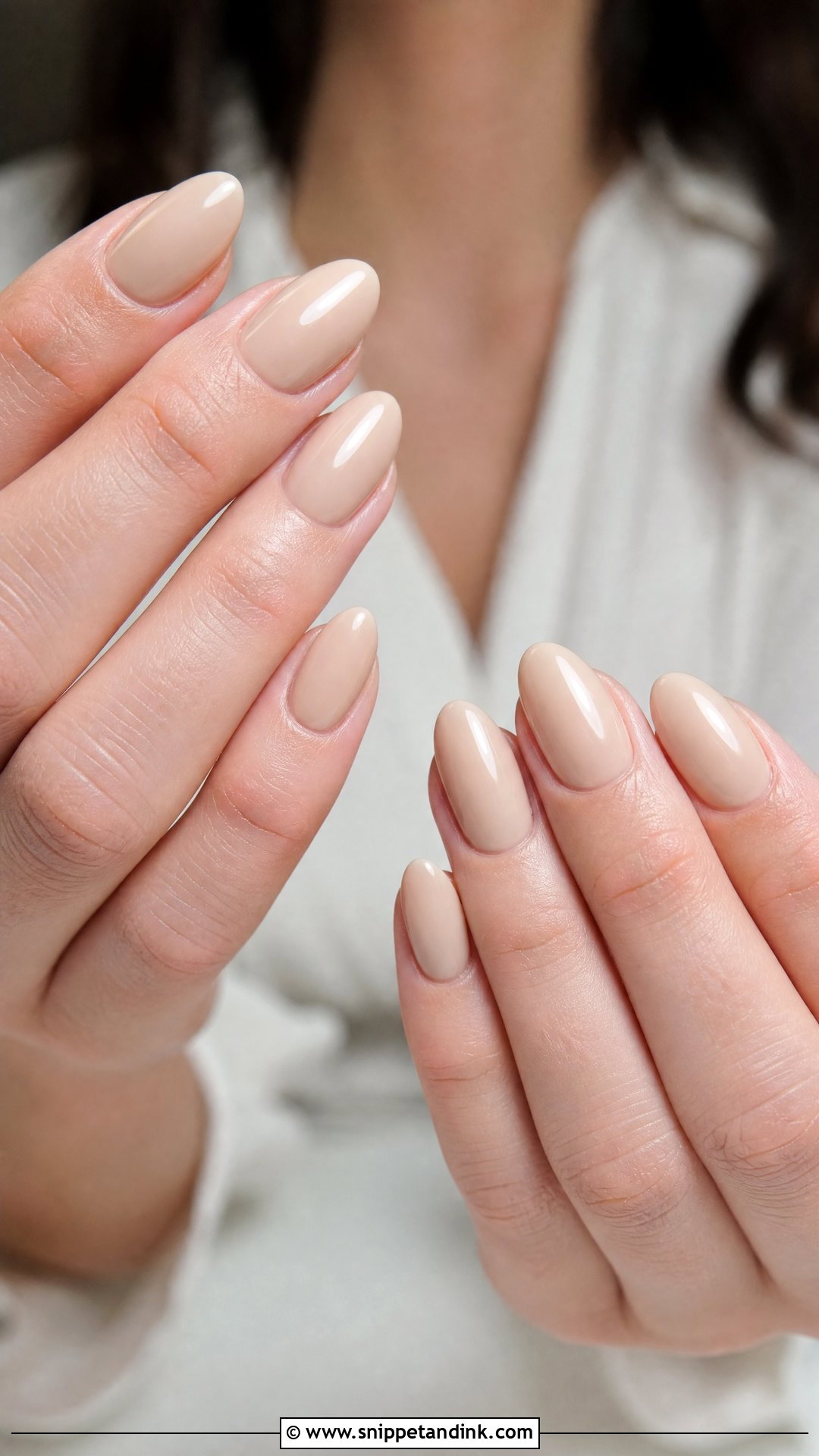
Beige has one trap: get it too close to your skin and your fingertips seem to vanish in photos. I go a step lighter or darker than the hand so there is a visible edge, which might mean light beige, creamy tan, caramel beige or warm sand depending on undertone. The almond shape lengthens the fingers, but on a guest I keep the point rounded. A sharp almond in beige can look claw-like in close-ups. A smooth gloss is the safest finish with formal outfits.
5. Nude Chrome Nails
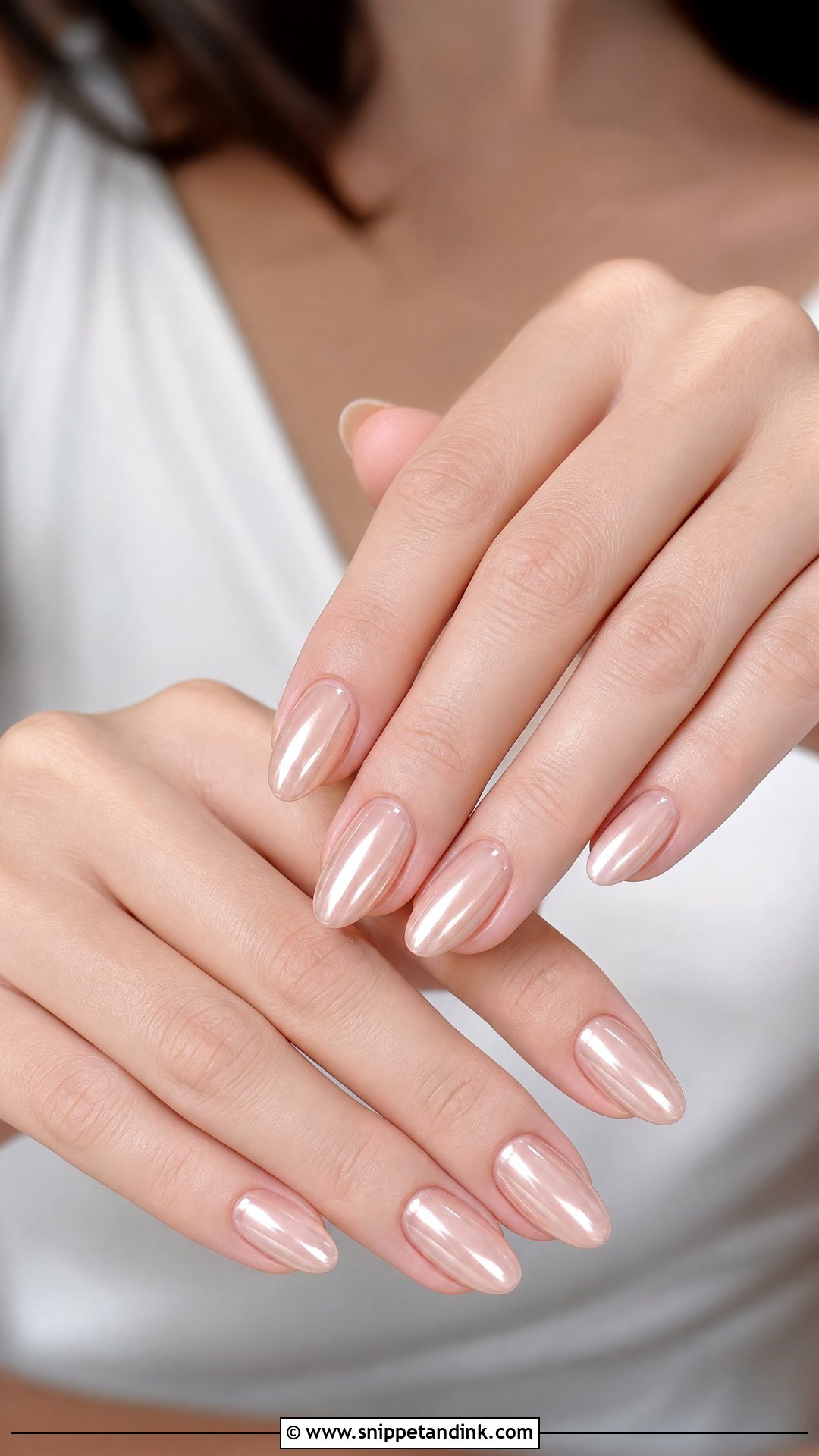
Chrome powder is rubbed over a cured no-wipe top coat and then sealed, and how hard it is buffed decides how mirror-like it turns. For guests I keep a light hand, so a nude, beige or pink base gets a pearly glow instead of a metallic sheet. It picks up reception lighting well, which makes it my pick for evening and black-tie weddings. Short to medium almond, oval or coffin keeps it refined. What usually goes wrong is powder left on the side walls; if I do not seal the edges carefully it can start flaking by day two.
6. Soft Pink French Nails
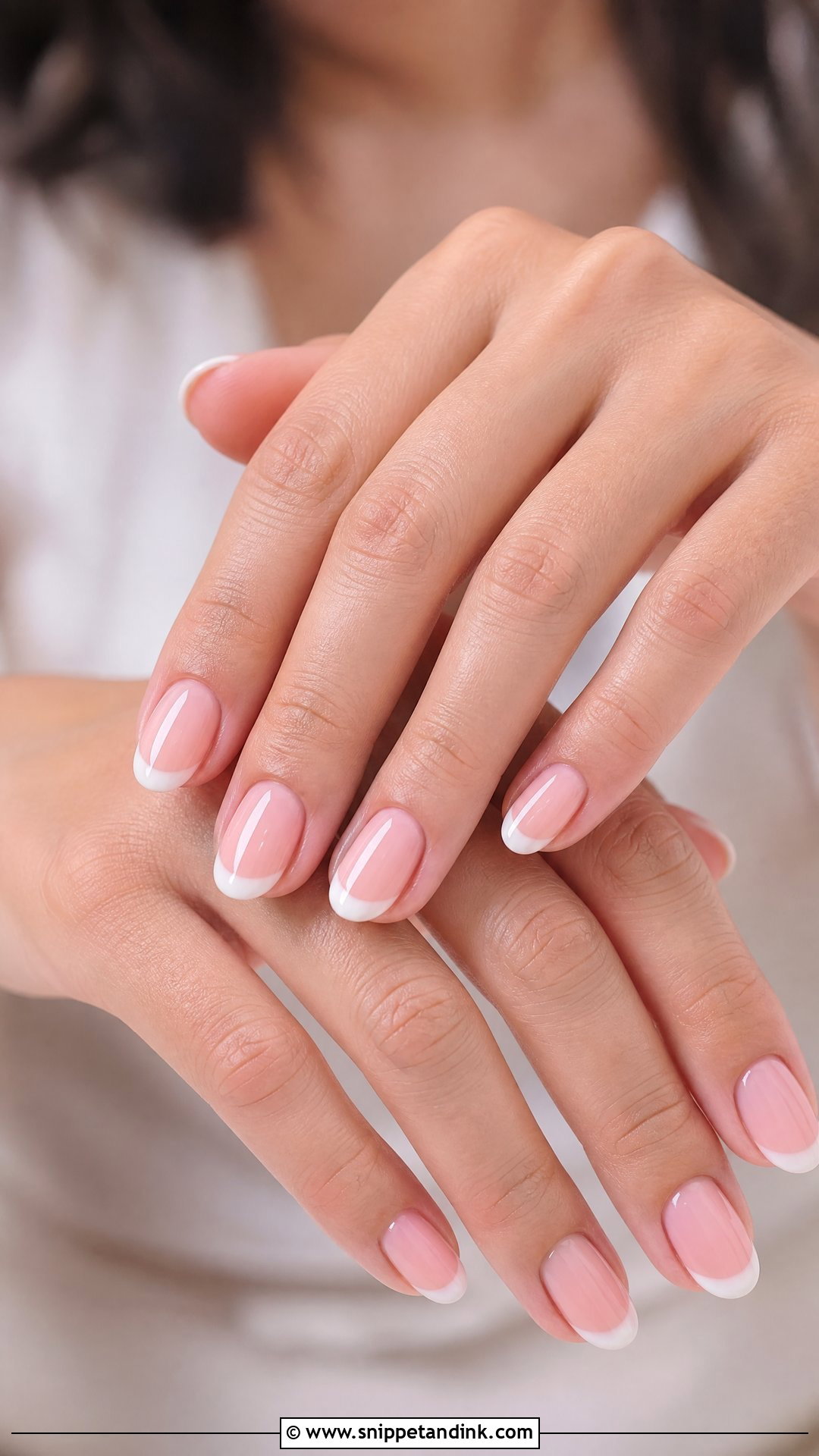
My softer answer to a stark white tip has a simple name. Soft pink French nails swap bright white for an off-white tip blended slightly into a sheer pink base, so the nail keeps its structure without a hard line. The blending is where the skill sits: I diffuse the tip edge with a small clean brush before curing, and if it is overworked the whole tip goes cloudy. Medium ovals, short squovals and almonds all suit it. Blush, navy, sage and floral outfits are its natural partners, and a micro tip or a softened fade keeps it current.
7. Taupe Wedding Guest Nails
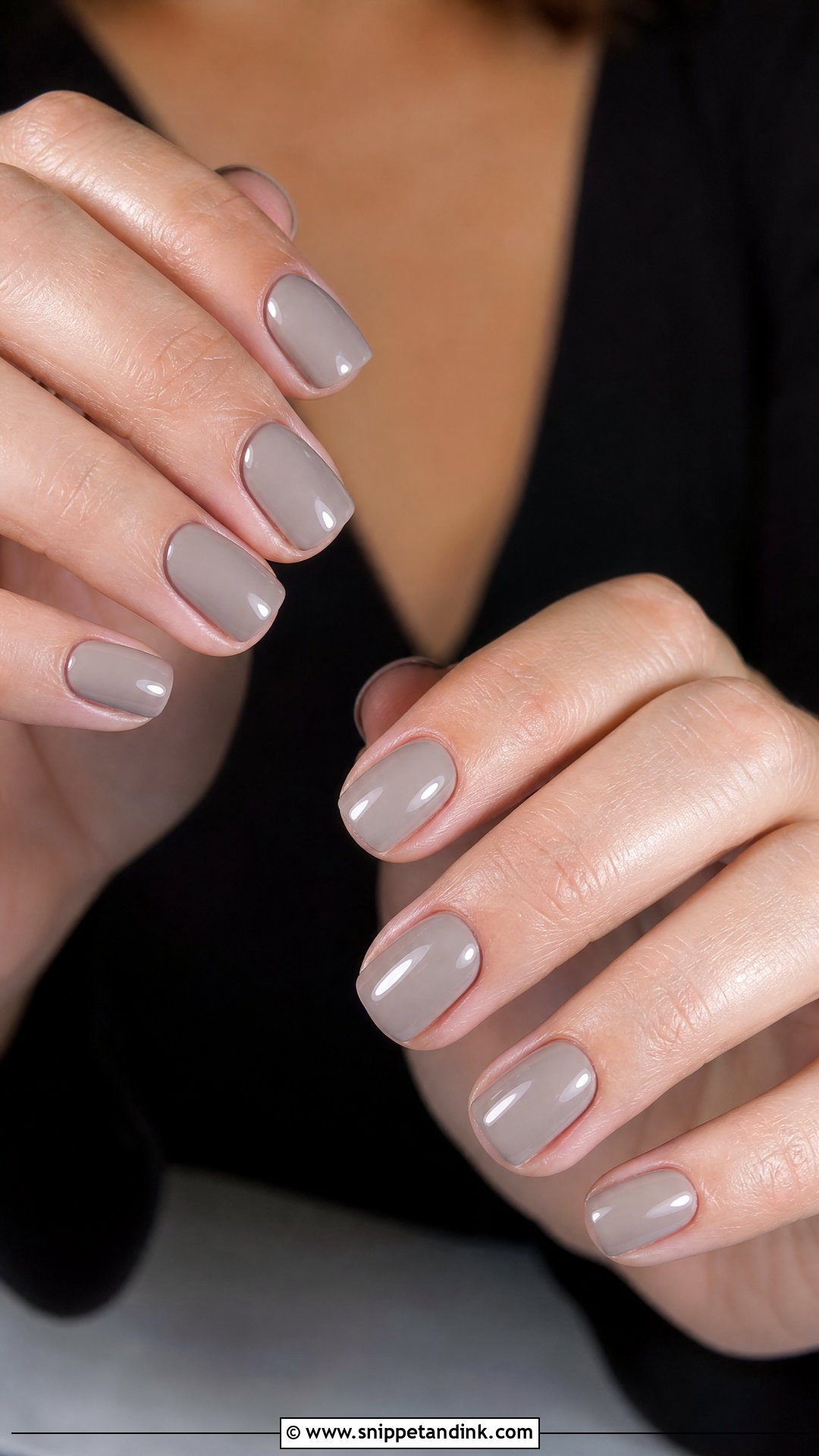
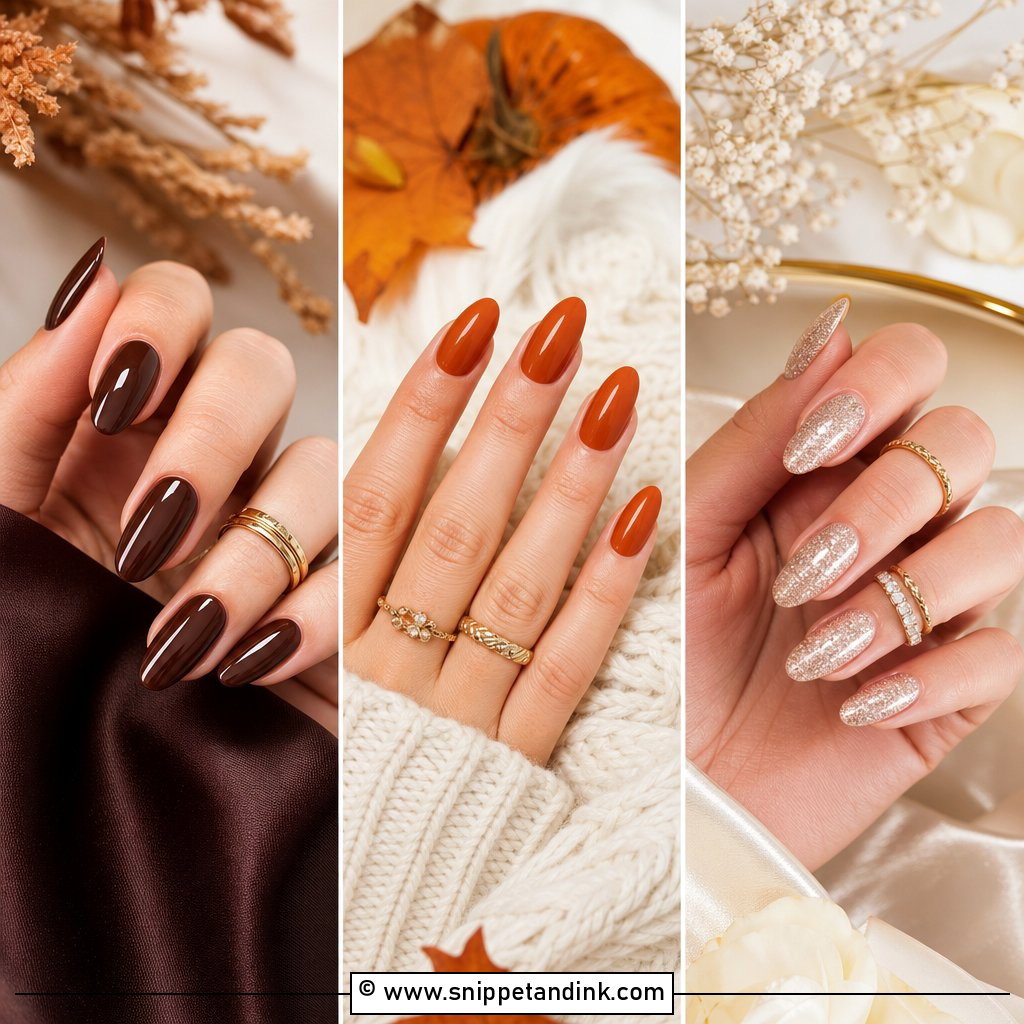
Taupe sits between gray, beige and brown, which gives it a depth a plain nude does not have. It is what I reach for at fall weddings, city venues and evening receptions. Watch the undertone, though. A gray-leaning taupe can look cold, even slightly bruised, against very warm skin, so I swatch two before committing. Lighter taupes stay soft and deeper ones go moody without becoming dark. Gloss is the dressier finish and satin the quieter one, and short square, medium oval and almond shapes all carry it.
8. Champagne Shimmer Nails
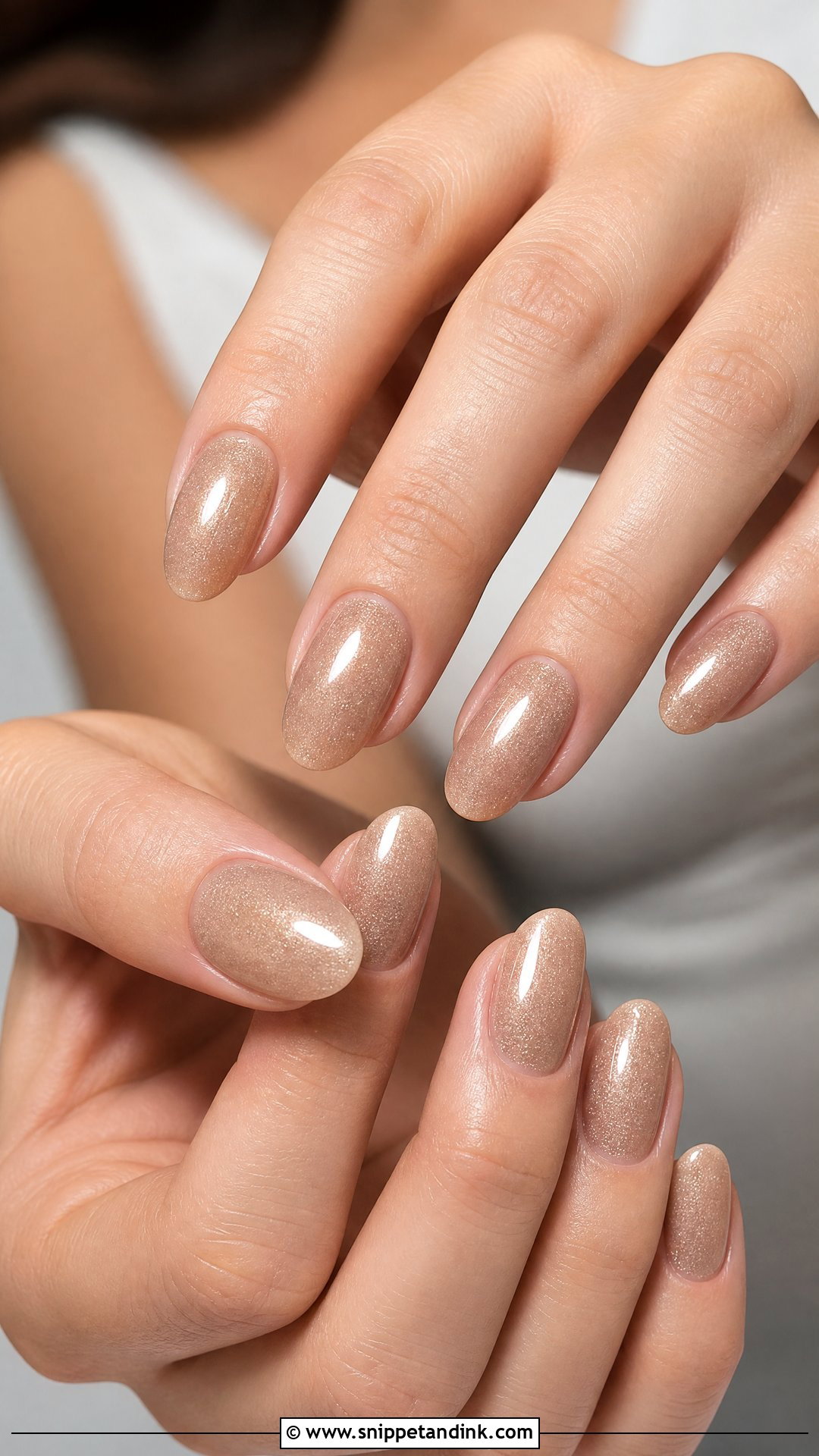
Fine shimmer, not glitter, is the whole point. Champagne shimmer nails should look smooth from arm’s length, with the sparkle showing only as your hand moves. I use a sheer champagne base with very fine particles through the full set; chunky glitter looks clumpy on short nails and is a slog to remove afterward. The warm tone is made for gold jewelry, nude heels, cream dresses and warm makeup, and it suits evening and formal venues. Short ovals or medium almonds keep it classy.
9. Neutral Ombré Nails
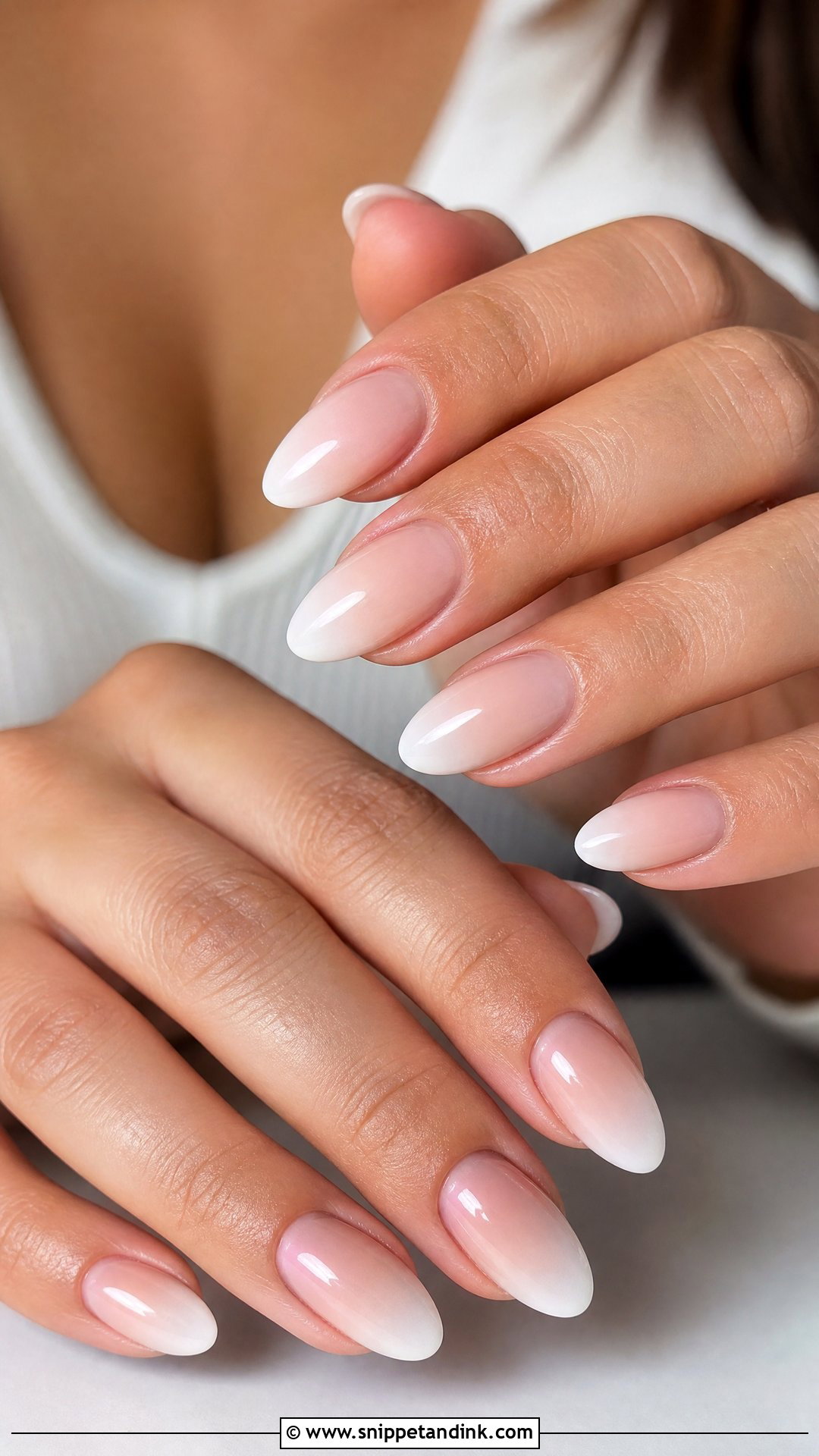
A fade from a nude or pink base into a soft white tip gives you a French manicure with no hard line, which is far more forgiving as the nail grows. I blend it with a sponge in polish or work the two shades together in gel. The fade needs length to show, so I would not do this on very short nails; medium almond, coffin or oval gives it room. Keep both shades sheer and close to your natural nail and it will sit as comfortably with pastels as with deep jewel tones.
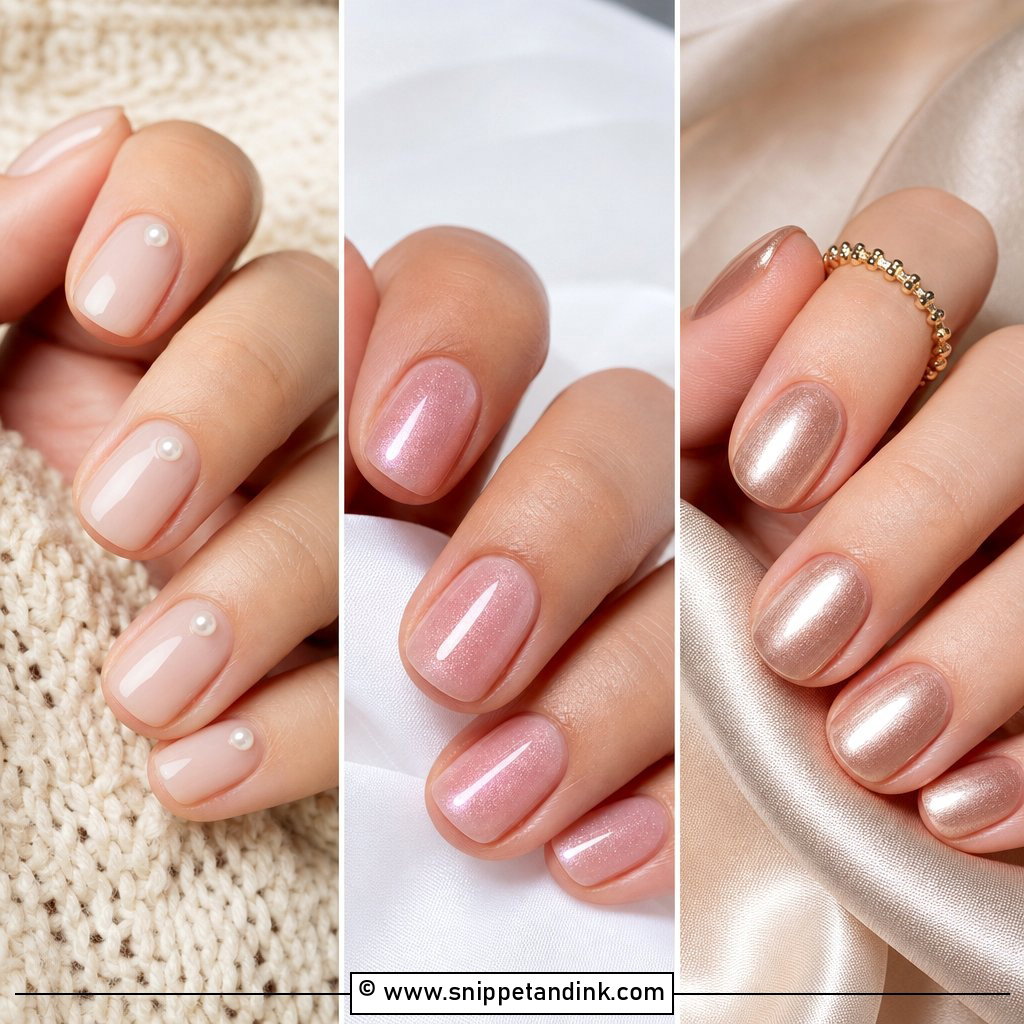
10. Pearl Nude Nails
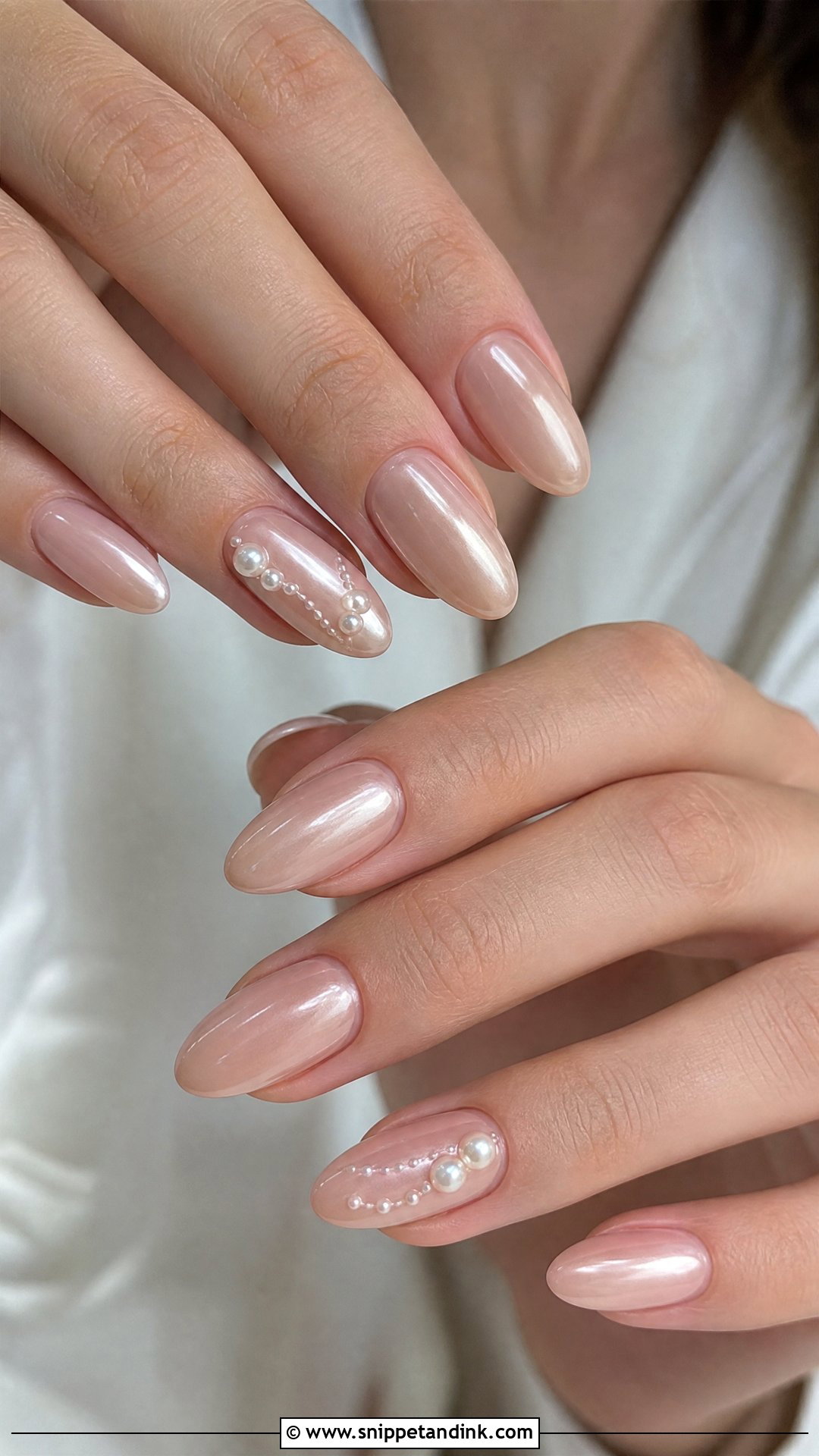
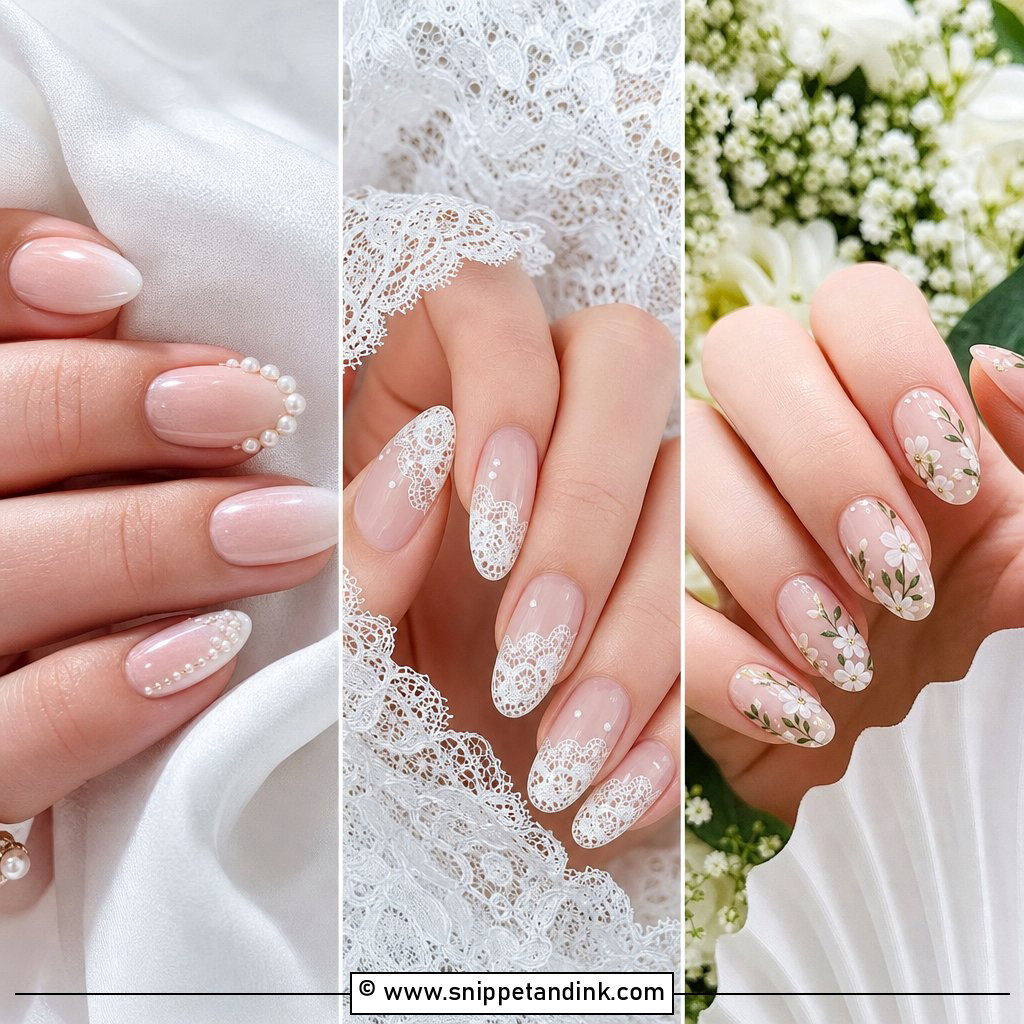
With pearls on a guest set, less really is more. I place one or two tiny flat-backed pearls per hand, usually on the ring finger, and seat them in a little thick gel so they do not snag on a clutch zip or tights. If you would rather skip raised details altogether, a pearl sheen across the full nail gives the same feeling. Do watch how close this gets to the bride: a milky base covered in pearls can look bridal, so keep the base nude or sheer pink. It suits romantic and coastal venues, pearl earrings and satin.
11. Short Neutral Nails
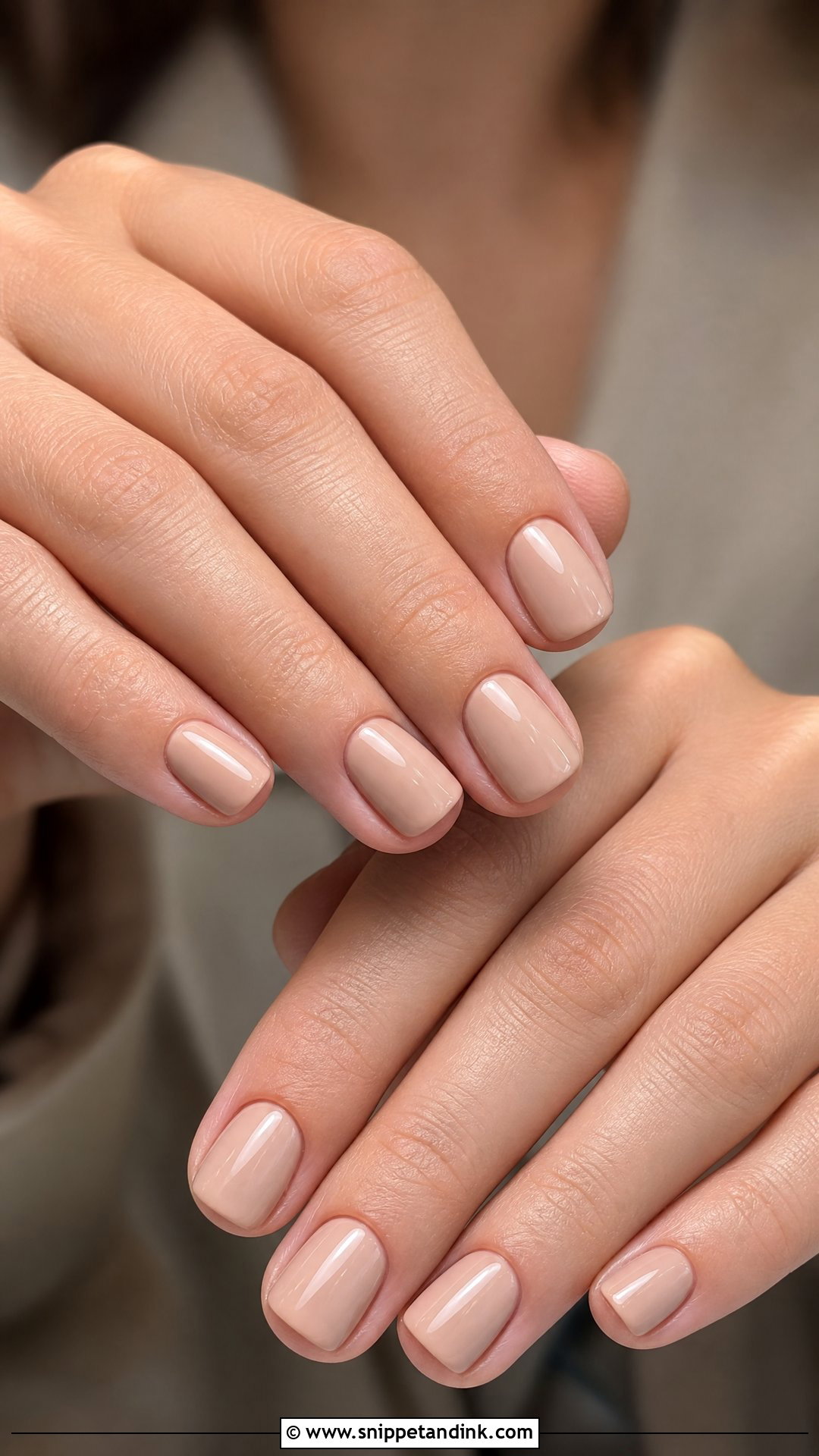
Short nails look most refined when the shaping and cuticle work are immaculate, since there is no length to distract from them. I would pick a rounded square or short oval and a shade that evens out the nail bed. Soft nude, sheer pink, beige, milky white and pale taupe all do that job. Finish with gloss and it suits every wedding setting.
12. Neutral Glazed Nails
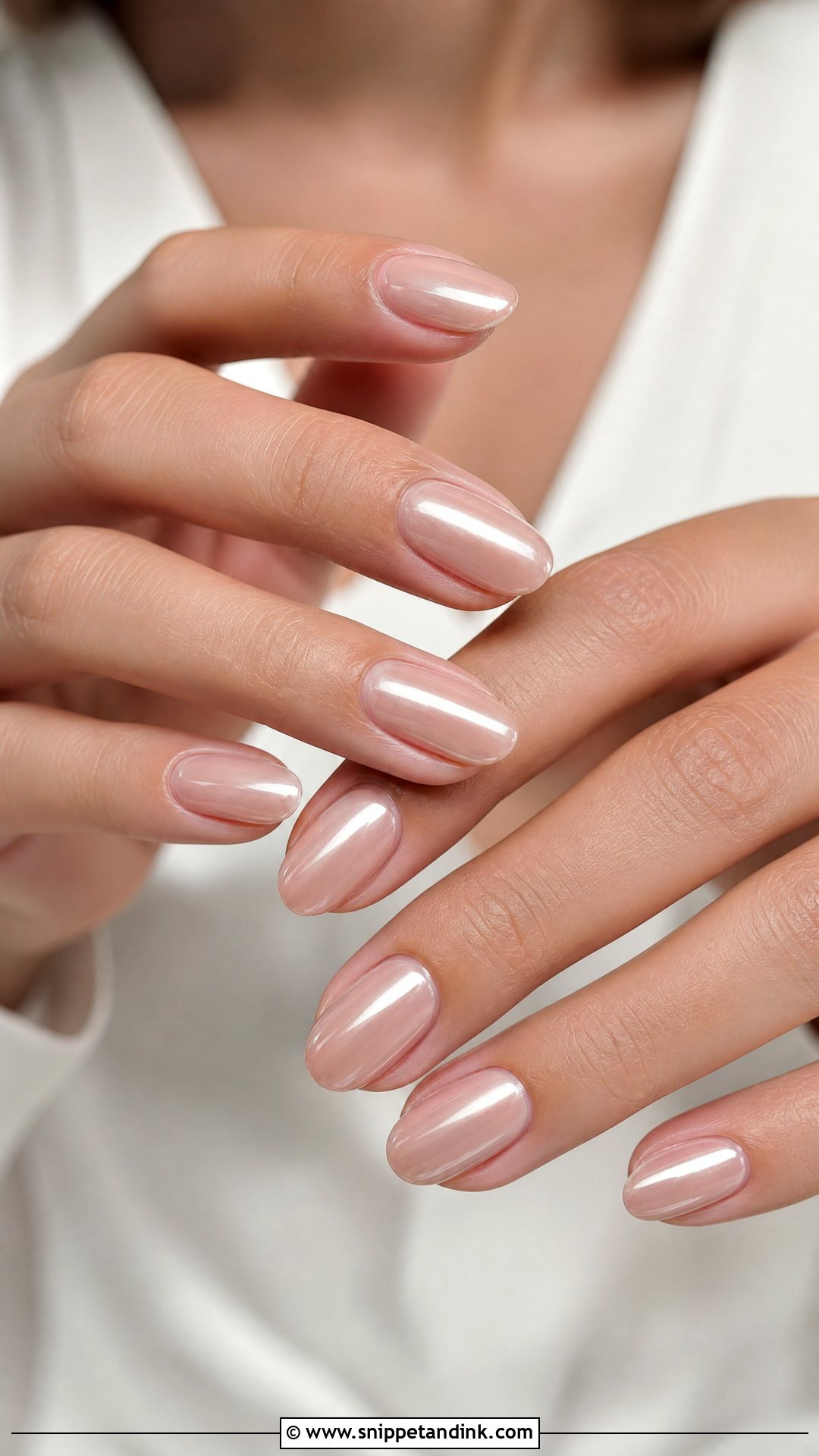
Glazed is the quieter cousin of chrome. Neutral glazed nails create their luminous finish from a very fine pearl powder rubbed over a sheer nude, pink, beige or milky base. That base has to stay sheer, or the result looks frosty rather than glassy. Light runs along the curve of the nail, so almond and oval show it best and flat square tips show it least. It is trend-led, but on a neutral base it will not look dated in your photos.
13. Nude Nails With Gold Lines
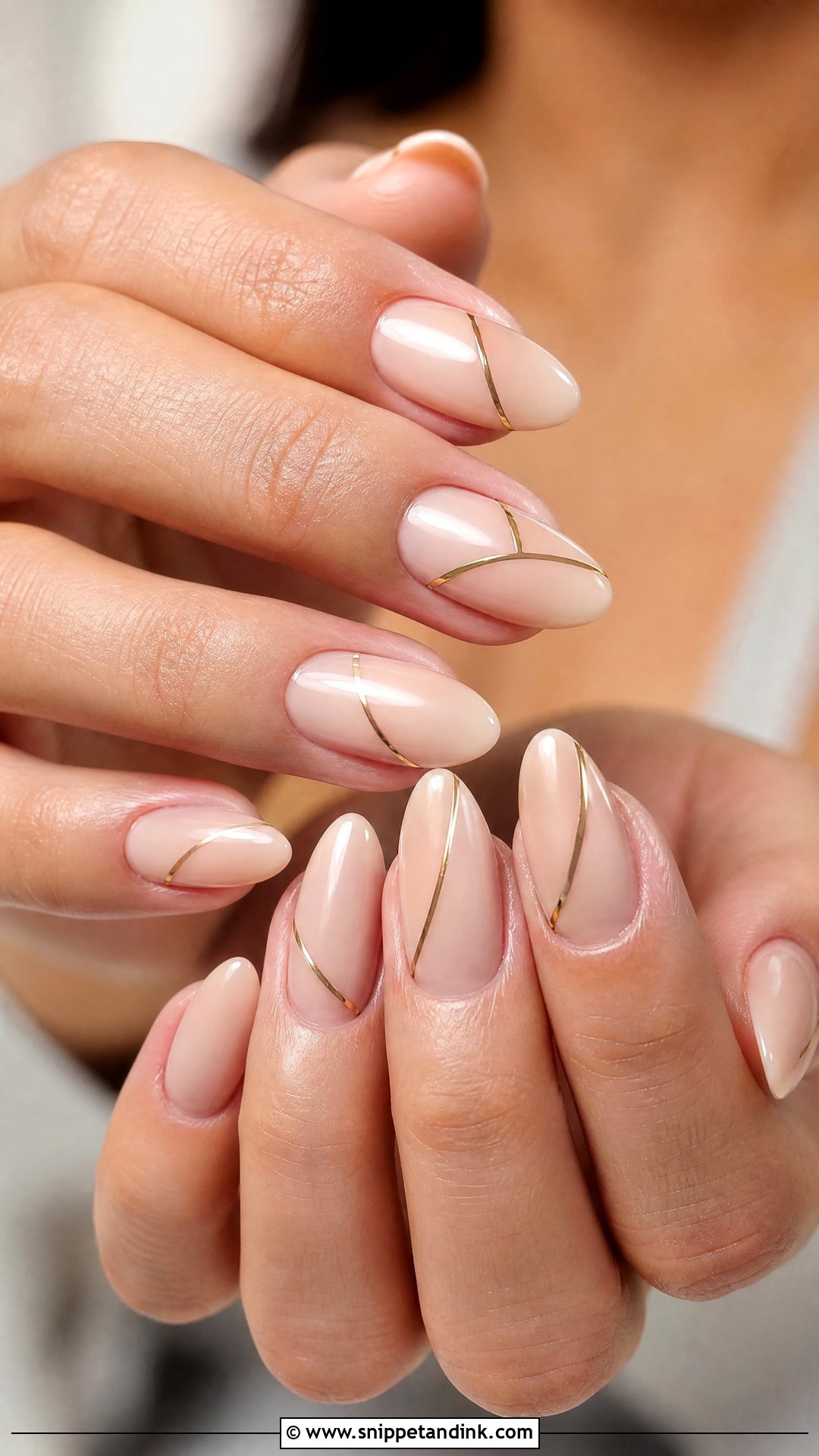
A nude base with thin gold lines is what I suggest when someone wants one small detail that ties in with jewelry. I paint the lines with a long striping brush in gold gel, and fine is the operative word: a thick line reads as a stripe, not a detail. They can run vertically, diagonally, along the cuticle or across the tip. Short to medium nails keep it clean. It sits naturally with gold jewelry and a champagne dress, but I would skip it if you are wearing silver or platinum, because the two metals will argue.
14. Light Brown Nails
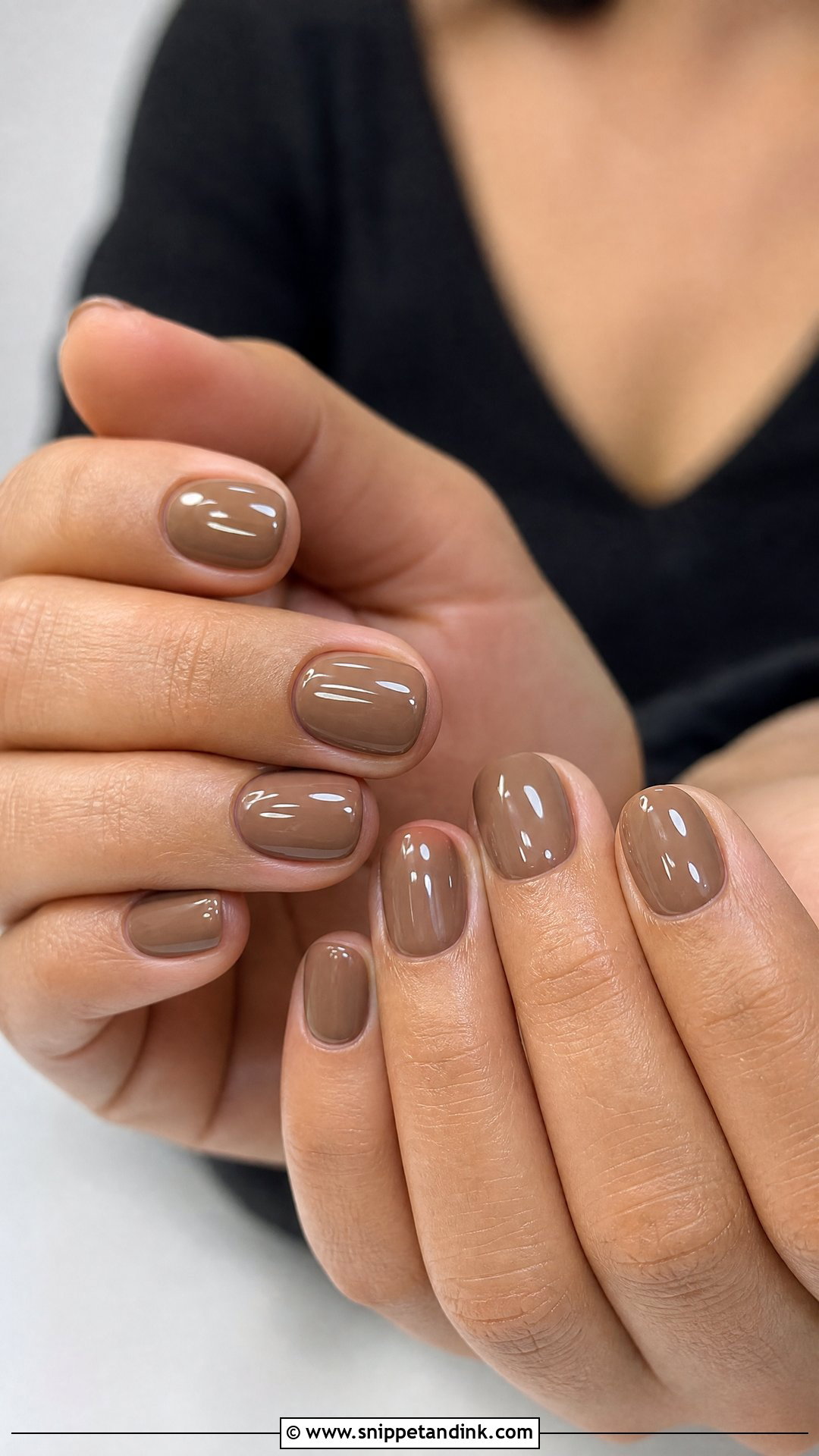
Latte, cocoa beige, soft mocha and almond brown are richer than pale nude and flatter a wide range of skin tones. These are my favorites for fall, rustic venues and earth-toned outfits, and they look smart against cream, olive, terracotta, navy or black. On deeper skin a light brown can come out almost invisible, so I move a step lighter or deeper until there is contrast. Short square, oval and almond all work. Gloss gives the classic version; satin is more understated.
15. Cream Square Nails
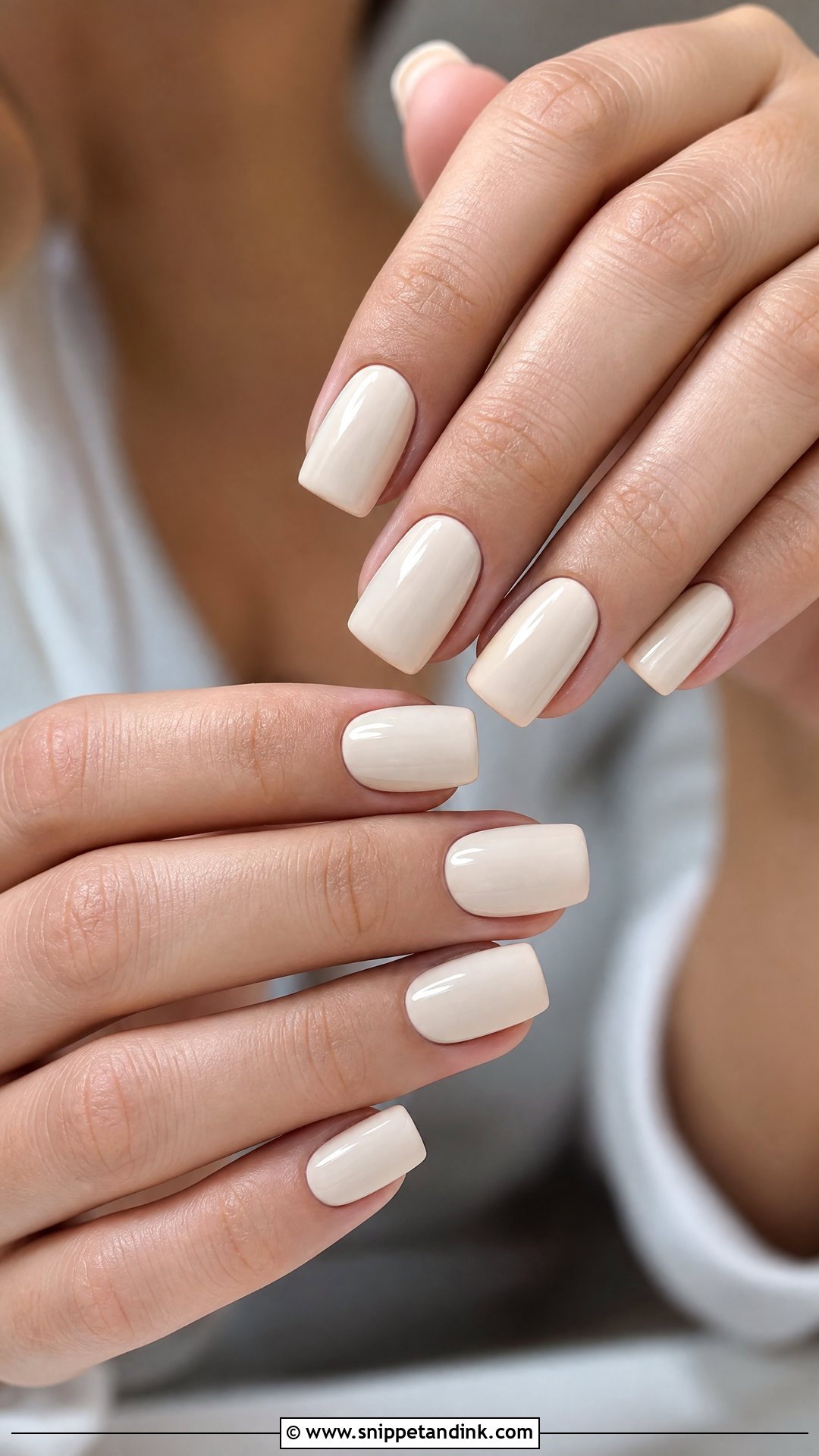
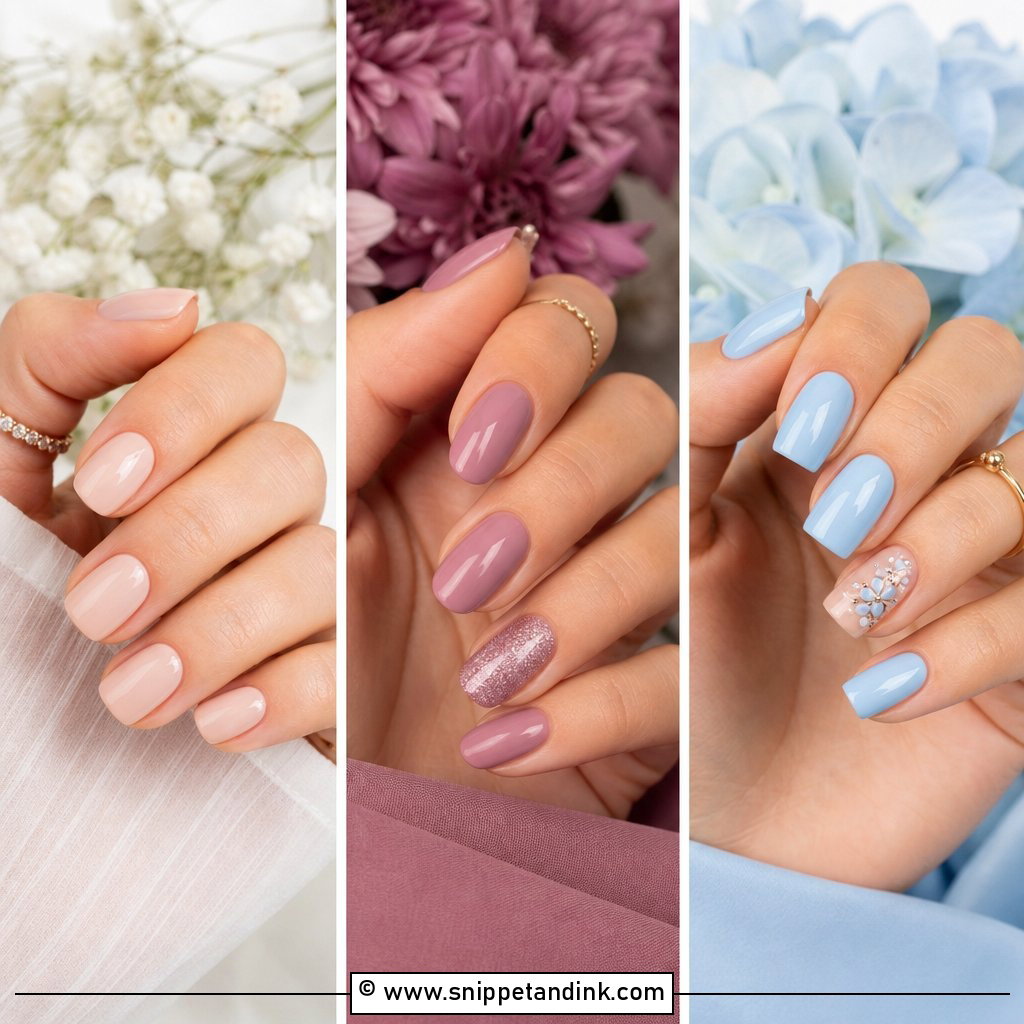
Cream is warmer than bright white, which makes it easier to pair and less likely to look like a bridal set. A short or medium square gives it structure, and I soften the corners slightly because sharp corners chip first and catch on fabric. Cream polishes are known for streaking, so expect two or three thin coats for even, full coverage. If solid cream feels too opaque on you, ask for a sheer or milky cream. Modern venues, formal receptions and simple dresses suit it well.
16. Blush Almond Nails
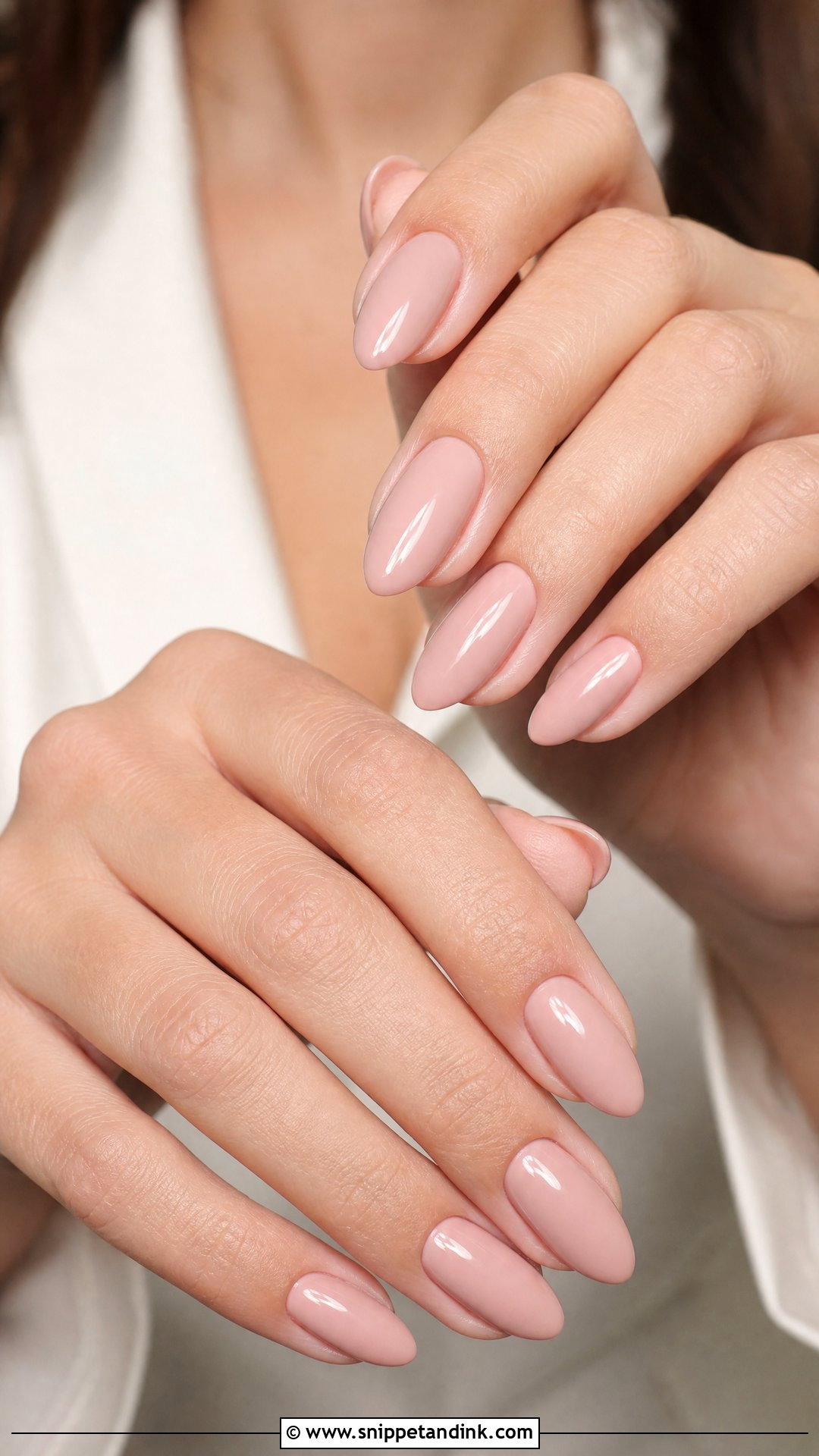
Blush is a step more noticeable than sheer pink but still counts as neutral. On an almond shape it lengthens the fingers, which shows in every photo of you holding a glass for a toast. Undertone decides the exact shade: rosy blush leans cool and delicate, peachy blush leans warm and sunlit, and I hold both against your skin before choosing. It pairs with florals, pastels, navy gowns and champagne accessories, finished in gloss.
17. Neutral Cat Eye Nails
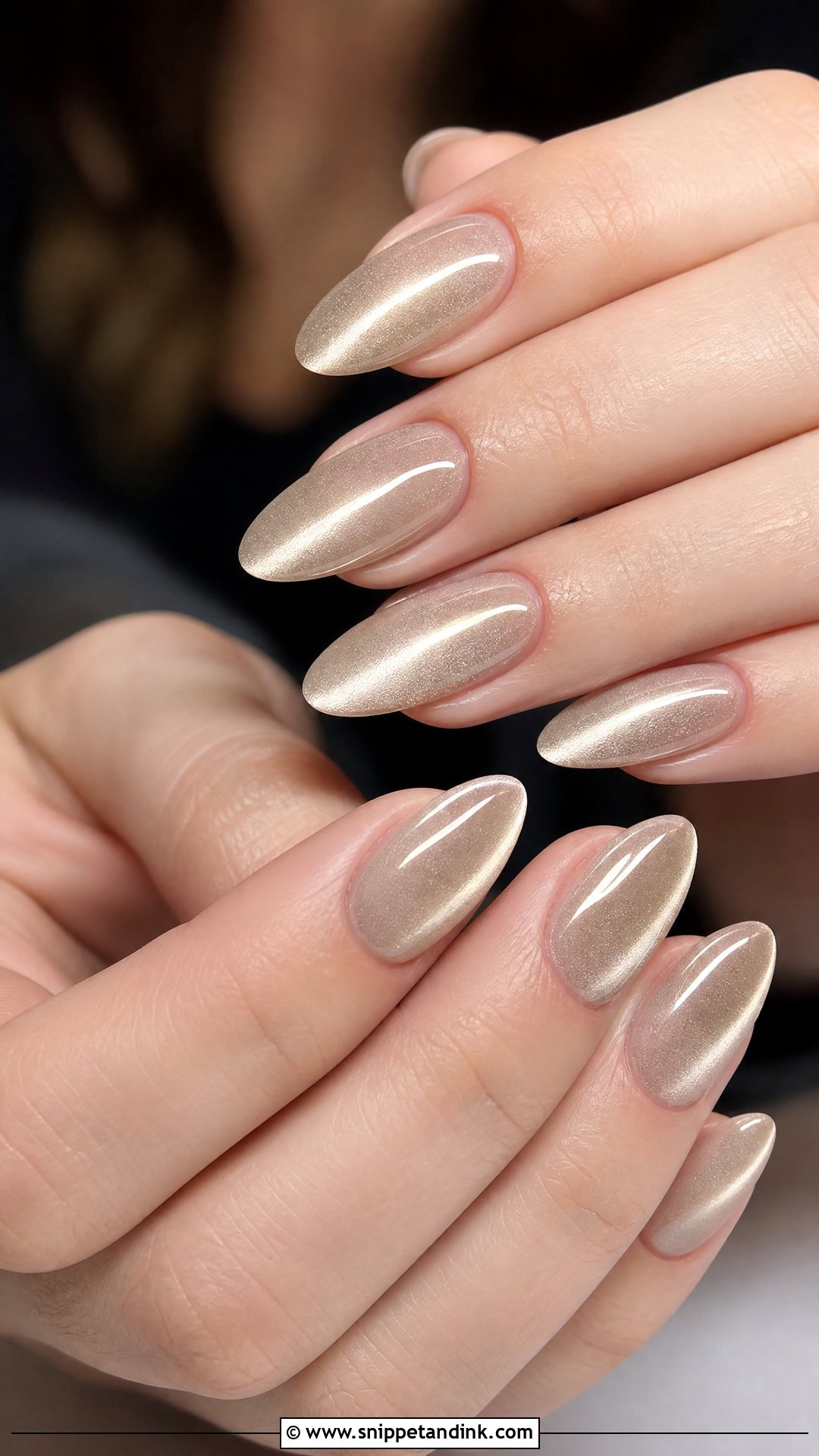
Magnetic polish carries tiny metallic particles, and a magnet held over the uncured layer pulls them into a band of light. Neutral cat eye nails are the quiet version, done in beige, champagne, taupe, nude or pale brown so the glow shifts as you move without the drama of a dark base. I work fast and cure straight after placing the magnet, because the line softens and drifts if you wait. Almond, oval and coffin give the effect room to travel. From across a room it is subtle; up close it is the most interesting set on this list.
18. Nude Nails With White Flowers
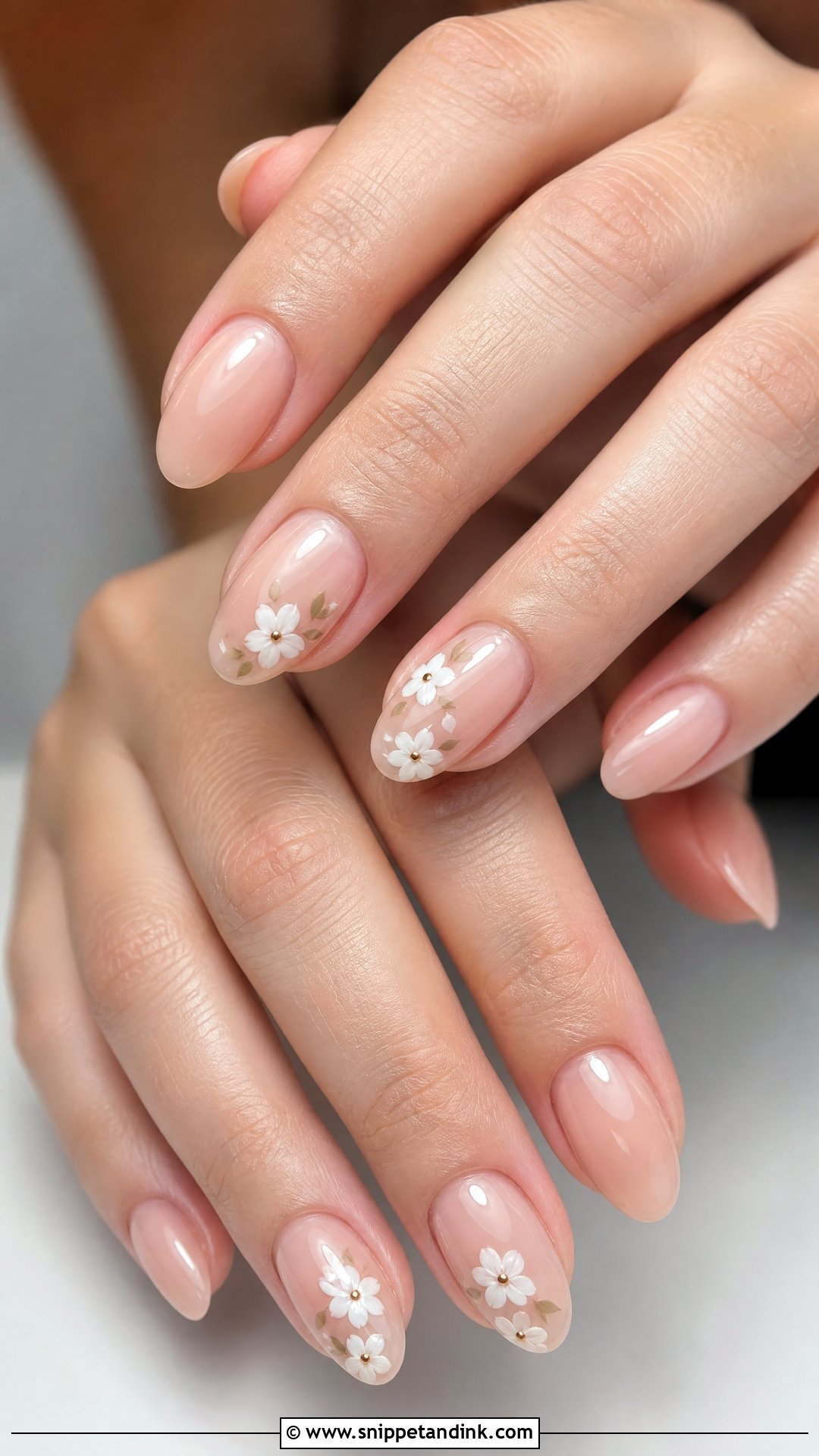
Small white flowers on a nude base suit garden weddings, spring ceremonies and outdoor venues. I keep them to two or three accent nails per hand and space the petals out, since full floral coverage starts to look bridal. A dotting tool gives the cleanest five-petal flower, and a sheer nude or soft pink underneath keeps the white crisp. Oval, almond and short squoval are the easiest shapes to paint on.
19. Matte Neutral Nails
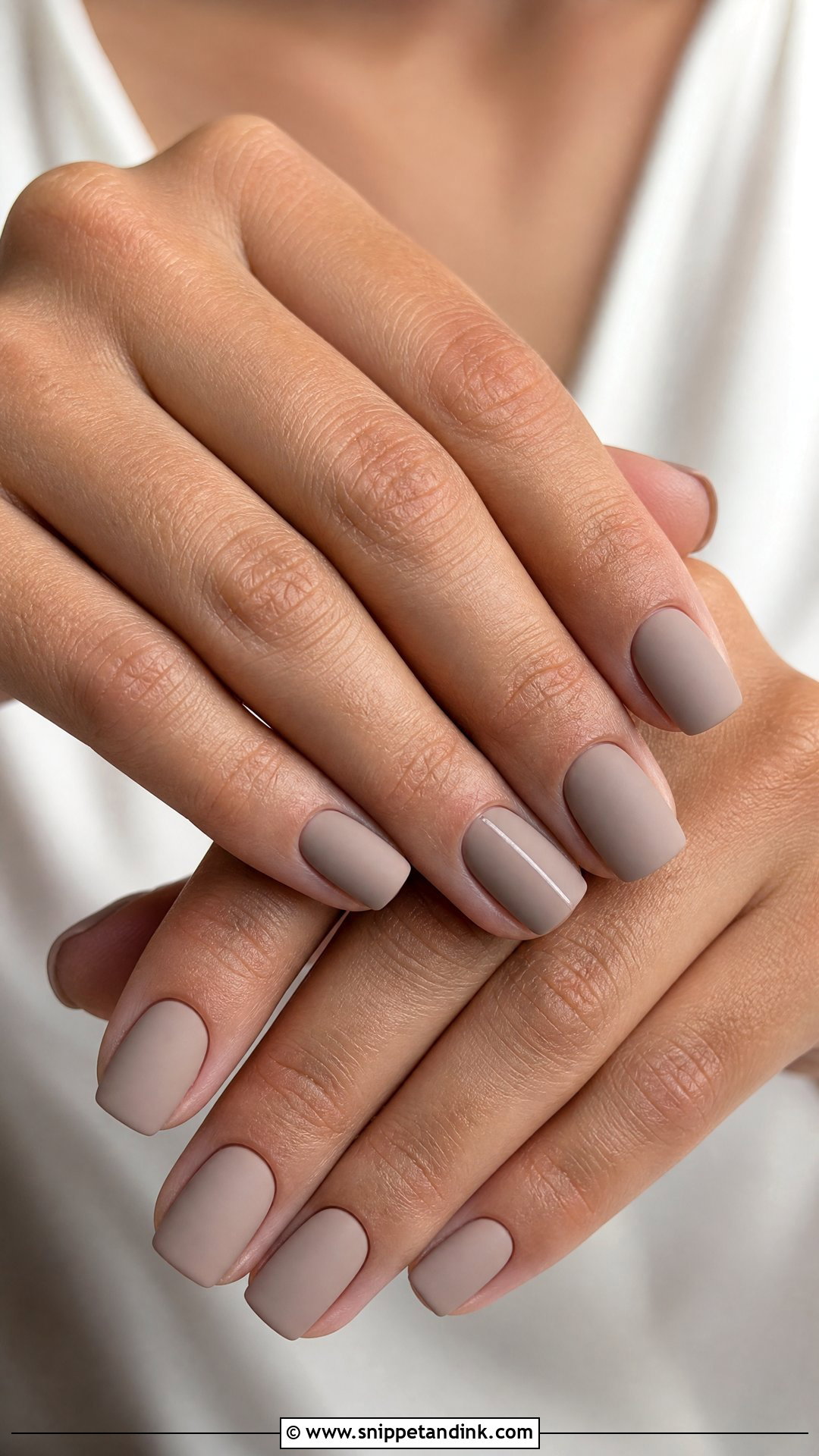
A matte top coat turns beige, taupe, light brown, blush or muted nude into a soft velvet finish, a good match for tailored dresses and minimal accessories. Two things to know before you choose it. Matte shows every bump in the shaping, so the prep has to be careful. It also grabs stains from self-tanner, makeup and dark denim more than gloss does, so I would not book it before a spray tan. Short square looks sleek and almond softens it, and one glossy line or a glossy French tip adds a quiet detail.
20. Sheer Nude Nails
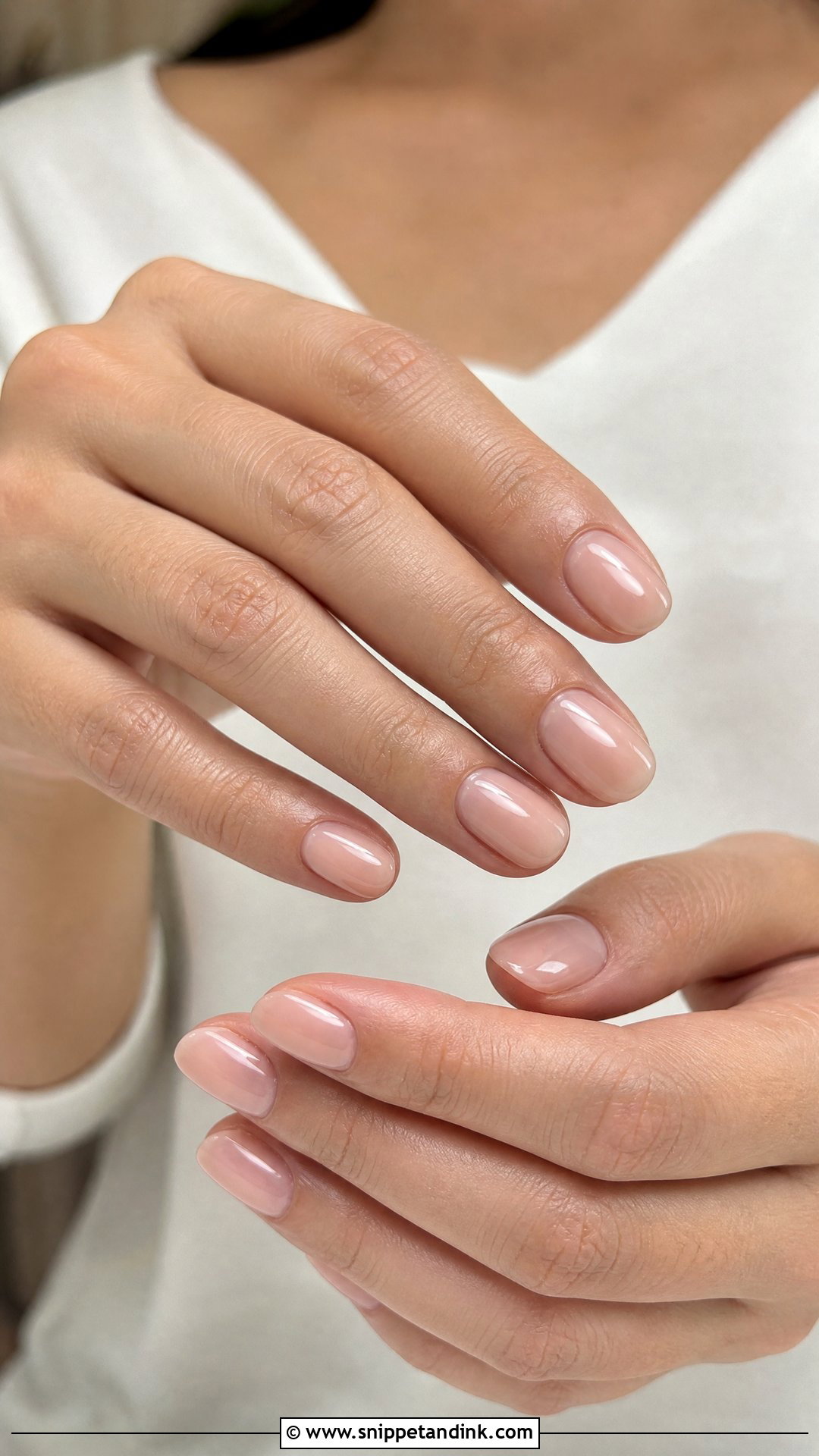
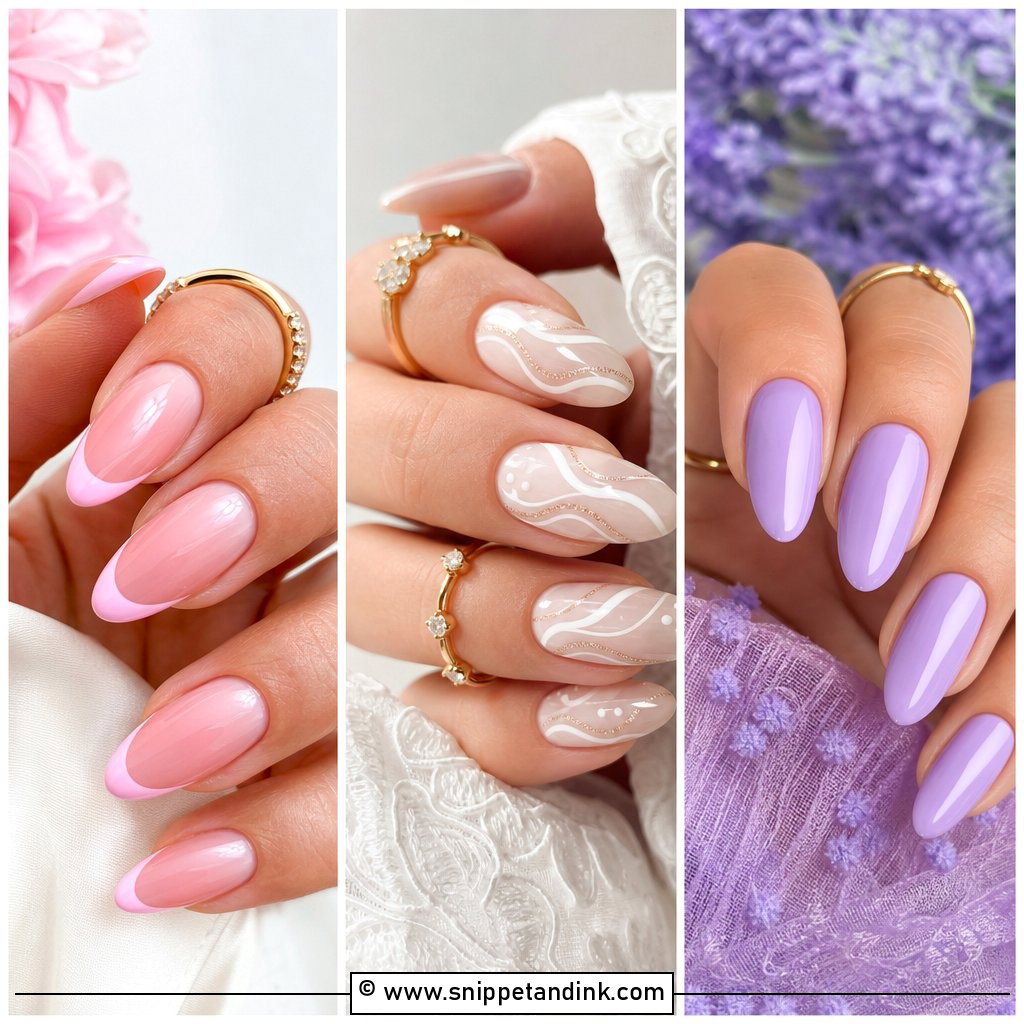
If you truly cannot decide, choose sheer nude. It enhances the nail rather than covering it, giving that “your nails but better” result, so it cannot clash with your outfit, jewelry or makeup at any dress code or season. Every length suits it, from very short natural nails to medium almond. The trade-off is that sheer polish shows what is underneath, so I buff ridges and use a ridge-filling base before color. A glossy top coat gives the healthy shine.
Three Days Out Is When I’d Book a Gel Set
Gel looks its best in the first week, before a gap of regrowth shows at the cuticle. For a Saturday wedding I would book a gel set on Wednesday or Thursday. That is close enough that there is no visible growth, yet far enough that a broken nail or a shade that looks wrong in daylight can still be fixed. Regular polish works the other way round. Have it done the evening before and expect it to stay soft for hours under a dry-feeling surface, so skip hot baths, washing up and opening cans that night.
A few small things in your clutch will rescue most problems on the day:
- A fine glass or cushioned file for a snagged edge.
- A mini bottle of clear top coat to seal a chip so it does not spread.
- A cuticle oil pen, because dry cuticles show up white in close photos.
- If a gel nail lifts, file the snag smooth and seal it. Do not peel it; the gel takes a layer of natural nail with it.
Pale Polish Under Flash and Phone Cameras
Neutrals photograph more honestly than people expect. Flash flattens a sheer polish, so a streak or a bald patch near the cuticle will show in every close-up of you holding a glass or a sparkler. Opaque creams and whites bounce flash and can look brighter than they do in person, which is one reason I keep guest whites milky rather than solid.
Chrome and matte are the two finishes that change most between daylight and flash. Chrome can bloom into a bright spot under a direct flash, and matte can look dusty in a low-lit room. If you know you will be photographed a lot, a glazed or glossy finish is the gentler bet, and a quick swipe of cuticle oil before the speeches makes more difference than any nail art.
Your Jewelry Metal Decides More Than the Dress
Start from the fabric of your outfit and the metal of your jewelry, settle the shade next, and choose any detail last. For something classic, lean toward a French tip or sheer pink; for something more modern, glazed, chrome or cat eye neutrals. Keep the shape comfortable for your hands and the details small, and the set will look as good during the late-night dancing as it did at the ceremony.
You'll Like These Ideas:


Leave a Reply