
Fair skin is the most honest canvas I work on. It shows a foundation that’s one shade too yellow, it shows bronzer that leans orange, and it shows a lip that’s too cool for the face around it. Pale brides don’t need less makeup; they need makeup chosen with more care, because there’s no depth in the skin to hide a mistake. Below are twenty directions I use on very light complexions, from almost-bare to a full red lip, with notes on what each one asks of your skin and where I’d hold back.
Reading Your Undertone at the Jawline
Every look below depends on one decision, and it’s the one I make first at a trial: whether your fair skin leans pink, neutral or olive. Pale olive is common and often missed. Those brides get sold pink-based foundations that look grey on them by the afternoon.
I swatch three shades in stripes along the jaw, from cheek down onto the neck, and look at them by a window, not under bathroom bulbs. The right one vanishes. The wrong ones sit on top as a pink, yellow or ashy stripe.
- If you burn in minutes and flush easily, start with a pink or neutral-cool base and keep blush cool.
- If gold jewellery looks better on you than silver and your skin looks slightly green beside white, test neutral or olive bases before anything pink.
- If your face is redder than your neck, match to the neck and correct the redness separately with a little green or yellow-toned concealer.
- Check the shade again a week before the wedding if you’ve been in the sun; fair skin changes fastest.
1. Natural Pale Wedding Makeup
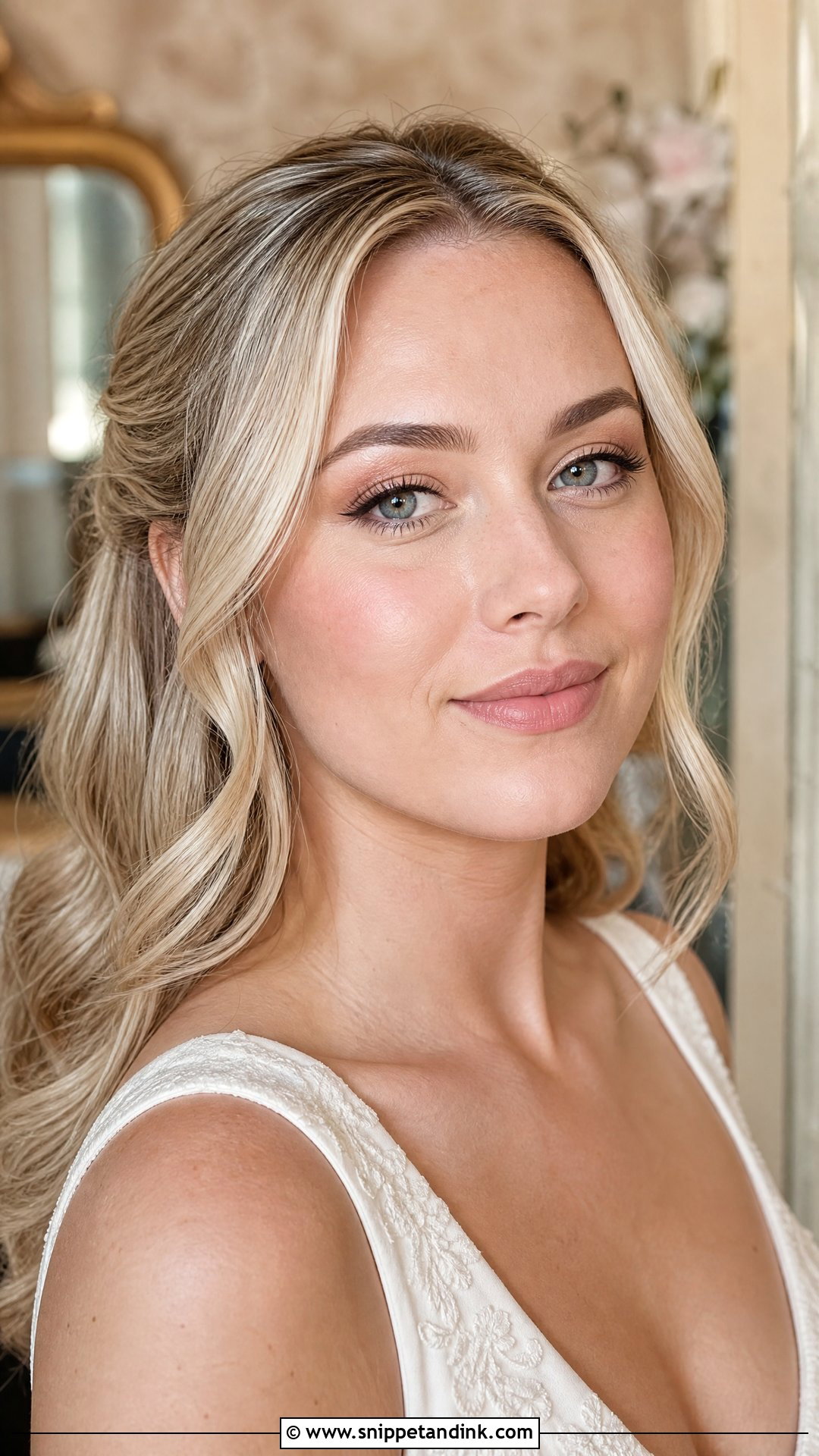
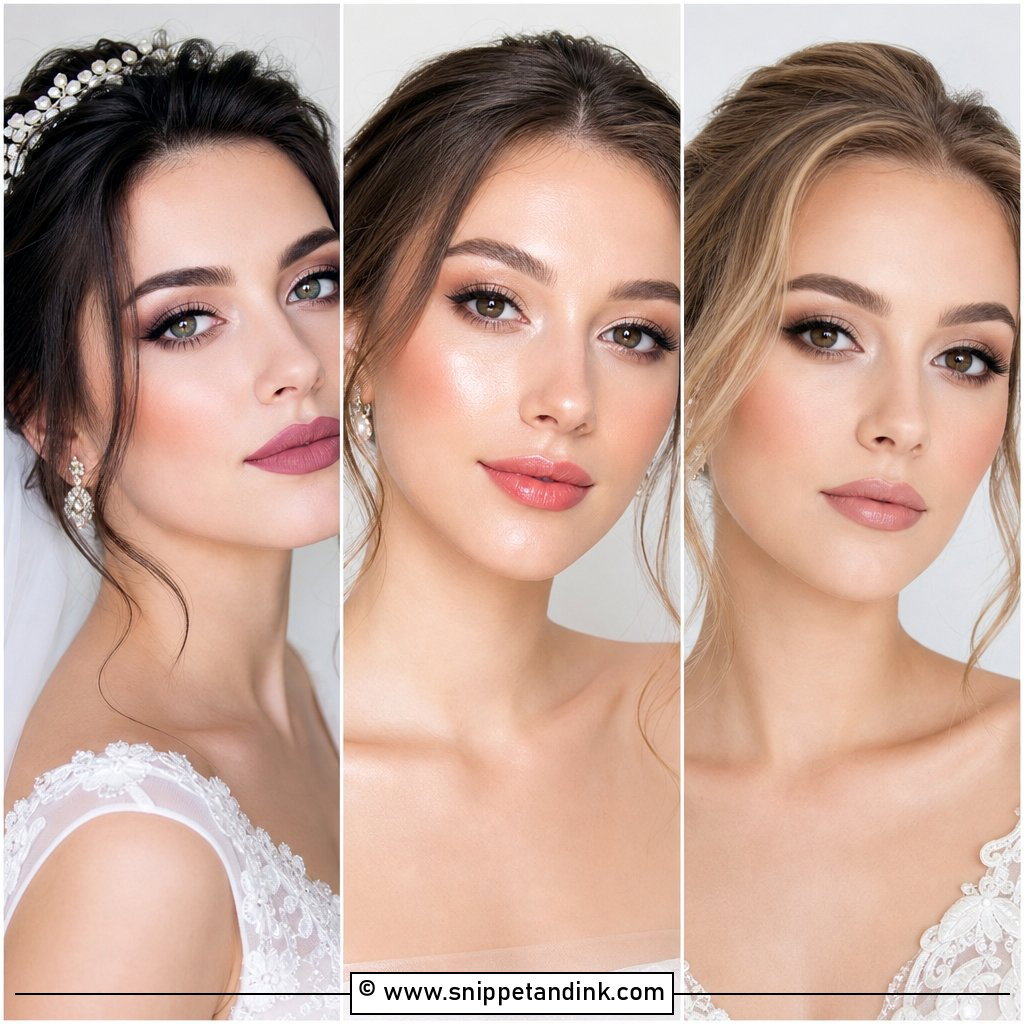
This is the look I reach for when a bride tells me she never wears makeup and wants to recognise herself. I match foundation on the neck and jaw, never the hand, because the back of the hand is usually darker and more weathered than the face. A satin finish keeps fair skin from looking flat, and a light pink cream blush puts back the colour that a white dress drains away. Eyes stay quiet: champagne on the lid, taupe in the crease, brown liner, curled lashes. Soft brows frame the face without the harsh contrast a dark pencil makes against pale skin. A pink-beige satin lip finishes it.
2. Soft Glam Pale Wedding Makeup
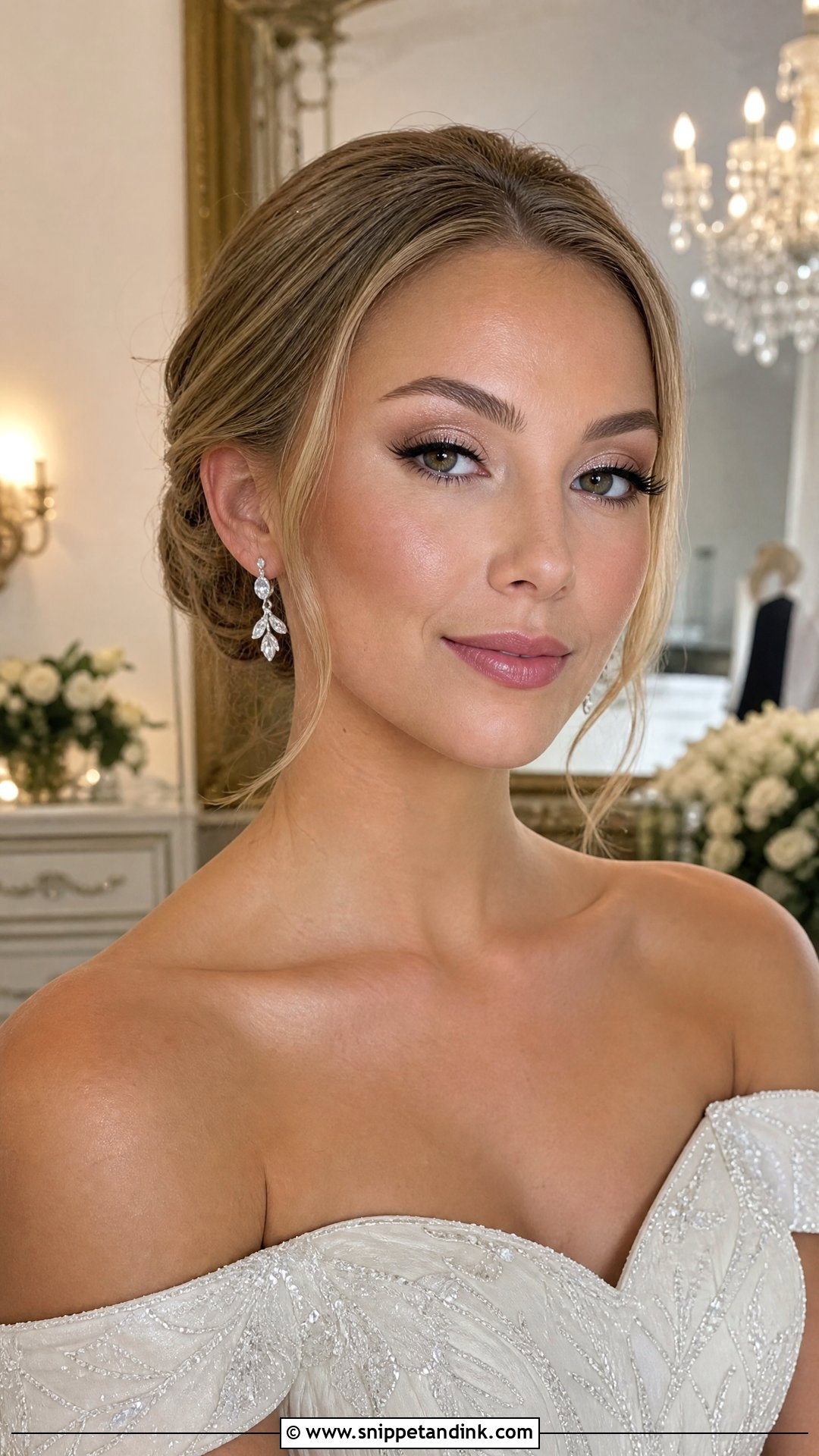
Soft glam on a pale bride is all about where the shadow goes and how warm it is. I use a cool beige contour, sometimes just a taupe shadow on a fluffy brush, and only under the cheekbone and along the jaw where shape is actually missing. Deep orange bronzer is the one product I’d take out of your kit for this look; on fair skin it sits on top like a stripe. Champagne, soft brown and a light cocoa shadow build the eye, finished with a thin brown wing and individual lashes rather than a heavy strip. A dusty rose satin lip carries enough colour for formal venues and hotel ballrooms.
3. Pink Blush Pale Wedding Makeup
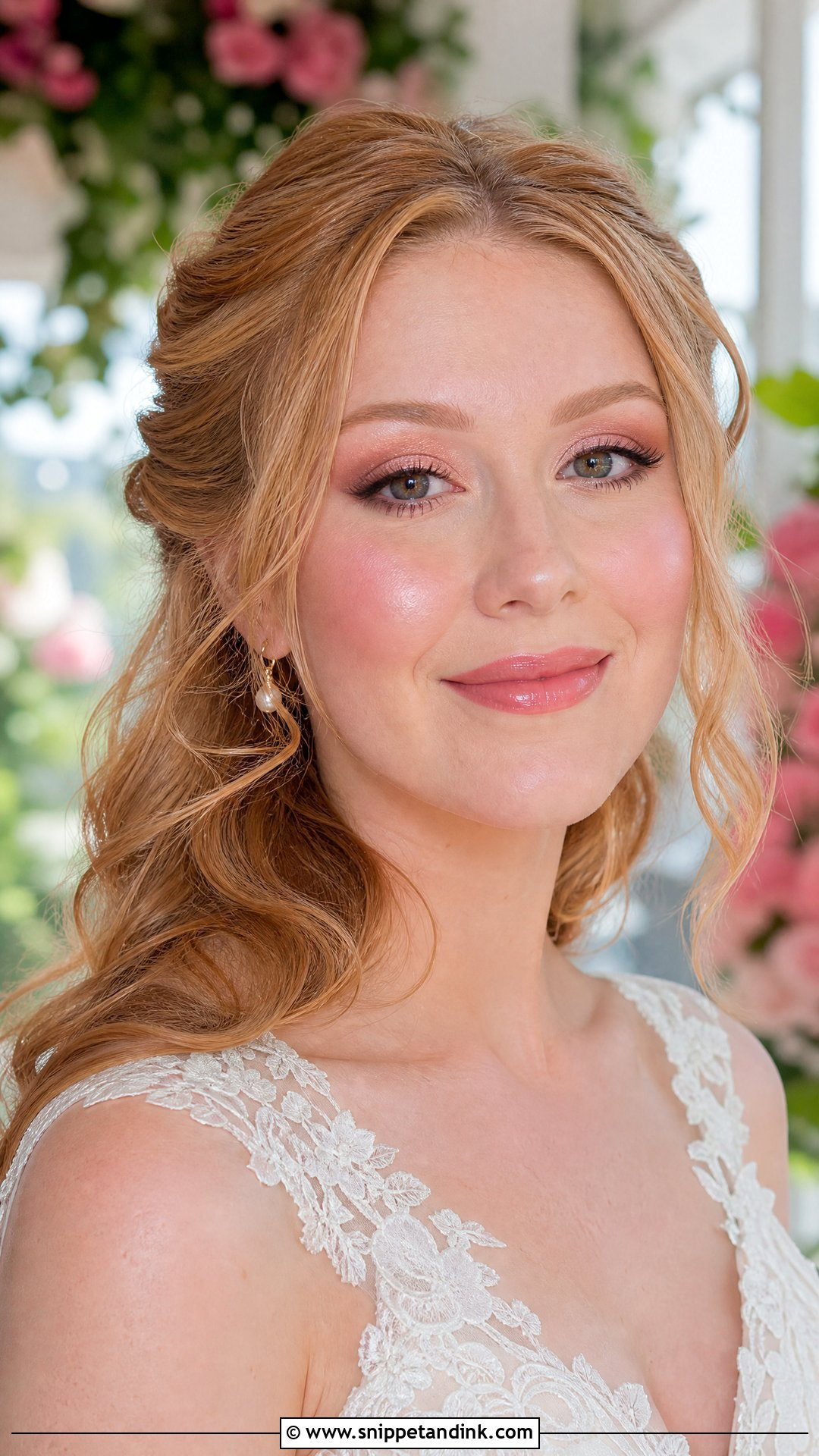
Ivory and white fabric reflect light up into the face, and on fair skin that bounce can make you look washed out in photos. Blush placement fixes it. I put a cool pink high on the cheekbone and blend it up toward the temple, which lifts the face instead of widening it. The base stays bright with barely any bronzer, and a pearly highlight sits on the top of the cheek. Pale pink shimmer, a taupe crease, brown mascara and brushed-up brows keep the eyes delicate. A pink satin lip or sheer rose gloss is enough.
4. Rosy Pale Wedding Makeup
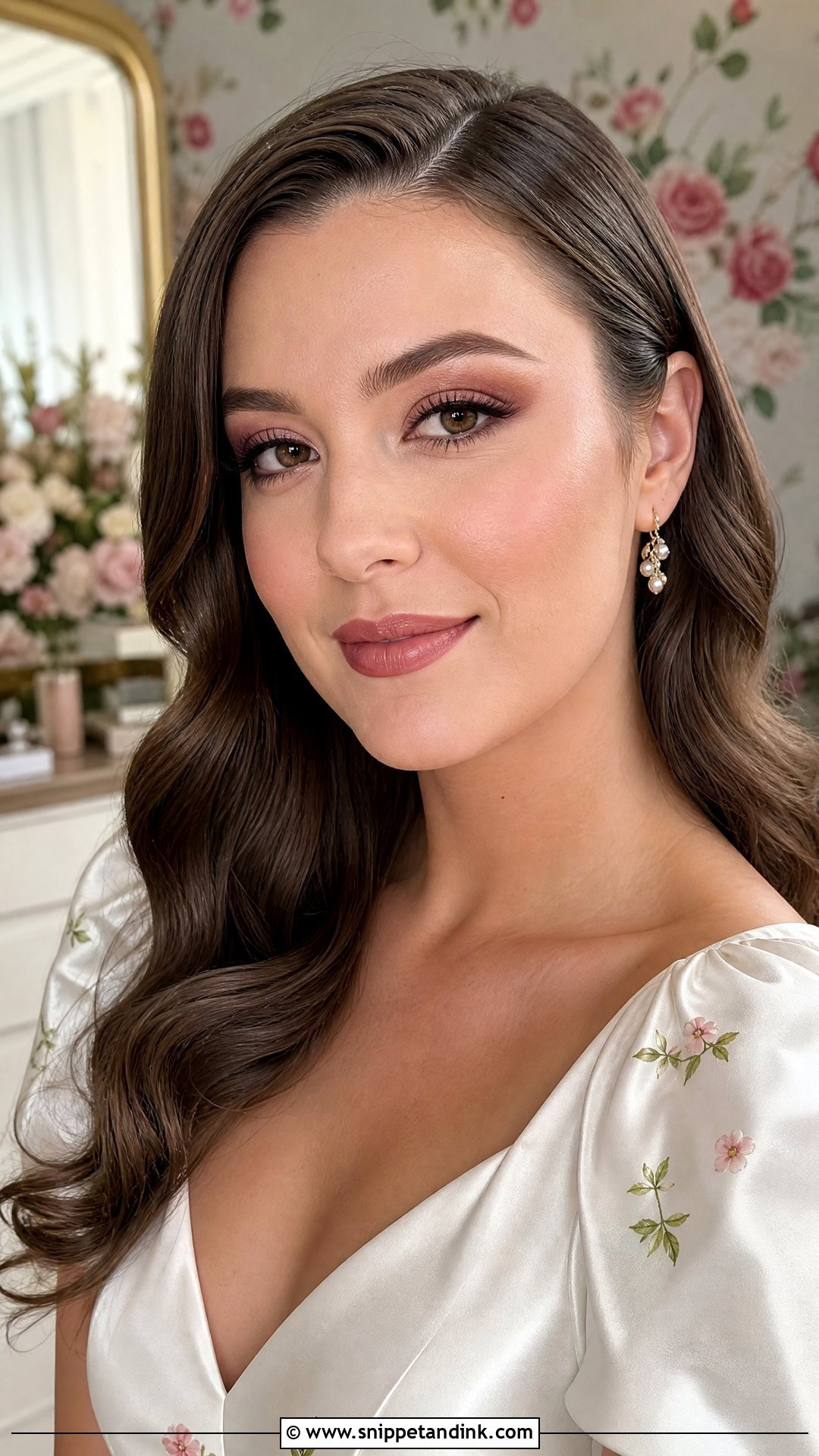
Rose sits between pink and warm, which is why it flatters so many fair complexions without tipping into orange. My trick for wear is layering: a rose cream blush first, then a matching powder blush pressed on top. The cream gives the glow and the powder locks it so it’s still there after the speeches. Rose beige on the lid, soft mauve in the crease and brown liner smudged into the lashes keep the eye gentle but defined. Line the lips in a rosewood pencil before a satin rose lipstick so the mouth reads clearly in photos. Spring and garden ceremonies suit it best.
5. Champagne Eye Pale Wedding Makeup
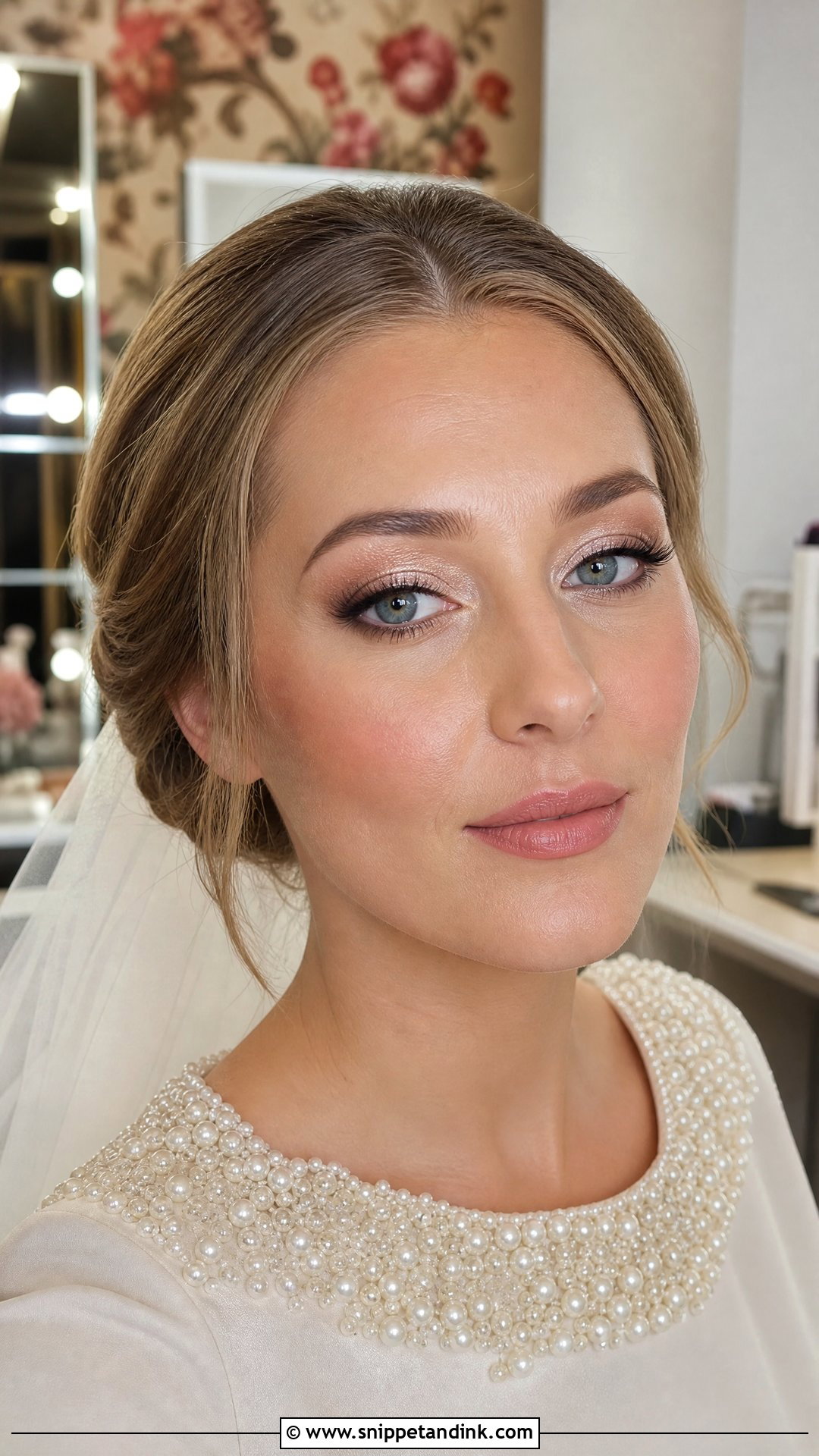
Champagne is the shadow I trust most on pale eyelids. It catches light without the yellow cast of gold, so it brightens the eye area without competing with the skin. I sweep it across the whole lid, then add a cool taupe or light brown in the crease for shape and a thin brown liner instead of black. Keep the complexion satin with a pale peach-pink blush. The lip is where people go wrong: a very beige nude disappears on fair skin and makes you look unwell in close-ups. Choose a nude that still has some rose in it.
6. Taupe Smokey Pale Wedding Makeup
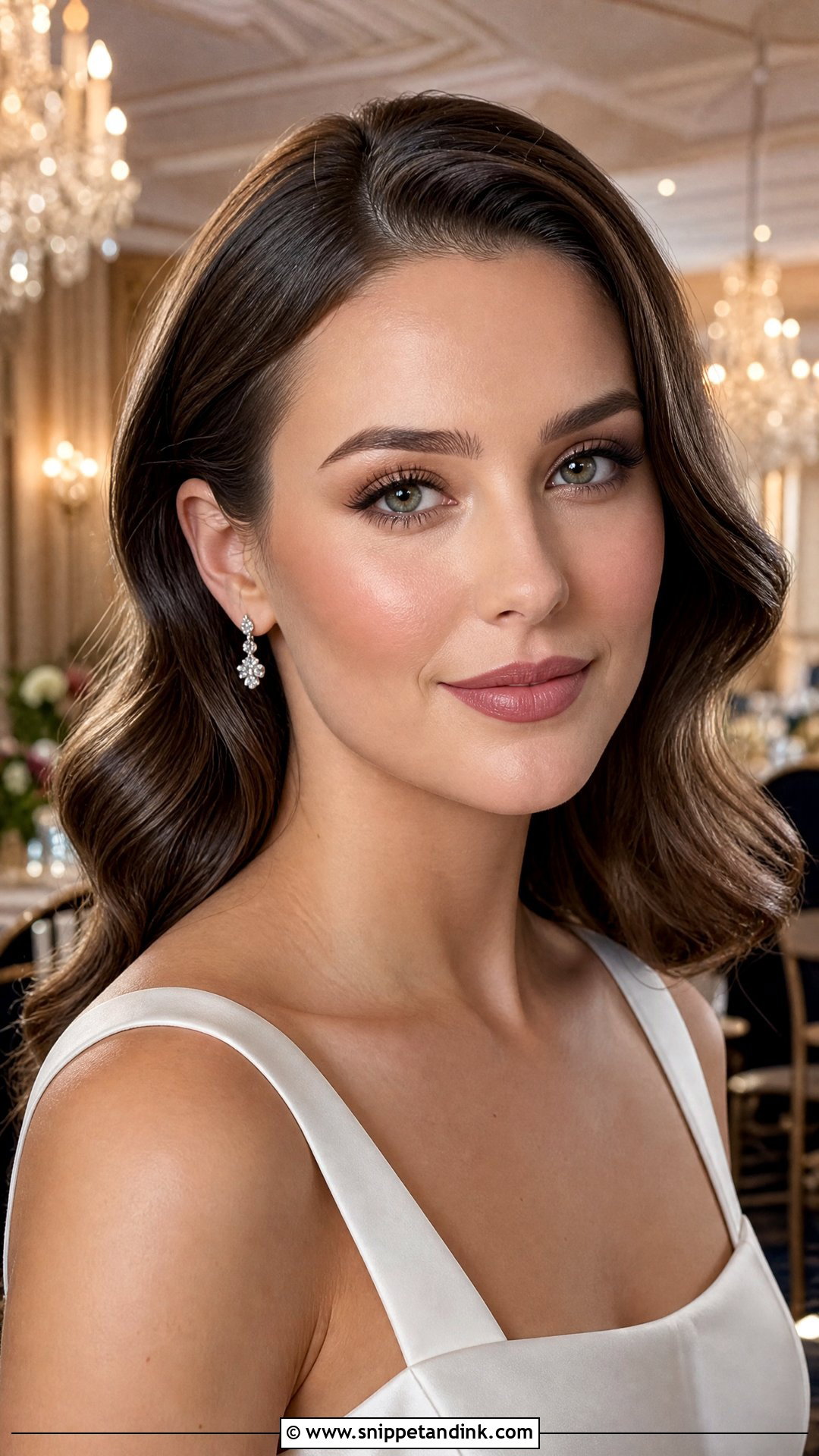
Black and charcoal smoke can swallow a pale eye, especially in daylight. Taupe, mushroom and soft brown give the same depth with a softer edge. I blend taupe over the lid, deepen the outer corner with a cool brown, and smudge a brown pencil along the top lash line before adding fluttery lashes for lift. Through the centre of the face the skin stays softly matte, with cool pink on the cheeks. A muted rose or mauve lip balances it. I save this one for evening receptions; at an outdoor noon ceremony it can read heavier than you intended.
7. Classic Red Lip Pale Wedding Makeup
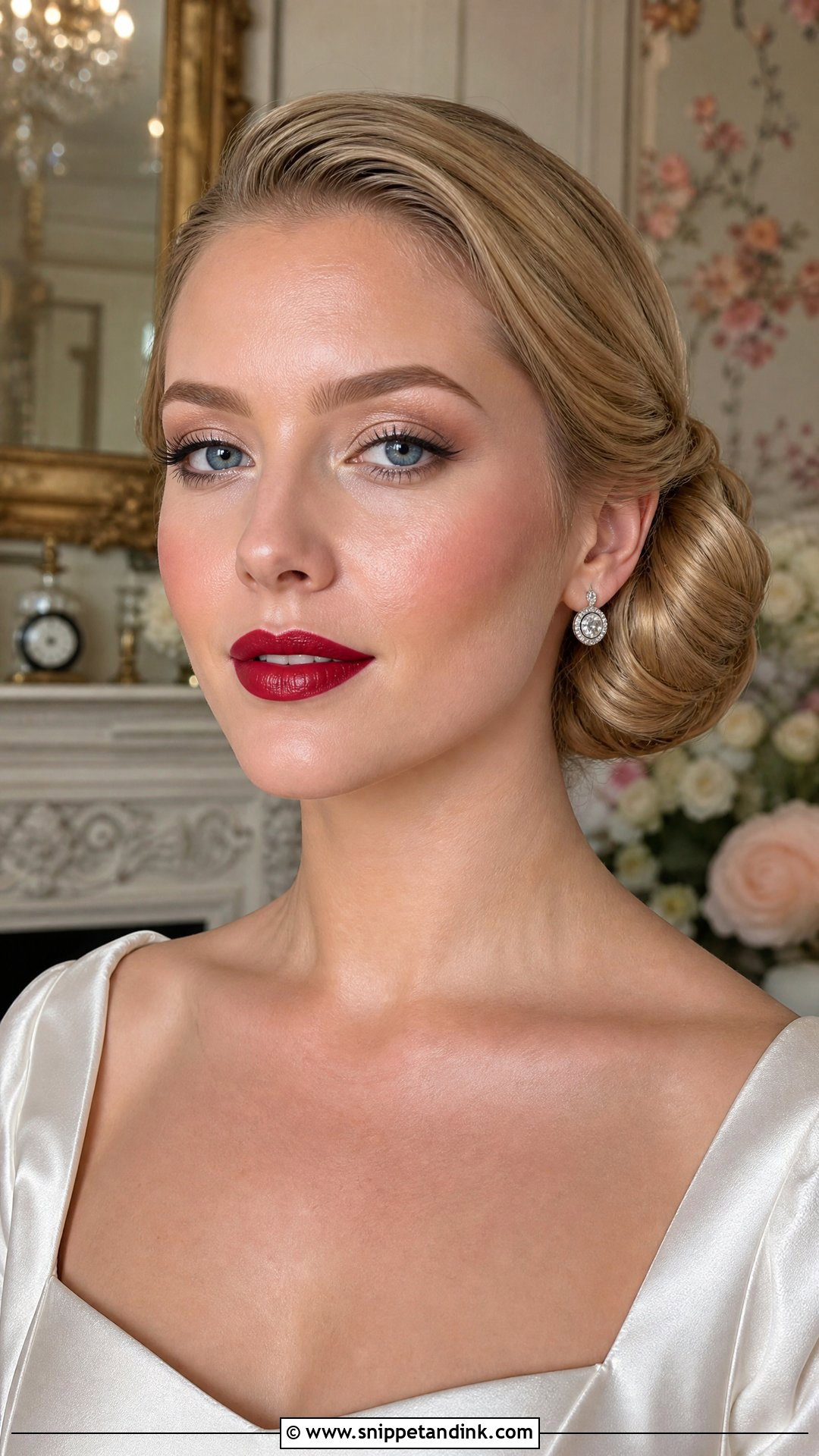
The red has to match your undertone, and on pale skin there’s no room for a near miss. Blue-reds sit best on cool fair skin; neutral fair skin can take a truer, softer red. I keep coverage light but spend extra time correcting redness around the nose and chin, because a red lip draws the eye to any other red on the face. Champagne on the lid, a taupe crease, a thin liner and separated lashes keep the eyes defined without fighting the lip. A gentle pink blush connects the mouth to the rest of the face. Line the full lip and blot between layers, or the edge will bleed by dinner.
8. Peach Pale Wedding Makeup
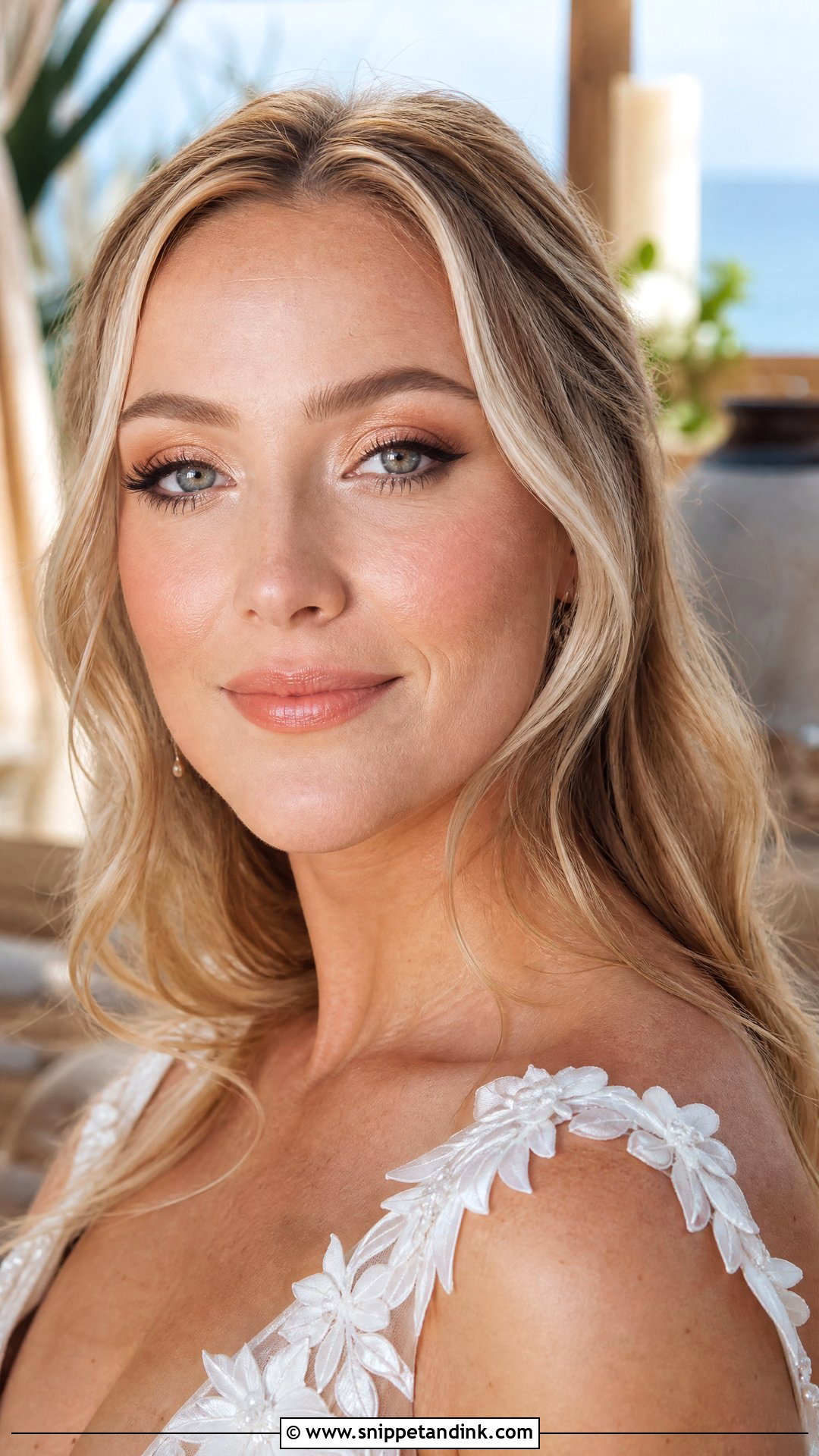
Peach on fair skin works when it’s pale and still carries some pink. Deep coral or anything orange looks borrowed. I use a pale peach blush, a peach-rose lip and, if the bride wants warmth, the lightest neutral bronzer around the perimeter of the face. Ivory shimmer, soft peach and warm beige blend across the eye, with brown liner and wispy lashes. It sits well beside ivory gowns at warm-weather and beach ceremonies. If you have strong pink undertones or visible redness, I’d test this at your trial first; peach can make that redness look more obvious.
9. Dewy Pale Wedding Makeup
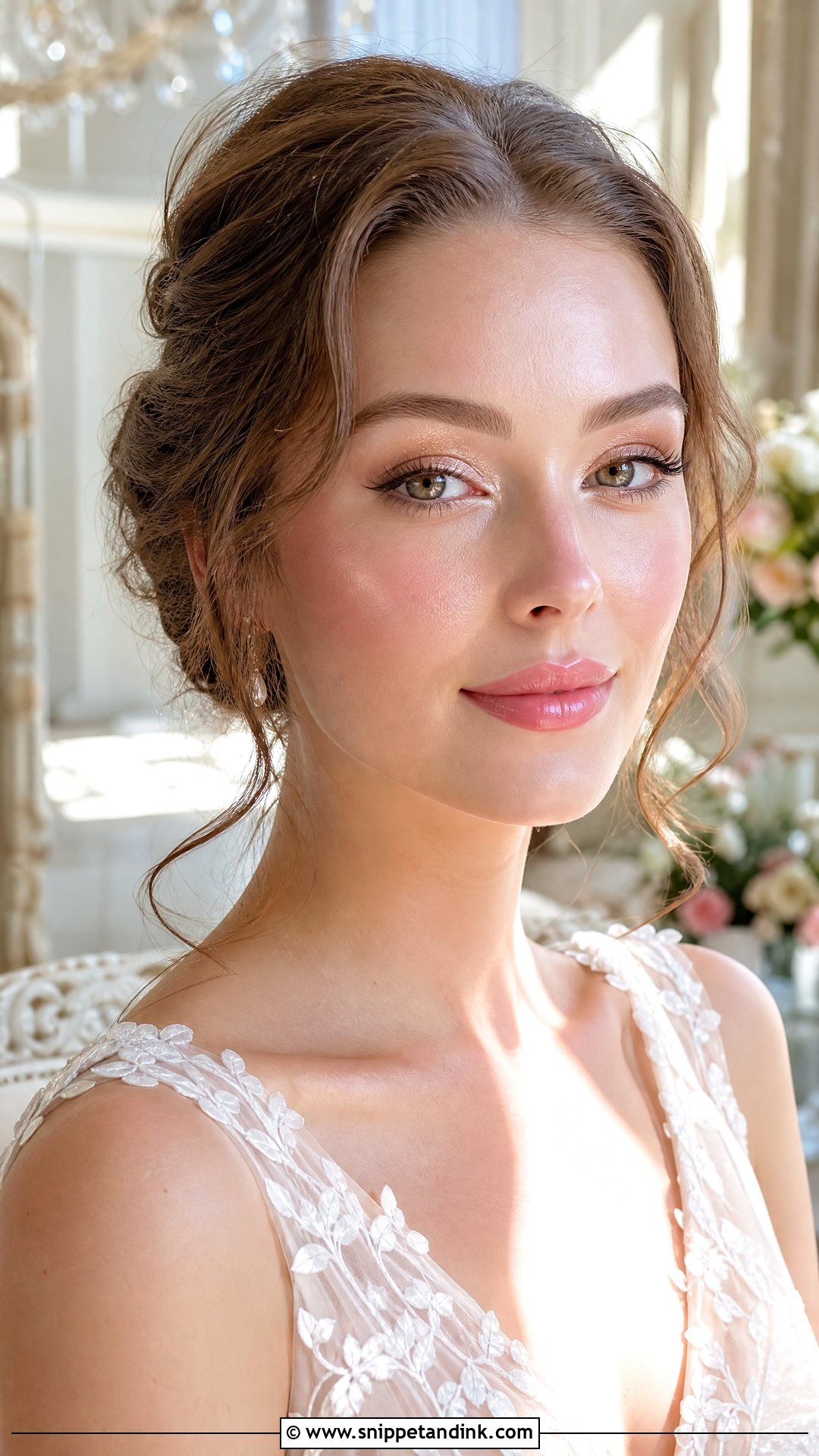
Dewy pale wedding makeup has to be controlled glow, not shine everywhere. Fair skin shows oil in the T-zone very quickly under flash, and what looked fresh at 10am can read greasy by the first dance. I prep with hydrating skincare, use a luminous long-wear foundation, then powder only the T-zone, under the eyes and around the nose, leaving the cheeks radiant. Pink cream blush, a liquid pearl highlight and a softly bronzed lid give dimension. Beige shimmer, brown liner and curled lashes keep the eye simple. A glossy rose lip finishes it, and I always leave a blotting paper with the maid of honour.
10. Matte Pale Wedding Makeup
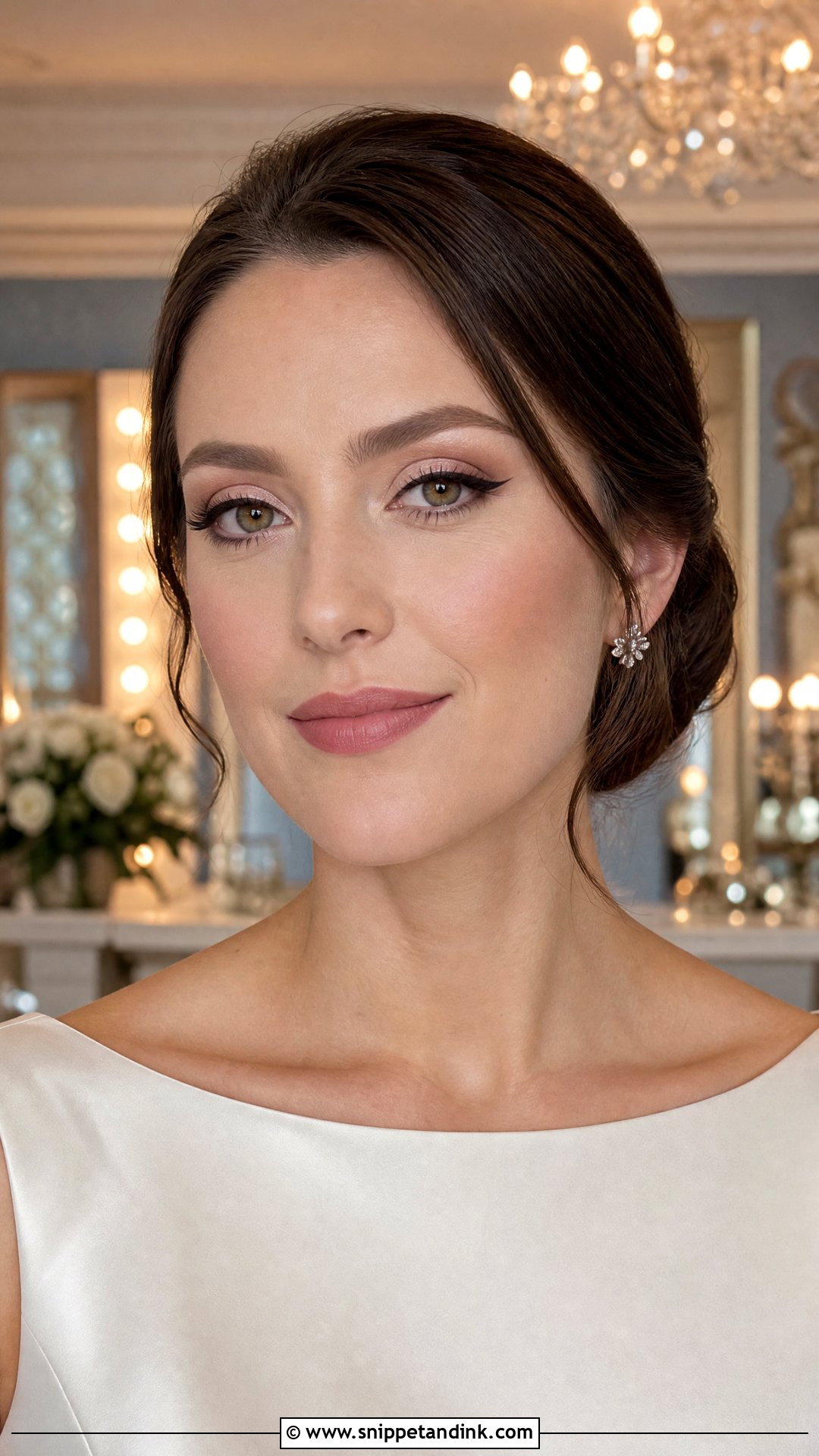
Matte goes wrong on pale skin when it turns chalky, and fair complexions show powder more than any other. I apply a natural-matte long-wear foundation in thin layers so skin texture still shows, then use a finely milled powder pressed in with a puff rather than swept on with a big brush. Muted pink or rose powder blush and very little contour. On the eyes, matte ivory, taupe and soft brown, with a brown wing and defined lashes. A satin-matte rose lip looks alive where a flat nude would look dry. This is my choice for hot venues and long ceremonies where shine control matters more than glow.
11. Mauve Pale Wedding Makeup
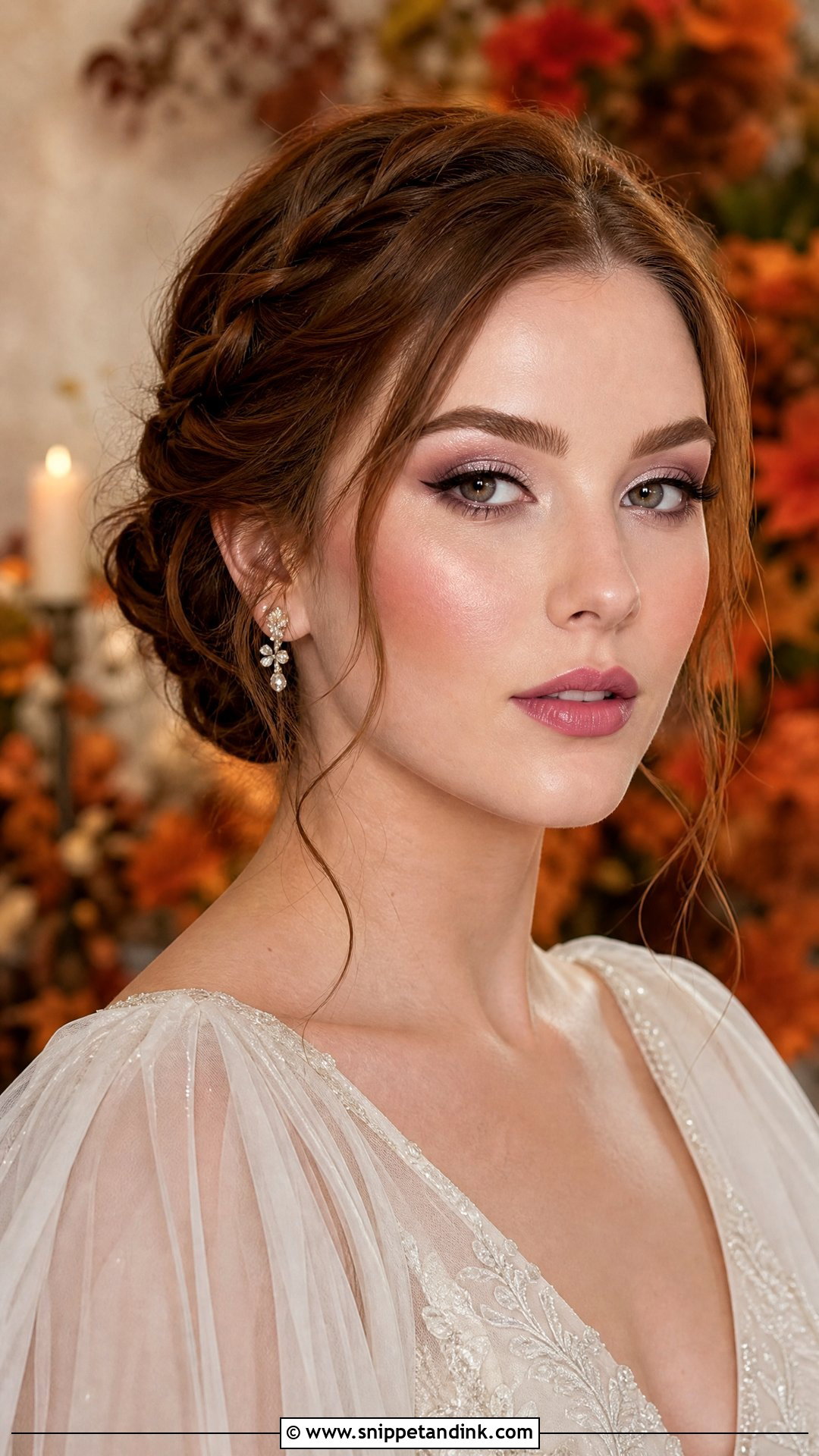
Mauve is cool without being bright, so it can define the eyes, cheeks and lips in one family of colour. I place a soft rose-mauve blush high on the cheek, blend dusty mauve through the crease with pale shimmer on the lid, and smudge brown liner into the lashes. Brows need to be shaped here; mauve without structure can make a fair face look tired. A mauve-pink satin lip ties it together. It suits fall weddings and candlelit indoor venues. If you have dark circles with a purple tint, correct them carefully first or the mauve will echo them.
12. Berry Lip Pale Wedding Makeup
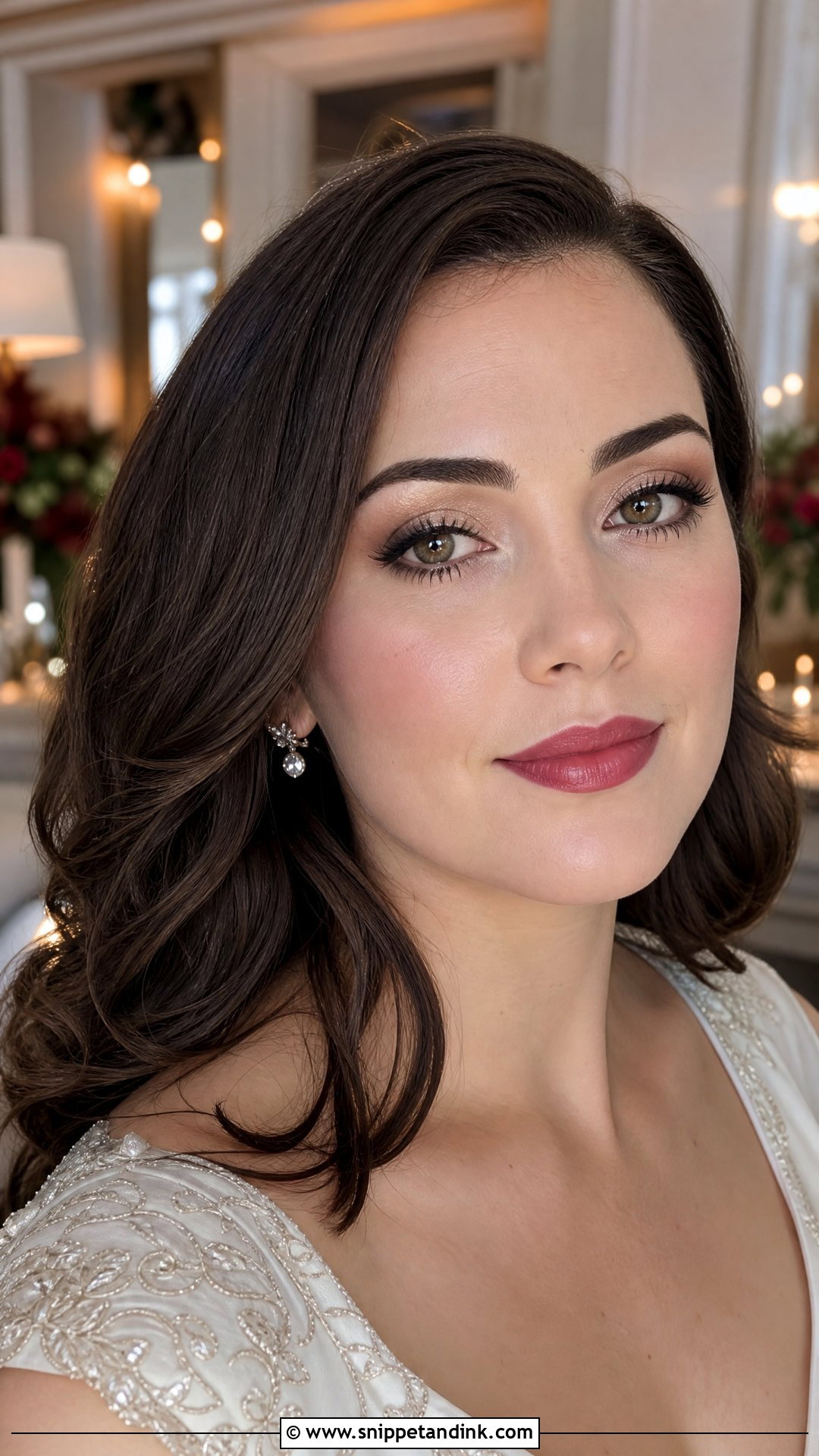
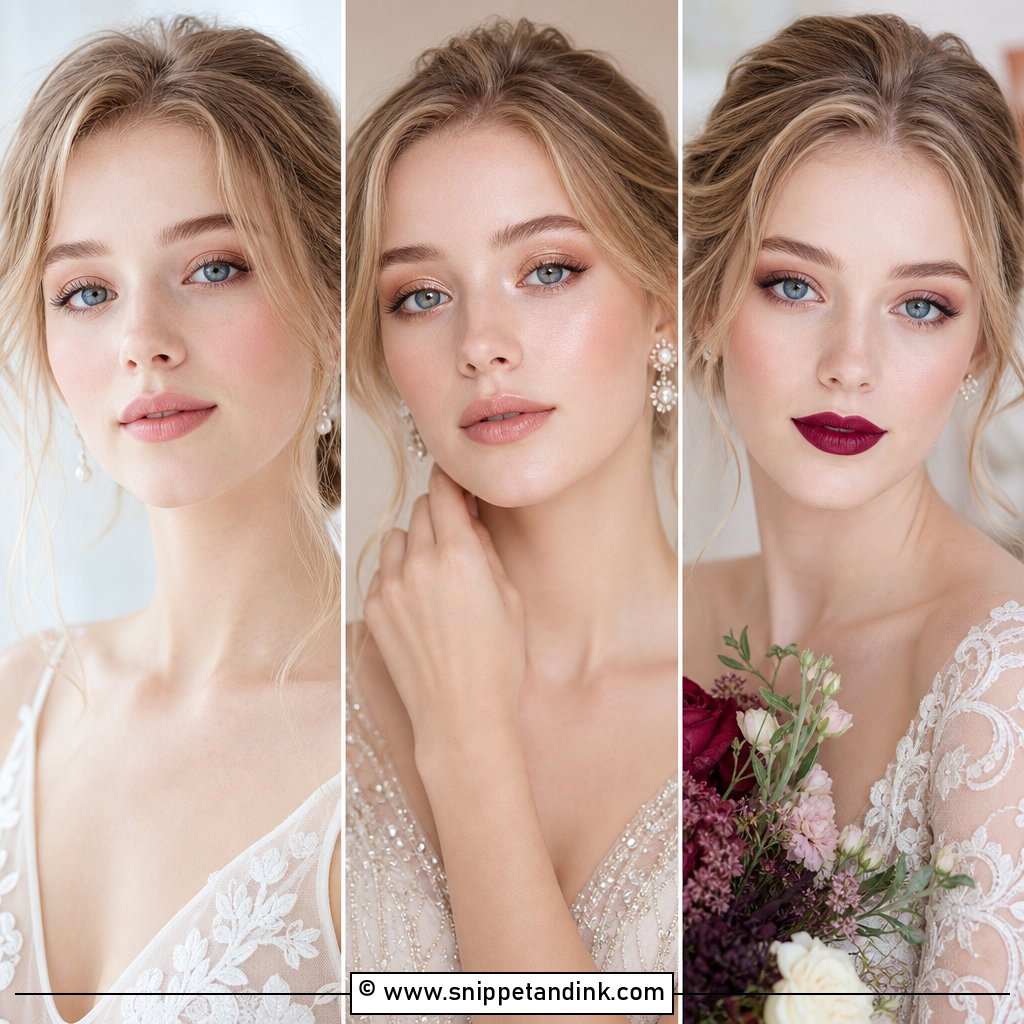
A berry lip looks dramatic on fair skin very quickly, so I let the lip be the only strong colour on the face. Choose a sheer berry, soft raspberry or stained plum before a dark matte, which can make pale lips look smaller and the skin greyer. I like to press a berry stain in with my fingertip and add a balm on top; when it fades, it fades evenly instead of leaving a ring at the lip line. A satin base, cool rose blush, champagne lids, a taupe crease and natural lashes keep the rest calm. Cooler seasons and evening weddings suit it.
13. Brown Liner Pale Wedding Makeup
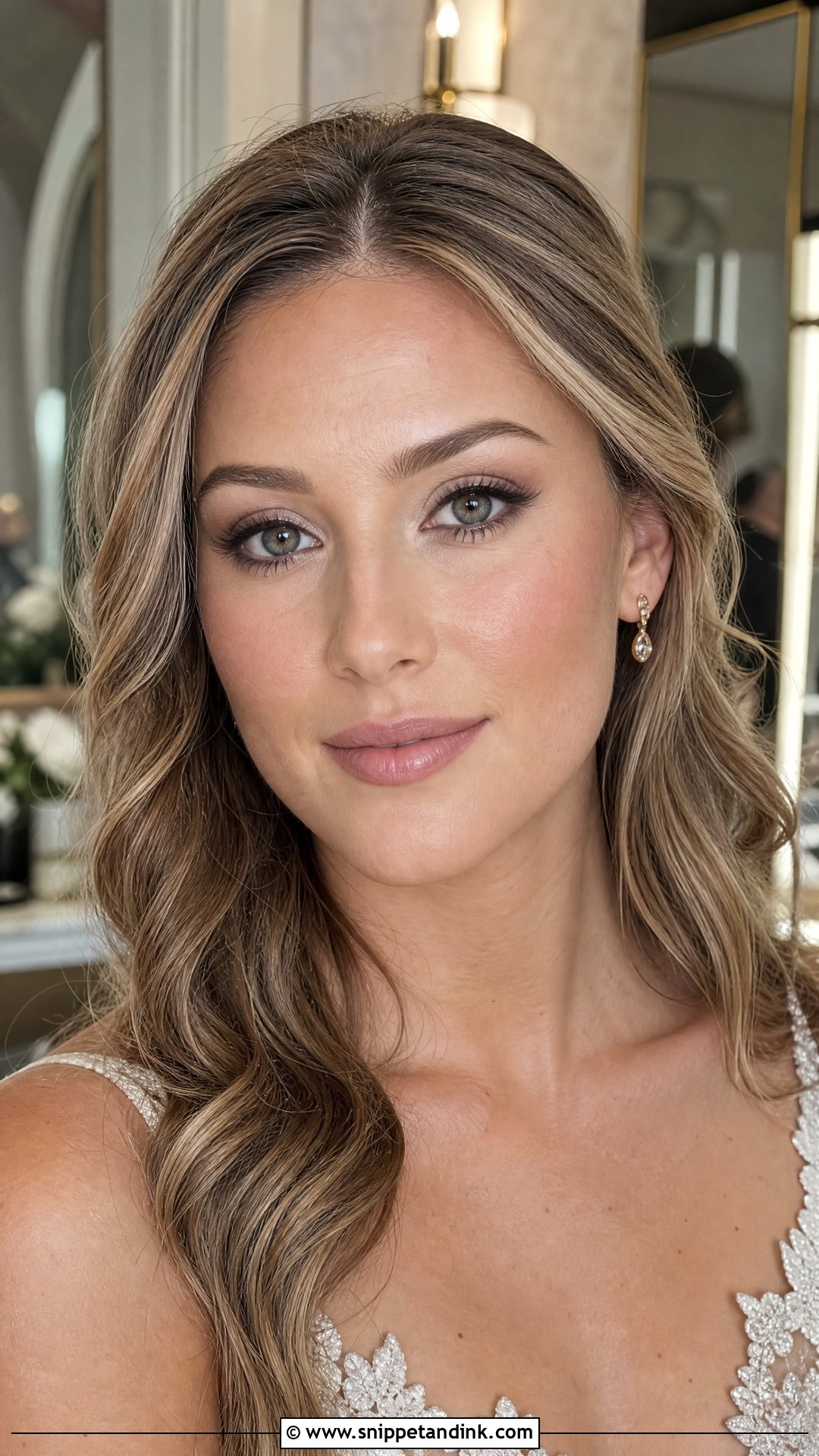
In daylight photos, black liner on very fair skin can look like a drawn line rather than a lash line. Brown does the same job with less contrast. I use a champagne or ivory lid, light taupe in the crease, then press a brown pencil right into the roots of the upper lashes and smudge it slightly so the lash line looks fuller rather than outlined. Separated lashes and softly filled brows. The skin gets a satin base, pale pink blush and a light pearl highlight, with a rose-nude satin lip. Of everything here, this is the look I’d recommend if you’re unsure where to start.
14. Winged Liner Pale Wedding Makeup
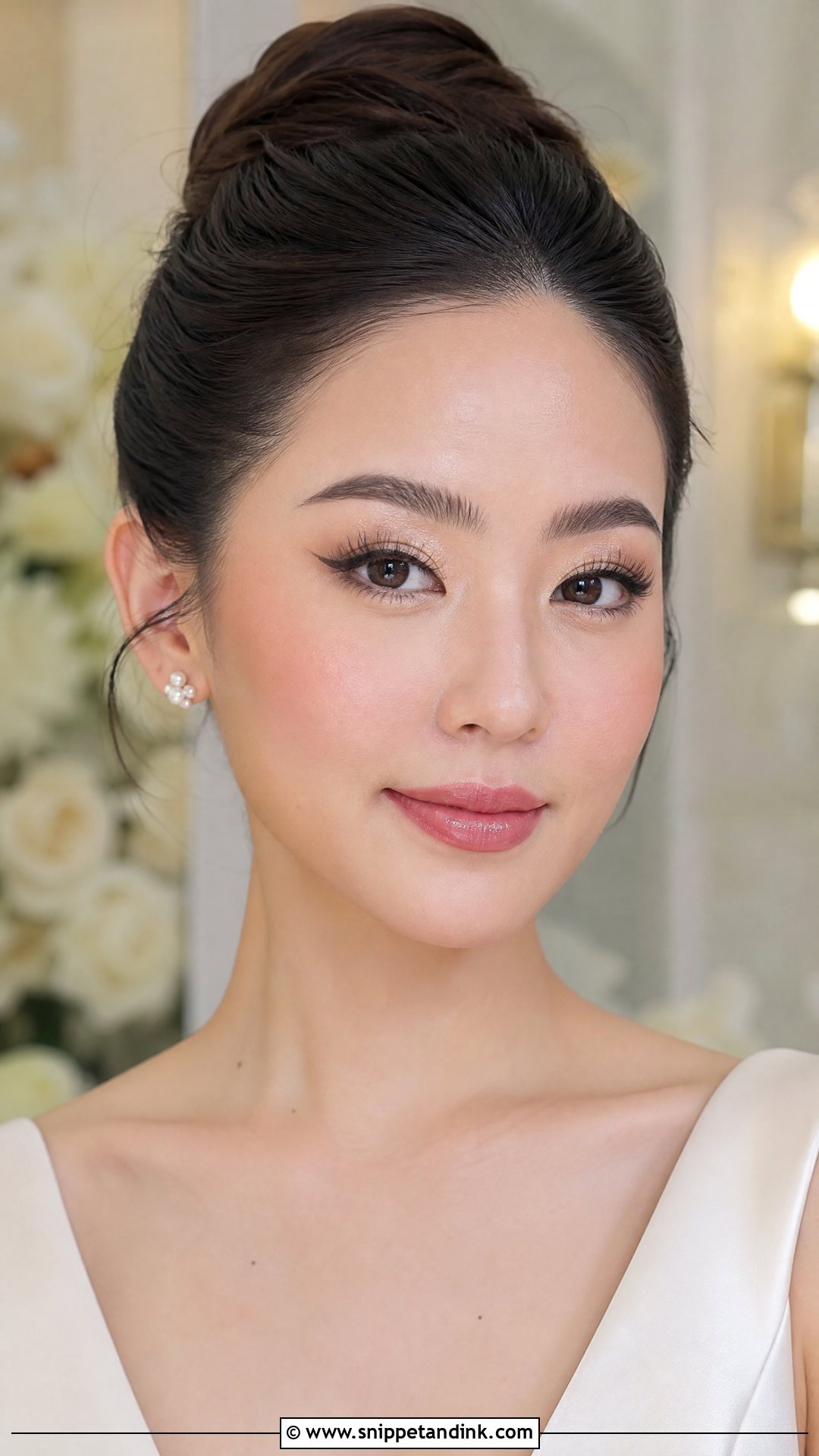
The wing on a pale eye can be black for a sharp finish or dark brown for a softer one. My rule is to map the wing with the eyes open and looking straight ahead, because a wing drawn on a closed lid often disappears into a hooded fold once the eye opens. Keep the lid bright with ivory or champagne and skip heavy shadow so the liner stays the feature. The complexion needs pink blush, subtle contour and a satin finish. A soft rose or classic pink lip completes it. Sleek hairstyles and gowns with clean lines suit it most.
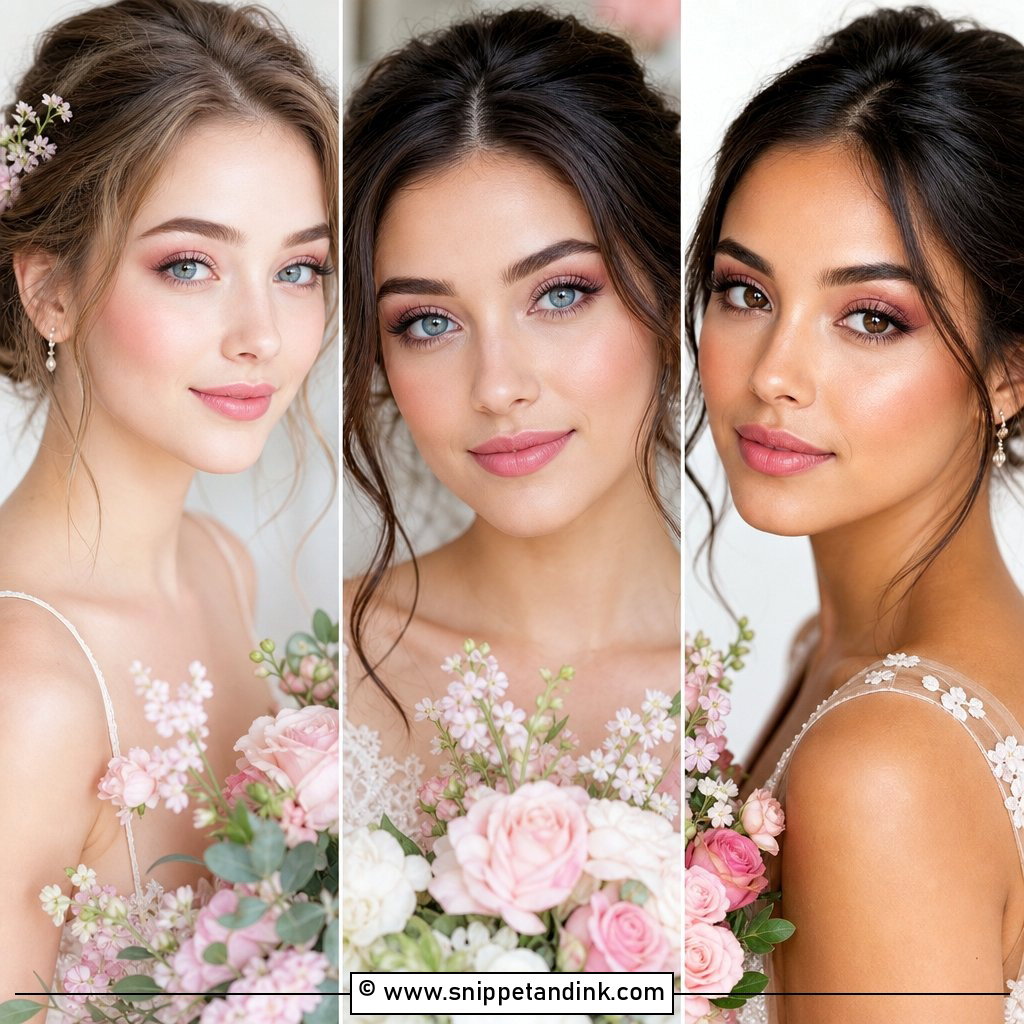
15. Rose Gold Pale Wedding Makeup
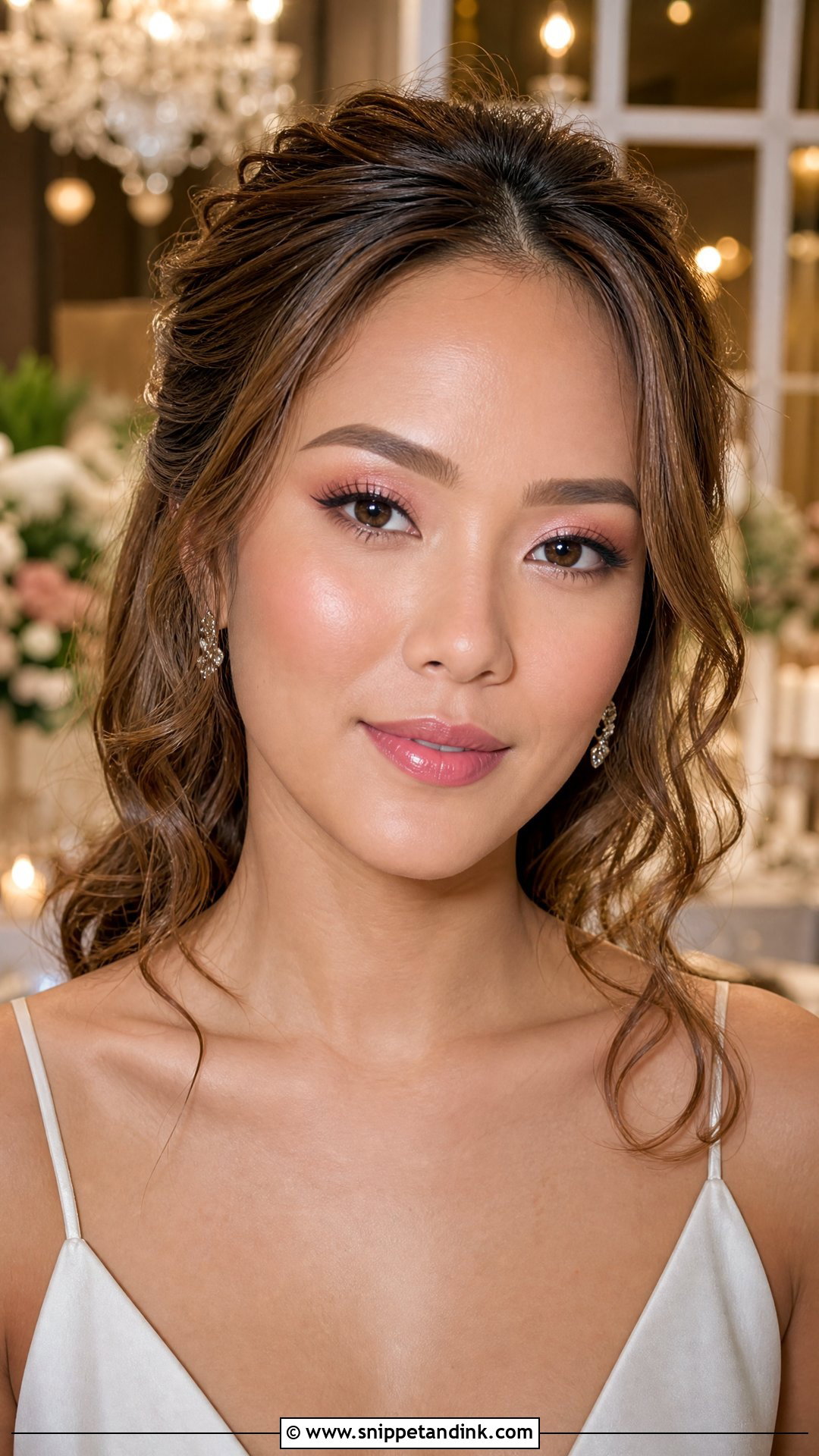
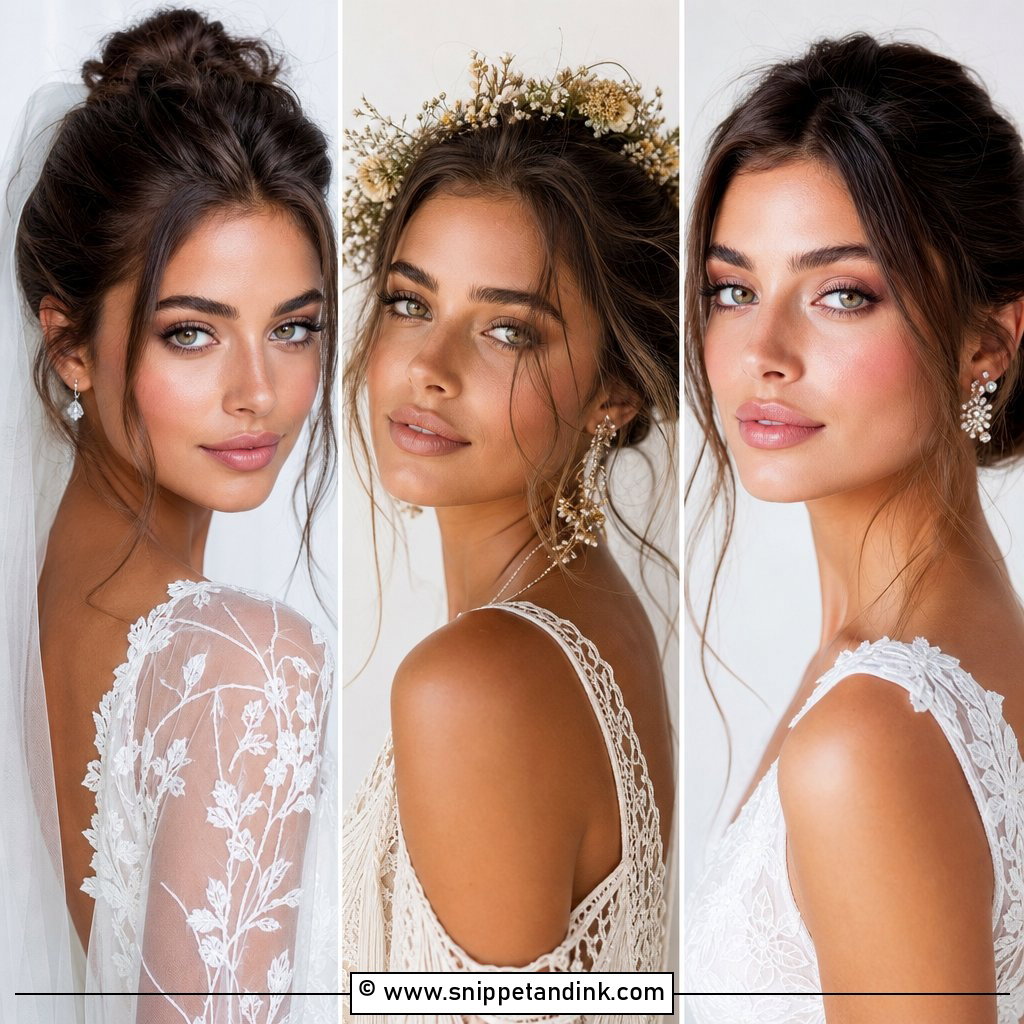
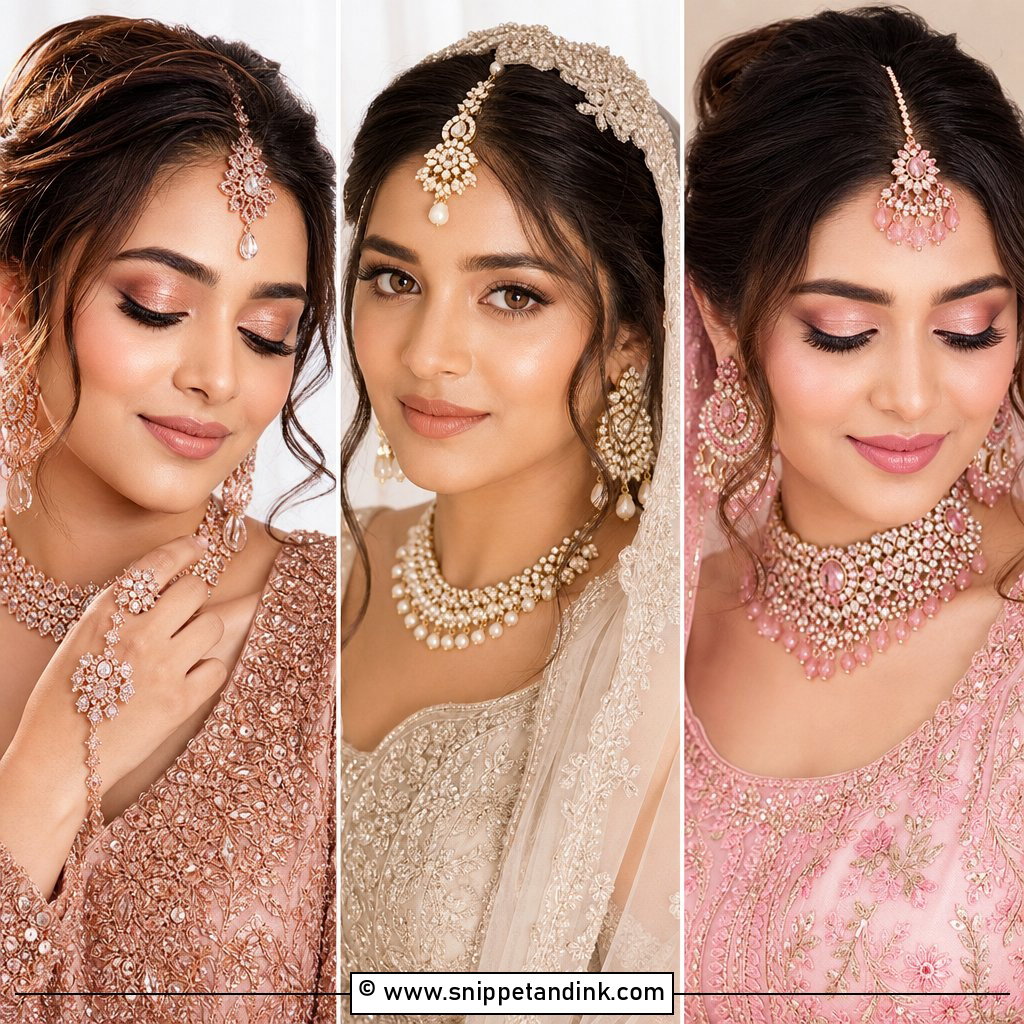
Rose gold is a warm shimmer, and on fair skin it can tip copper if the shade has too much orange in it. I pick the lightest rose gold I can find for the lid and blend a pale brown or soft mauve into the crease. The colour should brighten the eyes, and on green or hazel eyes it does that well. Brown liner, lifted lashes and shaped brows. On the face, a satin base, rose-pink blush and a delicate champagne highlight. A pink-rose lip with a slight sheen keeps it cohesive. It’s a good option for bridesmaids too, because it suits a range of fair to medium skin.
16. Cool Toned Pale Wedding Makeup
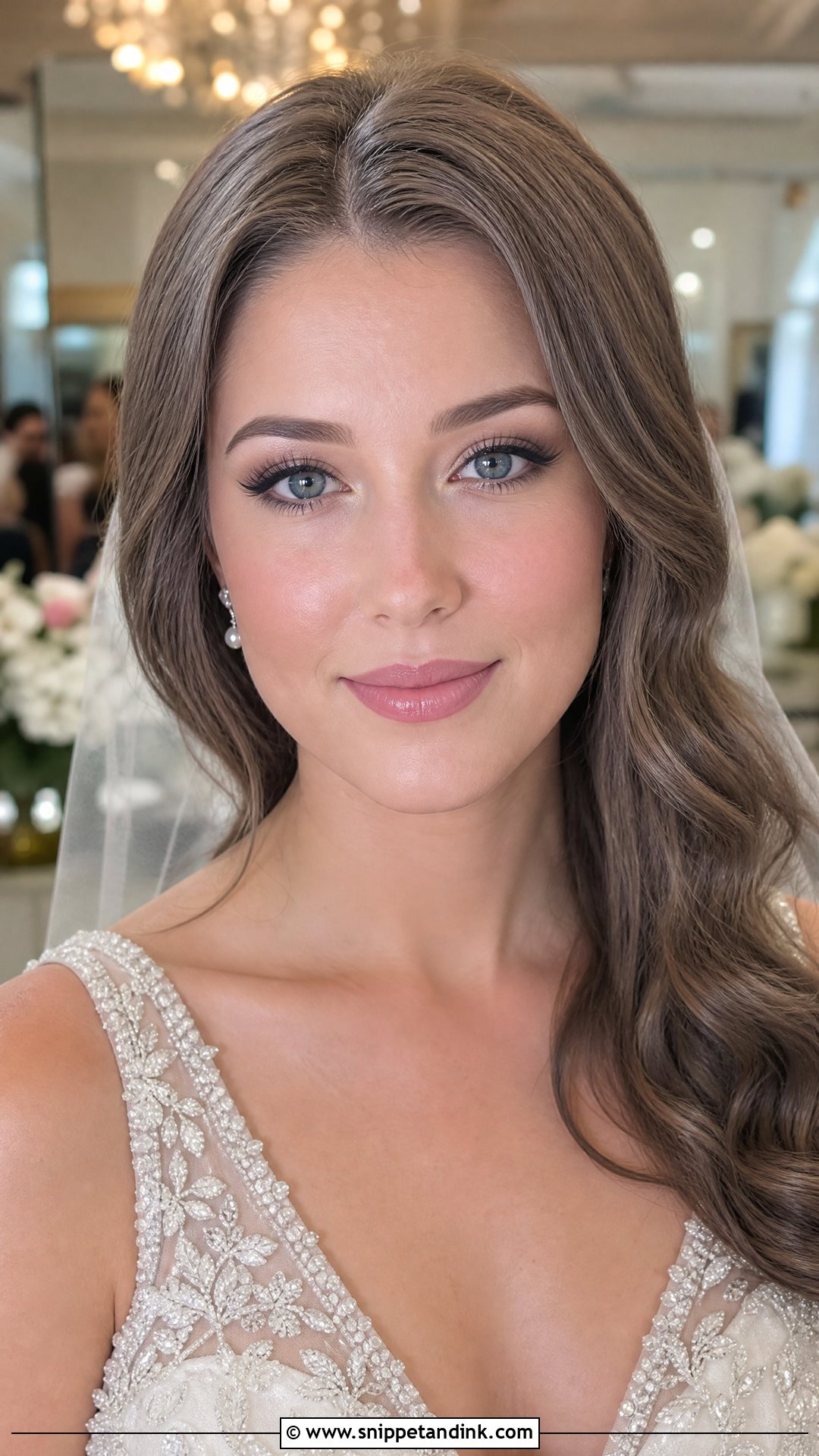
If your veins look blue or purple and you burn rather than tan, you’re probably cool or neutral-cool, and the whole kit has to agree with that. Yellow foundation, orange bronzer and warm coral blush are the three things I’d remove first. A fair cool or neutral base, soft pink blush, taupe shadow and a pearl highlight build the face. For eyes, cool beige on the lid, grey-brown in the crease and brown or charcoal liner. Airy lashes and natural brows. A blue-based pink, soft berry or rose lip. Nothing here fights the skin, which is why it looks calm in every kind of light.
17. Warm Neutral Pale Wedding Makeup
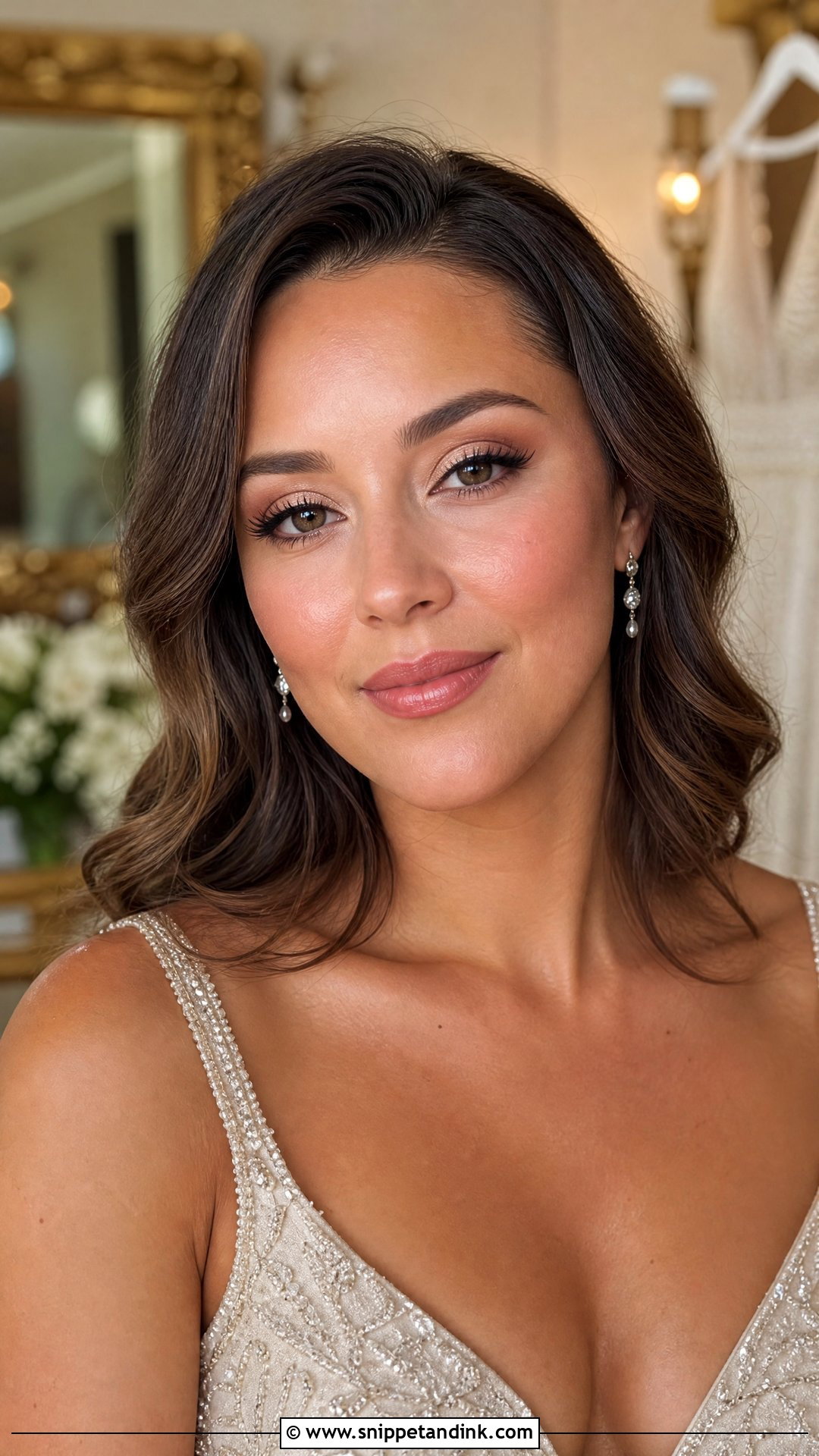
Warmth on pale skin comes from sheer layers, not one heavy product. I use beige, honey and peach-rose tones, start with a fair neutral foundation, and warm the face with a soft neutral bronzer just around the hairline and under the cheekbones. Peach-pink blush keeps the complexion alive. Ivory shimmer, warm taupe and light bronze blend on the eye, defined with brown liner. A warm rose nude looks better than a flat beige nude. Brides in ivory, champagne or cream gowns tend to love this, because cool pink makeup can look slightly off beside a warm fabric.
18. Minimal Pale Wedding Makeup
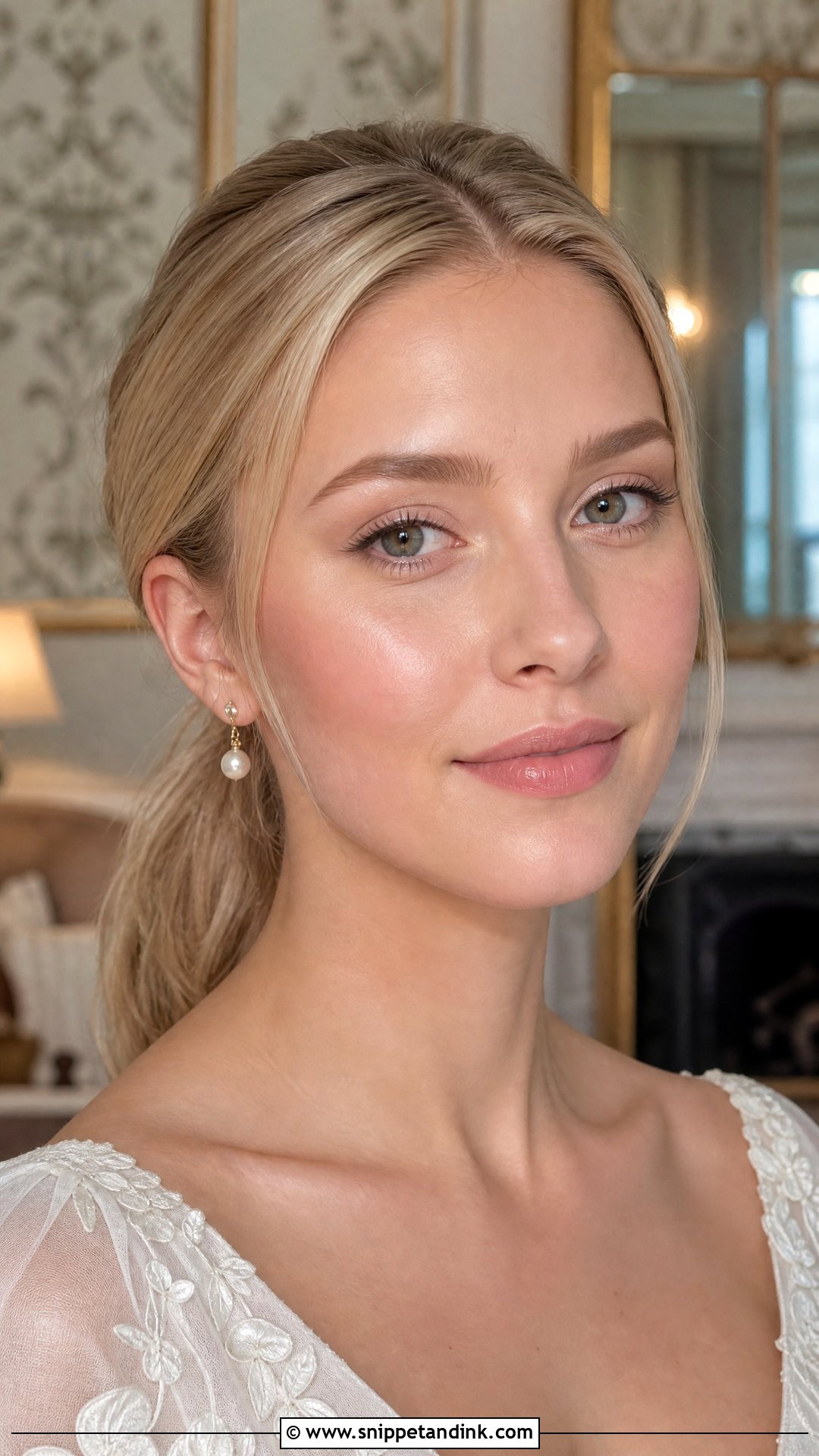
Minimal makeup on fair skin is where placement shows most, because there’s nothing to hide behind. I use a sheer foundation or skin tint only where it’s needed and spot-conceal redness and under-eye shadows with a small brush. Cream pink blush, clear or tinted brow gel, a wash of ivory or soft beige shadow and curled lashes. A thin line of brown pencil at the lash roots makes the eyes look awake without looking made up. No contour, a tiny touch of highlight, a tinted rose balm or soft pink gloss. Expect to retouch the lip more often; sheer formulas fade fastest.
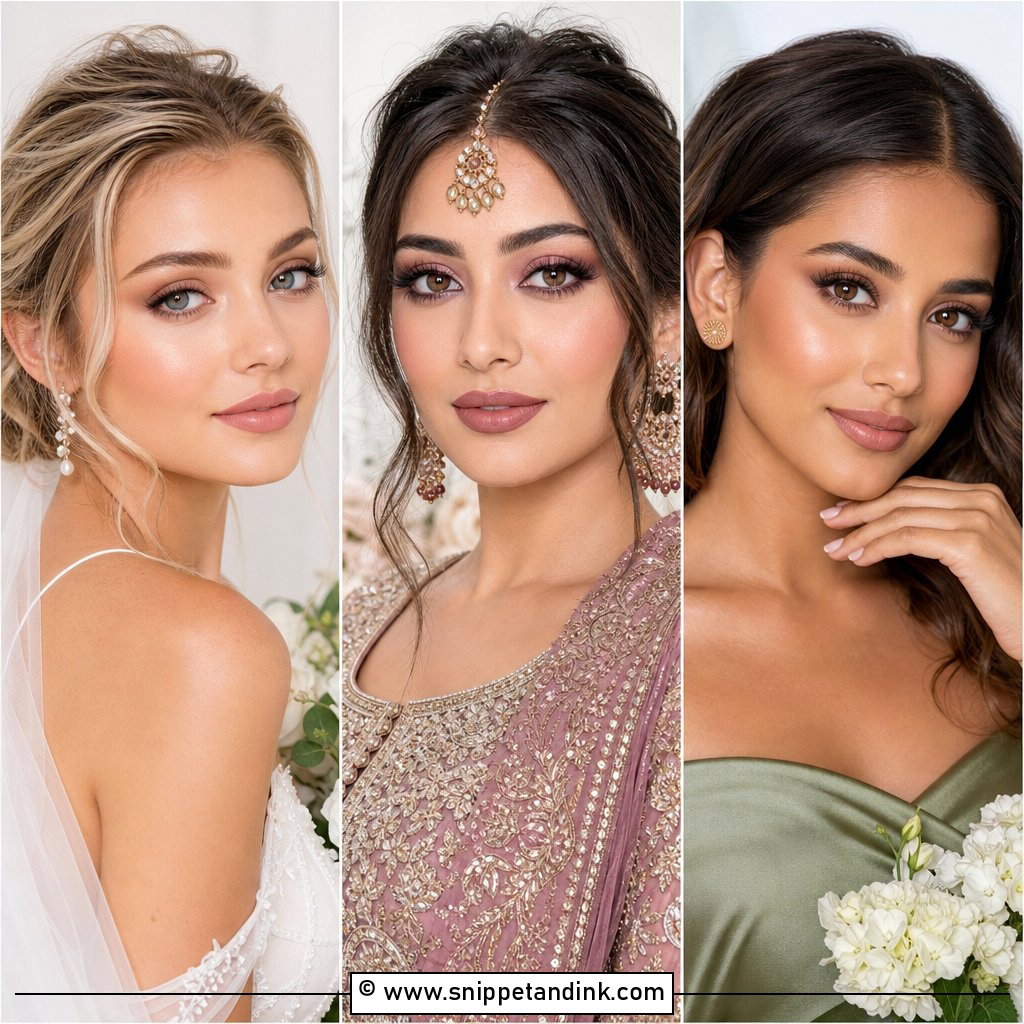
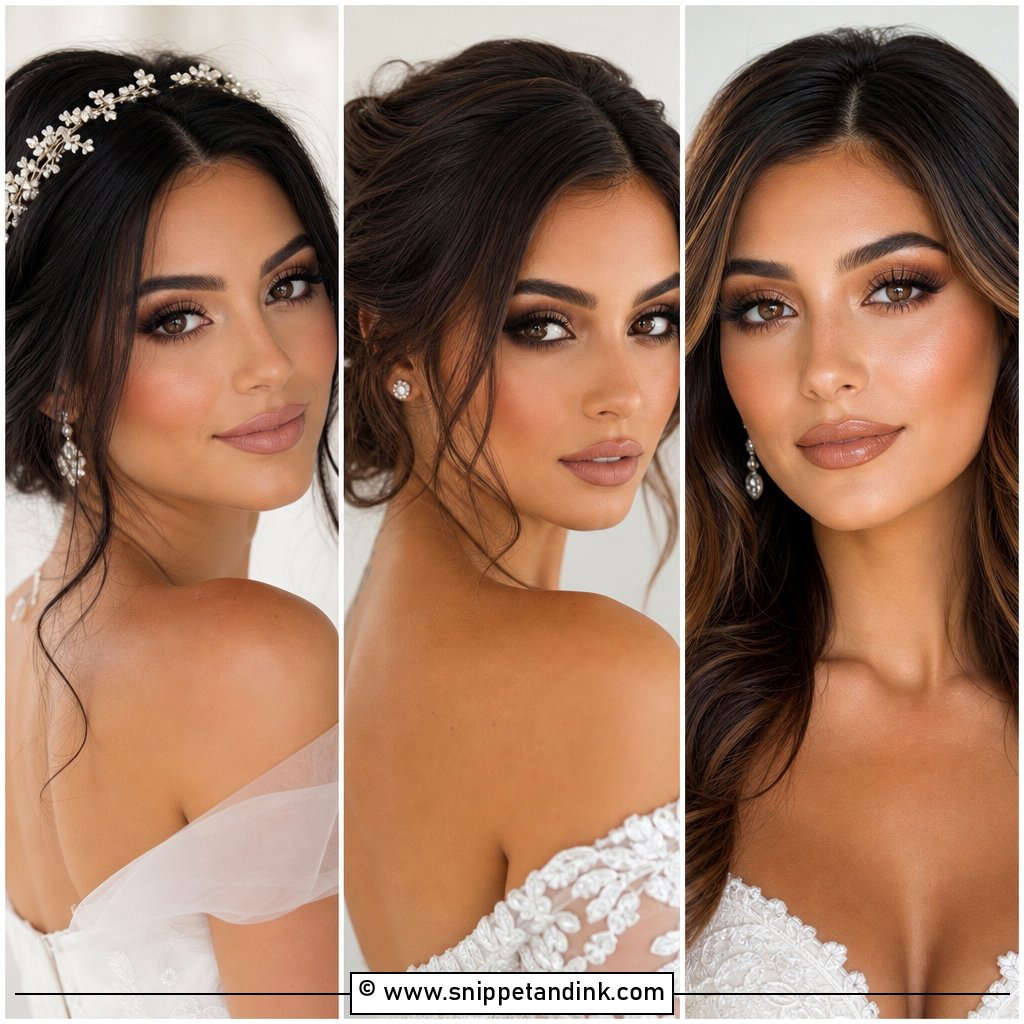
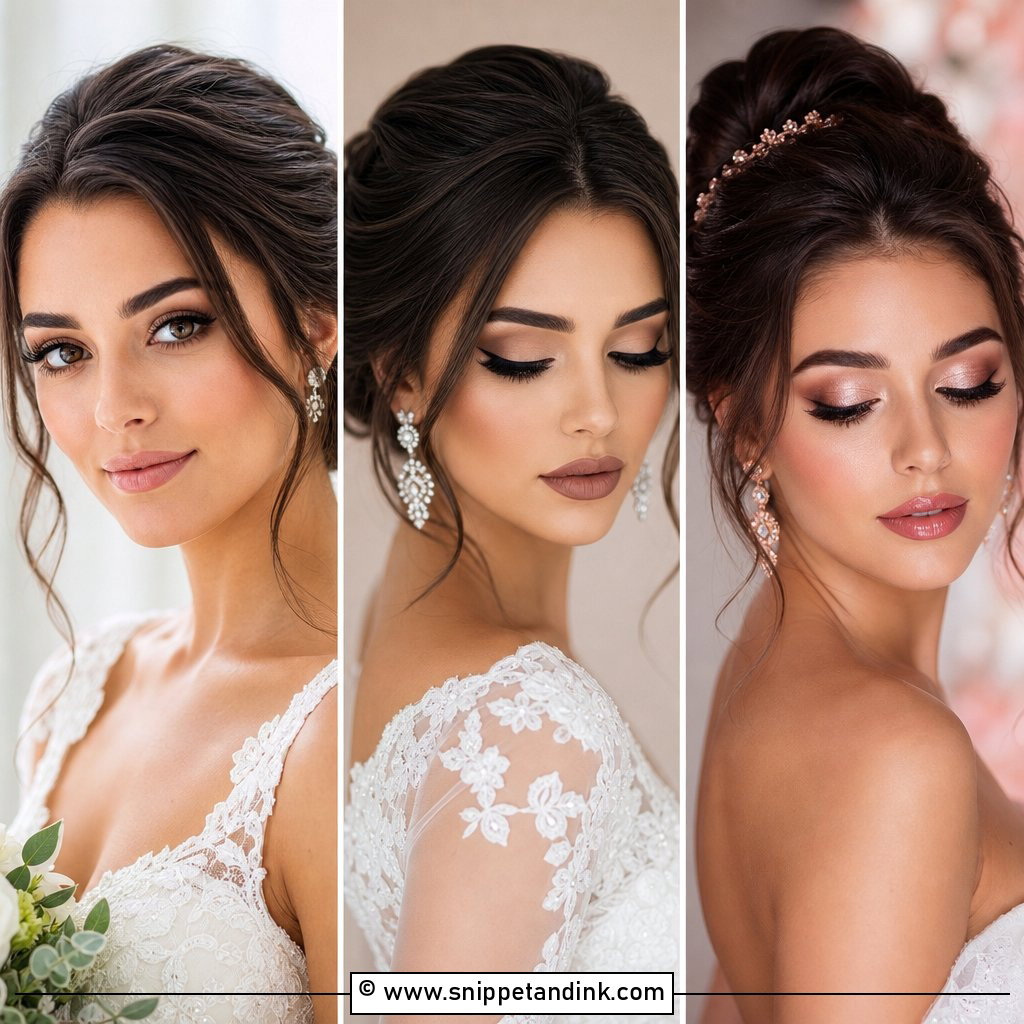
19. Vintage Pale Wedding Makeup
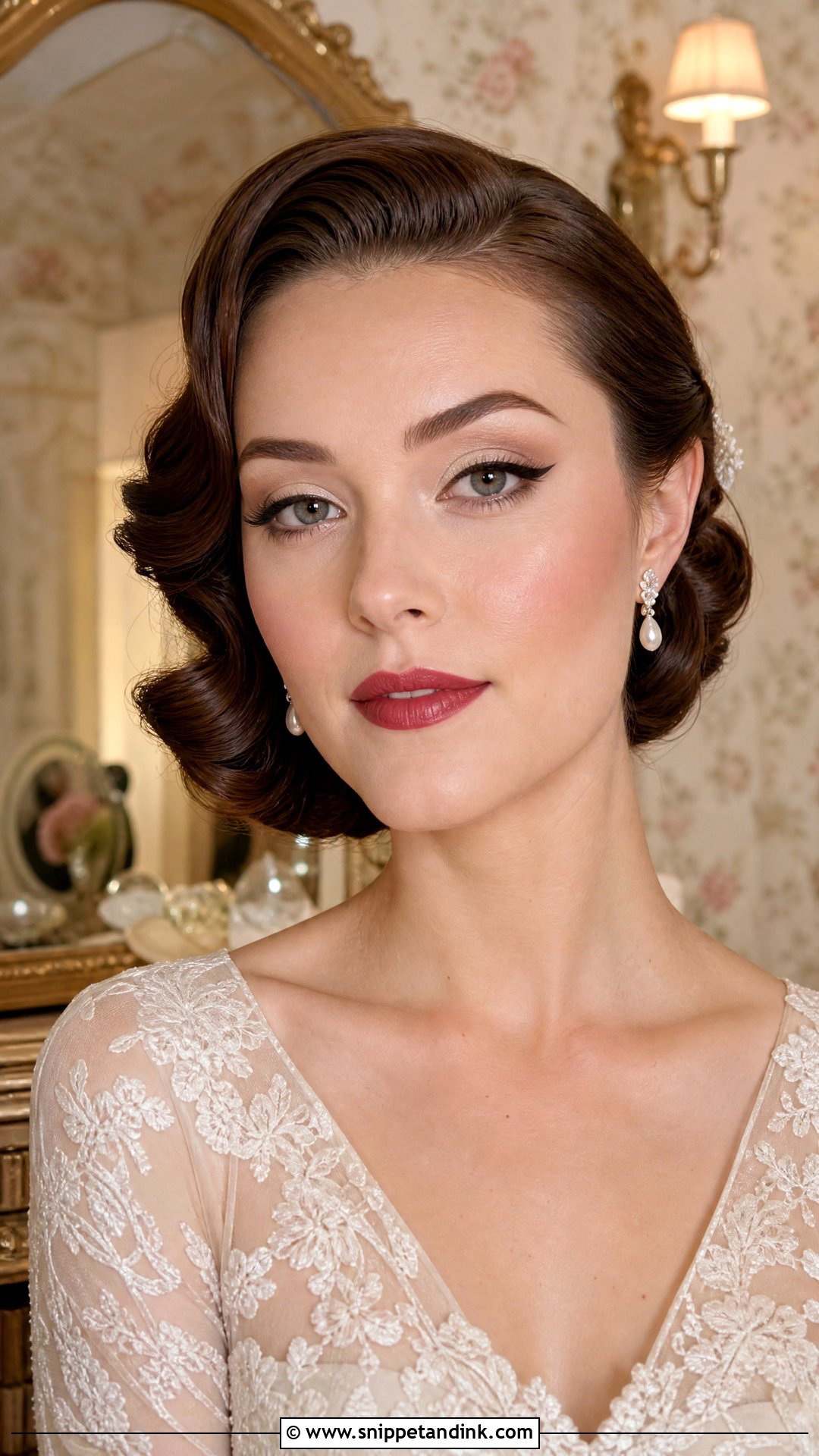
Vintage makeup on pale skin can slip into costume if every element is turned up at once. I keep the skin satin and the colours balanced: a fair natural-finish foundation, pink blush on the apples of the cheeks, matte ivory on the lid and light taupe in the crease. A neat wing, curled lashes and softly arched brows give the period shape. For the lip, soft red, rose or raspberry, depending on how bold you want to go. Lace gowns, pearls and structured hairstyles sit naturally with it.
20. Glowy Pale Wedding Makeup
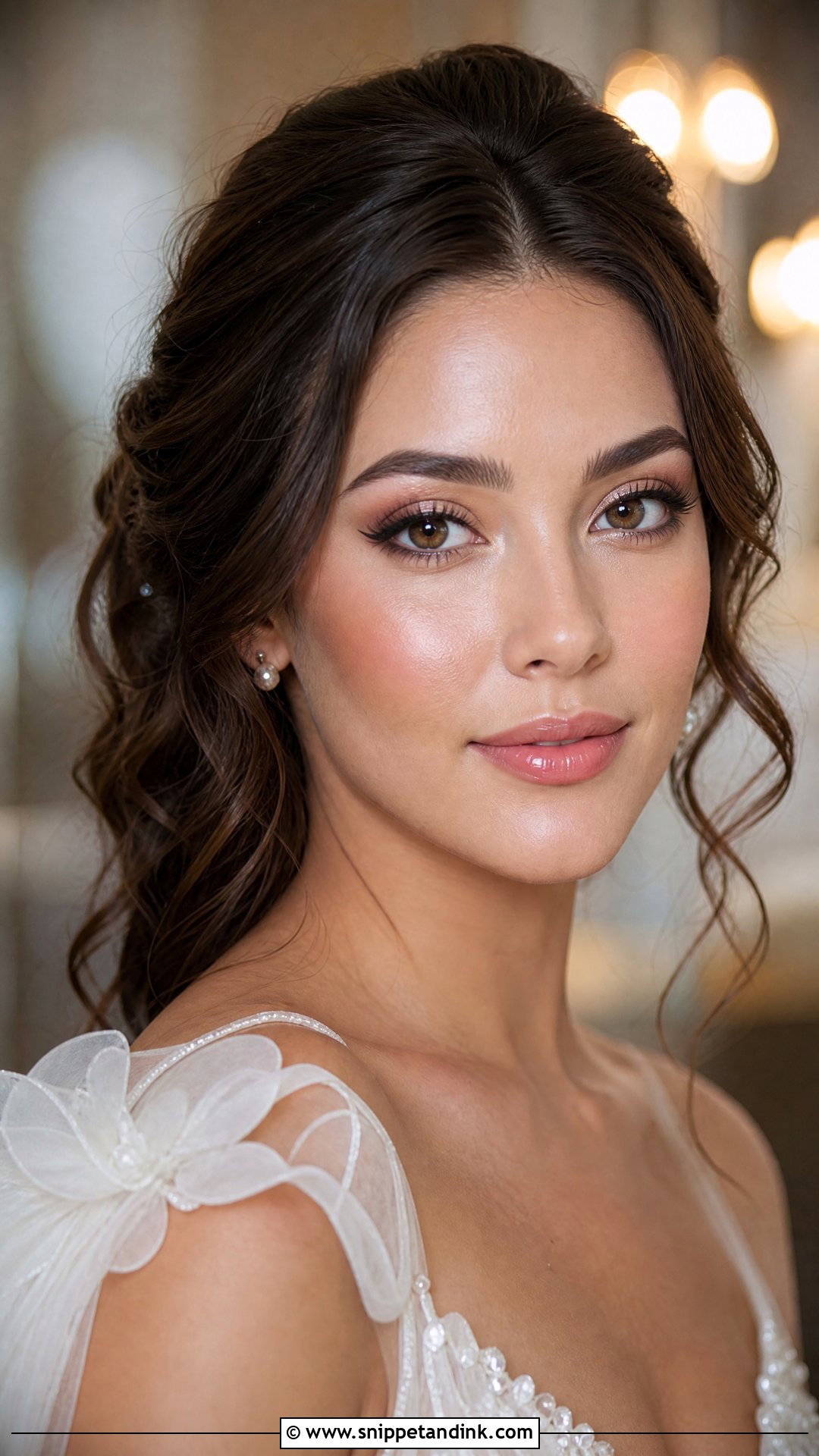
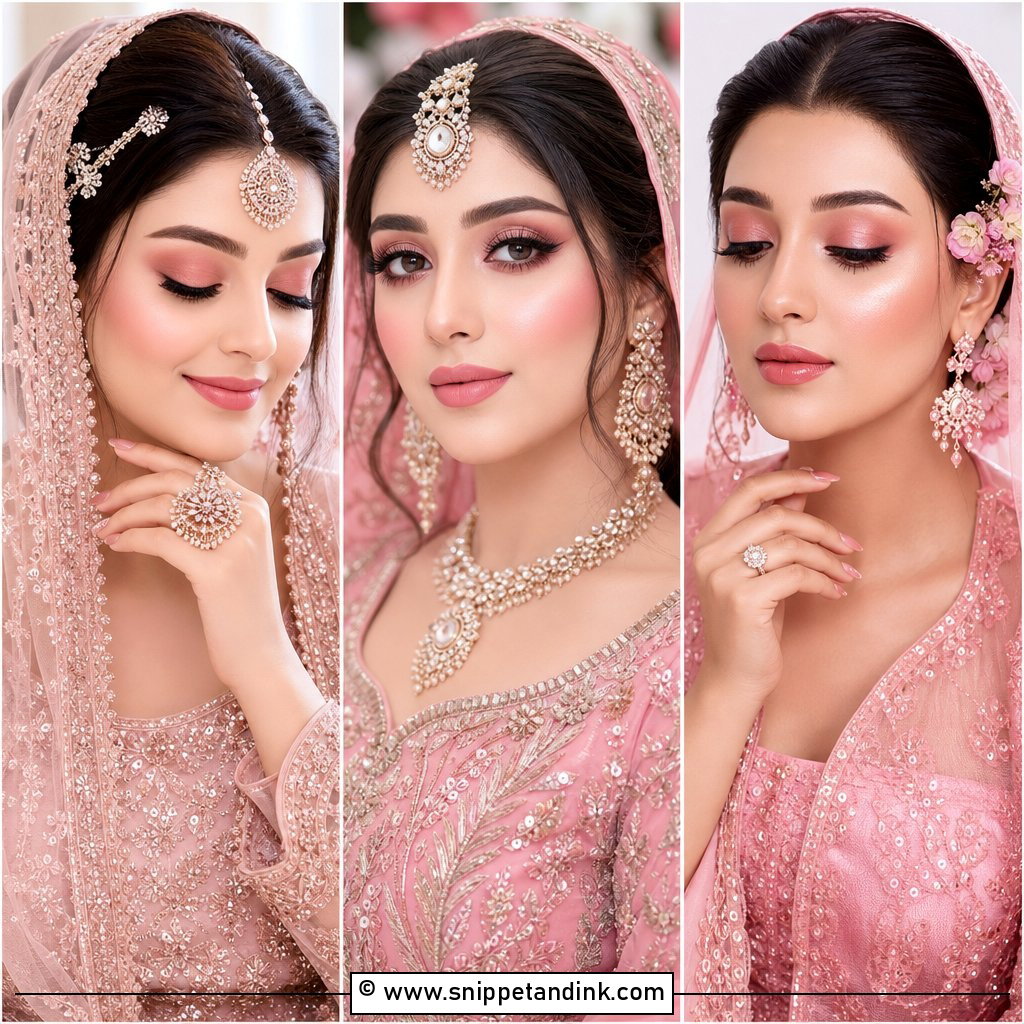
Glowy pale wedding makeup gives fair skin radiance without heavy contour. I start with a hydrating primer and a luminous foundation matched exactly, because shine magnifies any shade mismatch. Rose cream blush, then a pearl or champagne highlighter tapped on the cheekbones, brow bones and cupid’s bow. Deep gold highlight is the thing to avoid; on very light skin it reads yellow in photos. Champagne shimmer, soft taupe and brown liner with fluttery lashes build the eye, and a glossy rose lip finishes it. Highlight creates dimension on a face that has little natural shadow, which is why this works so well on camera.
How Fair Skin Reacts to Flash and a Long Day
Flash is harder on pale brides than anyone else. Some powders and sunscreens with high levels of mineral or silica particles bounce flash straight back, and on fair skin that white cast looks like a mask. I test the setting powder with a phone flash at the trial before I commit to it.
Colour also fades faster on light skin, because there’s nothing underneath to carry it. Blush and lip are the first things to go, usually by the end of the meal. Layer cream under powder on the cheeks, line and fill the whole lip before lipstick, and expect one retouch.
The touch-up pouch I hand over
- Your exact lipstick and liner, not a similar shade.
- Blotting papers rather than more powder, which builds up and turns chalky on fair skin.
- A small cream blush you can tap on with a finger.
- Cotton buds for mascara that has smudged under the eye.
Redness, Freckles and Visible Veins
Most pale brides I meet mention one of these first. Redness around the nose and chin needs targeted concealer, not more foundation everywhere, which only flattens the face. Freckles I almost always leave showing; a sheer base that evens the skin between them looks far more like you than full coverage that buries them. Blue veins under the eyes or on the eyelids take a peach-toned corrector in a very thin layer. Too much and it turns orange on fair skin, so less really is the right amount here.
Fair Skin Needs the Right Undertone More Than a Trend
Pale skin rewards restraint and punishes a wrong undertone, so the base matters more than any trend on this list. Soft pinks, rose, taupe, champagne and brown liner sit naturally on fair complexions; orange bronzer, yellow foundation and flat beige lips usually don’t. Pick the direction that matches how you wear makeup now, then turn it up one step for the day. And book the trial. On fair skin especially, it’s the only way to see colour, flash and wear time before it counts.
You'll Like These Ideas:


Leave a Reply