
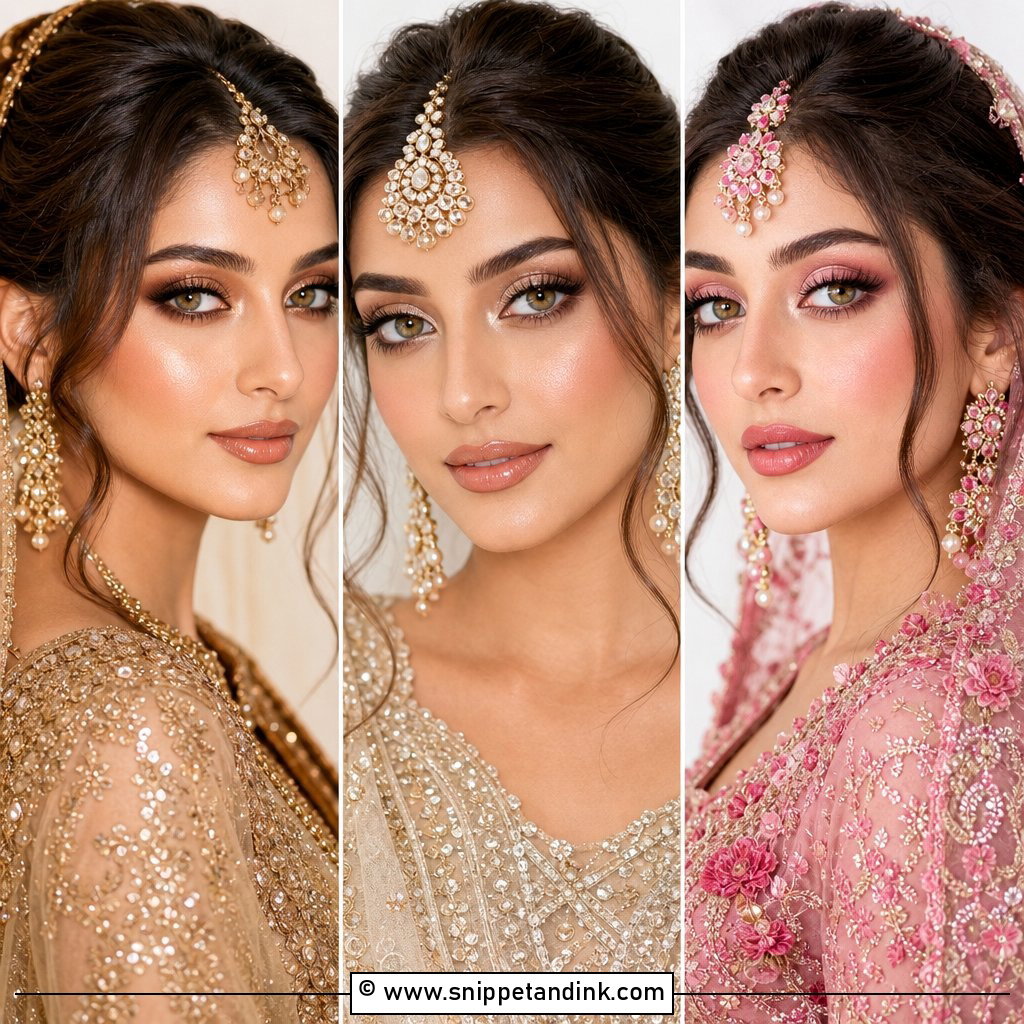
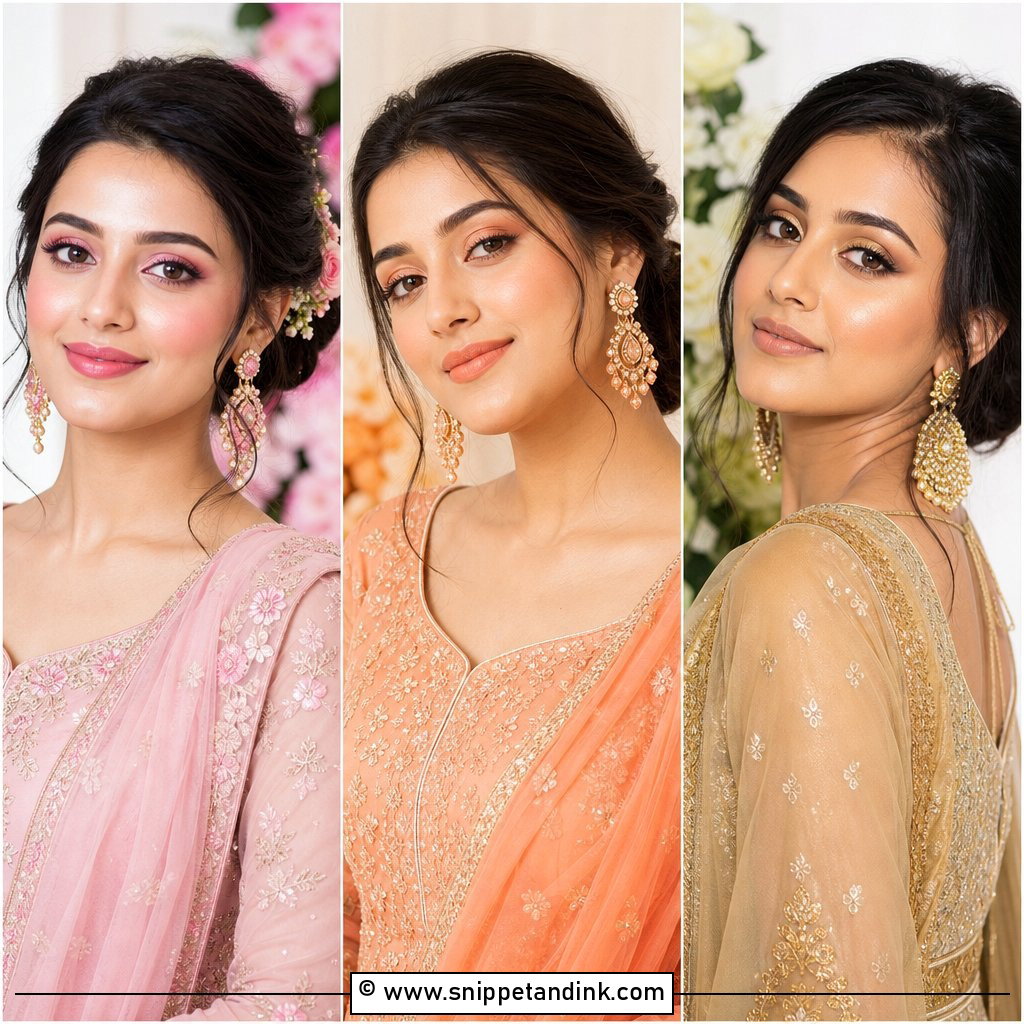
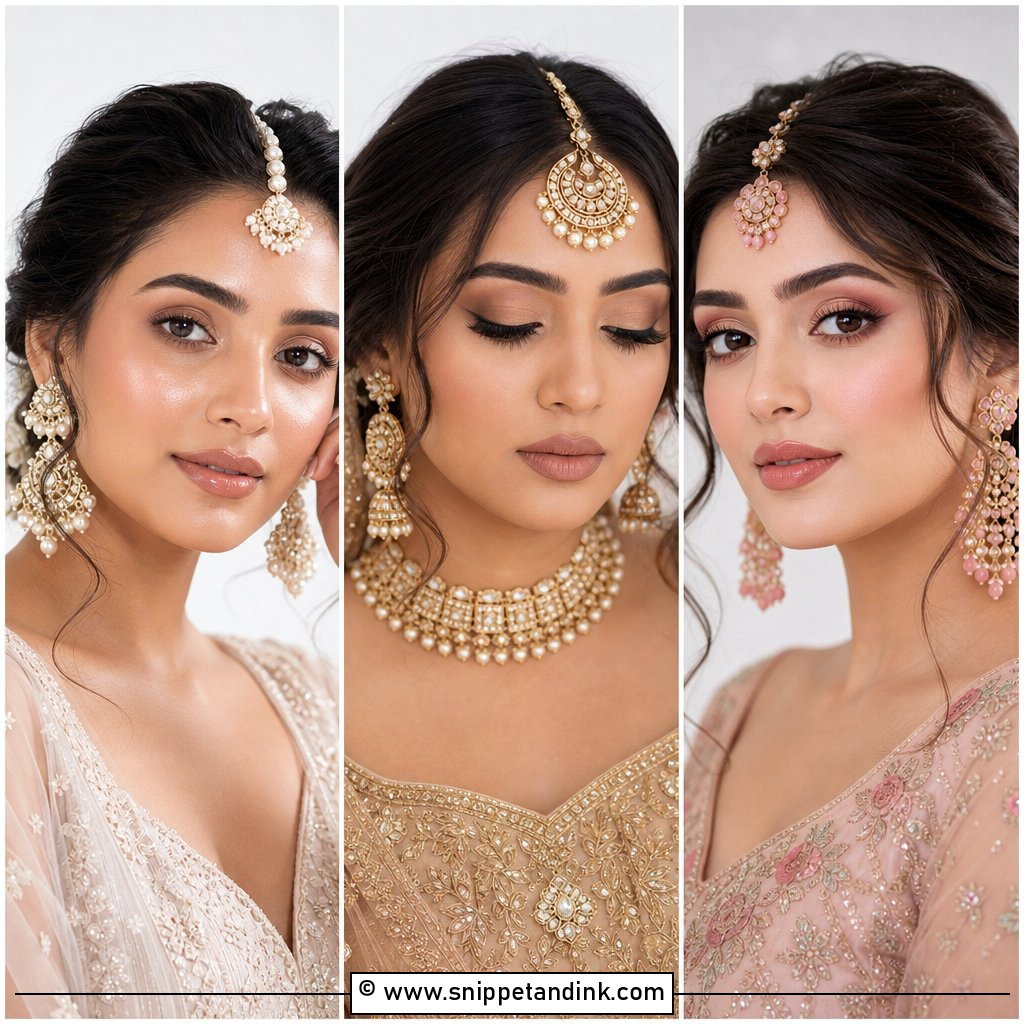
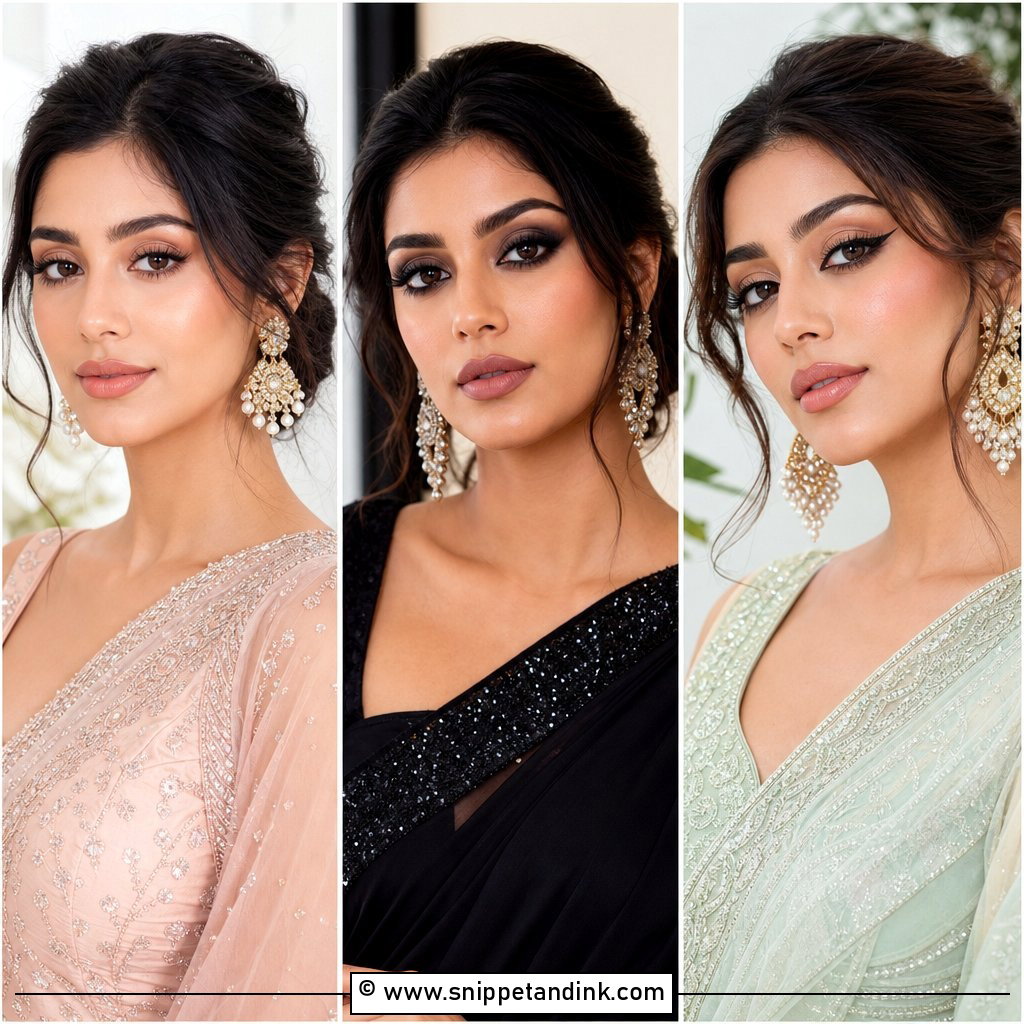
Pink is the shade I reach for most often at bridal trials, mostly because it forgives so much. A sheer baby pink lip reads fresh at a noon ceremony, and the same face can be pushed toward rose, mauve or berry once the reception lights go down. The looks below are full faces rather than single features, so you can see how blush, eyes and lips have to agree with each other. Some are dewy, some matte, a few lean on liner or glitter, and the last ones cover bridesmaid makeup and guests. Treat any of them as a starting brief for your artist, not a recipe.
Cool Pink or Warm Pink? The Jawline Swatch I Do First
Before I open a palette at a trial, I swatch two lipsticks side by side on the jawline: a blue-leaning pink and a peach-leaning pink. In window daylight, one of them looks like it belongs to your skin and the other looks painted on. That single test decides most of the face, because blush, lip and shadow should all lean the same way.
- Silver jewelry suits you and you burn easily: start with baby pink, cool rose and mauve.
- Gold flatters you and you tan without much burning: peachy pink and warm rose are safer.
- Olive skin often sits in between and does best with dusty, muted pinks that carry a touch of brown.
- If both swatches look fine, you’re probably neutral and can borrow from either side.
Your dress matters too. A stark white gown makes warm pinks look faintly orange beside it, while ivory and champagne soften both families. Bring a fabric swatch or a daylight photo of the gown to your trial so I can hold the blush against it.
Cheeks and lips also behave differently. A pink that flatters the mouth can look feverish on the cheek, so I usually take the blush half a step softer than the lipstick.
1. Soft Pink Bridal Makeup
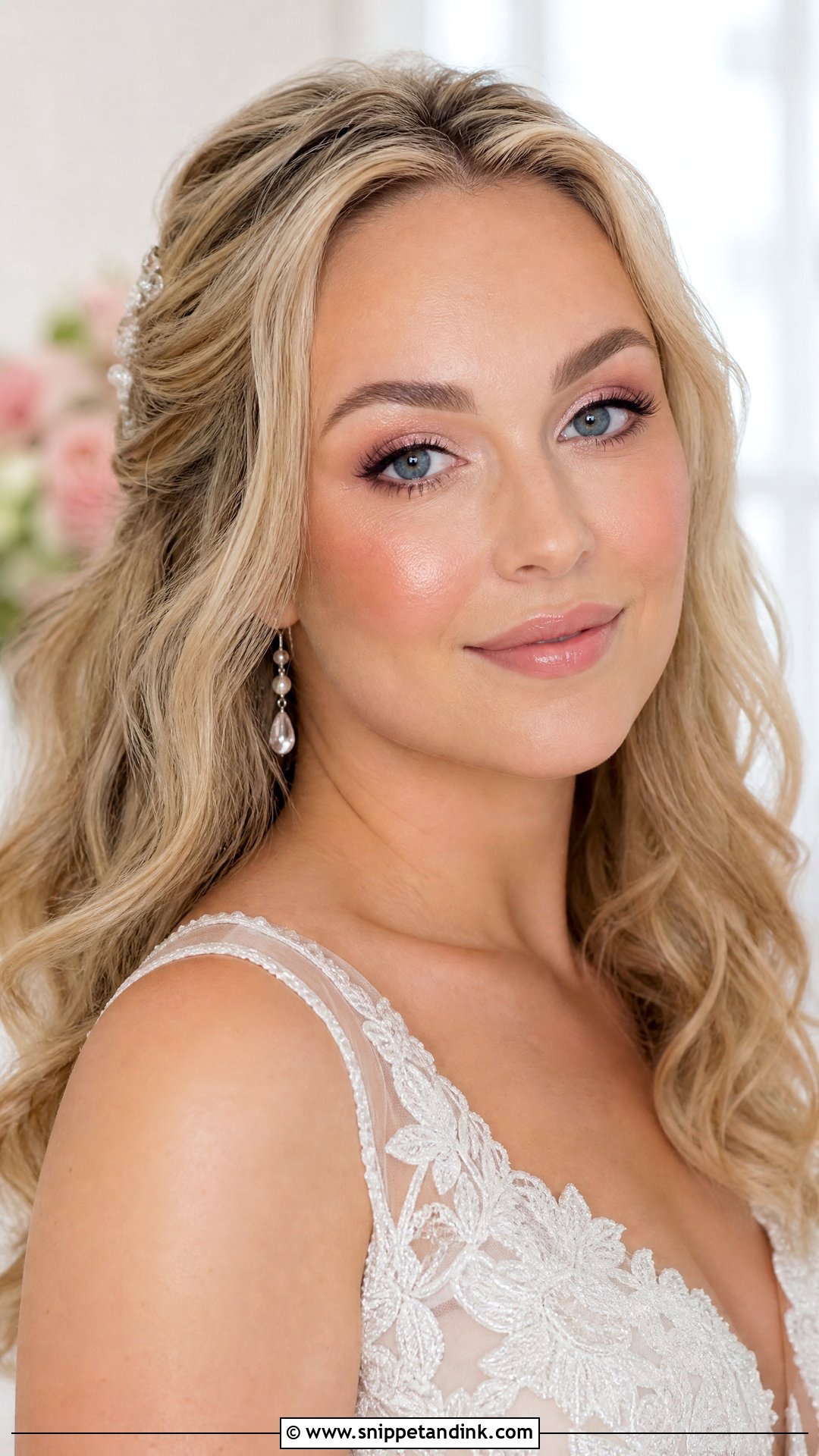
This is the face I do when a bride tells me she wants to look like herself on a good day. I start with hydrated skin and a light-to-medium base that lets real texture show, then place soft pink blush high on the cheek and drag the last of it toward the temple, which lifts the face more than contour would. Pale pink satin shadow, soft brown liner and wispy lashes keep the eyes open, and brows stay fluffy but brushed into shape. The mistake I catch most at trials is a lip that’s too pale. A pink-nude in satin or gloss should sit a shade deeper than your own lips, or the camera erases it.
2. Pink Soft Glam Wedding Makeup
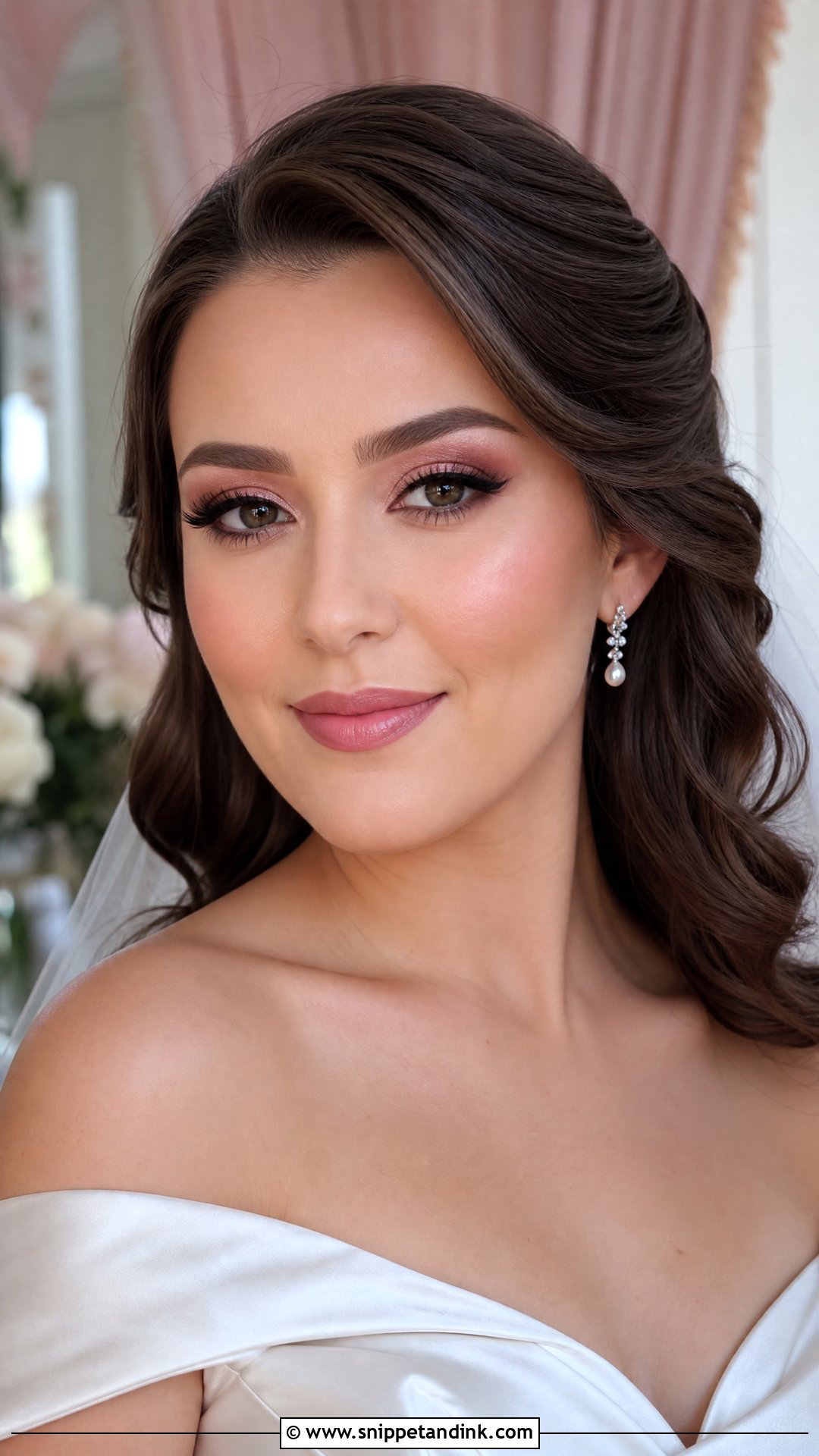
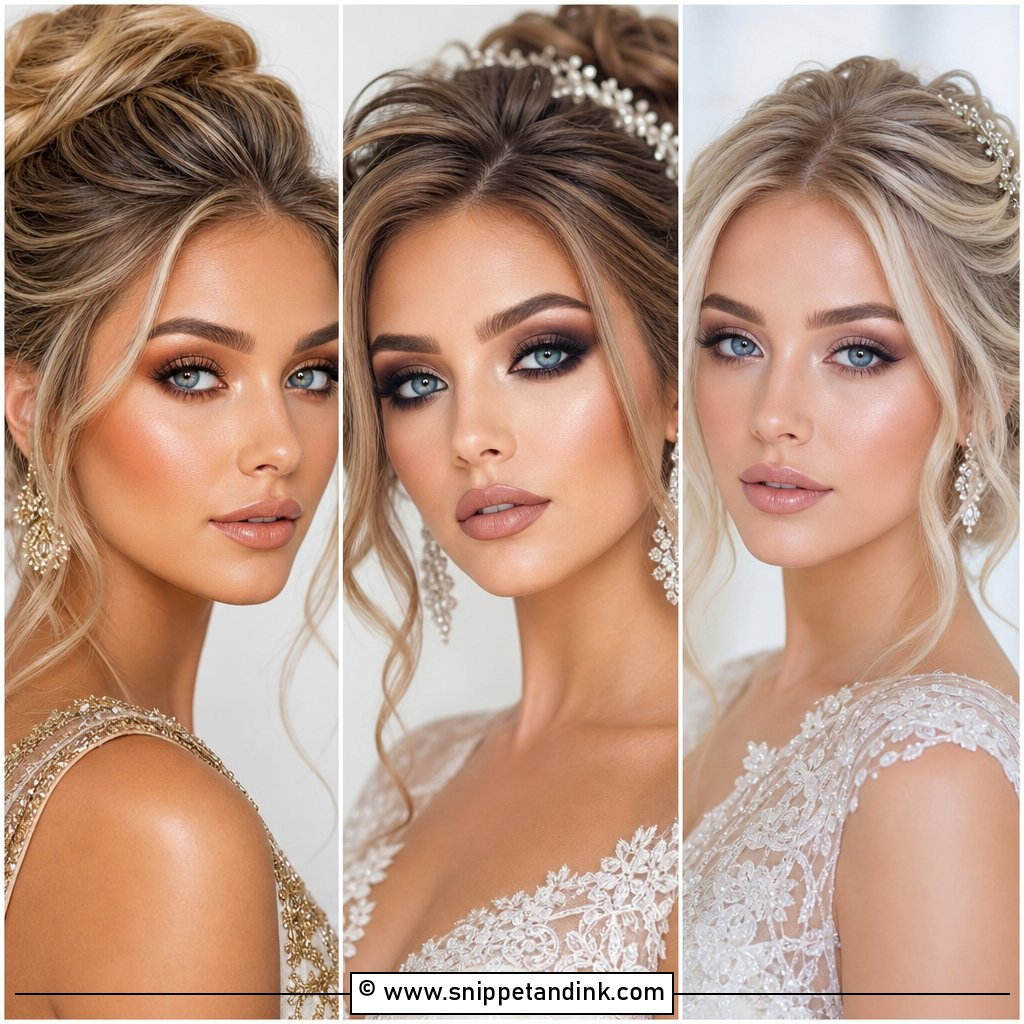
Soft glam is the same idea with more structure, and it tends to survive a professional camera better than a barely-there face. The complexion stays smooth and slightly radiant rather than heavy. Rosy blush, a touch of champagne highlight and a light contour under the cheekbone give shape. Through the crease I blend dusty pink, rose taupe and soft brown, press a thin liner into the lash line, then add half lashes or natural clusters. A mauve-pink liner under the creamy pink lipstick matters more than people expect, because it stops the color feathering by the second hour.
3. Natural Pink Wedding Makeup
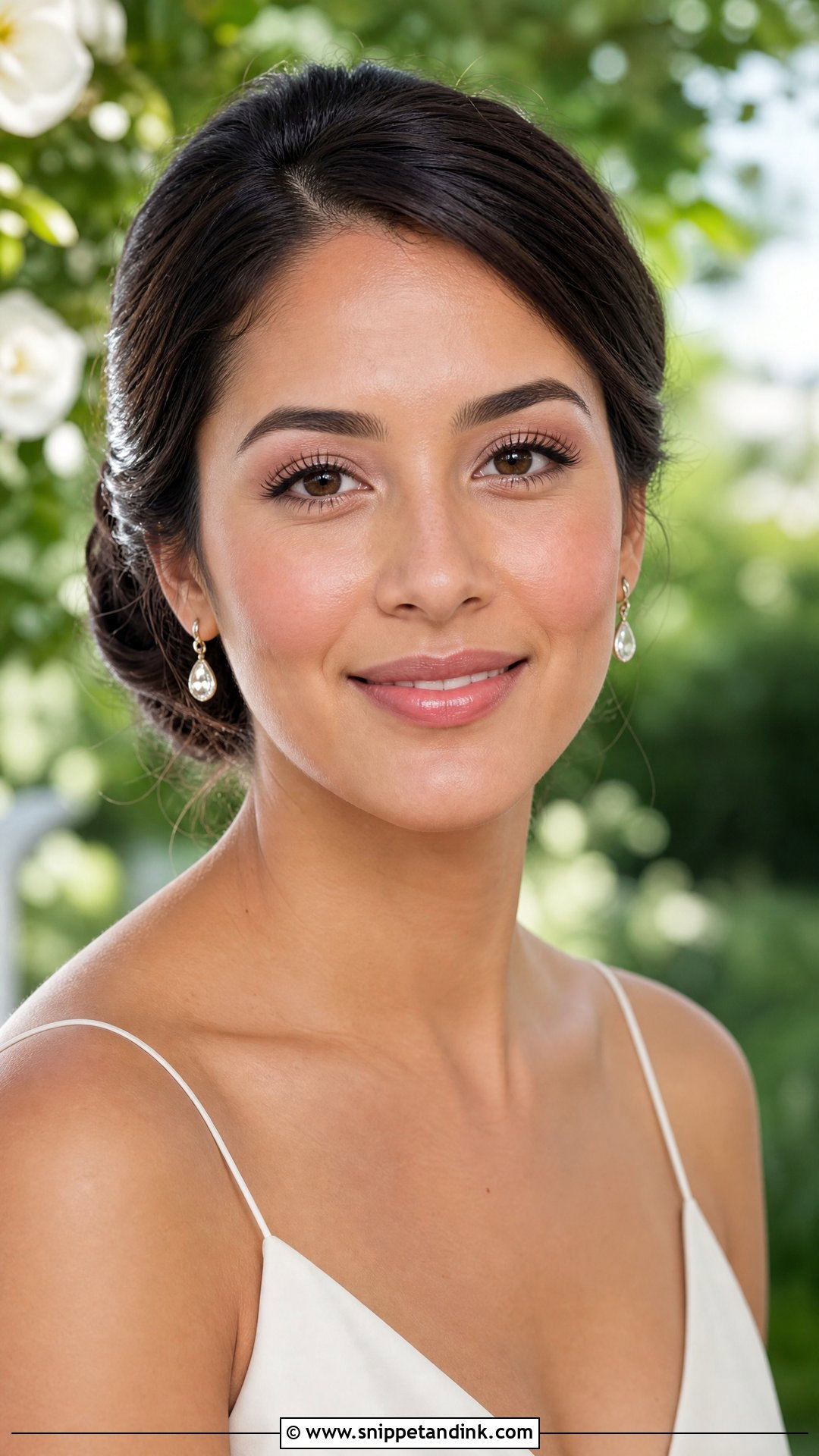
If you barely wear makeup, this is where I’d start you. A heavy face on someone who isn’t used to it reads as a mask in close-ups, and you’ll feel it all day. Skin tint or a breathable foundation goes on first, and I only spot-conceal redness and under-eye shadow. Cream blush in a fresh pink melts into a light base better than powder does. Eyes get a wash of pale rose or pink beige, curled lashes and waterproof mascara, with a little brown pencil at the lash line at most, and a sheer pink balm finishes it. The trade-off is that very little product is holding things in place, so plan on blotting and reapplying balm after the ceremony.
4. Dewy Pink Wedding Makeup
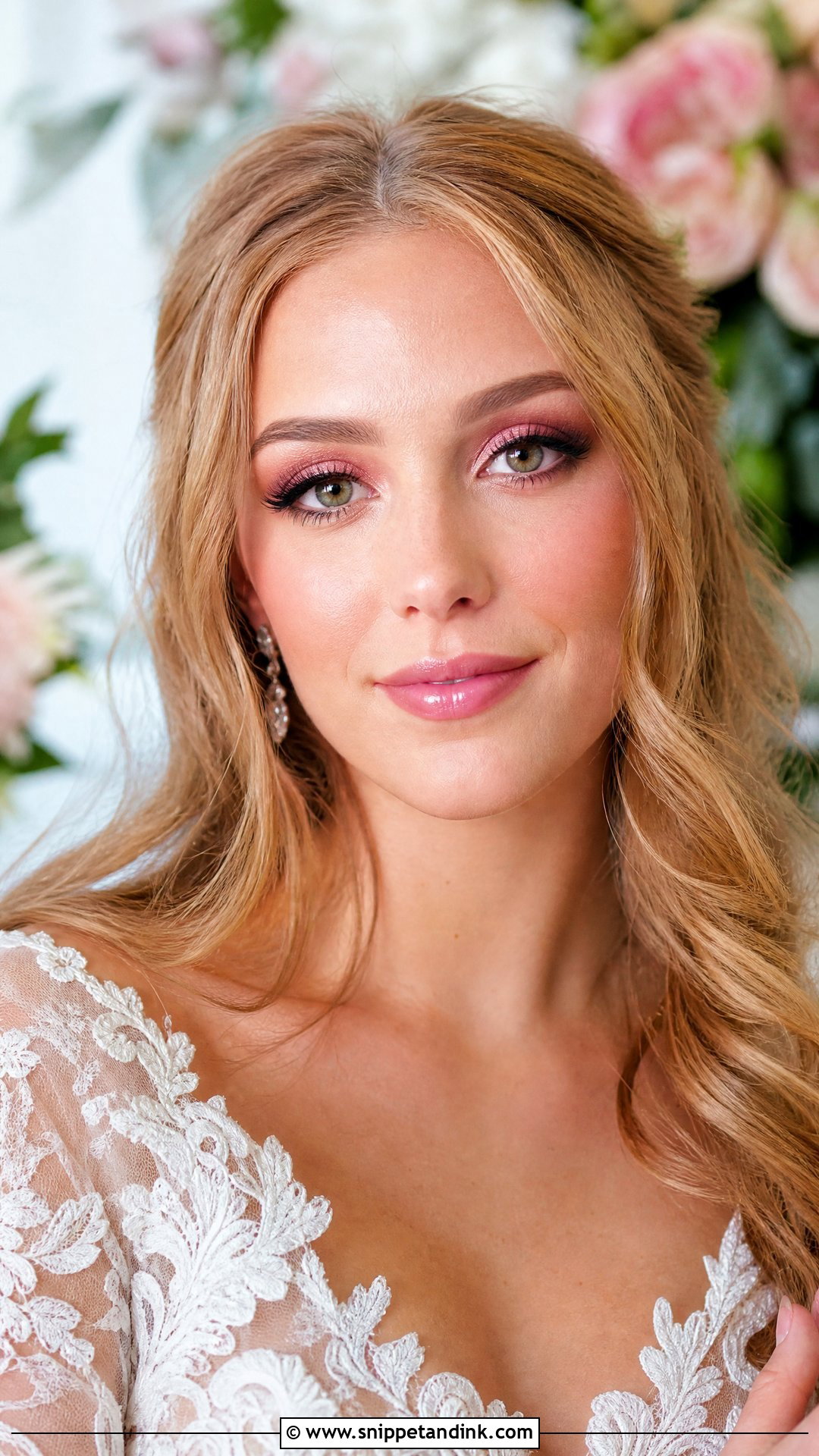
Dewy skin is lovely in daylight at a garden or spring wedding, and it’s also the finish most likely to tip into oily by the speeches. Prep does most of the work: a hydrating serum and moisturizer given ten minutes to sink in, then a long-wearing radiant foundation. I powder only where the face creases or shines, usually beside the nose and across the center of the forehead. Cream pink blush, liquid highlight and a soft rose bronzer keep warmth in the face, while pink shimmer, brown liner and fluttery lashes handle the eyes under a glossy pink lip. Setting spray isn’t optional here. For very oily skin in July heat, I’d skip this finish altogether.
5. Matte Pink Wedding Makeup
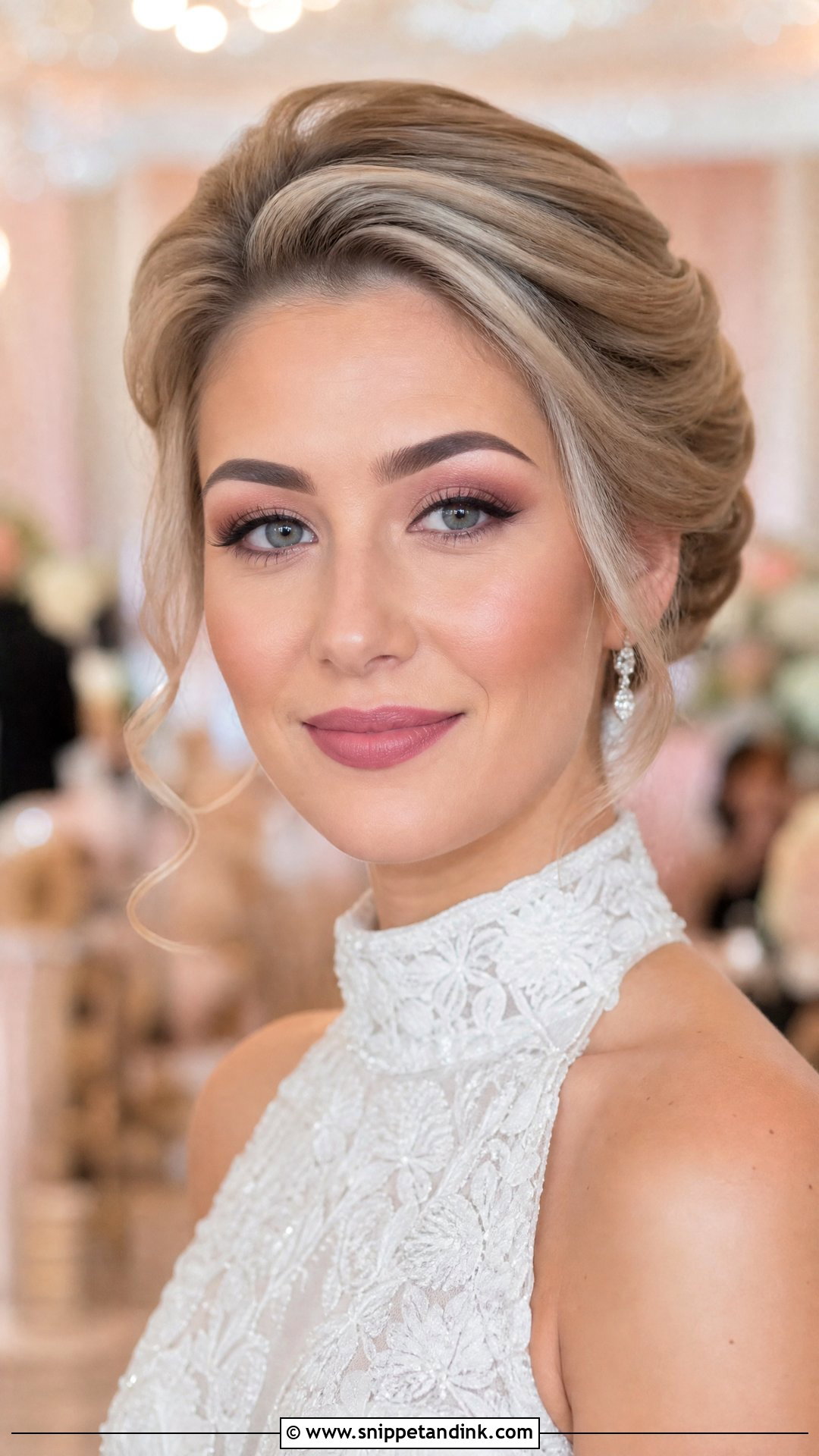
Matte is my answer for long days, a lot of hugging and oily skin. A satin-matte foundation set with finely milled powder through the nose, forehead and smile lines stays put far longer than a radiant base. Matte rose blush and a gentle contour sculpt without shine. Eyes take matte pink beige on the lid, mauve in the crease and deep brown at the lash line, with soft lashes keeping it bridal. What I watch for is dry skin: if your cheeks flake by midday, full matte clings to every patch, and I’d move you to satin instead. Pick a matte pink lipstick or liquid you can actually talk in for eight hours.
6. Rose Gold Pink Wedding Makeup
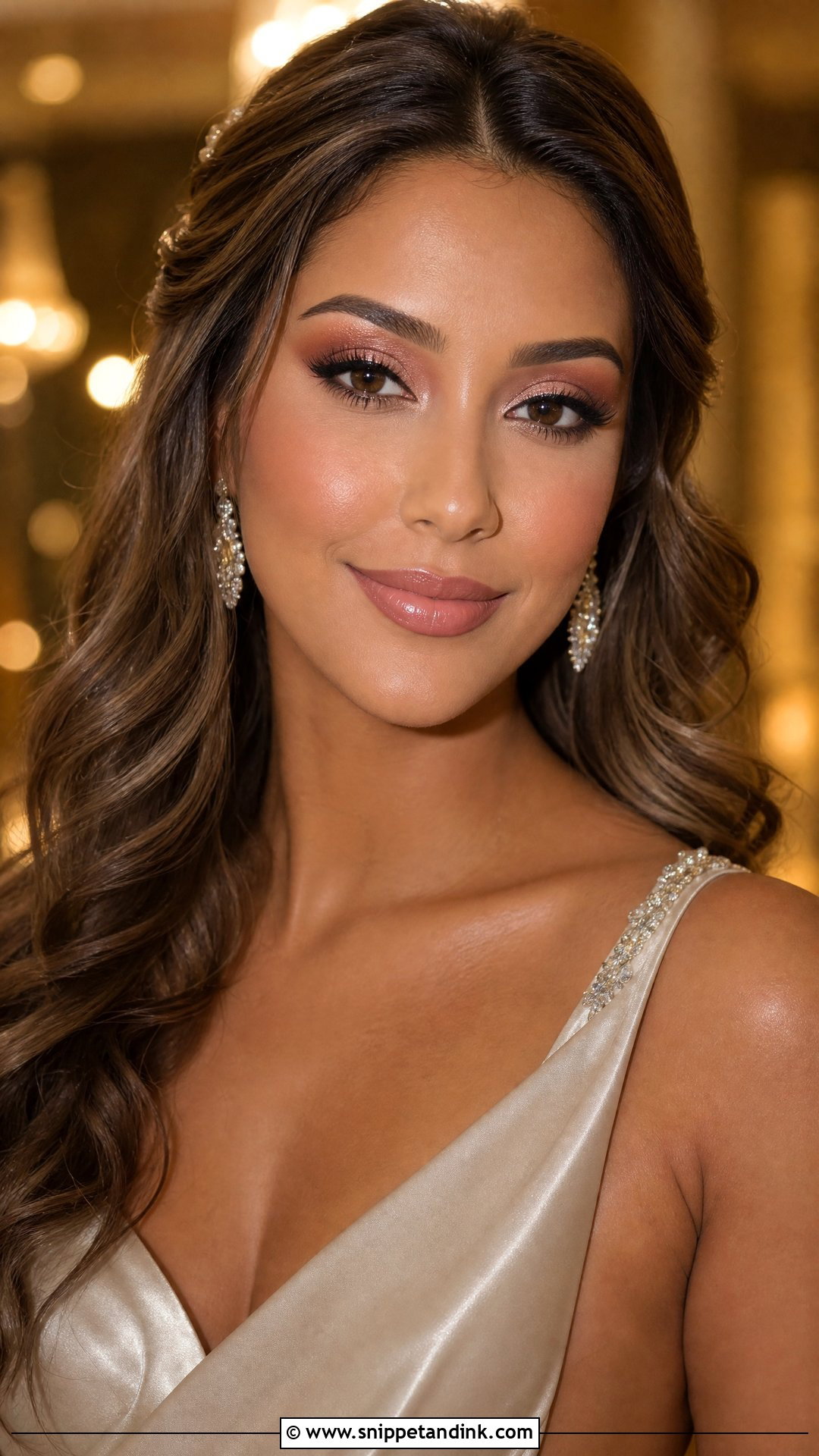
Rose gold suits a bride wearing champagne, blush or gold accessories, because the warm shimmer on the lid echoes the metal. I keep the base luminous but controlled, add warm pink blush and a little bronzer around the edges of the face, then press rose gold shimmer over the lid with soft pink in the crease and brown liner to frame it. A small point of bright highlight in the inner corner opens the eye. With that much going on above, the lip stays a rosy nude or soft pink gloss. Rose gold shimmers vary a lot in particle size, so test yours under a phone flash; some read copper on camera.
7. Baby Pink Wedding Makeup
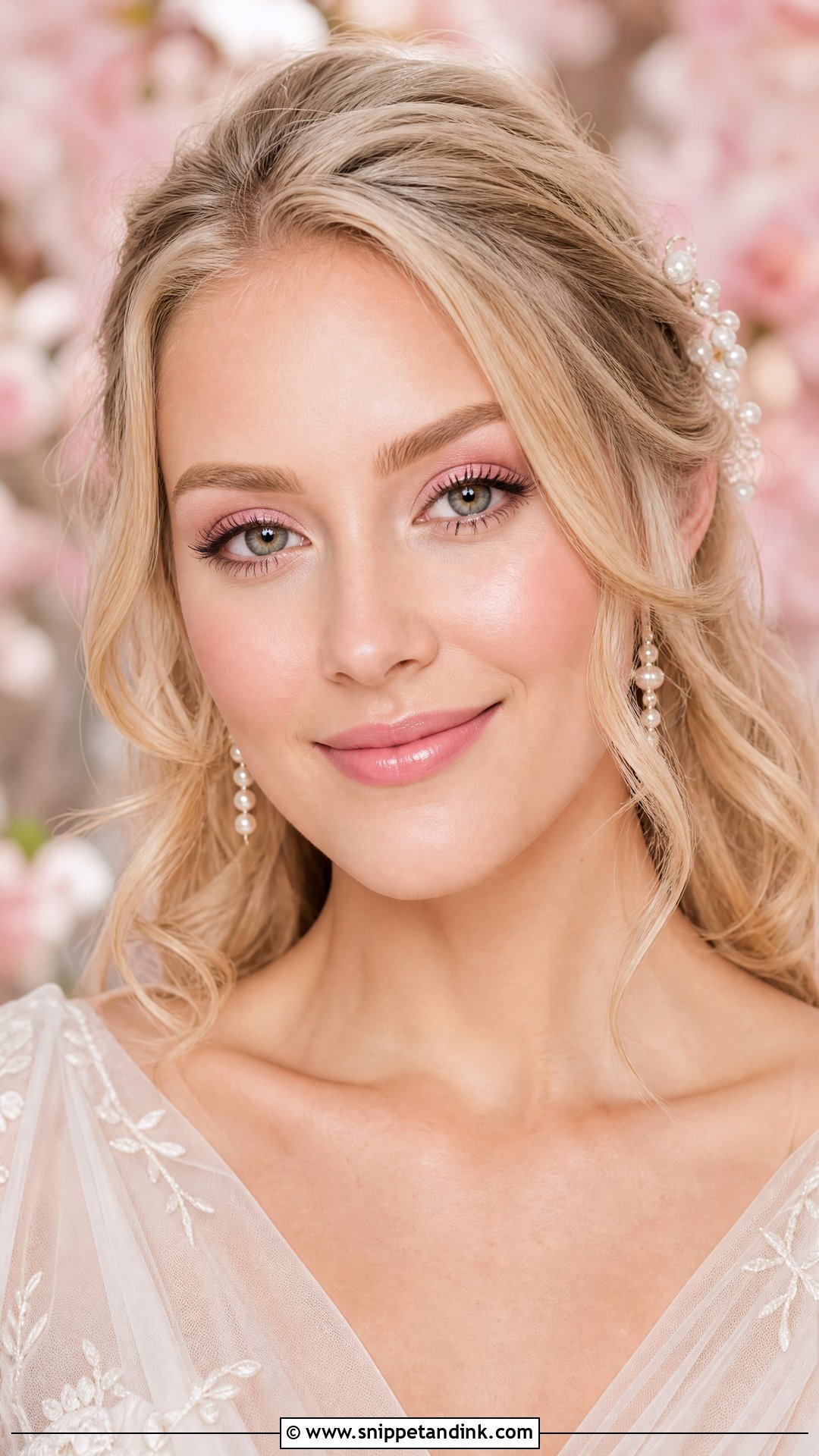
Baby pink is sweet, and it dates quickly when every element is pastel. Clean skin and properly defined lashes are what keep it current. I use a soft-focus foundation, pale pink cream blush and a pearl highlight. On the eyes, baby pink goes across the lid with a neutral beige blended into the crease, because a single pastel with no depth makes the lid look flat and slightly puffy in photos. Brown or soft black mascara does more here than liner. Match the lip to your undertone: cool skin can take a blue-pink, warmer skin needs a hint of peach in it.
8. Dusty Rose Wedding Makeup
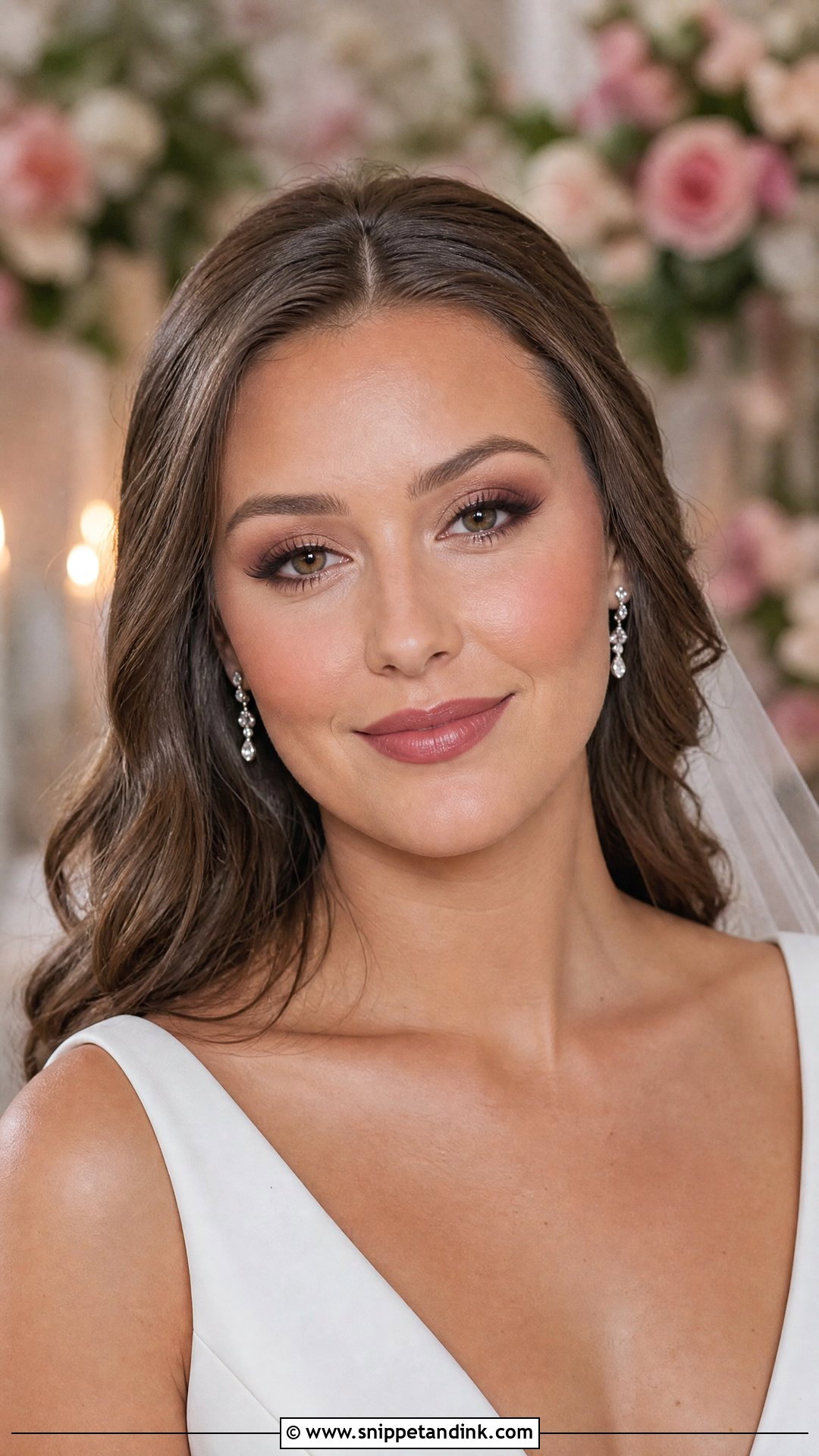
Dusty rose has a little grey in it, and that grey is why it suits so many skin tones. It gives depth without reading as bright pink. On a natural matte or satin base, I sweep dusty rose blush across the cheek, then blend rose, mauve and soft brown on the lid for a gentle smoke. Thin liner and individual lashes placed toward the outer corner lift the shape. The lip pulls it together: dusty rose liner under a matching satin lipstick. Brides who think pink is too young for them usually relax once they see this one in the mirror.
9. Mauve Pink Wedding Makeup
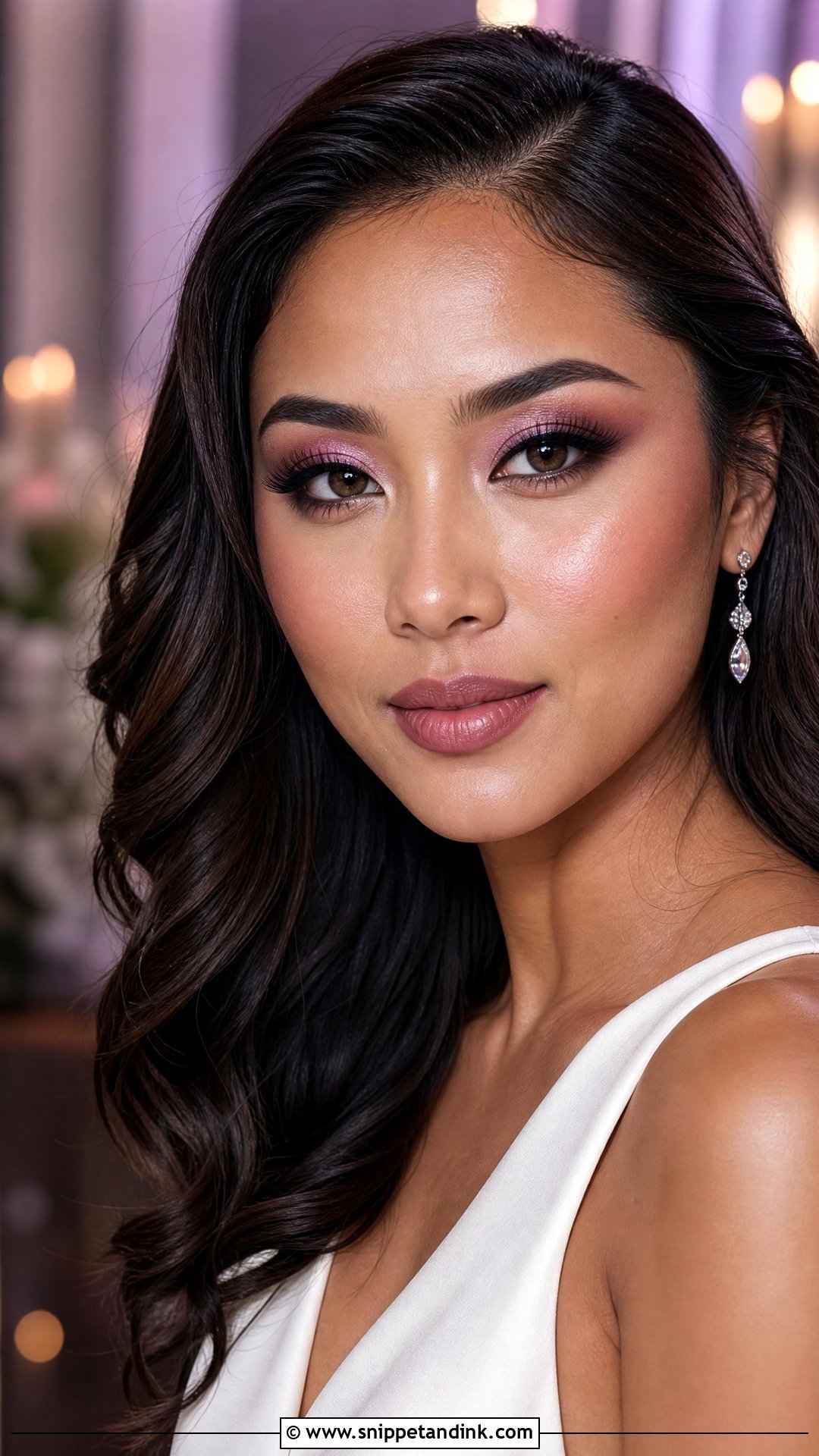
Mauve is the cooler, quieter cousin of pink, and its depth has to be matched to your skin. On fair skin I keep it soft, almost lilac. On olive and deeper skin it needs more plum, or it turns grey against the complexion. The base is a soft matte or natural finish, with mauve-pink blush and a subtle contour for shape. Mauve shadow goes through the crease, pink shimmer on the lid, and a plum-brown liner close to the lashes, which stay defined but light. A mauve pink lipstick or stain balances the face, and it sits comfortably next to a sleek gown and silver jewelry.
10. Blush Pink Wedding Makeup
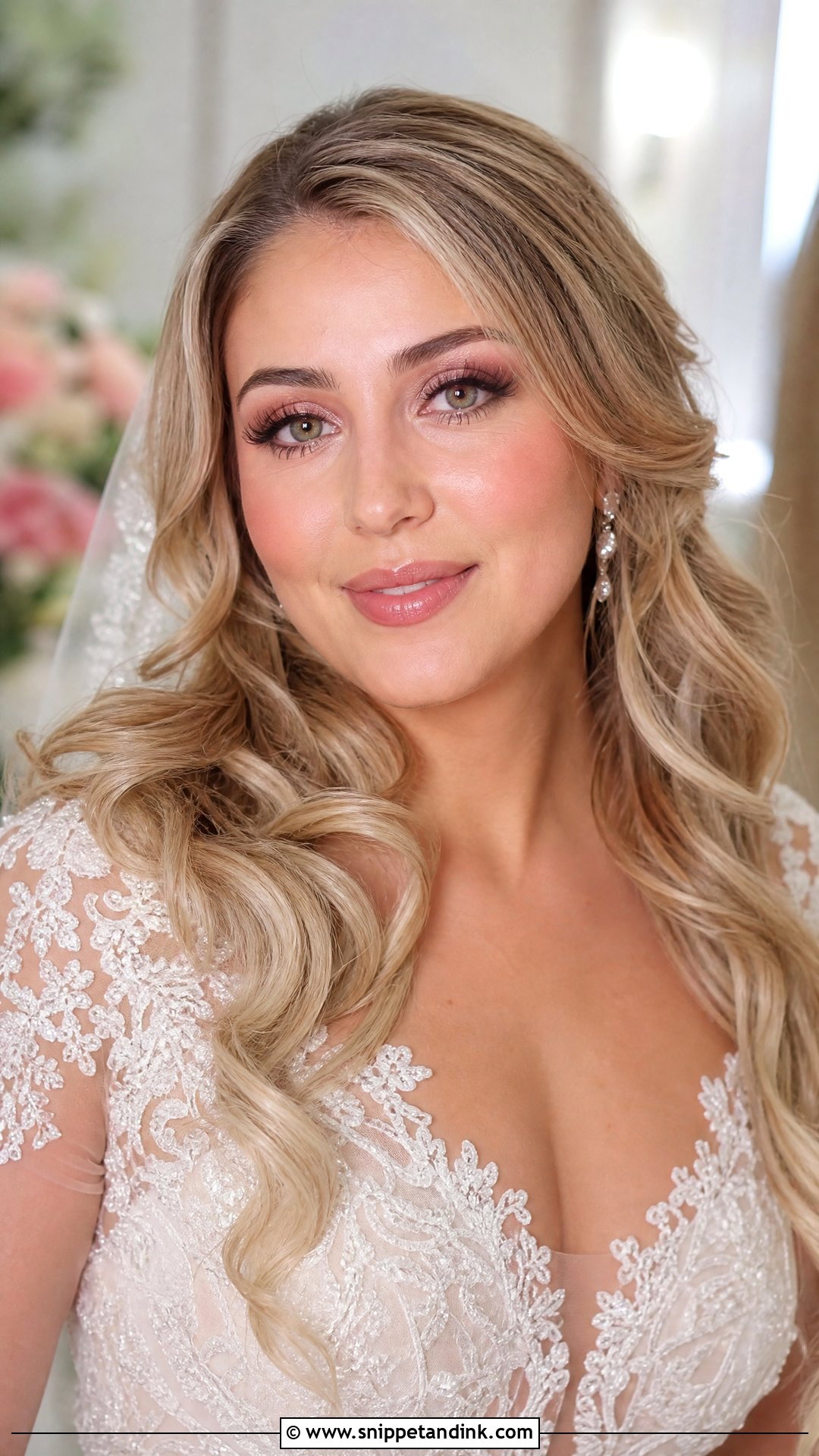
Here the cheek is the whole point, so blending matters more than anything else. I build blush in thin layers rather than one dense pass, because a heavy single swipe shows up as a stripe in flash photos. Radiant foundation goes on first, then soft pink on the apples of the cheeks and light highlight on the high points. Eyes stay simple with pink champagne shadow, brown liner and lifted lashes, and the lip is a pink-nude gloss or satin. Mothers of the bride often ask for this one too, since a real flush brightens the whole face without adding much product.
11. Pink Smokey Eye Wedding Makeup
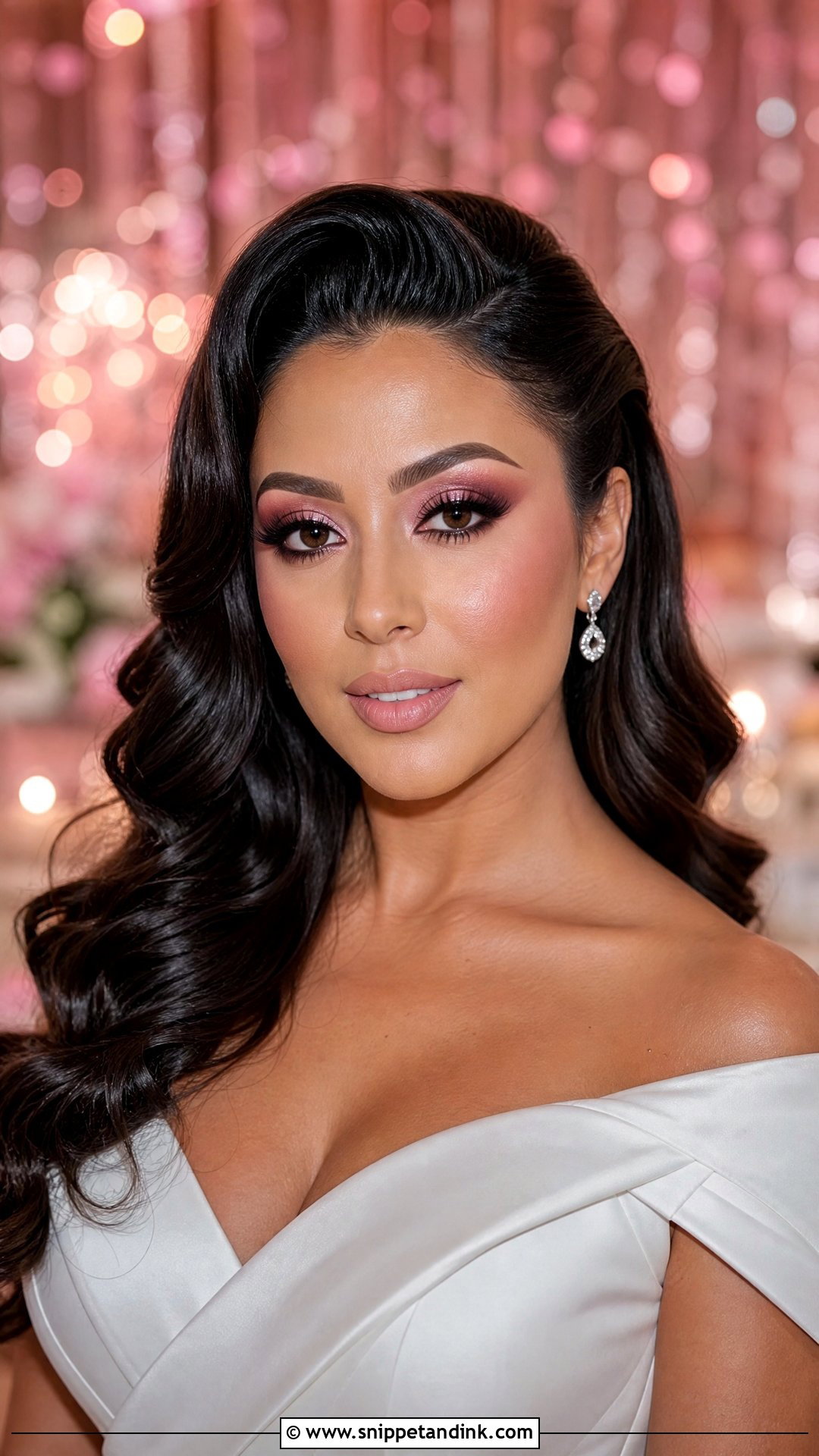
Pink smokey eye wedding makeup sounds dramatic, but rose, mauve and brown smoke far more softly than black or grey ever will. I keep the lid bright with pink shimmer and deepen only the outer corner with plum-brown, then smudge liner into the lash line and add fuller lashes. Since the eyes carry the drama, the skin stays smooth with rose blush and a little highlight, and the lip drops back to a soft pink nude. The usual mistake is letting the smoke creep up toward the brow, which closes a hooded eye completely. I save this one for evening weddings and formal rooms.
12. Pink Winged Liner Wedding Makeup
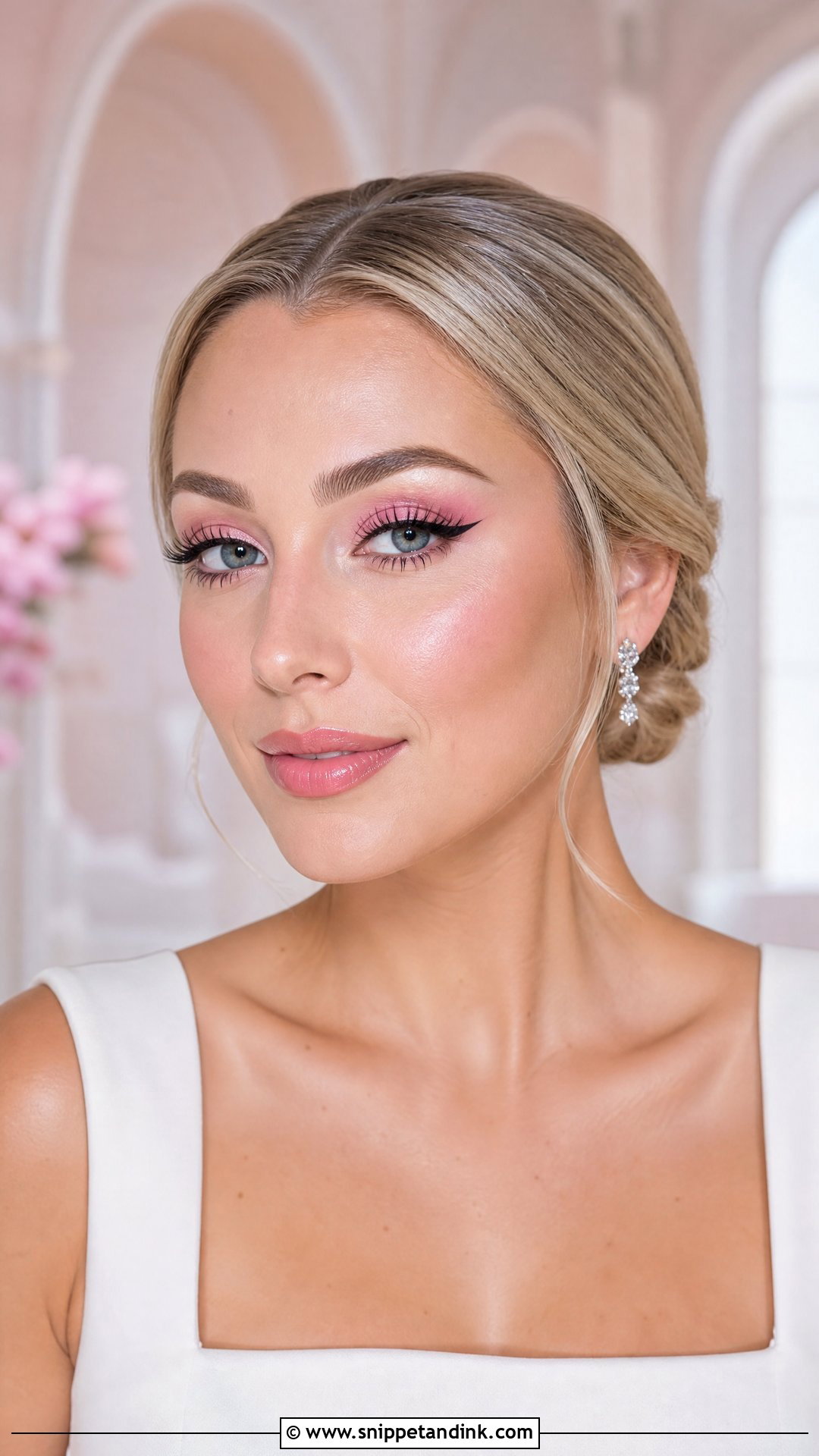
Pink winged liner wedding makeup rarely means hot pink liner on its own, which looks costume-like on most faces by the first dance. I pair soft pink shadow with a precise brown or black wing, and sometimes press a rose shimmer just above the lash line so the pink shows when the eye is open. Before I draw any wing, I ask the bride to look straight ahead with her eyes open. A wing mapped on a closed lid can disappear into a hooded fold. Polished skin, neat brows and a satin pink lip keep the rest quiet, and structured gowns with sleek hair suit it best.
13. Pink Glitter Wedding Makeup
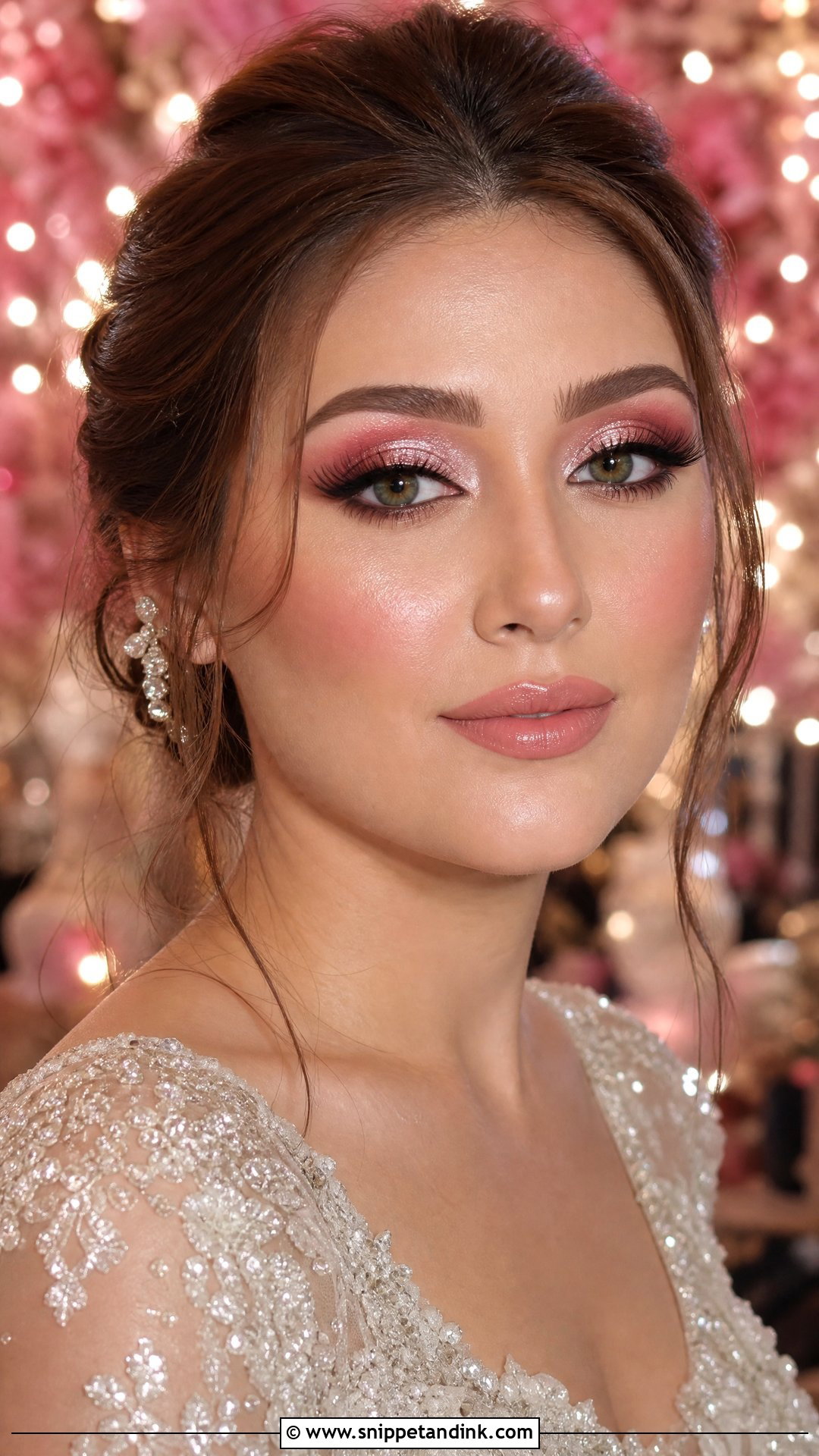
Glitter on a bride works when it’s fine and placed exactly once. I choose a pink micro-glitter or shimmer for the center of the lid only, never chunky glitter, which migrates onto the cheeks and shows up as specks in close-up portraits. Matte rose and warm brown through the crease give the eye its shape. I do eyes before foundation on glitter days, so any fallout can be swept off clean skin instead of wiped out of the base. Waterproof liner and lashes keep the definition, satin skin and rose blush keep the face refined, and a pink nude lip stops it tipping into party makeup. It’s my favorite way to add sparkle for an evening reception.
14. Pink Cut Crease Wedding Makeup
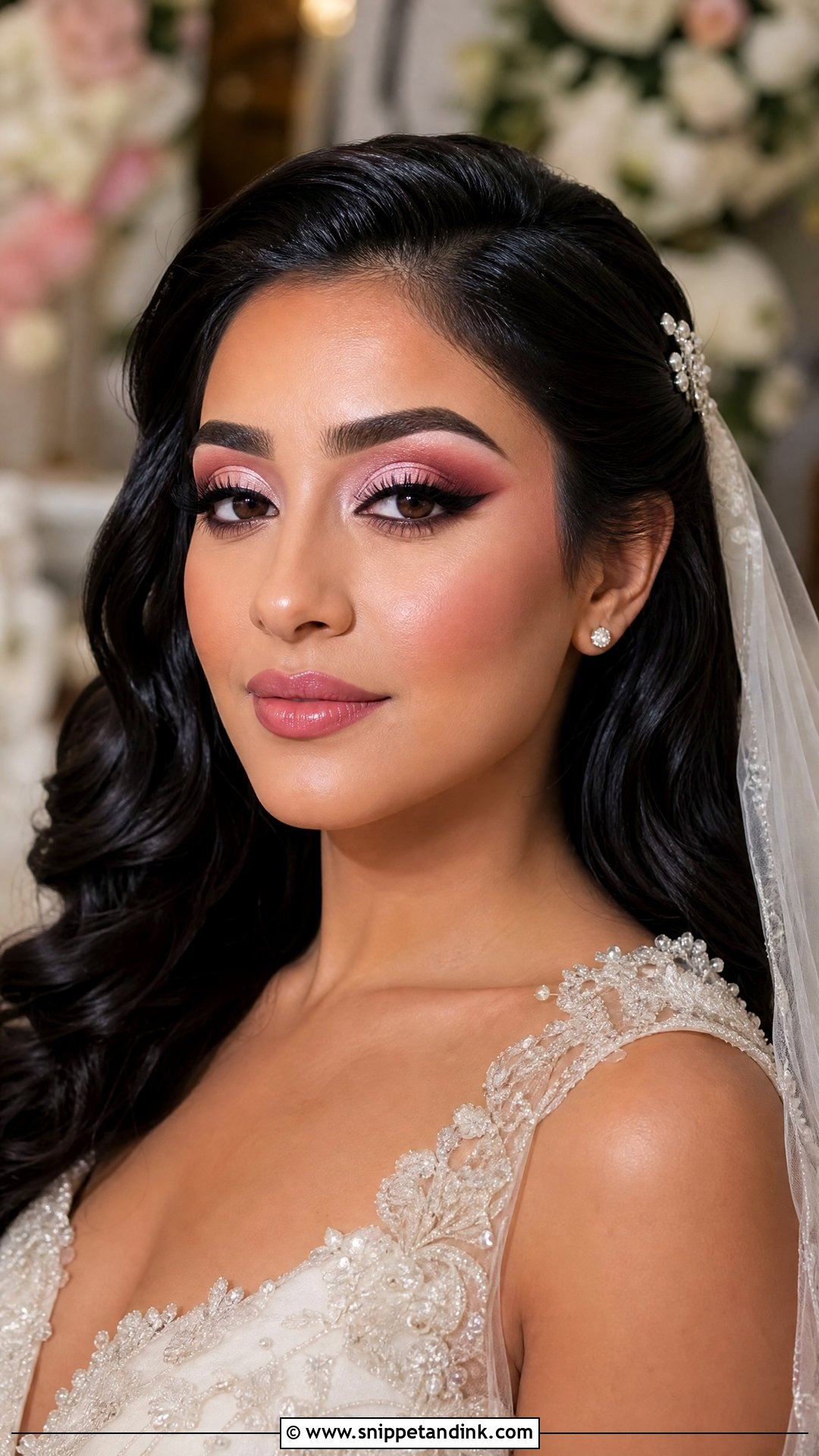
A cut crease gives the eye a lifted, sharply defined shape, and on a bride it has to be softened. I blend matte pink or mauve through the crease, then carve the lid with a little concealer before pressing pale pink shimmer on top. Only the outer corner gets deepened with brown or plum. Hooded eyes are the exception I flag at every trial: the carved line can vanish under the fold, so I draw the cut slightly above the natural crease while the eyes are open. Wispy lashes, soft brows, high pink blush and a satin rose lip complete a look that rewards brides who already love glam.
15. Pink Monochrome Wedding Makeup
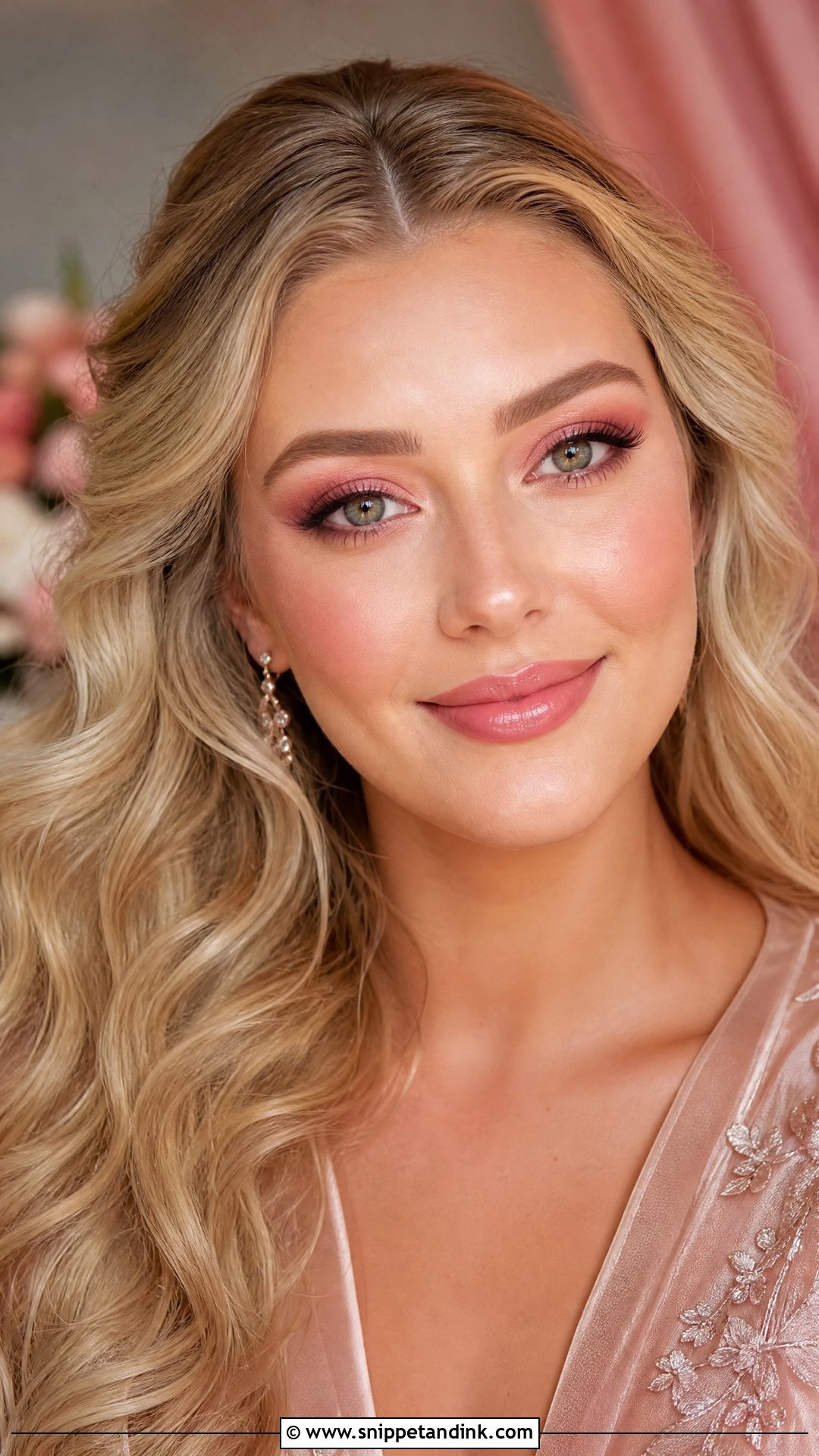
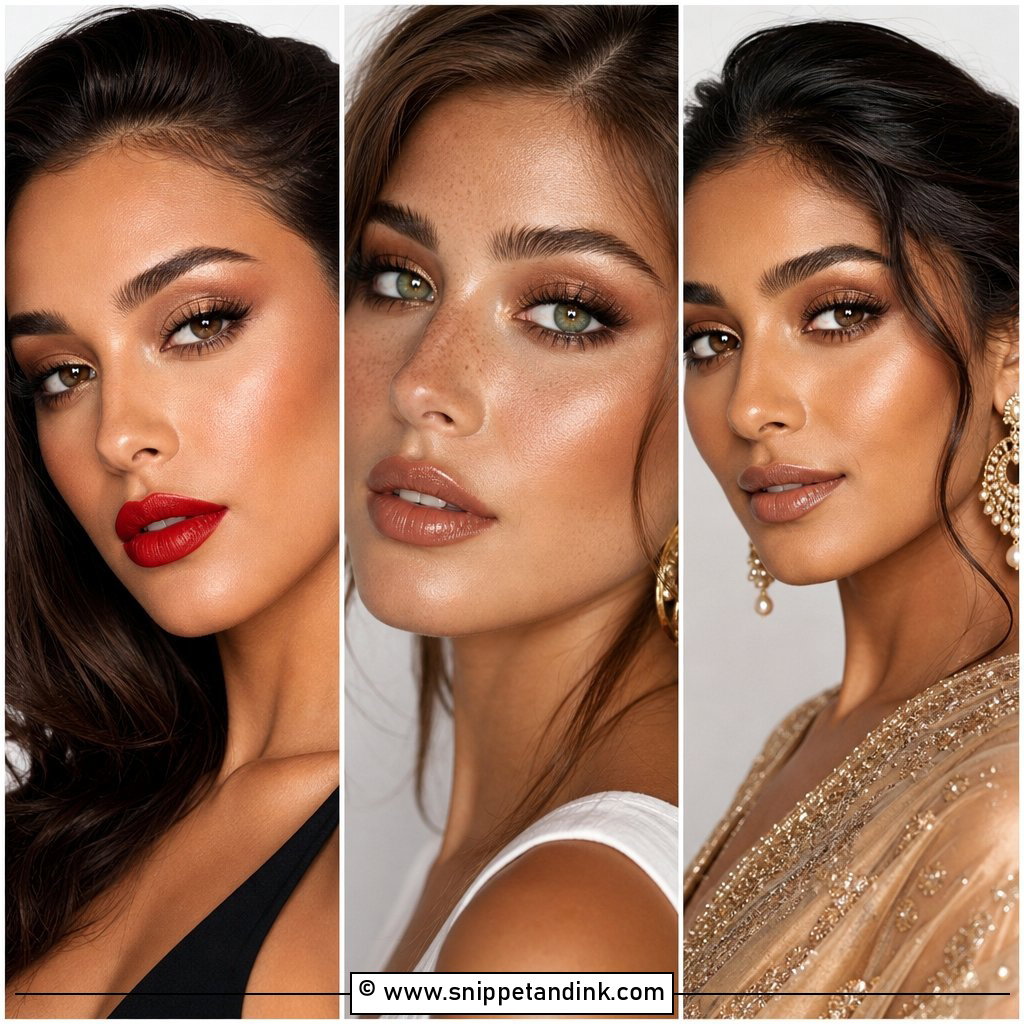
Monochrome means one pink family across eyes, cheeks and lips, and the trick is keeping the undertone consistent rather than the exact shade. For a bride I use rosy shadow, pink blush and a matching lipstick, then add a little bronzer so the face doesn’t flatten into a single block of color. Brown liner and natural lashes give enough definition. It’s also the quickest face to touch up, since one cream product can go on cheeks and lips in a pinch. Next to blush dresses and pink bouquets it looks coordinated without feeling matched.
16. Peachy Pink Wedding Makeup
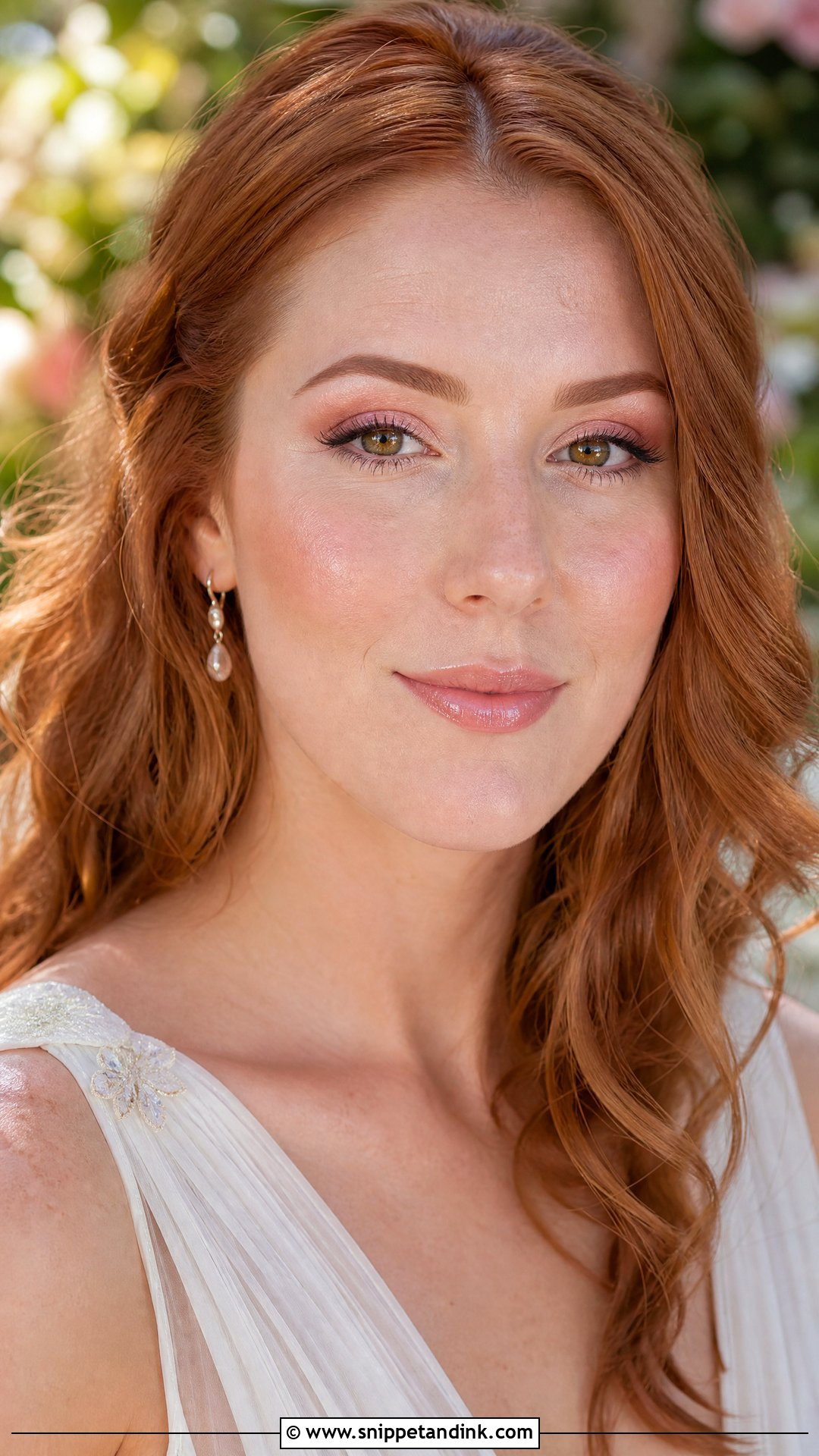
Peachy pink is what I suggest when true cool pinks look sharp or slightly purple on someone’s skin. It’s warm and flattering outdoors, and the risk is tipping orange, so I keep the peach subtle. Radiant base, warm pink-peach blush, and light bronzer along the cheek and hairline. On the eyes, peachy pink with champagne shimmer and warm brown liner, lashes lifted and natural. A peach-pink satin lipstick or gloss finishes it. Summer weddings are where it earns its place, especially with gold jewelry and warm-toned flowers.
17. Hot Pink Lip Wedding Makeup
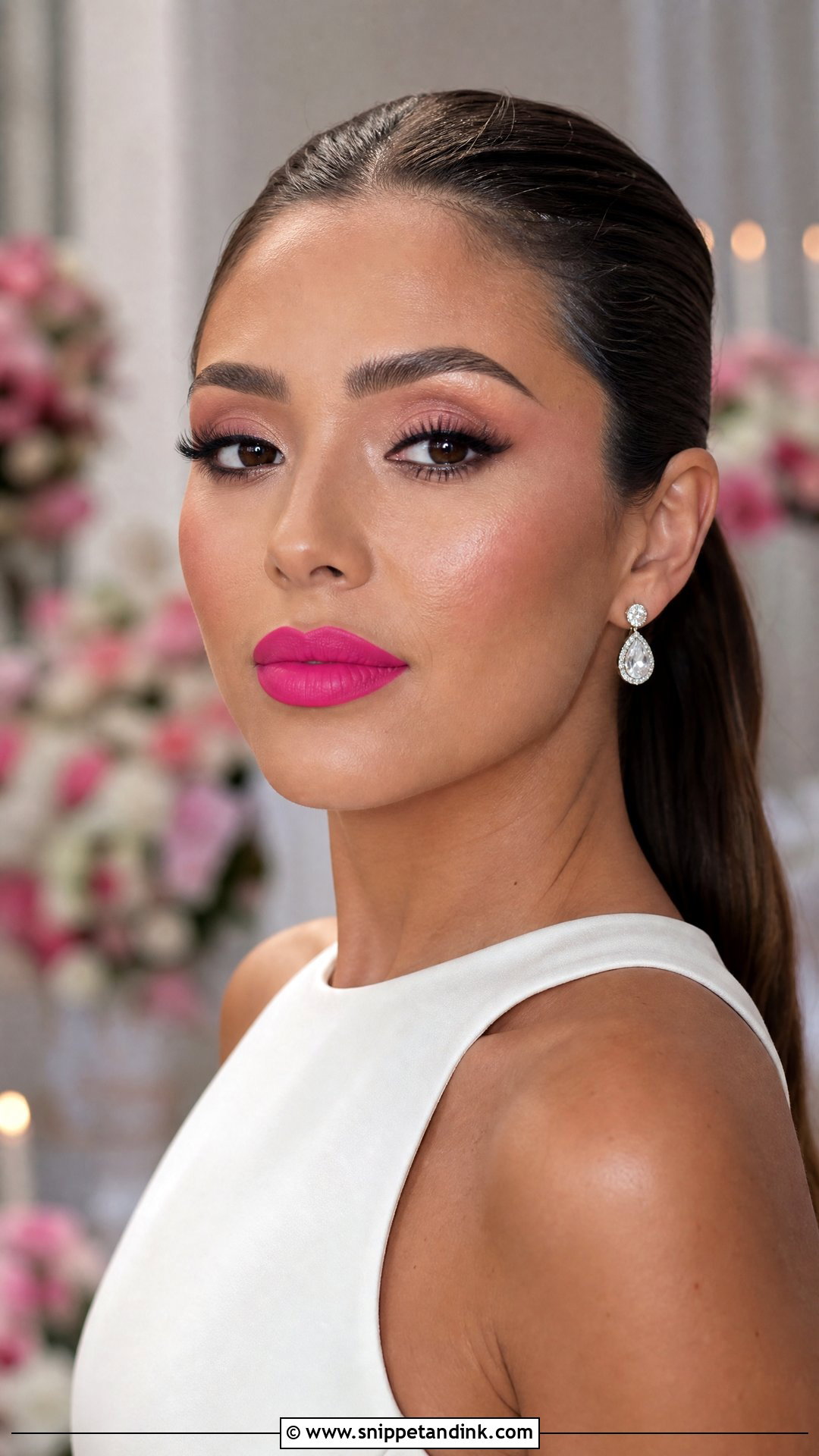
A hot pink lip is a confident choice, and it only works if everything else steps back. I keep the skin smooth and softly matte, blush light so it doesn’t compete, and eyes in neutral rose or beige with a clean wing or tightlined lashes. Then the lip gets the time: liner over the whole mouth, a long-wearing satin or matte hot pink, a blot through tissue, and a second layer. Bright pink transfers onto glasses and onto a partner’s face, so I’d warn you before the first kiss photo. Keep the gown, jewelry and hair simple so the color has room.
18. Pink Nude Wedding Makeup
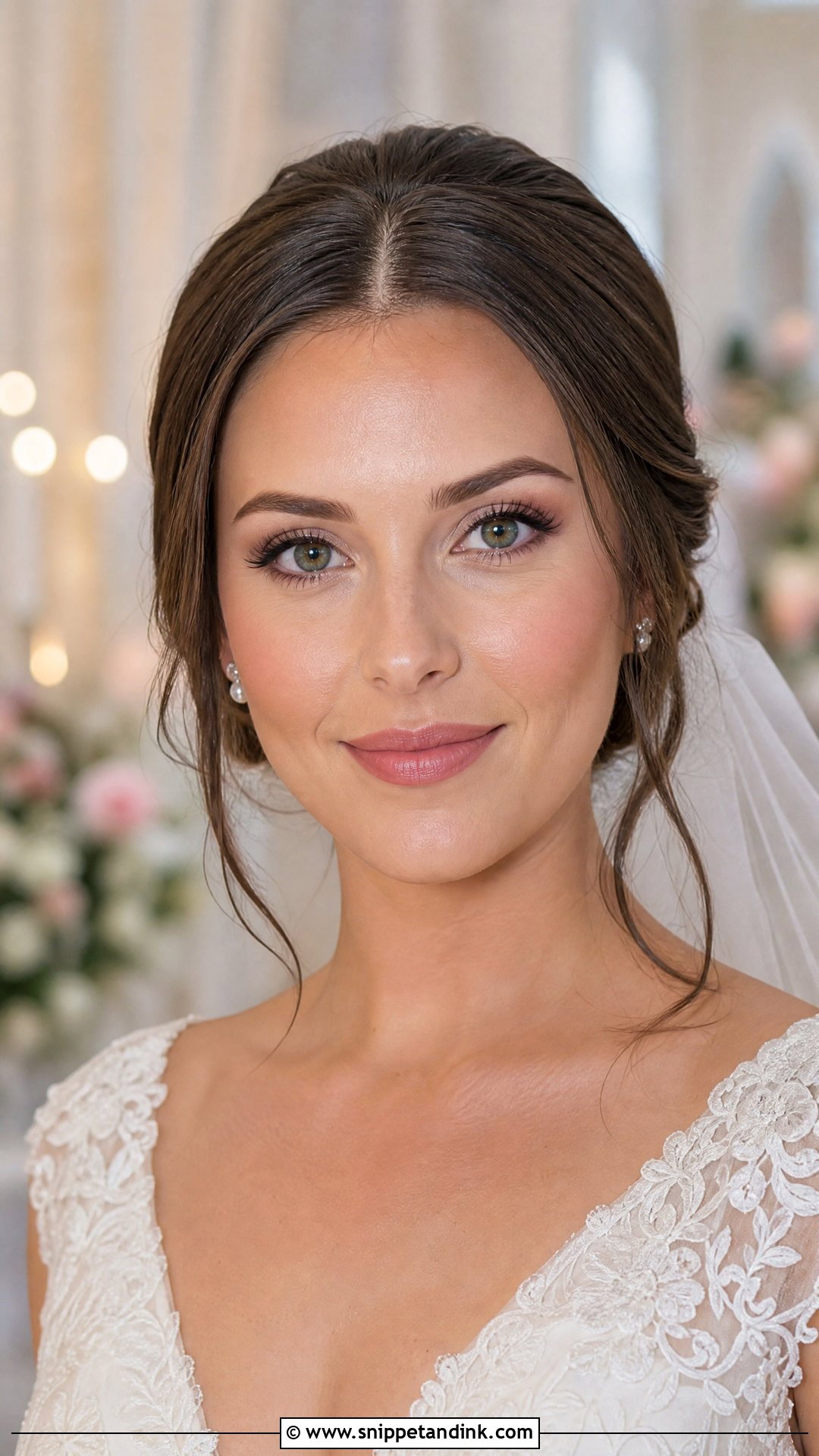
Pink nude is the safest face here and the hardest to get right, because a nude too close to your own lip color simply disappears. I pick one a shade deeper than your natural lip. Natural-finish foundation, soft rose blush and a small amount of contour give dimension, while pink beige, taupe and champagne shadows keep the eyes bright but defined with soft liner and natural lashes. It’s the face I’d recommend to a bride who wants understated glam that will still look current in her album years from now.
19. Pink Glossy Wedding Makeup
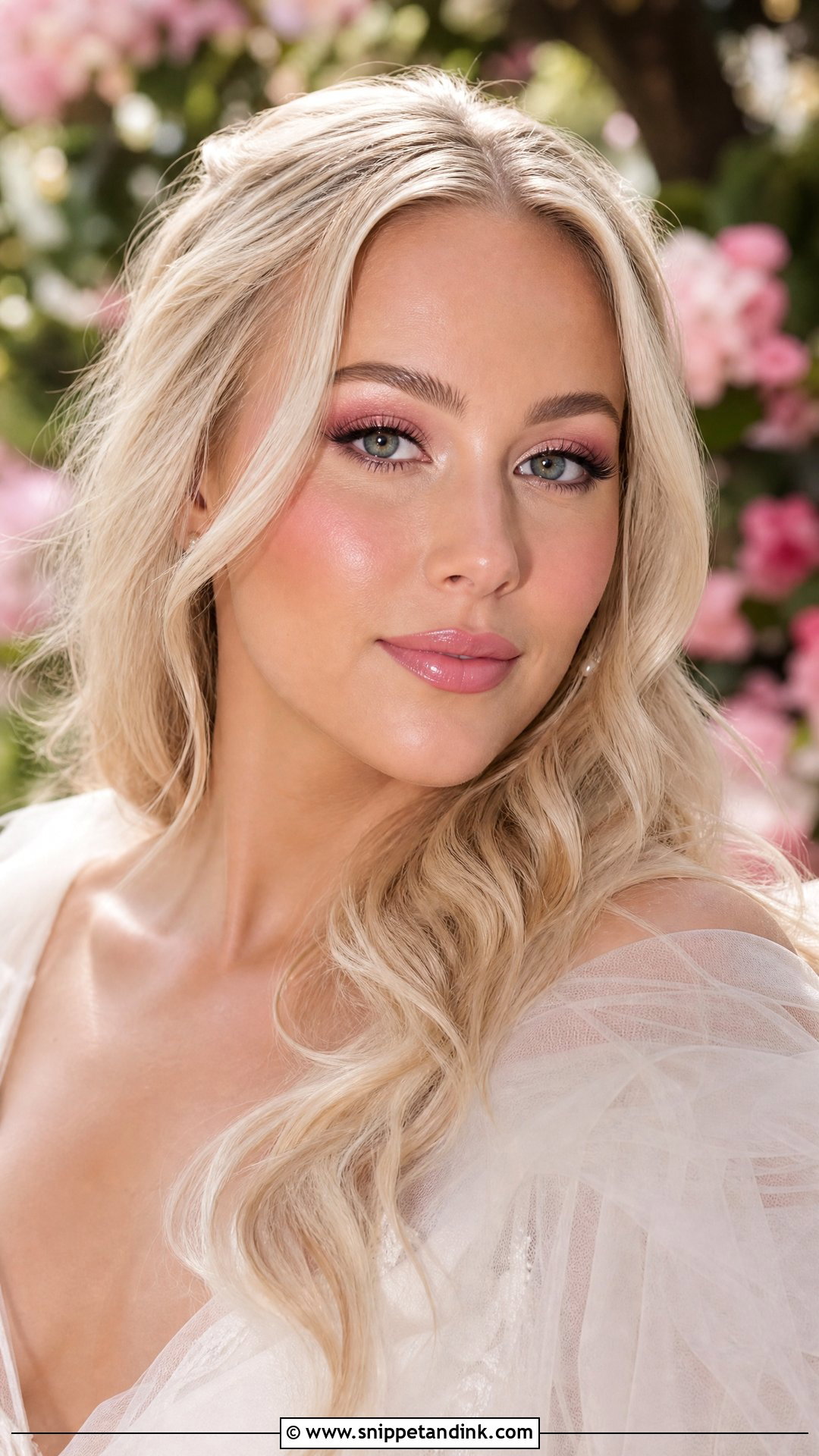
Gloss reads fresh and young, and it’s the finish most likely to look oily in photos if shine goes everywhere. I put it in exactly two places, the cheekbones and the lips. The rest of the face gets a long-wearing radiant foundation with the T-zone lightly set, plus cream pink blush and a soft liquid highlight on the cheekbones. On the eyes I use satin pink shadow rather than eye gloss, which creases and goes tacky within the hour, with curled lashes and waterproof mascara. Pink liner under a high-shine gloss keeps it from bleeding. Keep blotting papers in a bridesmaid’s bag.
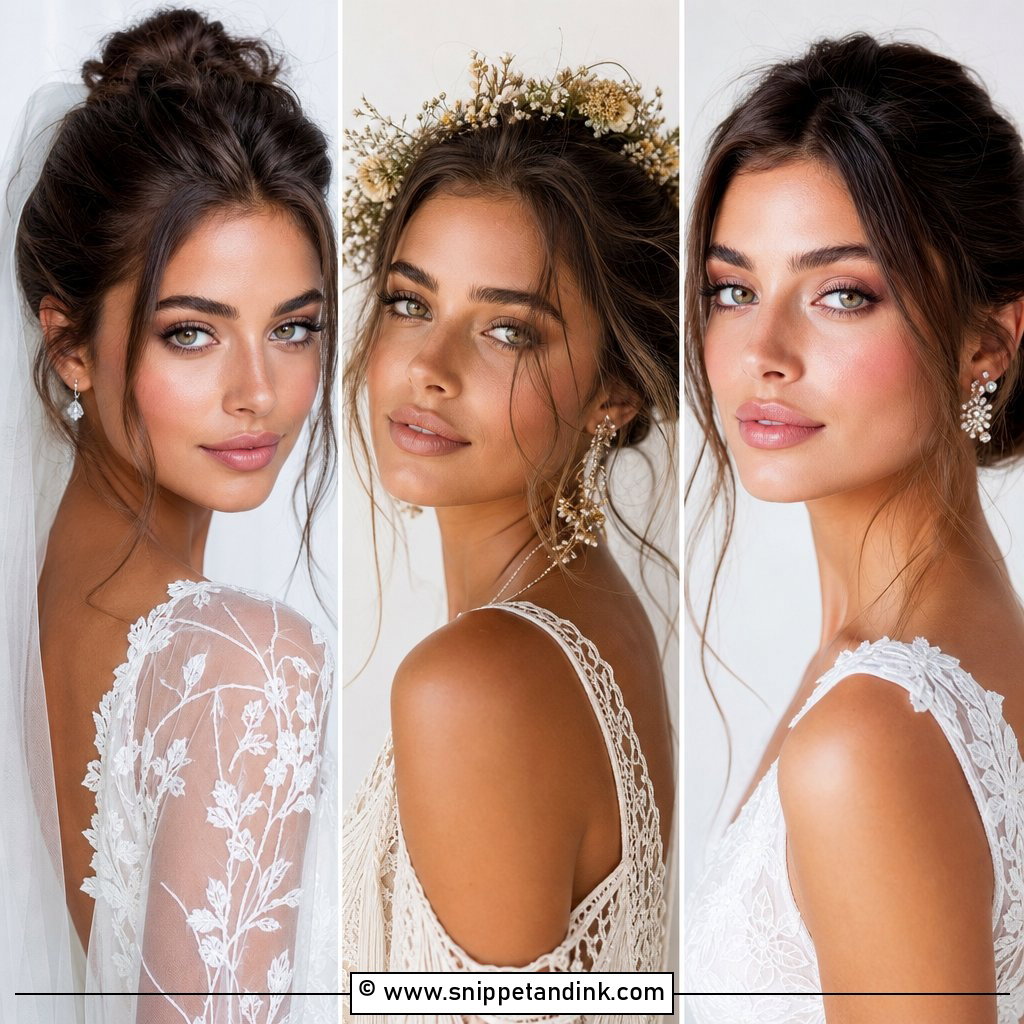
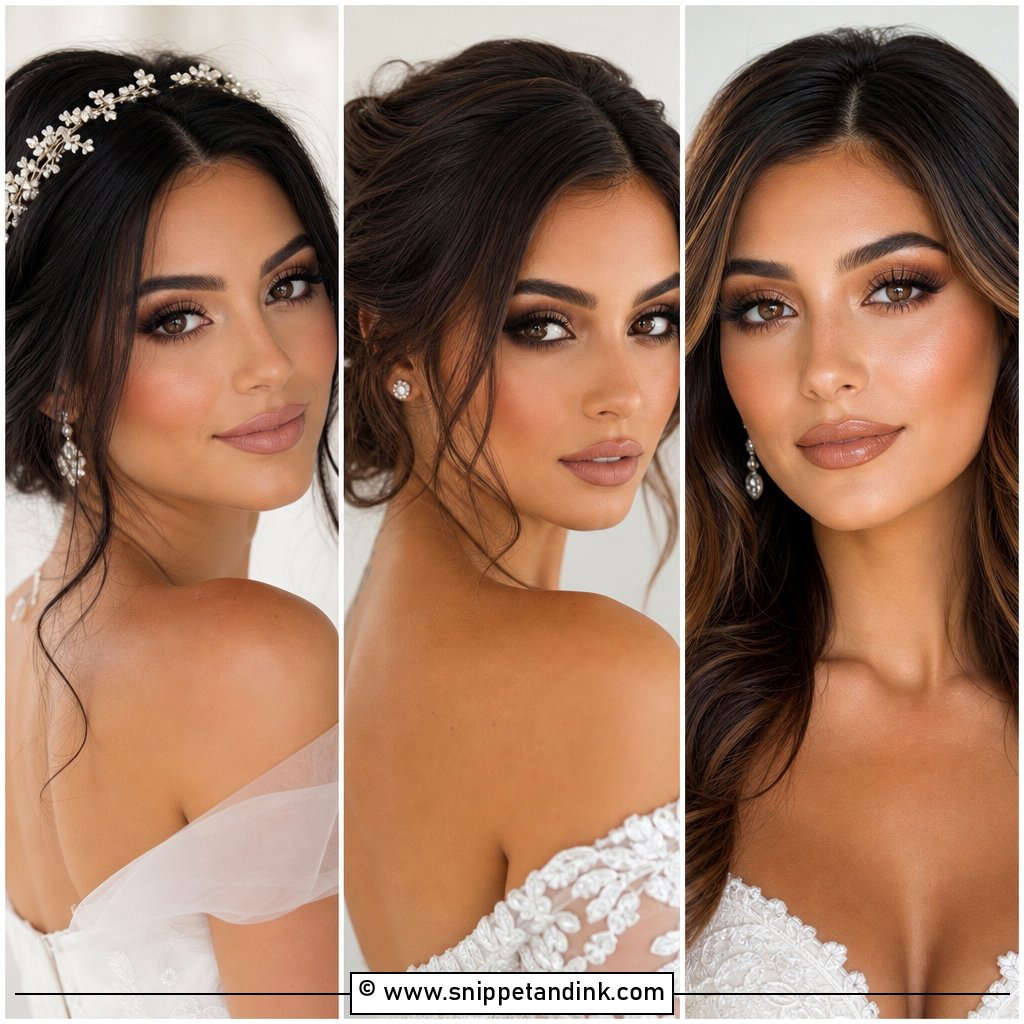
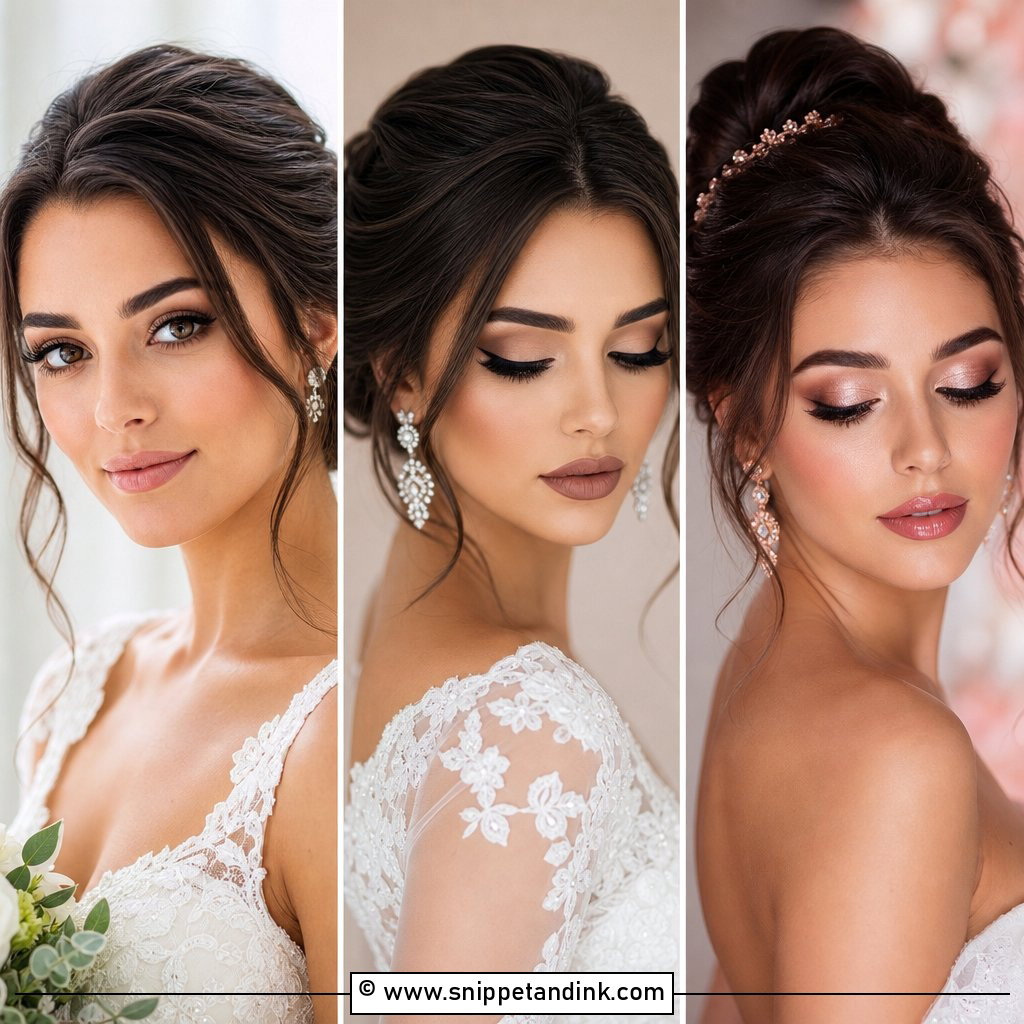
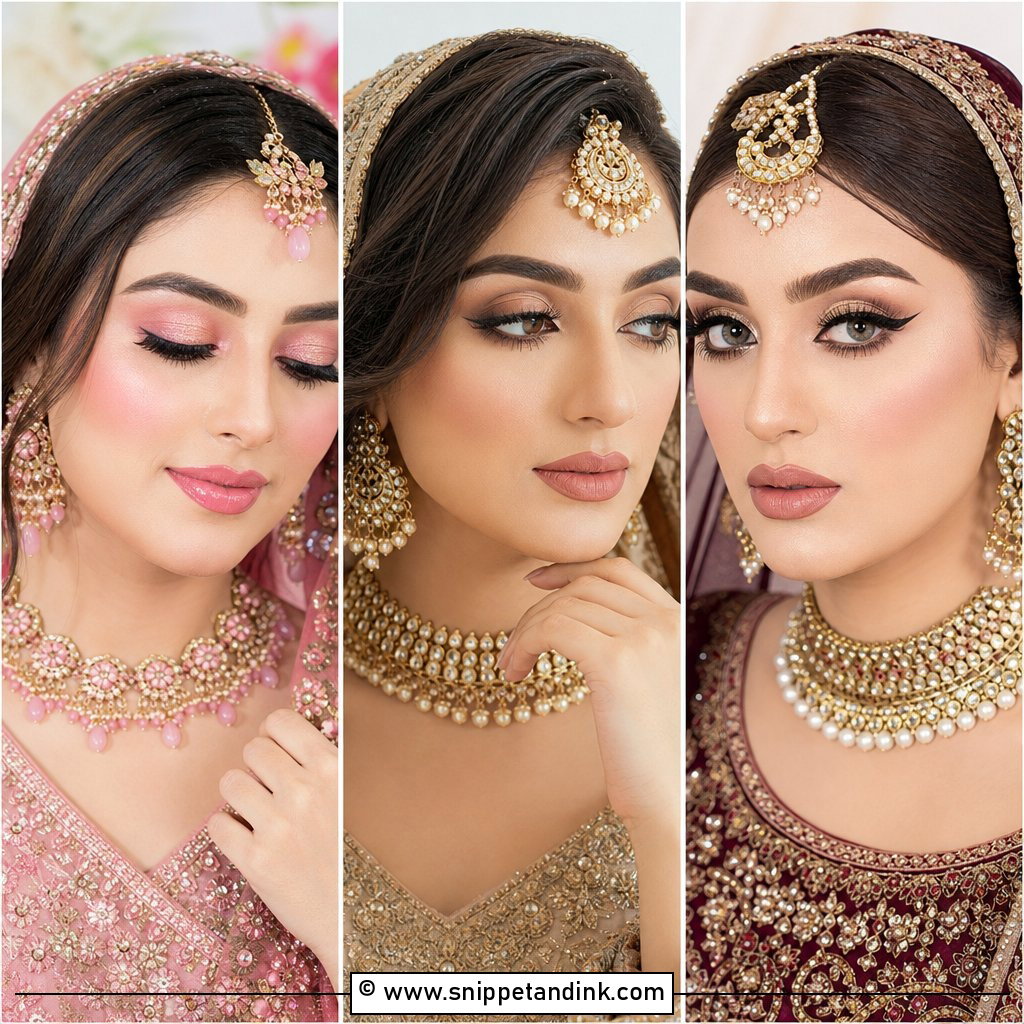
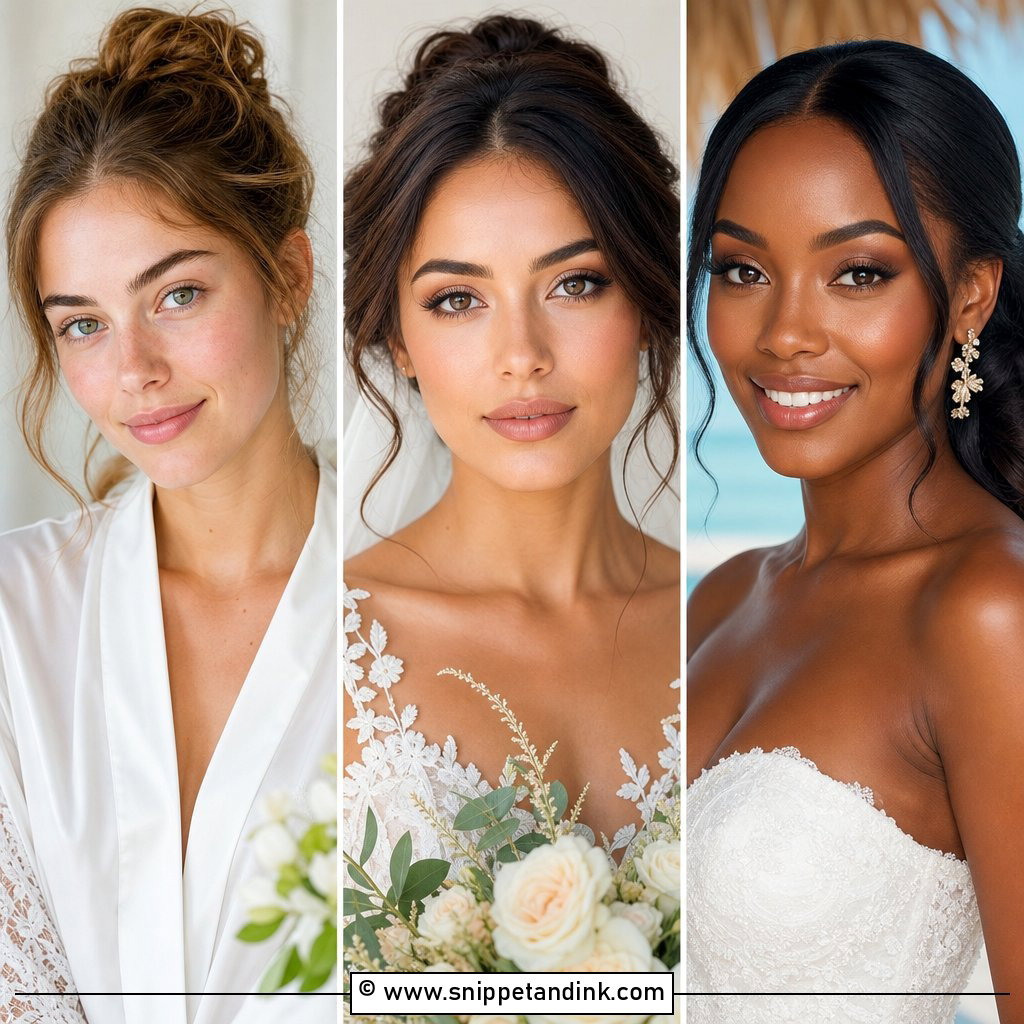
20. Pink Glam Wedding Makeup
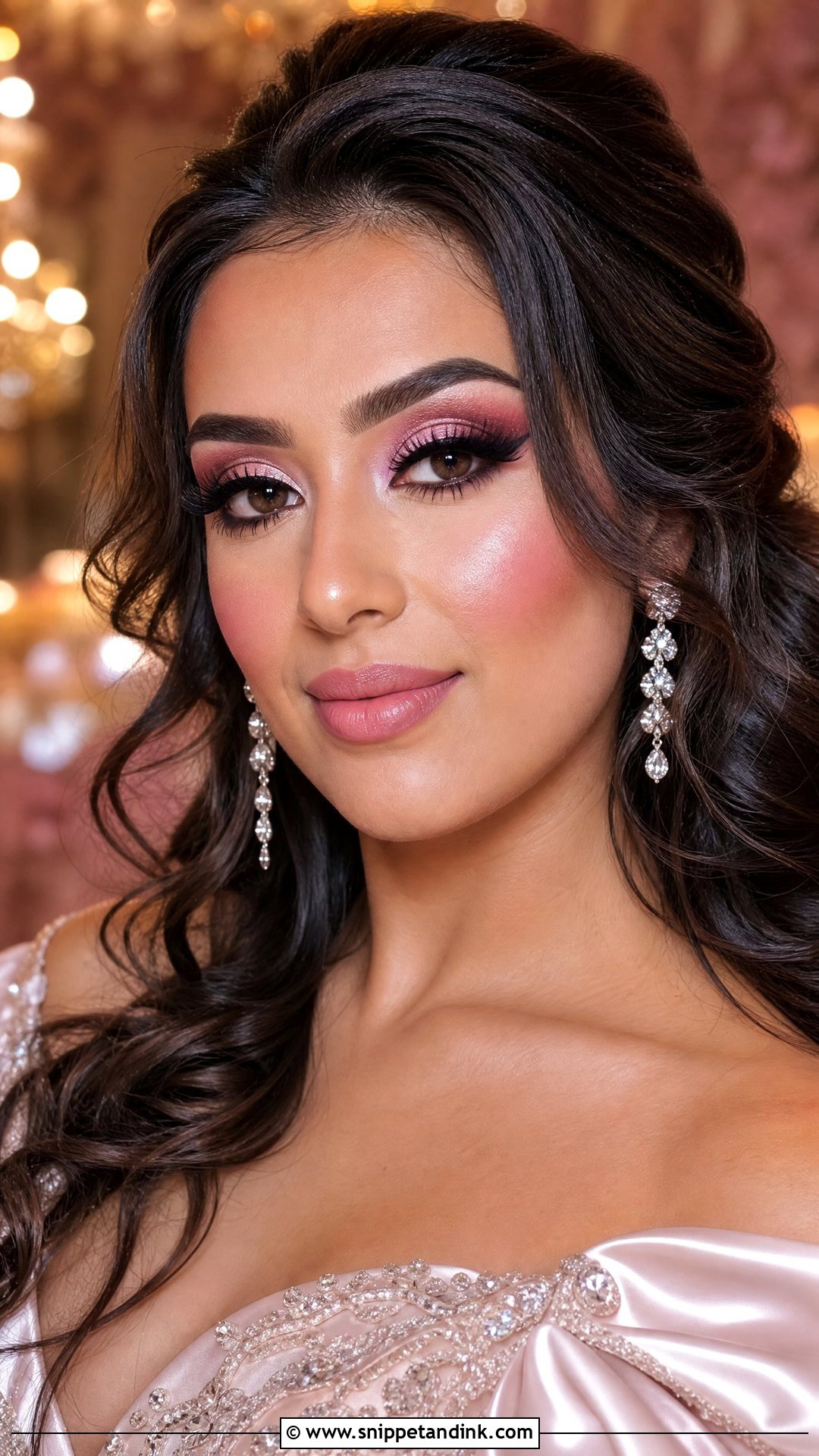
Full pink glam is for the bride who loves a complete beauty look and wants it visible from the back of a ballroom. The base is perfected with medium-to-full coverage foundation, concealer, contour and setting powder, then warmed with rosy blush and champagne highlight. Eyes are layered: pink shimmer on the lid, mauve through the crease, deep brown in the outer corners and black liner, with full wispy lashes. A lined pink lip in satin or matte finishes it. With this much coverage, skin prep matters more than any product. I’d book any facial at least two weeks out, so a breakout or redness has time to calm.
21. Pink Bridal Makeup For Fair Skin
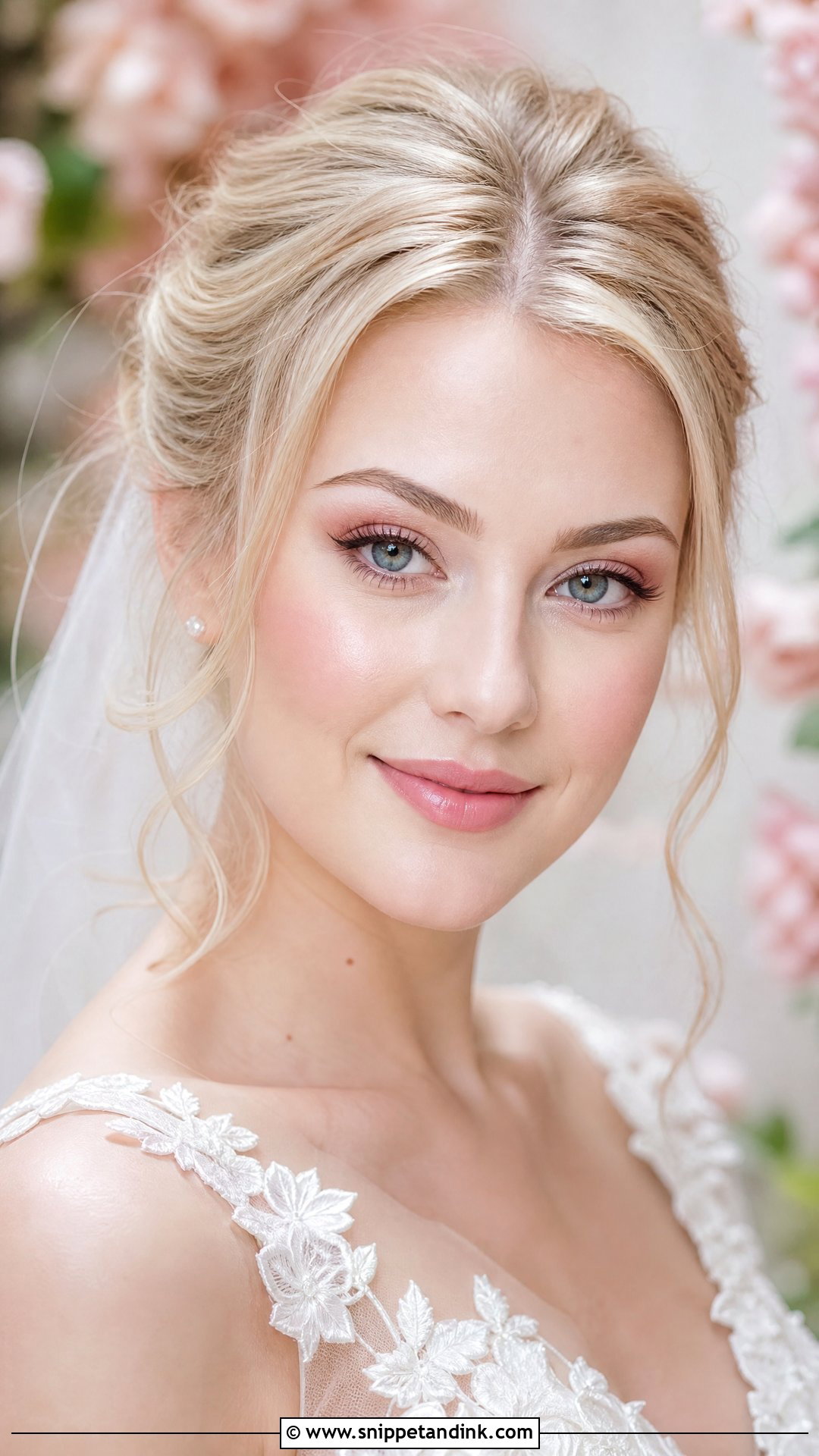
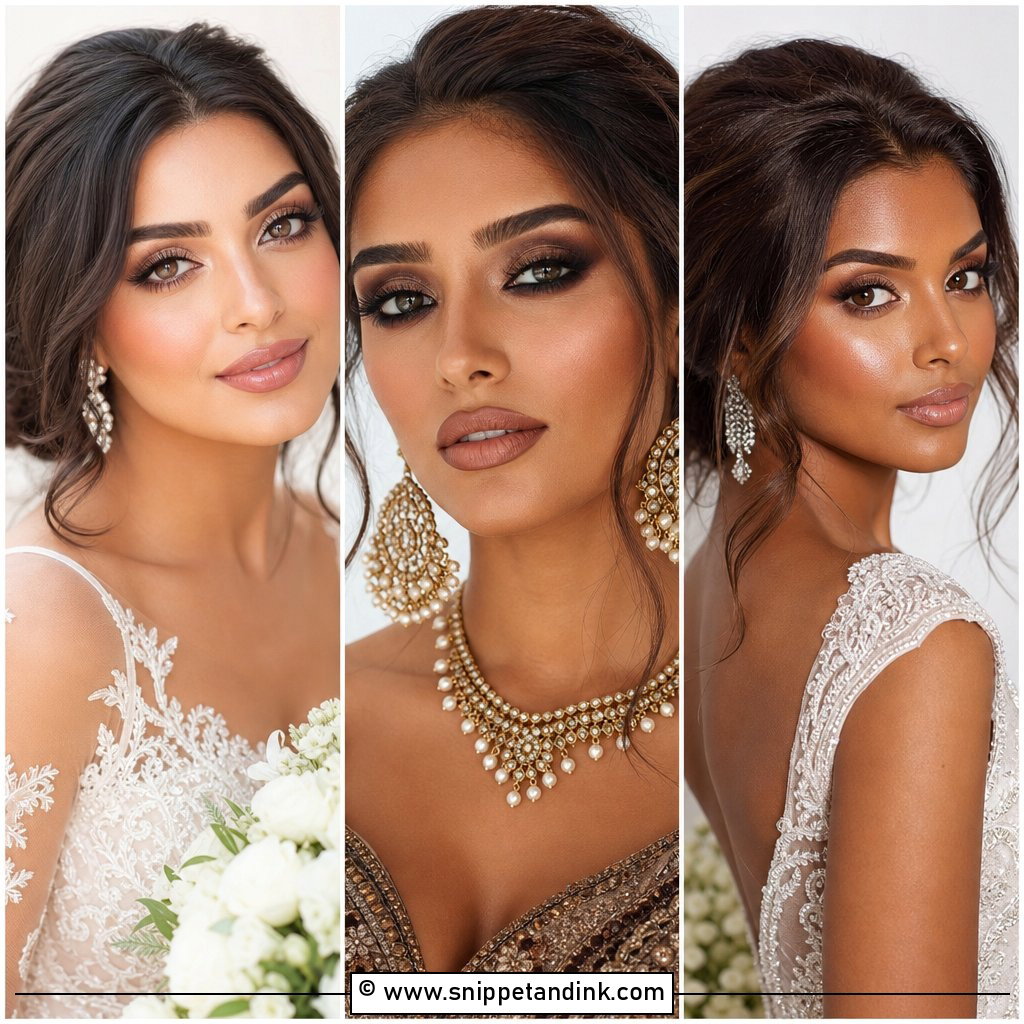
Fair skin shows every hard edge, so the pinks stay soft and the contour stays light. Depending on undertone, I’d work with baby pink, rose or cool pink over a light coverage foundation. Blush goes high on the cheek and sheer, because a heavy hand on pale skin looks sunburnt rather than flushed. Eyes take pale rose, champagne and light taupe with brown liner; black works if it’s kept thin. A soft pink or rose nude lip completes it. The goal is keeping your features from washing out under white flash.
22. Pink Bridal Makeup For Olive Skin
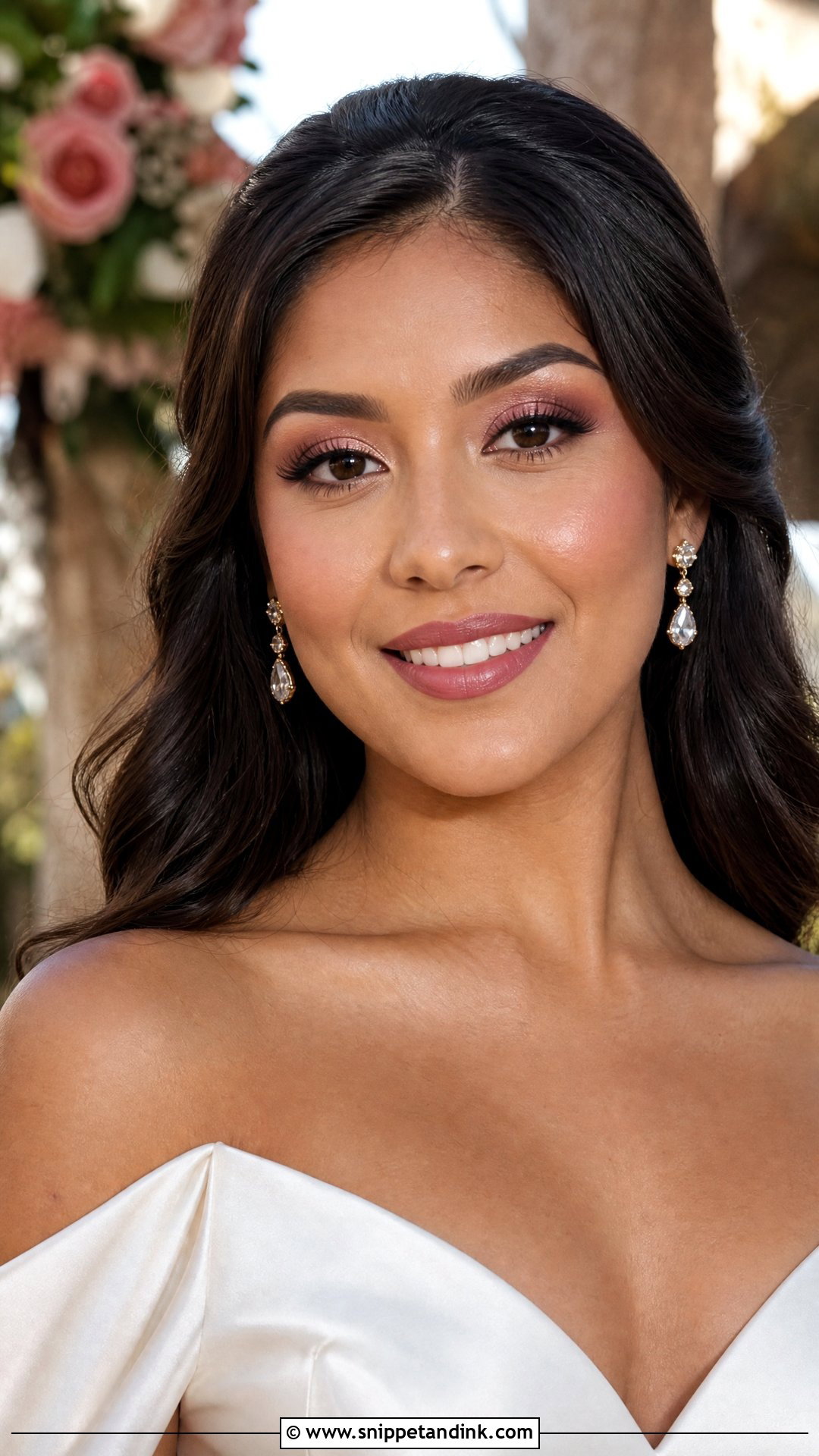
Olive skin has a green-gold undertone that turns very pale pinks chalky, so the pink needs warmth or depth: rose, mauve, dusty pink or peachy pink. I match the satin base to the neck rather than the face and check it has no grey cast, a mistake I correct often on olive skin. Rose blush and soft bronzer bring the warmth back. On the eyes, mauve pink blended with bronze or taupe keeps things balanced, with brown liner and defined lashes. A rosy nude or warm pink lipstick finishes it without fighting the undertone.
23. Pink Bridal Makeup For Deep Skin
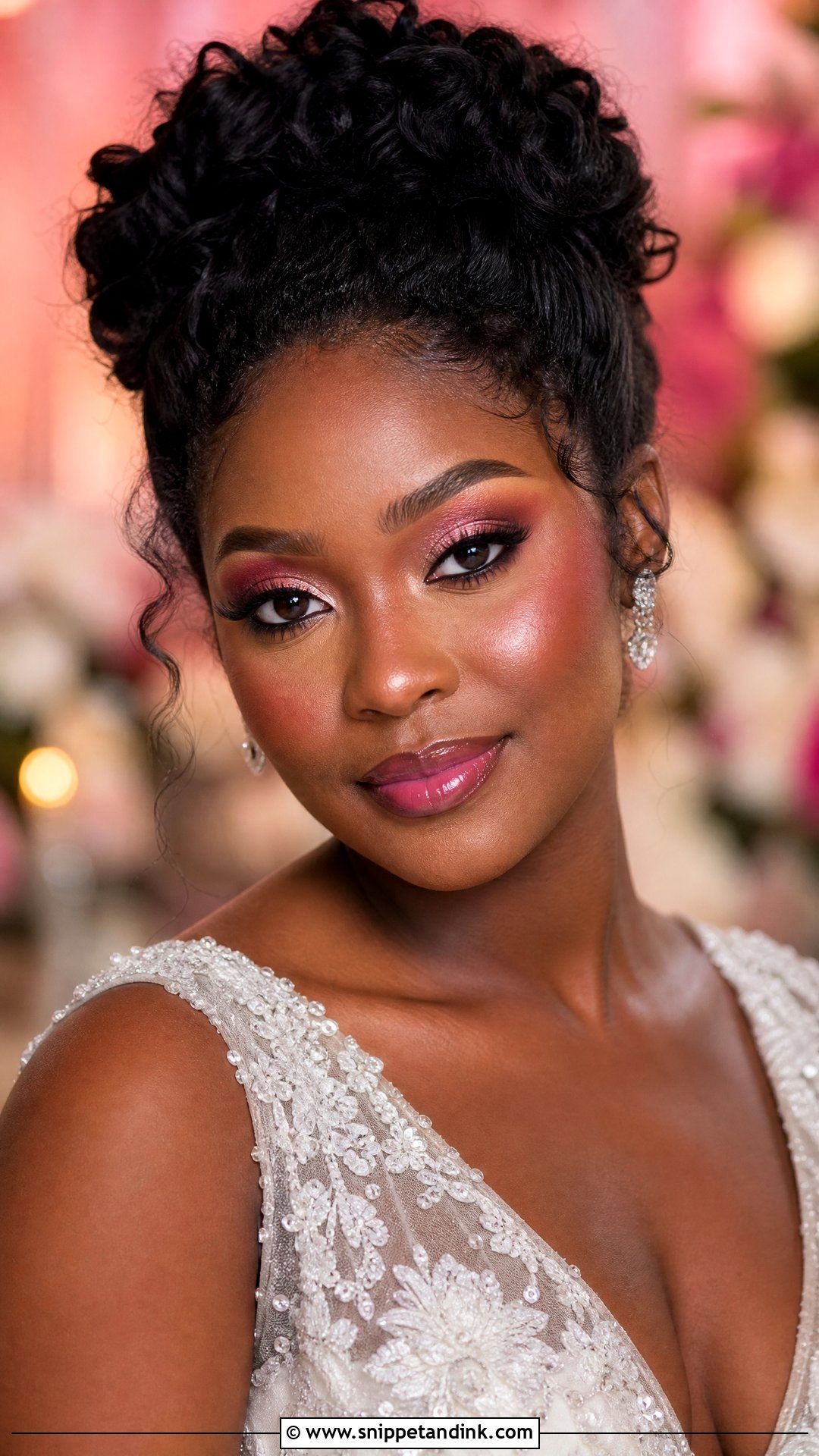
On deep skin, pale pink can turn ashy, so I go straight to rich, visible tones: berry pink, rose, deep mauve, fuchsia or warm magenta, built in soft layers. A radiant or satin foundation with contour and highlighter adds dimension. I always check blush in daylight, because a shade that looks bright in the pan can vanish on deep skin unless it’s highly pigmented. Rose gold, cranberry, plum and bronze work on the eyes with black or deep brown liner and full lashes. For lips, berry pink or a deep pink gloss holds its own in photos.
24. Pink Wedding Makeup For Bridesmaids
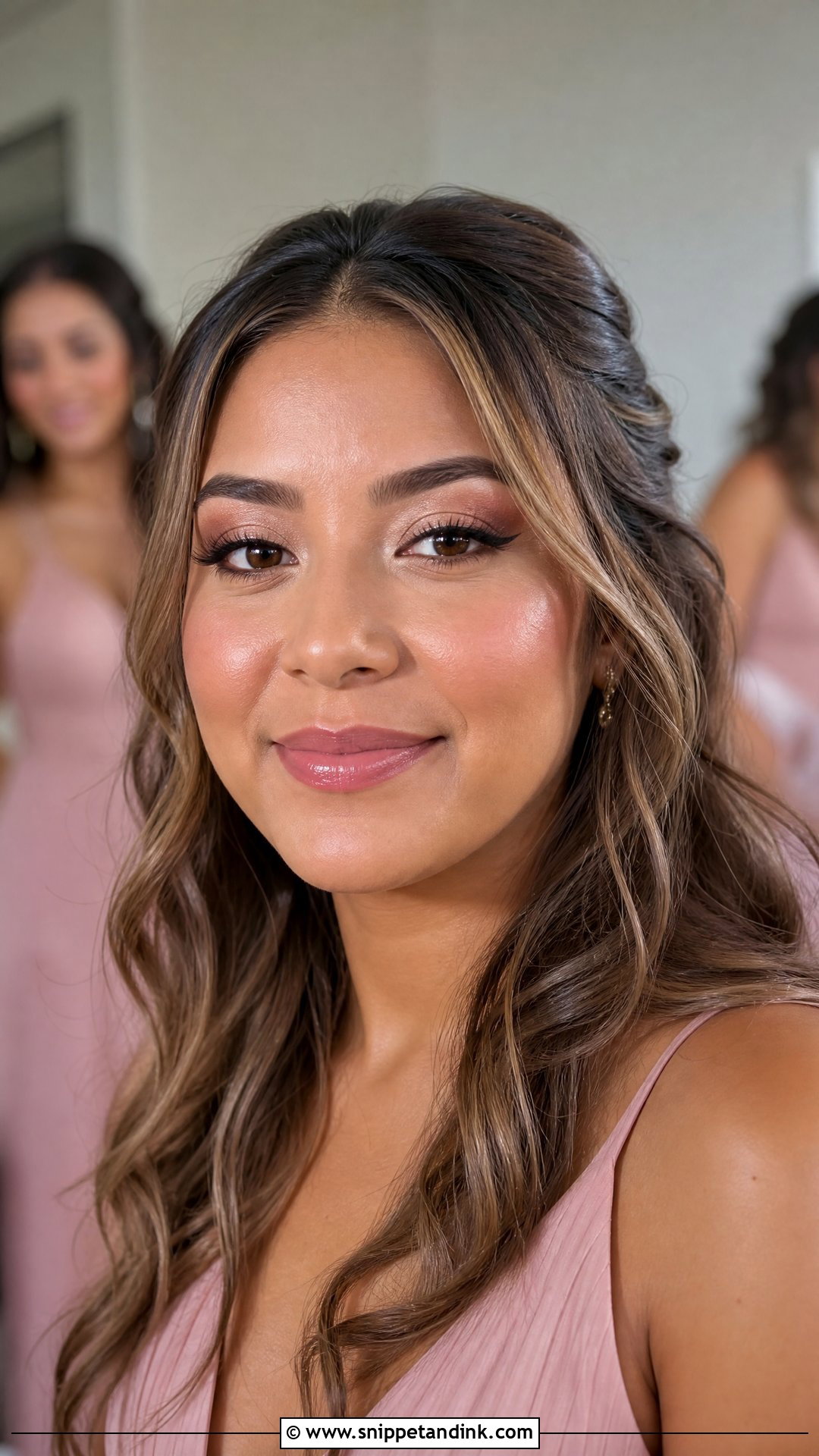
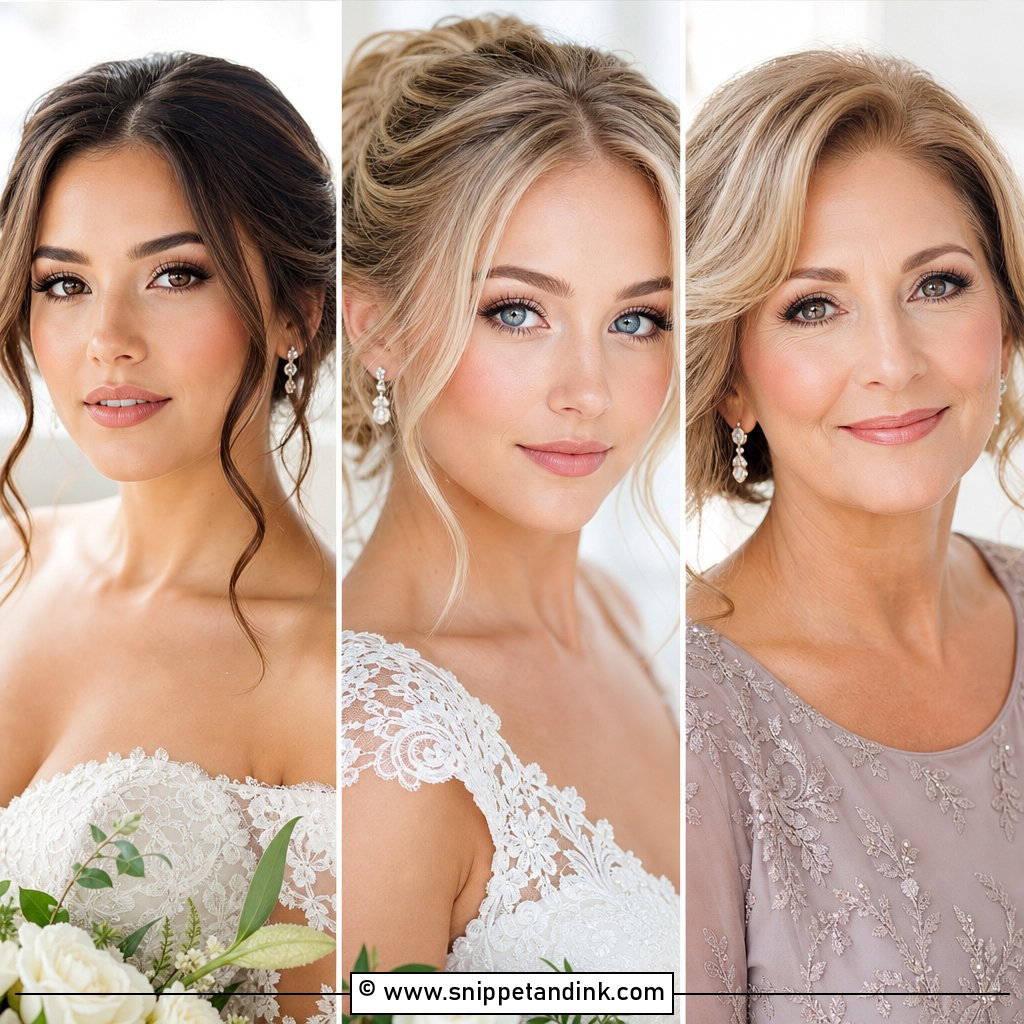
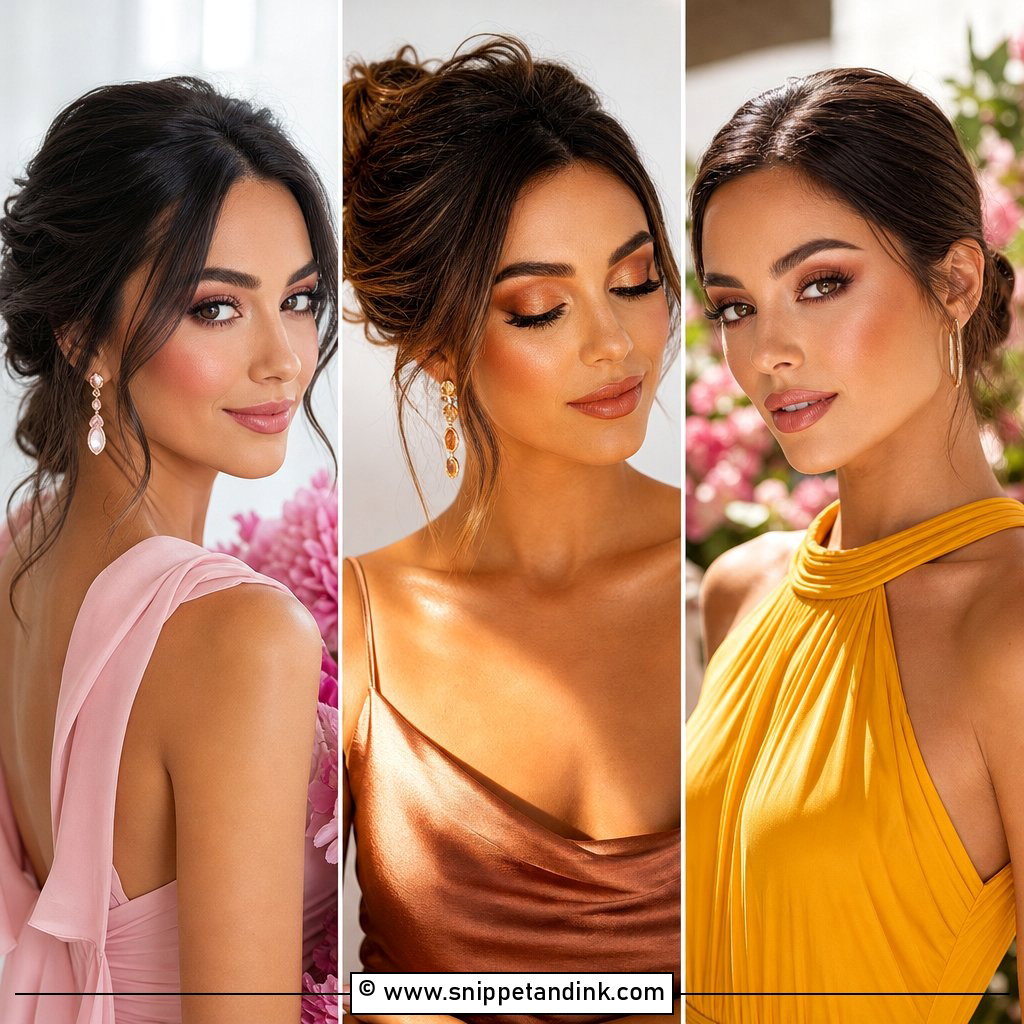
Bridesmaids need to look like they belong together without all wearing the bride’s face. A soft pink palette helps because it adapts to most dresses and skin tones: a natural satin base, pink blush, subtle highlight, and eyes in rose beige or pink champagne with brown liner and soft lashes. I let the lip shade vary from person to person, a pink nude on one and a mauve stain on another, which keeps group shots cohesive without washing anyone out. Setting spray holds it through a long day of standing outdoors.
25. Pink Wedding Guest Makeup
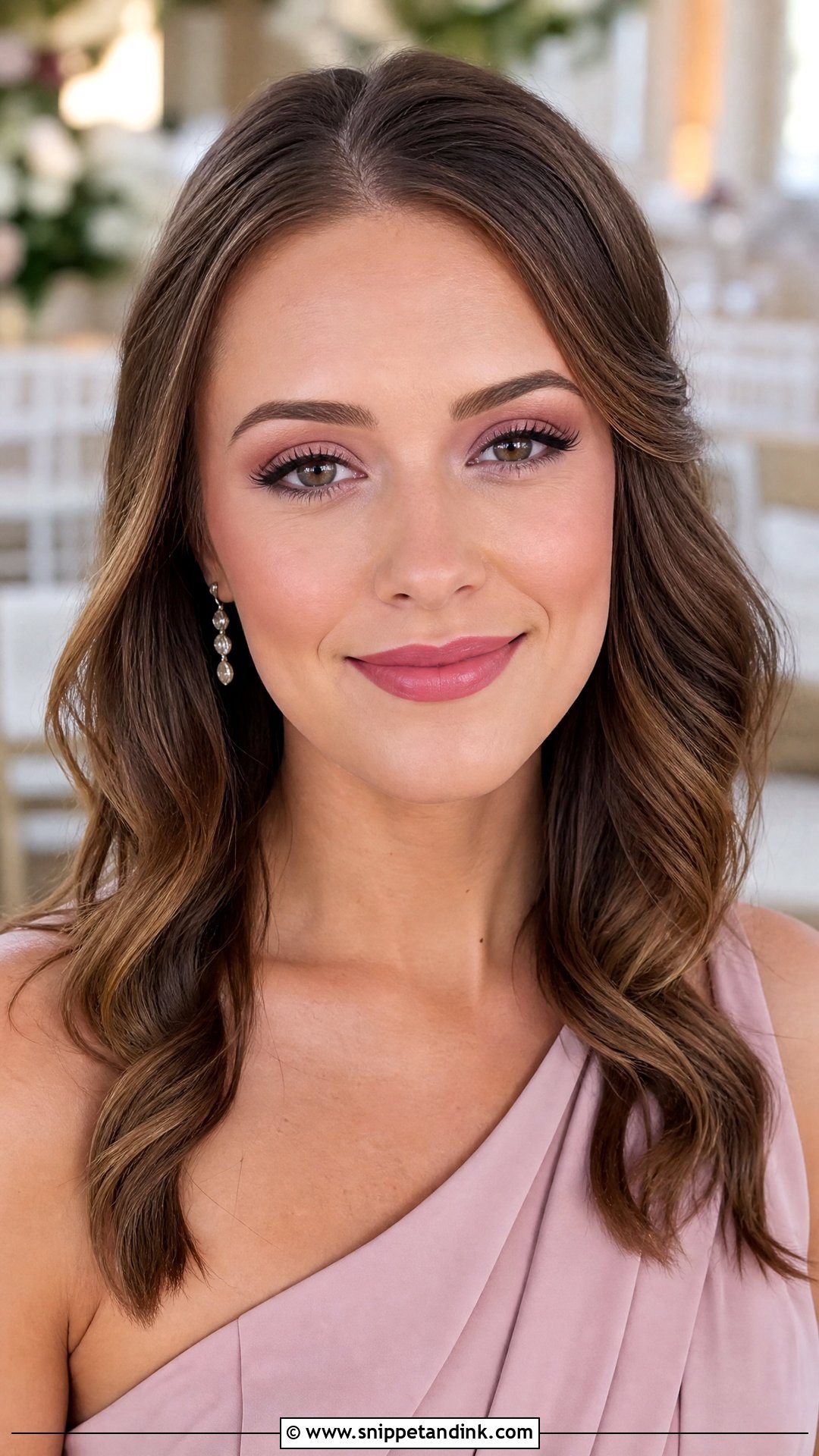
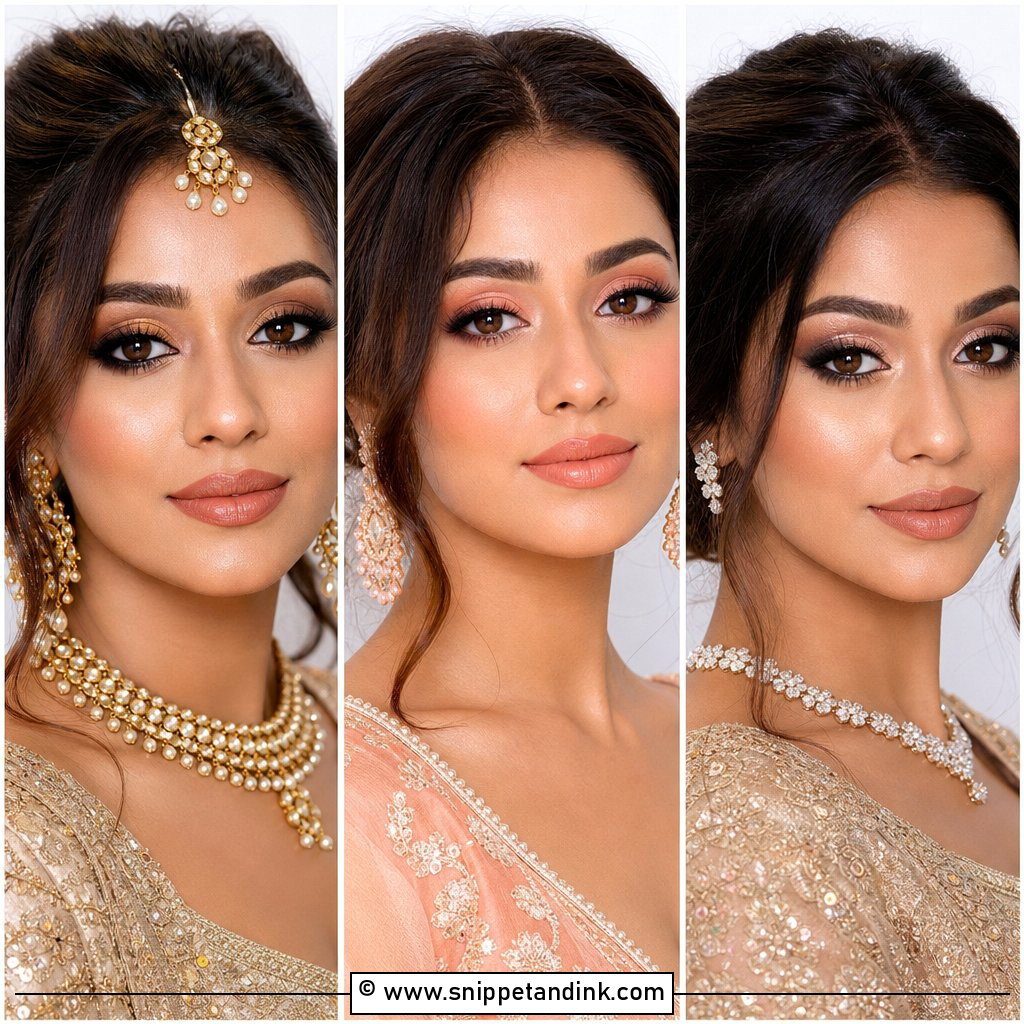
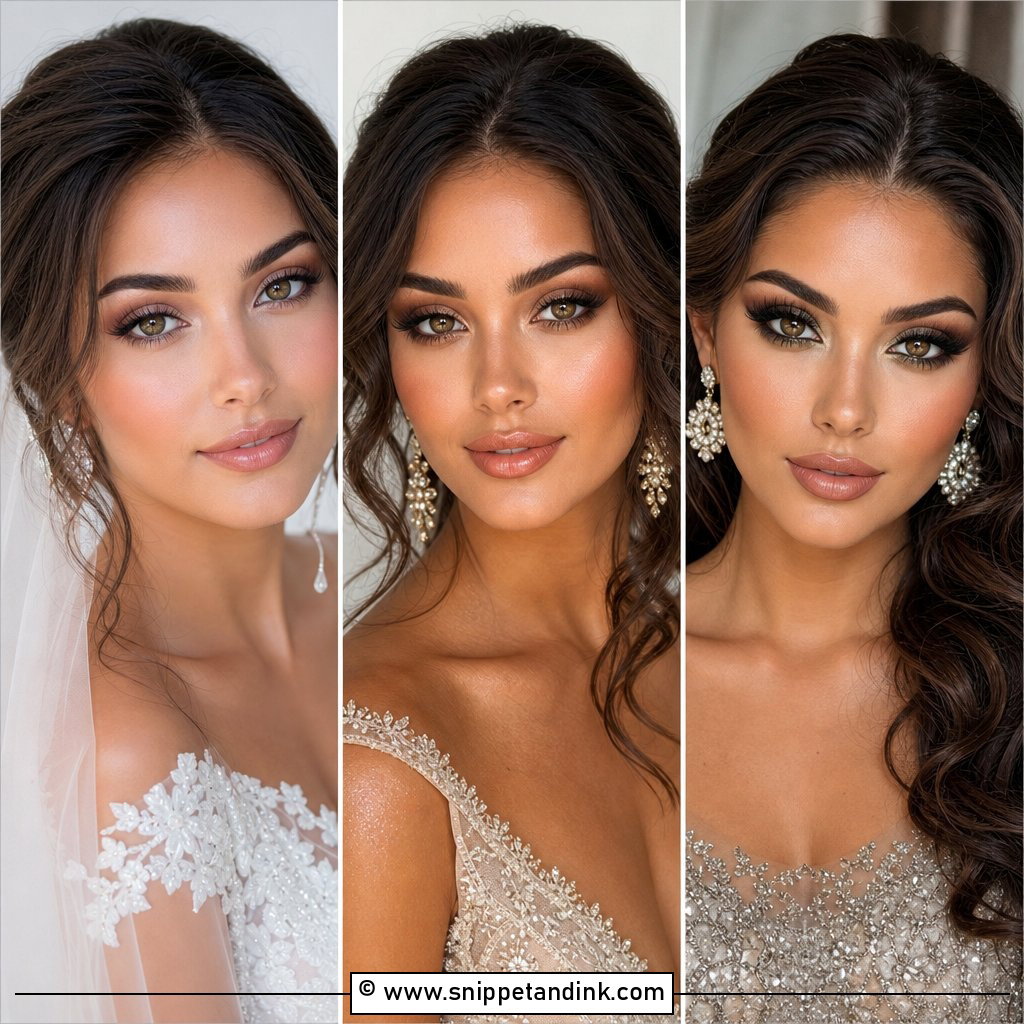
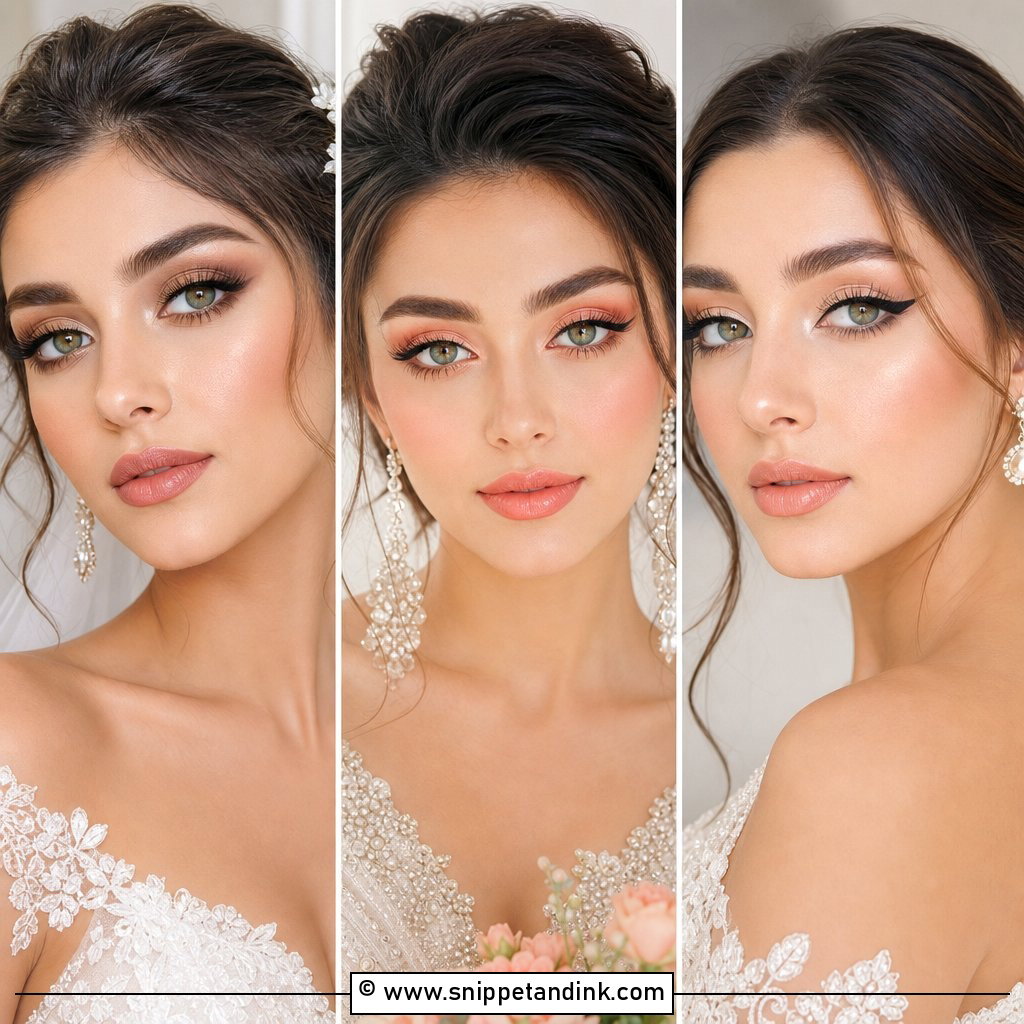
Pink wedding guest makeup should look festive and finished while staying clearly a guest’s face. Match the base to the formality of the event. Daytime suits dewy skin, soft pink blush, champagne-pink shadow and a glossy lip; evening can take mauve shadow, liner and a deeper rose lipstick. What I’d avoid is anything that reads bridal, like very pale shimmer across the whole lid or a dramatic white highlight. Neat brows and a comfortable lip formula matter more than any trend, since you’ll be eating and talking for hours.
Pink Under Flash, Noon Sun and Candlelight
Pink is more sensitive to light than neutrals are. Midday sun can bleach a pale pink lip almost to skin tone, which is why I build daytime faces one notch deeper than looks right in the mirror. Warm bulbs and candles push everything toward peach, so a cool mauve that looked chic at noon can look muddy at dinner.
Flash and highlighter
Direct flash bounces off shimmer, and some setting powders and high-mineral sunscreens leave a white cast in flash photos. I keep highlight to the top of the cheekbone, use a powder I’ve already tested under flash, and take a phone shot with the flash on before a bride leaves my chair.
Your photographer’s edit
If your photographer edits warm, pinks drift toward coral in the final gallery. It’s worth sending them a trial photo so they know the lip is meant to be rose, not peach.
Why Pink Lips Fade First, and What Holds Them
Pinks are lighter in pigment than reds or berries, so wear shows the moment you eat or drink. I line and fill the whole lip with a pencil that matches the lipstick, which leaves a stain behind when the top layer goes, then apply, blot through tissue and apply again.
- Pack the exact lipstick and liner from your trial, not a similar shade from another brand.
- Retouch after the ceremony kiss and again after the meal, the two points where most color goes.
- Gloss on top looks fresh but slides off fast, so either reapply it often or leave it off for dinner.
- Don’t layer balm over a long-wear liquid during the day; the oils break it down.
Blush fades too, just more slowly. For twelve-hour days I set a cream blush with a matching powder blush on top, because the cream grips the skin and the powder locks it.
Let the Cheek Shade Set the Rest of the Face
Pink can be soft, classic or full glam depending on shade and finish, and the face that flatters you comes from matching the pink’s undertone to yours first, then to your dress and venue. Pink nude is the safe anchor, while rose gold, mauve, dusty rose and berry add depth for photos. Whatever you choose, test the complete face before the wedding, in window daylight and under a phone flash, and wear it for at least four hours. By then the lip and blush will have shown you exactly how they’ll behave on the day.
You'll Like These Ideas:


Leave a Reply