
Most brides who sit in my chair this year ask for the same thing in different words: they want to look like themselves on a very good morning, and they want it to hold until the last song. That shift shows up in the looks below. Skin is thinner and more breathable, blush sits higher, lips carry a little shine, and eye makeup is chosen for the dress and the light rather than for a mood board. Some of these faces are barely there. Others lean into sculpted matte skin, smoked liner or a berry mouth. What they share is a base built to survive photos, happy tears and a lot of hugging, and still look like skin when someone leans in close.
Read Your Skin Before Falling for a Finish
Every look in this list comes in a finish: dewy, satin, matte or somewhere between. That choice should come from your skin, not the photo you saved. At a trial I spend the first few minutes just looking and touching, because how skin behaves by mid-afternoon decides more than any trend.
- Oily or combination skin: satin or soft matte holds up best. Dewy is possible, but I build glow only on the cheekbones and set the centre of the face.
- Dry or flaky skin: matte powder clings to patches. I’d steer you toward satin or dewy and ask you to start a gentle exfoliating and moisturising routine a few weeks out, not the night before.
- Mature or textured skin: thin layers and cream products move with the face. Fine shimmer only, and powder pressed in with a puff rather than swept on.
- Very sensitive skin: bring the products you know you tolerate. A new primer on the morning is how people end up with a rash in the first look photos.
Then think about the venue. An outdoor summer ceremony needs a base that copes with heat and sweat, while a dim winter reception lets you carry more glow and deeper colour without it looking heavy.
1. Natural Bridal Makeup
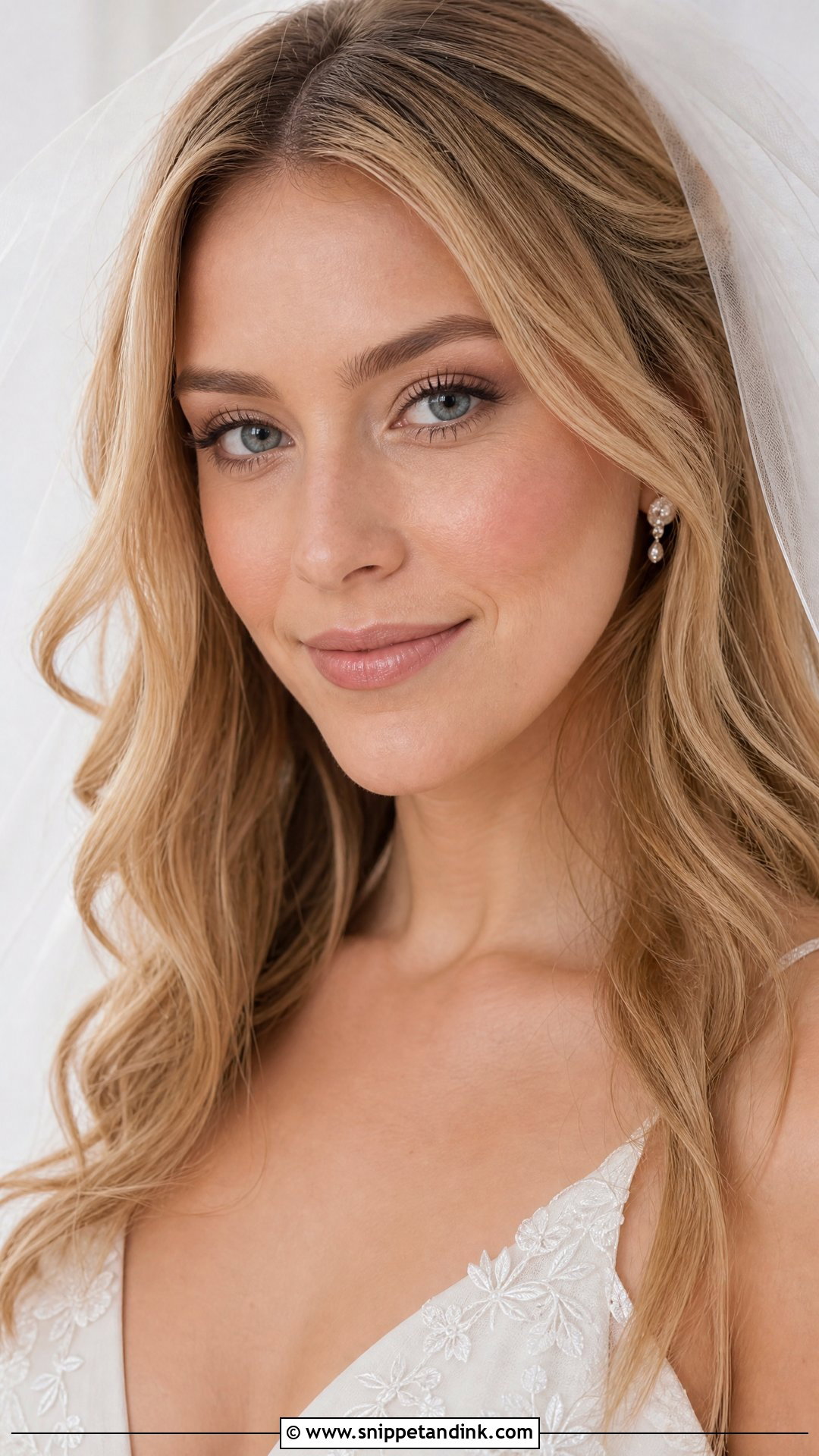
I start a natural face by deciding where the skin actually needs help, and usually it’s the sides of the nose, the chin and under the eyes. Everything else gets a sheer layer, or nothing. A satin finish matters here, because a fully matte base on a no-makeup look reads as flat in daylight. Eyes stay in taupe or soft brown with a thin brown line pressed into the lashes, and brows get brushed up rather than drawn. Cream blush in a rose or peach shade melts into skin better than powder on this look. The honest catch: natural makeup shows every skipped step, so it takes me as long as a soft glam. It suits garden ceremonies, courthouse vows and anyone who rarely wears makeup and would feel costumed in more.
2. Soft Glam Bridal Makeup
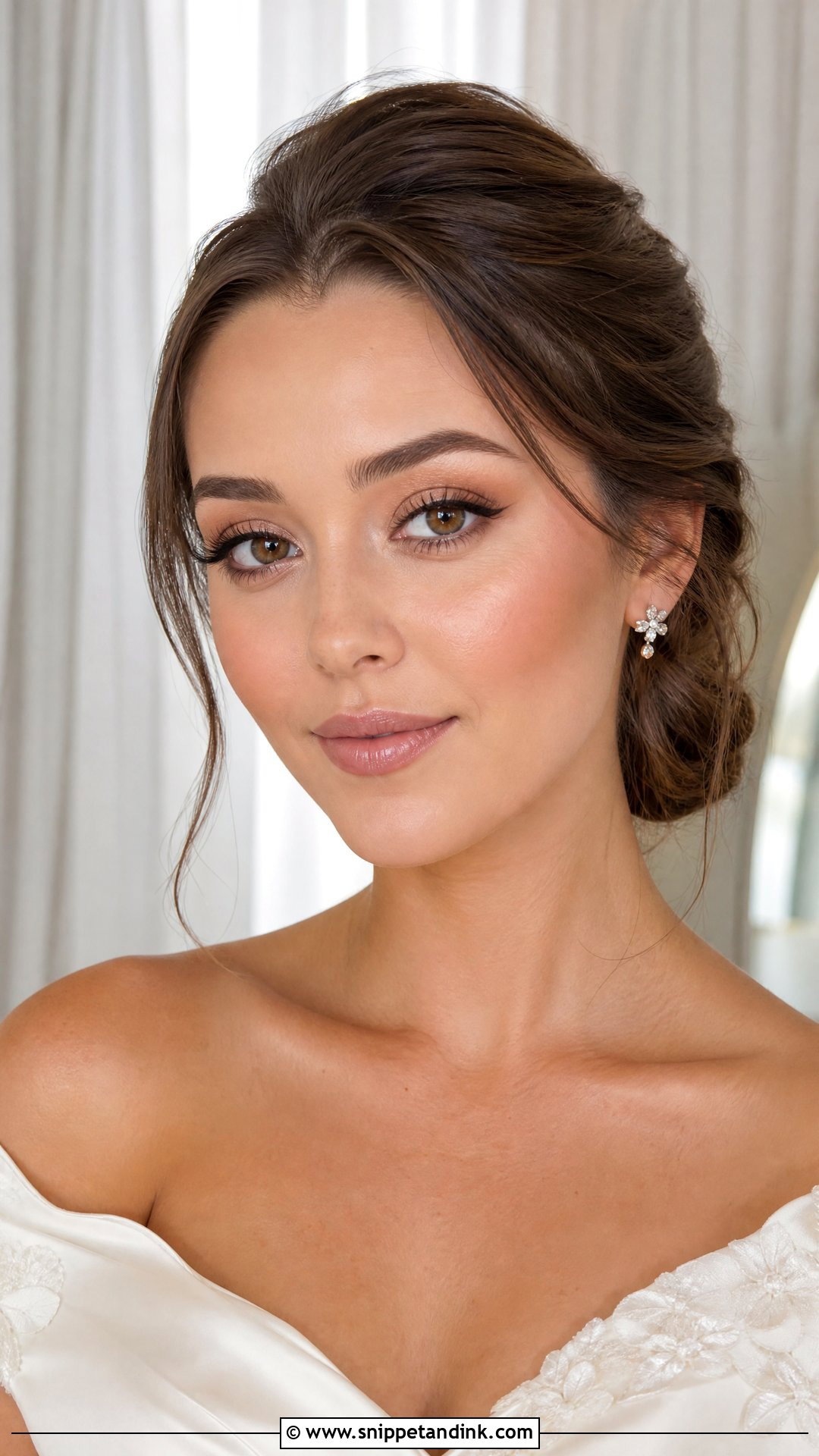
Soft glam is the look I’d call the safe bet, and I mean that as praise. It gives more structure than a natural face without anything you could point at. Blending carries it: contour, shadow and lip liner should all lose their edges. I like a champagne shimmer pressed onto the centre of the lid, since it lifts the eye in flash photos more than any highlighter on the cheek does, and a soft brown wing to open the outer corner. Match blush to undertone, peach on warm skin and rose on cool. It flatters almost every neckline and venue, which is exactly why so many brides end up here after trying something bolder at their trial.
3. Dewy Bridal Makeup
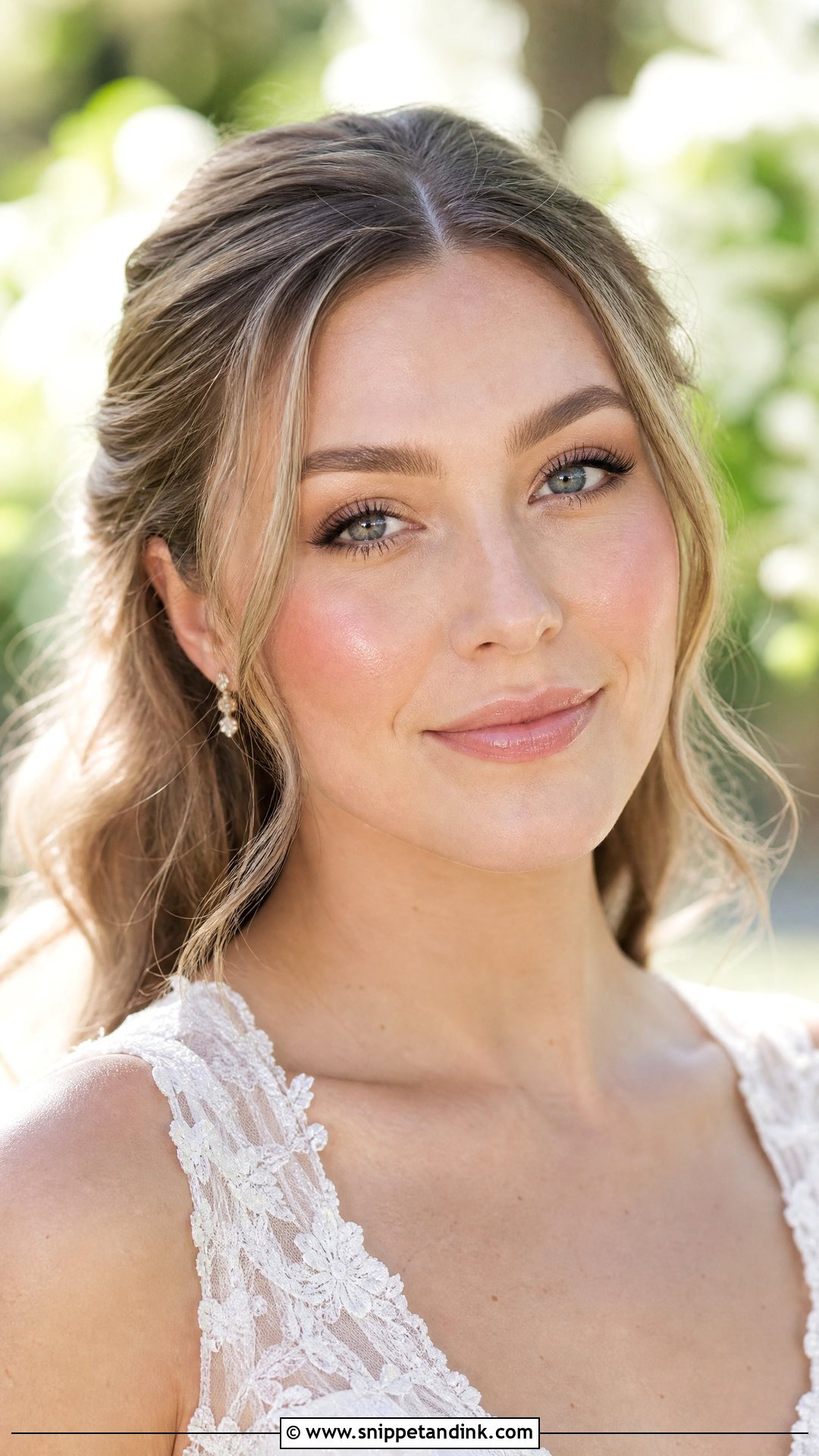
A dewy face lives or dies on skin prep, not on shimmer. I hydrate in layers and give each one time to sink in, then use a radiant primer, a flexible foundation, cream bronzer and liquid blush. Powder goes only where skin moves or gets oily: beside the nose, in smile lines and under the eyes. Glow belongs on the high points of the face. Spread it everywhere and the camera reads it as sweat by mid-afternoon. Soft brown shadow, fluttery lashes and a glossy pink or beige lip finish it. On oily skin in July I’d talk you into a satin version instead, because real dewiness and real heat don’t mix for eight hours.
4. Matte Bridal Makeup
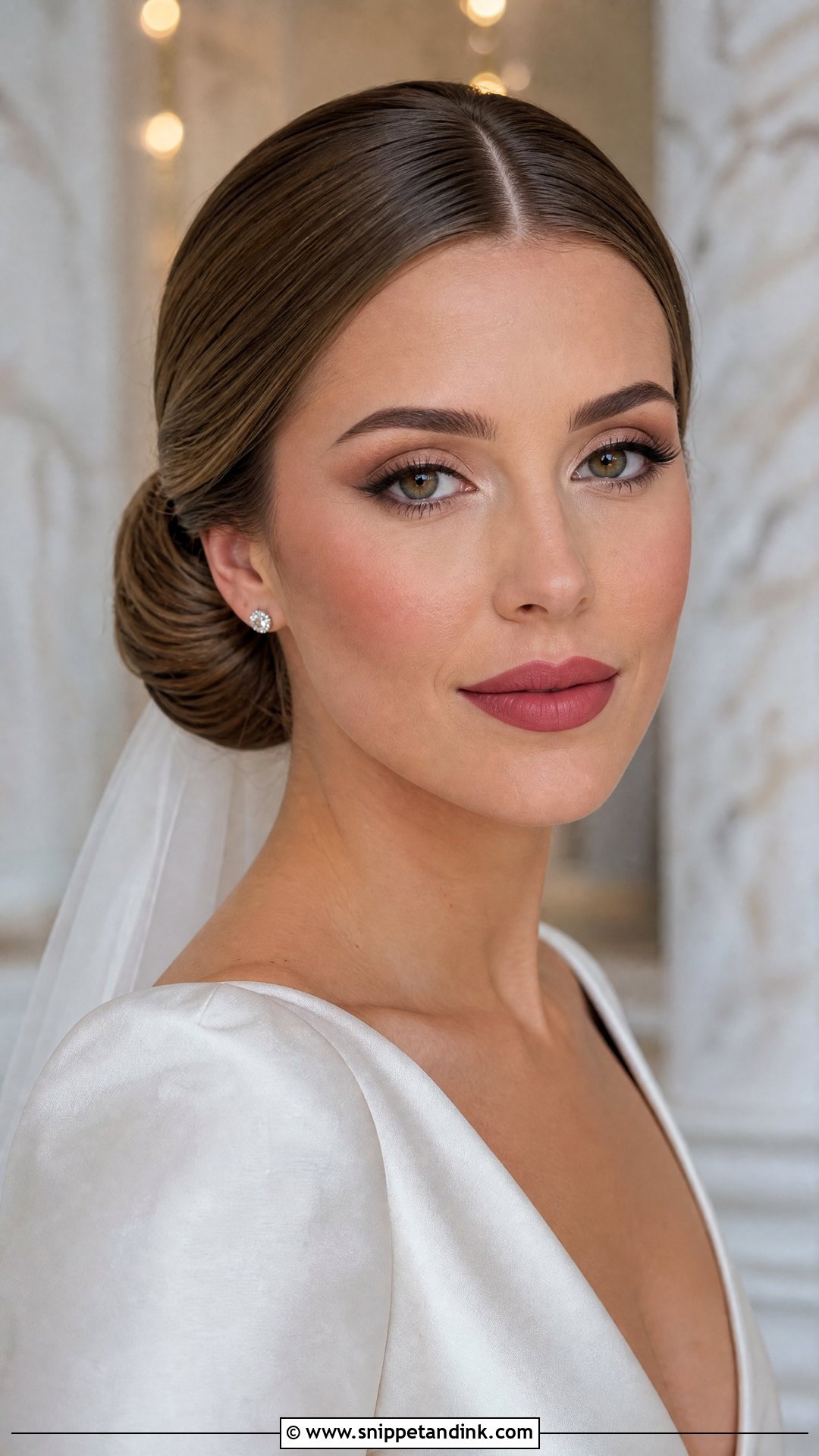
Matte skin has an outdated reputation for looking dry, and that only happens when it’s built in one thick layer. I work in thin passes of a skin-like foundation, set with a finely milled powder, then put a little dimension back with a satin blush so the face doesn’t go flat. Taupe or warm brown shadow, defined lashes, softly filled brows and a blurred nude or rose lip complete it. This is the finish I lean toward for oily skin, humid venues and long indoor receptions under flash. One warning for dry or mature skin: matte powder settles into texture, so we’d prep heavily and keep powder to the T-zone only.
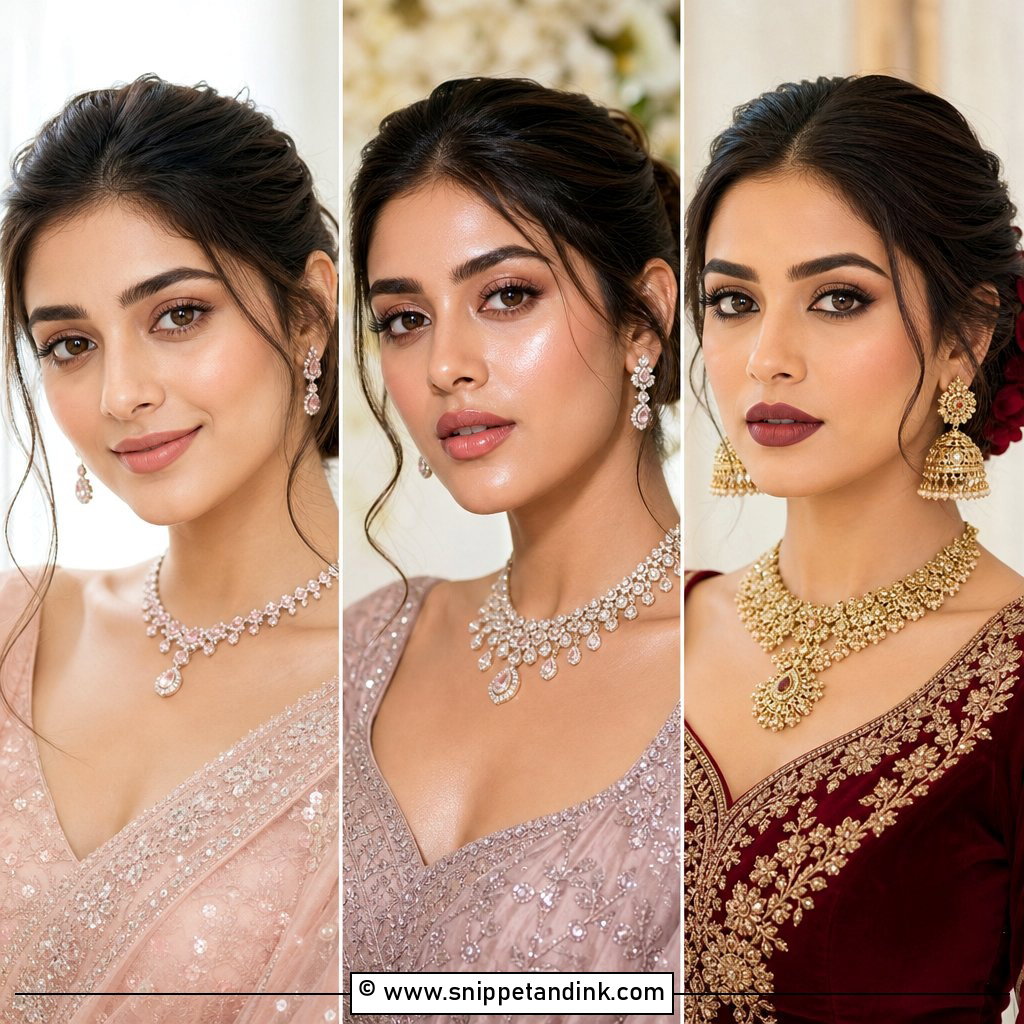
5. Pink Bridal Makeup
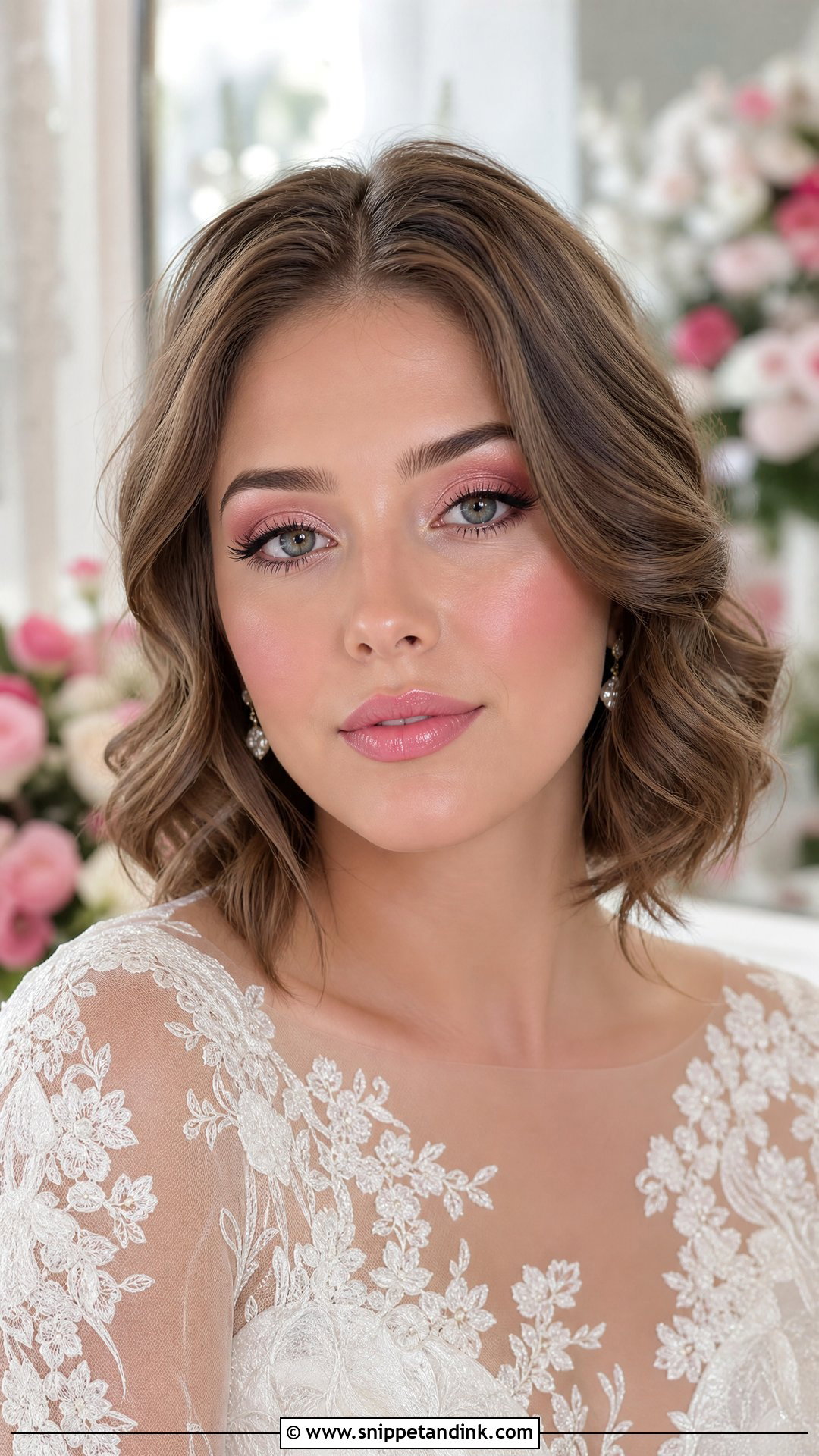
Pink can tip into childish fast, and the fix is placement rather than shade. I put a rosy cream blush high on the cheekbone and drag it up toward the temple, which lifts the face instead of rounding it. On the eyes, pale pink or rose beige works, or mauve shadow with brown liner if you want a bit more shape. Keep the shimmer fine on hooded or textured lids, because chunky glitter sits in every fold by the first dance. Lips can be a pink nude or a sheer petal gloss. Let the blush lead and keep eyes and lips a half step quieter, so it reads modern rather than matched.
6. Peach Bridal Makeup
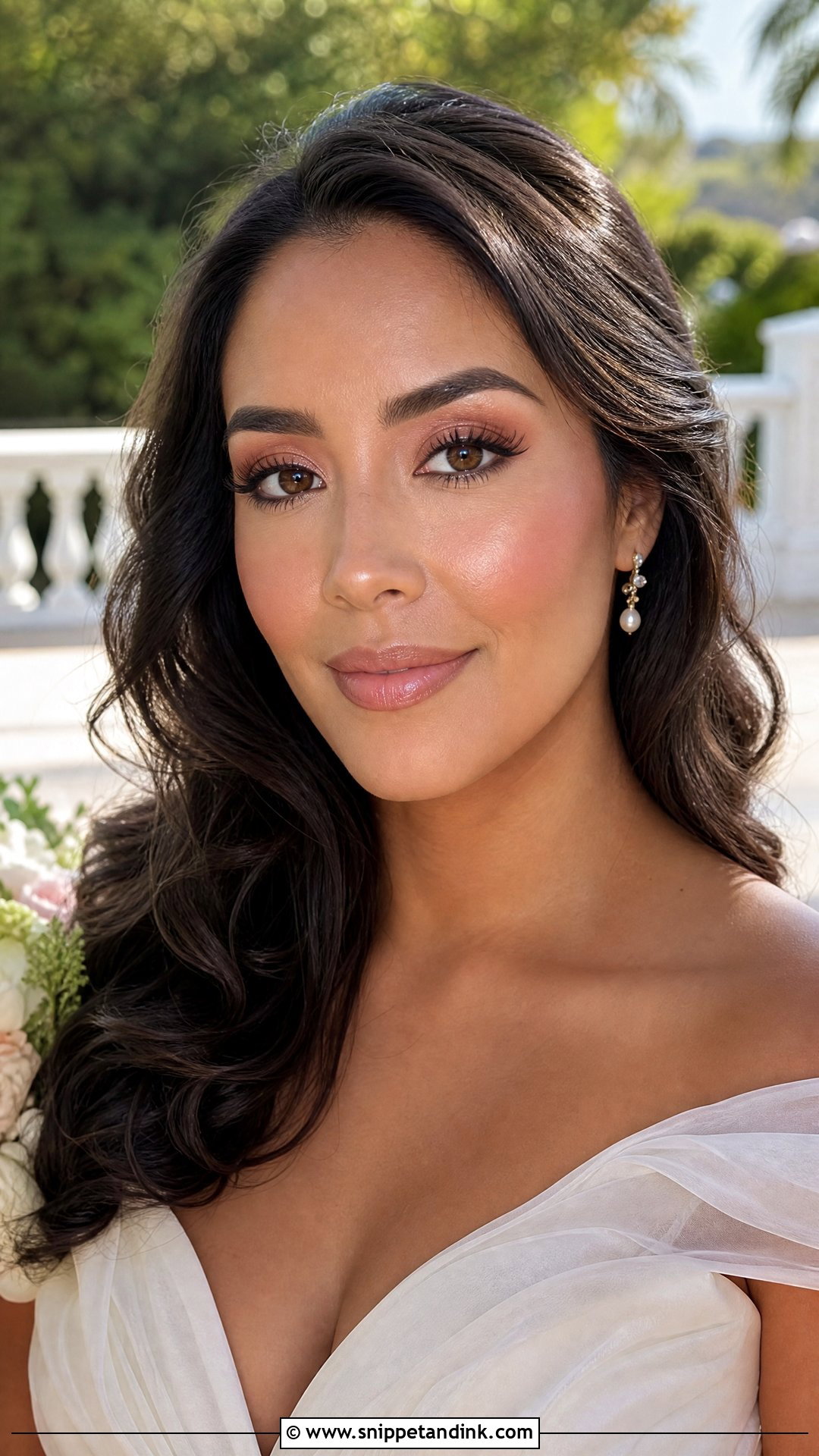
Peach warms a face in a way that looks especially good at golden hour, and it adapts across skin tones once you shift the depth. On fair skin I reach for a soft apricot; on deeper skin a coral peach or a terracotta leaning peach holds its colour instead of going chalky. The blush sweeps across the cheeks, eyes stay in warm beige or bronze with soft liner and fluttery lashes, and a creamy peach nude ties up the mouth. It needs very little contour to look finished. Brides with a lot of natural redness should test it first, since warm tones can make flushed cheeks look sunburned in photos.
7. Rose Gold Bridal Makeup
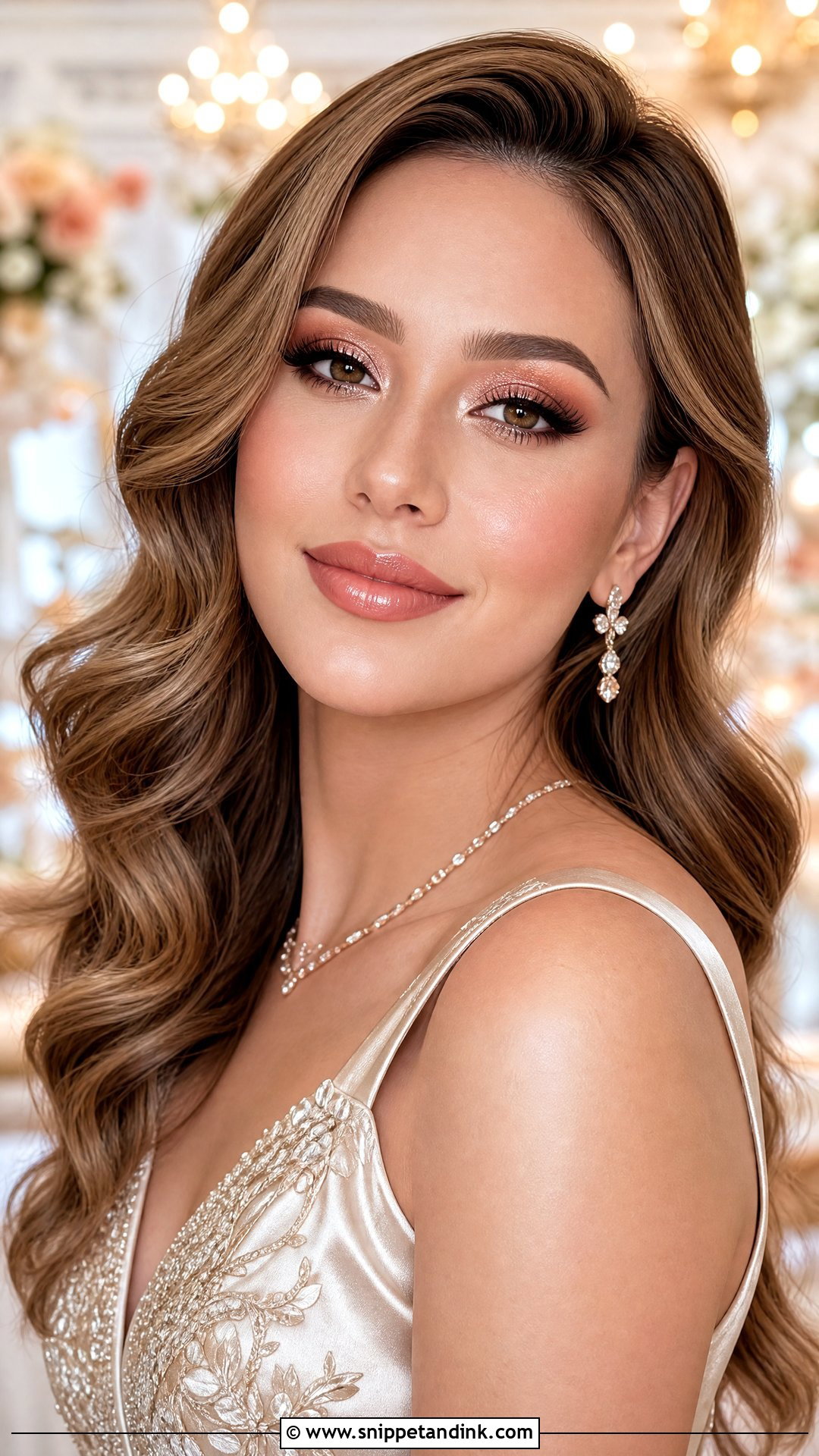
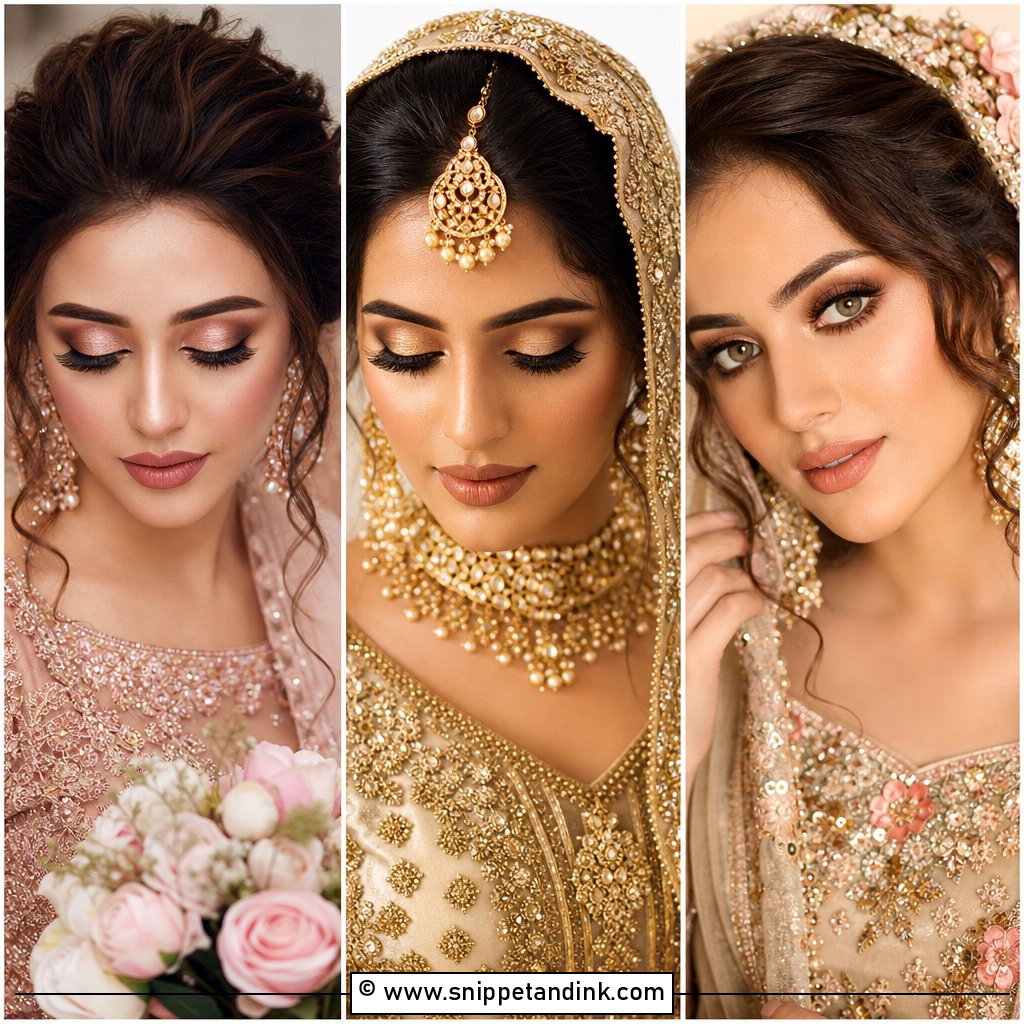
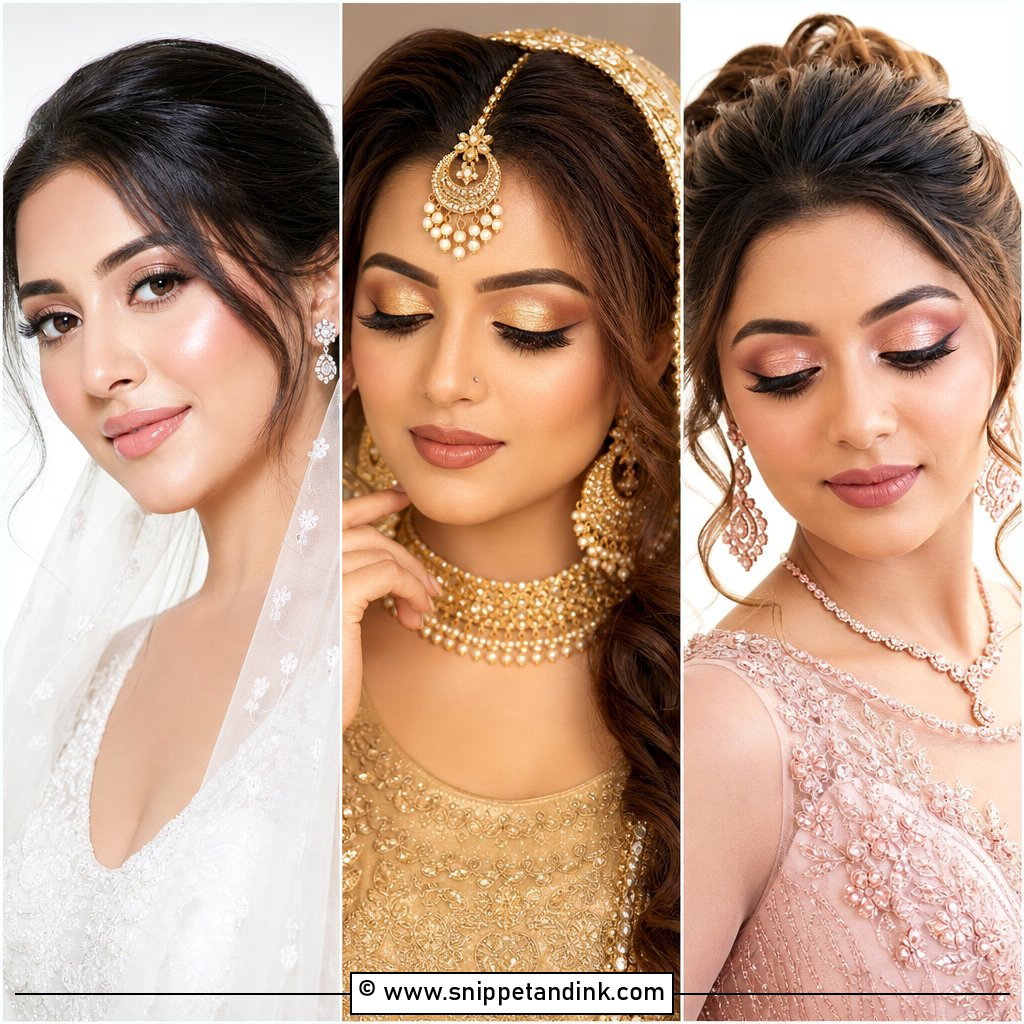
Rose gold puts the shimmer on the eyes and keeps everything else calm. I pack the rose gold onto the lid with a damp brush so it doesn’t fall out onto the cheeks, deepen the crease with warm brown and brighten the inner corner with champagne. Brown or black-brown liner gives shape without a hard line. Skin should be smooth and lightly luminous, with rose or peach blush and only a whisper of highlighter, because two shimmers on one face compete. A rosy nude lip finishes it. It sits naturally next to champagne and blush gowns or gold jewelry, and it’s less forgiving with a stark optic white dress.
8. Champagne Bridal Makeup
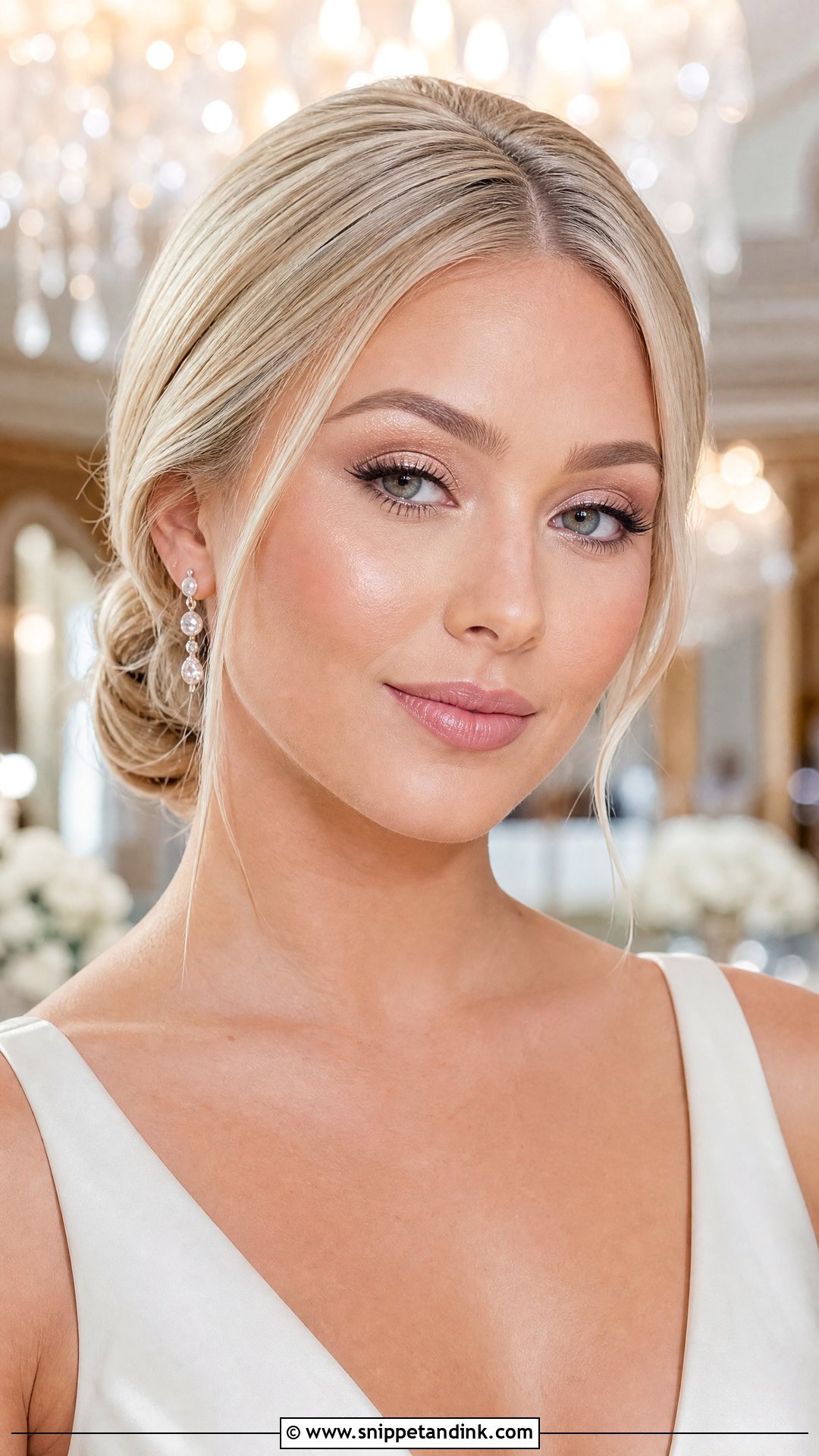
Champagne is the shimmer I trust most in a dark reception room. It catches candlelight and flash without turning into visible glitter. I place it on the lids, the tops of the cheekbones and sometimes the cupid’s bow, then keep the base polished but light, with subtle contour and a soft peach or rose blush. A thin wing or smudged liner shapes the eye, and individual lashes at the outer corners give lift without the strip-lash line. Lips sit in beige pink or muted rose. It pairs naturally with satin, pearls and sleek hair, and it suits nearly every skin tone if the champagne leans a touch warmer on deeper skin.
9. Classic Bridal Makeup
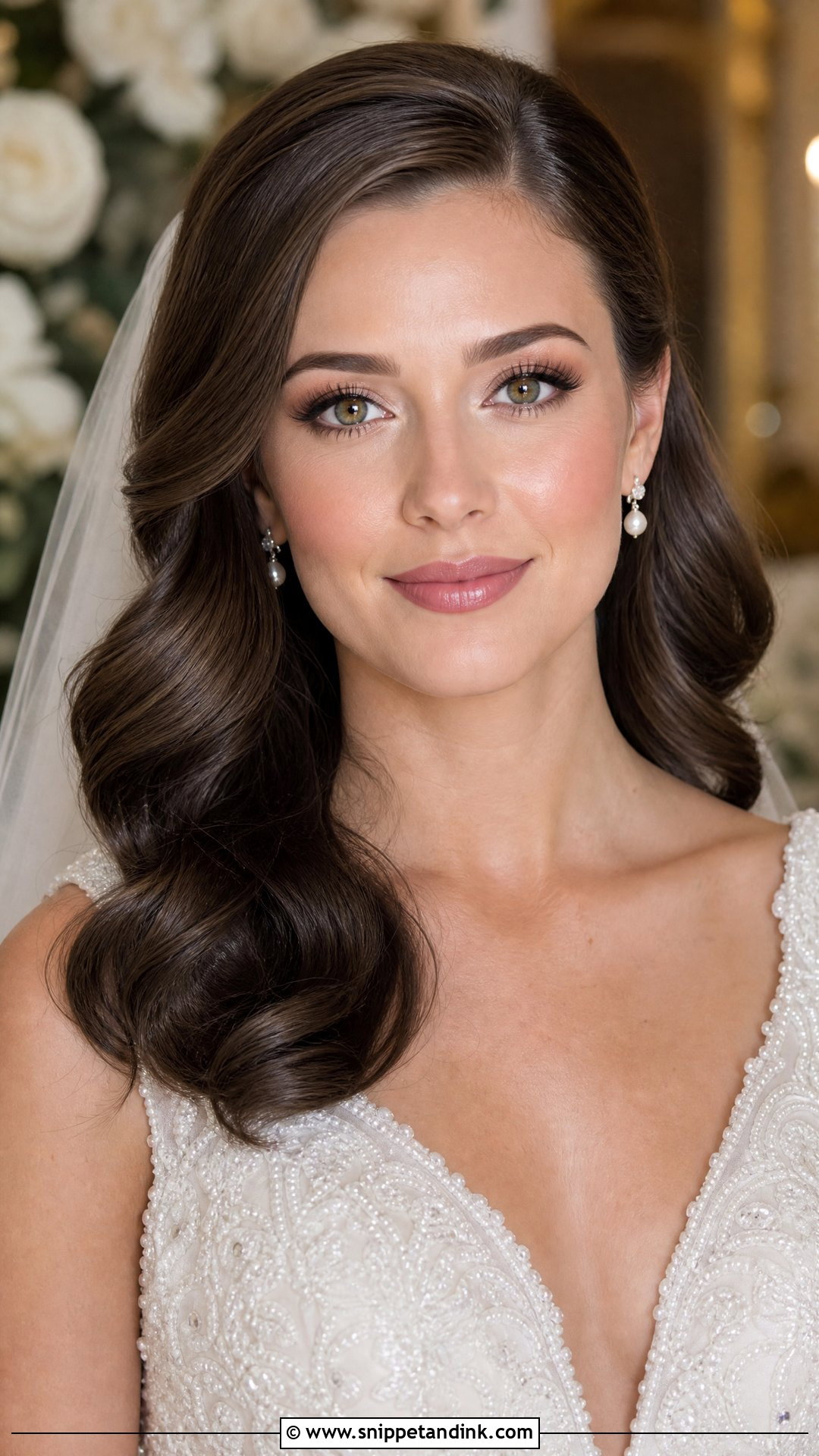
A classic face is the one that won’t date your photos. Flawless satin skin, softly defined eyes, black or brown liner, balanced blush and a neutral rose lip. The work is in symmetry and brightness, not in trend. I use medium coverage, natural contour and a soft highlight instead of a strong strobe, and I keep shadow in taupe, beige and brown. Where I spend extra time is the brows, because a classic look with uneven brows looks unfinished in every frontal portrait. It belongs with traditional ceremonies, formal ballgowns and cathedral veils.
10. Smokey Eye Bridal Makeup
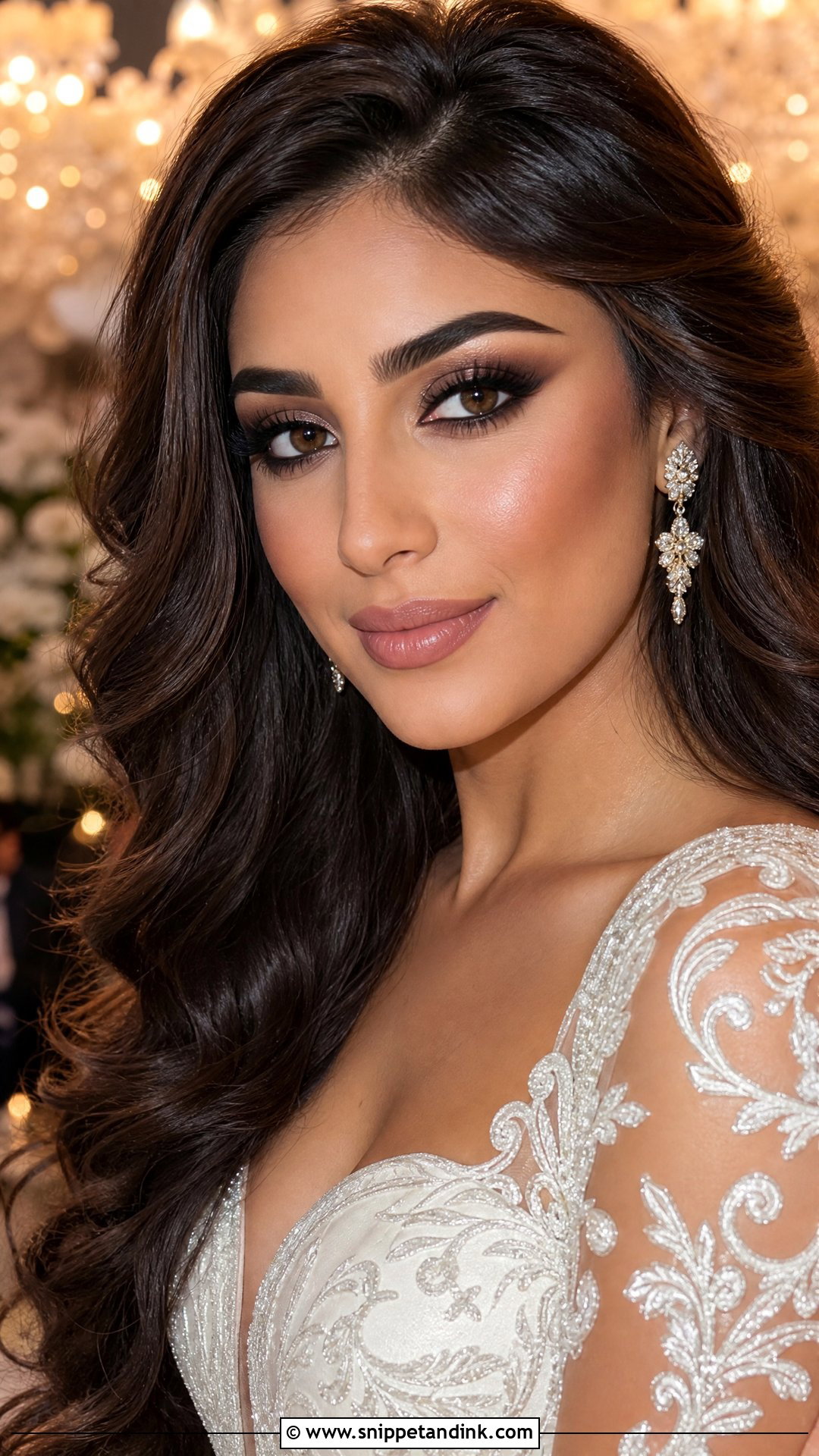
Smoke on a bride works when the edges are soft enough to disappear into skin. I rarely use pure black; brown, bronze, espresso or plum give depth that flatters more eye colours and doesn’t look bruised in daylight. I keep the darkest shade tight to the lash line and build upward slowly, checking from arm’s length, because a smoky eye always looks smaller in the mirror than it does in photos. A touch of shimmer in the centre of the lid stops it from going heavy. Waterproof liner and well-glued lashes are not optional here. It’s my pick for evening and black-tie weddings, and I’d talk an outdoor noon ceremony out of it.
11. Brown Smokey Bridal Makeup
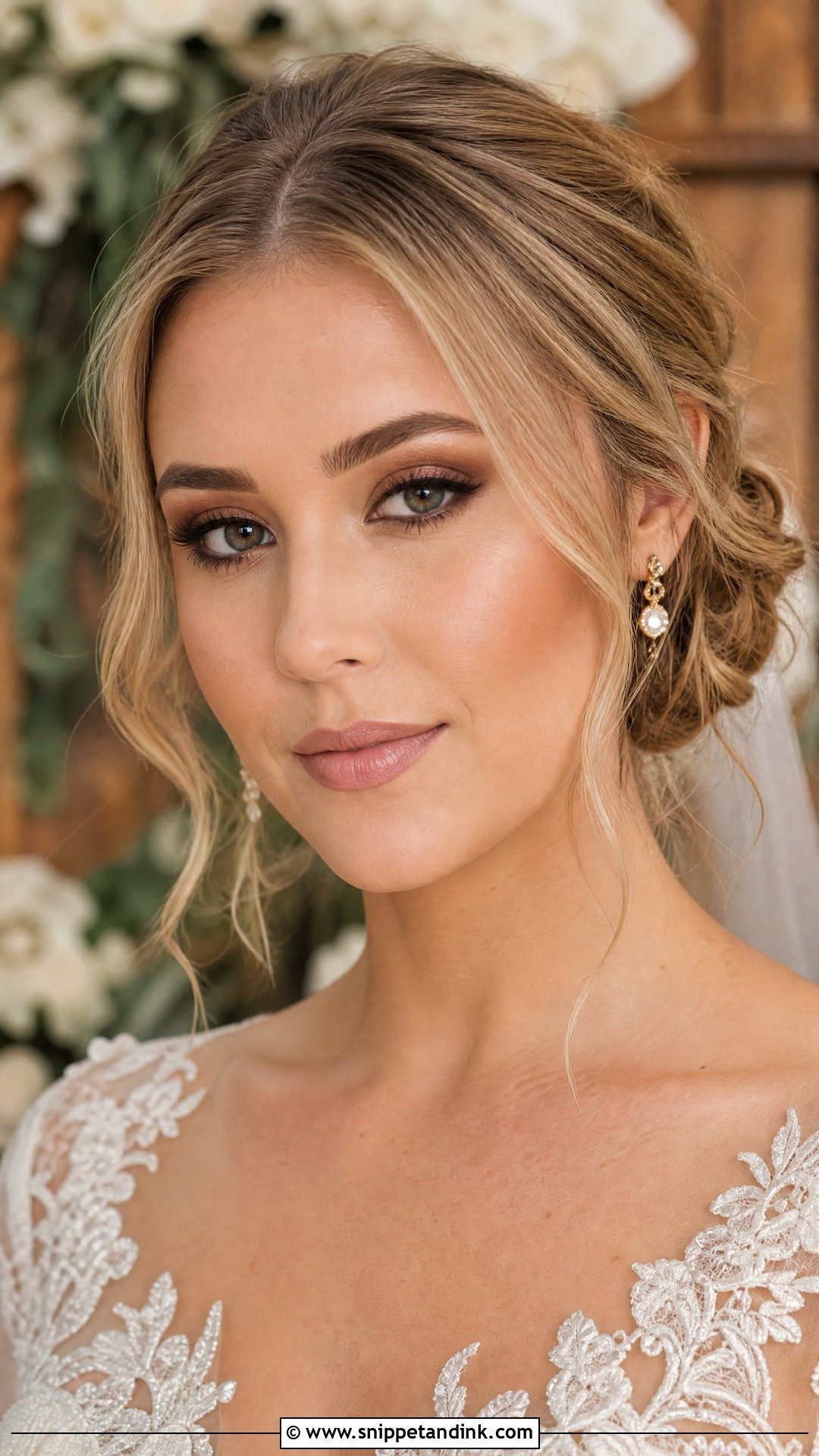
Brown smoke is the softer cousin of the black version, and it suits blue, green, hazel and brown eyes alike. Warm chocolate, caramel or bronze gets blended around the lash line, with a satin brown on the lid for movement and a matte brown in the crease to keep the shape clean. Cheeks get sculpted, then warmed with peach or rose blush, and the lip stays in nude brown or pink beige. I like it because it behaves the same in daylight and under indoor bulbs, which is rare for a defined eye. If your eyes are deep-set, I keep the crease shade lower and lighter so it doesn’t sink them further.
12. Winged Liner Bridal Makeup
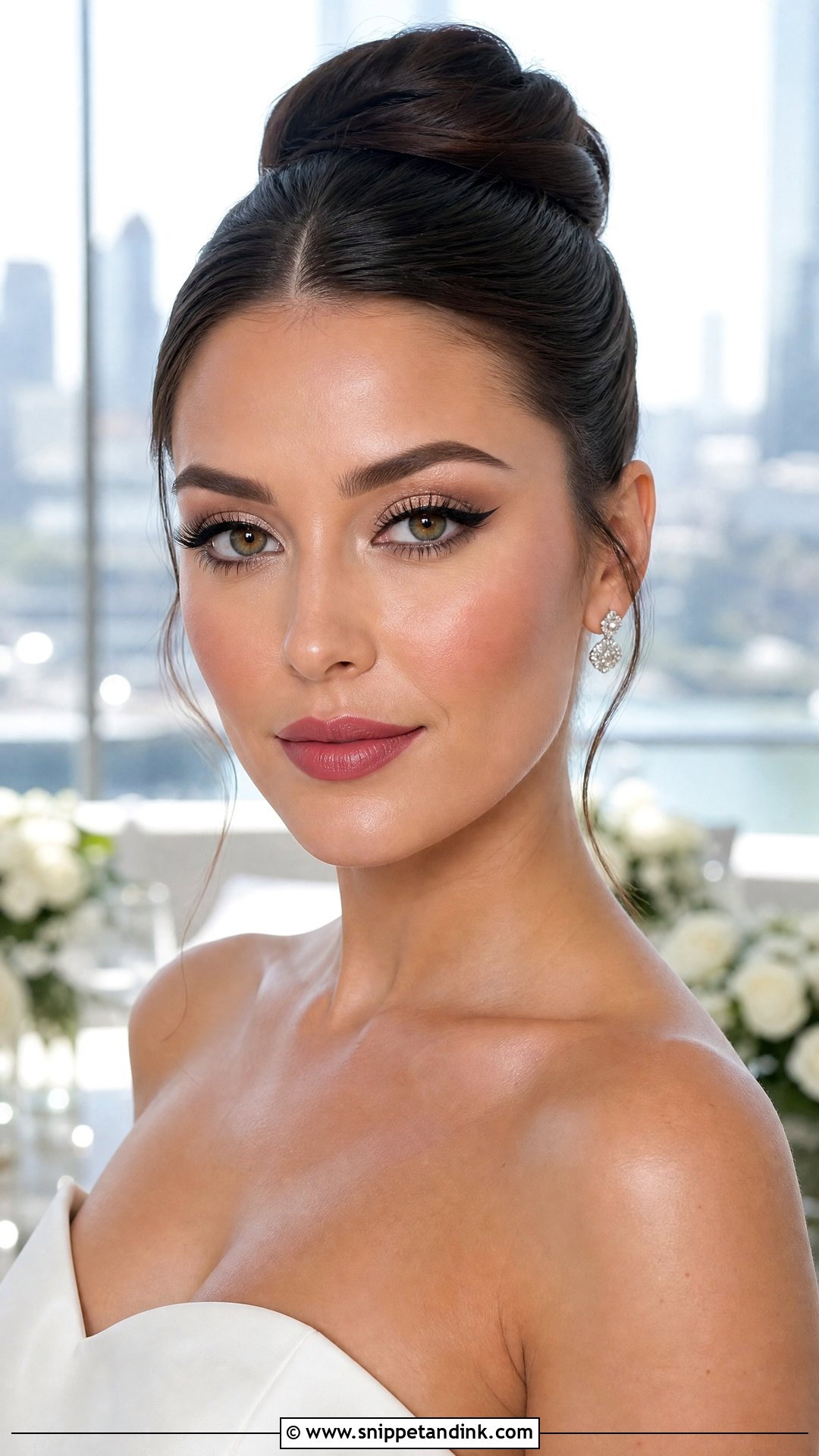
The wing has to follow your eye shape, not a template. On hooded lids I draw the flick with eyes open and looking straight ahead, because a wing drawn on a closed lid folds into a broken line the moment you look at your partner. Almond eyes can carry a longer flick; hooded eyes usually suit a small kitten version. Keep the lid in matte beige or soft taupe so the line stays crisp. Winged liner bridal makeup needs that quiet lid to be the focus. Skin can be satin or softly dewy with balanced blush. A nude pink or a soft red lip both work, and it suits sleek buns and strapless gowns very well.
13. Red Lip Bridal Makeup
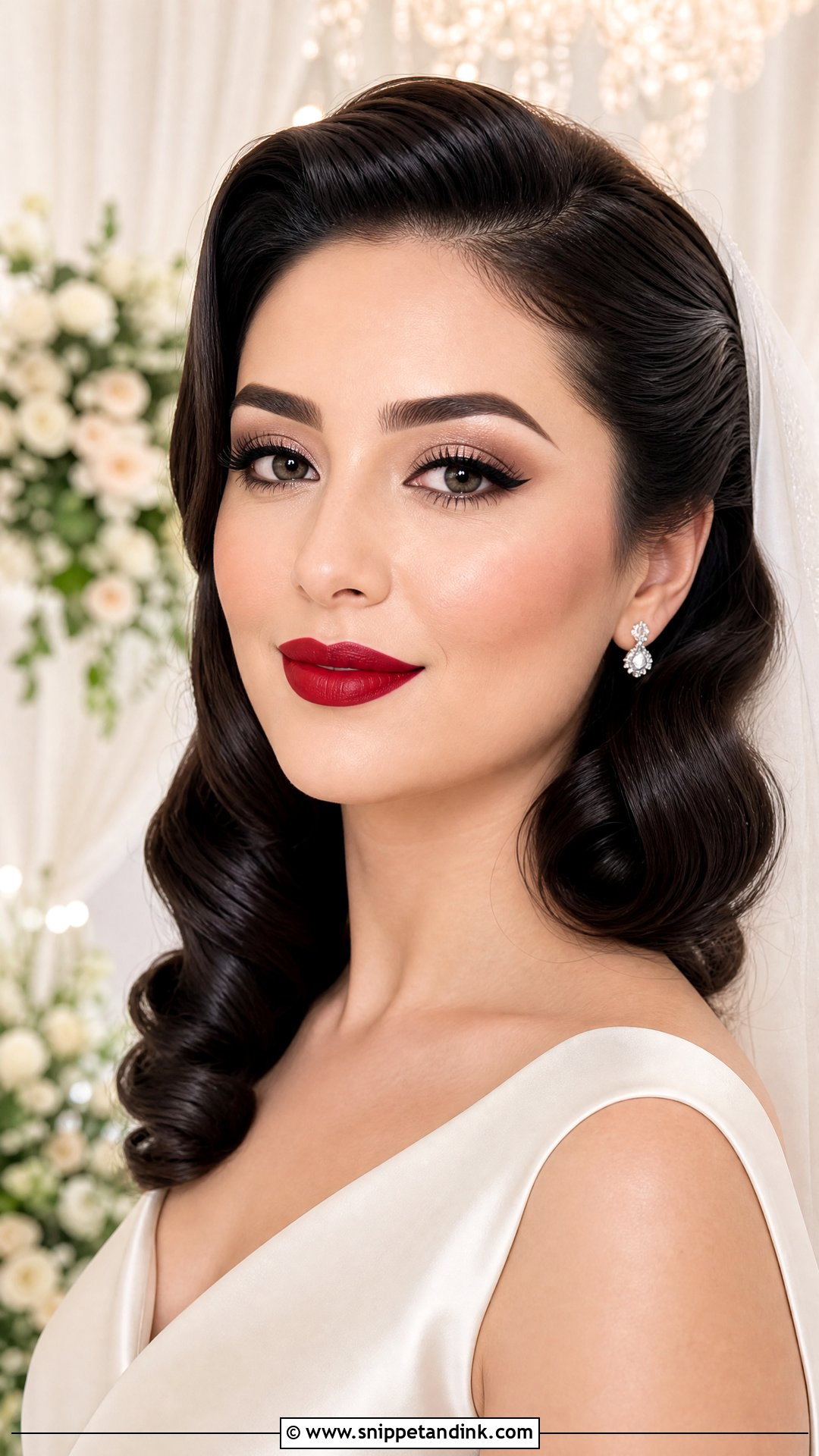
Red is one decision that changes the whole face, so I treat it as the centrepiece and quiet everything around it. The shade must match your undertone: blue red reads bright and classic, orange red feels warmer, and brick red gives a softer vintage effect. I line the full lip first, apply a long-wear formula with a small brush and blot through tissue, then reapply, which is what keeps edges clean through dinner. Eyes stay neutral with fine liner and lifted lashes, and blush stays present but controlled. Be honest about touch-ups: red needs a mirror after eating, so give the lipstick and a liner to someone you trust.
14. Nude Lip Bridal Makeup
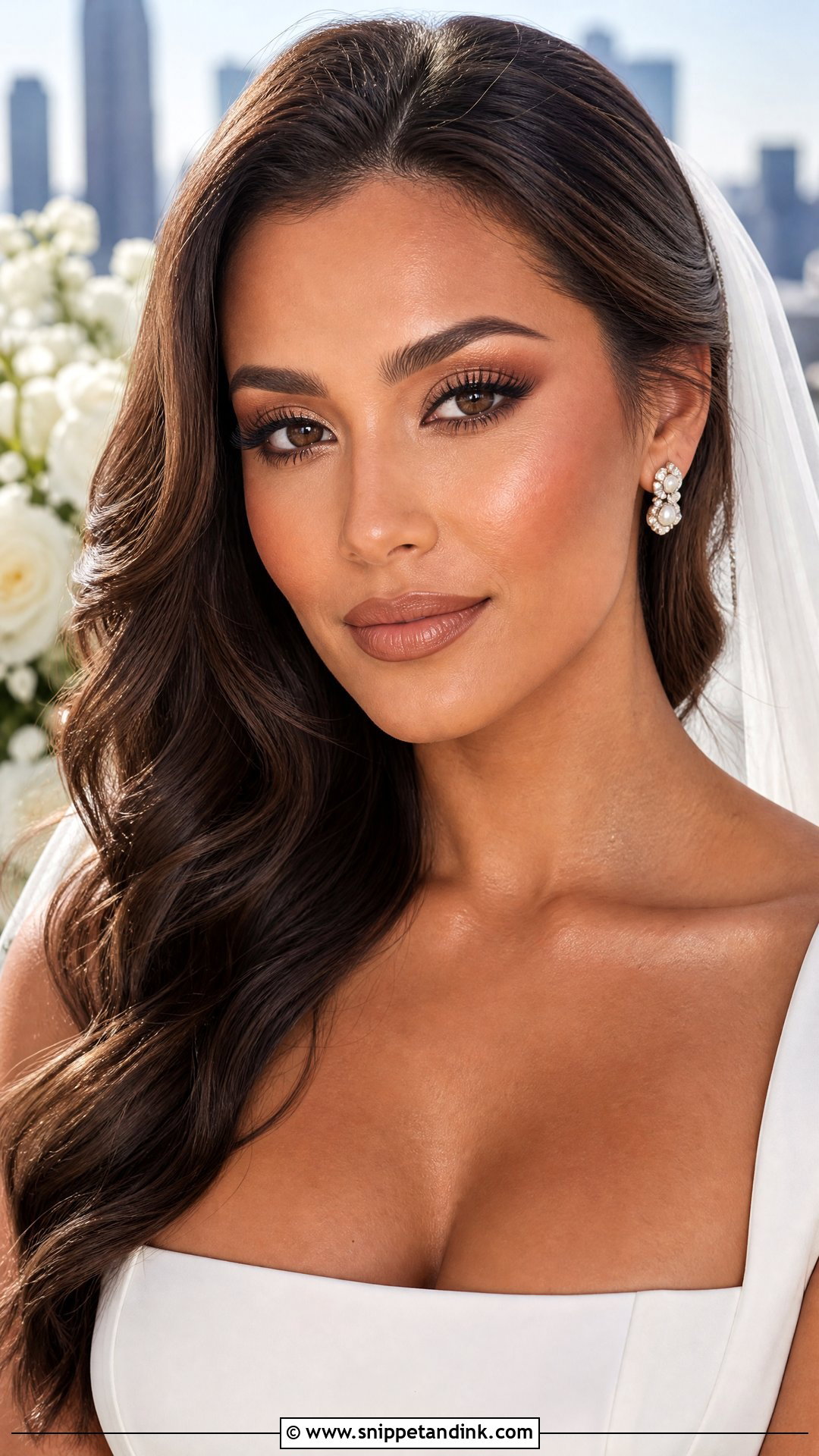
The most common mistake I see with nude lips is going too pale. A bridal nude needs enough pink, peach, brown or mauve in it to define the mouth, or the lips vanish in photos and the face looks unwell. I line just slightly deeper than the lipstick, which gives shape without a visible ring, and finish with satin or a little gloss for fullness. Around it, the skin should be softly sculpted with lifted blush, and the eyes give the face its structure, from natural to a brown smoke. It’s the easiest lip to touch up yourself, which counts for a lot by the reception.
15. Glossy Bridal Makeup
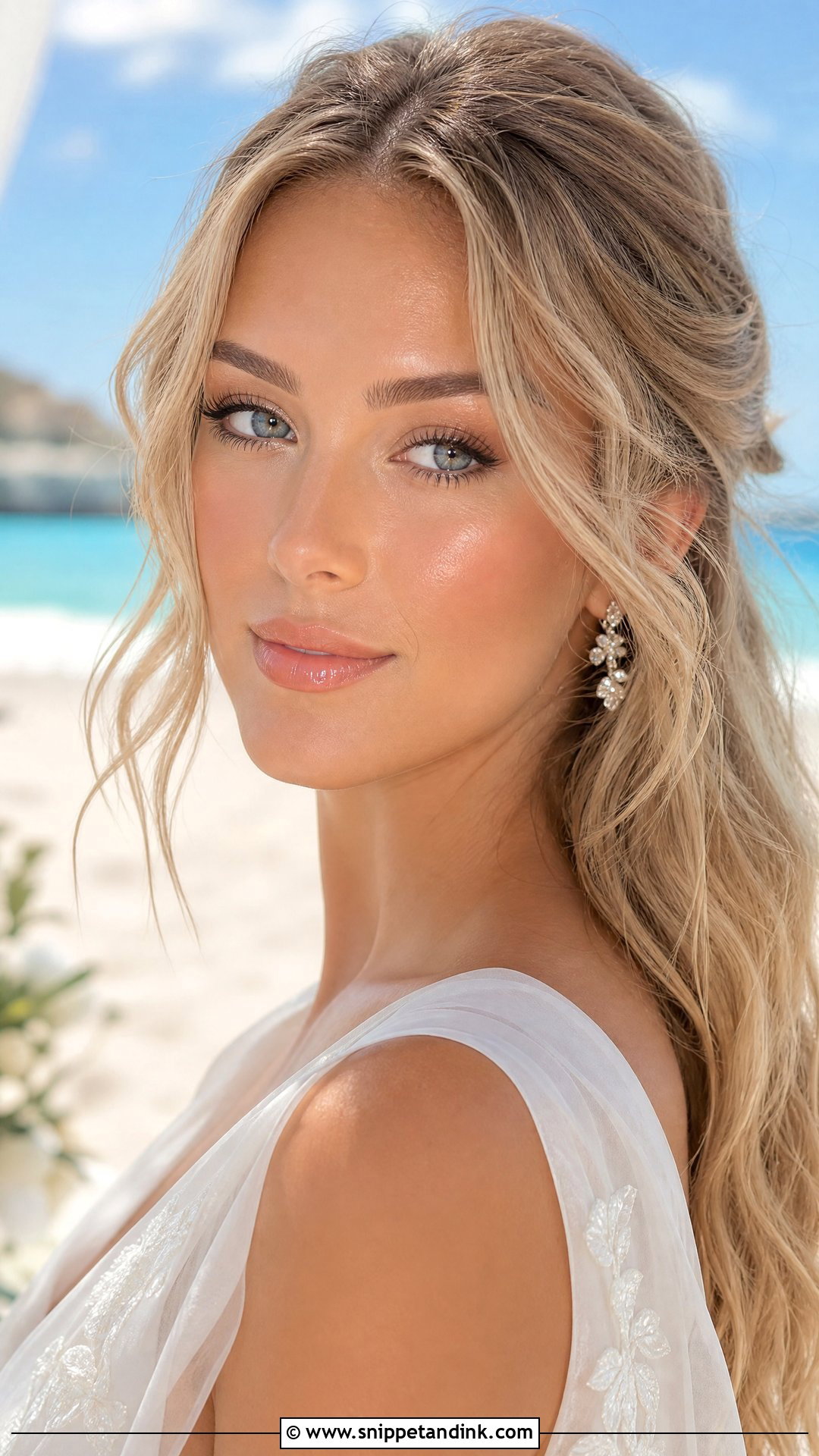
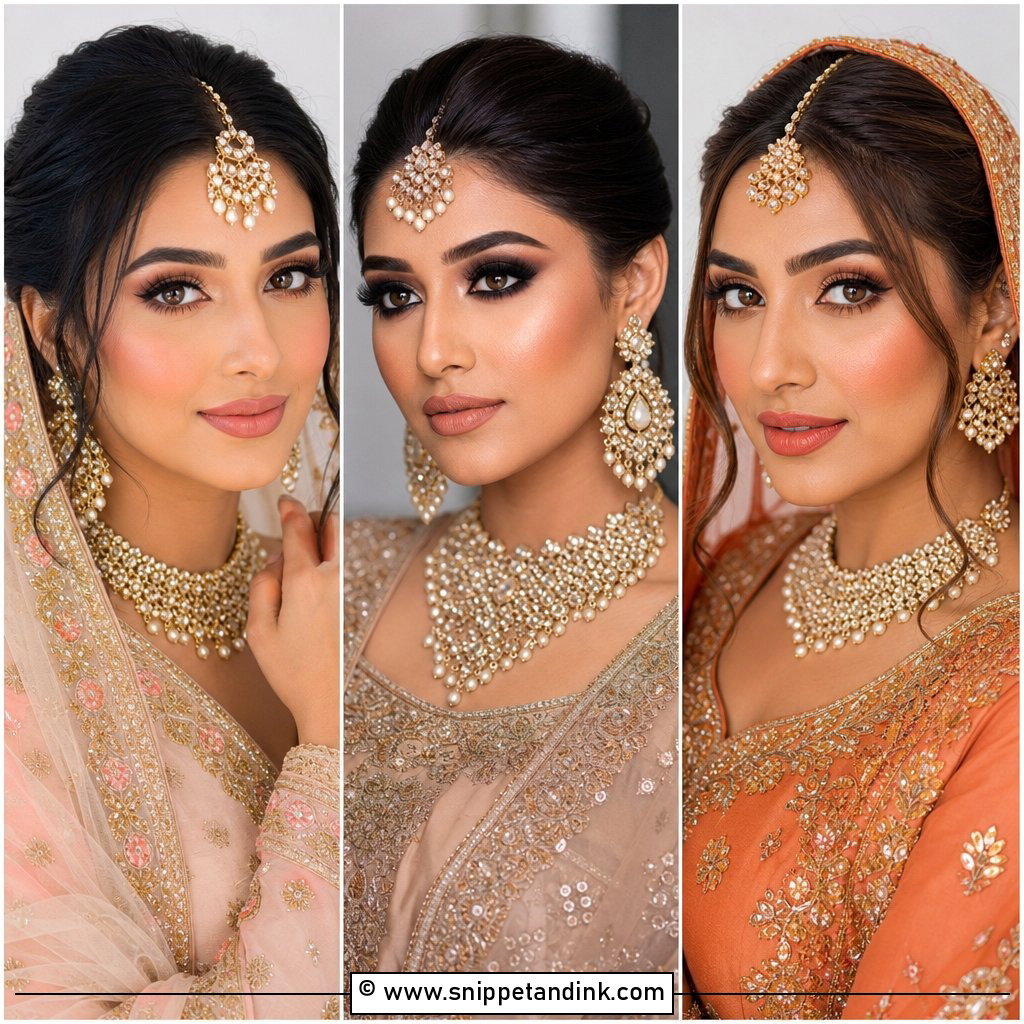
Gloss looks fresh when it’s controlled and messy when it isn’t. I keep shine to the lips, the tops of the cheekbones and a soft radiance on the skin, and away from the eyelids and T-zone, where it creases or turns oily. A lightweight base, cream blush, subtle bronzer and a fine highlighter do the work, with simple eyes in warm beige and brown liner. Under the gloss goes a long-wear liner across the whole lip, so colour stays after the shine wears off. Keep blotting papers and powder in your bag for the T-zone. Be aware that veils and loose hair stick to gloss, especially on a windy beach.
16. Bronze Bridal Makeup
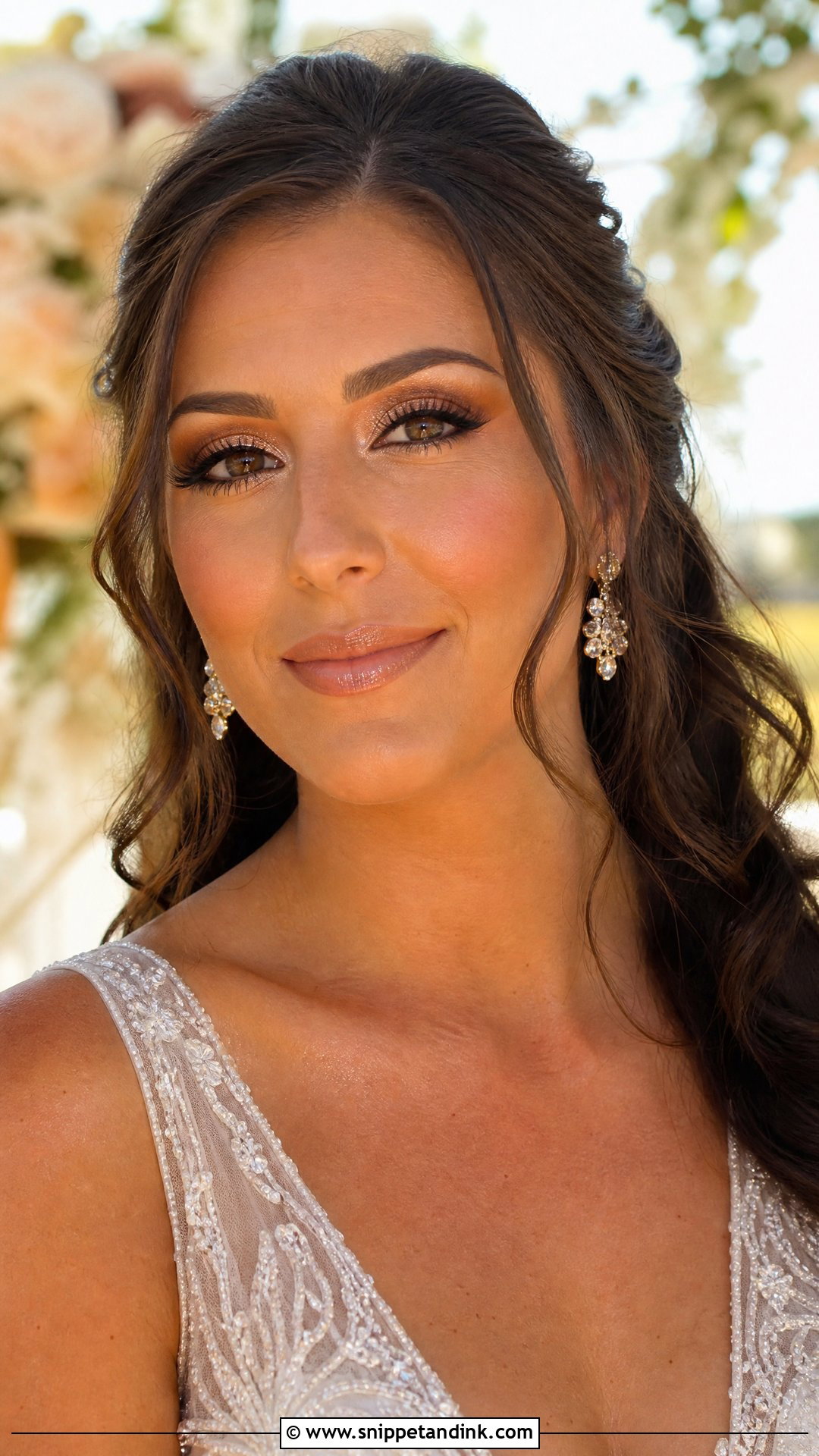
Bronze builds warmth and shape at the same time, which is why it’s a natural choice for summer and destination weddings. I sweep bronzer around the hairline, under the cheekbones and along the jaw, then blend until you can’t find where it starts. On the eyes, copper brown, caramel or gold shimmer with a deep brown liner. Coral or warm rose blush keeps it lively, and lips sit in nude beige or caramel gloss. The step people skip is the body: if your shoulders and chest are visible, I bronze them lightly too, because a warm face above a pale décolletage is obvious in every strapless photo.
17. Latte Bridal Makeup
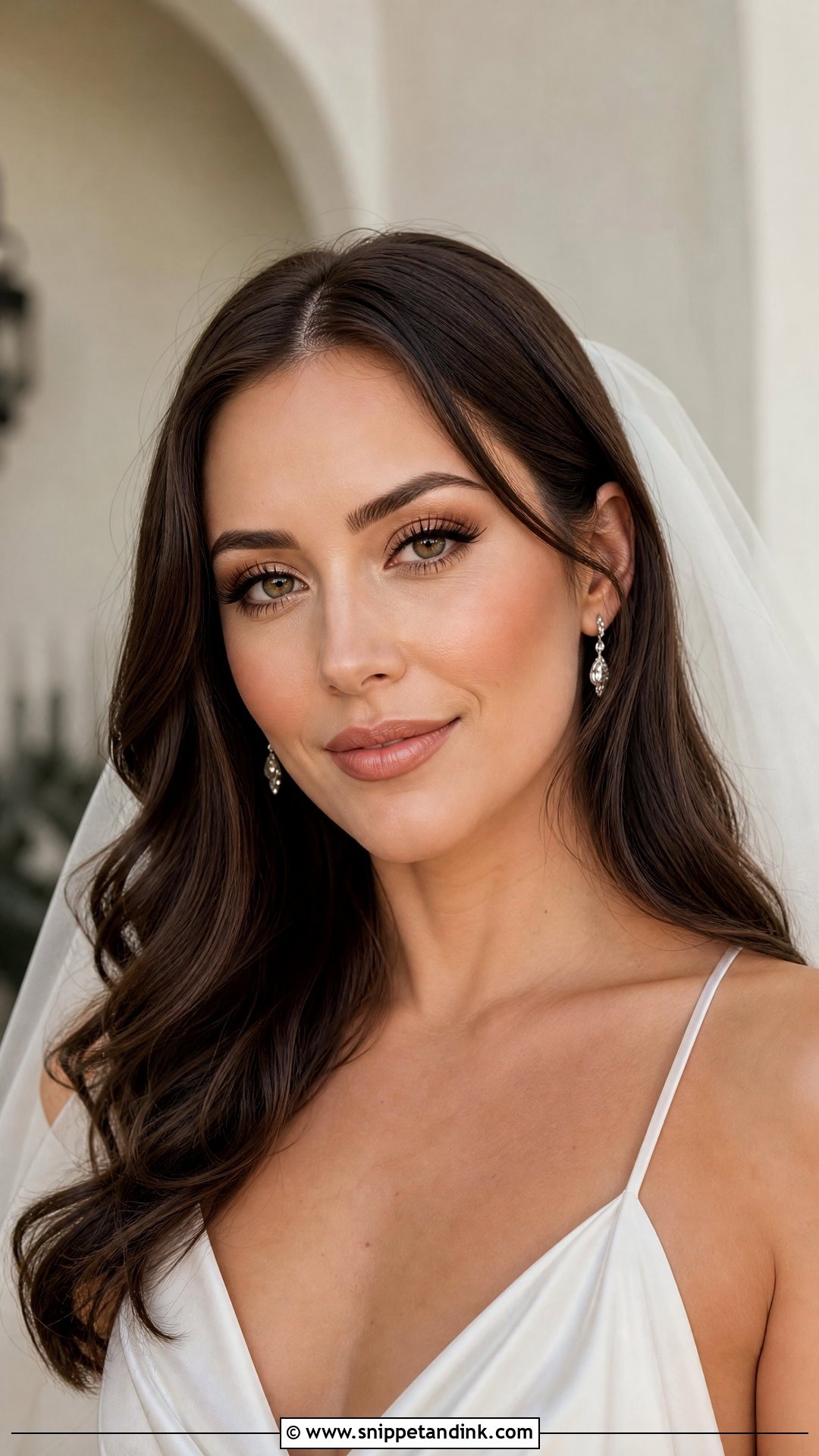
Latte makeup swaps the rosiness of traditional bridal faces for creamy beige, caramel and mocha, all in one warm family. It suits brides who look washed out in pink. Skin-like base, soft bronzer, beige brown shadow, brown liner and fluffy lashes; blush in muted peach or soft terracotta; a brown nude liner with a caramel lipstick. My one caution is cool or olive undertones, where too much caramel can turn muddy, so at the trial I’d balance it with a slightly rosier blush. Paired with a sleek gown and minimal jewelry, it reads current without dating quickly.
18. Monochrome Bridal Makeup
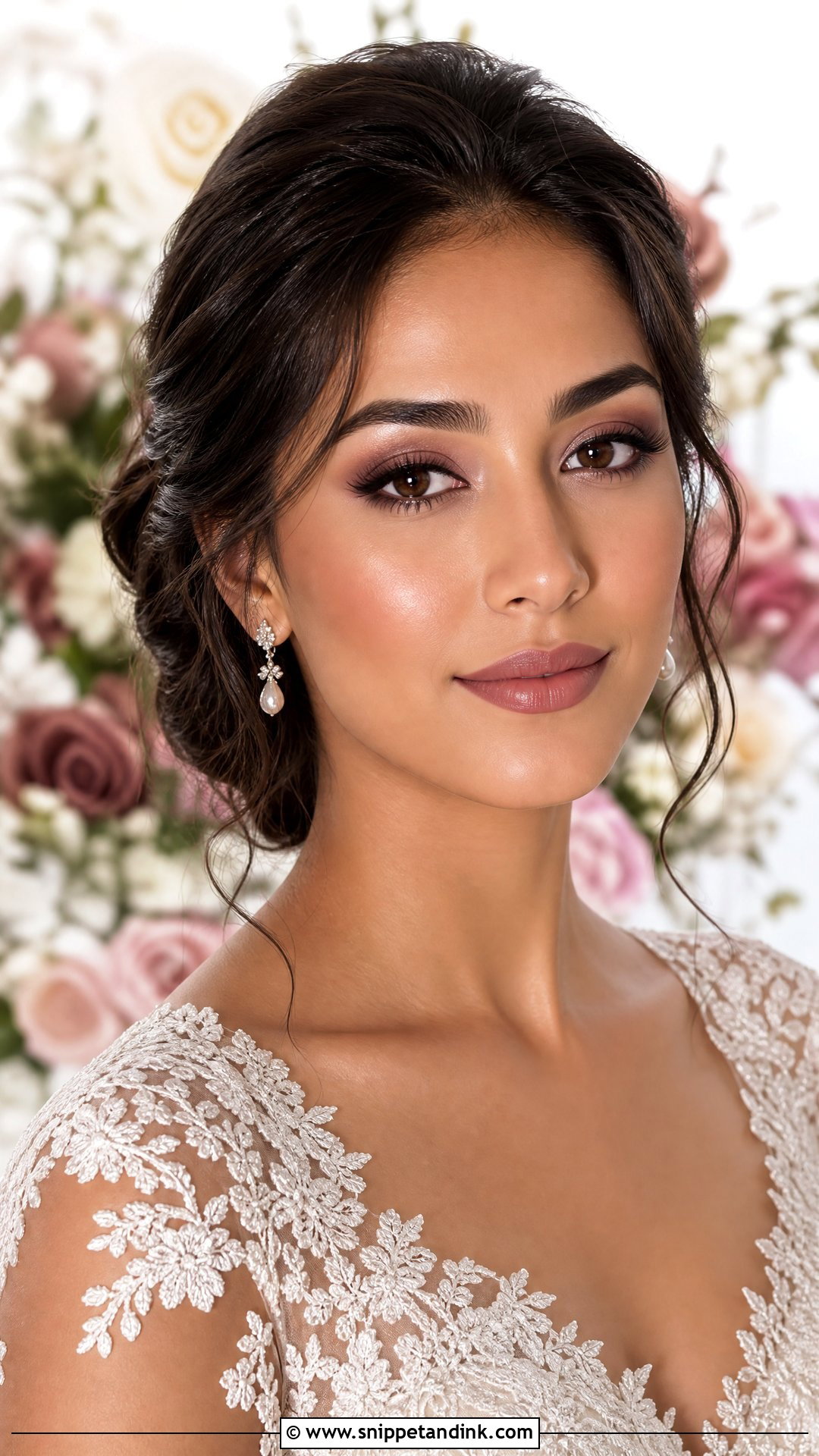
Monochrome bridal makeup uses one colour family on eyes, cheeks and lips, and the trick is varying the texture so it doesn’t look like one crayon. A mauve version might be matte mauve brown shadow, a cool rose cream blush and a satin mauve lip. A peach version could be apricot blush, warm peach shadow and a peachy nude lipstick. I usually make the lips the deepest point and the eyes the lightest. Keep the skin smooth and the brows softly defined so the colour story looks intentional. It also makes life easy for a bridal party, since everyone can wear their own depth of the same family.
19. Minimal Bridal Makeup
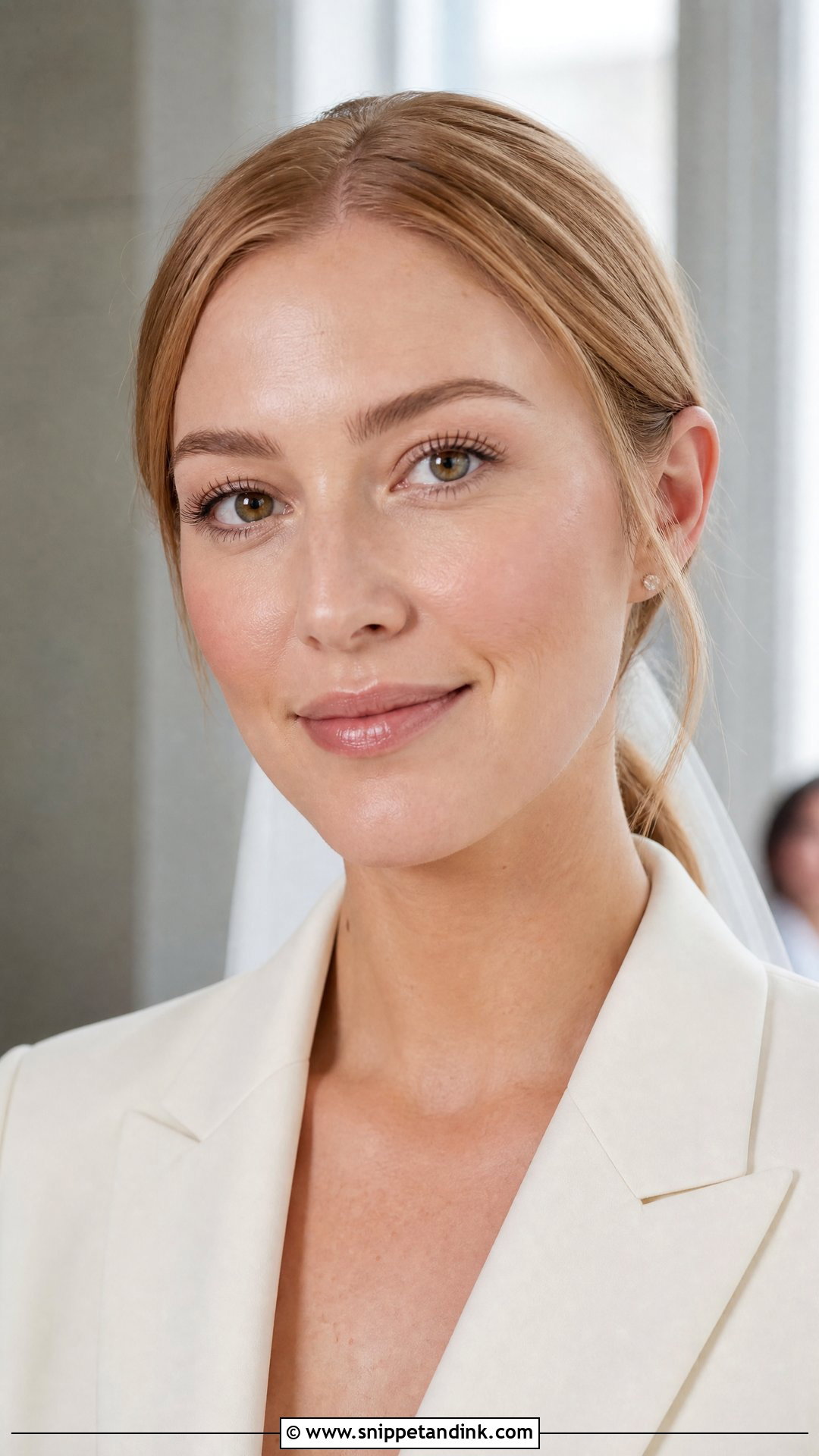
Minimal is not the same as bare, and it’s often harder to get right than glam. It uses careful skin prep, sheer foundation, pinpoint concealer, groomed brows, tightlined lashes, cream blush and a lip tint, all within a shade or two of your own features. No heavy shimmer, strong contour or thick lashes. What I check first is how your skin behaves at hour six, because with so little product there’s nothing to hide oil or redness, and a small setting step in the right places makes the difference. It suits elopements, courthouse weddings and slip dresses.
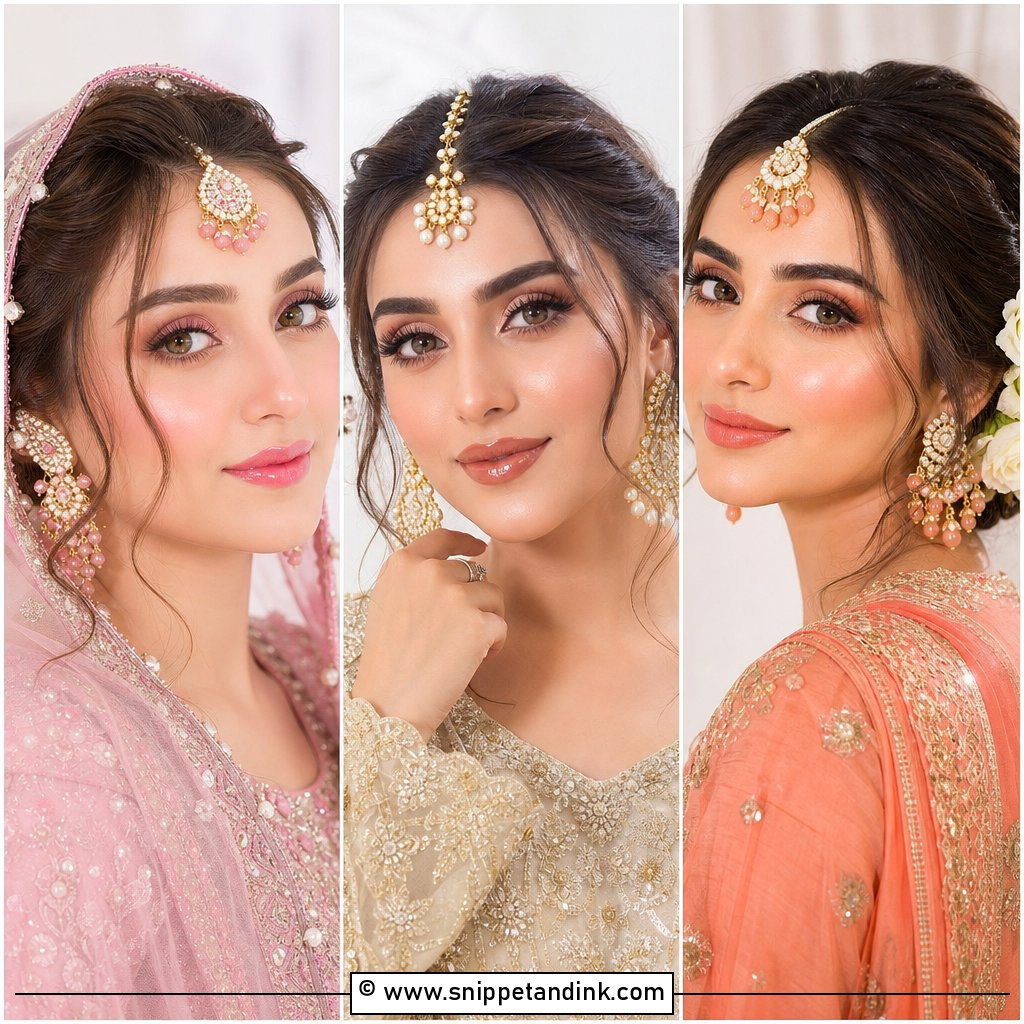
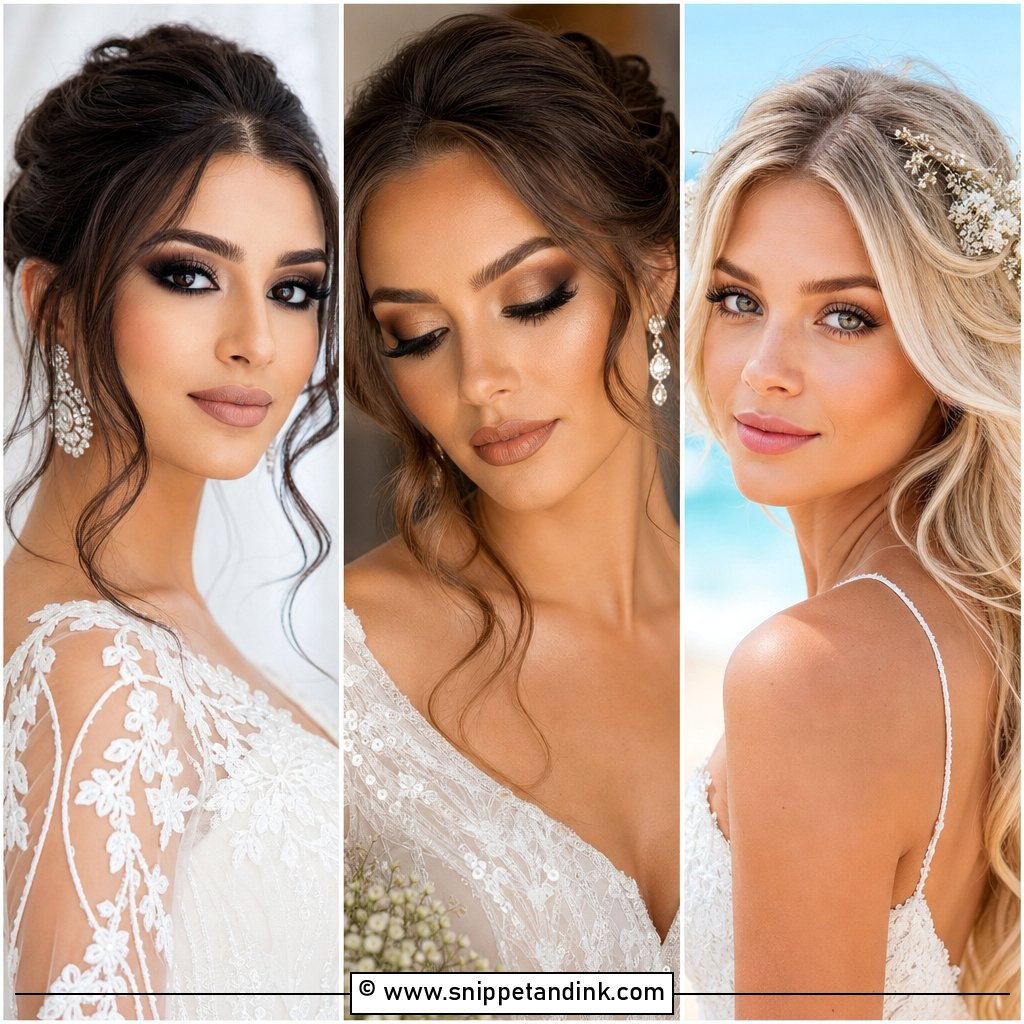
20. Full Glam Bridal Makeup
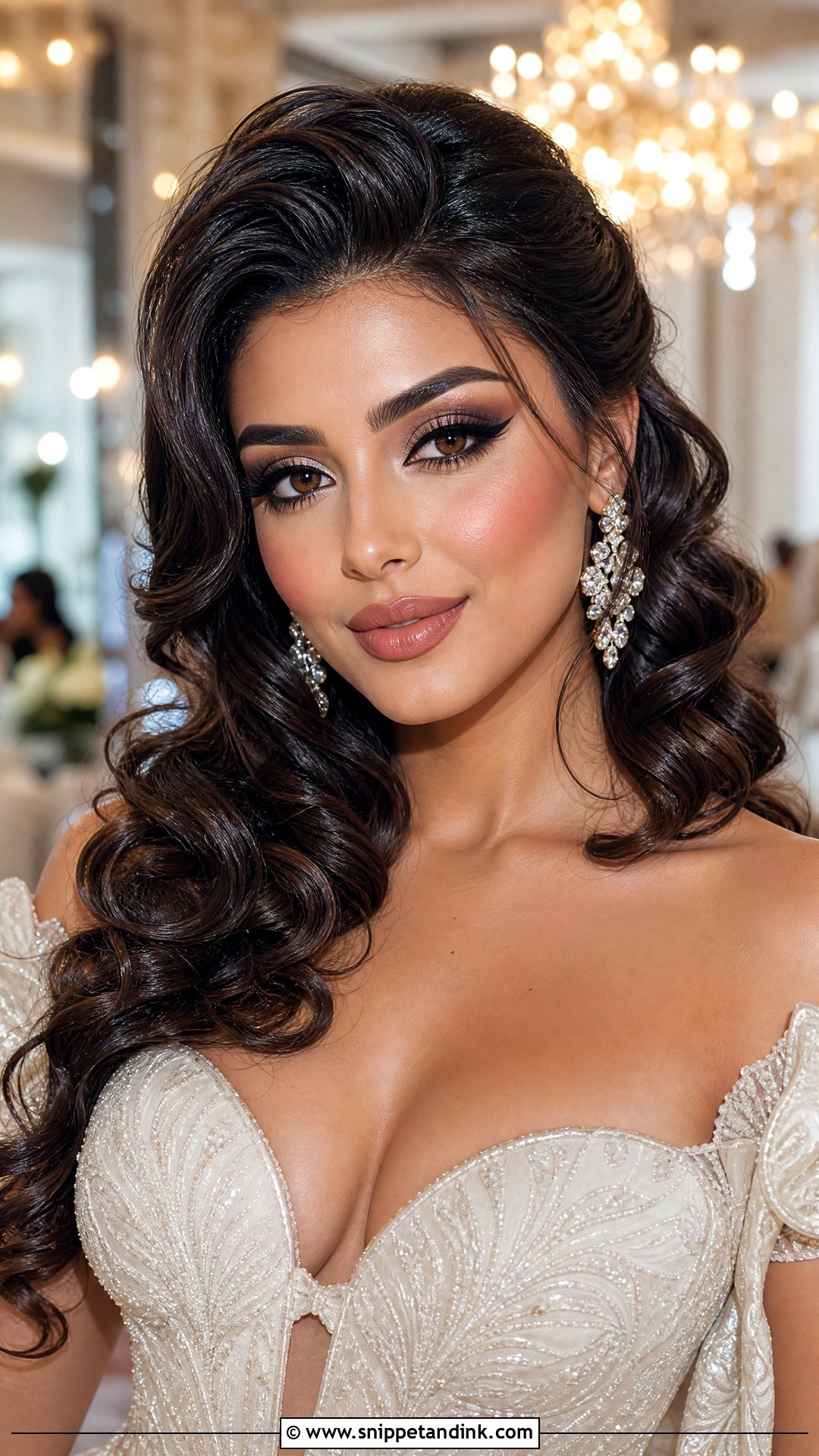
Full glam is maximum polish: medium to full coverage, sculpted contour, brightened under-eyes, defined brows, detailed shadow, liner, lashes and a shaped lip. What keeps it bridal instead of editorial is that every edge is blended and every shade is chosen for your skin rather than copied from a reference photo. Soft gold, bronze, chocolate and champagne tend to work well, with a satin nude or warm brown lip. I’d only recommend it to brides who already wear glam often. If you never do, the first time you see yourself in a mirror on the morning can feel like a stranger looking back.
21. Ethereal Bridal Makeup
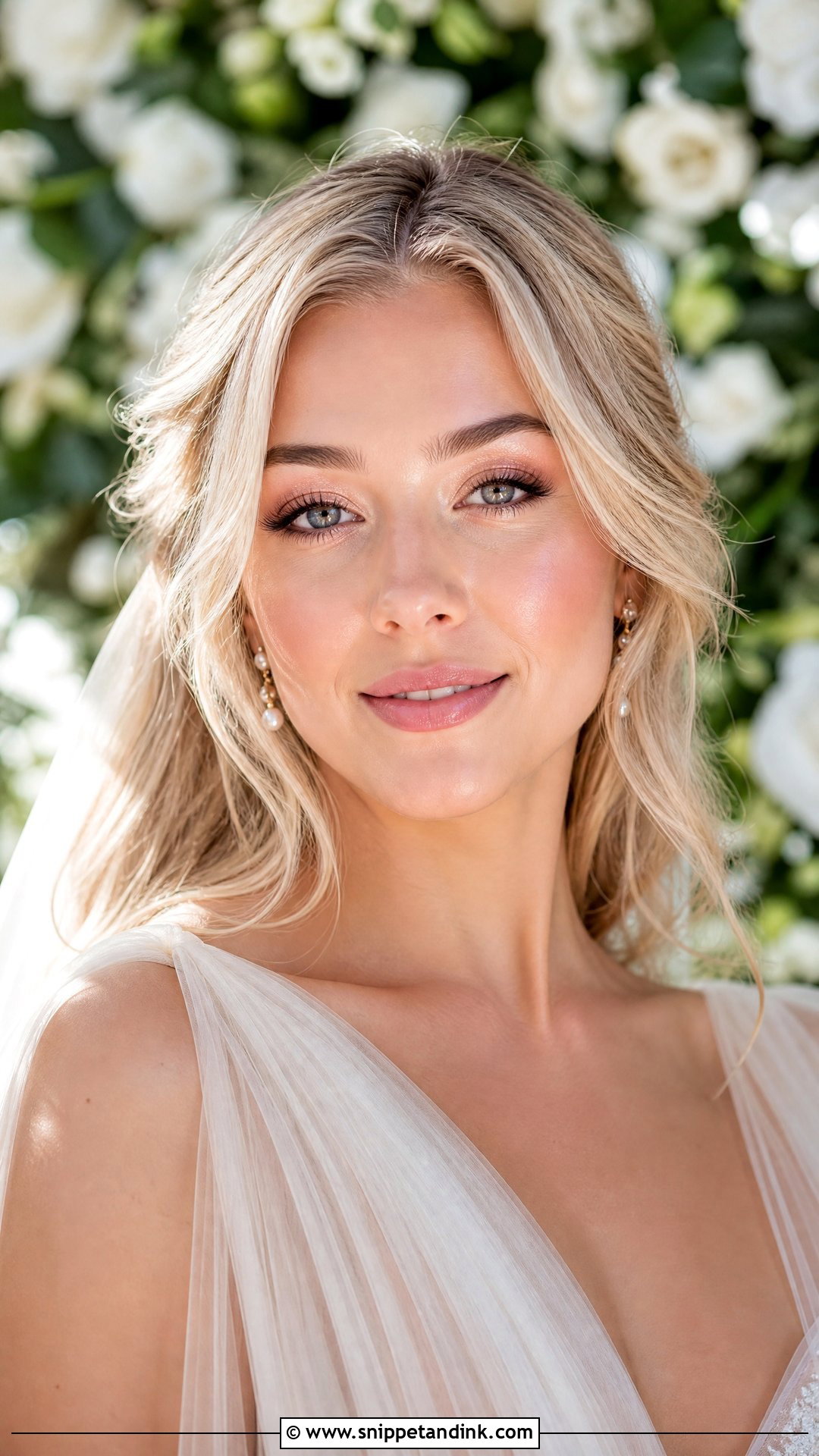
Ethereal makeup is airy without being invisible, and it lives on sheer layers. The complexion is luminous rather than greasy, with a light flush on the cheeks. Eyes can take pale champagne, dusty rose or a pearl shimmer, blended into a gentle brown line, and lashes should look feathery. Lips are sheer pink, rose balm or peach gloss. The risk is that it vanishes on camera, so I always add just enough definition at the lash line and brows for the face to hold its shape in wide shots. It sits naturally with flowing veils, loose waves and daylight ceremonies.
22. Vintage Bridal Makeup
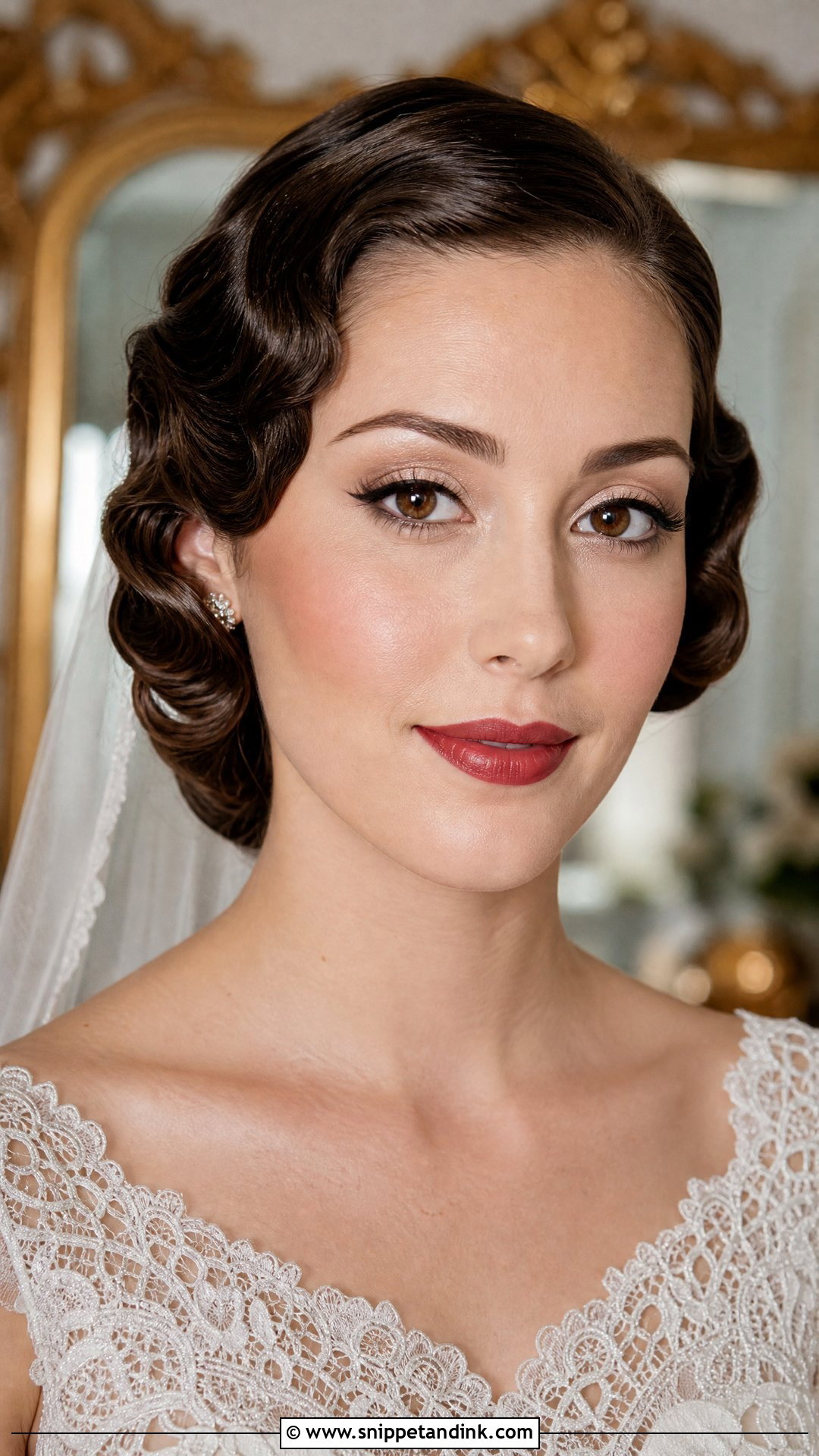
Vintage makeup can borrow from the past without looking like a costume, and the giveaway is usually the skin. I keep the base fresh and the contour soft so the face reads as now, then take the period cues from brows, liner and lip. The classic version uses softly arched brows, defined liner, curled lashes and a red or berry mouth. For a quieter take, I swap the red for muted rose and black liner for brown. It pairs with lace gowns, tea-length dresses, birdcage veils and Hollywood waves, and it needs a hairstylist on the same page, since a vintage face with modern beach waves looks mismatched.
23. Berry Lip Bridal Makeup
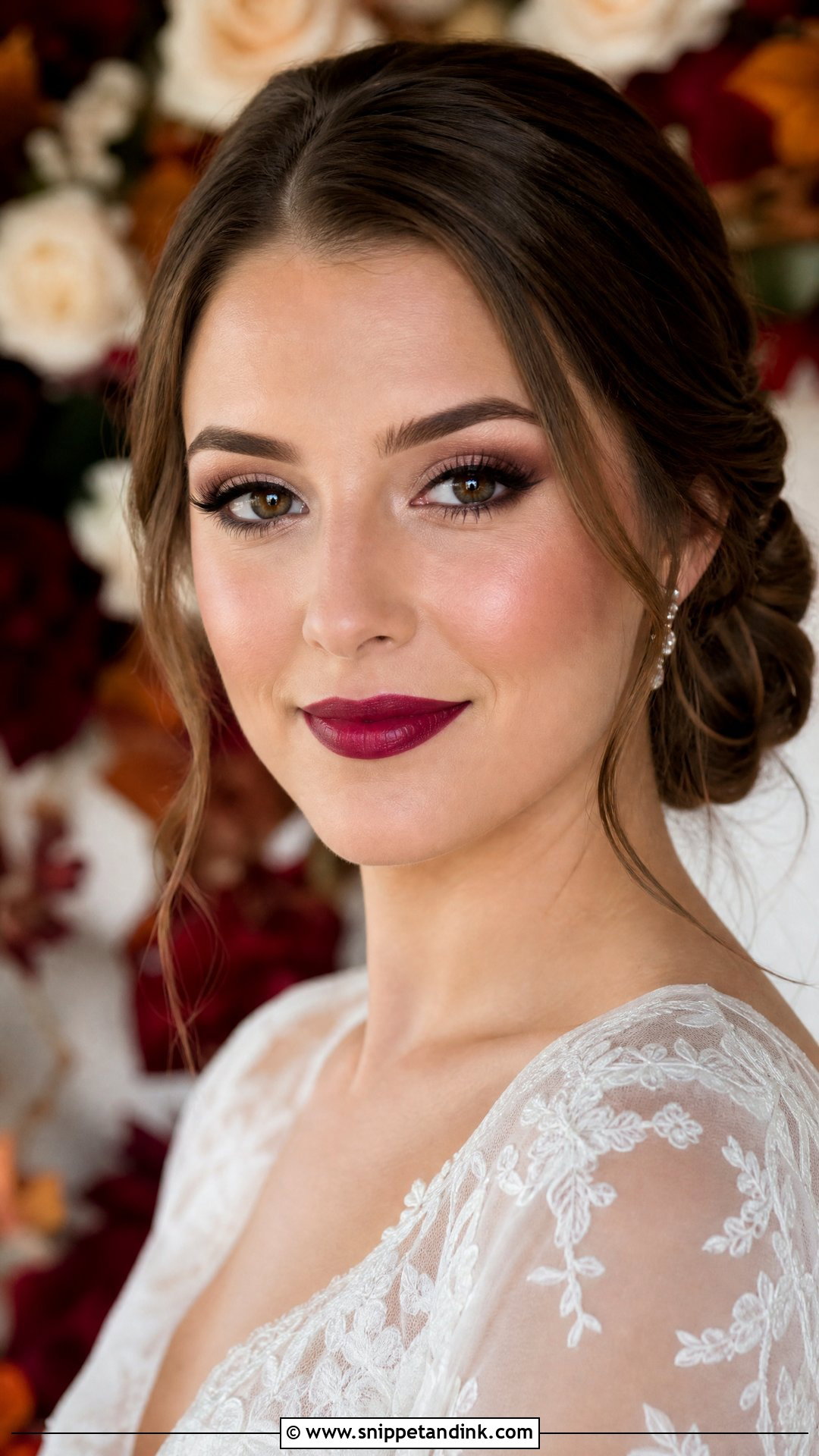
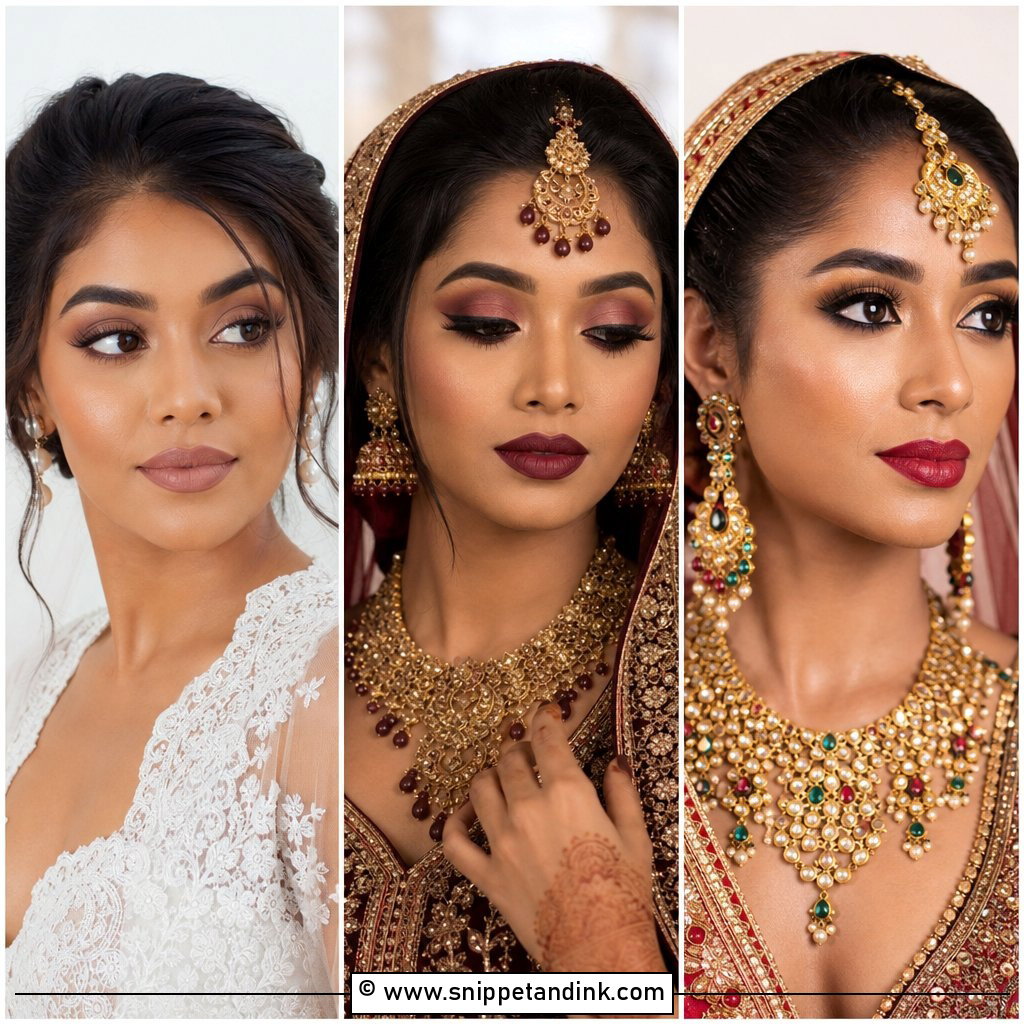
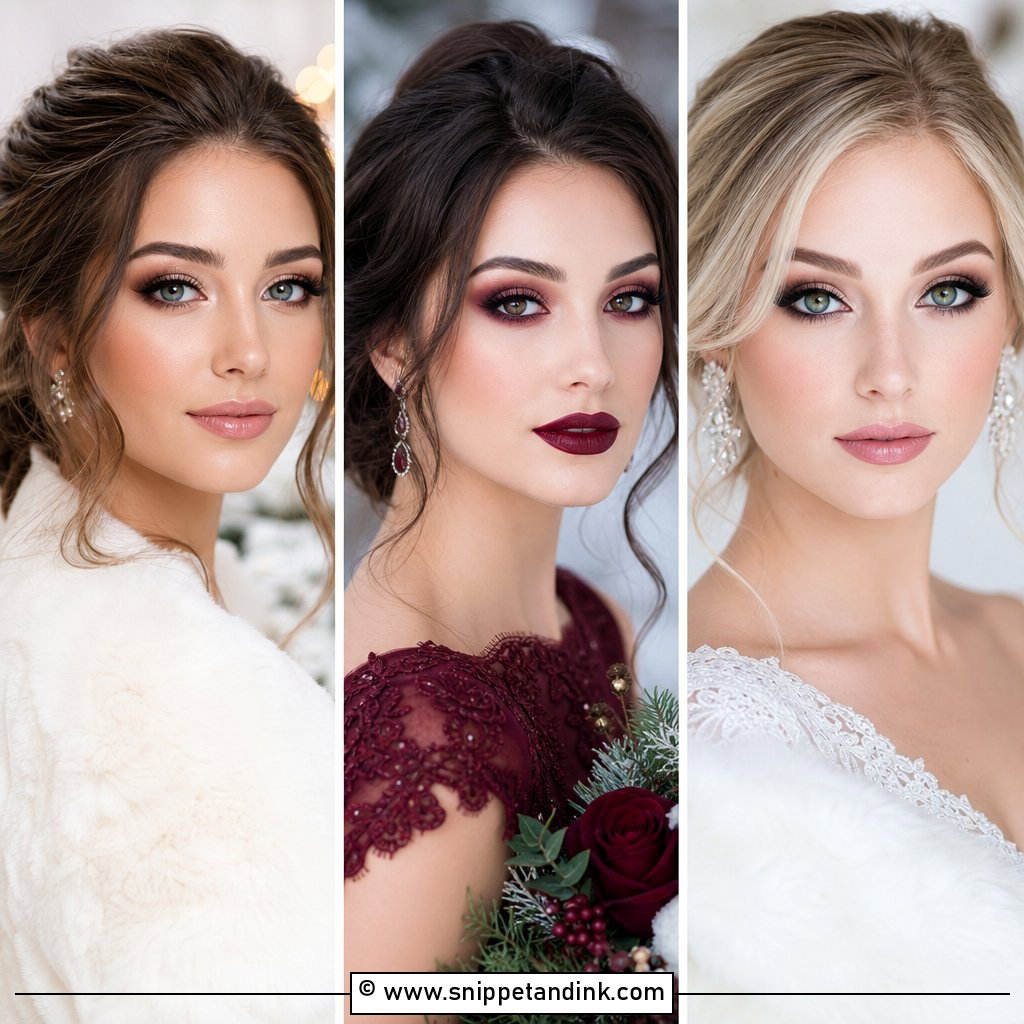
Berry lip bridal makeup gives depth and colour with a softer edge than red, and it suits fall and winter weddings in particular. Raspberry, cranberry or plum rose all work depending on skin tone and how bold you feel. I keep the eyes softly defined in taupe or bronze with a thin liner, and pull the blush from the same berry or rose family. Satin or soft matte lasts far longer than a high gloss on deep shades, which tend to bleed into fine lines around the mouth. A clear lip liner traced just outside the edge helps if that’s a worry. It sits well with ivory dresses, velvet and evening light.
24. Gold Bridal Makeup
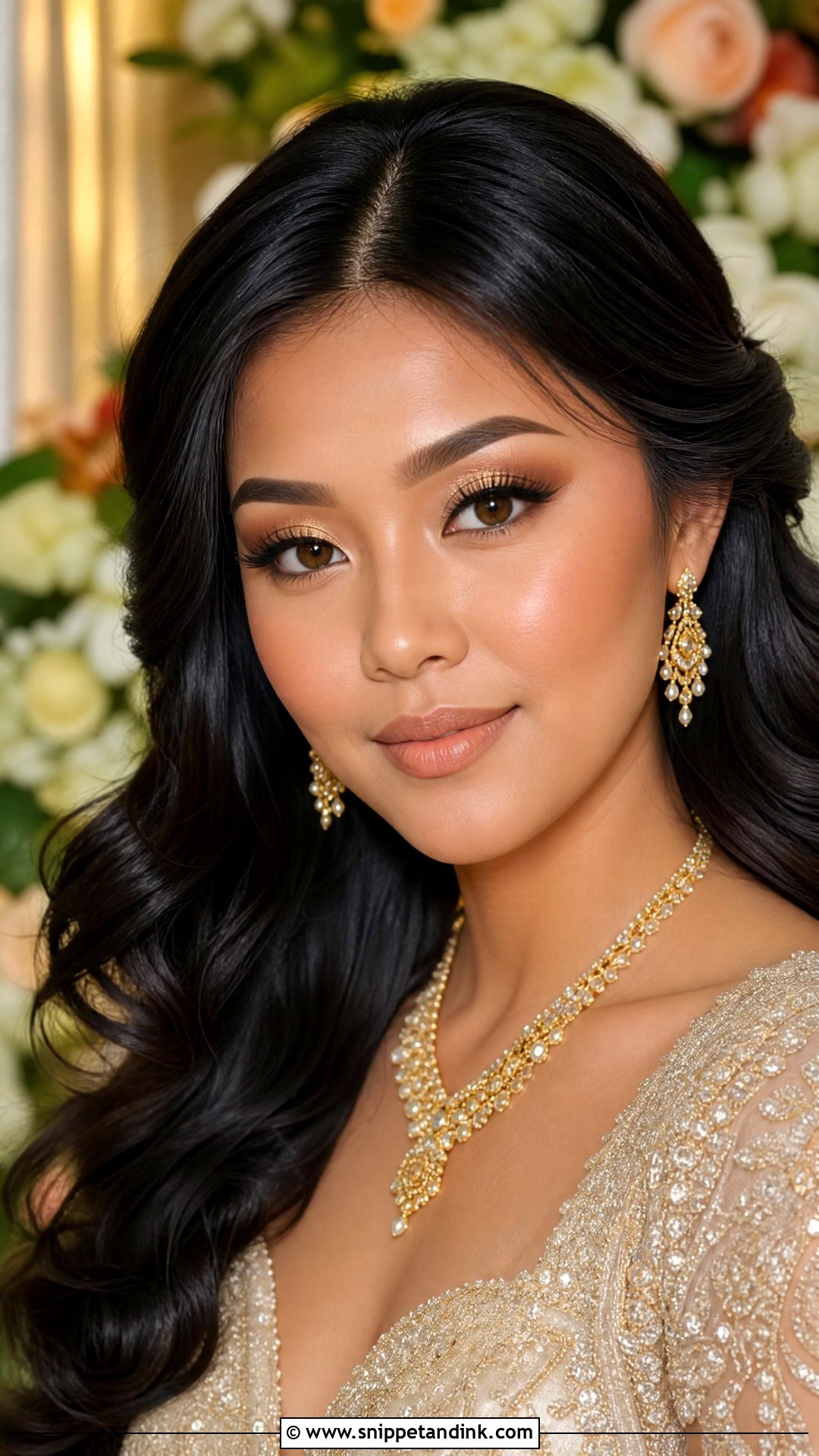
Gold makeup brings warmth and a sense of occasion without needing much colour. The eyes carry it: soft gold shimmer on the lid, warm brown in the crease and black-brown liner close to the lashes. The gold has to suit your skin tone, so I’d go pale champagne gold for fair skin, true yellow gold for tan skin and rich antique gold for deep skin. The complexion is smooth and softly bronzed, glowing on the high points, with a peach or caramel nude lip. It’s a natural match for gold jewelry and warm ivory gowns, and for celebrations where the bride changes outfits, it bridges both looks well.
25. Black Bride Bridal Makeup
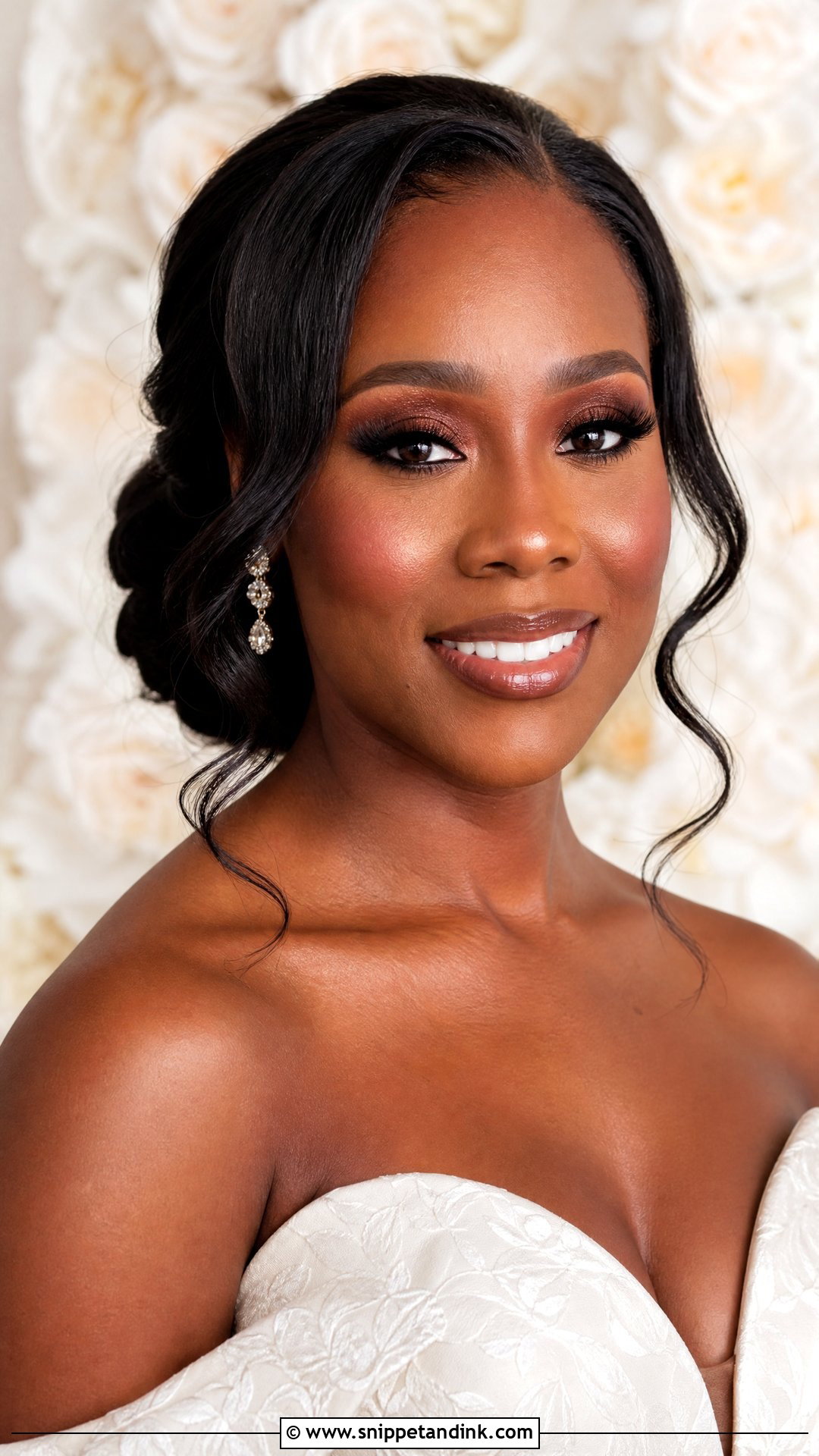
On deep skin, the first thing I check is that the base matches both the face and the chest, and that nothing I use leaves a grey cast under flash. That means choosing foundation and powder with enough warmth and depth, and placing highlight to bring dimension rather than ashiness. Warm bronze, copper, gold, plum, chocolate and burgundy look rich on the eyes and cheeks. Blush can be berry, terracotta or deep rose depending on the mood, and lips range from nude brown and caramel gloss to berry or classic red. Any of the looks above can work, from natural to full glam, as long as undertone and texture lead every product choice.
What I Test at a Makeup Trial That a Selfie Can’t Show
I book trials about two to three months before the wedding, which leaves time for a second session if we change direction. Wear a top close to your neckline, and if you can, bring your hairstylist’s plan or have your hair trial on the same day. A slicked bun and loose waves change how much makeup a face can carry.
During the session I photograph you with and without flash, by a window and under warm indoor light, because some foundations with sun filters bounce flash back as a white cast. Then I ask you to keep it on for the rest of the day and send me photos at hour four or five. That’s where we learn whether the liner smudges onto a hooded lid, whether the base breaks up around the nose and whether you actually like the lashes once the excitement fades.
Where Each Finish Slips by the Reception
No makeup looks the same at hour ten as it did at hour one, and knowing where yours will fail tells you what to pack. I hand each bride a small kit and explain what’s in it, so a bridesmaid isn’t guessing at 9pm.
- Dewy skin: shine creeps into the T-zone. Blot first, then press a little powder; powder on top of oil just cakes.
- Matte skin: can look dry around the mouth and nose late in the night. A tiny drop of facial oil warmed in the fingertips revives it.
- Red, berry and deep lips: wear away from the centre first. Bring the actual lipstick and the liner, not a similar shade.
- Strip lashes: outer corners lift after crying. A dot of lash glue on a toothpick fixes it in seconds.
- Gloss: needs reapplying after eating and drinking, more often than any other lip.
One Face, Three Kinds of Light
The looks that last are the ones that respect both how you feel and how the day will actually be photographed. Pick the finish that sounds like you, then test it properly: in window light, under a warm indoor bulb and with phone flash, and wear it for several hours before you judge it. Adjust the lip, blush or lash weight after that test, not in the mirror on the morning. If you walk into the wedding feeling calm and recognisable, the makeup has done its job.
You'll Like These Ideas:


Leave a Reply