
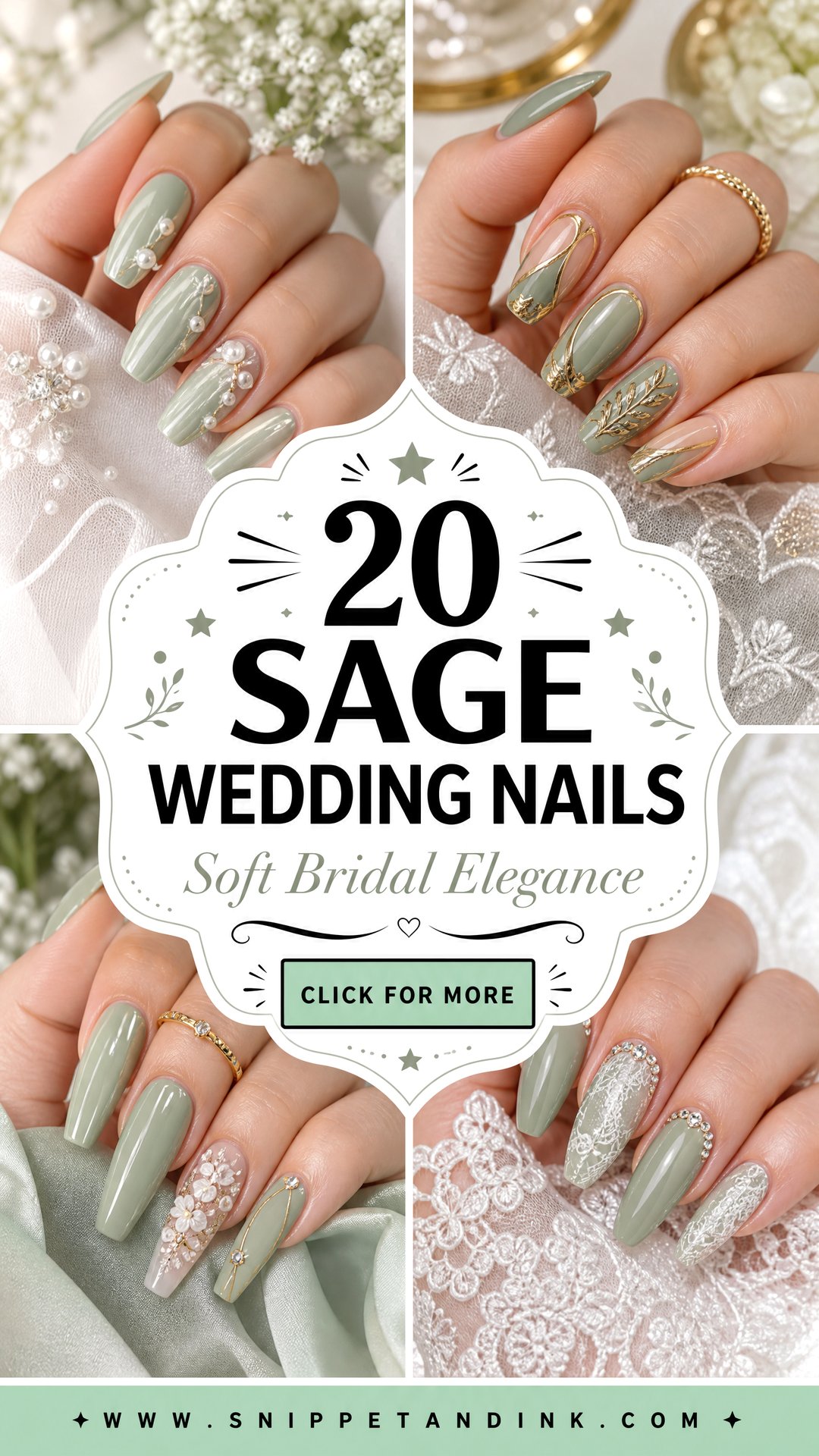
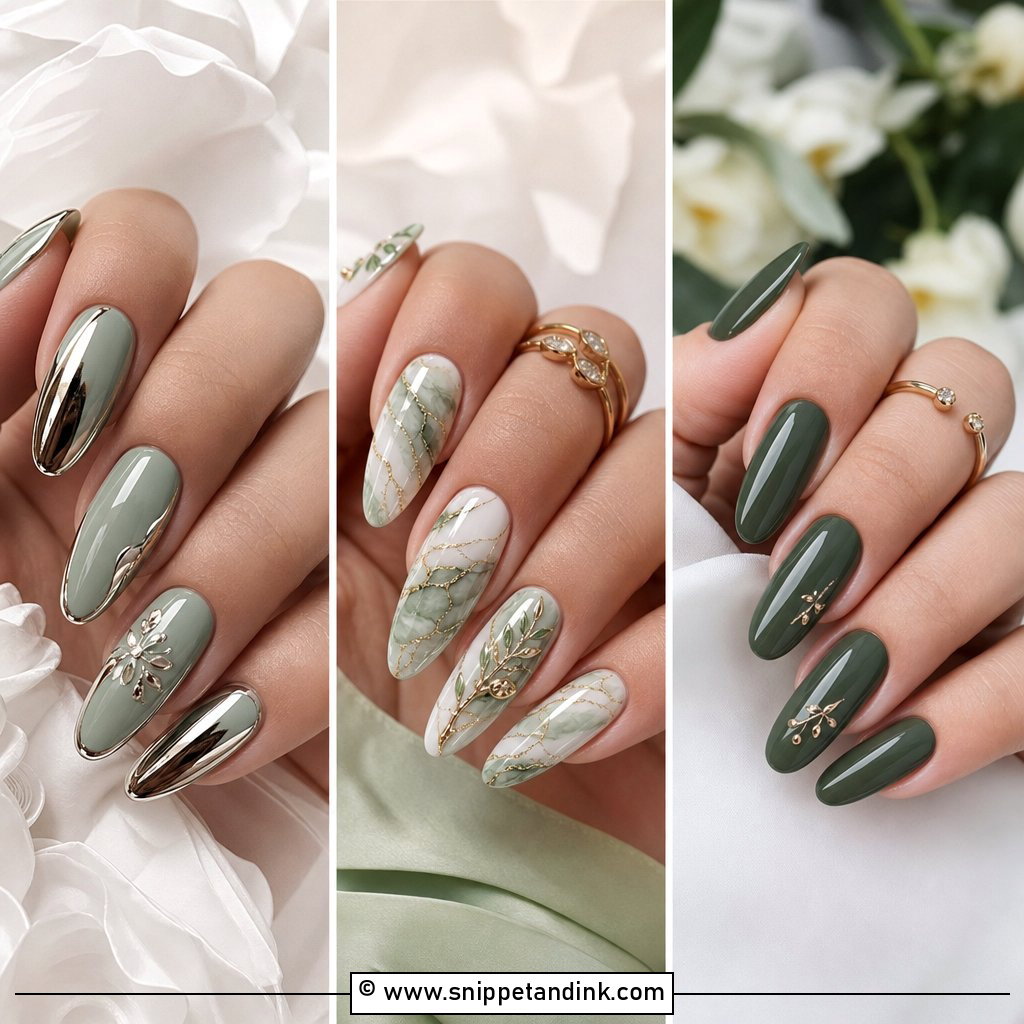
Sage has become one of the colors I paint most often for weddings, for brides, bridesmaids and guests alike. It behaves almost like a neutral: it sits beside ivory and satin, pearls and gold, and garden settings without pulling focus from the ring. It’s also unusually adaptable on the nail. I can thin it into a sheer French tip, lay it down glossy and solid, buff chrome over it, paint florals on it or fade it into nude. The twenty sets below are complete manicures, each with what I’d watch for at the table and how it holds up in close-up ring photos.
Which Sage Flatters Your Skin Tone?
Sage isn’t one color. Polish ranges include grey-sages, olive-sages and soft eucalyptus blues, and they don’t look the same on every hand. When a client sits down, I swatch two or three shades on a nail tip and hold them against the back of her hand and her dress fabric before we choose.
- Fair, cool or pink skin: a grey or slightly blue sage looks cleaner than a yellowed one
- Olive or golden skin: olive-leaning sage harmonizes, and gold accents suit it
- Deep skin: richer, more saturated sage looks better than a very pale one, which can look chalky
- Red or flushed hands: green neutralizes redness, so sage is unusually flattering here
Look at the swatch in daylight too. Salon lamps are bright and white, and a sage that looks soft under them can read greyer by a window.
1. Sage Green French Tip Wedding Nails
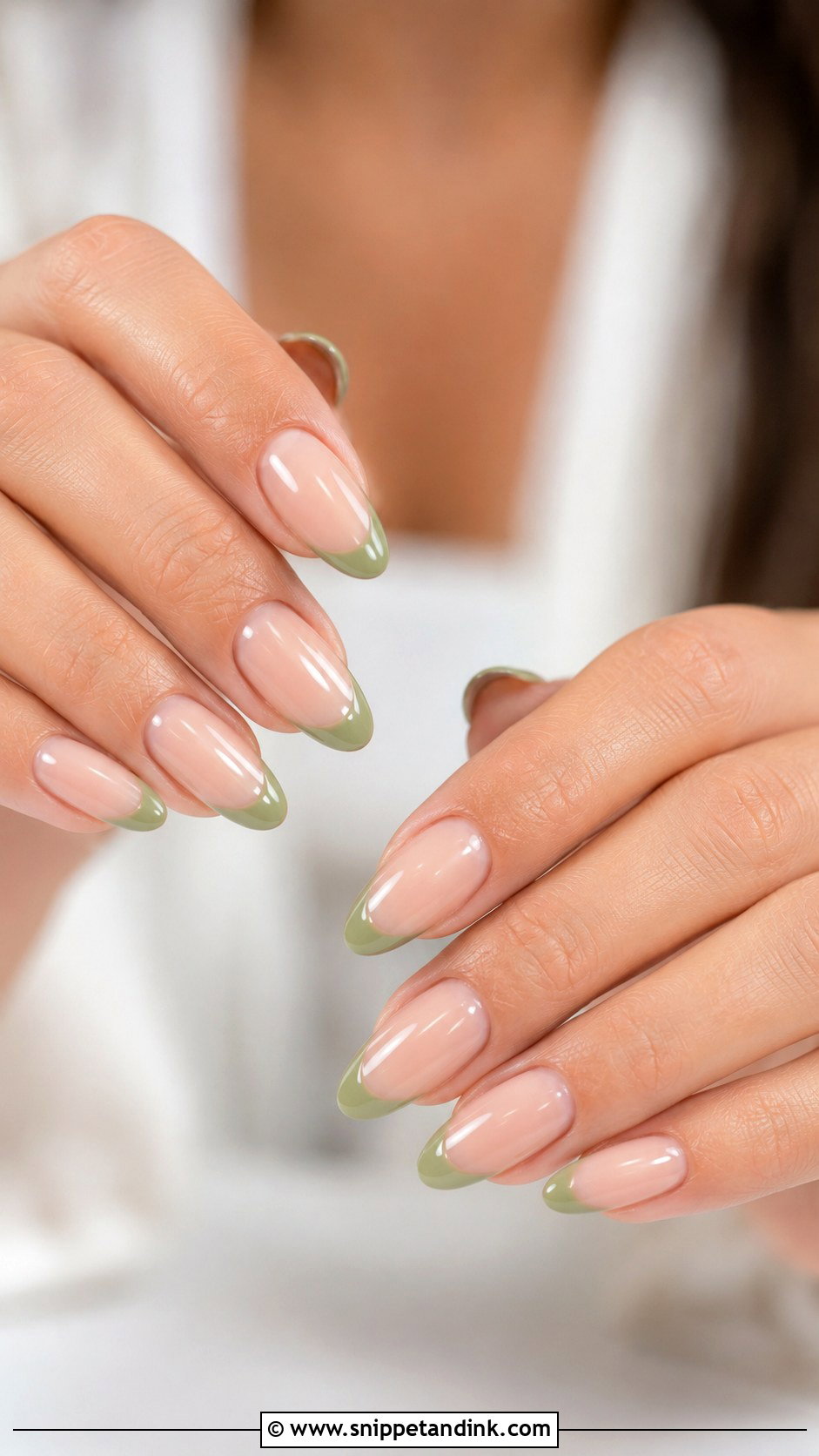
The French tip is the easiest way to wear sage without committing a whole nail to it. Sage green French tip wedding nails sit on sheer nude, milky pink or clear, and the base color matters more than people expect: a pink base warms the green, a nude base keeps it muted. I paint a thin, rounded smile line on almond or oval nails, since a deep straight tip on sage can make fingers look shorter. The bare base keeps hands looking bright in pictures.
2. Sage Green Chrome Wedding Nails
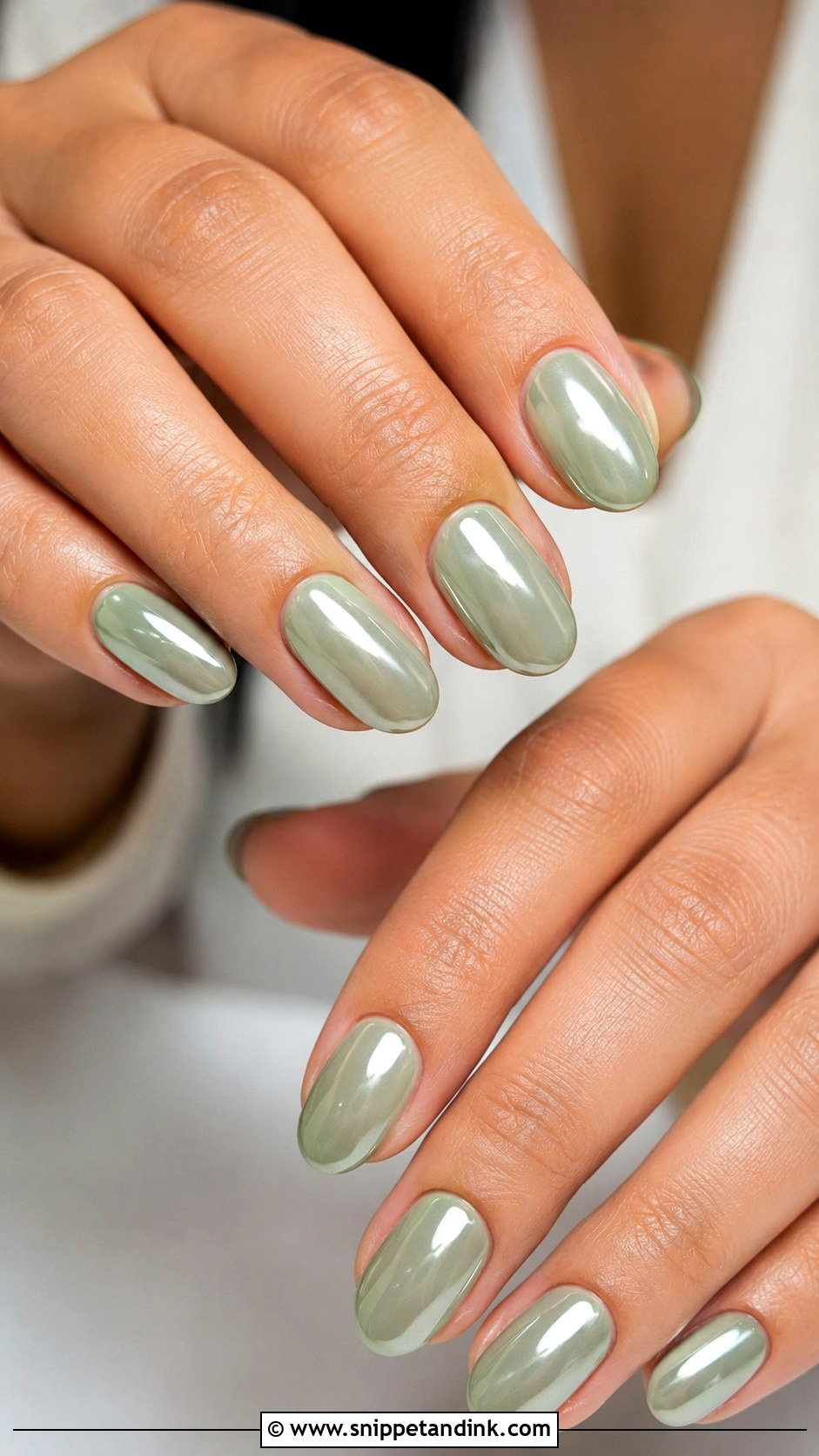
Chrome over sage should glow, not flash. I lay down a muted sage gel, cure a no-wipe top coat, then buff the lightest dusting of pearl or soft chrome powder over it. Heavy powder turns the nail into mirrored metal and you lose the green entirely. Sealing the free edge is the step that decides whether it lasts; uncapped chrome chips at the tips within days. Short oval or almond suits it, and it shines under evening reception lights.
3. Sage Green And White Wedding Nails
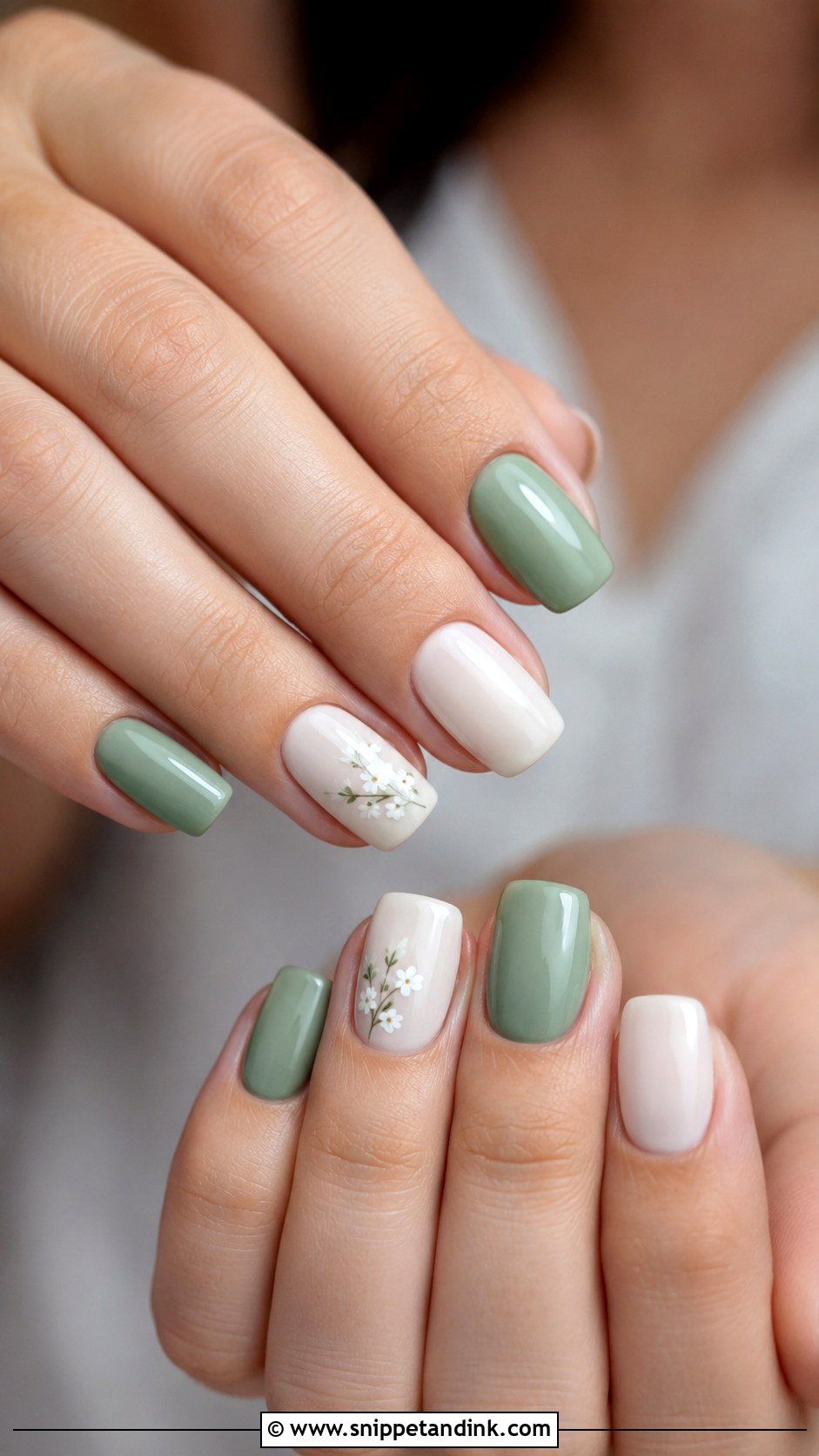
Alternating sage and milky white keeps the set balanced, and one or two accent nails with a tiny white flower or leaf finish it. Milky white is the half that goes wrong. Too thick and it looks like correction fluid, so I build it in sheer coats until it’s just barely opaque. Short square looks clean; almond looks softer. Keep the sage greyed and muted so it sits next to ivory and champagne fabric without looking minty.
4. Sage Green Floral Wedding Nails
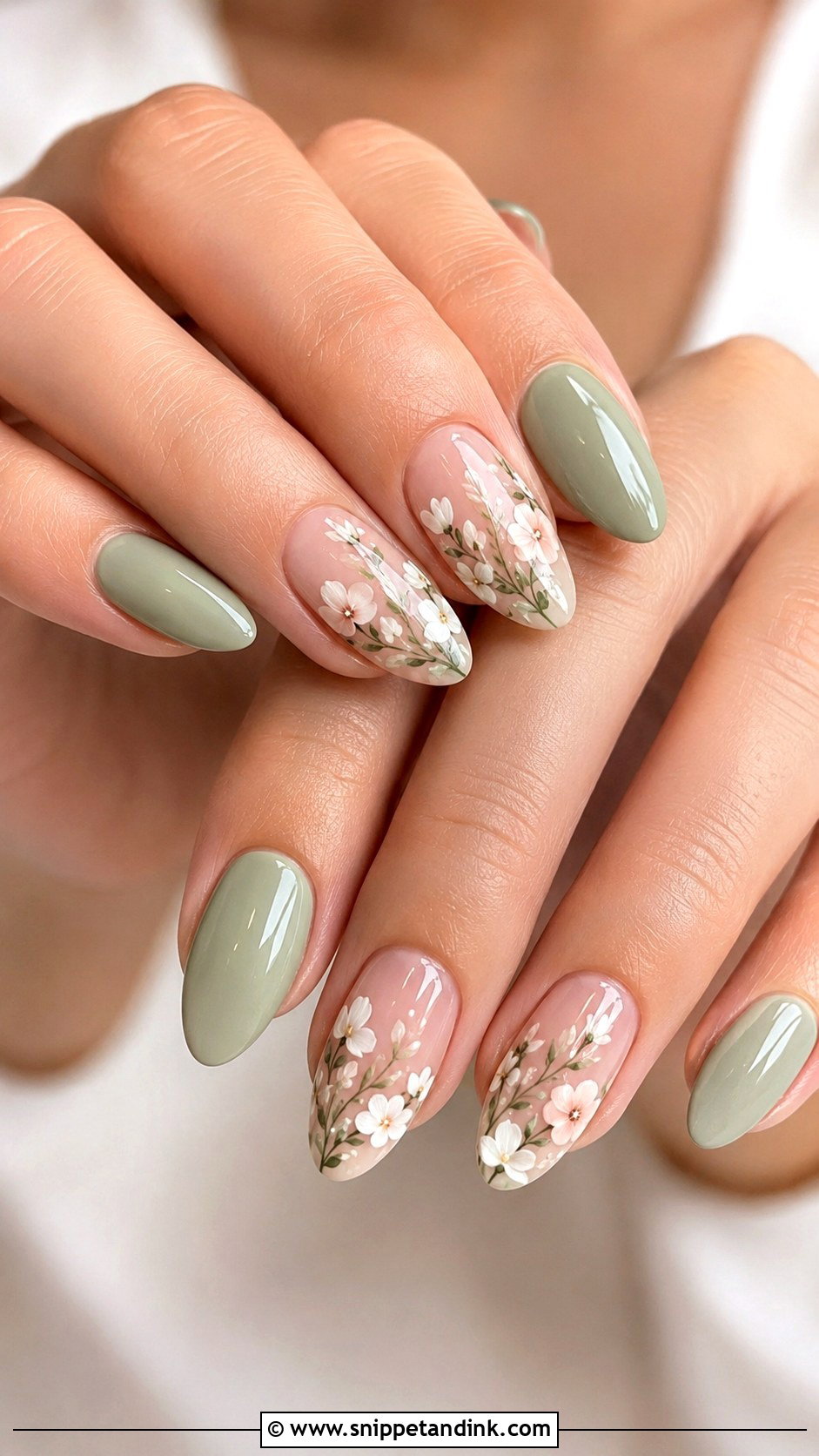
Florals need space around them. I start with a sheer nude or milky base, then paint tiny white flowers, pale blush petals or fine green stems on a few nails, leaving the rest solid sage. Crowded flowers turn into smudges from more than an arm’s length away. Fine line work like this is easier on almond and oval nails, where the curve gives the stems somewhere to go. Garden and spring weddings suit it.
5. Sage Green Ombre Wedding Nails
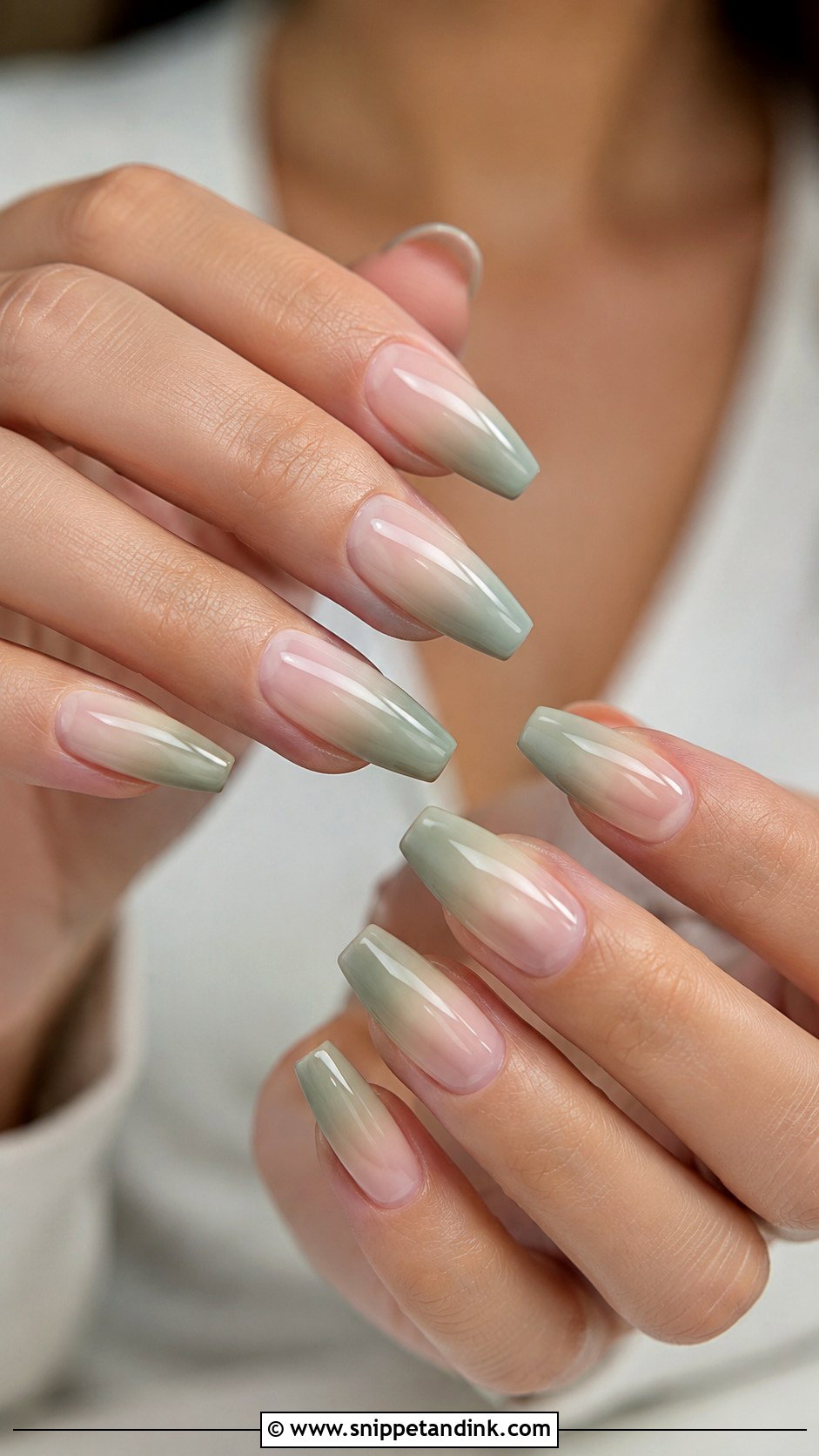
A fade can run from nude at the cuticle into sage at the tip, or from milky white into green. Sage green ombre wedding nails are blended with a sponge or a brush, and the fade needs nail length to look gradual; on very short nails it becomes a stripe. Almond, coffin and oval give it room. High gloss smooths the transition, because a matte top coat shows every texture in the blend.
6. Matte Sage Green Wedding Nails
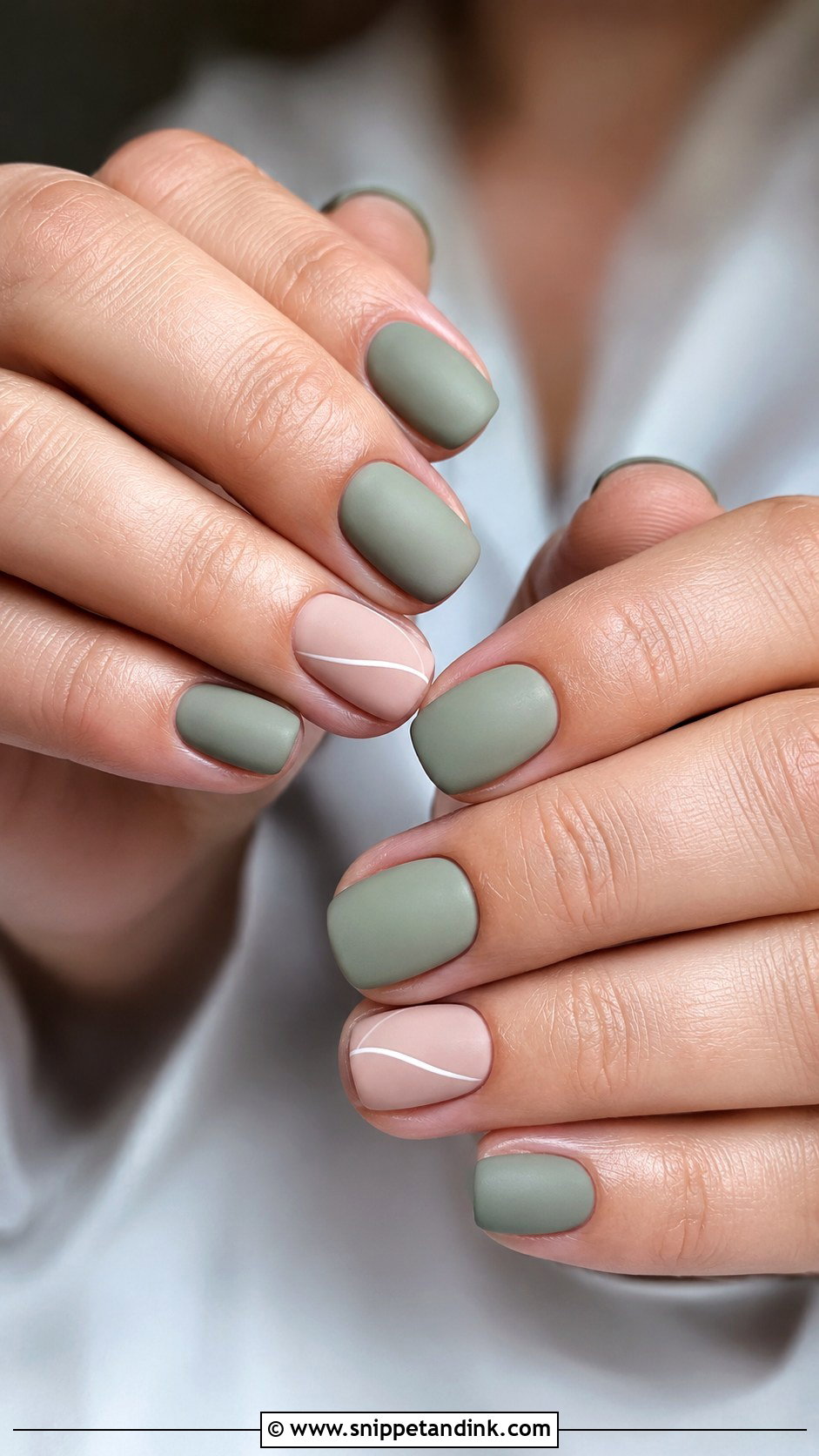
Matte sage looks velvety and calm, and it’s honest about the shape underneath. Short square, rounded square or medium almond, filed precisely, is what makes it work. Here’s what most people don’t know: matte top coat picks up stains from makeup, self-tanner and even denim, and it can’t be wiped clean. If you love it, wear it, but I’d put the matte on after any tanning. A thin white line or one tiny pearl is enough decoration.
7. Sage Green Pearl Wedding Nails
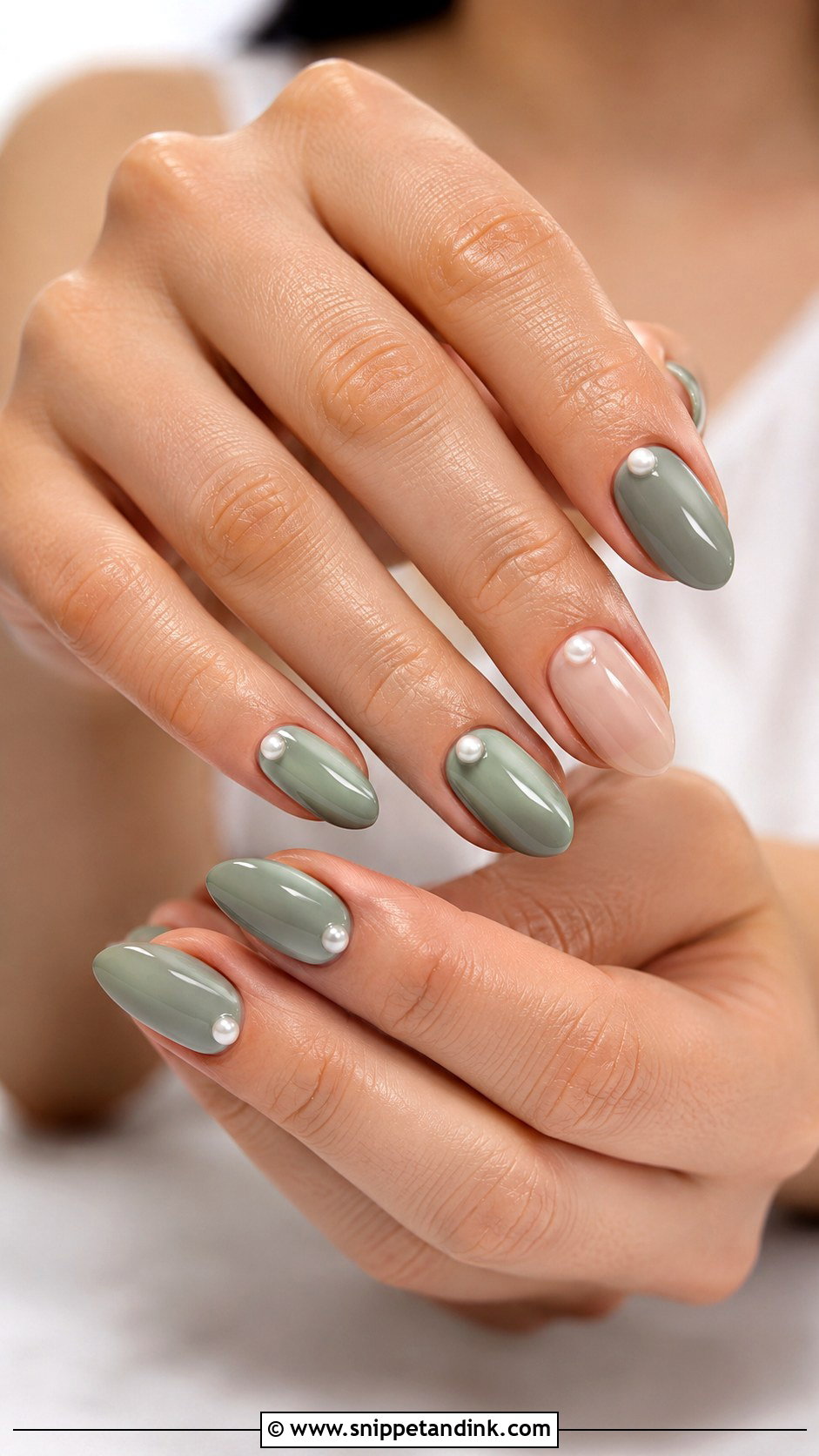
Pearls should be few. I place two or three small ones near the cuticle or along one edge over a sage base, a sheer nude or a soft French. More than that and they snag hair and veils and start to feel heavy on the hand. I set them in builder gel so they don’t pop off when you’re hugging people all day. Almond makes them look delicate; short oval keeps them practical. Pearl earrings and a veil pair well with this set.
8. Sage Green Gold Wedding Nails
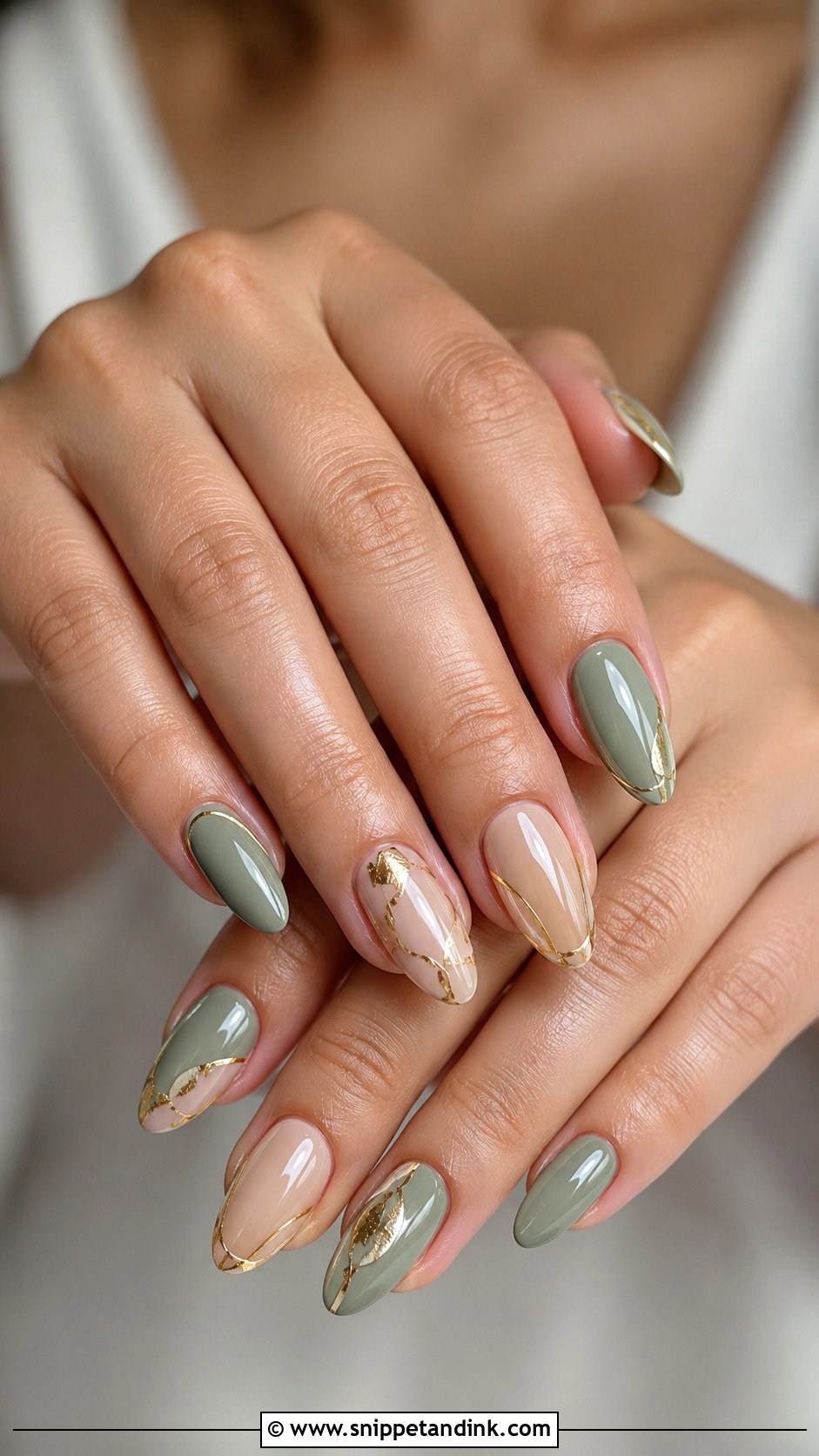
Gold warms sage, which makes this set flattering on warmer and deeper skin tones and with champagne gowns. I use a thin foil edge, one fine metallic line or a few flecks over nude and sage, and I keep gold on only a couple of nails. Gold foil sits under the top coat, so it won’t wear off, but too much of it starts to look costume-like. Almond or rounded square keeps it refined.
9. Sage Green Lace Wedding Nails
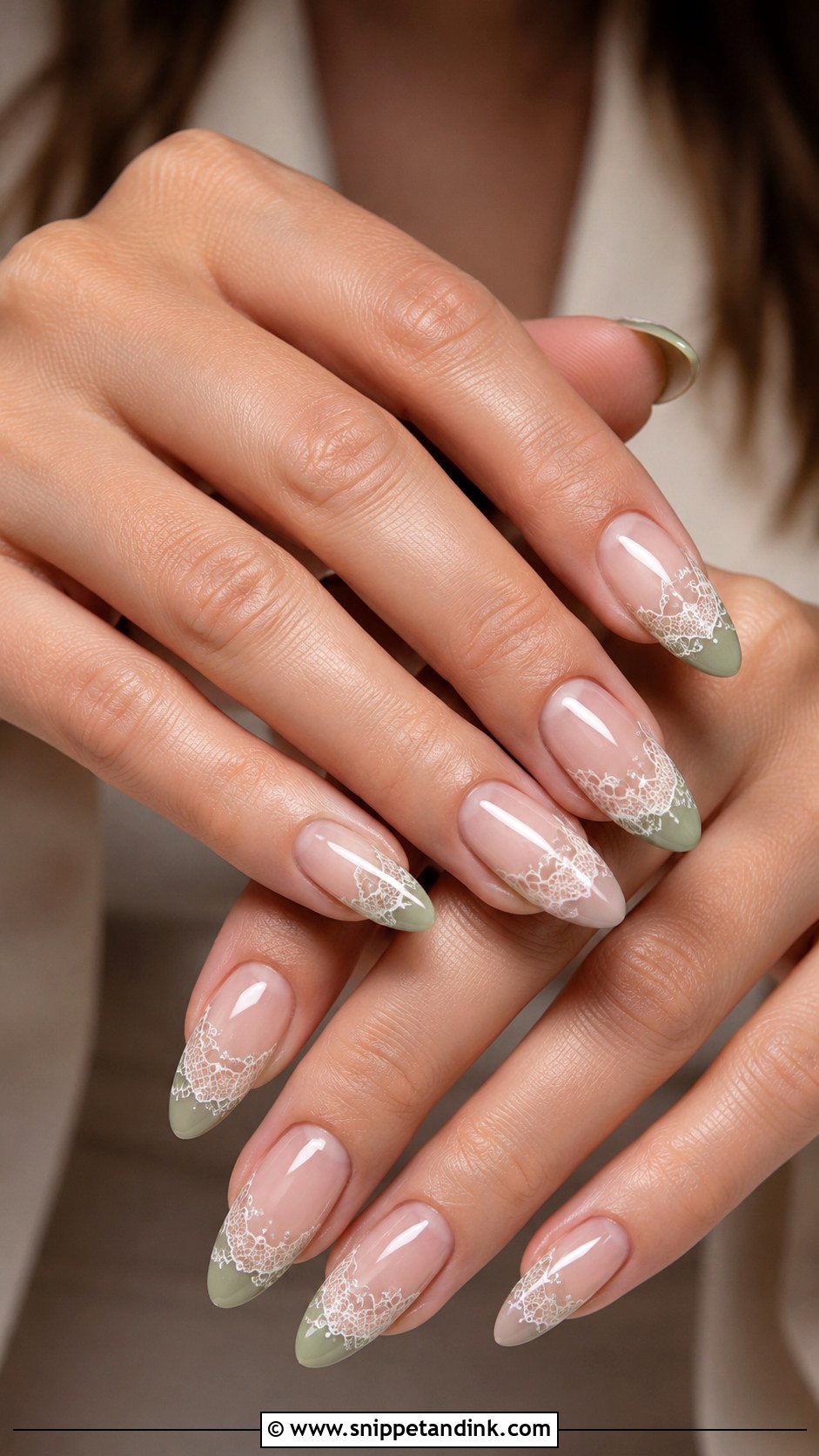
Lace is fine-line work, and it only looks like lace if the lines are genuinely thin. I paint it in white over a sheer nude with sage accents, or lay it across a sage French tip. Almond and coffin give the pattern room. If your dress has lace, bring a close photo of the motif; I won’t copy it stitch for stitch, but echoing its shape is what makes the set feel coordinated rather than themed.
10. Sage Green Short Wedding Nails
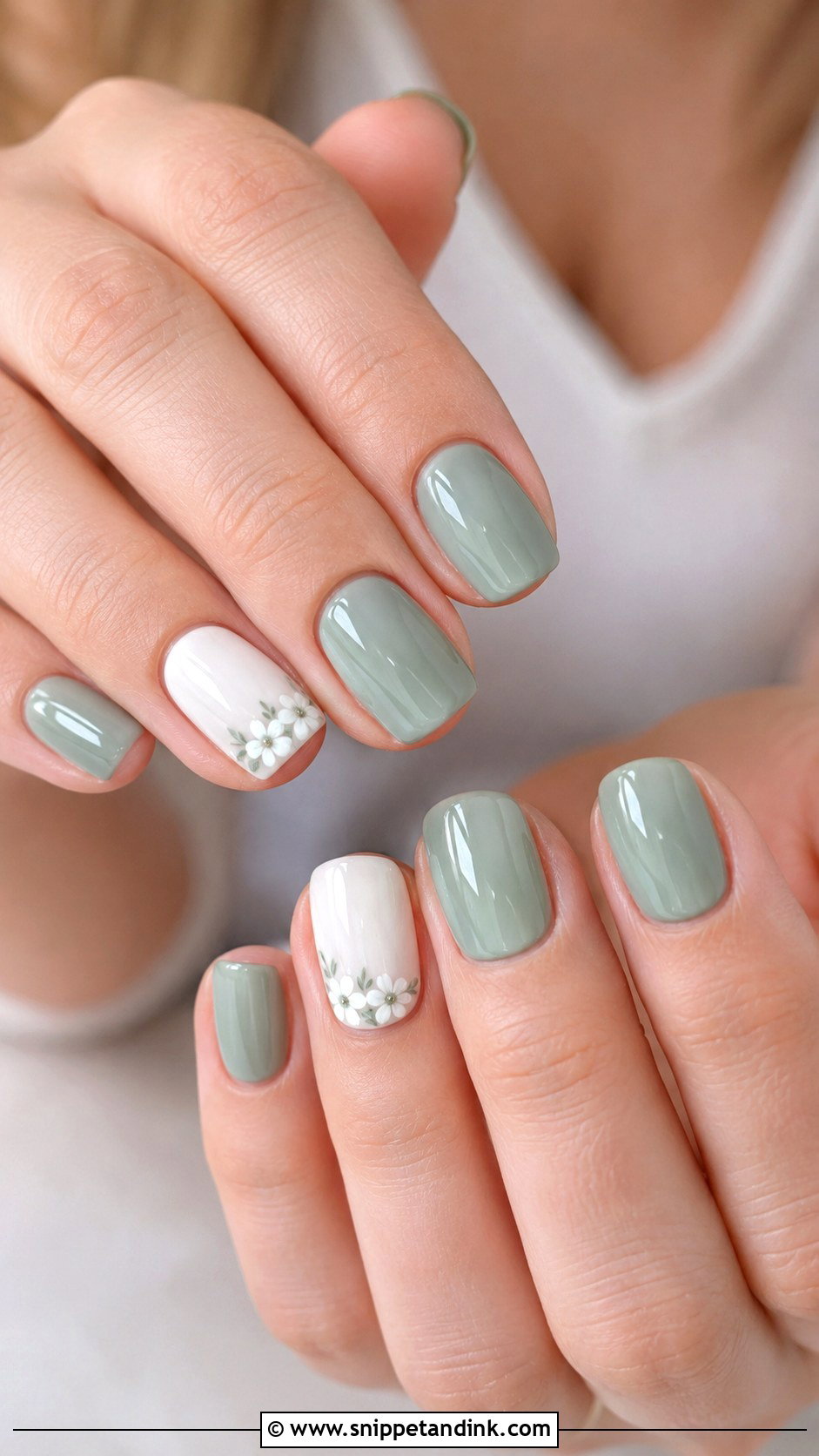
Short nails are what I’d choose for anyone who types, carries children or hasn’t worn length before, because they don’t catch on fabric or hair pins. Glossy sage on short square or rounded nails looks deliberate. One milky accent nail, a small white flower or a thin gold line makes it bridal. For bridesmaids, short sage is consistent and easy for everyone to wear. A greyed sage with taupe undertones looks the most polished.
11. Sage Green Almond Wedding Nails
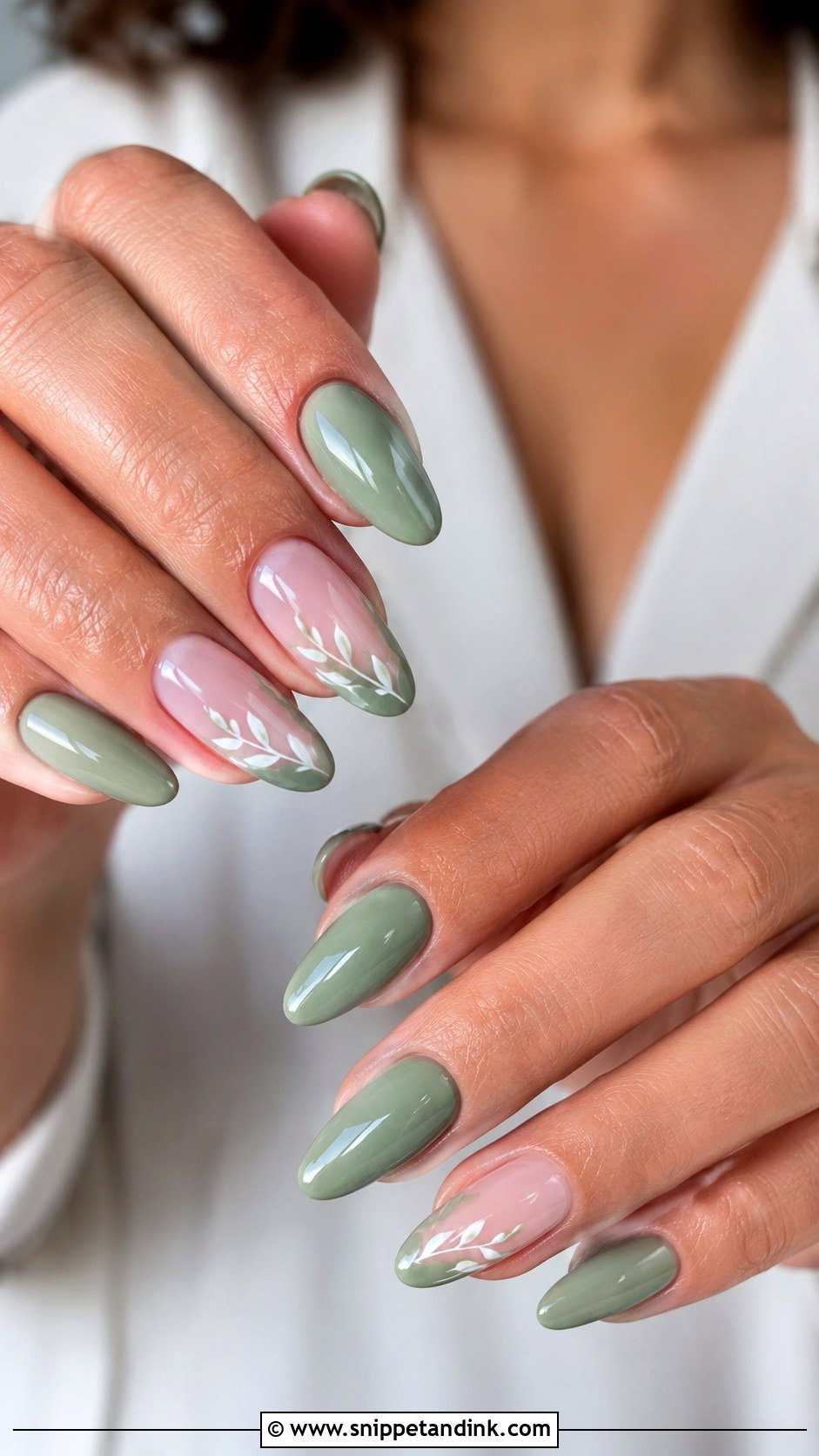
Almond lengthens the fingers, which is why I suggest it so often for ring photos. The taper draws the eye along the hand without looking sharp. I’d keep the length medium; long almond tips catch on lace and make buttoning a dress harder. Full sage, a sage French or a mixed set with nude and a couple of botanical accents all suit the shape. Glossy finishes show the curve best.
12. Sage Green Coffin Wedding Nails
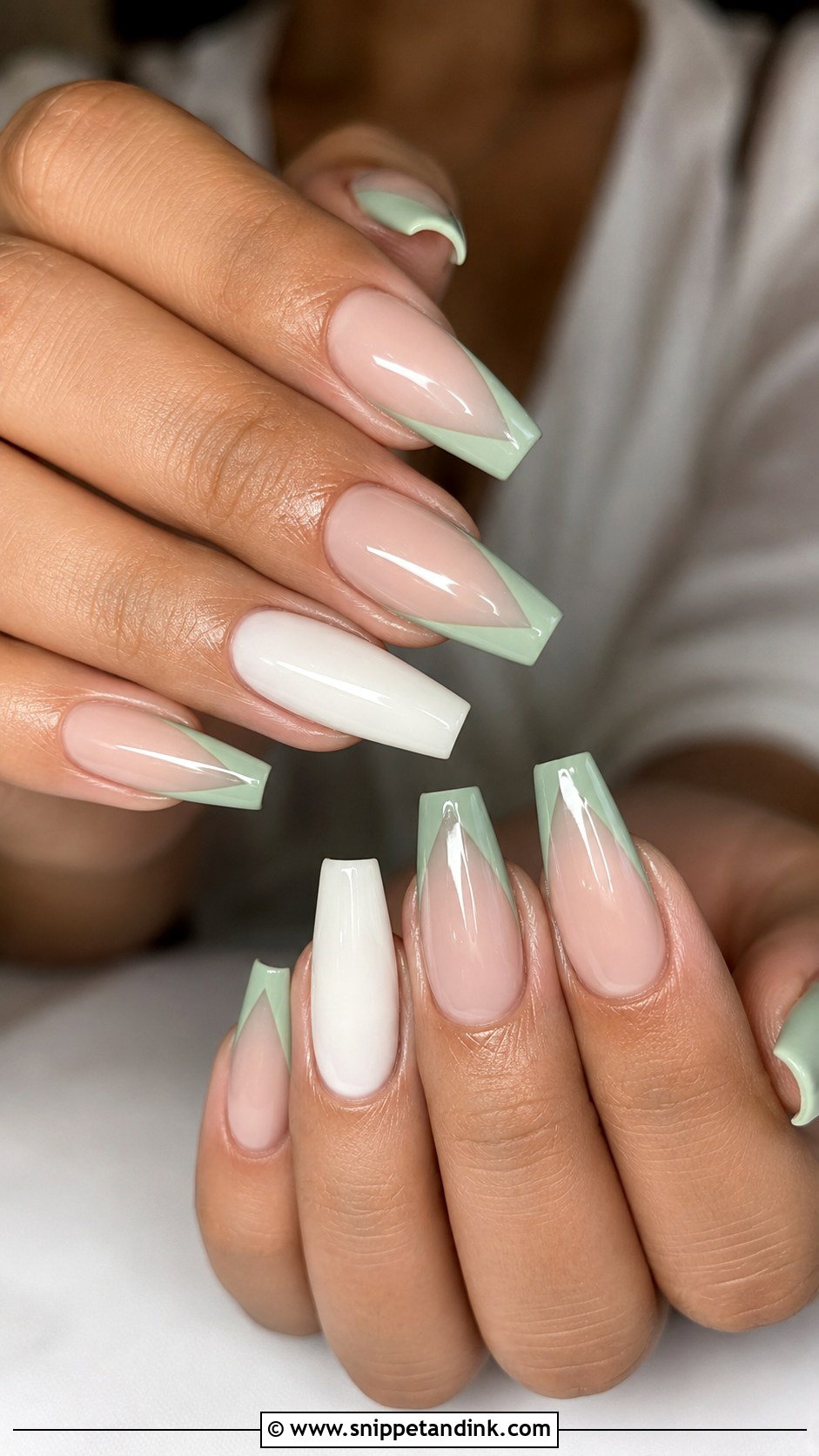
Sage green coffin wedding nails look more fashion-led, with the flat tip giving the set a strong outline. The wide surface takes ombre, chrome, V-tips and foil well. Coffin is also the shape most prone to cracking at the corners if it’s too long or the nail is thin, so I keep it medium and reinforce the stress area with builder gel. Sheer nude with sage V-tips, or glossy sage alternating with milky white, are the two I’d start with.
13. Sage Green Square Wedding Nails
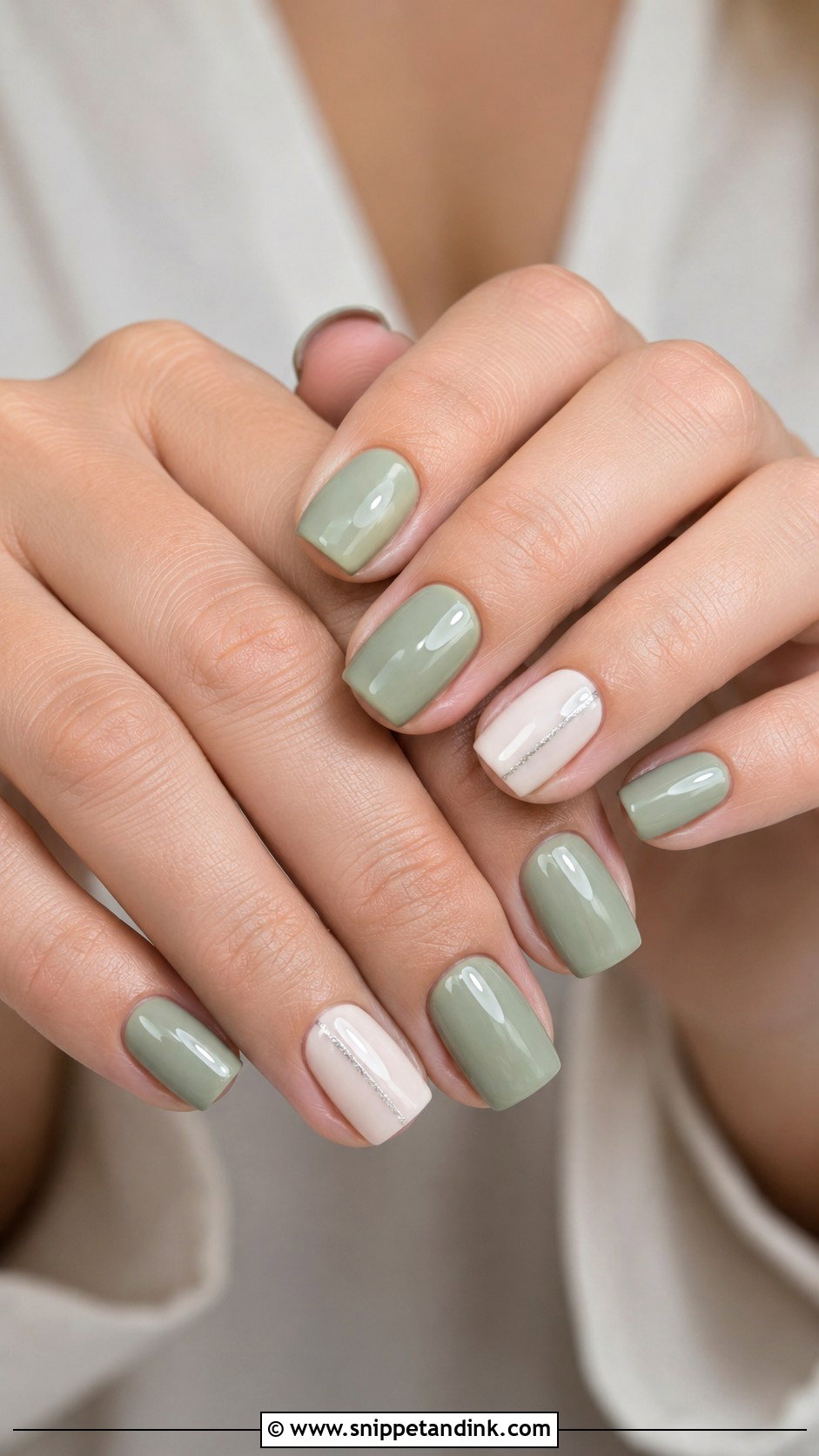
Square nails look neat in close-ups, which matters more than you’d think in ring shots. Short to medium is the right length for this shape. I always soften the corners slightly; sharp square corners chip and snag, and they make the hand look blocky. Full glossy sage is simple. For something more bridal, I’d add milky white accents, fine silver lines or small florals.
14. Sage Green Milky Wedding Nails
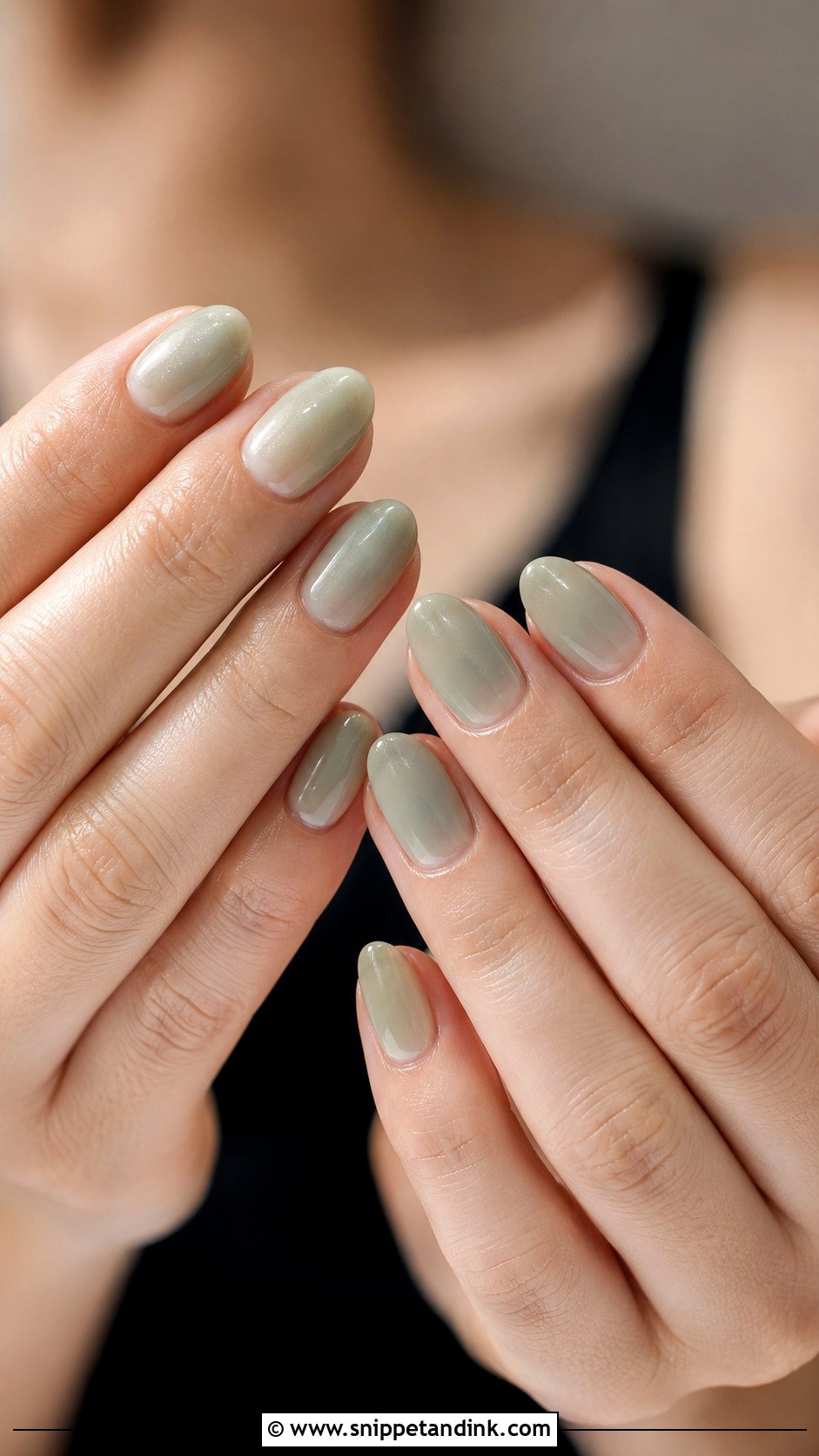
Milky sage is a translucent wash, the softest version of the color. I build it from a milky white base and a sheer green glaze, or a jelly sage applied thinly, and I stop while you can still see a hint of the nail. Too many layers and it turns opaque and loses the effect. Oval and almond suit it, and a fine shimmer top coat adds a little light in photos. I reach for it with brides wearing minimal makeup and quiet accessories.
15. Sage Green Glitter Wedding Nails
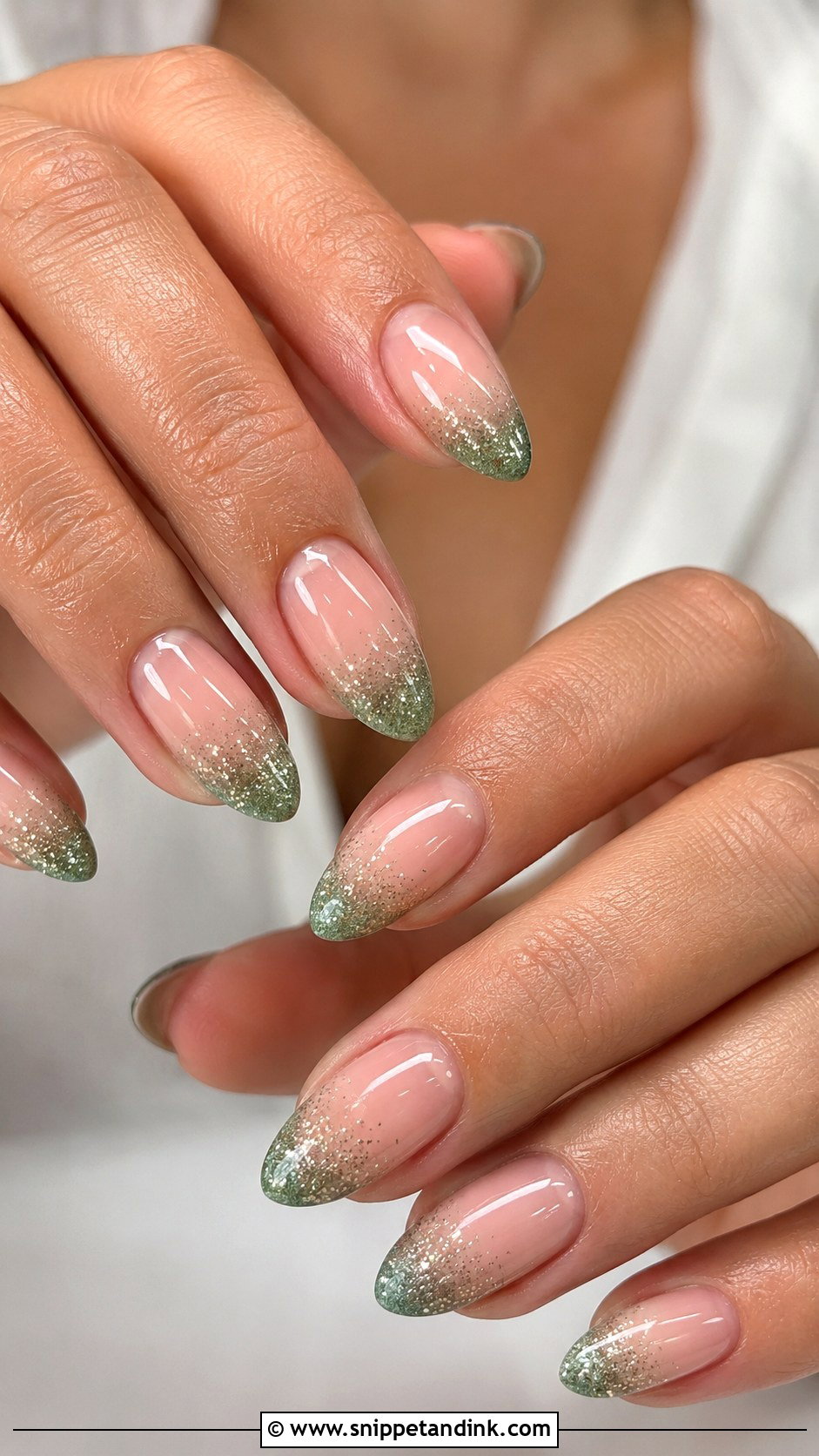
Glitter on sage should be fine and controlled. I’d use a sheer nude base, sage tips and a light dusting of silver or champagne glitter just along the tip line, or one sparkle accent nail. Chunky glitter is rough to remove and catches on delicate fabric, so I avoid it for brides. Almond, oval and coffin all suit this set. Keep the palette to sage, nude, white and one metallic, and bridesmaids get something festive without it getting loud.
16. Sage Green Marble Wedding Nails
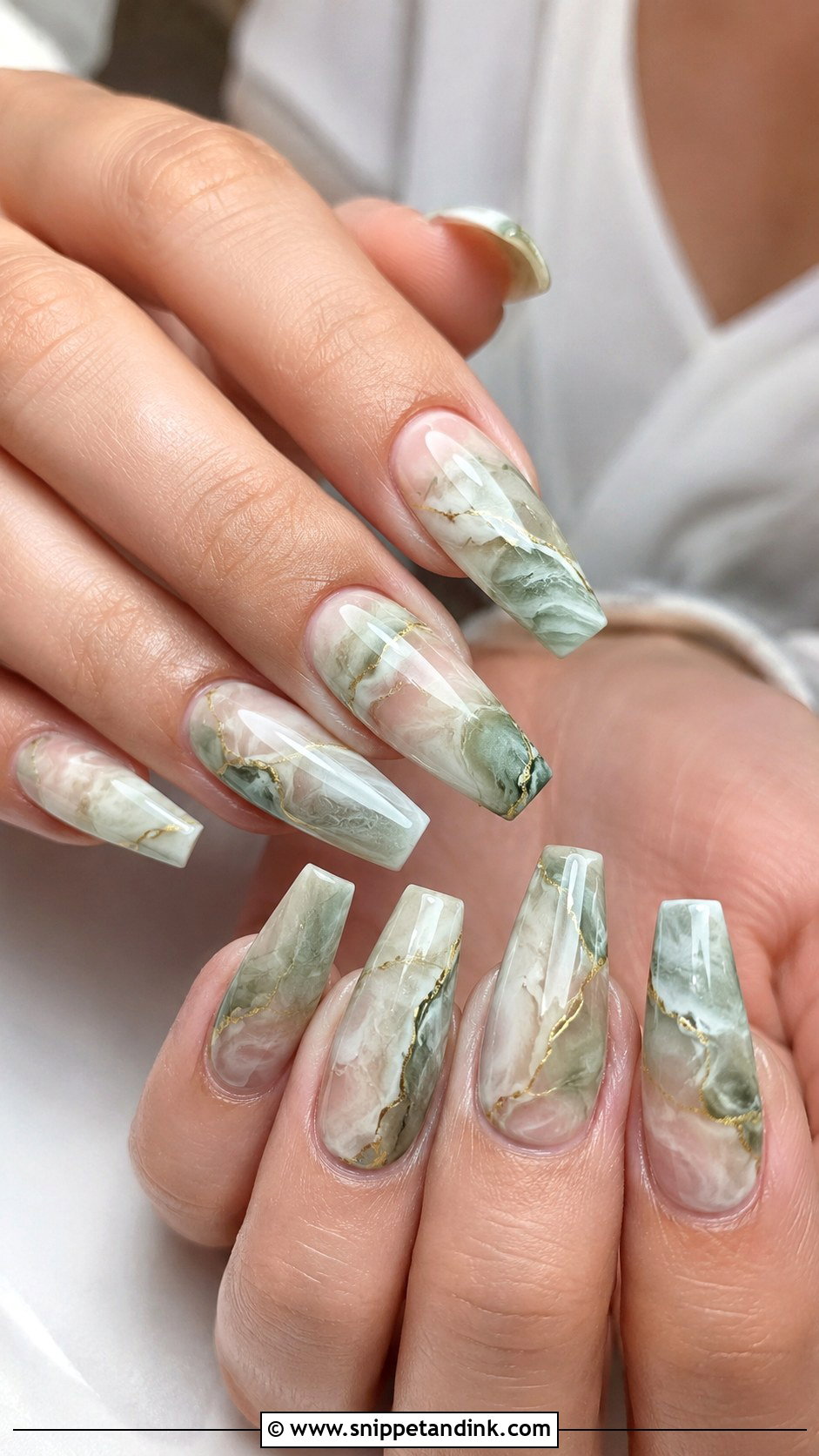
Sage green marble wedding nails work best when the stone pattern stays light. I drop white, sage and nude into a wet layer and drag them into soft veins, then add a thin gold or silver line by hand. Every nail comes out different, which is part of the appeal. I usually marble only a few nails and keep the rest sheer or milky. Almond and coffin give the veins room, and a thick glossy top coat gives the pattern depth.
17. Sage Green Swirl Wedding Nails
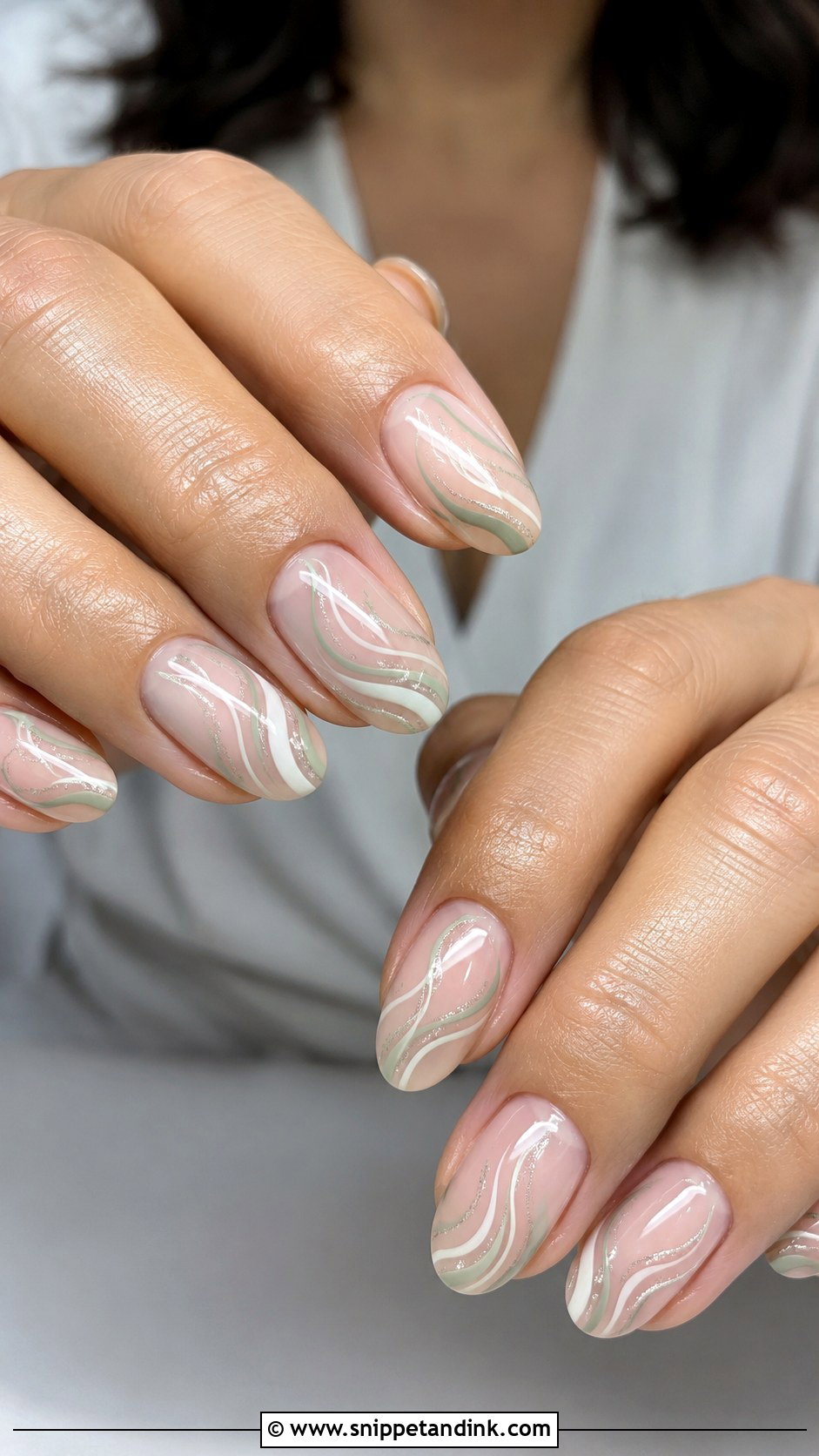
Swirls add movement without covering the nail. I paint curved sage lines with white accents over a nude or clear base, keeping the lines thin and the spacing even, since thick swirls look retro rather than bridal. You can swirl every nail or mix them with solid sage. The curves follow the shape of almond and oval nails naturally. Gloss keeps it fresh.
18. Sage Green Bridesmaid Wedding Nails
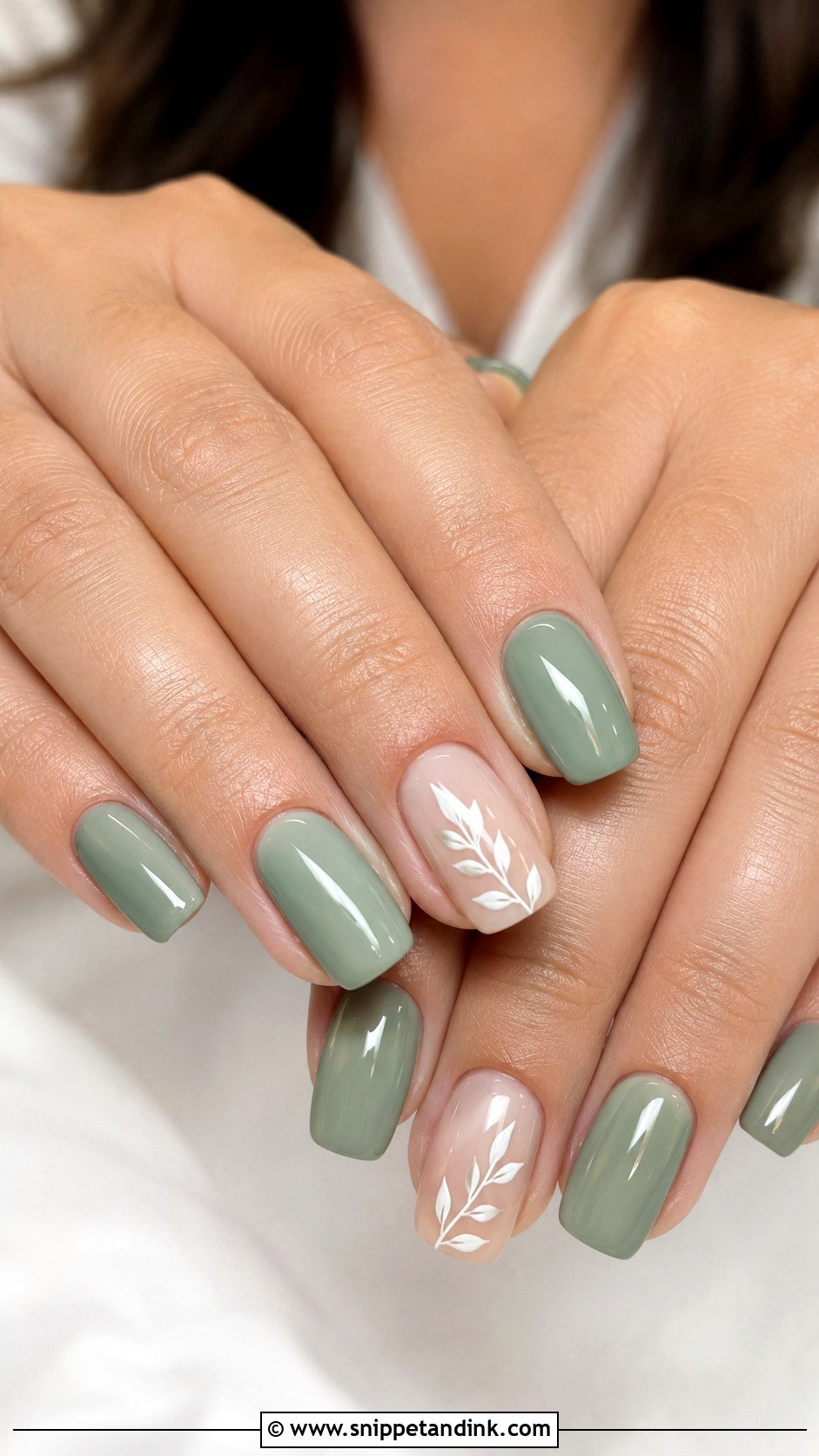
For a bridal party, I’d agree on a palette rather than one design. Sage, nude and simple white accents, worn in different combinations, look coordinated in group photos while letting each bridesmaid pick a shape she’s comfortable with. If the dresses are sage, go a shade lighter or darker on the nails; an exact match disappears against the fabric. Gloss is the easiest finish for a group because it looks fresh on everyone.
19. Sage Green Bridal Wedding Nails
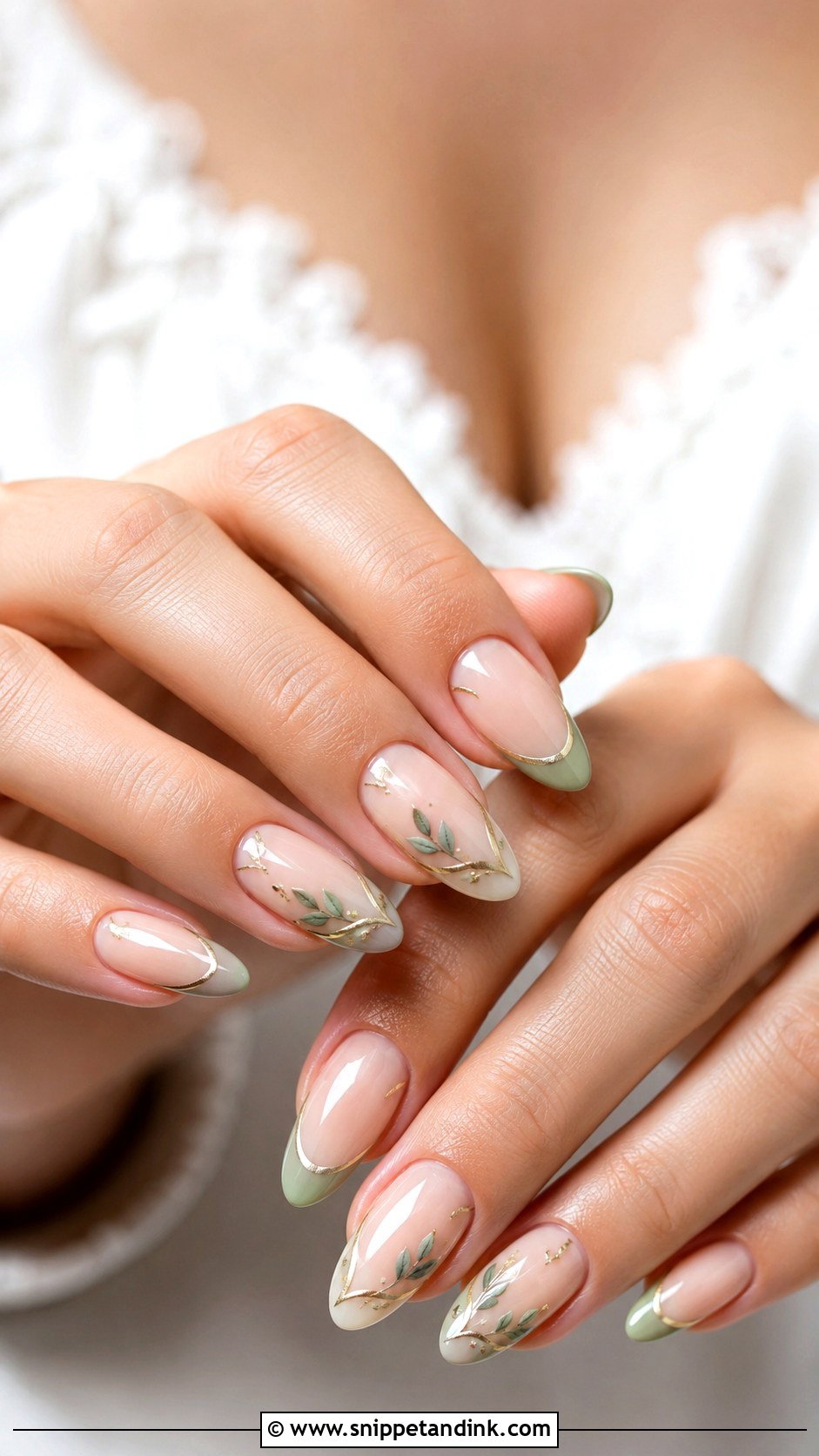
A sage bridal set is for a bride who wants color instead of a classic nude. The refined versions are sage French tips, sheer sage chrome, milky sage polish or nude nails with tiny sage florals. I take my cue from the rest of the outfit. Lace on the dress suggests fine white details. Gold jewelry suggests a tiny gold accent. A minimal dress suggests glossy solid sage on almond. The nails should support the ring, not compete with it.
20. Sage Green Wedding Guest Nails
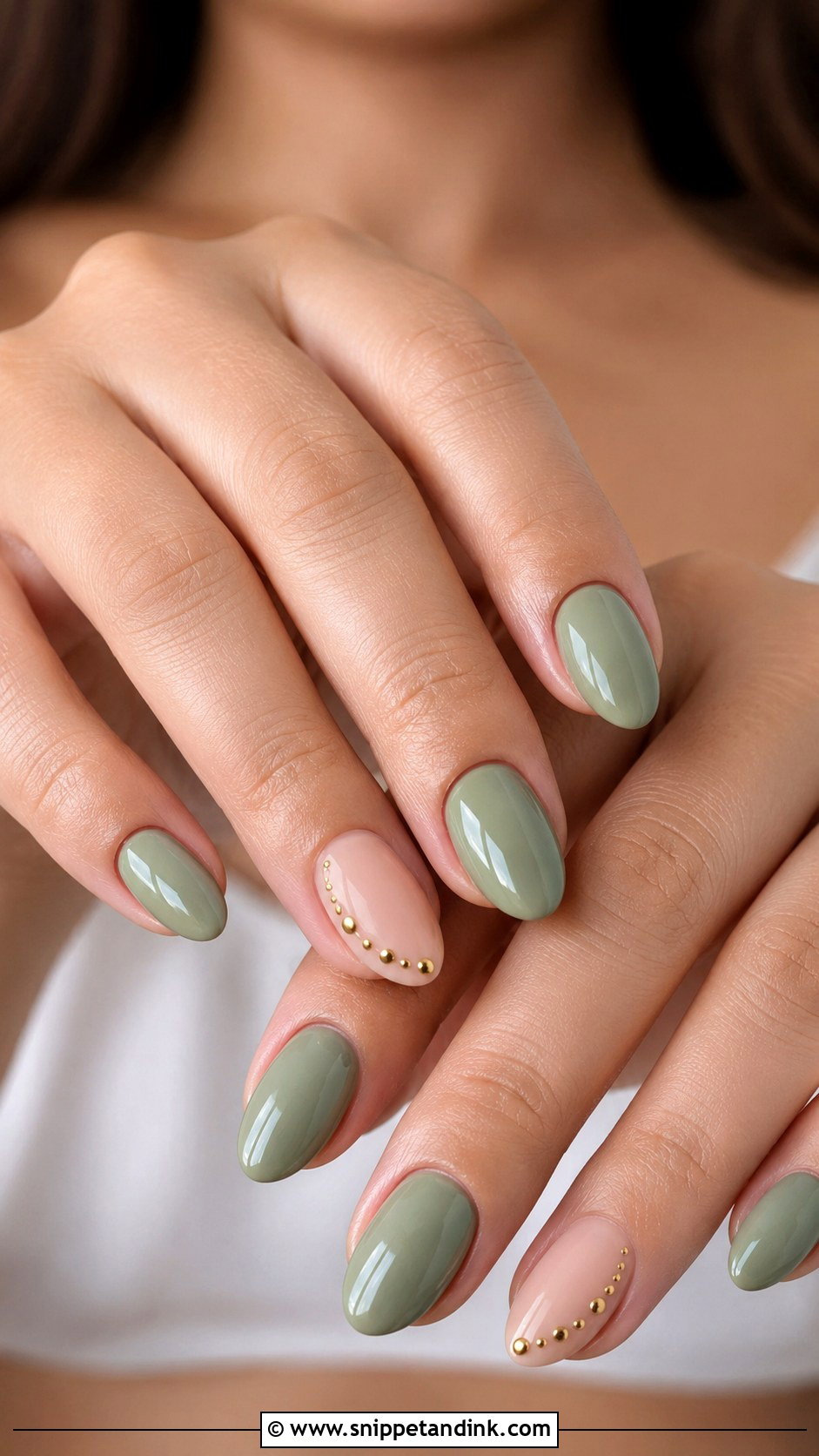
Guests can wear sage happily. It’s festive without looking bridal. Paired with nude, gold, white or a soft shimmer, it stays appropriate. If you’re wearing a sage dress, I’d go lighter with a milky sage, a French tip or a nude set with sage details, so you don’t look matched head to toe. With a neutral outfit, full sage gives you some color. Short square is neat; almond is dressier.
Self-Tan, Gel and the Week of the Wedding
The order of your beauty appointments matters for a sage set. Self-tanner stains cuticles and can tint a pale nail orange, which turns green polish muddy. If you’re tanning, do it first, then have the manicure. For gel, I book brides one to three days before the wedding, close enough that there’s no regrowth at the cuticle and far enough that there’s time to fix a chip.
Keeping the set intact
- Use cuticle oil every night; dry cuticles show in ring close-ups
- Wear gloves for any cleaning, and avoid long hot soaks before the day
- Don’t use nails as tools for opening favors or boxes
- Pack a nail file in the emergency kit for a snag
Gel normally lasts two to three weeks, which covers most honeymoons. When it starts to lift, have it soaked off properly. Peeling gel takes layers of the nail plate with it, and that thin, bendy nail is what makes the next manicure chip early.
Sage Works for the Bride, the Bridesmaids and the Guests
Sage sits between classic bridal neutrals and real color, so it adapts to almost anyone in the wedding. Brides tend to choose milky sage, chrome, florals or a French. Bridesmaids and guests do well with short glossy sets, swirls or a little gold. Let your outfit, jewelry and usual nail length decide the details. Choose a muted, greyed sage, and let the manicure support the whole look instead of leading it.
You'll Like These Ideas:


Leave a Reply