
Most brides who sit in my chair arrive with a folder of screenshots, and the first thing I do is sort them by finish rather than by color. A dewy photo and a matte photo can share the same pink lip and still need completely different products underneath. The twenty looks below run from barely there to full glam, and with each one I’ve noted what it asks of your skin, how it holds up over a long day, and where it tends to go wrong. Read them with your own skin type and your venue’s light in mind, because those two things decide more than any trend does.
Start With Your Skin Type, Then Pick the Finish
I decide the finish before I touch color, because it’s the finish that fails first. A dewy base on oily skin starts to look shiny by the first dance; a full matte base on dry skin cracks around the nose and settles into fine lines. So before you fall for a look below, figure out what your skin does by mid-afternoon on a normal day.
- Shiny by lunch: plan on a matte or soft-matte base, with glow added only on top of the cheekbones.
- Tight or flaky by evening: satin or dewy, and ask your artist to skip heavy powder under the eyes.
- Combination: the most common skin type I see. I set the T-zone and leave the cheeks satin.
- Mature or textured skin: thin layers and cream products move with the skin. Heavy powder and chunky shimmer exaggerate texture.
Then think about light. A barn lit by fairy lights forgives far more than a beach at noon, where every edge of contour shows. Flash is harsh on two things: powder with a lot of silica, which can show up as white patches, and SPF-heavy foundations. If your photographer uses flash at the reception, tell your artist so she can test the base with your phone flash on.
1. Natural Bridal Makeup
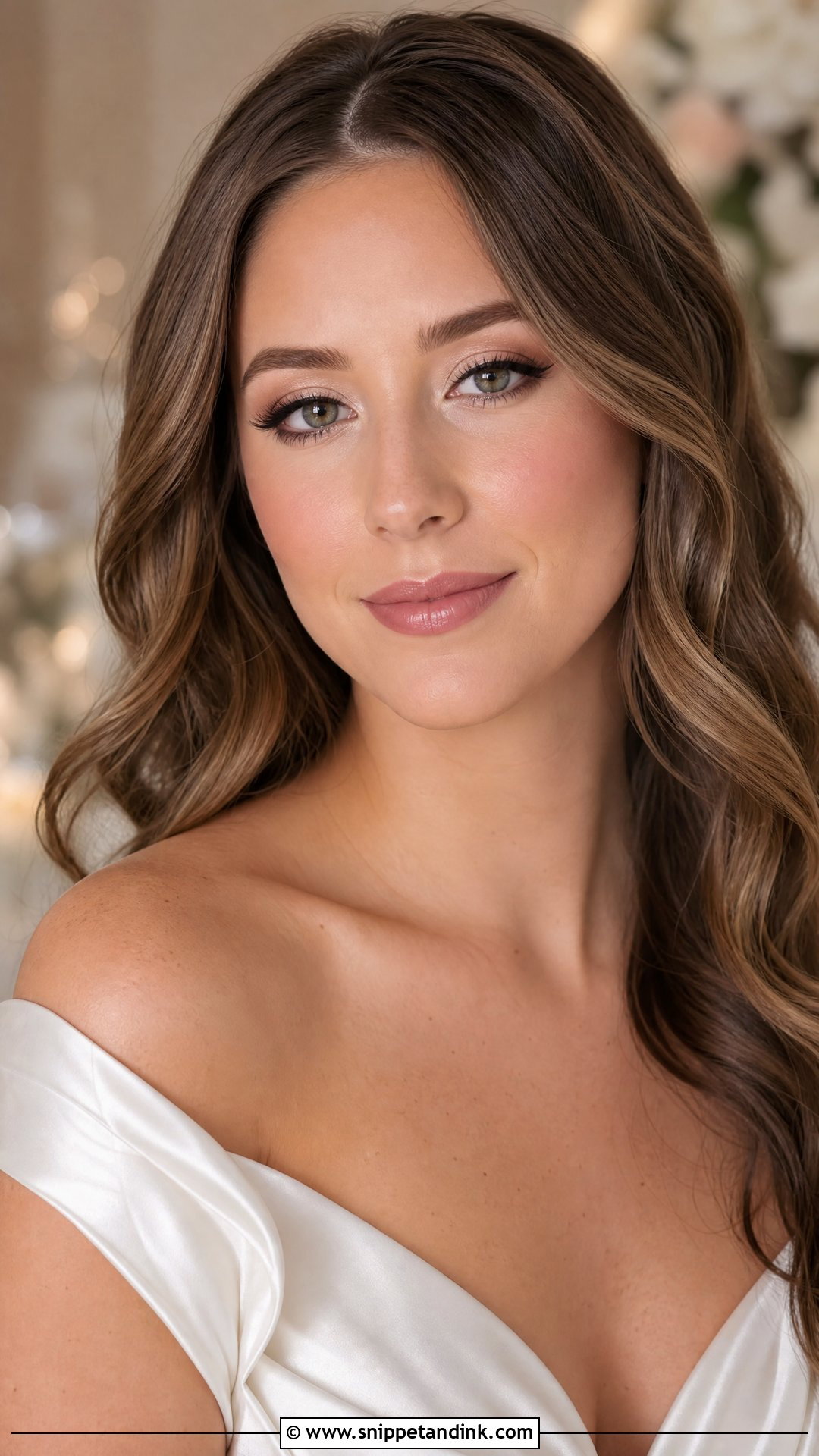
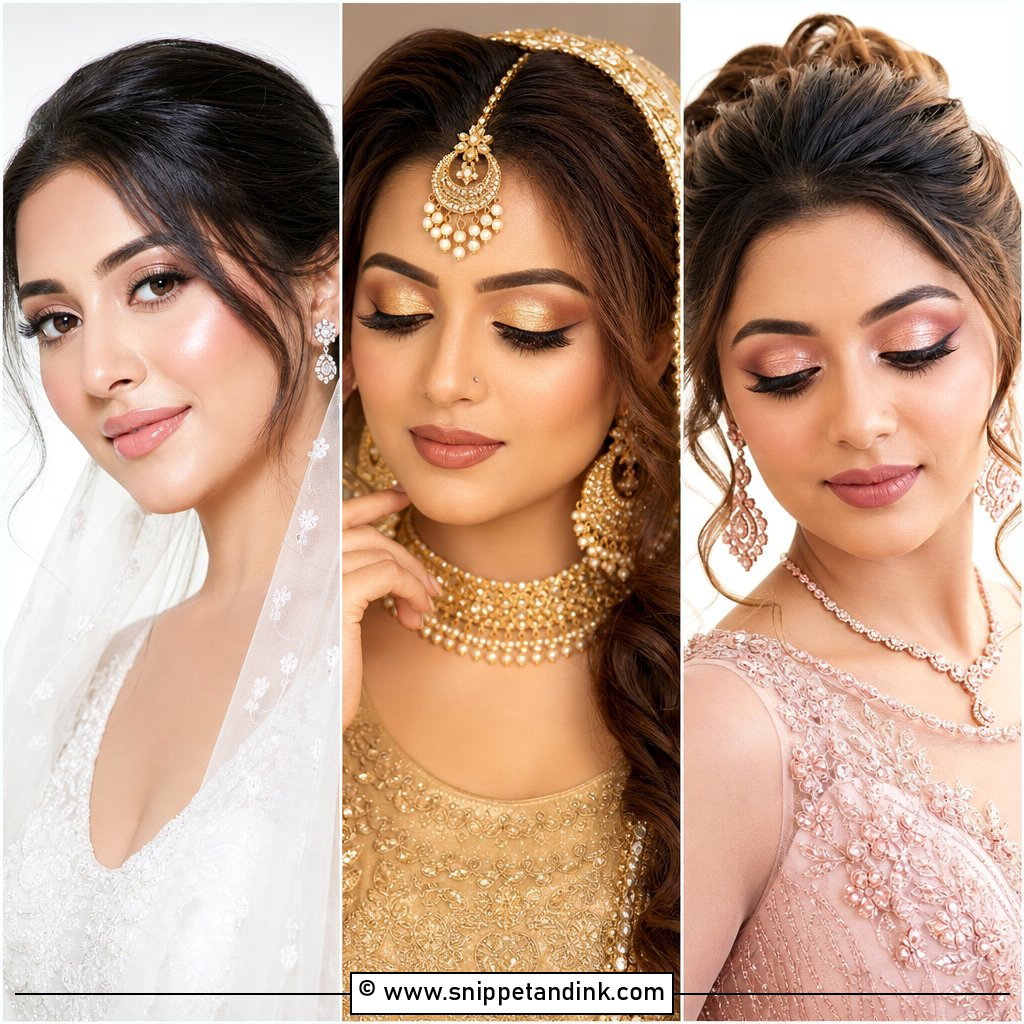
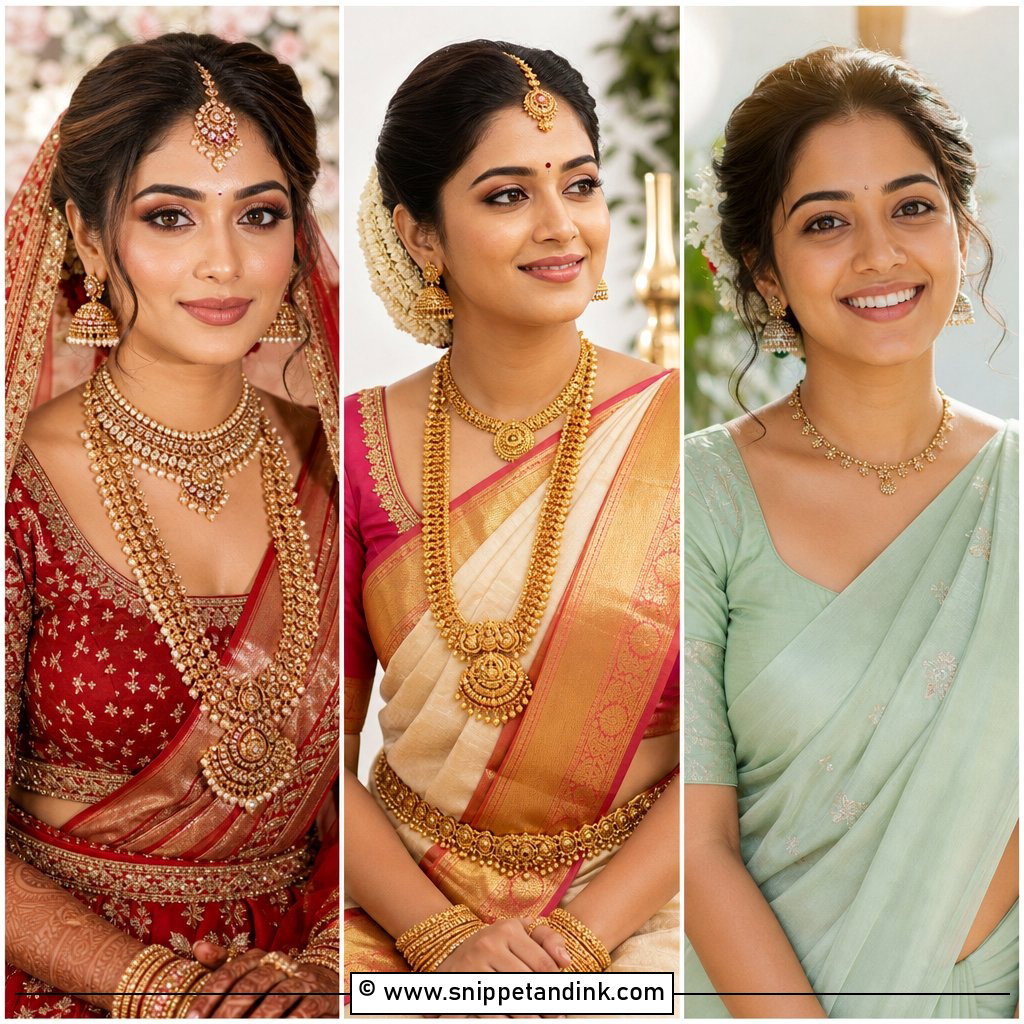
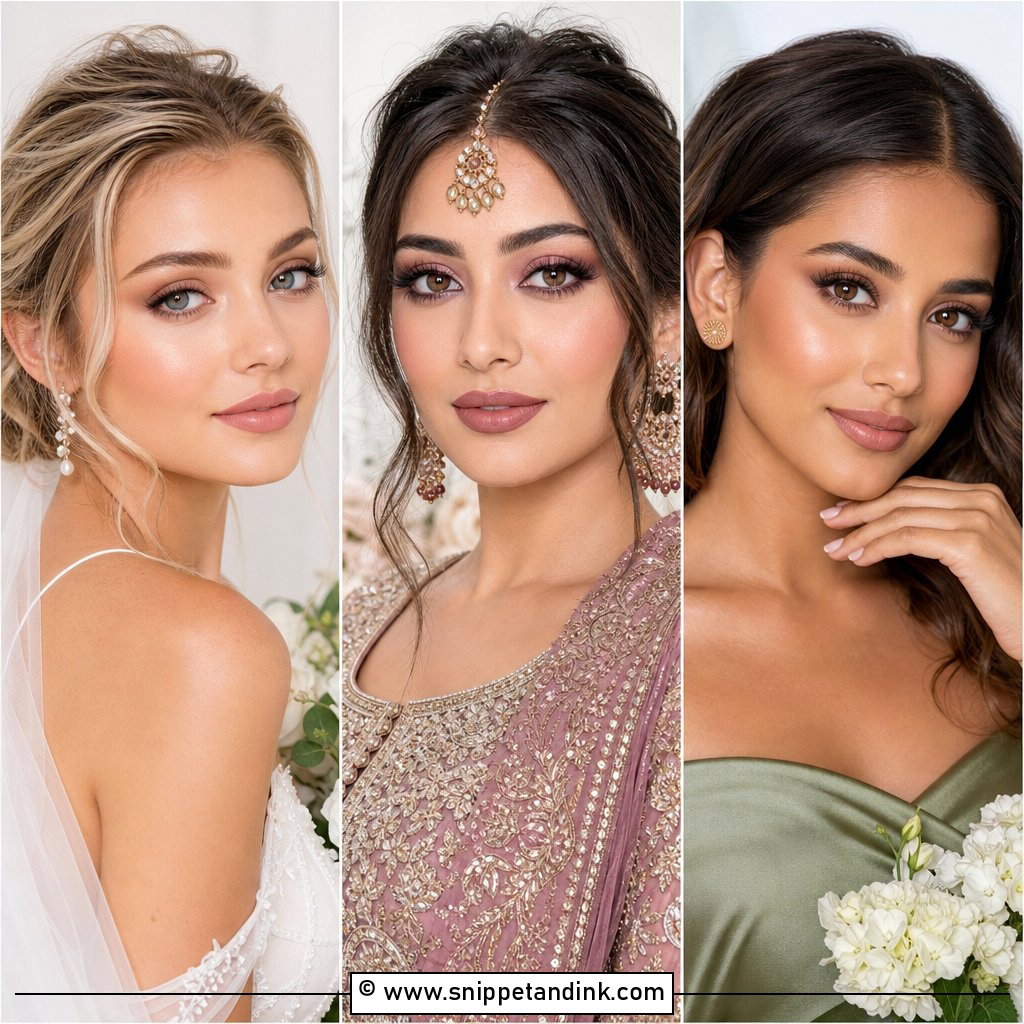
This is the look people assume is quick, and it rarely is. Skin carries everything here, so I spend most of the time on prep and use a sheer-to-medium base, concealing only where there’s redness or shadow. Eyes stay in beige or taupe with a thin brown liner, fluttery individual lashes and brushed-up brows. Blush goes high on the cheek in peach or rose, and the lip sits within a shade of your own. The trap is going so sheer that the camera flattens you, so I always add a touch more blush than feels necessary in the mirror.
2. Soft Glam Bridal Makeup
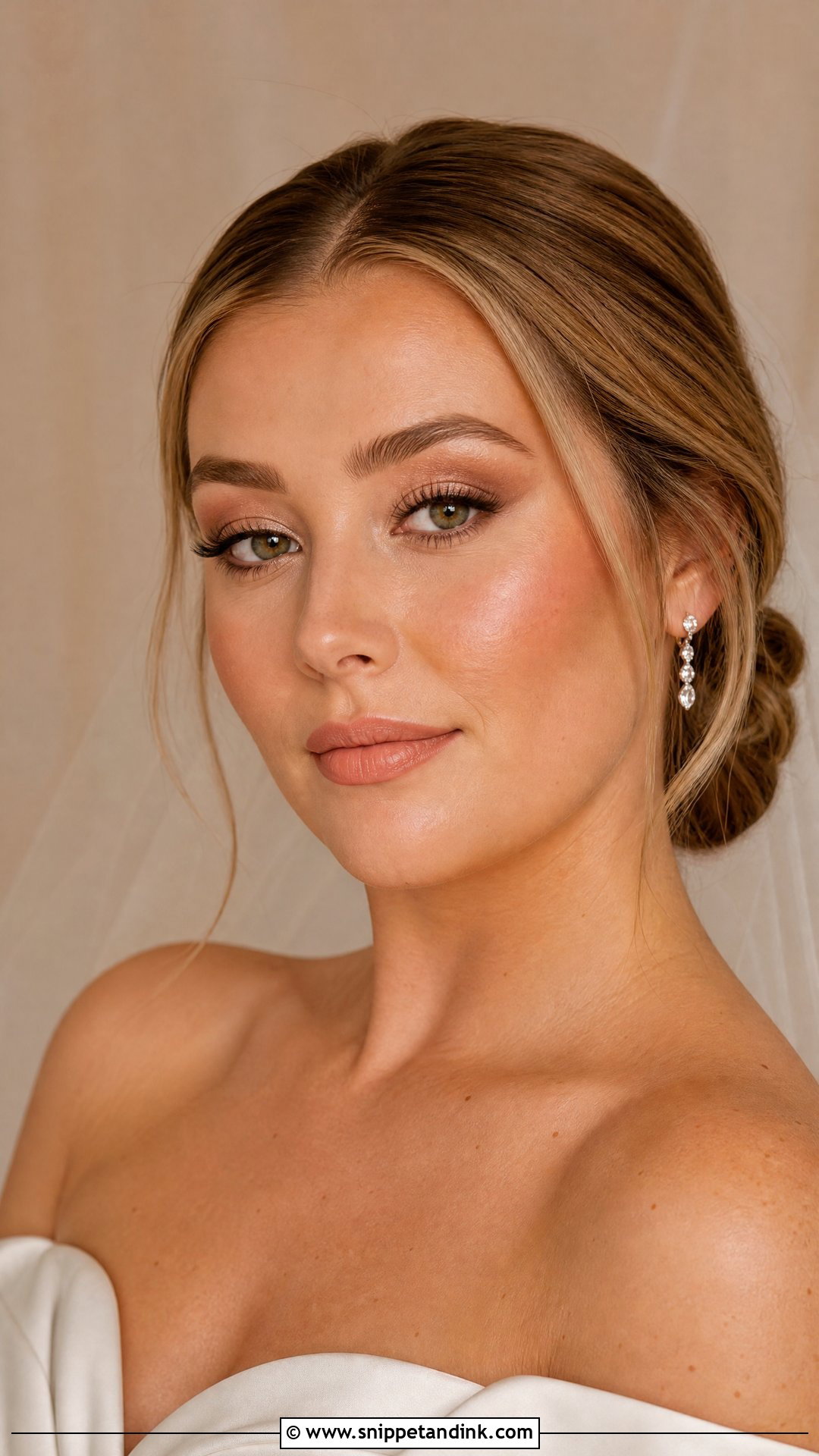
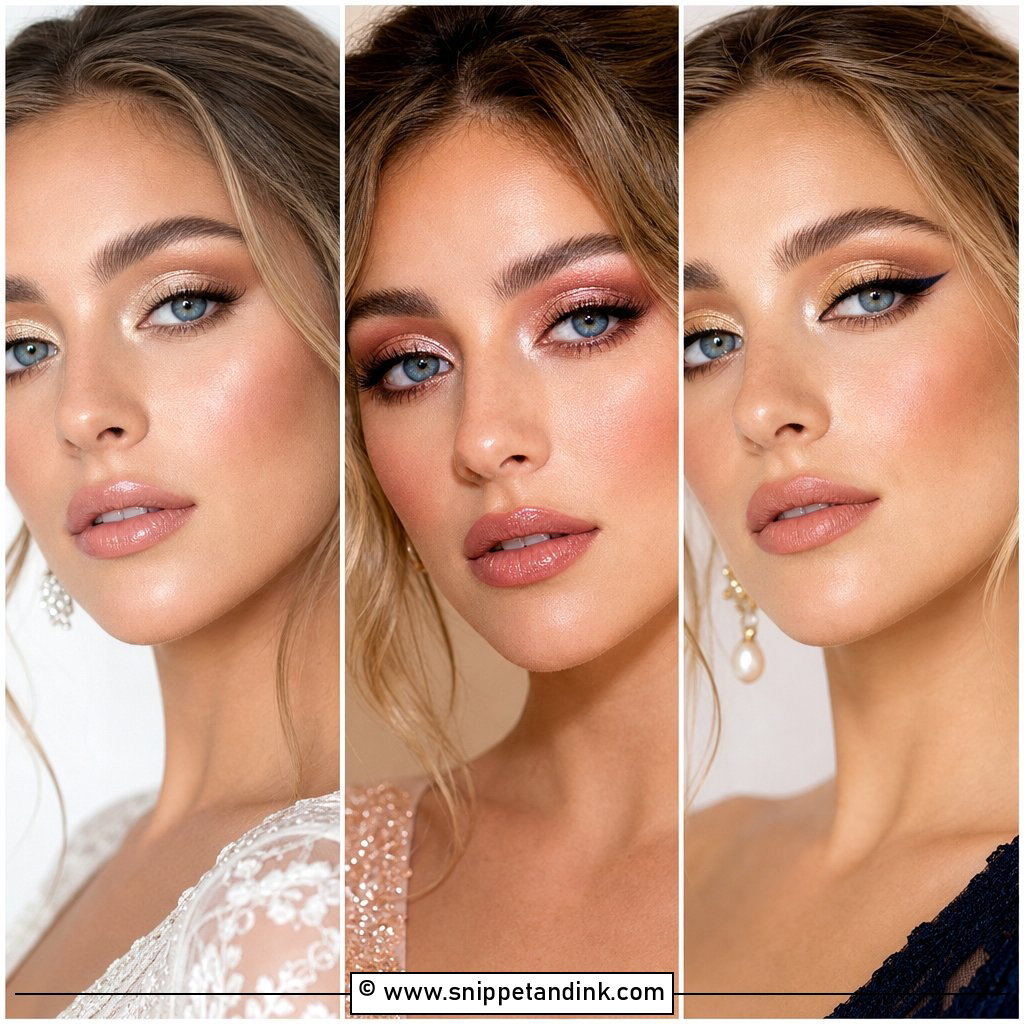
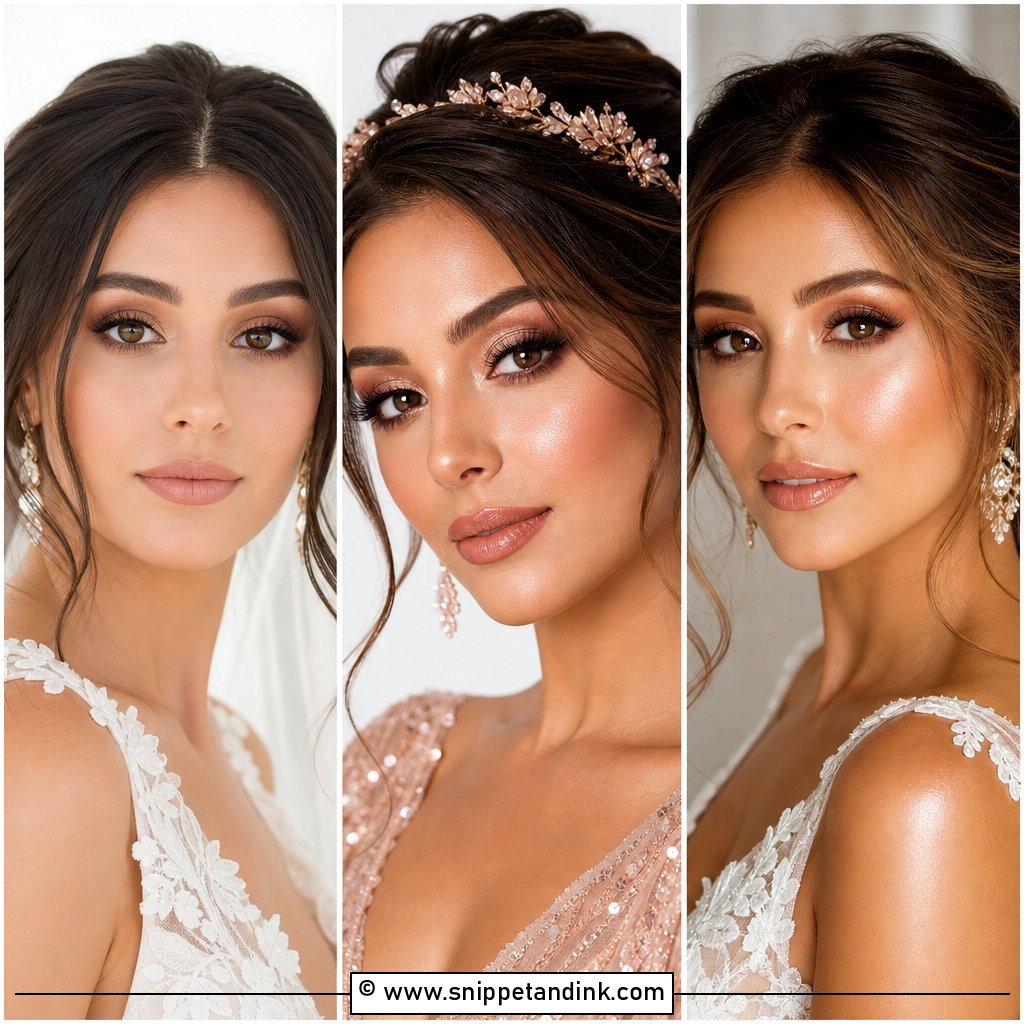
Soft glam is the most requested look I do, and the reason is practical: it reads as makeup in a photo without changing your face in person. Warm brown or champagne shadow goes on the lid, the liner gets smudged so there’s no hard edge, and wispy lashes open the eye. I keep contour to a light shadow under the cheekbone and put glow only on the high points. A peachy nude lip finishes it. Where it goes wrong is the base: build it in thin layers, because one heavy layer is what reads as cakey by the speeches.
3. Dewy Bridal Makeup
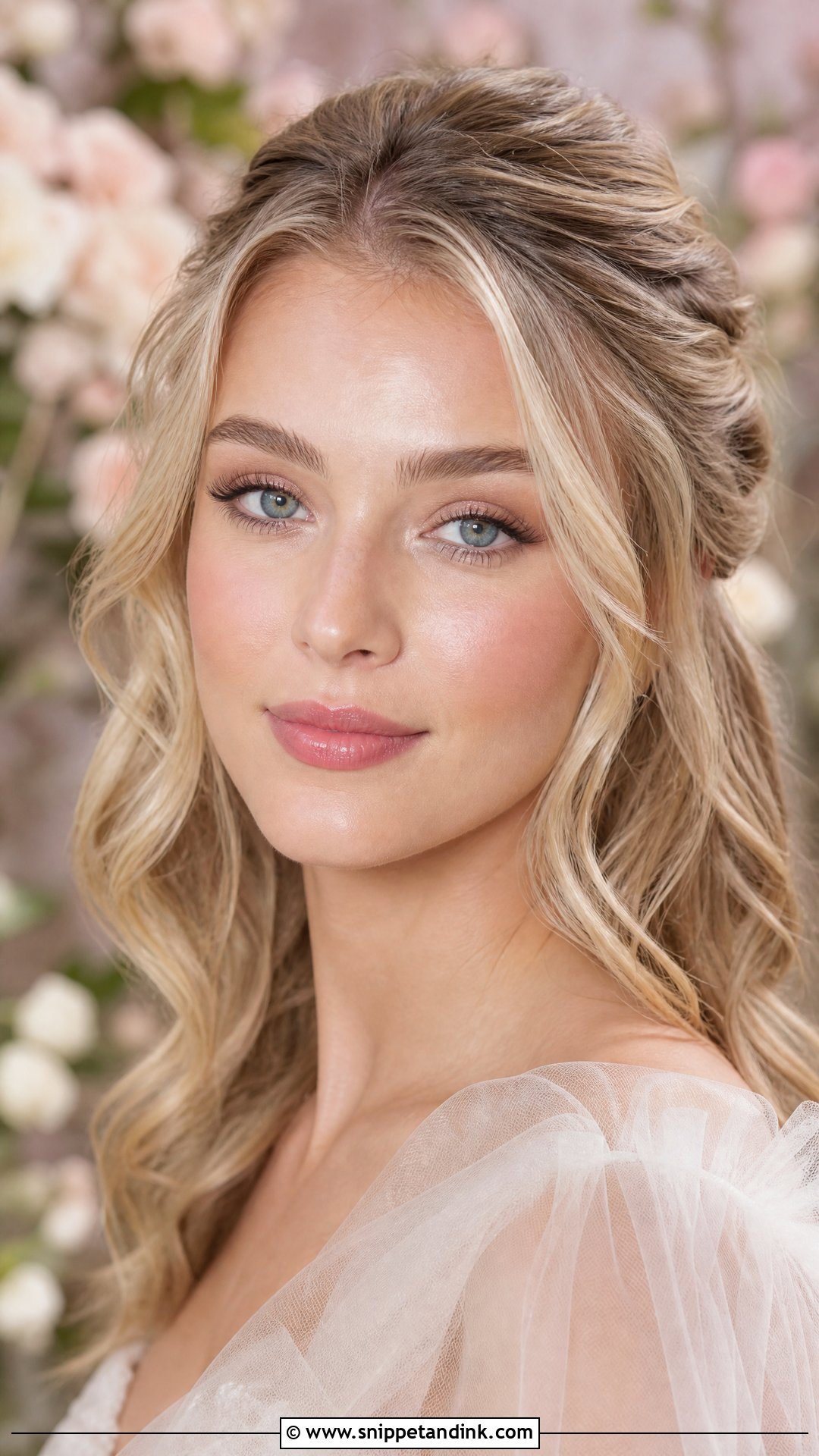
Glow and grease are separated by about two hours on oily skin, which is why I only recommend a fully dewy base to brides with dry or normal skin. The method is a radiant long-wear foundation, brightness through the center of the face, and powder pressed only where you crease or shine: the sides of the nose, the chin, under the eyes. Cream blush in rose or berry melts into that base better than powder does. Satin neutrals on the lid, a soft liner and a glossy pink lip keep it fresh, and it sits nicely against airy fabrics like tulle and chiffon.
4. Matte Bridal Makeup
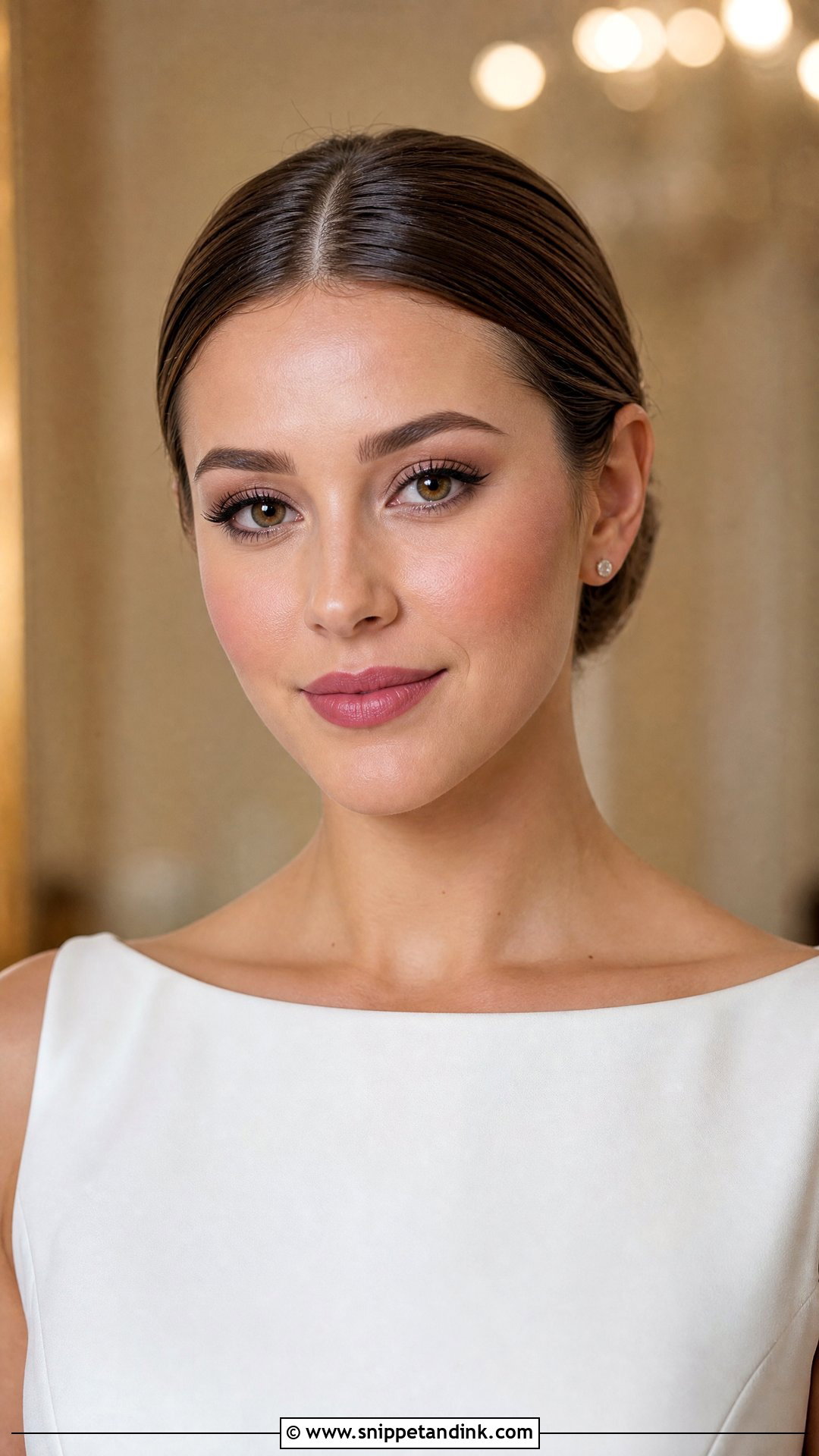
If you have oily skin or a summer date, this is usually where I start you. A velvet matte base holds through heat, long ceremonies and flash. The risk is flatness, so I add dimension back with powder blush in rose or terracotta, a soft contour, and the smallest touch of highlight. Matte taupe and mocha sculpt the eye without shimmer that could look oily in photos. Dry or mature skin is the exception: full matte can settle into texture, so for those clients I mix in a satin foundation and keep powder very light.
5. Classic Red Lip Bridal Makeup
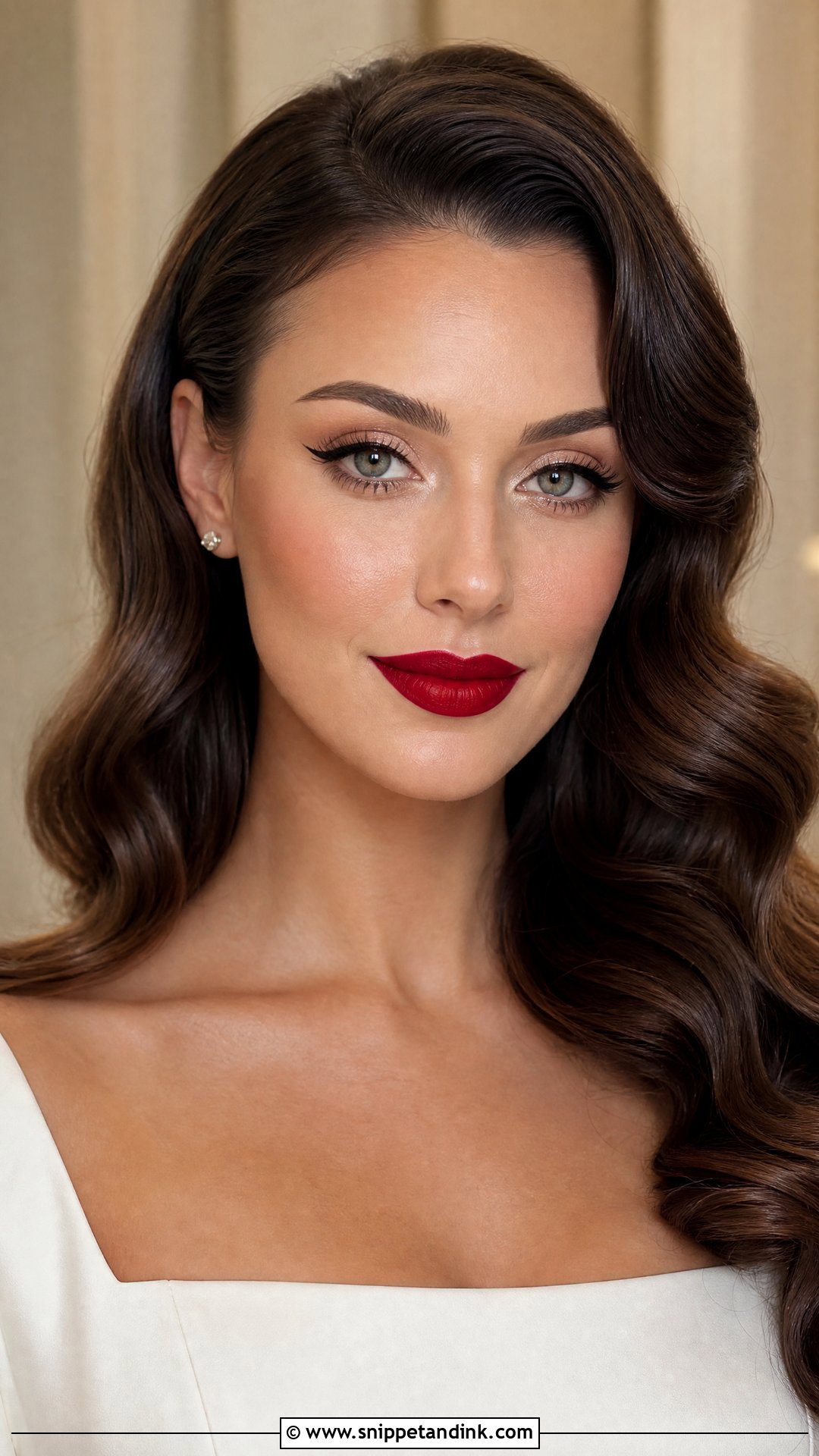
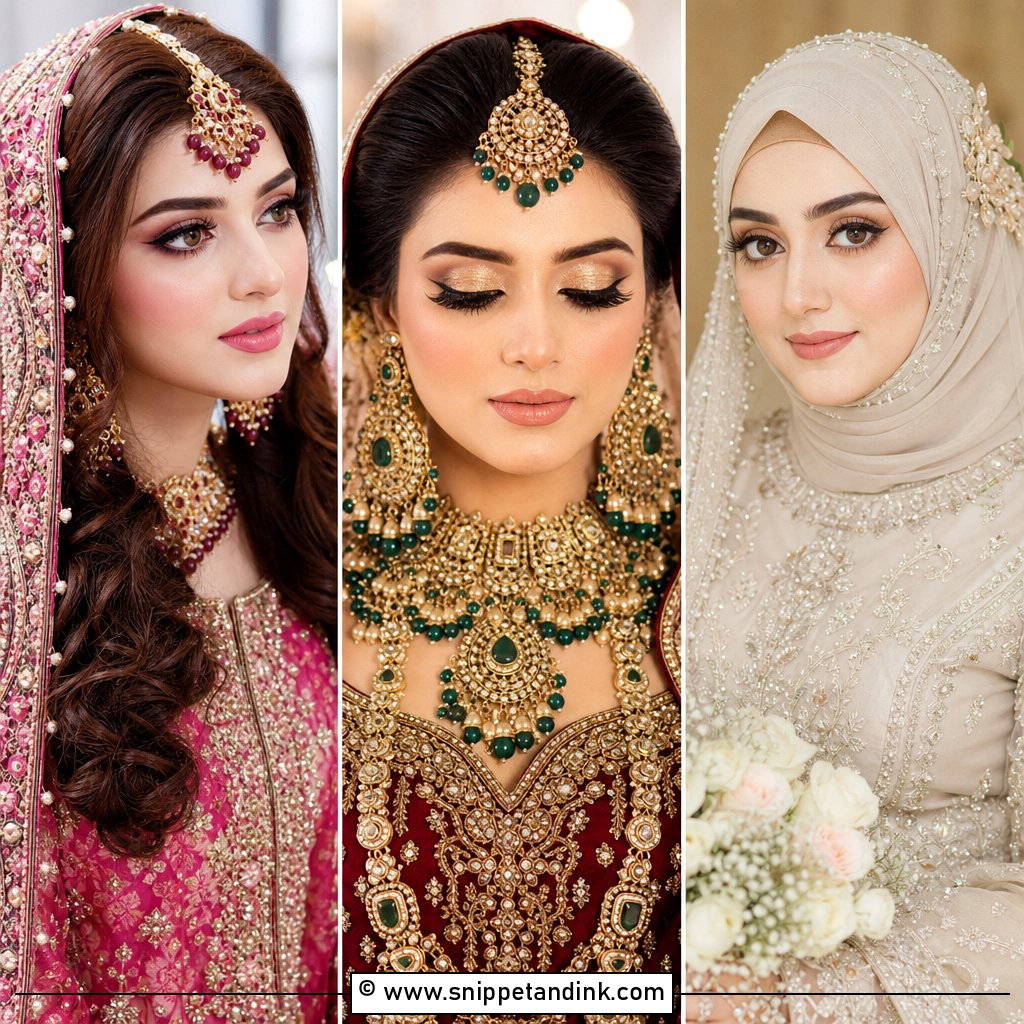
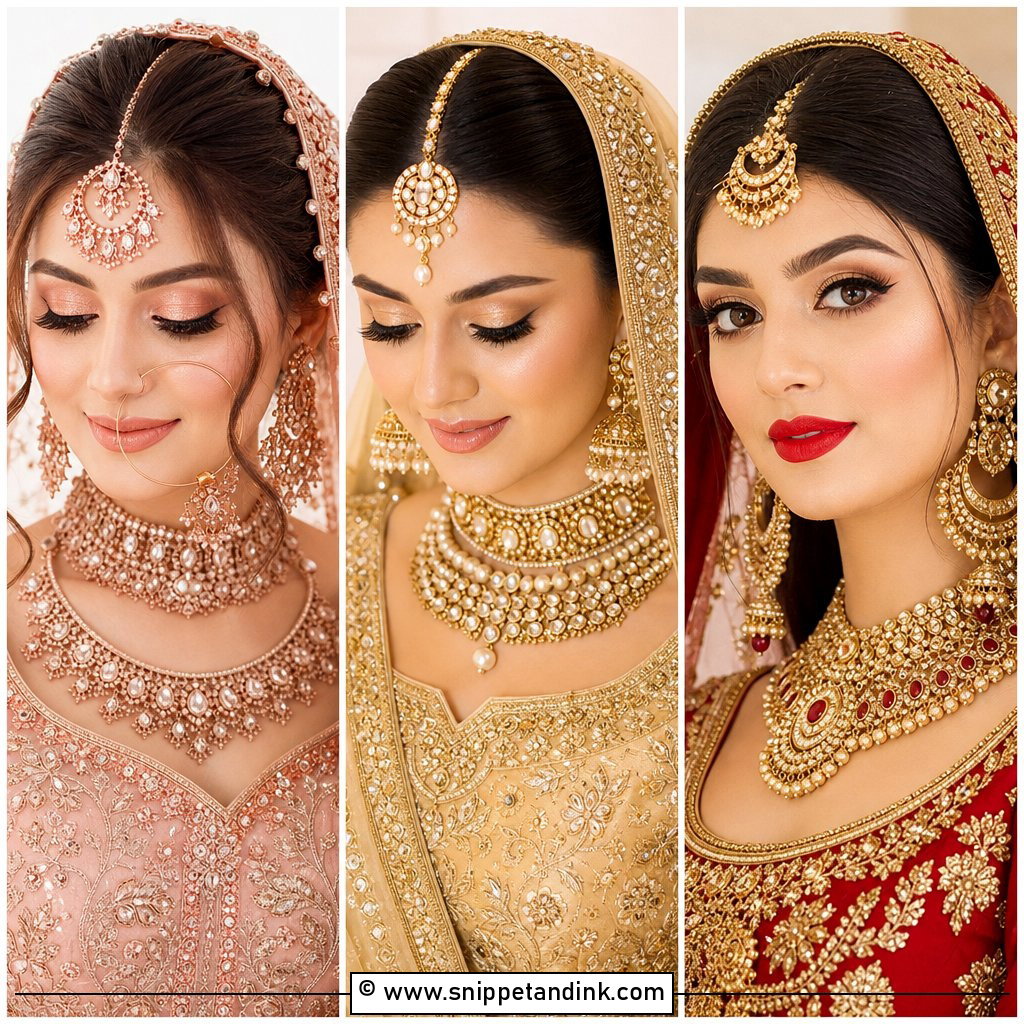
A red lip only works if everything else steps back. I keep the skin satin, the brows defined but soft, and the eye clean in ivory or light brown with a thin wing and well-curled lashes. Blush stays neutral so it doesn’t fight the mouth. Blue-reds read crisp and suit cool and deep skin; brick reds feel warmer and a little vintage. My non-negotiable is a liner the same shade as the lipstick, filled across the whole lip, because red bleeds and wears unevenly when you’re eating and kissing guests. Carry the lipstick and a cotton bud for the reception.
6. Pink Bridal Makeup
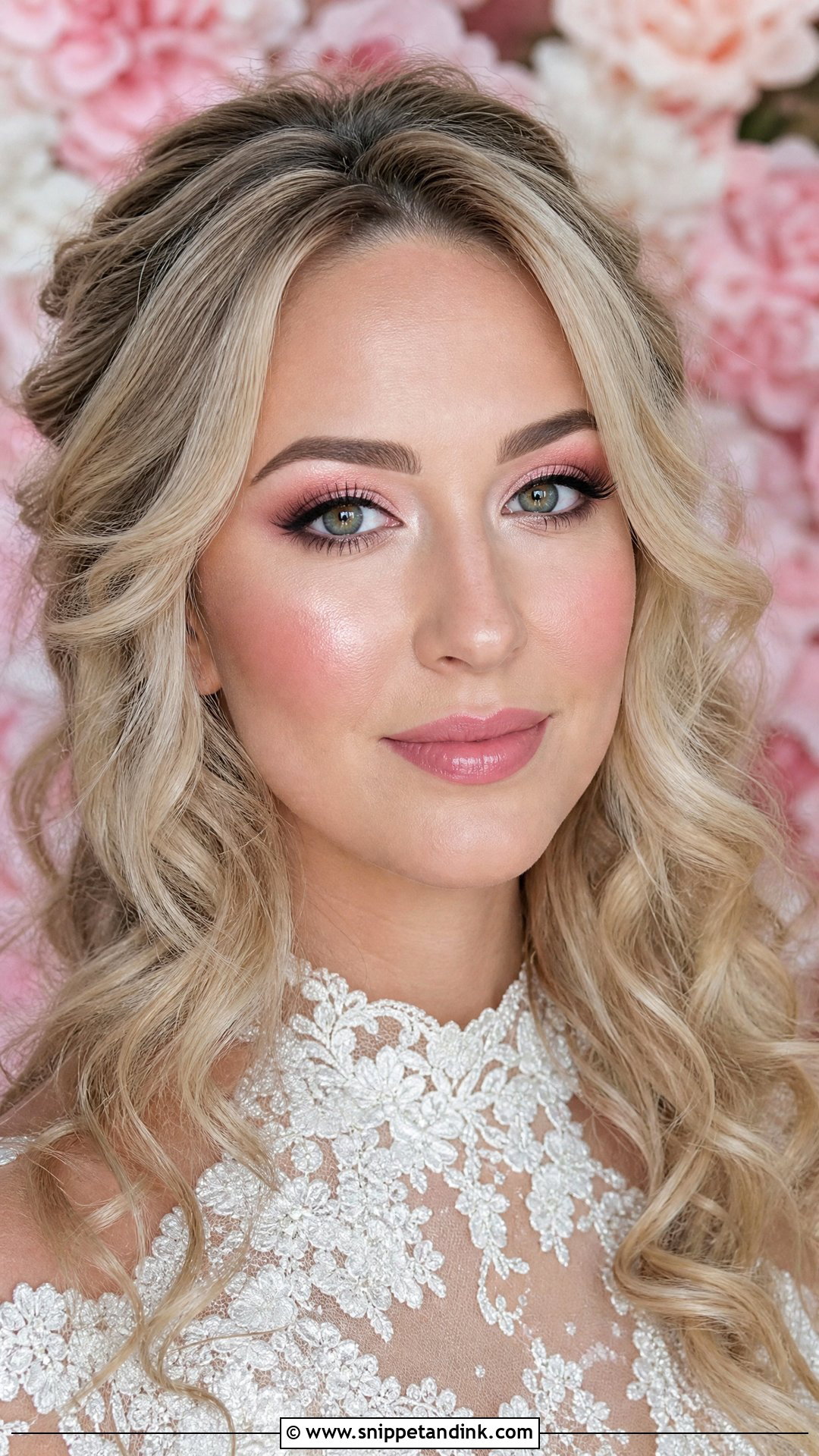
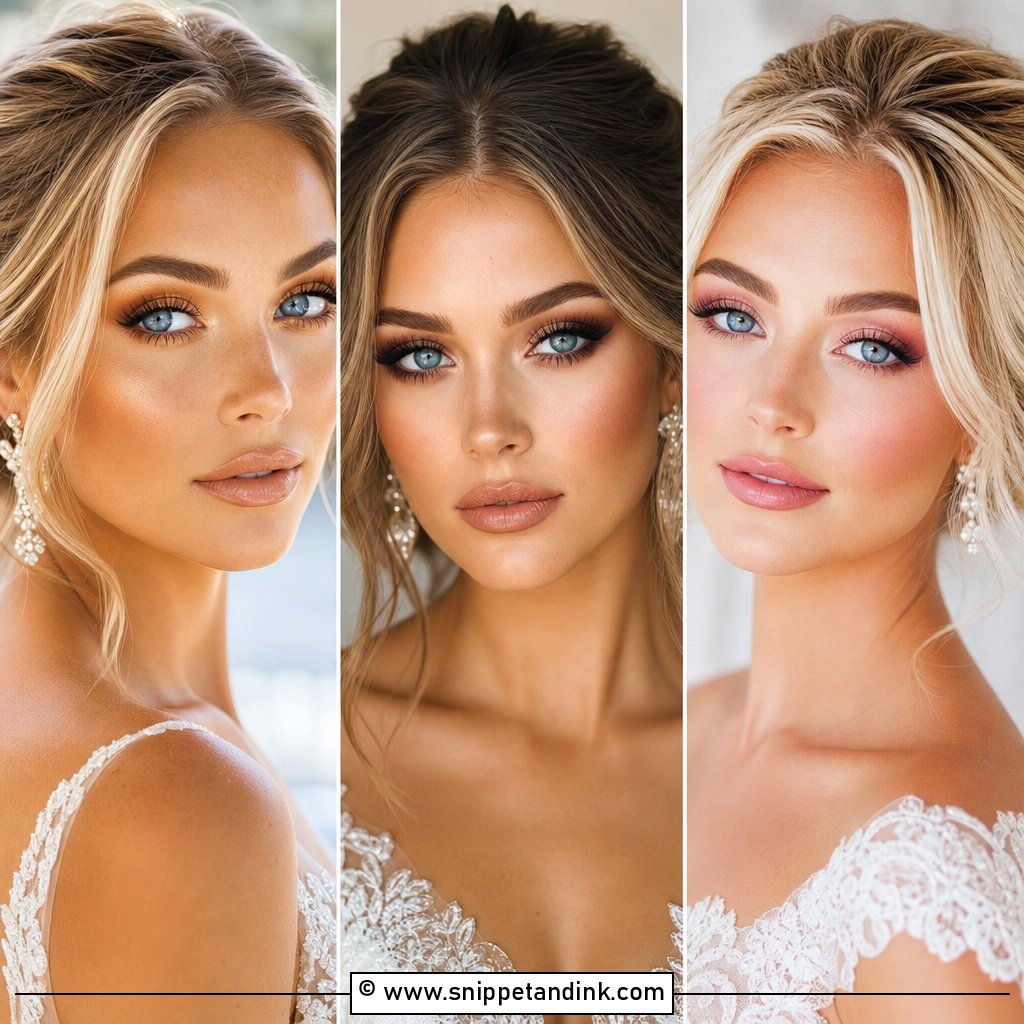
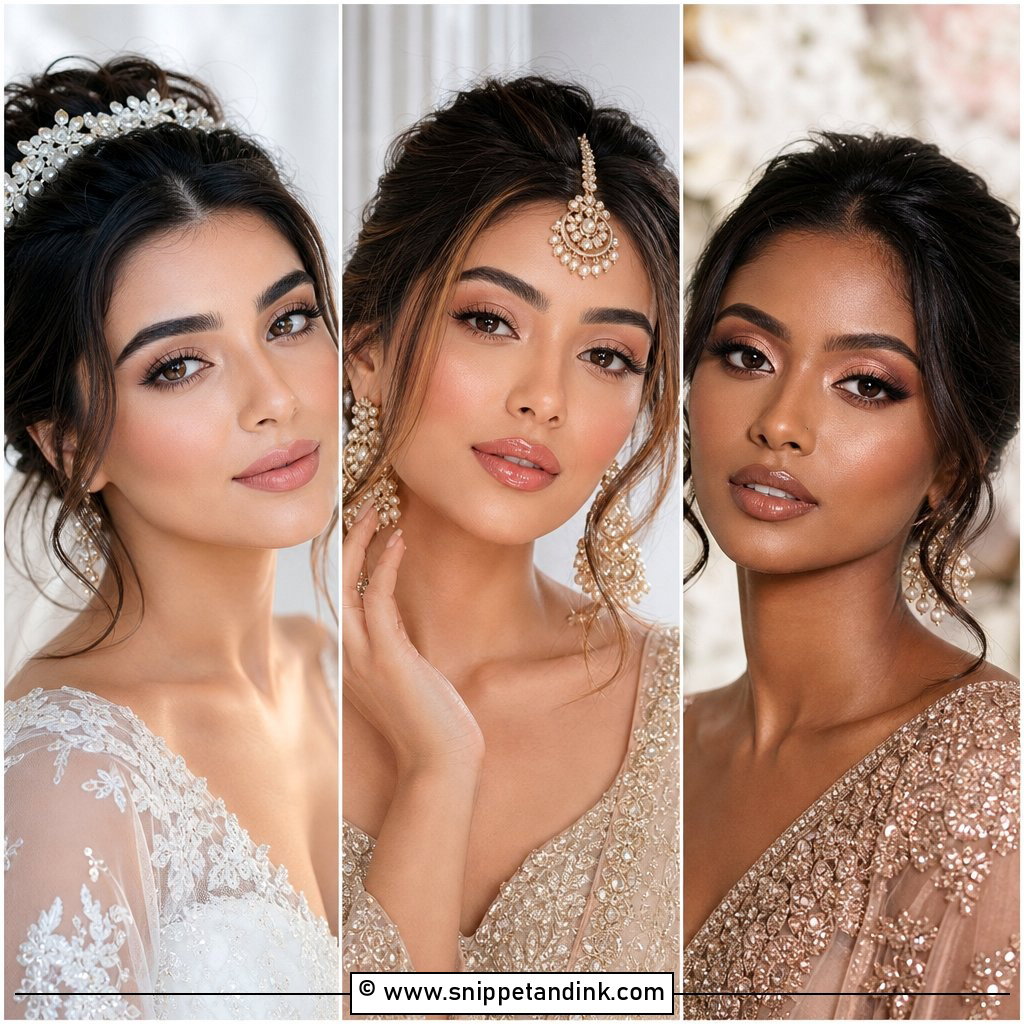
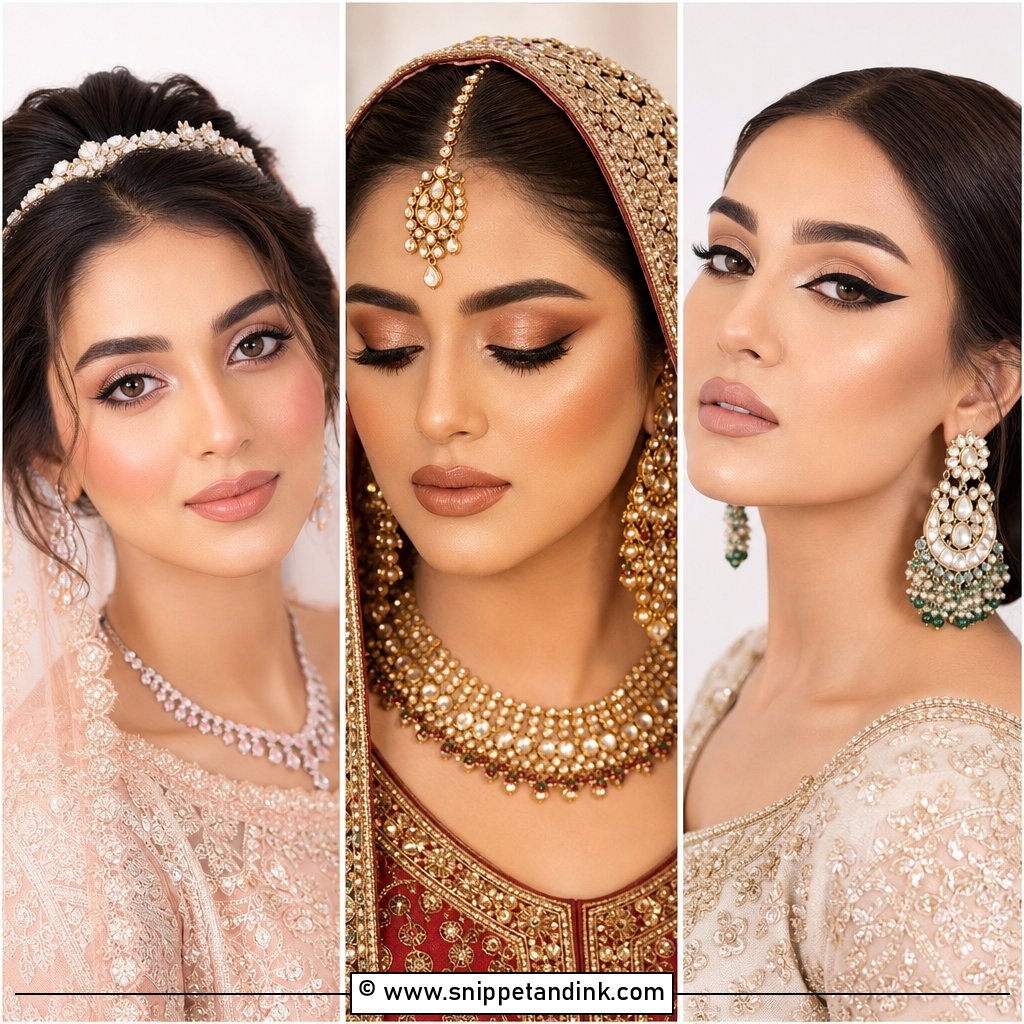
Pink tips into childish when the tones are too cool and too bright for the skin. I use rose shimmer on the lid, soft mauve in the crease, rosy blush and a pink-nude satin lip, then check the result in daylight before committing. Fair skin suits petal and soft rose. On deeper skin I go to berry, rosewood or warm fuchsia, since pale baby pinks can turn chalky and grey against a rich complexion. A gentle highlight on the cheekbone keeps the face luminous for spring portraits and blush-toned palettes.
7. Bronze Bridal Makeup
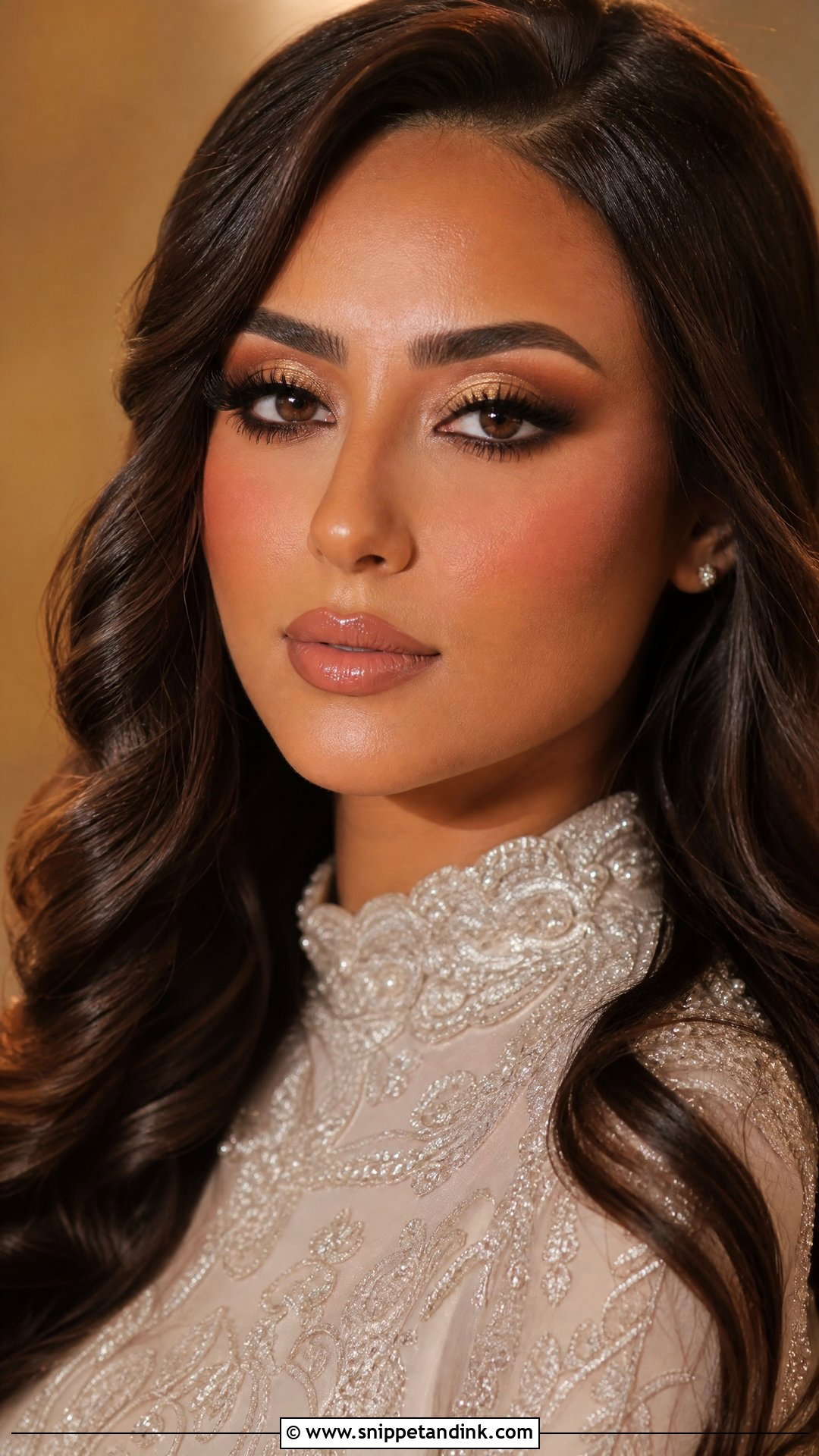
Bronze goes orange faster than any other look here, so I match bronzer to undertone before I pick a single eyeshadow. Bronze shimmer on the lid, warm brown in the crease and a smudged chocolate liner give definition, while bronzer at the temples, cheeks and jaw warms the face. Peach or terracotta blush keeps it healthy rather than muddy. For lips, a nude peach or caramel works. It’s at its best at golden hour and at summer or destination ceremonies, and it adapts to almost any skin tone once the undertone is right.
8. Smokey Eye Bridal Makeup
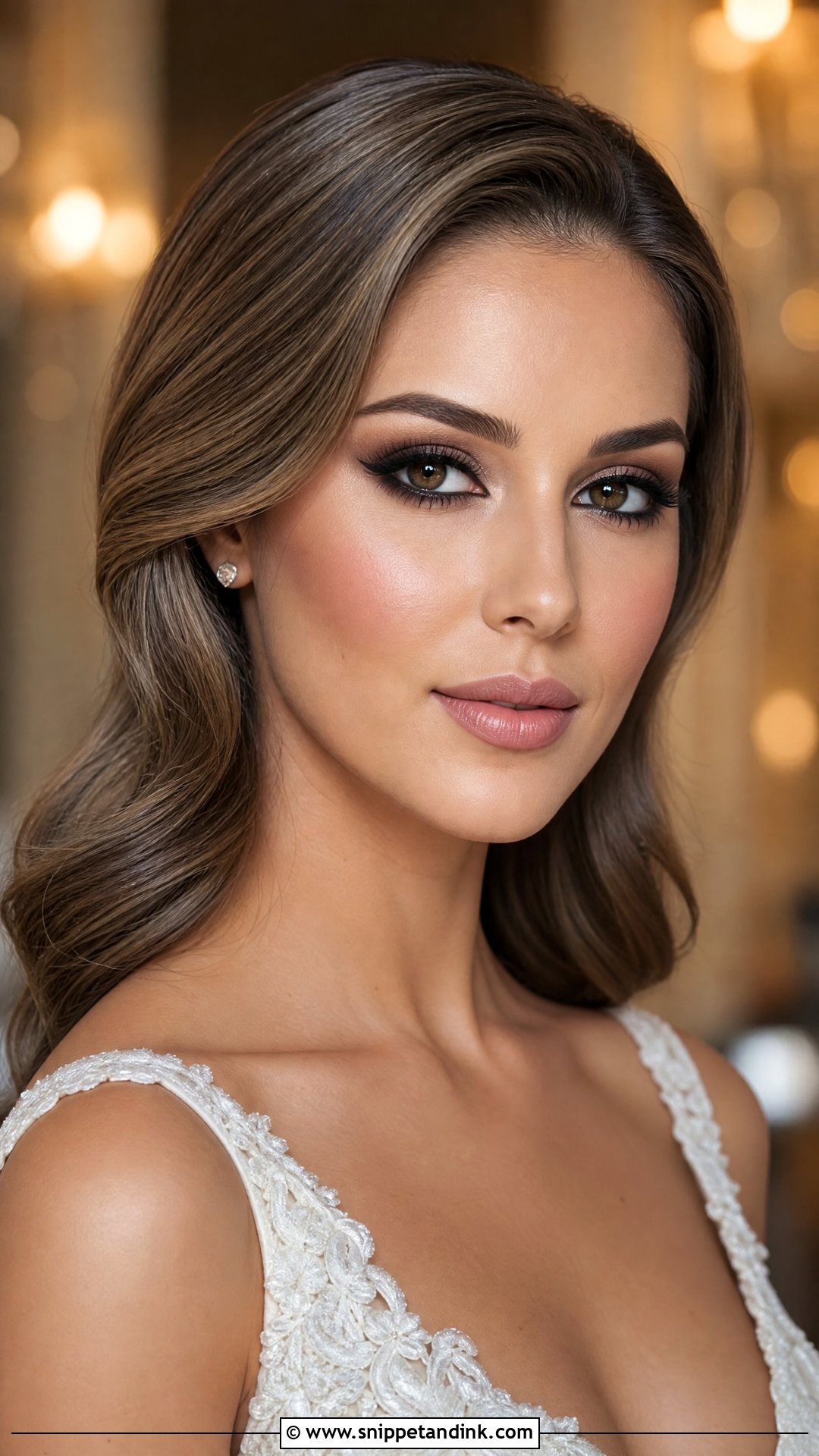
Smokey eye bridal makeup puts some brides off because they picture harsh black. I build smoke from taupe, espresso, bronze or plum instead, blending upward and outward so the eye lifts rather than drops. Liner hugs the lashes and soft false lashes balance the weight. Do the eyes before the base so any fallout can be cleaned off without disturbing foundation. Skin stays polished, cheeks are defined, and the lip goes quiet in nude or rose-brown. It suits evening receptions, candlelight and structured gowns best.
9. Gold Bridal Makeup
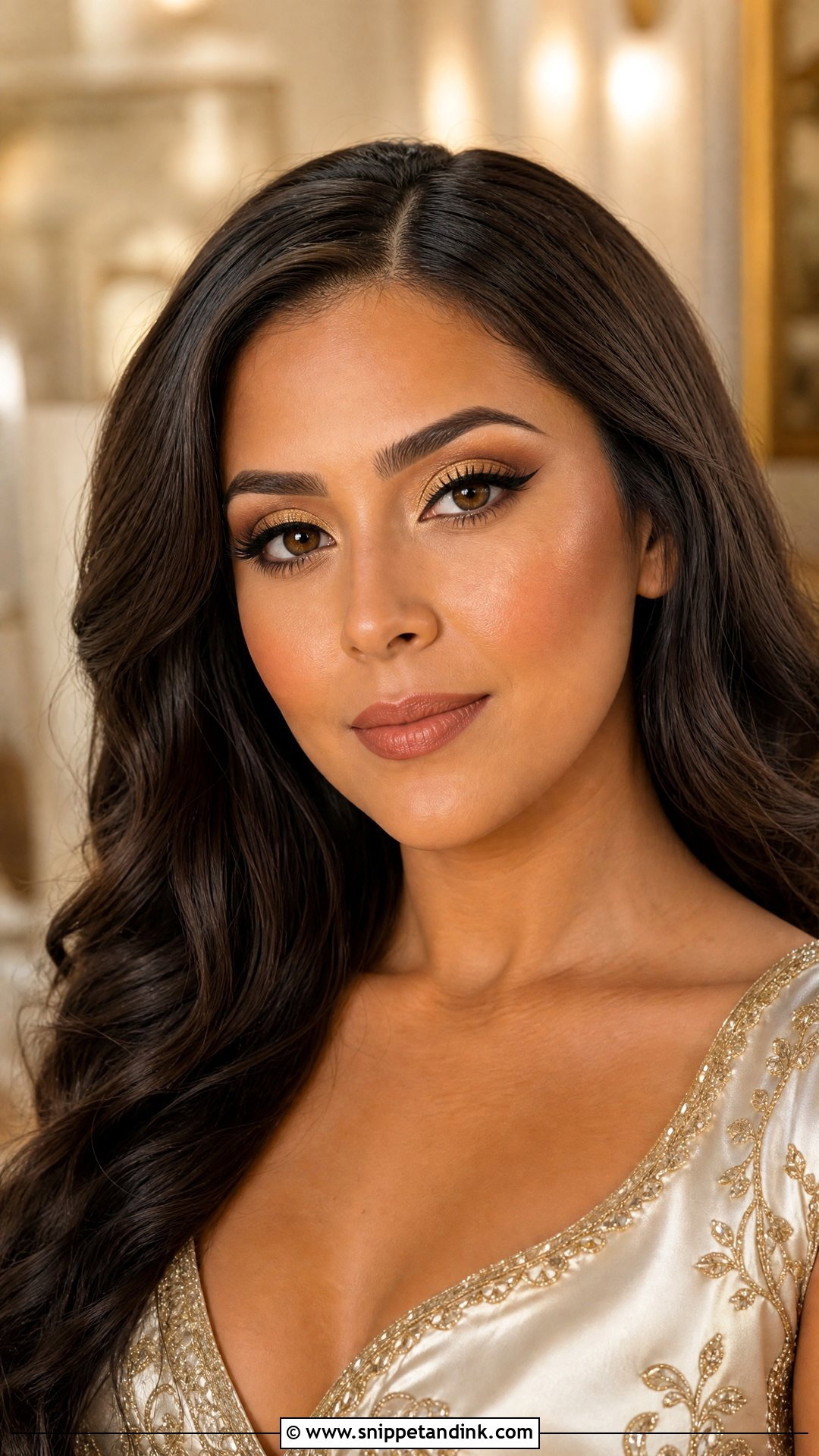
Gold on the lid adds warmth and light without the glitter problem, as long as the shimmer is finely milled. Chunky glitter looks like scattered specks in close-ups. I lay soft or antique gold on the lid, blend warm brown or caramel through the crease, then keep the liner thin and the lashes wispy. The base is radiant satin with warm blush and only a fine highlight. Peachy or caramel nude lips finish it. Pair it with gold jewelry and ivory gowns; against stark white fabric it can look slightly yellow.
10. Rose Gold Bridal Makeup
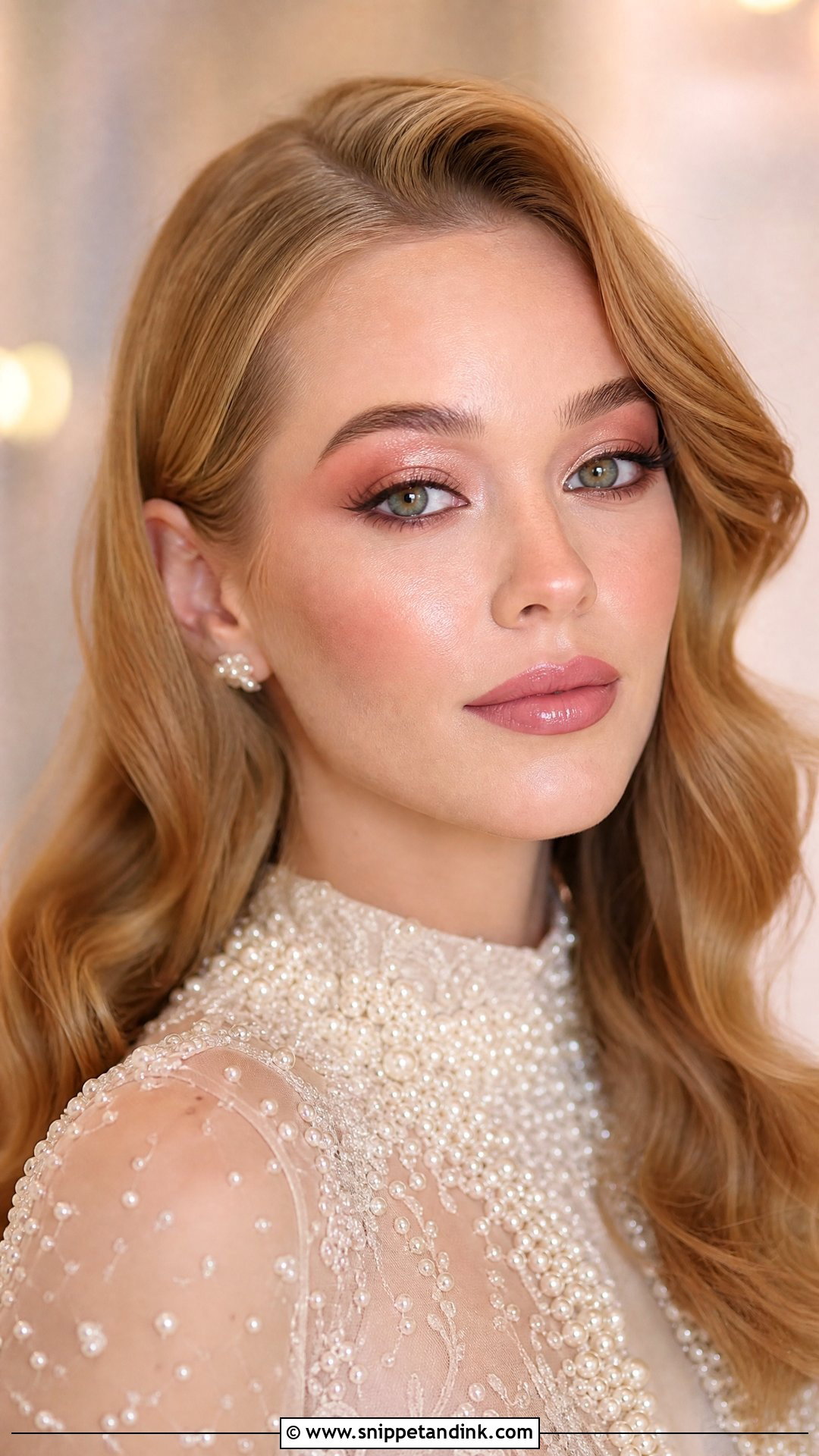
Rose gold sits between pink, bronze and champagne, which is exactly why it suits so many people: it warms the face without the orange risk of straight bronze. My usual build is rose-gold shimmer on the lid, mauve-brown in the crease, brown liner and fluttery lashes, over luminous skin with rose or peach blush. A pink-nude or mauve gloss keeps the softness. It’s an easy shade to repeat on bridesmaids too, and on the bride I like it next to pearls, blush florals and satin.
11. Peach Bridal Makeup
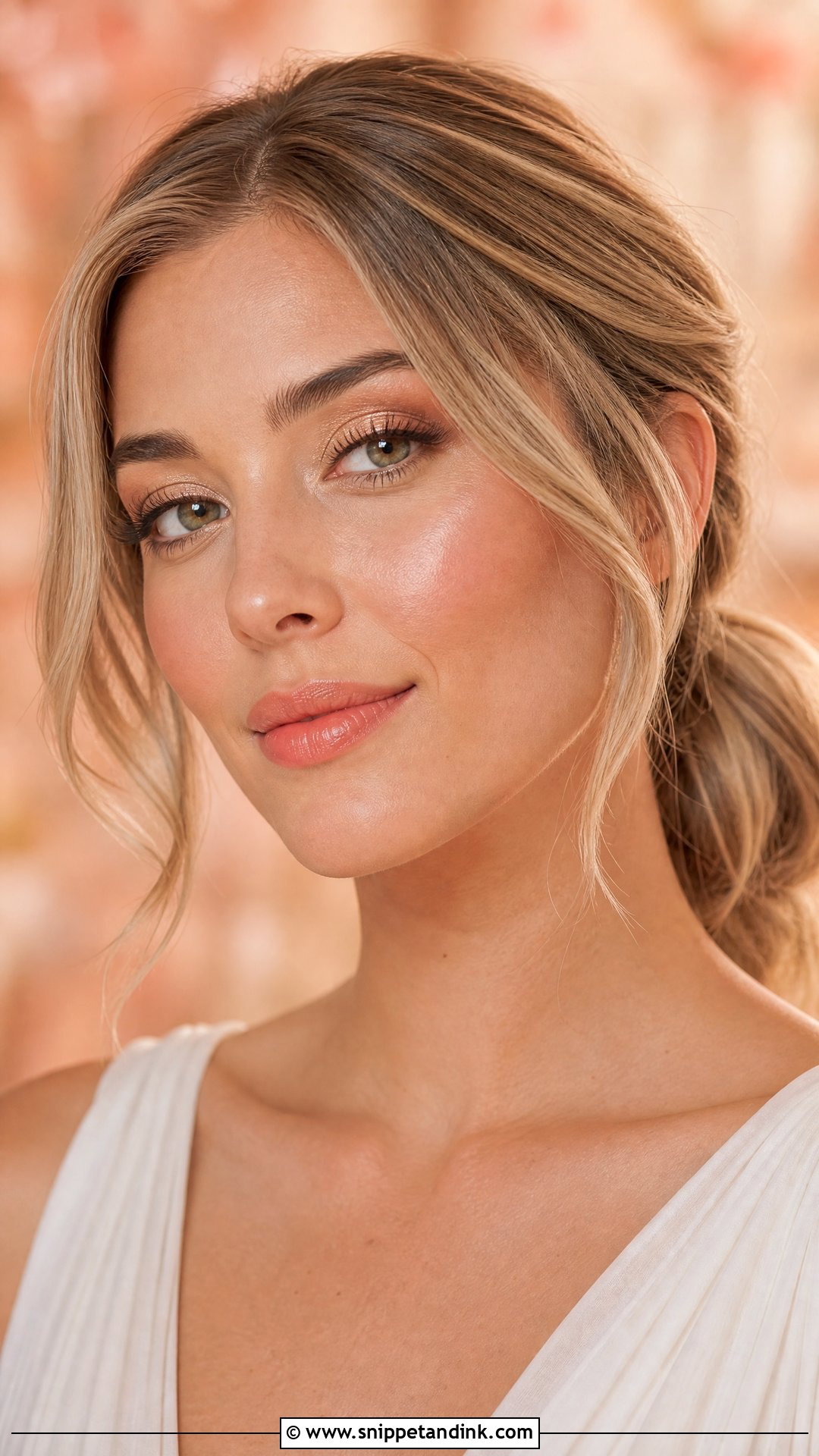
Peach gives warmth to brides who find bronze too heavy. I bring it in on the cheeks and lips in peach, apricot or soft coral and leave the eyes light in champagne or warm brown. A satin finish suits it better than full dewy or full matte. Shade depth is what makes it work: pale peach and soft coral for fair skin, burnt peach and terracotta for deeper skin, where a light peach would sit on the surface and look ashy. It’s a natural match for warm ivory gowns and outdoor spring or summer weddings.
12. Brown Bridal Makeup
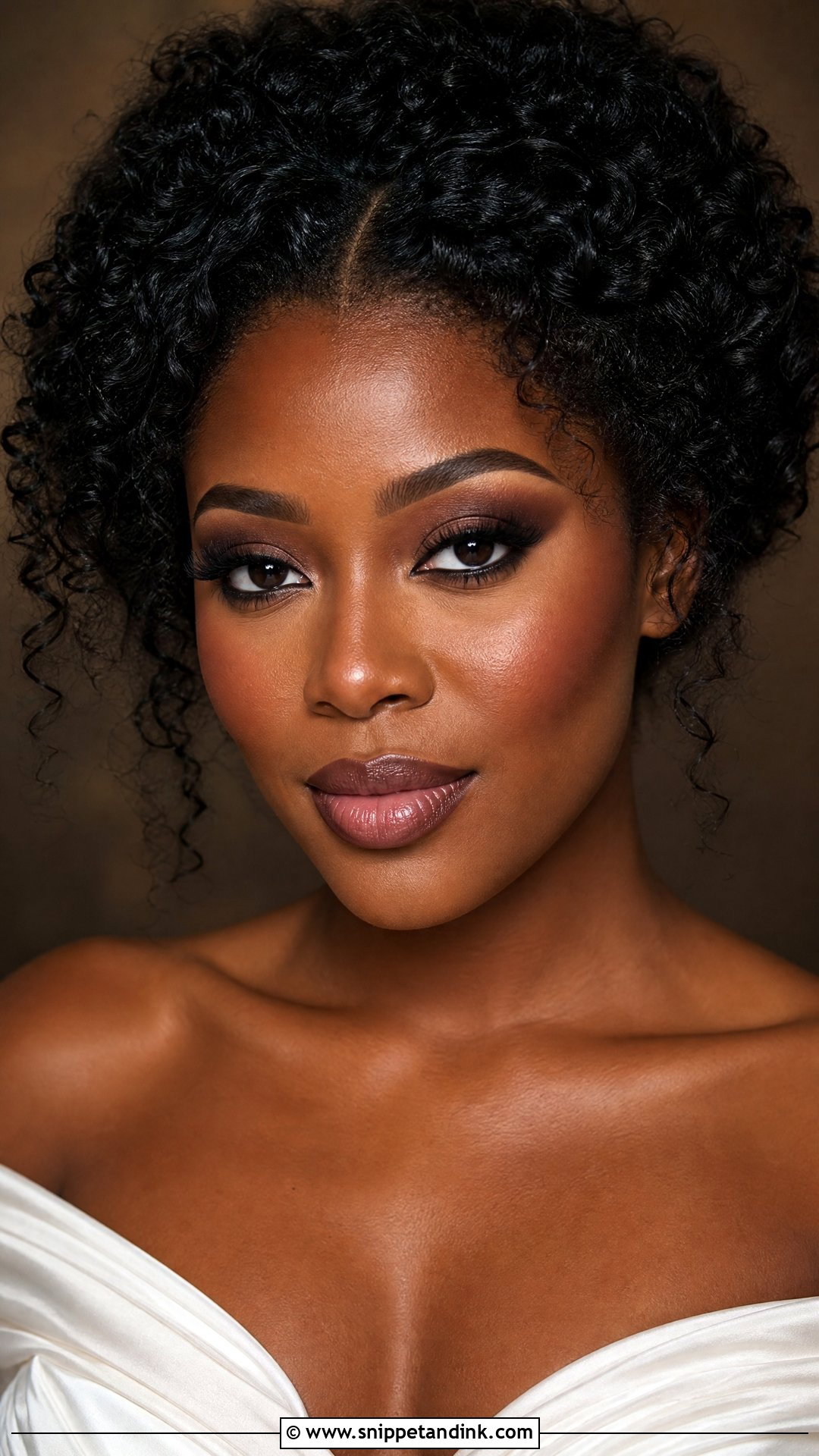
Brown is the look I adapt most easily, because one palette can go from soft to sculpted just by moving deeper in shade. Taupe and mocha keep it daytime; espresso in the outer corner makes it evening. I use brown liner rather than black on most brides, as it defines without looking stark in daylight. Warm contour, rose-brown blush and a lip in pink-brown, caramel or cocoa complete it. If you can’t decide on a style, this is the safest one to trial, since it suits almost any dress.
13. Minimal Bridal Makeup
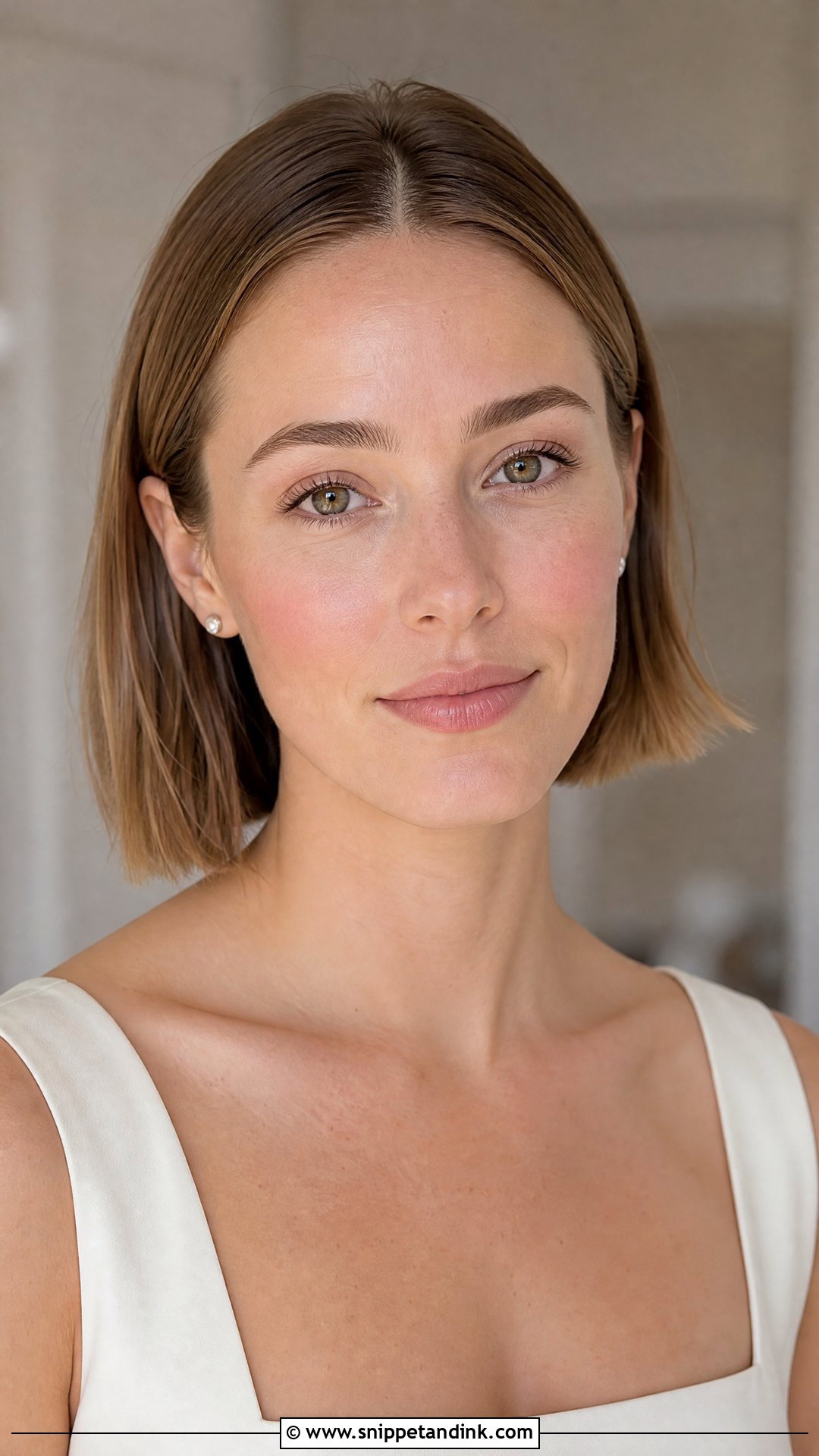
Minimal should still look finished. I use skin tint or a light foundation only where it’s needed and spot conceal redness, dark circles and any blemishes. Brows get brushed into place, lashes get curled and a single coat of waterproof mascara goes on. A wash of neutral cream shadow wakes the eye up, cream blush adds color, and a tinted balm or soft satin lipstick sits on the lips. Brides who rarely wear makeup are usually most comfortable here, and it pairs well with sleek buns and courthouse ceremonies. Do expect to touch up the lips more often, since balms wear quickly.
14. Full Glam Bridal Makeup
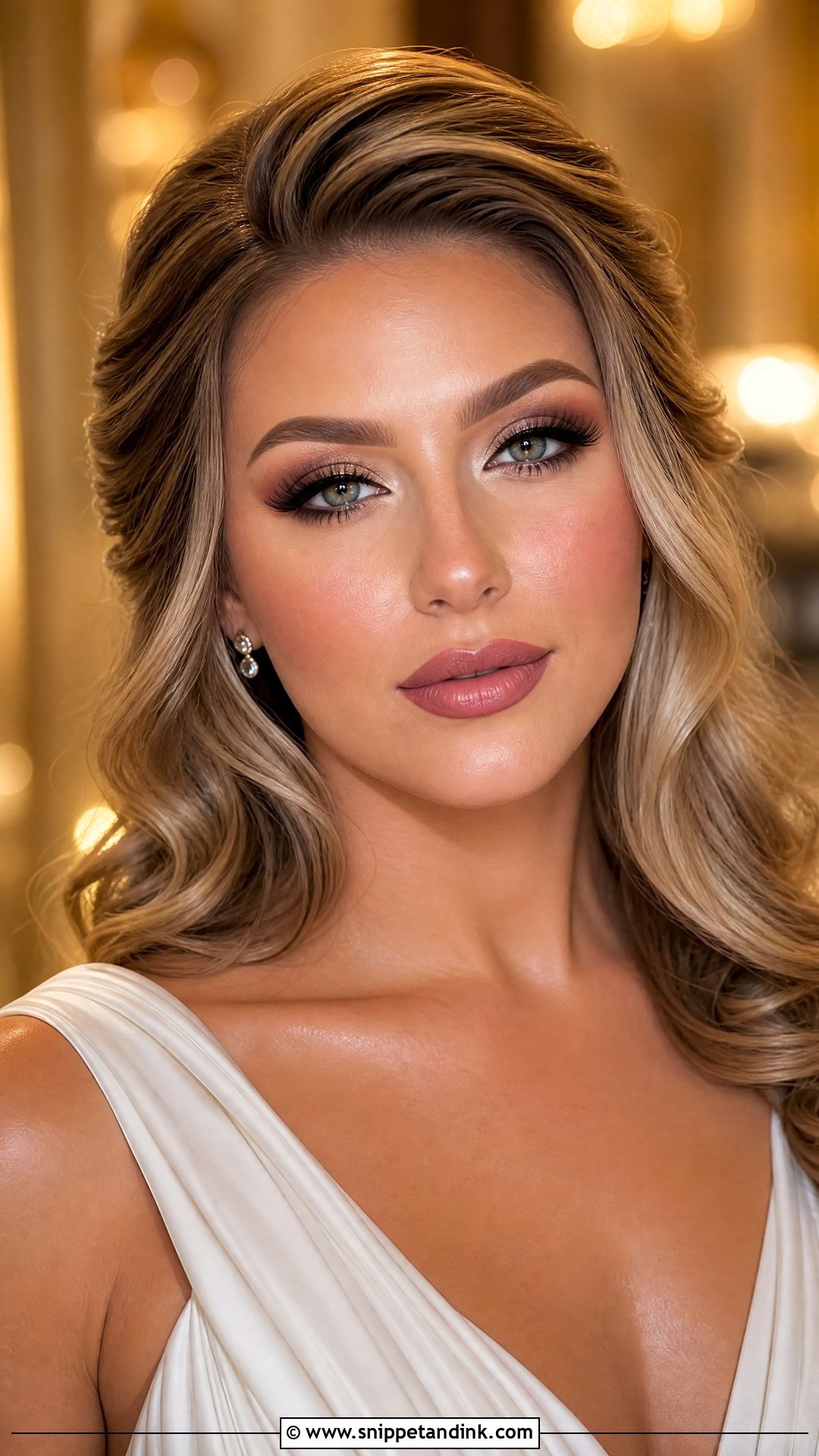
Full glam lives or dies on balance. With a full-coverage base I still keep layers thin, brighten under the eyes, sculpt the contour and set the brows. Eyes get layered neutrals, shimmer on the lid, liner and fuller lashes. I’m generous with blush because flash and editing both wash color out, and a face that looks right at arm’s length can look pale in the gallery. A lined nude, rose or mauve lip holds best. This suits ballroom receptions and dramatic gowns, and it’s worth sitting for it once at the trial to be sure you’re comfortable in that much makeup for a whole day.
15. Monochrome Bridal Makeup
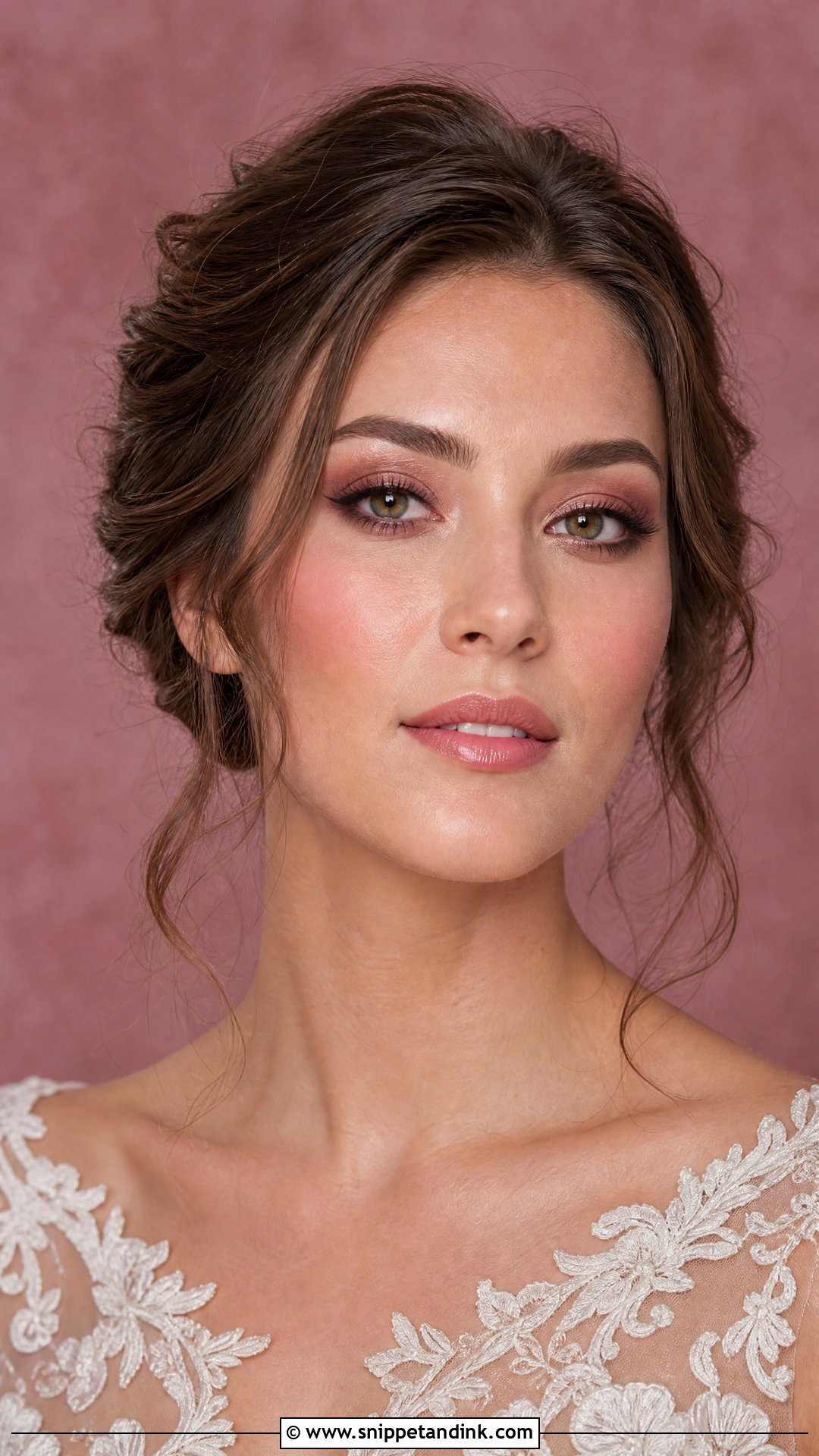
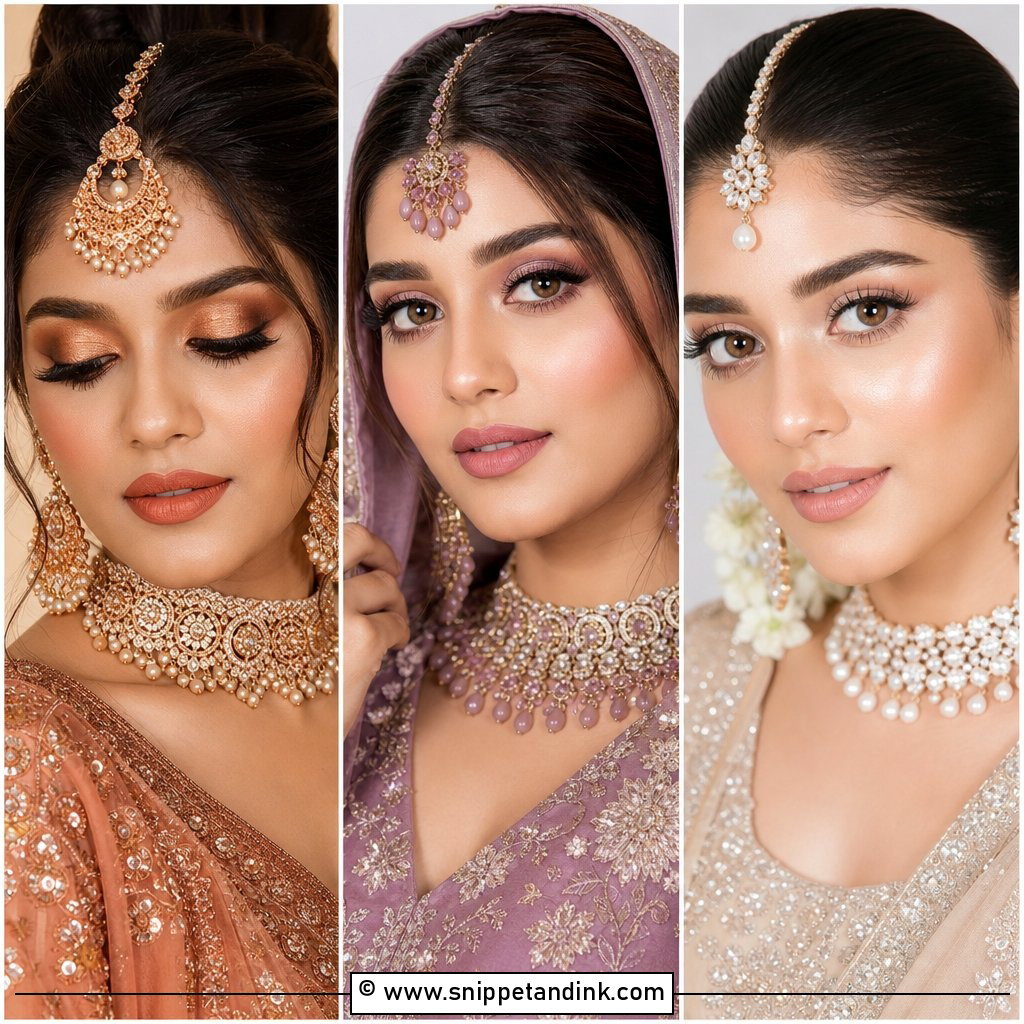
One color family across eyes, cheeks and lips gives a calm, unified face because nothing competes. Rose, peach, mauve, terracotta and soft brown all work. A rose version might be dusty rose shadow, rosy cream blush and a rose-nude lip; peach reads warmer and brighter. I often do this with a single cream product on lids and cheeks, then a matching lip. The mistake to avoid is under-defining the eyes: without enough mascara or lashes, monochrome can look washed out in photos.
16. Winged Liner Bridal Makeup
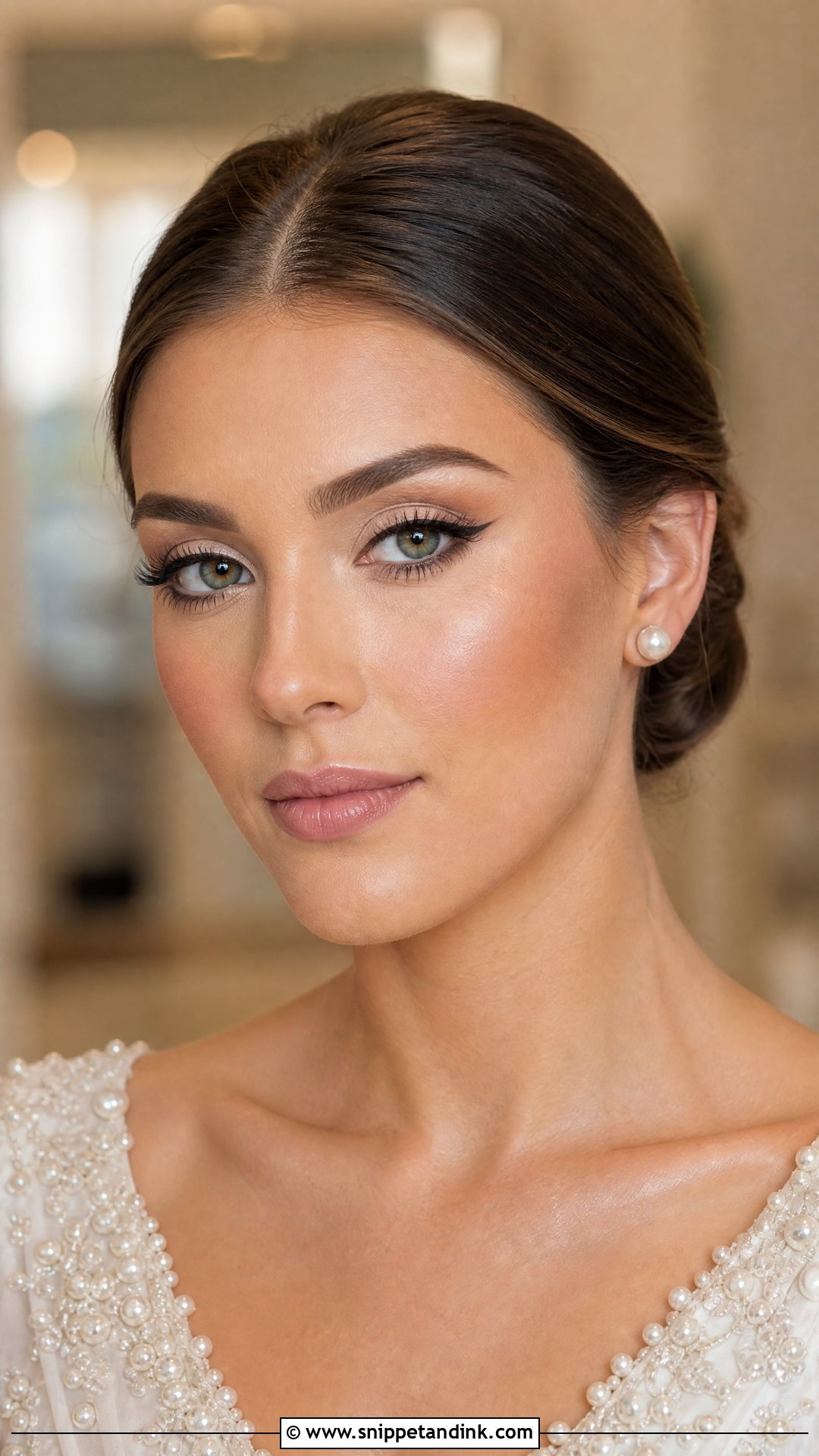
The wing has to be drawn for your eye, not copied from a photo. Winged liner bridal makeup on hooded eyes needs a thinner or smoked wing, and I map it with your eyes open, because a wing drawn closed can disappear into the fold. Almond eyes can carry a sharper shape. Over a smooth complexion and neutral shadow, I keep the lashes separated so the line stays visible. A natural blush and a satin nude, pink or red lip finish it. It reads well in black-and-white photos and alongside sleek hair and pearls.
17. Mauve Bridal Makeup
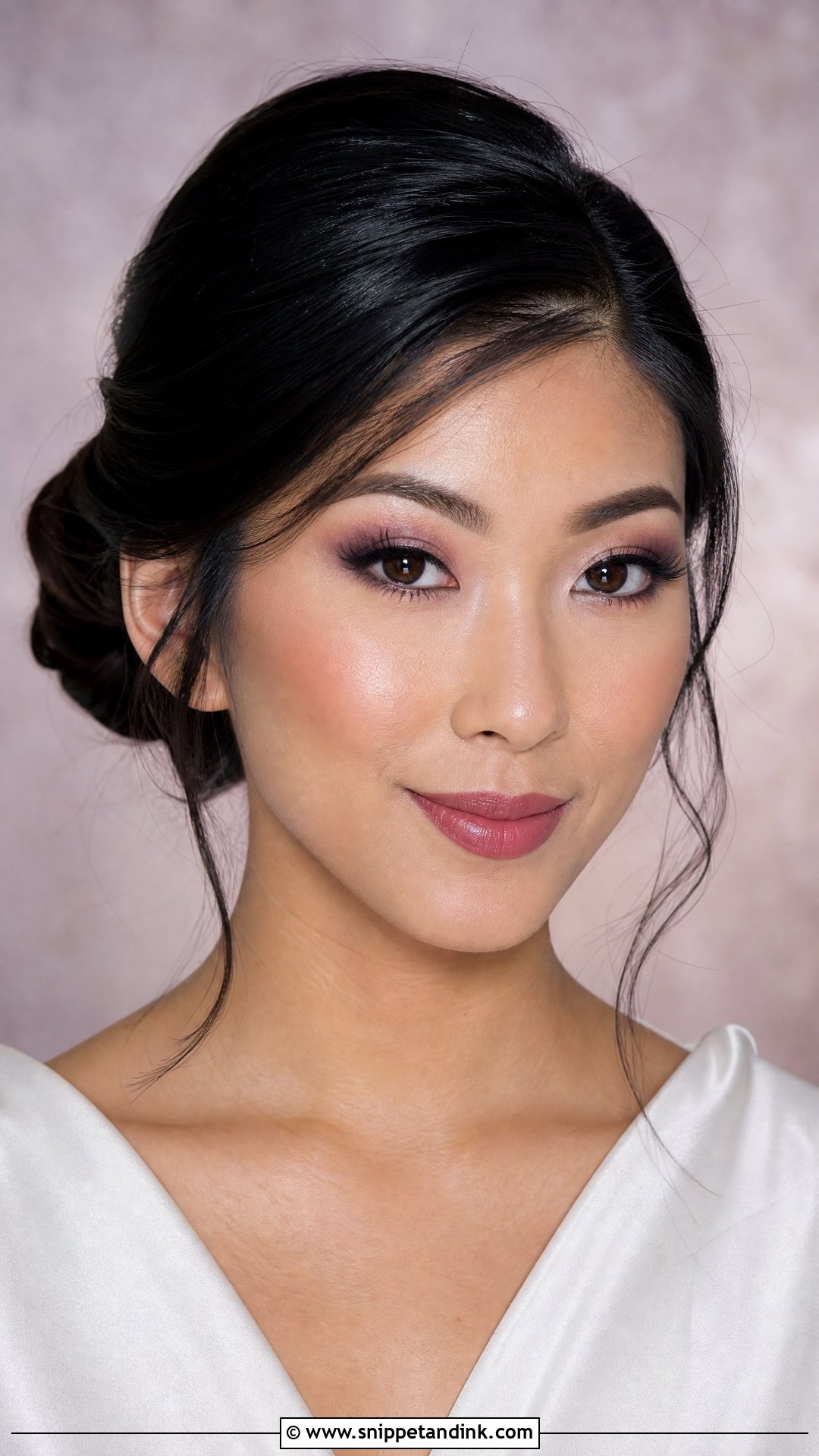
Mauve gives color without going sweet. The family runs from dusty purple through rose-brown and muted plum to a cool pink-beige. It sets off green and hazel eyes particularly well, and it gives blue and brown eyes a softer frame. I pair it with lined lashes, natural brows and a satin or softly matte complexion, then repeat the tone in the blush and lip. Cool-toned brides tend to wear it best. On very warm skin I add a touch of brown to the mauve so it doesn’t look grey, which makes it a good fit for fall weddings and indoor ceremonies.
18. Glowy Nude Bridal Makeup
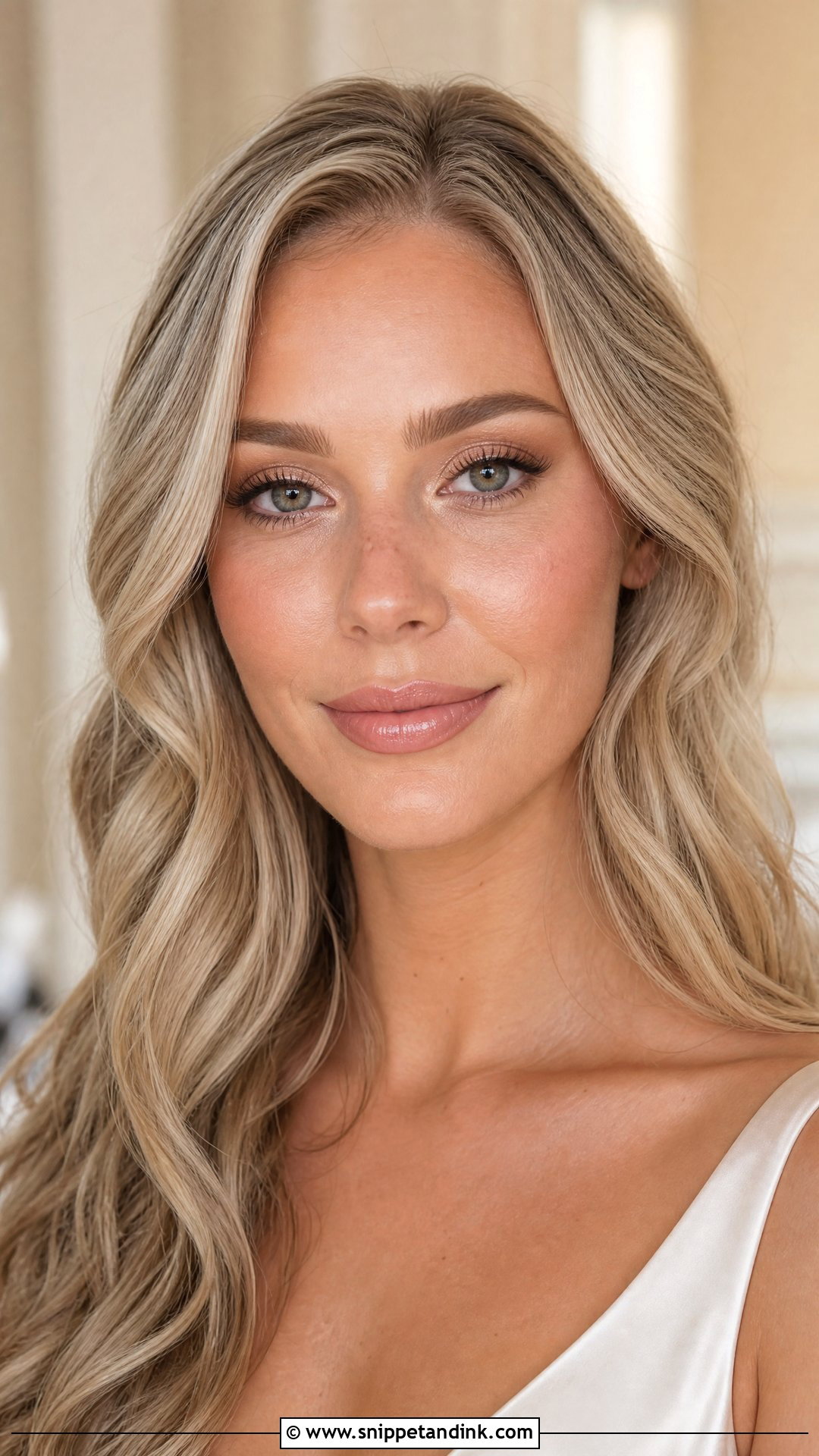
The whole look rests on one decision: a nude lip that keeps your mouth visible. Glowy nude bridal makeup uses neutral tones on hydrated, even skin with soft bronzer, beige-pink blush and a subtle highlight. Eyes take champagne or light brown shadow with soft liner and natural lashes. I usually choose a lip one or two shades deeper than your natural lip and line it slightly darker, because a nude that matches your skin erases the mouth in photos. Beige, pink, caramel and brown nudes each suit different complexions.
19. Plum Bridal Makeup
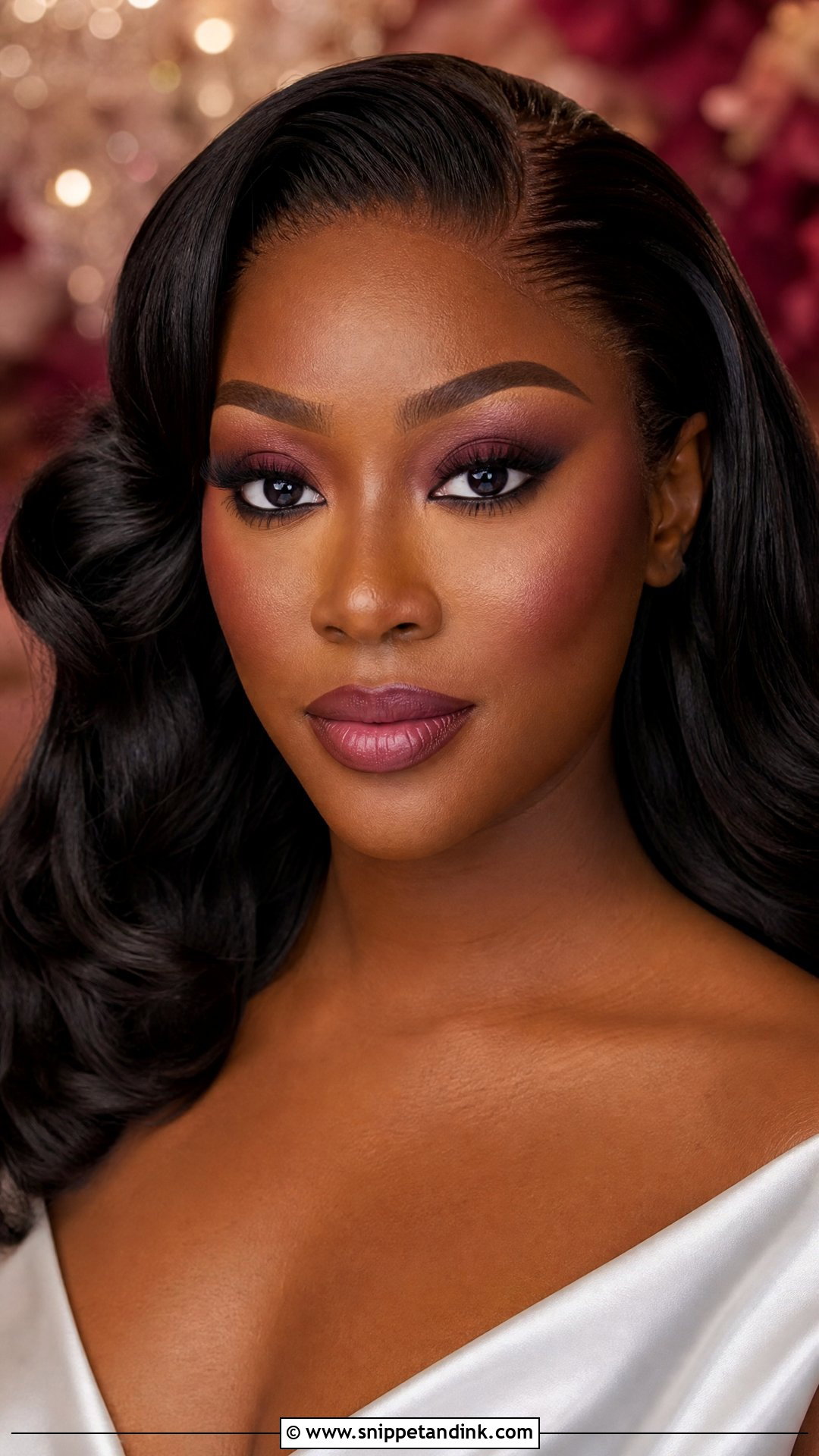
Plum gives depth to brides who don’t want a classic smokey eye. I place soft plum or berry on the outer corners, blend it into a neutral brown crease and keep a soft shimmer in the center of the lid. Black-brown liner and wispy lashes lift the eye. Plum is especially flattering on green and hazel eyes. The skin stays clean, with berry-rose blush and a muted mauve or rose-brown lip. It’s my go-to for fall and winter weddings, jewel-toned palettes and evening ceremonies.
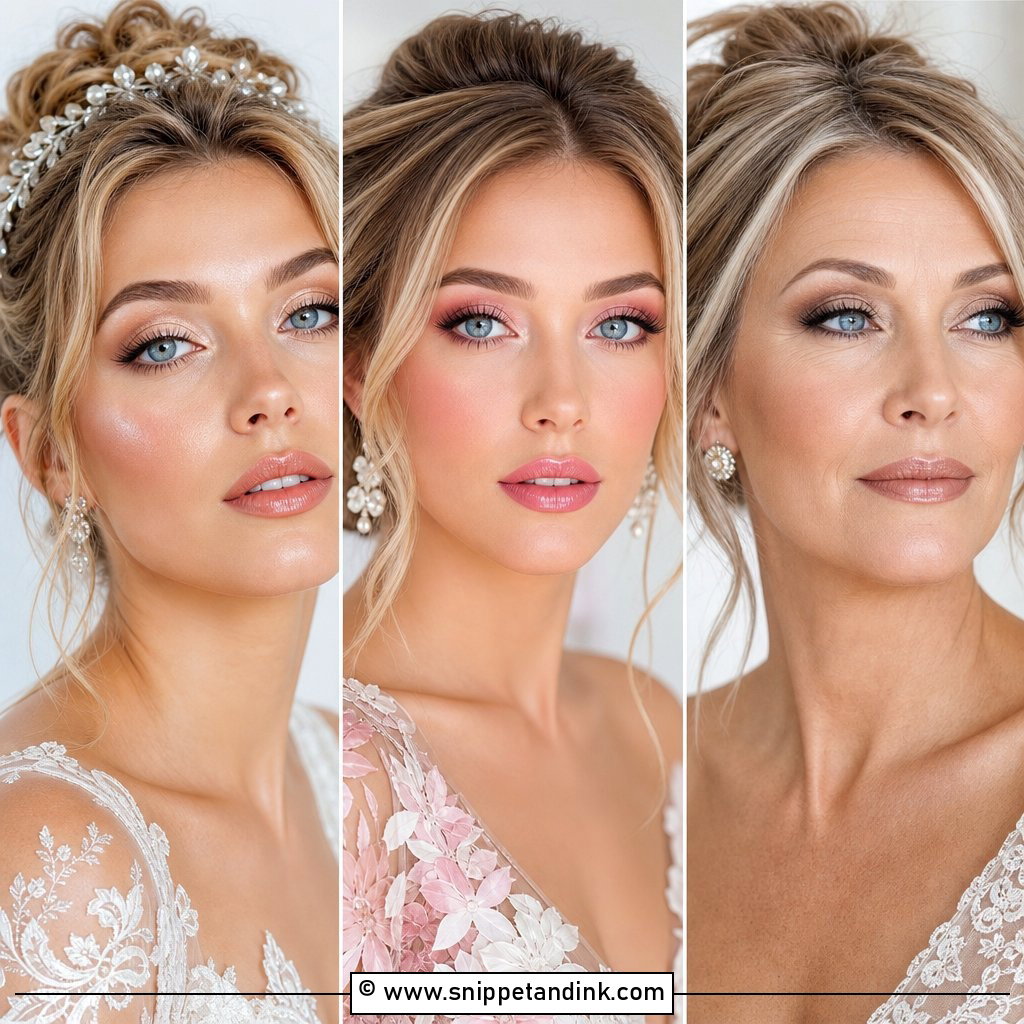
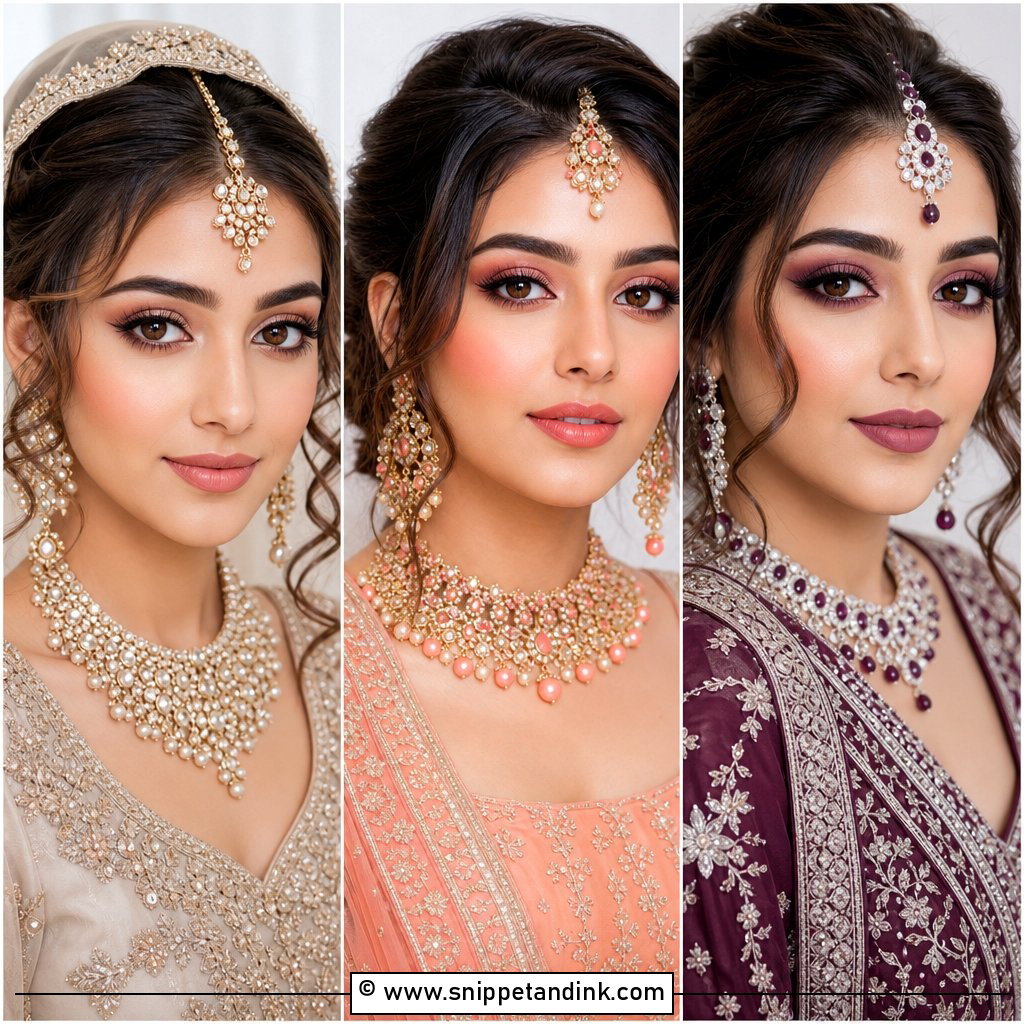
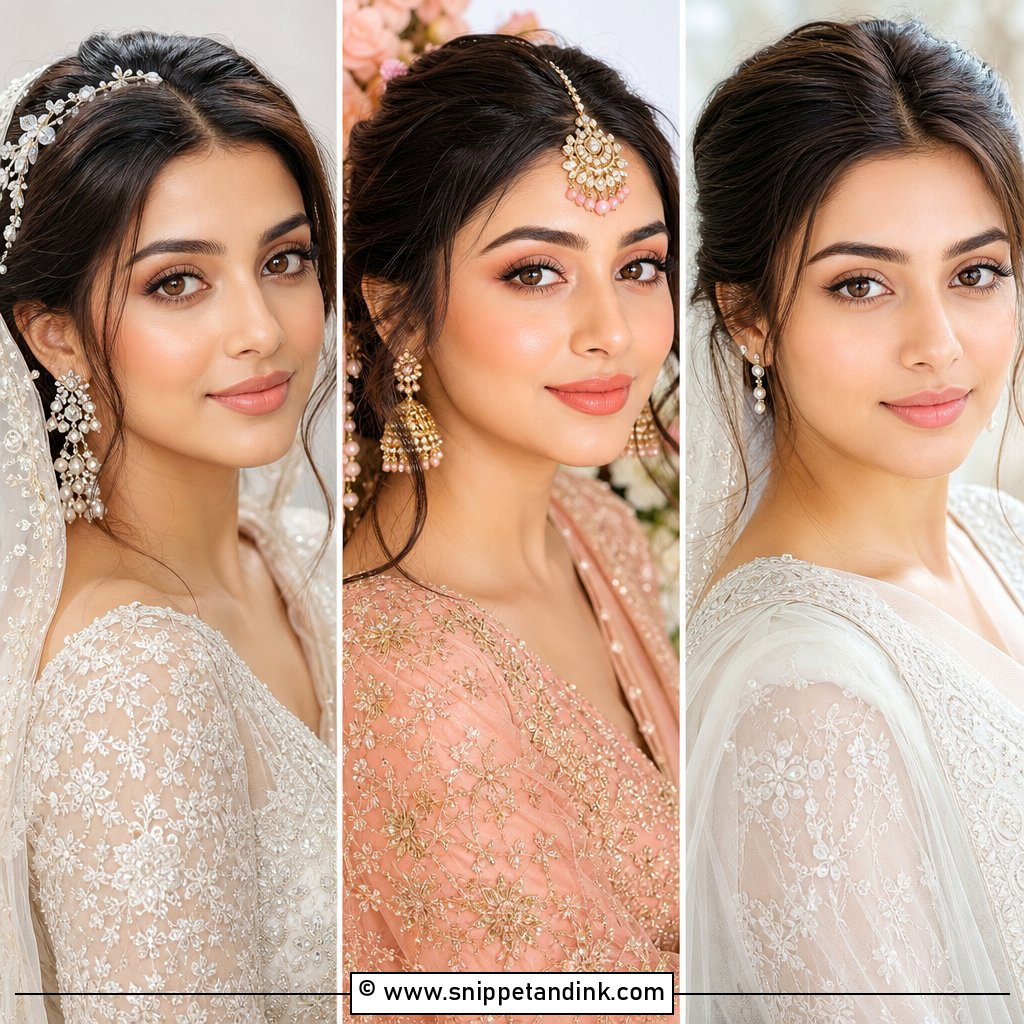
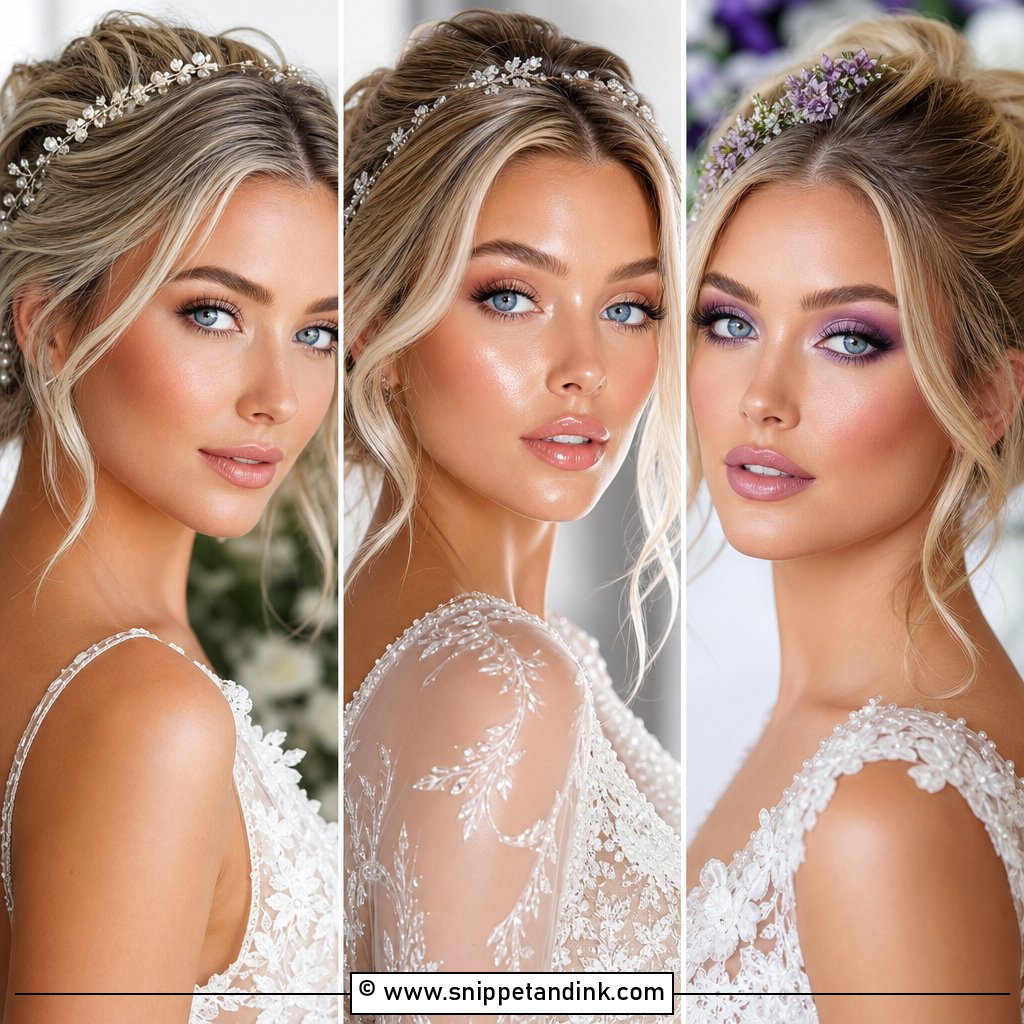
20. Airbrush Bridal Makeup
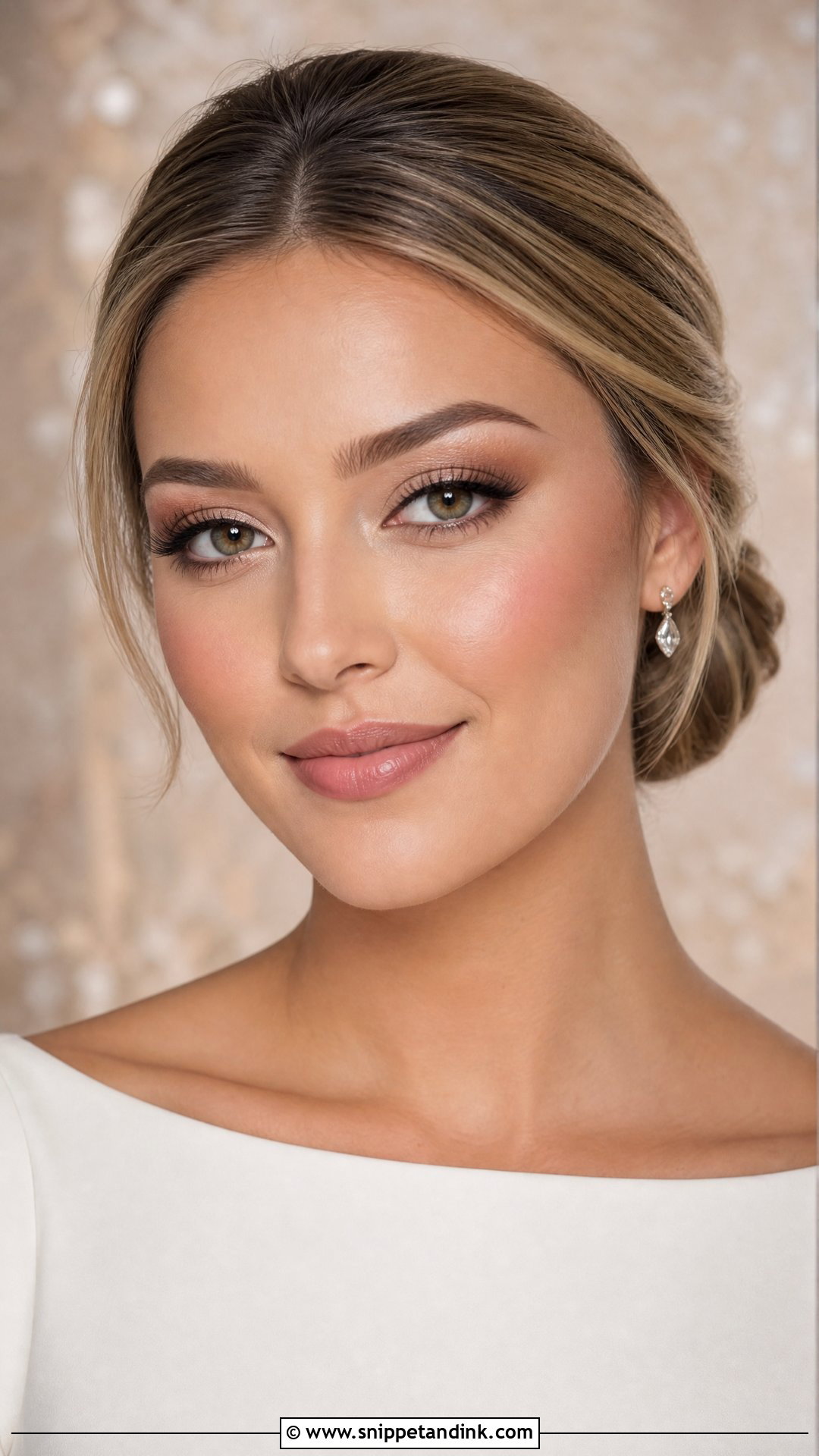
An airbrushed base goes on as a fine mist, so it lasts through humidity, happy tears and hours of photos while feeling light, provided the artist builds it in thin passes. It can be natural, soft glam or full glam; the complexion is what changes. I pair it with waterproof eye makeup, softly defined brows and blush that brings life back, since airbrush alone can look flat. Lips should be lined and layered for wear. Very dry or flaky skin is the one place I’m cautious, as the spray can catch on texture, so a trial matters here more than anywhere.
Where Each Look Wears Thin First, and What I Pack for It
Even the best application moves over a ten or twelve hour day. What changes is where. Knowing that in advance lets your maid of honor carry the right three things instead of a full makeup bag.
The lips go first
Eating, drinking and kissing wear away any lip color, and reds and berries leave a ring at the edges as they fade. Keep the exact lipstick and liner from your trial, plus a cotton bud for tidying the line. Gloss-only looks need reapplying after every meal.
Shine comes through on the T-zone
On dewy and glowy bases, oil comes up through the forehead and nose by the speeches. Blotting papers lift it without adding layers. Powder on top of oil is what builds that heavy, cakey look in evening photos.
Tears hit the lower lashline
This is why I use waterproof mascara on the bottom lashes even when the top lashes are strip or individuals. A smudge of brown shadow under the eye wears better than pencil liner, which travels when it gets wet. A pointed cotton bud and a bit of concealer fixes most ceremony damage in under a minute.
Shimmer and highlight barely move, and a well-set brow will usually last until the end of the night. If you only have room for one touch-up moment, put it just before the formal portraits, not right after the ceremony.
Matching One of These Looks to Your Own Face
None of this wedding makeup inspo for brides is meant to be copied exactly. Pick the finish your skin can hold, then the color story that suits your dress and the time of day. Book the trial, look at it in daylight and under a phone flash, and photograph it from a few angles. Wear it for the rest of that day if you can and notice where it moves. If you still feel like yourself by evening, you’ve found the right one.
You'll Like These Ideas:


Leave a Reply