
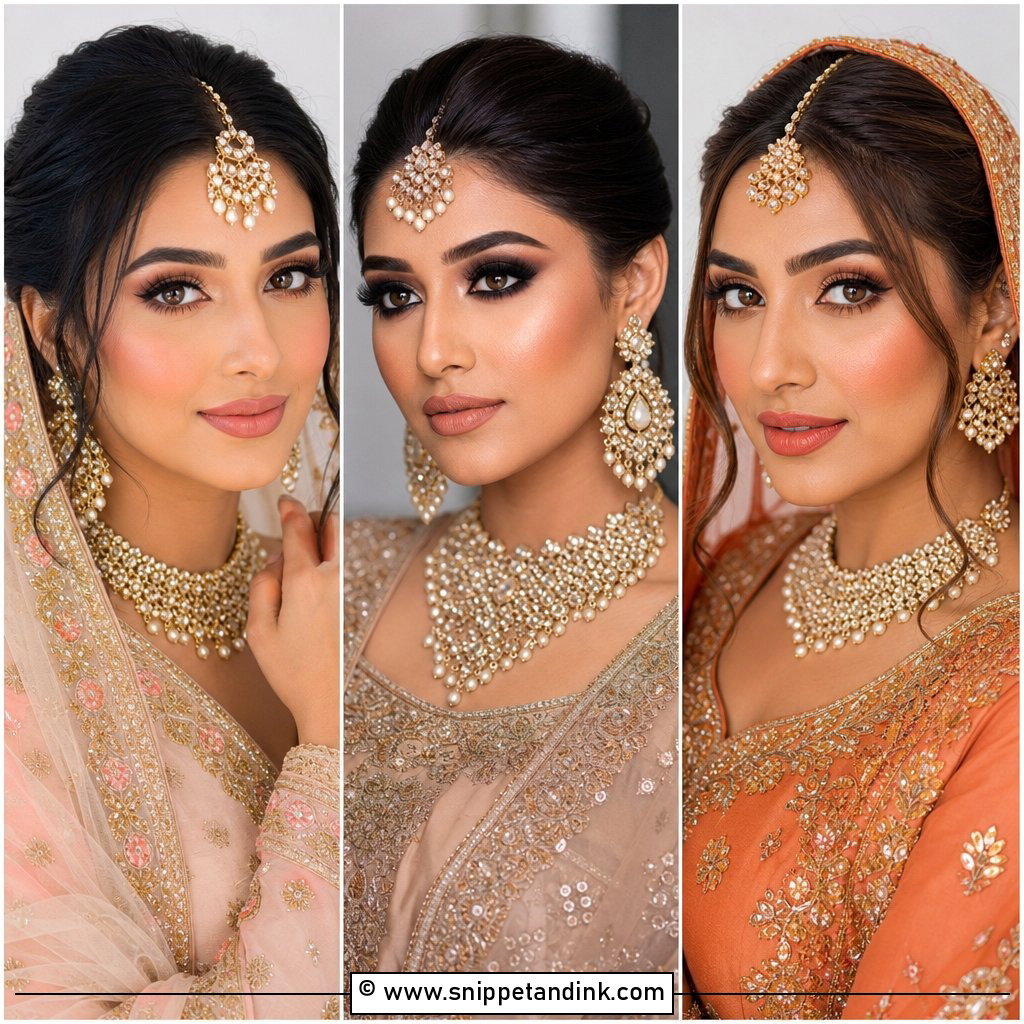
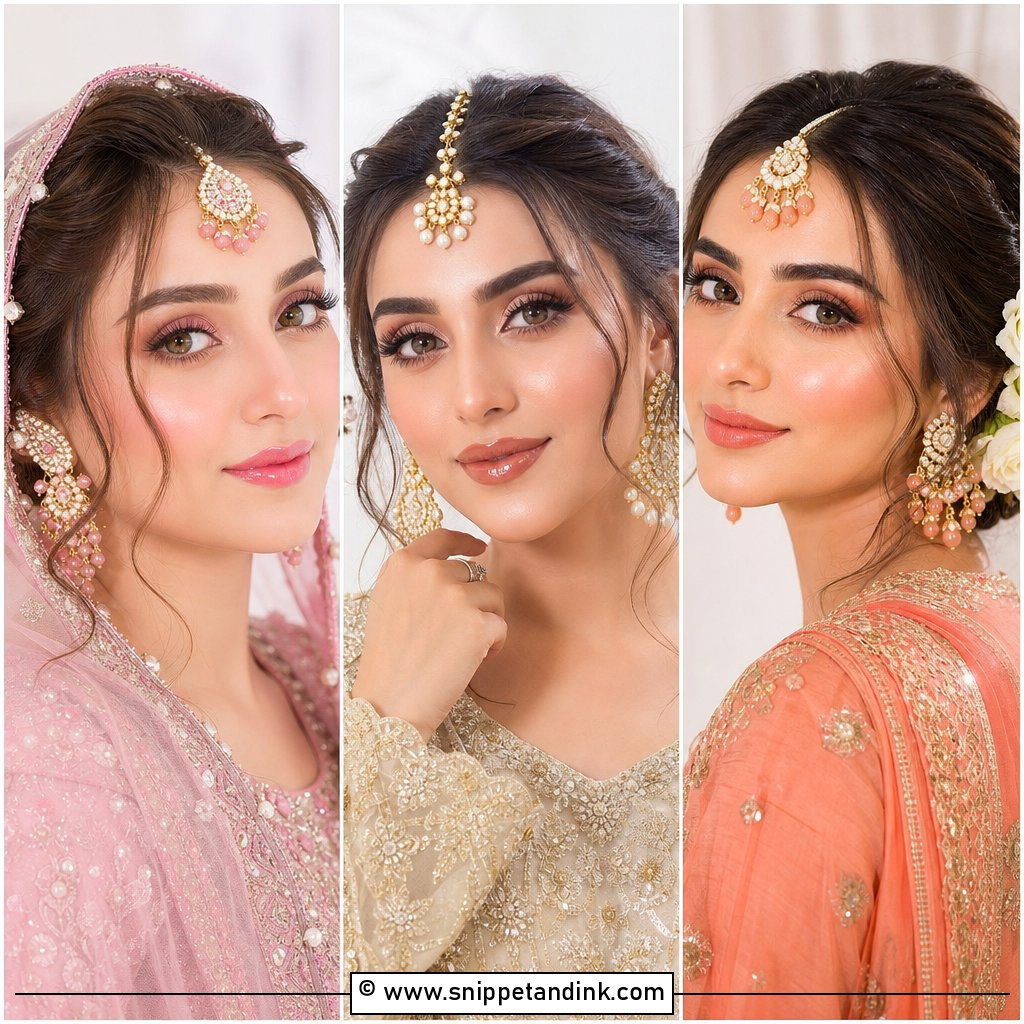
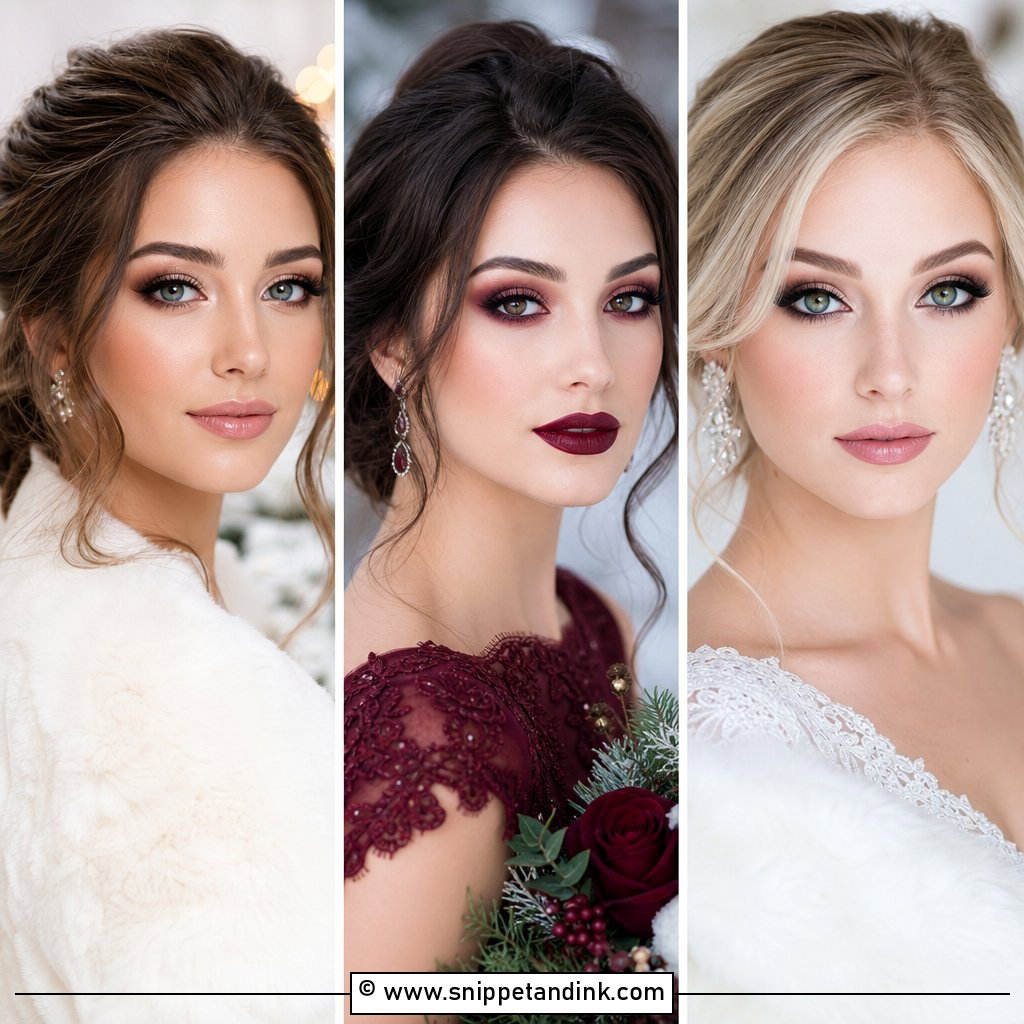
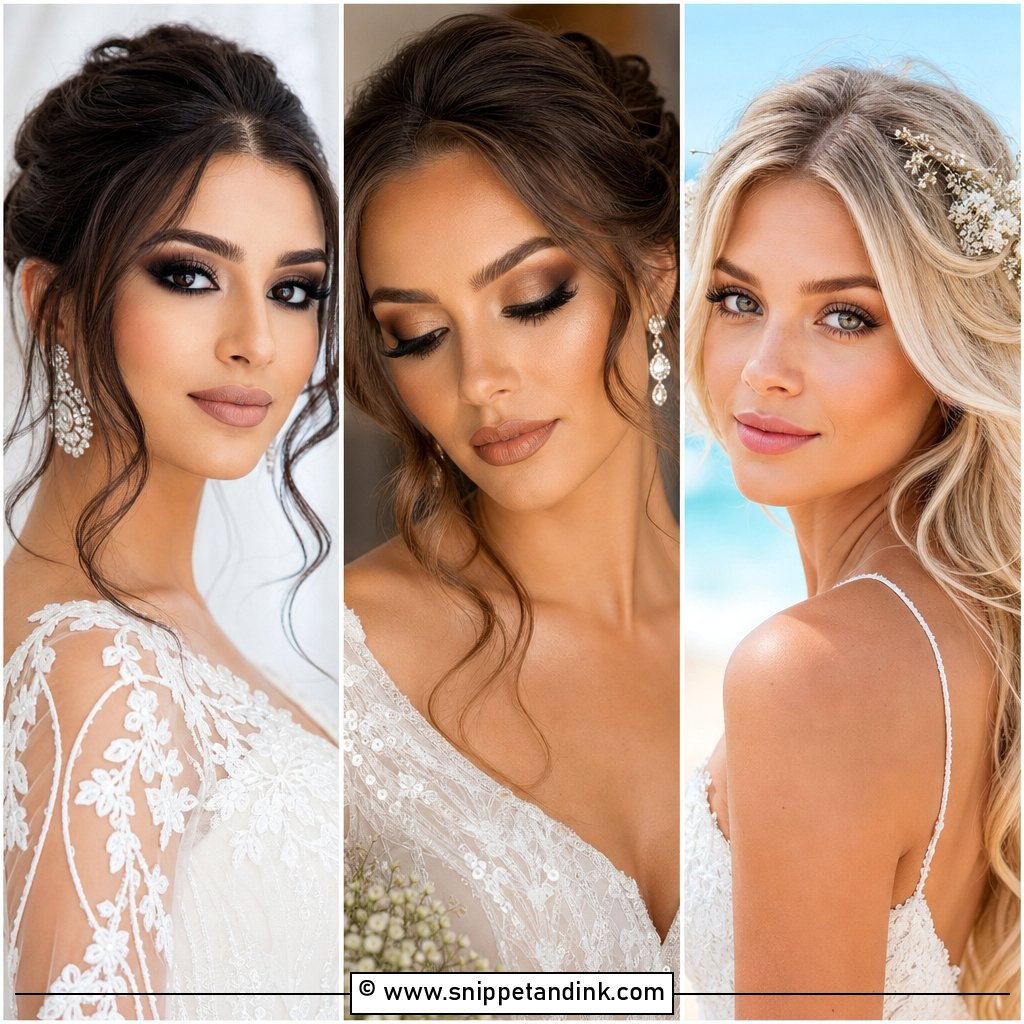
A wedding face has two jobs that pull against each other. It has to look like you when your mother hugs you, and it has to hold its shape under a camera flash at eleven at night. Most of what I do at a trial is find the balance between those two for one person. The twenty looks below span natural to full glam. For each, I’ve added what I’d watch for in the chair: which skin it suits, what fades first, and the detail that separates a polished version from a heavy one. Save the ones that feel like you, then bring them to your trial as a starting point rather than a blueprint.
Briefing Your Artist When Half Your Screenshots Are Filtered
A lot of the photos brides save have been retouched, filtered or lit by a ring light, and no makeup can recreate skin with the pores edited out. That’s fine, as long as we both know it. When you show me a picture, I’m reading it for the color story and the level of definition, not for the skin texture.
To get the most out of the first ten minutes of a trial, bring:
- Three to five pictures you love, and one you dislike. The one you dislike often tells me more.
- A photo of the dress, ideally in daylight, so I can see whether it’s bright white, ivory or champagne.
- Your hairstyle plan, since an updo shows the whole jawline and changes how I contour.
- The lipstick you wear most. It shows me what you feel comfortable in.
Then tell me how you want to feel rather than which products to use. Something like “fresh but awake in photos” gives me more to work with than a list of brands.
1. Natural Wedding Makeup
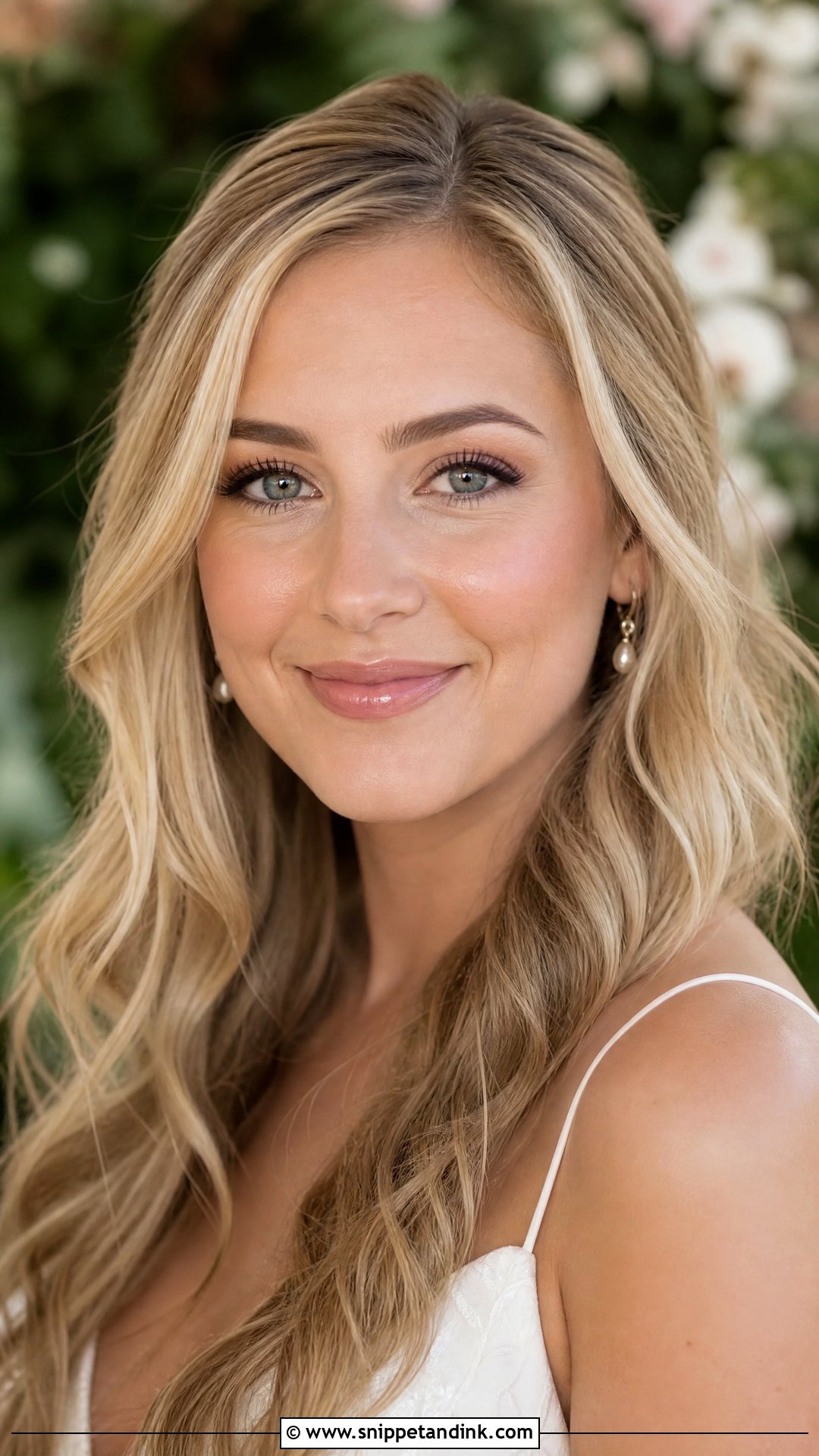
Freckles should still show through a natural base, and that’s my test for whether I’ve used too much product. I work with sheer to medium coverage, a brown mascara, lightly filled brows and a wash of champagne on the lid. Cream blush in rose or peach brings the face back to life after foundation has evened it out. The lip stays close to your own color in satin or gloss. The catch: natural makeup photographs paler than it looks in person, so I add slightly more definition at the lash line than you’d wear on a normal Saturday.
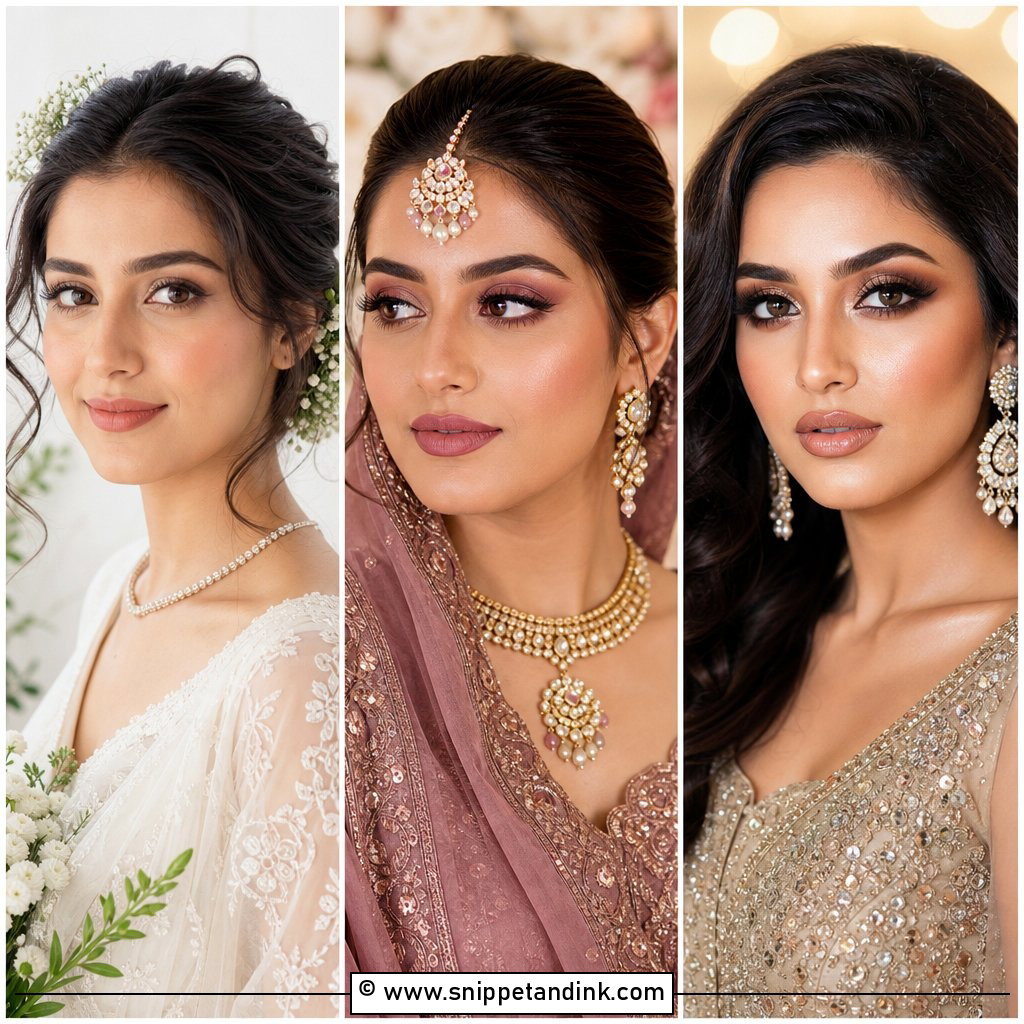
2. Soft Glam Wedding Makeup
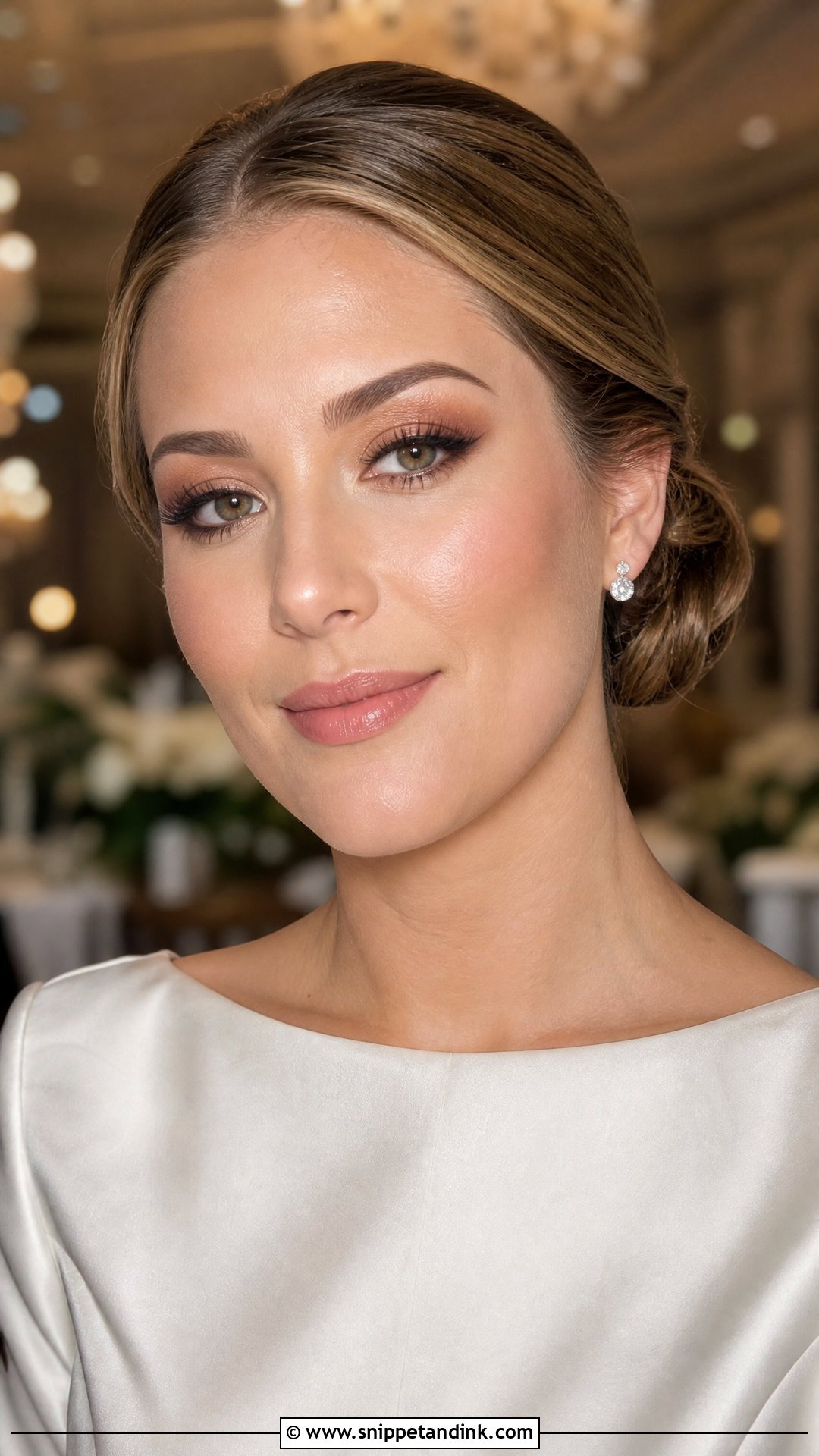
Think of soft glam as natural makeup with structure added at the cheekbone and lash line. The skin is smooth, the cheeks are lightly sculpted, the shadow is neutral and the liner is blended until it has no edge, finished with fluttery lashes and a nude-pink lip. A satin foundation or long-wear skin tint keeps it refined. Warm bronzer around the temples, then highlight only on the very high points. When soft glam goes wrong, it’s almost always contour placed too low, which drags the face down in photos instead of lifting it.
3. Dewy Wedding Makeup
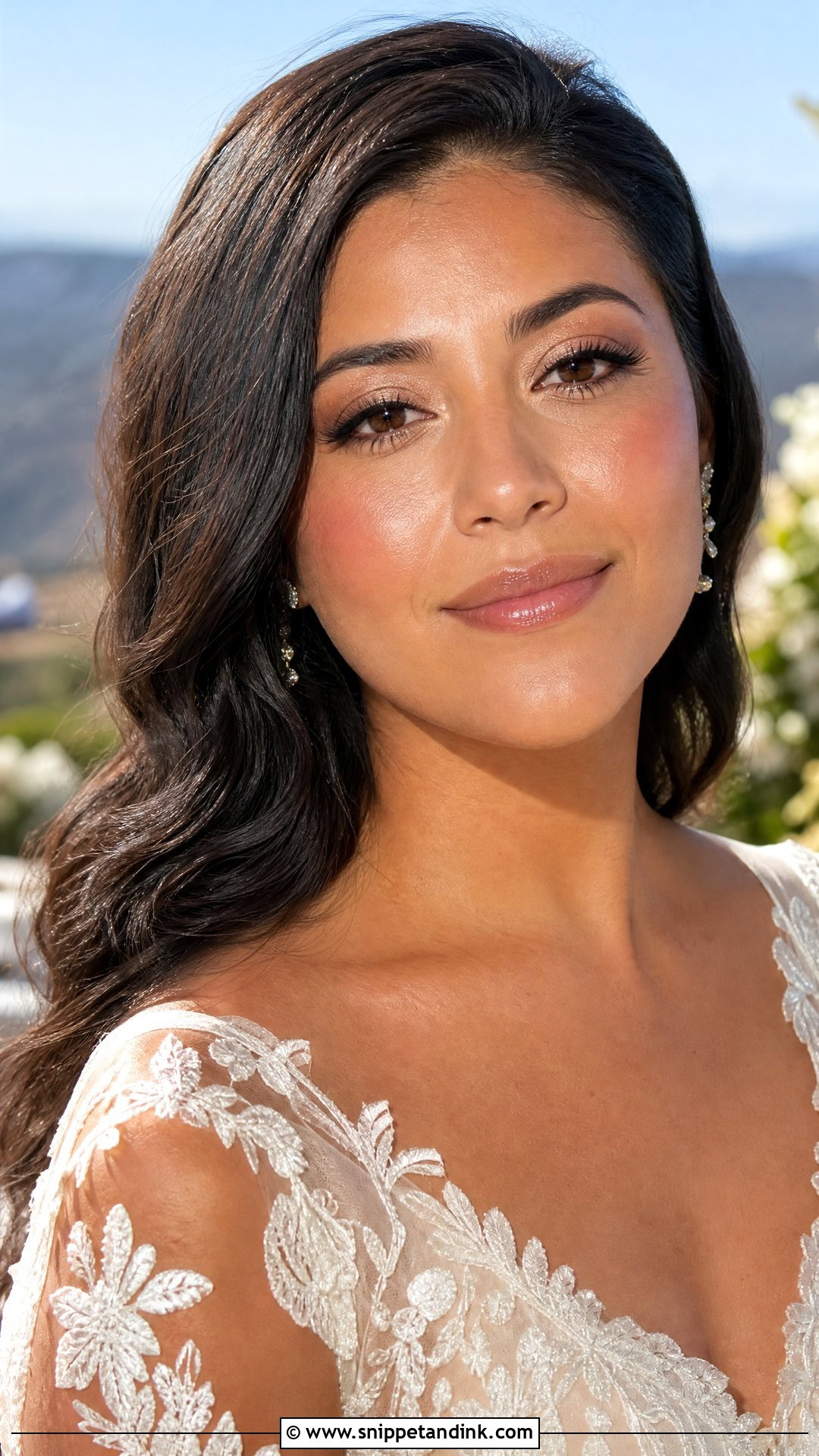
Dewy skin depends on the hours of prep before foundation goes near it. I want the skin hydrated and plumped first, then a luminous primer and a foundation that looks like skin rather than oil. Powder goes only through the center of the face, so the cheeks still catch the light. Cream blush, soft bronzer and a liquid highlighter build the radiance, with warm beige or rose-gold shadow and lifted lashes on the eyes and a glossy nude lip. On a hot beach day I’ll pull the dewiness back a notch, because sweat adds its own shine within the hour.
4. Matte Wedding Makeup
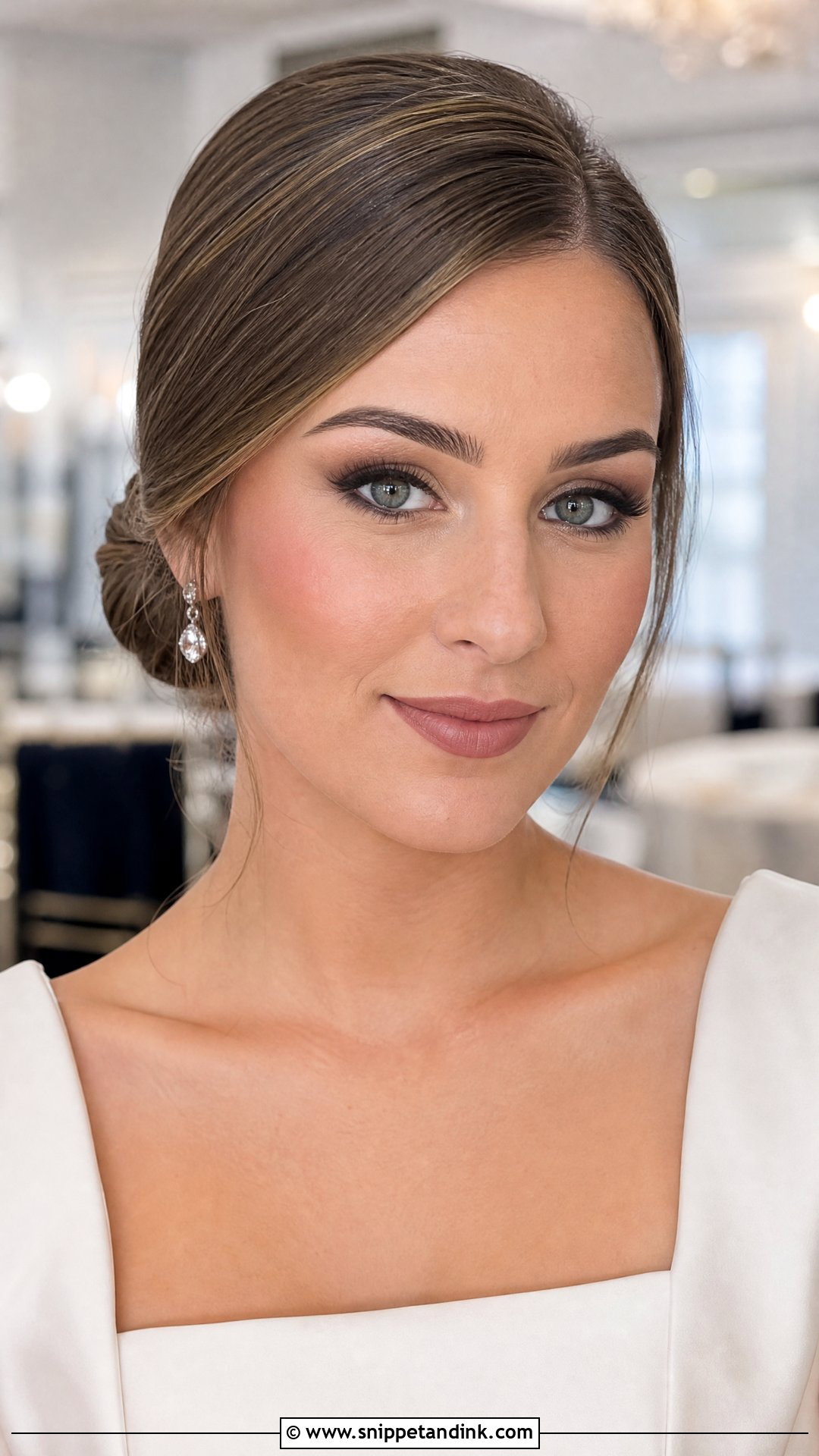
Modern matte has moved a long way from the flat, chalky finish people remember. I prep with a light moisturizer, use a soft-matte foundation, and press a finely milled powder only where you shine. Sculpted cheeks and a natural matte blush give back the dimension that matte takes away. Taupe or soft bronze shadow, clean liner, defined lashes and a velvet rose or mauve lip finish it. It’s the most reliable choice for oily skin, warm weather and heavy flash, and it’s the one I’d hold back from very dry skin.
5. Glowy Bridal Makeup
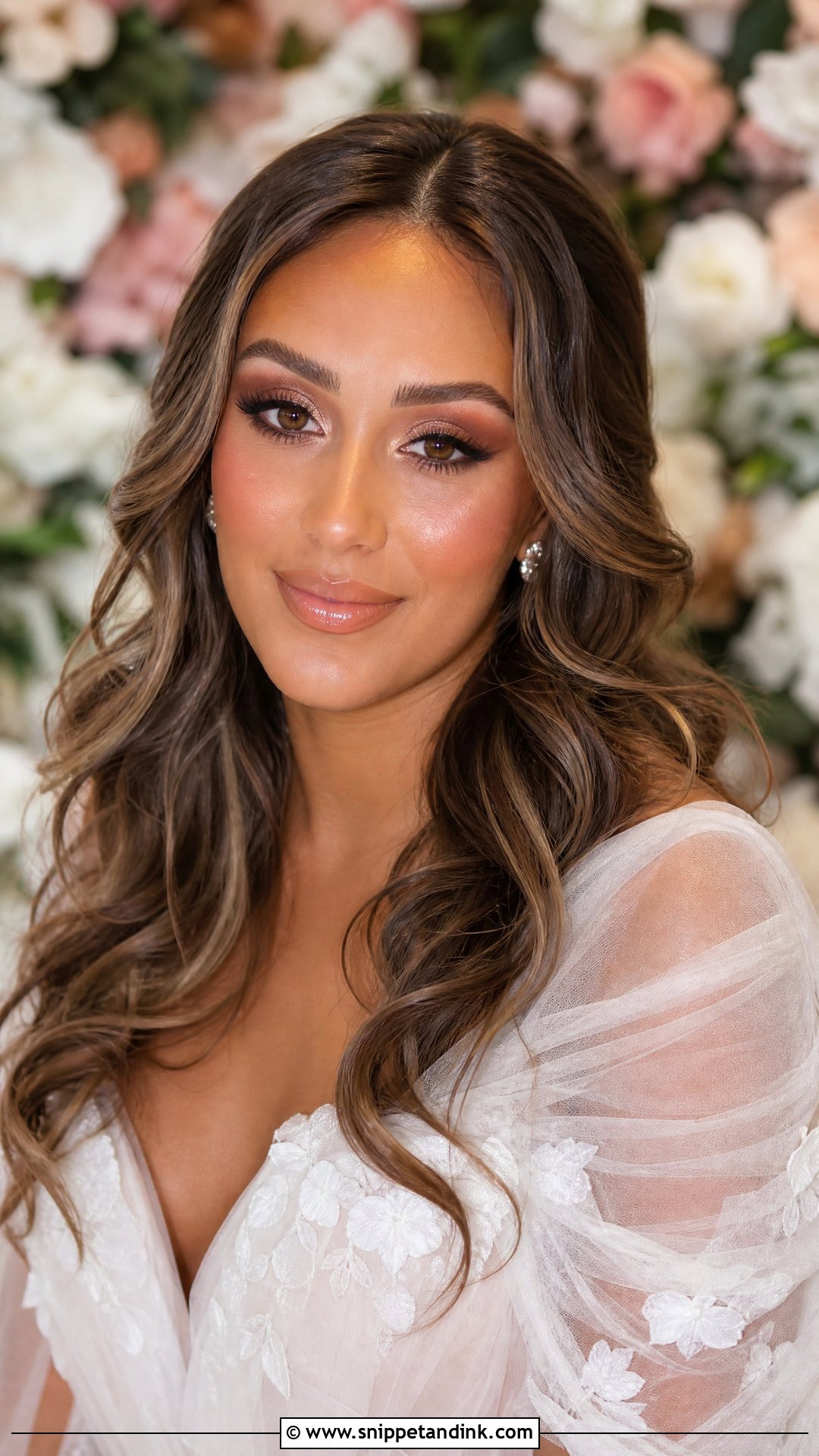
Sitting halfway between dewy and satin, Glowy bridal makeup is easier to wear for most skin types than full dewy. I use a radiant foundation, cream bronzer and a blush that melts into the skin, then place highlight on the cheekbones, brow bones and inner corners only. The T-zone gets a soft powder so the glow reads as deliberate. Warm brown shadow, a little shimmer on the center of the lid and wispy lashes brighten the eye, with a peachy nude or rosy gloss on the lips. Soft waves and floral details sit naturally with it.
6. Classic Wedding Makeup
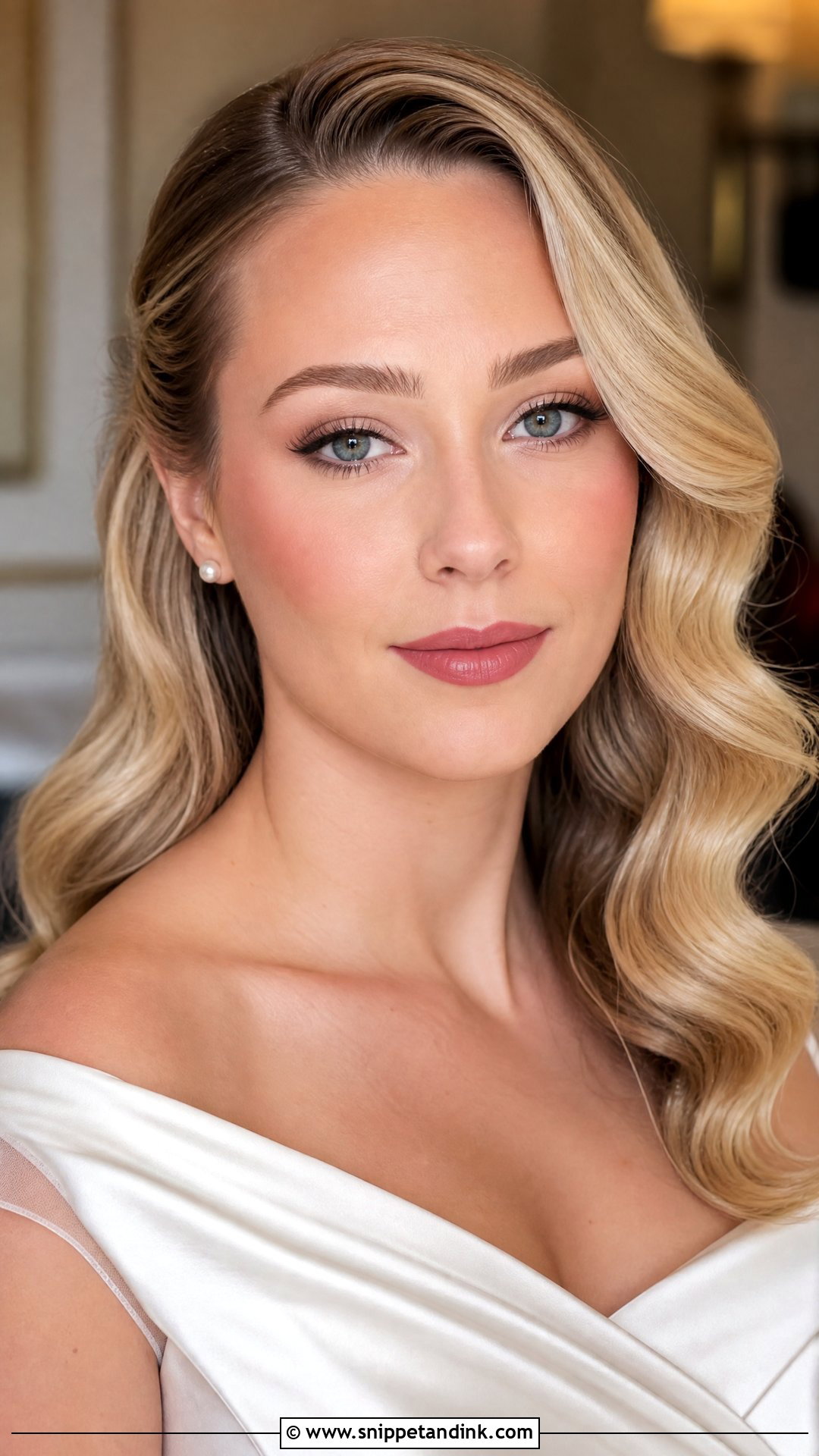
Balance is everything here, and so is resisting anything trendy. The complexion is smooth and natural-matte, with subtle contour, rosy blush and a soft highlight. Eyes get neutral brown shadow, a clean liner and elegant lashes, and the brows are shaped without being blocky. A rose, pink-nude or soft berry satin lip completes it. I steer brides here when they tell me they want photos that still look right in twenty years. It works with satin, lace and beaded gowns alike.
7. Romantic Wedding Makeup
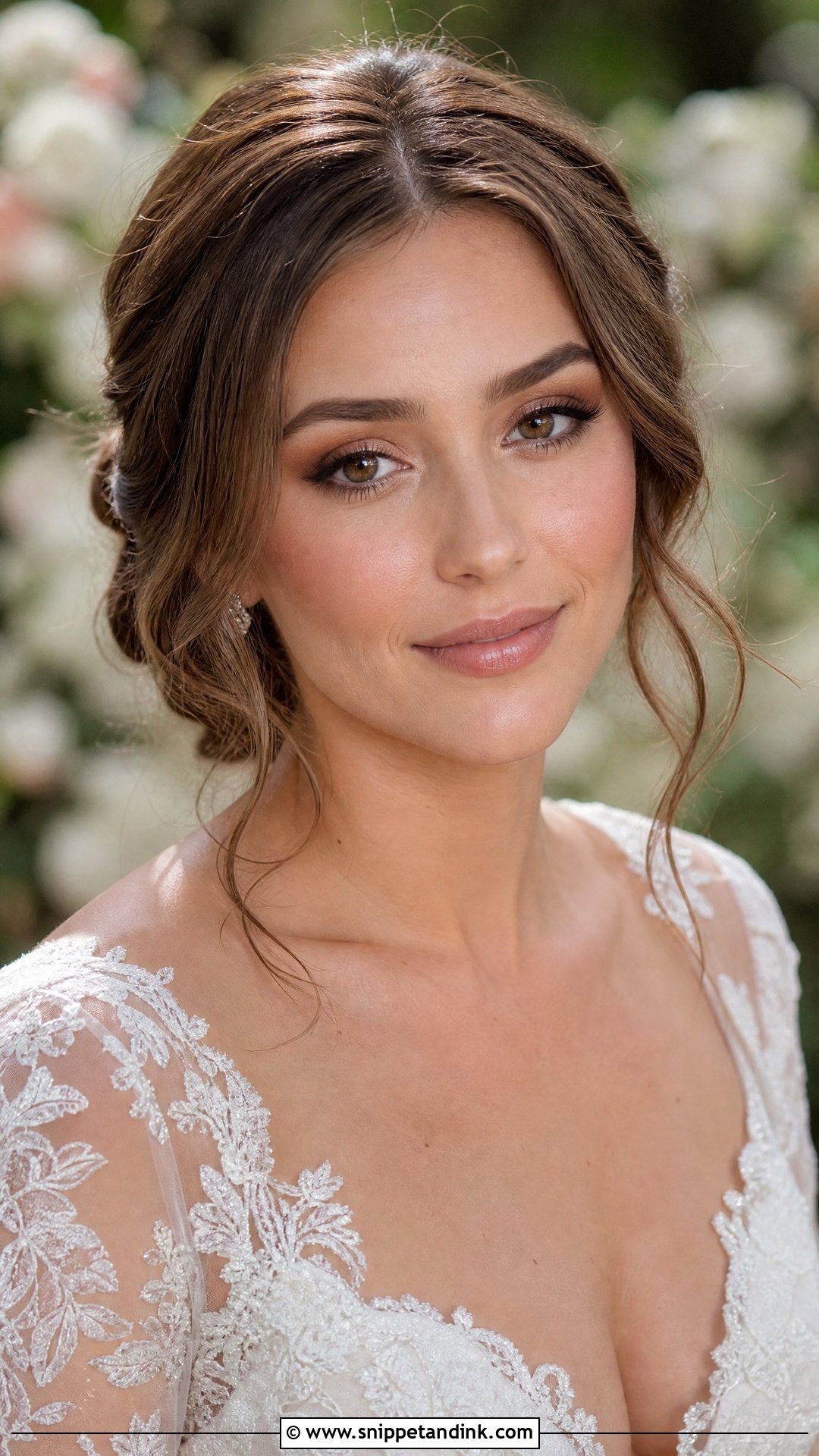
Rosy cheeks, diffused shadow, fluttery lashes and a fresh pink or mauve lip make up the romantic look. Coverage stays light with a satin or softly luminous finish. On the eyes I blend rose-brown, mauve or soft plum lightly over lid and crease and use a smudged brown liner, which keeps the delicate feel that black would cut through. I place blush a little higher than usual, just above the apple, which lifts the face. Loose curls and tulle are its natural partners.
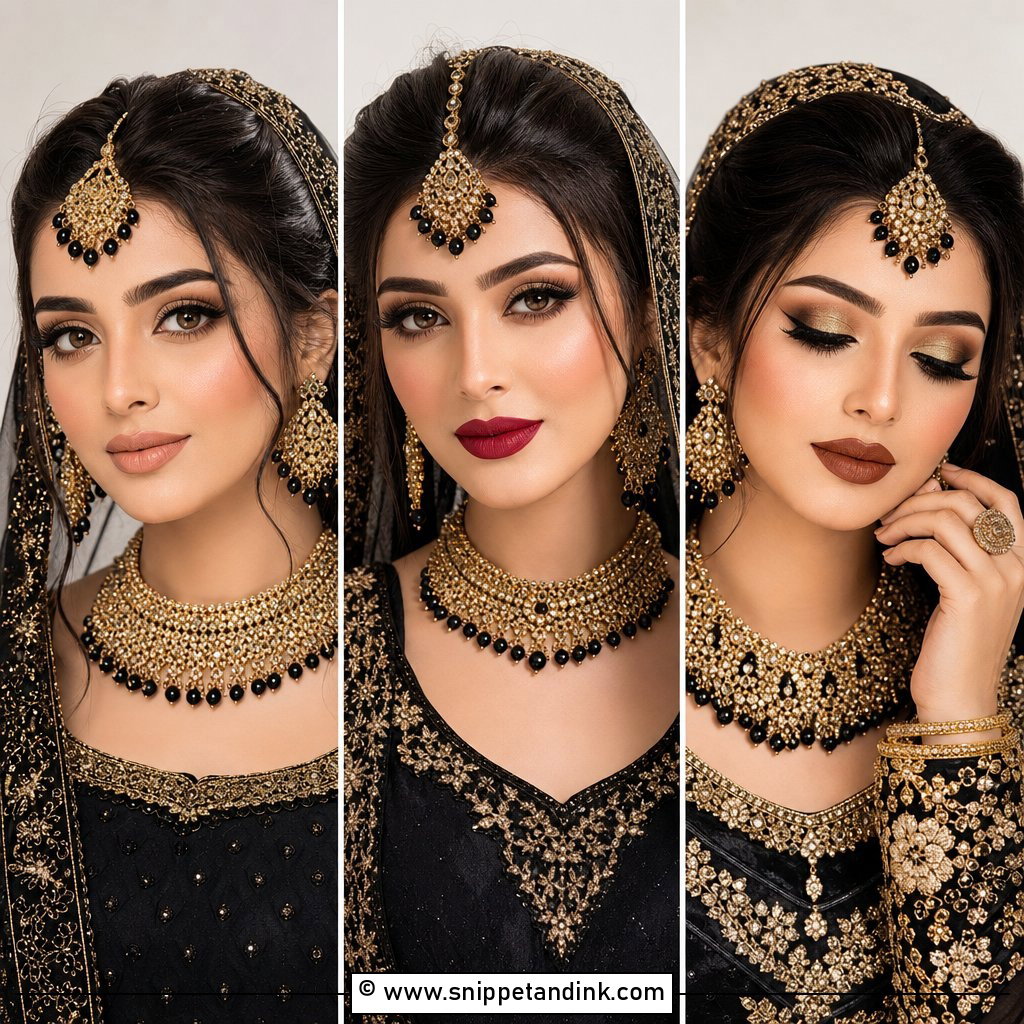
8. Smokey Eye Wedding Makeup
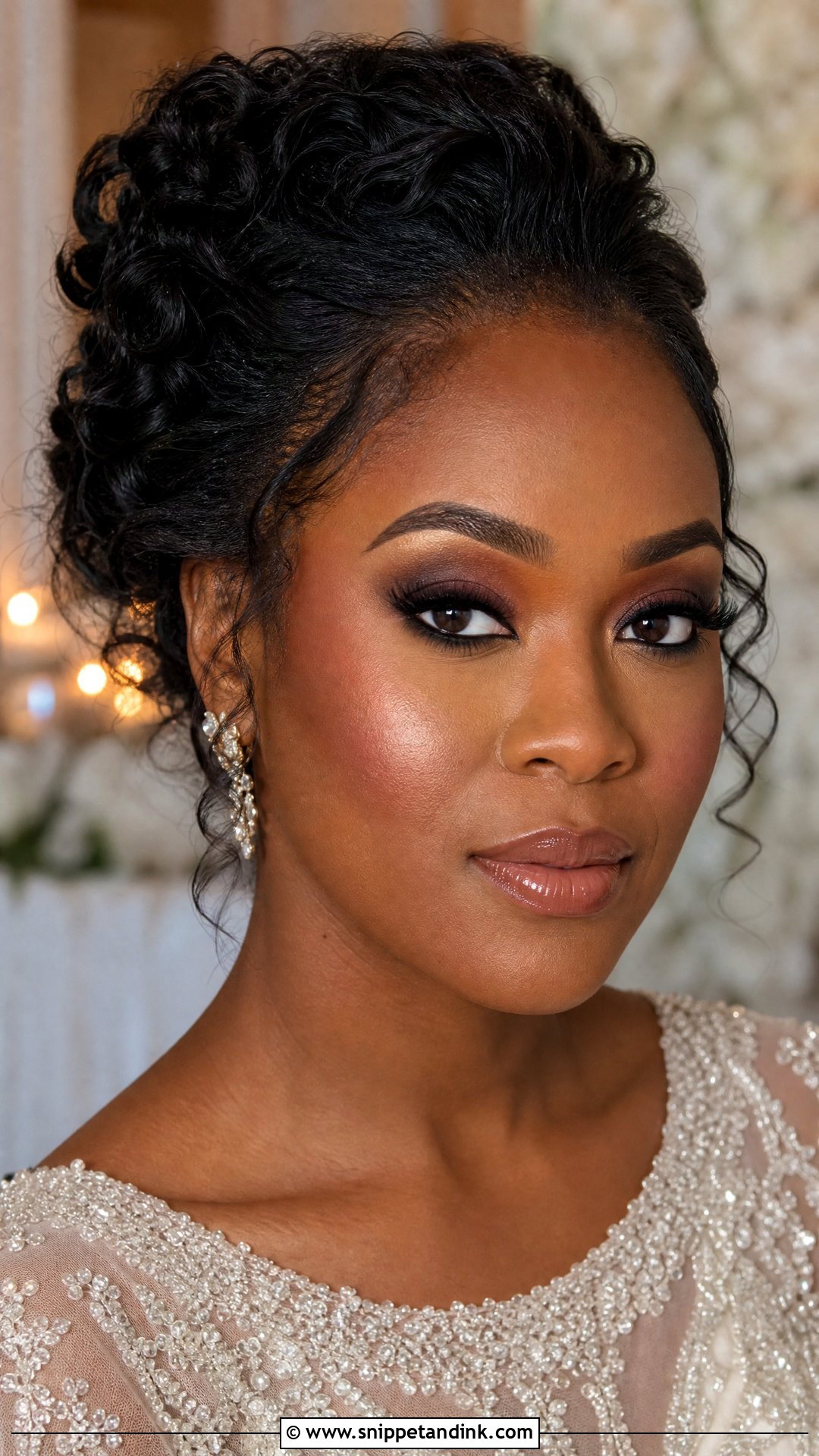
Smoke turns bridal through the blending, not the color. I keep the deepest shade tight to the lash line and diffuse the edges until they blur, using brown, bronze, taupe or charcoal rather than straight black. Lashes should lift and add fullness without hiding the shadow underneath. A nude or soft mauve lip balances it, over satin skin with subtle contour. If you have hooded eyes, tell your artist: the smoke needs to sit above the fold with your eyes open, or it vanishes when you look at the camera.
9. Brown Smokey Wedding Makeup
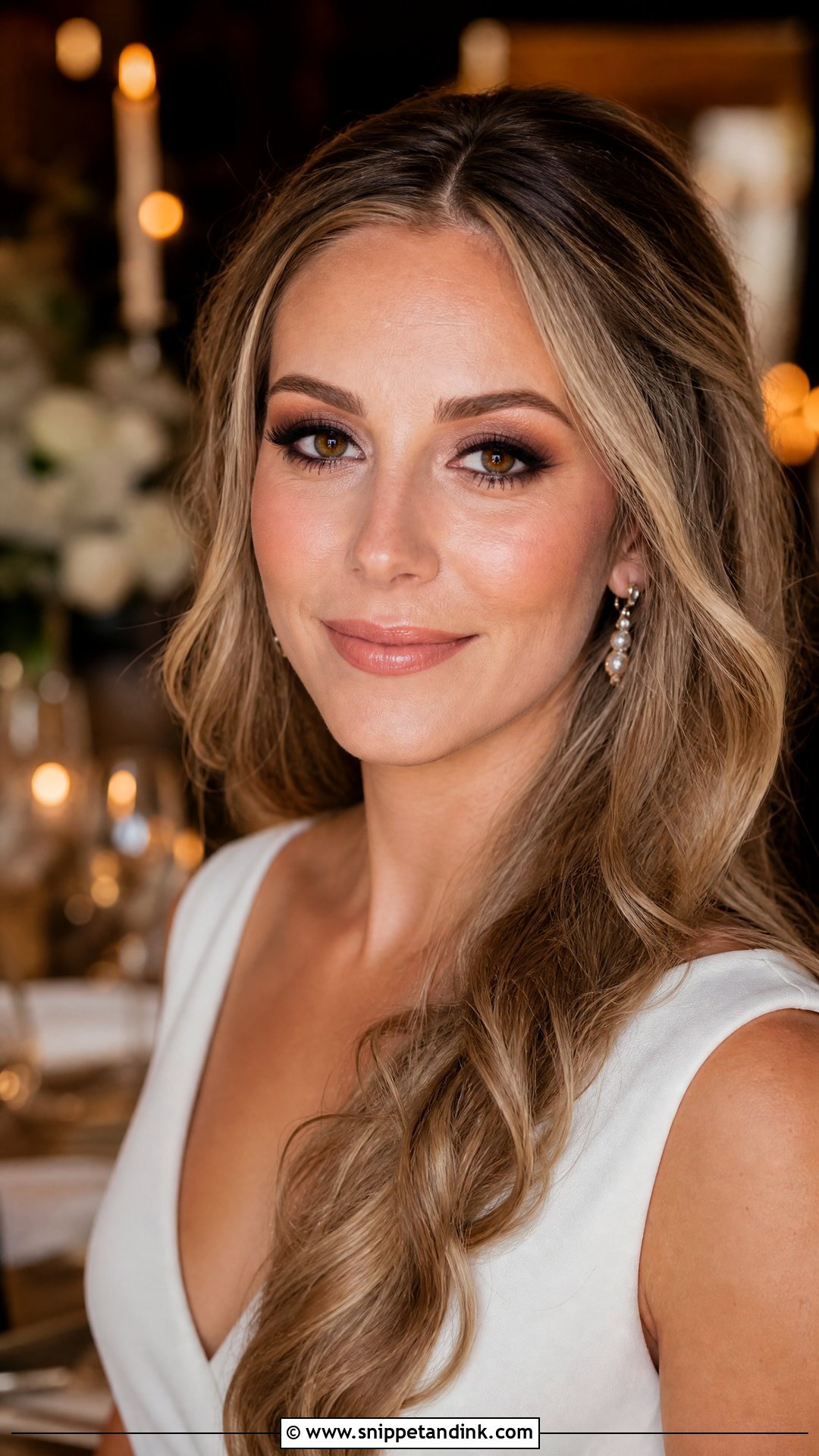
Warm browns flatter more eye colors than any other smoky shade I use. Brown smokey wedding makeup pairs a medium brown through the crease with a deeper espresso at the lash line and a touch of bronze shimmer on the lid. Natural brows, wispy lashes, bronzed cheeks and a nude or peachy lip keep the face soft. Blue eyes look brighter against the warmth, while green and hazel pick up the gold flecks. It’s also the easiest smoky eye to keep tidy through tears, since brown smudges read as shadow rather than mess.
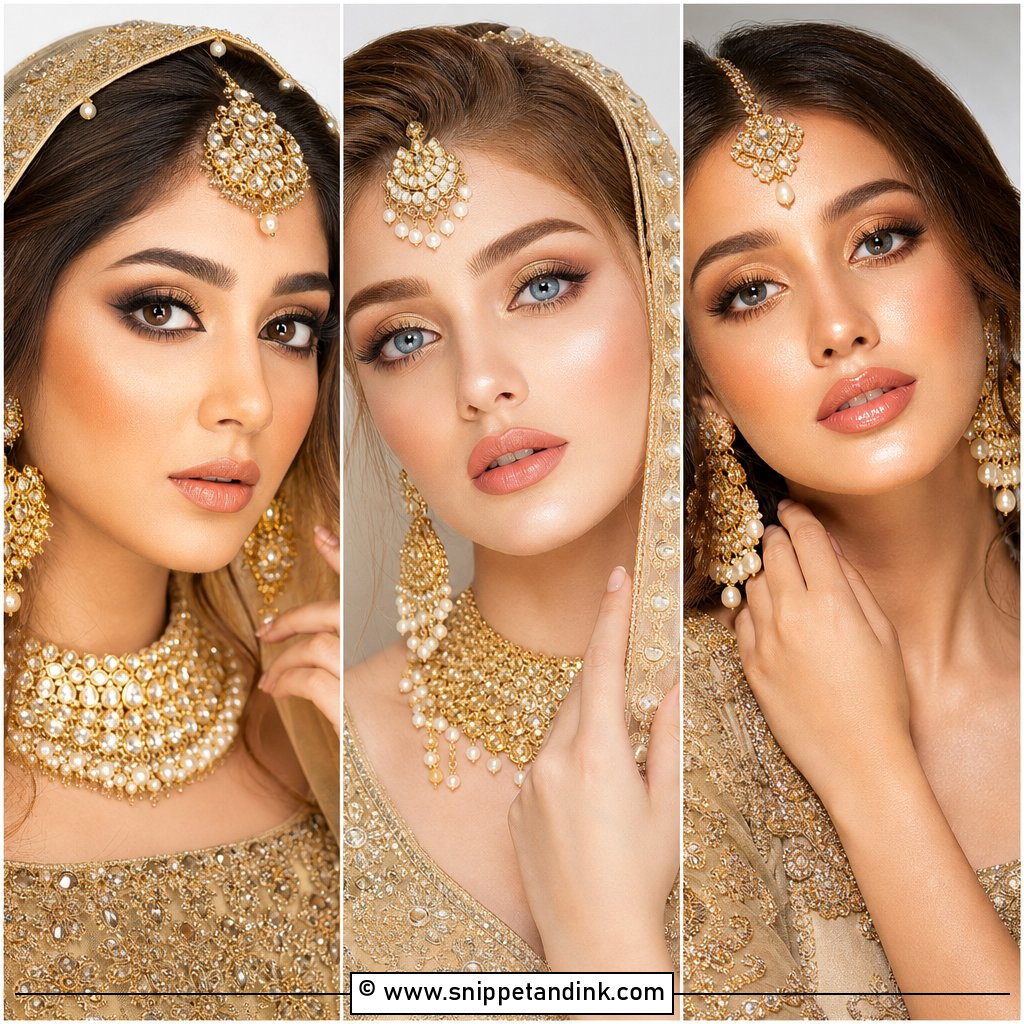
10. Gold Wedding Makeup
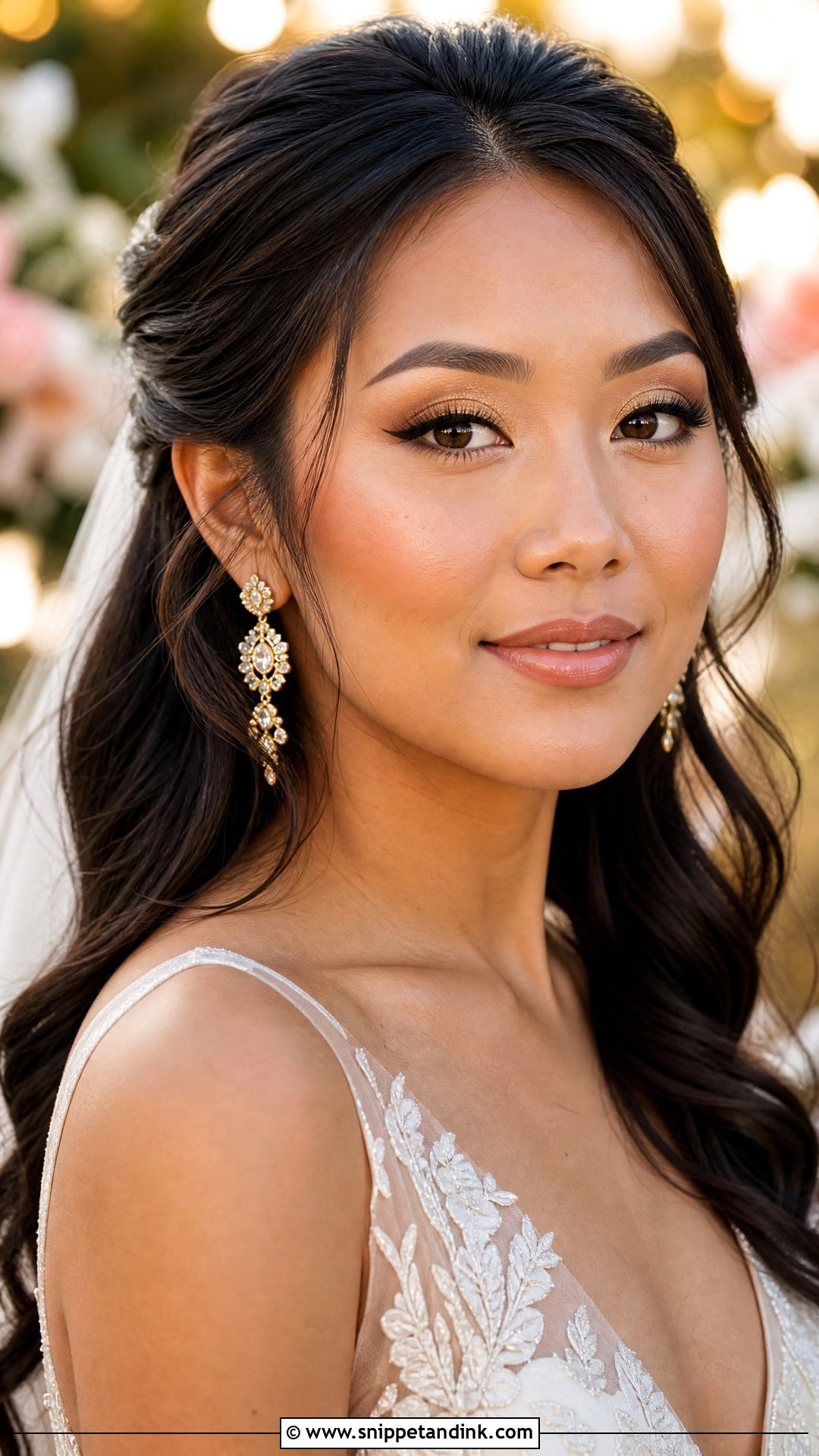
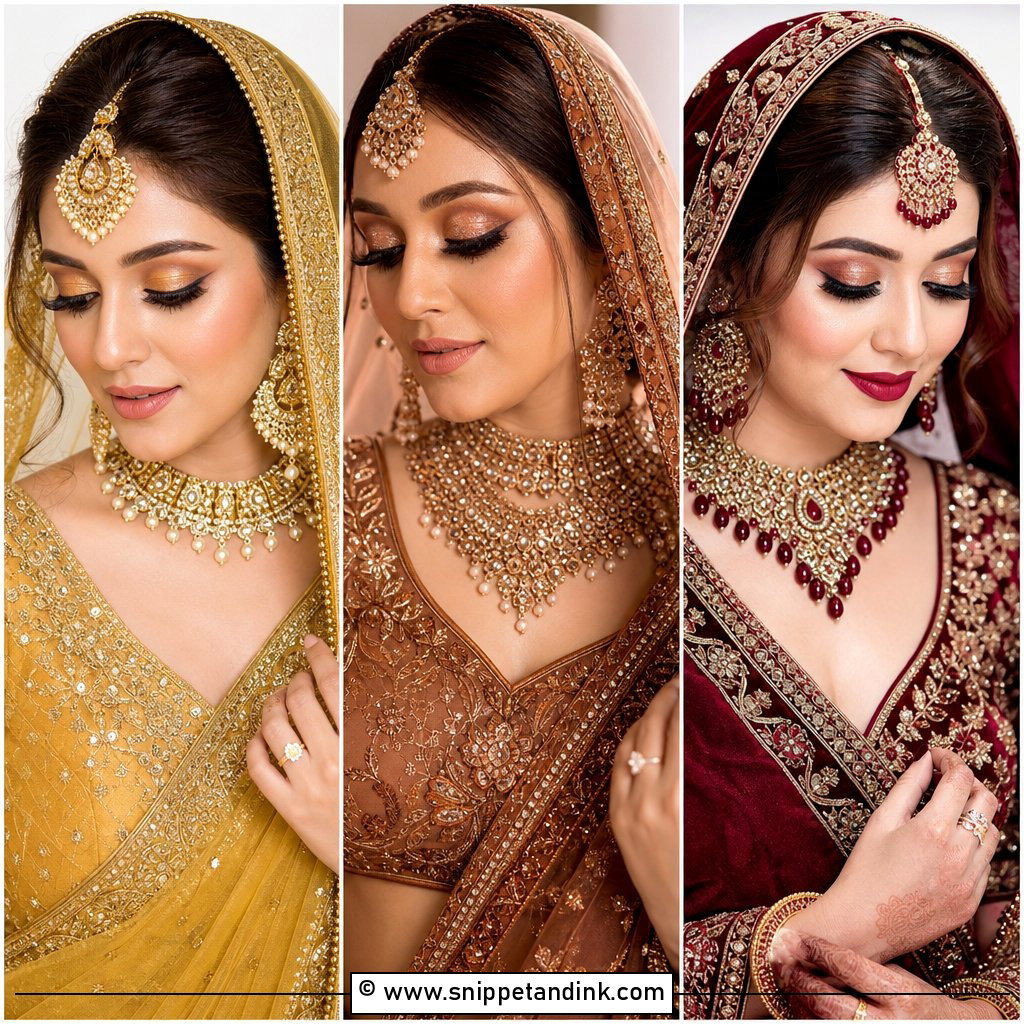
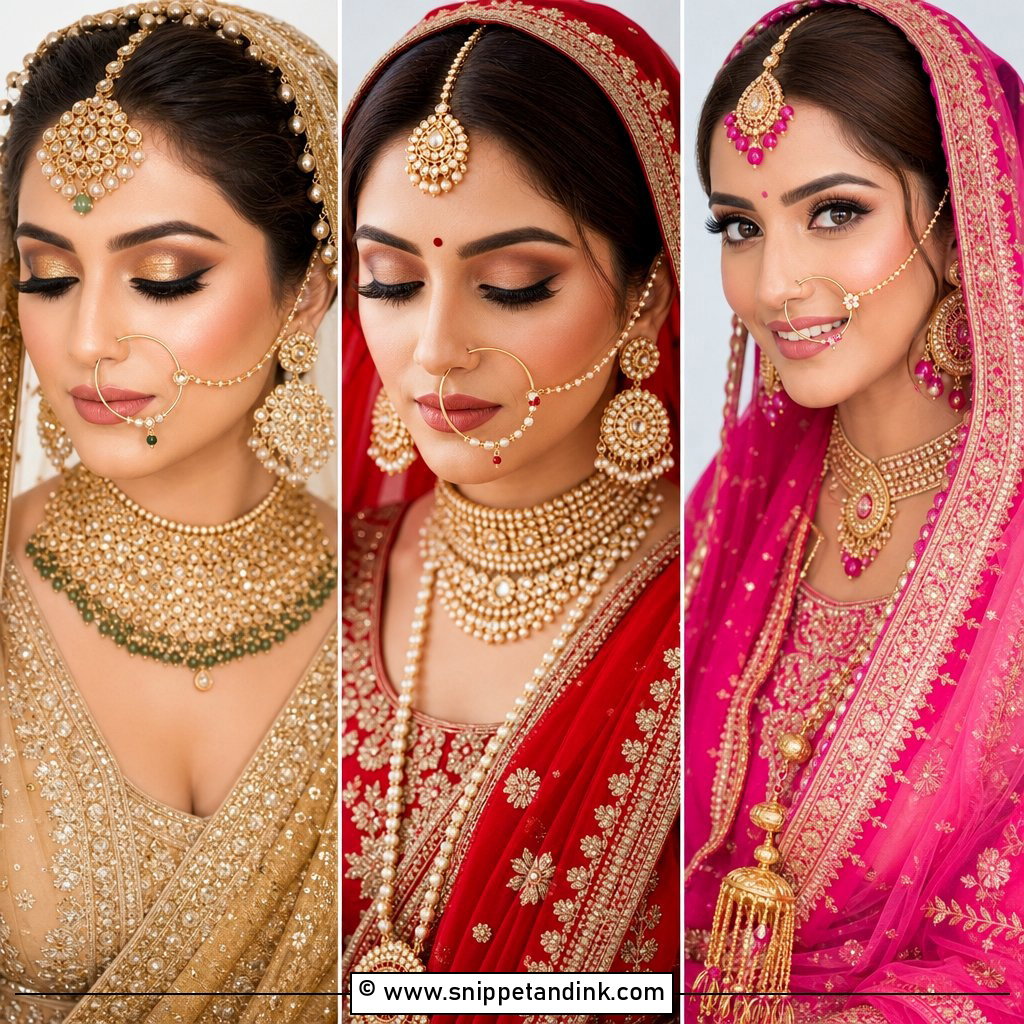
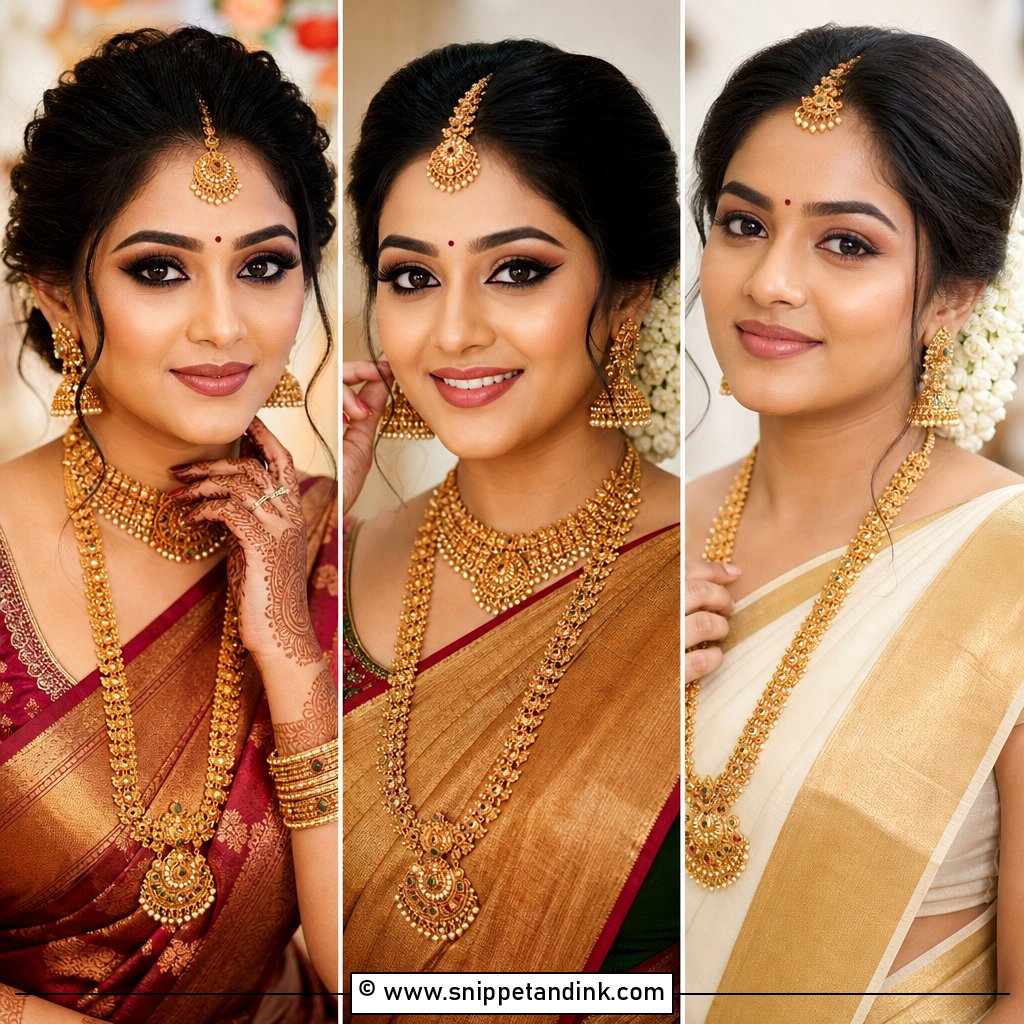
Warmth and light come from the lid in Gold wedding makeup, so I choose the shimmer carefully: champagne gold for fair skin, antique gold or bronze for deeper tones. Matte brown or caramel through the crease grounds the sparkle. Brown or black-brown liner and soft lashes add definition. The skin stays radiant but smooth, with peach or terracotta blush and warm bronzer, and a caramel or peach gloss ties it together. It shines at golden-hour ceremonies, especially beside gold jewelry and ivory fabric.
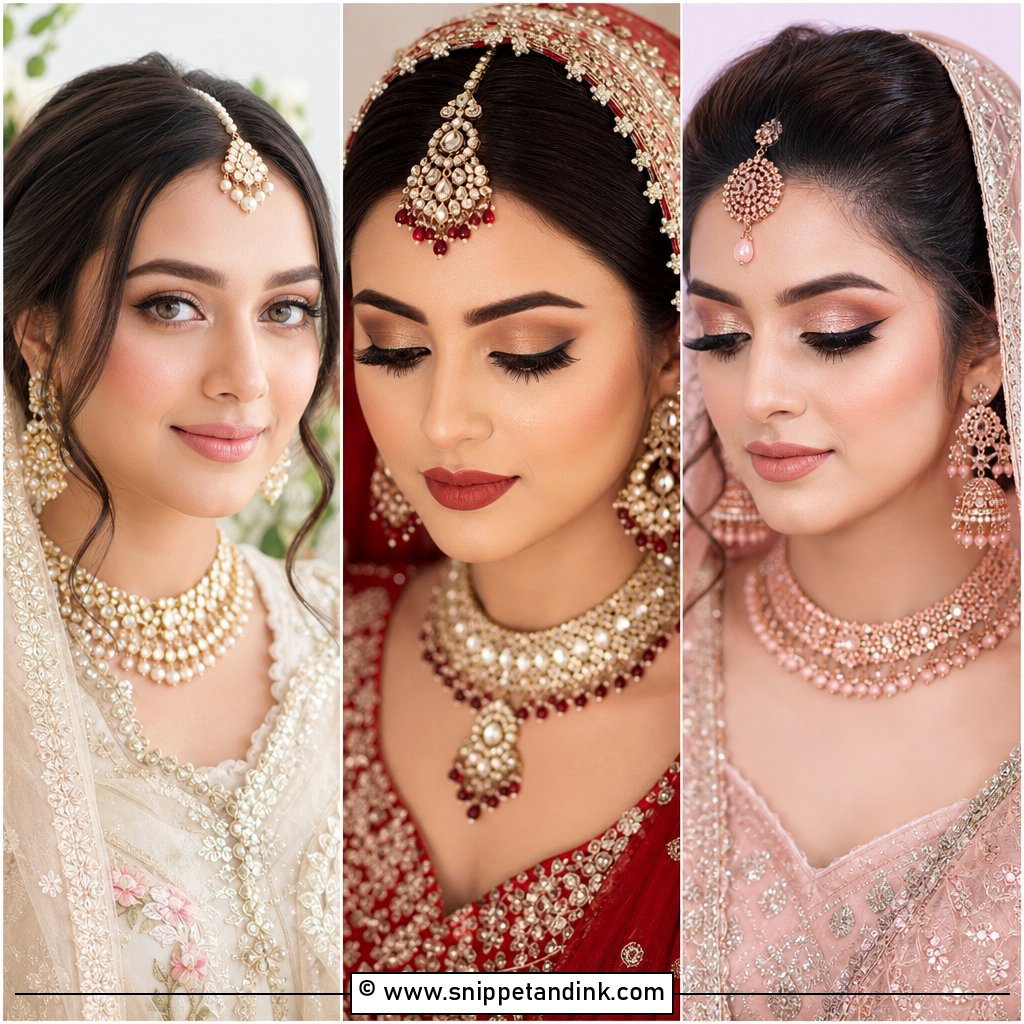
11. Rose Gold Wedding Makeup
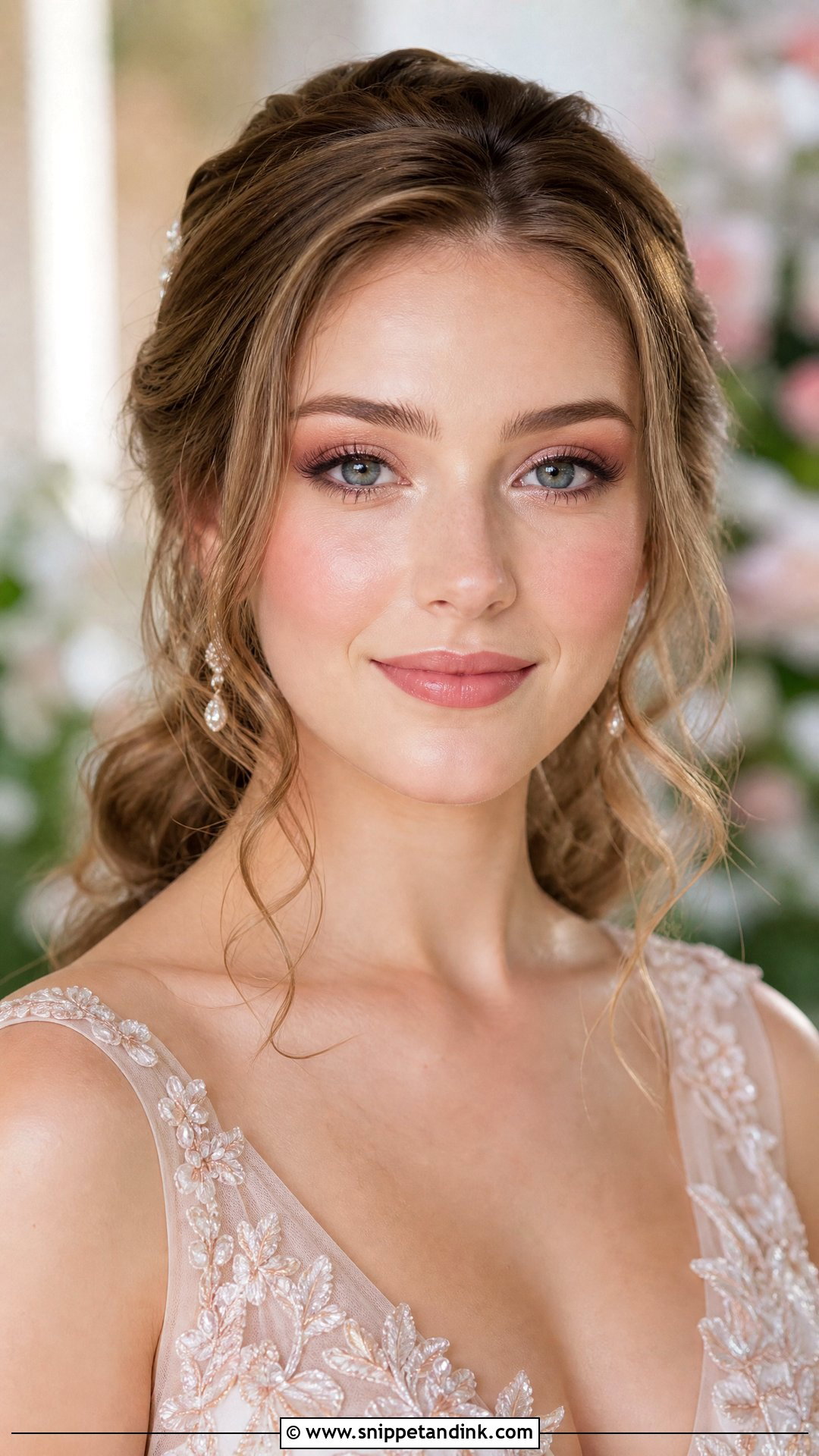
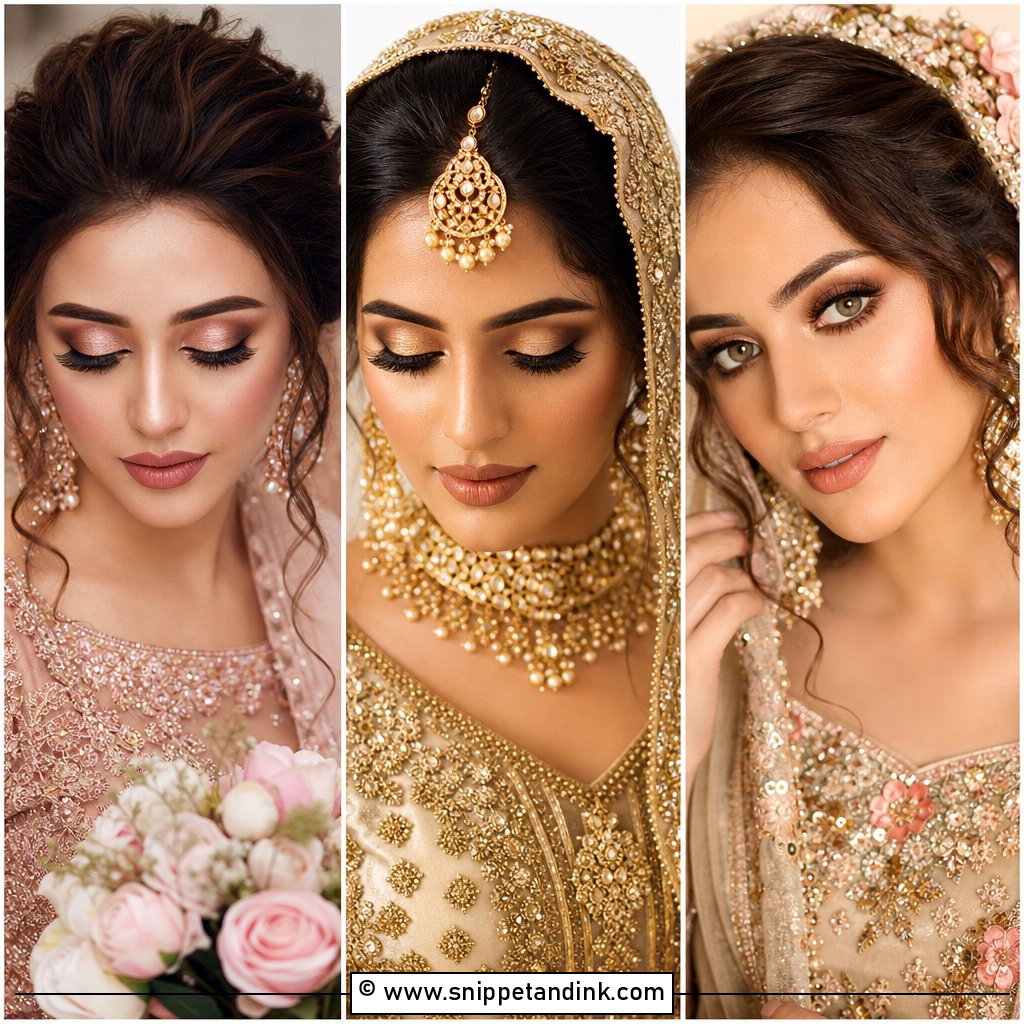
Pink-champagne and copper-rose on the lid, blended into warm brown, give shimmer without the glitter. That mix is why rose gold suits brides who are bored of plain neutrals but nervous of color. The complexion stays fresh with rose blush, light bronzer and a soft glow on the cheekbones, and a pink-nude satin lip keeps it cohesive. I’d skip it only if your eyes are very sensitive to shimmer fallout. It looks right with champagne dresses, pearls and soft curls.
12. Pink Wedding Makeup
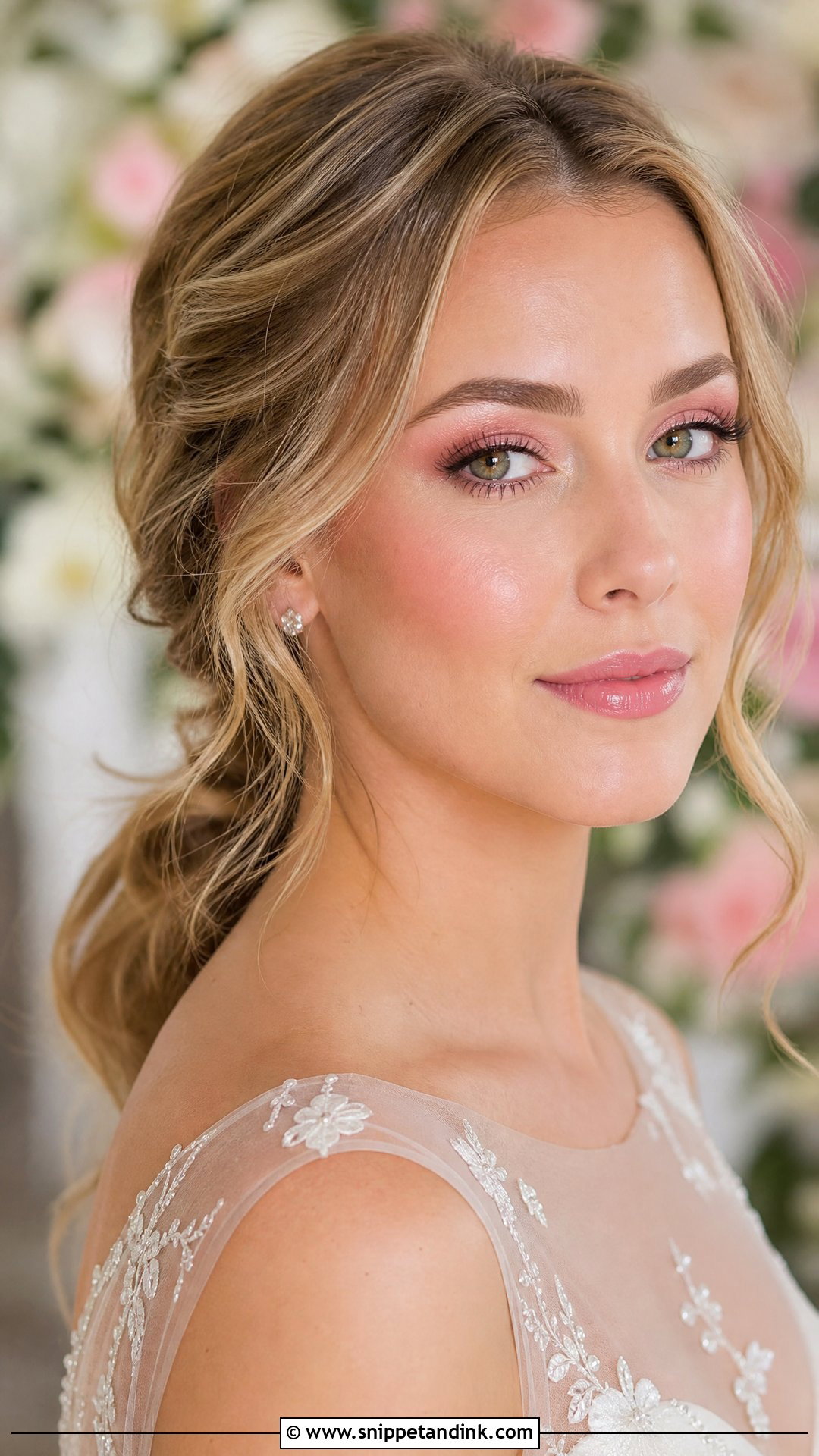
Bright pink everywhere is the version I talk brides out of. Spread across the face in muted tones, pink looks fresh and modern instead: pink-beige on the lids, soft brown liner, wispy lashes and a petal blush placed on the apples and swept upward. A satin or glossy pink lip finishes it. Skin should be smooth and radiant underneath. If you’re fair with redness in your cheeks, I correct the redness first, otherwise the blush doubles up on it and you look flushed in every photo.
13. Peach Wedding Makeup
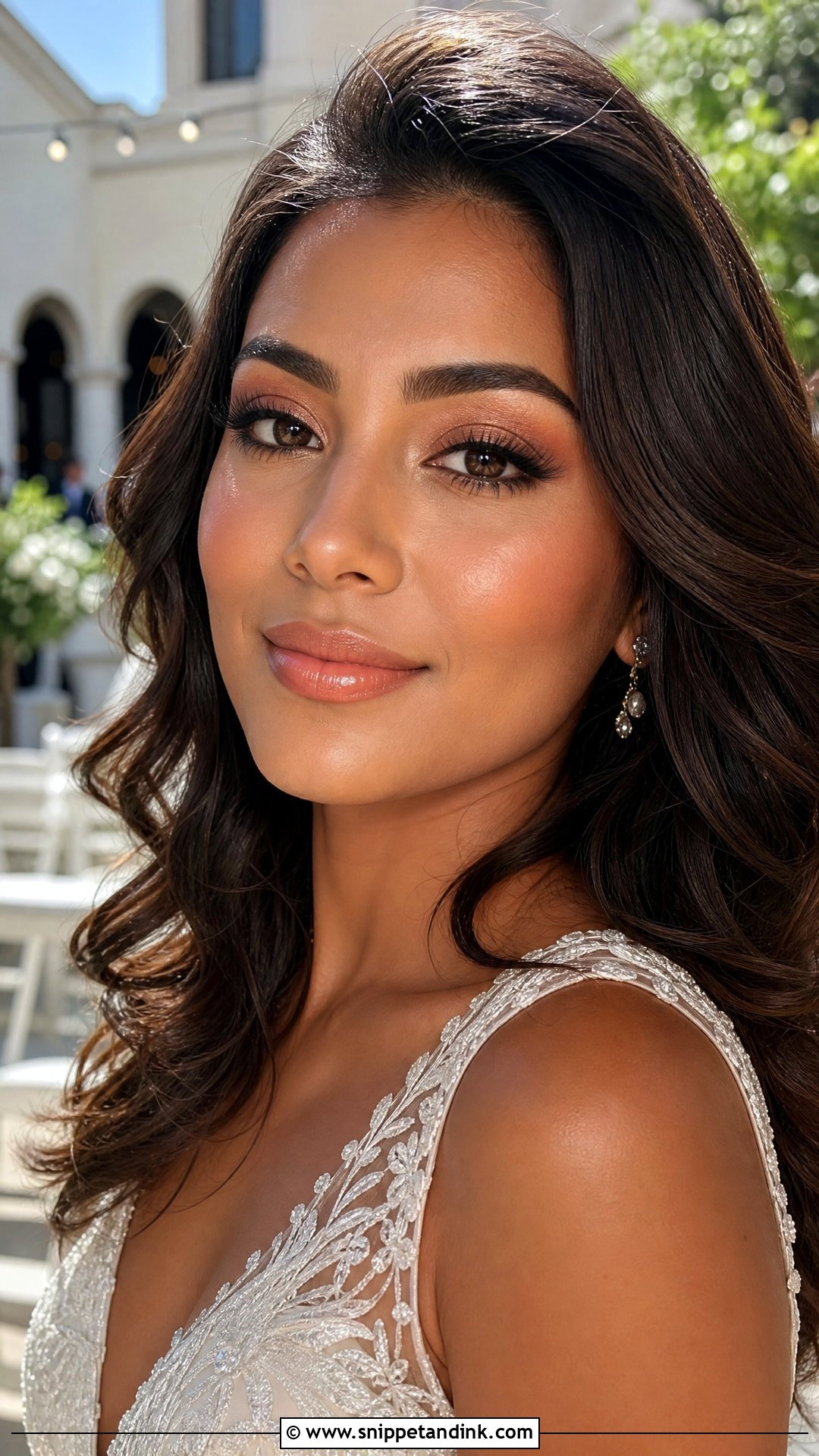
Softer than coral and warmer than pink, peach brightens without feeling bold. I use peach or apricot blush across the cheeks, a warm beige or peach shimmer on the lids and brown liner for gentle definition. Bronzer should lean golden; anything too orange turns the whole look brassy in daylight. A peachy nude gloss or satin lipstick finishes it. Peach flatters a wide range of skin tones and is lovely in outdoor light, so I suggest it often for spring, summer and destination weddings.
14. Nude Wedding Makeup
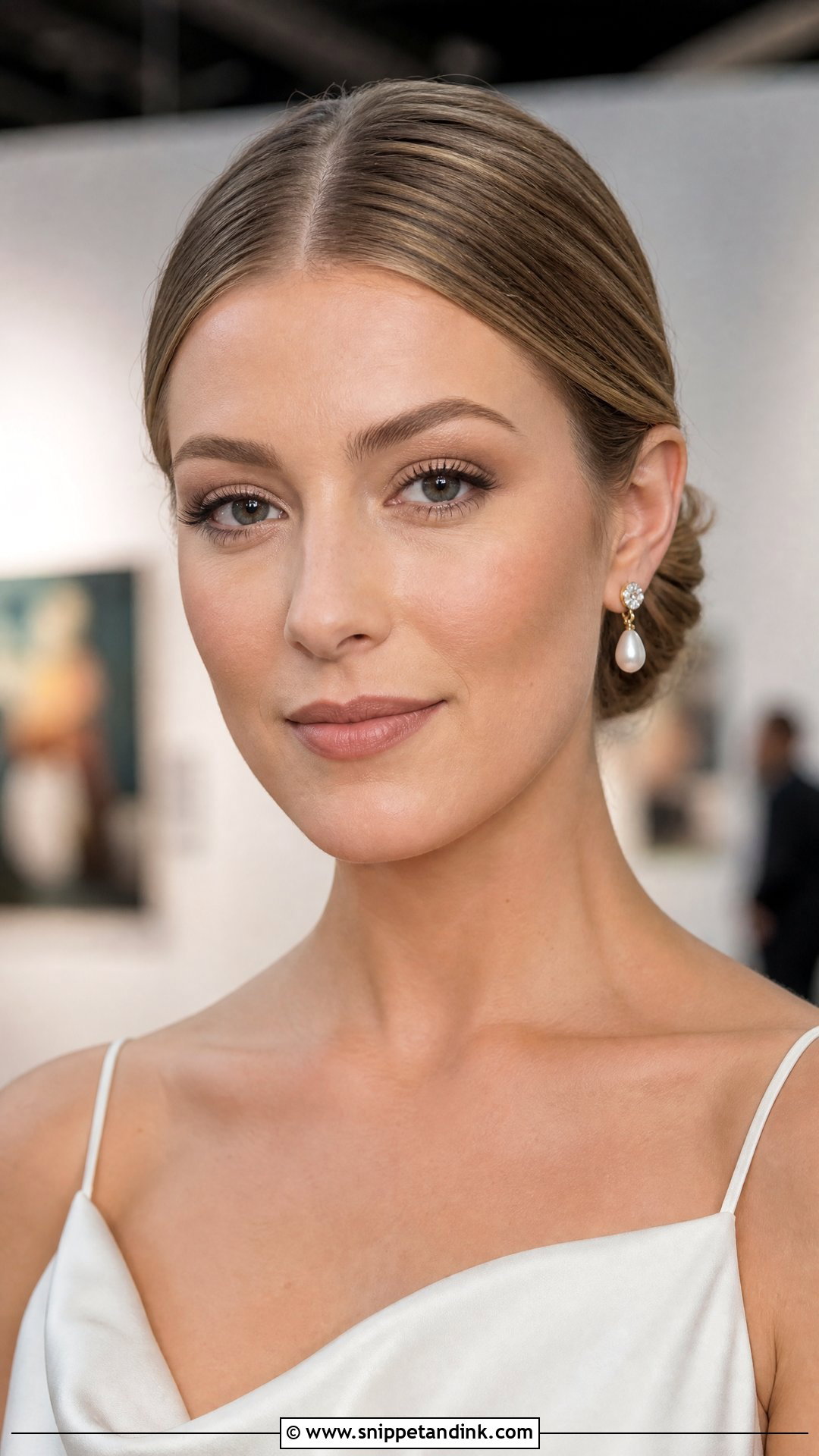
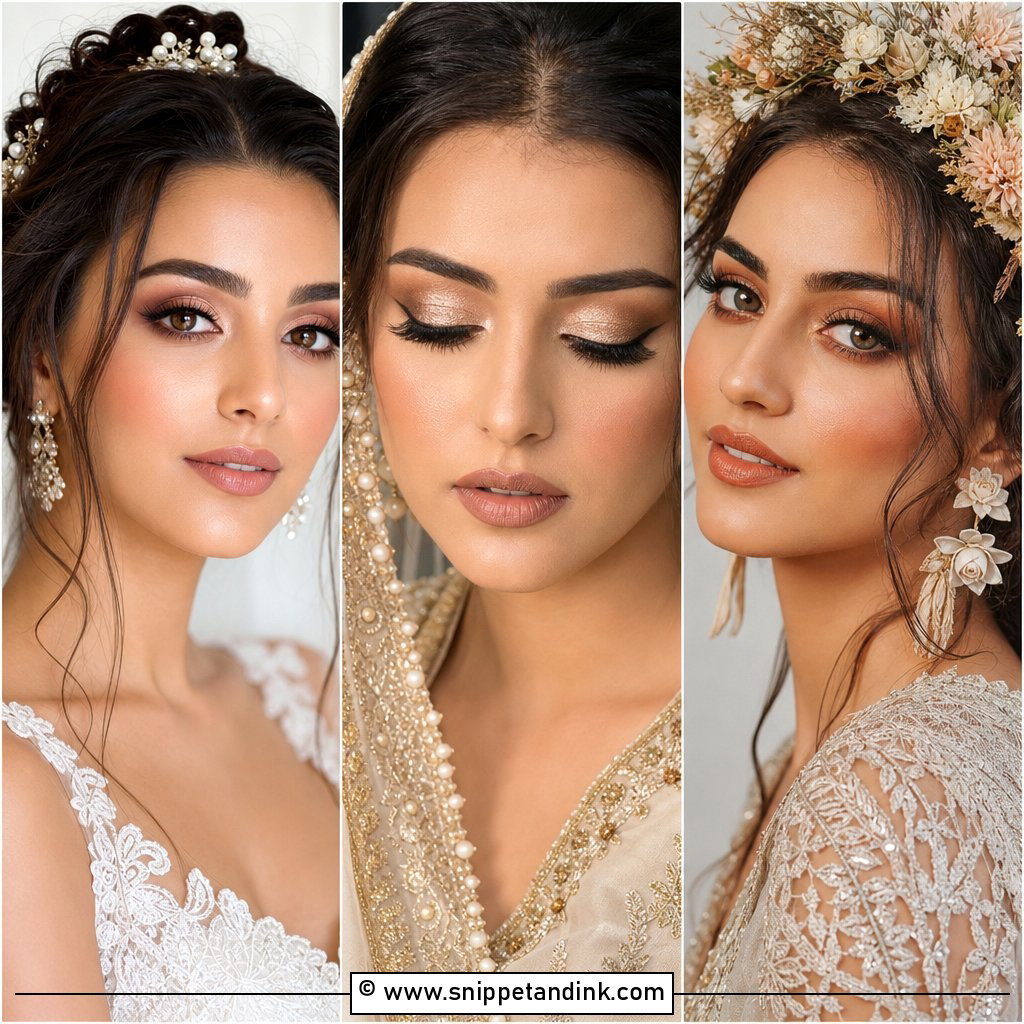
Nudes need structure, or the face disappears in photos. The shade has to match your undertone: pink-beige on fair skin, caramel on medium skin, cocoa, rose-brown or toffee on deep skin. I define the eyes with matte taupe or warm brown, add clean lashes and lightly sculpt the cheeks, then use a lip liner close to your natural lip color. A creamy or satin nude works far better than a flat pale one, which can look chalky. Minimalist gowns and modern styling suit it well.
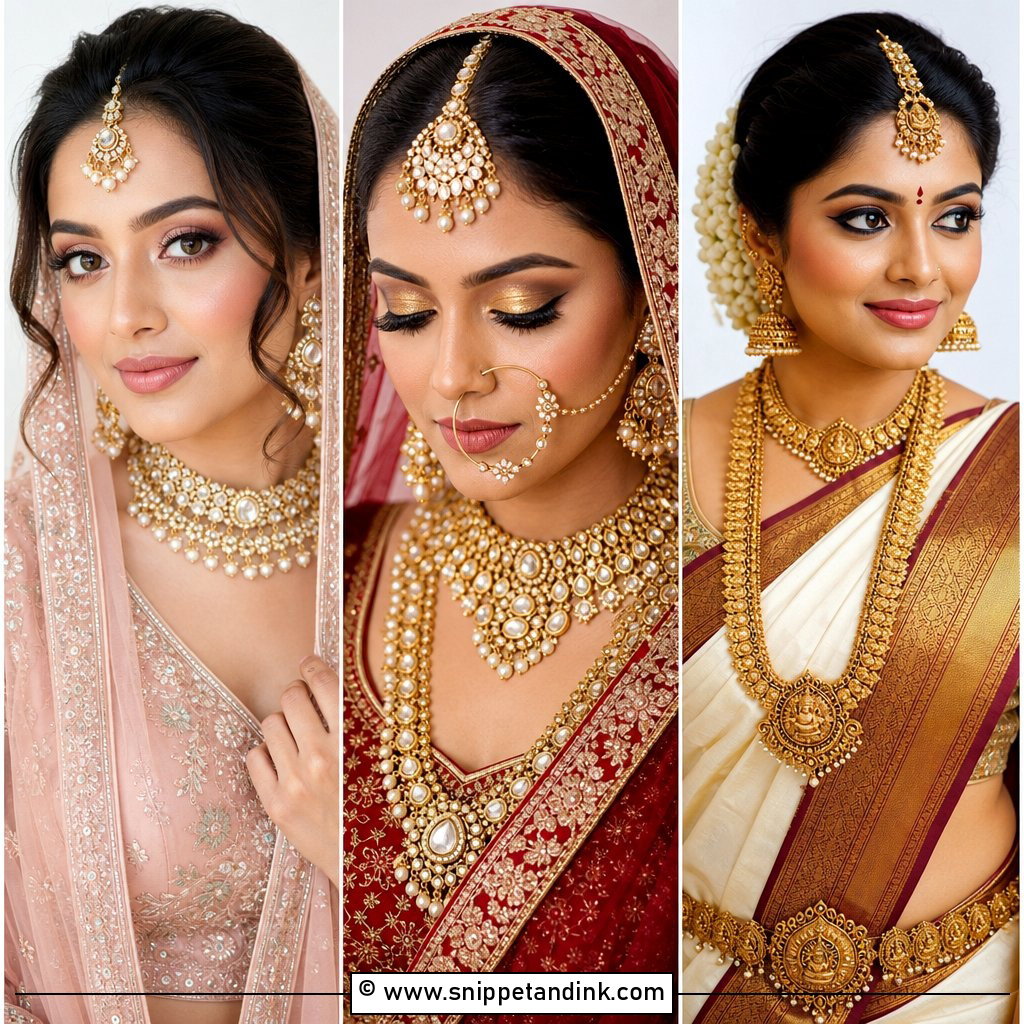
15. Red Lip Wedding Makeup
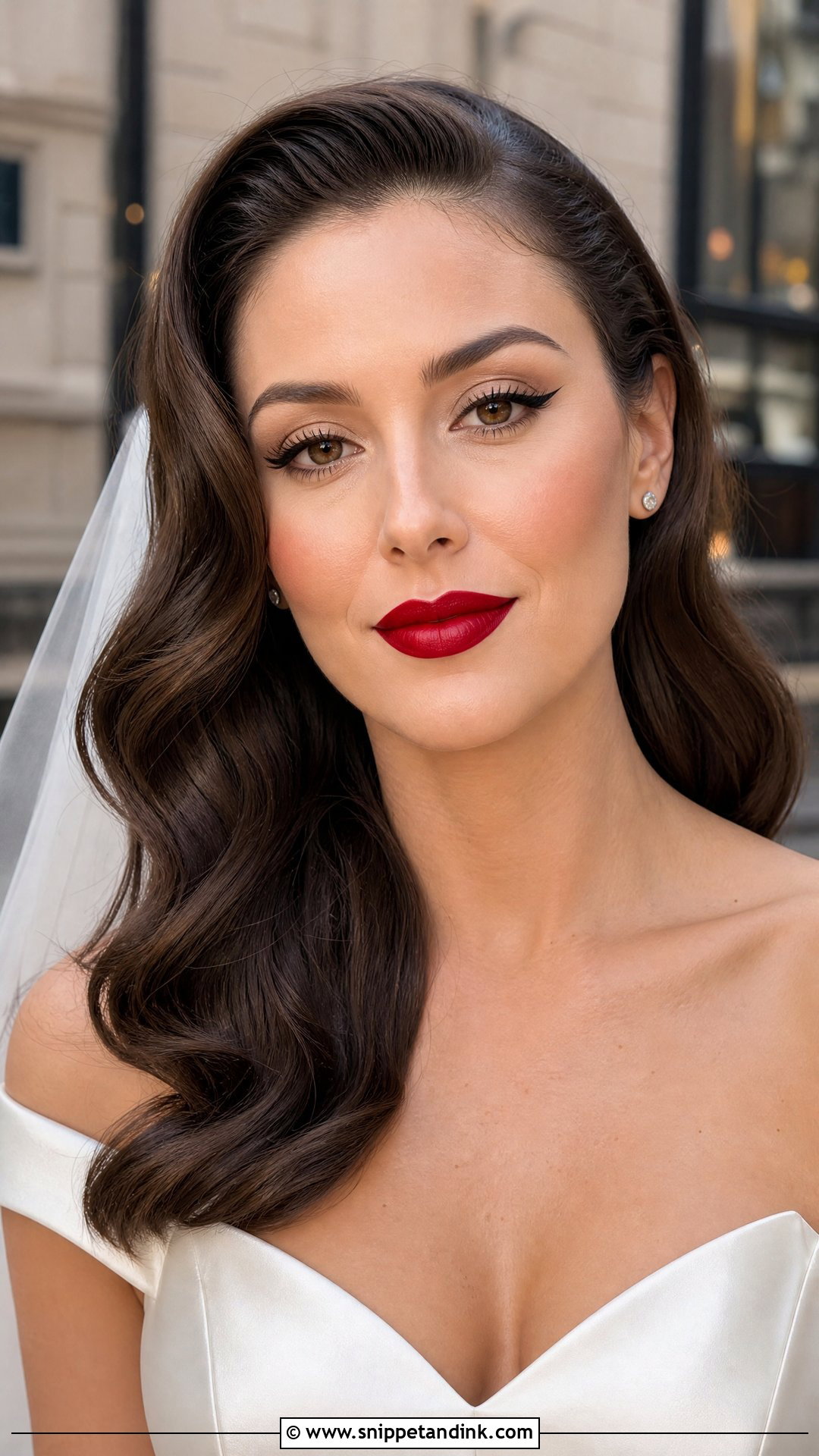
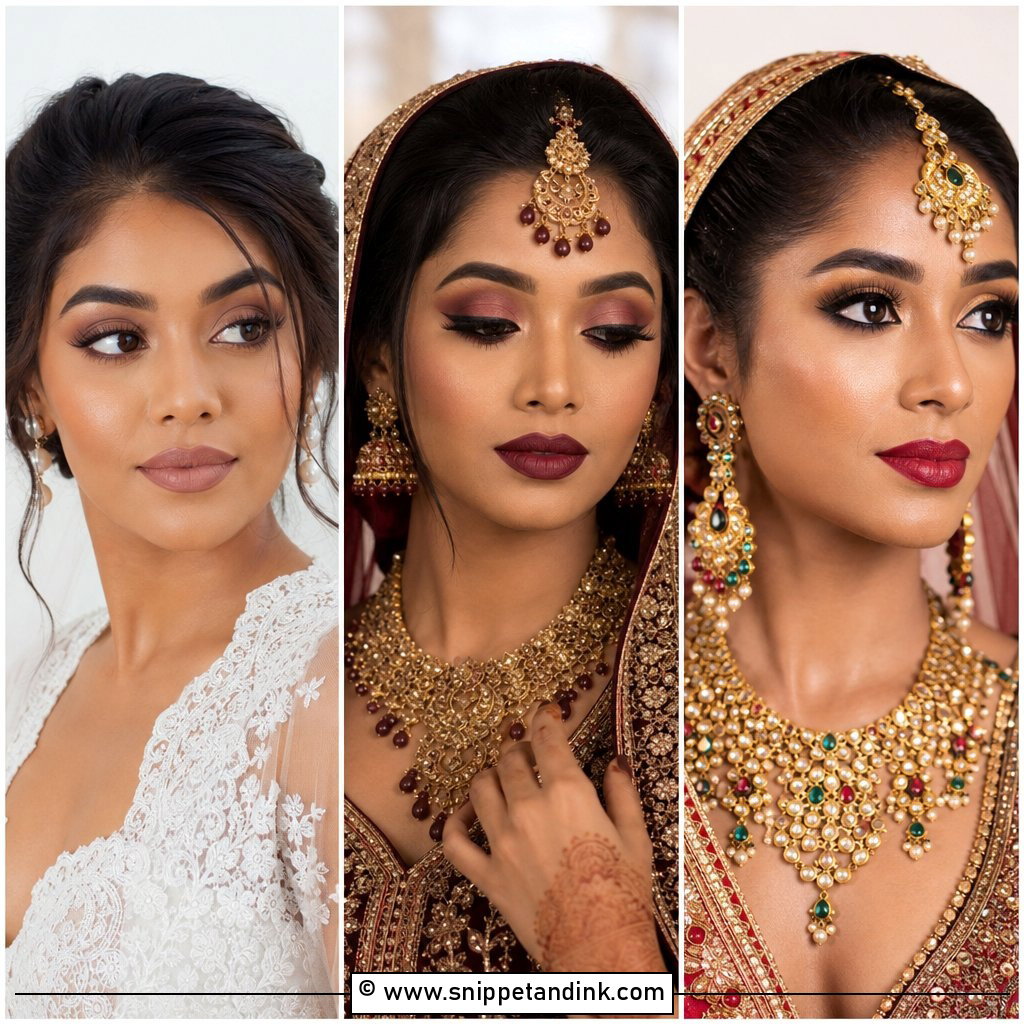
With a red lip, the rest of the face has one job: stay clean. I keep the skin smooth with soft contour, neutral blush and controlled highlight, and the eyes simple in beige or taupe with crisp liner and lifted lashes. Blue-red, cherry, brick or deep crimson can all work depending on your skin tone and palette. I line and fill the whole lip and use a long-wear formula, then blot and apply a second layer, since that’s what keeps it from bleeding or fading unevenly after dinner. Sleek hair and vintage details are its natural company.
16. Winged Liner Wedding Makeup
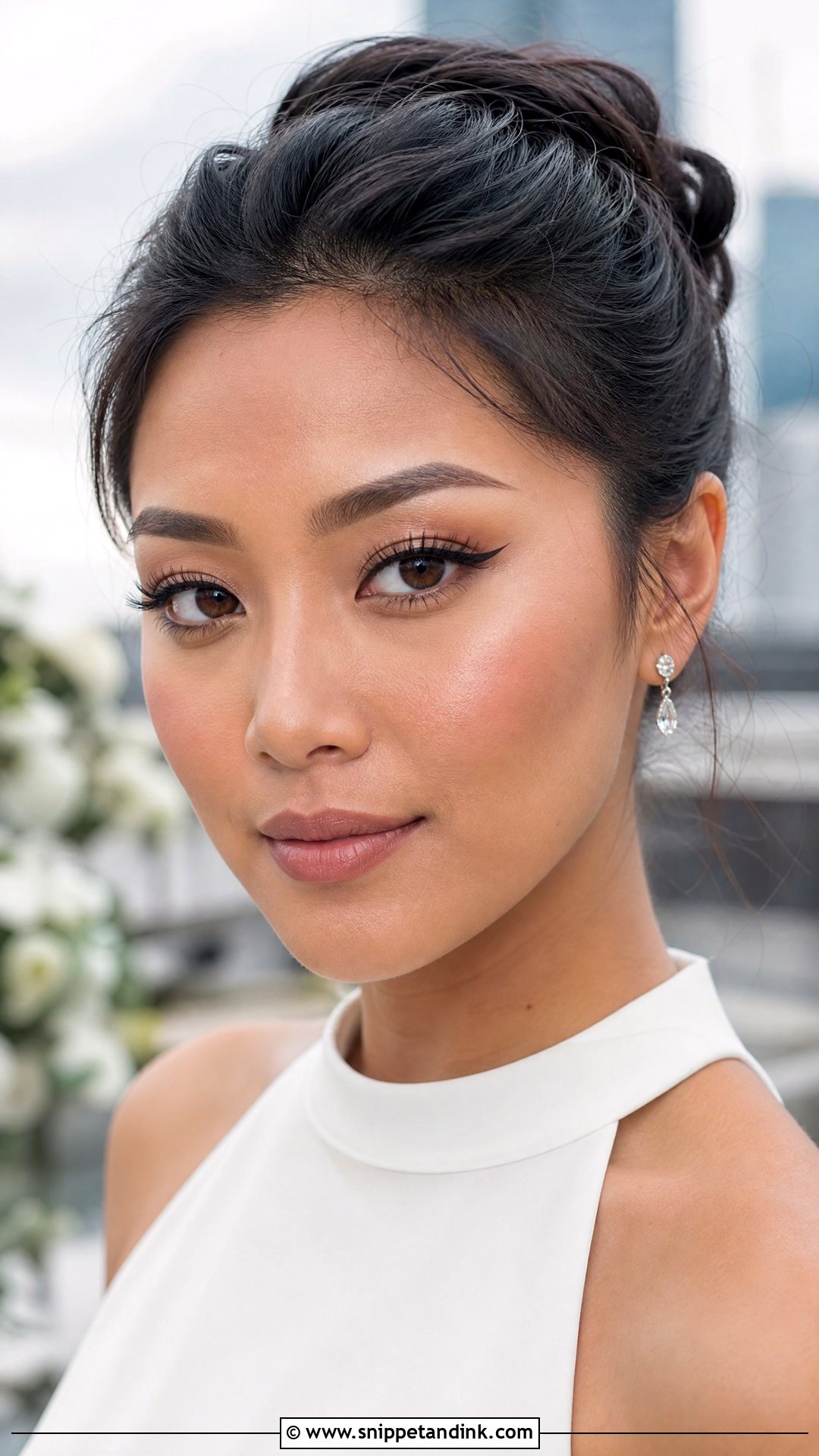
Liner does the work here, so the shadow can stay quiet. Winged liner wedding makeup starts with a smooth base, soft blush and a natural contour, then a neutral matte shadow over the lid. The wing follows the angle of your lower lashline, thin or medium depending on how much lid you have. Black looks classic; dark brown is softer in daylight. Individual or wispy strip lashes add lift, and nude-pink or rose keeps the lips balanced. I always check the wing for symmetry from a photo, since mirrors flip your face.
17. Full Glam Wedding Makeup
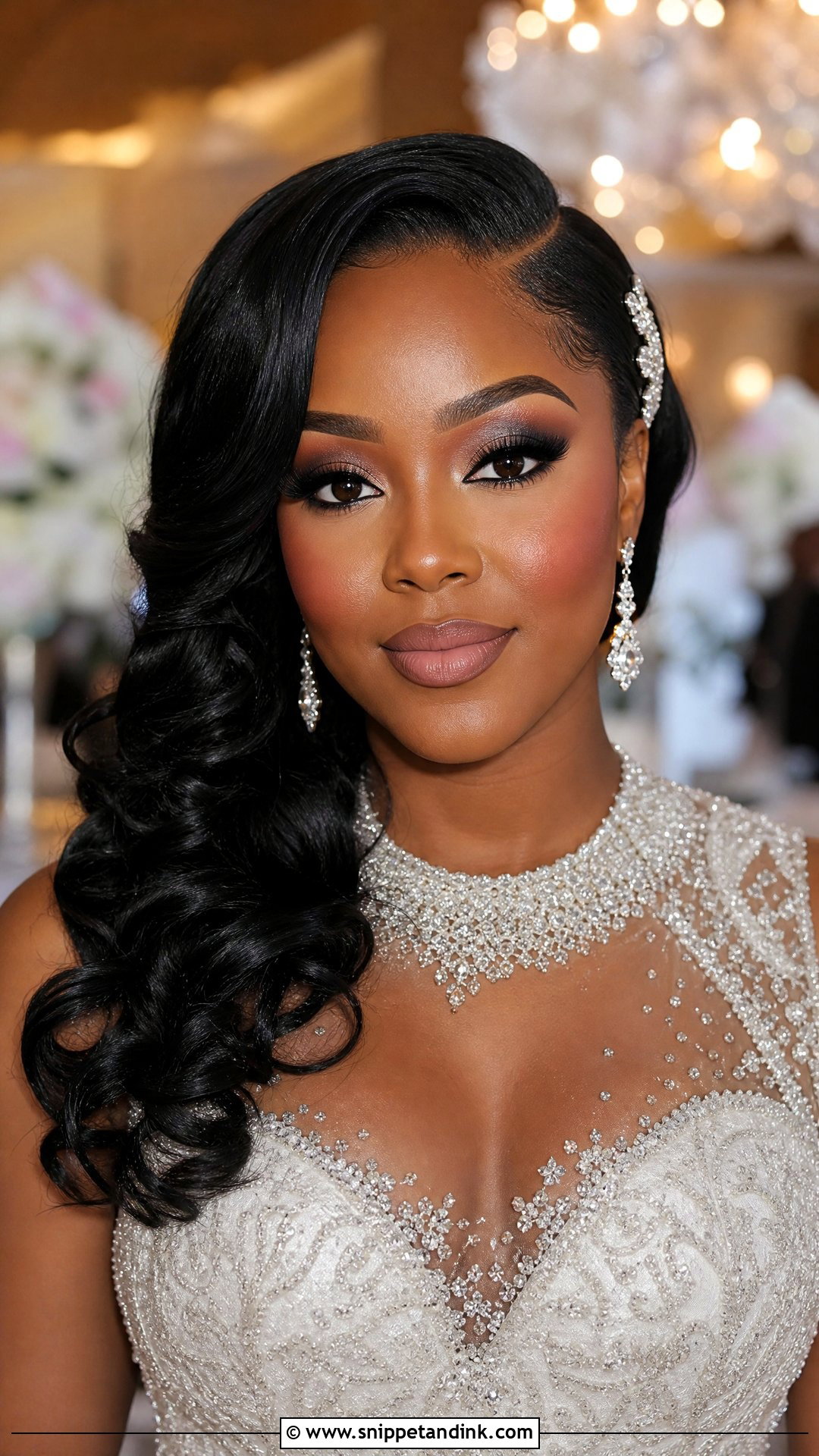
Full glam is for the bride who actually enjoys wearing a lot of makeup. If you don’t, the day is long, and I’d point you toward soft glam instead. The base is long-wear foundation with brightened under-eyes, sculpted cheeks and precise setting. Eyes take blended smoky tones, shimmer on the lid, fuller lashes and defined liner, and the brows are shaped and filled. The lip depends on how strong the eyes are. Every layer should be deliberate. In large venues and at evening celebrations it holds its shape from across the room.
18. Minimalist Wedding Makeup
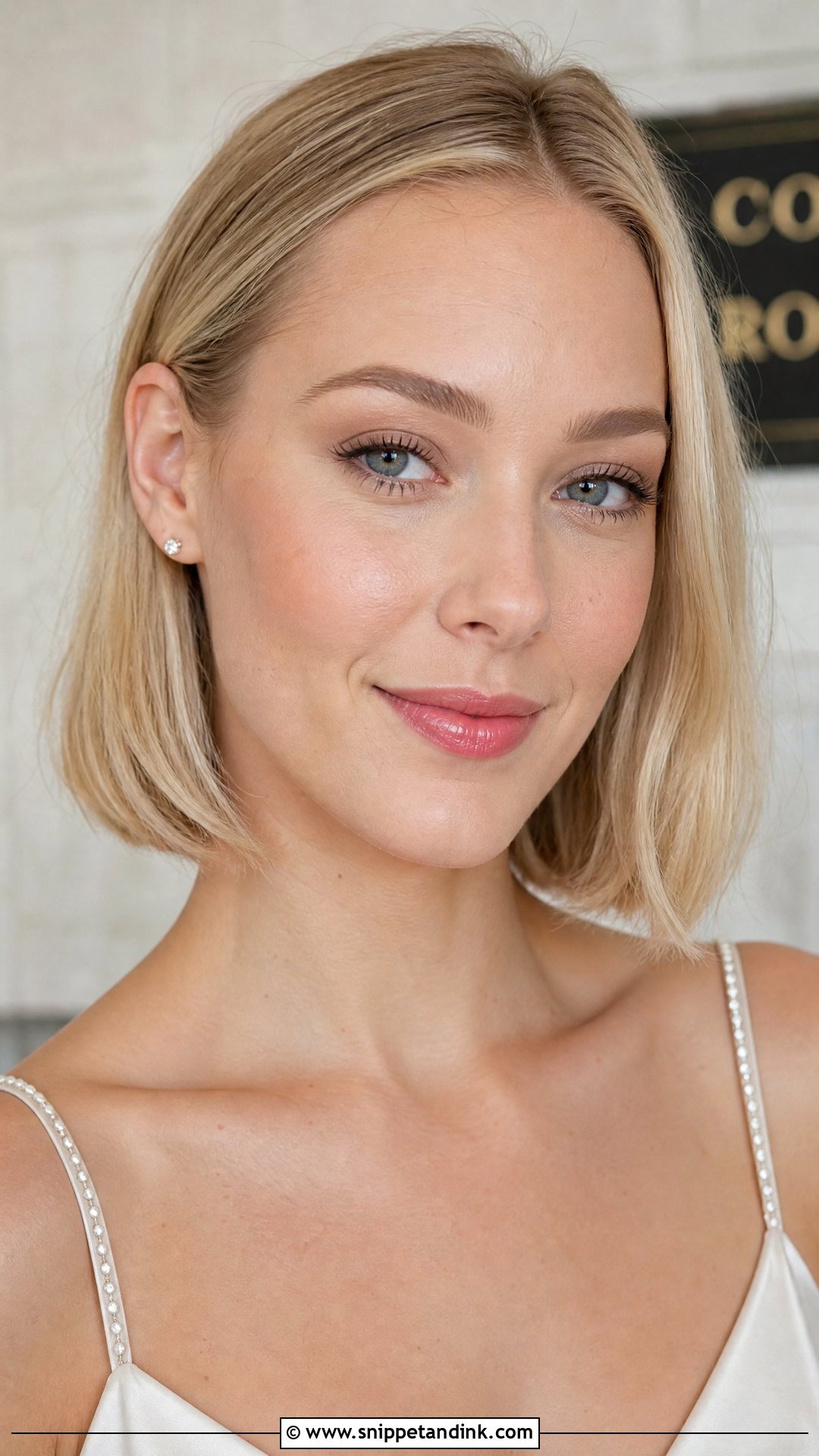
Every product in a minimalist look has a job, and anything without one gets left out. I use a sheer or tinted base, spot concealer, cream blush and a soft brow gel. Eyes get curled lashes, brown mascara and a light wash of beige or taupe. I skip heavy contour and use a cream bronzer only if you want warmth. Lips stay hydrated with a tinted balm or sheer satin lipstick. It suits courthouse weddings, relaxed ceremonies and modern dresses, and it lets your skin and smile be what people notice.
19. Vintage Wedding Makeup
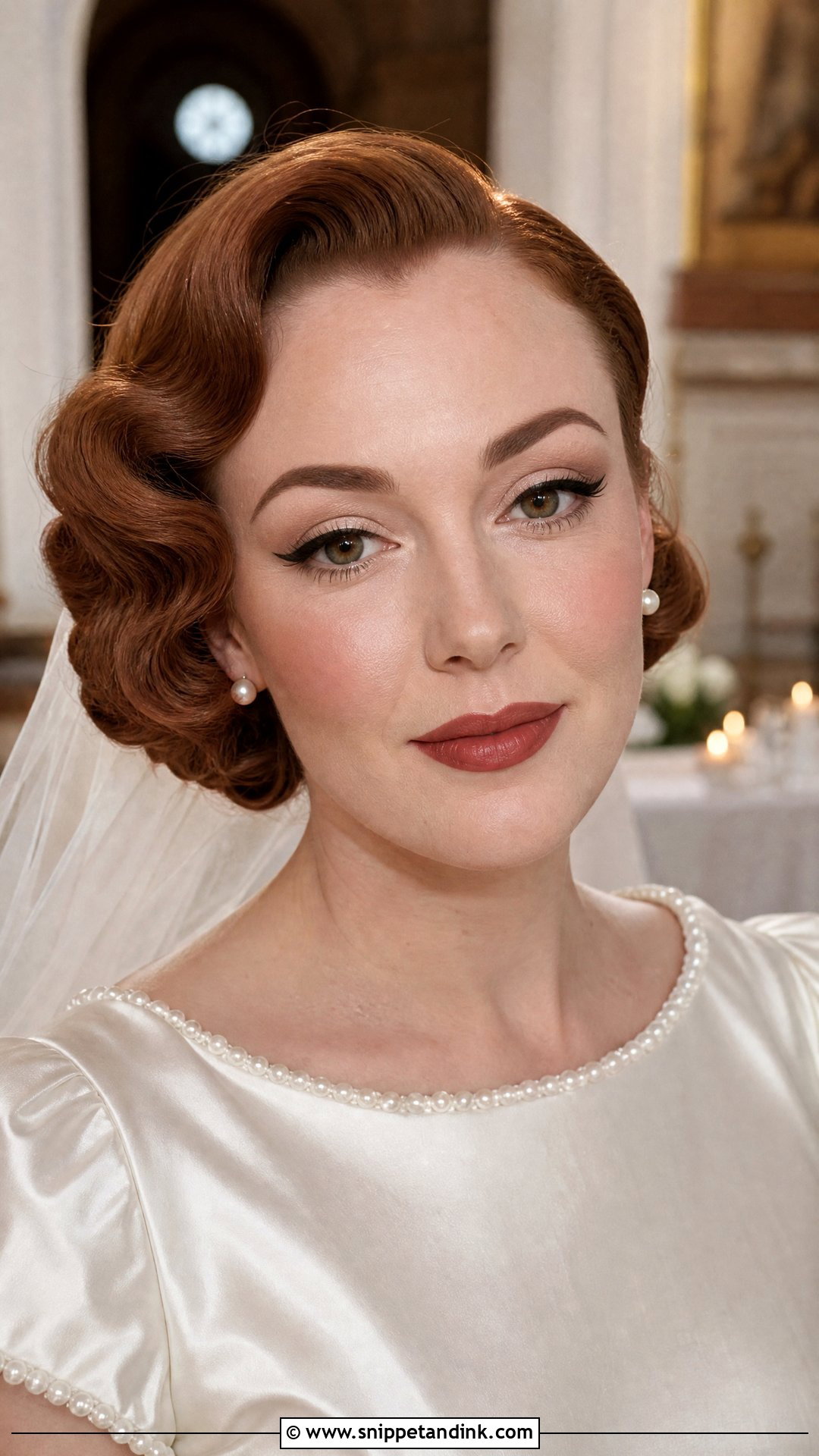
The line between vintage and costume is usually the brows and the lip edge. I keep both crisp but not drawn on. A softly matte complexion, sculpted cheeks, defined brows and a clean liner form the base, with a refined wing or tightline on the eye and fluttery lashes that stop short of thick. A red lip gives a stronger period feel; a rose lip softens it. Blush sits slightly high to lift the face. It’s made for satin gowns, structured silhouettes, pearls, sleek buns and old Hollywood waves.
20. Bronze Wedding Makeup
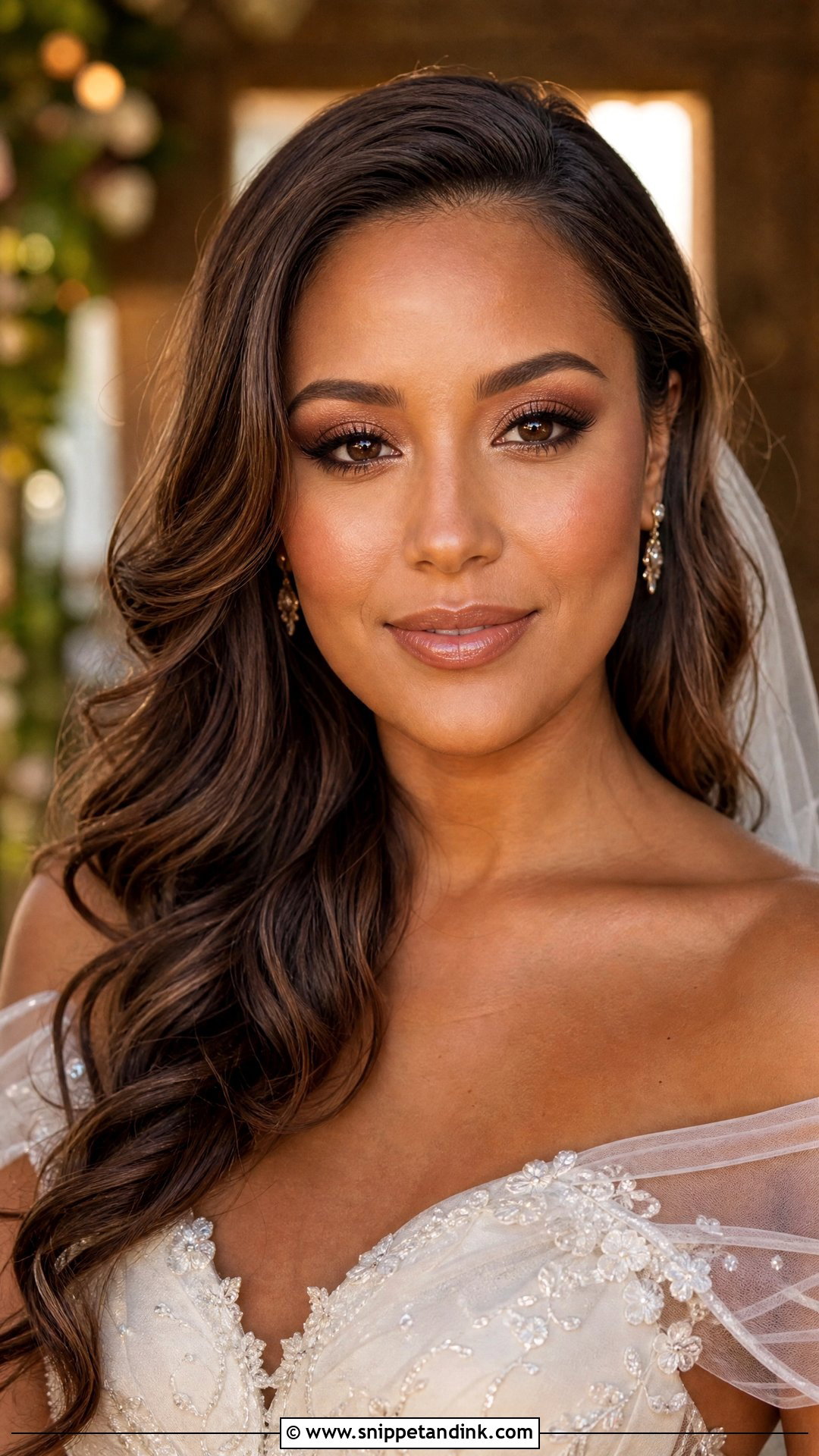
Sun-kissed definition is what most brides want from bronze, and metallic shine is the thing to avoid. Bronze shimmer on the lids, warm brown in the crease and a softly smudged liner shape the eye; curled lashes and brushed-up brows keep it modern. Golden bronzer, warm blush and a subtle highlight warm the face. Caramel or peachy beige lips finish it. Bronze holds up across seasons and especially suits fall and outdoor weddings. If you’ll be self-tanning, do it a few days before your trial so your artist can match the bronzer to your tanned skin, not your winter skin.
A Month of Skin Habits That Changes How Makeup Sits
Makeup sits on top of your skin, so whatever is happening underneath shows through. The weeks before the wedding are not the time to experiment.
- Stop trying new actives about a month out. A new retinol or acid can cause flaking or a breakout right when you need calm skin.
- Book any facial with extractions at least a week before, preferably two, so redness has time to settle.
- Have brows waxed or threaded several days ahead rather than the day before, to avoid red marks or bumps under the foundation.
- Drink water and moisturize consistently. Dehydrated skin swallows foundation and then shows every line by afternoon.
Glasses, Lash Extensions and Other Things to Mention Early
A few details change my method, and I’d rather hear about them at the trial than on the morning. If you’ll wear glasses, I keep powder light where the frames rest and plan the eye to work under the lenses, which can magnify or shrink the eyes. With lash extensions, I avoid oil-based removers and strip lashes that would pull on them. Sensitive or allergy-prone skin means I patch test anything new at the trial. And if you’re prone to crying, say so; I’ll build the eye with that in mind.
Which Finish Will Still Feel Like You at Midnight?
The look that works is the one you stop thinking about once it’s on. Weigh your dress, hair, venue lighting, season and skin type, and be honest about how much makeup you usually enjoy. Natural, dewy and minimalist looks sit lightest. Soft glam, bronze and rose gold add polish, while smoky eyes, red lips, winged liner and full glam bring the drama. Save your favorite wedding makeup inspo, book a trial, and wear it through the rest of that day so you know how it lasts before the morning that counts.
You'll Like These Ideas:


Leave a Reply