
Dressing a winter bride is mostly about the hours nobody plans for: the walk from the car, ten minutes of portraits by a frozen lake, then a ballroom heated so high the guests are fanning themselves. The looks below are built around that swing in temperature. Long sleeves, structured satin, lined lace, velvet, capes and polished coats all keep you warmer, but each one behaves differently once you sit, sweat or step into snow. I’ve written each outfit head to toe, with the detail I’d check first at a fitting, so you can judge which ones suit your venue and your plans for the day rather than just the photo.
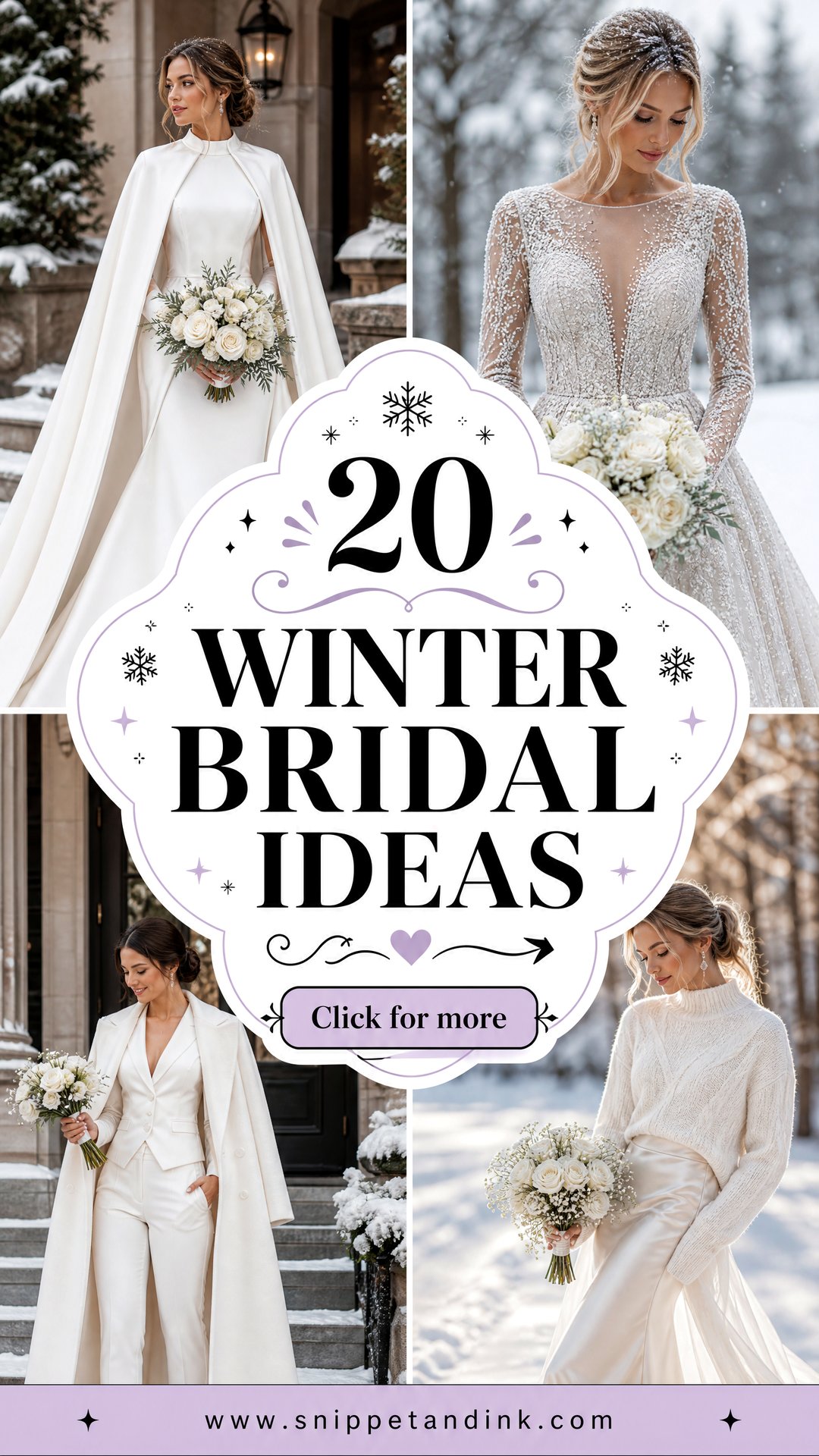
Why Fabric Weight Matters More in Winter Than Sleeve Length
Most brides start a winter search by asking for sleeves. I start with the fabric, because sleeves only cover your arms while the cloth decides how warm, how creased and how sweaty you’ll be over the whole day.
- Mikado and duchess satin have real body. They hold structure in a cold church and in a heated ballroom, but they crease where you sit, so plan for a steam before portraits.
- Heavy crepe is the quiet workhorse. It drapes, travels well and recovers from sitting better than most, though it shows underwear lines.
- Velvet is the warmest of the lot and the most prone to crushing. It can also feel stifling indoors once the dancing starts.
- Lace over a lining keeps you about as warm as the lining underneath it. Unlined lace sleeves look wintry but do very little against the cold.
The other half of the decision is the reception room. Many winter venues are heated hard, and a bride in long velvet sleeves under a dance floor spotlight can overheat within the hour. That’s why I lean towards a medium-weight gown with a proper outer layer, rather than one heavy dress you can’t escape.
1. Long Sleeve Lace Winter Bridal Gown
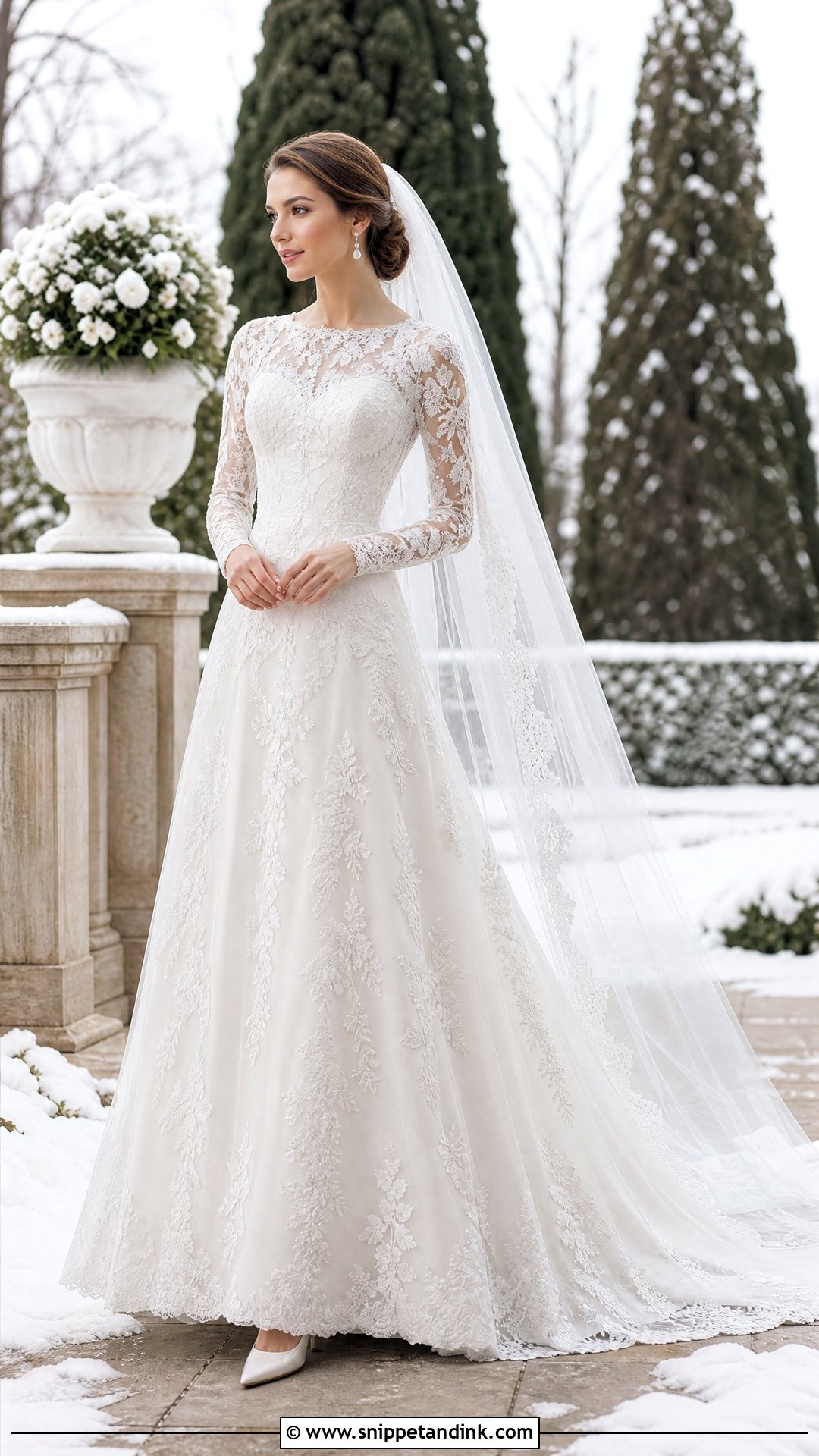
Lace with long sleeves is the winter request I hear most, and the version that works best has a lined bodice with sheer sleeves left unlined, so the pattern shows without the arms feeling stiff. An A-line or soft ball gown skirt keeps the shape balanced. I’d finish it with pearl drops, an ivory cathedral veil and closed-toe satin pumps, and a low chignon so a high lace neckline stays in view. Pick lace with bold floral or geometric motifs. Fine, spidery patterns vanish in wide shots, and against snow they can read as plain white fabric. For outdoor portraits, keep a wool wrap you can drop off your shoulders in one move.
2. Mikado Winter Bridal Gown With Cape
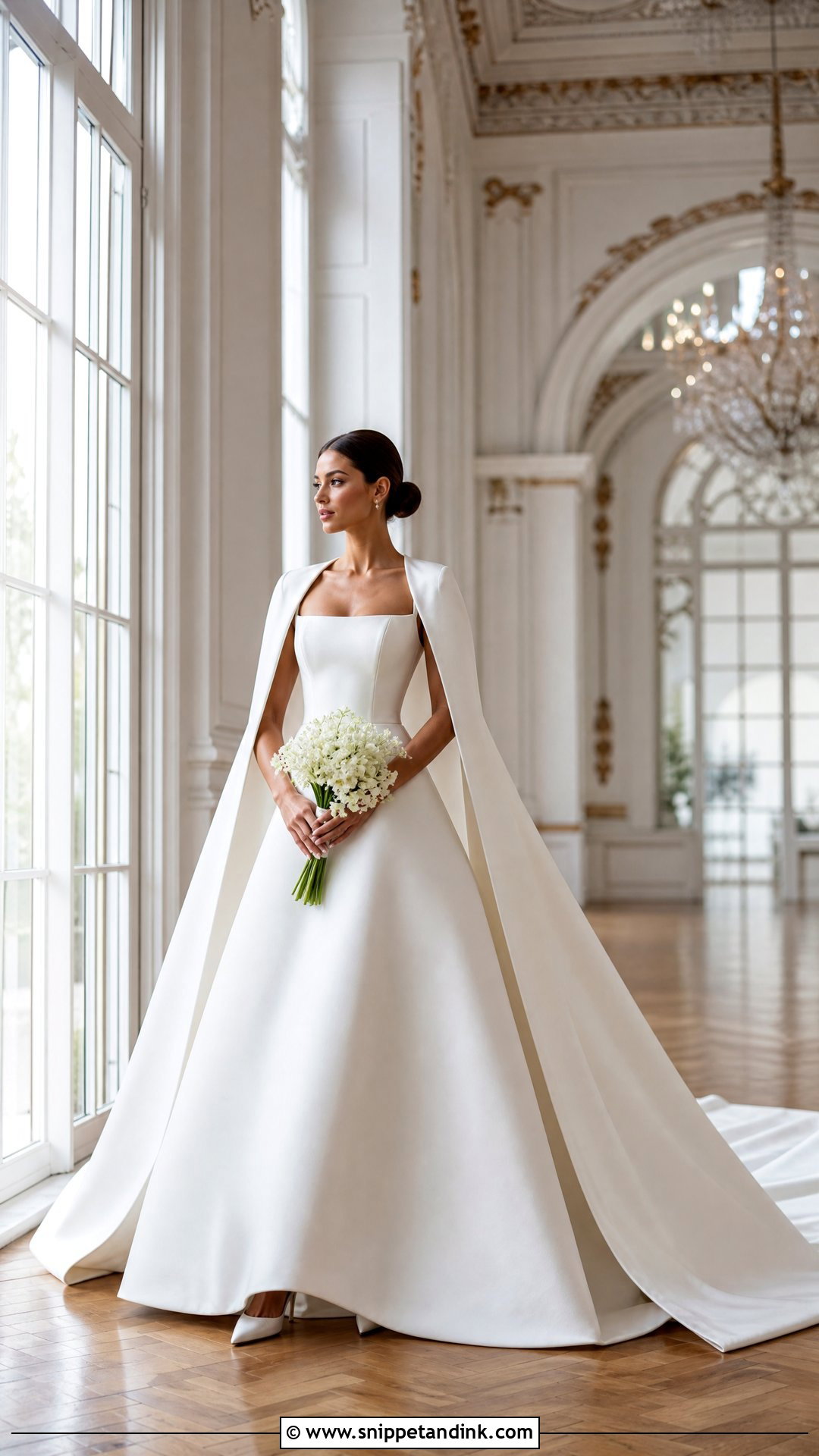
Mikado has enough body to hold a sharp A-line with a fitted bodice and sweeping train, which is why it sits so well in formal winter venues. Pair it with a detachable floor-length cape in matching ivory; the cape catches wind in outdoor portraits and gives real movement. Accessories stay clean here: crystal studs, a sleek bun, pointed closed-toe heels, and a small white bouquet with evergreen for contrast. On petite brides I usually shorten the cape to chapel length, because a floor-length one can swallow the frame. The thing I test hardest is the shoulder fastening. If it slips or sits over the neckline seam, the cape fights the gown in every photo.
3. Velvet Winter Bridal Column Dress
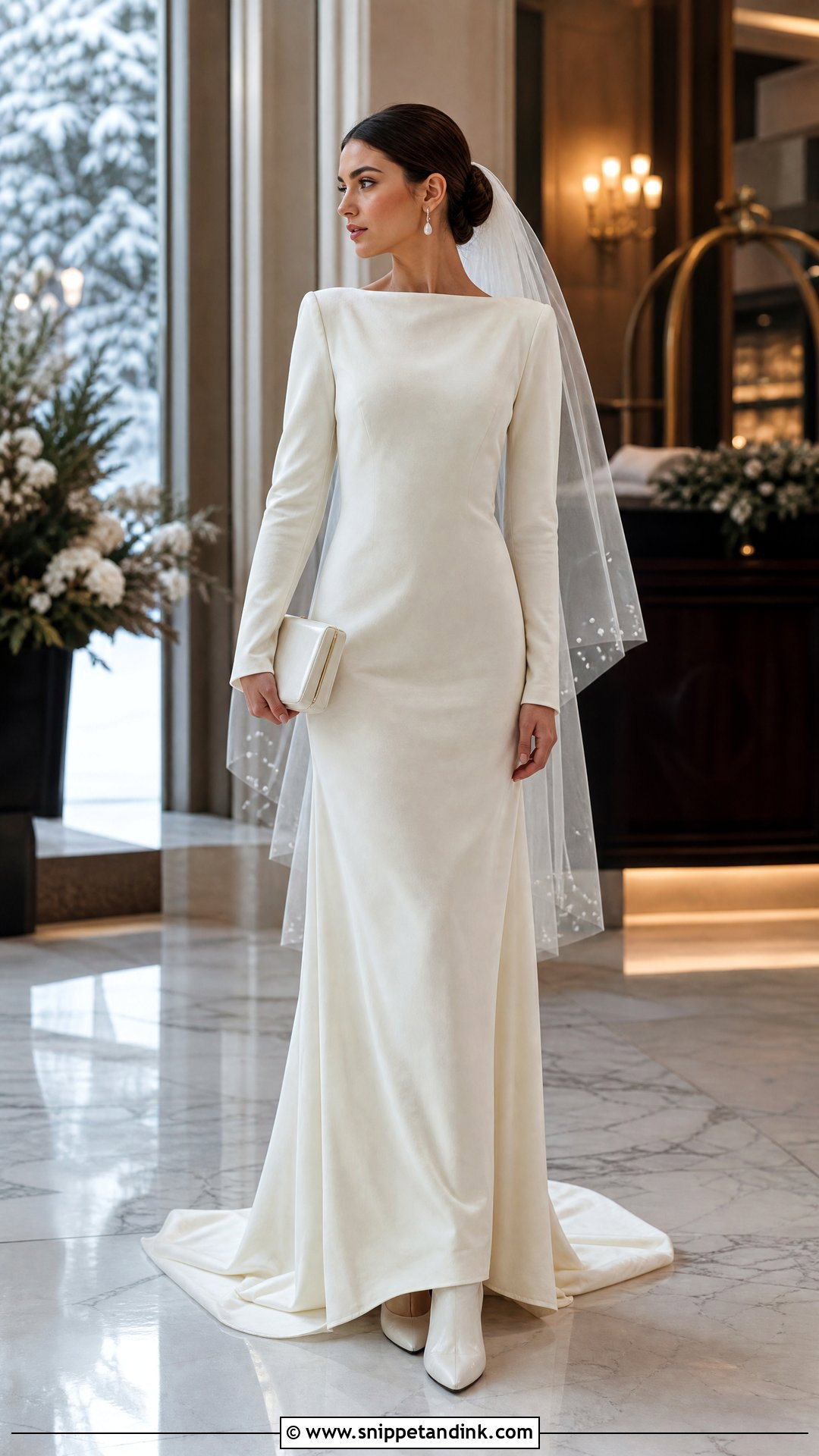
Velvet is unforgiving, and I mean that kindly. It shows every pull and pucker, so an ivory or cream column with long sleeves needs proper alterations at the waist, hips, sleeves and lower back before it looks expensive. Look for gentle waist shaping, a bateau or square neckline and a small train. Pearl earrings, a structured clutch and block-heel pumps keep it grounded, and a fingertip veil lets the pile of the fabric stay the main feature. If there’s outdoor walking, slip on ankle boots under the hem and change into heels indoors. One warning from experience with the fabric: velvet crushes when you sit on it for long, so stand during the drive if you can.
4. Satin Basque Waist Winter Bridal Ball Gown
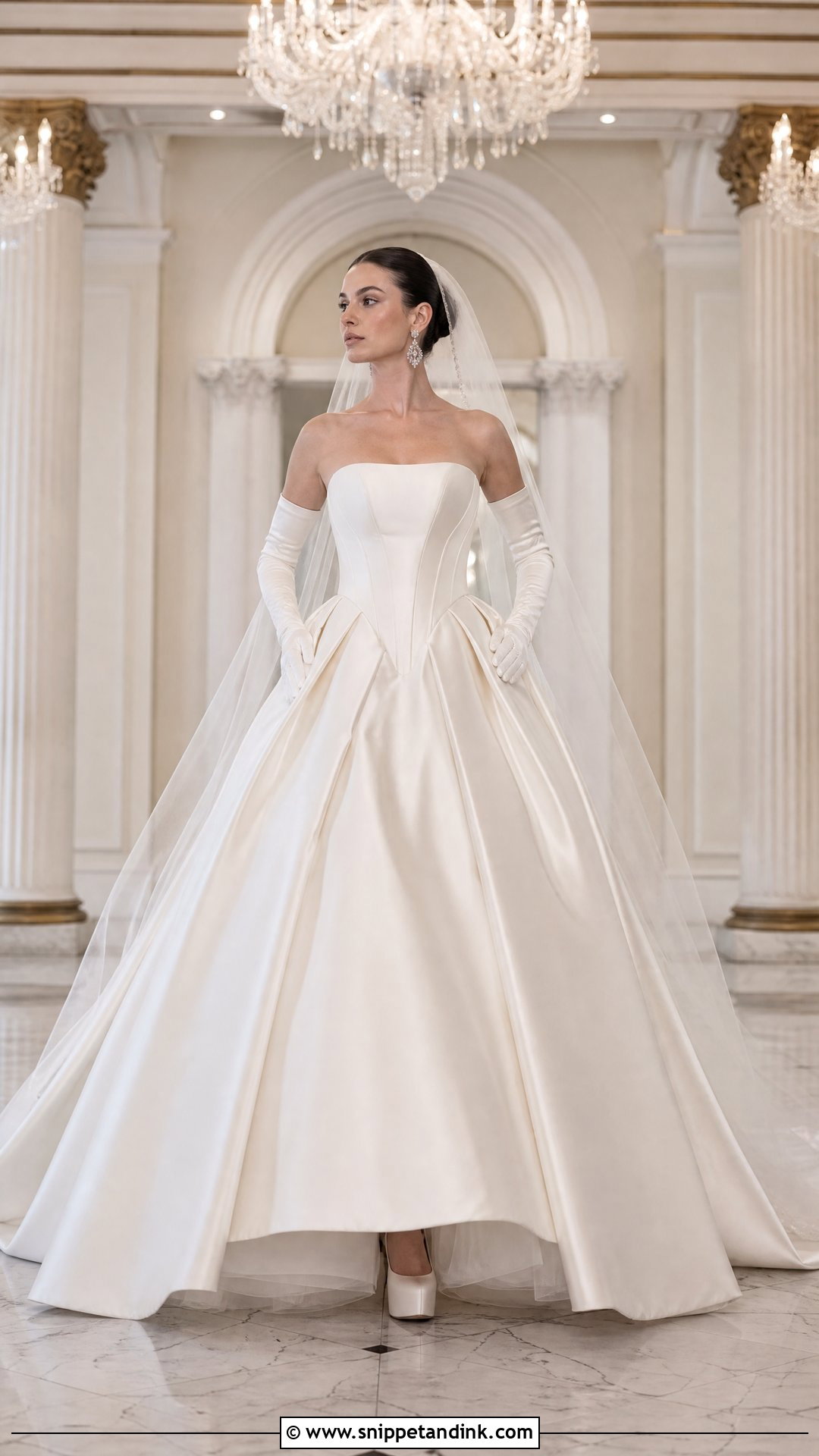
A basque waist dips below the natural waistline in a V before the skirt opens out, and on a satin ball gown it gives real architecture for a grand winter wedding. The satin needs weight. Thin satin collapses by late afternoon and shows every crease from the car seat. A strapless or softly draped neckline pairs well with long satin gloves, and crystal earrings, a cathedral veil and hidden platform pumps finish it. Keep the bouquet compact so it doesn’t sit right over the waist point in photos. I always ask the seamstress for a strong bustle on this one, since a heavy satin train pulls hard on weak hooks by the second dance.
5. Crepe Winter Bridal Dress With Faux Fur Stole
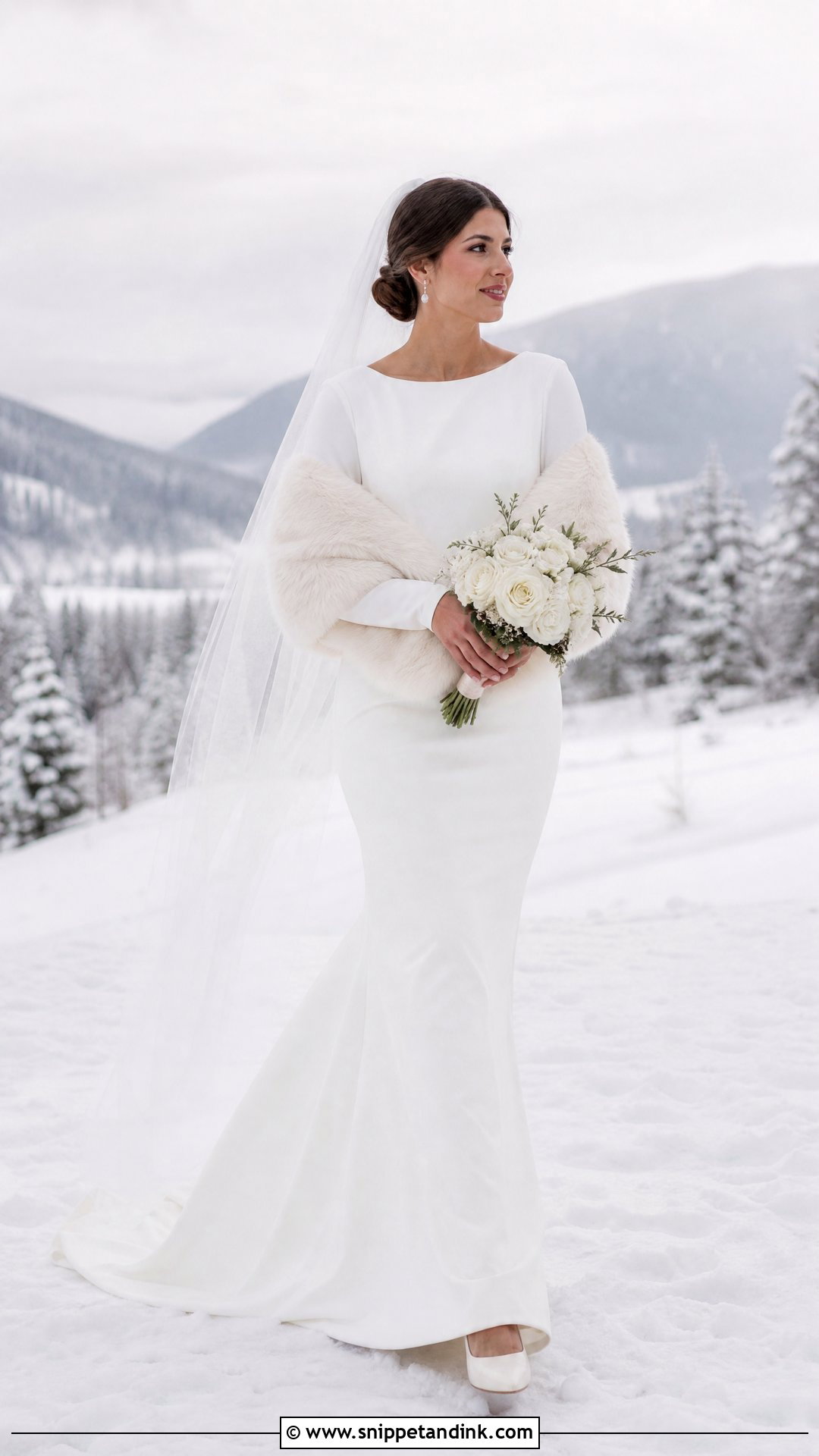
Picture stepping out for snowy portraits wrapped in a soft ivory stole. A crepe fit-and-flare is the right base for it because crepe has no sheen to clash with the fur pile. Go for long sleeves or a clean bateau neckline depending on how much coverage you want indoors. A good faux fur stole should close with a hidden clasp so your hands stay free for the bouquet. Pearl studs, a low bun and closed-toe block heels finish it, and a chapel veil tucks under the stole without bulk. Hold the stole against the gown in daylight before buying. Bright white fur next to an ivory dress makes the dress look dingy.
6. High Neck Winter Bridal Sheath Dress
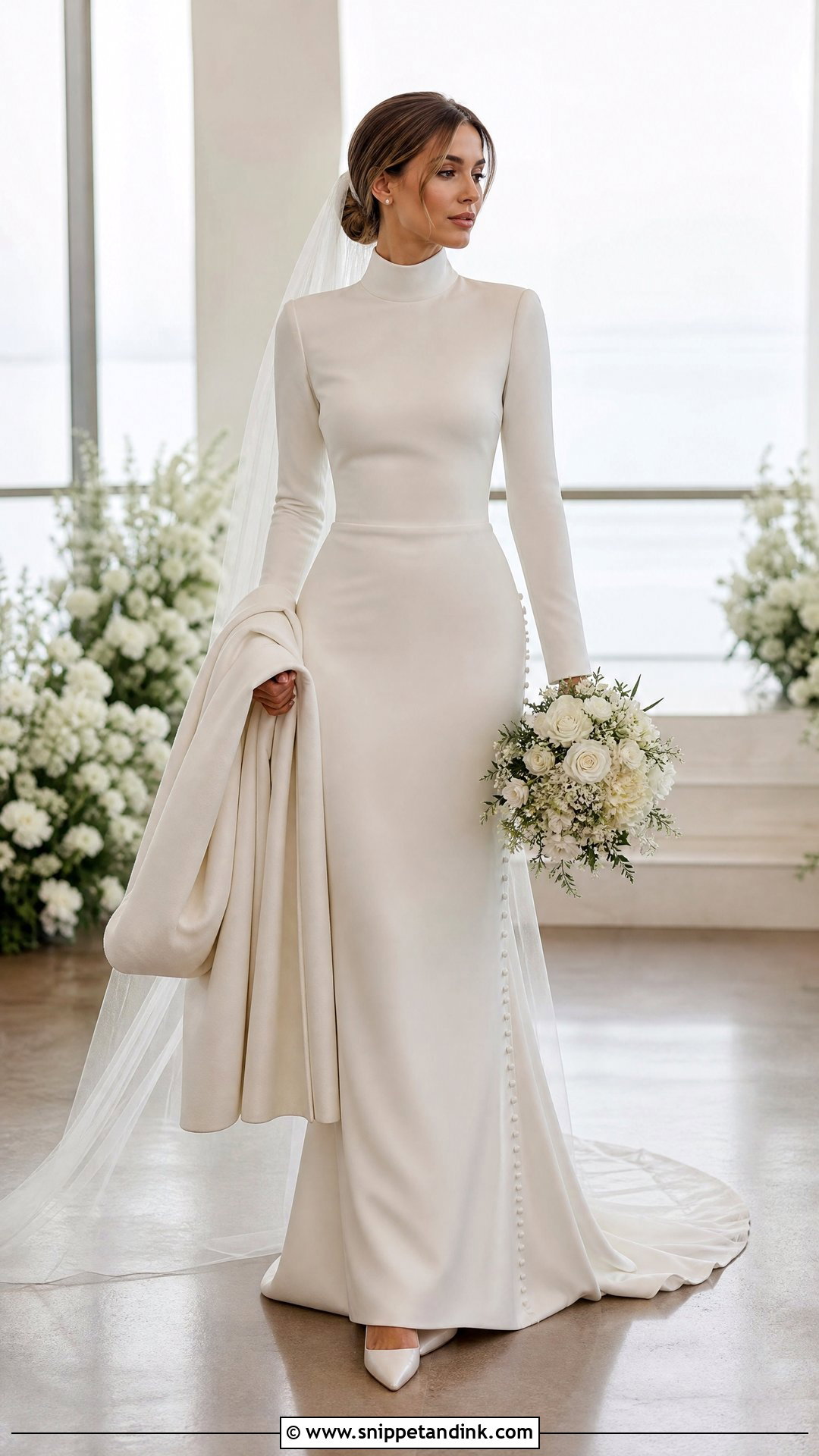
High necks are where sheaths go wrong most often, and it’s nearly always the shoulder seam. If it sits even slightly off the shoulder point, the whole neckline twists when you lift your arms. Choose lined crepe, satin-backed fabric or lace over a smooth underlayer so the dress doesn’t look thin. Long sleeves, covered buttons and a narrow train add detail without breaking the line. A polished bun, delicate earrings and a long veil attached below the hairstyle keep the neck clear, and pointed pumps lengthen the leg. Add a structured ivory coat for moving between locations. If you want more waist, ask for internal corsetry instead of a belt, which cuts the sheath in half.
7. Off Shoulder Winter Bridal Gown With Coat
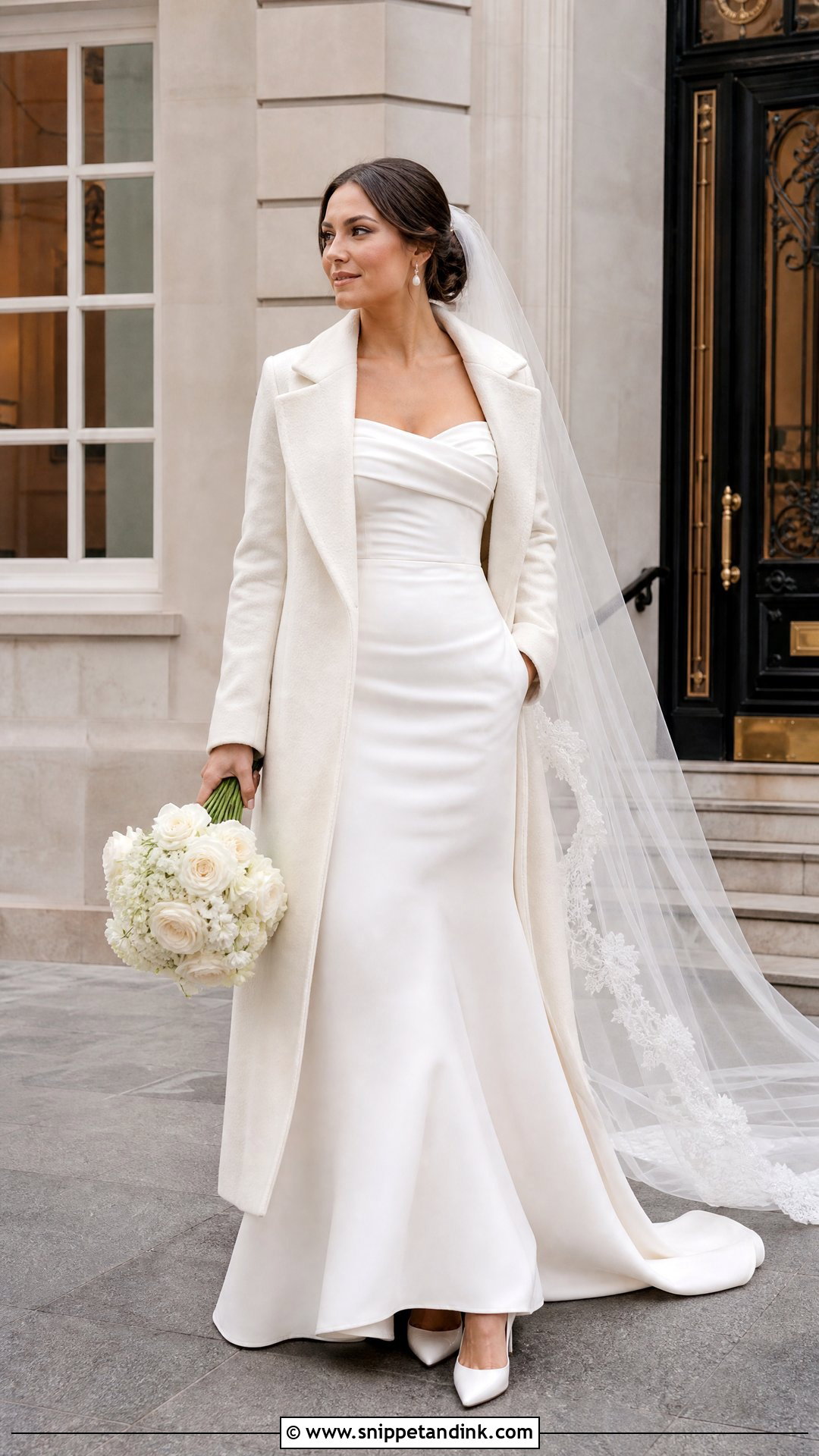
Off-the-shoulder in winter only works with a coat built for it. Choose a structured A-line or fit-and-flare with a folded neckline, then a knee-length ivory wool coat with clean seams, covered buttons and generous room in the sleeves and bodice. Pearl drops, a smooth updo and closed-toe pumps carry both versions, and the cathedral veil goes on once the coat comes off. Bring the actual gown to the coat fitting. Standard outerwear presses the folded neckline flat and leaves creases across the bodice that won’t drop out before the ceremony. A coat with a slight flare through the skirt sits far better over a full skirt than a straight cut.
8. Strapless Winter Bridal Gown With Bolero
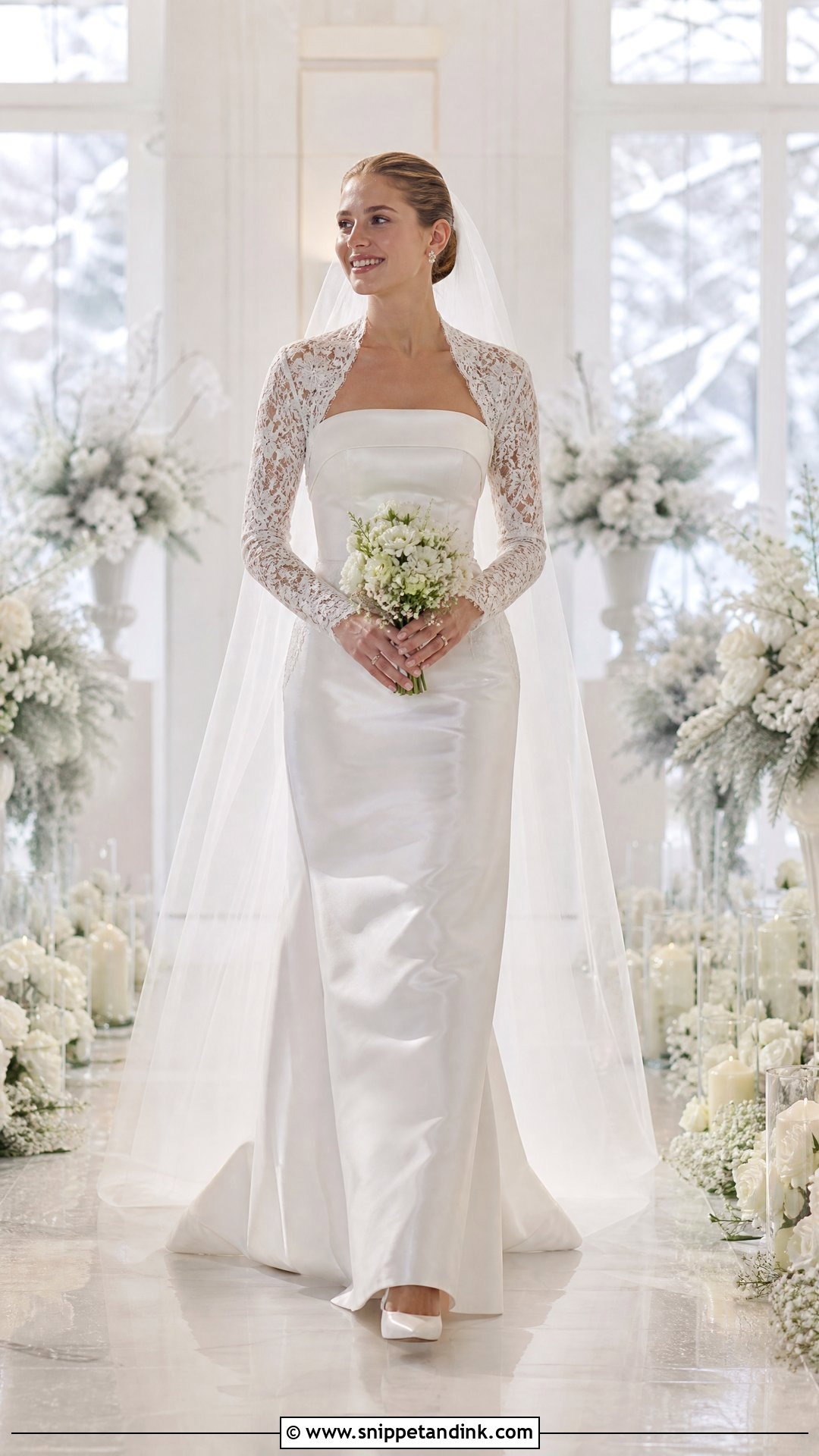
A removable bolero is my favourite fix when a bride has fallen for a strapless gown and her ceremony is in a cold stone church. Start with a fitted satin or Mikado dress with a straight, sweetheart or softly curved neckline. Then add a long sleeve lace bolero that stops neatly at the natural waist so it looks part of the gown. It comes off for the reception. The bolero must match the dress colour closely and lie flat at the neckline, with no bulky seams pressing through the bodice. Crystal studs, a chapel veil, satin pumps and a compact bouquet keep both versions tidy.
9. Square Neck Winter Bridal A-Line Dress
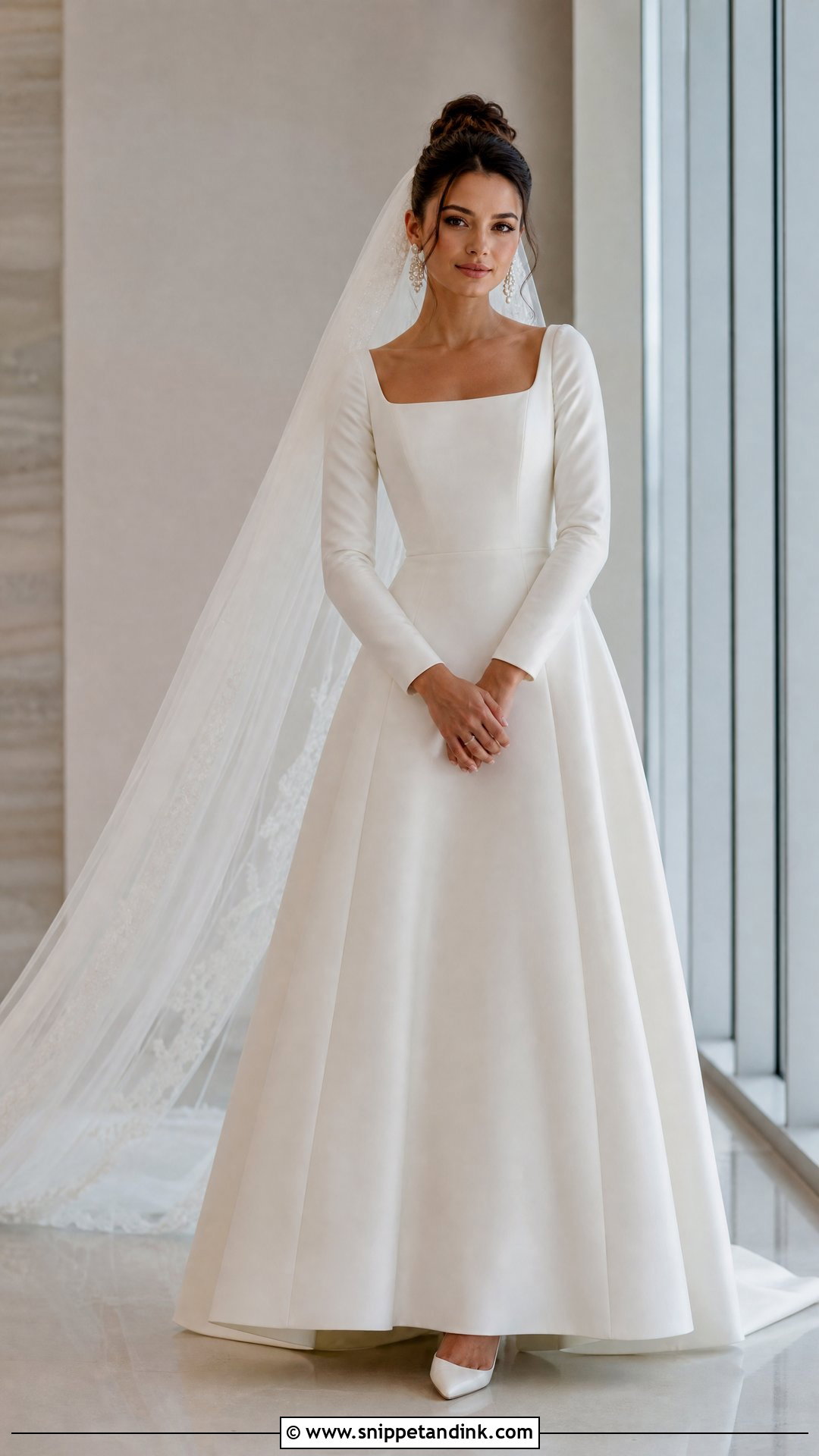
A square neckline frames the collarbone and gives a modern bride something structured without beading. Long sleeves and a gently flared skirt balance it, and satin, Mikado or lined crepe give it weight for the season. Finish with a smooth cathedral veil, pearl-and-crystal earrings, pointed ivory pumps and a low bun to keep the neckline open. With a fuller bust I widen the square slightly and ask for proper internal support, because a narrow square neck on a larger bust gapes at the corners. Carry a cropped wool jacket for outdoor photos. Plain as it sounds, this dress depends entirely on tailoring; a loose bodice makes it look unfinished.
10. Minimalist Long Sleeve Winter Bridal Dress
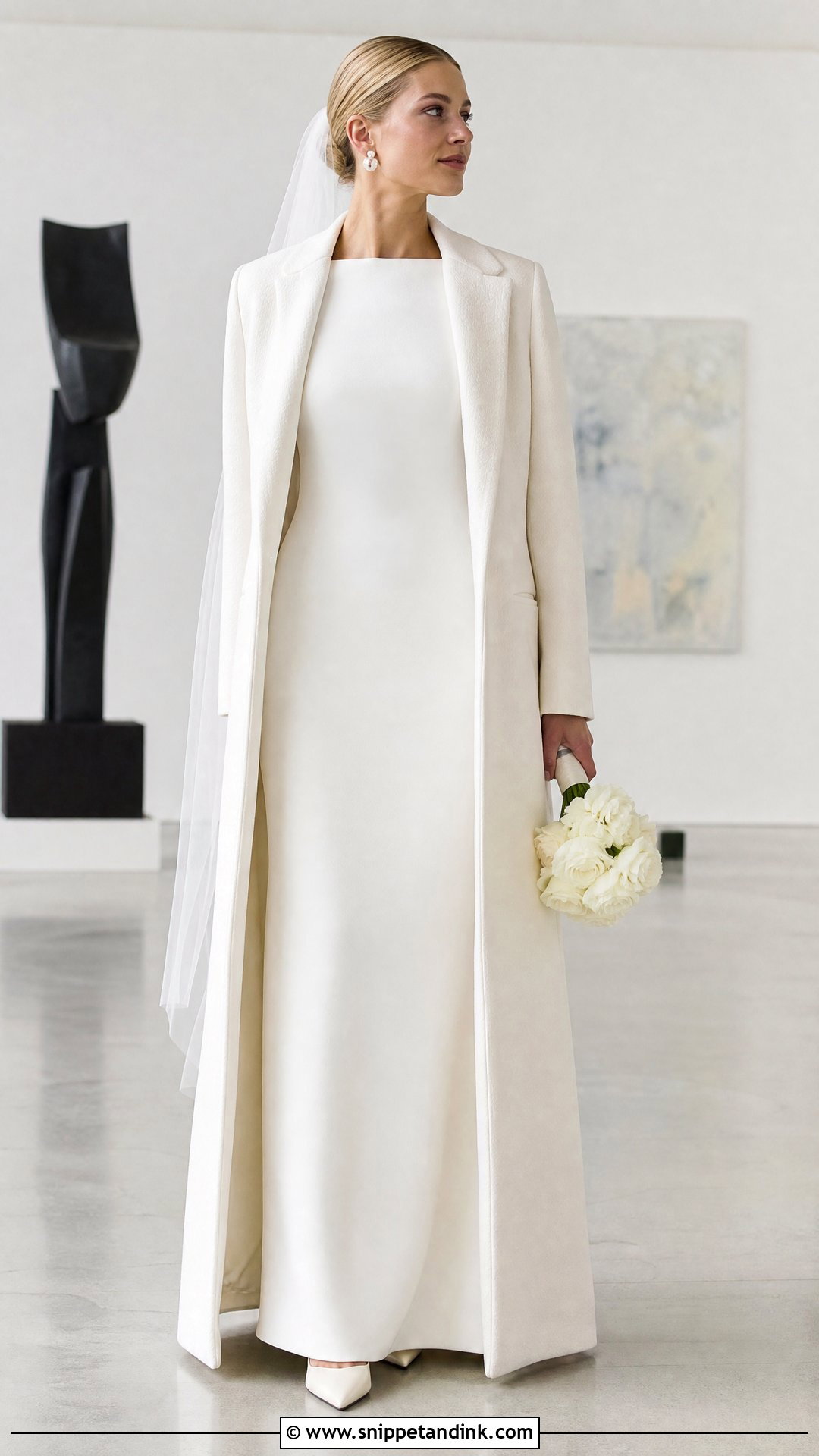
Not every winter gown needs lace, beads or a long train. A minimalist long-sleeve dress in heavyweight crepe, with a high bateau neckline, fitted waist, straight skirt and a little back drape, carries itself on fabric and fit. Sculptural pearl earrings, pointed pumps, a plain fingertip veil and a sleek centre-parted bun keep the lines clean. For warmth, a long ivory coat with hidden fastenings suits it better than a decorated wrap. This is the dress where underwear matters most. Smooth crepe shows every seam and edge, so do your fittings in the exact underwear you’ll wear, and have the gown professionally steamed on the morning.
11. Beaded Winter Bridal Gown With Long Sleeves
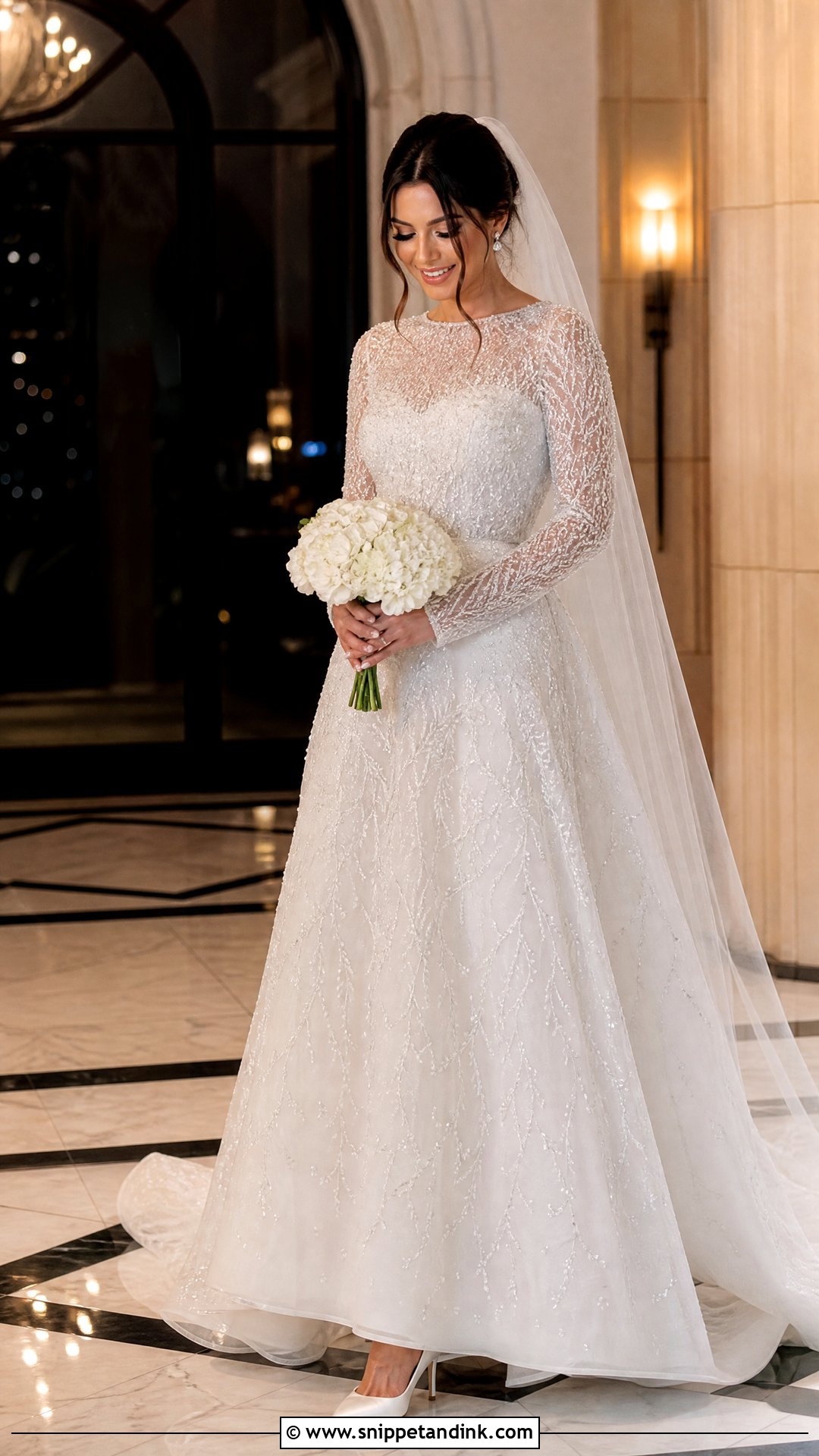
Beading earns its place at an evening winter wedding, when candlelight and low lamps hit it. Look for a long sleeve A-line or fitted gown with the beading spread across bodice and skirt rather than packed into one spot, over a neutral lining. Then pull everything else back: simple earrings, closed-toe satin heels, a plain veil and a compact bouquet. These gowns are heavier than they look on the hanger. Sit, walk and dance in it at fittings, and store it flat or on a padded, supportive hanger before the day, because hanging weight stretches the shoulders. A secure bustle matters too.
12. Plus Size Winter Bridal A-Line Gown With Cape
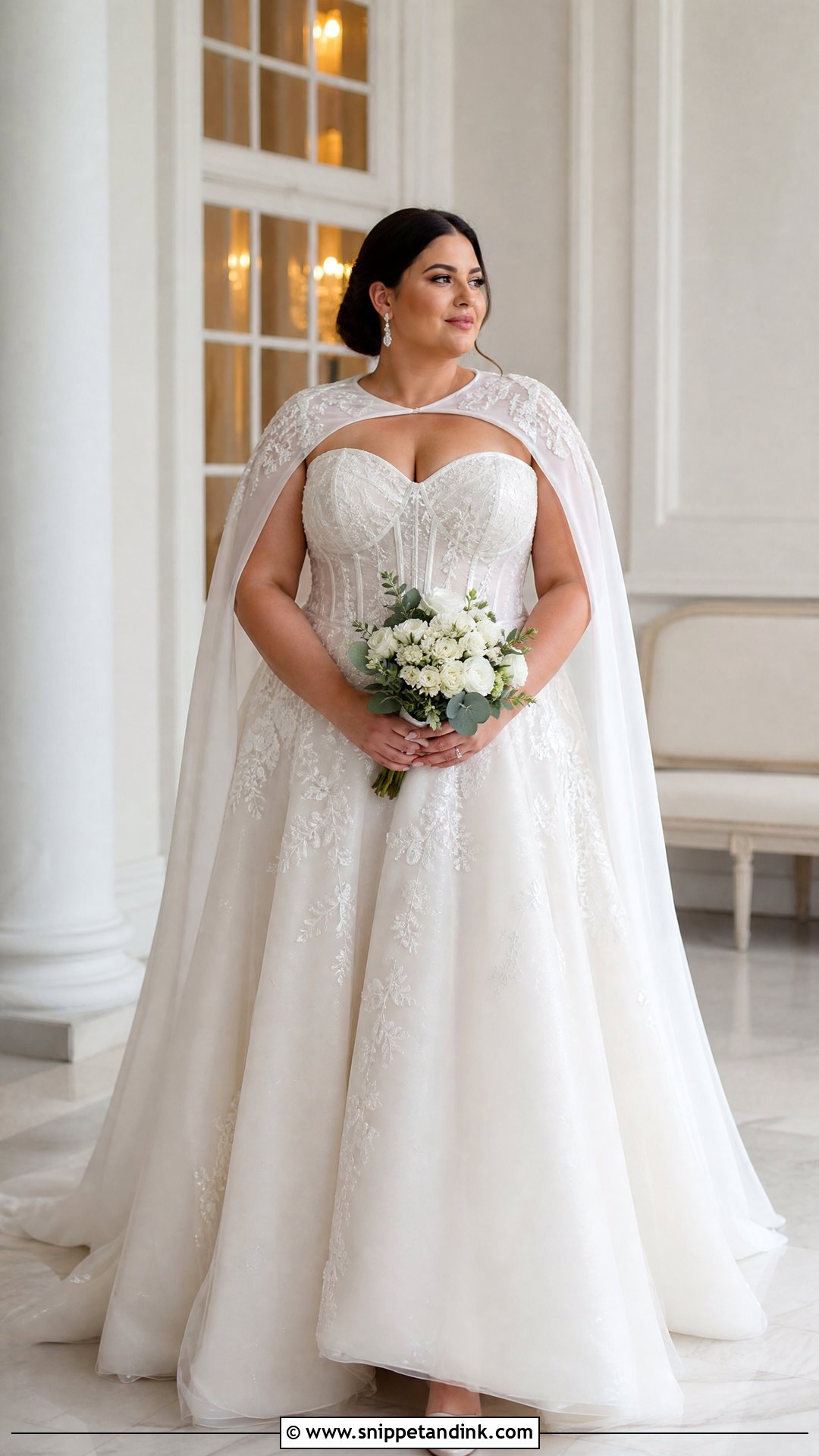
For a plus size bride in winter, the gown’s inner construction does more work than any outer layer. I look for a corseted bodice with comfortable boning, straps or sleeves that actually support, and a skirt flowing from the natural waist without extra gathered bulk. Over it, a soft chapel-length cape fastened securely at the shoulders, leaving the neckline visible. Crystal earrings, a low textured bun, closed-toe block heels and a medium bouquet keep the scale right. Resist a bigger cape just for coverage; too much fabric hides the shape you paid to have fitted. Book every fitting in the right shapewear and shoes so the hem, waist, bust and cape length are set accurately.
13. Petite Winter Bridal Tea Length Dress
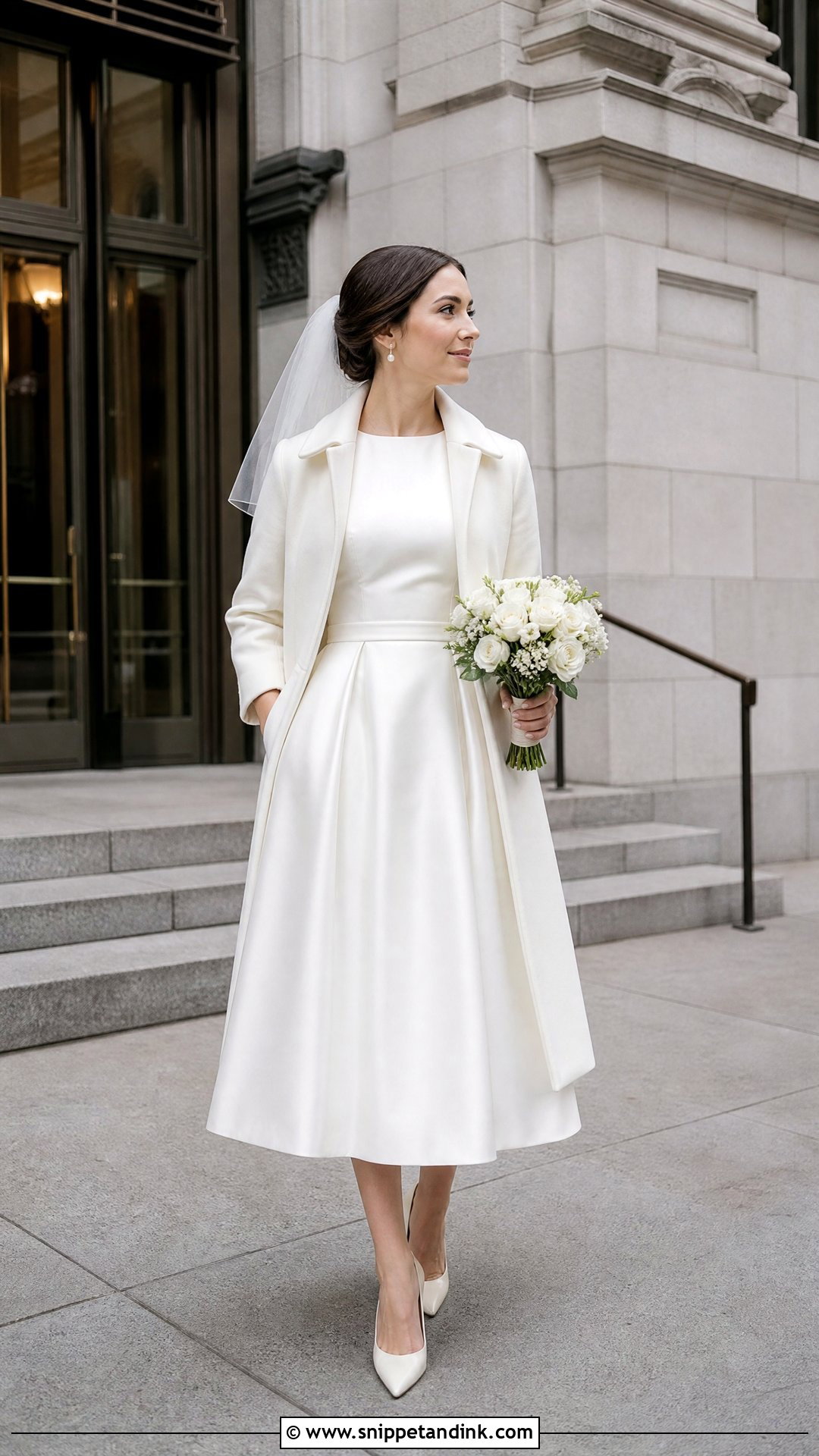
Tea length lets a petite bride’s frame show and makes stairs and snowy steps far easier. In winter I’d go with structured satin, three-quarter sleeves, a defined waist and a hem between knee and ankle. Pointed ivory pumps or polished ankle boots lengthen the leg. Add pearl earrings, a birdcage or short tulle veil, and a fitted wool coat that ends close to the dress hem. Mismatched lengths are the common mistake: a coat ending two inches above the skirt chops the line exactly where you want it long. Oversized bouquets and very wide skirts overwhelm a small frame, and one tone from head to toe keeps the outfit tight.
14. Maternity Winter Bridal Empire Waist Gown
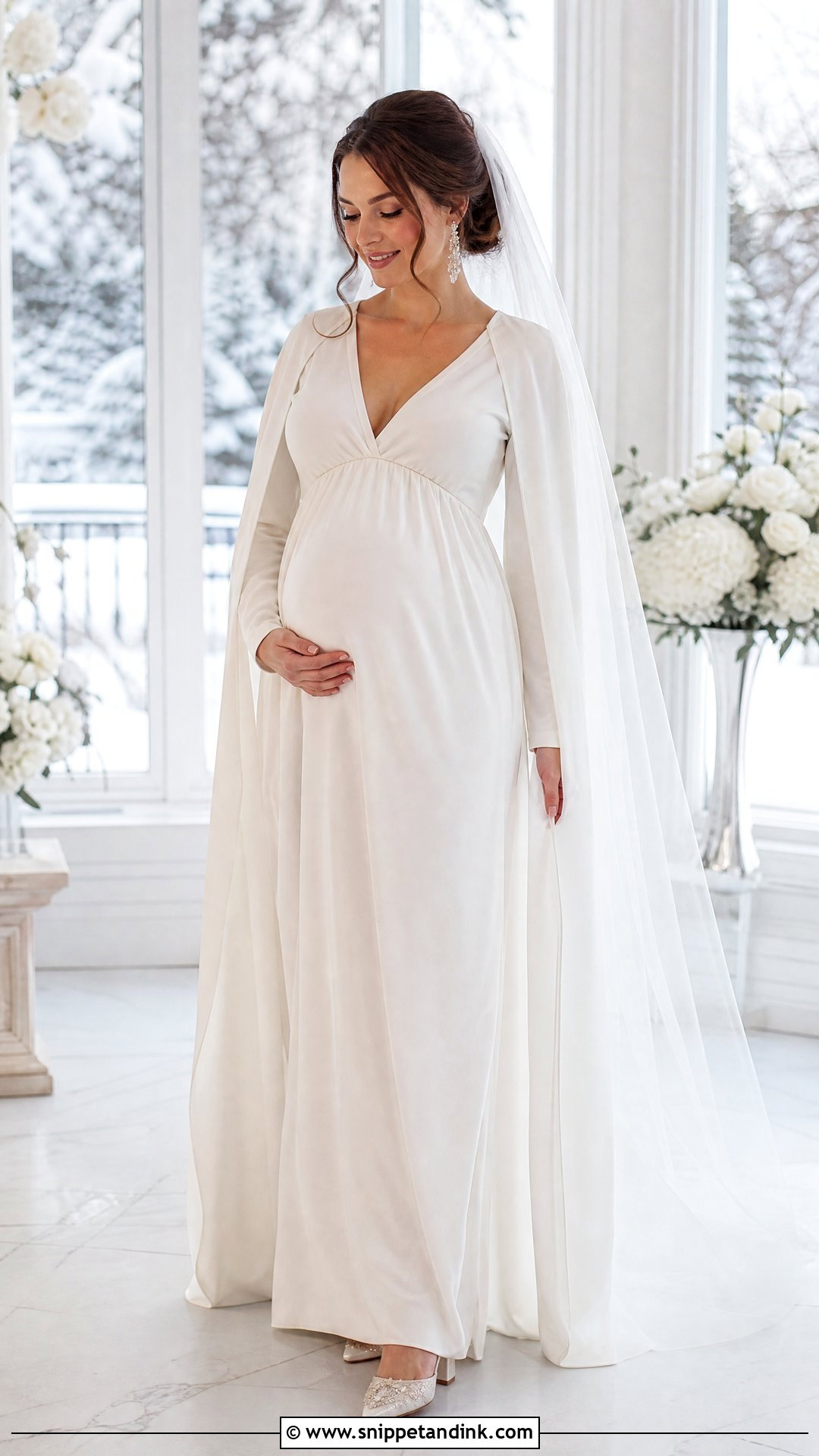
With a maternity gown, everything I plan bends around comfort and changing measurements. An empire waist leaves room through the middle and defines the shape just under the bust. Soft stretch crepe, lined chiffon over satin or a good jersey with long sleeves and a flowing skirt all work. Add a light ivory cape or wool wrap that adjusts easily. Low block heels, embellished flats or ankle boots are steadier than narrow heels on cold, slick floors. Drop earrings, a soft updo and a fingertip veil finish it. Book the final fitting close to the date, since proportions can change within a fortnight, and skip rigid waistbands or heavy beading across the bump.
15. Winter Courthouse Bridal Suit With Coat
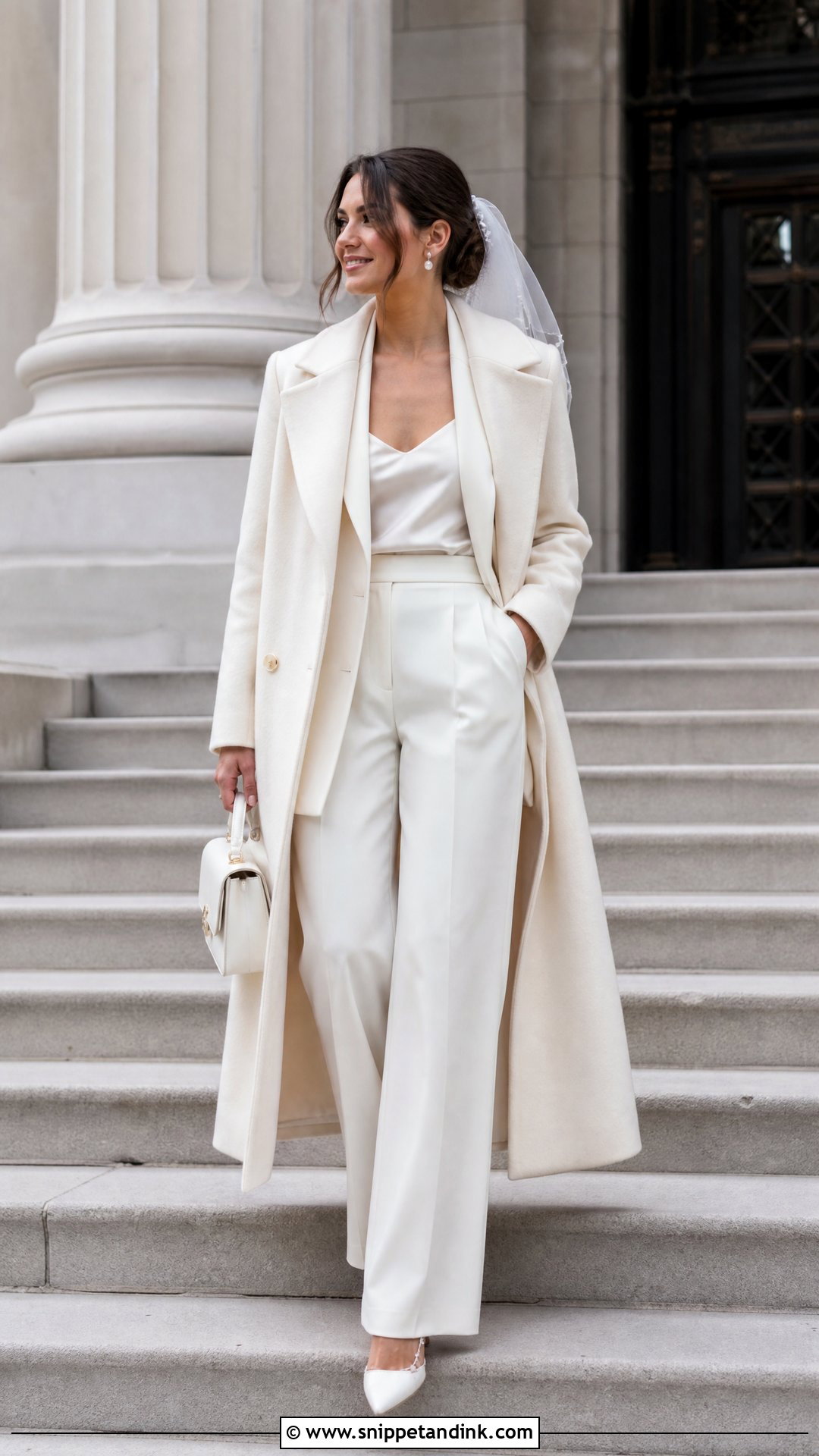
A tailored suit is the most practical courthouse outfit I know, and you’ll wear it again. Choose high-waisted ivory trousers with a straight or wide leg, a fitted satin camisole and a single-breasted blazer, then a long cream wool coat over the top for the steps and outdoor photos. Pointed pumps or heeled ankle boots keep it sharp, with pearl earrings and a structured mini bag. A short veil can tuck under a sleek bun. Two checks at the fitting: the blazer must button without pulling, and the coat should fall well past the hip so it doesn’t cut the trouser line in half.
16. Winter Bridal Jumpsuit With Cape
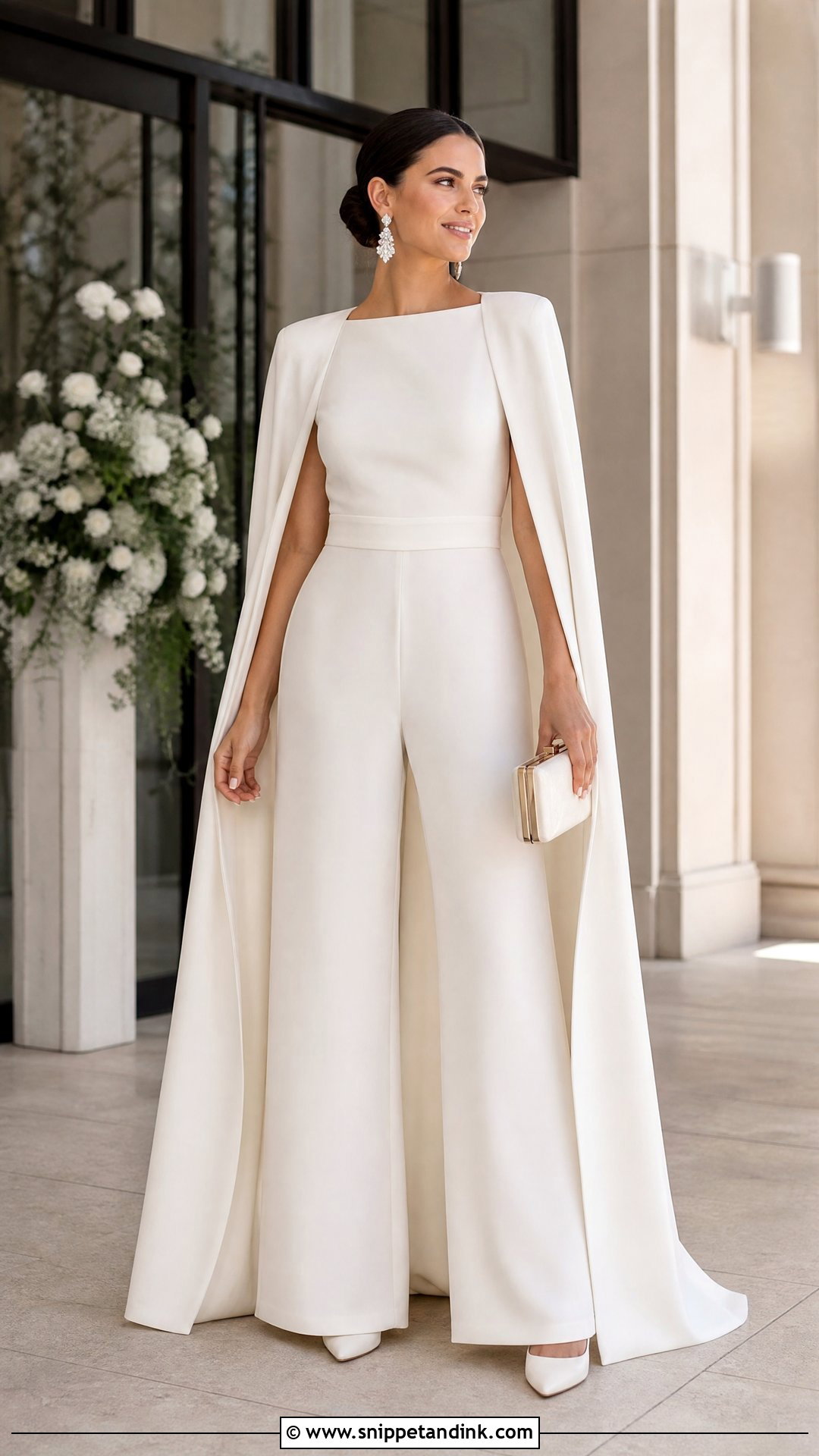
An ivory bridal jumpsuit with a detachable cape gives you a ceremony look and a dancing look in one piece. A fitted bodice, defined waist and wide-leg trousers keep it formal. Fabric weight decides whether it looks bridal or like eveningwear, so stick to heavyweight crepe or satin-backed fabric that drapes rather than clings. Wear the floor-length cape for the vows, then take it off for dinner. Statement earrings, a sleek ponytail or low bun, pointed pumps and a small clutch finish it. Hem the trousers in the exact shoes, because wide legs catch under a heel. Need more support? Look for internal boning or wear a structured bodysuit underneath.
17. Bridal Sweater And Satin Skirt Outfit
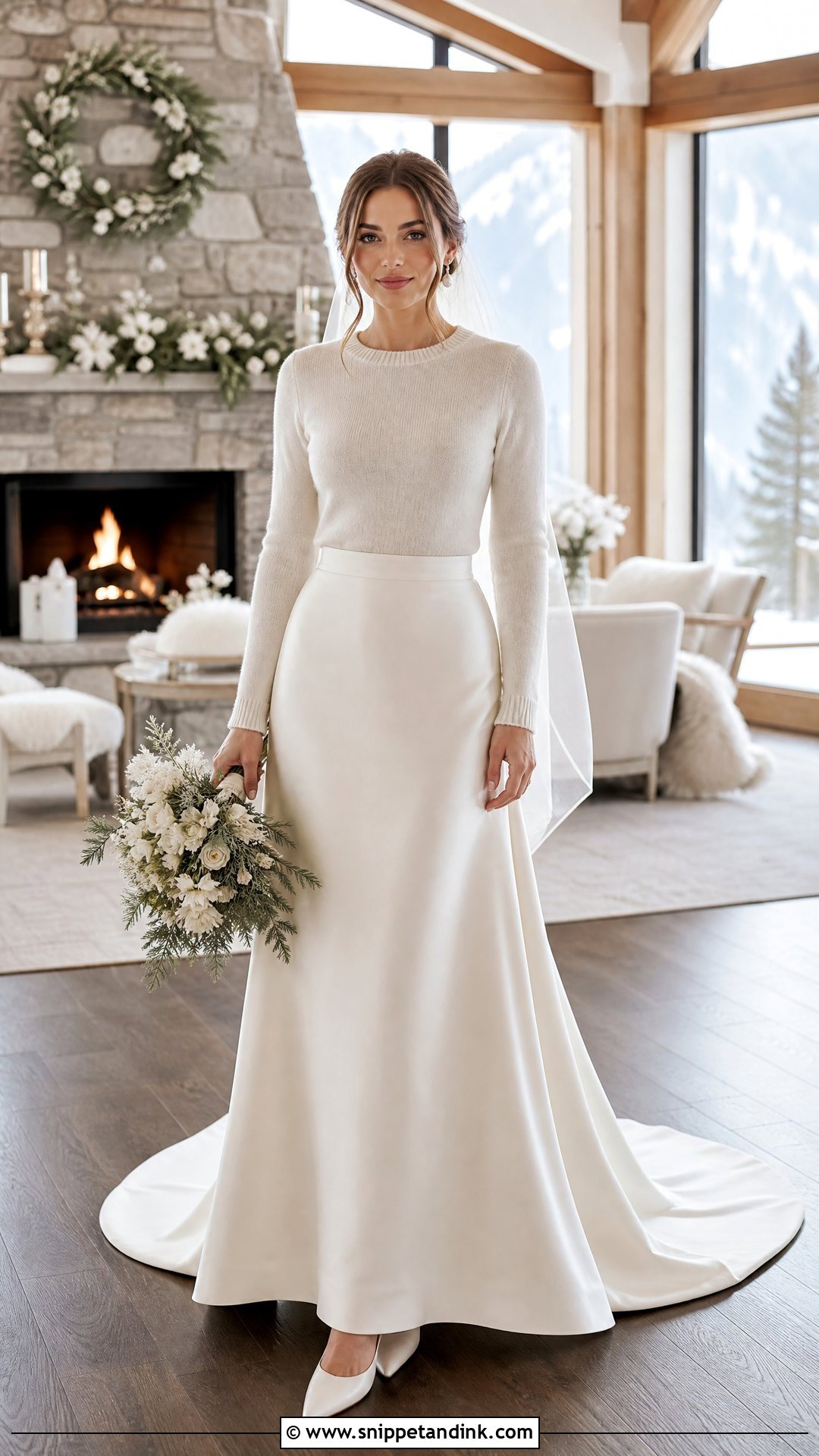
A soft bridal sweater and satin skirt is the outfit I suggest for small lodge or restaurant weddings where a gown would feel like too much. Choose a fitted cashmere or fine-knit sweater in ivory with a bateau, mock or draped neckline, and tuck it into a high-waisted satin A-line or column skirt with a short train. Pearl earrings, a simple veil and pointed pumps or sleek ankle boots finish it. If you belt it, match the belt to the skirt. Fine ribbing and fitted sleeves make the knit read as intentional. Test knit against satin before the day; wool on satin builds static, and the skirt can cling to your legs as you walk.
18. Silver Blue Winter Bridal Gown
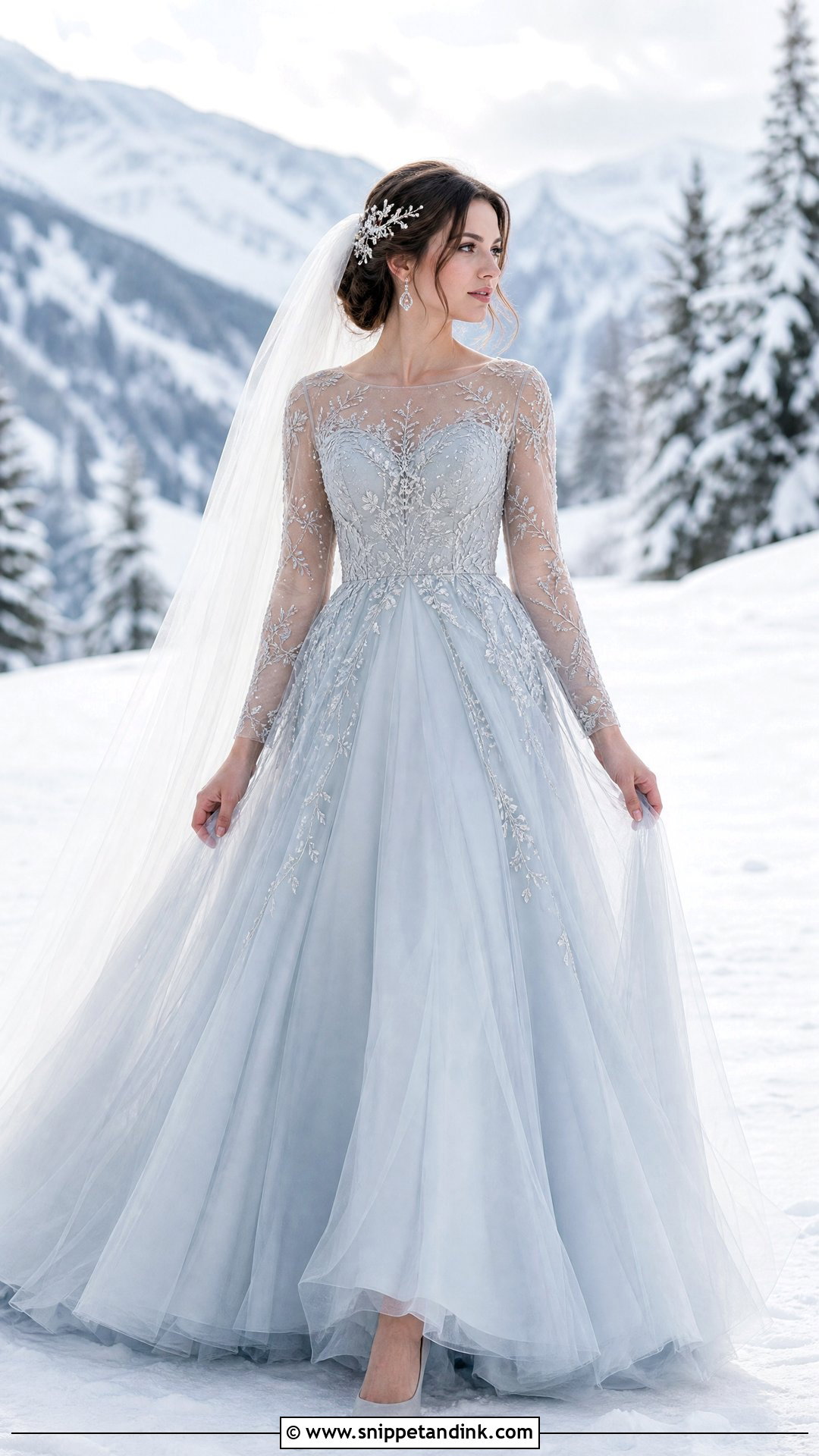
Silver-blue gives you colour while still reading as bride, but it’s the shade I’m most cautious with in photos. Under warm indoor bulbs it can drift towards grey, and in snow light it turns much colder. View the fabric in daylight and under artificial light before ordering. Go for an A-line with long illusion sleeves, delicate embroidery and soft tulle over an opaque lining. Silver earrings, cool crystal hairpins and pale grey or ivory closed-toe shoes match the undertone; avoid yellow gold here. An ivory veil anchors it as bridal, and keep the bouquet pale and neutral.
19. Winter Bridal Mini Dress With Tights And Coat
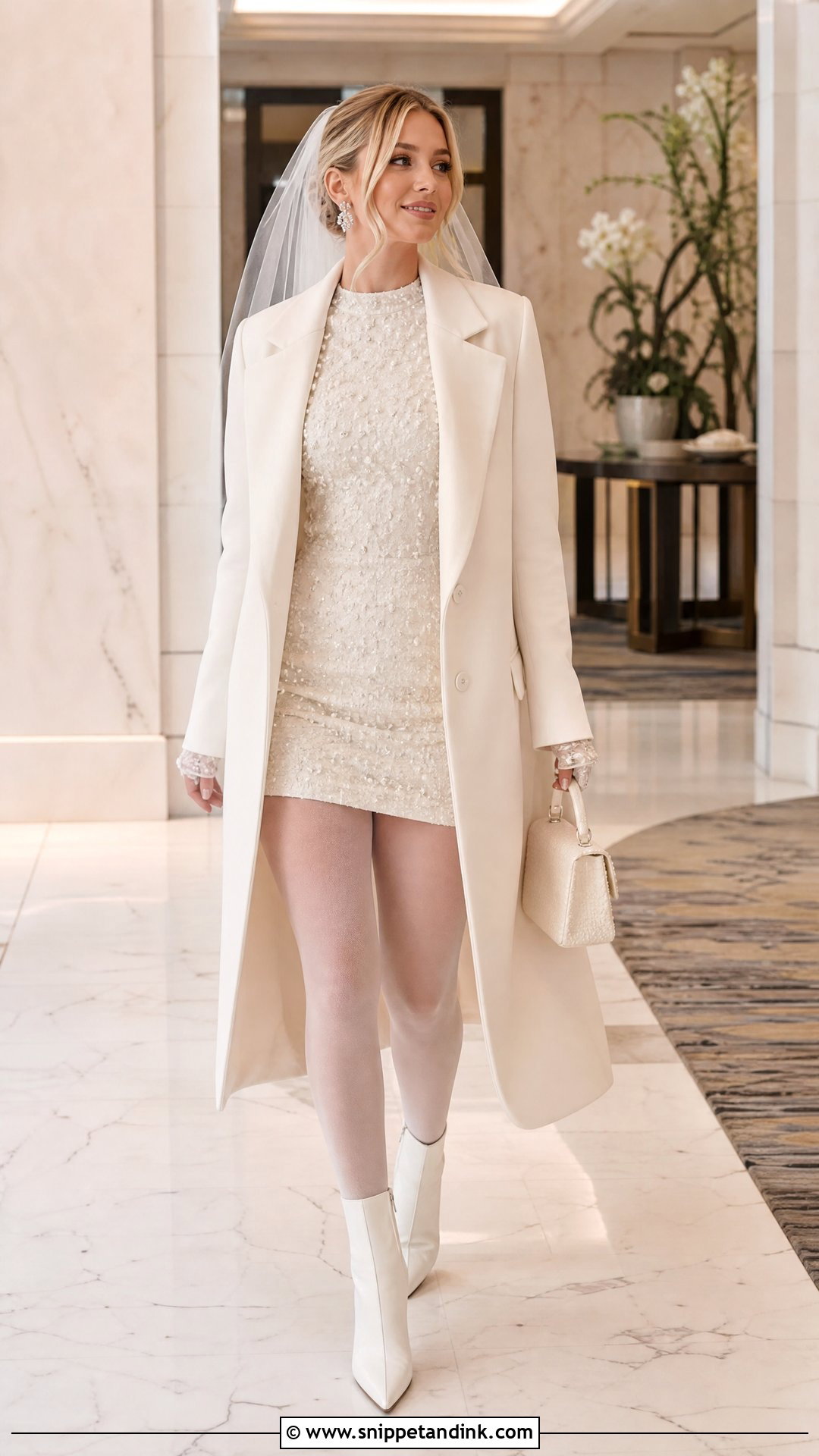
A bridal mini turns into a real winter outfit once you give it proper layers. Choose a long sleeve satin or embellished mini with a defined waist and a structured lining. Add sheer ivory tights, pointed slingbacks or ankle boots and a tailored knee-length coat for outdoor walking. Crystal earrings and a small top-handle bag are plenty, and a short veil or satin bow keeps it bridal. I like it most as a second outfit or for a courthouse. Sit and dance in it at the fitting, not just stand; minis ride up more than people expect. If the dress is heavily beaded, keep the coat and accessories plain.
20. Mountain Winter Bridal Gown With Hooded Cape
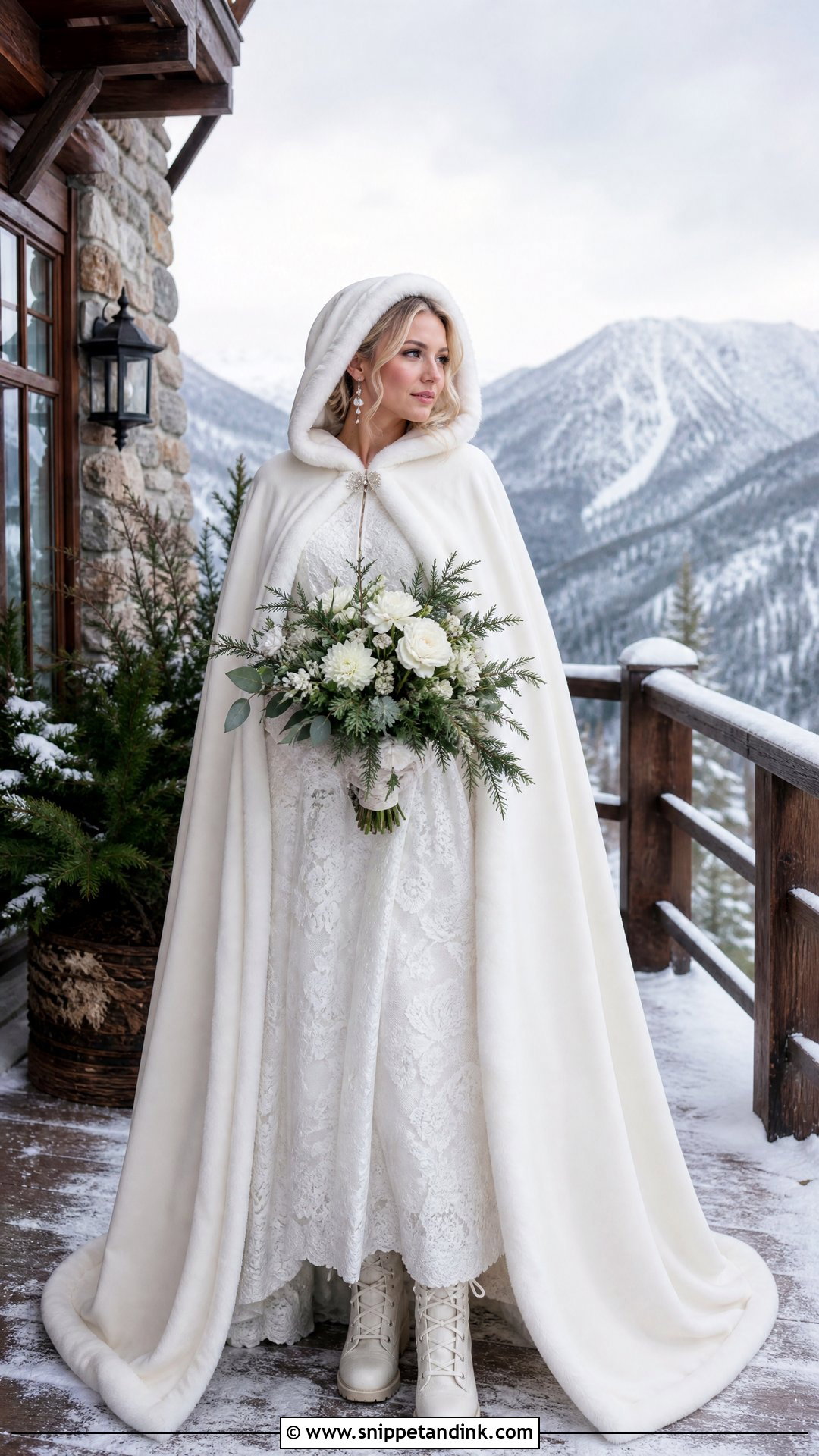
Mountain weddings need an outfit that genuinely keeps the cold out. Begin with a long sleeve satin or lined lace A-line with a secure bodice and a manageable train. Over it goes a full-length hooded cape in ivory wool, velvet or another substantial fabric. Insulated bridal boots with textured soles matter more than any accessory, since packed snow on a path is slick. Choose a low hairstyle that fits under the hood without flattening, pearl earrings, and a bouquet with enough colour to show against snow. I often take the hem up slightly for outdoor portraits. Keep hand warmers and dry shoes nearby, and take the cape off indoors to show the full gown.
Snow, Salt and Slush Between the Car and the Ceremony
The coldest part of a winter wedding is rarely the photos. It’s the stretch of wet pavement, gritted steps and car door you cross three or four times a day, and that’s where hems get ruined.
Protecting the hem
Road salt leaves white tide marks on satin and dark rings on velvet. Have someone lift the train over any gritted path, and keep a clean white sheet or a large garment bag in the car so the skirt never touches the floor mat. If a little slush does get on the hem, blot it with a clean damp white cloth and leave it to dry. Rubbing it spreads the stain and roughs up the fibres.
What goes in the car
- Flat boots or snow-grip overshoes, with your heels carried separately
- A small towel and a handheld steamer if the venue allows one
- Clear umbrella, so portraits can carry on through light snow
- Hand warmers tucked into the coat pockets, not against the gown
- Safety pins and a white chalk stick for small marks on ivory
Bring the Coat to the Last Two Fittings
Outer layers are usually bought separately and tried on separately, which is why so many first come together on the morning. A cape can drag the gown’s shoulders back, a coat can flatten a sweetheart neckline, and a bolero can sit a fraction off in colour once both pieces are in daylight.
I ask brides to bring every layer to the final two fittings, along with the actual shoes and underwear. Put it all on, then take the outer piece off and check the bodice for pressed creases. If the coat leaves a mark, your seamstress can loosen the coat’s lining or add a little room at the shoulders. It’s a small job weeks out and an impossible one an hour before the ceremony.
Test Every Layer Together Before the Day
A good winter bridal outfit is one you can stand outside in for twenty minutes and then dance in for three hours. Gowns, suits, jumpsuits, separates, capes and coats can all get you there, as long as the layers come off quickly and the fabric has enough body for the season. Closed-toe shoes, careful tailoring and secure outerwear matter as much as the dress once outdoor photographs are planned. At your final fitting, wear everything at once, coat and cape included, and walk, sit and climb a few stairs. Whatever you choose, from traditional to minimalist, that one rehearsal will tell you more than any mirror.


Leave a Reply