
A hooded bridal cape does a job a veil can’t: it keeps you warm on a cold church step, covers bare shoulders for a religious ceremony and still moves like fabric should on the walk in. I treat it as part of the dress, not an accessory, because a cape that fights the gown’s line is obvious in every photo. The ideas below run from light lace and chiffon to velvet and wool cloaks, plus a few in color. Before any of them, I look at three things: how much the fabric weighs on the shoulders, how the hood sits over the planned hairstyle and where the clasp lands on the neckline. Get those right and the rest is taste.
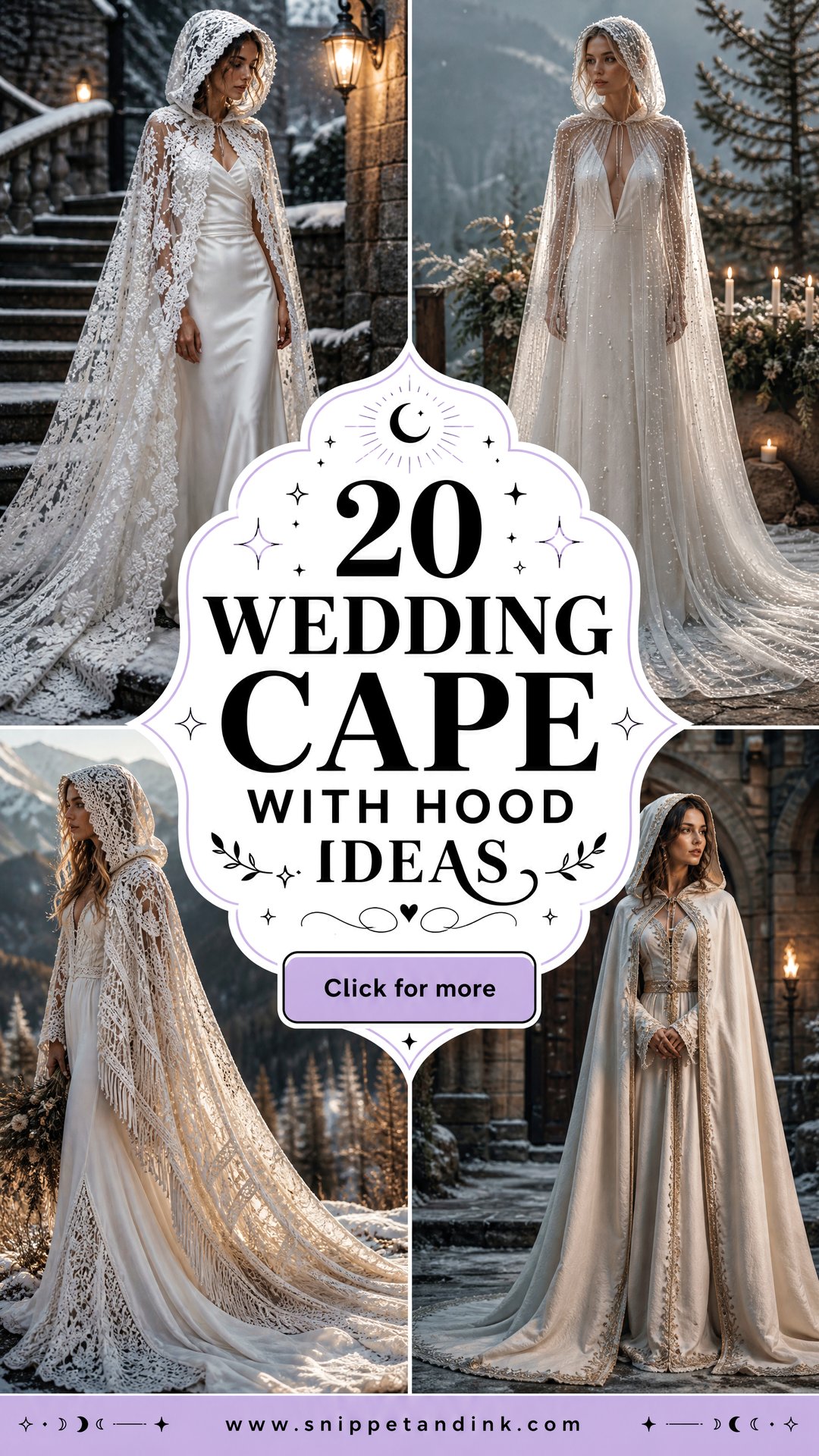
Measuring Cape Length Against Your Train and Your Height
Cape lengths are sold by name, and the names don’t account for how tall you are or how long your train runs. I measure from the shoulder point, where the cape will actually hang, not from the top of the head as you would for a veil.
- Waist or hip length sits roughly at the natural waist or upper hip. Good for tea-length and short dresses, and the easiest to dance in.
- Fingertip falls where your fingertips land with arms relaxed. It shows the whole skirt shape from behind.
- Floor length should just skim the floor in your wedding shoes. Measured in flats, it will look too short in heels.
- Chapel and cathedral lengths trail behind you. Set them a little shorter than the gown’s train so the skirt still fans out past the cape edge.
Heavy fabrics drop slightly once they’ve hung for a while, especially velvet and wool on the bias, so I hang a new cape overnight before any hem is set. Lightweight chiffon does the opposite and can lift in wind, which is why outdoor brides sometimes ask for a weighted hem.
1. Ivory Velvet Hooded Wedding Cape With Satin Ball Gown
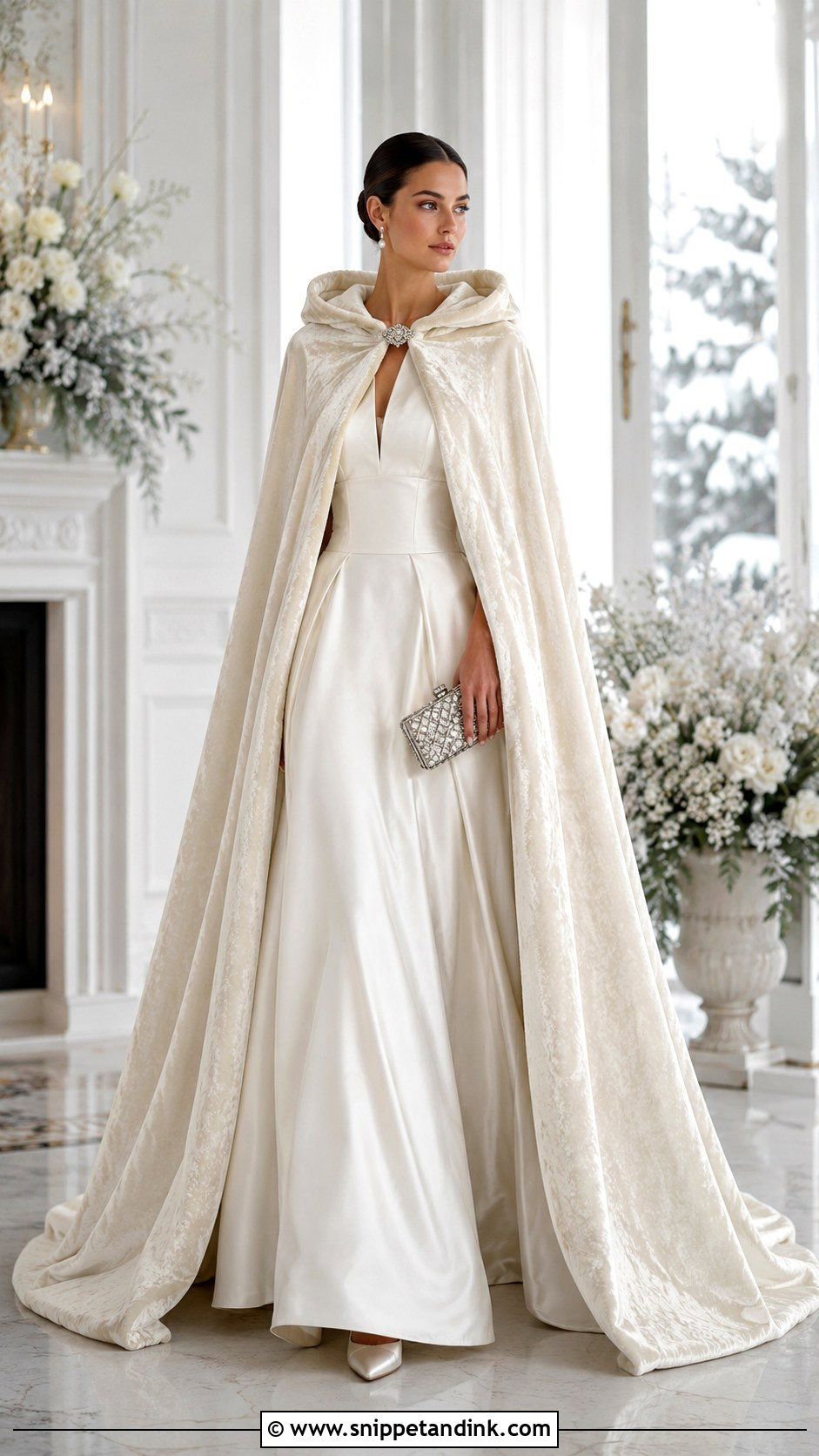
Velvet over satin is the winter pairing I’d start with, because the two textures read differently even when they’re the same ivory. Choose a structured satin ball gown with a clean neckline and fitted bodice, then a floor-length velvet cape cut slightly shorter than the train so the skirt still fans out behind you. Velvet is heavy at full length; I check that the cape’s weight sits on the shoulder seam and not on the clasp at the throat. Pearl earrings, a low bun, satin pumps and a small crystal clutch are enough. Ask for a roomy hood if your hair will be styled underneath. For outdoor portraits, fasten it at the collar and let the front fall open to show the gown.
2. Faux Fur Hooded Wedding Cape With Long Sleeve Gown
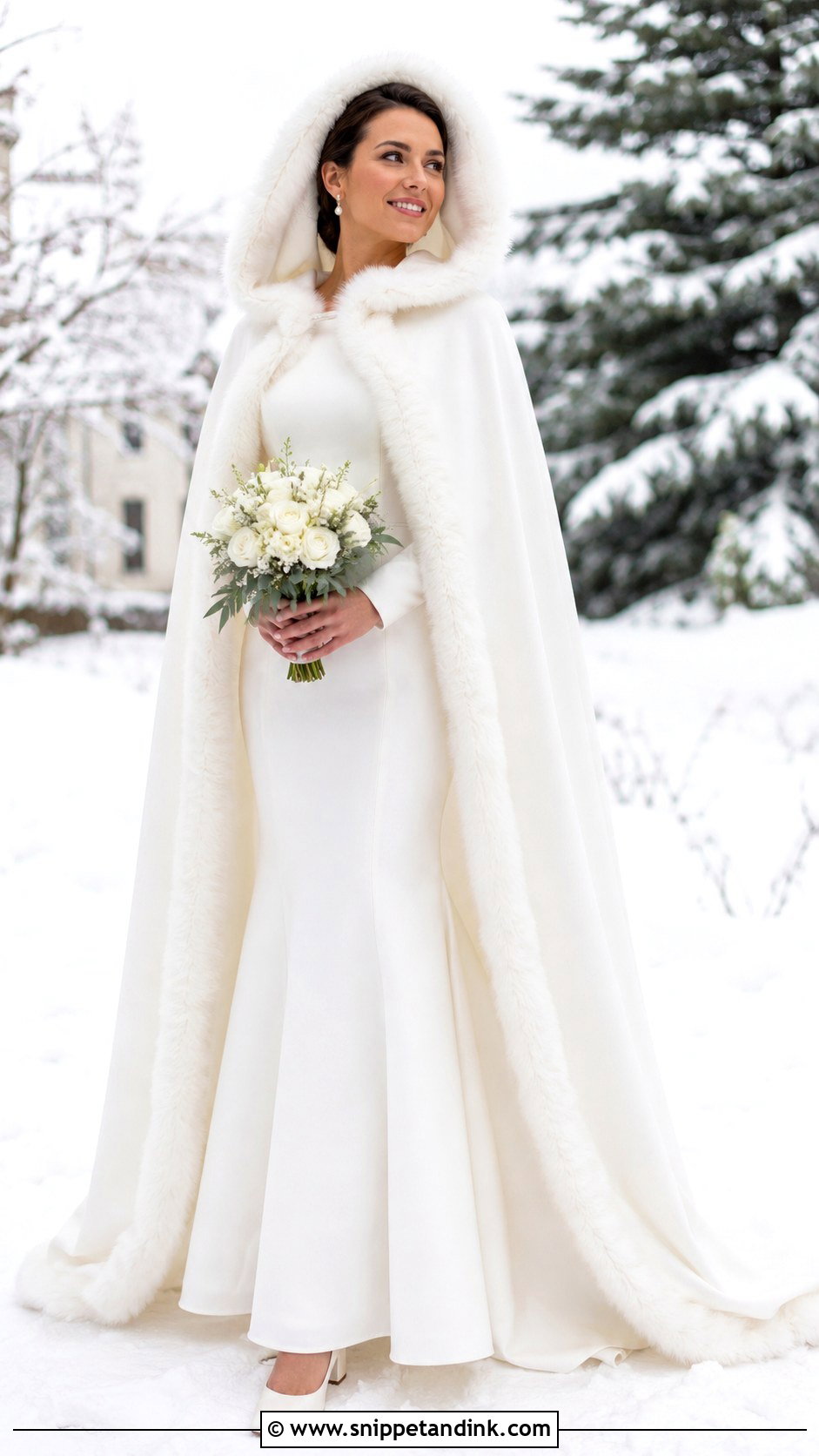
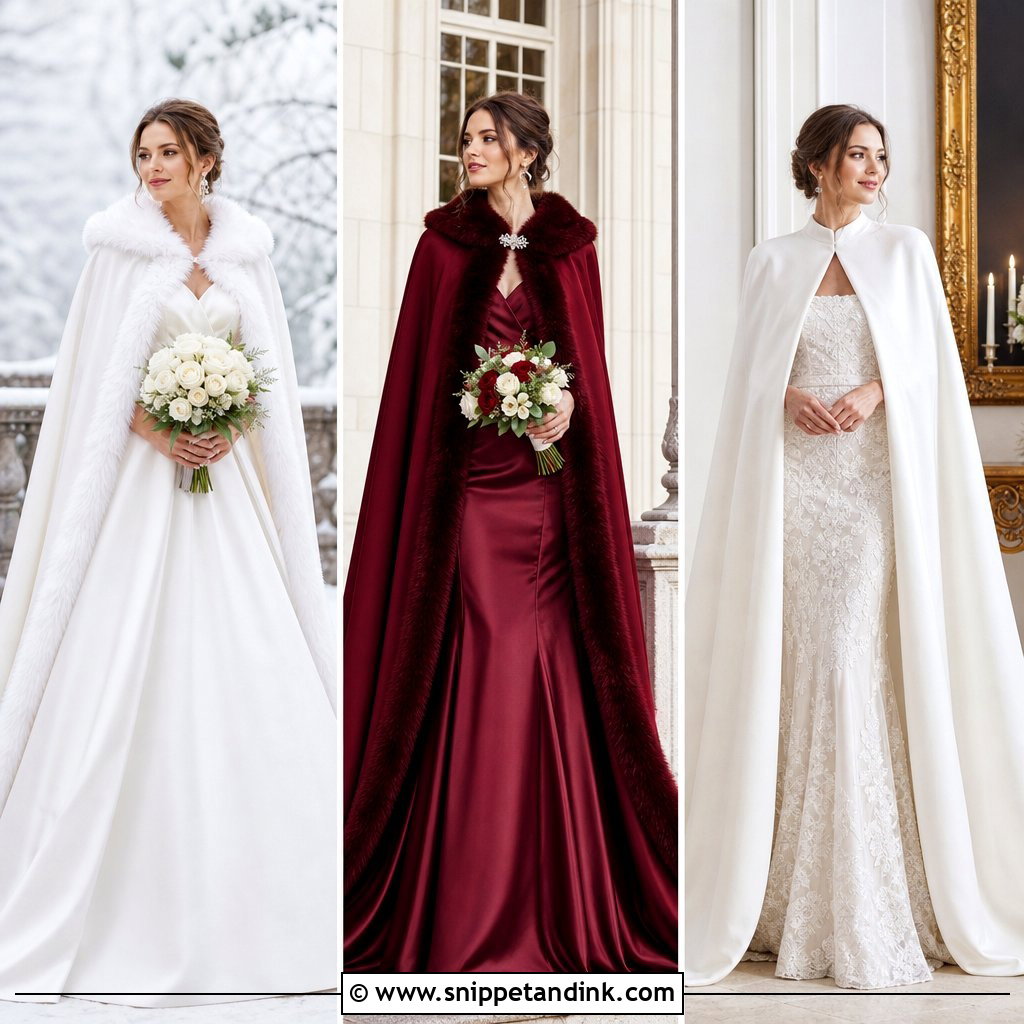
Snowy surroundings need actual warmth, and this is the one cape here that provides it. A lined satin or velvet cape with faux fur at the hood and front edge goes over a long-sleeve gown with a fitted waist and a gently flared skirt; anything fuller underneath and you’ll look like a bell. Good faux fur has a soft, uneven pile that moves. Cheap trim is dense and shiny, and it photographs like plastic. Closed-toe block heels, pearl drops and a textured white bouquet finish it. The closure should sit at the collarbone, not against the throat, so the fur doesn’t tickle every time you turn your head.
3. Lace Hooded Wedding Cape With Satin Slip Dress
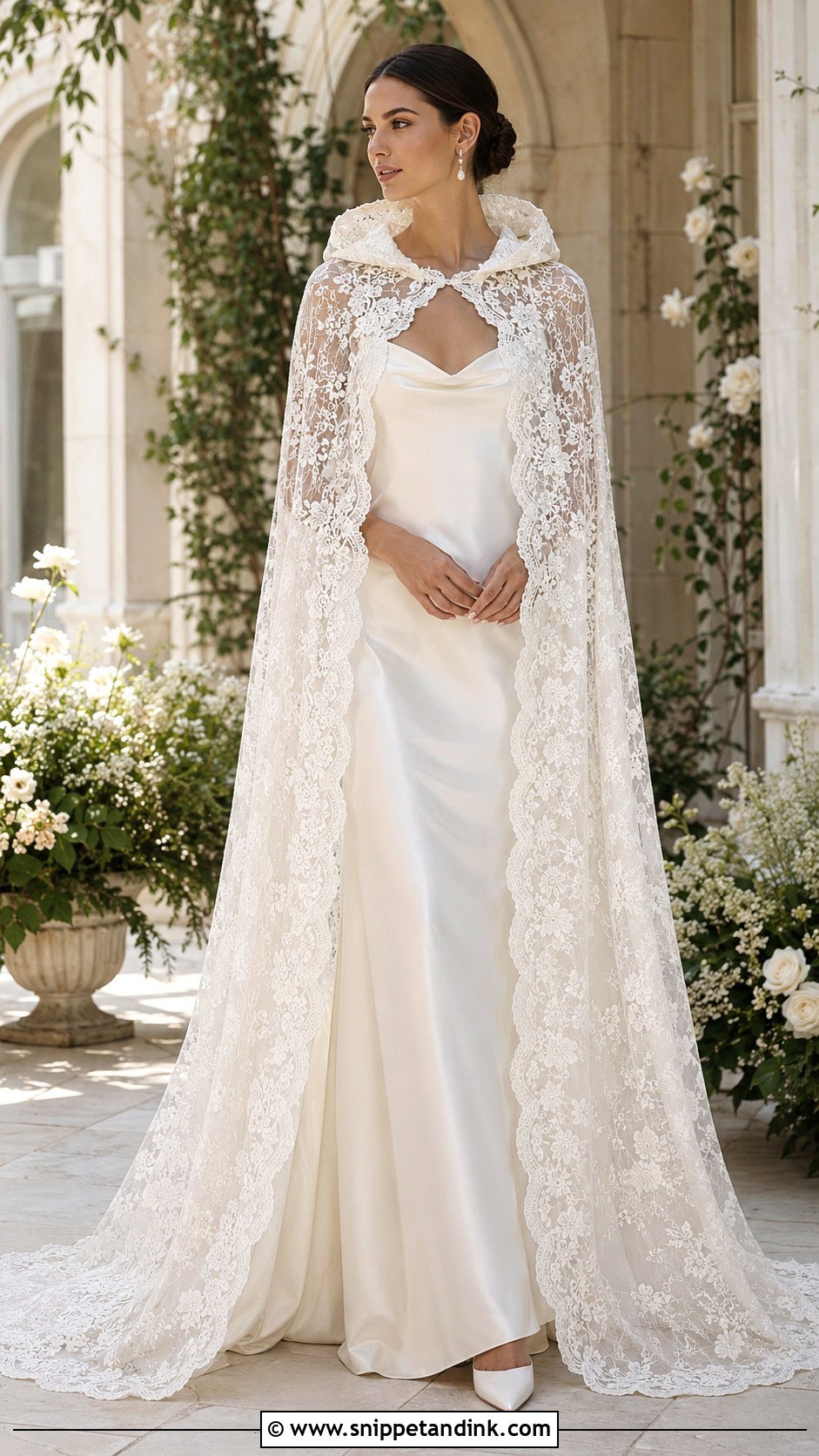
Lace reads best against something plain. A cathedral-length lace cape over a bias-cut satin slip lets the floral pattern show without any competition from the gown. I look at the edging before the body of the lace: a scalloped border should frame the hood, front opening and hem, and if it’s been cut and overlocked instead, the cape will look cheaper than it is. A hidden hook-and-eye keeps the neckline clean. Pointed heels, fine drops and a low chignon finish it. Lace gives almost no warmth, so save this for spring, early autumn or an indoor ceremony. It covers the shoulders like a veil but with a more defined shape.
4. Chiffon Hooded Wedding Cape With A-Line Dress
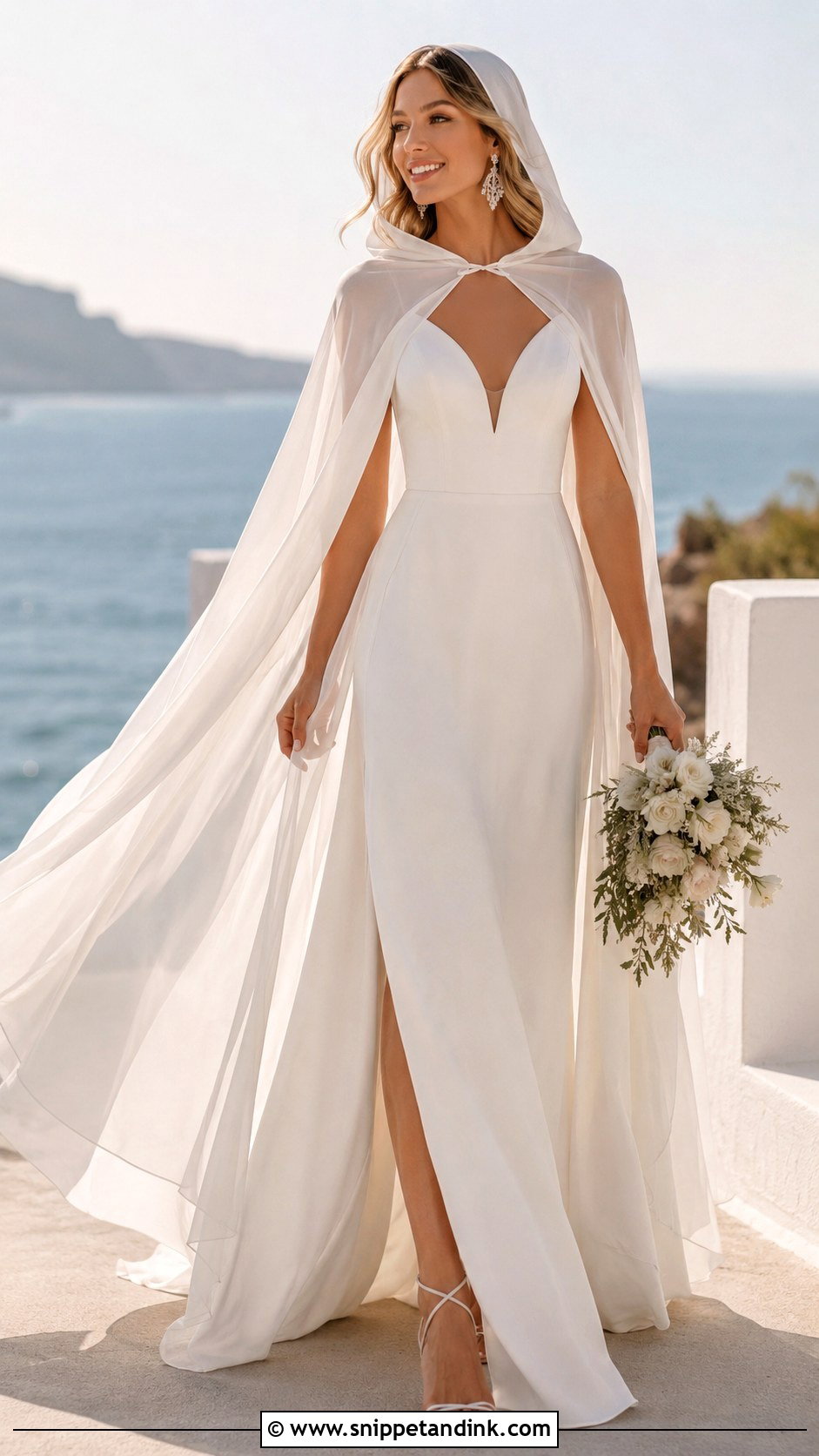
Chiffon moves with the smallest breeze, and that floating effect is the whole reason to choose it. A sheer chiffon cape over a sleeveless A-line gown lets the dress show through, and because both fabrics drape the same way, they behave as one outfit. Chapel length gives drama without dragging. Small lace appliques at the shoulders define the line; anything heavier pulls chiffon out of shape. Slim sandals, crystal earrings and a loose updo that fits inside the hood finish it. One warning from outdoor ceremonies: chiffon wraps around your legs and the bouquet in a coastal wind. A few discreet weights sewn into the hem help it fall back into place.
5. Pearl Tulle Hooded Wedding Cape With Minimal Gown
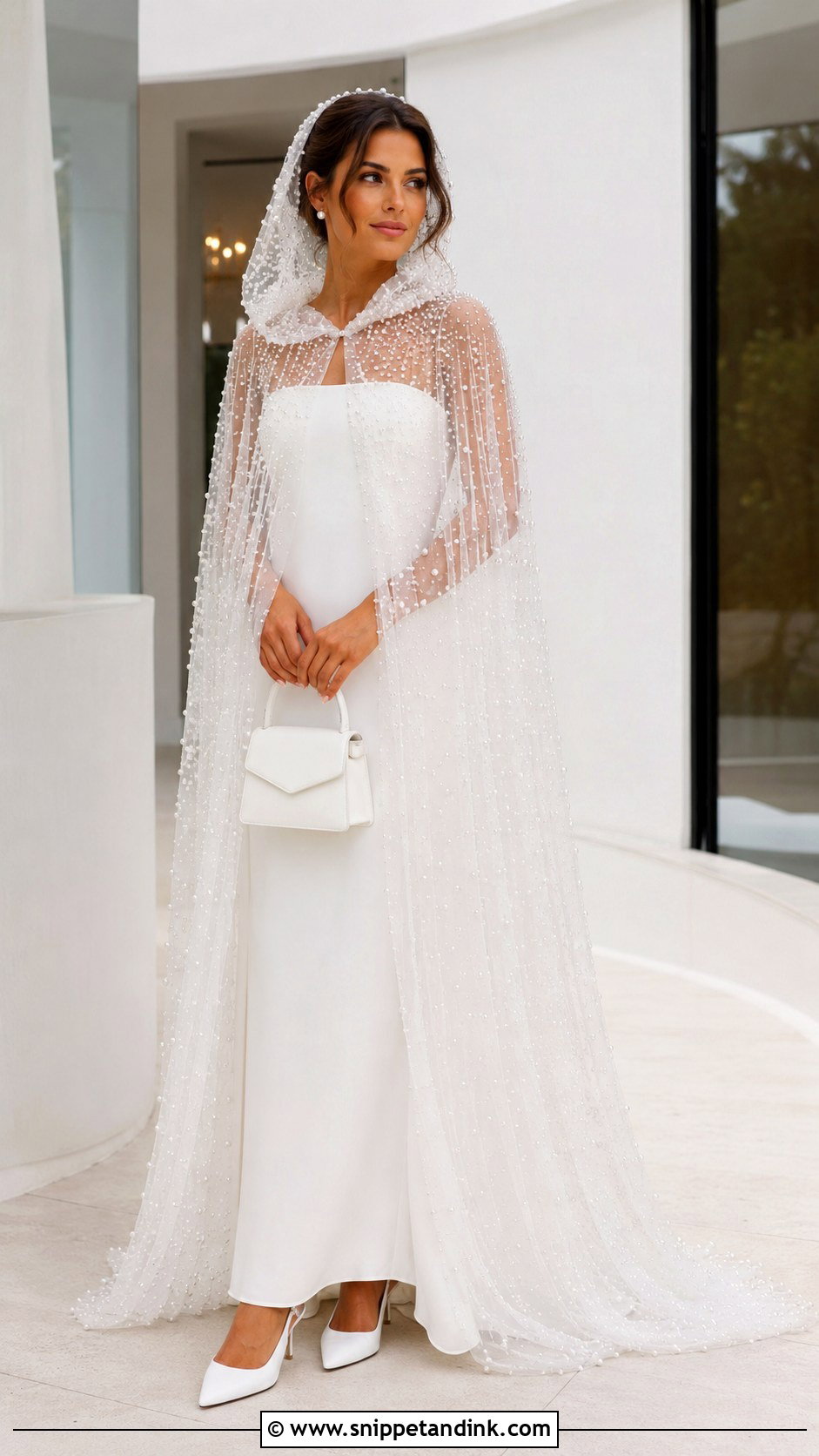
Pearl-dotted tulle adds texture to a very minimal dress. Start with a crepe column or a fitted gown with a square neck, then a sheer hooded cape with faux pearls spaced evenly and sparsely. Spacing matters more than people think: tulle is fine and soft, and too many pearls make it hang in heavy points instead of floating. Pearl studs, white slingbacks and a structured mini bag tie the accessories to the cape. Skip the beaded belt and the necklace. Fingertip or floor length gives enough impact without hiding the dress. I’d point modern brides who like clean shapes but still want something traditional at this one.
6. Floral Hooded Wedding Cape With Simple Sheath Dress
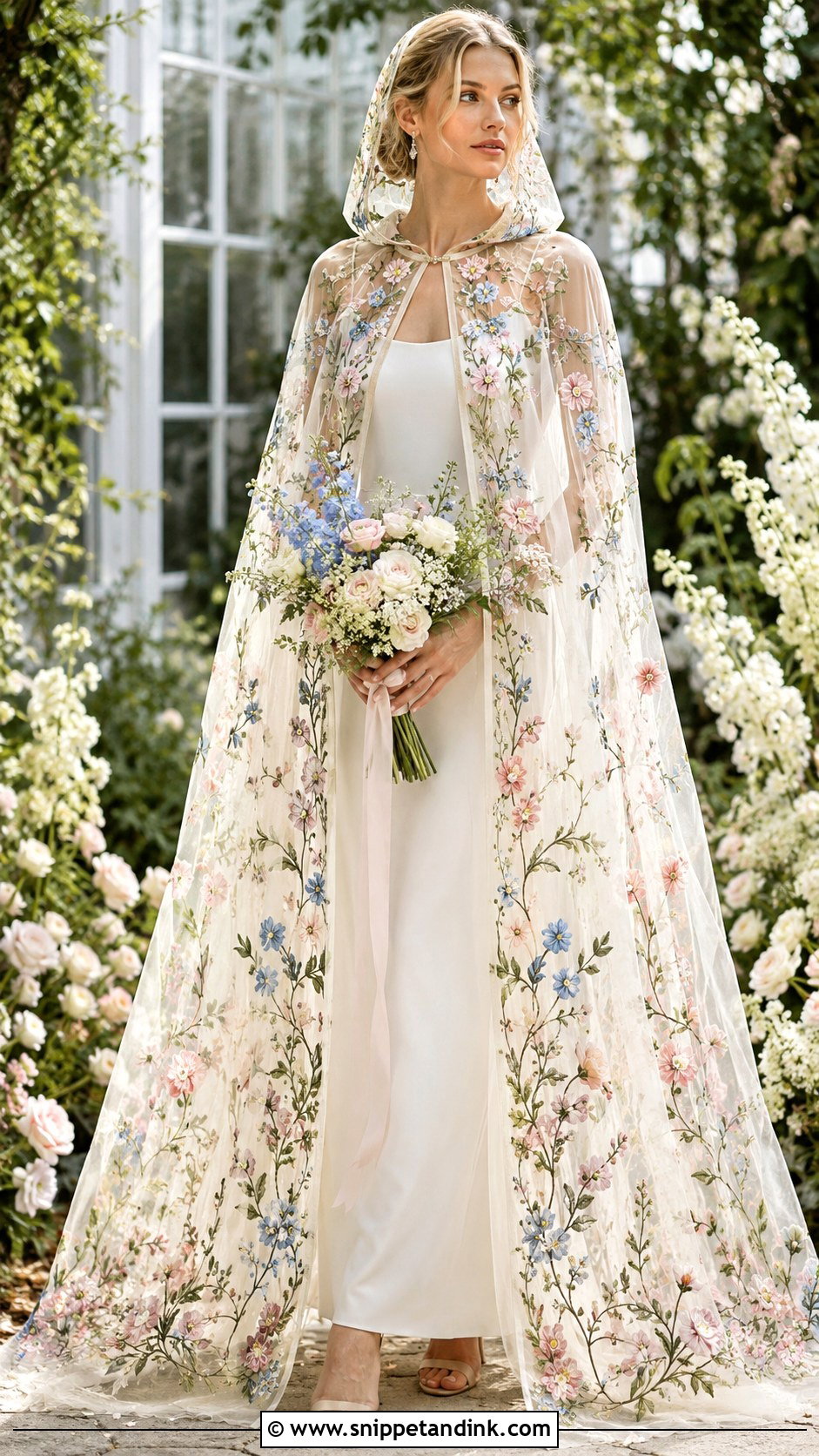
Colored embroidery gives a hooded cape personality. A sheer ivory cape worked with soft pink, blue or green flowers over a simple sheath dress lets every bloom show. I prefer the embroidery concentrated along the edges, so the cape frames the dress instead of covering it in pattern. Leave the hood unlined; lining it hides the flowers right where they sit next to your face. Understated earrings, neutral heels and a bouquet that repeats one or two of the thread colors pull it together. It suits a garden or woodland setting, where handwork and natural color look at home.
7. Short Velvet Hooded Wedding Cape With Tea Length Dress
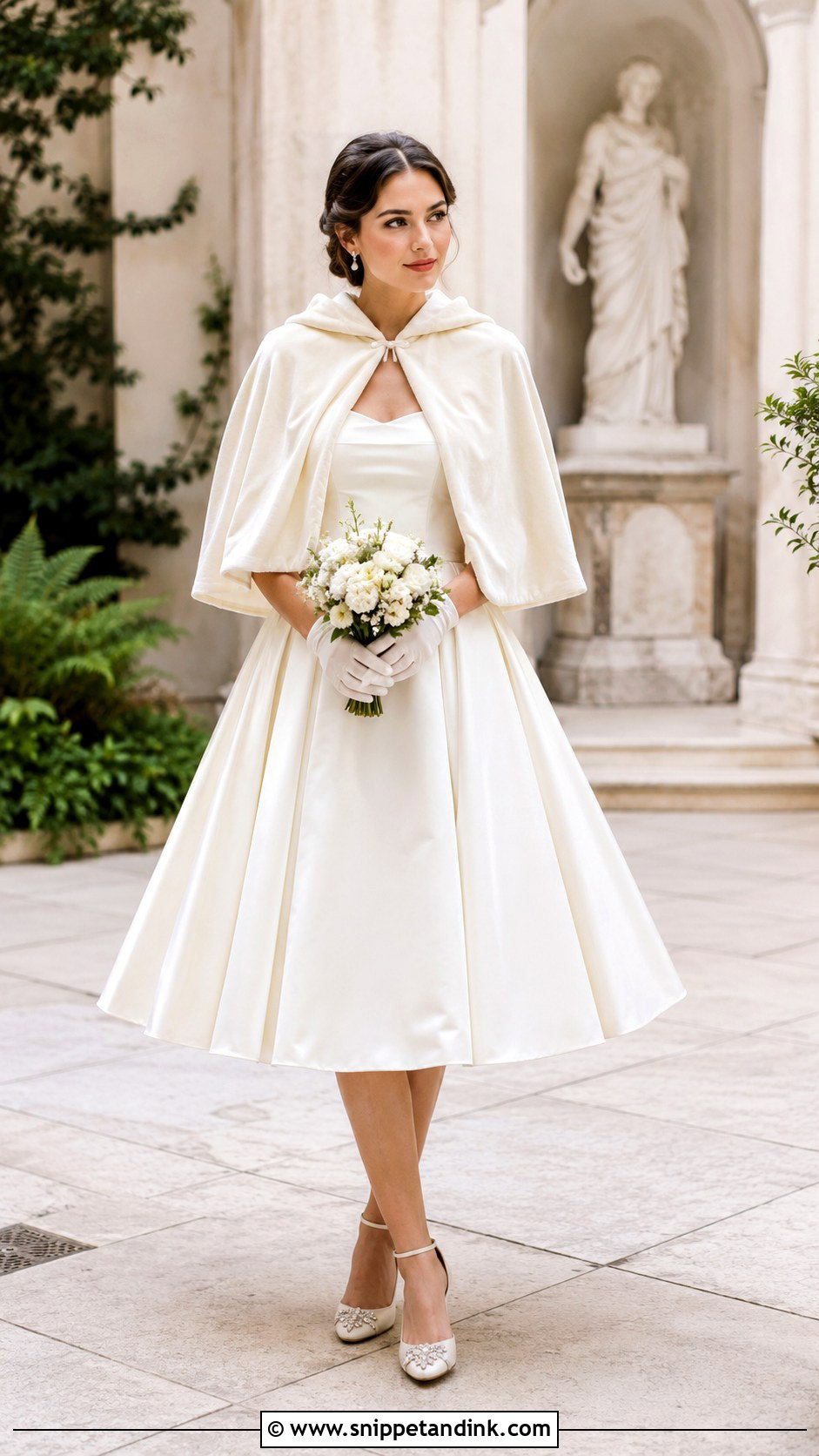
Short capes are underrated. Ending at the waist or upper hip, an ivory velvet cape keeps your shoulders warm and leaves the full midi skirt of a tea-length dress completely visible. Pointed pumps or ankle-strap heels lengthen the leg, with pearl earrings, short gloves and a compact bouquet for a vintage finish. The fit across the shoulders is what I watch here; a short cape that’s too wide sticks out like a shrug. Close it with one fabric-covered button or a small clasp, and keep the hood modest, since an oversized one overpowers a shorter outfit. You can dance in it, which you can’t say about most of this list.
8. Wool Hooded Wedding Cape With Crepe Column Gown
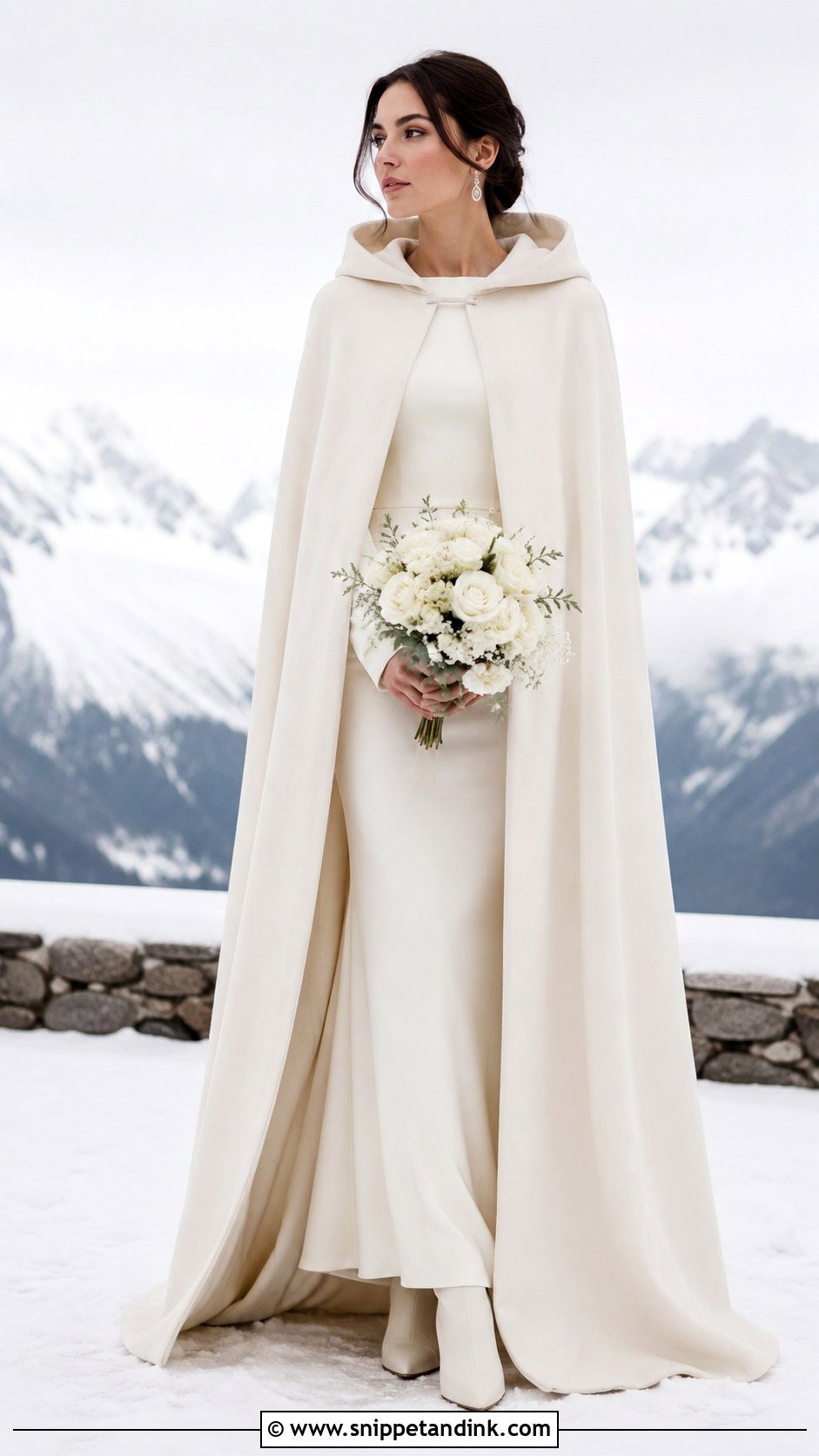
Wool is the most practical outer layer here and the easiest to get wrong. A full-length ivory wool hooded cape over a fitted crepe column with long sleeves or a high neck stays modern; over a full princess gown it starts to look like a costume. Choose a lightweight wool blend with a smooth face and a full lining, otherwise wool fibers catch on lace and tulle underneath. Hidden arm slits are what I ask for most often, so you can hold the bouquet without the front falling open. Leather pumps or neat ankle boots for wet ground, silver earrings and a simple white bouquet. The shoulder line needs tailoring; an off-the-peg wool cape rarely sits right.
9. Silk Hooded Wedding Cape With Mermaid Dress
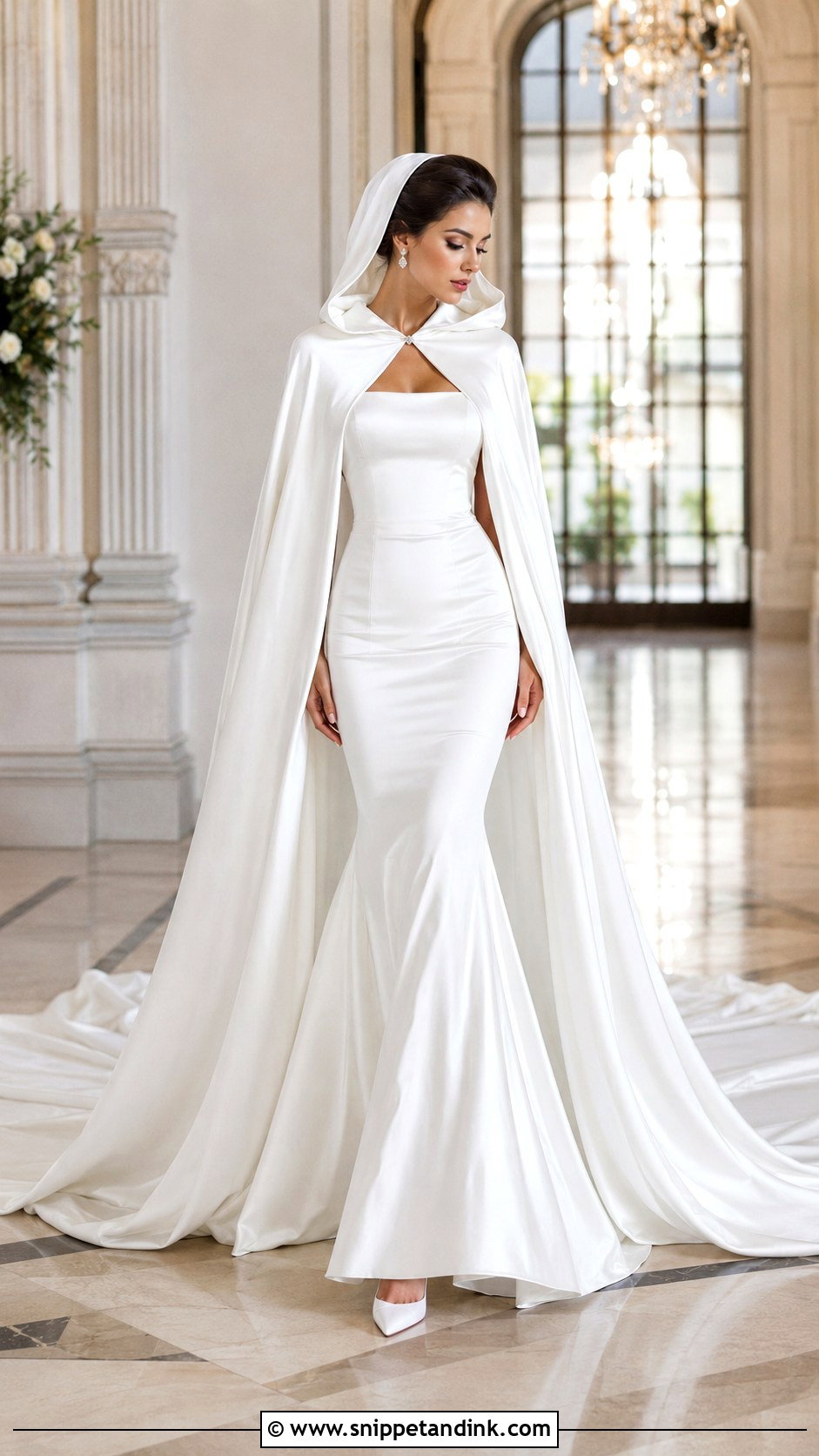
Silk and a mermaid gown make drama out of movement rather than decoration. Choose a fluid silk or silk-blend cape from shoulder to cathedral length over a fitted mermaid dress with a clean bodice and a flare below the knee. The cape must open fully at the front, or it hides the shape that makes a mermaid worth wearing. Delicate earrings, pointed satin heels and an elegant updo, with a small covered clasp at the neck. Silk creases and snags easily. I always do a run-through with the cape over the actual gown before the day, because beaded bodices can pull threads in silk the first time it slides across them.
10. Blush Hooded Wedding Cape With Ivory Wedding Dress
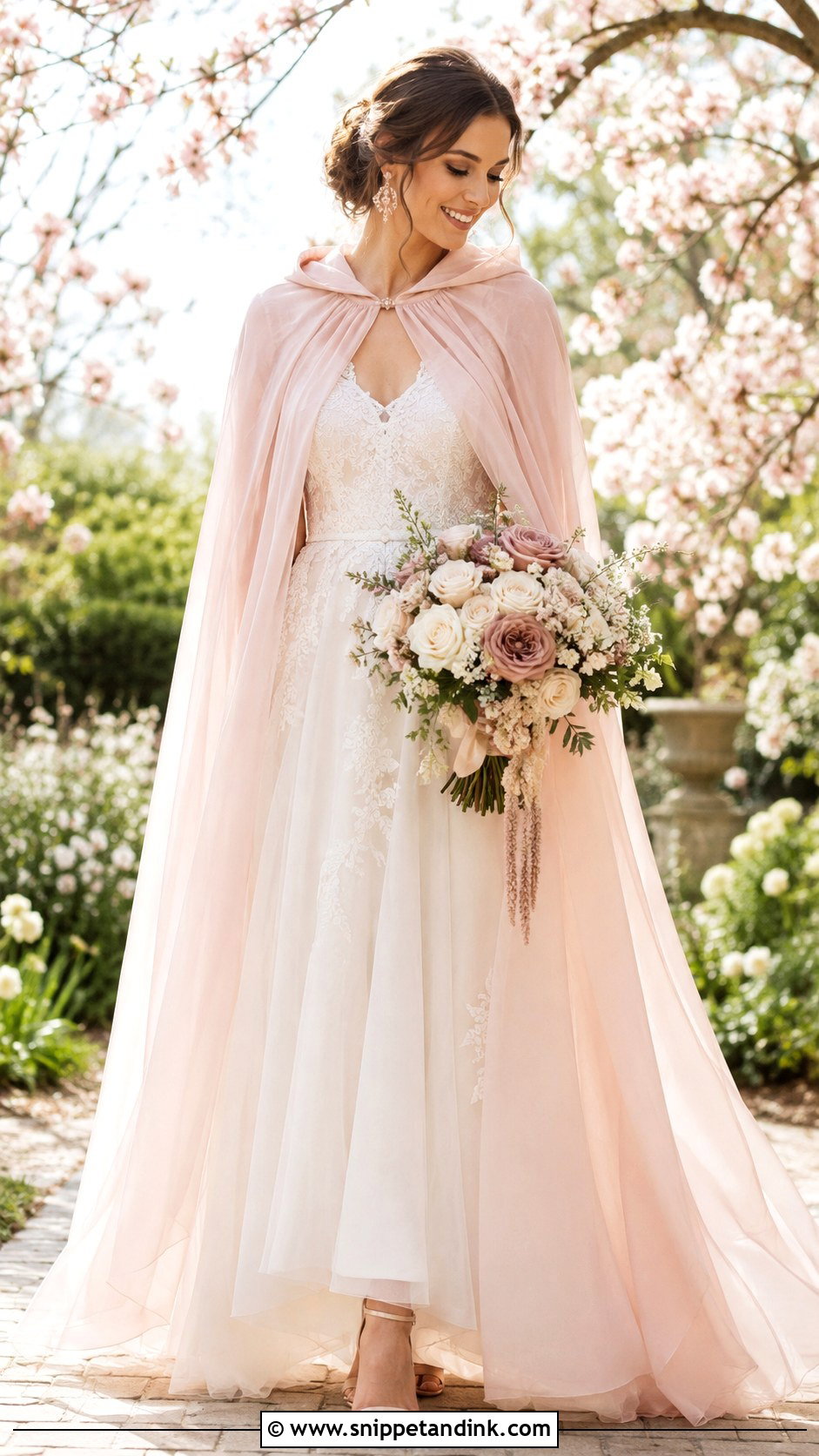
Blush is a quiet way out of an all-white outfit. A pale pink chiffon, tulle or light velvet cape over an ivory A-line still reads as bridal while adding depth. The shade has to match the gown’s undertone. Cool pinks sit well beside a bright ivory; peach-blush belongs with warmer cream. I hold both fabrics against the bride’s face near a window before choosing, because blush that’s wrong for your skin makes you look tired in photos. Rose-gold earrings, nude heels and cream and dusty pink flowers connect the colors. Keep the trim minimal and let the color do the work. Spring gardens and soft indoor rooms suit it best.
11. Blue Hooded Wedding Cape With White Ball Gown
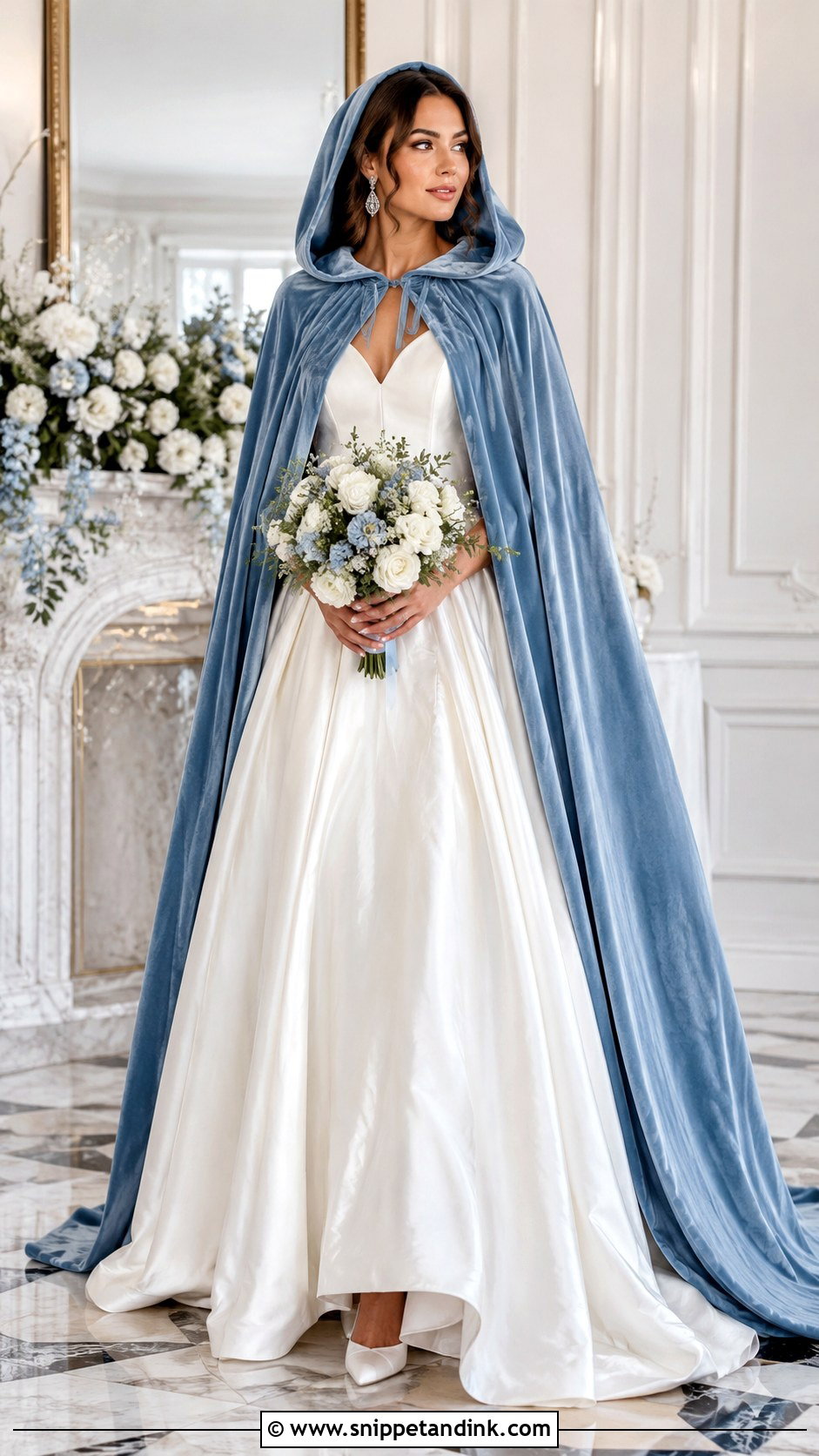
Powder blue gives you a touch of color without taking over the outfit. Pair a blue velvet or chiffon cape with a white ball gown that has a clean bodice and a softly layered skirt, then silver jewelry, white pumps and a bouquet with a little blue in it. Season decides the fabric: medium or full-length velvet for cold weather, sheer chiffon in spring or summer so the gown shows through. Don’t add other strong colors. Blue only works as the single accent. A satin-covered clasp or small crystal closure finishes the neckline. Pale blue shifts toward grey in shade, so I check the swatch outdoors if the ceremony is outside.
12. Green Velvet Hooded Wedding Cape With Ivory Gown
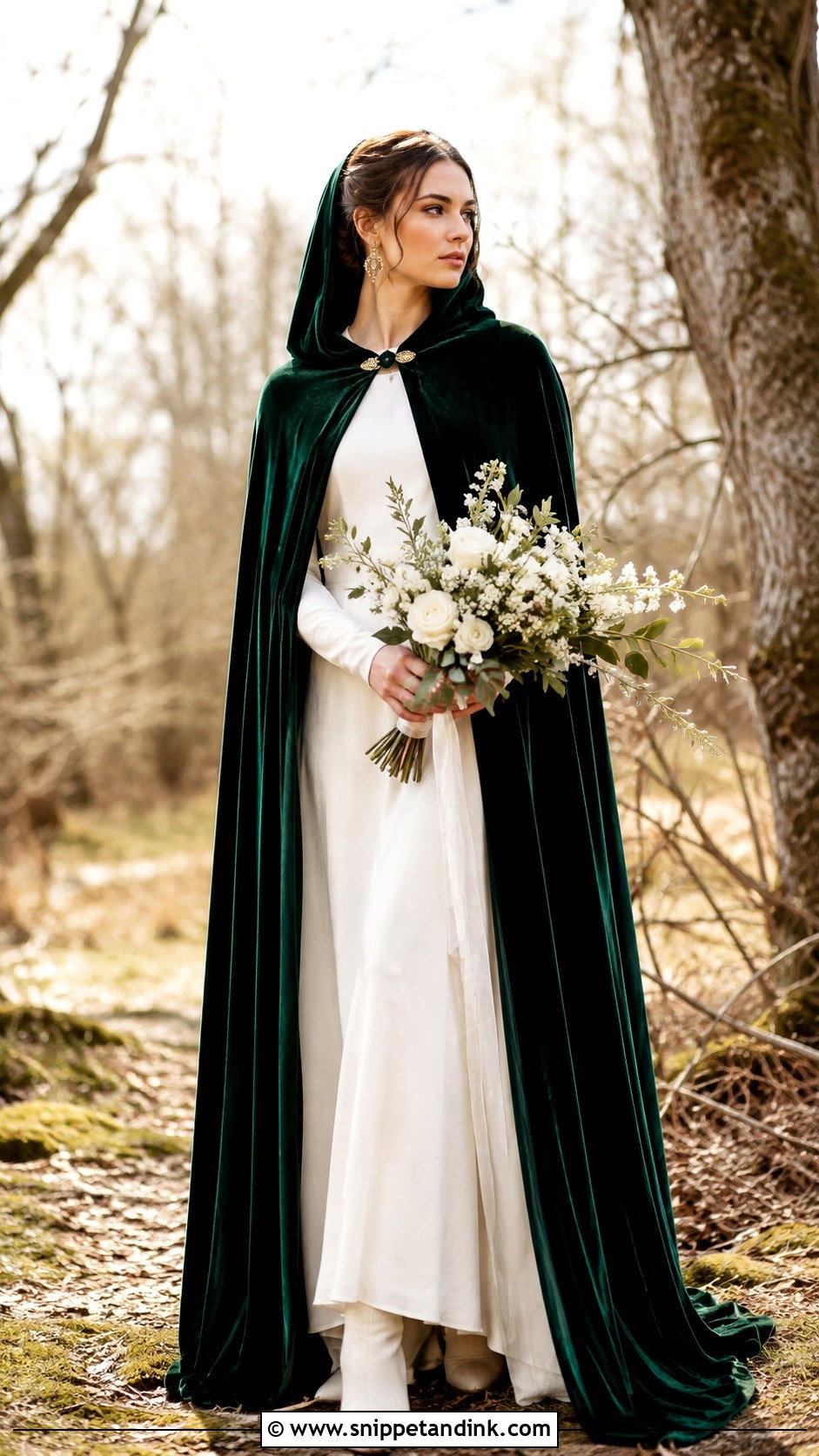
Emerald or forest-green velvet gives a bride real presence without needing an elaborate dress. A floor-length green cape over a plain ivory gown with long sleeves and a soft skirt works because the gown stays quiet. Gold earrings, ivory boots and a bouquet of white flowers with greenery balance the strong outer layer. I insist on a satin lining here. Unlined velvet grips delicate dress fabrics and twists the cape off-center as you walk. A full circular cut moves gracefully and keeps weight evenly across the shoulders. Woodland, mountain, historic and autumn weddings all suit it.
13. Black Lace Hooded Wedding Cape With White Slip Dress
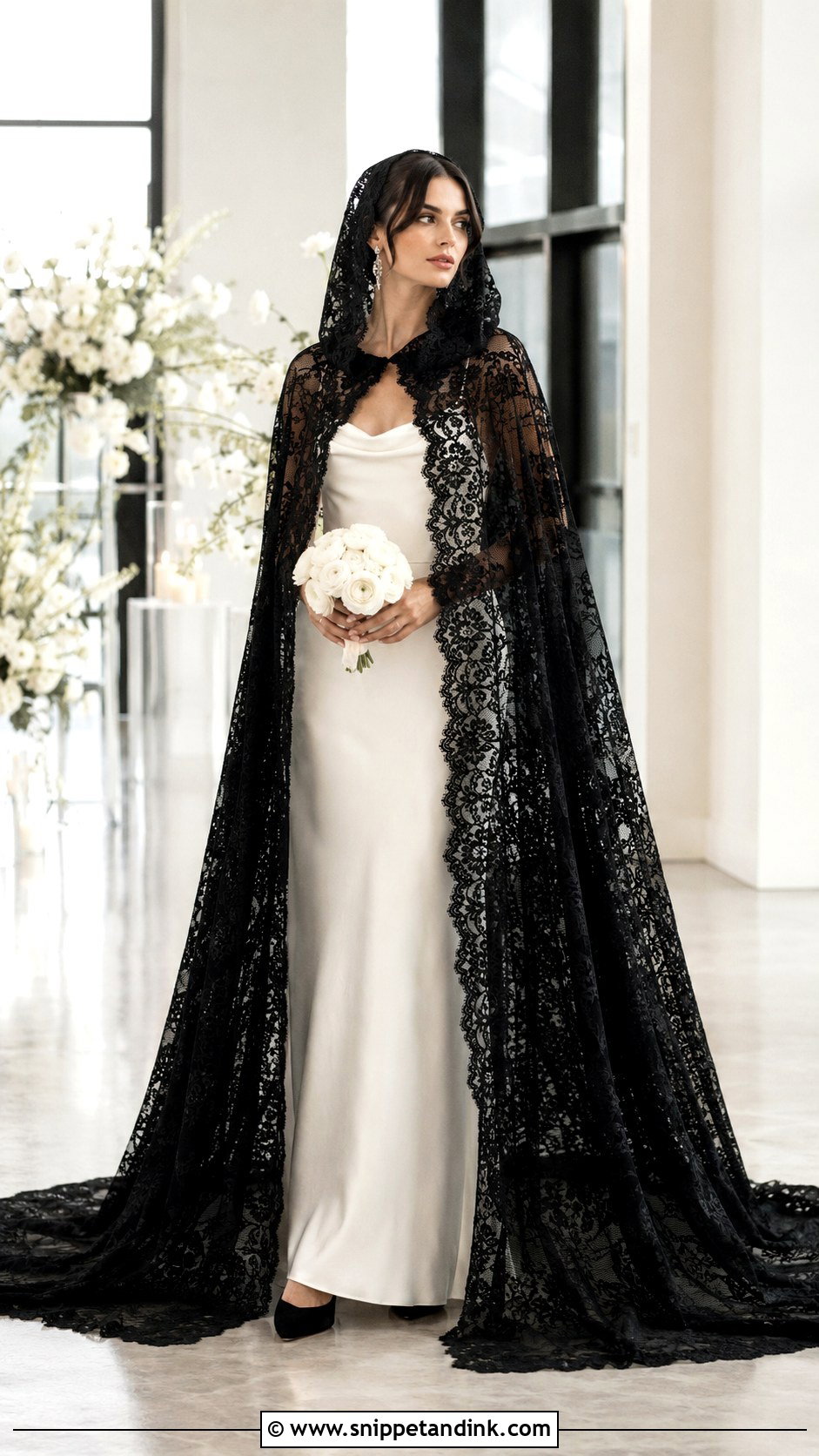
Black lace over white is the boldest pairing here, and it depends on restraint everywhere else. The dark floral pattern stands out sharply against a white or ivory slip, while the sheer lace stops it feeling heavy. Fit it closely at the shoulders, leave the front open and let a long hem trail. Black pointed heels, crystal earrings and a small bouquet of white flowers complete it. Keep makeup and jewelry refined, or the contrast starts to look theatrical. A scalloped edge framing the hood is worth paying for. Check how the families feel about black first; some will see it as a fashion choice, others as mourning. Evening ceremonies and modern venues suit it best.
14. Silver Hooded Wedding Cape With Beaded Gown
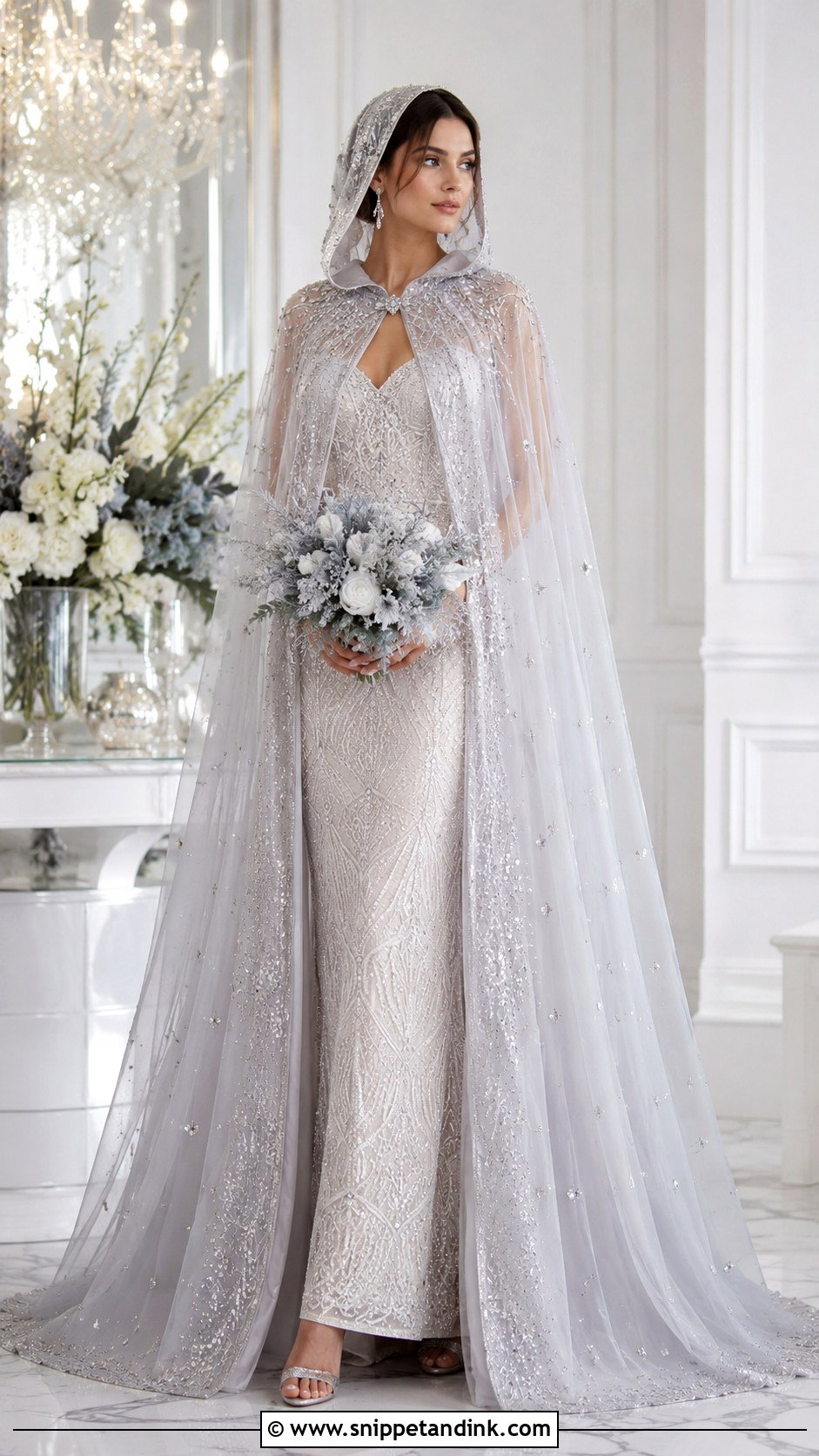
Silver catches light, so scatter it. A pale silver tulle cape with sparse crystals, metallic embroidery or tiny sequins over an ivory gown with fine beading on the bodice or sleeves looks expensive; dense sparkle top to bottom looks like a costume. The detail I check is undertone. Bright silver beside antique-gold beading clashes badly up close, so I compare the cape against the gown’s beads in daylight. Silver sandals, small crystal earrings and a cool-toned bouquet complete it. The hood should stay soft and fold naturally around the face. Bright interiors show this cape off well, since the reflections need light to work.
15. Boho Lace Hooded Wedding Cape With Flowing Dress
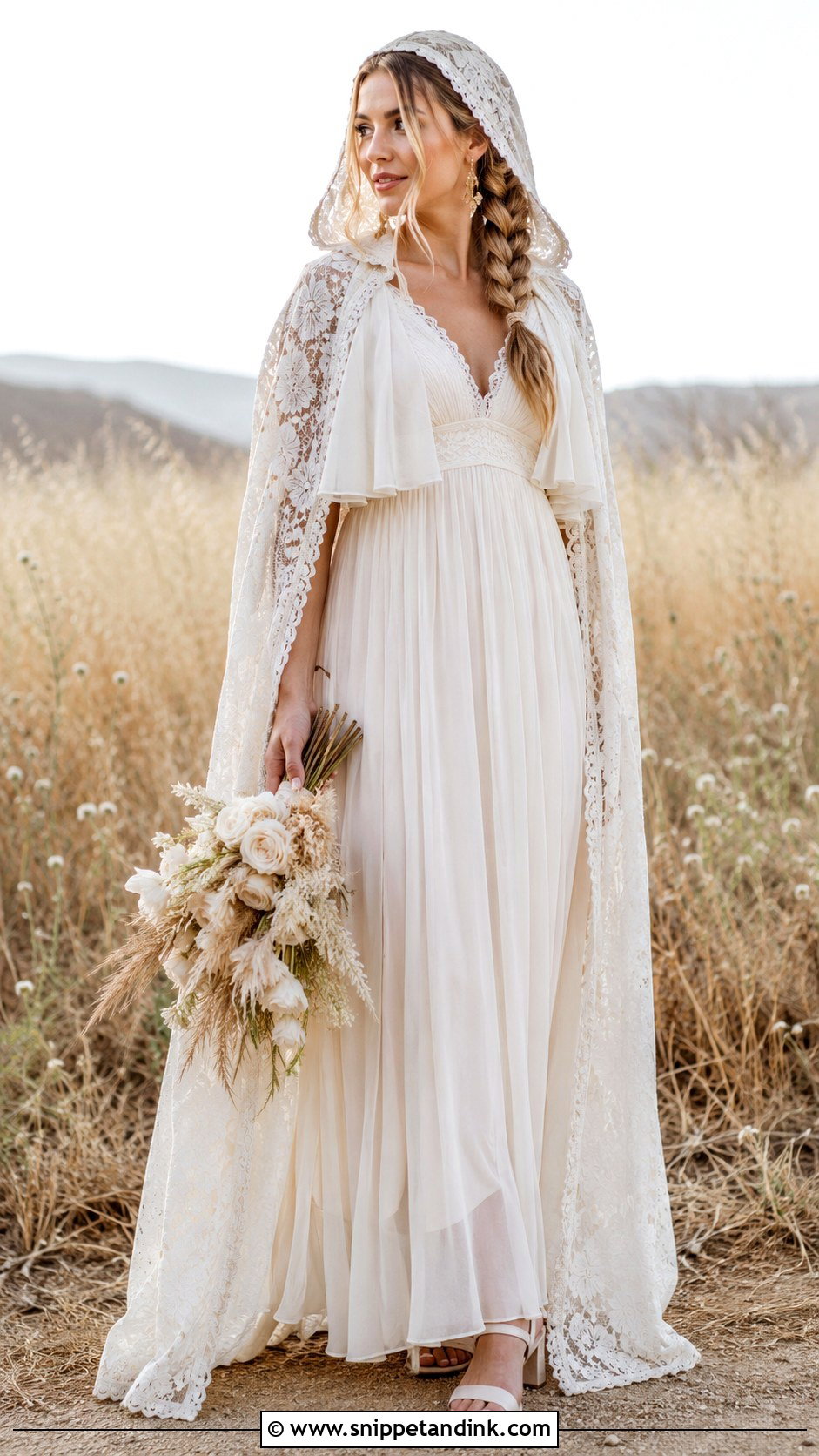
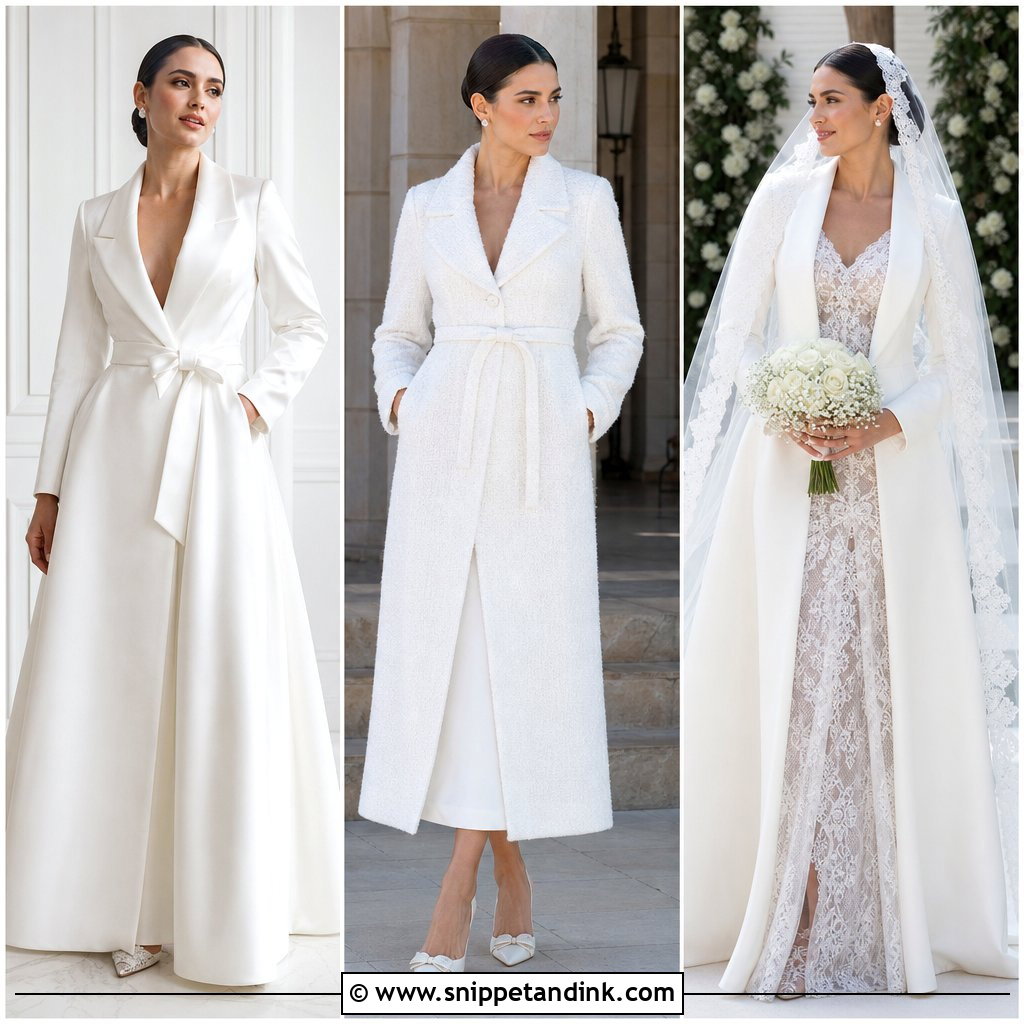
A relaxed bride needs a relaxed cape. Open floral lace, crochet-style lace or lightly embroidered mesh over a flowing empire-waist or A-line gown with flutter sleeves keeps the whole outfit soft. Low block heels, subtle gold earrings and a loose braid that fits under the hood finish it, and dried grasses with cream flowers echo the earthy feel. I’d leave out stiff satin linings and crystal trims; they fight the unstructured shape. Crochet lace is heavier than it looks, though, so check the weight on your shoulders if the cape is full length. Outdoor, desert, meadow and rustic settings suit this most.
16. Medieval Hooded Wedding Cape With Long Sleeve Gown
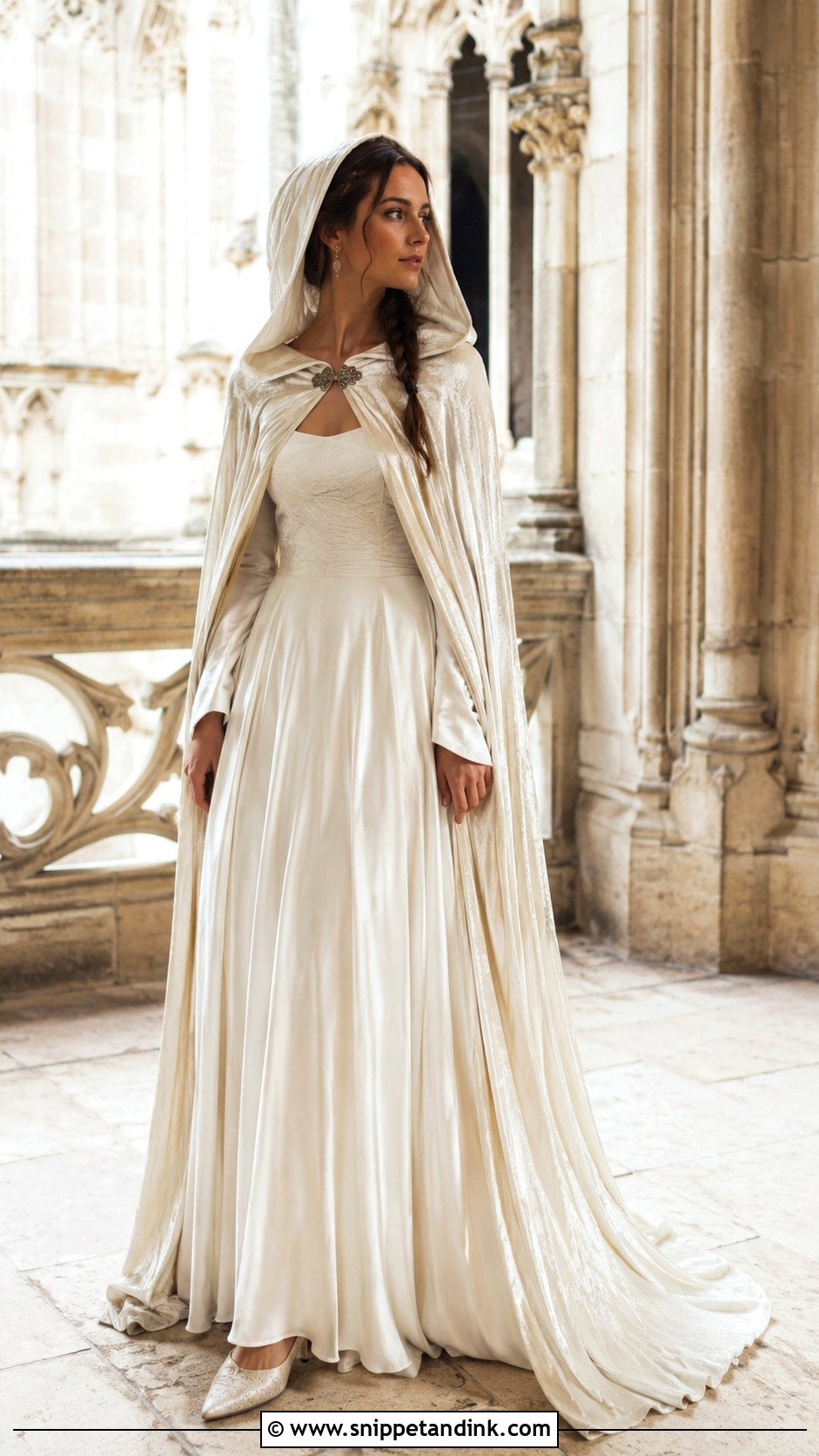
Medieval references go costume very quickly, and the fix is restraint. A medieval-inspired cape in ivory or muted silver over a long-sleeve gown with a fitted waist feels historic but polished. Velvet, wool or a substantial crepe give it weight, closed with a simple metal clasp. Pointed flats, delicate drops and a loosely braided updo support the theme without overdoing it. What I cut first is the extras: heavy corsetry, exaggerated sleeves and lots of trim. A deep hood and a clean floor-length line do all the storytelling needed. Castles, forests and old estates are the natural backdrop.
17. Minimalist Hooded Wedding Cape With Crepe Dress
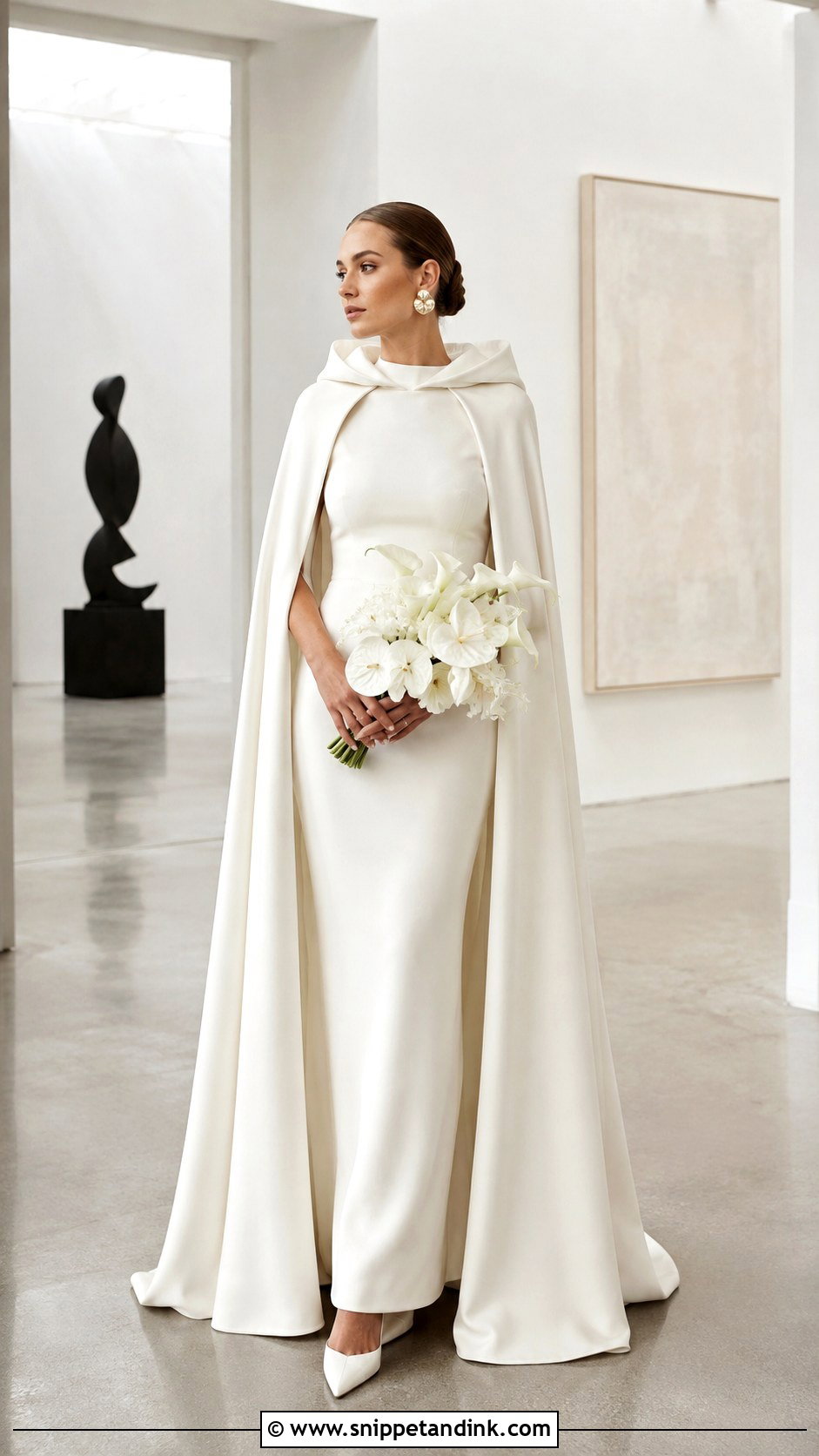
Minimal capes depend on cut more than anything else. An ivory crepe cape with hidden closures, very few seams and no lace should drop straight from the shoulders and just skim the floor. Over a column or sheath with a bateau, square or asymmetric neckline it looks deliberate. Sculptural earrings, pointed pumps and a structured white bouquet suit it, and a sleek bun lets the hood sit neatly. I match the cape to the gown in both color and fabric weight. A heavier crepe over a lighter dress pulls it backward; a lighter one floats off it. City venues and contemporary spaces suit this one.
18. Detachable Hooded Wedding Cape With Strapless Gown
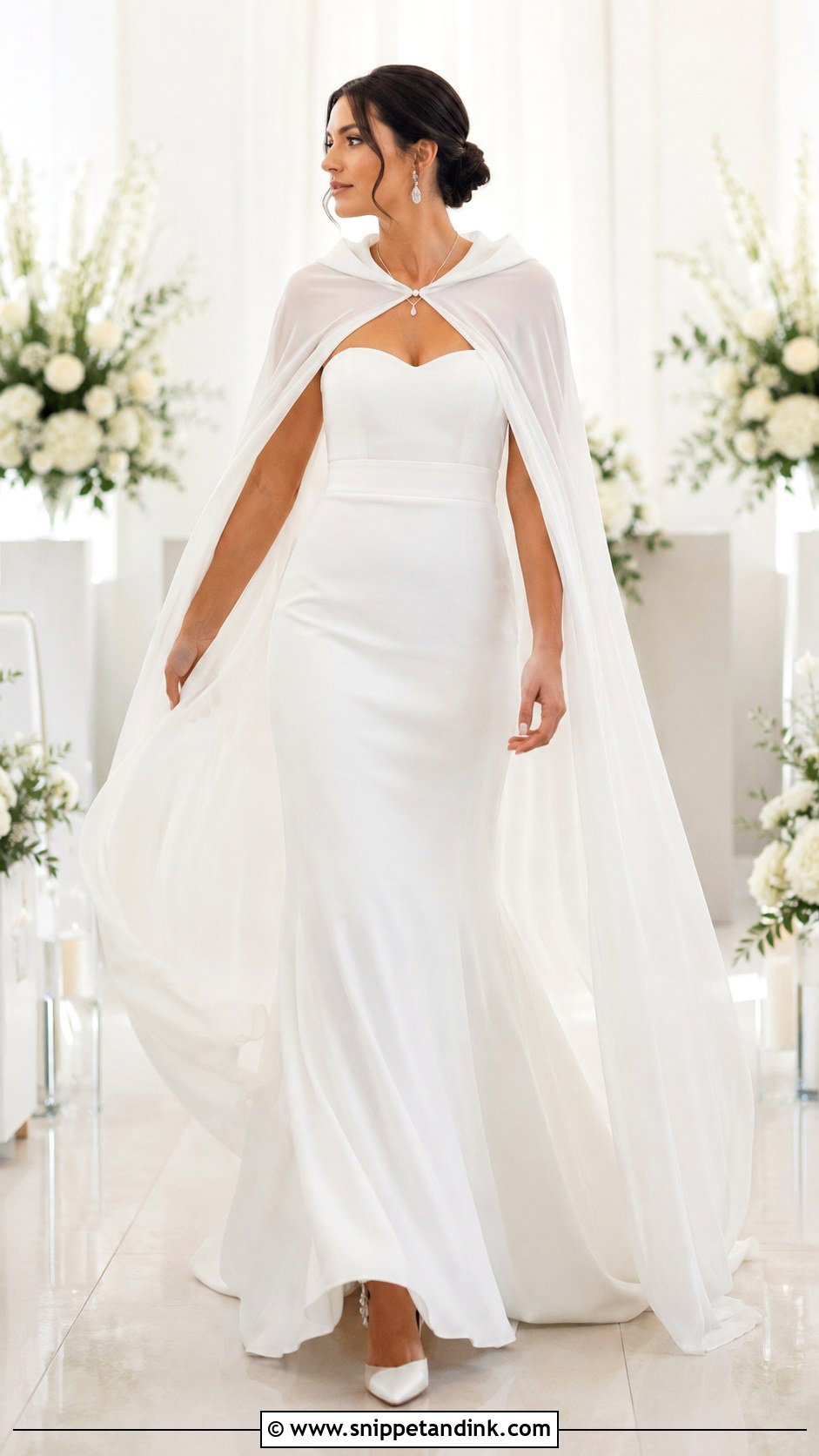
Two looks, one dress. A convertible cape over a structured strapless gown gives you full coverage for the ceremony, and once photos are done the hood or the whole cape comes off for the reception. Chiffon, lace or light crepe, depending on season and how much coverage the ceremony needs. A delicate necklace, drop earrings, satin heels and a low bun complete it. The attachment is the weak point. Snaps, loops and hidden buttons need to lie flat, and they should attach to a reinforced strip inside the gown, not the bodice fabric itself, or the cape drags the neckline down.
19. Hooded Wedding Cape With Bridal Jumpsuit
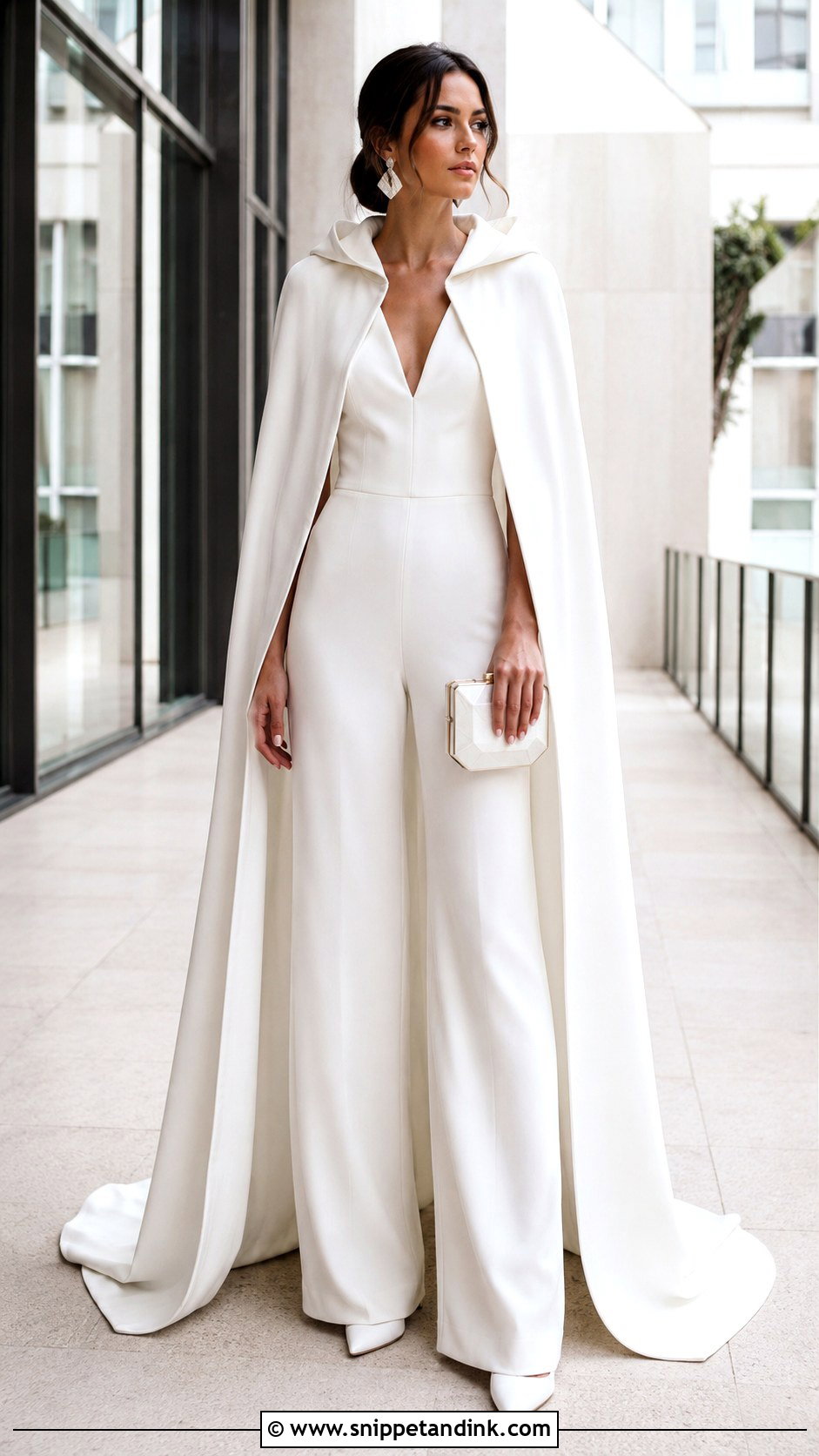
A jumpsuit bride often wants a moment of ceremony, and a long cape gives her one. Over a tailored bridal jumpsuit in white with wide legs and a fitted waist, a chiffon or crepe hooded cape falls behind the trousers without hiding them. Pointed heels, geometric earrings and a sleek clutch keep it modern. Keep the cape open at the front with a narrow closure at the neck, so the jumpsuit’s sharp lines stay intact. Cathedral length acts like a train; floor length is easier for moving around. I make sure the cape’s hem clears the trouser hem by a few inches, or the two tangle on every step.
20. Plus Size Hooded Wedding Cape With Empire Waist Gown
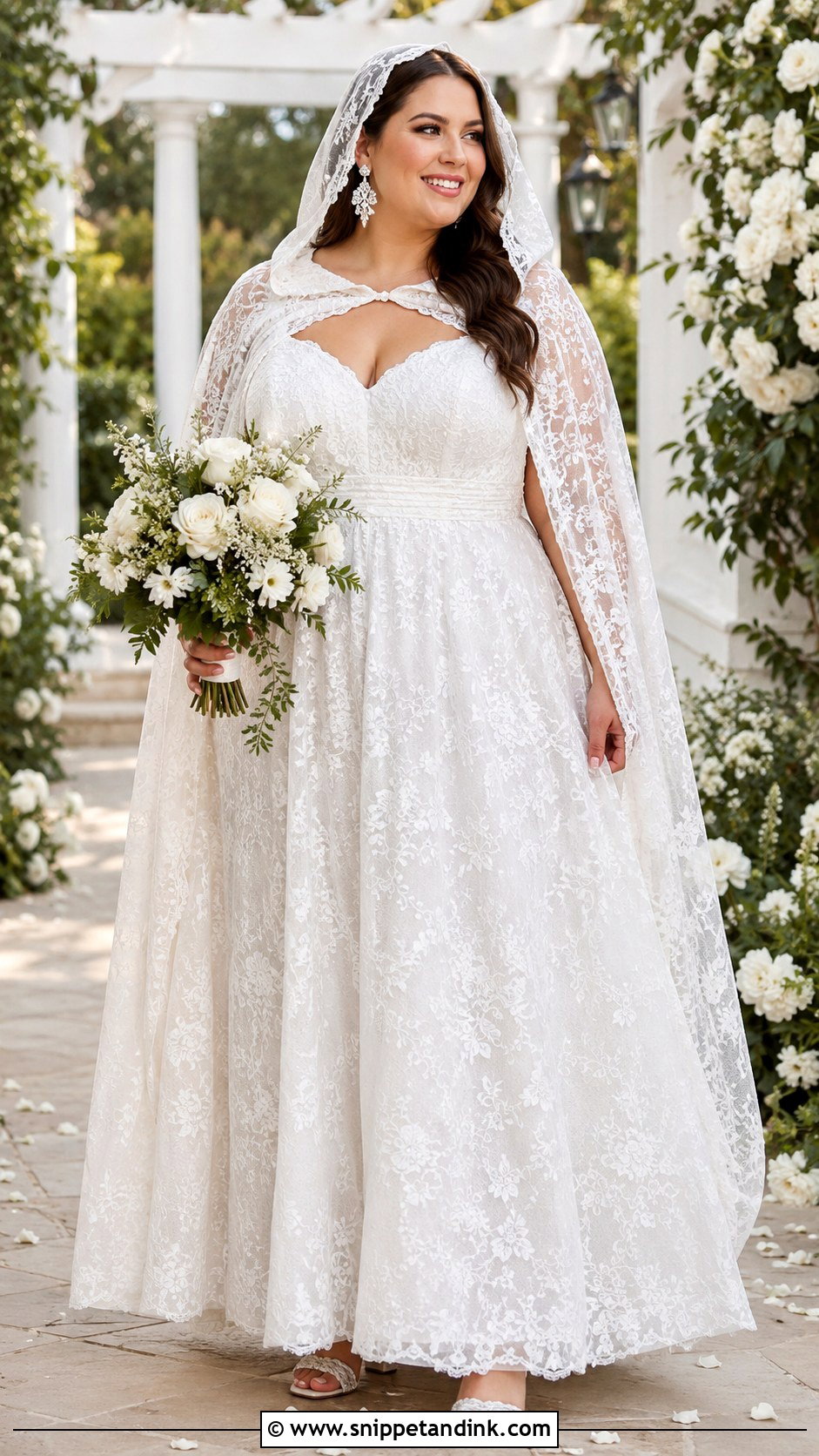
For a curvier bride, the fit across the shoulders and upper back matters far more than the closure. A softly draped cape over an empire-waist or supportive A-line gown should rest on the shoulders, not hang from one tight clasp at the throat, which pulls and leaves a red mark. Chiffon or lace keeps it light; lined velvet works for cold weather. Arm openings help with the bouquet and with hugging. Supportive block heels, statement earrings and a bouquet scaled to the gown complete it. I have the length customized every time, since extra fabric pooling at the feet is a trip hazard and hides the shoes. The cape should show off the neckline and waist you chose the dress for.
Will the Hood Flatten Your Updo?
It can, and it’s the question I get most. A hood rests on the crown of the head, so volume at the top and pinned curls at the back are the first casualties. Show your hairstylist the cape at the trial, put the hood up and down a few times and look at the hair afterward.
Low buns, chignons and braids that sit at the nape survive best, because the hood clears them. A high bun needs a deeper hood, and tall pieces such as tiaras or large combs usually have to go. Wear the hood up only for the walk in or the outdoor portraits, then let it fall to the shoulders. A soft, unlined hood lies flatter on the back than a structured one.
Where the Cape Goes Once You’re Inside
Decide before the day who takes the cape and where it goes. Velvet and wool are warm, and most brides take them off for the reception. A heavy cape left over a chair back gets crushed and stained, so ask the venue for a hanger and a spot away from the bar and the dance floor. For a full-length cape, a padded hanger and a garment bag in the bridal suite keep it ready for evening photos outside.
Try It With the Real Dress and Shoes
A good hooded cape looks like it was designed with the dress, not added the week before. Velvet, chiffon, lace, tulle, wool and silk each suit different gowns, seasons and venues, and the fabric choice usually follows the weather more than taste. Try the cape on with your actual dress and wedding shoes. Check the length, the closure, how freely your arms move, what the lining feels like and how much room the hood leaves for your hair. Walk, sit and turn in it. Classic ivory, blush, black or deep green, a cape that’s been properly fitted will make your bridal entrance feel like your own.
You'll Like These Ideas:


Leave a Reply