
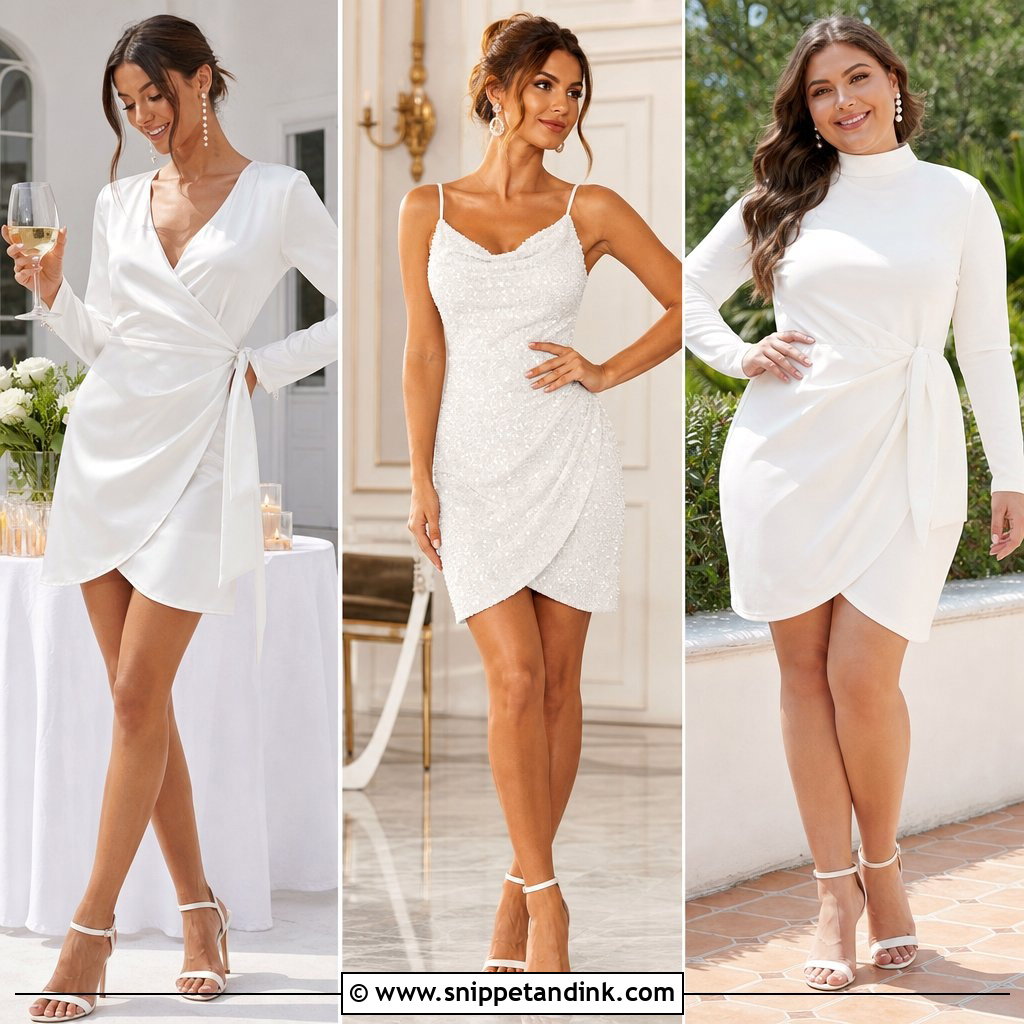
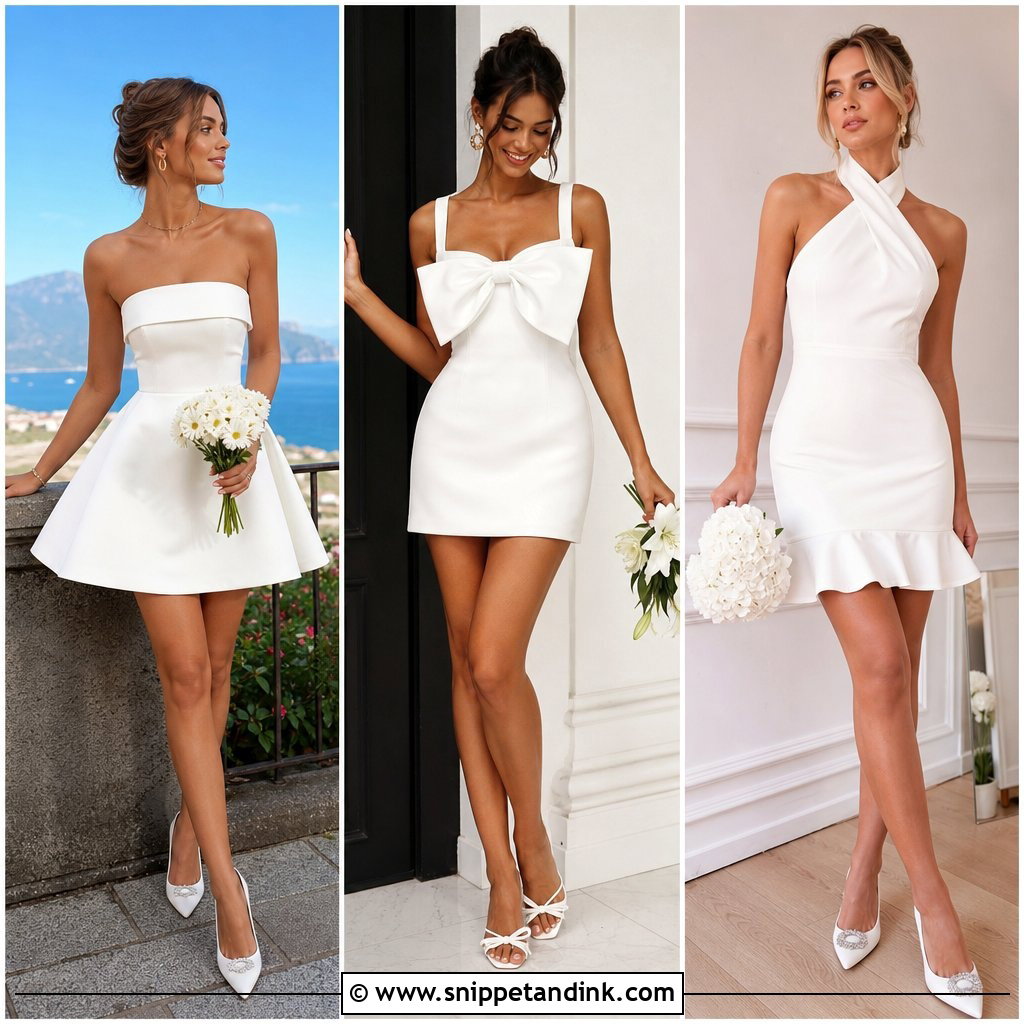
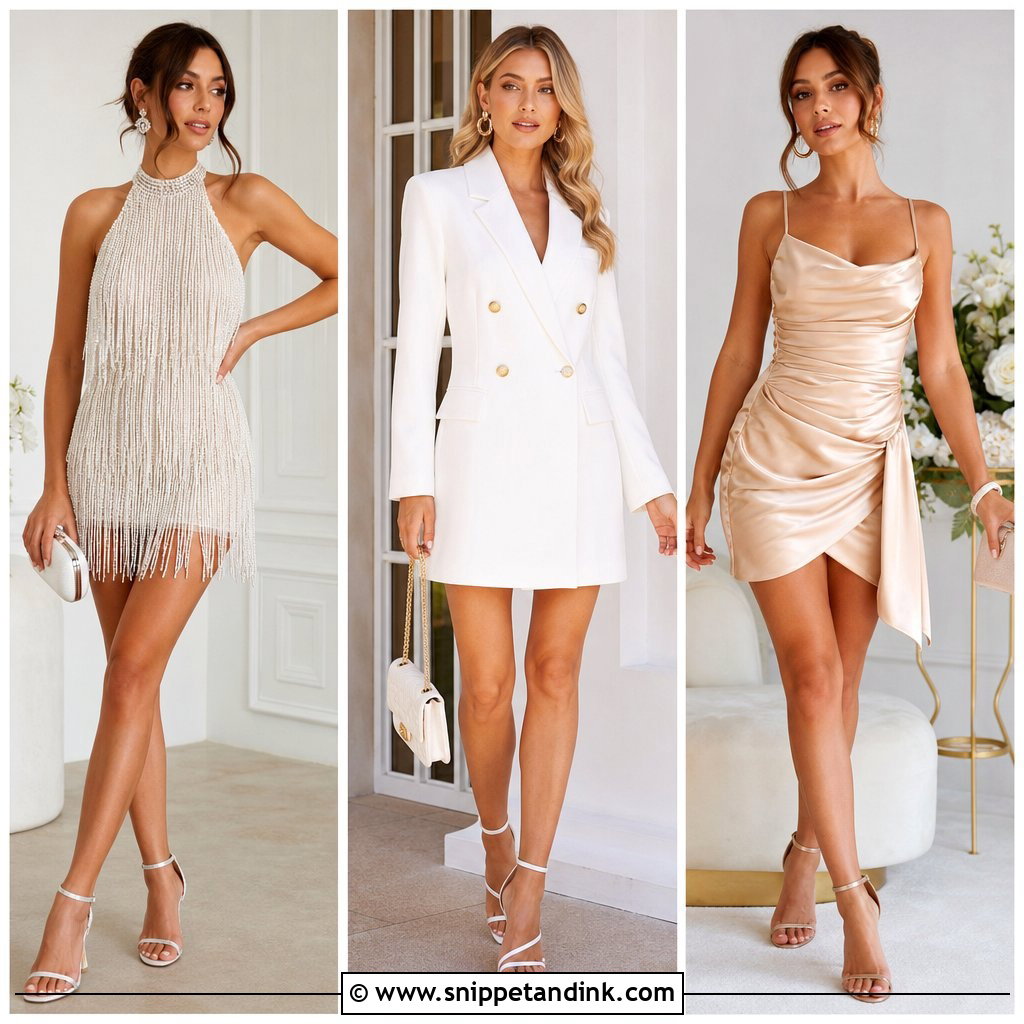
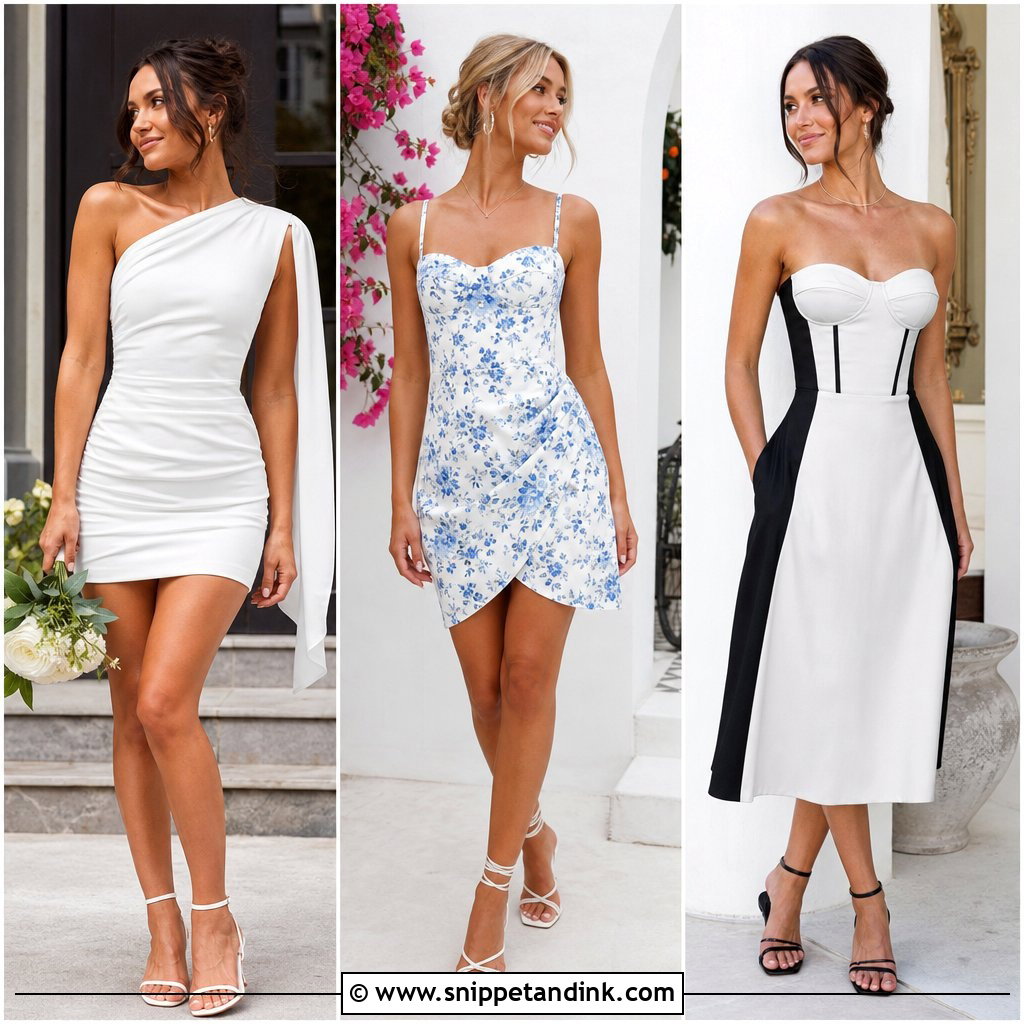
A second outfit has become a normal part of many weddings. Some change after dinner so they can dance properly, some wear a short dress for the civil ceremony and a gown later, and plenty want something bridal for the rehearsal, a welcome party or the shower. A bridal cocktail dress has a different job from a gown: it has to move, sit and survive a dance floor while still looking like it belongs to a bride. White minis, satin midis, pearls, lace, bows, feathers and sequins can all do it. Below are twenty five versions, with my notes on fabric, fit and how each one behaves once the music starts.

When the Change Happens and How Long It Takes
Most reception changes happen after dinner and before the first dance or the main party, when guests are moving between tables and the bar anyway. Some brides change before the dinner entrance instead, which means the cocktail dress appears in every reception photo. Either works. What I’d plan around is time: realistically, a change takes twenty to thirty minutes once you count getting out of a laced or buttoned gown, adjusting hair, swapping jewelry and a quick touch-up.
- Tell your planner, photographer and band or DJ the time so nothing important starts without you.
- Choose one person to help, ideally someone who did a run-through of your gown’s closure before the day.
- Book a private room close to the reception, not a shared bathroom.
- Have the second dress hanging and unzipped, with shoes and jewelry laid out, before you walk in.
If your gown has dozens of covered buttons, ask your seamstress whether a hidden zip or a few hooks can be added behind them. It saves a surprising amount of time.
1. White Satin Cocktail Dress
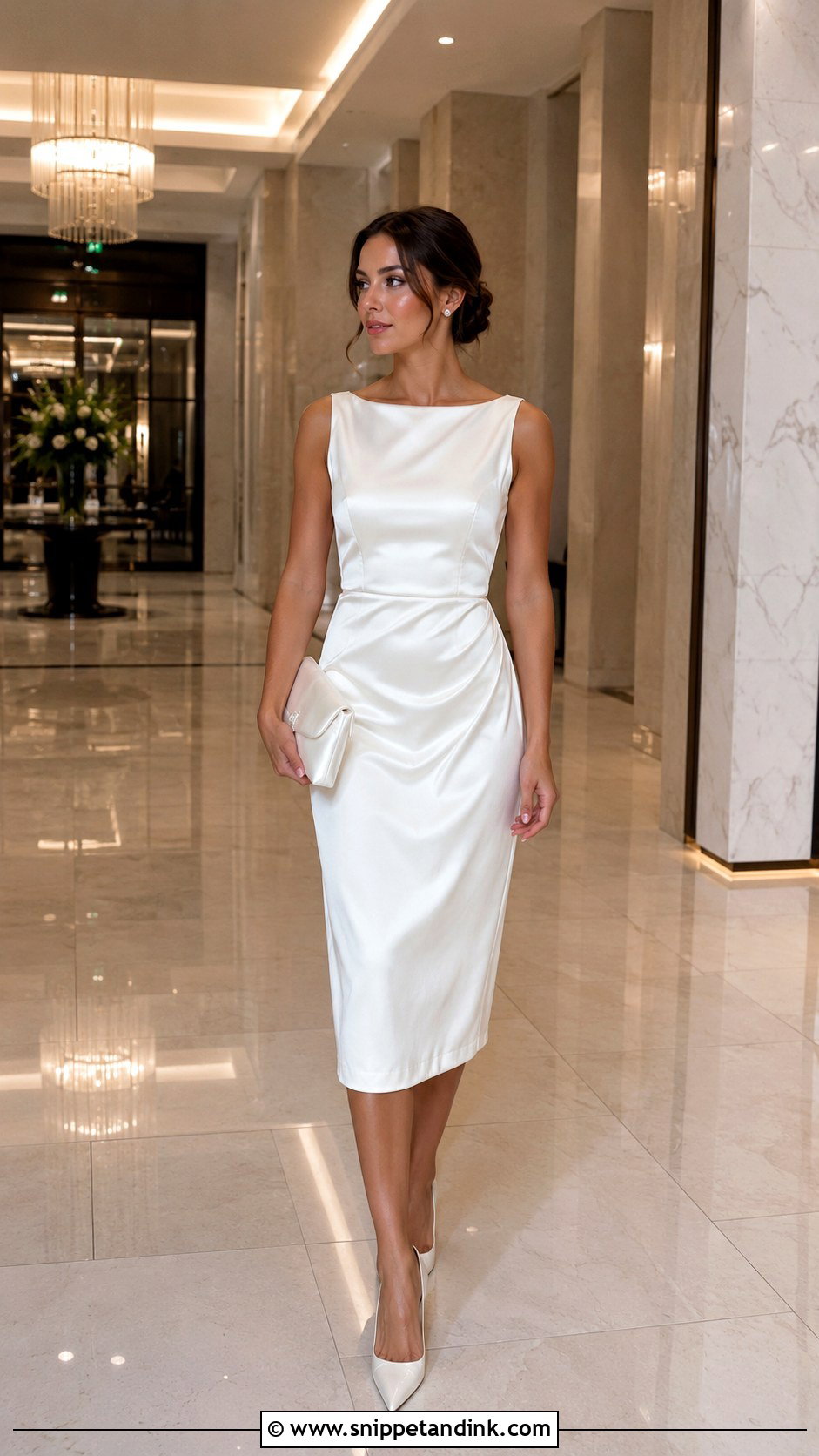
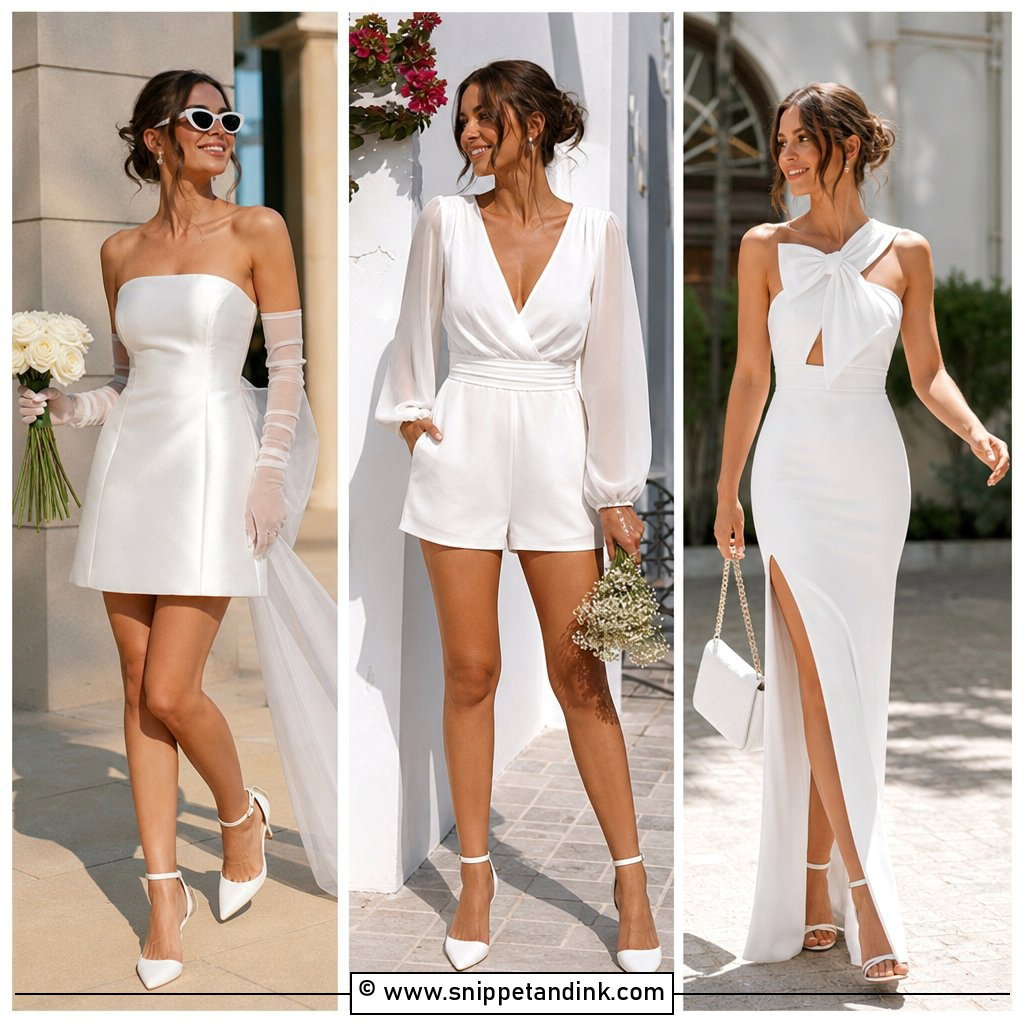
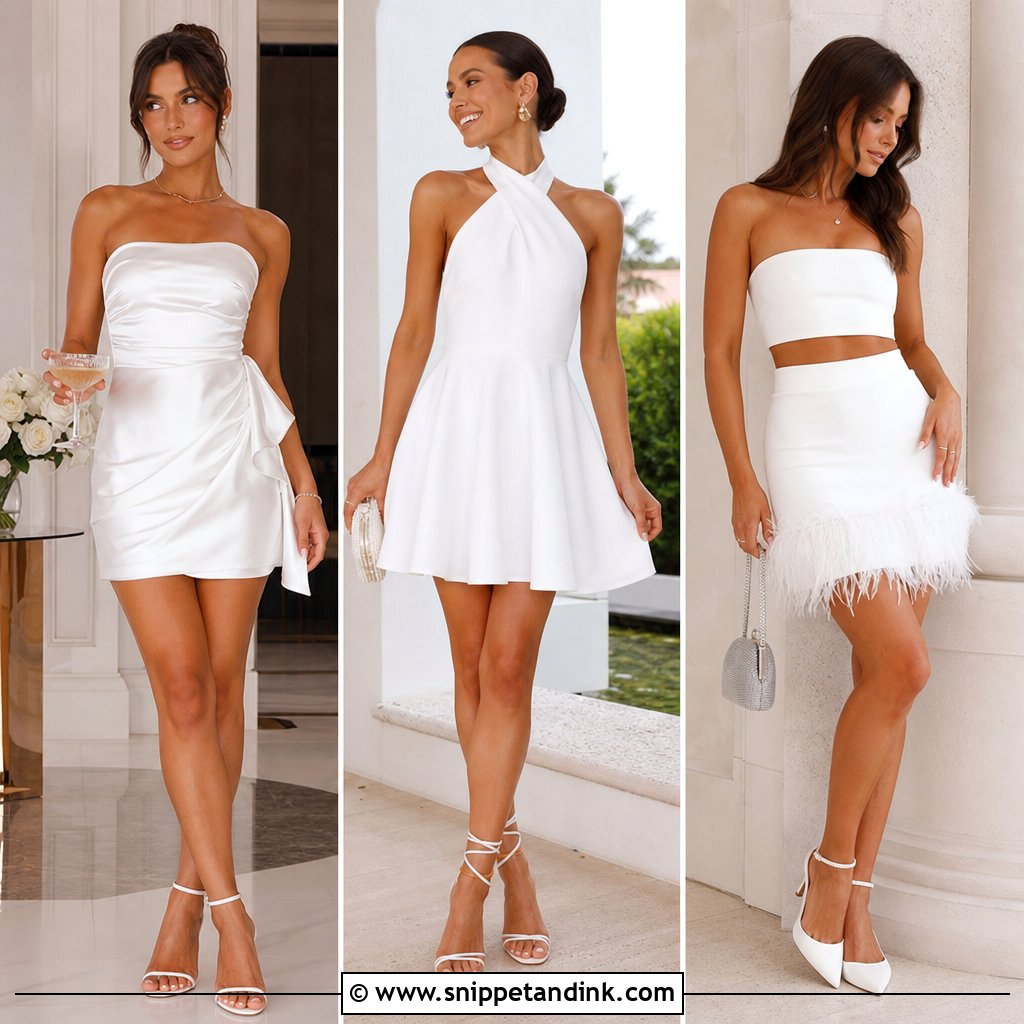
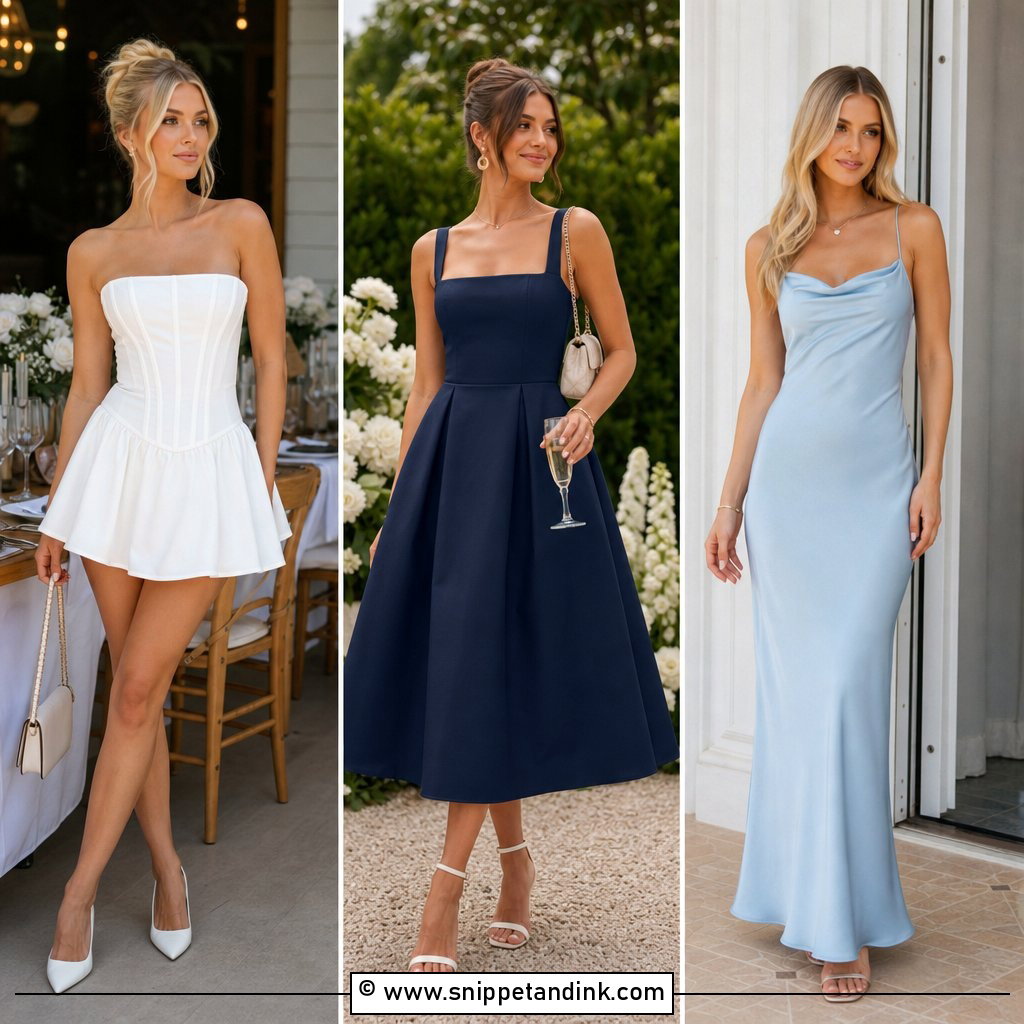
Satin is the easiest second look to style because it already looks dressed up with nothing added. Strapless, cowl or square-neck, at mini or midi length depending on how much leg you want to show. Ivory pointed pumps or delicate ankle straps keep it clean; ankle straps are the better choice for dancing. Pearl studs, a tennis bracelet and a small satin clutch finish it. If you’re arriving somewhere cool, a cropped tailored blazer looks smart for photos and comes off for the dance floor. One warning: white satin shows every drop of red wine, so this is a dress for a careful drinker or a clear-drinks evening.
2. Pearl Embellished Cocktail Dress
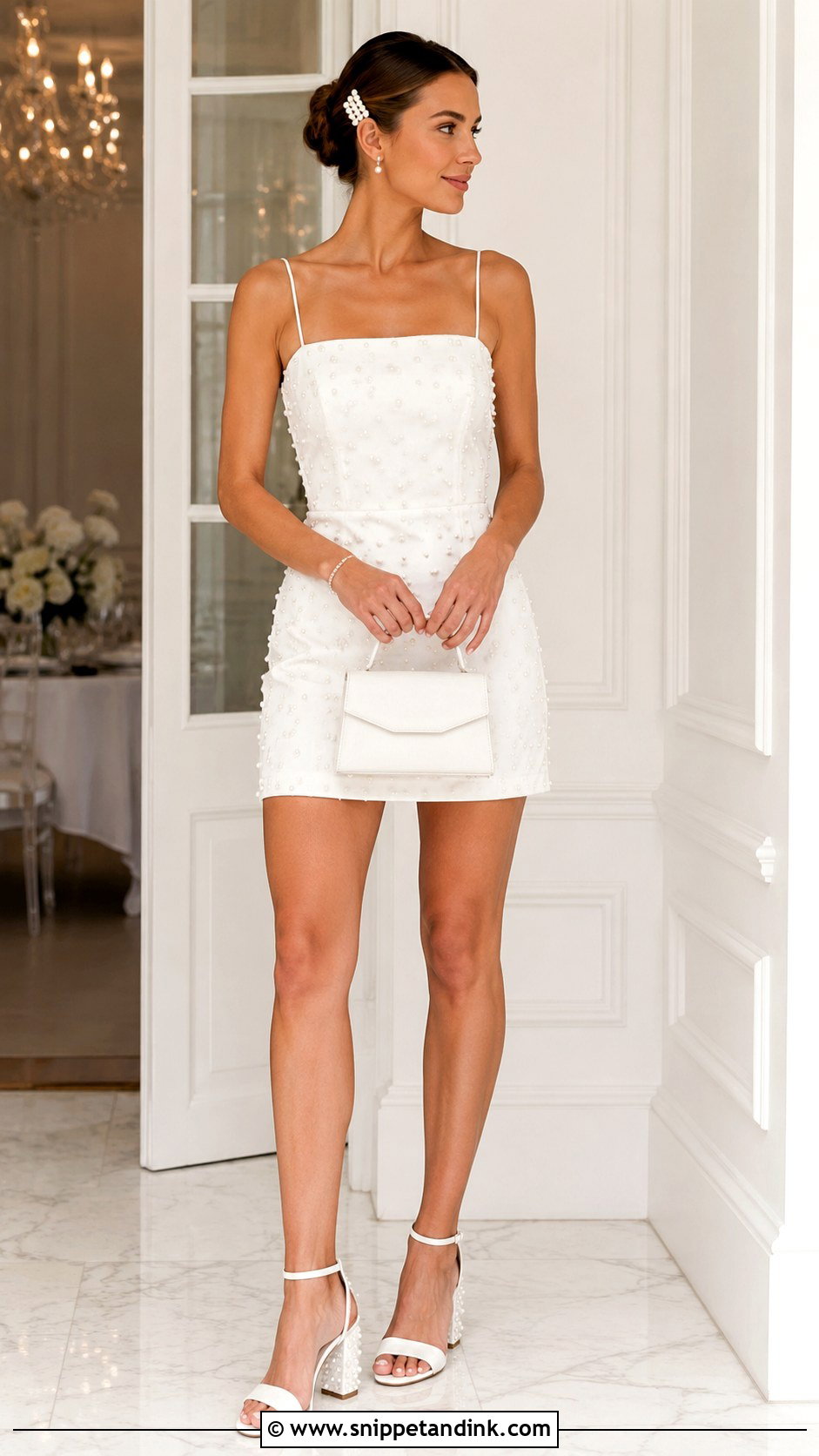
Pearls catch light softly, which gives a short dress a bridal shimmer without the glare of sequins. The versions I like have scattered pearls, beaded trim or pearl straps rather than pearls everywhere, because all-over pearl embellishment adds a lot of weight to a small dress and can make the skirt hang stiffly. Ivory block heels or slingbacks, a pearl hair clip and a small structured bag suit it. Keep the neckline simple if the body of the dress is heavily decorated. I’d check that pearls are stitched on individually; glued or chain-stitched ones pop off once you start dancing.
3. Lace Cocktail Dress
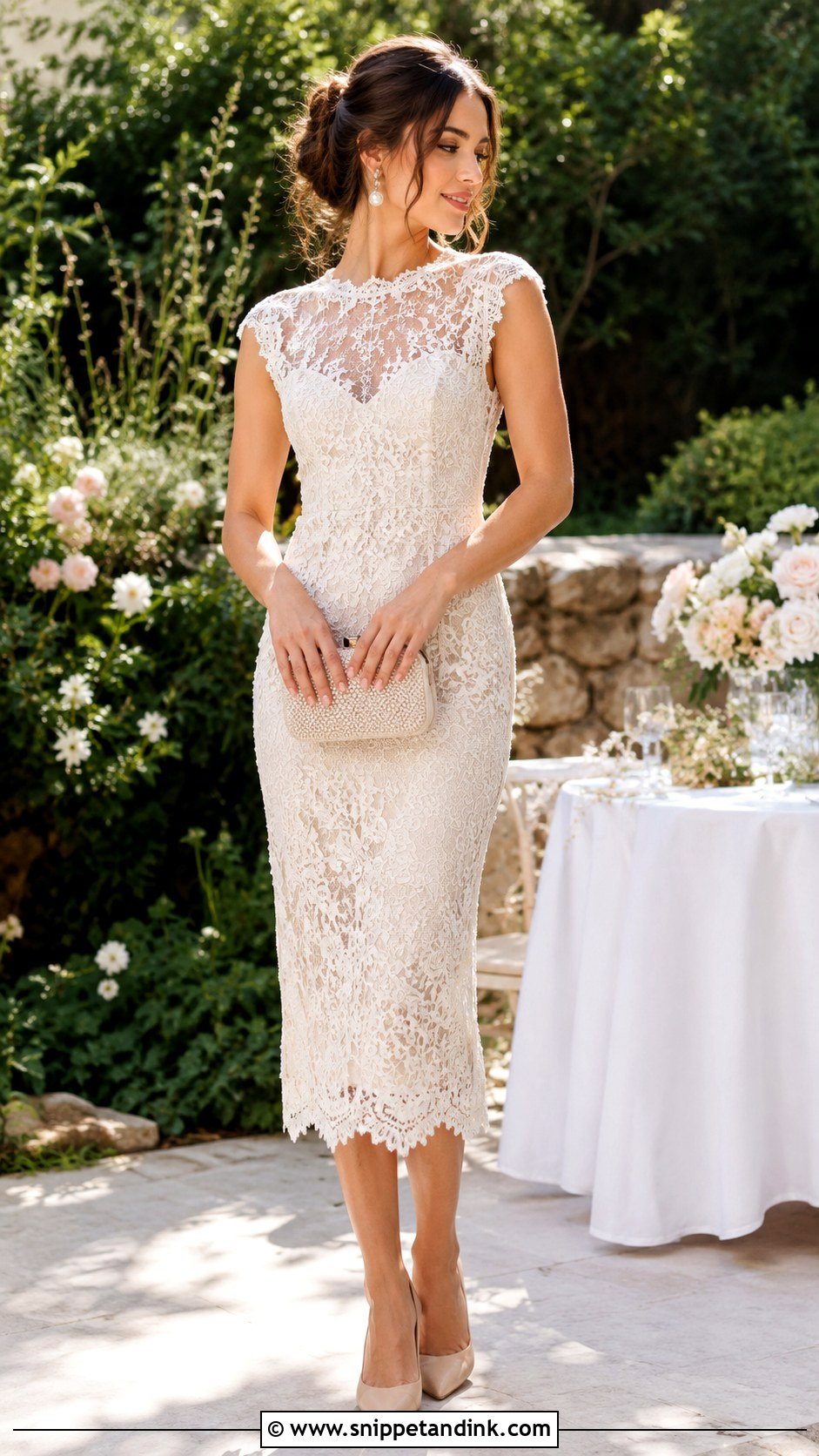
Lace gives a short dress the same romance as a gown in a lighter form. A fitted sheath, an A-line mini or a midi dress with sheer sleeves reads dressy without the weight. Nude or ivory heels lengthen the leg. Pearl drops, a smooth low bun and a compact clutch keep it balanced, and detailed lace needs nothing more. If your gown is lace too, I’d choose a different lace for the cocktail dress rather than trying to match it, since two near-identical laces side by side in the album look like a mistake. Garden receptions, brunches and rehearsal parties suit it.
4. Feather Trim Cocktail Dress
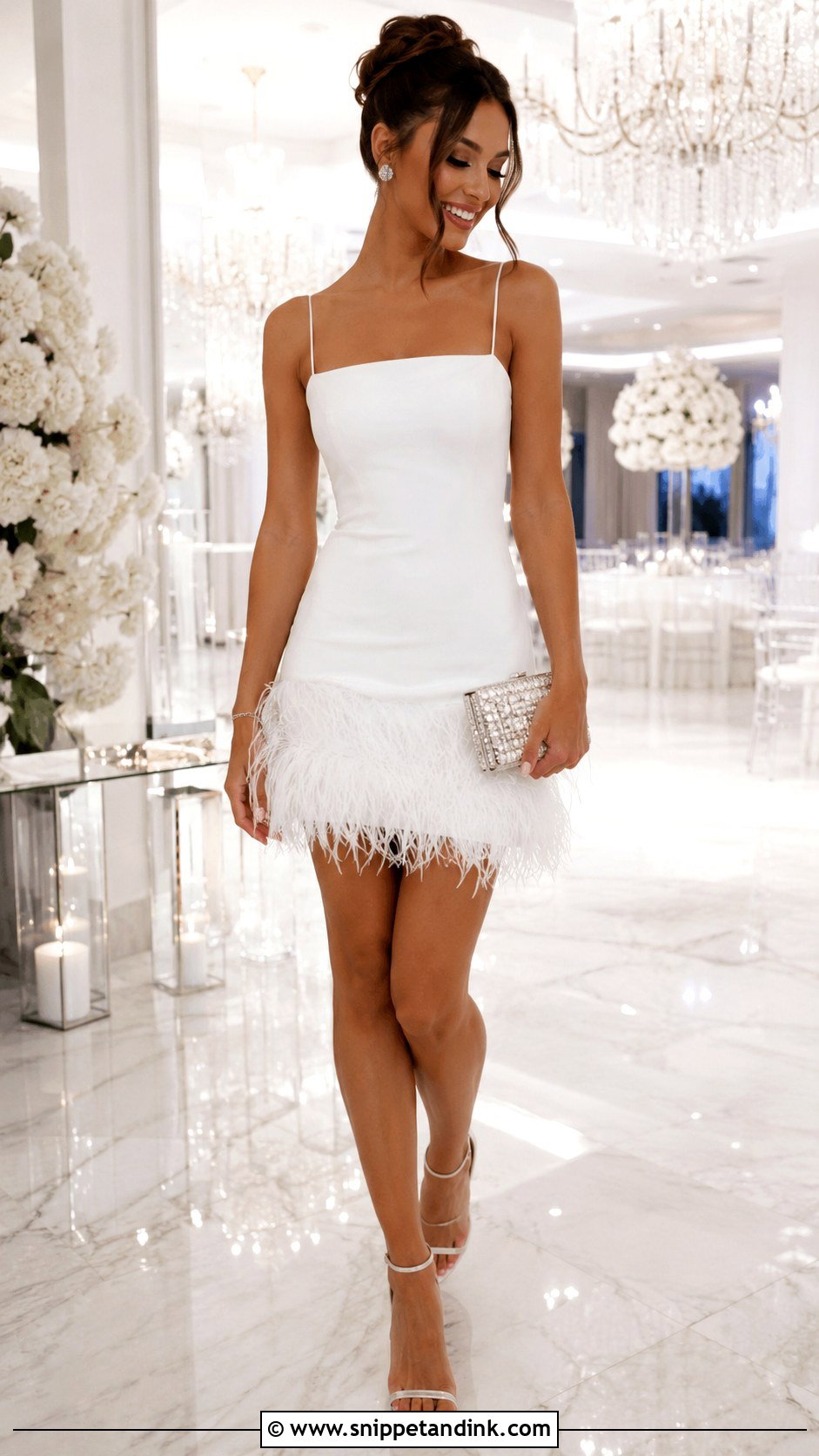
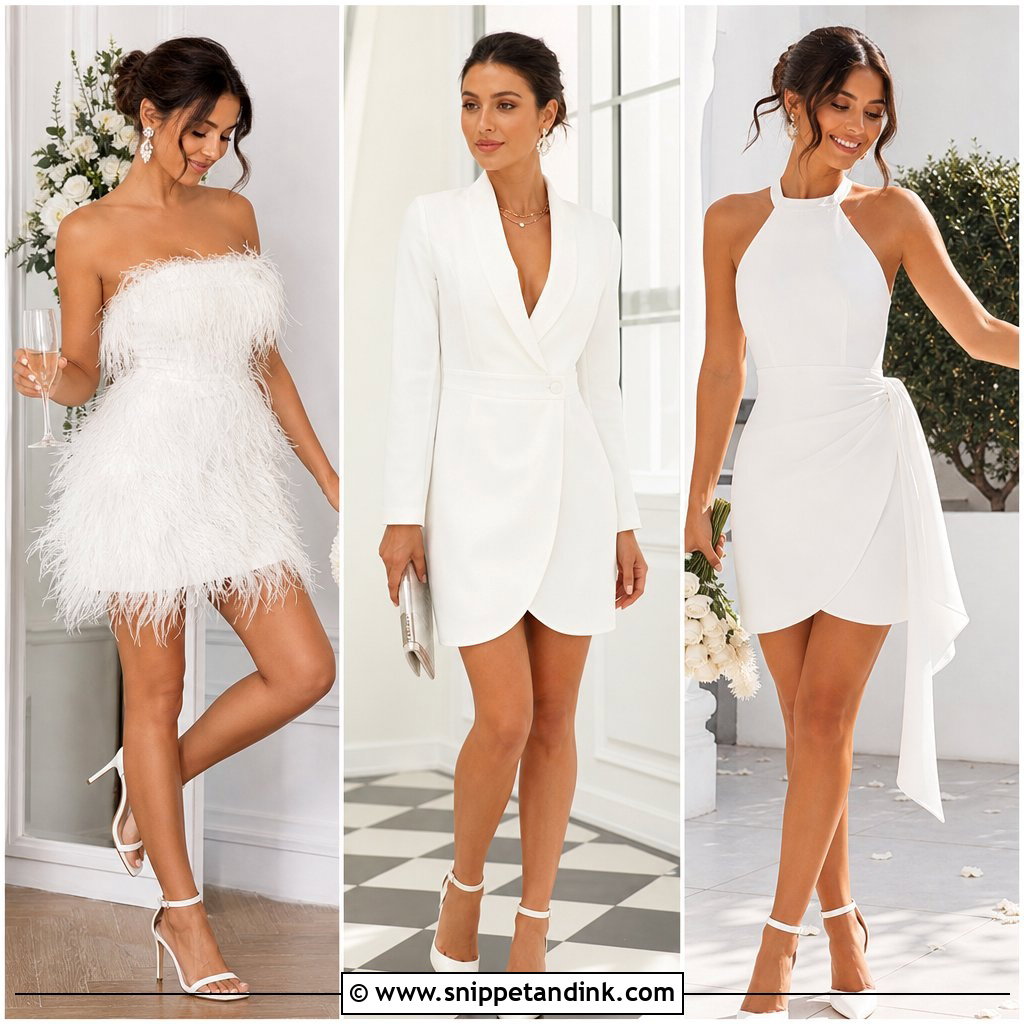
Feathers move with every step, which is exactly why they’re such fun on a dance floor. A feather trim cocktail dress works best with feathers in one place only, at the hem, the neckline or the cuffs. Feathers in two places look like costume. Simple strappy heels, crystal studs and a smooth box clutch keep the rest calm, and a sleek ponytail or soft waves balance the texture. Practical note: ostrich feathers shed, and they flatten if packed tightly, so hang the dress in a garment bag with room and fluff the feathers with a cool hairdryer setting before you put it on.
5. Sequin Cocktail Dress
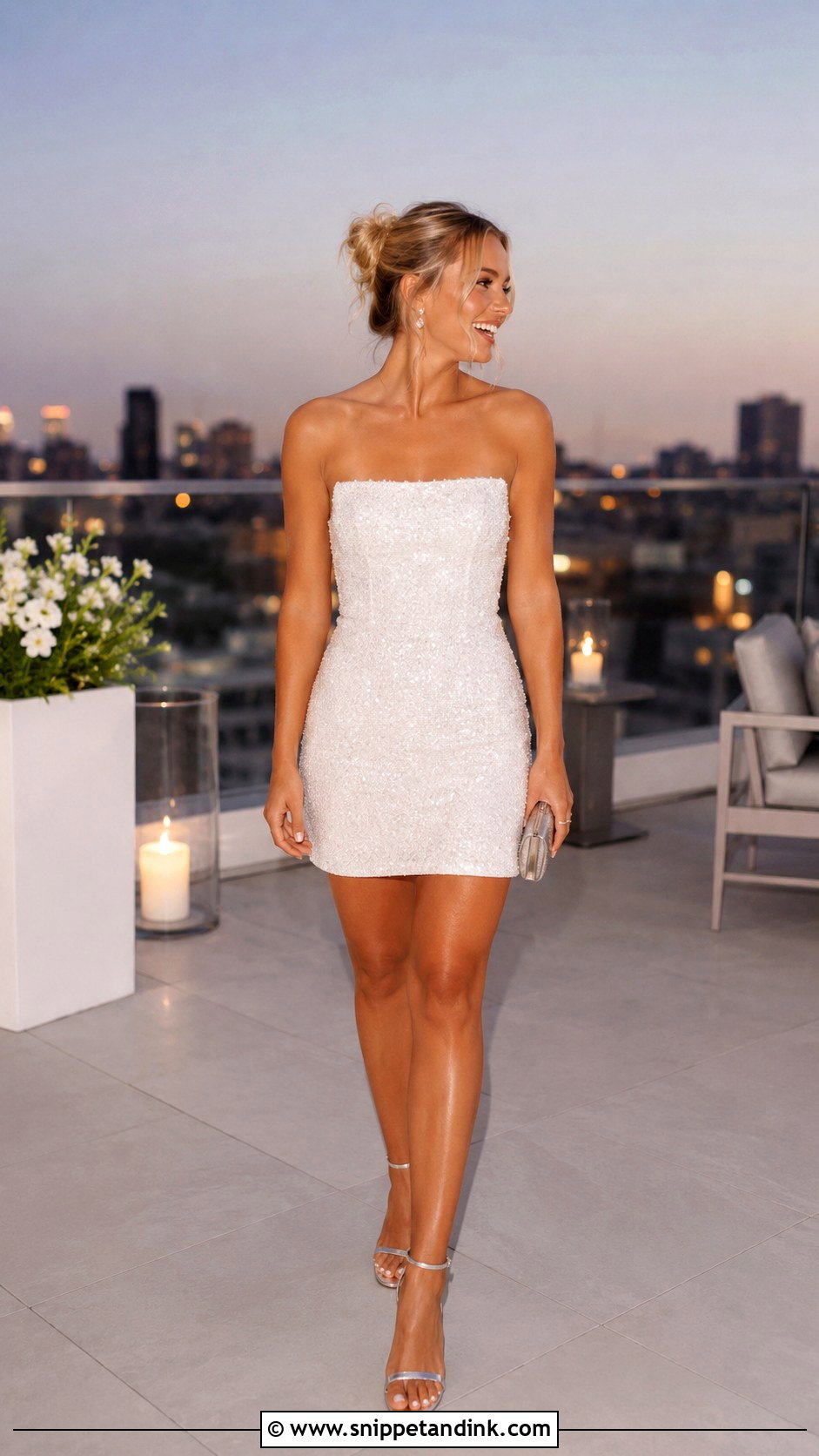
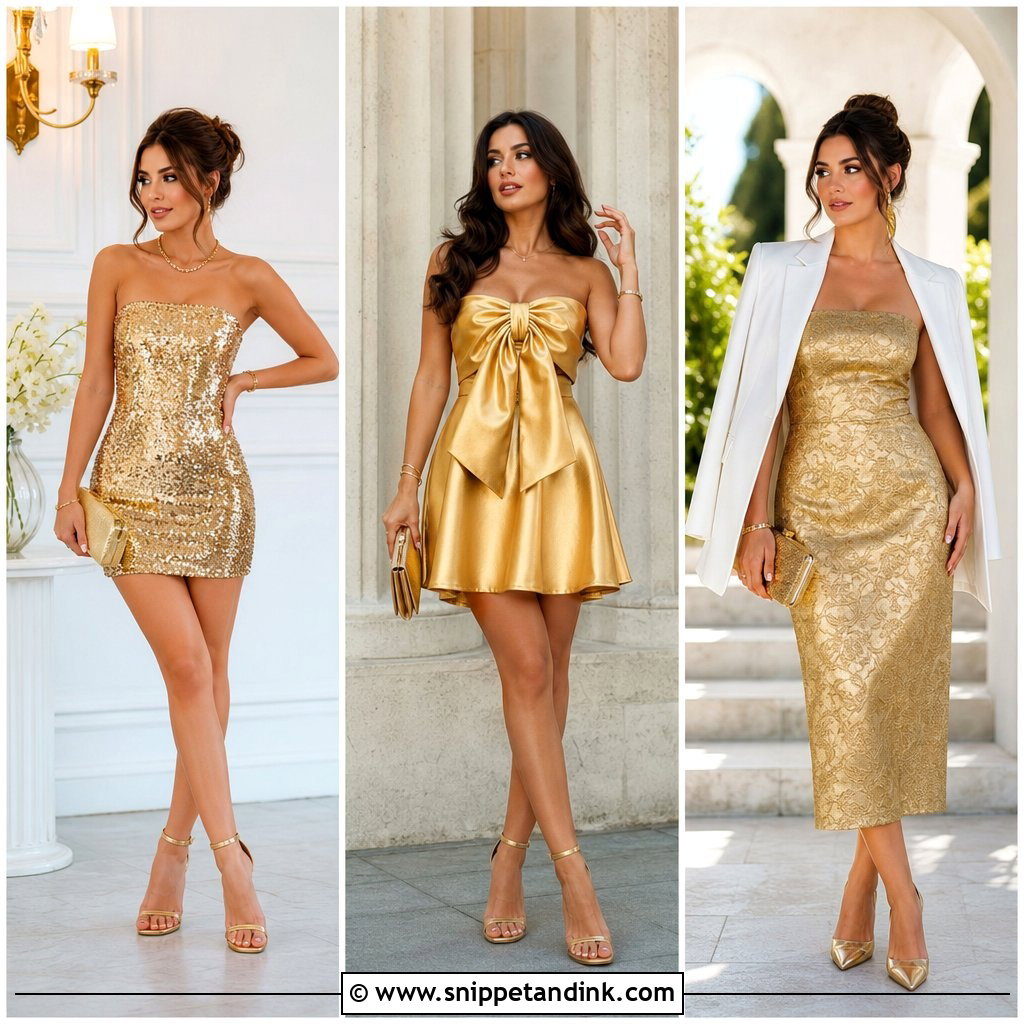
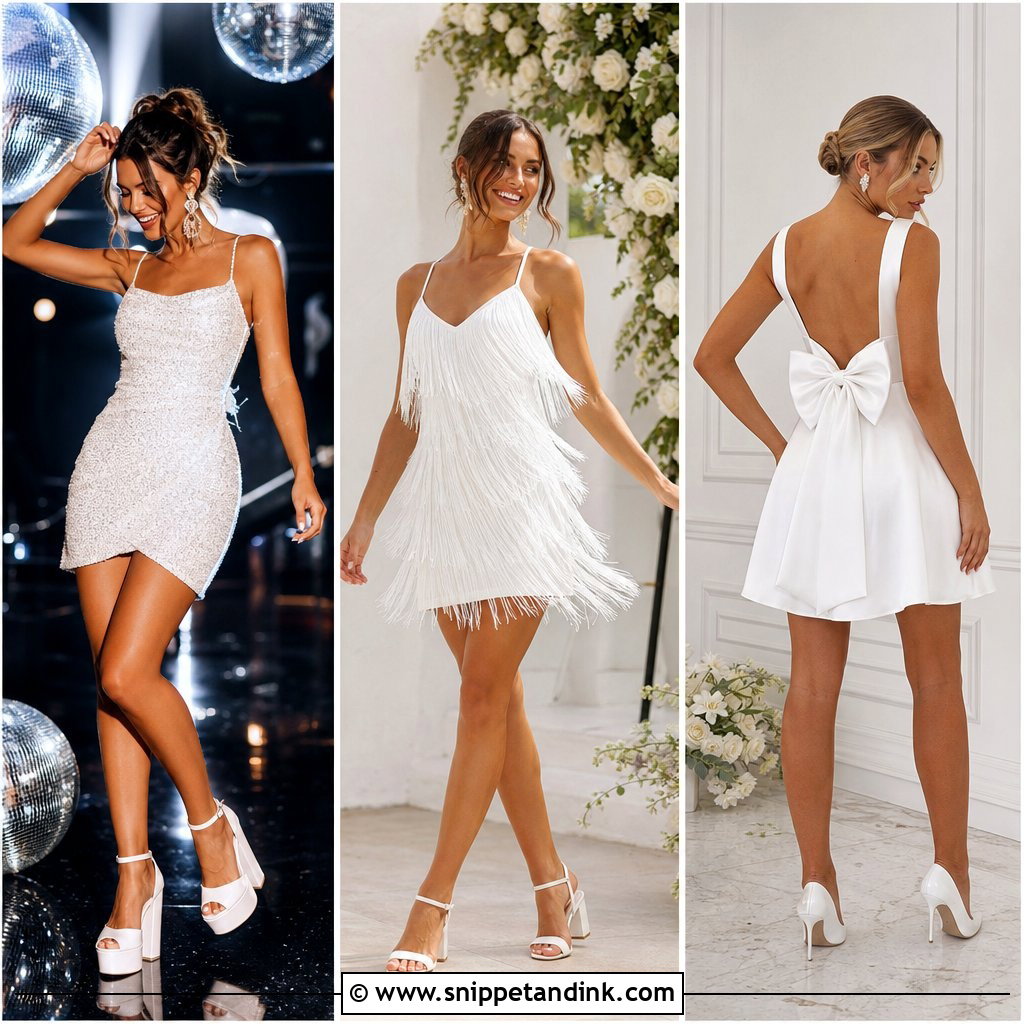
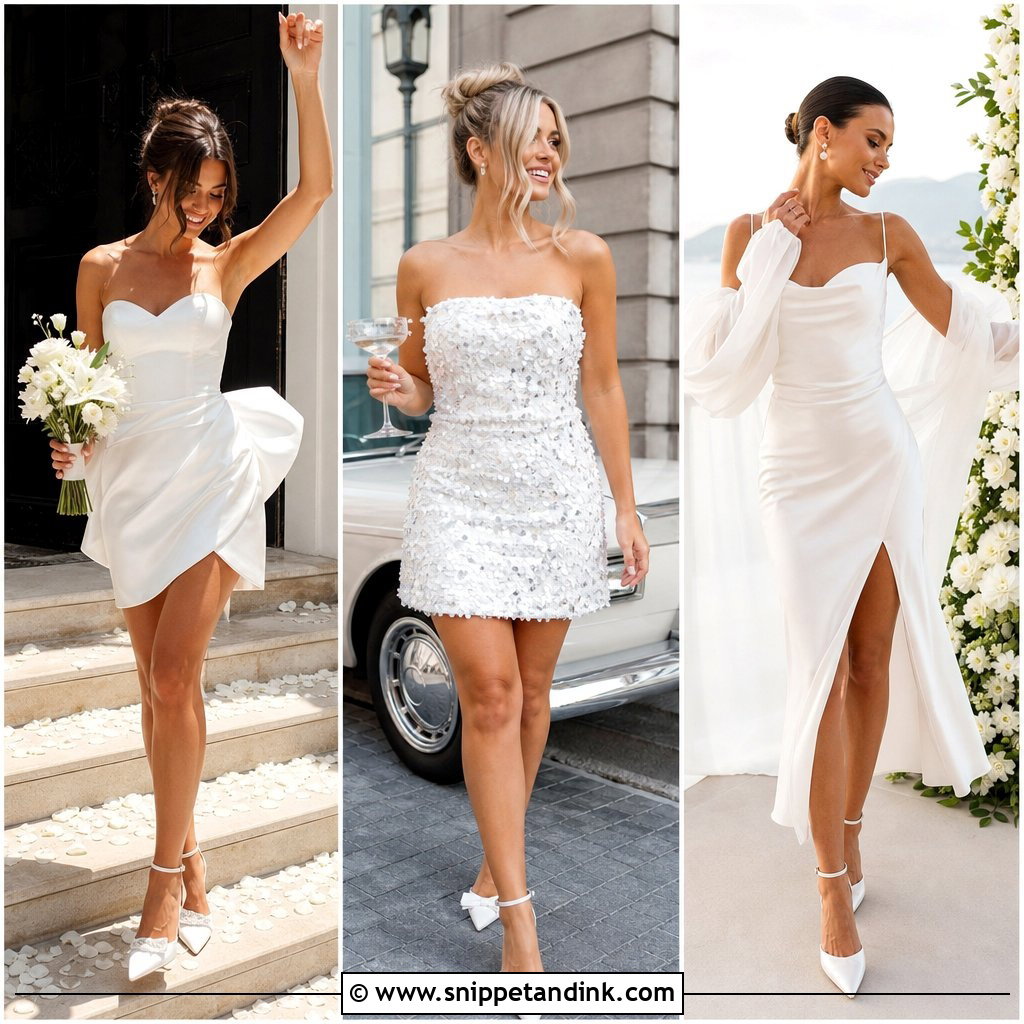
Sequins are the clearest way to signal the party has started. White, ivory, champagne or silver all read bridal, in a mini or fitted midi. Comfort is the real issue: sequin fabric is scratchy on the inside unless it’s well lined, especially at the underarms, so turn the dress inside out before buying. Some stretch in the base fabric lets you sit and dance. Metallic sandals, a tiny clutch and simple earrings are enough; skip a necklace if the sequins come up to the neckline. Evening receptions and rooftop parties are its natural home.
6. Bow Back Cocktail Dress
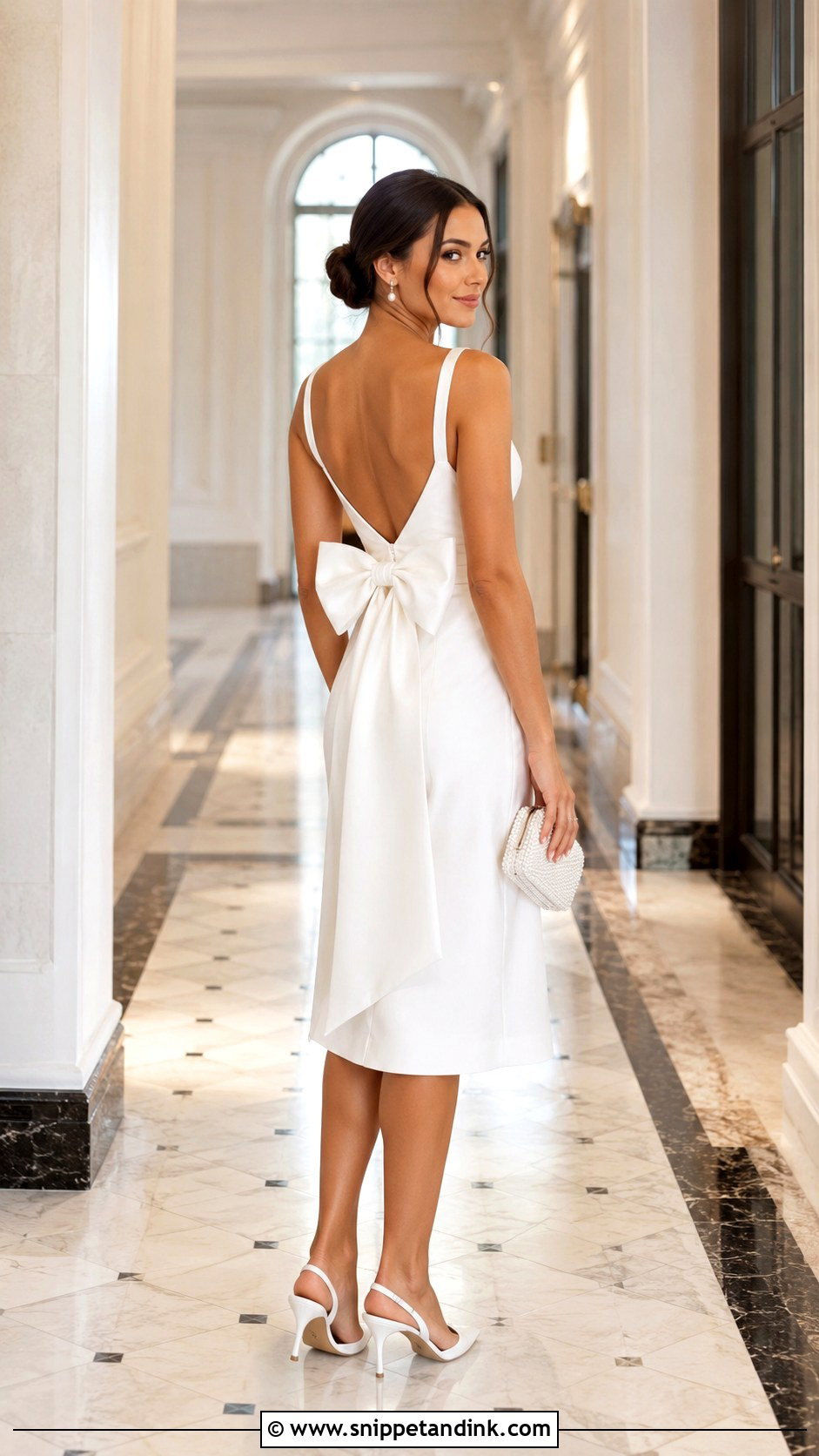
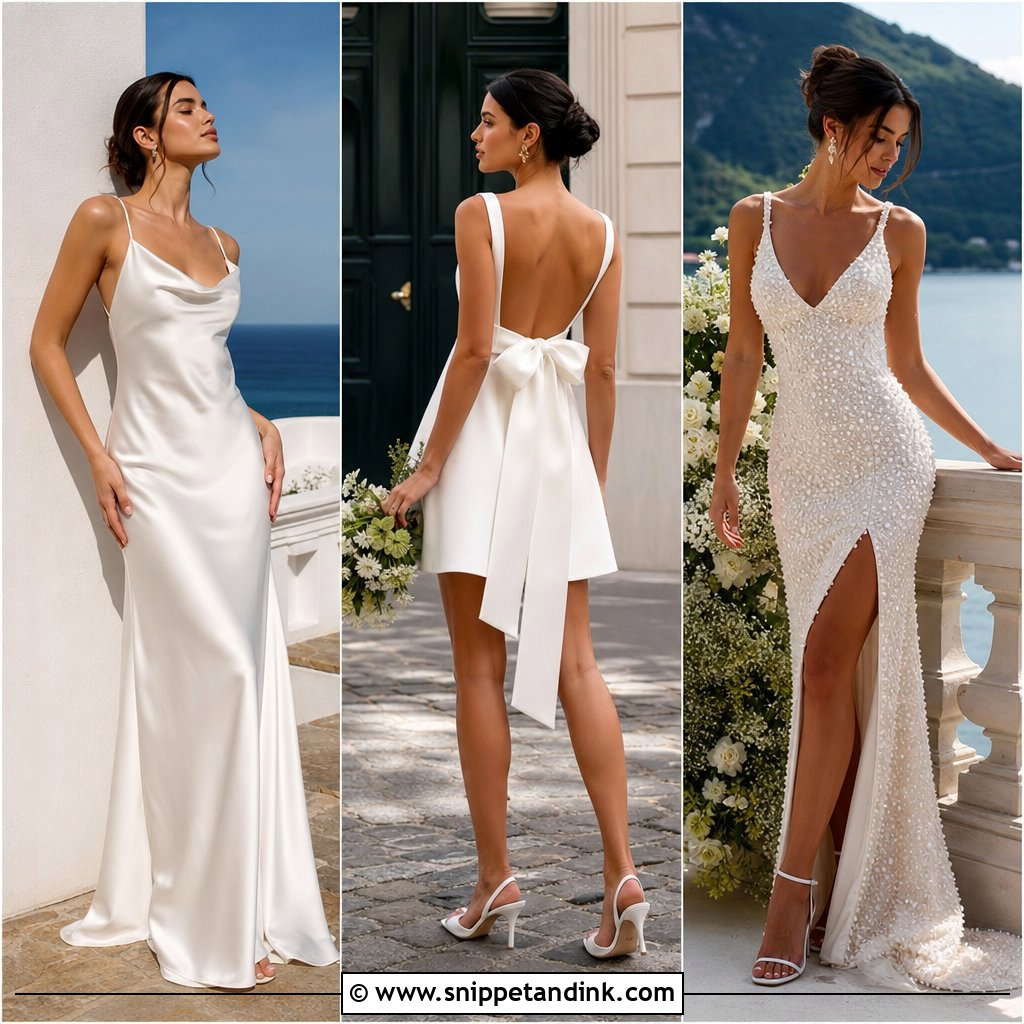
All the drama is behind you with this one, so the front can stay completely clean. A white mini or midi with a large bow at the back, shoulder or waist gives one strong detail. Hair goes up or to one side so the bow isn’t hidden. Slingbacks, pearl earrings and a neat clutch complete it. From a fitting point of view, big bows are often stiffened with interfacing, and if the dress is too tight at the back the bow tilts or droops, so check it in a three-way mirror. Reception entrances and posed portraits show the bow best.
7. Off Shoulder Cocktail Dress
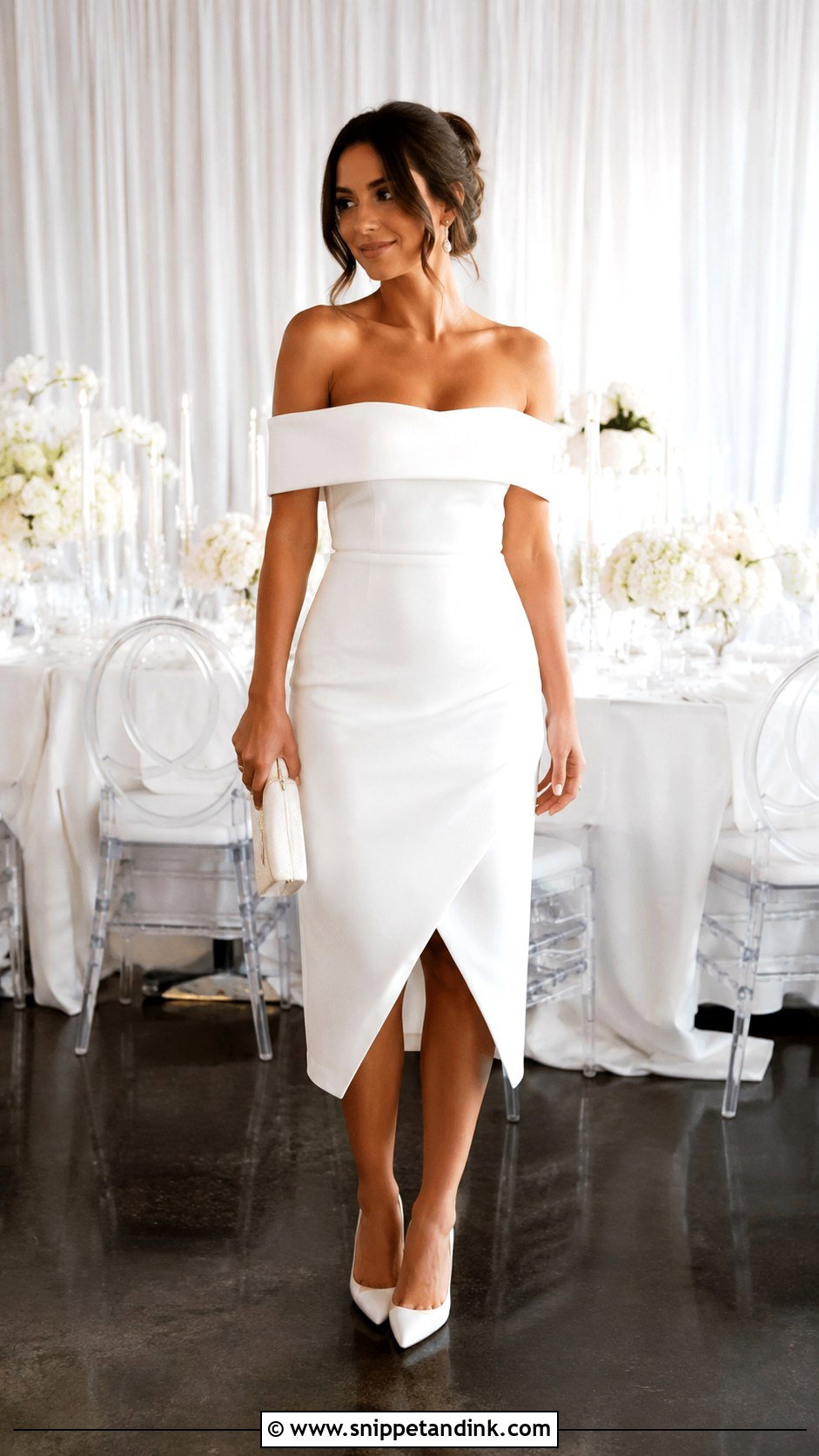
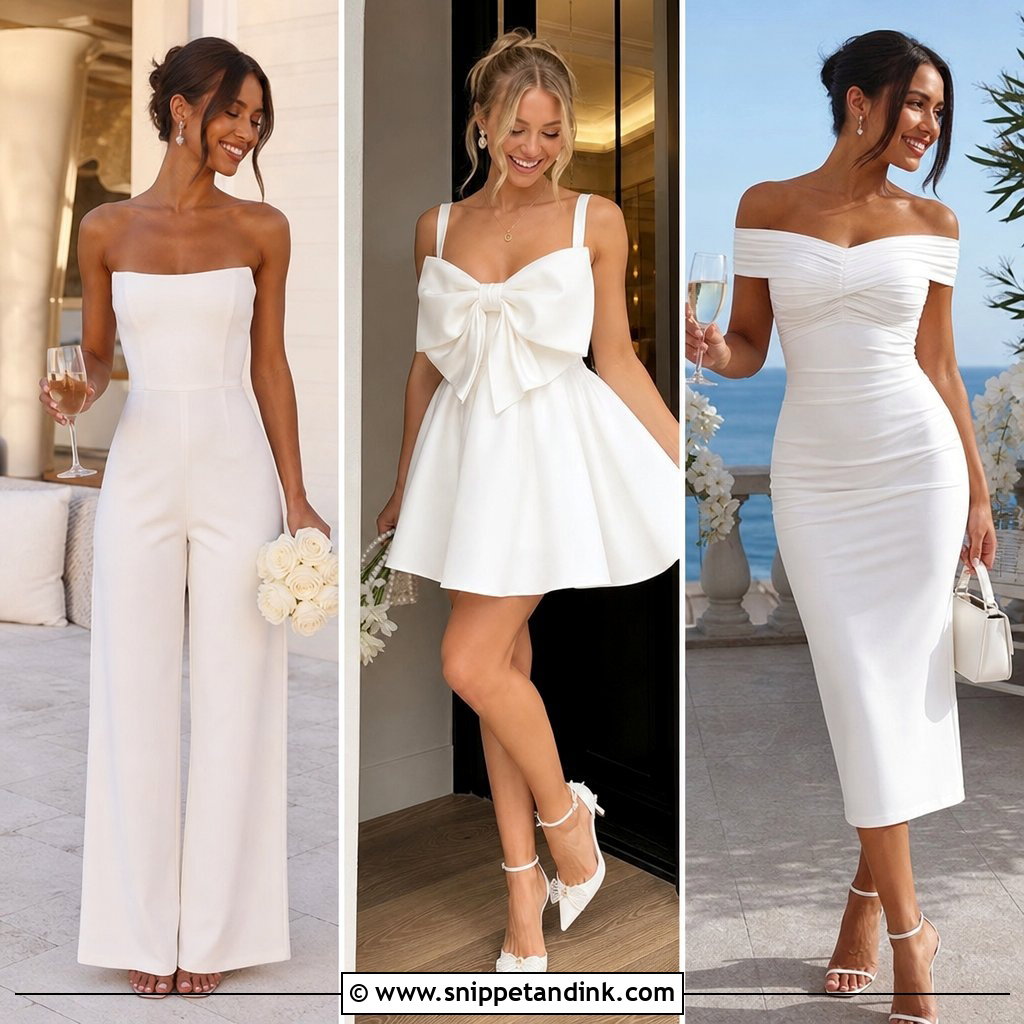
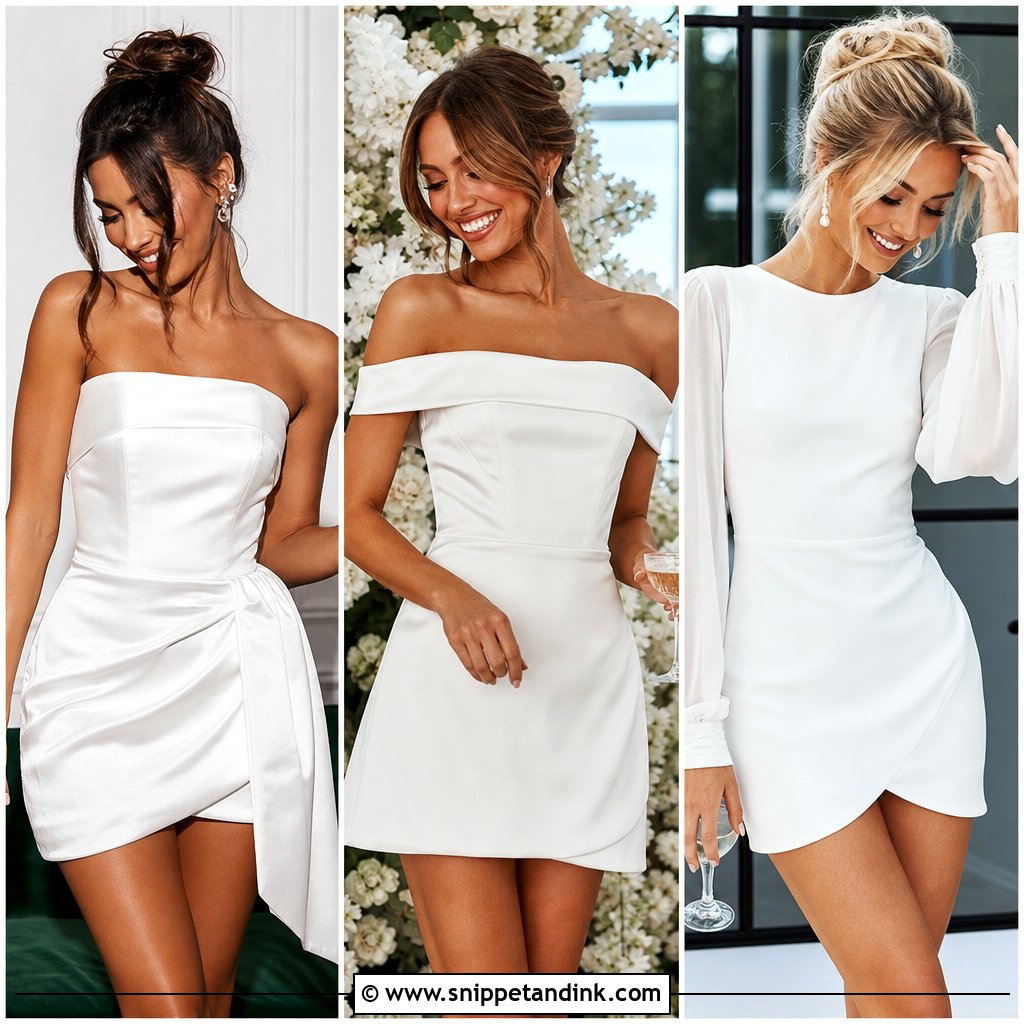
Off-shoulder sleeves are the detail I test hardest for a second look, because the whole point of changing is to dance, and dancing means raising your arms. A structured white mini, fitted midi or draped satin dress with a firm elastic or boned band will stay put. Pointed pumps or slim heeled sandals suit it. Jewelry stays light around the neckline: a delicate choker, pearl studs or small crystal earrings. A sleek bun or brushed-out waves shows off the shoulders. It suits a formal reception, a courthouse celebration or a rehearsal dinner.
8. Strapless Cocktail Dress
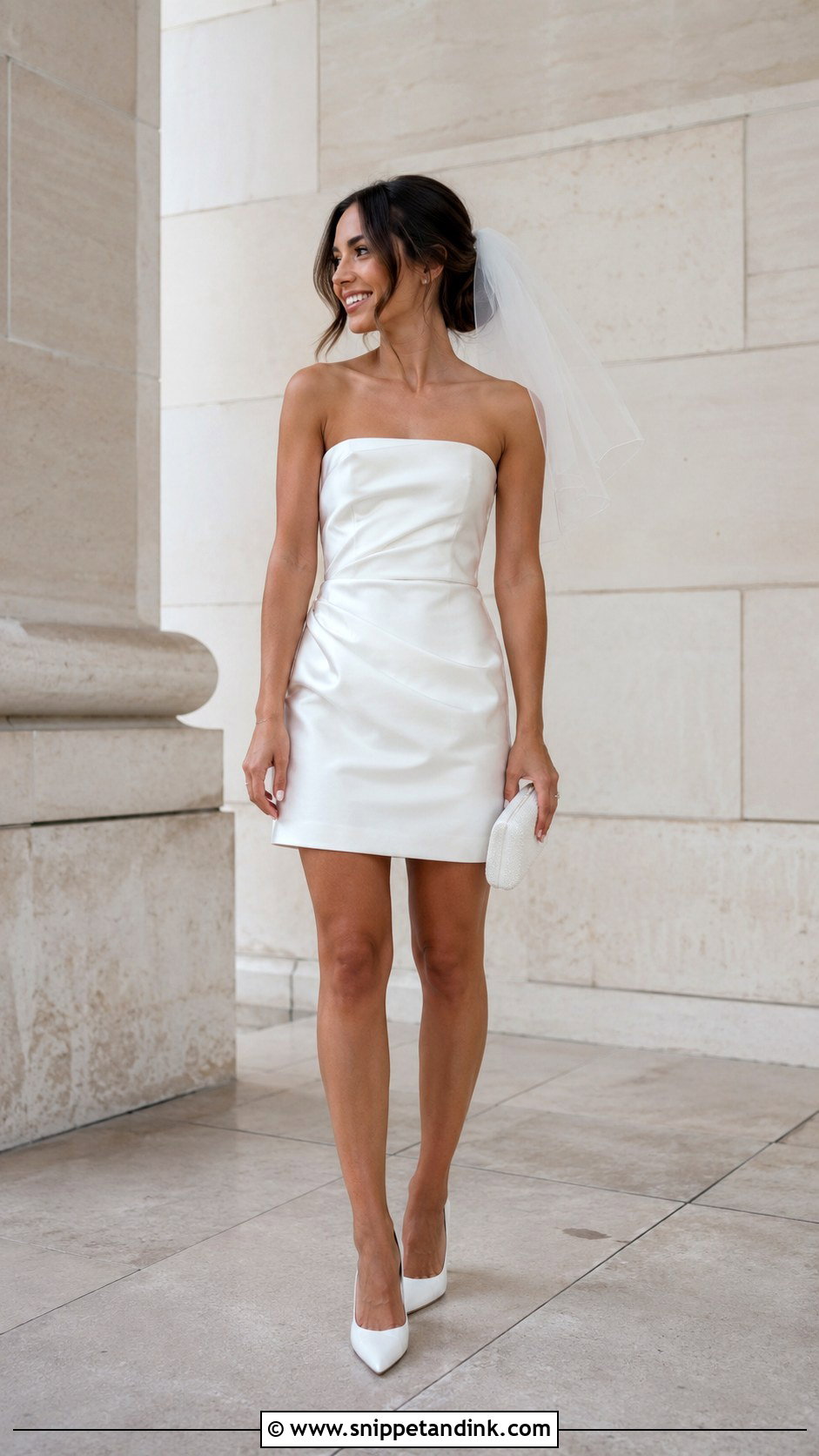
Strapless is clean and lets your accessories set the mood. For a bridal version I’d look at ivory satin, crepe, taffeta or mikado with real structure through the bodice. A strapless dress you have to keep hitching up is not a party dress. The test I use: jump on the spot in the fitting room. If the bodice moves, it needs taking in or a boned waist stay added. Pointed pumps, a short veil or bow clip, and a compact clutch suit it. A cropped blazer or sheer wrap adds coverage for travel between venues.
9. One Shoulder Cocktail Dress
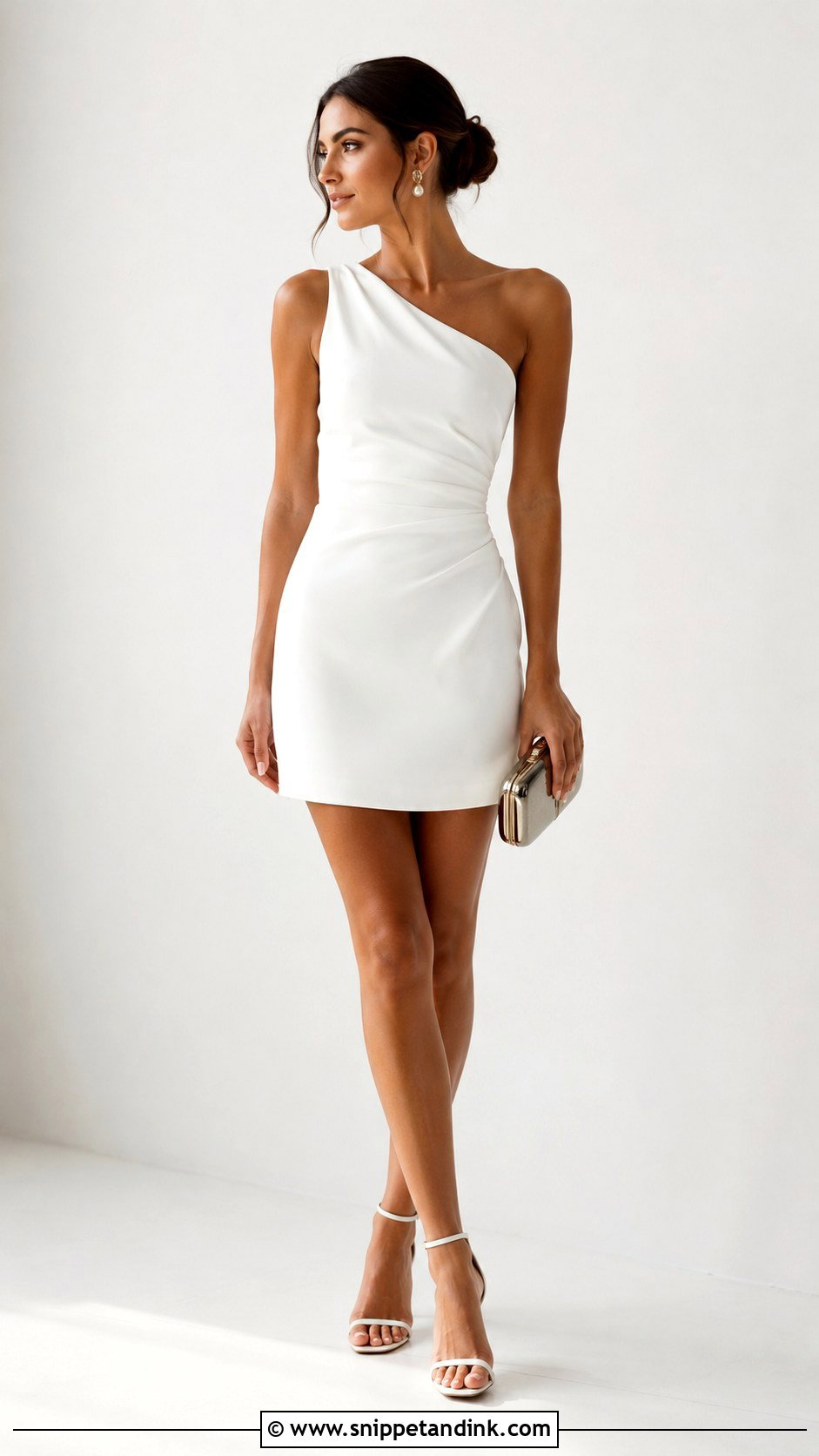
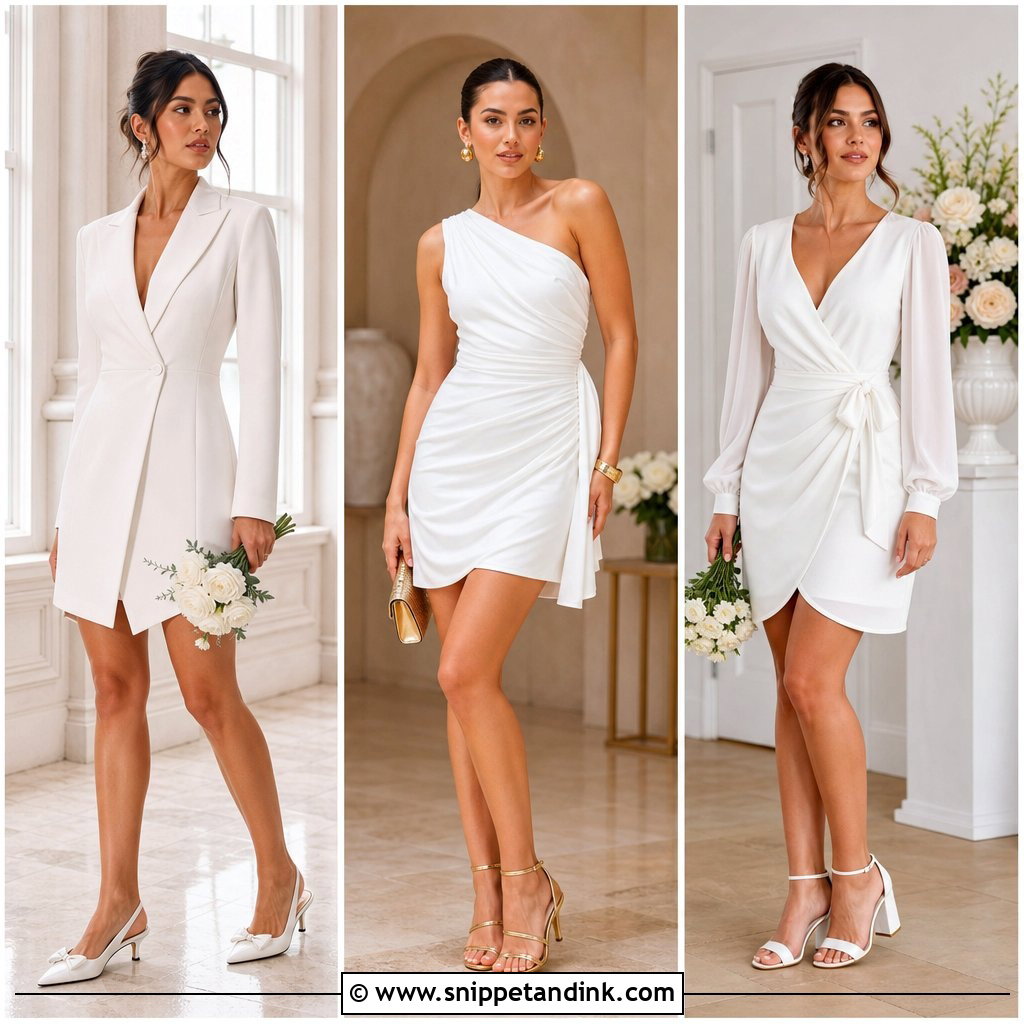
One-shoulder necklines give a dress interest without any decoration, which suits brides who like a sharp, modern line. A white crepe mini, satin midi or draped version with a fitted waist all work. Slim heels and a metallic clutch, then either one statement earring on the bare side or small matching studs. Sleek hair shows the neckline. Check the single strap’s width and whether there’s a grip strip inside it; narrow straps slide toward the shoulder edge after an hour of movement. It suits receptions, engagement parties and civil ceremonies alike.
10. Halter Cocktail Dress
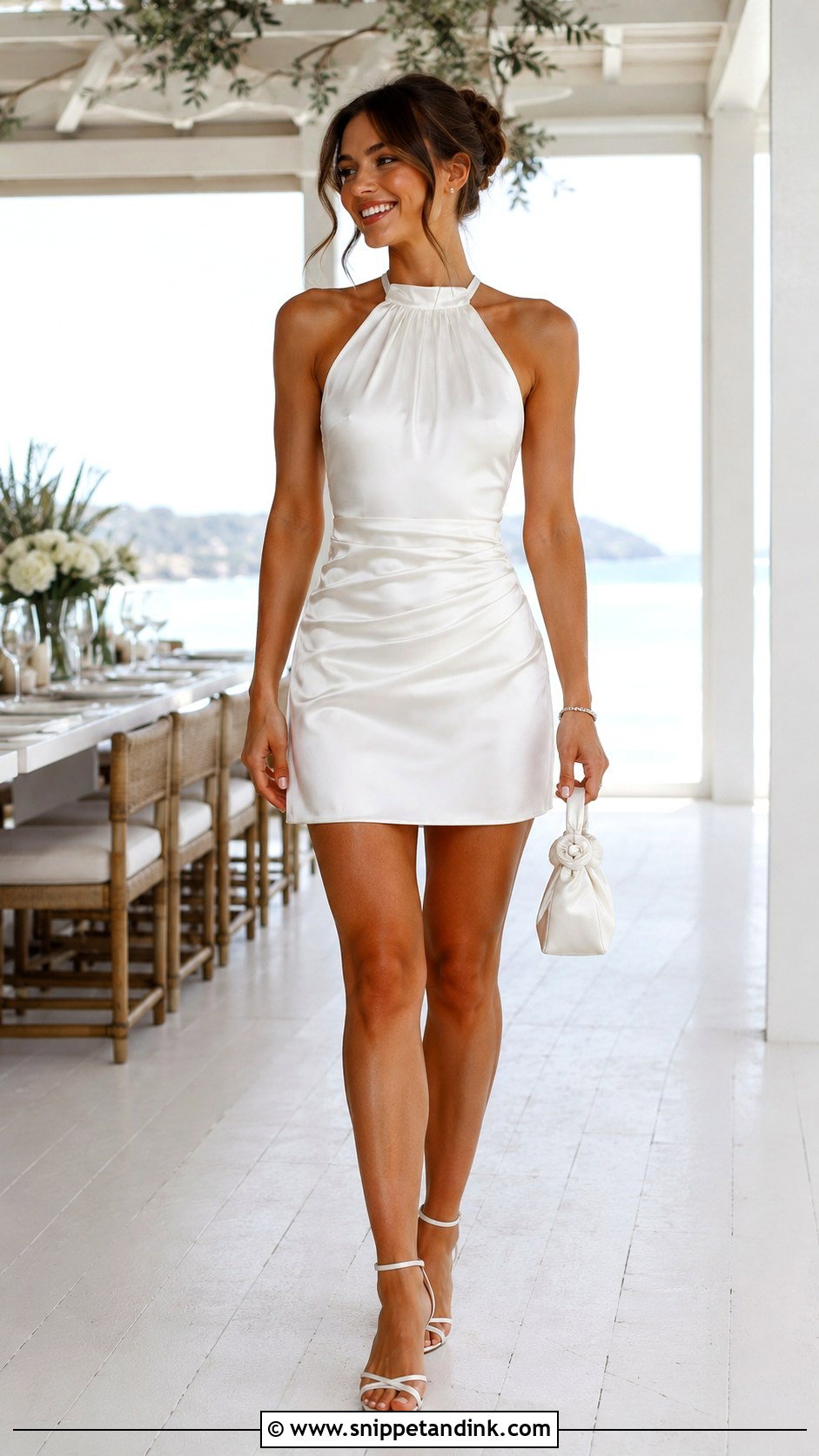
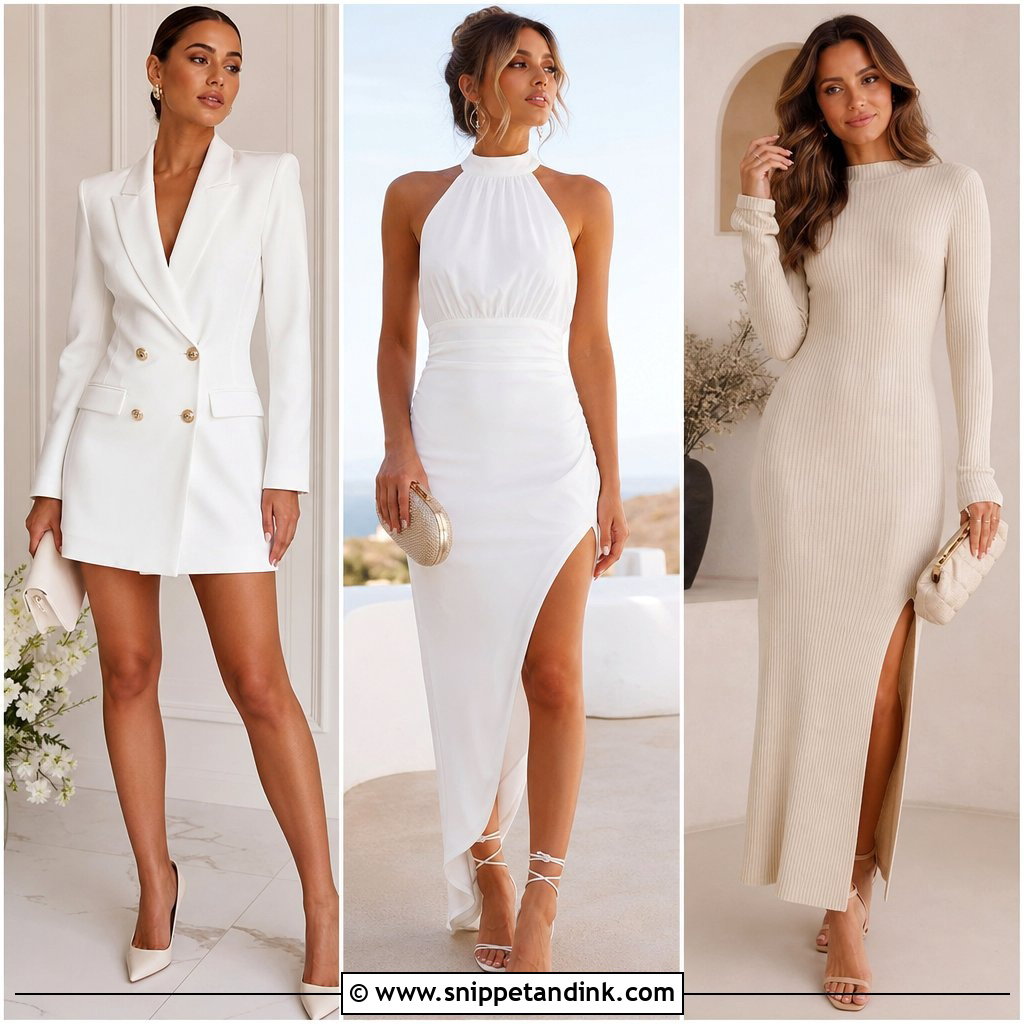
Halters hold a dress up from the neck, so they’re one of the most secure options for a night of dancing. A white satin halter mini, a high-neck midi or a soft draped version all look polished with very little added. Strappy sandals, a smooth clutch and delicate earrings, with a bracelet instead of a necklace. A low bun or high ponytail keeps the neck clear. The one drawback I’d mention is that halters usually need a strapless bra or built-in cups, and heavier busts sometimes find the neck tie aches by the end of the night. Warm-weather and destination receptions suit it well.
11. Long Sleeve Cocktail Dress
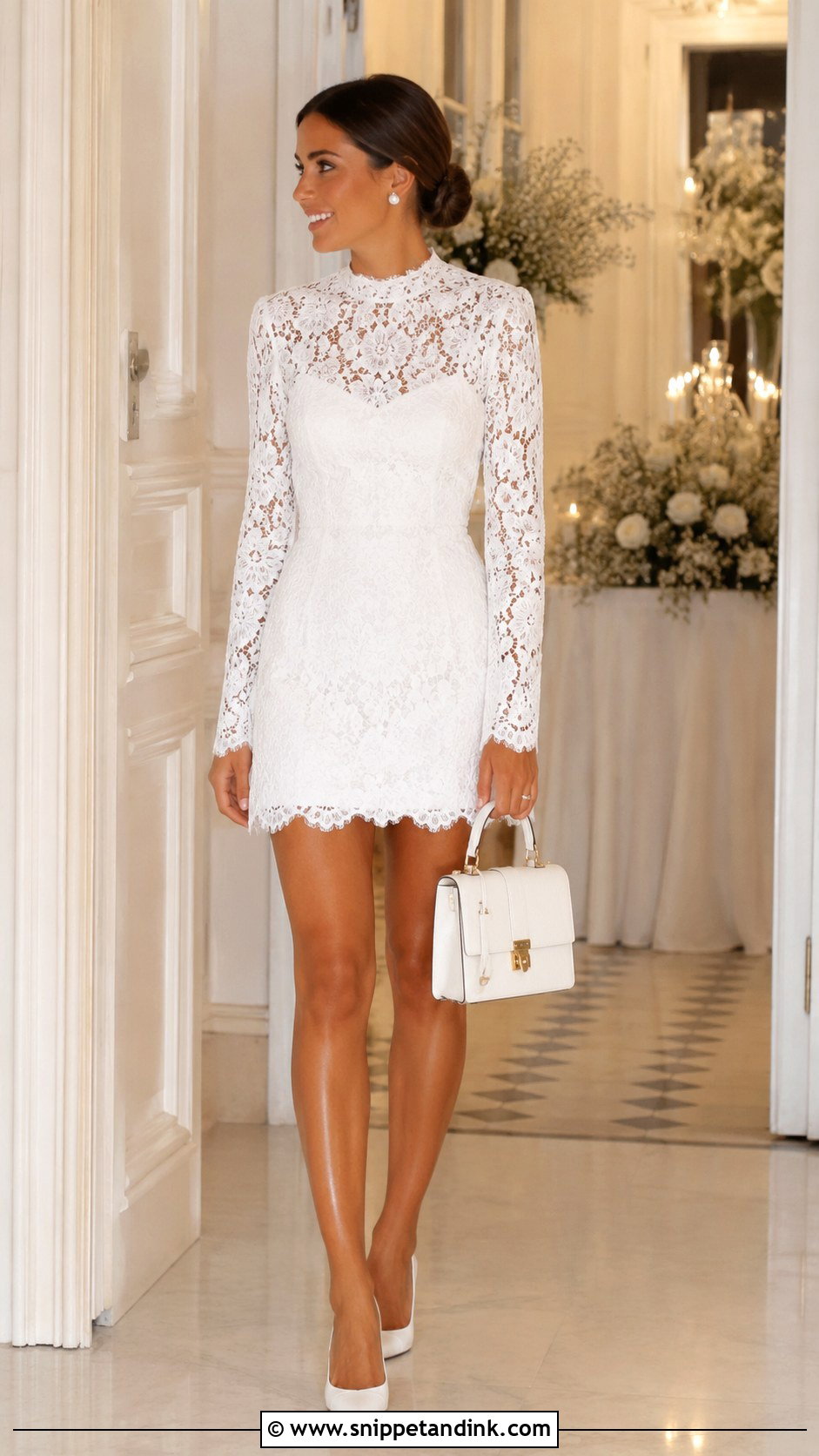
Long sleeves give coverage and warmth, and they’re my usual answer for winter receptions or an after-party in a chilly venue. Lace, crepe, satin or sheer sleeves work depending on how formal the night is. A fitted white mini with long sleeves reads modern; a midi reads more classic. Pointed pumps, pearl earrings and a structured handbag suit it. If the sleeves are embellished, keep everything else simple. Make sure you can raise your arms above your head in the sleeves before you buy, since a tight armhole limits dancing more than anything else.
12. Blazer Cocktail Dress
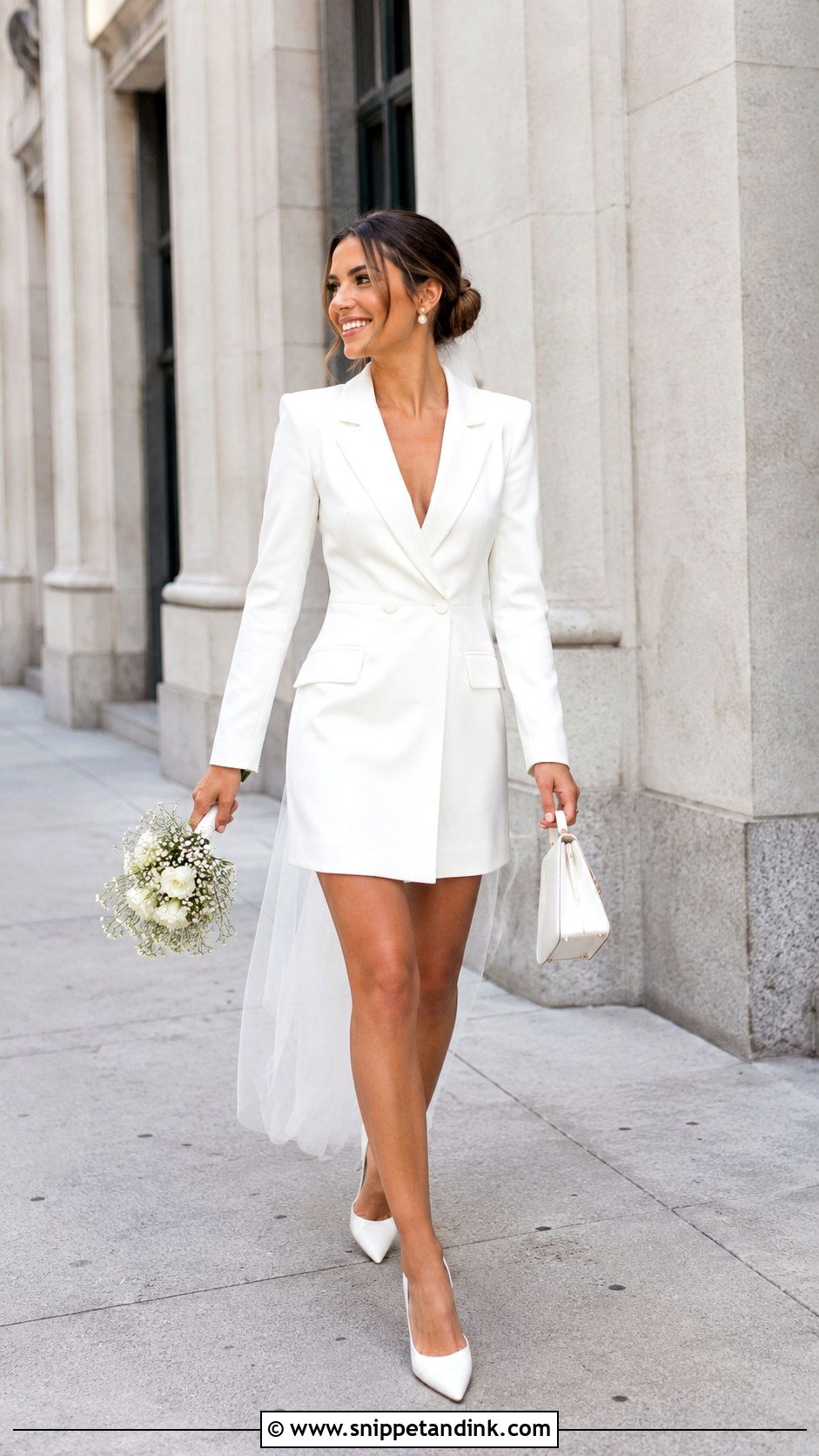
A blazer dress is the sharpest option for a modern second look, especially if your gown was romantic and you’d like a contrast for the evening. A white tailored version with a defined waist, clean lapels and a length that stays decent when you sit is key; blazer dresses ride up more than you’d expect. Pointed heels, sheer tights if you’d like them, and a structured mini bag. Crystal earrings or pearl studs soften the tailoring. The fit has to be precise, particularly at the shoulders, or it looks like a borrowed jacket.
13. Tulle Cocktail Dress
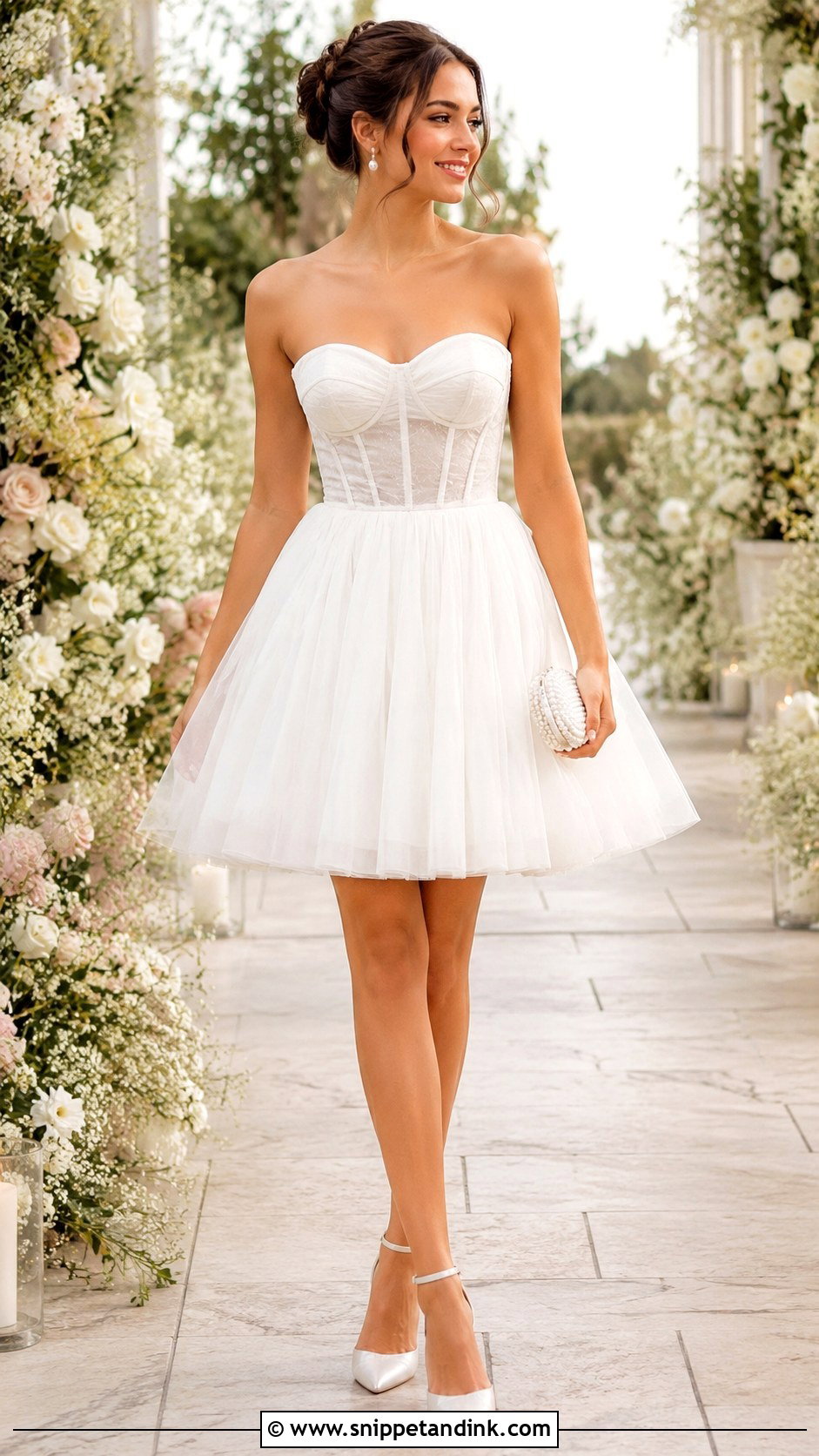
Tulle gives the volume of a gown in a dress you can actually dance in. A white mini or tea-length with soft layers, a fitted bodice and a clean waist is the fairytale version, scaled down. Satin heels, pearl earrings and a delicate clutch suit it, with loose waves or a low bun to match the airy texture. Tulle does snag on watch straps, bracelets and sequins on other people’s outfits, so I’d steer away from a heavily embellished partner on the dance floor. Garden celebrations, showers and reception changes suit it.
14. Beaded Cocktail Dress
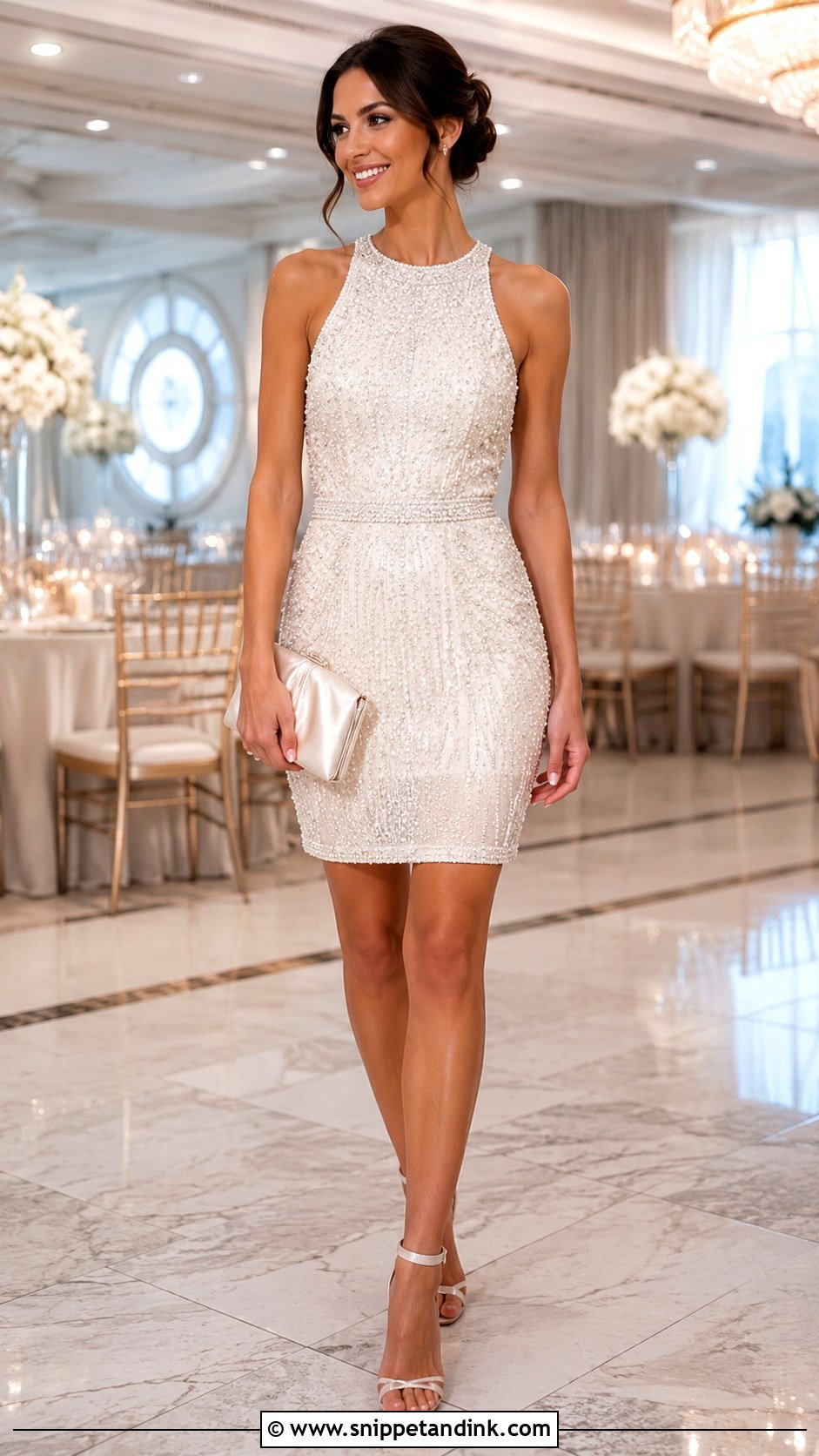
Beading has a 1920s feel, and it moves beautifully because each bead swings slightly as you walk. Ivory, white or champagne beading on a sheath mini, slip midi or lightly flared shape works. Simple heels, a satin clutch and small earrings let the beading lead. Weight is the thing to check: heavily beaded dresses can weigh far more than you’d expect, and that load hangs from the straps, so make sure they’re wide enough and secure. Never hang a beaded dress on a hanger for long; store it folded flat with tissue so it doesn’t stretch.
15. Ruffle Cocktail Dress
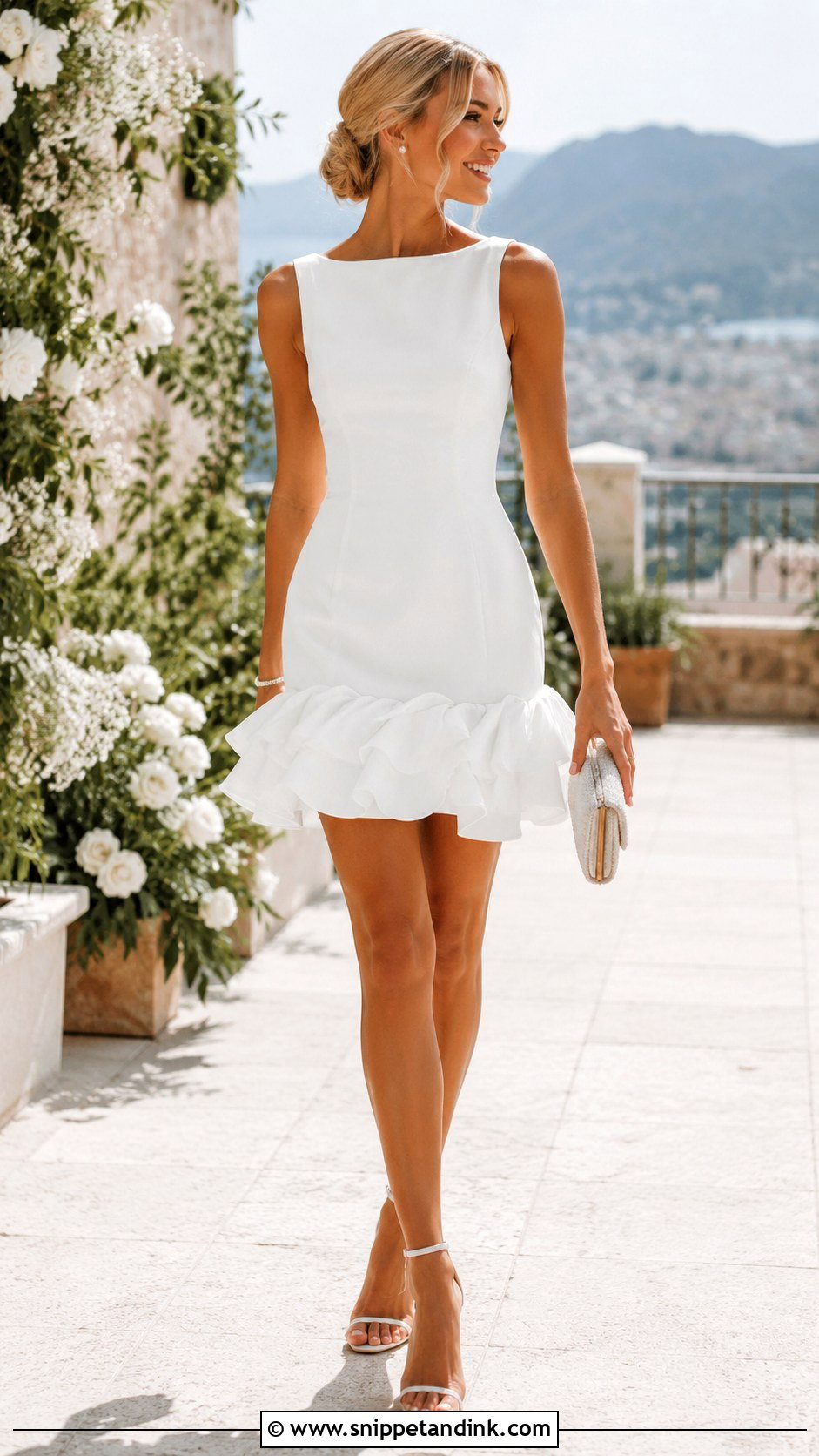
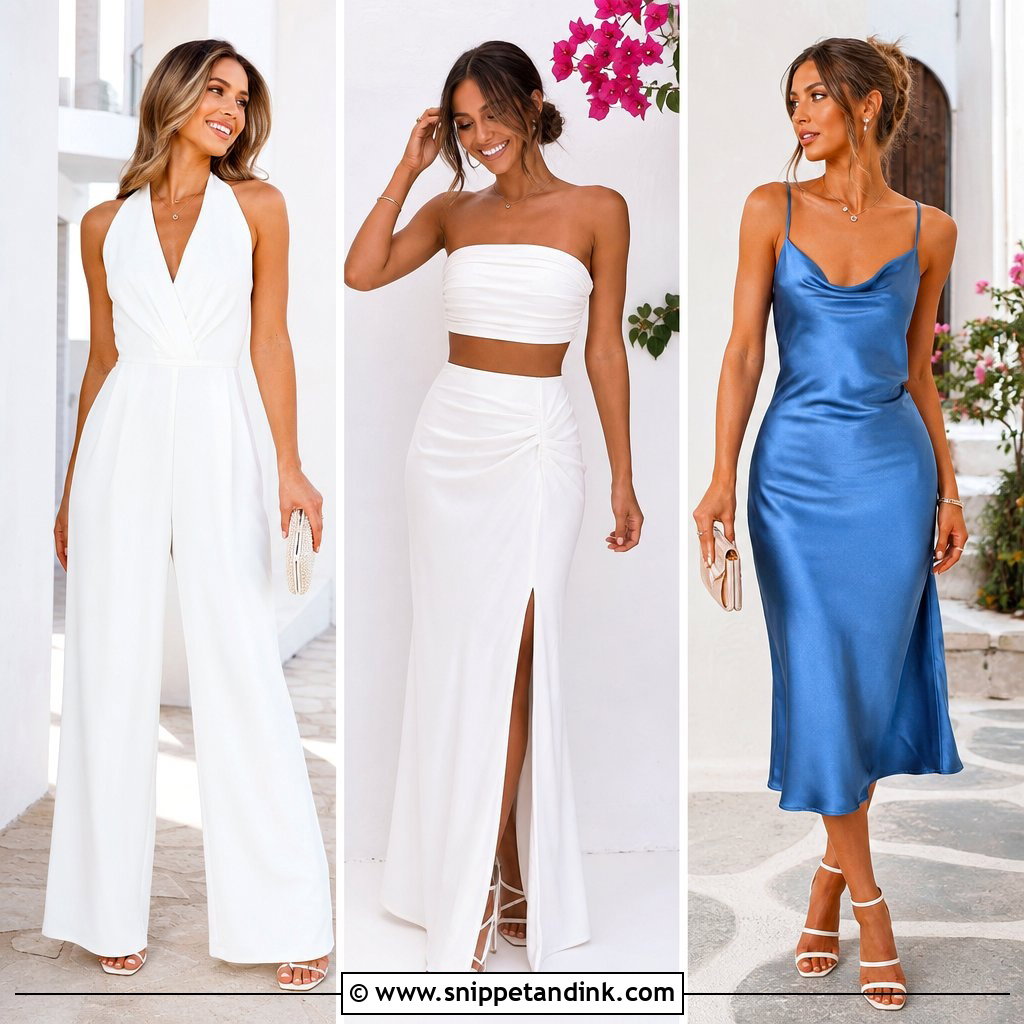
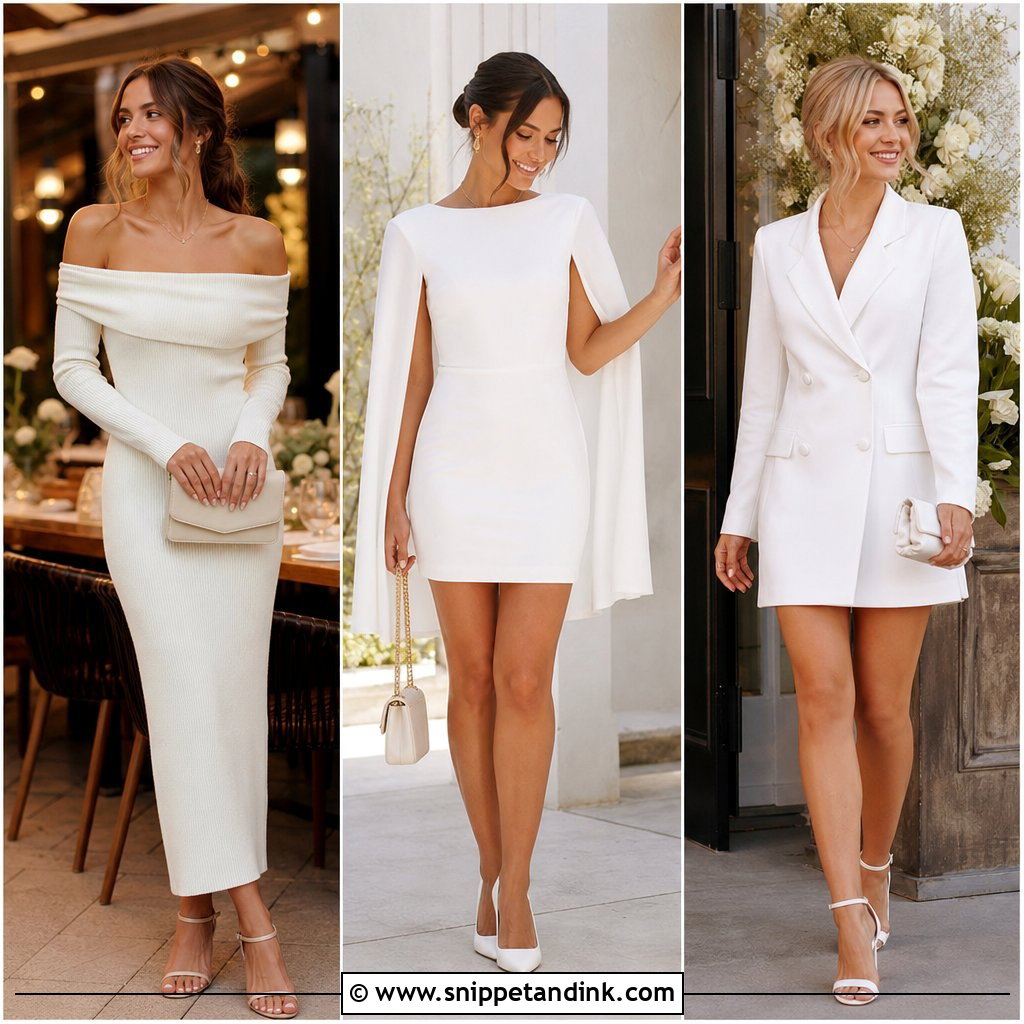
Ruffles add movement and a lighter mood, and they work best in one place at a time: the hem, one shoulder, the sleeves or the skirt. A white mini with a flouncy hem reads playful; a midi with soft ruffles reads more romantic. Slim sandals, pearl studs and a simple clutch suit it. Fresh makeup and relaxed hair match the mood. The fabric decides whether ruffles look crisp or limp. Organza and taffeta ruffles hold their shape all night, chiffon ones droop in humid air. Spring and summer outdoor receptions suit it.
16. Corset Cocktail Dress
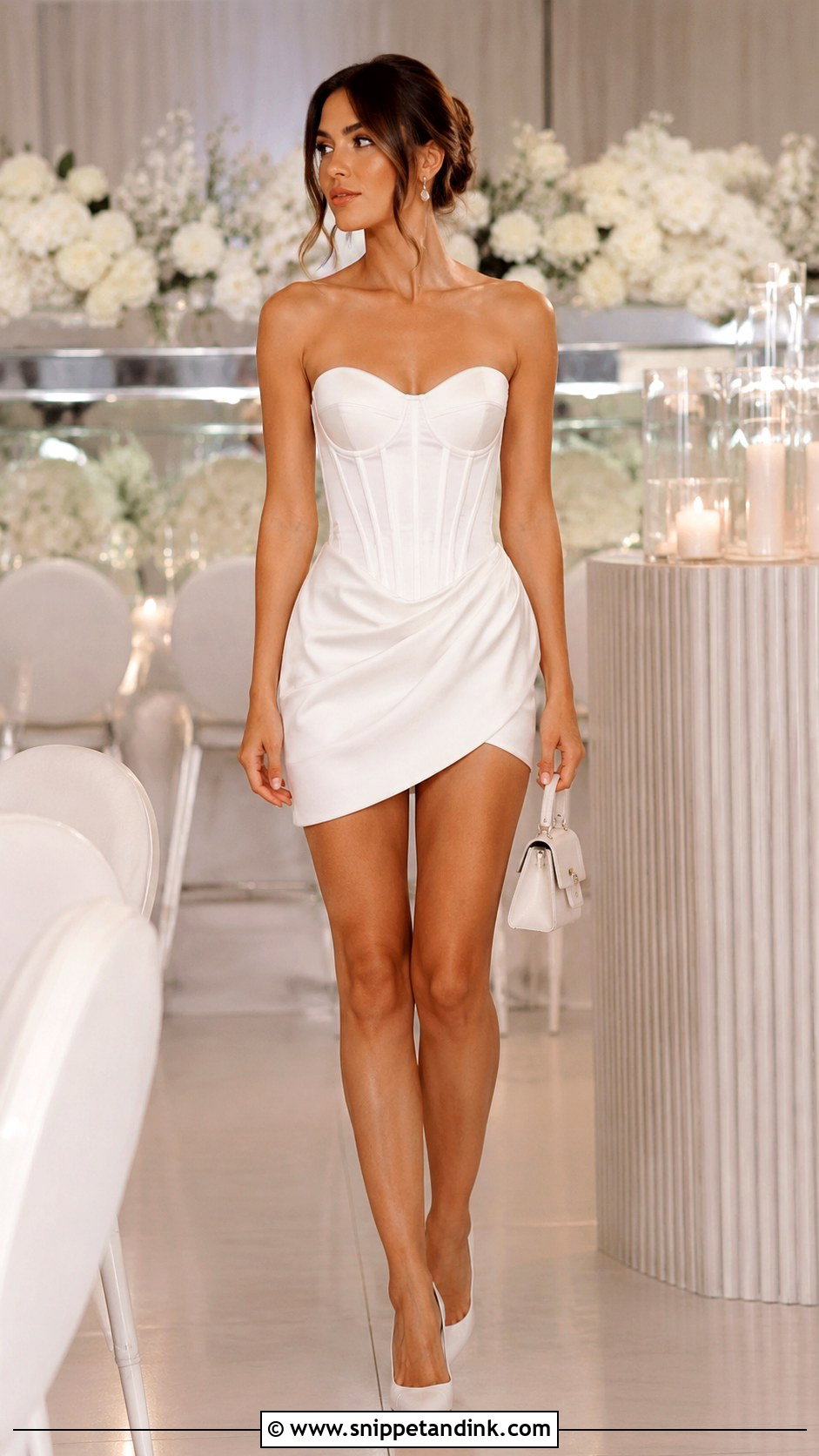
A corset bodice gives shape and support, and many brides find it more comfortable for dancing than they expect because the boning holds everything in place. A white or ivory dress with a supportive bodice, clean seams and a skirt that lets you move is the version to look for. Mini lengths feel party-ready; midi looks more polished. Pointed pumps, a small top-handle bag and simple jewelry suit it. With visible boning or lace-up detail, keep accessories quiet. Sit down in it during the fitting; a corset that’s comfortable standing can dig into the hips when seated.
17. Slip Cocktail Dress
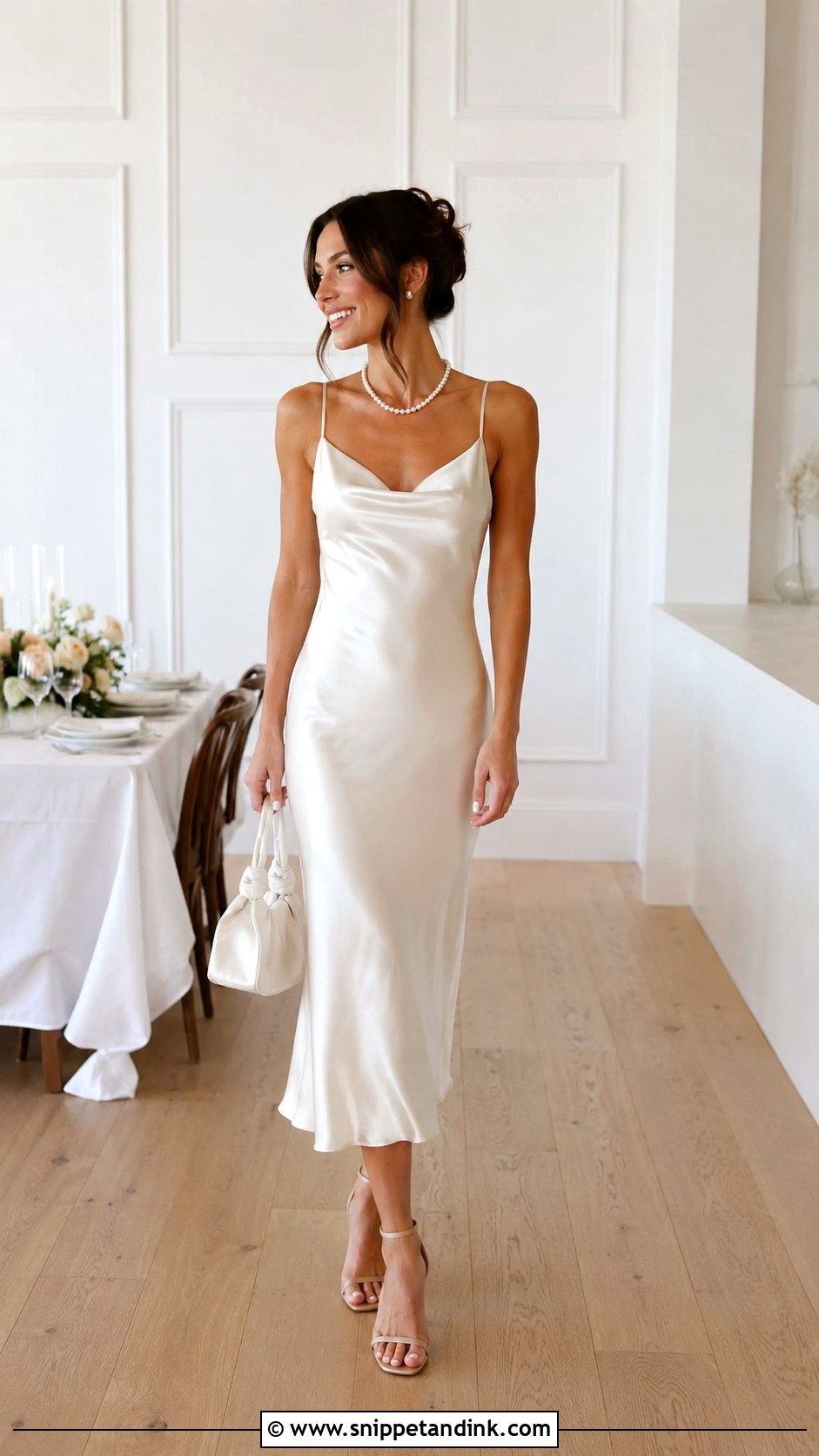
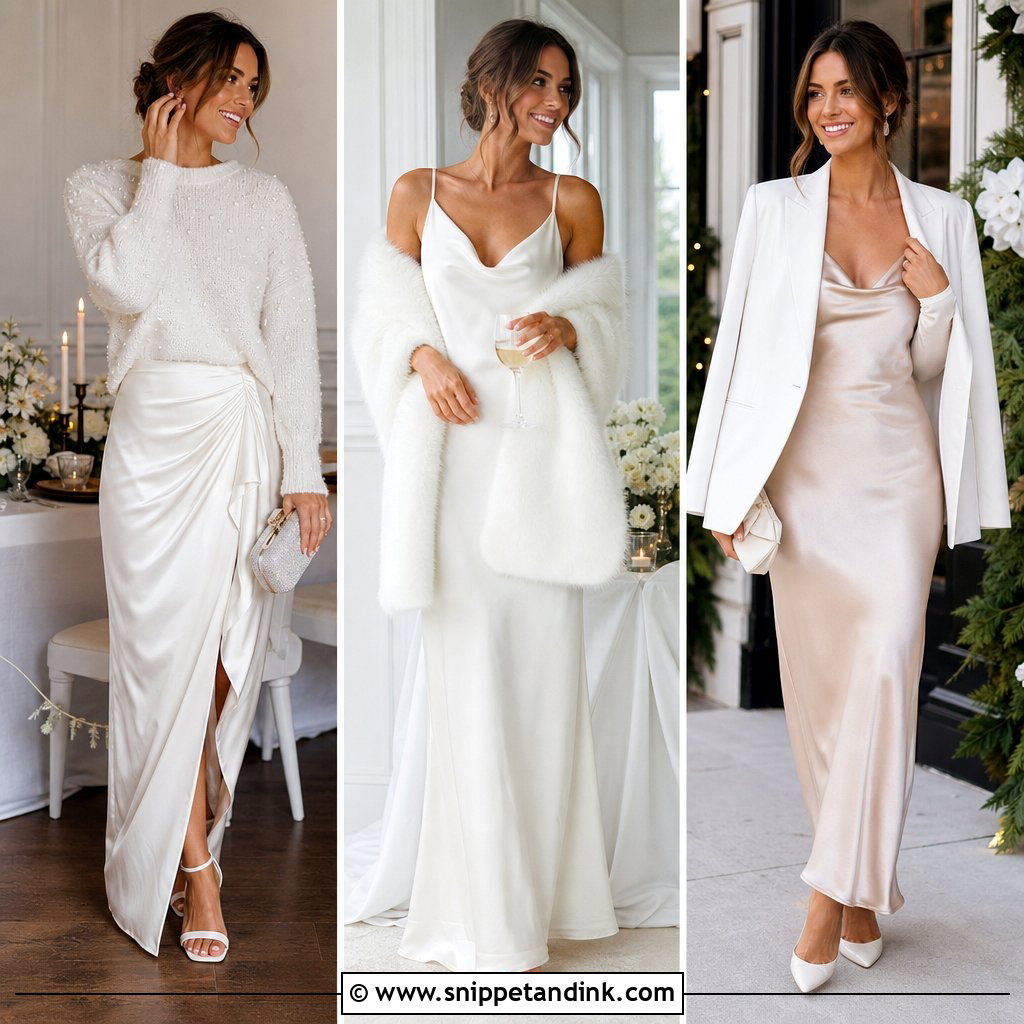
A slip is the most relaxed second look, and that ease is its appeal. White, ivory or champagne satin, mini or midi, with a neckline that flatters. Barely-there heels, a pearl necklace and a small satin bag suit it. A cropped jacket or delicate wrap gives a little polish for the start of the evening. Bias-cut slips cling and show creases, so I’d choose one with a little weight to the satin, and wear it with no-line underwear. Beach receptions and intimate dinners are where it shines; it’s less suited to a long night of heavy dancing in heat.
18. Bubble Hem Cocktail Dress
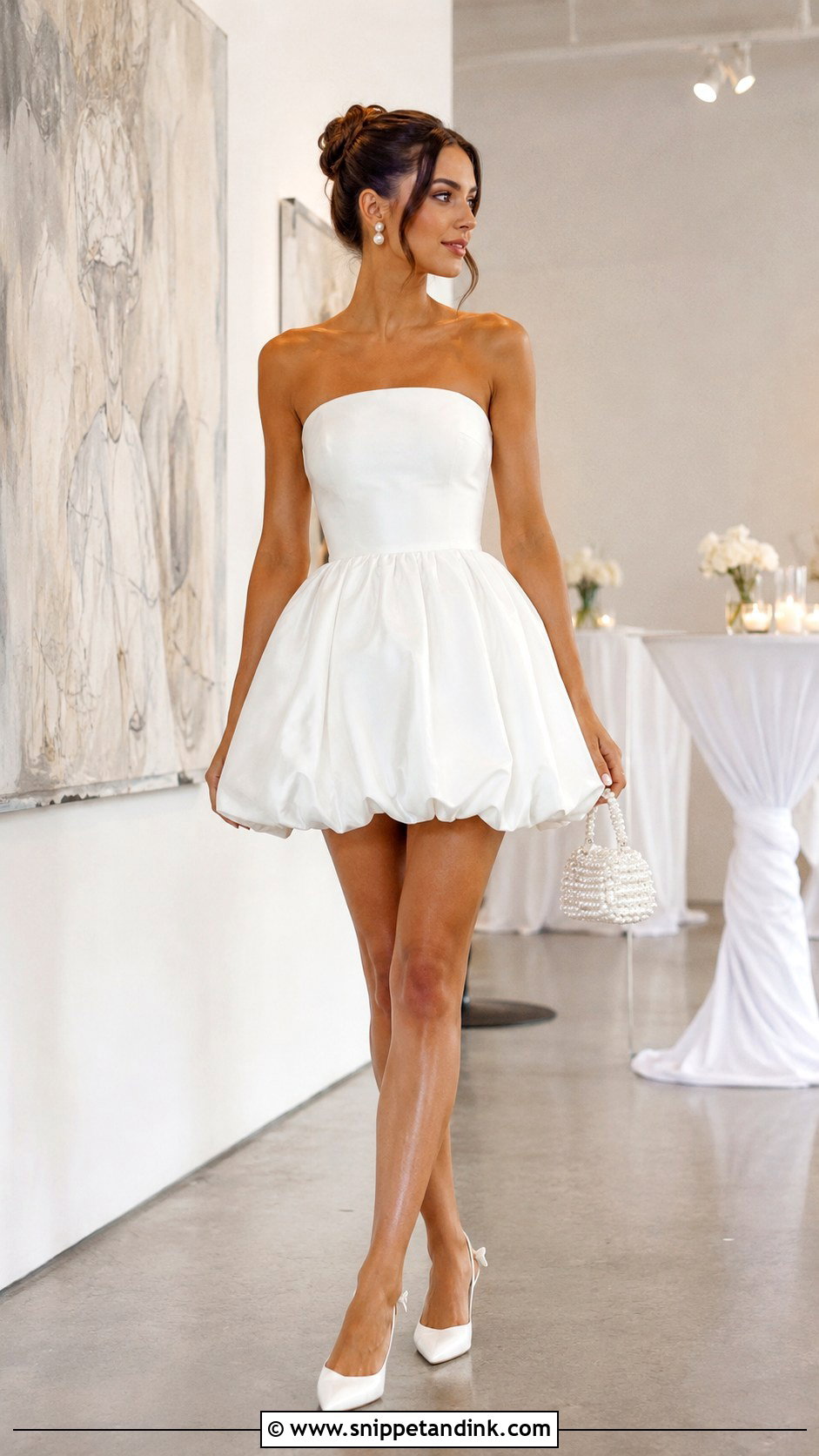
Bubble hems curve back under themselves, which gives a short skirt a rounded, sculptural volume. A white mini or short midi with a structured bodice and that rounded hem is fresh and a little fashion-led. Sleek heels, pearl earrings and a tiny handbag keep it balanced, and the top half should stay clean and fitted. I’d only suggest this shape to brides who like a bit of fashion edge; on a petite frame the volume at the hip can overwhelm. Reception entrances and after-parties suit it.
19. Floral Applique Cocktail Dress
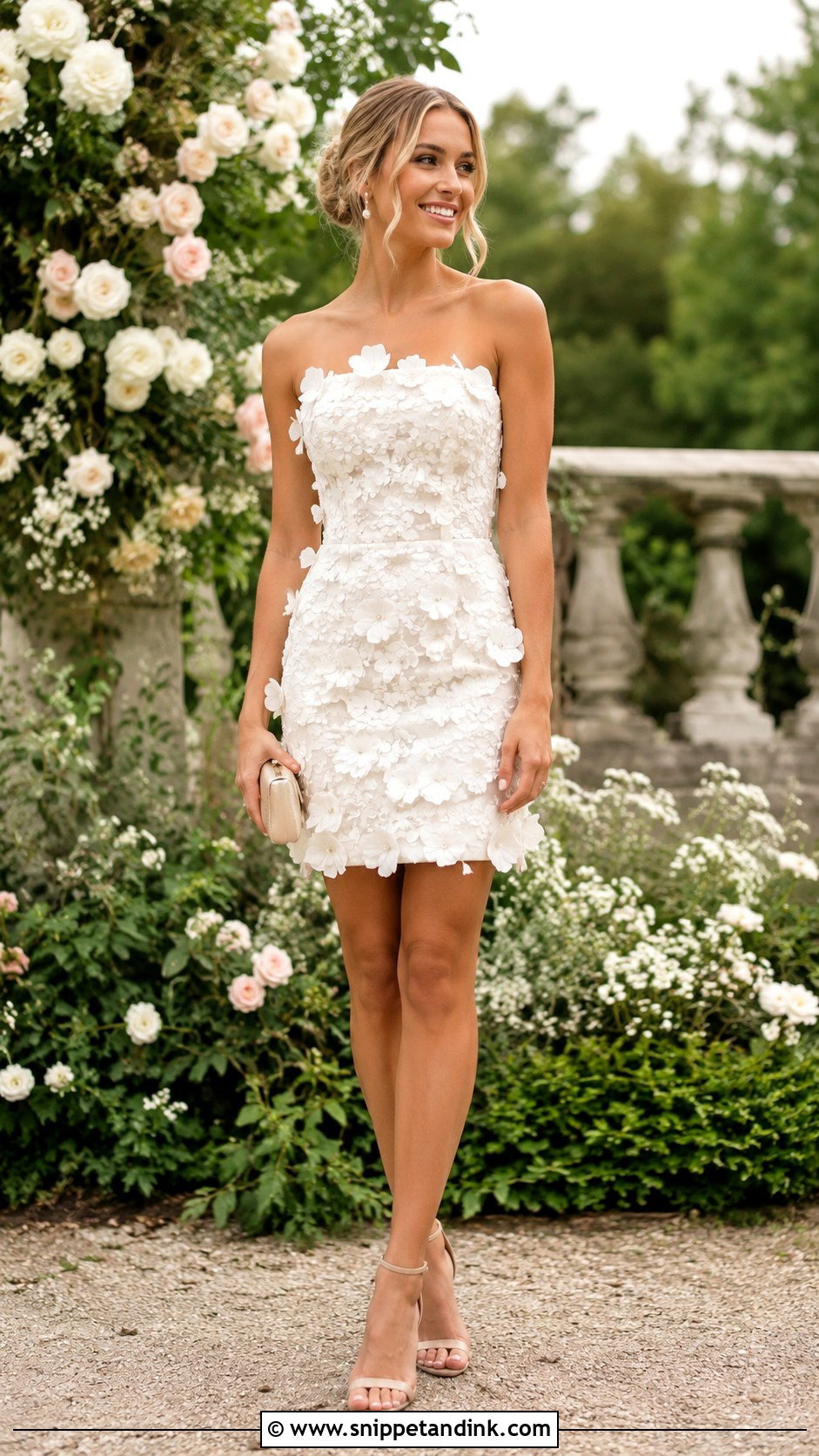
Floral appliques add texture and romance without sparkle. White or ivory flowers placed across the bodice, skirt, sleeves or neckline give a dress dimension in photos. Keep the silhouette simple so the appliques read as the feature. Nude or ivory heels, pearl earrings and a small clutch suit it, and a soft updo or half-up style complements it. 3D appliques are delicate, so check how they’re attached and avoid crossbody bag straps that rub against them. Spring weddings, garden receptions, showers and daytime celebrations suit it best.
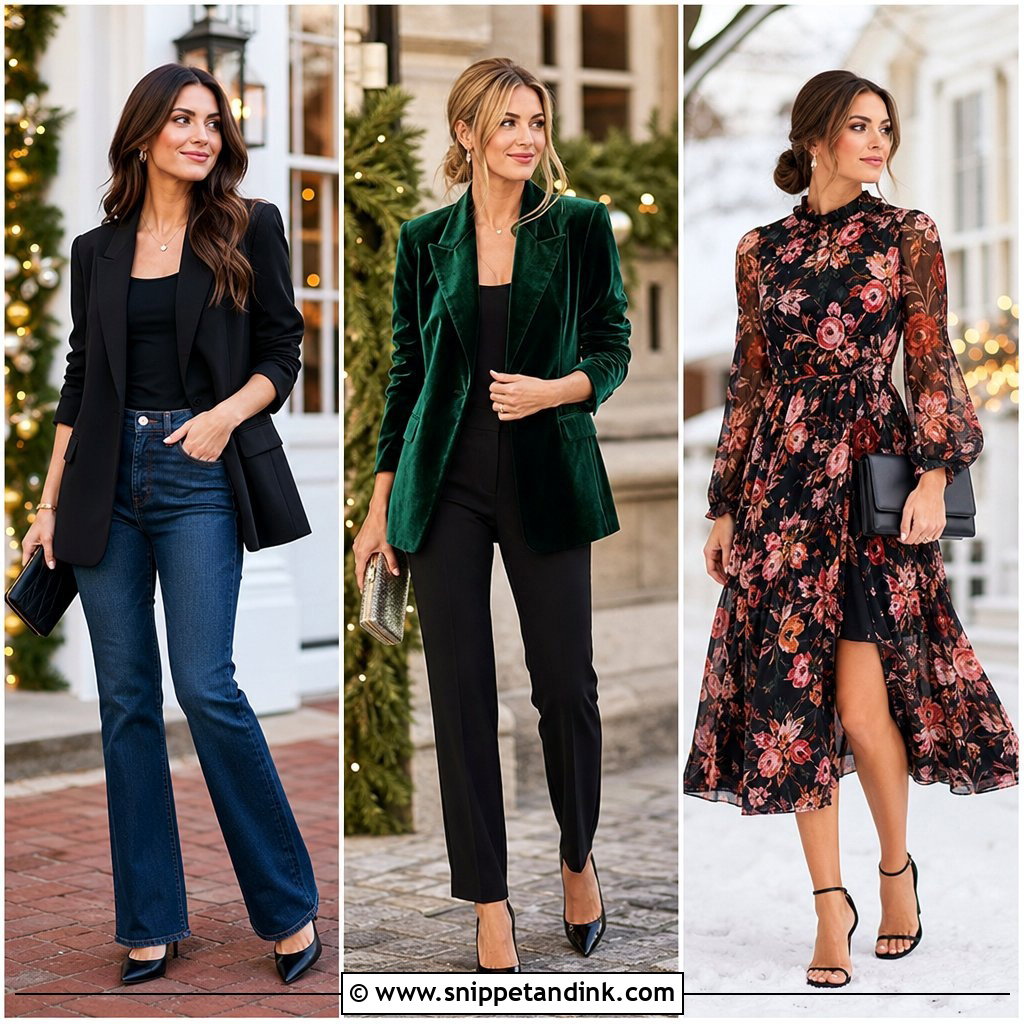
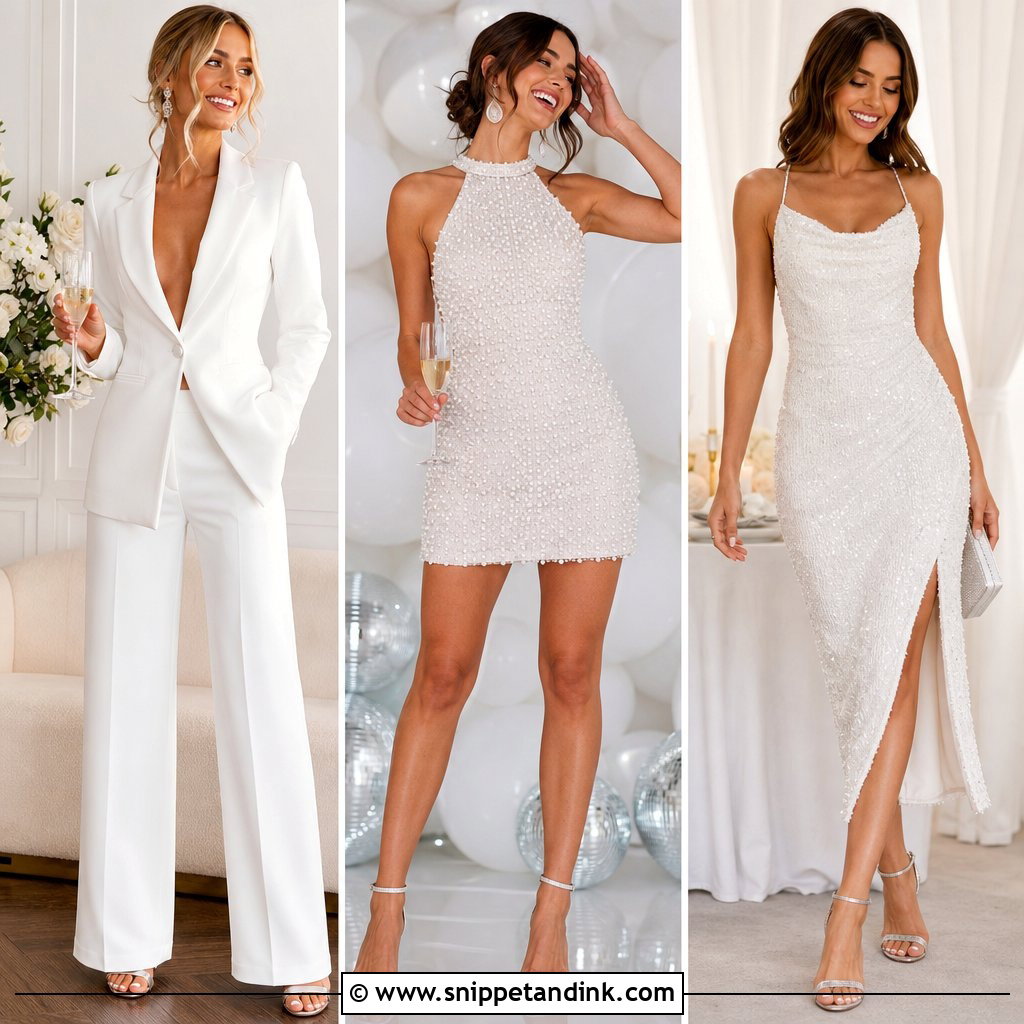
20. High Low Cocktail Dress
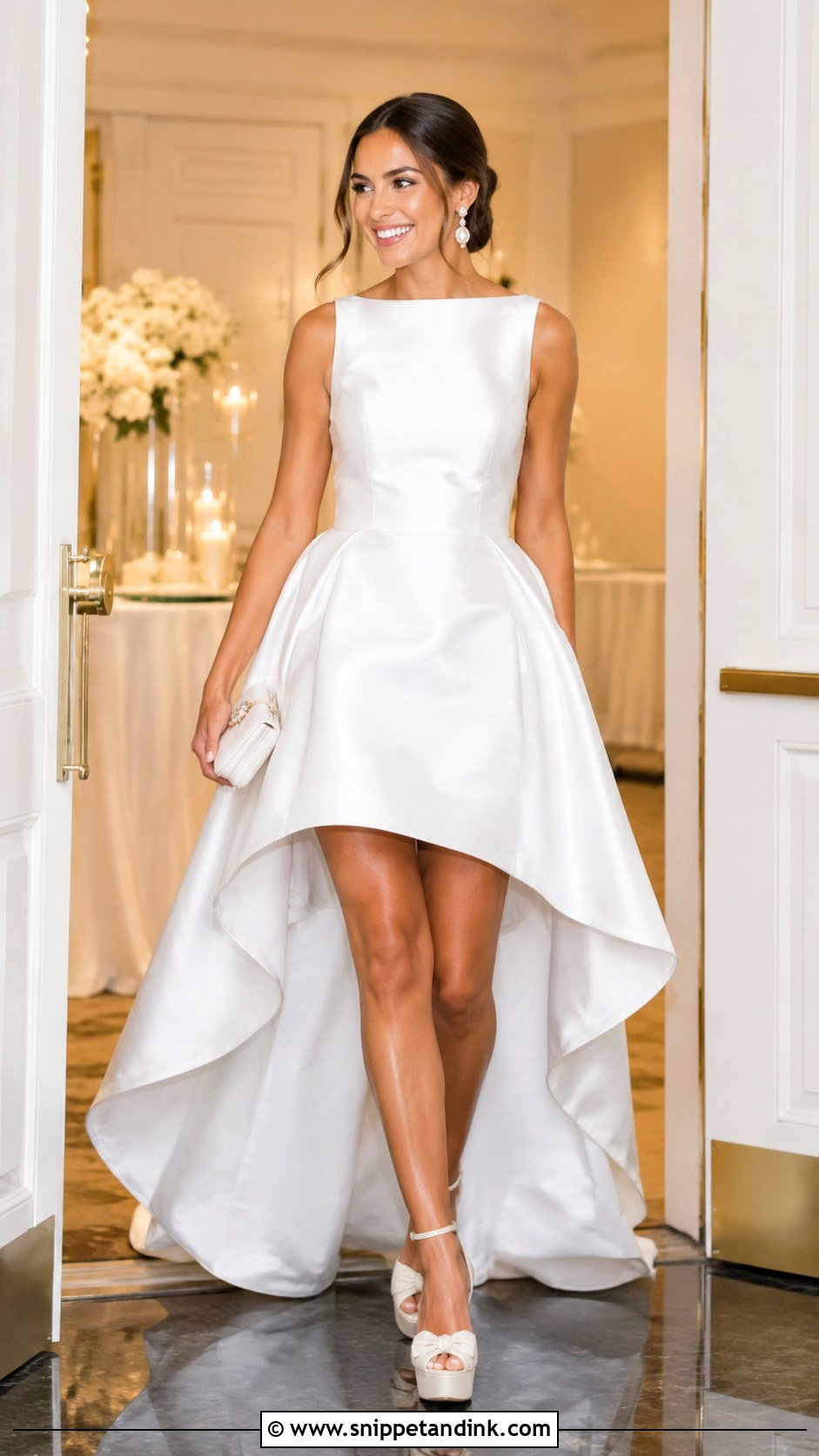
A high-low hem gives you the ease of a short front with the presence of a longer back. The shorter front makes walking and dancing easy, and the back keeps a sense of ceremony. White satin, taffeta or organza with a clean neckline is the version I’d choose. Your shoes will be on full display from the front, so pick ones you love. Drop earrings, a sleek clutch and polished hair finish it. The longer back can be stepped on by guests during crowded dancing, so I’d keep it no lower than mid-calf.
21. Square Neck Cocktail Dress
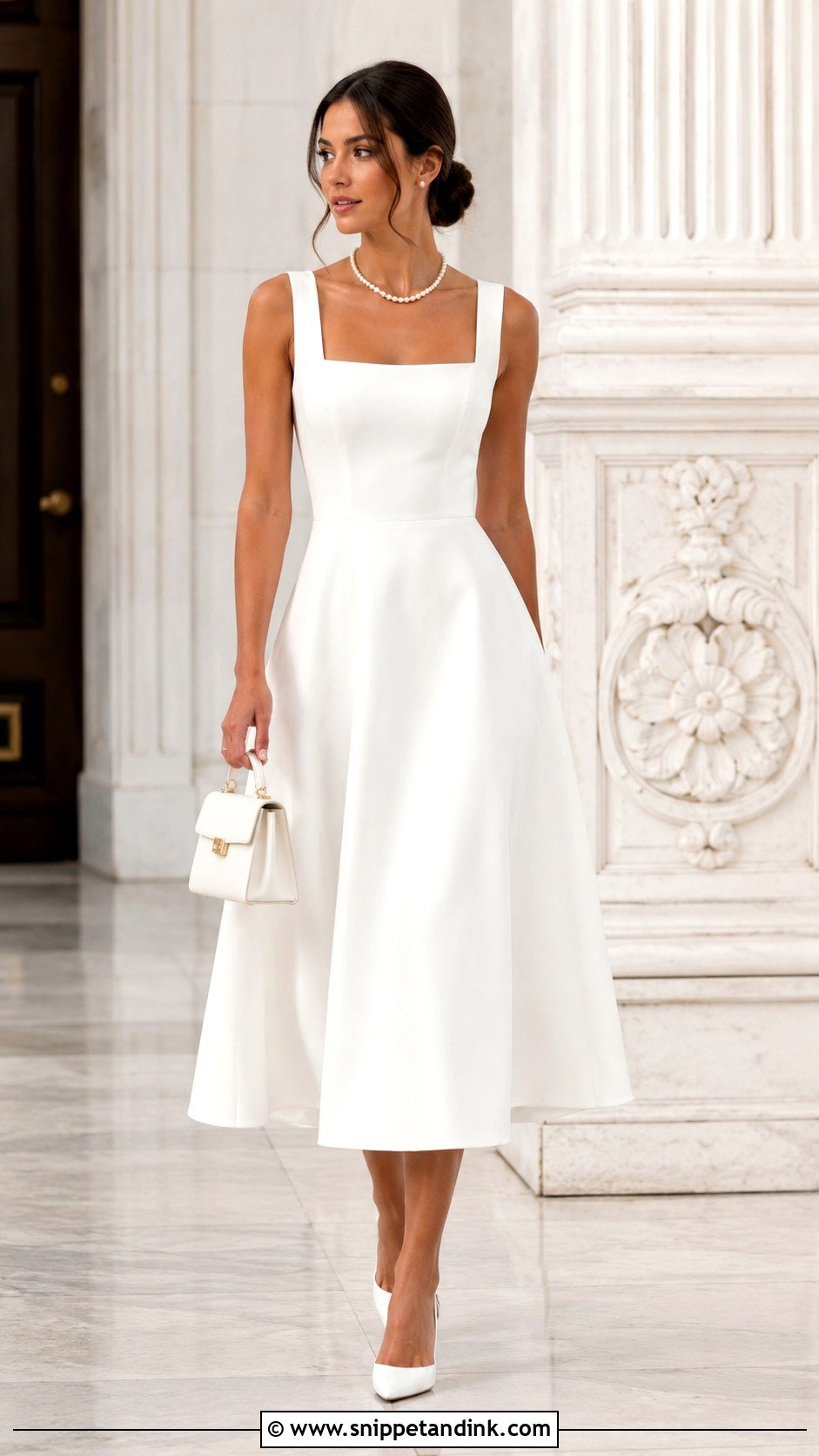
Square necks are flattering on most frames and easy to accessorise. A white mini or midi in crepe, satin or a stretch fabric with clean lines is the base. A short pearl necklace, small hoops or delicate drops all suit it. Slingbacks and a structured bag finish it. Stretch fabric is underrated here: a square neck in stretch crepe holds its shape while still letting you move, which rigid satin can’t always do. It works for courthouse ceremonies, rehearsals, reception changes and bridal parties.
22. Champagne Cocktail Dress
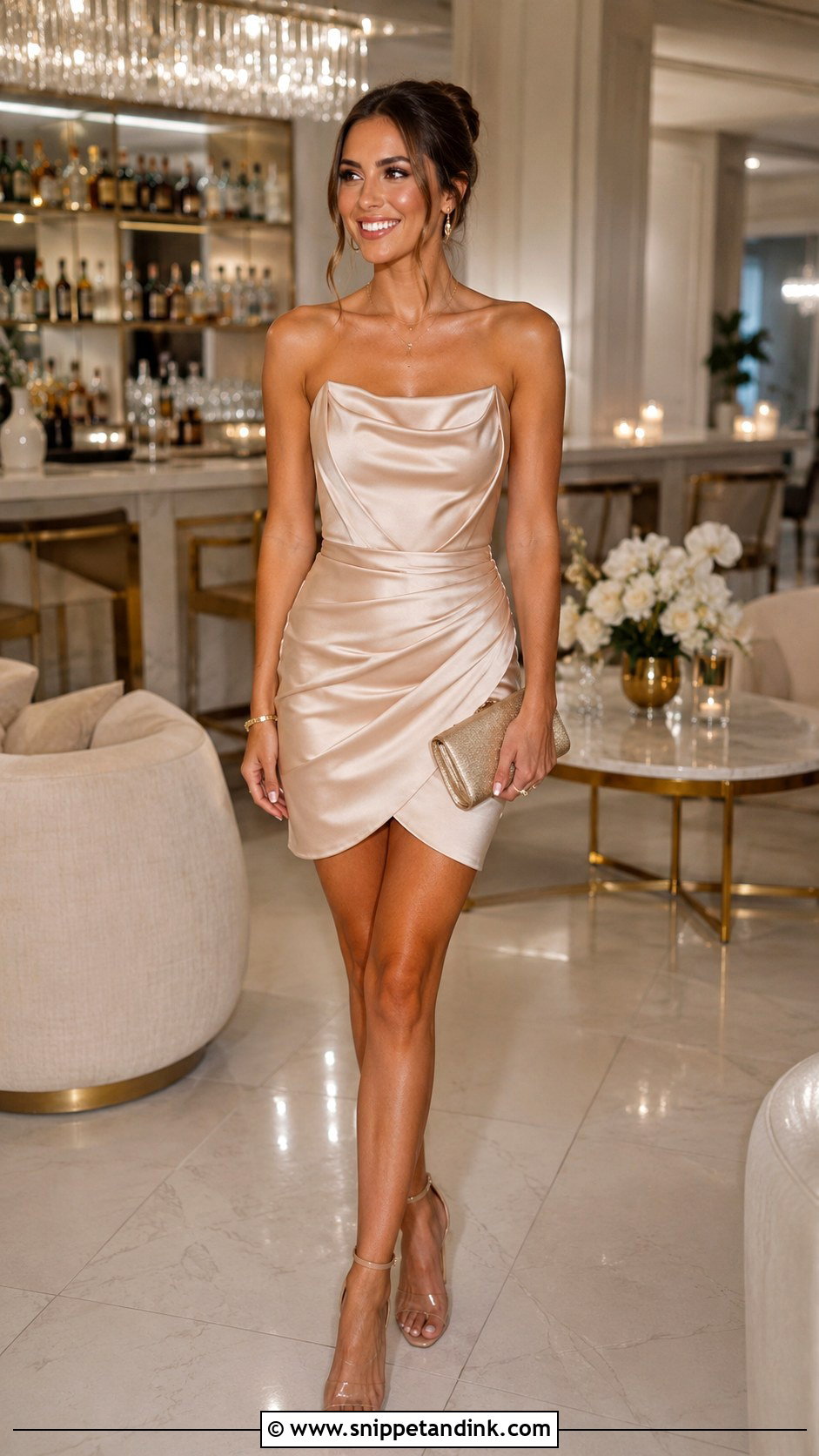
Champagne gives a warm glow that bright white doesn’t, and as a second look it creates a subtle shift from the gown while staying in the bridal palette. Satin, beading and sequins all suit it. Ivory or nude heels, a gold clutch and delicate jewelry finish it. Choose a mini for a party mood or a midi for a more formal reception. My one check: champagne tones vary from pinkish to grey-gold, so hold the fabric up to your face in daylight and under warm light. Evening celebrations and hotel venues suit it.
23. Ivory Midi Cocktail Dress
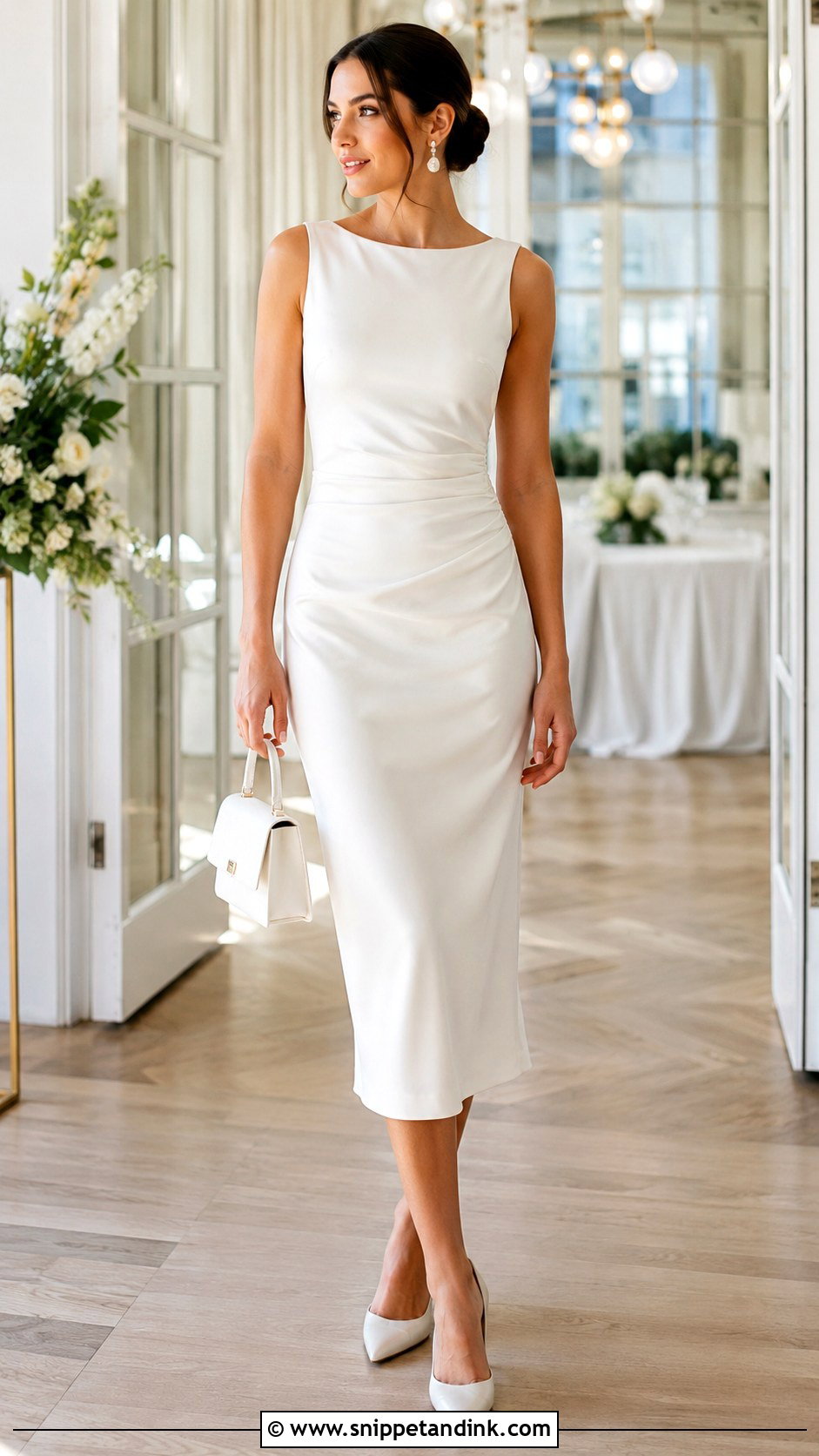
An ivory midi feels a little more formal than a mini and covers more. A fitted sheath, an A-line midi or a satin column that ends below the knee all work. Pointed pumps, pearl earrings and a small top-handle bag complete it. It’s a useful middle ground if you want to change into something lighter without the evening outfit looking like a different event, and it suits courthouse weddings and rehearsal dinners too. Keep styling smooth and minimal. Set the hem where your calf starts to narrow, which is the most flattering midi length on most legs.
24. Mini Cocktail Dress With Veil
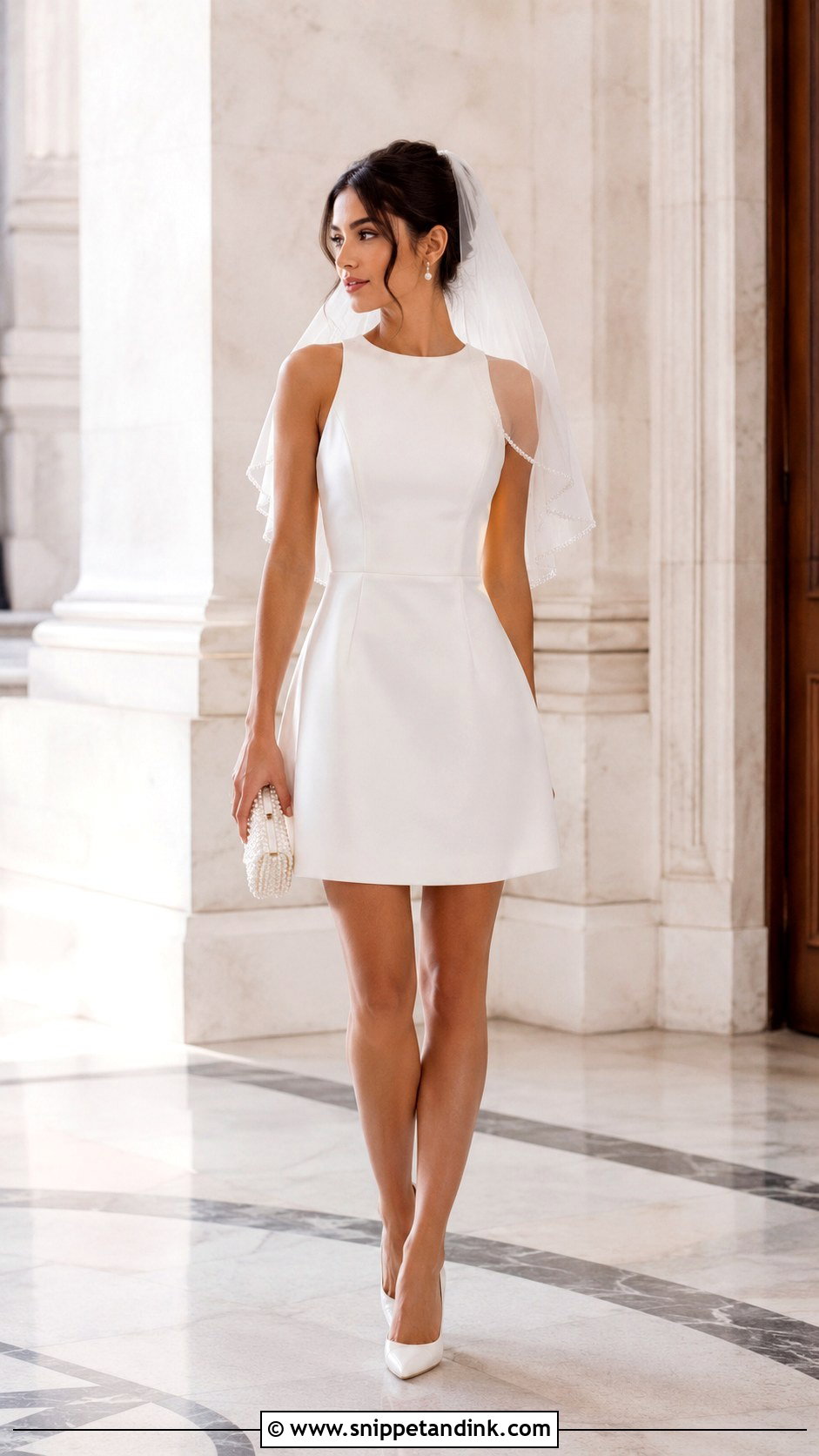
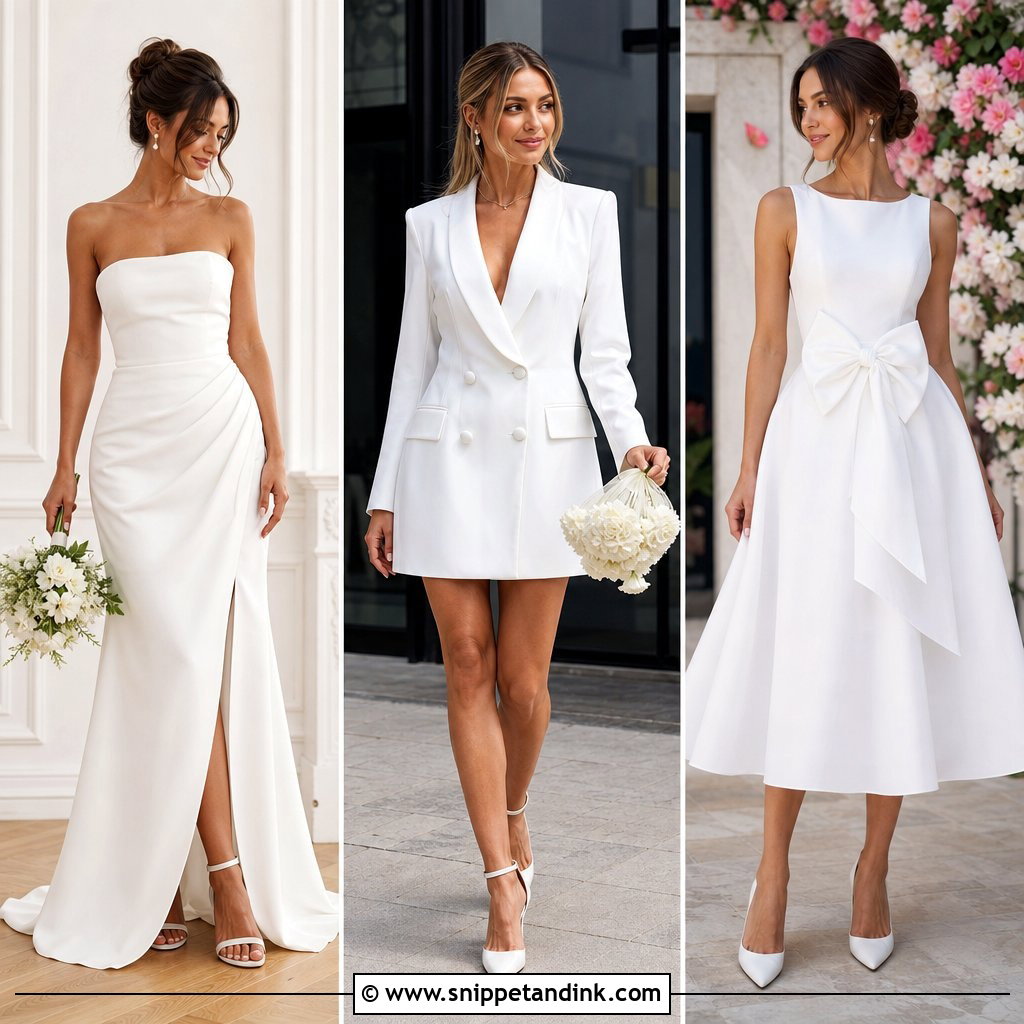
Short dress plus veil is the quickest way to say bride without a gown. A mini cocktail dress in white satin, crepe, lace or taffeta, topped with a short veil, bow veil or pearl-trim veil, looks playful and clearly bridal. White pumps or strappy heels and a small clutch suit it, and jewelry should stay delicate. If you’re changing into a mini later in the evening, I’d suggest swapping a long veil for a short one at the same time; a cathedral veil with a mini looks top-heavy. Civil ceremonies and reception changes suit it.
25. White Cocktail Dress With Gloves
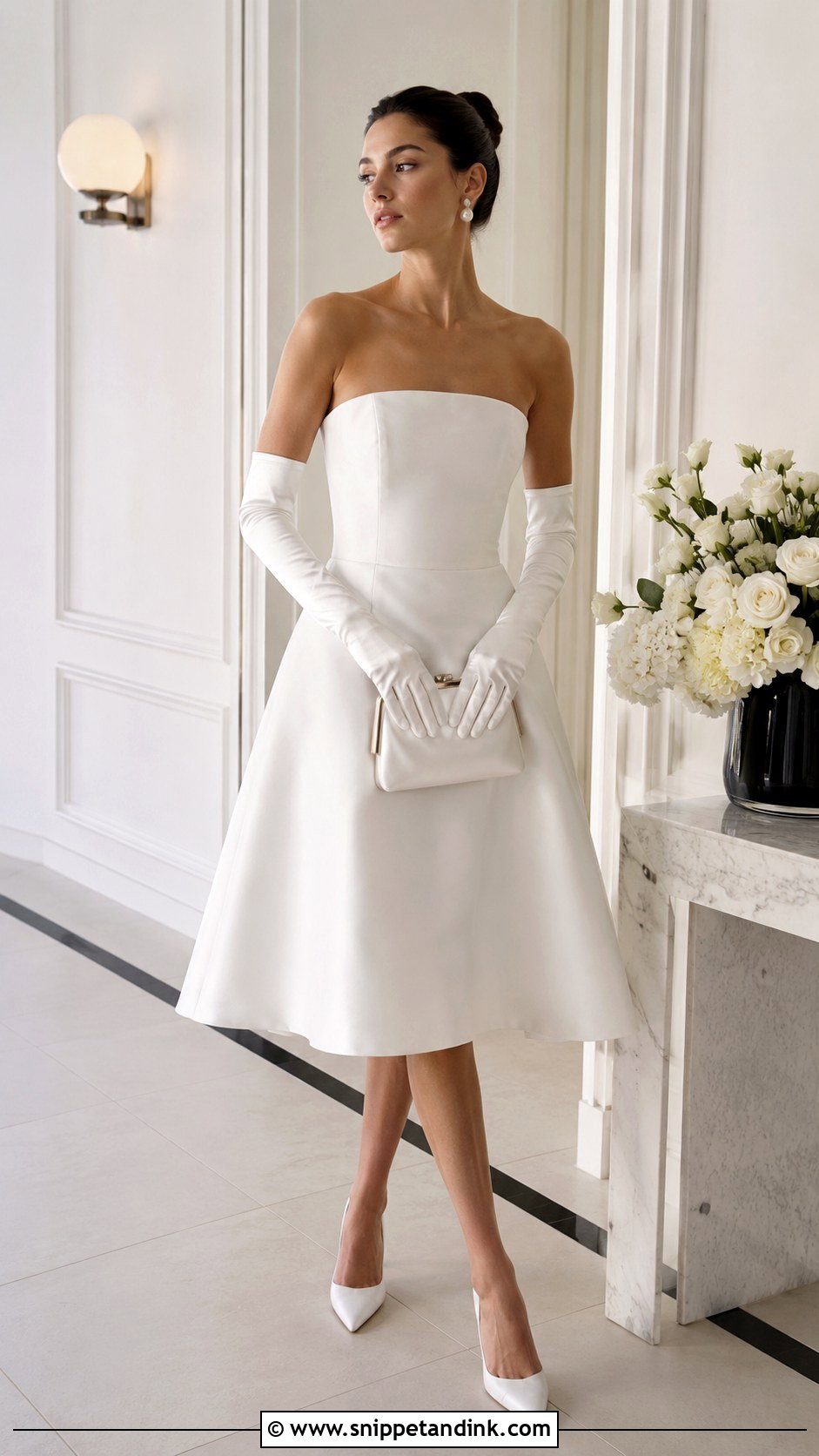
Gloves give a short dress a 1950s sense of occasion. A strapless, off-shoulder or square-neck dress with short or opera-length gloves, depending on formality, is the classic pairing. Pointed heels, pearl earrings and a structured clutch finish it, and the dress should stay clean so the gloves look intentional. Practically, gloves come off for eating and ring exchanges, so plan when you’ll take them off and where you’ll put them. Opera gloves are traditionally removed for dinner, or the hand can be slipped out through a wrist opening. Formal receptions and city weddings suit them.
A Second Dress That Belongs to the Same Wedding
The best second looks feel connected to the first. I usually carry one thing across: the same earrings, the same white or ivory tone, or a repeat of a detail like pearls or a bow. Then I change one thing deliberately, often the hair. Taking a formal updo down into loose waves or a high ponytail signals the shift as clearly as the dress does, and it’s a relief after hours of pins.
Matching the white
Whites are not all the same. A bright white cocktail dress next to an ivory gown can make the gown look yellow in photos, and the reverse makes the short dress look dingy. Take a swatch of your gown’s fabric, or a photo in daylight, when you shop. Champagne and blush second looks avoid the comparison altogether.
What to pack in the garment bag
Shoes broken in for dancing, a strapless or adhesive bra if the neckline needs it, fashion tape, a small steamer or a hanger to hang the dress in a steamy bathroom, a few hair pins, and a separate bag for your gown so it can go straight home with someone you trust.
Dance in the Fitting Room for One Minute
A bridal cocktail outfit should let you feel like a bride while doing everything a gown makes difficult: dancing, sitting on the floor with friends, running for the last train. Minis, midis, slips, lace and embellished dresses all work when the outfit is styled as a whole. Think about the venue, the season, the photos and how much movement you’ll need. Shoes, jewelry, a hair accessory and a small bag then do much of the work. Take ideas from any of the dresses above, then try your favourite on and dance in the fitting room for a minute. It sounds silly, and it’s the most honest test I know.
You'll Like These Ideas:


Leave a Reply