
Simple bridal makeup is the hardest kind to get right, because there’s nowhere for a mistake to hide. When I plan a pared-back face, most of my time goes into skin prep and long-wear layering, and very little into color. The looks below run from barely-there to soft glam, with others built around eye color, skin tone, season and venue. Use them to decide two things: the finish you want on your skin, and the one feature you want to lead with. Those two choices shape everything else I do at a trial.
Matching the Finish to Your Skin Before You Fall for a Photo
Before a bride shows me her saved pictures, I look at her bare skin in daylight for a minute or two. Three things decide which of these looks will last the day: how oily the skin gets by midday, whether there’s dry texture around the nose and chin, and the undertone at the jaw. A dewy reference on oily skin needs a completely different method from the same reference on dry skin, even though the photo is identical.
Reading your skin type honestly
- Oily or combination: satin and soft matte finishes hold longest. Glow goes on the cheekbones only, after the base is set.
- Dry or mature: hydrating prep and cream products, with powder pressed in only where shine actually appears. Fully matte formulas tend to crack around the mouth.
- Sensitive or reactive: tell your artist before the trial, and patch test any new foundation or lash glue a few days ahead.
References that actually help at a trial
Save photos of full faces taken in natural light, and include one you dislike. Knowing what you don’t want tells me more than a dozen pins of the same soft glam. A photo of yourself in makeup you felt good in is even more useful, because it shows me your comfort level. If your references show brides with very different coloring from yours, we can keep the idea, but the shades will change.
I prefer to do the trial once the dress neckline and hair plan are settled, usually two to three months out. Wear a top close to your dress color so we can judge the face against it.
1. Natural Bridal Makeup
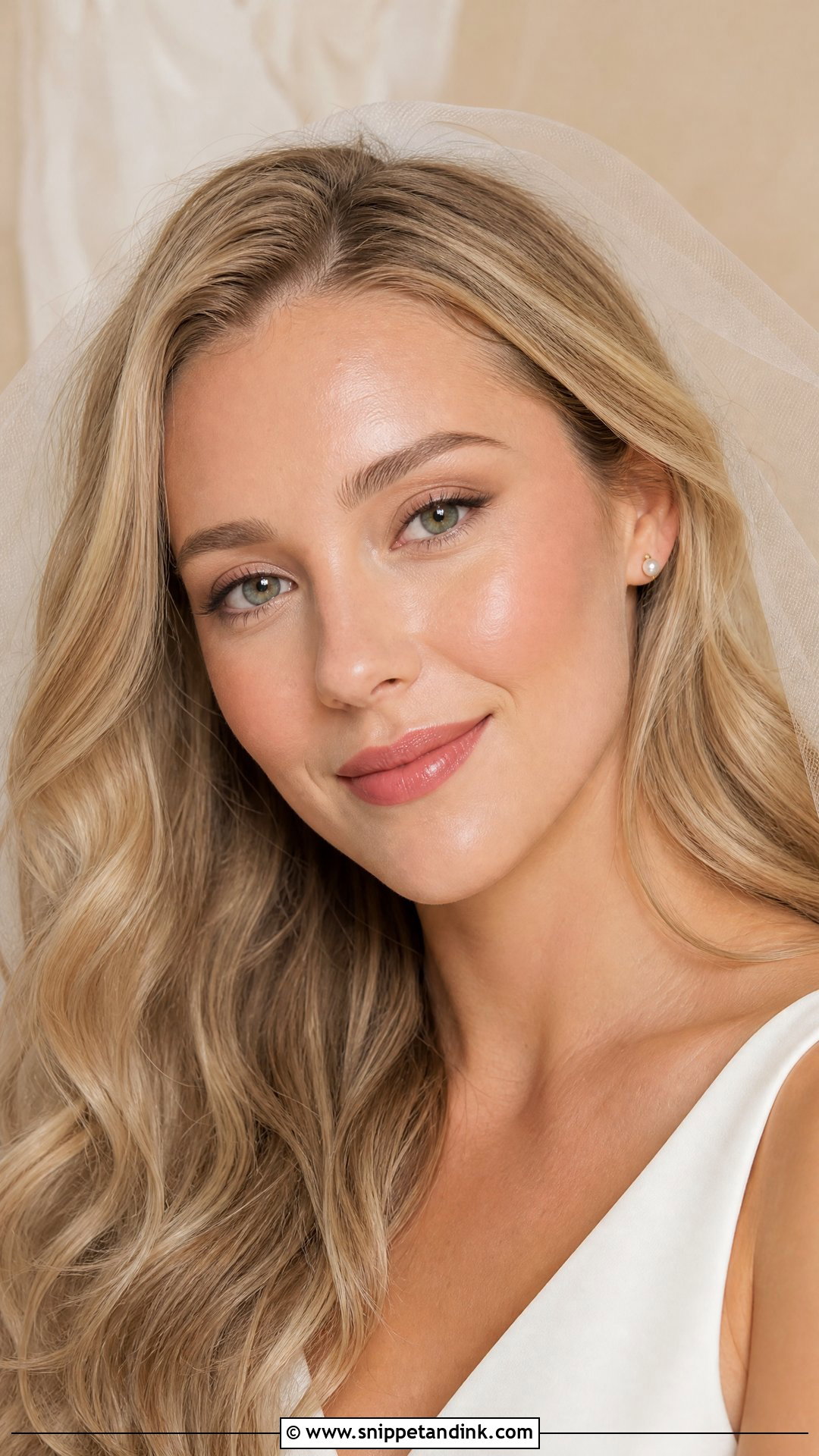
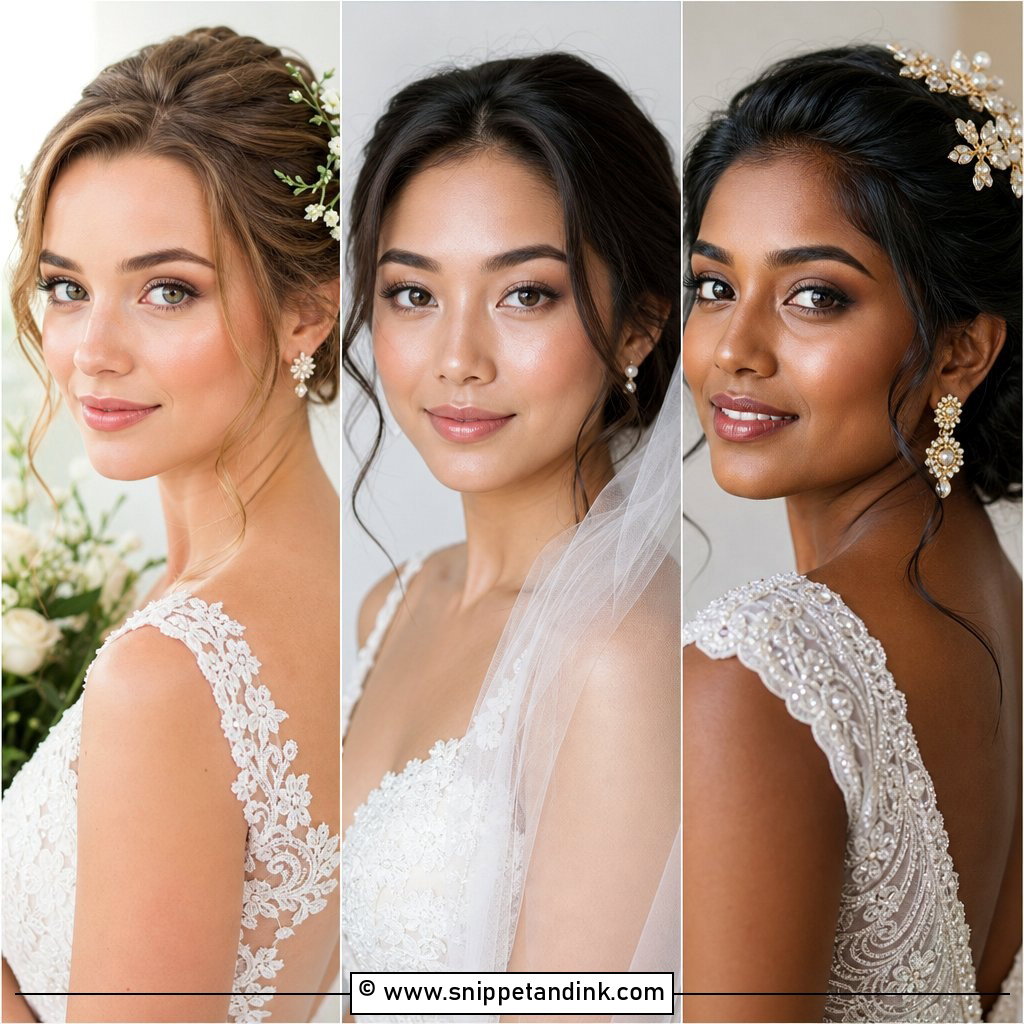
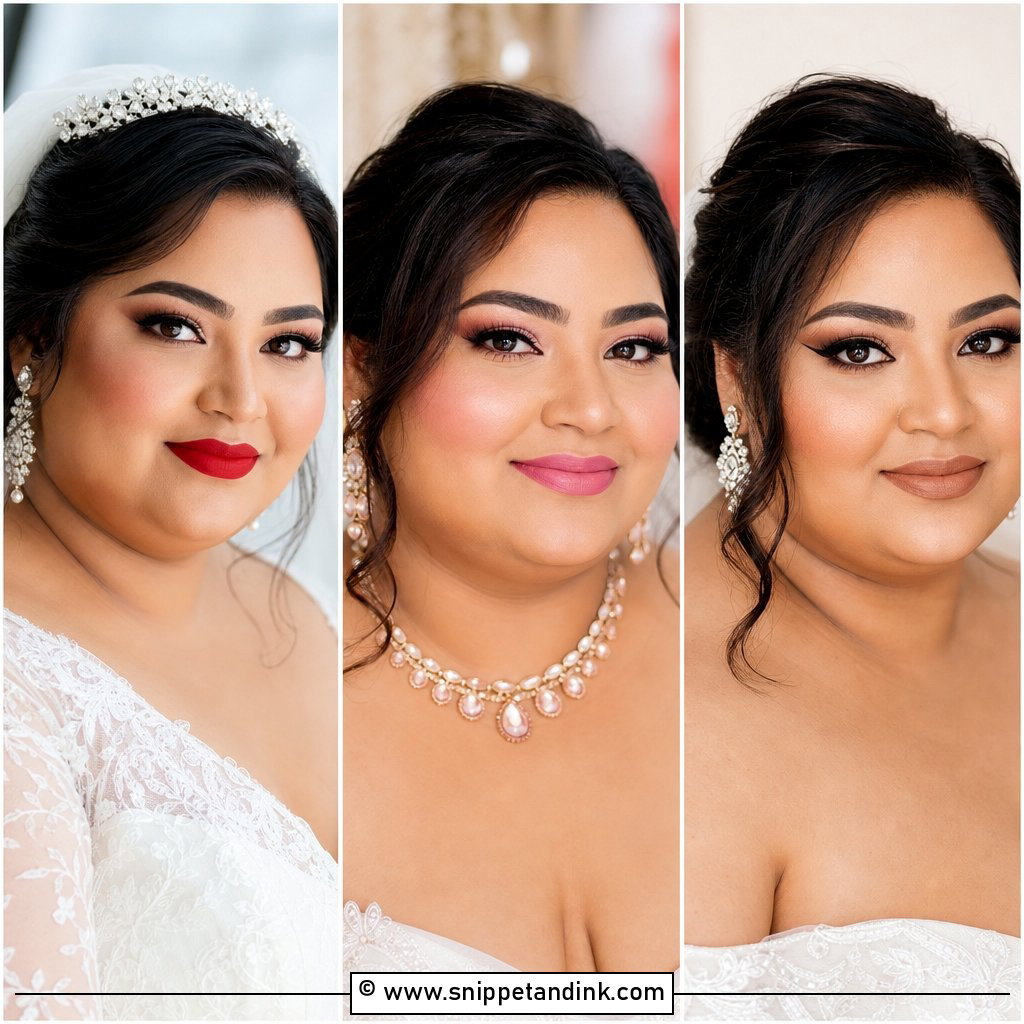
Oddly, natural makeup is where I spend the longest on the base. A sheer to medium foundation goes on first, and I conceal only the spots that need it, usually around the nose and the inner corner of the eye, so real skin texture still shows. Eyes get a taupe wash close to the lash line, brown mascara and softly filled brows. Cream blush close to your natural flush and a satin lip matched to your own lip tone finish it. A bride who rarely wears makeup still recognizes herself in this at ten at night, and it reads especially well at morning ceremonies.
2. Soft Glam Bridal Makeup
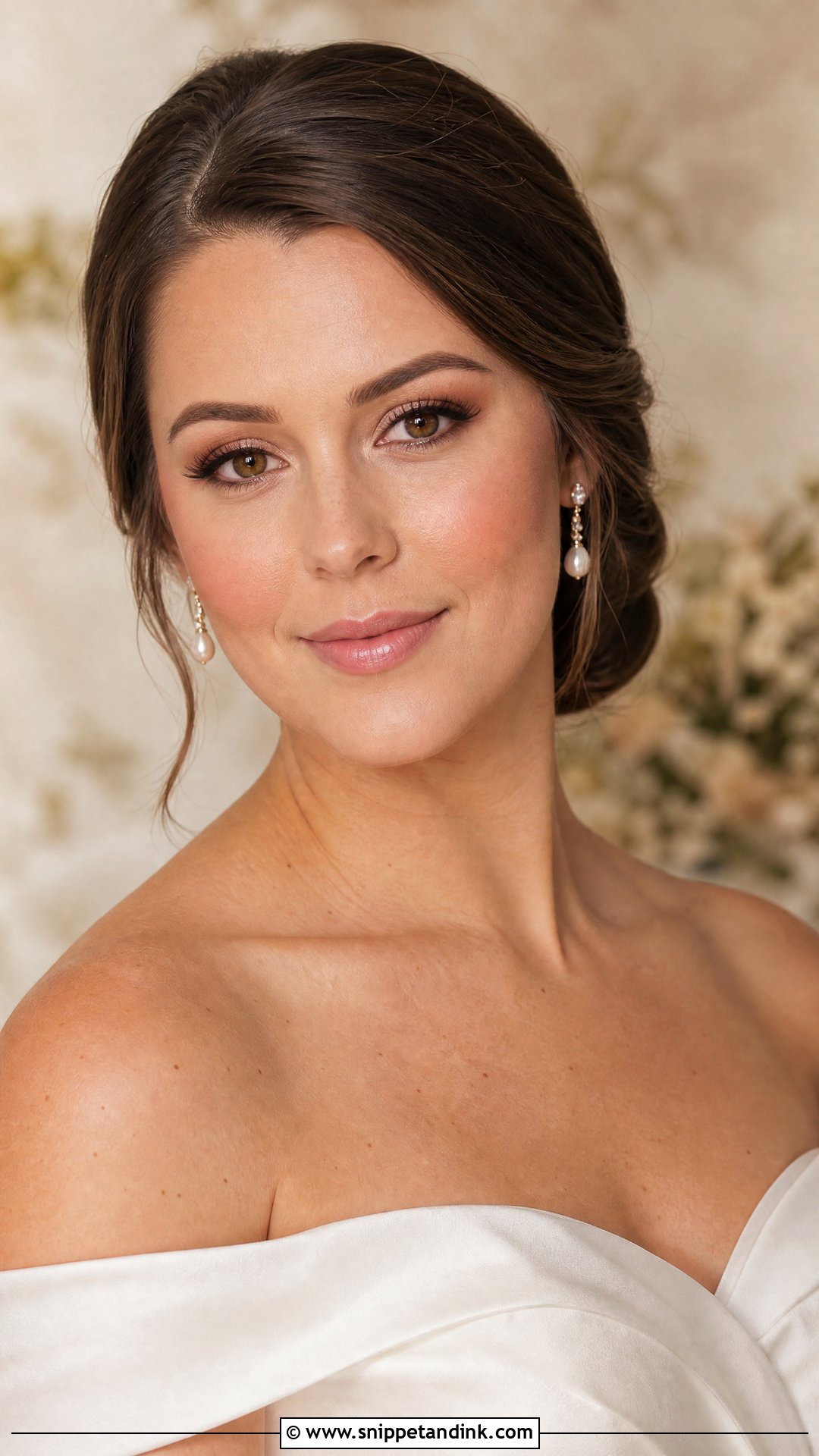
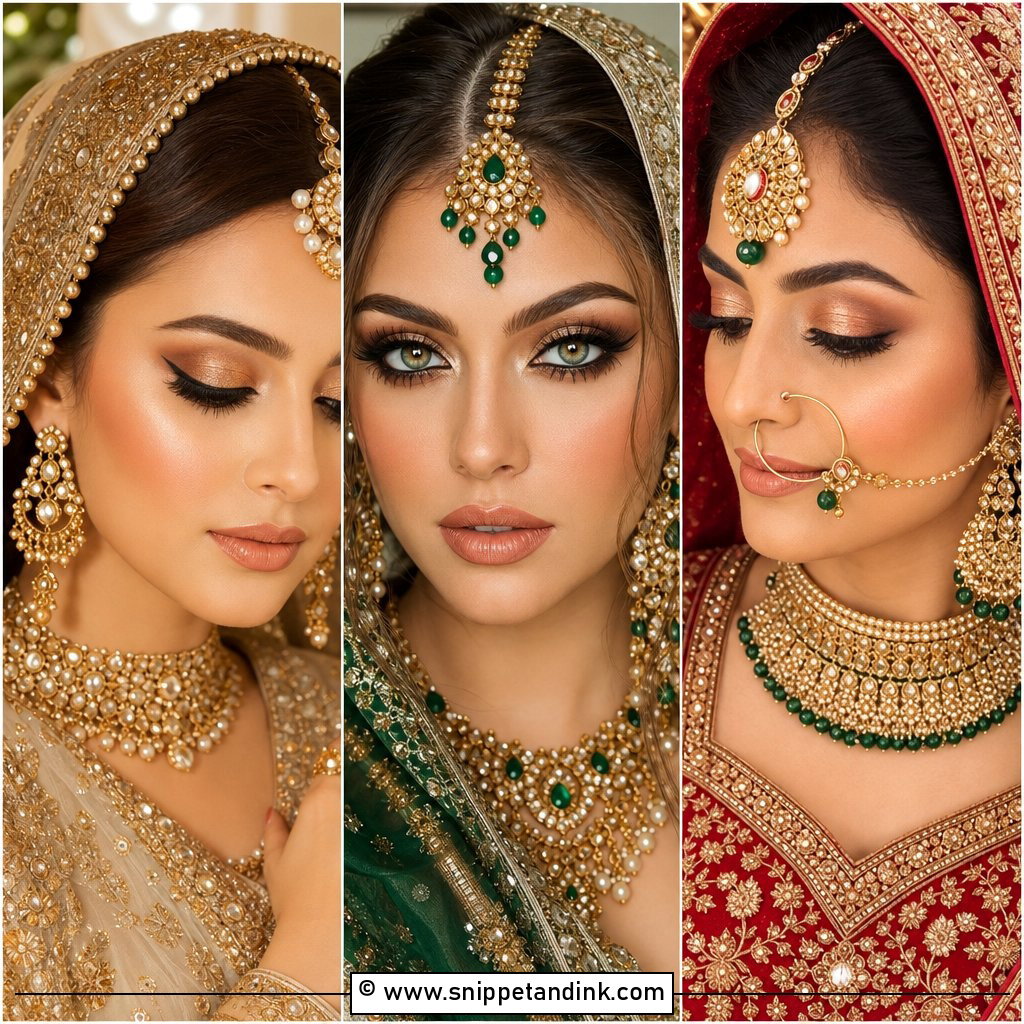
Soft glam is the look I’m asked for most, and the trap is letting soft drift into heavy. I keep the base satin and set only the T-zone. Warm brown goes through the crease, champagne shimmer sits on the center of the lid, and a thin liner is pressed into the lash roots rather than drawn on top. I add individual lashes to the outer third instead of a full strip, because a strip lash band shows in close-ups. Peachy blush, a little bronzer and a nude-pink lip keep it bridal rather than evening-out.
3. Dewy Bridal Makeup
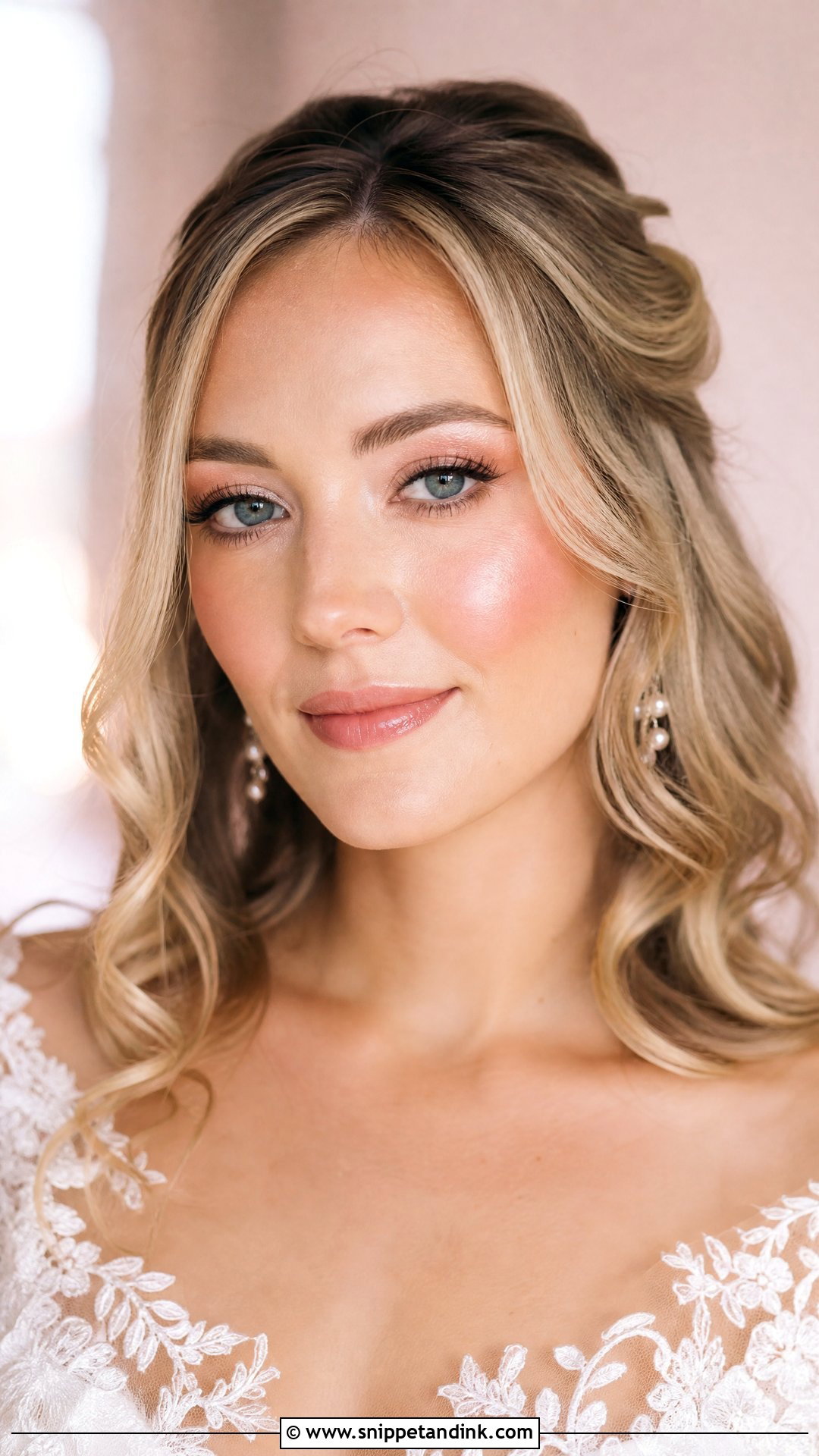
Dewy skin fails when the glow goes everywhere; by the second hour of photos it reads as sweat. My rule is glow on the high points and control in the center. I prep with a hydrating layer, use a luminous skin tint and a light-reflecting concealer, then place cream bronzer, cream blush and a liquid highlight only on the cheekbones and brow bone. A fine powder pressed through the middle of the face keeps the shine looking deliberate, and a glossy rose lip finishes it. Dry and normal skin carry this best. On very oily skin I’d move you to a satin version.
4. Matte Bridal Makeup
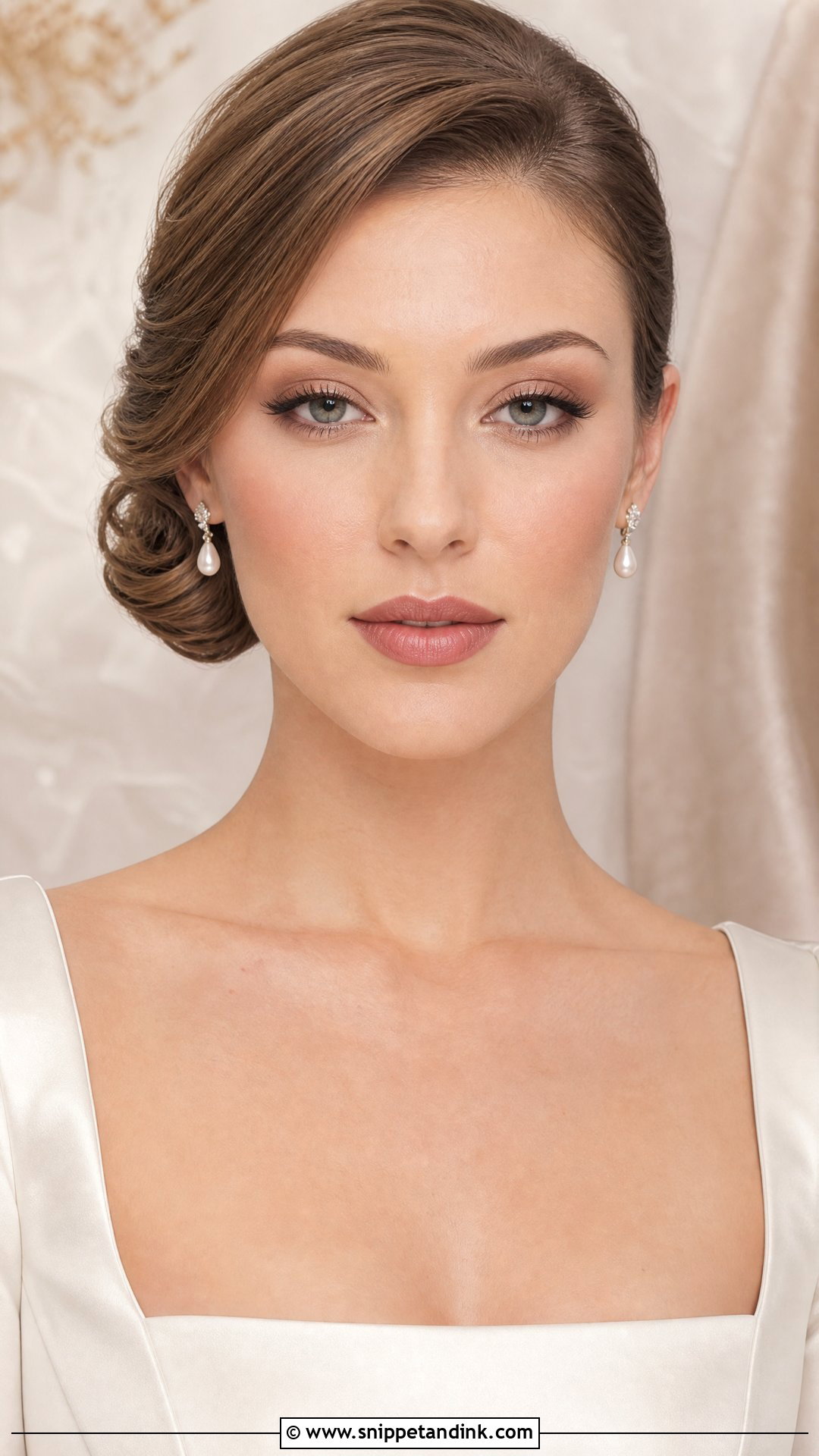
Matte holds up through heat and happy tears better than anything else here, but it’s unforgiving on dry patches. I exfoliate gently and hydrate before the long-wear foundation goes on, then set the forehead, nose, chin and under-eyes. Eyes stay in matte taupe with a thin liner and neat brows, with powder blush in a muted rose and very soft contour. One thing I change from most references: the lip stays satin, not fully matte, because a flat matte lip looks dry and lined by the toasts.
5. Glowy Skin Bridal Makeup
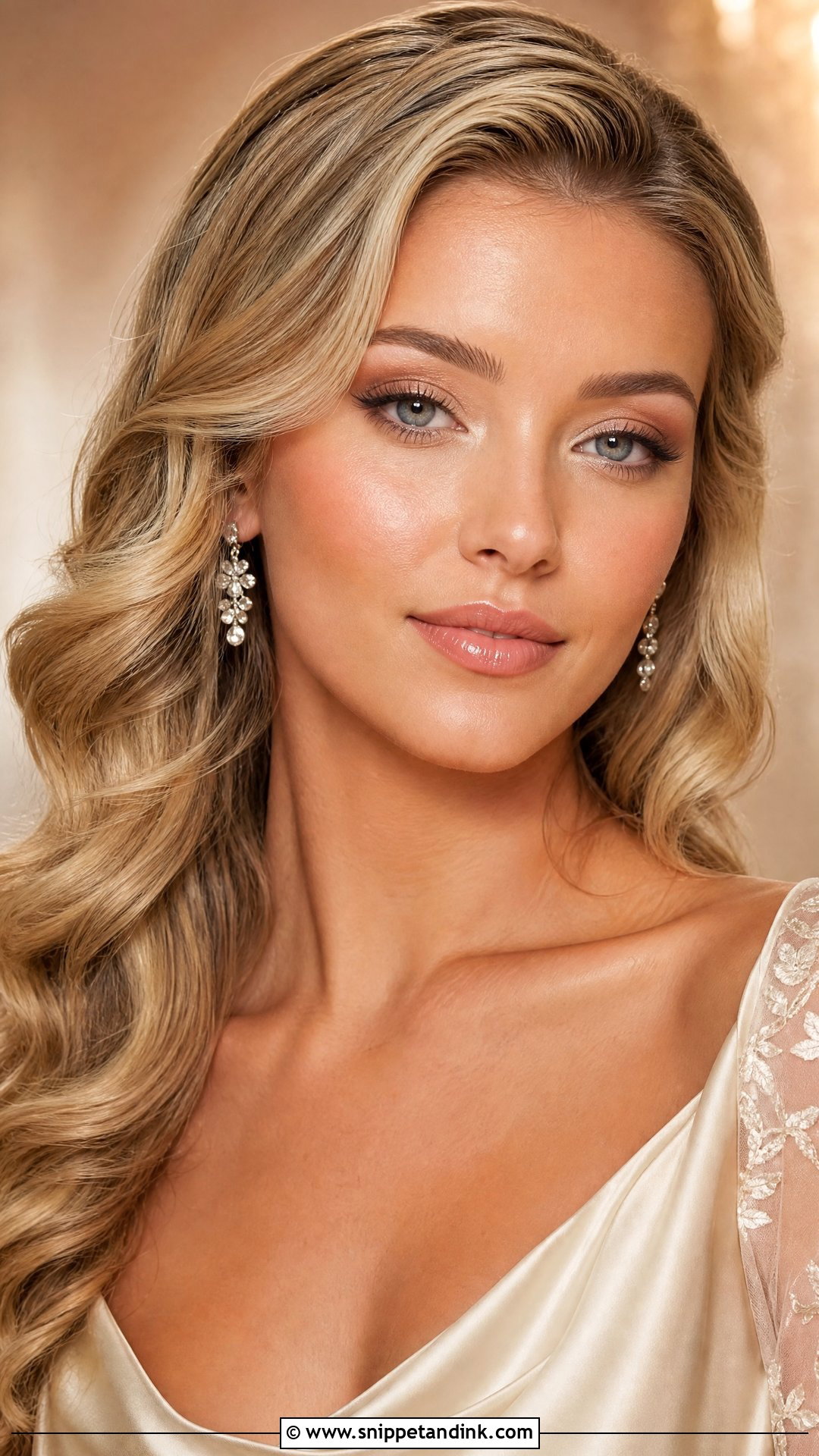
Glowy and dewy get confused, and the difference matters. Glow sits under the skin rather than on it: a moisturizing primer, a skin-like foundation and cream products pressed in with fingertips so they melt in instead of sitting on top. I keep the eyes bright with champagne on the lid and soft brown liner, warm the cheeks with rose and use a balm stain on the lips. I reach for this when the dress or hair already has a lot of detail, so the face doesn’t have to compete with it.
6. No Makeup Bridal Makeup
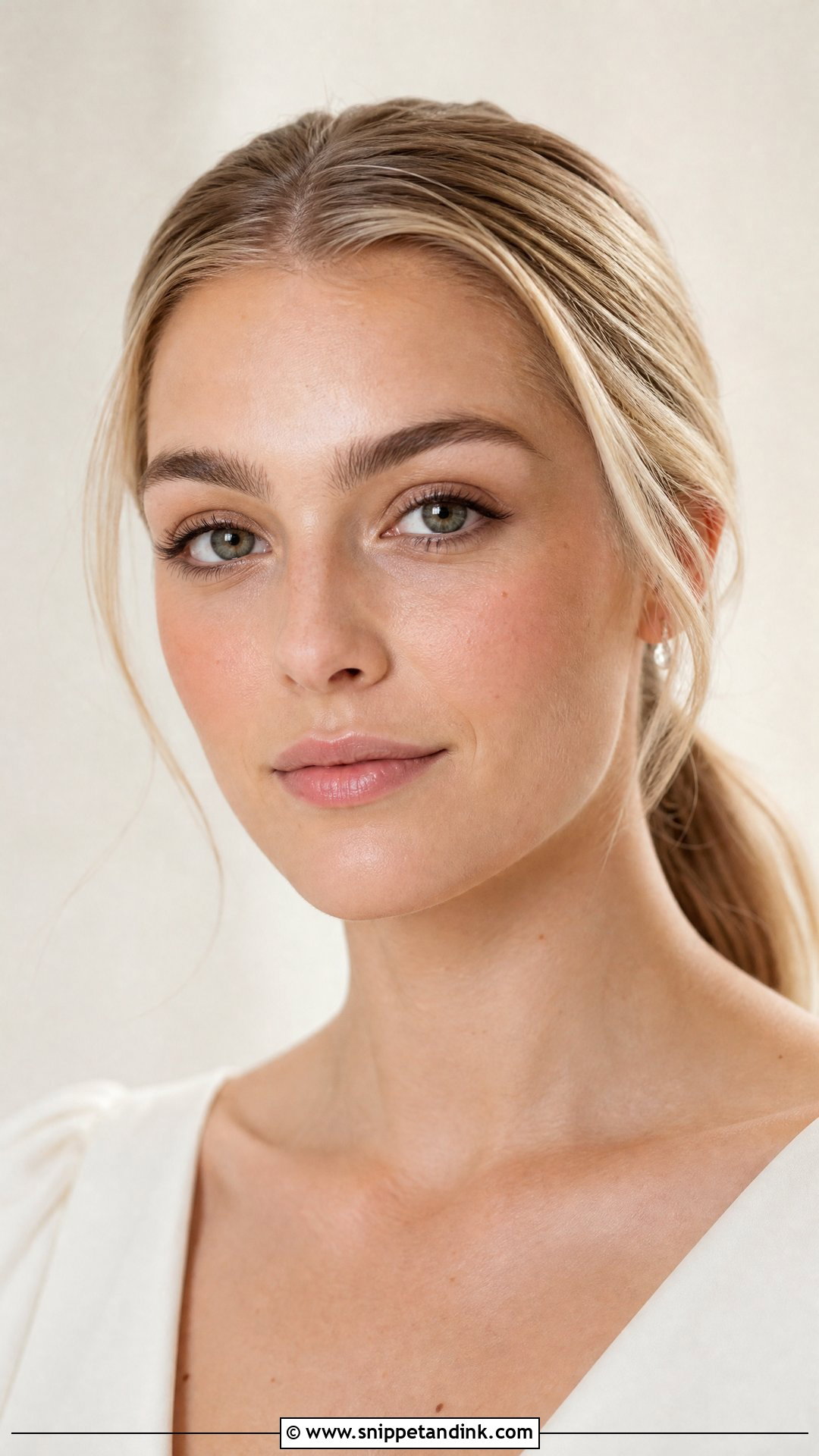
The no-makeup bride usually wants to look rested, not bare, and that takes more product than people expect. I use a tinted moisturizer, spot concealer and powder only where shine appears. Brows get brushed up with tinted gel, and instead of a visible line I tightline the upper waterline in brown, which thickens the lash base without looking drawn. A skin-toned cream shadow, mascara, cream blush and a lip tint finish it. Under camera flash truly bare skin looks flat and uneven, so the real job here is correction nobody can see.
7. Pink Bridal Makeup
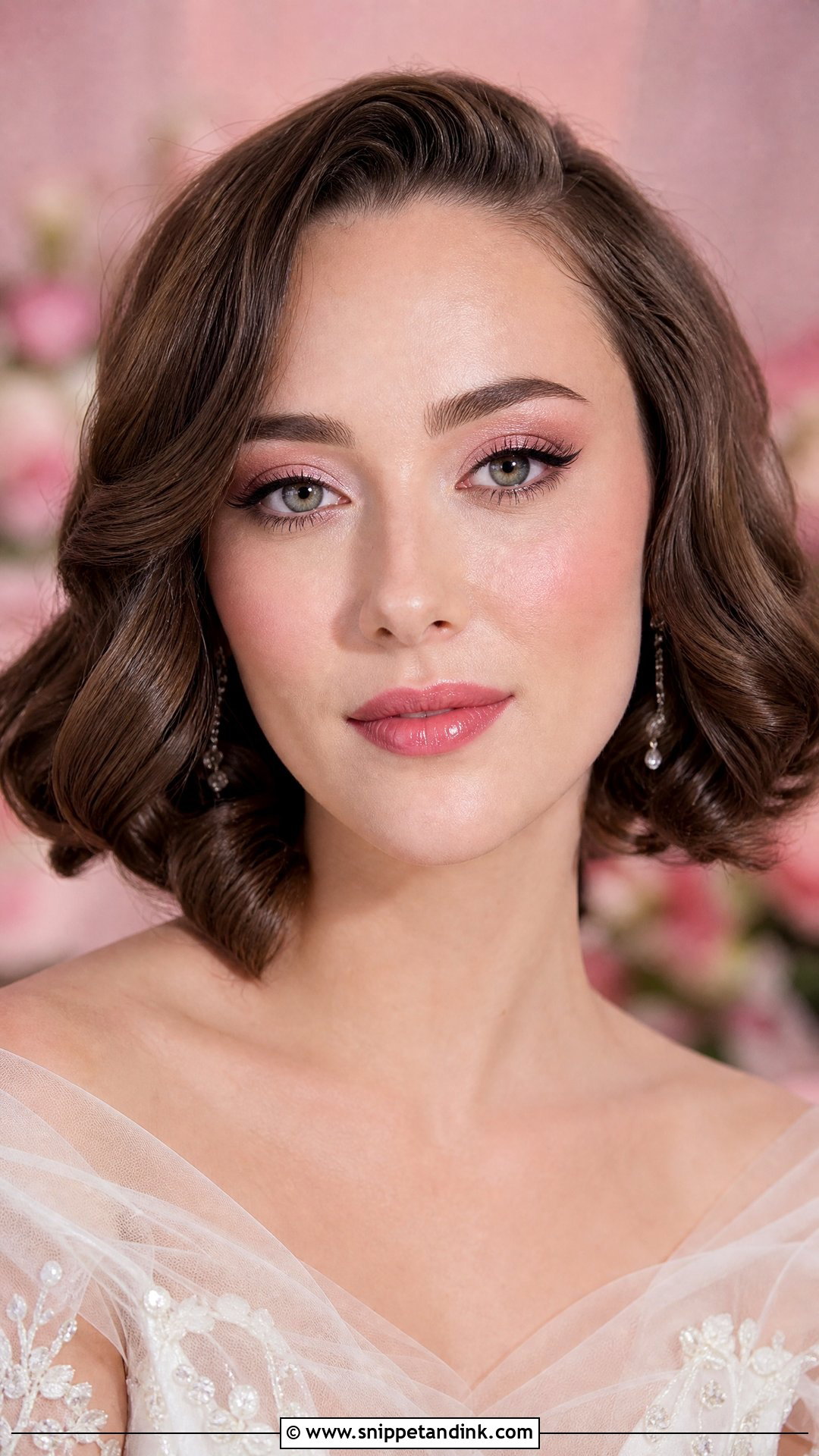
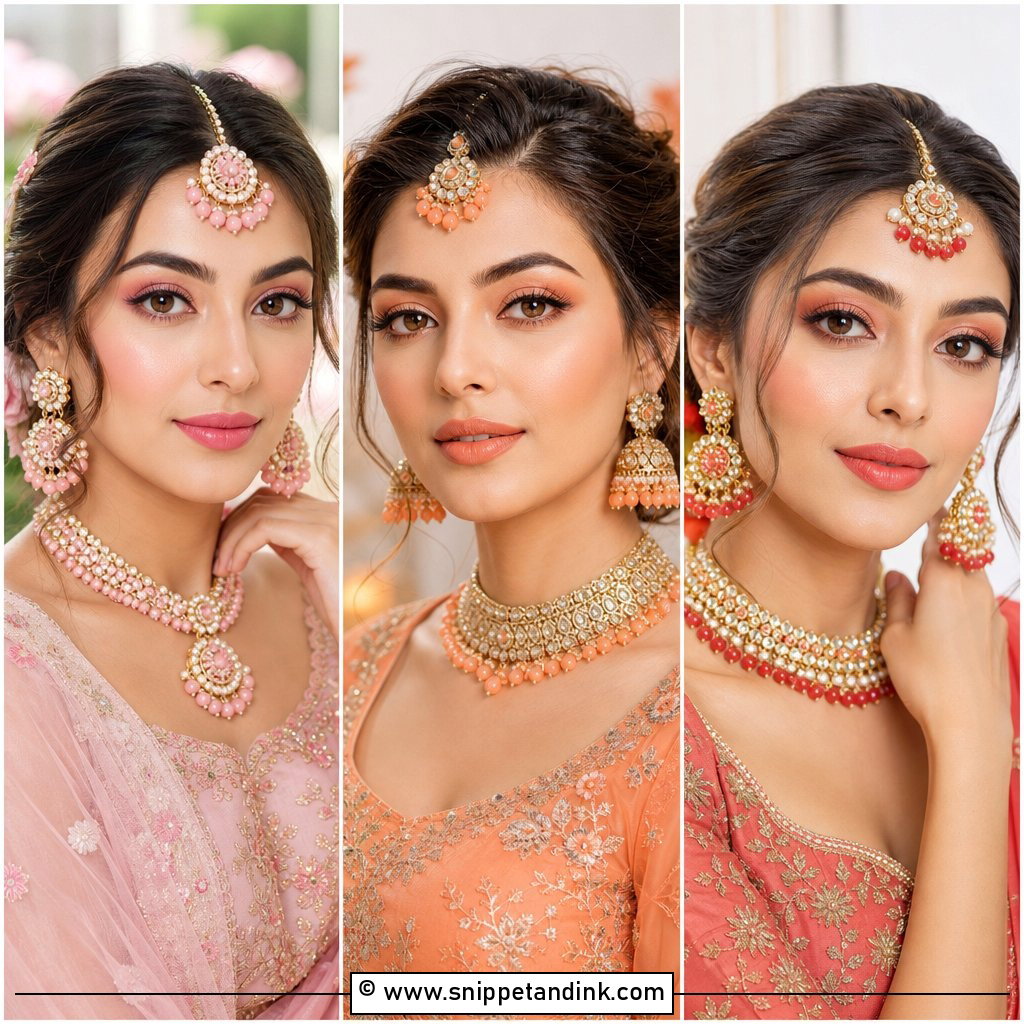
With pink, undertone decides everything. I use cool rose on fair skin, dusty pink on medium skin and berry-pink on deep skin, because the wrong pink sits on top of the face and looks chalky. A sheer mauve wash on the lids, brown liner and soft lashes stop the eyes going doll-like. Blush goes high and slightly back on the cheekbone, then I tie it to a rose-pink lip. It sits nicely next to blush flowers and pearl details.
8. Peach Bridal Makeup
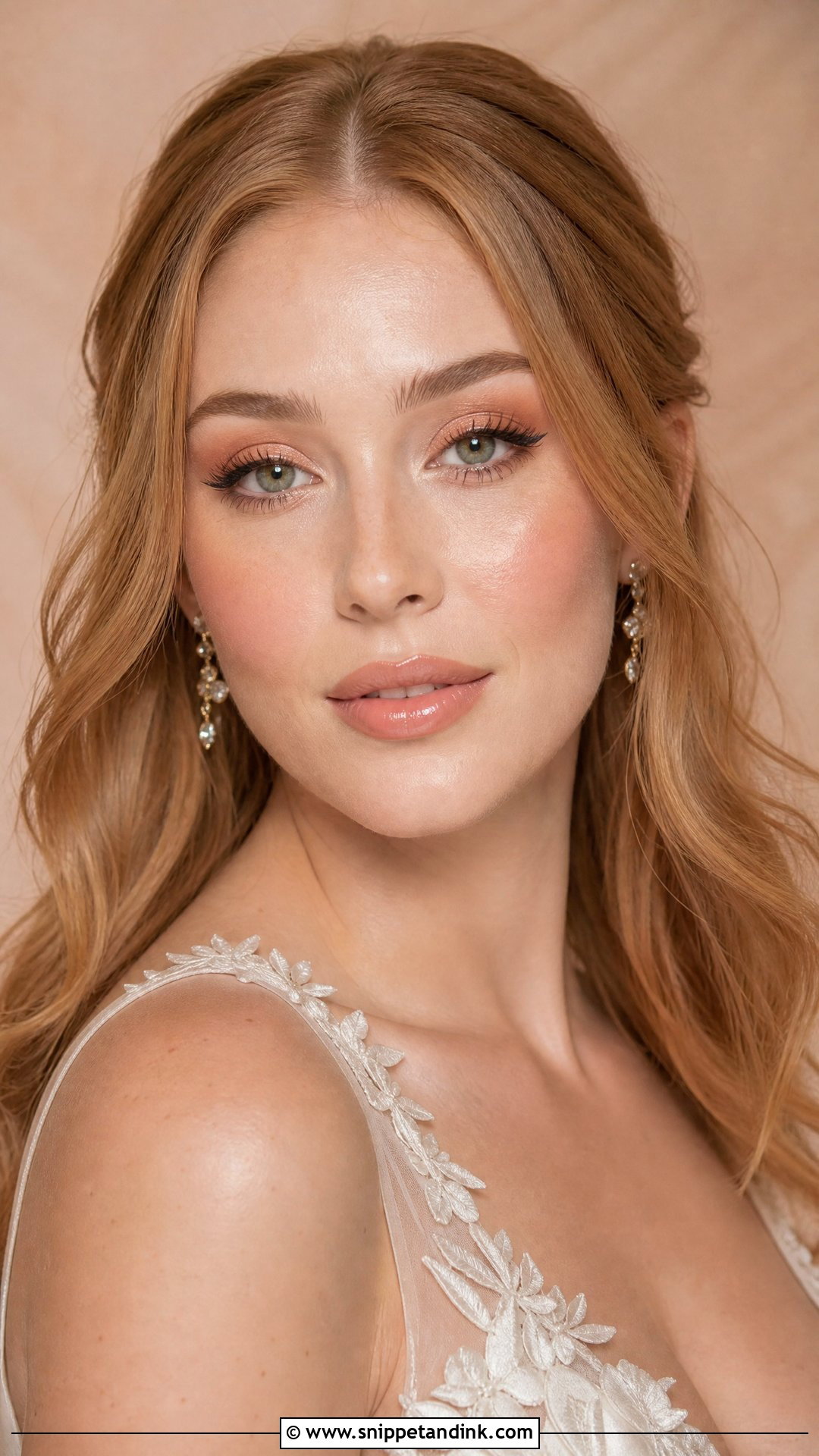
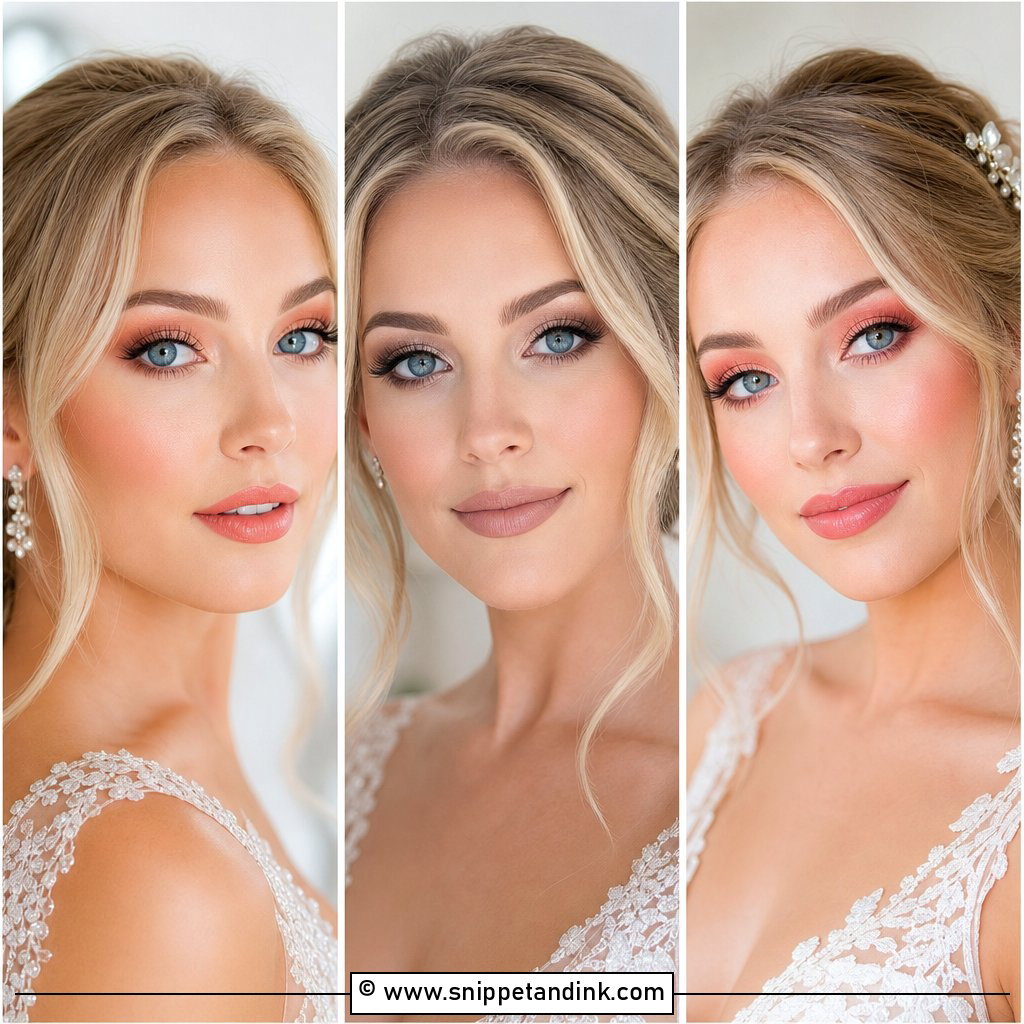
Peach warms a face fast. That makes it my first choice for daytime and summer ceremonies, and for anyone who tends to look a little grey in photos. Peach cream blush on the apples, warm beige on the lids and brown liner instead of black keep everything in one warm family, and a dot of champagne in the inner corners opens the eyes. I’d hold back on very cool, pink-toned skin, where peach can turn orange; a rosier coral works better there.
9. Nude Bridal Makeup
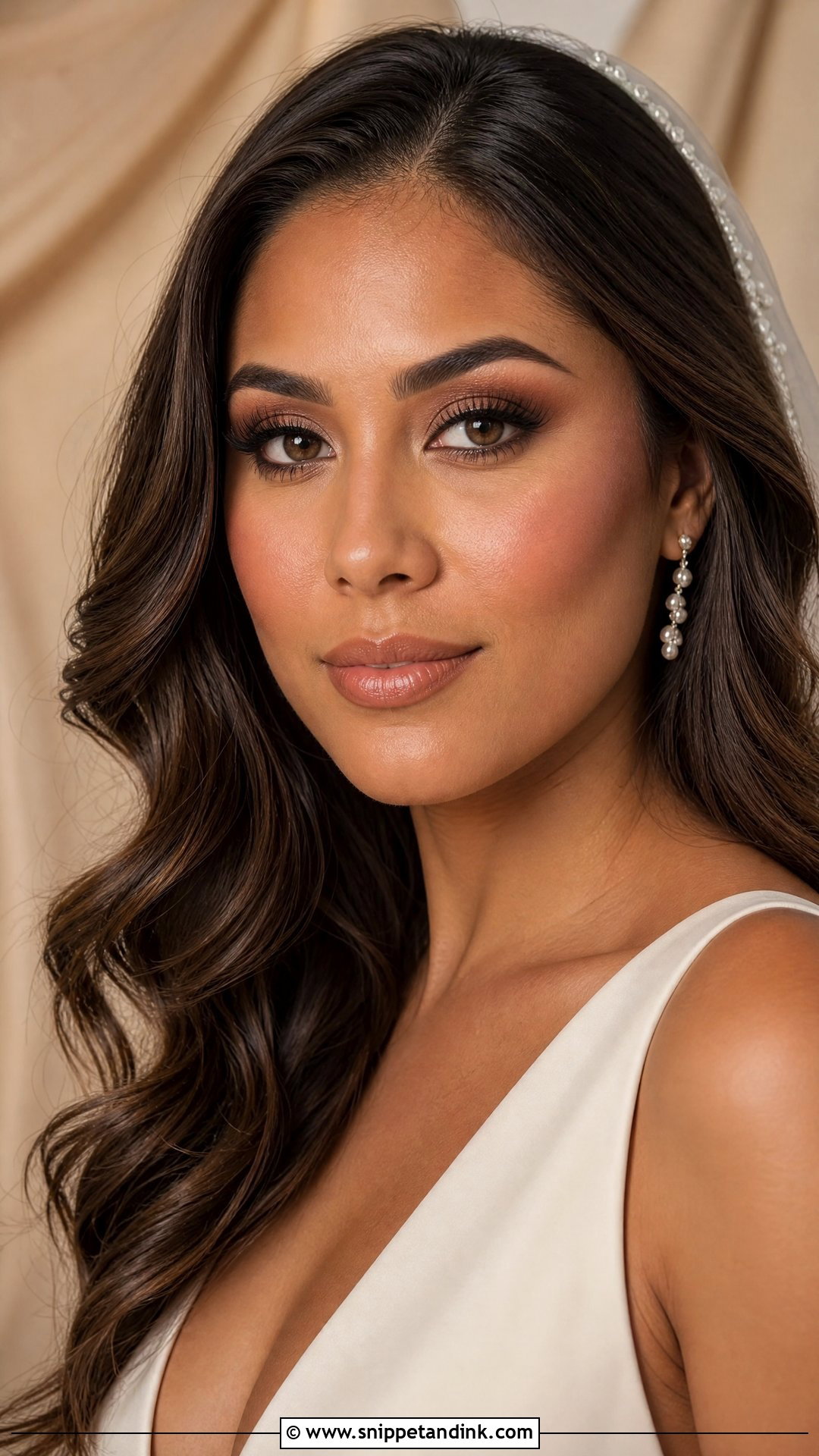
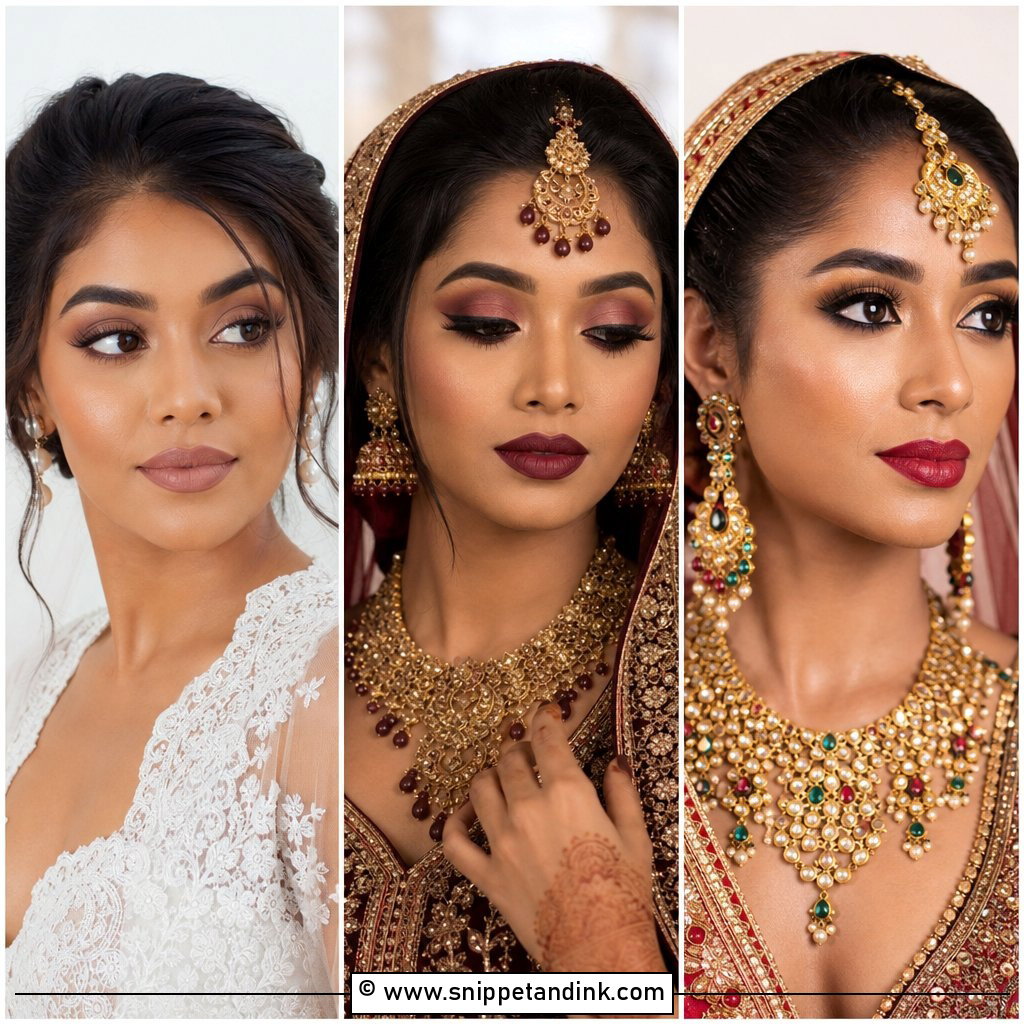
Most nude lipsticks are made for one skin depth, which is why so many brides look washed out in them. I pick pink-beige for fair skin, caramel rose for medium and cocoa or warm brown for deep skin. Then I line the lip one shade deeper than the lipstick so the shape still shows in photos. The rest of the face gets soft sculpting, natural blush, taupe on the eyes and defined lashes. Beside a minimalist dress and sleek hair, the whole thing reads as a choice rather than a lack of color.
10. Brown Smokey Bridal Makeup
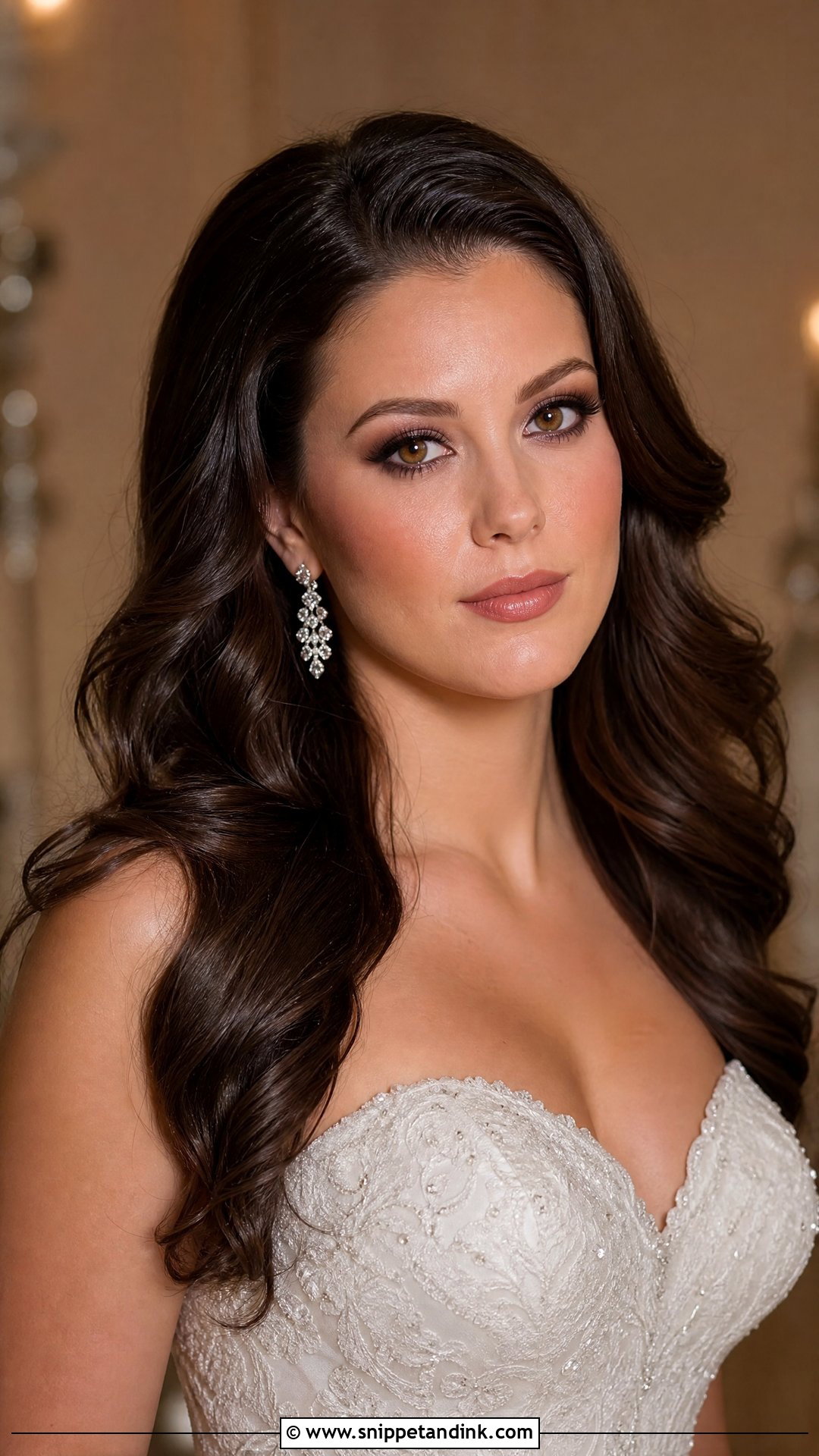
When a bride wants depth but finds black too harsh against her coloring, brown smokey is my answer. I build it in three steps: light brown through the crease, a medium brown pushed into the outer corner and a soft shimmer at the center of the lid. Liner stays tight to the lashes and gets smudged, so there’s no hard line to crack or travel. Warm blush and a rosy lip balance the eyes. It keeps its shape well under candlelight and dim reception lighting, where lighter eyes can vanish.
11. Champagne Bridal Makeup
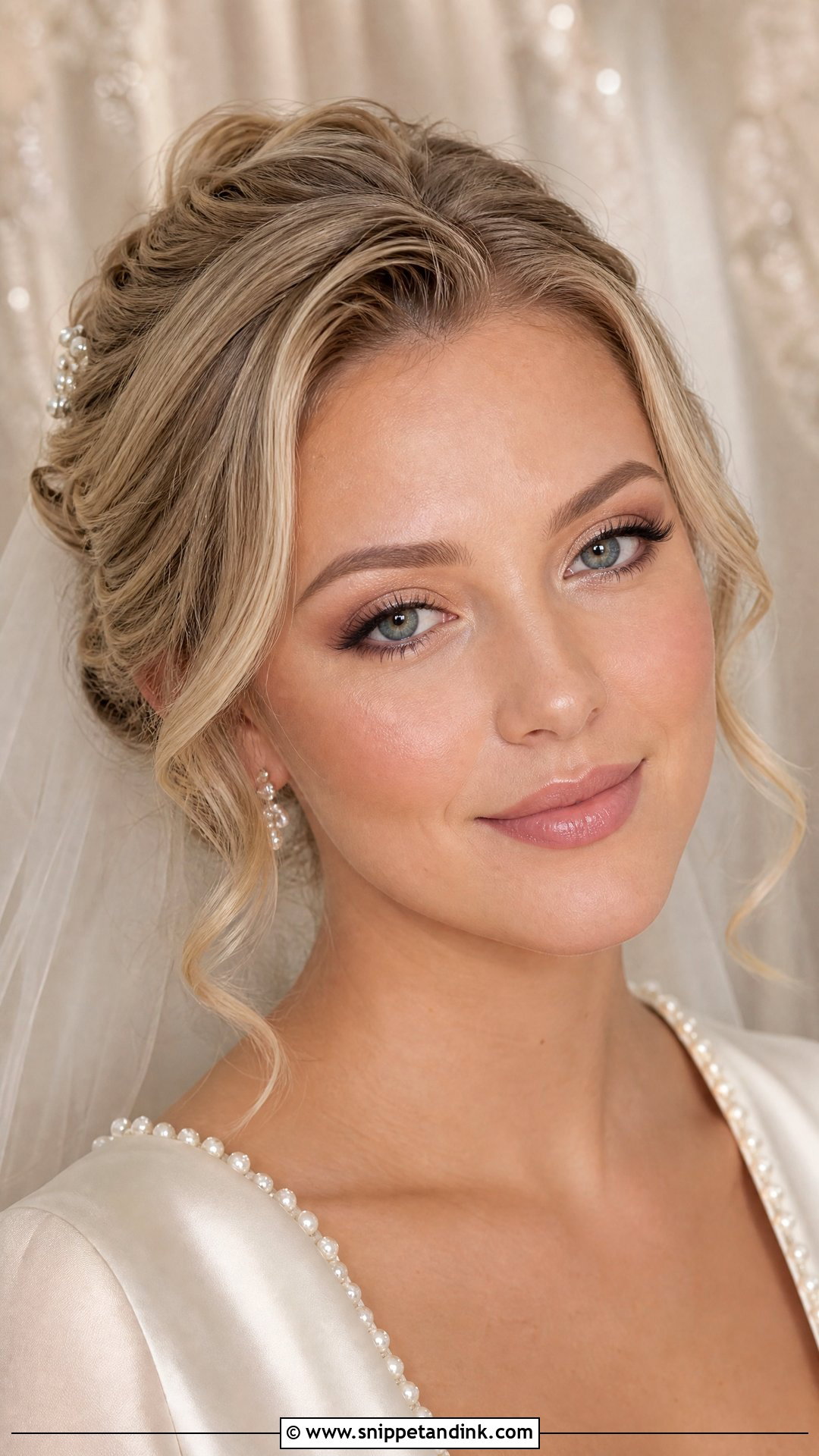
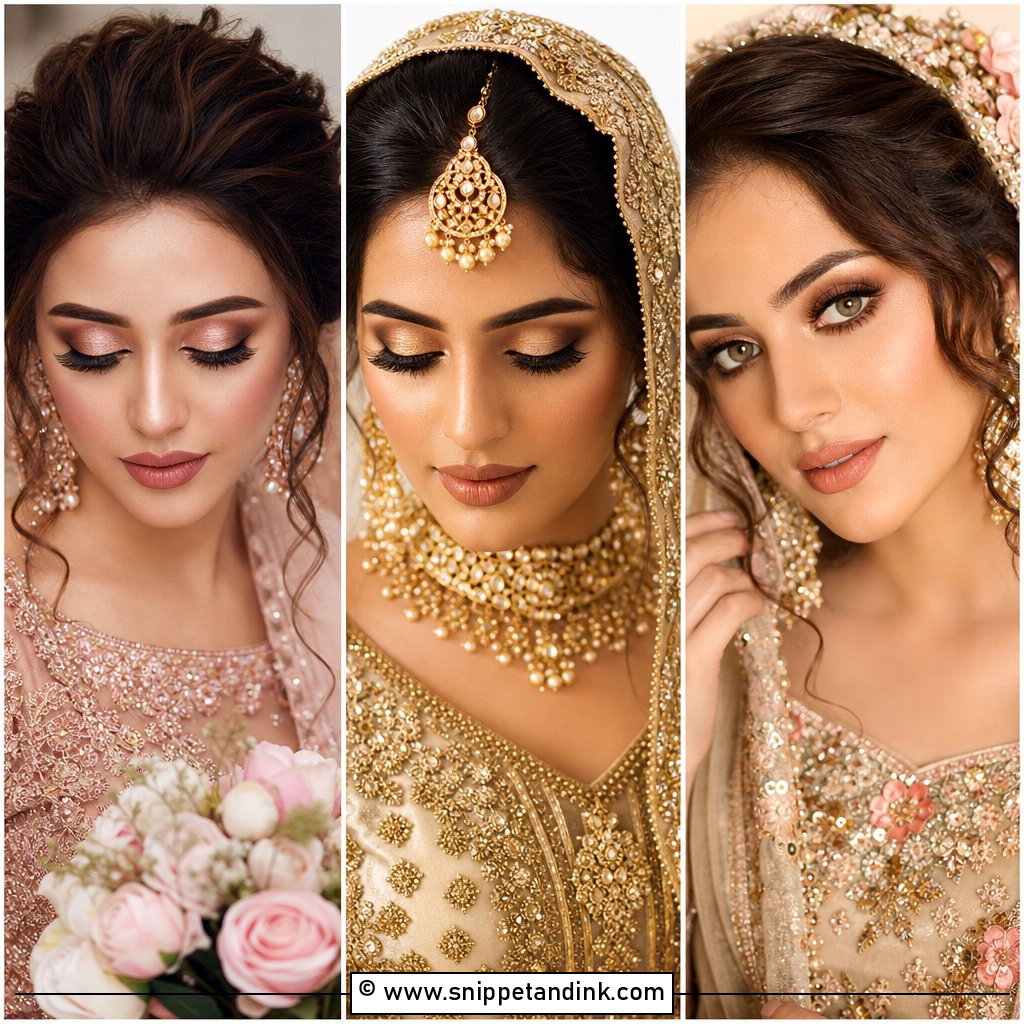
Texture is the whole decision with champagne shimmer. A finely milled shimmer catches light; a chunky one creases into the lid fold within a couple of hours and drops onto the cheeks by the speeches. I lay it over a primer, add a soft brown crease shade for shape and line in black-brown close to the lashes. Peach blush and a satin pink-nude lip let the eyes carry the sparkle. Hooded lids are the exception: there I keep the shimmer to the center of the lid only.
12. Rose Gold Bridal Makeup
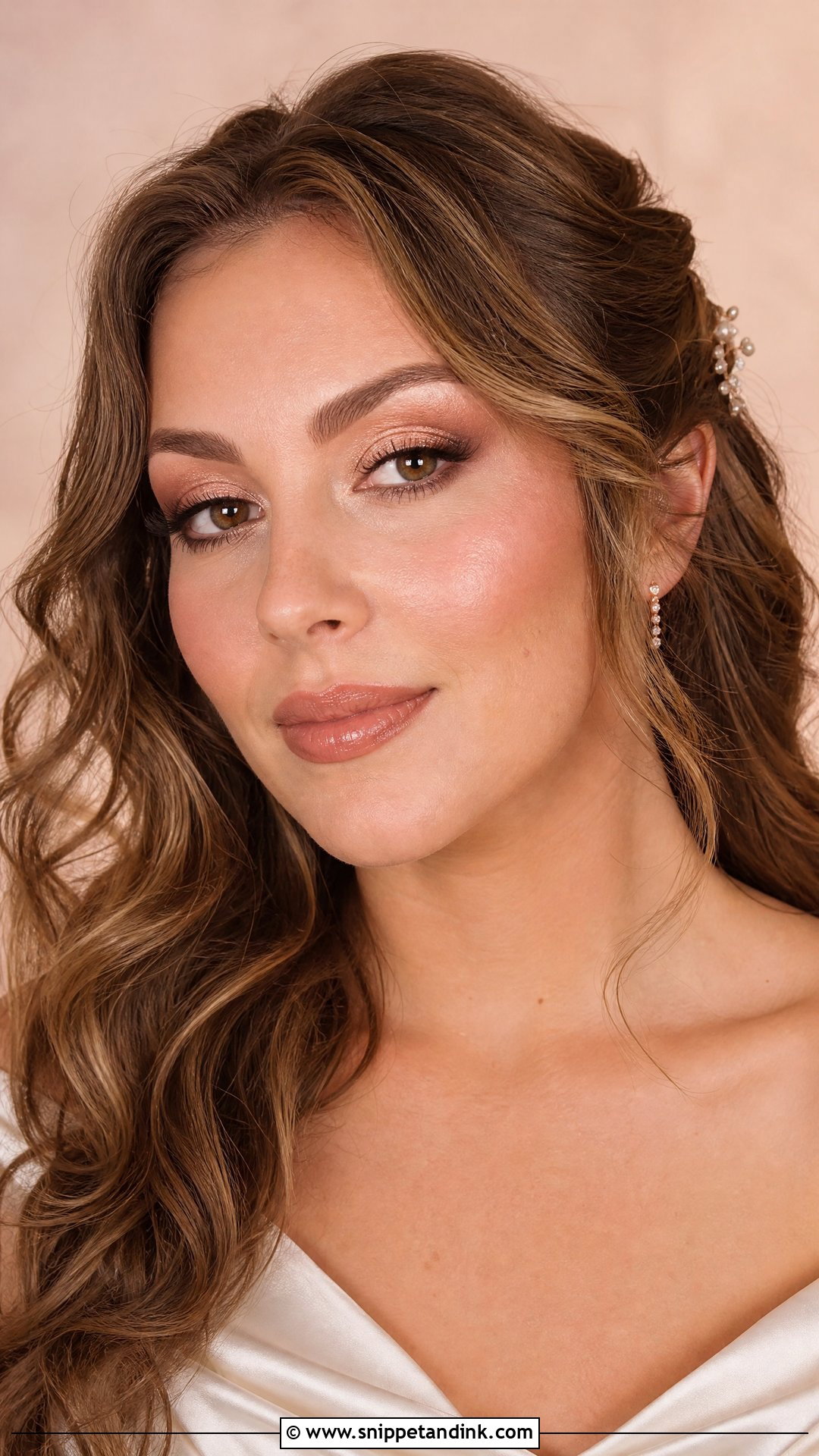
Rose gold is warm and pink at once, so it suits a wider range of undertones than either color alone. I press it onto the lid with a fingertip rather than sweeping a brush across, which gives more payoff and far less fallout, then soften the crease with warm taupe. A thin brown liner and wispy lashes define the eye. Cream blush and a rosy nude lip keep the face cohesive, and it sits naturally beside gold jewelry and champagne or ivory gowns.
13. Classic Bridal Makeup
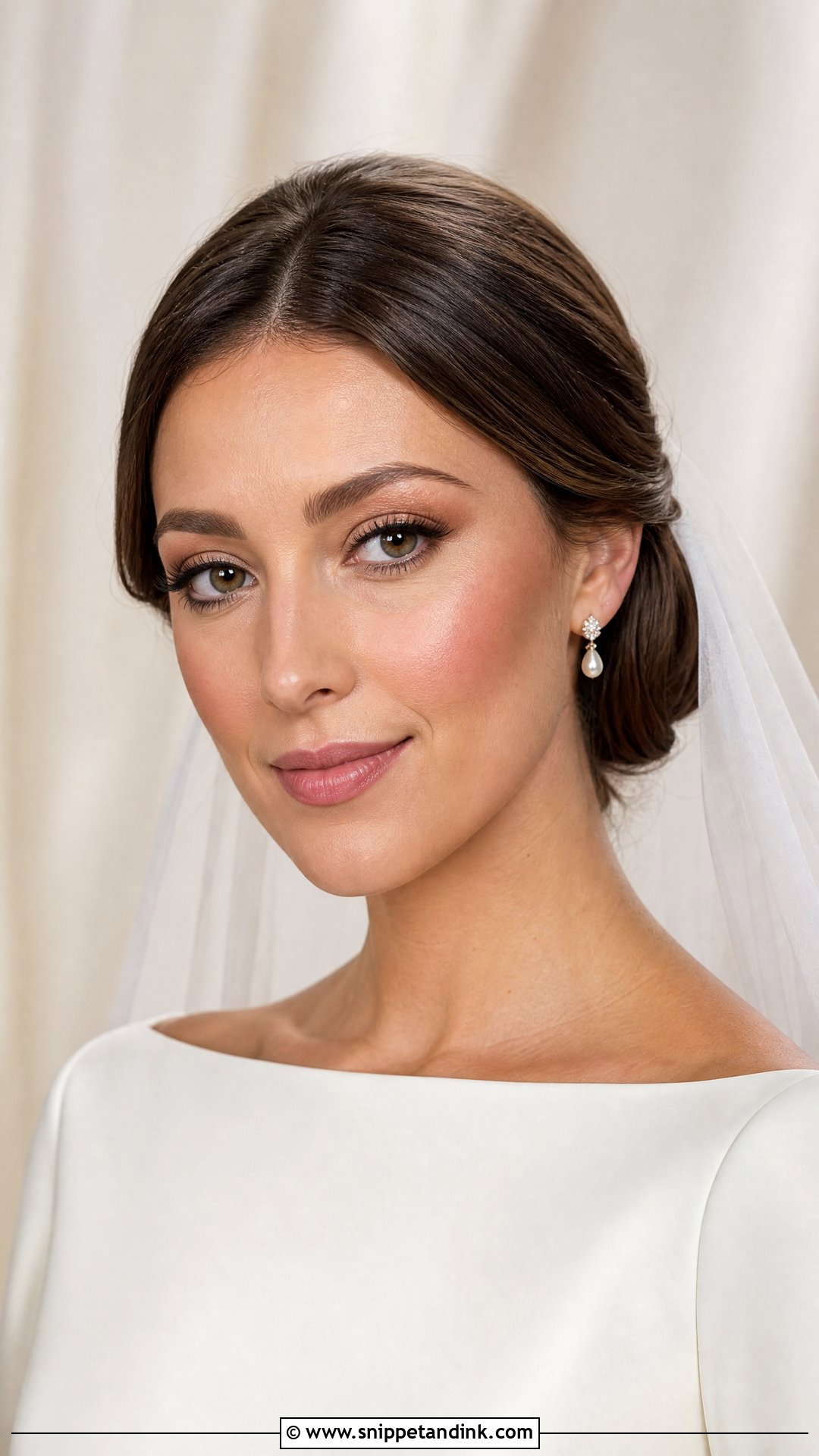
If a bride can’t decide, this is where I start her trial. Every element is in balance: skin smooth but not heavy, eyes defined but not dark, lips with enough color to register on camera. Neutral brown shadow, a clean thin liner, soft lashes and shaped brows do the structure. Rose blush lifts the face and a satin pink lipstick finishes it. From this base it’s easy to push one feature further once we’ve seen it in photos.
14. Simple Bridal Makeup With Red Lip
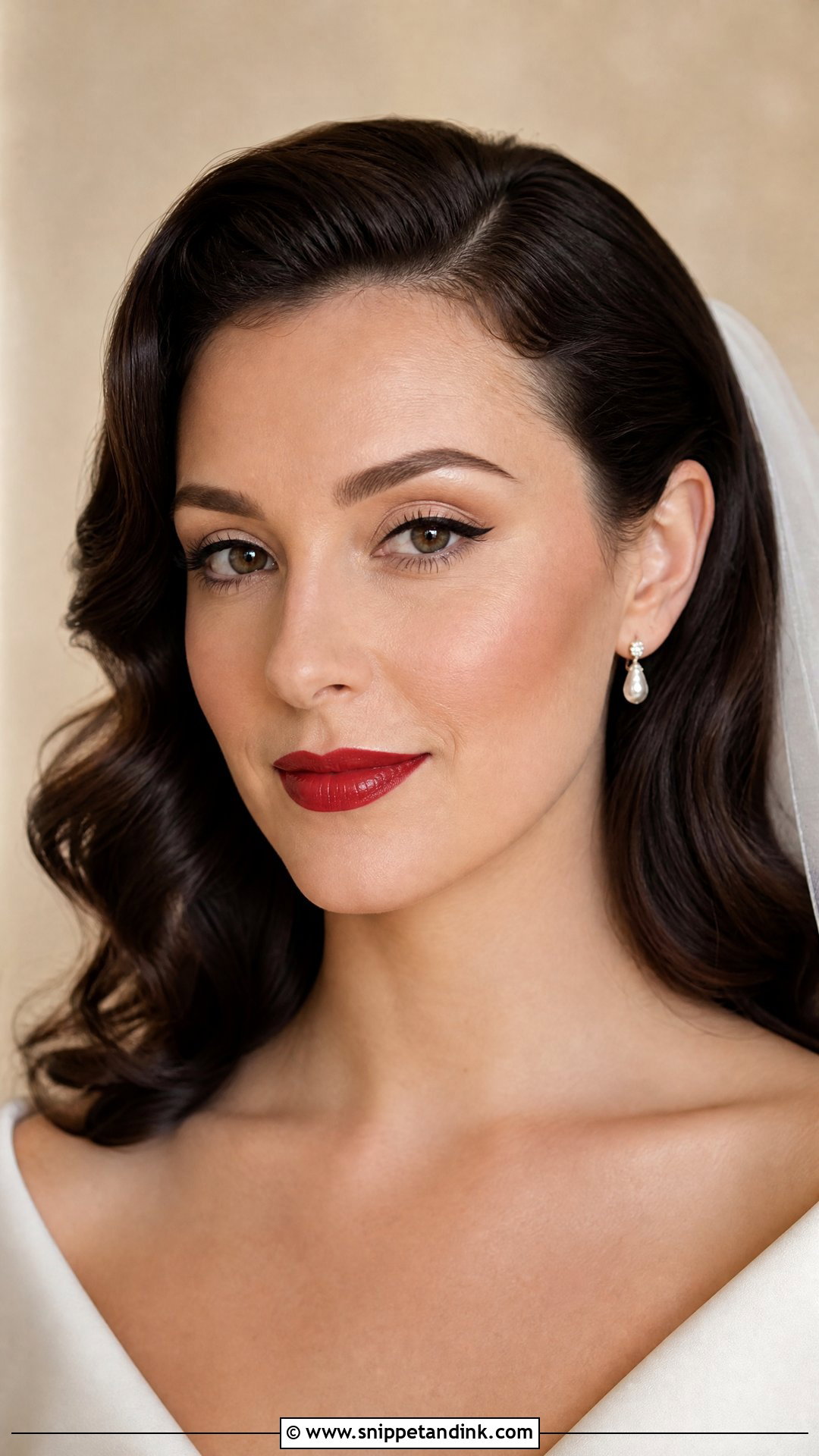
A red lip only looks simple when everything around it is quiet. I keep the base satin, the lids in beige with mascara and the thinnest liner, and the cheeks barely flushed. The red is matched to undertone: blue-red for cool skin, true red for neutral, brick for golden. I line and fill the whole mouth with liner first, blot, then apply lipstick; that liner layer is what stops red feathering at the edges after drinks and kisses. Keep the exact lipstick and liner with you, because red shows every slip.
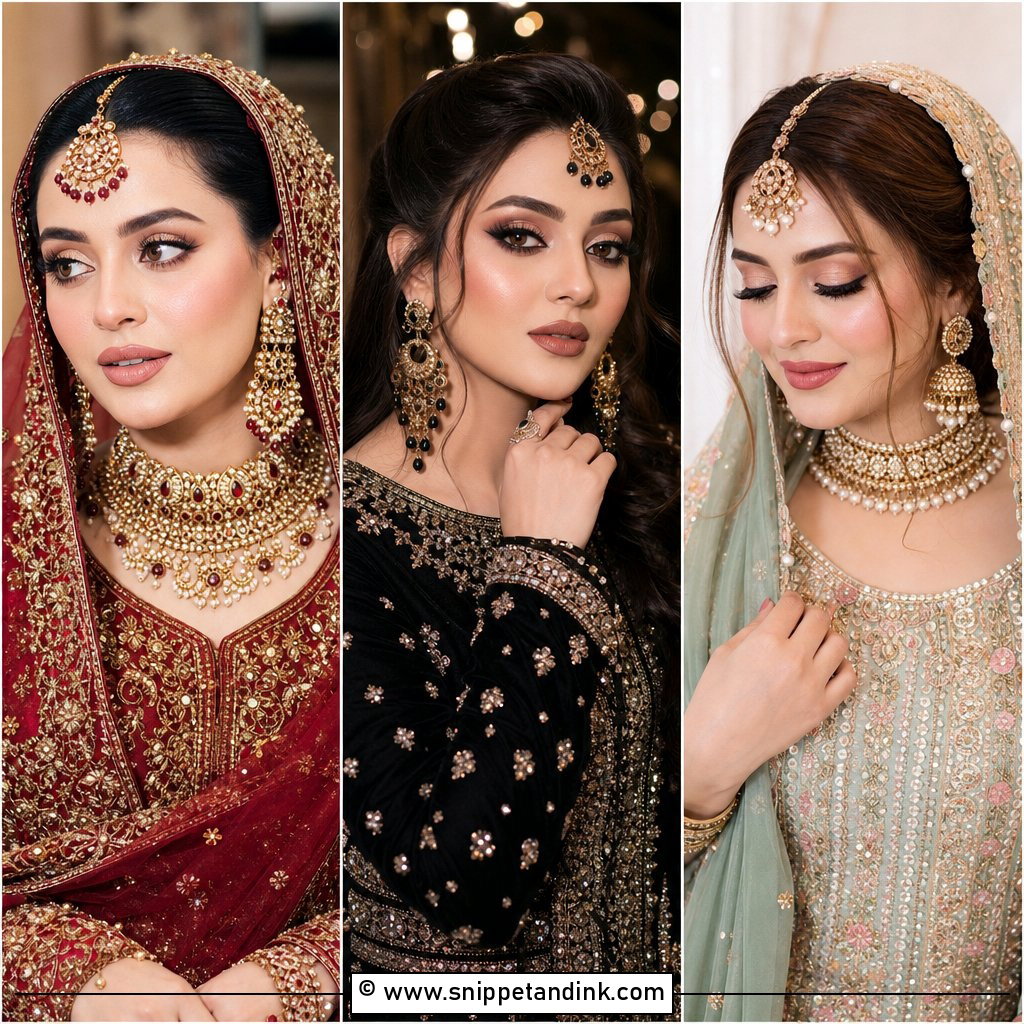
15. Simple Bridal Makeup With Winged Liner
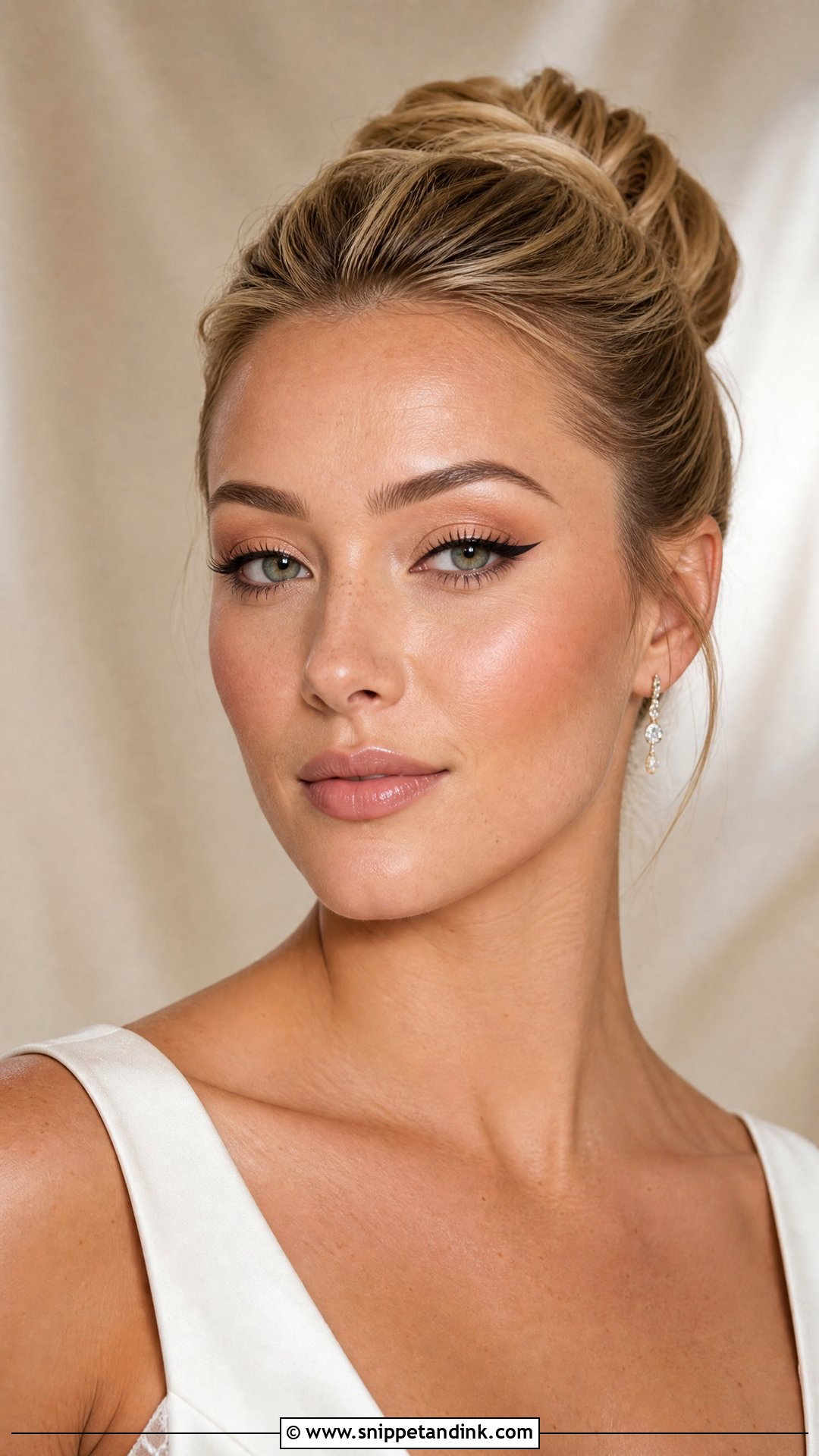
A wing changes shape when the eye opens, so I always draw it with the bride looking straight ahead, never with her eyes closed. Kept thin, it lifts the outer corner and stays tidy under a veil. Light matte shadow on the lid and a soft brown crease support it, while the skin, blush and highlight stay low-key. On hooded lids I’d steer you to a smudged, tightlined flick instead, because a sharp wing folds into the crease and disappears. A rose lipstick keeps the attention on the eyes.
16. Simple Bridal Makeup For Blue Eyes
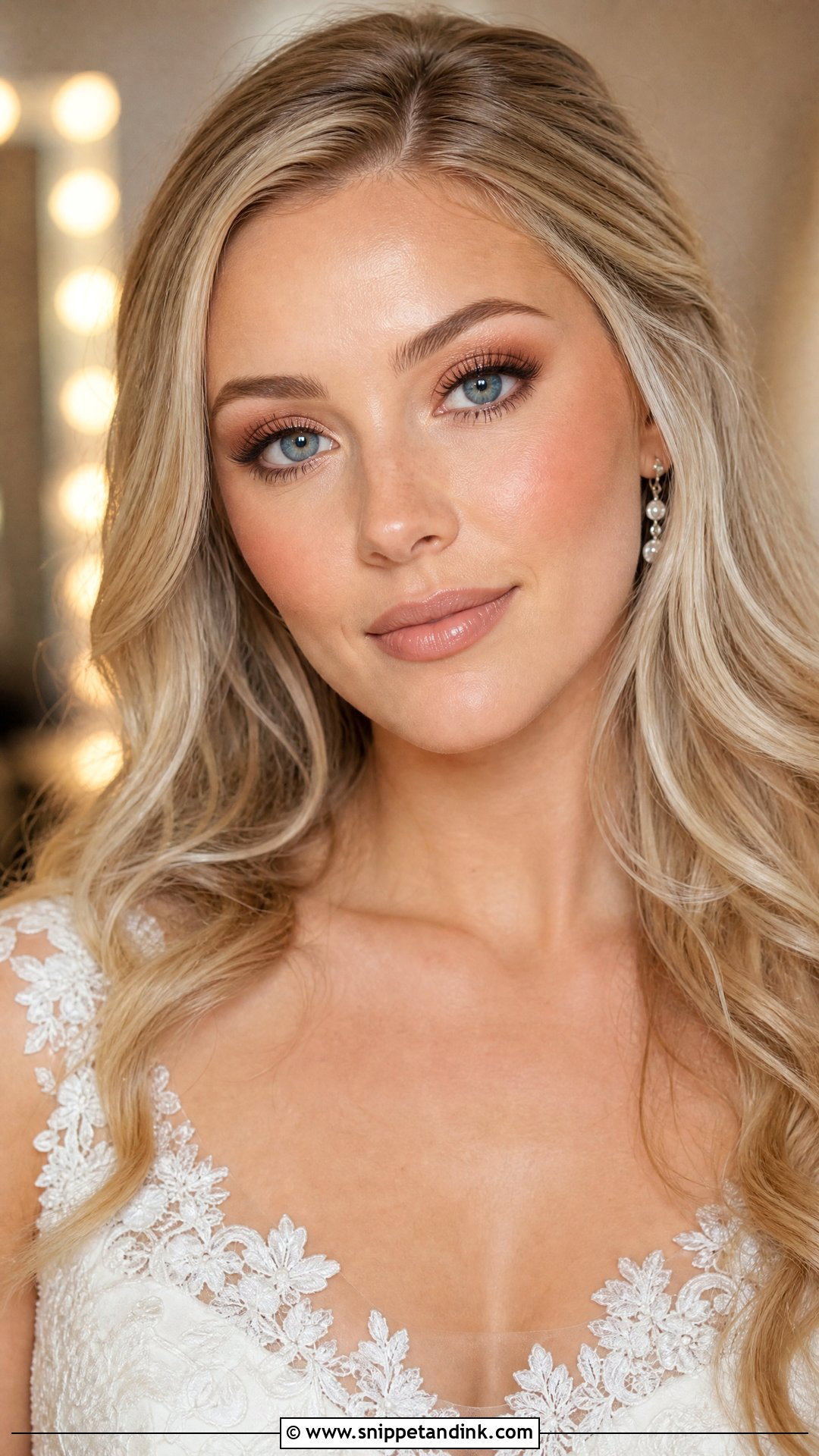
Simple bridal makeup for blue eyes leans on warmth, because orange-leaning shades sit opposite blue on the color wheel and make it look brighter. I use a light bronze on the lid, a soft brown crease and brown liner rather than black. Black mascara is fine if it’s concentrated at the roots. What I avoid are icy silvers and cool greys; they pull blue toward grey. Peach blush and a warm nude lip keep the whole face in one family.
17. Simple Bridal Makeup For Brown Eyes
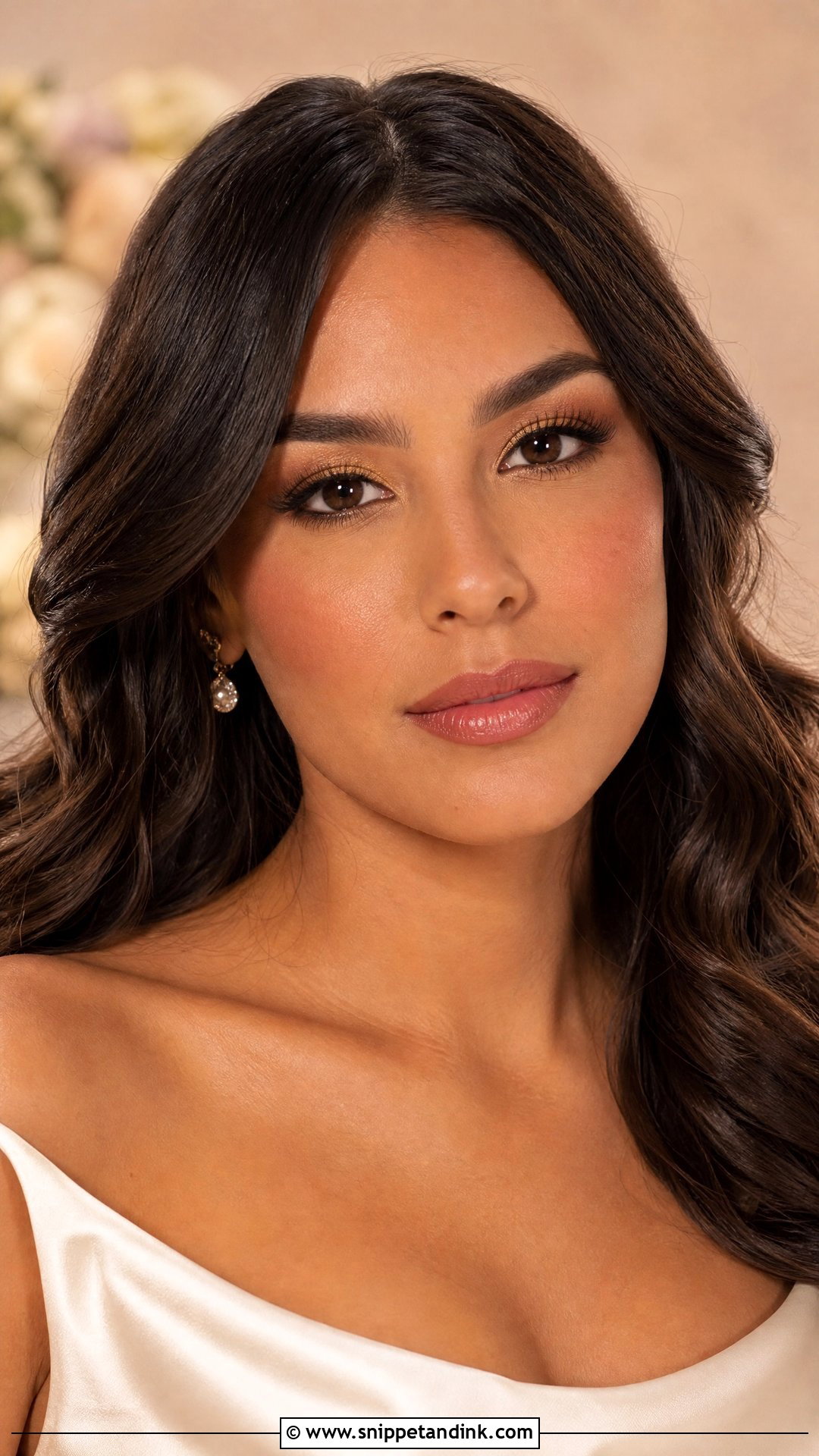
Brown eyes handle almost any neutral, so the bigger risk is doing too little. A satin gold lid brightens, warm brown in the crease adds shape, and a smudged brown line tight to the lashes makes the iris look deeper without a hard frame. I keep lashes lifted and brows softly filled. Cheek color depends on skin depth, rose on fair skin and terracotta on deeper tones, and a caramel lip finishes it.
18. Simple Bridal Makeup For Green Eyes
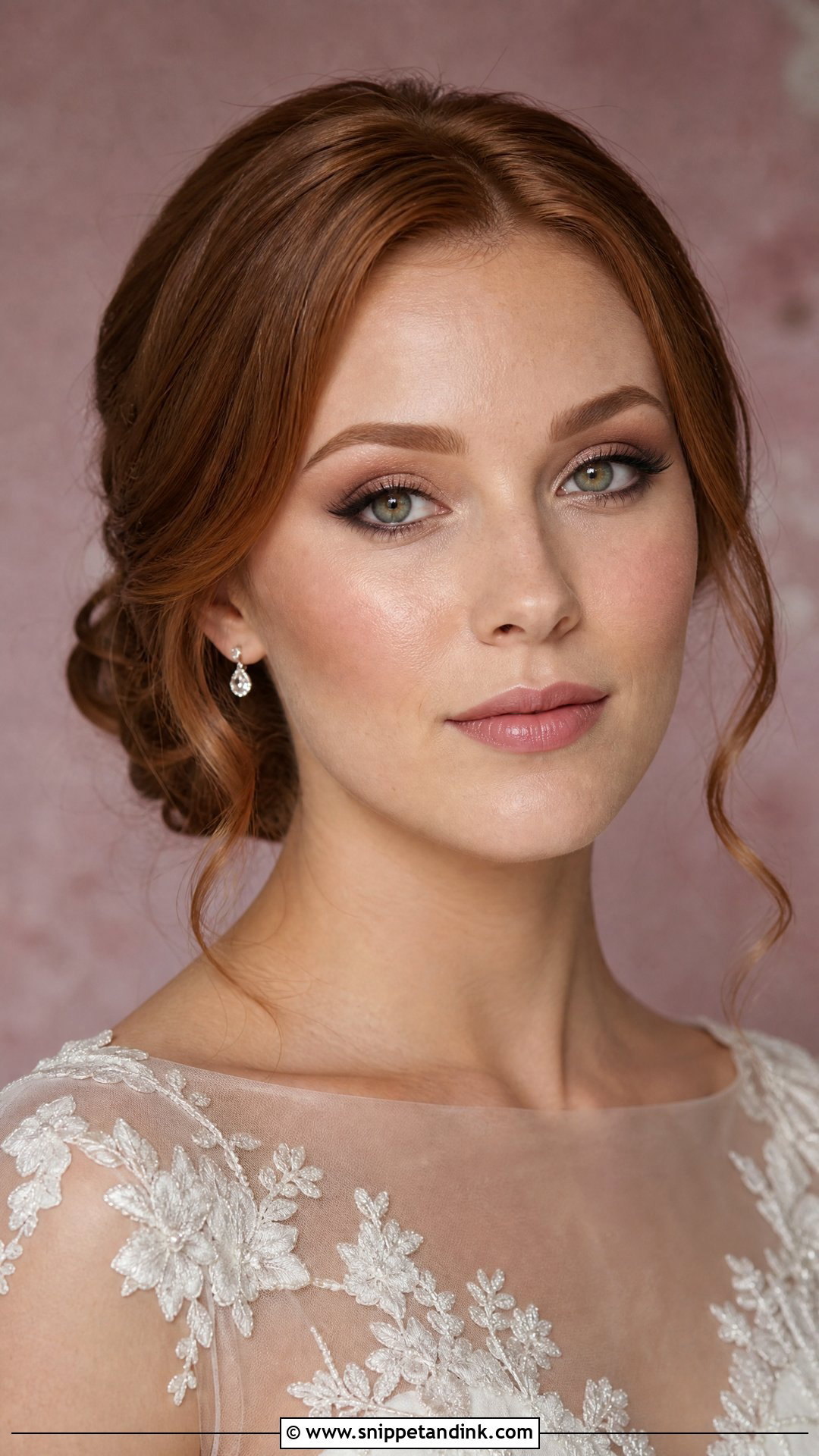
Simple bridal makeup for green eyes works best with red-based neutrals such as rosy taupe and soft plum. Red is green’s opposite, so even a sheer wash makes the iris read greener. I add soft brown liner and a few individual lashes at the outer corner, and keep the lower lash line only lightly defined so the eye stays open. A satin base, soft rose blush and a pink-nude lip balance it. A touch of champagne in the inner corners is the only shimmer I’d add.
19. Simple Bridal Makeup For Hazel Eyes
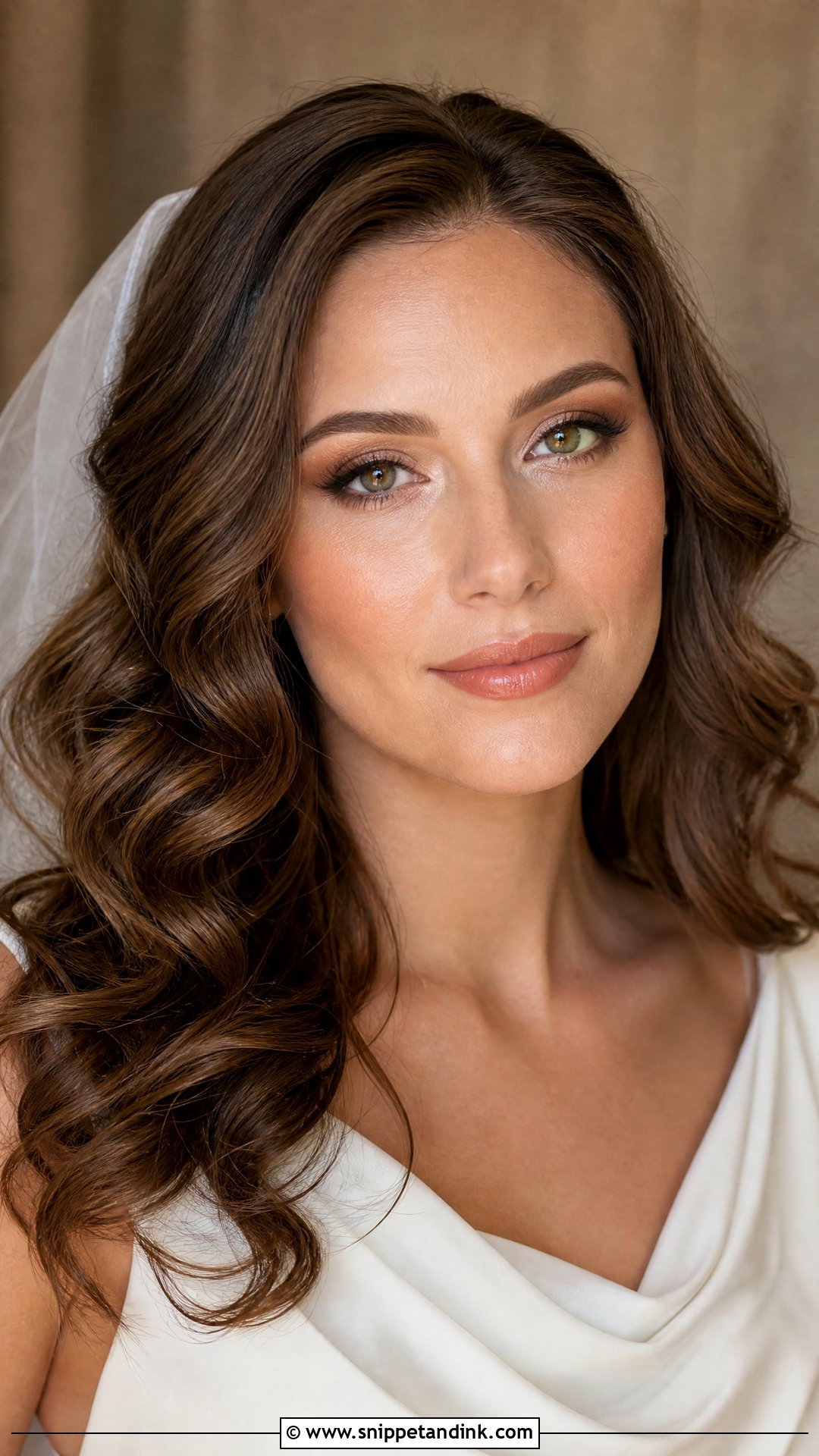
With bridal makeup for hazel eyes, I first look at the iris by a window to see which color dominates, because that changes the shadow. Bronze and soft copper pull out the gold flecks; an olive-brown pulls out the green. I blend bronze over the lid, deepen the outer corner with warm brown and keep the liner brown. Peach blush and a nude-coral lip keep things warm. Hazel shifts with the light, which is why it looks so alive in outdoor photos.
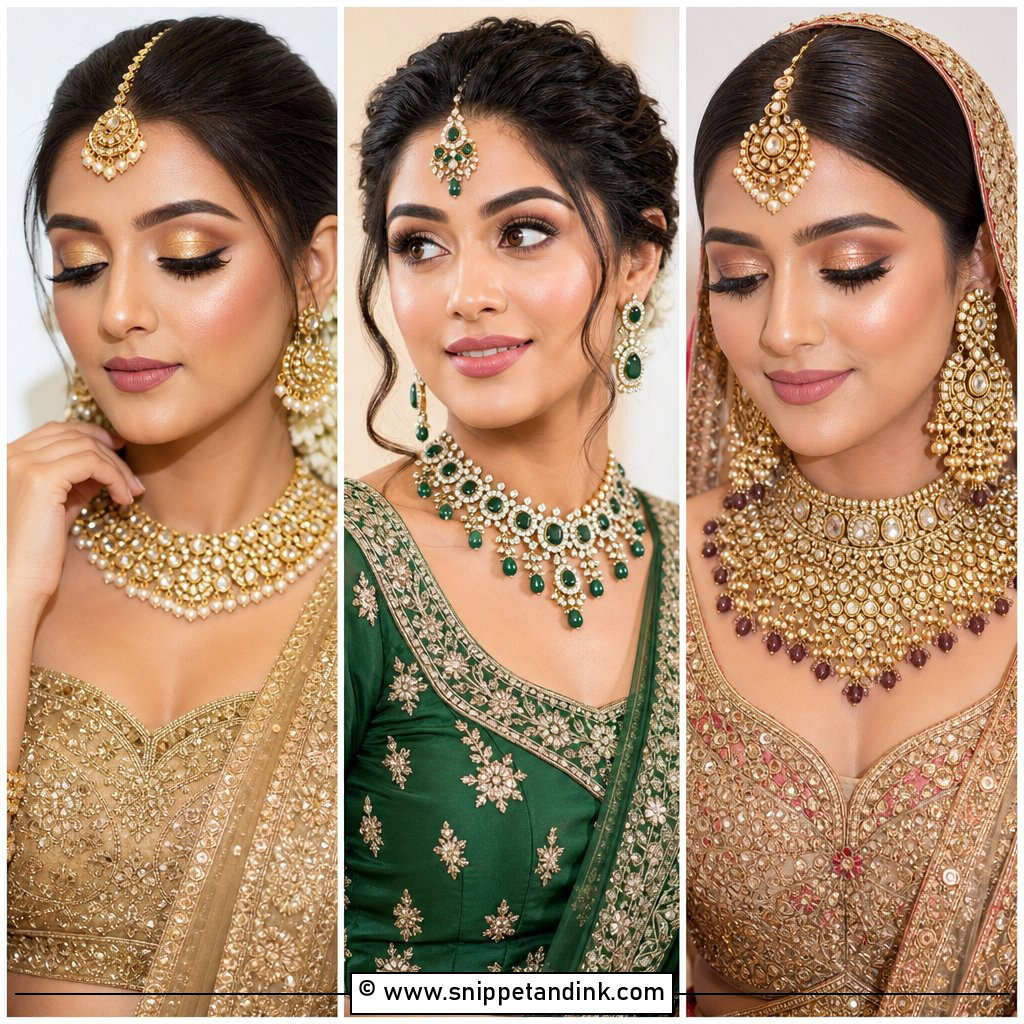
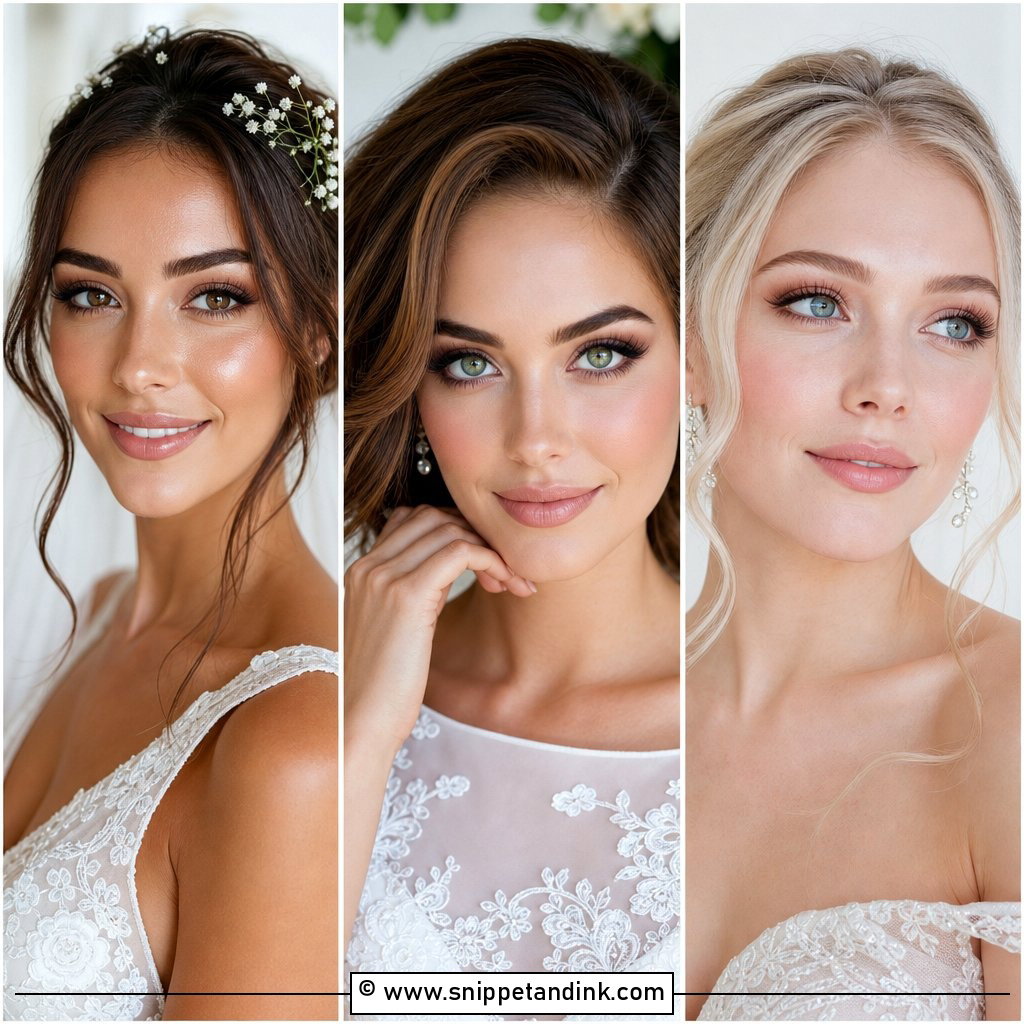
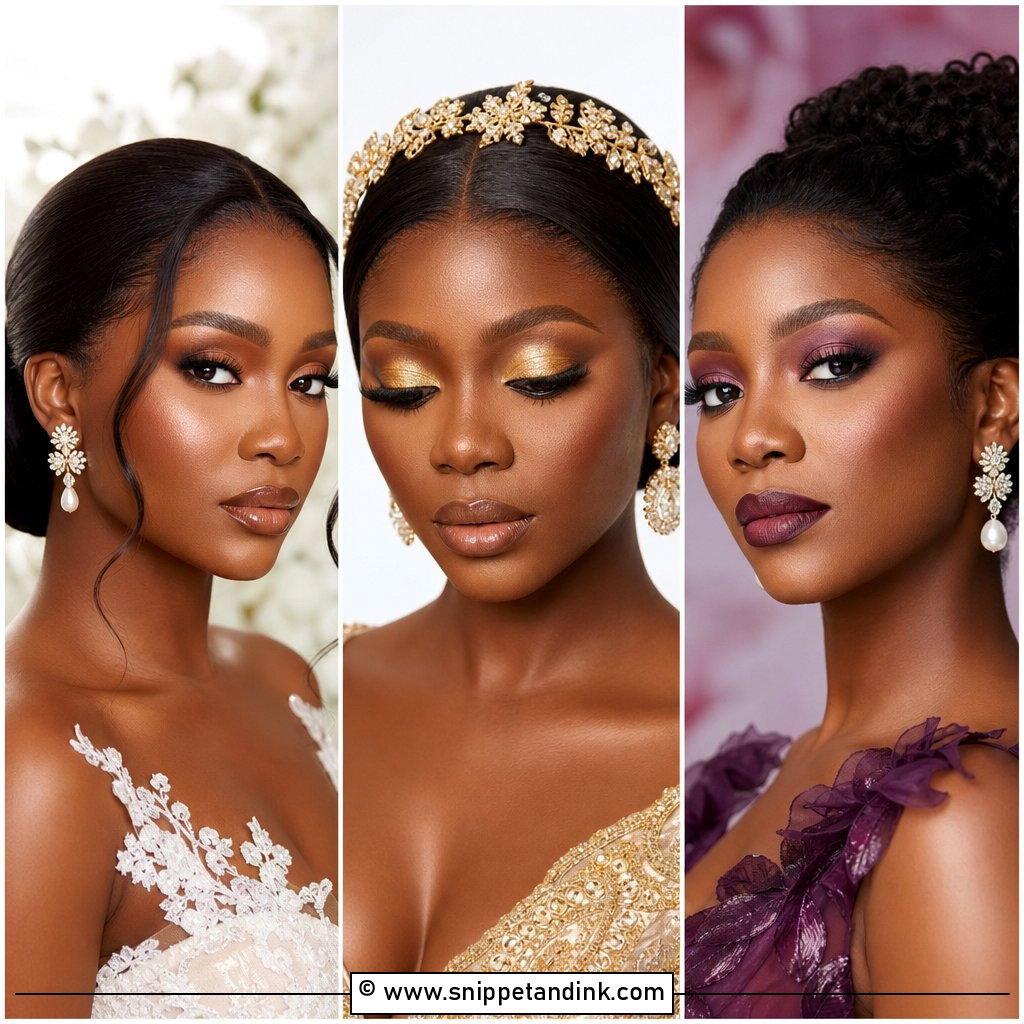
20. Simple Bridal Makeup For Fair Skin
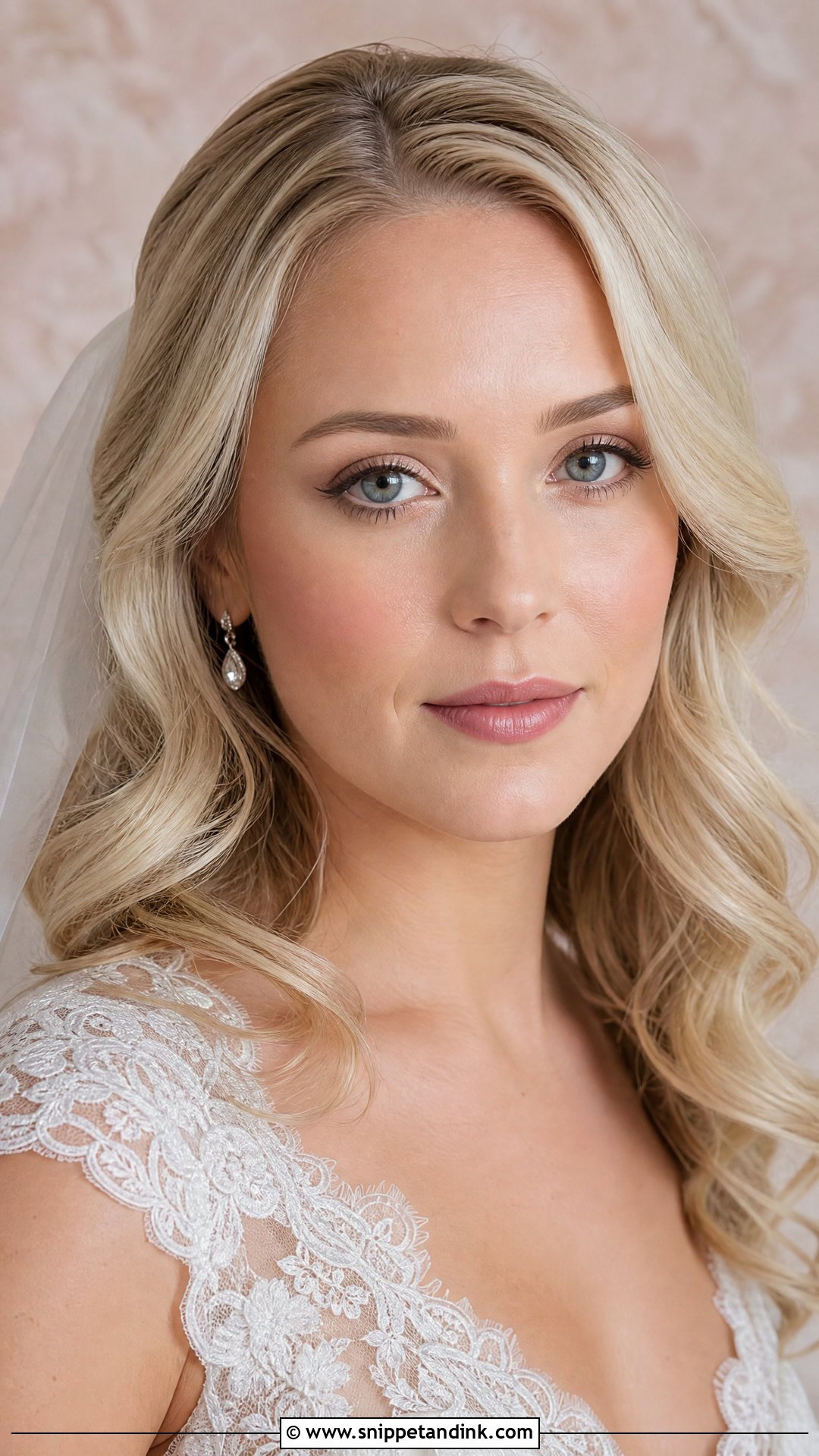
Fair skin shows every hard edge. I match foundation at the jaw and neck rather than the cheek, and use bronzer with a very light hand. Soft pink and peach blushes usually suit, and on the eyes I like taupe or dusty rose with brown liner; black works too if it stays thin. The shade I steer fair brides away from is flat beige on the lips, which reads as no lip at all in photos. A pink-nude or soft berry gives the face enough color.
21. Simple Bridal Makeup For Olive Skin
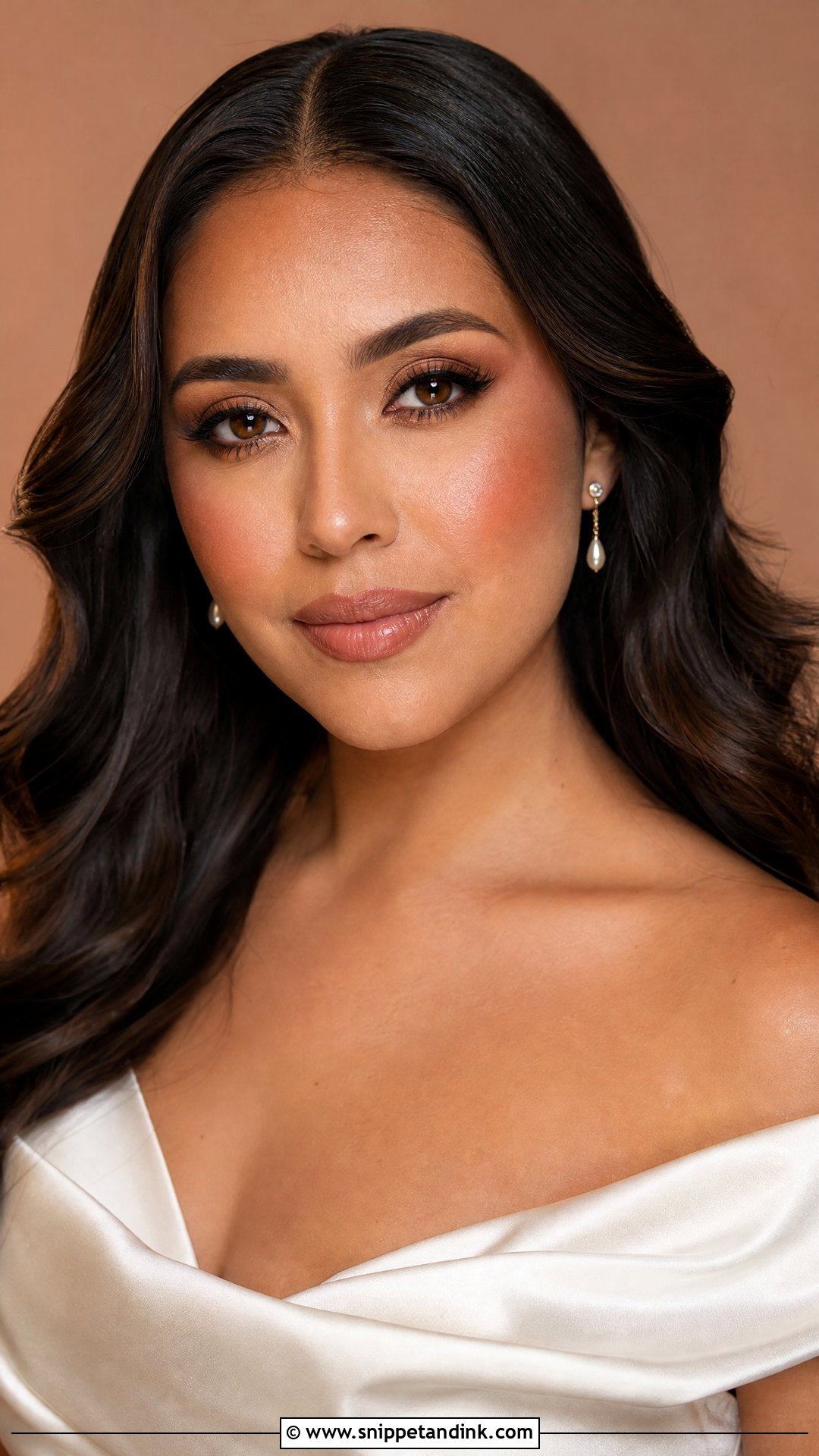
Olive skin has a green-grey undertone that many foundation ranges miss, so the base is where I spend most of the trial. Too pink turns orange in photos; too yellow makes the skin look grey. Once that’s right, bronze shadow, brown liner and fluttery lashes do the eyes, and peachy rose blush with a golden highlight adds warmth. The lip can be nude rose or soft terracotta. Keep powder light, since too much leaves olive skin dull and ashy.
22. Simple Bridal Makeup For Dark Skin
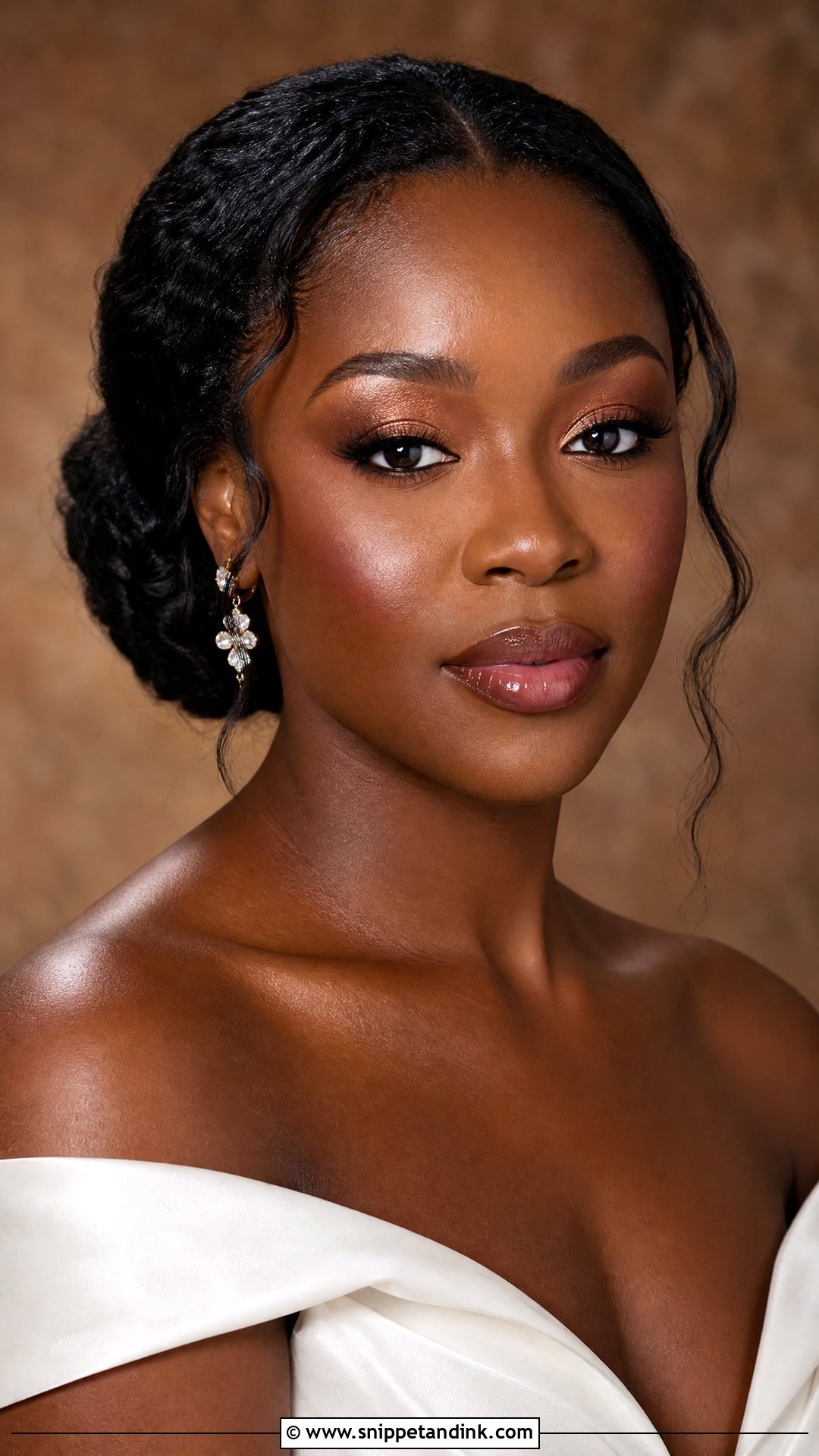
Simple bridal makeup for dark skin needs pigment that actually shows, or it disappears into the skin and turns muddy on camera. I match foundation carefully and brighten the center of the face with a concealer only slightly lighter, because anything too pale goes ashy under flash. Bronze, copper and warm gold shadows sit richly on the lid, with deep brown liner and soft lashes. Berry or brick blush and a rosewood lip finish it. I also test every setting powder and spray in flash photos at the trial, since some leave a white cast that nobody sees in the mirror.
23. Simple Bridal Makeup For Mature Skin
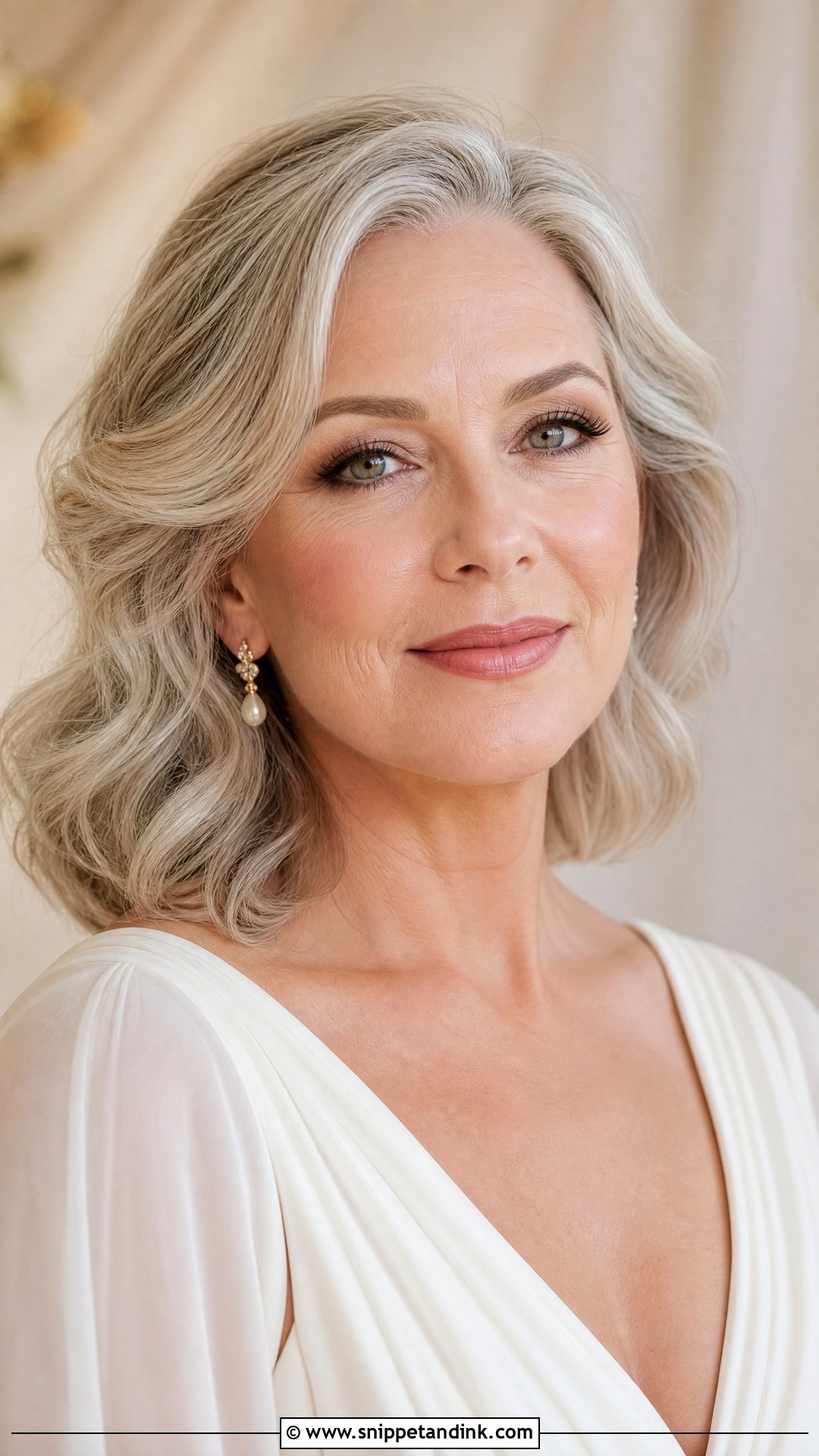
Mature skin needs moisture more than coverage. I prep with moisturizer and a smoothing primer, then use lightweight coverage and conceal only where it’s needed, because thick layers settle into lines by mid-afternoon. Cream blush goes slightly higher on the cheek for lift. Eyes get satin or matte neutrals; shimmer on a textured lid magnifies the texture. Brown liner, curled lashes and a creamy rose lipstick finish it, and I leave out heavy contour and drying matte formulas altogether.
24. Simple Bridal Makeup For Summer Wedding
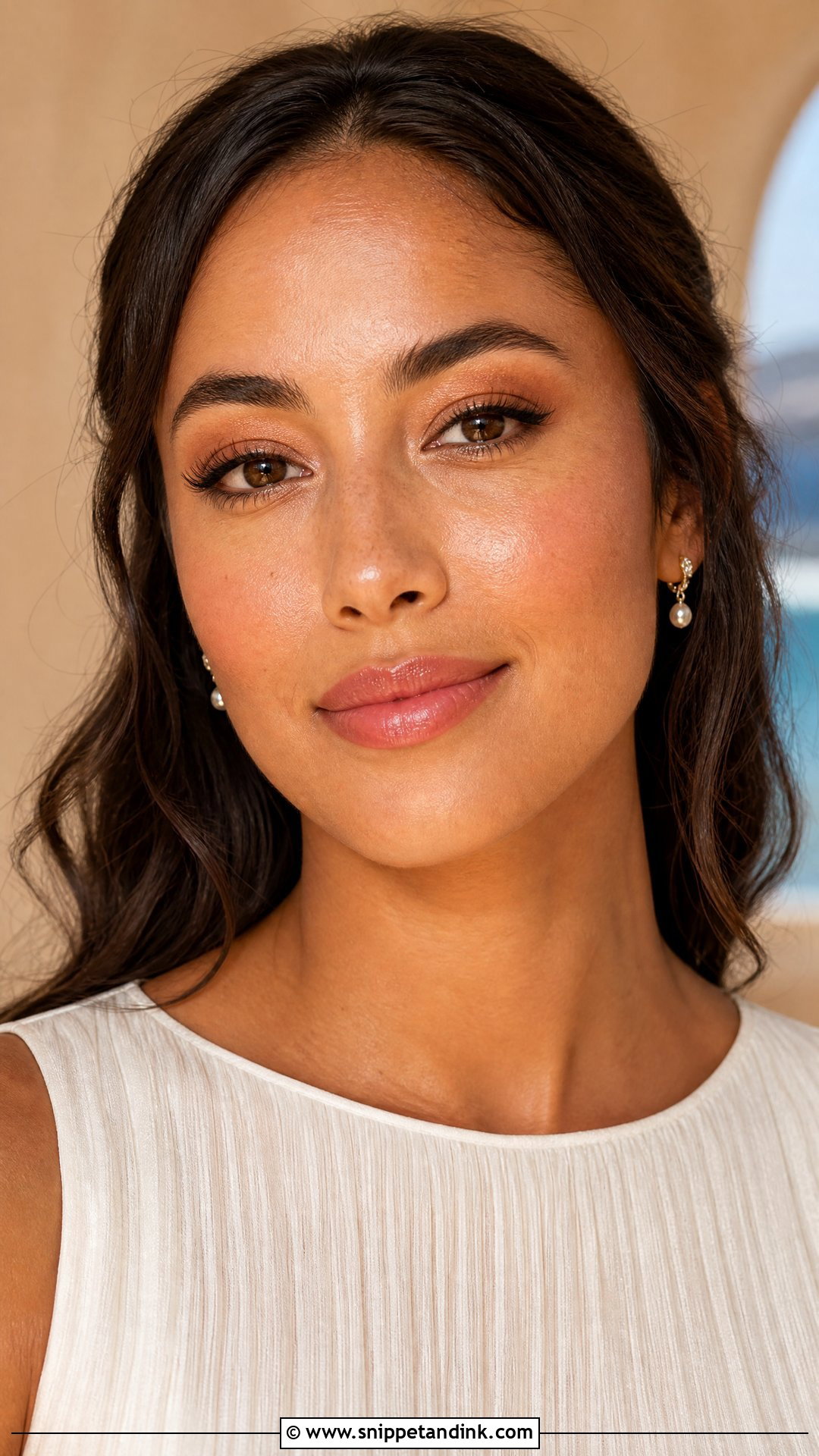
Heat and humidity break down cream products fastest, so in summer I layer: cream blush first, then a matching powder blush pressed on top to lock it in. The base is lightweight and set through the center with fine powder. Eyes stay bronze or peach with waterproof mascara and smudge-resistant liner. A lip stain fades evenly, unlike lipstick, which wears into a ring around the edge. Highlight goes on the cheekbones only; by the reception the rest of the face will make its own.
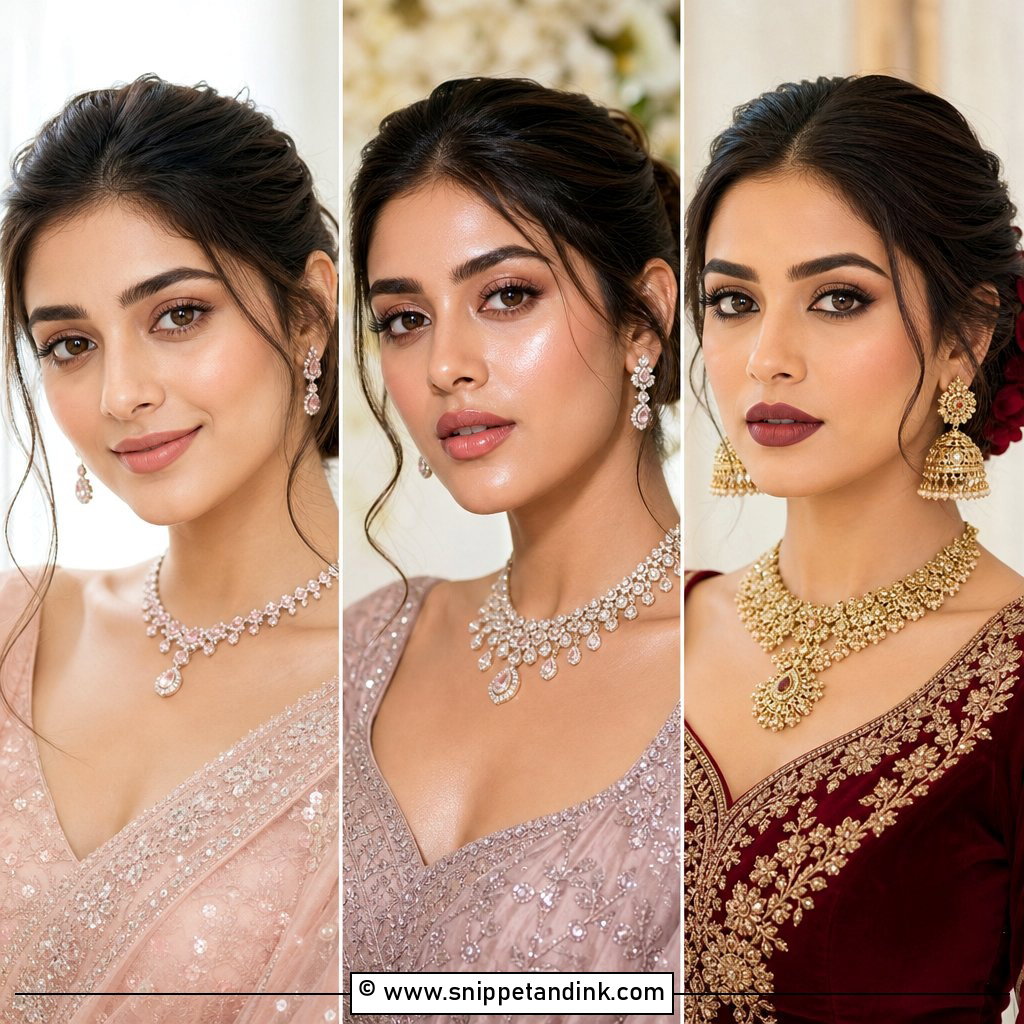
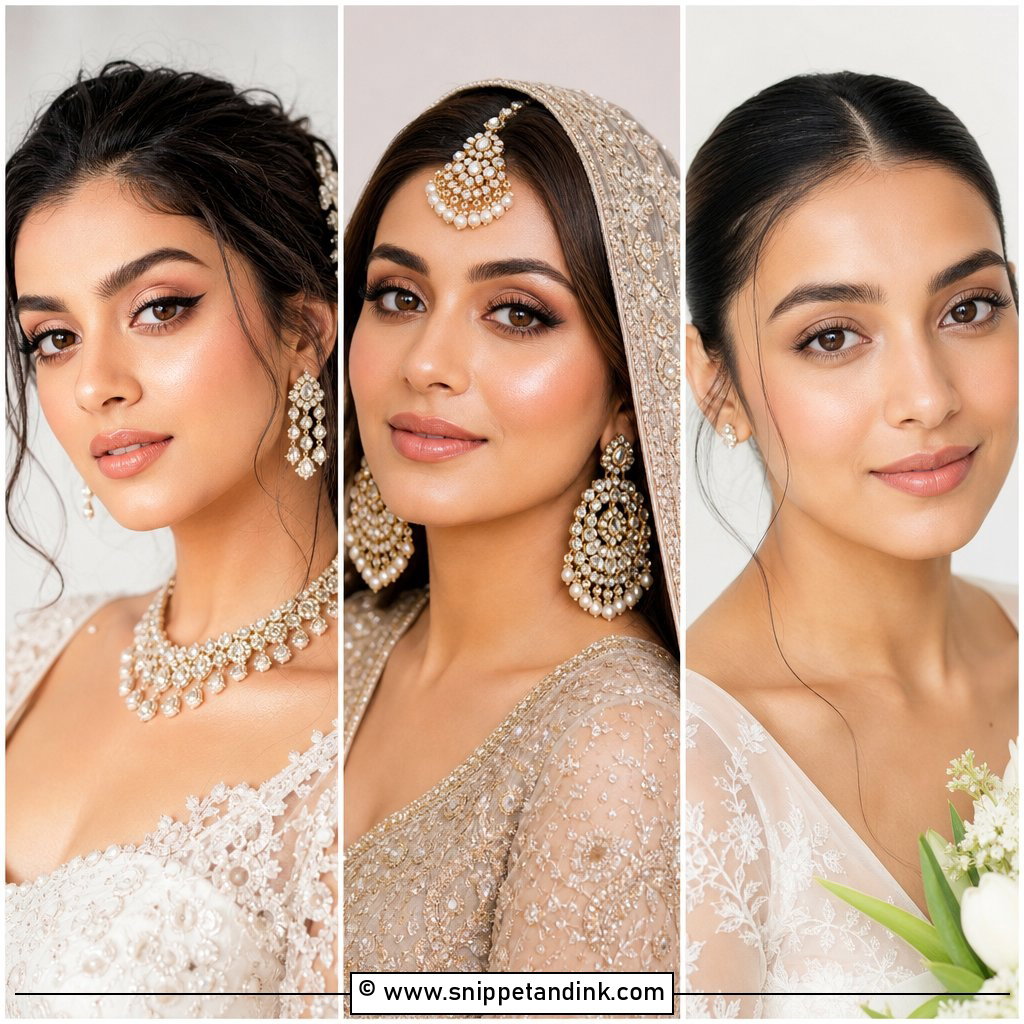
25. Simple Bridal Makeup For Winter Wedding
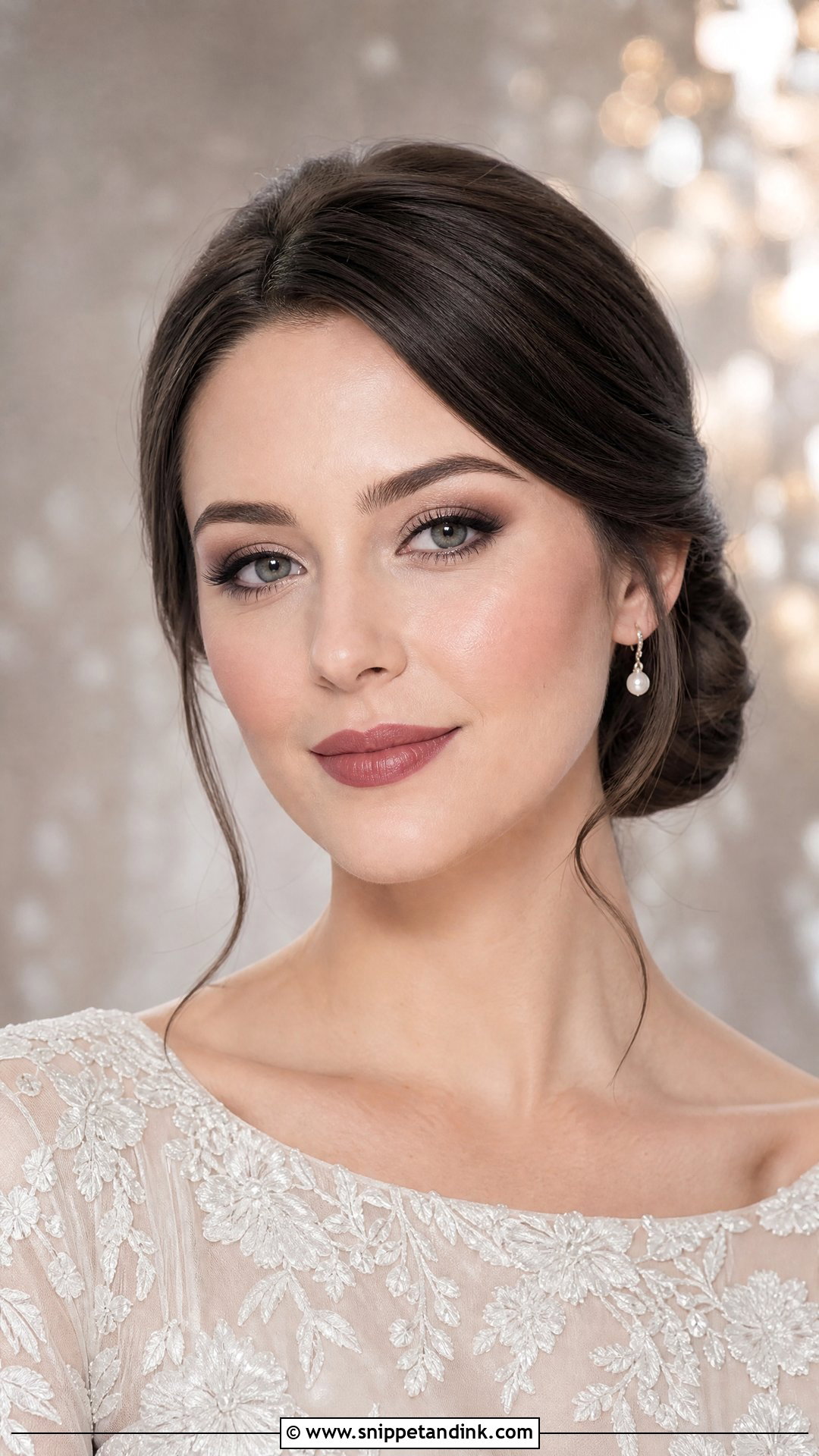
For a winter wedding, cold air outside and dry heating inside both pull moisture out of the skin. I prep with a richer moisturizer and choose a satin foundation over matte. The eyes can go a little deeper, in taupe or soft plum-brown with a thin liner, and a berry-toned blush brings back the color winter skin loses. A satin mauve lip suits the cooler light. I keep highlight refined, because flash on cold, dry skin exaggerates every bit of texture.
26. Simple Bridal Makeup For Beach Wedding
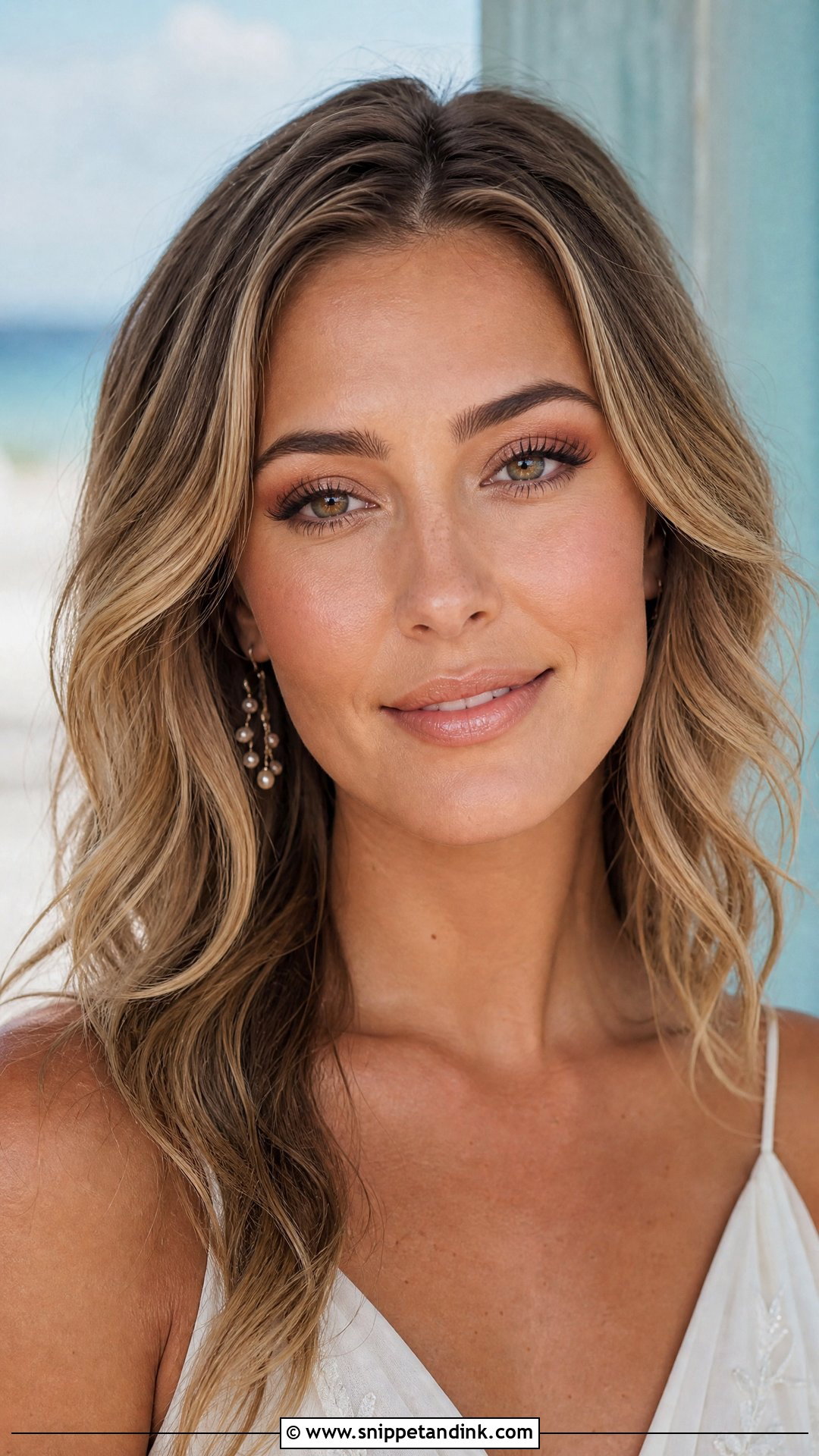
At the beach, wind does more damage than heat. Sand sticks to anything tacky, and hair whips across a glossy lip for the whole ceremony. I use a lightweight base, waterproof mascara and cream products set lightly, with warm bronze shadow, soft brown liner and brushed-up brows. Peach blush mimics a sun flush, and I’d choose a tinted balm or stain over gloss. Skip heavy powder and thick strip lashes: humidity lifts the lash band, and salt air makes powder look caked.
27. Simple Bridal Makeup For Courthouse Wedding
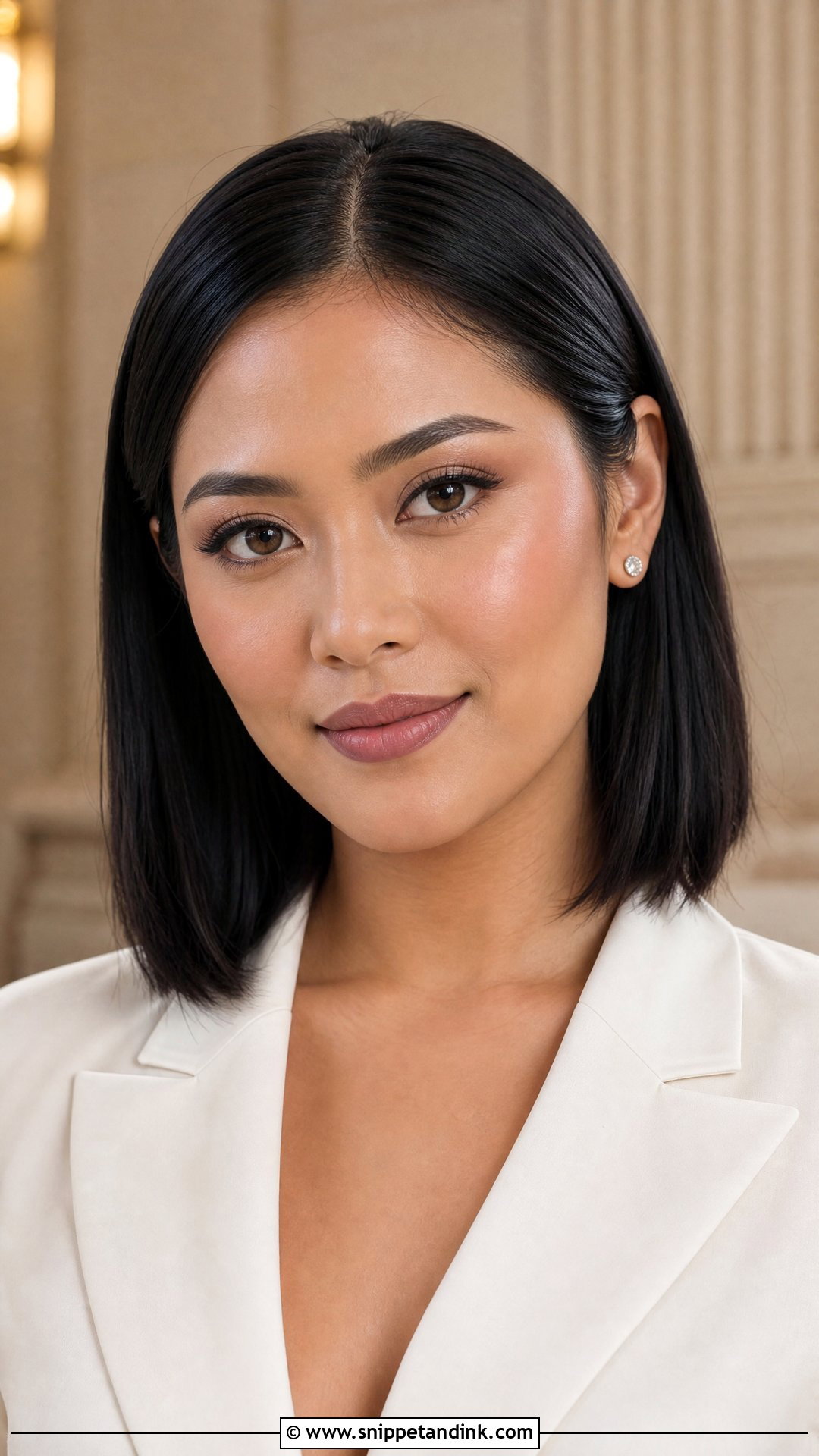
Courthouse ceremonies are often midday under overhead office lighting, then straight out onto a bright street for photos. That mix rewards a clean, polished face over anything dramatic. I use a light to medium base, natural blush and subtle bronzer, matte taupe on the eyes with a thin liner, and tidy brows. The lip is where personality comes in, and with a sharp suit or a simple dress a classic red often looks right. Plan it to last without anyone on hand to touch it up.
28. Simple Bridal Makeup For Outdoor Wedding
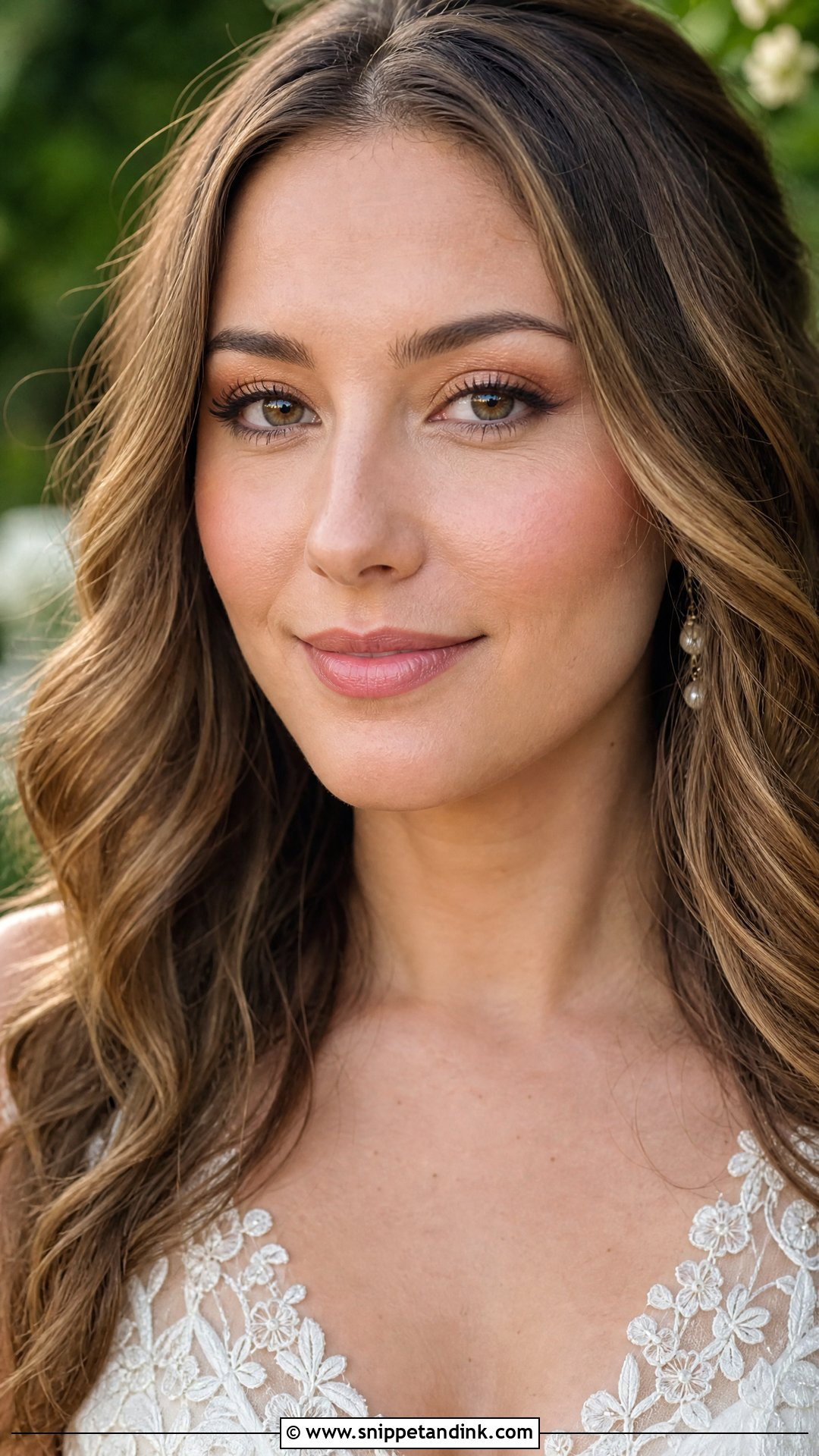
Daylight shows texture more than any indoor light, so outdoors I build thin layers and let skin look like skin. Cream blush and subtle bronzer give warmth, and I set only where shine shows up. Soft brown or champagne shadow stays flattering in direct sun, and waterproof mascara earns its place once the vows start. A lip stain saves you from constant touch-ups. Keep highlight minimal, because full sun turns it into a visible stripe.
29. Simple Bridal Makeup For Evening Wedding
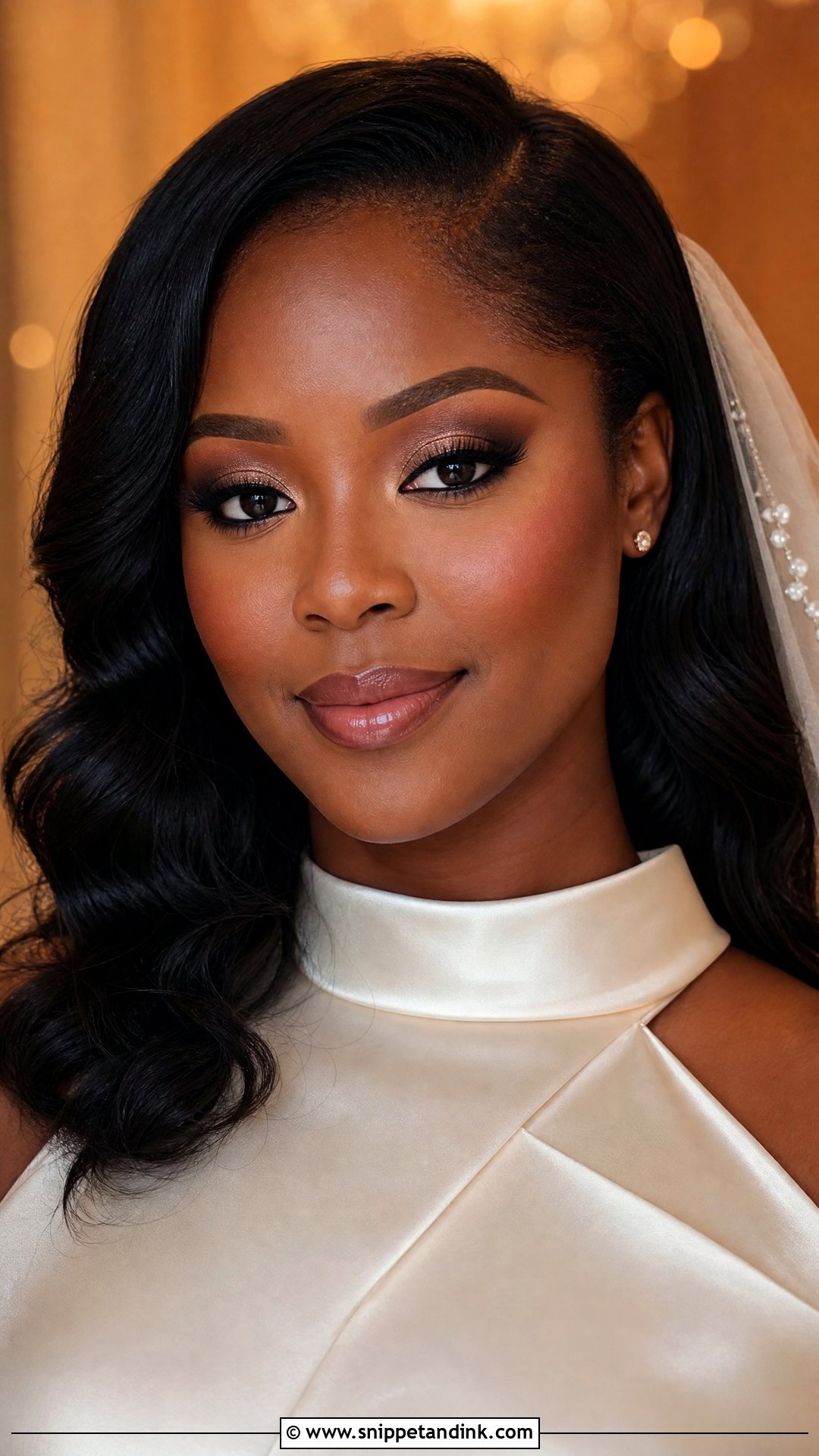
Evening light is warmer and dimmer, so the face can carry more depth than it could at noon. I start with a long-wear satin base and sculpt the cheeks softly, then deepen the outer corner of the eye with warm brown or bronze. A thin liner and soft lashes keep the eyes visible in low light. Lips stay in a rosy nude or mauve, and highlight goes on the cheekbones only. I avoid heavy glitter here; under dance-floor lights and flash it photographs as patchy.
30. Simple Bridal Makeup For Minimalist Bride
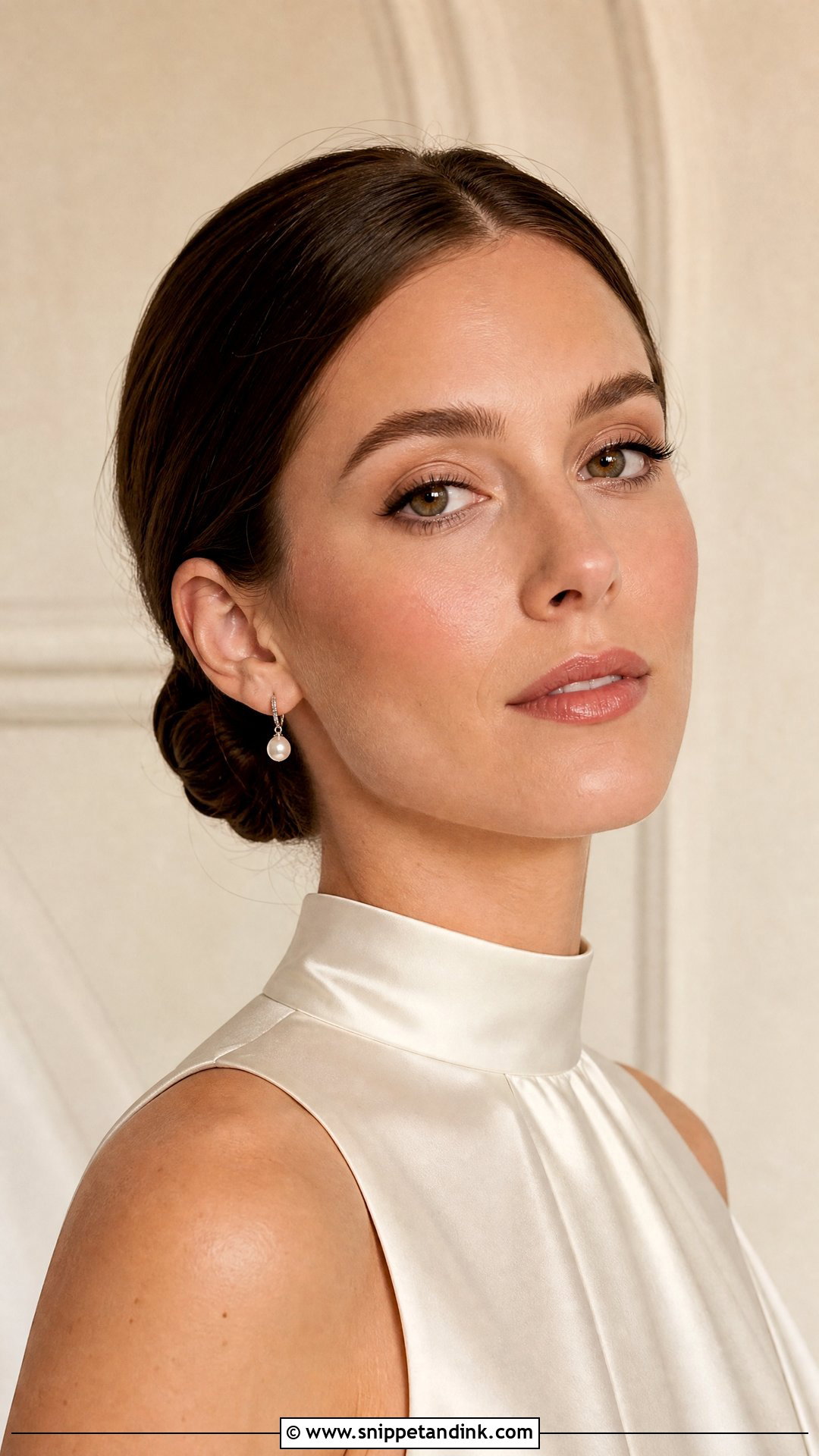
Minimal makeup is editing, not skipping. Every product has a job: a skin-like base, soft concealer, brushed brows, curled lashes and a neutral wash of shadow. I choose a cream blush close to your natural flush and a lip tint that looks like your own lip, slightly improved. Gentle warmth around the face replaces contour. With a sleek gown and a low bun, it looks understated but clearly finished.
How Light Makeup Holds From First Look to Last Dance
Simple makeup has less product on the face, which means less to fade but also less margin before it disappears. Staying power comes from how the layers go on, not from adding more of them.
- Moisturize 15 to 20 minutes before foundation so it absorbs instead of sliding the base around.
- Layer cream then powder in the same shade for blush and bronzer. The cream gives the skin-like finish; the powder anchors it.
- Set only where you crease or shine, usually under the eyes and through the T-zone.
- Line and fill the whole lip before any lipstick or stain so the color fades evenly.
- Mist setting spray from arm’s length and let it dry fully before the veil goes in.
The touch-up pouch I hand to the maid of honor
Blotting papers, your exact lipstick and liner, a few cotton buds, a small concealer and a mini pressed powder. Blot before you powder, never the other way round; powder pressed over oil is what makes a simple face look cakey by evening.
Why Barely-There Makeup Can Disappear in Photos
A face that looks right in the mirror can look washed out on camera. Flash and bright daylight flatten features, so definition that reads as soft in person sometimes reads as nothing at all. I usually push blush and brows slightly further than a bride would wear them day to day, then check the result with phone flash.
Two other problems are worth testing for. Some setting powders and high-mineral sunscreens bounce flash back and leave a white cast around the eyes and jaw. And very warm indoor lighting can turn a cool pink lip brownish, so if your reception is candlelit, look at the lip shade under warm light too.
Simple Only Works When the Skin Underneath Is Right
Simple bridal makeup isn’t plain; it’s a small number of choices made carefully. Decide the feature you want to lead with and let the rest support it. At your trial, check the face by a window and in a few phone photos taken with flash, from the side as well as the front, and bring references that show a whole face rather than a cropped eye. If it feels like you in person and still registers in the pictures, it’s right.
You'll Like These Ideas:


Leave a Reply