
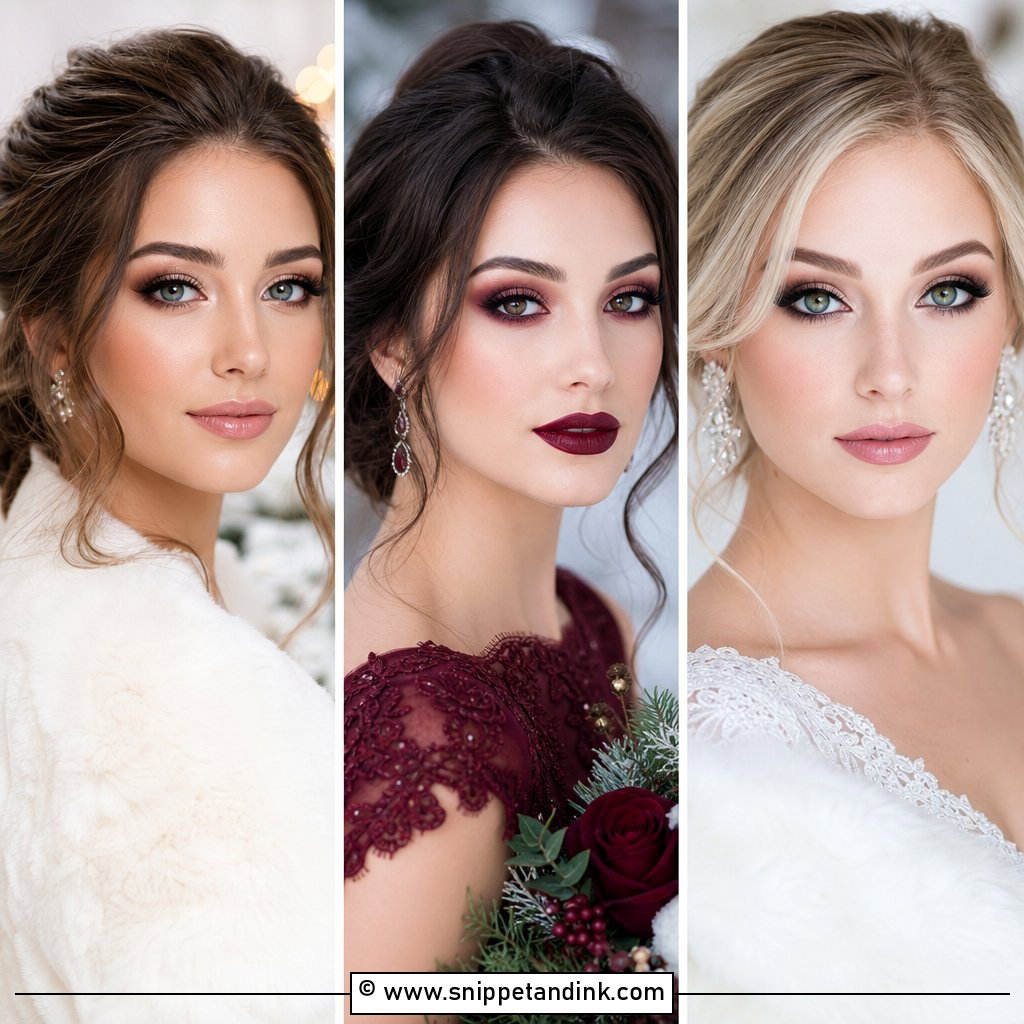
Most brides don’t need the heaviest makeup in the room. They need a face that still looks like theirs at the end of the night, after photos, hugs and a few rounds of happy crying. The twenty looks below are the ones I’m asked for most, from bare natural skin to full glam, and each one is simple enough to describe to an artist in a sentence or to practise at home if you’re doing your own. I’ve added what I actually watch for with each: which skin it suits, where it tends to fail, and what I change at a trial.
Reading Your Ceremony Light Before You Pick a Look
Before I talk colours with a bride, I ask where and when she’s getting married, because light changes makeup more than anything in the kit. Bright midday sun bleaches soft colour and shows every patch of texture. Candlelit and tungsten-lit rooms warm everything up, so bronzer and peach can tip into orange. Dim evening venues mean the photographer will use flash, and flash flattens a face.
- Outdoor daytime: lean natural, peach or champagne, and keep the base thin so sun doesn’t show texture.
- Indoor evening with flash: you need more definition than feels normal, so soft glam, smokey or full glam hold up better.
- Mixed light, like an outdoor ceremony and a ballroom reception: satin skin and a neutral eye survive both.
One more check: avoid powders and setting sprays heavy in mineral SPF or silica for the face itself. Under flash they can bounce back as a white cast, and you won’t see it until the photos arrive. Wear proper sunscreen in the morning, let it sink in, then build the makeup on top.
1. Natural Bridal Makeup
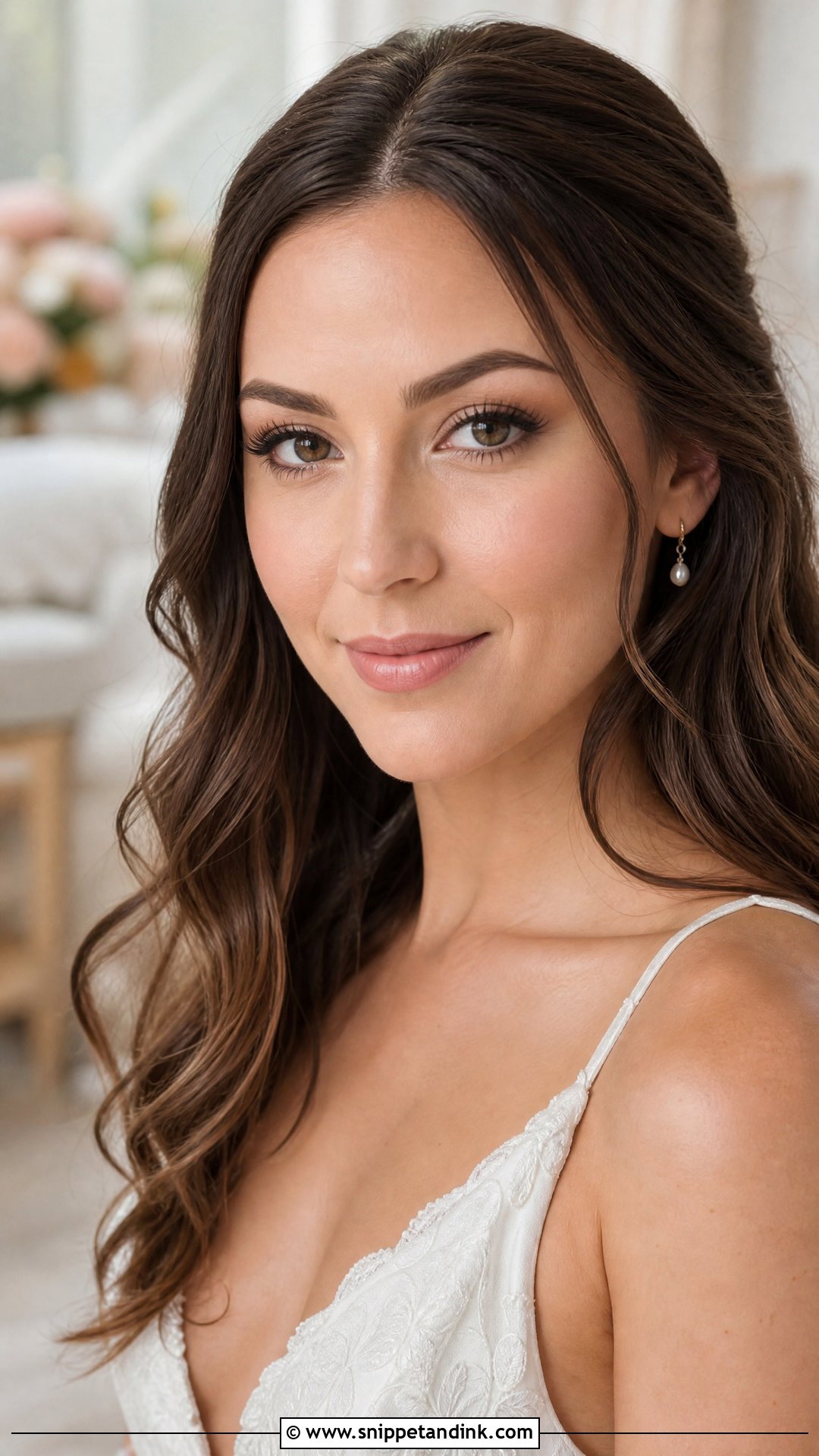
Natural makeup is the look I spend the most time on, oddly, because there’s nowhere for a mistake to hide. I even out redness around the nose and chin and leave freckles alone, then give the face shape with brushed-up brows, curled lashes and a soft brown liner pressed into the roots rather than drawn on top. Cream blush matters more here than anywhere else; without it the camera reads the face as pale. Keep the lip within a shade of your own. If you rarely wear makeup, this is the one that won’t make you feel like someone else at the altar.
2. Soft Glam Bridal Makeup
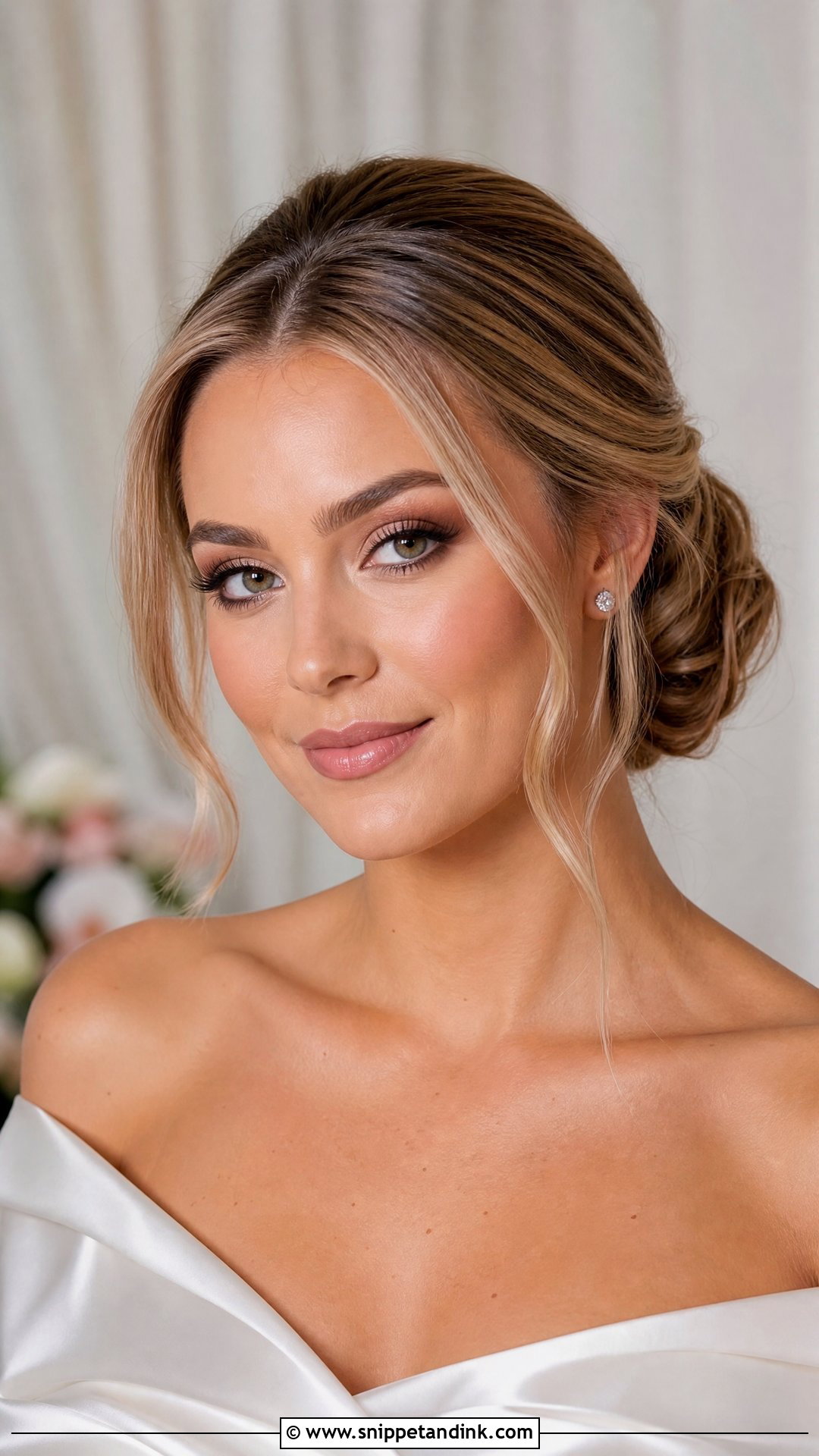
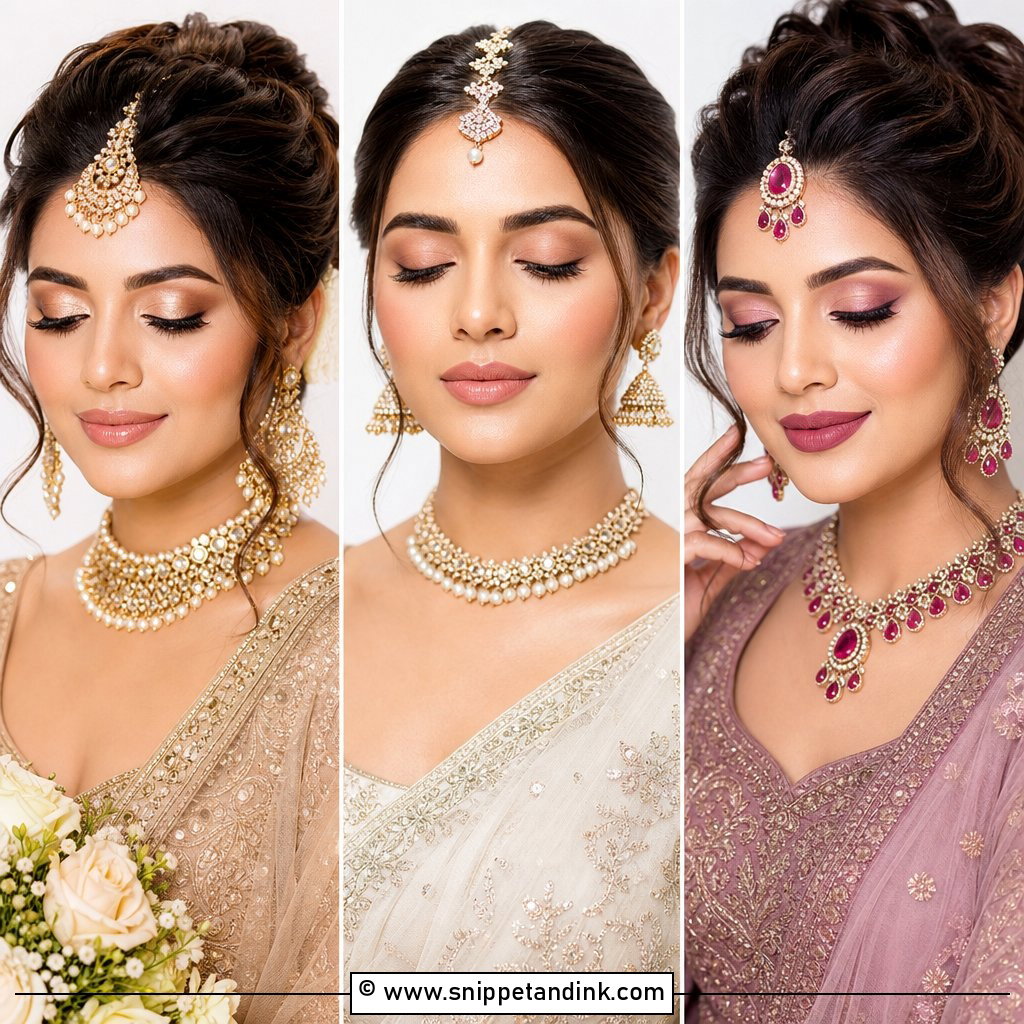
Soft glam sits one step past natural: a fuller base, a little sculpting under the cheekbone, taupe or champagne on the lids and lashes that read from the back row. The thin upper liner does most of the work. I keep the skin satin rather than matte or glowy because satin holds up under both daylight and flash, and it’s the finish that ages best through a long day. It’s also the easiest look to push warmer or cooler once you see it on camera at your trial.
3. Dewy Bridal Makeup
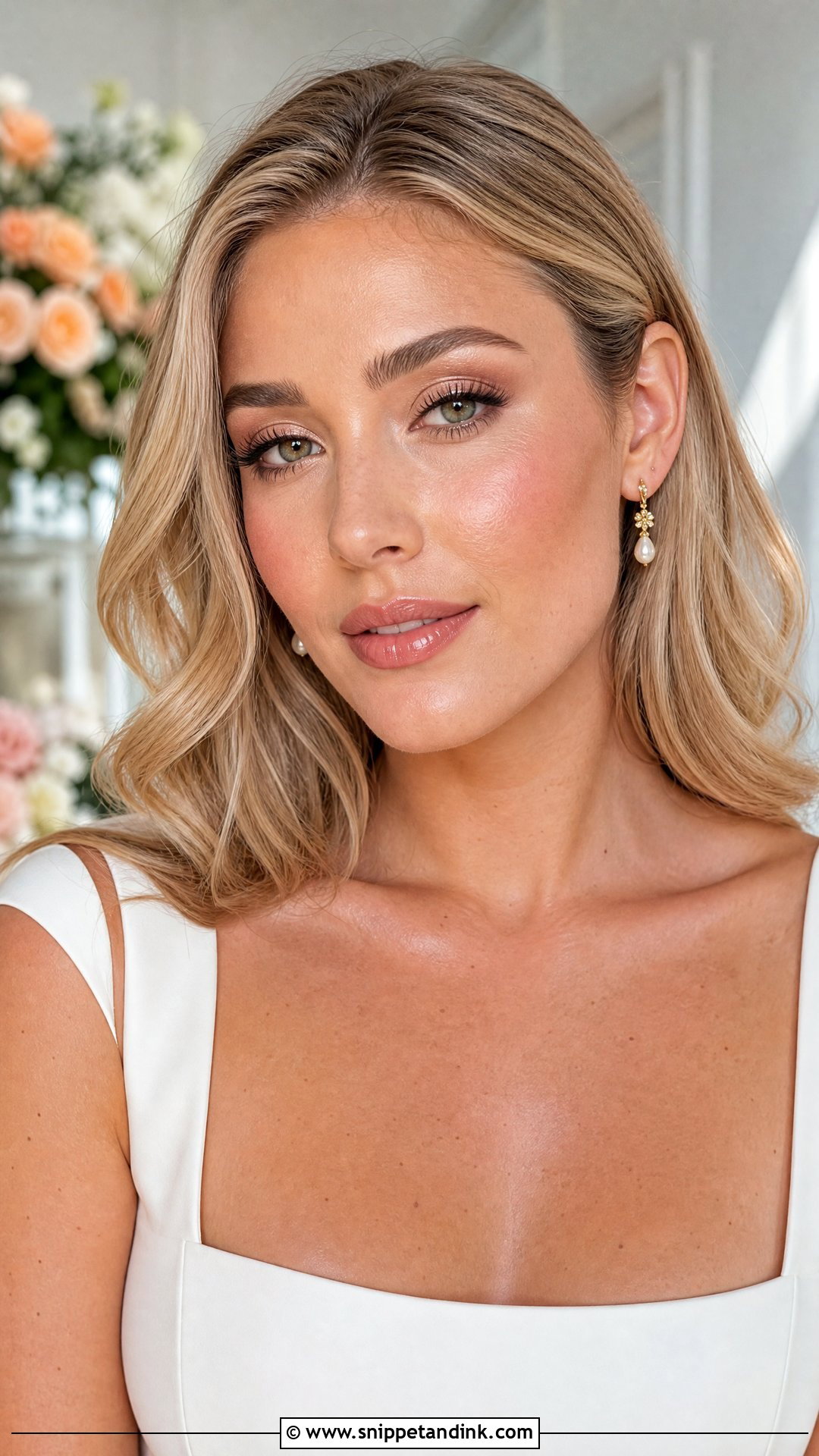
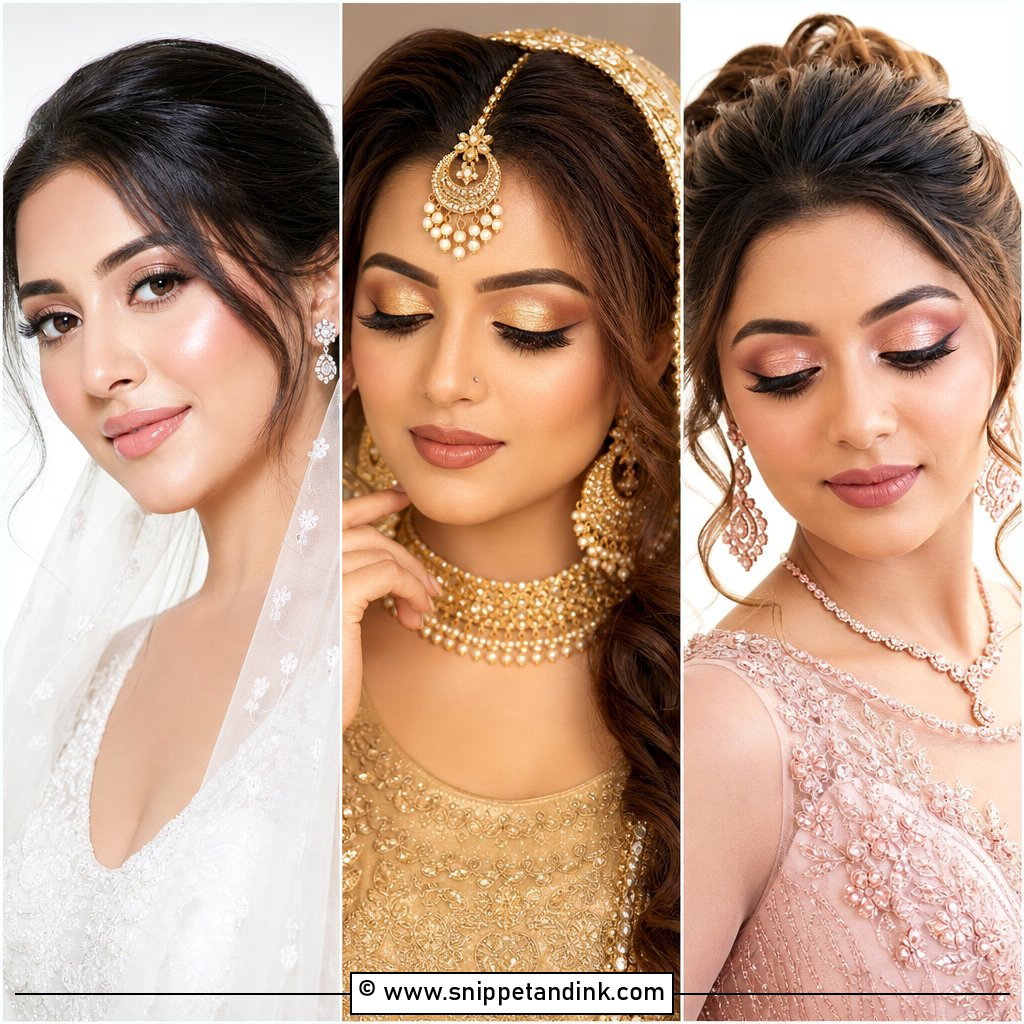
Glow is easy to overdo. The skin I’m after looks hydrated, not wet, so I prime with something radiant, use a thin layer of foundation and put liquid highlight only on the tops of the cheekbones and the bridge of the nose. Then I powder the T-zone, under the eyes and around the nostrils, because that’s where dewy turns greasy by the speeches. Shimmer on the lid, brown liner and a glossy peach or pink lip finish it. Very oily skin will fight this all day; for you I’d pick the satin version of soft glam instead.
4. Matte Bridal Makeup
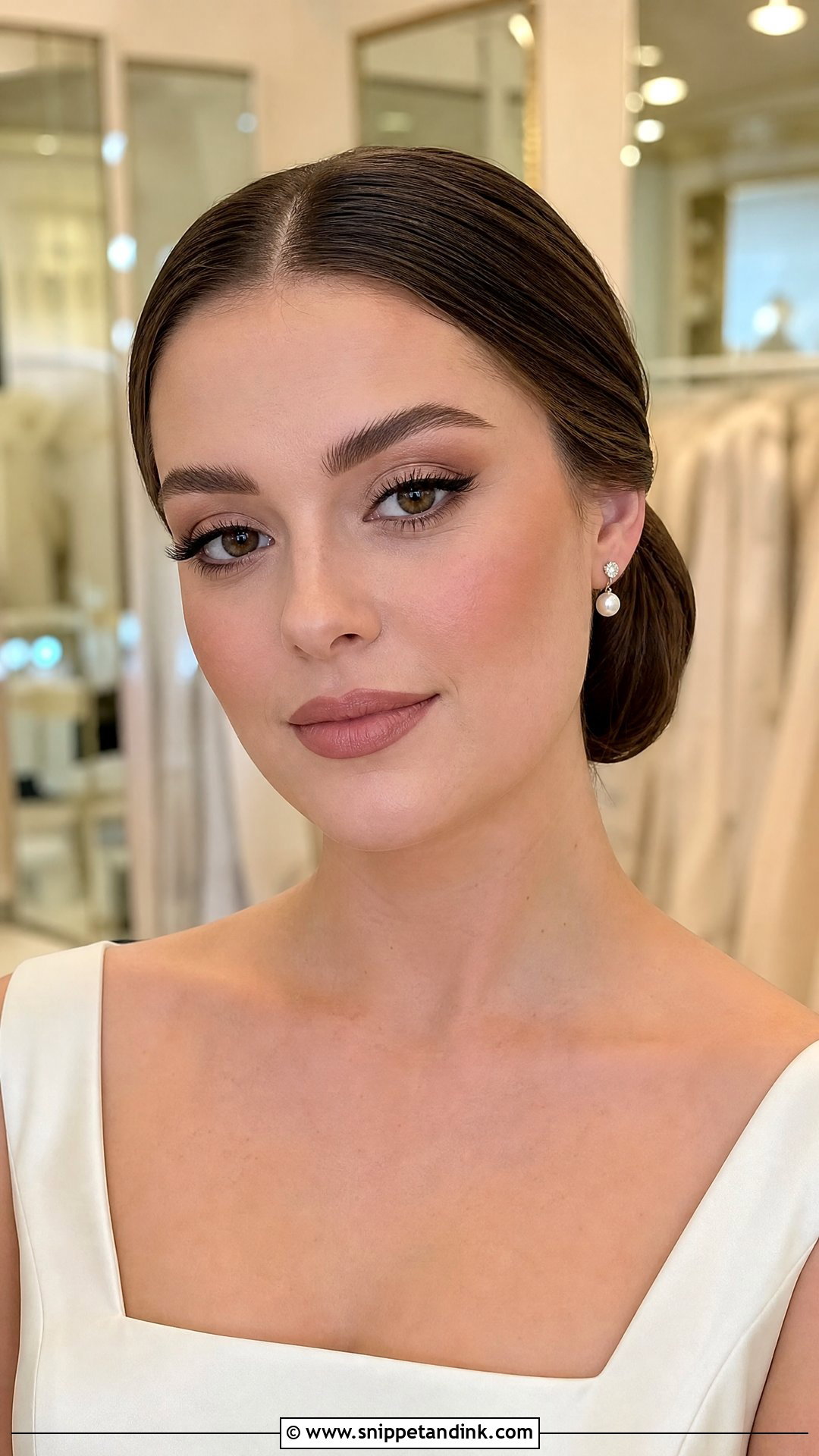
Matte bridal makeup is what I reach for with oily skin, hot venues and outdoor portraits, because it needs the fewest touch-ups. The risk is a flat, papery face, so I press powder in with a puff instead of sweeping it, keep a whisper of highlight on the cheekbone and let the blush do the shaping. Taupe or warm beige shadow, waterproof liner and a matte rose or mauve lip keep it classic. If your skin is dry or textured, matte formulas will sit in every line by evening, so I’d only mattify the areas that actually shine.
5. Romantic Pink Bridal Makeup
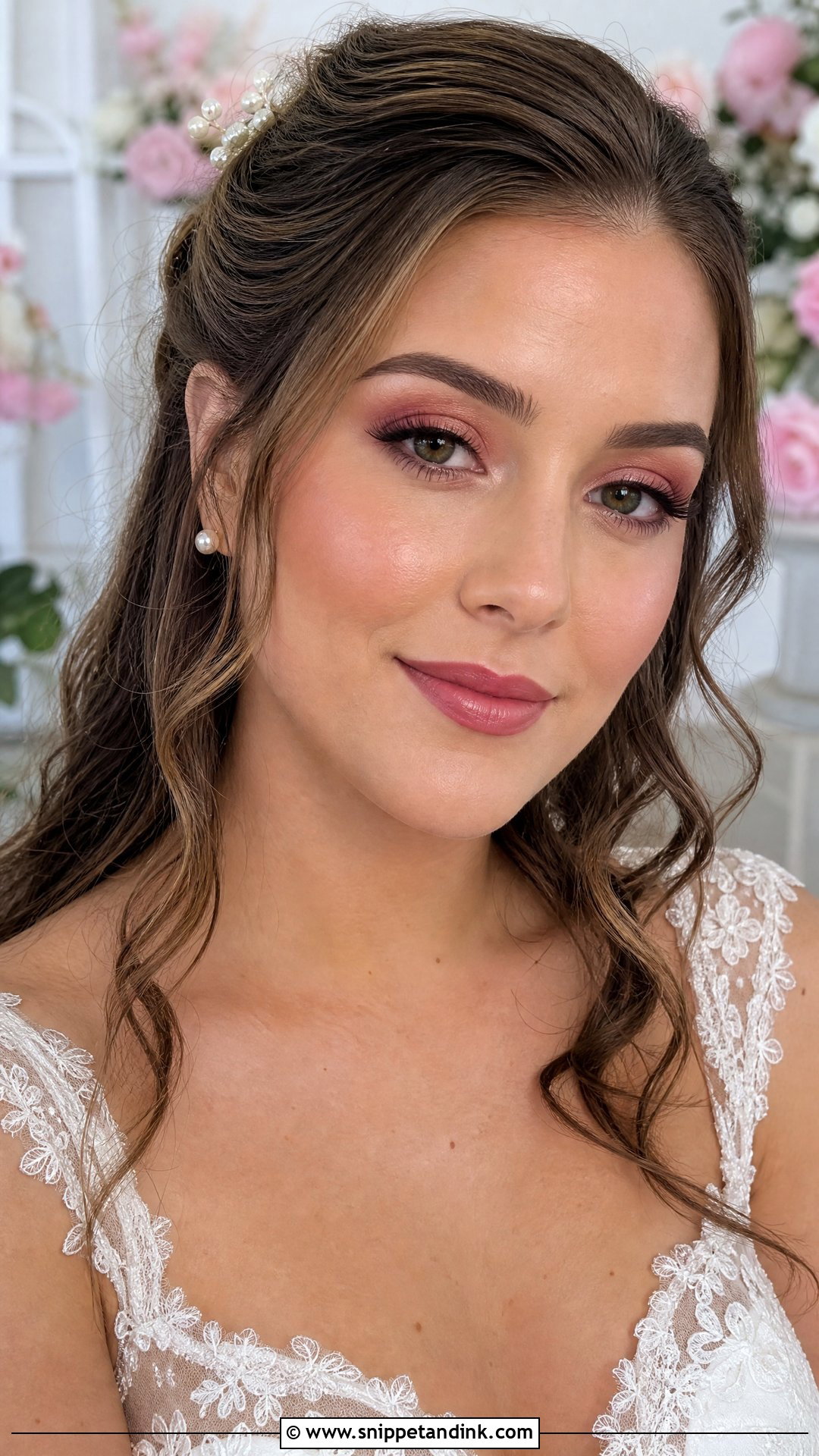
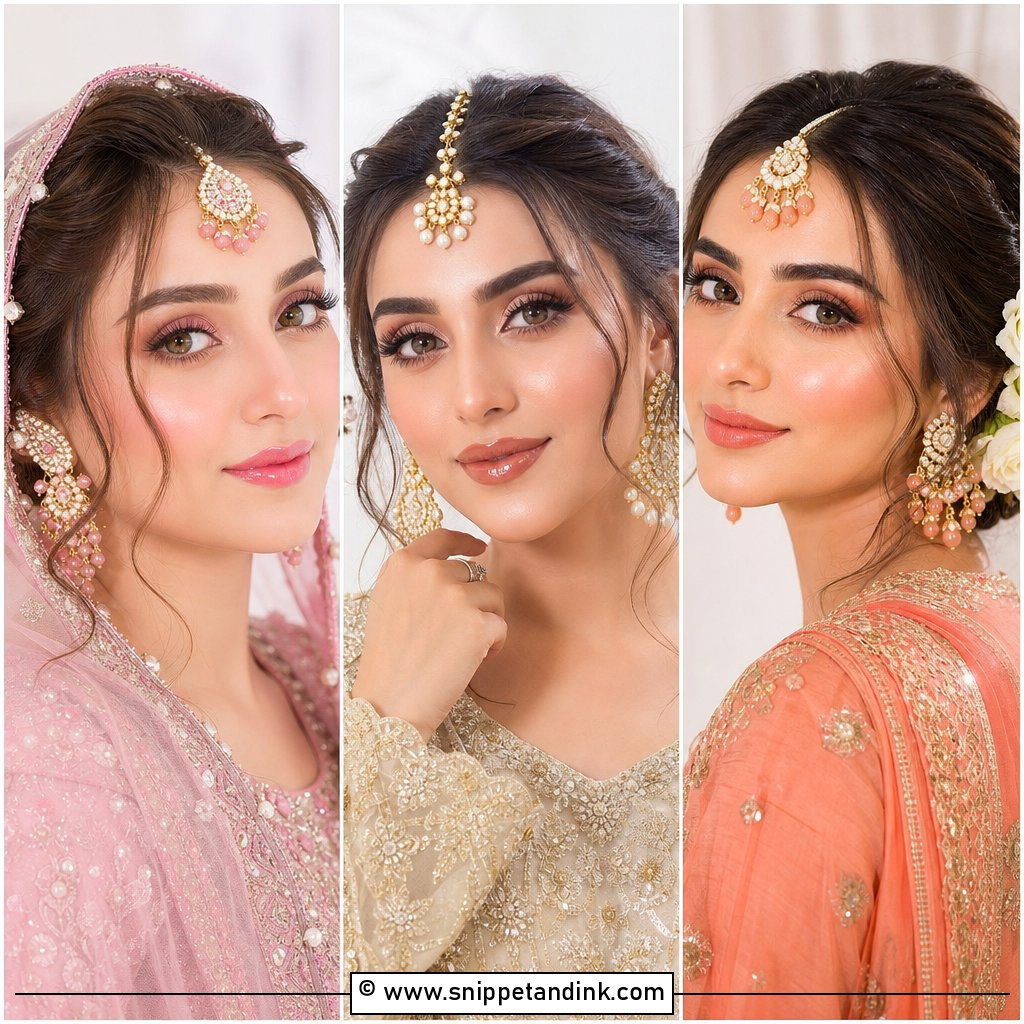
Pink across eyes, cheeks and lips sounds simple, but done in one flat shade it can look tired, almost puffy around the eyes. I use a light rose on the lid and deepen only the outer corner with mauve or soft brown so the eye keeps its shape. Wispy lashes suit it better than a heavy strip. Blush goes high on the cheek, and a pink satin lipstick or tinted gloss ties it together. It sits naturally next to lace, pearls and blush flowers.
6. Peach Bridal Makeup
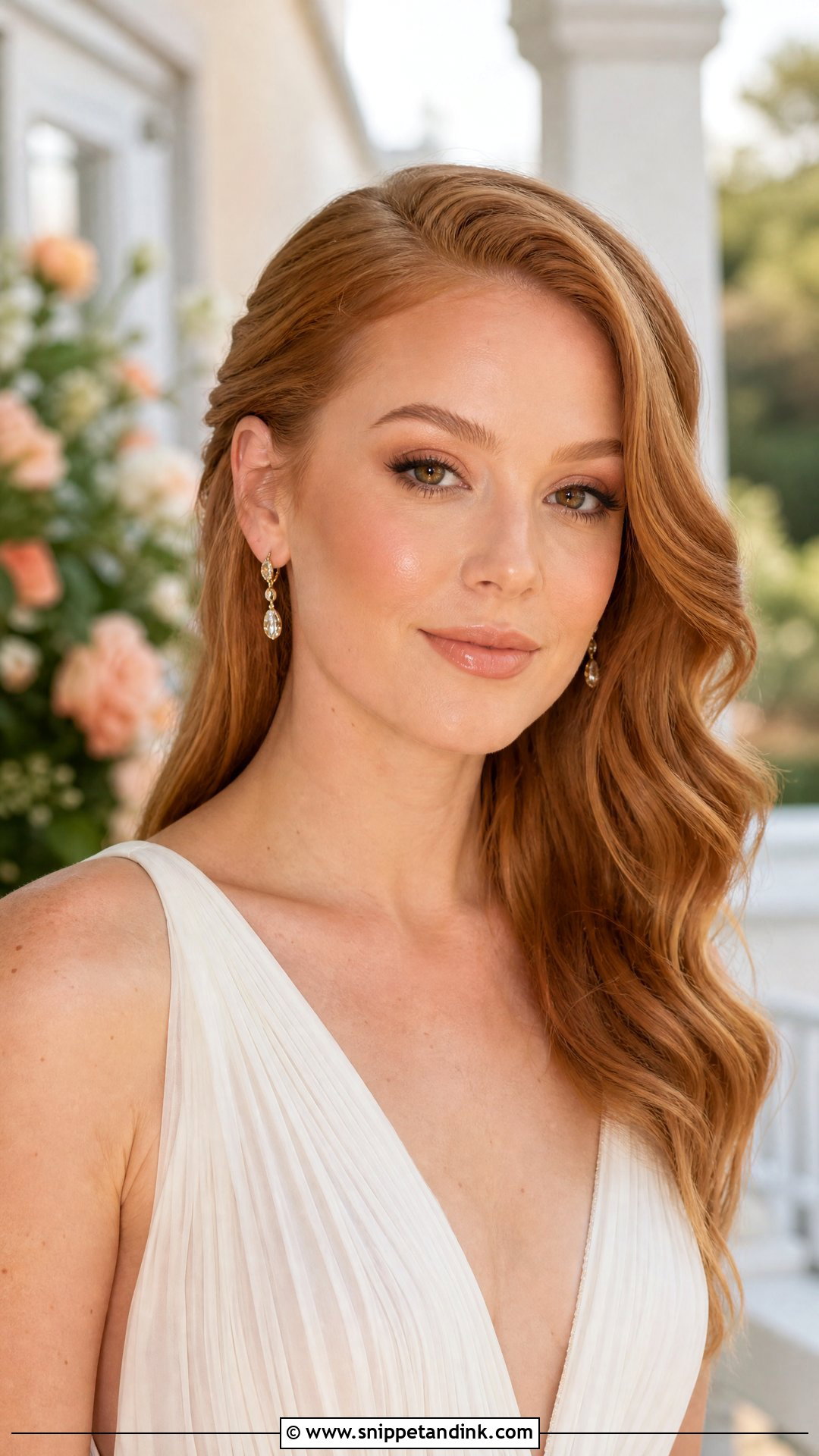
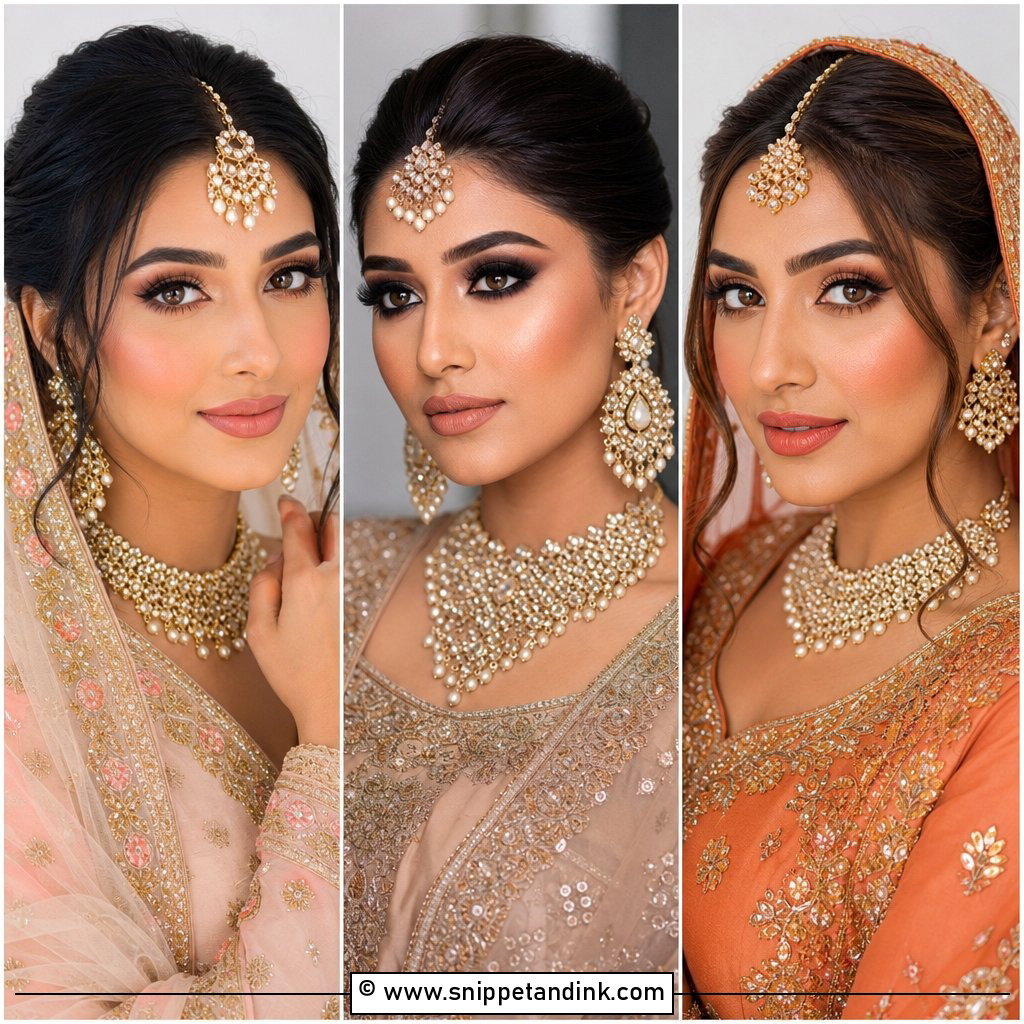
Peach warms a face without anyone noticing it’s a colour, which is why I keep coming back to it for daytime ceremonies. Apricot blush, champagne shimmer on the lids, soft brown liner and a peachy nude lip are the whole recipe. On very fair, pink-toned skin I check it in window light first, because some peaches read slightly orange on camera next to a white gown. Ivory, champagne and warm florals all suit it.
7. Bronzed Bridal Makeup
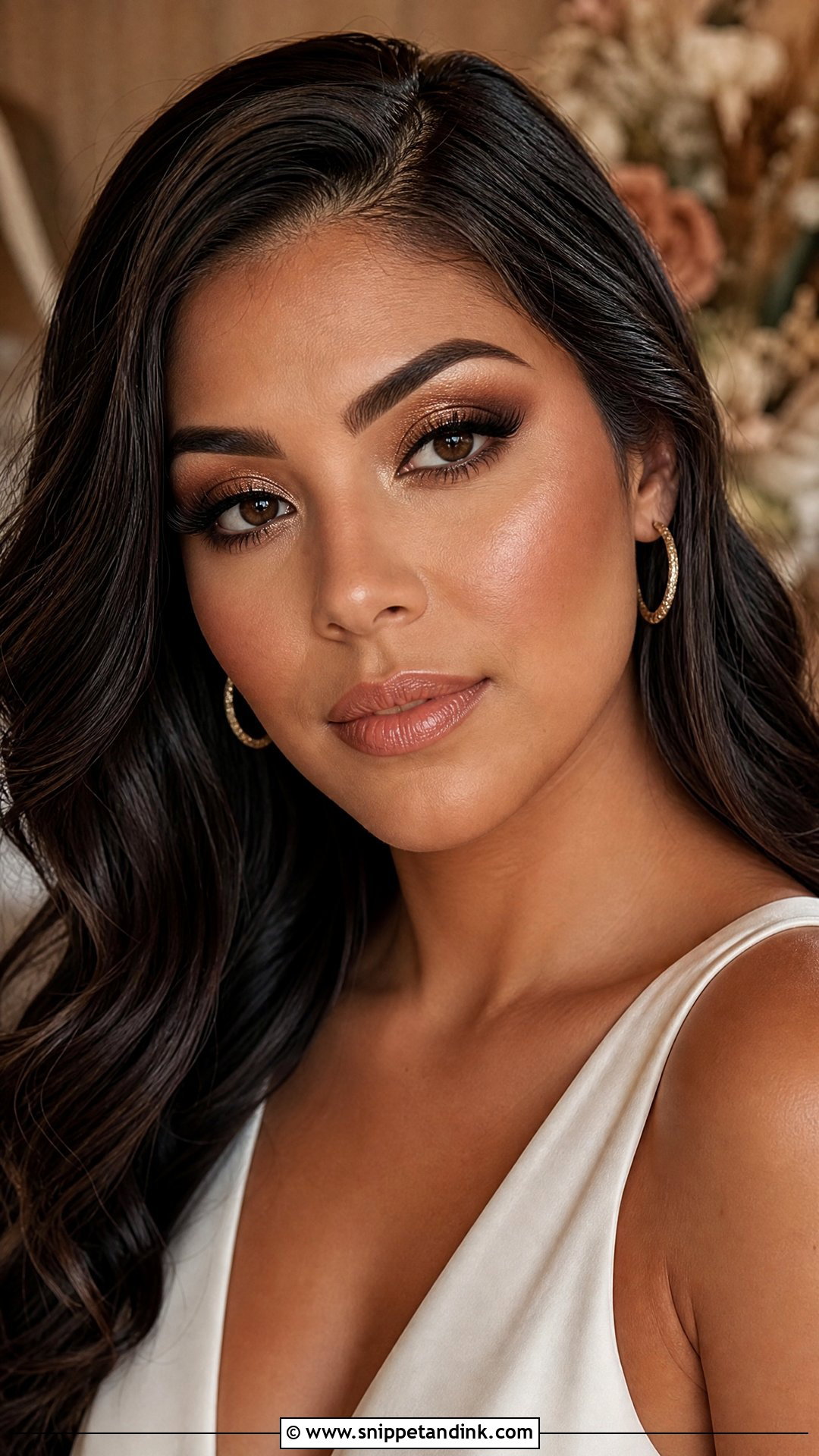
Bronzed bridal makeup works when the bronzer looks like sun, not stripes. I keep it on the temples, under the cheekbone and lightly along the jaw, then add a terracotta or peach blush so the face doesn’t go muddy. Caramel and bronze shadow with a little shimmer at the centre of the lid, brown liner and soft lashes keep the eyes warm. One check I always make: the bronzer must stop where your neck colour stops, or photos with a strapless dress will show a line at the jaw.
8. Classic Red Lip Bridal Makeup
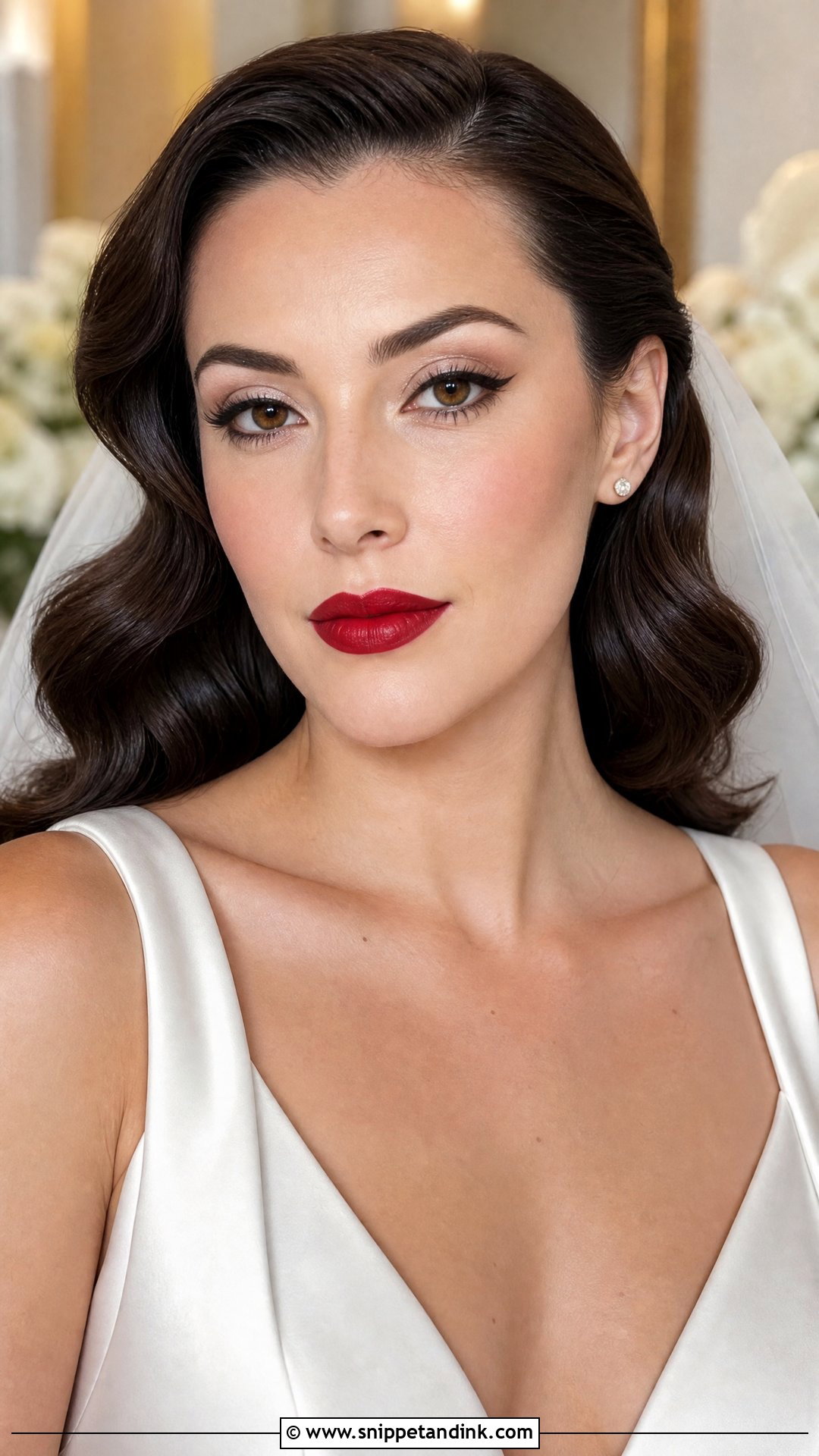
A red lip is far less fussy than people expect, as long as everything else stays quiet. I keep the skin softly matte, the blush faint and the eyes clean: neutral shadow, a thin liner, separated lashes. Then the work goes into the lip. Blue-reds look crisp on cool undertones, brick reds suit warm ones, and a brighter cherry sits in between. I line the whole lip, fill it with the liner, apply lipstick, blot and apply again, which is what gets it through dinner. Bring a mirror and the bullet in your bag; red is the one lip guests will notice fading.
9. Nude Lip Bridal Makeup
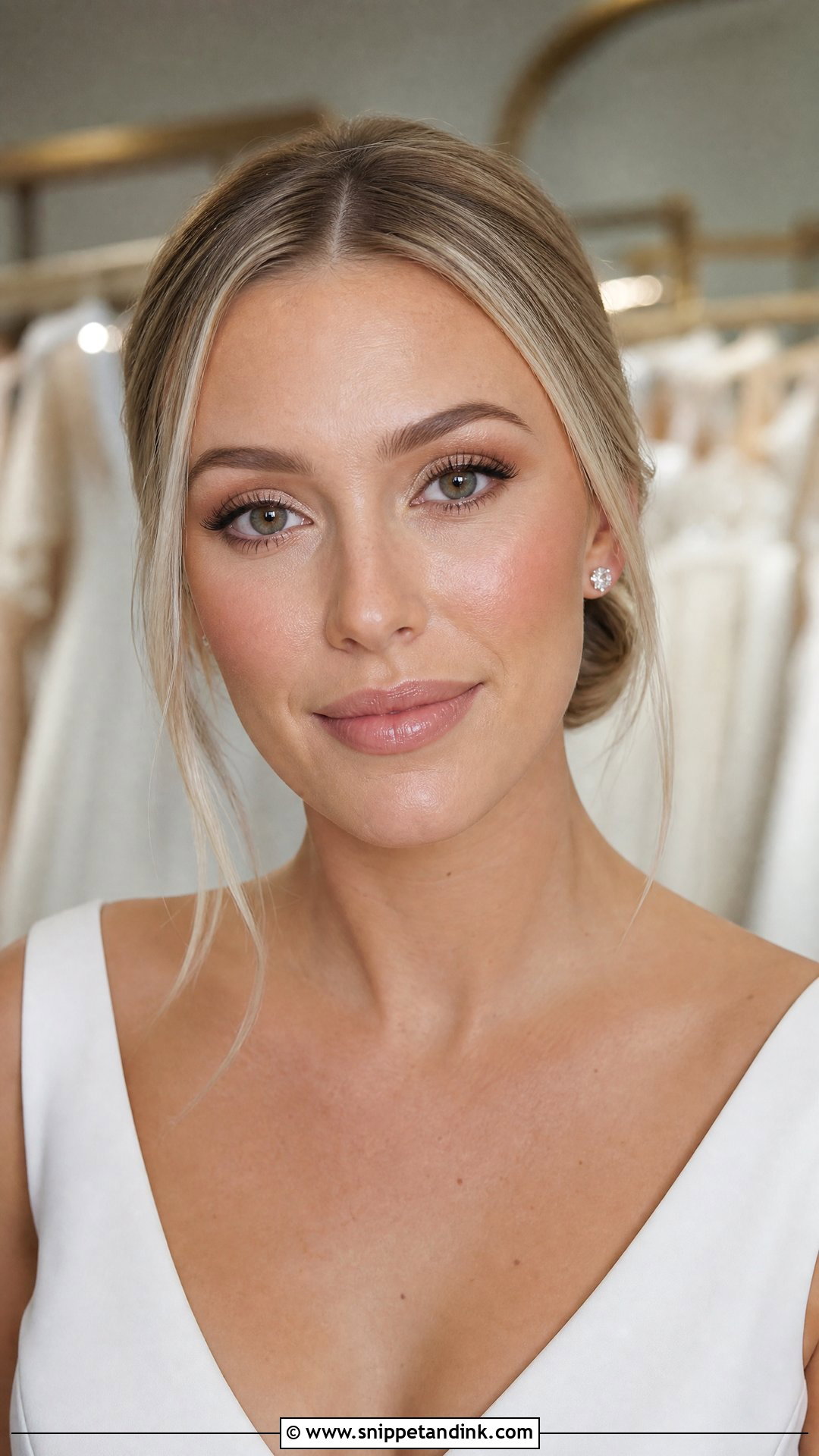
A good nude is never one flat beige. It needs enough pink, peach, brown or mauve to look like a slightly better version of your own lip, otherwise it reads concealer-pale in photos and washes the whole face out. I match it at the trial against your bare lip, not against a swatch on the hand. Softly defined eyes, satin skin and a bit of bronzer give it something to sit against, and a dab of gloss in the centre adds fullness. It’s the easiest lip to fix from a compact in the bathroom, and it hands the attention to your eyes or the dress.
10. Winged Liner Bridal Makeup
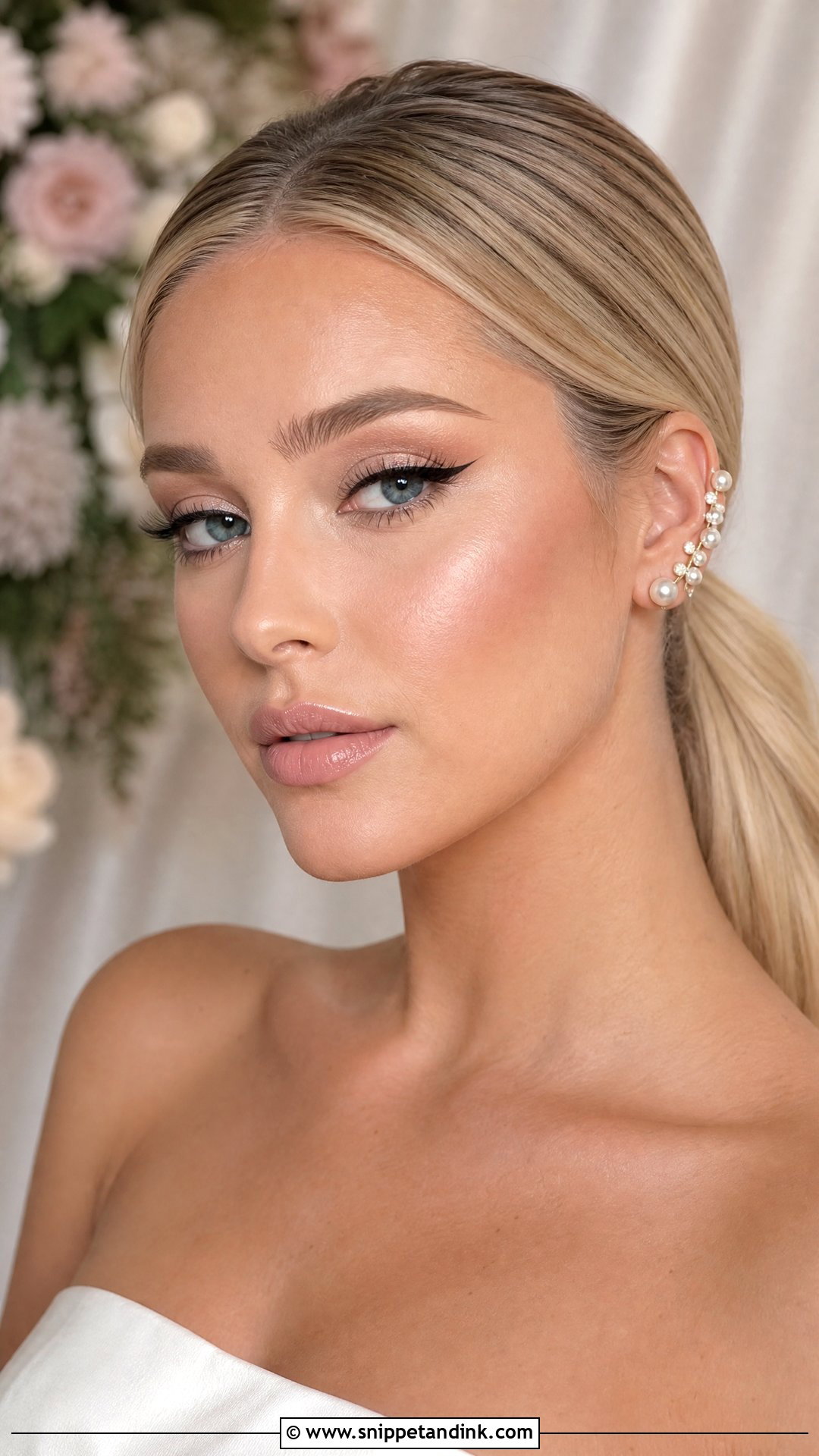
Winged liner bridal makeup belongs to brides who already wear a wing; if you’ve never worn one, your wedding morning isn’t the day to start. I keep it thin and follow the angle of the lower lash line upward so it lifts the eye instead of dragging it down. Matte neutral crease colour, a champagne lid and waterproof liner give it staying power, and individual lashes on the outer third add length without weight. With hooded eyes I draw the wing with your eyes open, looking straight ahead, or it folds away when you smile.
11. Smokey Eye Bridal Makeup
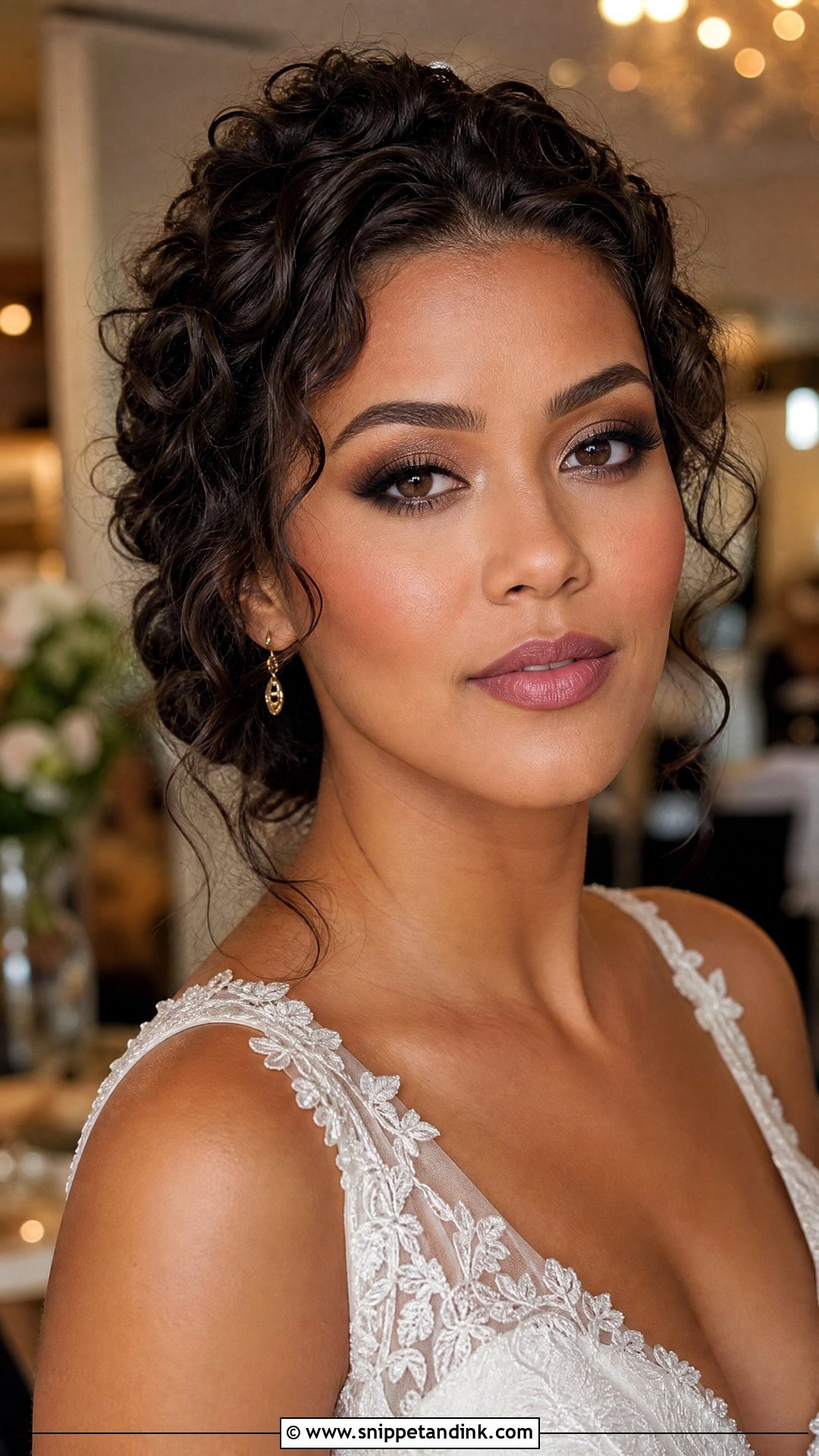
Smokey eye bridal makeup for a wedding is usually brown, not black. Taupe, chocolate, plum-brown or soft charcoal give depth without the hollow look black can have in daylight. I pack the deepest shade at the lash line and blend outward until there’s no edge left, then add one touch of shimmer at the centre of the lid. Any fallout gets cleaned up before I do the base under the eye, which is why I always do eyes first for this look. Keep the cheeks neutral and the lip muted; evening and formal venues suit it best.
12. Champagne Eye Bridal Makeup
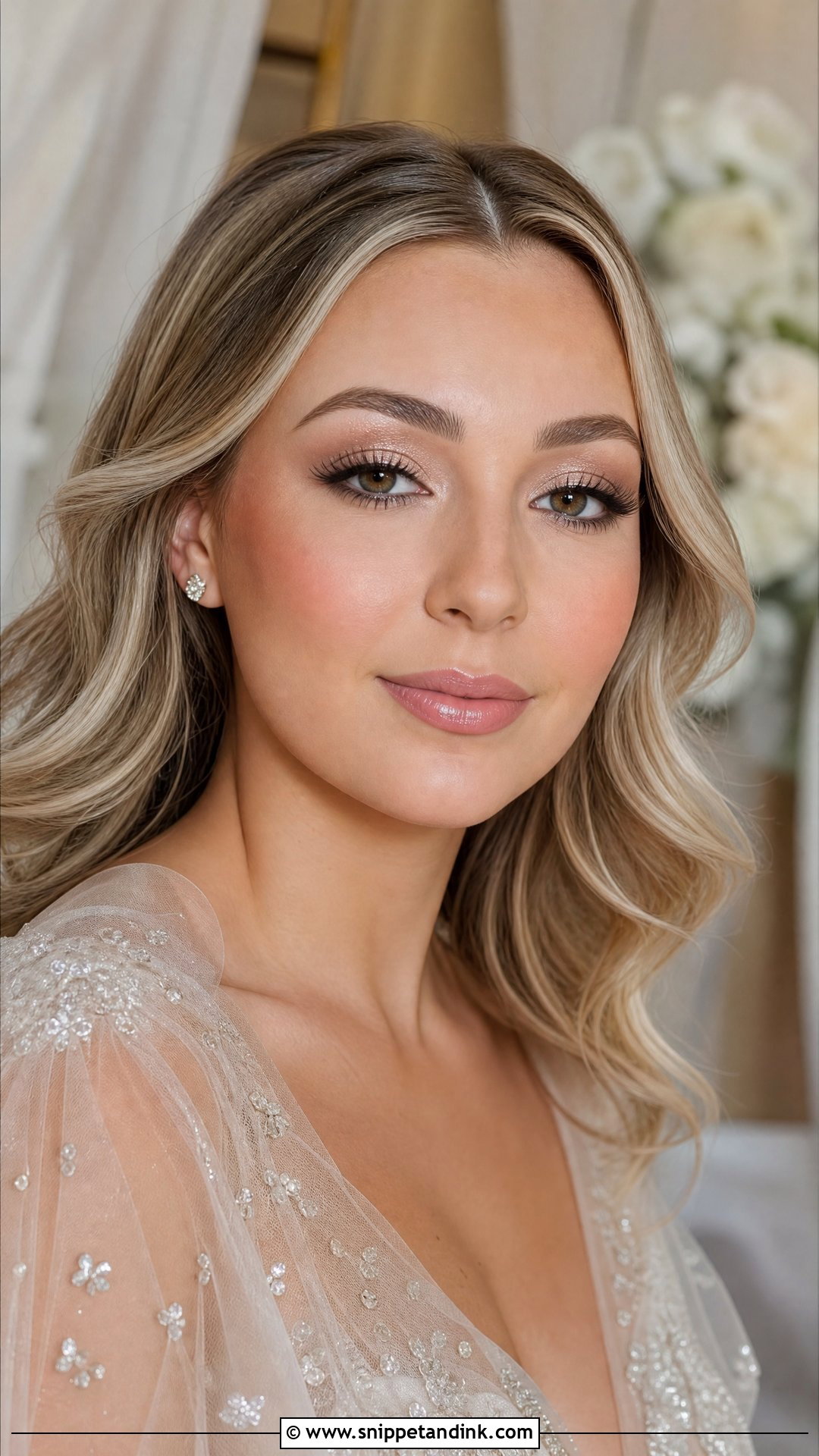
Champagne on the lid is my go-to when a bride can’t decide, because it catches light without reading as glitter. Matte beige or taupe in the crease keeps it from looking flat, espresso liner adds shape and curled lashes open the eye. Peachy-pink blush, a soft highlight and a beige rose lip finish it. It suits nearly every neckline and fabric, and it’s especially kind to morning and afternoon ceremonies where daylight does half the work.
13. Rose Gold Bridal Makeup
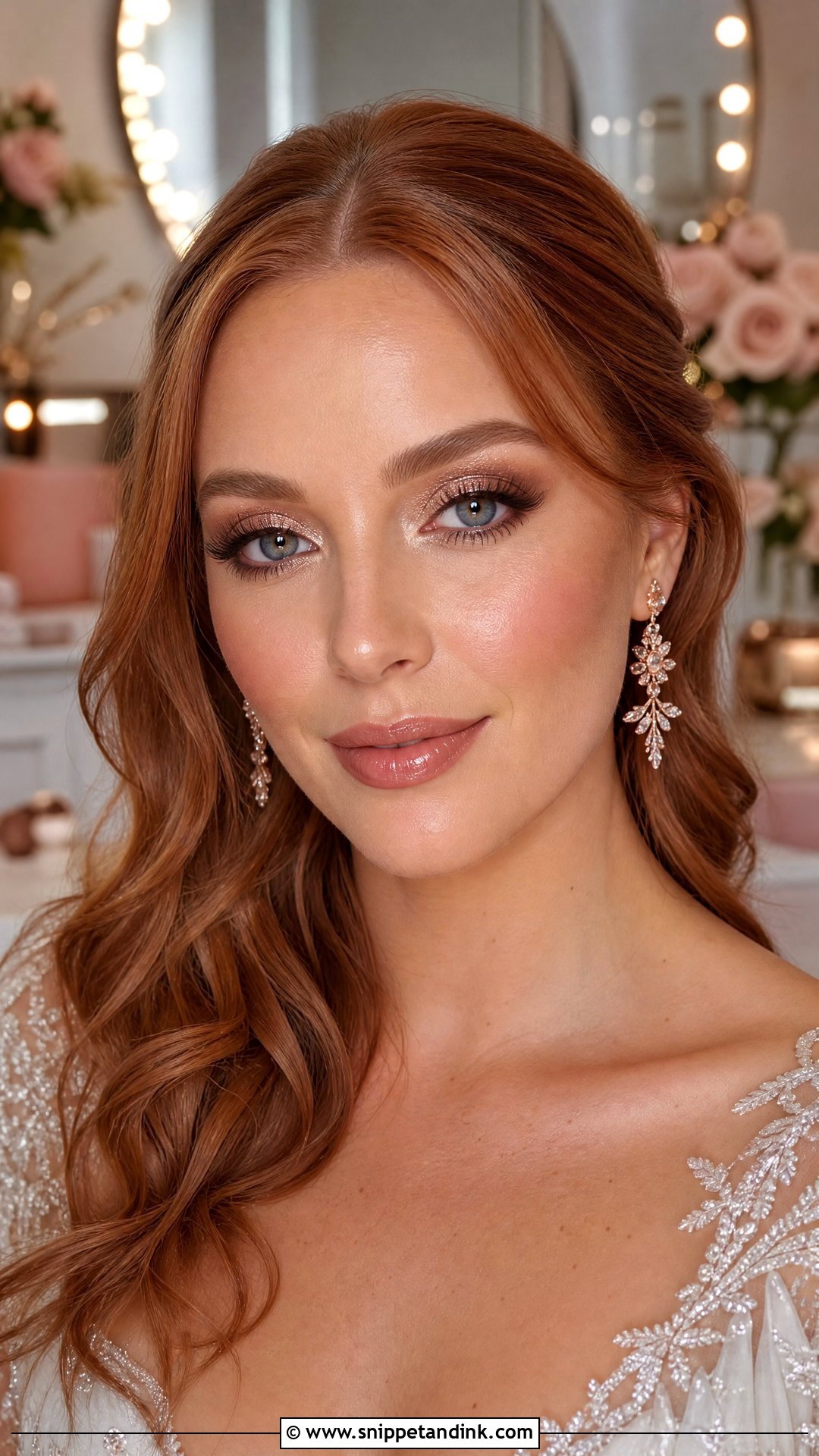
Rose gold sits between pink and bronze, so it flatters a wide range of skin tones. On the lid I use the shimmer only on the mobile part, with soft brown in the crease so it doesn’t turn into one metallic sheet when you blink. A warm pink or mauve blush, brown liner and wispy lashes keep it gentle, and a light touch of highlight on the inner corners lifts the eye. It looks right with gold jewellery, champagne dresses and blush florals; next to cool silver it can feel slightly off.
14. Brown Eyeshadow Bridal Makeup
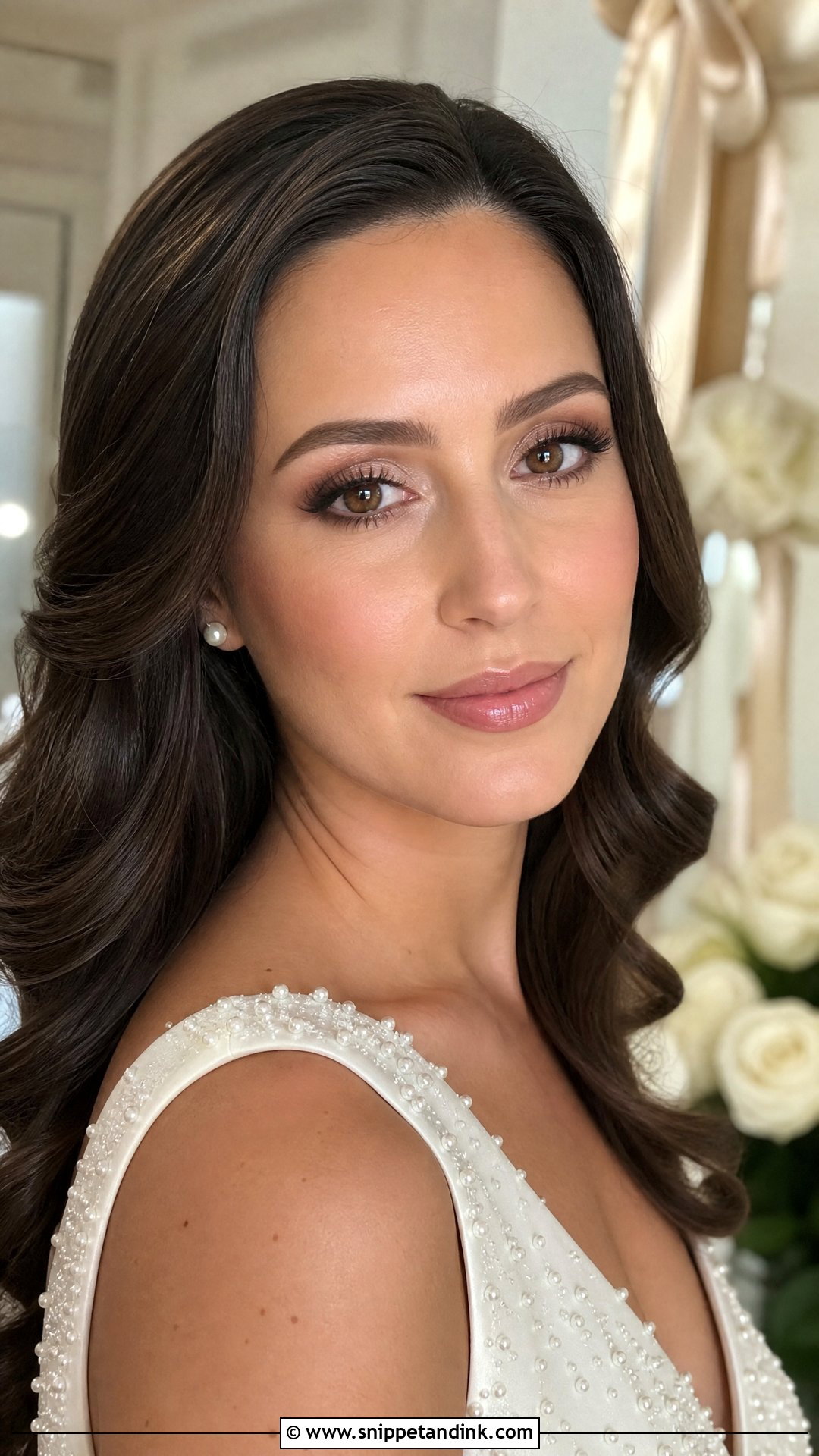
Three browns, light to deep, will make almost any eye look rested: cream or beige on the lid, a medium brown in the crease, the darkest close to the lashes. That’s the whole technique, and it’s the one I teach brides doing their own makeup because it’s hard to get wrong. A brown pencil smudged into the lash line softens it further. Peach, rose or neutral blush and a satin nude lip complete it. It works in every season and won’t date your photos.
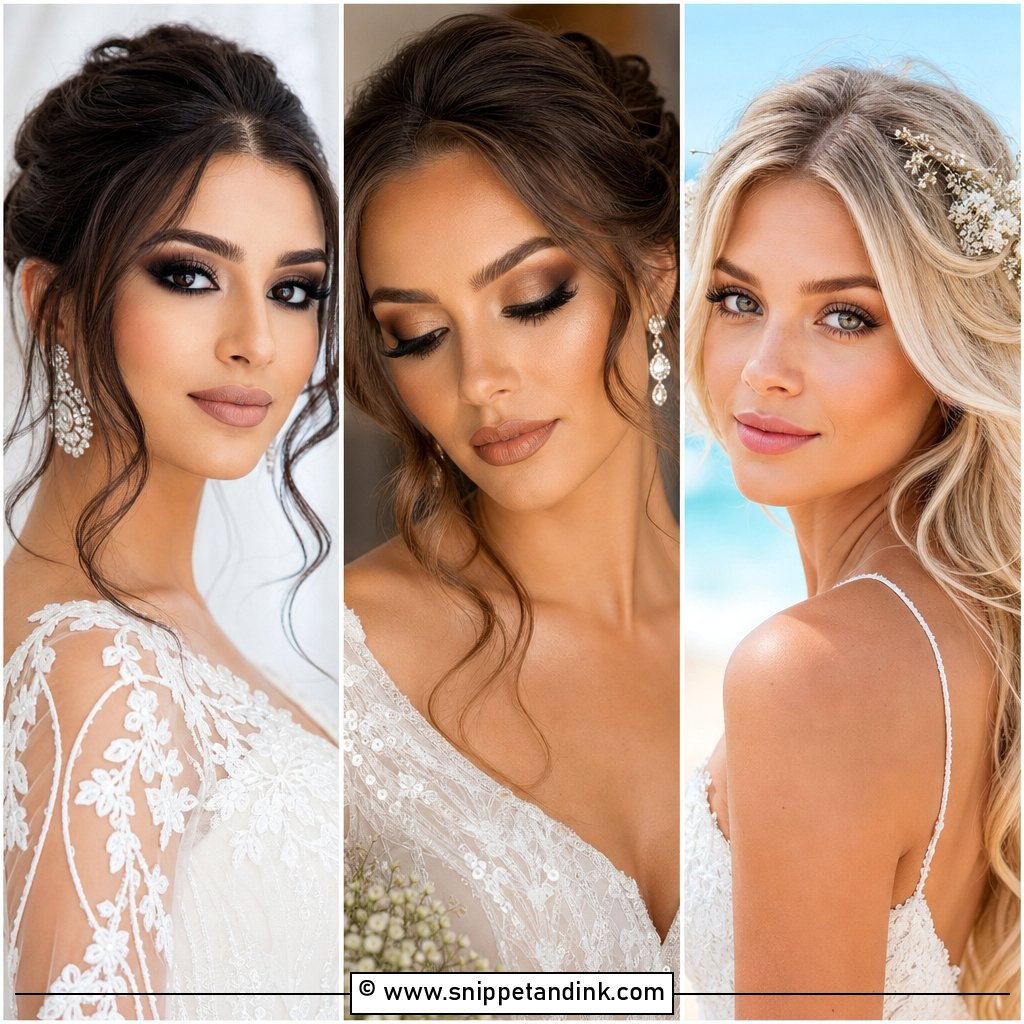
15. Minimal Bridal Makeup
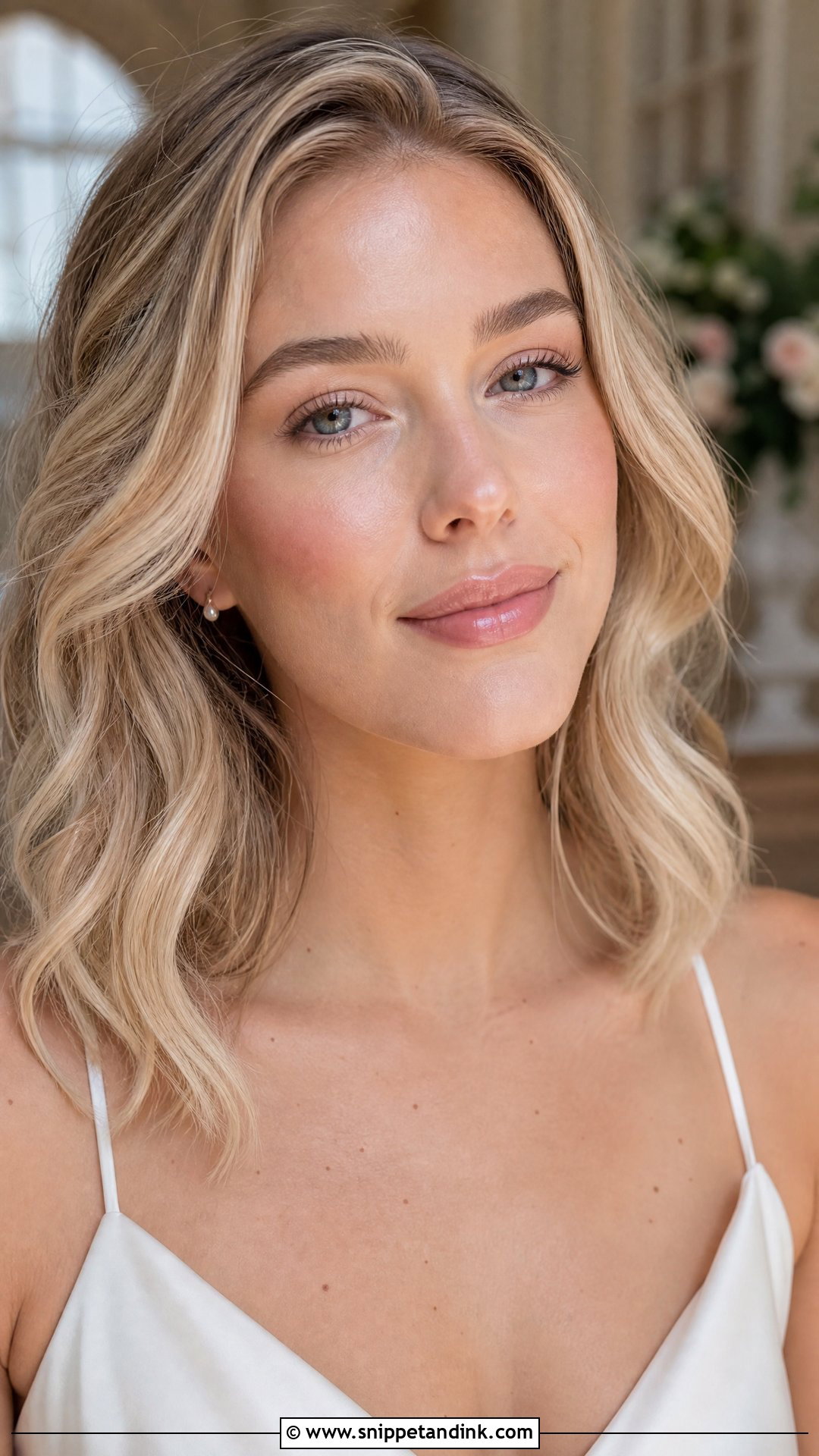
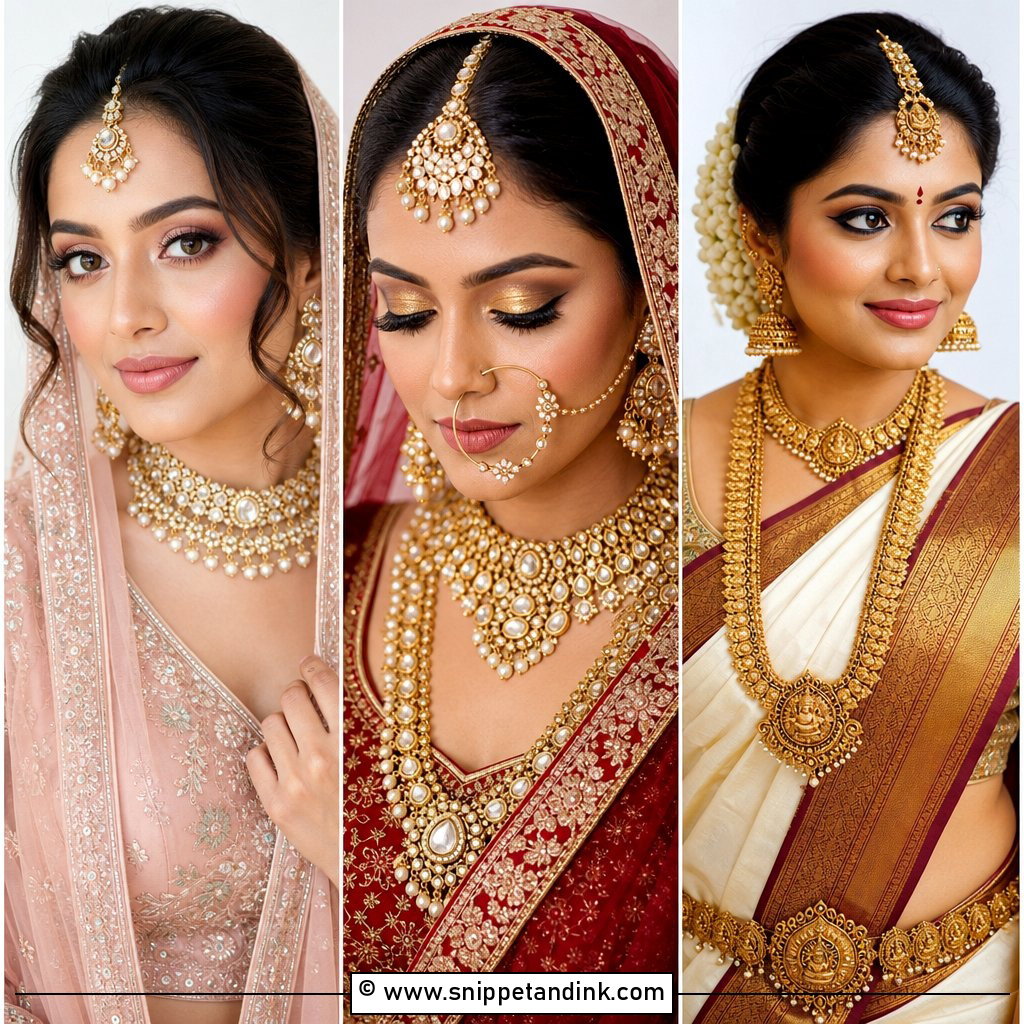
Minimal makeup is mostly skin prep. I start with moisturiser and give it time to sink in, then use a skin tint and conceal only spots and the shadow at the inner corner of the eye. Brows brushed up, lashes curled, brown mascara or a few individual lashes. A cream blush that matches your real flush, pressed in with fingers, does more than any powder could. A tinted balm or sheer lipstick keeps the lips comfortable. Elopements and courthouse ceremonies suit it, though I always warn that very light makeup can look slightly washed out under flash.
16. Full Glam Bridal Makeup
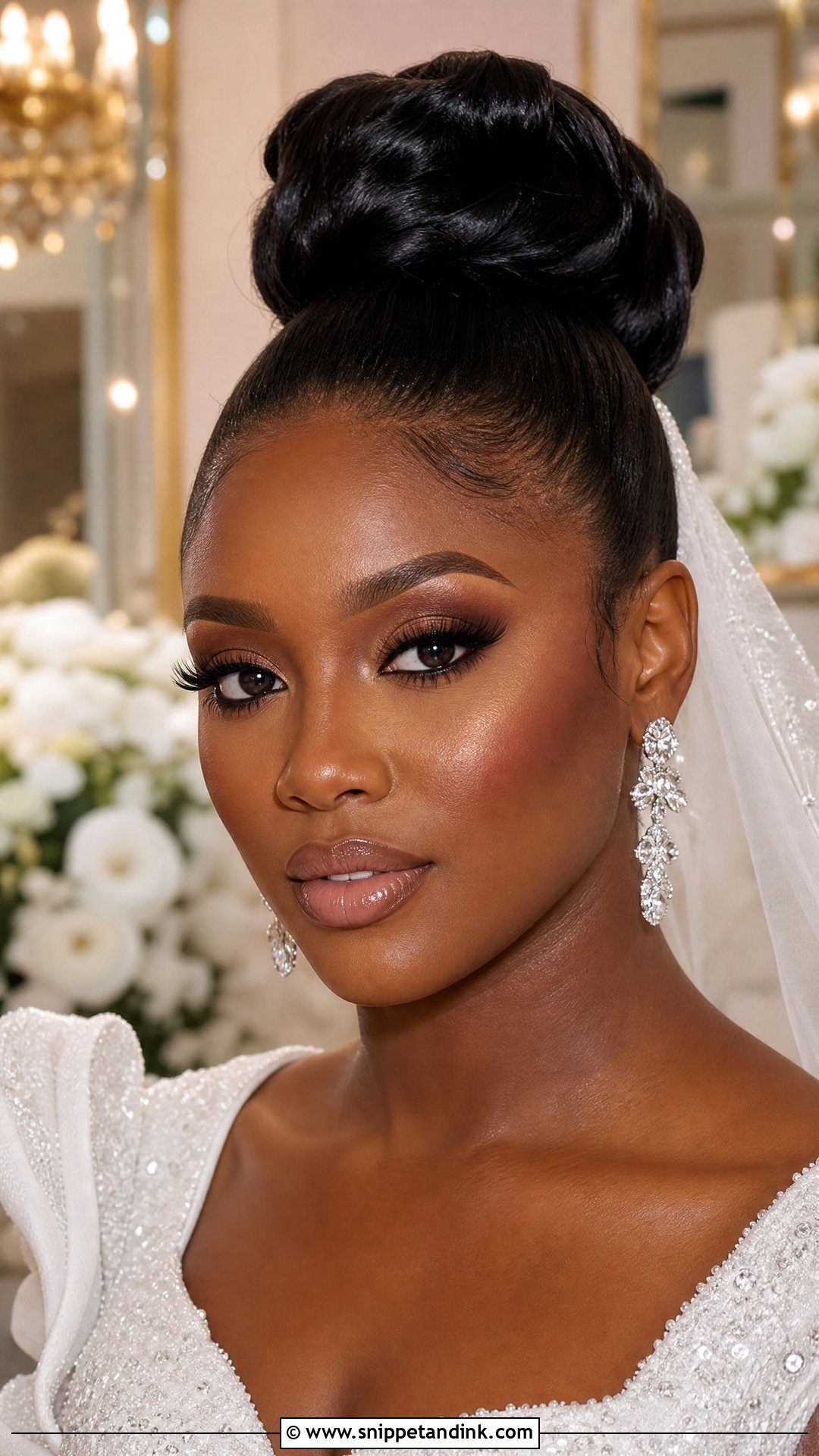
Full glam means sculpting the face for camera: long-wear foundation, concealer placed with intent, contour, blush, highlight, defined crease work, a wing and fuller lashes. The danger is texture. I build foundation in thin layers and let each one set, because one thick layer cracks around the nose and mouth by evening. Keep the lip soft (nude, mauve or pink) so the eyes carry the drama. Ballrooms, evening ceremonies and heavy flash photography are where this level of coverage earns its place.
17. Soft Cut Crease Bridal Makeup
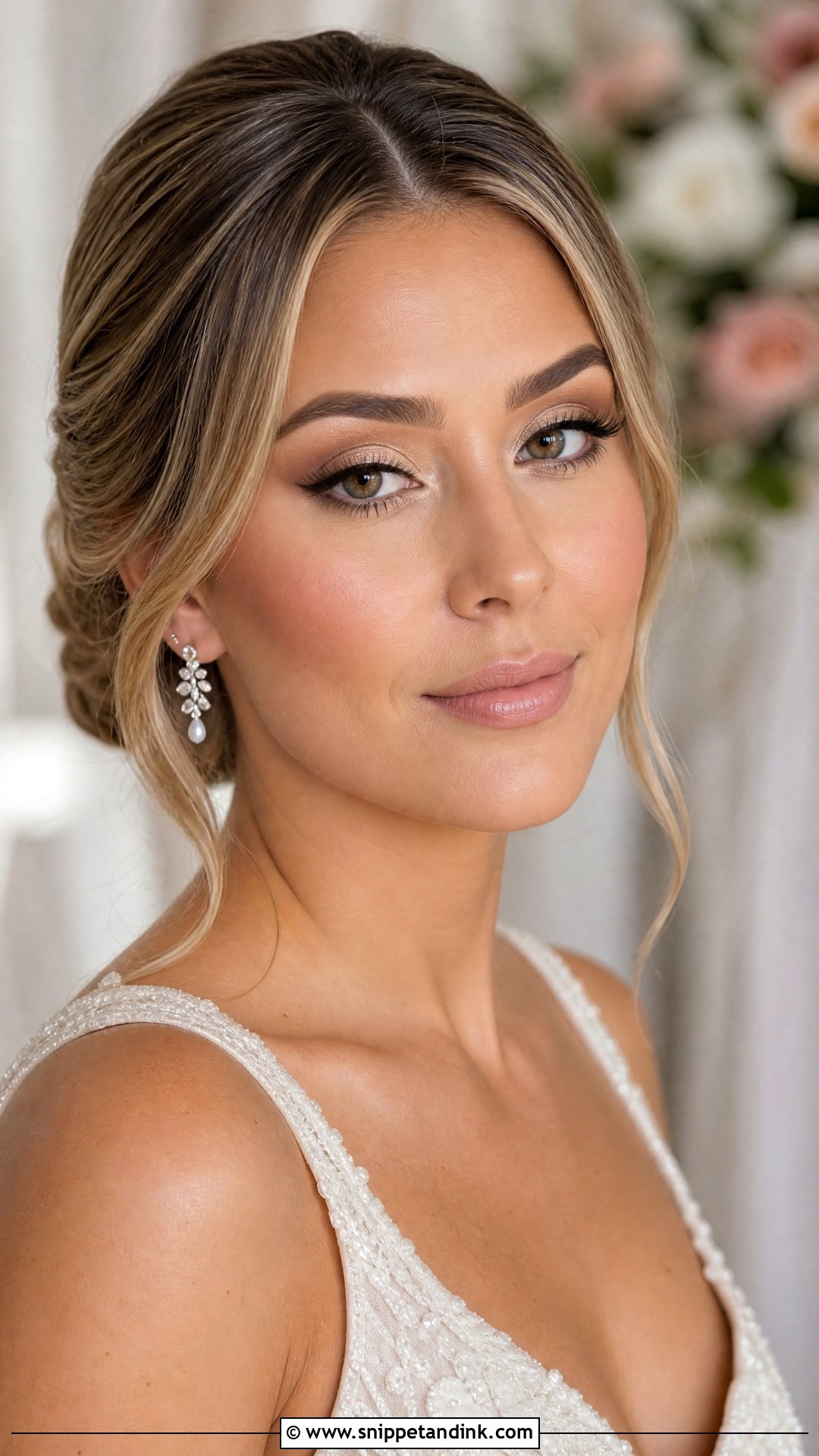
A soft cut crease carves out lid space, which is why I use it for hooded eyes so often. I map the crease with the eye open and the bride looking straight into the mirror, slightly above the natural fold, so the shape stays visible when the lid relaxes. Then I blend the top edge until it softens; sharp is for the stage, not a wedding. A light lid shade, thin liner and lifted lashes open it up, and a nude pink or peach lip keeps focus on the eyes.
18. Blush Bridal Makeup
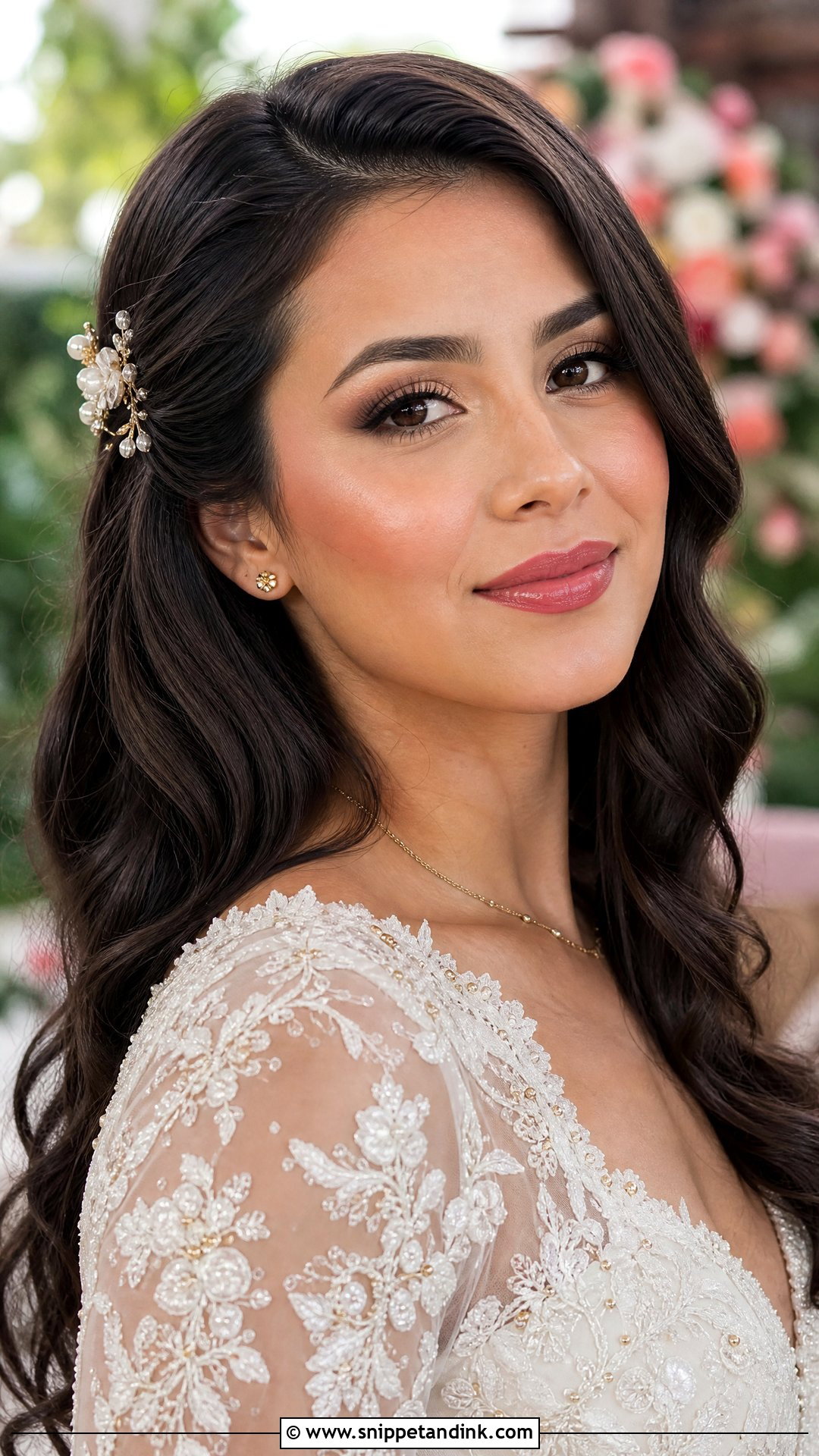
Blush is the fastest way to make someone look happy in a photo, so this look leans on it. I pick the shade by undertone (pink or berry on cool skin, peach or terracotta on warm) and blend it high, pulling it slightly toward the temples. A cream underneath with a whisper of powder on top lasts far longer than either alone. Eyes stay soft, the lip echoes the cheek, and the base stays natural so the colour looks like it belongs to the skin. Outdoor ceremonies and garden weddings suit it well.
19. Glossy Lip Bridal Makeup
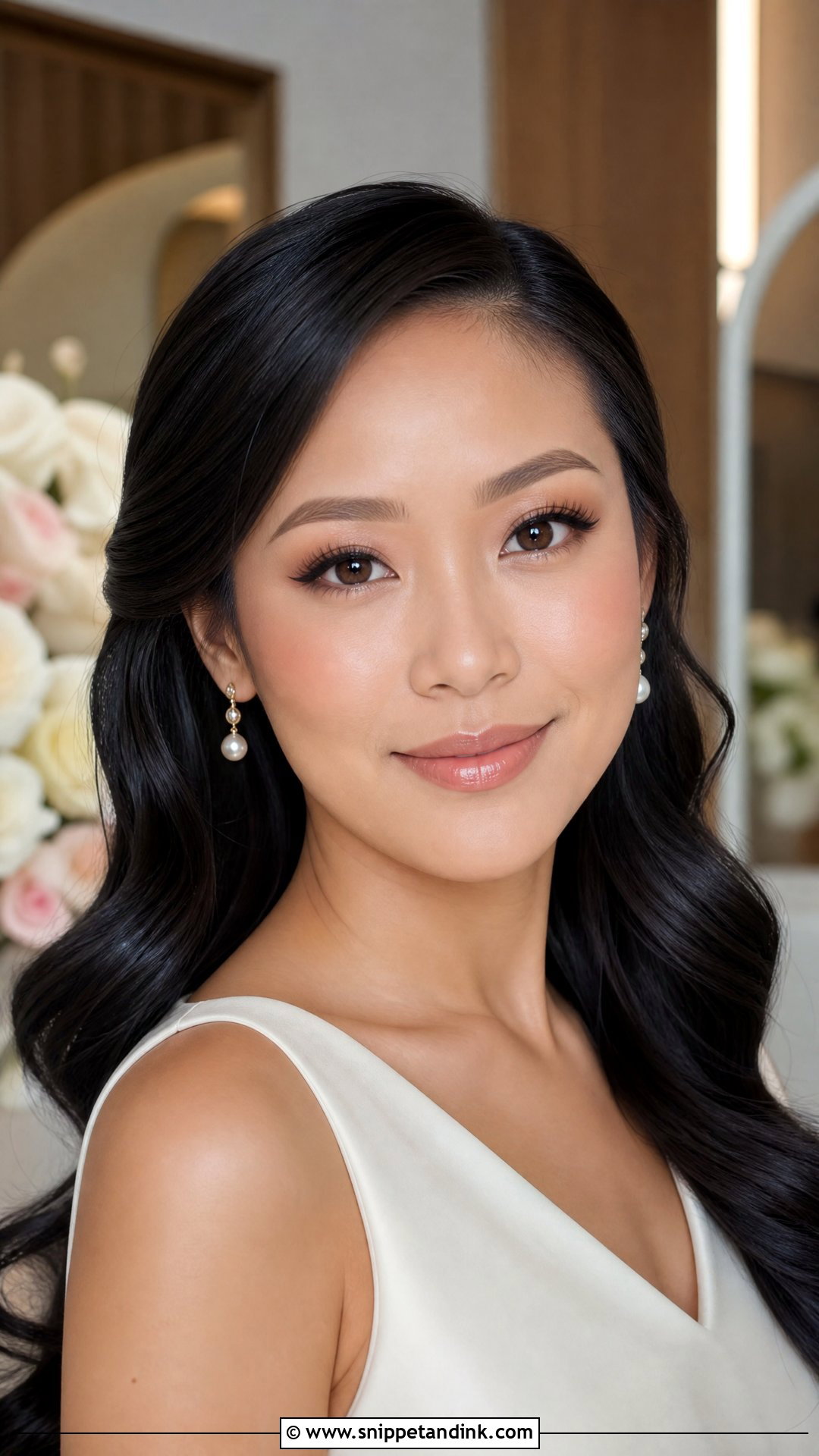
Clear gloss vanishes in photos, so I always use one with colour: pink, peach, rose, beige or caramel. A matching liner underneath stops it bleeding at the edges and gives the shape something to cling to once the shine wears off during the meal. Keep the skin’s glow controlled so the lips stay the shiny point of the face, with defined lashes and neutral shadow around it. Expect to reapply after eating and after the first kiss; gloss is comfortable, not long-wearing.
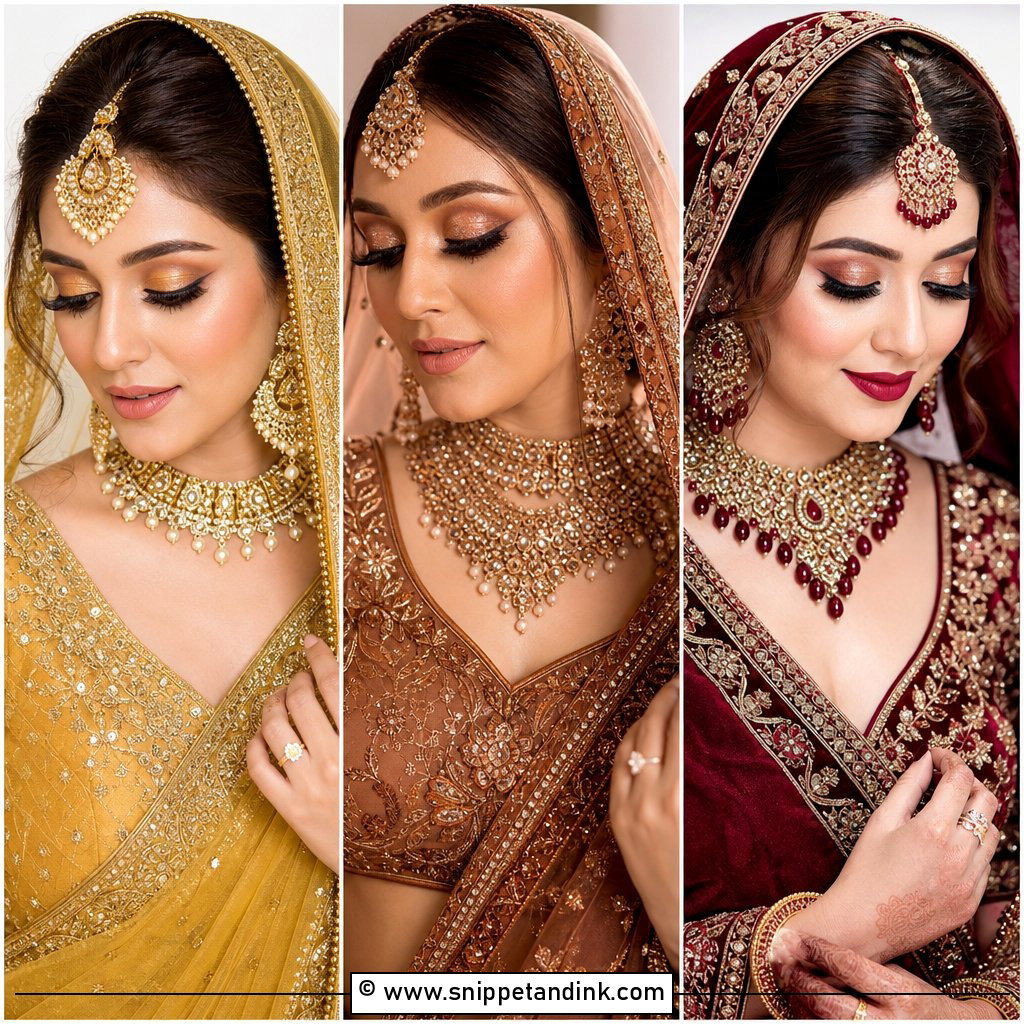
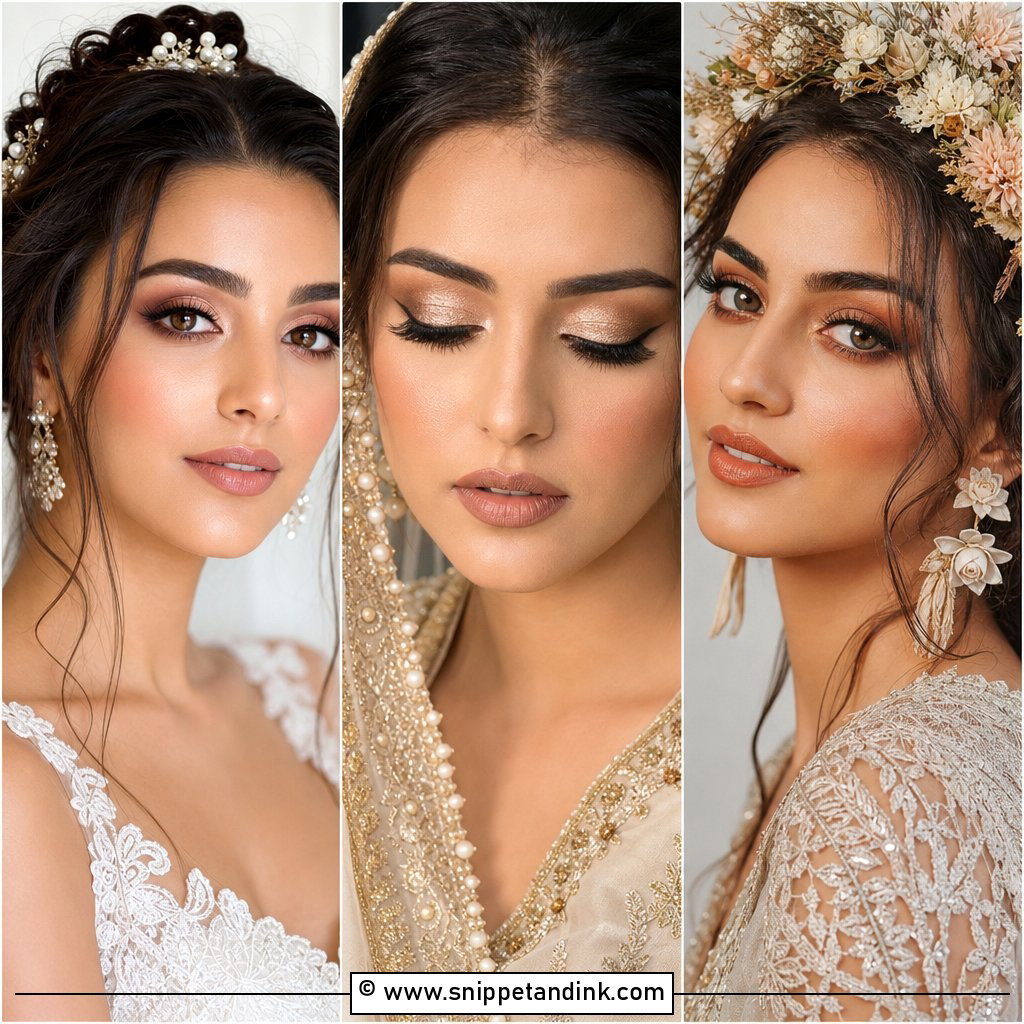
20. Timeless Bridal Makeup
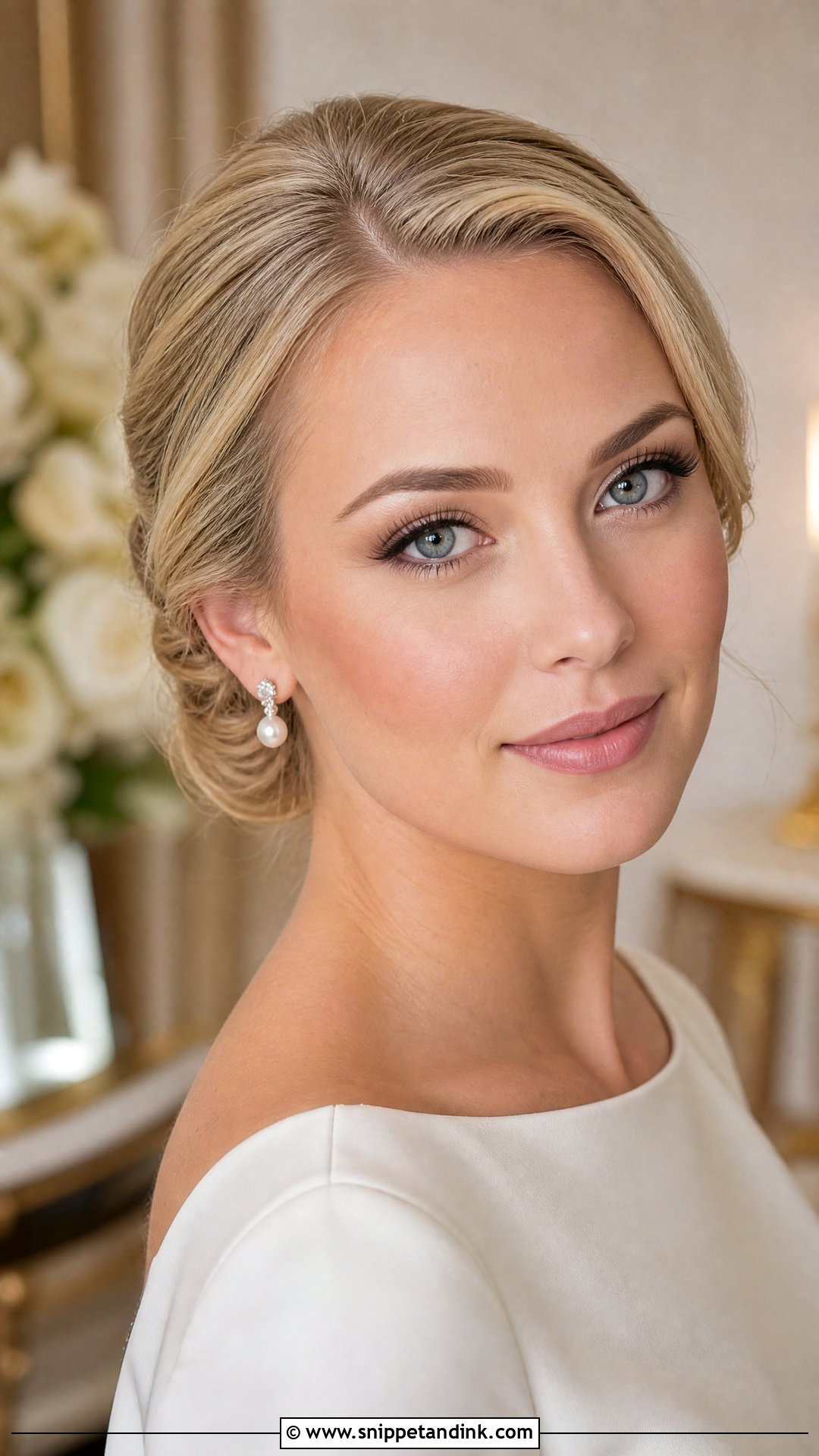
This is the look I’d describe as nothing trendy on purpose. Skin smooth but not masked, eyes defined but not smoky, lips coloured but quiet: neutral shadow, black-brown liner, natural lashes, gently sculpted cheeks and a satin rose or nude lip. A small amount of highlight on the cheekbones and inner corners adds brightness. Twenty years on, your photos won’t show which season you got married in, and that’s the point. It works in a hotel ballroom and a backyard alike.
Doing Your Own Face on the Morning
All twenty of these can be done at home if you practise. The brides who manage it well treat the run-through like a trial, not a rehearsal they skip.
- Do a full practice at least twice in the weeks before, at the same time of day as your wedding, and photograph it with flash and without.
- Wear it for a full afternoon once. Anything that creases, slides or itches by hour five will do the same on the day.
- Start skin prep the night before: gentle cleanse and moisturiser only. No new peel, mask or retinoid in the last week.
- Give yourself about ninety minutes, and do your eyes before foundation if the look has dark shadow, so fallout wipes away cleanly.
- Set the face only where you shine, and finish with a light mist rather than more powder.
What Your Skin Type Does by Hour Eight
Oily skin breaks through first at the nose, chin and centre of the forehead, usually by mid-afternoon. I’d use a mattifying primer only there, press powder in rather than dusting it, and carry blotting papers instead of more powder, which builds into a cakey layer by evening.
Dry skin does the opposite: foundation clings to flaky patches and powder gathers in fine lines around the eyes. Hydrate well the night before, skip powder under the eyes where you can, and pick satin or dewy over matte. A tiny dab of balm on a fingertip fixes a dry patch mid-day better than anything else.
For everyone, the bag should hold your lipstick or gloss, its liner, blotting papers, a few cotton buds and a small concealer. That covers nearly every repair I’ve ever been called over to make.
One Feature Leads, the Rest Stay Quiet
The look that suits you is the one that fits your face, your dress, your light and how much makeup you can comfortably wear for twelve hours. Pick one feature to lead and let the others step back: bold eyes, quiet lips; glowing skin, powdered T-zone. Then test it properly, in daylight and with a phone flash, before the wedding. If it still looks like you in both, you’ve found it.
You'll Like These Ideas:


Leave a Reply