
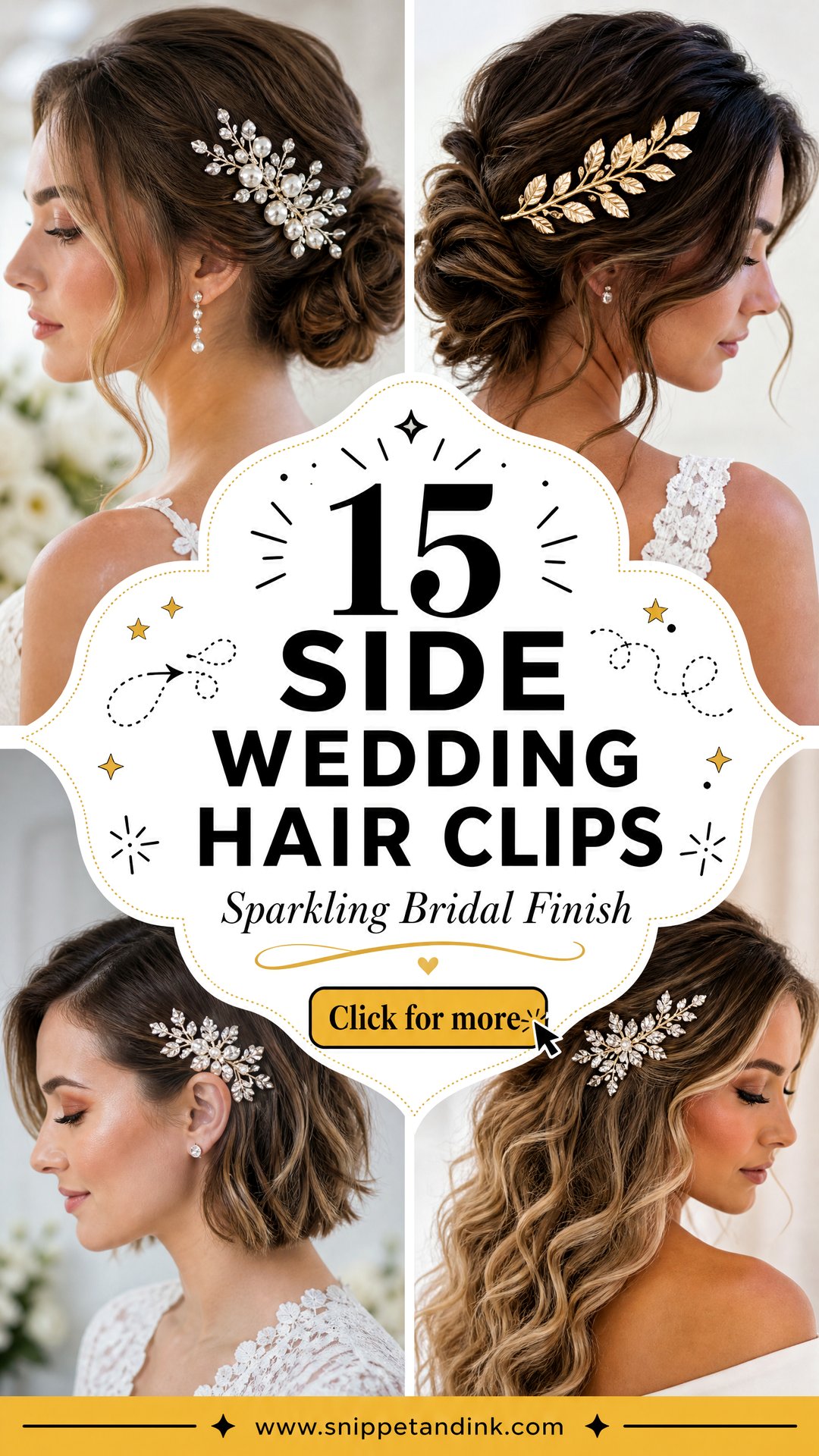
A clip worn on one side does two jobs at once: it holds a section of hair where I put it, and it gives the camera one clear point of detail. I reach for one when a low bun looks a little plain from the front, when Hollywood waves need a reason to stay off one cheek, or when a short cut needs something bridal without becoming an updo. The material changes the mood more than the shape does. Pearls read soft, crystals read evening, fresh-looking flowers read garden, and a sleek metal barrette reads modern. Below are the fifteen I see brides, bridesmaids and guests ask about most, with what each one needs from the hair underneath to stay put.
Why Side Clips Slip, and the Base That Stops Them
Most clips fail for the same reason: they’re asked to grip clean, silky hair with nothing underneath. A clip pinches, and silk is slippery. So before any accessory goes in, I build it somewhere to hold on to.
- Wash the day before, not that morning. Hair with a day of natural grip holds metal far better.
- Mist dry texture spray into the section where the clip will sit, then backcomb a little at the root.
- Cross two bobby pins in an X across that spot. The clip’s teeth or bar hook over the X instead of sliding along the hair.
- Slide the clip in, then pull gently on it. If it shifts, add a third pin through the clasp from underneath.
The weight matters too. A heavy rhinestone or vintage piece on fine hair will drag down over a few hours, even with a good base, and it can leave a sore spot at the scalp. On fine hair I favour lighter clips or combs, and I save the heavy statement pieces for thick or textured hair that can carry them.
1. Pearl Side Wedding Hair Clip
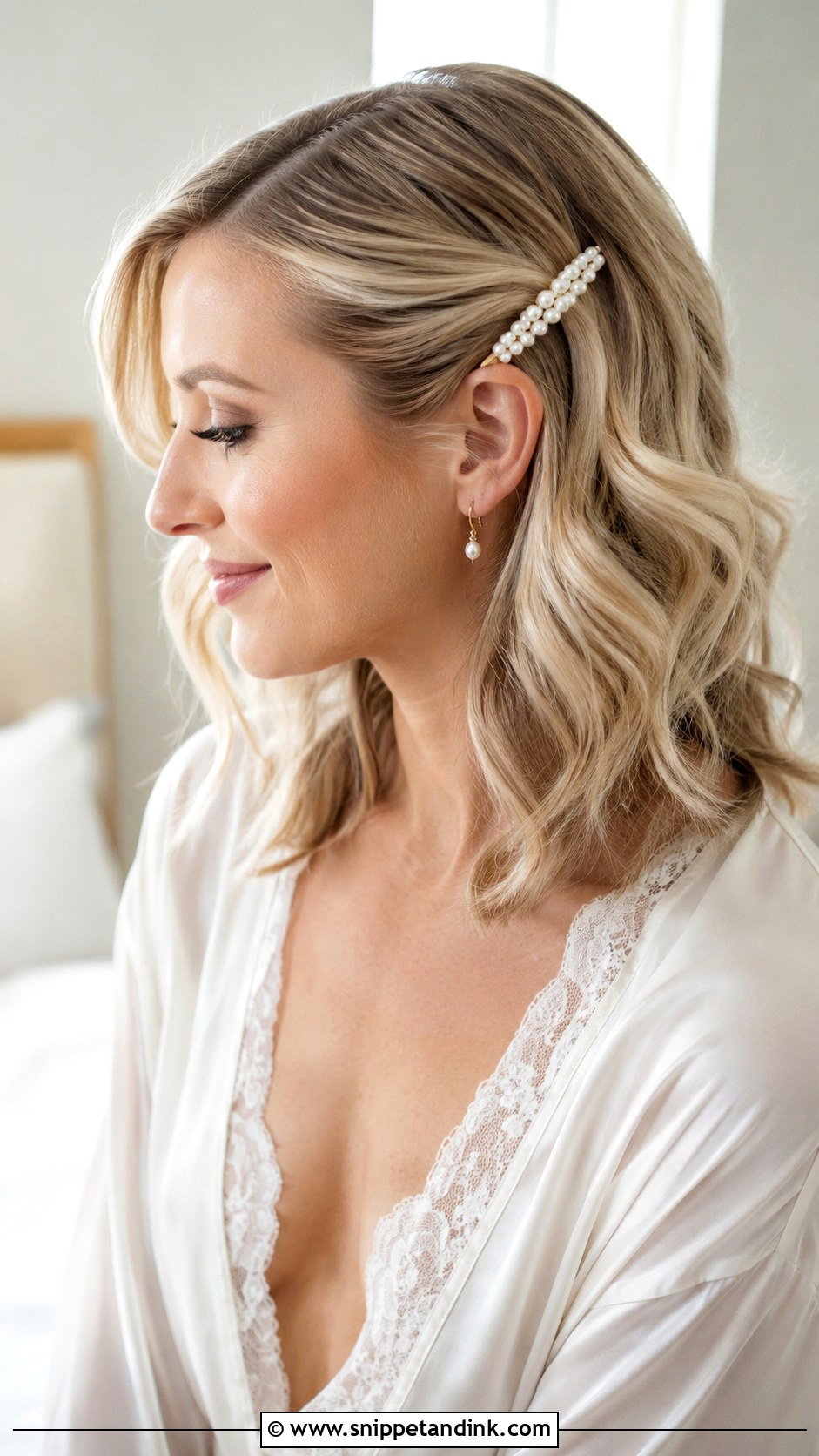
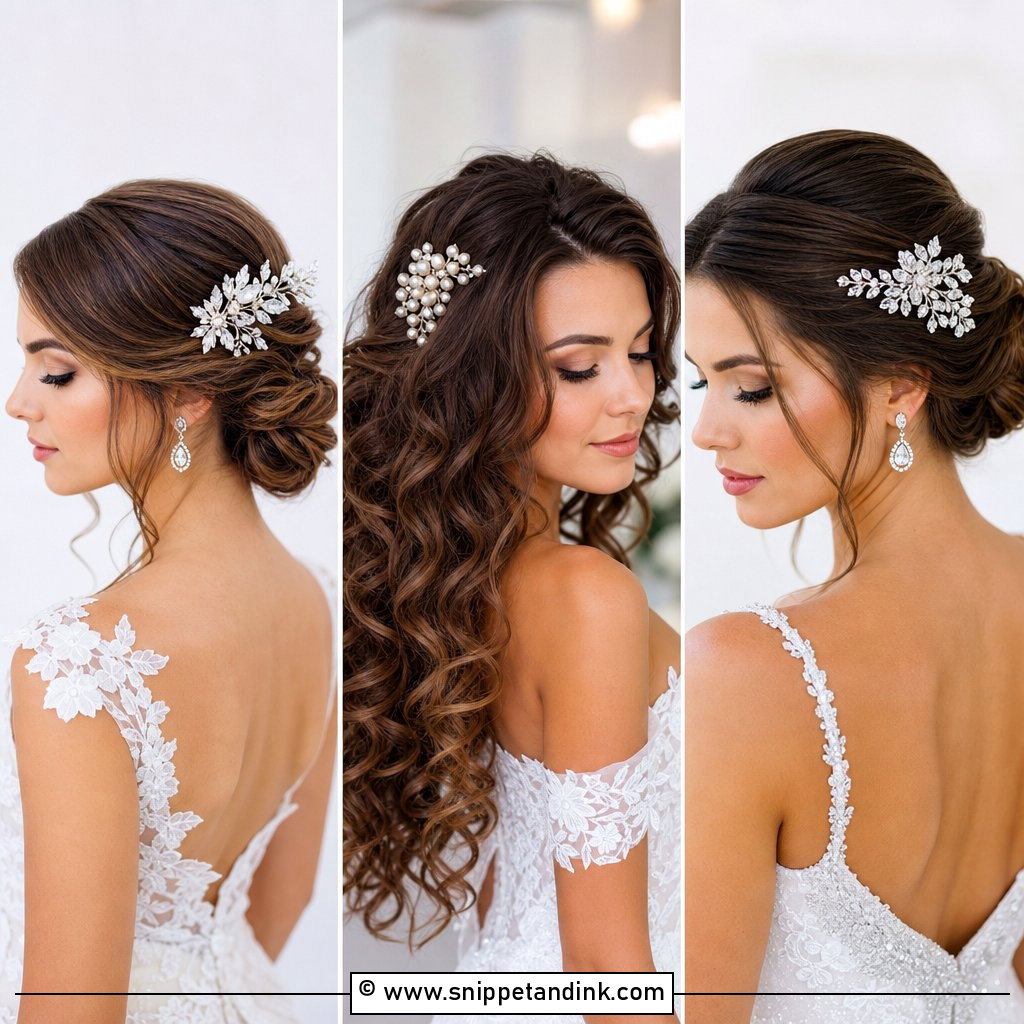
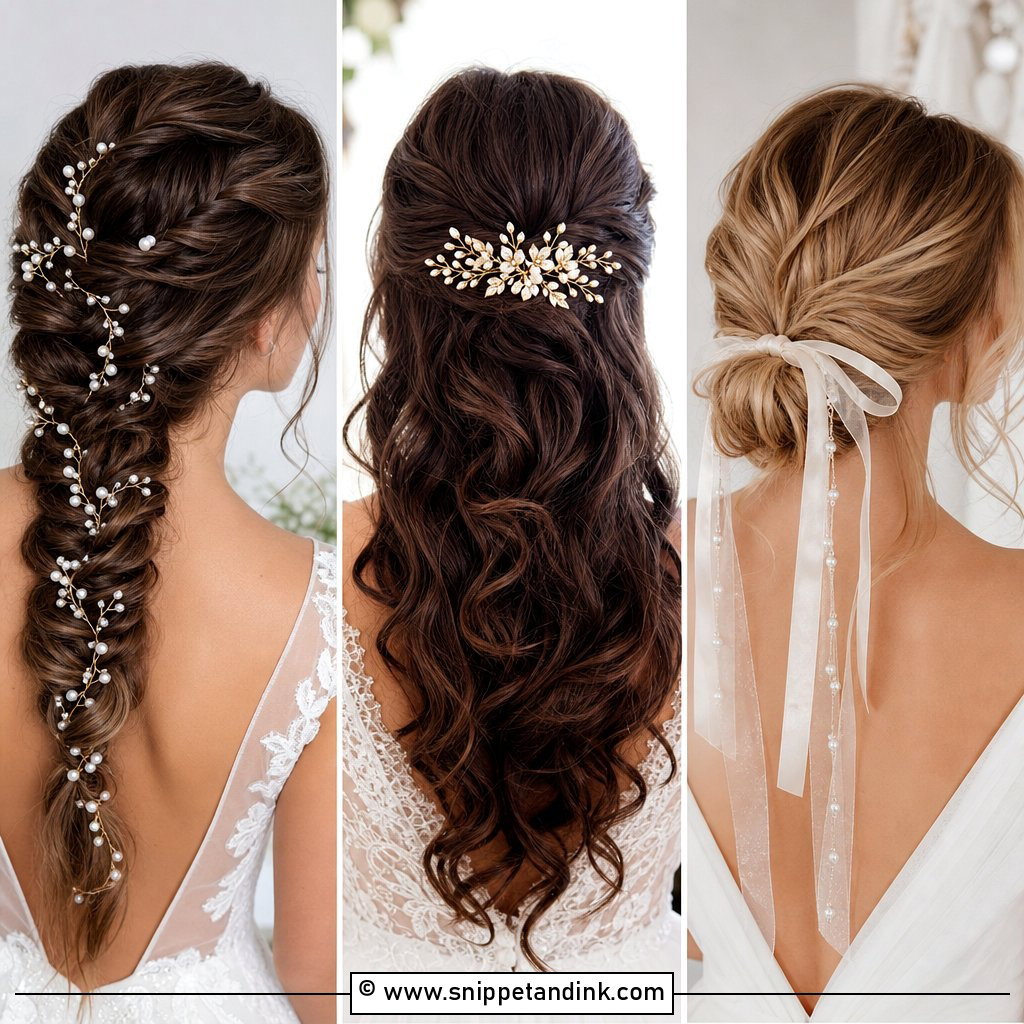
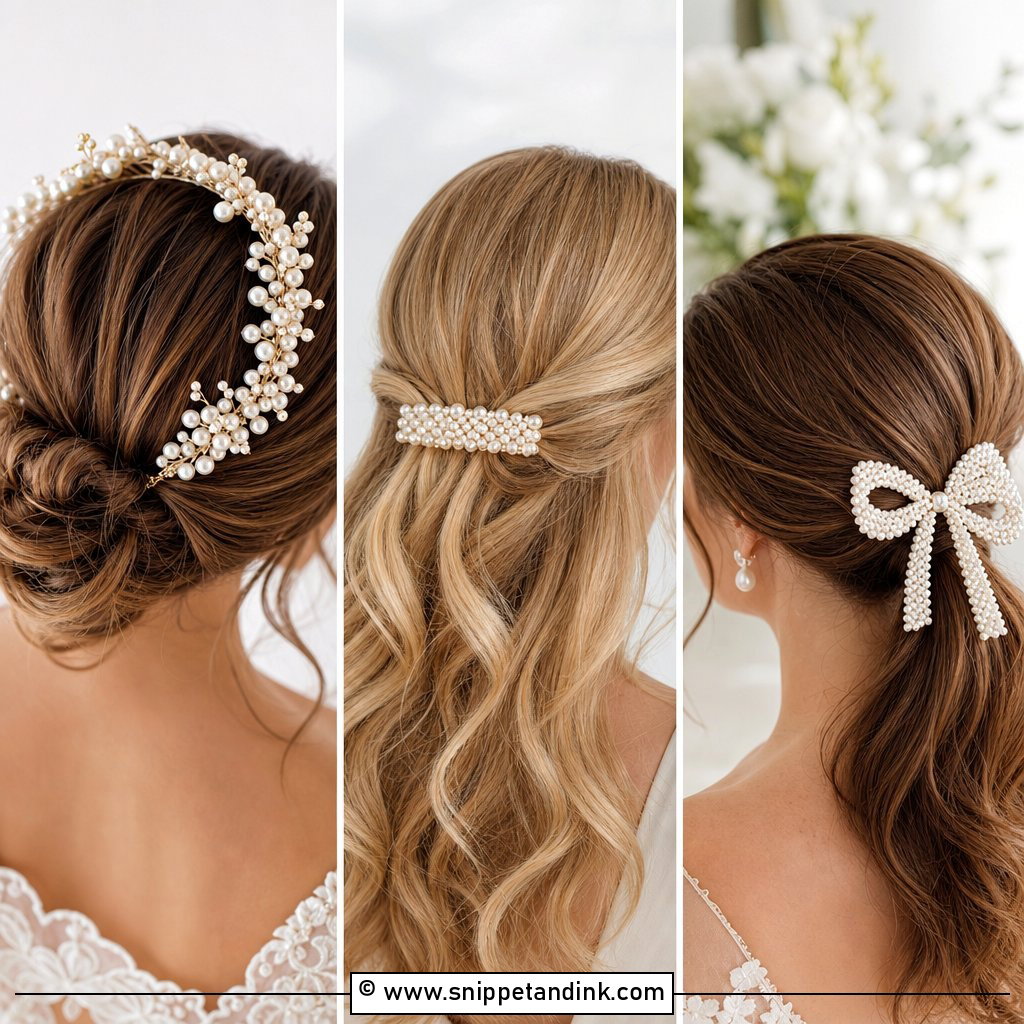
Pearl is the clip I can pair with almost any dress, because ivory pearls sit somewhere between white and cream and rarely clash with the fabric. It sits best just above the ear, pulling one side back so your earrings and neckline show. Small pearls disappear on very thick, dark hair from a distance, so if your hair is dense I’d size up to a barrette with larger beads. Keep the waves on that side smooth rather than brushed out, or the pearls get lost in frizz.
2. Crystal Side Wedding Hair Clip
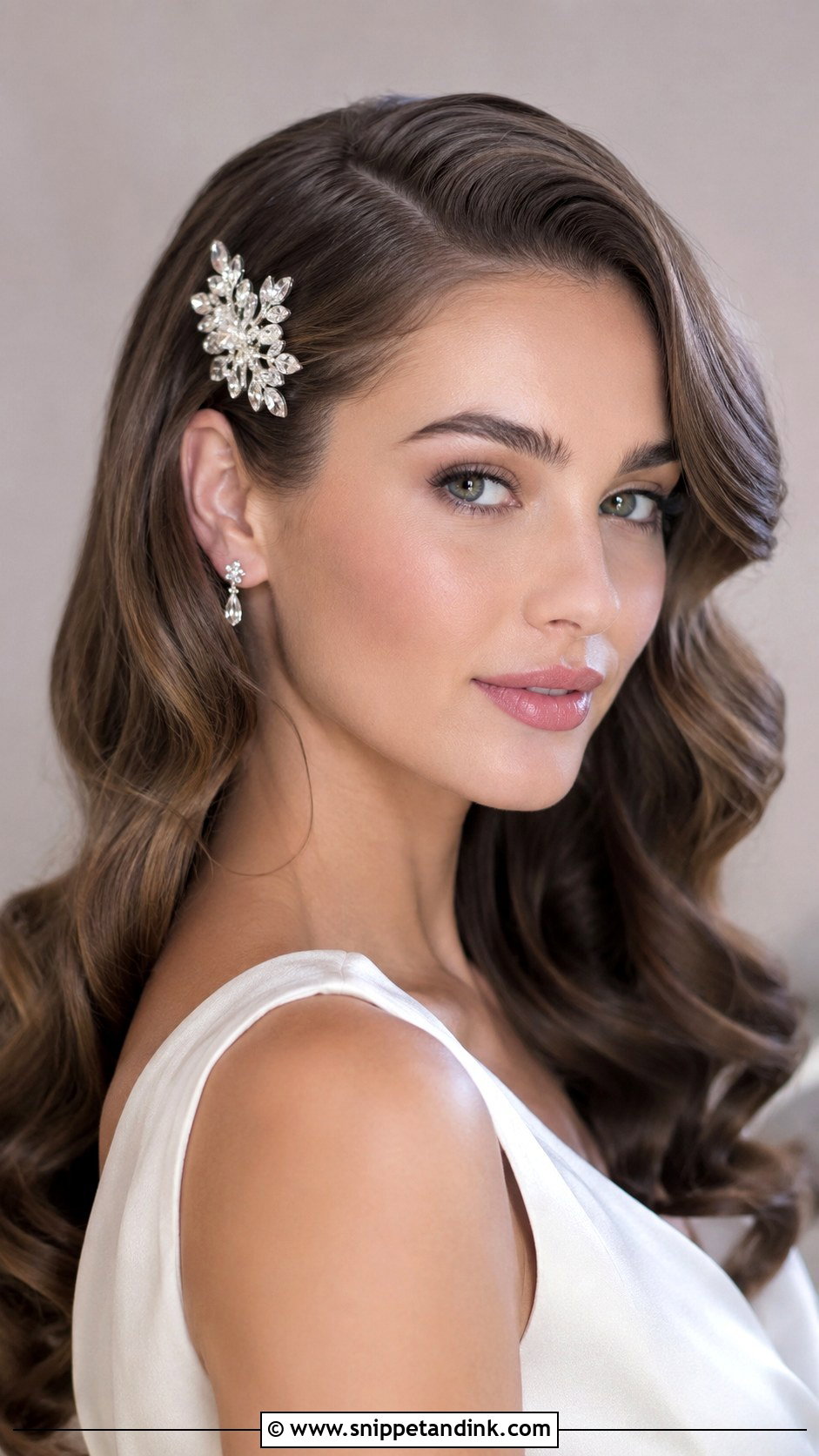
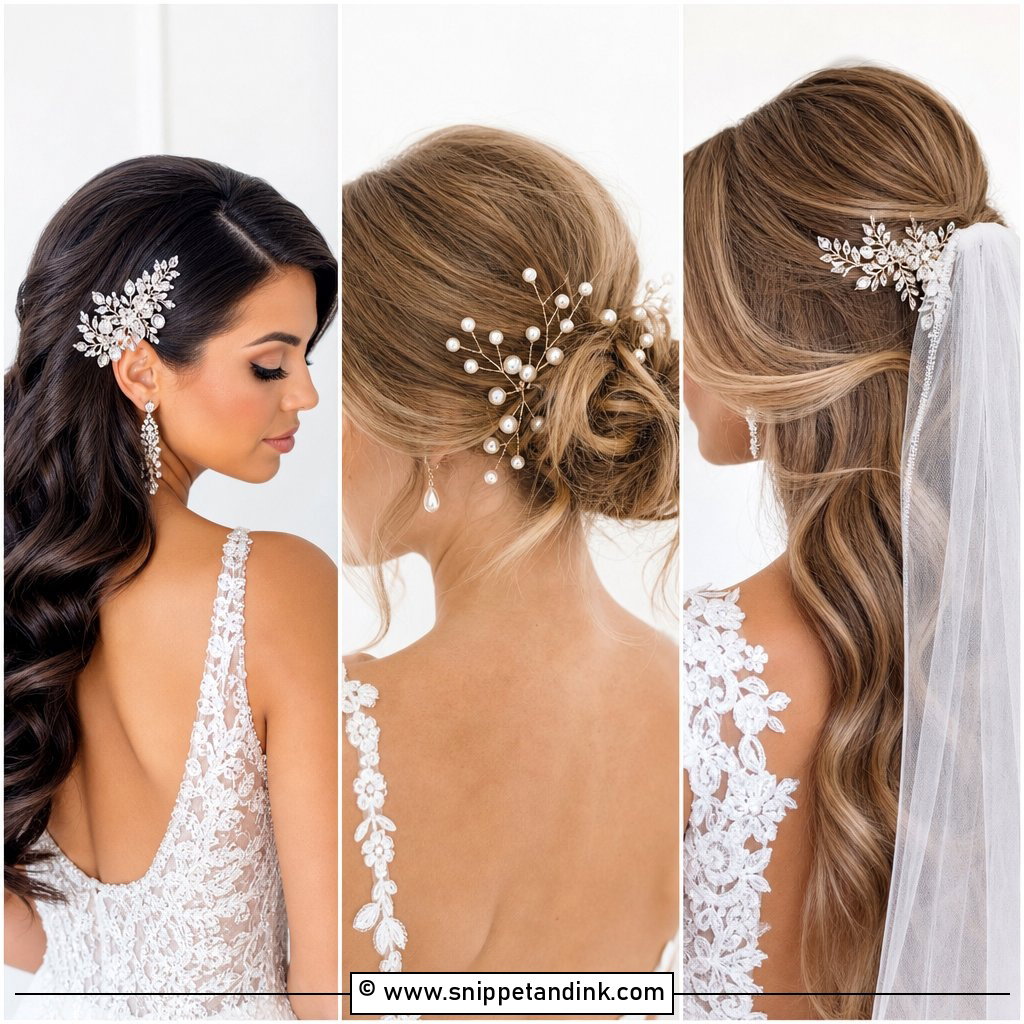
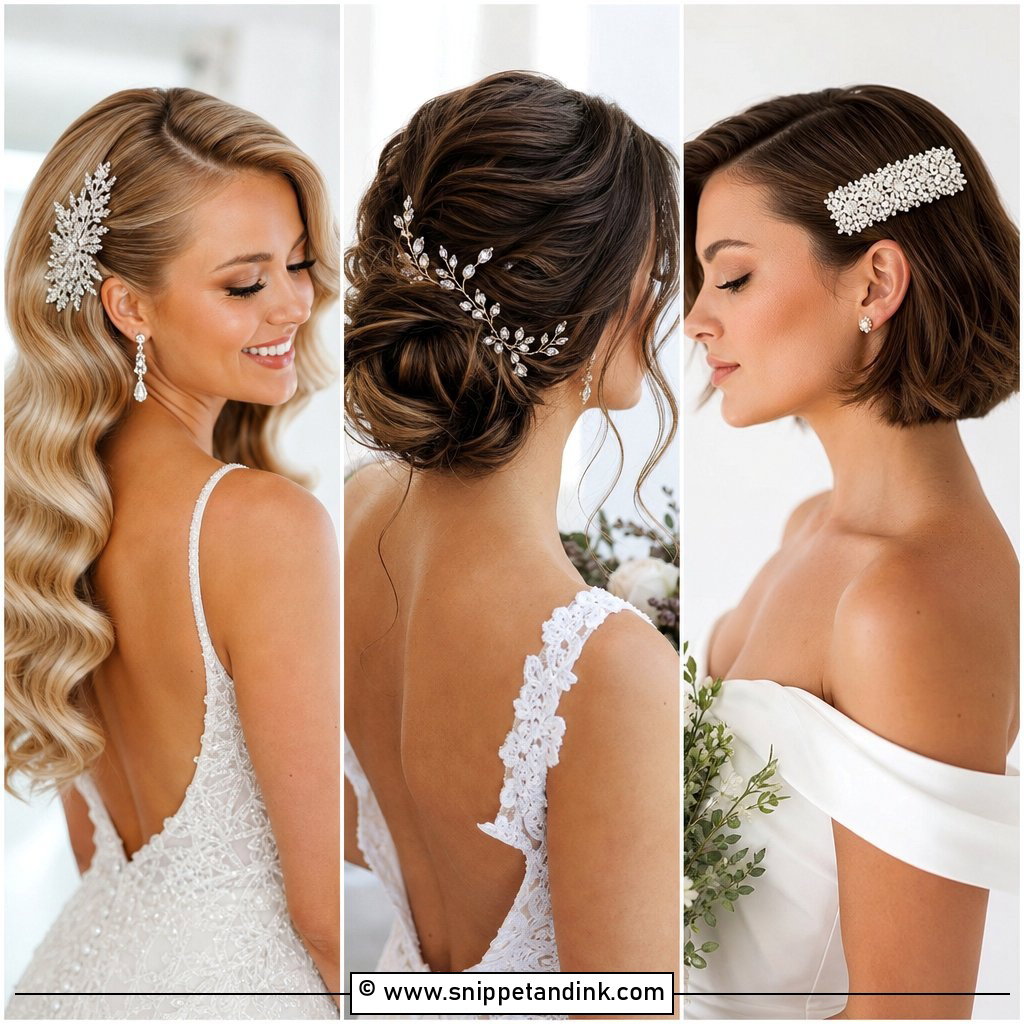
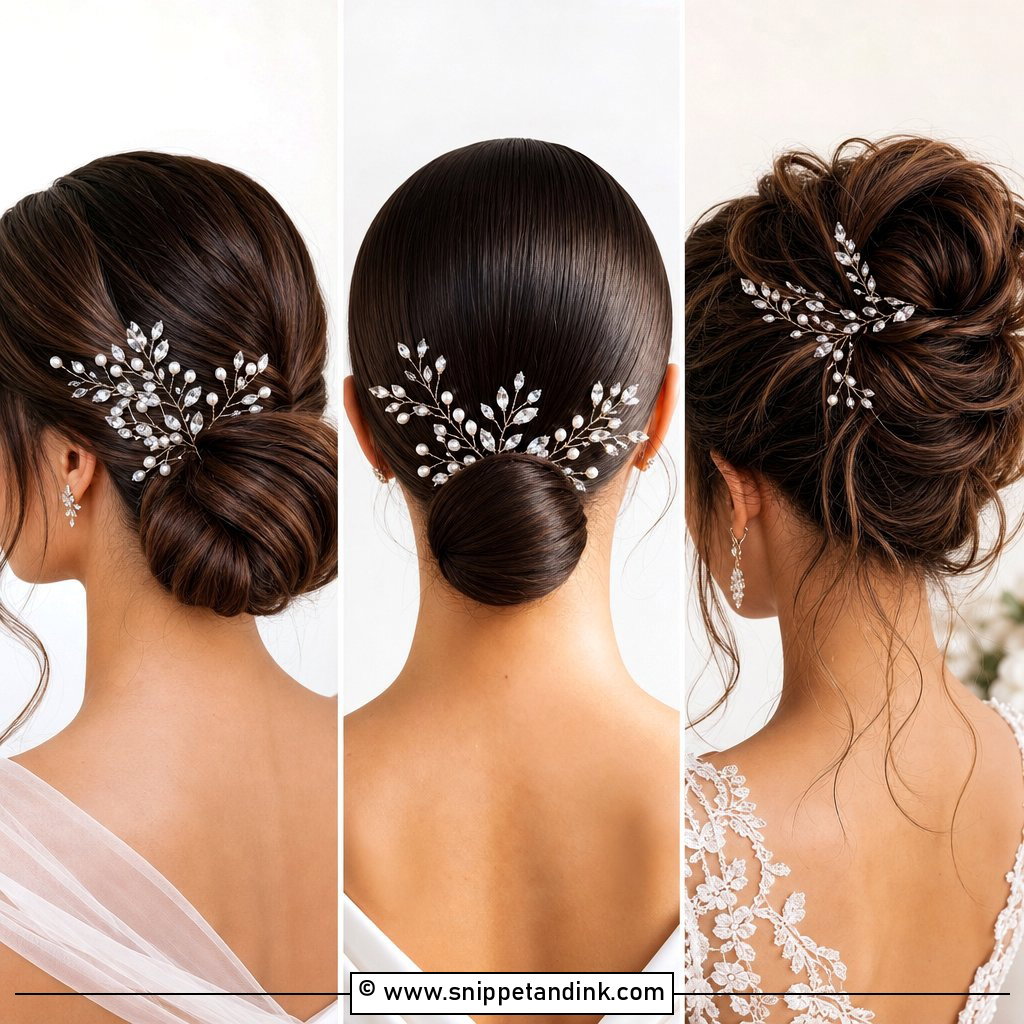
Crystals need light to do anything, which is why this clip earns its place at evening receptions and in flash photos more than at a noon garden ceremony. I like it against sleek hair, where the shine on the hair and the shine on the stones echo each other. A slim crystal barrette suits a beaded or embellished gown; save the wider pieces for plain crepe or satin. One thing I always check is the backing. Glued stones on a cheap clip can pop off during a hug, while prong-set stones survive the dance floor.
3. Floral Side Wedding Hair Clip
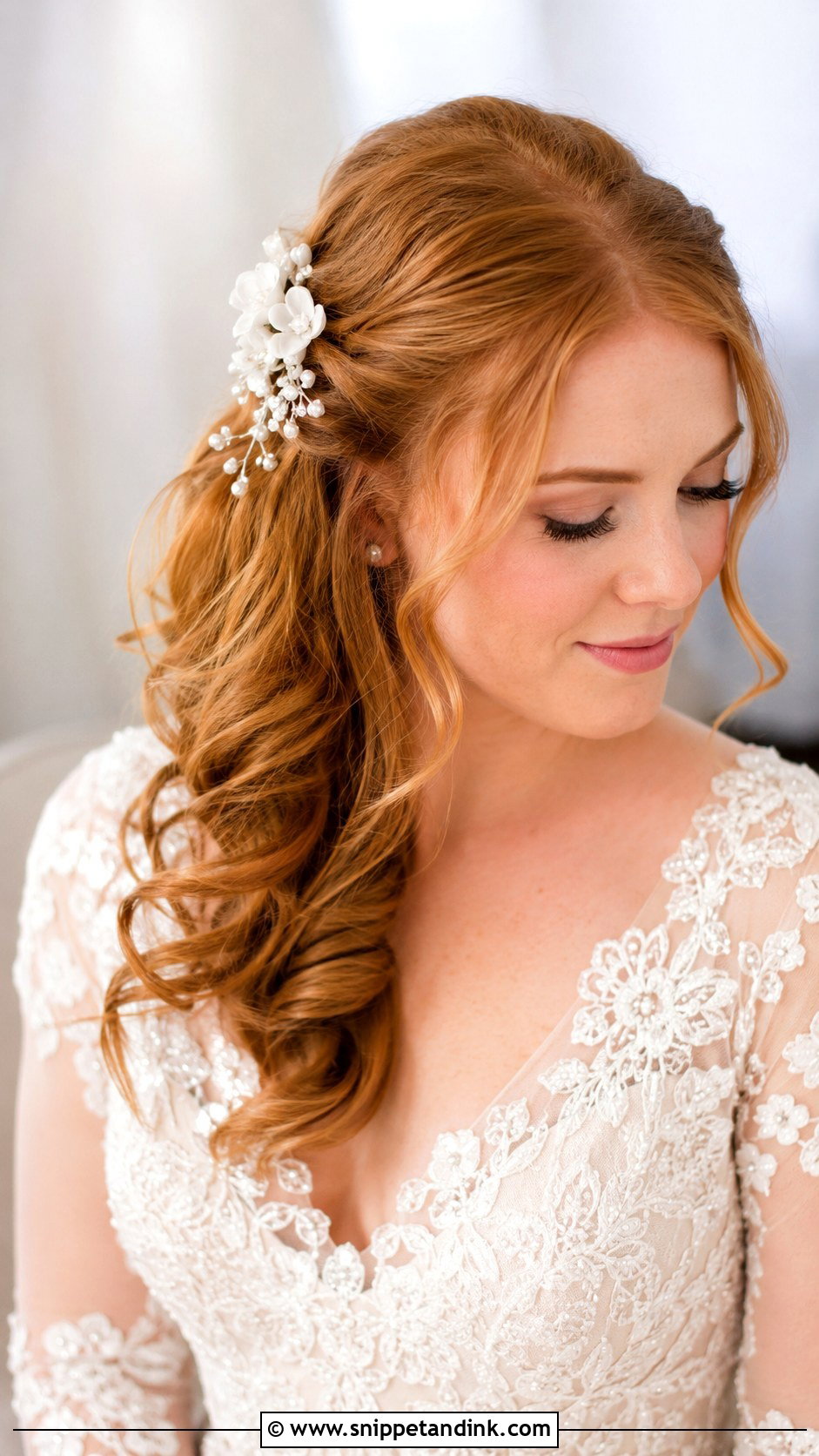
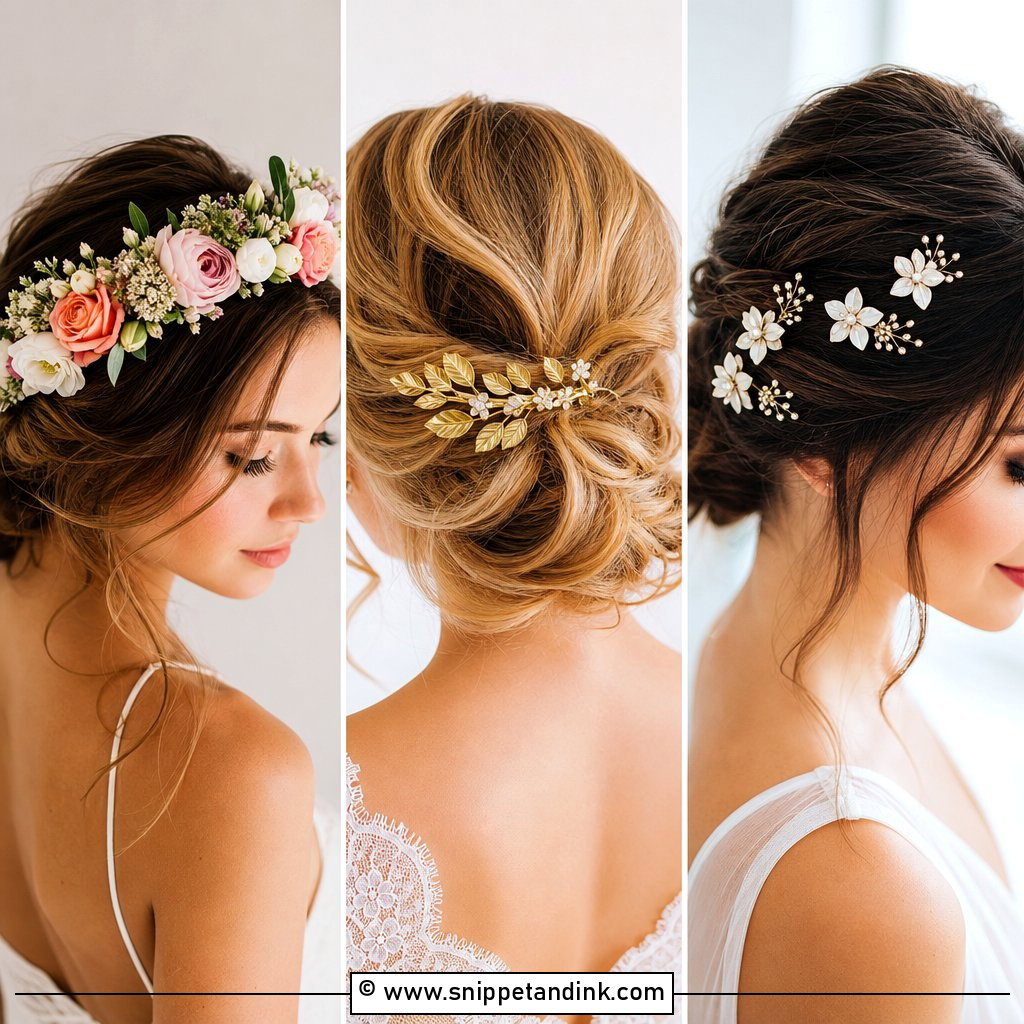
Floral clips come in silk, porcelain, enamelled metal and wire-and-pearl versions, and the difference matters more than the photo suggests. Porcelain petals are fragile and chip if the clip drops on a tiled floor, so I handle them last. Silk flowers squash in a garment bag, so steam them back into shape on low before the morning. Tucked slightly behind the ear into loose curls or a messy low bun, a floral clip picks up the 3D flowers on a lace gown nicely. I’d skip it with a heavily floral dress and a floral veil at the same time; three florals start to fight.
4. Gold Side Wedding Hair Clip
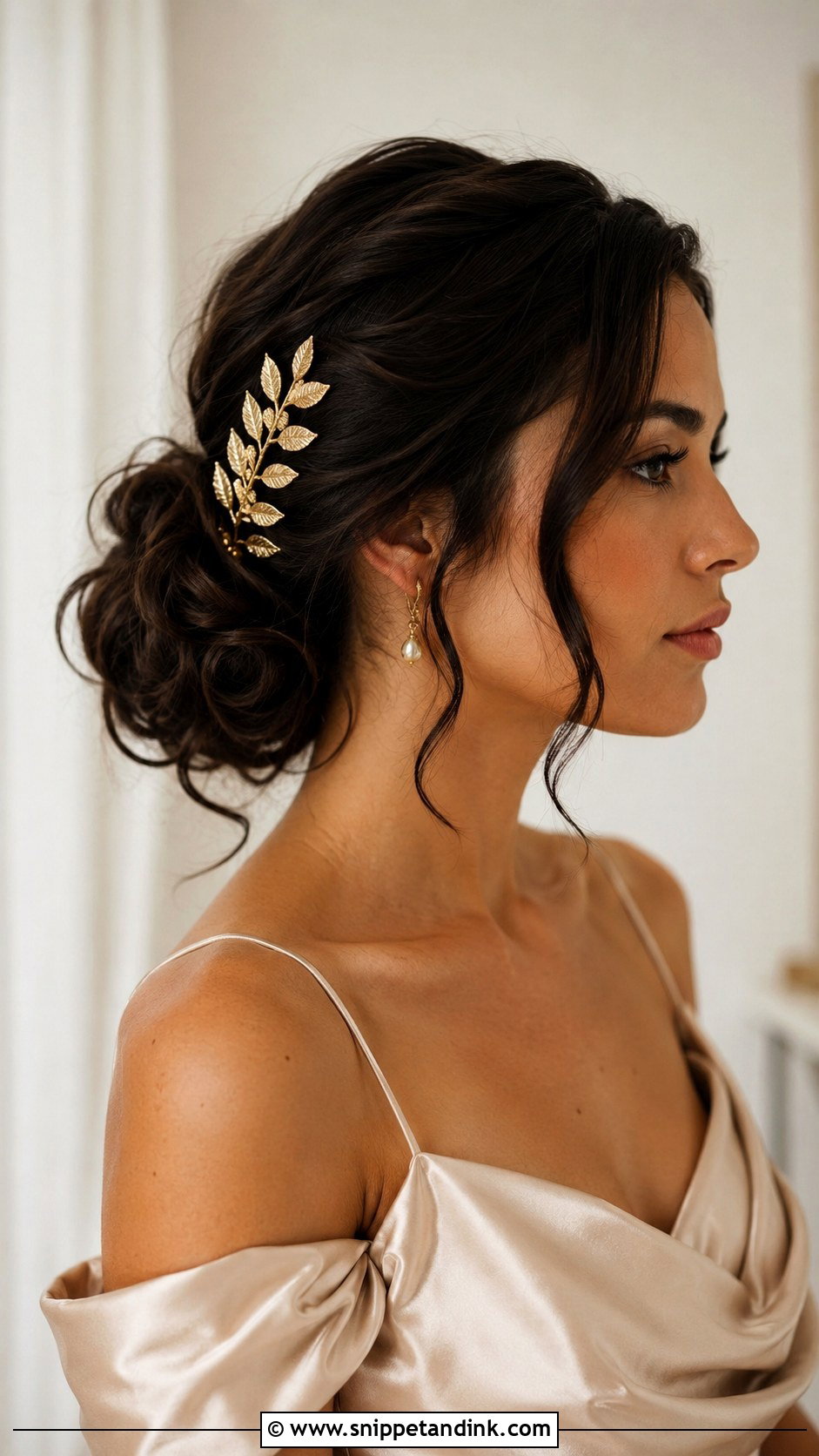
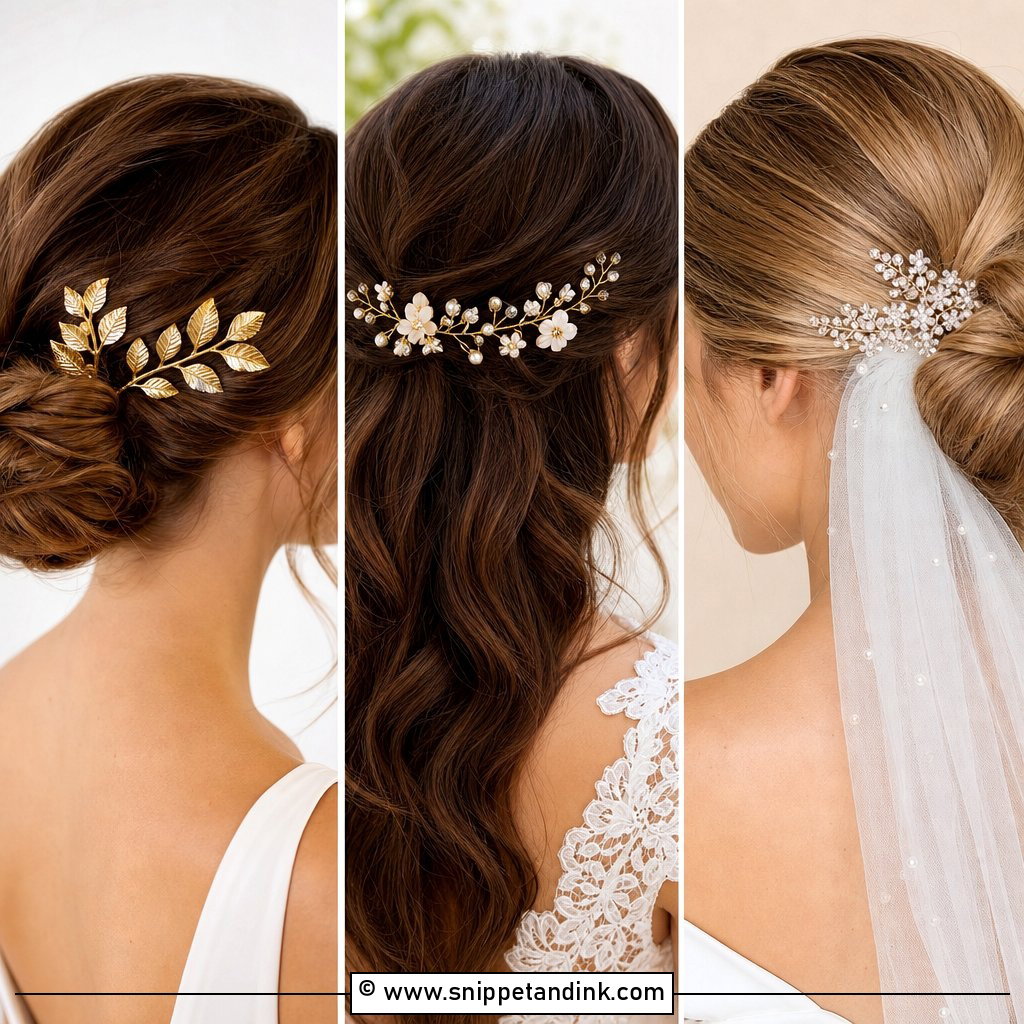
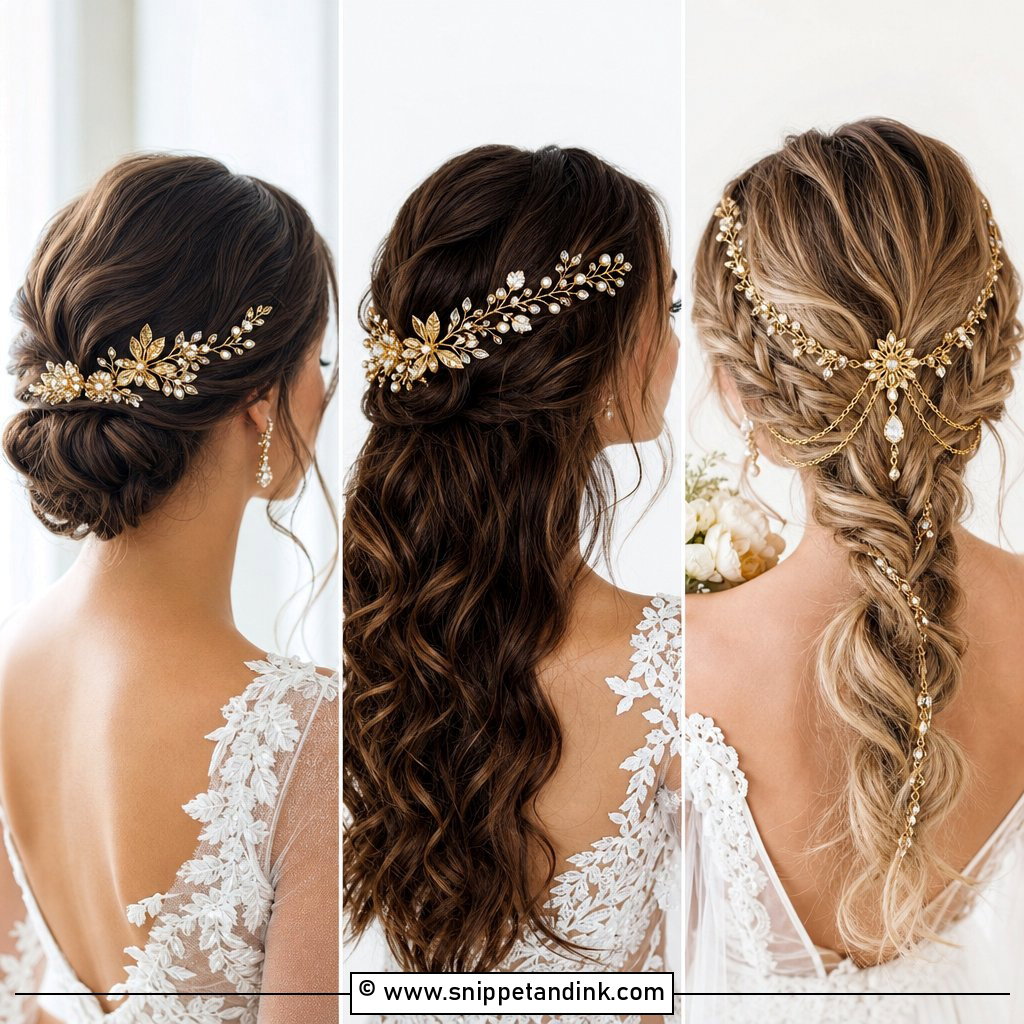
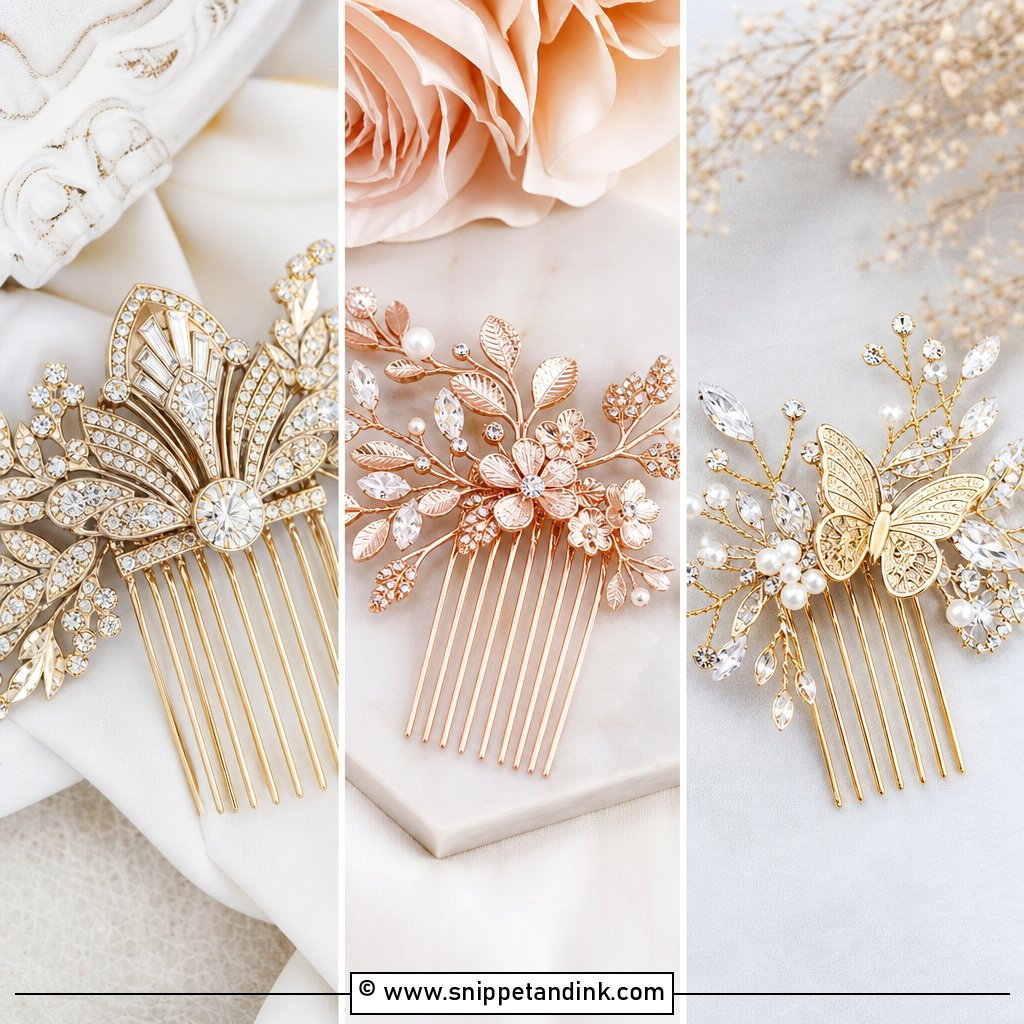
Gold warms everything near the face, so I steer it toward champagne and ivory gowns, warm-toned makeup and gold jewellery. A thin gold bar feels minimal; a gold leaf clip has more movement and suits textured hair. It shows up strongest against brunette, auburn, honey blonde, and copper hair; on pale platinum blonde it can look slightly brassy. I usually place it on the side with less volume so the clip balances the shape instead of piling more weight onto the fuller side.
5. Silver Side Wedding Hair Clip
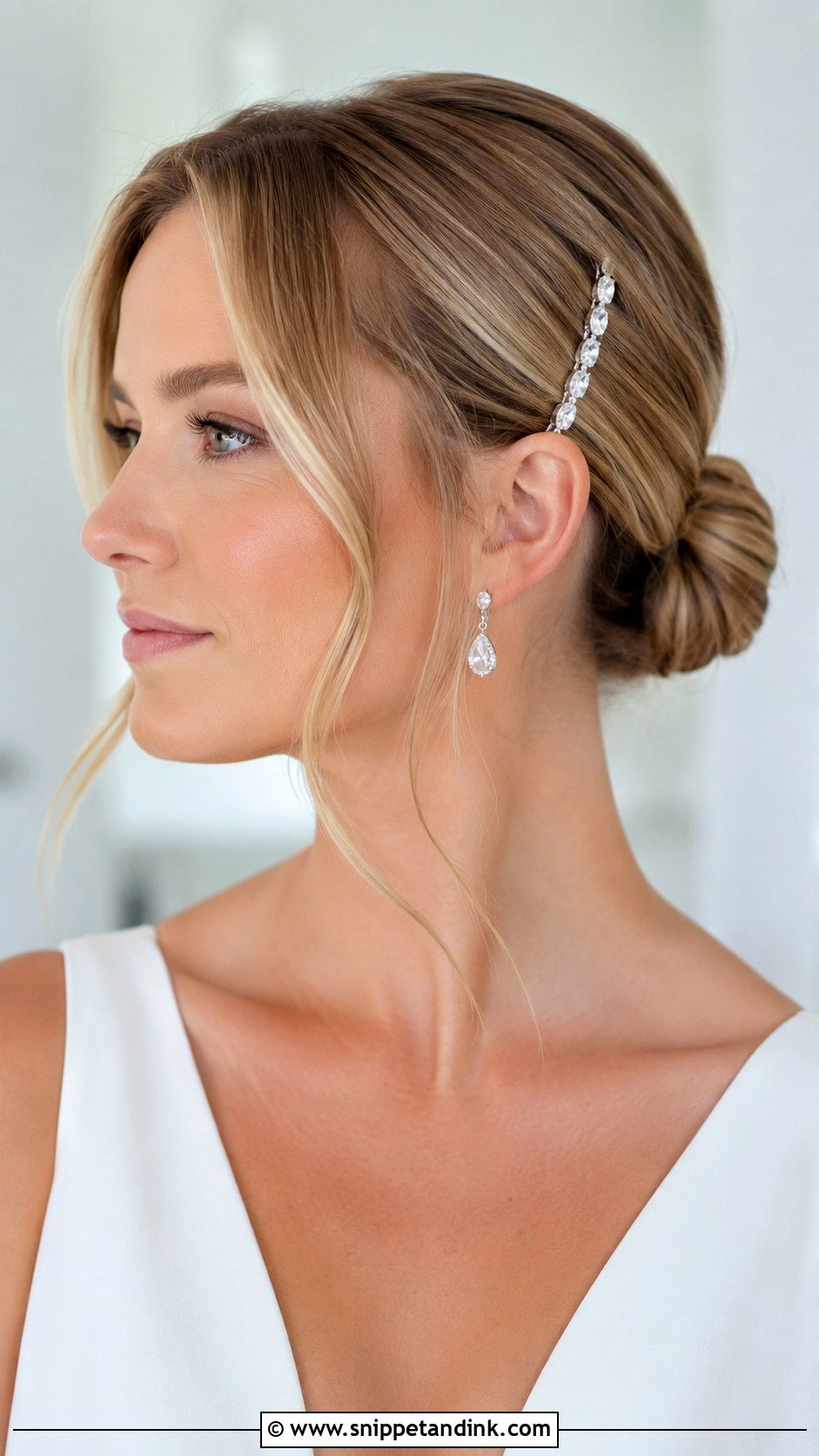
Silver is the cooler sibling, and I use it with bright white gowns, platinum rings and crystal earrings so the metals agree. It reads crisp in winter light and keeps a sleek low bun looking sharp. For someone who wants a little sparkle but finds a full tiara or headband too much, a silver clip near the temple gives the same effect in a much smaller dose. On silver or grey hair it can blend in, so add a pearl or stone for contrast.
6. Rhinestone Side Wedding Hair Clip
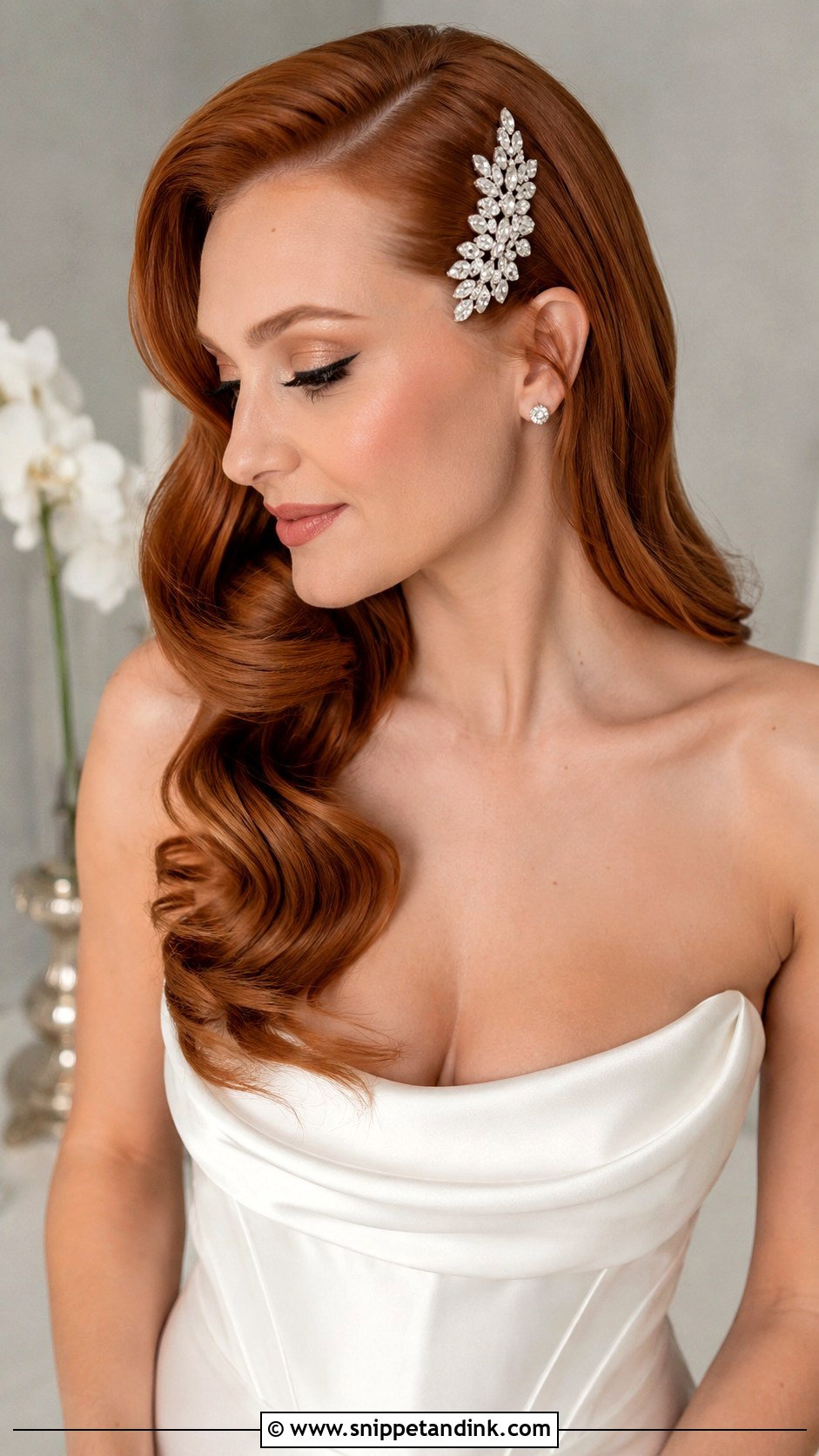
Rhinestones are for the bride who wants her hair to catch the room. They’re heavier than they look, which is the real issue. Fine, freshly washed hair can’t grip a stone-heavy clip, so I prep that side with a dry texture spray and a crossed pair of bobby pins for the clip to bite into. Rhinestone clips sit well with satin gowns and slim silhouettes. I angle mine slightly back from the face; flat and horizontal tends to look like a schoolgirl barrette.
7. Vintage Side Wedding Hair Clip
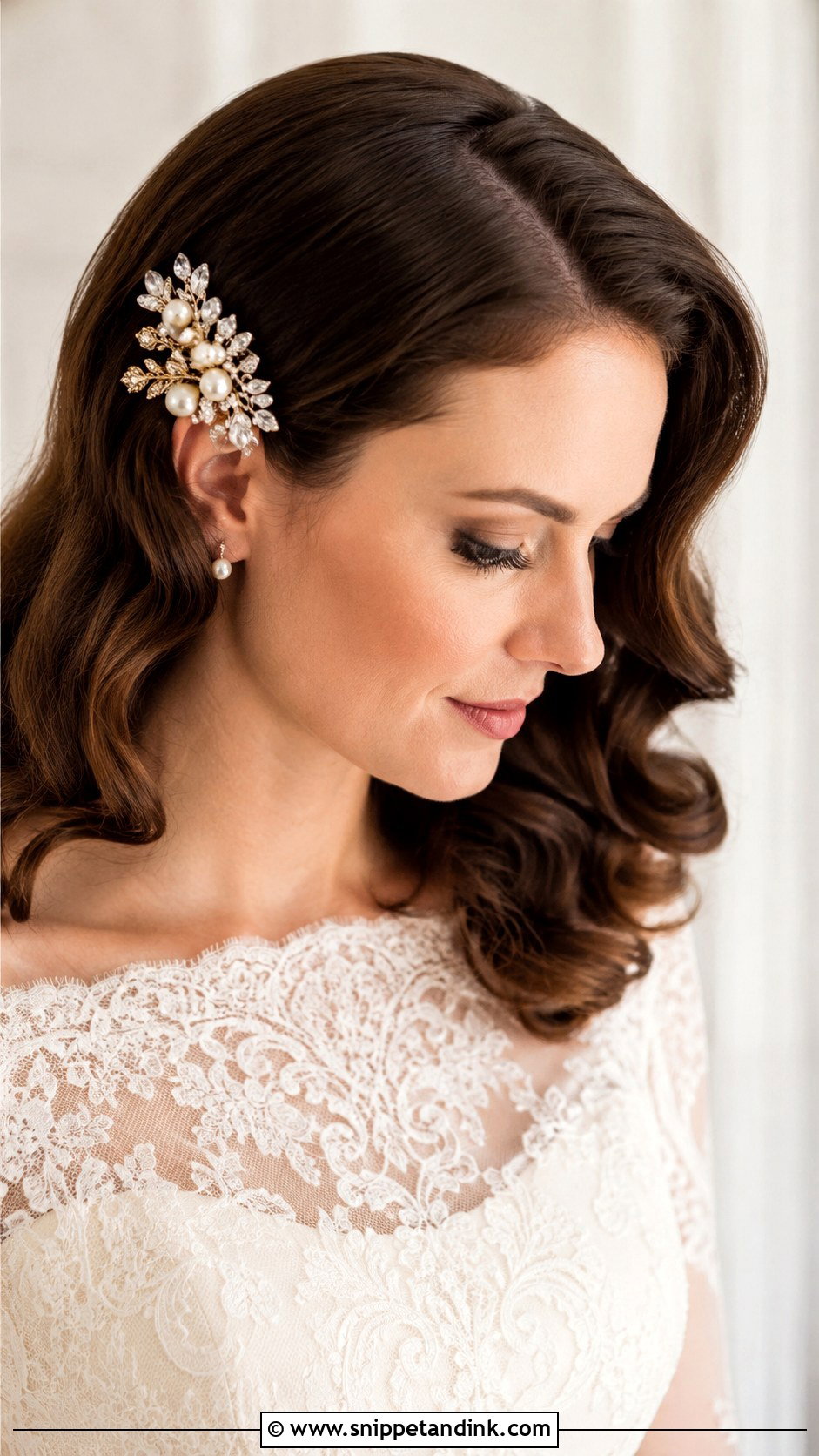
Antique and antique-style clips carry filigree, old-cut crystals and art deco lines, and they belong with styles from the same era: finger waves, brushed-out pin curls or a low rolled chignon. I try to make the clip follow the wave, set into the hollow of an S-curve, so it looks like part of the set rather than added afterwards. If it’s a real family piece, check the clasp before the trial. Old spring clasps lose tension, and I’d rather sew a discreet comb onto the back than watch it slide at the reception.
8. Leaf Side Wedding Hair Clip
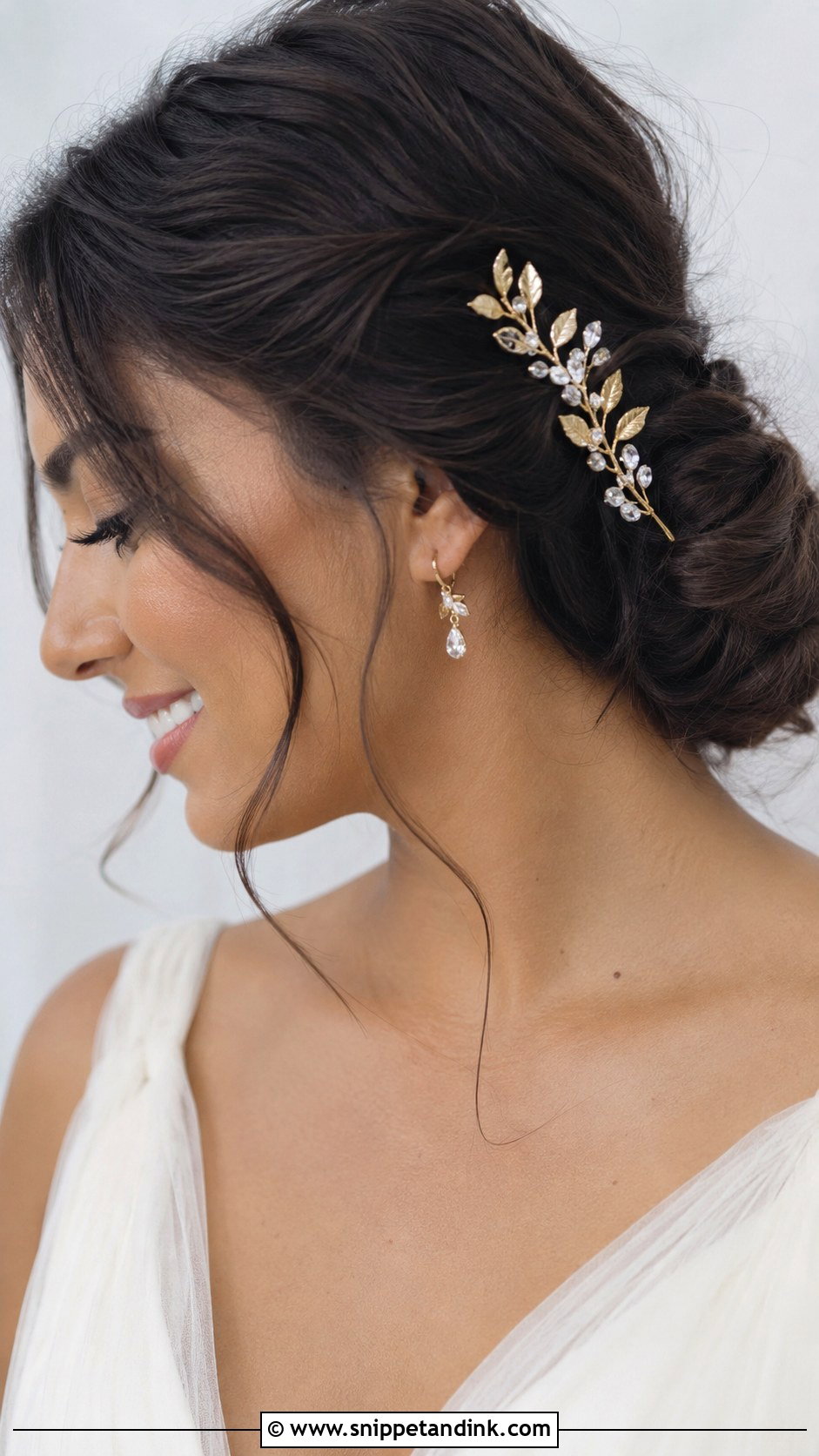
A leaf side wedding hair clip has a natural direction, which is its advantage. I lay the leaves along the line of a braid or the curve of a low bun so they seem to grow out of the style. That makes it a strong match for woodland, garden and rustic venues. Wire-and-leaf vines can be bent slightly to fit the head, but bend them gently and only once; repeated bending snaps the thin wire where the leaves are joined.
9. Side Wedding Hair Comb
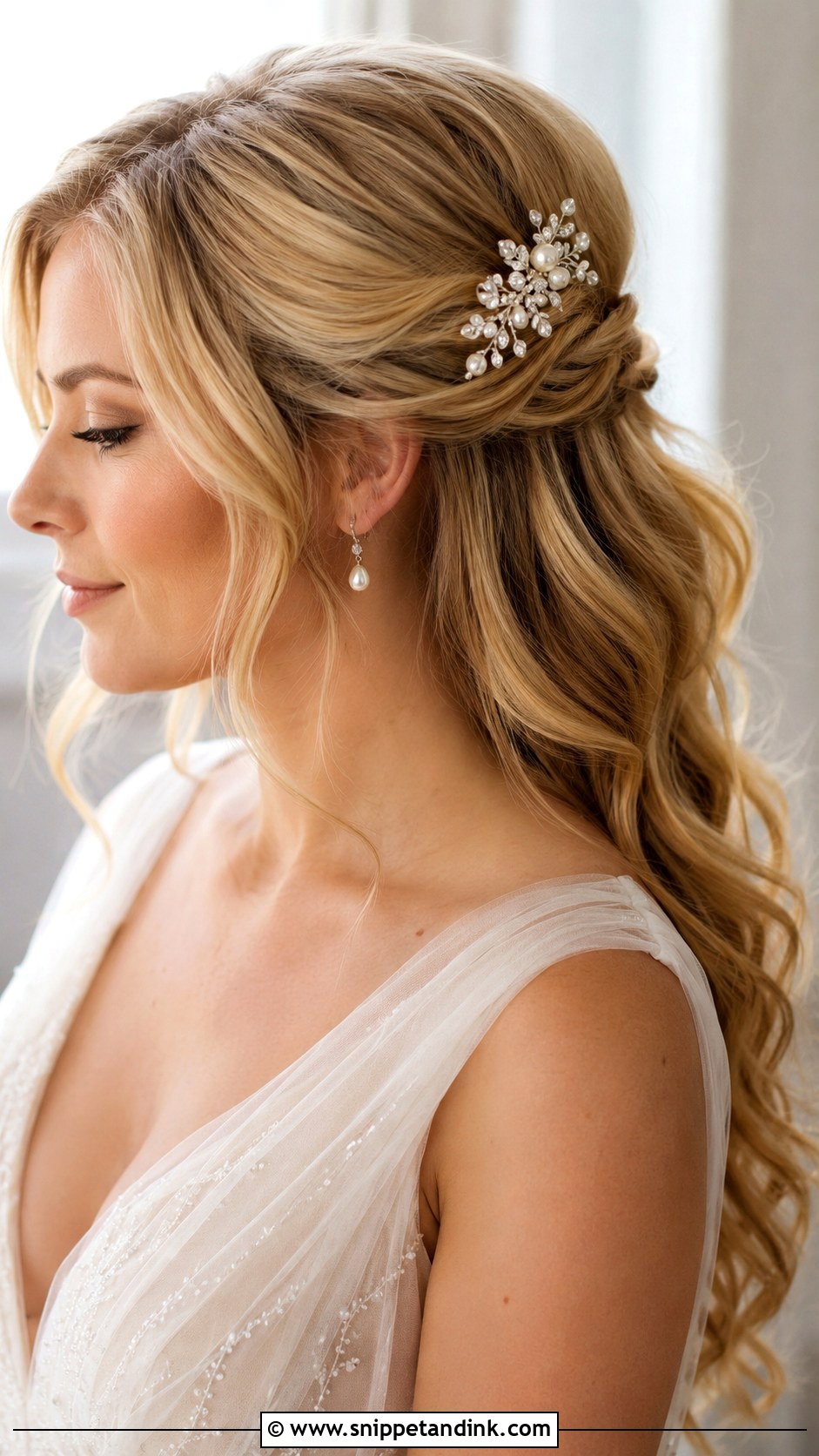
Of everything on this list, a comb gives the most hold, because the teeth go into the hair instead of just pinching it. I slide it in against the direction it will face, then flip it and push it home, so the teeth hook under a bit of backcombed base. That’s why I recommend combs for long days and heavy hair. Thick hair needs longer, sturdier teeth. Fine hair needs the opposite: a small comb, plus two hidden pins threaded through the end teeth so it can’t work loose.
10. Side Wedding Barrette
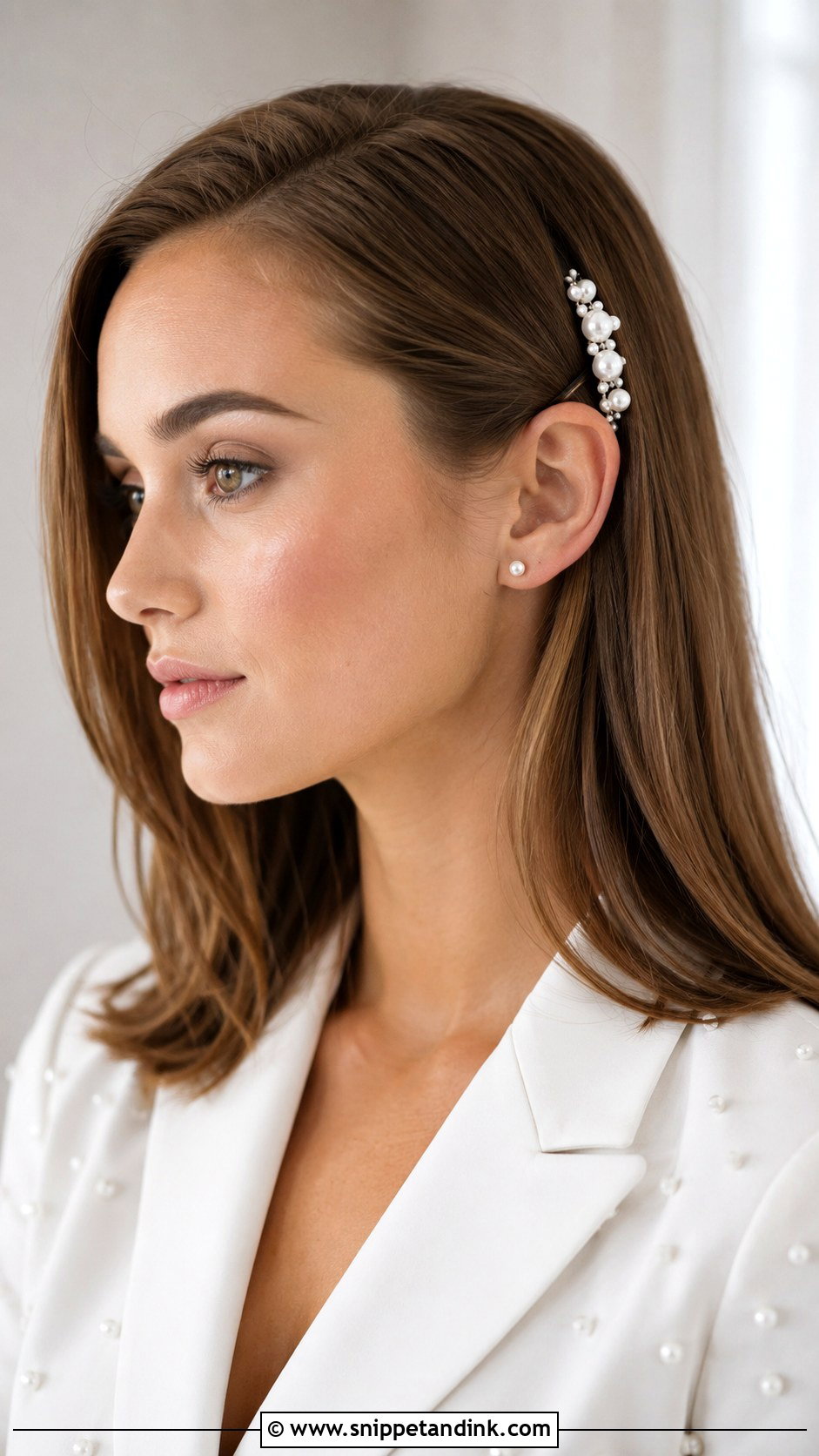
A barrette is the easiest of these to wear yourself, which is why I suggest it for bridesmaids doing their own hair. It works from a jaw-length bob down to long waves, holds one side back cleanly and defines a part. Check the clasp: the French style, with a hinged bar, grips far better than a cheap snap clip. Leave a couple of loose face-framing pieces in front so it doesn’t look too tight, and a matching set gives a bridal party a shared detail while each person keeps her own hairstyle.
11. Side Wedding Hair Clip With Veil
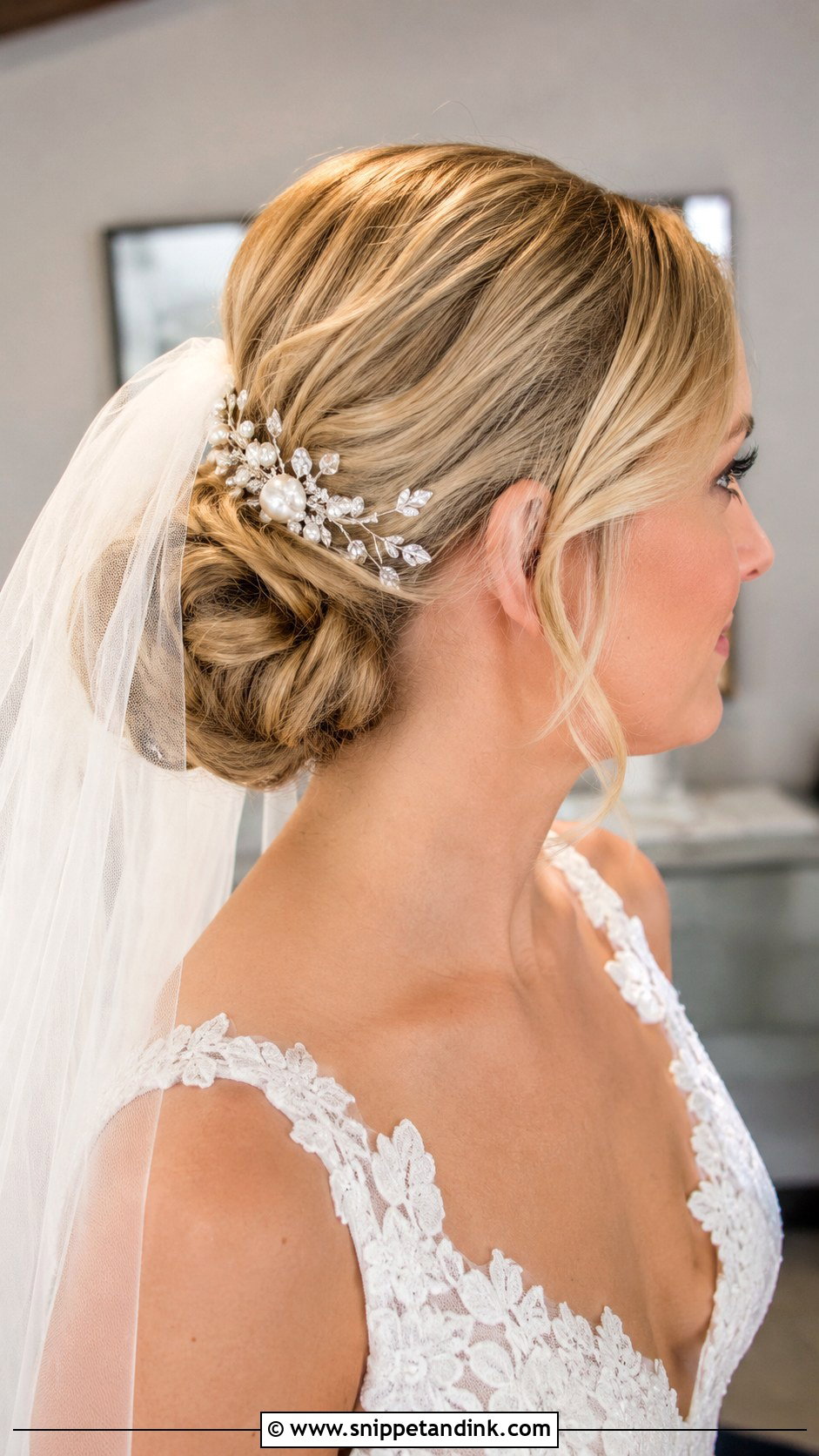
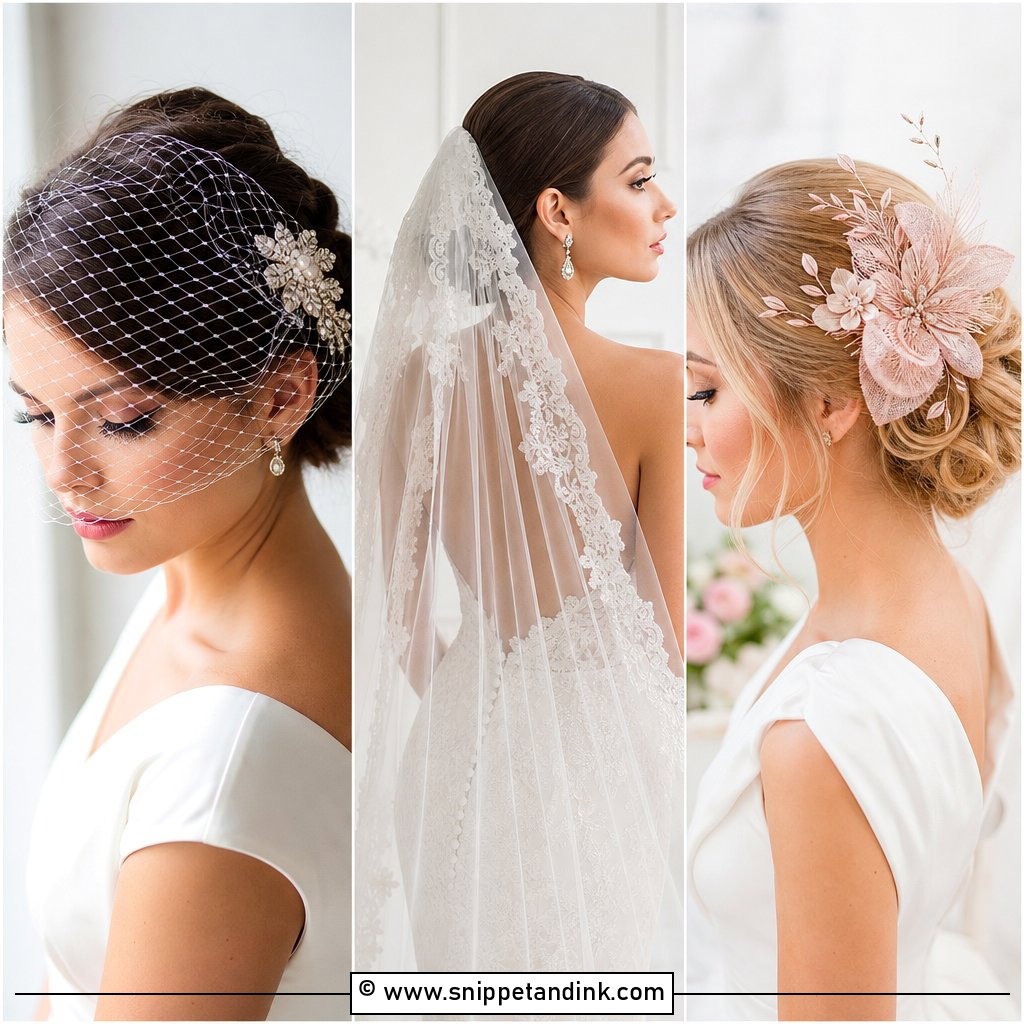
Wearing a clip with a veil means planning two anchor points instead of one. The veil comb sits at the crown or under the bun, and the clip decorates one side, but both need their own grip, and putting them too close together leaves two heavy pieces pulling on the same small patch of hair. I keep at least a few fingers of space between them. Match the clip to the veil edge, pearl with pearl or lace with lace, and you also get a finished look for the reception once the veil comes off.
12. Side Wedding Hair Clip For Short Hair
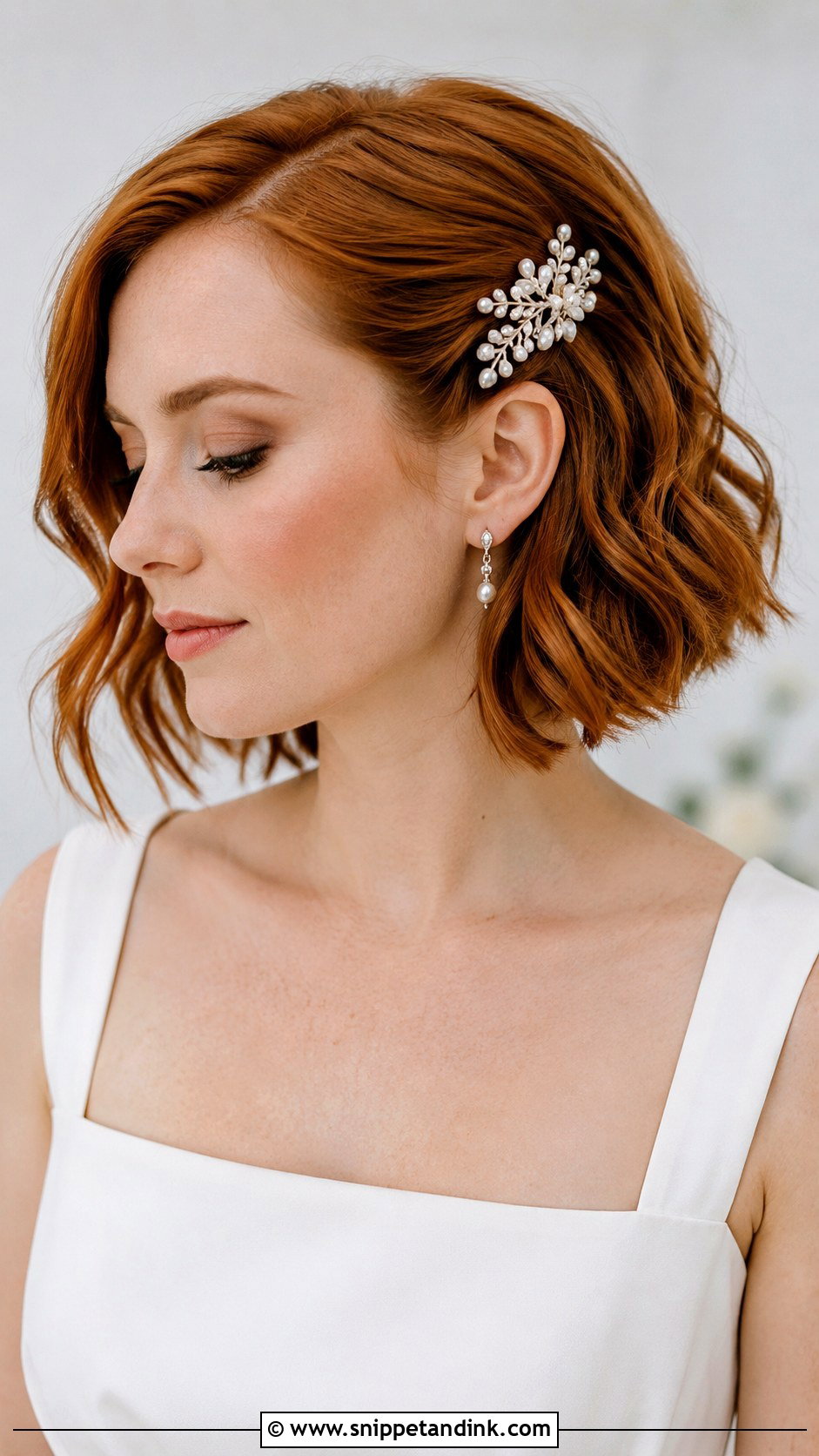
On a bob, pixie or collarbone cut, a single clip can make the whole difference between everyday hair and wedding hair. Short hair has less to grip, so I set the clip on a small section that’s been lightly backcombed at the root and lock it with a pin underneath. A pearl barrette suits a sleek bob, and a floral clip suits textured short hair. Keep it level with the cheekbone or just behind; push it too far forward and it covers the shape of the cut, which is the very thing you’re showing off.
13. Side Wedding Hair Clip For Long Hair
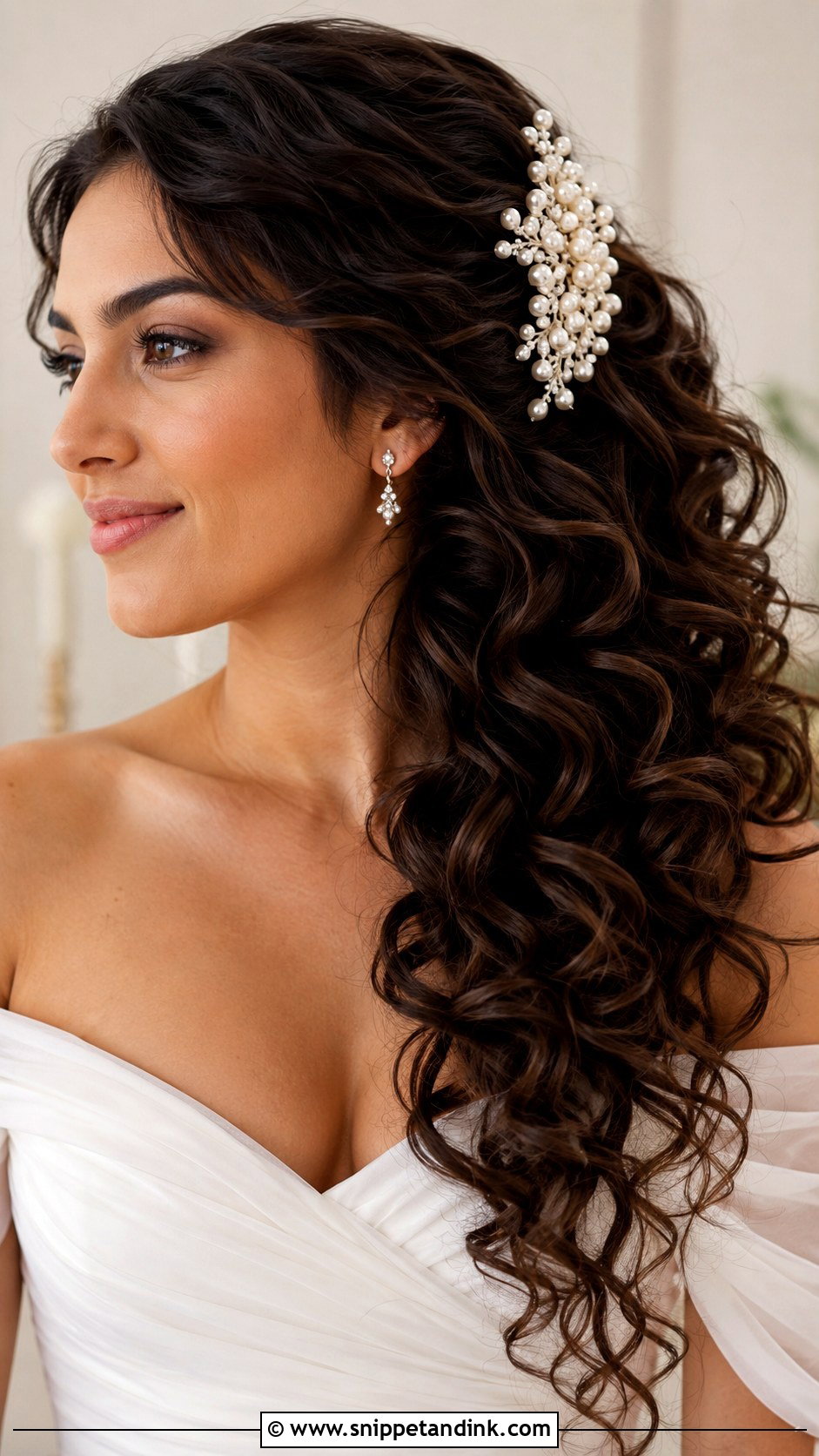
Long hair is heavy, and that’s the clip’s real job here: holding one section back against the weight pulling it down all night. I always build a pin base under the clipped section first, because a clip alone on waist-length hair slides by the first dance. Larger combs and barrettes read better against long lengths; a tiny clip vanishes in a sheet of curls. This is the style I suggest to anyone who wants her hair down but worries it’ll end up in her face.
14. Side Wedding Hair Clip With Low Bun
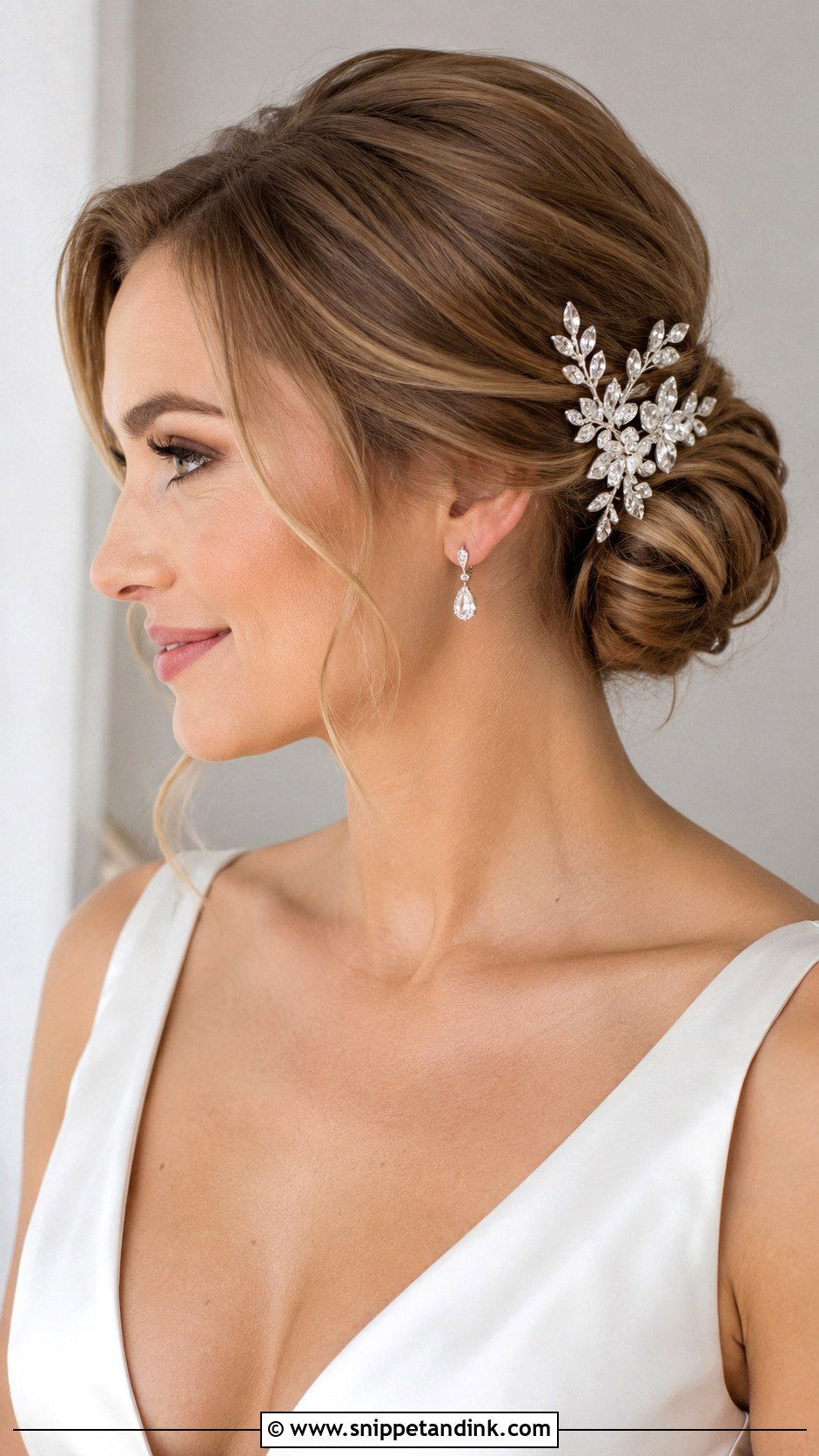
A low bun with a side clip is the combination I’d call safest for a long, formal day. The bun keeps everything secure, the clip gives the front view a focal point, and the nape stays clear for a veil, statement earrings or an open back. Pearl softens the shape, crystal sharpens it and gold warms it. I tuck the clip beside the bun when it should read quietly, or just above it if I want it seen in front-on photos. Smooth or textured, the bun itself is your choice; the clip just needs a firm edge to sit against.
15. Side Wedding Hair Clip With Waves
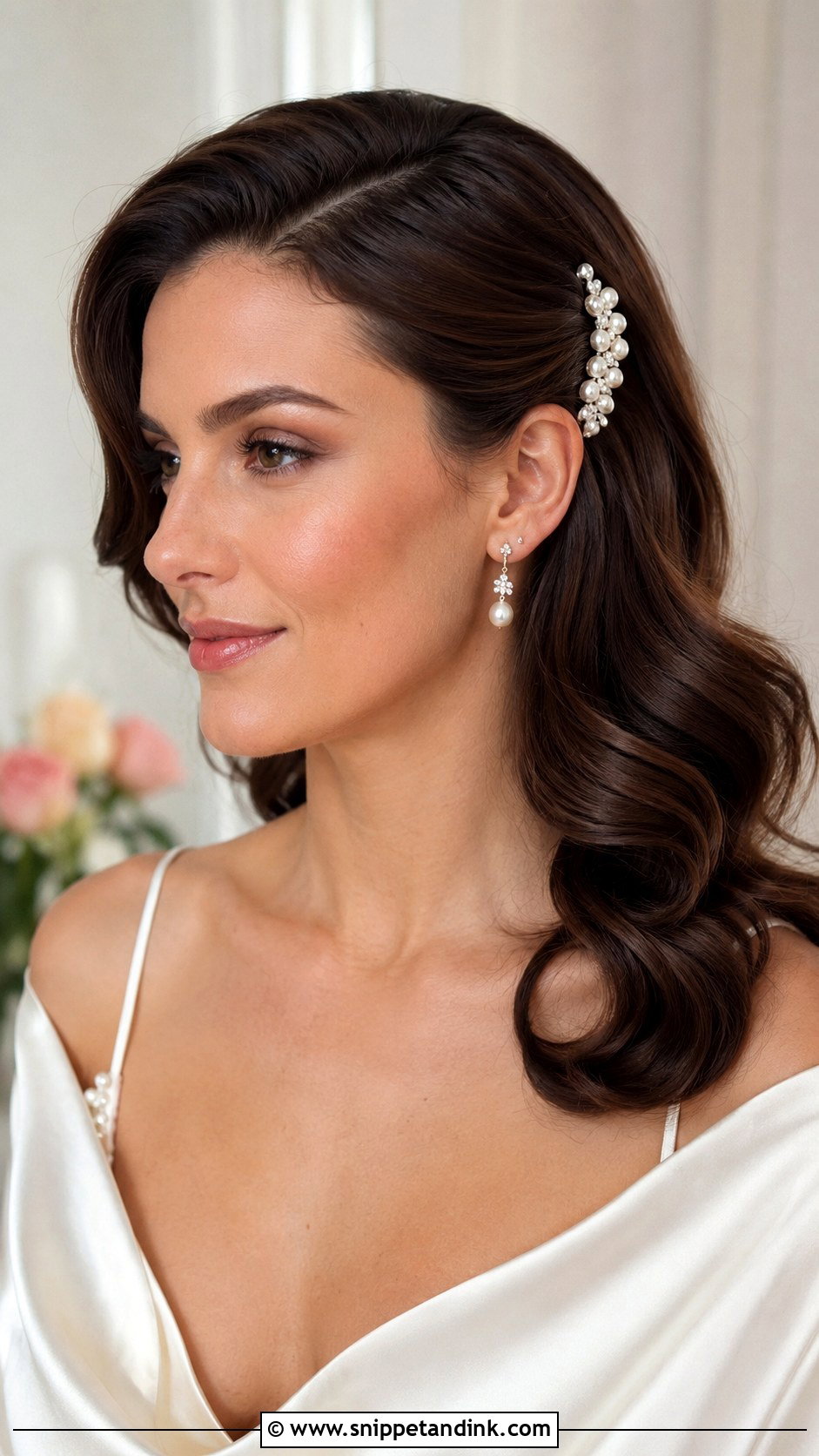
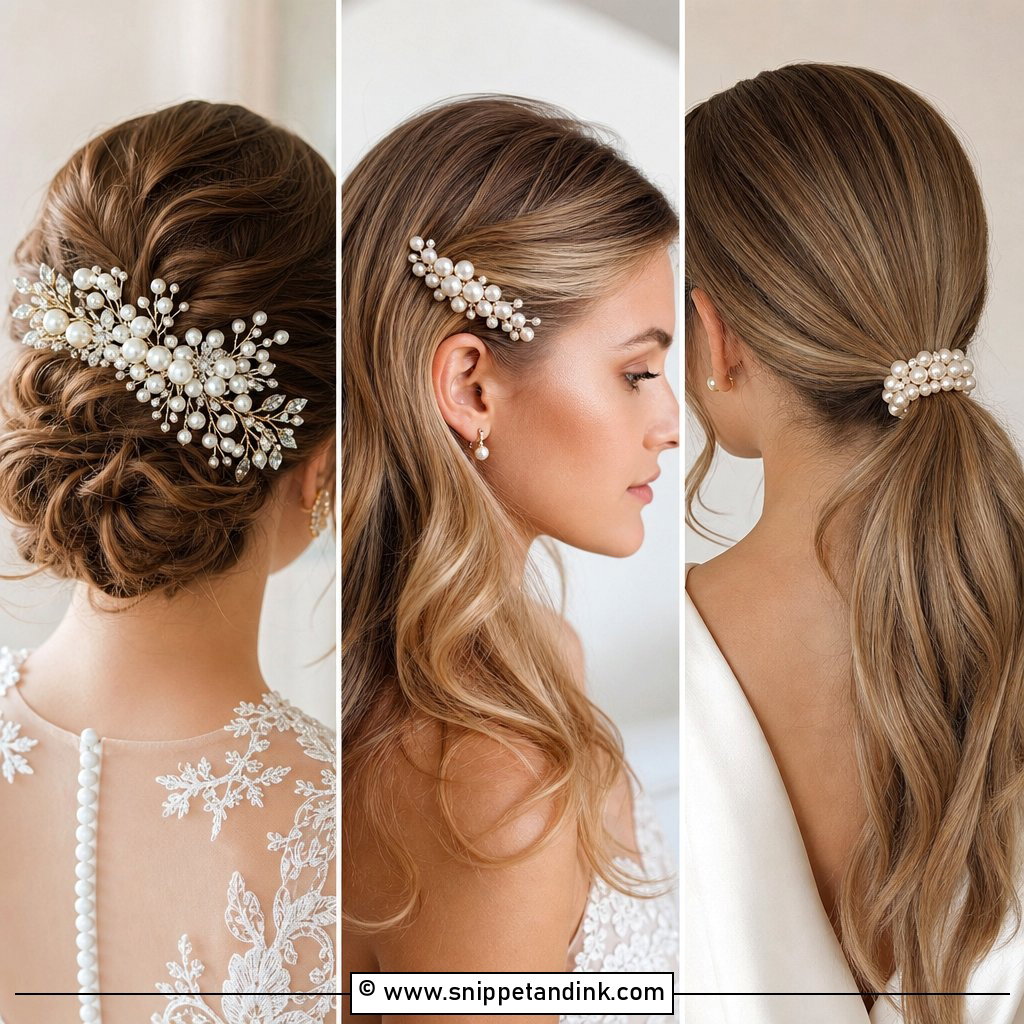
Waves with one side clipped back give movement on one side and an open face on the other, which is the asymmetry that makes this style photograph well. A deep side part makes it look dramatic; a centre part with one side pinned back looks softer. I set the waves first, let them cool fully, then place the clip so I’m not crushing a warm curl. Spray with a flexible hold, not a lacquer, so the waves still move when someone hugs you.
Your Stronger Profile Decides Which Ear Gets the Clip
People rarely think about it, but a side clip turns one side of your face toward the camera. I look at three things before I pick the side.
Where your natural part falls
Hair that’s fought against its part all day springs back by the evening. I usually clip the side with less hair, so the part stays where it grows and the clip pulls back the lighter section.
Where your partner stands
In most ceremonies the guests see one side of you for the whole service. If the clip faces your partner, the congregation sees the plain side. Ask your officiant where each of you will stand, and put the clip on the side that faces the guests.
Which side you photograph better
Scroll through your own photos and you’ll usually find you turn the same way. That’s the side to keep open, with the clip sweeping hair away from it.
Weighing a Clip in Your Hand Before You Buy It
Bridal clips vary hugely in build quality, and a photo online doesn’t tell you much. When a bride brings a new piece to me, these are the checks I run.
- Stones set in little metal claws stay put. Glued stones can drop out with heat and handling.
- Run a finger along the back edges. A sharp edge will snag a tulle veil or a lace sleeve.
- Open and close the clasp ten times. A weak spring clip gets looser through the day, not tighter.
- Plated metal can tarnish or rub off on cheap pieces, so keep it in a dry pouch away from perfume and hairspray until the morning.
- Buy it before your trial. A clip that shows up the week of the wedding never gets tested.
A Clip Belongs at the Hair Trial, Not Only on the Morning
A side clip is a small piece of metal, but it changes the shape of the whole hairstyle and decides which side of your face leads in photos. Choose the metal against your dress and jewellery, the size against your hair’s thickness and length, and the clasp type against how long your day will be. Then bring the actual clip to your hair trial. I can only test the grip and the placement with the real piece in my hand, and that half hour is what keeps it in place until the last song.
You'll Like These Ideas:


Leave a Reply