
An accessory changes what a hairstyle says. Simple waves turn romantic with a few pearl pins, a clean bun looks modern beside a sculptural comb, and a soft braid feels like a garden wedding once a thin vine runs through it. From my side of the chair, though, every accessory is also a structural question: what will it grip, how heavy is it, and will it still be where we put it after the ceremony hugs? The ideas below are all wearable on a real wedding day. Save the ones you like, and read the note on each, because the hair underneath decides whether the piece stays put.

Where the Piece Sits Changes the Whole Hairstyle
The same comb can look like three different accessories depending on where I put it. Before you settle on a piece, think about where it will live in your hair, because that decides what it needs to grip.
- At the crown or along the hairline: seen from the front in every portrait and during the vows. Headbands, tiaras and crowns live here, and they need lift underneath or they flatten the style.
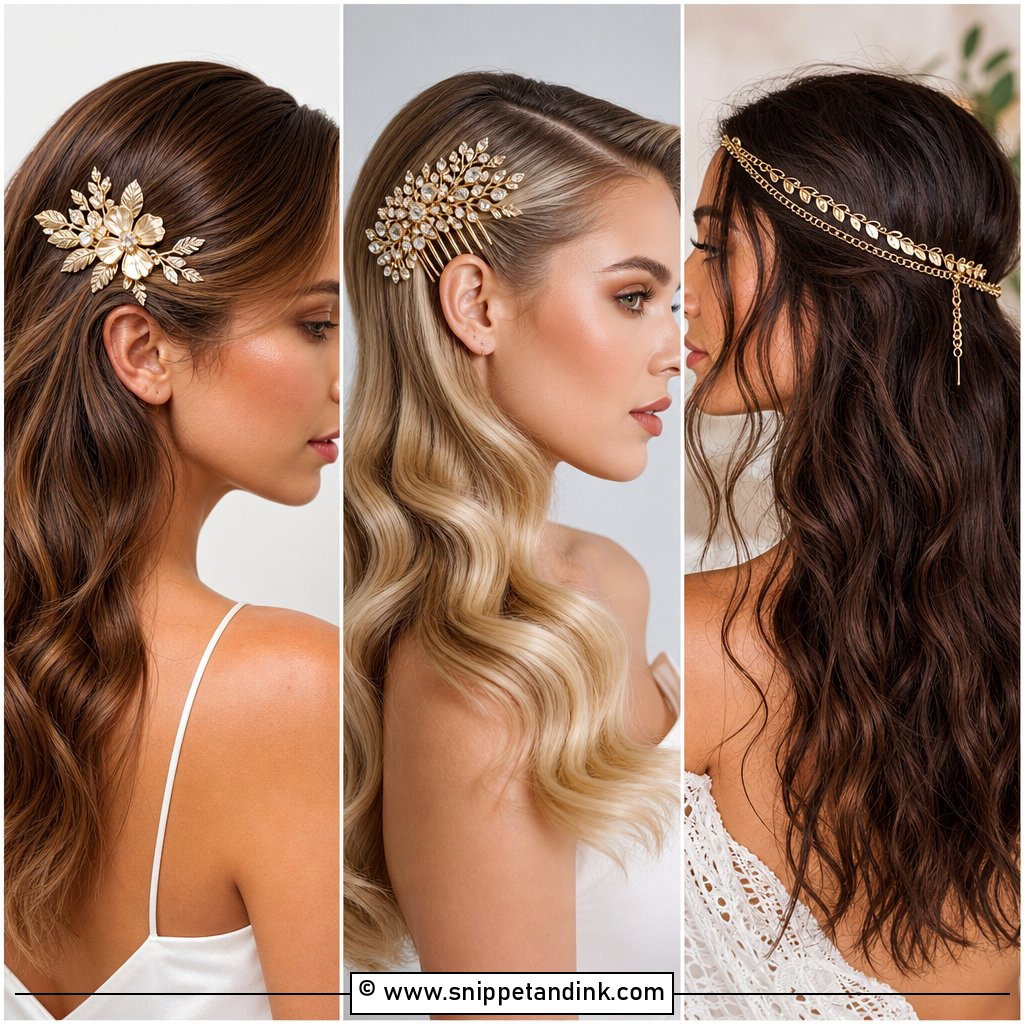
- Behind one ear: shows up in profile shots and frames an earring. Small combs, clips and floral pins suit it, anchored into a firm section, not loose waves.
- Above or beside a bun: the back view your guests watch through the whole ceremony. This is the strongest spot for heavy combs because the bun takes the weight.
- Below the bun at the nape: soft and understated, and often where a veil comb goes when you want the hairstyle to show.
If you’re wearing a veil, it claims one of these spots first. Plan the accessory around it, not the other way round.
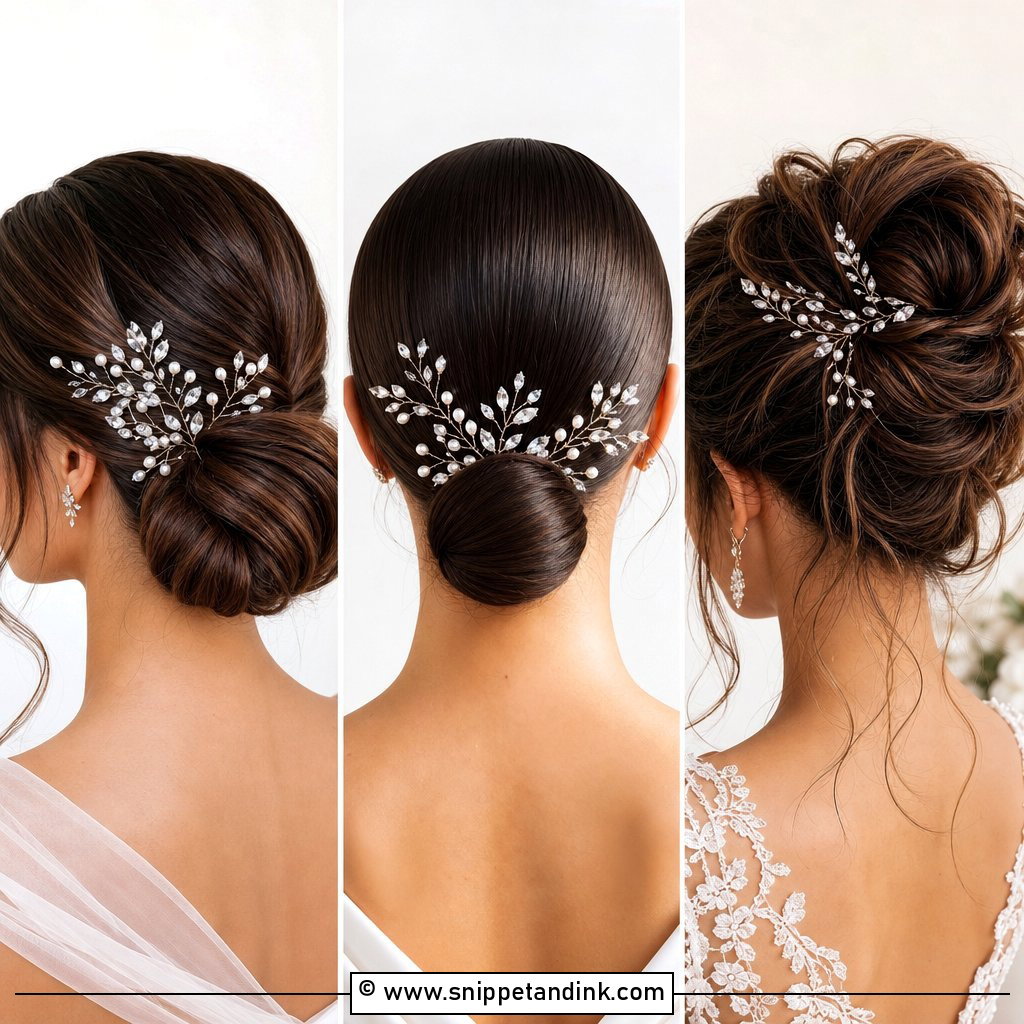
1. Pearl Wedding Hair Comb With Low Bun

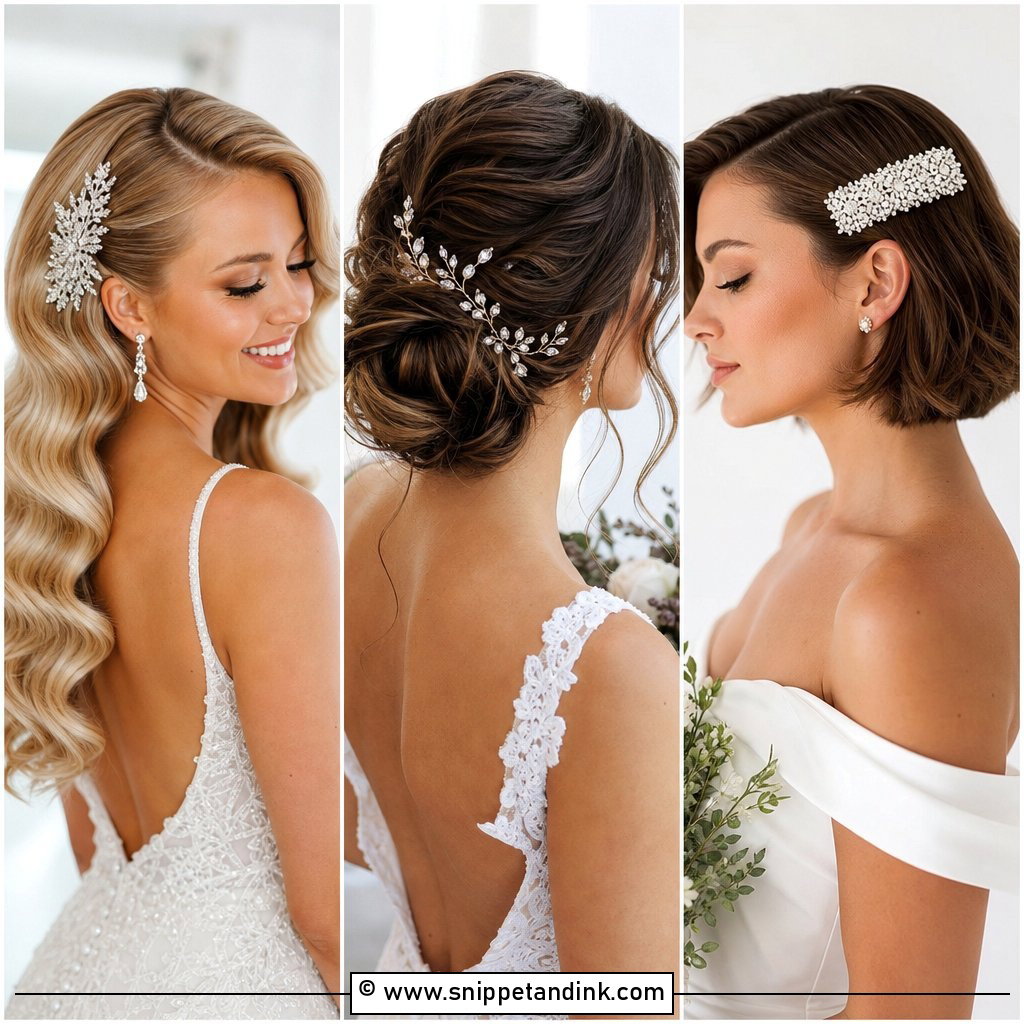
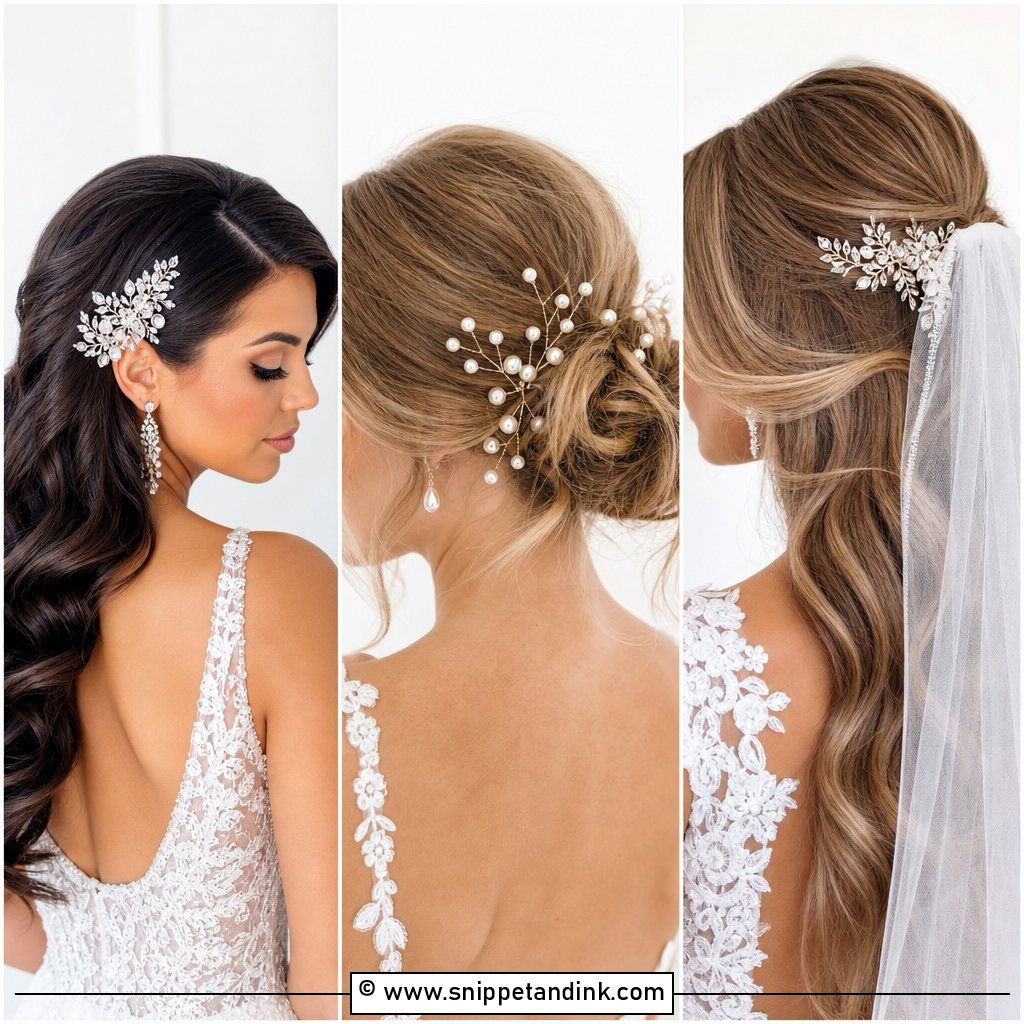
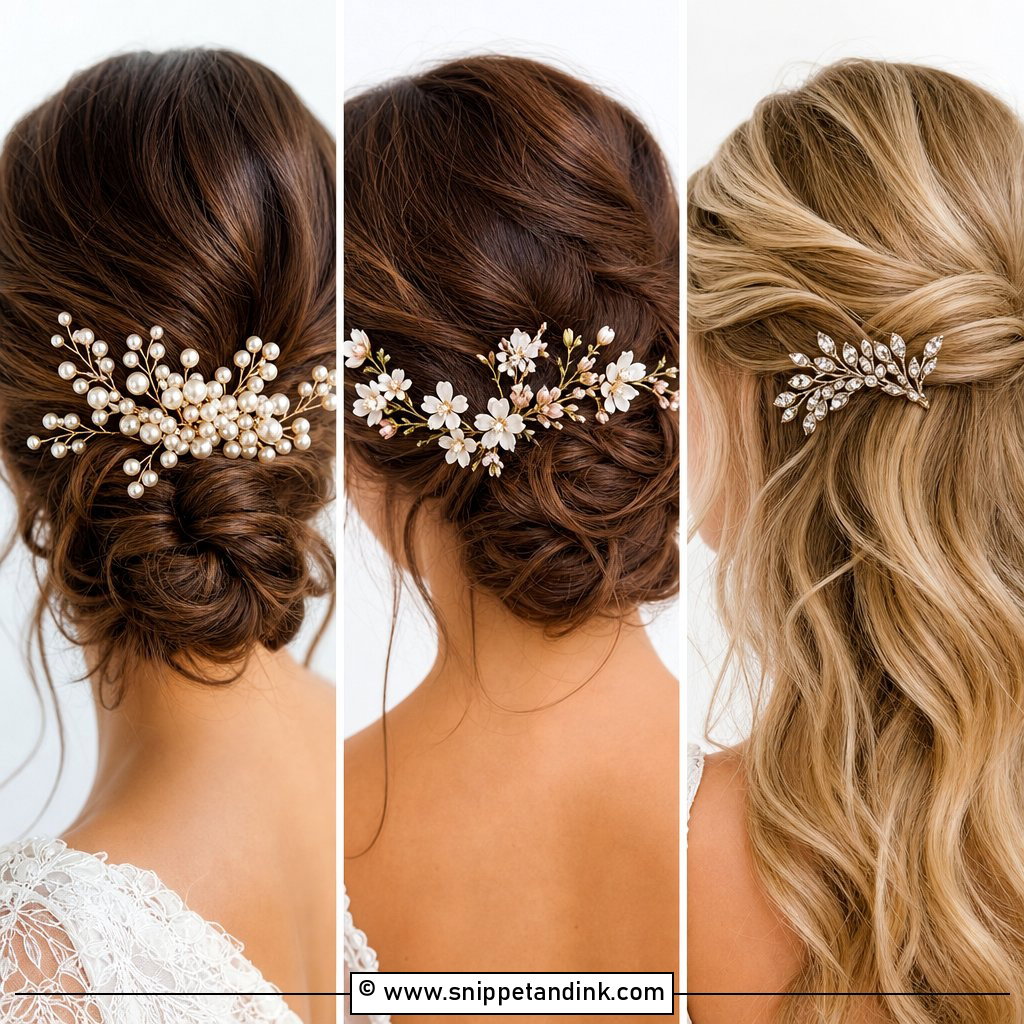
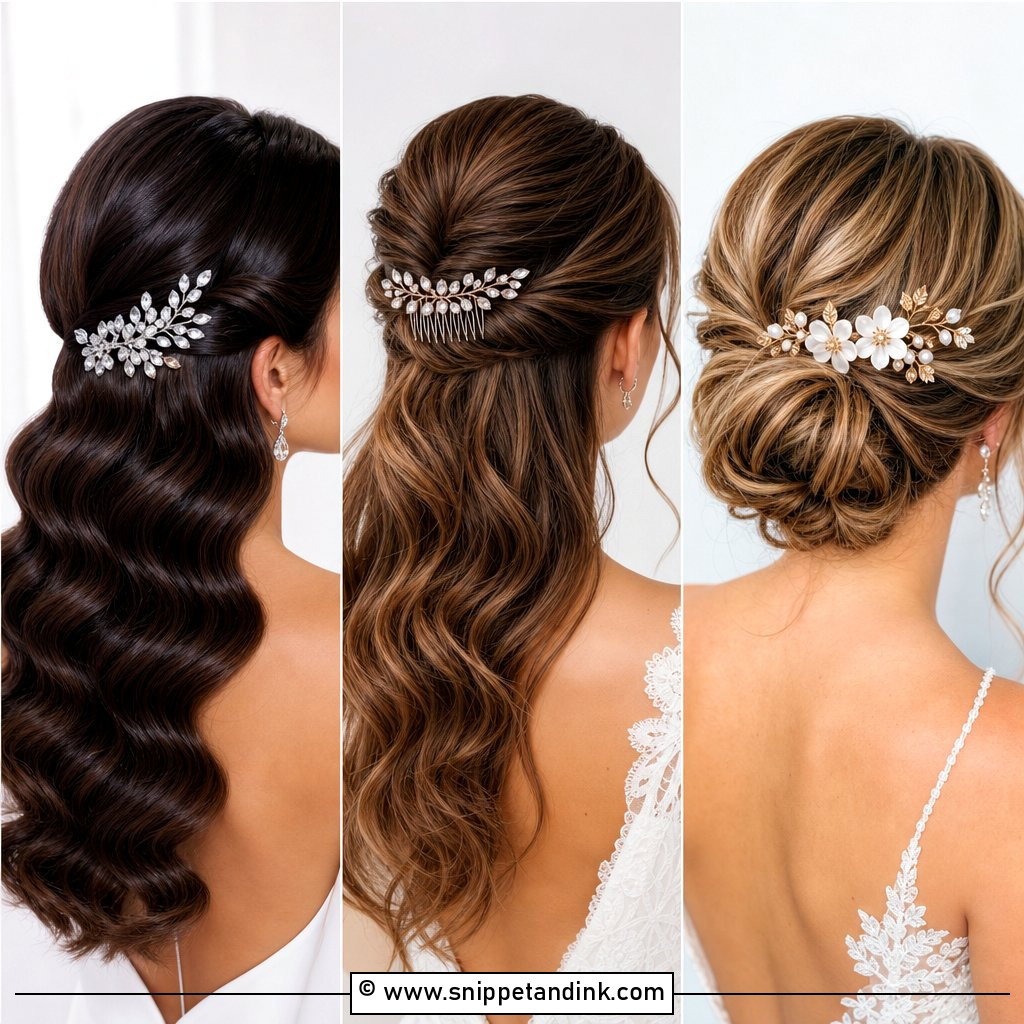
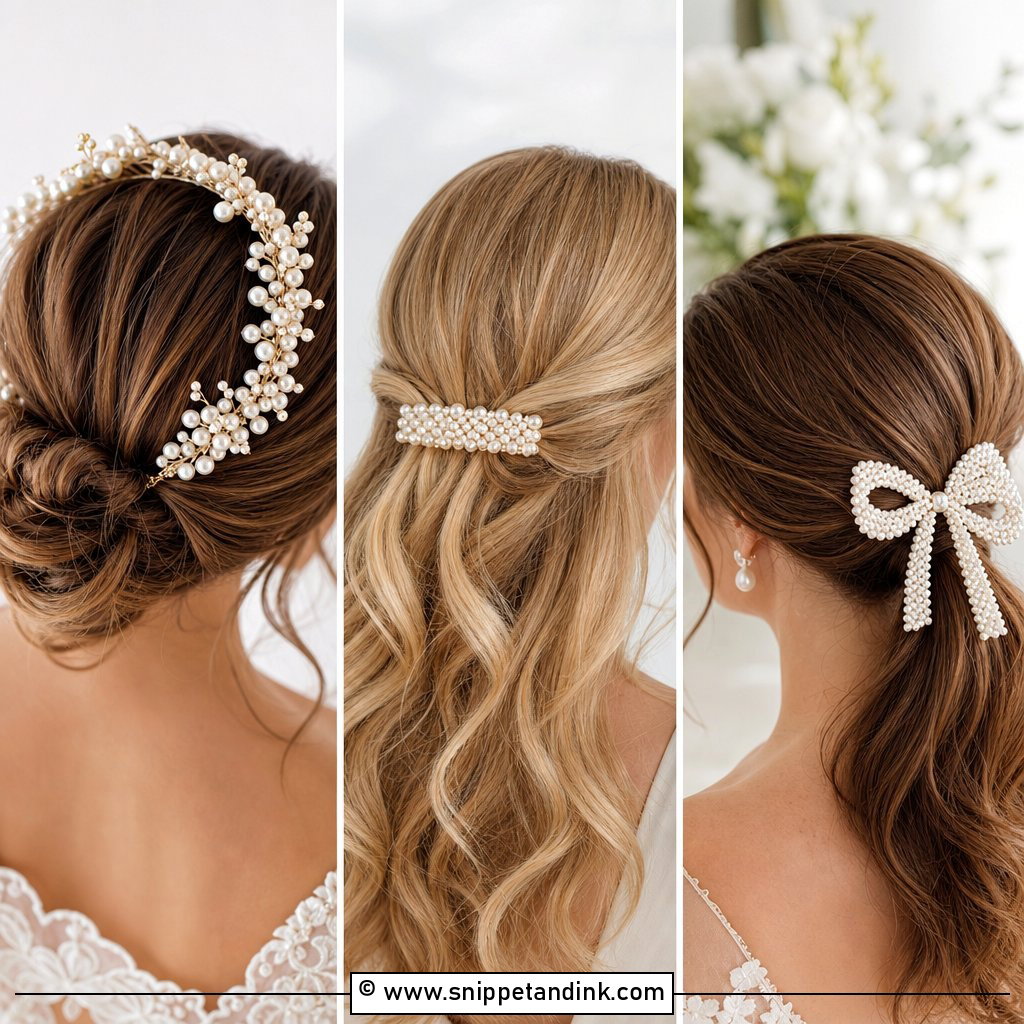
A pearl comb beside a low bun is about as classic as bridal hair gets, and it suits open-back gowns, off-shoulder dresses and traditional veils because the nape stays clean. I build gentle lift at the crown and leave a couple of smooth pieces at the face if the bride wants it softer. The comb goes slightly above or beside the bun, never pushed into the middle of it, where the pearls disappear in the hair. Medium to long hair suits this best. On fine hair I add clip-in padding inside the bun so it’s big enough to take the comb’s teeth.
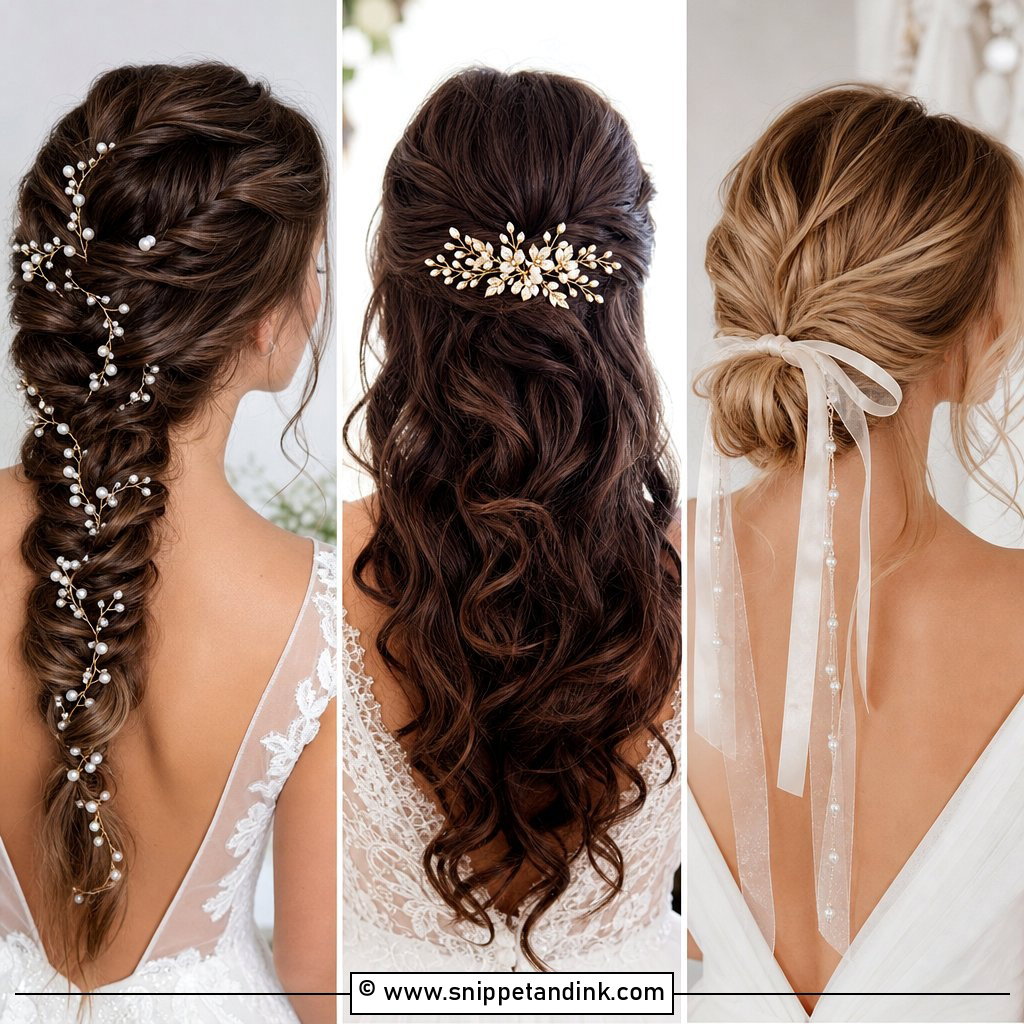
2. Crystal Wedding Hair Vine With Loose Waves

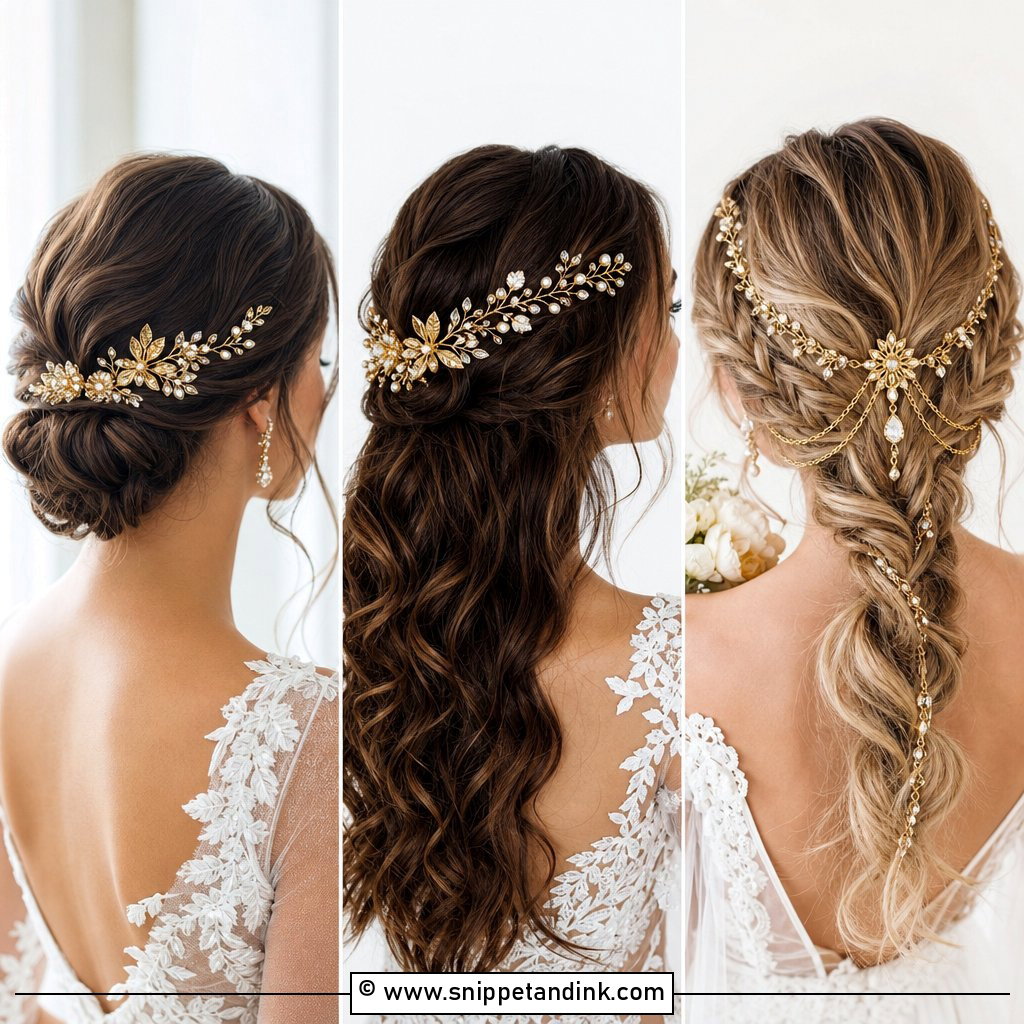
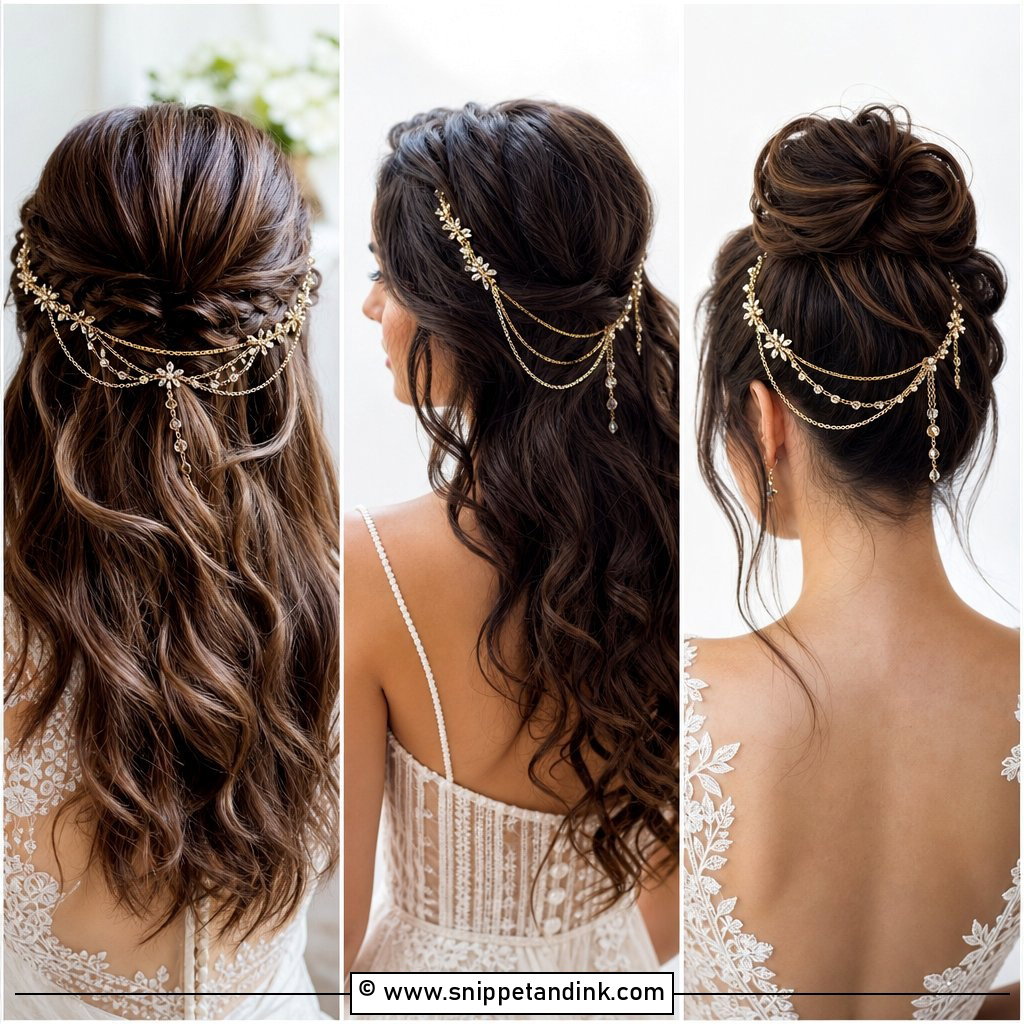
Hair worn down is the hardest base for a vine, because there’s no bun to anchor into. So I pin the vine at four or five points along its length, each pin catching a small twisted section underneath the top layer of waves. It can run along one side, sit like a slim crown, or rest across the back where the waves meet. A vine gives you a clear bridal detail with your hair down, without a heavy veil. Ask for flexible hold on the waves. Stiff, crunchy hair stops the crystals from settling into it, and the vine ends up looking stuck on.
3. Floral Wedding Hair Pins With Half Up Hair

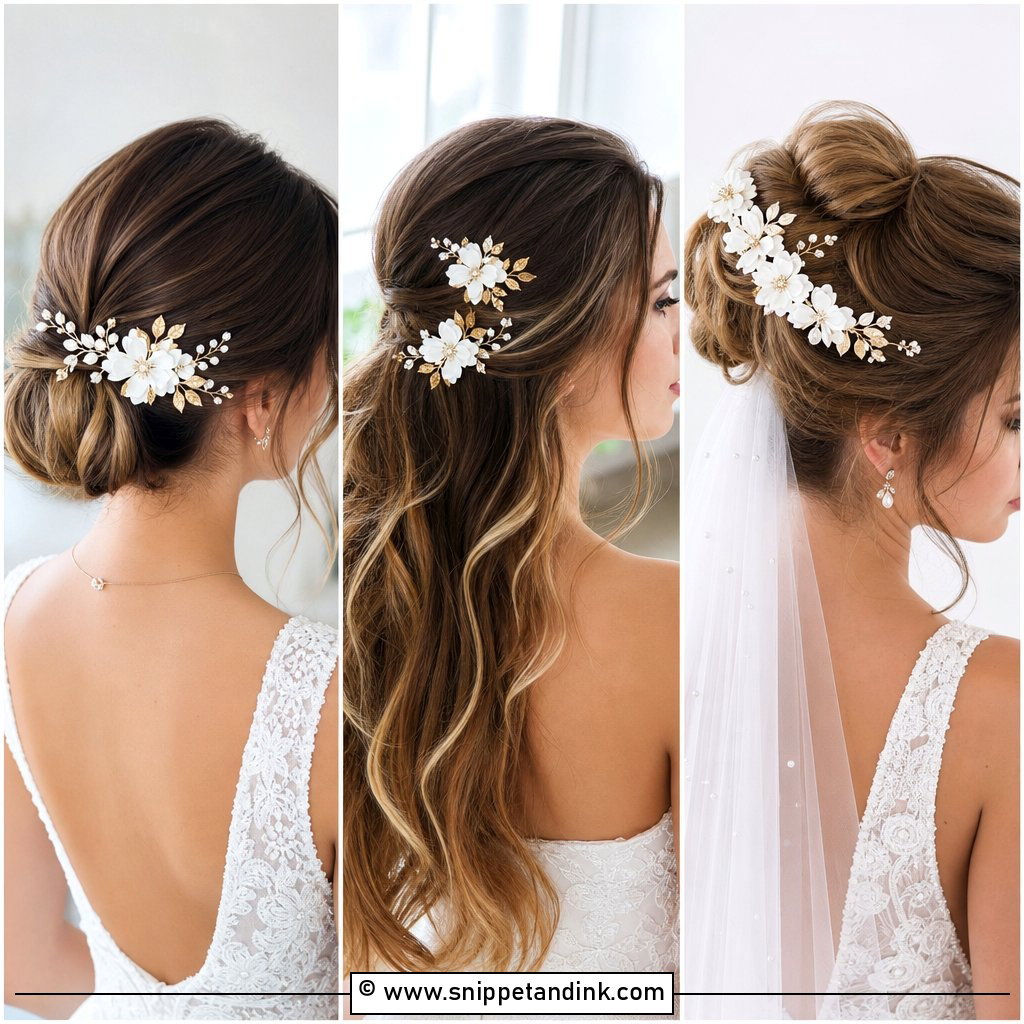
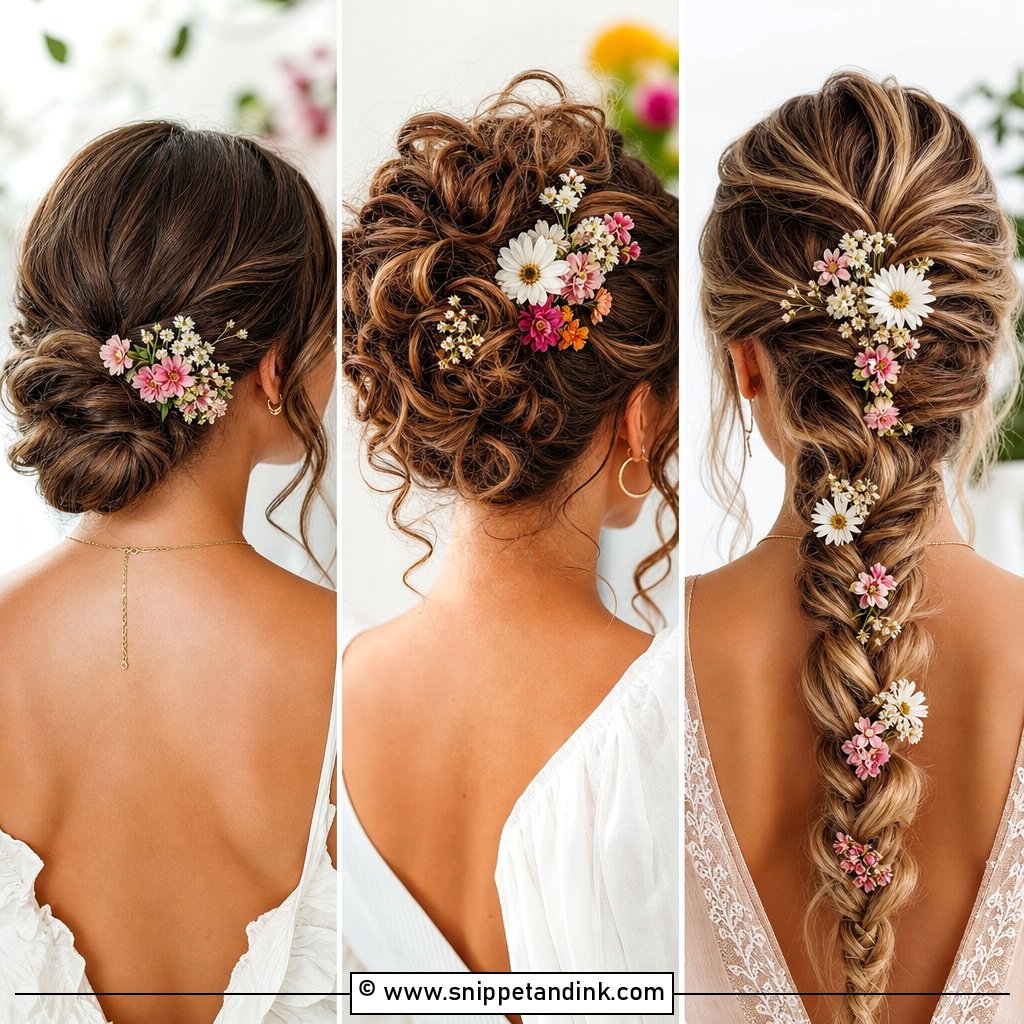
Half up hair with a few floral pins is my answer when a bride wants flowers but not a whole crown. The half up section lifts the crown and keeps length showing at the back, and the pins go around the twist or in one small cluster. Scale is everything here. Three or four small flowers on a fine-haired bride look delicate, while the same number on thick, voluminous hair can vanish, so I size the flowers to the hair, not to the photo. Curls, waves or a smooth straightened finish all work. It suits spring, summer and garden weddings.
4. Bridal Headband With Sleek Low Ponytail

With a sleek low ponytail, a bridal headband adds the structure the ponytail deliberately leaves out. It’s a clean, modern pairing for minimalist gowns, square and high necklines and city weddings. The roots need to be smooth for the headband to lie flat; any bump at the crown lifts the band at the front. I tie the ponytail before placing the band, then check from the side that the two line up. Satin, pearl, crystal or metallic bands can all work, chosen to echo your dress and jewelry. The ends can stay straight, softly waved or curled.
5. Gold Wedding Hair Pins With Textured Updo

Gold pins need texture to look natural, and a textured updo, whether loose, twisted, braided or softly pinned, gives them plenty. I tuck them in at different angles rather than lining them up, so they look as if they landed in the hair. They do real work too, holding the small pieces that always escape an updo. Ivory and champagne gowns, warm makeup and gold jewelry suit them. Keep every pin the same gold tone; mixing yellow and rose gold in one updo reads as untidy, not eclectic.
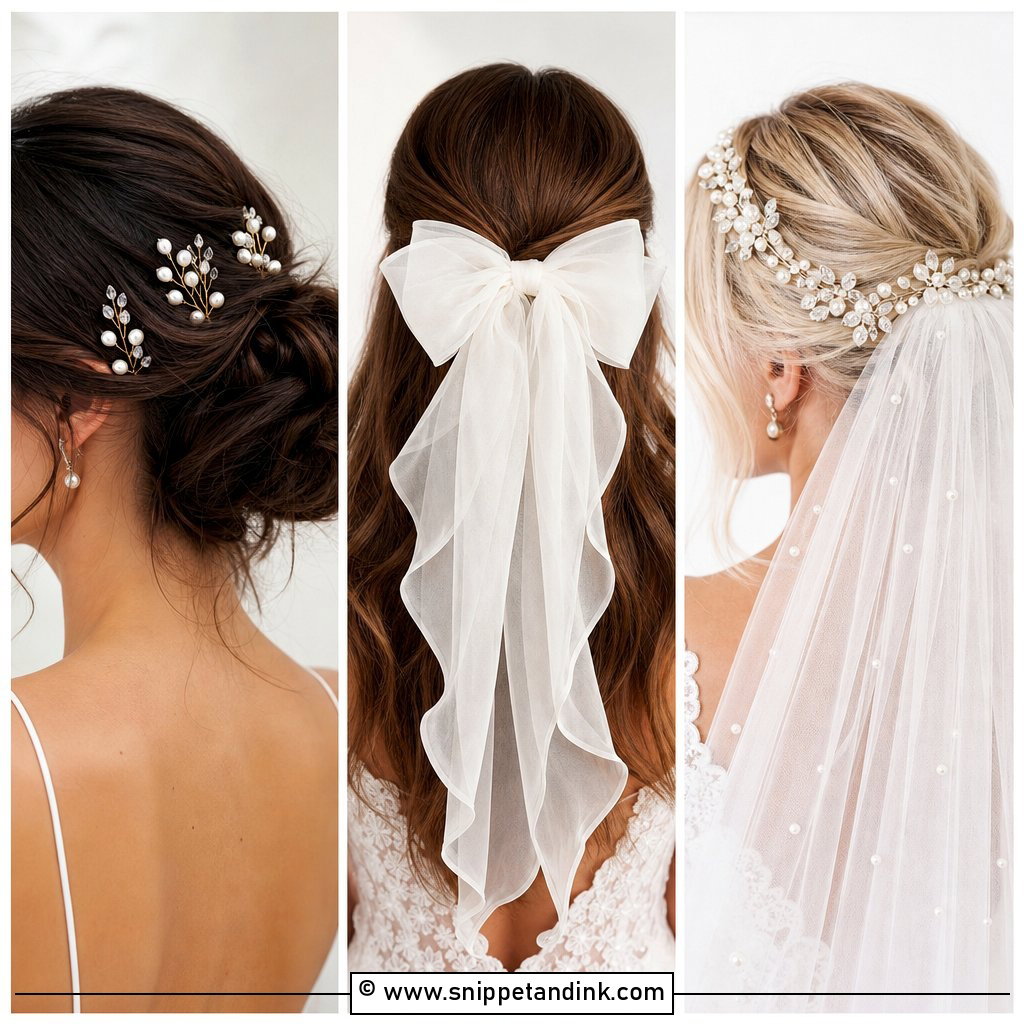
6. Bridal Bow With Soft Curls

Bows have moved from bridal showers to the ceremony itself. Satin and velvet hold their shape best; organza and silk are softer but crush if you lean back against a chair. I tie the bow at the base of a half up section, a low ponytail or a tied-back style, over curls that are smooth and defined so the ribbon has a neat surface. Long tails are romantic but tangle in a veil, so if you’re wearing both, keep the tails short. Civil ceremonies and classic weddings suit it. Keep jewelry quiet so the bow is the one detail people see.
7. Wedding Tiara With Classic Updo

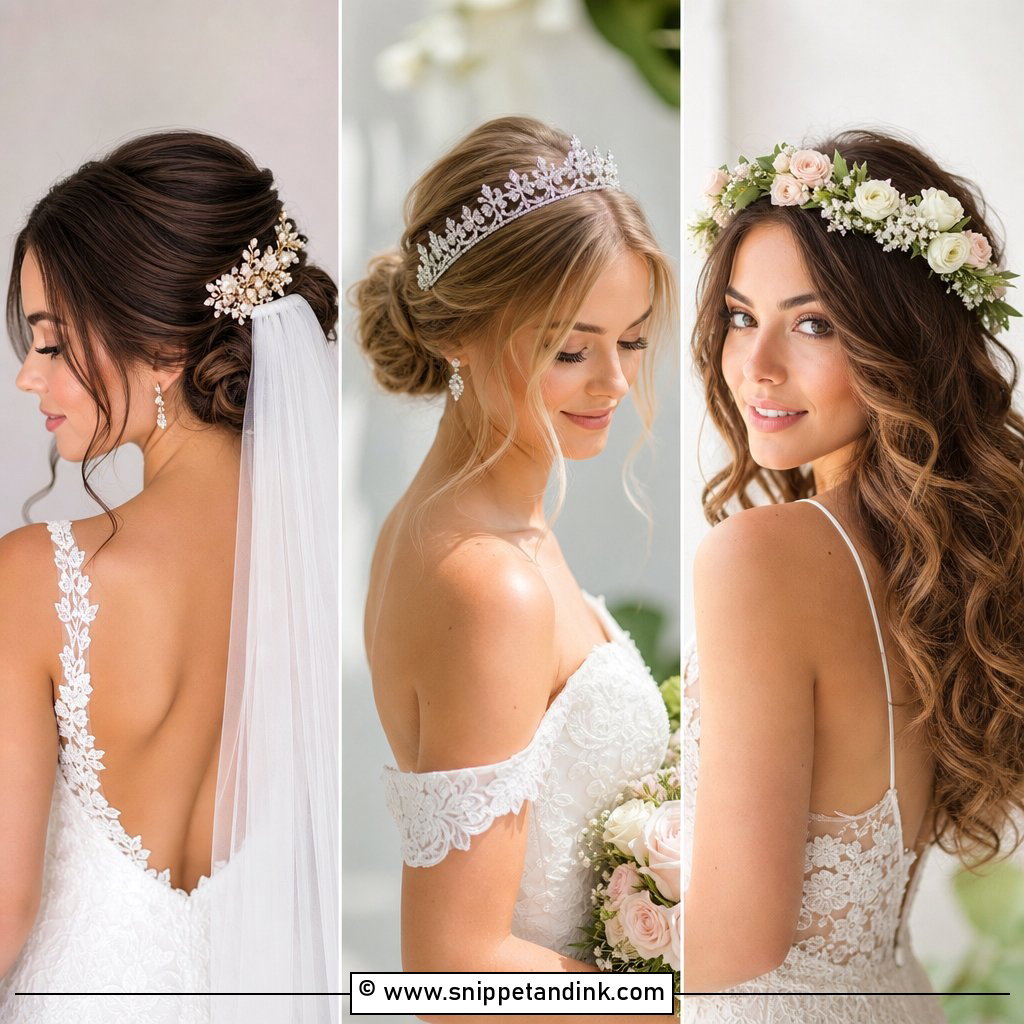
A wedding tiara with a classic updo is the most traditional pairing here, and it depends on balance. A tall, ornate tiara needs a smooth, refined updo underneath. A delicate one leaves room for curls, twists and softer face-framing pieces. The tiara has to sit in a structured base, so I make a small anchor braid just behind its line, then stitch the tiara’s end loops to that braid with pins. That’s what stops it tilting when you bow your head during the vows. Ball gowns, cathedral veils and formal venues suit it, and the open neck lets earrings show.
8. Wedding Hair Clips With Hollywood Waves

Hollywood waves are one connected shape, brushed out from curls until they ripple together, and clips at the temple add the bridal note. I always put the clips on the smaller side of a deep side part, so the full side shows the wave pattern uninterrupted. Pearl clips are softer; crystal ones look more formal. The waves need a firm set, because once brushed out they can’t be redone in a hurry. Fitted gowns, satin and evening receptions are the natural match, and it’s a good choice if you want your hair down but controlled.
9. Bridal Hair Comb With French Twist

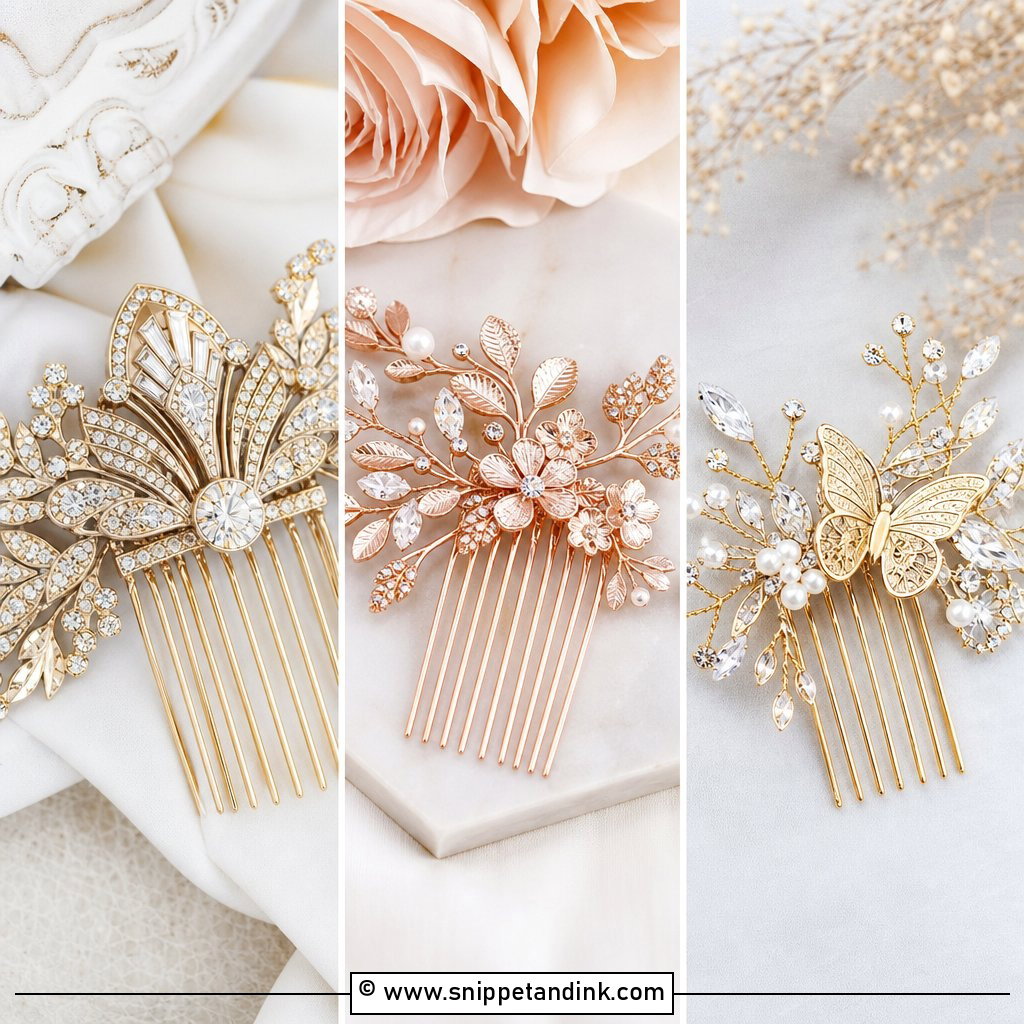
A French twist gives height and a clean vertical seam, and a comb along that seam or at the side gives it a focal point. It’s right for formal ceremonies, courthouse weddings, and elegant indoor venues. Medium to long hair suits it; shorter hair can manage with extensions or padding. I slide the comb in last, teeth angled into the twist rather than across it, so it locks into the roll. Keep the front smooth for a classic finish or loosen a few pieces to soften it. Pearl, crystal or metal leaf combs can match almost any dress.
10. Flower Crown With Boho Wedding Waves

Boho waves under a flower crown should move freely, so I set loose bends rather than defined curls. The crown should suit the scale of the wedding: tiny blooms look delicate and modern, larger flowers make a stronger boho statement. Tie the colors to your bouquet, but avoid heavy or quick-wilting flowers, which droop against the warmth of your head by mid-afternoon. Fresh is lovely; well-made silk is often easier for a long day outdoors. It suits beach, garden and rustic venues, and pairs with lace dresses and soft makeup.
11. Bridal Hair Vine With Braided Updo

A bridal hair vine and a braided updo help each other. The braid gives the vine something to weave through, and the vine adds shimmer, pearls, leaves or tiny flowers to the texture. It can follow the curve of the braid, wrap the bun or sit across the back like a small halo. Thick hair braids full on its own; fine hair often needs extensions to give the braid enough width. I thread the vine wire through the braid’s loops instead of laying it on top, which hides the wire and keeps it from catching on the veil.
12. Pearl Hair Pins With Messy Bridal Bun

A messy bridal bun has to look airy without being loose enough to drop. I build it from small pinned sections with controlled texture and gentle volume, then match the face-framing pieces to your natural part so they fall where your hair wants to go. Pearl pins dotted around the bun take the place of one large accessory. It works with veils, backless gowns, lace and simple modern dresses. If your wedding is long, this is one of the comfier choices, because the hair stays off your neck and the weight is spread over many small pins instead of one big anchor.
13. Bridal Barrette With Side Swept Curls

With side swept curls, the bridal barrette is doing structural work. The curls go over one shoulder and the barrette holds the opposite side back, so it has to be strong enough to take that pull. Many pretty barrettes have weak springs; test yours by clipping it into a thick section and shaking your head before the wedding. Strapless and one-shoulder gowns and statement earrings suit the shape. Pearl and crystal read classic, gold and floral designs warmer. Keep the curls smooth through the ends.
14. Wedding Veil Comb With Low Chignon

A low chignon is the most reliable base a veil can have, and where the comb sits relative to it changes the look. A comb above the chignon lifts the veil and adds volume and drama. Below it, the veil falls softer and the hairstyle shows through. I decide this at the trial with the actual veil, because a heavy cathedral length pulls backward and almost always needs to sit above the bun, anchored into the chignon itself. Simple, lace and pearl veils all work. A smooth bun is traditional, a lightly textured one more romantic, and the back view photographs well during the ceremony.
15. Bridal Crown With Long Wavy Hair

A crown on long waves gives you the fairytale piece without an updo. The waves need body through the mids and ends and enough hold at the top to support the crown’s weight. A delicate crown stays romantic; a more detailed one suits formal gowns and grand venues. The crown is pinned through its frame into small hidden twists on each side, fitted before the ceremony, not slipped on as you walk out. A center part and soft face-framing layers suit it, and a veil can attach just behind the crown for depth.
Removing the Veil Without Wrecking the Hair Under It
Most brides take the veil off between the ceremony and the first dance, and that’s when combs drag pins out with them. I show whoever will be helping you how to do it at the trial. It takes thirty seconds when done properly.
- Hold the hair just in front of the comb flat with one hand.
- Lift the comb back out in the same direction its teeth went in, never straight up.
- Check the bun or twist with your fingers and re-push any pin that came loose.
- If you’re adding a second accessory for the reception, a smaller comb or a few pearl pins, slide it into the spot the veil comb just left, where the anchor is already built.
If a vine snaps or a pearl falls off
Thin vine wire can break where it bends. Give your maid of honor a few spare bobby pins in your hair color and a small pair of scissors. A snapped vine can usually be trimmed and pinned as two shorter pieces, and nobody in the room will know.
Will Your Hair Hold It Until the Last Dance?
A hair accessory has to earn its place twice: once in how it looks, and again in how it holds through photos, hugs, dancing and the ceremony itself. Think about your length, texture, veil placement, neckline, jewelry and venue before you buy, then bring the piece to your trial so the placement and anchors can be tested. Small things such as comb angle, pin color and ribbon length change how it reads in photos. Pearls, flowers, crystals, bows, vines and crowns can all work. The right one is the piece your hair can actually carry.
You'll Like These Ideas:


Leave a Reply