
The color that looks best in wedding photos is rarely the dramatic one. In my chair, the brief that works is usually your own shade made richer: warmer at the face, glossier through the lengths, with enough depth that an updo doesn’t read as one flat block. That still leaves plenty of room. Below are fifteen shades, from creamy blondes and copper to glossy brunettes and soft black, with what each one takes to get there and keep it looking fresh until the ceremony.
Warm, Cool or Neutral? Read Your Undertone First
Almost every shade below comes in a warmer and a cooler version, and getting that half right matters more than the color’s name. Your skin’s undertone, not its depth, decides whether a blonde makes you glow or look tired. I run through a few checks in daylight, without makeup:
- Hold gold and then silver jewelry against your face. If gold looks livelier, you lean warm; if silver does, cool; if both look fine, you’re probably neutral.
- Drape bright white, then ivory, under your chin. Cool undertones usually brighten in white, warm ones come alive in ivory.
- Think about the sun. Skin that tans golden easily tends to be warm; skin that pinks first often leans cool.
Warm undertones usually suit honey, butter, caramel, chestnut and copper. Cool ones look sharper in champagne, ash-leaning brunettes and soft black. Neutral can borrow from both, which is why beige blonde is such a safe pick. These are starting points; a strand test settles it.
1. Bridal Honey Blonde Hair Color
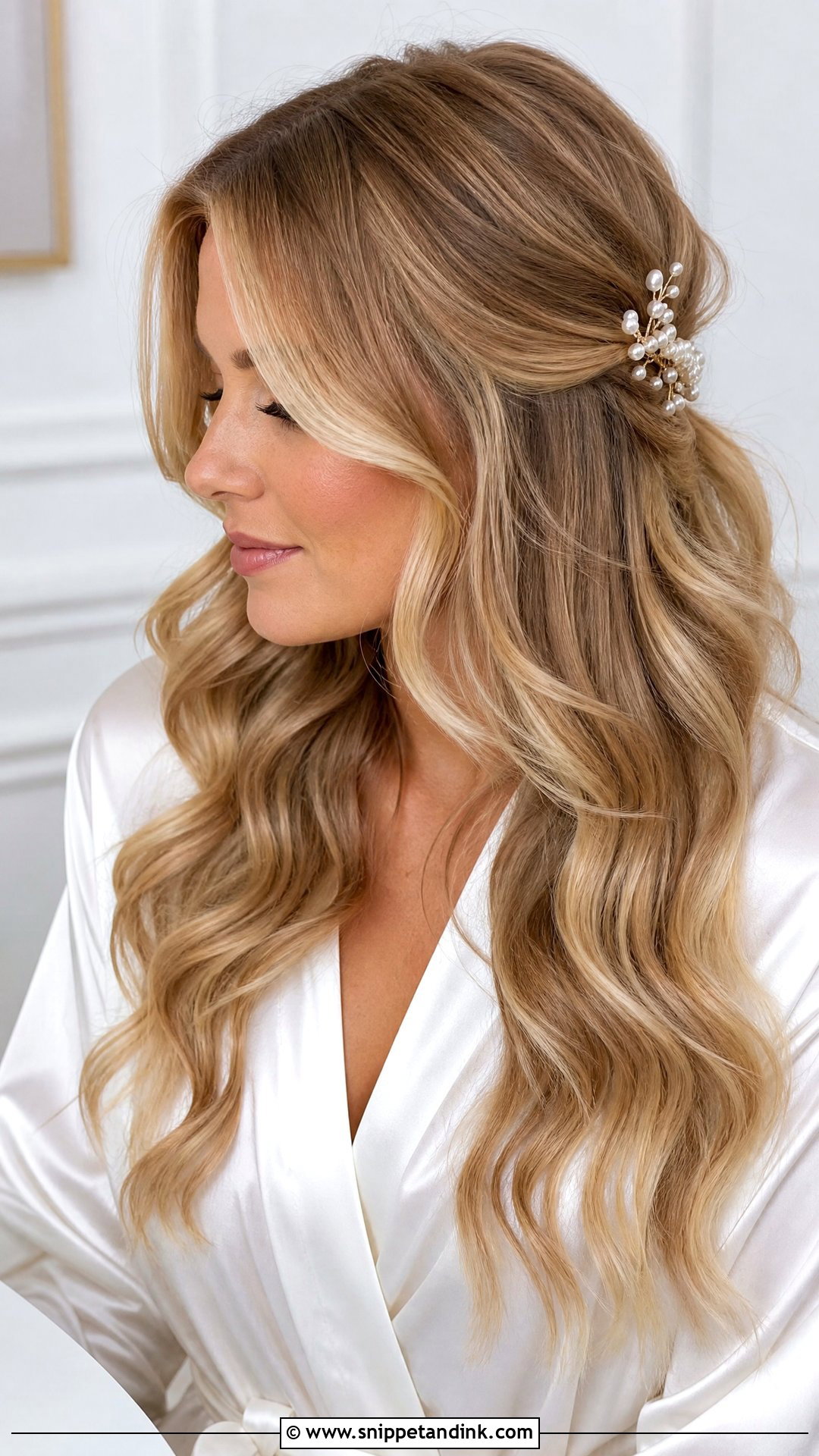
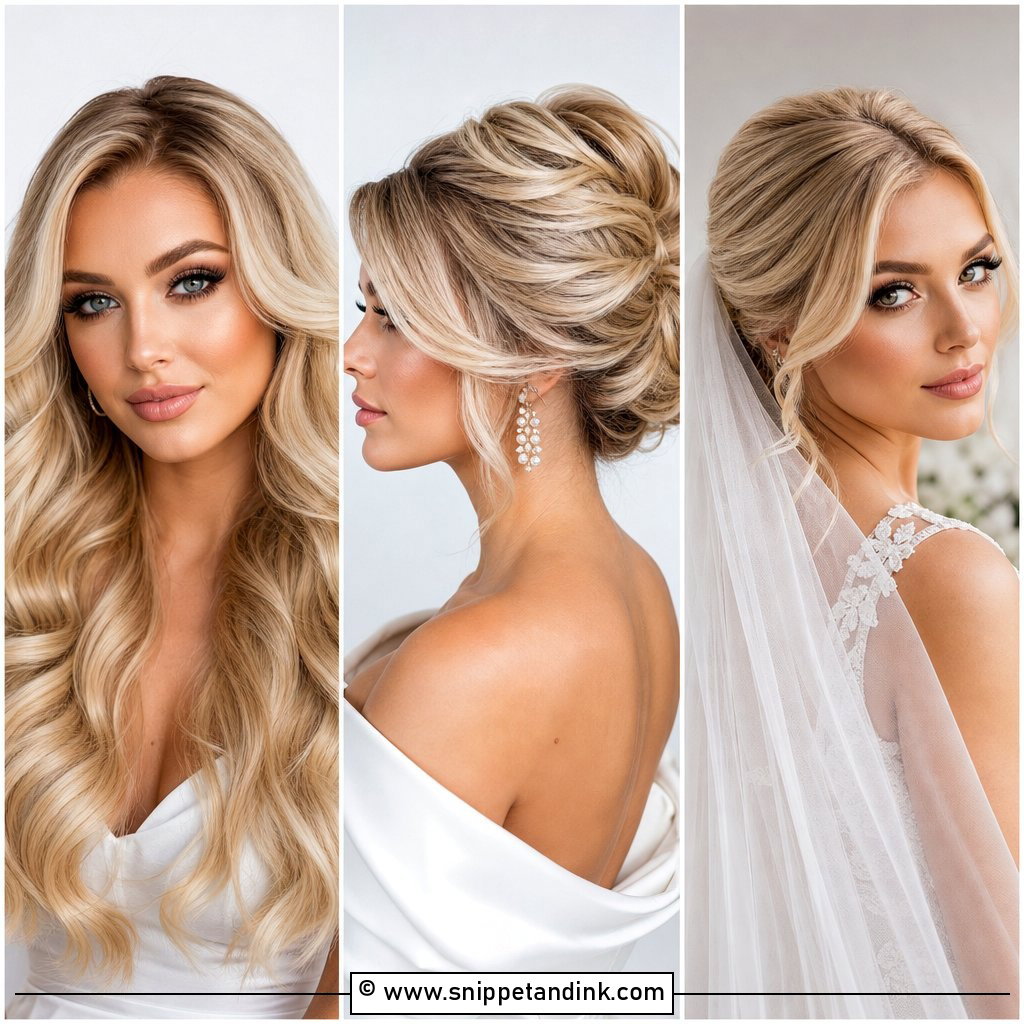
Honey is a warm, golden blonde that sits a step below bright, which is why it forgives so much. I paint it with dimension through the mids and ends rather than as one flat shade, and I usually add a shadow root so a delayed appointment doesn’t show. Loose waves, half-up hair and soft buns let the warm pieces catch the light. Spring, summer, garden and beach weddings suit it. Very cool skin can look a little sallow next to it, and that’s when I lean toward beige.
2. Bridal Champagne Blonde Hair Color
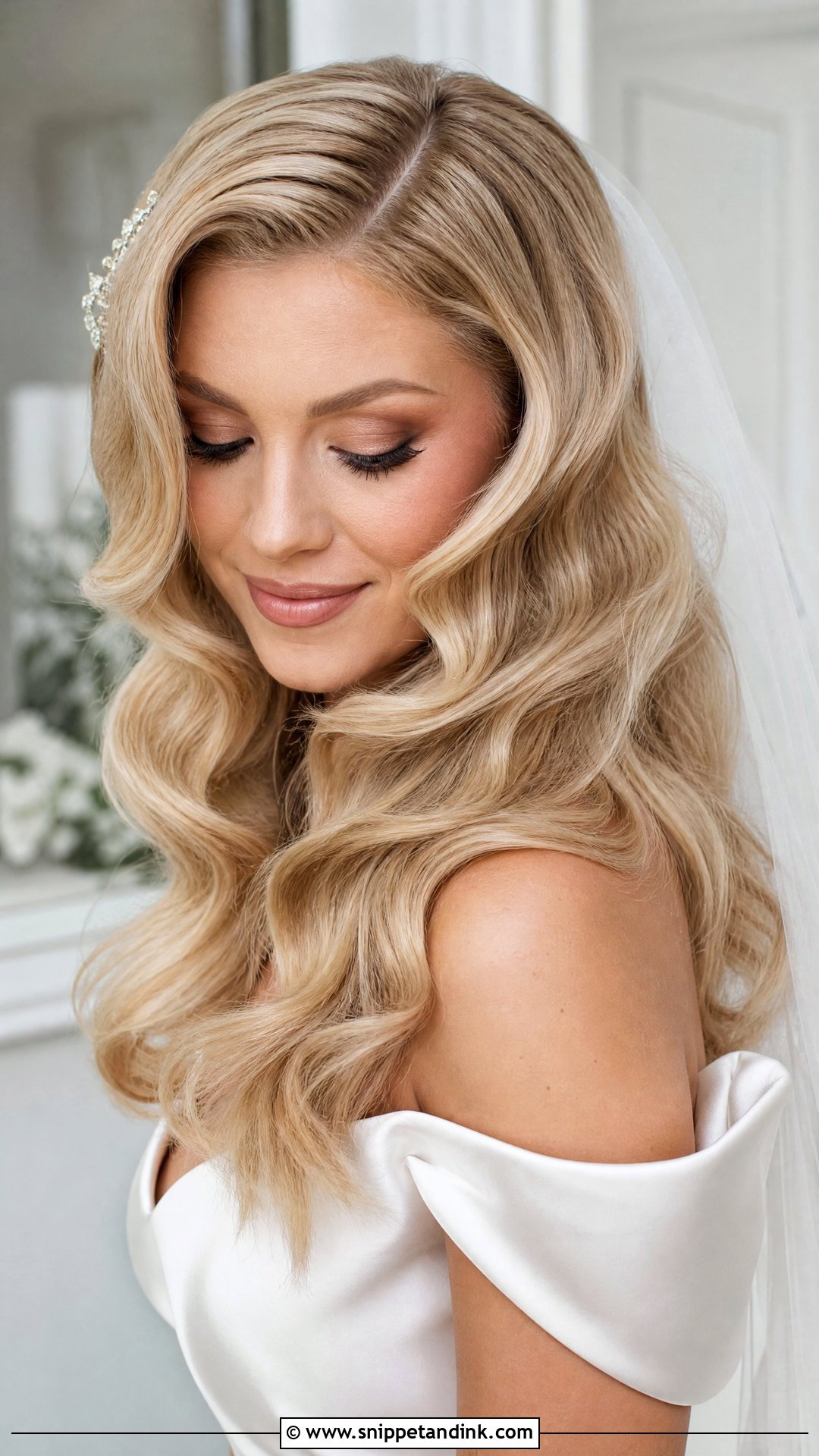
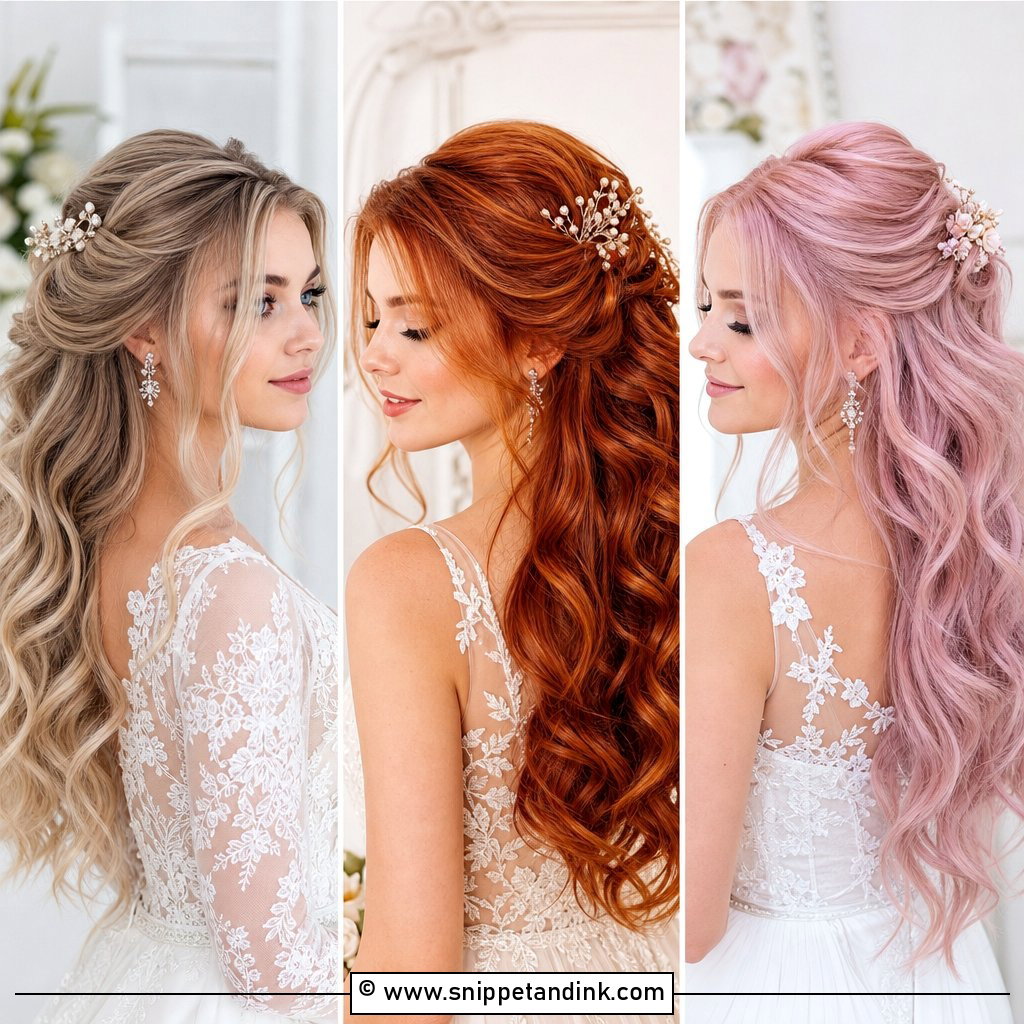
Champagne is all about the toner. The lift underneath may be similar to other blondes, but the creamy, in-between finish comes from a carefully mixed gloss, and that gloss fades. So I plan the final toning appointment close to the wedding, roughly a week or two out. It looks polished with satin, pearls, Hollywood waves and sleek low buns, and it flatters many skin tones because it is neither warm nor cool.
3. Bridal Beige Blonde Balayage
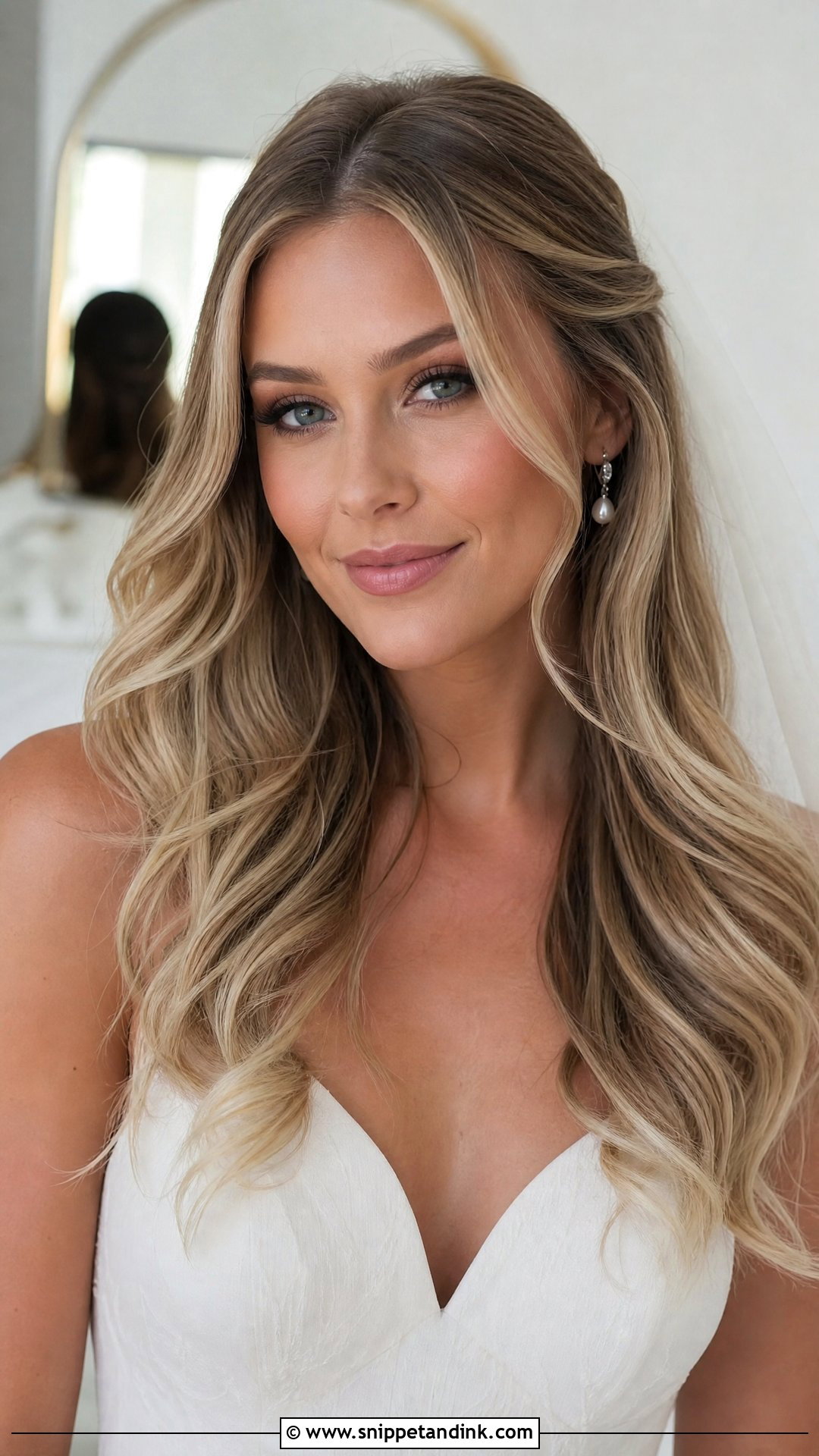
Beige sits between golden and ash, which makes it one of the safest blondes for photos. Bridal beige blonde balayage puts that brightness around the face and through the ends while the roots stay soft. Fine, blended ribbons make curled and waved styles look fuller. I always ask for fine sections over chunky contrast, because the blend is what lets it grow out quietly on the honeymoon.
4. Bridal Butter Blonde Hair Color
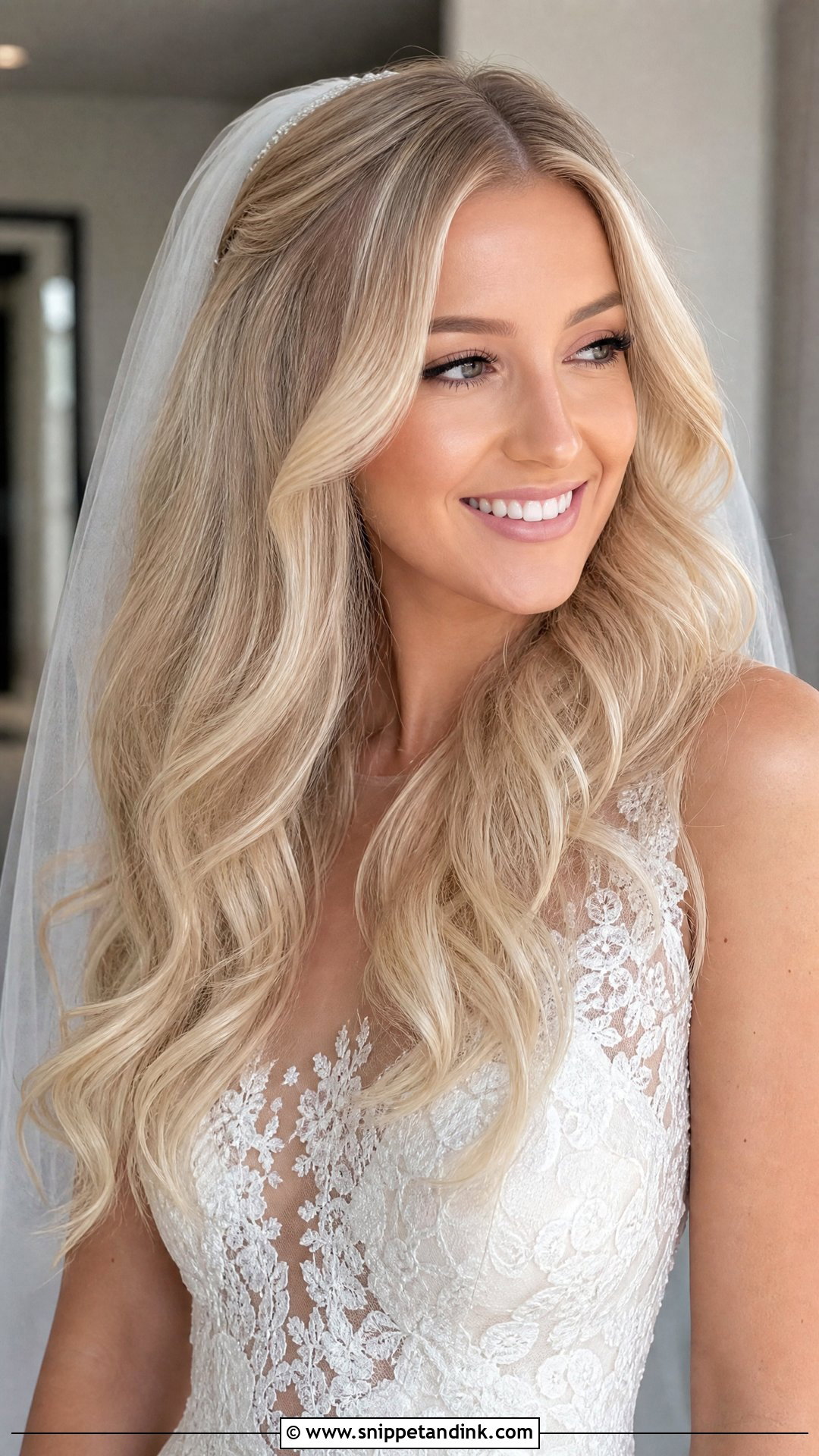
Butter blonde is warm and creamy, and it walks a fine line. Done well it glows in outdoor light; lifted too quickly it turns brassy, so I take it up in stages on darker hair. A few delicate lowlights or a soft root keep it from looking flat. Textured waves, braided crowns and airy updos suit it. Ask about a conditioning plan in the weeks before, since this level of lightness shows any dryness at the ends.
5. Bridal Caramel Balayage Hair Color
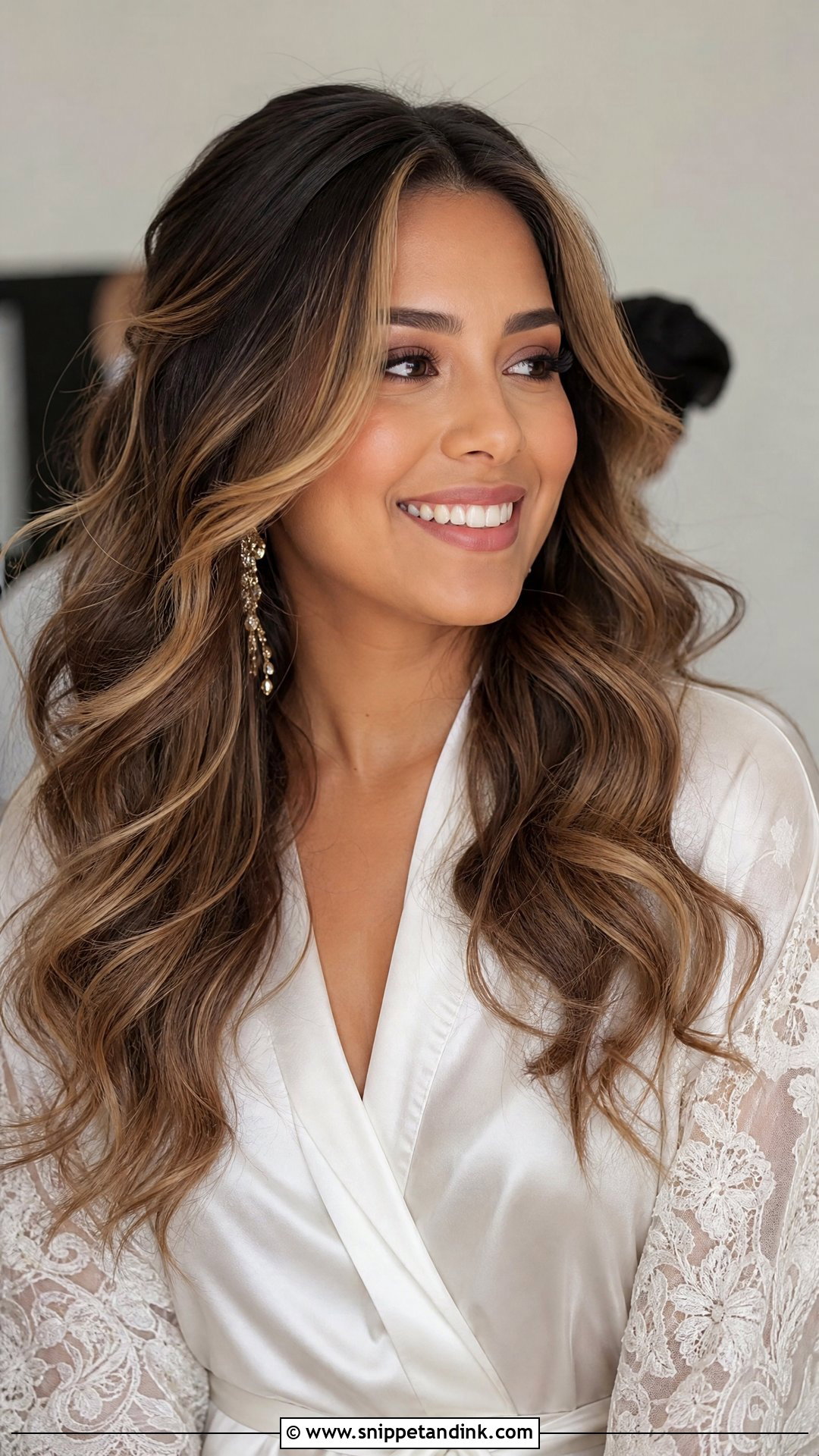
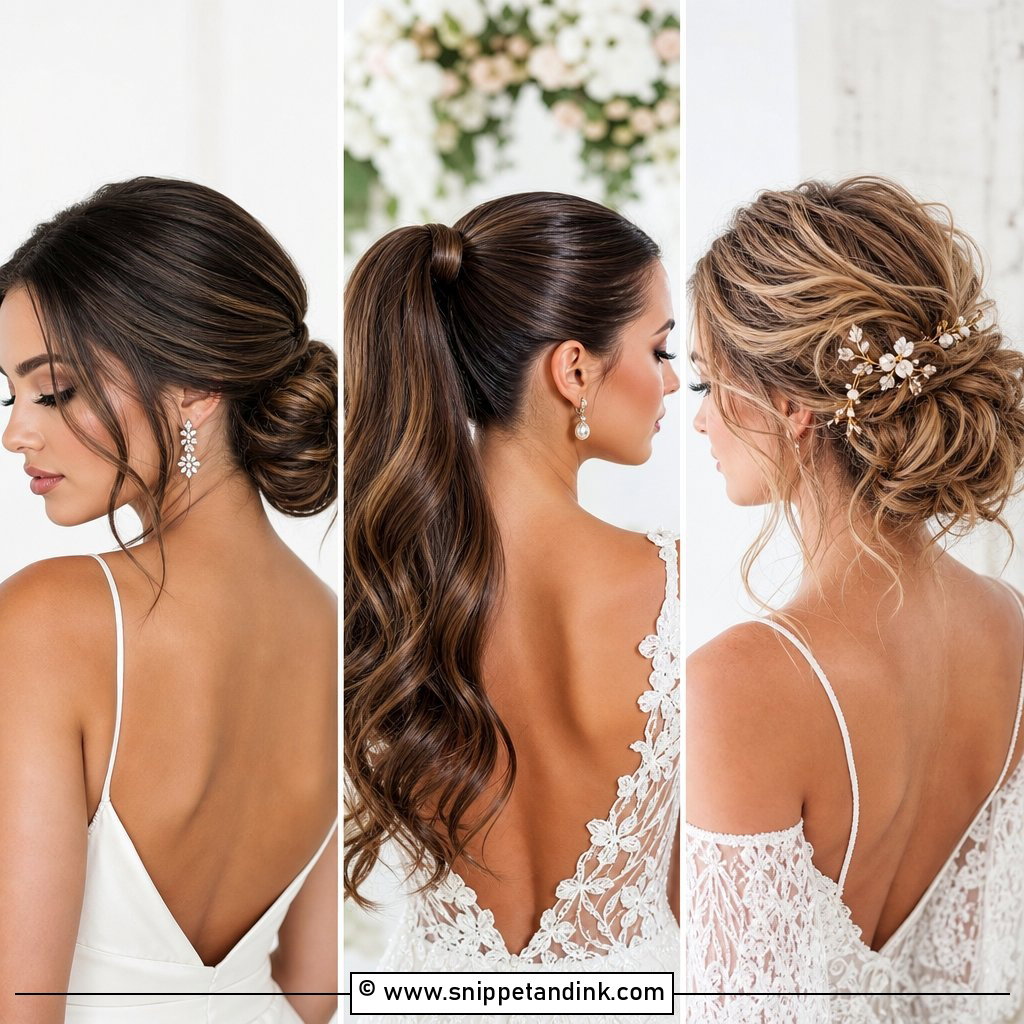
For brunettes who want warmth without changing their base, caramel is the shade I suggest first. Bridal caramel balayage hair color adds light and movement through the lengths while the root stays your own. In long waves, layered cuts, ponytails and low buns, the lighter pieces trace the shape of the style. I place the strongest ribbons at the face. Autumn weddings, candlelit receptions and warm makeup all flatter it.
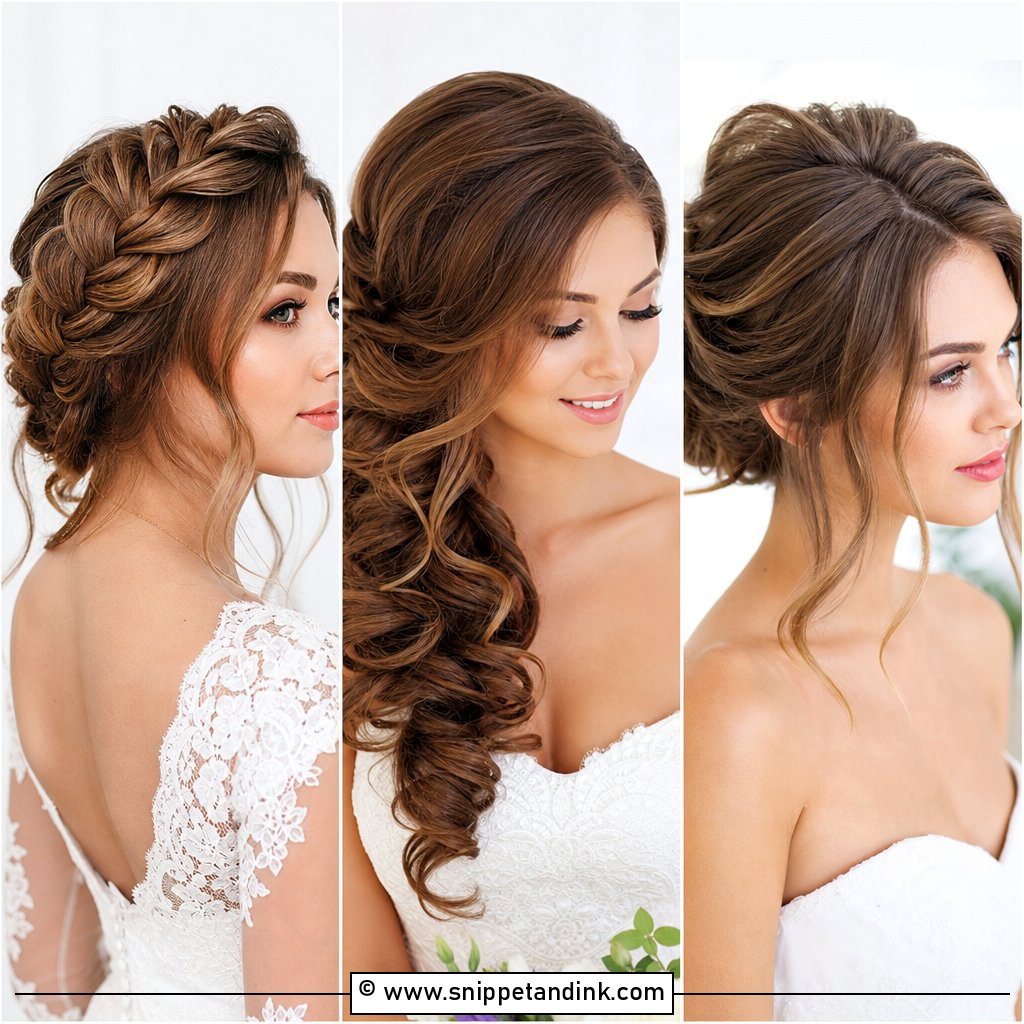
6. Bridal Chestnut Brown Hair Color
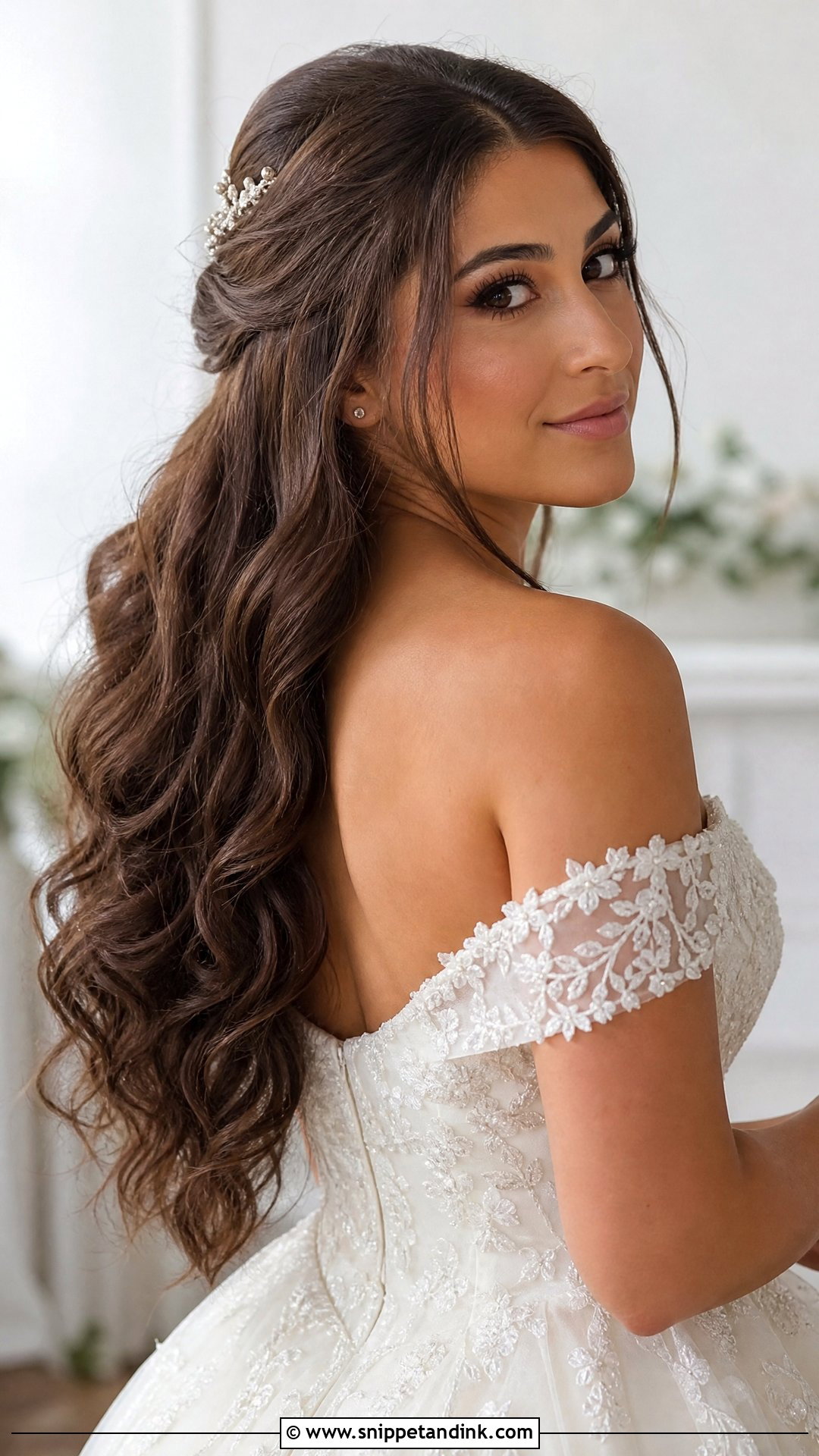
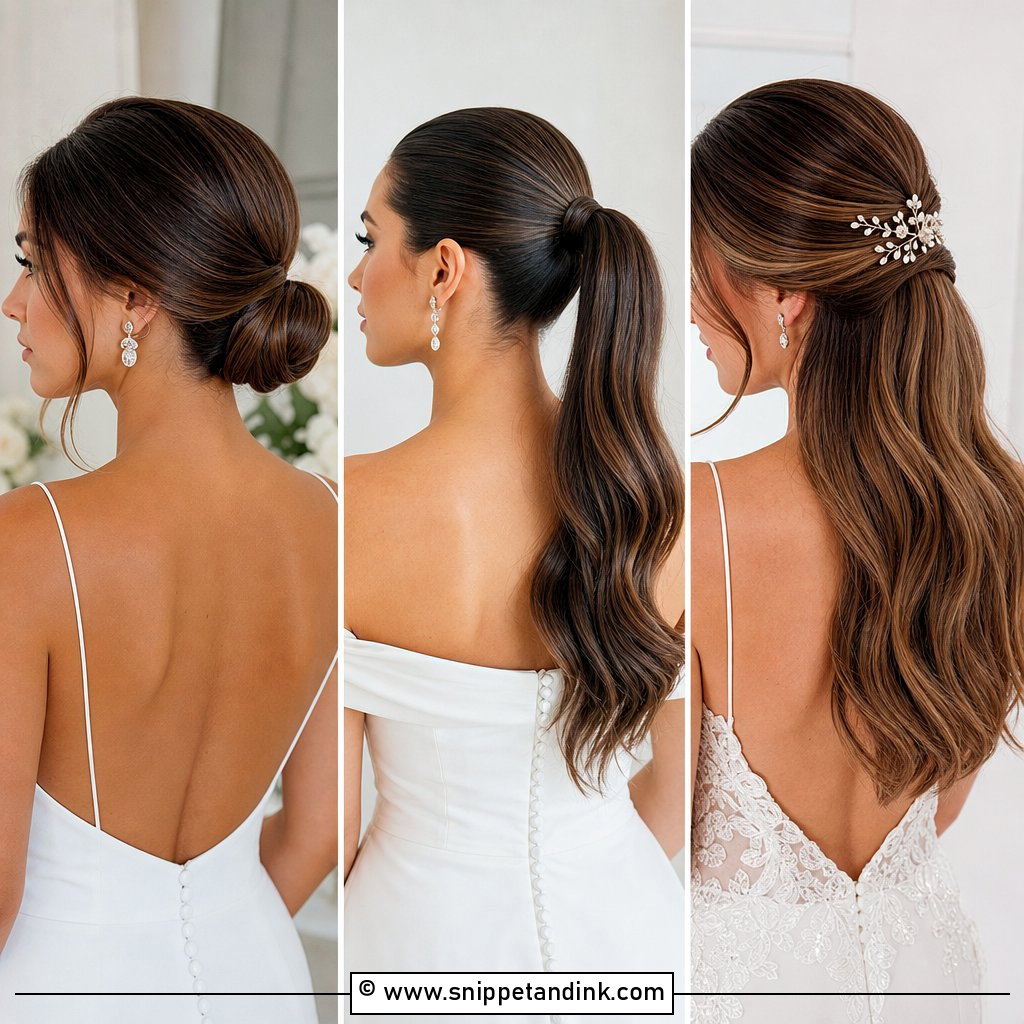
Chestnut is the in-between brunette: not too dark, not too red, not too light. If your natural brown has gone flat, a chestnut gloss or demi-permanent color brings it back without a real change in depth. Soft curls, classic chignons and half-up styles show its warmth. I’d book a gloss shortly before the wedding for shine. Pair it with warm bronzed makeup, ivory fabrics and gold jewelry.
7. Bridal Chocolate Brown Hair Color
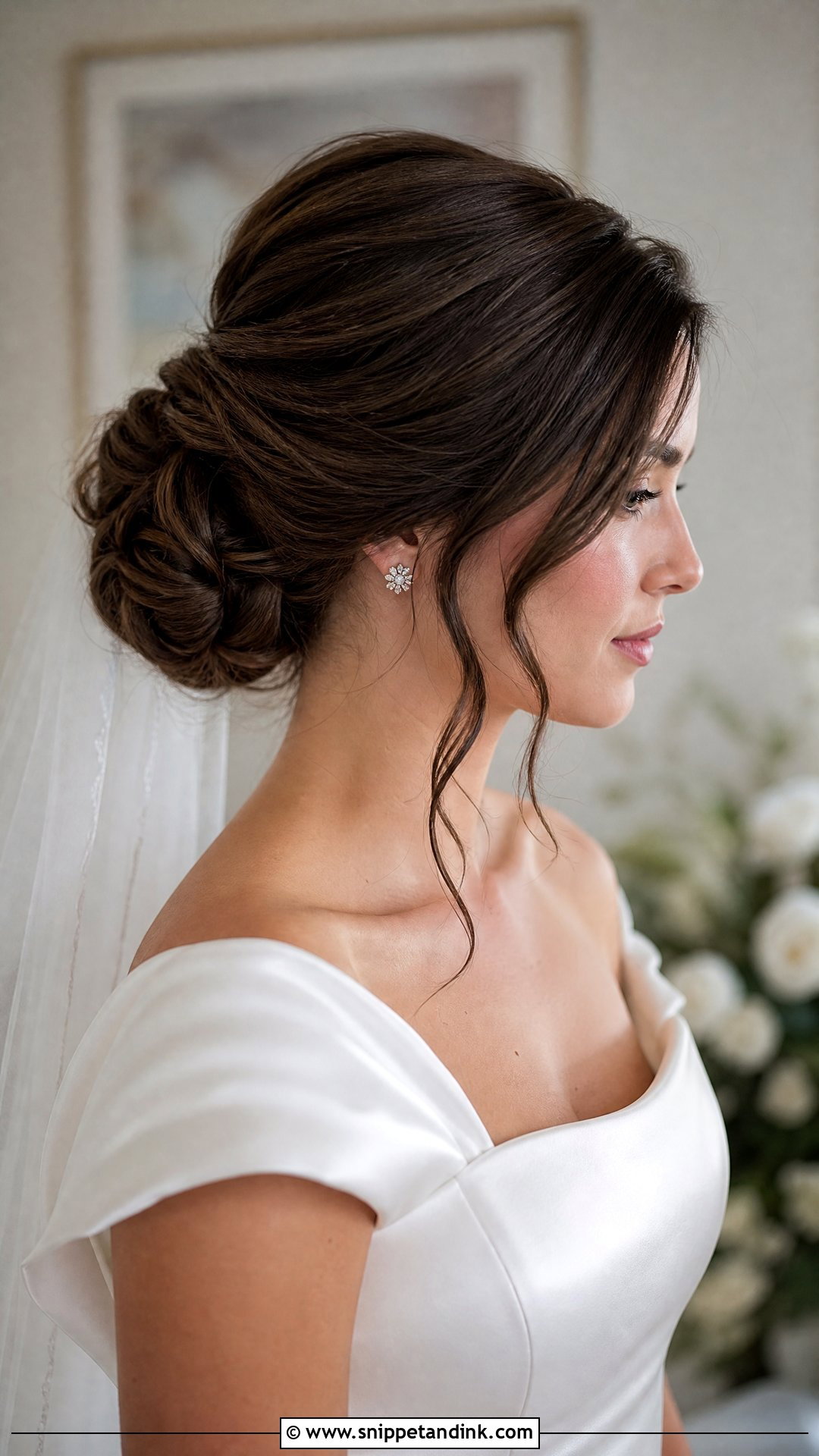
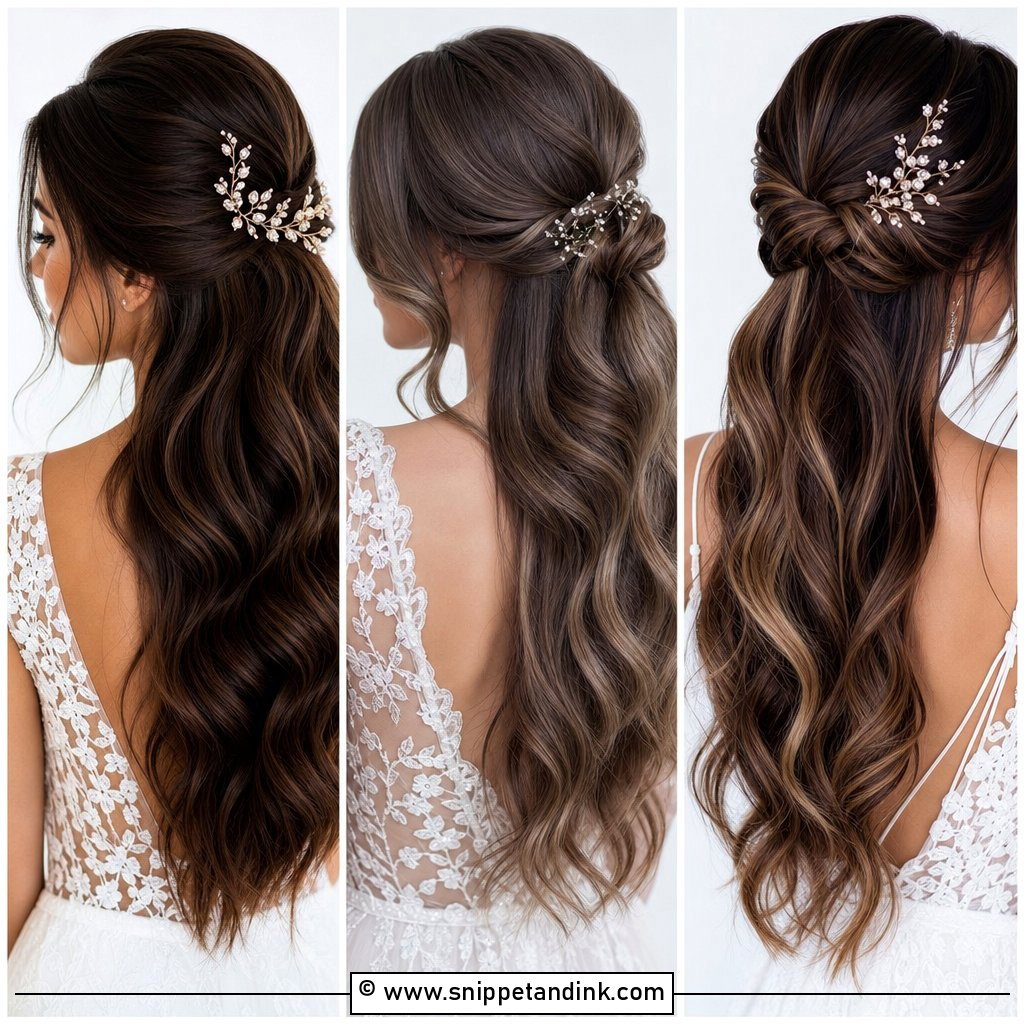
Chocolate brown lives or dies by its undertone. Cool skin usually suits a cocoa shade; warm skin looks healthier in milk chocolate. Get that wrong and the same color can make you look tired. With shine on it, chocolate makes a clean backdrop for veils, pearl pins and crystal combs, and it works on sleek hair, waves, sculpted buns and big curls. A gloss before the wedding gives it the reflective finish that photographs well indoors and out.
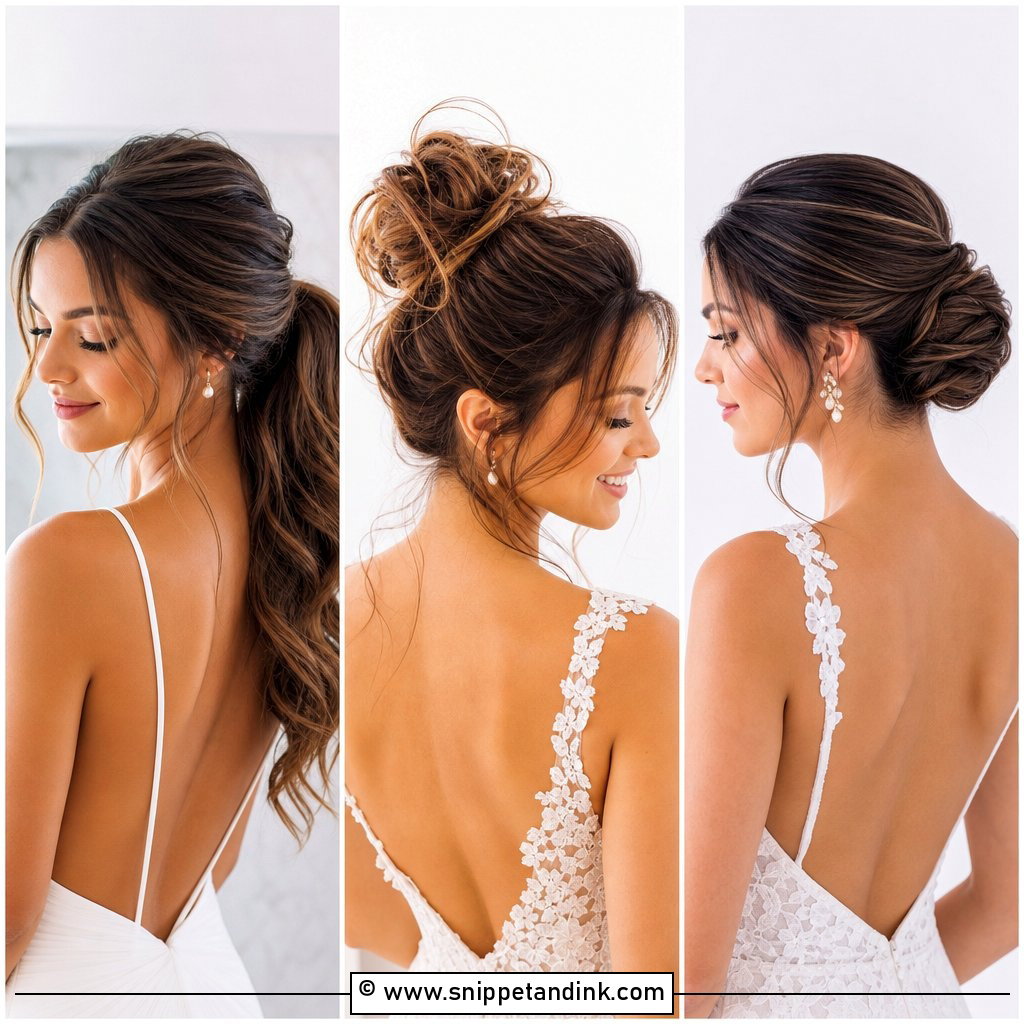
8. Bridal Espresso Brown Hair Color
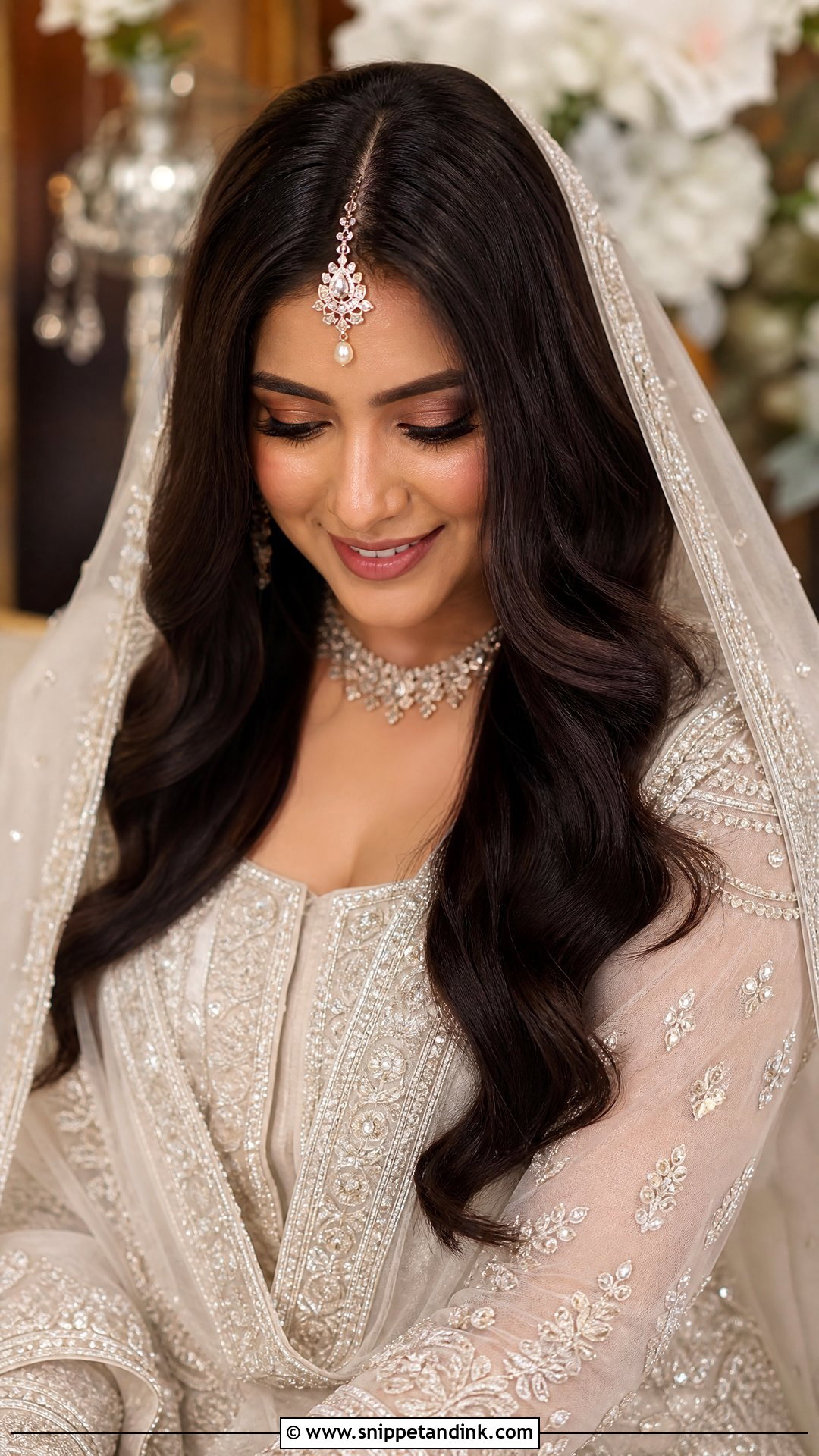
Very dark hair can look like a single shape in photos. Espresso brown fixes that only if there is a little dimension or shine, so I add a clear gloss or a barely visible brunette lift through the lengths. Middle parts, low buns, long waves and sleek ponytails suit it. It pairs well with minimalist dresses, dramatic veils and evening venues. If you already have espresso hair, a gloss alone may be all you need.
9. Bridal Auburn Hair Color
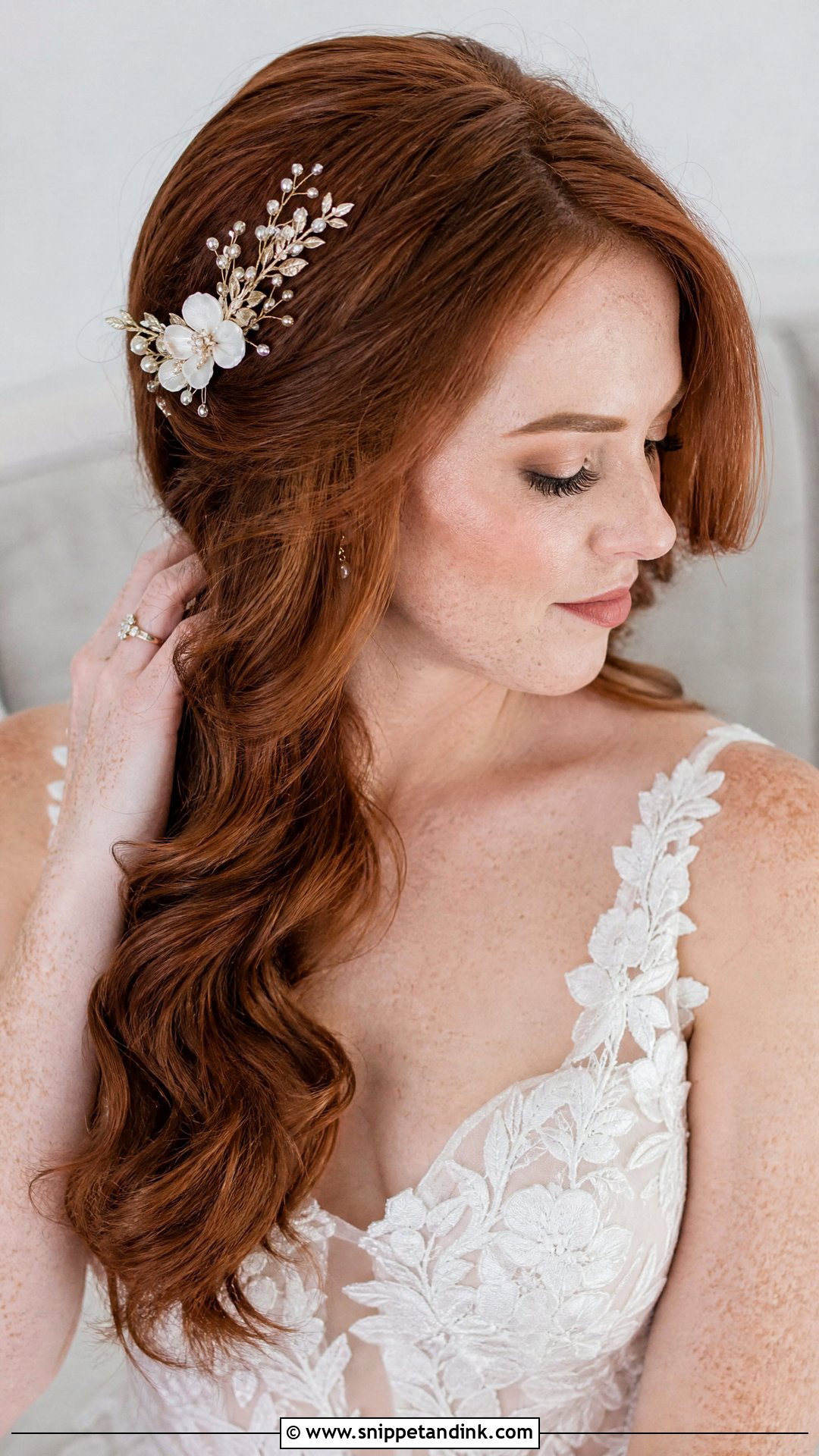
Auburn mixes brown and red, so it is softer than copper but warmer than plain brunette. In textured styles the red-brown shows through every curl, twist and pinned section. It suits autumn weddings, vintage gowns and warm floral palettes. If you’ve never worn red, I’d start with an auburn gloss rather than permanent color. It fades gently, and you’ll see how the tone sits with your skin before committing.
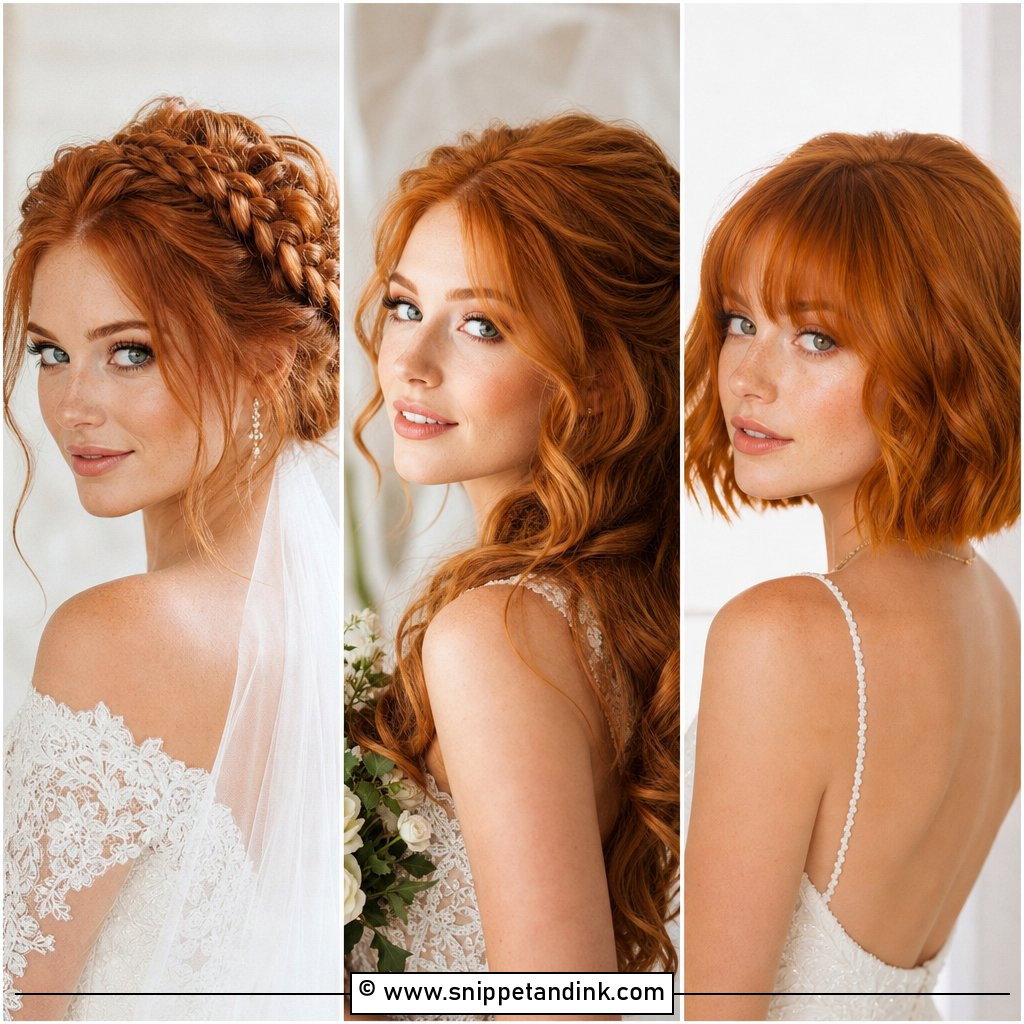
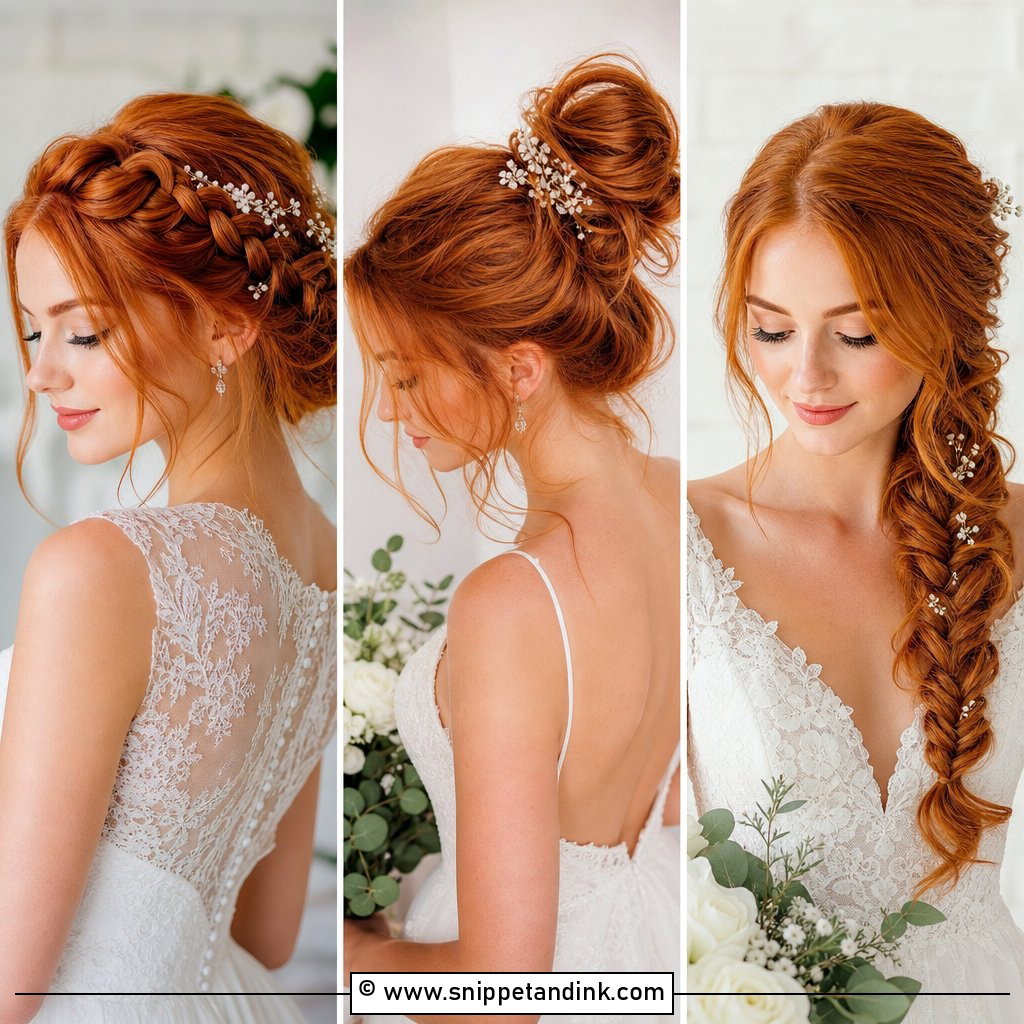
10. Bridal Copper Hair Color
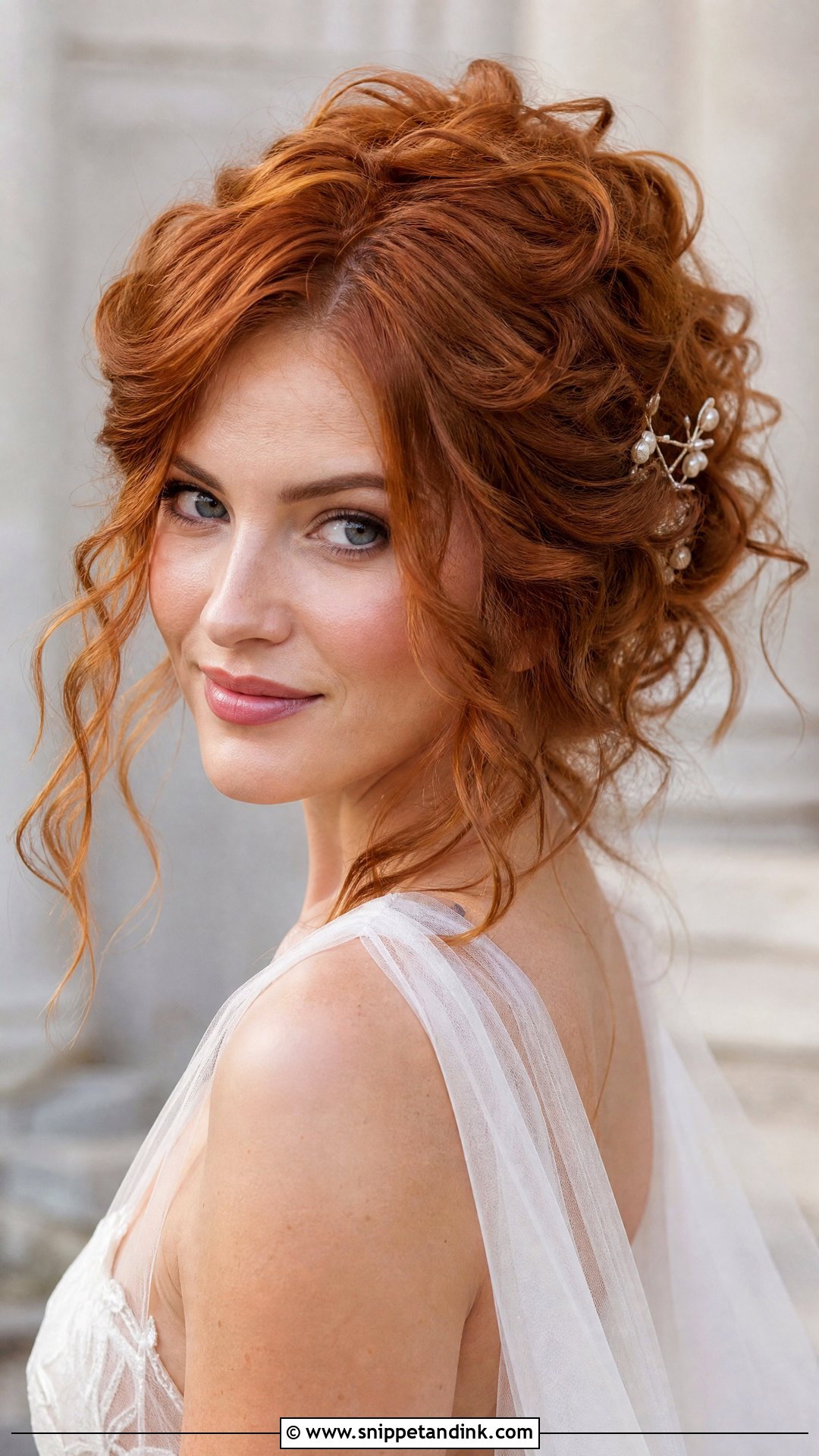
Copper is the shade for a bride who wants her hair to be part of the look, not a background. It ranges from soft peachy copper to deep penny, and I tailor the depth to your skin and makeup plan. Loose waves, soft updos, curls and flowers all suit it. The honest trade-off: copper fades faster than most colors, so the last refresh needs to be close to the wedding, with cool rinses and color-safe shampoo in between. A glossy, dimensional finish keeps it rich rather than costume-like.
11. Bridal Strawberry Blonde Hair Color
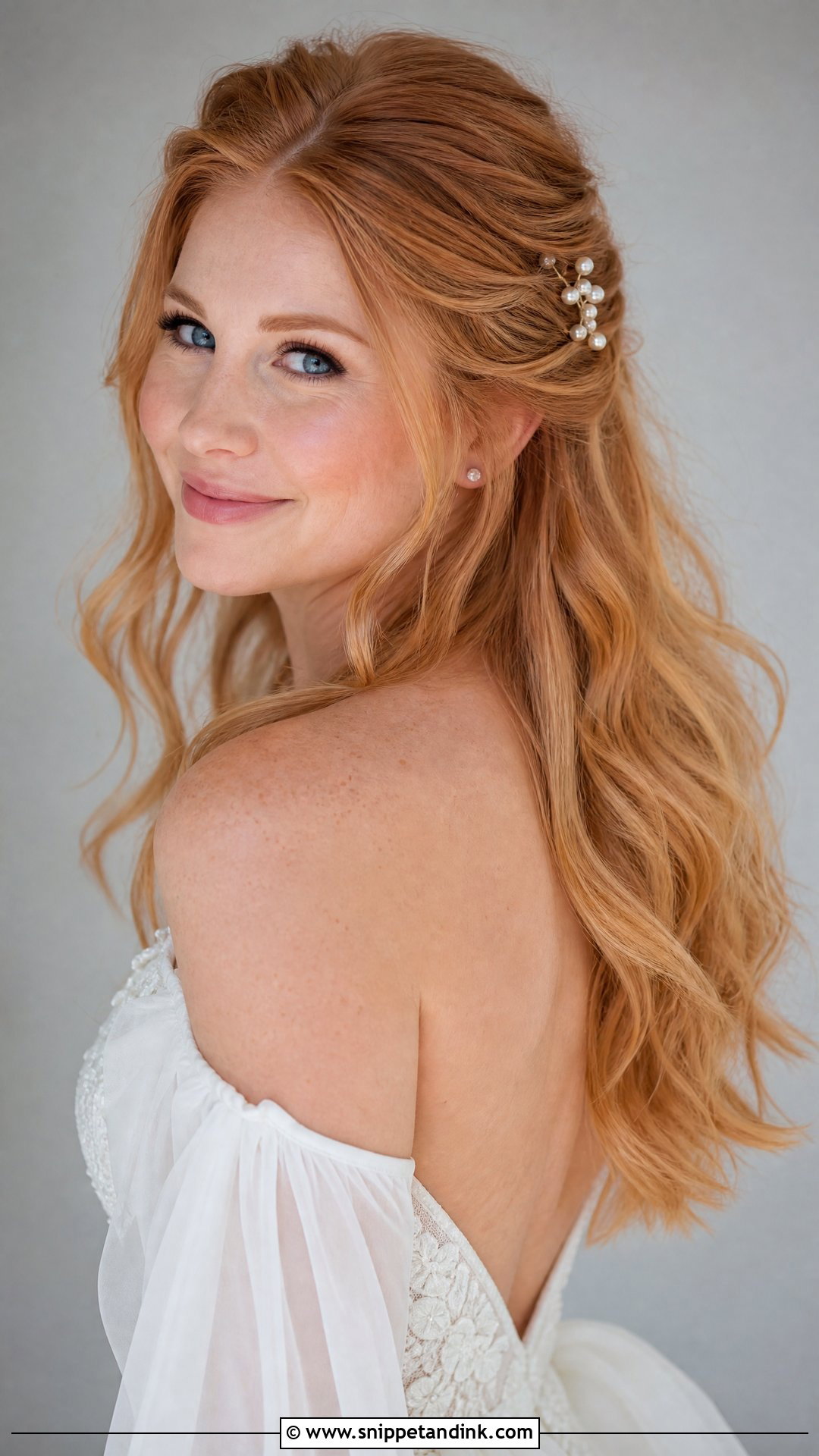
Strawberry blonde shifts more in different light than any other shade here, rosier in the sun and more golden indoors. That’s why I test the tone before the final appointment. It’s warmer than beige and softer than copper, and a subtle root shadow keeps it believable. Loose curls, half-up styles, delicate braids and soft layers suit it. Pair it with rosy makeup, champagne shimmer and ivory gowns.
12. Bridal Rose Gold Hair Color
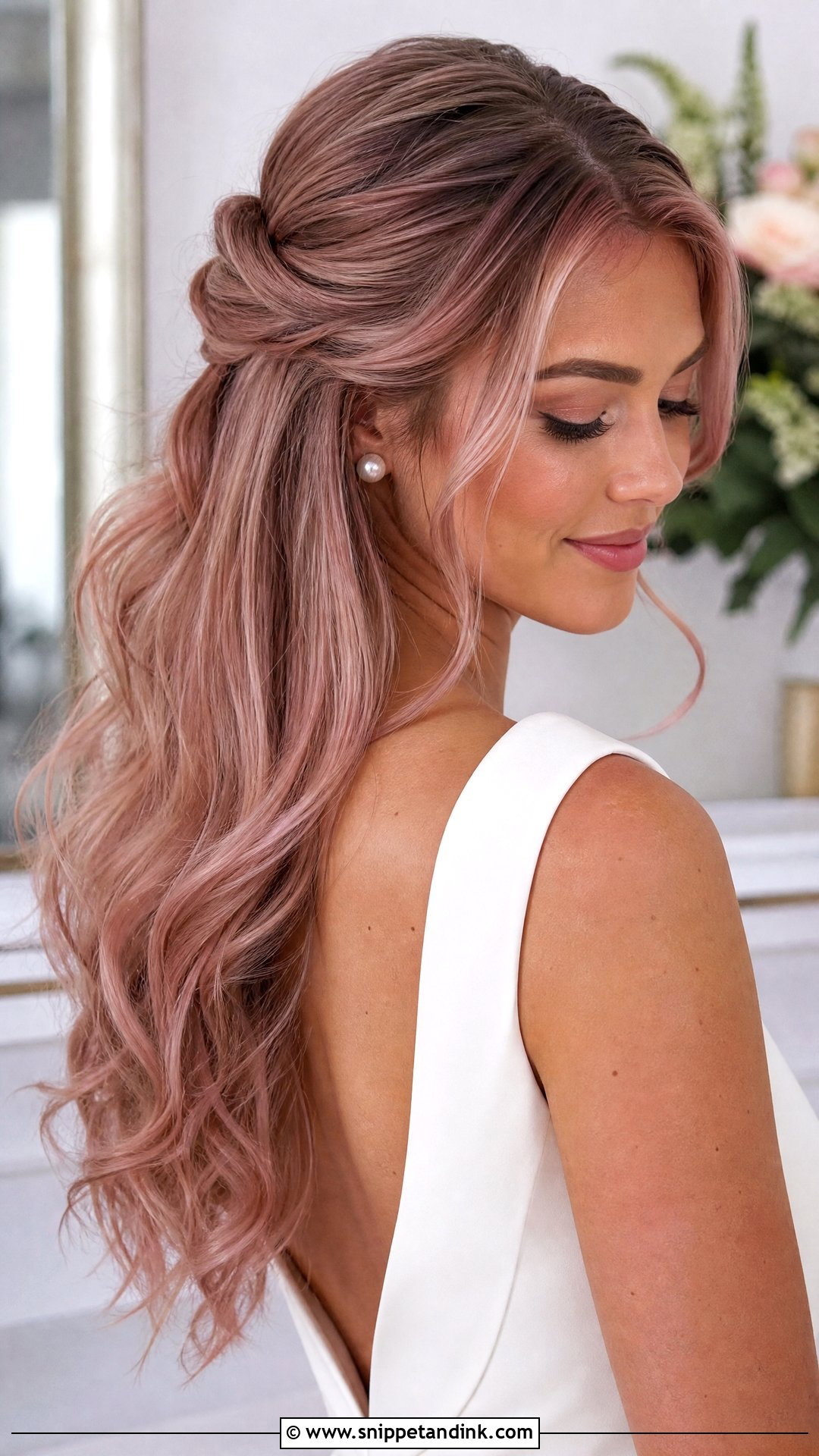
Rose gold is a fashion shade, so it needs more planning than anything else on this list. On darker hair it usually means lightening first, then depositing pink, peach or copper-rose over the top, and the color can fade noticeably within weeks. For a wedding I keep it soft and glossy rather than neon. Curled lobs, long waves, airy buns and half-up styles suit it. A trial color appointment months ahead lets you see it next to your makeup and flowers.
13. Bridal Soft Black Hair Color
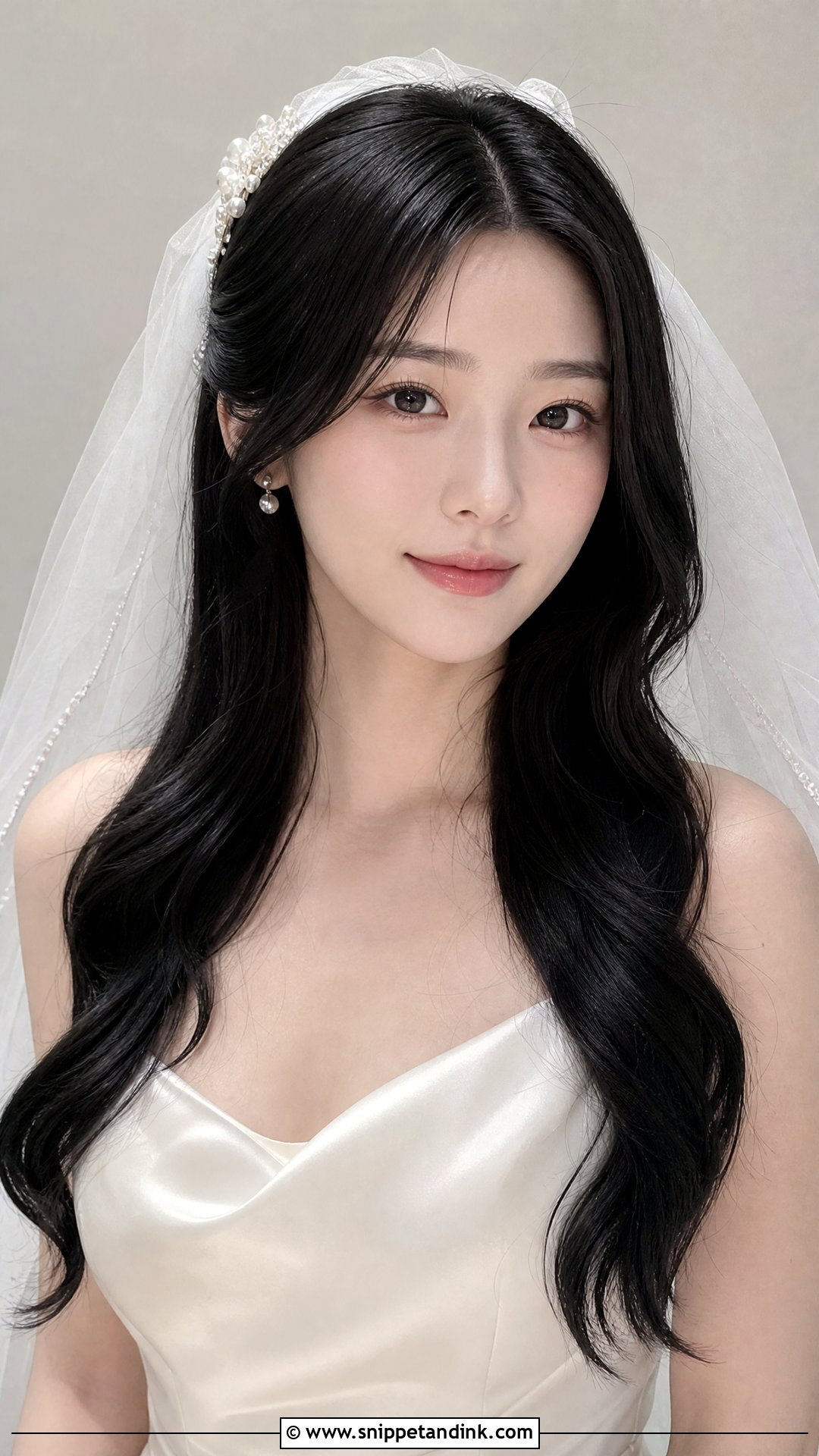
Soft black has a natural depth that inky or blue-black doesn’t, so it flatters the face and keeps detail in photos. Sleek buns, glossy waves, center parts and traditional hair ornaments suit it. Condition is everything with dark hair. Shine shows clearly, but so does dryness, so I recommend glossing treatments and regular hydration in the run-up. Pearls, red lips and ivory gowns sit well beside it.
14. Bridal Money Piece Hair Color
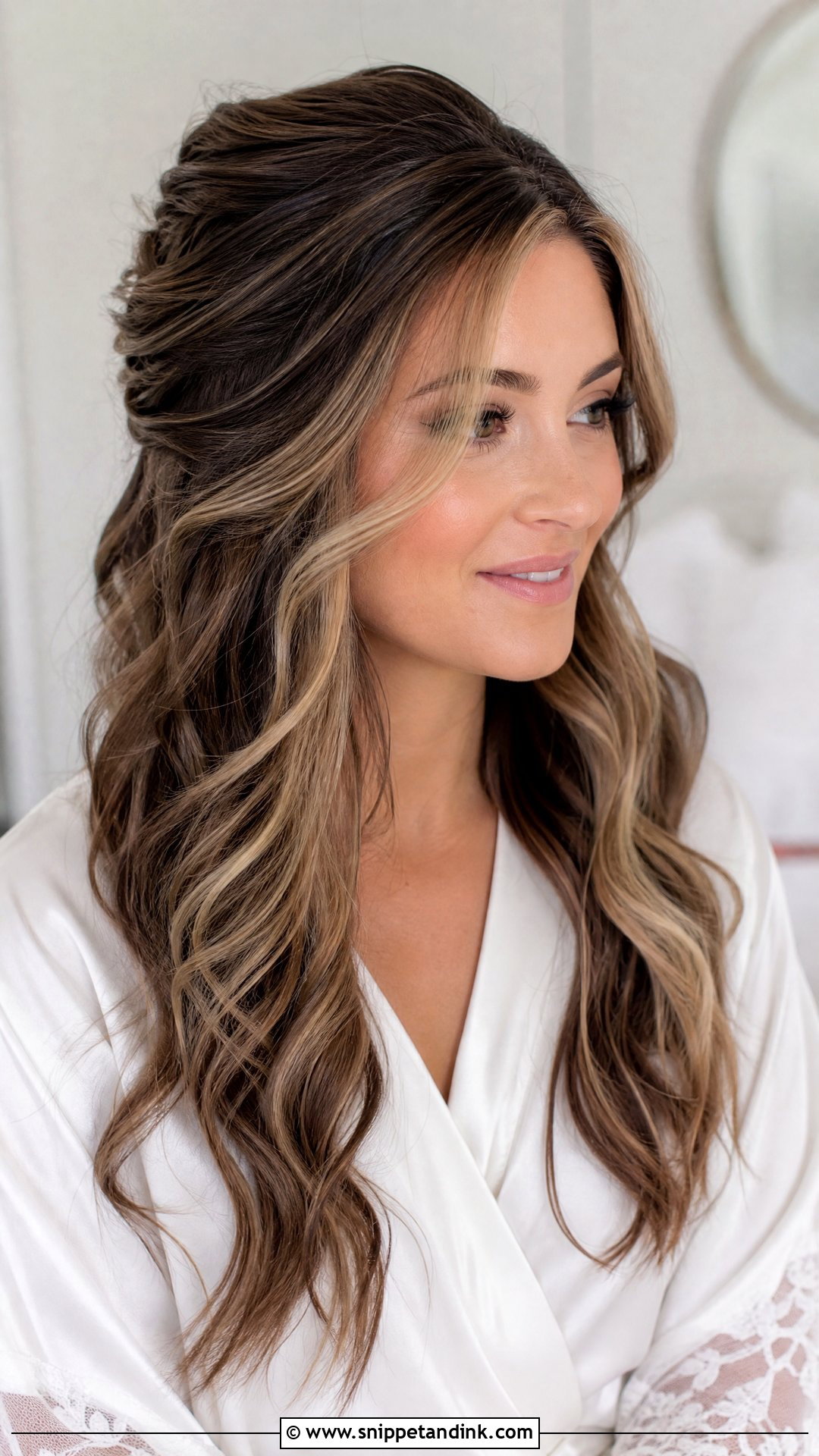
Want brightness at the face without coloring everything? Bridal money piece hair color lightens just the front sections in soft blonde, caramel, beige or copper. For a wedding, I keep it blended and delicate, with a soft transition so it grows out naturally. It reads clearly with half-up hair, waves, ponytails and face-framing tendrils. In an updo, those front pieces are often all that shows, so it gives a lot of effect for a small change.
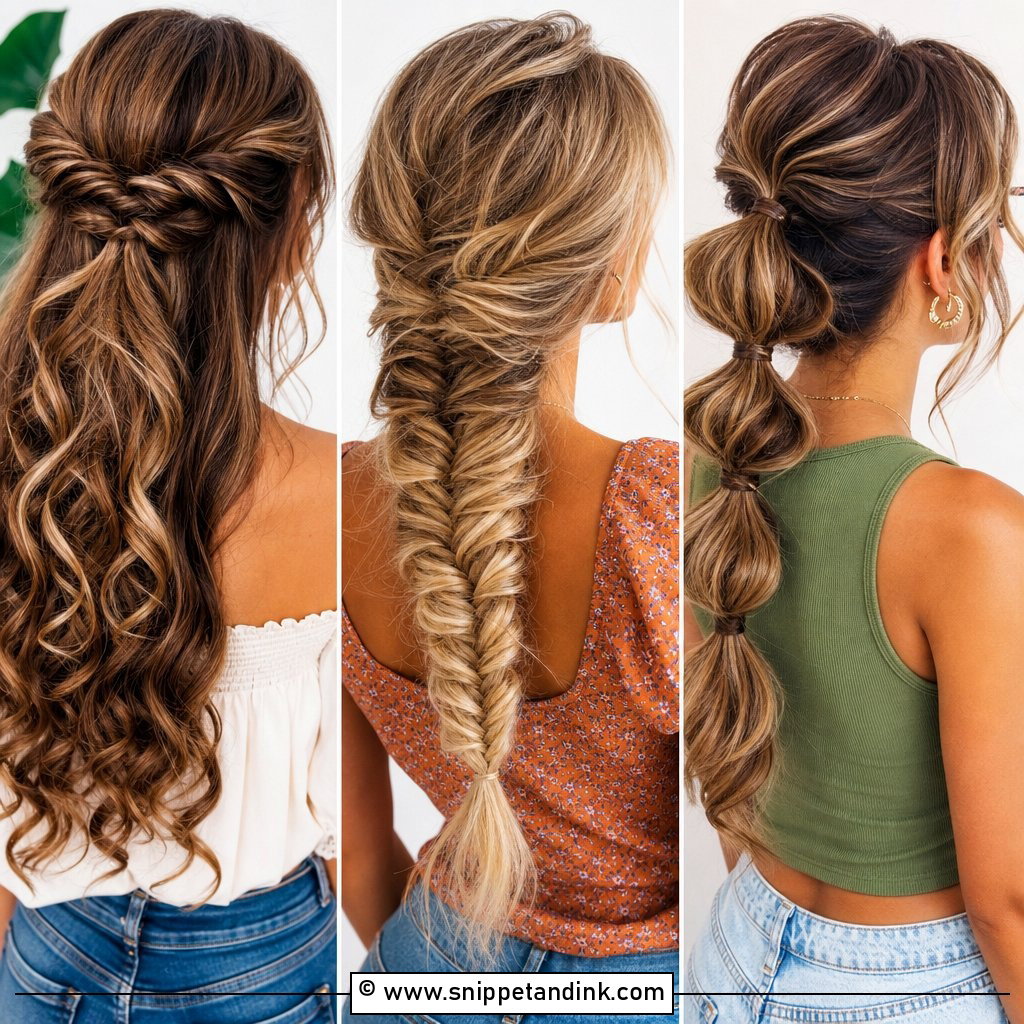
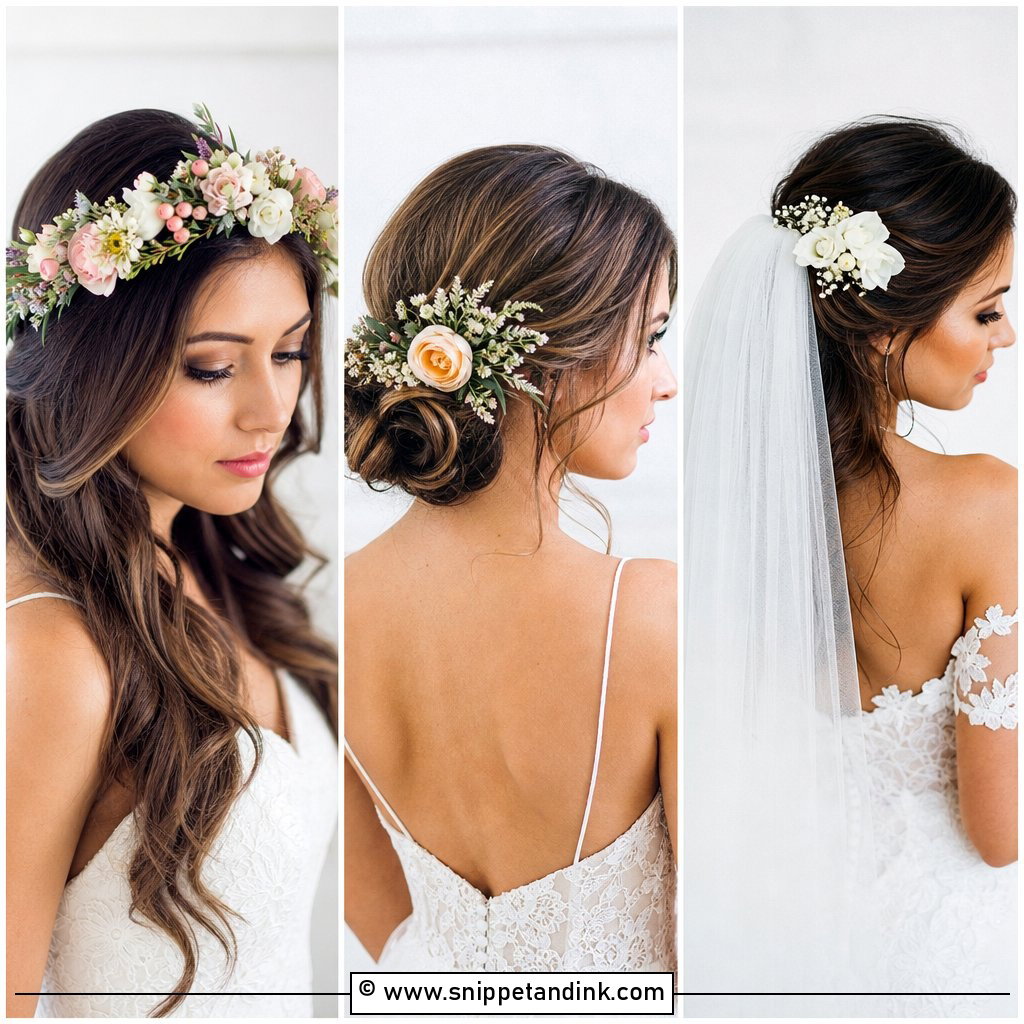
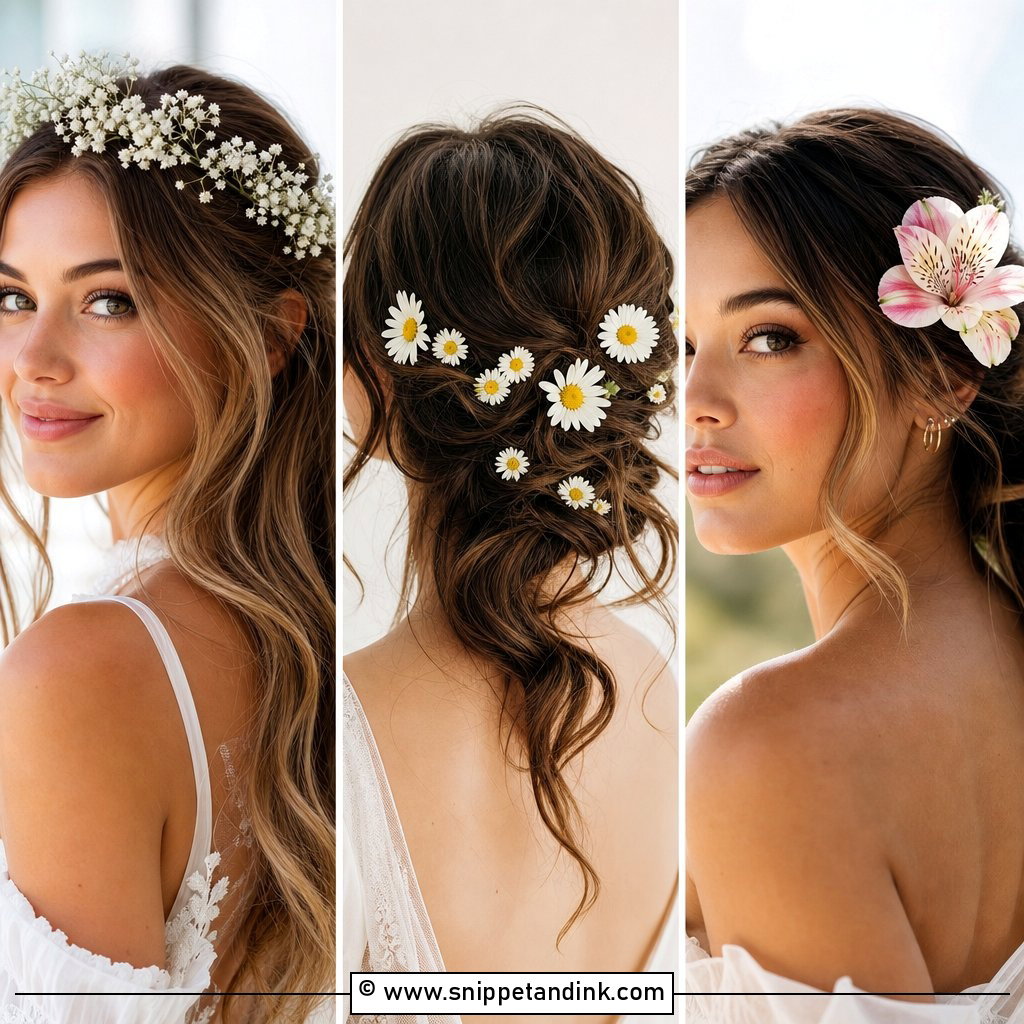
15. Bridal Glossy Brunette Hair Color
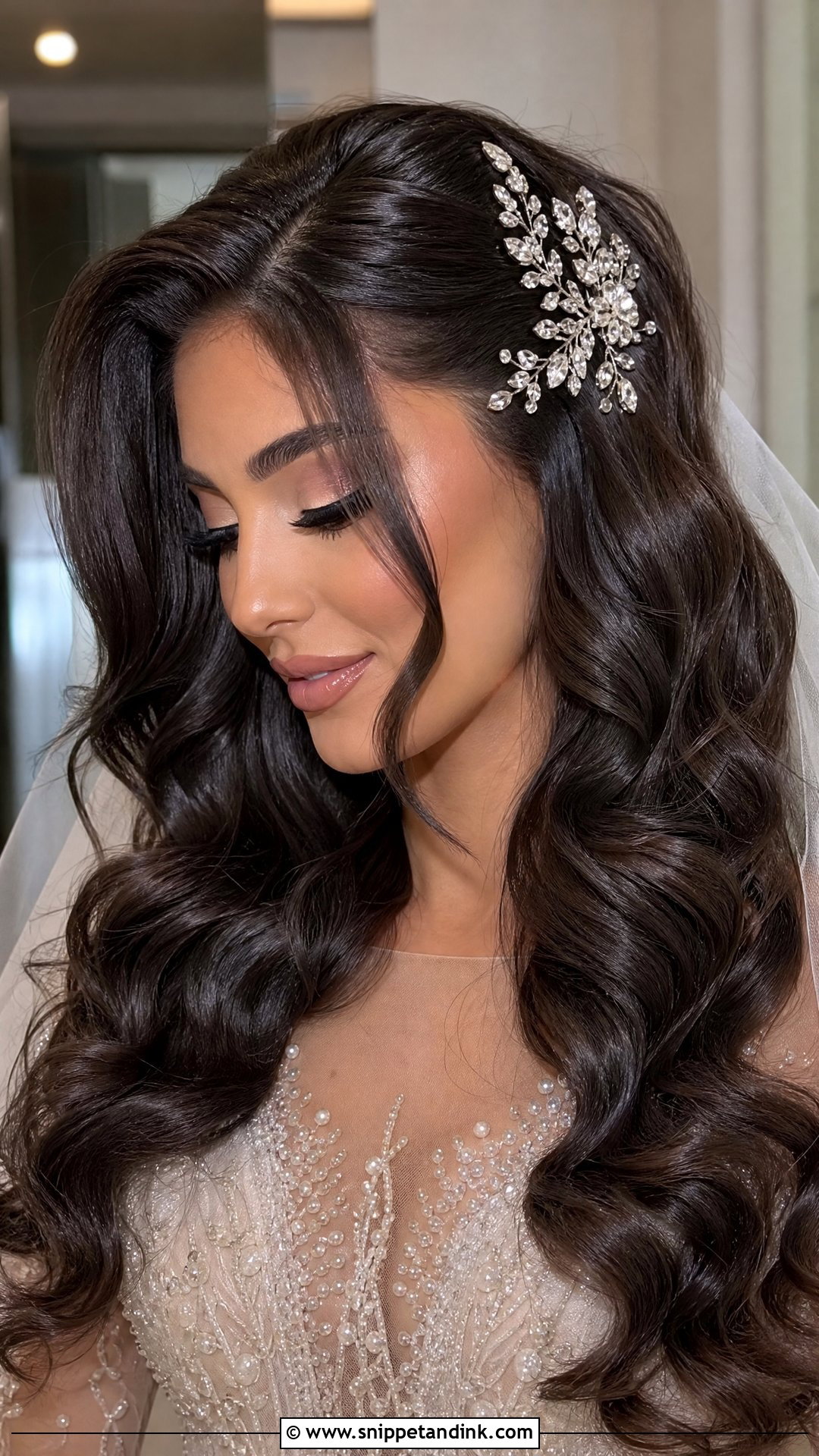
Not every bride needs new color. A brunette gloss refreshes faded tone, softens dull ends and makes curls and waves look more defined on chocolate, chestnut, espresso or natural dark brown. It’s quick and low-risk, nothing like lightening before a wedding. I book it close to the ceremony so the shine is at its peak. The result is simply healthy-looking hair in every photo.
Going Darker Is Easy, Going Lighter Is Not
Color changes don’t carry the same risk before a wedding. Here’s how I rank them when a bride brings me a picture.
- Lowest risk: a gloss, or a shade deeper than your current color. Quick, predictable, and it fades softly.
- Moderate: a few shades lighter with balayage or a money piece. Manageable with time to tone and adjust.
- Higher: red, copper and rose gold. They fade quickly and shift tone, so expect refreshes close to the date.
- Highest: dark to light blonde, or removing black. Often several sessions, and it can weaken hair right before it has to hold an updo.
If your idea sits in the bottom two rows, start early and be willing to stop at a softer version if your hair isn’t coping.
Grey Roots and the Wedding Morning
If you color to cover grey, book the root touch-up for the final week or so, close enough that nothing shows at the part under bright light. Parts and hairlines are exactly where updos expose the scalp. I keep a color-matched root spray or powder in my kit as a backup; it takes seconds along the part and is a far calmer fix on the morning than anything involving dye.
Sometimes a Gloss Is All You Need
The shades that photograph best tend to be the ones closest to your own. A honey blonde, caramel balayage or chocolate refresh, a deeper auburn, or a good brunette gloss tends to look better in the album than a brand-new shade you haven’t lived with. If you want something dramatic, test it months ahead. Otherwise keep the color close to yours, protect its condition and save the final gloss or toner for the last couple of weeks.
You'll Like These Ideas:


Leave a Reply