
When I style a bride, the headpiece is usually the last thing we choose and the first thing guests notice when she turns around. Clips and bridal headpieces change how the hair reads: a simple bun becomes formal, loose waves look intentional, a bob looks finished. Pearls, crystals, florals, bows and vines all still have a place. The trick is pairing each one with the hairstyle that can actually hold it and the dress it has to sit beside. Each pairing below comes with the reasoning I’d give you in a fitting room.
Dress, Hair, Headpiece: The Order I Decide Them In
Brides often fall for a headpiece first and then try to build the outfit round it. It can work, but more often the piece ends up fighting the gown. Here’s the order I use, and why.
The dress sets the scale
A heavily beaded bodice needs a quieter headpiece; a plain crepe or satin gown can take something bigger. The neckline matters too. A high neck pushes attention up, so a small clip is often enough, while a strapless dress leaves room for more at the hairline.
The hairstyle sets the hardware
Combs need a bun or backcombed base to bite into. Barrettes need gathered hair. Vines need sections to weave through. Headbands need a smooth top. Choose the hairstyle with your stylist, then shop for pieces with fastenings that suit it.
The headpiece comes last
By now you know the metal, the scale and the fastening. Shopping from that short brief is far quicker, and you’ll avoid the drawer of almost-right clips many brides end up with.
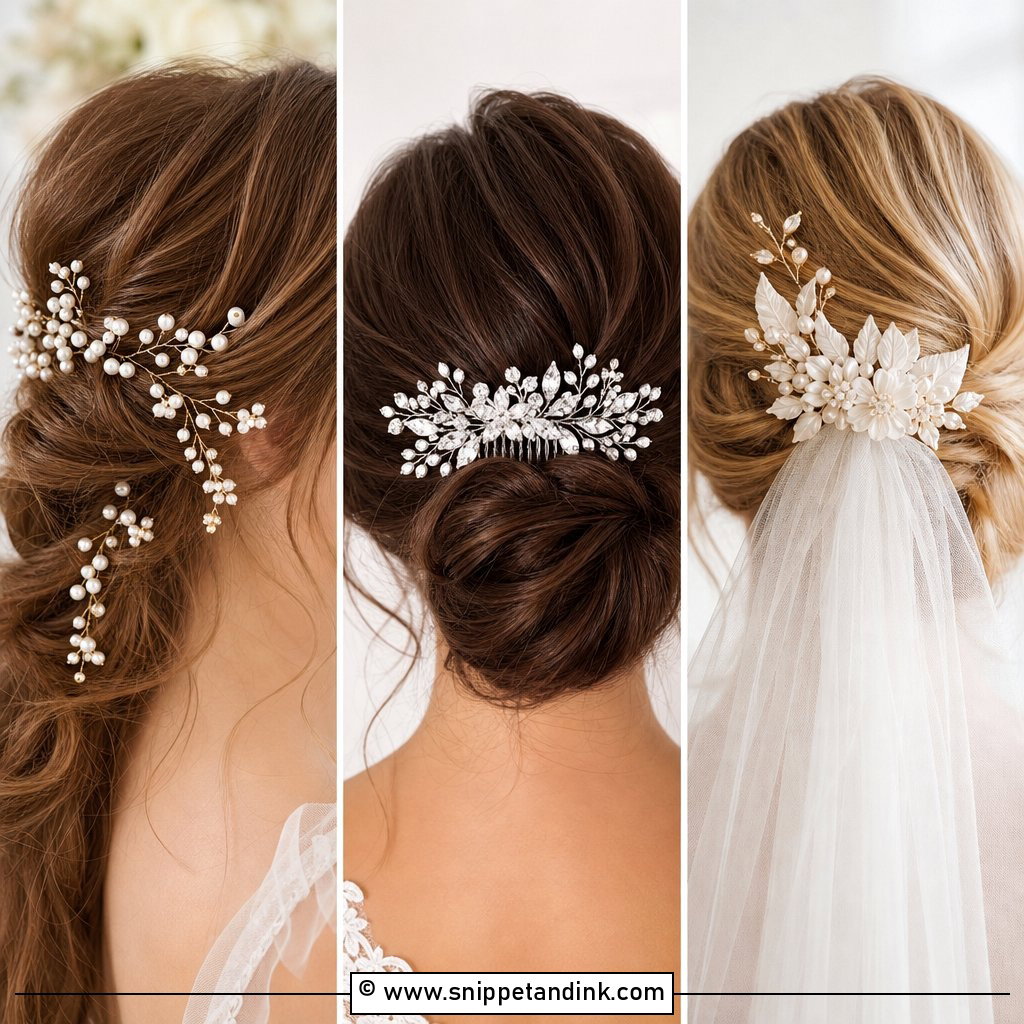
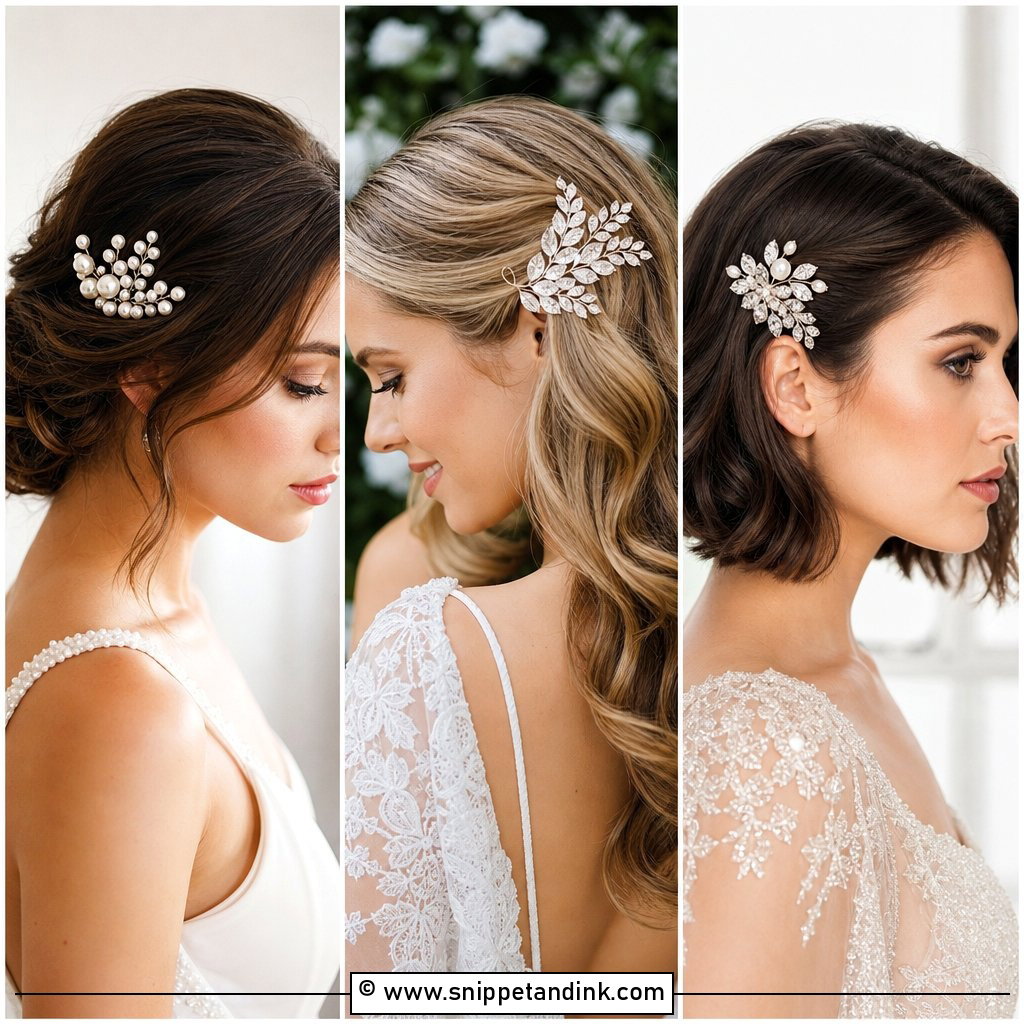
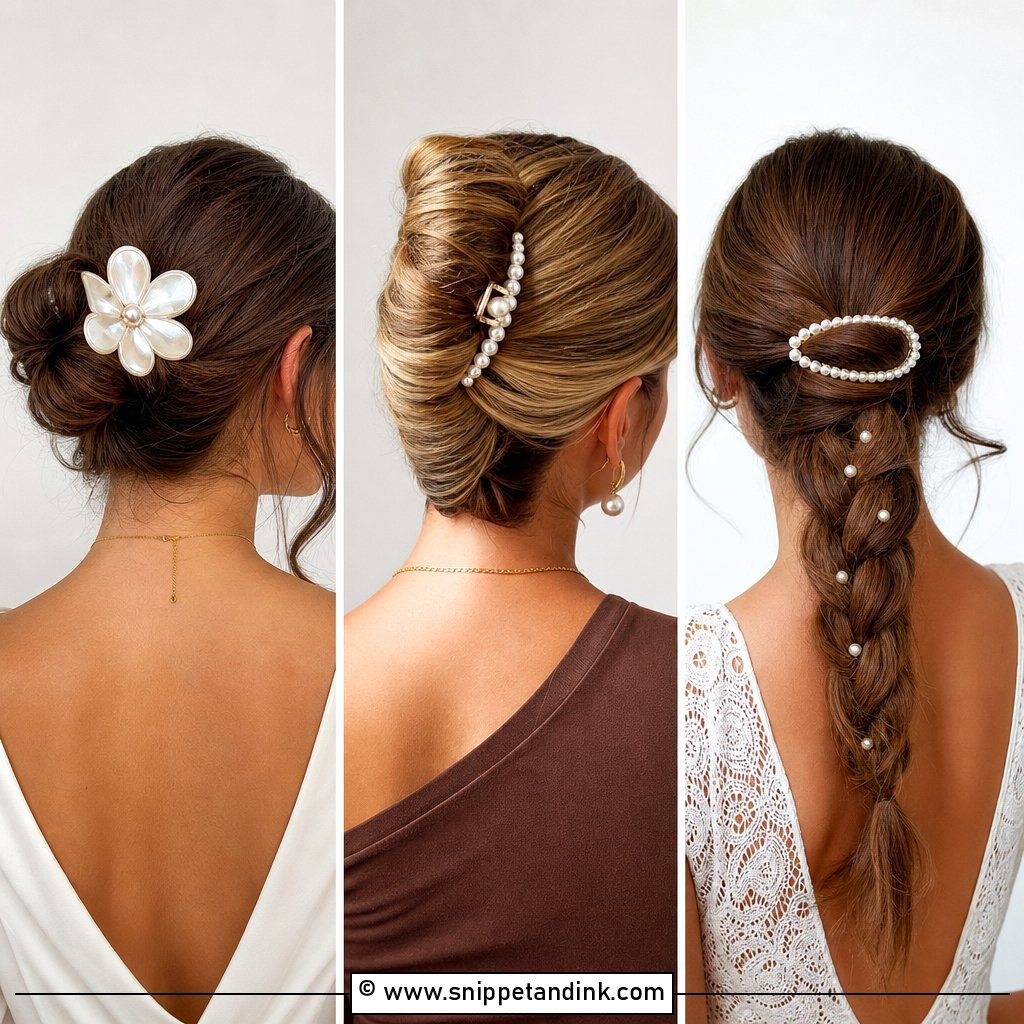
1. Pearl Wedding Hair Clip With Low Bun
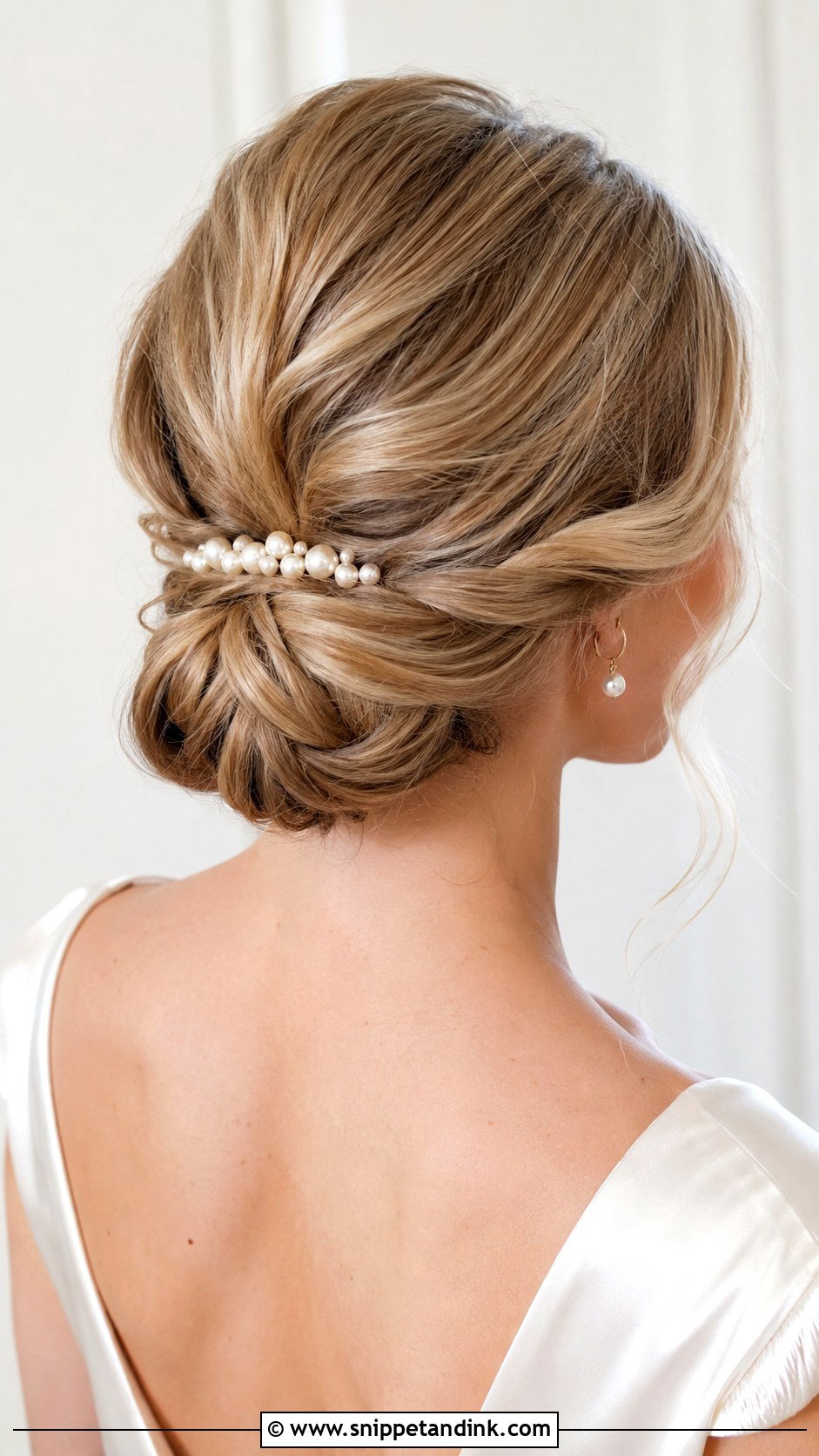
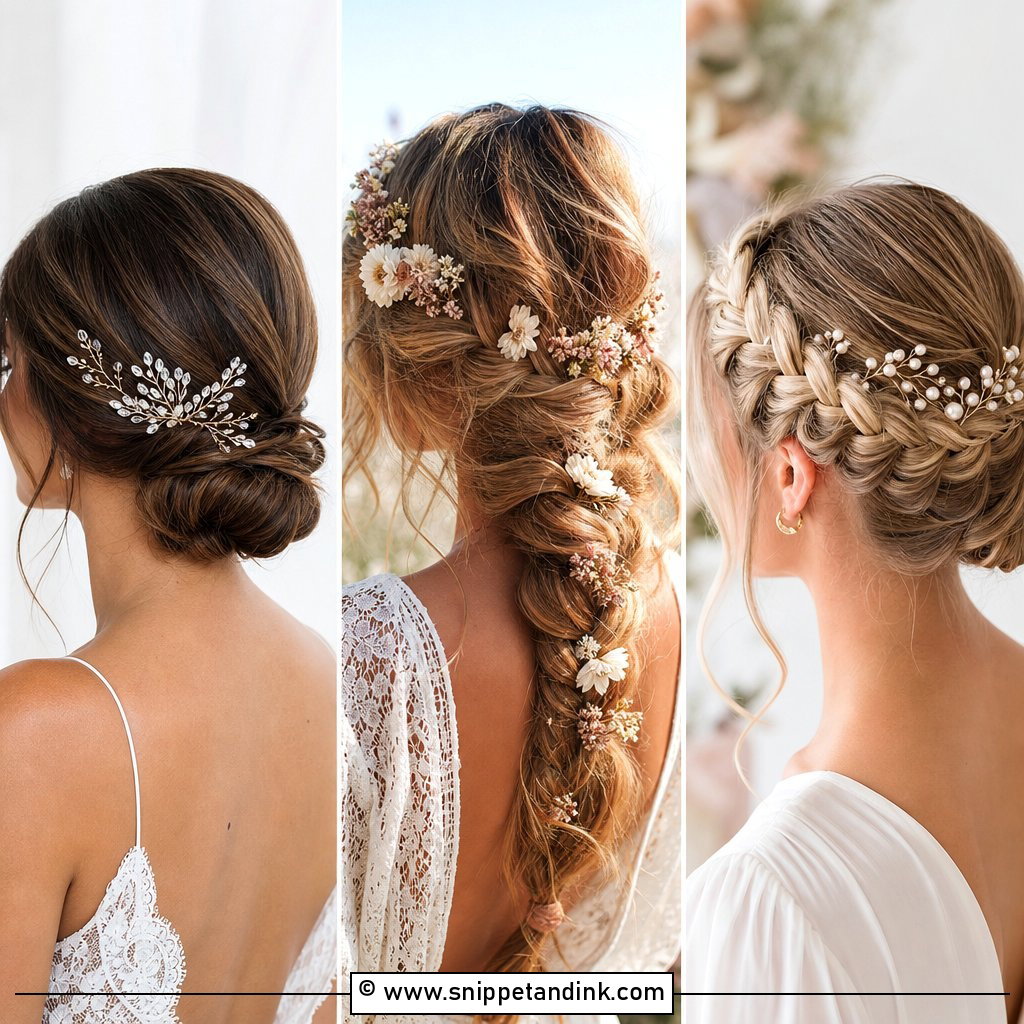
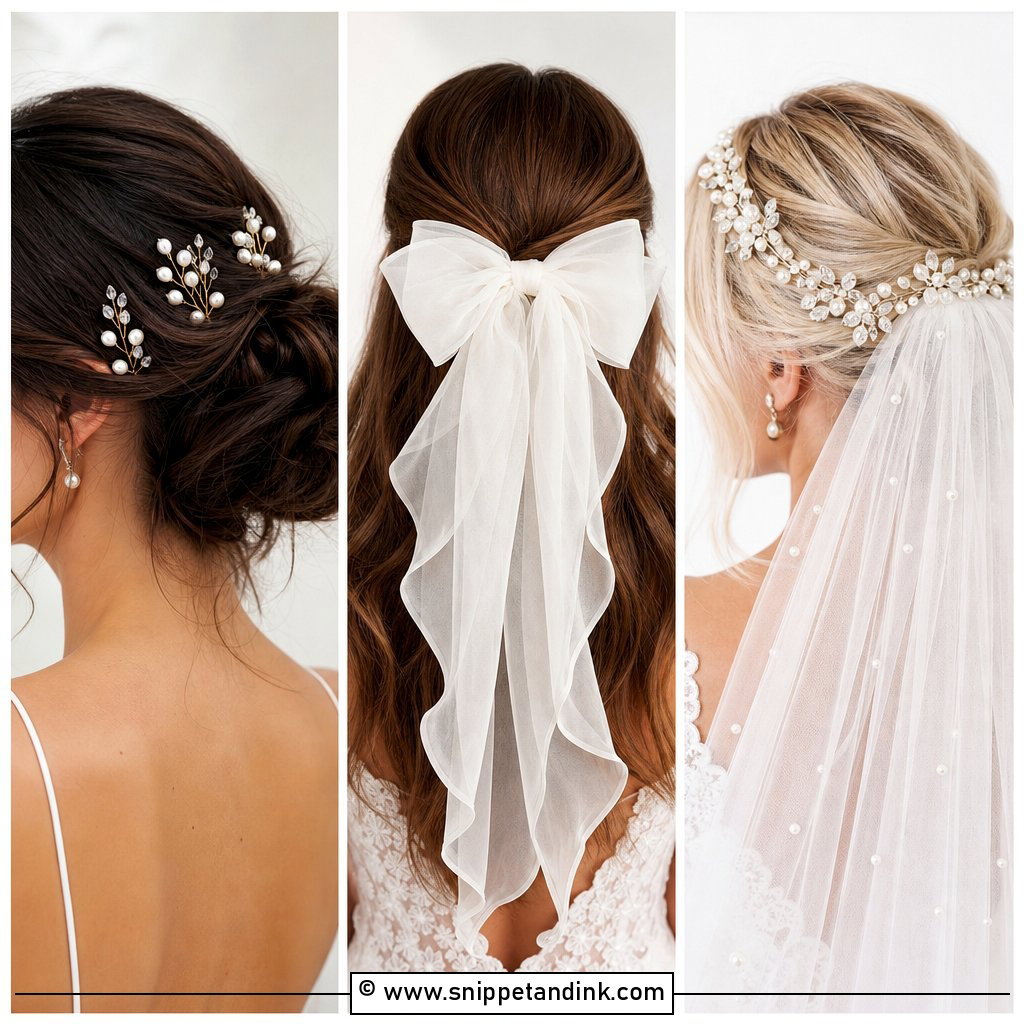
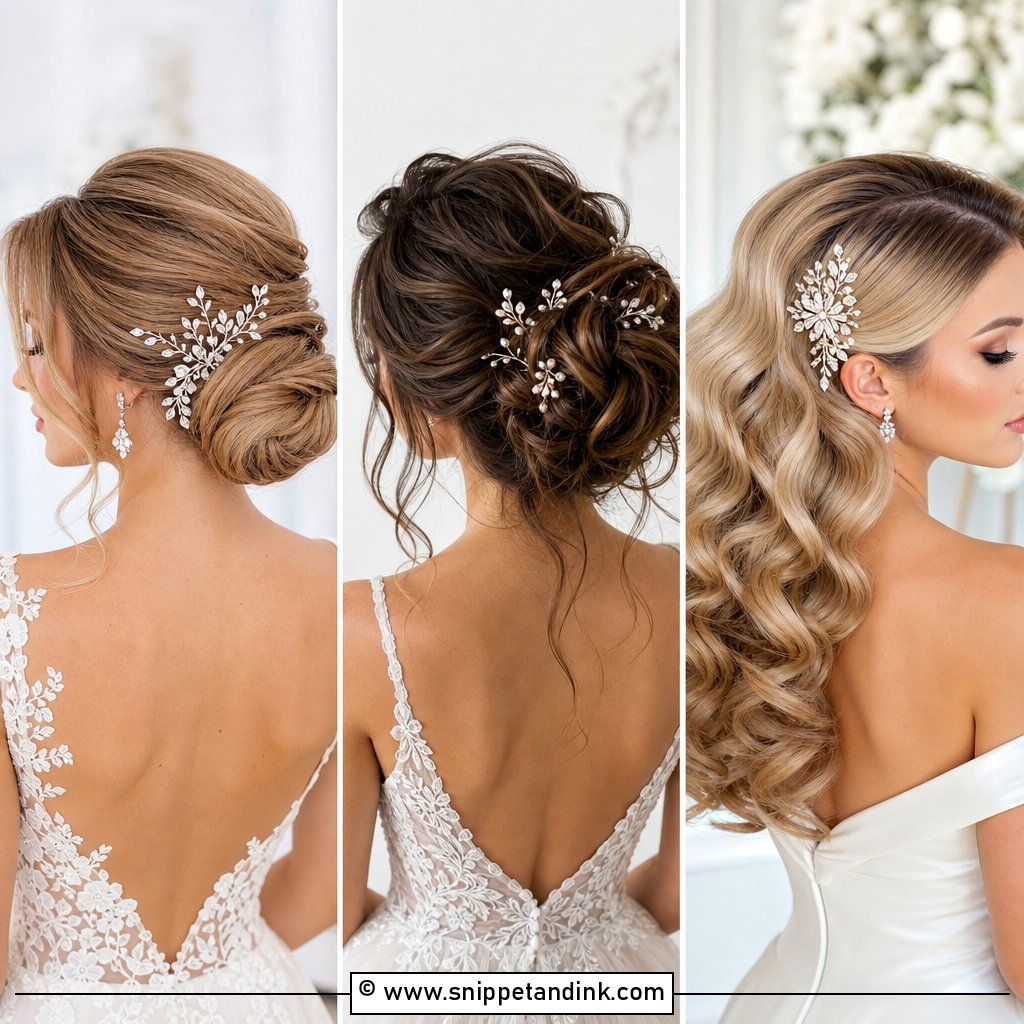
A low bun is the steadiest base a clip can have, and pearls are the easiest gem to put beside almost any bridal fabric. I set the clip on one side of the bun or just above the twist, angled towards the back so it shows in profile shots. Satin and lace both sit well with pearl. Keep the bun smooth but not lacquered, and if you’re marrying outdoors, the clip doubles as an extra anchor for the shape in a breeze.
2. Crystal Wedding Hair Clip With Hollywood Waves
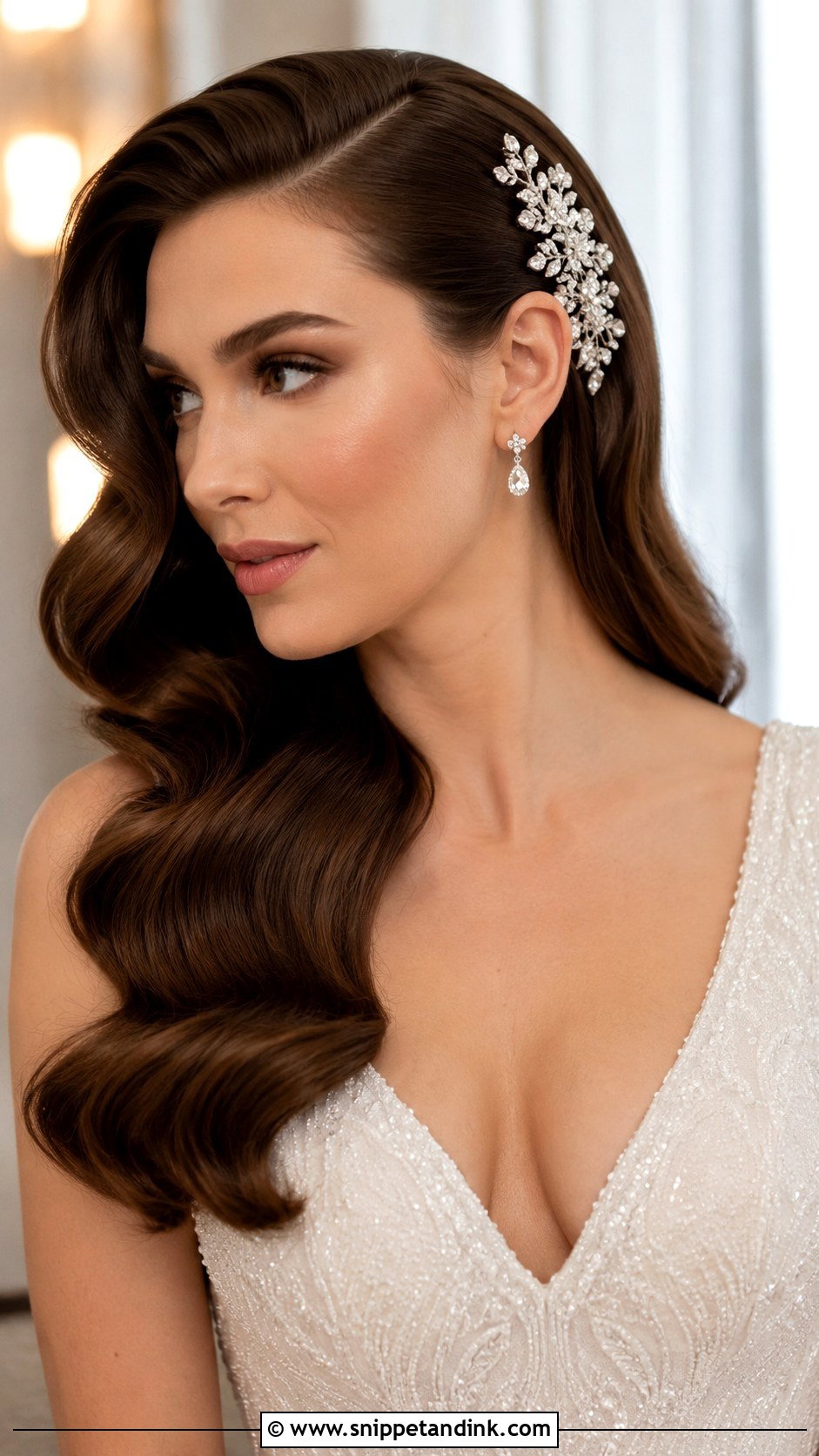
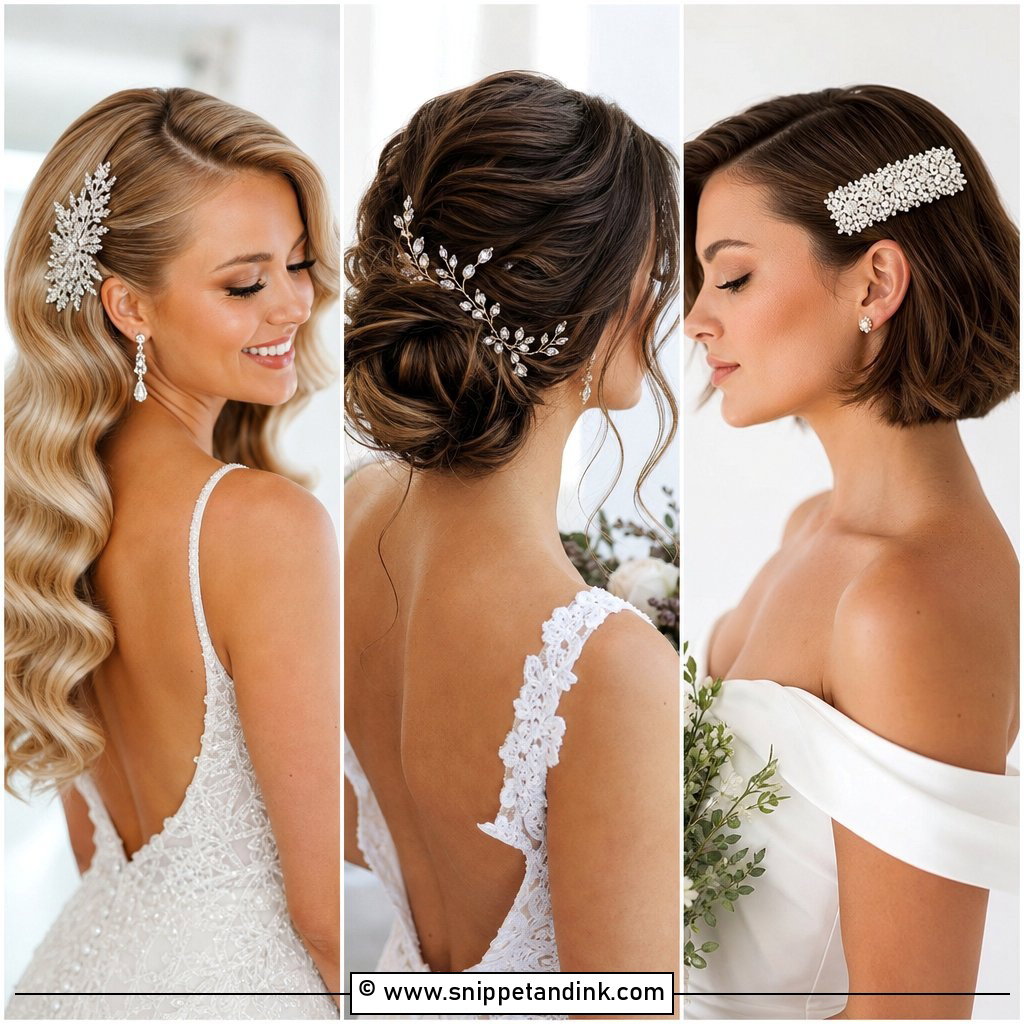
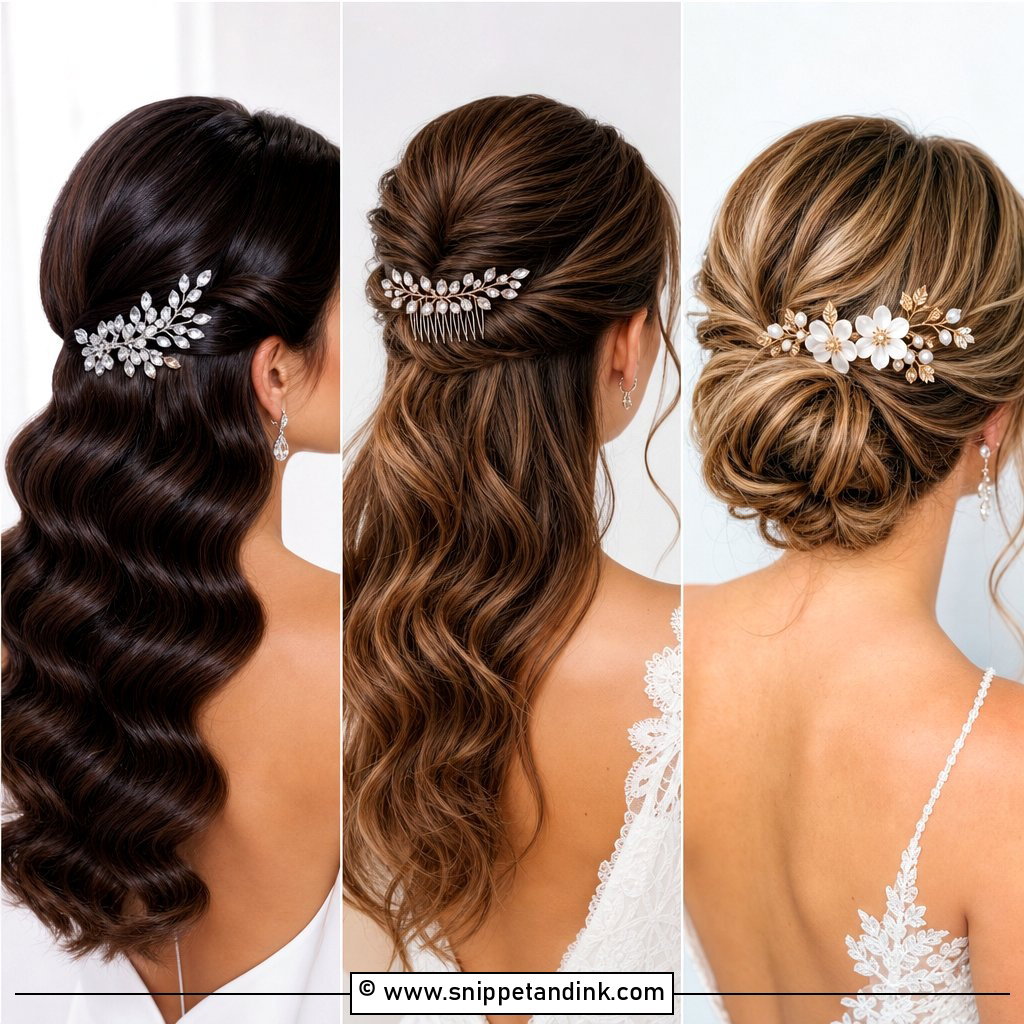
Crystal wedding hair clips and Hollywood waves are made for each other, because the sculpted S-shape gives the stones a smooth surface to sit against. Place the clip above the ear on the heavy side of a deep part. Keep the rest of the jewellery simple, a pair of drop earrings at most, since this hair is already glamorous. If your gown is beaded, I’d hold the clip next to the bodice in daylight before buying; clear crystal and champagne-tinted beads can look mismatched once they’re side by side.
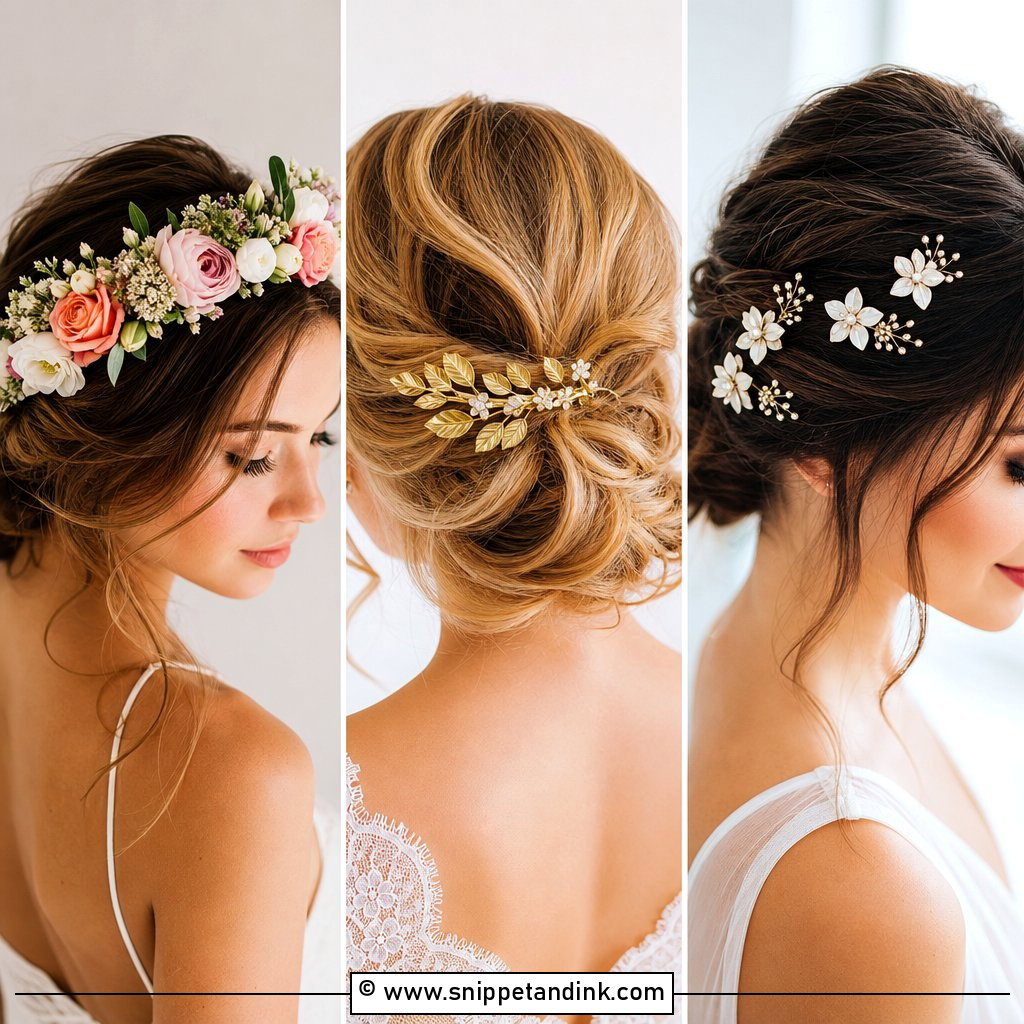
3. Floral Bridal Hair Comb With Messy Updo
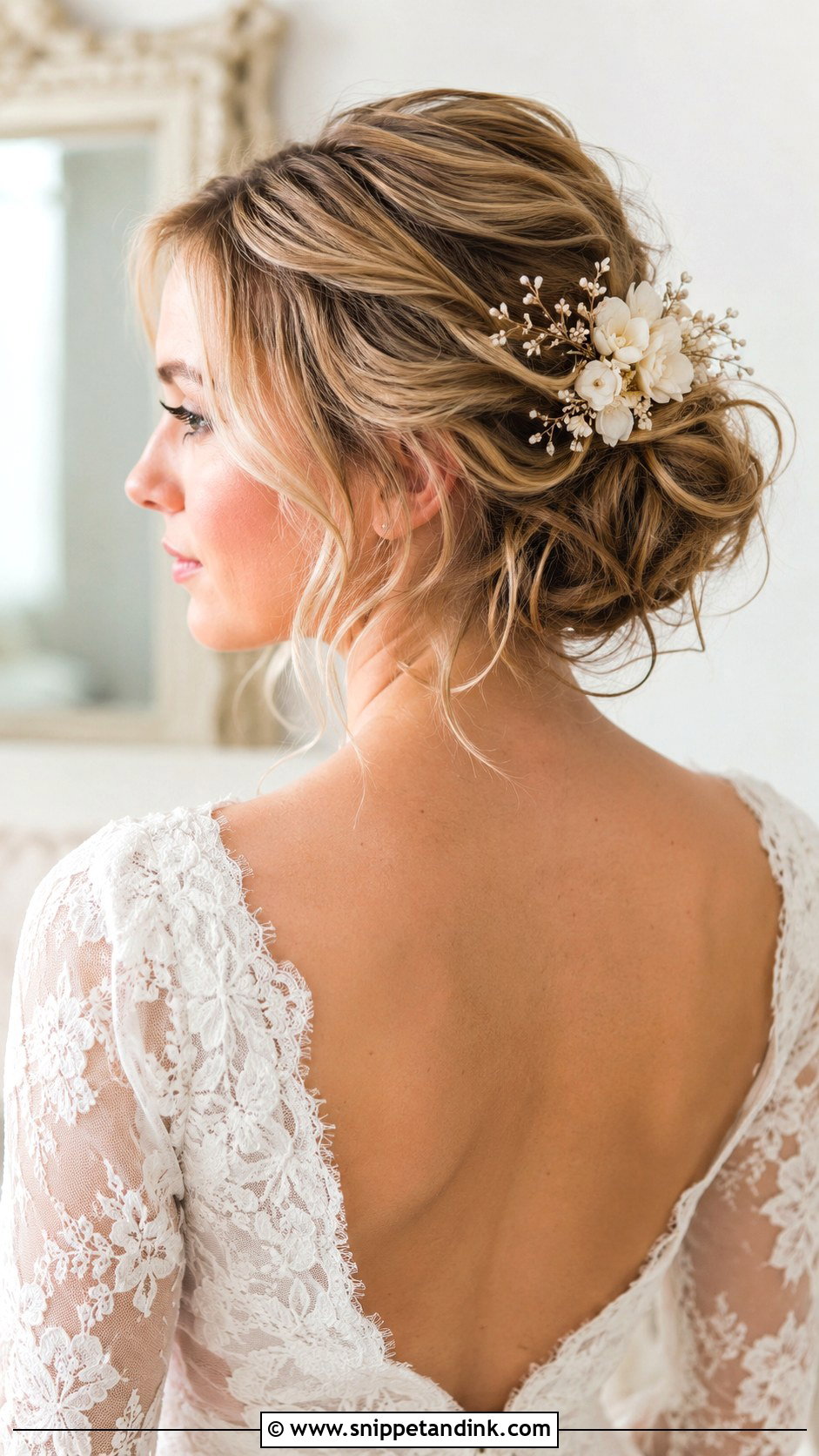
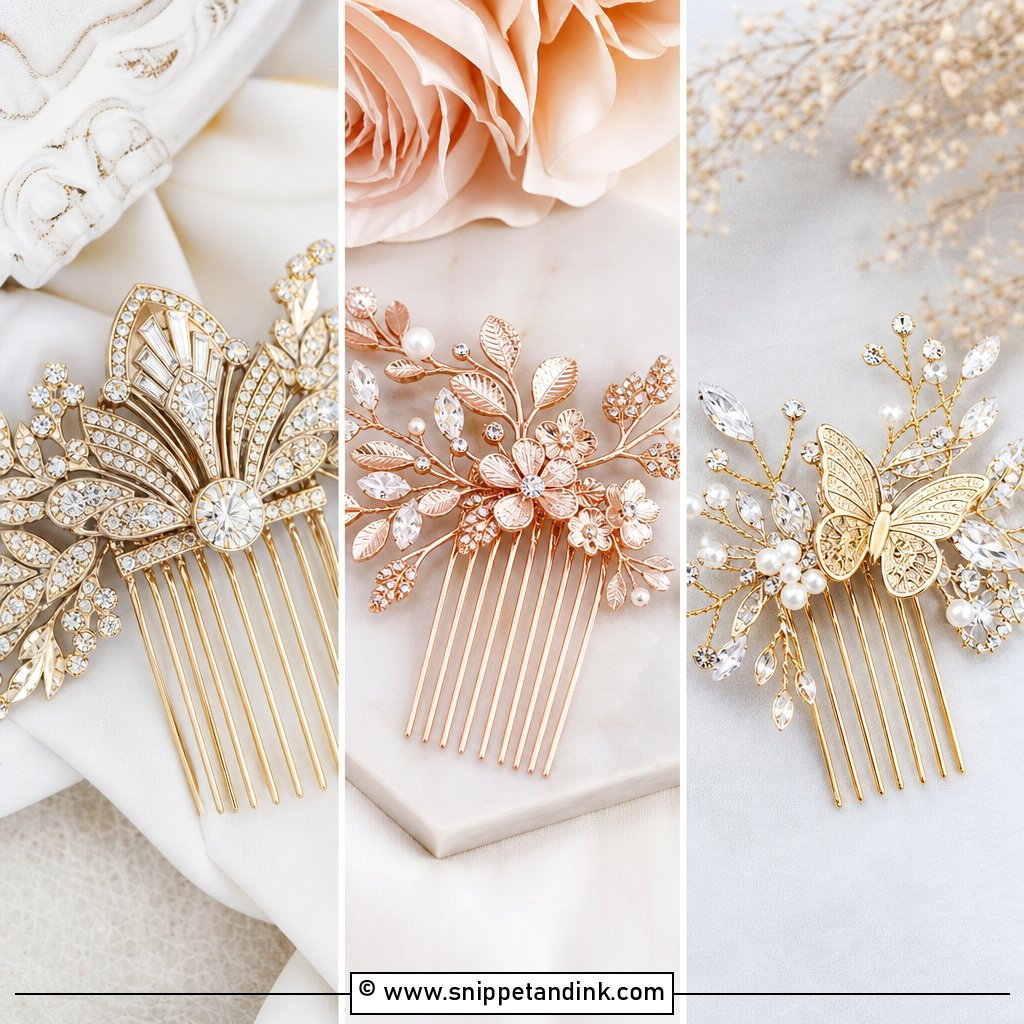
A floral comb only looks right in a messy updo if it seems to grow out of the texture. Push the comb in at an angle so a few strands fall over its edges, rather than placing it flat on top. I find small white blooms, ivory petals or gold leaves suit lace sleeves and off-shoulder gowns best. Skip it with a heavily structured dress; the undone hair and a sharp, architectural gown tend to argue with each other.
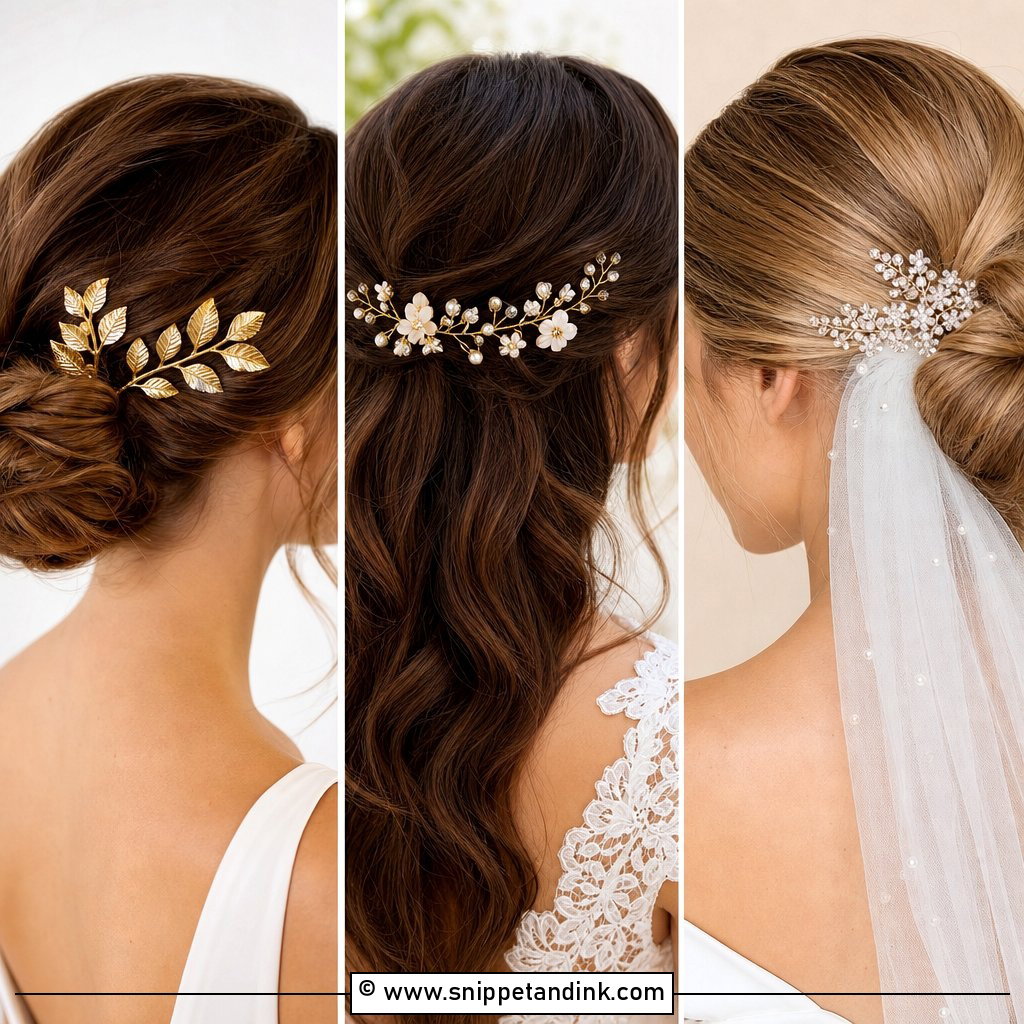
4. Gold Bridal Headpiece With Textured Chignon
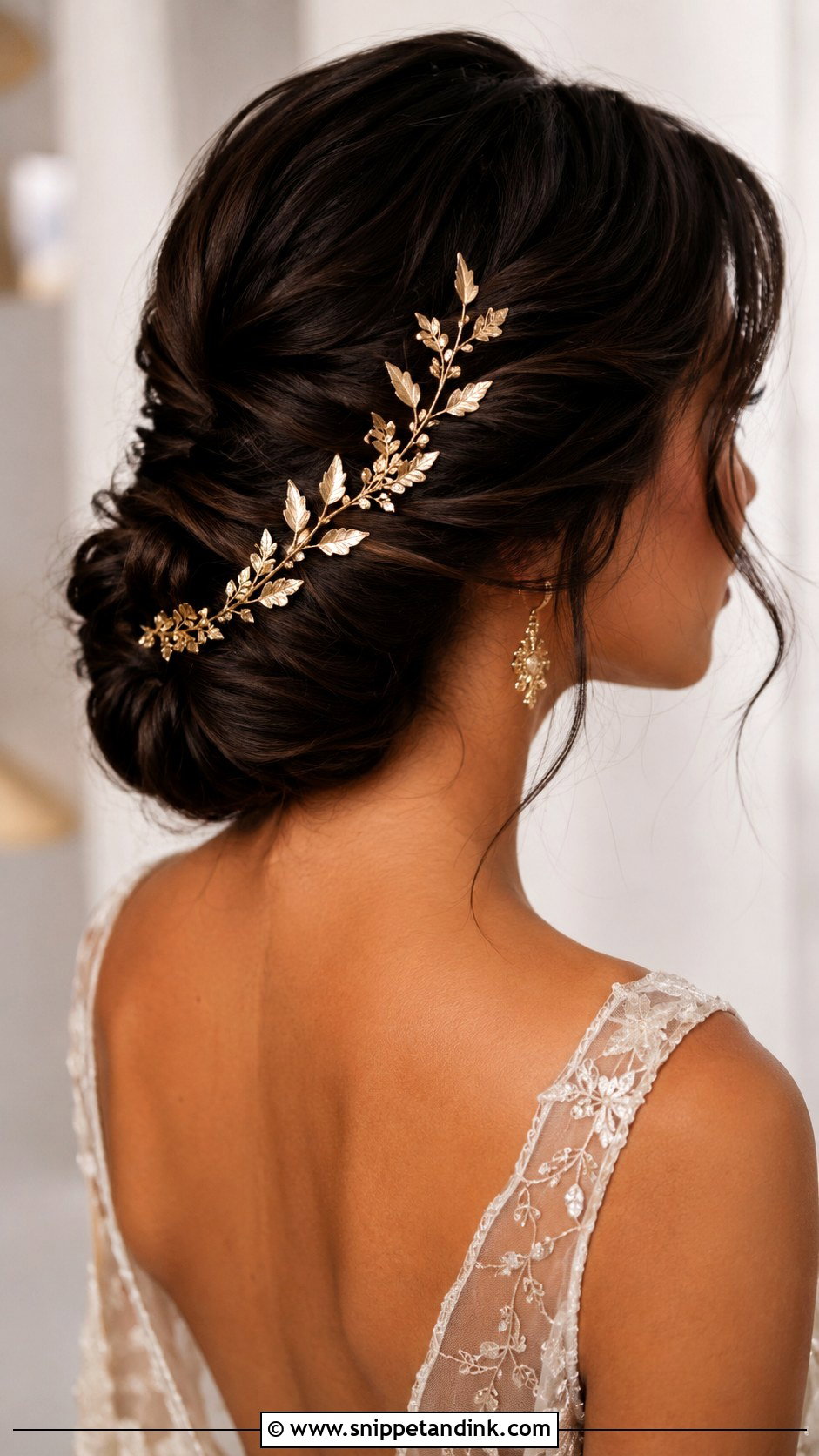
Gold against a textured chignon looks rich, especially by candlelight. I like the chignon set low and slightly to one side, so a branch comb or small vine headpiece can follow its curve. Warm metal suits champagne, ivory and warm lace particularly well, and less so a stark optic-white gown, where it can look a touch yellow. If the headpiece is detailed, I’d drop the necklace entirely.
5. Silver Bridal Barrette With Sleek Ponytail
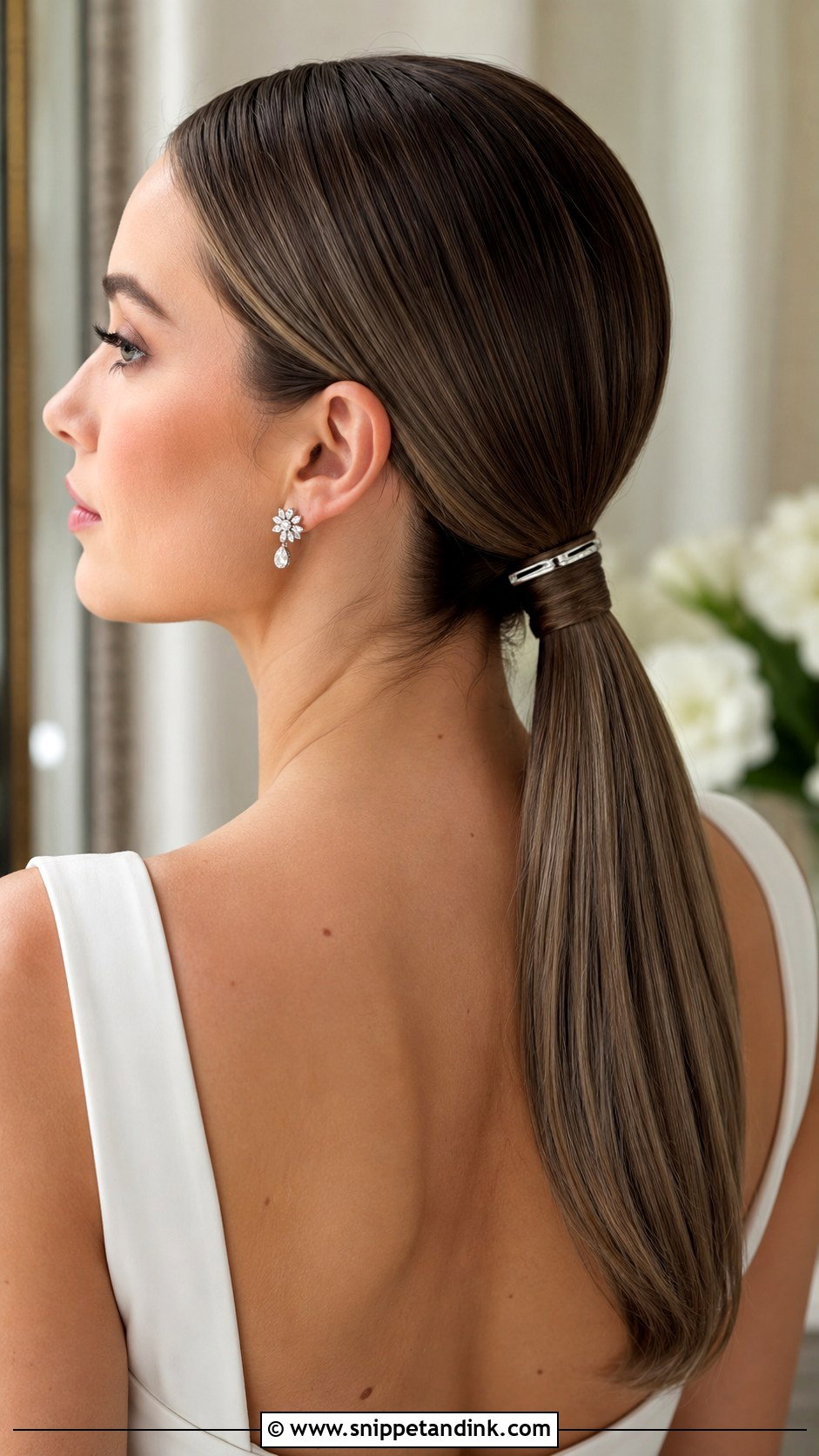
A sleek ponytail with a silver barrette suits clean, structured dresses: square necklines, crepe, minimal seams. Set the barrette at the base, angled slightly, or along one side above the ear. The ponytail itself needs a strong hidden elastic and a strand wrapped round it, because a barrette alone cannot carry the weight of a long tail. It’s one of the more practical choices for a long city wedding, since nothing falls in your face.
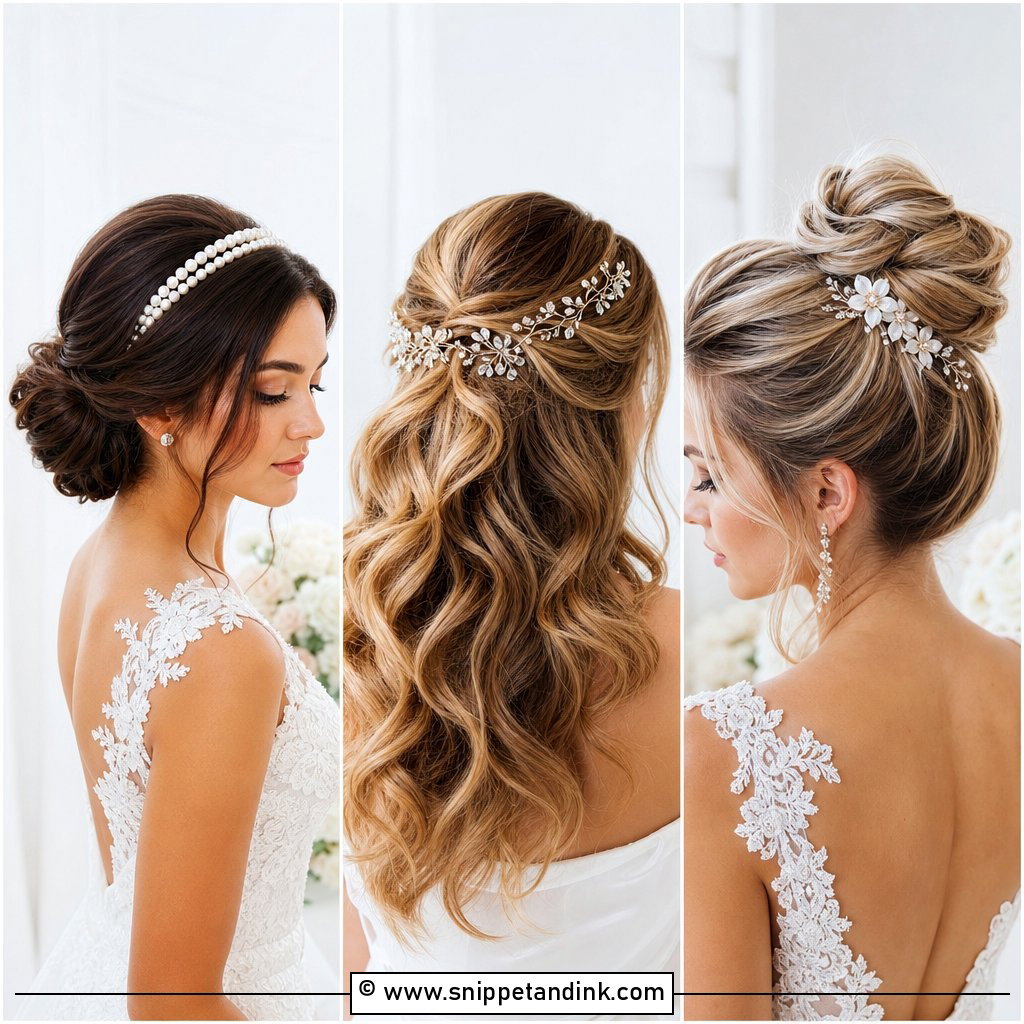
6. Pearl Bridal Headband With Short Bob
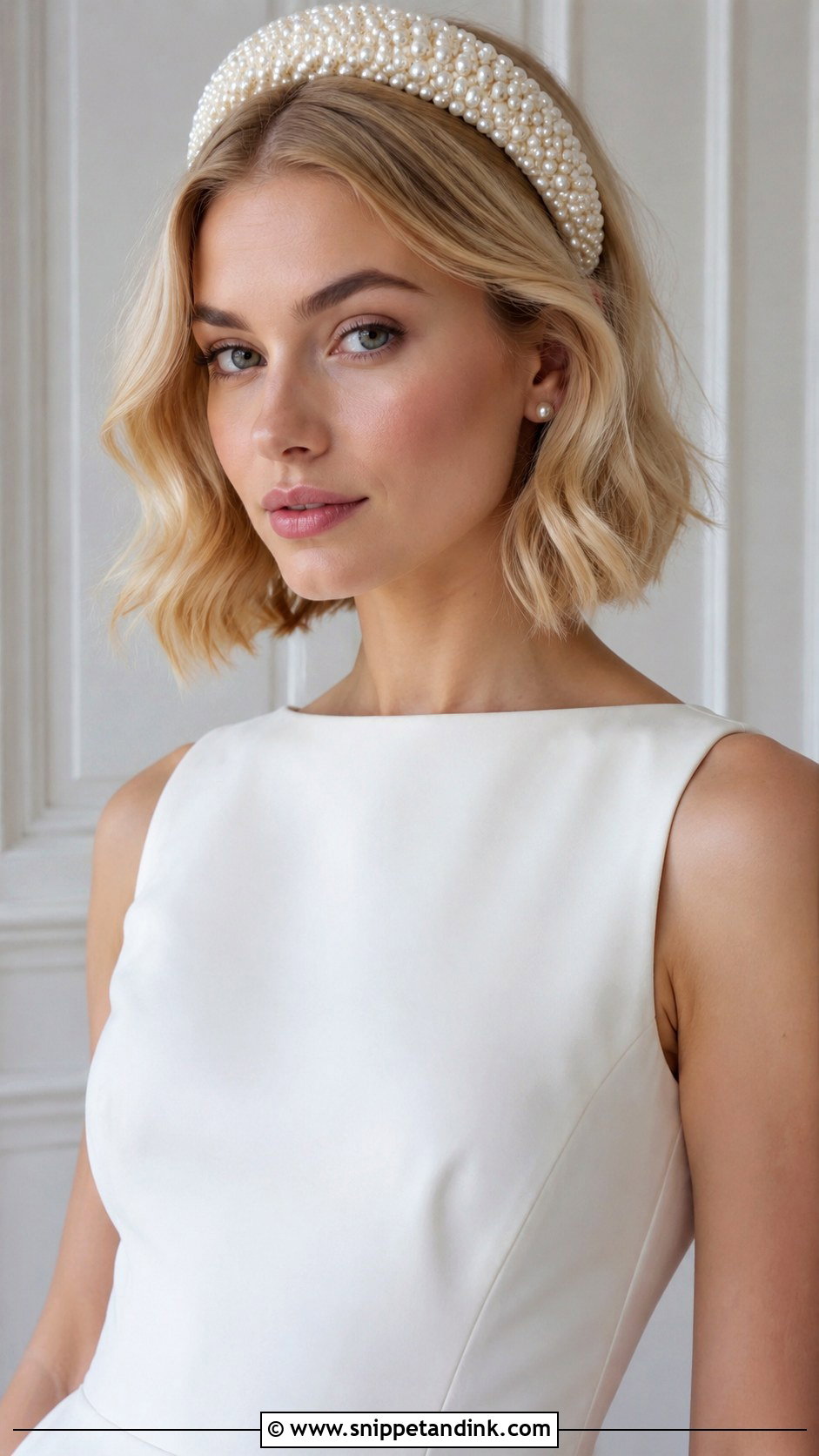
Short hair often looks most bridal with a headband rather than a clip, because the band frames the whole face instead of one spot. A padded pearl band is a statement; a fine one is quieter. I try both against the dress, since a padded band can look heavy next to a delicate neckline. If you’re wearing a veil, the comb goes just behind the band so the two stack neatly. Watch the fit: a band that grips too tightly behind the ears will give you a headache by the reception.
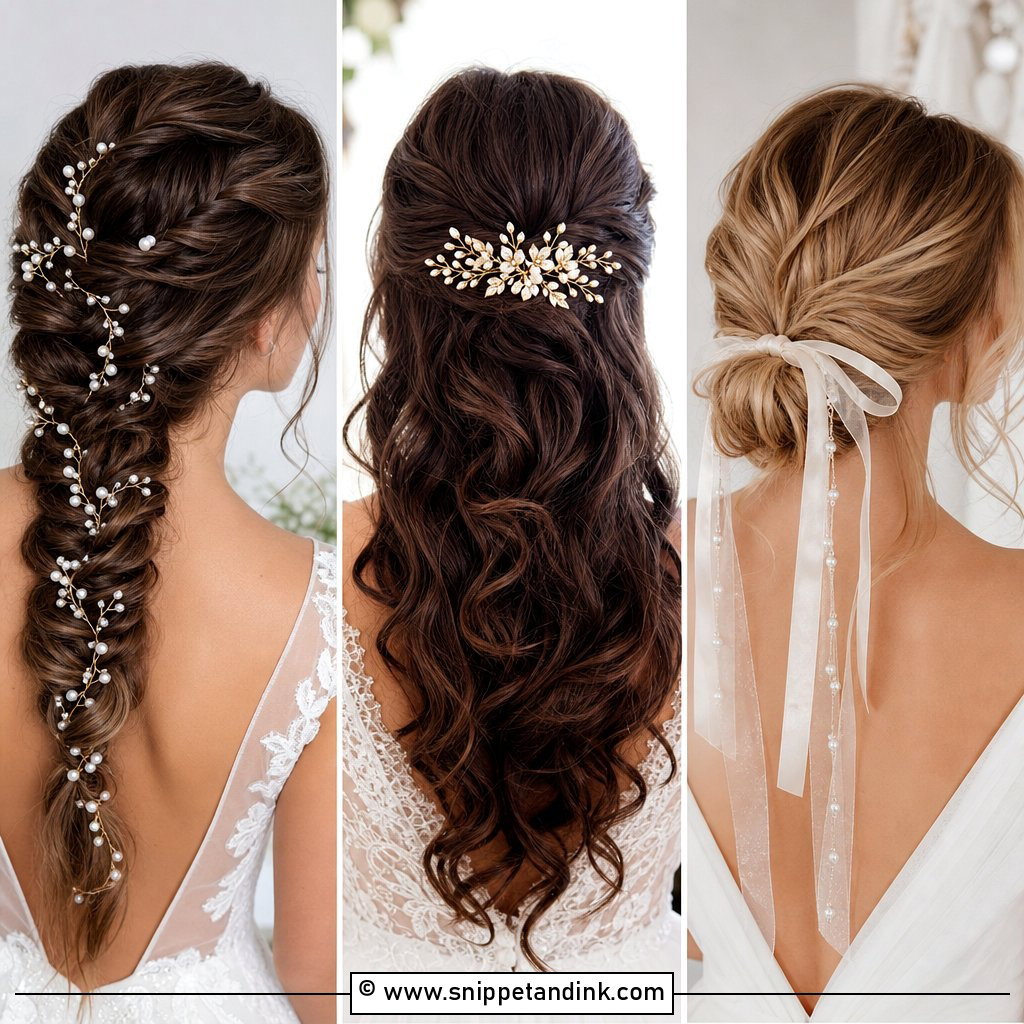
7. Bridal Hair Vine With Half Up Curls
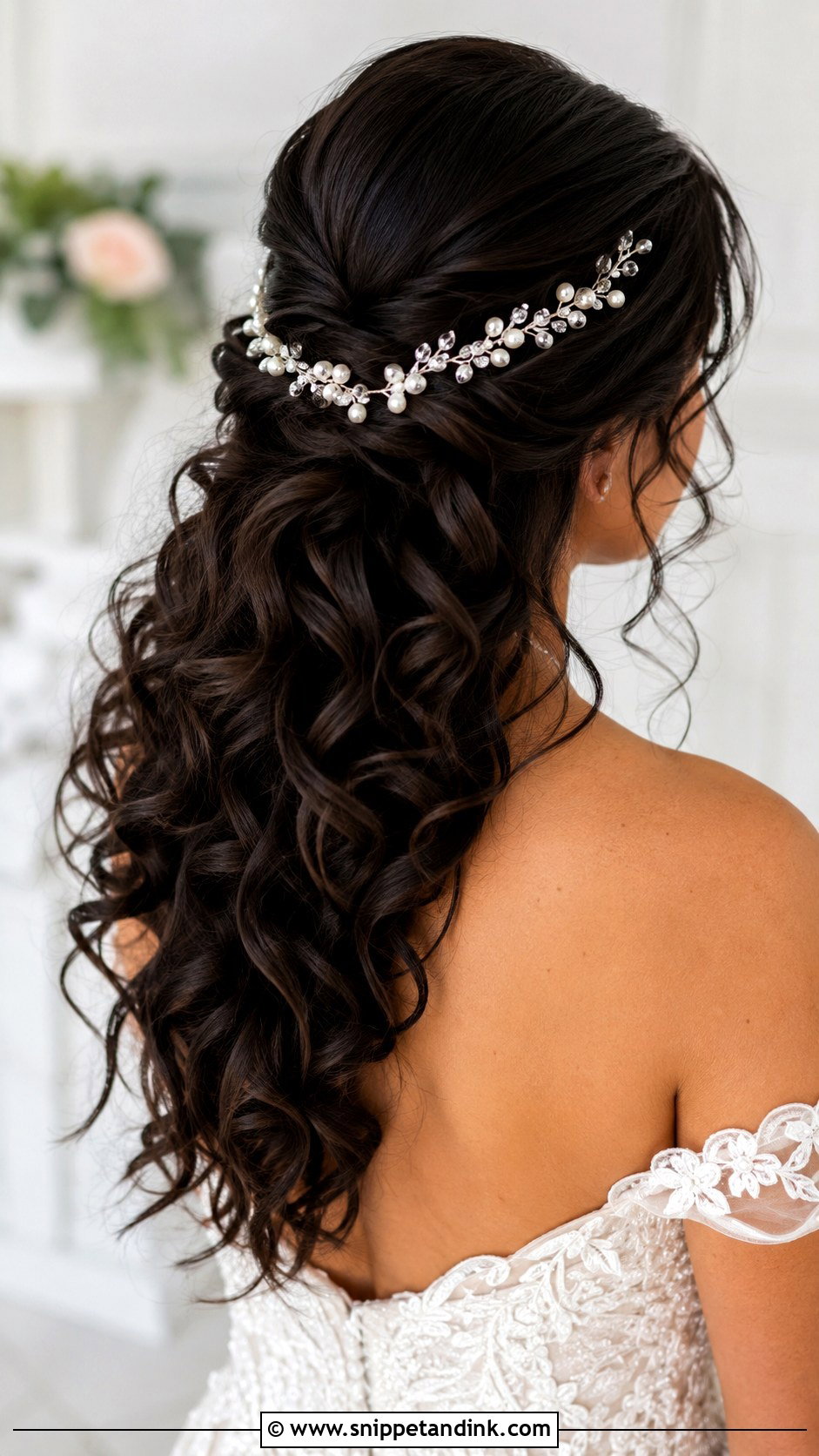
A bridal hair vine needs a base to be woven into, which is why half-up curls work so well. The wire is bent to follow the gathered section and pinned at each end, then threaded loosely through the curls. A good vine is flexible enough to shape by hand without kinking. Pearl, crystal or leaf all suit it; choose based on the dress trim rather than the hair. Veils sit underneath the gathered section, so the vine stays visible.
8. Bow Wedding Hair Clip With Low Ponytail
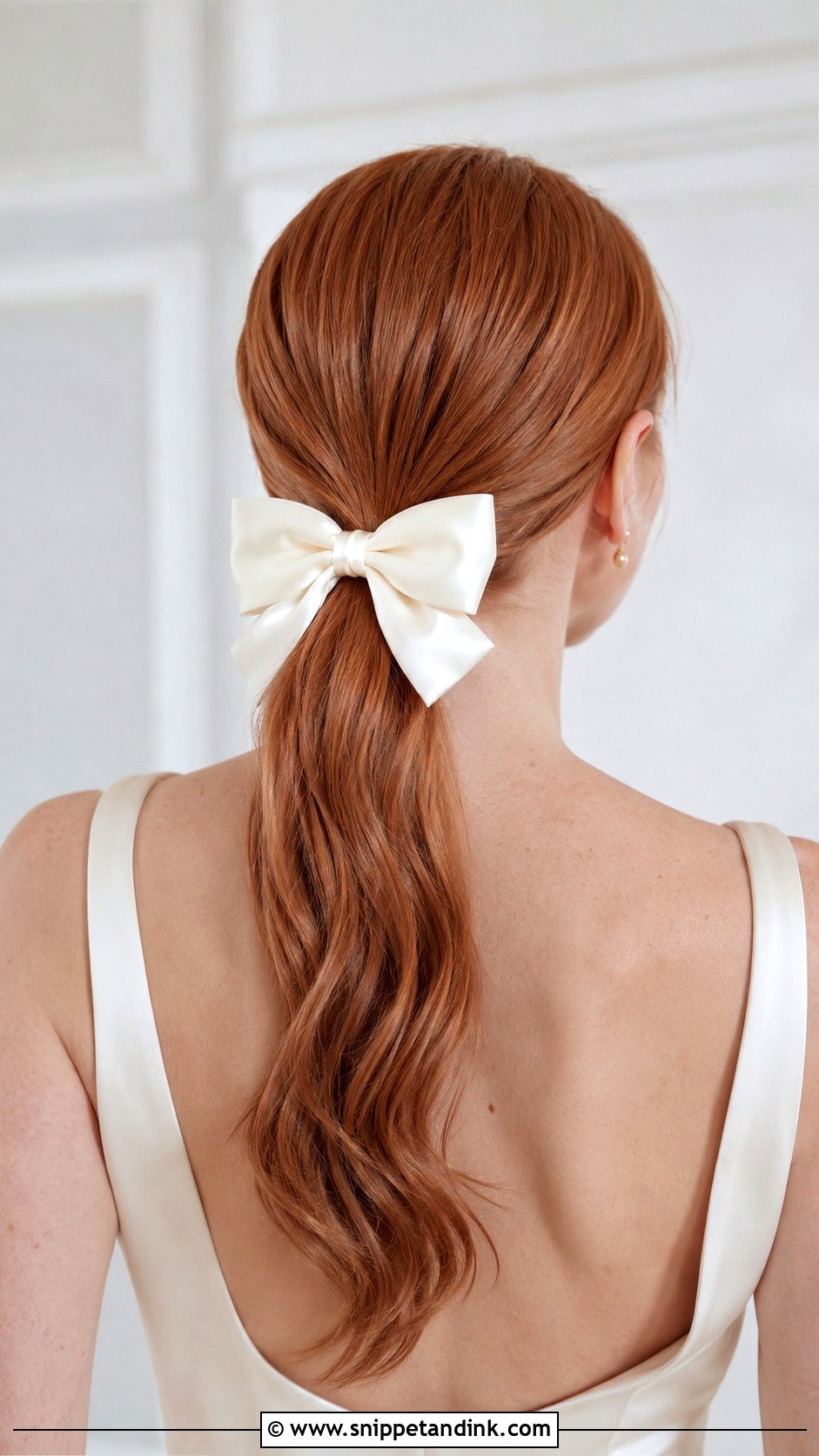
A bow over a low ponytail is the most relaxed pairing here, which makes it a good choice for an elopement or a reception change. Satin holds its shape; organza can look flimsy in wind; a pearl-trimmed edge adds just enough polish. Clip it right over the base so it hides the elastic. I’d match the bow fabric to the dress if possible, since an ivory satin bow on a bright white gown will make one of them look slightly off.
9. Crystal Bridal Comb With Side Swept Hair
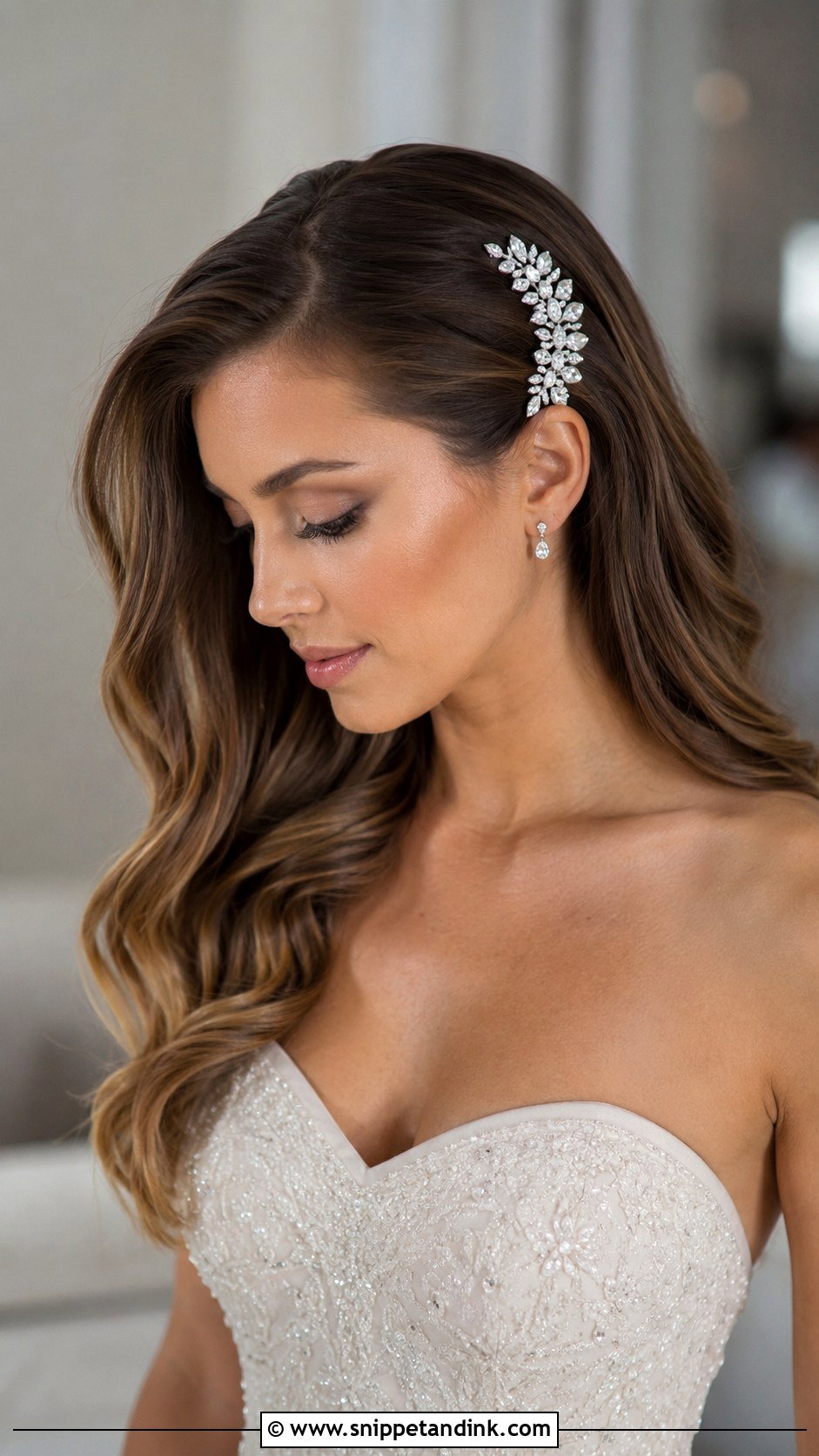
Side-swept hair with a crystal comb photographs well in portraits because one side of the face is fully open. The comb holds the lighter side near the temple, and curved teeth grip far better than straight ones. I backcomb a small patch underneath first so the teeth have something to bite. This is the pairing I’d suggest for a strapless or one-shoulder gown, as the swept side balances the bare shoulder.
10. Vintage Bridal Hair Clip With Finger Waves
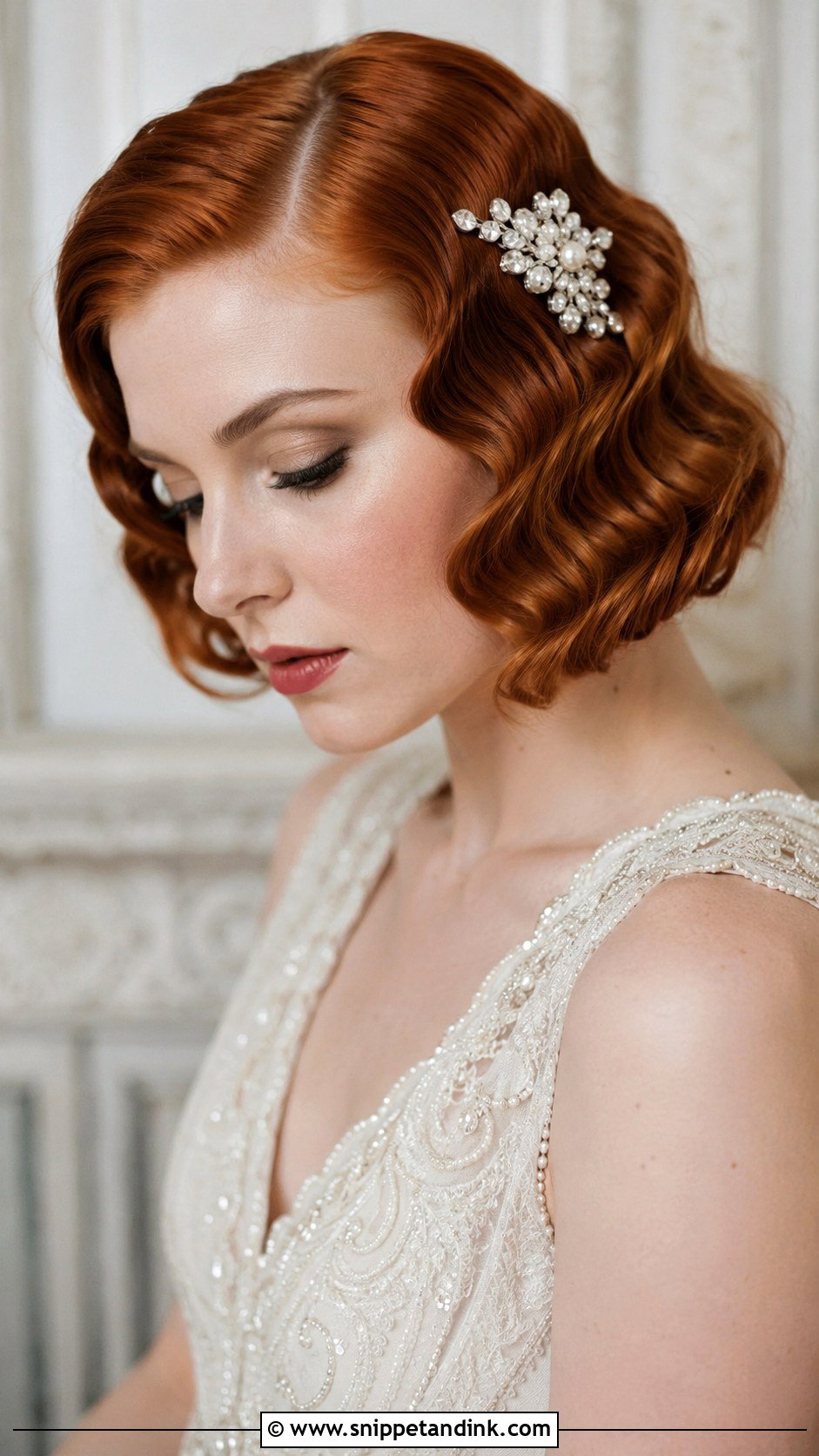
Finger waves are the strictest base on this list, so the clip has to be placed with care. I set an antique-style piece with pearls, crystals or Art Deco lines on the heavy side of the part, along the line of a wave, never across it. Silk, beading and cap sleeves suit this look. It’s best on short and medium lengths, and you’ll want a stylist who has actually set finger waves before, because uneven ridges look sloppy next to a crisp vintage clip.
11. Floral Wedding Hair Clip With Loose Waves
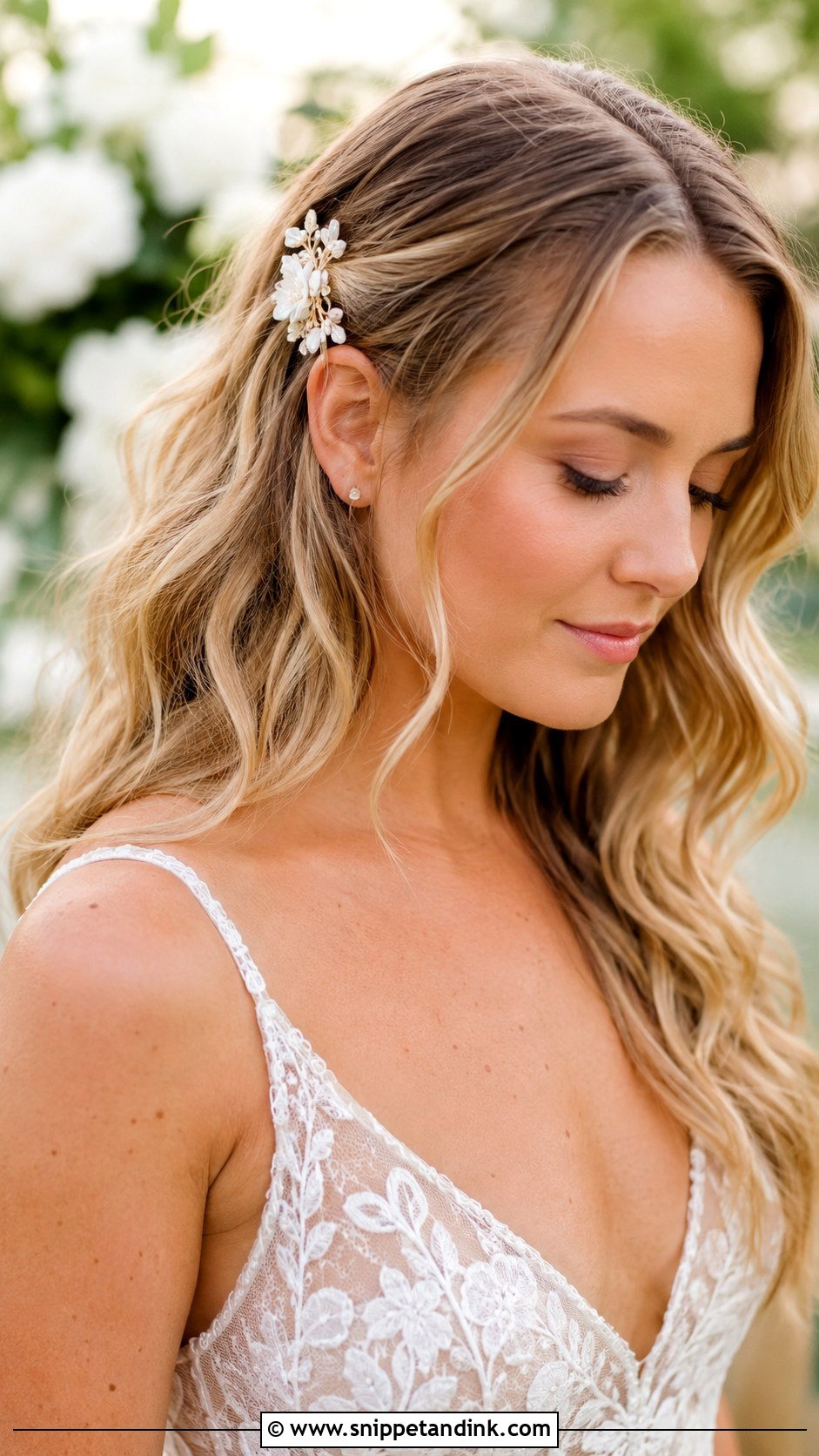
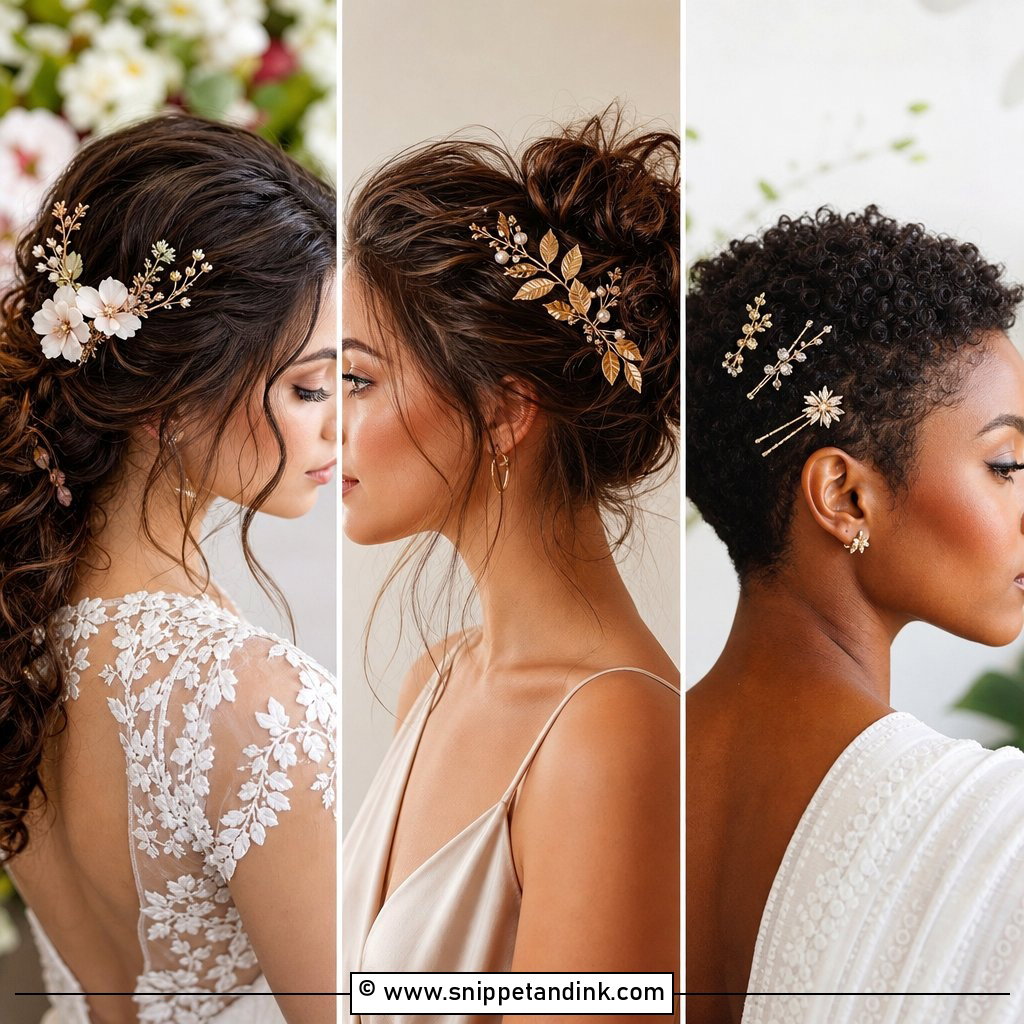
Loose waves with a floral clip are the easygoing choice for a beach or backyard, and they translate to bridesmaids without fuss. Brushed-out waves give the clip less to hold than an updo does, so I slide two crossed pins under it first. If your dress already has floral lace, keep the clip small. Two sets of flowers of equal size compete; one large and one small looks deliberate.
12. Pearl Pins Bridal Updo
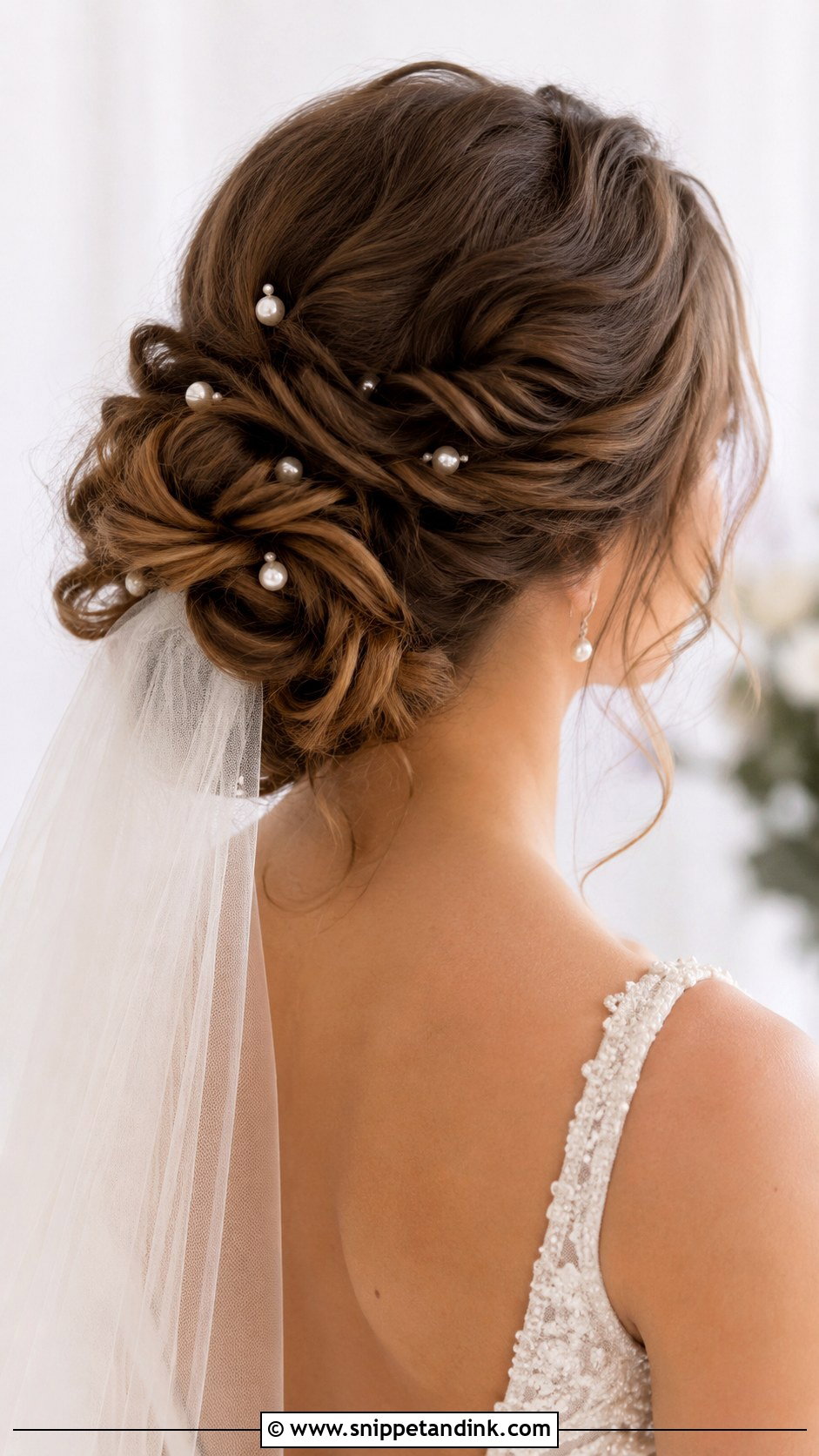
Scattered pearl pins add detail in tiny doses. Instead of one clip, five or seven small pins go through a bun or twist, set unevenly so the eye moves around the shape. They’re light, they don’t fight a veil, and if one falls out nobody notices. Their weakness is distance: from the back rows of a church they barely register, so this is a detail meant for close-ups.
13. Bridal Tiara Headpiece With High Bun
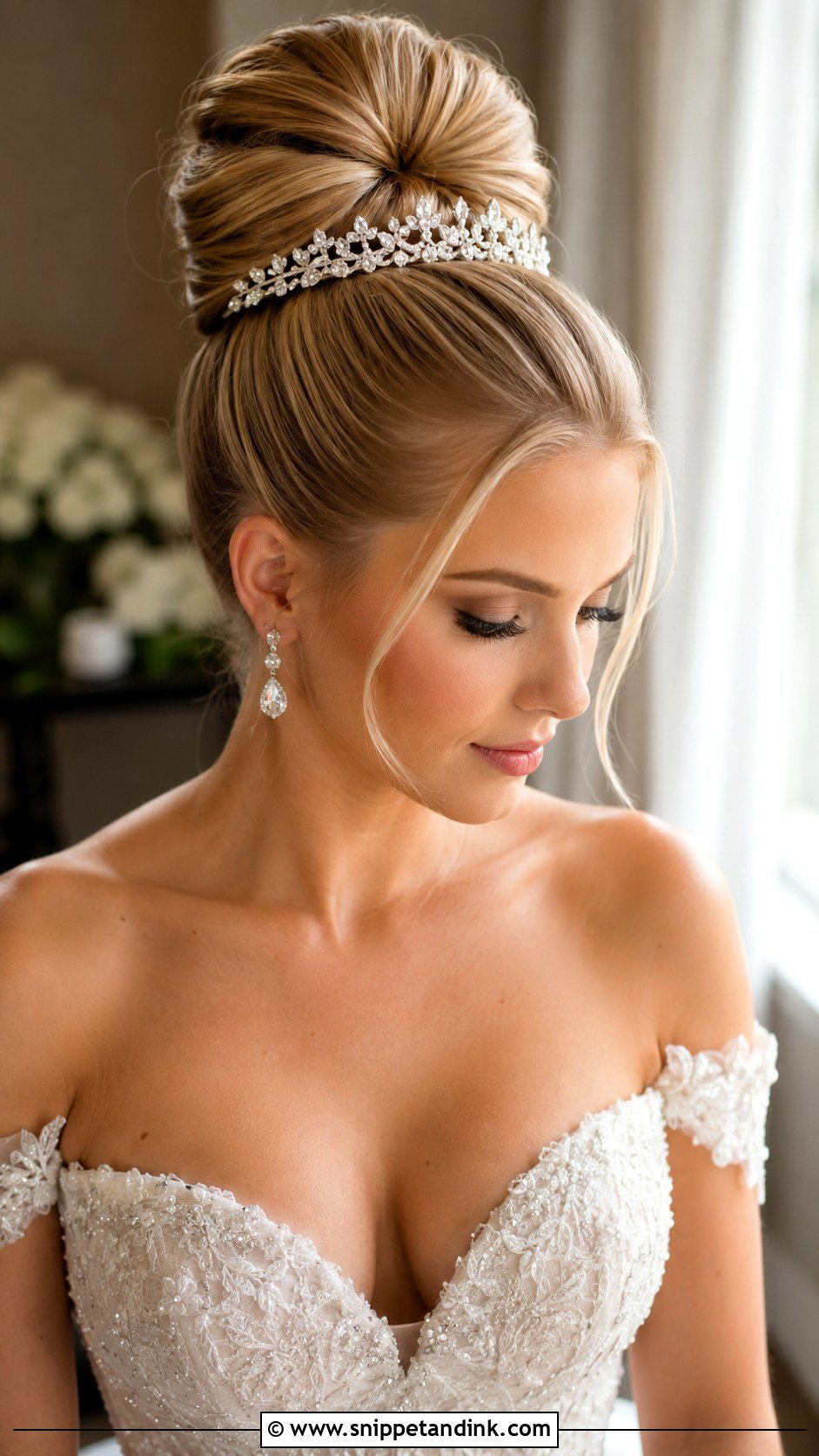
A bridal tiara headpiece in front of a high bun is the most formal pairing here. The bun gives the tiara something to rest against, so it doesn’t tip backwards. Ball gowns, cathedral veils and evening ceremonies suit it best; at a casual barn wedding it can feel out of step. Tiaras press on the head in a way clips don’t, so I always ask brides to wear theirs for at least an hour before the wedding. With lots of sparkle on top, keep the earrings small.
14. Minimalist Bridal Hair Clip With Sleek Bun
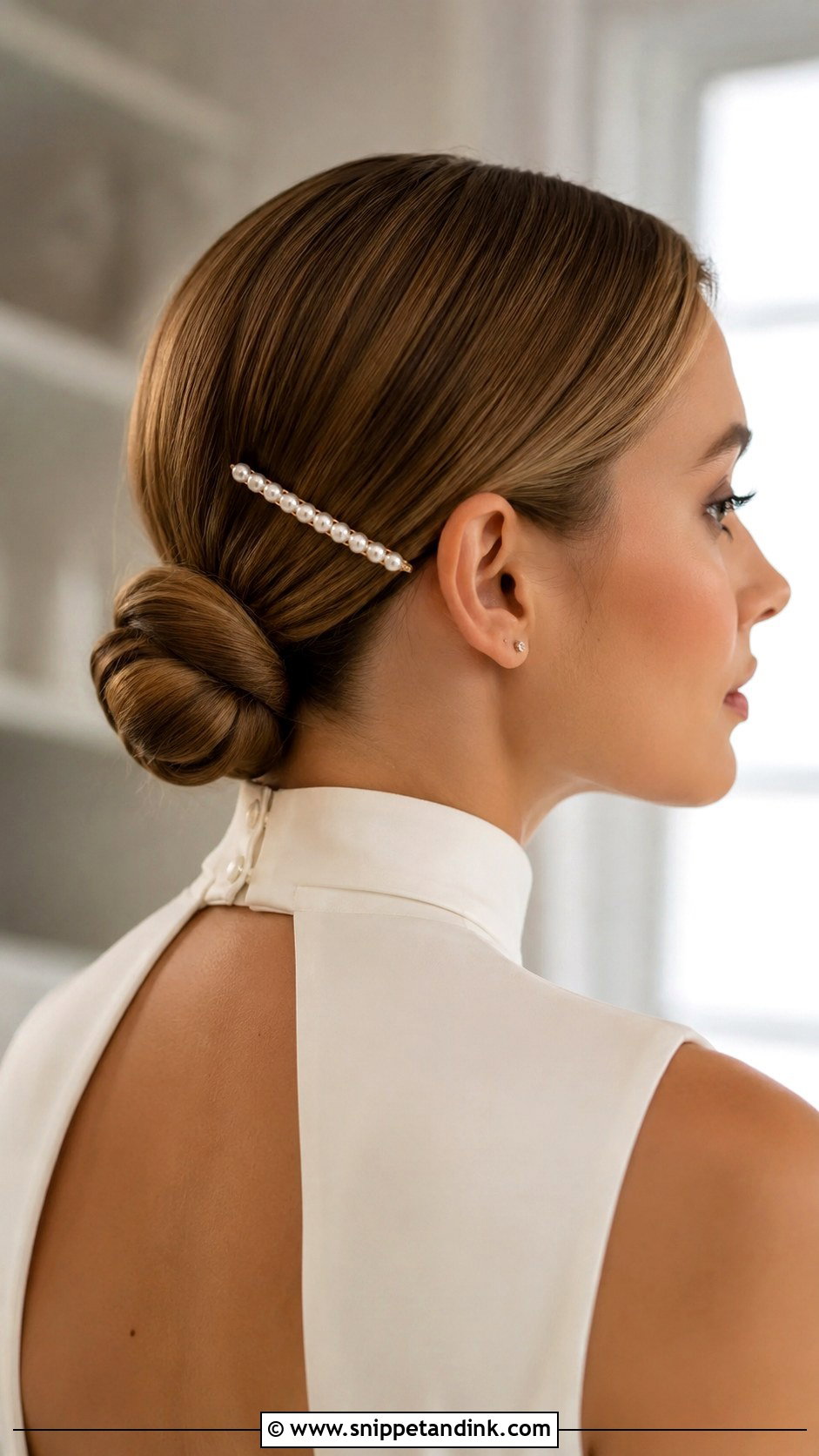
A sleek bun with one minimalist clip is the most polished and least fussy option here. Pair it with a high neck or architectural dress, where loose hair would hide the neckline. Smooth hair also handles humidity better than loose curls do. Placement has to be exact, since there’s nothing else in the hair to hide a crooked clip, so I’d set it at your trial and photograph the spot for the morning.
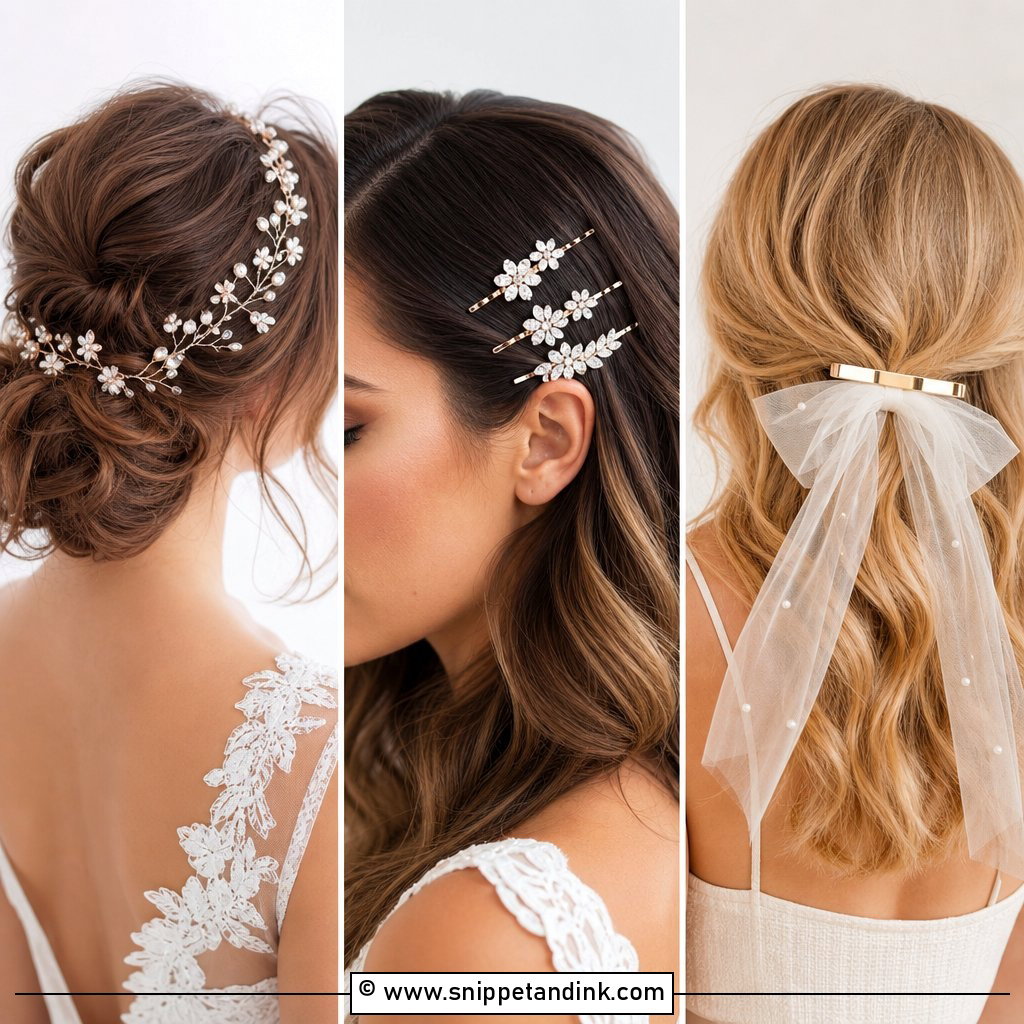
15. Pearl And Crystal Bridal Headpiece With Soft Updo
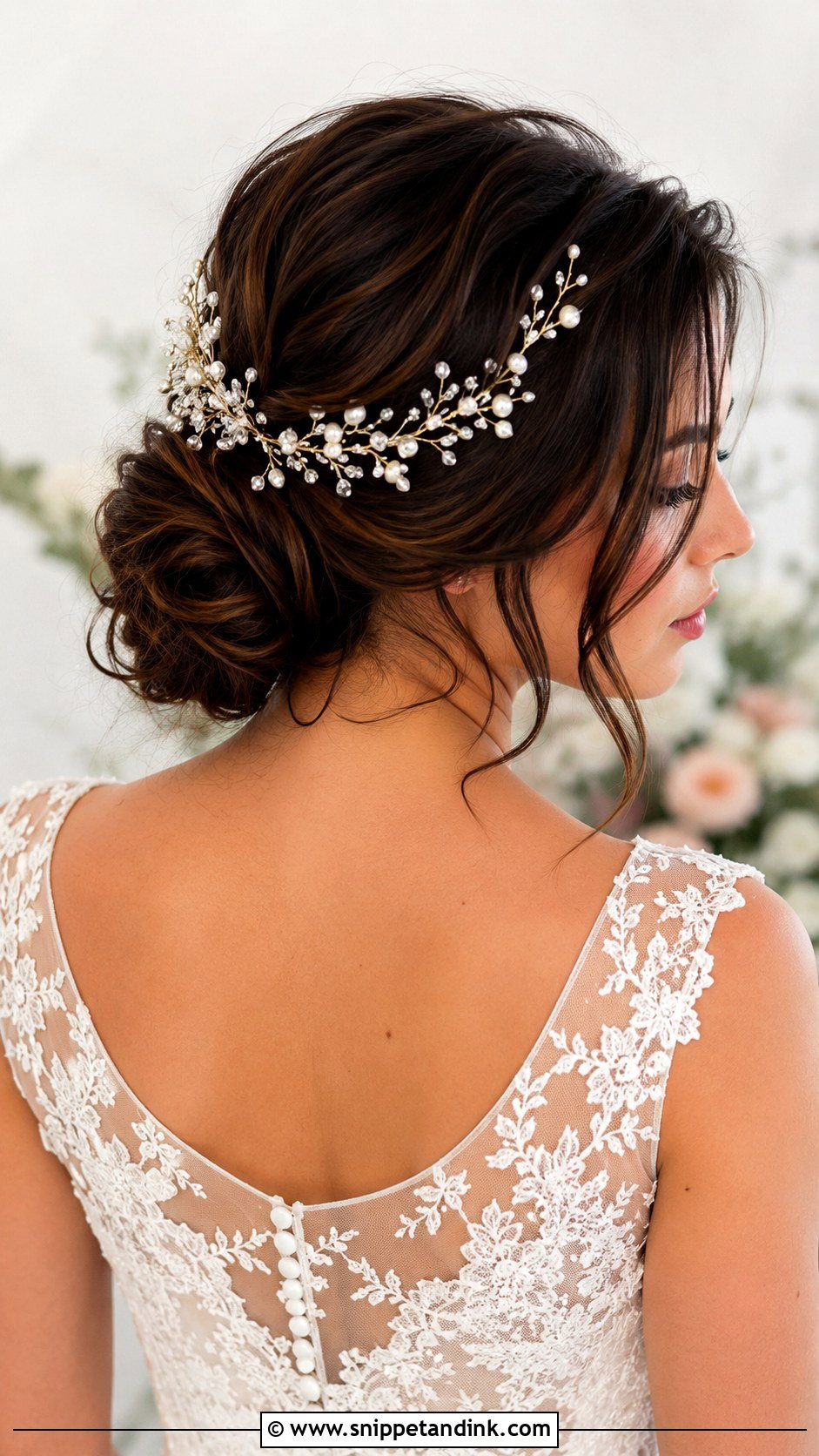
Mixed pearl and crystal pieces suit brides who can’t decide between soft and sparkly. The pearls carry daylight; the crystals take over under evening lights. These are usually wider pieces, so they sit best across the back of a loose bun or tucked into a side twist, with some face-framing pieces left out to soften the line. Match the metal setting to your earrings.
Ordering a Custom Headpiece in Time for the Trial
Handmade pieces, tiaras and anything altered to match a dress take longer than people expect. Lead times vary from maker to maker, so ask before you commit, but a custom piece commonly needs several weeks, and busy spring and summer seasons stretch that further.
- Order early enough that the finished piece arrives before your hair trial. Testing with a stand-in clip tells you very little about weight or grip.
- Send the maker a fabric swatch or a clear daylight photo of your dress, so pearl and crystal tones can be matched.
- Ask how the piece fastens and whether loops can be added for pins; most makers will do this on request.
- When it arrives, check the back for sharp wire ends and test the spring or comb on your own hair.
- Store it flat in its box, away from hairspray, which can cloud crystals and dull pearls over time.
If time has run short, an off-the-shelf piece in the right metal and scale is a far better choice than a rushed custom one you have never worn.
Wear Three Headpieces at the Trial and Keep One
A headpiece is never chosen alone. It has to suit the hairstyle that holds it, the neckline beside it and the veil going over or under it. Choose the dress first, agree the hair with your stylist, then take two or three pieces to the trial and wear each for a while. The one you forget you’re wearing after half an hour is usually the right one for a long day.
You'll Like These Ideas:


Leave a Reply