
Spring is the season I worry about most as a stylist, because the weather can change three times between the ceremony and the first dance. A cool morning turns into a warm afternoon, a light shower rolls through, and suddenly smooth hair has doubled in size. The best spring wedding guest hairstyles are the ones built with that in mind: low chignons, set waves, wrapped ponytails, braids and half-up shapes that keep their outline without being lacquered stiff. You’re not there to compete with the bride. You want to look like you dressed for the day, and still feel comfortable at eleven at night. Below are the fifteen styles I’d actually suggest to a guest, with what each one needs to survive a spring wedding.
Spring Weather Is What Undoes Guest Hair
Most styles don’t fail because they were done badly. They fail because the hair was prepped for a dry room and then walked into damp air. Hair absorbs moisture from humid air, and as it swells, smooth sections frizz and curls relax. Spring gives you that humidity, plus breeze, plus a cool morning that turns warm.
So the prep matters more than the style. Here is what I do for a spring guest before I pick up an iron:
- Wash the day before if your hair is fine or slippery. Second-day hair grips pins and holds curl far better than hair washed that morning.
- Dry it completely, roots included. Any damp patch left at the nape will drop the curl in that section first.
- Use an anti-humidity product before heat, not just a spray on top at the end. The finishing spray helps, but it can’t fix hair that was never sealed.
- Check the forecast for wind as well as rain. On a windy day I lean toward updos and ponytails over fully loose styles every time.
If your hair is naturally curly or coily, you have an advantage here: a defined curl pattern set with a gel or cream handles humidity better than heat-straightened hair, which tends to revert the moment the air turns damp.
Matching Your Hair to a Hat, Fascinator or Fresh Flower
Spring weddings are when guests wear headpieces, and the headpiece should be planned with the hair, not after it. A fascinator on a headband or comb needs a low style, usually a chignon or a low ponytail, so the band sits flat. A wide-brimmed hat crushes anything at the crown, so I keep volume low and put the interest at the nape.
Fresh flowers wilt faster than people expect once they’re out of water and next to a warm scalp. Choose hardier stems or good silk flowers, and pin them into a braid rather than loose hair, where they have something to hold.
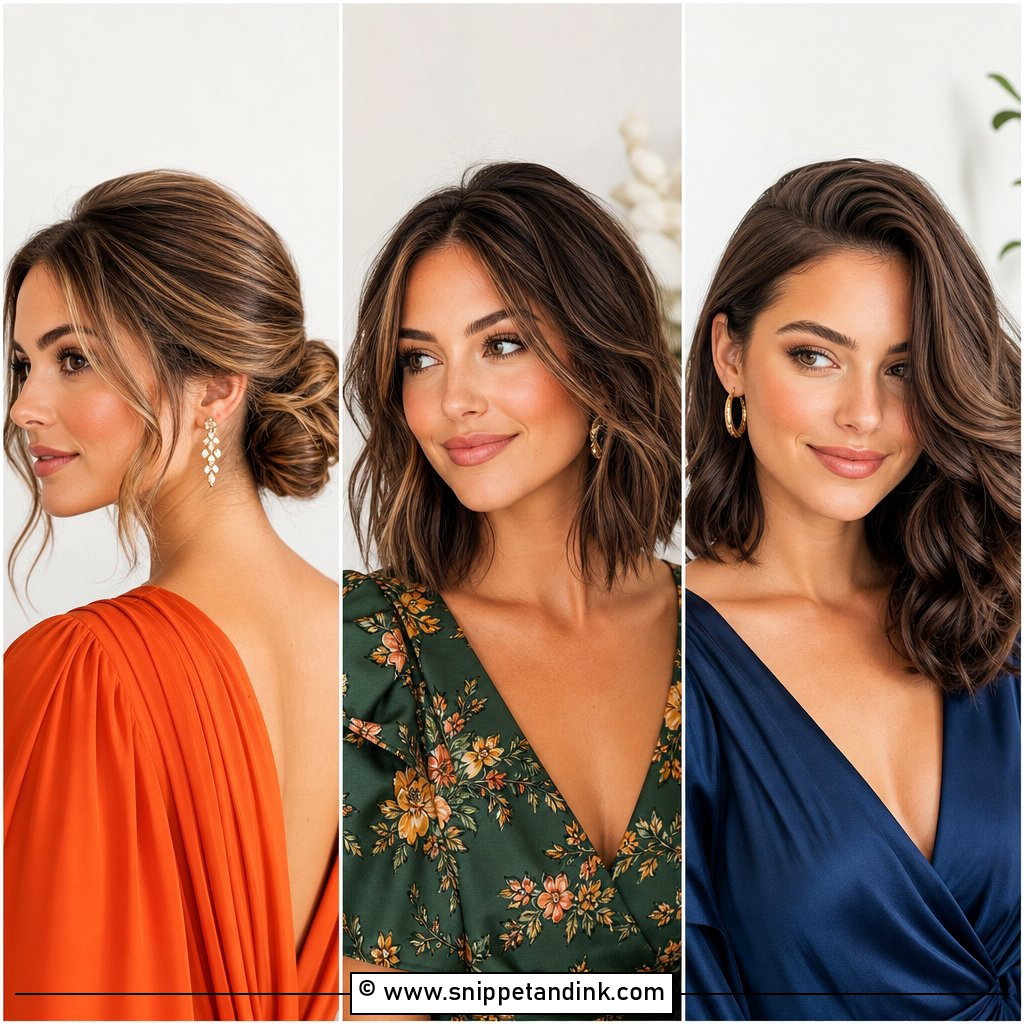
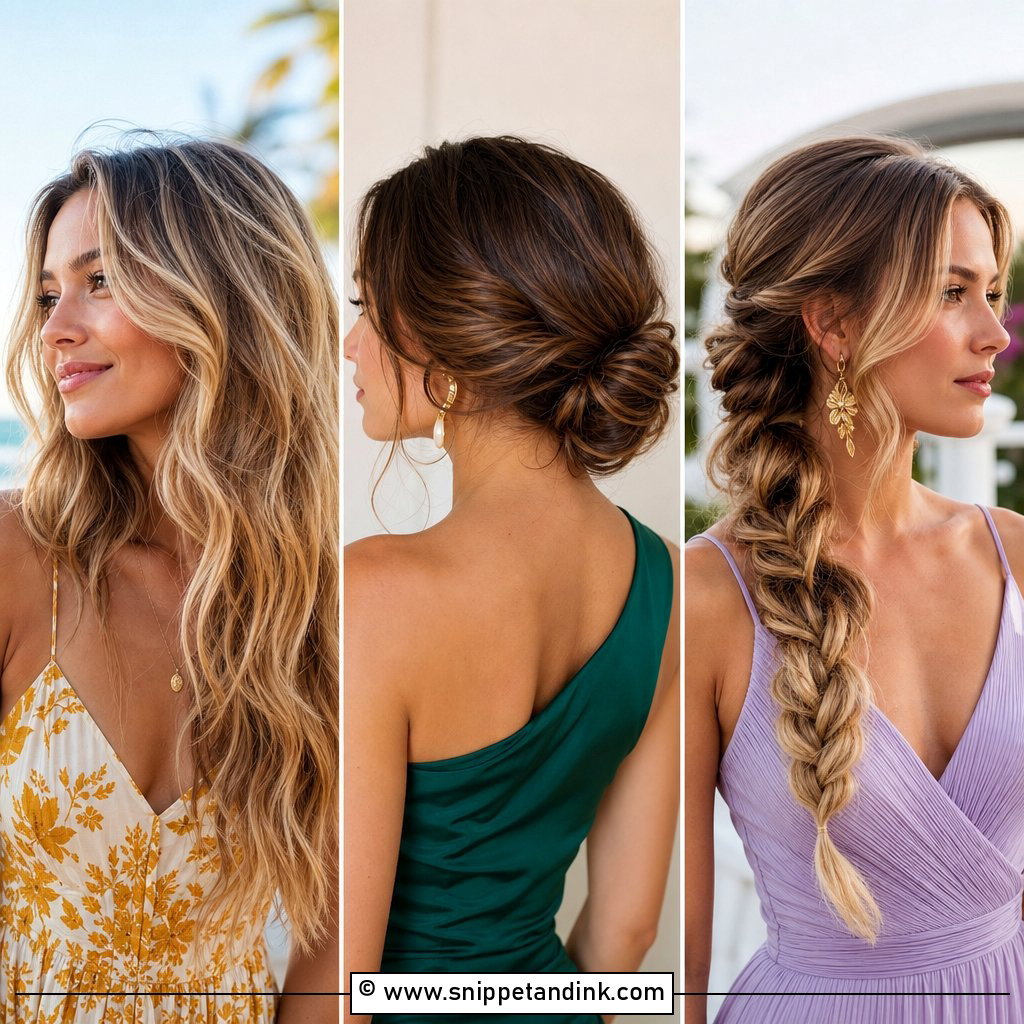
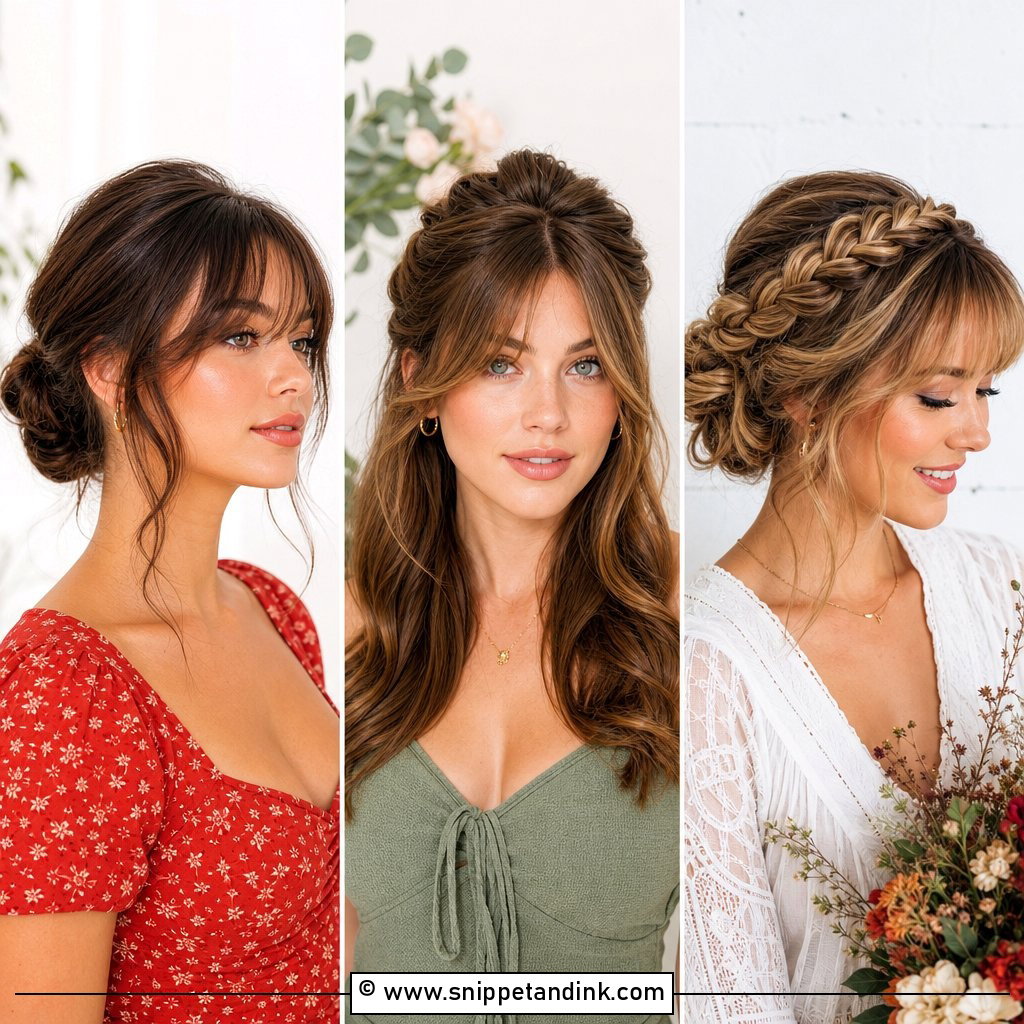
1. Spring Wedding Guest Low Chignon
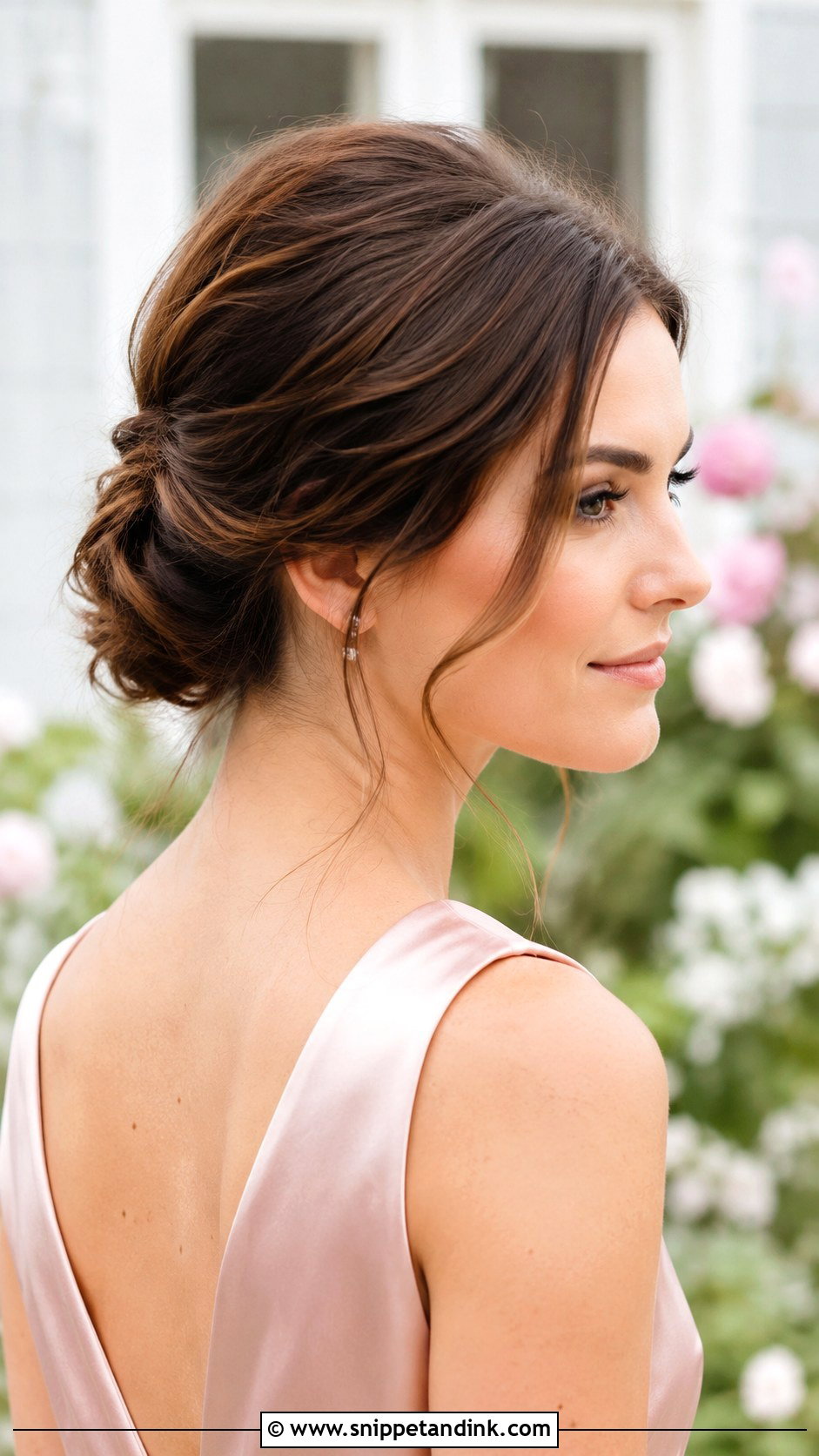
A low chignon is my default suggestion for a spring guest who isn’t sure what to do. It sits at the nape, so it works under a wide-brimmed hat and with both open backs and high necklines. I set the base first: a ponytail secured just above the nape, then the length wrapped and pinned with the pins pushed toward the scalp, not across the bun, so they grip. Pulled too tight it looks severe in daylight, so I leave a little lift at the crown and two face-framing pieces. In wind it barely moves, which is the whole point.
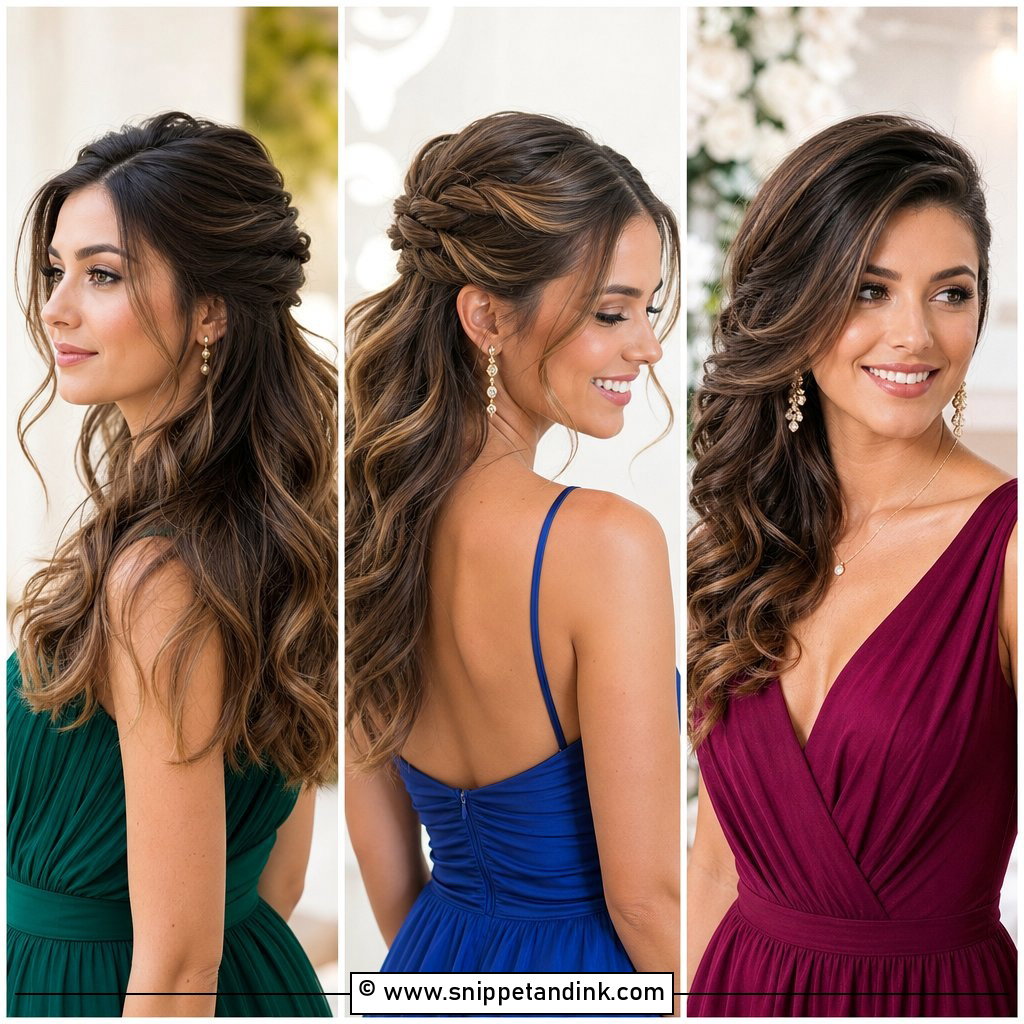
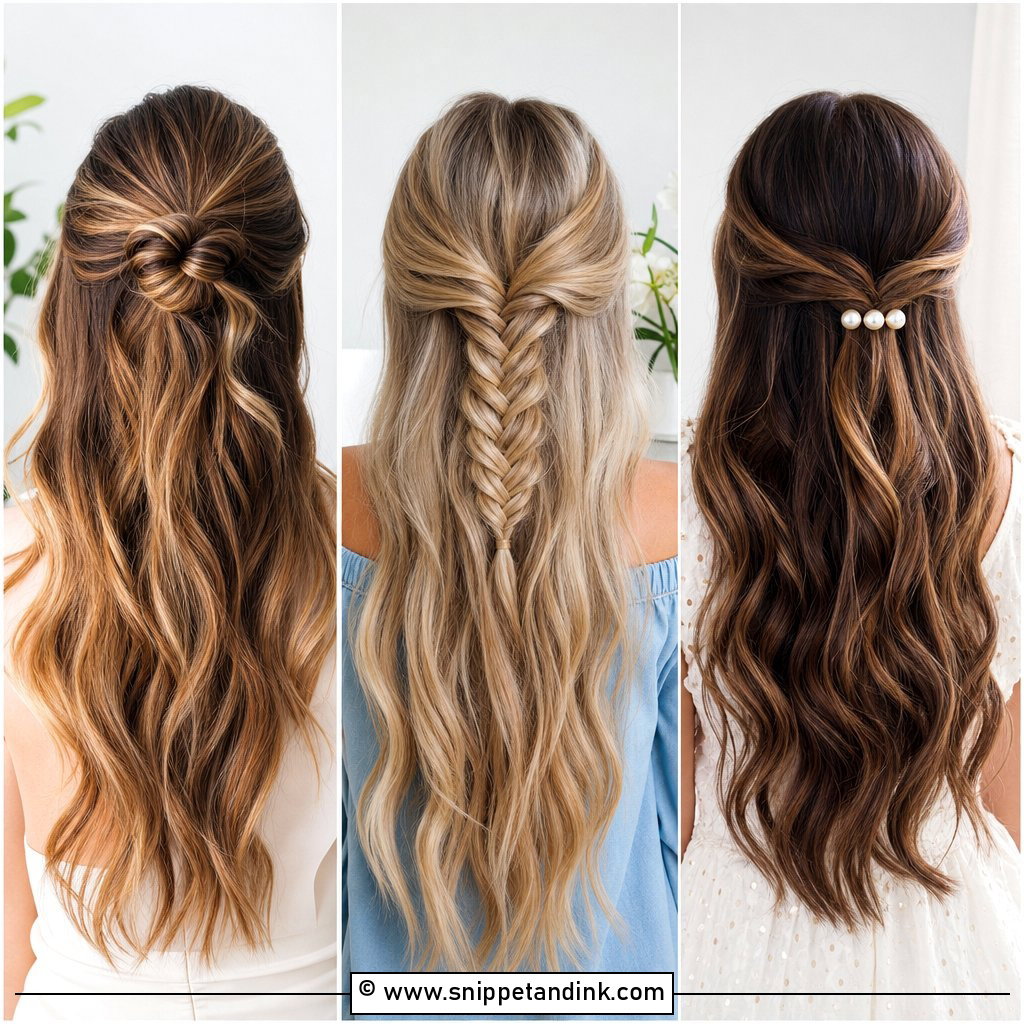
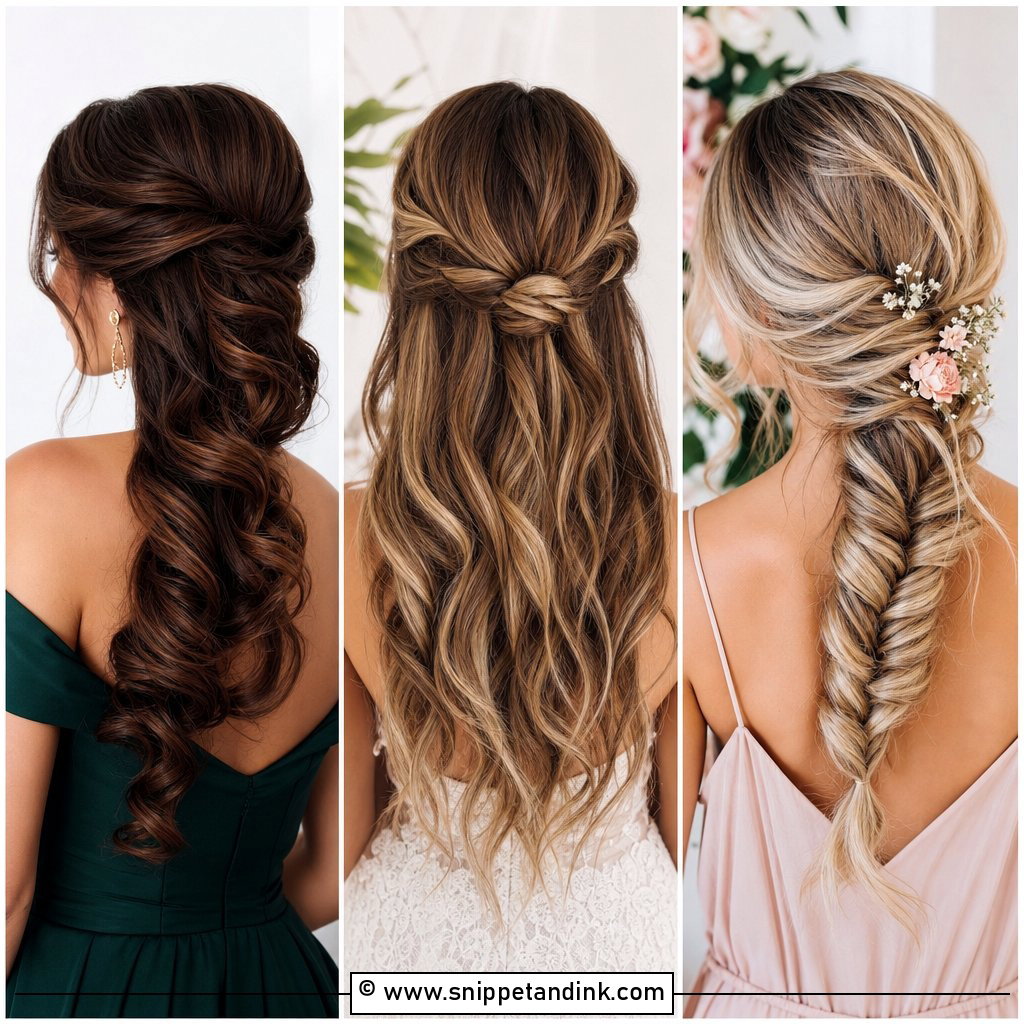
2. Spring Wedding Guest Half Up Half Down Hair
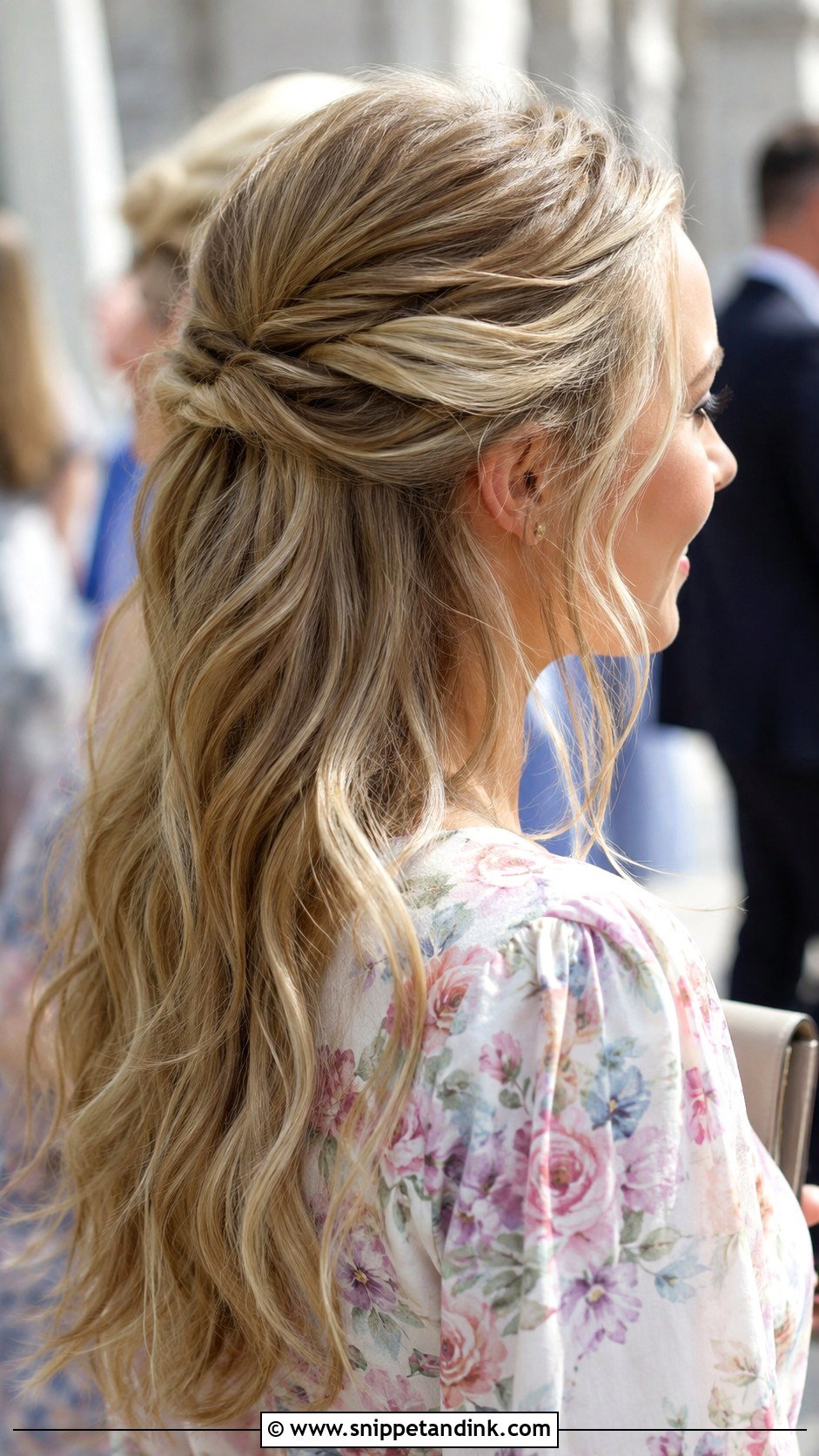
Half up half down hair gives you loose lengths while the front stays off your face, and that matters at a garden ceremony with a breeze. The top section can be twisted, pinned or braided; the bottom stays curled. The weak point is the pin anchor at the back of the crown. On slippery or freshly washed hair I tease the base of that section lightly before pinning, otherwise it slides down by the speeches. Go easy on spray through the loose lengths. Curls that can still move recover from wind far better than curls glued into place.
3. Spring Wedding Guest Soft Waves
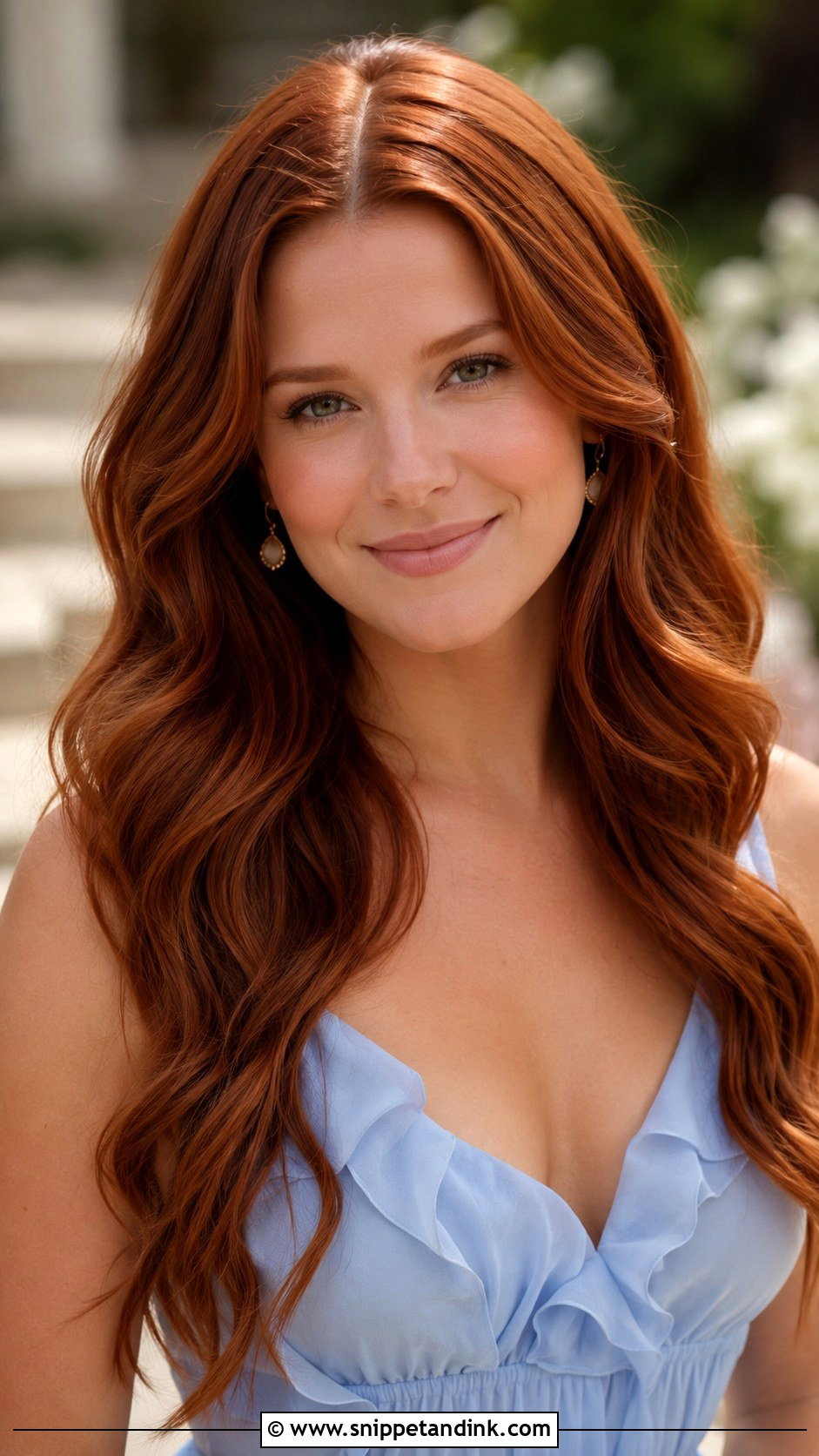
Waves that look intentional rather than everyday come down to prep and patience. I put mousse or a heat protectant with some grip through damp hair, dry it fully, then curl with a large barrel and let every curl cool before I touch it. Brushing out too early is why waves fall flat by the reception. A centre part reads modern; a deep side part reads more evening. Finish with a flexible spray from arm’s length, so the bends stay soft rather than crunchy.
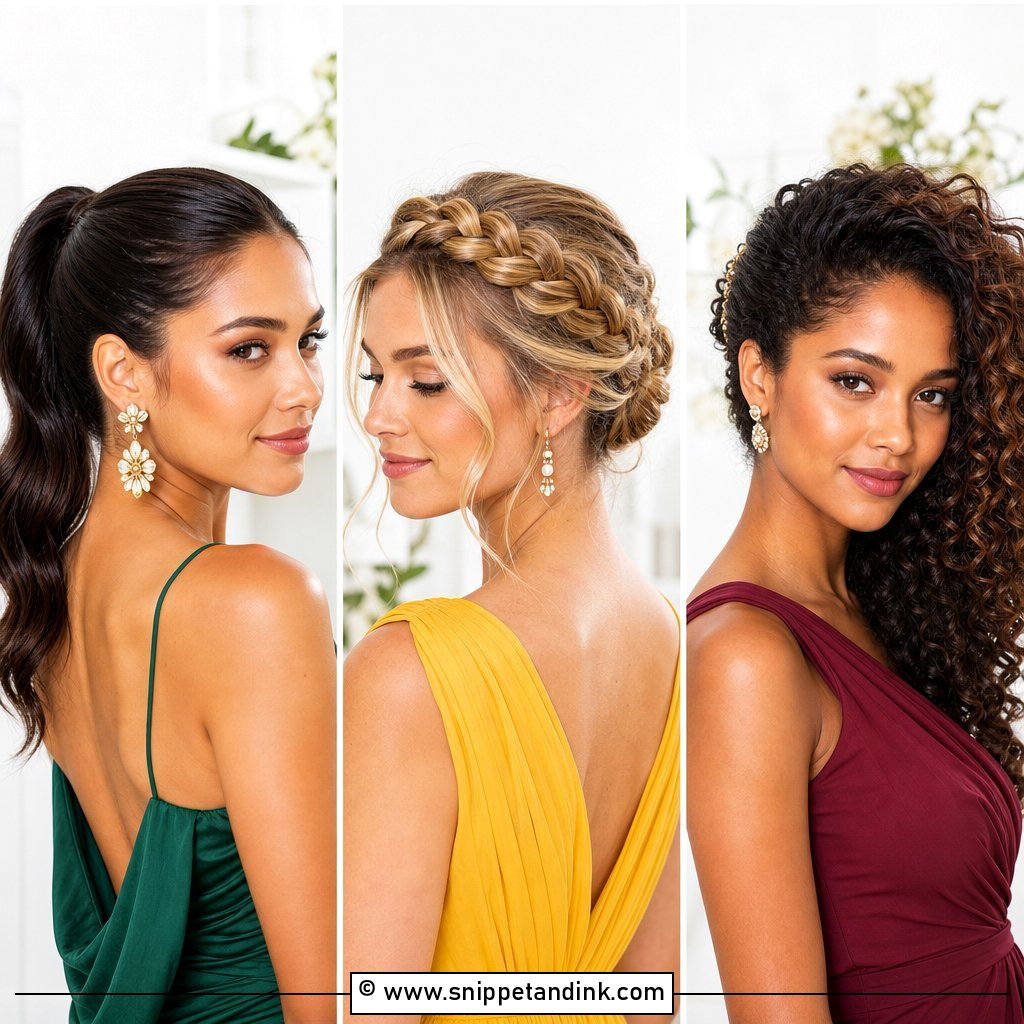
4. Spring Wedding Guest Sleek Low Ponytail
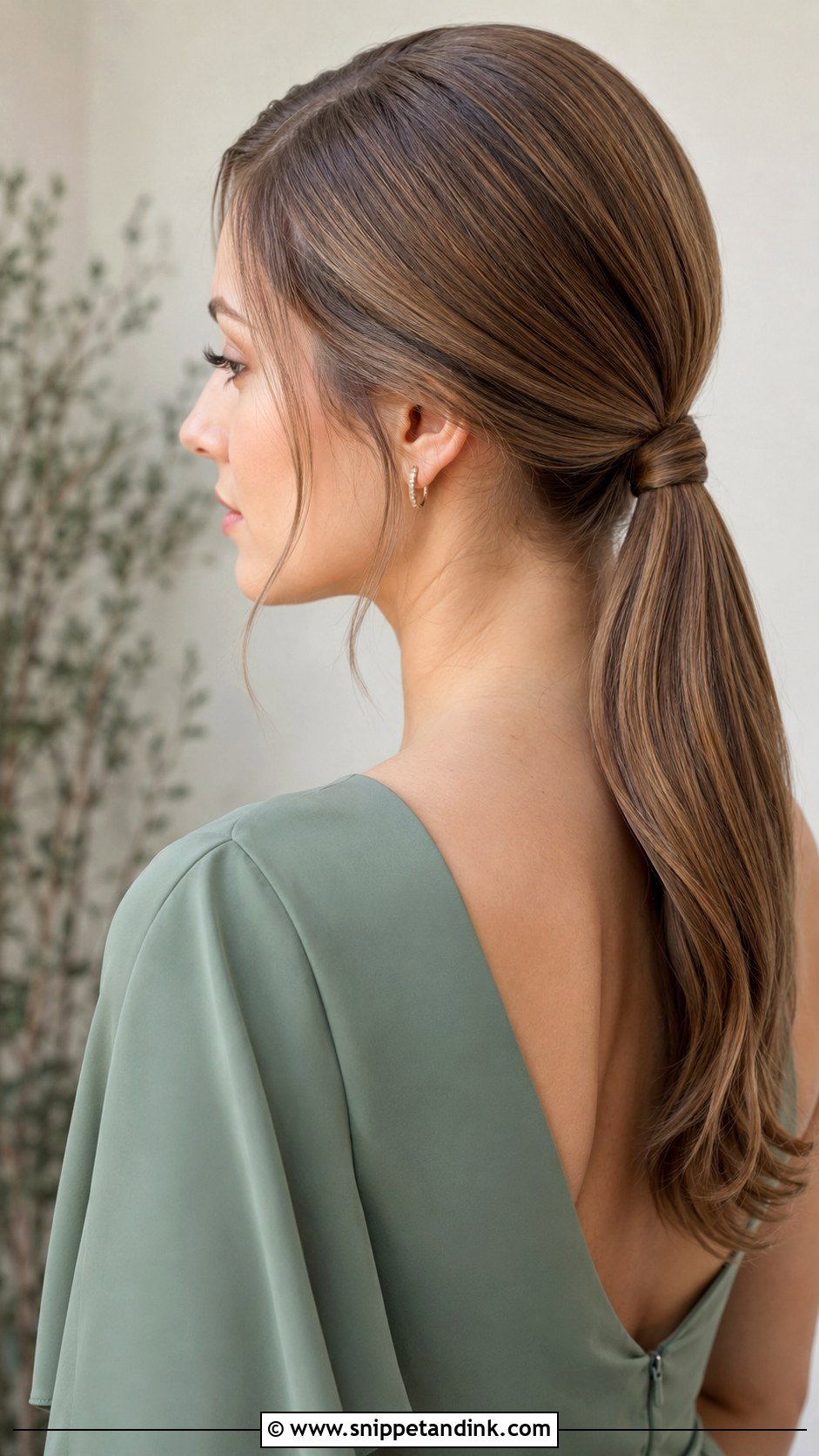
On a humid spring day, a sleek low ponytail is the style I trust most, because the hair is gathered and smoothed before the moisture gets to it. The elastic gets hidden under a small wrapped section, pinned underneath. I smooth the crown with a light cream, never a heavy wax that turns greasy by evening, and keep the part sharp. A soft bend at the ends stops it looking like gym hair. It’s less forgiving on very layered cuts: short layers pop out at the nape, so they need a few hidden pins.
5. Spring Wedding Guest Braided Bun
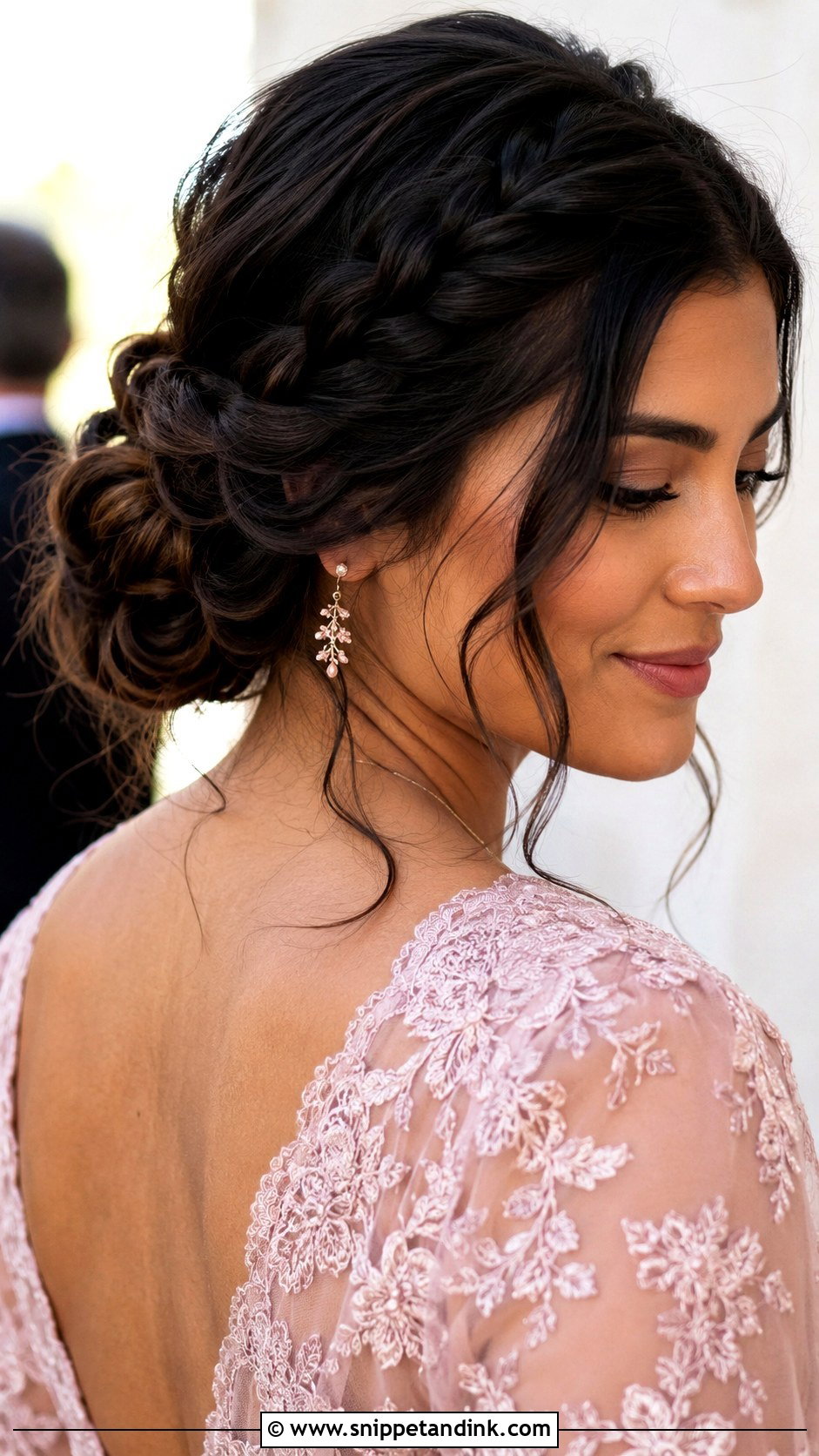
A braided bun suits lace, pleats or delicate sleeves, because the texture of the braid echoes the detail in the fabric. The braid can wrap the bun, run in from one side or be woven through the back. I pancake the braid, pulling its loops wider, before pinning it round, because once it’s wrapped you can’t loosen it without the bun shifting. This one holds through an outdoor ceremony and an indoor reception without help, so it’s a good call for a long day.
6. Spring Wedding Guest Side Swept Curls
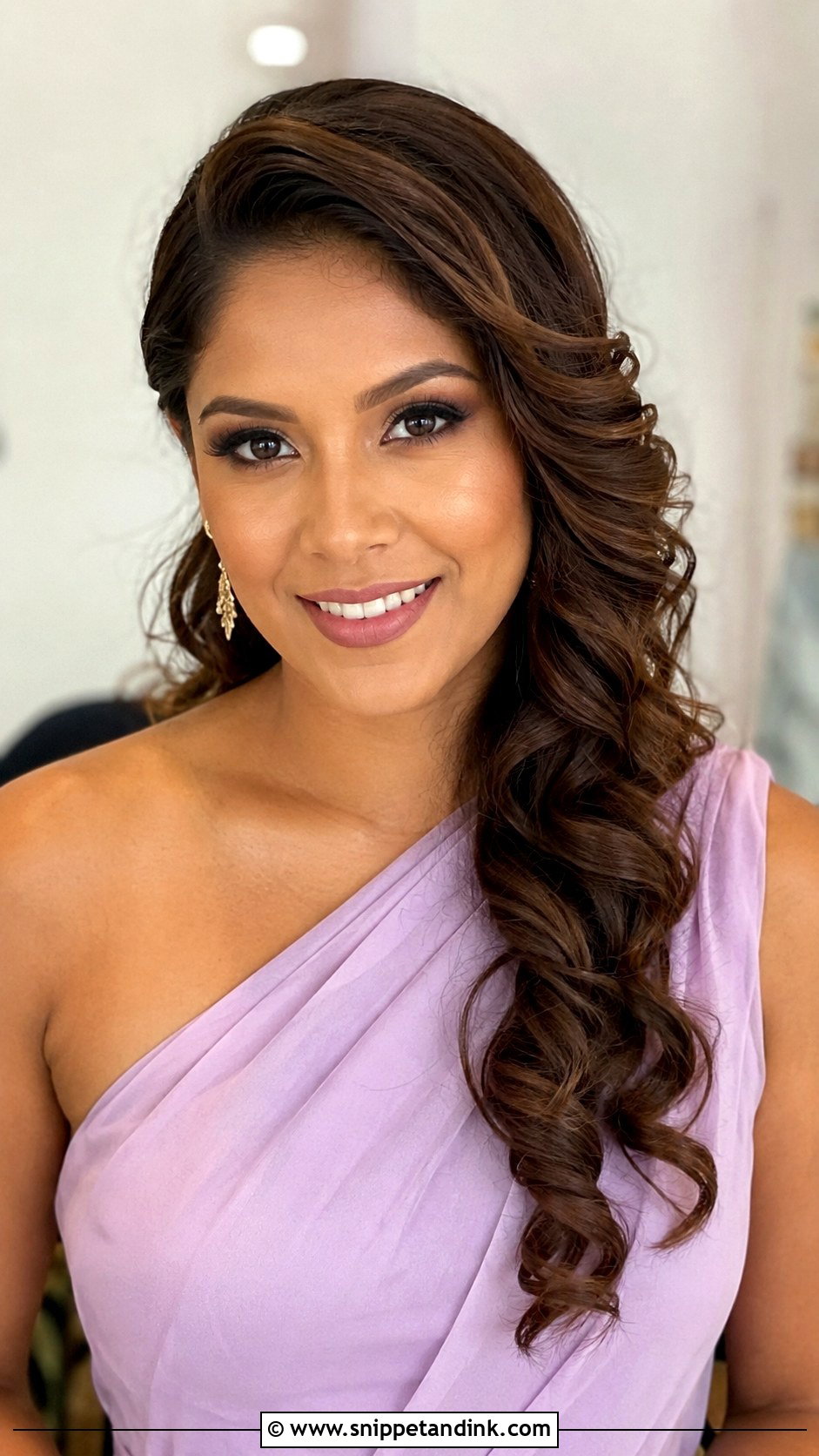
Side swept curls show off one-shoulder dresses and statement earrings on the bare side. The hair is curled, brushed into waves, then pinned behind the ear. The sweep needs an anchor: I cross two bobby pins in an X under the curls, close to the scalp, and the hair sits over them invisibly. Without that it drifts back to centre within the hour. Keep the curls lighter than you would for an evening event; heavy, glossy sets look a bit too bridal in spring daylight.
7. Spring Wedding Guest Textured Ponytail
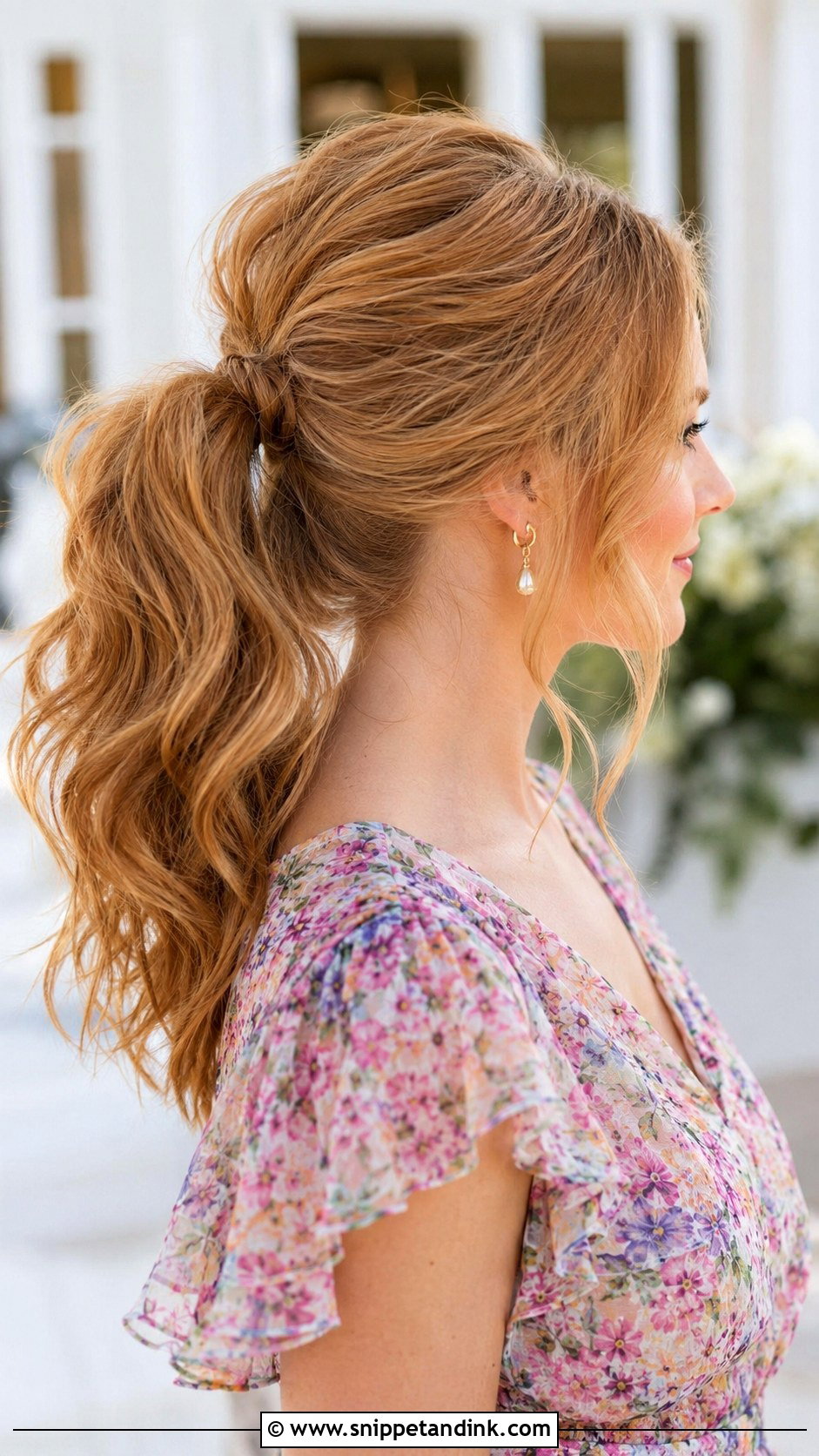
A textured ponytail is the more relaxed sister of the sleek one, worn at mid or low height with waves through the length. Flowy dresses and outdoor settings suit it. The trick to making it look dressed rather than sporty is lift at the crown and a wrapped base. I spray texture spray into the ponytail after curling and then break the curls up with my fingers, which gives fullness and helps the waves stay bouncy. Fine hair may need a few clip-in pieces at the base to get real volume.
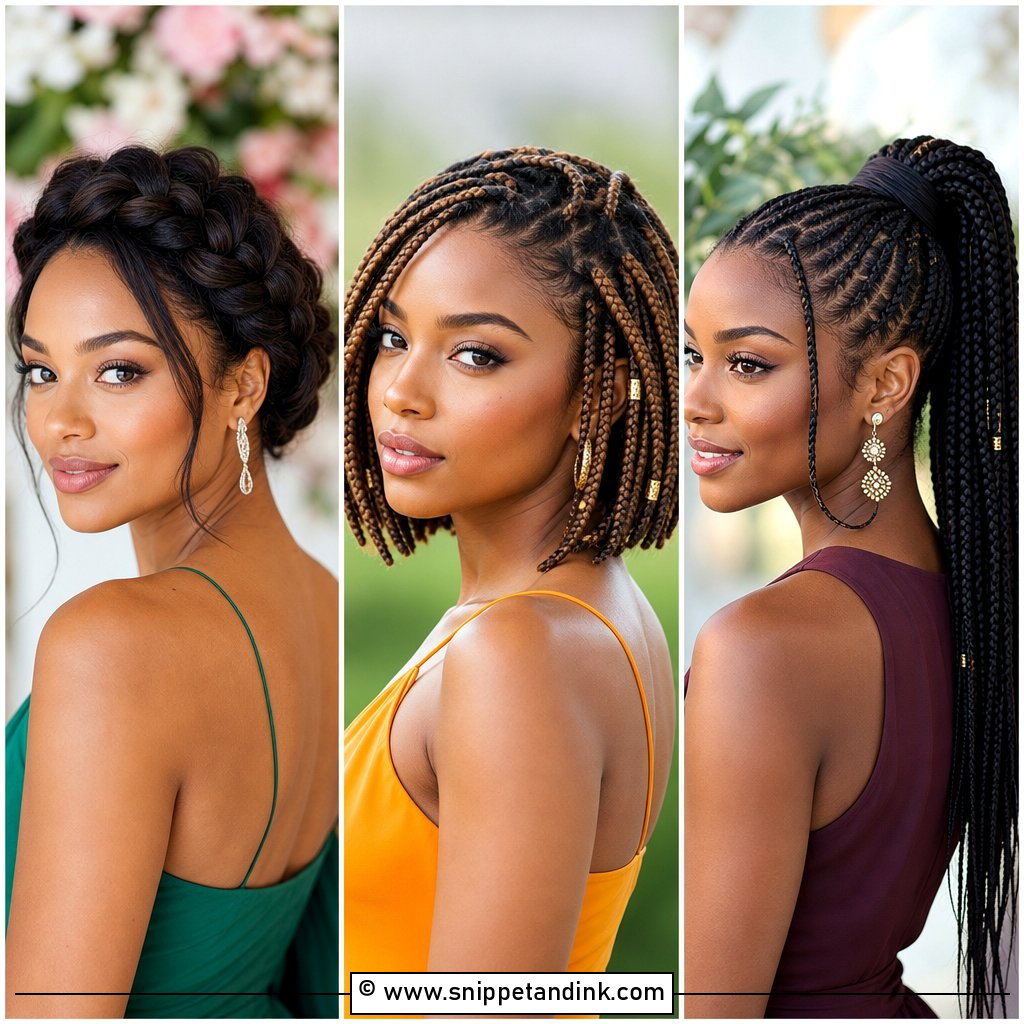
8. Spring Wedding Guest Crown Braid
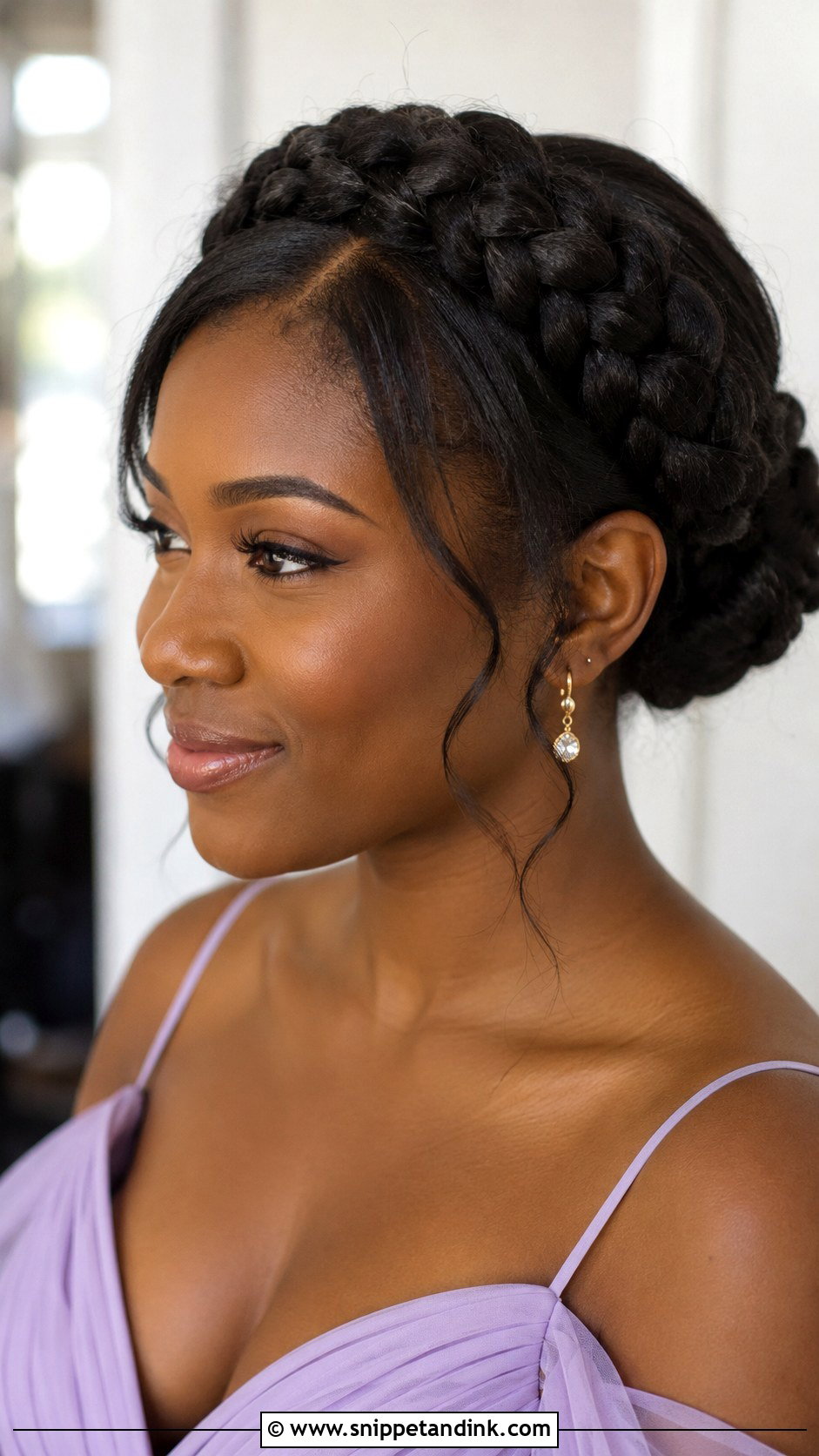
If you want your neck completely clear on a warm afternoon, a crown braid does it and still looks decorative. It wraps the head or follows the hairline, a natural fit for outdoor ceremonies and rustic venues. You need enough length for two braids to meet over the top, roughly shoulder length or longer; shorter hair leaves a gap you have to hide with pins. Keep jewellery simple and the neckline clean so the braid carries the look. A few tiny floral pins are fine. More than that starts to read flower girl.
9. Spring Wedding Guest Loose Updo
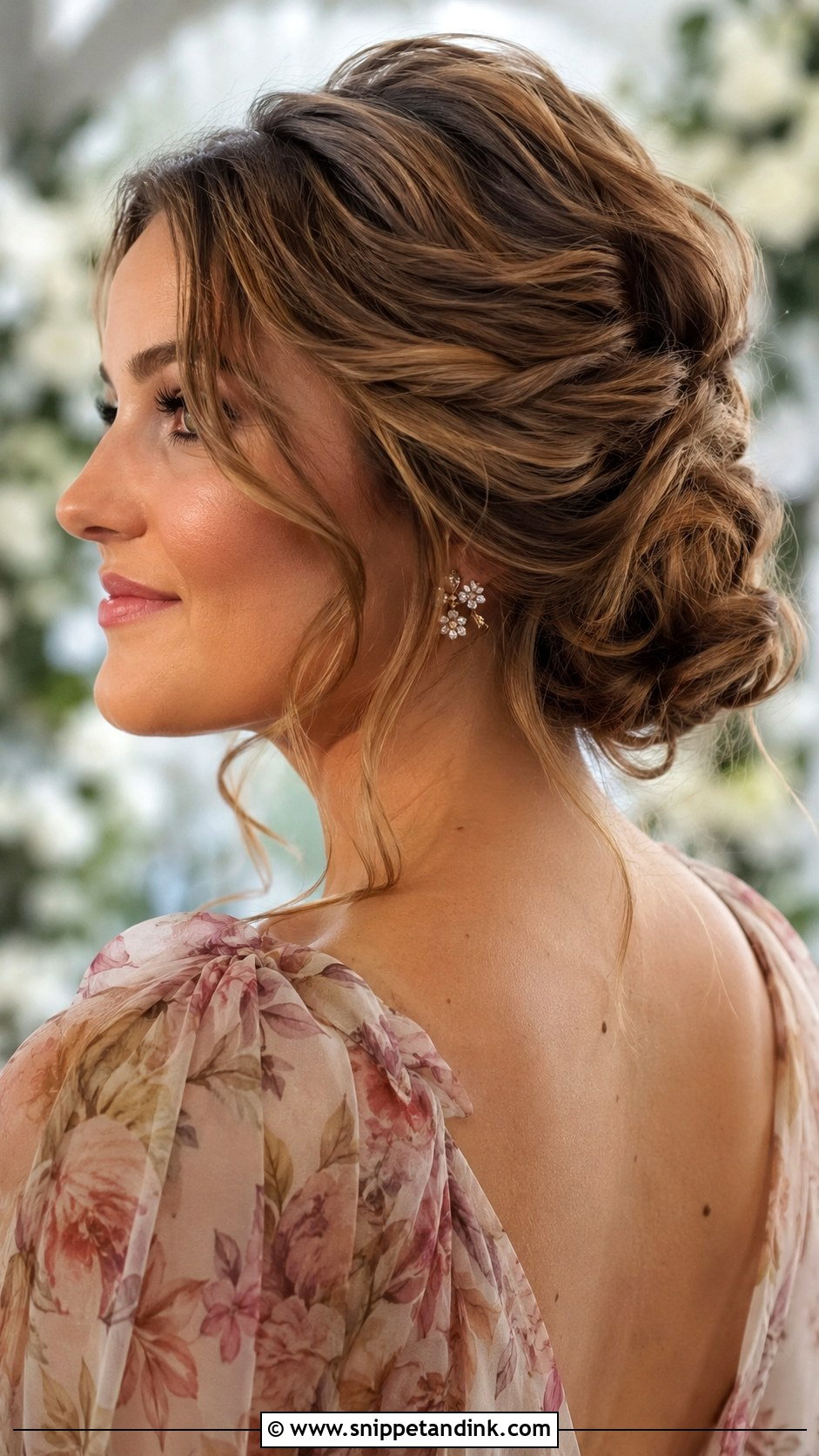
A loose updo isn’t loose underneath. Every relaxed twist I tuck is held by a solid base: a ponytail or a set of anchor pins at the back, so the soft parts have something to grip. That structure is what lets the outside look airy with chiffon or floral prints. I leave softness at the temples and let the client choose how many face pieces come out, since that’s what adapts it to different face shapes. Quick verdict: elegant, comfortable, and very forgiving if a section falls.
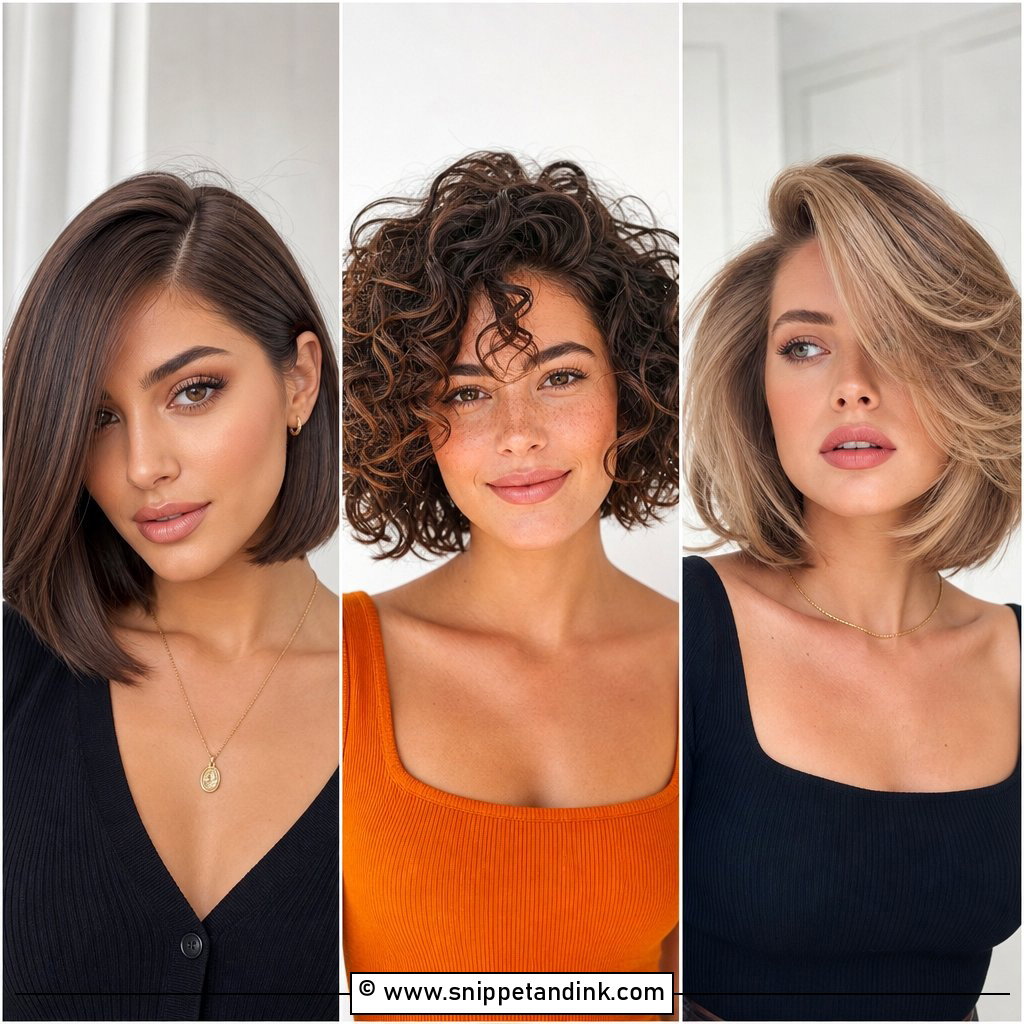
10. Spring Wedding Guest Short Bob Waves
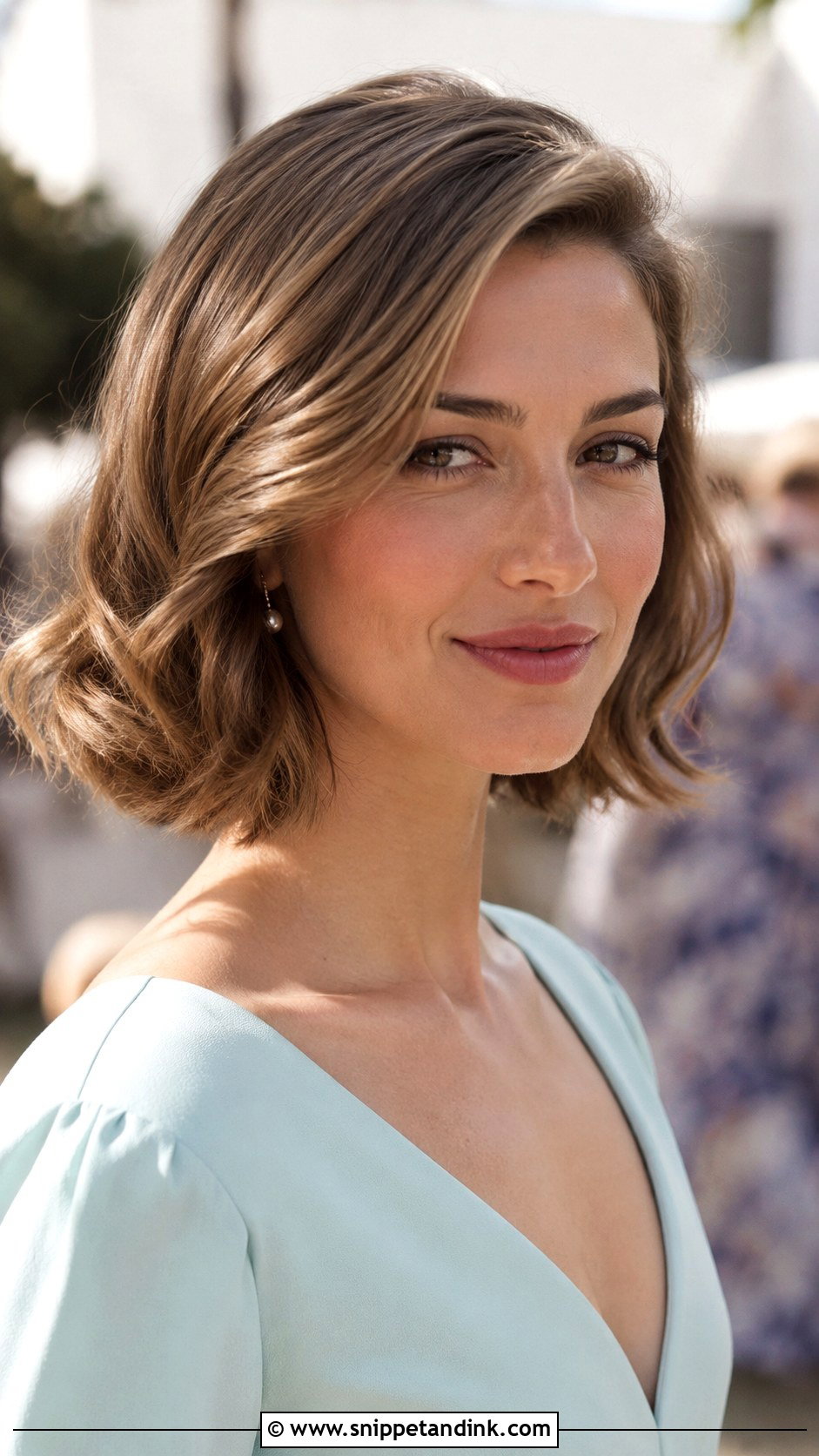
Short bob waves prove a bob doesn’t need an updo to feel formal. A clean part, soft bends and smooth ends dress the haircut up straight away. I curl a bob in alternating directions and leave the last inch of the ends straight, which keeps it modern instead of poodle-ish. On a chin-length cut, turn the front waves away from the face. A drop of finishing cream on the palms tames flyaways. Pearl earrings and an interesting neckline do the rest.
11. Spring Wedding Guest French Twist
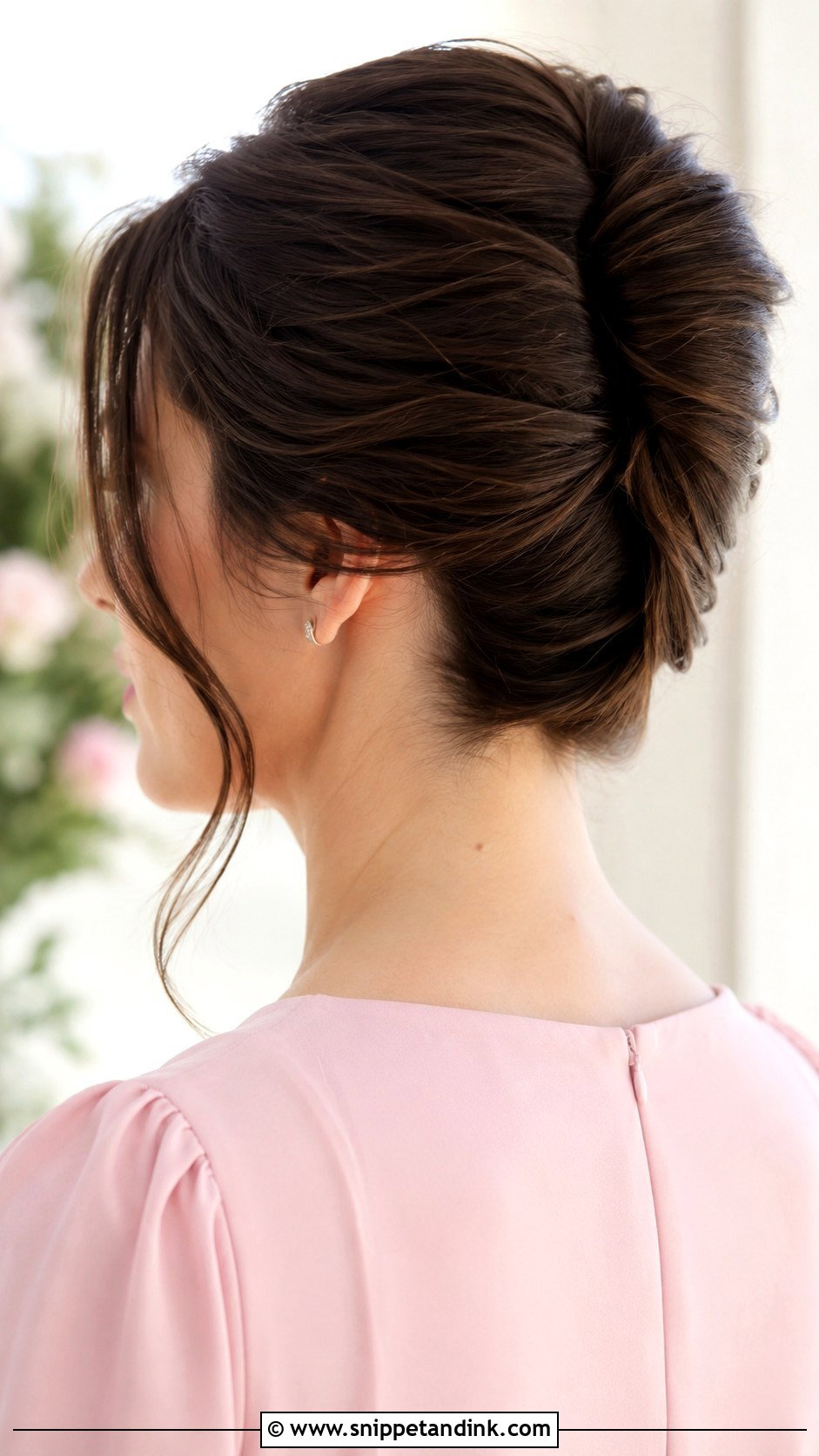
The French twist is a formal style that can look dated if it’s too smooth, so for spring I soften it. The hair is gathered up the back and rolled into a vertical seam, pinned along the inside edge of the roll. It needs grip: on silky, clean hair I add dry texture spray first or the roll unwinds. Keep some volume at the crown and a few loose pieces by the face. It pairs well with midi dresses, structured gowns and classic accessories, and it needs almost nothing added to look finished.
12. Spring Wedding Guest Fishtail Braid
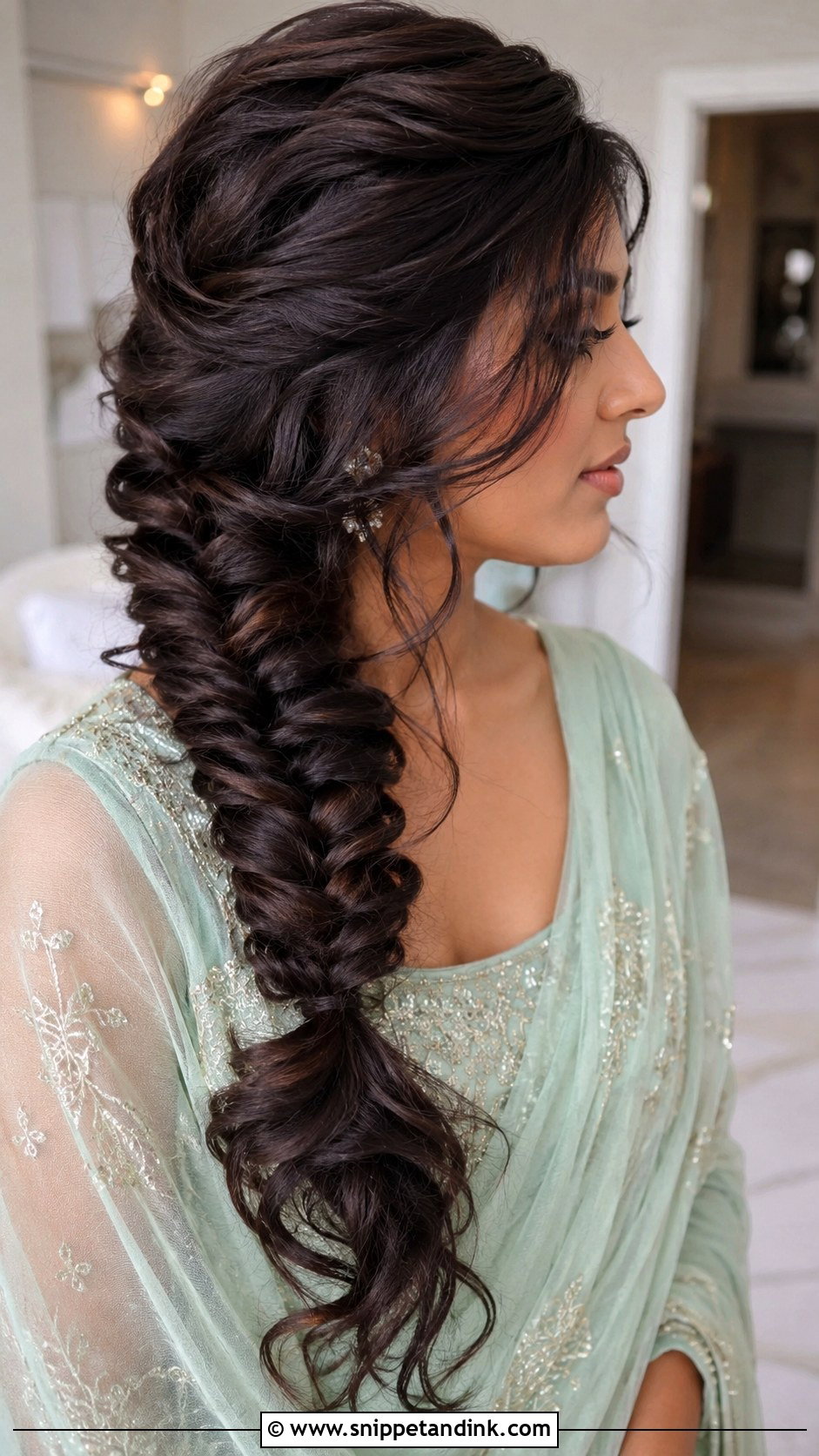
Fishtail braids have more texture than a three-strand braid, so they look detailed without accessories. That suits garden, beach and countryside weddings. Over one shoulder is softer; down the back is cleaner. The braid gets its fullness when I pull the edges gently after tying it off, working from the bottom up so the top doesn’t loosen. Layers shorter than the braid’s length will poke out, which is part of the charm on textured hair but needs a little cream on fine hair. Finish with a clear elastic and curled ends.
13. Spring Wedding Guest High Bun
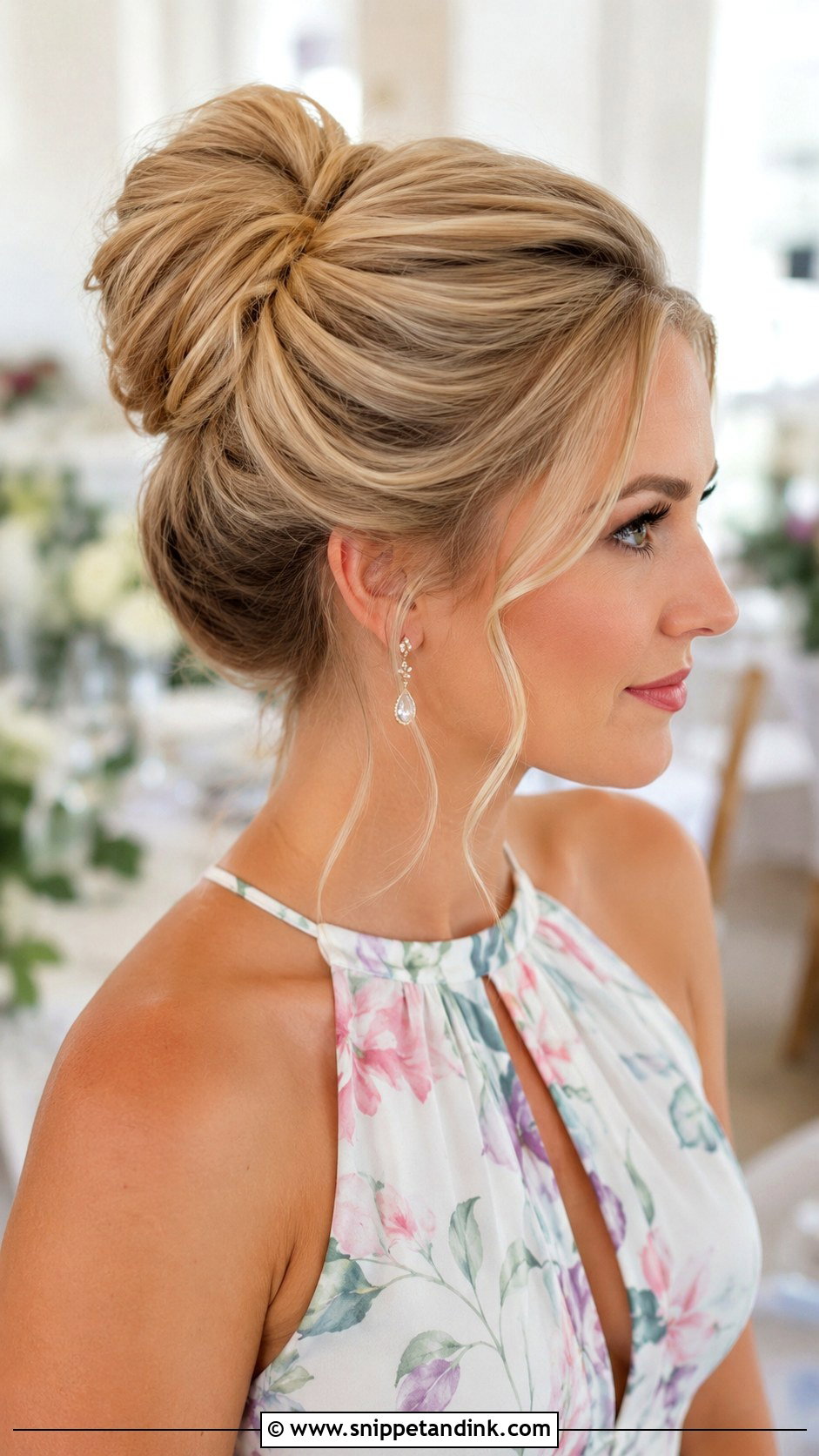
A high bun opens the face and lengthens the neck, which is why it works so well with halter and high-neck dresses. It’s also the coolest option on a warm afternoon, with nothing on the shoulders. I build it from a firm ponytail at the crown and pin the bun around it in sections. A high bun shows every bump at the hairline in photos, so I smooth that area carefully. Skip it if you’re wearing a fascinator or hat; there’s simply nowhere for either to sit.
14. Spring Wedding Guest Vintage Waves
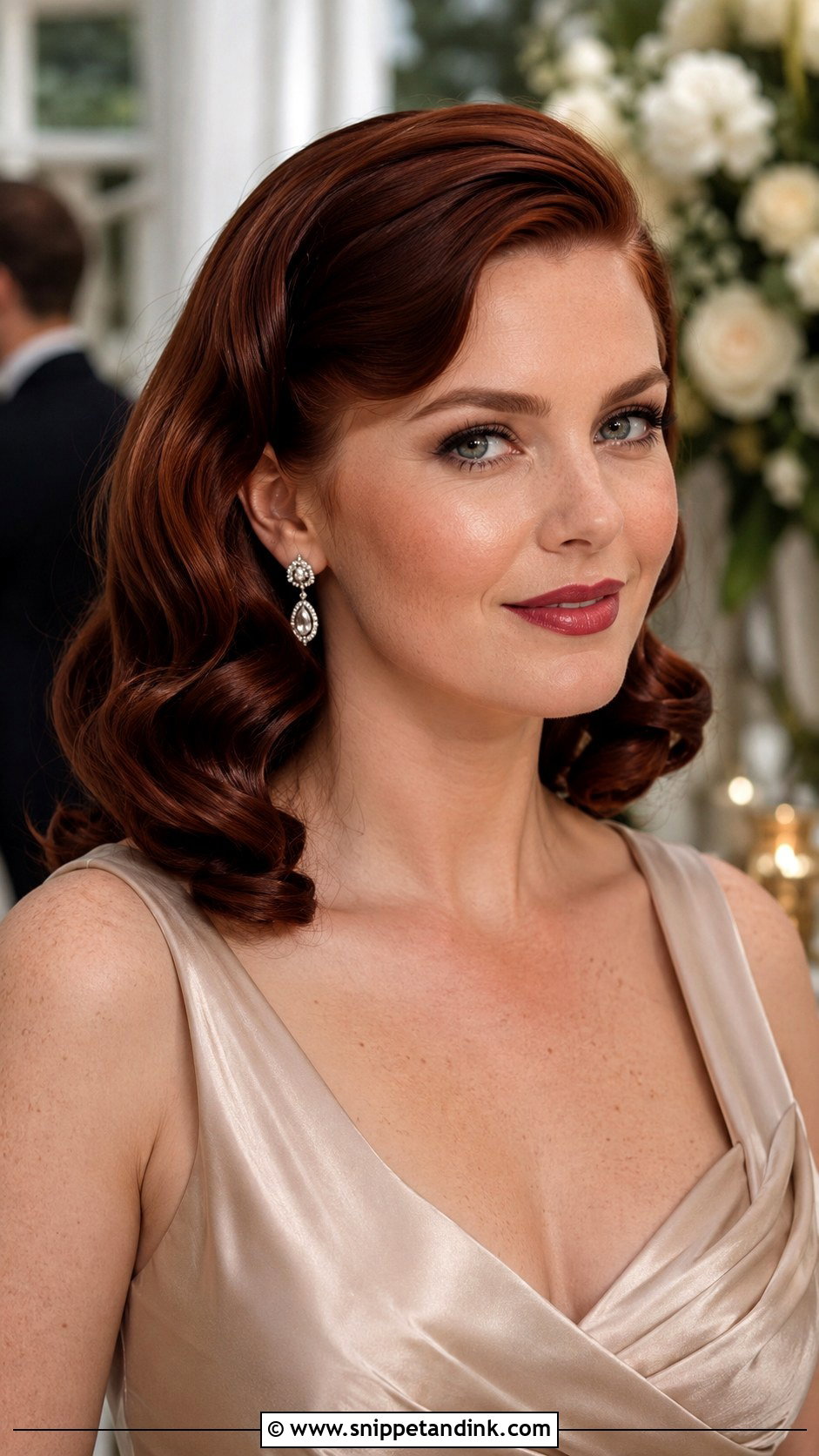
Vintage waves are smoother and more sculpted than beach waves, usually on a side part with a soft shine. Satin dresses, slip dresses and evening outfits suit them. They’re curled in one direction, pinned in their curl to set, then brushed out into one continuous wave pattern. That brush-out takes practice, so this is the style I’d least recommend doing yourself for the first time on the morning. On medium to long hair or a bob it works well; keep the finish touchable, and use shine spray only on the ends.
15. Spring Wedding Guest Twisted Half Up Hair
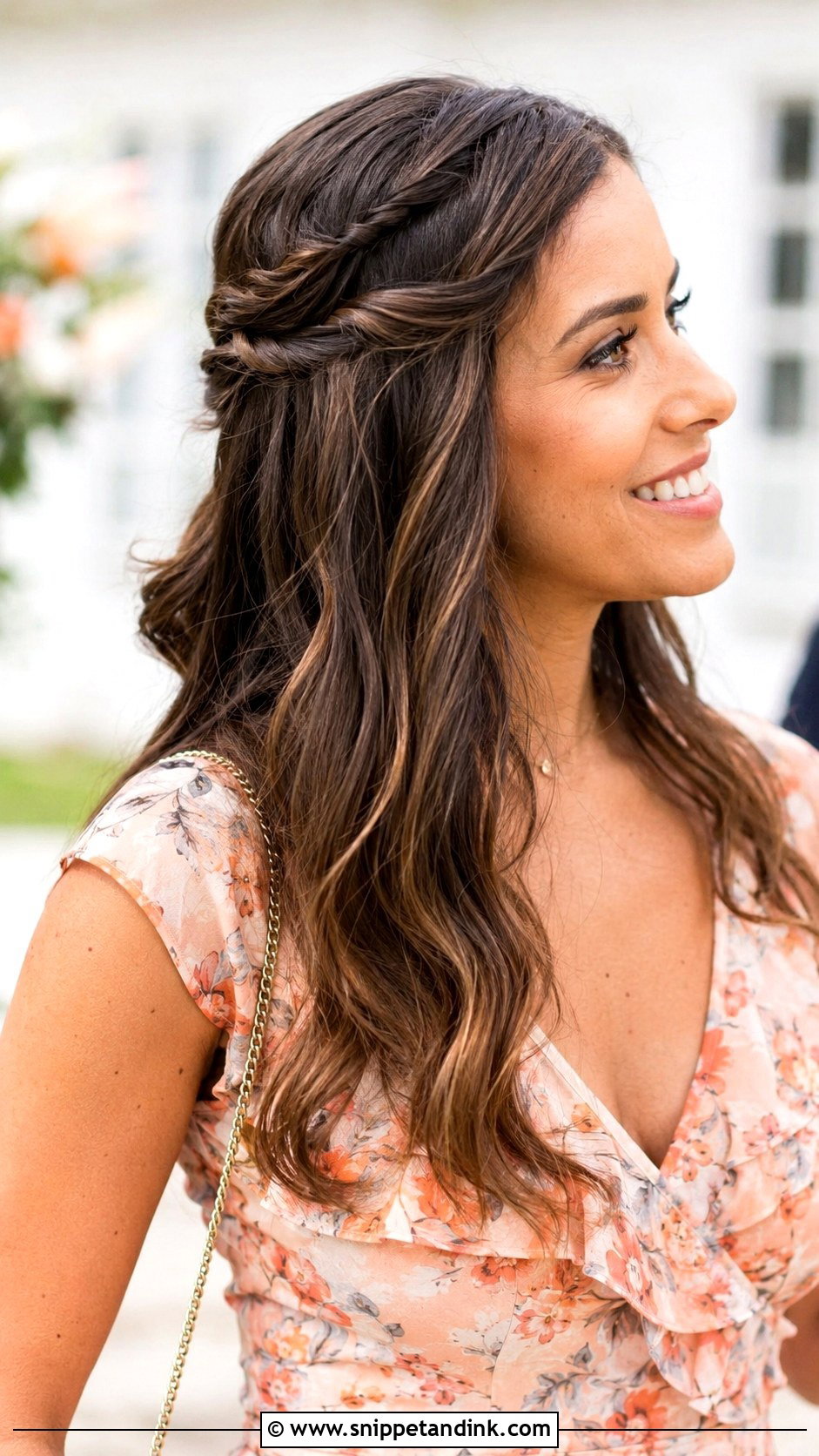
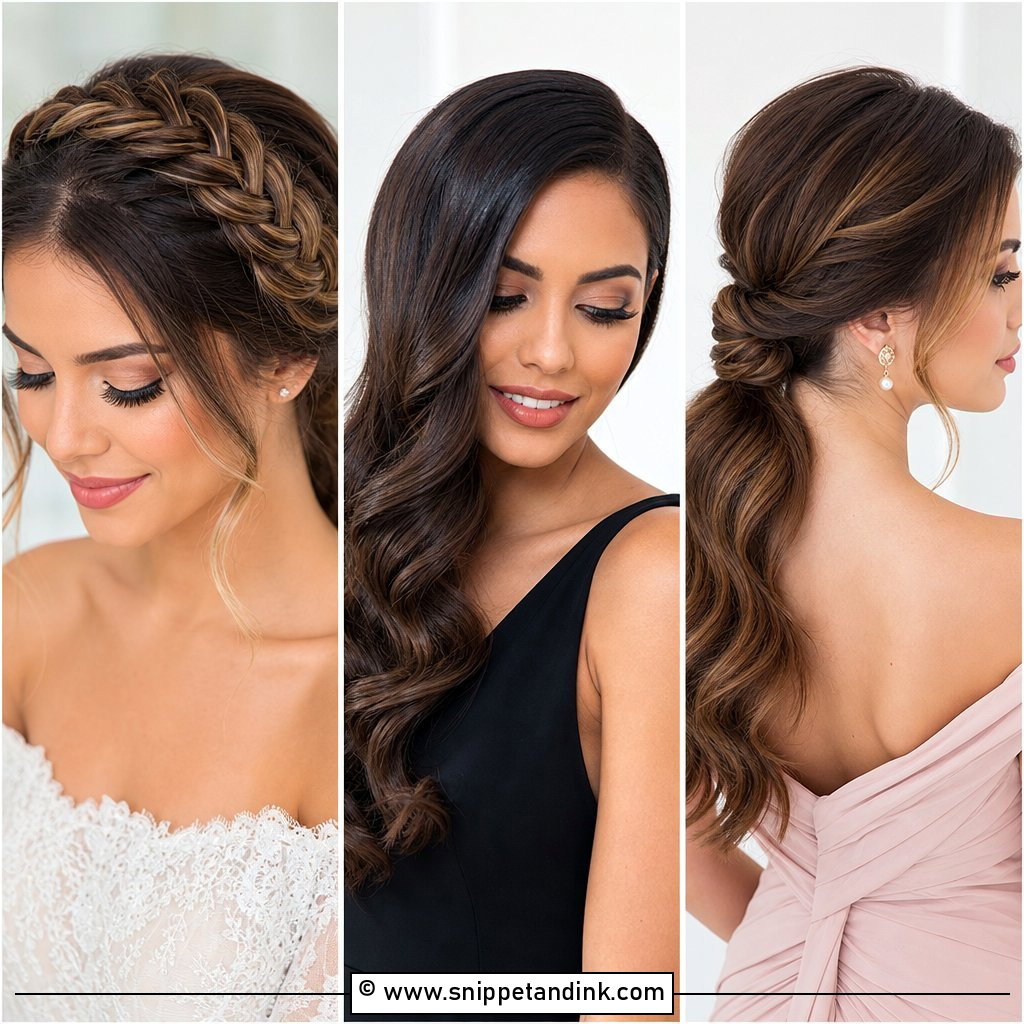
Twisted half up hair is braid-free and quick. The front sections are twisted back and pinned at or just below the crown, with the rest left loose in waves. It handles a light spring breeze better than fully loose hair, because nothing at the front can blow into your lip gloss. The twists should look relaxed, so I loosen them before pinning rather than after. Hidden pins pushed in against the direction of the twist hold far better than pins slid in with it.
If It Rains Between the Ceremony and Reception
A spring shower is the most common rescue I’m asked about. The worst thing you can do is touch damp hair; brushing it now spreads frizz through the whole section. Let it dry, then deal with it.
- Blot damp lengths with a paper towel, pressing, never rubbing.
- If curls have dropped, twist each section around your finger and pin it flat against the head for ten minutes while you have a drink. Unpin and loosen with your fingers.
- If loose hair has gone past saving, gather it into a low ponytail or twist it into a bun. A few bobby pins and a clear elastic in your bag make that a two-minute fix.
- Smooth the hairline with a tiny dab of hand cream or lip balm on your fingertips if you have no styling cream with you.
This is also why I suggest braids and low buns for unpredictable days. They lose a little polish in the rain, but they still look like a hairstyle when the sun comes back out.
Which Style Holds Up Best From Ceremony to Last Dance
Every one of these looks has to last from the ceremony to the end of the night, which in spring means wind, a passing shower and a temperature swing. A low chignon or French twist gives the most polish; soft waves and half up half down hair feel the most romantic. Ponytails, braided buns, crown braids and fishtails give you extra hold outdoors. Good spring wedding guest hairstyles don’t need long hair either, as the bob and vintage waves show. Match the style to your outfit, venue and hair texture, and be honest about how long you can sit still in the morning. Hair that feels secure lets you stop checking it and enjoy the day.
You'll Like These Ideas:


Leave a Reply