
A spring bride’s hair has a long day ahead of it: a breezy ceremony, a receiving line of hugs, an hour of portraits and then dancing in a warm room. What I build for her has to look soft at nine in the morning and still have its shape at ten at night. That usually means a hidden structure under something romantic: low buns with loose face pieces, set waves, braided crowns, wrapped ponytails and soft updos that can carry a veil, fresh flowers, pearl pins or a single comb. The fifteen styles below are the ones I’d put in front of a spring bride, each with what it needs to hold, and each chosen to flatter different dress necklines rather than follow a single trend.
A Winter Trial for a Spring Wedding Can Mislead You
Most trials happen two to three months before the wedding, which for a spring bride often means a dry, heated room in winter. Hair behaves very differently there than it will on a damp April afternoon. A wave that held perfectly at the trial can relax in an hour of spring humidity.
So I treat the spring trial as a stress test, not just a preview:
- Arrive with hair washed and dried the way you plan to on the wedding day, so I’m working on the same condition of hair.
- Wear a top with a similar neckline to your gown. A strapless top and a high-neck top change how a style looks completely.
- Bring the veil or headpiece itself, not a photo of it. Weight and comb size change where everything has to sit.
- Keep the style in for the rest of the day, go outside, and take photos at a few points. How it looks after six hours tells me more than how it looks in the chair.
If the trial style dropped by evening, tell me. That is easy to fix with different prep or a change of base, and it’s far better to find out then.
Where Your Veil Sits Decides Half the Hairstyle
Brides often pick a hairstyle and a veil separately. A veil comb needs firm hair to grip into, so it usually sits just above or just below a bun, or into a pinned half-up section. Loose waves alone won’t hold a heavy comb; I anchor a small hidden section of pins underneath for it.
If you plan to take the veil off after the ceremony, mention it at the trial. I’ll place it so it can come out without pulling the style apart.
1. Spring Bridal Low Bun
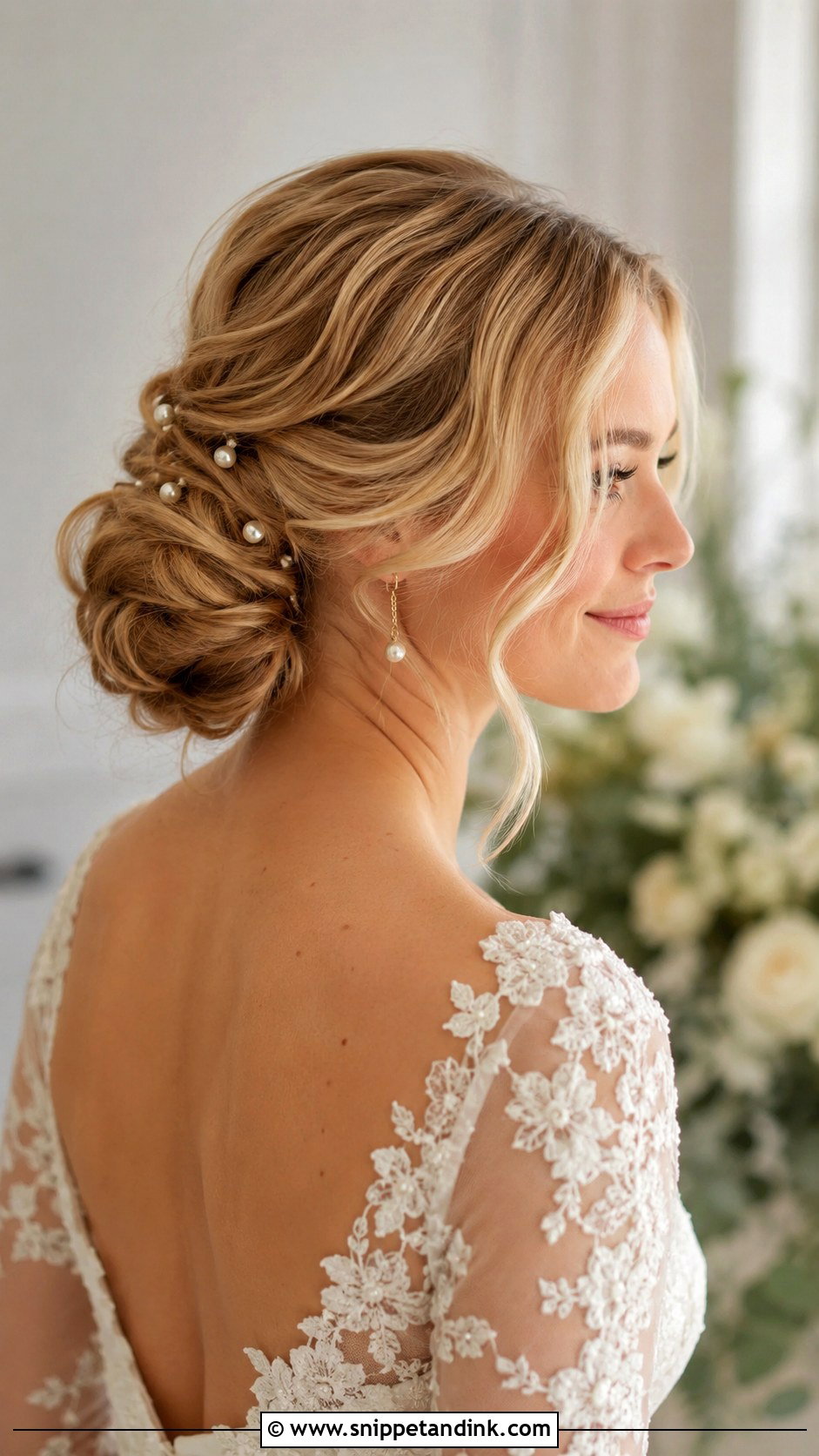
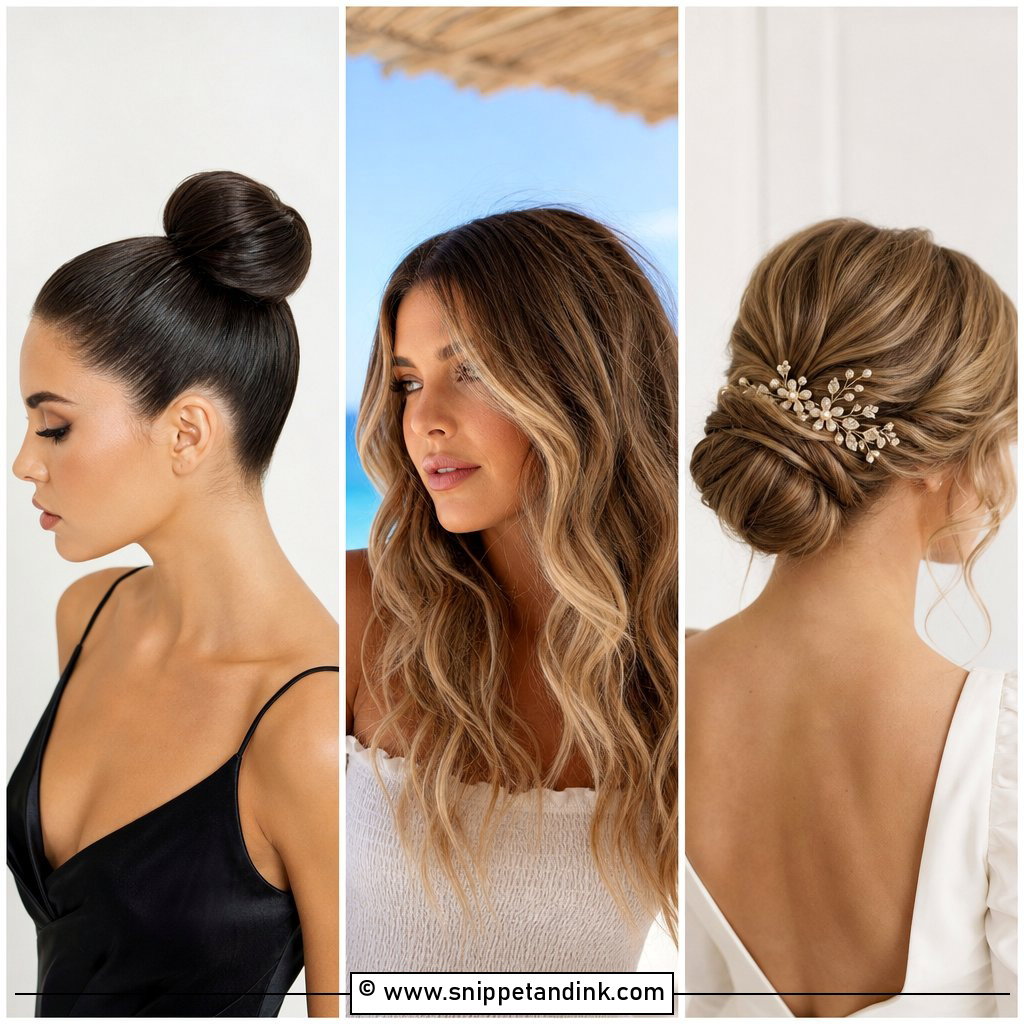
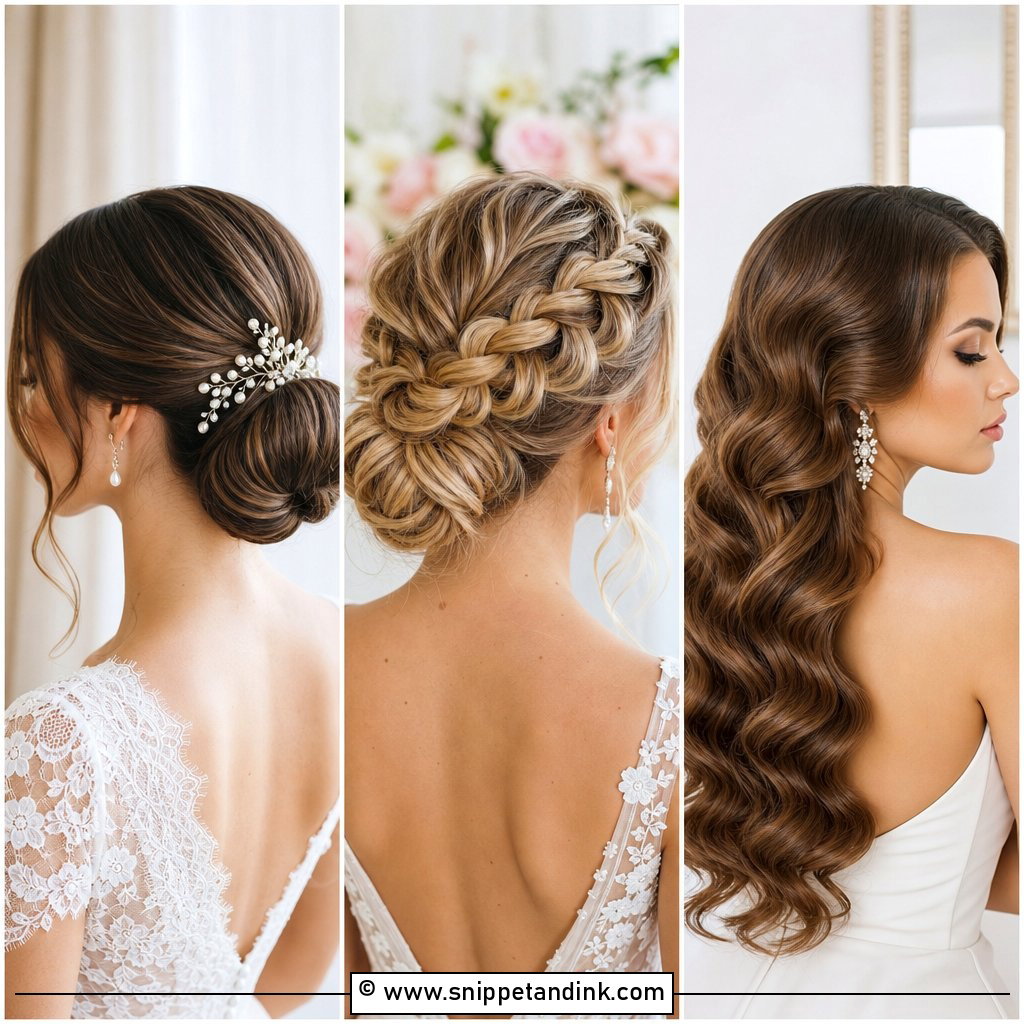
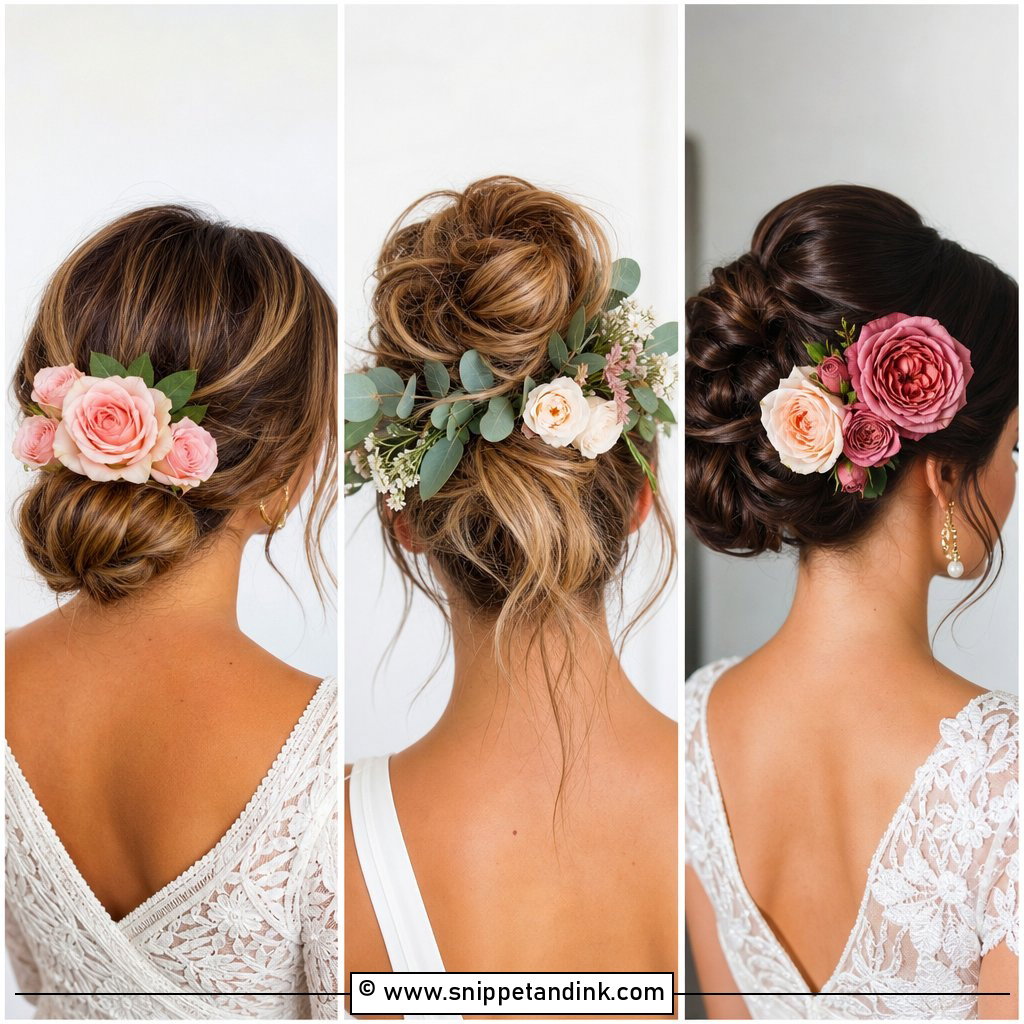
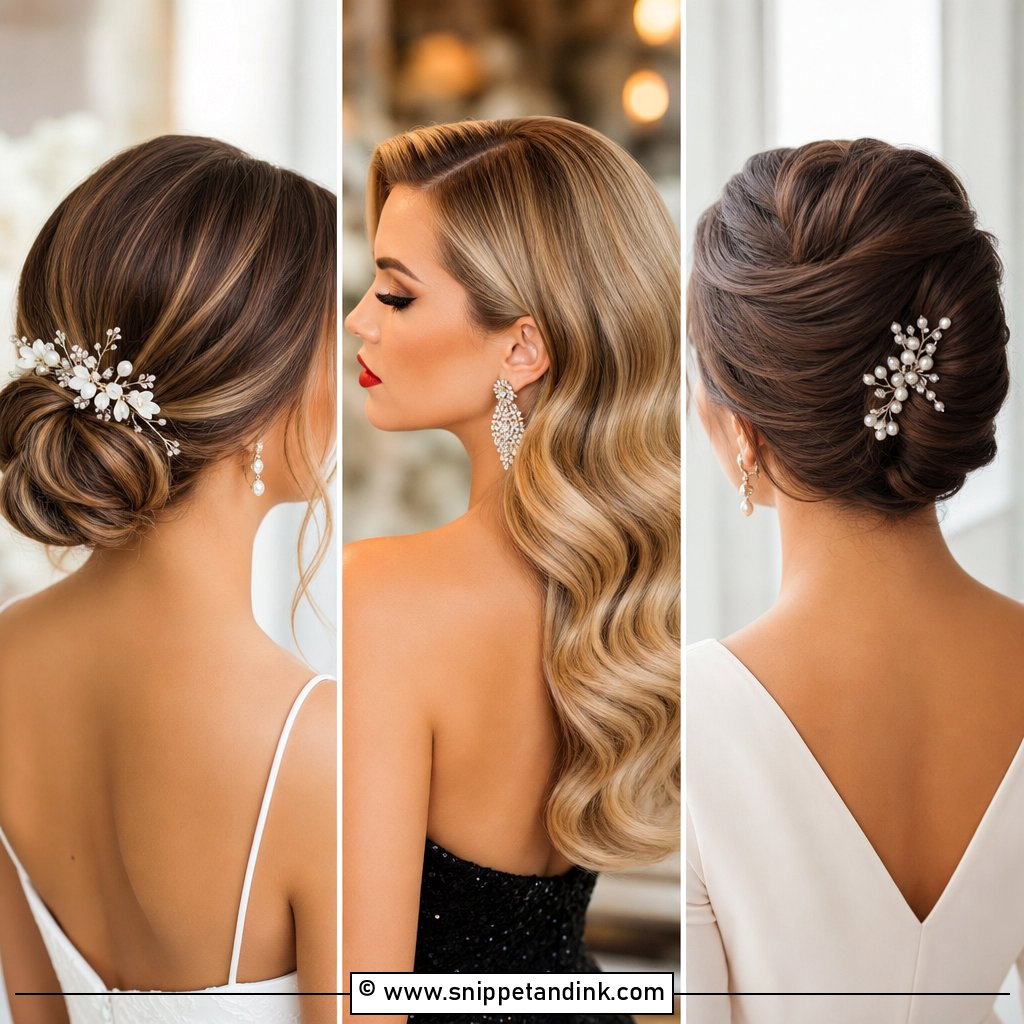
If a bride can’t decide, this is where I start the trial. A low bun at the nape sits below a veil comb, clears an open back and doesn’t fight a square neckline. I build it on a ponytail base so the pins have something solid to lock into; a bun pinned straight onto loose hair loosens as the day warms up. Smooth sides, some lift at the crown, and two or three fine pieces at the face stop it looking stiff. Wind and humidity barely touch it.
2. Spring Bridal Hollywood Waves
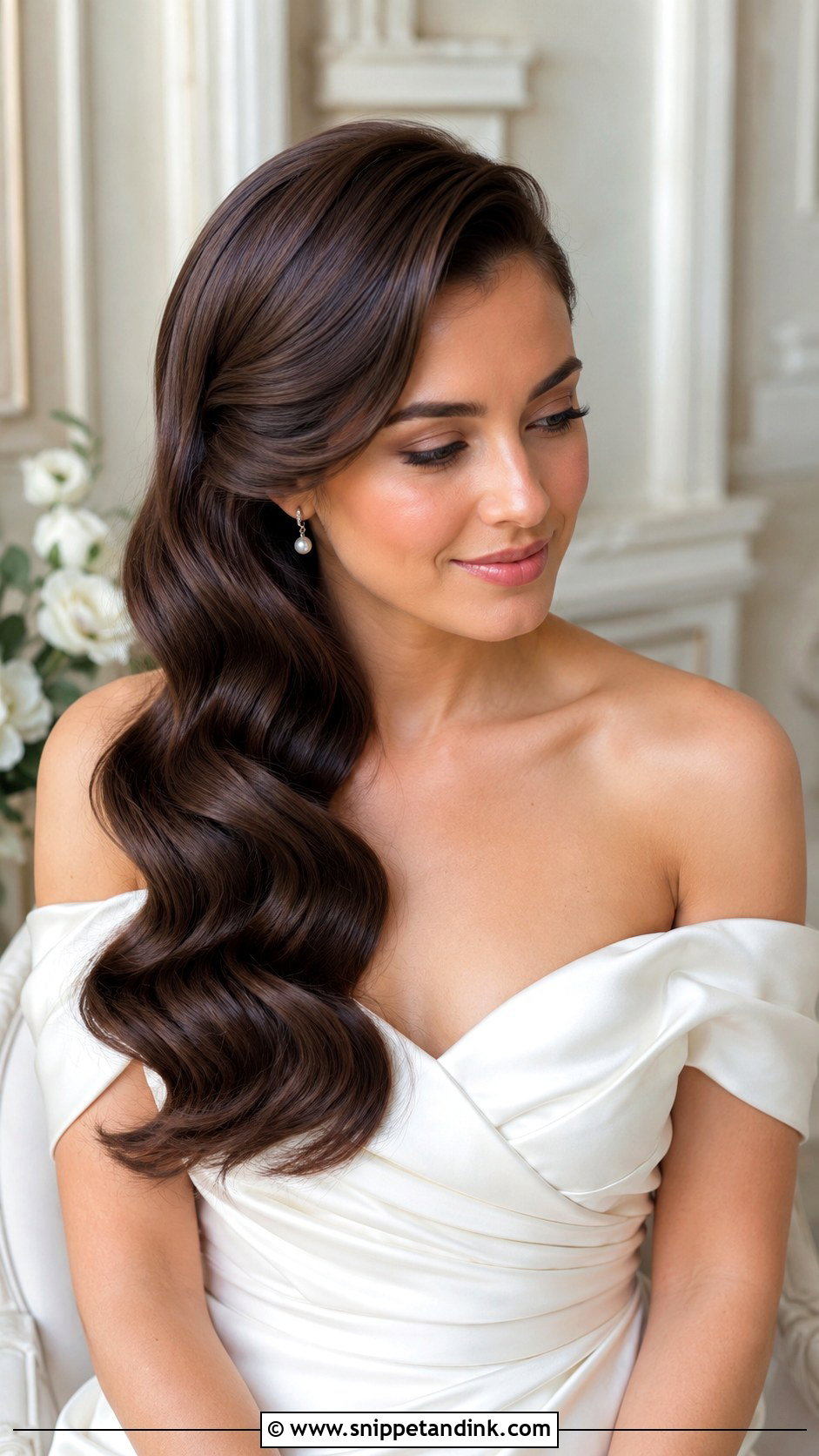
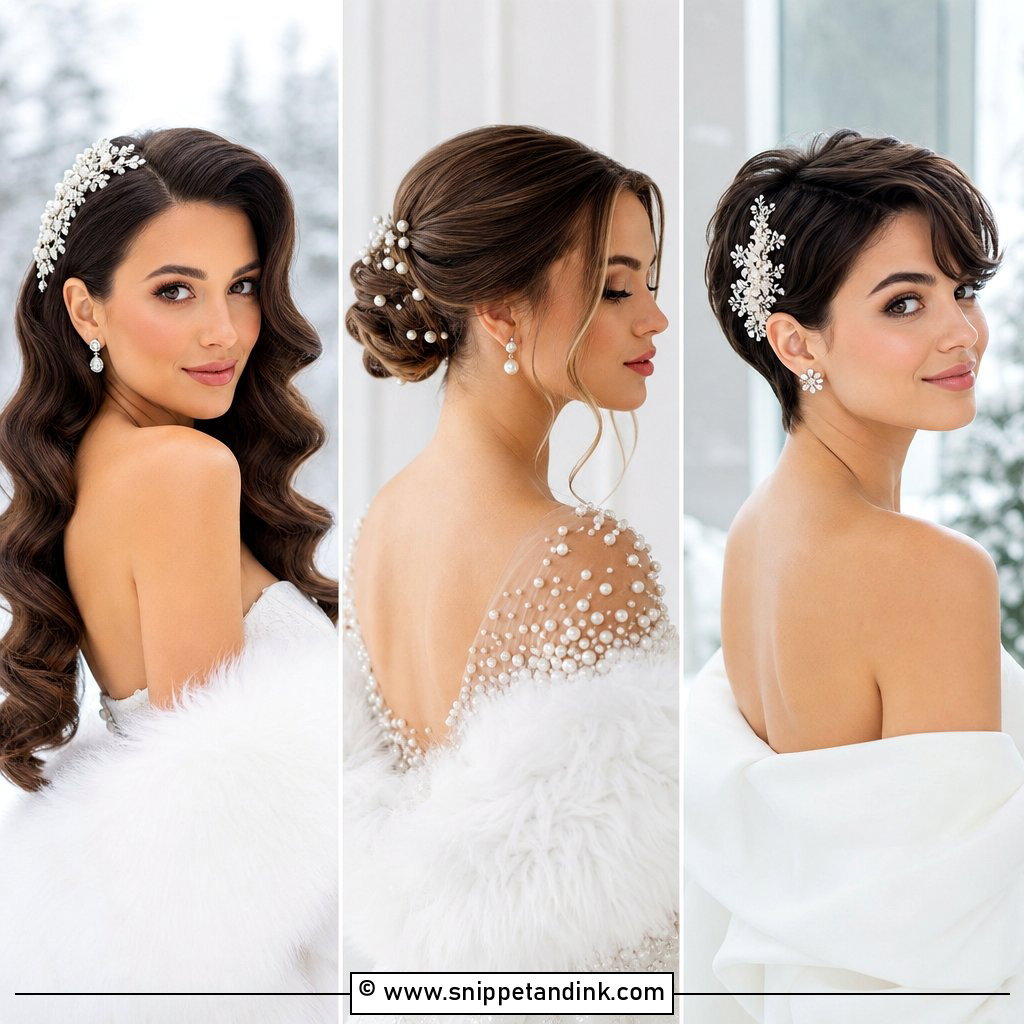
Hollywood waves are the glamorous way to wear your hair down. Every curl is wrapped in the same direction, pinned in its curl until completely cool, then brushed into one sculpted ribbon. That cooling time is the part people skip, and it’s why the waves fall by the first dance. Strapless and off-shoulder gowns show them best. A deep side part is the classic version; a centre part makes them more current. Be honest about spring humidity, though. On hair that frizzes easily, I’d choose a half-up version so the front can’t lose its shape.
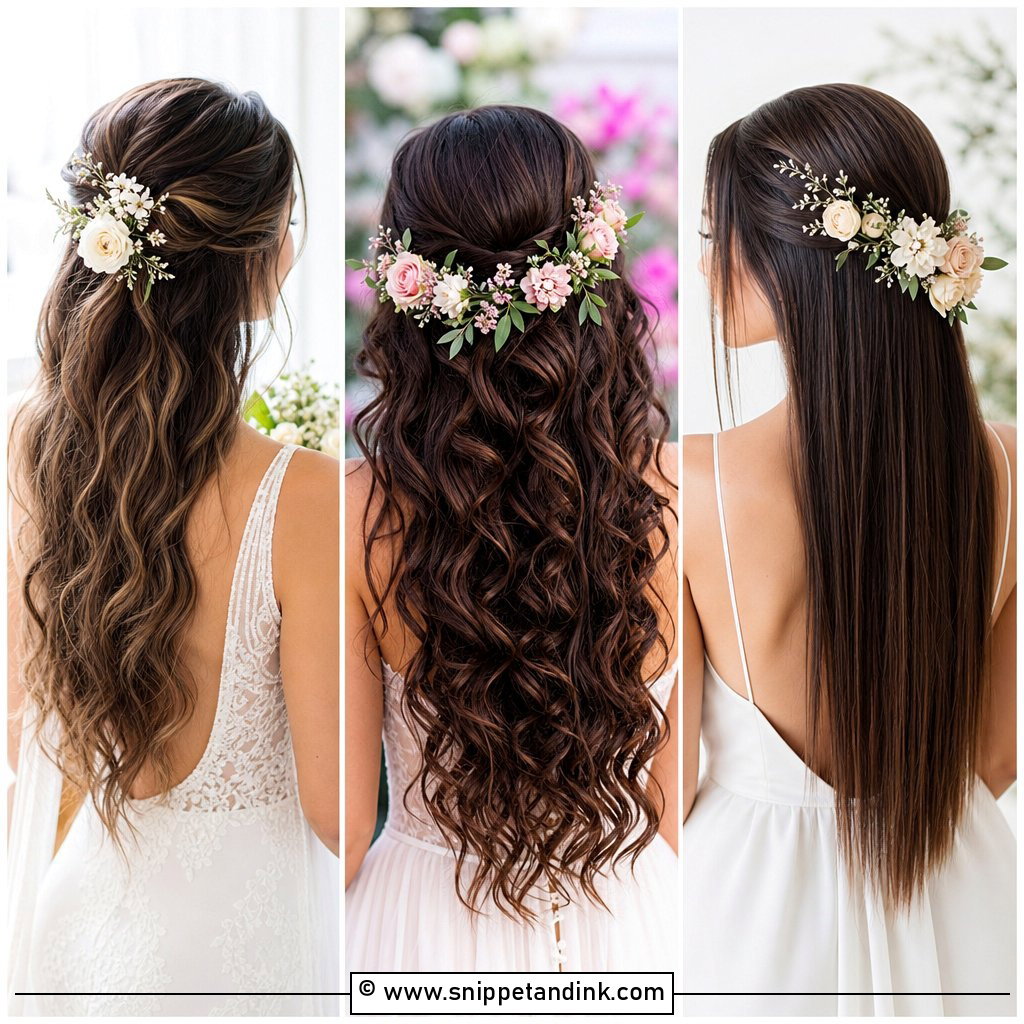
3. Spring Bridal Half Up Half Down Hair
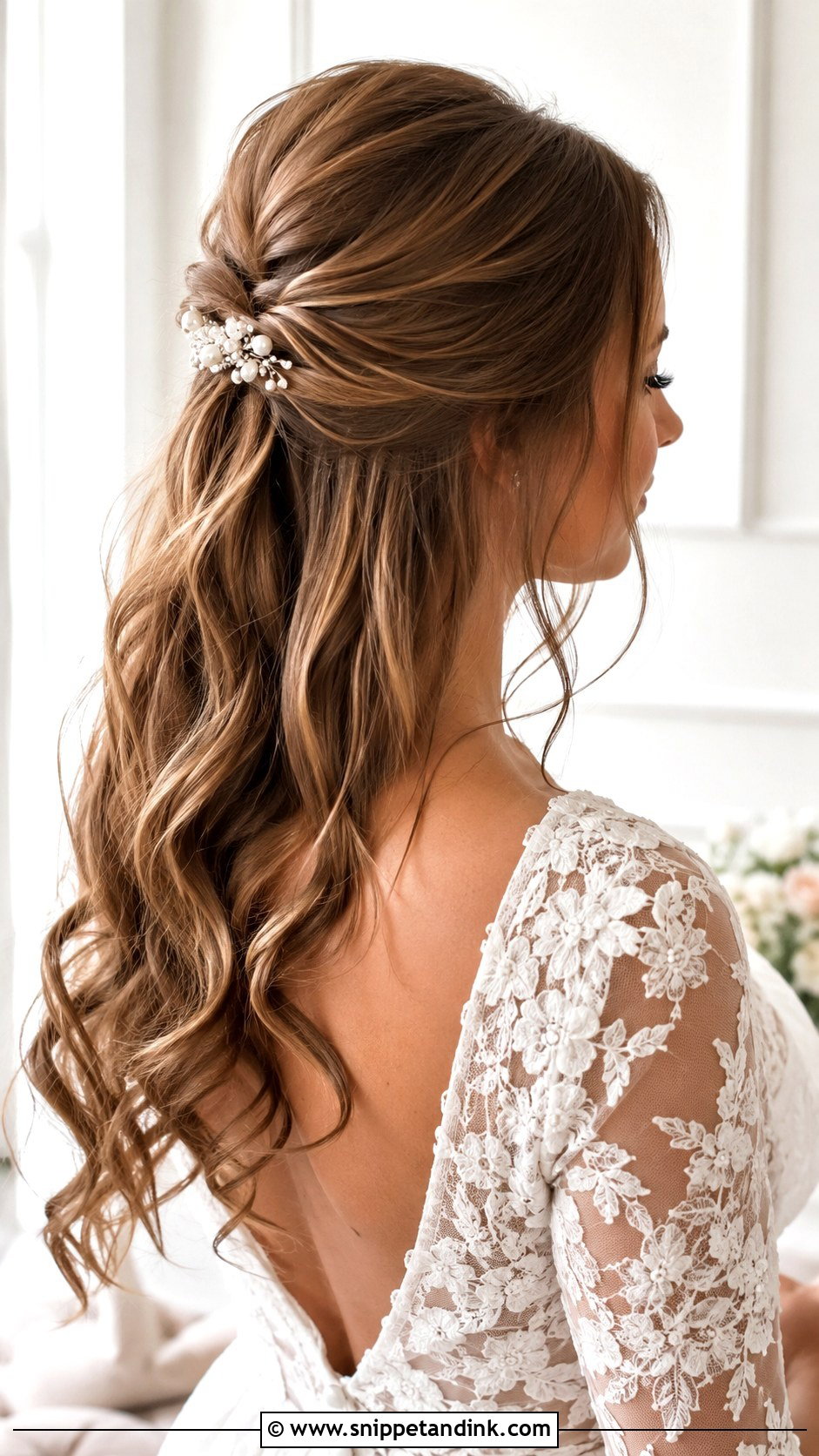
Do you want loose hair that doesn’t end up stuck to your lip gloss in a breeze? Half up half down gives you that. The top section is lifted, backcombed lightly at the root and pinned, while the length falls in curls. I always place the pin anchor slightly lower than brides expect, around the occipital bone, because a veil comb needs to sit just above or just below it. This is where a small comb, pearl pins or a few blooms go. Brides whose hair goes flat at the roots by midday benefit most, because the pinned crown keeps lift all day.
4. Spring Bridal Textured Updo
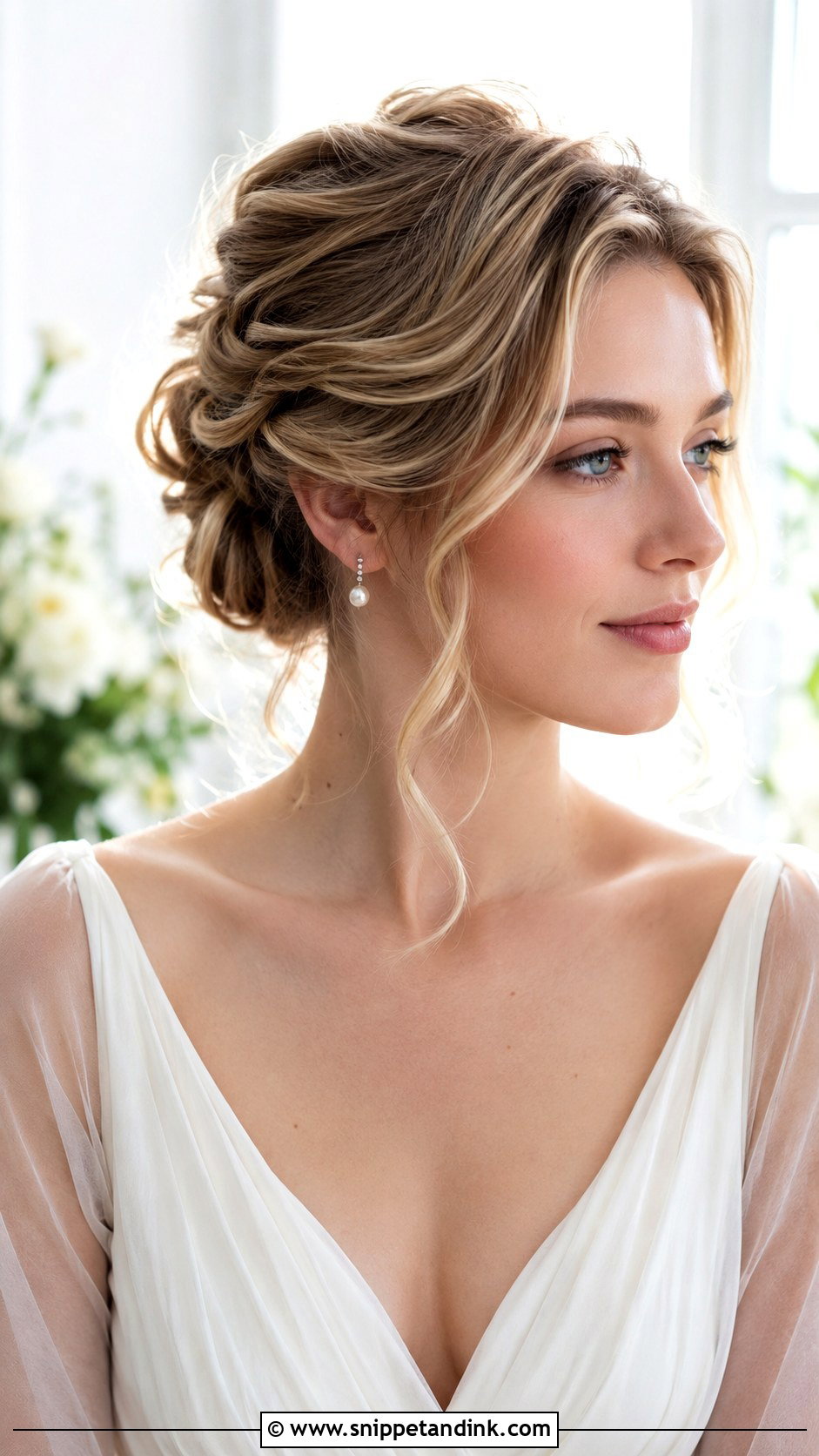
A textured updo uses twists and pinned waves instead of a polished surface, so it looks soft and modern up close. Texture helps both extremes: fine hair looks fuller, and thick hair gets a defined shape instead of a heavy mass. I curl the hair first and let it cool, then build sections loosely over a firm base, which is why it holds despite looking relaxed. It works with a veil, crystal pins, flowers or nothing at all. The one thing that ruins it is too much spray between sections; it goes stiff and you lose the movement.
5. Spring Bridal Sleek Bun
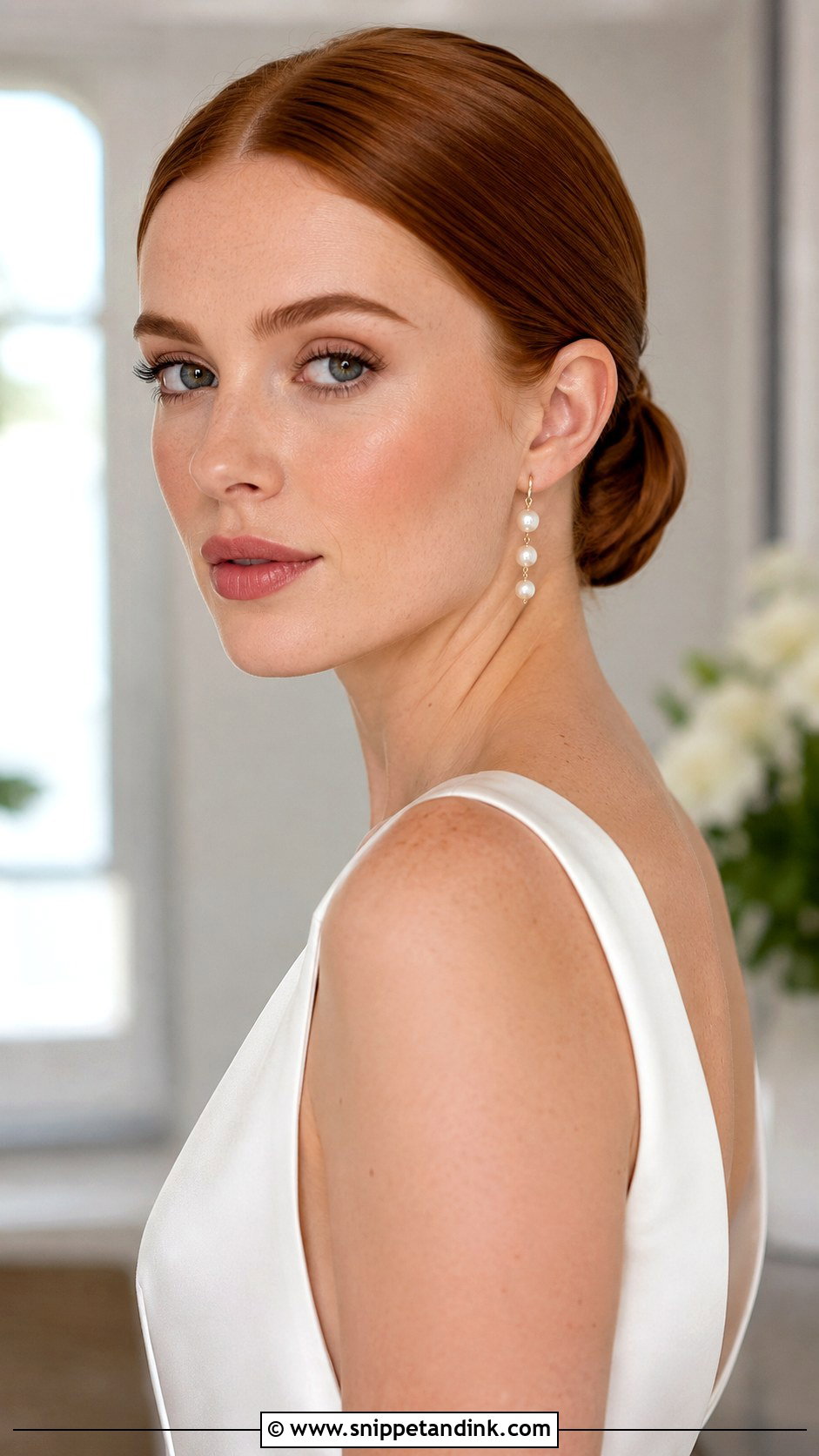
The sleek bun asks for the most precision of anything here. Every bump and flyaway shows, especially at the hairline in close-up portraits, so I spend most of the time on the smoothing rather than the bun itself. It suits satin gowns, minimalist dresses, high necklines and statement earrings, and it hands the attention to your face and dress. For spring I avoid a hard lacquered finish: a light shine serum and a flexible spray read better in daylight. Not a style for very damaged or highly layered hair, as short broken pieces will keep popping up.
6. Spring Bridal Braided Low Bun
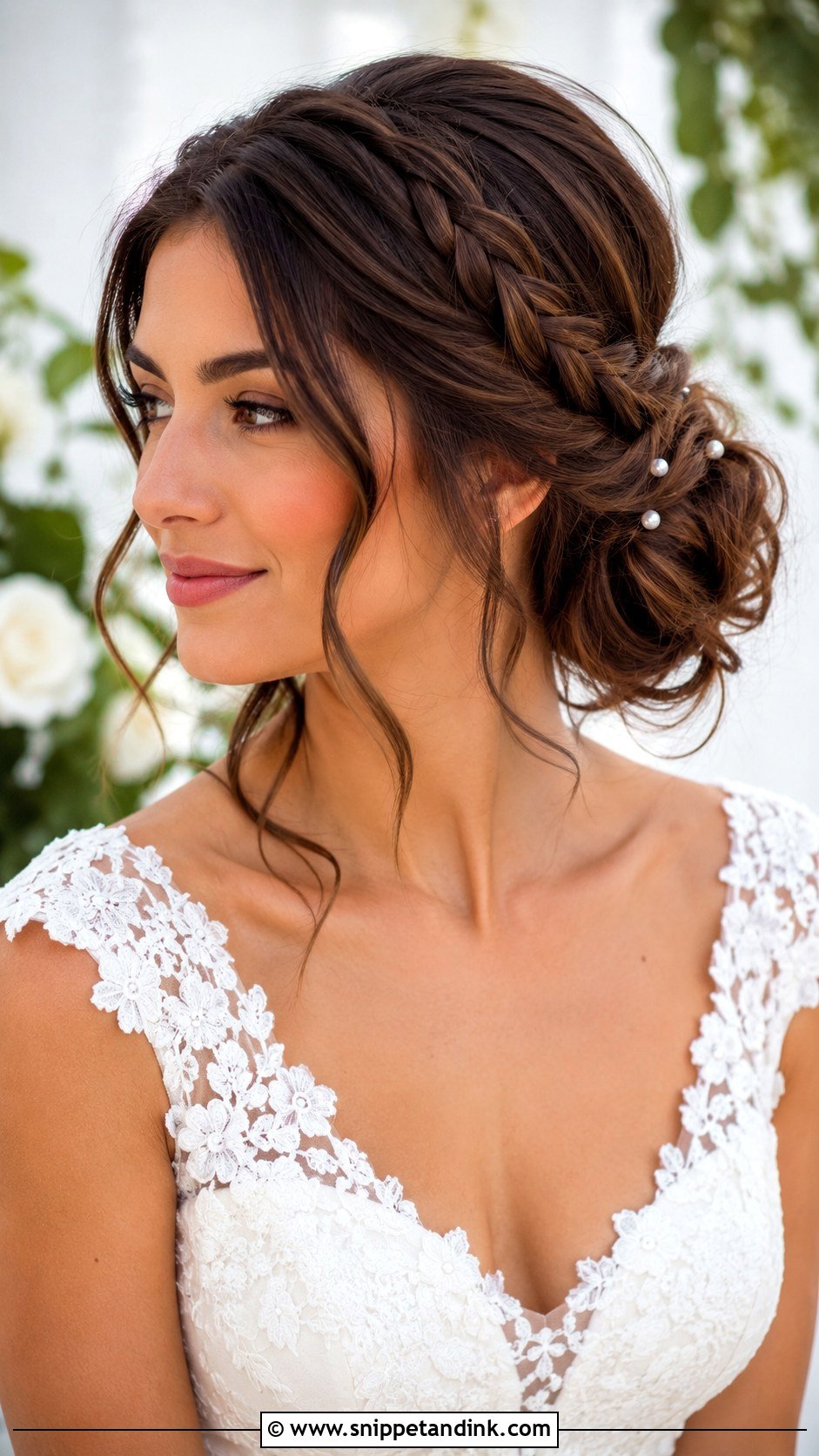
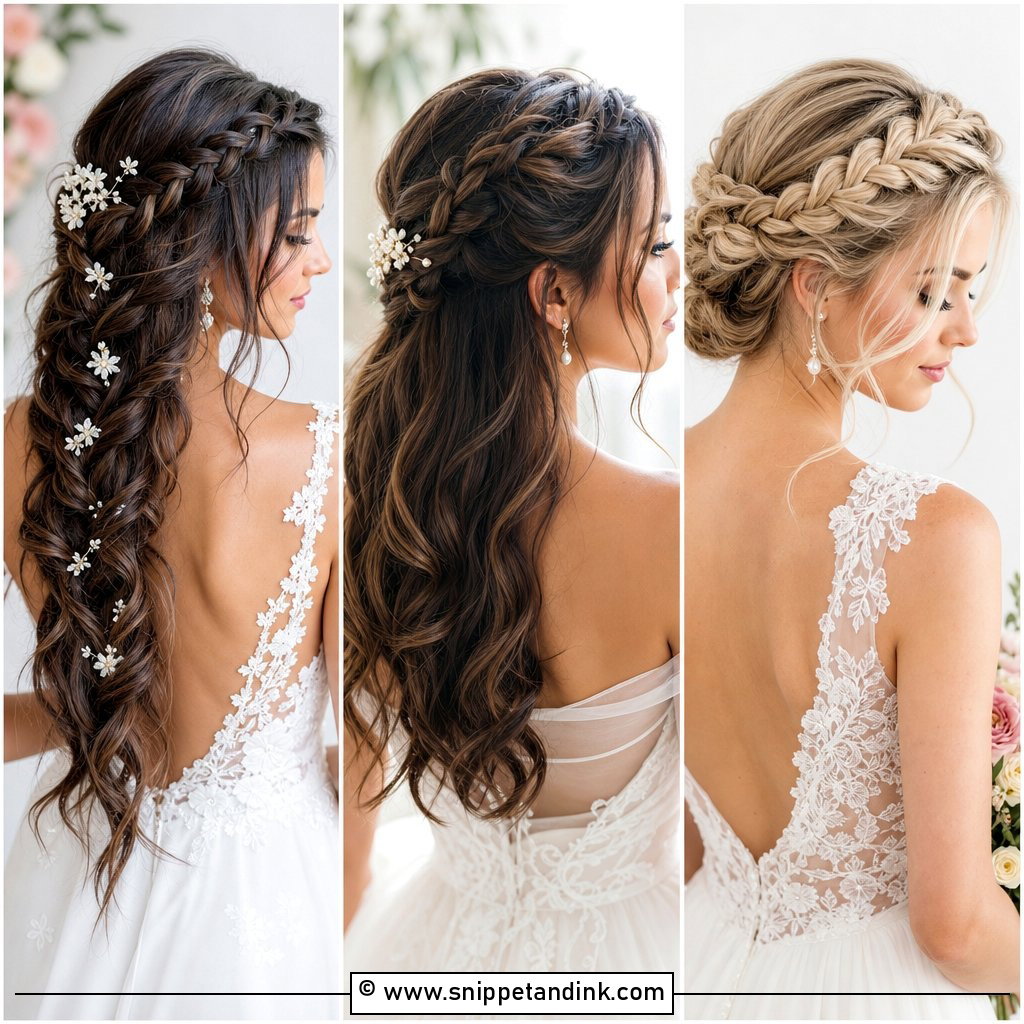
Braids add detail to a low bun without making it busy. The braid can wrap into the bun, run along one side or frame the crown before meeting at the nape. With lace dresses and garden or rustic venues the texture feels right at home. I tighten it for a classic bride and pull the loops wider for a boho one, before it’s pinned, never after. Small flowers, pearl pins or a delicate vine accessory tuck neatly into the woven part, which grips them far better than smooth hair.
7. Spring Bridal High Bun
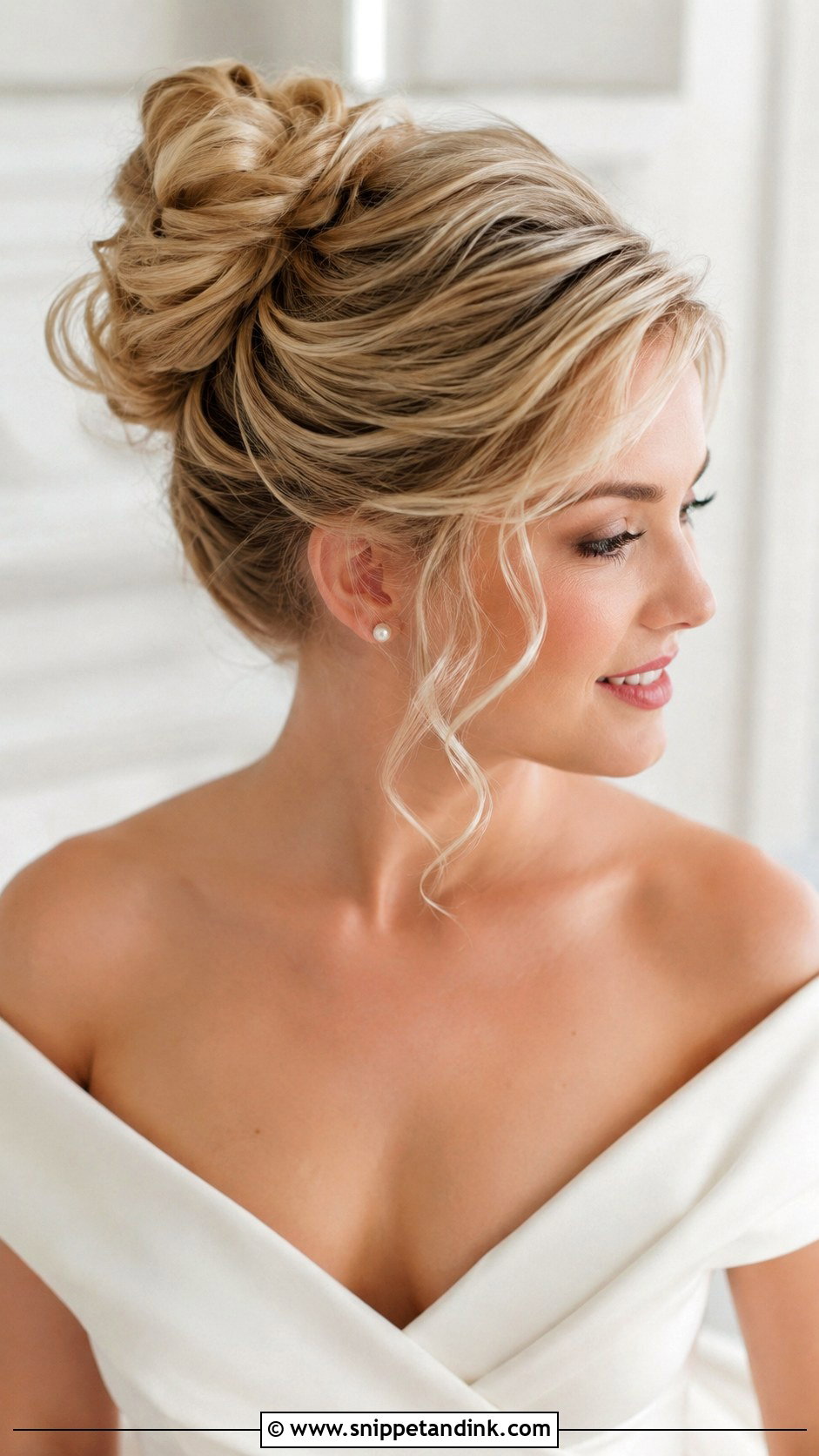
A high bun lifts the whole silhouette and puts your neck, shoulders and earrings on show. It can be smooth and round, softly textured or a little undone. Petite brides often like how it adds height in full-length photos. The veil question decides it: a veil anchored underneath the bun falls cleanly, while one placed on top can drag it backward. I build a high bun on a firm ponytail at the crown, because the weight of a cathedral veil on a loosely pinned bun is the fastest way to a headache.
8. Spring Bridal Ponytail
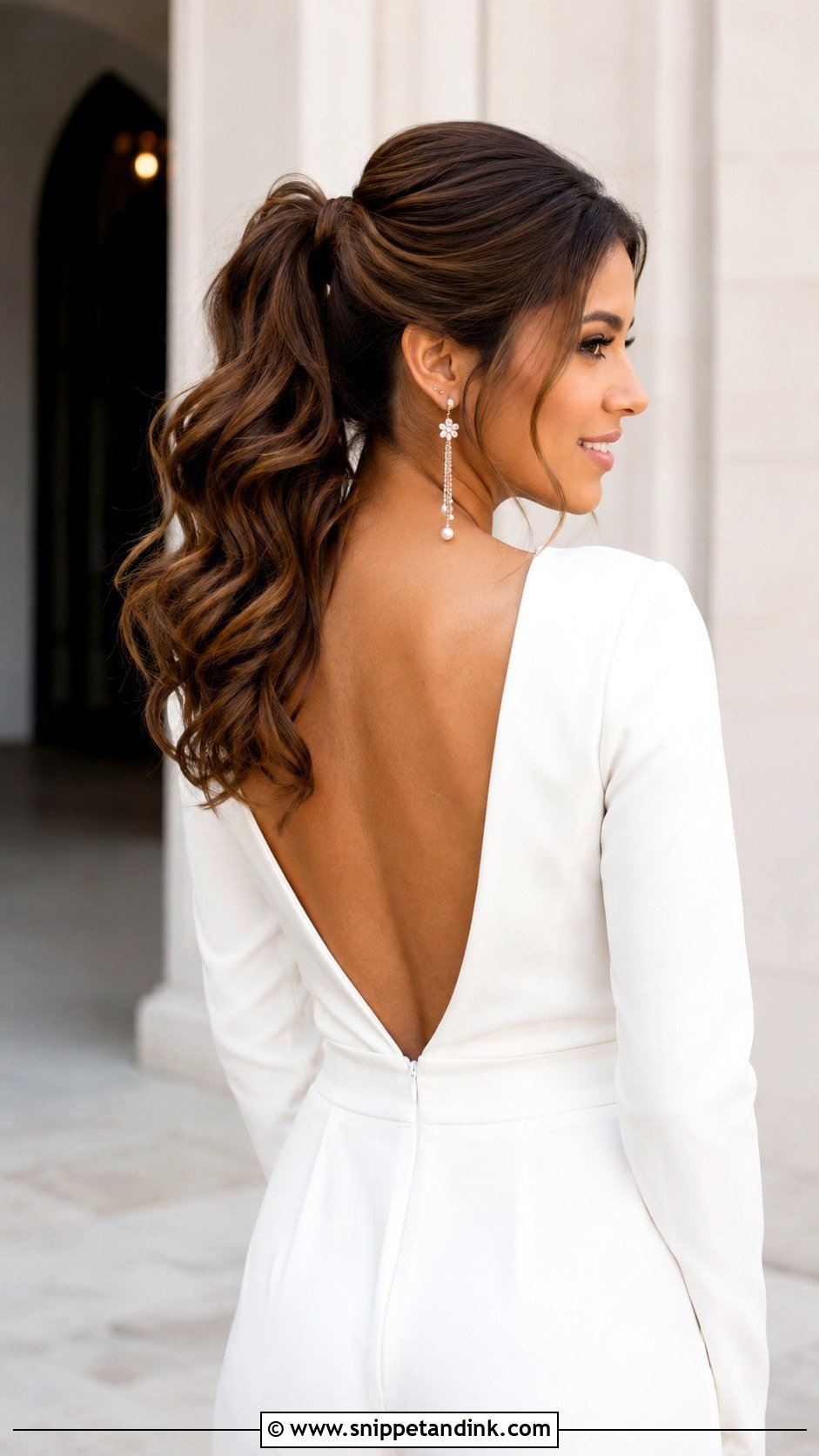
A ponytail can look properly bridal once it has volume and a wrapped base. It keeps hair off your face and still moves when you walk. Low and mid heights suit romantic dresses; a high ponytail reads modern and confident. I tie it with two elastics, the second a little below the first, which stops it drooping by evening. Add a few clip-in pieces for fullness if your hair is fine. This is the style brides tell me is most comfortable after eight hours, since there are almost no pins against the scalp.
9. Spring Bridal Side Braid
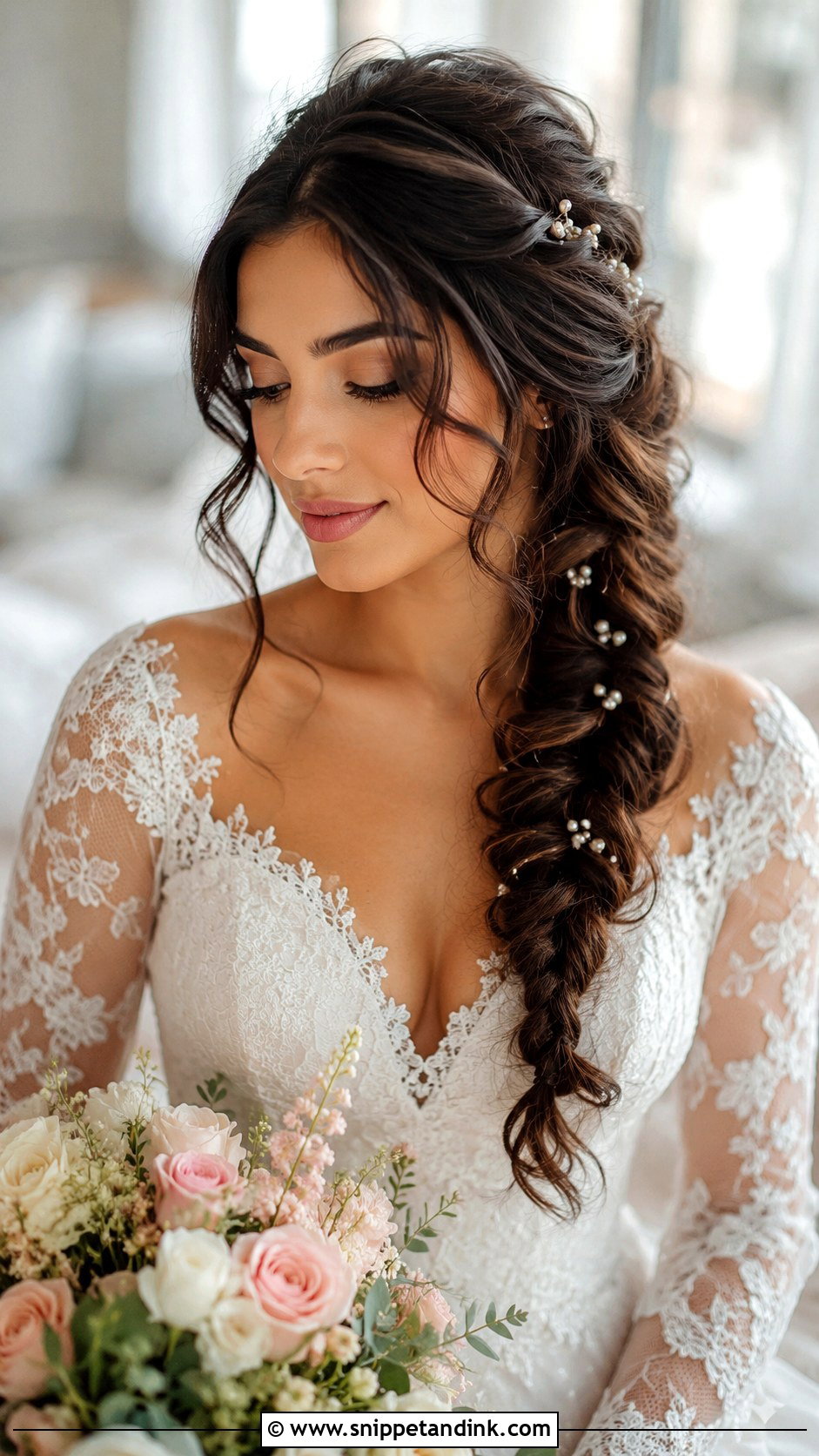
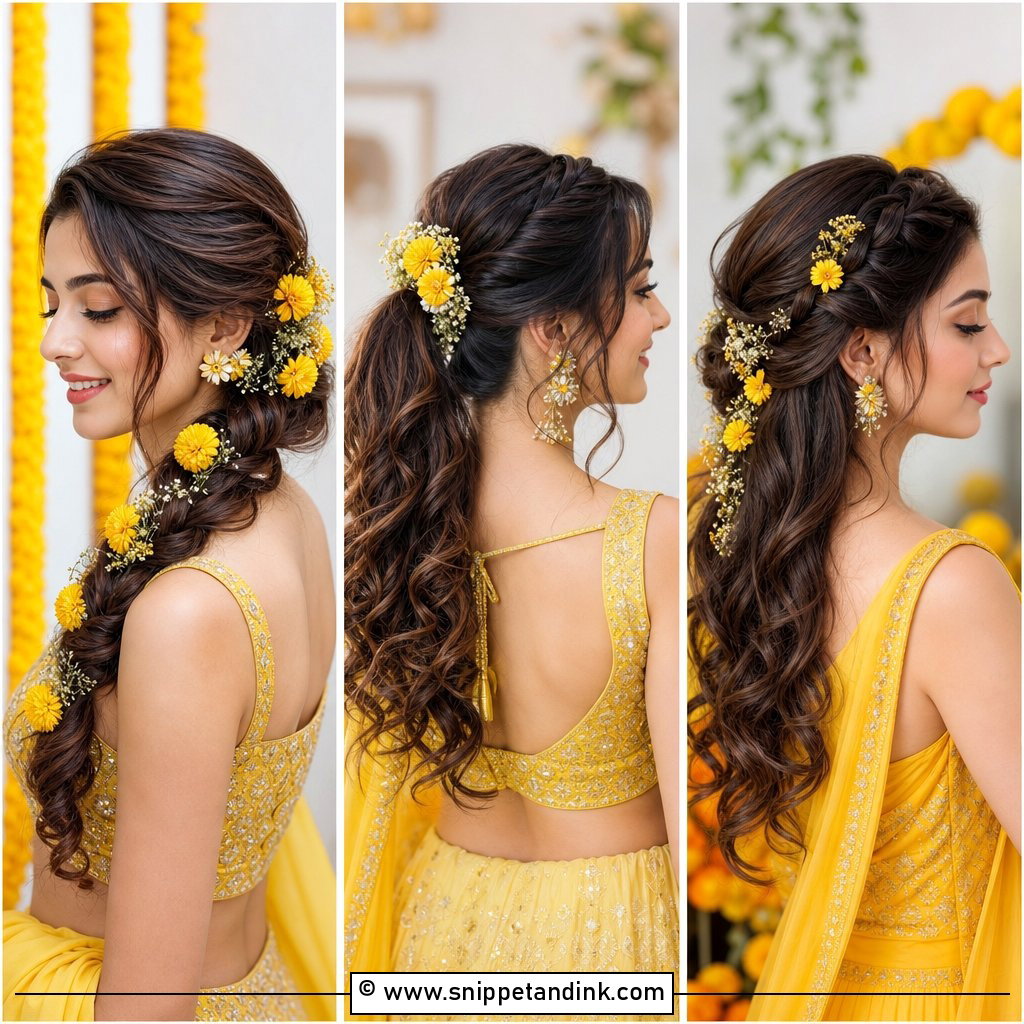
Bringing the hair over one shoulder in a side braid frames your face in portraits and leaves the back of the gown visible. A loose fishtail, a Dutch braid or a soft three-strand braid can all work, depending on texture. I start the braid behind the ear on the opposite side so it wraps around the head and doesn’t pull from the crown. You need at least shoulder-length hair, or extensions, for the braid to sit properly in front. Pearl accents woven through it catch the light without adding weight.
10. Spring Bridal French Twist
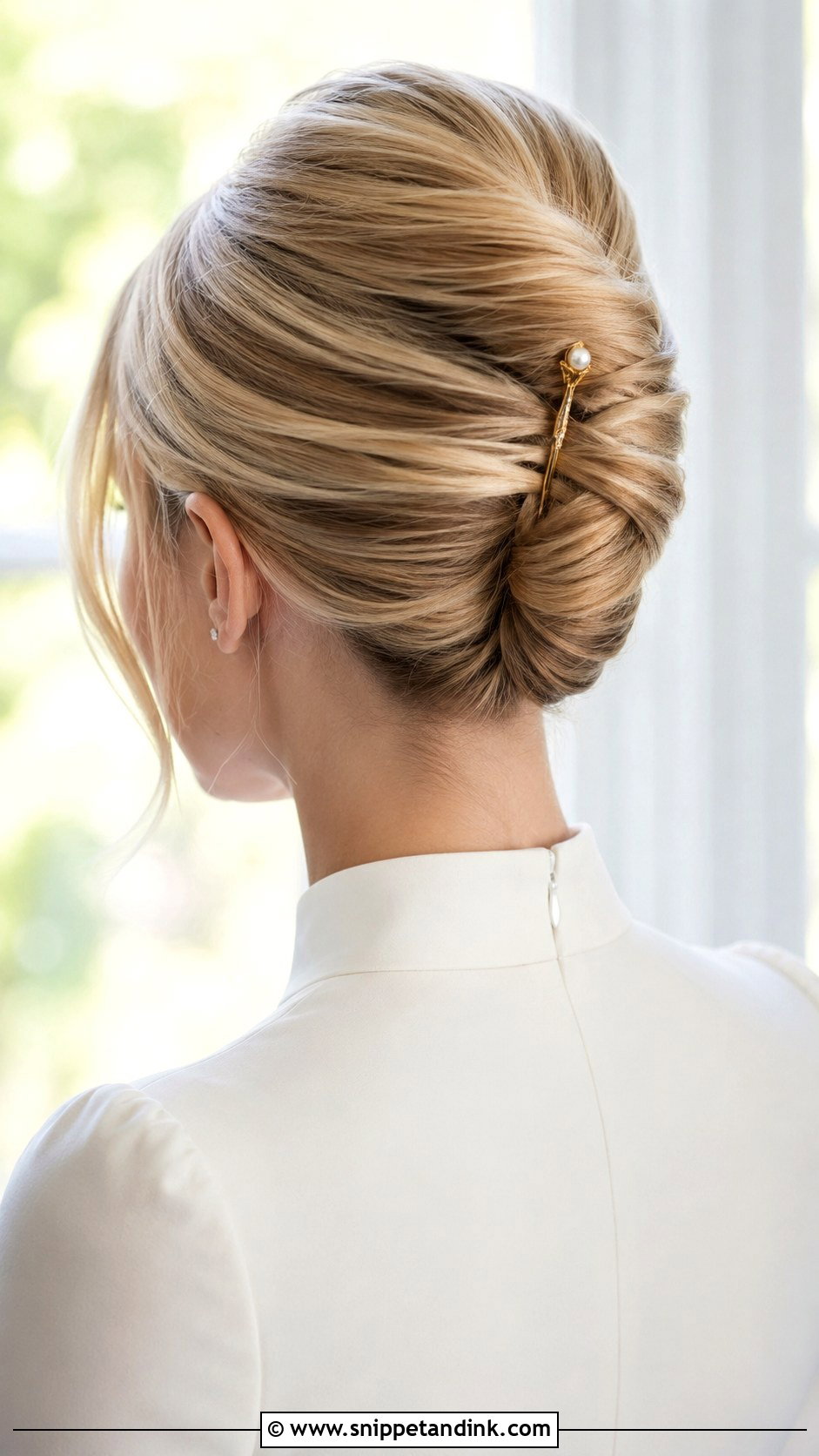
The French twist gives you the cleanest profile of any updo, which is why it suits boat neck and high neck gowns so well. The hair is gathered up the back and rolled into a vertical seam, pinned along the inner edge. For a spring wedding I leave it slightly looser than the classic version. On silky, freshly washed hair the roll tends to unwind, so I prep with a dry texture spray first. A gold pin, pearl comb or small floral accent at the top of the seam adds detail without covering the line.
11. Spring Bridal Curly Updo
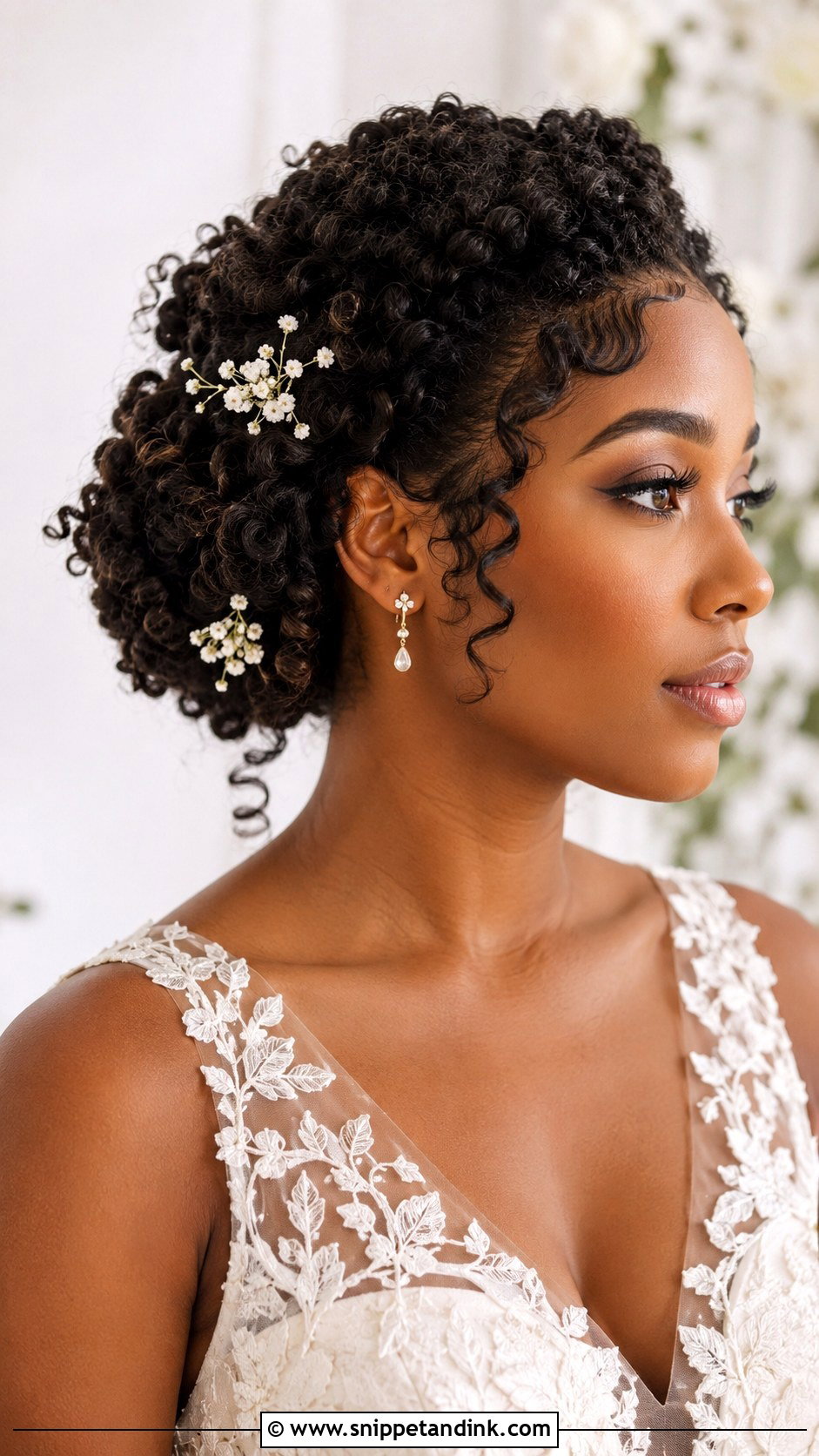
With a curly updo, my job is placement, not hiding the curl pattern. Curls can be pinned into a soft bun, gathered at the crown or arranged low with volume at the sides. Moisture comes first: well-hydrated curls clump and hold, while dry curls frizz the moment spring air gets to them. I use a curl cream and a humidity-resistant gel or mousse, then pin curls in groups instead of one at a time, so the pattern stays defined. A few curls left at the face keep it personal.
12. Spring Bridal Loose Waves
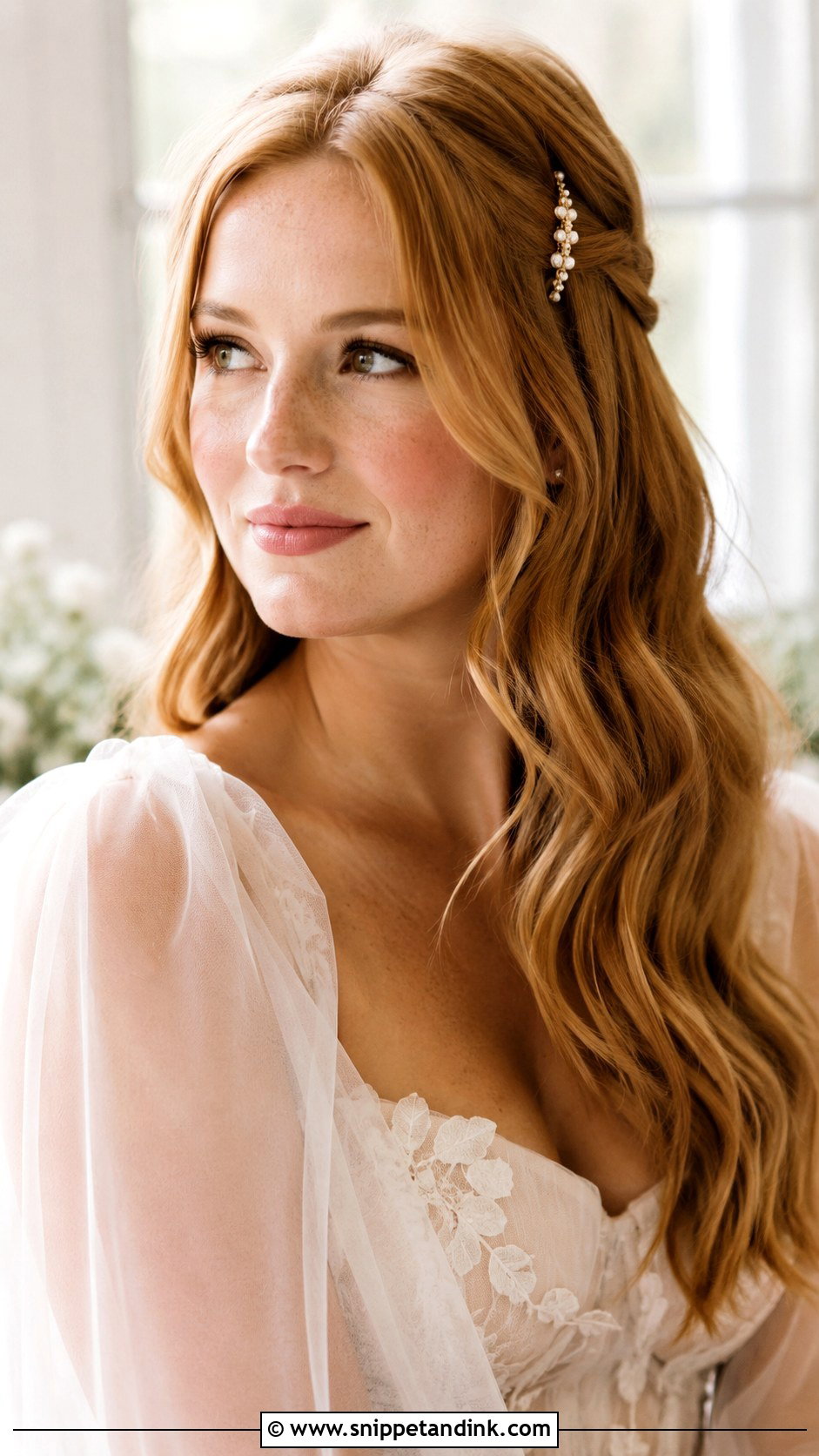
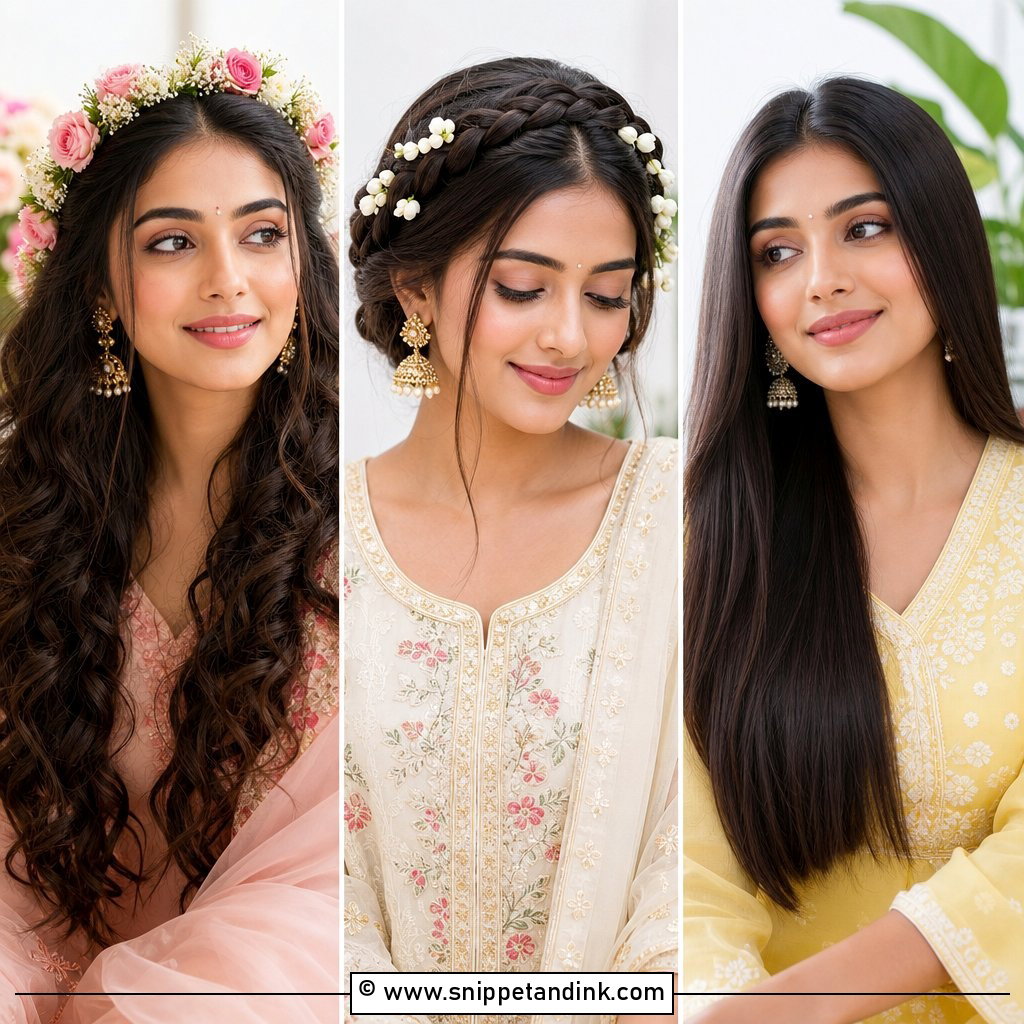
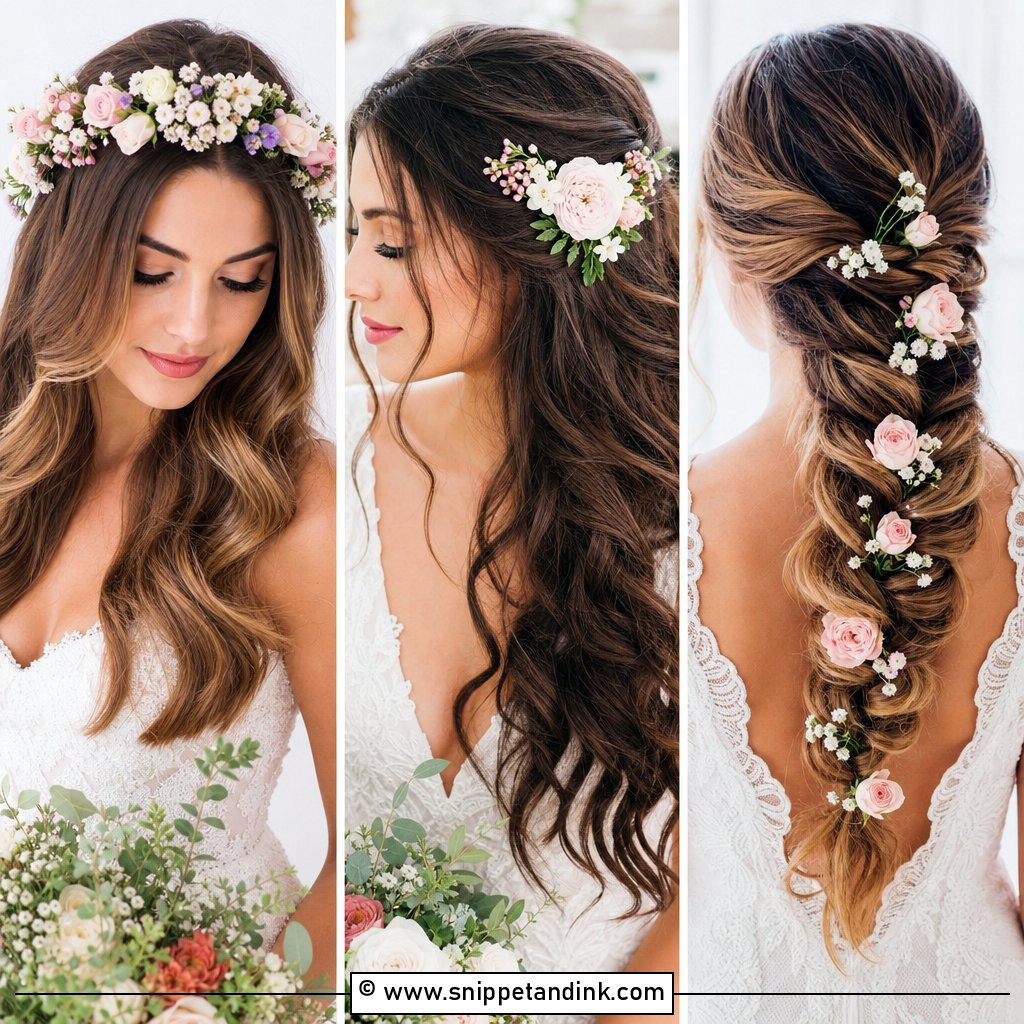
Loose waves sit between Hollywood waves and everyday curls: softer than the first, more finished than the second. Brides who always wear their hair down usually feel most like themselves in them. The catch is that down styles have the shortest life on a humid day. To make them last I prep with a setting product, curl smaller than the final wave I want, and let them fully cool before brushing. Layered cuts show the movement best around the face and shoulders. Floral crowns, veils and hair vines all sit easily on top.
13. Spring Bridal Crown Braid
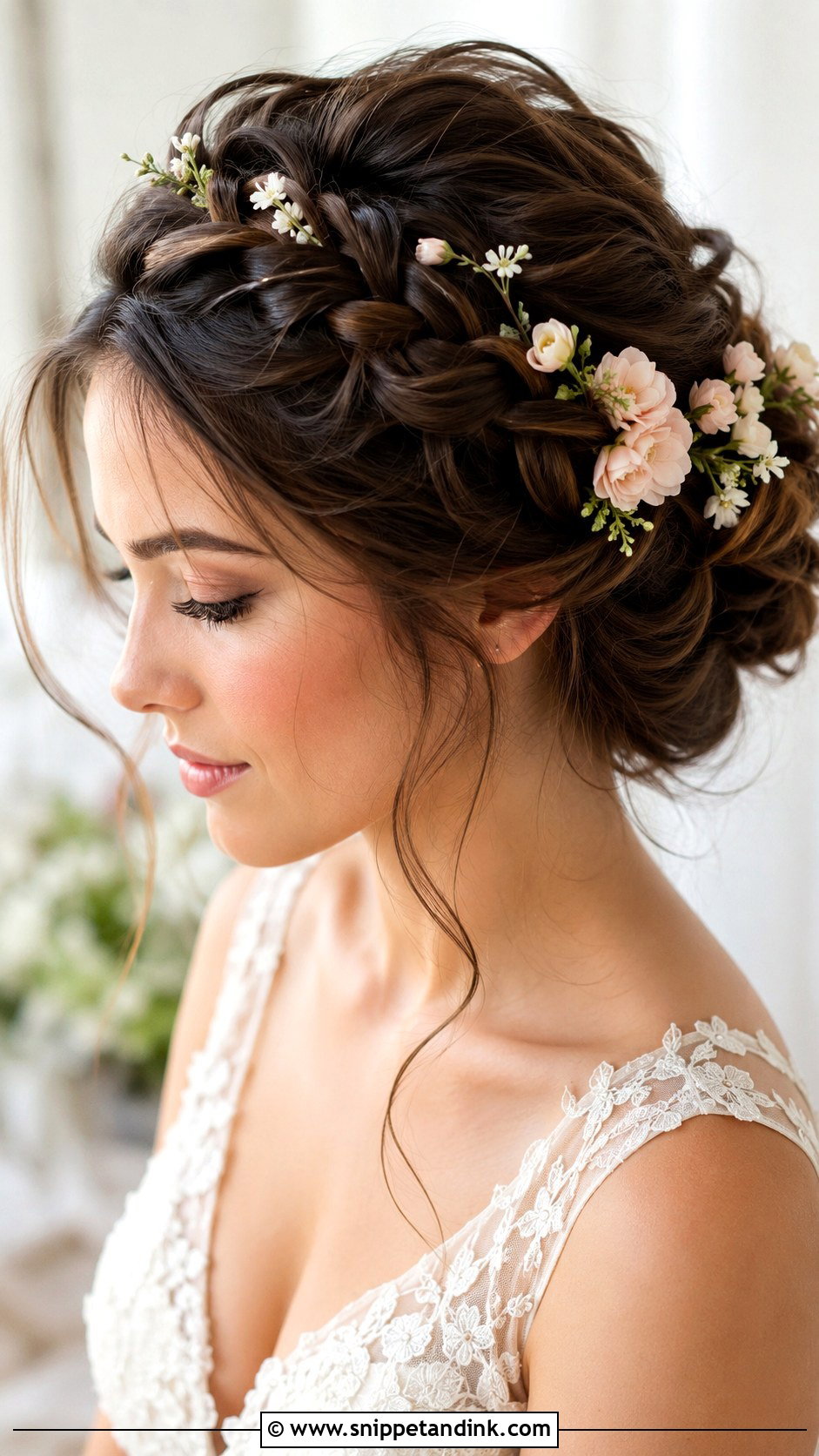
A crown braid creates a fairytale shape without feeling childish, provided it stays soft. It wraps the head like a halo, with the rest of the hair tucked up or left in waves. In a breeze it keeps every strand off your face, which outdoor chapels and garden ceremonies need. I anchor the braid with pins every few centimetres along its underside so it doesn’t slide down the back of the head over the day. A veil sits low at the back, beneath the braid, and leaves the halo visible.
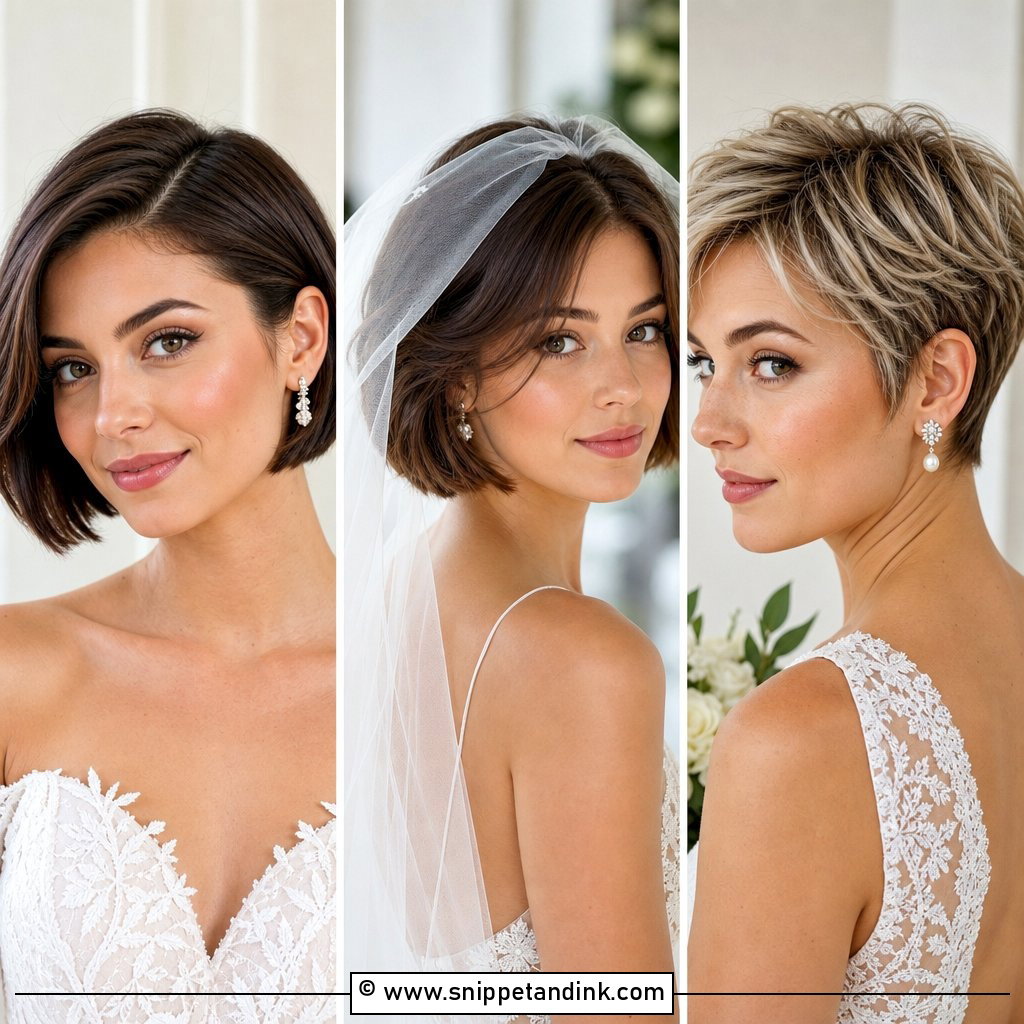
14. Spring Bridal Bob Waves
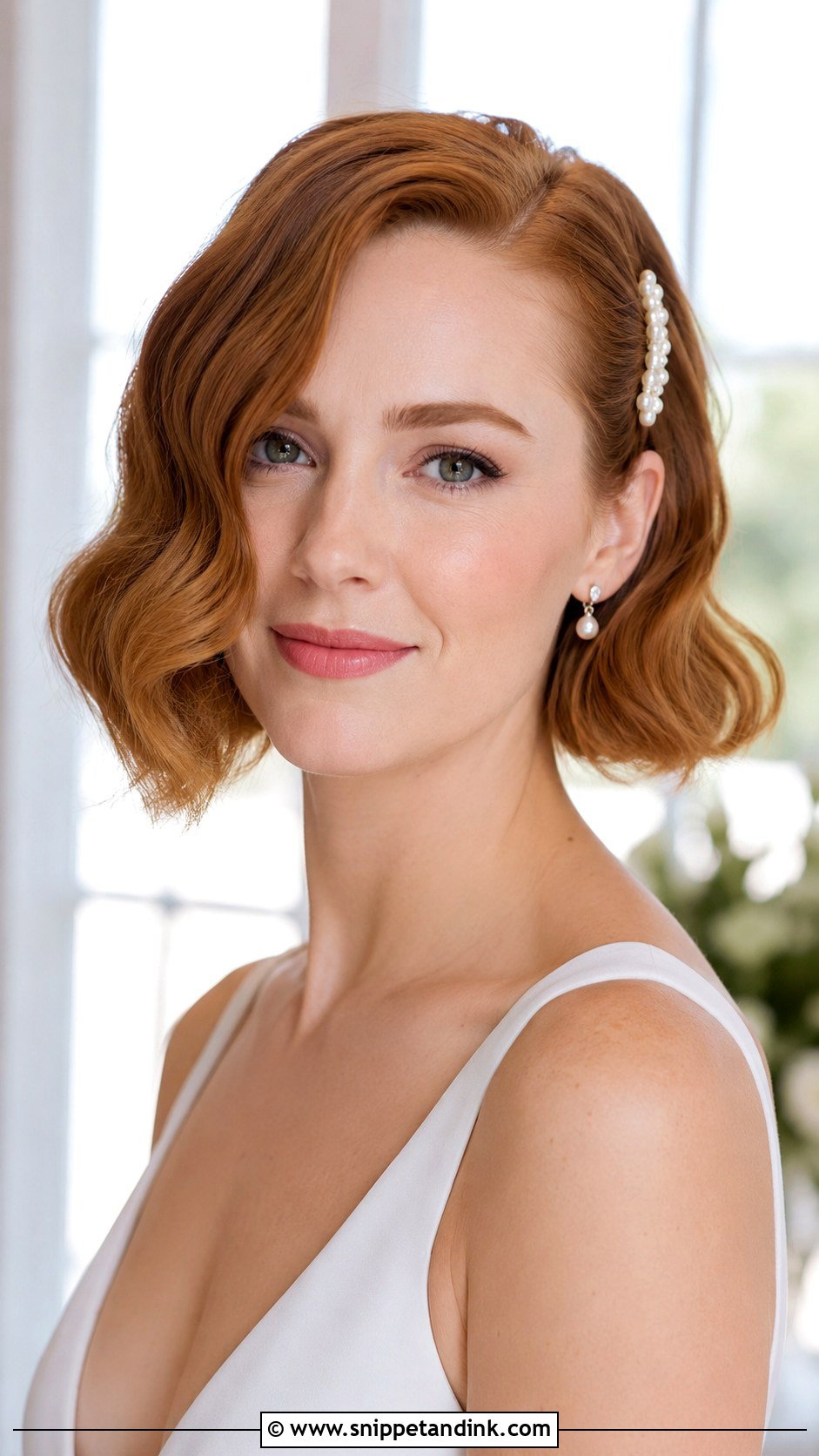
A bob with waves shows that short hair can carry a bridal look just as well as long hair. Soft bends add movement, while a deep side part, pearl clip or delicate comb gives it a wedding finish. It works on chin, jaw and collarbone lengths, with modern gowns and city weddings. I add a root-lifting spray before curling and leave the ends straight, so the shape looks current. Tuck one side behind the ear if you want your earrings seen. A short veil or birdcage suits a bob better than a long one.
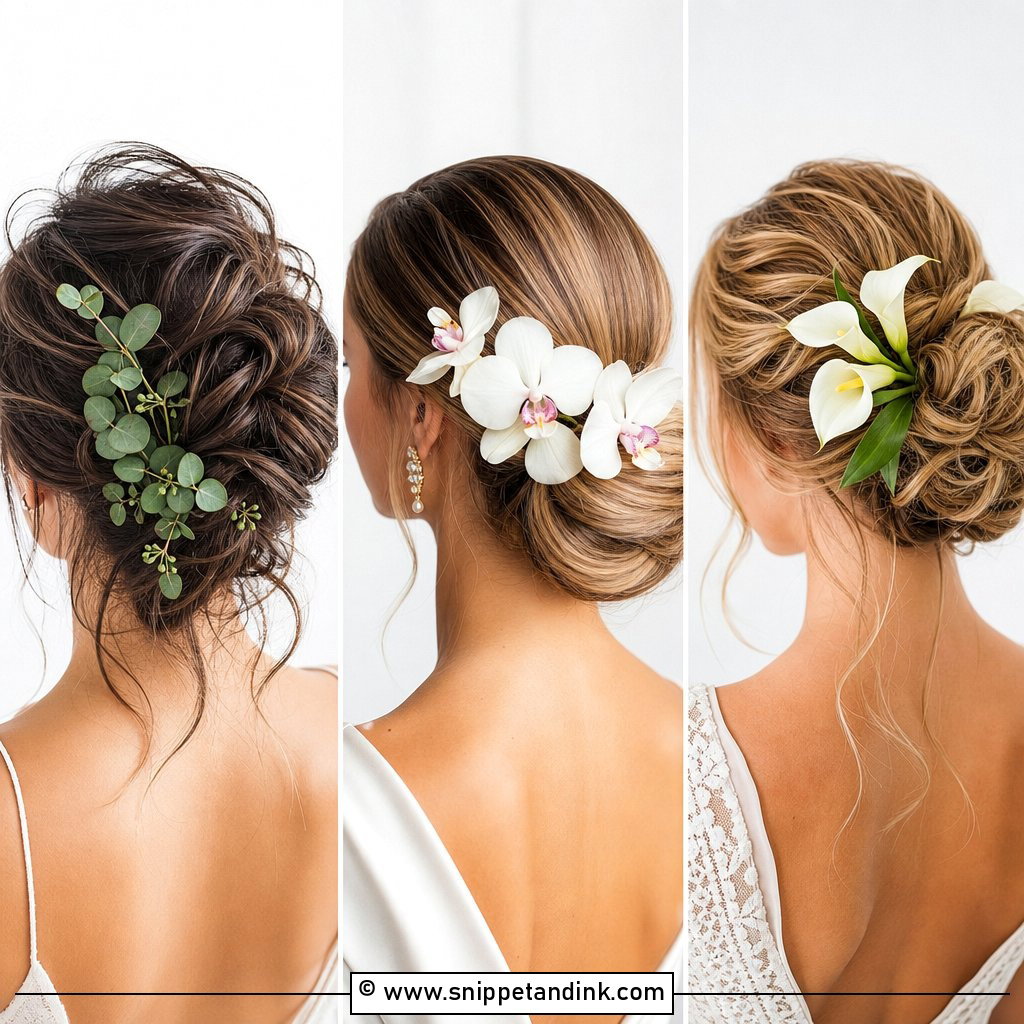
15. Spring Bridal Flower Updo
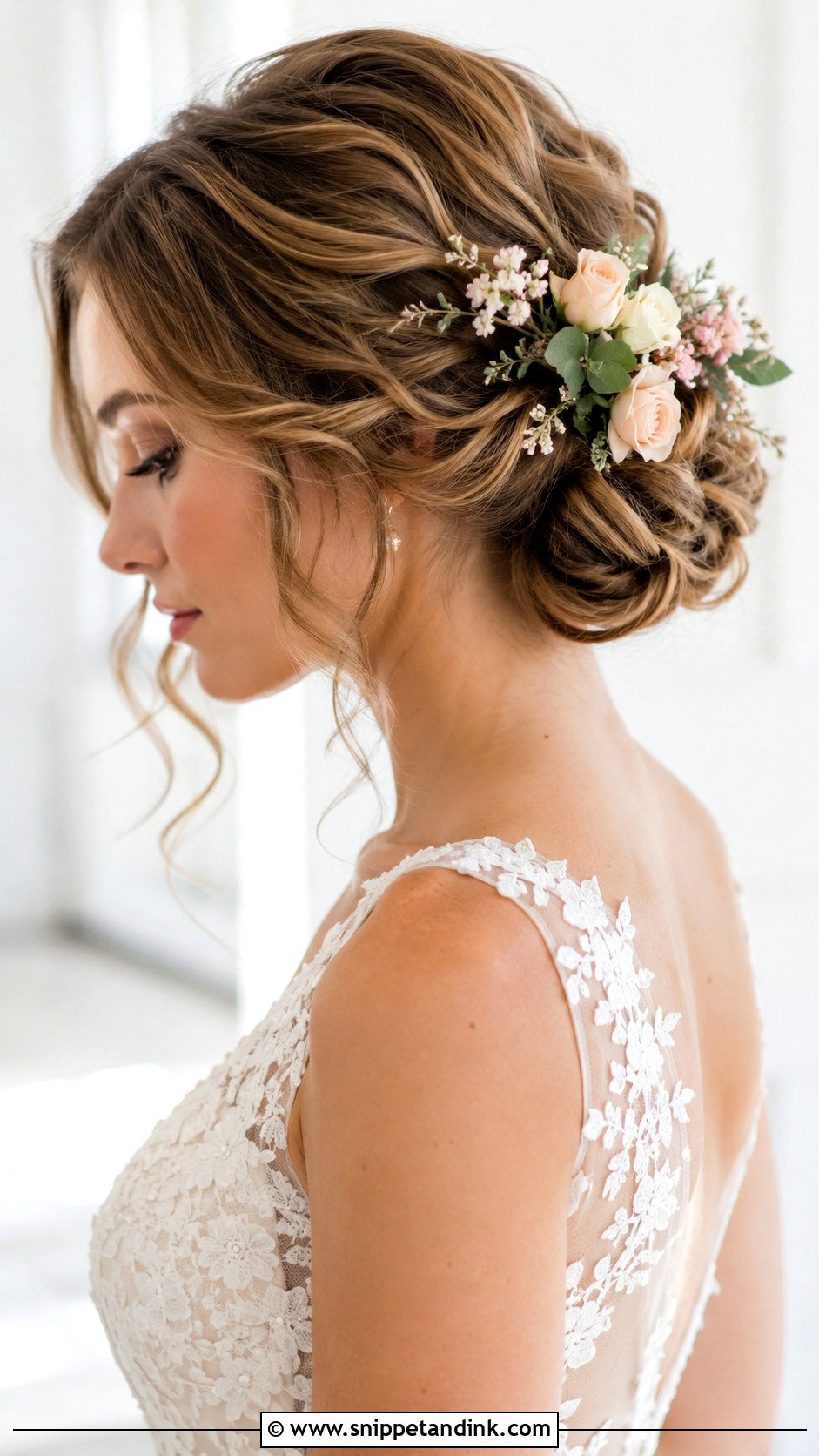
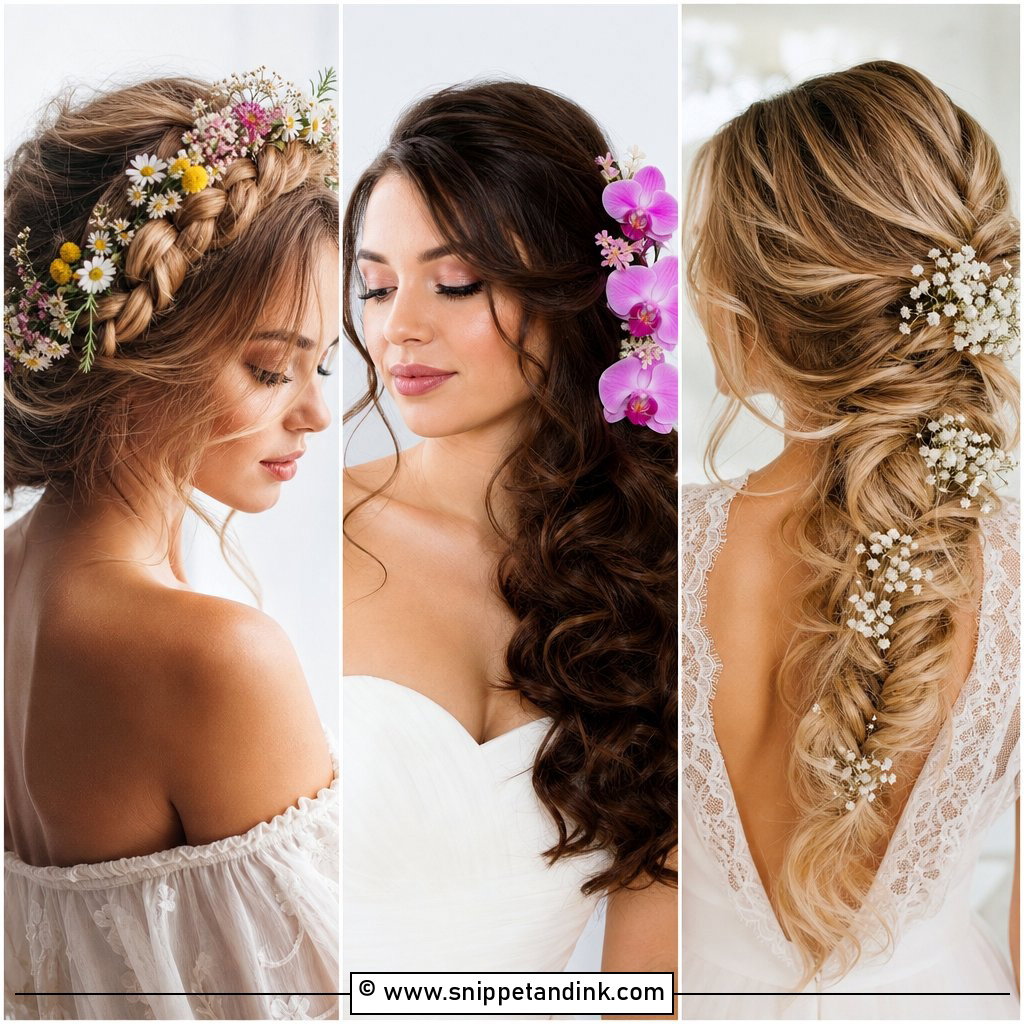
Flowers can sit in a low bun, textured chignon or soft twist, fresh or good-quality silk. Small blooms read delicate; one or two large blooms read bold. The flowers should support the hairstyle, not hide it. I always ask the bride to have her florist and me agree on colour and placement before the day, because fresh stems arrive late and need to be wired or picked before I pin them. Cream, blush, pale pink and small sprigs of greenery suit spring wedding hair and garden venues especially well.
Which Fresh Spring Flowers Survive a Day in Your Hair
Out of water and next to a warm scalp, delicate flowers wilt within a couple of hours. Some spring favourites are simply not made for hair, however good they look in a bouquet.
Hardier choices
- Spray roses and small garden roses, which hold their shape well once wired.
- Orchids, especially dendrobium, which handle warmth better than almost anything else.
- Waxflower and baby’s breath, for fine filler that barely wilts.
- Sturdy greenery like eucalyptus or ruscus, which stays fresh all day.
Ones I’d avoid or keep for the bouquet
Hydrangea, sweet pea and lily of the valley droop quickly once cut short. Gardenias bruise brown wherever they’re touched. If you love a fragile flower, use a silk version in your hair and keep the real one in your bouquet. Ask your florist to wire or tape each stem and deliver them in a cool box; I pin them in last, just before you get dressed.
Which Spring Look Will Still Be Standing at the First Dance?
Your dress, venue, hair texture and how much you can tolerate pins should all decide this, not a single picture. For polish, it’s the sleek bun, French twist or Hollywood waves. For softness, the textured updo, half up half down, loose waves or a flower updo. If your ceremony is outdoors and the day looks windy, low buns, braided buns, crown braids and ponytails hold best. Book a trial, bring photos from the front, side and back, and wear your veil and accessories with the finished style. You should be able to forget about your hair once you walk out the door.
You'll Like These Ideas:


Leave a Reply