
Short hair looks like it has nowhere to go until you start pinning it. A bob, lob, crop or chin-length cut can sit up and away from the neck with a handful of pins, some texture spray and a little bend from an iron, no extensions needed. The low buns, tucked bobs, twisted crowns and mini chignons people are wearing to weddings right now are soft and slightly undone, which suits short hair, because a few escaped pieces look deliberate rather than failed. Below are fifteen versions of a wedding guest updo short hair can genuinely hold through a ceremony, a seated dinner and the dance floor.
Is Your Cut Long Enough to Pin Up?
Before you pick a style, stand in front of a mirror and run the same three checks I do at the chair before I promise anyone an updo. They take a minute and tell you which half of the list is realistic.
- Gather the hair at the nape. If it makes a stub you can hold with a small elastic, low buns, chignons and faux buns are all possible.
- Pull the side sections back toward the crown. If they reach behind your ear without springing forward, twists and half up shapes will hold.
- Find the shortest layer at the back. Pieces that barely cover a finger won’t stay inside a bun, so plan to tuck them with mini pins or leave them as soft nape detail.
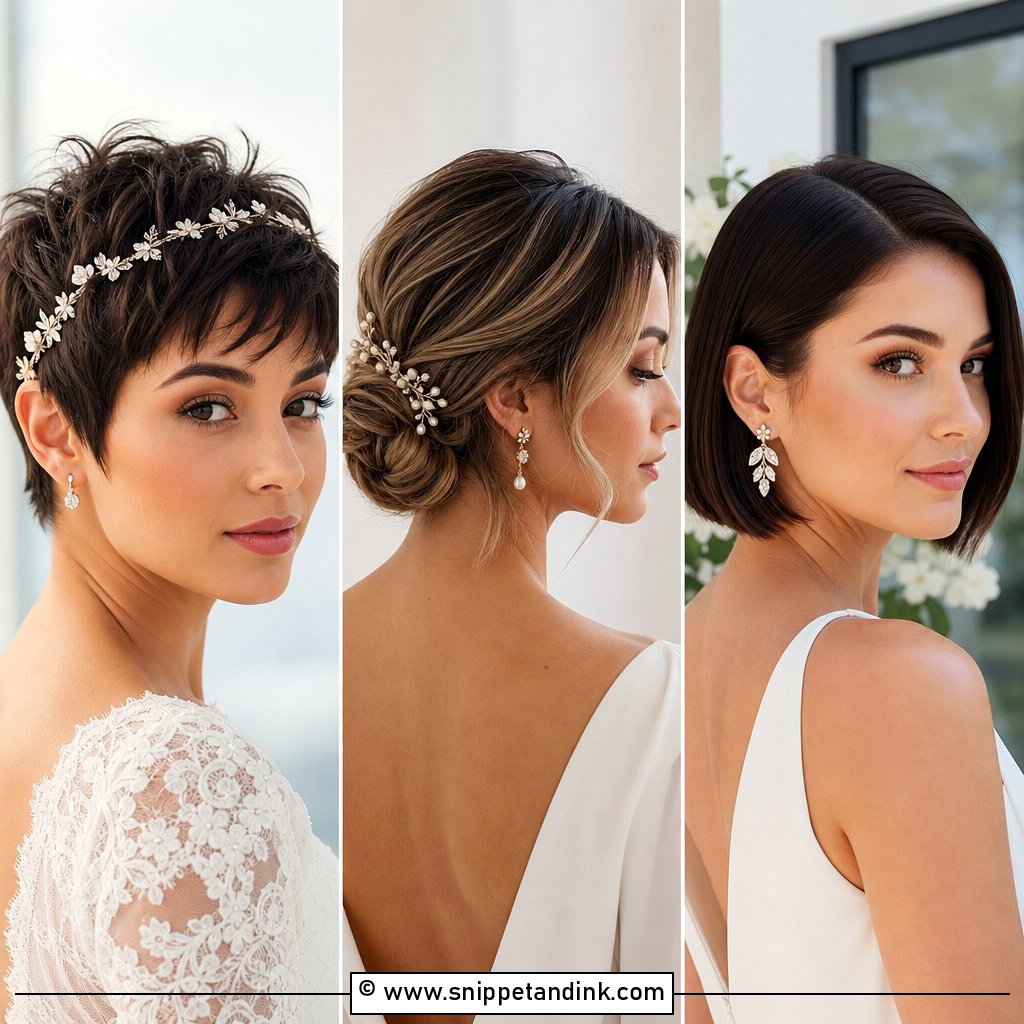
Ear-length cuts and pixies won’t gather at all. For those I’d go straight to the pinned back bob, the side sweep or an accessory-led look. Also, time your trim. Freshly cut ends are blunt and springy and push out of pins, so get it done two to three weeks before the wedding, not the week of.
1. Low Bun Updo For Short Hair
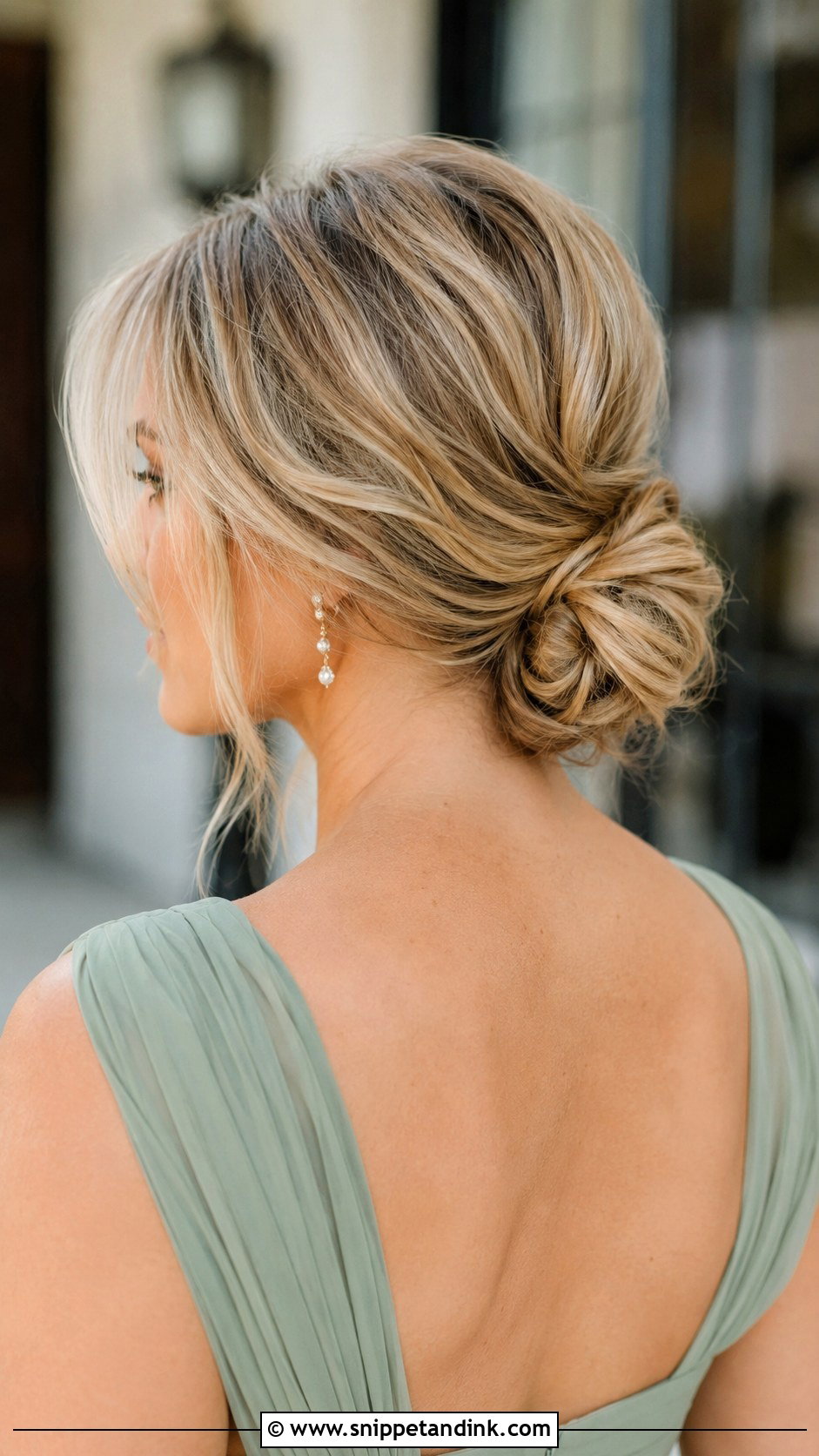
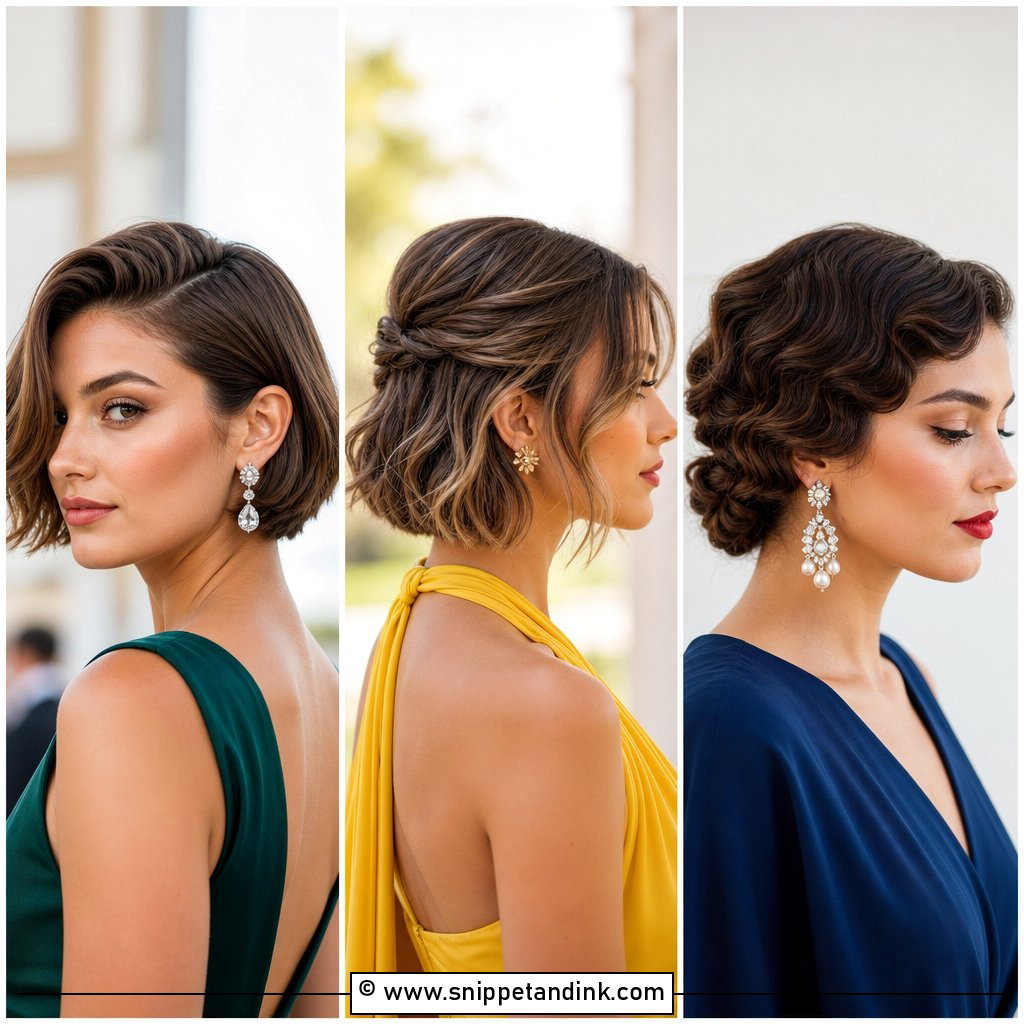
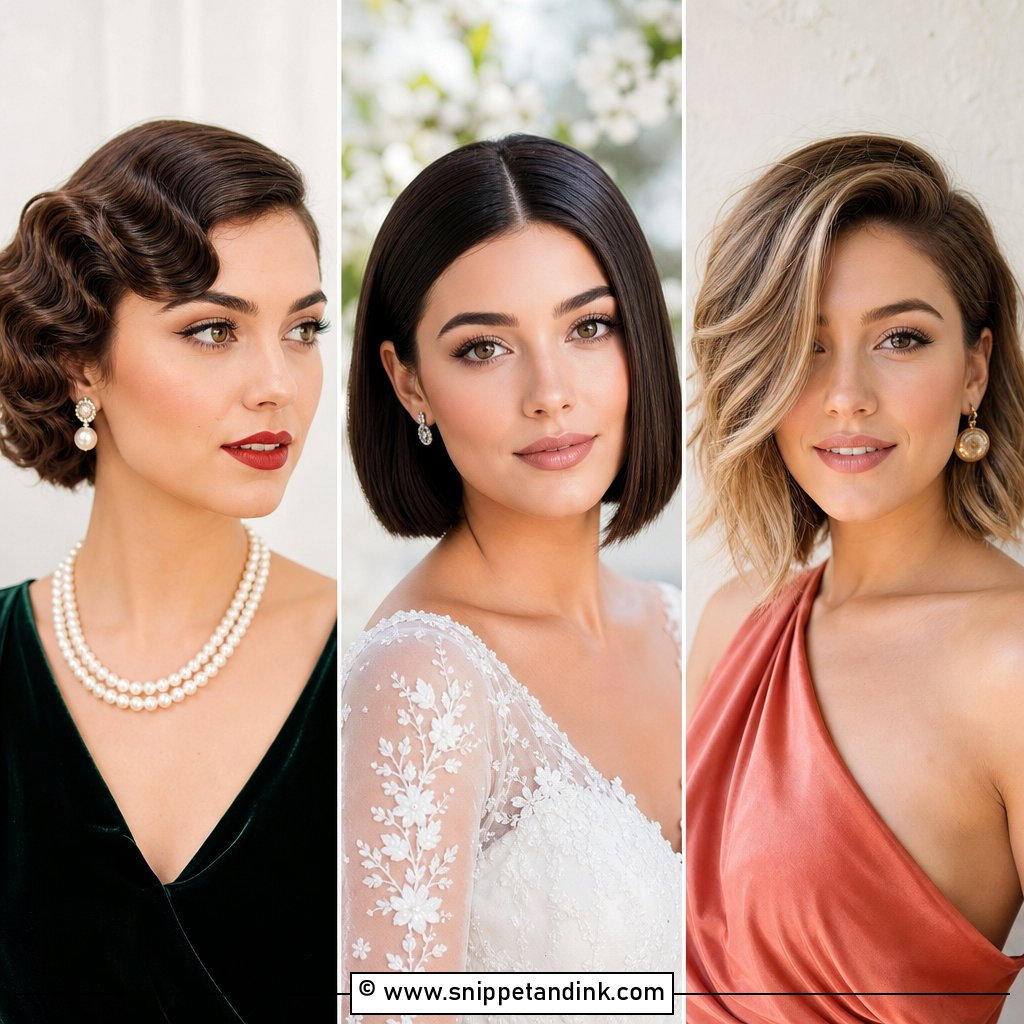
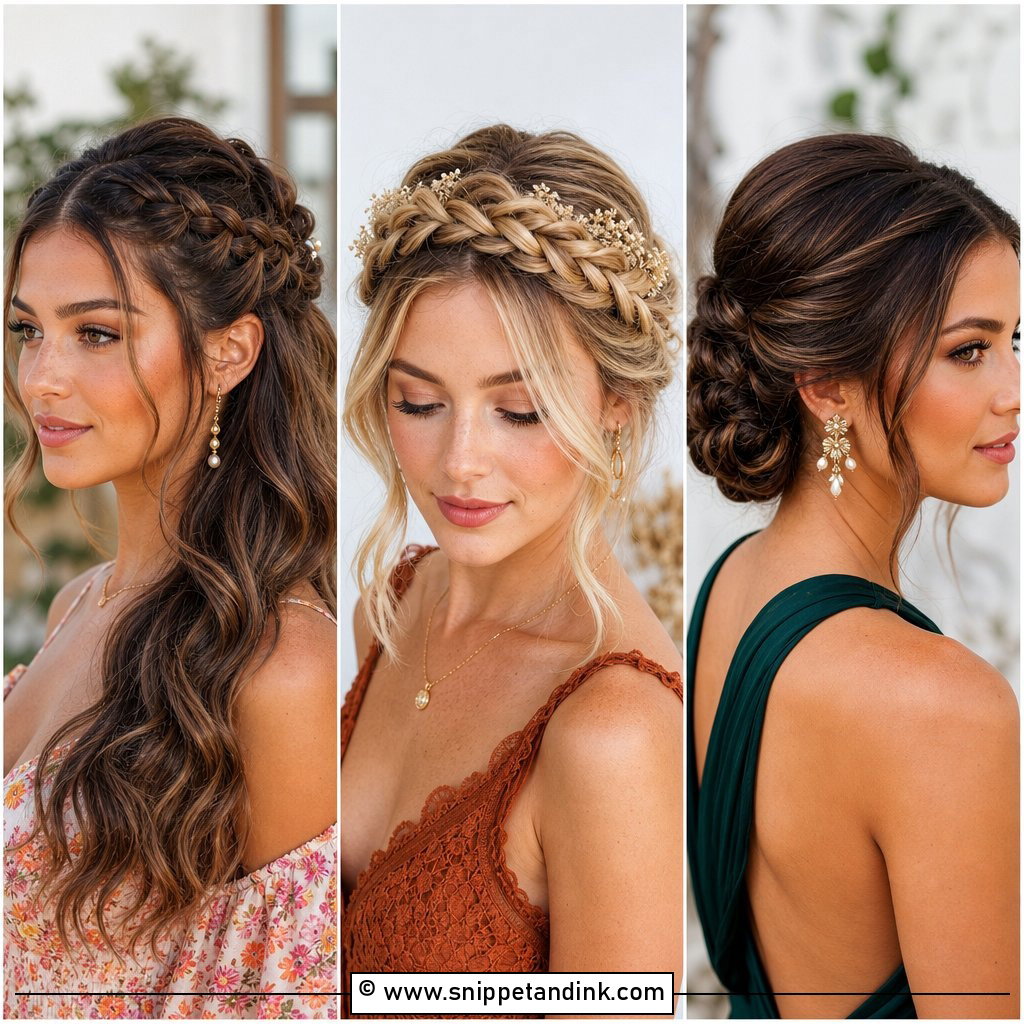
Of all the wedding guest updos I put on short hair, the low bun is the one I reach for first, because the nape is where a bob keeps its longest hair. If you can gather the back into a stubby ponytail with a small elastic, you have enough. I prep with texture spray, then twist the hair in two or three small sections and pin each one separately. Winding short hair into a single knot doesn’t work; it just springs back open. Leave the pieces by your ears out, since they would fall from the bun anyway, and anchor the whole thing with two pins crossed in an X.
2. Textured Chignon For Short Hair
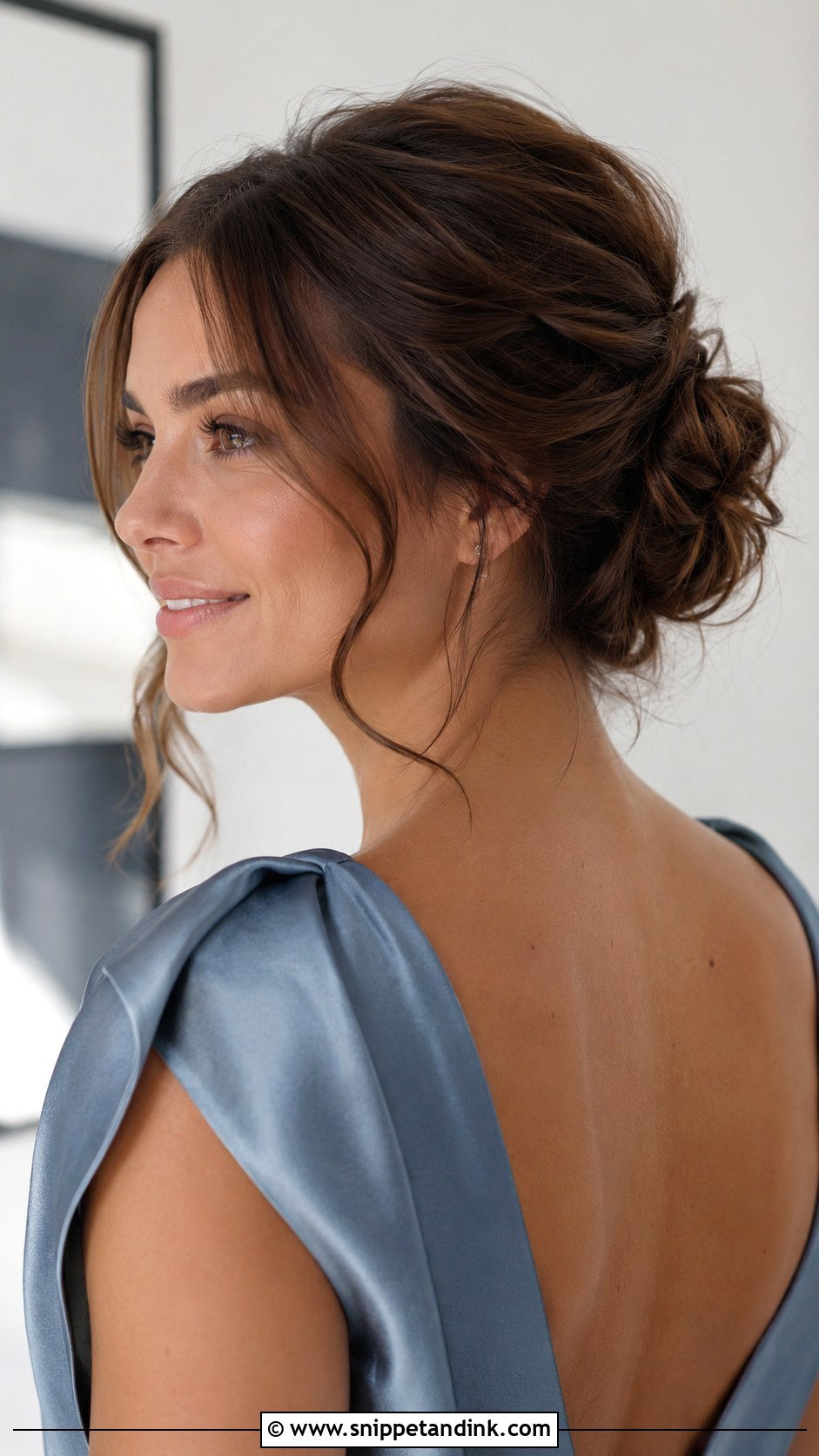
Layers are what make a short chignon look full instead of stringy. I bend the hair with a one-inch iron, let it cool completely, then gather the back loosely and pin it low. Those bends give the shorter layers something to catch on, so they sit inside the shape rather than poking out of it. On fine hair I backcomb a little at the crown, underneath the top layer only, so the lift never shows as teasing. Decide on your part before you start. Moving it halfway through drags the whole shape sideways. Very blunt, one-length bobs give this style less texture to hold, so they suit the sleek version further down better.
3. French Twist Updo For Short Hair
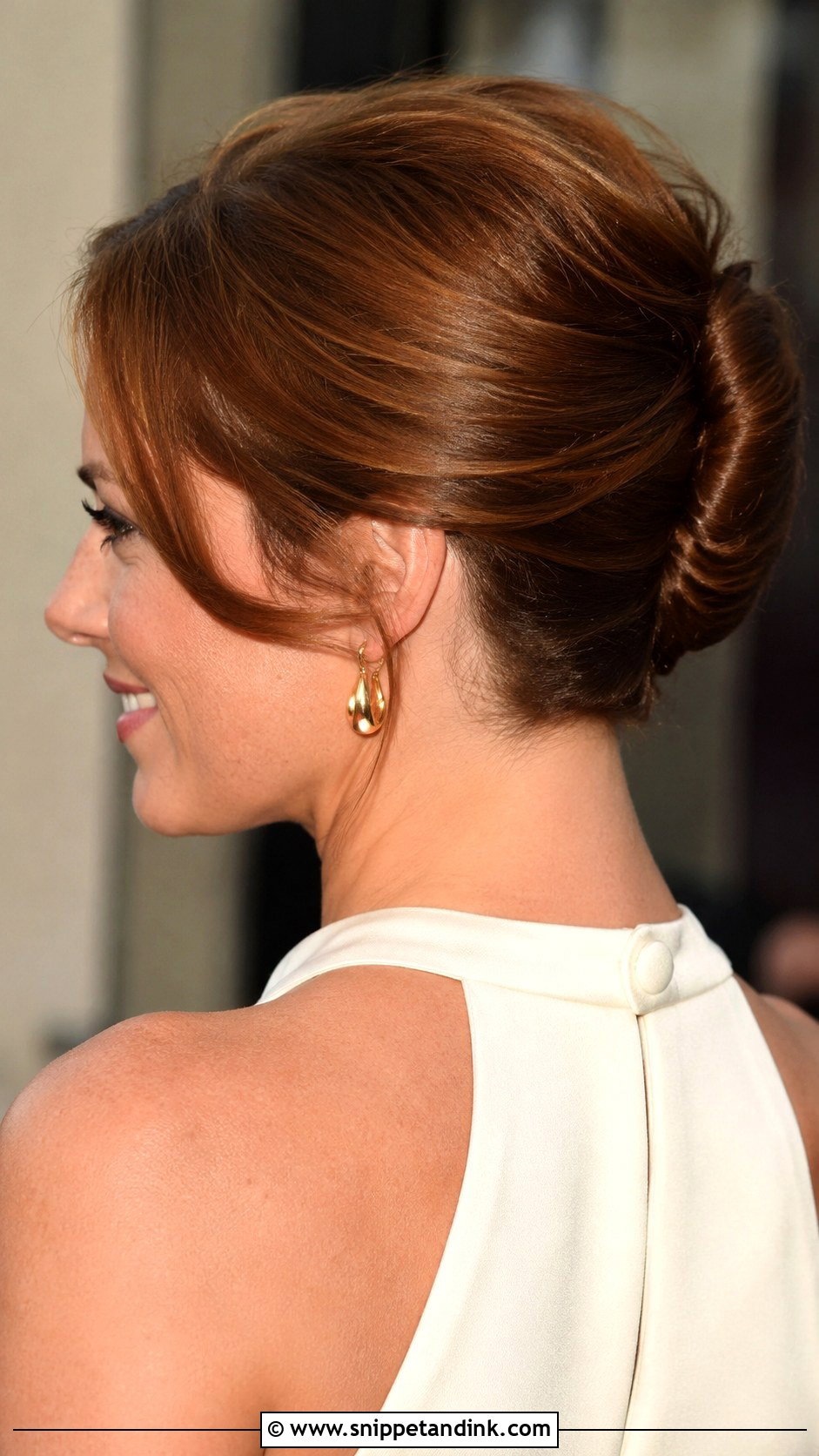
I keep a French twist on short hair low and close to the head. The tall, tight roll you picture from old photos needs length a bob simply doesn’t have. The hair is brushed back, rolled inward and pinned along the seam, with each pin pushed in against the direction of the roll, which is what locks it. Short nape layers get tucked under with mini pins, and longer front pieces can curve around the face. As a wedding guest updo it sits quietly next to a busy outfit, and I like it with satin and clean necklines. Shine spray goes on last, from arm’s length, or it leaves wet spots.
4. Half Up Twist For Short Hair
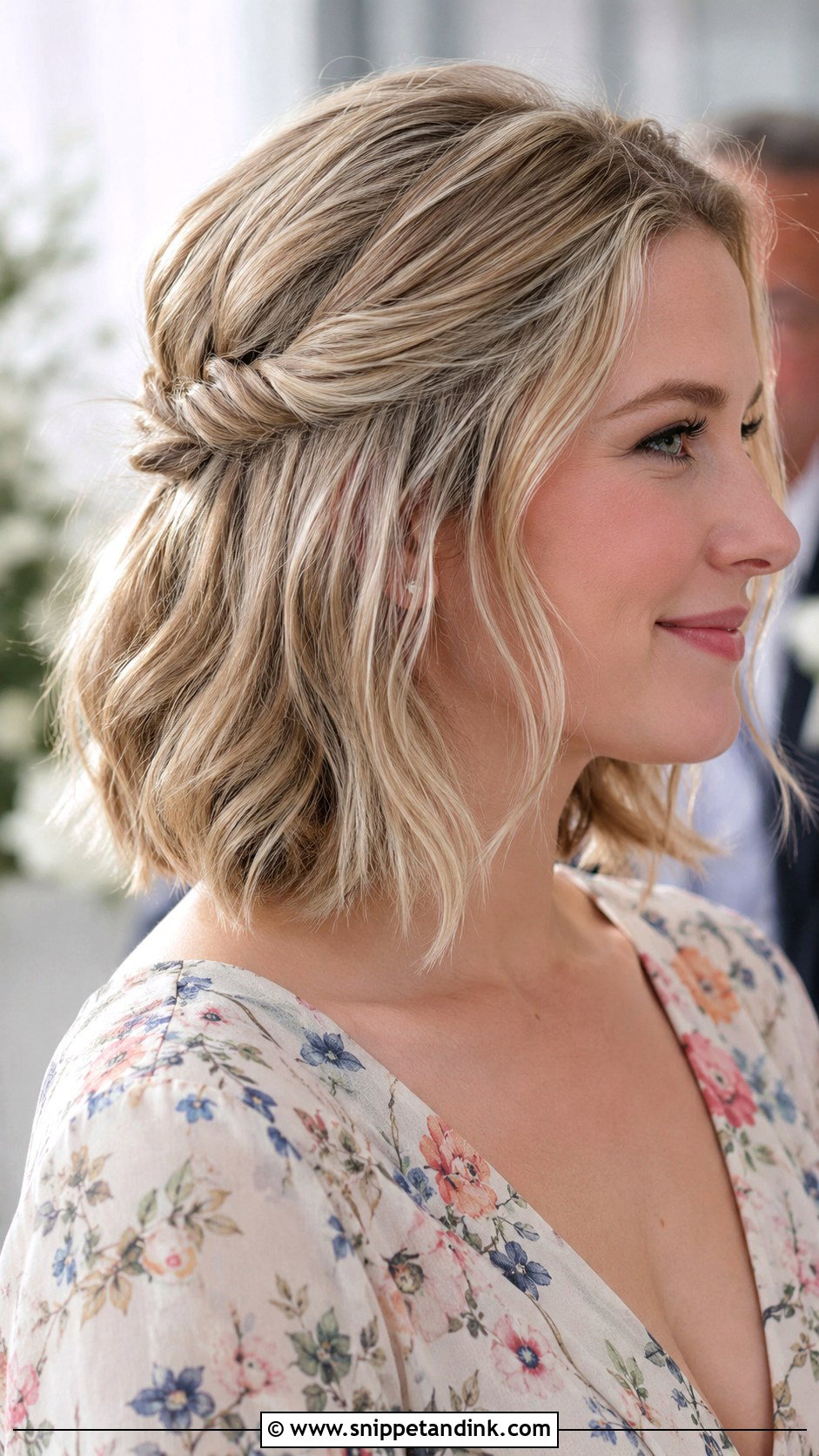
When a cut sits at the jaw and won’t gather into anything, a half up twist gets you the lifted look with what you have. I twist the top and side sections back and pin them at the crown, and the bottom stays waved. You keep hair out of your food and still show off the haircut. My one warning: if your ends flip outward on their own, give them a flat iron bend first. Otherwise, by the speeches, the loose part starts to look like a blow-dry that gave up. A slim barrette or two small pearl pins will hide the point where the twists meet.
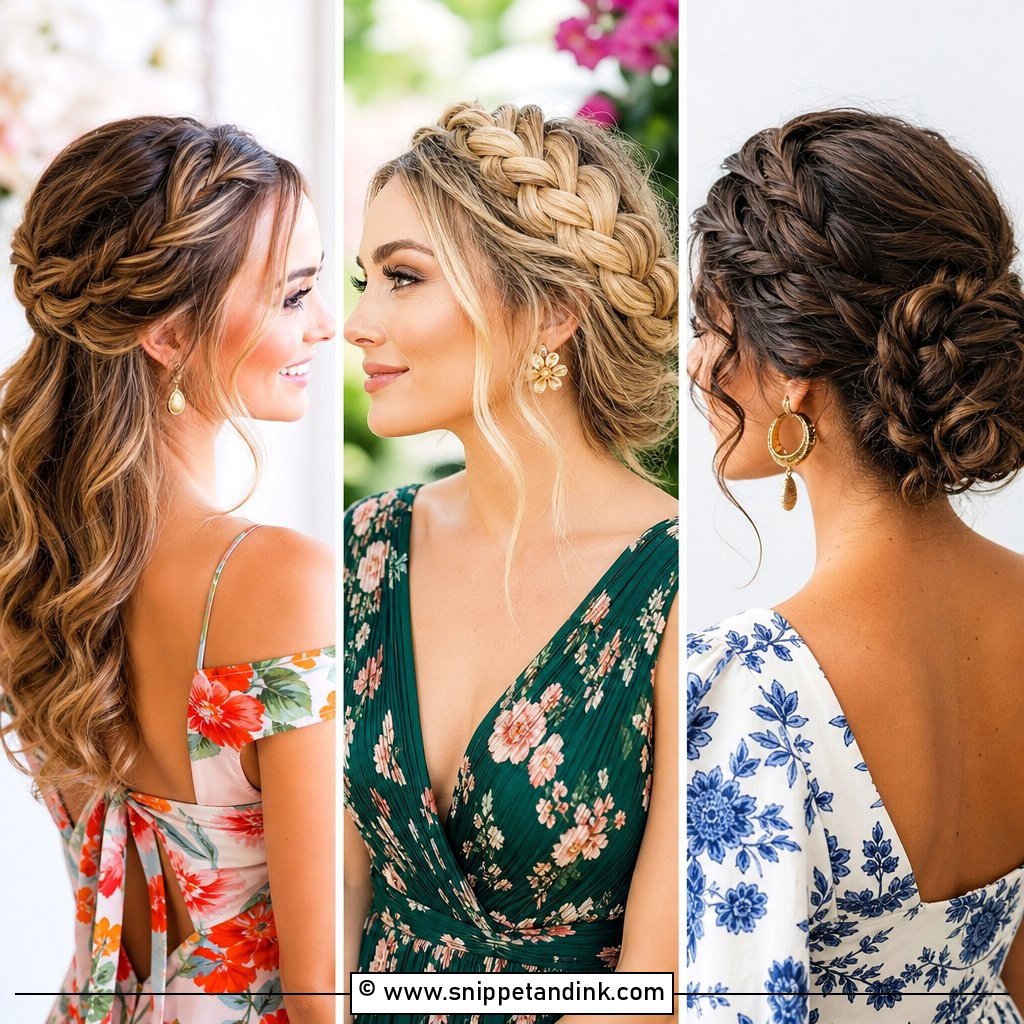
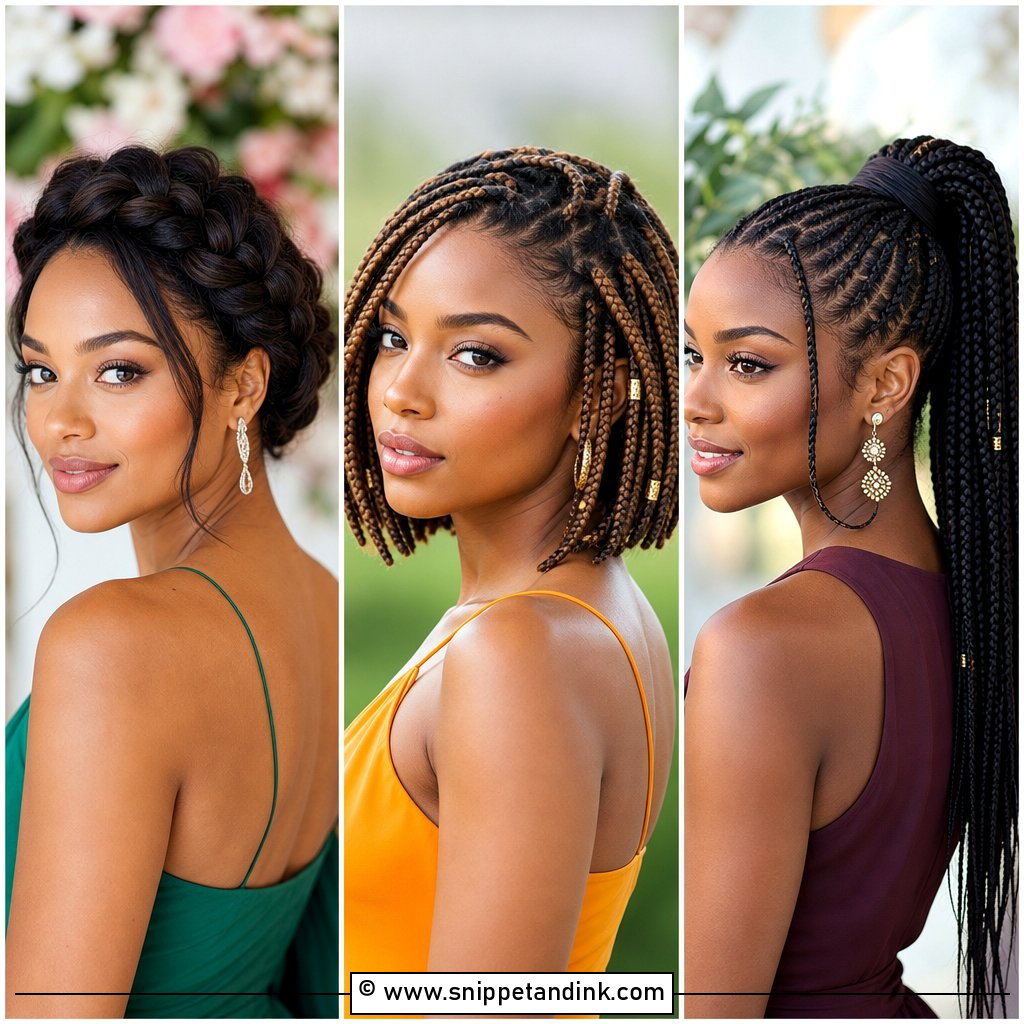
5. Braided Crown Updo For Short Hair
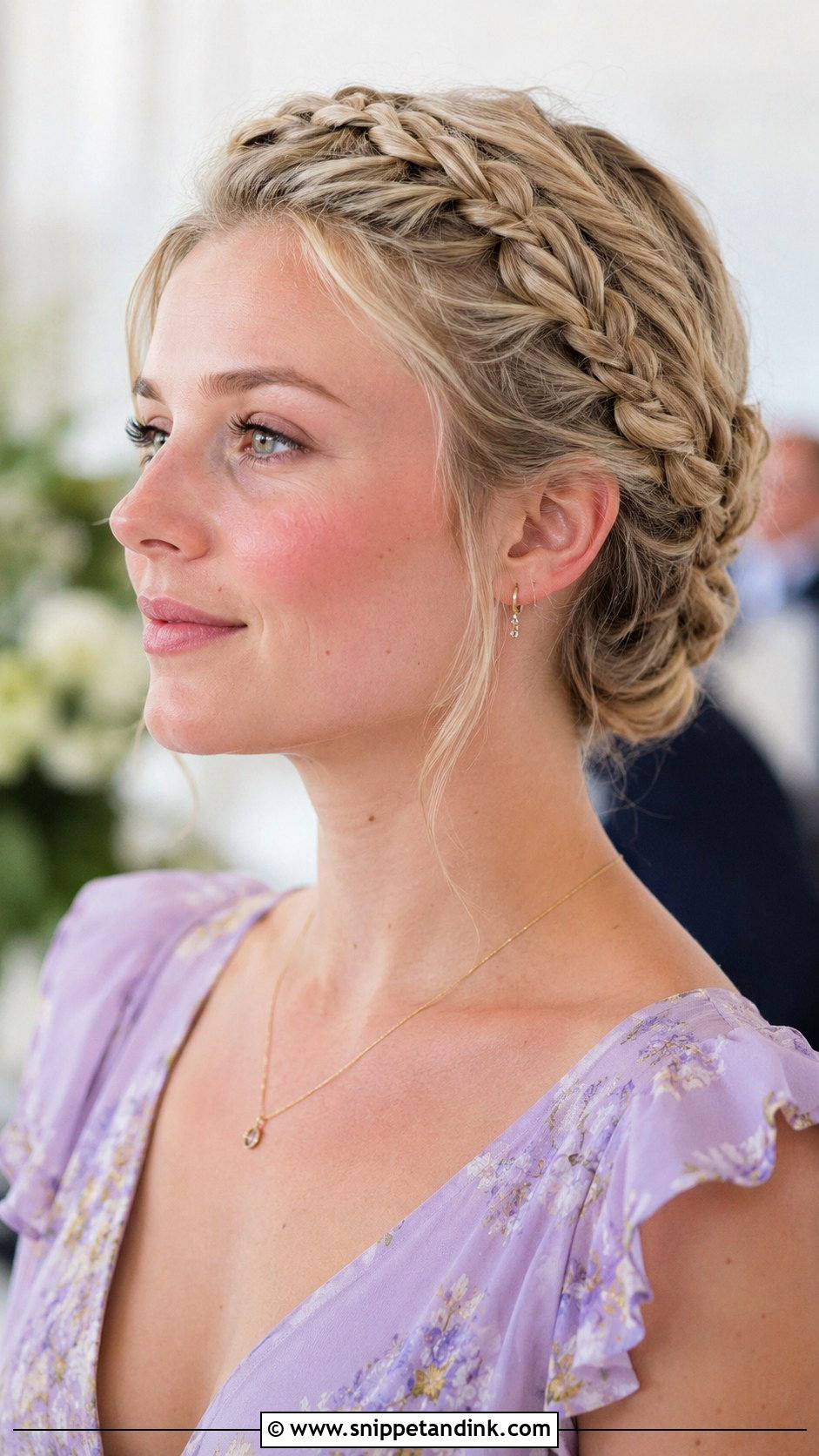
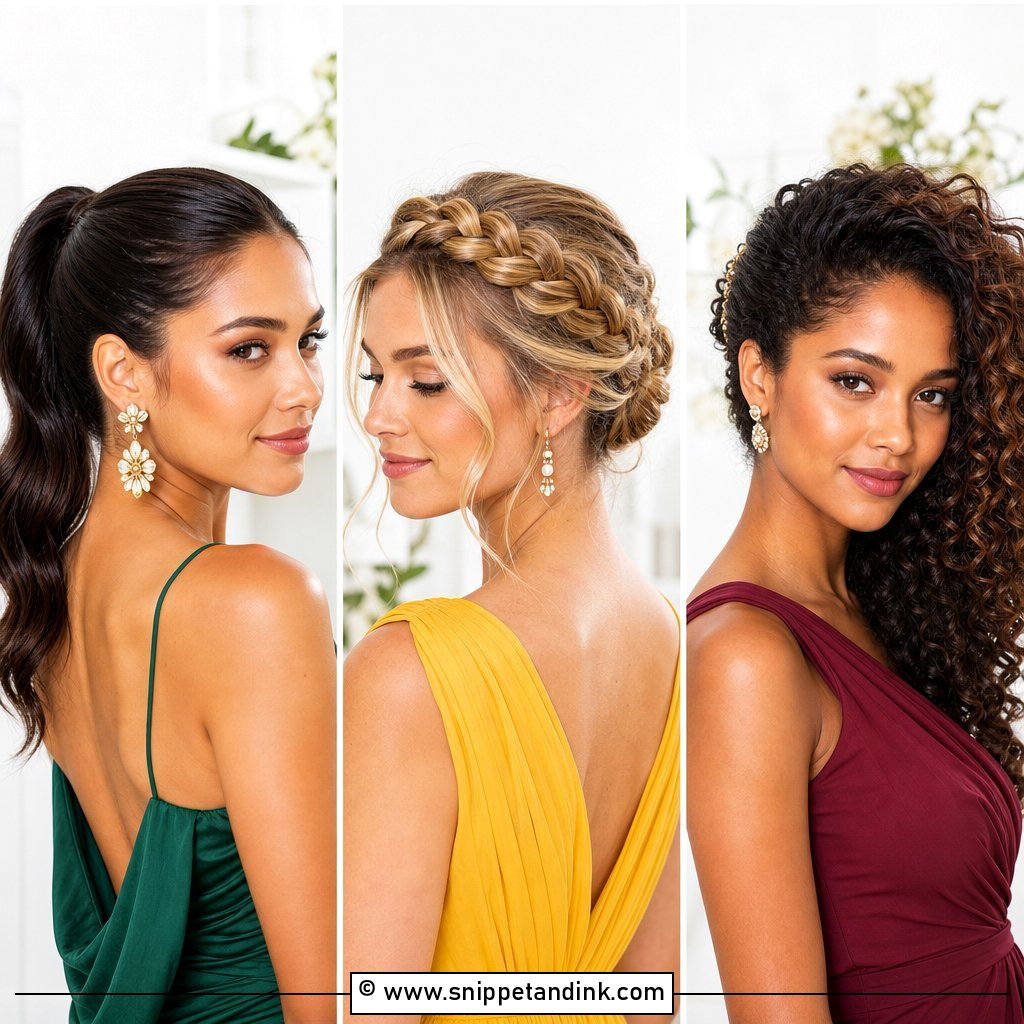
Braiding short hair is mostly about where you start. I begin at one temple, where the front hair is longest, run the braid across the hairline, then pin the rest into a tucked shape at the back. Short layers pop straight out of a regular three-strand plait, so on very short cuts I’d switch to a small Dutch braid or a rope twist, both of which grip shorter pieces better. Dry shampoo at the roots gives the braid something to hold. Once it’s pinned, pull the edges out gently while pressing the base flat with your other hand, so you widen the braid without loosening it. Use pins that match your hair color, because on a daytime outdoor wedding every pin shows.
6. Side Swept Updo For Short Hair
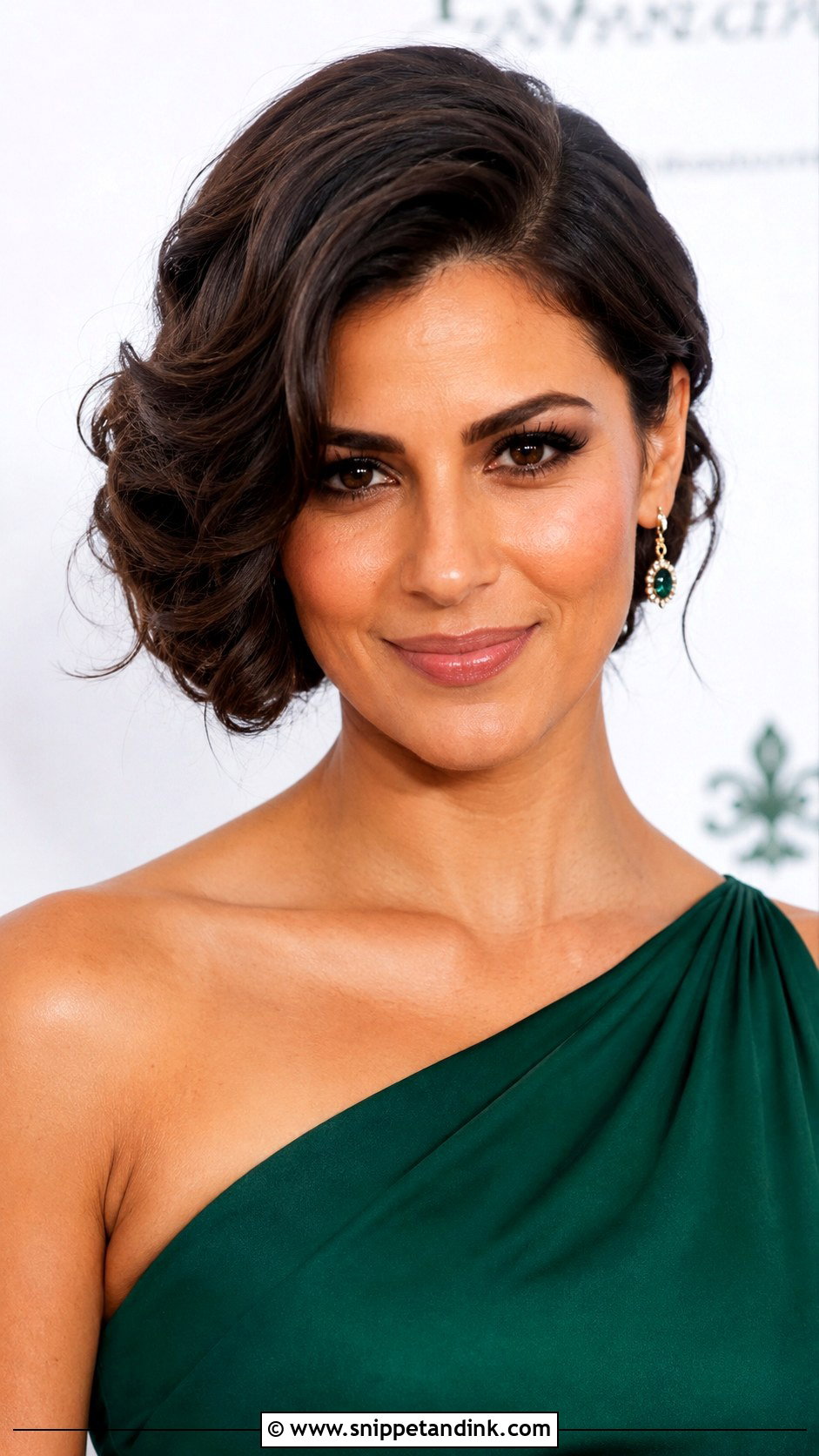
A deep side part does most of the work here. I sweep everything to one side and pin it low behind the opposite ear, with waves giving the loose side some movement. Asymmetrical bobs and cuts with longer front pieces suit it best, because the longest hair ends up exactly where the volume should be. The pinned side should be flat and smooth, and that bare ear leaves room for one statement earring. Check it from behind with a hand mirror before you leave. Guests look at the back of your head for the entire ceremony.
7. Messy Bun Updo For Short Hair
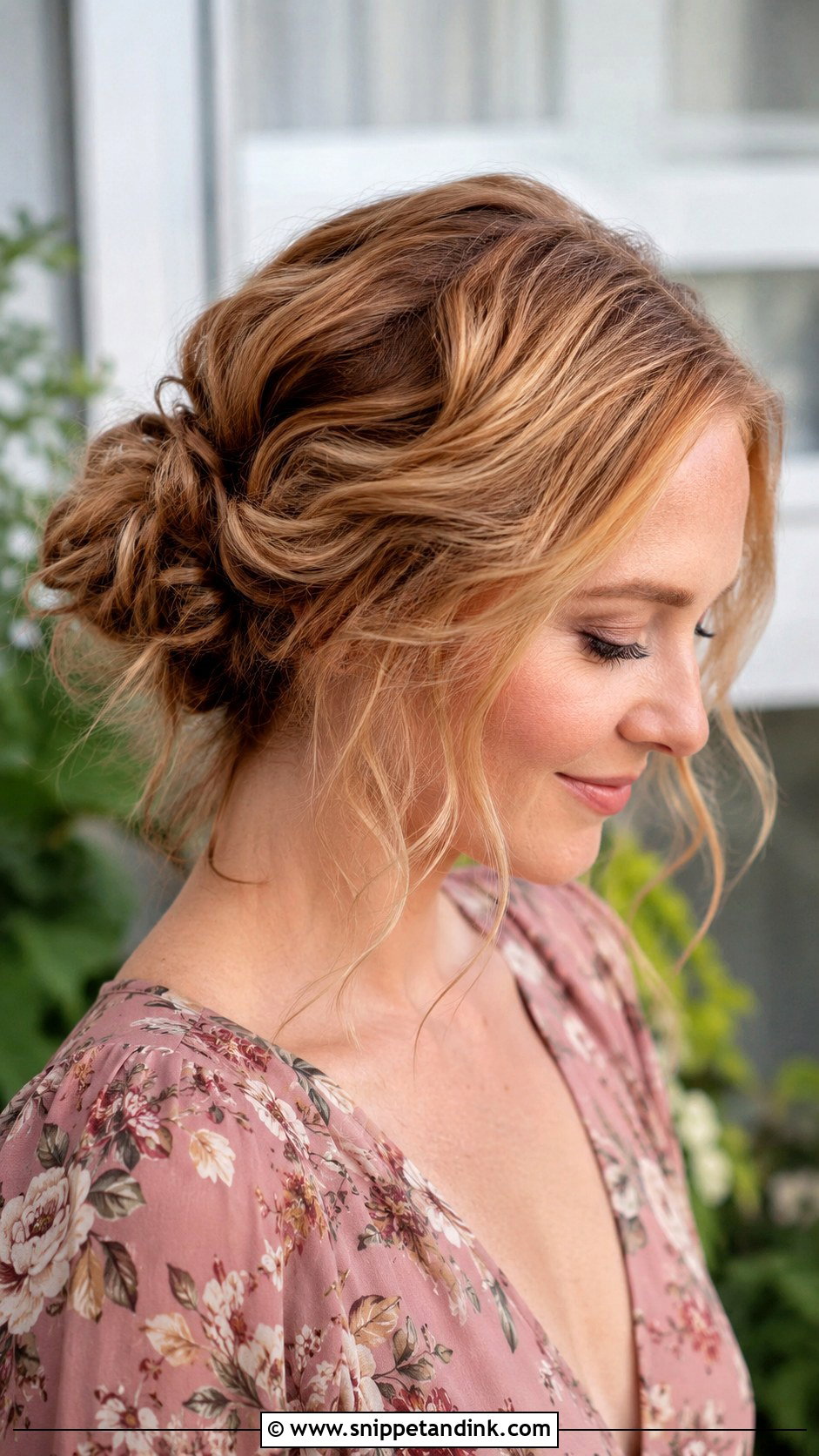
Messy on short hair has to be planned, or it reads as hair that fell down. I start with waves so the shorter pieces have grip, gather the hair low or a little off-center, and pin it in small sections, building the bun outward rather than twisting it all at once. A few pieces stay loose around the face and neck. Layered cuts actually do better here than blunt ones, since uneven lengths look intentional in a loose shape. I finish with a light, brushable hairspray. A strong one freezes the airy texture into something crunchy by the time dinner is served.
8. Sleek Low Updo For Short Hair
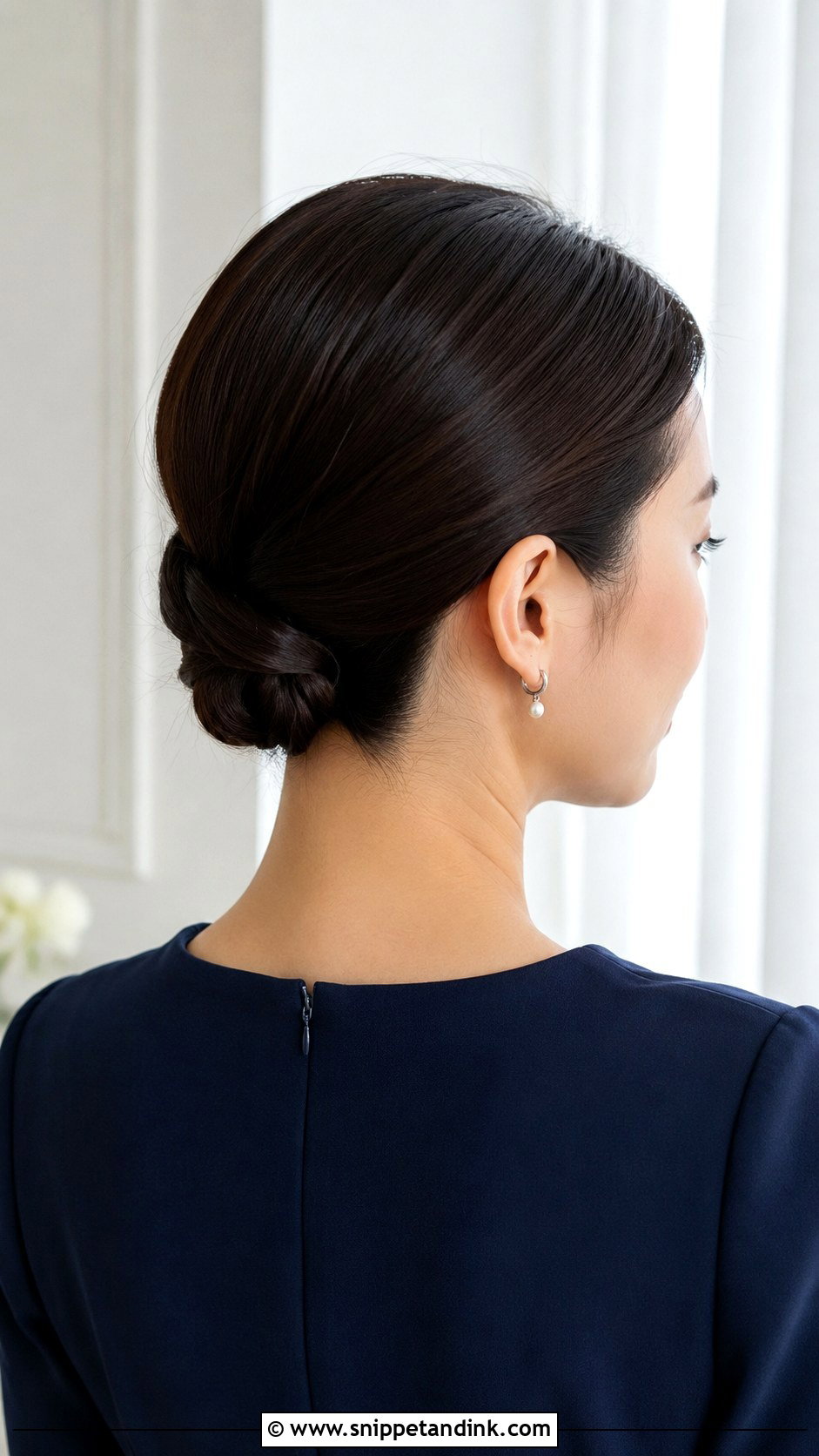
For black tie on a short cut, sleek is my default. I work a pea-sized amount of smoothing cream through damp hair, blow-dry it flat, then part cleanly or brush straight back and pin it low into a compact twist or mini bun. Serum only touches the surface at the very end. Use too much and the hair separates into greasy-looking strands under a flash. Straight bobs and blunt cuts suit this shape. Heavily layered or very curly hair fights it and usually needs more pins than is comfortable for a long evening. The finished shape is plain on purpose, so bold earrings can do the talking.
9. Curly Updo For Short Hair
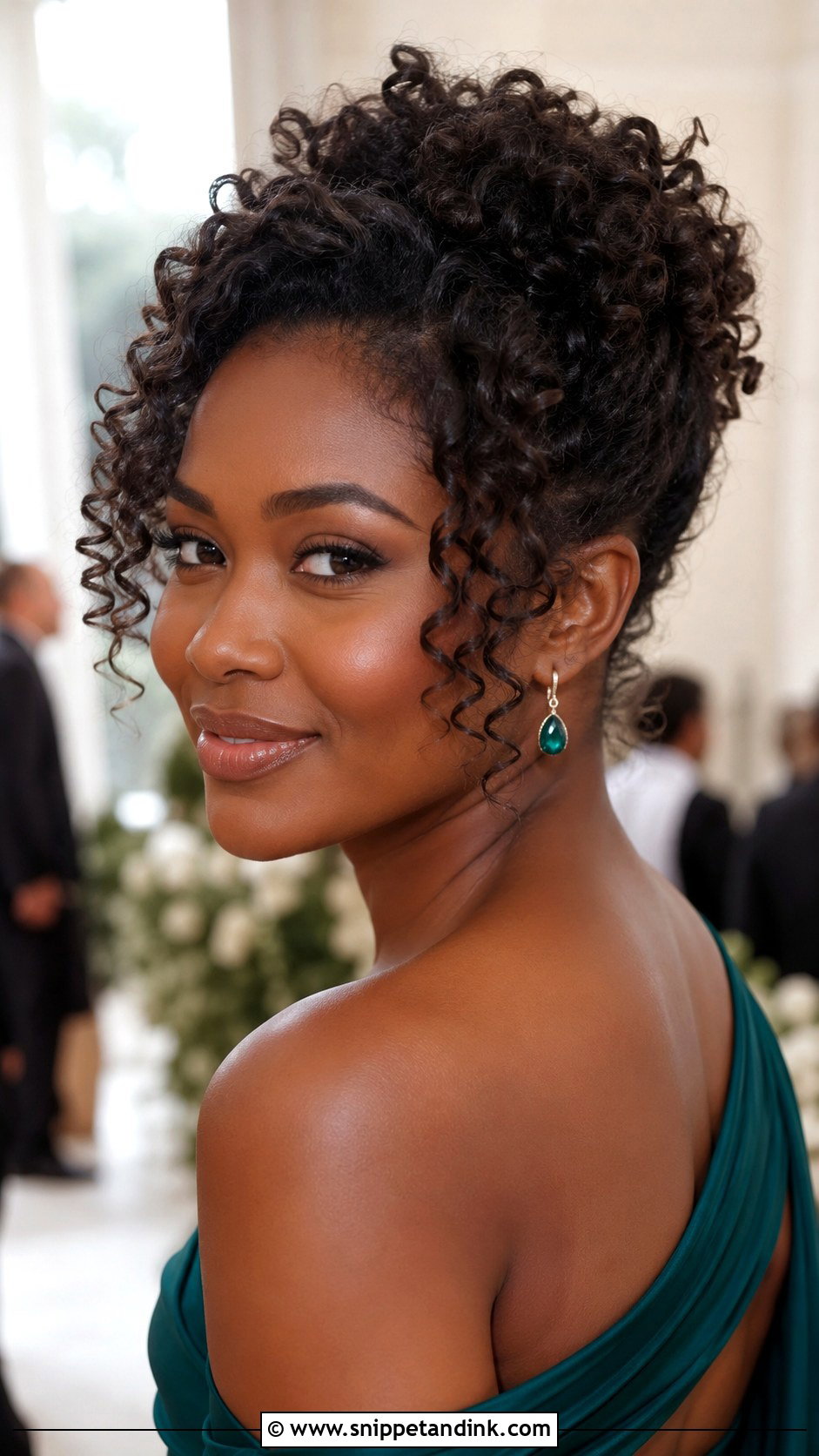
Natural curls give a short updo volume for free, so I never brush them out. I pin sections loosely toward the crown or the back, sliding each pin under a curl so it disappears, and leave a few curls framing the face. Curl cream goes in before styling and a light mist of hairspray after pinning. What ruins this look is pulling the curls tight to the scalp. That stretches the pattern flat and makes the whole shape look small. Ask whoever styles you to keep brushes and fingers out of the curls once they’re dry, because that is where frizz comes from.
10. Pinned Back Bob Updo
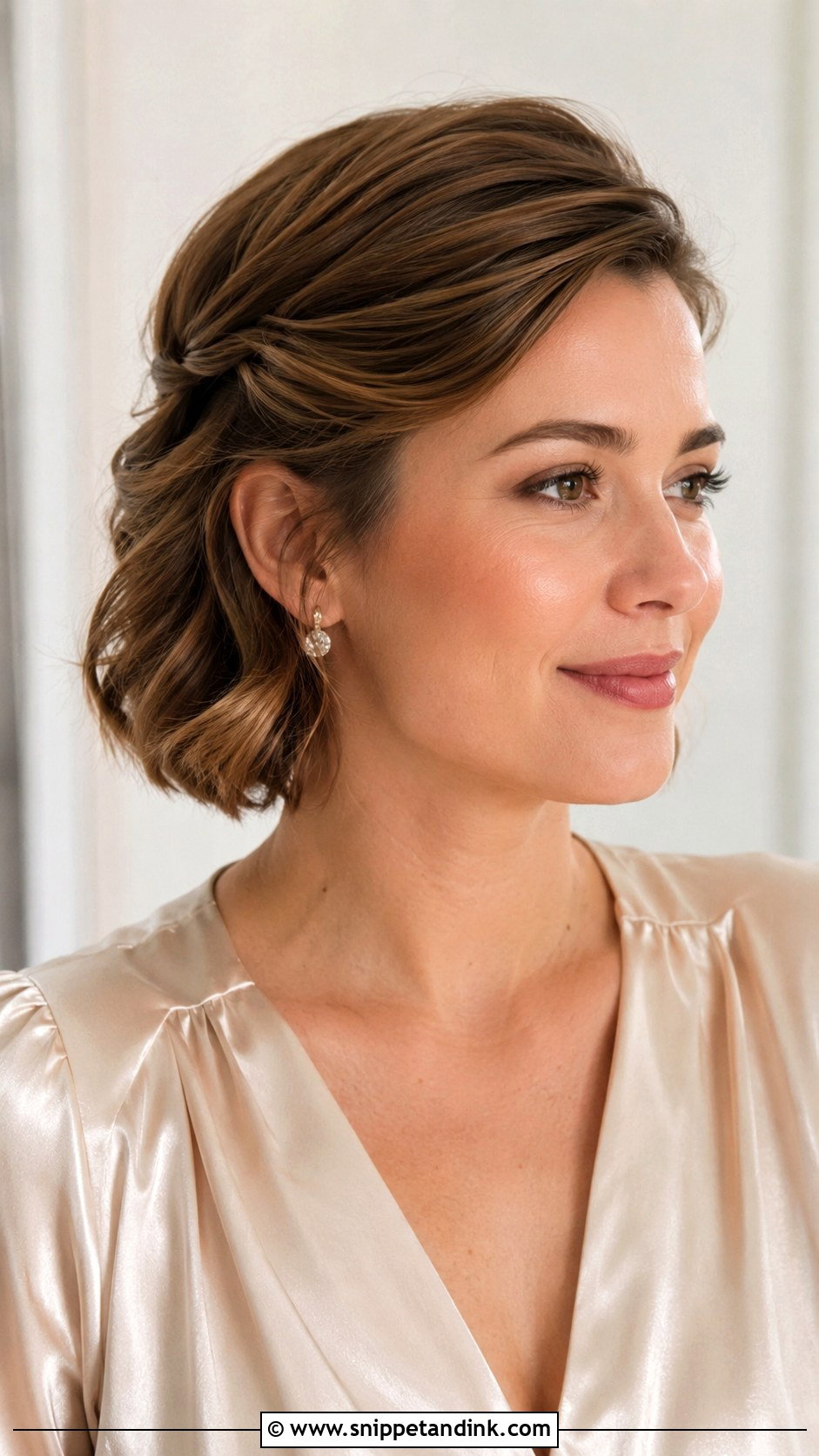
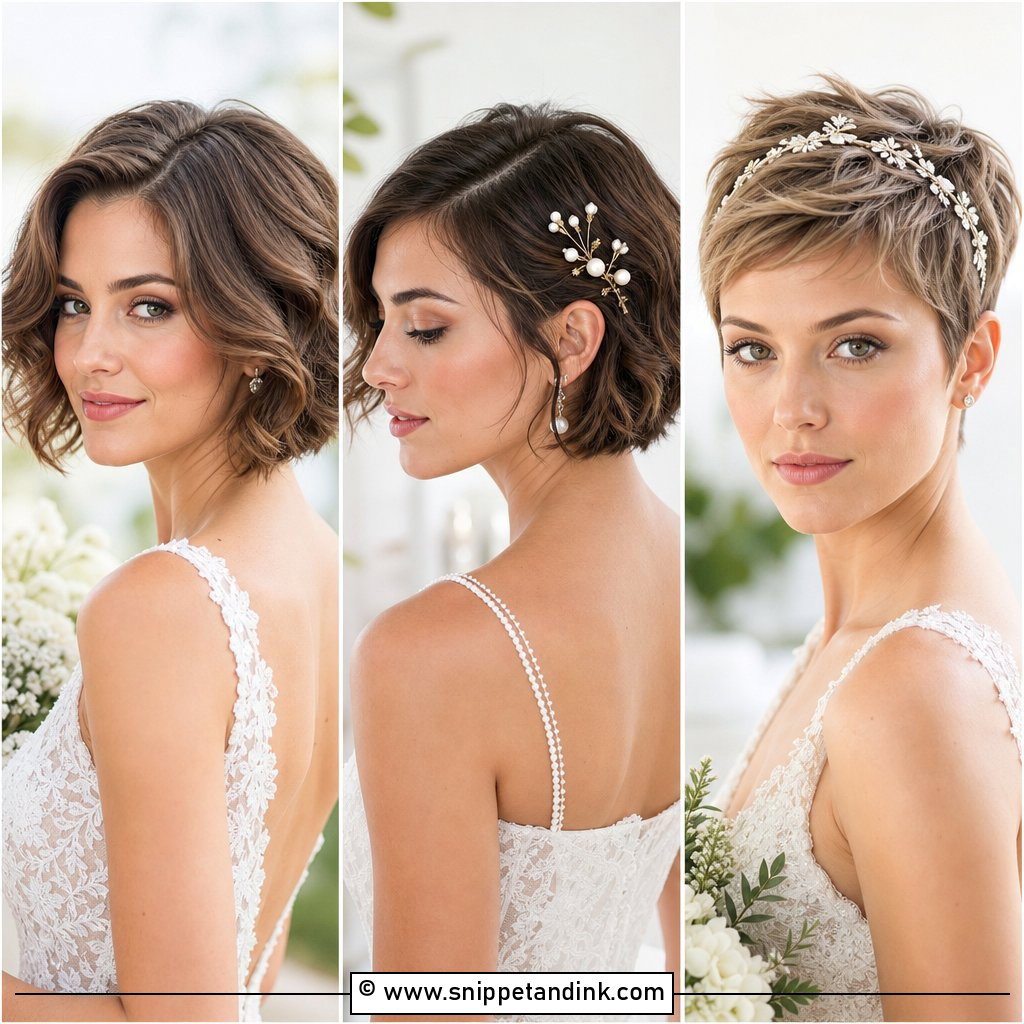
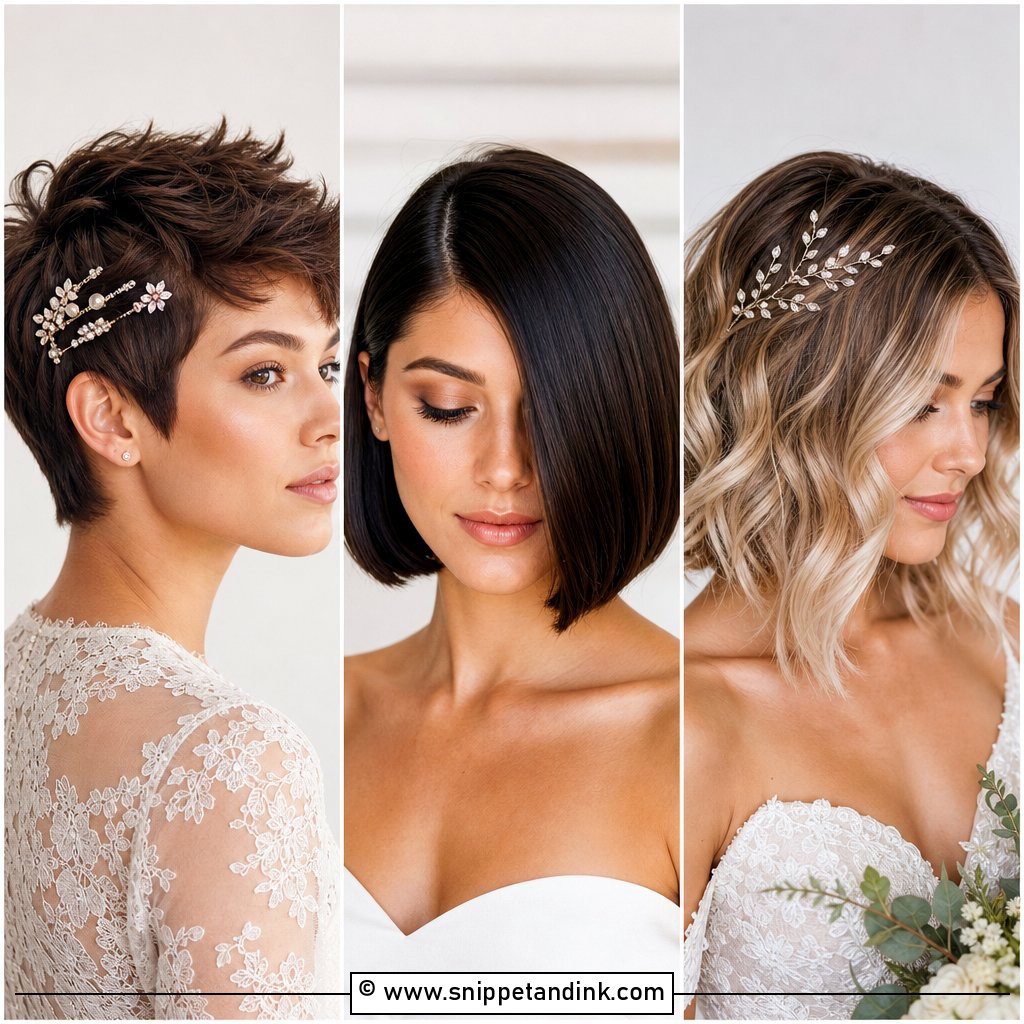
If you love your haircut and don’t want to hide it, a pinned back bob updo is the honest choice. The bob stays visible; only the front and sides lift away from the face. I put in soft waves first, then pin each side back with hidden pins or decorative clips, slotting the pins in vertically so they grab the hair underneath instead of sliding over the top layer. The back can stay loose, tucked or lightly gathered, depending on how much length you have. Texture spray holds this shape longer than a smooth finish would.
11. Short Hair Updo With Pearl Pins
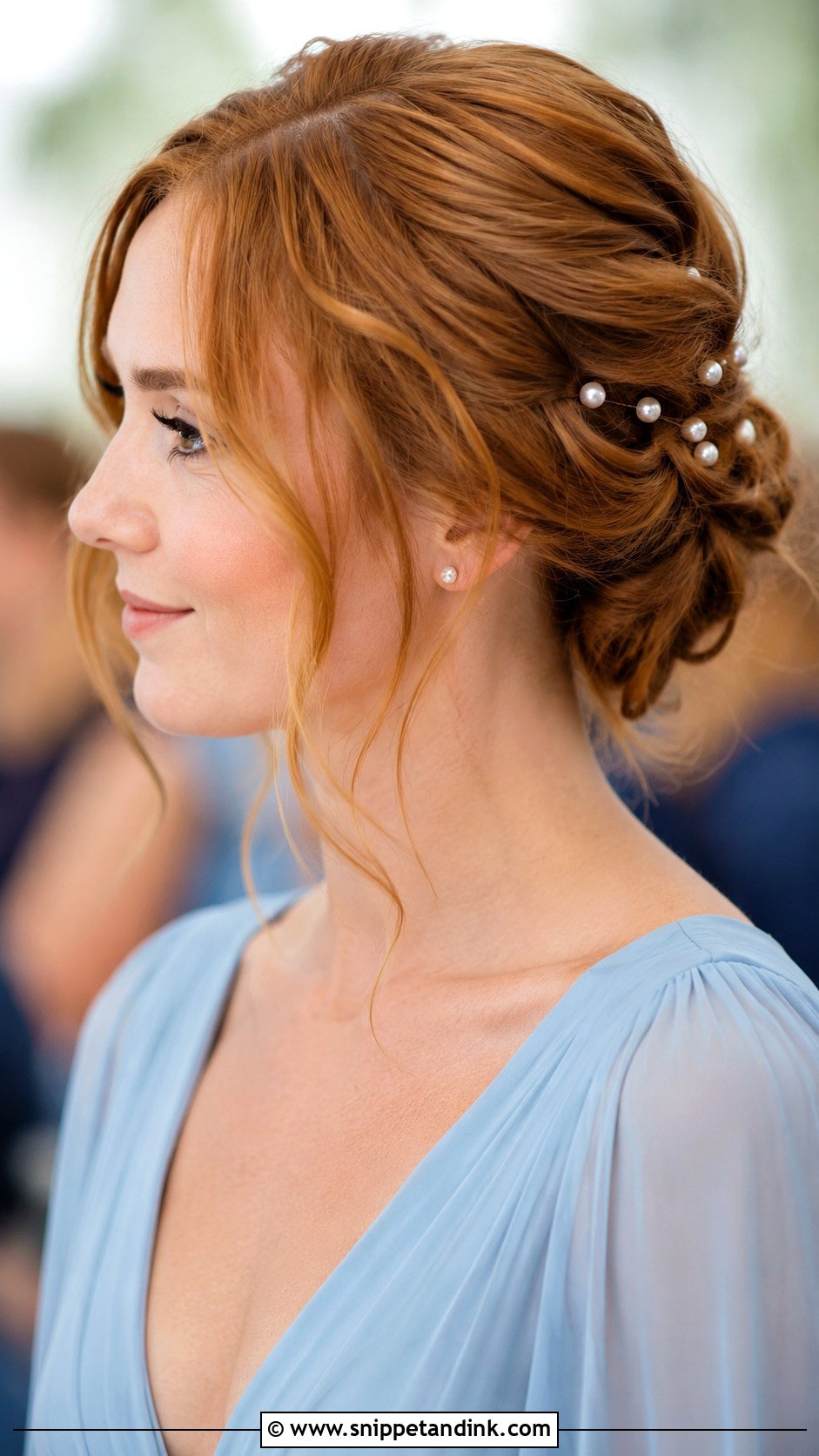
Short updos have less hair to look at, so accessories carry more of the finish. I build the base first, usually a low twist, mini bun or tucked bob, then place pearl pins through the back or along one side. Put them in before the final hairspray so they’re set into the style. Three to five is usually plenty; past that it starts to look like a costume. On very fine hair choose pins with a wavy or bent shaft, because straight decorative pins slide out of short, silky hair within an hour. Pastel dresses, florals and satin all sit well with pearls.
12. Short Hair Updo With Claw Clip
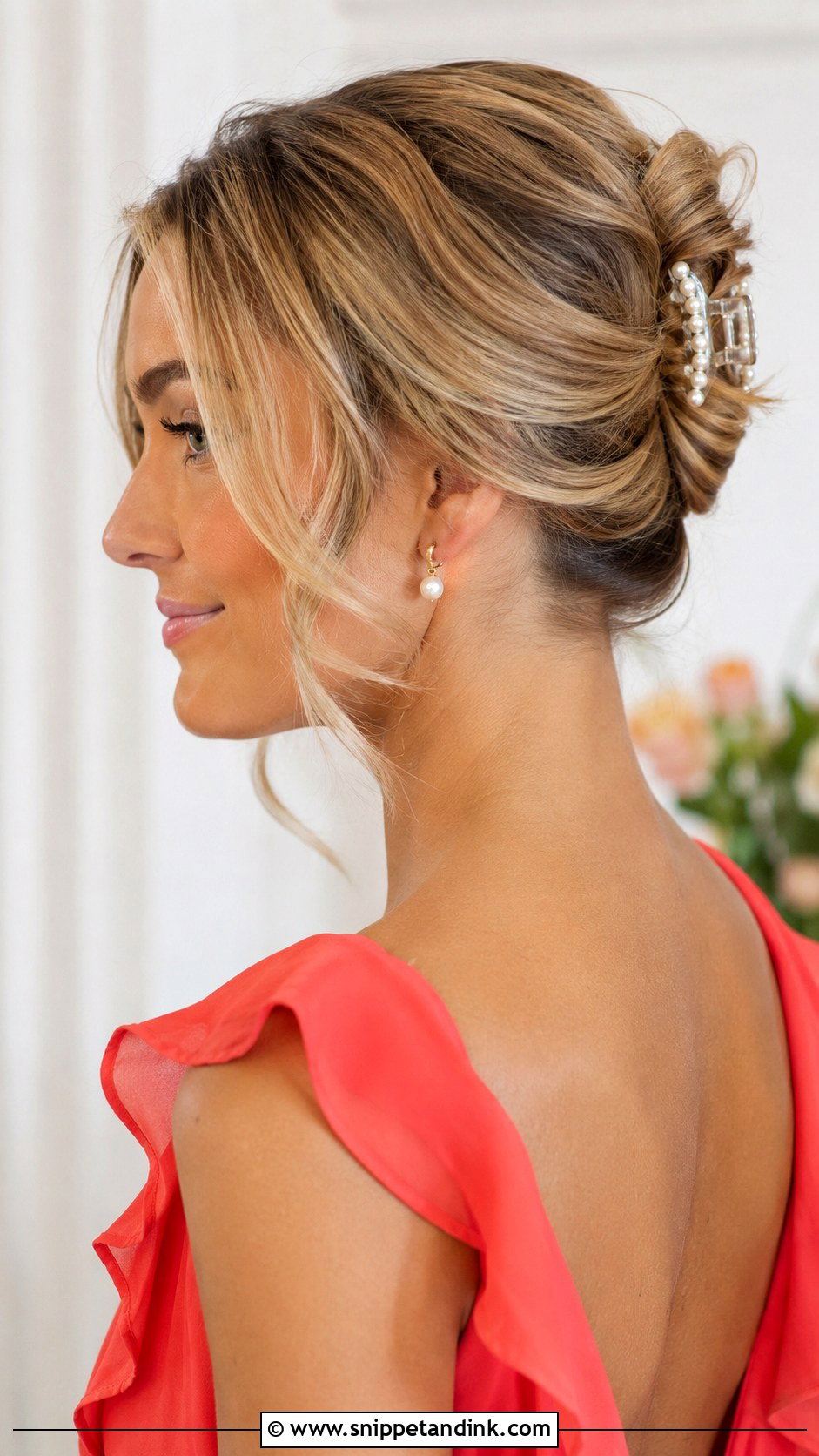
A claw clip updo can pass at a wedding, but only with the right clip. On short hair I twist the back section upward, secure it with a mini clip, then tuck the loose ends into the twist. Soft waves at the front stop it looking like you’re heading to the gym. Pearl, gold, tortoiseshell and clear finishes read dressier than plain plastic. I’d keep this one for casual, beach or brunch weddings, though; at a formal evening event it still looks casual, however good the clip. Keep it centered, and skip oversized clips, which swallow a short twist whole. The upside is that you can redo it in the restroom in a minute.
13. Vintage Roll Updo For Short Hair
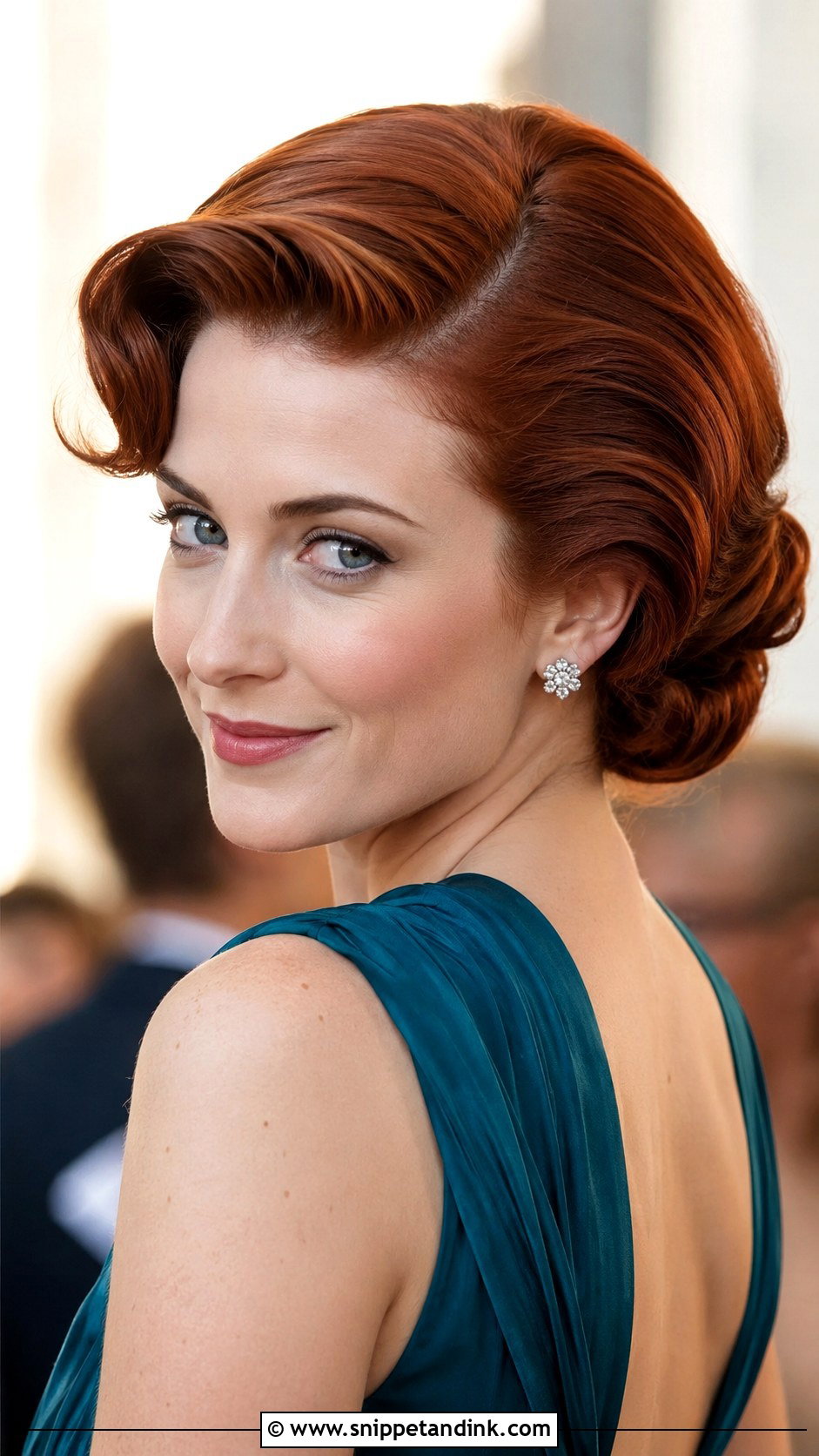
Vintage rolls need smooth hair with a set bend in it. I curl with an iron or hot rollers and let everything cool fully before brushing it out, because brushing warm curls drops them straight away. The front becomes a soft wave or side roll, and the back is tucked under and pinned close to the nape. If you do your makeup after styling, pin curl clips along the front wave in the meantime and it sets firmer. I keep the roll softer than a true 1940s finger wave, which can look like fancy dress next to a modern midi. A light shine spray catches the evening light on the curve.
14. Twisted Crown Updo For Short Hair
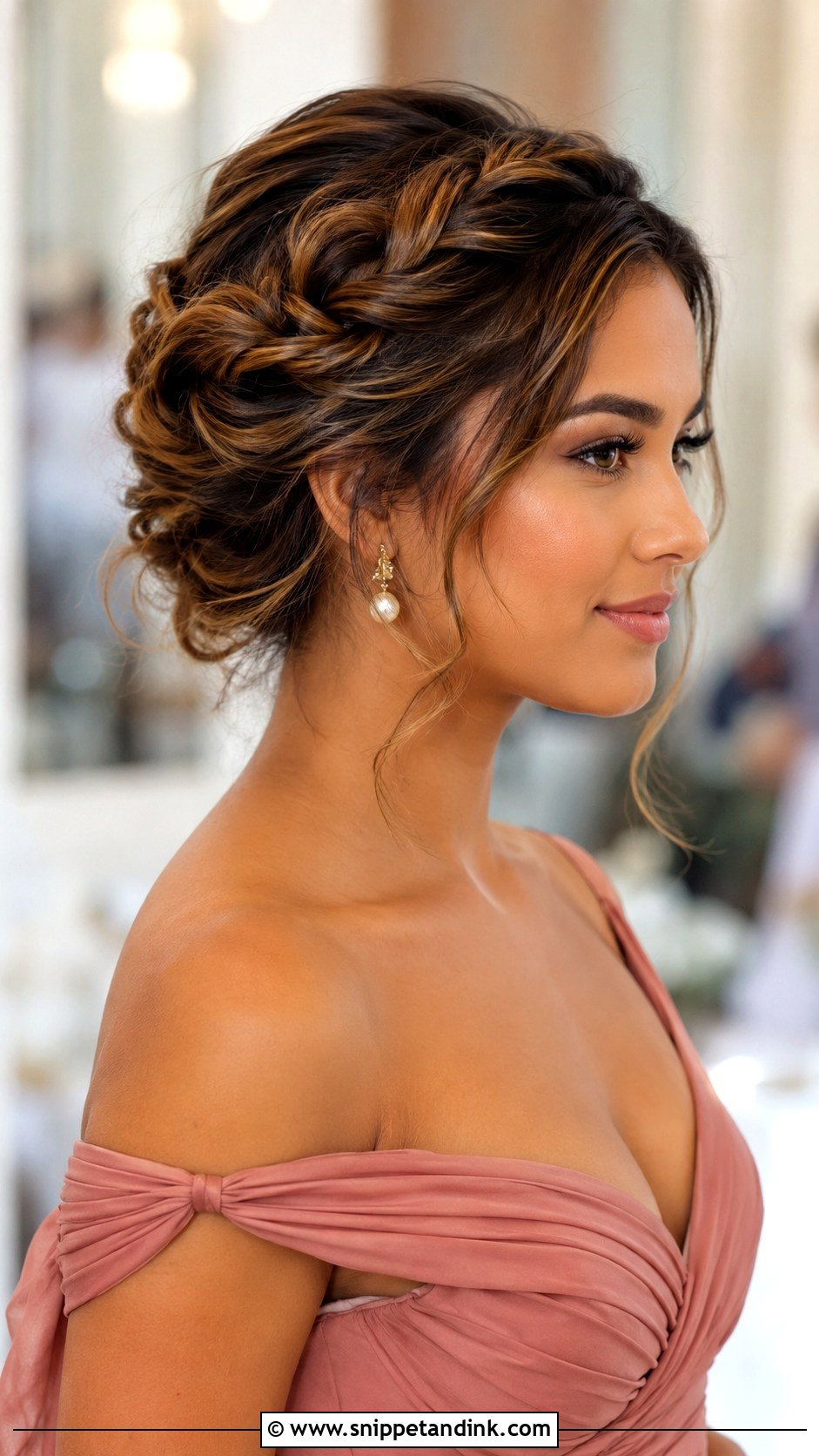
Twists forgive short layers far better than braids do, since a two-strand twist holds pieces too short to stay in a plait. I take small sections from each side, twist them back and pin them across the crown or toward the nape, then tuck, wave or pin the rest low. Hold each twist tight while you pin it and only loosen it at the very end; loosen too early and it unravels in your hand. On fine hair that final loosening is what fakes volume. On highlighted hair the twists show off the color dimension nicely.
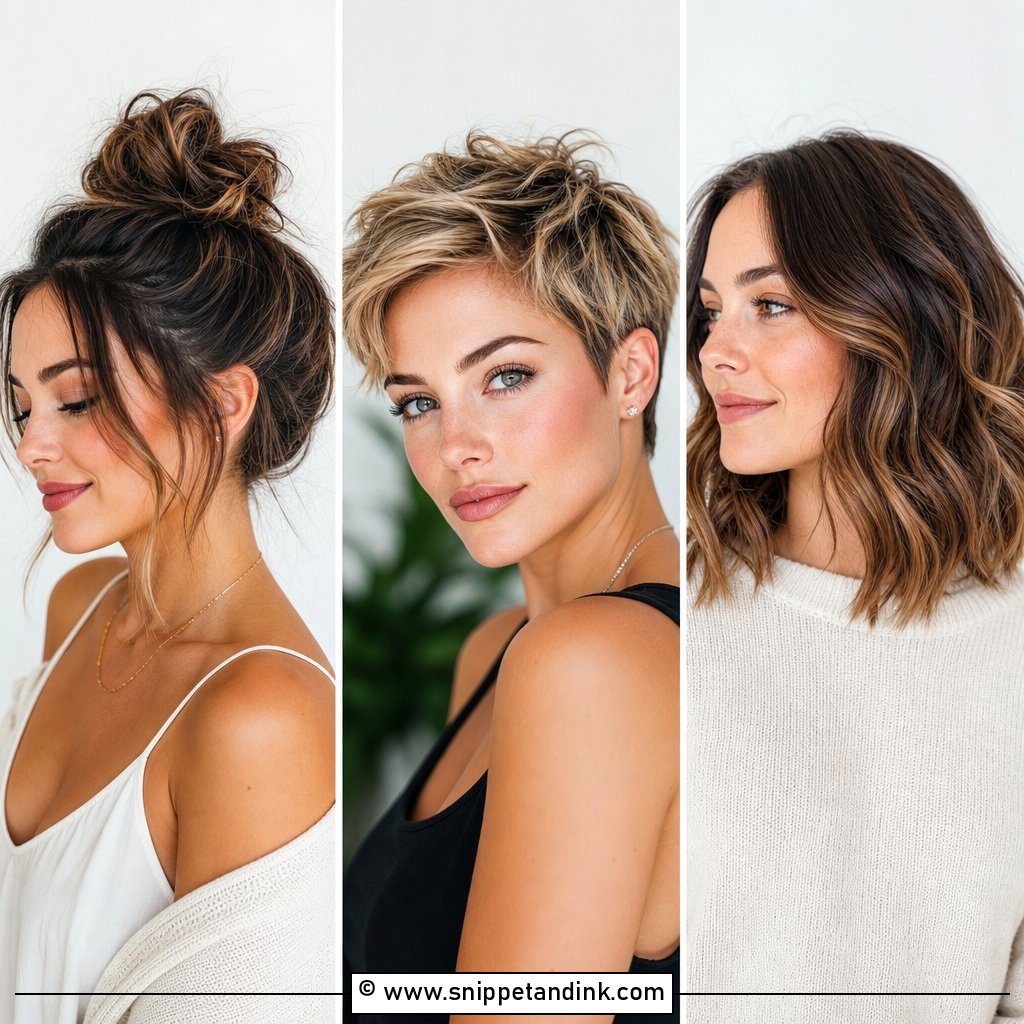
15. Faux Bun Updo For Short Hair
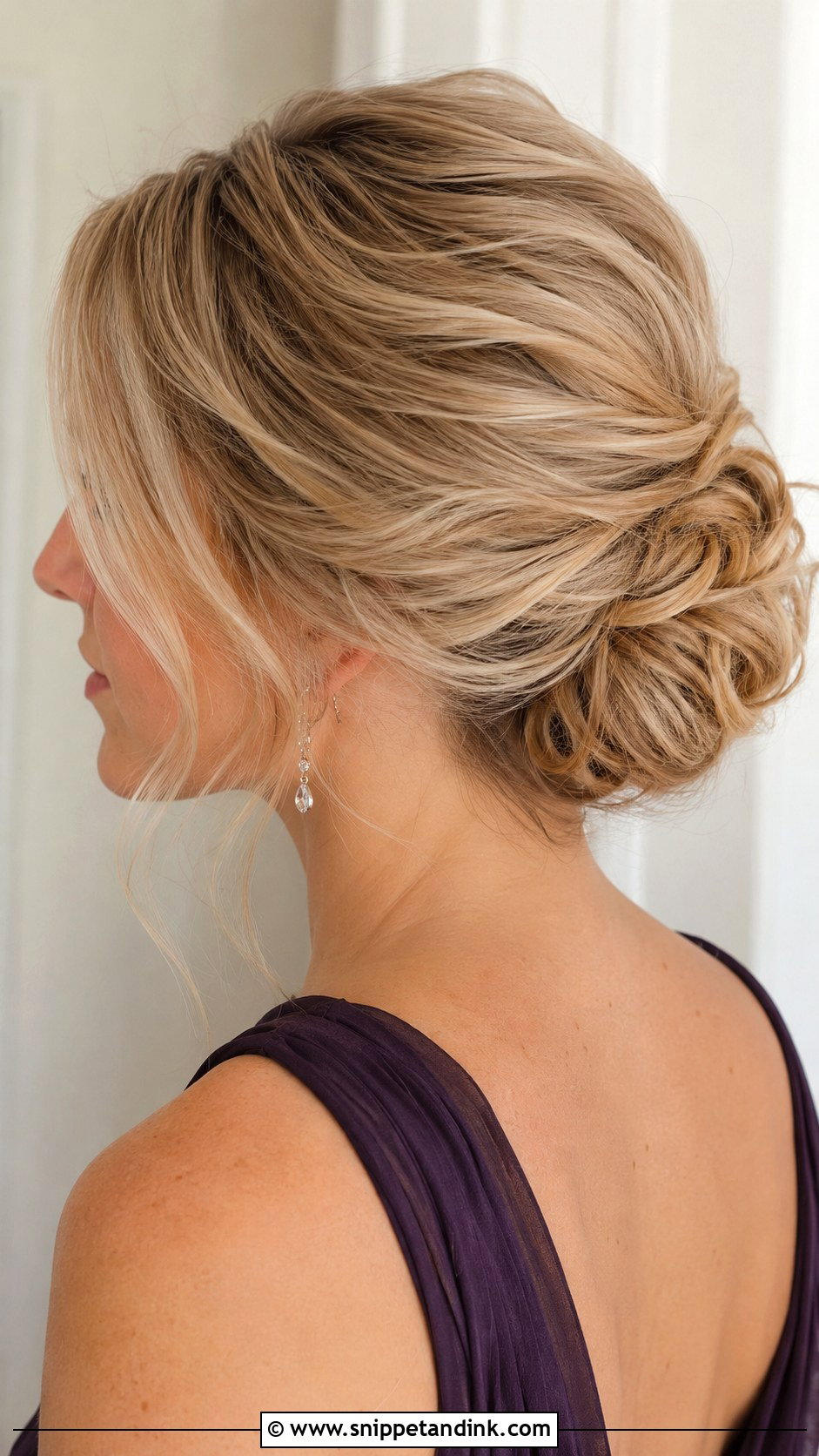
When the hair just can’t form a real bun, I build a faux one. Small sections are pinned in overlapping layers, a bit like petals, so the eye reads one fuller bun. Light teasing and texture hide the shorter ends. It’s the most useful option here for fine, thin or layered short hair. The trade-off is that it takes more pins than anything else on this list, so if your scalp is sensitive, ask your stylist to spread the anchor pins out instead of stacking them in one spot, which starts to ache by the second hour. Leave a few soft pieces at the front.
Prepping a Cropped Cut So the Pins Actually Grip
Freshly washed, conditioned short hair is the hardest hair I work with. It’s slippery, and pins slide straight back out of it. Wash the evening before, go light on conditioner at the roots, and blow-dry with a little volumizing mousse. On the day, a texture spray or dry shampoo through the lengths gives every pin something to bite into.
The pins that work on short lengths
- Mini bobby pins for the nape and behind the ears, where standard pins stick out past the hair.
- Regular bobby pins with the ridged side facing down against the scalp, which is the side that grips.
- U-shaped pins for buns and twists, pushed in and then turned back on themselves so they hold without pulling.
- Pins sprayed with hairspray before they go in, a small habit that noticeably cuts slipping on fine hair.
Fixing a Slipping Pin Halfway Through the Reception
Short hair rarely collapses all at once; one section creeps loose, usually at the nape after you’ve leaned back in a chair. Don’t push the old pin back in the way it came out. Take it out, catch a little hair from the scalp underneath plus the loose piece, and slide it in at a fresh angle. I’d tuck four or five spare pins in matching color, a travel-size hairspray and a slim comb into your clutch. That covers almost every repair a short updo needs, and you can do it in a restroom mirror in a couple of minutes.
A Bob Pinned Well Looks Finished, Not Short
Short hair has far more updo options than most guests expect, provided the style starts from your real length and texture rather than a photo of someone with twice the hair. Pins, texture spray and a light hold hairspray do most of the work, and accessories finish what length can’t. Try your chosen shape once at home the week before, wear it for an hour, and see what moves. Then leave it alone on the day; most short updos come loose from nervous fingers, not from dancing.
You'll Like These Ideas:


Leave a Reply