
I like clips because they finish a style without taking it over. One well-placed piece can sharpen a sleek bun, hold back a wave, or make a short cut look properly bridal. They’re also the accessory I see fail most often, because a clip bought online is designed to look good in a flat photo, not to grip freshly styled, slippery hair for twelve hours. So for each idea below I’ve added what I actually check: weight, hinge, placement, and the hair it suits. Save the ones you like and bring the real clip to your trial.
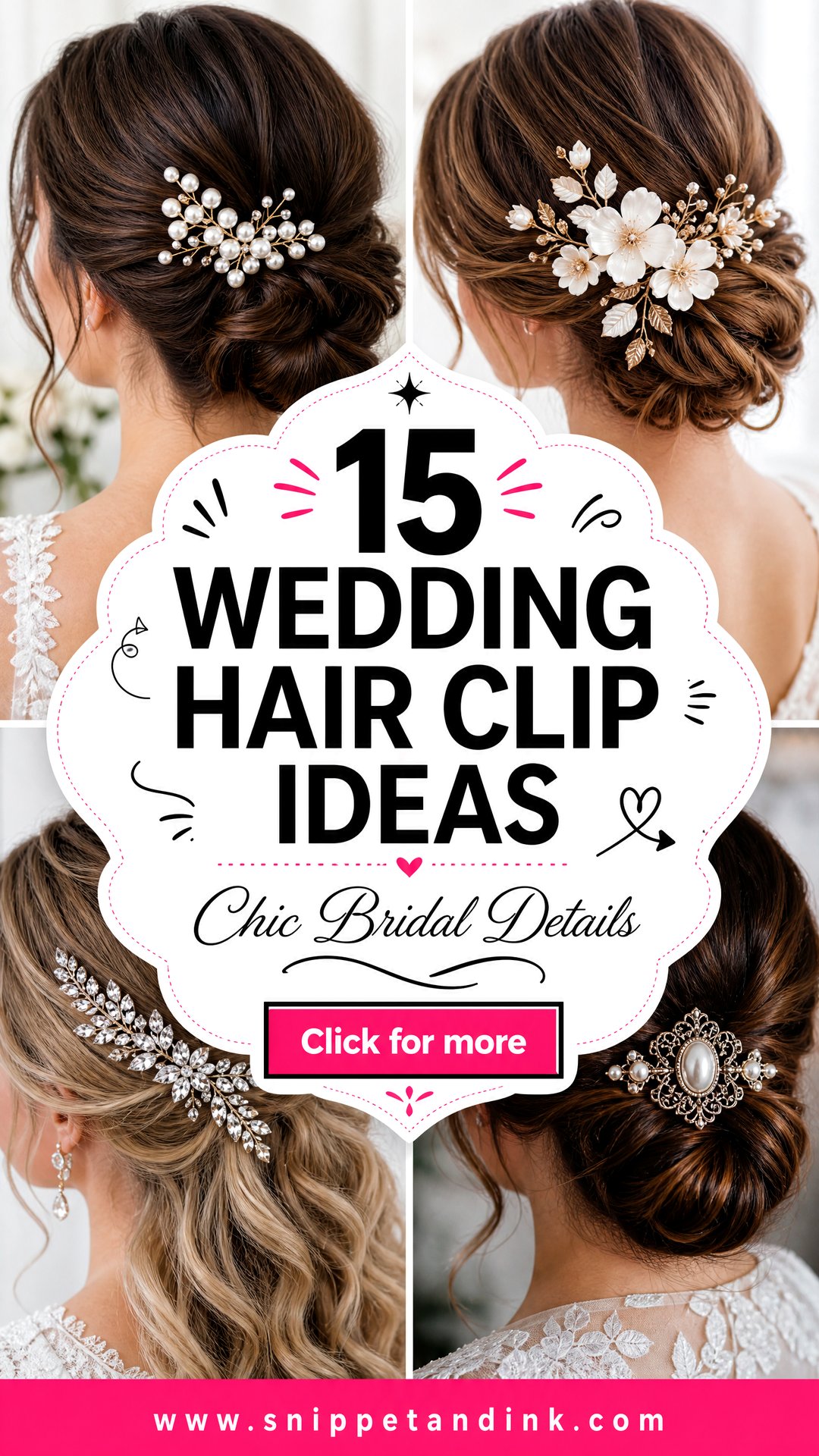
Hinges, Teeth and Weight: Reading a Clip Before You Buy
Most clip failures are hardware failures. A pretty front with a weak back will drift down your head before the first dance, no matter how good the styling is. These are the details I look at when a bride hands me a new clip.
- Spring barrettes (the French style with a tension bar) hold the most hair and grip best on medium to thick hair. They’re my first choice for half-up styles.
- Snap clips are light and suit short or fine hair, but they slip on freshly curled, silky hair unless there is a pin anchor underneath.
- Comb clips slide into a bun or a backcombed base. The teeth need something to bite into, so they are poor on smooth, loose hair.
- Weight: hold the clip in your palm. If it feels heavy there, it will feel twice as heavy at the side of your head by the evening.
- Edges: run a finger along the back. Rough solder or a sharp setting snags hair and can scratch the scalp.
Online listings rarely show the back of a clip. If you can, ask the seller for a photo of the fastening before you order, and buy a few weeks early so there is time to swap it.
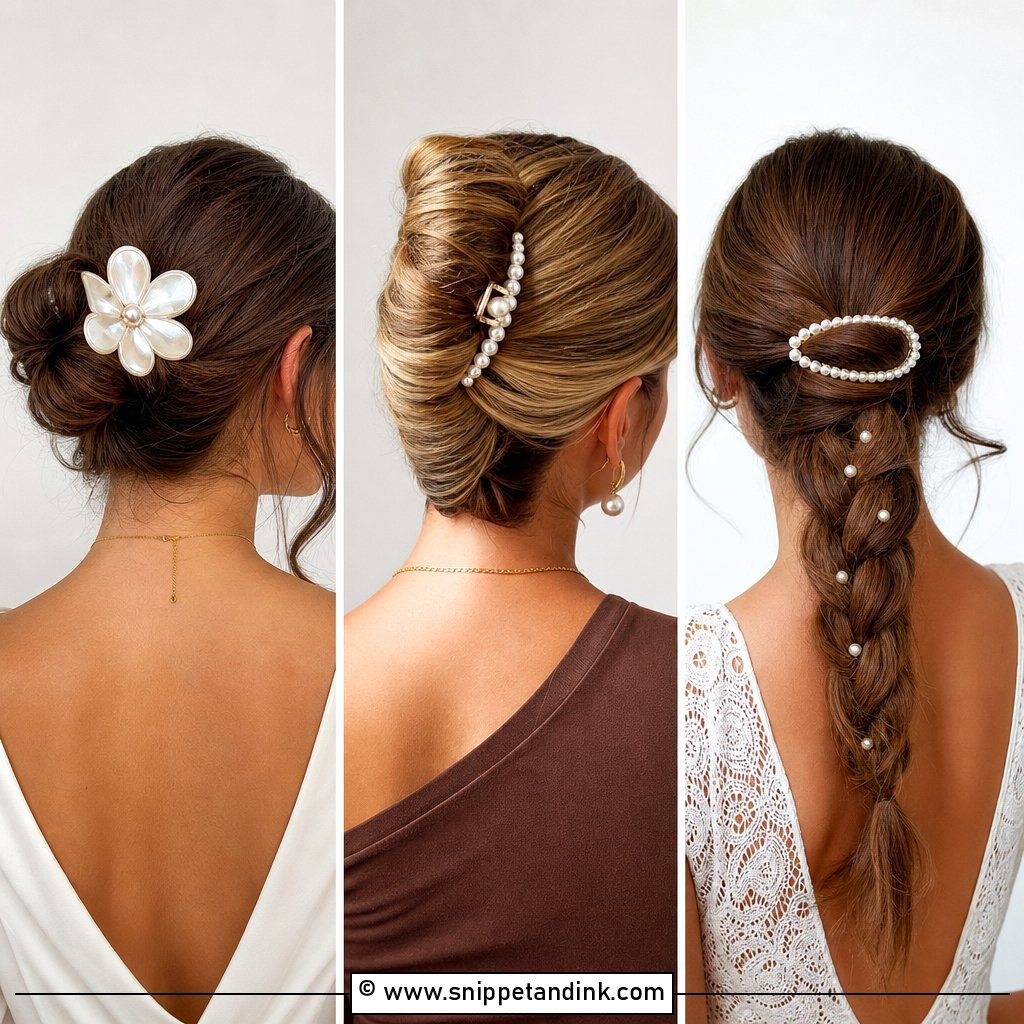
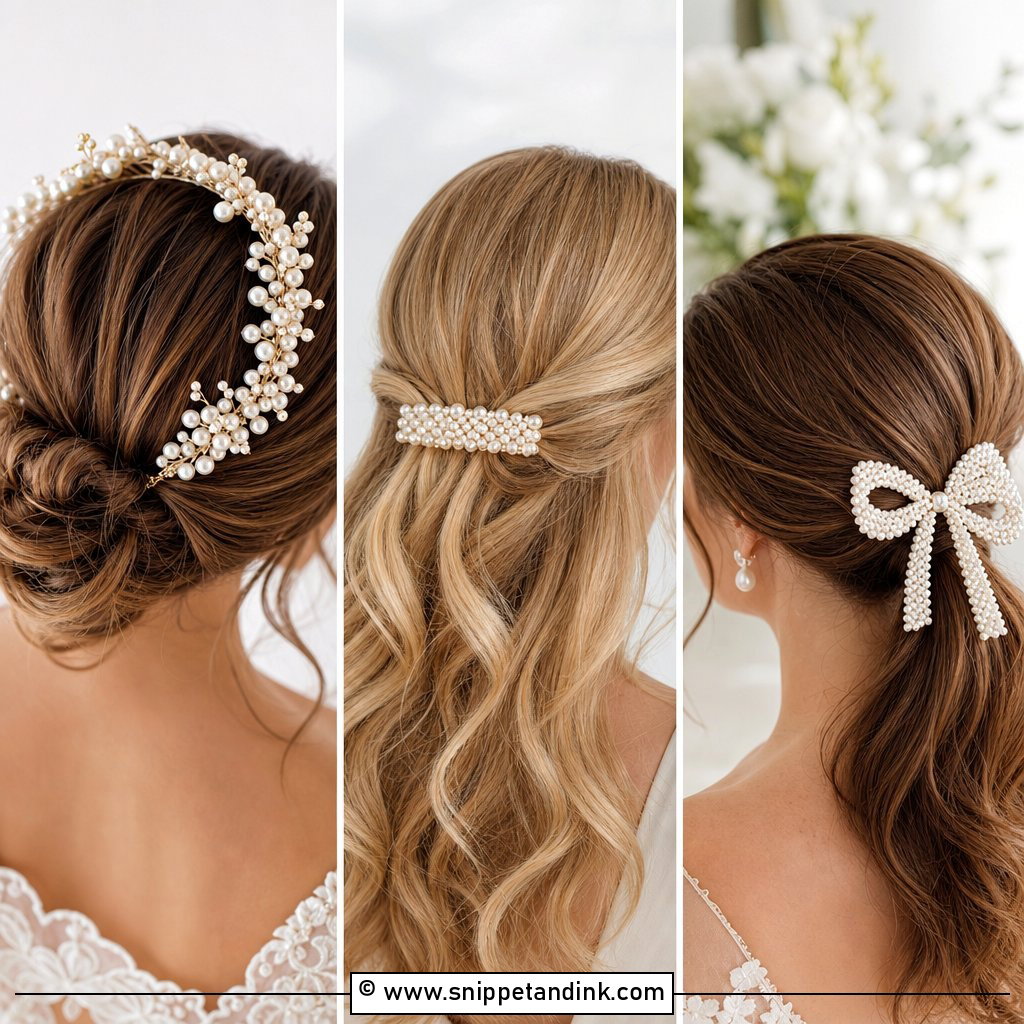
1. Pearl Wedding Hair Clip
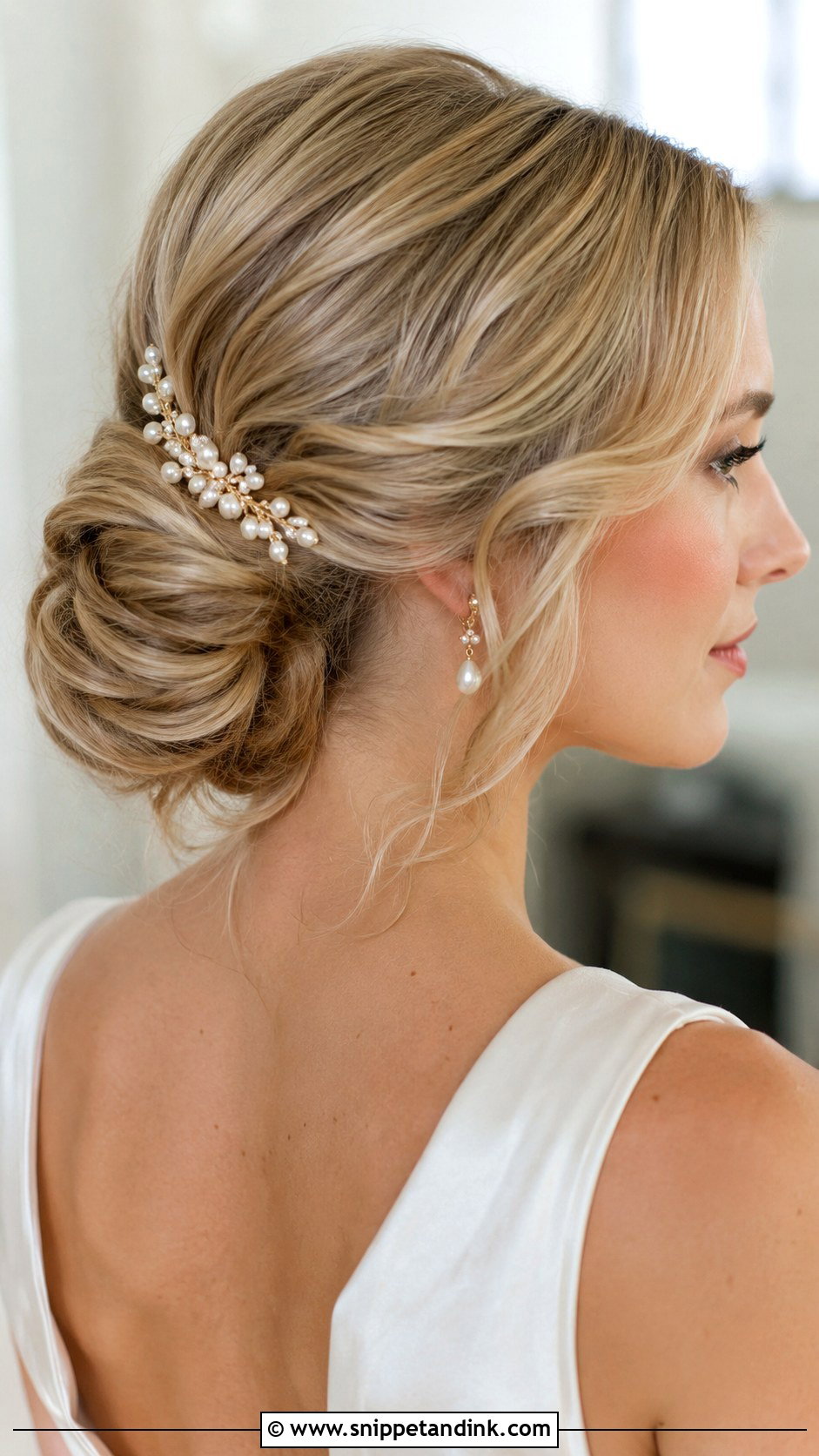
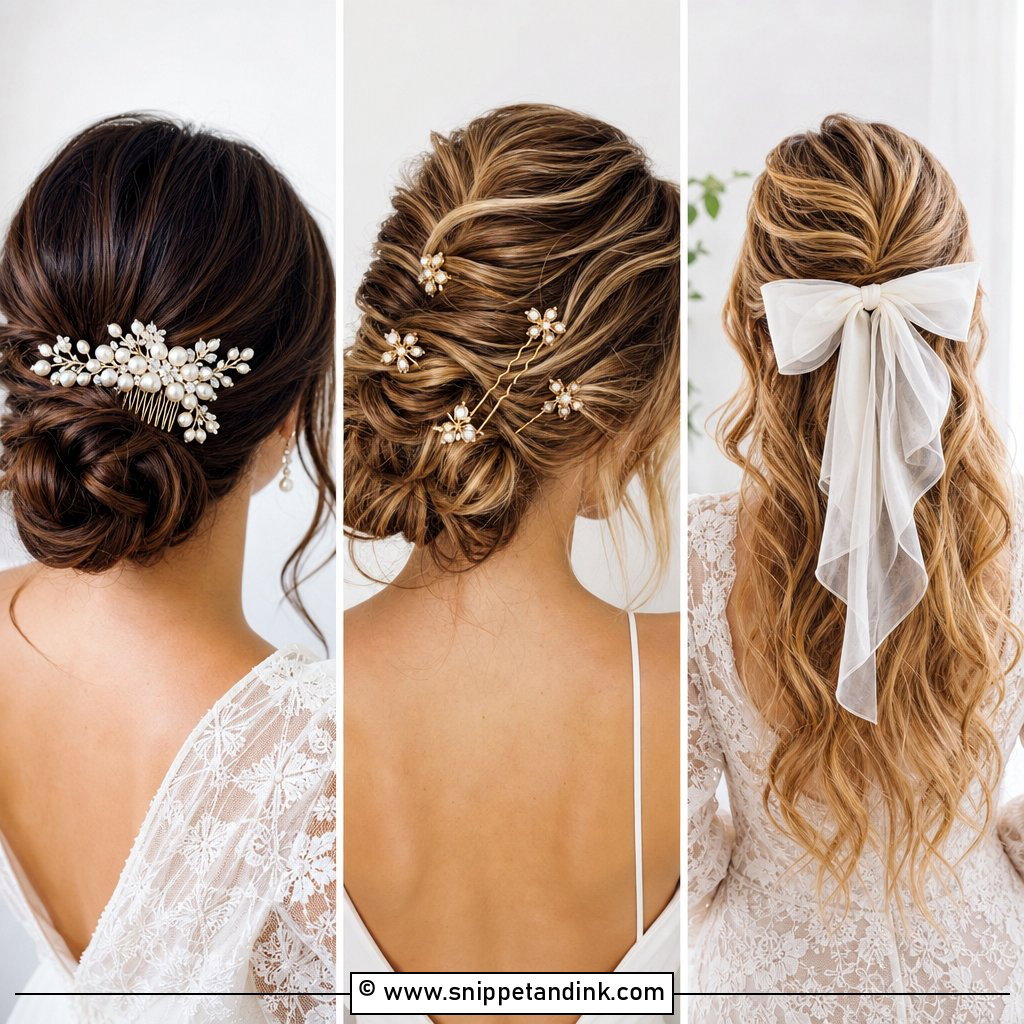
Pearl reads softly, even in strong flash, which is why so many brides end up here. Small seed pearls disappear in wedding photos taken from the aisle, so if you want the clip to register, go for pearls at least the size of a pea. They sit nicely on a low bun or a half-up crown, and they echo pearl buttons on the back of a gown. Hardware matters more than the pearls: a secure barrette or comb-style clip, set over a pair of crossed grips, will get through hugs and dancing far better than a tiny snap clip.
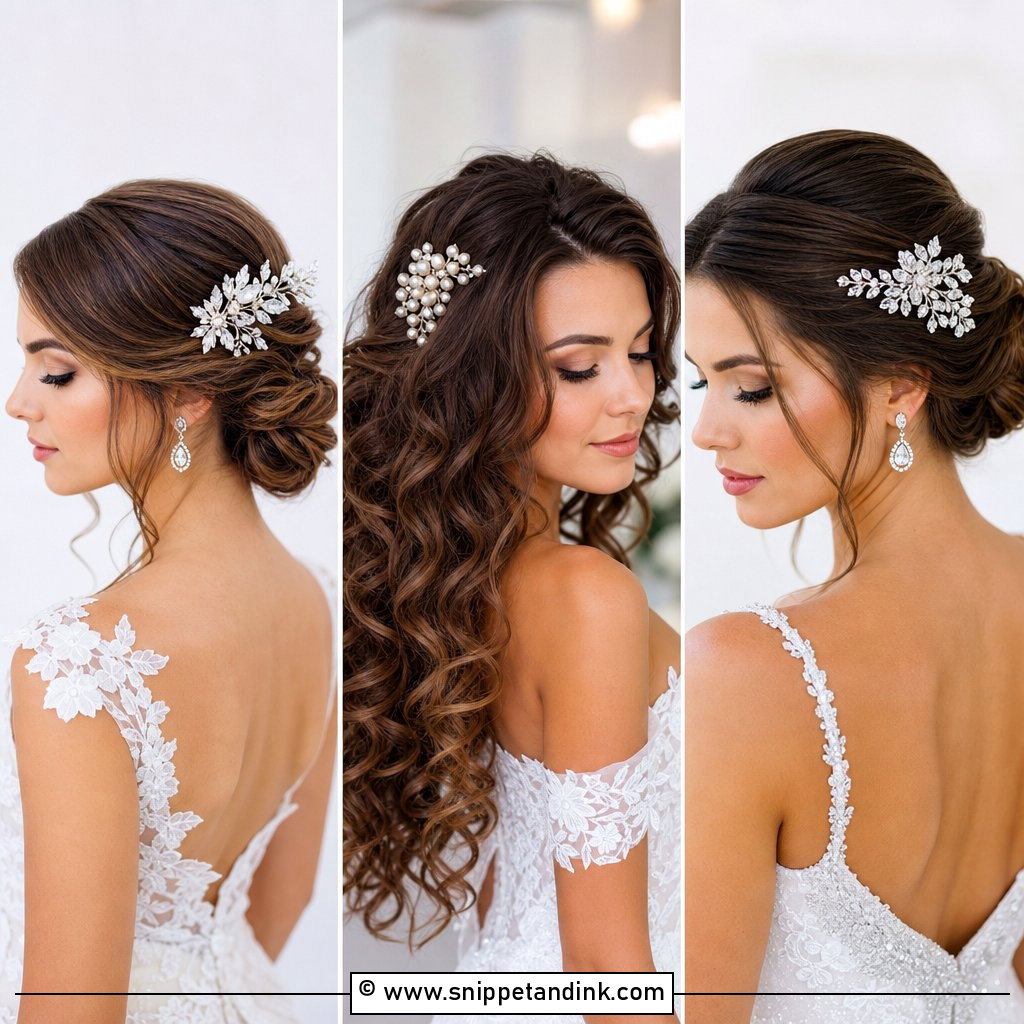
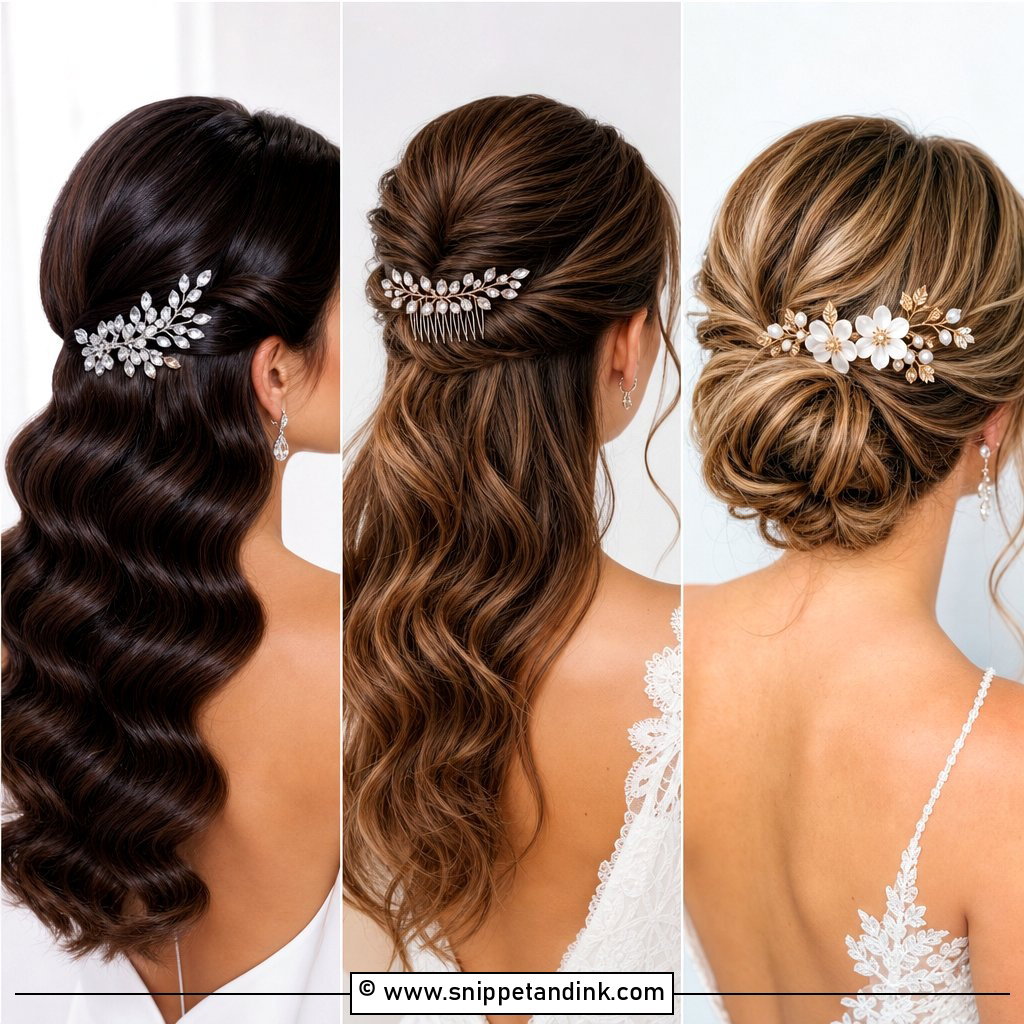
2. Crystal Wedding Hair Clip
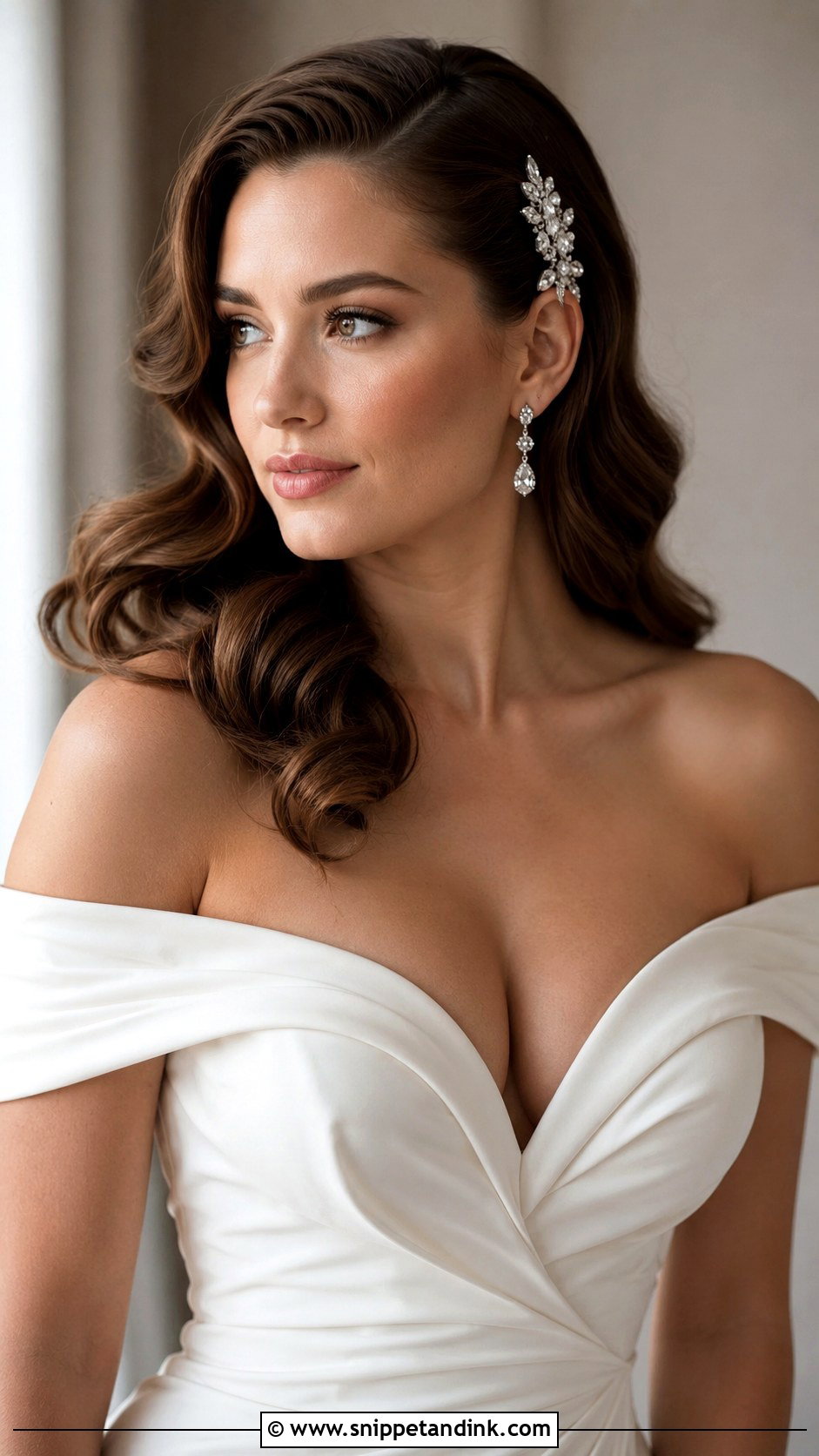
Crystal is the clip I’d pick for an evening ceremony, because candlelight and reception lighting make it flicker even when it’s small. Above one ear with Hollywood waves, it reads well from the side and back. Clear stones go with any dress shade; just keep the setting the same metal as your earrings. The thing to watch is the rest of the hair. A crystal clip on top of heavy texture and loose pieces looks busy, so I keep the surrounding hair smooth.
3. Floral Wedding Hair Clip
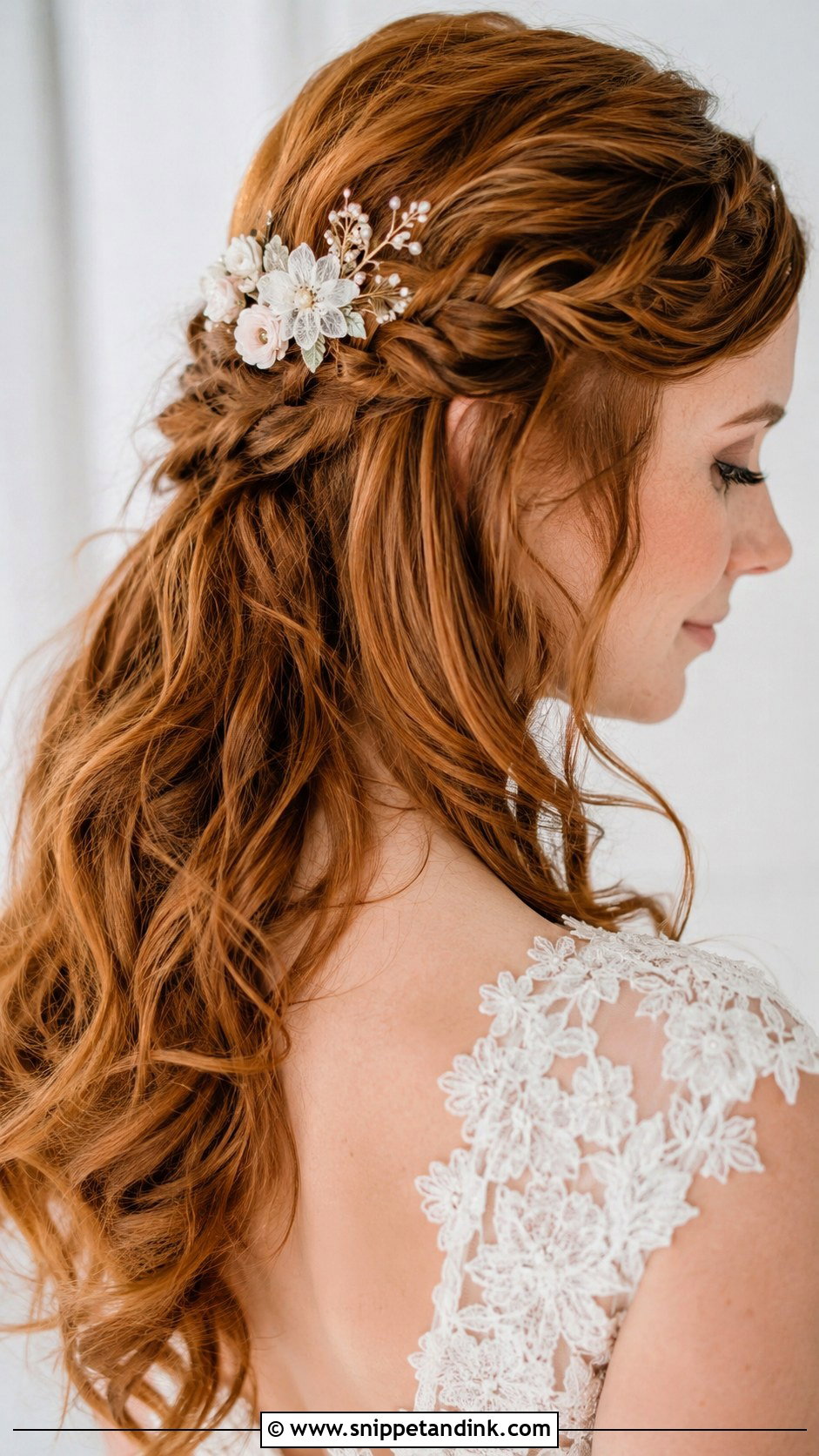
A floral clip gives you the garden feel without fresh blooms wilting by the reception. White enamel flowers look crisp, gold ones warmer, and blush ones softer against lighter hair. I place them slightly off-centre on a textured low bun or a braided half-up, where a little irregularity looks natural. Size it to the volume around it: a big flower on a small, tight bun looks like it is sitting on top rather than growing out of the style.
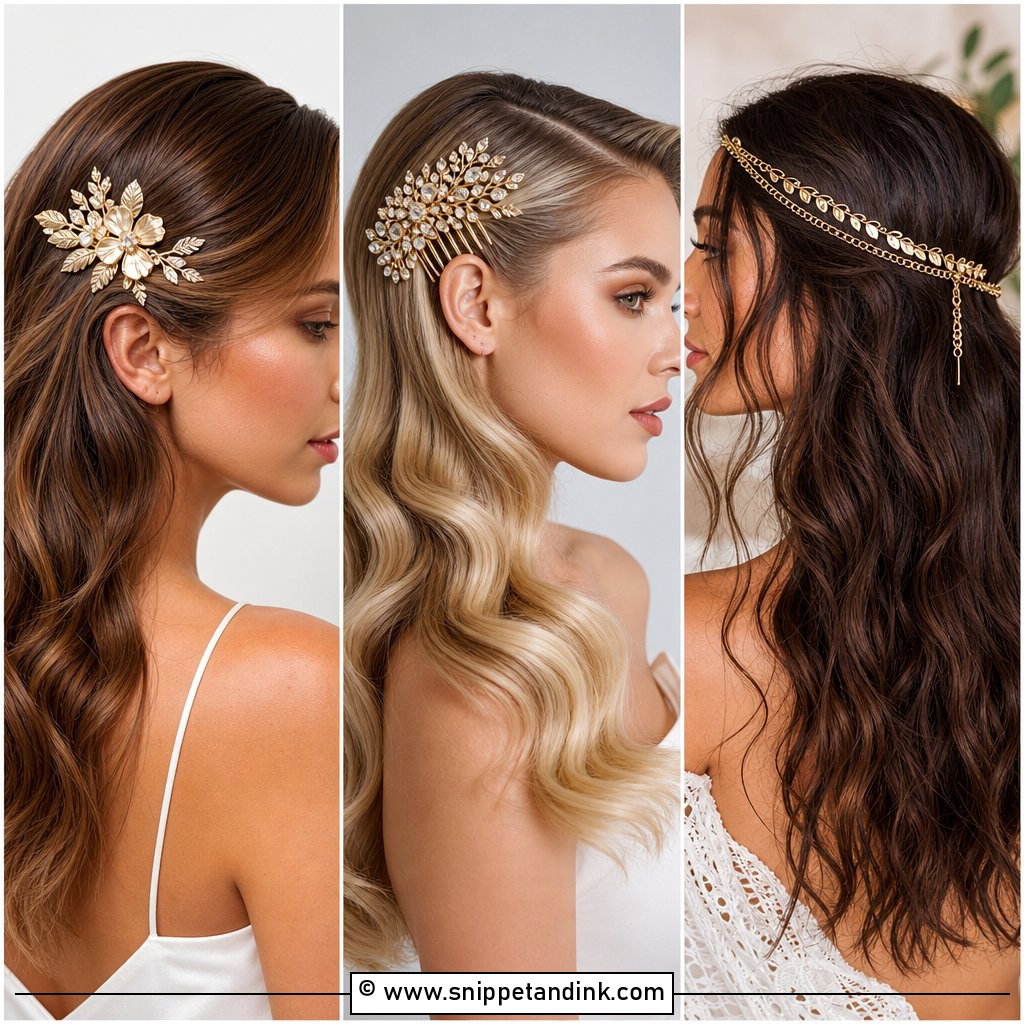
4. Gold Wedding Hair Clip
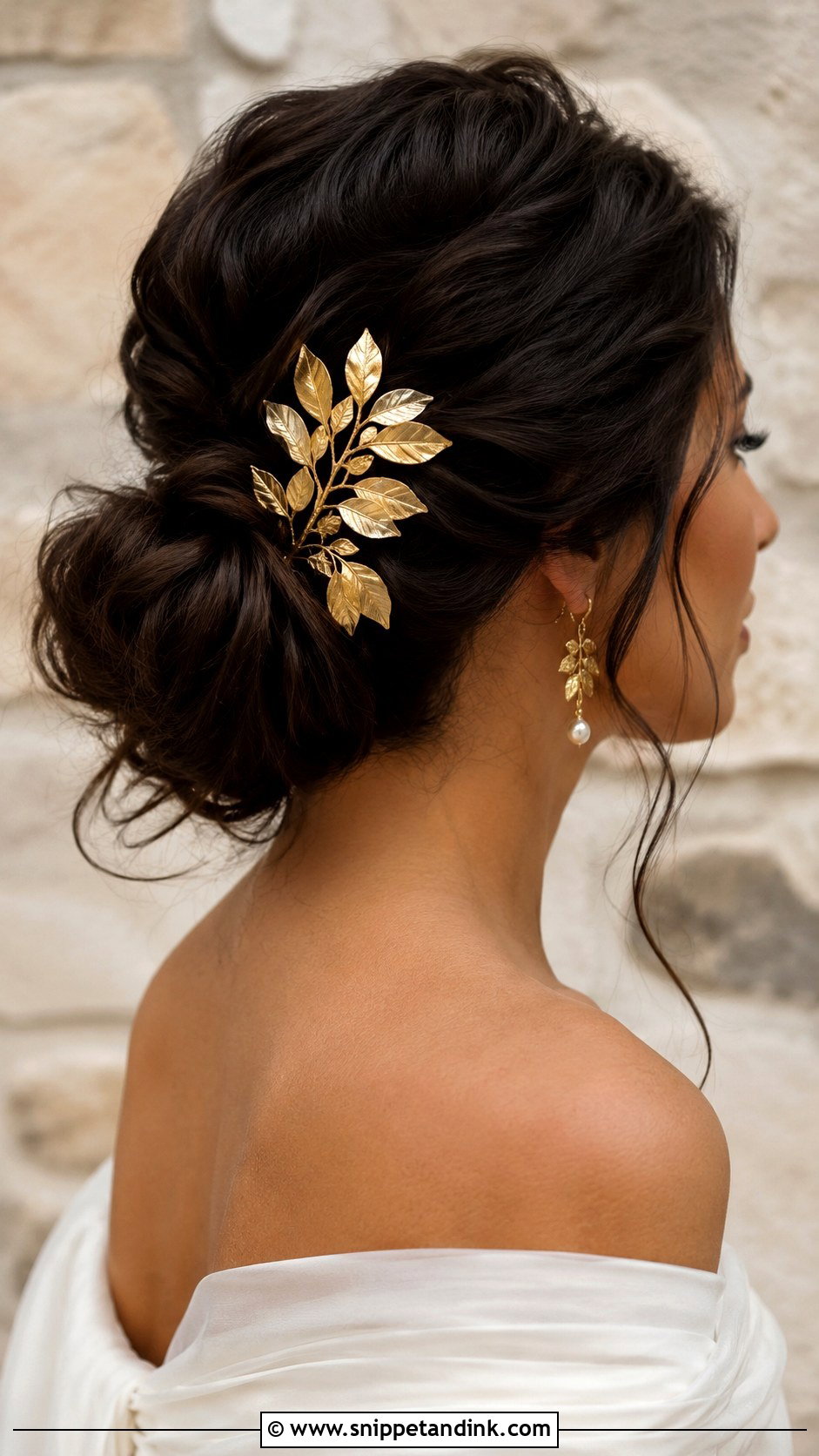
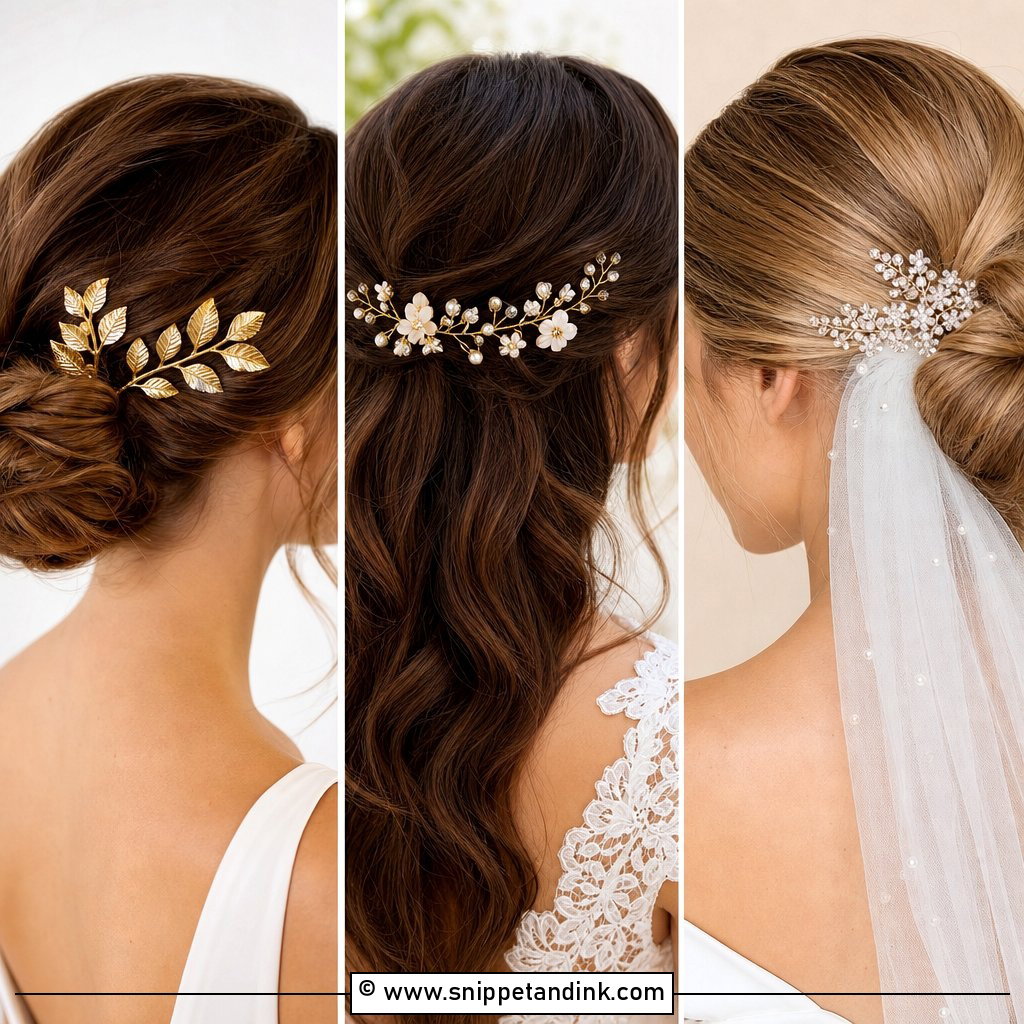
Gold warms up the whole look, and it shows up against most hair colours, though on very pale blonde a thin gold clip can almost vanish. A plain gold barrette turns a low ponytail bridal in seconds; a leaf or textured design adds detail to a bun. I usually set one at the side of a bun or just above a tucked-back wave. Check the plating if your skin reacts to some metals, since the clip will press against your scalp all day.
5. Silver Wedding Hair Clip
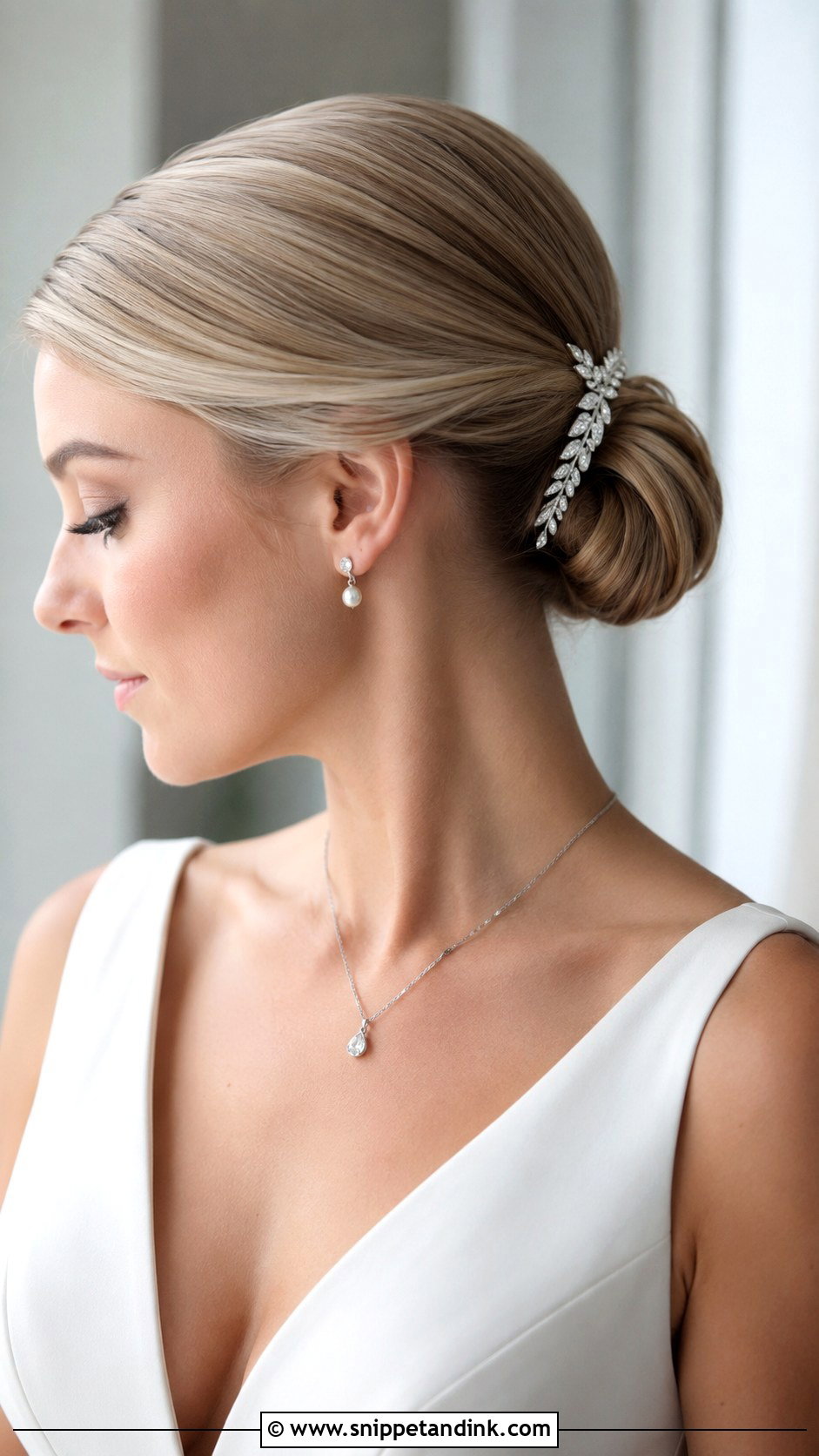
Silver looks crisp against bright white fabric and suits cool-toned jewellery. A slim silver barrette reads modern; a crystal-covered one reads formal. On very dark hair, silver stands out more than gold does, which is worth knowing if you want the clip seen in photos. Keep earrings and necklace in the same metal family and the whole outfit looks thought through without trying.
6. Rhinestone Wedding Hair Clip
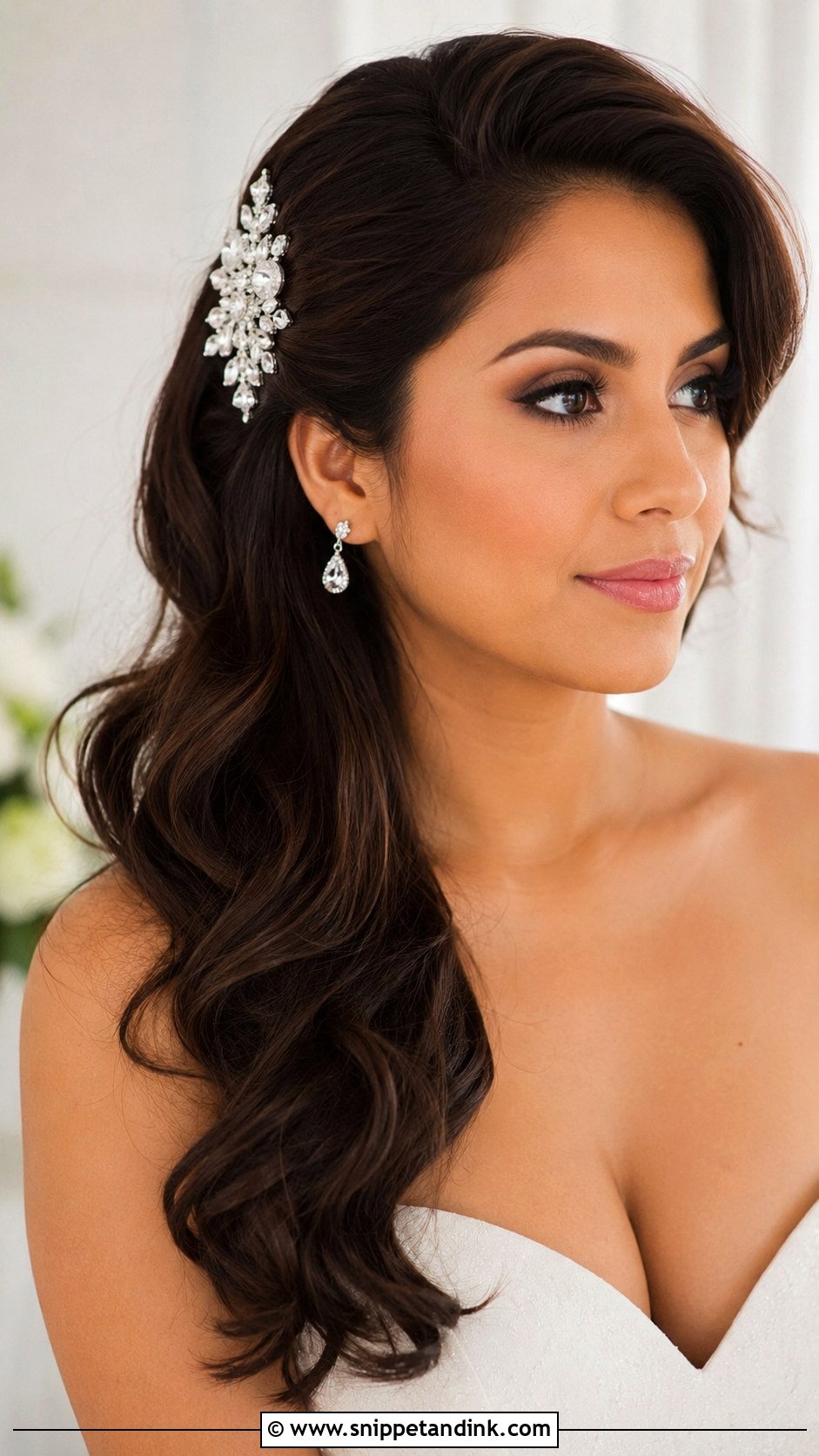
A rhinestone wedding hair clip gives you tiara-level sparkle at the side of the head instead of the top. Rhinestone pieces are often heavier than they look, and that weight is why they tilt or drop on loose hair. I only put a large one into something with structure, like a low chignon or a pinned side sweep. If your dress is already beaded, go smaller. On a plain gown, a bigger clip can carry the whole look.
7. Bow Wedding Hair Clip
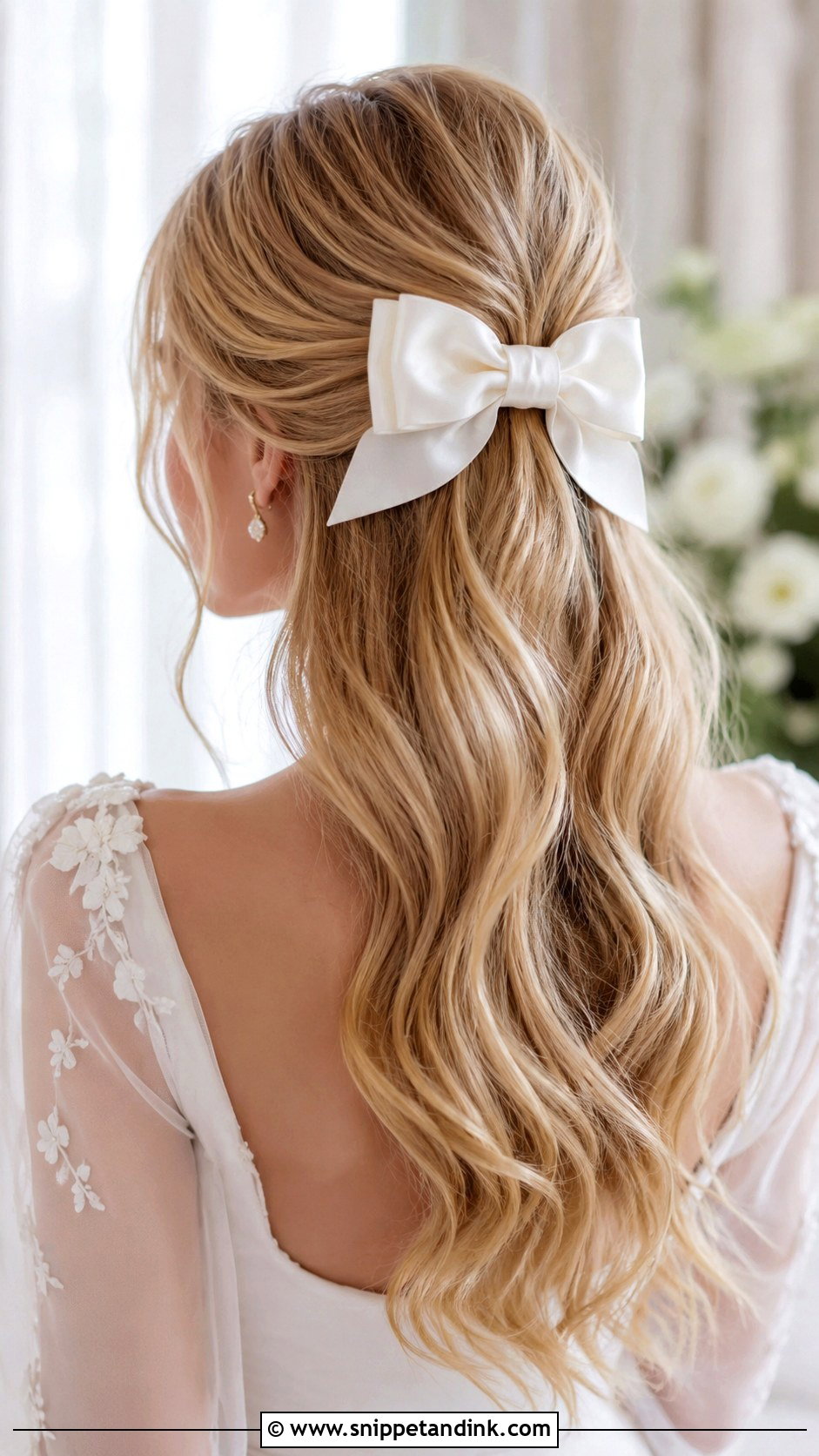
Bows divide people, and I’d say they suit a clean, simple dress more than a heavily embellished one. Satin looks crisp; velvet reads richer and works better for autumn and winter. Scale is everything. A small bow on a bob looks sweet, a large bow balances a full ponytail, and a large bow on fine short hair just looks like a costume. Ivory and champagne blend into most bridal fabrics more kindly than bright white.
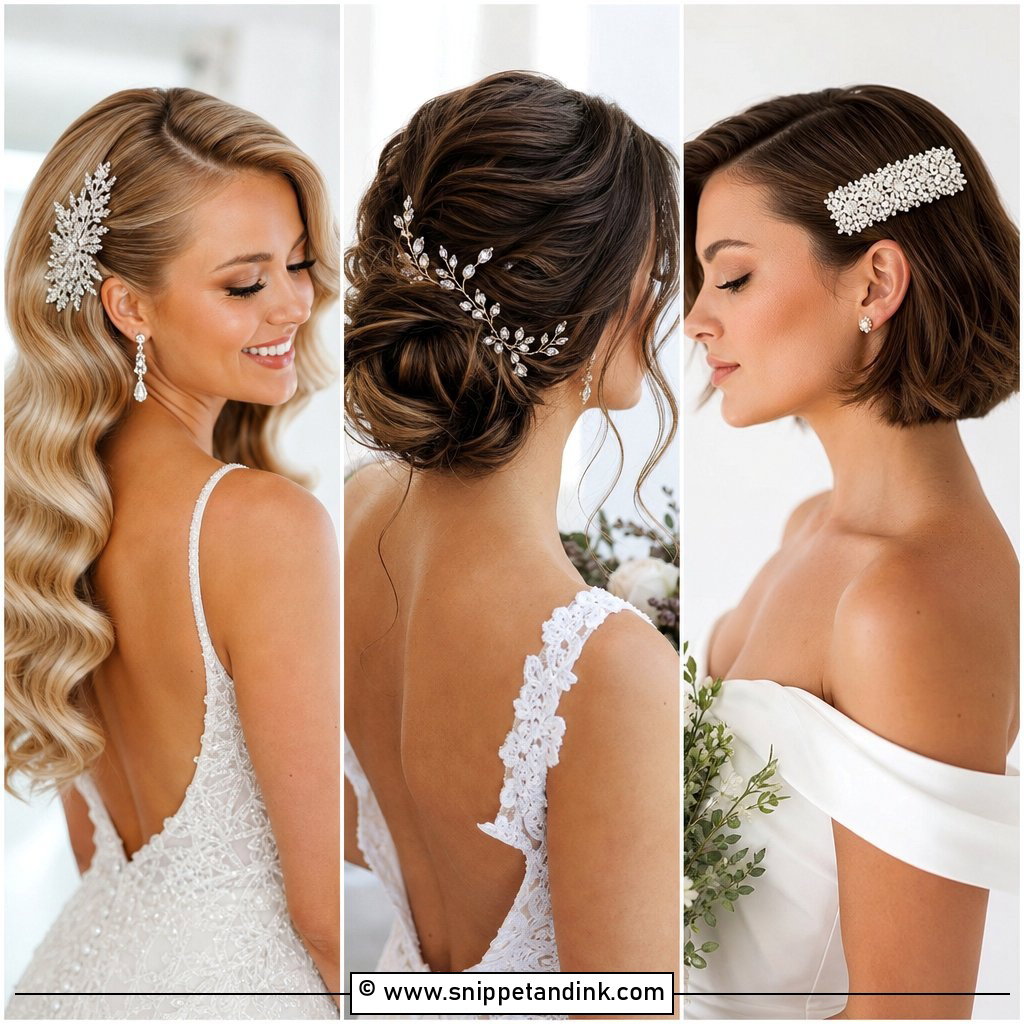
8. Side Wedding Hair Clip
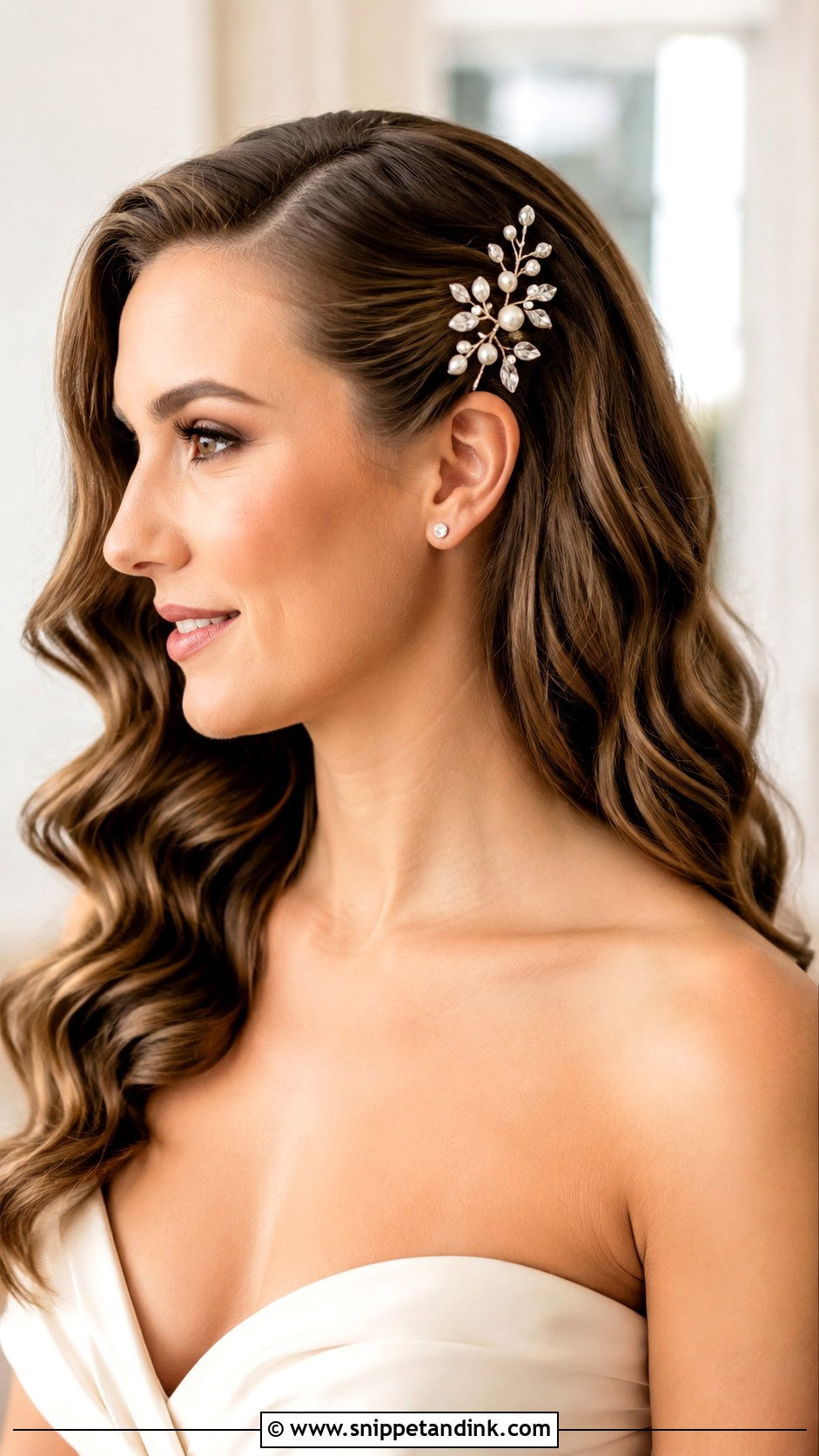
A clip above one ear is the simplest way to wear hair down and still look finished. It opens the face on one side and keeps hair out of your mouth when the wind picks up. Before I place it, I ask which side of the aisle the bride will stand on, because the clip should face the guests during the vows. On thick or silky hair, I always build a small anchor of crossed pins underneath; the clip is there to decorate, not to hold the weight.
9. Half Up Wedding Hair Clip
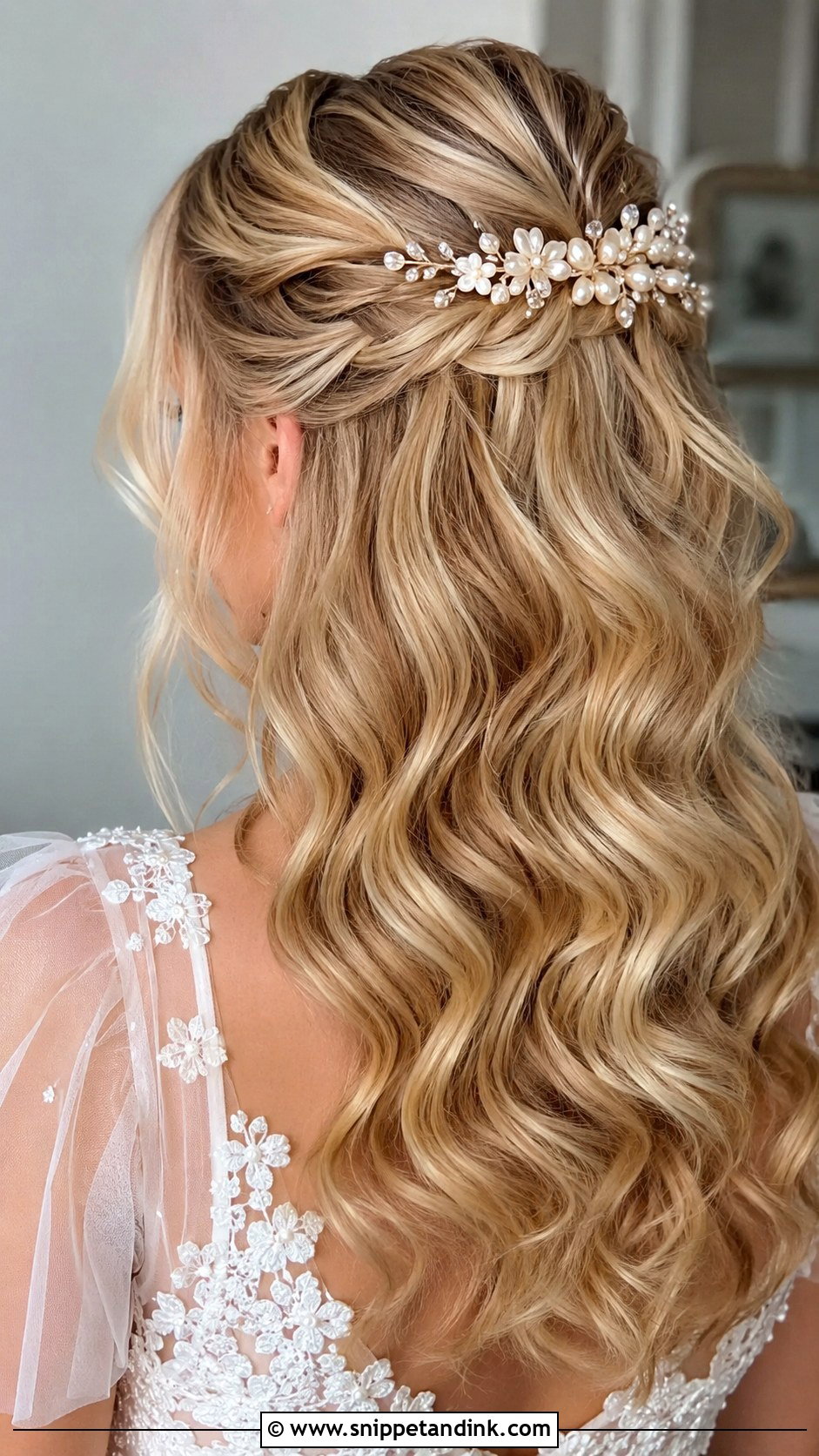
Half up with a clip at the crown is the style I recommend to brides who keep pushing their hair off their face. The clip sits right where the top section gathers, so it becomes the detail people see from the back during the ceremony. Pearl barrettes, crystal combs and bow clips all suit it. Secure the gathered section with an elastic or pins first. If the clip is carrying all that hair alone, it will slide down within a couple of hours.
10. Low Bun Wedding Hair Clip
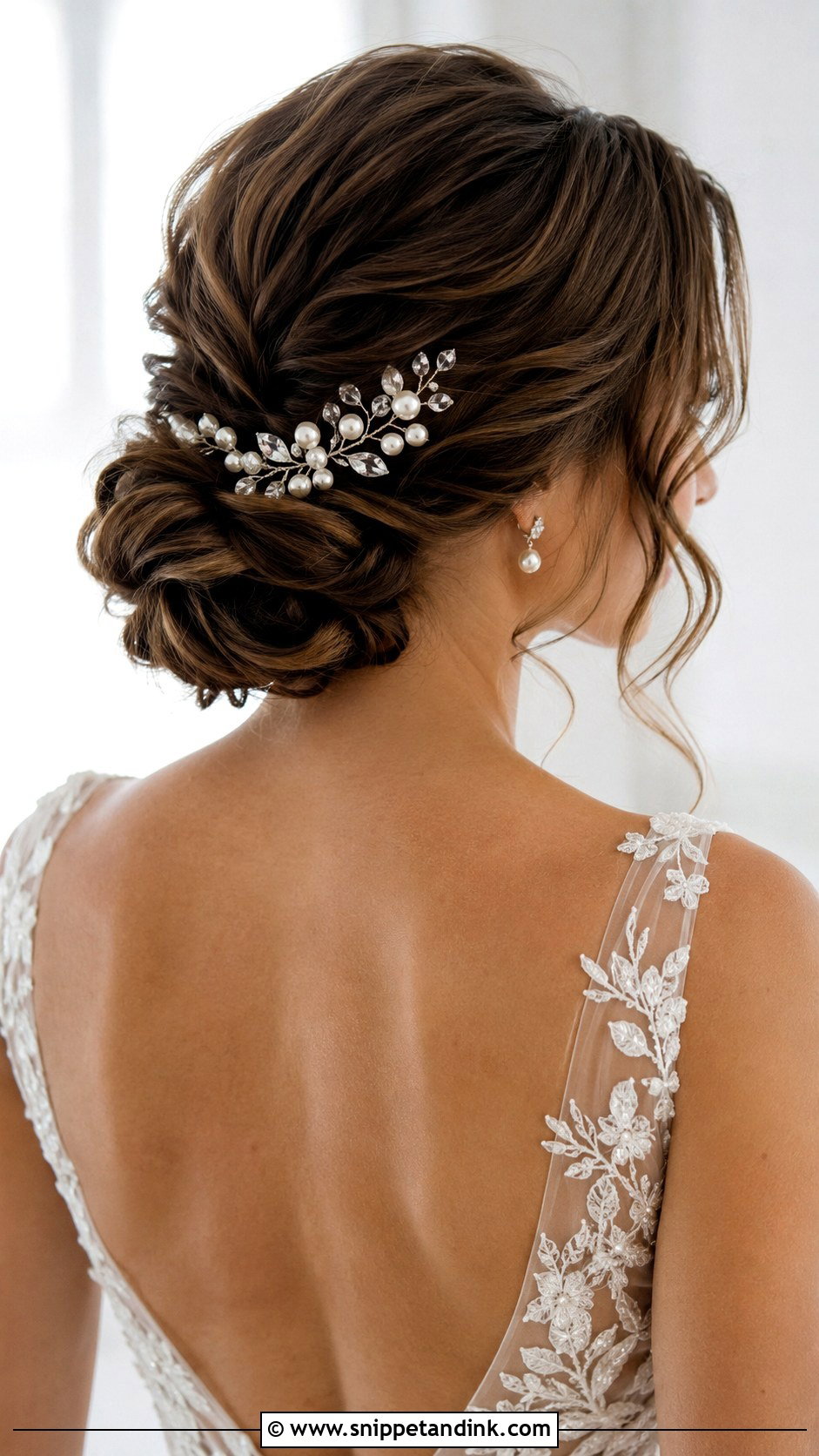
Tucked at the side of a low bun, a clip turns a plain updo into something people notice in photos. I slide it in along the edge or right at the base so the line of the bun stays clean. The practical bonus: once the veil comes off after the ceremony, the clip is still there, so your reception hair doesn’t look bare. Pearl and crystal suit this best because they add detail without breaking up the smooth shape.
11. Wedding Hair Clip For Short Hair
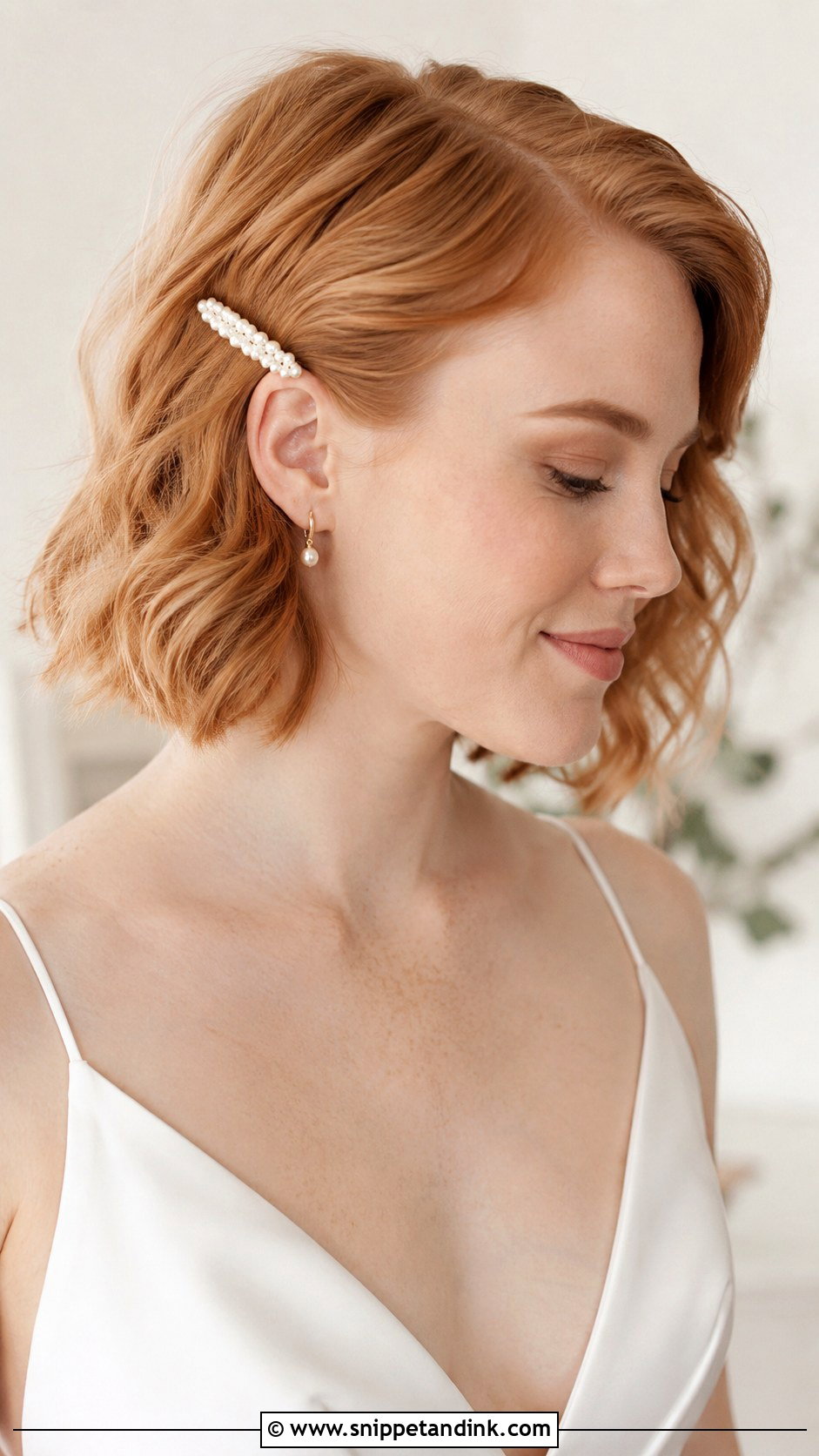
On a pixie, bob or lob, the clip does more work than it does on long hair, because there’s less style around it. I go for something small and light with a strong spring, usually placed at the side so it frames the face. Very short hair gives a clip very little to hold, so a quick mist of texture spray at the root first gives it grip. Skip heavy pieces here; they pull the hair flat on one side and you’ll feel them all evening.
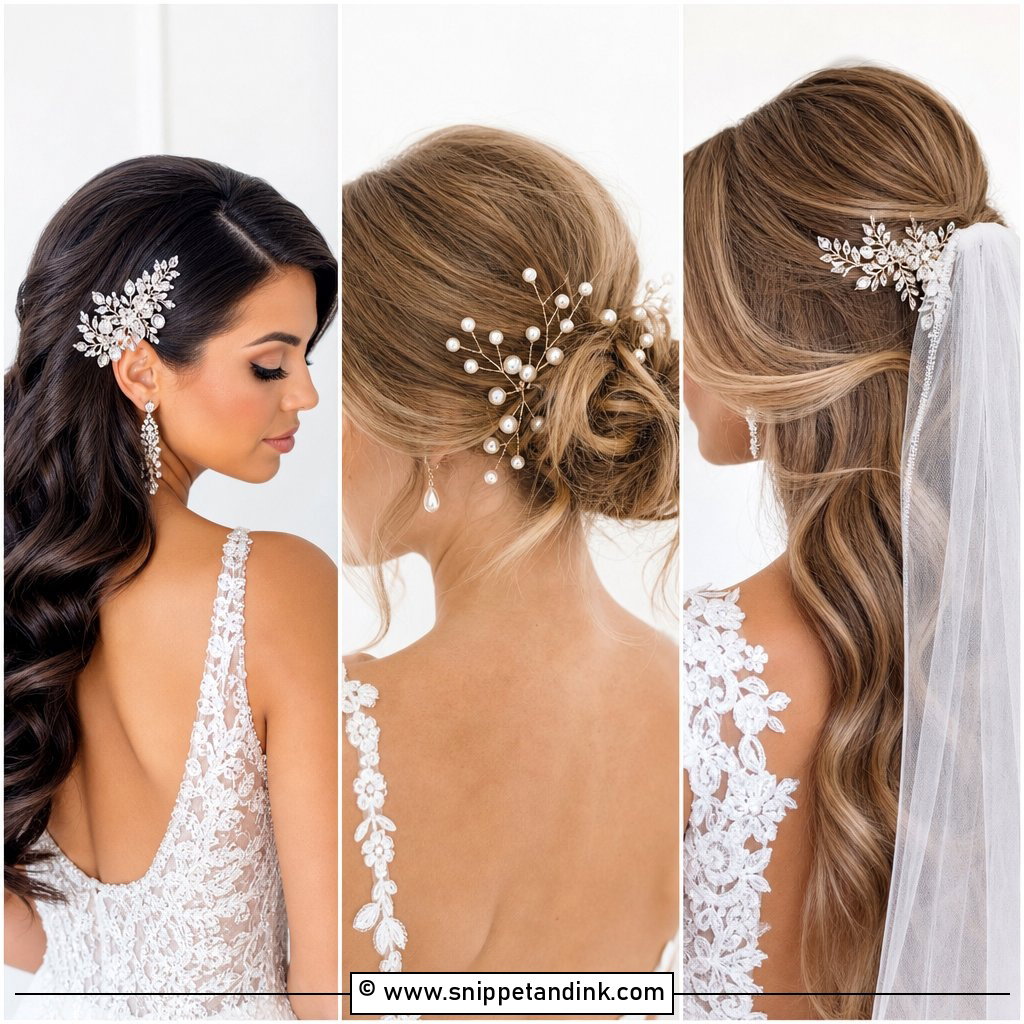
12. Wedding Hair Clip For Long Hair
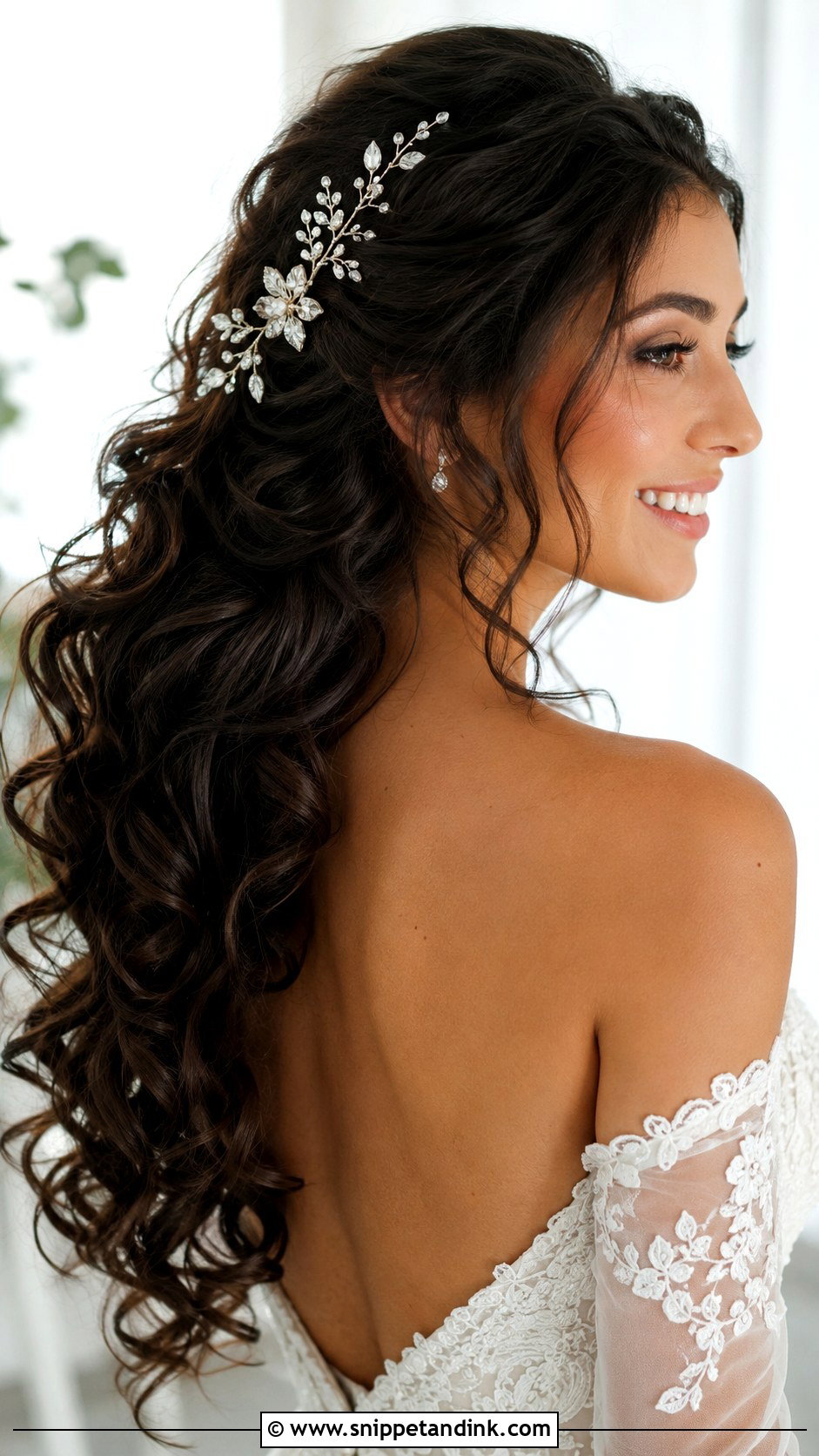
Long hair can take a bigger piece because there’s more hair around it to balance the scale. Waves swept to one side and held with a statement clip show off an open back or off-shoulder neckline. The trap is thick, heavy hair: it will pull even a strong clip loose over a long day. I pin the section first, then lay the clip over the pins. Pearl clusters and crystal vines show up well against long lengths.
13. Vintage Wedding Hair Clip
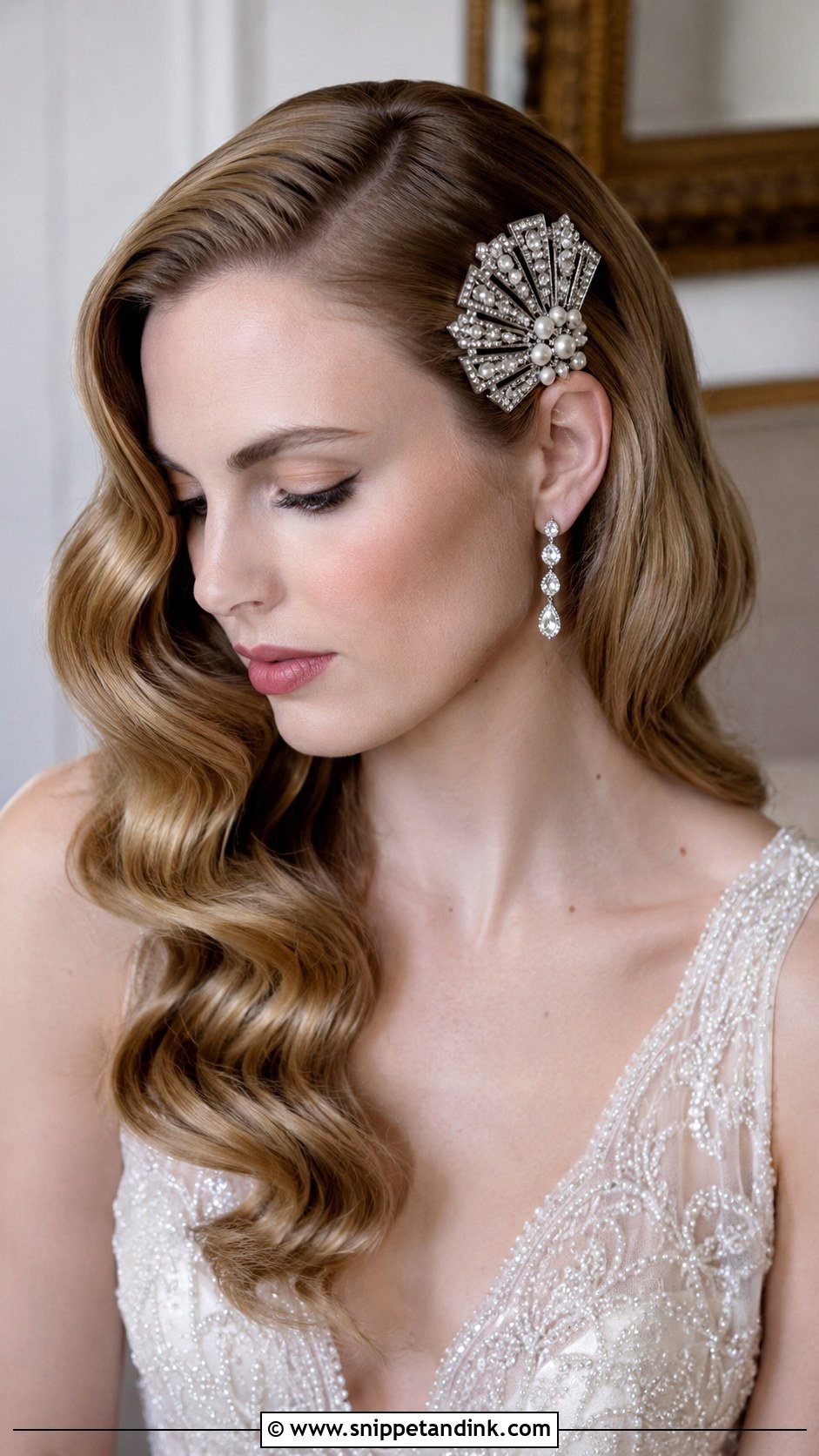
A vintage clip, whether it’s a real family piece or an Art Deco reproduction, needs a styled setting around it, or it can look like a costume. I pair them with finger waves, side-swept curls, a low chignon or a sleek bob with a sharp part. Antique hinges are often weak. If you’re wearing a grandmother’s clip, check the spring well before the wedding and have a jeweller tighten or replace it rather than trusting it on the day.
14. Minimalist Wedding Hair Clip
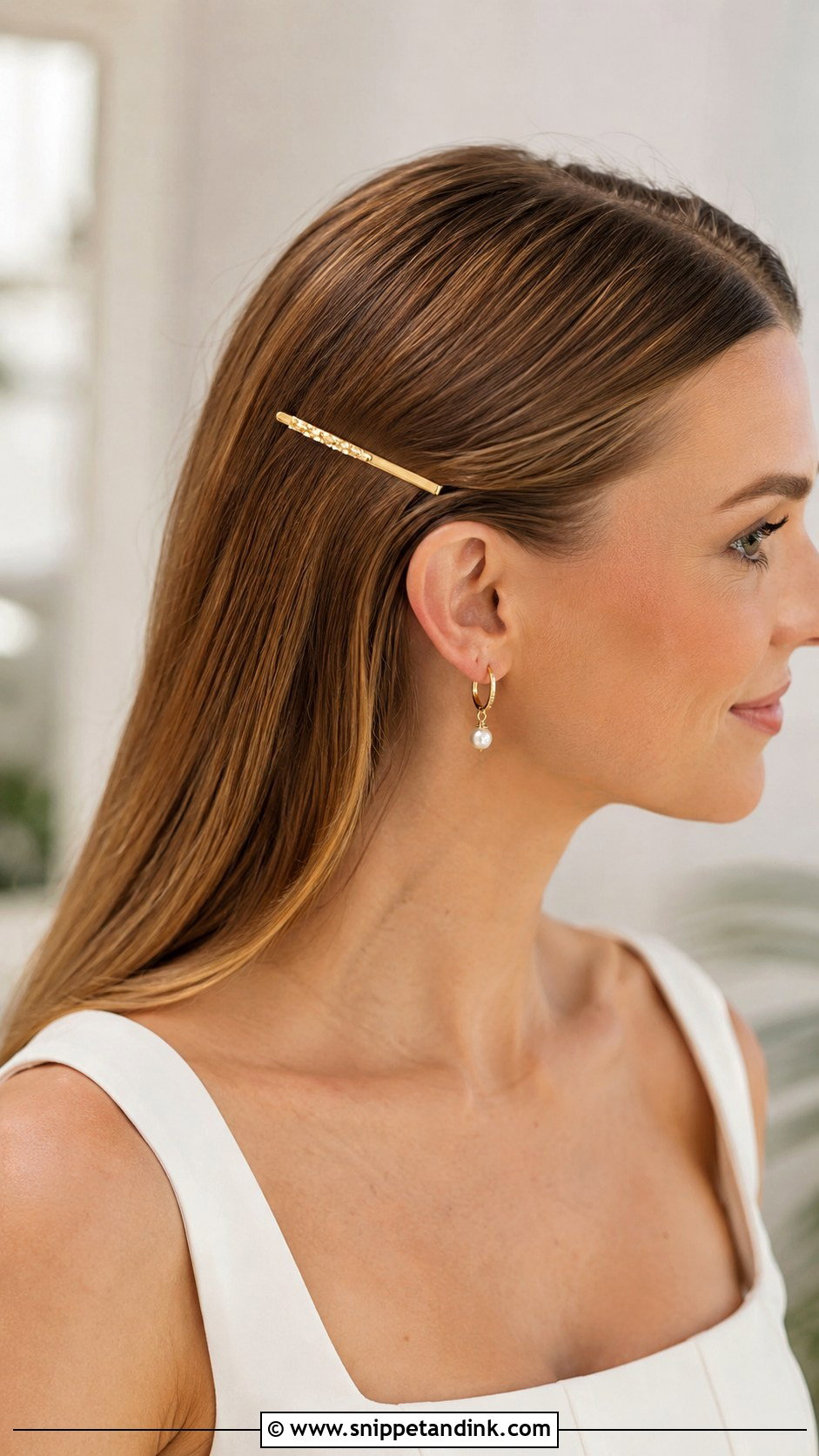
Minimal clips look easy, but they show every flaw in placement, so they need neat hair underneath. A slim gold barrette or plain pearl pin works on a sleek bun, straight hair or a low ponytail, and suits a modern gown or a city registry ceremony. I check the finish closely: cheap plating can look dull in close-up photos, and with so little else in the hair, the clip itself is what the camera focuses on.
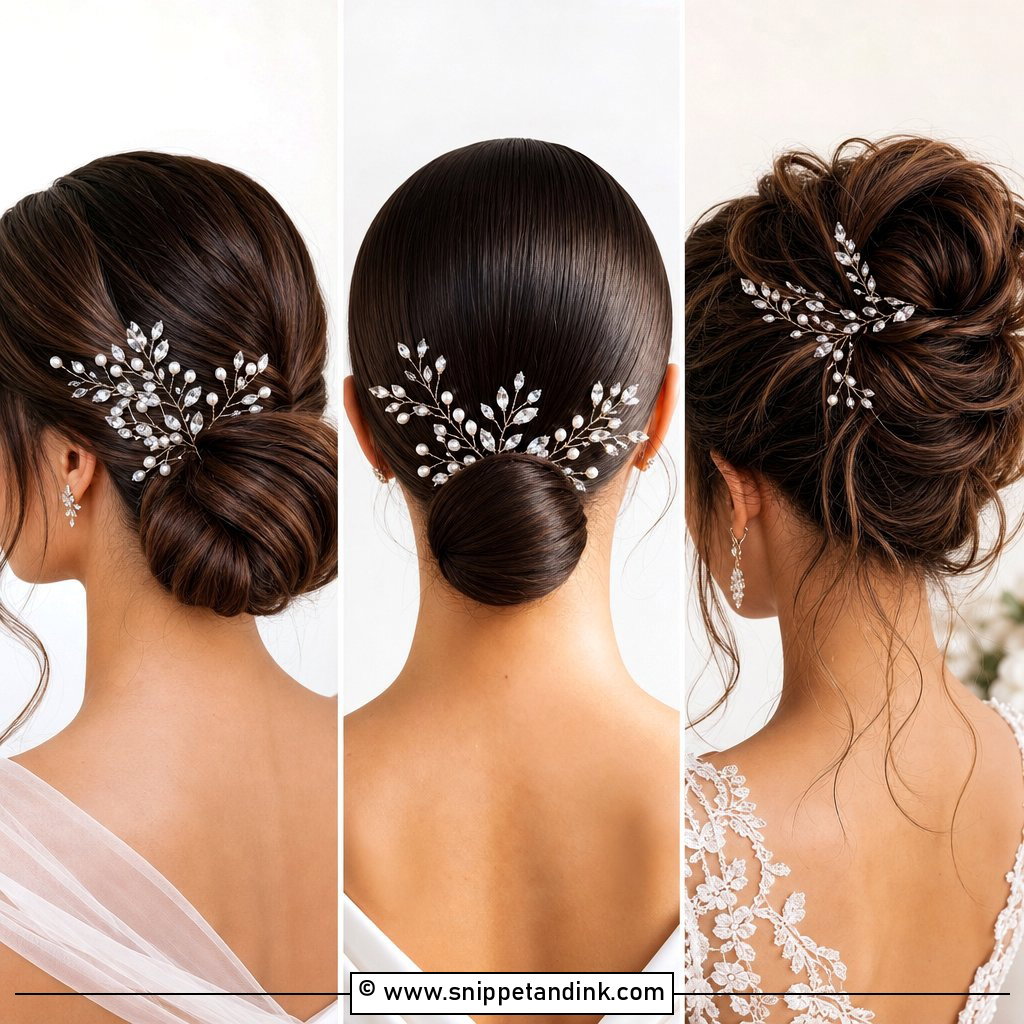
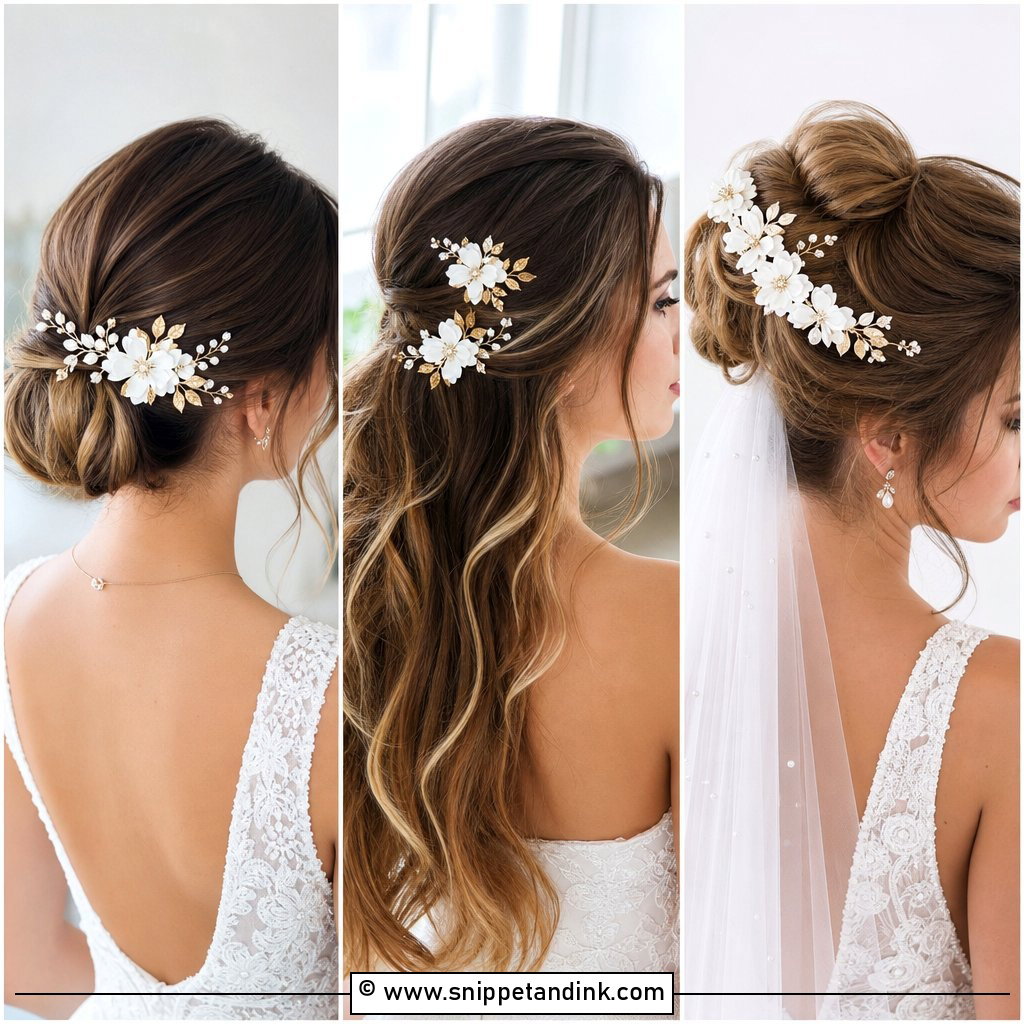
15. Statement Wedding Hair Clip
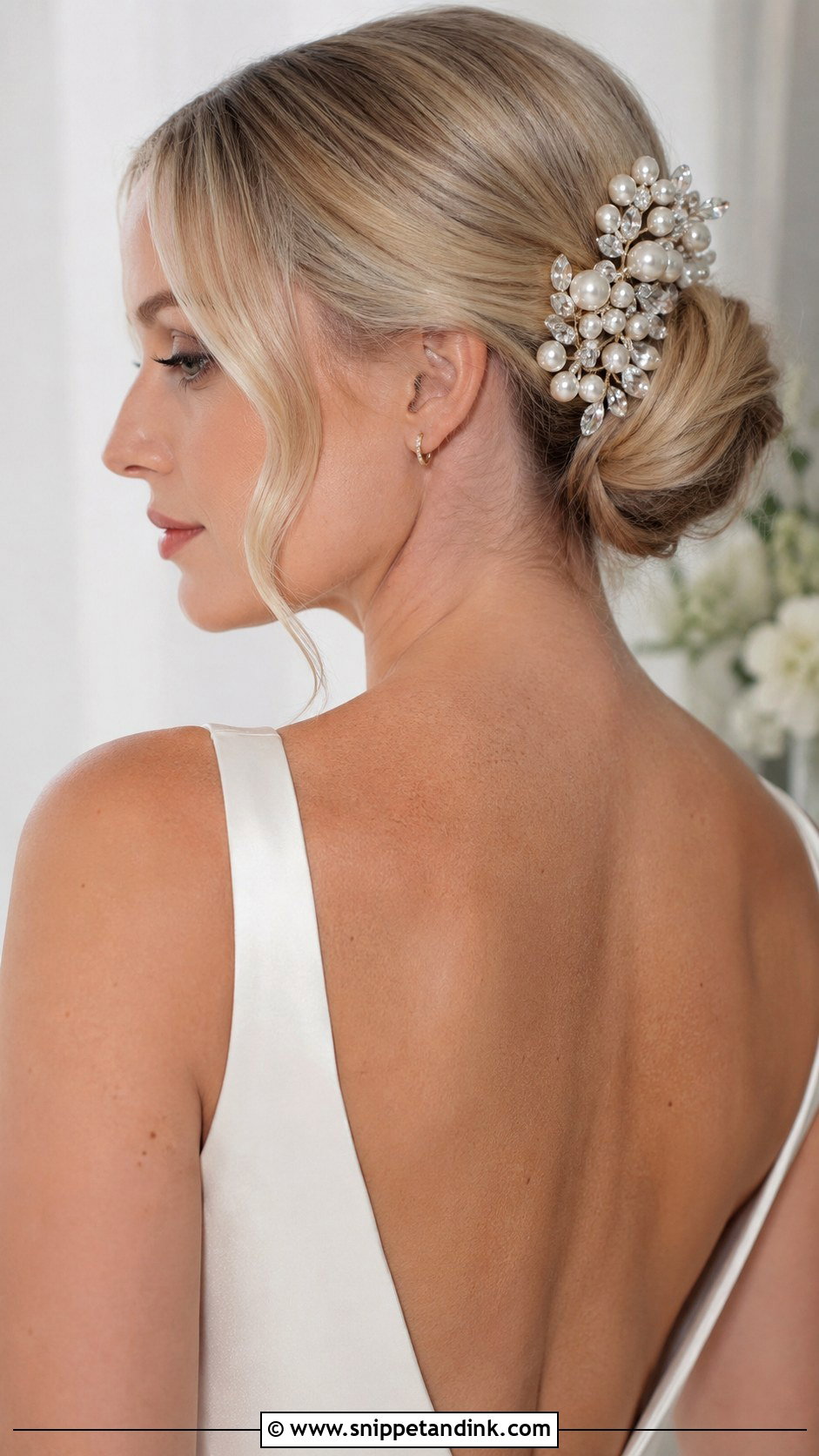
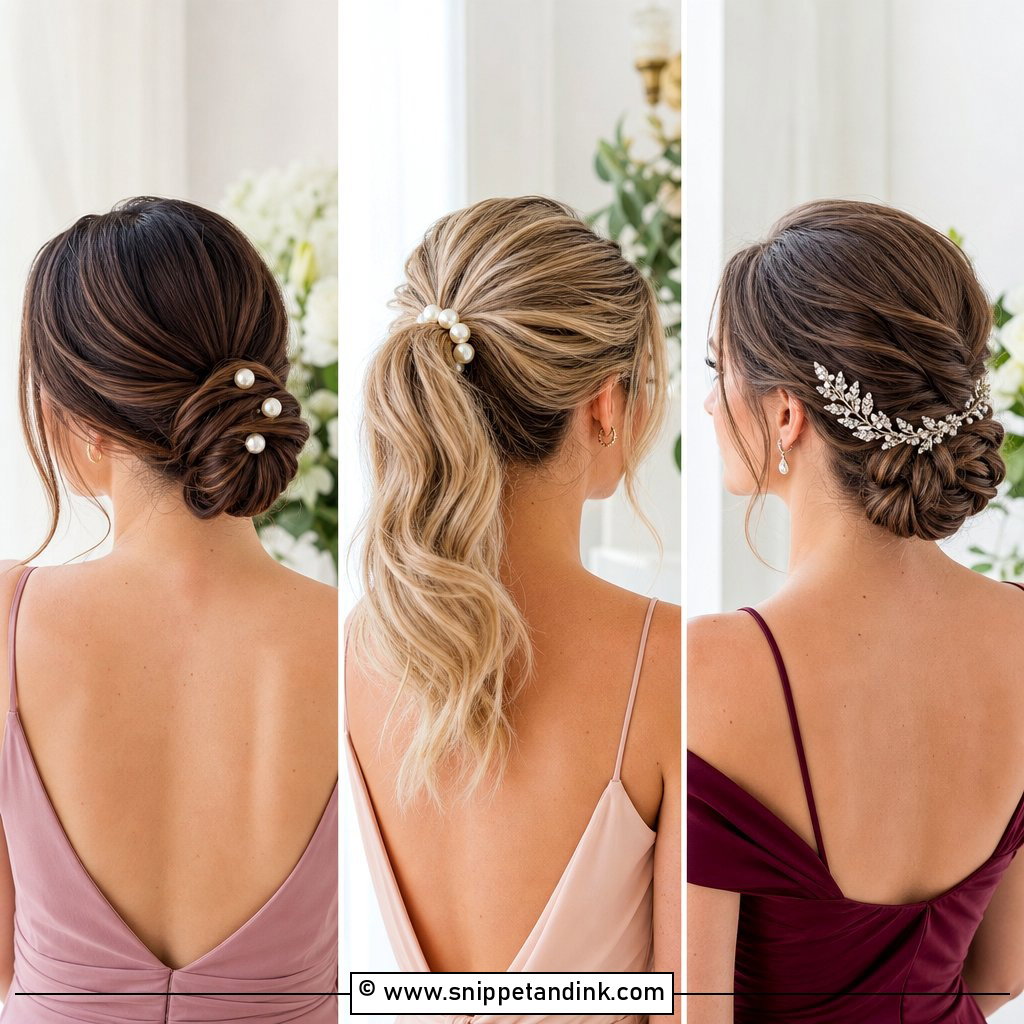
A statement clip replaces a veil or tiara, so it needs to be the only big thing in the hair. Oversized pearls, a large floral shape or a sculptural gold piece all work, as long as the style underneath is simple and smooth. Weight is the real limit. Anything heavy needs a firm pinned base and should be worn for an hour at your trial so you know whether you’ll still tolerate it at the reception.
Where the Clip Goes When the Veil, Photos and Dancing Change
A clip’s position that works for the ceremony isn’t always right for the rest of the day. I plan placement in three stages.
During the ceremony, the veil comb usually sits at the crown or just above a bun, so a clip goes lower or to the side where the tulle won’t cover it. If the veil is long and sheer, assume the clip will be blurred under it in most aisle shots.
For portraits, your photographer will often shoot your profile and the back of your head. A clip angled slightly towards the back, rather than flat against the side, catches more light from those angles.
By the reception, most people sweat, hug and dance hard. Give a bridesmaid two spare bobby pins in a matching colour. If the clip starts to tilt, she can slide a fresh pin in underneath and click it back over in less than a minute, without anyone needing to redo your hair.
Test the Clip on Real Hair, Not on a Mood Board
A clip is a small purchase, but it decides a lot about how your hair photographs and how comfortable you’ll be at hour ten. Match the metal to your jewellery and the size to your hair, then take the actual clip to your trial so your stylist can find its spot and build an anchor under it. Wear it there for a while. If it’s still straight and still comfortable an hour later, you’ve found the right one.
You'll Like These Ideas:


Leave a Reply