
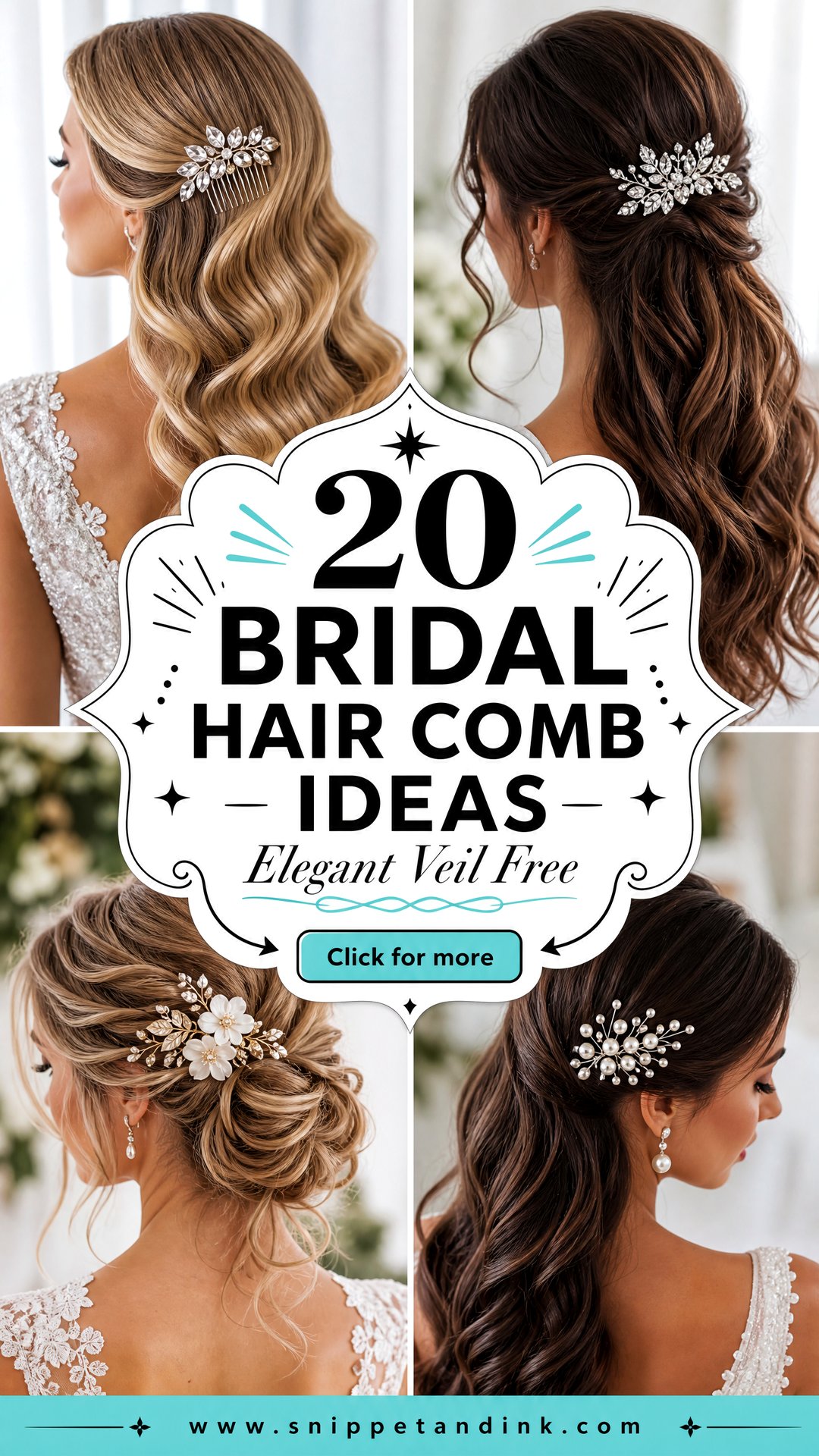
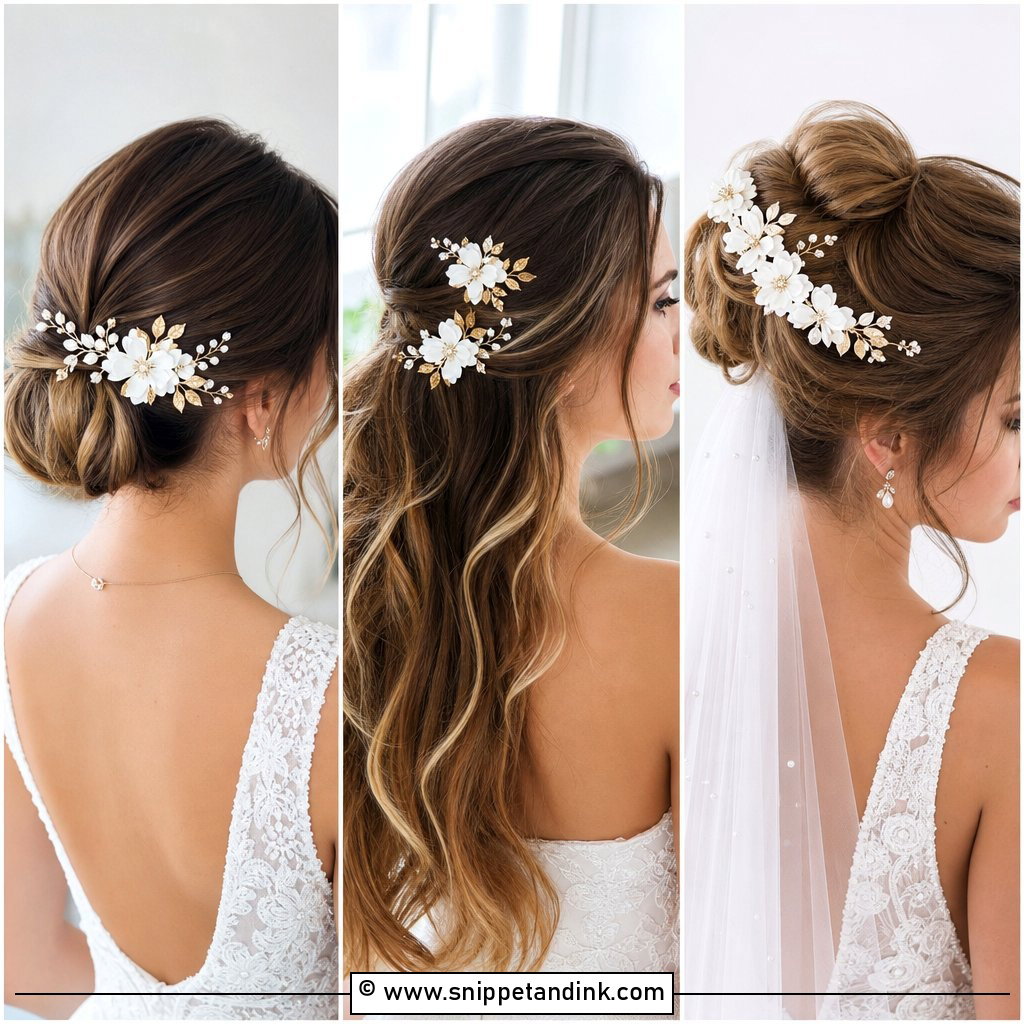
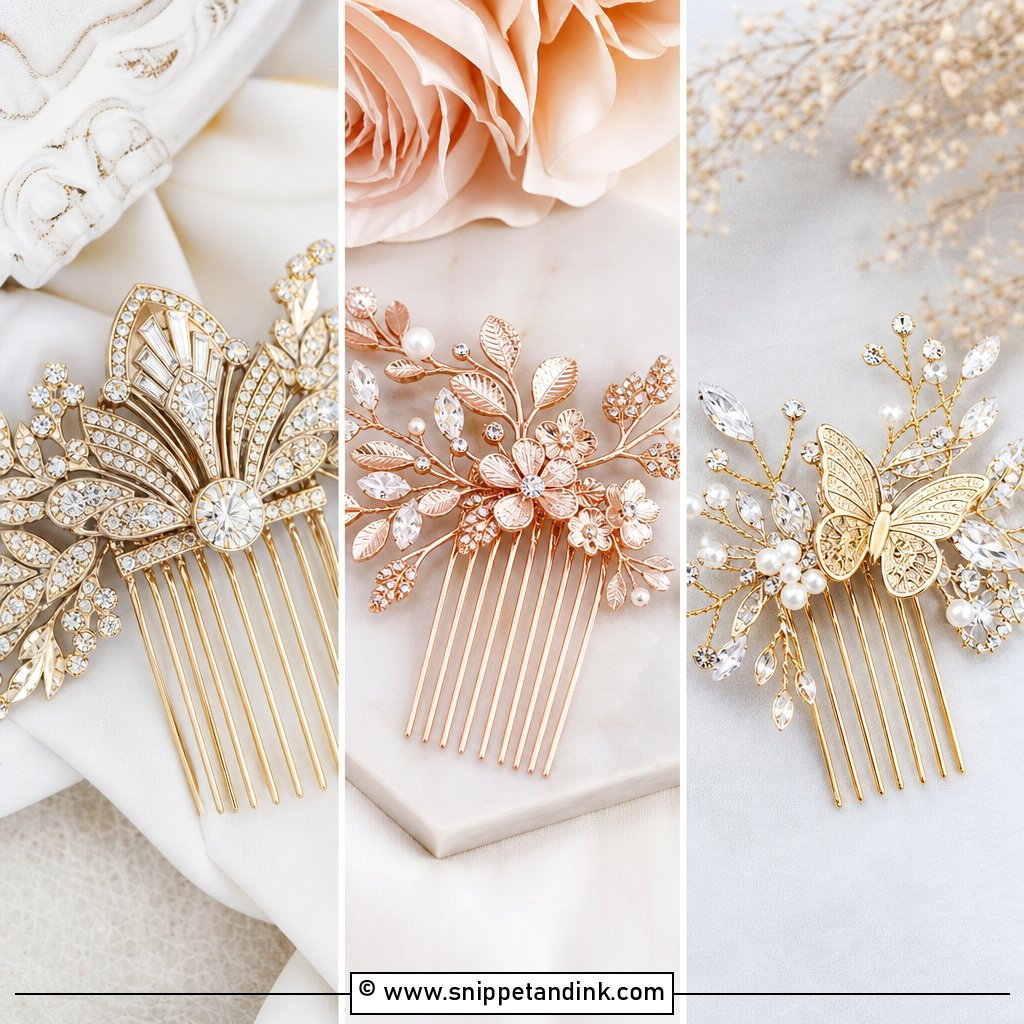
A comb is small, but it does two jobs at once: it finishes the shape of the style and it hides the pins and elastics that hold that shape together. I reach for one when a bride doesn’t want a veil, or wants something left in her hair once the veil comes off at the reception. Combs work on long and short hair, straight and coily, though how I anchor one changes a lot depending on texture. Below are twenty pairings I’d actually build, with notes on where each comb sits, what it grips into and who should skip it, so you can find a match for your dream day.
Why Some Combs Slide Out by Dinner and Others Don’t
A comb doesn’t hold hair on its own. It holds onto whatever is underneath it, so the work happens before it goes in. On thick or textured hair, the style itself usually gives enough grip. On fine, silky or freshly washed hair, I build a small anchor first: either a crossed pair of bobby pins or a little backcombed section, sprayed and pinned flat.
Then the insertion matters. I hold the comb teeth pointing up and away from where it will finally sit, slide it into the hair, flip it over and push it home so the teeth hook under the anchor. That flip is what stops it from working loose when you hug people, dance or lean back in a chair.
- Day-old hair grips better than hair washed that morning. If you must wash, ask your stylist for a texturizing spray at the roots where the comb goes.
- Metal teeth can be bent very slightly inward to tighten their hold. Plastic and tortoiseshell teeth can’t, so they need a better anchor.
- Short teeth suit fine hair; long teeth only help if there is enough hair to bury them in.
- Spray first, comb second. Hairspray can leave a cloudy film on crystals and wear down the coating on faux pearls.
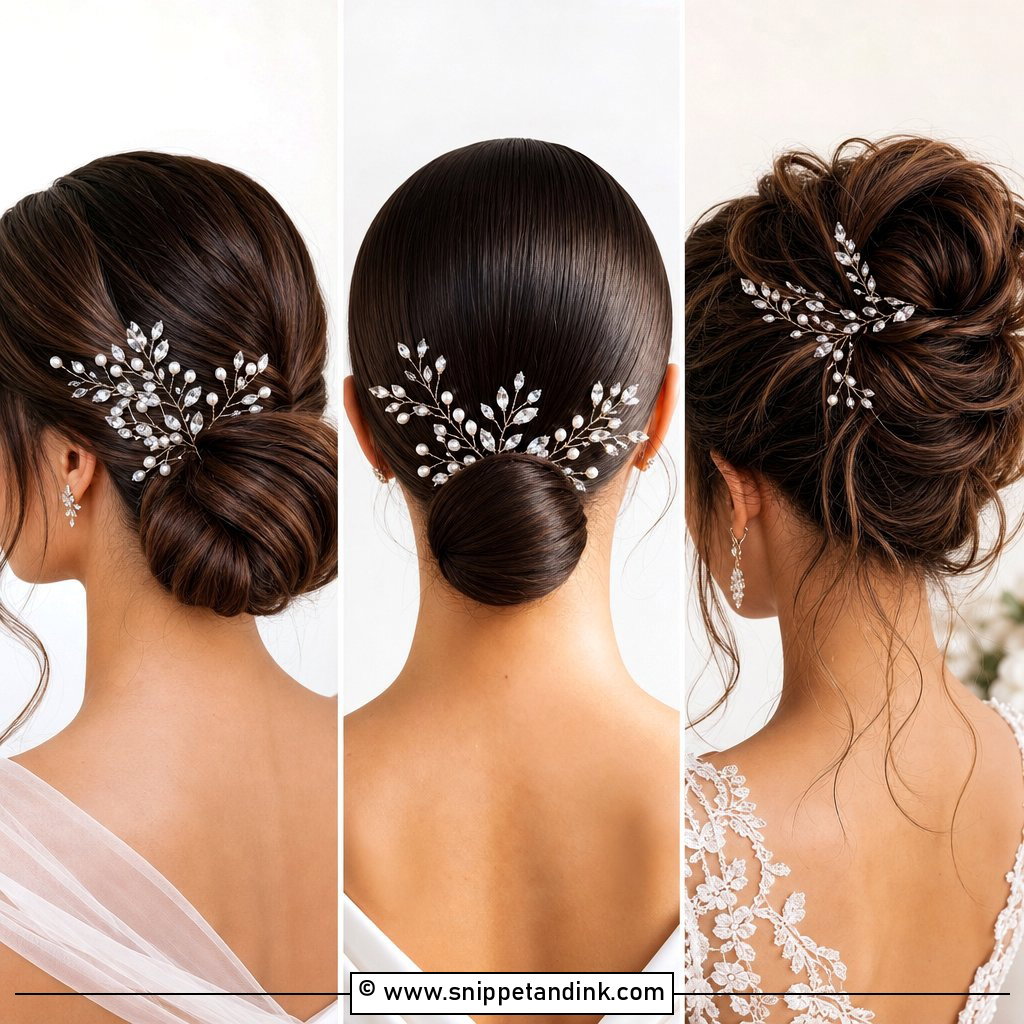
1. Pearl Comb With Low Bun
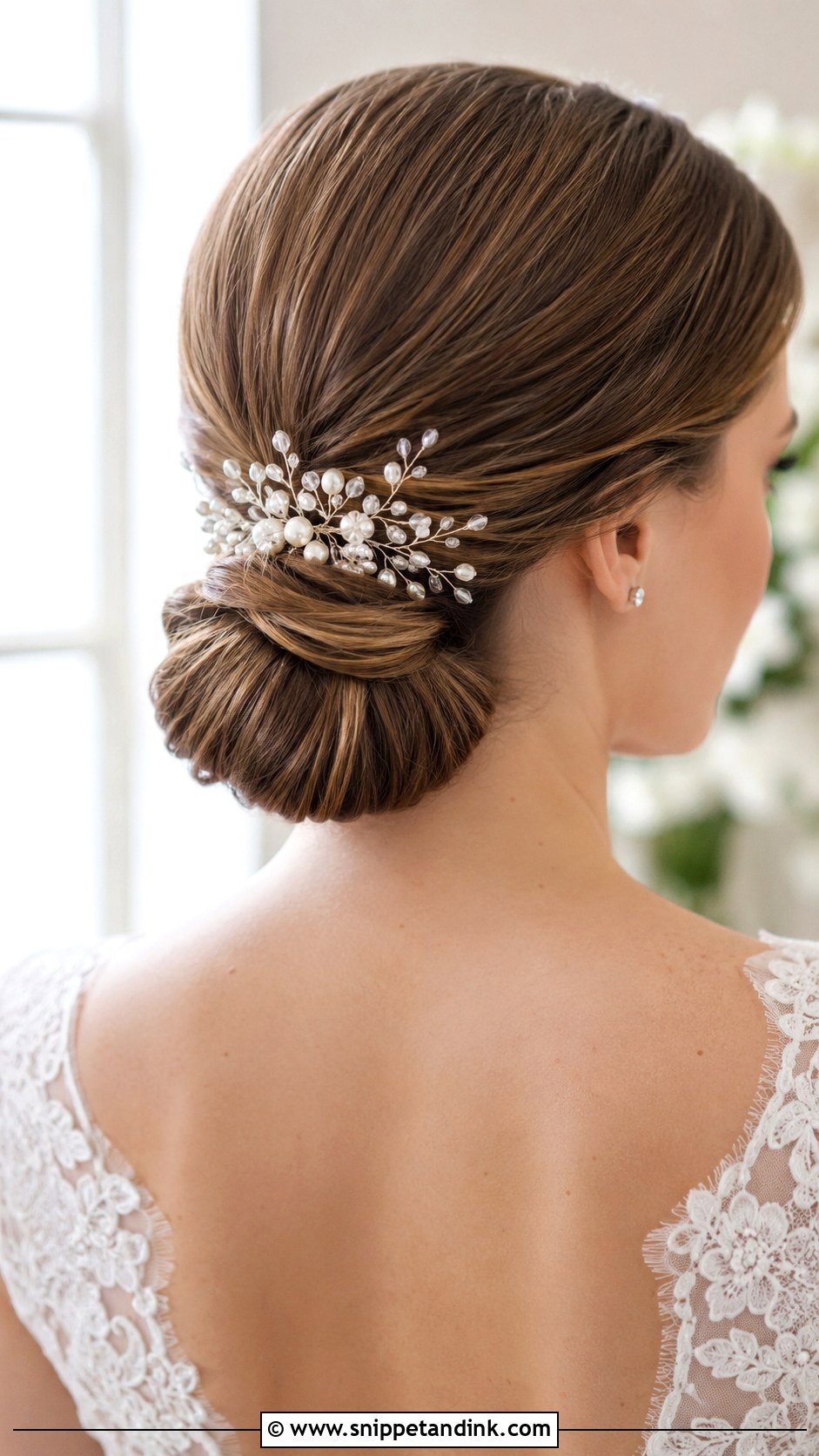
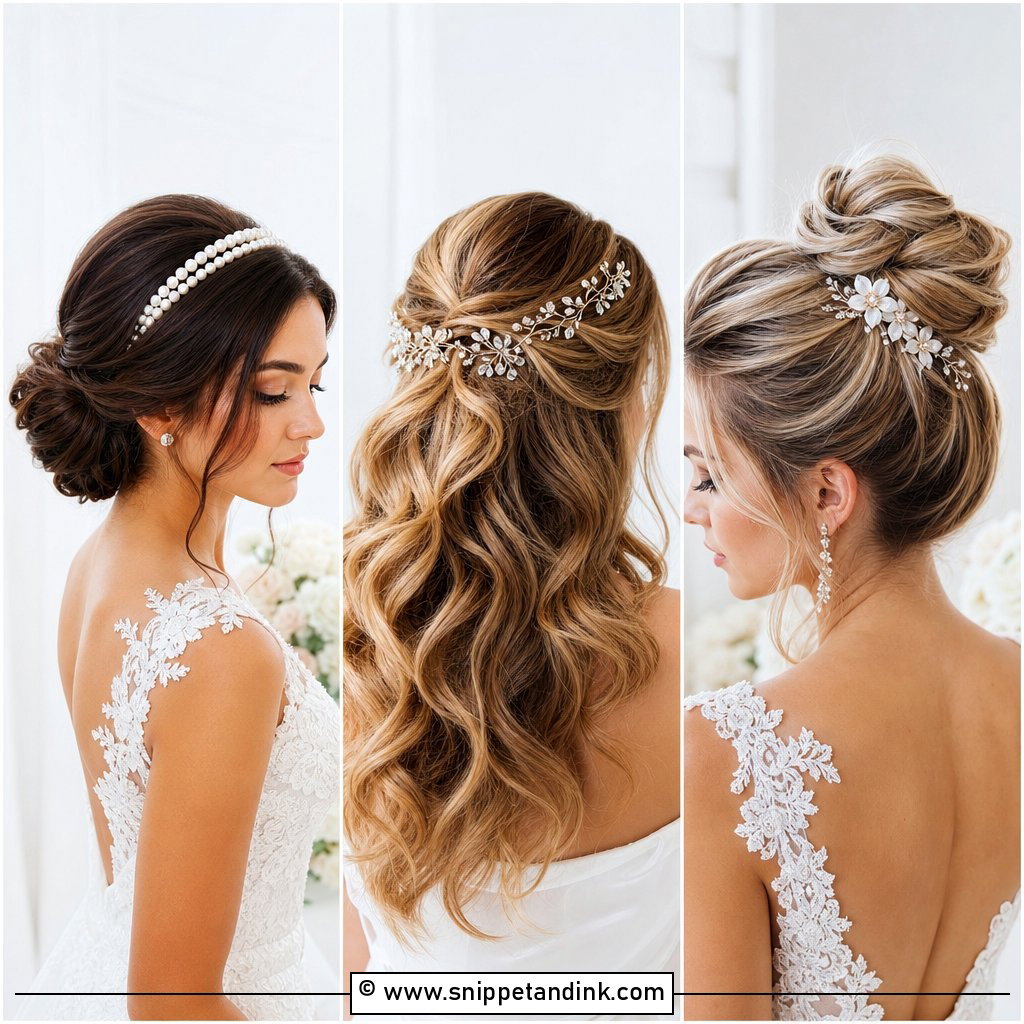
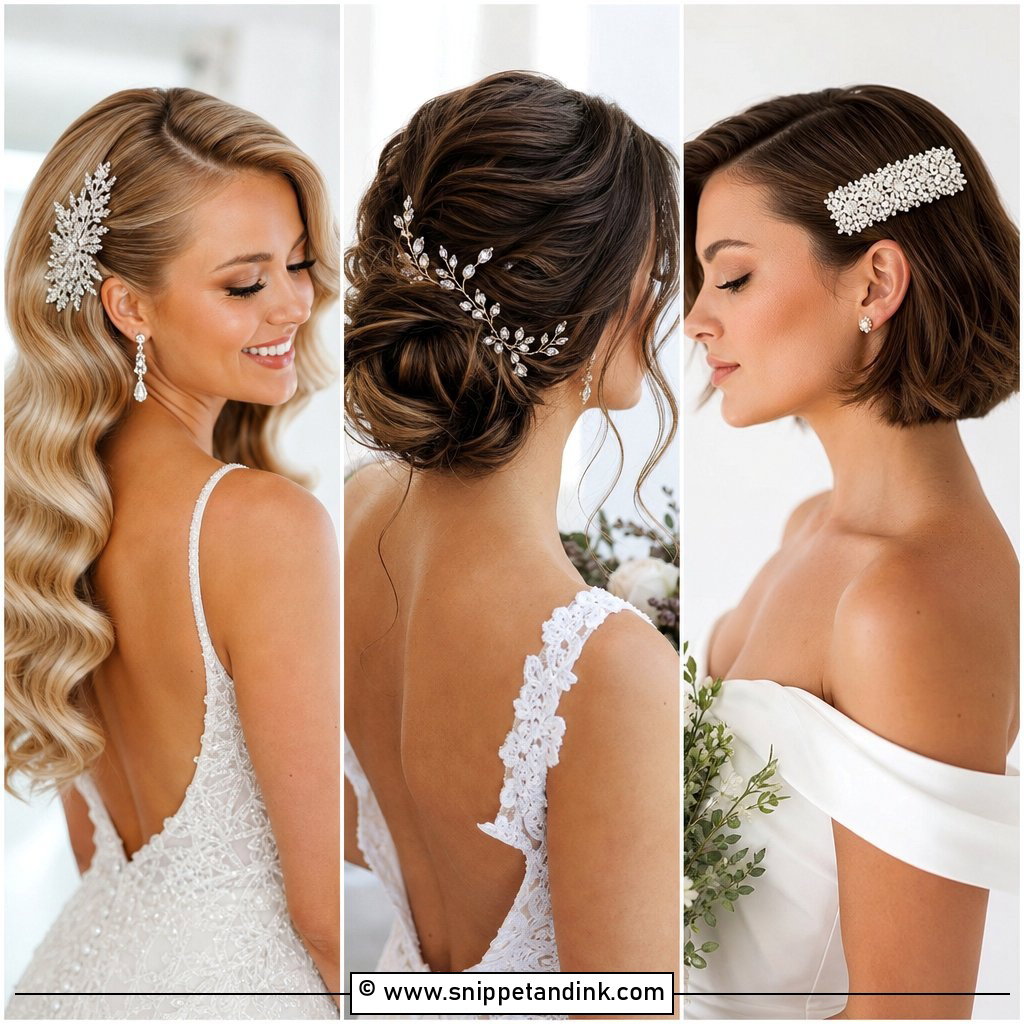
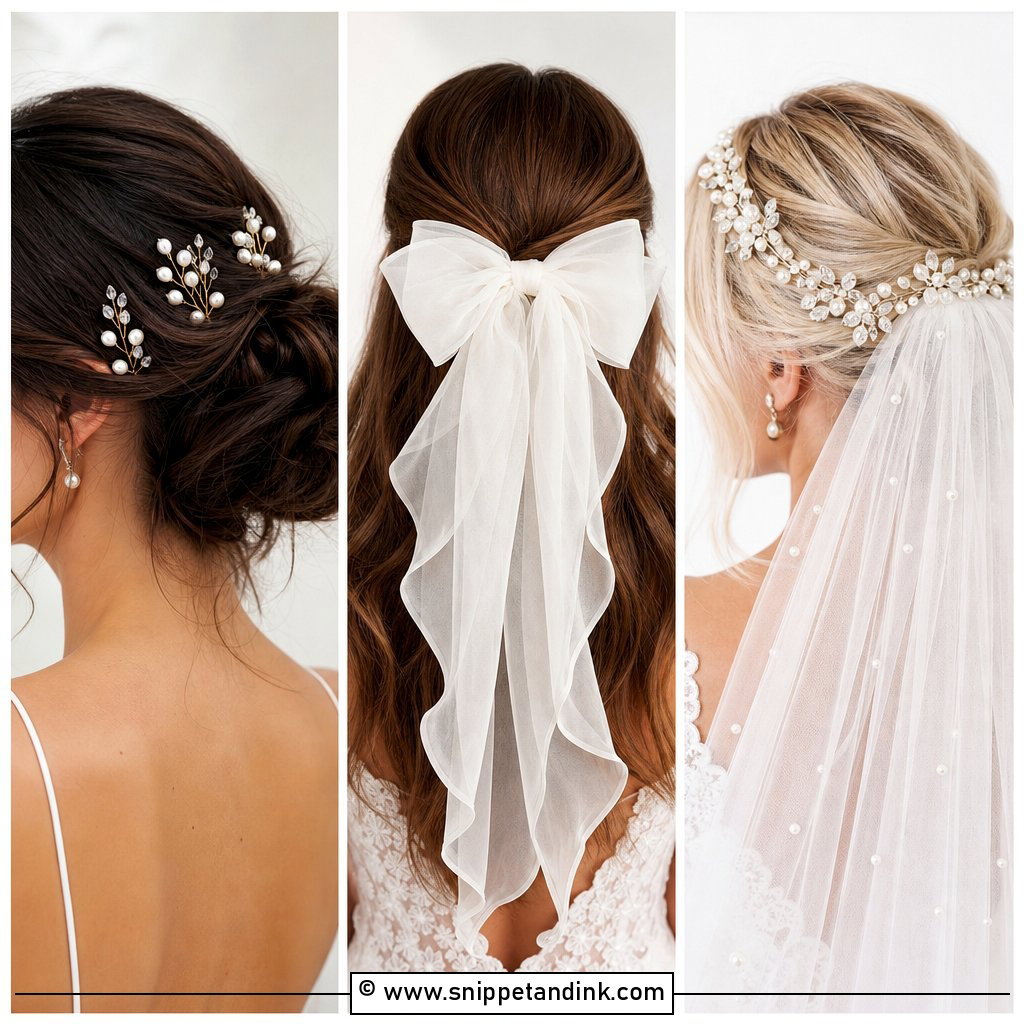
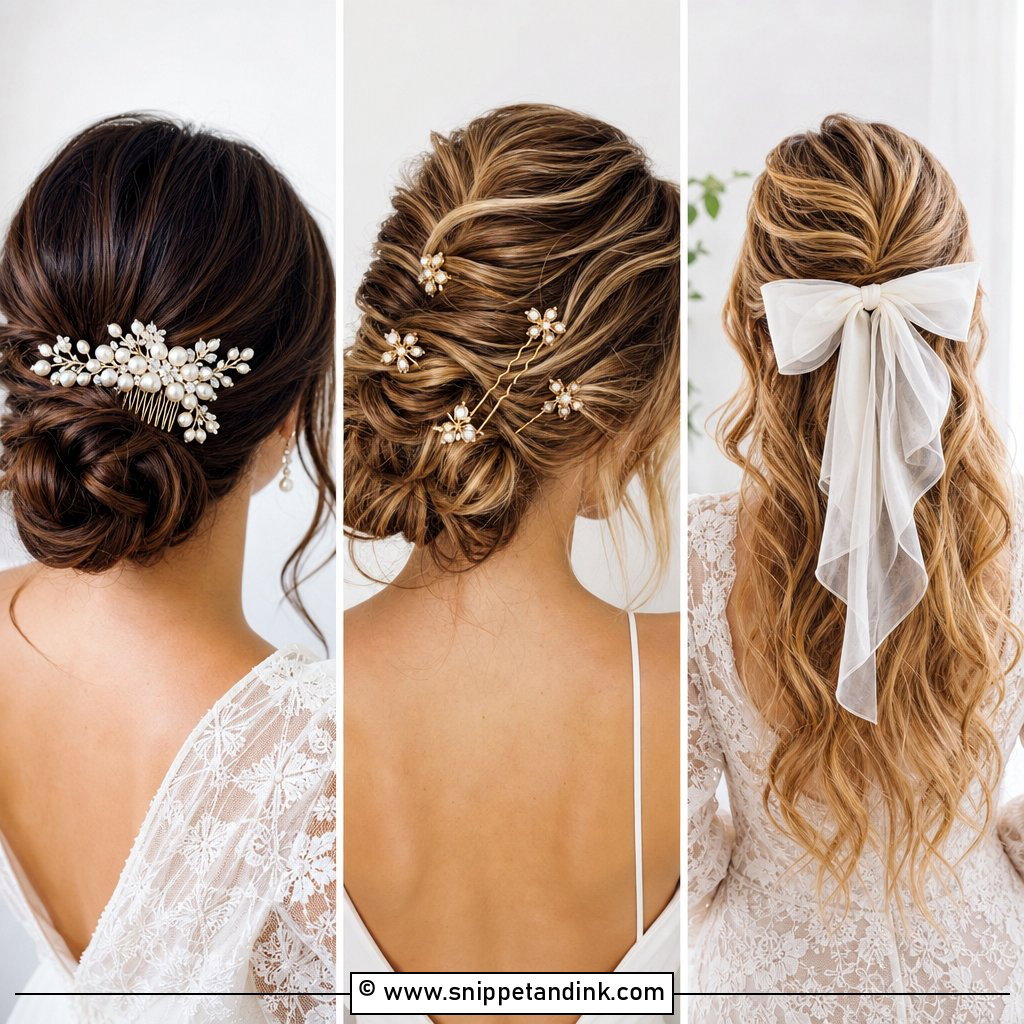
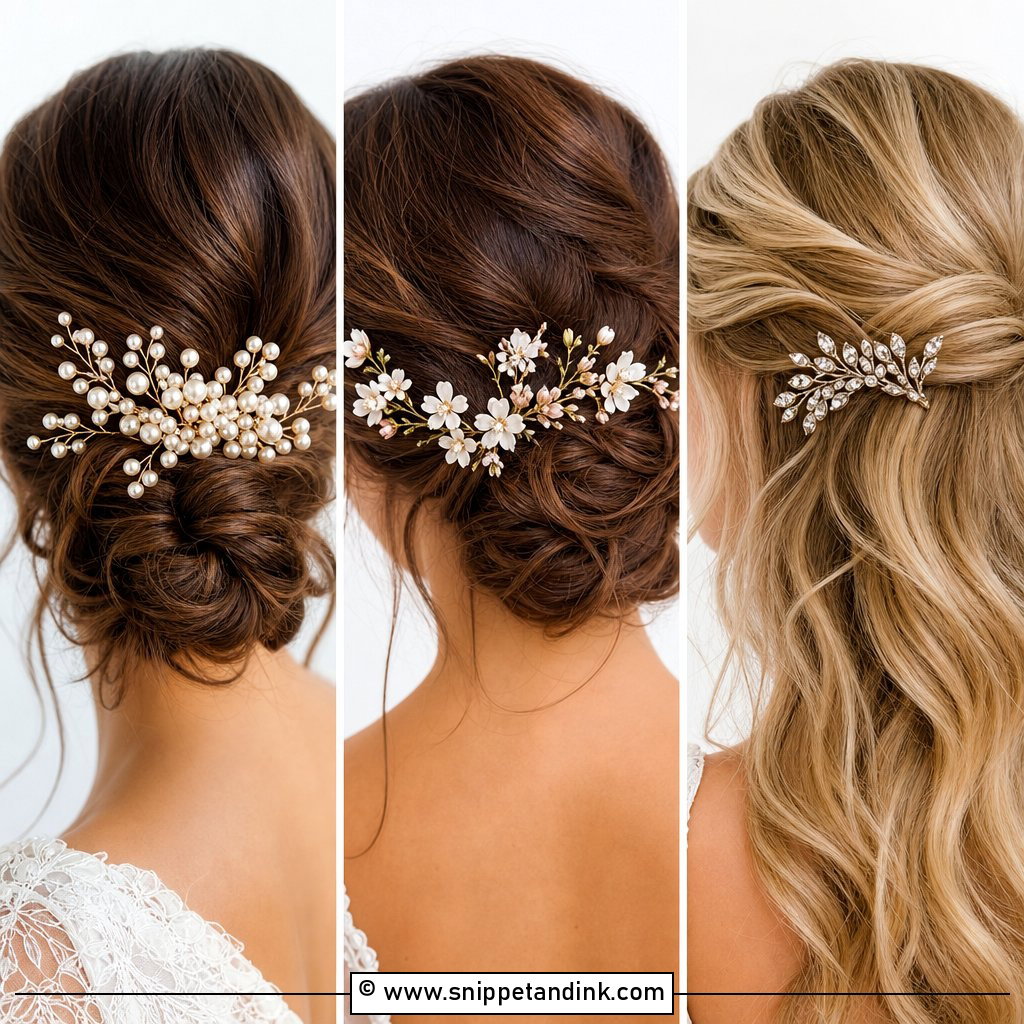
A low bun is the easiest home a comb will ever have, because the bun gives the teeth something dense to bite into. I slide pearls in just above the bun, angled so the curve of the comb follows the curve of the head; placed flat, it tends to stick out at the ends. Smooth or slightly textured both work. If a veil is going on for the ceremony, I set it underneath the bun first and add the comb after, so the comb can stay put when the veil is lifted out.
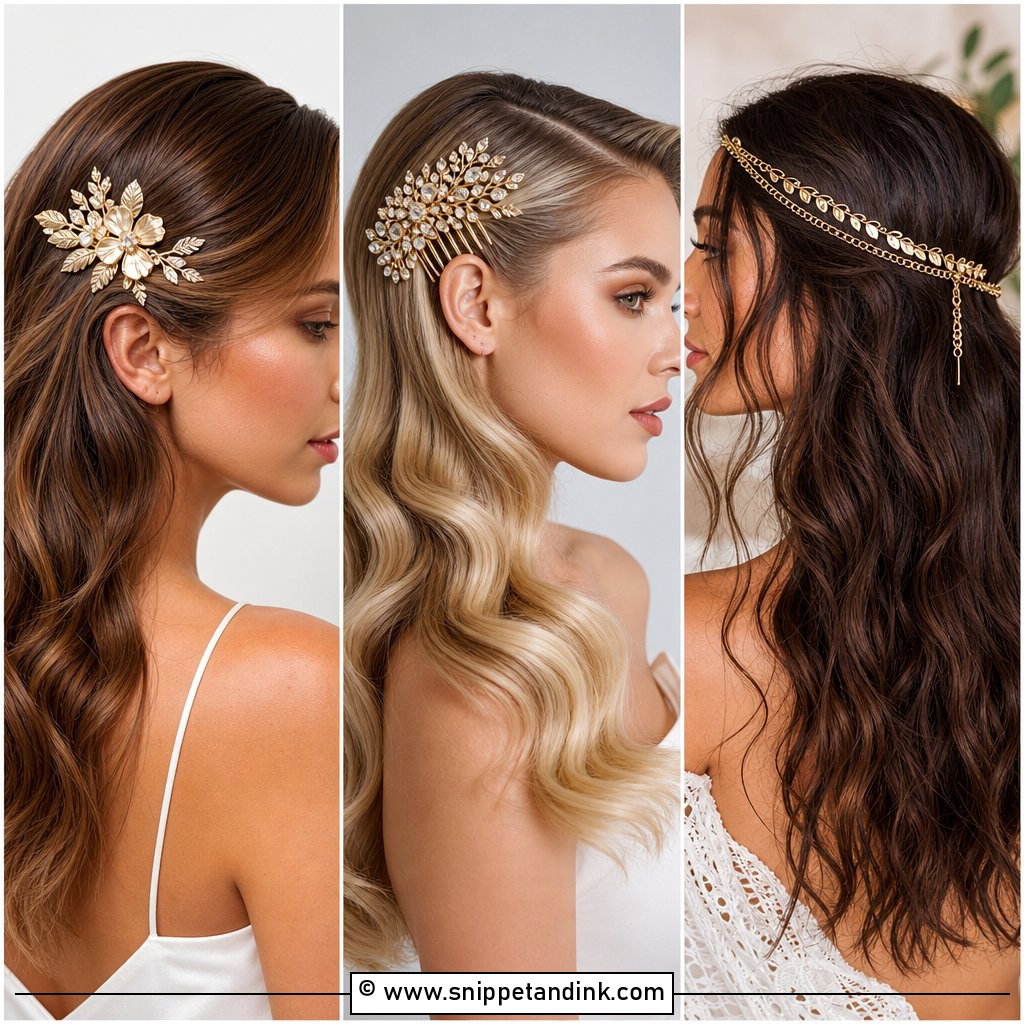
2. Crystal Comb With Hollywood Waves
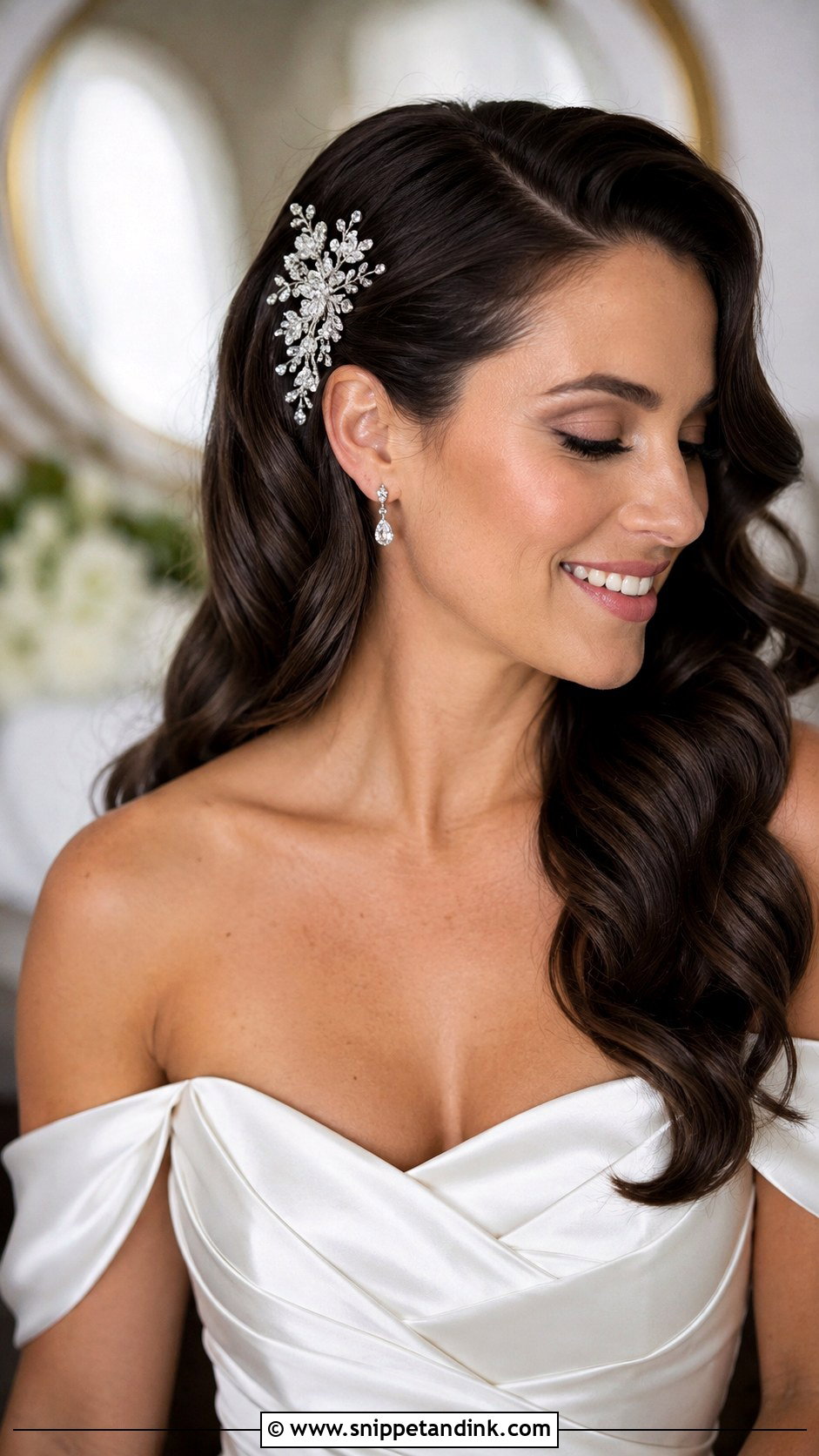
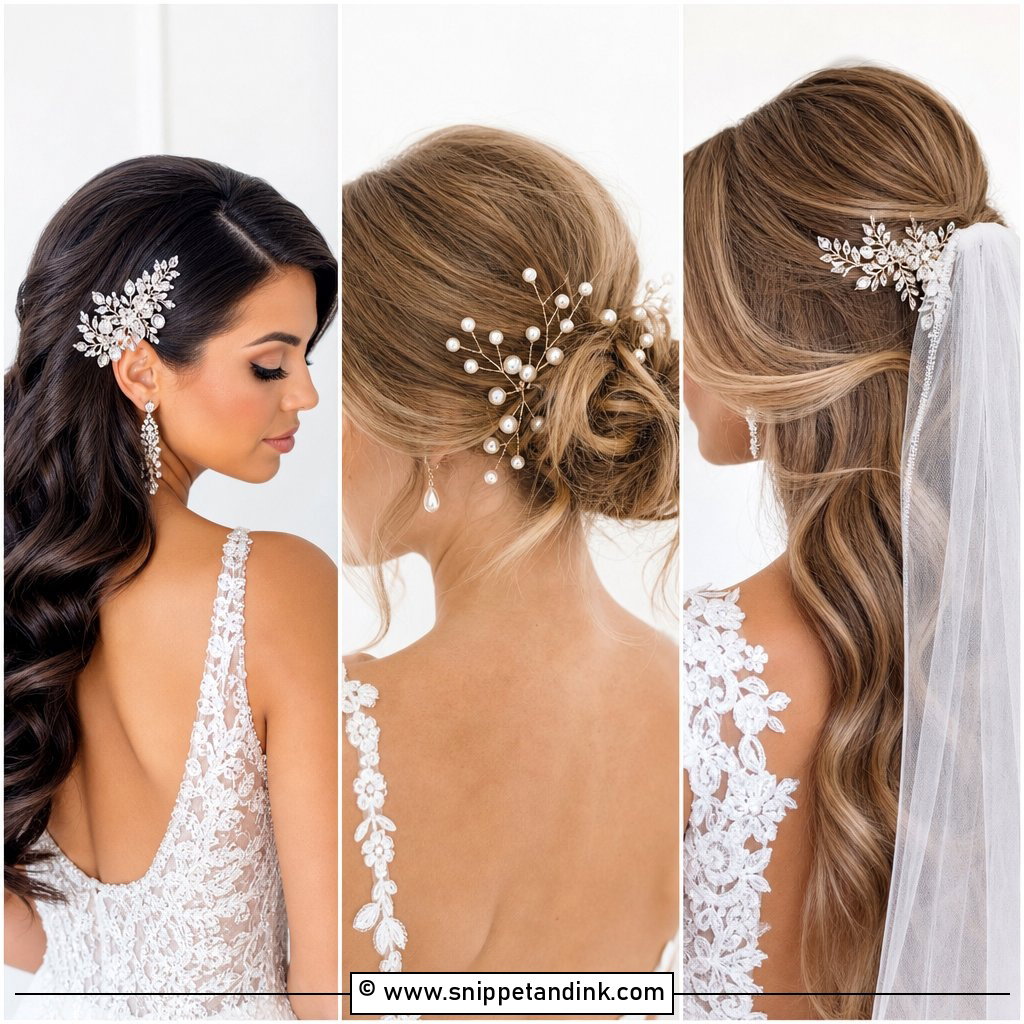
Old Hollywood waves are brushed into one glossy panel, which is exactly why they’re tricky for a comb: brushed hair is slippery. I sweep everything to one side and pin a hidden X of bobby pins just above the ear before the comb goes in, then push the crystals through the wave so the teeth lock behind that cross. It needs medium to long hair and a shiny finish to read properly. Keep earrings small; the comb is already doing the talking on that side of the face.
3. Floral Comb With Boho Braid
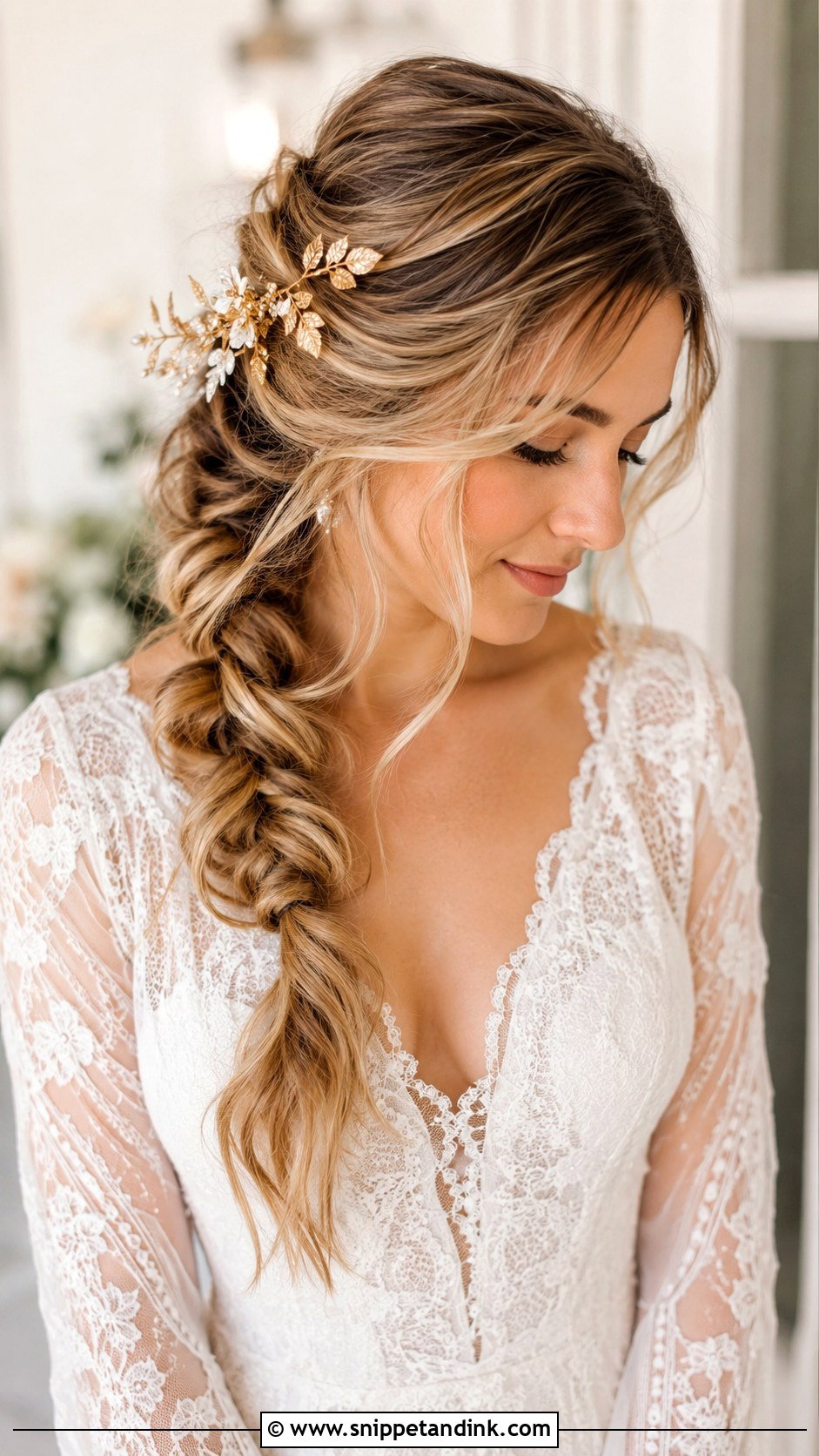
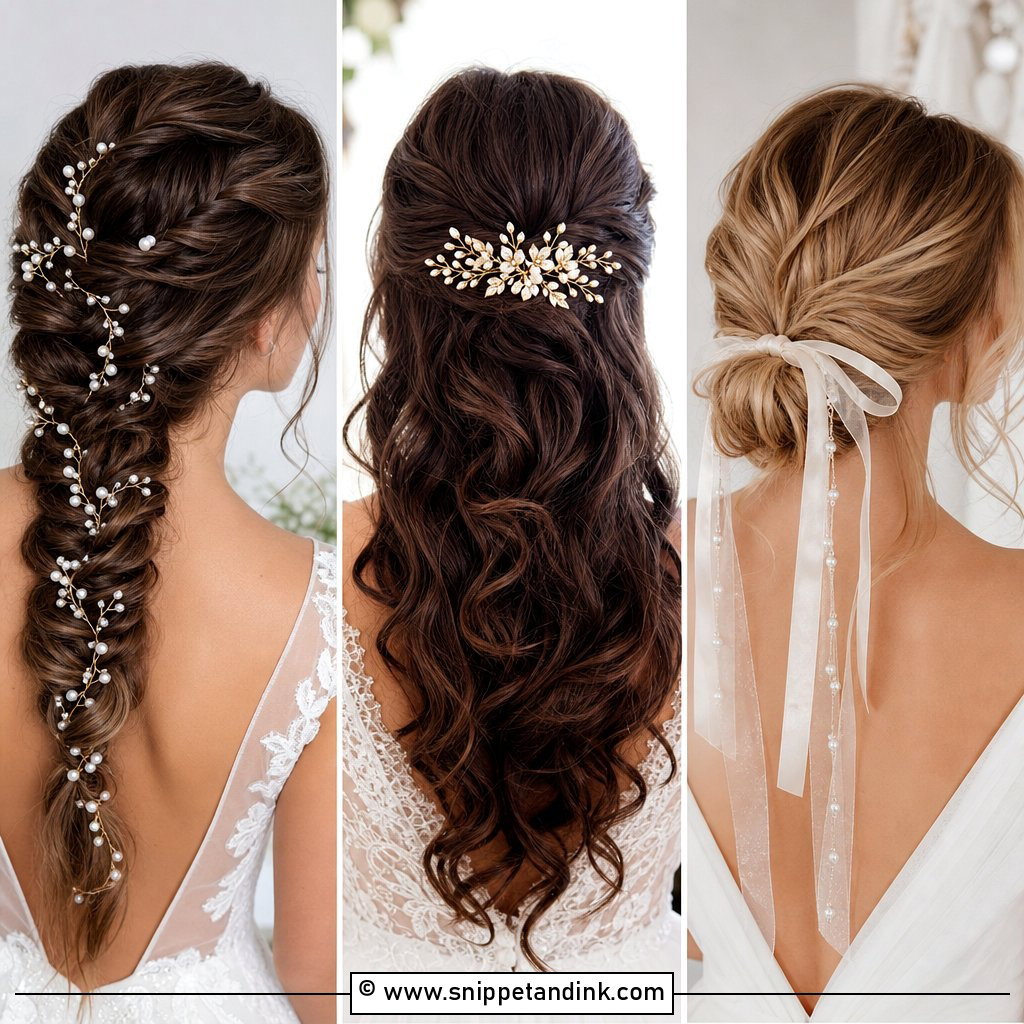
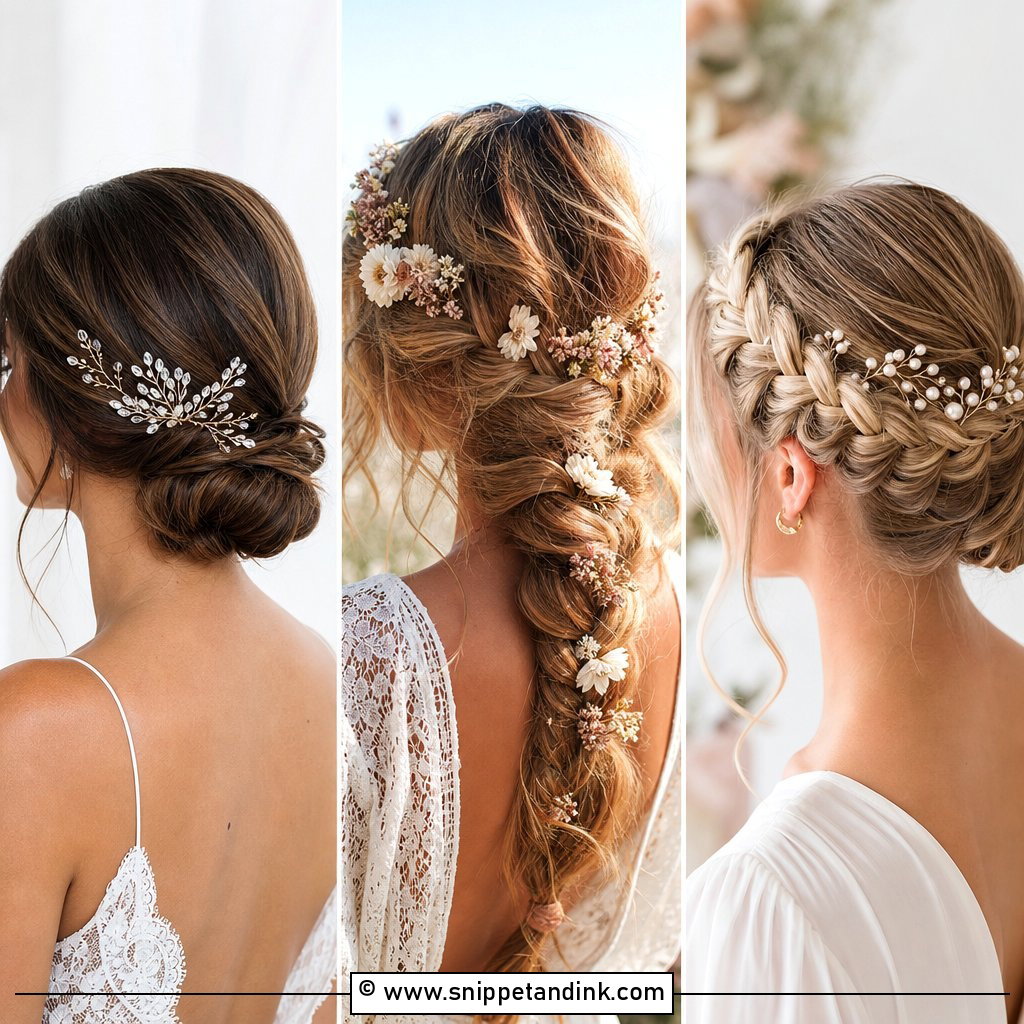
A relaxed braid already has grip built in, so a floral comb sits in it with very little help. I tuck metallic flowers or leaves into the side of the braid where it is thickest and leave a few face-framing pieces loose. Gold-toned flowers suit warm palettes and silver suits cooler ones. One honest caution: a braid pulled very loose for the photos loses tension, and a heavy floral comb can drag it down by evening, so I keep the section around the comb a little firmer than the rest.
4. Vintage Comb With French Twist
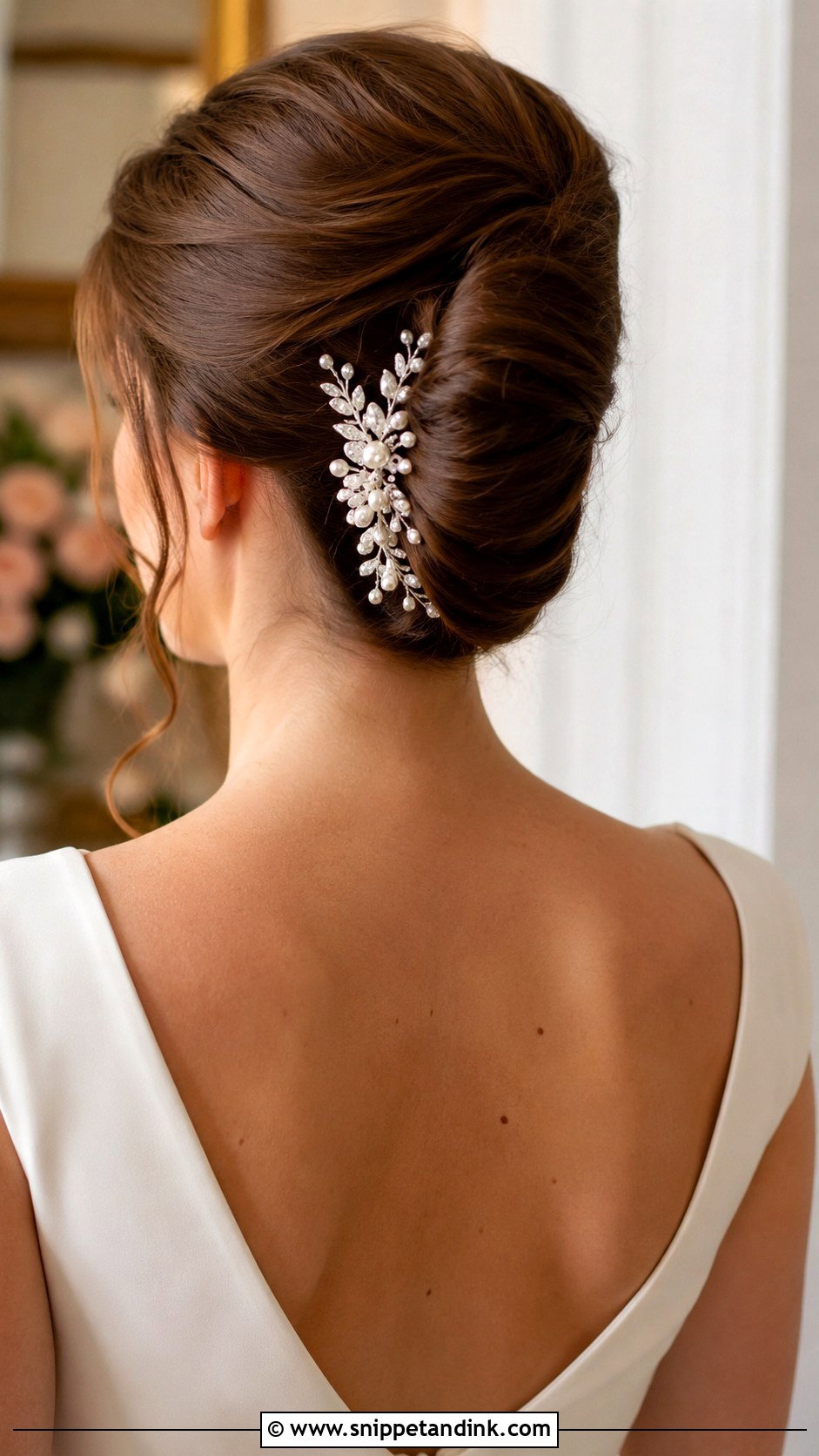
The fold of a French twist is the most secure spot on the whole head for a comb. That seam is packed with pins already, so I slide an ornate vintage comb with swirling metalwork and small pearls straight along it, teeth tucked into the roll. This shape keeps hair completely off the neck, which brides at warm summer ceremonies appreciate by mid-afternoon. A silver finish with rhinestones suits the clean lines, and statement earrings balance it from the front.
5. Rhinestone Comb With Half-Up Style
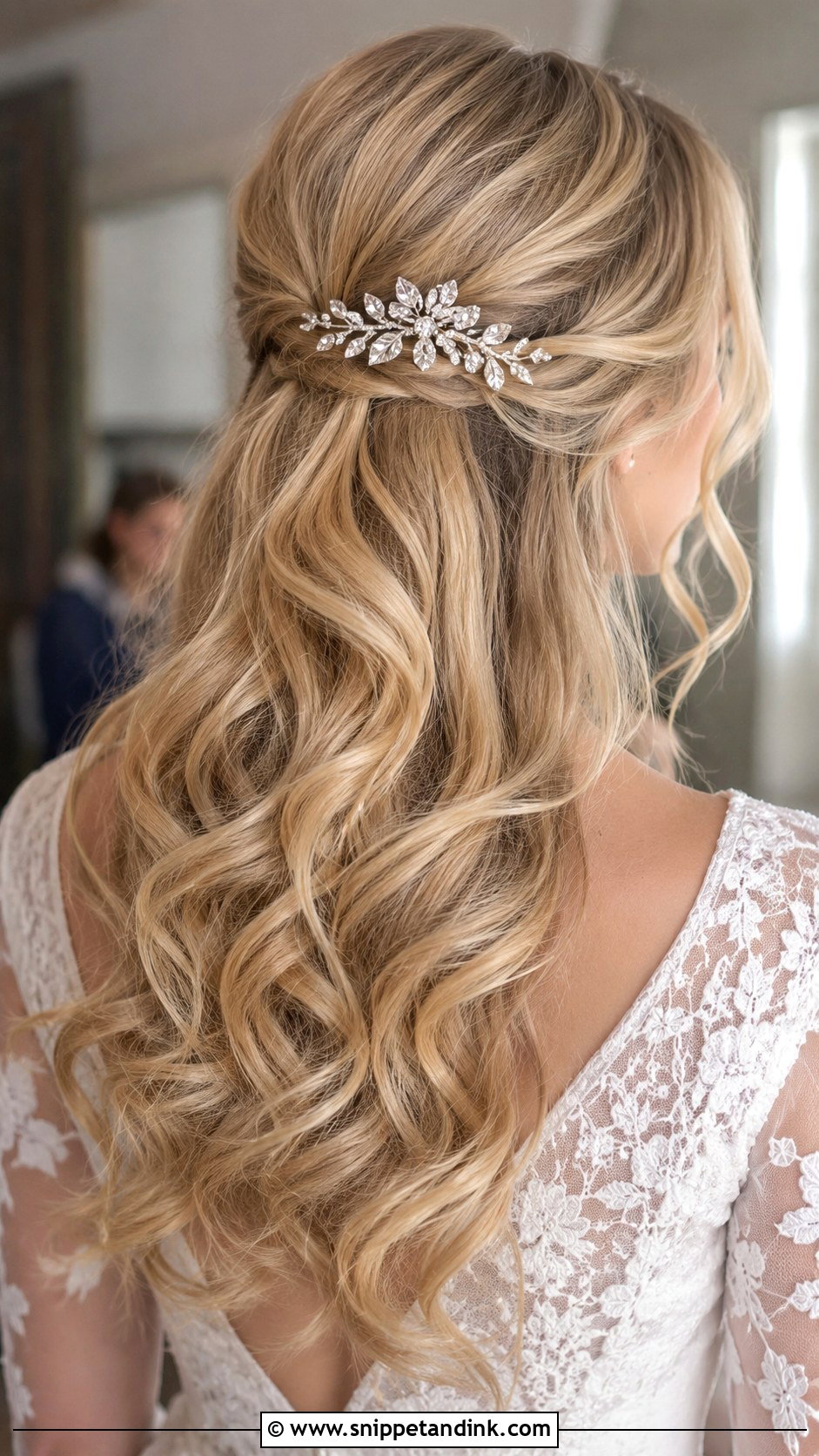
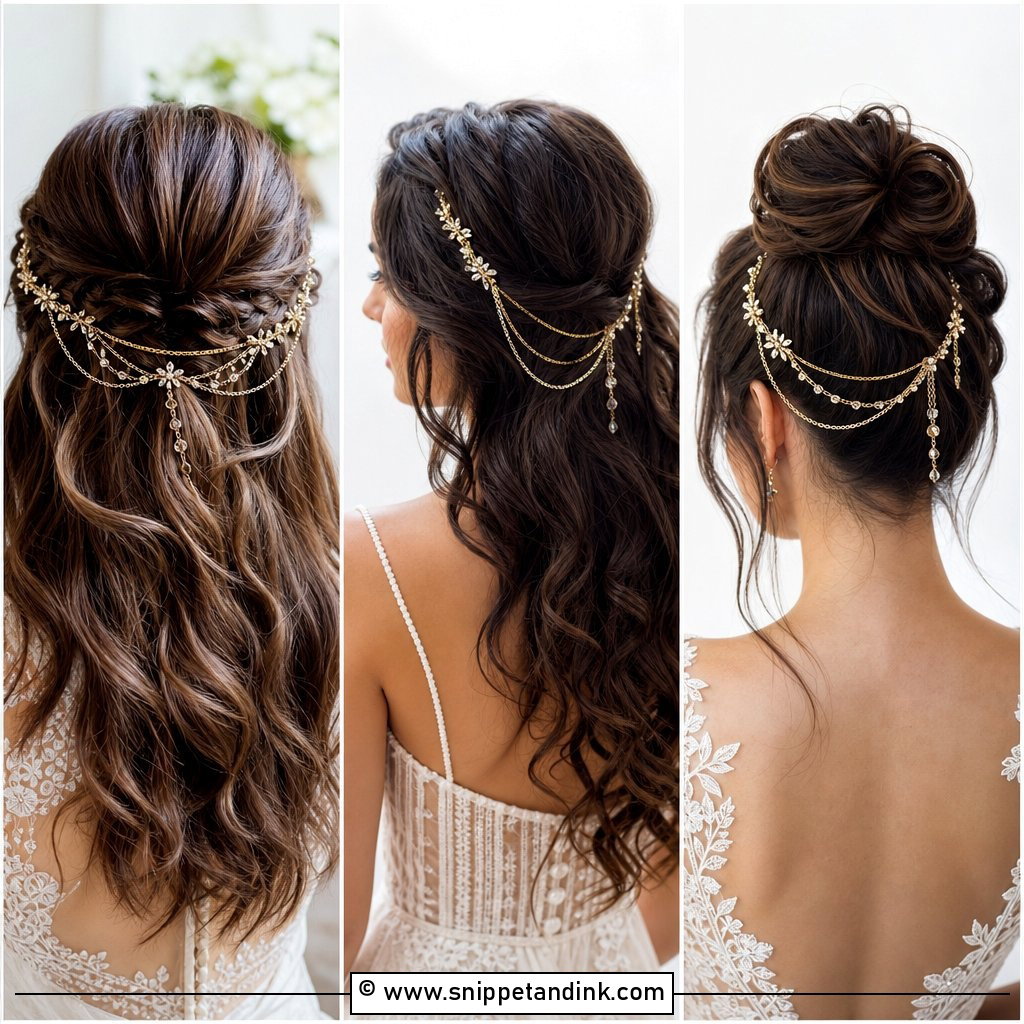
Half-up is the style I’m asked for most, and the comb solves its weakest point: the elastic at the back. Gather the top section, secure it, then tuck a sparkling rhinestone comb right over the join. Long, wavy hair carries it best. The catch is that the loose lengths underneath move all day, so I always use a comb with a slight curve and slide it in against the direction of the pull, otherwise the weight of the hair below eases it out over a few hours.
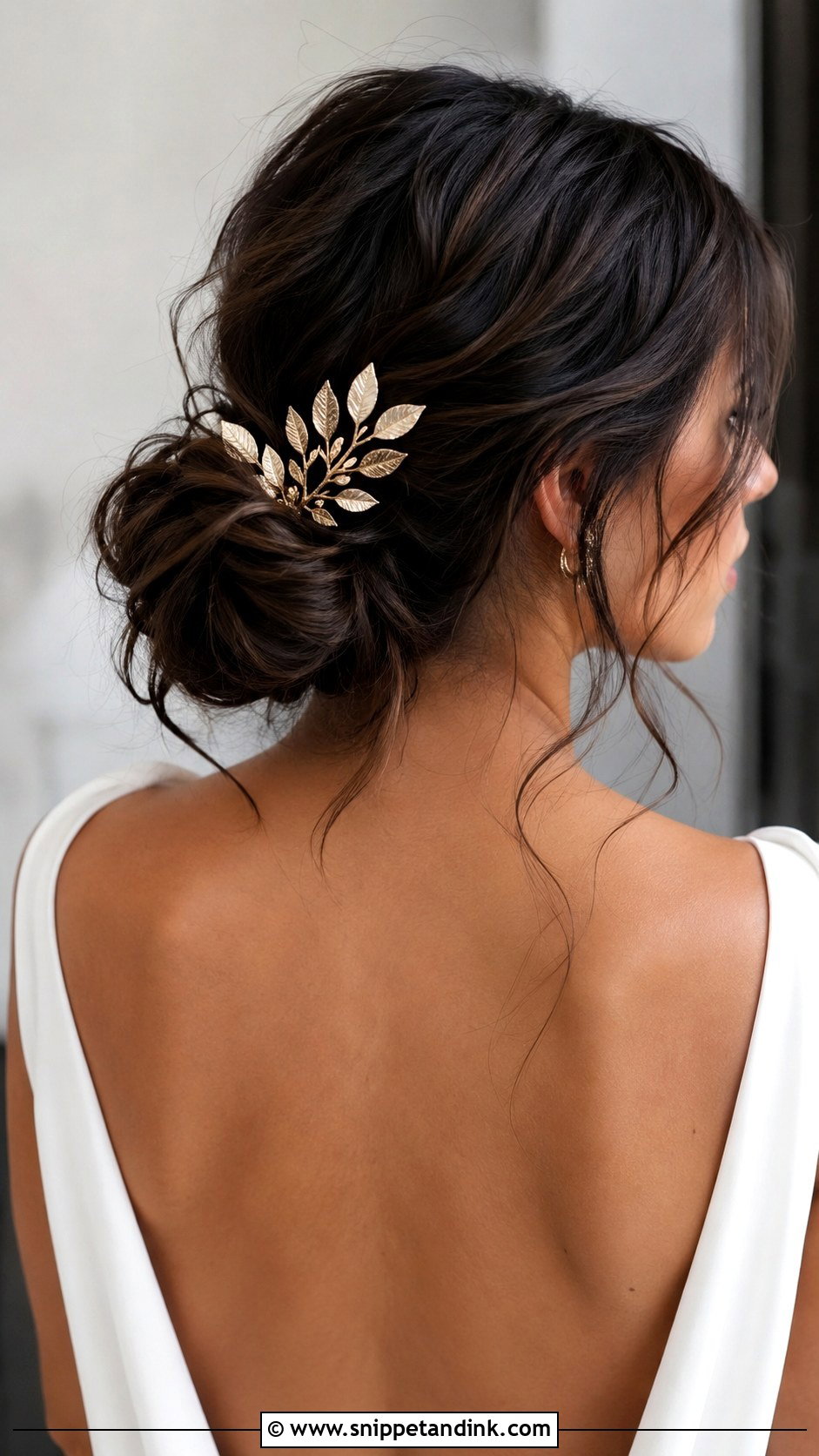
6. Gold Leaf Comb With Side Bun
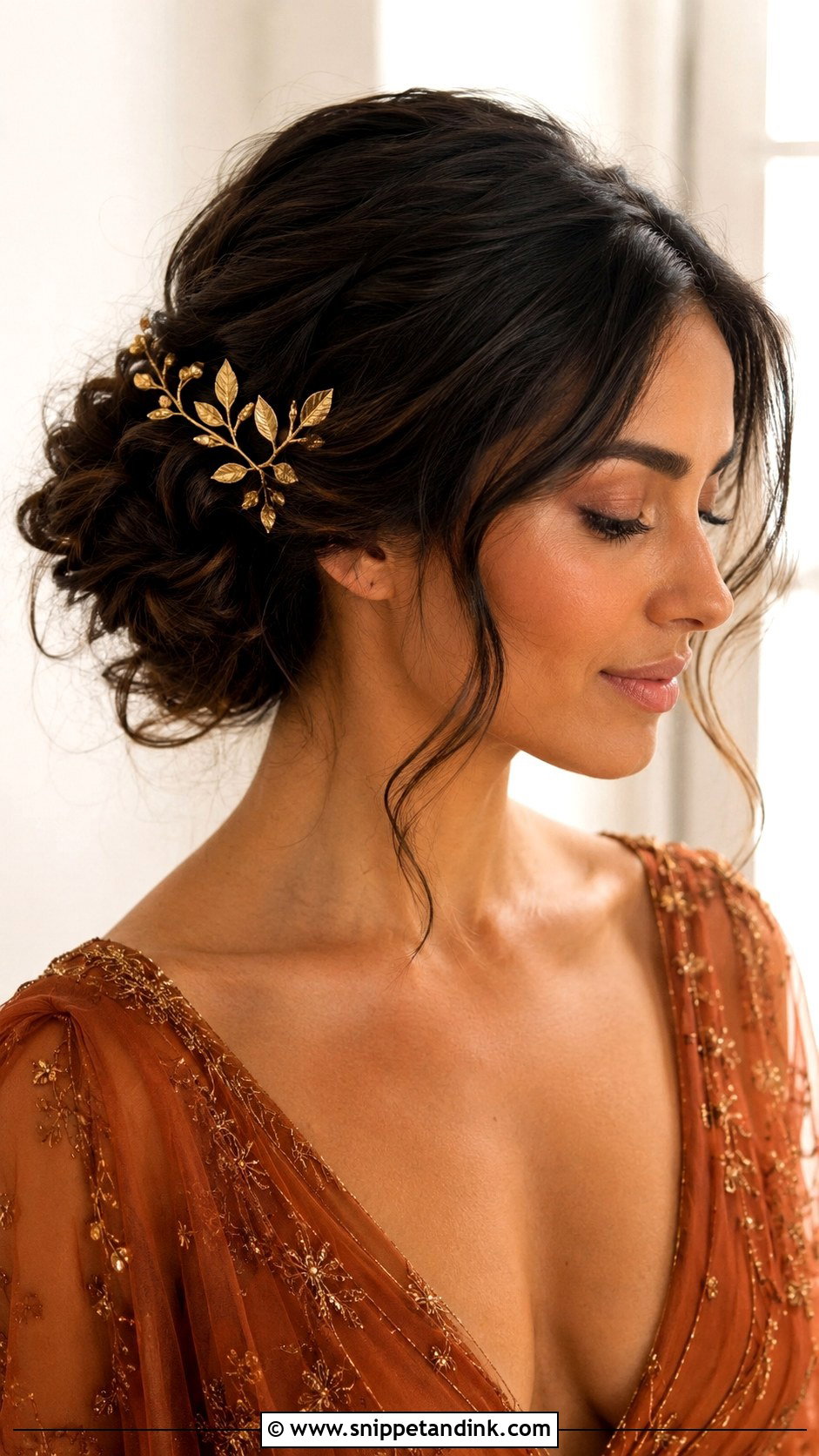
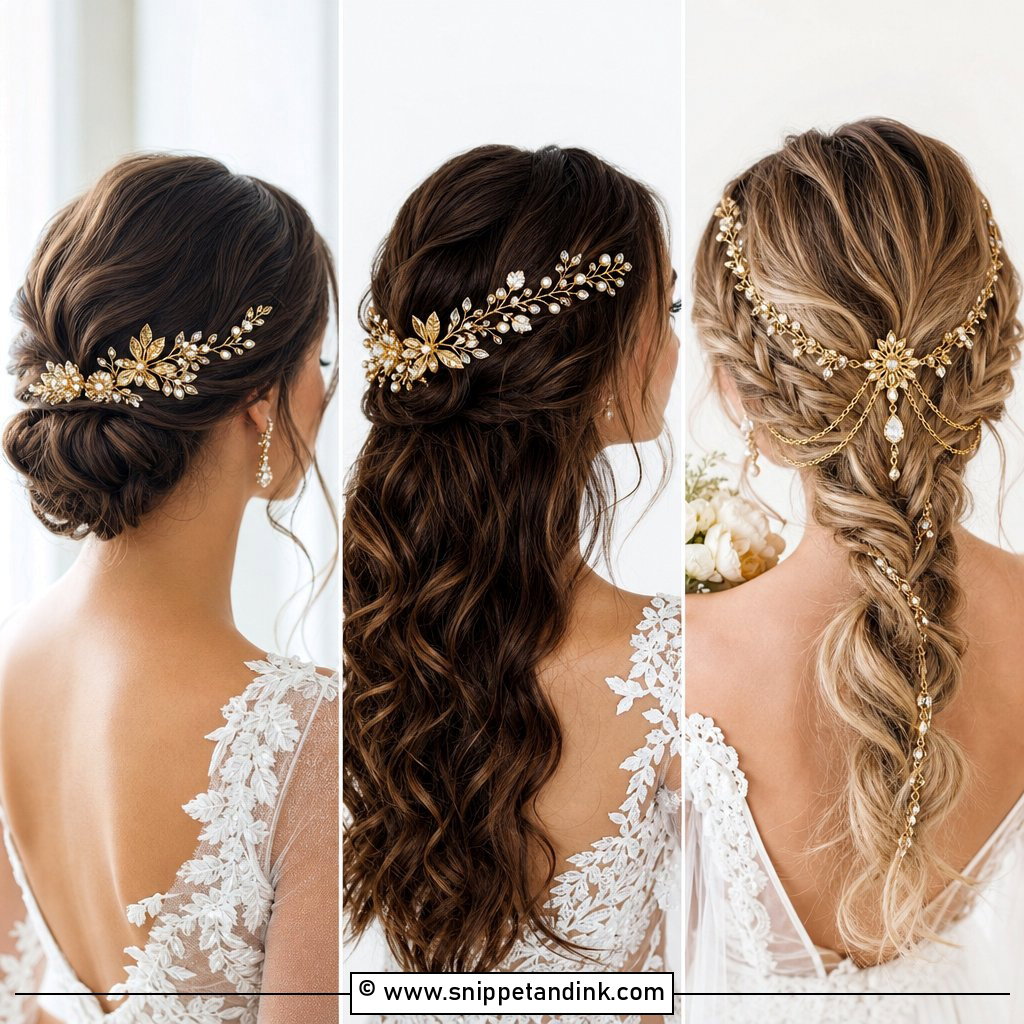
A side bun sits lower and more to one side than most brides expect, resting near the neck rather than behind the ear. I tuck a gold leaf or vine comb where the bun meets the rest of the hair, curving it along the top edge. Warm gold sits well against golden and olive skin, and the leafy shape suits vineyard and autumn settings. Check your dress neckline first. A high or one-shoulder neckline on the bun side can crowd the comb.
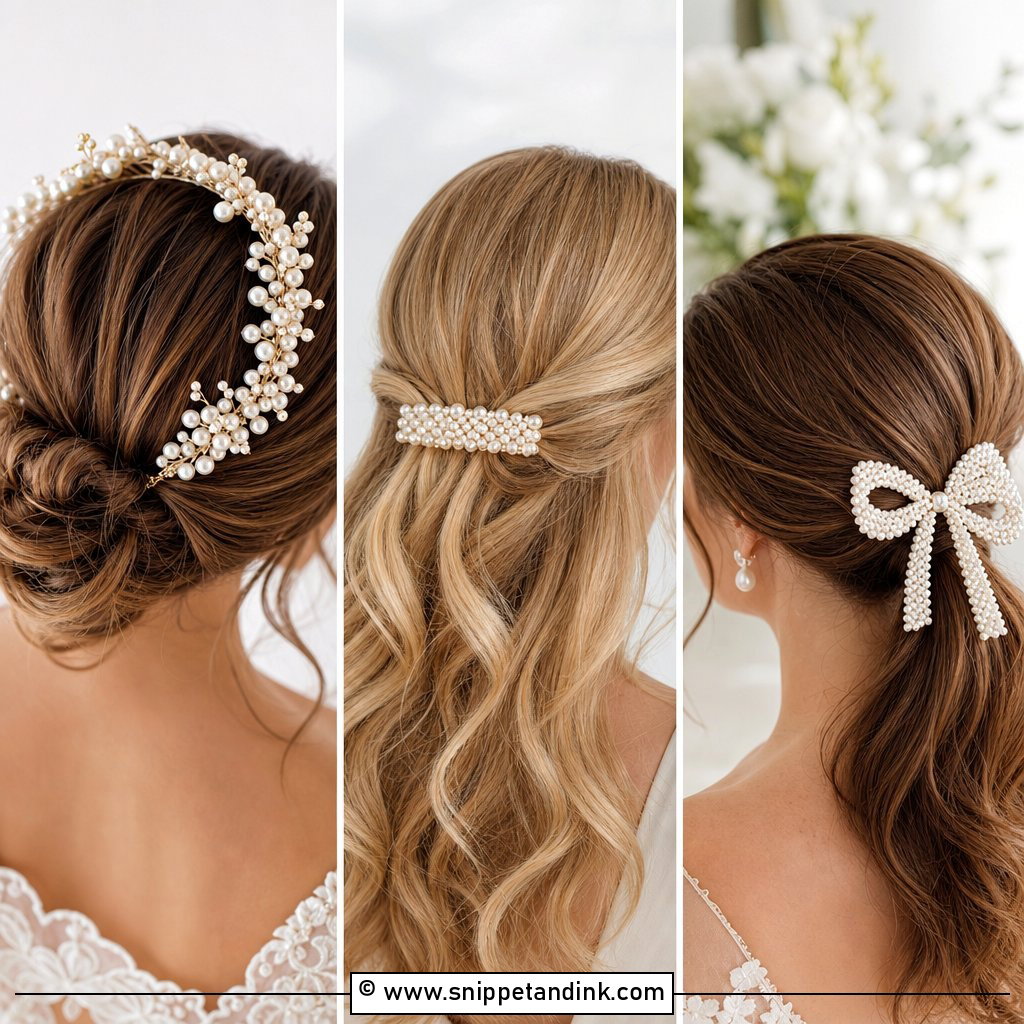
7. Pearl Comb With Sleek Low Ponytail
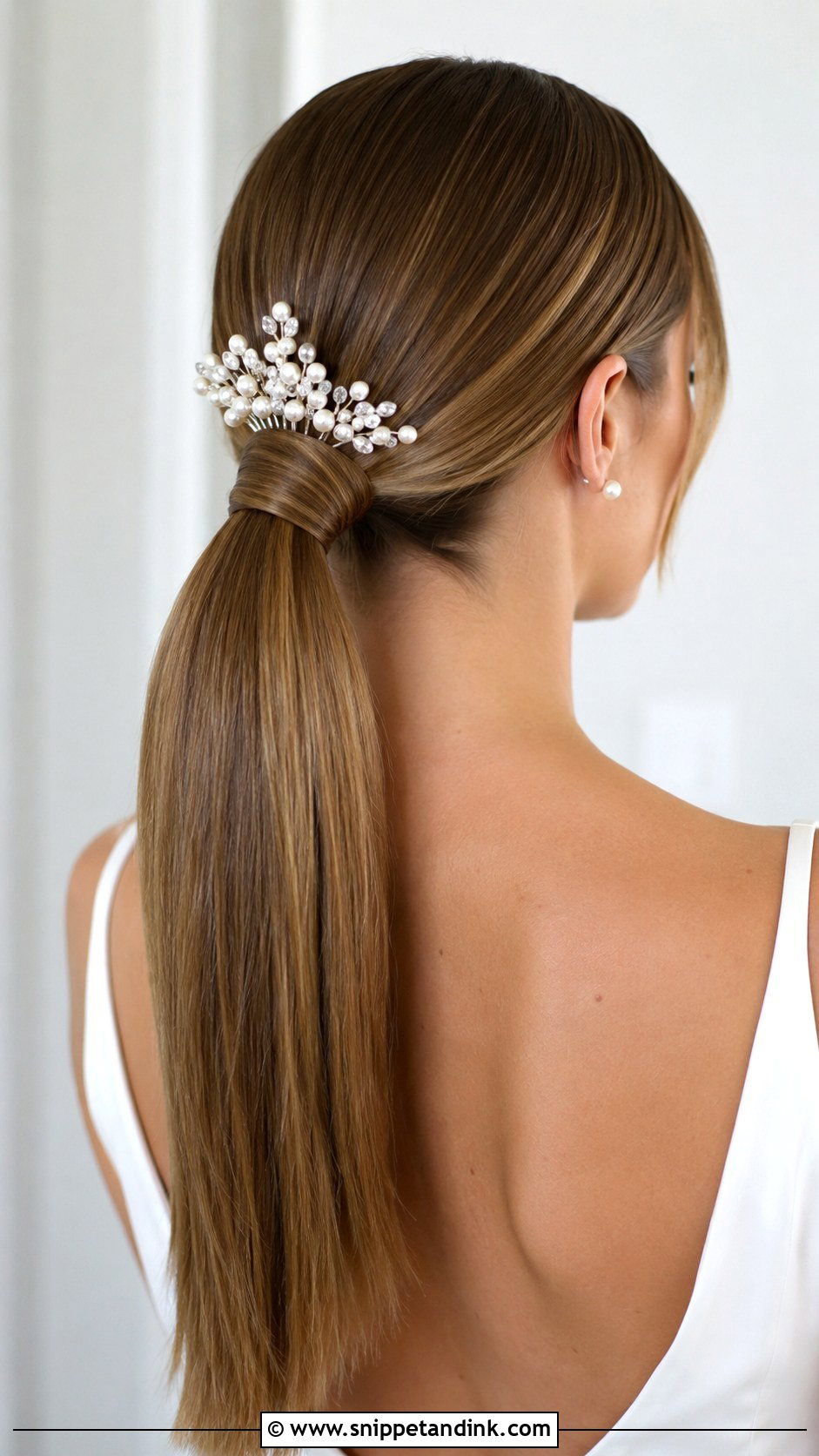
Sleek low ponytails are mostly about preparation: a sharp part, a smoothing cream and a section wrapped around the base to hide the elastic. A pearl comb above the wrap softens what is otherwise a very graphic shape. It works on most lengths, but on very fine hair the ponytail can look thin next to a wide comb, so I’d choose a narrow one there. A fitted, modern gown is the natural partner.
8. Crystal Comb With Curly Updo
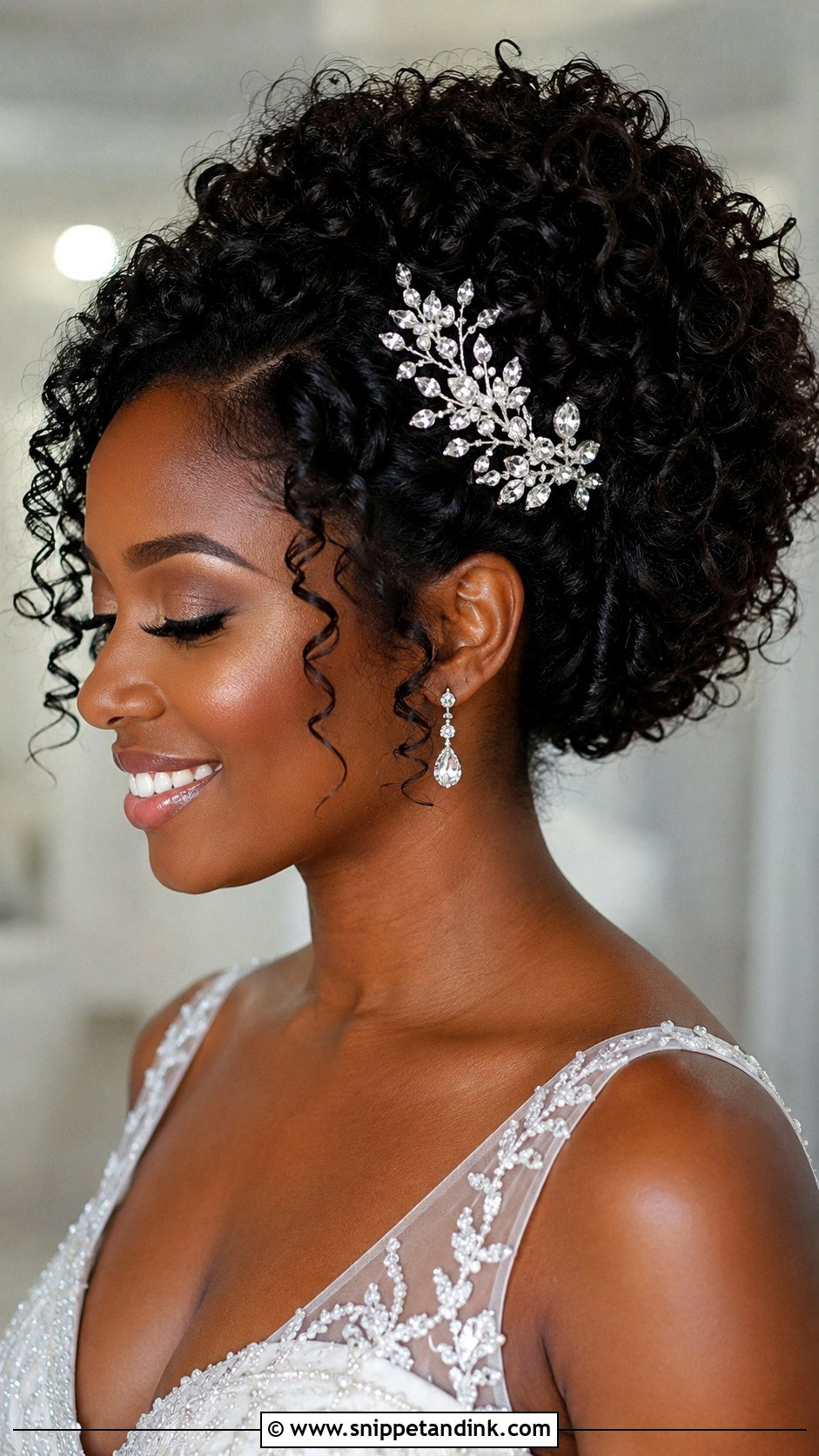
Curls are actually easier to work with than straight hair here, because the teeth hold in the texture without needing a pin base. I gather the curls into a full updo and tuck crystals where the volume gathers at the side or back. I don’t brush curls out to place a comb; I part the coils with my fingers and slide it in so the definition stays intact. A few coils left loose around the face frame it nicely, and the crystals show up well against darker hair.
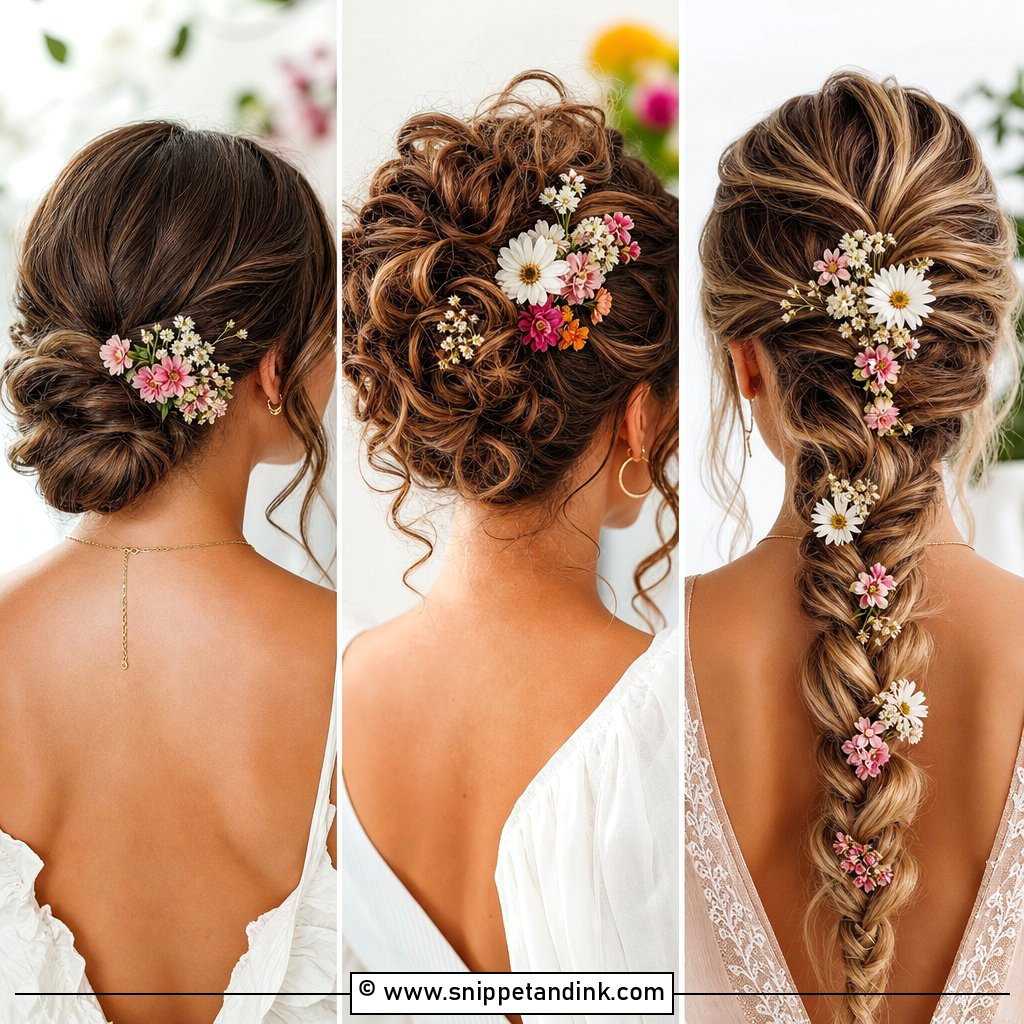
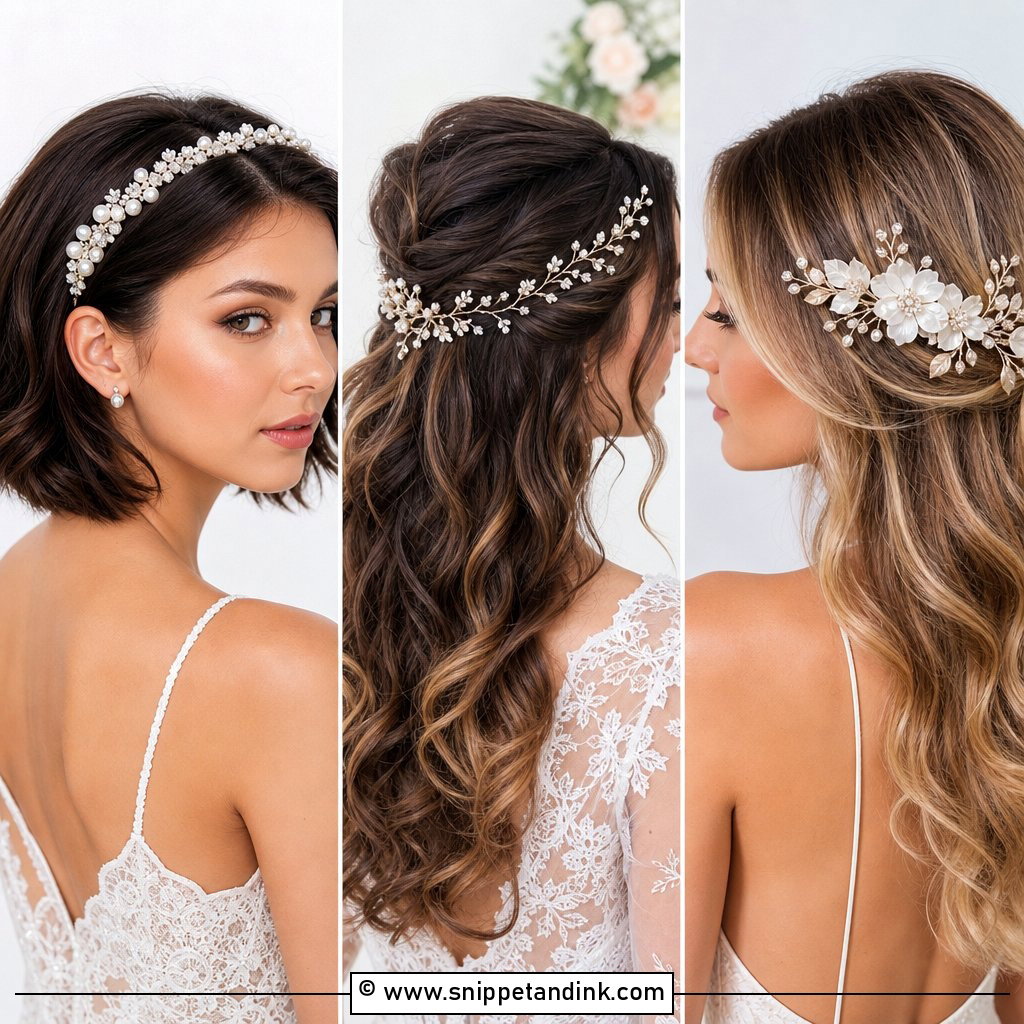
9. Floral Comb With Loose Waves
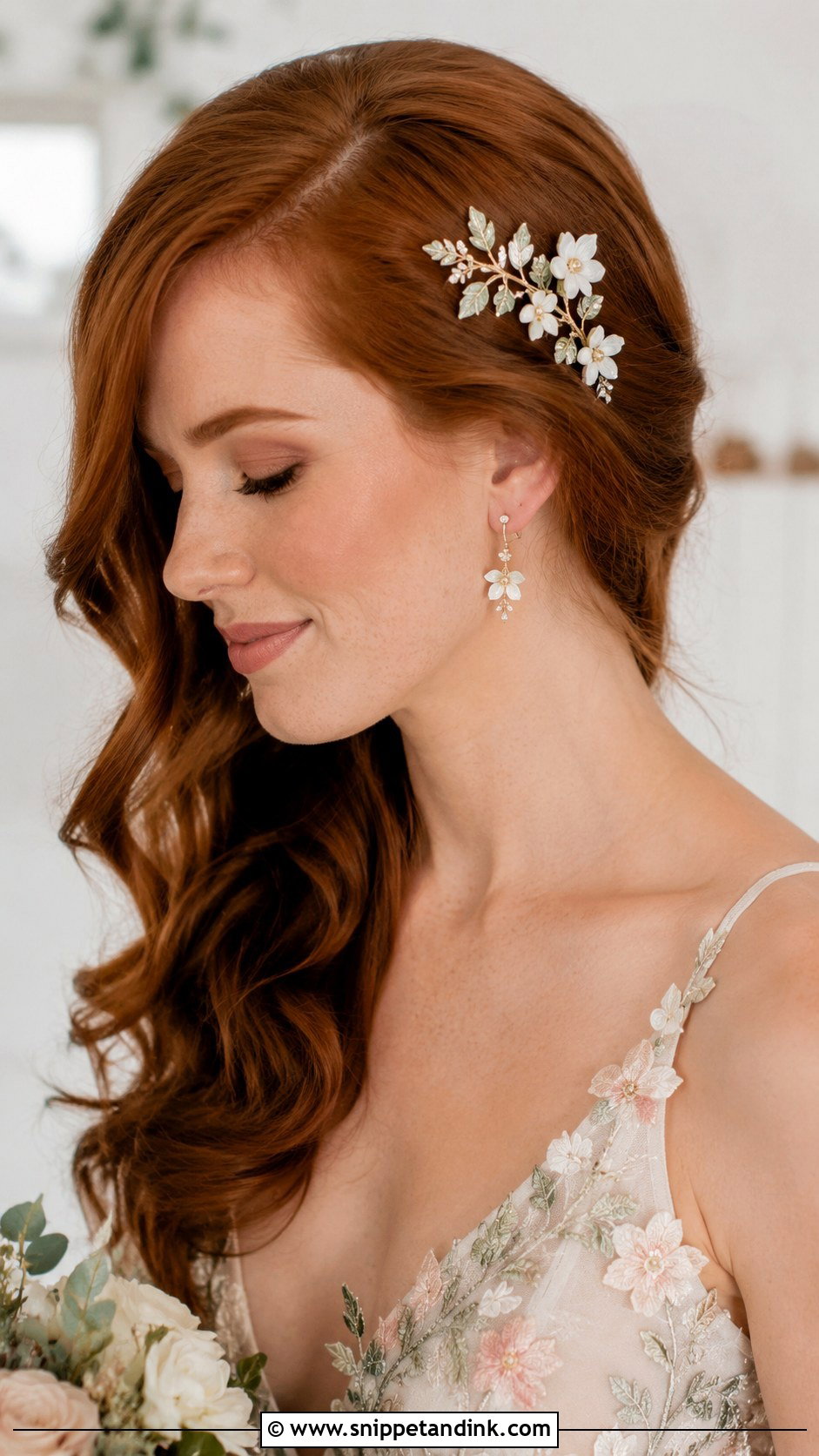
Hair worn down is where combs struggle most, since there’s nothing to grip but loose lengths. My fix is a small section above one ear, lightly backcombed at the root and pinned flat, and the floral comb goes into that. The flowers then sit among the waves instead of sliding down them. Enamel or metal flowers can be matched to your colors. On straight, silky hair that won’t hold a wave, I’d consider a half-up shape instead, because the comb will droop by the speeches.
10. Vine Comb With Braided Crown
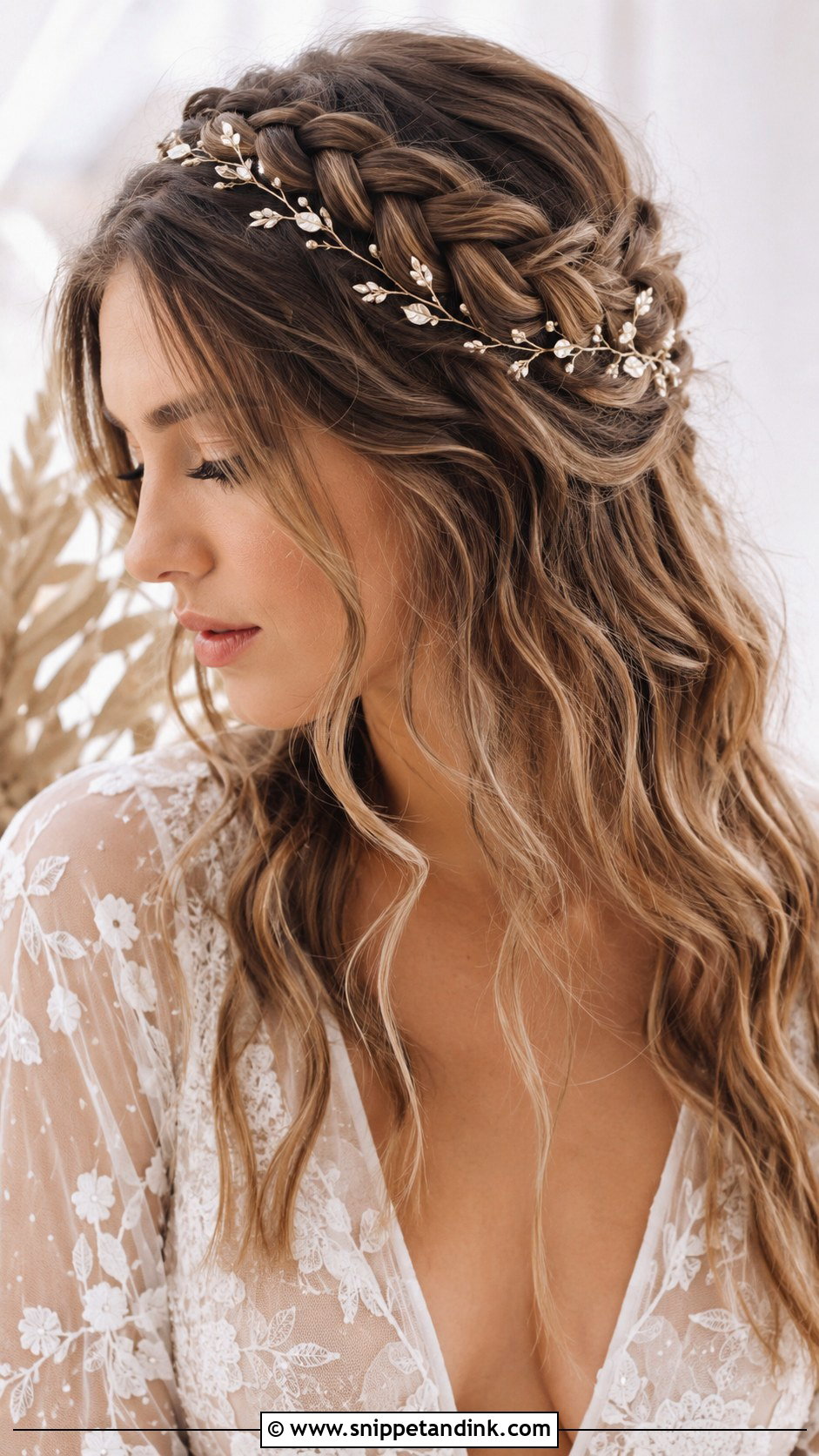
A braided crown circles the head, so there is a firm track to lay a leafy vine comb into along one side. I bend the vine slightly to follow the braid before it goes in, rather than forcing a straight comb onto a curve. The result reads fairytale or boho and suits half-up versions as well as full crowns. Leave a few loose pieces at the temples so the crown doesn’t look severe.
11. Statement Comb With Glamorous Updo
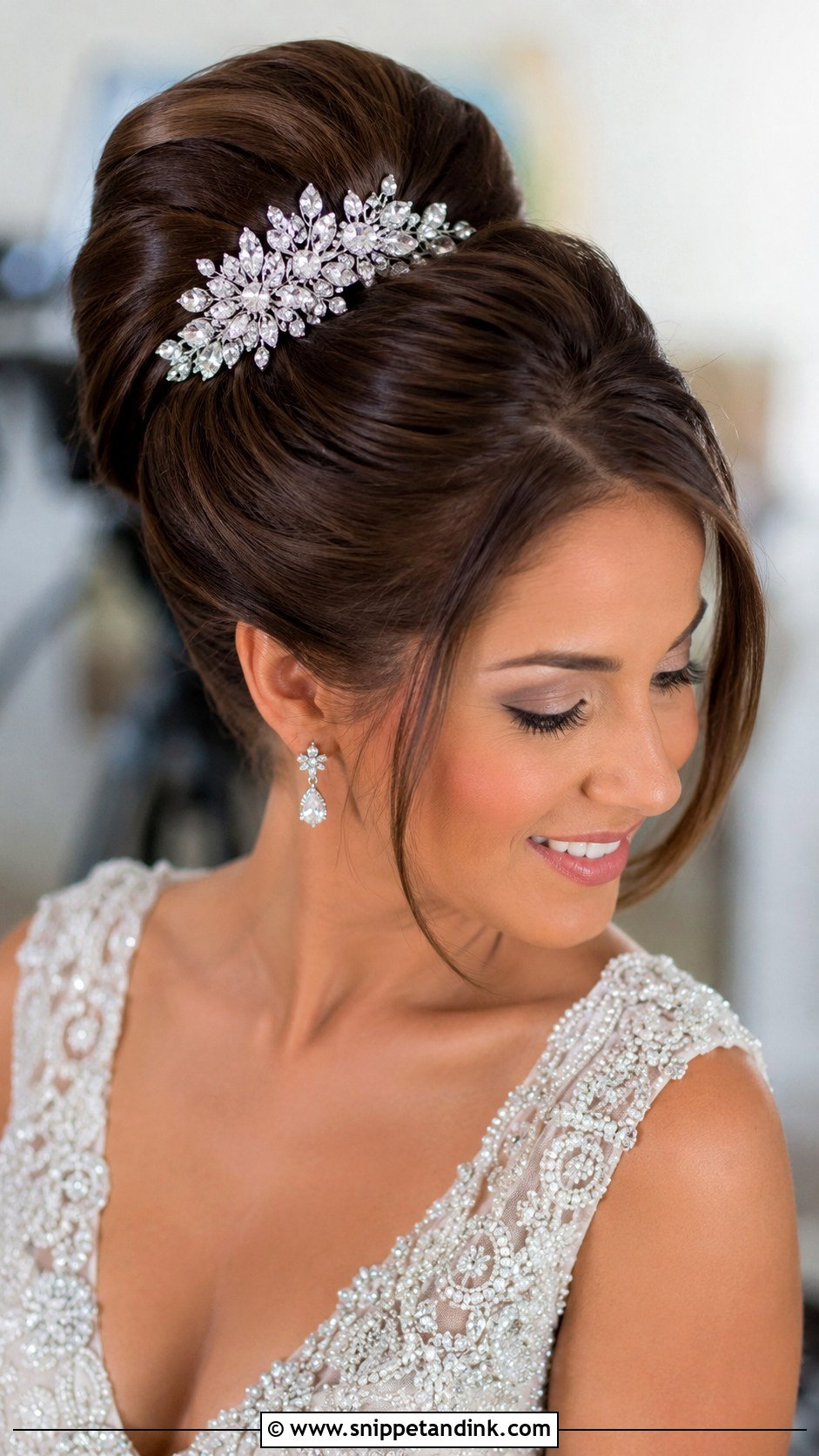
Big combs with oversized rhinestones or scrolled metalwork are heavy, and weight is the real issue. I build a sleek, voluminous updo with a firm pinned base where the comb will sit, at the crown or to one side, then fix the comb with two crossed pins through its frame as well as its teeth. Keep other accessories minimal. If your veil attaches at the same point, this is not the comb to pair it with; there isn’t room for both.
12. Pearl Comb With Fishtail Braid
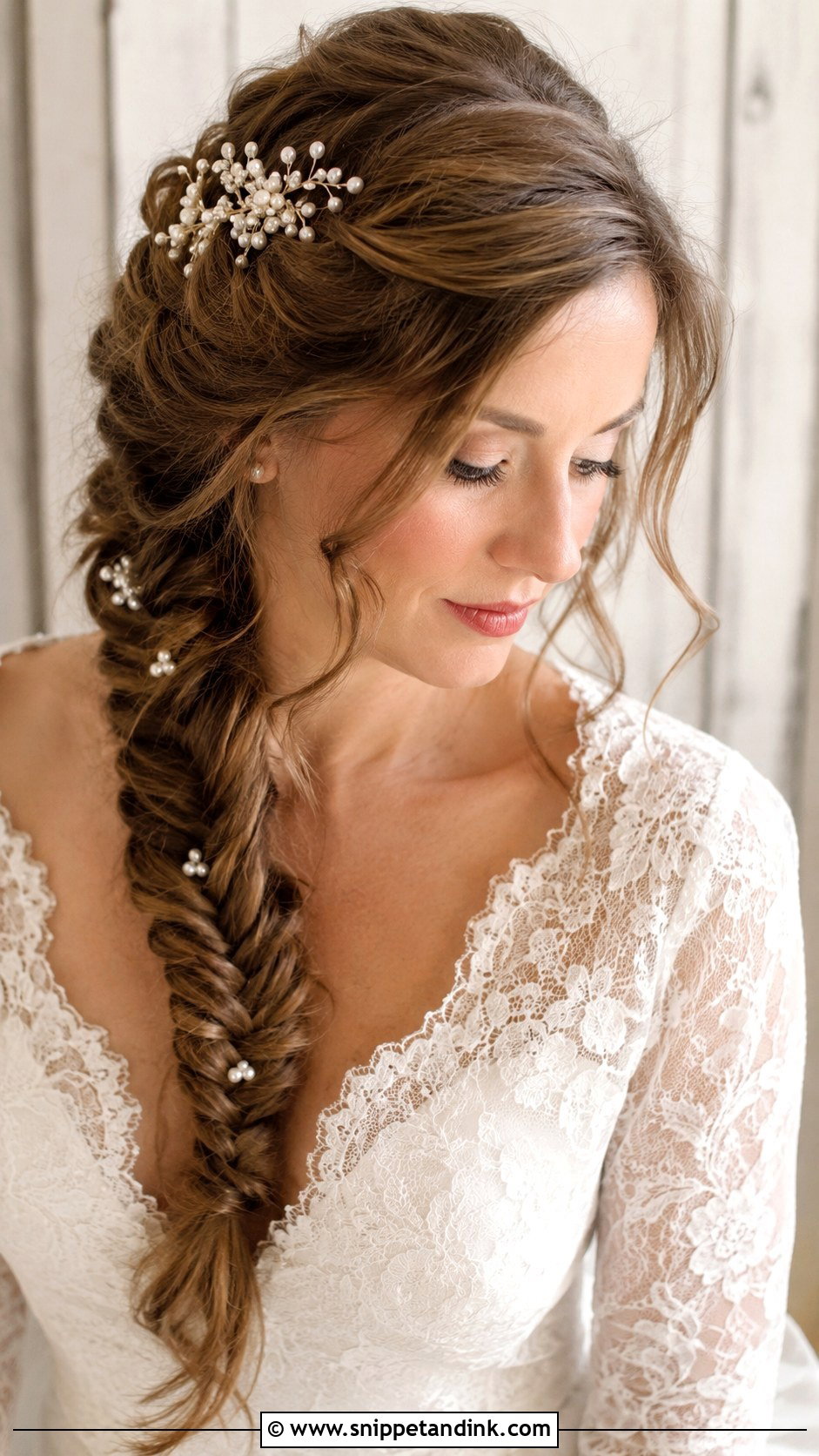
A fishtail braid over one shoulder has lots of small woven ridges, and pearls look at home in that texture. I place the comb at the top where the braid begins and sometimes add tiny pearl pins down its length. Gently pulling the braid apart gives fullness, but I do that after the comb is in so I’m not loosening what holds it. You need long hair with natural texture for this. Very fine hair gives a skinny fishtail that a comb can overpower.
13. Crystal Comb With Veil
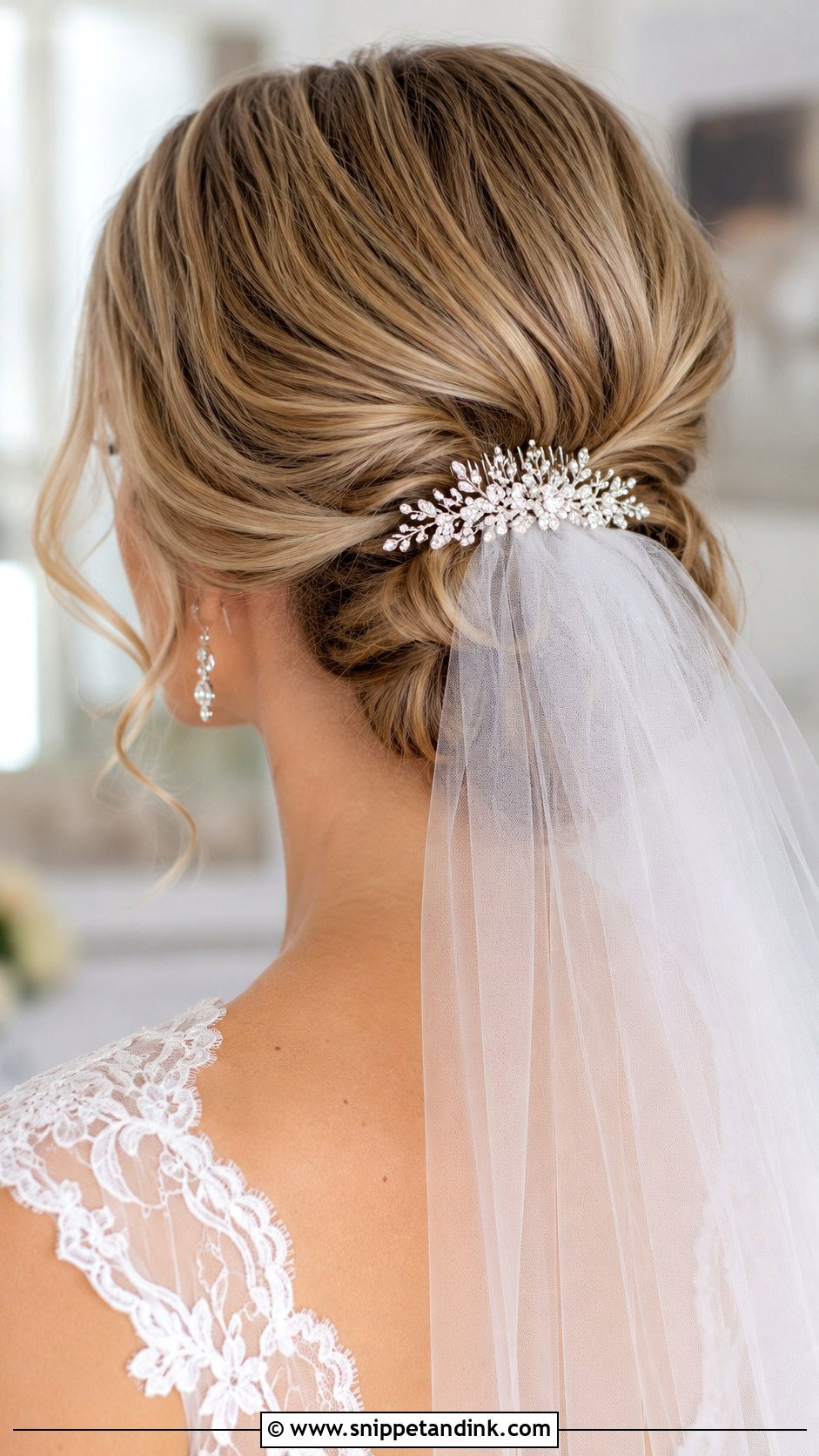
Pairing crystals with a veil is practical as well as pretty, because the comb holds the veil and stays behind when the veil comes off. I place it at the crown for drama or under the bun for a softer line. For this to give a truly magical bridal moment, the veil and the comb must be two separate pieces: I anchor the veil’s own comb first, then add the decorative one just above it. That way nobody has to pull pins out mid-reception.
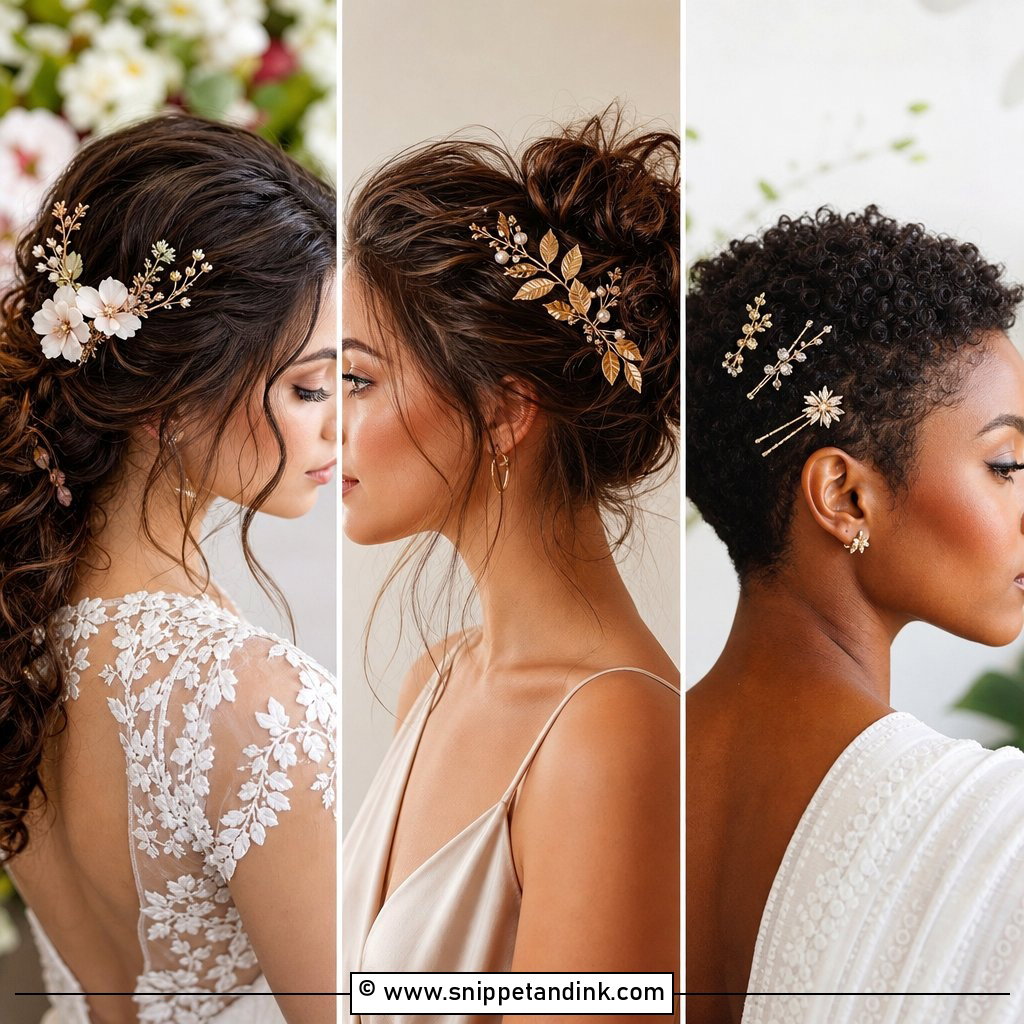
14. Gold Comb With Textured Bun
Textured buns are loose by design, which makes them more forgiving than a sleek one and also less secure. I tuck a gold comb into the base where the hair is most compact, never into the airy top. Floral, geometric or leafy all work. Gold tends to flatter warm and medium skin. Leave a few pieces out around the face and expect them to relax over the day, which is part of the charm.
15. Floral Comb With Twisted Updo
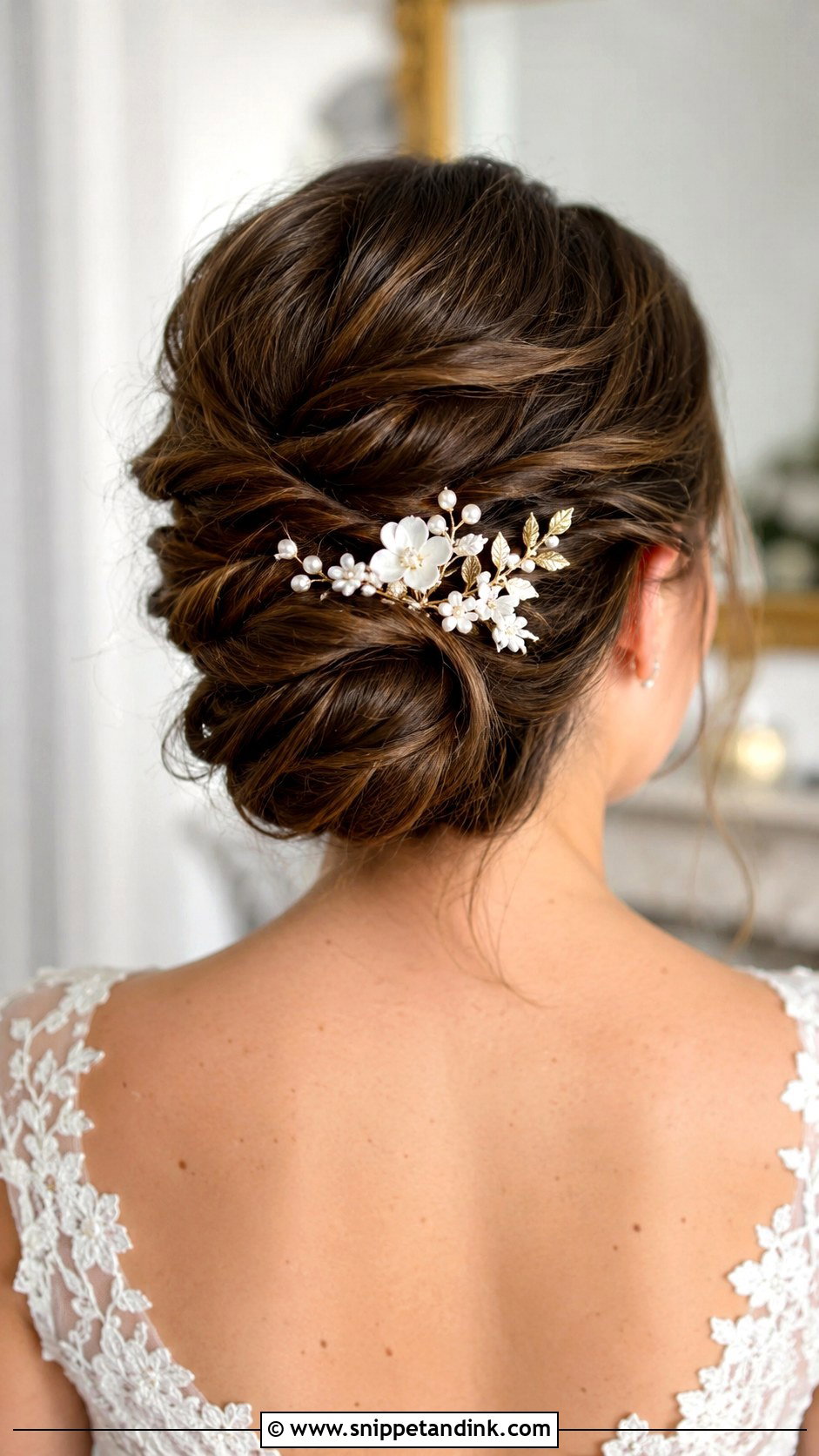
A twisted updo is built from several pinned rolls, so each twist is a ready-made pocket for a comb. I slide floral comb teeth into the twist with the most pins in it, where it nests rather than balances. It needs medium to long hair and a reasonably smooth finish. Pearl-centred flowers keep things soft and crystal flowers add shine, but I wouldn’t mix both on one comb with this already intricate shape.
16. Pearl Comb With Side-Swept Style
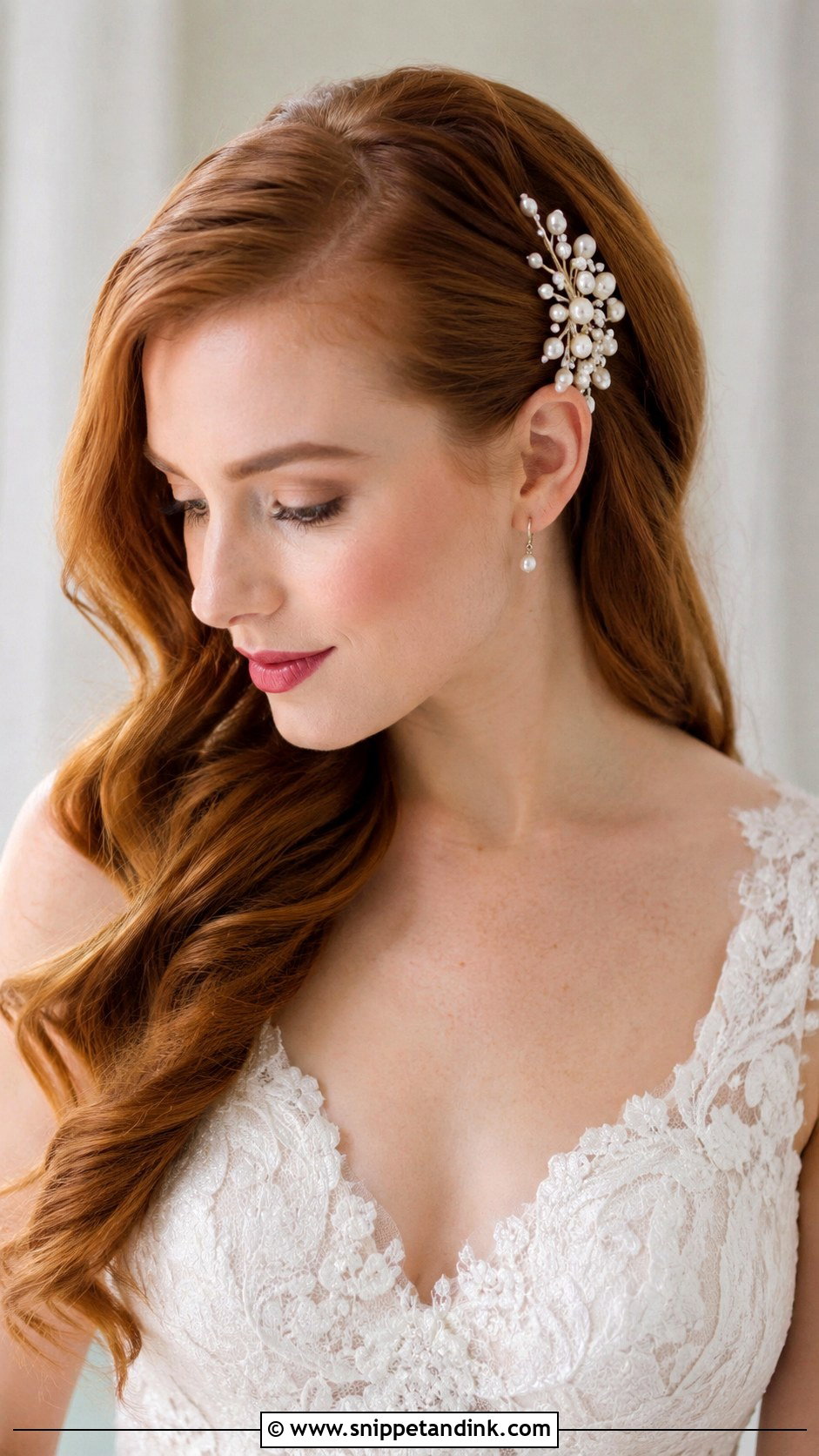
With side-swept hair, the comb usually goes on the opposite side to the hair, where everything pulls back from the temple. That spot takes tension all day, so I pin it firmly underneath before adding pearls on top. Long waves or curls carry it best. The asymmetric line gives movement in photos, but think about your ceremony: if the officiant or your partner stands on the bare side, that’s the side guests see.
17. Crystal Comb With Sleek Bun
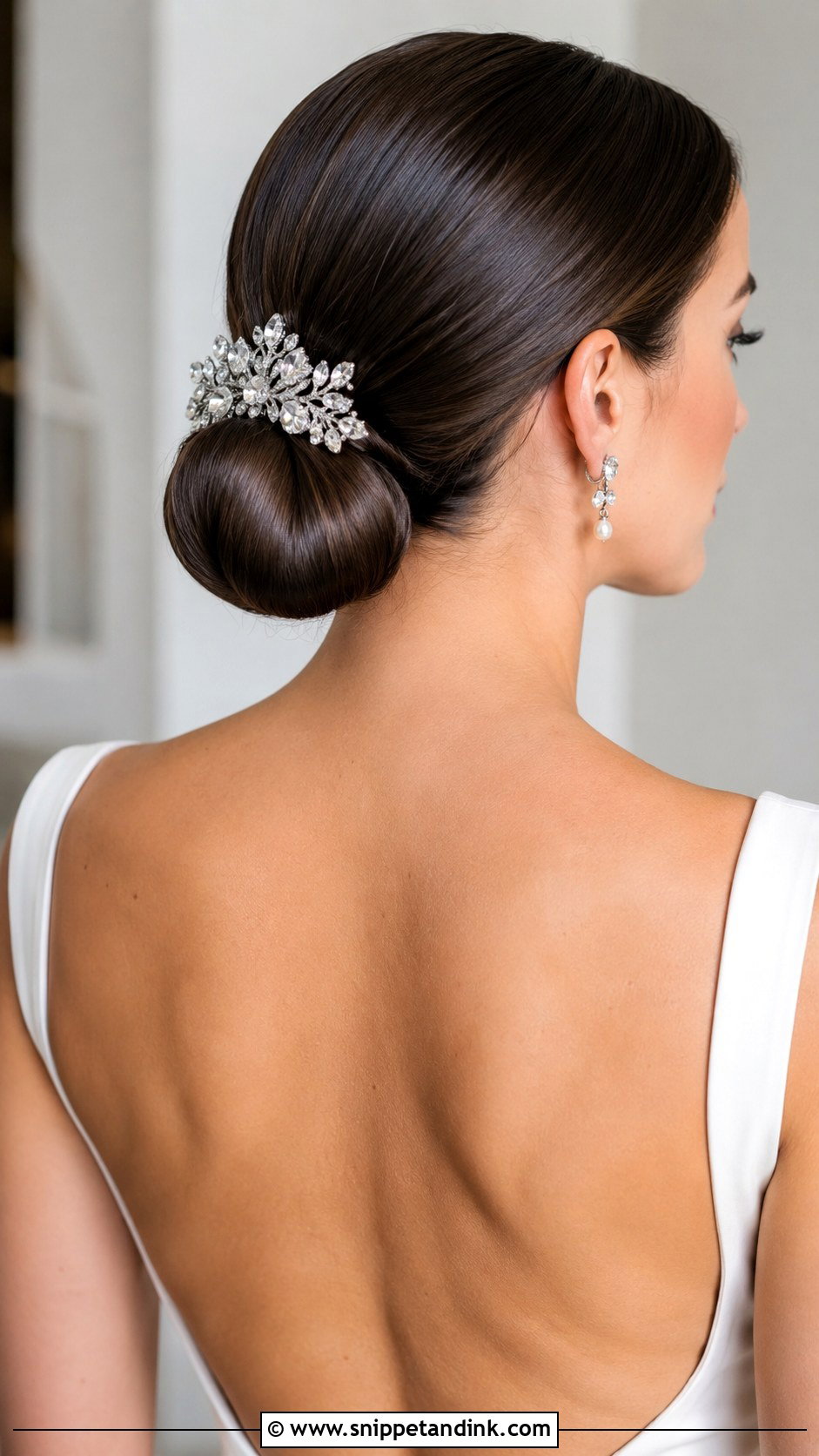
A tight, glossy bun is the cleanest backdrop there is, which means every flaw in comb placement shows. I place crystals at the base or along one side and check the alignment in a hand mirror from three angles before spraying. Hairspray goes on before the comb, not after; it can cloud crystal and dull pearl coatings. Simple jewelry suits it. This one handles a long day very well because nothing is loose enough to move.
18. Boho Comb With Half-Up Braid
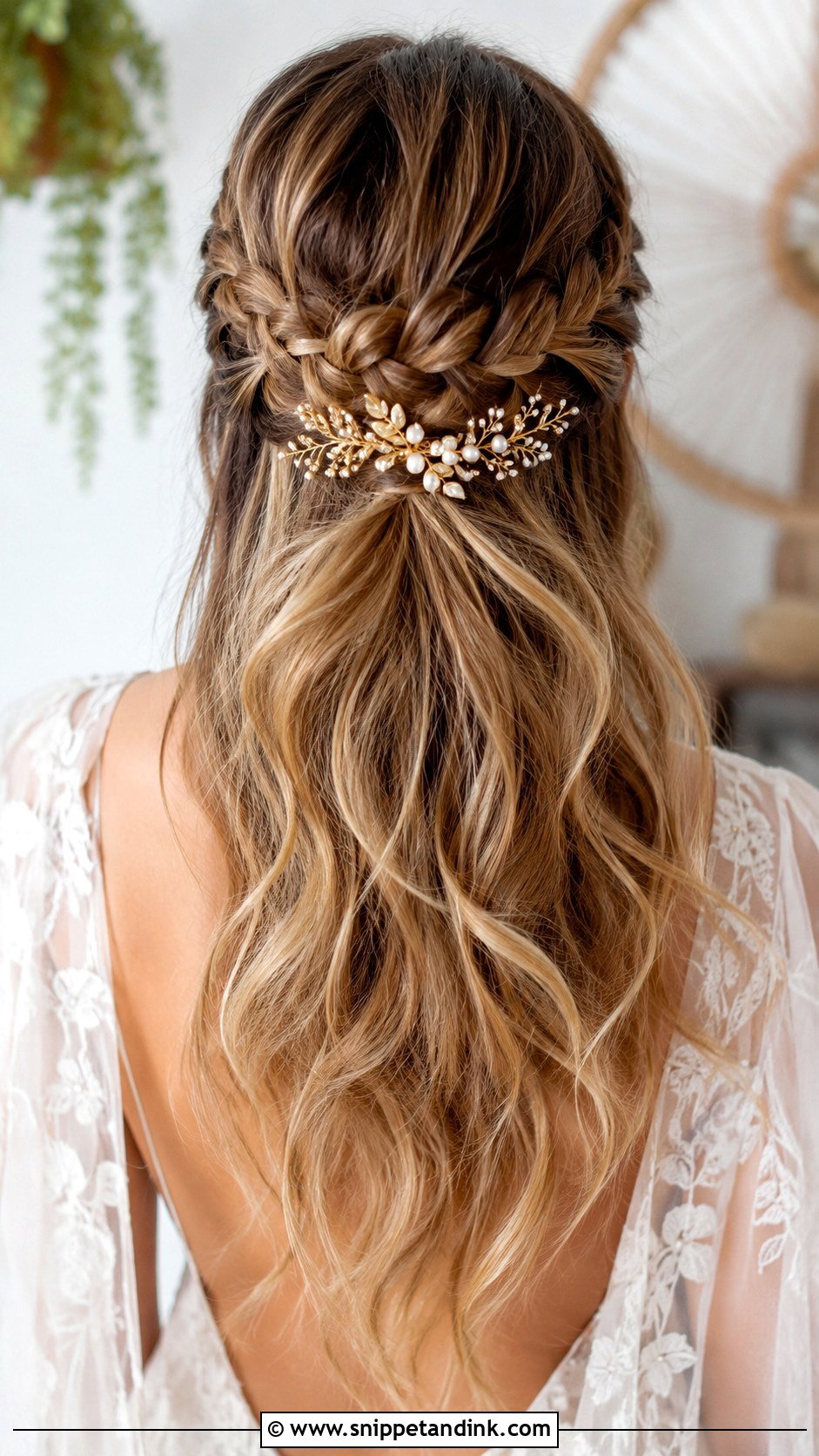
A half-up braid gives a firm band across the back of the head, and a boho comb with leaves, vines or scattered pearls slots in where the braid meets the loose hair. I braid with a little tension at that join so the comb has something to hold. Long hair with natural texture works best, especially for outdoor and bohemian celebrations. Wind is the main risk outside, so I add one hidden pin through the comb frame on breezy days.
19. Gold Floral Comb With Low Chignon
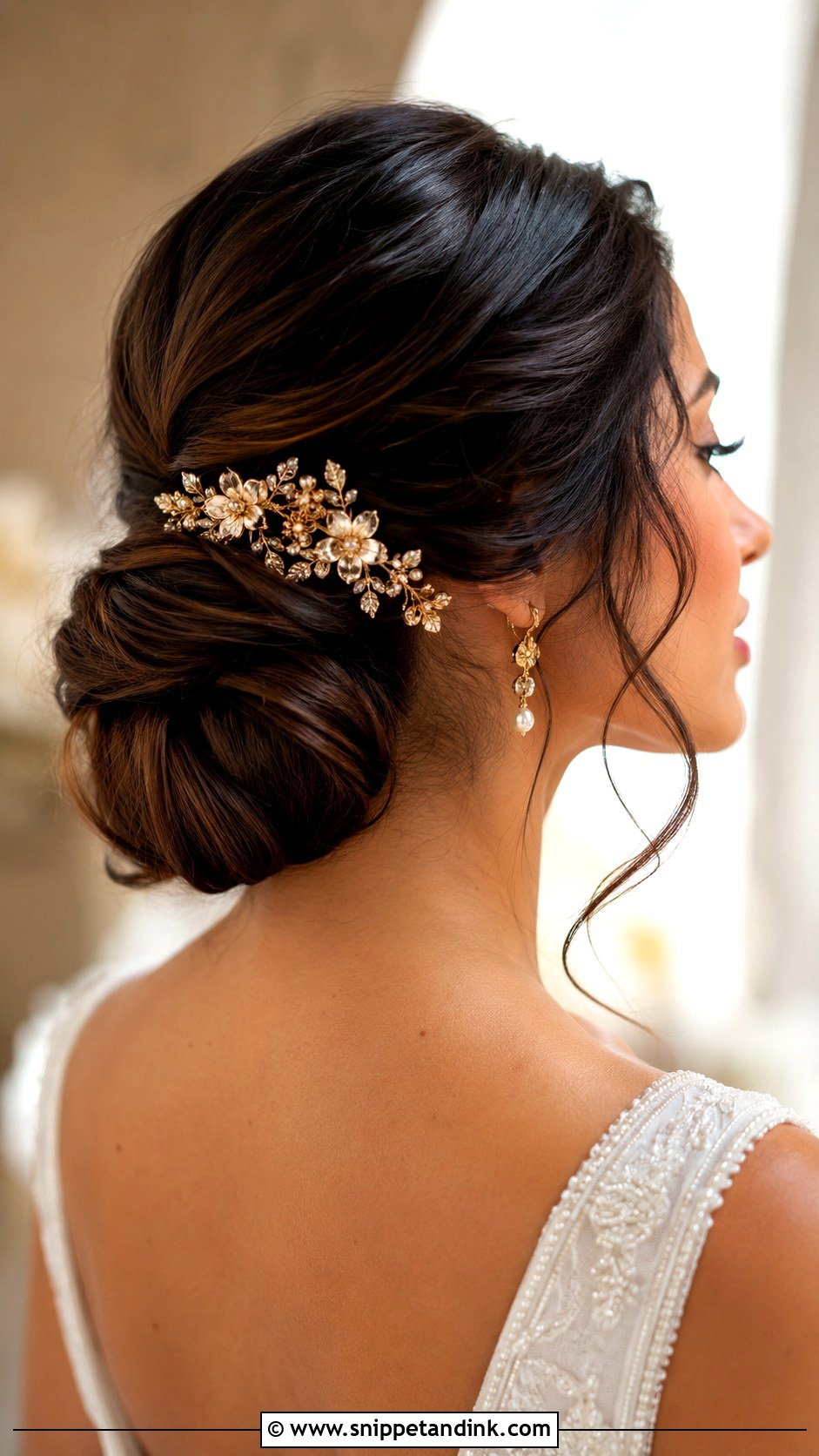
A rolled chignon at the nape is very stable, and a gold floral comb can sit just above it or alongside. I prefer it slightly off-centre, because a comb dead centre above a low chignon can look like a hair clip from straight on. Gold suits warm and olive skin. A few soft tendrils at the face keep it from looking stiff, and the low placement leaves room for a cathedral veil if you want one.
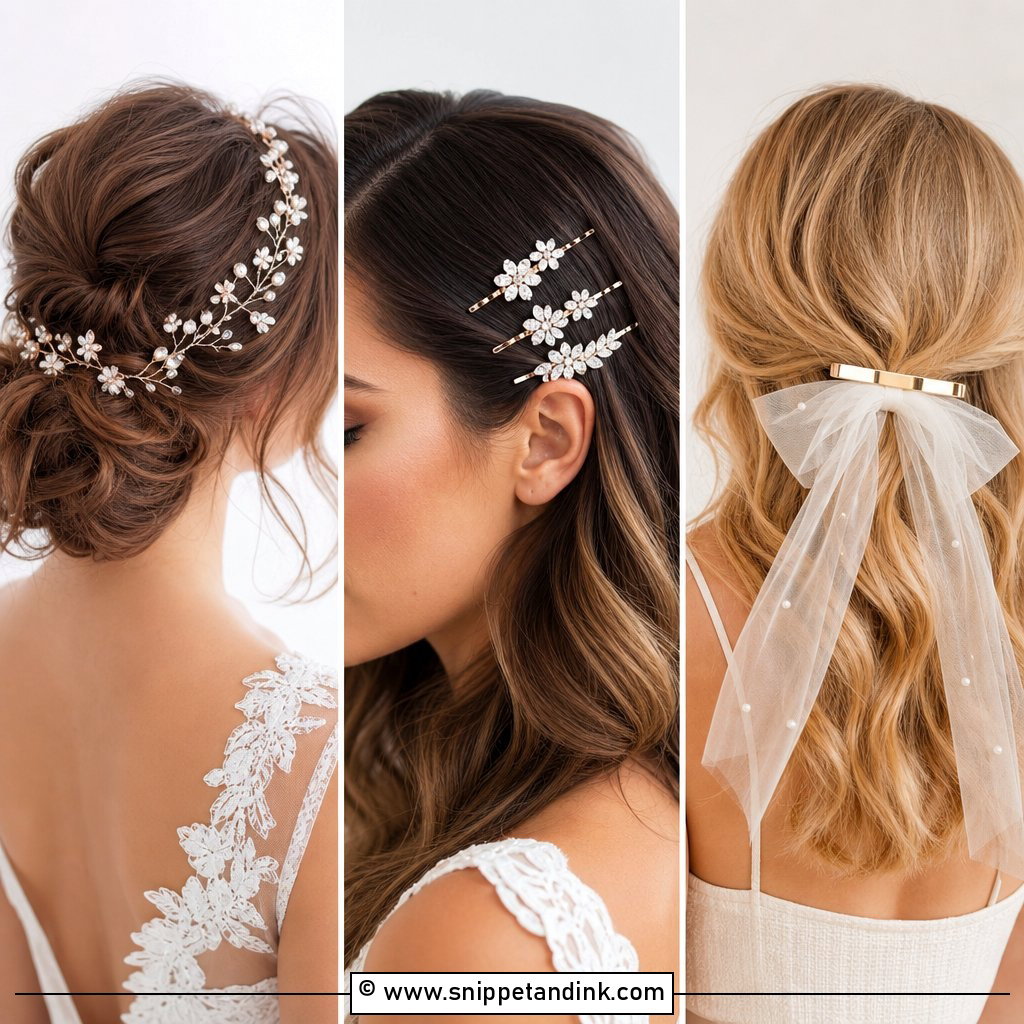
20. Pearl And Crystal Comb With Romantic Updo
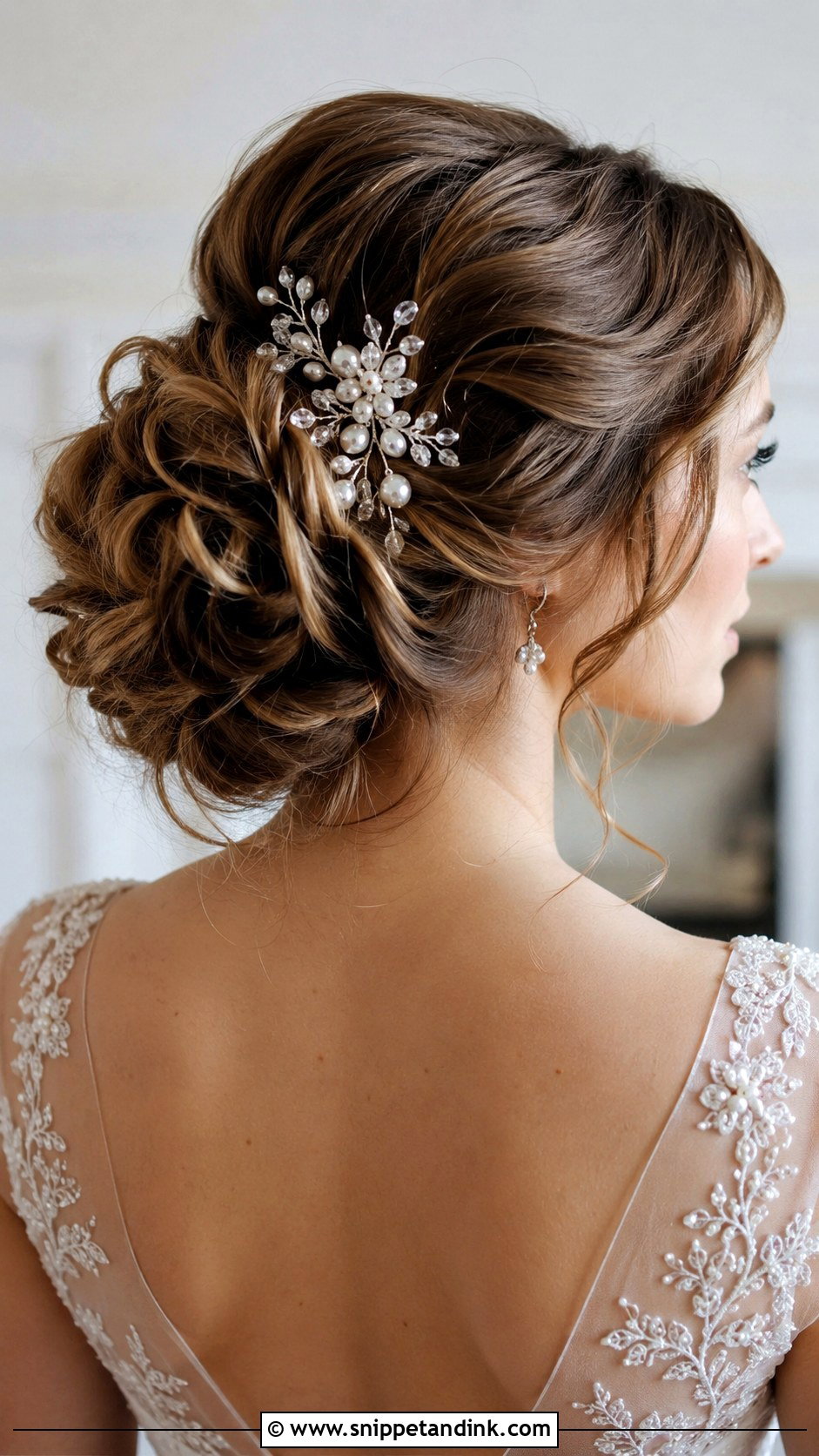
Combs that mix pearls and crystals give a little matte and a little sparkle in one piece. I’d put this on a soft updo with gentle waves and loose pieces, tucked at the side or back. Because these combs are often wider, I check the curve against the bride’s head at the trial; a comb that is too straight for a small head shape lifts at both ends. It suits most textures and lengths, provided the base is pinned well.
Weight and Width for Fine, Thick and Short Hair
The most common mistake I see at trials is a comb bought before the hairstyle was decided. A wide, heavy statement comb needs a lot of hair to hold it, and on fine hair it slowly tips forward or pulls at the scalp. Before you buy, hold it in your palm: if it feels heavier than a key ring, plan for a firm updo underneath it.
Fine or thin hair
Go narrow and light, with short teeth. Two small combs on either side of a bun often sit better than one wide one, and they share the load.
Thick, curly or coily hair
You can carry width and weight, but check the teeth are long enough to reach past the surface volume. Short-toothed combs just sit on top of dense curls and pop out.
Short hair and bobs
Pick a slide-style comb no wider than about two fingers and set it just behind the ear, where a small pinned section can support it. A deep side part gives the best spot.
If the Comb Shifts Halfway Through the Day
Give your maid of honour two bobby pins in your hair colour and a travel-size spray. If the comb tilts, she shouldn’t pull it out and push it back in; that loosens the anchor more. Instead she can slide a pin through the comb’s frame at the low end, pointing toward the centre of the style, and the comb will settle back into line. It takes about ten seconds and nobody in the photos will know.
Matching the Metal, the Width and the Grip to You
Start with the hairstyle, then pick a comb that fits it, not the other way round. A dense bun or twist can hold almost anything; loose waves and sleek ponytails need lighter, narrower combs and a pinned base. Match the metal to your rings or earrings, bring the comb to your trial, and decide there whether a veil will share the space. Get those three things right and the comb will still be sitting where I put it when you leave the reception.
You'll Like These Ideas:


Leave a Reply