
Short hair doesn’t need to pretend to be long on a wedding day. A pixie, bob, bixie, crop, or short lob already has a shape, and my job is to finish it so it looks deliberate rather than everyday. That usually means more polish at the ends, a bit of lift where the cut is flattest and one well-placed accessory. The upside is real: short styles rarely collapse, they leave your earrings and neckline completely clear, and they take a fraction of the chair time.
Scheduling the Last Cut So the Shape Has Settled
With short hair, the timing of your final cut matters more than any styling trick, because a few weeks of growth changes the whole shape. Freshly cut lines can look blunt and a little harsh for a few days, while a cut left too long loses its outline. This is the rough timetable I give brides:
- Pixies and crops: a cut about one to two weeks before the wedding, with a quick neckline tidy two or three days ahead if your barber or stylist offers it.
- Bobs and bixies: two to three weeks before, so the ends soften slightly and the weight settles.
- Lobs: three to four weeks before, mainly a trim of the ends, not a new shape.
- Any color: done a week or more before the cut, so the stylist can shape around any change in texture.
Don’t try a new shape in the last two months. Short hair takes a while to grow out of a cut you don’t like, and the trial should be done on the cut you’ll actually wear, or as close to it as possible.
1. Short Wavy Bob Wedding Hair
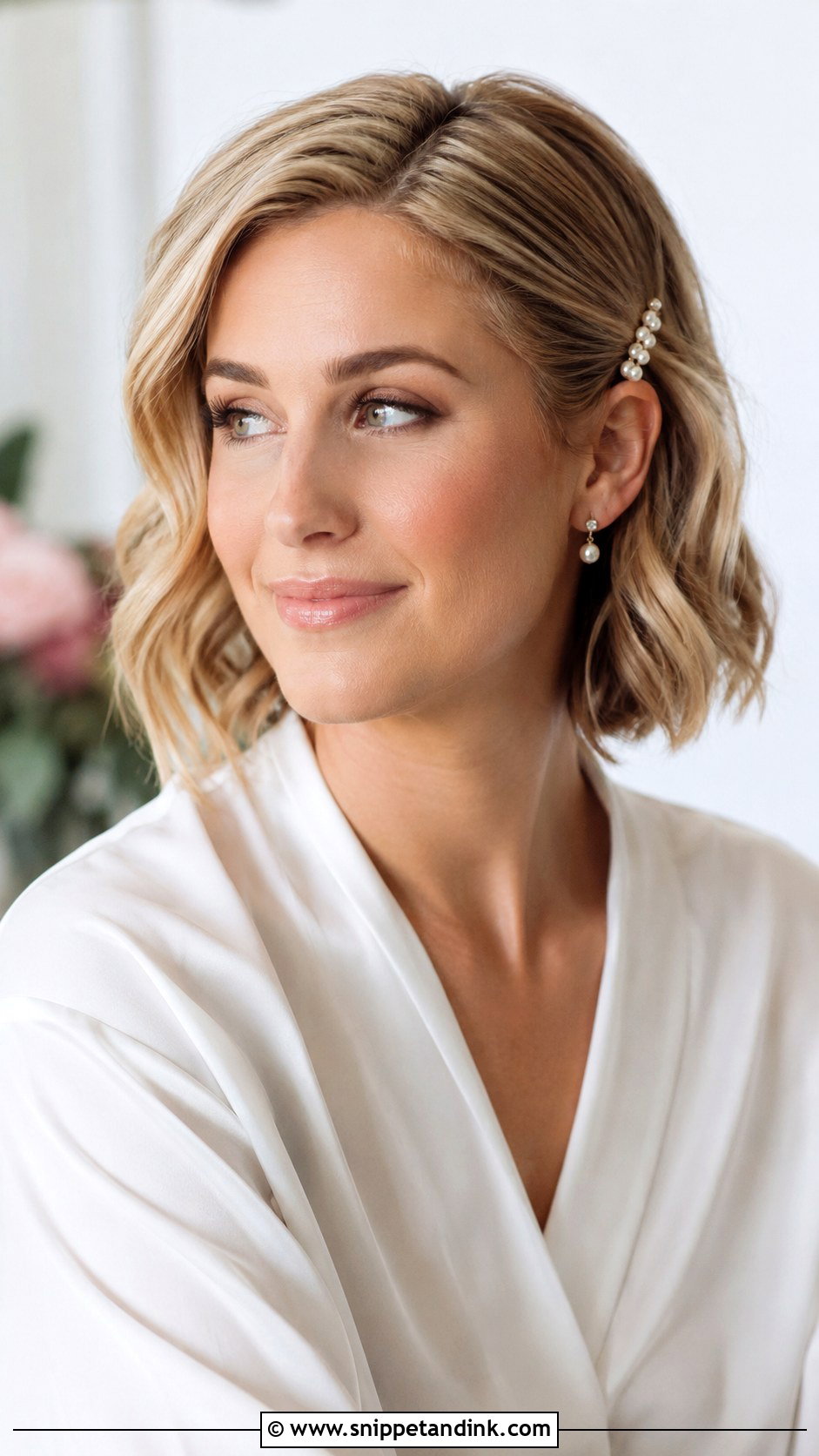
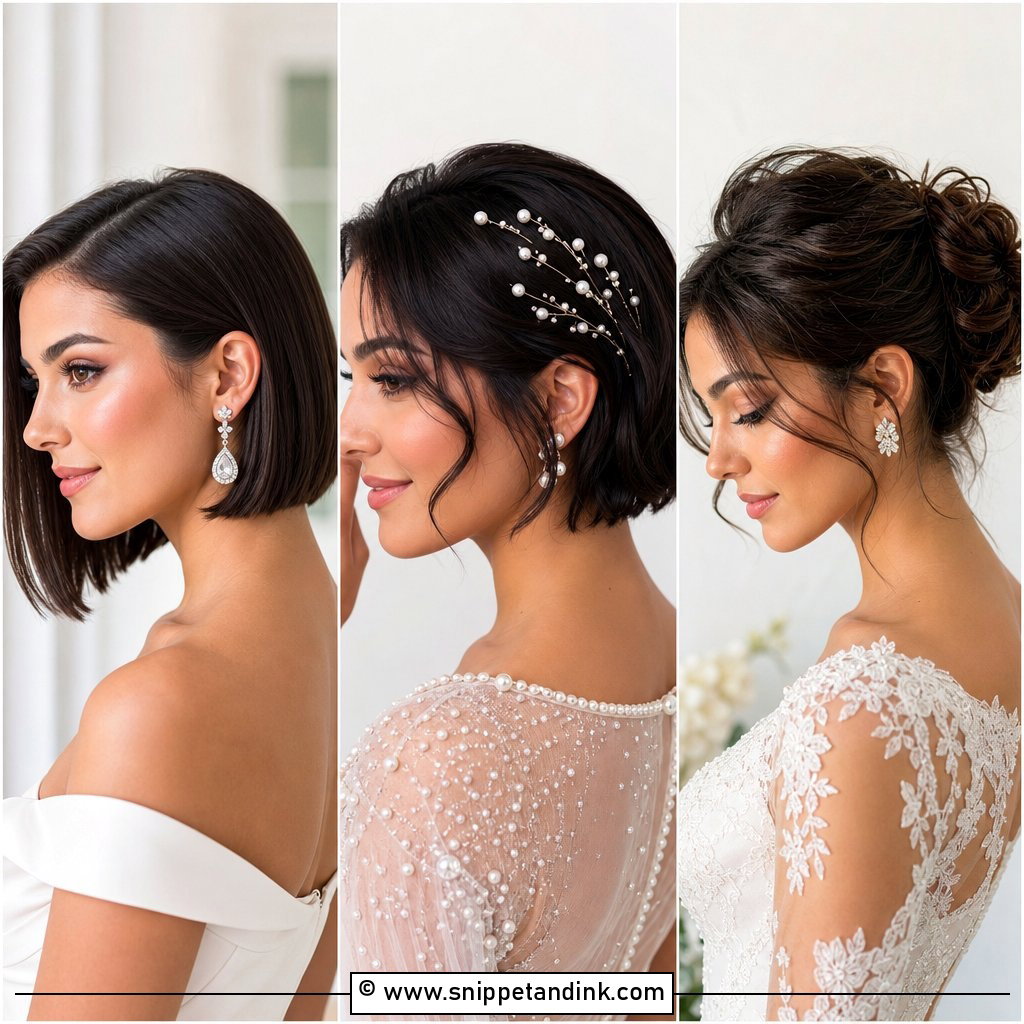
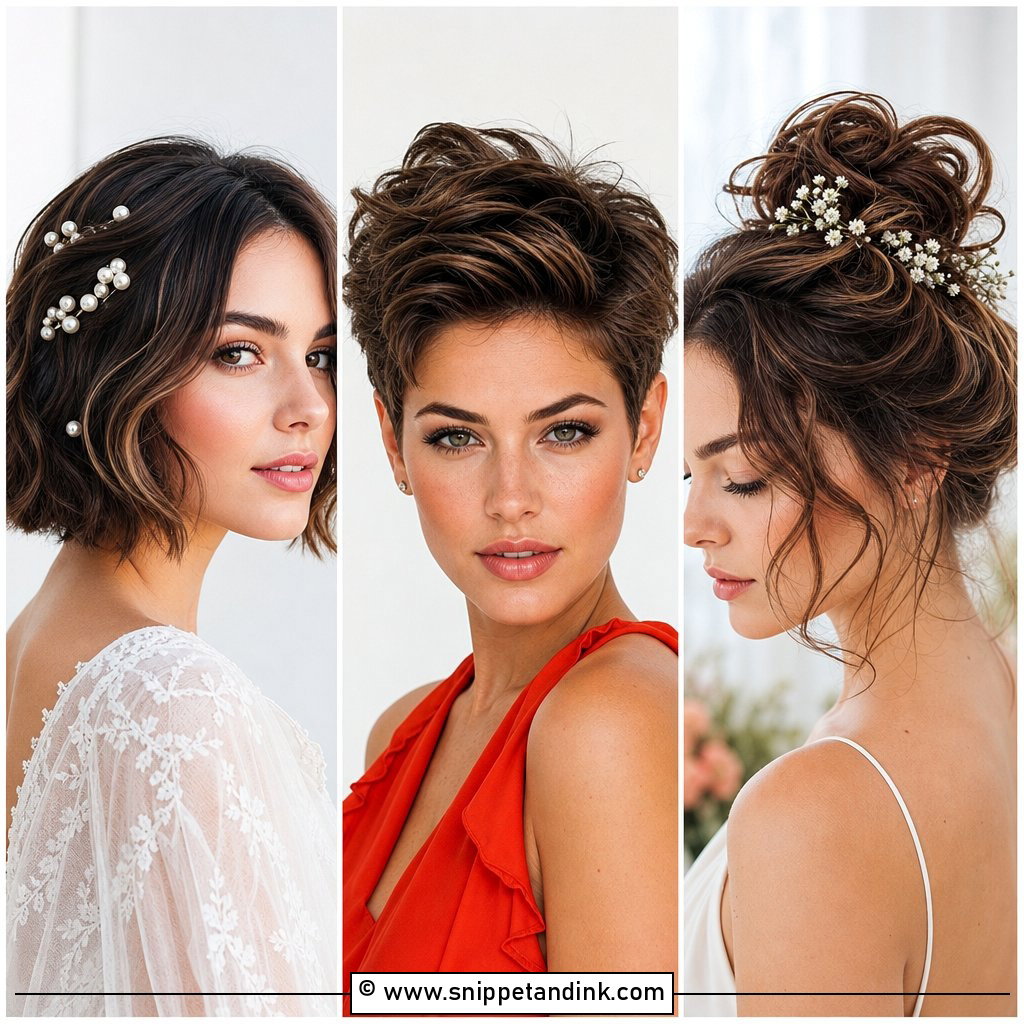
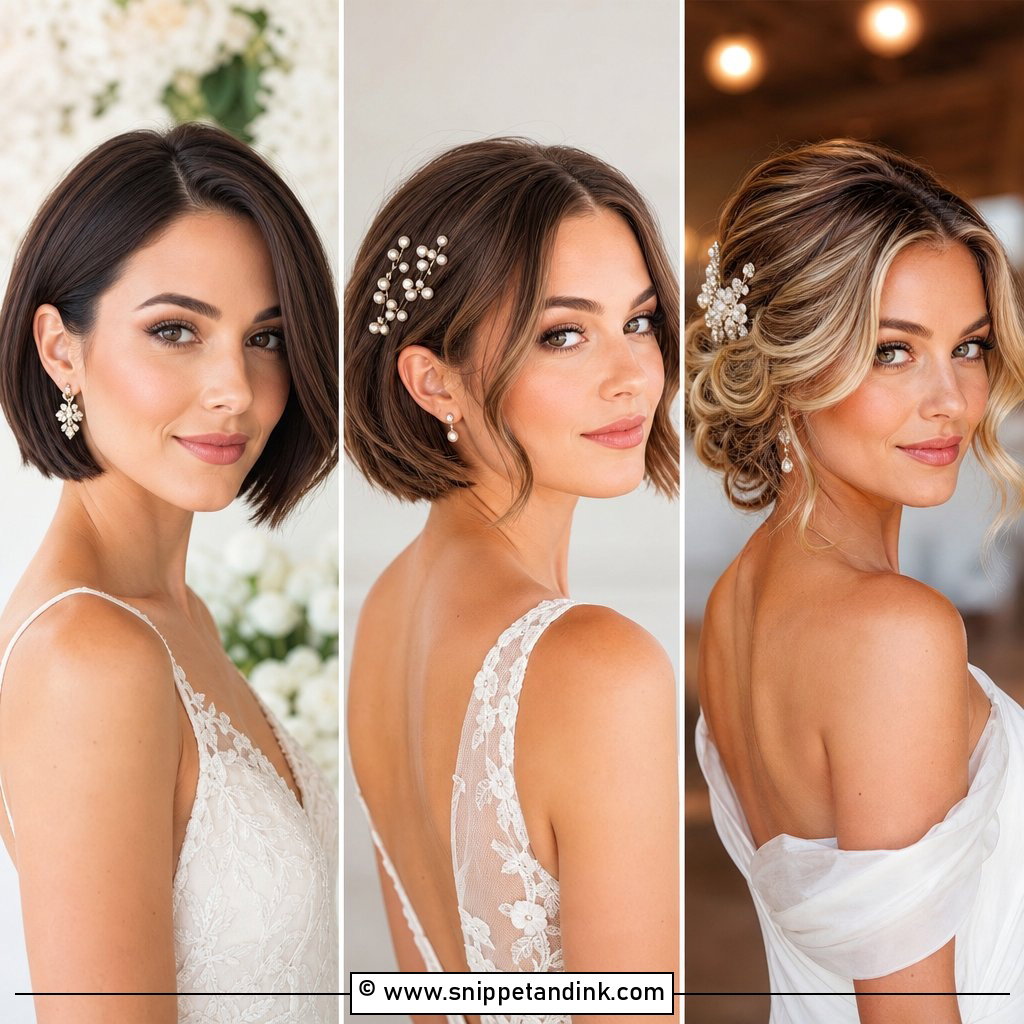
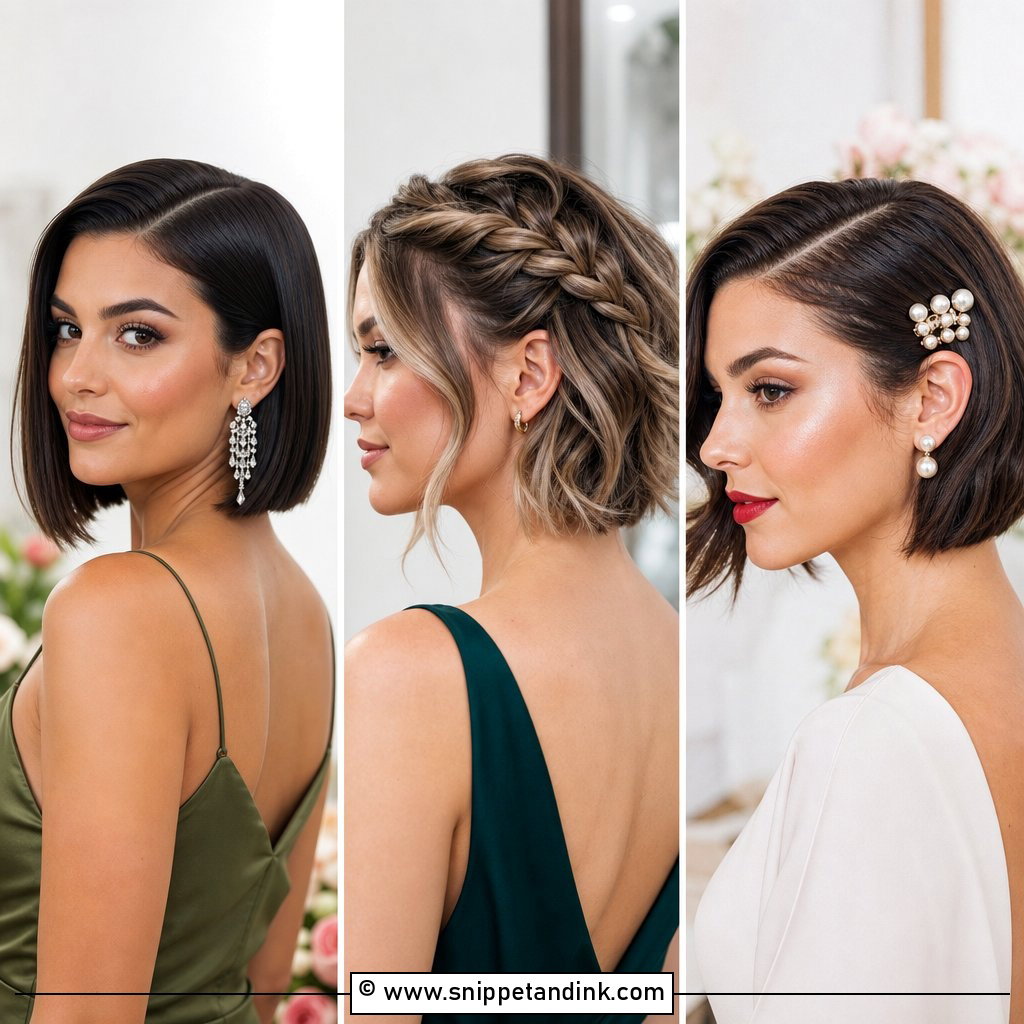
Waves on a bob are mostly about where they start. I begin the bend at the cheekbone and leave the root smooth, because waves from the scalp on a chin-length cut add width at the ears and make it look shorter. A flat iron gives a more modern, open bend than a curling wand. On a jaw-length bob, two or three bends per section are enough. A single pearl clip or a veil set into the crown keeps it bridal without fighting the cut.
2. Short Sleek Bob Wedding Hair
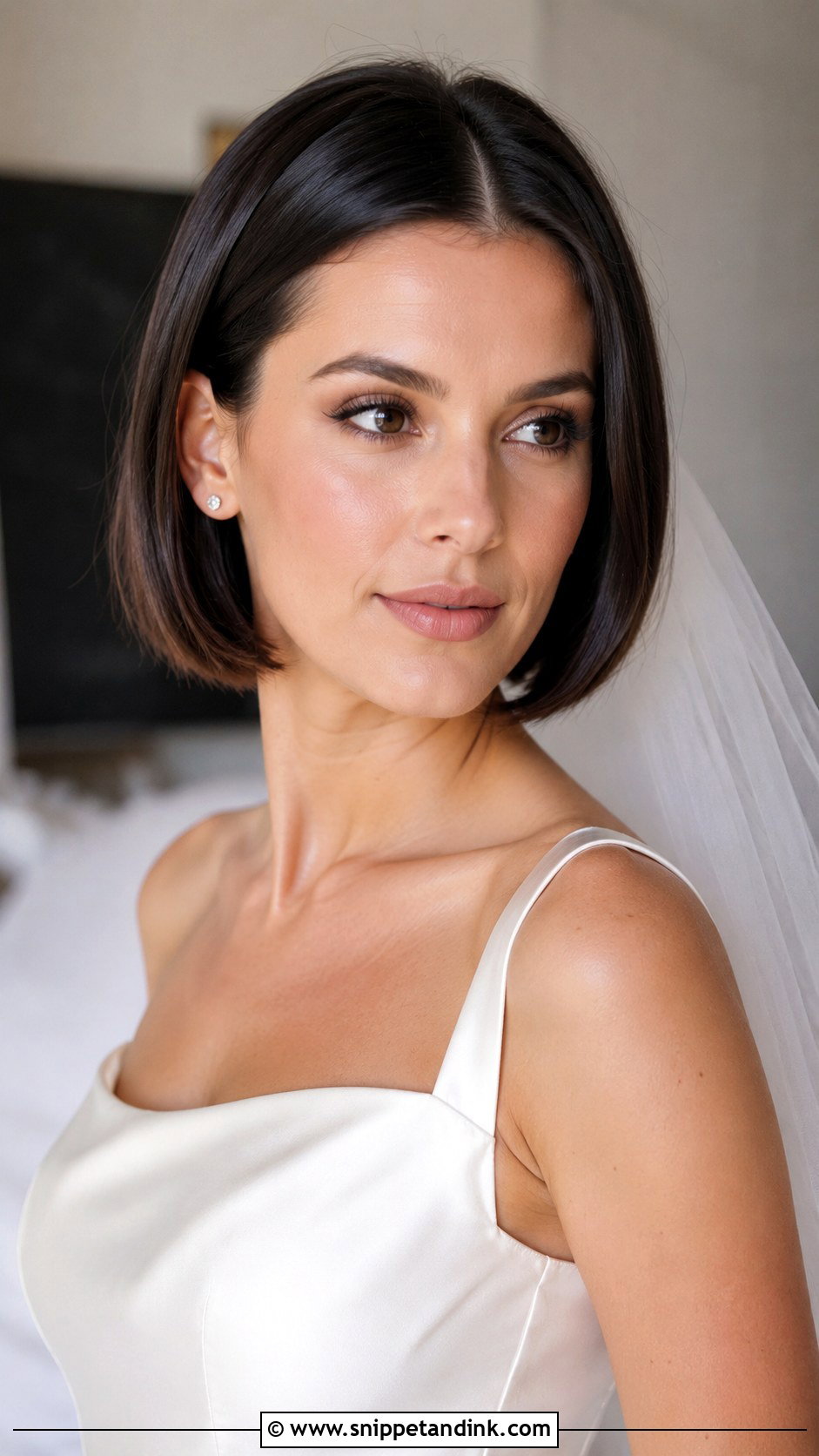
A sleek bob makes sense when the dress or makeup is doing the talking. The finish relies on the ends, so I press them with a flat iron, curving slightly under, and tuck one side behind an ear if you like a little asymmetry. Product is a smoothing cream on damp hair and a light shine spray at the end; heavy serum separates fine hair into strands by the afternoon. In humidity this is the safest short option on the list, since there’s no curl to drop.
3. Short Curly Bob Wedding Hair
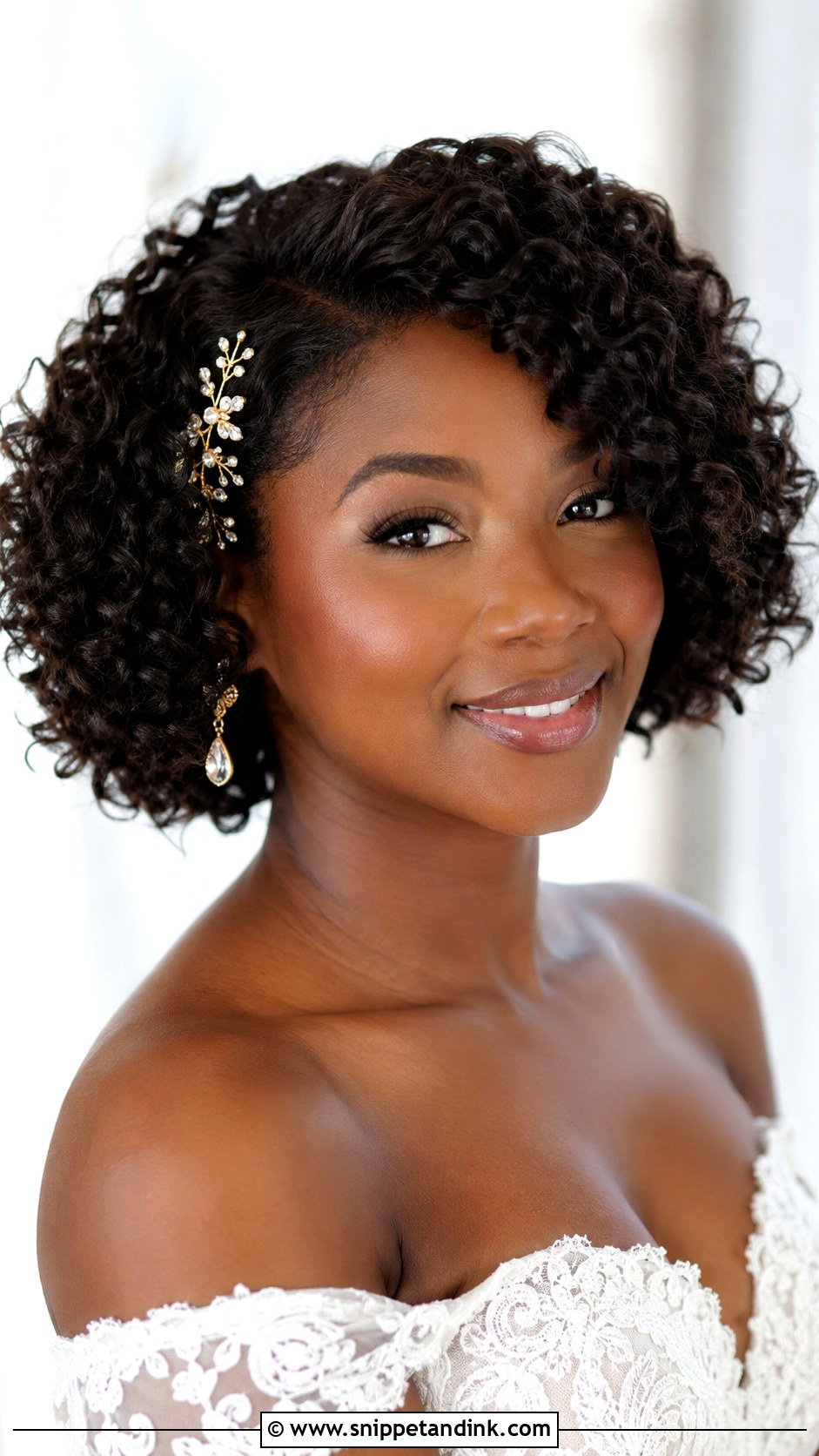
With a curly bob, the outline is what I work on, because curls shrink unevenly and one side often springs higher than the other. I define the pattern with a cream or gel while it’s wet, diffuse it, then check the silhouette in the mirror and pick out or pin any curl that throws it off. Pinning a few curls back at one temple opens the face and keeps them off your foundation. A fingertip veil sits better slightly higher on the crown, where the curls give the comb more grip.
4. Short Pixie Wedding Hair
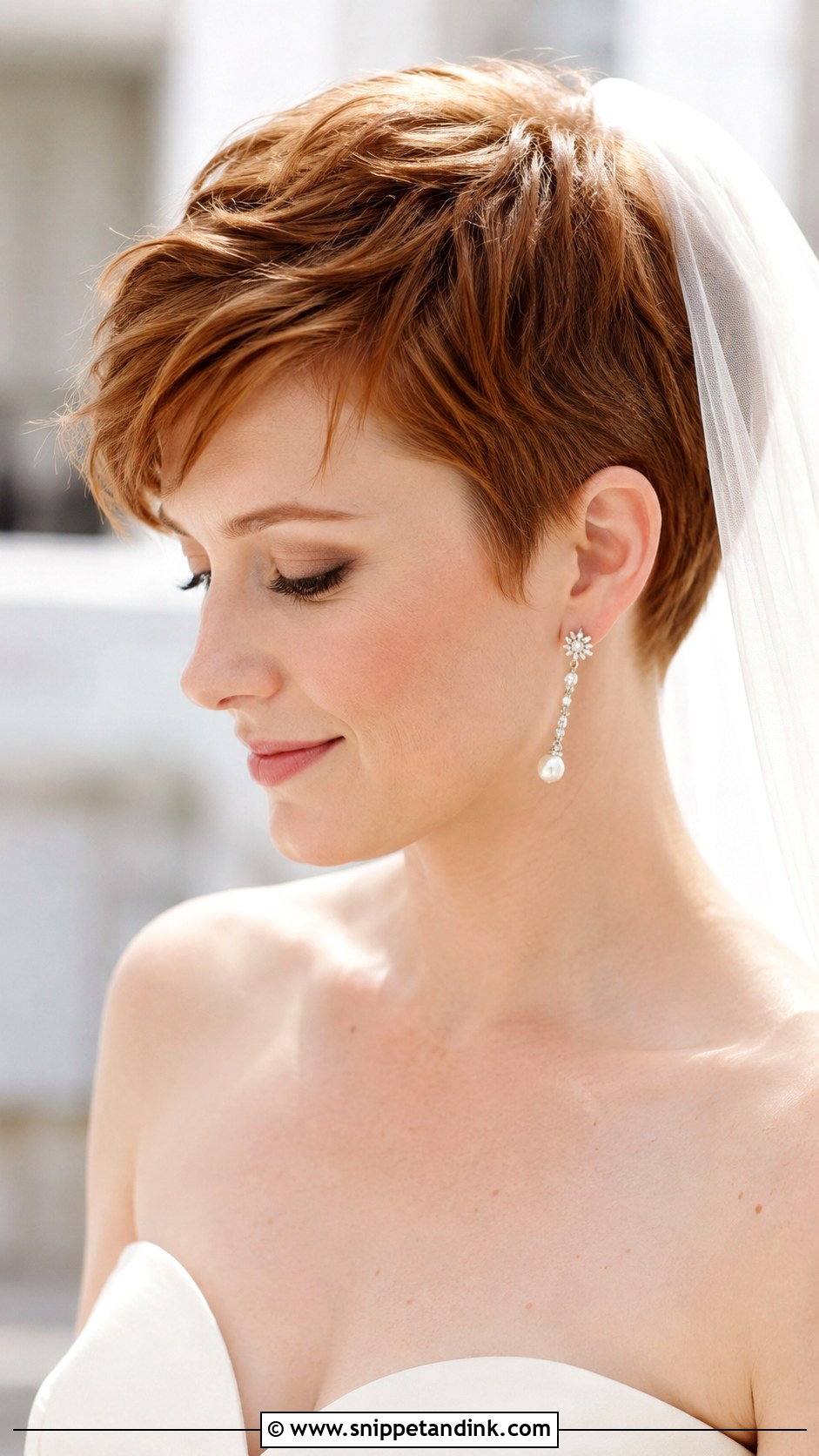
On a pixie there’s no hiding the cut, so the styling goes into texture and direction. I work a small amount of paste between my fingers before touching the hair, then push the top forward and to one side, keeping the sides tight. Too much product looks greasy at close range, which is where most pixie photos are taken. Statement earrings and strapless or high-necked dresses look striking with it. If you want a veil, choose one on a small comb, set at the crown.
5. Short Bixie Wedding Hair
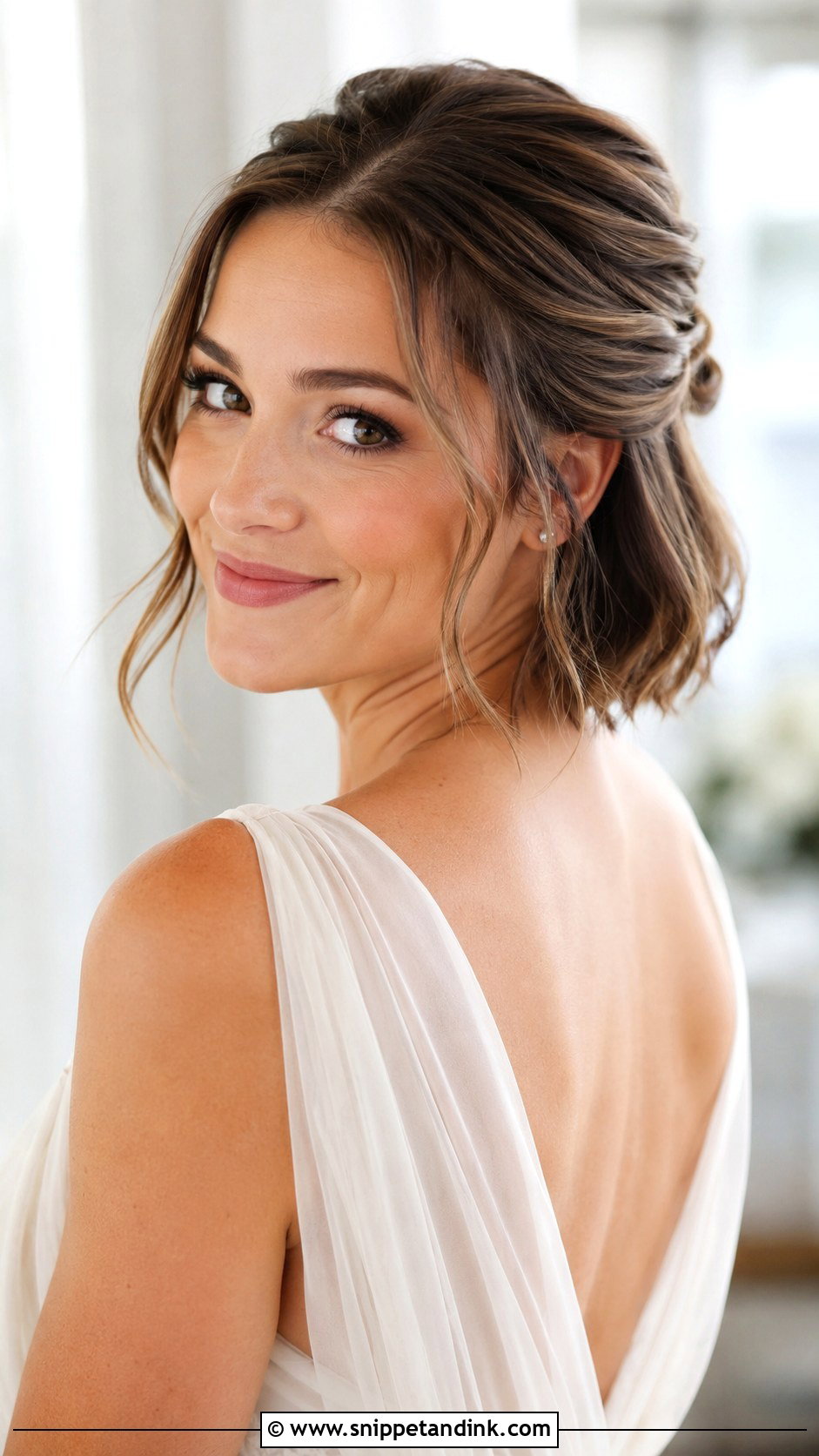
A bixie sits between a bob and a pixie, and that in-between length is what makes it so easy to style for a wedding. There’s enough hair to bend, tuck and pin, yet it stays light. I lift the crown with a round brush and leave the sides piecey. The longest front sections get curled back, away from the eyes. A slim headband or a single pearl barrette is plenty; the cut already has a lot of personality.
6. Short Half Up Wedding Hair
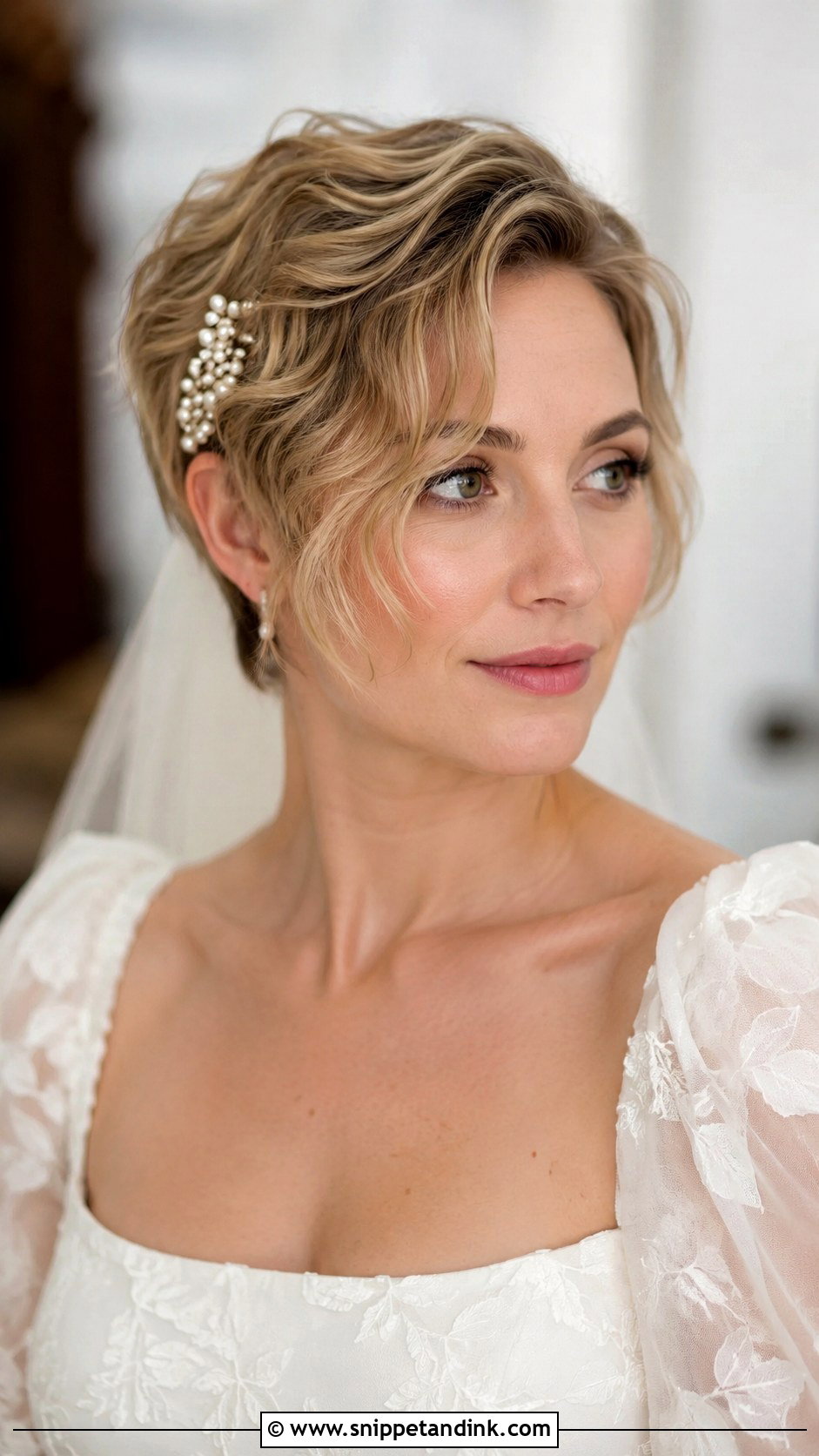
Half up works on shorter lengths, though the section is smaller than you’d take on long hair. On a bob, lob, or grown-out pixie, I take a strip from temple to temple, twist it back and pin it under the crown, which gives lift and a clean place for a comb. The trick is matching the bottom layer to the top. If the lengths are flat, the half-up part looks like a different style, so I bend them in soft waves. It’s a good choice if a veil needs a secure base but you want your hair down.
7. Short Low Bun Wedding Hair
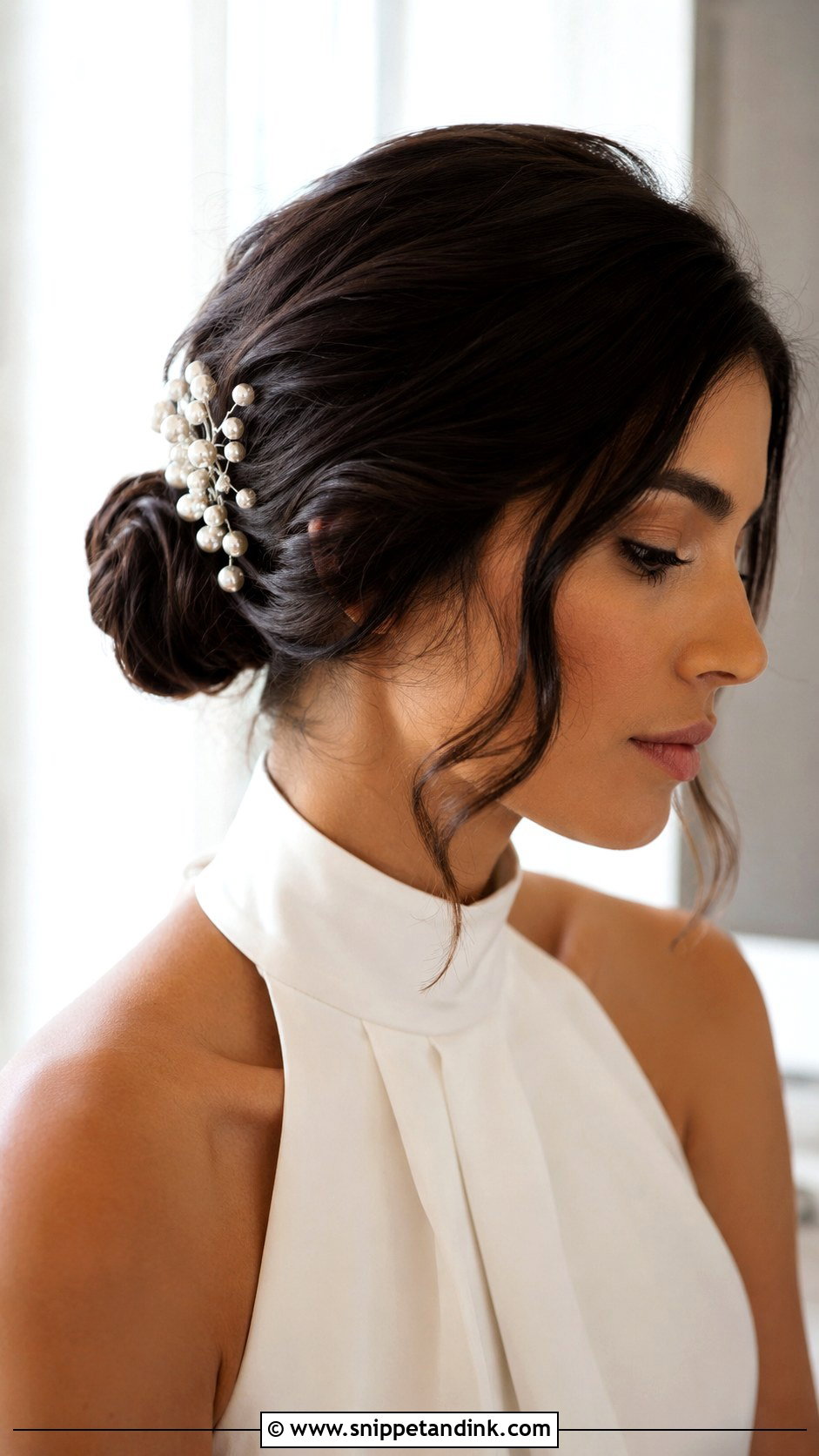
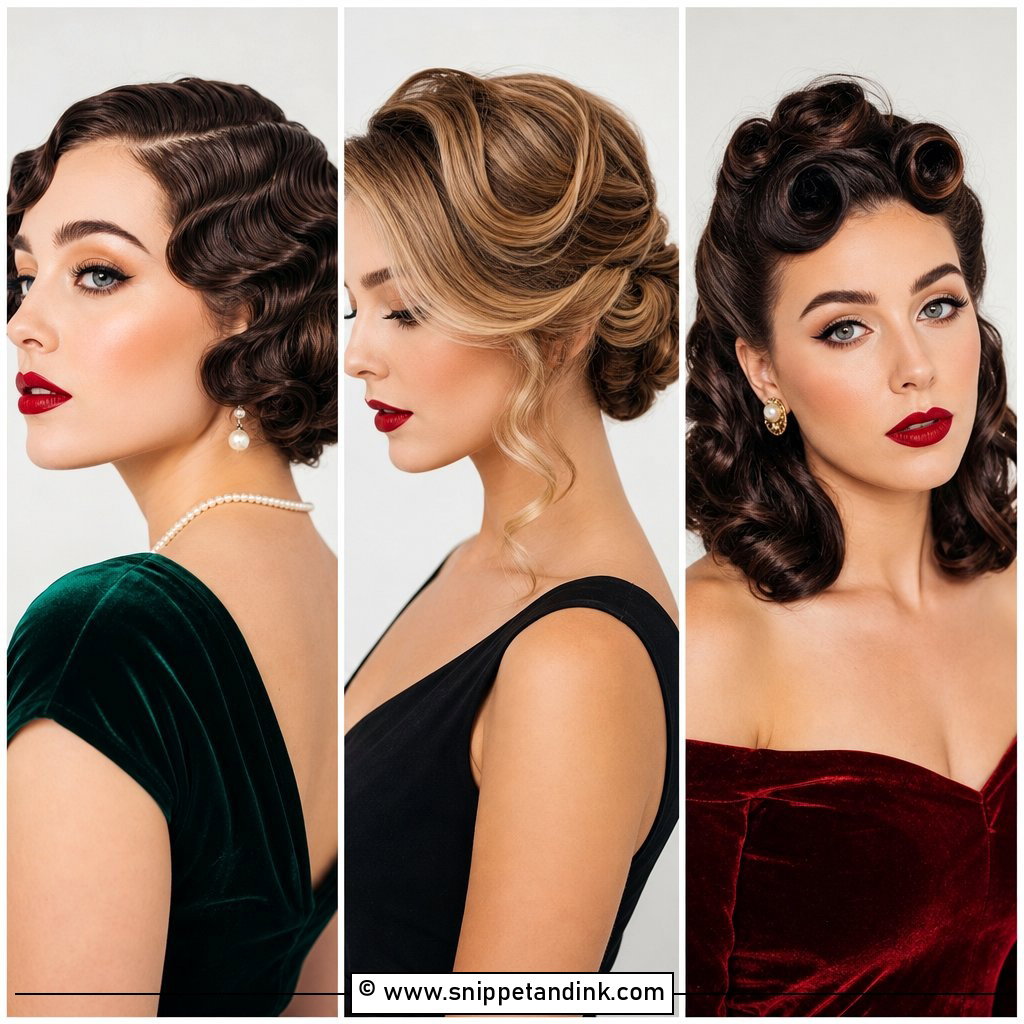
A low bun on short hair needs length at the nape, roughly enough to reach the back of the jawline. Below that, the pieces can’t wrap. I twist the sides inward toward the center back, then pin them into a small tucked shape, and catch short nape hairs with a little gel and a hidden pin. The bun is going to be small. Leaving a few fine pieces by the ears stops it looking like a rushed ponytail.
8. Short Twisted Updo Wedding Hair
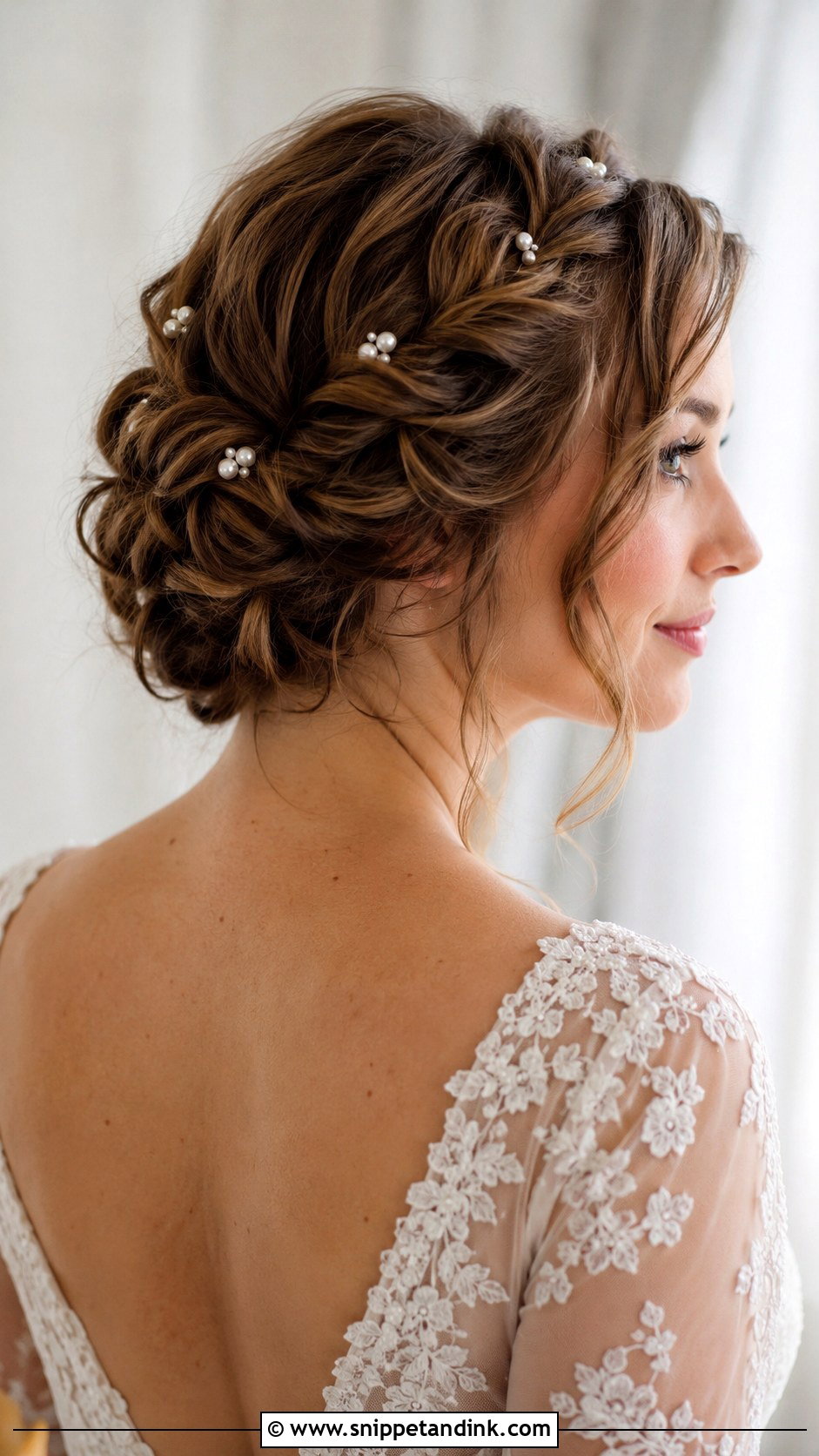
Small twists do on short hair what a full updo does on long hair: they control volume and create shape. I take inch-wide sections, twist each back toward the crown and pin it into the twist beside it, so every pin is gripped by its neighbor. On thick bobs and lobs it holds well. The look is forgiving, too; if a piece pops loose at the reception, it just reads as soft. Keep the hold light so the twists still move.
9. Short Side Swept Wedding Hair
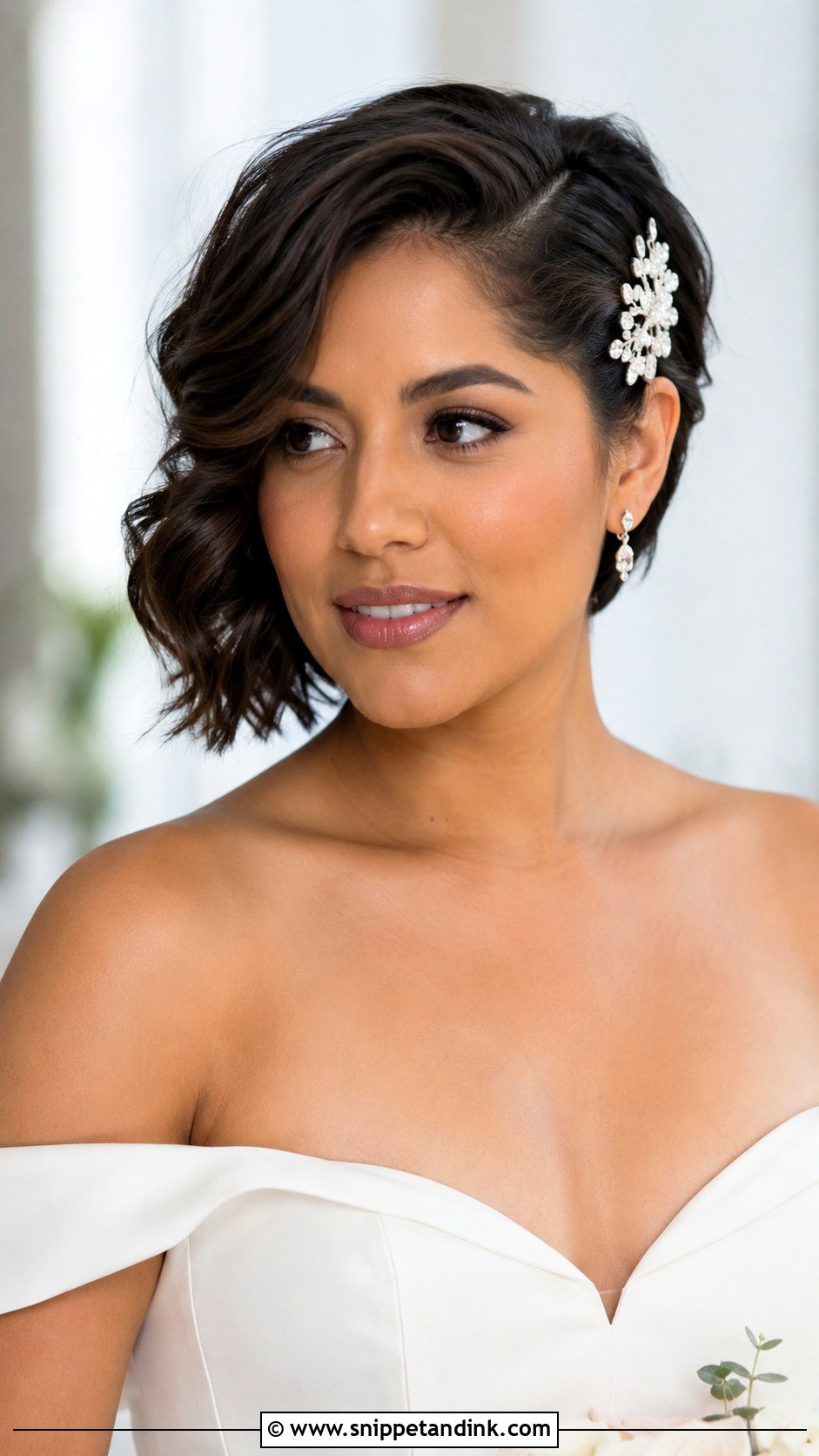
Side-swept styling relies on having a longer front piece. One side gets combed back behind the ear and held with a flat pin, while the other side is waved forward toward the cheek. That asymmetry shows off earrings and collarbone, and it suits one-shoulder and off-the-shoulder dresses. On very straight, fine hair the tucked side can spring loose; a little hairspray on the pin before it goes in helps it grip.
10. Short Finger Waves Wedding Hair
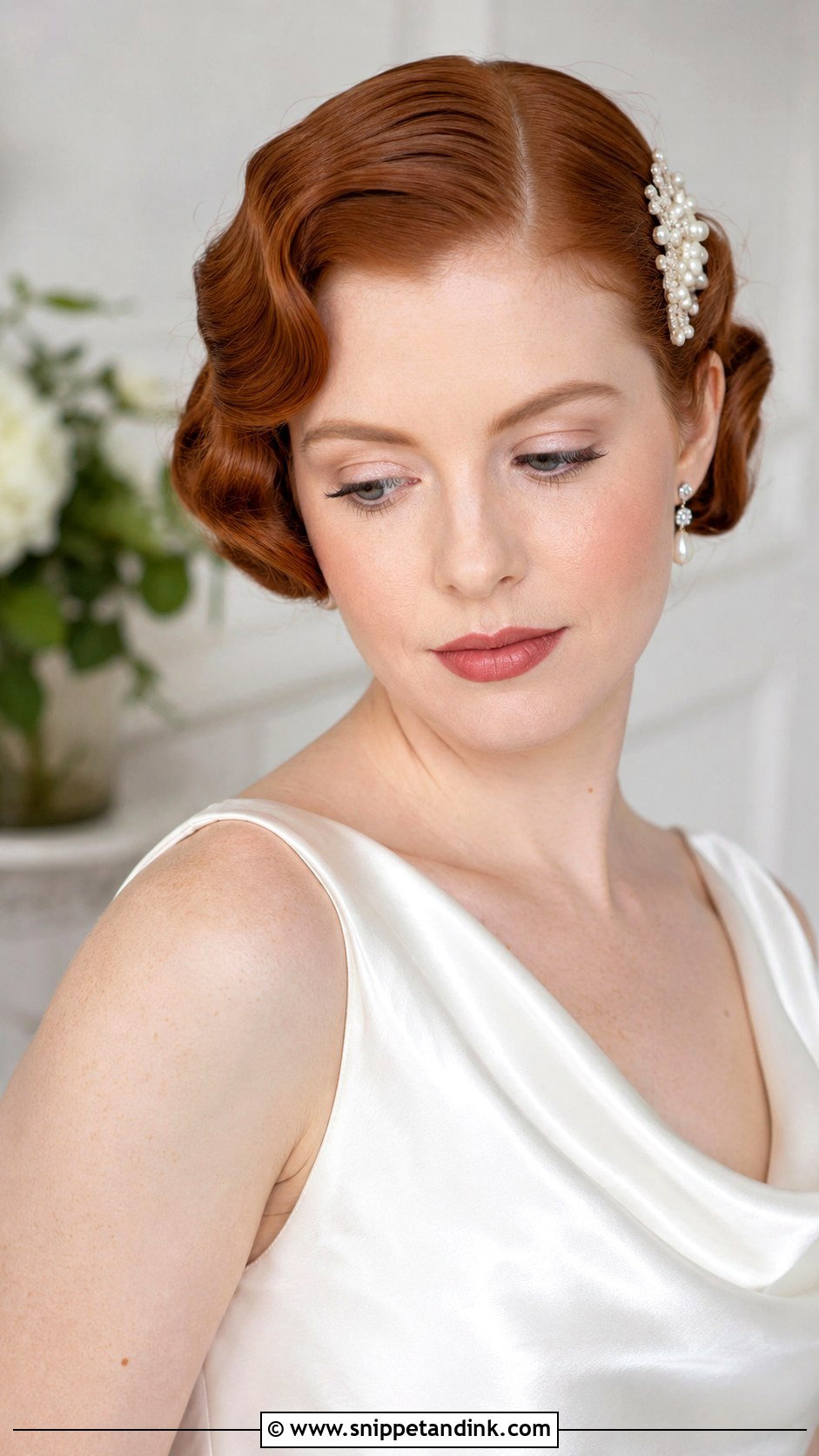
Finger waves need setting lotion, a comb and patience. The waves are pressed into wet hair, held with clips until fully dry, then lightly brushed, which is why I’d only book this with a stylist who has done it before rather than learning on your day. They suit short bobs and pixies with a few inches of length on top. With a satin dress and a red lip, it’s a full vintage look. Leave the accessories small so the ridges stay the focus.
11. Short Textured Lob Wedding Hair
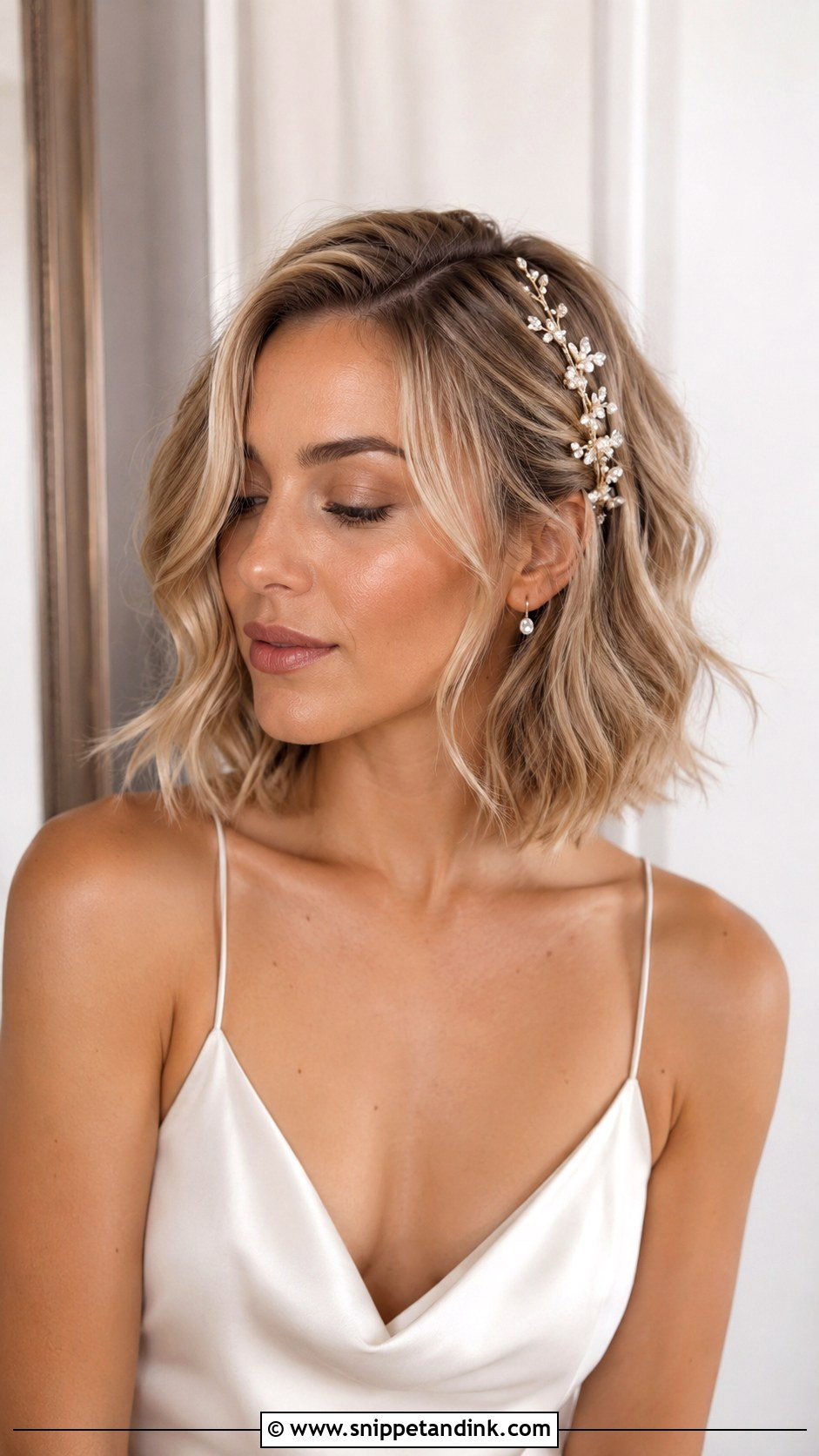
A textured lob sits around the collarbone, and that’s long enough for a soft bend but short enough to stay light. For a wedding, I aim for touchable texture with clean ends, not the rough, matte beach texture that looks tired in photos. Front pieces get curled back and away from the face, and I leave the ends straight for the last inch so it reads modern. It works with almost any accessory, from a veil to floral pins.
12. Short Bob With Pearl Clips Wedding Hair
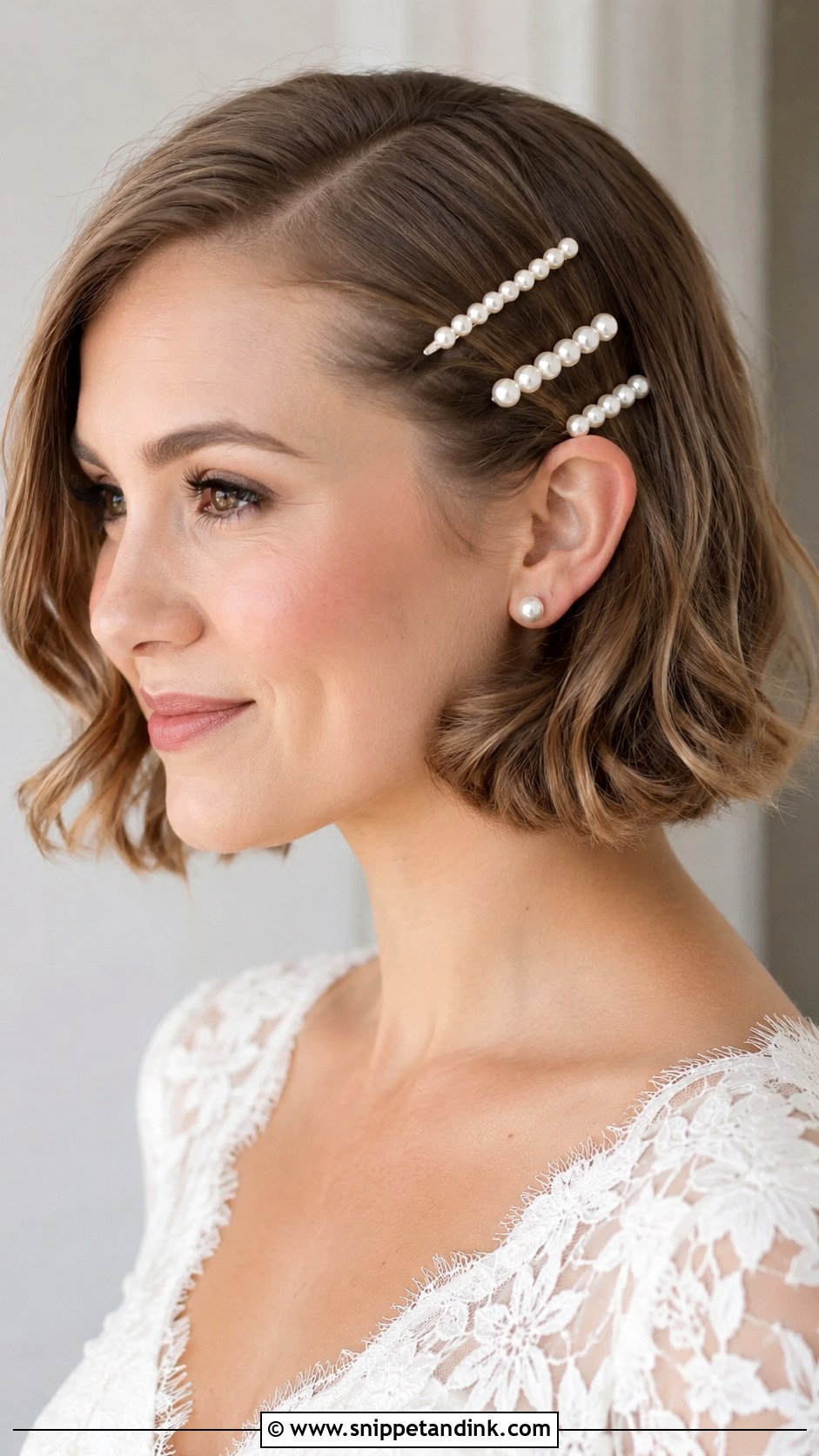
A pearl clip can make a plain bob bridal in about a minute. One larger clip above the ear reads modern; a staggered cluster of small pins along one side reads softer. Placement depends on your part, and the clips should sit on the side where hair is shorter or tends to fall forward, so they also do a practical job. Bring them to the trial; some clips are too heavy for fine short hair and slide down by the evening.
13. Short Hair With Bridal Headband
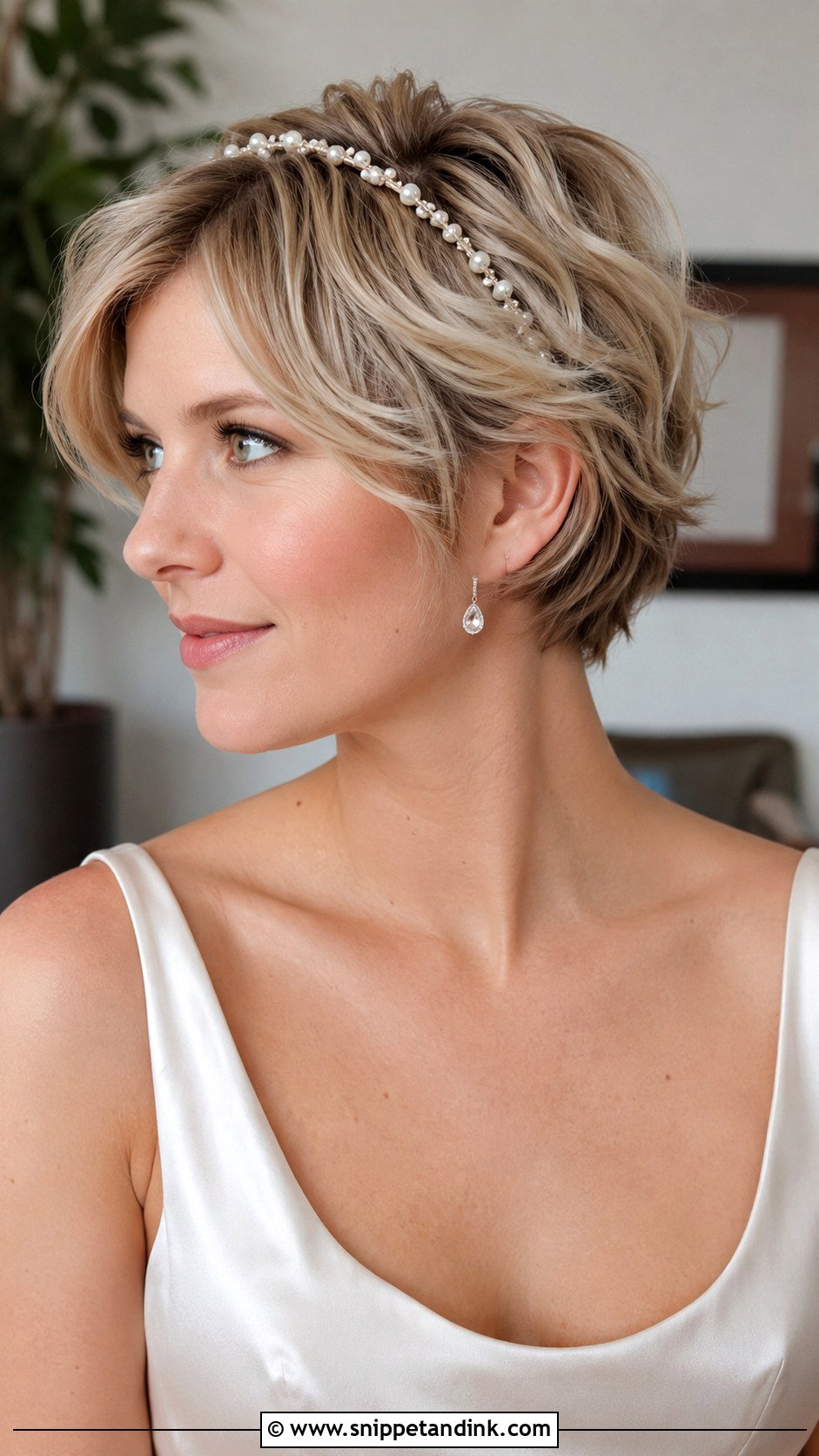
Headbands are the lowest-effort accessory for short hair, since they need almost no length to hold. A thin pearl band is classic, a padded satin band more modern, and a crystal one more formal. Before putting it on, I tease the crown slightly; a headband pressed onto flat hair looks like it’s squashing it. Wear it for a full hour at your trial. A band that pinches behind the ears will be very noticeable by the reception.
14. Short Hair With Veil Wedding Hair
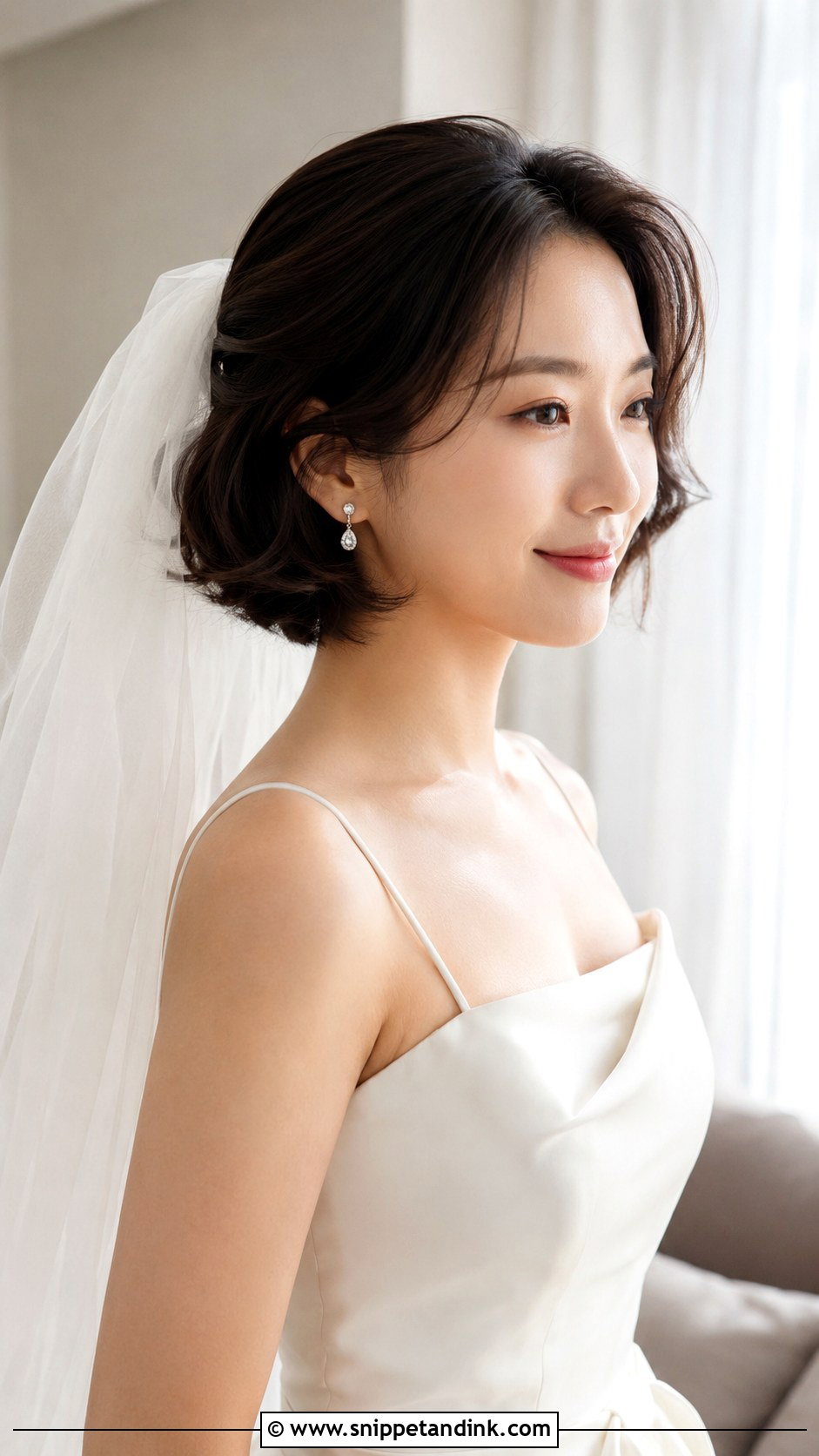
Veil placement on short hair is less about the cut and more about grip. On pixies and crops, I build a small anchor of crossed bobby pins at the crown and slide the comb into those, since there’s often not enough hair for the comb alone. On bobs and lobs, the comb can sit a little lower or above a tiny twist. Remember the veil usually comes off after the ceremony, so the style underneath has to look finished without it. Bring the veil itself to your trial, not a photo of it.
15. Short Hair With Floral Pins Wedding Hair
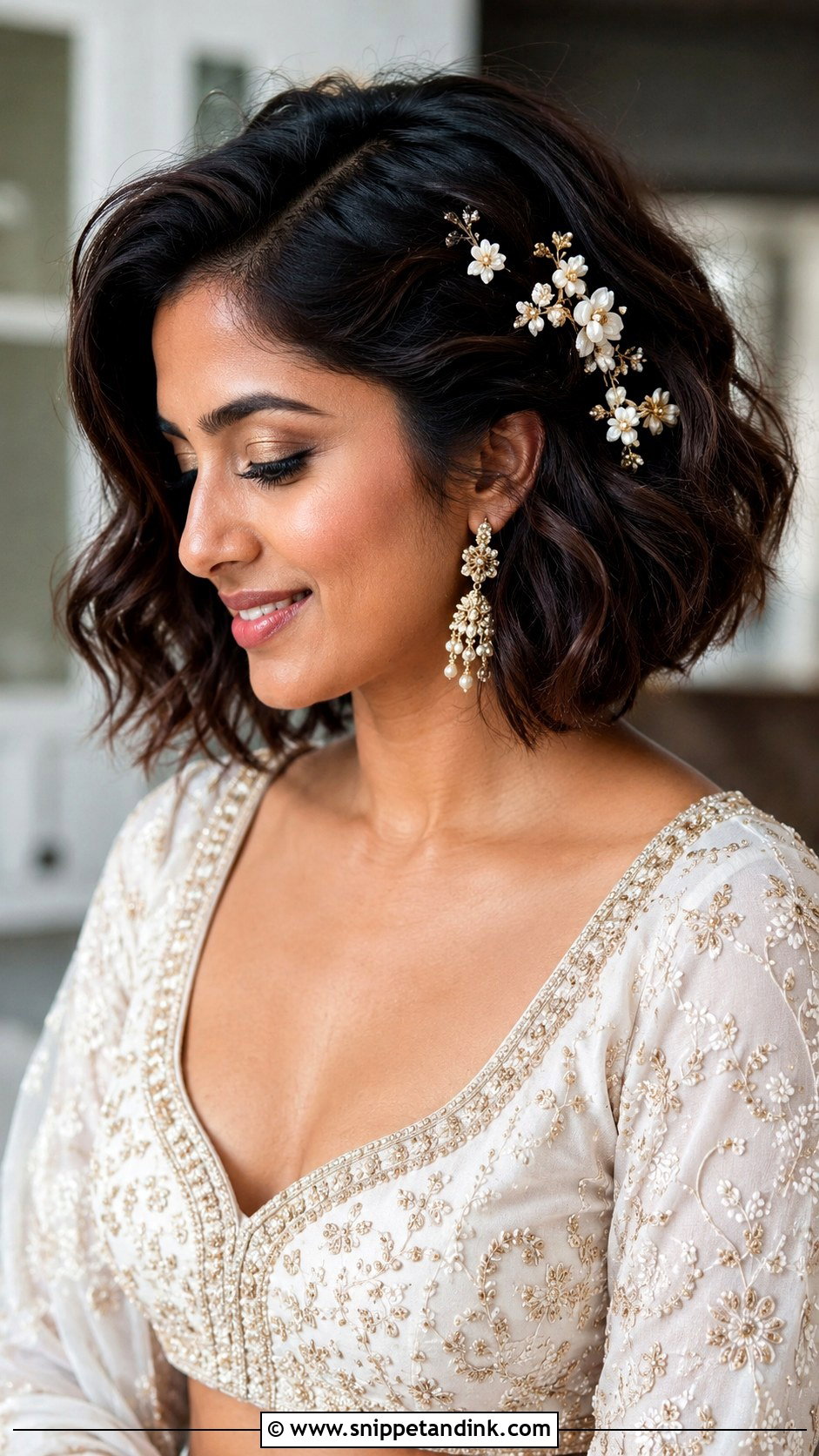
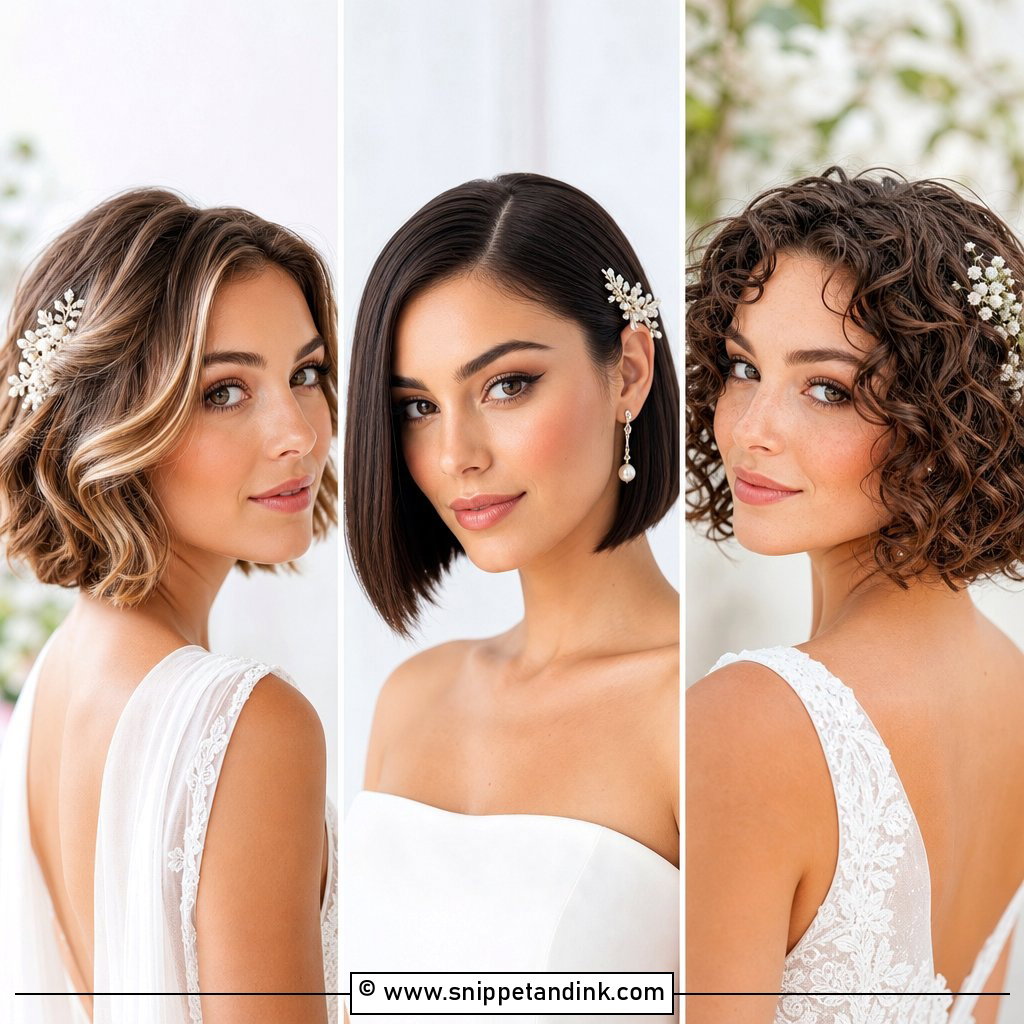
Floral pins on short hair have to be small. A bloom much bigger than a coin hides most of a pixie or a bob, so I’d choose tiny flowers, pearl-centered blossoms or a few sprigs of greenery. They tuck easily into waves or between twists. For fresh flowers, ask your florist for hardy stems such as wax flower or spray roses, which hold up out of water much longer than delicate blooms. Place them close to the face, where photos will catch them.
Why Accessories Slip Off Short Hair, and How I Stop It
The most common complaint I hear from short-haired brides is that their clip, comb or veil slid out by mid-afternoon. It isn’t your hair’s fault. Most bridal accessories are designed for longer, heavier hair that wraps around them.
On a pixie or crop, I make an anchor: two bobby pins crossed in an X, close to the scalp, which the comb or clip then slides into. On a bob, a tiny hidden twist under the top layer does the same job. Combs with longer, closer-spaced teeth hold better than wide-toothed ones, and a clip with a rubber or velvet lining grips smooth hair much better than plain metal. Texture spray or dry shampoo at the root, before anything goes in, adds the friction that clean short hair lacks.
Weight matters too. A heavily jeweled barrette that sits fine on long hair will tip on a bob. Hold your chosen piece in your palm: if it feels heavier than a couple of coins, ask whether it can be stitched to a small comb so it’s pinned in two places.
Let the Cut Lead, Then Add One Detail
Short hair has more wedding options than most brides assume, but the best one usually follows how your cut already wants to sit. If you like a clean finish, a sleek bob or polished pixie may be all you need. If you want softness, look at waves, curls, a half-up shape or floral pins; for more structure, twists, a small bun or finger waves. Bring your accessories to the trial and photograph the back, which you’ll never see in the mirror.
You'll Like These Ideas:


Leave a Reply