
Every bride I do makeup for wants something slightly different, but almost all of them say the same sentence at the first consultation: I still want to look like me. That is the real brief behind every look on this list. Wedding makeup now leans towards balanced skin and soft definition rather than heavy layers, though a red lip or a full smoky eye still has its place. What matters is that the face suits your dress, your light and your skin, and that it holds from the vows to the last song. Below are twenty looks, each with my notes on who it suits and what tends to go wrong.
Start Your Skin Months Before the Makeup
Any look below sits on top of your skin, and I can only do so much with foundation on the morning. The brides whose makeup lasts longest are almost always the ones who settled their skincare well in advance and then stopped changing it.
- Three months or more out: if you want to see a dermatologist about breakouts or pigmentation, go now. Treatments need time to settle.
- Six to eight weeks out: book the trial. Wear the look for the rest of the day so you see how it behaves.
- Two weeks out: no new products, peels, strong retinoids or first-time facials. Peeling skin is the one thing foundation cannot hide.
- Final week: gentle cleansing, steady moisturiser, plenty of water and sleep. Exfoliate lightly a few days before, not the night before.
- Wedding morning: a clean, moisturised face with no heavy oils or sunscreen with a white cast, unless your artist has asked for them.
If you have eyebrow threading, waxing or tinting booked, do it about a week before. Freshly threaded skin is red and bumpy for a day or two, and I’d rather not put foundation over it.
1. Natural Bridal Makeup
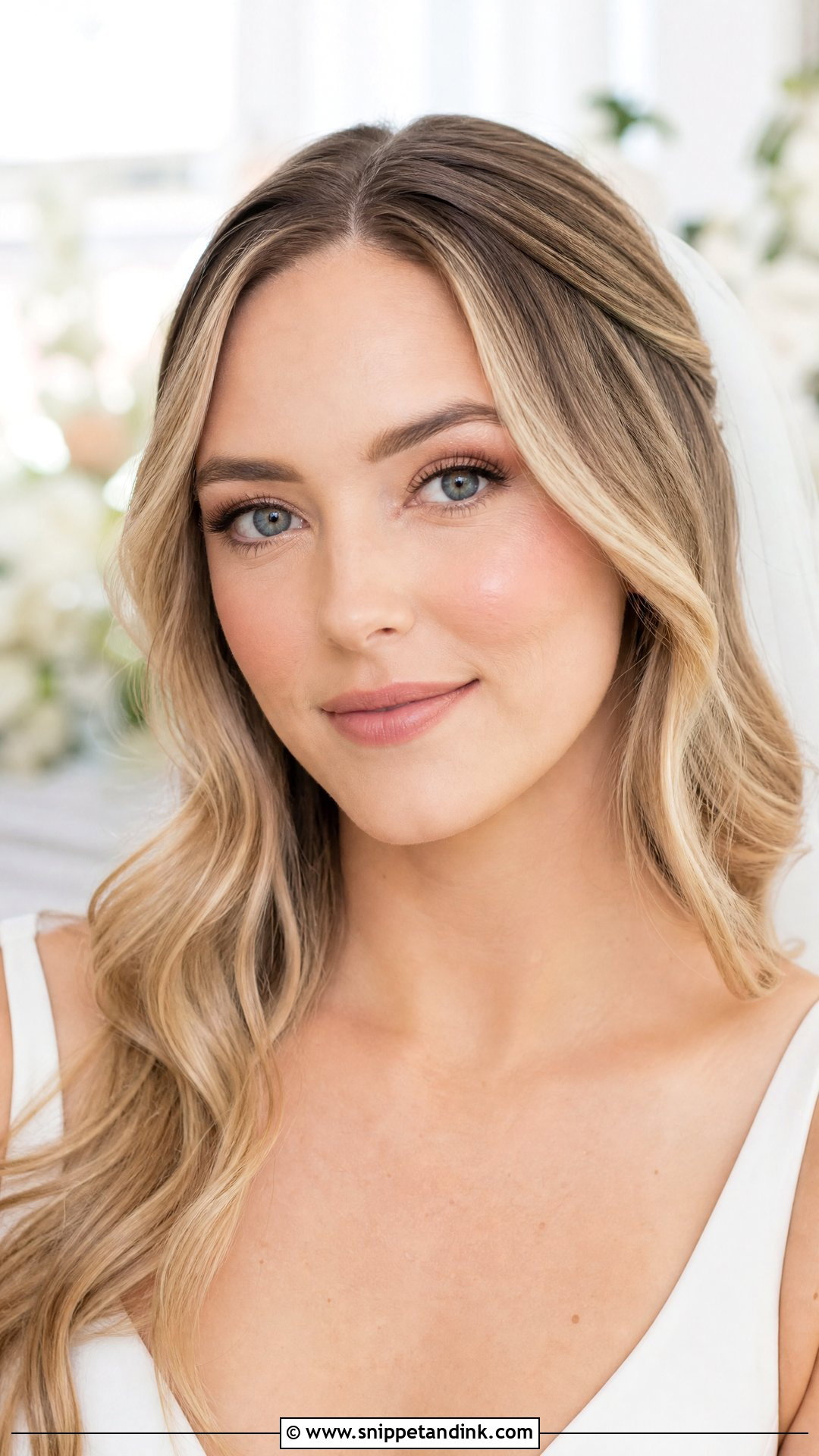
Natural makeup is harder to do well than full glam, because nothing hides a mistake. I use a satin, skin-like foundation in a thin layer and spot-conceal only where it’s needed, so freckles and real skin texture still show. Cream blush in a soft rose or peach gives life. Beige or taupe on the lids, a brown liner pressed into the lash roots rather than drawn on top, wispy lashes and a satin lip close to your own colour. It suits daytime and outdoor weddings, where daylight shows every layer.
2. Soft Glam Bridal Makeup
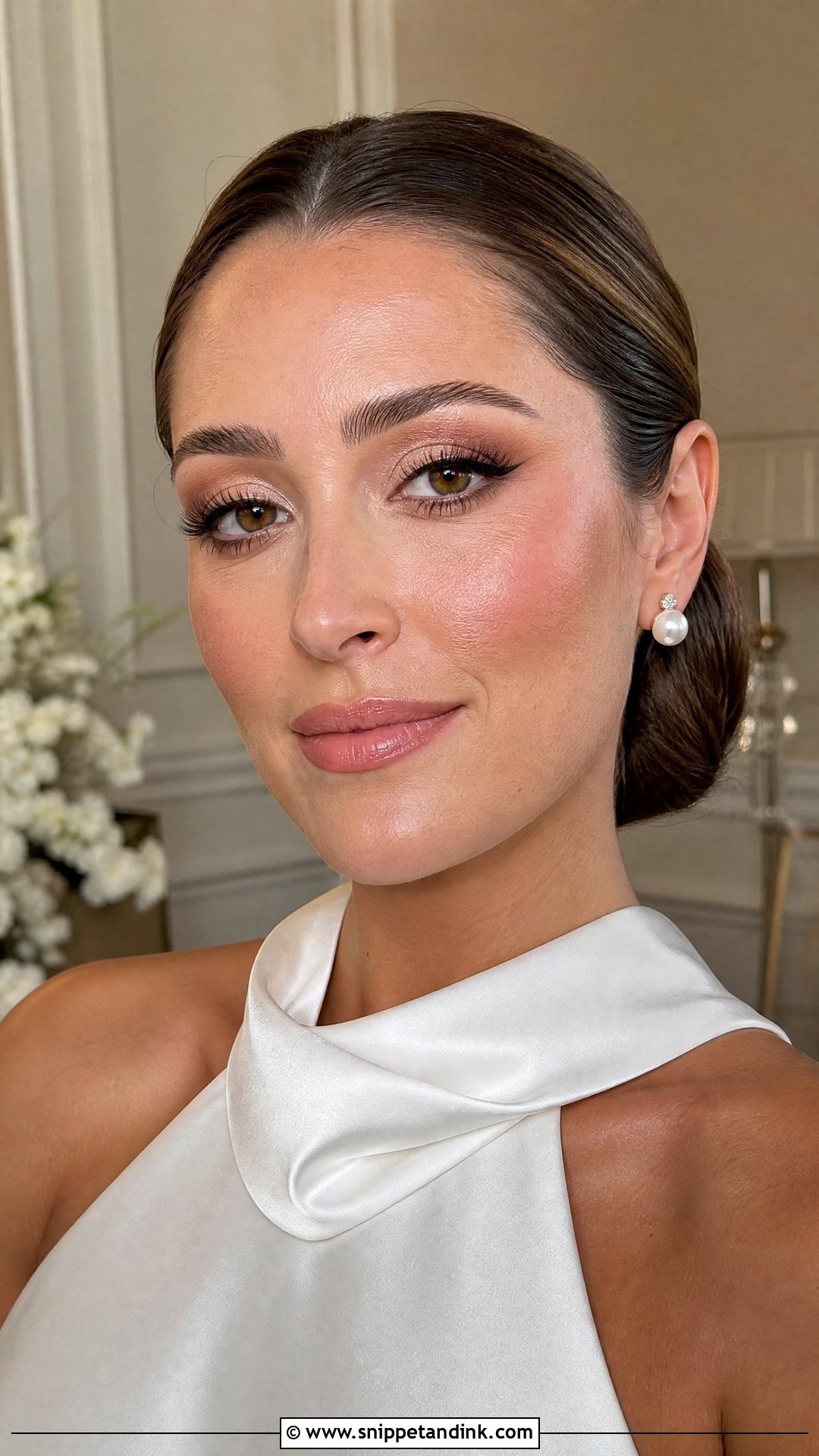
Soft glam sits one step up from natural, and it’s what I’m asked for most. A smooth base, gently sculpted cheeks, warm brown or champagne on the lids, a smudged lash line and individual lashes for lift. The work is in the blending: if you can see where the contour starts, it isn’t finished. I set only the centre of the face so the cheeks keep their glow. A rose-nude lip with a touch of gloss in the middle reads as bridal without looking done-up. Few dresses or venues fight it.
3. Dewy Bridal Makeup
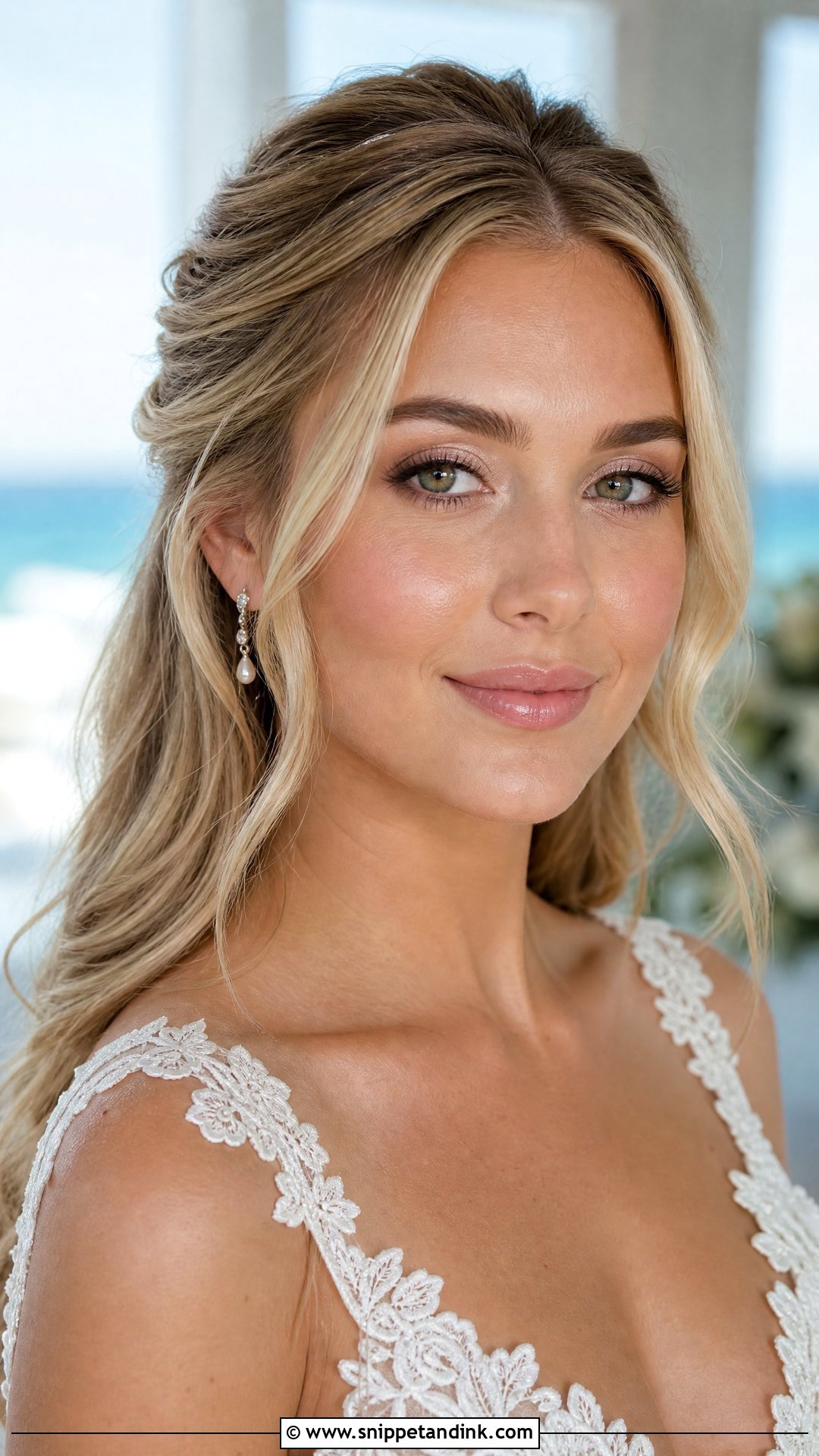
Dewy bridal makeup depends almost entirely on what happens before the foundation. Hydrated skin glows; dry skin with a luminous foundation on top just looks greasy and patchy. I prep with a hydrating layer, use a luminous medium-coverage base, then put cream blush high on the cheeks and liquid highlight only on the top of the cheekbone and the inner corners. Brown liner, soft champagne lids, glossy nude lips. I’d hesitate with this for very oily skin in summer; by the speeches, dewy turns shiny.
4. Matte Bridal Makeup
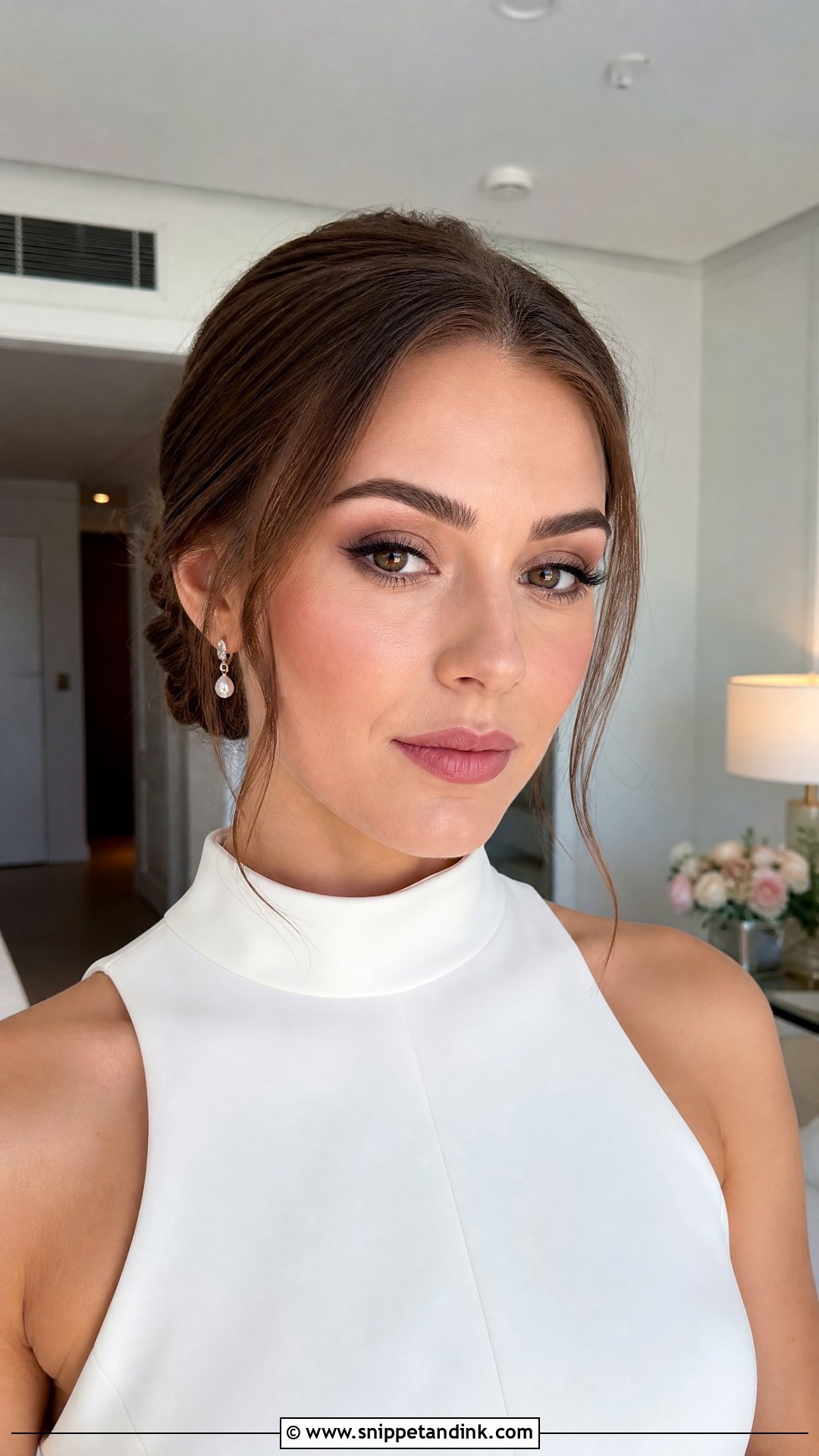
Matte makeup should look like velvet, not chalk. I set the T-zone carefully, then put warmth back into the face with a soft matte bronzer and a satin blush, because a fully powdered face reads flat and older in photographs. Neutral matte browns, taupe or soft mauve on the eyes with a defined lash line, and a matte rose or beige-pink lip. It’s the most practical finish for oily skin, summer heat and long evening receptions. Dry skin is the exception: matte foundation settles into flaky patches by mid-afternoon.
5. Classic Bridal Makeup
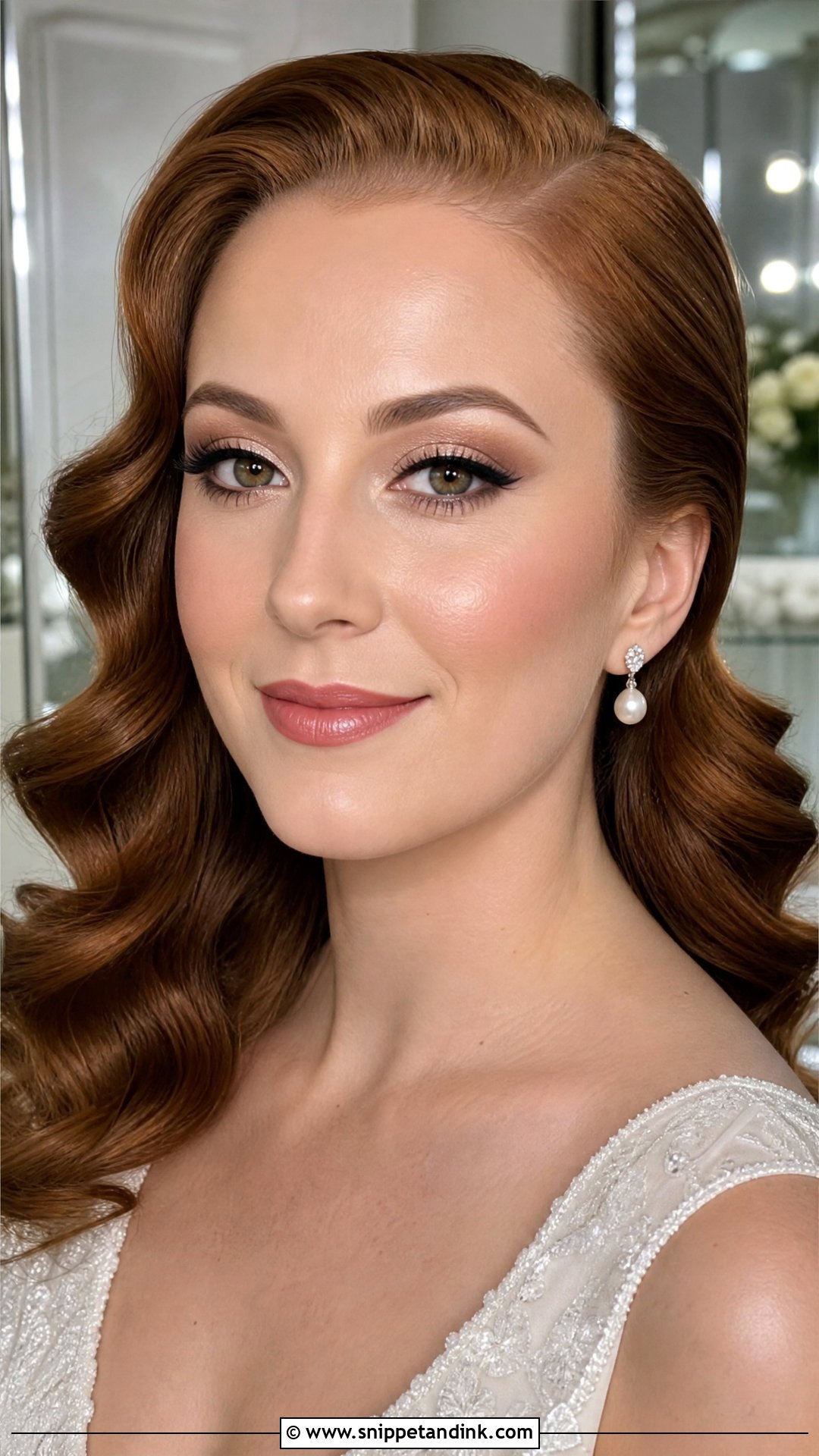
Classic bridal makeup survives every trend because it is about proportion: smooth skin, defined eyes, natural brows, a healthy cheek, a finished lip. Champagne shimmer on the lid, soft brown in the crease, a clean liner close to the lashes and individual lashes for definition. I keep the complexion satin so it holds up in both window light and flash. A rose or soft berry lip gives enough colour. It suits traditional gowns, cathedral veils and pearls, where a trendier face can look out of step in twenty years.
6. Full Glam Bridal Makeup
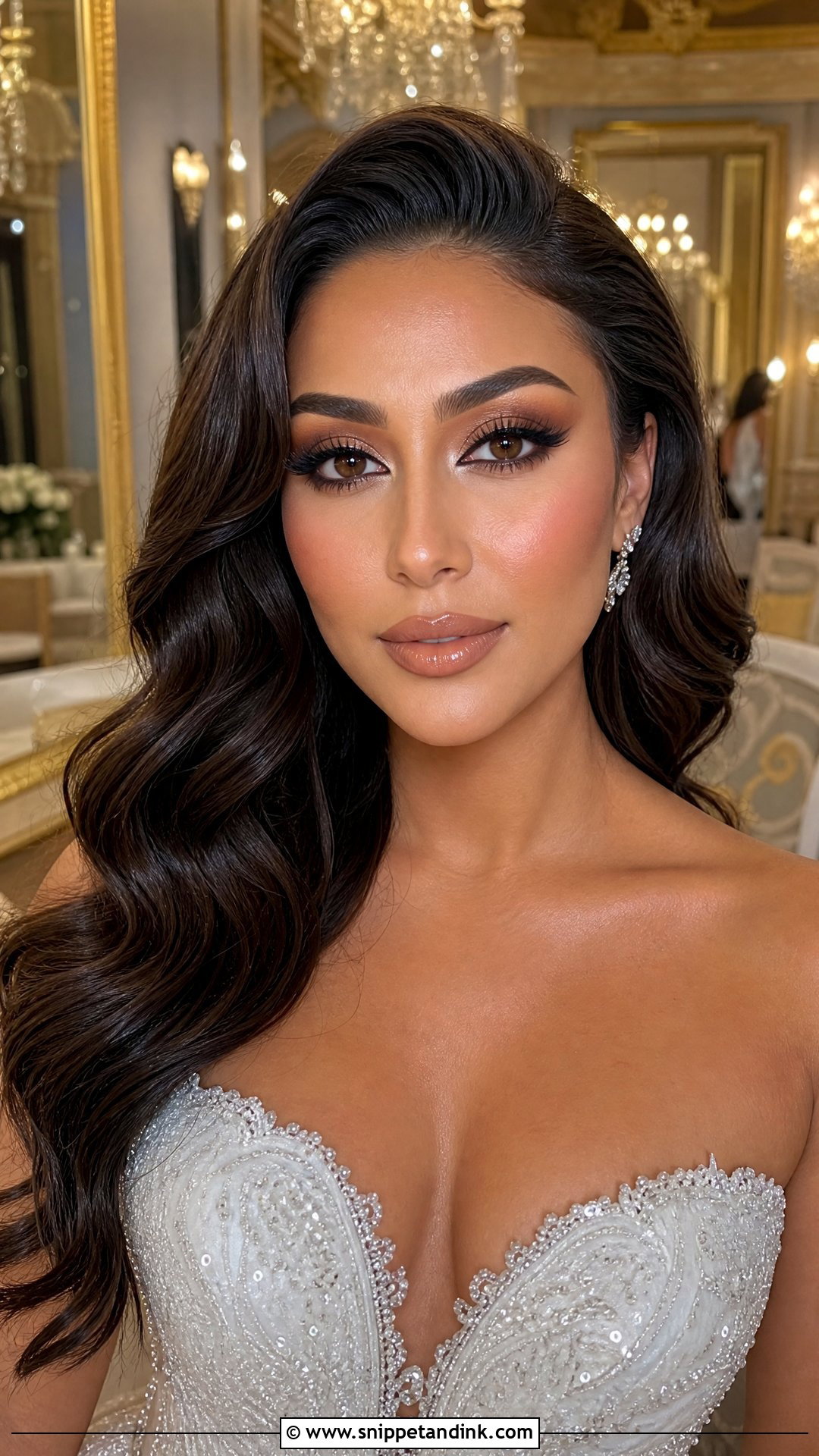
Full glam is for the bride who wears makeup often and is comfortable being seen in it. Fuller-coverage foundation, defined contour, sculpted brows, dramatic eyes, full lashes and a strong lip or a glossy nude. The rule I follow is one focal point plus one supporting one: a smoky eye gets a softer lip, a bold lip gets a cleaner eye. Blend the base until it looks smooth from twelve inches away, because guests will hug you. Evening ballrooms and structured gowns carry it best.
7. Pink Bridal Makeup
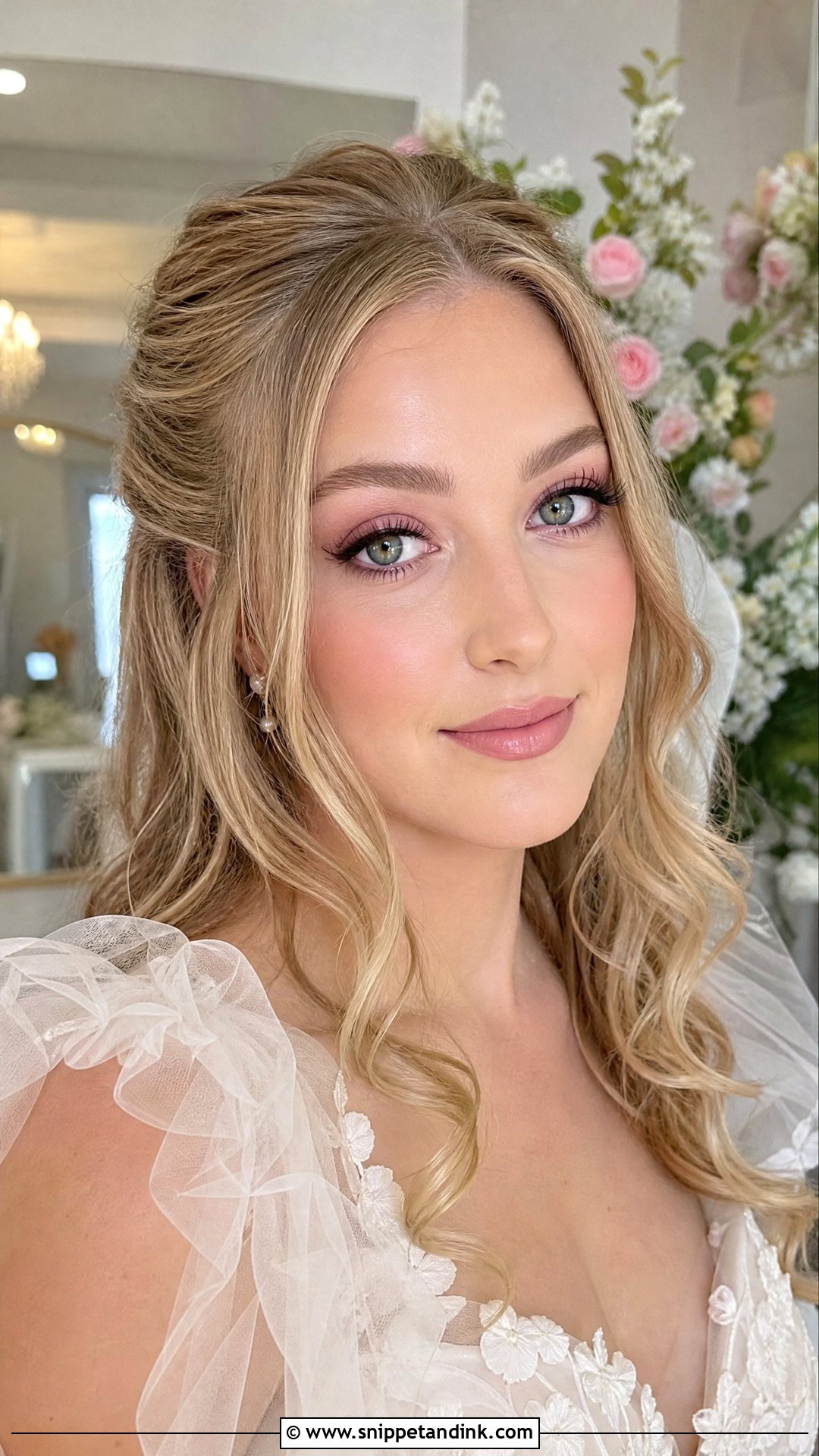
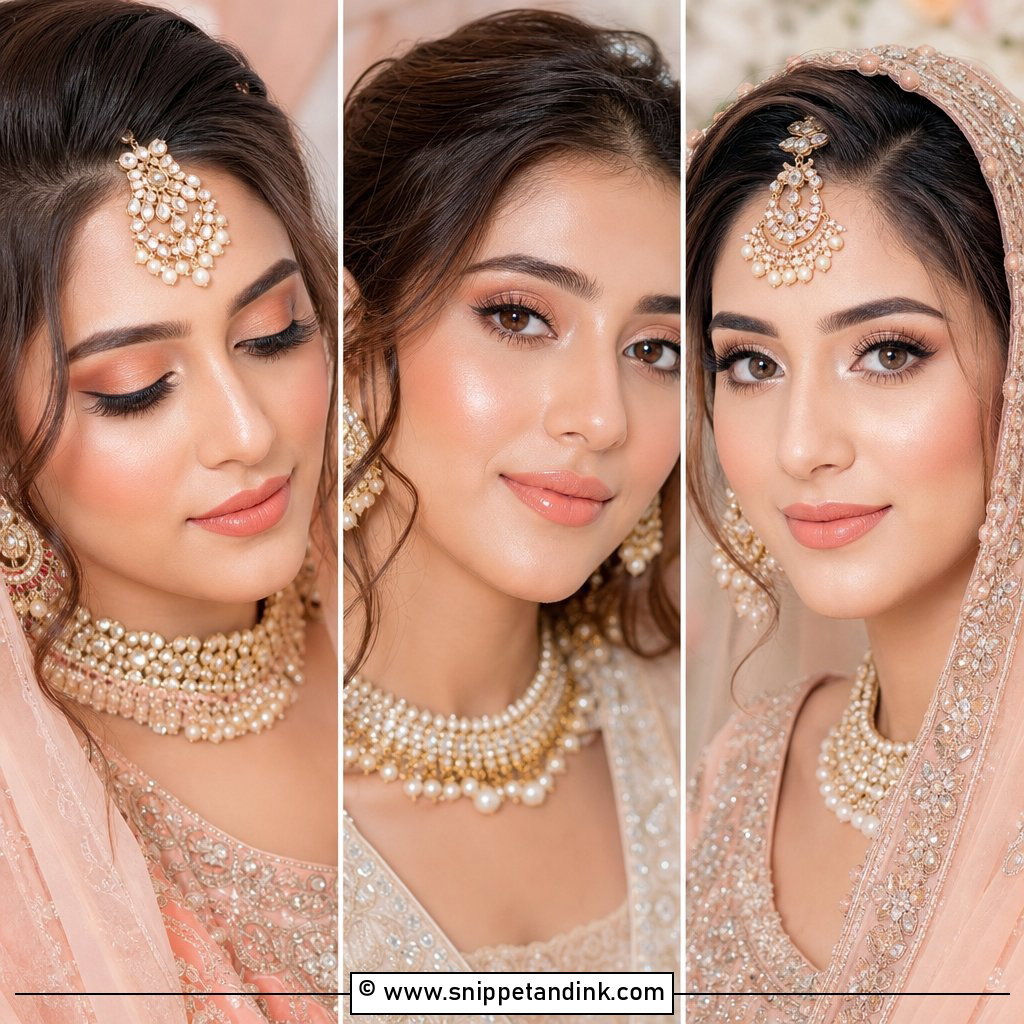
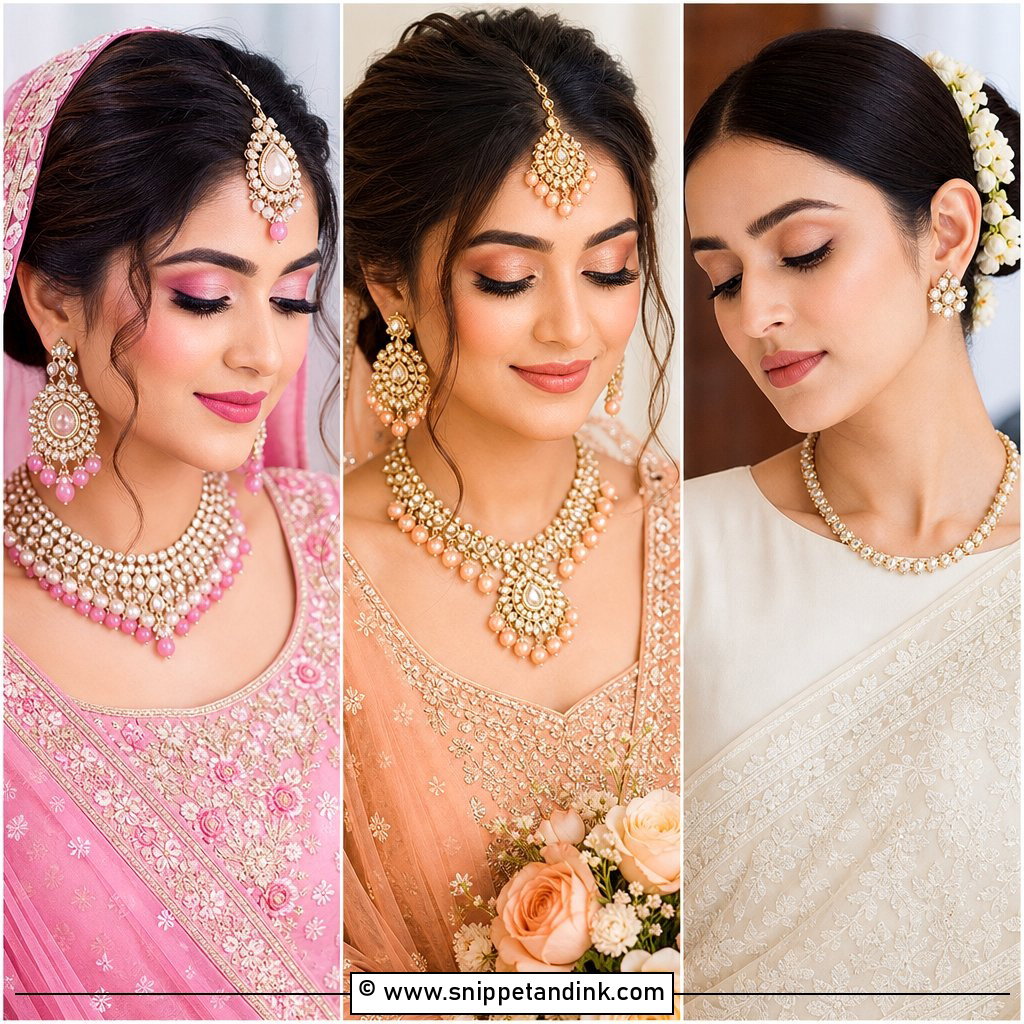
Pink adds colour without boldness. Rosy blush, a pink or mauve-pink wash on the lids and a pink-nude lip matched to your undertone. Fair skin tends to suit baby pink or rose; medium and tan skin take warm pink, guava or rosewood; deep skin glows in berry-pink. The pink I steer brides away from is a chalky, pale pastel, which turns lavender-grey in photographs on almost everyone. Soft brown liner and lifting lashes keep it delicate, with blush gowns and spring flowers.
8. Peach Bridal Makeup
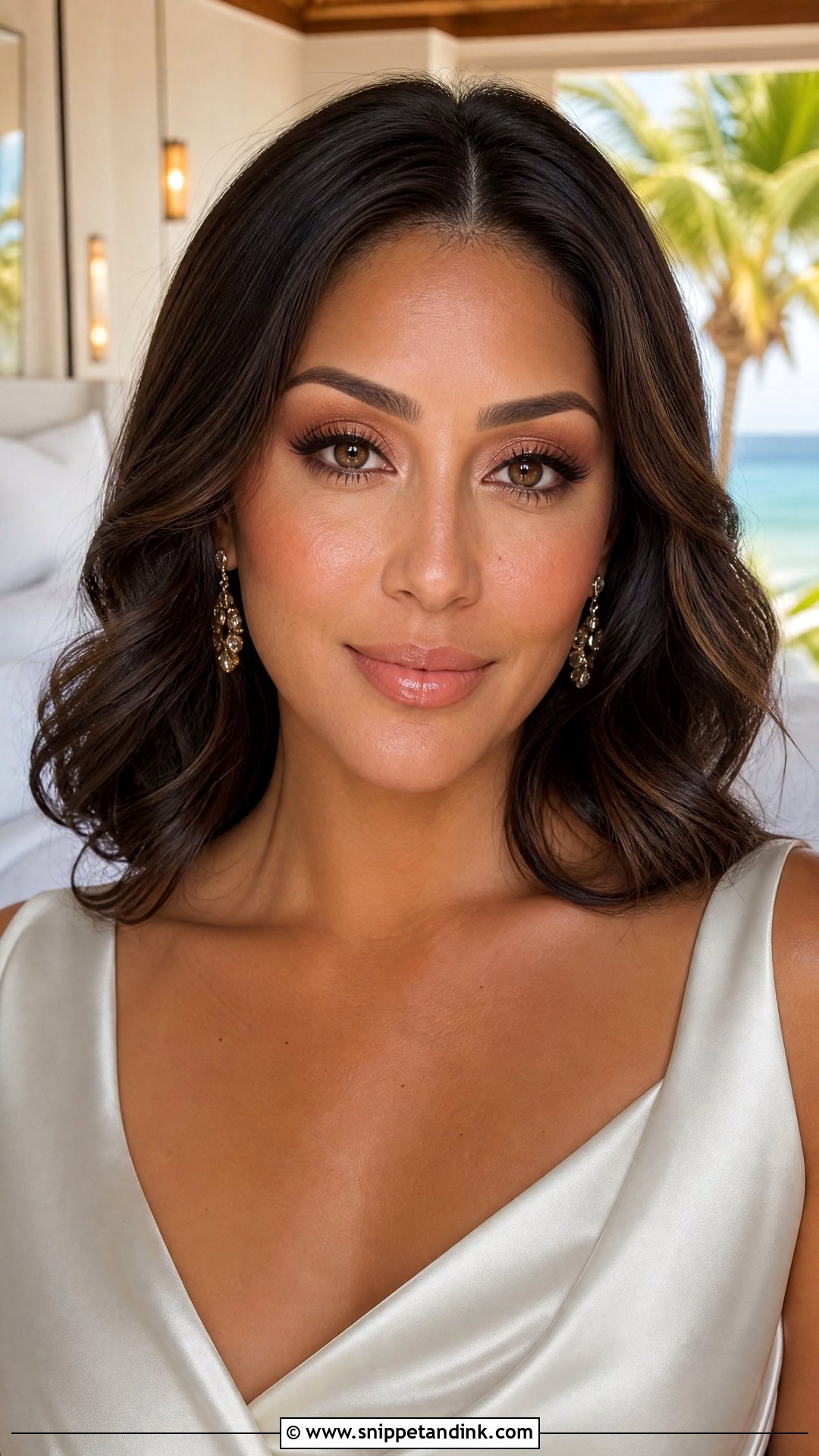
Peach wakes the face up, which is why I reach for it at sunny weddings. Peach blush, soft bronze eyes, glowing skin and a peachy nude lip. The shade depth matters: pale peach on fair skin, apricot on medium and olive, burnt peach or terracotta on deep skin, where a pale peach looks ashy. Champagne highlight and soft brown liner hold everything together. Peach is less forgiving on very pink, sensitive skin, where it can emphasise redness, so I neutralise redness first.
9. Bronzed Bridal Makeup
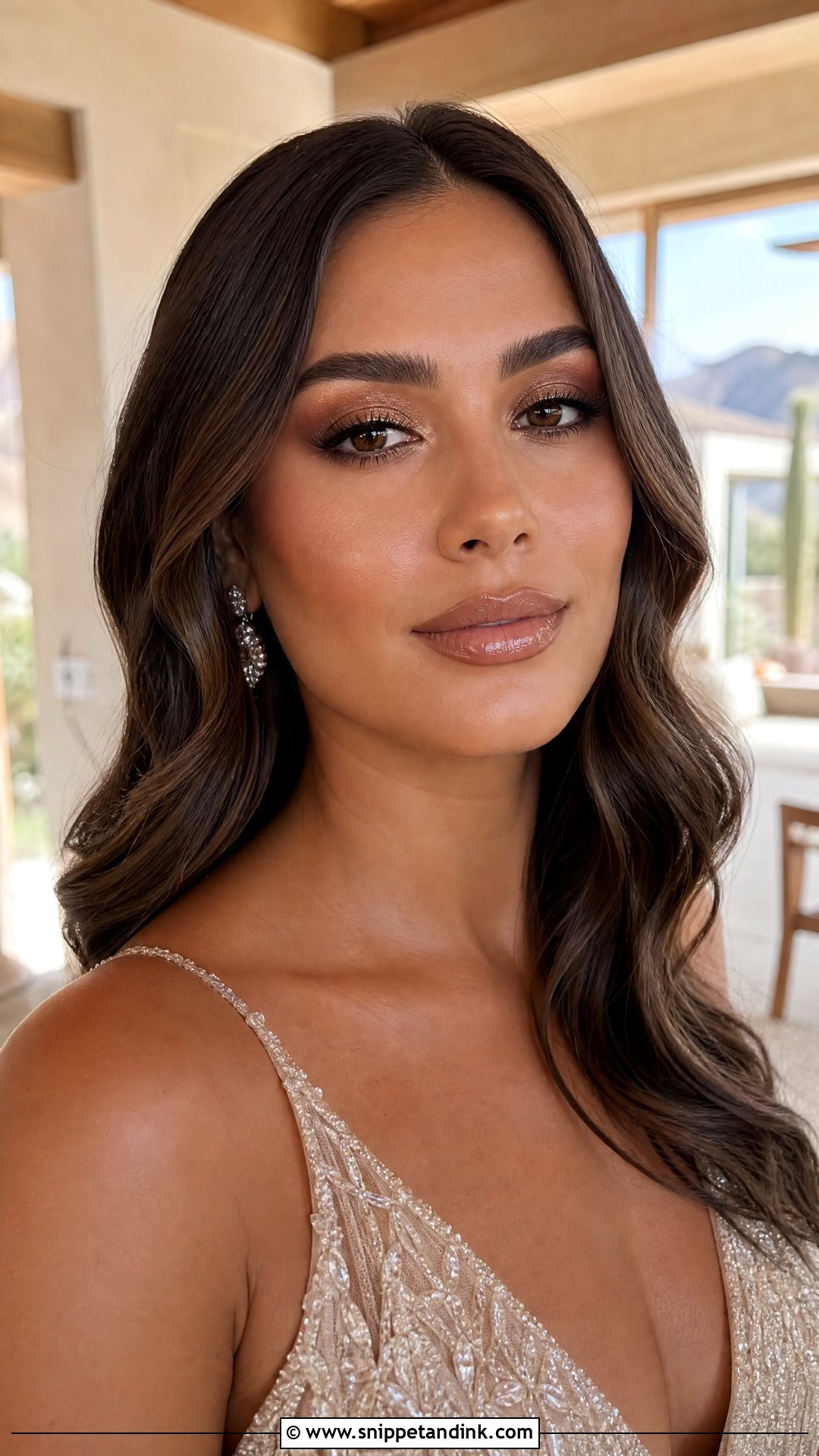
Bronzed makeup gives warmth and shape without the stripes of heavy contour. I put bronzer where the sun would naturally hit: around the forehead, across the cheekbones and lightly along the jaw. Bronze, caramel or soft gold on the eyes, brown liner, lifted lashes, peach blush to keep it fresh, and a caramel-nude or honey lip. Match the bronze on your neck and chest too if your dress is strapless, or the face will look a shade warmer than everything below it.
10. Champagne Bridal Makeup
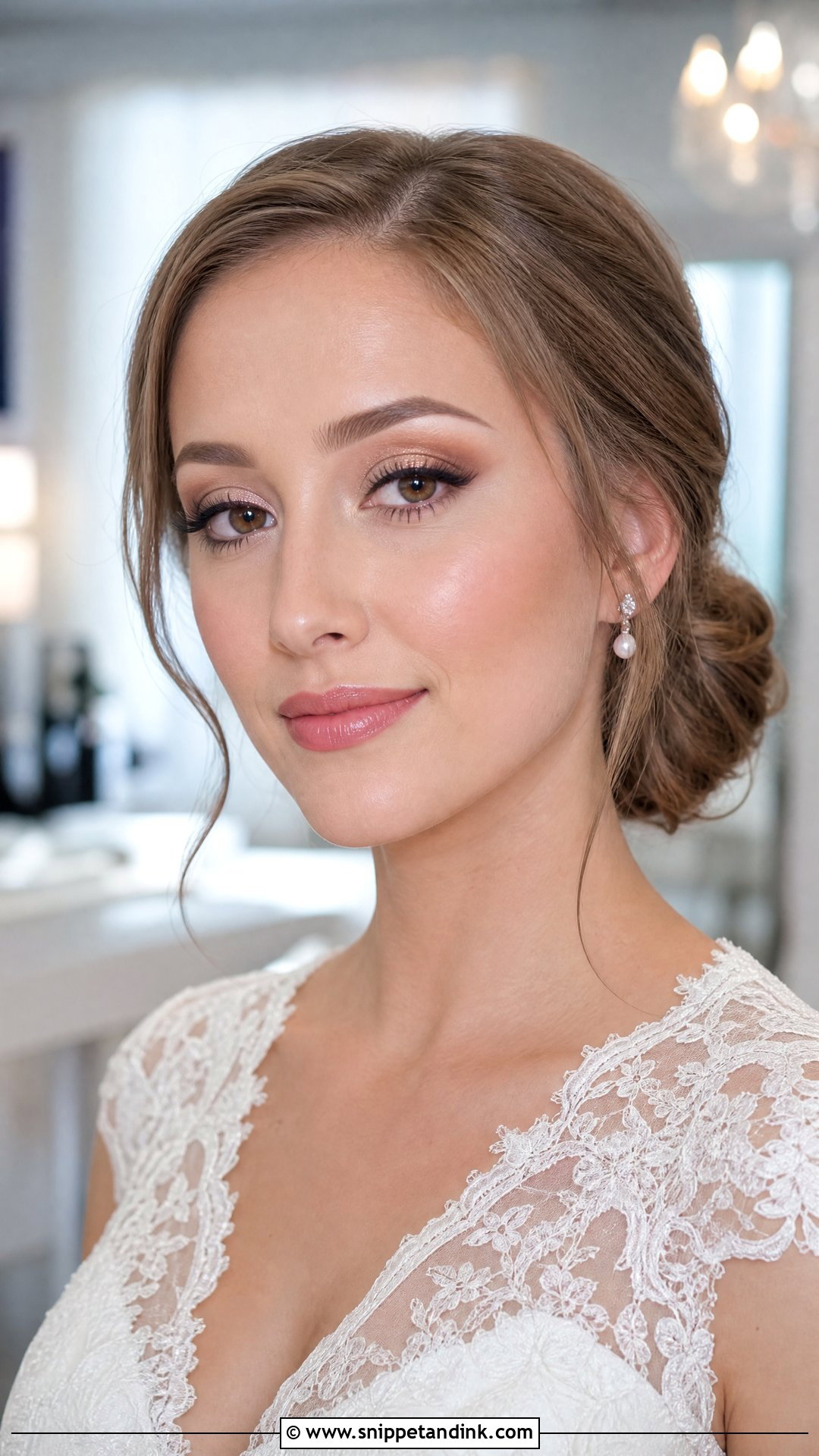
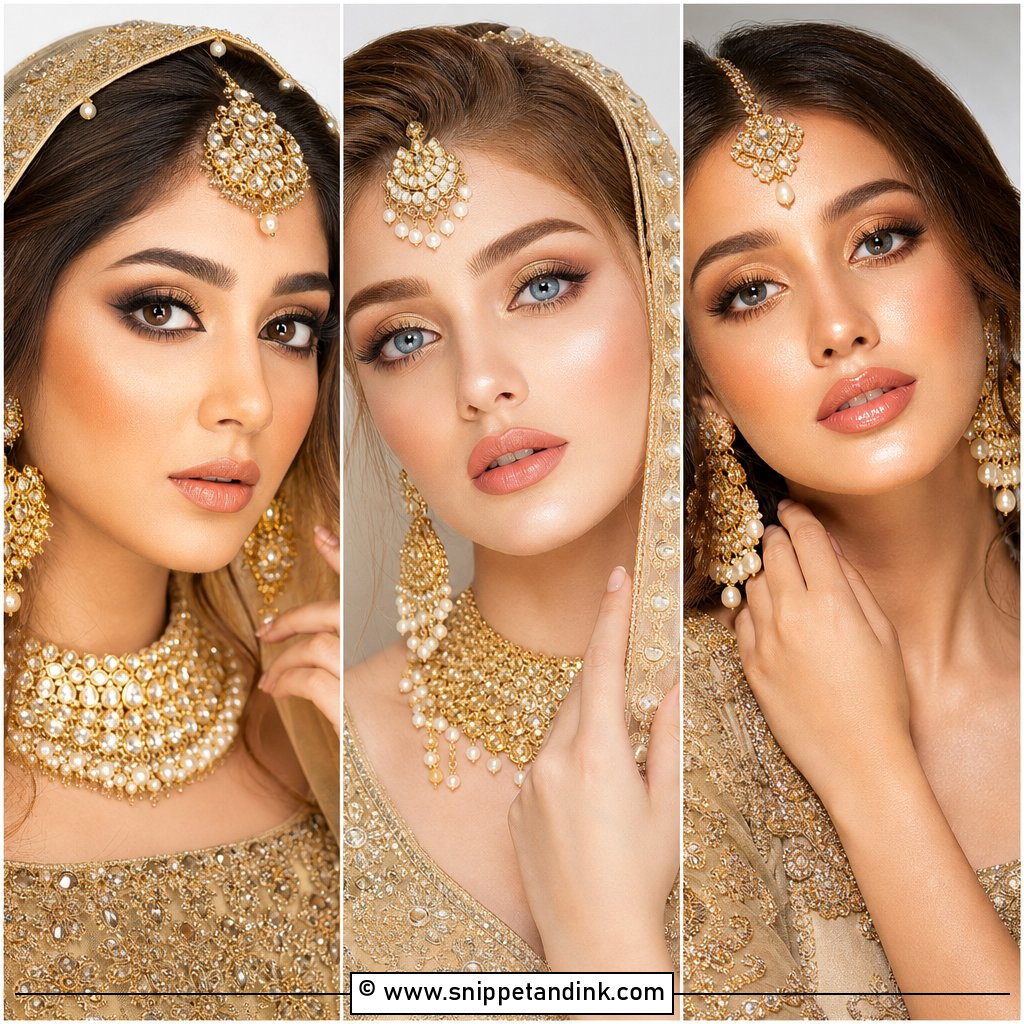
Champagne gives glow without glitter. I place a matte taupe in the crease for depth, then press champagne shimmer onto the centre of the lid with a fingertip, which gives more shine than a brush. Thin liner, separated lashes, satin skin with a soft highlight, and a polished nude or pink lip. It flatters blue, green, hazel and brown eyes alike. On deep skin I switch to a richer gold-champagne, since a pale champagne can look frosted.
11. Brown Smokey Bridal Makeup
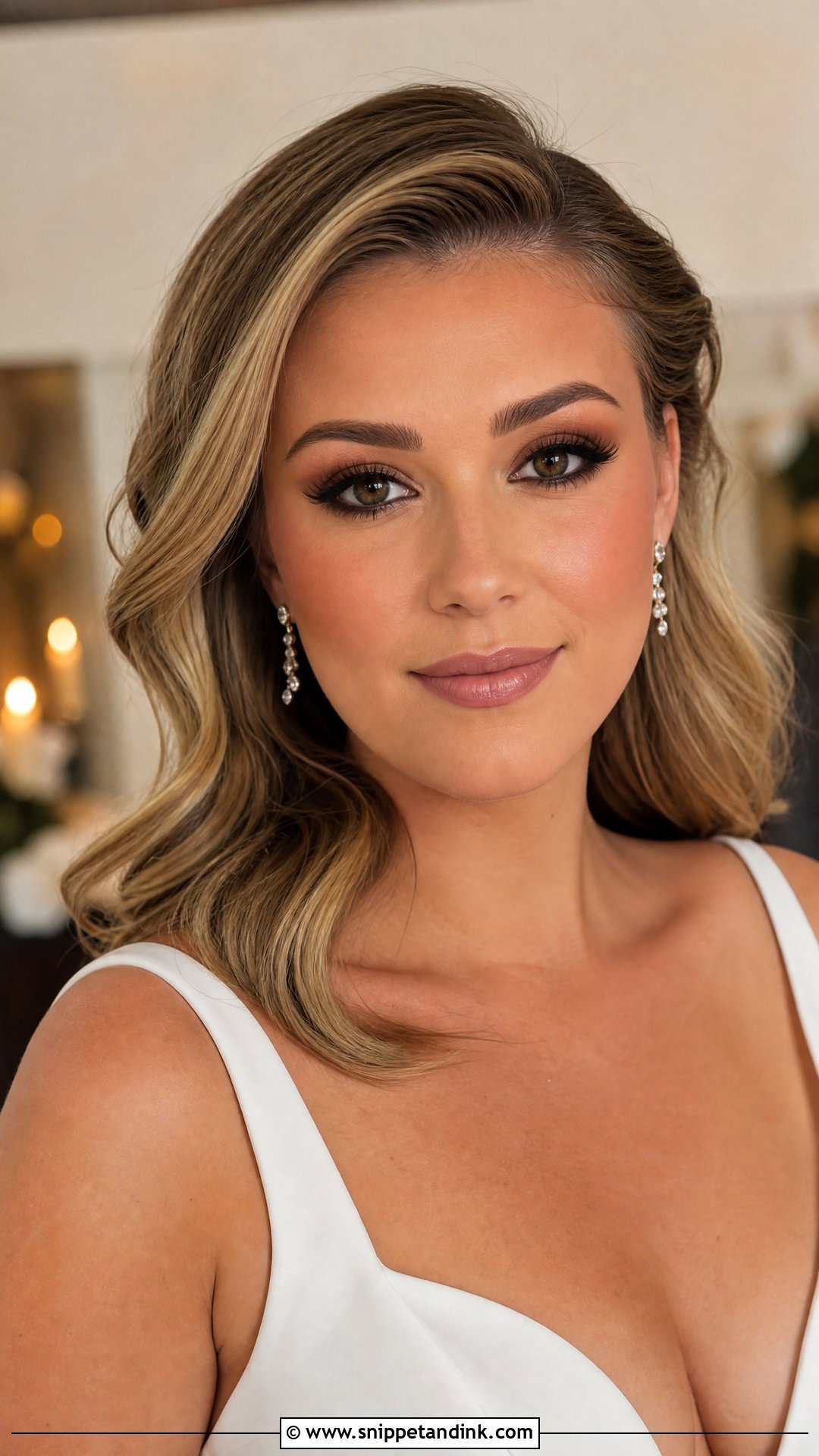
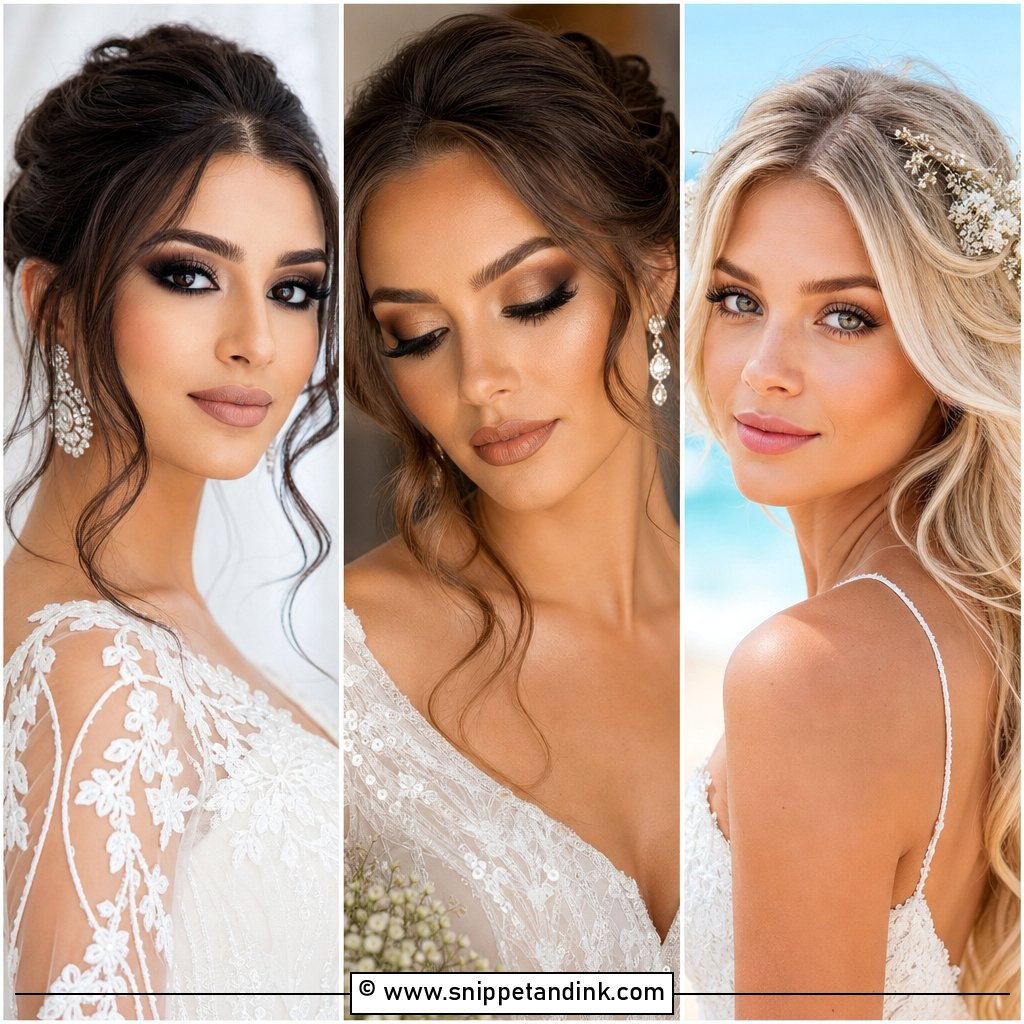
A brown smoky eye has depth without the heaviness of black, which is why I’d choose it over black for most brides. Use warm chocolate, espresso, taupe or bronze depending on your skin tone, darkest at the lash line, diffused upwards until there is no visible edge. Brown or black liner, wispy or medium lashes. I usually smoke the lower lash line too, but keep it thin and soft at the inner corner, or the eye looks tired. Warm blush and a rose-brown lip suit it, especially by candlelight.
12. Winged Liner Bridal Makeup
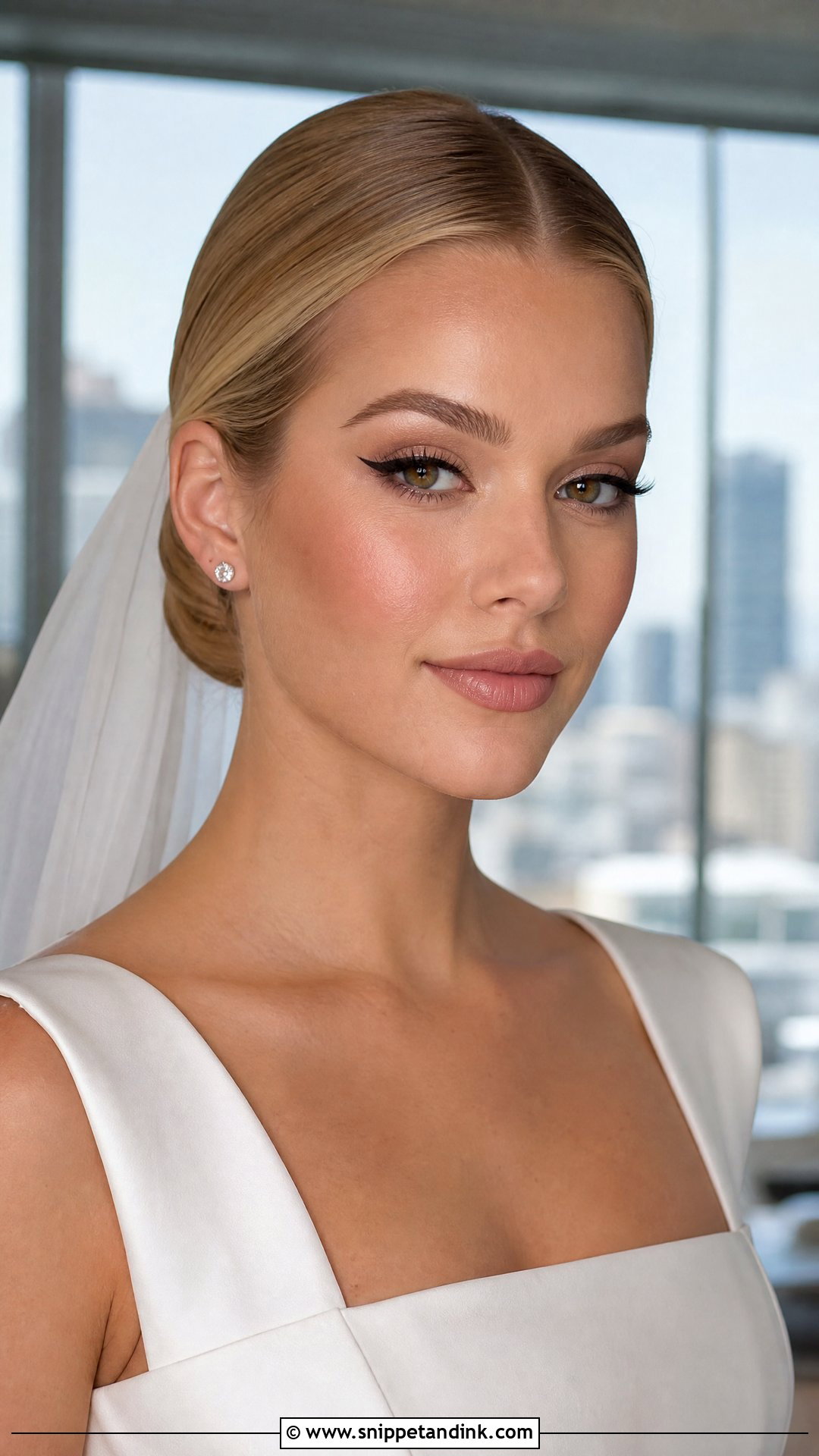
A wing gives definition without the commitment of a smoky eye. I keep the lid soft in beige or light taupe and draw a thin wing that follows the lower lash line upwards. On hooded eyes I draw it with the bride’s eyes open, so the wing doesn’t fold into the lid and look broken; sometimes a softly smudged shadow wing works better than liquid liner. Half lashes on the outer corners add lift. Satin or matte skin, soft pink blush, and a nude-pink or classic red lip.
13. Red Lip Bridal Makeup
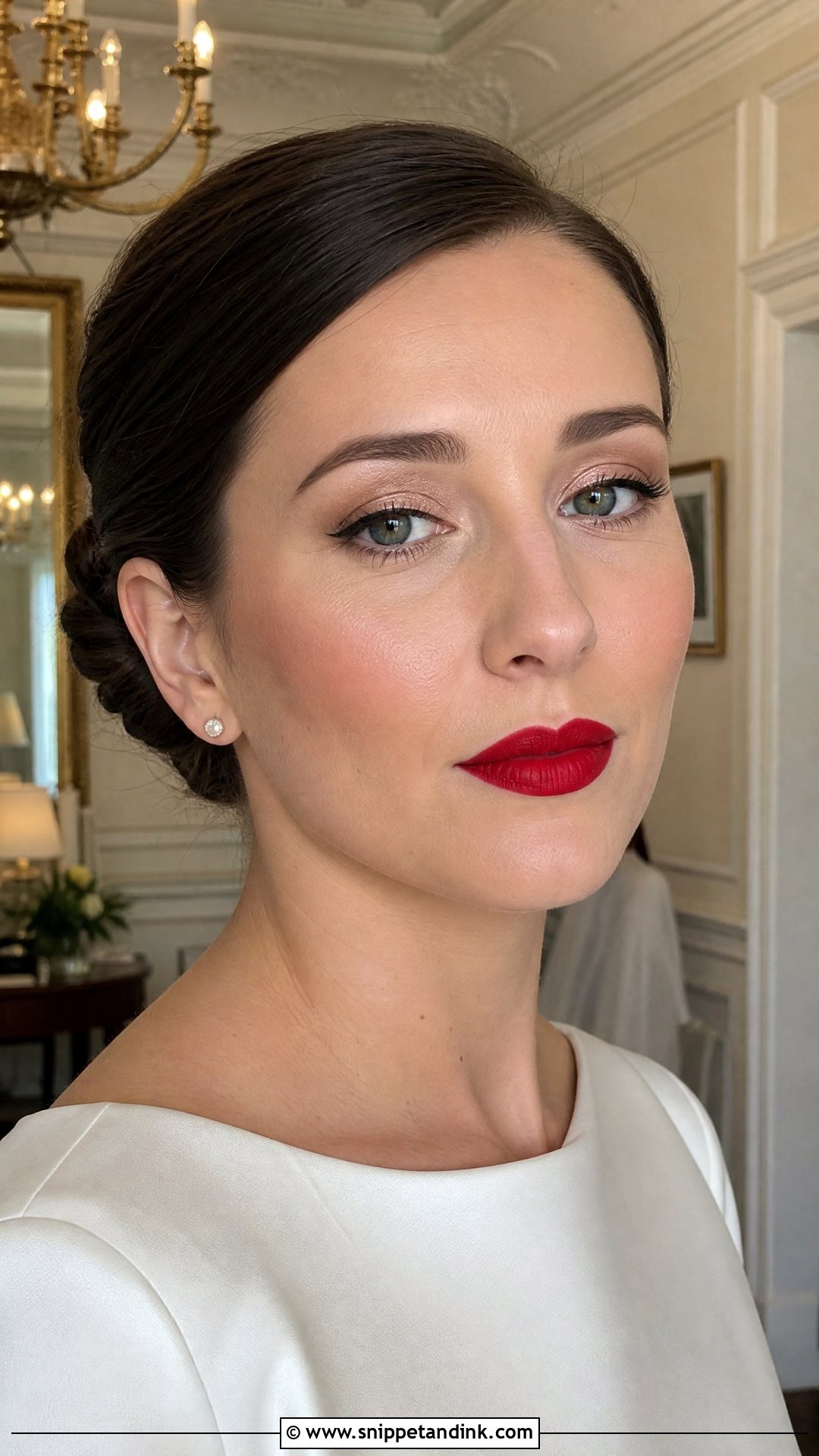
A red lip needs everything else quiet: clean skin, a thin liner, a neutral lid and natural lashes. Undertone is the choice that matters. Blue-reds look crisp and make teeth look whiter; orange-reds look warm and modern; deeper reds sit richly on medium to deep skin. I line and fill the whole lip with liner, apply the colour, blot through a tissue and apply again, which roughly doubles how long it lasts. Simple gowns, vintage dresses and sleek buns give it room to be the feature.
14. Nude Lip Bridal Makeup
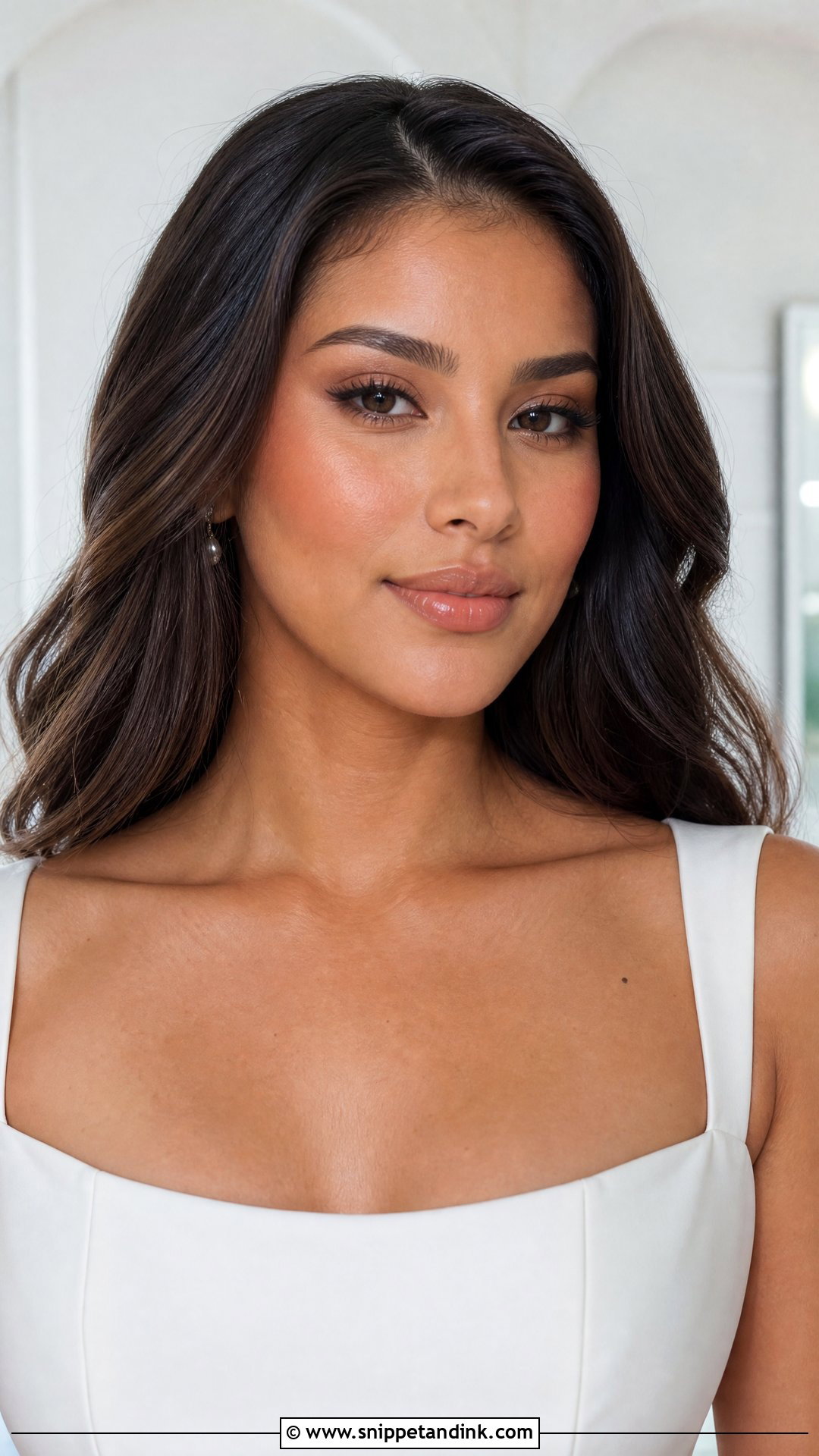
Nude lips go wrong when the shade is too pale, because the lips vanish in photographs and the face looks unfinished. I choose a nude one or two shades deeper than the natural lip. Fair skin often suits pink-nude; light and medium skin, peach-nude or caramel; tan and deep skin, warm brown, mocha or cinnamon. A lip liner a touch deeper defines the shape so it still reads in group shots. A little gloss in the centre adds fullness. It sits comfortably with nearly every look on this list.
15. Rose Gold Bridal Makeup
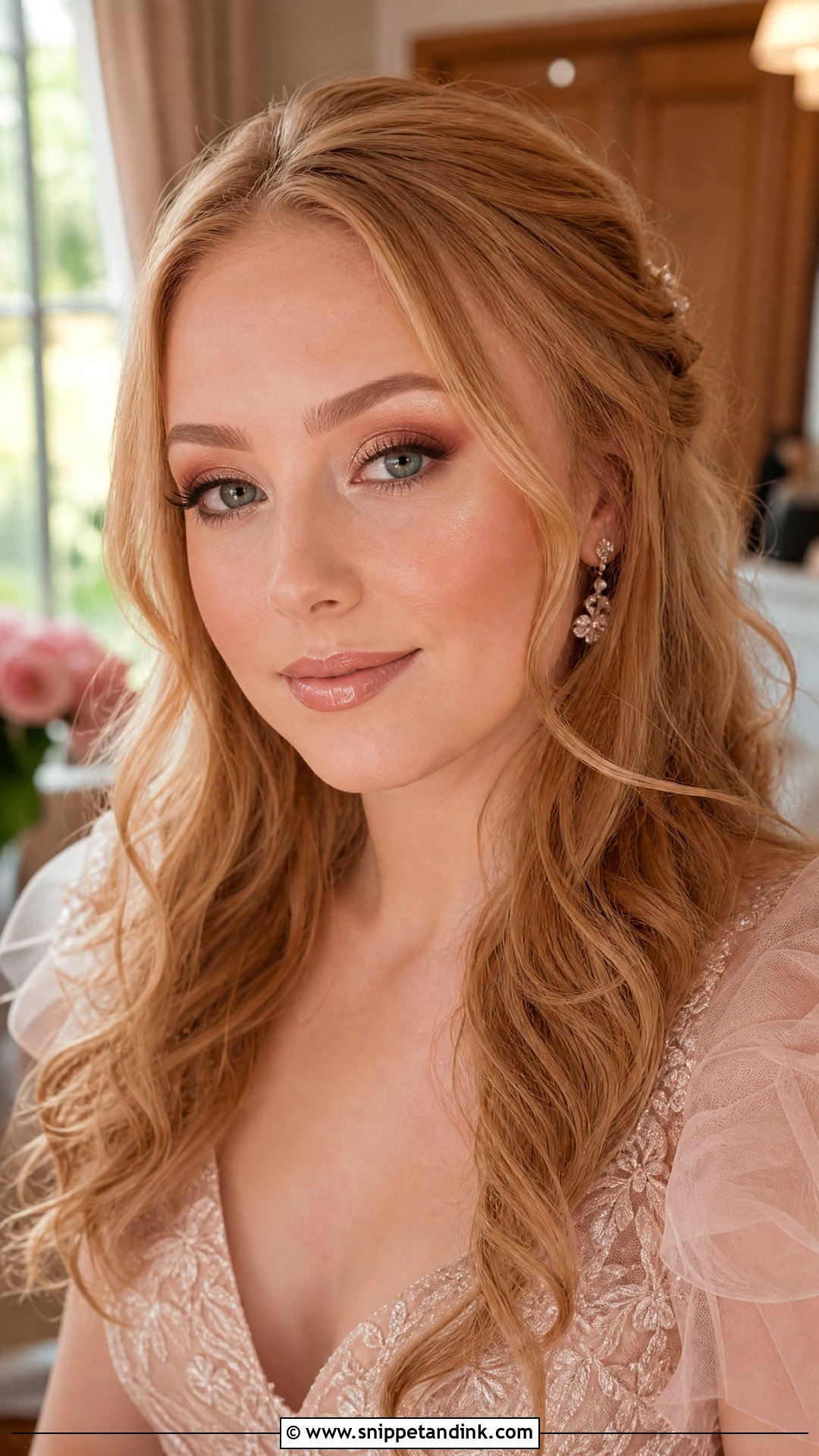
Rose gold combines pink, gold and bronze into a soft metallic, and it is more flattering than either pure pink or pure gold on many brides. Rose gold shimmer on the lids, warm brown in the crease, brown liner. Rosy cheeks, soft golden highlight, a pink-brown or warm mauve lip. It brightens blue, green, hazel, and brown eyes because of the warmth it adds. I like it most at sunset ceremonies and against ivory or blush gowns.
16. Mauve Bridal Makeup
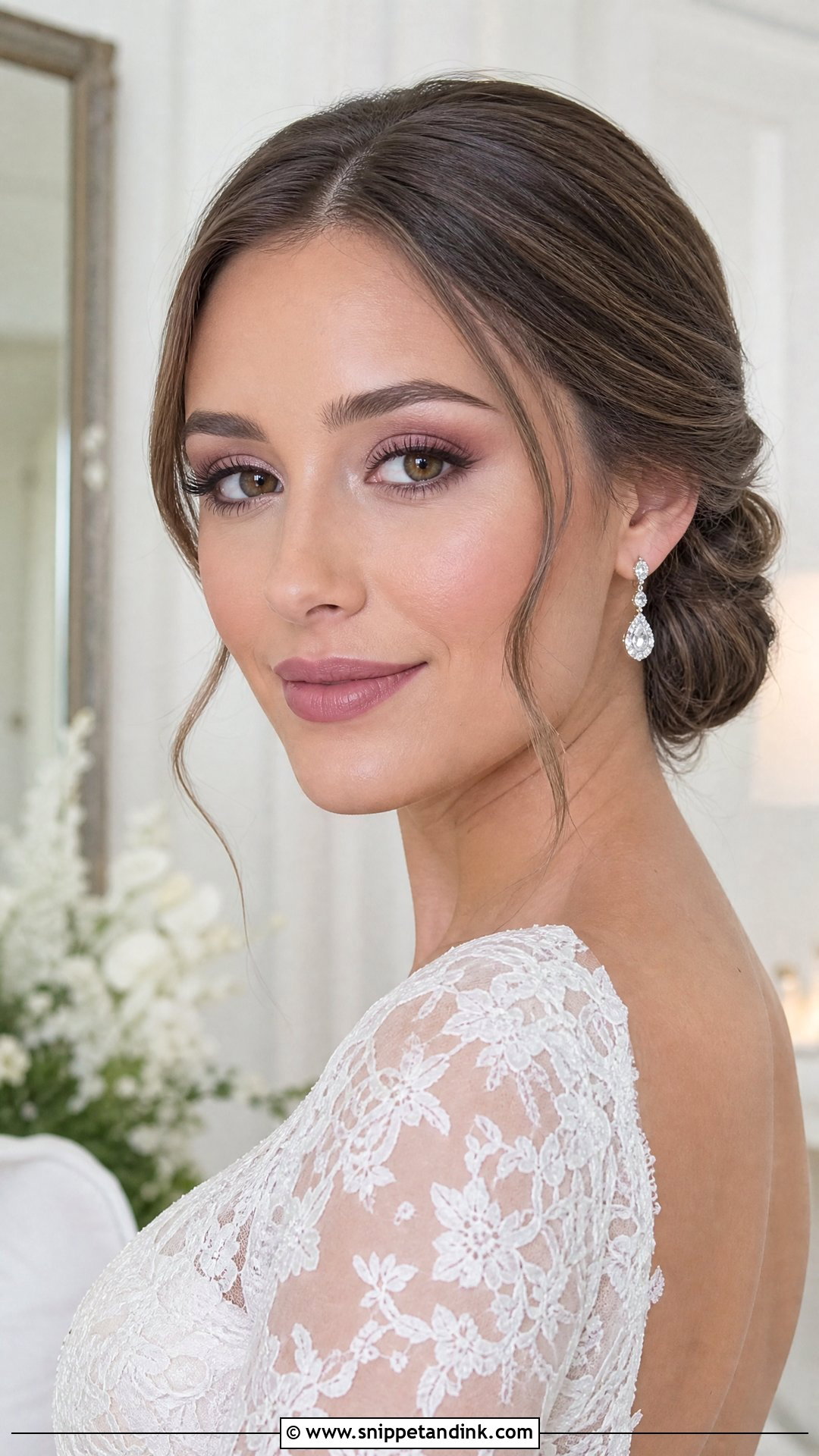
Mauve sits between pink, plum and neutral, so it gives colour that feels grown-up. Mauve or dusty rose on the lids, soft brown in the crease and a gentle smoky liner at the lashes. Mauve or neutral rose blush, and a satin mauve or pink-brown lip. It suits cool undertones and green or hazel eyes, and fits fall, winter and formal indoor weddings. The risk with mauve is the under-eye: if dark circles are purple-toned, mauve shadow can amplify them, so I colour-correct with peach first.
17. Gold Bridal Makeup
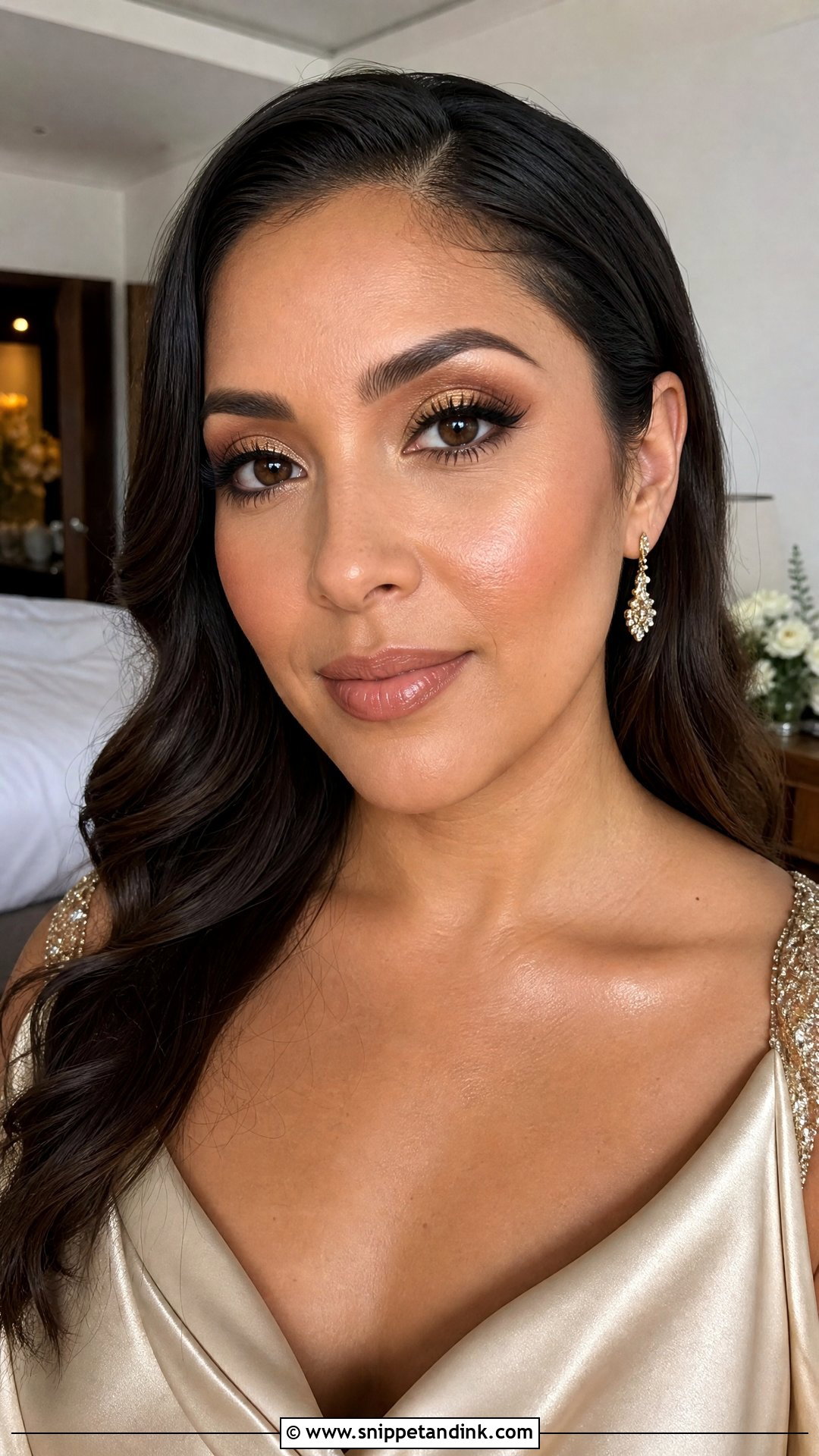
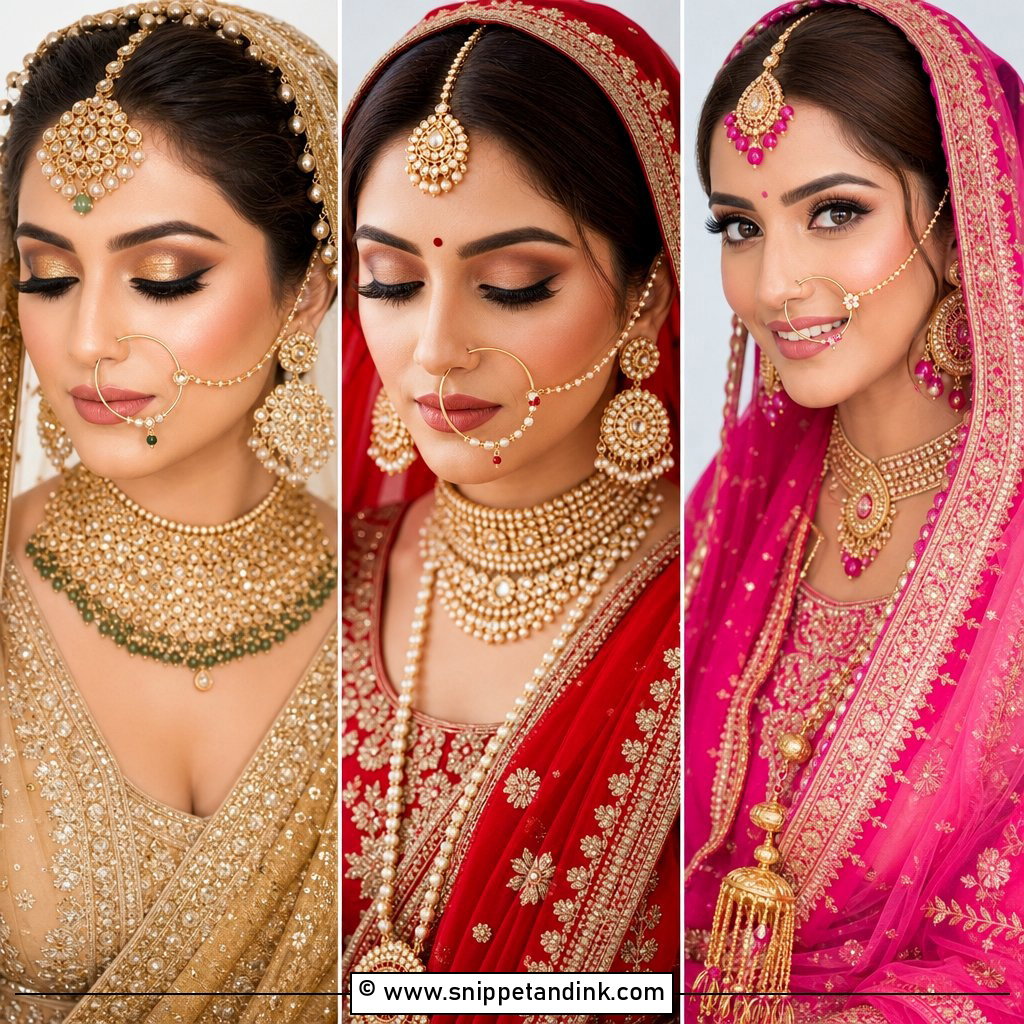
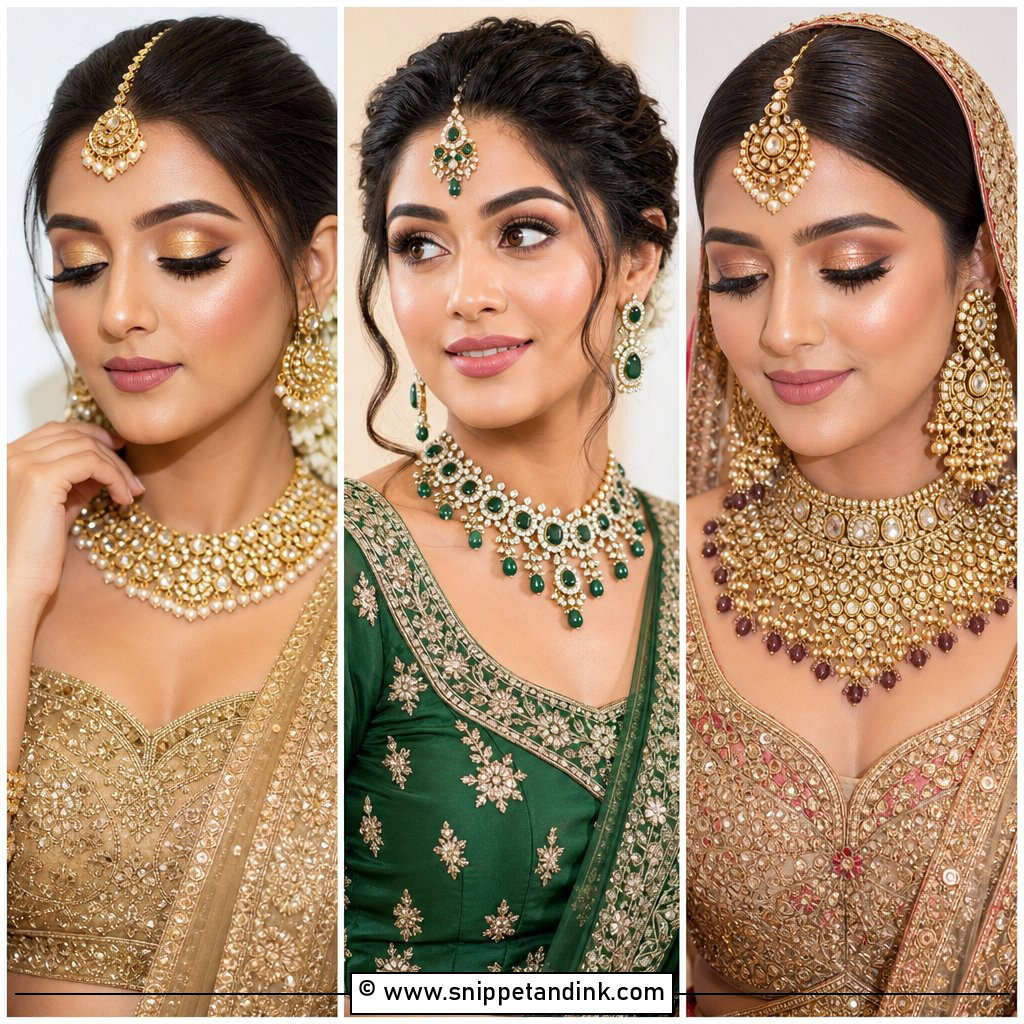
Gold makes the eyes the feature in a refined way, as long as it is a soft metallic rather than glitter. Gold on the lid, warm caramel in the crease, a defined lash line in brown or black. Bronzer and peach or terracotta blush keep the face cohesive, and a caramel or soft brown-pink lip balances the shine. Medium, tan, olive and deep skin wear it richly; fair skin looks better in pale gold or champagne-gold. It suits evening weddings and warm-toned jewelry.
18. Minimal Bridal Makeup
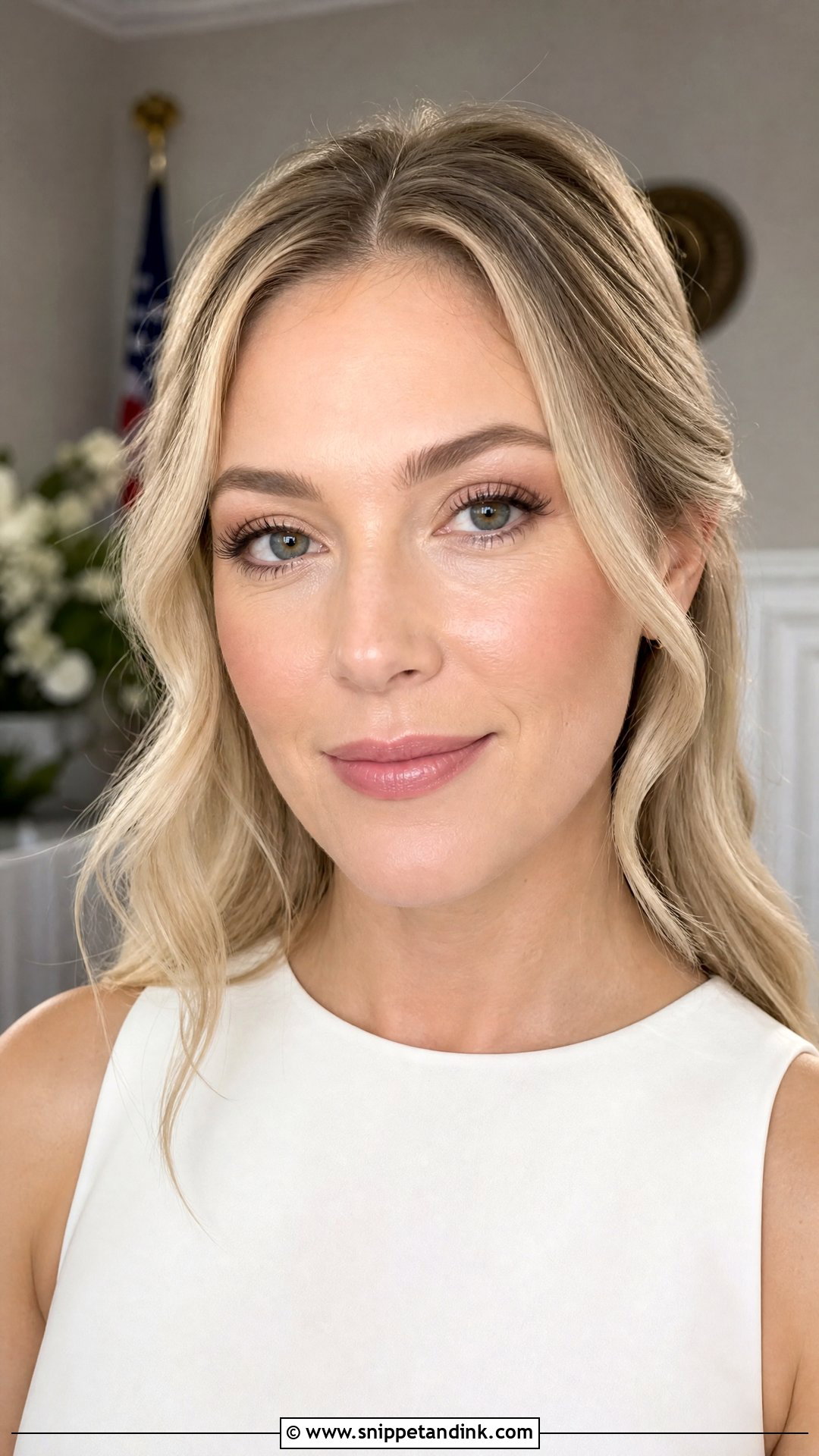
Minimal makeup is not unfinished; every step is softer and more precise. A lightweight base, spot concealer, tinted brow gel, cream blush and a lip tint. A sheer wash of taupe on the eyes, curled lashes and waterproof mascara. No contour, just a little cream bronzer where the face needs warmth. I’d point a bride who rarely wears makeup here first. I still use a primer and setting spray underneath, because a light look fades faster than a full one and nobody notices until the evening photographs.
19. Black Bride Bridal Makeup
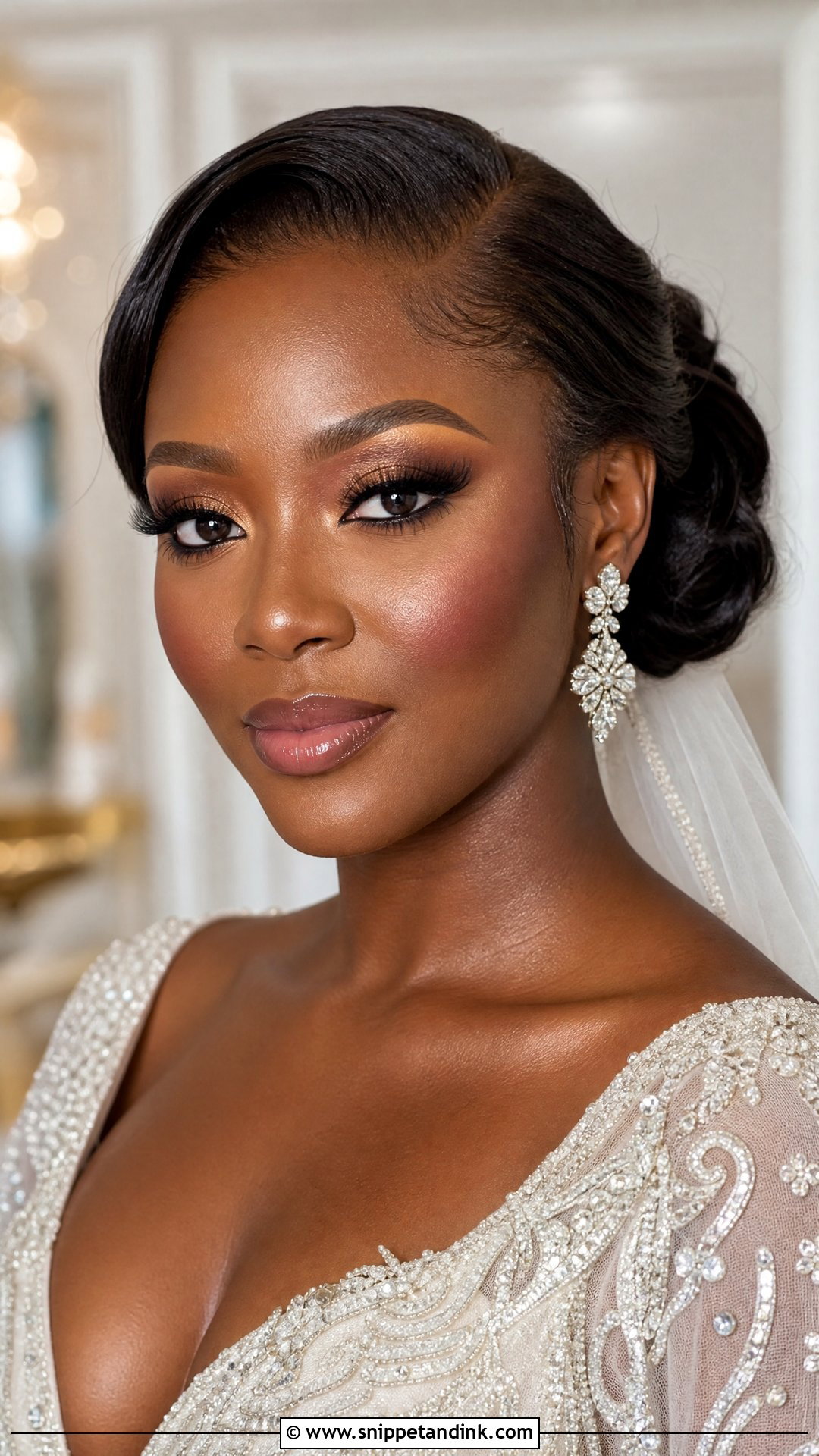
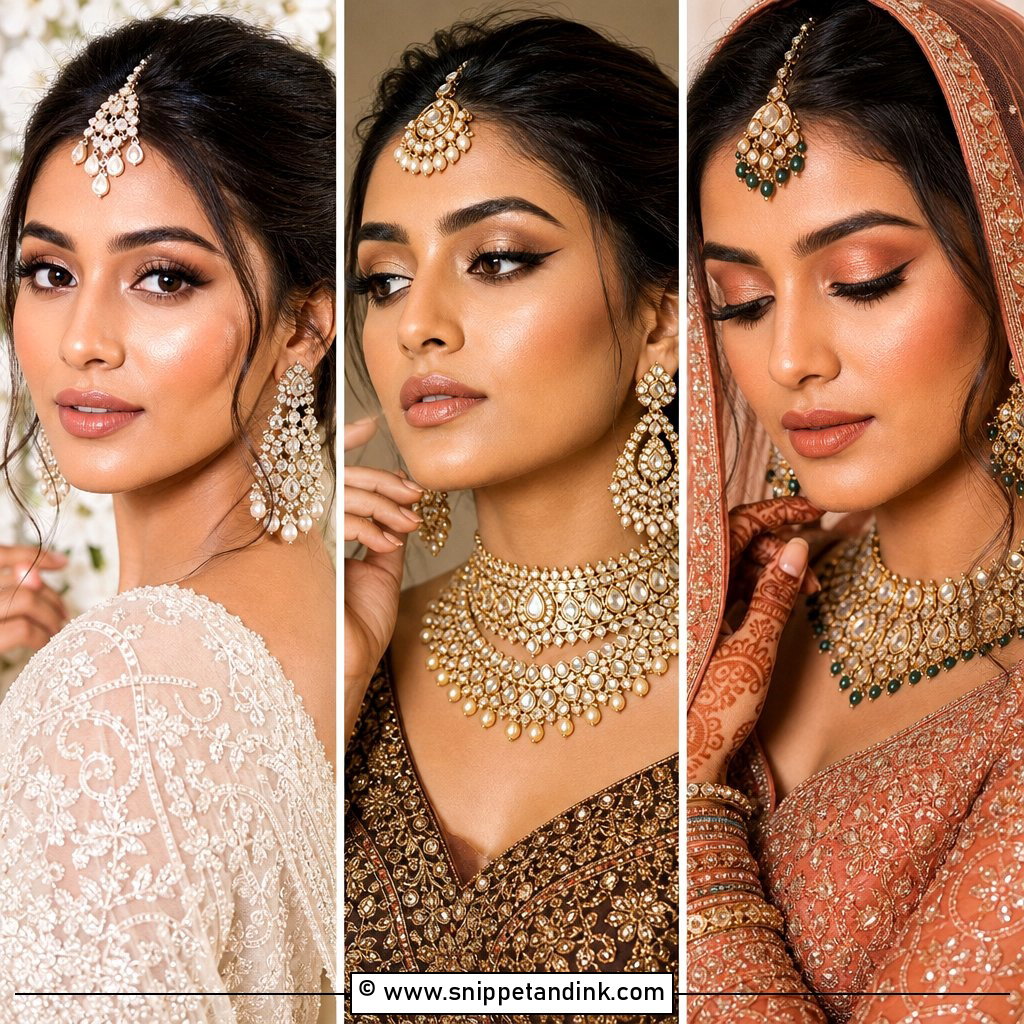
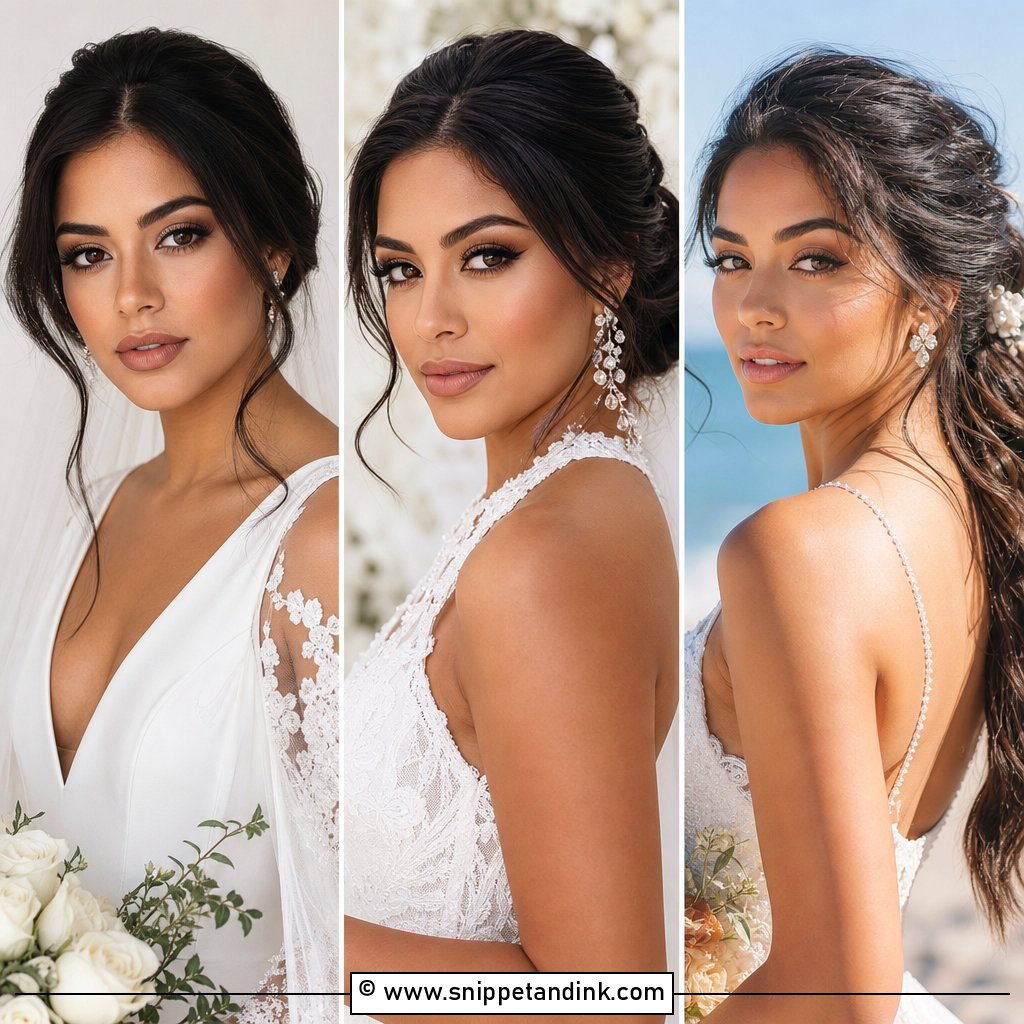
For Black brides, the base makes or breaks the look. I match foundation to undertone, not just depth, and I check it against a phone flash, because some setting powders and high-SPF bases flash back with a grey or white cast. Warm bronzer, berry or terracotta blush, and deep rose on the cheeks bring dimension. Bronze, gold, copper, plum or chocolate on the eyes, with defined liner, full lashes and sculpted brows. Lips can be nude brown, rosewood, berry, red or glossed mocha. Richness, never dullness, is the goal.
20. Asian Bridal Makeup
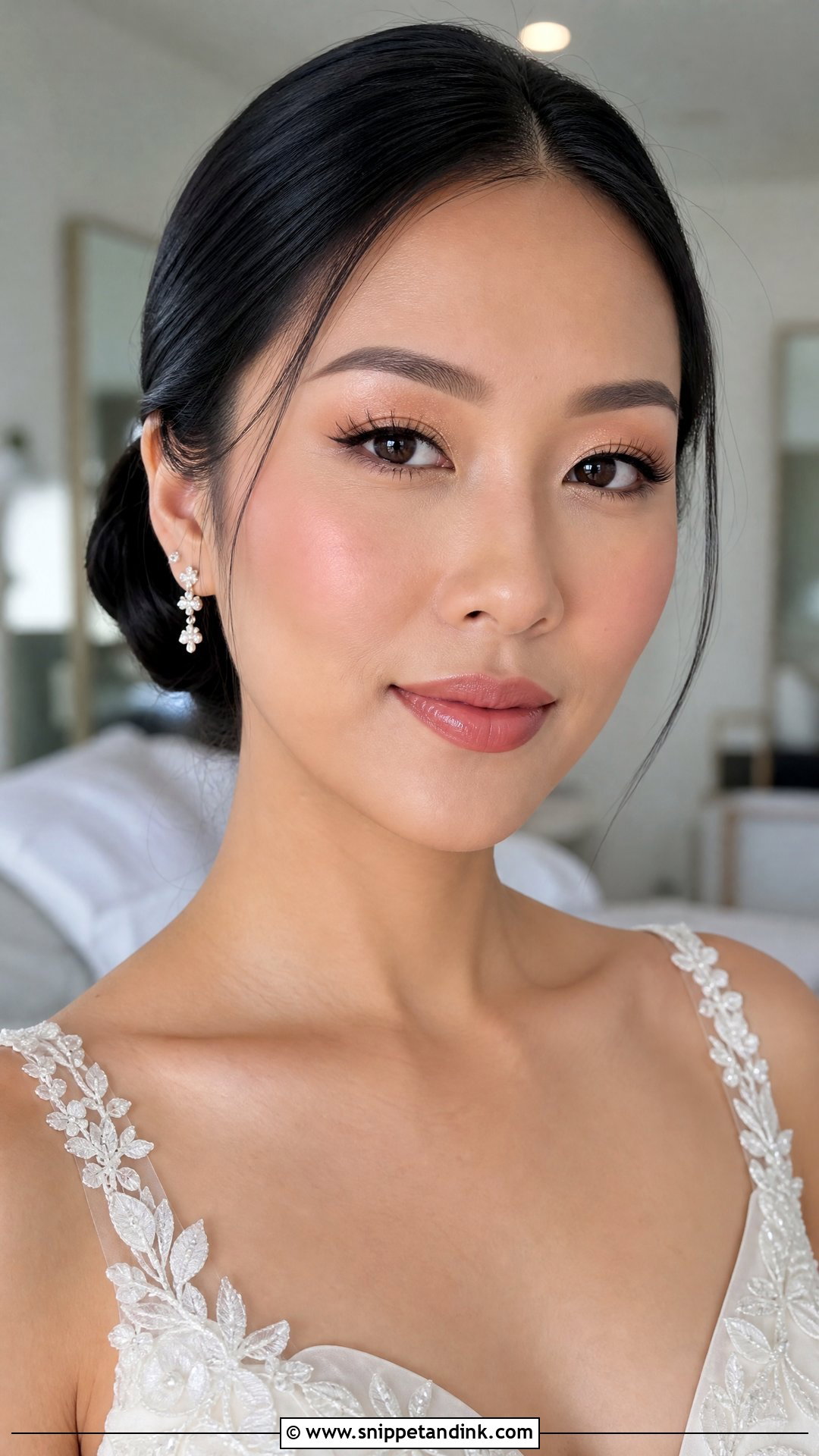
Asian bridal makeup often focuses on bright eyes, smooth skin and lifted lashes. On monolids and hooded eyes, I blend colour slightly above the natural crease so it still shows when the eyes are open. Soft brown, rose, peach and champagne all suit. Tightlining defines the lashes without using up lid space, and curling the lashes properly before clusters matters because many straight lashes drop under weight. Blush placed high on the cheeks, smooth skin, and a rose or peach-nude lip finish it.
Treat the Trial as a Rehearsal, Not a Preview
A trial is not just about seeing the look. It’s my chance to test the products on your skin and your chance to live in them for a few hours. To get the most out of it, come with a clean face, a photo of your dress and neckline, and wear a top in a similar colour to your gown, because a white dress reflects light upwards and changes how the face reads.
What I check before you leave
- A photo taken with flash, to catch any white cast from powder or SPF.
- A photo in daylight by a window, which shows foundation edges and shade mismatch.
- How the lashes feel after twenty minutes. If you are blinking hard, we change them.
- Whether you still recognise yourself. If you hesitate, we adjust now, not on the day.
Then go about your day. Eat, drink, hug someone, sit in a warm room. Message your artist with photos at the six-hour mark: where it has faded or creased tells us exactly what to change for the wedding.
Small Repairs Between the Ceremony and Dinner
Even long-wear makeup needs a few minutes of attention around the middle of the day. Give a bridesmaid a small pouch with blotting papers, your lipstick and liner, a cotton bud, and a pressed powder only if you are oily. Blot first, powder second; powder pressed over oil turns cakey. Reapply the lip after dinner, not before, since eating takes most of it anyway.
Your Face, Your Dress, Your Light
None of these looks is the right one by itself; the right one fits your face, your dress, your venue and how you feel wearing makeup. Natural, dewy, matte, a red lip or a smoky eye can all work when they’re balanced and the skin underneath is ready. Test your trial look in daylight and with a flash photo, choose waterproof eye products and a lip you can live with, and then trust it. You should walk in feeling calm, not wondering what your face is doing.
You'll Like These Ideas:


Leave a Reply