
Most brides who sit in my chair already know roughly where they land: barely there, soft glam, or full glam with a lip. What they rarely know is how that look will behave after eight hours, a ceremony full of happy tears and a photographer’s flash. So the looks below are grouped by finish, by color story, by season and by eye color, and for each one I’ve noted what I actually watch for when I build it on real skin. Use them to pick a direction for your trial, then let the trial tell you what needs adjusting.
What I Ask Every Bride to Bring to Her Makeup Trial
A trial goes better when we’re working from facts about your day, not just a mood board. Before I open a palette, I want to know where you’ll be standing, what you’ll be wearing and how your skin has behaved lately. These are the things I ask brides to bring or tell me:
- A photo of the dress neckline and fabric. A strapless ivory gown and a high-neck lace one change how much warmth and contour the face can carry.
- The ceremony time and setting. Midday sun, a dim church and a candlelit reception all need different levels of depth.
- Your current skincare, plus any retinoids, peels or new products. I’d rather know now than meet irritation on the morning.
- Allergies or sensitivities, especially to lash glue, fragrance or specific foundations.
- Three or four reference photos of makeup you like on people with a similar skin tone, and one you know you dislike.
Wear a top close to your dress color, and if you can, book the trial for the same time of day as the wedding. After we finish, keep the makeup on for the rest of the day. How it looks at dinner tells both of us far more than how it looks in the chair.
1. Natural Wedding Makeup
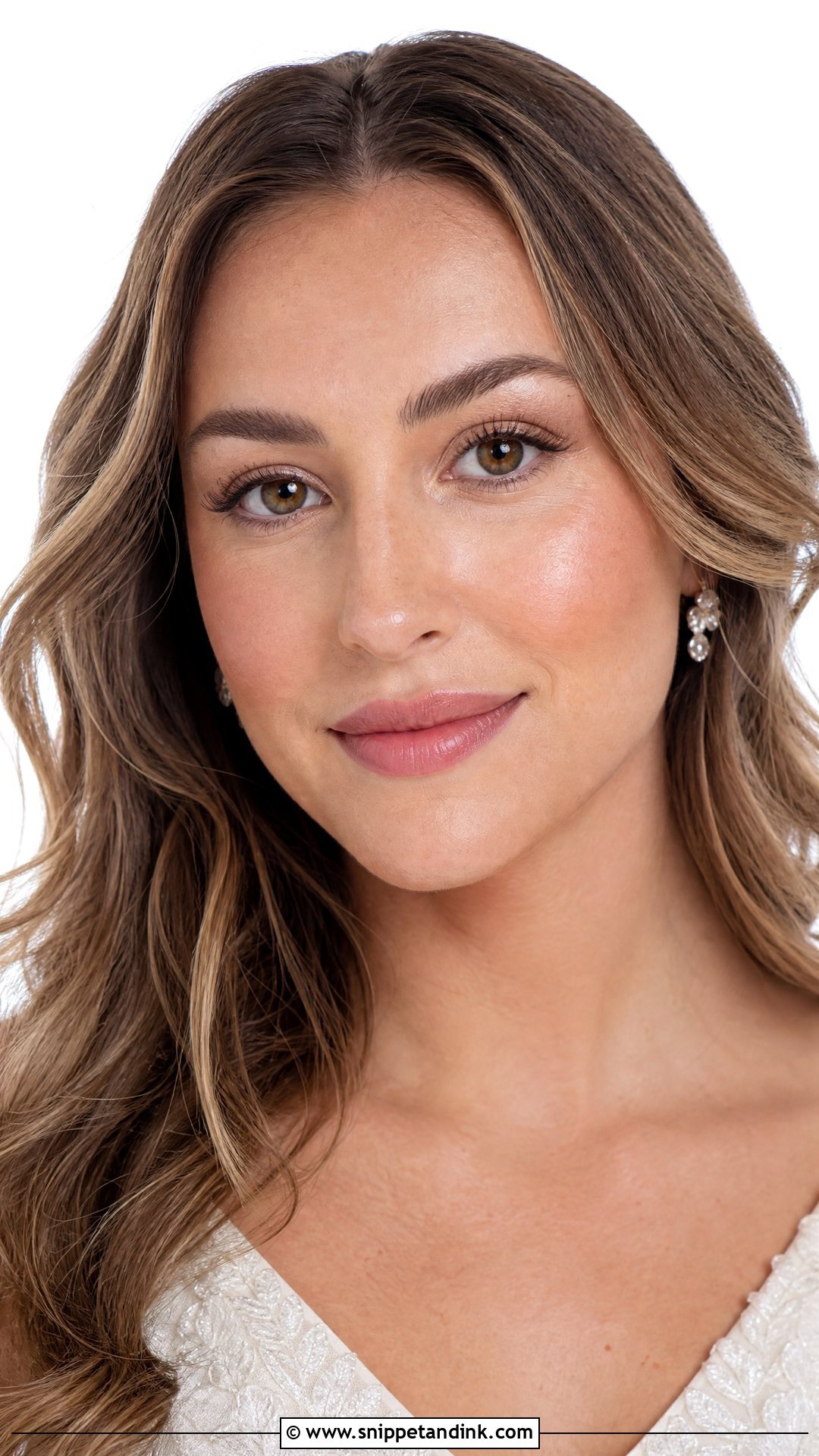
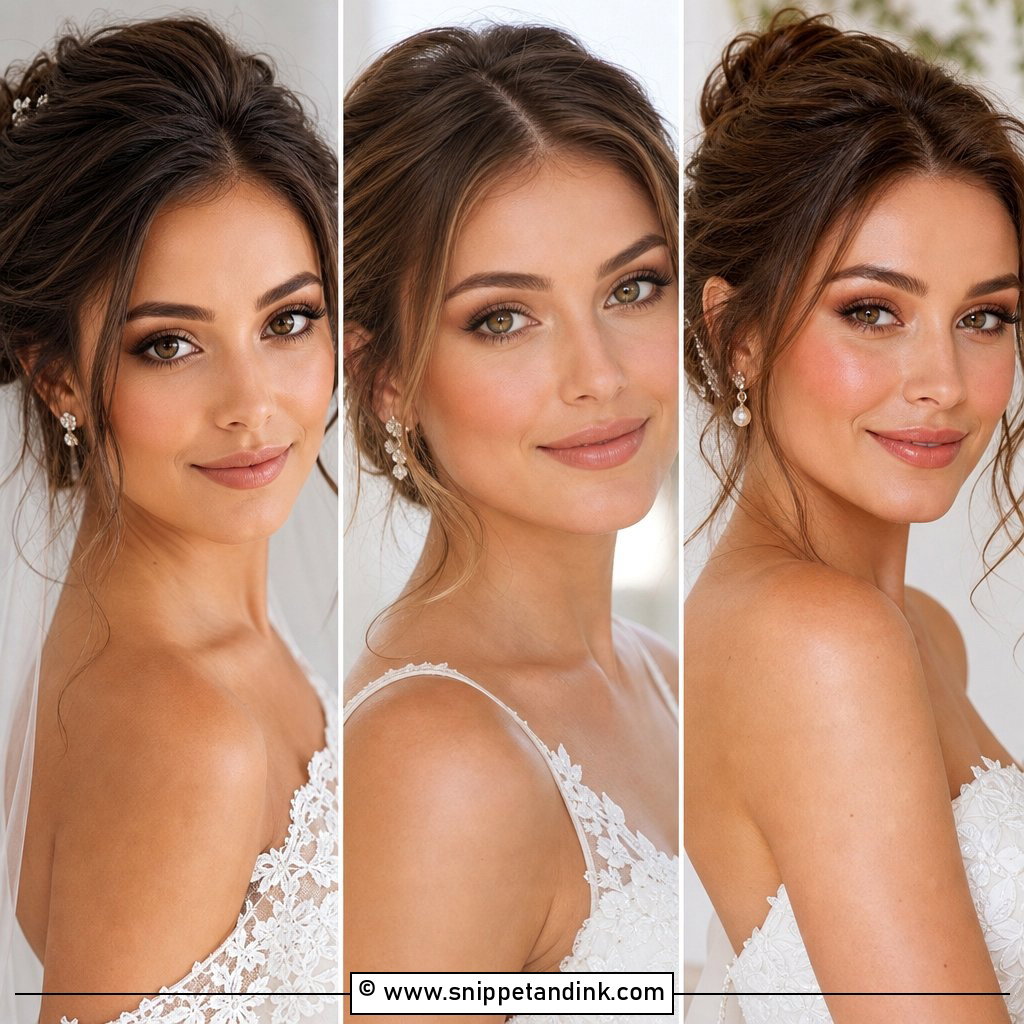
I’ll be honest: natural makeup takes me longer than soft glam, because there’s nowhere for texture to hide. Hydrated skin, a thin foundation, and concealer pressed only where you need it. Cream blush in rose or peach keeps the cheeks from looking powdery, and a taupe shadow with a tightline (pencil pushed into the upper waterline) defines the eye without a visible wing. Individual lashes at the outer third, a satin lip close to your own color, and you look like you, rested. It suits outdoor ceremonies and brides who never wear much day to day.
2. Soft Glam Wedding Makeup
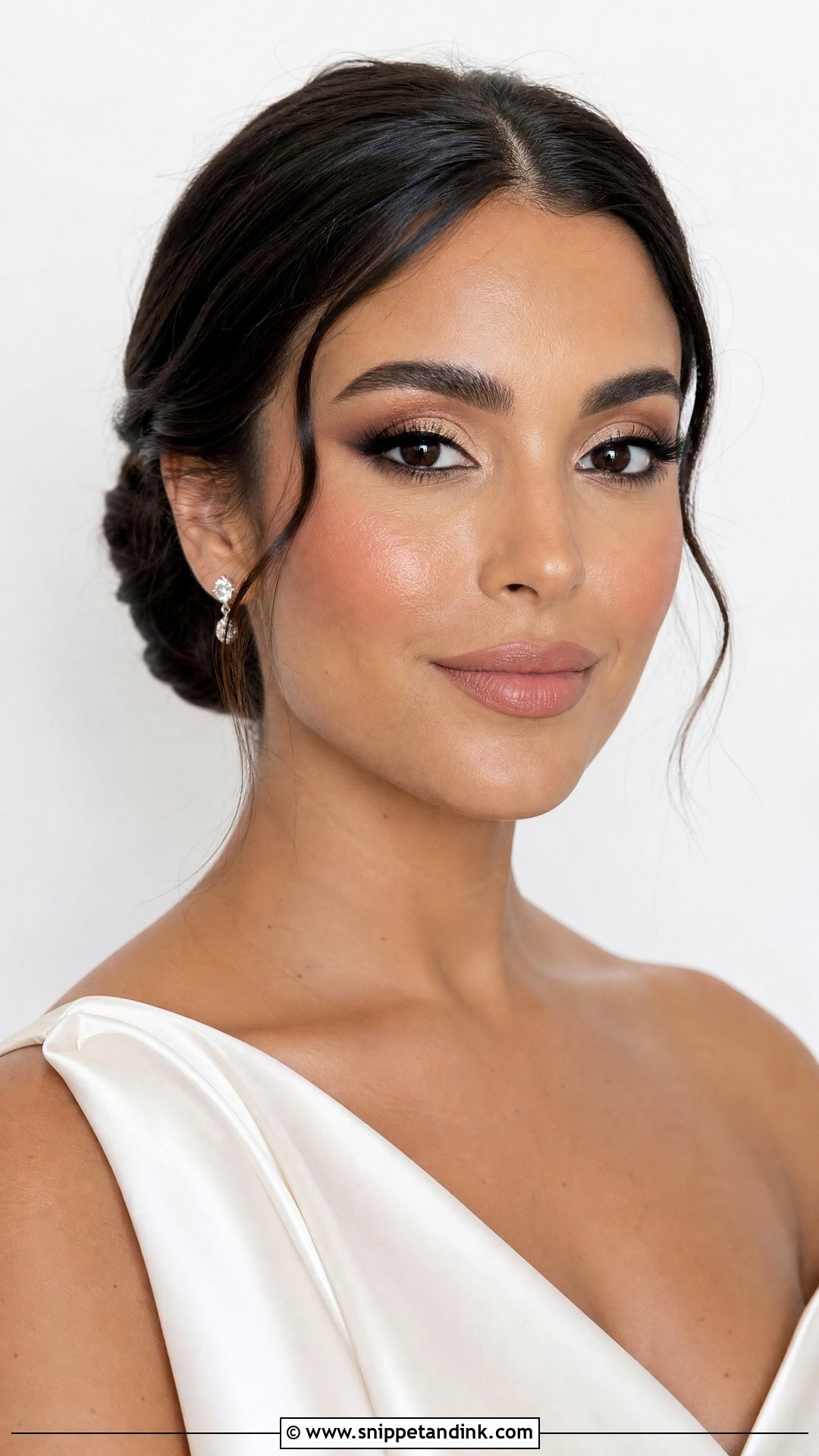
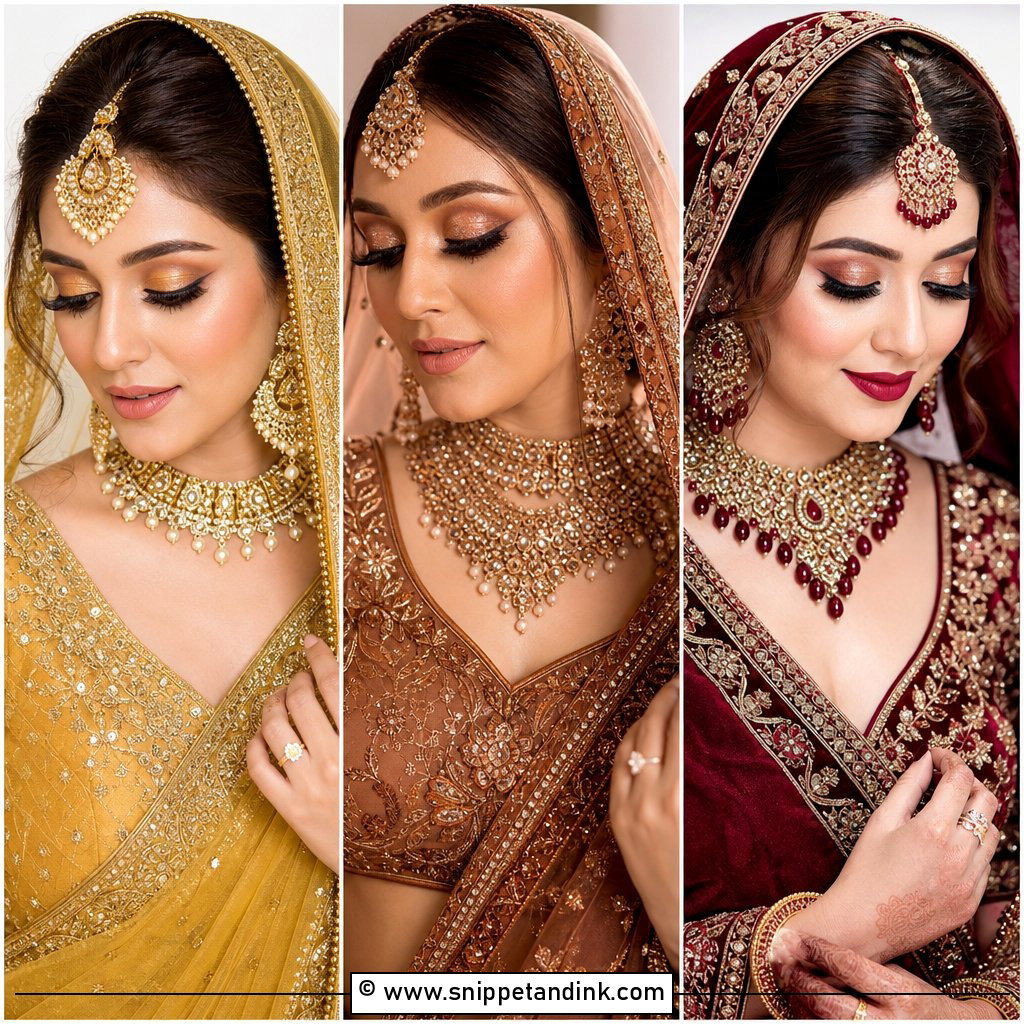
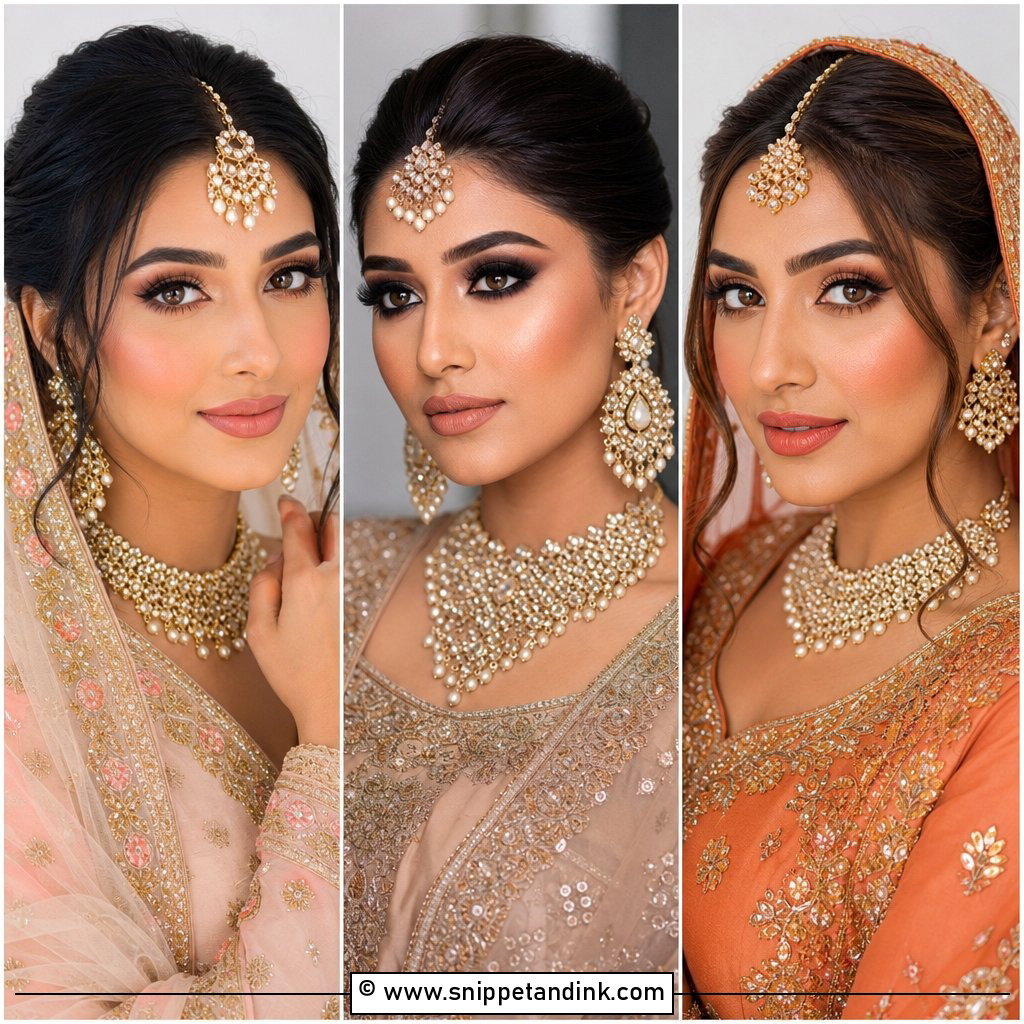
Soft glam is what I end up doing for most brides, because it reads as polished on camera and still looks like a face up close. The skin is smooth with a little radiance on the cheekbones, never wet all over. I diffuse a neutral brown into the outer corner, add fluttery lashes, and keep a light contour under the cheekbone so the face doesn’t flatten in photos. Brows get groomed, not carved. Then a mauve or rose liner under a creamy lipstick, which wears off far more evenly than a bare cream lip.
3. Full Glam Wedding Makeup
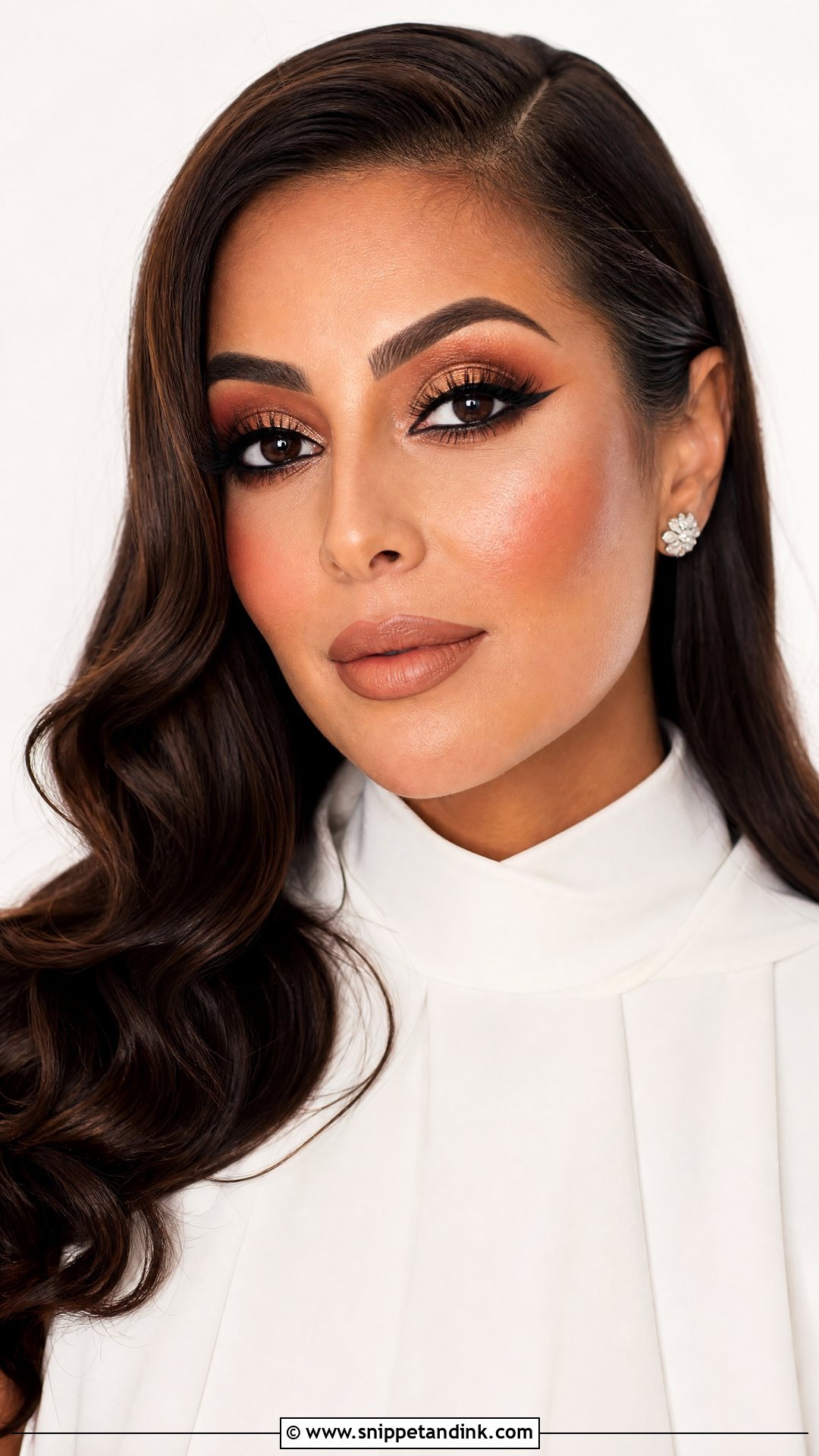
Full glam means fuller coverage, sculpted cheeks, a structured eye and a strong lash, and it’s built for the camera more than the mirror. Bronze, champagne, chocolate or soft black shadow sets the intensity. The trap is edges: in flash photos a harsh crease line looks twice as hard as it does in person, so I spend most of my time blending. Pick one focus. A heavy eye with a heavy lip usually ages a bride in portraits, so if the eyes go dark, I keep the mouth neutral and long-wear.
4. Dewy Wedding Makeup
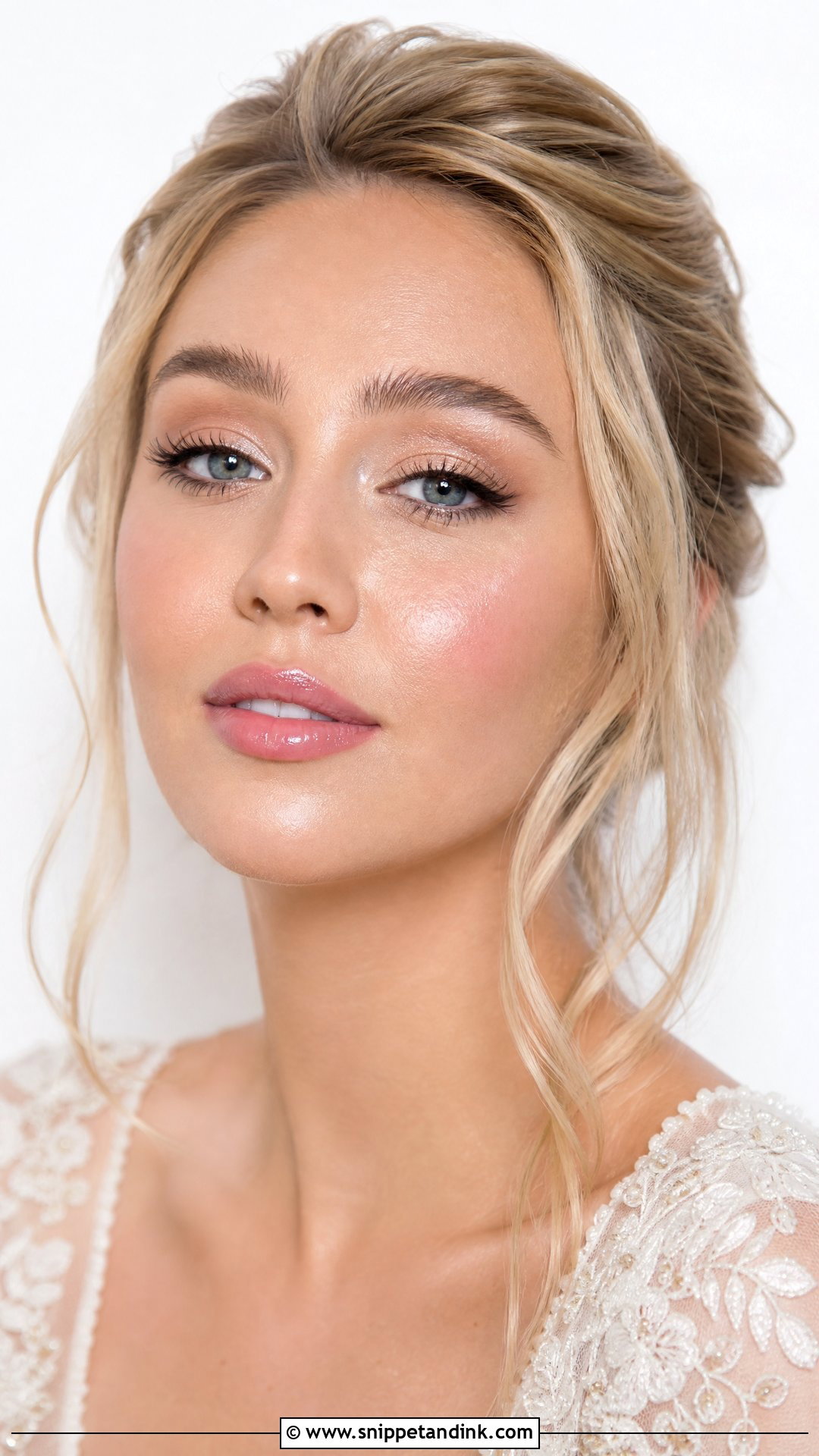
Dewy skin is where I see the most trouble at hour five. The glow needs to sit on the high points of the face, while the T-zone, smile lines and under-eyes get a fine powder so texture doesn’t catch the light. I use a hydrating primer, a skin-like foundation and a cream highlighter tapped on, never swept. Champagne on the lid, brown liner and a juicy peach lip keep it fresh. In daylight, garden and beach settings it looks healthy; under a hot ballroom spotlight, I’d pull the shine back by half.
5. Matte Wedding Makeup
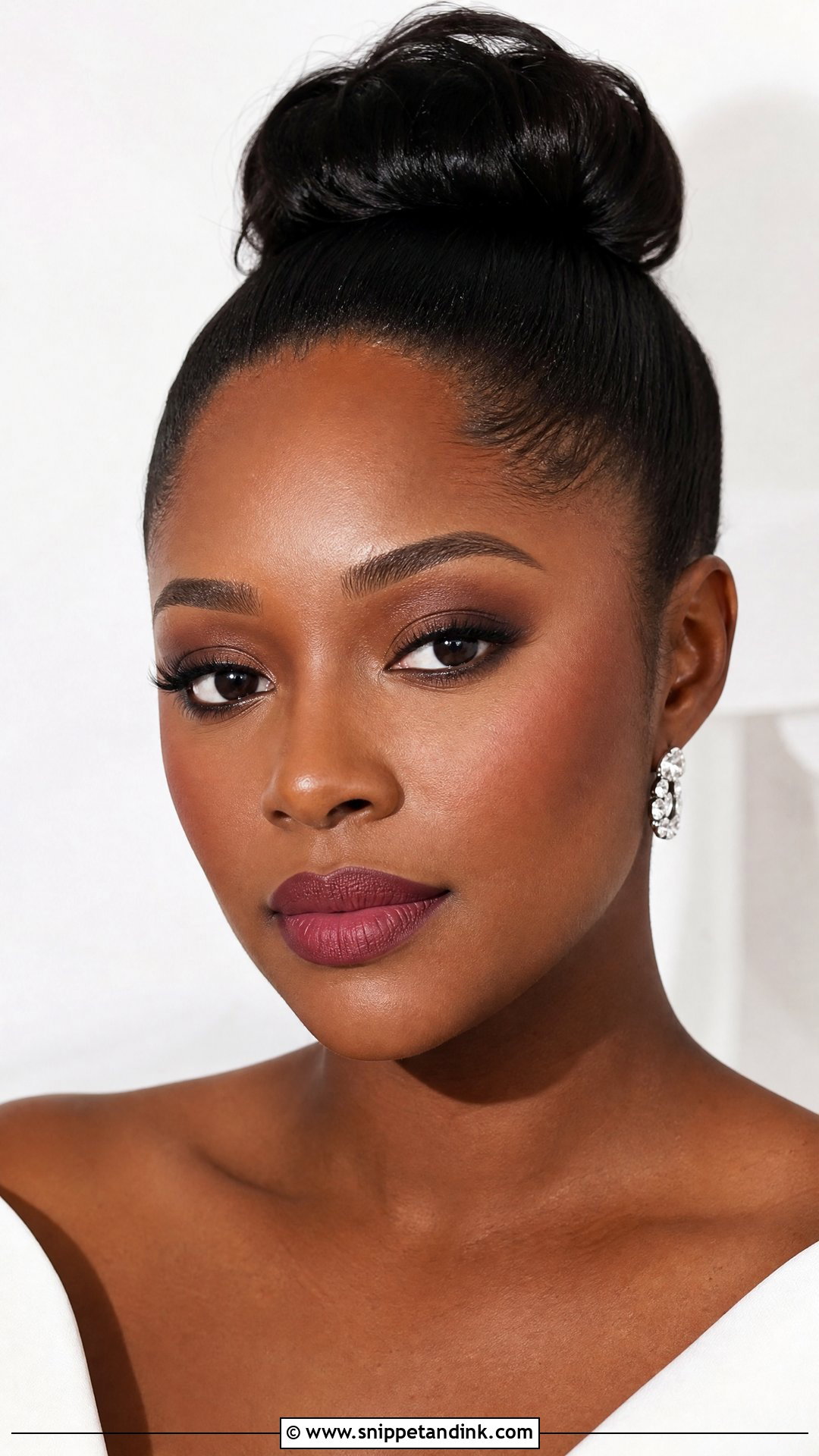
If your skin is oily or the wedding is humid, matte is the safer bet, and it doesn’t have to look dry. The difference is prep: I moisturize first, wait, then use a long-wear foundation and press finely milled powder only where you shine. Muted blush and a whisper of highlight stop the face going flat. Matte taupe or warm brown on the lid with waterproof liner, and a velvet rose or berry lip. Matte holds its shape for hours and suits formal gowns and evening venues.
6. Minimal Wedding Makeup
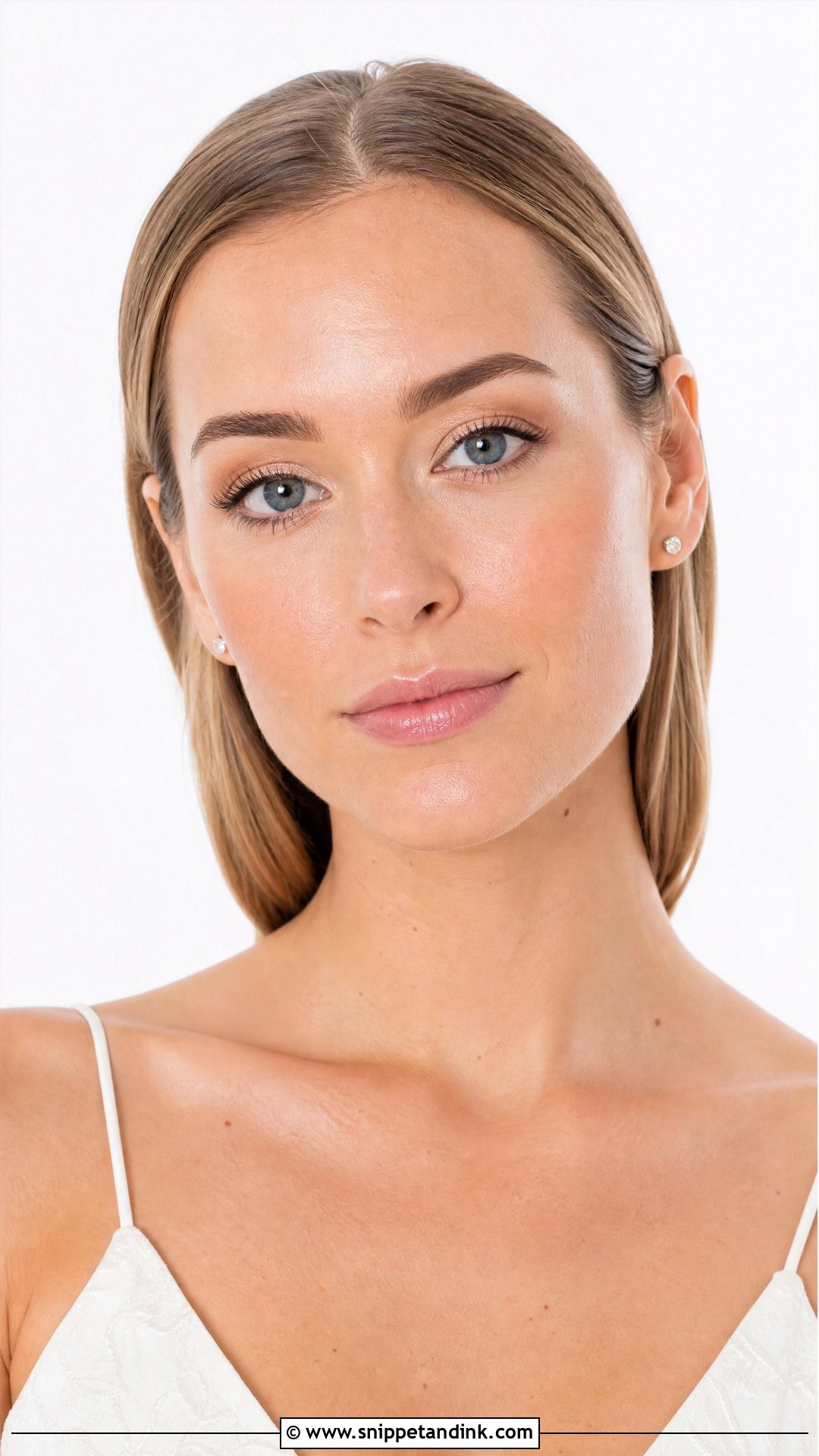
Minimal makeup lives or dies on skin prep, so start a gentle routine weeks out rather than the night before. On the day it’s a sheer tint, spot concealing, brushed brows, curled lashes and a cream shadow in sand or soft bronze. Brown mascara looks gentler on fair features; black-brown suits darker lashes. A tinted balm keeps lips comfortable. I’d still book a trial, because a sheer base shows exactly how long your skin holds up without help.
7. Classic Wedding Makeup
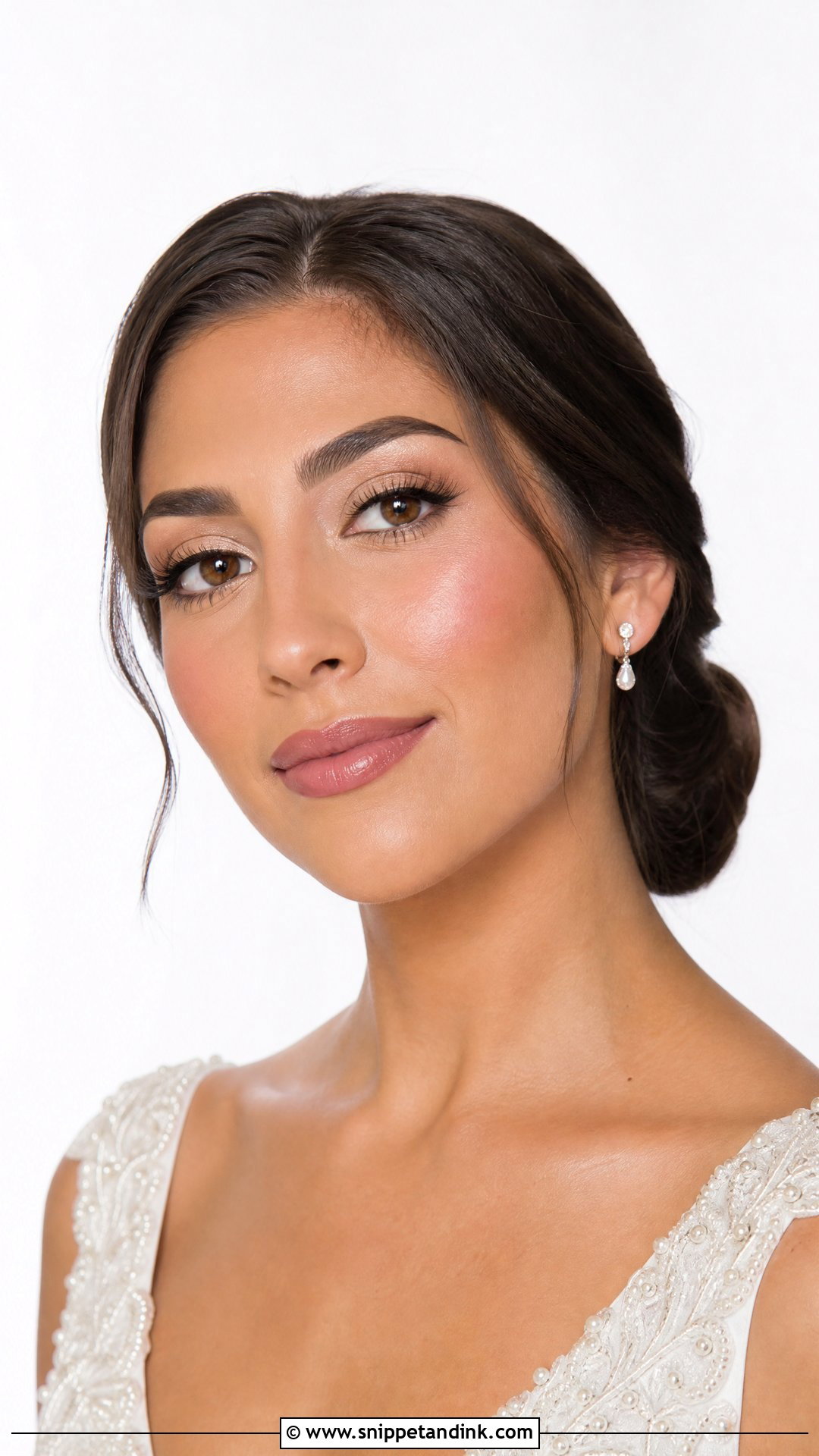
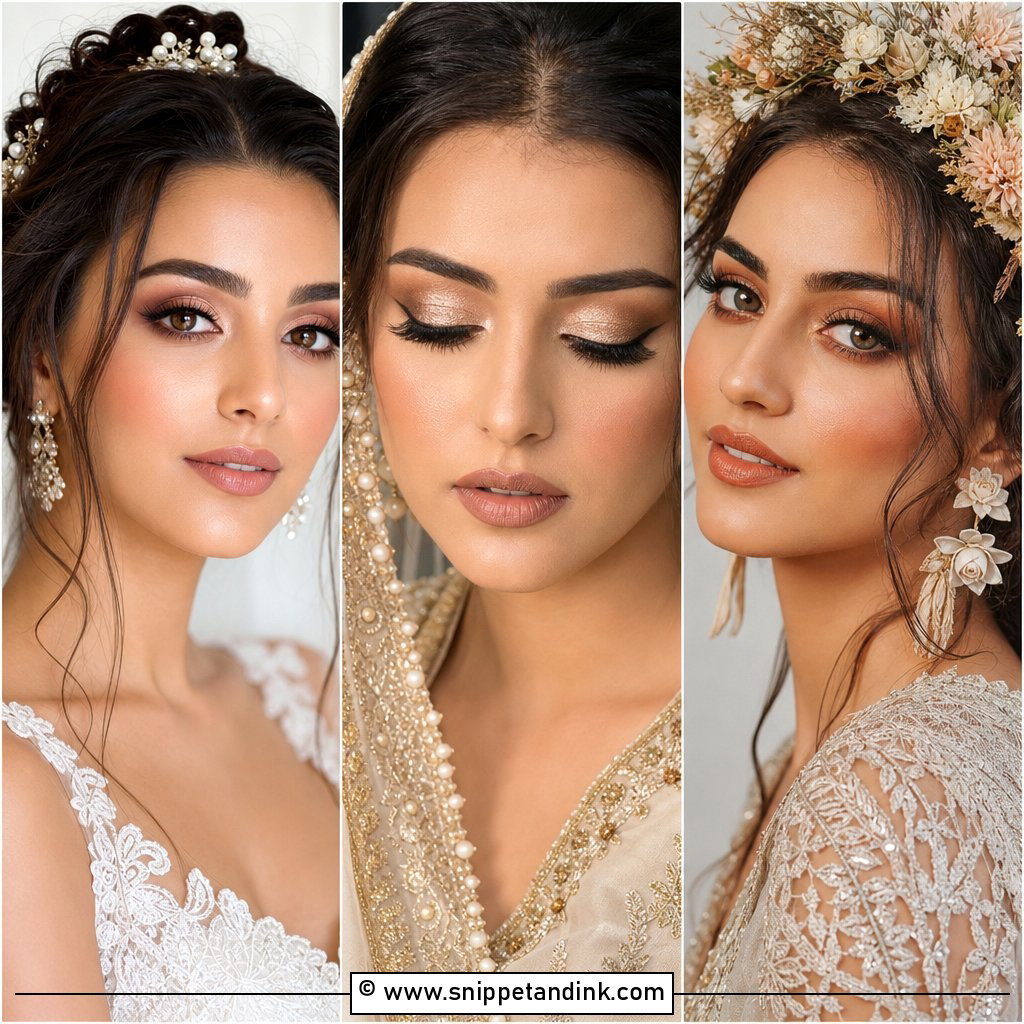
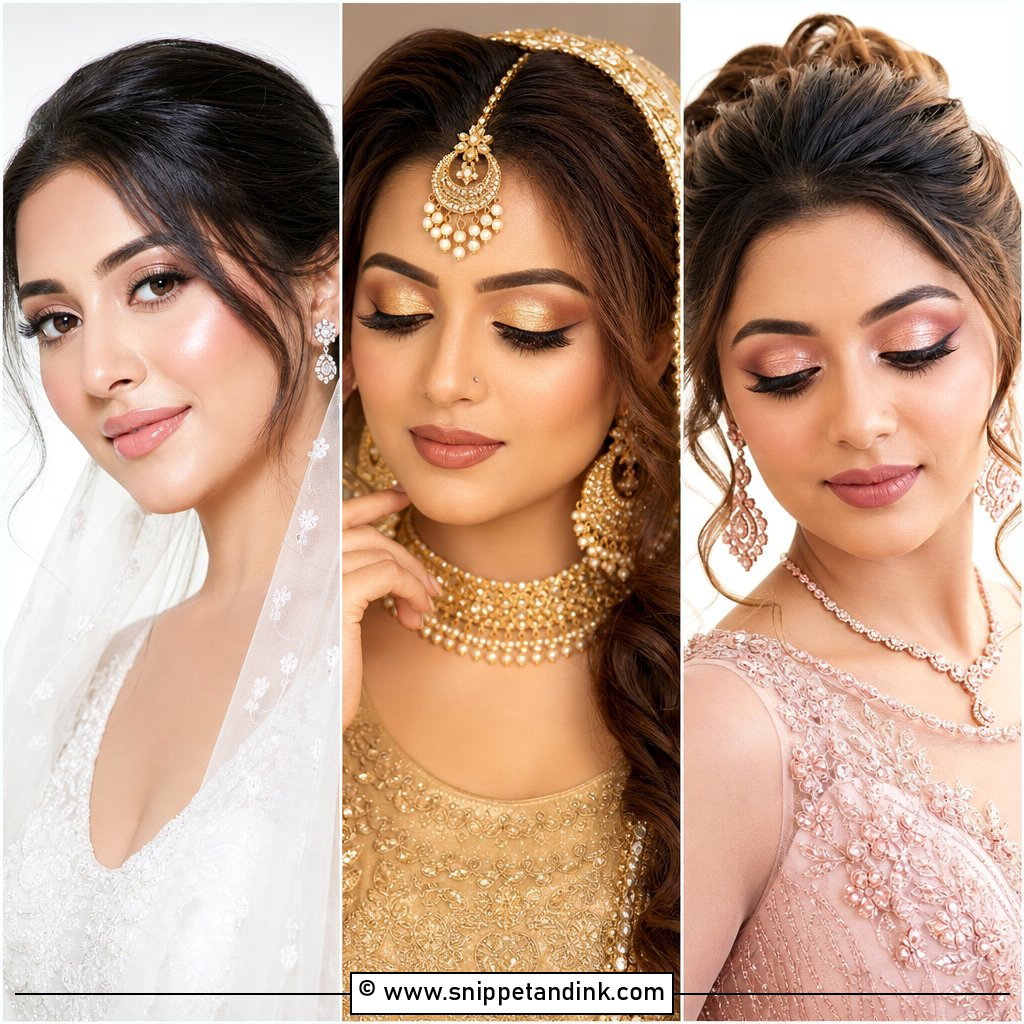
Classic bridal makeup is balanced rather than trendy: perfected skin, an eye that’s defined but not loud, a polished rose or nude lip. My usual build is champagne shimmer on the lid, brown in the crease, a thin black or brown liner and soft lashes, with a natural contour and a satin blush matched to your undertone. Veils, structured gowns, sleek buns and pearls all sit comfortably next to it. Twenty years from now, it’s the version least likely to date your photos.
8. Romantic Wedding Makeup
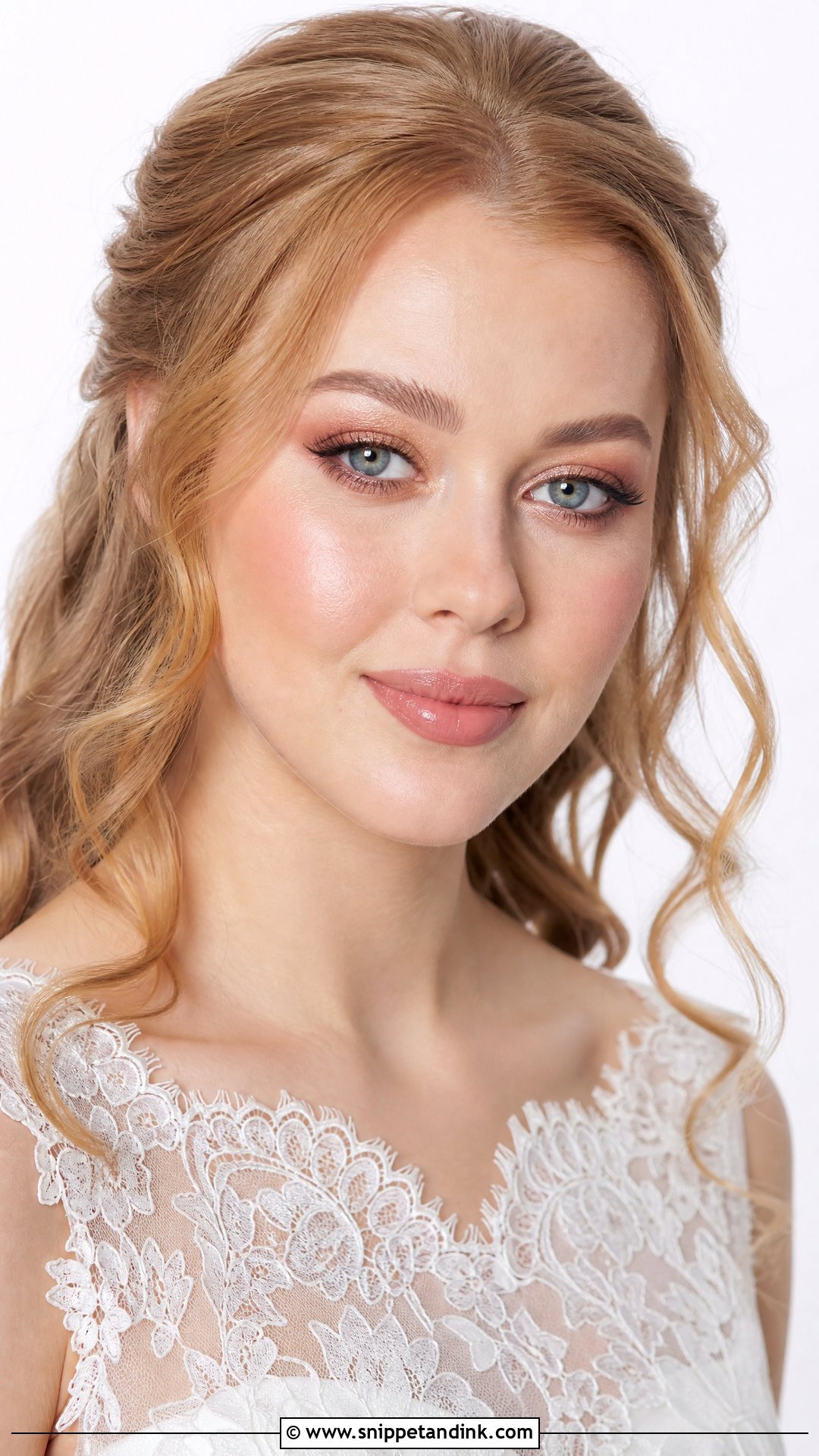
Blush does the heavy lifting here. I place it a little higher than usual and blend it up toward the temple, which lifts the face in photos and reads as a natural flush. Around it, the palette stays in rose, mauve, peach and champagne, with diffused shadow instead of sharp lines, wispy lashes and a soft pink lip. Lace, florals and loose curls suit it well. Visible makeup that still looks tender is hard to balance; too much mauve and it tips into tired.
9. Boho Wedding Makeup
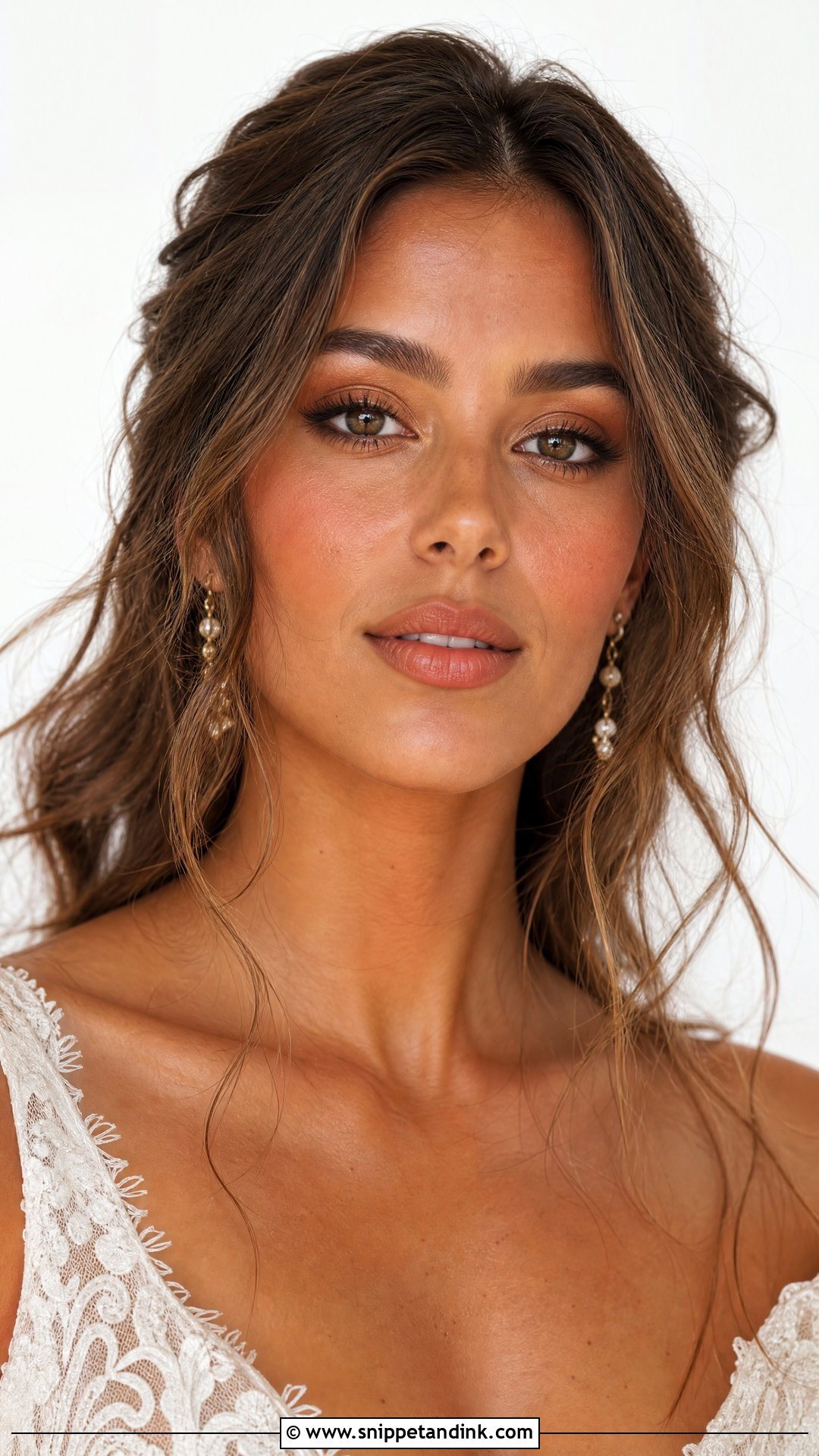
Boho makeup should look like you’ve spent a week outdoors. I put bronzer where the sun would actually land, around the forehead, cheeks and bridge of the nose, and keep the base breathable. Terracotta, camel and warm brown shadows define the eye without looking formal; fluffy brows and individual lashes keep it undone. Lips go nude peach or sheer caramel. It sits naturally with loose waves and textured updos, and on desert, rustic or destination days.
10. Vintage Wedding Makeup
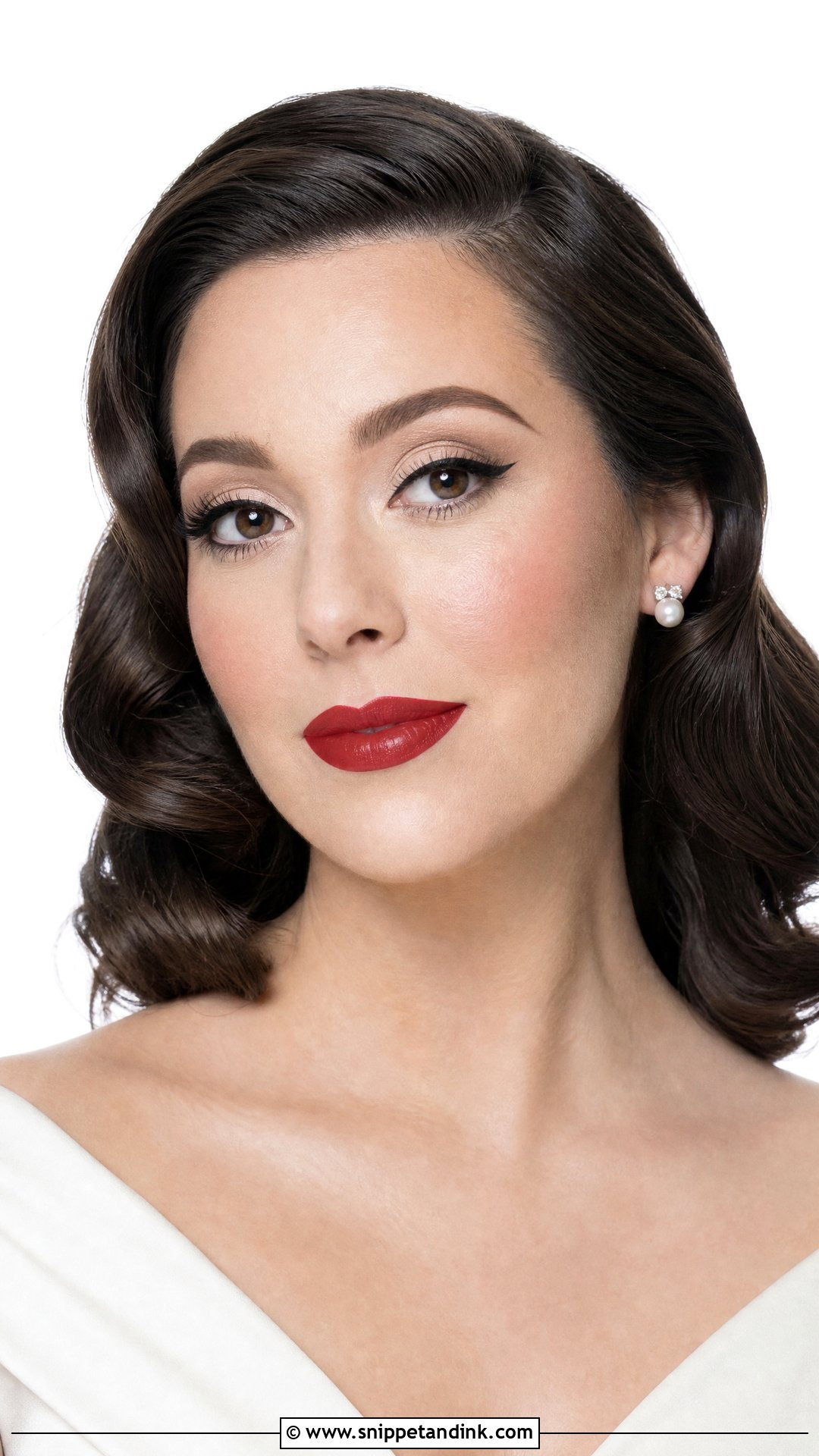
The wearable vintage face is satin skin, a softly arched brow, a defined lash line and a red, berry or rose lip. A small wing is fine if it’s clean. I keep the lid quiet with ivory, taupe or soft brown so the lip reads as the deliberate choice it is, and a controlled matte or satin complexion stops it looking costume. Sleek waves, tea-length dresses and structured gowns suit it well.
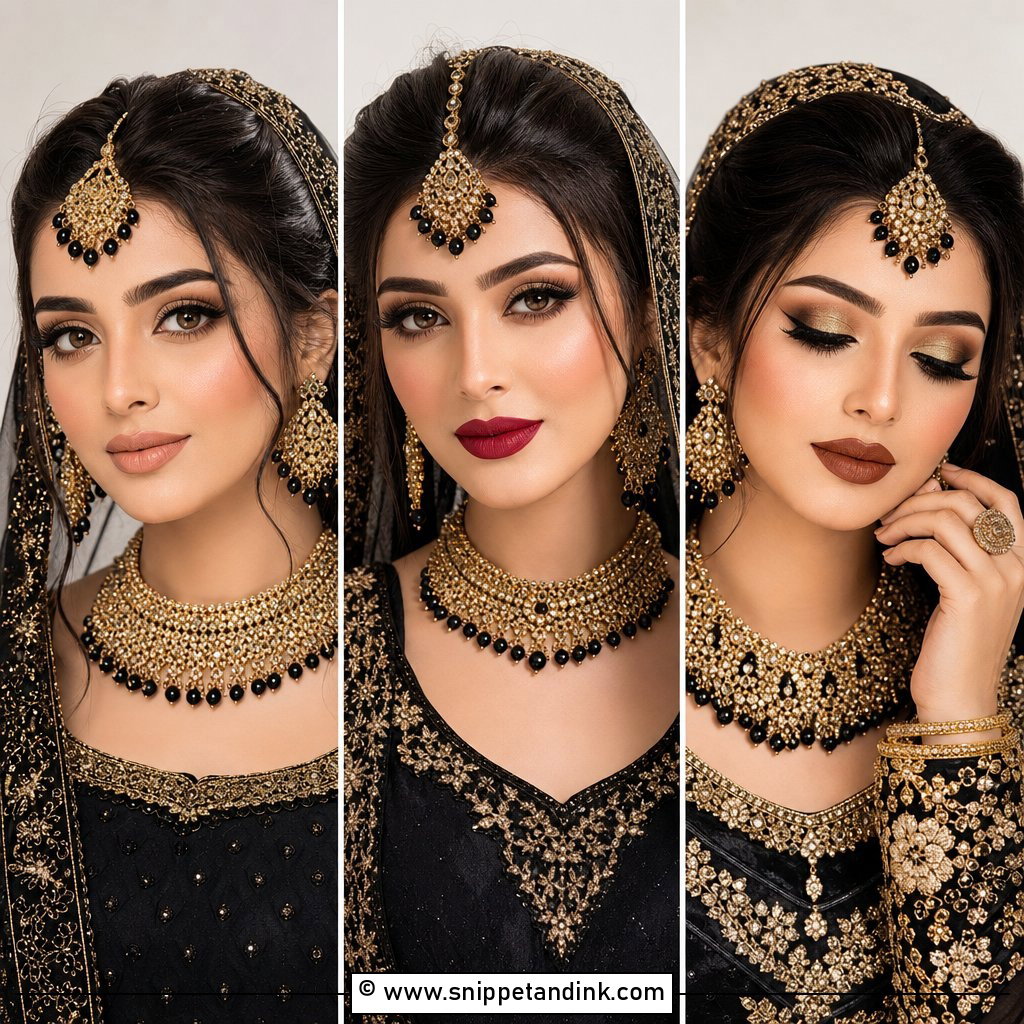
11. Red Lip Wedding Makeup
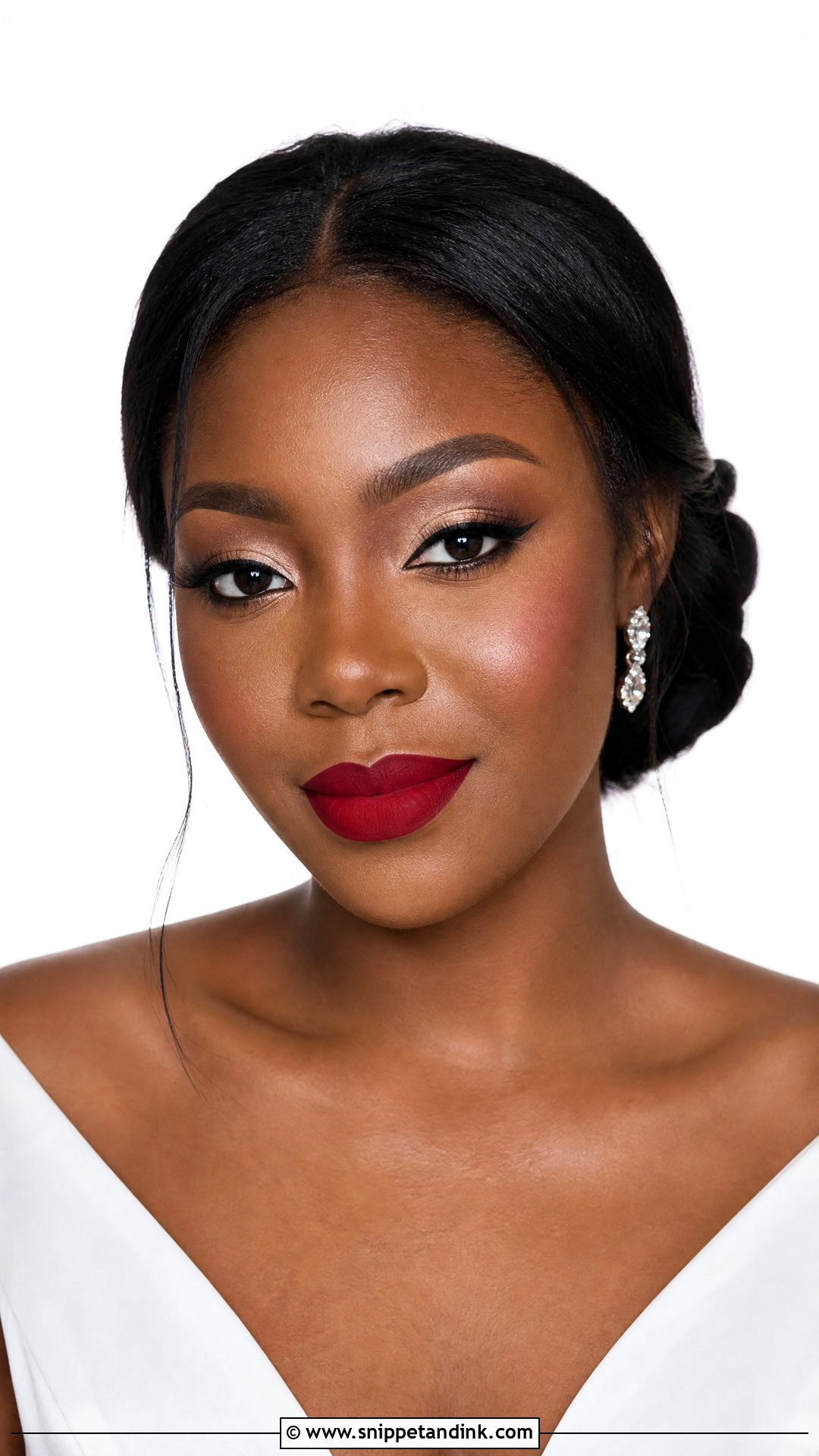
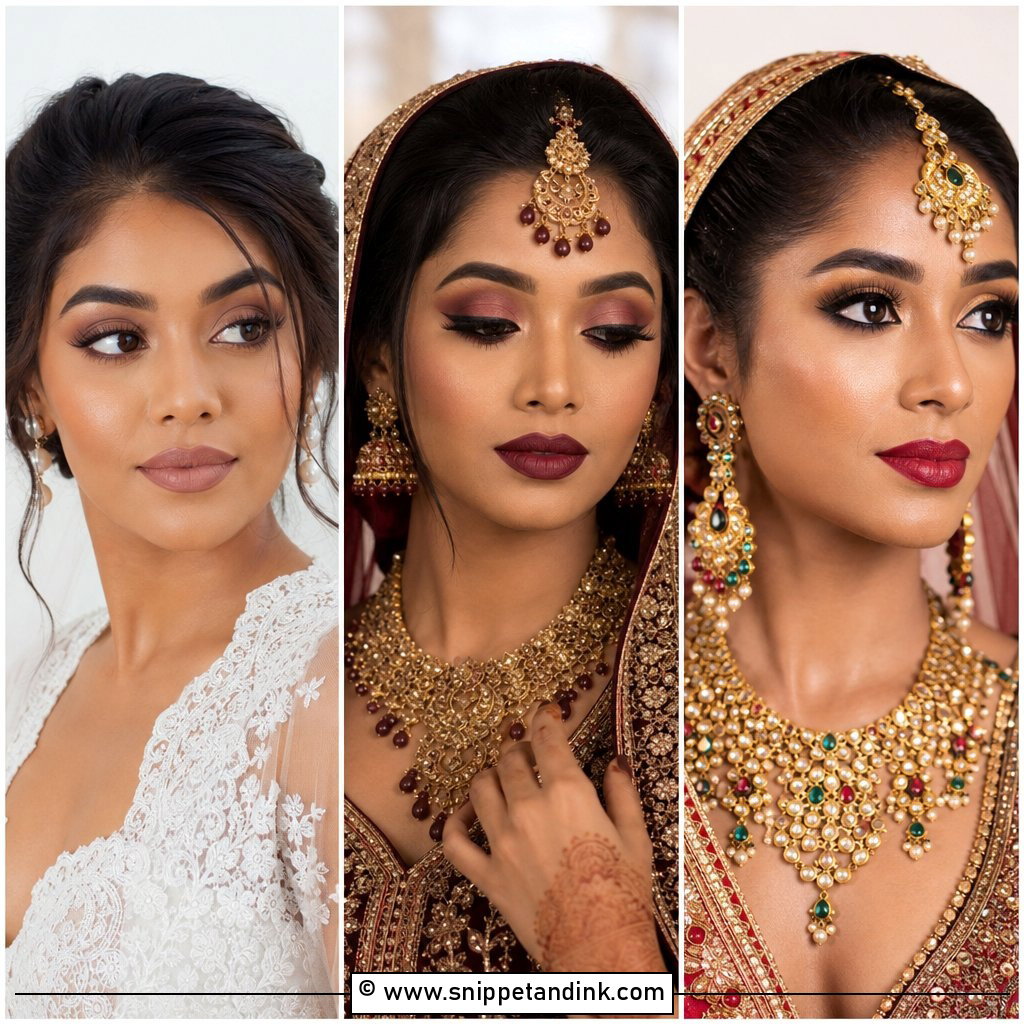
Red lips go wrong when the red fights the skin. Blue-reds look crisp on cool undertones, orange-reds warm up golden skin, and deep cherry or brick reds look rich on deep complexions. I line the whole lip before applying a long-wear formula, which keeps the edges sharp and gives the color something to grip when it starts to fade. Everything else stays quiet: smooth base, soft blush, neutral eye. One honest warning: if you never wear red, your wedding is not the day to start, because you’ll spend the day aware of your mouth.
12. Nude Lip Wedding Makeup
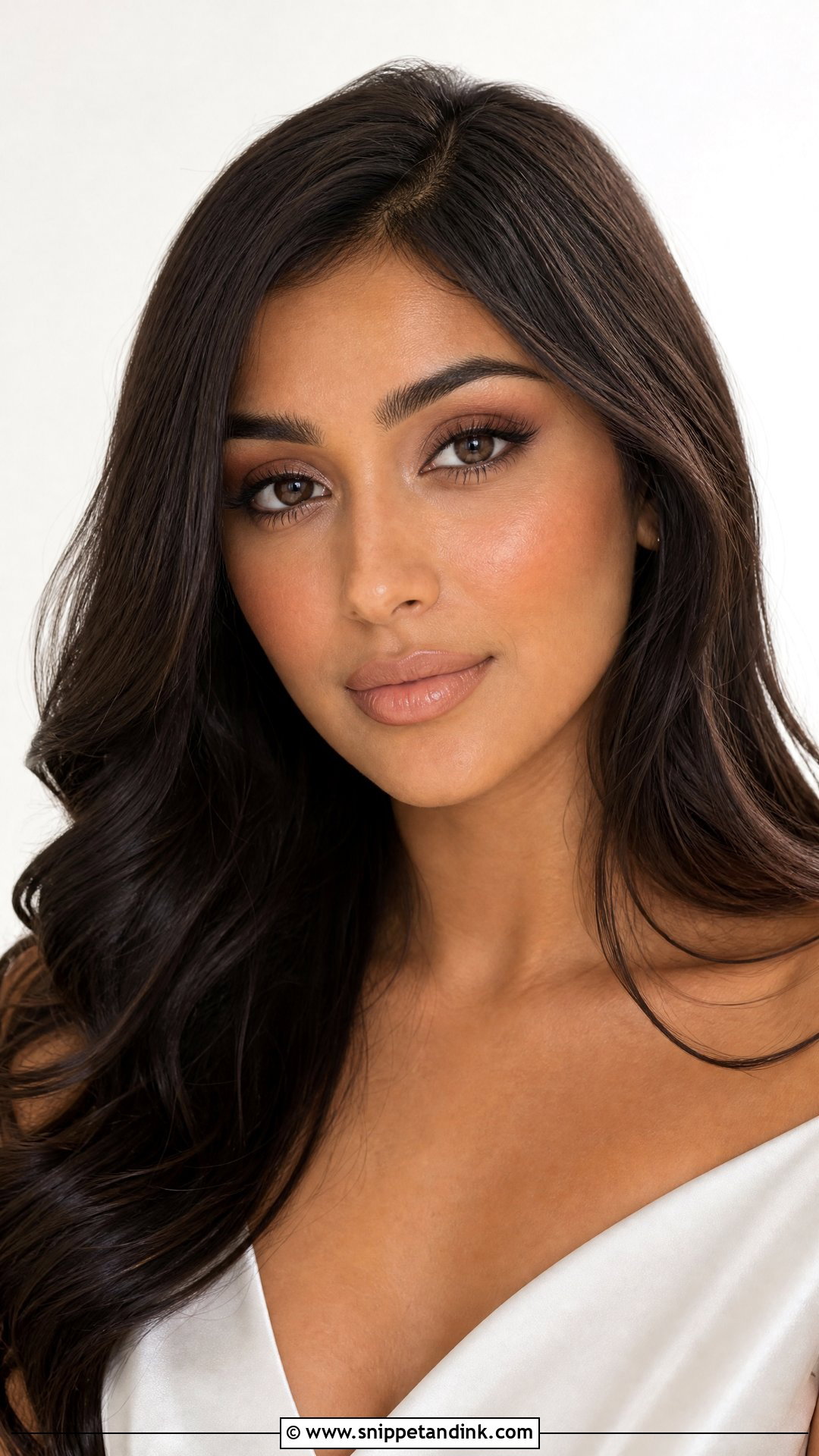
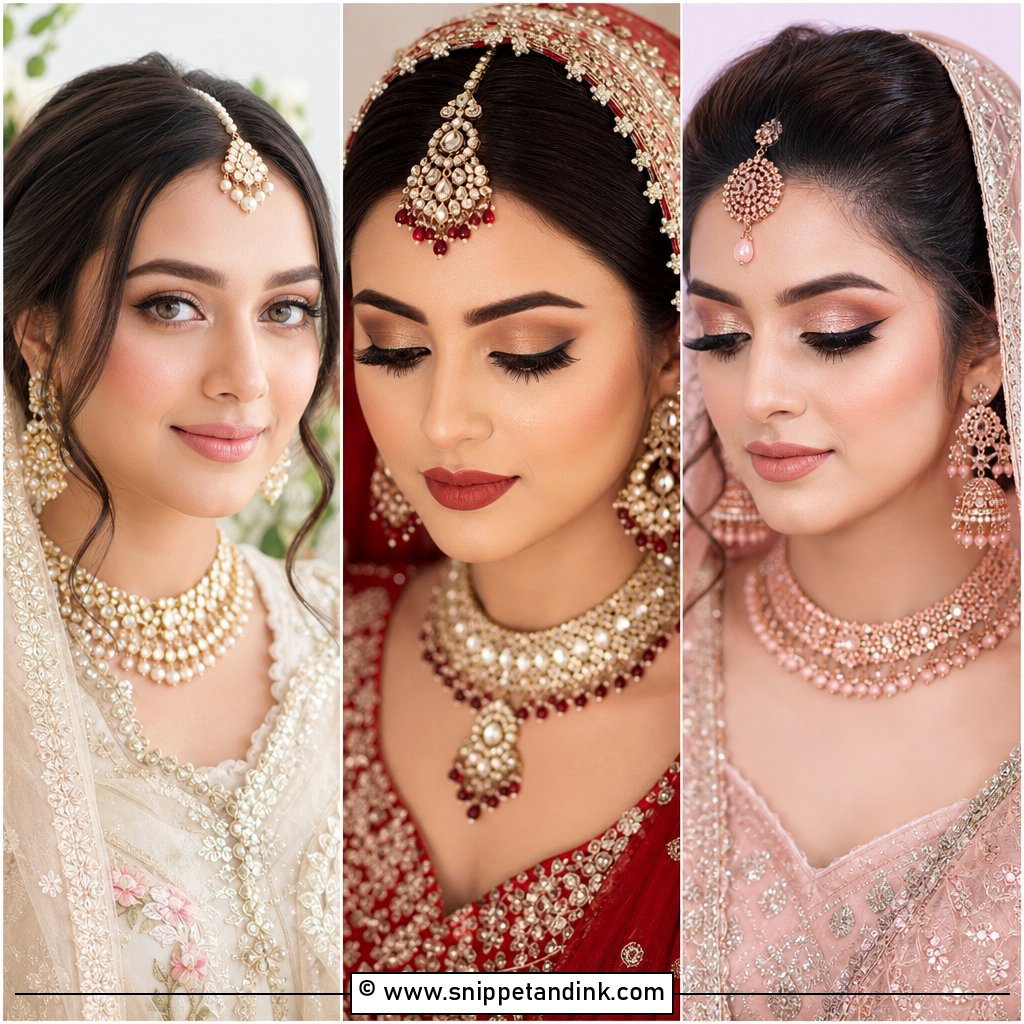
The most common mistake with a nude lip is going too pale, which makes the mouth vanish in photos. Aim for your natural lip color or one shade deeper. Fair skin usually suits pink-beige, medium skin peachy rose, and deep skin caramel, cocoa or brown-rose. I define the shape with liner and finish with a satin or creamy texture so it stays comfortable. Pair it with softly defined eyes and a bit of contour and it fits nearly any style.
13. Pink Wedding Makeup
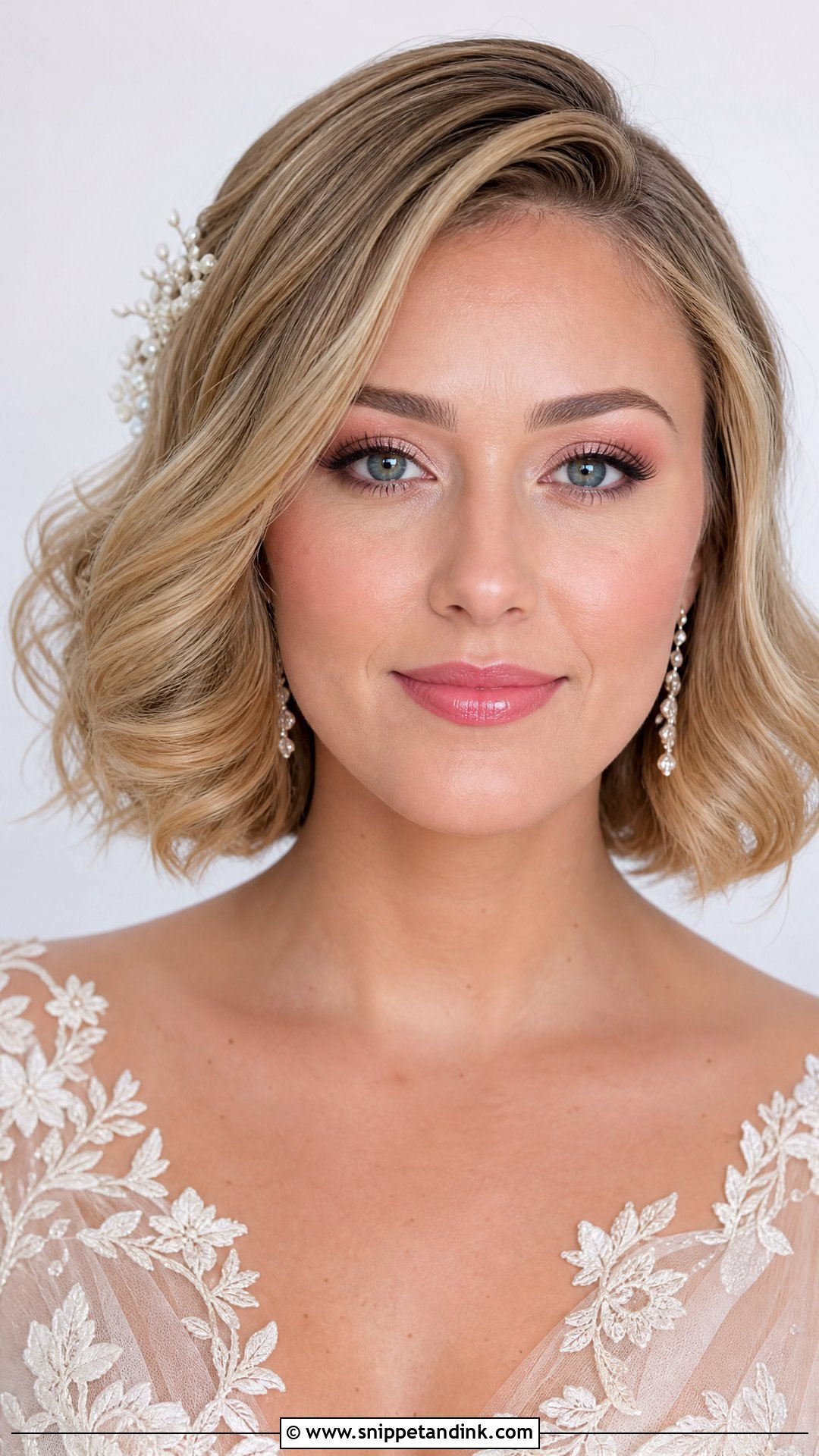
One flat pink everywhere looks childlike in photos, so I mix rose, blush and mauve for some depth. A rosy cream blush wakes the face up, pink champagne shimmer brightens the lid, and brown liner keeps it soft while black adds definition. A rose-pink satin lip pulls it together. For deeper skin, pastel pink can turn chalky, so I switch to berry-pink or warm rose so the color actually shows.
14. Peach Wedding Makeup
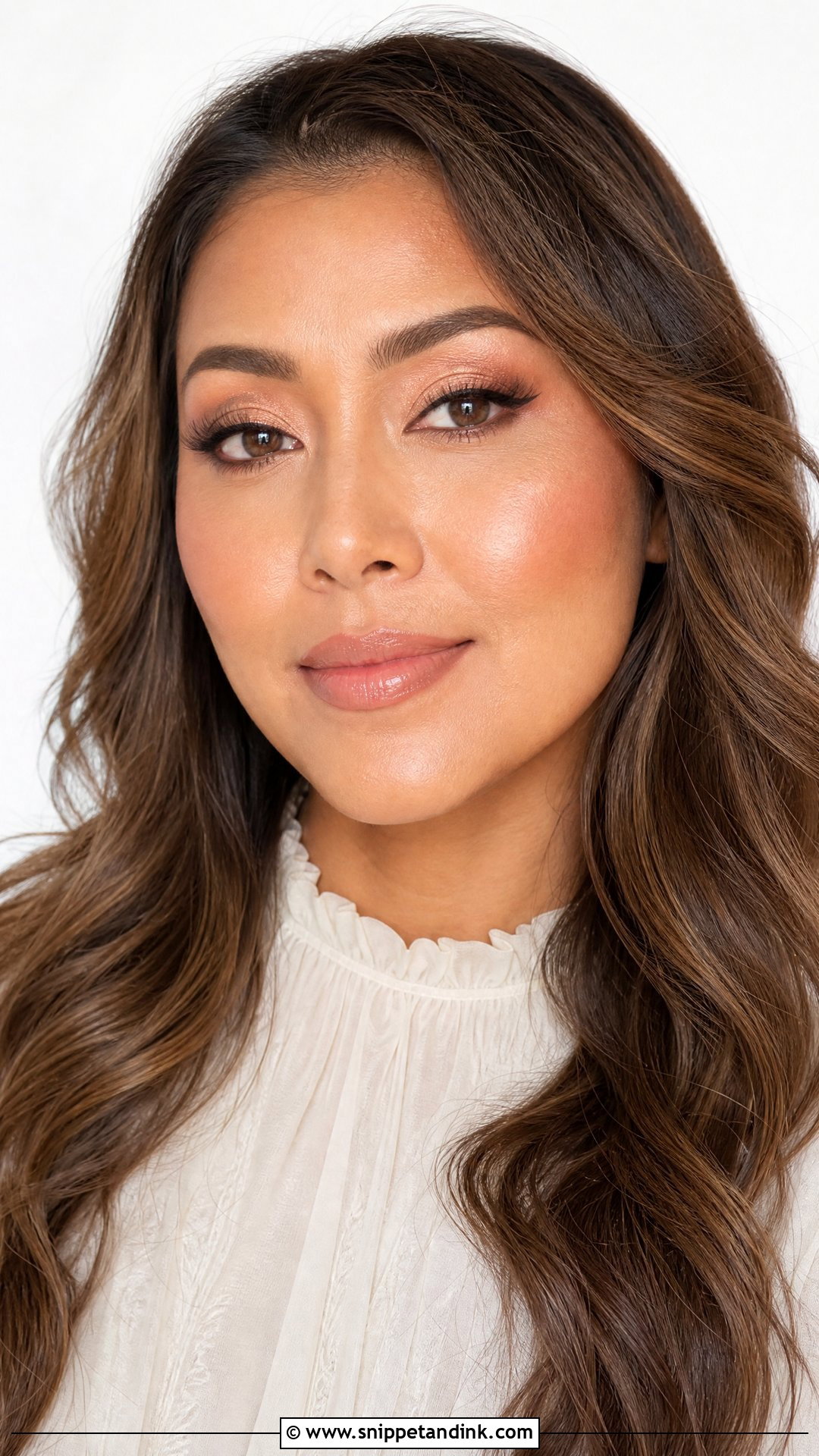
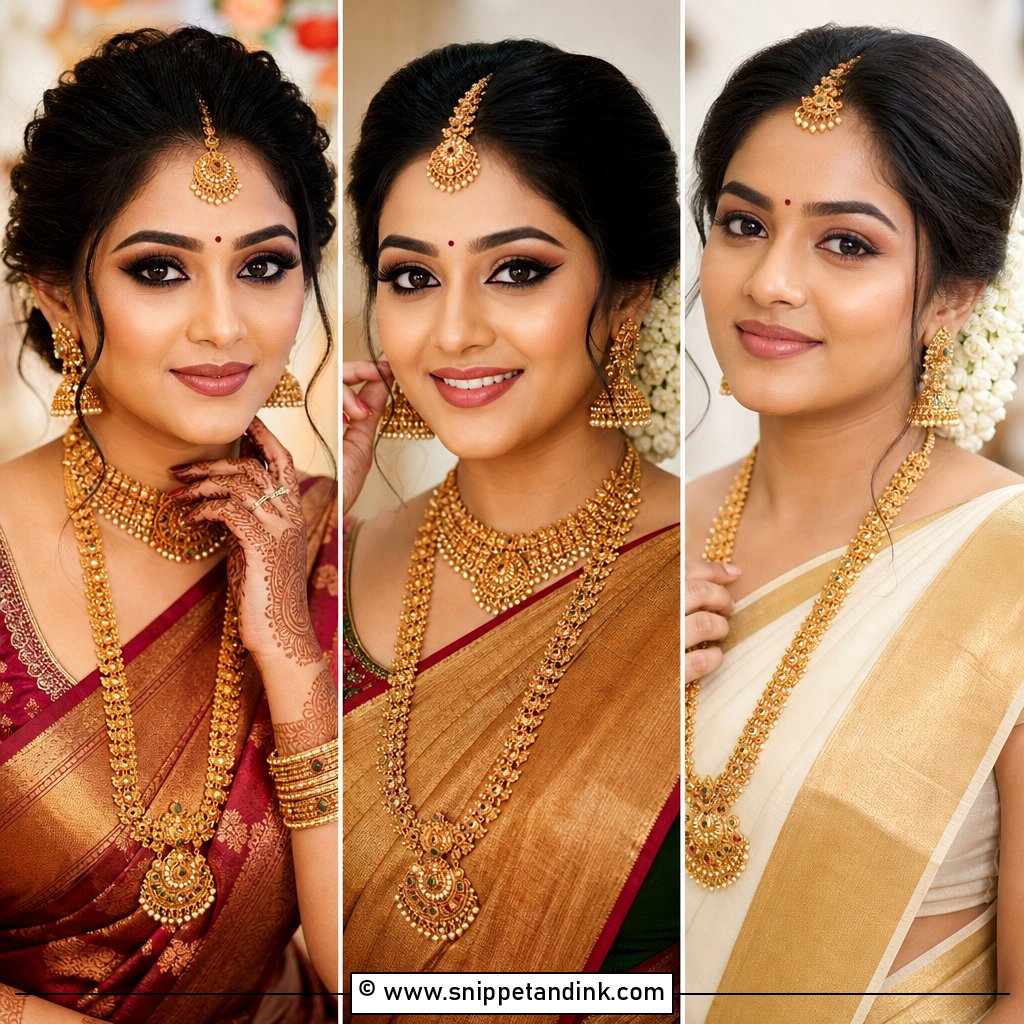
Peach wedding makeup warms the face up, and it works year-round if you adjust depth. Peach blush on the cheeks, champagne or bronze shimmer on the lids, a peachy nude lip or gloss, and warm brown liner so the eyes don’t get heavy. Very fair skin needs a soft apricot or it reads orange. Tan and deep skin can carry coral-peach or burnt peach. Ivory dresses, gold jewelry and warm florals all sit well beside it.
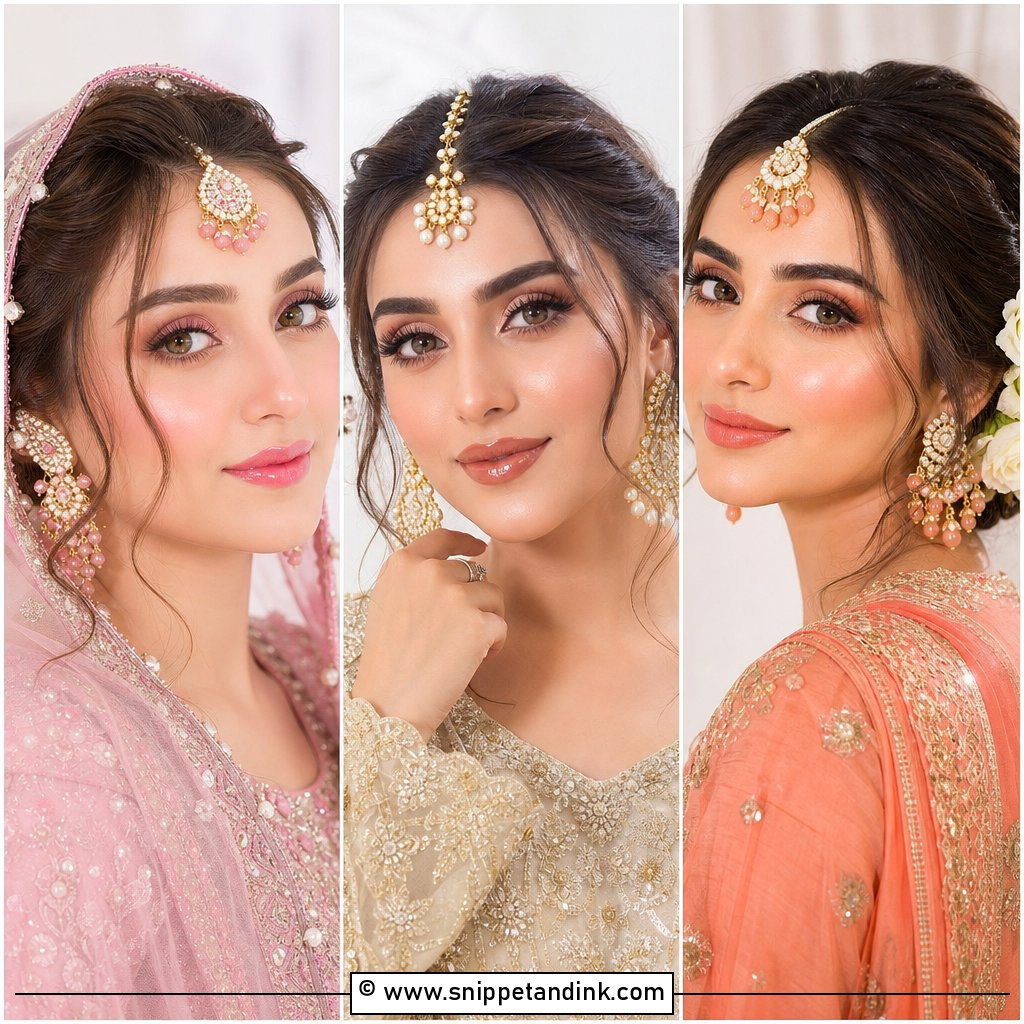
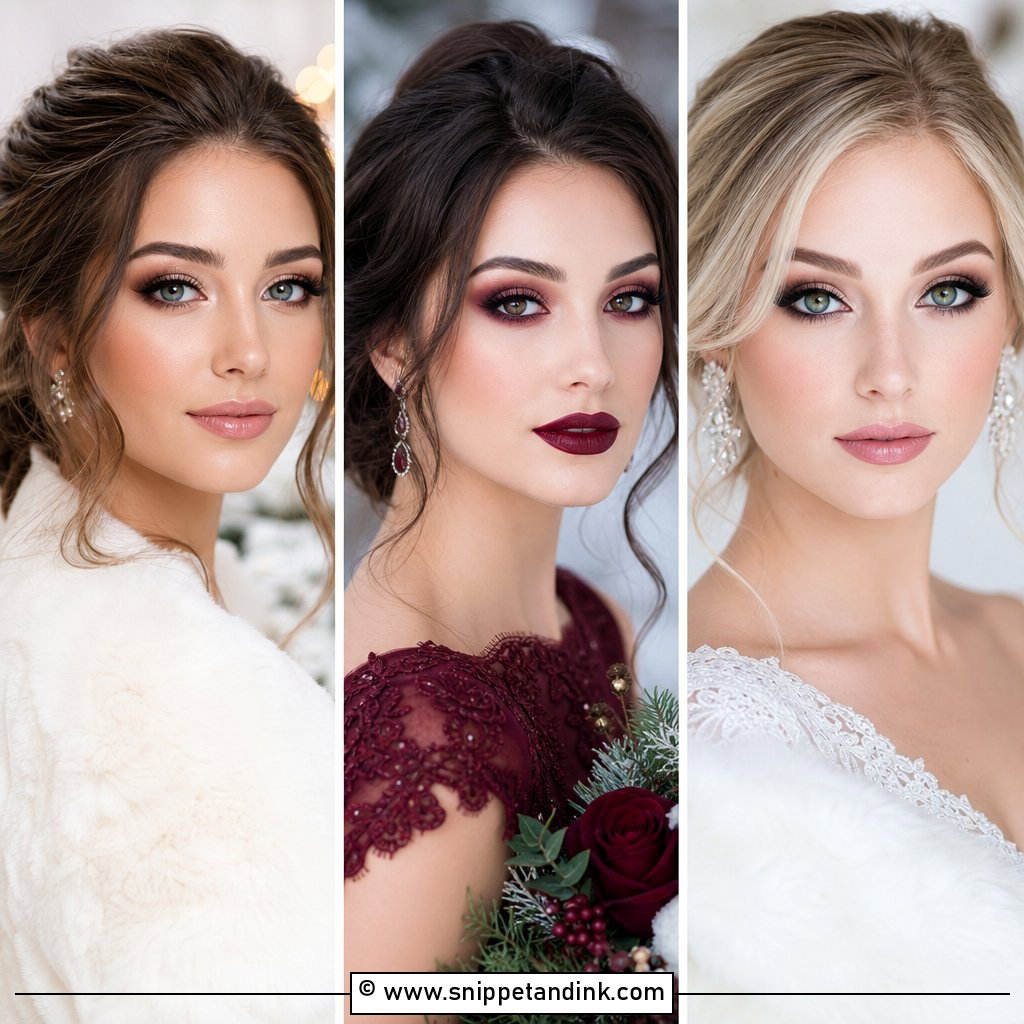
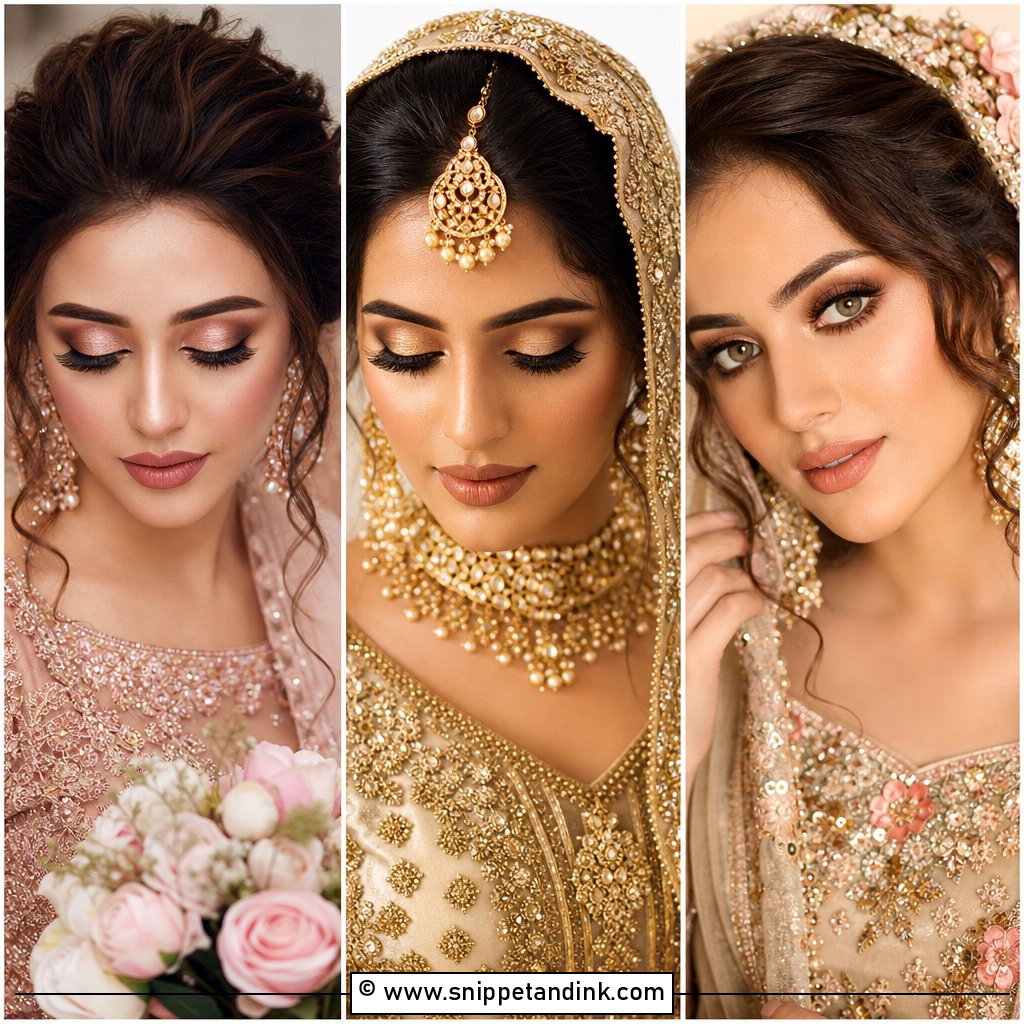
15. Rose Gold Wedding Makeup
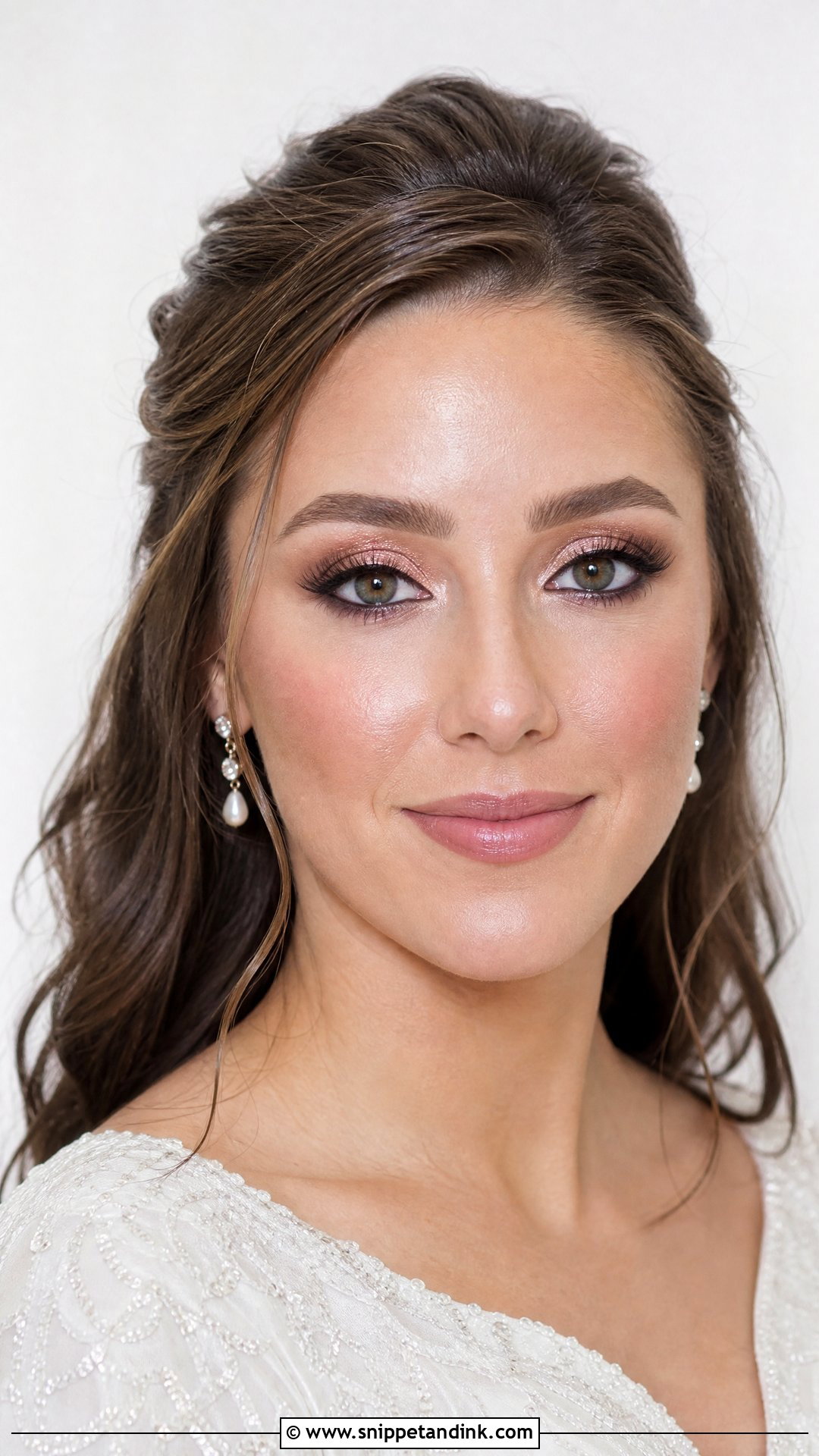
With rose gold, the eyes are the point: shimmer on the lid, soft brown in the crease, a deeper outer corner for shape. I check the shimmer particle size before anything else, because chunky glitter looks like a smear in close-ups. A rosy blush and a champagne highlight carry the warmth across the face, and the lip stays mauve nude or rose beige. It flatters green, hazel and brown eyes in particular and suits warm evening light.
16. Bronze Wedding Makeup
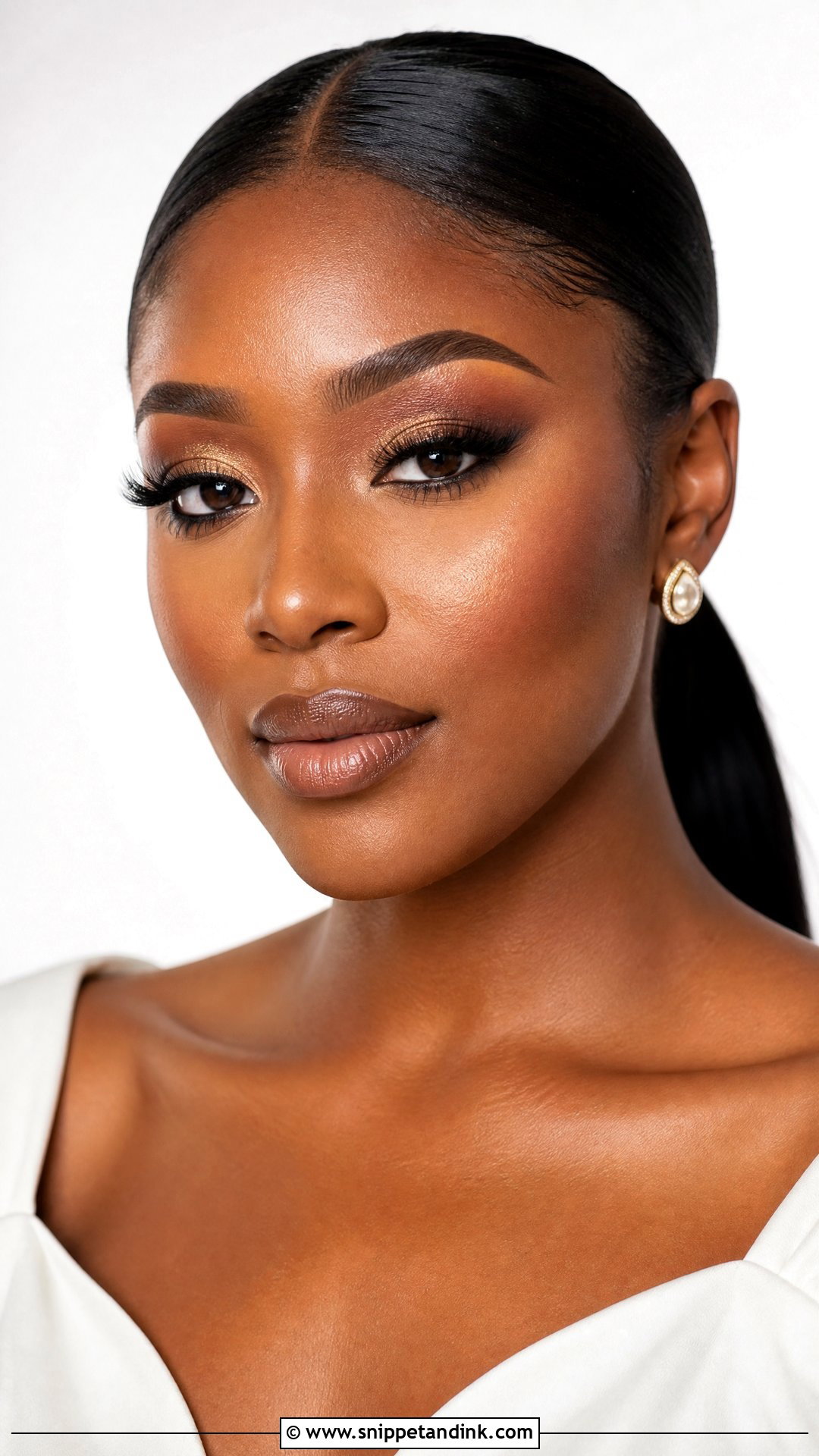
Bronze wedding makeup starts with a luminous or satin base, then bronzer on the cheekbones, temples and jaw where it adds shape, not color everywhere. On the eyes, bronze shimmer layered with warm brown, espresso or copper, a smudged brown liner and full lashes. Lips stay nude, caramel or warm rose. Tan, olive and deep skin wear it naturally; on fair skin I swap to a champagne bronze, because true bronze can look muddy against pale skin and an ivory gown.
17. Smokey Eye Wedding Makeup
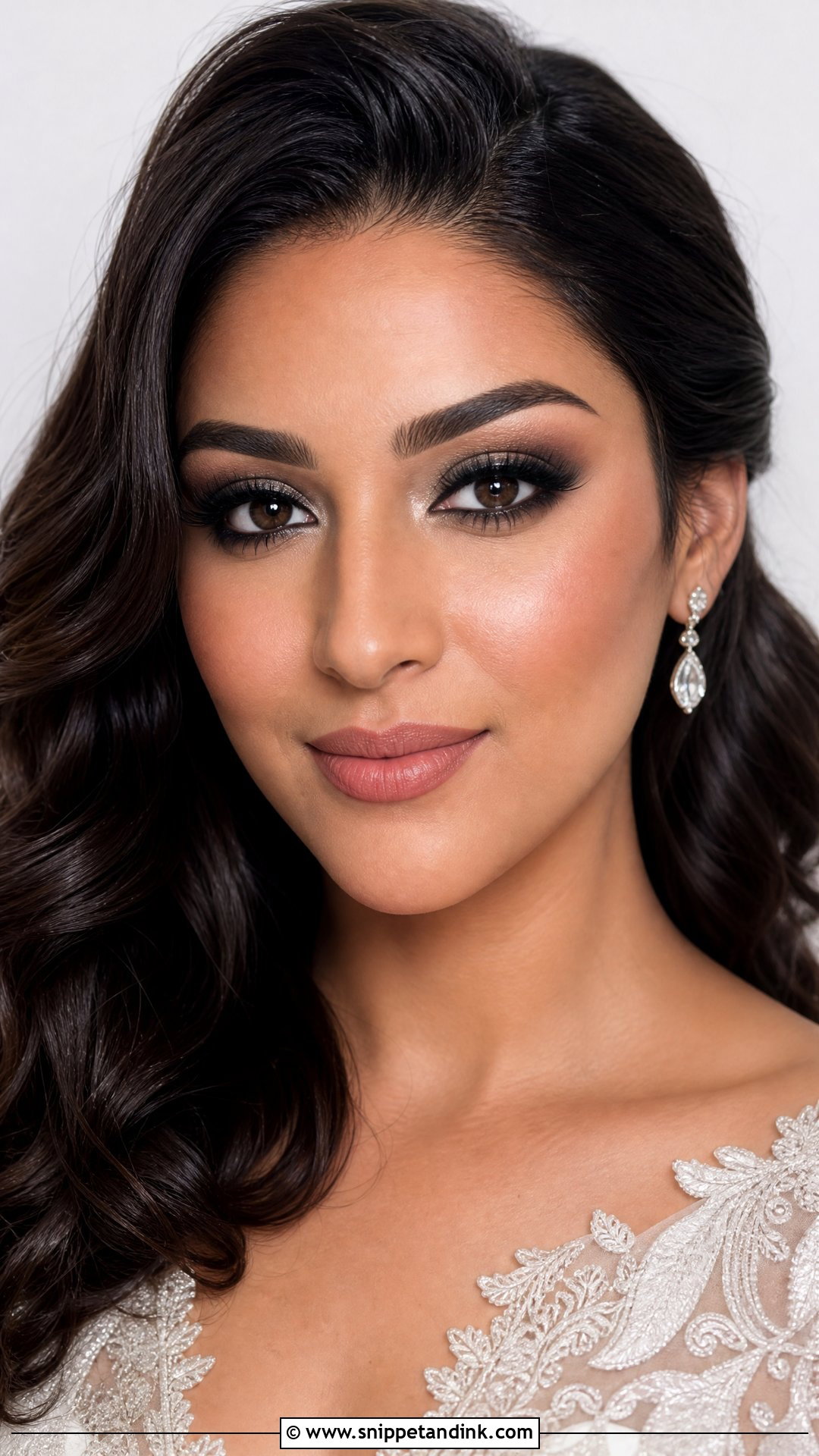
A bridal smoky eye doesn’t need black. Taupe, plum, chocolate or charcoal gives you depth without the heaviness. I keep the darkest shade tight to the lash line and fade it upward, and I clean the under-eye with a cotton bud before foundation goes on, since fallout is what makes a smoky eye look tired. Waterproof liner and curled lashes, then polished skin with soft contour and a muted rose lip. It belongs with evening weddings and dramatic gowns.
18. Brown Smokey Wedding Makeup
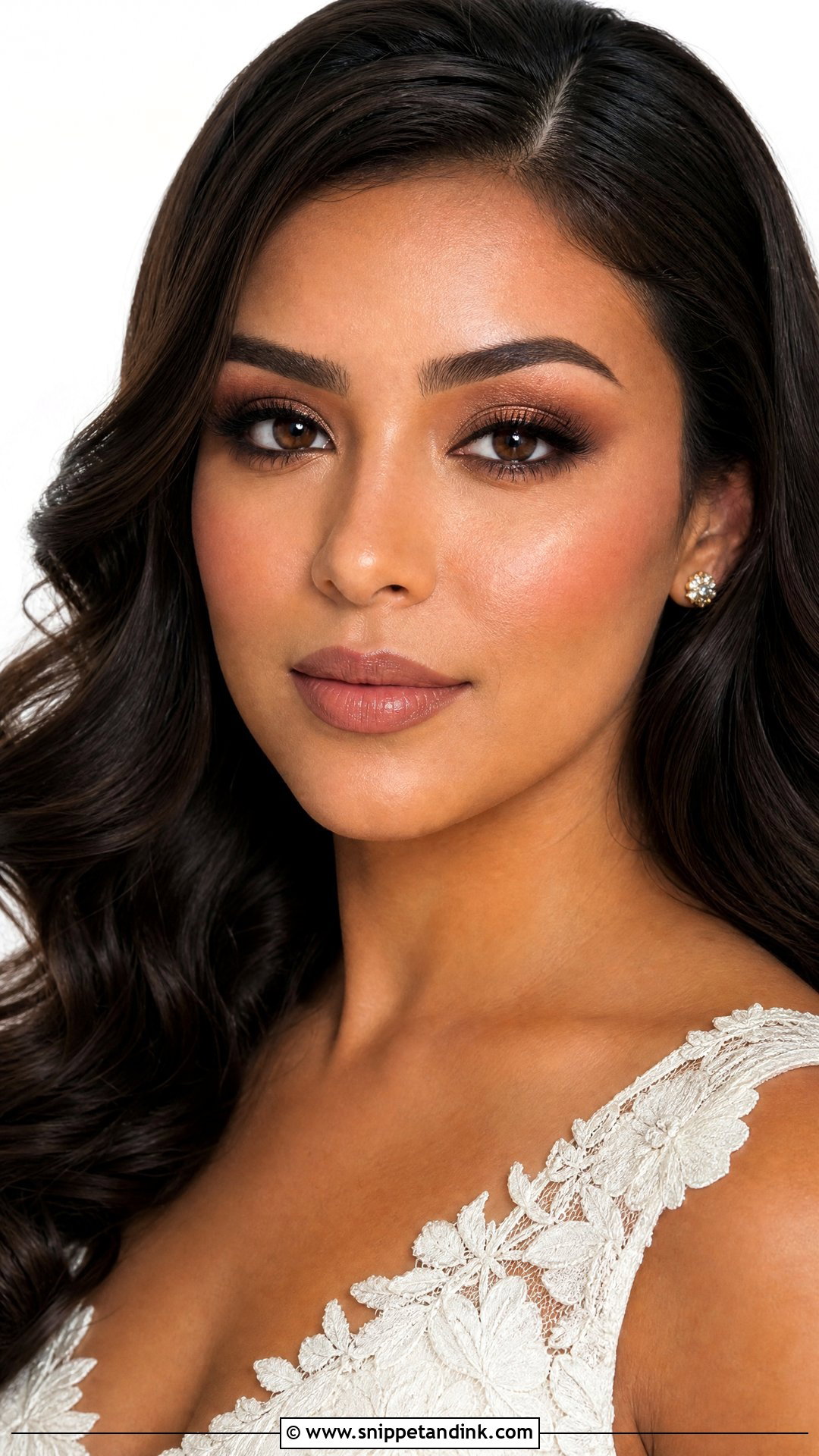
Of all the smoky versions, brown flatters the most people because the gradient stays soft. I pick warm or neutral browns based on undertone, put a matte brown in the crease and a soft shimmer on the lid, and press espresso liner into the lashes. The lower lash line gets the lightest touch, or the eyes start to look shadowed rather than framed. Satin skin, peach blush and a pink-brown lip finish it, and it still gives a photographer enough contrast to work with.
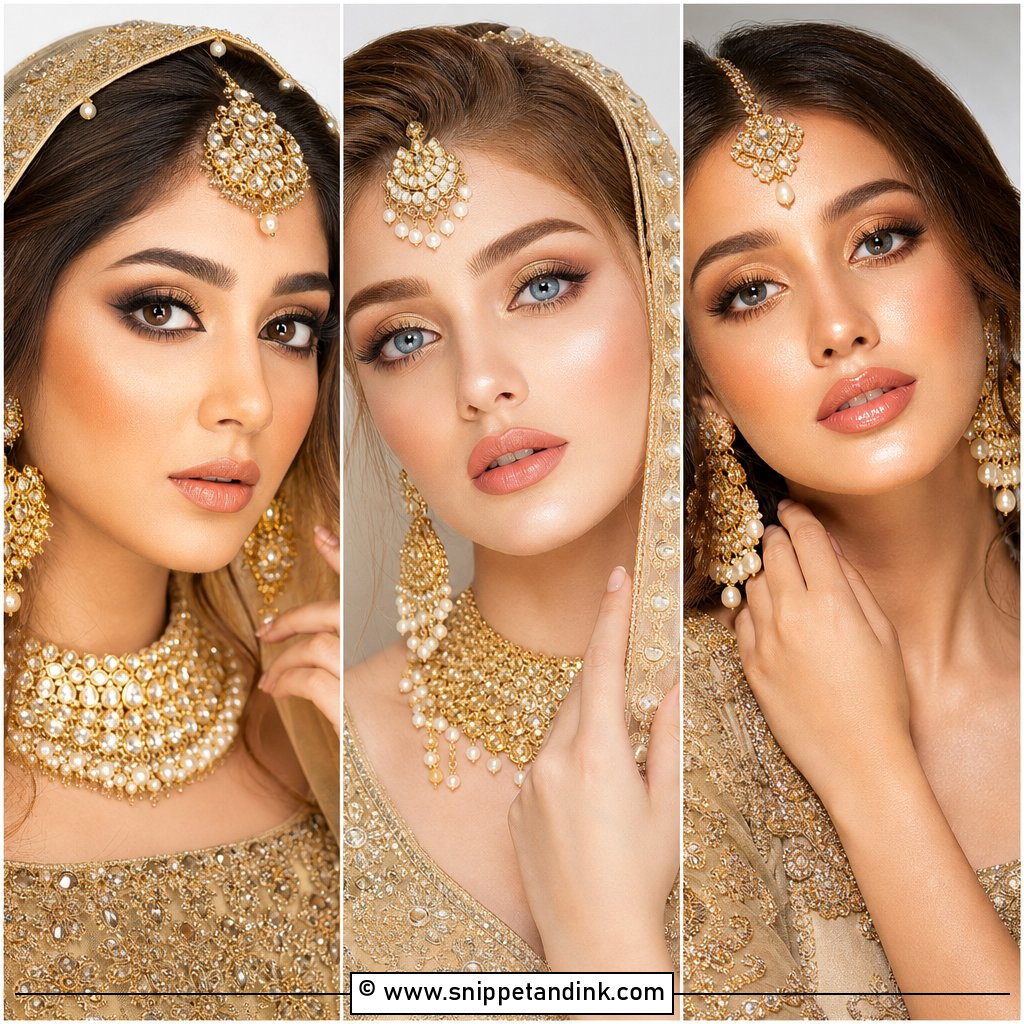
19. Gold Eye Wedding Makeup
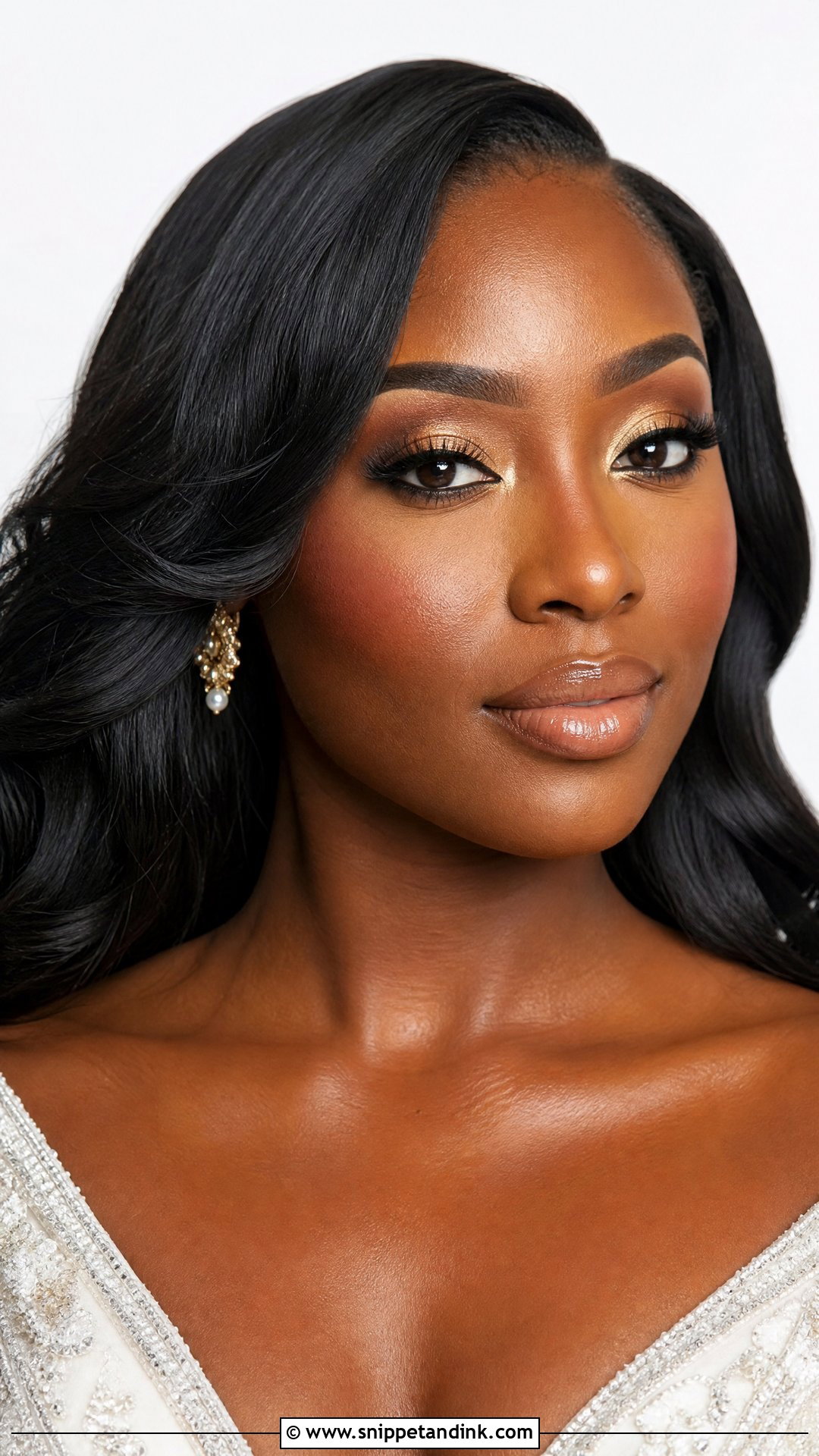
The shade of gold decides whether this works. Pale champagne gold suits fair skin, yellow gold glows on tan skin, and antique gold looks rich on deep skin. I press a fine shimmer or metallic onto the lid with a fingertip, which gives more payoff than a brush, then blend brown or bronze into the crease. Liner stays clean and lashes lifted so the metal doesn’t swallow the eye shape. Bronzer, warm blush and a caramel lip keep the face in harmony, especially next to gold accessories.
20. Champagne Wedding Makeup
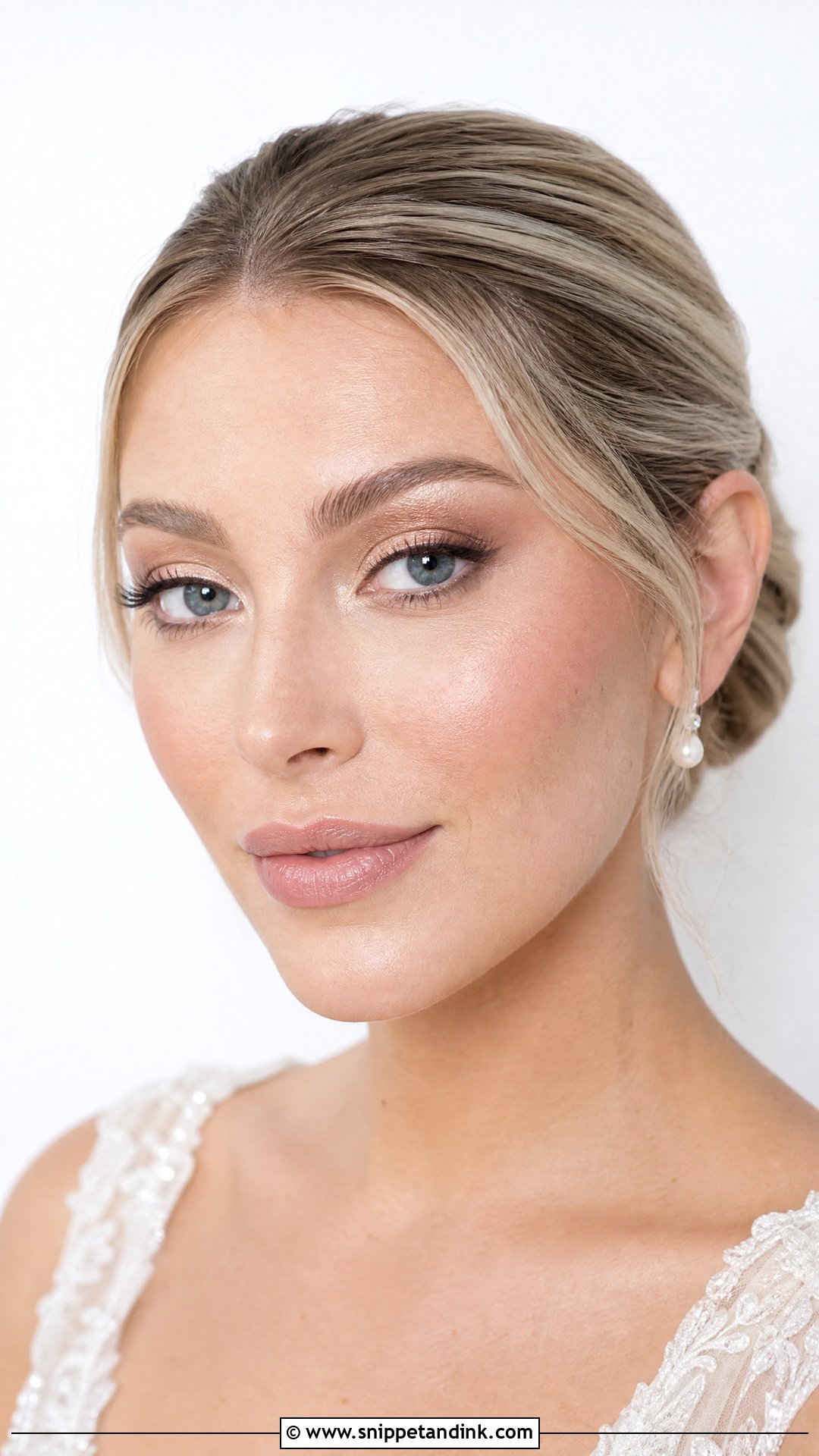
Champagne is the shimmer I reach for when a bride wants sparkle without color. On the inner corner and center of the lid it makes tired eyes look awake, with soft taupe in the crease, a thin liner and wispy lashes around it. The skin stays polished and softly luminous with a gentle highlight on the cheekbone. A rose nude or pink satin lip keeps it refined. Morning or evening, minimalist gown or heavily beaded, it rarely clashes.
21. Mauve Wedding Makeup
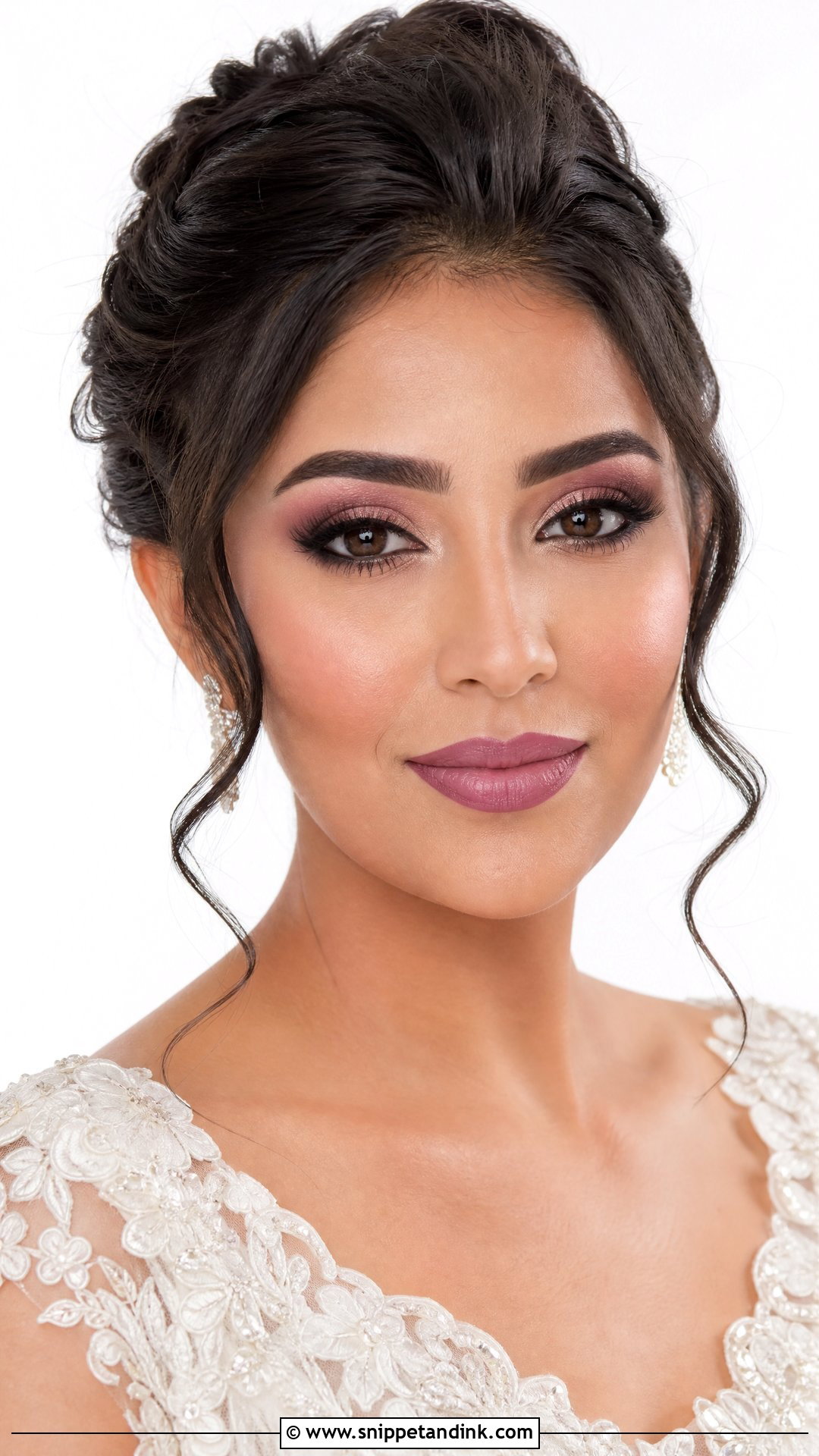
Mauve sits between pink, purple and brown, so it adds depth without reading as a color. I use mauve shadow in the crease, a lighter shimmer on the lid, and brown or plum liner. Mauve blush is where I go carefully: on skin with any redness it can look bruised, so I blend it thin and sometimes swap to rose. A rose-mauve or pink-brown lip finishes it. Fall and winter suit the deeper versions; lighter mauve works in spring.
22. Plum Wedding Makeup
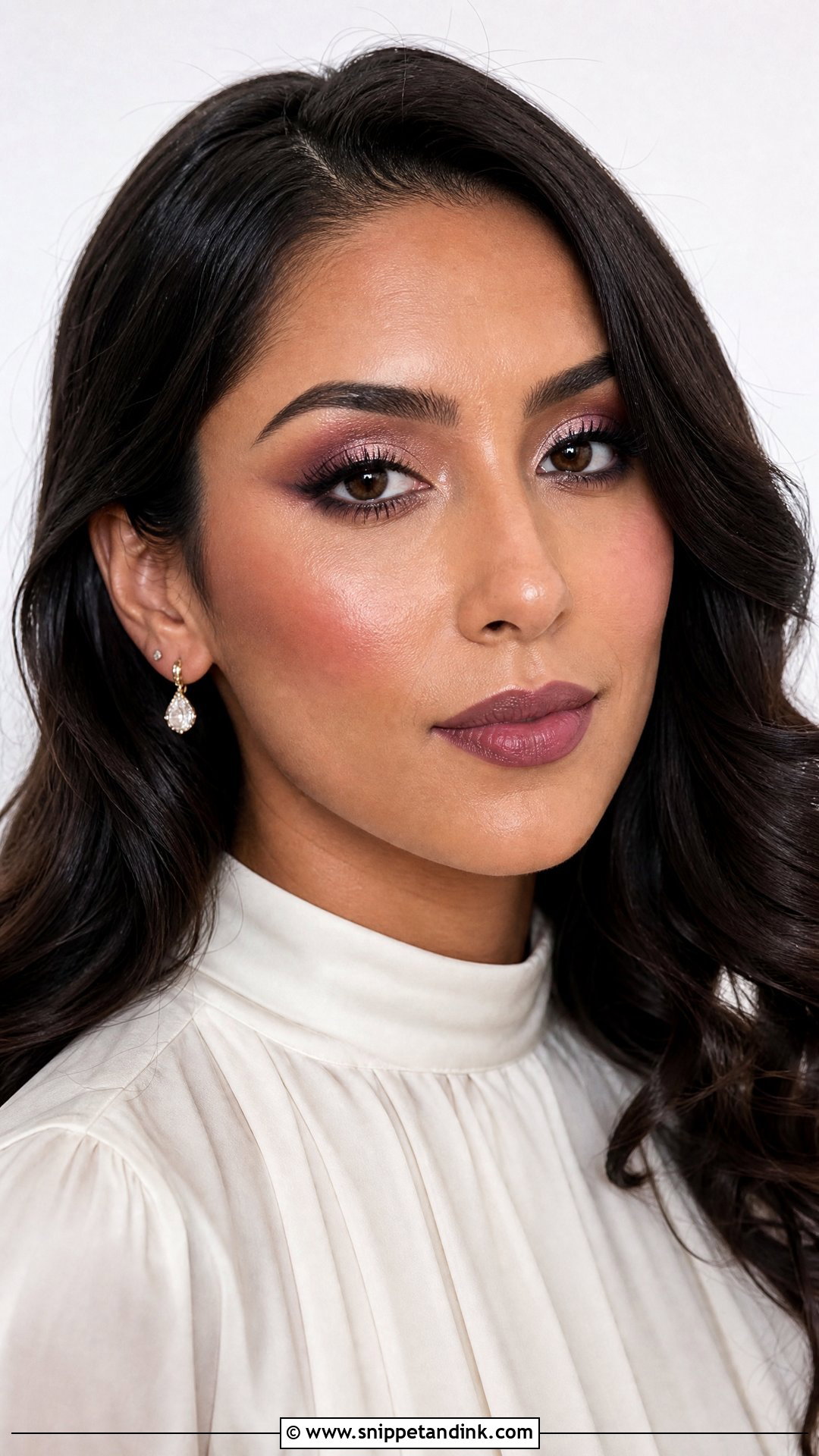
Plum brings out brown, green and hazel eyes because purple sits opposite their warm and golden flecks. I keep it on the outer corner and lower lash line rather than across the whole lid, with champagne or taupe shimmer in the center for brightness. Rose or berry blush goes on lightly. A nude mauve or pink-brown lip balances it. It suits evening weddings and cooler months, for brides who find classic neutrals too safe.
23. Black Winged Liner Wedding Makeup
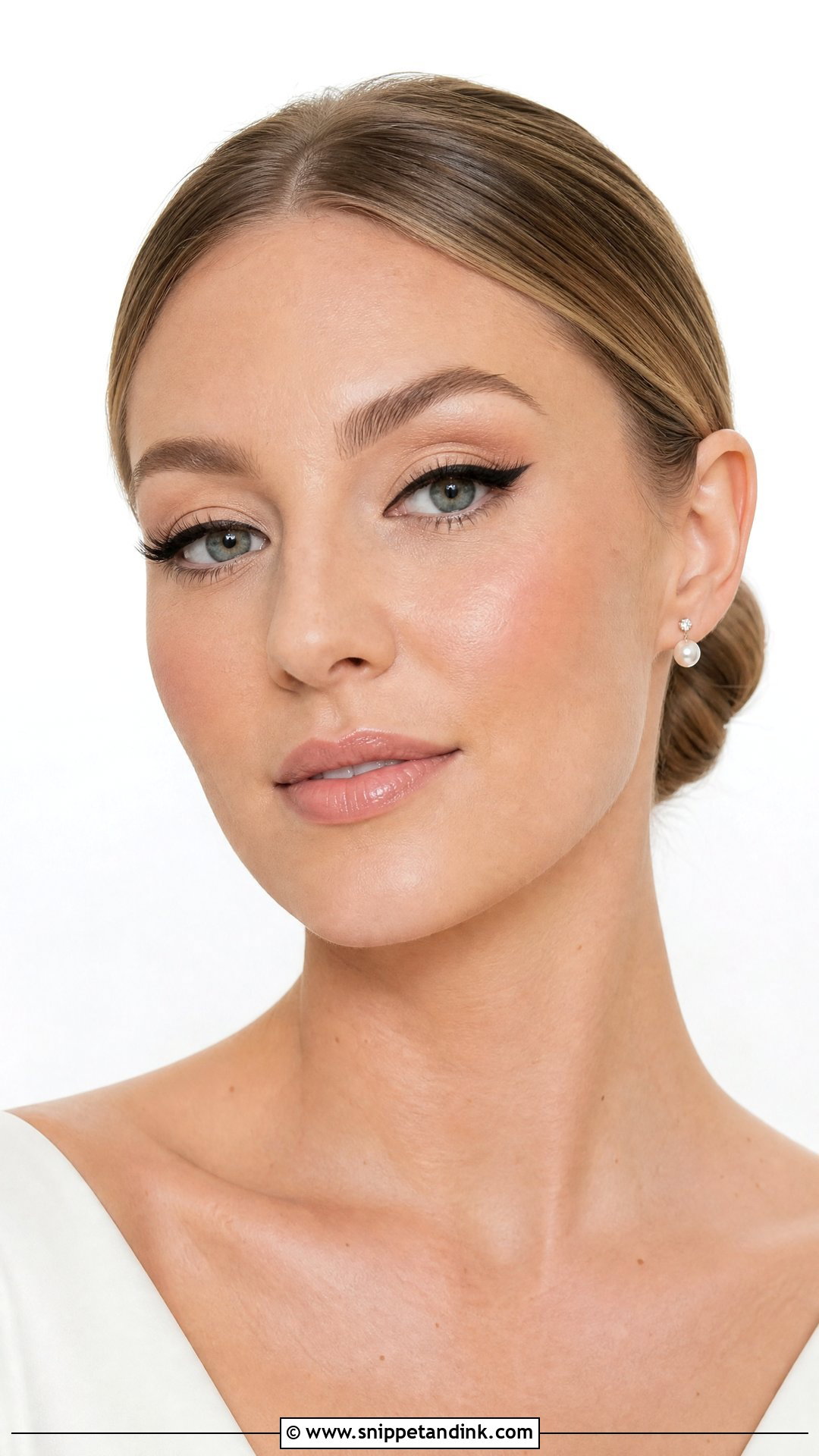
A black wing is all about shape, so we map it at the trial, not the morning of. On hooded or deep-set eyes I draw the wing with your eyes open, because a wing drawn on a closed lid folds and breaks once you look ahead. The lid stays simple in ivory or champagne so the line stays crisp, and half lashes at the outer corners extend it. Waterproof liner is non-negotiable. Smooth skin and a natural pink lip keep the whole face modern and clean.
24. Brown Liner Wedding Makeup
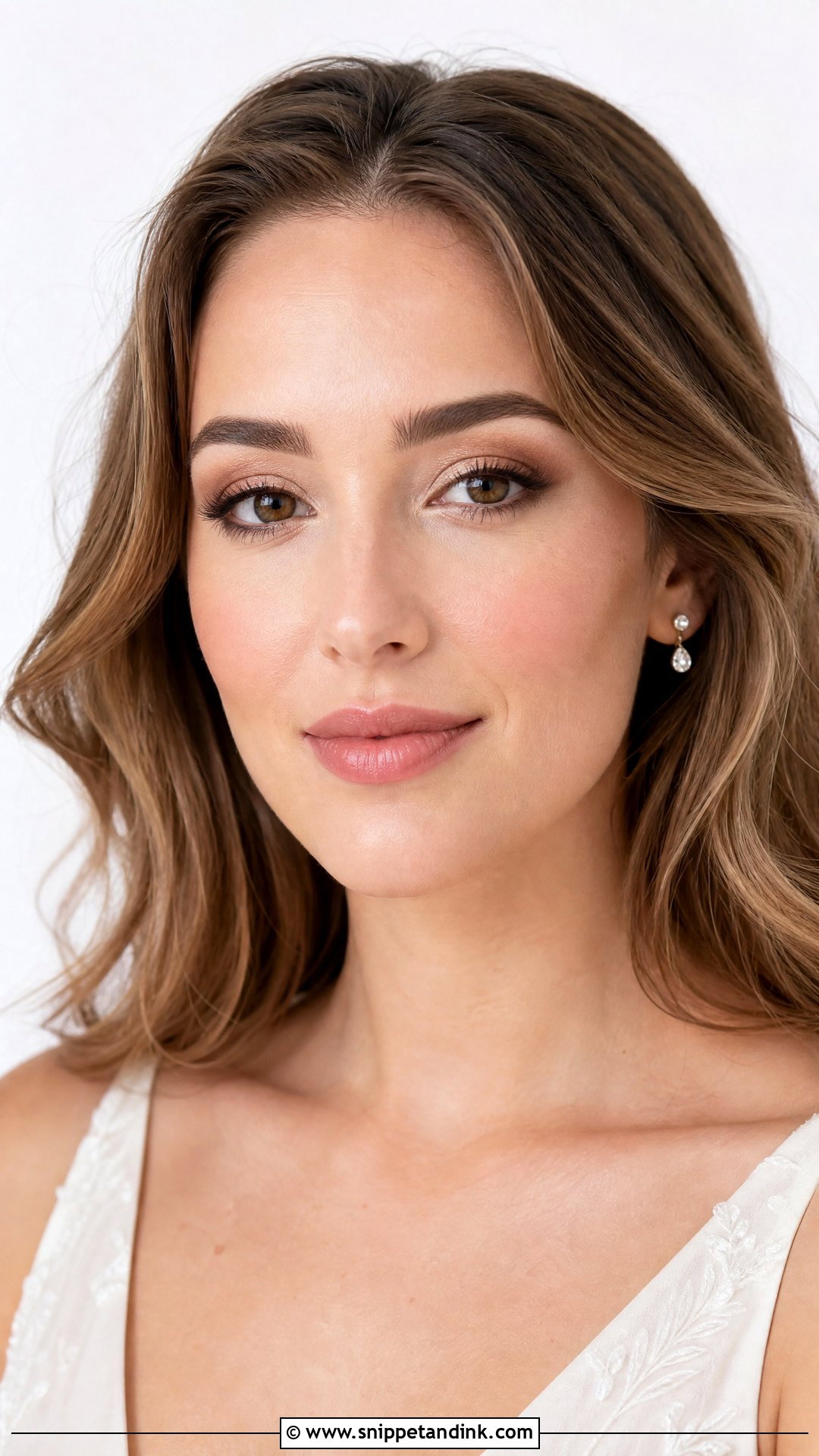
Brown liner gives definition without the hard edge of black. I’ll use a pencil, gel or even a damp brown shadow along the upper lashes, then smudge it slightly so it diffuses. Taupe, peach or soft bronze shadow sits well around it, with dewy or satin skin and a nude pink lip. Light and warm-toned features suit a mid brown; on tan and deep skin, an espresso brown gives enough contrast to show in photos. It’s simple and reliable for daytime.
25. No Makeup Wedding Makeup
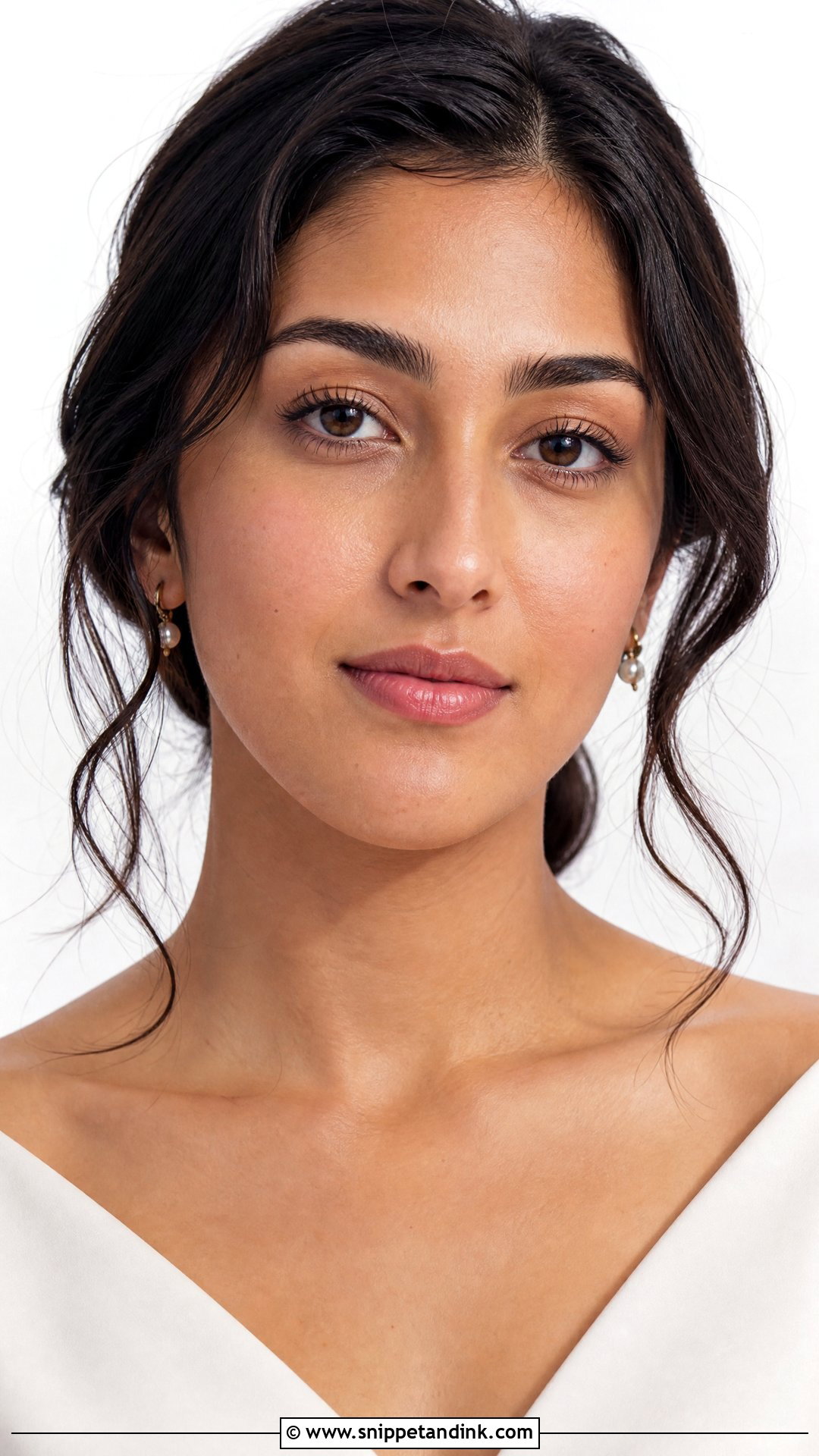
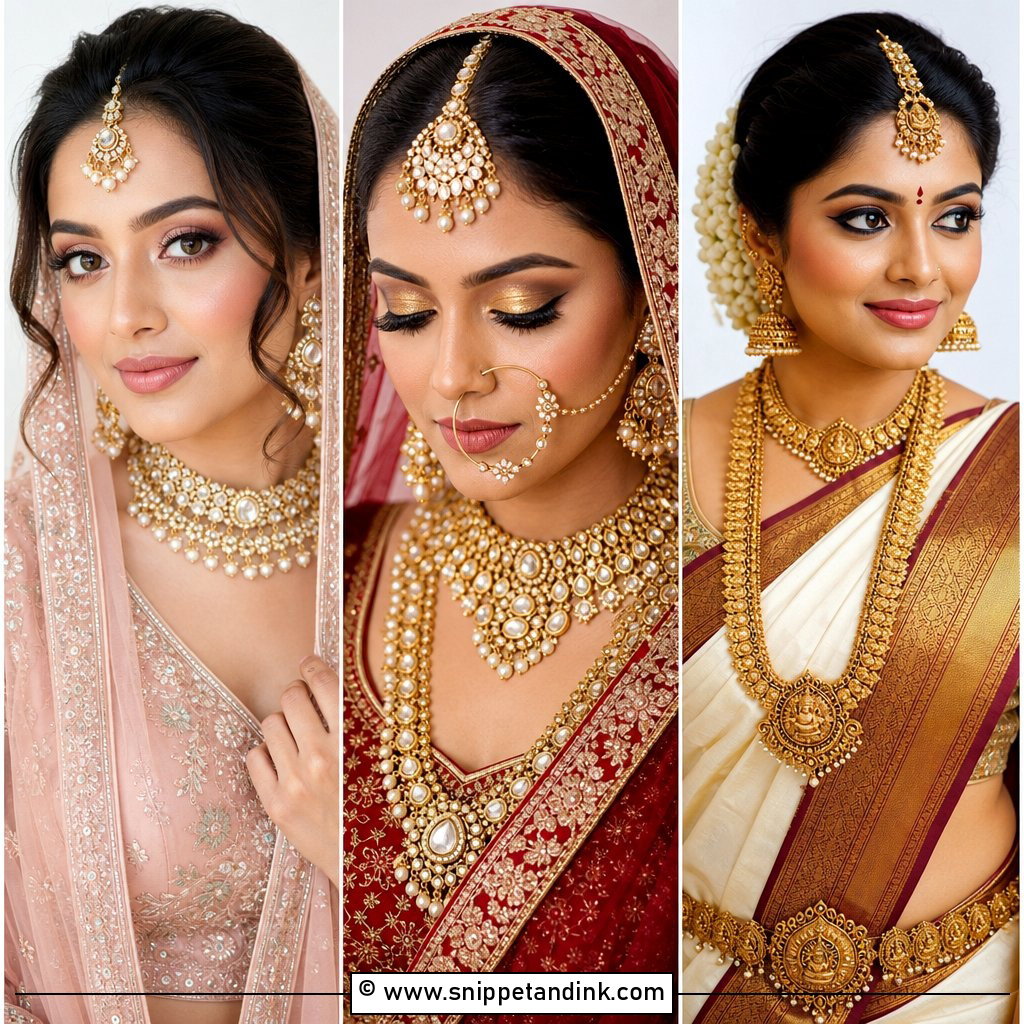
“No makeup” makeup is mostly correction you can’t see. A sheer foundation or tint, then concealer only on redness, darkness and blemishes. Cream blush, tinted brow gel, curled lashes and a thin coat of mascara. A lip balm or satin lipstick near your real lip color. I skip heavy powder, sharp contour and obvious shimmer entirely, because any one of them gives the game away. Brides who feel uncomfortable in full makeup usually relax the moment they see it.
26. Glass Skin Wedding Makeup
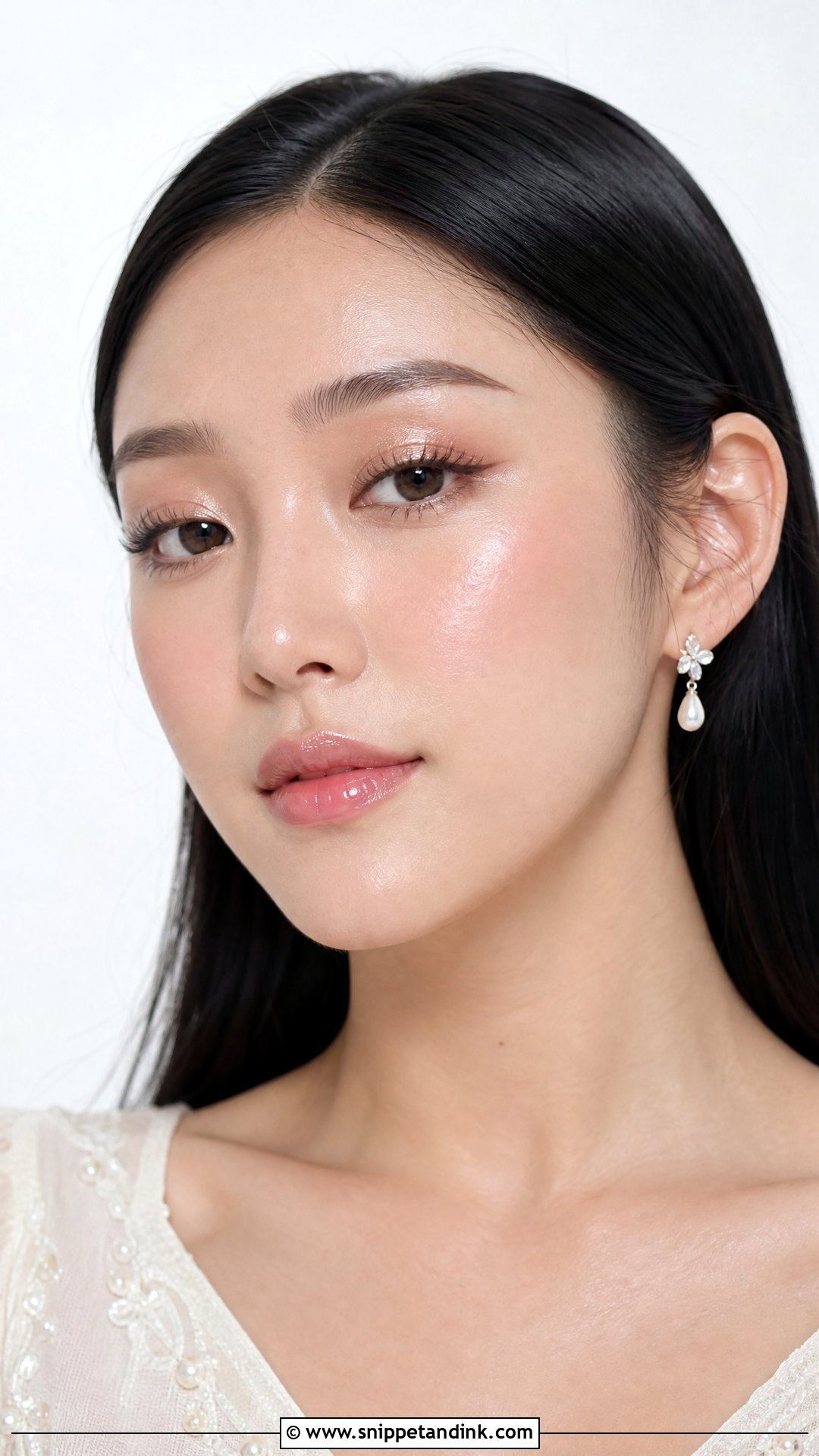
Glass skin is built in thin layers: moisturizer, a hydrating primer, then foundation only where you need coverage. Liquid highlighter goes on the cheekbones, brow bones and bridge of the nose, either under or over the base. Then I set only where you crease or get oily. Glossy beige or taupe on the lids, feathered brows, separated lashes and a sheer lip. If you have visible pores or texture on the cheeks, I’d steer you toward dewy instead, since this level of reflection shows every bump in a close-up.
27. Airbrush Wedding Makeup
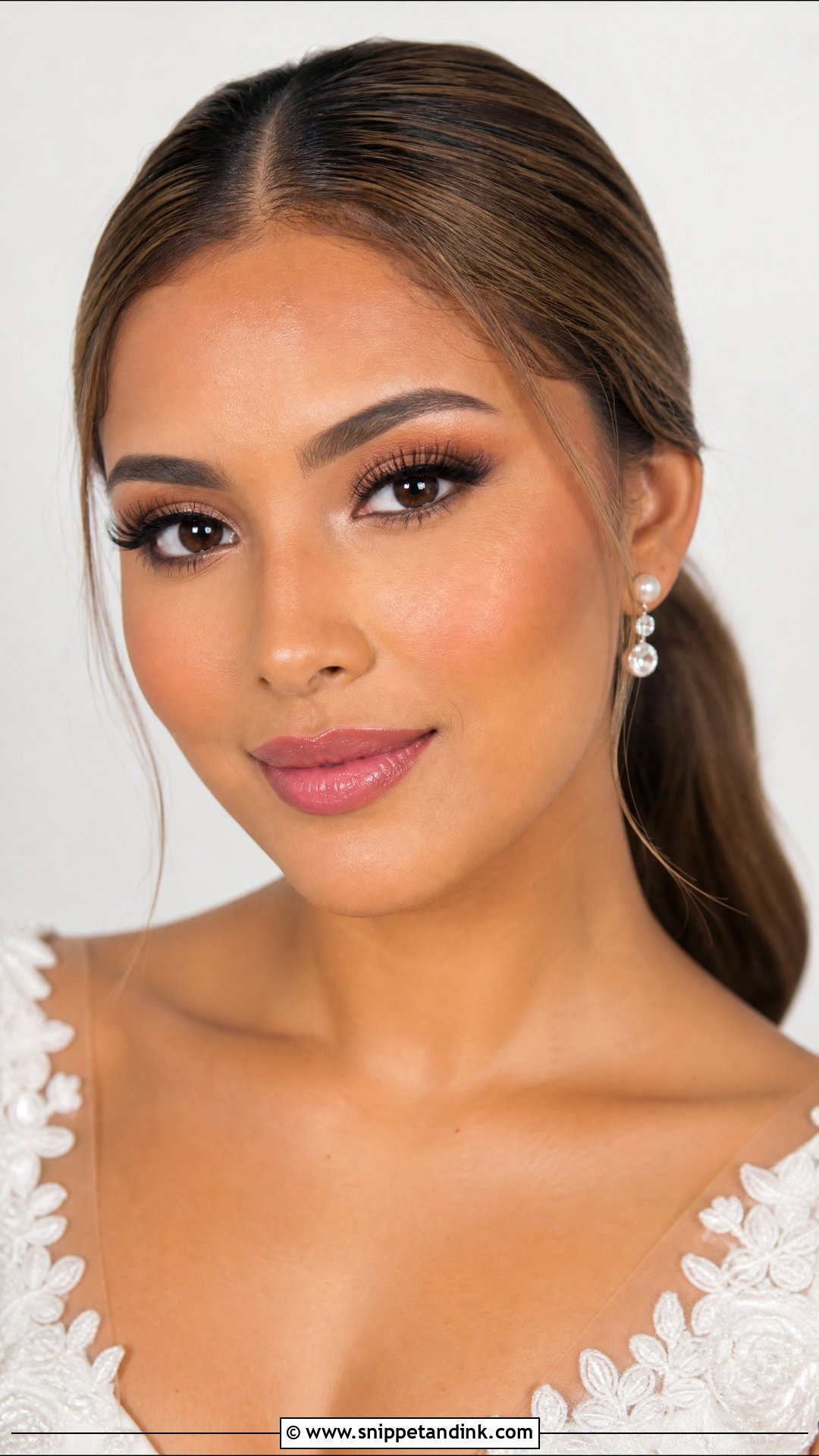
Airbrush gives a smooth, long-wearing finish that feels light on the skin, and the formula decides whether it lands natural, satin or matte. The catch is dry patches: the fine mist settles into flaky areas, so very dry skin needs serious hydration first or I’ll switch you to a brushed foundation. Pair airbrushed skin with softly defined eyes, waterproof mascara, a long-wear lip and a cream blush so the face doesn’t look flat. Long days and warm weather are where it earns its keep, but always test it at a trial.
28. Beach Wedding Makeup
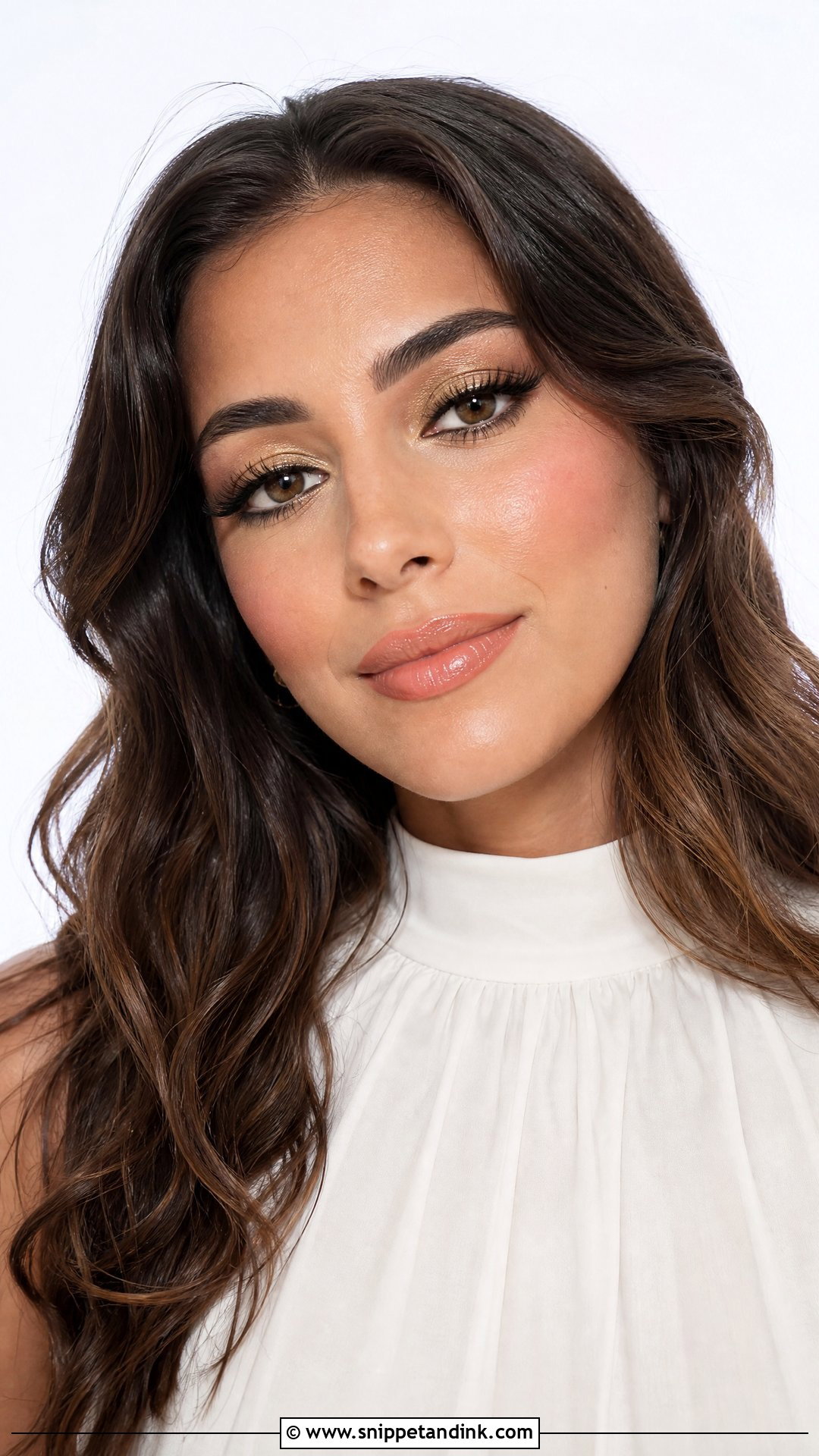
On a beach, wind and salt are the real enemies, more than sun. Sticky gloss collects hair and sand, so I go with a satin nude, coral or rose lip instead. Lightweight long-wear products, waterproof mascara and cream formulas that melt into skin hold up best. A bronzed complexion, peach blush, champagne shadow and soft brown liner give the sun-kissed effect. Set the T-zone lightly and keep blotting papers in a pocket, not a bag back at the hotel.
29. Summer Wedding Makeup
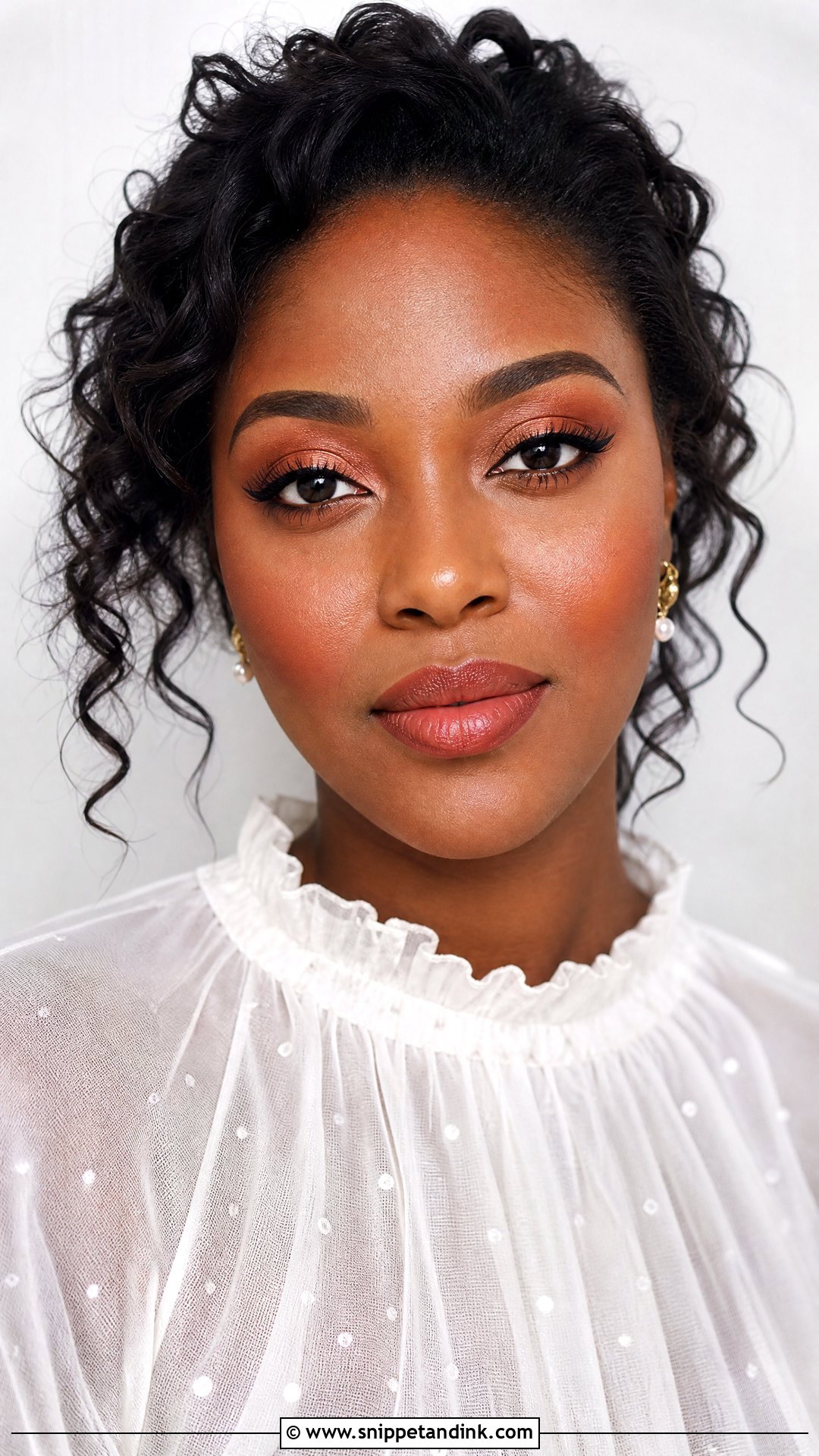
Heat breaks makeup down from the center of the face outward. I use a gripping primer, thin layers of foundation and powder pressed into the center of the face only, so the cheeks keep their glow while the nose and chin stay put. Warm blush and soft bronzer instead of heavy shimmer, bronze or peach on the eyes, and waterproof everything around the lashes. A peachy nude or coral lip adds brightness. Expect a blot after the ceremony even with the best prep.
30. Winter Wedding Makeup
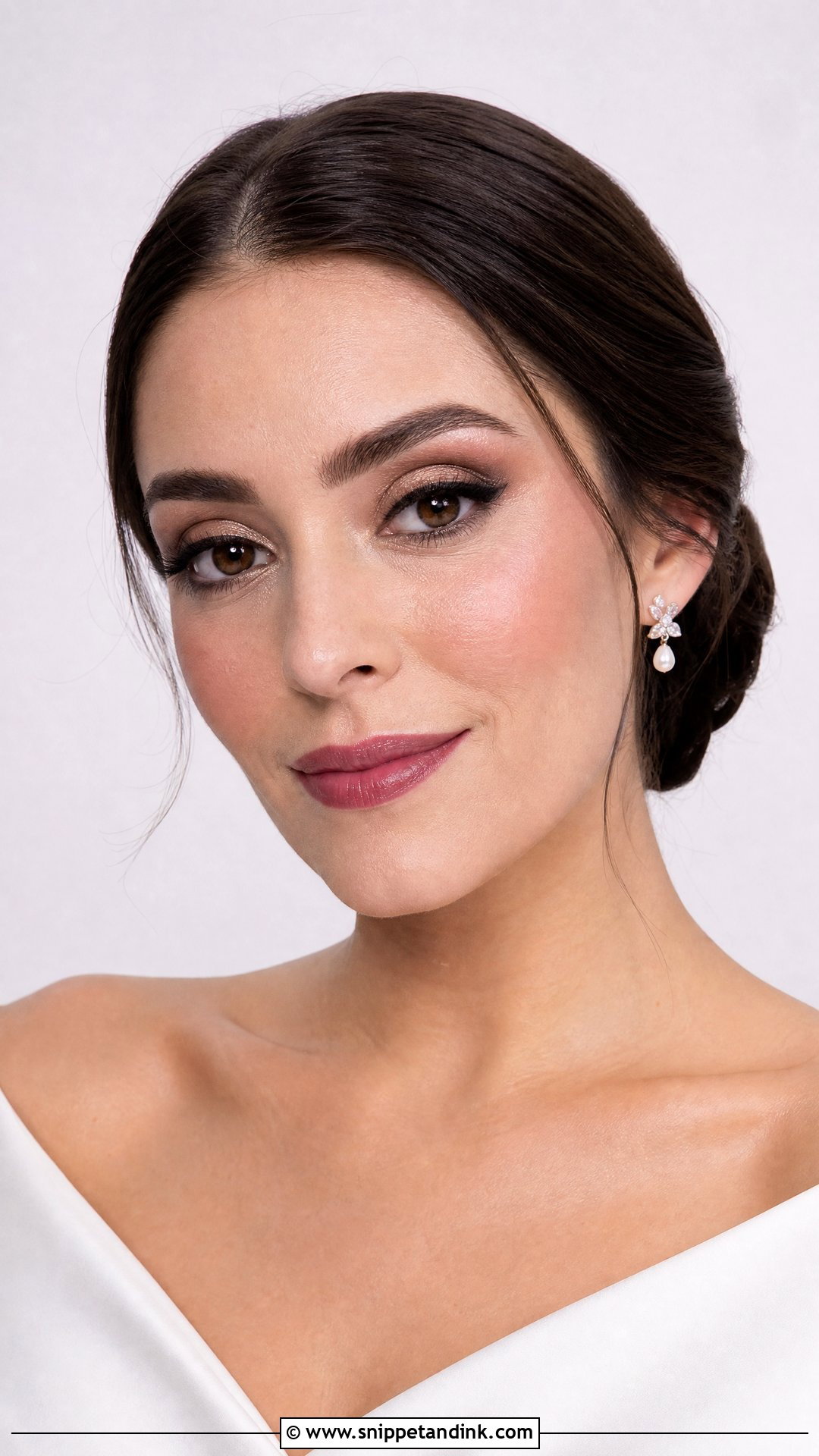
Winter lets me use a little more coverage, a deeper lip and stronger liner, since humidity isn’t the worry. Satin skin, mauve or berry blush, taupe shadow, espresso liner, and a berry or classic red lip all sit comfortably next to velvet and structured gowns. Highlight is where I hold back; on cool, pale skin too much looks icy rather than luminous. Indoor heating dries skin out fast, so I hydrate generously and keep powder away from the cheeks and mouth.
31. Spring Wedding Makeup
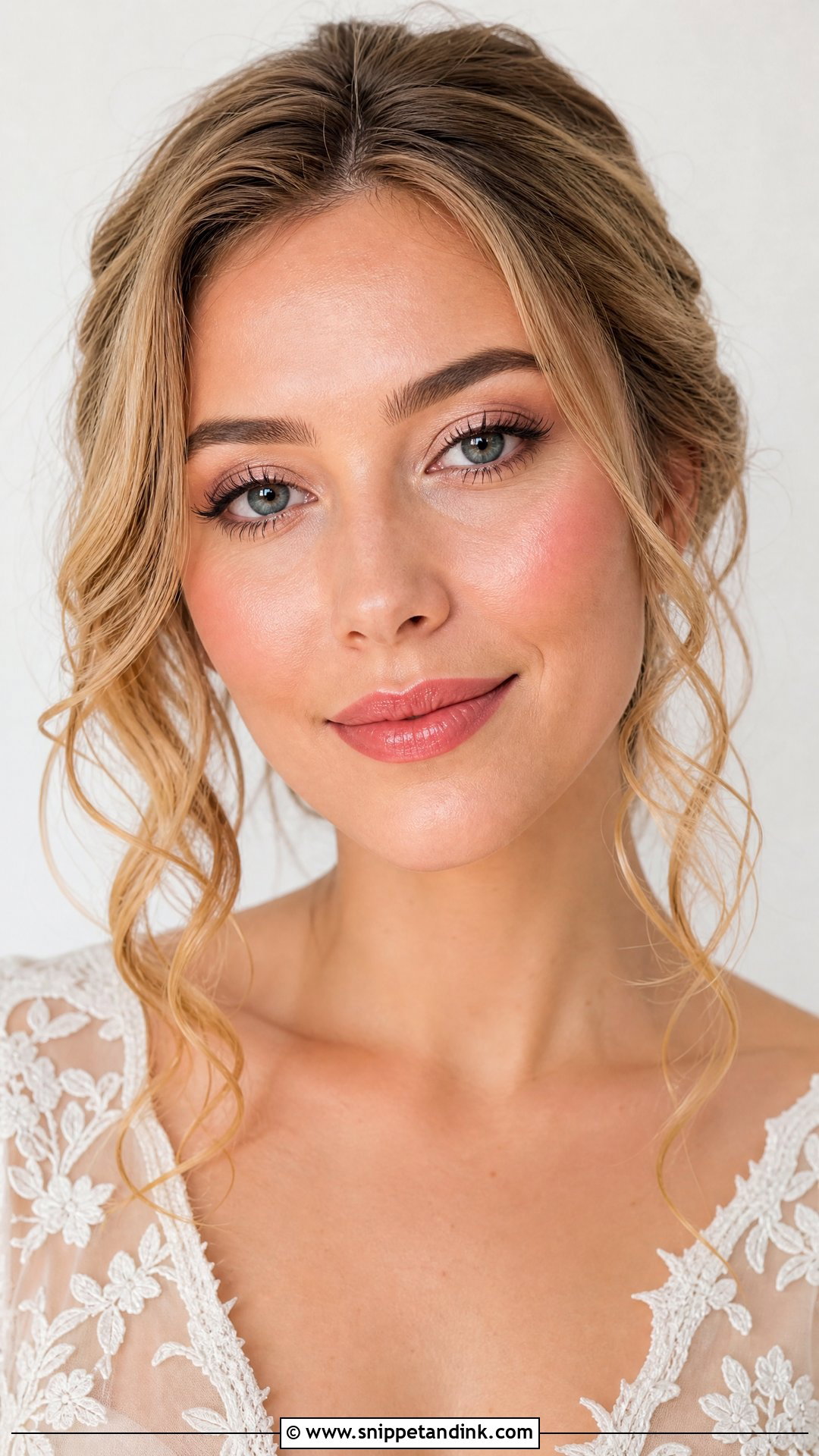
Spring palettes are pink, peach, a soft lilac-mauve and champagne, with sheer-to-medium coverage and a natural flush. Eyes can be as simple as a pastel shimmer, brown liner and wispy lashes; lips a pink nude or peach. Undertone decides the details: golden skin takes peach tones, fair or pink-based skin looks better in cooler rose. Pollen season is worth a mention, because itchy, watering eyes are common at outdoor spring ceremonies and waterproof mascara saves a lot of wiping.
32. Fall Wedding Makeup
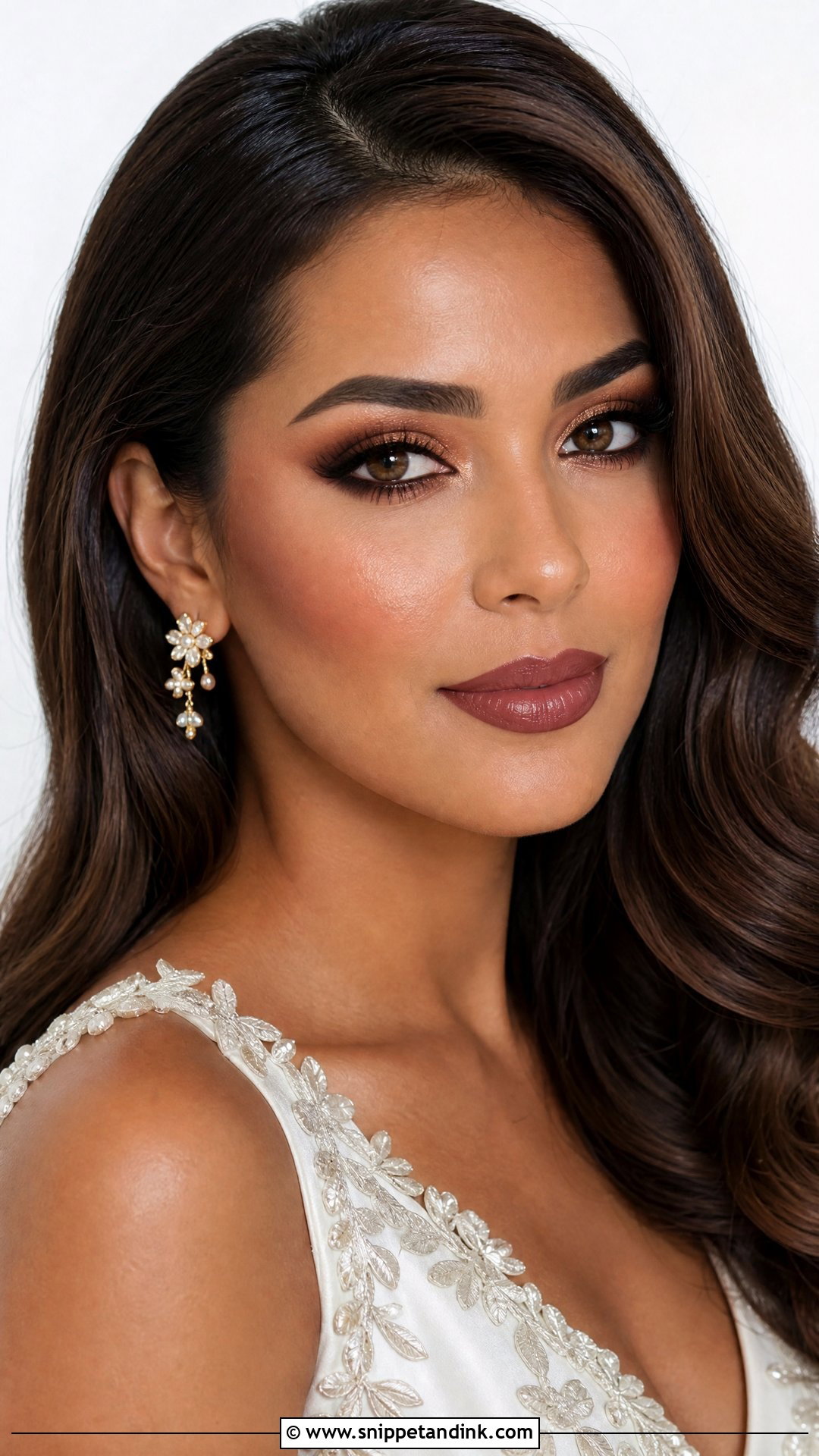
Fall makeup borrows the season’s colors: bronze eyes, terracotta blush, cocoa liner, and a nude brown or deep rose lip. A satin or softly matte complexion suits low autumn light. The thing I watch is how many warm tones end up stacked together, because bronzer, terracotta blush and a brown lip blended carelessly turn muddy fast. A copper shimmer on the lid gives depth. It’s richer than spring and calmer than evening glam.
33. Wedding Makeup For Brown Eyes
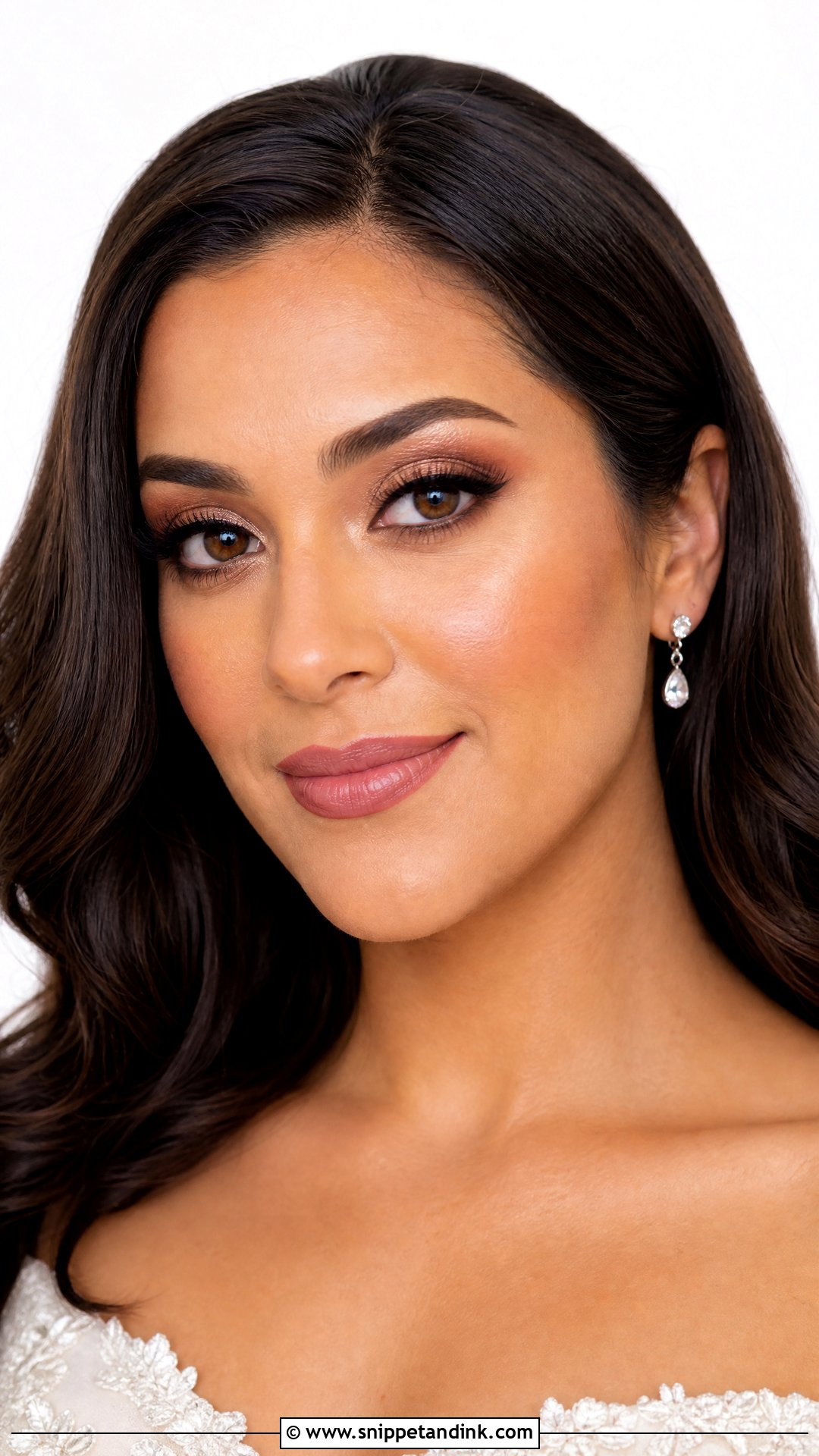
Wedding makeup for brown eyes is the easiest brief I get, because almost every shade works: bronze, gold, plum, olive, copper, soft pink. My classic build is bronze shimmer on the lid, chocolate brown in the crease and black-brown liner tight to the lashes, with lifted lashes to open the eye. Peach or rose blush and a nude rose or caramel lip suit most skin tones. Very dark brown eyes can look almost black in photos, so a touch of gold in the center of the lid helps show their warmth.
34. Wedding Makeup For Blue Eyes
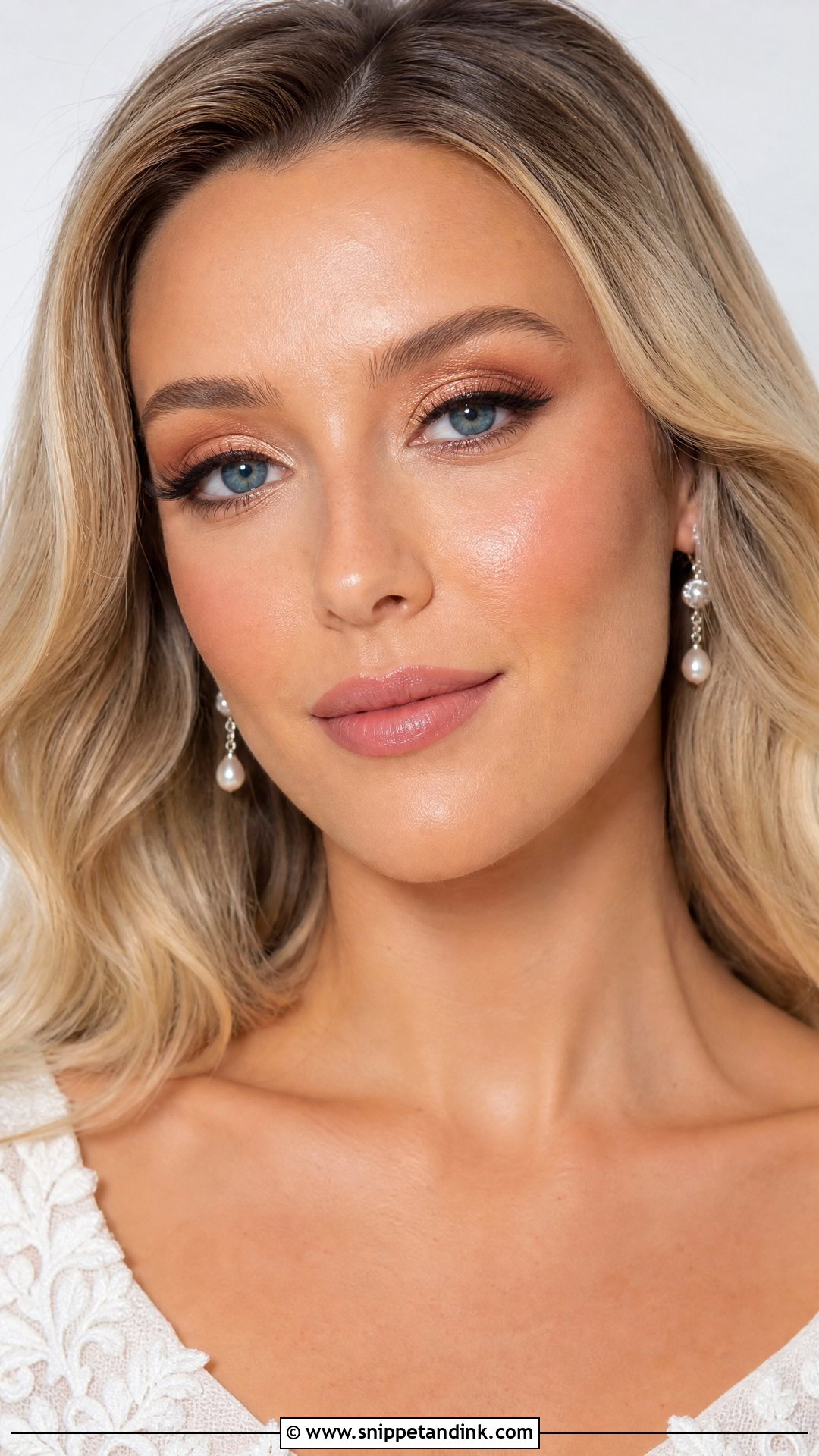
Blue eyes brighten against warm neutrals like copper, peach and warm brown, because those sit opposite blue on the color wheel. Matching blue shadow to blue eyes tends to dull them. A thin brown or black-brown liner gives definition without closing the eye, and peach blush with a soft pink or nude lip keeps the face balanced. Lash intensity and shadow depth take it anywhere from natural to soft glam. Fair to medium skin wears it easily, and deeper skin can shift the shadows a shade richer.
35. Wedding Makeup For Green Eyes
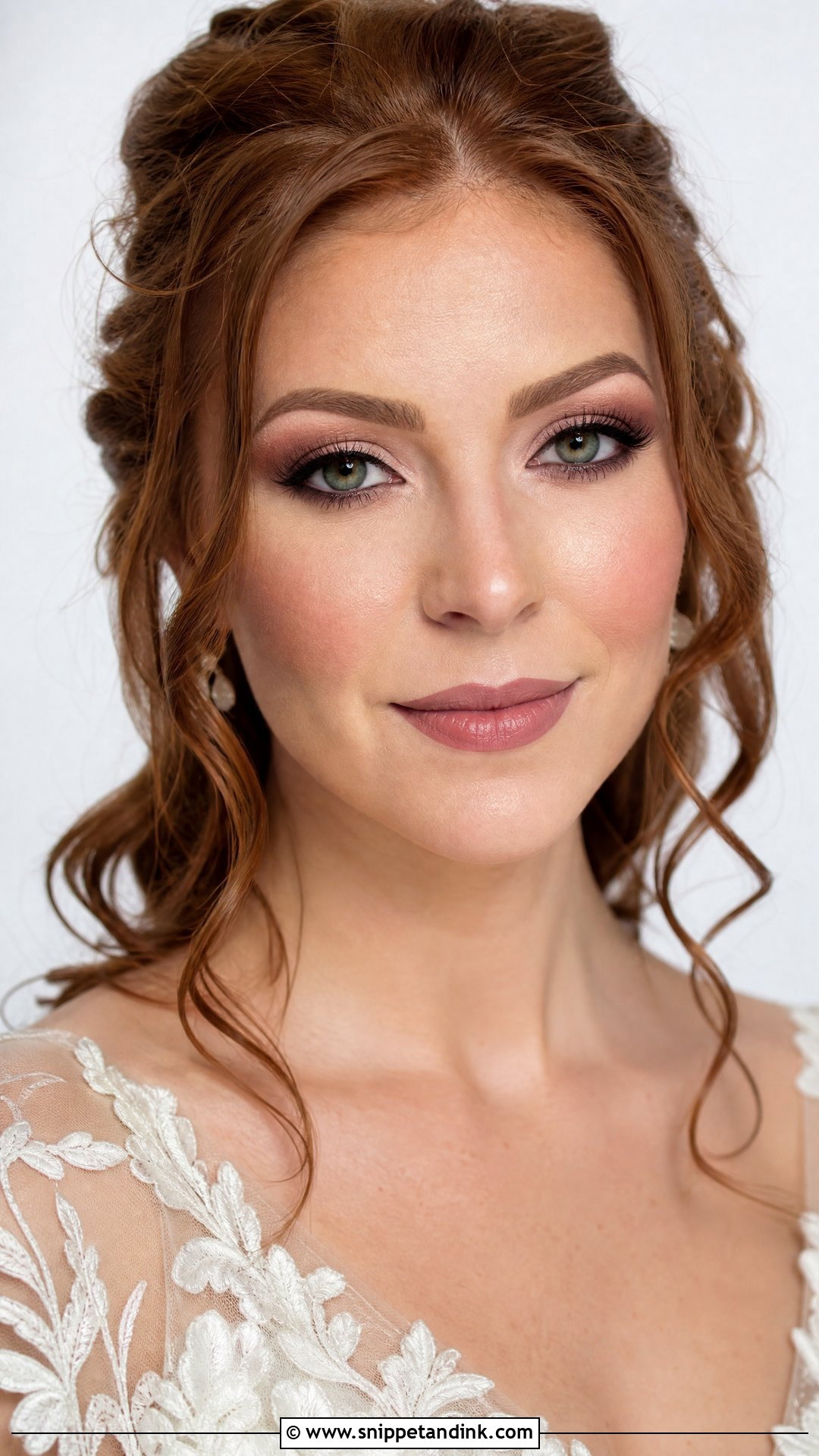
Wedding makeup for green eyes works with the reds hiding in rose, mauve, plum and copper, which push green forward in photos. I put soft mauve in the crease, champagne shimmer on the lid and a plum-brown liner close to the lashes. Rose or peach blush keeps the skin fresh, with a nude mauve or pink-brown lip. Heavy black shadow tends to swallow green eyes unless you’re going for a full evening look.
How a Bridal Face Holds Up From Vows to the Last Dance
Every look above changes over a wedding day. Skin warms up, oil comes through, you cry during the vows and you kiss a lot of cheeks. Planning for that is part of the job, and it starts with a few habits that make any of these looks last.
Flash, SPF and the White Cast
Some powders and sunscreens bounce flash light back at the camera, which leaves white patches under the eyes or a pale face against a darker neck in reception photos. I avoid heavy setting powders and high-SPF foundations on wedding skin for that reason. Wear your sunscreen during the day as usual, but tell your artist, and ask for a flash photo at the trial so you can see the result before it matters.
Tears and Touch-Ups
Waterproof mascara and liner on the lower lash line make crying a non-event. For the rest of the day, a small kit tucked with a bridesmaid covers almost everything:
- Your exact lipstick and liner, since the lip fades first, usually after the meal
- Blotting papers, which lift oil without adding layers of powder
- A cotton bud for smudges under the eye
- A tiny pot of concealer if you tend to get redness around the nose
I’d plan one real touch-up, right before evening portraits or the first dance. Adding powder every hour is what turns a fresh face cakey by nightfall, so blot first and powder only if you still need it.
Wear Your Shortlist for an Afternoon at Home
No single rule makes a face bridal. Natural, matte, dewy, smoky, vintage or a bold lip can all work once the balance is right for your features, your dress and how much makeup you’re comfortable feeling on your skin. Narrow it to two looks, then try them at the trial and take flash photos, check wear time and note what needs touching up. Bring inspiration pictures, but be willing to let your artist adjust shades for your undertone. By the end of the night, you should still recognize yourself in the mirror.
You'll Like These Ideas:


Leave a Reply