
An engagement is a different job for hair than the wedding itself. There’s usually no veil to anchor, the outfit is often heavier or more colourful, and the event can run from an afternoon ring ceremony straight into a dinner with a hundred relatives hugging you. Bridal engagement hairstyles right now lean softer and more wearable than full wedding hair, which suits that kind of day. I’ve written notes on each style below from the chair side: what it needs from your hair, where it tends to fail, and who I’d quietly talk out of it.
An Engagement Outfit Changes What Your Hair Can Do
At most engagement consultations I ask about the outfit before I look at a single photo. A heavily embroidered lehenga with a dupatta pinned to the head rules out high ponytails and most volume at the crown. A strapless cocktail dress leaves the neck bare, so a low bun can feel plain unless the crown has height. A suit or a high-neck top usually needs the hair away from the collar or it bunches up the moment you sit down.
Then I ask how long the event runs. A ninety-minute photo shoot and a seven-hour family celebration are not the same job. Loose curls are fine for the first. For the second, I’d pin at least part of the hair, because heat, hugging and leaning in for selfies all work against curls left fully down.
Questions I ask before picking a style
- Will anything sit on or attach to your head, such as a dupatta, a headpiece or a floral pin?
- Is the event indoors with air conditioning or outside in the sun?
- Will you change outfits? A style that suits both saves time.
- Does your curl hold, or does it fall out within an hour of curling?
- Who’s styling, a professional, a friend, or you?
Your answers usually cut the list below down to three or four realistic options, which makes the trial far more useful.
1. Bridal Engagement Low Bun
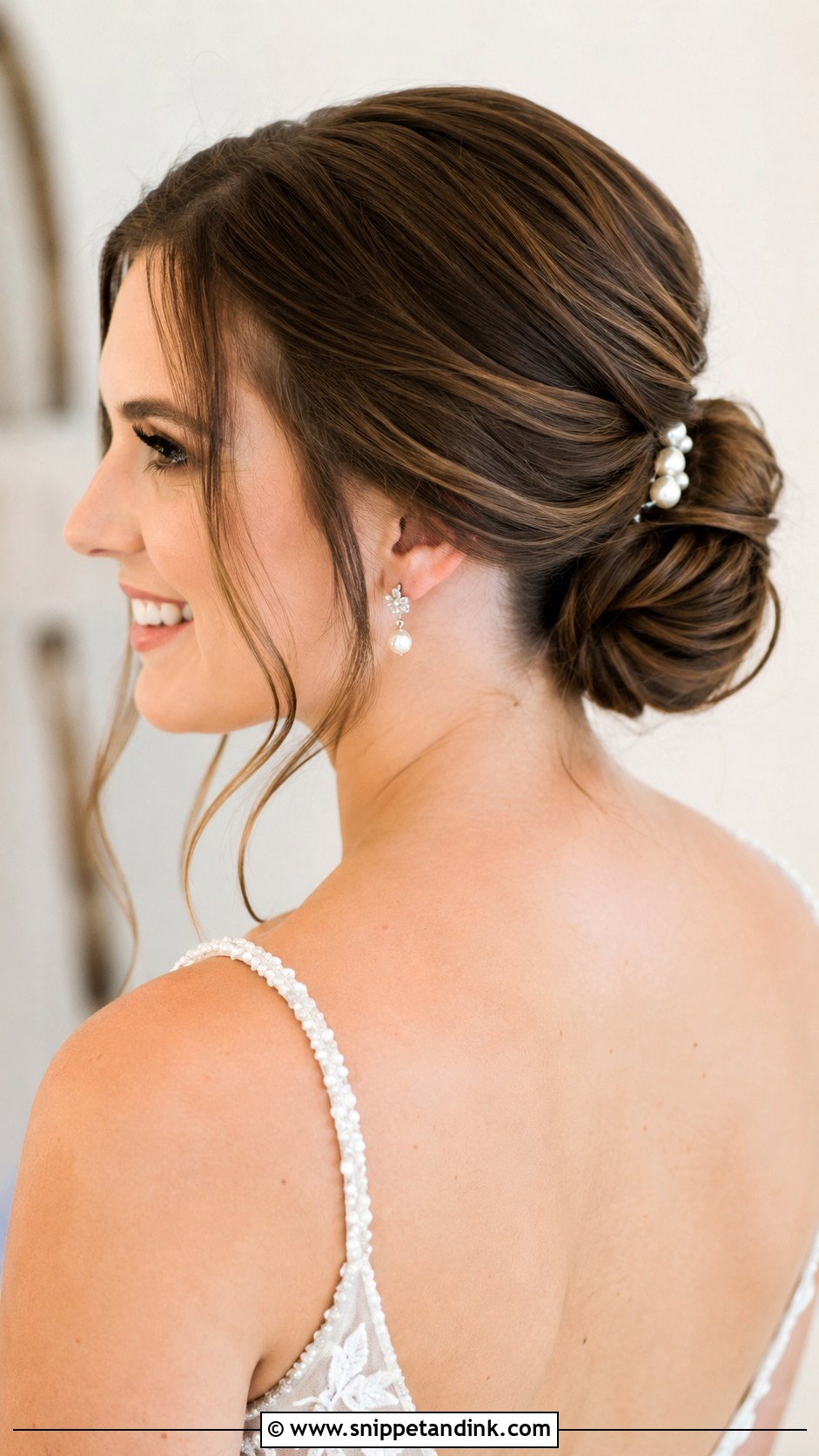
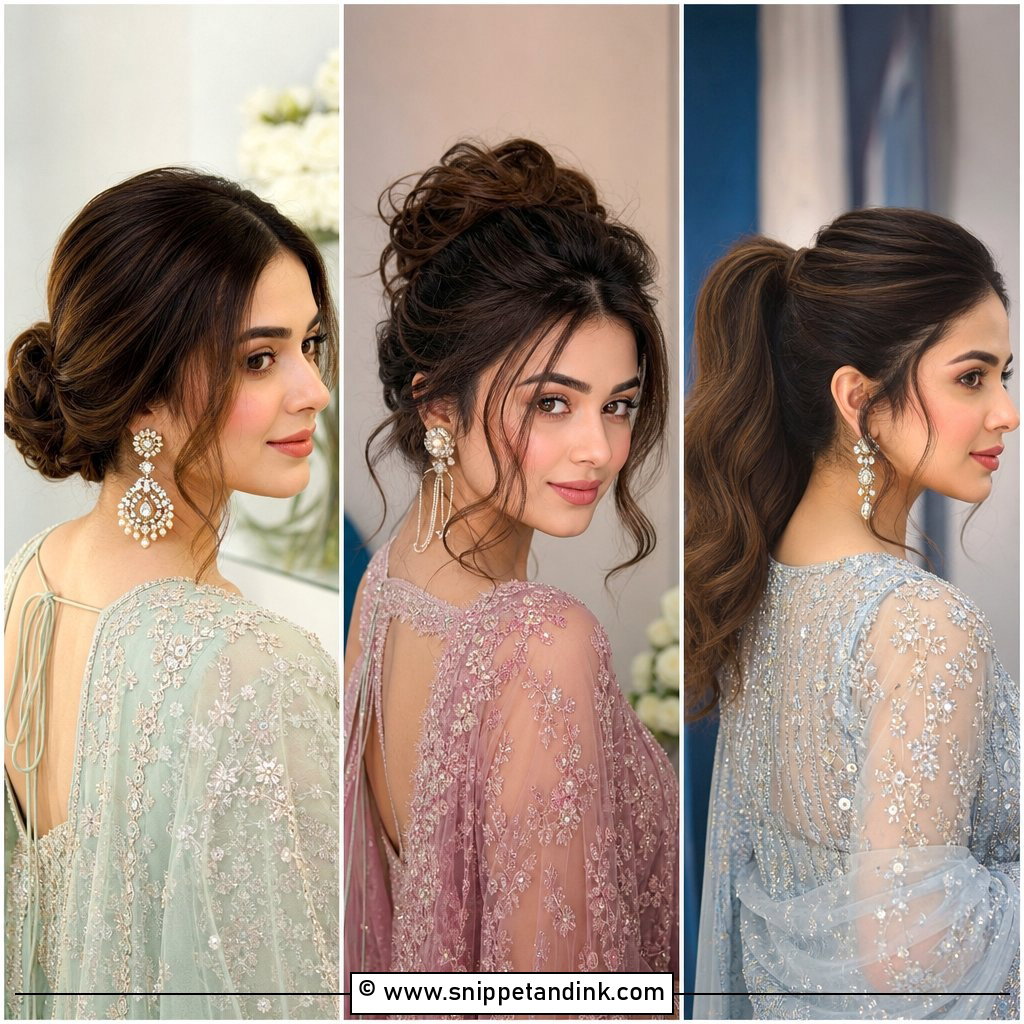
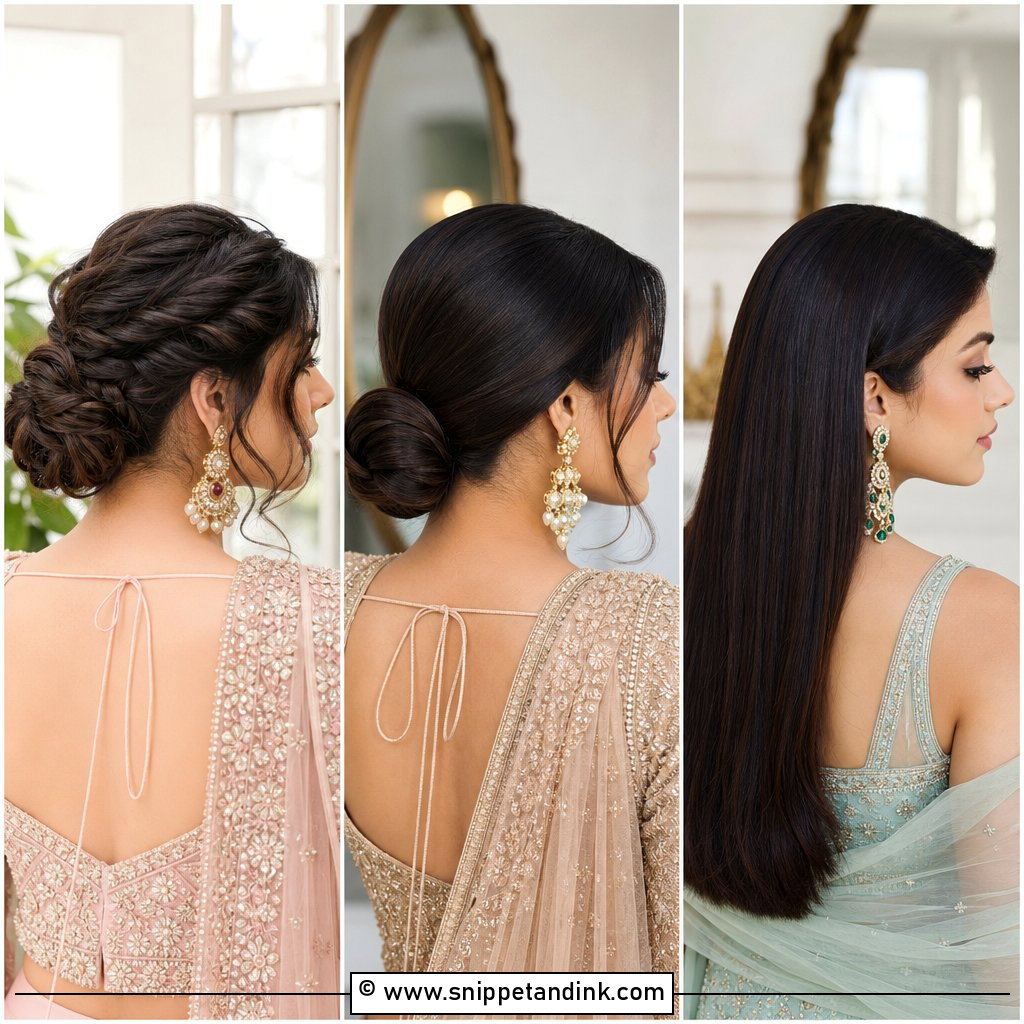
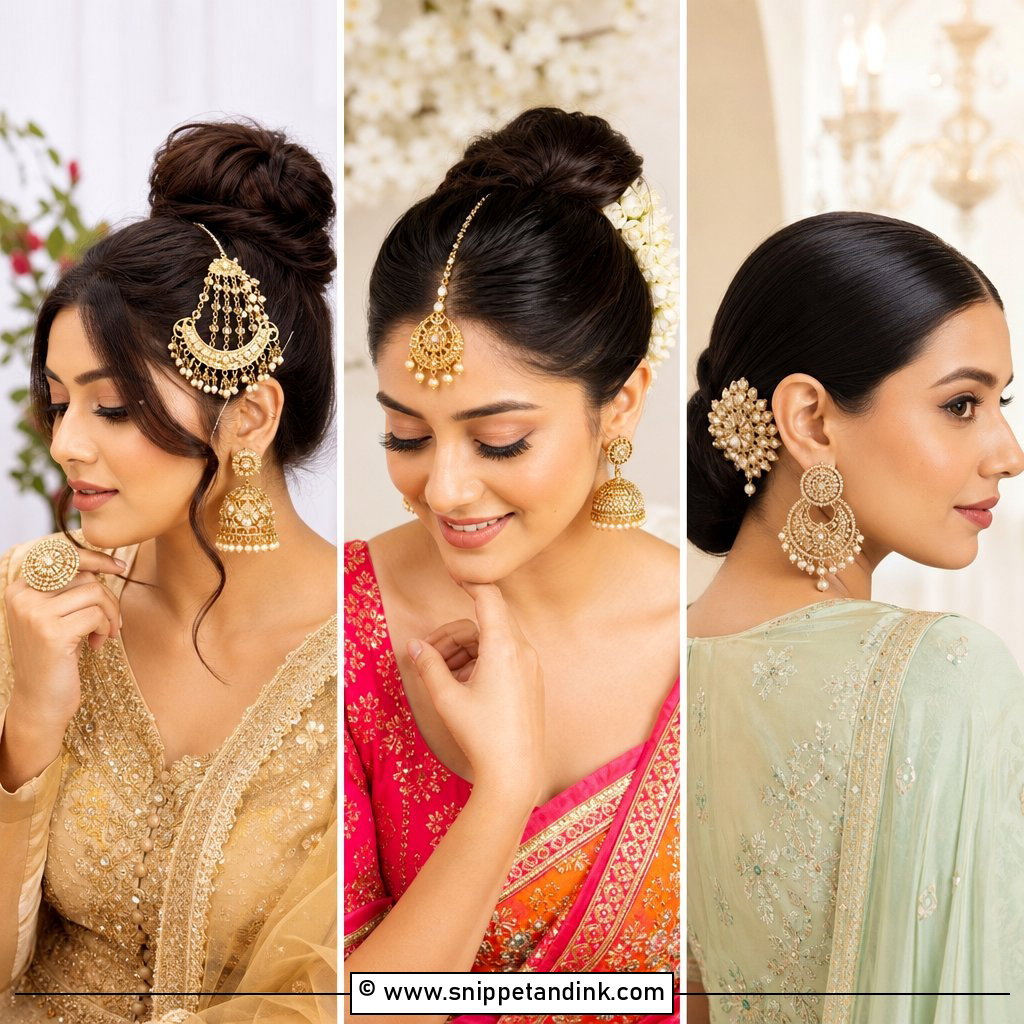
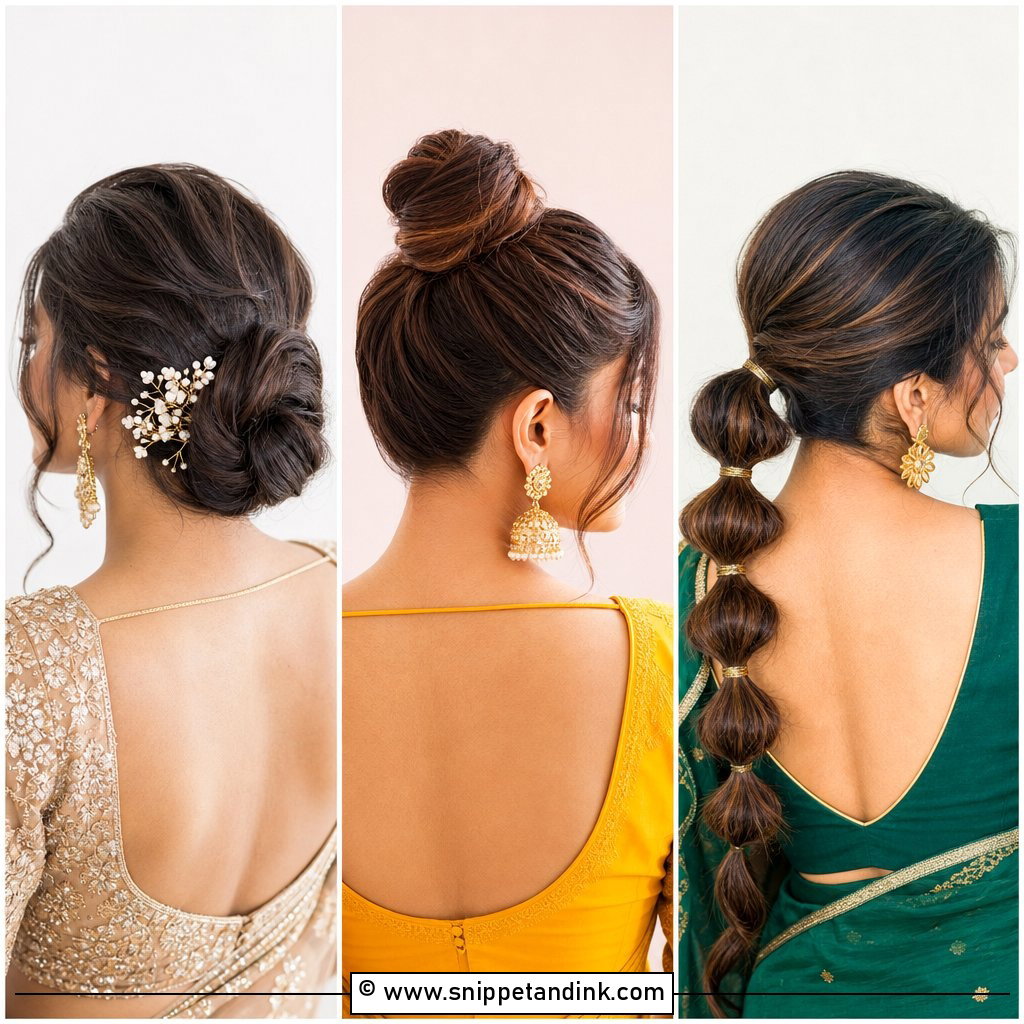
I reach for a low bun more than anything else on engagement days, because it sits below where dupattas, hoods and shawls rest and it doesn’t fight a heavy neckline. The bun itself is rarely the problem. The crown is. A flat crown makes the whole head look small in photos, so I backcomb the root lightly before I brush the surface smooth. If you’re shooting outdoors in humidity, this is the safest style on the list, as long as the bun is built on a secure base and not just twisted and pinned.
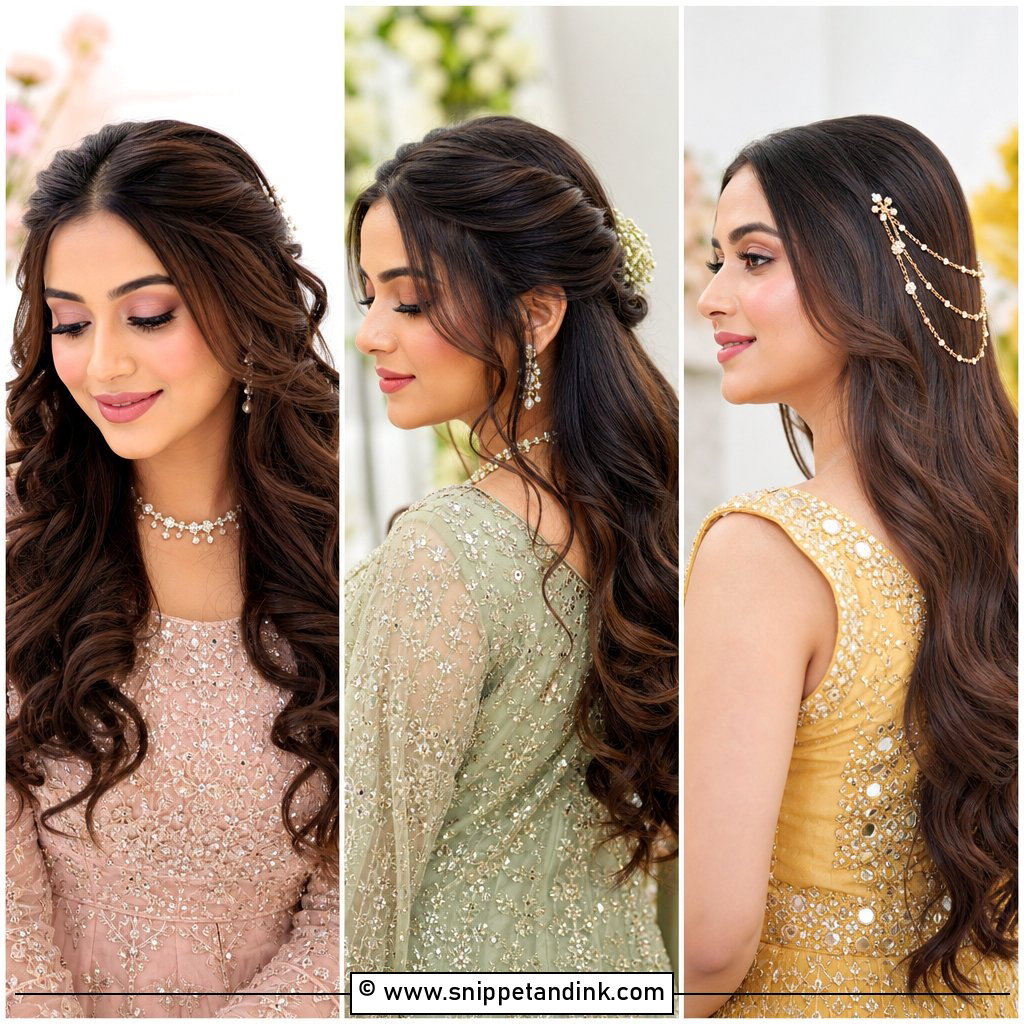
2. Bridal Engagement Half Up Half Down Hair
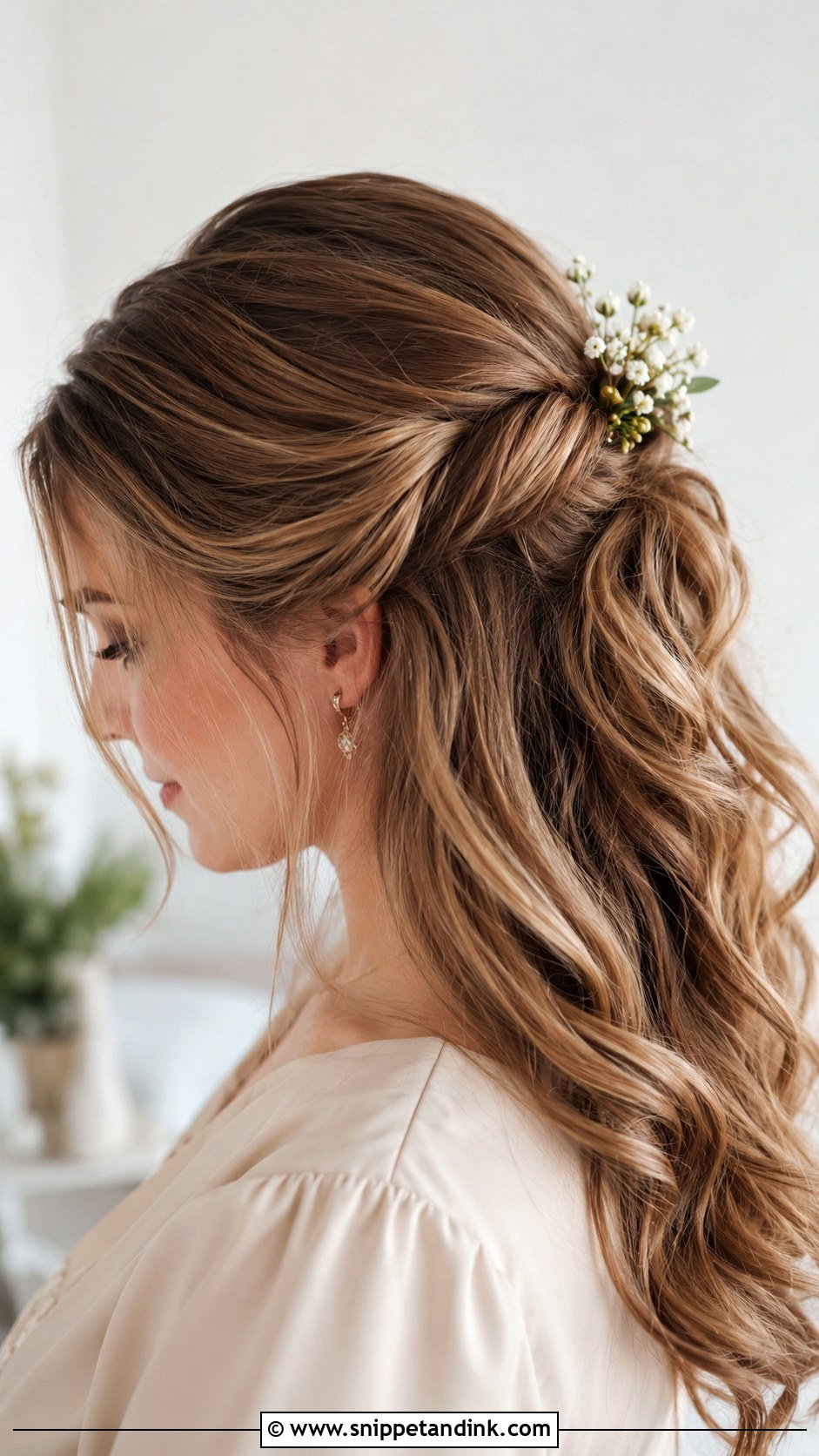
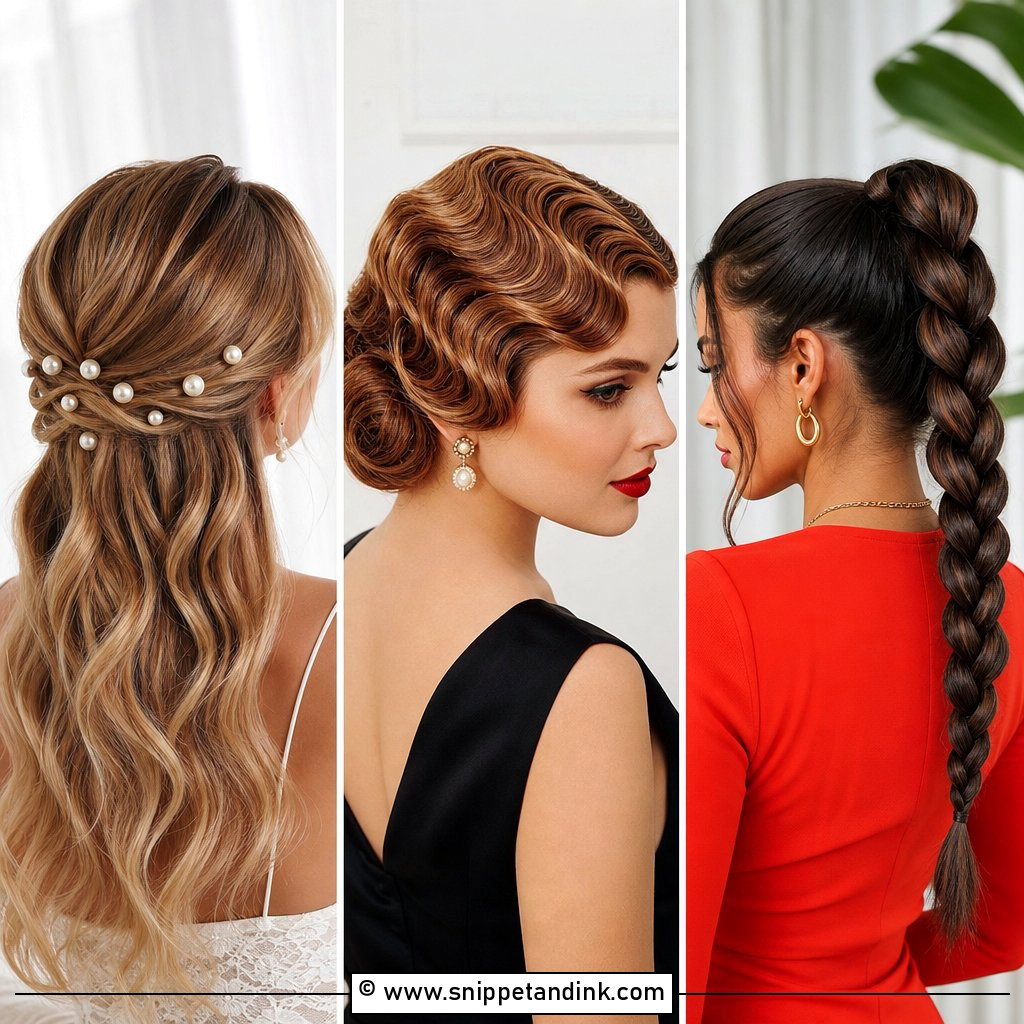
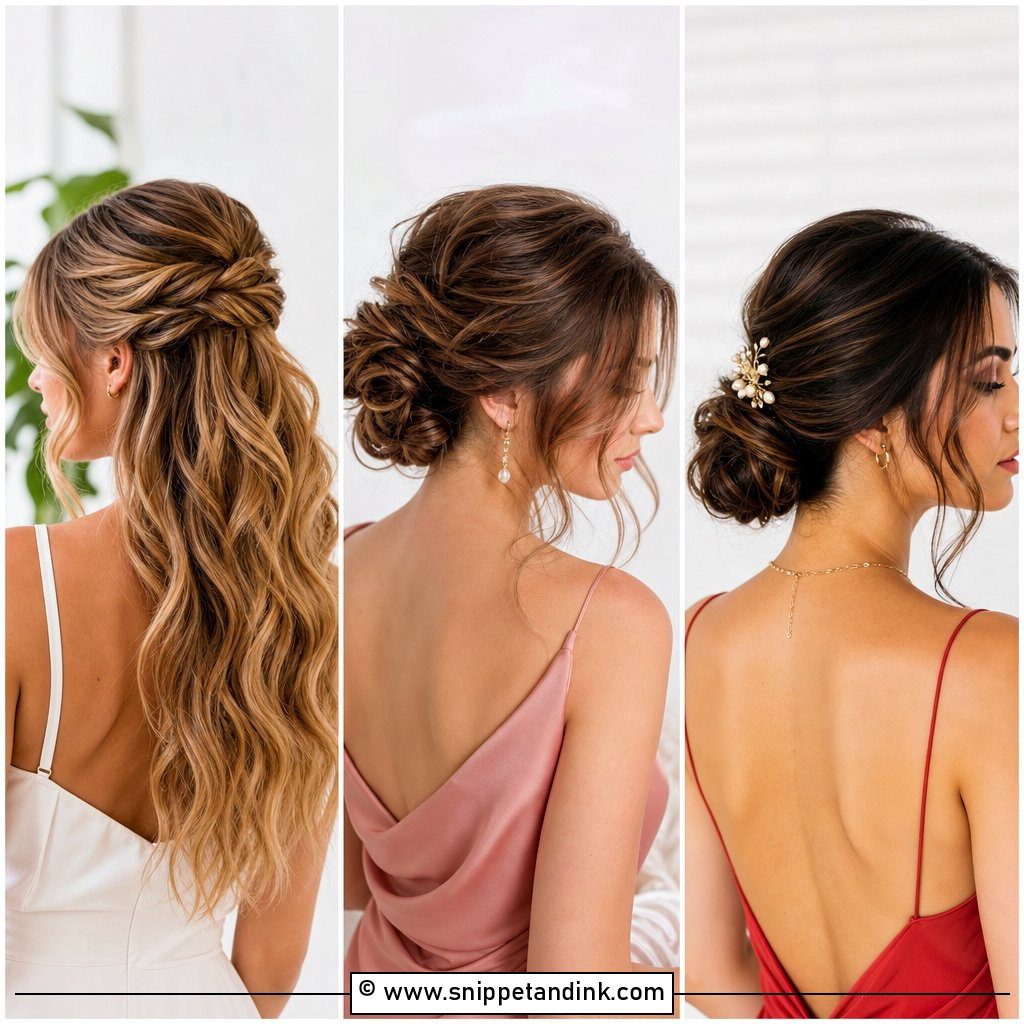
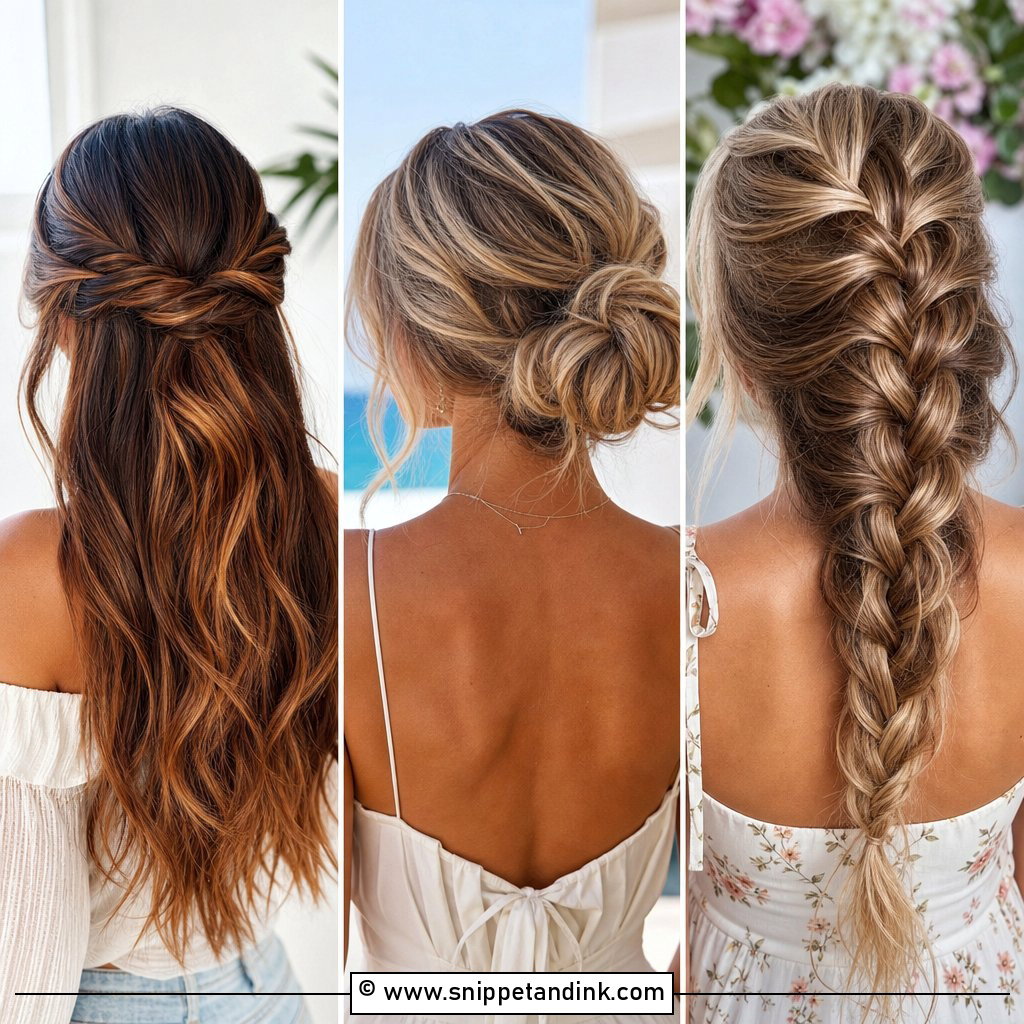
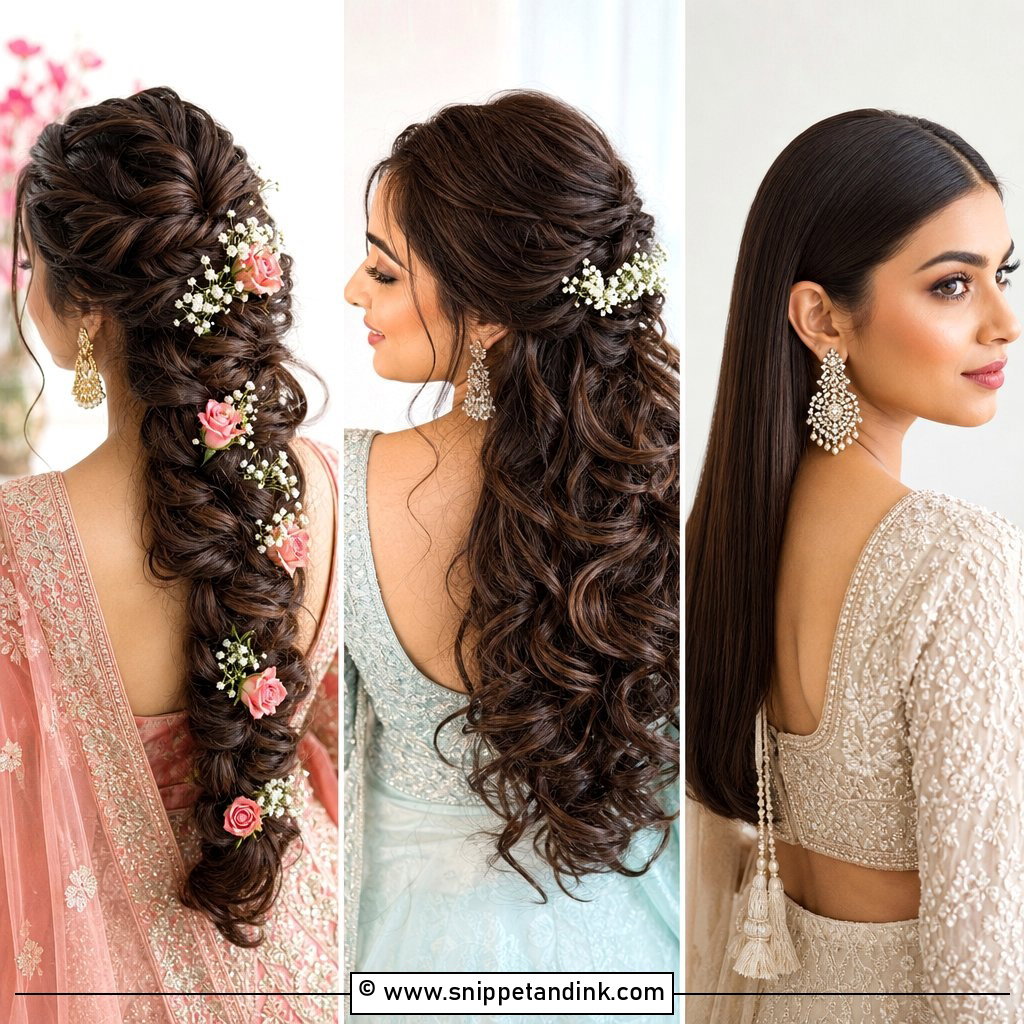
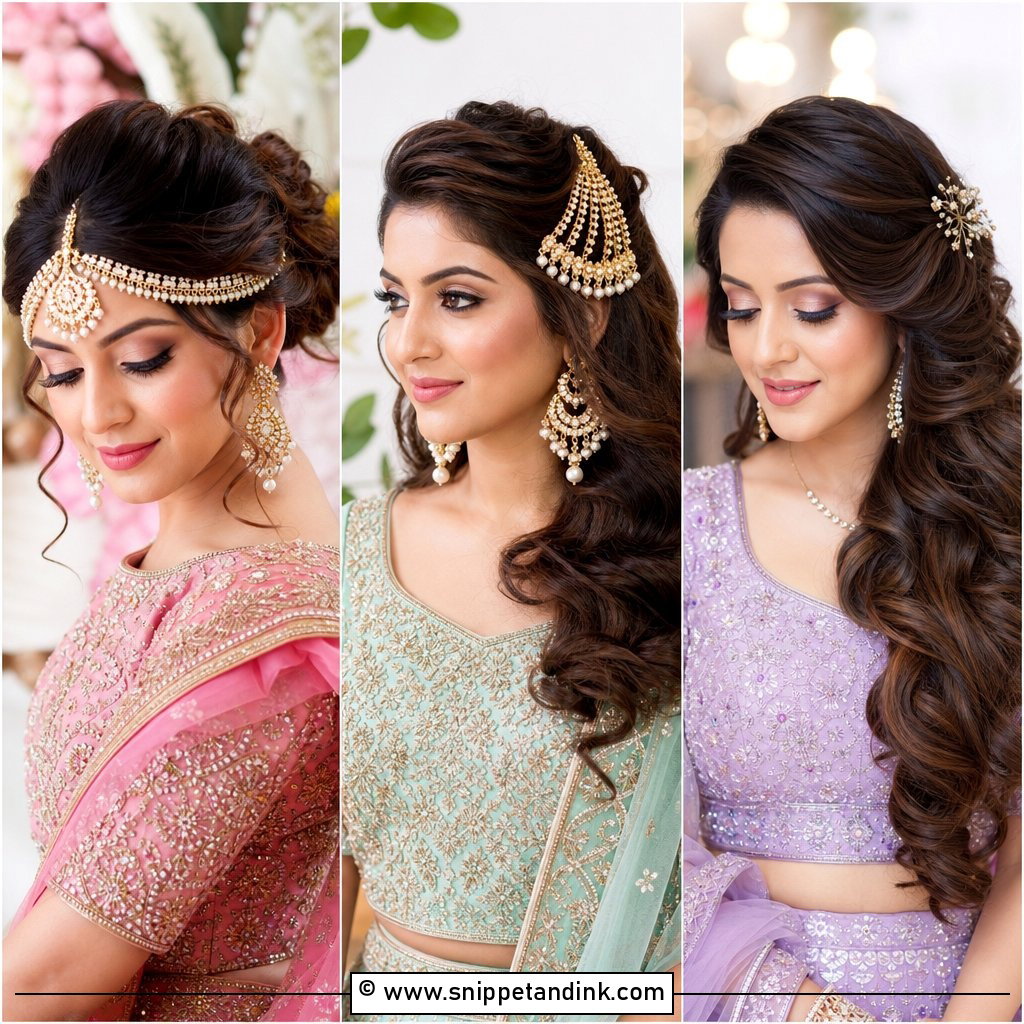
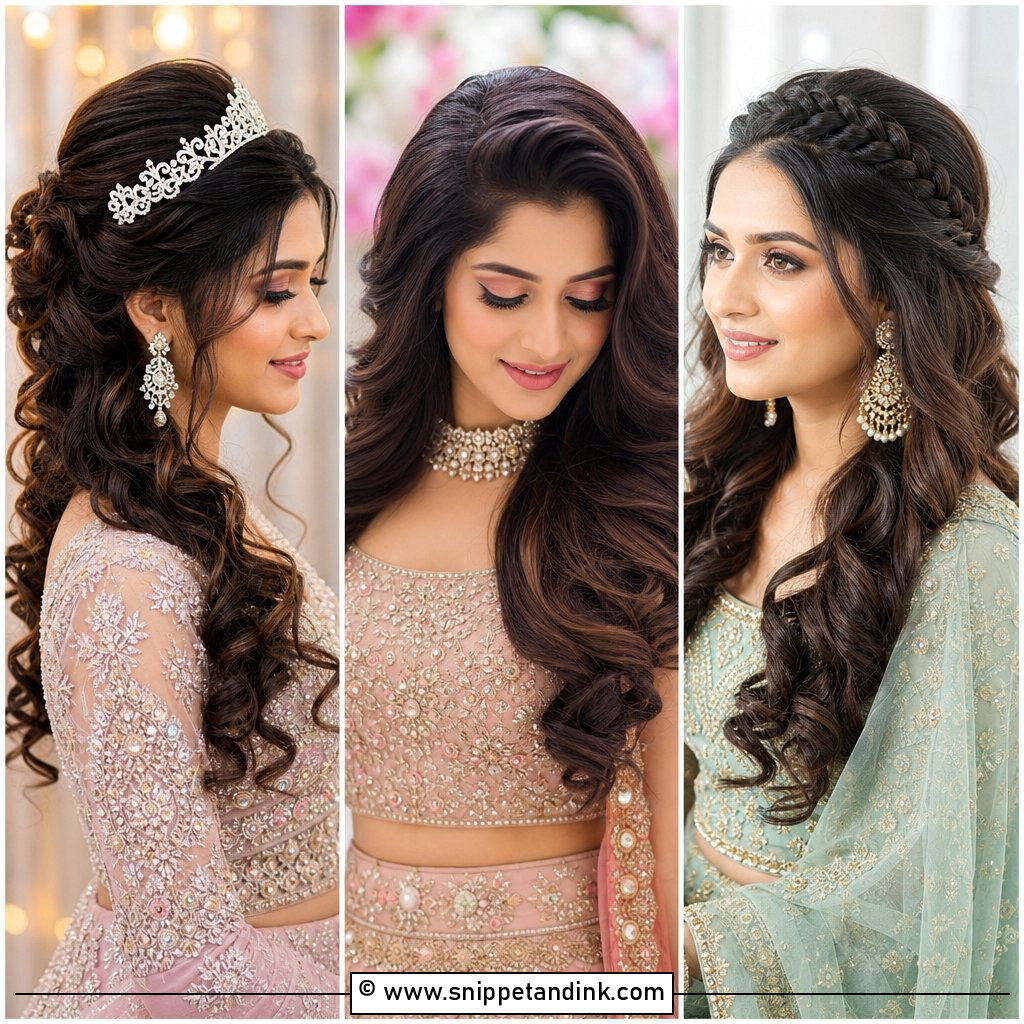
Half up, half down is the style I’d suggest when you really can’t decide, but it needs a stronger base than people expect. The pinned section at the back carries the weight of everything above it, so I anchor it with crossed bobby pins into a small hidden braid rather than relying on a clip alone. Curls left loose on fine hair drop fastest, often within a couple of hours, so I set them with heat and let them cool fully in a pin curl before brushing out. On medium and long lengths it shows the back of the hair well, which matters if the photographer shoots you walking away.
3. Bridal Engagement Hollywood Waves
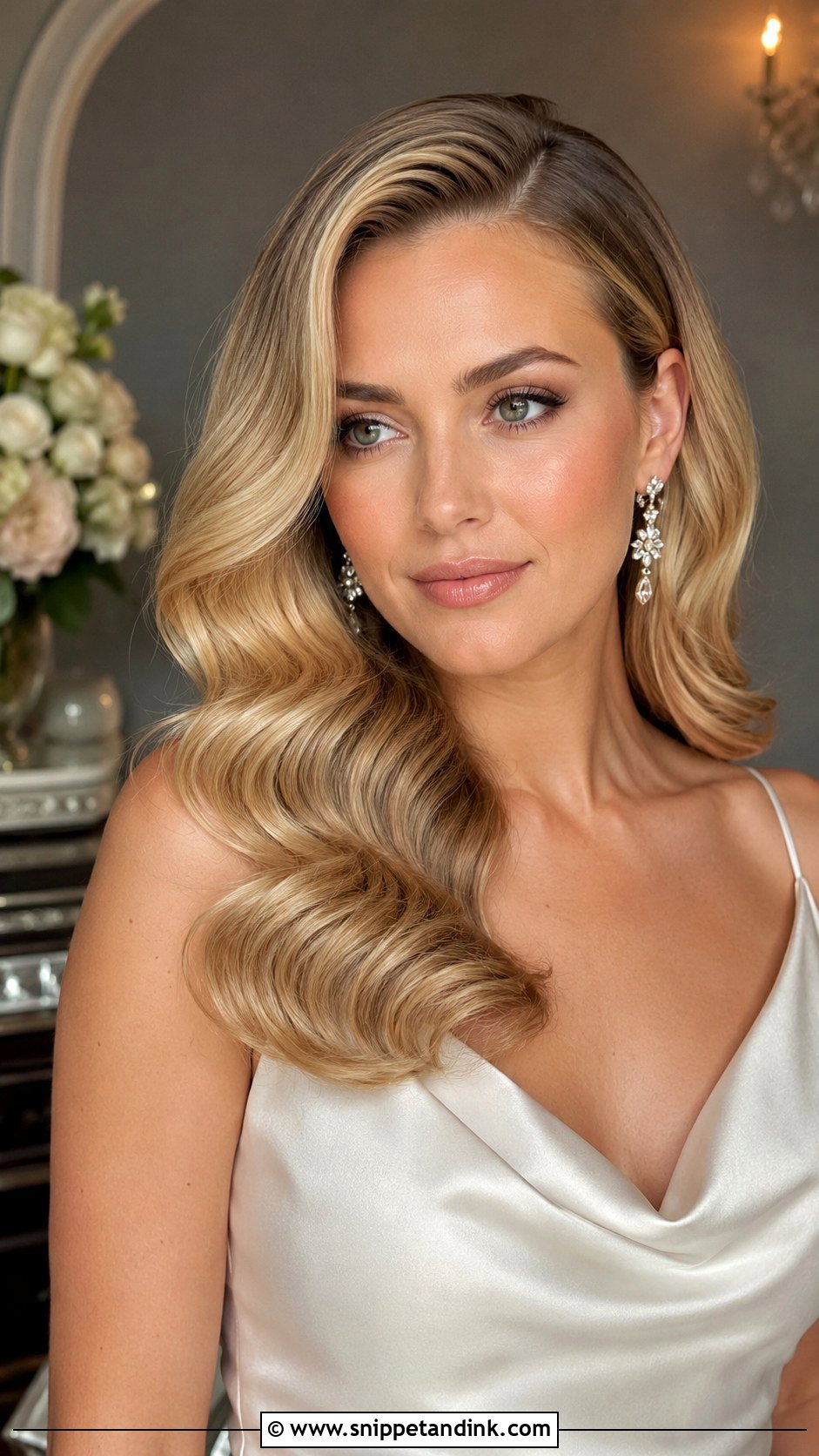
Hollywood waves are all about one continuous S-shape, and that only happens if every section is curled in the same direction and brushed out together with a boar bristle brush. Shiny, sleek hair takes them best. Very coarse or heavily layered hair fights the pattern because short layers break the line. A deep side part reads more dramatic, while a centre part feels newer. I finish with a flexible hold spray and, if needed, flat clips along each wave for a few minutes so the ridges set without going crunchy. Satin and simple jewellery let this style lead.
4. Bridal Engagement Sleek Bun
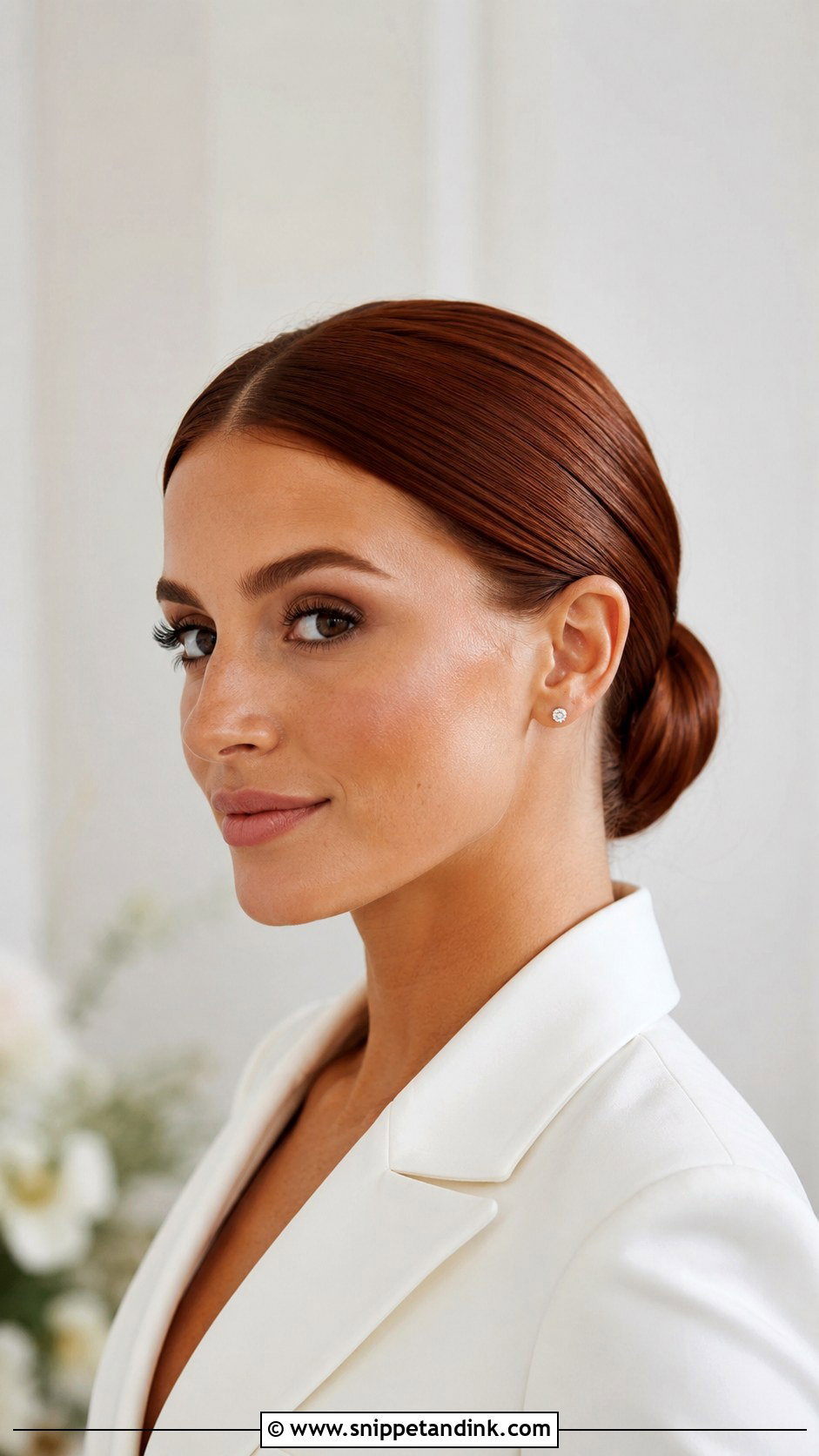
A sleek bun puts your face on full display, so it suits strong makeup and statement earrings, and it’s the most wind-proof option here. It is also the least forgiving. Any bump or uneven parting shows, especially under flash. I smooth with a cream first, then a small amount of gel at the hairline only, and I always add slight lift at the root so the head shape doesn’t look flat in profile. If you have a cowlick at the front, tell your stylist early; a side part is often kinder than forcing a centre one.
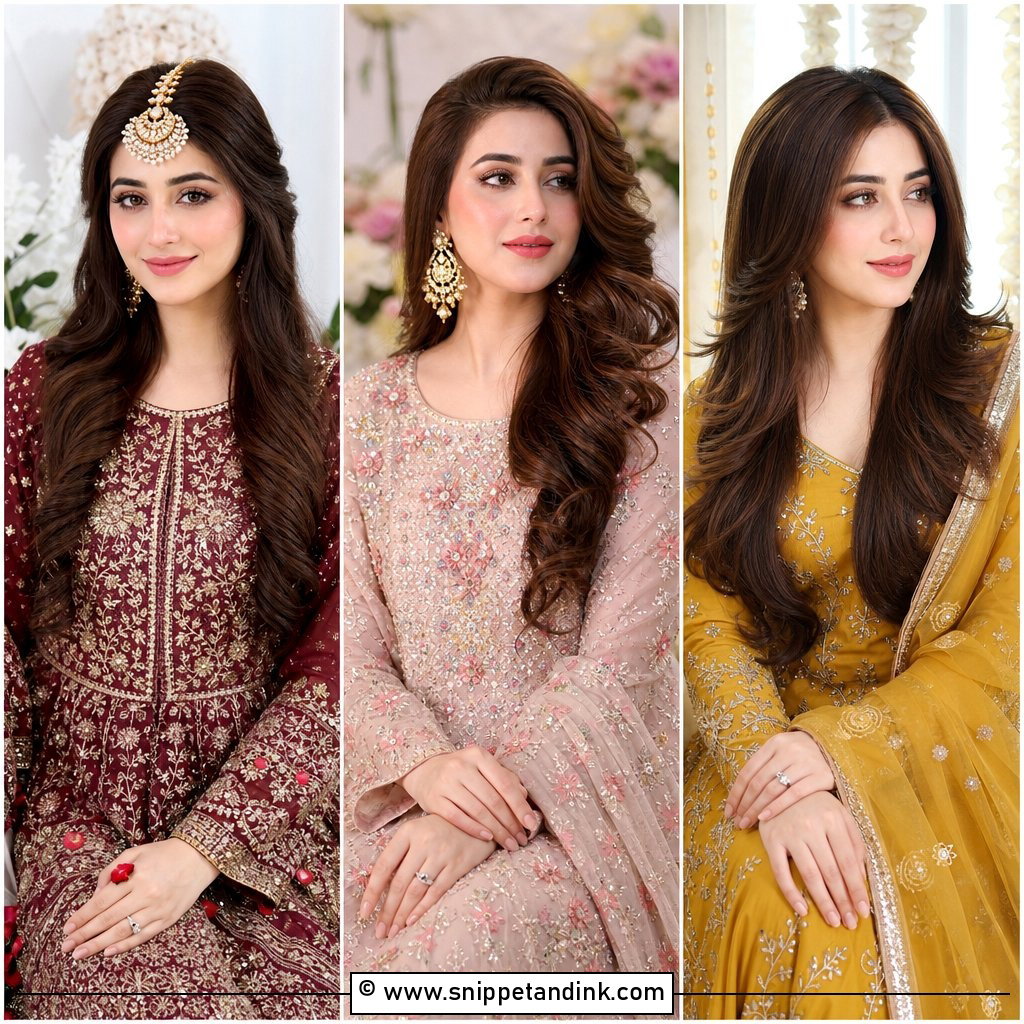
5. Bridal Engagement Loose Waves
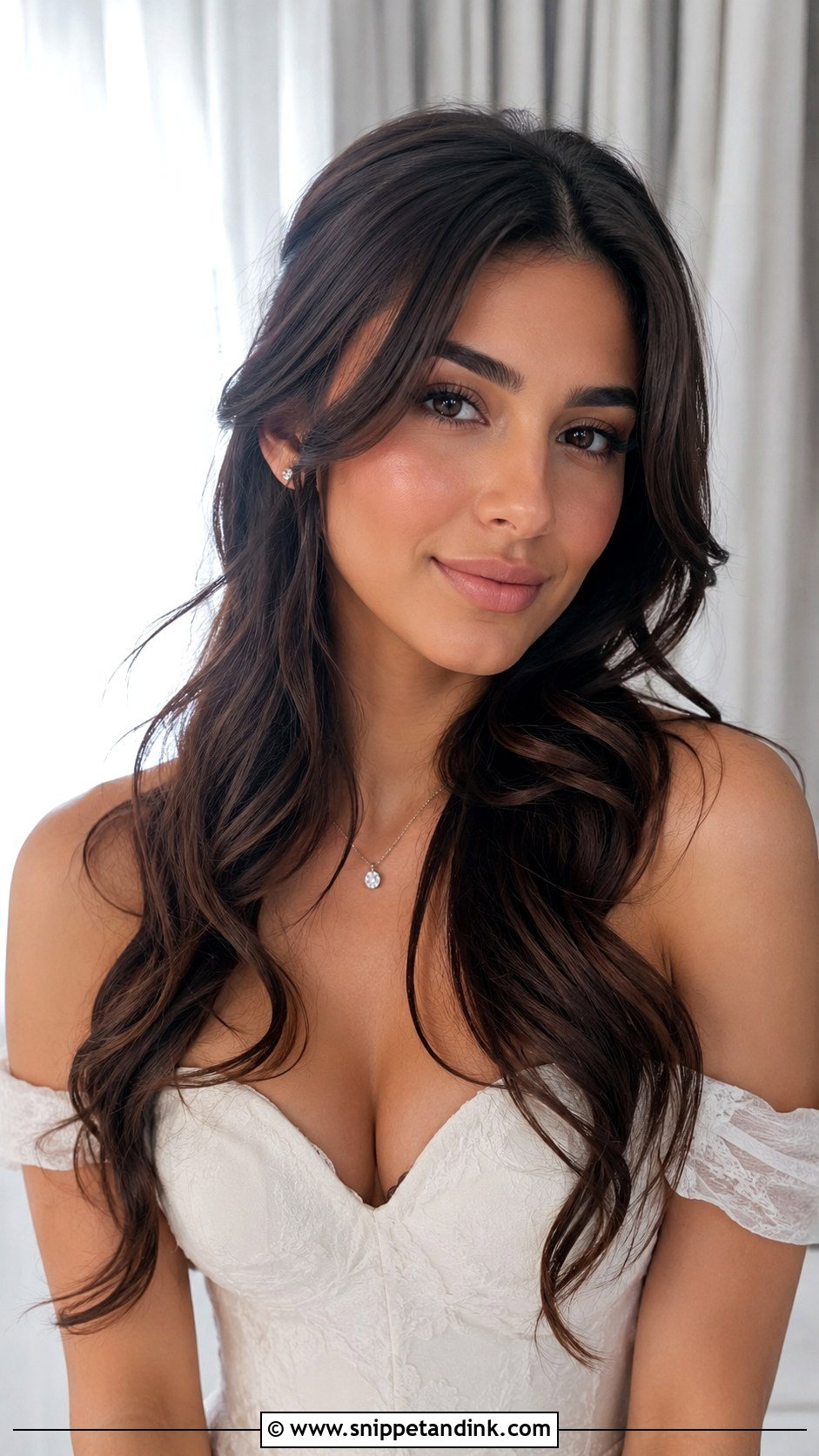
Loose waves look easy, but they’re the style I see collapse most often by the time the cake is cut. The trick is curling smaller sections than you think, alternating direction away from the face, and letting every curl cool before brushing it out. Long layers help the shape sit around the shoulders. A drop of light serum on the ends adds shine; more than a drop and the bends relax. These are relaxed enough for a courthouse ceremony or a bridal shower, and less ideal for an outdoor event on a muggy day.
6. Bridal Engagement Textured Updo
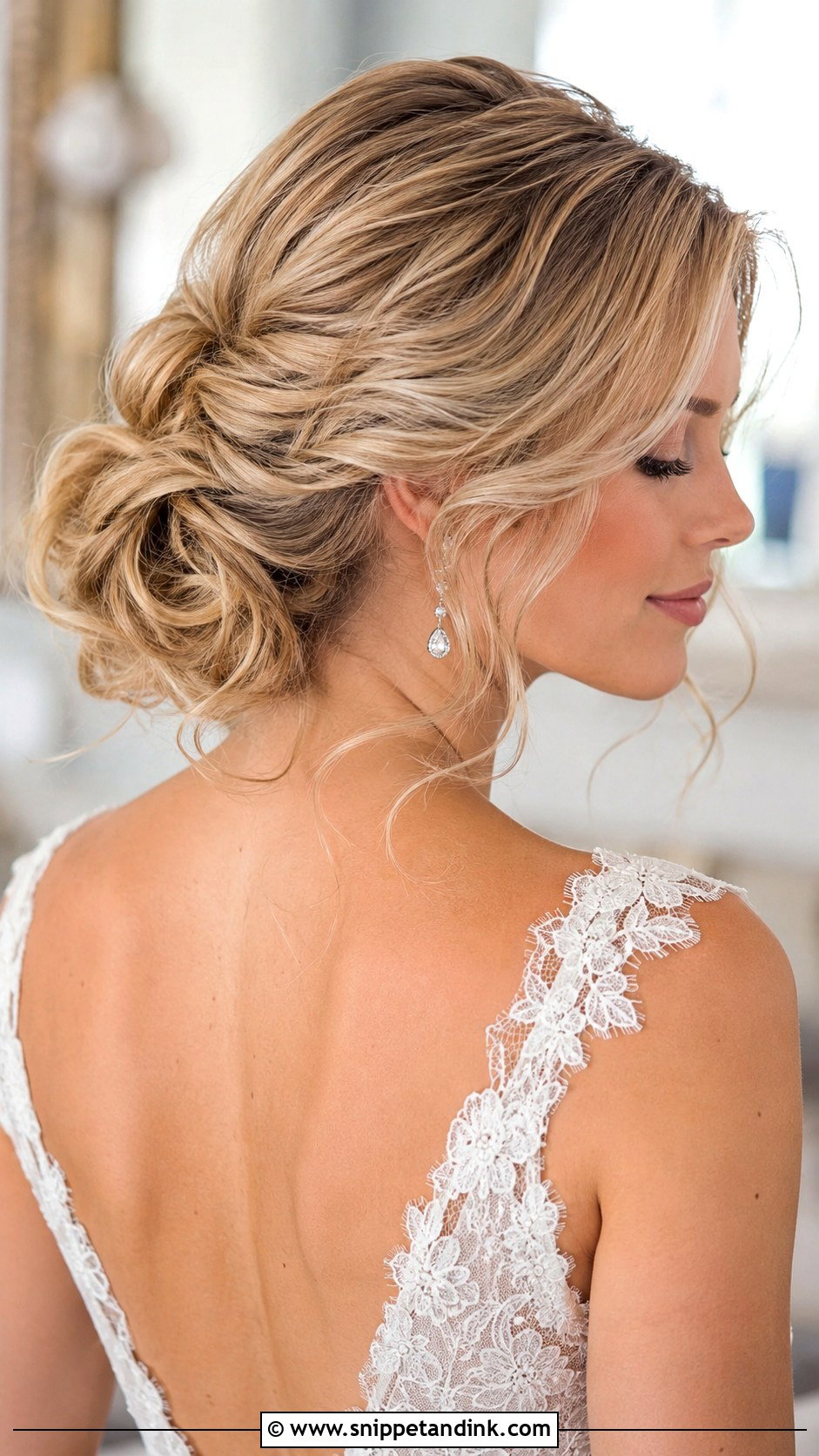
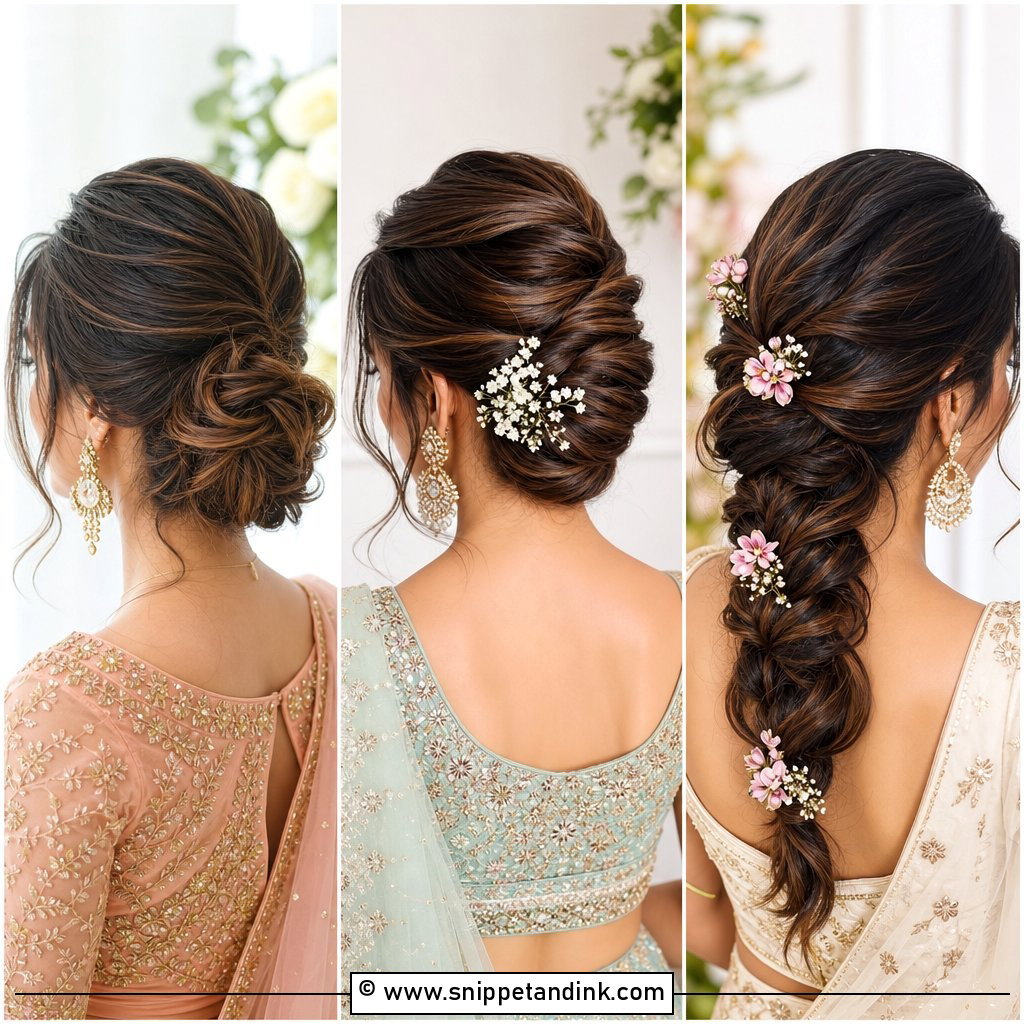
A bridal engagement textured updo is built in sections: curls are set first, then pinned piece by piece so the shape holds from every angle. That pinning is why it survives hugs and a long evening better than a single twisted knot. It pairs naturally with lace and chiffon. Where it goes wrong is the tendrils. Too many and the style starts to look unfinished in photos, so I leave two or three, curl them, and separate them with my fingers rather than a comb.
7. Bridal Engagement High Ponytail
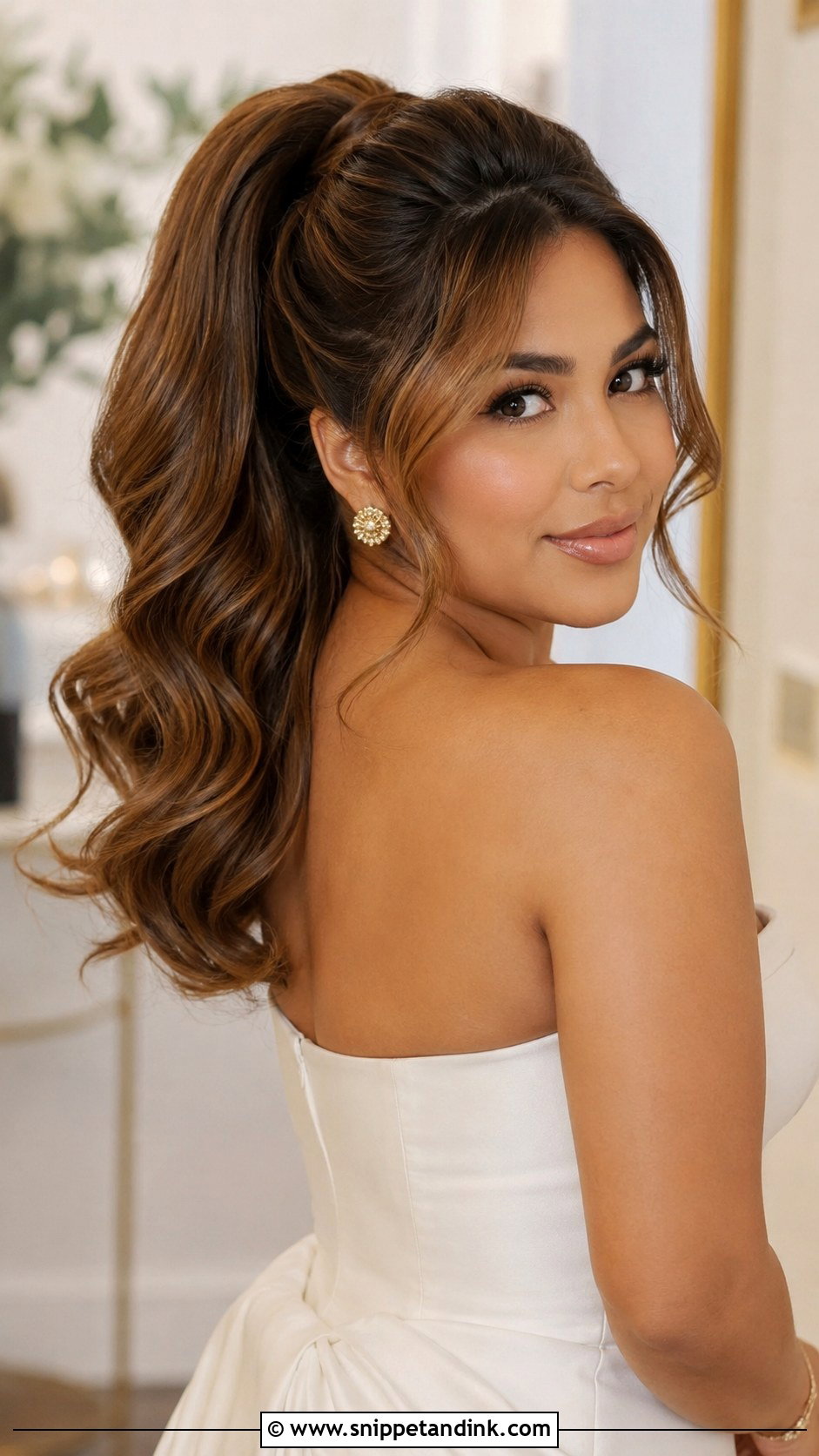
High ponytails look lifted and fun, but they’re heavy at the crown and can give you a headache by hour four if the elastic is too tight. I use two small elastics instead of one thick one and set the ponytail slightly lower than the very top of the head. Wrap a strand around the base and pin it underneath to hide the band. This one suits strapless and square necklines and modern bridal suits. If your hair is very thick and long, I’d steer you toward the low version instead.
8. Bridal Engagement Low Ponytail
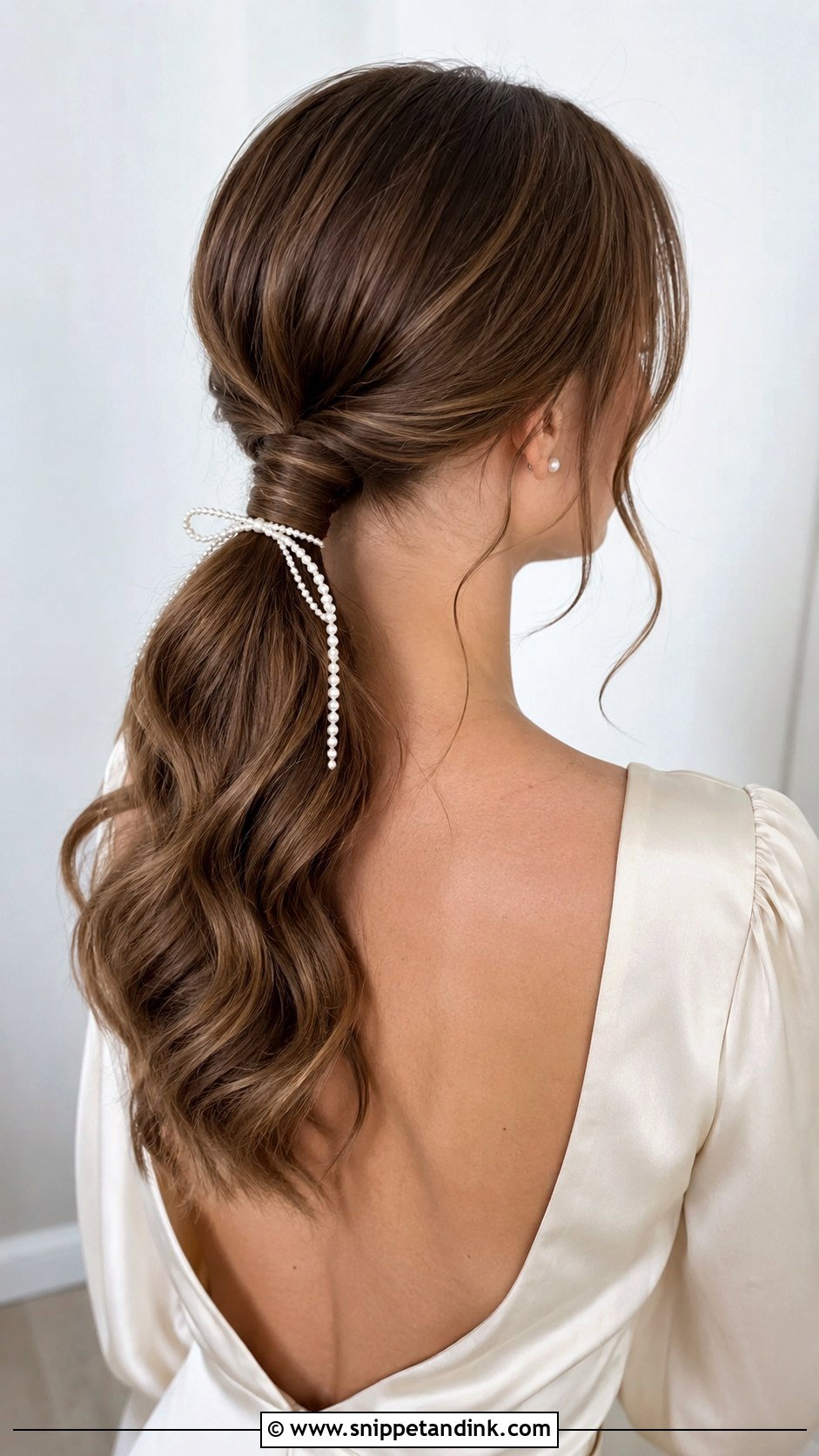
A bridal engagement low ponytail sits at the nape, which makes it comfortable through long events and easy to dress with a ribbon or a pearl clip. With an open-back outfit it adds detail without hiding the back. The base decides how polished it looks. I wrap it with a piece of the ponytail and secure it with two pins crossing each other. Smooth roots photograph cleanly; textured roots read more relaxed, so think about which feeling suits your outfit.
9. Bridal Engagement Chignon
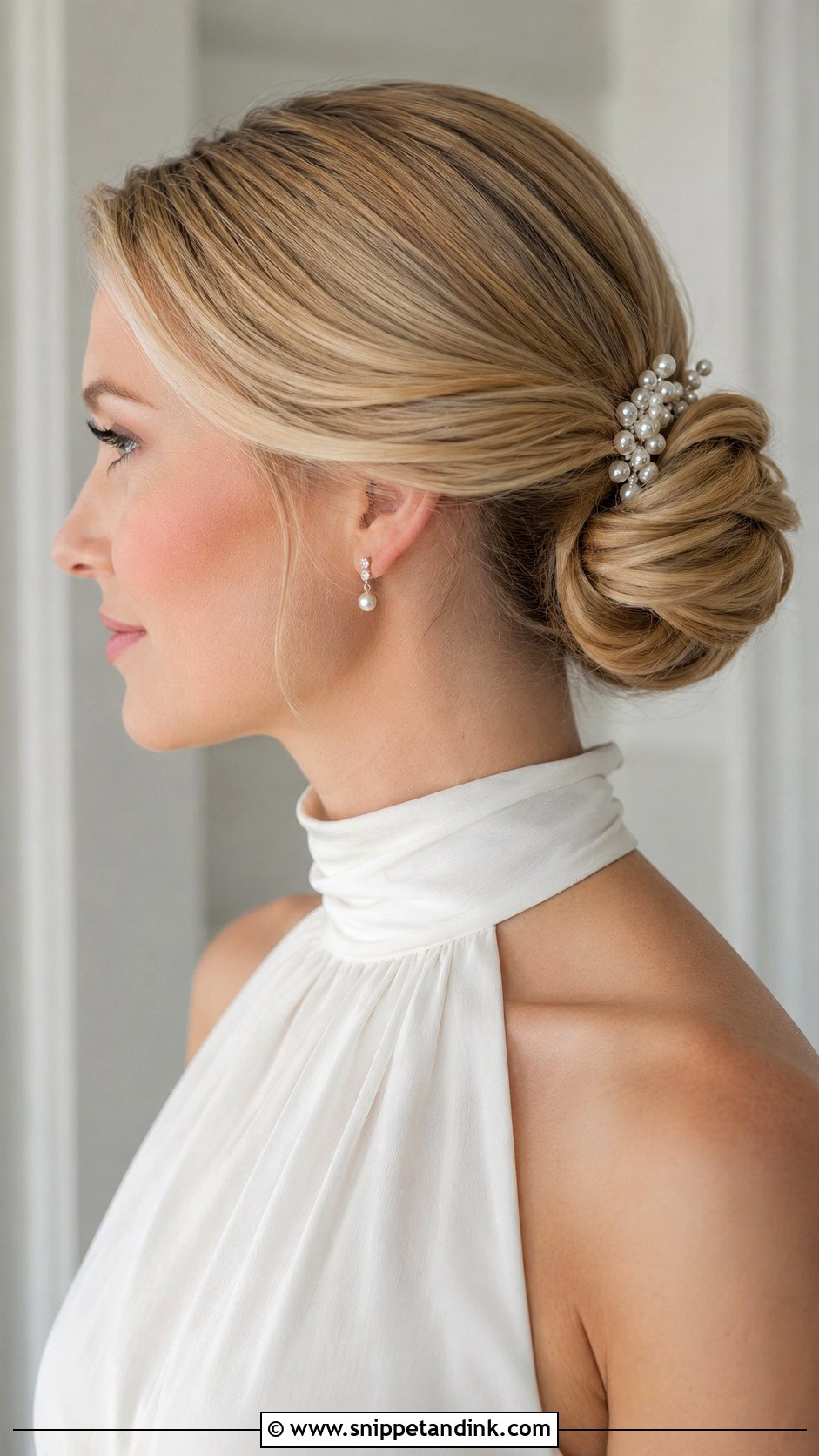
The chignon is a pinned bun shaped close to the head, low at the nape. Because it doesn’t add height, it works under a dupatta, behind a comb, or with heavy earrings that need space. For formal engagement ceremonies and traditional family events this is my default recommendation. On very short or blunt-cut hair it can be hard to build without padding, so I sometimes use a small donut or a tuck of matching hair inside the roll. A side part keeps it soft, and a centre part makes it feel current.
10. Bridal Engagement Braided Crown
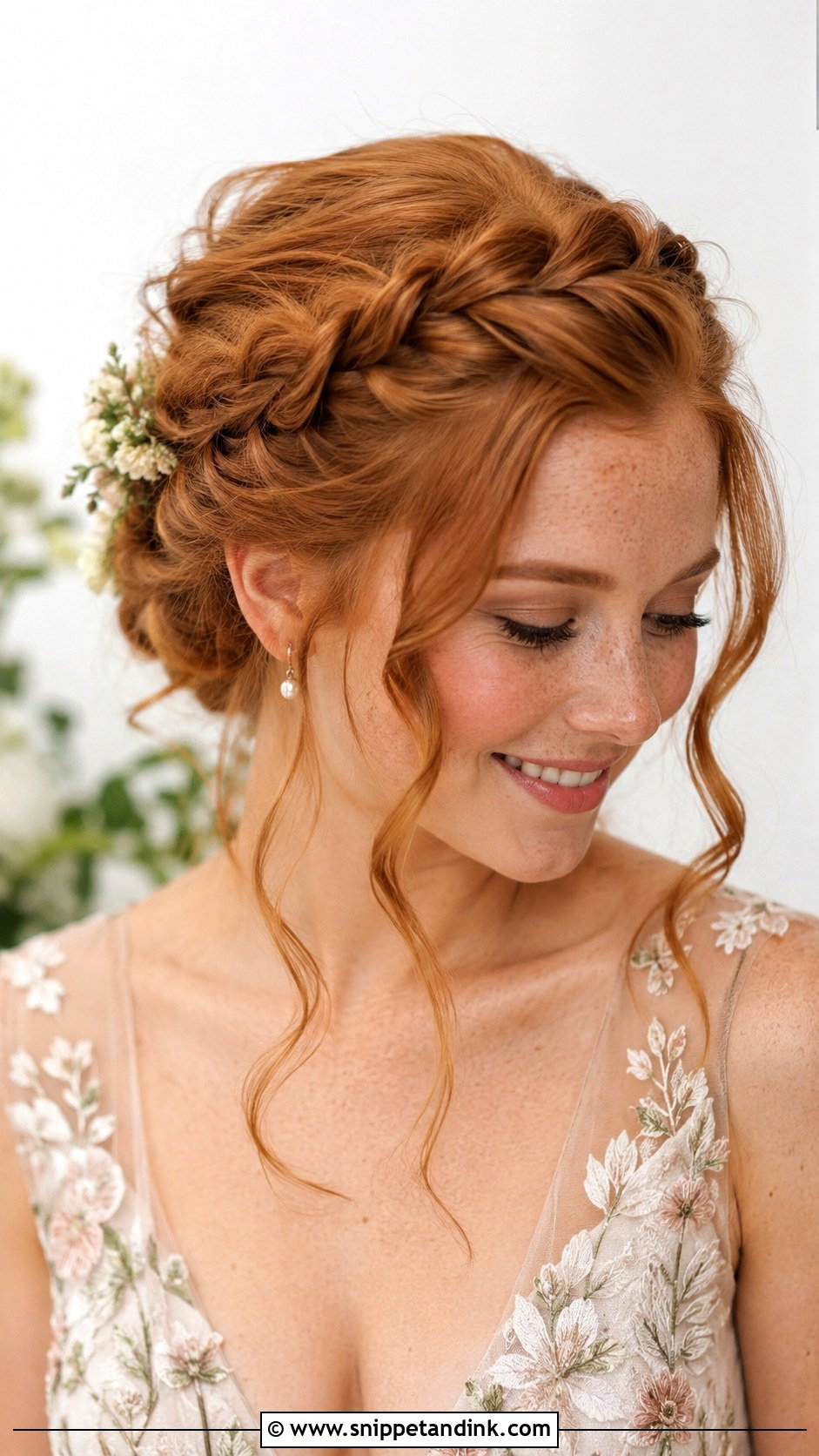
A braided crown frames the face and keeps everything controlled, which is why it holds up so well outdoors. It can be a full crown braid, a soft braided halo, or a half-up braid wrapping toward the back. I pancake the braid gently after pinning it in place, never before, otherwise it loosens as you wear it. Layered hair with short pieces at the crown can poke out of the braid, so a little wax on the fingertips helps. Garden settings suit it especially well.
11. Bridal Engagement Side Swept Curls
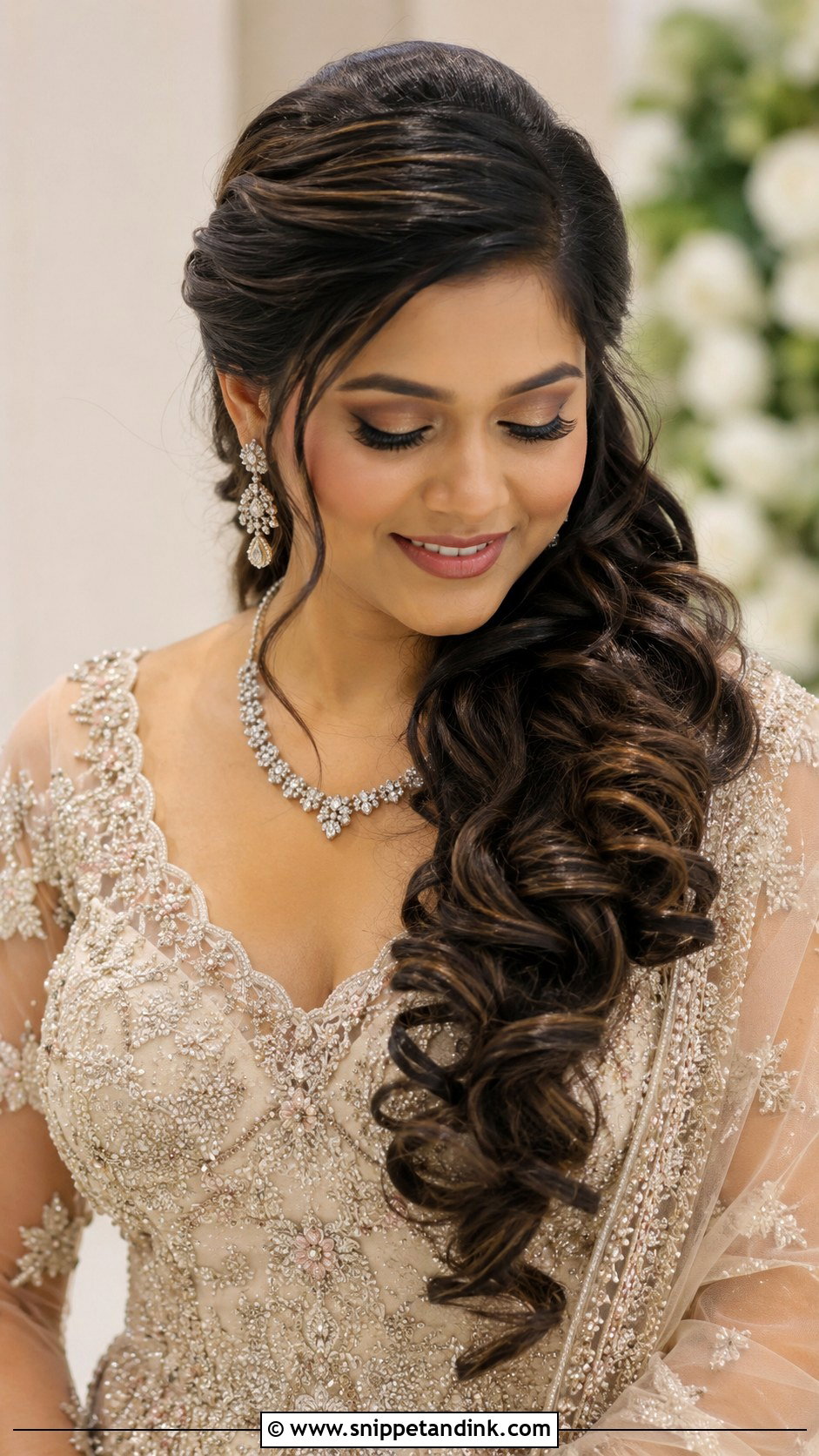
Side swept curls show off one shoulder and the jewellery on it, so I’d suggest them with one-shoulder dresses or outfits with heavy sleeves. The swept side must be anchored behind the ear with crossed pins tucked under a curl. Without that, every turn of your head shifts the whole style to the back. If you’ll be standing for photos on one side all day, ask yourself which side the photographer or family will mostly see and sweep toward the other.
12. Bridal Engagement Bouncy Blowout
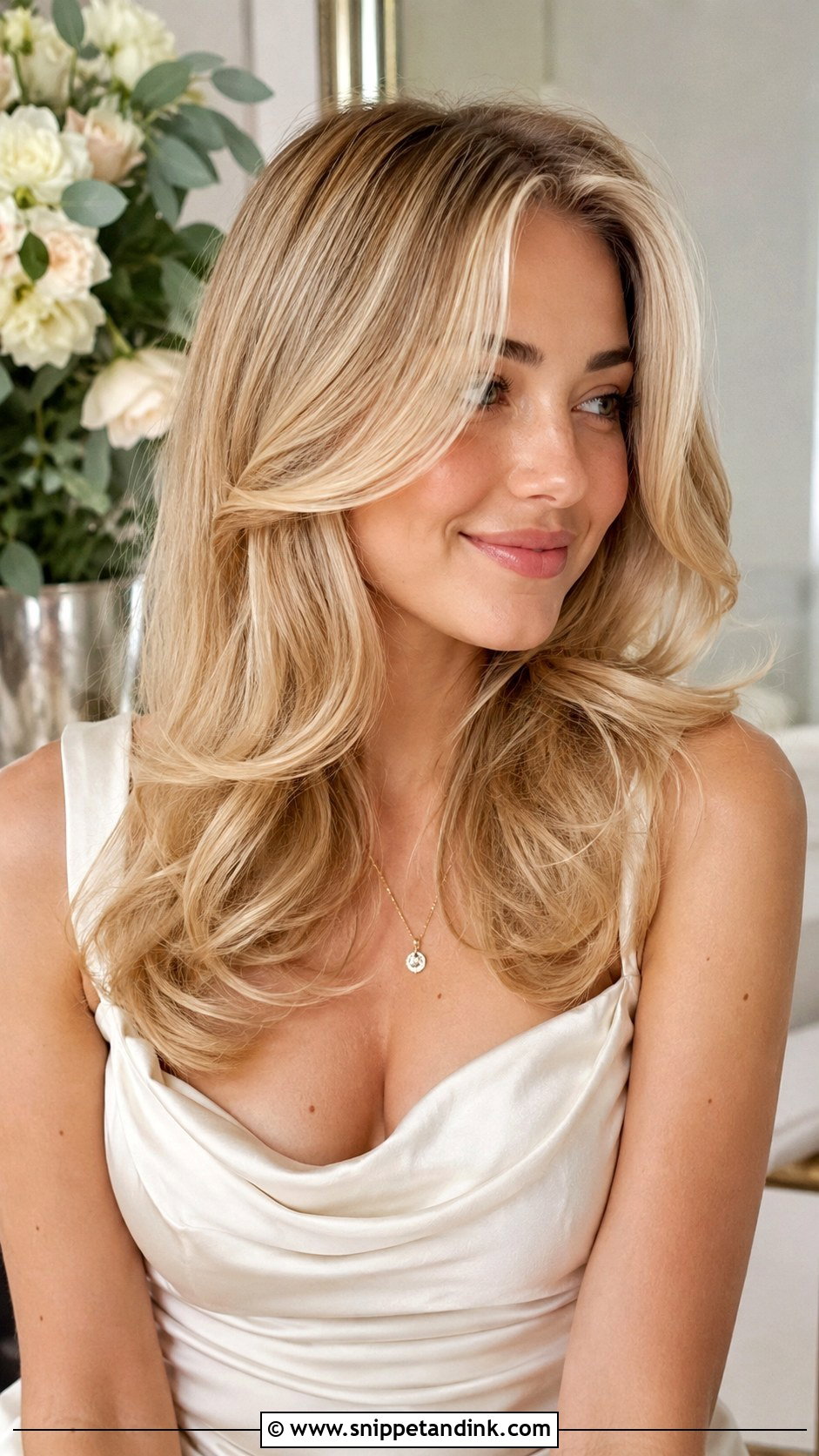
A bridal engagement bouncy blowout relies on round-brush volume and big rounded ends, and it lasts longest on hair washed the night before rather than the morning of. Layered cuts take it best. I set the front sections in large velcro rollers while makeup is done, which keeps the lift through the day. Ask for volume that opens the face instead of falling over it. Fine, straight hair that drops curl quickly will flatten faster here, so plan to touch it up.
13. Bridal Engagement Messy Bun
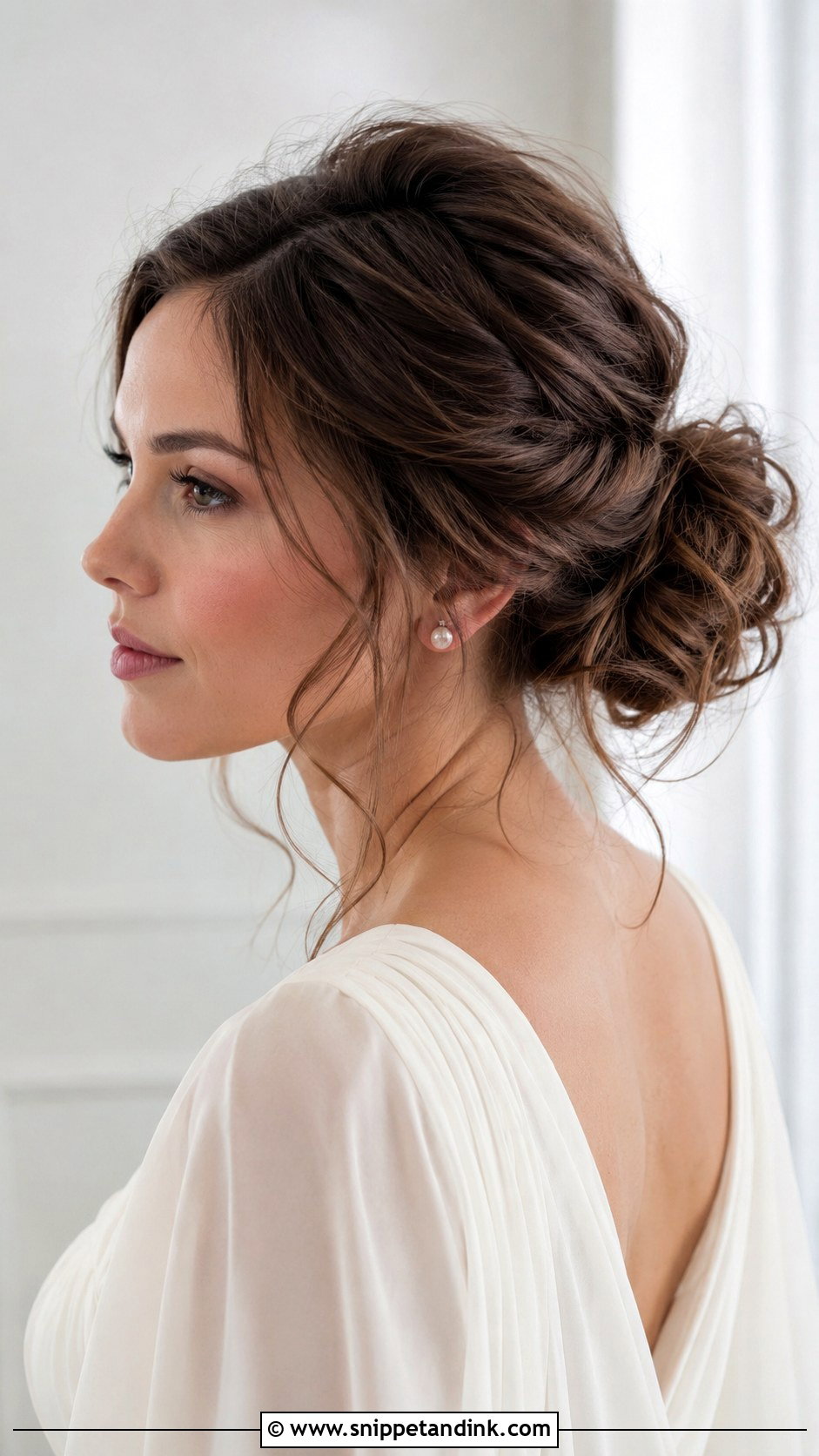
A messy bun should look planned, not rushed, and that comes from how it’s built. I pin it in three or four sections around an anchor rather than twisting everything into one knot, which gives it shape and staying power. Keep it low or mid-height for the most bridal feel. Freshly washed silky hair slides out of messy styles fast, so a dry texture spray before pinning makes a real difference. It suits soft dresses and natural light.
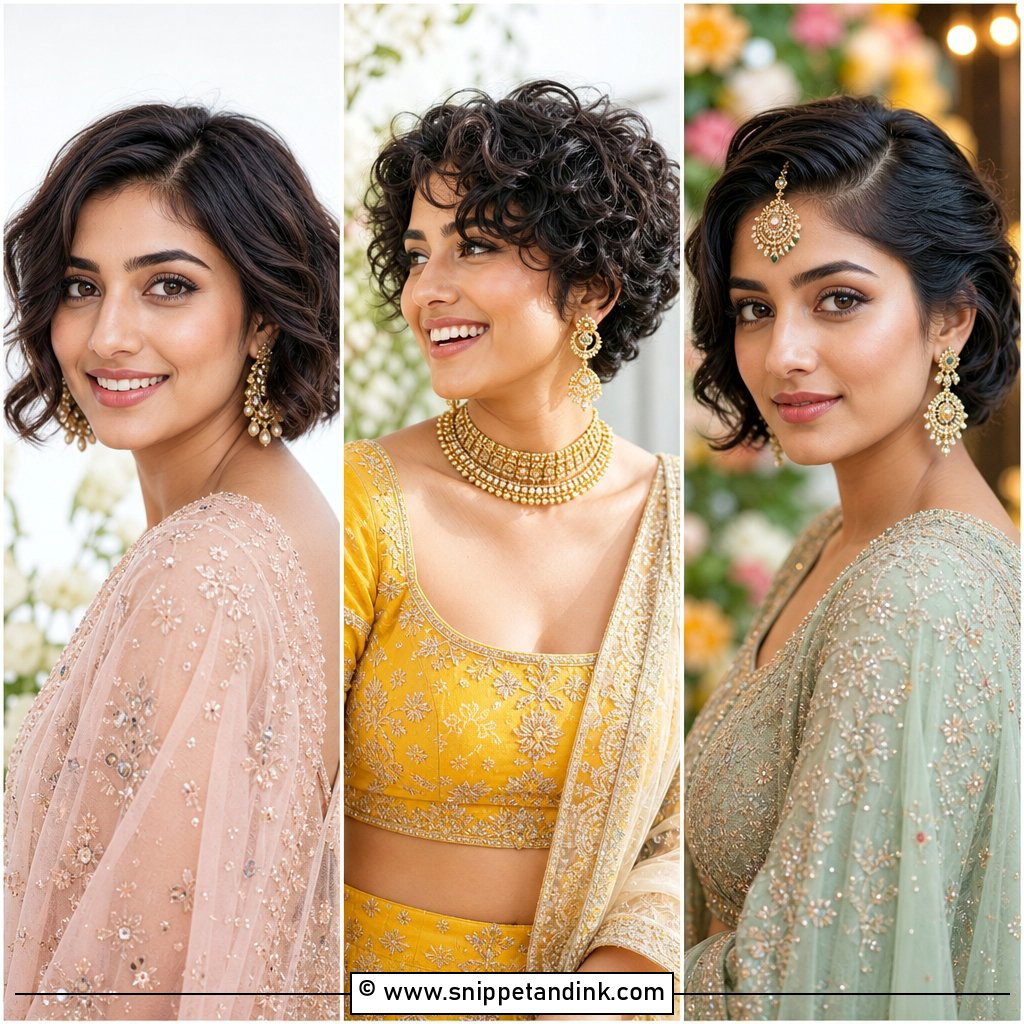
14. Bridal Engagement Curly Updo
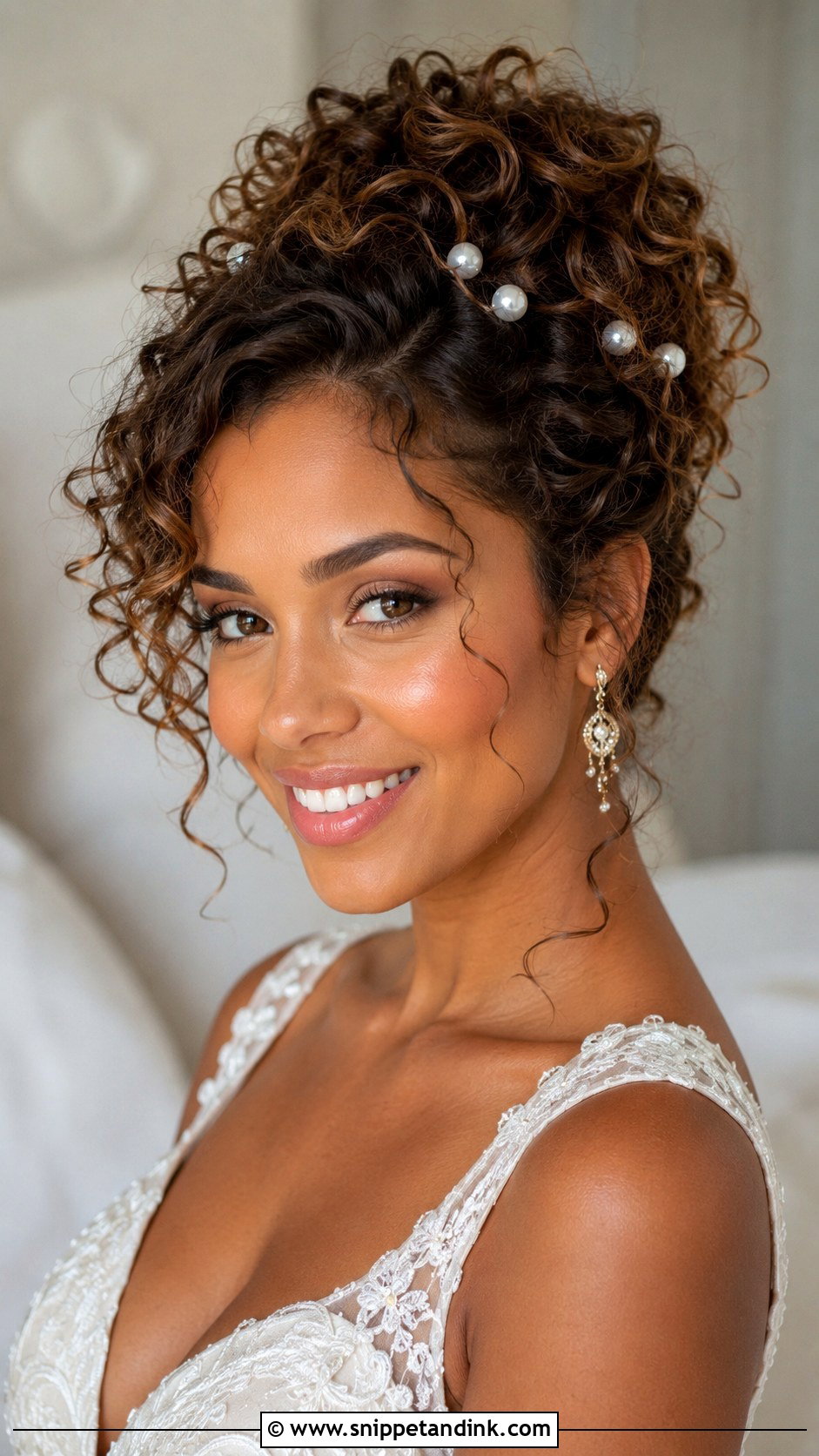
A curly updo keeps your natural pattern as the main feature instead of smoothing it away. The prep matters more than the pinning. I style curls on damp hair with a cream and a gel, let them dry fully, and only then shape the updo, because disturbing curls while they’re wet creates frizz that doesn’t settle. Leave a few defined curls at the hairline. I use open hairpins rather than closed bobby pins here, since they hold volume without flattening the curl.
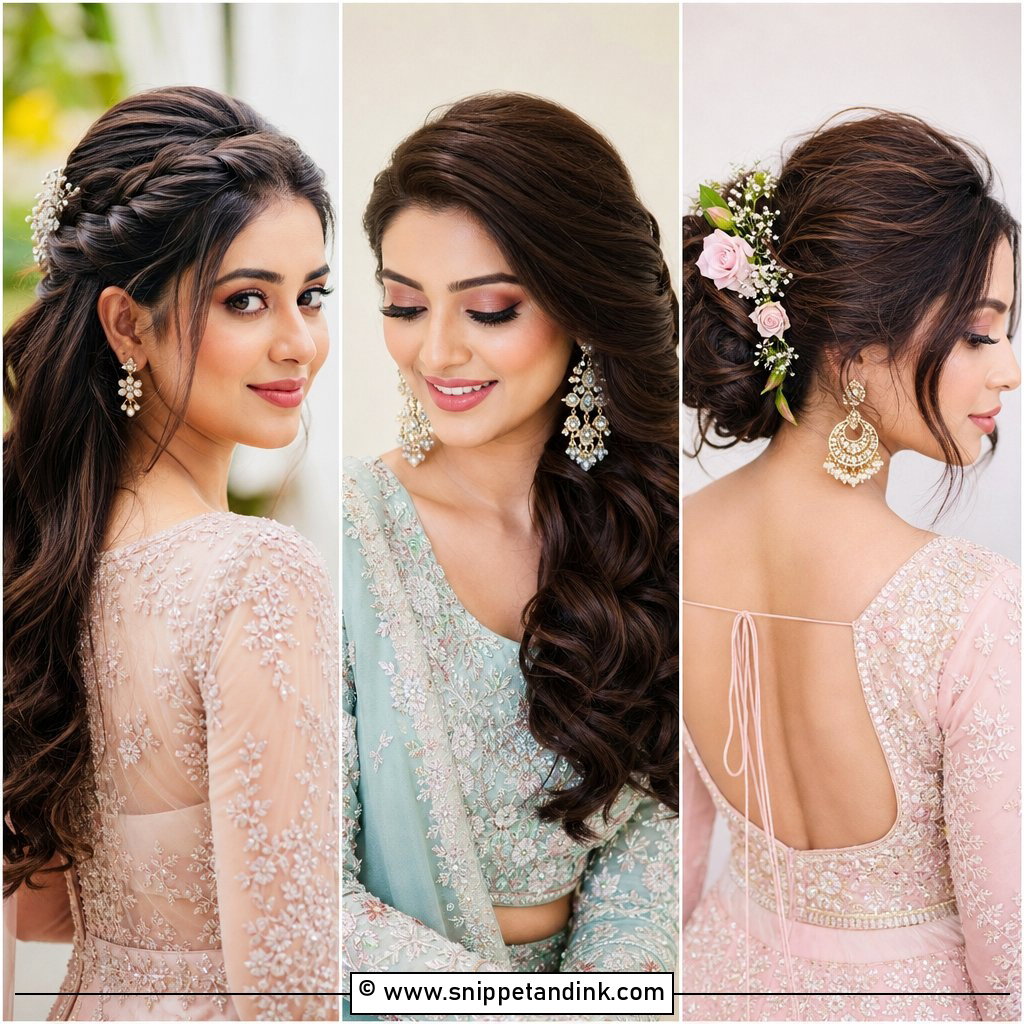
15. Bridal Engagement Natural Hair Updo
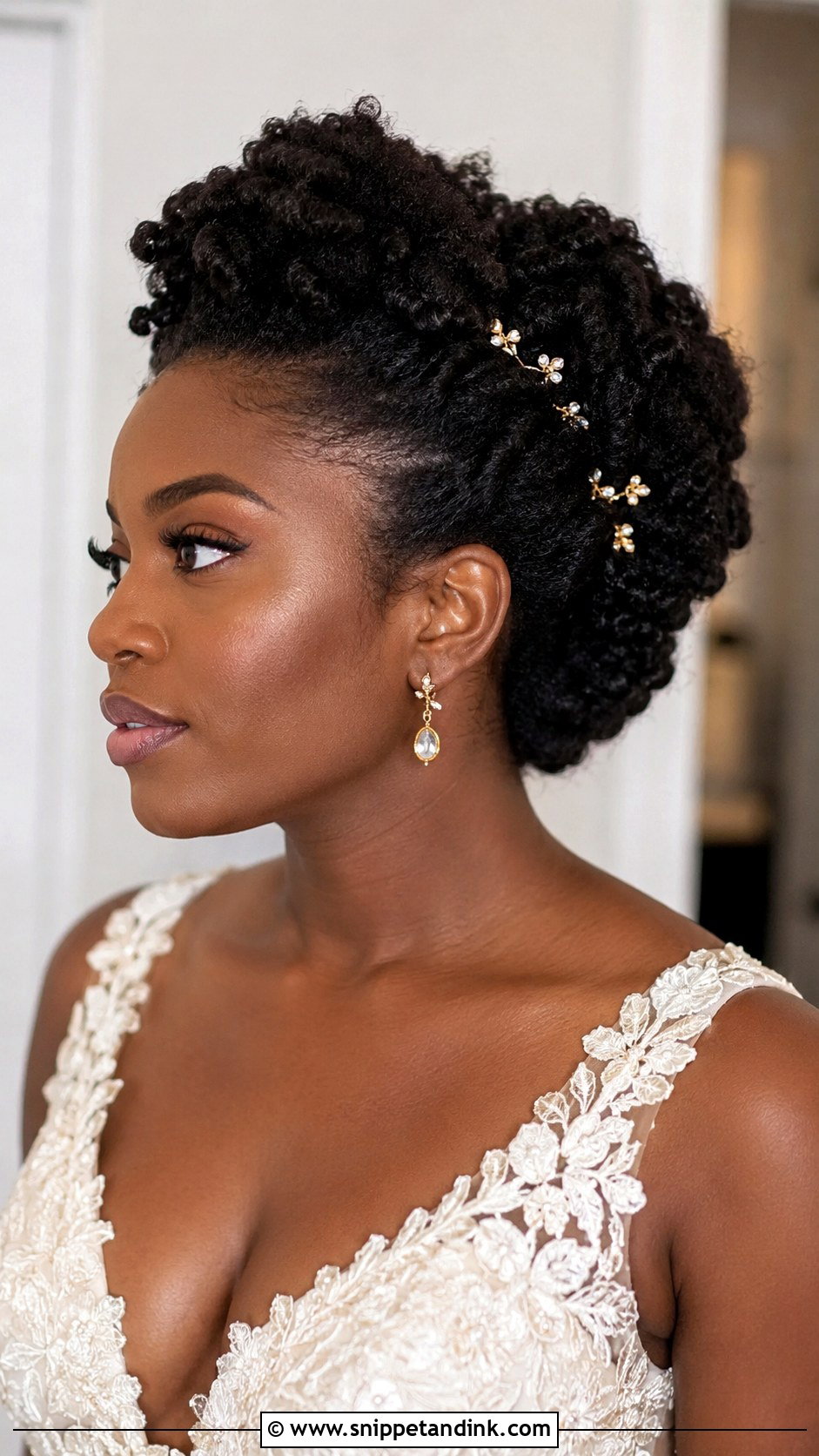
A natural hair updo can be a puff, pinned curls, flat twists, a sculpted bun or a soft crown shape, depending on your length and density. These styles are very secure and handle warm weather well. If you’re doing twists or a set the day before, protect them overnight with a satin scarf or bonnet. Edges can be laid with a soft gel, but on sensitive hairlines I keep tension light; a tight pull for one event isn’t worth weeks of tenderness. Pearls or gold pins finish it simply.
16. Bridal Engagement Soft Waves With Hair Clip
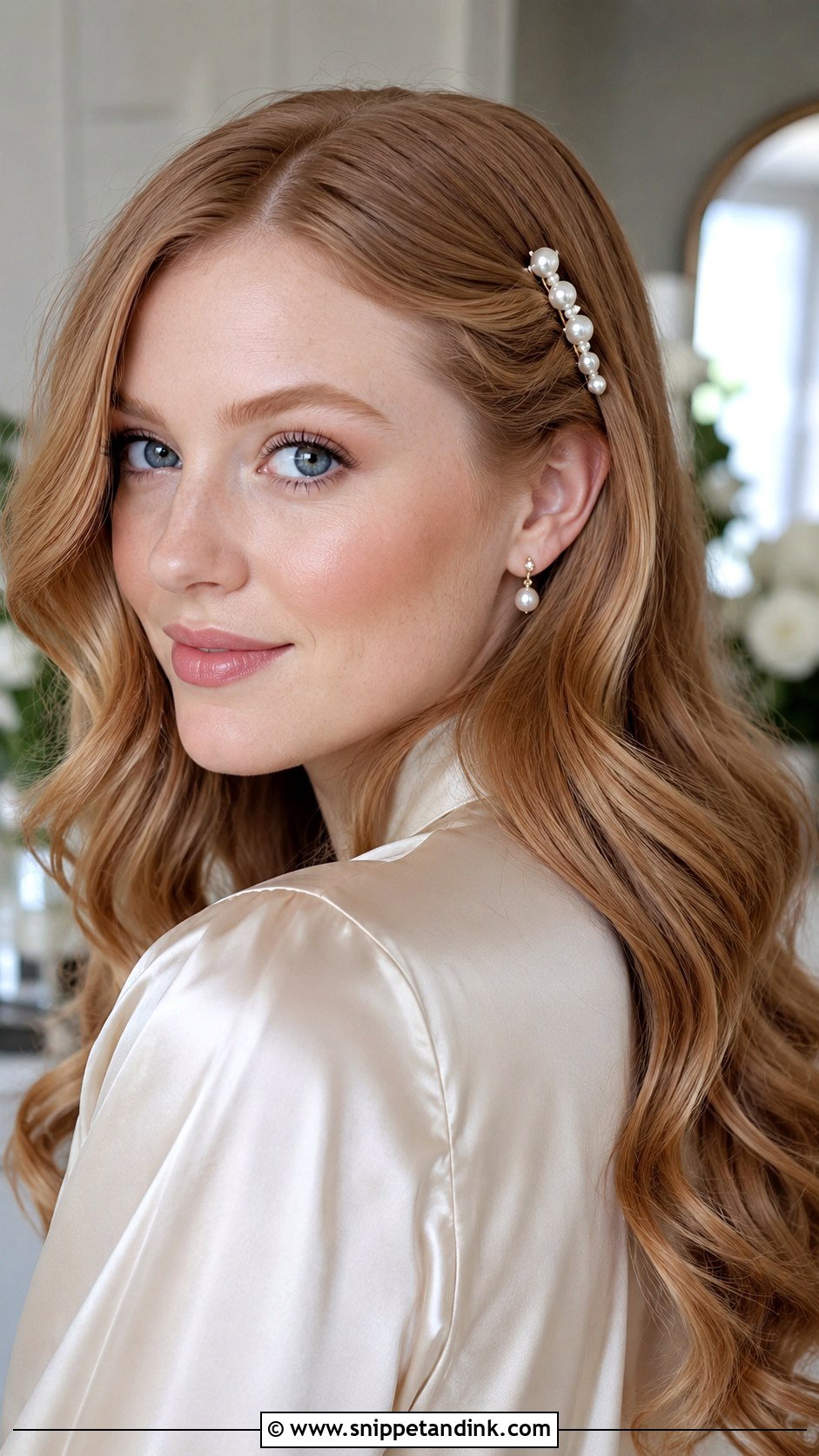
Soft waves with a clip are a relaxed choice that still reads bridal. Size is where people go wrong. A clip that’s too large pulls the waves down on that side and looks like the main event. I place it just behind the ear or slightly above, slipping it over a crossed pair of bobby pins so it can’t slide. This works on long and medium hair, best with face-framing layers.
17. Bridal Engagement French Twist
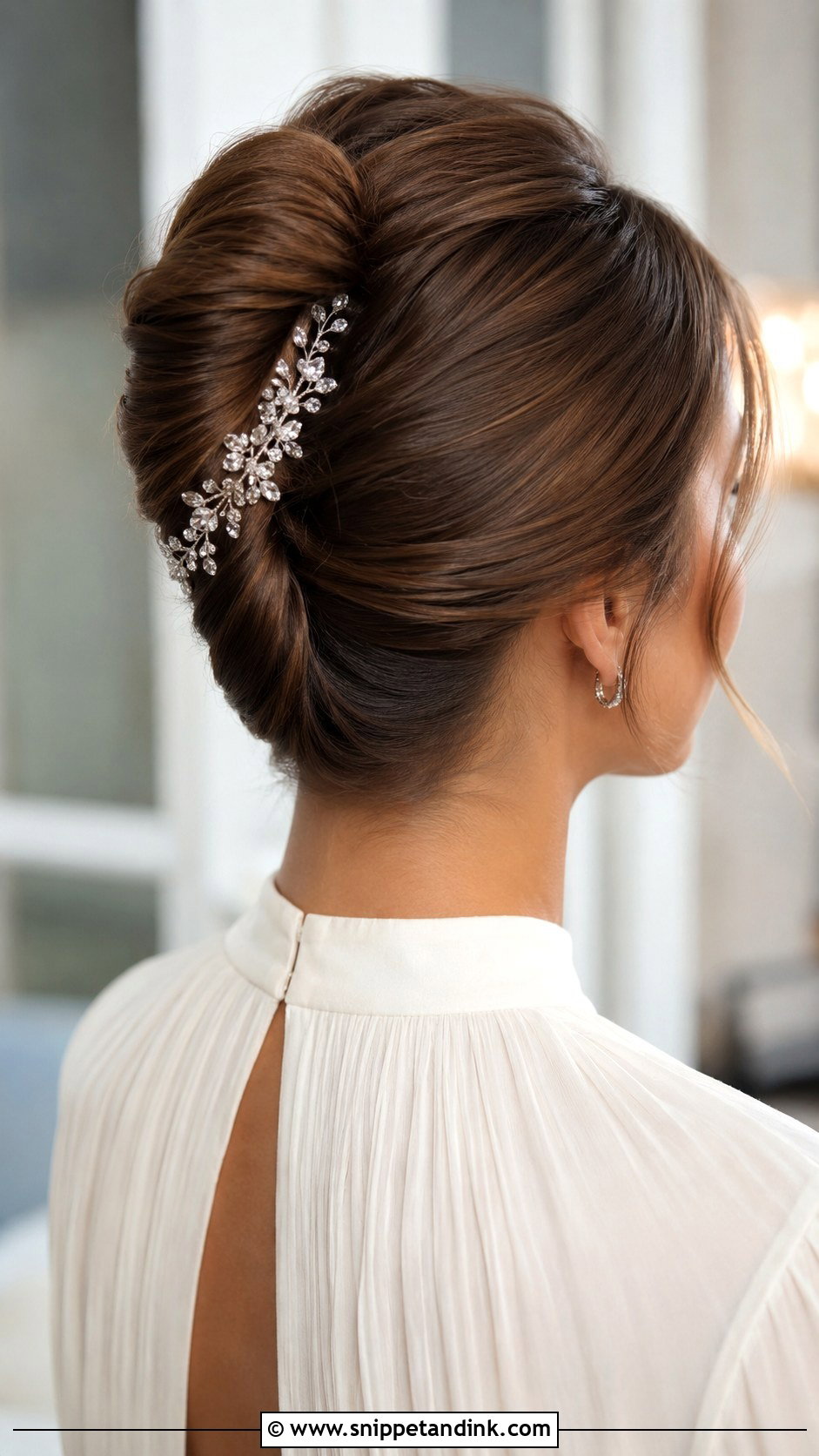
A French twist is rolled upward and pinned vertically, giving a clean profile that’s strongest from the side. It suits high necklines and structured outfits. Clean, slippery hair is the enemy here. I want hair washed a day before or roughed up with texture spray, otherwise the roll won’t grip and pins slip out. Pins go in along the seam, angled toward the scalp. Loosening the crown slightly keeps it from looking severe.
18. Bridal Engagement Long Hair Waves
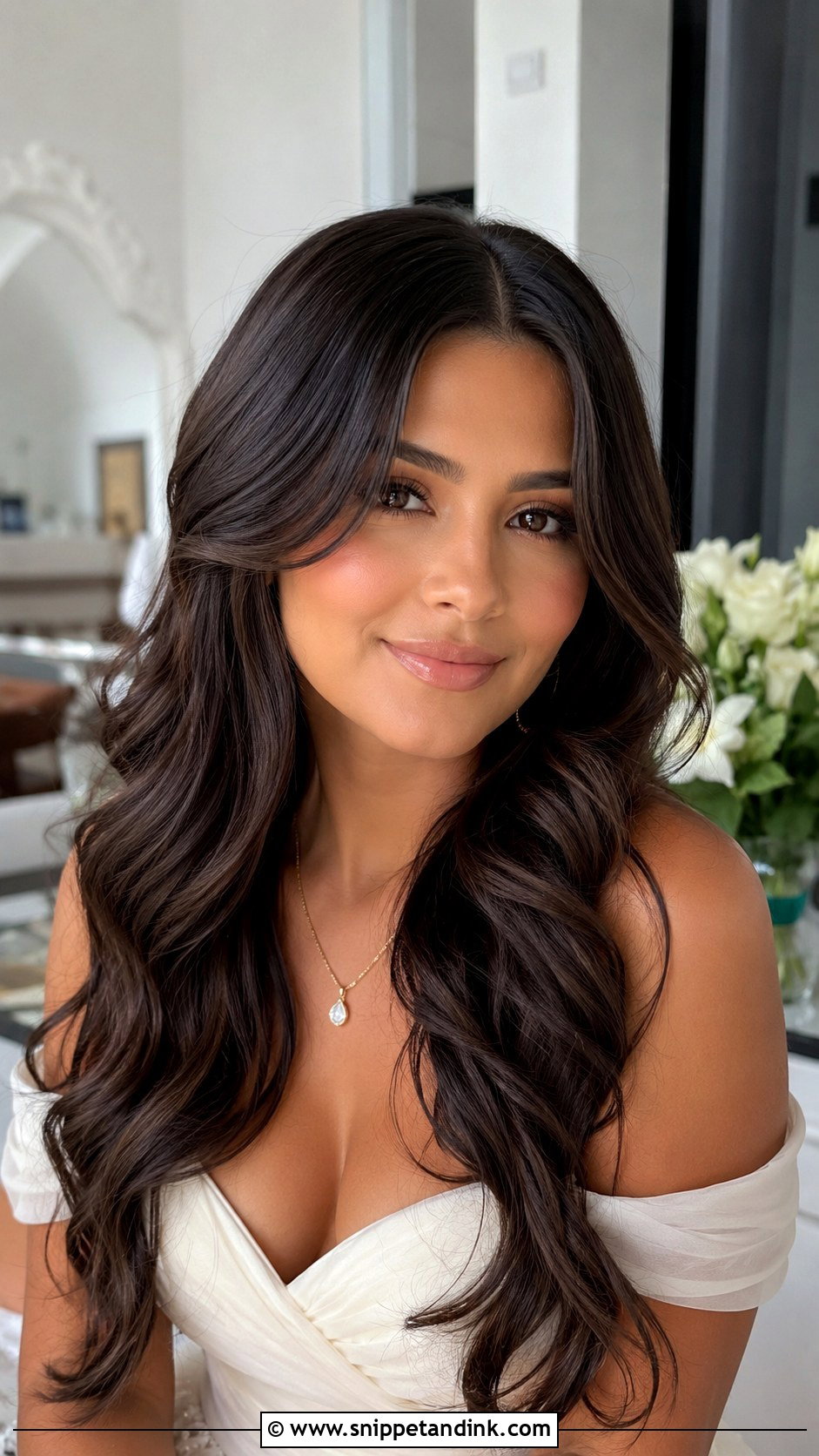
Long hair waves need structure, or they hang flat in photos. I start curls around the cheekbone or collarbone rather than at the root, which keeps the top smooth and puts the movement where the camera sees it. Long, heavy hair drops curl because of its own weight, so I curl tighter than the final look and brush out later. Layers help a lot here. Wind is your friend for outdoor shots with this style.
19. Bridal Engagement Short Hair Waves
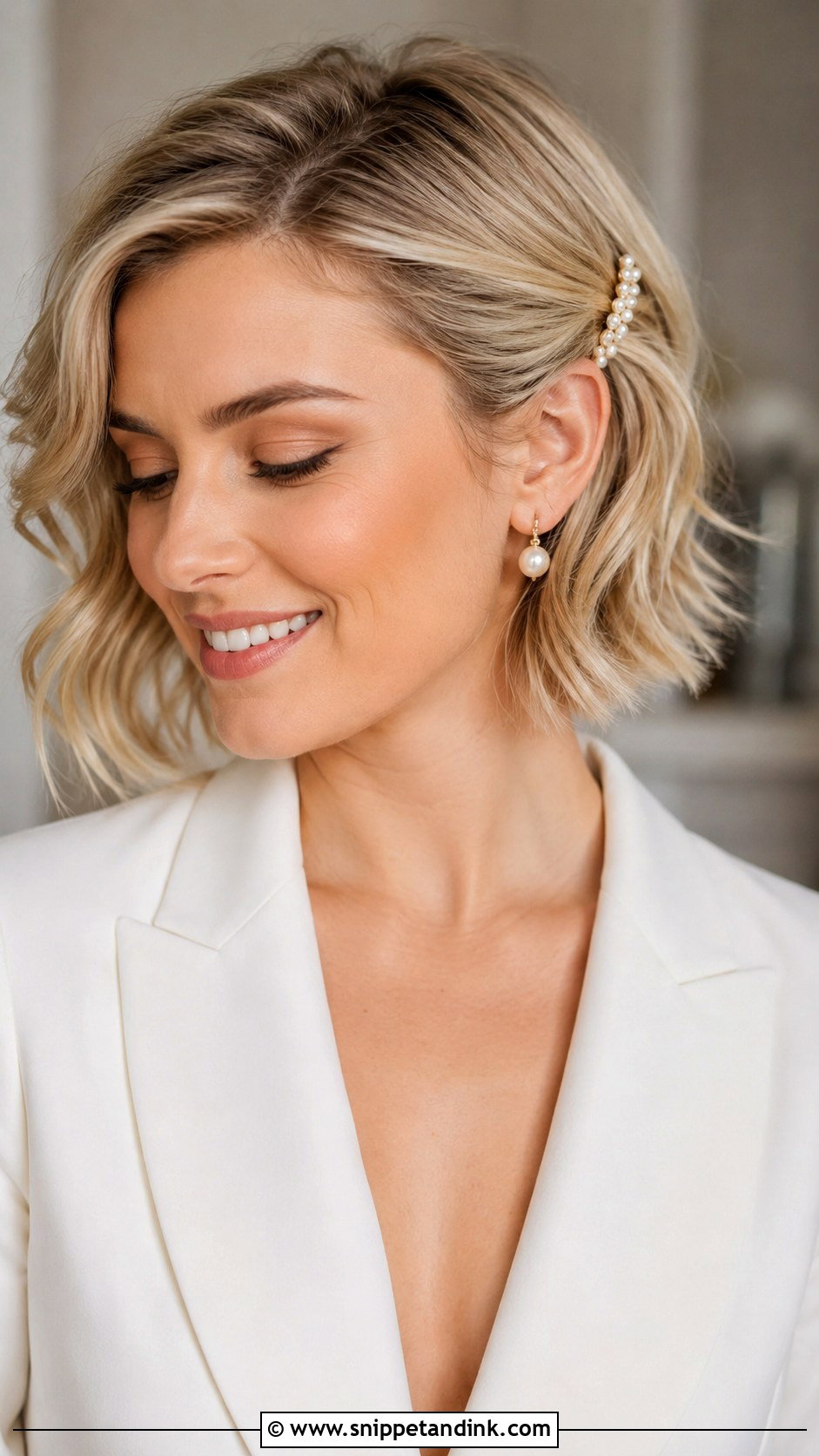
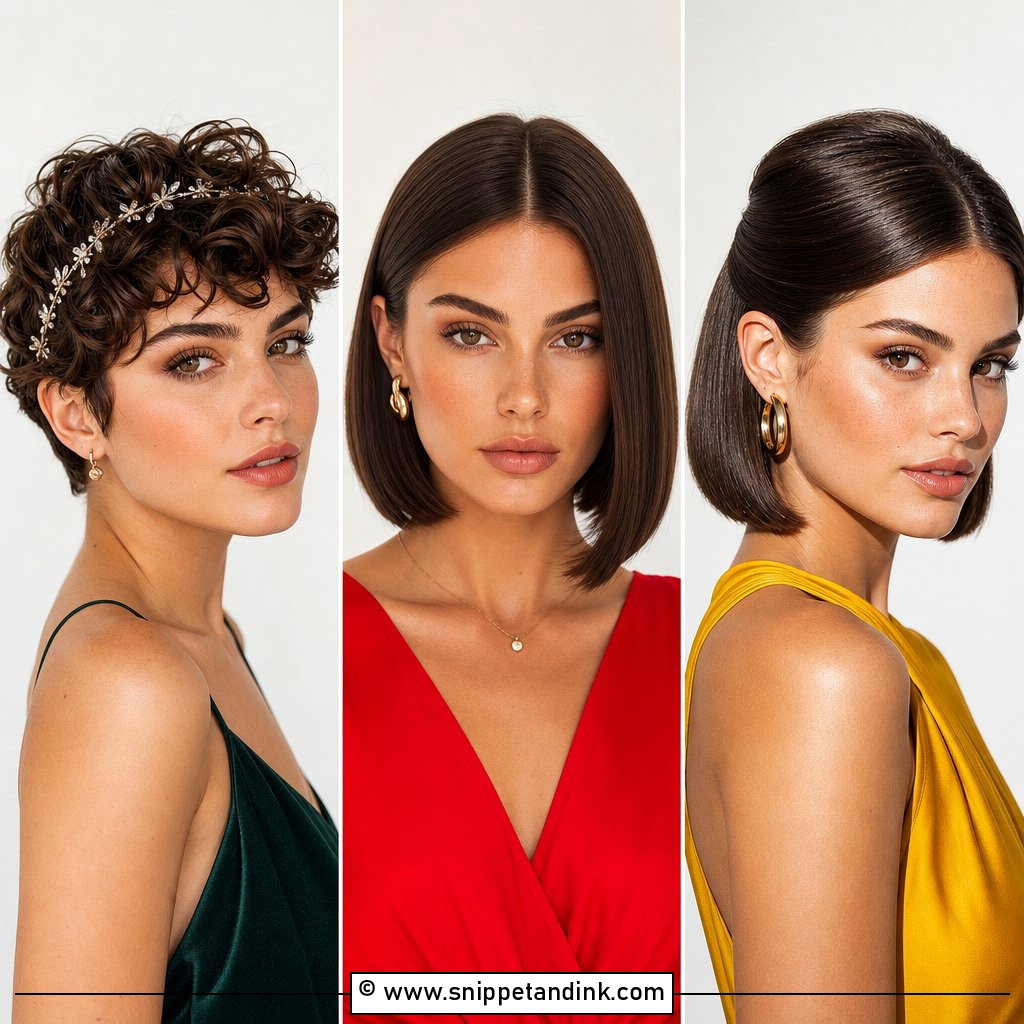
Short hair can absolutely carry engagement styling. A bob, lob, or cropped cut looks finished with polished bends, side volume and a crisp part. I use a smaller iron than for long hair, usually around an inch, and leave the last inch of each section out of the curl so the ends look smooth and not ringlet-like. Tuck one side behind the ear to show earrings, with a small pearl clip if you like. Get your trim about a week or two before, not the day before.
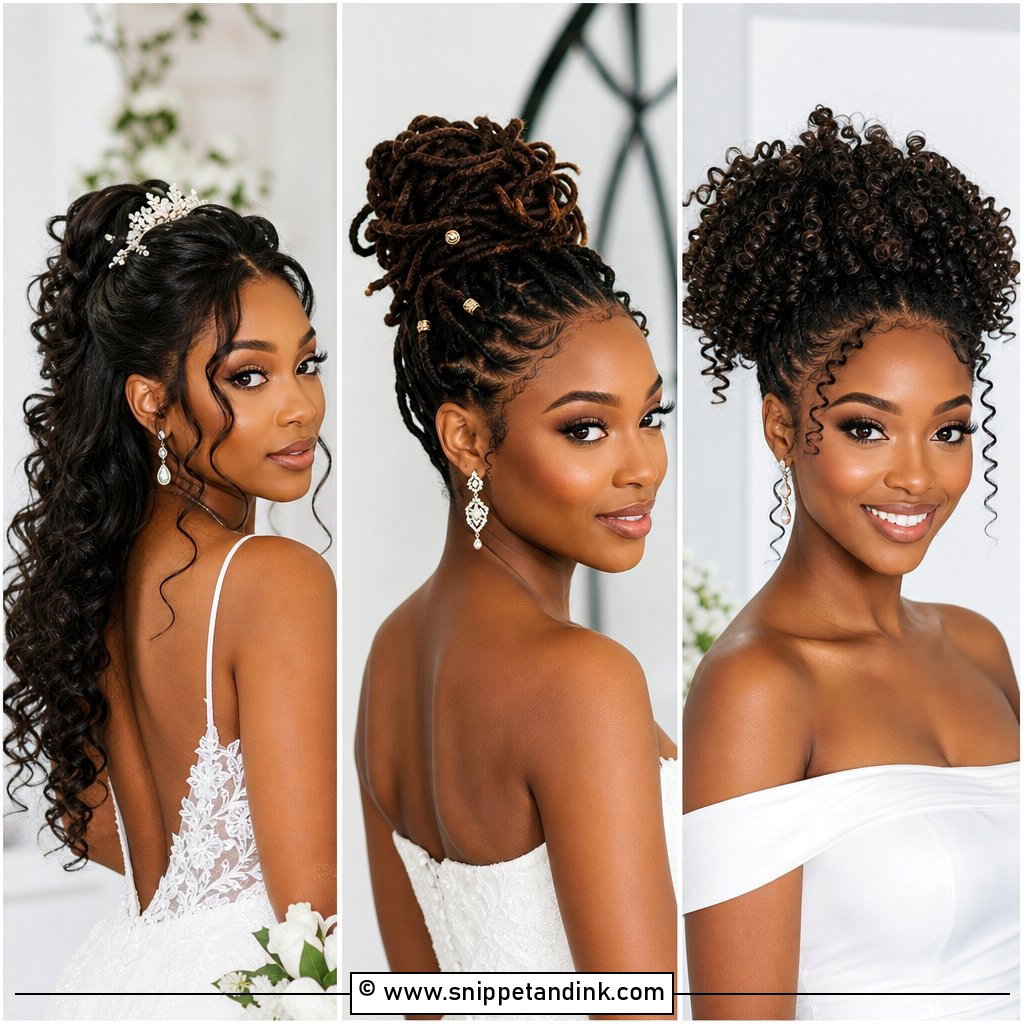
20. Bridal Engagement Bun With Face Framing Pieces
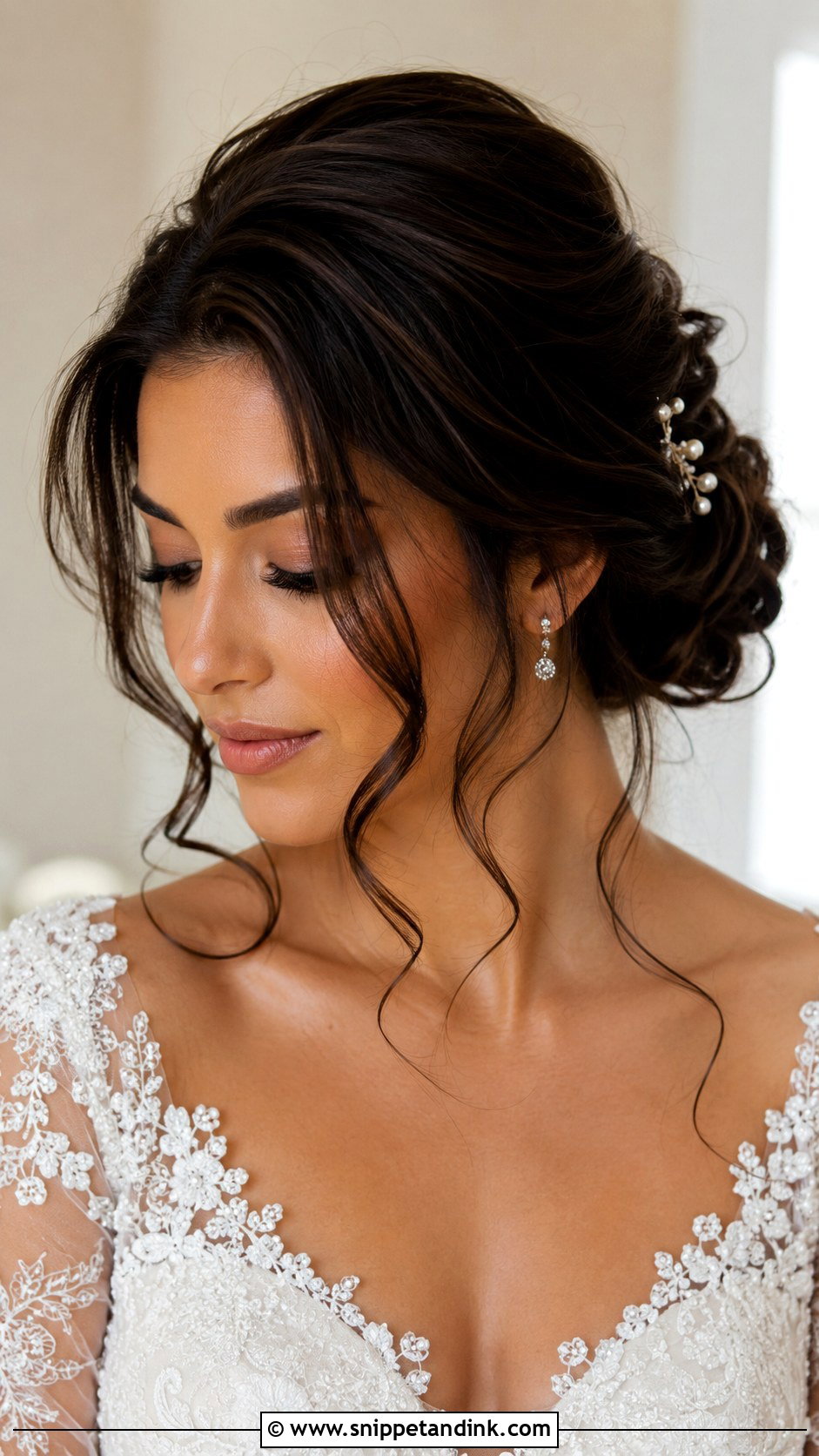
A bun with face-framing pieces is the version I end up doing most when brides want structure but not severity. The pieces decide whether it works. Longer pieces that fall to the jaw soften a strong jawline, while shorter pieces around the cheekbones lift the face. I cut nothing at the trial; we just choose where the pieces fall. Curl them lightly, separate them, and spray at a distance so they move.
Prep in the Days Before So the Style Actually Holds
Most styles that fall apart do so because of prep, not skill. Hair washed an hour before styling is slippery, so pins slide and curls drop. I ask for hair washed the night before or the morning of, fully dried, with no heavy conditioner or oil on the mid-lengths. If your scalp gets oily quickly, wash that morning and let your stylist add texture spray.
- Two to three weeks out: colour, gloss or root touch-up, so the tone has settled.
- About a week out: trim, especially for short cuts and blunt bobs.
- Two days before: avoid deep masks and oils that weigh hair down.
- The day before: wash and dry if your hair holds better with a little grip.
- On the day: arrive with dry hair and wear a button-up top so you don’t pull anything over the finished style.
A Small Emergency Pouch for a Long Celebration
Hair moves over a long engagement day, and that’s normal. I hand brides a little pouch to give to a friend: a dozen bobby pins in your hair colour, two clear elastics, a travel hairspray, a small comb, and blotting papers. If a curl collapses, twist it around a finger, pin it flat against the head for ten minutes, then release it. If a bun loosens, push pins back in at an angle toward the scalp rather than straight down. Most fixes take less than two minutes, as long as someone has the pins.
From the Ring Exchange to the Last Hug, Hair That Stays Put
The engagement style that works is the one that suits your outfit’s neckline, your hair’s density and the weather, not the one with the most saves. For outdoor or long events, I’d go with a secure bun, a ponytail or a pinned half-up. If you mostly want romantic portraits, soft waves or a textured updo give you more to photograph. Bring your saved photos to the trial and also ask your stylist plainly what will survive your hair type. That honest answer is worth more than any trend.
You'll Like These Ideas:


Leave a Reply