
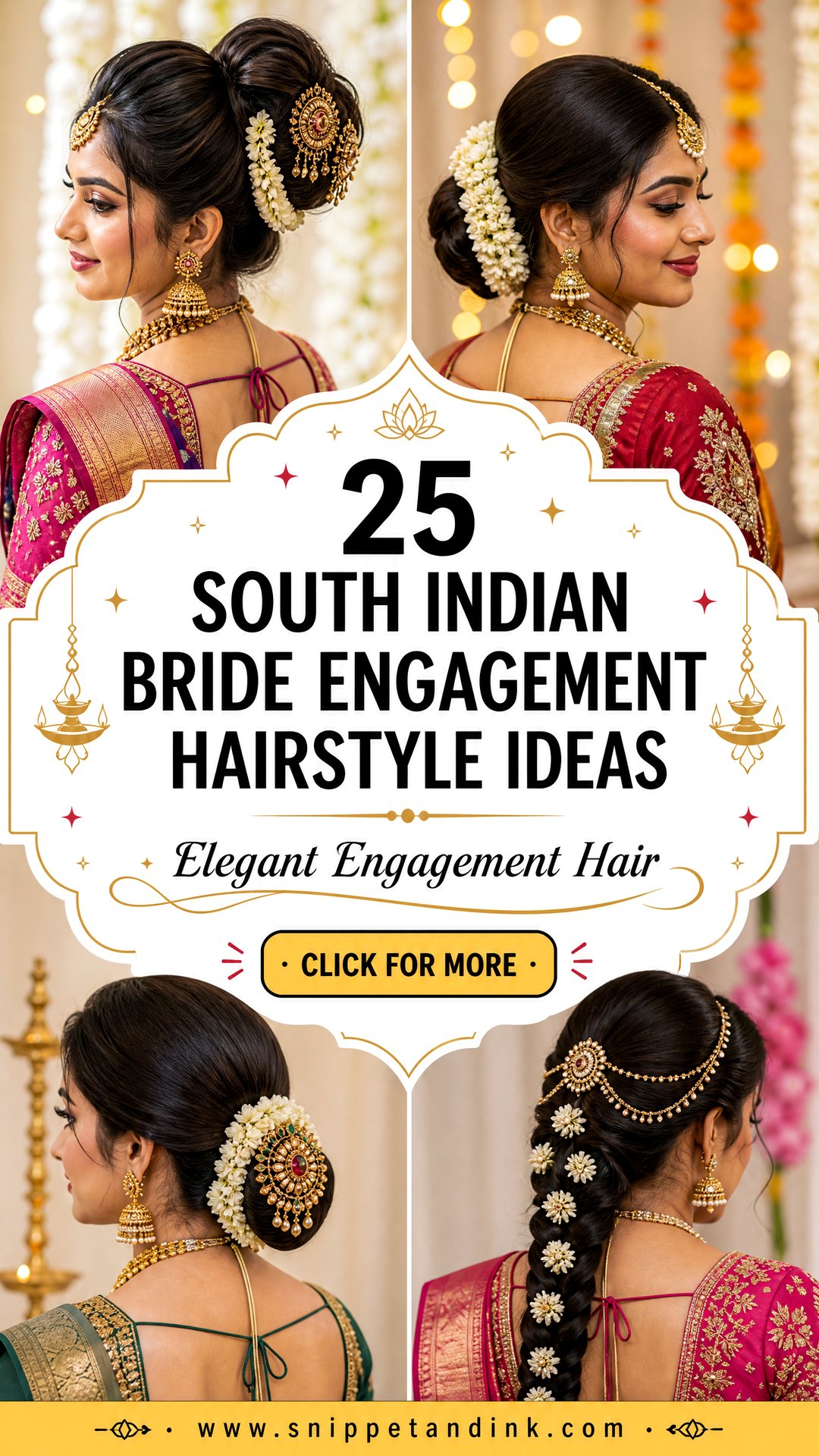
An engagement is often the first time a South Indian bride wears full flowers and gold in her hair, and it’s a useful rehearsal for the wedding. The hairstyles below run from heavy flower braids to sleek jasmine buns and loose curls. Most of what makes them work happens before the flowers go in: how the base is built, how much the hair can carry, and how long the flowers will last in a warm hall. I’ve added those notes to each, so you can see which ones suit your length, your saree and your venue. Several use fresh gajra, and a few work without any flowers at all.
Fresh Jasmine Runs on a Clock, So I Schedule Around It
Jasmine is usually sold as tight buds, and they open over a few hours. If the gajra arrives already open in the morning, it will look tired by the evening. I ask families to order buds for the day and keep them wrapped in a damp cloth in the fridge until they go into the hair. A light mist of water just before pinning helps them last.
- Jasmine: buds open through the day; most fragrant in the evening, browns fastest in heat.
- Roses: sturdier, but heavier, so place them where the braid is thickest.
- Marigolds: hold up well in heat and keep their colour.
- Artificial or silk flowers: last all day and weigh less, a sensible choice for a long outdoor ceremony.
Fresh flowers can also irritate the scalp or cause sneezing for some people. If you’ve never worn a full veni, try a small gajra for an hour beforehand.
1. Traditional Poola Jada Braid
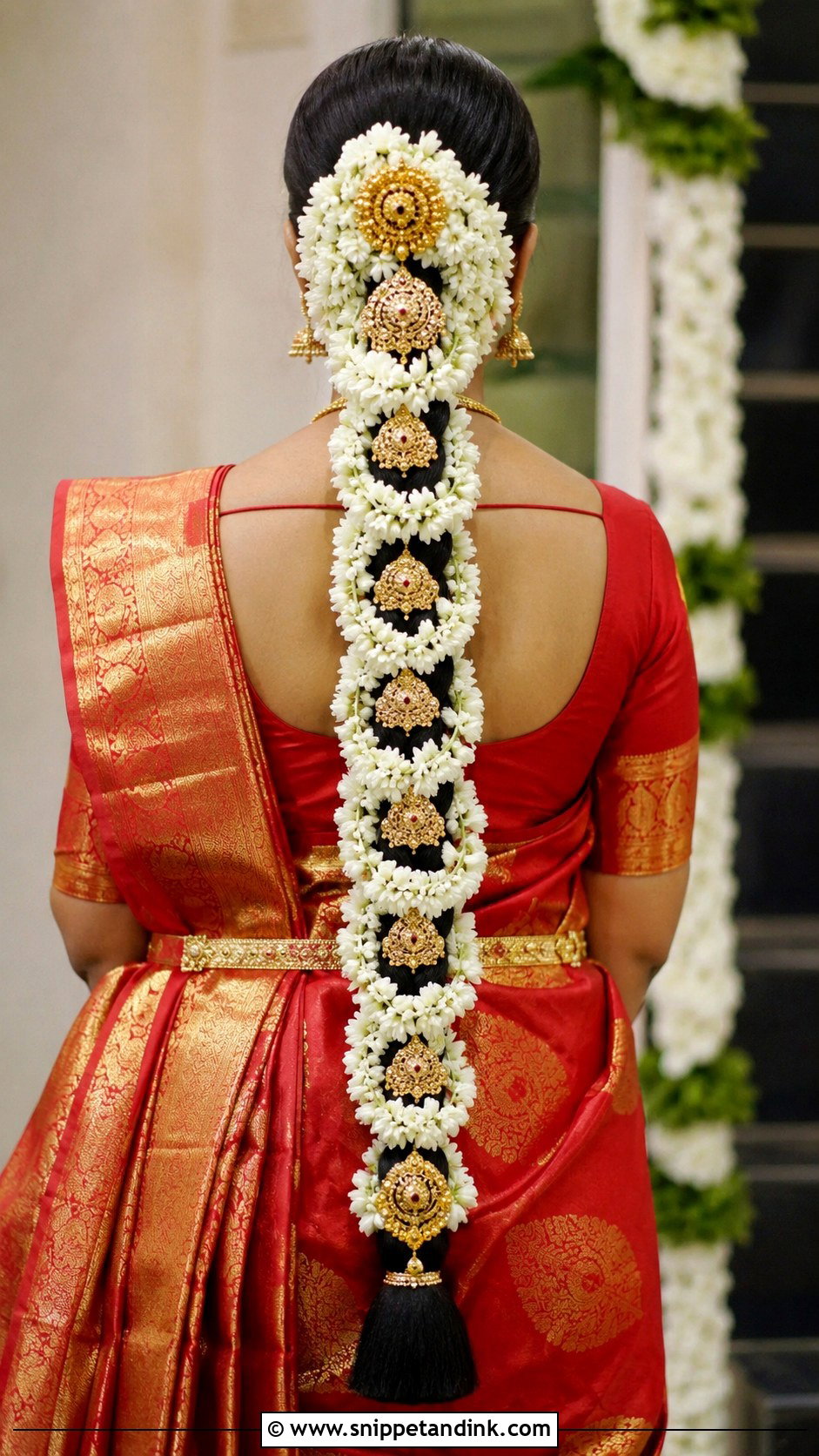
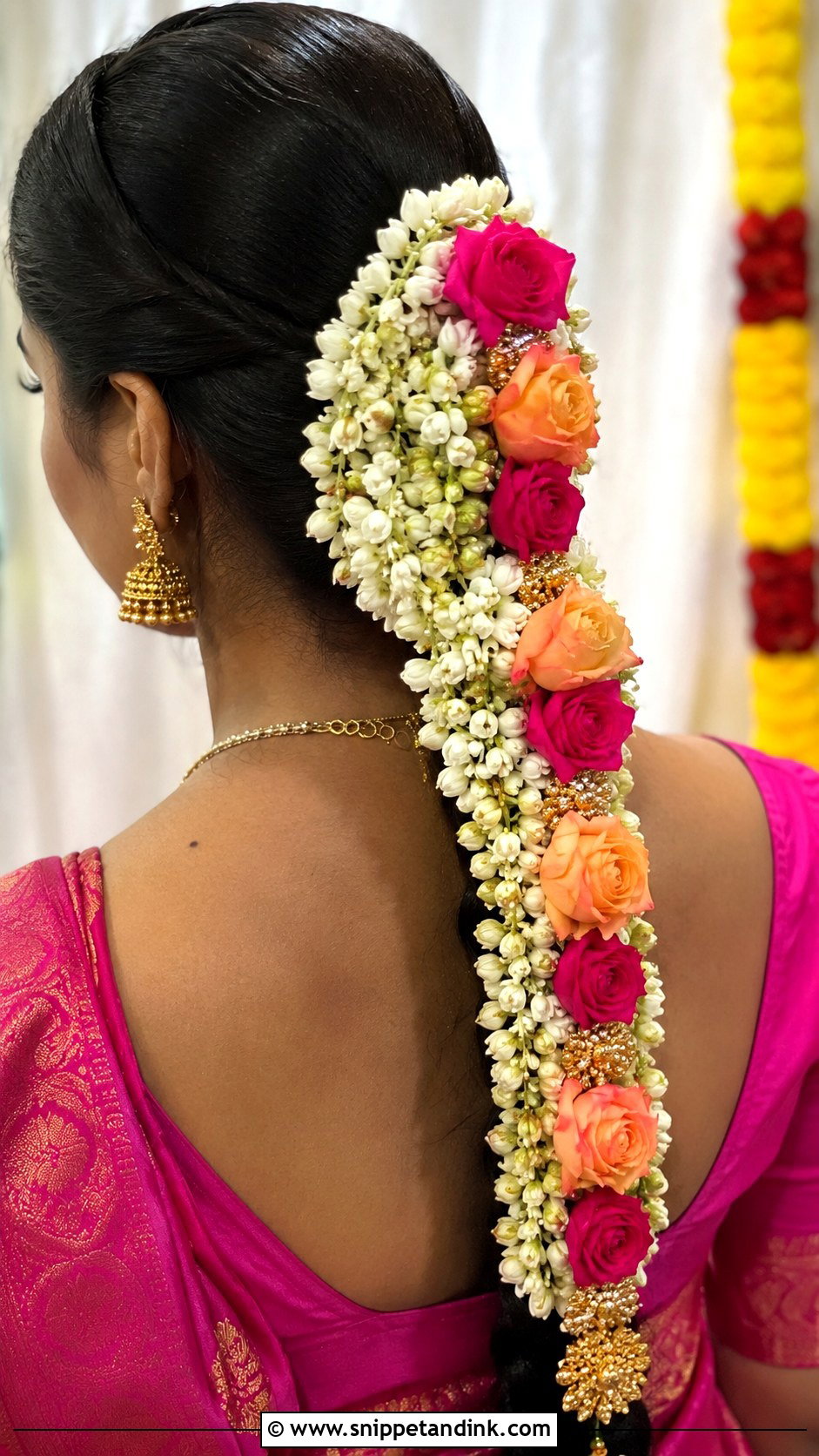
The poola jada is the braid most people picture: long, thick and covered with flowers and gold billas from crown to tip. It’s also the heaviest style on this list. I build a firm base at the crown with a small bun or a tight section of pins, because the weight of the flower panel pulls straight down and will drag a loose braid. Jasmine, roses or marigolds can make up the panel. It pairs naturally with heavy Kanjeevaram silk and makes the back view the main event in portraits.
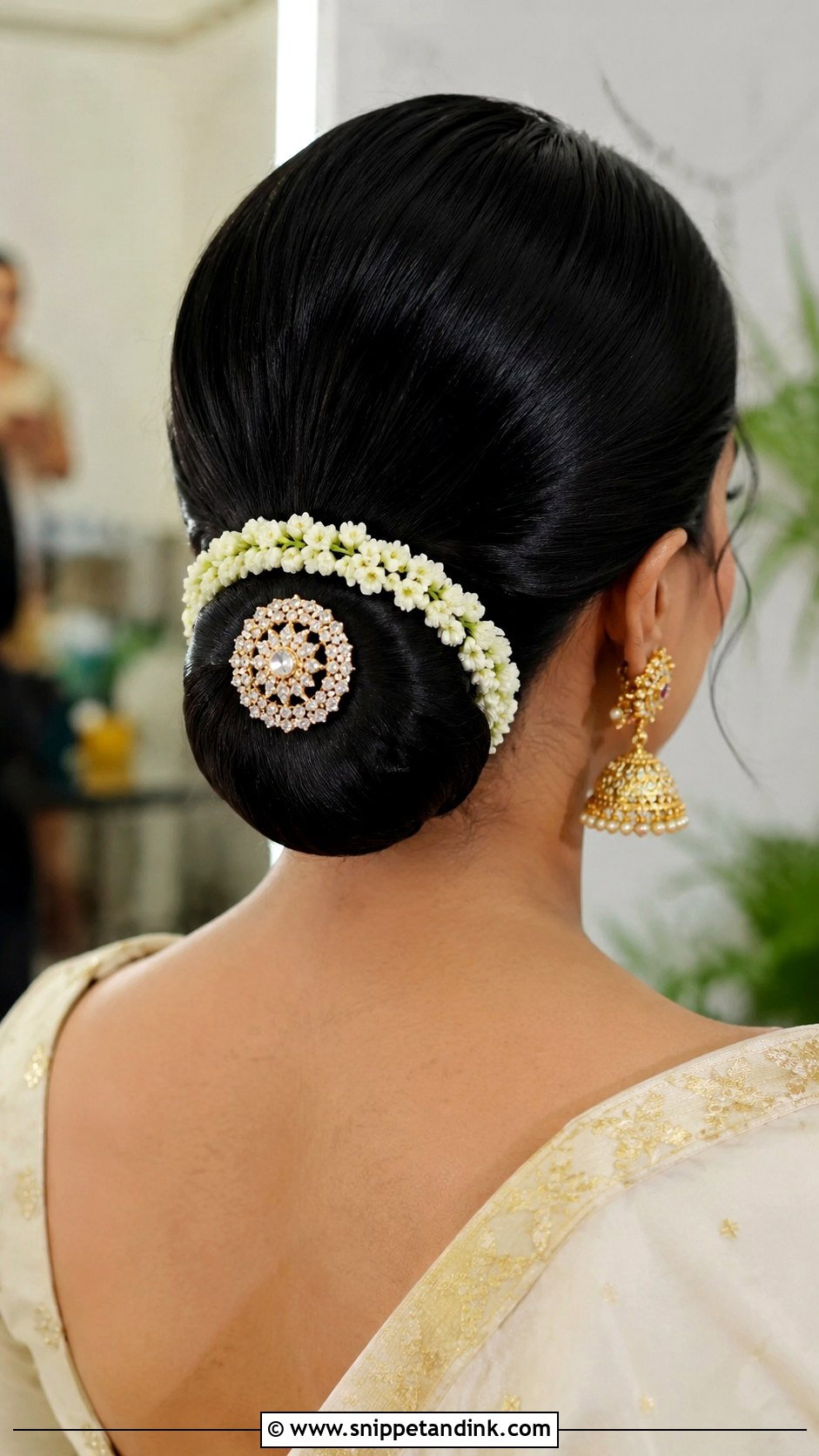
2. Jasmine Flower Low Bun
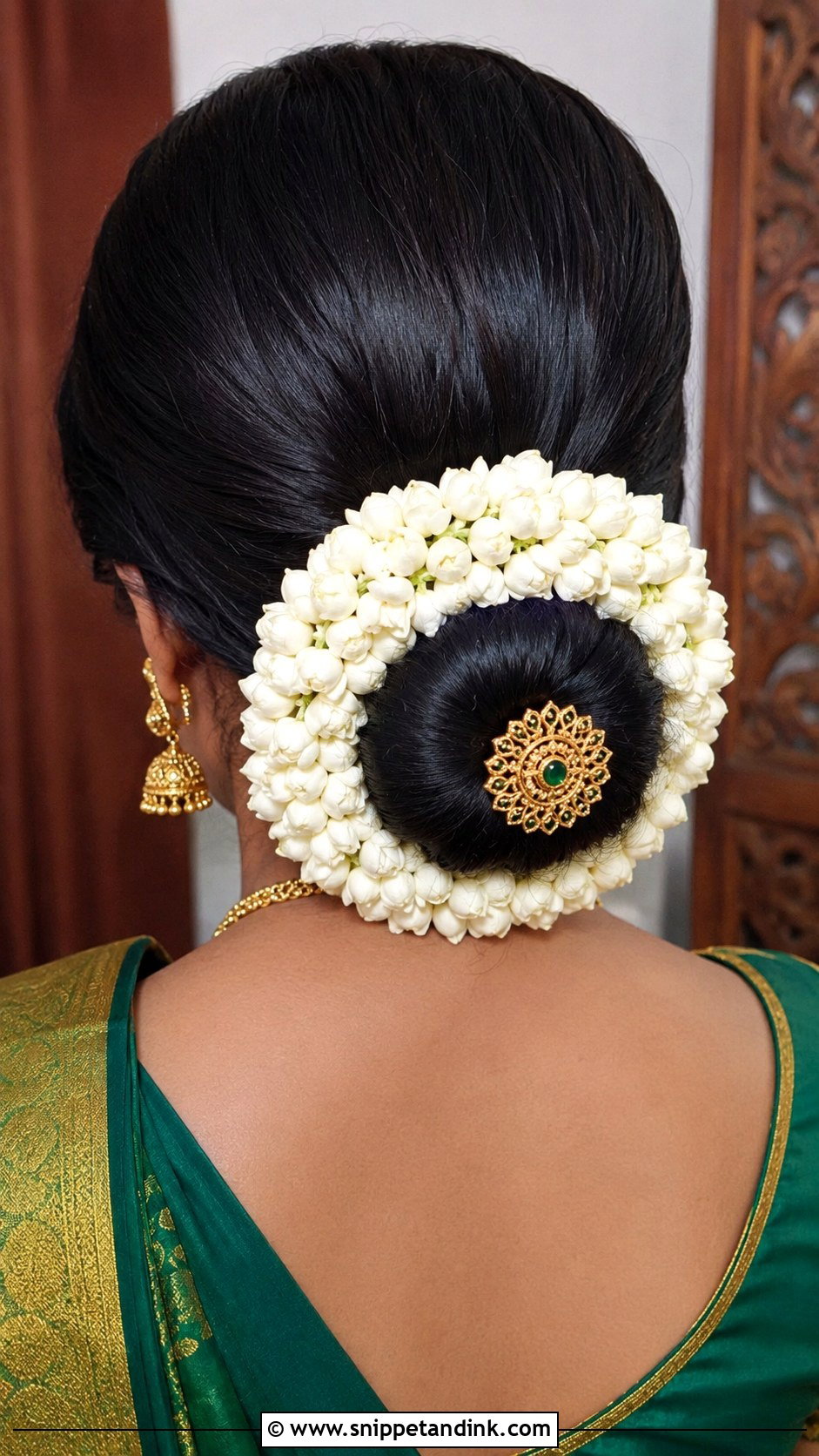
A low bun wrapped in a neat circular gajra is the style I’d suggest for a warm venue. It keeps the neck clear, it’s light and the jasmine scent lasts. I make the bun first and pin the gajra on in three or four places with U-pins, so it sits flat instead of sliding to one side. A small gold brooch in the centre covers the join. It’s comfortable through long rituals and barely moves.
3. Golden Jada Billa Braid
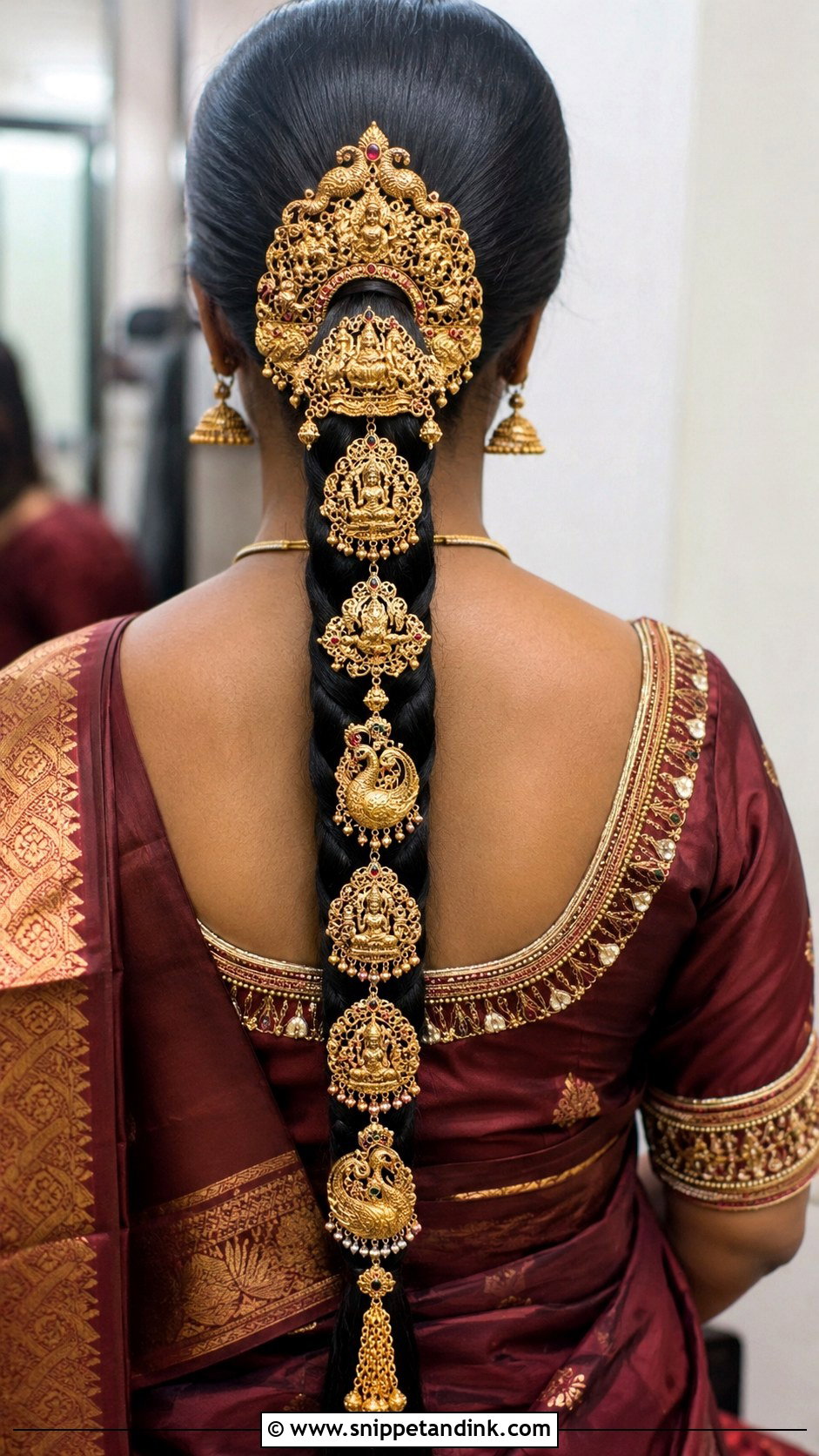
Billas are the gold pieces that run down the length of the braid, in temple, peacock or floral designs. Because they have no flowers, the look stays the same from morning to evening. They are heavy, though. I braid tightly over a hair extension if the bride’s own braid is thin, and stitch or pin each billa through the braid, not just over it, so nothing slips. It pairs with traditional gold jewelry and a rich silk. If you want the braid itself to read as jewelry, this is the one.
4. Veni-Style Flower Bun
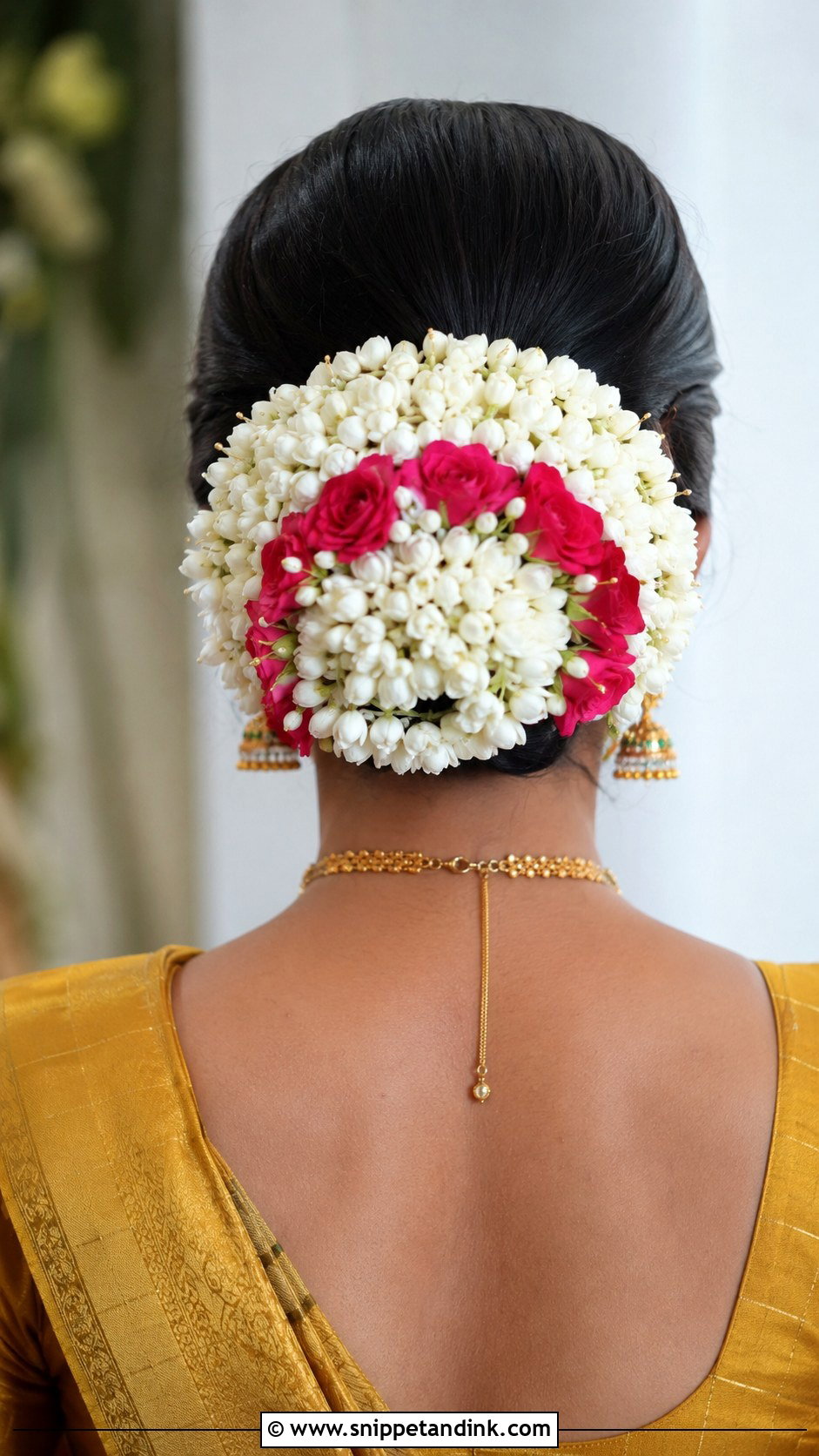
The veni bun is popular across Tamil Nadu and Kerala: a low round bun completely covered by a thick veni of jasmine and roses. The density of flowers creates a full crown at the back. Gold pins or a brooch secure the centre. I’d mention that a dense veni can be warm against the neck in a hot hall, so a bun placed slightly higher than the nape helps. White jasmine with coloured roses gives the arrangement depth. It suits silk sarees and lighter outfits equally.
5. Half-Up Half-Down With Curls
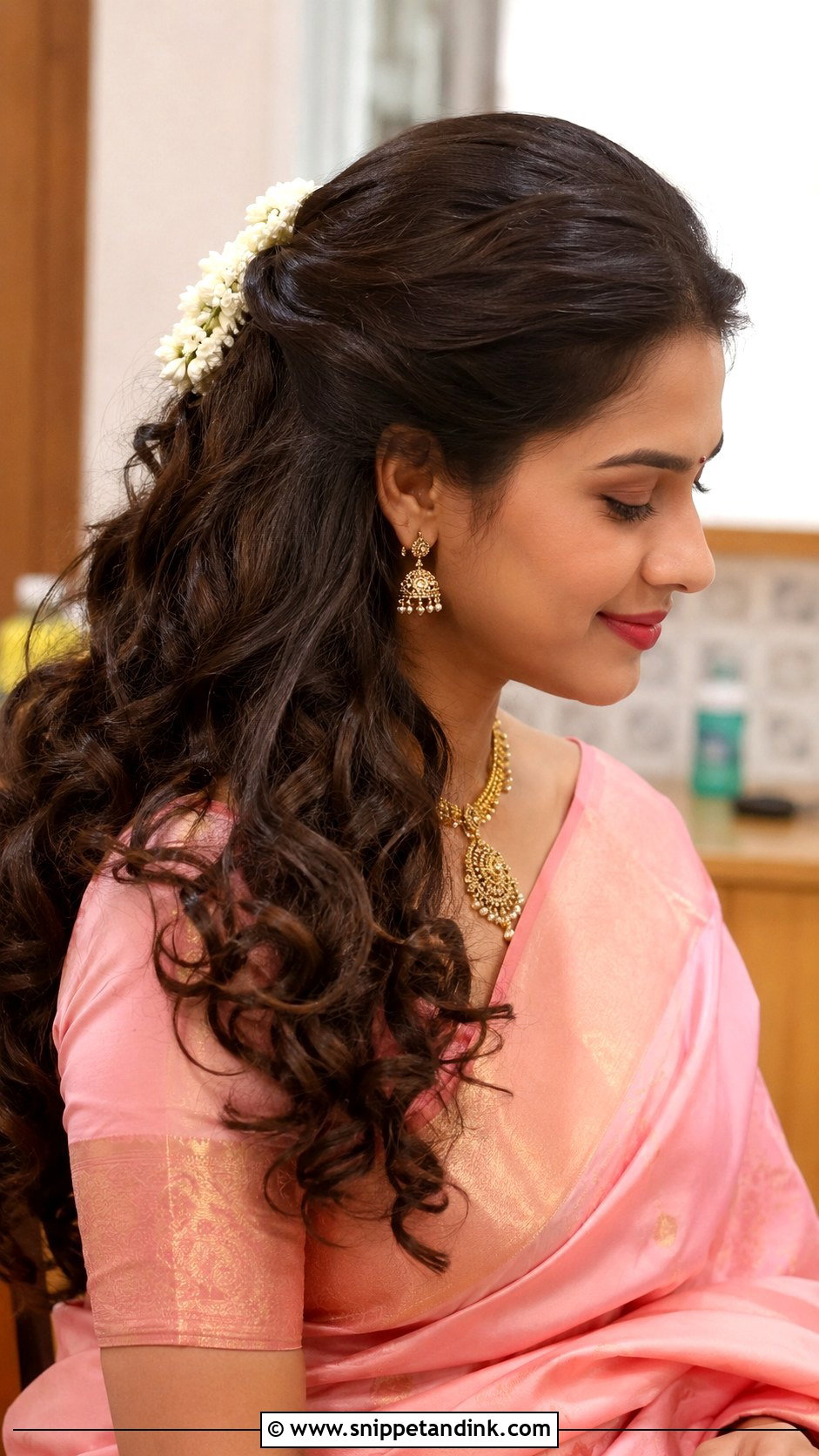
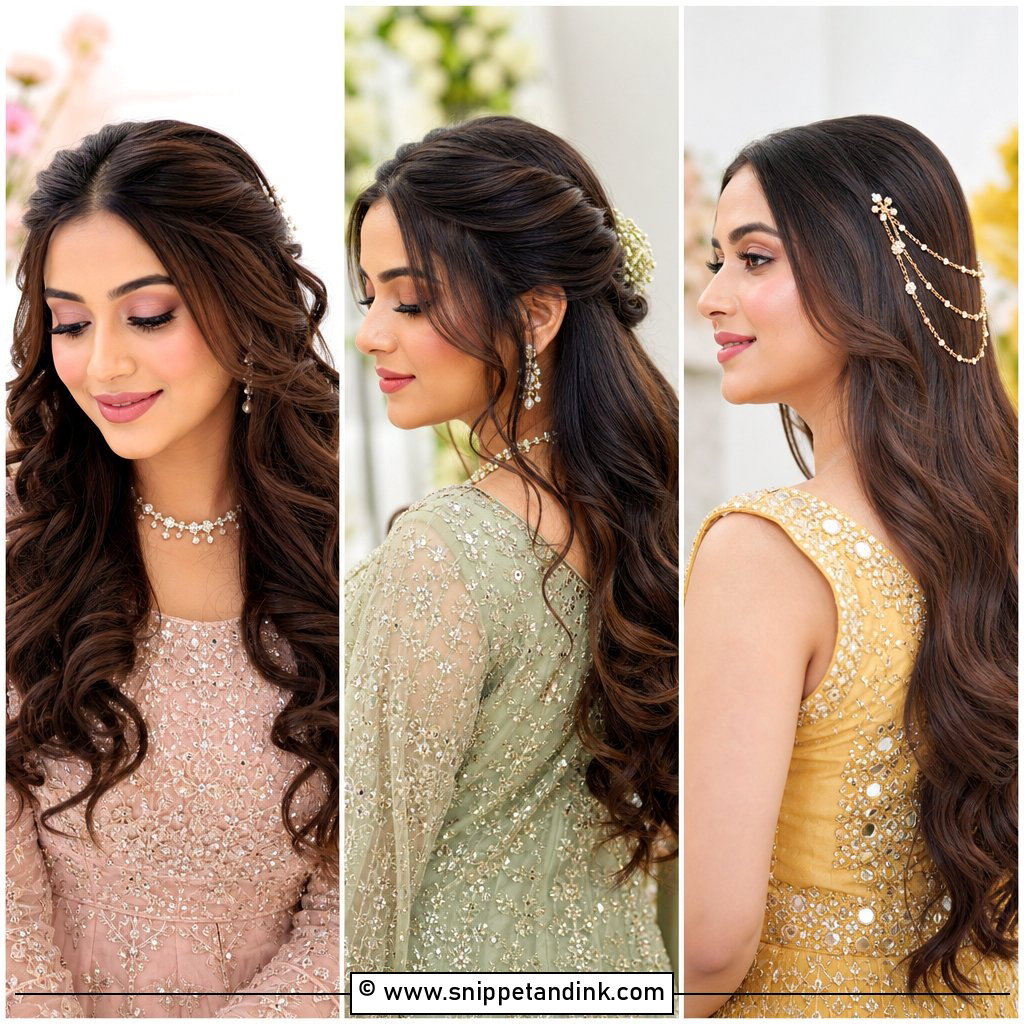
Half-up, half-down is the most-requested modern option. The top section is pulled back and pinned, curls fall loose, and a small gajra at the crown keeps the tradition. The challenge with Indian hair, which is often thick and heavy, is making the curls last. I set them with a strong mousse before curling and pin each curl to cool, otherwise they drop within a couple of hours, especially in humidity. It frames the face and softens a strong jawline.
6. Diamond Jada Bridal Braid
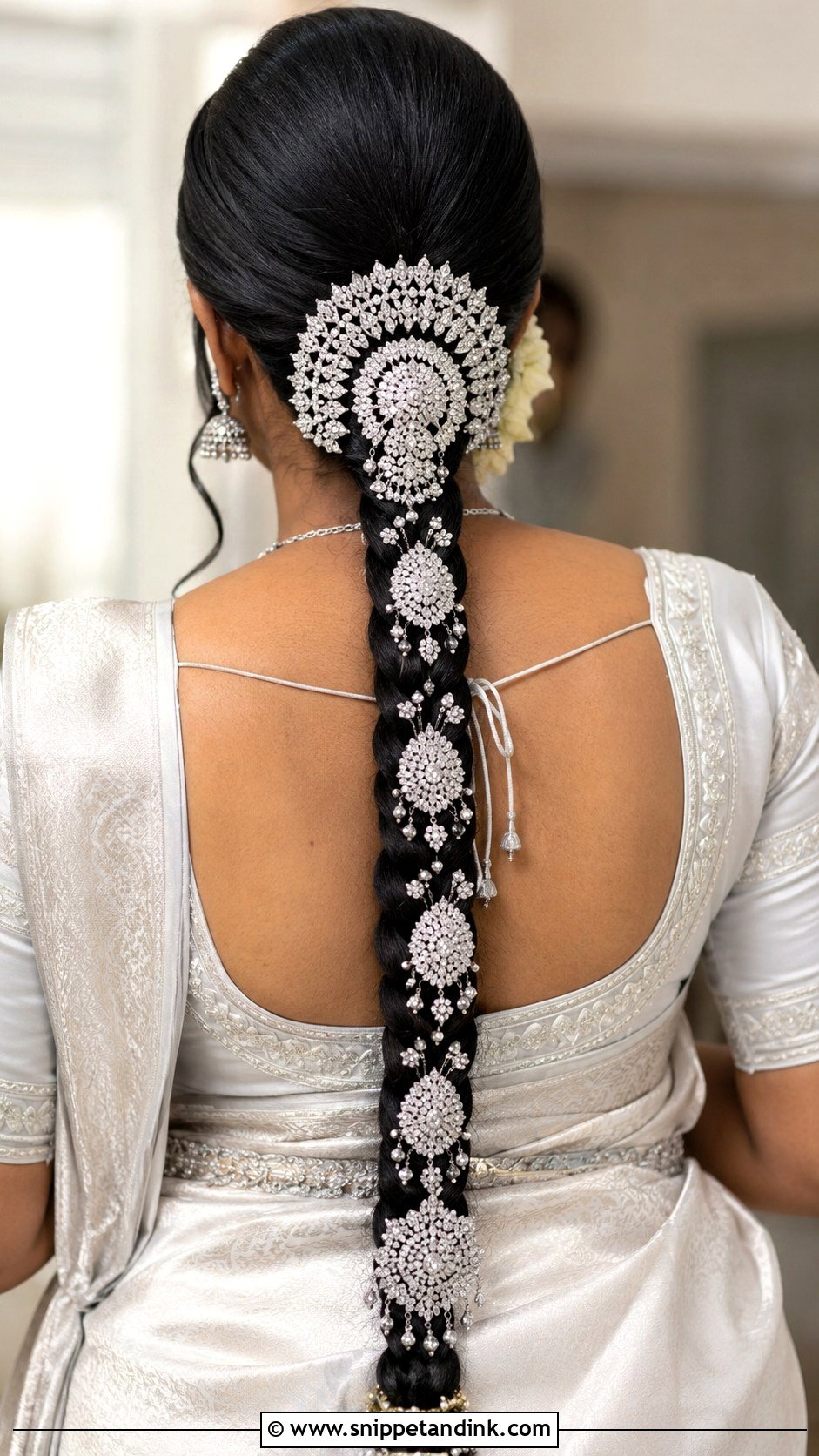
Silver and crystal jada pieces give a cooler sparkle than gold. They suit silver or white Kanjeevaram silks and anyone wearing white-gold or diamond jewelry. I keep flowers to a minimum here, since the stones are the point. Under evening lights the crystals catch every movement, which is why this braid suits a night engagement more than a daytime one. Check the weight before the day; some crystal sets are heavier than they look.
7. Kondai Bun With Gold Pins
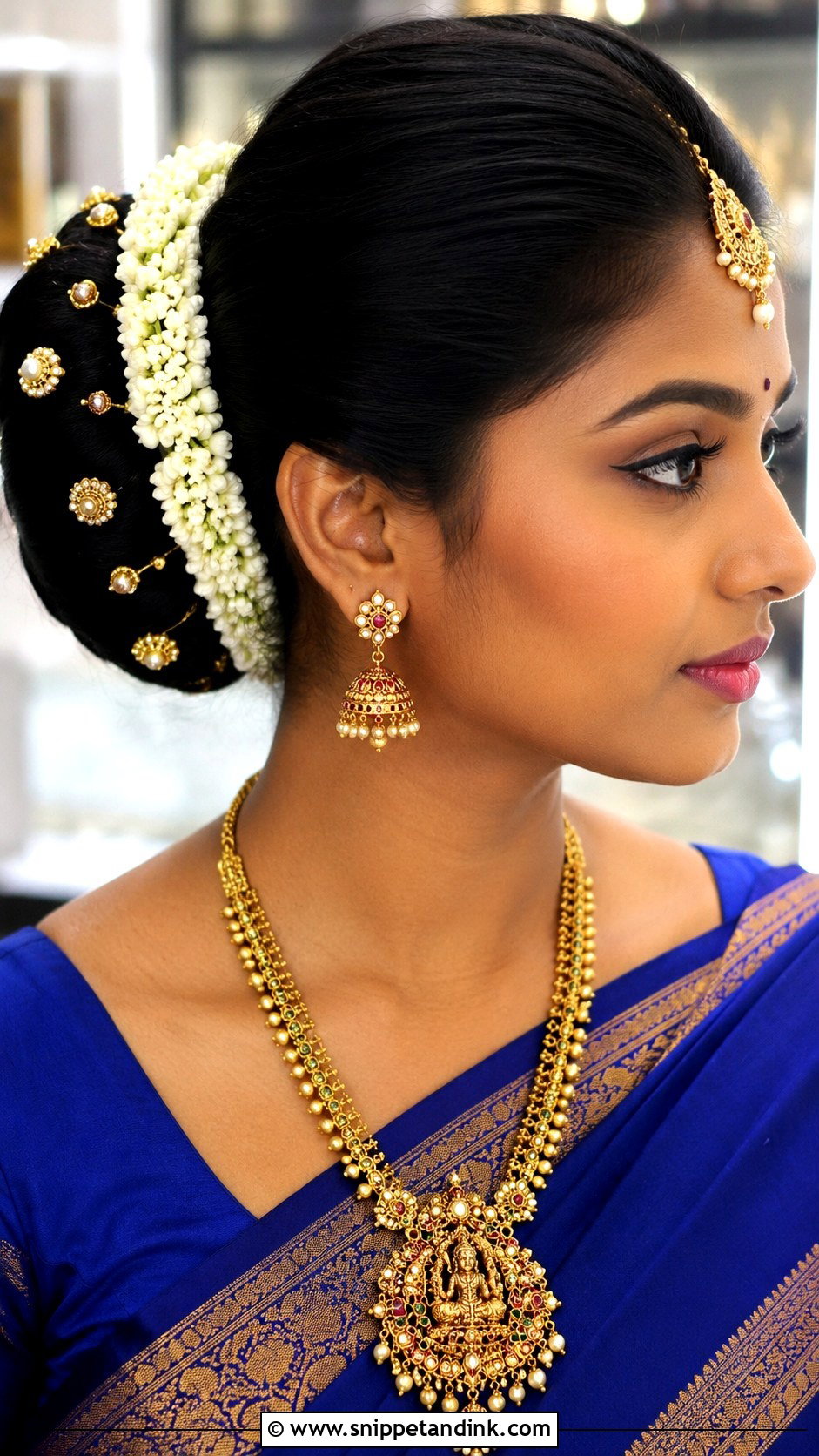
The kondai is the classic bun, set either at the nape or high on the crown. A high kondai needs a solid base, so I usually fill it with a bun donut or a padding of your own hair, then wrap and pin from all sides. Gold pins, pearls or a brooch decorate the centre. It works with temple jewelry and heavy silk drapes and keeps attention on the face. A thin gajra around it adds the floral note.
8. Baby’s Breath Braid
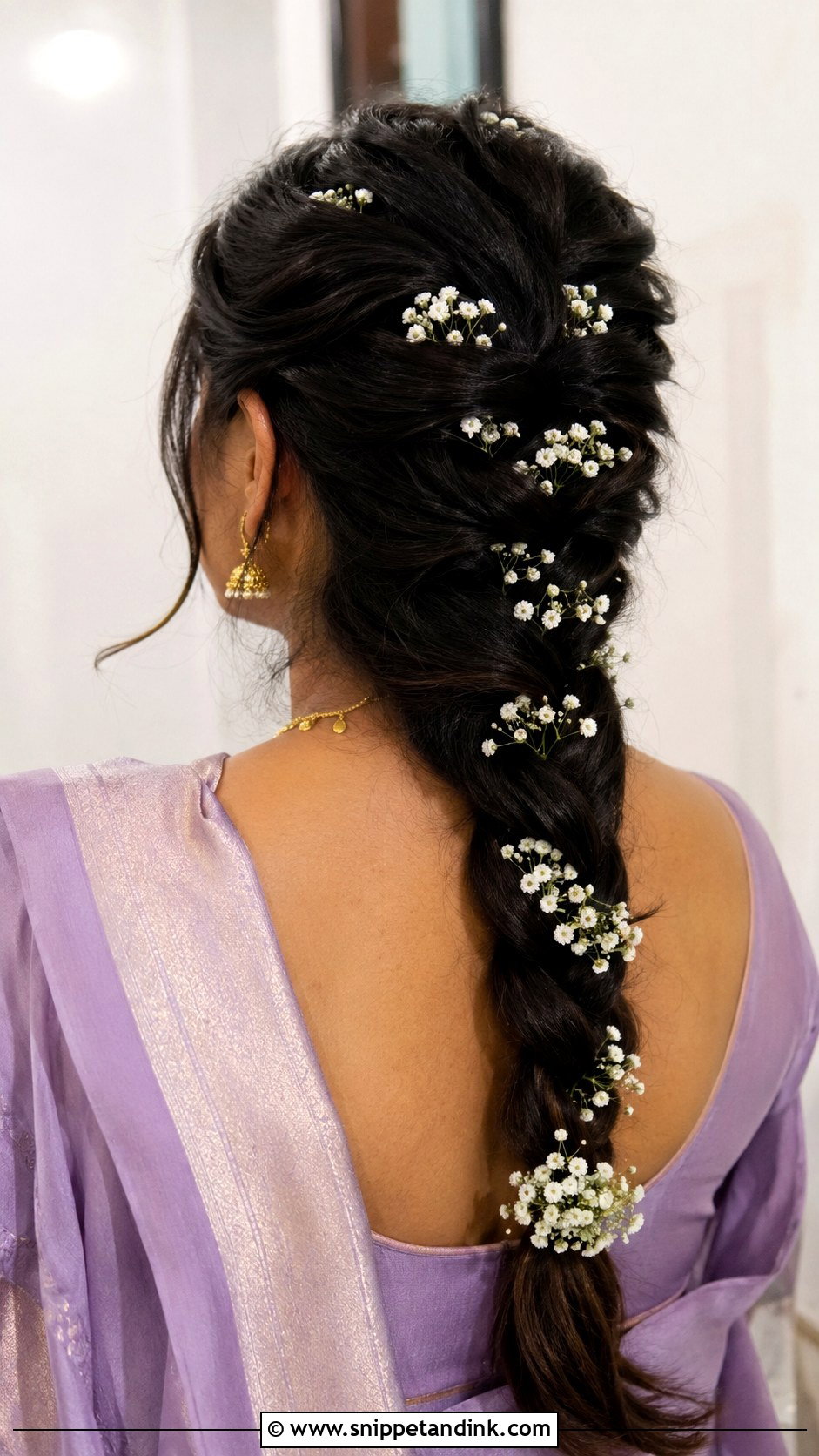
Baby’s breath is a lighter alternative to the heavy jada. Small white sprigs are tucked through a loose or structured braid. They hold up better than jasmine in heat and don’t brown as quickly, which matters on a long afternoon. I insert each sprig with a bobby pin through the stem rather than relying on the braid to grip it. It suits pastel and lighter sarees.
9. Side Swept Braid With Flowers
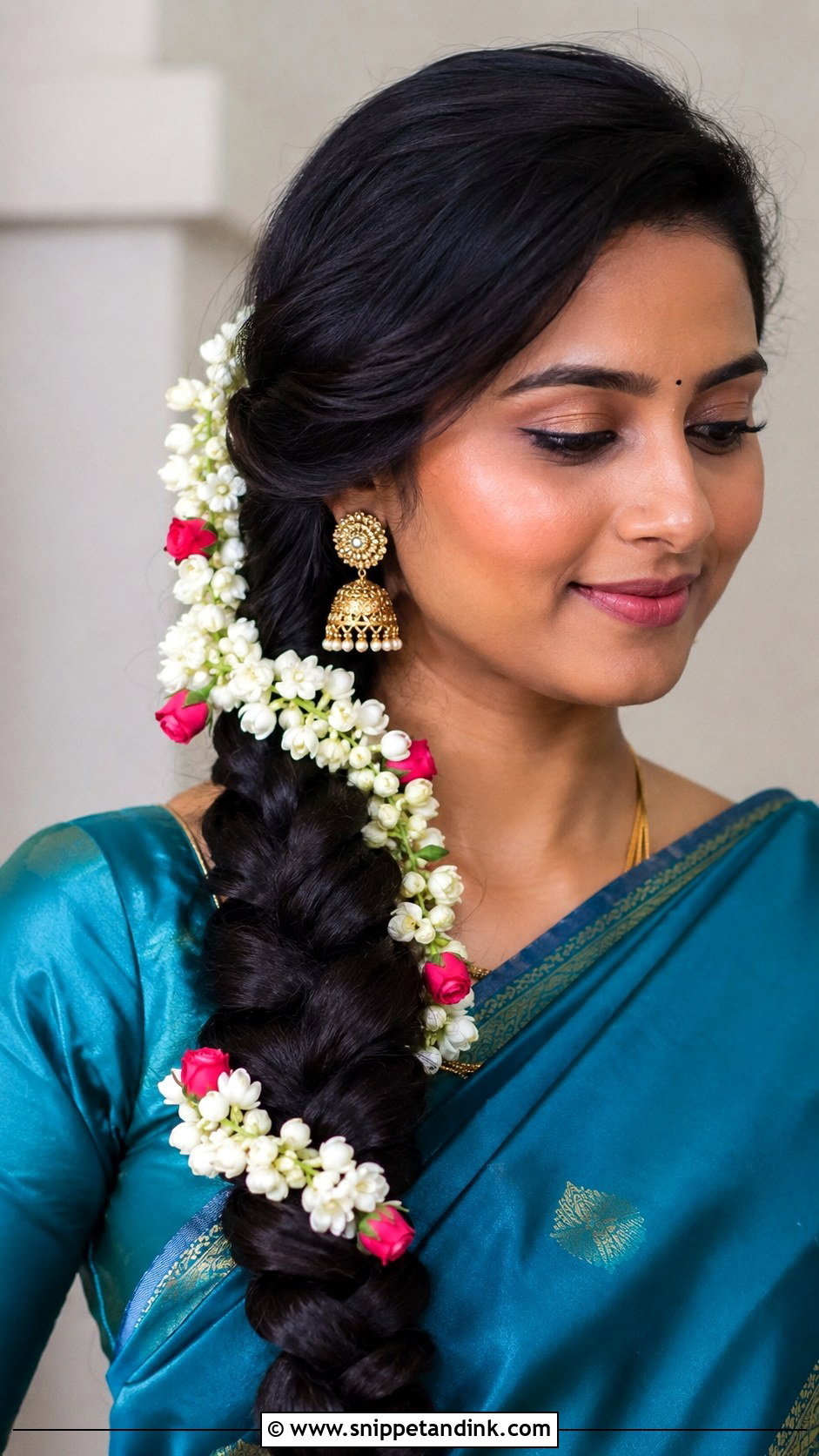
A side braid drapes over one shoulder, decorated with flowers or gold accents. It shows off earrings and necklaces well. On very thick hair, I start the braid behind the ear rather than at the nape, so it lies flat against the neck instead of bunching. Jasmine, roses or small buds add colour. It works for both small and large ceremonies and shows the saree border clearly.
10. Floral Bun With Gajra Wrap
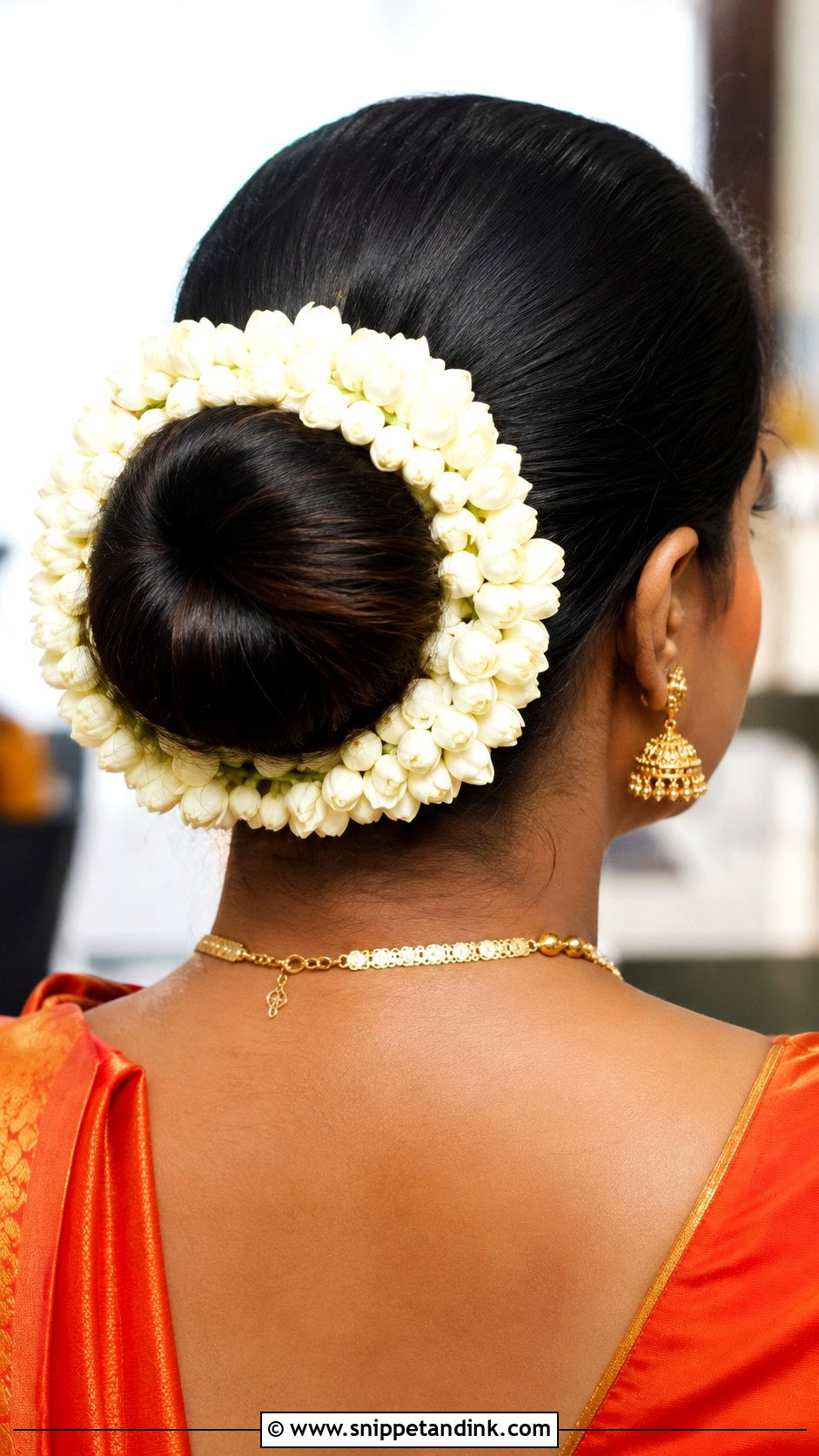
A bun fully encircled by a jasmine gajra is a South Indian classic. A neat bun forms the base and the gajra wraps all the way around it. I secure the gajra with pins at several points so it holds its circle when you bend to touch elders’ feet. Roses or coloured buds can be layered in. It suits brides who want flowers without the weight of a full braid.
11. High Bun With Temple Jewelry
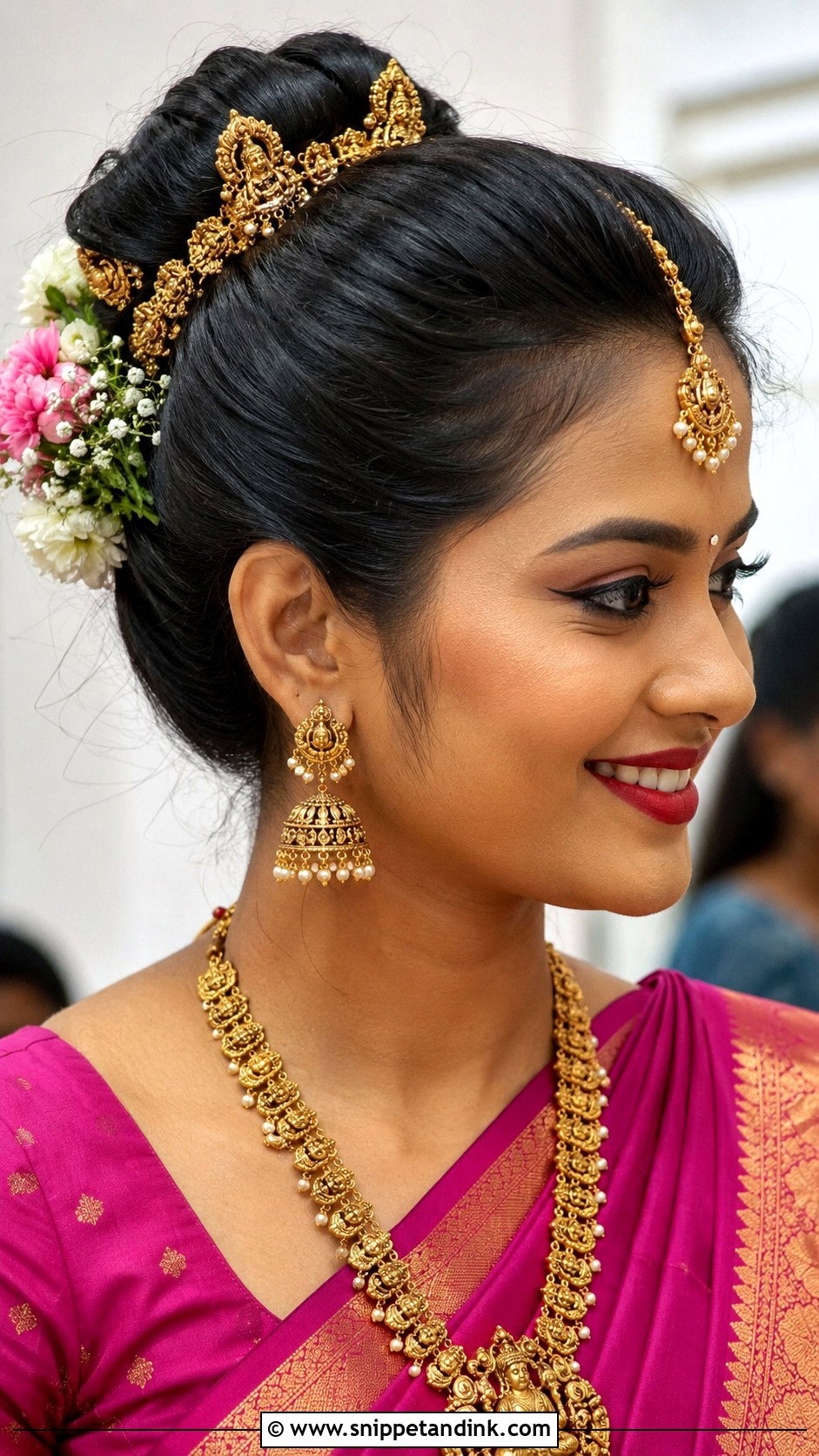
A high bun at the crown lengthens the neck and frames statement earrings. Temple-style hair ornaments and pins add heritage detail. High buns need more anchoring than low ones because they sit above the head’s natural balance point, so I use a padded base and cross-pin from below. It suits heavy Kanjeevaram silk and a gold maang tikka. A small gajra or flower cluster at the base adds tradition.
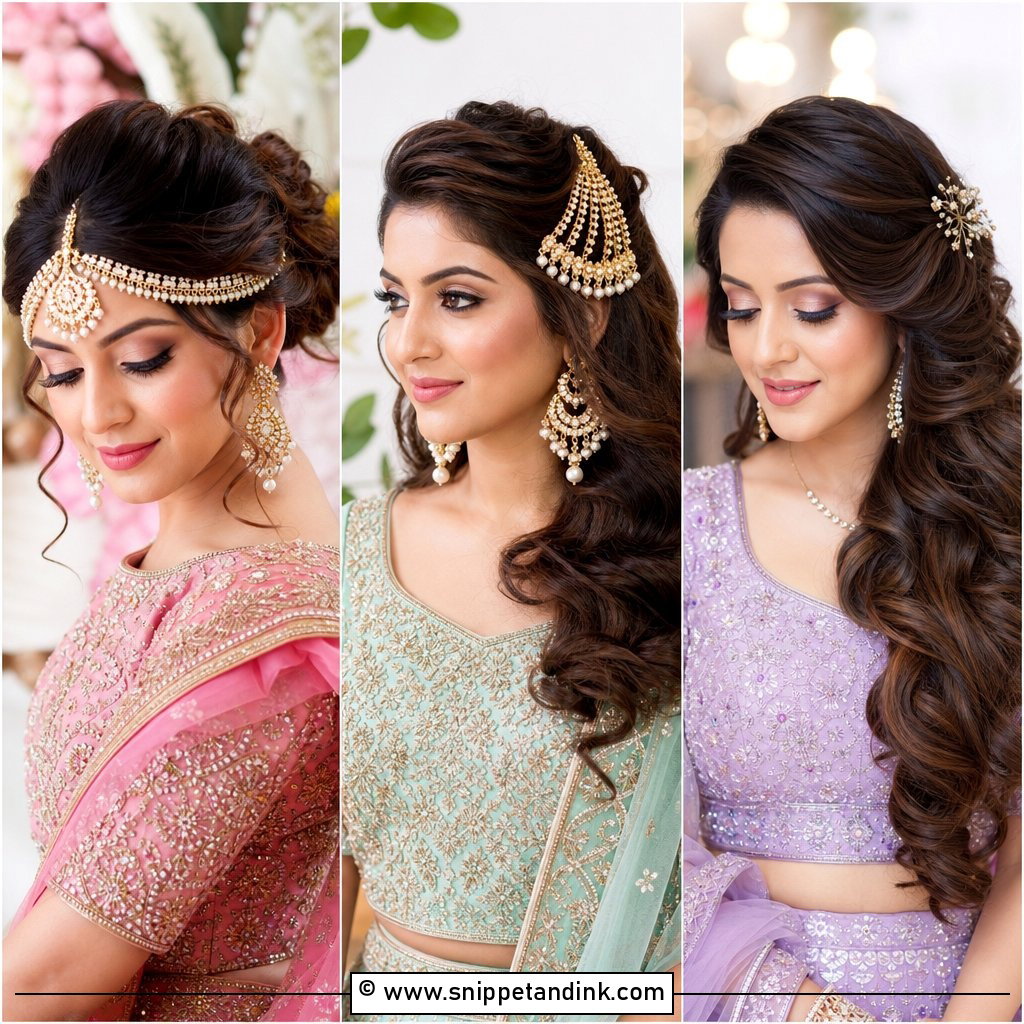
12. Loose Curls With Maang Tikka
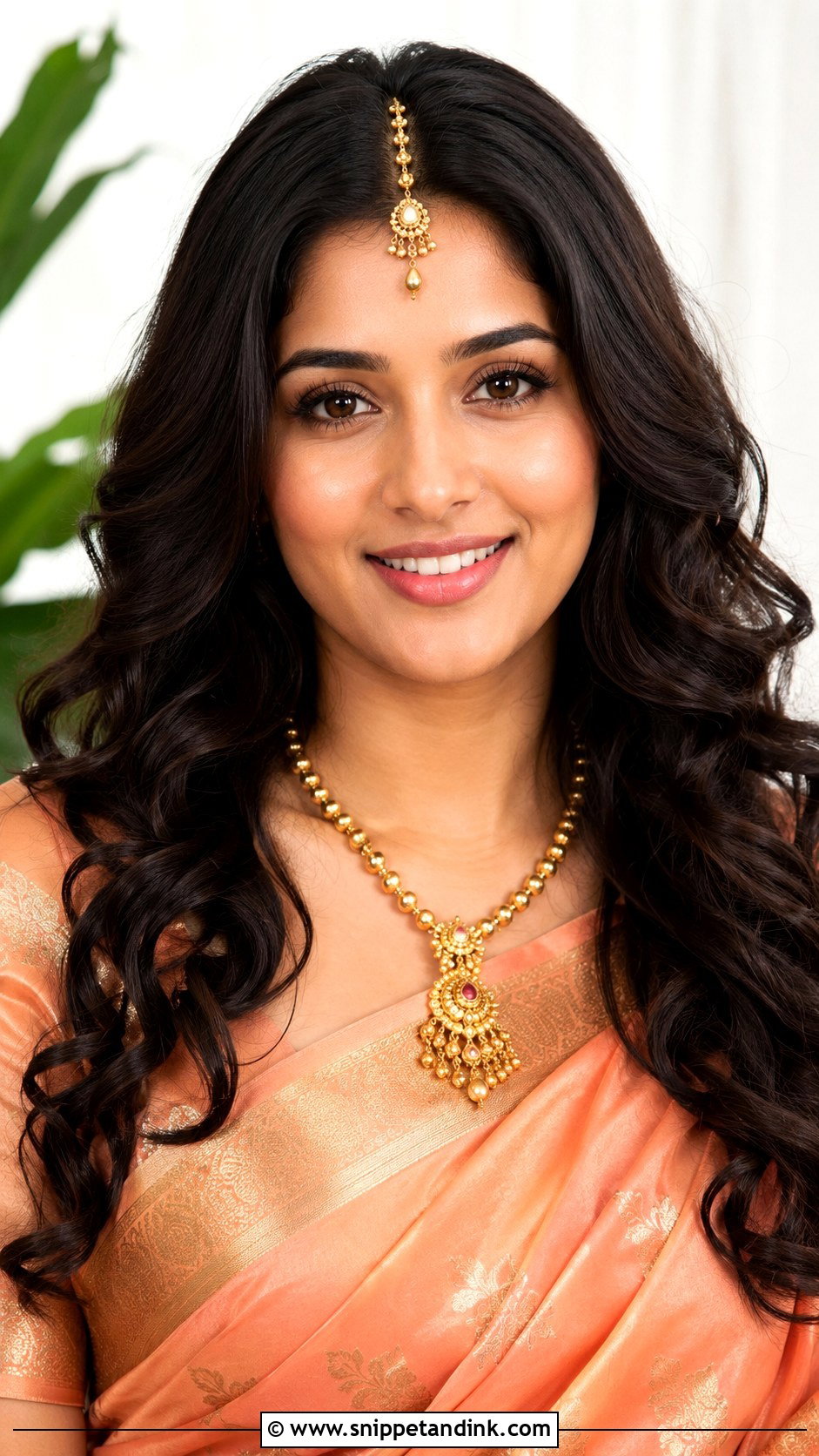
Loose curls with a maang tikka is the open-hair option for a modern engagement. The tikka sits on the centre part and holds the look together. I pin the tikka’s chain under a small section at the crown so it doesn’t pull on the hair or slide. A matha patti can replace it for a fuller frame. Curls need setting with mousse and pinning to last, and humid weather is the biggest risk.
13. Fishtail Braid With Flowers
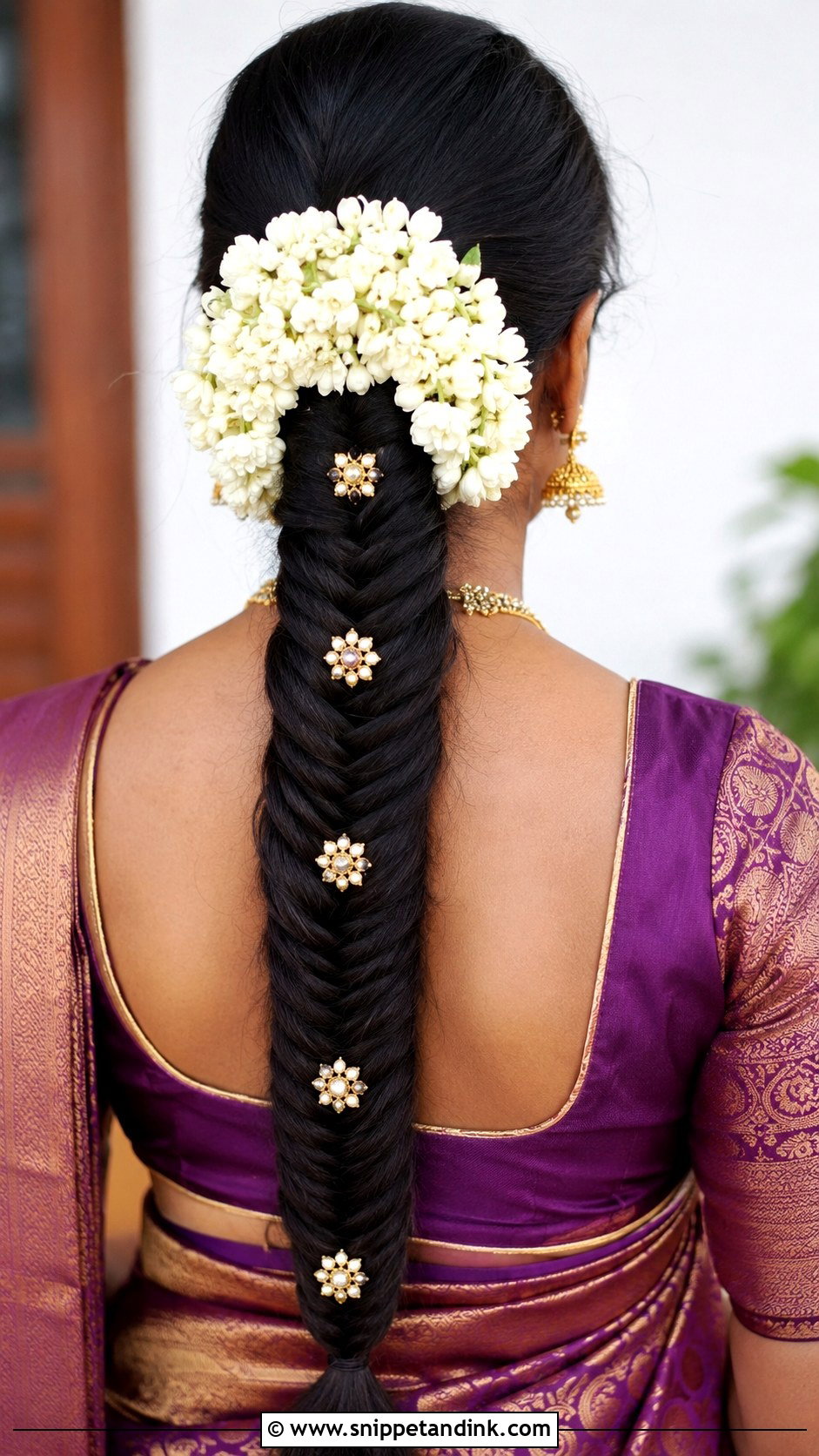
The fishtail has a fine woven texture that looks detailed close up. Fresh flowers or small gold pieces tuck between the strands. A tight fishtail looks structured; a loosened one looks softer. I braid it tight first, then pull the edges out, because braiding loosely from the start leaves a weak braid that unravels. It works over the shoulder or down the back with silk or contemporary sarees.
14. Maang Tikka Bun Look
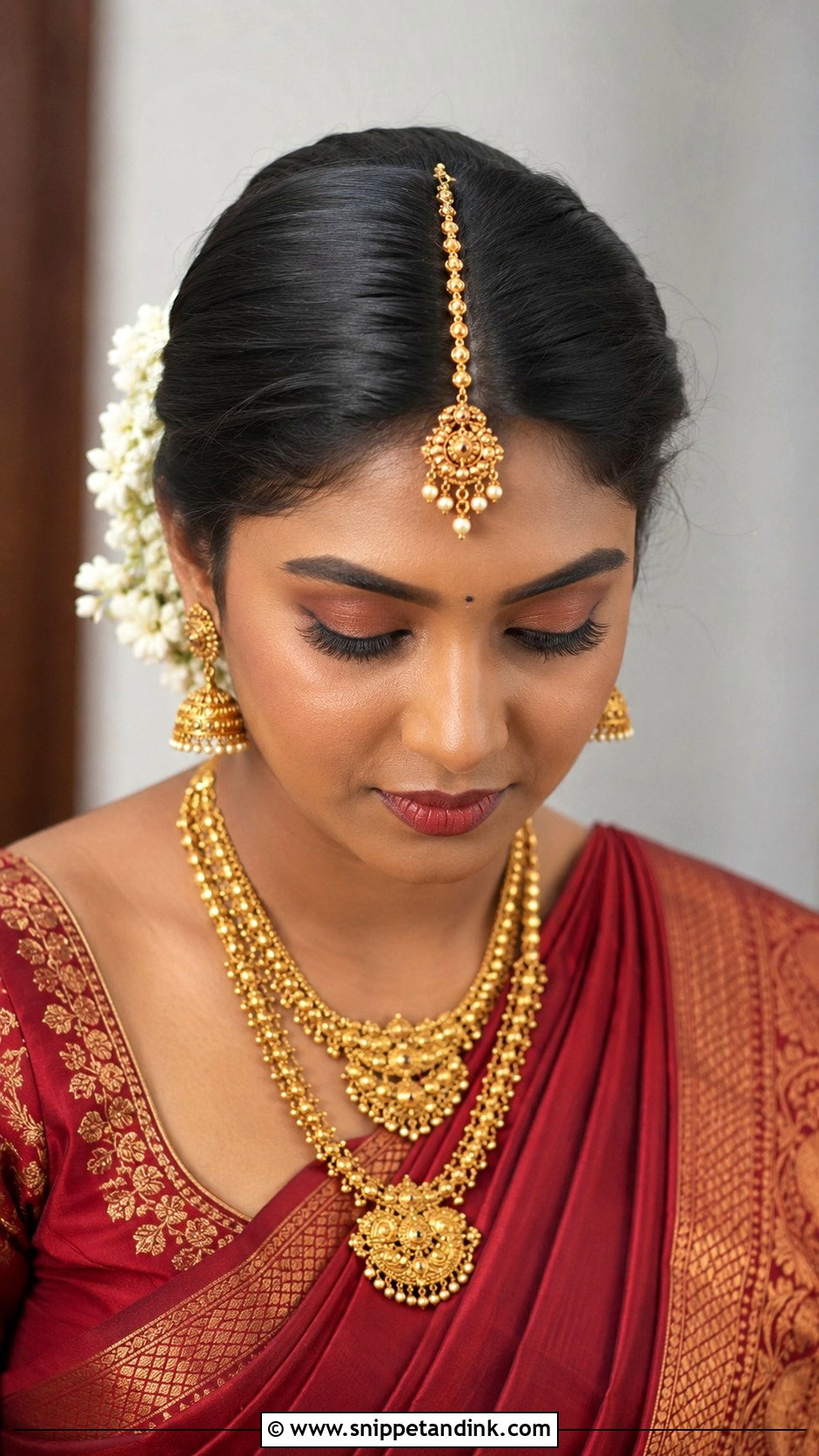
A neat bun with a bold maang tikka makes the tikka the centrepiece. The bun keeps hair sleek and out of the way. Heavy gold jewelry and traditional sarees suit it. I tighten the tikka hook into a firm section near the crown so it sits flat on the forehead and doesn’t swing during rituals. Small flowers around the bun soften it. It stays put through long events.
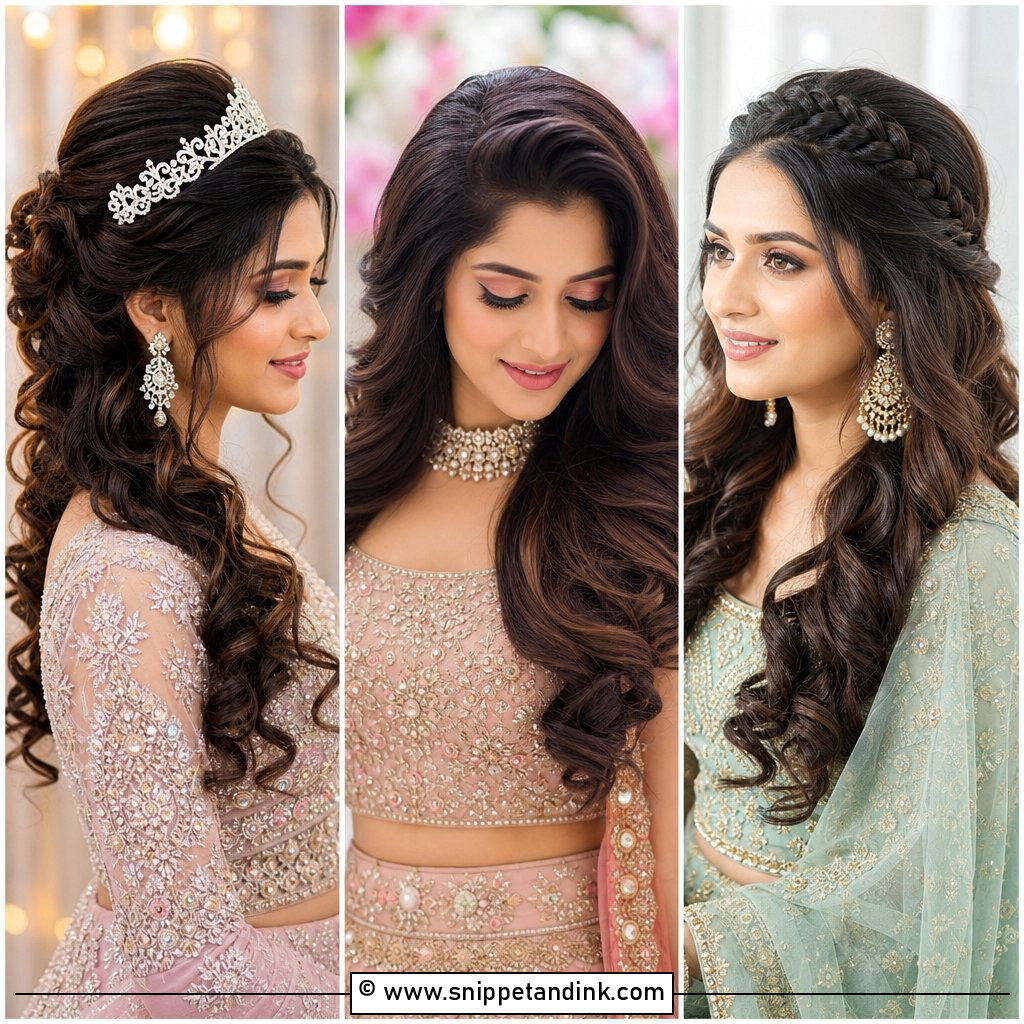
15. Curly Braid With Hair Accessories
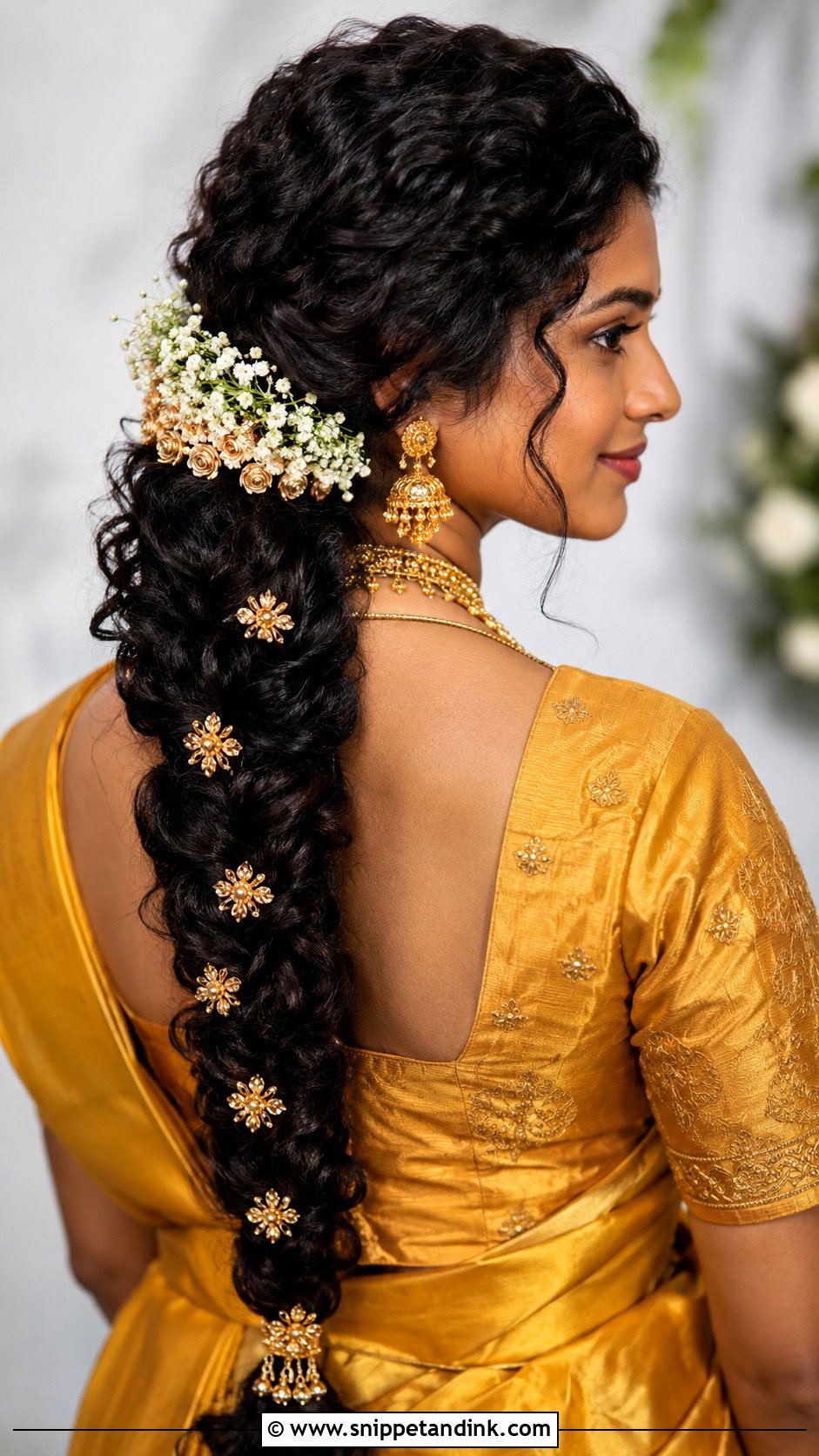
A curly braid keeps volume and texture instead of a tight, smooth finish, and it suits naturally wavy or curly hair. I braid over the natural texture with a curl cream rather than blow-drying it straight first, which keeps it soft. Gold accessories and flowers add the bridal note. It can go over one shoulder or down the back, and it works with heavy or light sarees.
16. Rose And Jasmine Braid
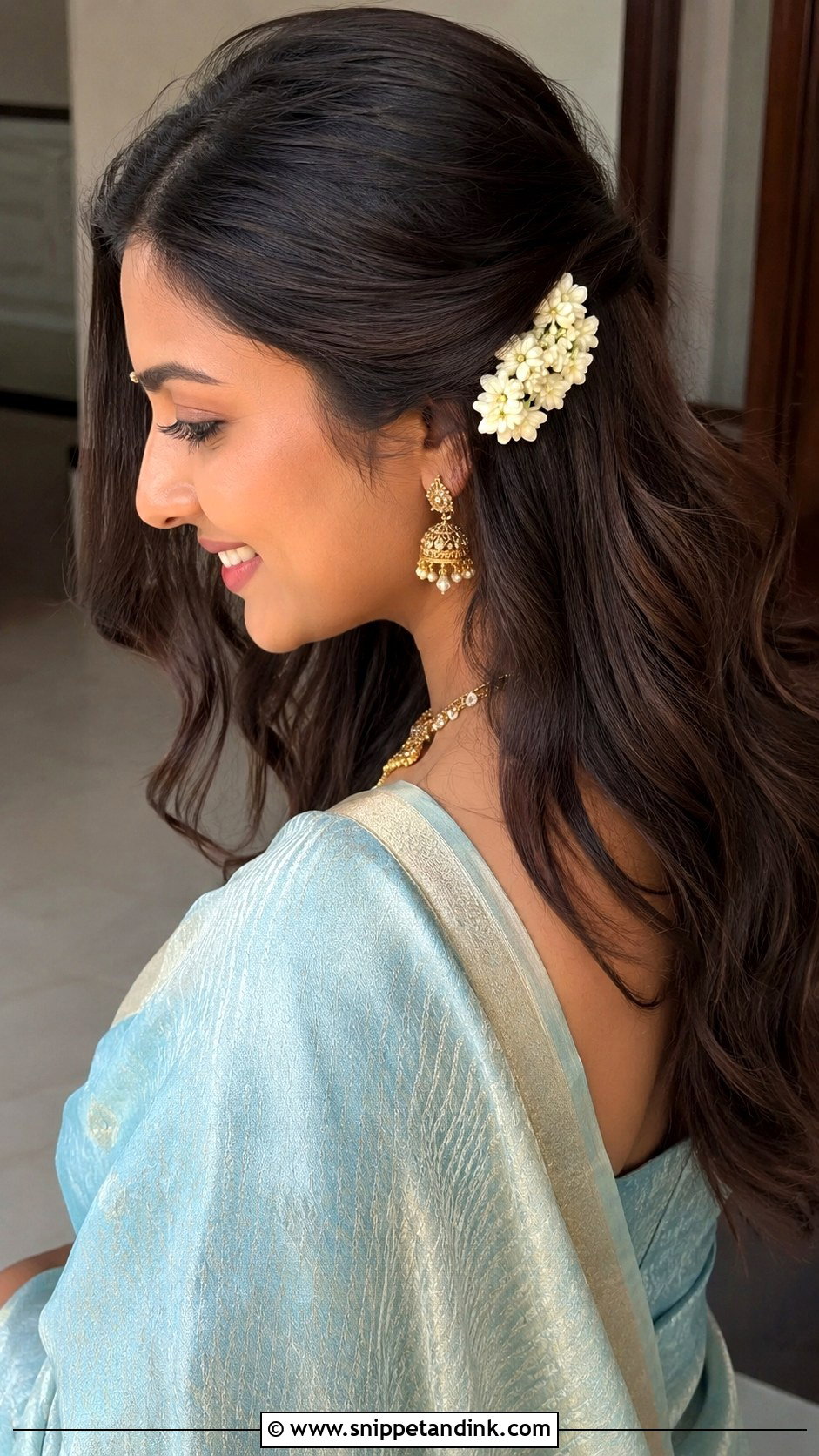
Mixing roses and jasmine creates strong colour contrast along the braid. The flowers run from crown to tip, and gold accents between them add shine. Roses are heavier than jasmine, so I place them on the upper half where the braid is thickest and keep jasmine toward the end. It suits bright silk sarees and celebrations where you want the flowers to be the focus.
17. Sleek Low Bun With Brooch
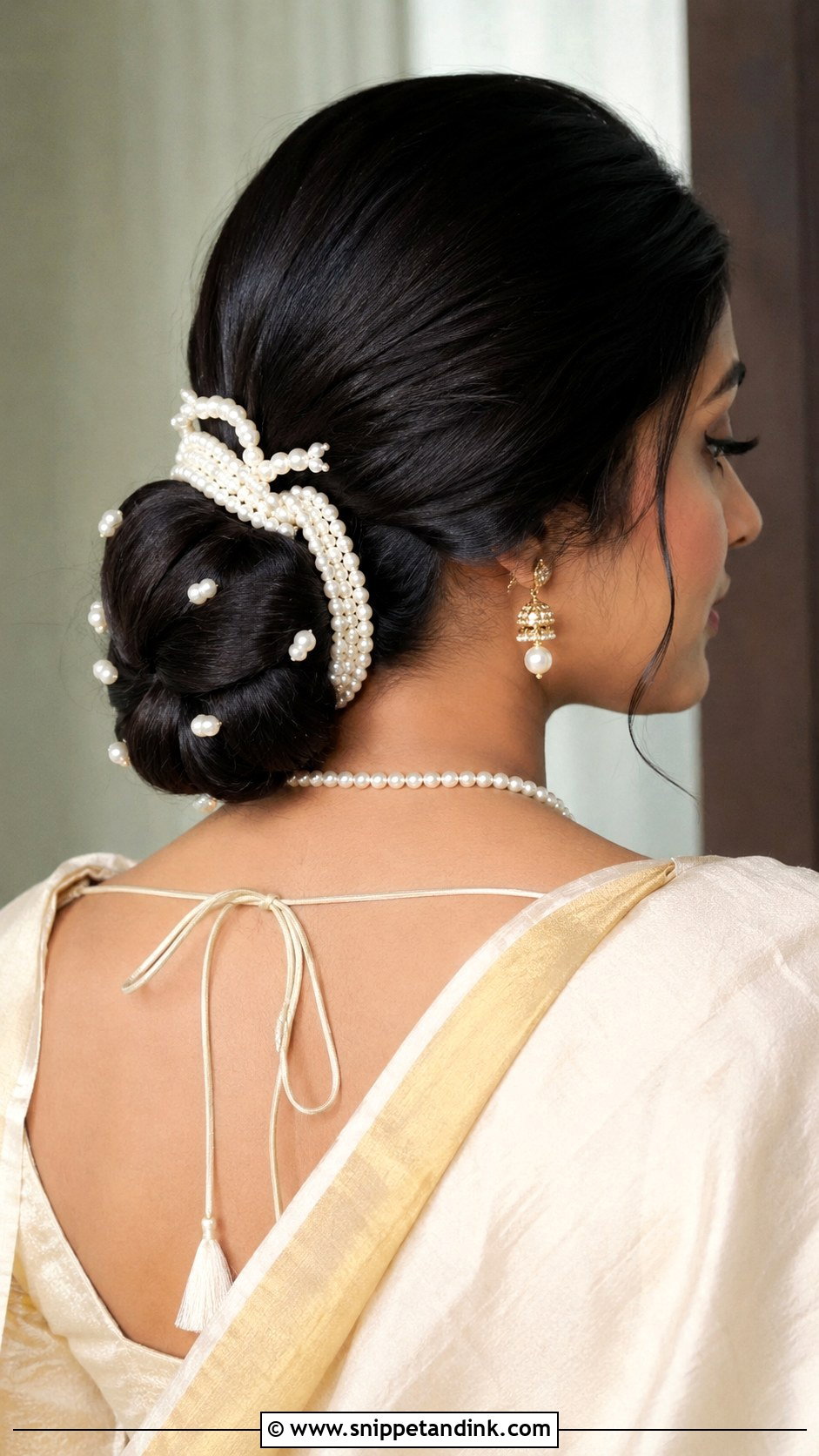
A sleek low bun with a brooch is the minimal option. The finish is smooth, with a sparkling brooch or gold pin as the only feature. Getting it truly sleek on thick or frizzy hair takes a blow-dry and a smoothing cream first, and a fine-tooth comb with a little gel at the hairline. It pairs with statement earrings and a structured drape. A thin gajra can wrap around it if you want flowers.
18. Braided Crown With Flowers
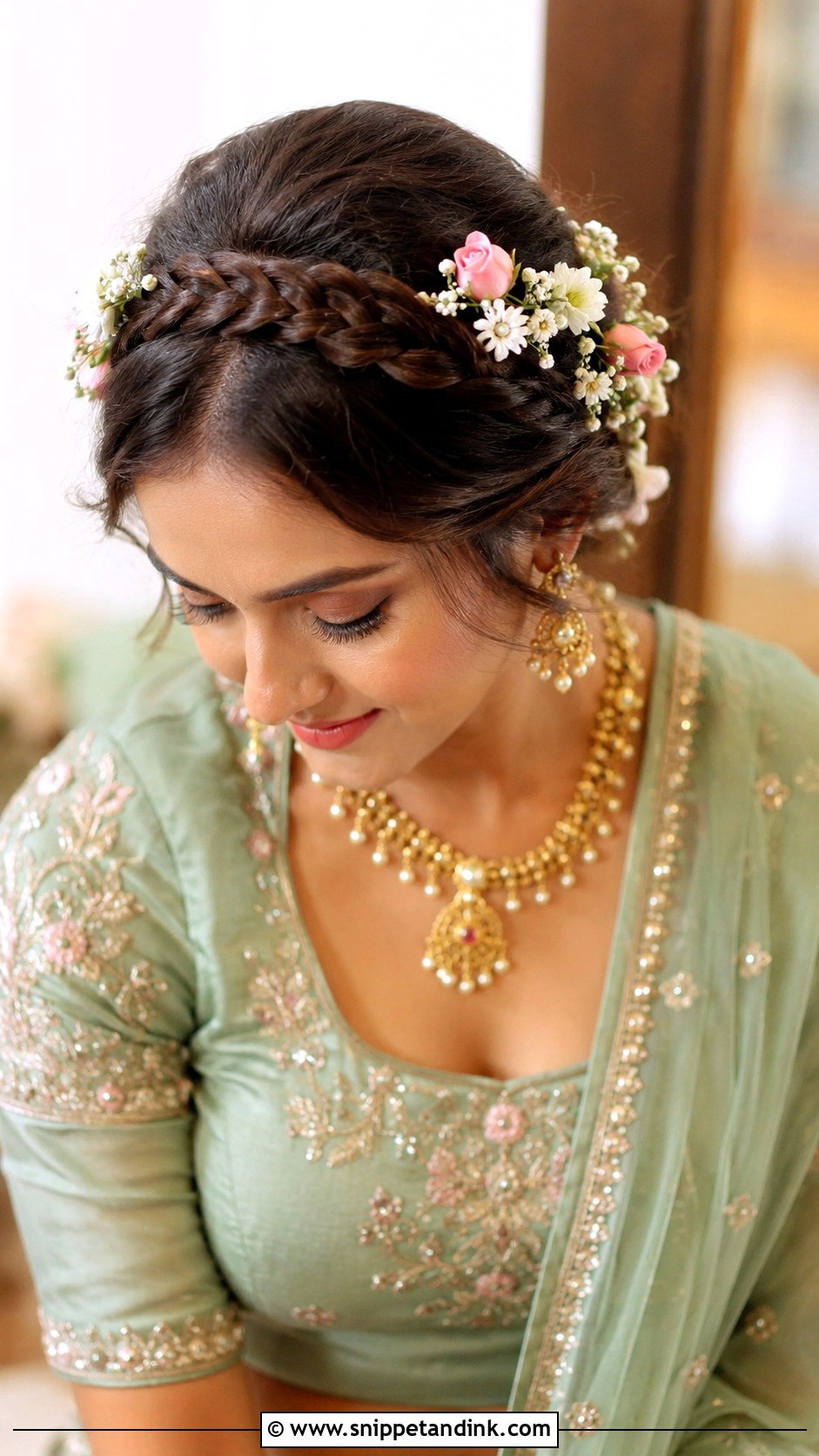
Thin braids encircle the head like a halo, with small flowers tucked in. It keeps hair off the face and draws the eye upward. Crown braids need enough length to wrap around; on shorter hair I use two braids meeting at the back instead of one. Jasmine buds or small roses work well. It suits lighter outfits and lehengas.
19. Bun With Pearl Embellishments
Pearls give a bun soft shine without bold flowers. I use pearl pins pushed into the bun at different depths, or strings of pearls wrapped around it and pinned at the ends. Pearls sit easily alongside gold or silver jewelry. Pair it with a small gajra for tradition. Pastel and ivory sarees suit it particularly well.
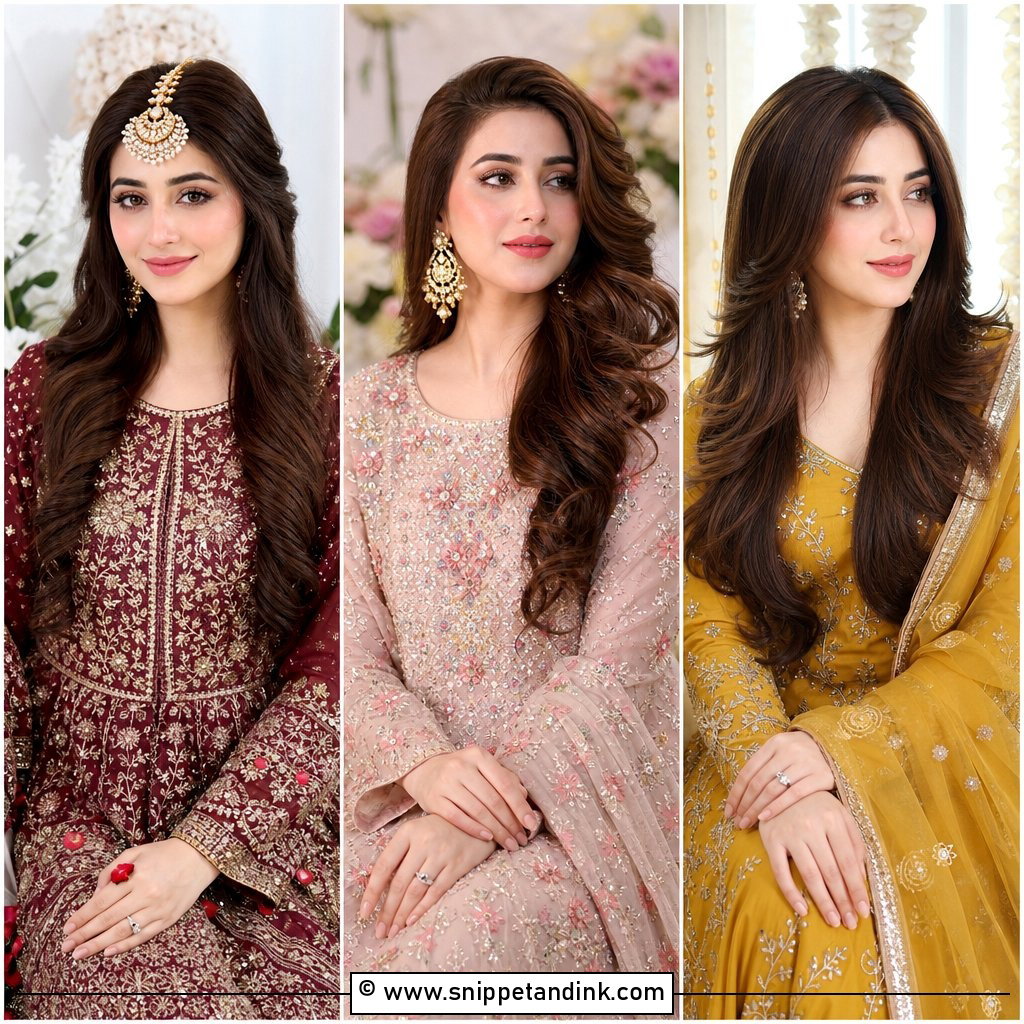
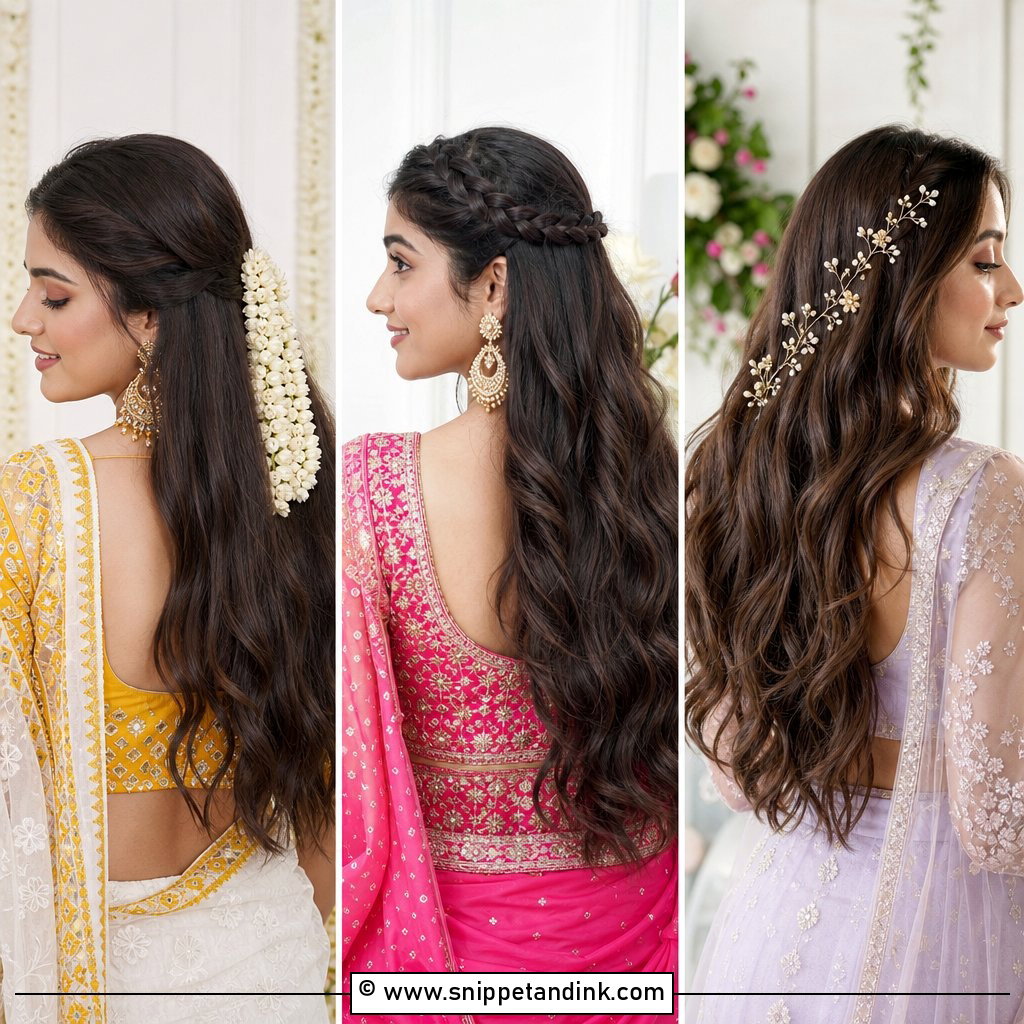
20. Open Hair With Flower Tuck
Sometimes the simplest version is the right one. Open hair, smooth or softly waved, with a single jasmine cluster or rose tucked behind the ear. It suits brides who don’t like heavy styling or tight pins. I’d still set any waves with a strong spray, and pin the flower to a small hidden section, not just the hair behind the ear. Lighter sarees and contemporary outfits suit it.
21. Twisted Bun With Gold Accents
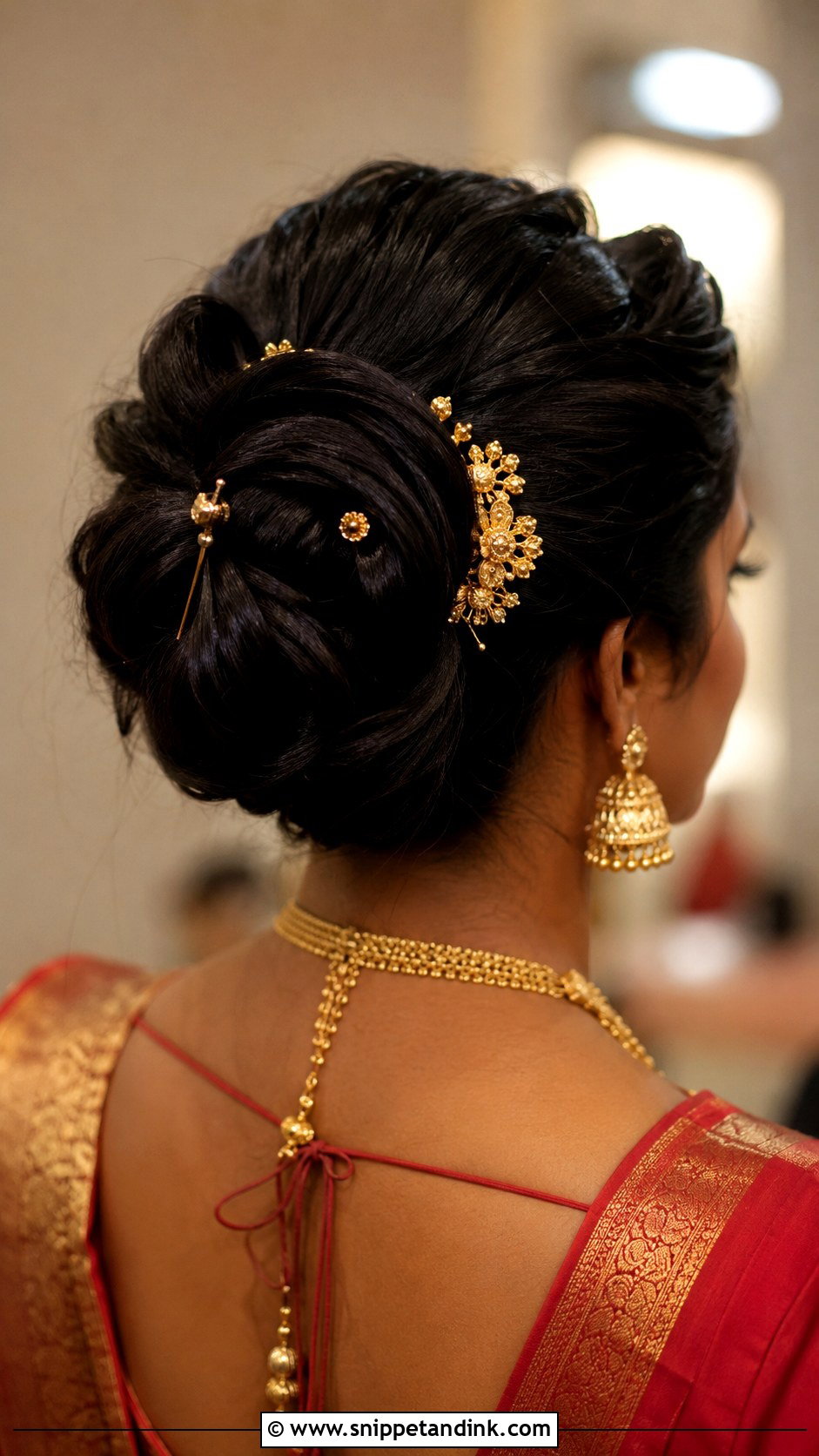
Twisting the hair into a sculpted knot gives the bun texture. Gold accents and pins finish it. I twist each section and pin it before moving to the next, which takes longer but holds through long ceremonies. Small flowers soften it. It pairs with heavy gold jewelry and silk sarees and looks particularly detailed in close-ups.
22. Marigold Braid Look
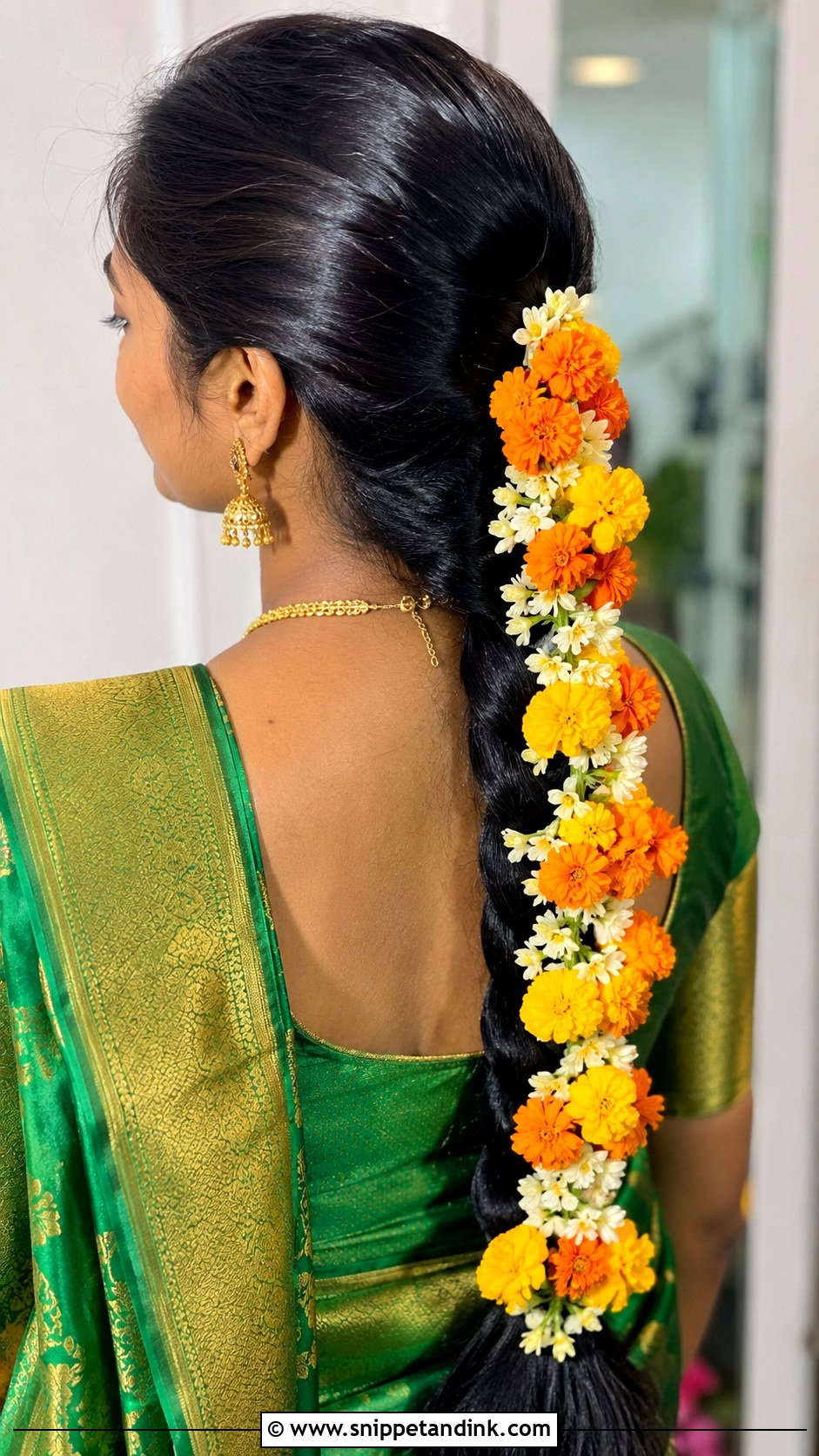
Marigolds bring warm orange and yellow to the braid and are traditionally associated with auspicious occasions. They’re sturdier than jasmine and stay fresh longer in heat, though their scent is stronger and earthier. I mix in jasmine for contrast. Marigolds are also heavier per flower, so I build a firm crown base. They pair with colourful silks.
23. Messy Bun With Loose Strands
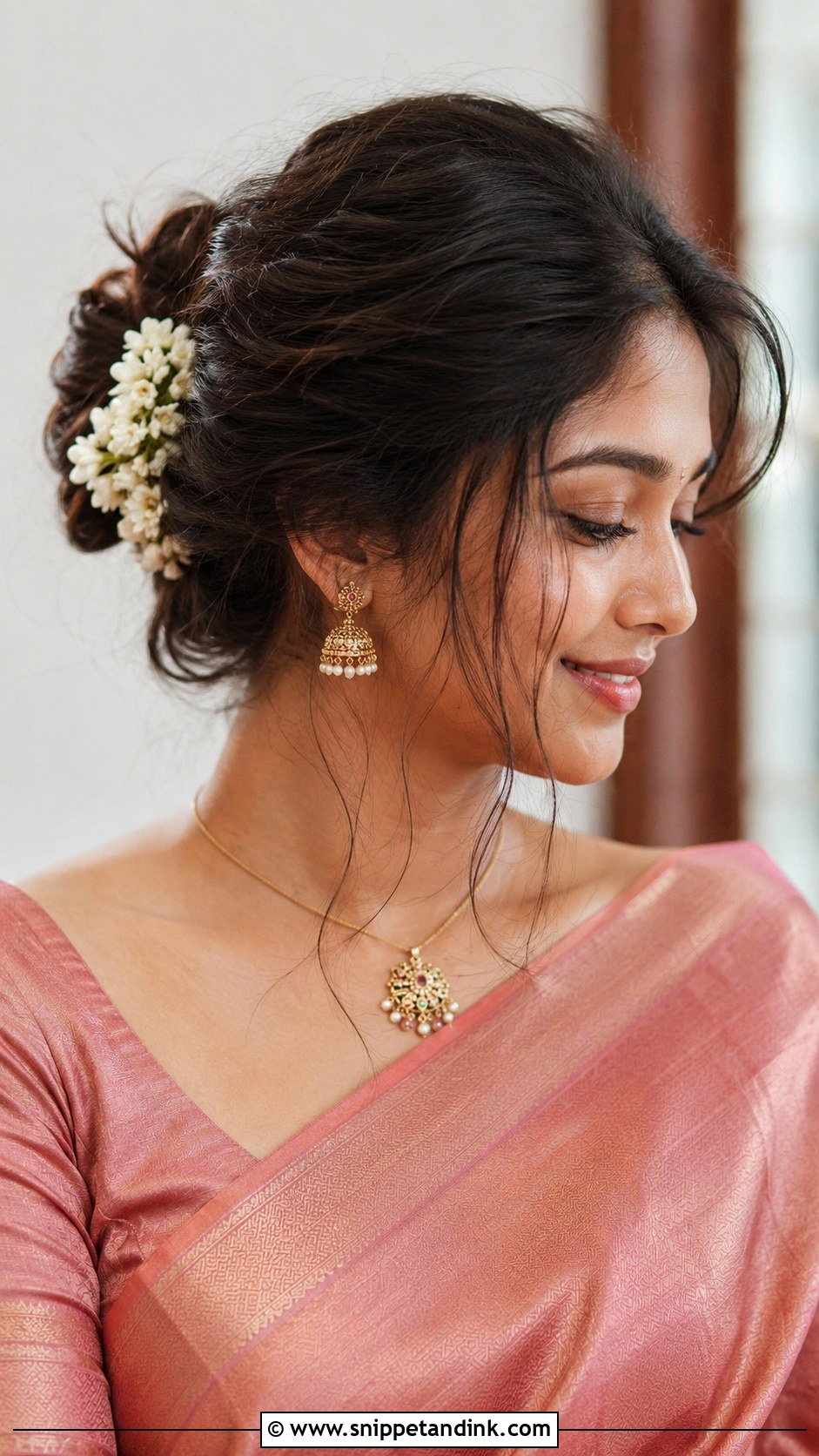
A soft bun with a few loose strands looks relaxed. The challenge is that “messy” has to be planned: I pin the bun firmly first, then pull out the strands deliberately and give them a light curl. Fresh flowers or a small gajra add tradition. It works with silk or contemporary outfits and suits brides who don’t want a structured look.
24. Braid With Matha Patti
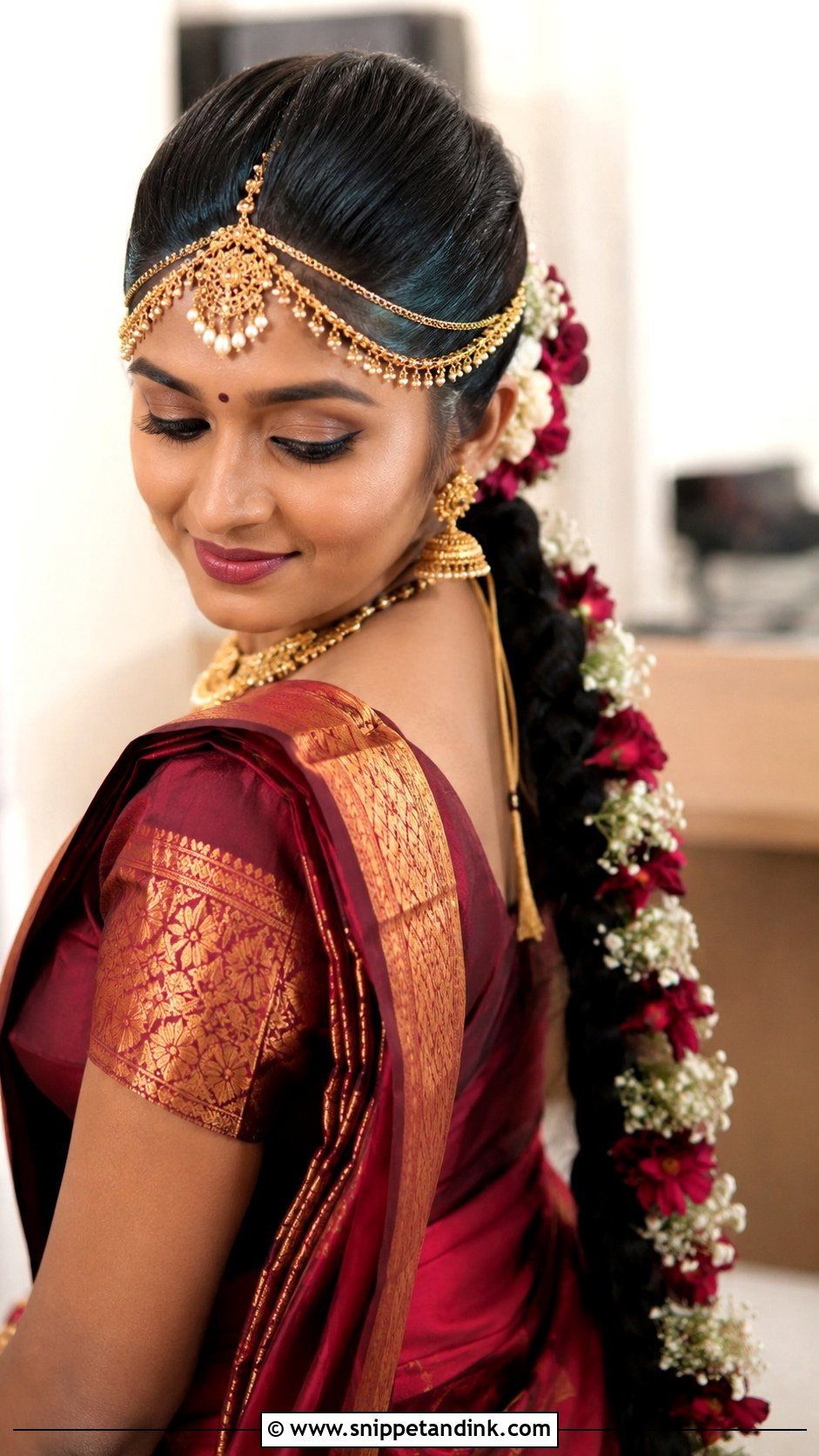
Pairing a braid with a matha patti gives a fully adorned look. The braid runs down the back while the matha patti frames the forehead. I fix the matha patti side chains under the hair near each ear and hook the centre at the part, so it sits flat. Flowers or gold on the braid complete it. It suits heavy jewelry and silk sarees and gives a strong front and back view.
25. Half Bun With Cascading Curls
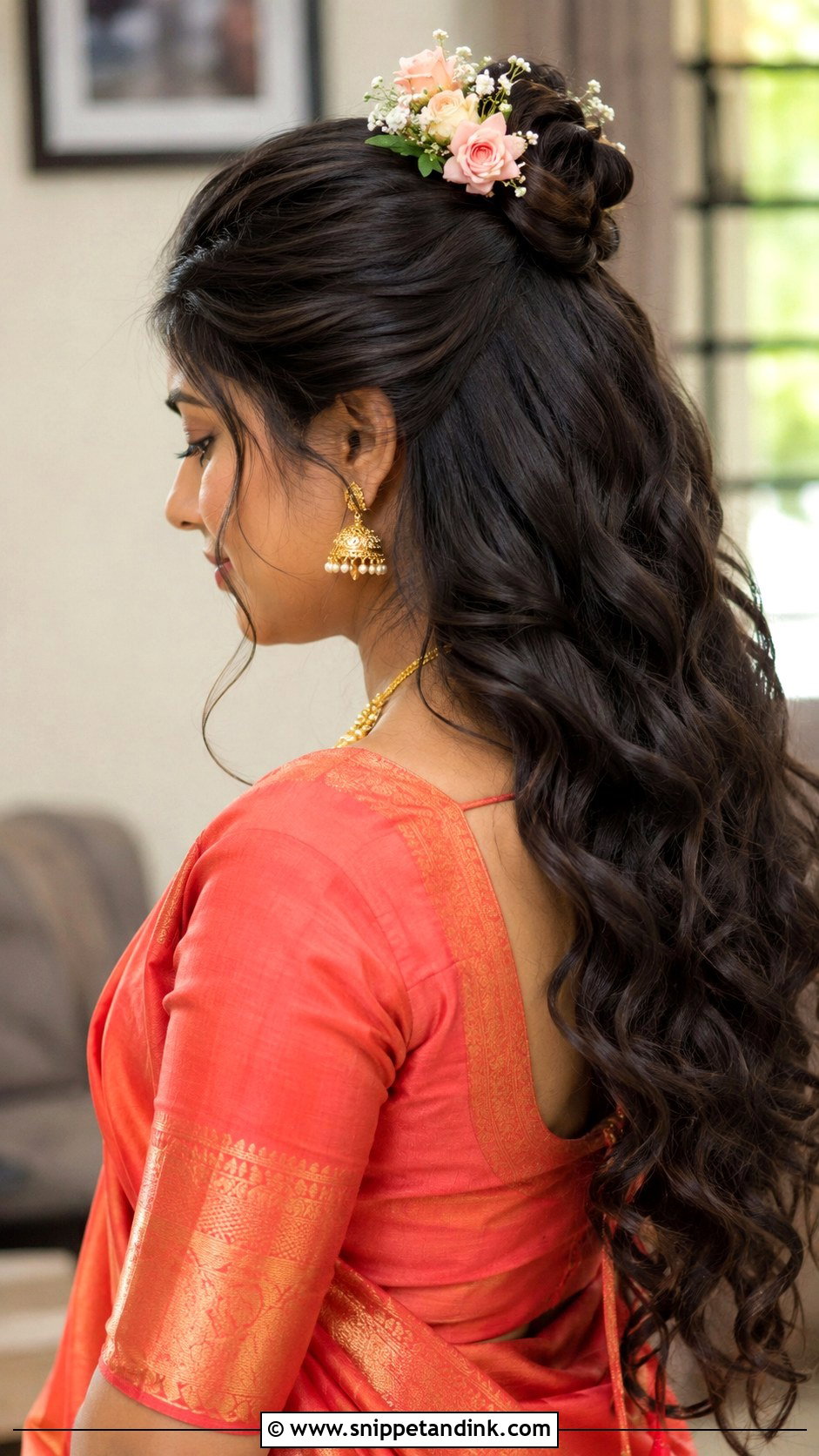
A small bun at the crown with curls falling below balances structure and movement. It keeps hair off the face while showing length. Fresh flowers or accessories decorate the bun. The curls carry most of the risk; I’d set them firmly. It adapts to heavy or light engagement outfits.
Not Enough Length for a Long Braid? Extensions and Honest Limits
A traditional jada looks its best when the braid reaches at least the waist. Many brides wear an extension braided in with their own hair; it’s a normal part of South Indian bridal styling. The extension should match your hair colour and texture, and it’s attached at the crown where the base is firmest.
How much weight is too much
A full poola jada with billas and an extension can feel heavy after a couple of hours, and it pulls at the crown. If you have fine hair or get headaches from tight styles, ask for a lighter flower panel, fewer billas, or a bun with gajra instead. Bring the jada to your trial and wear it for long enough to feel the weight, rather than only for the photo.
Shorter or layered hair can still hold a jada if the extension is braided in from just below the crown, but very short cuts above the shoulder can’t anchor that much weight safely. In that case I’d steer you toward a kondai with a gajra wrap or a half-up style with a small flower cluster, both of which look complete without length.
When the event ends, take the flowers and billas off before unpinning the braid. Remove pins one by one, starting from the lowest, and loosen the braid gently with your fingers before brushing.
Flowers, Weight and Your Saree All Shape the Final Choice
The styles here range from flower-covered poola jada braids to sleek jasmine buns and loose curls. Pick by your hair length and density, the weight you’re comfortable carrying for several hours, the saree and the temperature of the venue. Flowers add fragrance and meaning, but they need planning. Save your favourites, show them to your stylist, and ask her to do a trial with the actual jada or gajra weight, so you know how it feels after a couple of hours.
You'll Like These Ideas:


Leave a Reply