
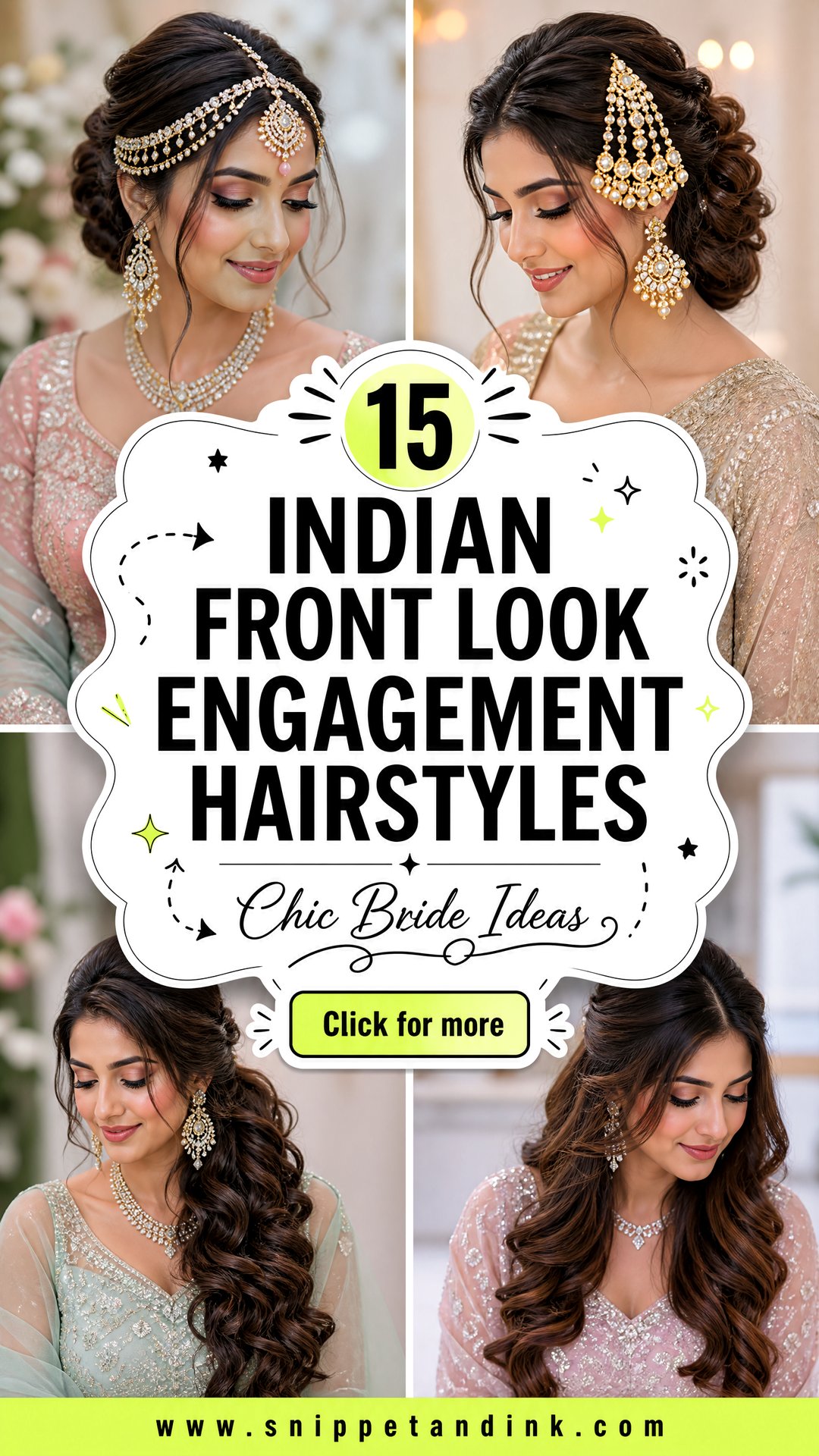
At an engagement, almost every photo of you is taken from the front and from close up: the ring exchange, greeting relatives, posing with your fiancé. So the part of the hairstyle I spend the most time on is the bit around your face, the parting, the hairline and the first few inches of hair. Jewellery, dupatta placement, neckline and face shape all feed into that decision. These Indian front look engagement hairstyles cover lehengas, sarees, gowns and Indo-western outfits, and for each I’ve said what the front needs to stay in place for a long evening of hugs.
Your Mirror Flips the Front View
Here’s something that catches brides out at nearly every trial. You’re used to seeing your face reversed in a mirror, so a parting that looks right to you can look wrong in a photo, and a slightly uneven face-framing piece can suddenly feel obvious. Before you approve the front, I’d ask you to look at it the way your guests and photographer will.
- Take a straight-on photo with the rear camera, not the selfie camera, at arm’s length or held by a friend.
- Check the parting line against the middle of your nose and brows.
- Look at both cheeks. Do the face-framing pieces match in length and curl direction, or is one side heavier?
- Take one shot in profile from each side; a puff or bun that looks fine head-on can lean in profile.
Any change is easy at the trial and almost impossible ten minutes before you walk out.
1. Indian Engagement Hairstyle With Maang Tikka
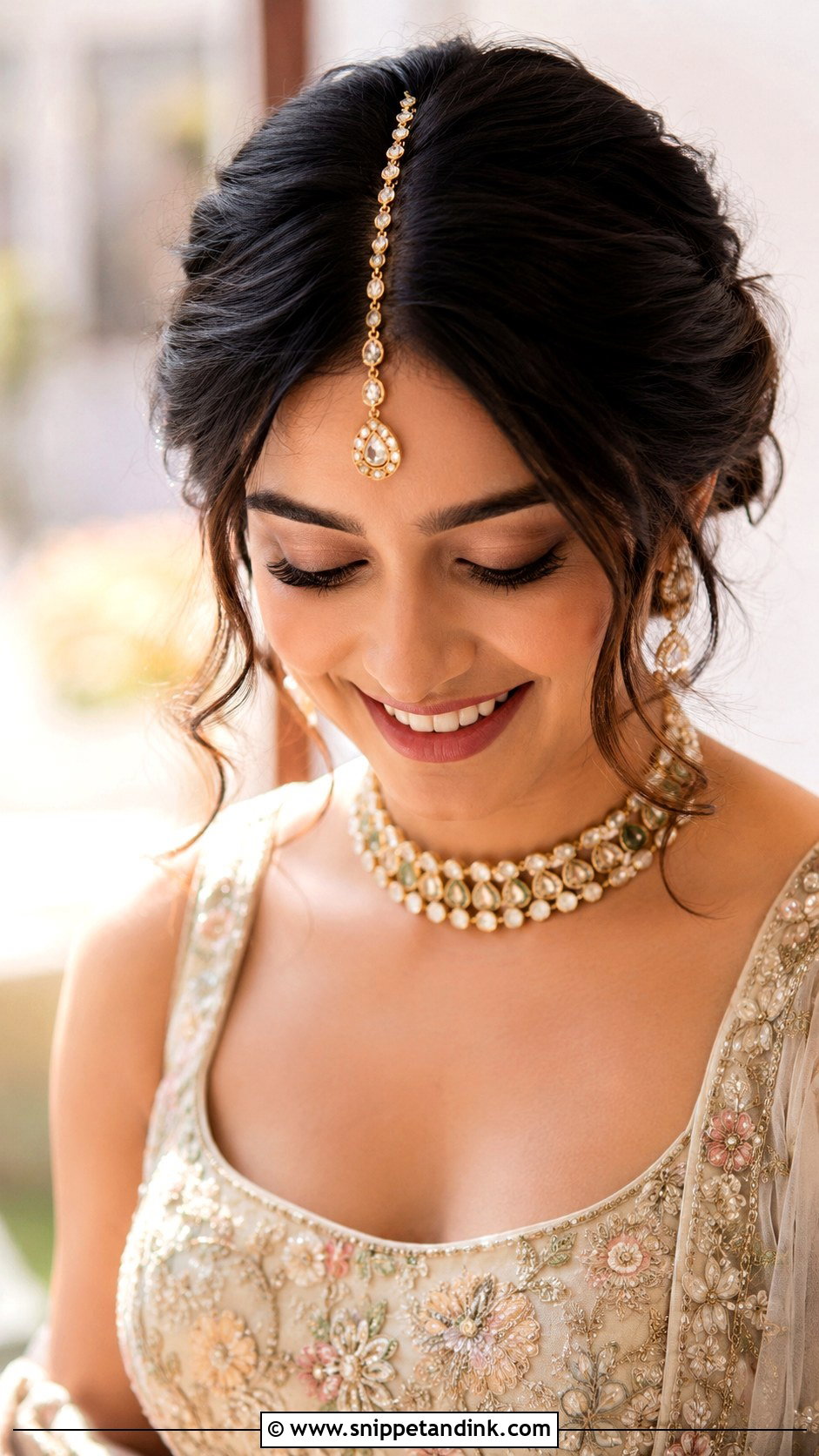
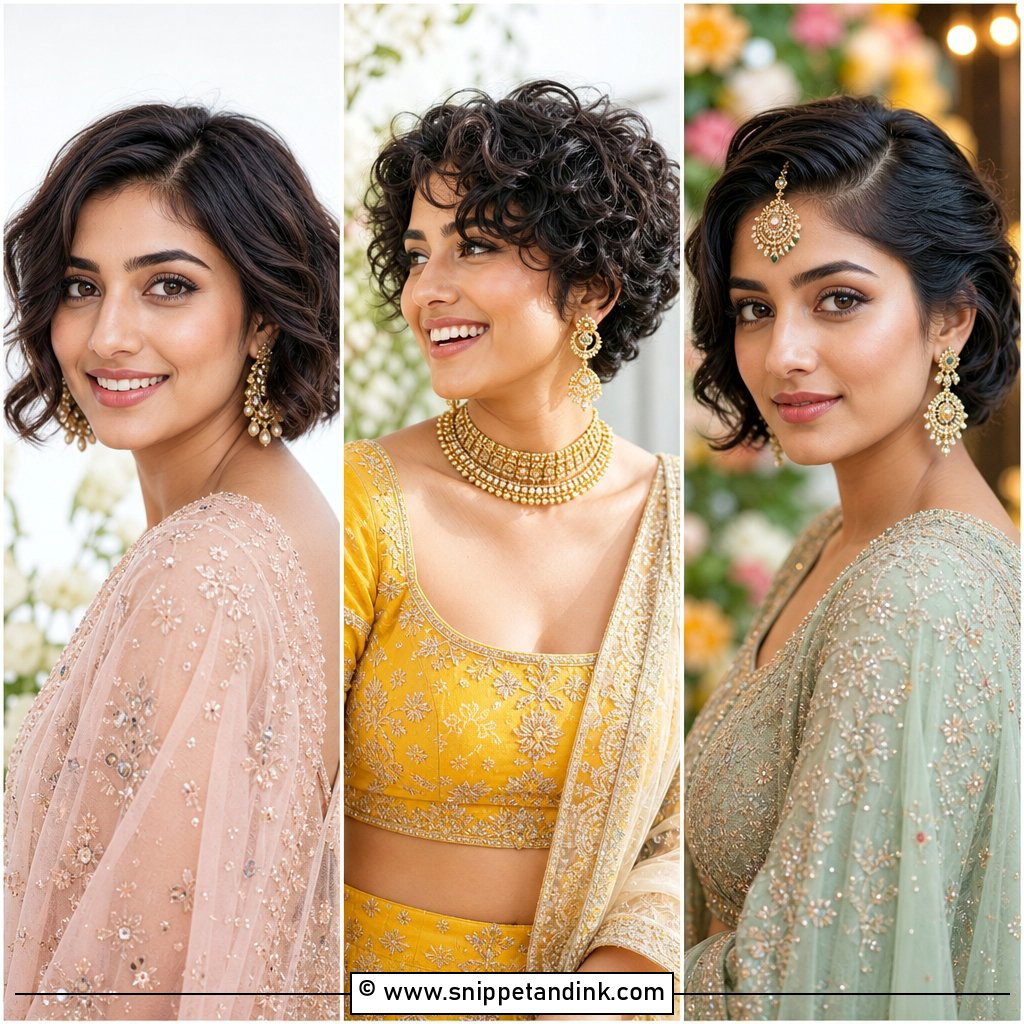
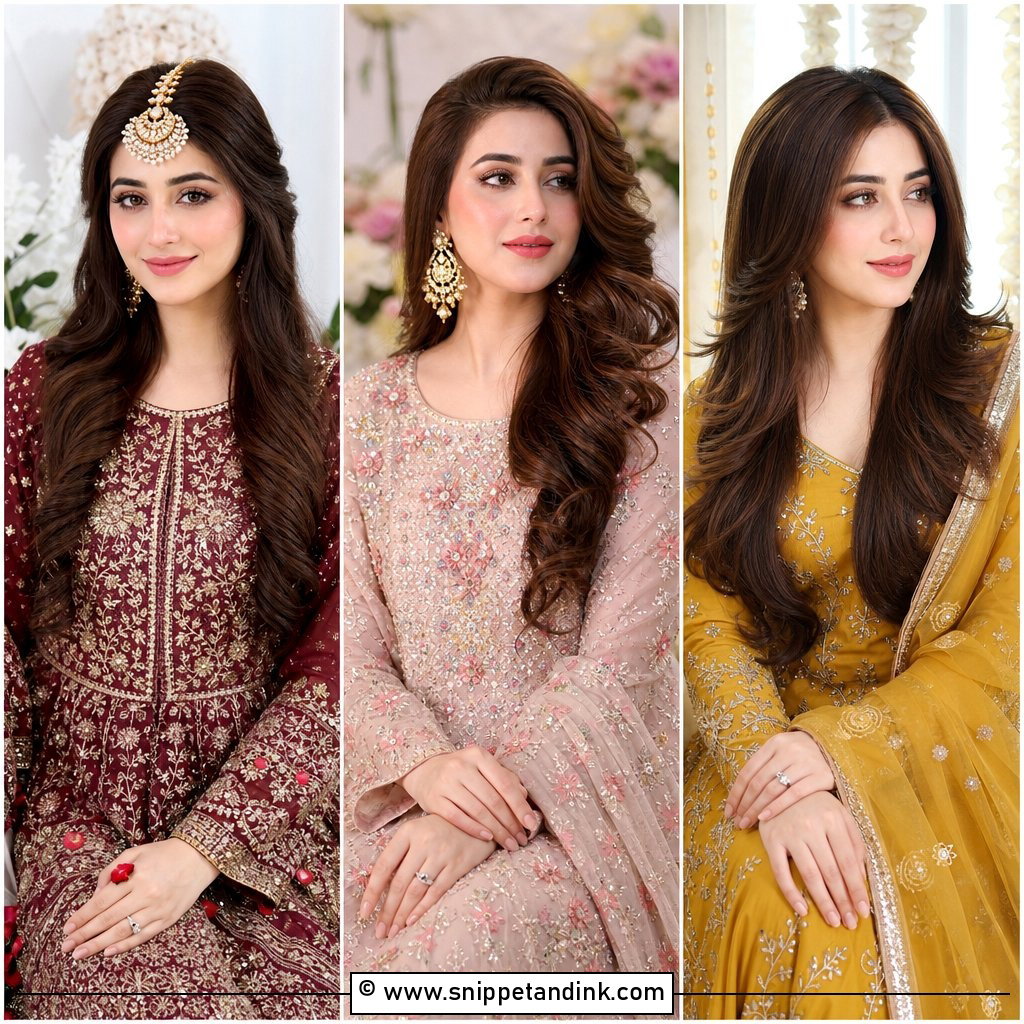
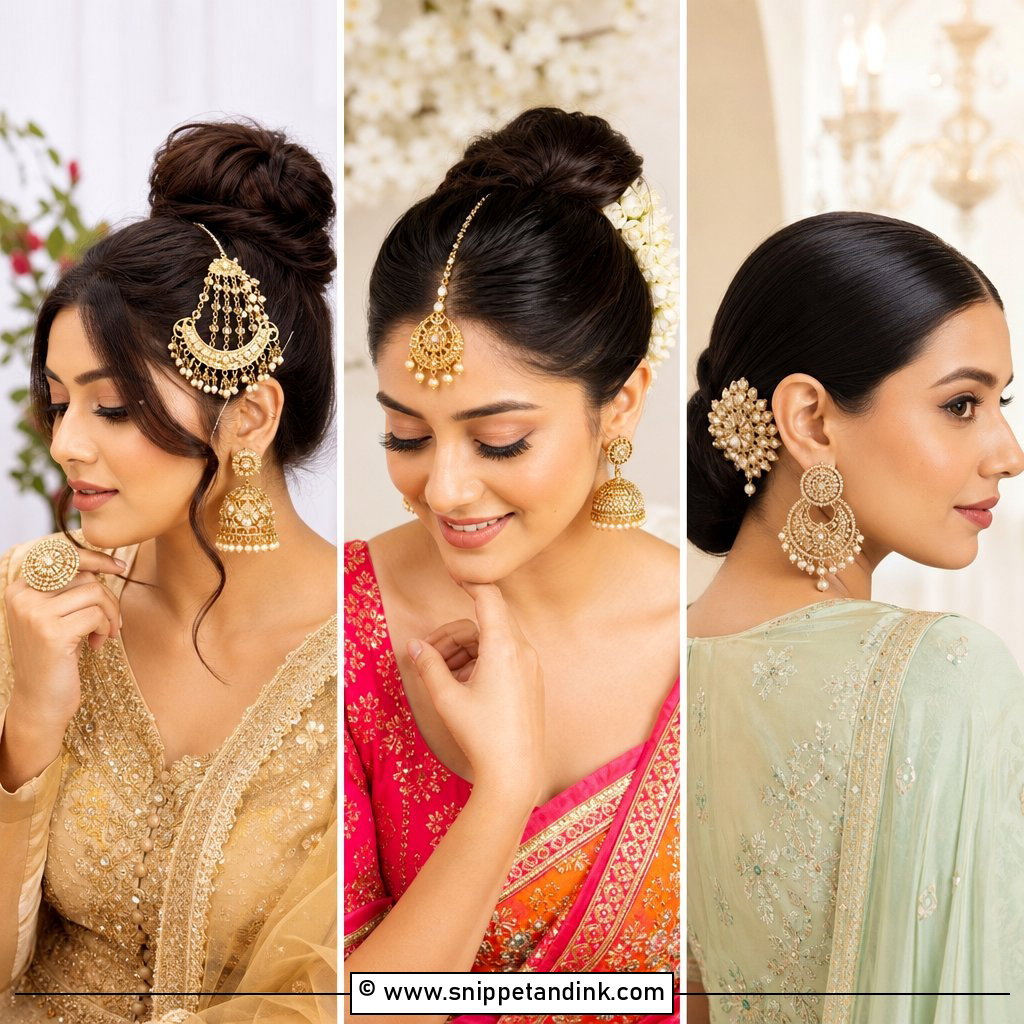
The tikka gives a face an instant centre line, which is why it’s the front look I’m asked for most at engagements. I part with the tail of a comb from the middle of the brows straight back, because a parting that drifts even slightly makes the tikka hang off-centre. Behind it, waves, a low bun or a half-up hairstyle all work. I usually leave two thin pieces near the cheeks to soften the symmetry. A tiny amount of serum at the roots, rubbed between the palms first, keeps the front smooth without looking wet.
2. Indian Engagement Hairstyle With Side Part
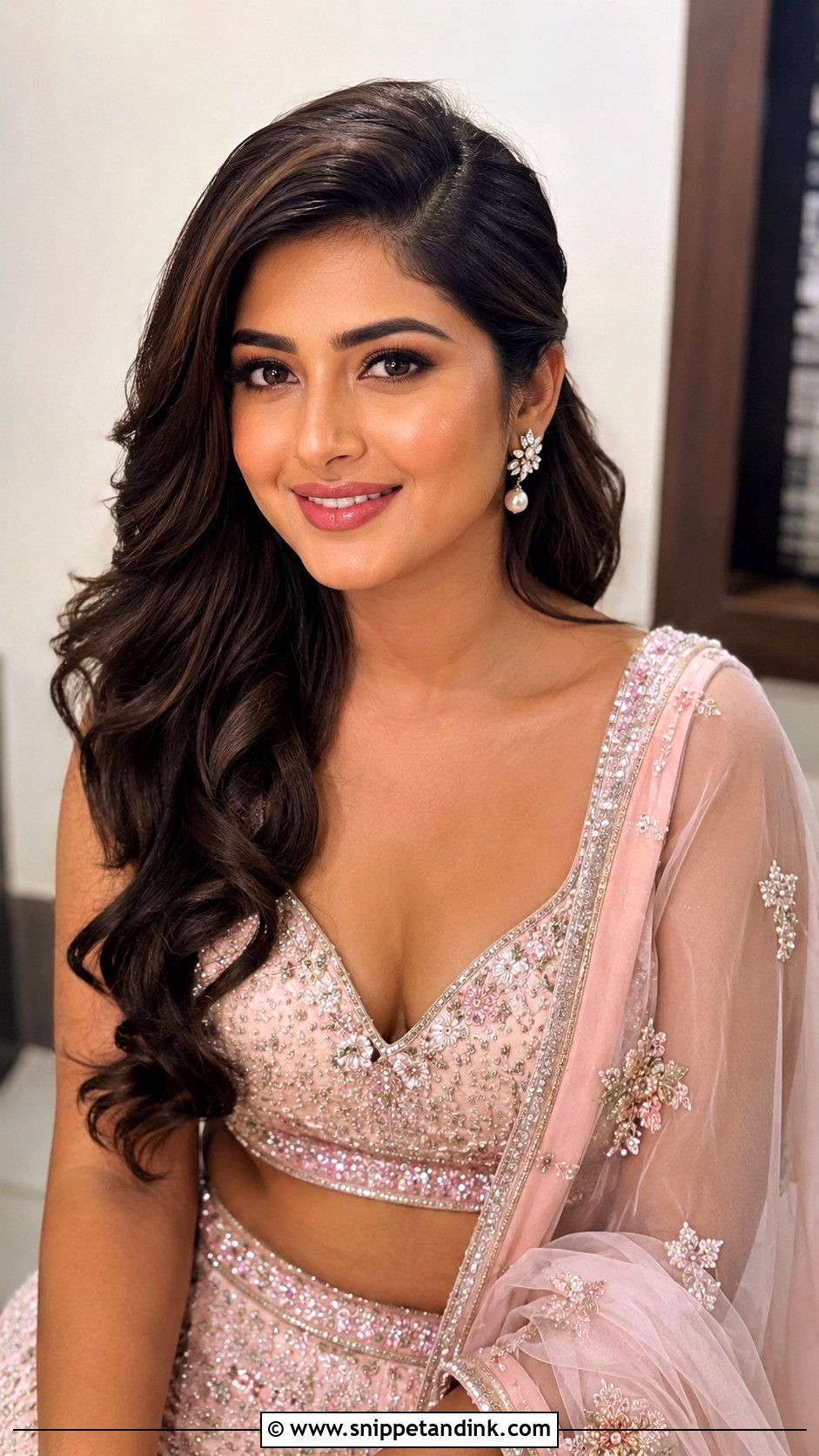
A deep side part puts lift on one side and takes it away from the other, which is how it balances a round, square or heart-shaped face. Where the part lands matters: I line it up with the arch of the eyebrow, not the outer corner, or it starts to look like a comb-over in profile. Open curls, a low side bun or a soft ponytail all sit well behind it, depending on the neckline. Tuck the flatter side behind the ear to show off a statement earring, and keep some root lift at the crown so the top doesn’t look plastered down in photos.
3. Indian Engagement Hairstyle With Front Puff
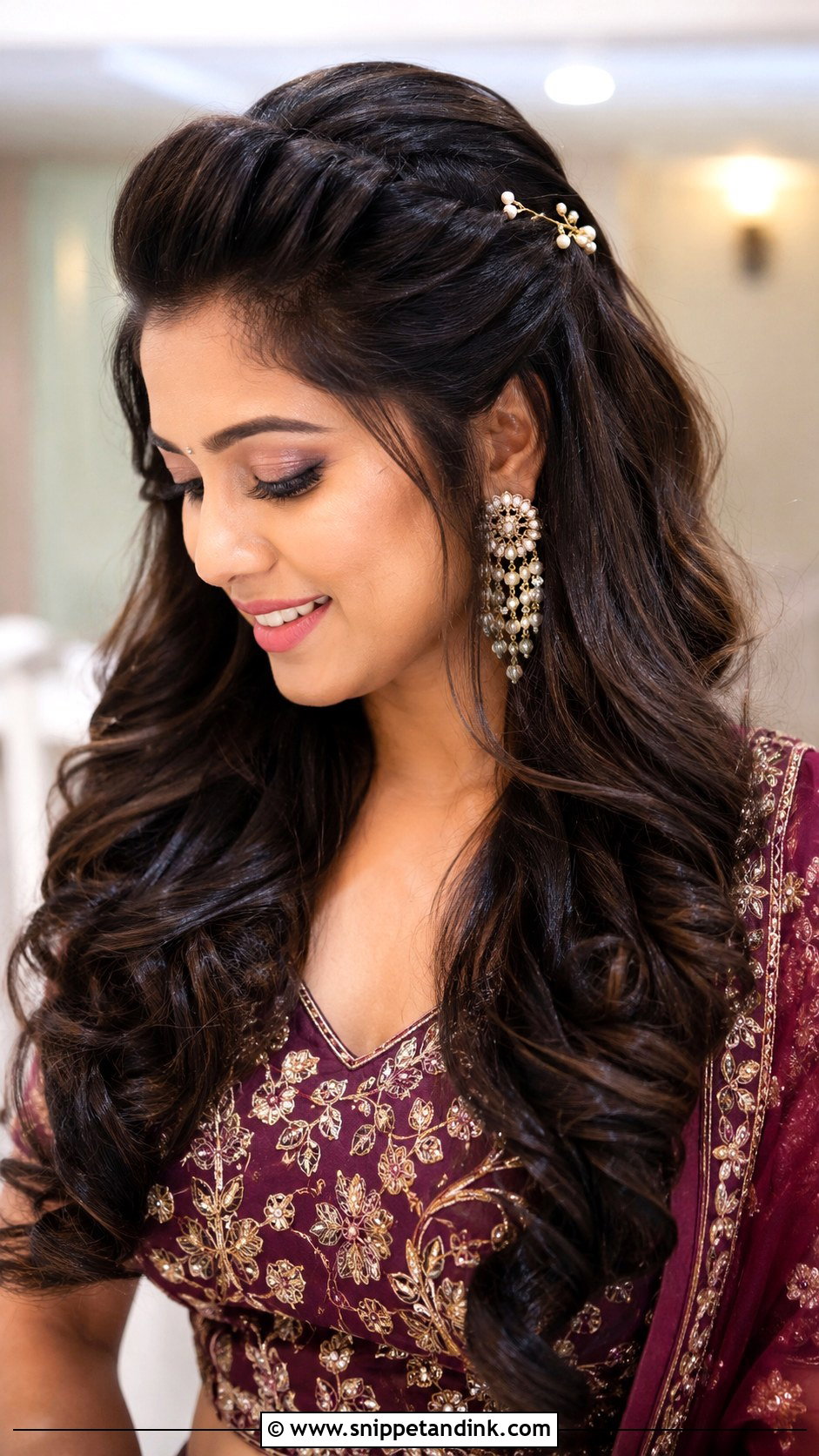
A front puff engagement hairstyle adds height at the crown, so it lengthens a round face and stops a dupatta from pressing the hair flat. I backcomb only the underside of a small section, smooth the top layer over it and pin it from below with crossed bobby pins. The common mistake is making it too tall. A puff that rises more than a couple of finger-widths starts to look dated, especially in side profile. Behind it, long curls, a curled ponytail or a low bun with flowers all work, and you rarely need more than a tikka or earrings with it.
4. Indian Engagement Hairstyle With Open Curls
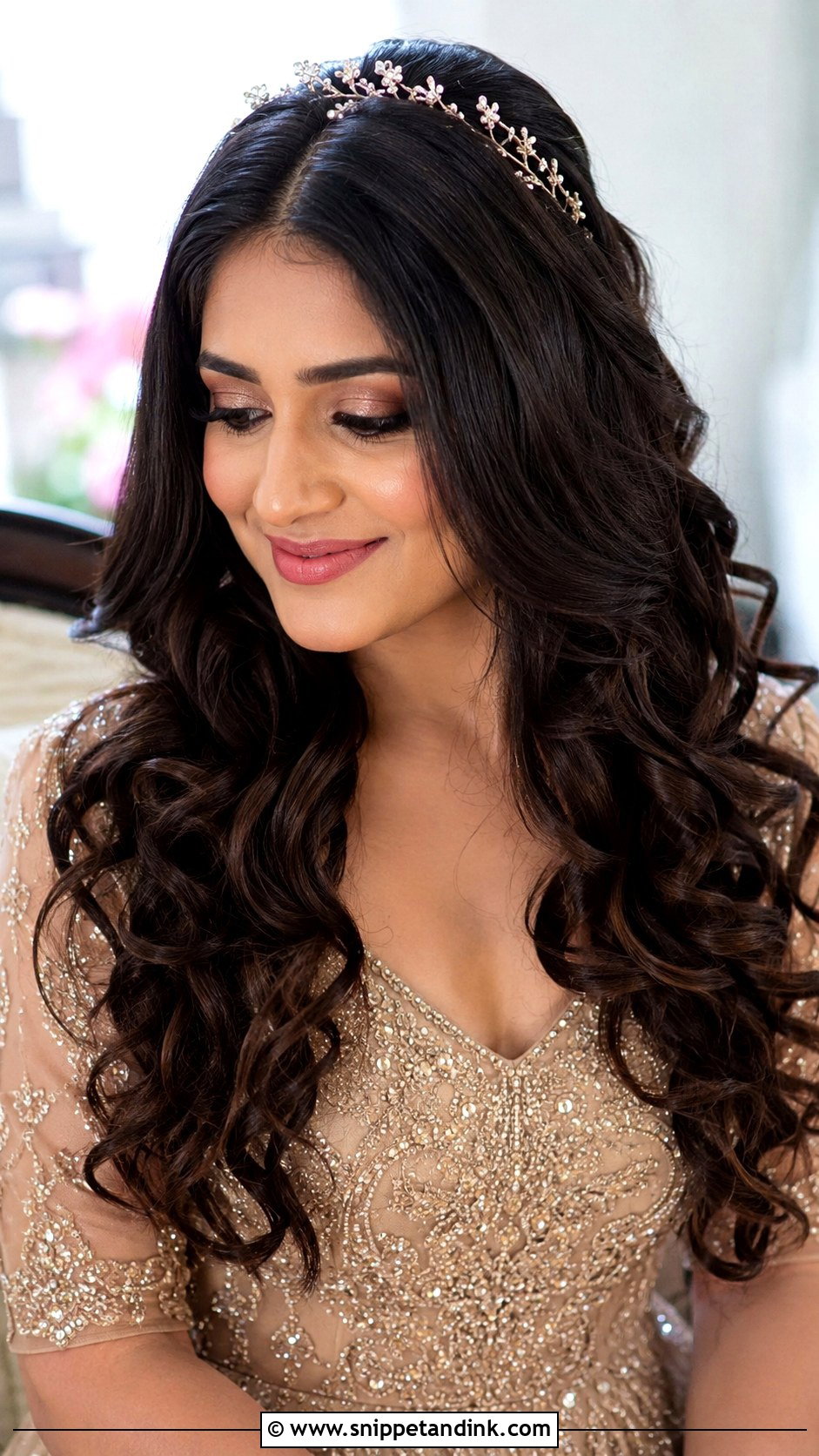
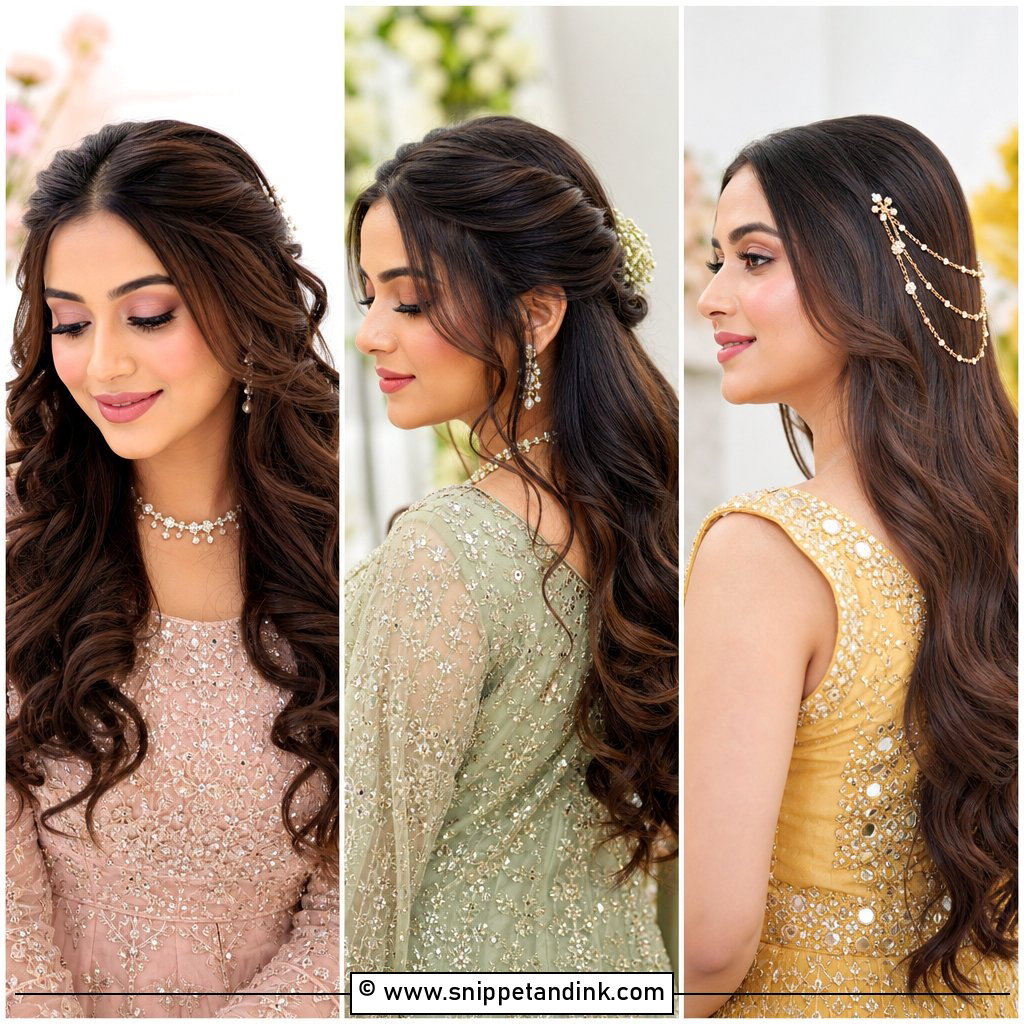
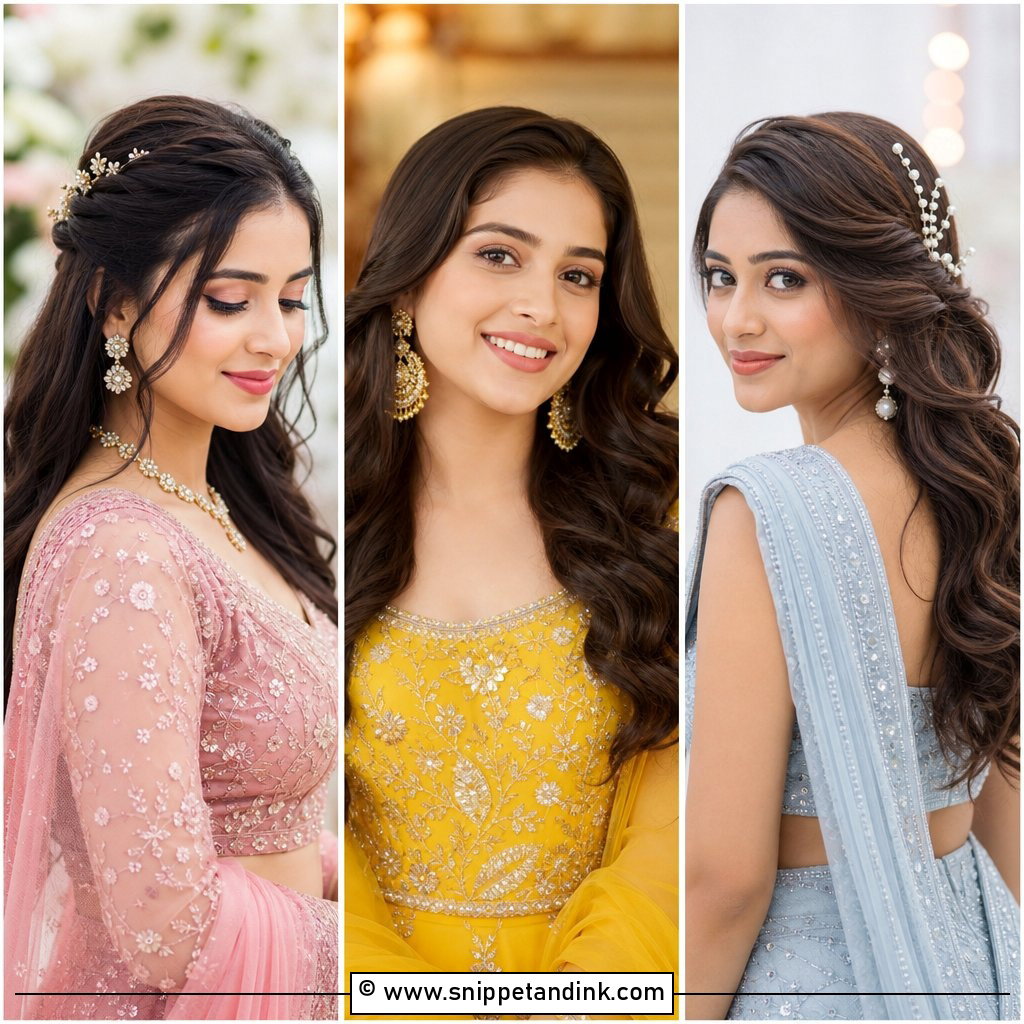
Curls are the go-to for engagement photos, but only if they start below the cheekbone. Curled right from the root, they crowd the face and make jewellery hard to see. I keep the top smooth, curl the lengths in sections and pin each one up to cool before brushing out. A centre part reads more traditional; a side part feels glamorous. Light hairspray only. Crunchy curls look stiff in close-ups, and you’ll be touching your hair more than you think. A delicate tikka or one jewelled pin is plenty here.
5. Indian Engagement Hairstyle With Sleek Bun
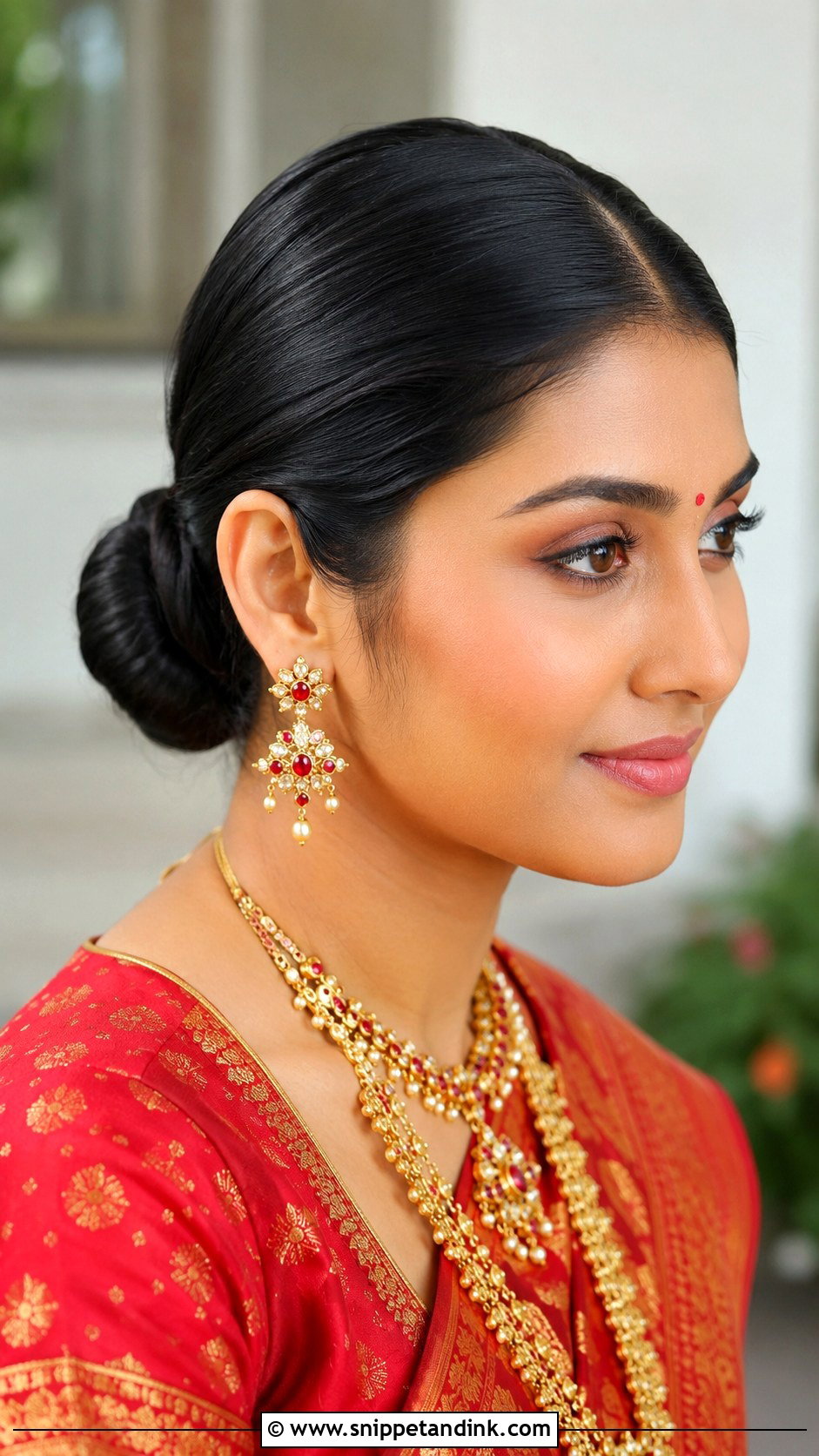
When the outfit has a heavy neckline, a detailed blouse back or a statement dupatta, I clear the face completely with a sleek bun. Everything at the front stays flat and shiny, so earrings, a choker and the makeup carry the photos. I smooth the sides with gel and a fine brush, then secure the ponytail before wrapping so the bun can’t drift. Centre parting for a regal effect, side part for softer. At the nape is the most comfortable placement for a long engagement function, and flowers or pearls go at the back where the front stays clean.
6. Indian Engagement Hairstyle With Low Bun
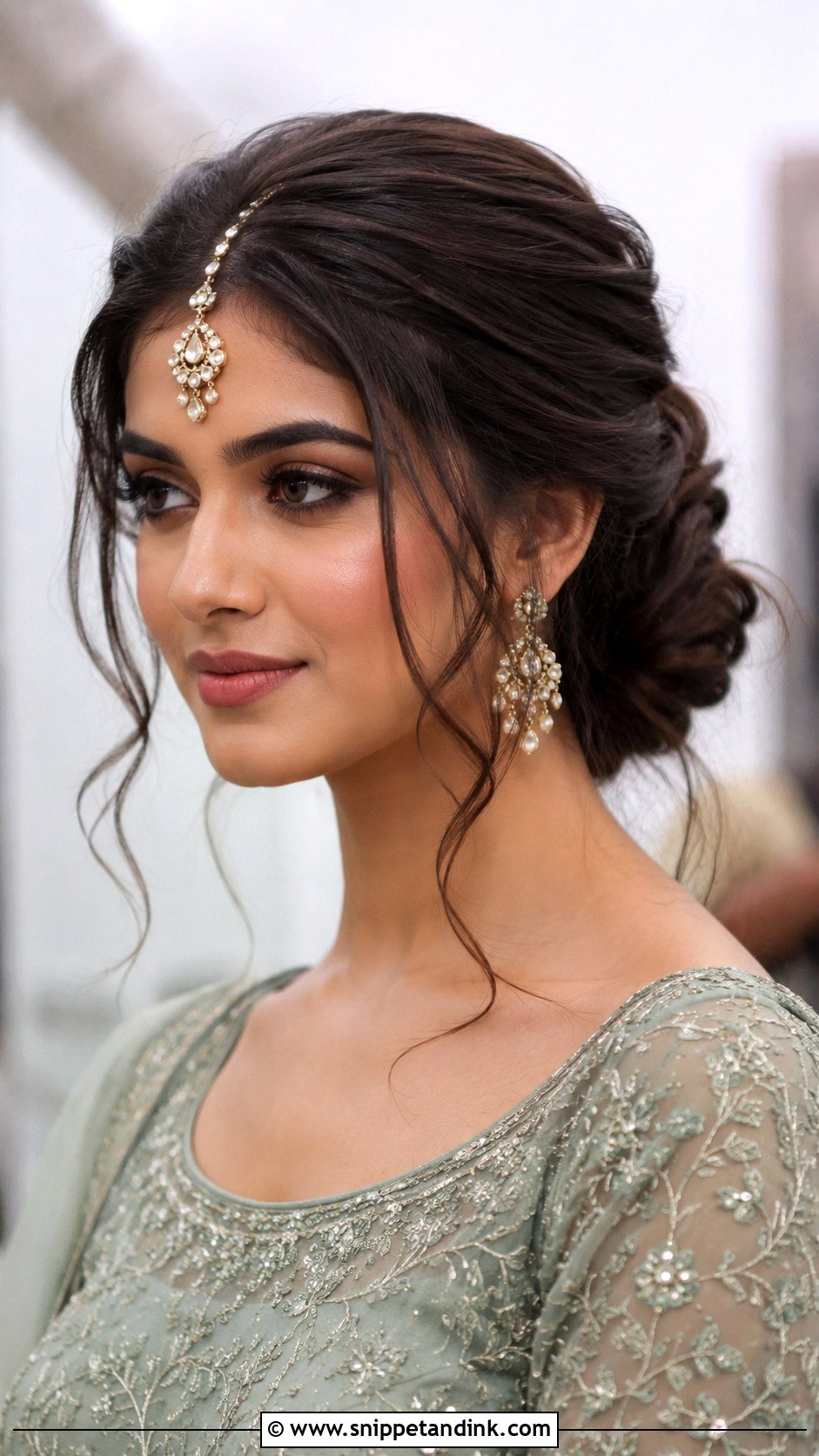
This is the relaxed relative of the bridal bun: some texture, a few loose face-framing strands and a softer shape at the crown. A low bun engagement hairstyle suits nearly every outfit and is comfortable through a long ring ceremony and photos. The front is where you make it yours, with a centre part, a side part or a bit of lift at the roots. I’d pick the hair accessory last, after the jewellery; a matha patti and loose strands at the temples can fight each other.
7. Indian Engagement Hairstyle With Half Up Curls
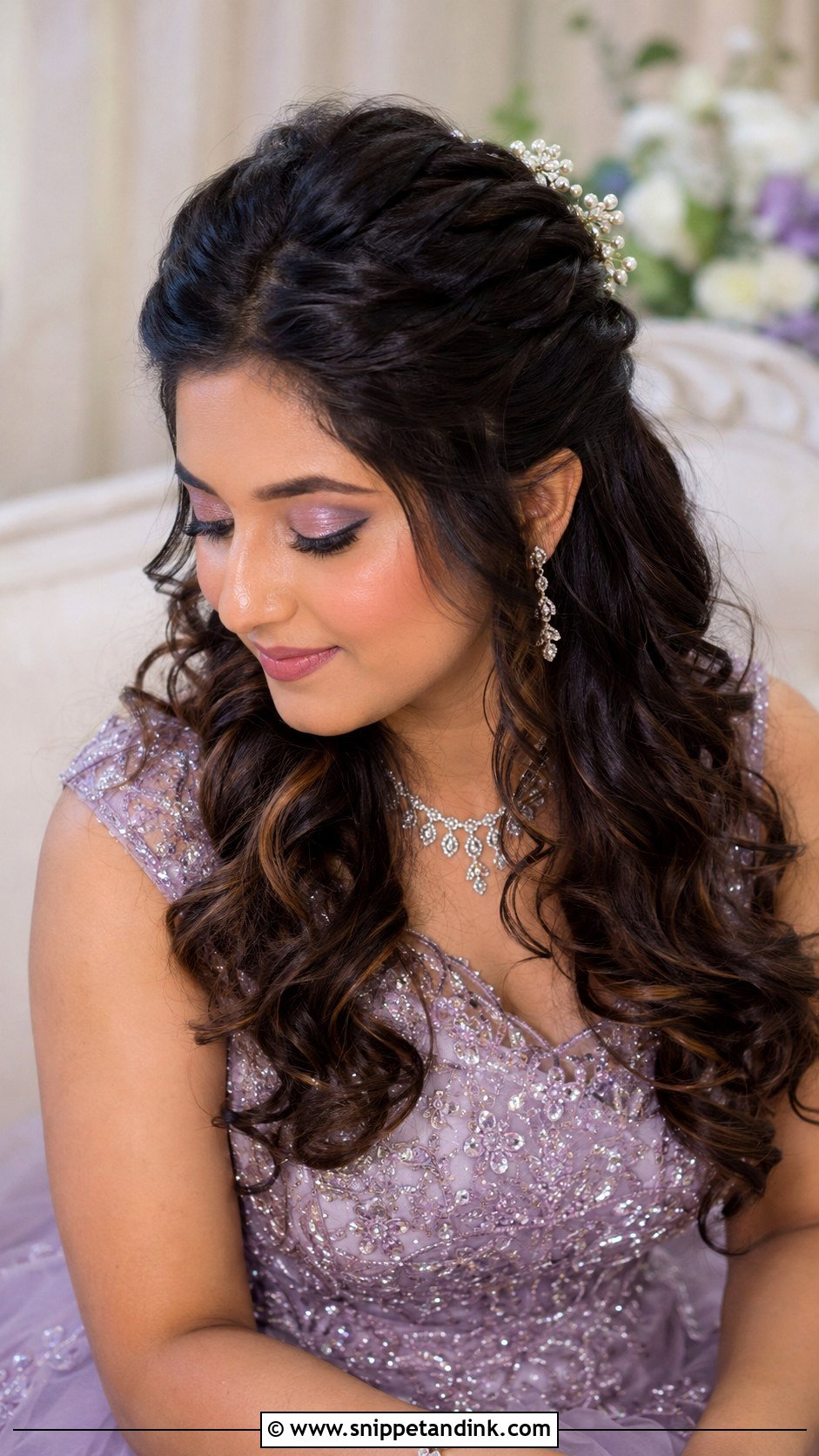
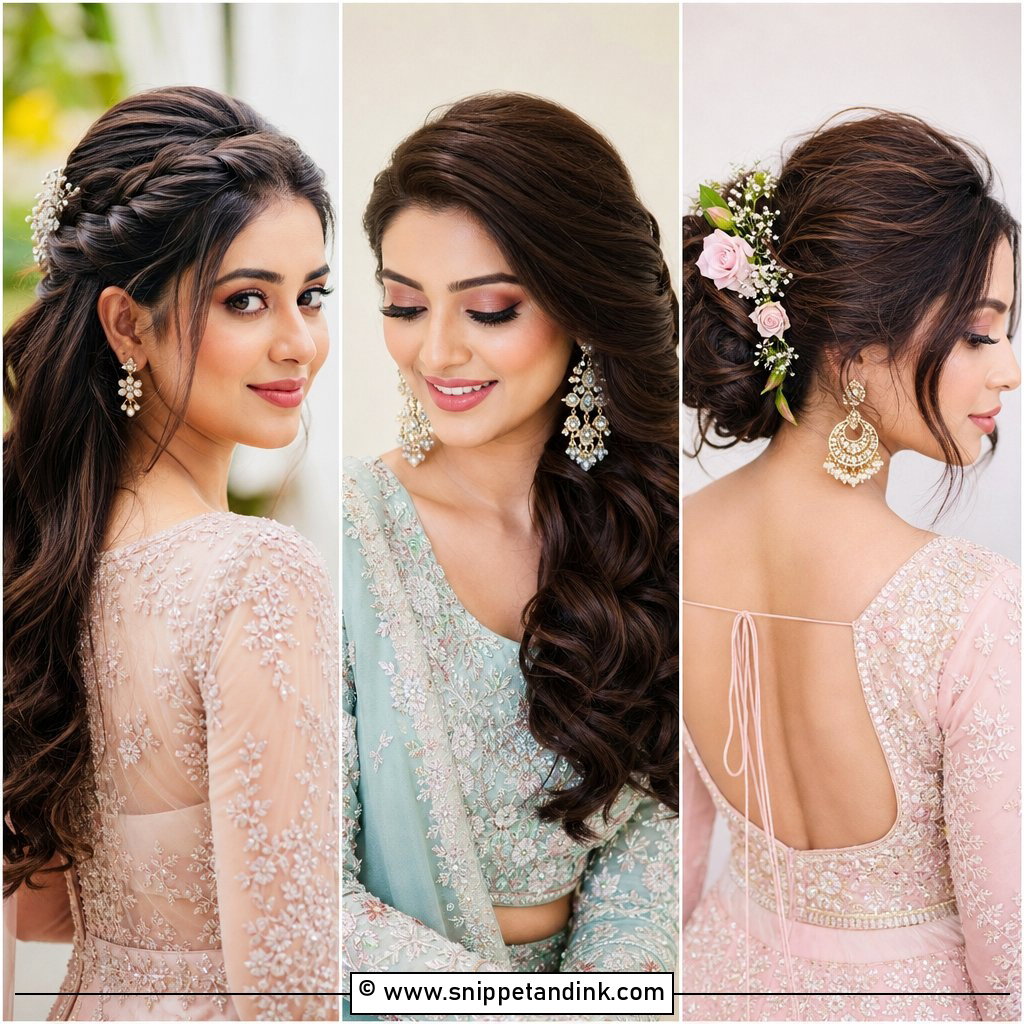
Half-up curls give you open hair with a front that stays put. I take the top section from temple to temple, twist it back and pin it over a small backcombed base, then curl the lengths. That keeps hair out of your eyes when you lean in for the ring and still leaves the earrings visible. Gowns, lehengas and lighter sarees all suit it. Add a small puff for more height or keep the top flat for a cleaner line. A single jewelled clip at the back finishes it.
8. Indian Engagement Hairstyle With Braided Front
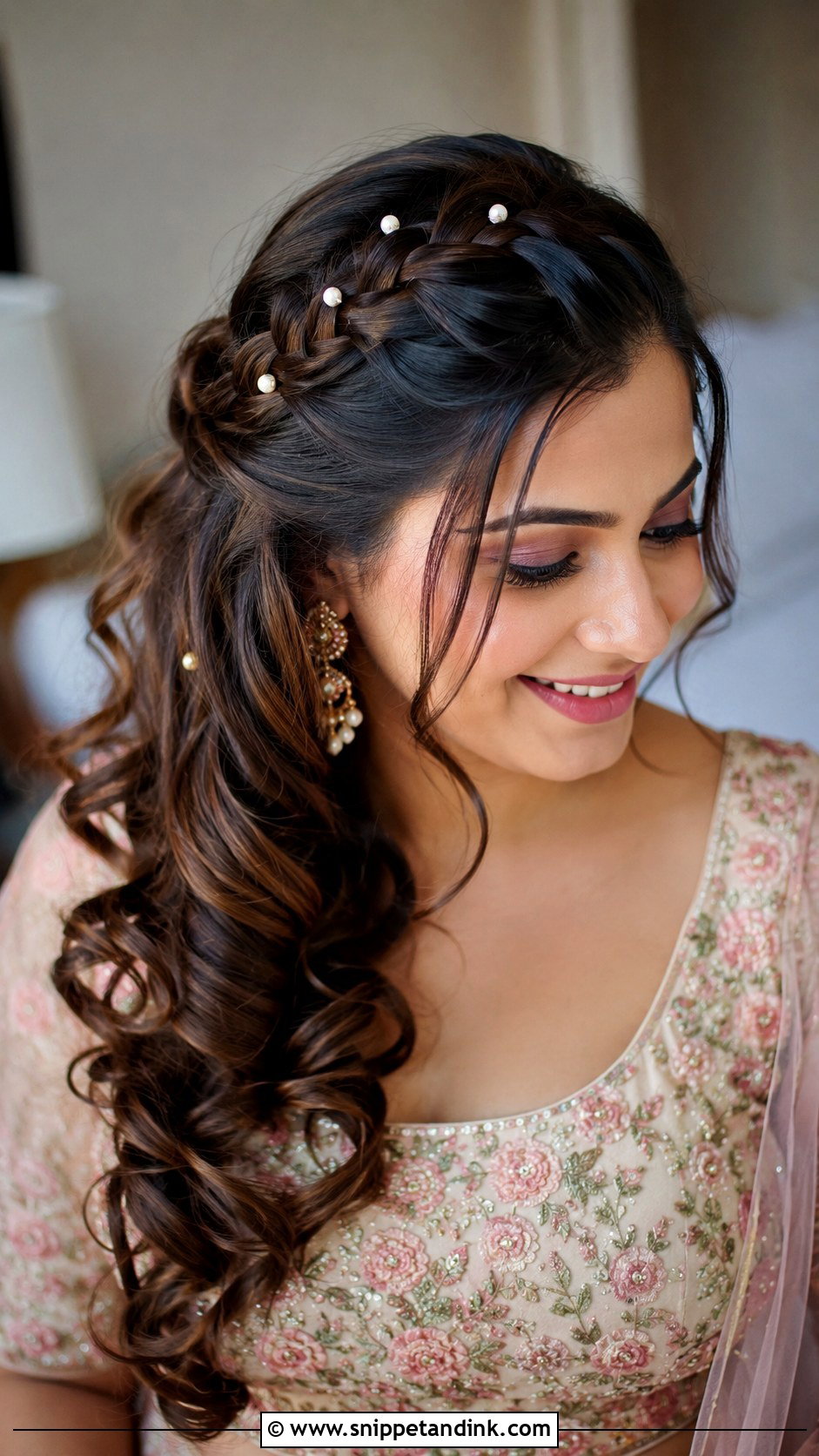
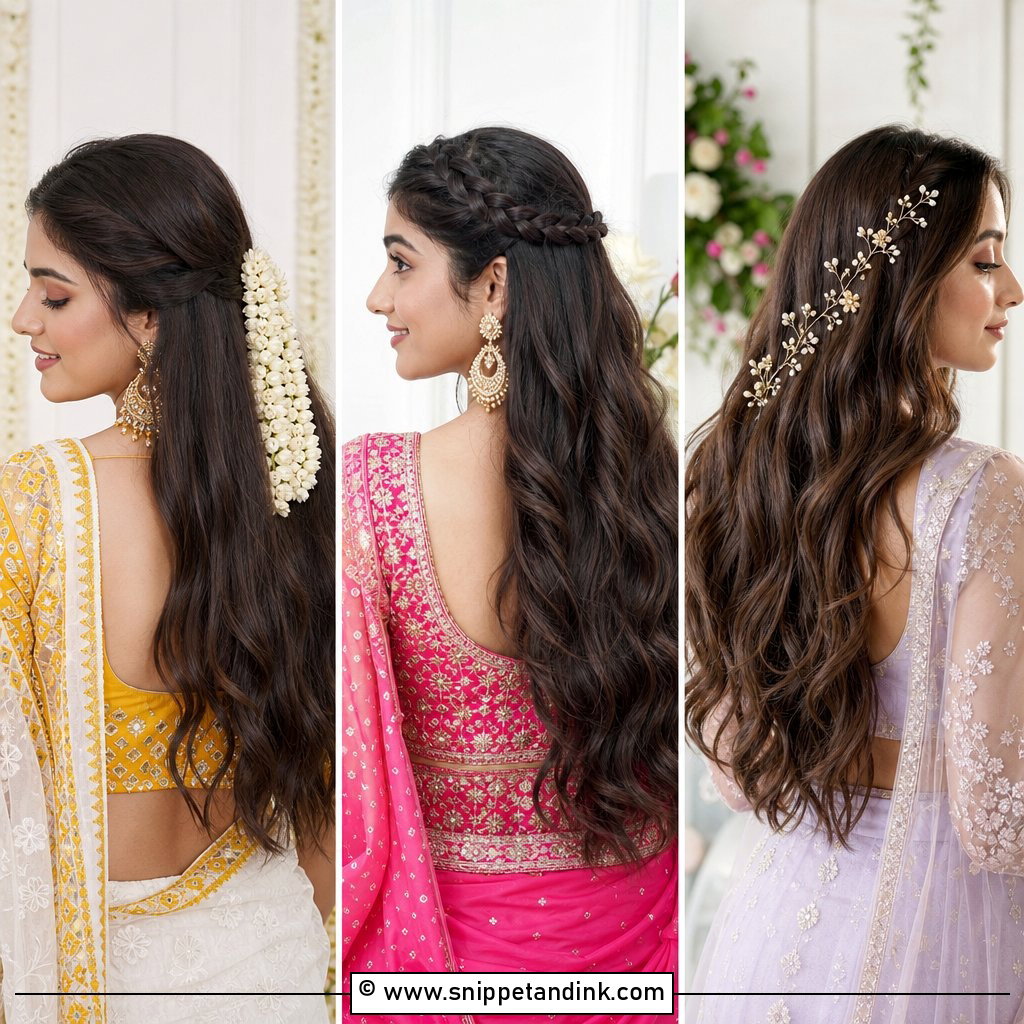
Braids near the face give texture in close-ups that smooth hair can’t. I’ll do a thin Dutch braid along one side or a twisted braid from each temple and pin the ends into curls, a bun or a half-up style. It also keeps short layers out of the face, which is useful outdoors. I keep the braid loose and pull the loops out gently once it’s pinned so it blends into the rest of the hair. For mehendi-style engagements with floral jewellery it fits especially well; tiny pearls tuck into the loops if the outfit has fine embroidery.
9. Indian Engagement Hairstyle With Matha Patti
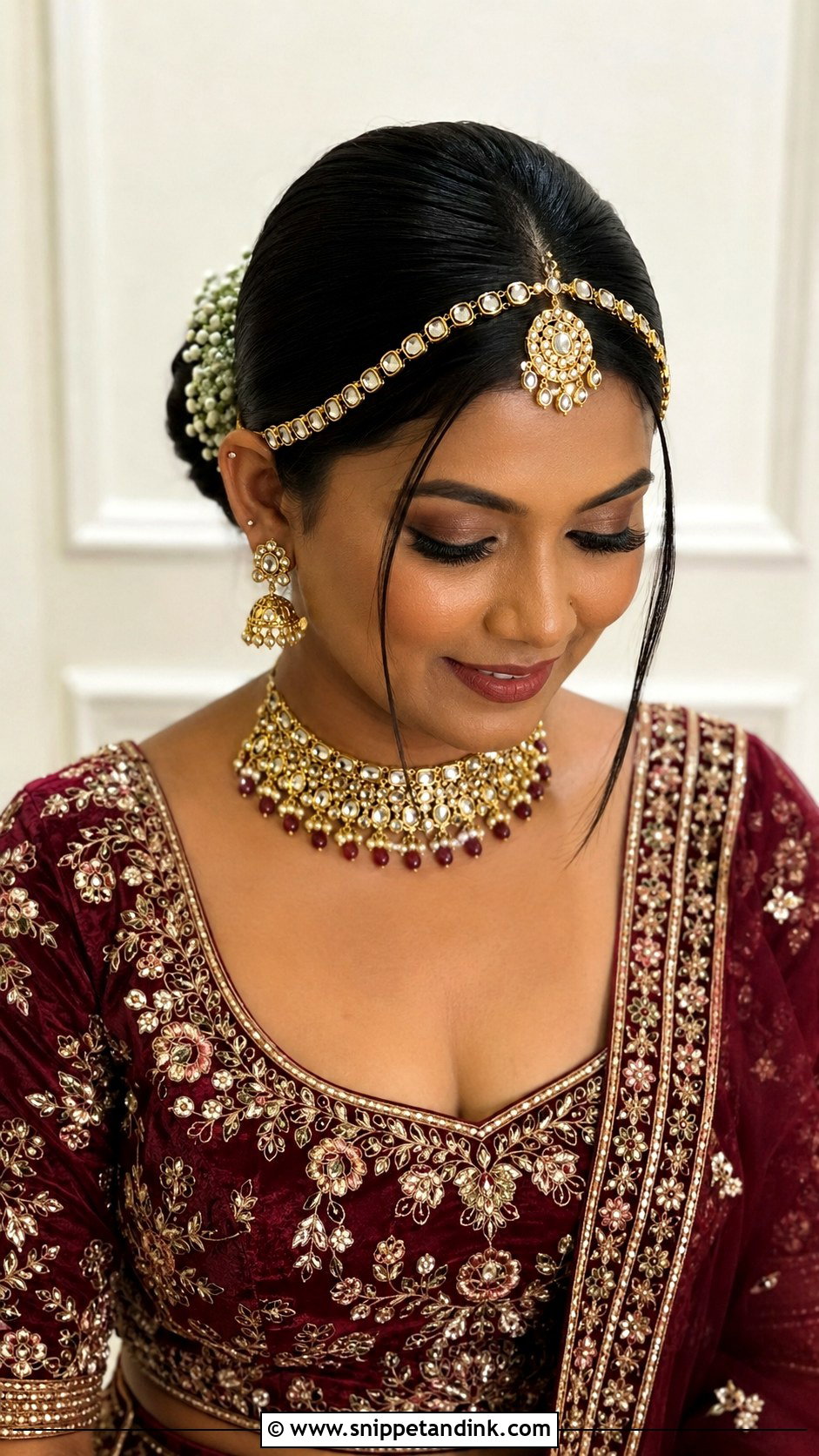
With a matha patti, the jewellery is the hairstyle from the front, so everything underneath has to be smooth and even. A centre part is almost always right. I pin the central chain into the parting first, then the side chains behind each ear, with bobby pins slid under the hair so they disappear. A low bun, open waves or half-up all sit behind it well. If the piece is heavy, I’d keep the makeup soft and resist adding more hair accessories; the forehead already has enough going on.
10. Indian Engagement Hairstyle With Jhoomar
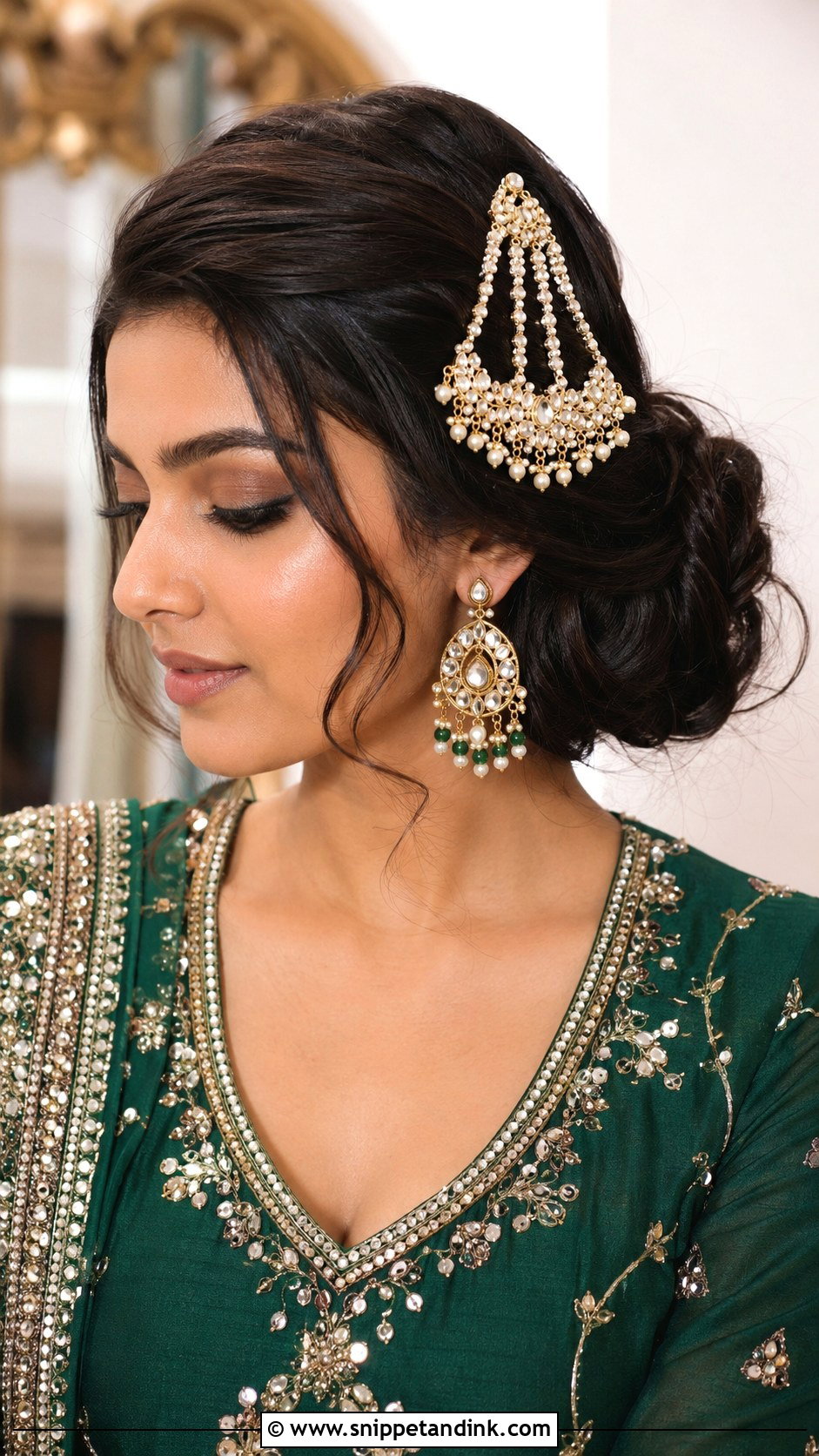
A jhoomar hangs on one side of the head, so the whole front has to be built around that side. I set a side part toward the jhoomar and keep the opposite side clean and smooth, often tucked behind the ear. Underneath, a low bun, a side bun or loose waves all work. It’s a natural fit for shararas, ghararas and Mughal-inspired lehengas. The jhoomar is heavier than it looks, so I anchor it with two crossed pins into a small hidden braid; pinned into loose hair, it slides by the end of the evening.
11. Indian Engagement Hairstyle With Side Swept Curls
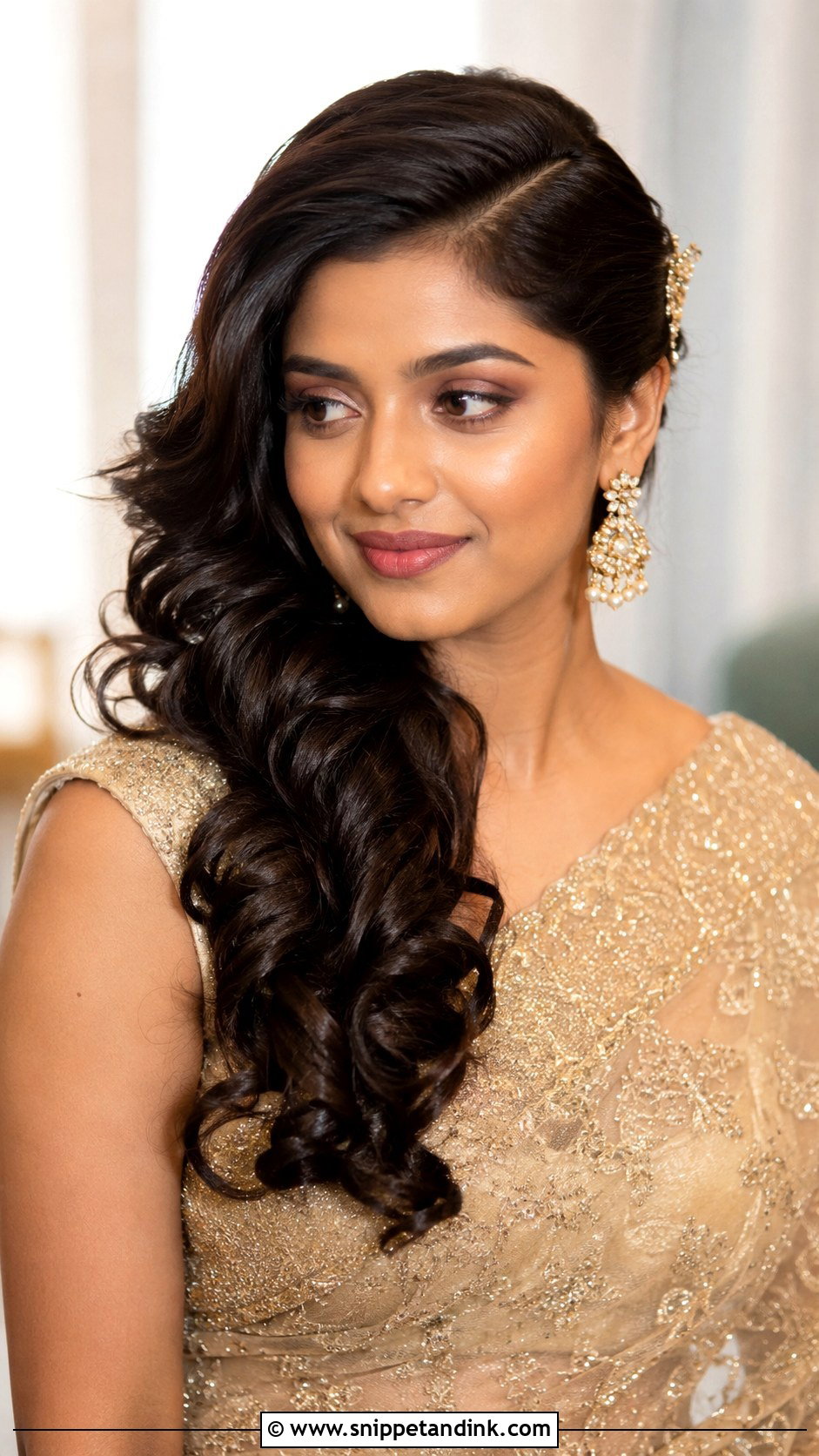
Sweeping the curls over one shoulder clears the other side completely, which is the point if you’re wearing an off-shoulder blouse, a deep neckline or a statement necklace. I pin the front section near the temple on the bare side so it can’t slide back, then build the curls fuller toward the ends. It needs medium to long hair to drape properly. On shorter hair, the curls tend to bounce back to both sides within the hour.
12. Indian Engagement Hairstyle With Middle Part
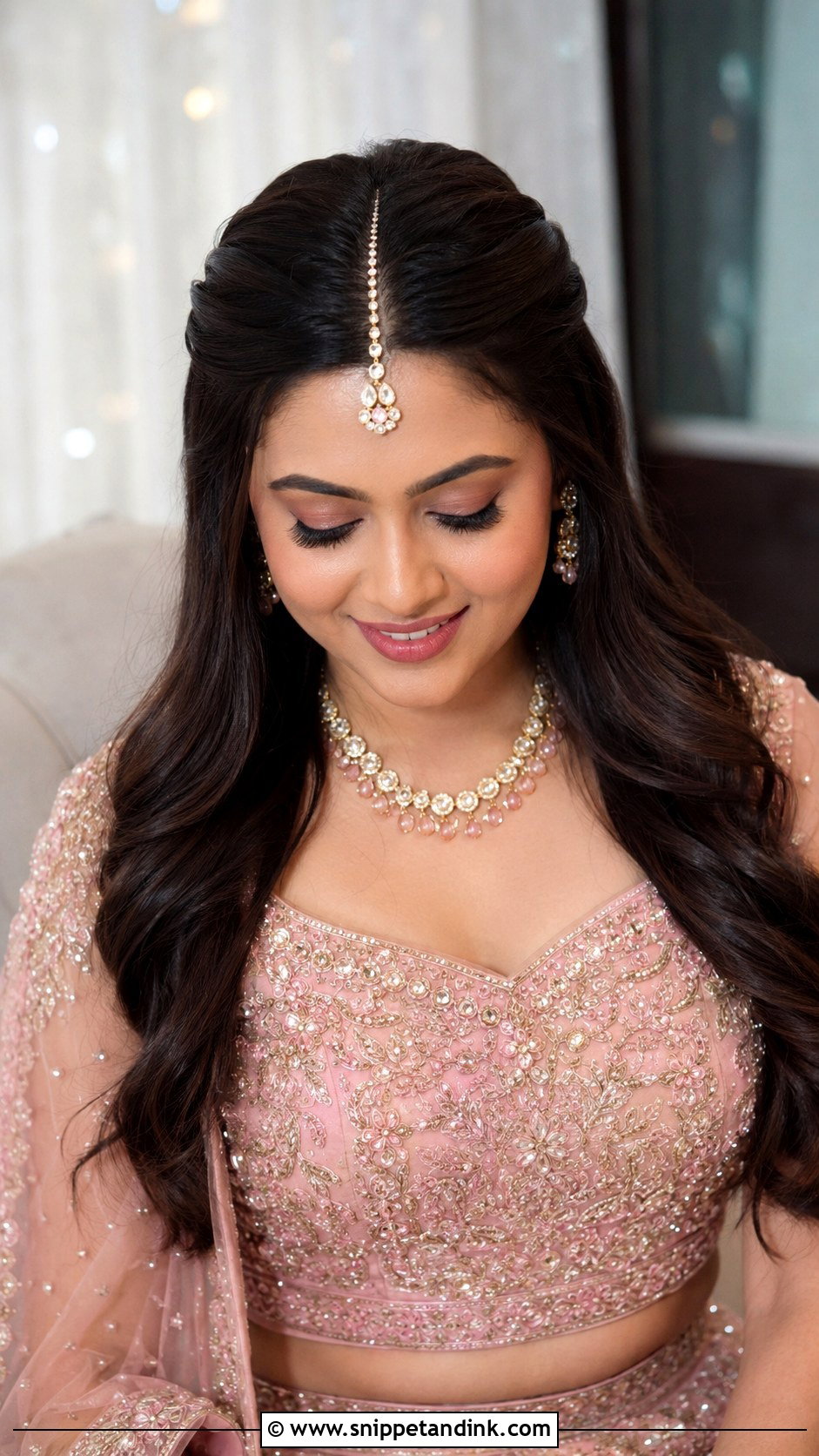
A middle part looks plain on paper and does a lot in person, because it gives a symmetrical base for a tikka, a matha patti or a sleek bun. You can wear it with open waves, straight hair, a low bun or half-up. The trick is root volume. A flat middle part can make the face look longer and harsher, so I lift the first inch with a round brush and only go fully sleek when the outfit asks for it. A little softness around the cheeks makes it far easier to wear.
13. Indian Engagement Hairstyle With Soft Waves
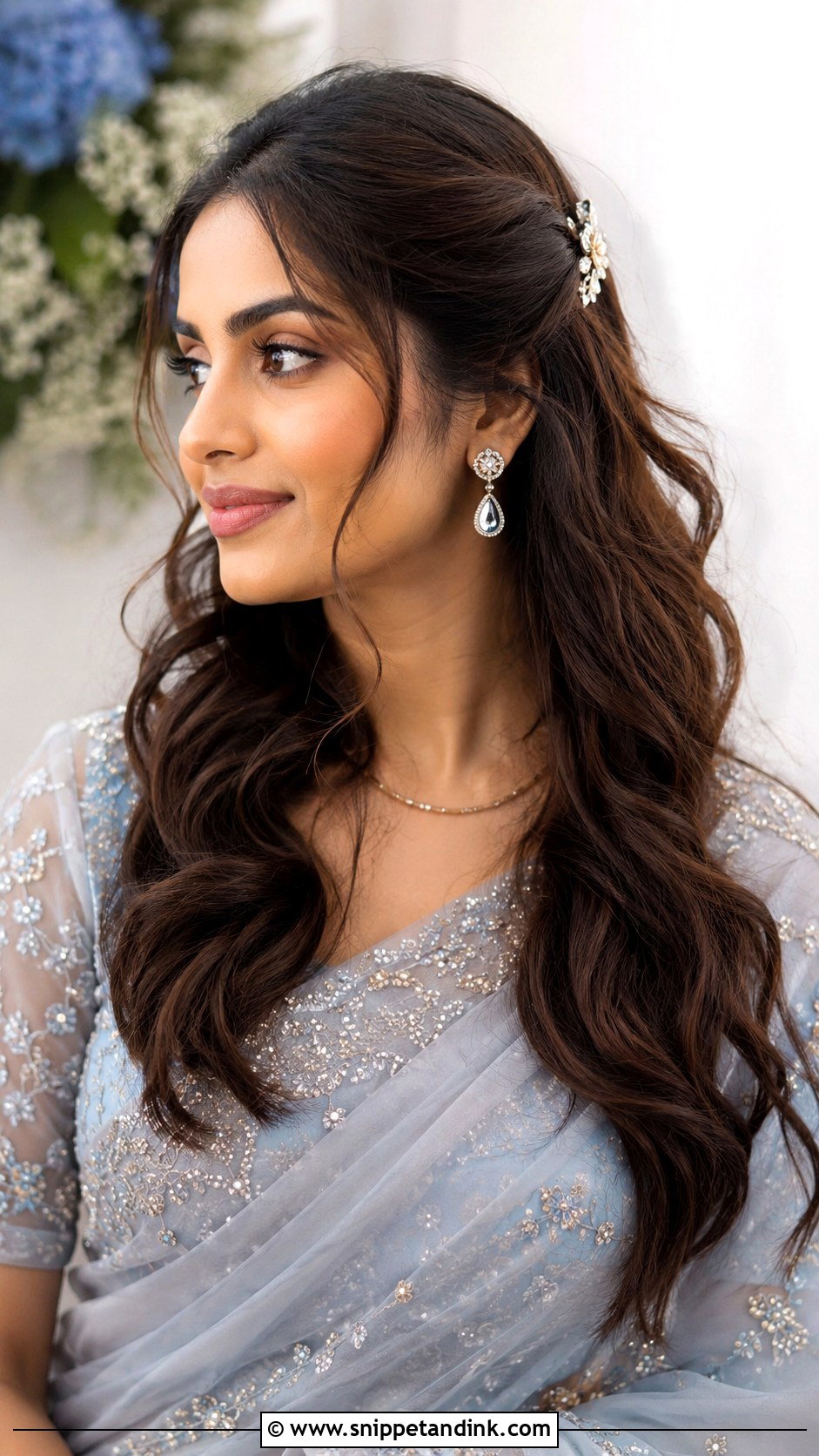
Soft waves suit smaller, intimate engagements where heavy head jewellery would feel like too much. They add movement around the face without the volume of curls. I wave with a large wand, leave the ends out and brush through gently. A side part gives more lift; a centre part reads more traditional. Use a flexible spray so the waves stay touchable, and a pearl pin or light tikka if you want it to feel more dressed.
14. Indian Engagement Hairstyle With Floral Bun
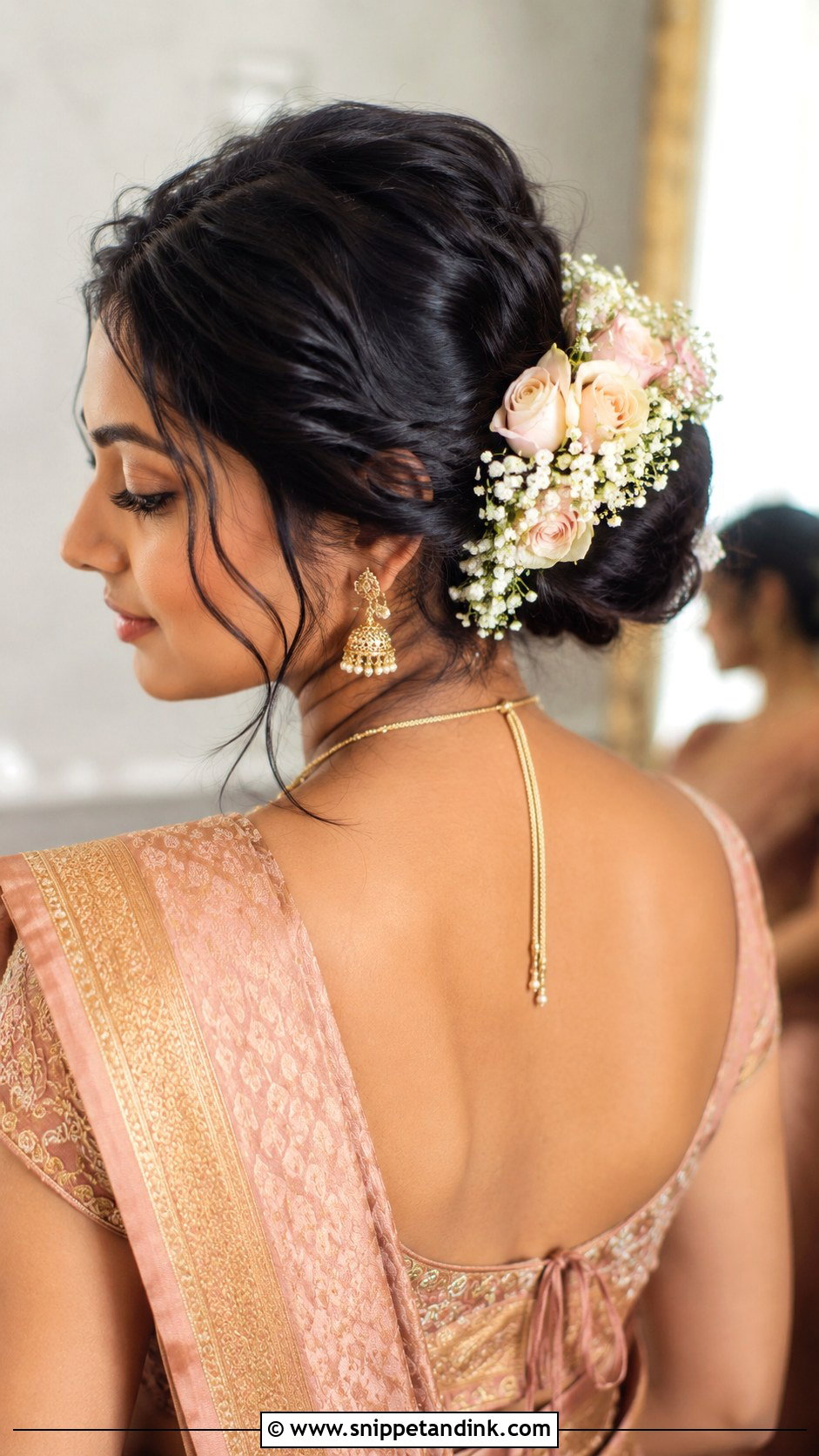
A floral bun keeps the front neat and moves all the detail to the back, which is handy if your face jewellery is already busy. The front can be sleek, softly parted or lifted at the crown. Jasmine, roses, baby’s breath or mixed pastels can be matched to the outfit or the decor. With bold flowers I keep the front completely smooth; with a lighter outfit, a few loose strands at the temples soften it. Fresh blooms wilt under lights, so I pin them in last.
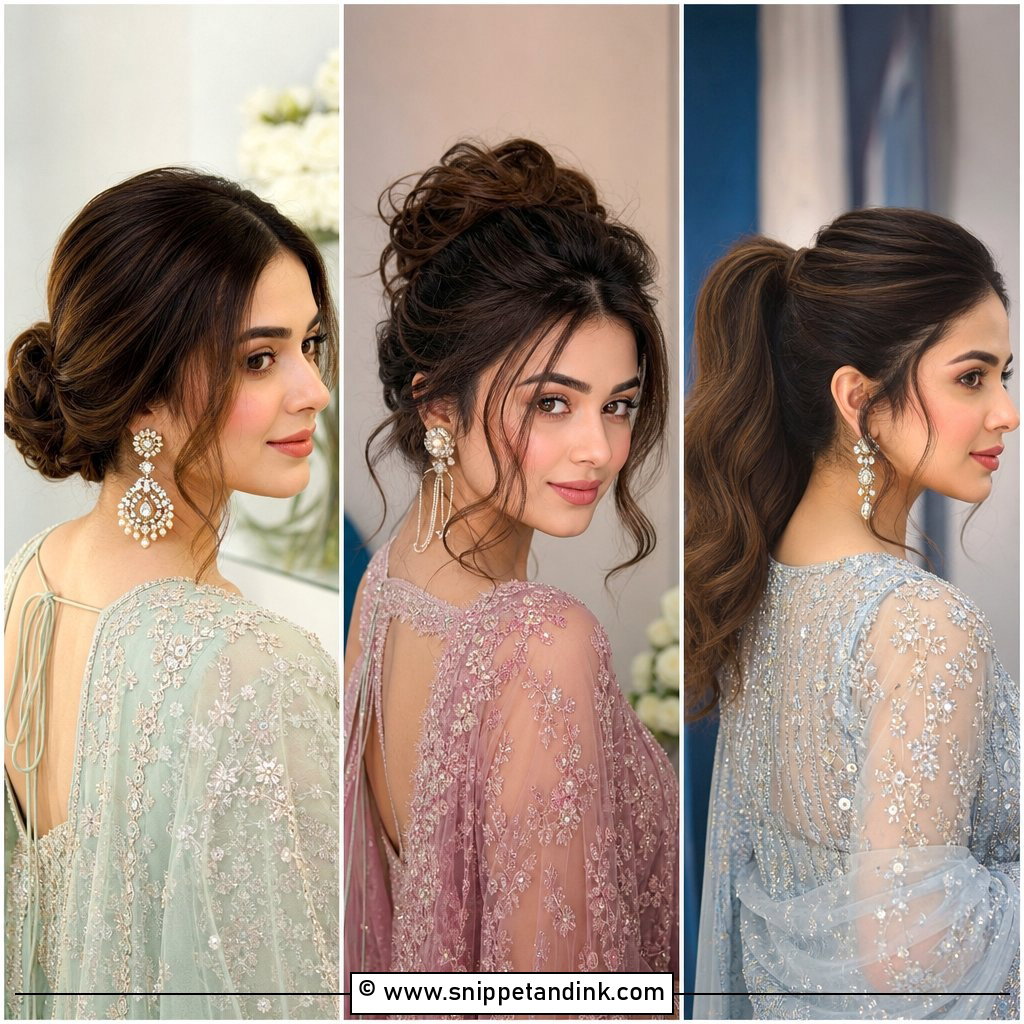
15. Indian Engagement Hairstyle With Sleek Ponytail
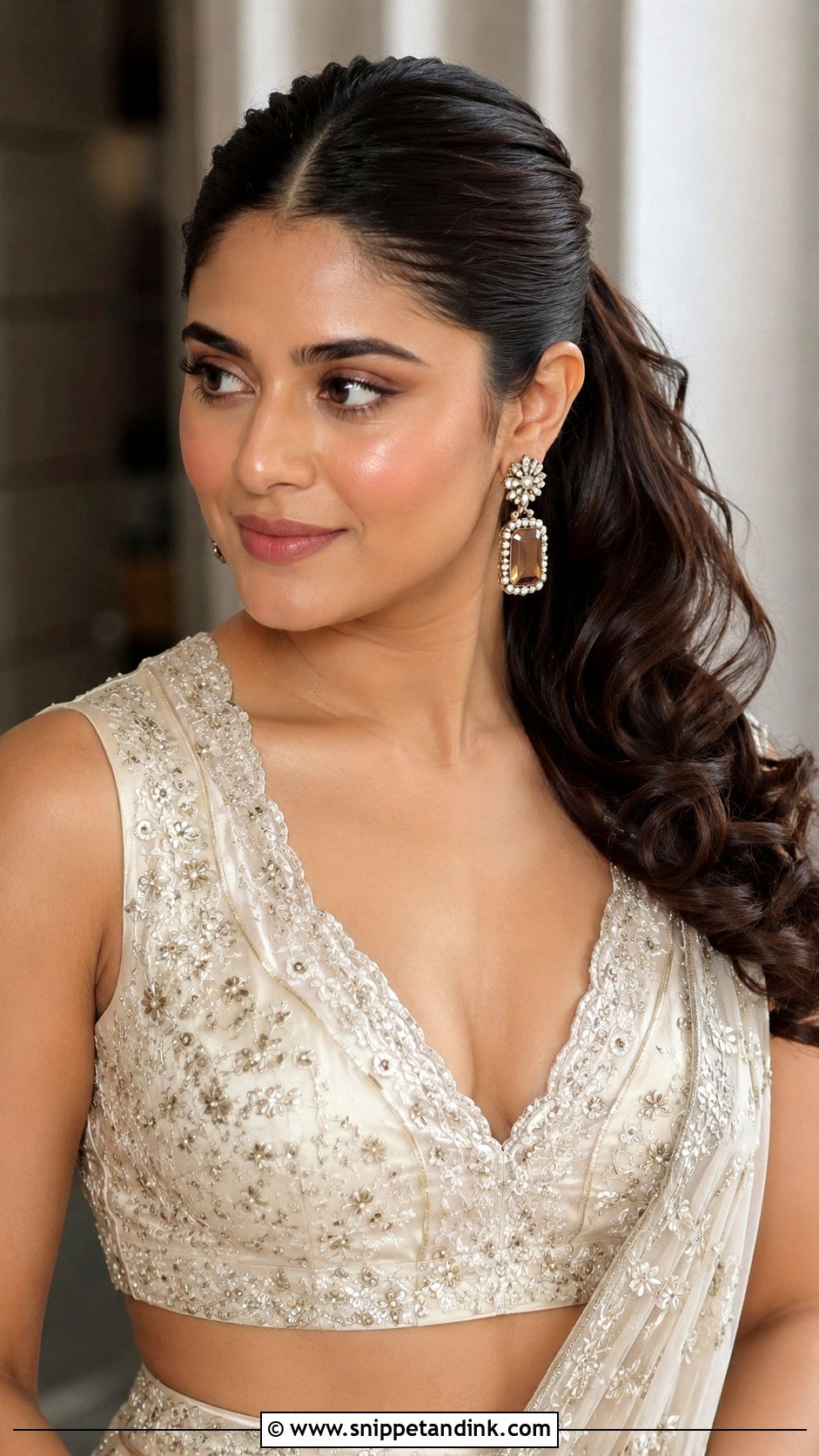
A high, sleek ponytail lifts the whole face and reads modern from the front and dramatic from the back. It’s the most comfortable choice here for dancing, since nothing at the front can fall. I secure the base with two elastics, wrap a section of hair around them and pin it underneath, then curl the length. A centre part, side part or fully pulled-back front all work depending on face shape. Bold earrings or a choker carry it; you won’t need much else.
Bowing Your Head for the Ring and the Elders
The front of an engagement hairstyle gets tested in moments nobody plans for: looking down while he slides the ring on, bending to touch the feet of elders, leaning in for group photos. Each time your head tips forward, any loose front piece falls across your face, and that’s often the photo that ends up framed.
I set face-framing strands with a quick bend toward the back, not toward the face, so gravity pulls them clear when you look down. If you’re wearing open curls, I’ll pin a hidden section behind each ear. And for a front puff or half-up twist, the pins go in pointing upward into the base, which holds better when the head tilts forward. Try the ring moment at your trial; it takes ten seconds and shows you exactly what will fall.
Treating the Engagement as a Wedding Rehearsal
If the same stylist is doing your wedding hair, the engagement is the best trial you’ll get. It runs for hours, in real weather, with real jewellery and real dancing, which a one-hour salon trial can’t copy.
Make a few notes the next morning while you still remember: what dropped first, which pins dug in, whether the parting stayed straight, and what the photos showed that the mirror didn’t. Hand those notes to your stylist. They’ll shape the wedding look more usefully than any inspiration picture.
Let the Close-Up Photos Settle It
Look at your close-ups, not the mirror, when you judge the front. Think about the neckline, how heavy the forehead jewellery is, your face shape and how much you’ll move during the evening. Sleek buns and middle parts keep things polished and traditional; side-swept curls, soft waves and half-up curls read softer and more modern. Heavy forehead jewellery means a smooth, secure front. A simple outfit gives you room for volume, braids or flowers.
You'll Like These Ideas:


Leave a Reply